21 Basement Accent Wall Ideas
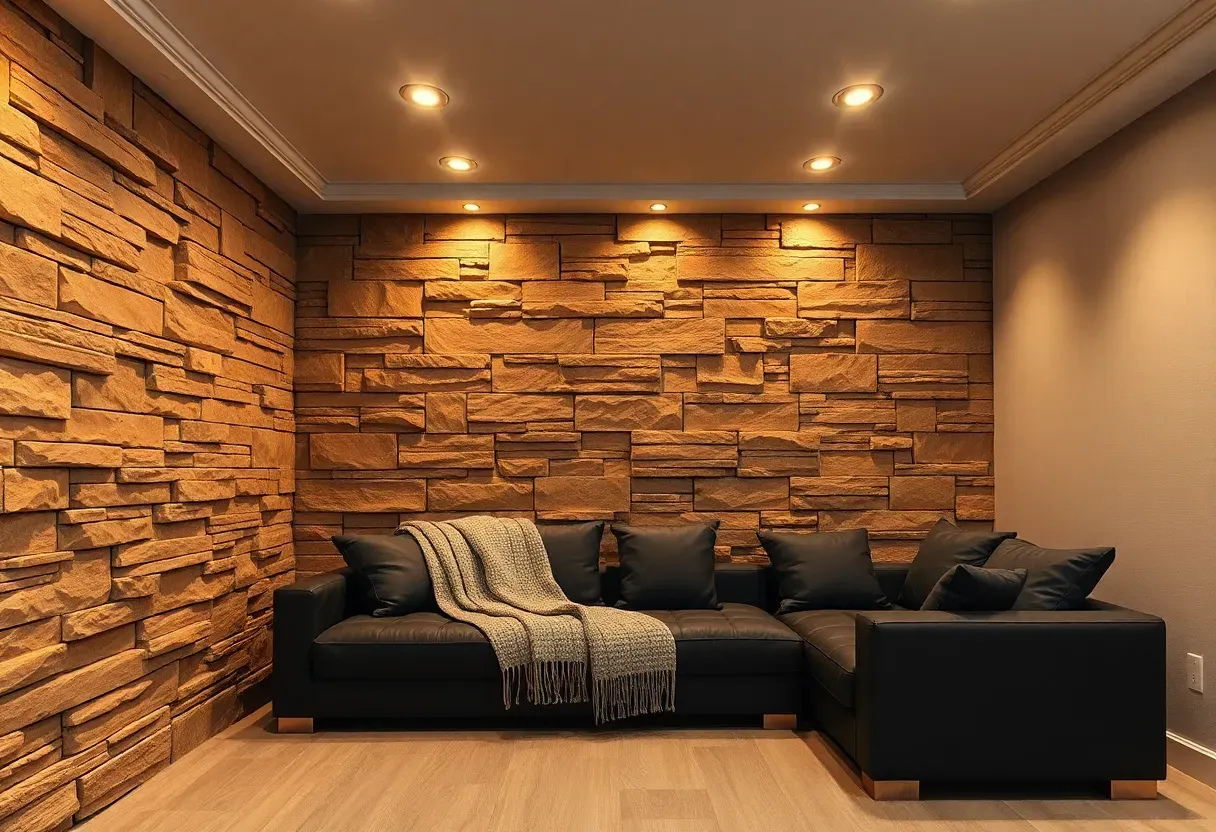
Basements get a bad reputation. Low ceilings, limited natural light, that faint concrete smell — most people treat them as overflow storage rather than actual living space. But a single well-chosen accent wall can shift the entire mood of a basement room. I have seen unfinished basements go from damp-feeling boxes to spaces people genuinely want to hang out in, and the accent wall was doing most of the heavy lifting. The trick is picking materials and finishes that handle the unique challenges of below-grade rooms: higher humidity, less daylight, and often shorter ceiling heights. These 21 basement accent wall ideas cover a range of budgets and skill levels.
Here are 21 accent wall approaches organized from natural materials like stone and wood through paint techniques, textured finishes, and modern panel systems.
Table of Contents
- Stacked Ledger Stone
- Reclaimed Barn Wood Planks
- Dark Moody Paint Wall
- Exposed Brick Veneer
- Vertical Wood Slat Panel
- Concrete Skim Coat
- Board and Batten
- Peel-and-Stick Stone Tile
- Geometric Paint Blocks
- Shiplap Feature Wall
- 3D Textured Wall Panel
- Faux Exposed Beam Wall
- Cork Accent Wall
- Black Steel and Wood Grid
- Limewash Paint Finish
- Fabric-Wrapped Sound Panel
- River Rock Mosaic
- Painted Arch Mural
- Herringbone Wood Tile
- Corrugated Metal Accent
- Moss and Preserved Plant Wall
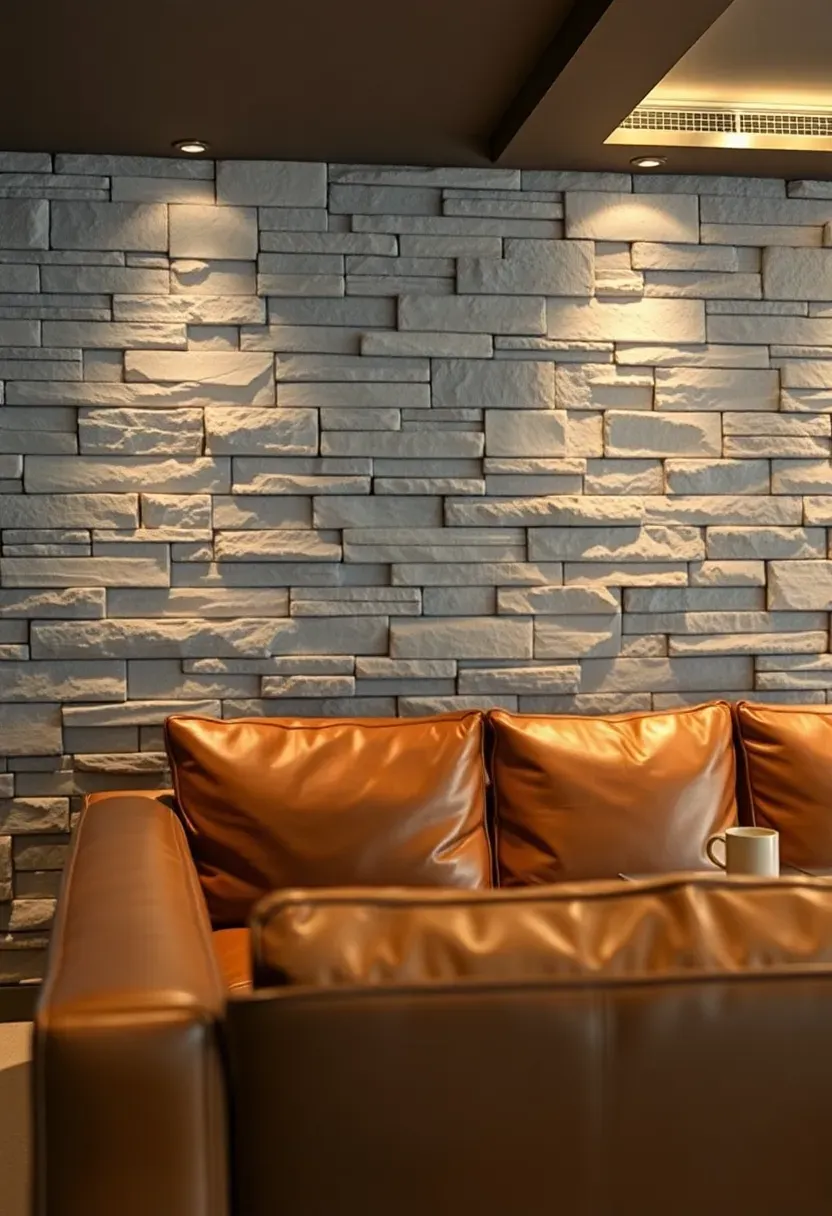
1. Stacked Ledger Stone
Natural stacked stone is one of those materials that instantly makes a basement feel intentional rather than afterthought-ish. Ledger stone panels come pre-assembled on mesh backing, so installation is closer to tiling than actual masonry. Each panel interlocks with the next, hiding seams and giving you a continuous rock face. Expect to pay $8 to $15 per square foot for the panels themselves. The weight is real — roughly 13 pounds per square foot — so you need to fasten to studs, not just drywall. For basements, choose a lighter-colored stone like cream travertine or sandy quartzite so the wall does not absorb the already limited light.
What to watch for
- Seal the stone with a penetrating sealer rated for high-humidity environments before grouting
- Use modified thinset rather than mastic — it bonds better to concrete block or cement board
- Leave a 1/4-inch expansion gap at floor level to handle minor moisture movement
We picked a few things that go well with this idea: Art3d Acoustic Wood Slat Panels (6-Pack) (★4.6), NeatiEase Soundproof Wood Slat Panels (4-Pack) (★4.7) and MISSDAY Black Acoustic Wood Slat Panels (2-Pack) (★4.5). As an Amazon Associate we earn from qualifying purchases.
2. Reclaimed Barn Wood Planks
Why it works underground
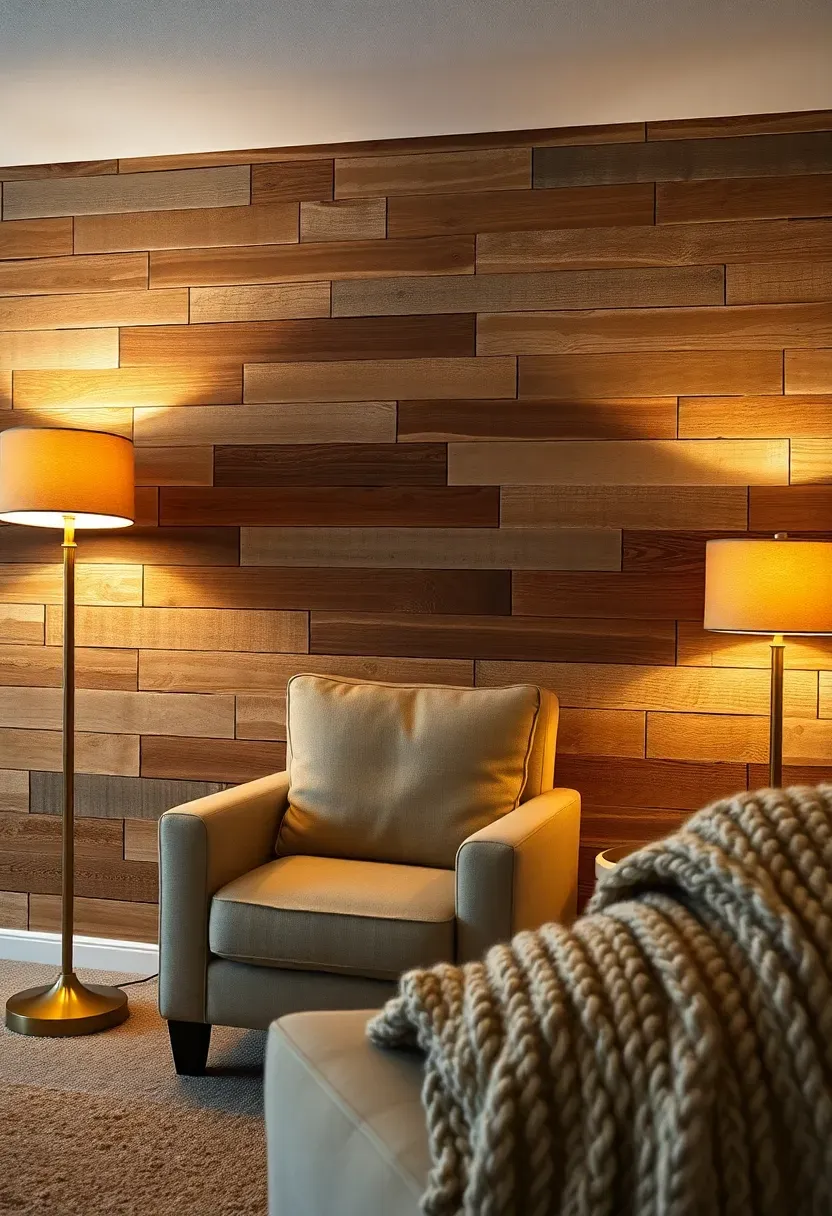
Basements lack the architectural character that upper floors get from windows, moldings, and ceiling height. Reclaimed wood adds decades of patina in a single afternoon of installation. The variation in color — gray, honey, reddish brown, some boards with old nail holes — creates visual depth that paint alone cannot match.
Installation basics
Nail planks horizontally to furring strips attached to the wall. Leave a 1/8-inch gap between the back of the planks and the wall surface for air circulation, which matters in basements where moisture migrates through foundation walls. Kiln-dried reclaimed wood is worth the extra cost ($7 to $12 per square foot versus $4 to $8 for air-dried) because the heat treatment kills insects and stabilizes moisture content.
Choose barn wood if
- You want warmth without relying on paint color alone
- Your basement has an entertainment area, bar, or game room vibe
- You prefer materials with genuine history over manufactured distressing
We picked a few things that go well with this idea: Art3d 3D Diamond Wall Panels (33-Pack) (★4.5), Art3d White Diamond 3D Wall Tiles (12-Pack) (★4.4) and STICKGOO Peel and Stick 3D Wave Panels (10-Pack) (★4.3). As an Amazon Associate we earn from qualifying purchases.
3. Dark Moody Paint Wall
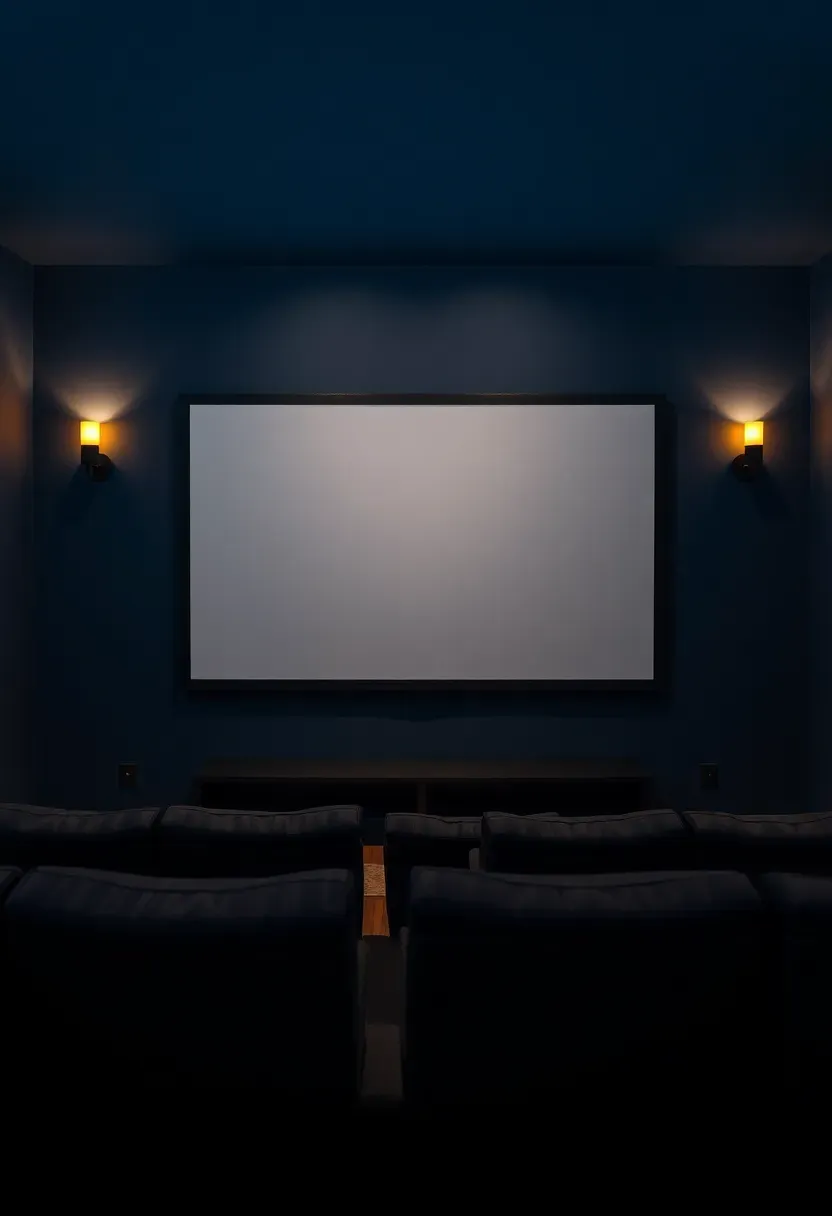
Most advice says to keep basements light-colored. That is sometimes wrong. If your basement already has recessed lighting or sconces — especially in a media room or lounge area — leaning into the darkness with a saturated deep color creates an intentional cocooning effect. Think Benjamin Moore Hale Navy (HC-154), Sherwin-Williams Cyberspace (SW 7076), or Farrow & Ball Railings. The key is pairing the dark wall with adequate task and accent lighting so the room feels dramatic rather than cave-like. Two or three wall-wash sconces spaced 6 feet apart will prevent the color from flattening out.
Tips
- Use eggshell or satin finish — flat sheens absorb too much light in windowless rooms
- Paint only one wall dark and keep adjacent walls two to three shades lighter in the same color family
- Test your color at night under your actual basement lighting, not daylight from a window upstairs
We picked a few things that go well with this idea: Romabio Classico Limewash Paint Nube White (★4.5), Romabio Classico Limewash Paint Avorio White (★4.5) and Romabio Masonry Flat Lime Paint Cristallo (★4.4). As an Amazon Associate we earn from qualifying purchases.
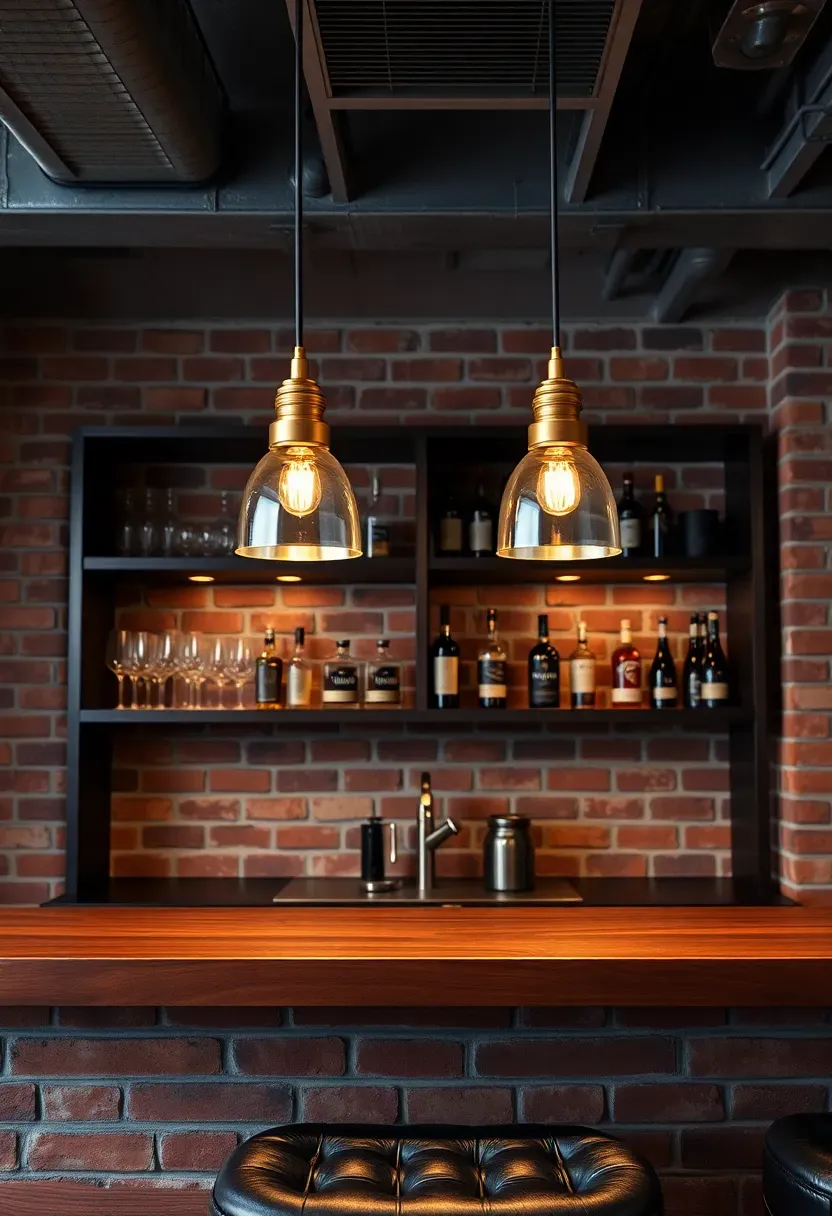
4. Exposed Brick Veneer
The problem with real brick below grade
Actual exposed brick in a basement usually means an old foundation wall, and those come with efflorescence, crumbling mortar, and water-infiltration risk. Sealing an original brick foundation wall for decorative use is expensive and sometimes counterproductive — you can trap moisture behind the sealer.
The solution
Thin brick veneer panels (1/2-inch to 3/4-inch thick) give you the look without the structural headaches. Adhere them to cement board or drywall using construction adhesive and grout the joints. The finished wall weighs about 5 pounds per square foot, well within what standard framing supports. Costs run $6 to $12 per square foot for the veneer plus another $2 to $3 for adhesive and grout.
Pros and cons
- Authentic appearance at a fraction of real brick weight and cost
- Can be installed over existing finished walls without demolition
- Grout lines collect dust and are harder to clean than smooth surfaces
Recommended
Items for this idea
5. Vertical Wood Slat Panel
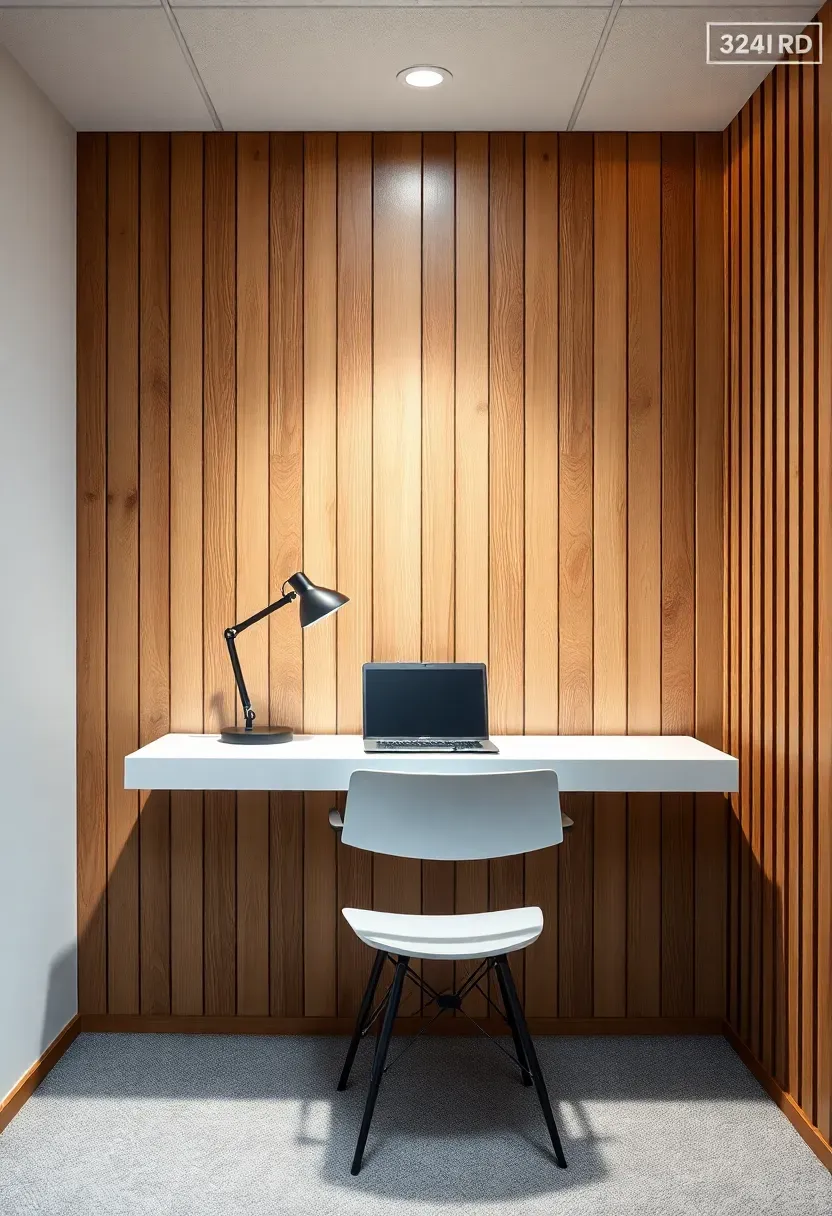
Vertical slats draw the eye upward, which is exactly what you want in a room with 7 or 8-foot ceilings. Pre-made slat panels from companies like Acupanel or WallArt come in 8-foot lengths with slats already bonded to a felt backing. You glue and pin the panels directly to drywall. The felt backing (usually black or gray) creates shadow lines between slats that add dimension without any complicated carpentry. For basements, stick with oak or walnut veneer on MDF slats rather than solid wood — MDF handles humidity swings better and does not warp as readily.
Tips
- Run slats floor to ceiling to maximize the height illusion
- Install LED strip lighting at the top or bottom for a backlit glow effect
- Space slats at 15mm to 20mm gaps for the best balance of privacy and light play
6. Concrete Skim Coat
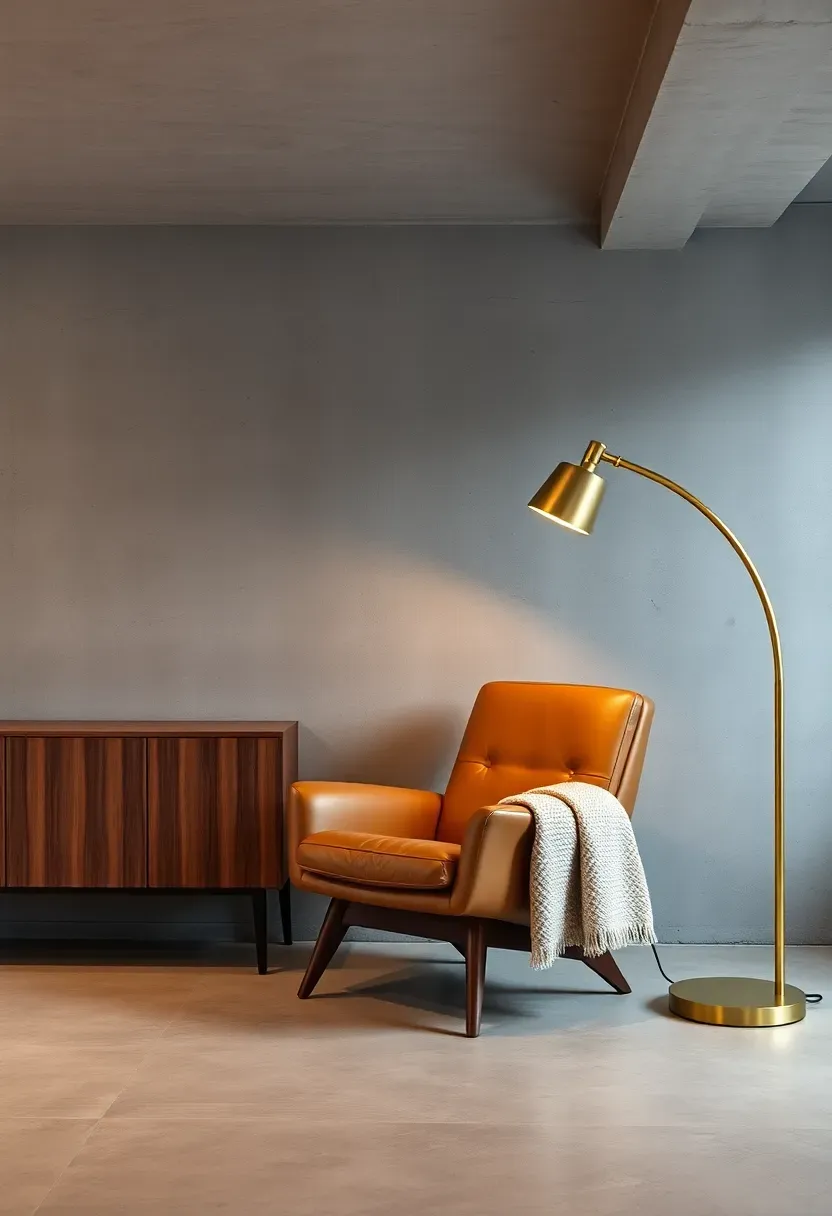
If your basement walls are already poured concrete or block, a skim coat finish lets you lean into that material rather than hiding it. Products like Beton Cire or microcement create a smooth, sealed concrete surface that looks polished and intentional. Apply the skim coat in thin layers (1mm to 2mm each) with a steel trowel, building up to a final thickness of about 3mm. The finish is waterproof once sealed, making it genuinely practical for basements. Color options go beyond standard gray — warm charcoal, sand, off-white, even terracotta tones are available.
Step-by-step overview
- Clean the existing concrete surface and fill any cracks wider than 1/8-inch with hydraulic cement
- Apply a bonding primer and let it tack up for 4 to 6 hours
- Trowel on two to three coats of microcement, sanding lightly between coats
- Seal with a two-part polyurethane or wax finish
Watch out
- Trowel marks are part of the aesthetic, but practice on cardboard first if you have not used microcement before
- Ambient temperature below 50 degrees F will slow curing and affect adhesion
Recommended
Items for this idea
7. Board and Batten
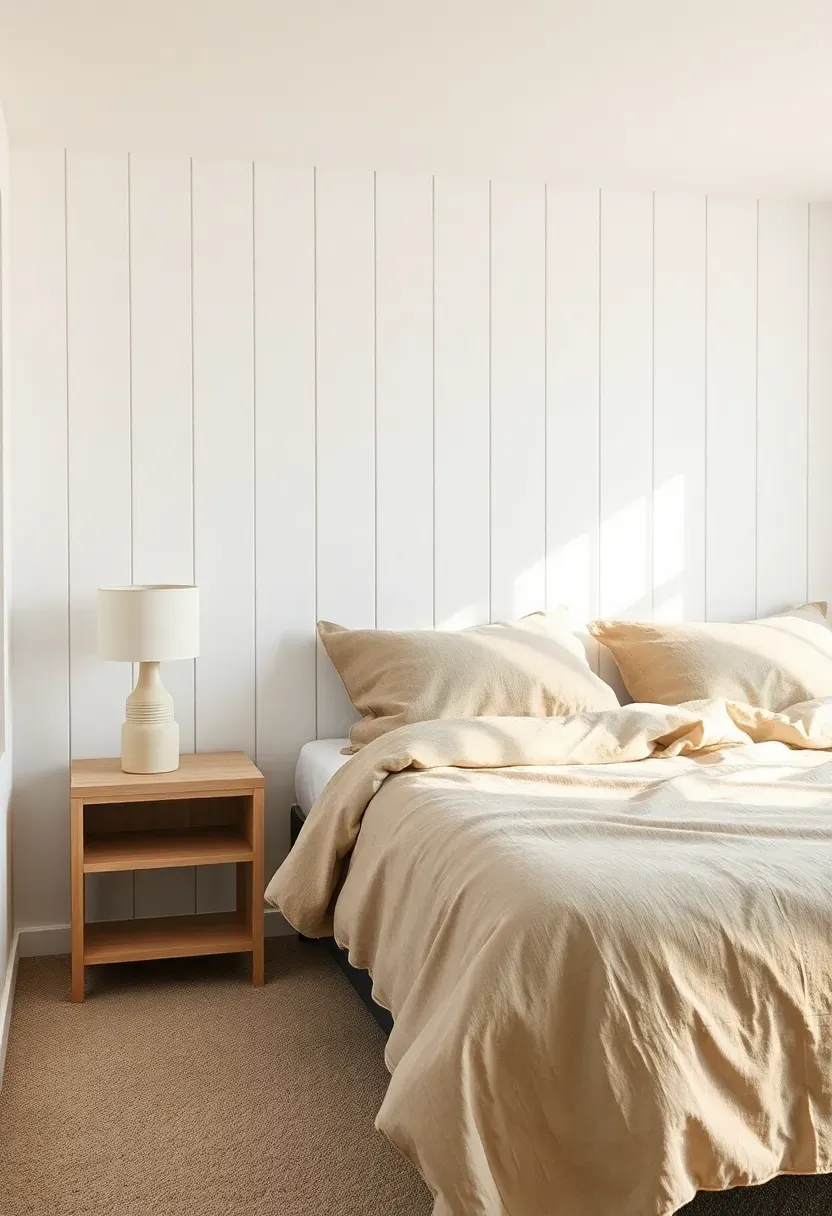
Board and batten is simple carpentry that punches well above its weight visually. Flat boards (typically 1x4 or 1x6 MDF) mounted vertically over a flat base panel create a repeating rhythm of light and shadow. The whole installation costs $3 to $6 per square foot in materials and goes up in a day with a brad nailer and construction adhesive. For basements, I prefer painting the battens the same color as the base board in a single tone — the texture does the work, and monochrome keeps the wall from feeling busy in a room that already lacks natural light. Spacing battens 12 to 16 inches apart hits the sweet spot between too sparse and too crowded.
Tips
- Use primed MDF rather than raw pine — it resists humidity better and takes paint more evenly
- Caulk every seam before painting for a built-in, custom look
- Consider running board and batten at two-thirds wall height with a flat-painted upper portion for a wainscoting variation
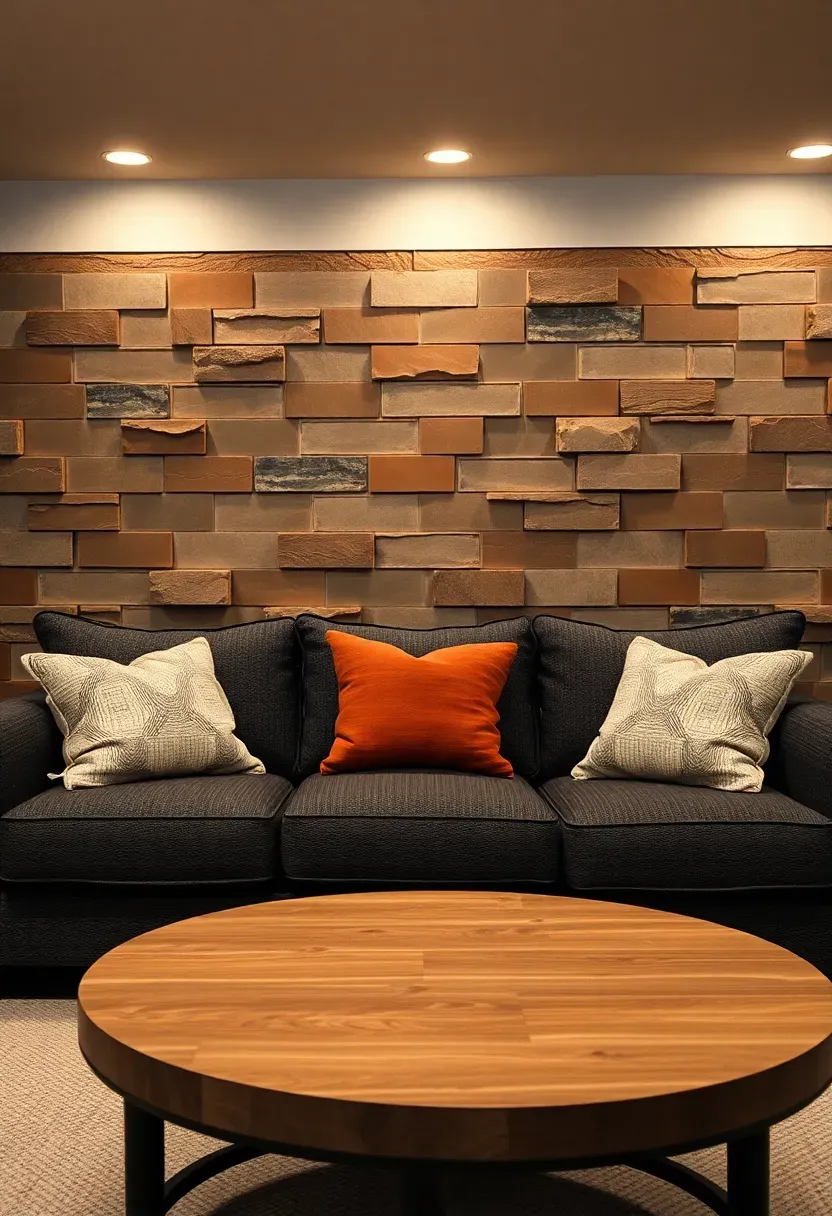
8. Peel-and-Stick Stone Tile
Why renters love this option
Peel-and-stick stone tiles use real thin-cut stone (marble, slate, or quartzite) bonded to a self-adhesive mesh backing. They go up without thinset, mortar, or grout — press them onto clean drywall and you are done. Removal is equally simple: heat with a hair dryer for 30 seconds per tile and peel away. This makes them ideal for finished basements in rental homes or for anyone who wants the option to change the look in a few years.
What to know
Tiles run $8 to $20 per square foot depending on the stone type. Adhesion is only as good as the surface underneath — clean the wall with TSP, let it dry completely, and apply tiles at room temperature (above 60 degrees F). In high-humidity basements, add a few dabs of construction adhesive behind each tile as insurance.
Choose peel-and-stick if
- You want a stone look without permanent commitment
- Your walls are already finished with smooth drywall
- Budget is moderate and you are comfortable paying per square foot for convenience
Recommended
Items for this idea
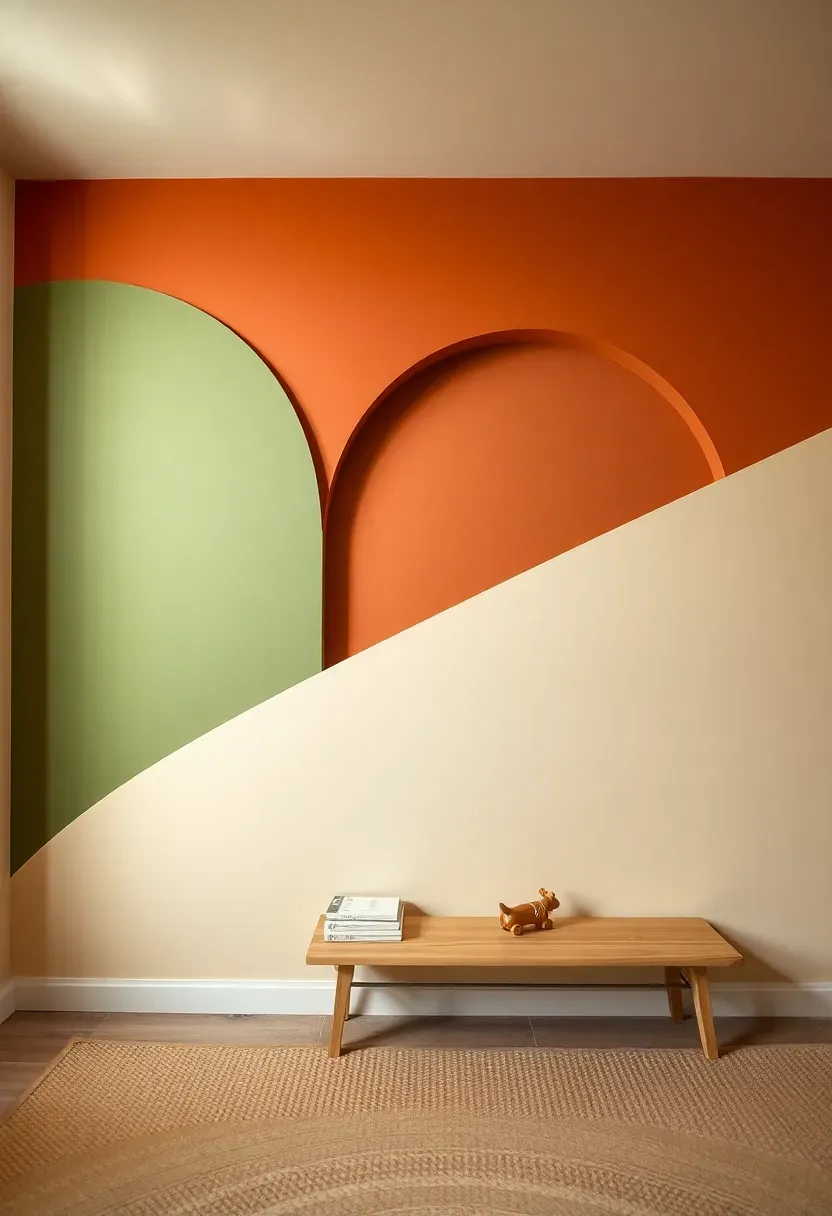
9. Geometric Paint Blocks
A roll of painter's tape and two or three paint colors can produce a wall that looks like you hired a muralist. The approach: map out geometric shapes — overlapping rectangles, chevrons, arched doorway silhouettes, or abstract color fields — using pencil lines and a level. Tape the edges, paint each section, pull the tape while the paint is still slightly tacky. Total material cost sits under $80 for a standard 8x12-foot wall. The design flexibility is the real advantage here. You can calibrate the palette to match existing furniture, and if you get bored in a year, it is just paint.
Tips
- Use Frog Tape for crisp lines — standard blue tape bleeds on textured drywall
- Apply a thin coat of the base color over the tape edges before your accent color to seal micro-gaps
- Limit yourself to three colors maximum to keep the composition from looking chaotic
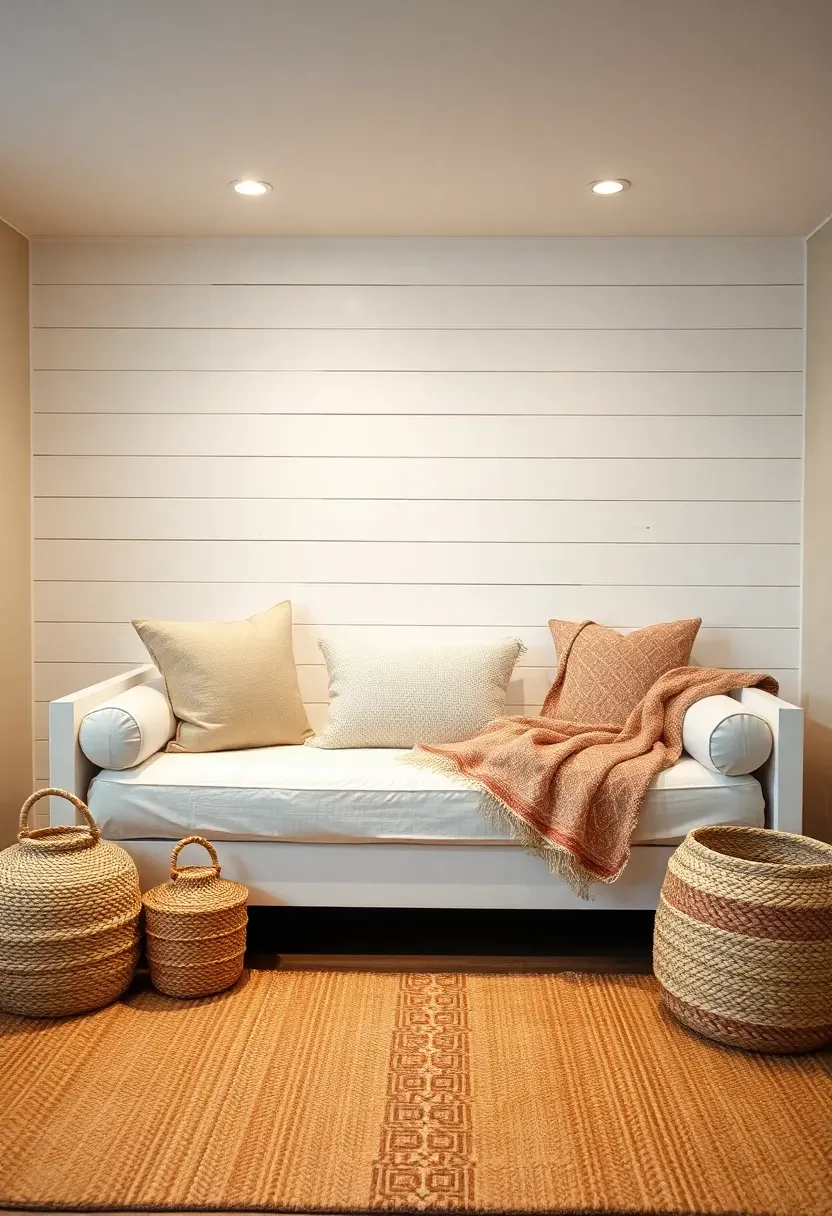
10. Shiplap Feature Wall
Shiplap has been everywhere for the past decade, which means opinions about it run strong. In basements specifically, it works well for one practical reason: the tongue-and-channel joint allows individual boards to expand and contract without buckling, which matters in spaces where humidity fluctuates seasonally. Install horizontally for a classic coastal or farmhouse feel, or run it vertically to add height to low ceilings. MDF shiplap boards (roughly $1.50 to $3 per linear foot) handle moisture better than pine and come pre-primed, saving a full step. Paint it white for brightness, or try a muted sage, warm gray, or black for something less expected.
Practical notes
- Nail into studs, not just drywall — each board needs at least two fastening points per stud bay
- Leave a nickel-width gap at floor and ceiling for expansion
- Do not install shiplap directly against an uninsulated foundation wall — add a vapor barrier or furring strips first
Recommended
Items for this idea
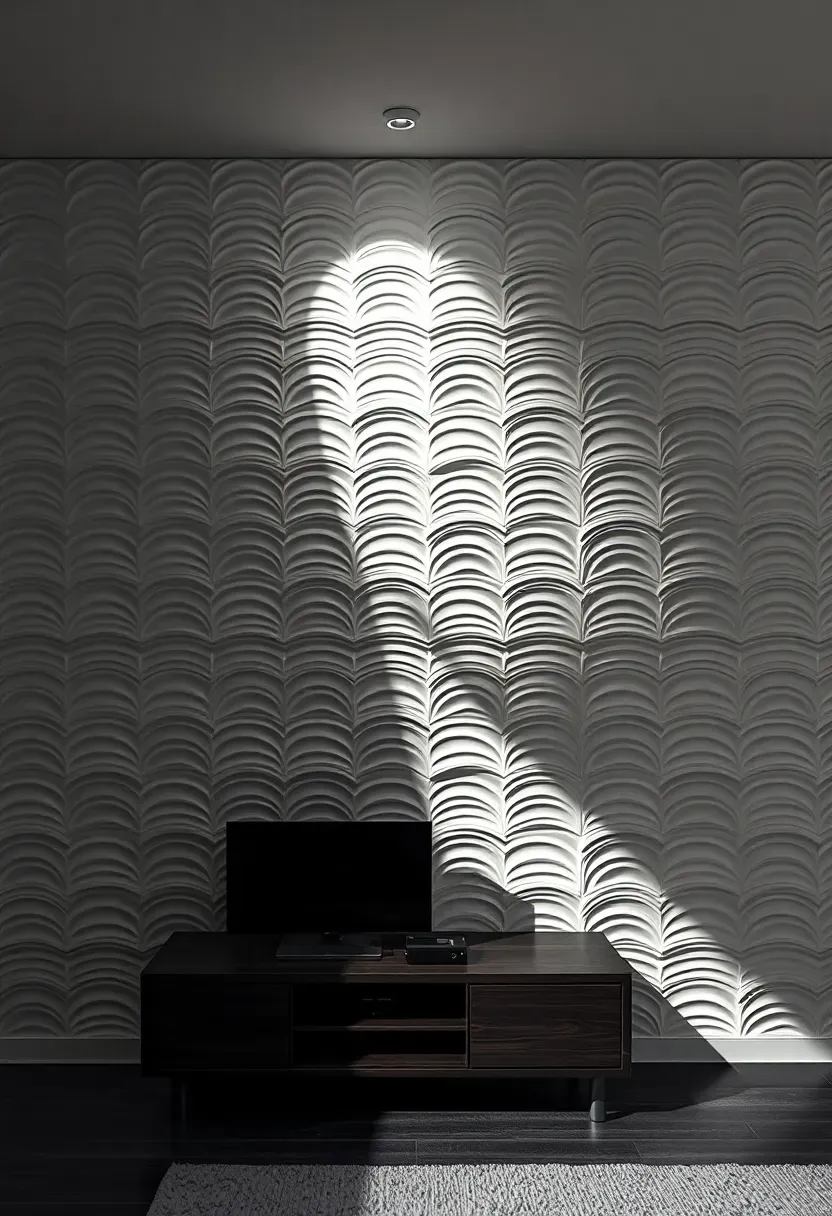
11. 3D Textured Wall Panel
Three-dimensional wall panels made from PVC, gypsum, or plant fiber come in interlocking tiles (typically 20x20 inches or 24x24 inches) that create sculptural patterns — waves, diamonds, origami folds, brick offsets. The appeal in a basement is that these panels create visual interest through shadow and depth rather than color, so they work even when painted a single neutral tone. Under directional lighting, the raised patterns cast shadows that shift throughout the day (or evening, since basements rarely see actual daylight). Installation is straightforward: adhesive on the back, press to drywall, fill seams with joint compound, sand, and paint.
Tips
- Light these panels from the side or below with wall washers — overhead lighting flattens the 3D effect
- PVC panels ($3 to $8 per square foot) handle humidity best for basements
- Keep the rest of the room simple so the textured wall stays the focal point
12. Faux Exposed Beam Wall
Origins of the look
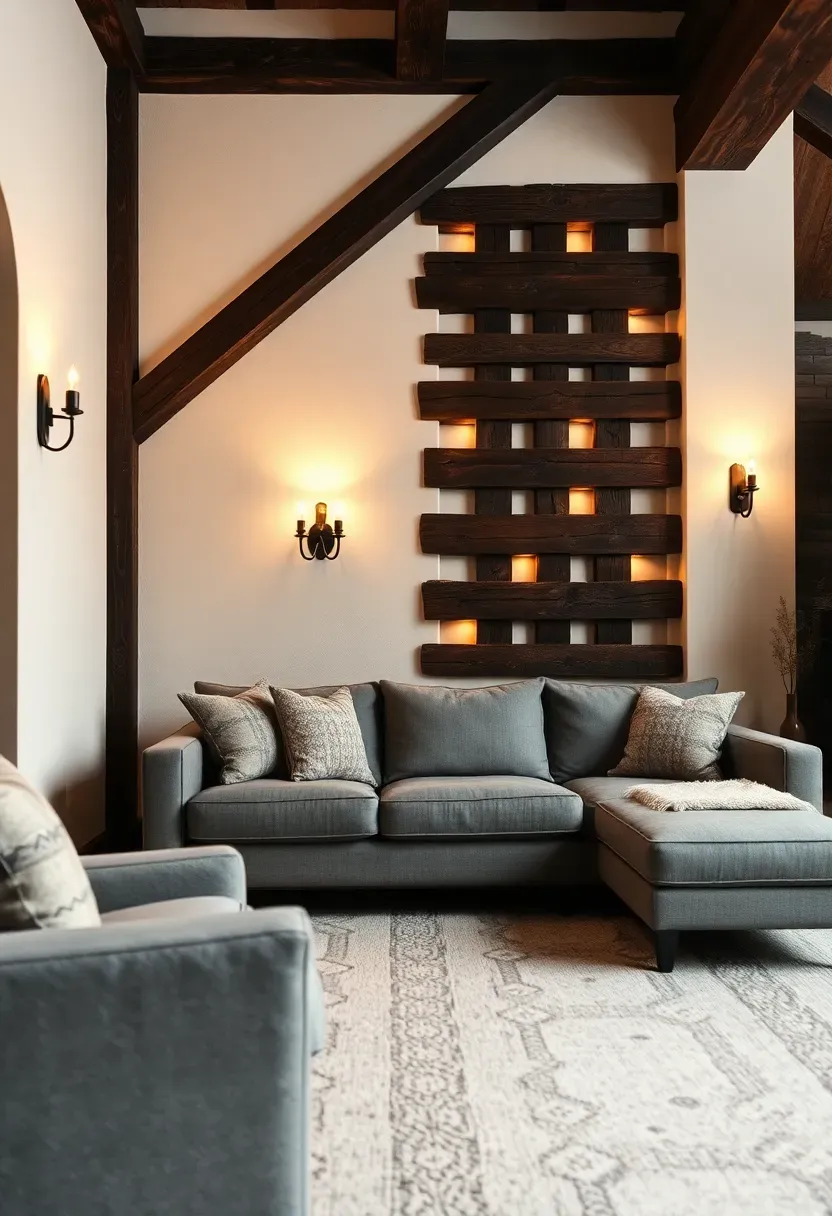
Exposed timber framing is a hallmark of post-and-beam construction dating back centuries. The intersecting horizontal and vertical timbers create a grid pattern that reads as structural and substantial, even when the beams are purely decorative.
Modern basement application
Polyurethane faux beams weigh a fraction of real timber (about 1 to 2 pounds per linear foot versus 15+ for solid wood) and install with screws into blocking. Arrange them in a grid or half-timber pattern against a white or cream-painted wall. The contrast between dark "timbers" and light plaster is what sells the effect. Faux beams run $12 to $25 per linear foot and come in finishes from rough-hewn cedar to hand-scraped oak.
Apply at home
- Map your beam layout on the wall with tape first to check proportions before drilling
- Use beams at least 4 inches wide for visual weight — anything thinner looks like trim
- Pair with iron or black metal hardware (sconces, shelf brackets) to reinforce the rustic character
Recommended
Items for this idea
13. Cork Accent Wall
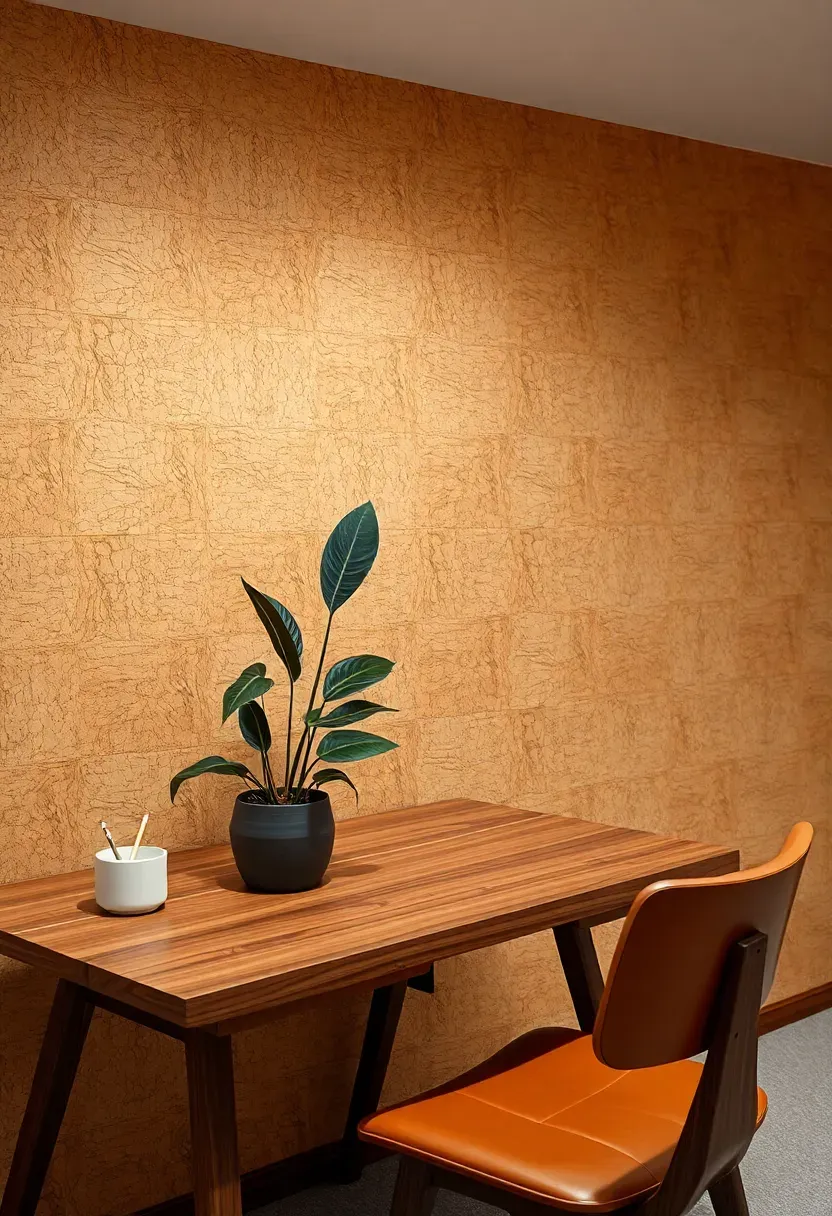
Cork tiles bring warmth, texture, and a genuine functional benefit to basements: sound absorption. A 12x24-inch cork tile wall panel absorbs about 0.15 to 0.30 NRC (noise reduction coefficient), which is noticeable in hard-surfaced basement rooms where sound bounces off concrete floors and drywall. Cork also acts as a mild thermal insulator, making the wall slightly warmer to the touch than bare drywall — a small comfort in below-grade spaces. Tiles adhere with contact cement and cost $4 to $9 per square foot. Choose natural cork with its organic mottled pattern, or opt for dyed cork in charcoal, forest green, or navy for a bolder statement.
Tips
- Seal cork with a water-based polyurethane to protect against humidity without darkening the color
- Stagger tile joints like brickwork to avoid continuous seam lines
- Cork darkens slightly over time with UV exposure, but basement walls rarely get direct sunlight, so the color stays more stable than upstairs applications
14. Black Steel and Wood Grid
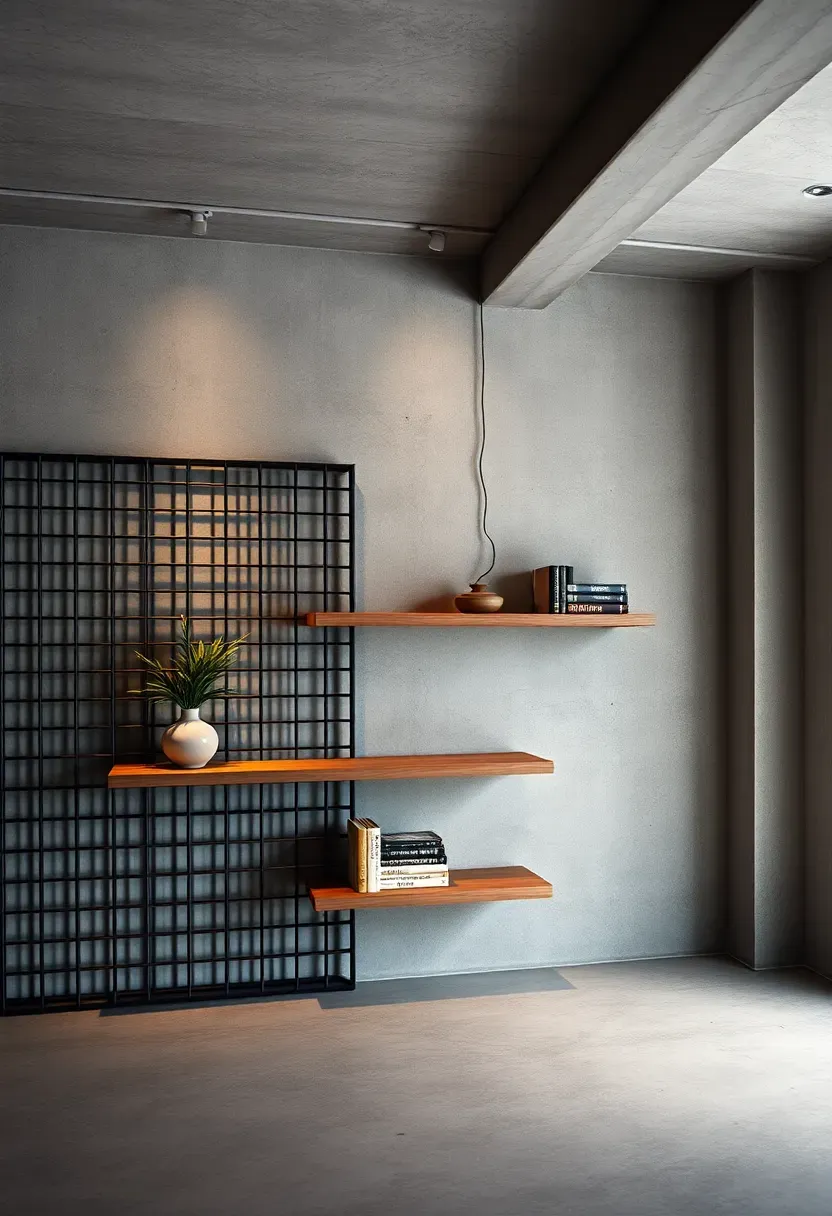
This look borrows from industrial lofts and Crittall-style windows. Weld or bolt together a grid of flat steel bar (1-inch by 1/4-inch works well) into rectangular frames, then paint satin black. Mount the grid to the wall and fill select openings with floating wood shelves, leaving others open. The result is part accent wall, part display system. For a non-welding version, use black iron pipe fittings and flanges to build the grid — more hardware-store accessible and still reads as industrial.
Step-by-step overview
- Measure your wall and sketch a grid layout — 12 to 18-inch openings work for most shelf items
- Cut flat bar or pipe to length and assemble the frame on the floor
- Mount to wall studs using lag screws through pre-drilled holes in the frame
- Slide cut-to-fit wood shelves into selected grid openings
Watch out
- Steel is heavy — get a second person for mounting and use at least 3-inch lag screws into studs
- Sand and prime bare steel before painting to prevent basement humidity from causing rust
Recommended
Items for this idea
15. Limewash Paint Finish
Limewash creates a mottled, lived-in surface that synthetic paints cannot replicate. The slight variation in opacity — thicker in some spots, thinner in others — gives walls a depth that flat latex paint lacks entirely. Romabio and Kalklitir are two widely available brands. Apply with a masonry brush in crisscross strokes to build up the characteristic texture. Limewash bonds best to porous surfaces like bare plaster, brick, or flat-painted drywall (it will not stick well to semi-gloss or satin finishes). One gallon covers about 200 to 300 square feet and costs $45 to $65.
Tips
- Apply two to three thin coats, allowing each to dry for 24 hours
- Limewash naturally resists mold and mildew — a genuine advantage in basement applications
- The color dries significantly lighter than it looks wet, so test a swatch and wait a full day before judging
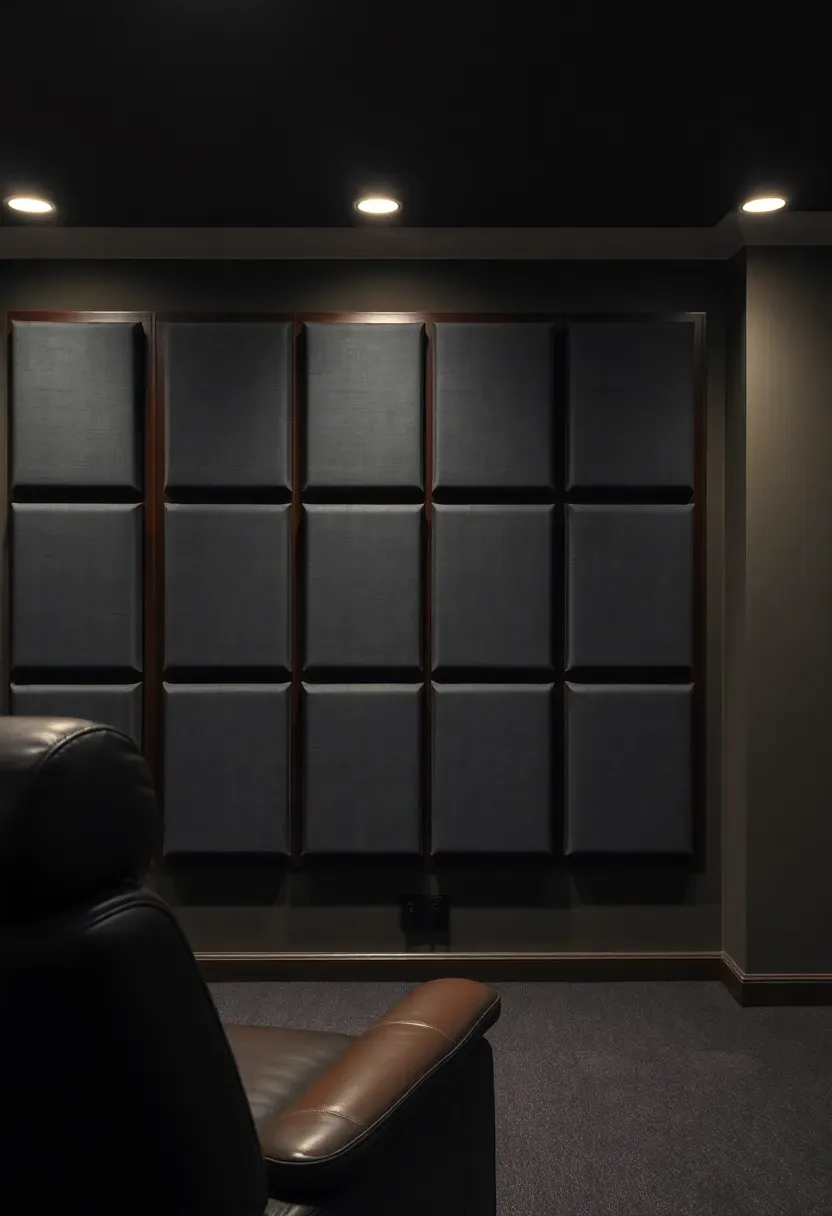
16. Fabric-Wrapped Sound Panel
The problem with basement acoustics
Hard surfaces everywhere — concrete floor, drywall, maybe a drop ceiling with metal grid. Sound bounces and multiplies, making movie nights louder than they need to be and phone calls echoey.
The solution
Build simple 2x4-foot frames from 1x3 lumber, fill with 2-inch rigid fiberglass insulation (Owens Corning 703 is the standard), and wrap in acoustically transparent fabric like Guilford of Maine FR701. Mount in a grid pattern or stagger at ear height. Each panel absorbs mid and high-frequency sound, dropping the room's reverberation time noticeably. Total cost per panel: $25 to $40 in materials.
Pros and cons
- Measurably improves sound quality for home theaters and music rooms
- Fabric choices let you match any color scheme or pattern
- Requires careful wrapping to avoid visible staples or bunching — a pneumatic staple gun helps
Recommended
Items for this idea
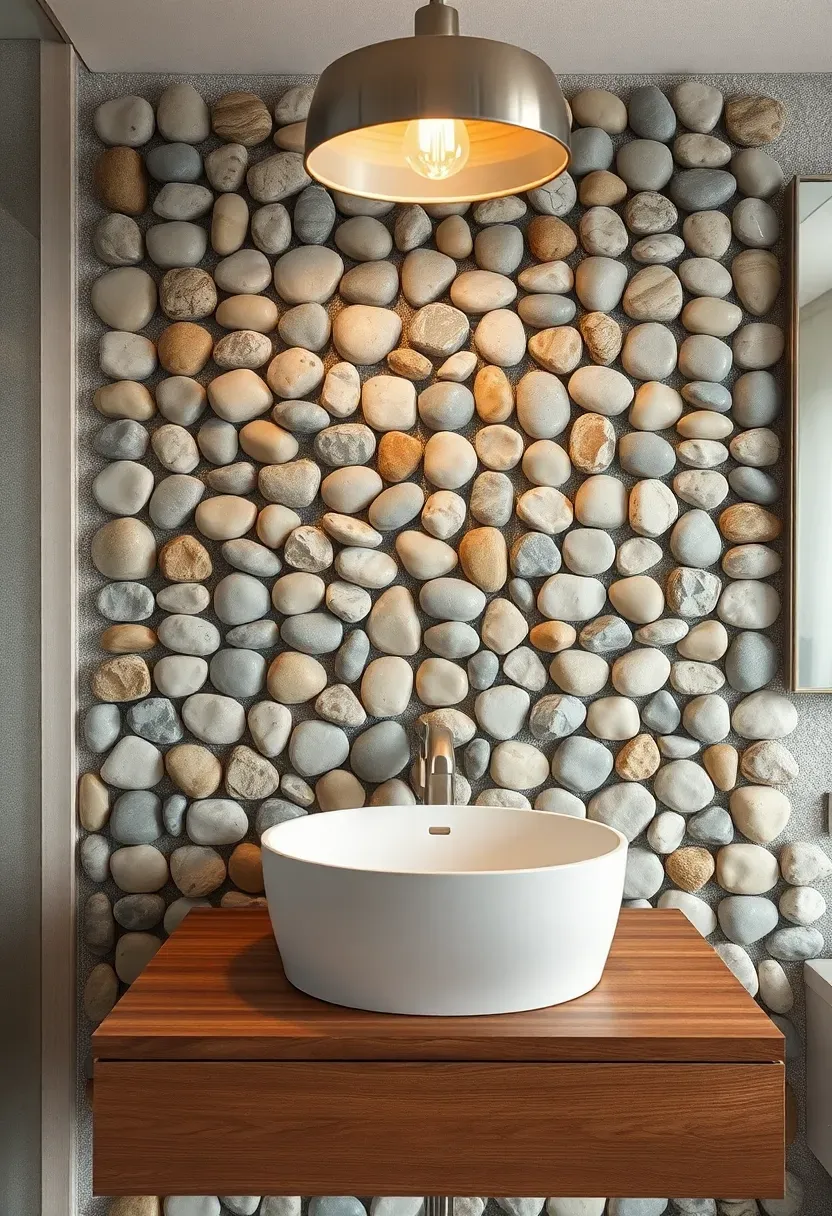
17. River Rock Mosaic
Mesh-backed river rock sheets bring an organic, spa-adjacent texture to basement bathrooms, wet bars, or accent niches. The rounded stones create an uneven surface that catches light differently across every square inch. Install with white or gray thinset on cement board, then grout with a sanded grout in a contrasting or complementary color. The irregular surface makes grouting slower than standard tile — budget extra time for wiping excess grout from the curved stone surfaces. River rock mosaic sheets cost $8 to $16 per square foot and work best as a contained feature (behind a vanity, inside a niche, or as a 4-foot-wide vertical band) rather than covering an entire large wall.
Tips
- Seal the stones before and after grouting to prevent water absorption and staining
- Use a grout bag rather than a float for filling joints — the bag gives you more control around rounded surfaces
- Pair with warm-toned lighting to highlight the natural color variation in the stones
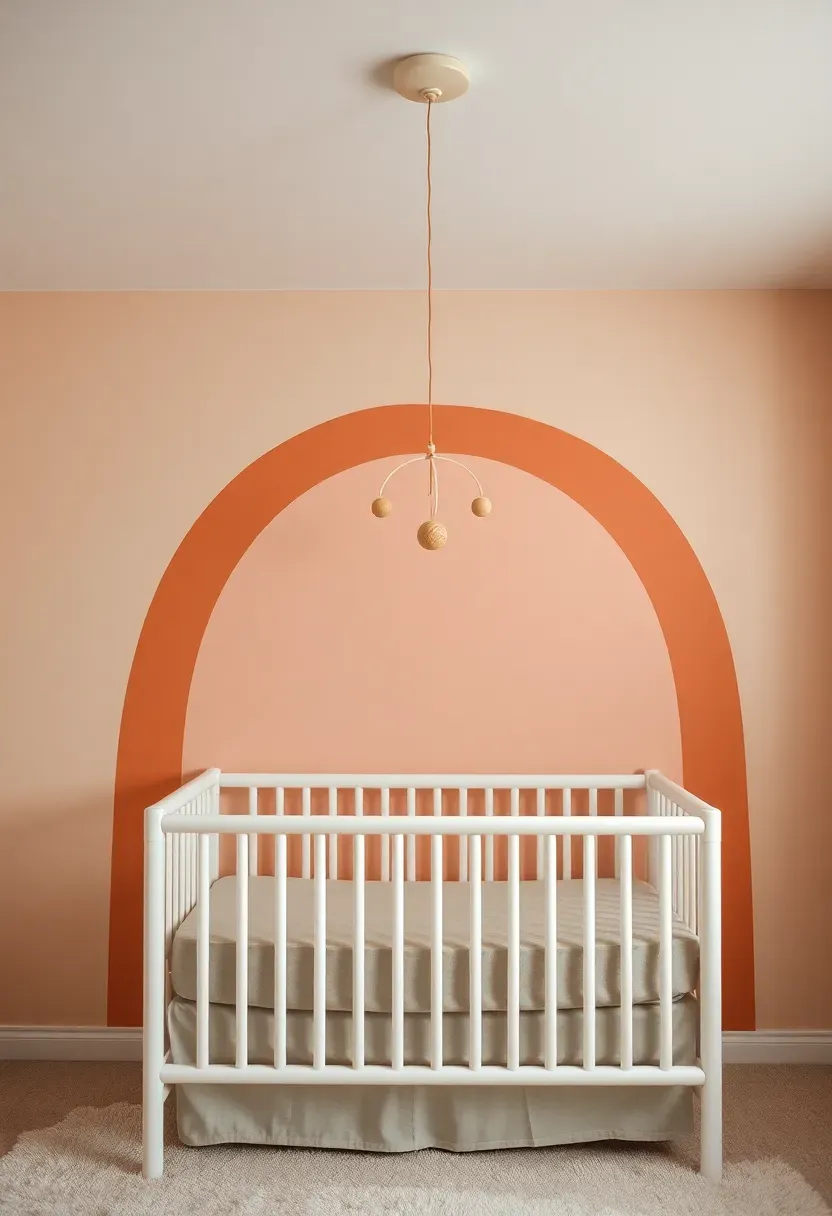
18. Painted Arch Mural
A painted arch creates the illusion of an architectural element — a doorway, a window, an alcove — on a flat wall. The shape is forgiving to paint freehand (use a pencil on a string anchored with a nail as a compass for the curve), and the color fill inside the arch adds warmth without committing the entire wall to a bold shade. This technique is popular in nurseries and playrooms, but sized up with more sophisticated colors — deep olive, dusty rose, burnt umber — it works in adult basement lounges and guest rooms too. The entire project takes about three hours and two quarts of paint.
Tips
- Start the arch from roughly 8 to 12 inches above the floor on each side so it reads as a full form, not a floating shape
- Layer two or three overlapping arches in related tones for added depth
- Use a 2-inch angled brush for the curved top section, then roll the flat interior
Recommended
Items for this idea
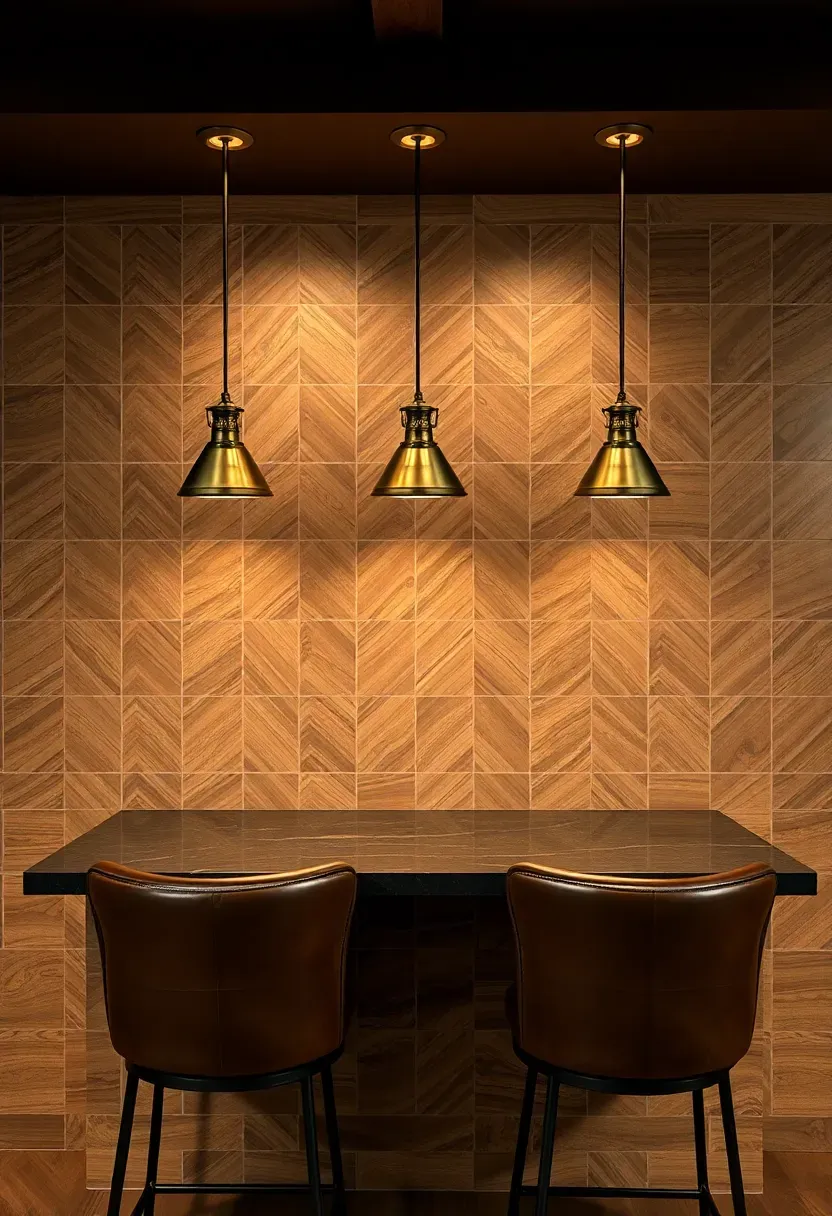
19. Herringbone Wood Tile
Why tile instead of real wood
Porcelain tiles that mimic wood grain handle basement humidity without any of the warping, swelling, or mold risk that actual hardwood brings to below-grade spaces. A herringbone pattern adds geometric energy that standard plank-style installation lacks.
How to lay it
Use 3x12-inch or 4x16-inch wood-look porcelain tiles. Snap a vertical center line on your wall and work outward in alternating 45-degree angles. Modified thinset and 1/16-inch spacers keep everything tight. The pattern requires precise cuts at the wall edges — a wet saw with a diamond blade is non-negotiable. Budget $6 to $14 per square foot for quality wood-look porcelain.
Choose herringbone tile if
- Your accent wall is near a wet bar, bathroom, or laundry area where moisture is constant
- You want the warmth of wood without the maintenance commitment
- You appreciate geometric patterns and do not mind the extra cutting time
20. Corrugated Metal Accent
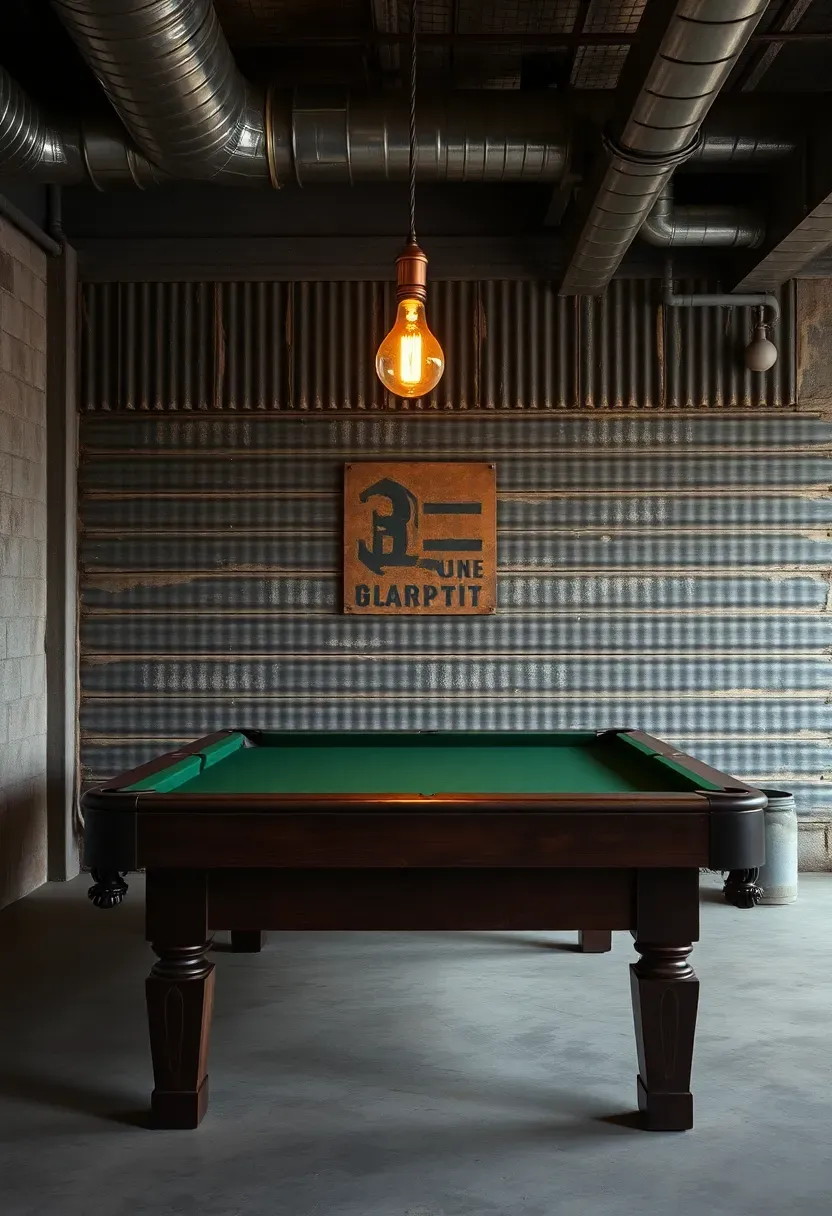
Corrugated metal panels — the kind used for barn roofing and agricultural siding — cost surprisingly little ($1.50 to $4 per square foot) and create a raw, industrial-meets-rustic texture that pairs well with exposed ductwork and concrete floors common in basements. Use 26-gauge galvanized steel panels for a bright silver tone, or source pre-weathered Corten-style panels for an instant aged-rust look. Cut panels to height with aviation snips or a nibbler, then screw into furring strips with self-tapping metal screws. The corrugation profile adds shadow lines that respond well to directional lighting.
Practical notes
- Wear cut-resistant gloves — metal panel edges are sharp
- Apply a clear coat sealer if using raw steel to prevent rust progression from basement humidity
- Cap exposed panel edges with a flat metal trim piece to cover sharp cuts
Recommended
Items for this idea
21. Moss and Preserved Plant Wall
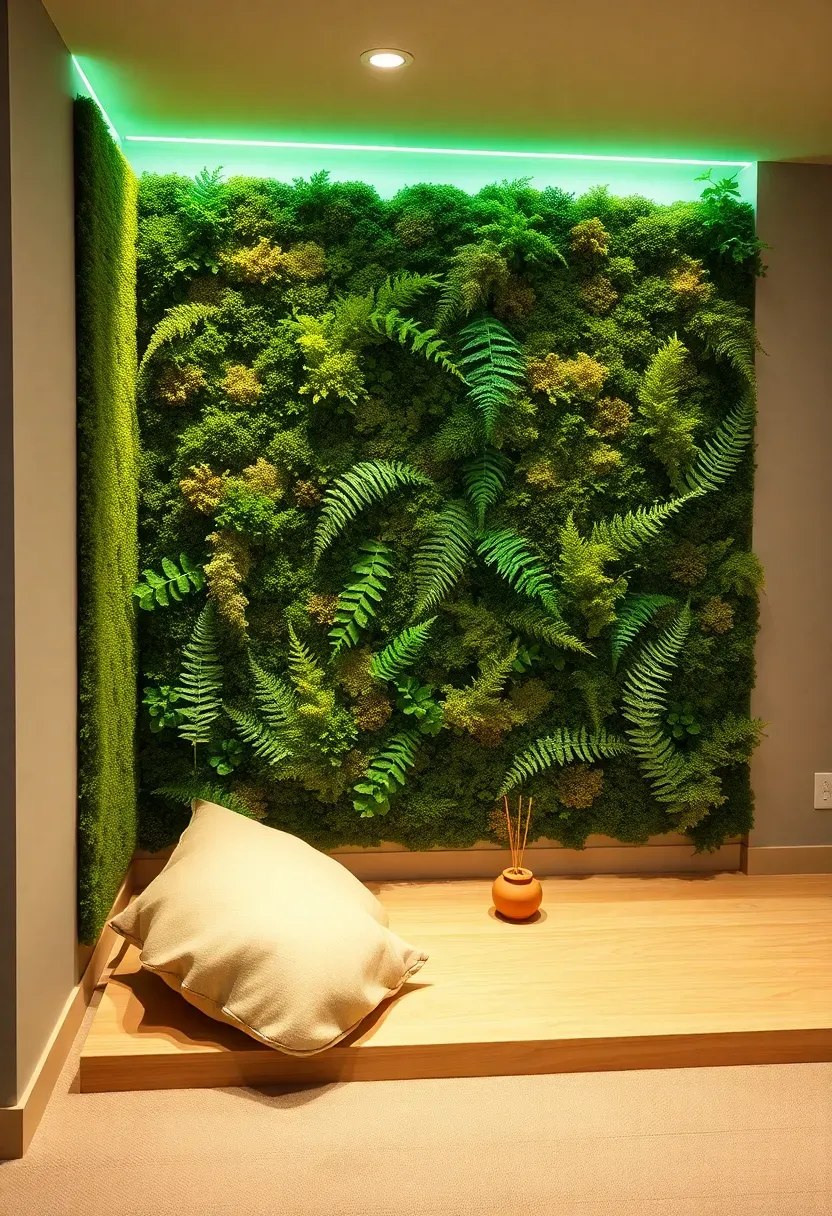
Preserved moss walls use real moss that has been treated with glycerin to maintain its color and softness without water, soil, or sunlight — three things basements typically lack anyway. Panels of sheet moss, reindeer moss, or a mix of both attach to a plywood backing with hot glue or pins, then mount to the wall. A 4x8-foot panel costs roughly $40 to $80 per square foot when purchased pre-made, or $15 to $25 per square foot if you source preserved moss in bulk and build the panel yourself. The wall adds genuine biophilic texture to a room that might otherwise feel entirely synthetic.
Tips
- Preserved moss requires zero maintenance — no watering, no light, no trimming
- Avoid placing moss walls directly above heating vents, which dry out the glycerin treatment over time
- Mix moss types (flat sheet moss for background, clump reindeer moss for dimension, preserved ferns for accent) for the most natural-looking result
Quick FAQ
Do basement accent walls cause moisture problems? Only if you trap moisture behind the material. Always leave an air gap or use a vapor barrier between your accent wall material and the foundation wall. Materials like cork, limewash, and microcement actually handle humidity well. Avoid impermeable materials directly against unfinished concrete without proper drainage and ventilation behind them.
Which accent wall material is cheapest for a basement? Paint techniques like geometric color blocks, limewash, or a simple dark moody wall cost under $100 in materials for a full wall. Board and batten with MDF runs $3 to $6 per square foot. Corrugated metal panels start around $1.50 per square foot but require furring strips and fasteners on top of that.
Can I install an accent wall on a concrete block basement wall? Yes, but add furring strips (1x3 or 2x2 lumber) attached with concrete screws first. This gives you a flat nailing surface and creates the air gap needed to prevent moisture from migrating into your finish material. For tile or stone veneer, cement board screwed to furring strips is the standard substrate.
Should I pick a light or dark accent wall for a basement with no windows? It depends on your lighting setup. Dark walls with good directional lighting (sconces, recessed cans, LED strips) create a cozy, intentional atmosphere. Light walls make the space feel bigger but can look washed out under fluorescent lighting. Replace any fluorescent tubes with warm-white LEDs before deciding on wall color.
Will wood accent walls attract mold in a basement? Real wood can if the basement has active moisture issues. Use kiln-dried or heat-treated wood, maintain a dehumidifier (keep relative humidity below 55%), and never install wood directly against an unsealed foundation wall. Porcelain wood-look tile and PVC-based alternatives eliminate the mold risk entirely.
A basement accent wall does not need to be complicated or expensive to change the feel of the room. Start with the simplest option that fits your skill level — paint costs almost nothing, peel-and-stick stone goes up in an afternoon, and board and batten only requires a brad nailer. The key is addressing moisture first and design second. Get a dehumidifier running, check for any active water intrusion, and make sure your wall substrate is dry before you attach anything to it. Once the environment is right, pick a material that makes you want to actually spend time down there.
Pinterest cover for 21 Basement Accent Wall Ideas
About the author
OBCD
CGI visualization and interior design content. We create detailed 3D renders and curate practical design ideas for every room in your home.