23 Basement Carpet Ideas for a Cozy Space
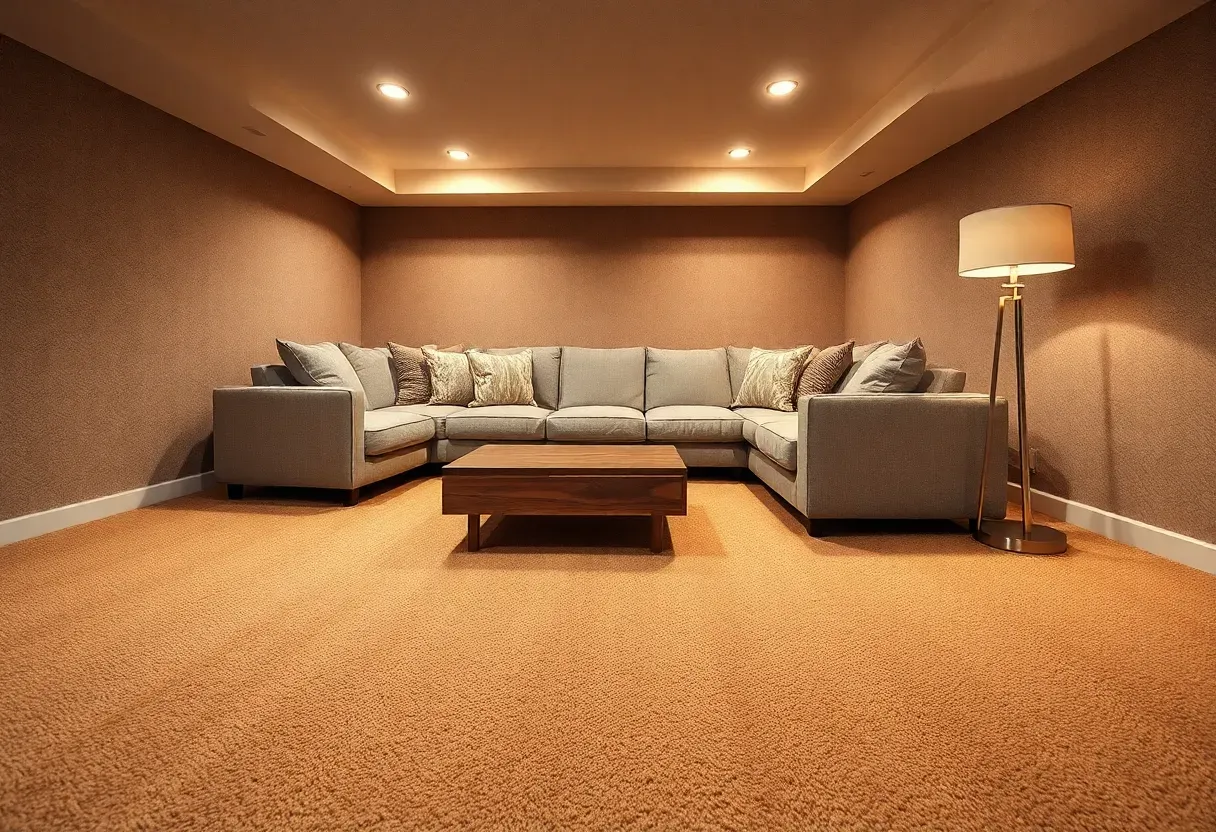
Basements sit below grade, and that changes everything about flooring decisions. Concrete slabs wick moisture upward. Temperature swings happen faster than in upstairs rooms. Foot traffic patterns differ because basements tend to serve multiple purposes at once — a playroom corner here, a movie-watching zone there, a home gym mat against the far wall. Carpet remains one of the best choices for basements precisely because it adds warmth underfoot, absorbs sound between floors, and makes concrete feel habitable. The catch is picking the right type. Not every carpet handles moisture or temperature shifts well, and a bad choice down here shows damage faster than anywhere else in the house.
Below you'll find 23 carpet approaches organized by style, material, and room function. I've mixed practical budget picks with a few higher-end options worth the investment.
Table of Contents
- Berber Loop Pile in Warm Gray
- Carpet Tiles for Flexible Layouts
- Plush Cut Pile for the Movie Room
- Indoor-Outdoor Carpet for Damp Basements
- Patterned Carpet Runner on Concrete
- Frieze Twist for High-Traffic Zones
- Wall-to-Wall Neutral Saxony
- Dark Charcoal Statement Carpet
- Carpet with Radiant Floor Heating
- Geometric Carpet Tiles in Two Tones
- Low-Pile Commercial Grade
- Cozy Shag for the Reading Nook
- Striped Carpet for a Narrow Basement
- Wool Blend for the Finished Rec Room
- Carpet Over Vinyl Plank Combo
- Basement Stairs Carpet Runner
- Pet-Friendly Stain-Resistant Carpet
- Bold Color Block Carpet Tiles
- Sisal-Look Synthetic for Dry Basements
- Carpet with Built-In Moisture Barrier
- Multi-Zone Carpet Plan
- Vintage Persian Rug Over Carpet
- Basement Gym Carpet Tiles
1. Berber Loop Pile in Warm Gray
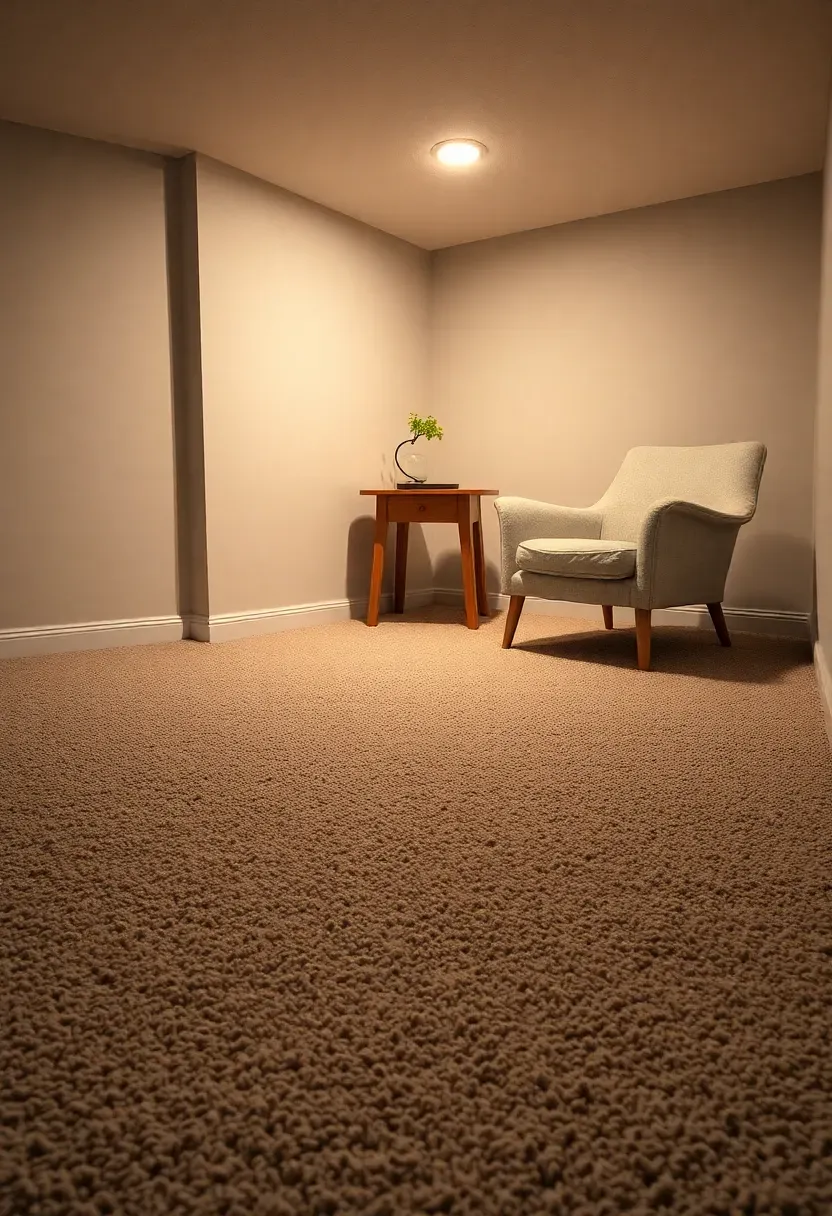
Berber carpet earned its reputation in basements for good reason. The looped construction resists crushing under furniture legs and foot traffic better than cut pile alternatives. Warm gray works particularly well below grade because it hides the slight discoloration that basement humidity can cause over time. The tight loops also trap less dust than plush styles, which matters in a space where air circulation is limited compared to above-grade rooms. Stick with olefin or polypropylene fiber rather than nylon — both resist moisture and mildew without chemical treatments.
What to Know Before Installing
- Choose level-loop rather than multi-level loop; the even surface hides seams better on concrete
- Use a synthetic pad rated for below-grade installation — rubber-backed, not rebond foam
- Expect to pay $2-4 per square foot for material; installation on concrete adds $1-2 more
We picked a few things that go well with this idea: Smart Squares Peel-and-Stick Carpet Tiles (10-Pack) (★4.0), Mohawk Peel-and-Stick Carpet Tiles Grey (15-Pack) (★4.4) and Achim Nexus Self-Adhesive Carpet Tiles (12-Pack) (★4.2). As an Amazon Associate we earn from qualifying purchases.
2. Carpet Tiles for Flexible Layouts
Why Tiles Beat Broadloom in Basements
Basements flood. Pipes leak. Water heaters fail. When wall-to-wall carpet gets soaked, you tear out the entire thing. Carpet tiles let you pull up the affected section, dry the concrete, and replace just those squares. A 20x20-foot basement needs roughly 80 tiles at the standard 20-inch size, and keeping a spare box in the closet means repairs happen same-day.
How to Lay Them Right
Start from the center of the room and work outward so cut tiles end up along walls where furniture hides them. Peel-and-stick adhesive tabs hold better on concrete than liquid glue, which can trap moisture underneath. Alternate tile direction in a quarter-turn pattern for a subtle texture shift that disguises seams.
Watch Out For
- Tiles on uneven concrete will rock underfoot — self-leveling compound first if the floor has dips greater than 1/8 inch
- Cheap tiles curl at edges within a year; spend at least $3 per tile for ones with solid PVC backing
We picked a few things that go well with this idea: ROBERTS Moisture Barricade Underlayment Film (120 sqft) (★4.5), QuietWalk Sound & Moisture Barrier Underlayment (360 sqft) (★4.6) and ROBERTS Black Jack Underlayment Roll (100 sqft) (★4.5). As an Amazon Associate we earn from qualifying purchases.
3. Plush Cut Pile for the Movie Room
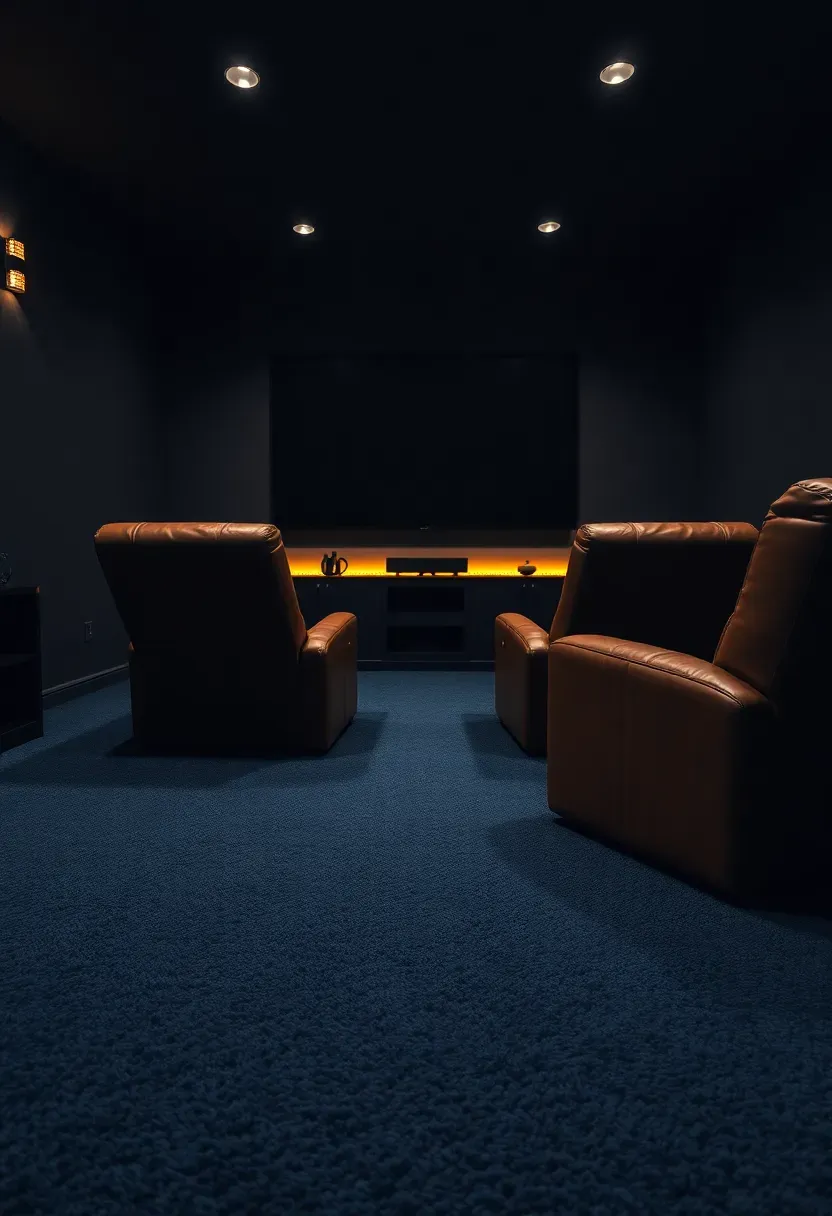
Nothing beats thick cut pile underfoot when you're padding barefoot to the couch for a late movie. The dense fibers absorb sound — critical in a basement theater where hard concrete walls bounce audio around. A deep charcoal or navy plush disappears in dim lighting and won't show popcorn crumbs the way lighter colors do. The tradeoff is maintenance: plush shows vacuum tracks and footprints, and it crushes permanently under heavy recliners unless you use furniture coasters.
Tips
- Pair with a thick 8-pound density pad for maximum sound dampening
- Run the pile direction toward the screen so light reflects evenly when the room is lit
- Stick to solution-dyed nylon; it holds dark color without fading even under UV-blocking basement window film
We picked a few things that go well with this idea: Solid Brass Stair Carpet Rods (13-Pack) (★4.2), Brass Bee Stair Rod with Bee Finial (★4.7) and Solid Brass Stair Carpet Rods (5-Pack) (★4.2). As an Amazon Associate we earn from qualifying purchases.
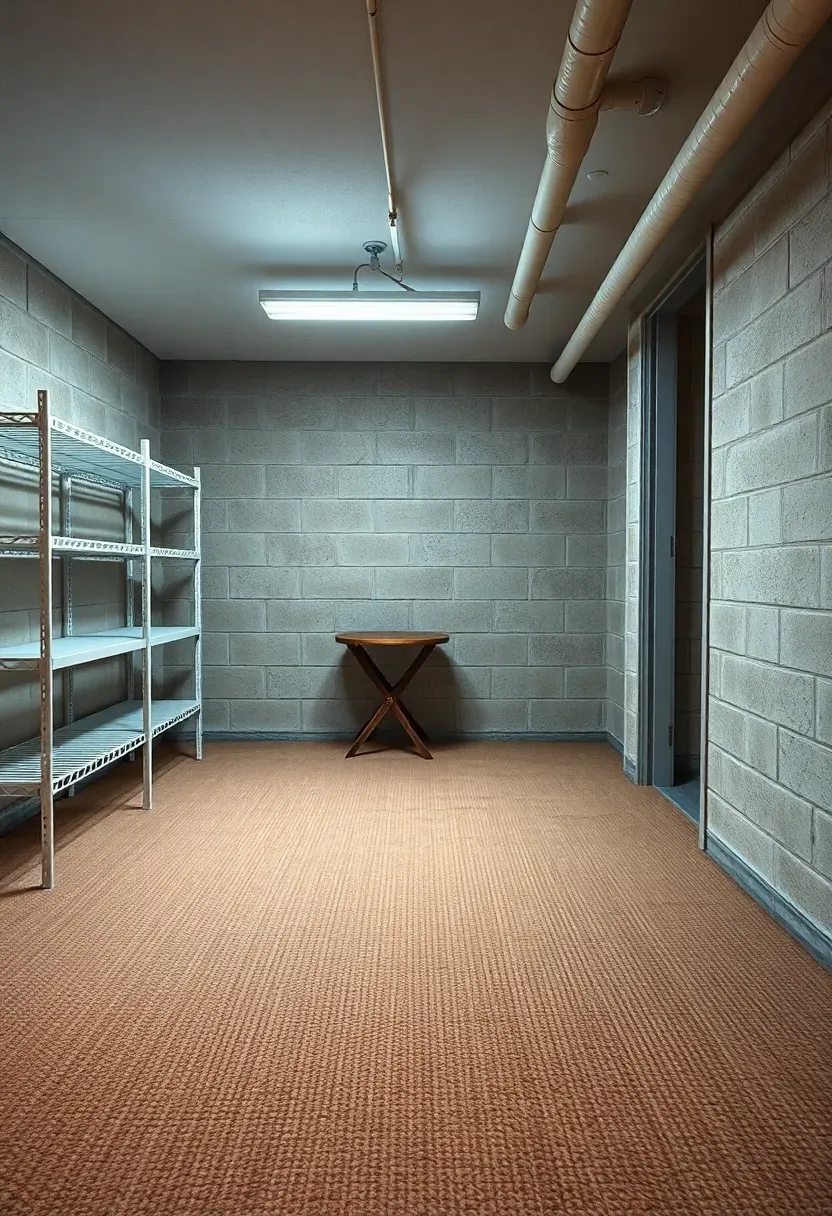
4. Indoor-Outdoor Carpet for Damp Basements
The Problem
Some basements never fully dry out. Maybe the waterproofing is old, or the water table sits high, or the HVAC system doesn't reach that far corner. Standard carpet in these conditions develops mildew within months — you'll smell it before you see it.
The Fix
Indoor-outdoor carpet uses polypropylene fibers that don't absorb water. The backing is usually marine-grade, designed for boat decks. It dries fast, resists mold, and can be hosed off if something spills. The texture is flatter and firmer than residential carpet, closer to a woven mat than a plush surface. Modern versions have improved significantly — you can find options with a soft hand feel that don't scream "porch carpet."
Honest Tradeoffs
- Less cushion underfoot than traditional carpet; pair with foam tiles underneath if comfort matters
- Color options are narrower; expect grays, tans, and greens rather than bold choices
- It will never feel as luxurious as a good nylon cut pile
Recommended
Items for this idea
5. Patterned Carpet Runner on Concrete
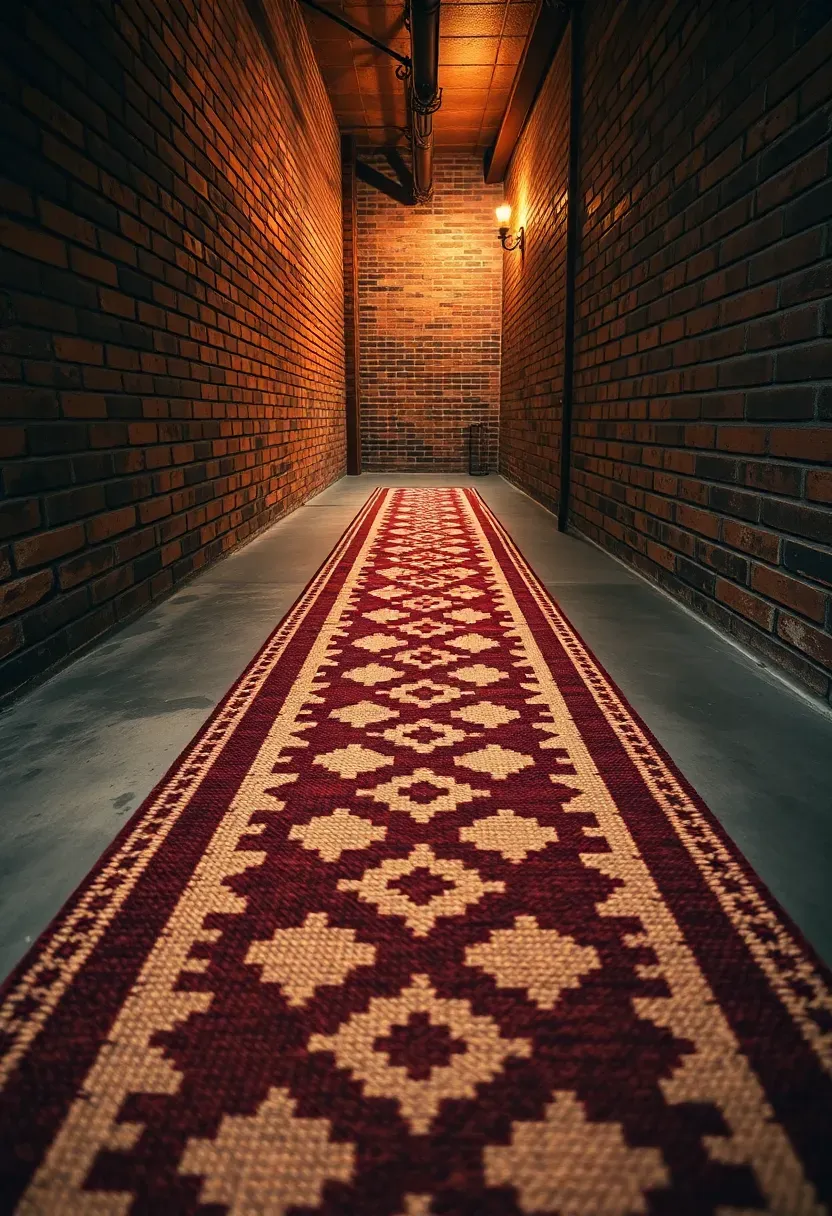
If your basement concrete is sealed and in decent shape, a runner down the main walkway gives you carpet comfort where feet actually land without committing the whole floor. Runners with geometric or Persian-inspired patterns add visual interest that plain broadloom cannot. Anchor both ends with double-sided carpet tape rated for concrete — the heavy-duty kind used in commercial lobbies. A 3-foot-wide runner through a 30-foot basement hallway costs roughly $150-300 depending on material, versus $2,000+ for wall-to-wall in the same area.
Tips
- Use a non-slip rug pad underneath; carpet tape alone shifts on smooth concrete
- Pick a pattern busy enough to hide basement dust — small repeats work better than large open motifs
- Rotate the runner 180 degrees every six months to even out wear
6. Frieze Twist for High-Traffic Zones
What Makes Frieze Different
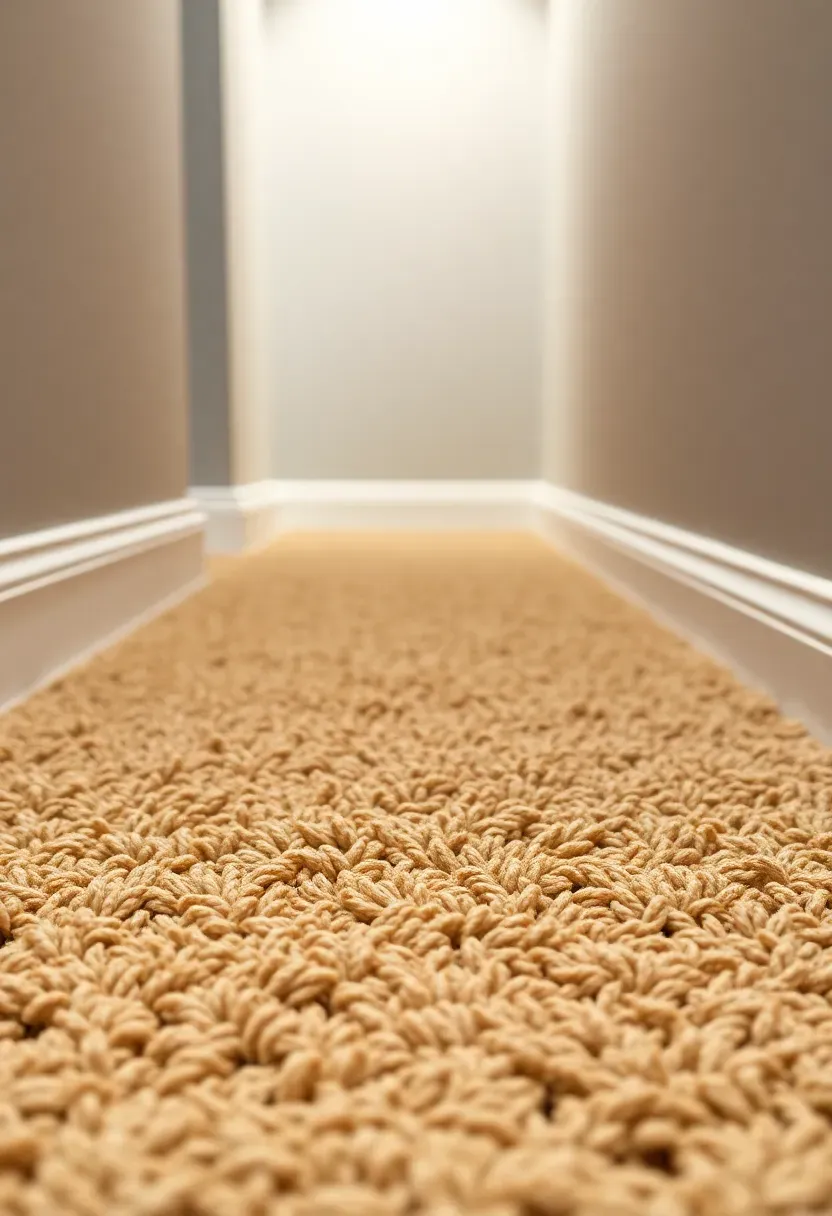
Frieze (pronounced free-ZAY) carpet has extra-twisted fibers that curl in different directions. That random texture hides footprints, vacuum marks, and the general wear patterns that show up fast in basements where the same path gets walked daily — stairs to laundry, laundry to storage, storage back to stairs.
Step-by-Step Selection
- Pick a fiber: nylon for durability, polyester for stain resistance, polypropylene for moisture zones
- Check the twist count — 5+ twists per inch holds up best in high-traffic spots
- Choose a mid-tone color (oatmeal, taupe, warm stone) that splits the difference between showing dirt and showing lint
- Ask for a sample and leave it on your basement floor for 48 hours to see how humidity affects it
Watch Out
- Frieze sheds loose fibers for the first few weeks after installation; vacuum frequently at first
- The textured surface catches pet claws more than loop pile
Recommended
Items for this idea
7. Wall-to-Wall Neutral Saxony
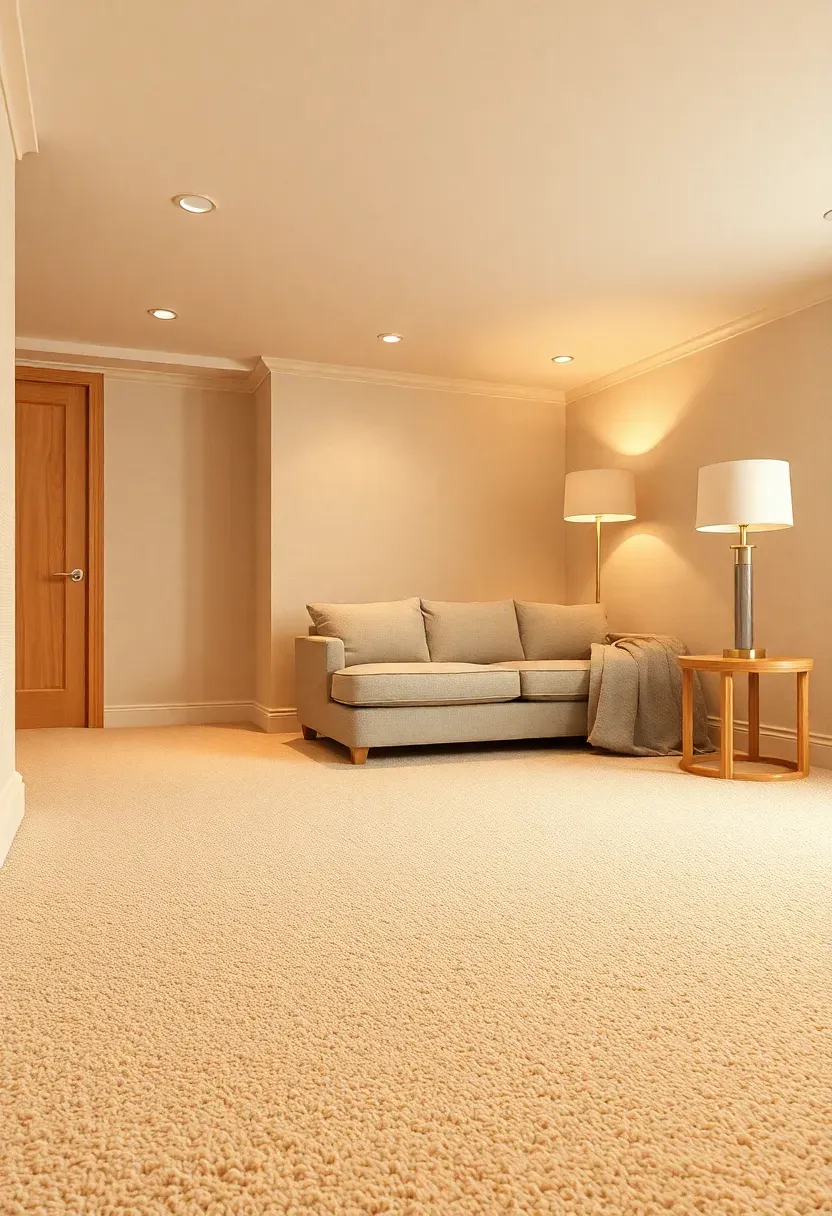
Saxony is the classic "living room carpet" — dense, even, with a smooth velvet-like surface. It reads as finished and intentional, which is exactly the signal you want to send in a basement that's been converted from raw storage to a real living space. Cream or warm beige saxony on a below-grade floor immediately makes the room feel like it belongs to the rest of the house rather than being a concrete afterthought. The downside is real: saxony shows every footprint and furniture indent, and it requires more frequent vacuuming than textured alternatives.
Tips
- Choose a high-density option (minimum 3,000 face weight) to resist matting
- Keep a dehumidifier running year-round if you go with saxony — it absorbs and holds humidity visually as a slight dullness
- Plan on professional cleaning annually; saxony traps basement dust deep in the pile
8. Dark Charcoal Statement Carpet
The Case for Going Dark
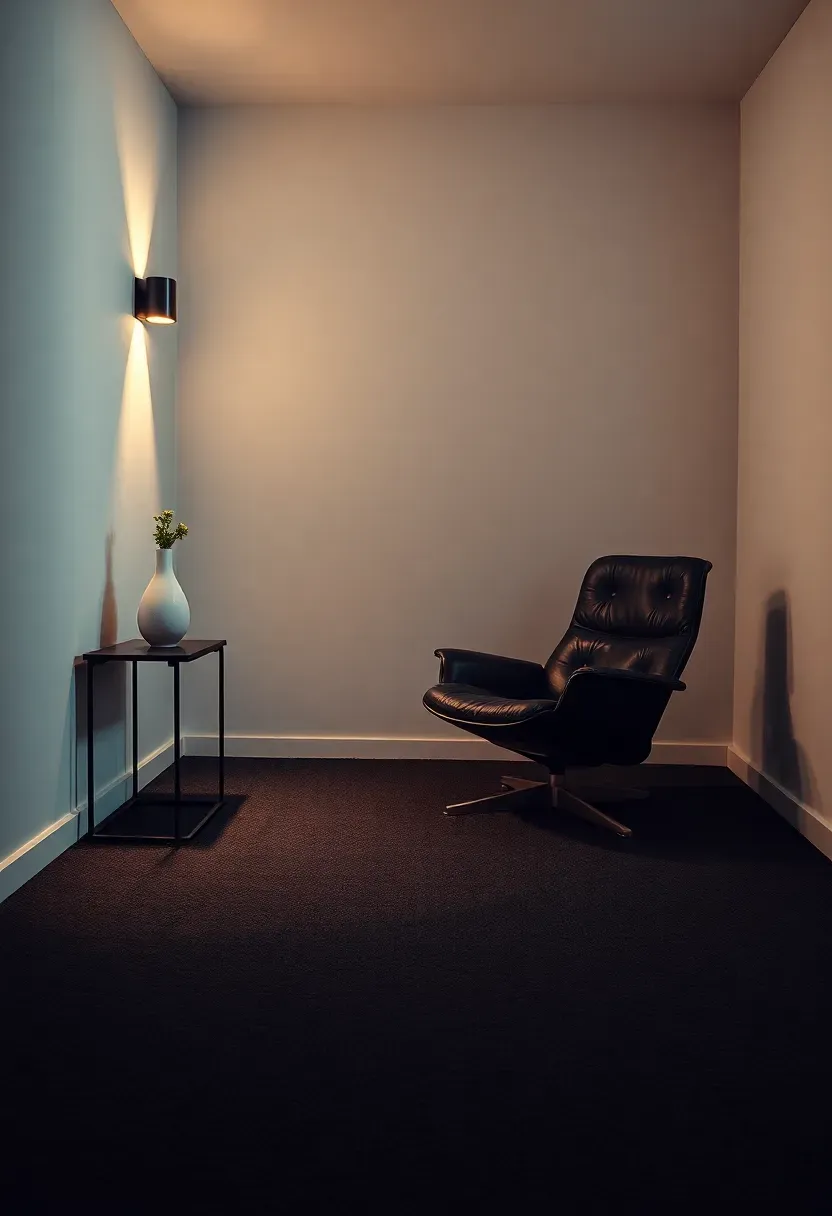
Basements already have limited natural light, so the conventional advice says "go light to open things up." That advice isn't always right. A dark charcoal carpet grounds a basement the way dark hardwood grounds a living room — it provides a firm visual base that makes lighter furniture and wall colors pop. In a media room or bar area, dark carpet feels deliberate and moody rather than gloomy. The key is pairing it with sufficient artificial lighting: recessed LEDs on a dimmer, wall sconces at eye level, and at least one floor lamp per seating zone.
Choose If
- Your basement has 8-foot or higher ceilings (dark carpet in a 7-foot ceiling room feels like a cave)
- You're building a dedicated entertainment or bar space
- You prefer cleaning visible lint off dark carpet over cleaning visible stains off light carpet
Recommended
Items for this idea
9. Carpet with Radiant Floor Heating
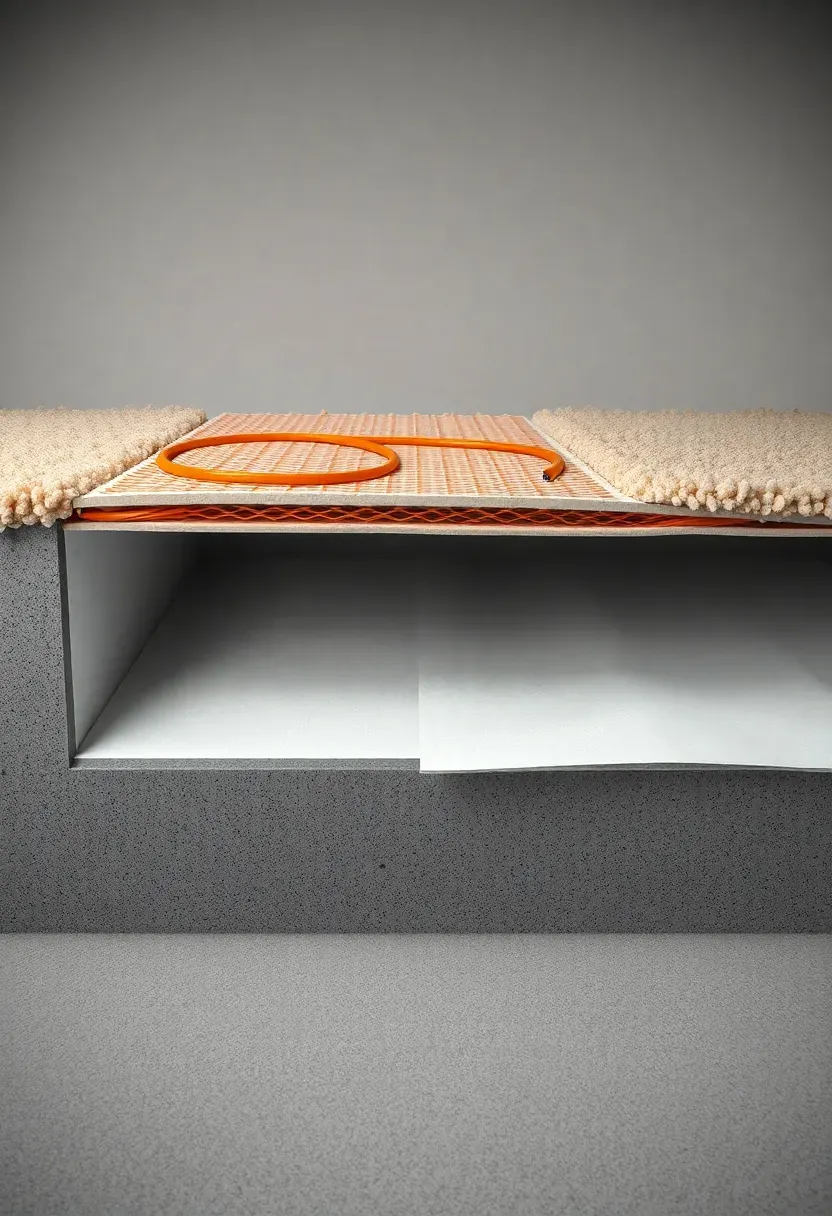
Basement floors are cold. Concrete sits against earth, and earth below the frost line holds a steady 55 degrees in most climates. Carpet insulates well, but it also means radiant floor heat has to work harder to push warmth through the pad and fiber. The solution is a low-profile electric radiant mat installed directly on the concrete, topped with a thin synthetic pad (no thicker than 3/8 inch), and finished with a low-pile carpet. The system adds roughly $8-12 per square foot installed but eliminates the need for space heaters and makes the floor genuinely warm between October and April.
Tips
- Never use thick rebond padding over radiant heat — it blocks too much warmth and wastes energy
- Low-pile or loop carpet transfers heat 30-40% more efficiently than plush
- Install a floor-mounted thermostat rather than a wall one for accurate temperature readings at carpet level
10. Geometric Carpet Tiles in Two Tones
Beyond Plain Squares
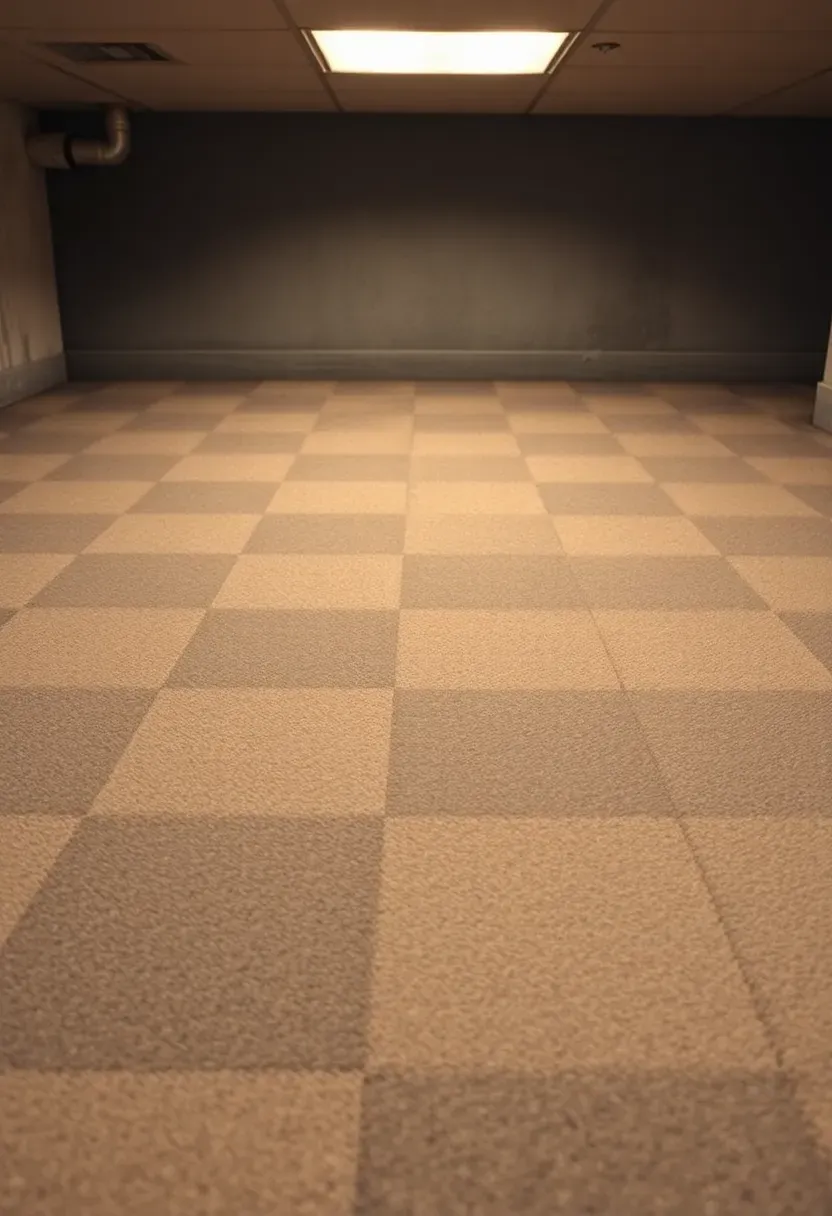
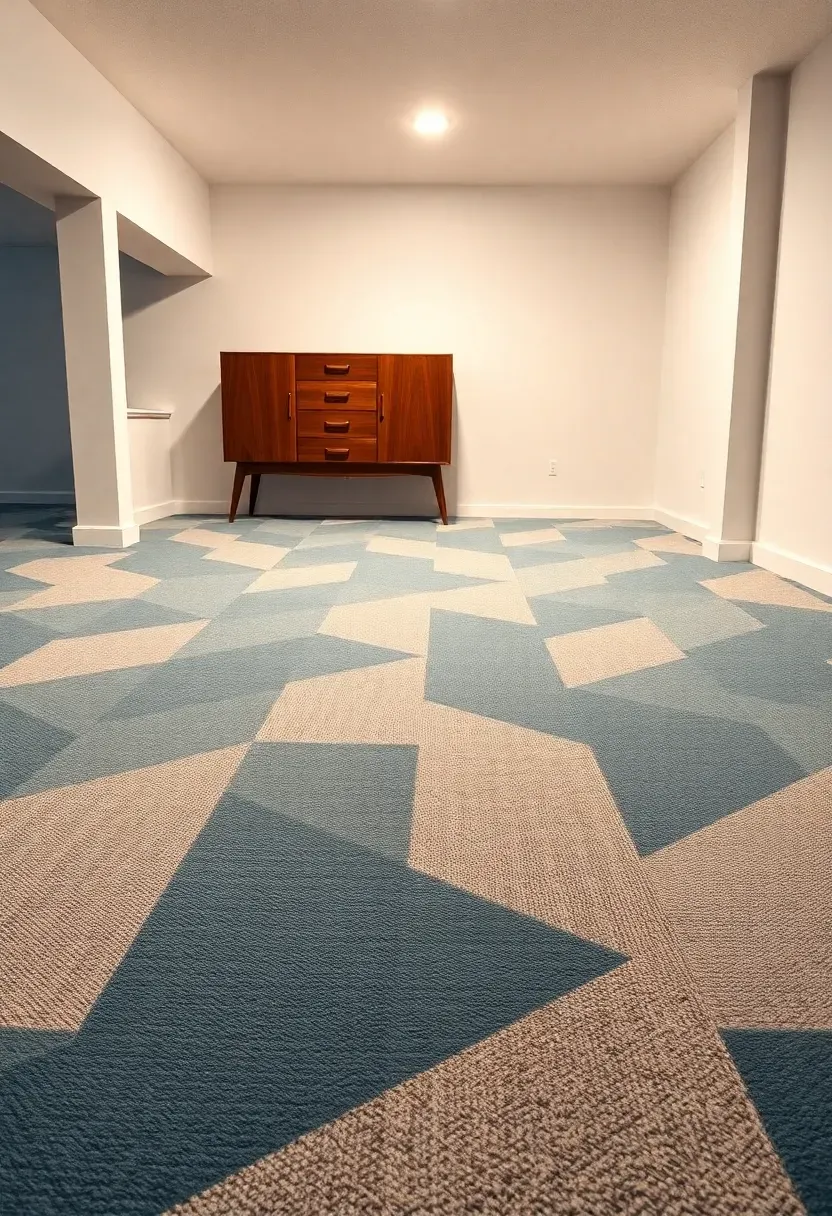
Single-color carpet tiles look utilitarian. Two-tone installations change that. Alternating light gray and slate blue in a diagonal checkerboard pattern gives a basement floor the kind of visual rhythm that wall-to-wall carpet simply cannot produce. You can also create border effects — darker tiles around the perimeter, lighter in the center — to define zones without physical dividers. The geometry guides the eye and makes a rectangular basement feel more intentional.
How to Execute
- Order 60% of the dominant color and 40% of the accent
- Lay the pattern dry first (no adhesive) and photograph it from the stairway to check the overall effect
- Adjust tile placement until the pattern reads clearly, then adhere
Recommendations
- Stick to colors within three shades of each other for subtlety, or go bold with contrasting warm and cool tones
- Interface FLOR and Shaw Contract both make residential-friendly tiles with design-forward patterns
Recommended
Items for this idea
11. Low-Pile Commercial Grade
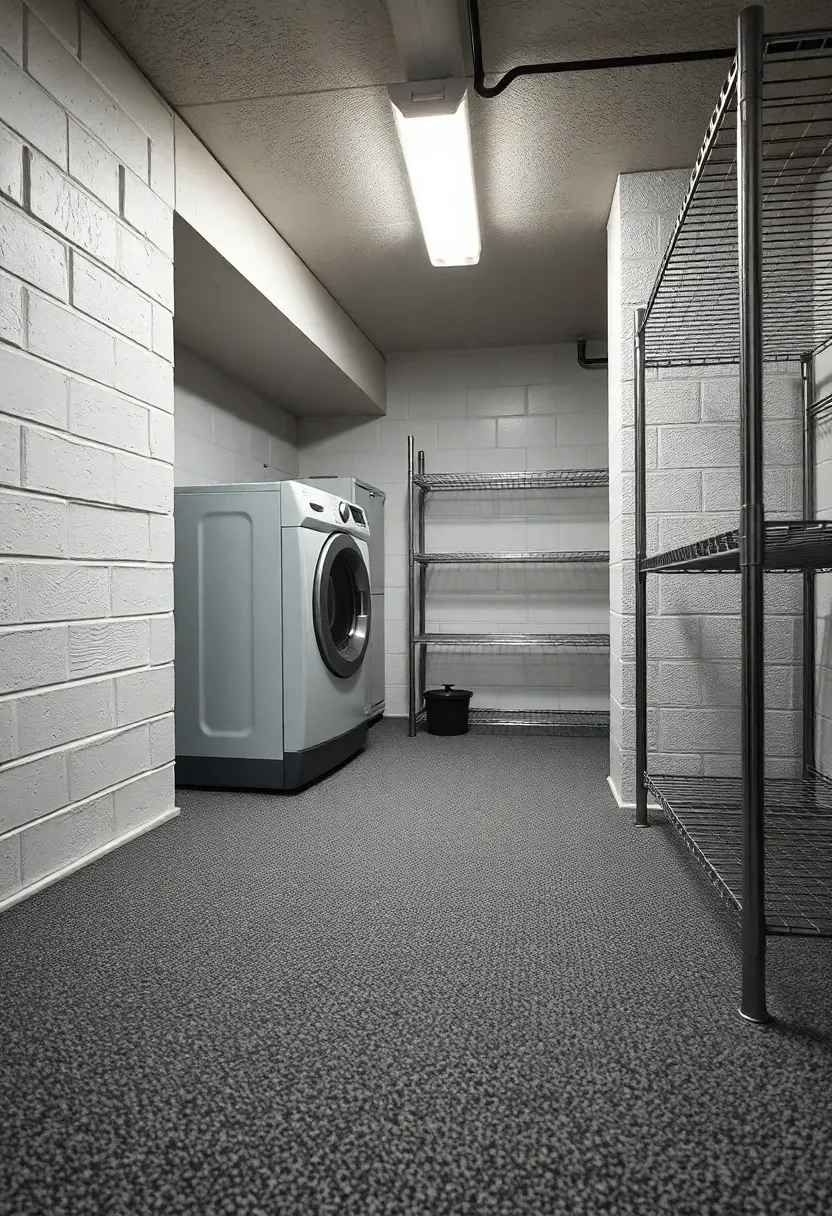
Commercial carpet exists in every airport, office building, and hotel hallway you've walked through. It's engineered for traffic volumes that residential products never face. In a basement that serves as a workshop, laundry route, or kid play zone, commercial-grade low-pile carpet at $2-5 per square foot outperforms residential carpet at twice the price. The fiber density is higher, the backing is usually fiberglass-reinforced, and the stain treatments are industrial rather than consumer-grade. It won't feel soft and luxurious, but it will look the same in five years as it does on install day.
Tips
- Buy from a commercial flooring supplier rather than a home improvement store for better selection and pricing
- Speckled or heathered patterns hide dirt far better than solids
- Ask for the carpet's TARR rating (Texture Appearance Retention Rating) — 3.5 or higher means it holds up well
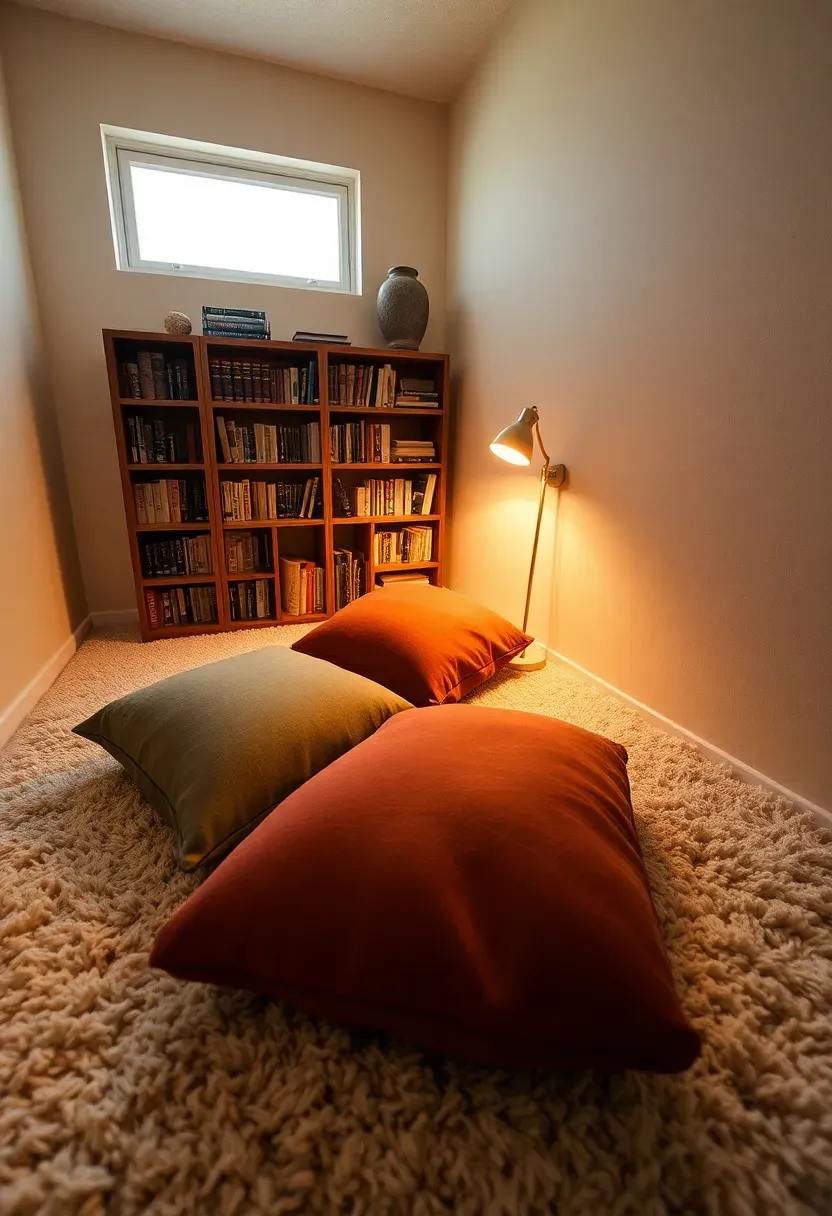
12. Cozy Shag for the Reading Nook
The Right Spot for Shag
Shag carpet has no business covering an entire basement. It traps dust, resists vacuuming, crushes under furniture, and takes forever to dry if it gets wet. But in a defined 6x8-foot reading corner — a spot where you sink onto floor cushions with a book and a coffee — shag is perfect. The long fibers create genuine warmth and softness that no other carpet style matches. Use it as an area carpet (bound edges, laid over sealed concrete or harder carpet) rather than wall-to-wall to keep cleaning manageable.
Application Tips
- Choose synthetic shag (polyester or polypropylene) for moisture resistance; wool shag mildews fast below grade
- Place a waterproof membrane underneath, between the concrete and the shag
- Shake it out outdoors every few weeks; standard vacuums struggle with shag pile over 1.5 inches
Recommended
Items for this idea
13. Striped Carpet for a Narrow Basement
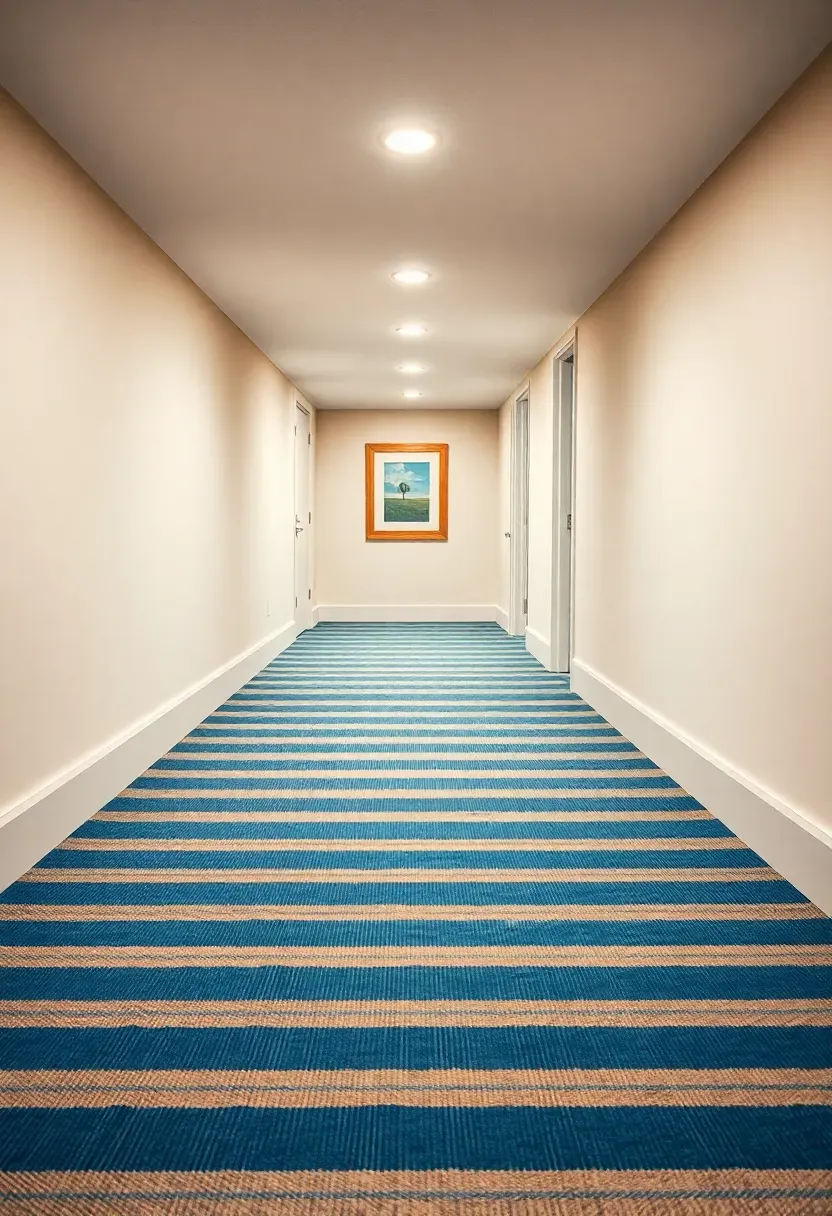
Stripes manipulate proportions. A carpet with lengthwise stripes in a narrow basement hallway makes the space feel longer and draws the eye toward the far end, which tricks your brain into reading the room as larger. Blue and cream is a classic combination that works well in low-light settings — the cream reflects available light while the blue adds depth. Run the stripes parallel to the longest wall for maximum effect.
Tips
- Keep stripe width between 2-4 inches; anything thinner looks busy, anything wider loses the elongating effect
- Avoid high-contrast stripes (black and white) in small basements — they can feel dizzying
- Match the dominant stripe color to your wall paint for a cohesive, expansive feel
14. Wool Blend for the Finished Rec Room
Why Wool Works (With a Caveat)
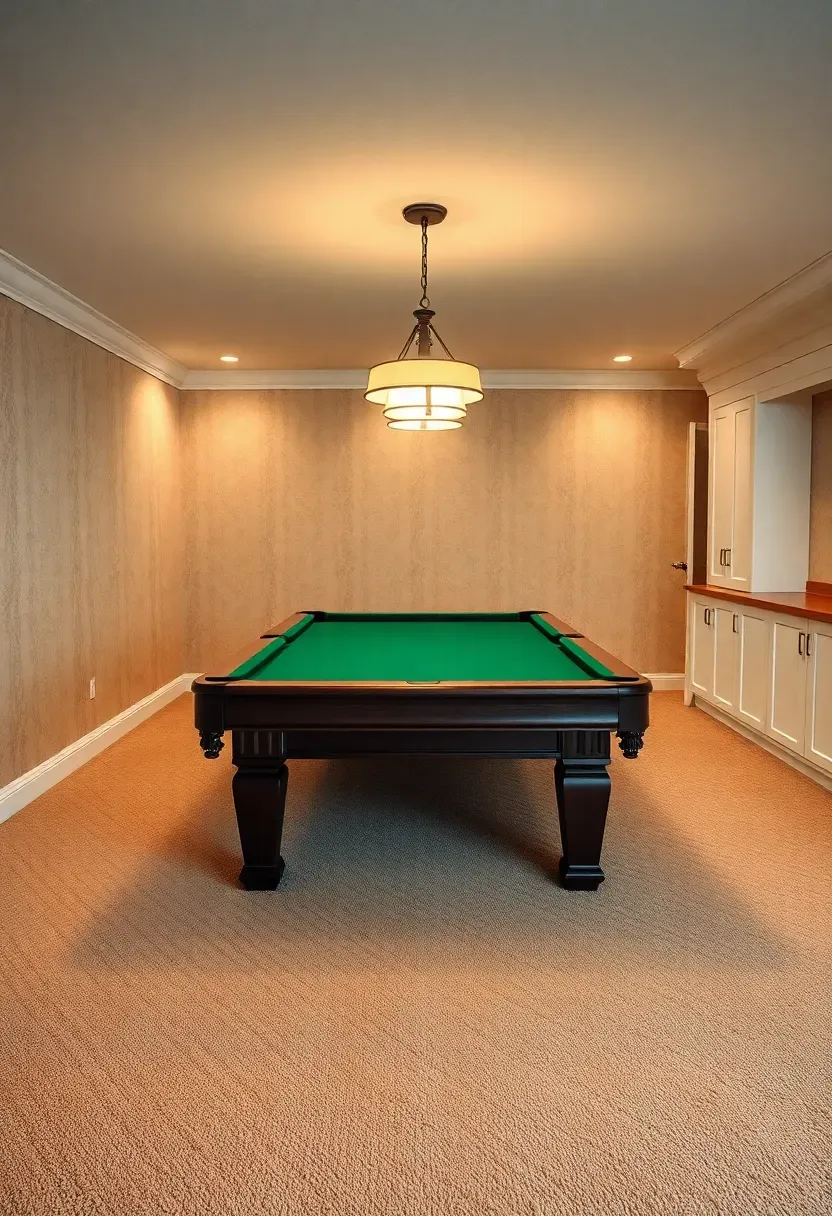
Pure wool carpet is naturally flame-retardant, soil-resistant, and has a resilience that snaps fibers back to shape after compression. A wool-nylon blend (80/20 is standard) adds the durability that pure wool lacks. The hand feel is noticeably different from synthetic — warmer, denser, with a slight spring. In a finished basement rec room where you've already invested in drywall, lighting, and trim, a wool blend floor signals that this is a real room, not a converted utility space.
The Caveat
Wool absorbs moisture. Below grade, that's a genuine risk. You need a fully waterproofed basement — interior drainage, sealed walls, a running dehumidifier — before laying wool. If your basement has any history of dampness, skip wool entirely and look at solution-dyed nylon instead.
Choose If
- Your basement has been dry for at least two full seasons
- You're willing to run a dehumidifier year-round
- The room functions as a primary living space, not occasional storage
Recommended
Items for this idea
15. Carpet Over Vinyl Plank Combo
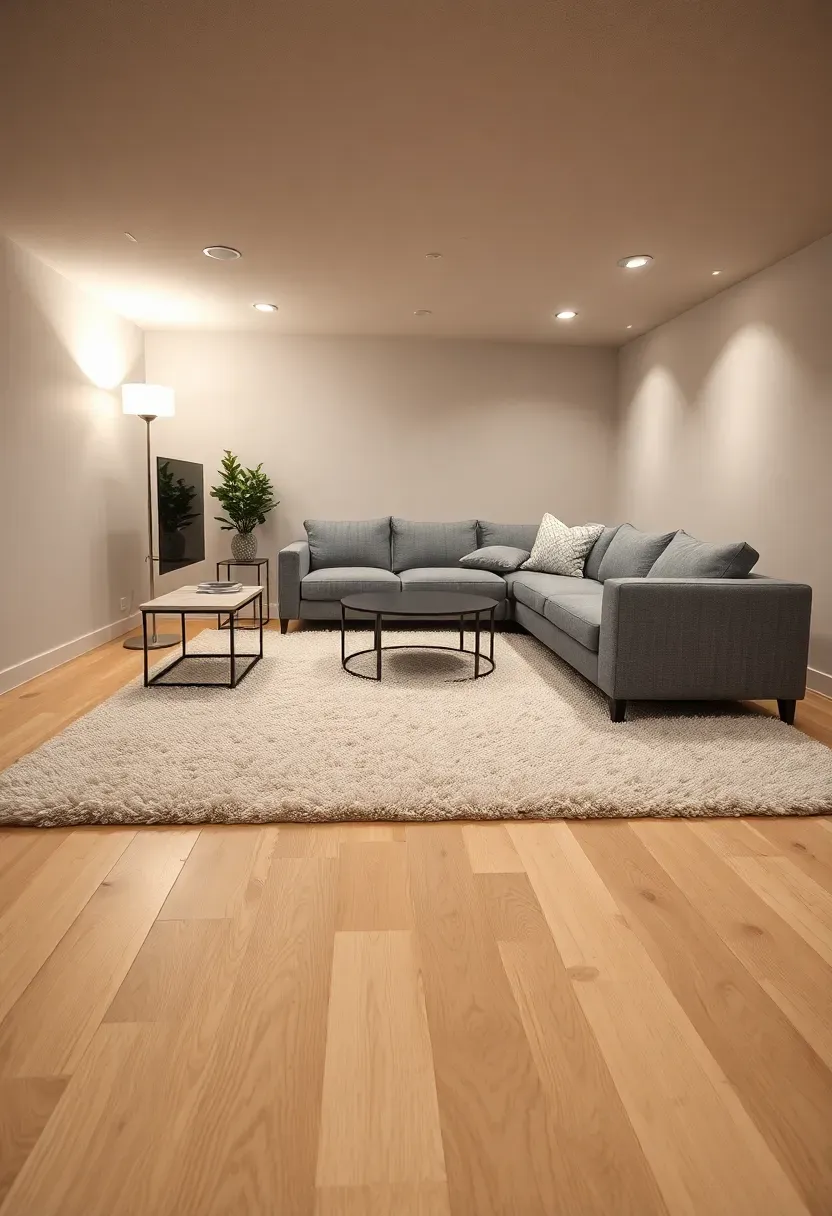
This is the practical compromise that most finished basements actually need. Luxury vinyl plank covers the full floor — it's waterproof, easy to install over concrete, and handles moisture without complaint. Then you layer large area rugs or bound carpet remnants over the vinyl in seating and lounging zones. If the basement floods, you pull up the rugs, dry them outside, and the vinyl underneath is unharmed. You get the warmth and softness of carpet where your feet land and the durability of vinyl everywhere else.
Tips
- Choose vinyl plank with an attached cork or foam underlayment for extra warmth
- Secure area rugs with non-slip pads designed for hard surfaces
- Size the rug to extend at least 18 inches beyond furniture on all sides so the transition feels intentional
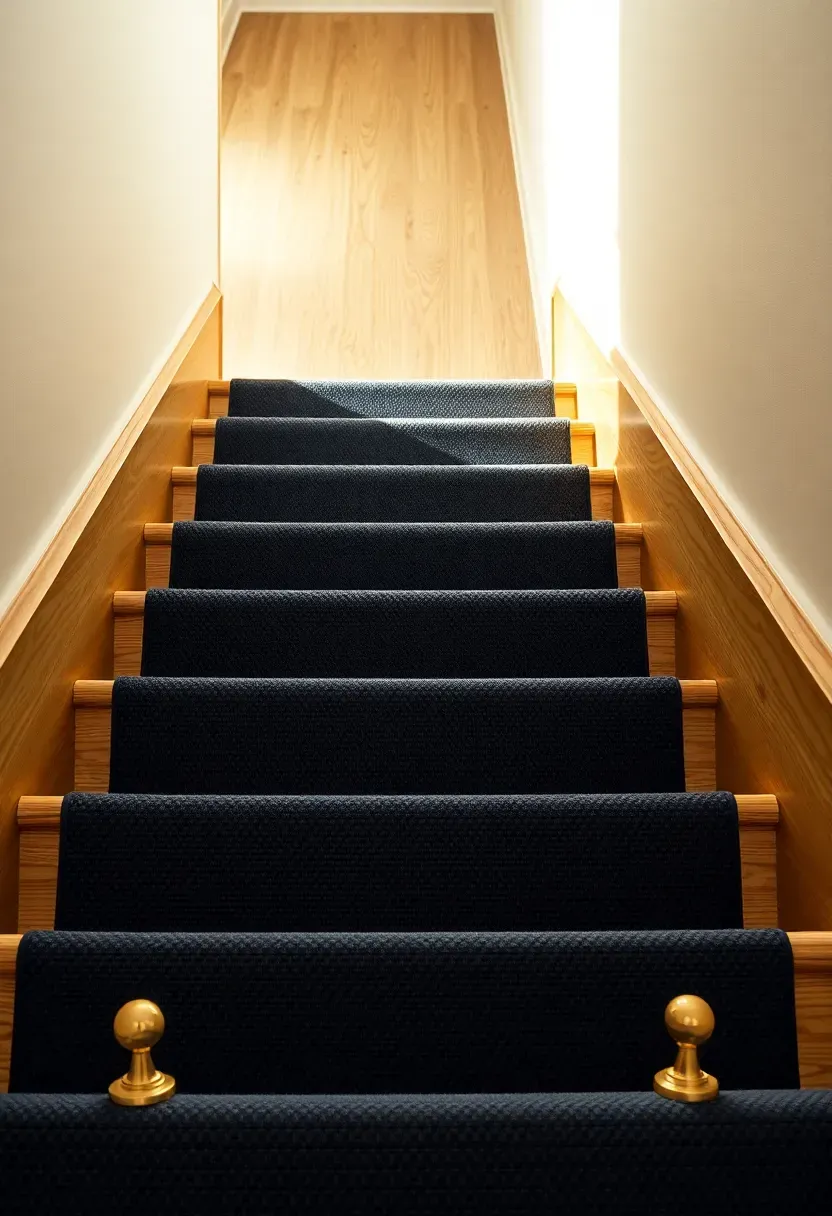
16. Basement Stairs Carpet Runner
Why the Stairs Matter Most
Basement stairs take a beating. They're steep, often poorly lit, and the concrete or bare wood surface gets slippery in socks. A carpet runner addresses safety and comfort in one move. Brass stair rods hold the runner taut and add a finished look that transforms basic utility stairs into something that belongs in the house.
Step-by-Step Installation
- Measure each tread and riser — basement stairs are often inconsistent in height, so measure each one individually
- Choose a durable, low-pile runner with a rubber or latex backing for grip
- Start from the bottom step and work up, stapling the runner into each crevice where tread meets riser
- Install stair rods at each tread nosing for a polished look (or skip them for a simpler finish)
Watch Out
- Loose runners are a tripping hazard — secure every six inches along each tread
- Dark colors hide scuff marks from shoes but show pet hair; pick based on your household
Recommended
Items for this idea
17. Pet-Friendly Stain-Resistant Carpet
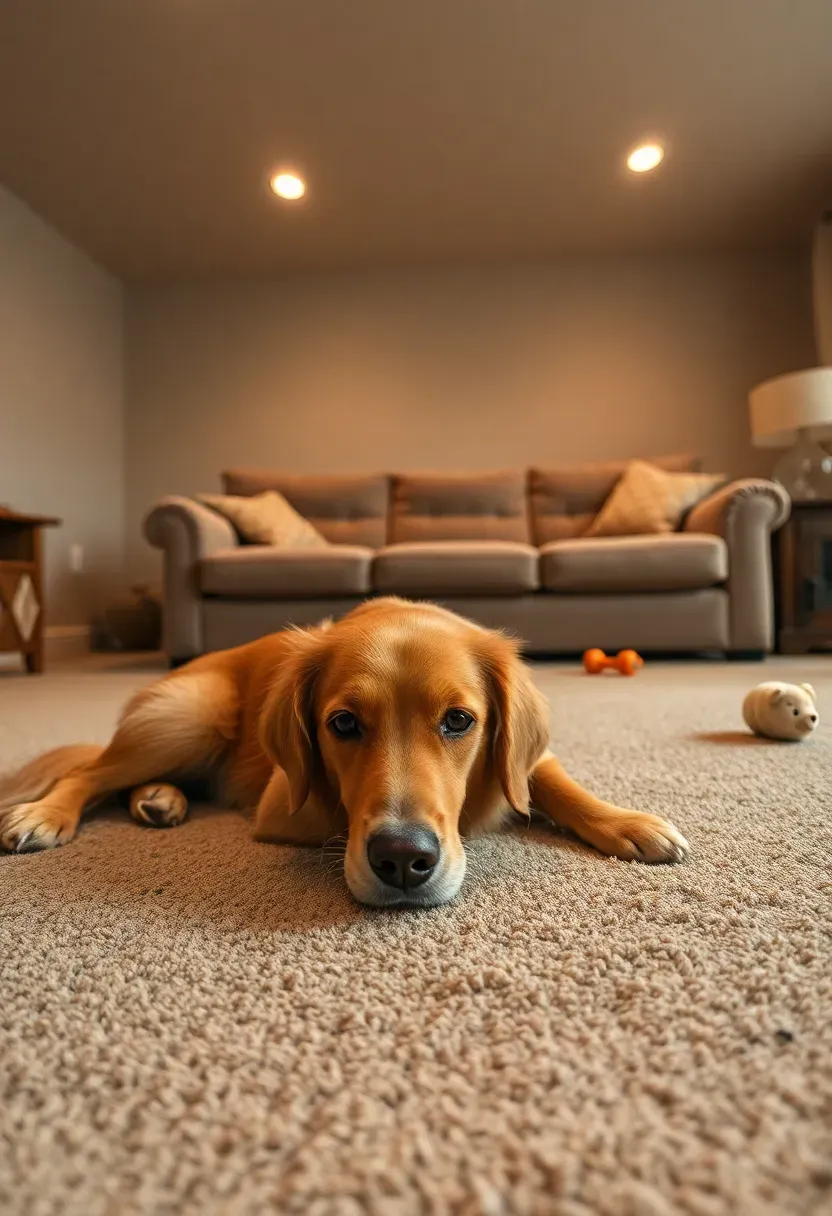
Pets and basements go together. Dogs nap in the cool air. Cats claim the quiet. And both species leave behind hair, tracked litter, muddy paw prints, and the occasional accident. Solution-dyed polyester (PET) carpet handles all of it. The color is baked into the fiber during manufacturing rather than applied after, so bleach, urine, and cleaning chemicals can't strip it. Mohawk's SmartStrand and Shaw's LifeGuard lines both offer PET options with waterproof backing that prevents liquids from reaching the pad or concrete beneath.
Tips
- Avoid loop pile if you have cats — claws catch and pull loops into snags
- Choose medium-tone colors with subtle flecking to hide pet hair between vacuuming sessions
- Clean accidents immediately even with stain-resistant carpet; the backing resists penetration but doesn't make stains invisible
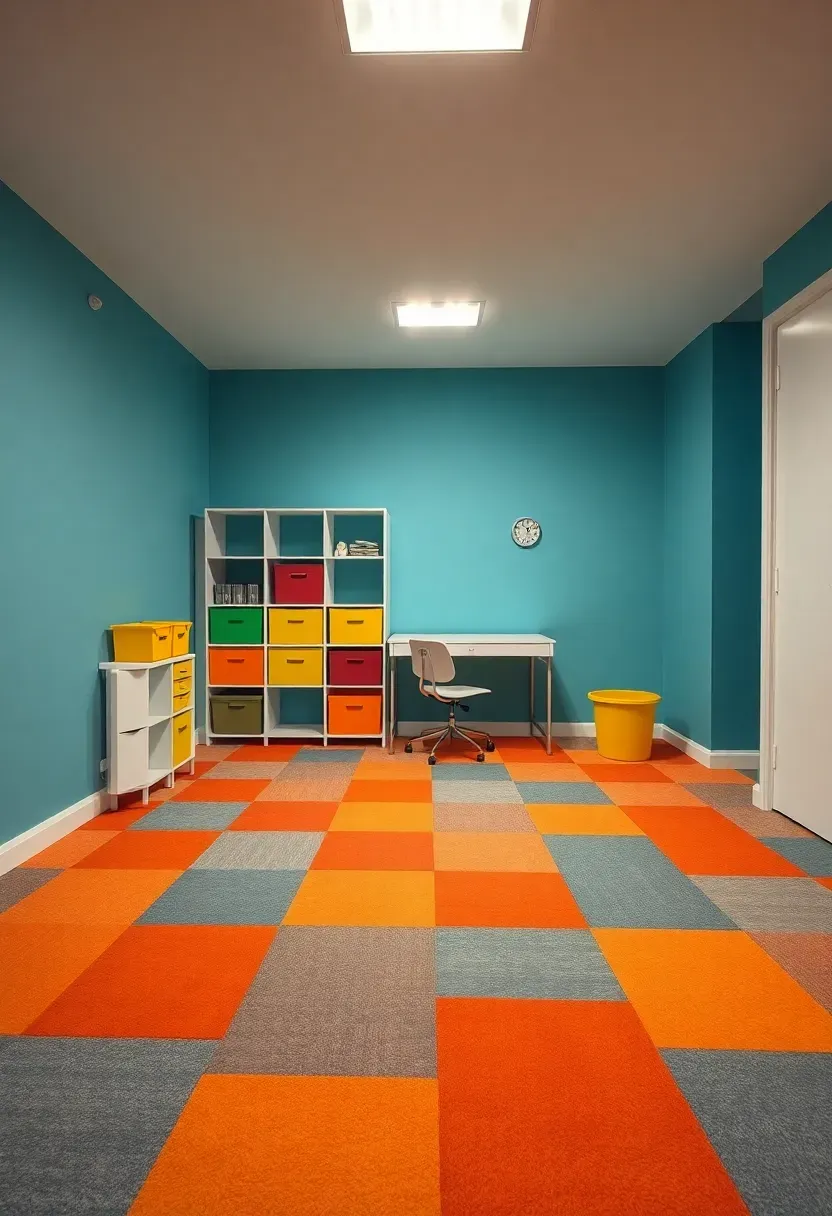
18. Bold Color Block Carpet Tiles
Origins of the Look
Color-blocked floors appeared in mid-century Scandinavian design studios and schools, where different zones needed visual separation without walls. The idea migrated to residential basements in the late 2010s when companies like FLOR started marketing modular tiles in saturated colors directly to homeowners.
Modern Application
Pick three colors — one dominant neutral (60% of tiles), one warm accent (25%), one cool accent (15%). Scatter the accent tiles in a pattern that feels random but follows a rough plan. The result reads as playful without being chaotic. It works especially well in kids' playrooms, teen hangout spaces, and creative studios.
Bring It Home
- Test the color combination by taping paint swatches to the floor and living with them for a week
- FLOR tiles interlock with a proprietary connector system that holds better than adhesive tabs on concrete
- Budget roughly $8-12 per square foot for quality color tiles with commercial backing
Recommended
Items for this idea
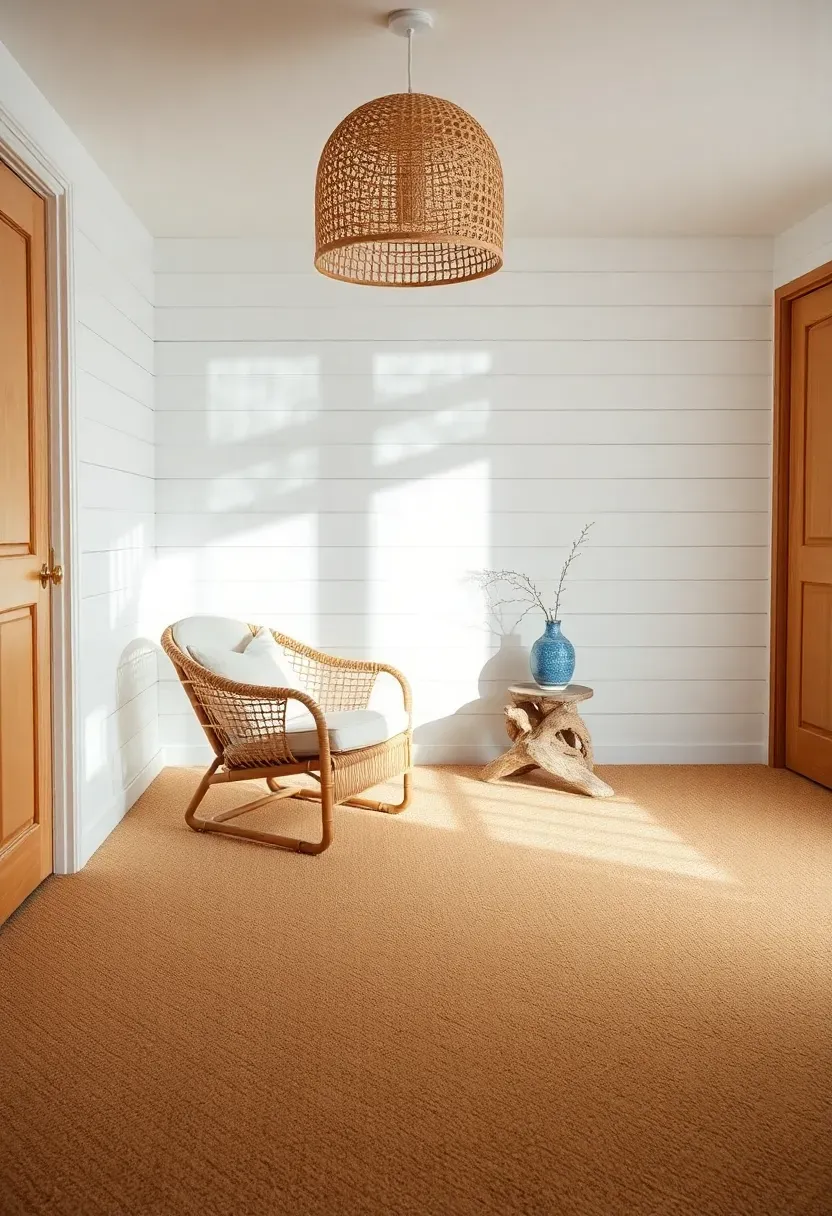
19. Sisal-Look Synthetic for Dry Basements
Real sisal absorbs moisture like a sponge and has no place in any basement. Synthetic sisal-look carpet (polypropylene woven to mimic natural fiber) gives you that coastal, organic texture without the mold risk. The weave is tight and flat, cleaning is straightforward, and the natural tone works with nearly any wall color. It reads as casual and relaxed — fitting for a basement that functions as a second living room or guest suite rather than a formal entertainment space.
Tips
- Check the weave tightness in person before ordering; loose weaves feel rough underfoot and catch on socks
- Pair with a felt pad rather than rubber for a softer step
- Expect the texture to show furniture marks more than cut pile — rotate furniture seasonally
20. Carpet with Built-In Moisture Barrier
The Problem
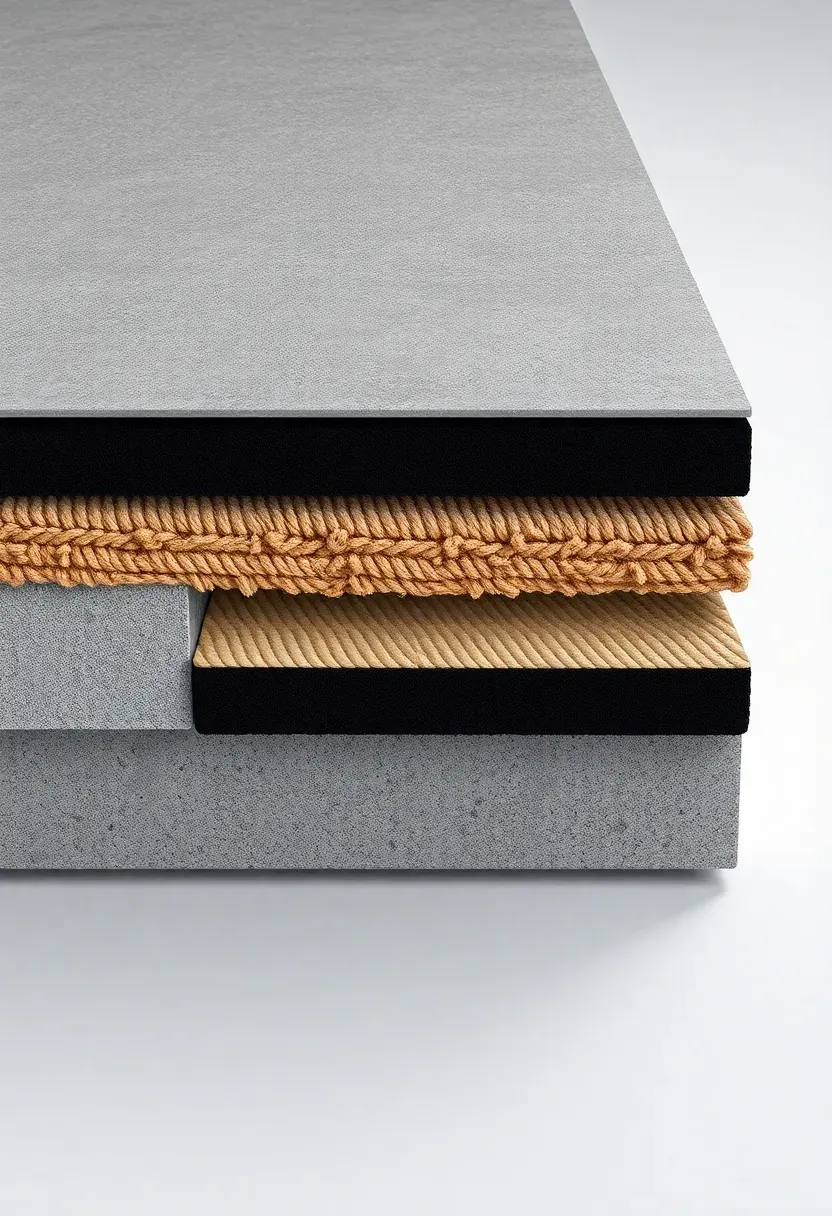
Moisture vapor migrates through concrete continuously, even in basements that never flood. Over months, this invisible dampness reaches the carpet pad, feeds mold colonies, and produces that unmistakable musty basement smell. Standard carpet ignores this entirely.
The Solution
Several manufacturers now build waterproof barriers directly into the carpet backing. Shaw's LifeGuard and Mohawk's All Pet lines feature a sealed polymer layer between the fiber and the backing that blocks upward moisture. The pad connects to the barrier without gaps. Liquids from above (spills, pet accidents) bead on the surface. Moisture from below hits the barrier and stays in the concrete where a dehumidifier can handle it.
Pros and Cons
- Pro: eliminates the need for a separate vapor barrier sheet on the concrete
- Pro: total system thickness stays under 3/4 inch, preserving headroom
- Con: costs 30-50% more than standard carpet with a separate barrier
- Con: limited color and texture options compared to traditional lines
Recommended
Items for this idea
21. Multi-Zone Carpet Plan
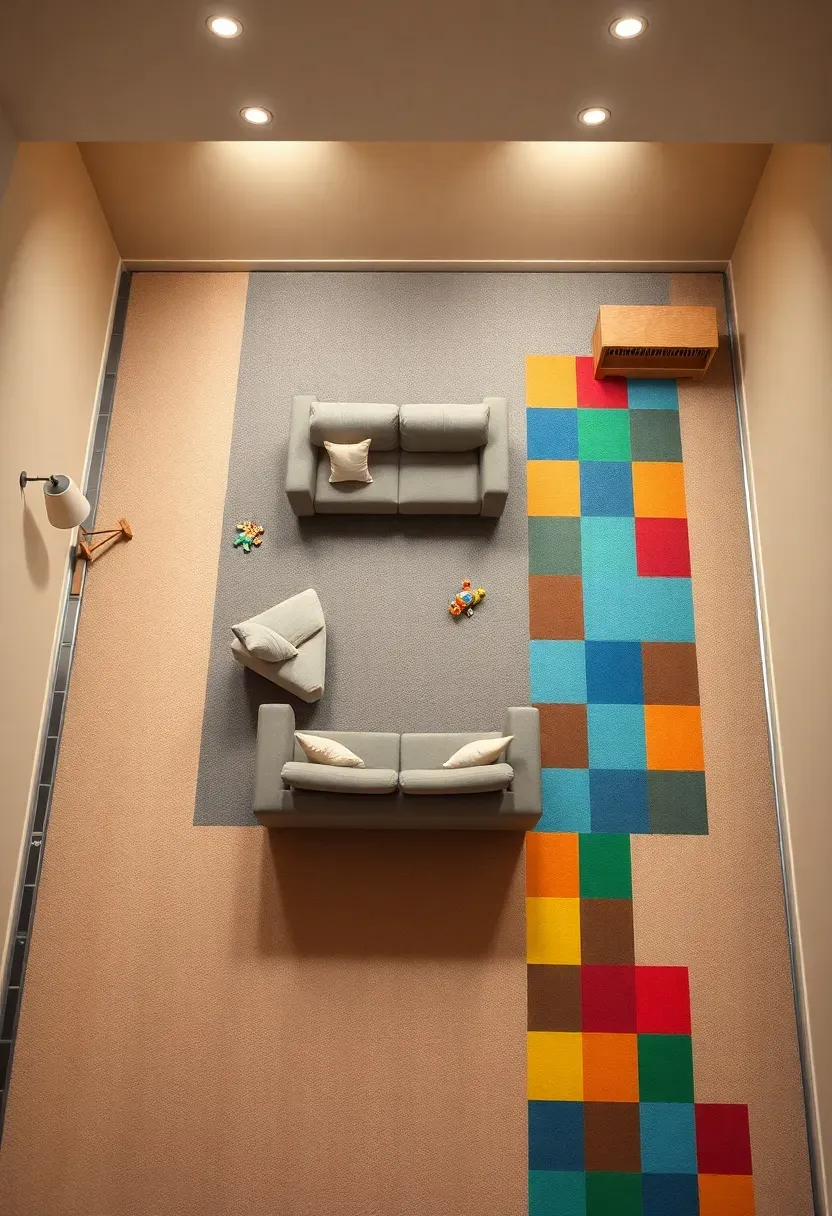
A single carpet style across a large basement makes the space feel like one undifferentiated room. Zoning with different carpets — plush in the seating area, low-pile in the walkway, tiles in the play area — creates visual boundaries that function like invisible walls. The key is staying within one color family so the zones feel connected rather than chaotic. A warm gray plush next to a warm gray loop next to warm gray tiles reads as intentional design. Random colors in random textures reads as leftover remnants.
Tips
- Use flat metal transition strips between carpet types for a clean edge
- Keep pile height differences under 1/4 inch to avoid tripping points
- Plan zones around actual use: where do people sit, walk, and play? Carpet follows function
22. Vintage Persian Rug Over Carpet
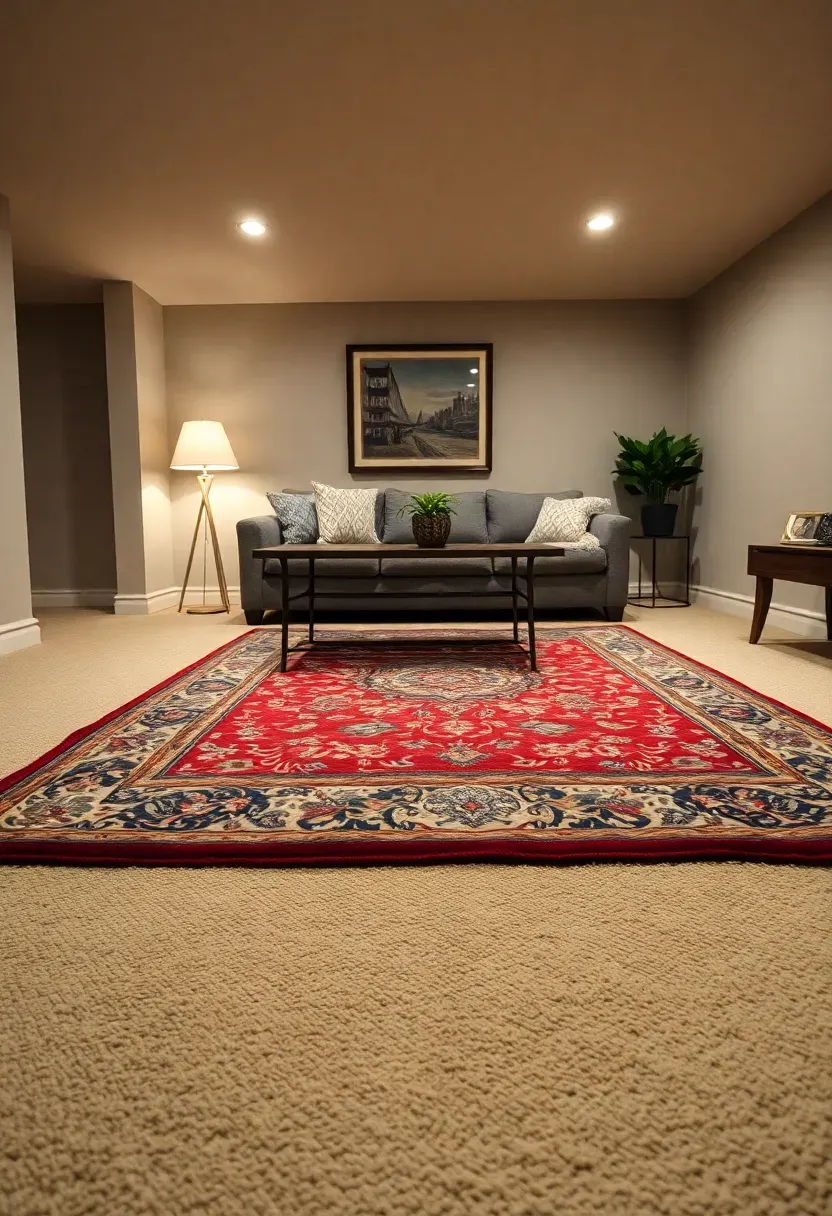
Layering a vintage rug over wall-to-wall carpet adds character that no single carpet can achieve on its own. The wall-to-wall provides moisture protection and base warmth. The Persian rug contributes pattern, color, and the specific personality that vintage pieces carry — a slight irregularity in the weave, faded zones where sunlight once hit, a color palette that modern factories can't replicate. Position the rug under a coffee table or in front of the primary seating group. The effect is immediate: the basement stops looking like a basement and starts looking like a collected, lived-in room.
Tips
- Use a thin non-slip mesh between rug and carpet to prevent bunching
- Vintage rugs with lower pile sit flatter over carpet than thick tribal styles
- Buy from estate sales or online rug dealers rather than retail — prices run 40-60% lower for comparable pieces
Recommended
Items for this idea
23. Basement Gym Carpet Tiles
The Right Floor for Heavy Use
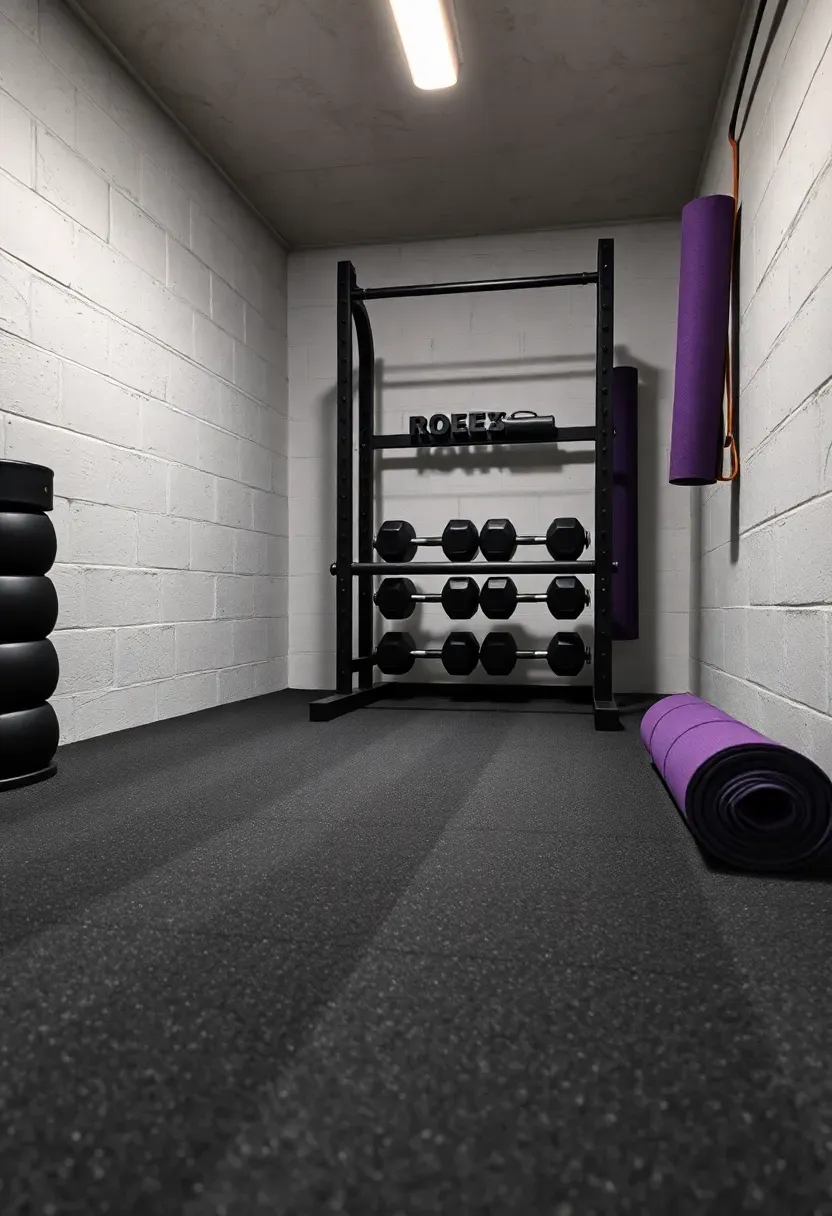
Rubber flooring is the default gym surface, but it's loud, cold, and purely functional. Carpet tiles with rubber backing offer the shock absorption and durability of rubber with a softer surface for bodyweight exercises, stretching, and yoga. The rubber base protects concrete from dropped weights. The carpet face provides grip for planks and burpees without the skin abrasion of raw rubber.
How to Set It Up
- Measure your equipment footprint and add 3 feet on each side for movement space
- Choose tiles with at least 6mm rubber backing — thinner tiles compress and shift under load
- Lay tiles tight edge-to-edge without adhesive so you can pull them up for cleaning
- Reserve a few spare tiles for replacement when heavy use wears the surface
Watch Out
- Standard carpet tiles will crush permanently under a squat rack — you need specific gym-rated tiles
- Clean weekly with a damp mop; sweat degrades carpet fiber faster than foot traffic
Quick FAQ
Which carpet material handles basement moisture best? Polypropylene (olefin) is the most moisture-resistant carpet fiber available. It doesn't absorb water, resists mildew naturally, and dries fast after exposure. Solution-dyed polyester comes in second place. Avoid wool and untreated nylon in any basement with humidity above 50%.
Can I install basement carpet myself? Carpet tiles are genuinely DIY-friendly — peel, stick, done. Wall-to-wall broadloom on concrete is harder. You need a knee kicker, seam roller, and the patience to stretch carpet tight over tack strips. Most homeowners save money and frustration by hiring a professional for broadloom and doing tiles themselves.
How often should basement carpet be replaced? In a moisture-controlled basement with moderate traffic, quality carpet lasts 8-12 years. Basements without dehumidifiers or with recurring dampness may need replacement every 4-6 years due to mold in the pad. Sniff the carpet backing annually — musty smell means moisture has reached the pad regardless of surface appearance.
Do I need a vapor barrier under basement carpet? Yes, in almost every case. Concrete transmits moisture vapor even when it feels dry to the touch. A 6-mil polyethylene sheet between concrete and carpet pad blocks upward moisture migration. Some modern carpet systems include built-in barriers, which eliminates this step. Test your slab with the plastic sheet method: tape a 2x2-foot sheet of plastic to the floor, wait 48 hours, and check for condensation underneath.
What carpet padding works best on concrete? Closed-cell foam or rubber padding rated for below-grade use. Avoid rebond (multi-colored recycled foam) padding in basements — it absorbs moisture and breaks down. Synthetic fiber pads and flat rubber pads both work well. Keep pad thickness at 3/8 inch or less to prevent a spongy feel that accelerates wear.
Basement carpet decisions come down to three honest questions: how dry is your space, how much traffic will it see, and how much are you willing to spend on maintenance. Get those answers right and the rest is personal taste. Start with a moisture test on your concrete. If the slab is dry, most options above will serve you well. If it's damp, narrow your list to polypropylene, indoor-outdoor, or the vinyl-plus-rug approach. The best basement carpet is the one you stop thinking about after installation — it just works, stays clean, and makes the room feel like it belongs in your home.
Pinterest cover for 23 Basement Carpet Ideas for a Cozy Space
About the author
OBCD
CGI visualization and interior design content. We create detailed 3D renders and curate practical design ideas for every room in your home.