19 Basement Decorating Ideas
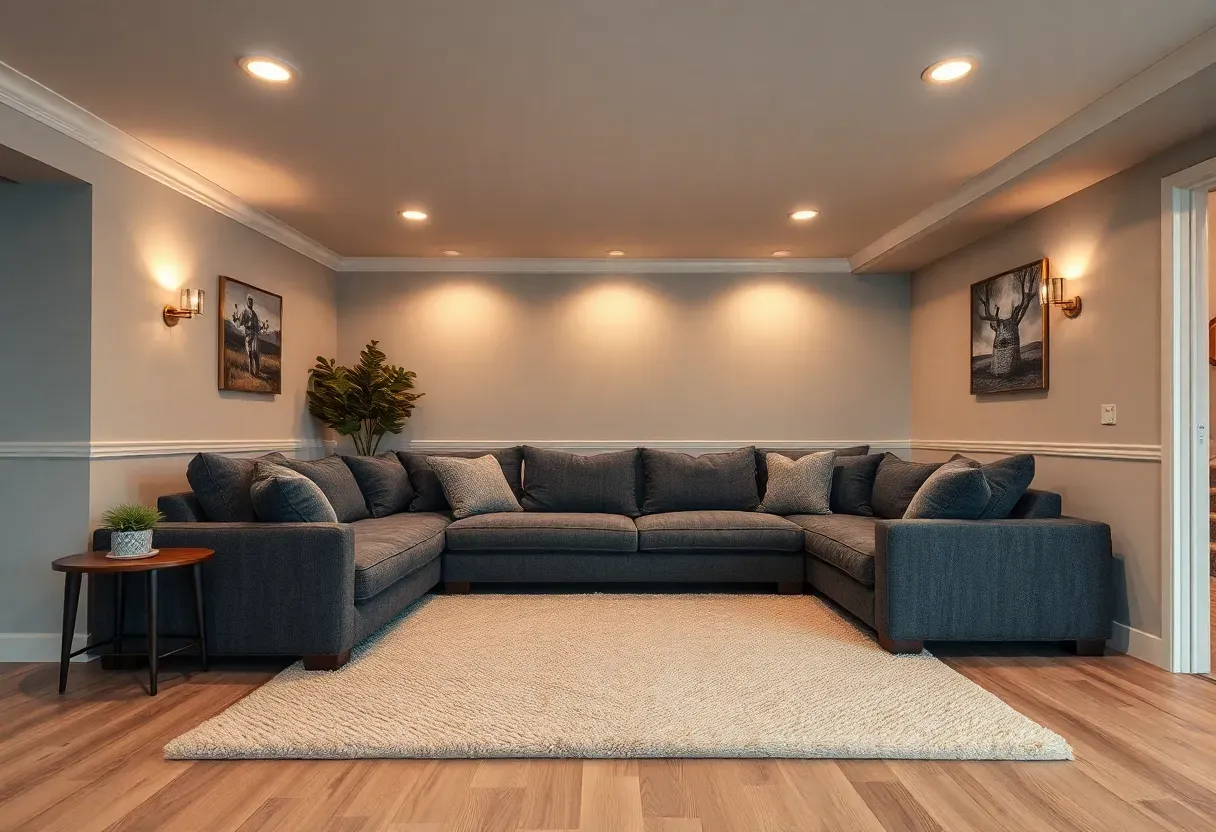
Most basements sit half-empty because people get stuck on the limitations — low ceilings, no windows, concrete floors — instead of working with what the space actually offers. A basement gives you something no other room in the house does: a blank slate with zero foot traffic from guests who are just passing through. That privacy is an advantage. Whether you are setting up a second living room, a workspace, or just a place to watch movies without fighting over the TV, the decorating decisions you make down here follow different rules than the rest of your home. These 19 ideas address the real challenges of below-grade rooms and give you specific starting points.
Below you will find ideas organized from foundational choices like lighting and flooring through furniture arrangements, color strategies, and finishing details that pull everything together.
Table of Contents
- Layered Lighting Plan
- Large-Format Area Rugs
- Warm White Paint on Every Surface
- Low-Profile Sectional Seating
- Faux Window Light Boxes
- Floating Shelves for Display
- Vinyl Plank Flooring Over Concrete
- Oversized Floor Mirror
- Built-In Reading Nook
- Ceiling-Mounted Curtain Dividers
- Gallery Wall with Mixed Frames
- Indoor Plant Corner with Grow Lights
- Patterned Tile Accent Floor
- Woven Textile Wall Hangings
- Color-Drenched Media Room
- Modular Storage Wall
- Vintage Rug Layering
- Statement Pendant Cluster
- Cozy Basement Guest Suite
1. Layered Lighting Plan
The core problem
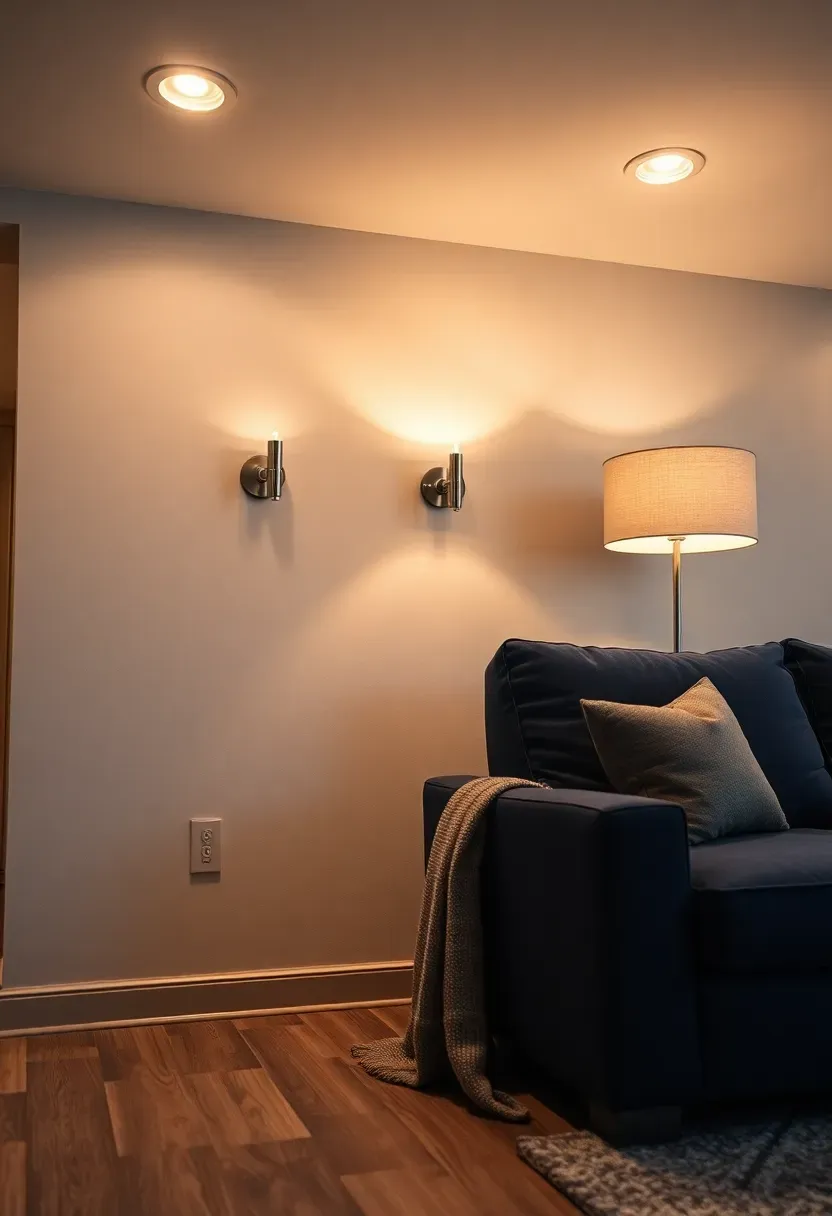
Basements rarely have natural light. A single overhead fixture creates flat, shadowless illumination that makes even furnished rooms feel like storage areas. The fix is layering three types of light: ambient (recessed cans or flush mounts for general visibility), task (desk lamps, under-cabinet strips for specific activities), and accent (wall sconces, LED tape behind shelving to add depth). This approach mimics how daylight works in upper-floor rooms, where light comes from multiple directions and intensities throughout the day.
How to plan it
- Start with recessed lights on a dimmer, spaced about 5 feet apart in a grid pattern
- Add two to three wall sconces at eye level on the longest wall to create a sense of horizon
- Place at least one floor lamp near seating — the pool of warm light it casts makes that corner feel like a room within a room
Watch out for
- Avoid cool-white bulbs (5000K+) in windowless basements — they feel clinical
- Stick to 2700K to 3000K for a warm, lived-in tone
We picked a few things that go well with this idea: Amico 6-Inch LED Recessed Lights (12-Pack) (★4.7), Amico 6-Inch LED Recessed Lights (24-Pack) (★4.7) and Ensenior Dimmable LED Recessed Lights (12-Pack) (★4.7). As an Amazon Associate we earn from qualifying purchases.
2. Large-Format Area Rugs
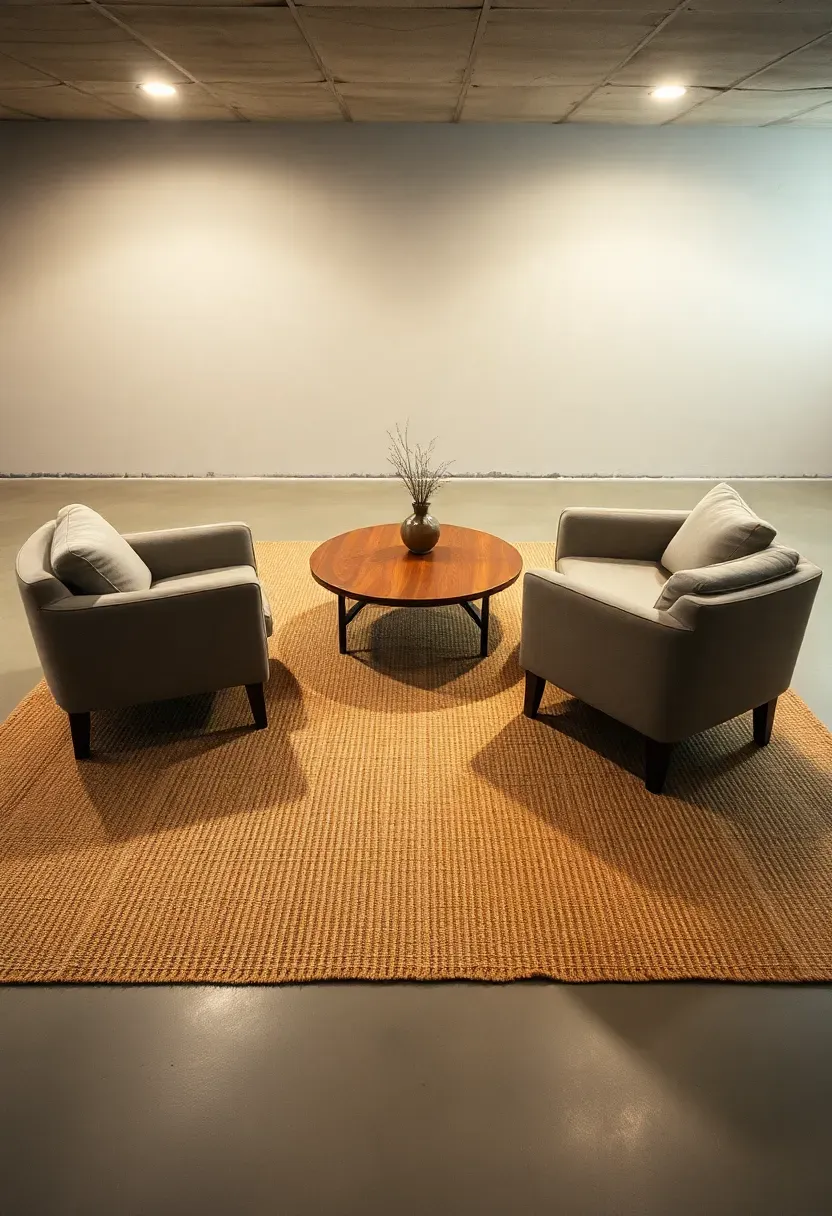
A big rug does more decorating work in a basement than almost any other single purchase. It covers cold concrete or vinyl, absorbs sound that would otherwise bounce off hard surfaces, and visually anchors furniture into a grouping that reads as intentional. The mistake most people make is buying too small — a 5x7 under a sectional that seats six looks like a bath mat. Go at least 8x10 for main seating areas, and let the front legs of all furniture sit on the rug. In basements, choose synthetic fibers (polypropylene or nylon) over natural wool or jute because they resist mildew if humidity spikes.
Tips
- Use a rug pad rated for concrete floors — some adhesive pads react with concrete sealers and leave residue
- Low-pile or flatweave rugs work better with basement furniture since they do not compress unevenly under heavy pieces
- If your basement floods even occasionally, keep the rug elevated on furniture pads or choose washable options
We picked a few things that go well with this idea: Washable Neutral Area Rug 8x10 Beige (★4.6), Modern Abstract Washable Area Rug 8x10 (★4.5) and Vintage Boho Medallion Area Rug 8x10 (★4.7). As an Amazon Associate we earn from qualifying purchases.
3. Warm White Paint on Every Surface
Why it works underground
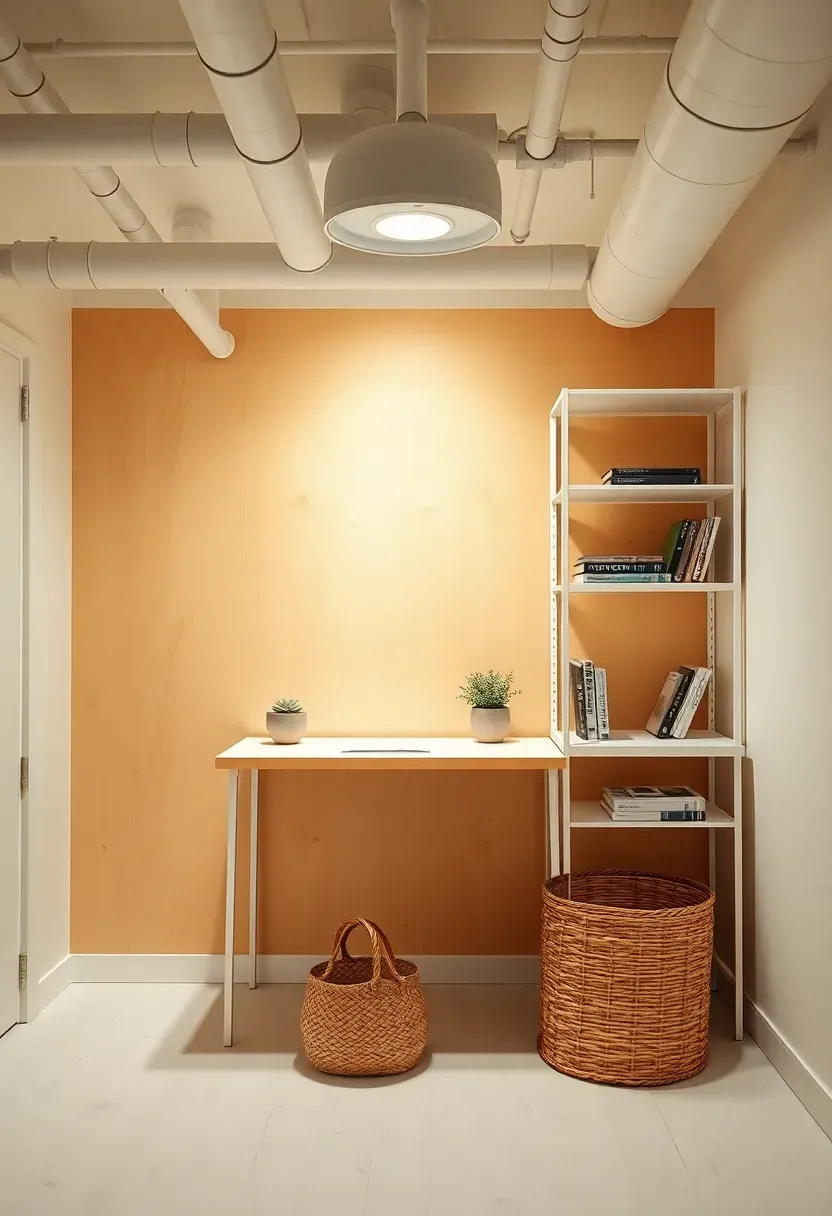
Painting the ceiling, walls, and even exposed ductwork the same warm white creates a visual trick: boundaries between surfaces blur, and the room feels taller and more open. This is different from leaving walls white by default. The intentional choice to coat everything — pipes, joists, support columns — in the same shade reads as a deliberate design decision rather than an unfinished project. Benjamin Moore Simply White (OC-117) or Sherwin-Williams Alabaster (SW 7008) both have enough warmth to avoid the sterile hospital look.
Pros and cons
- Pro: Maximizes the reach of whatever light you have, whether recessed cans or table lamps
- Pro: Creates a neutral backdrop that lets furniture and textiles carry the personality
- Con: Shows scuffs and water stains easily — use washable eggshell or satin finish, not flat matte
We picked a few things that go well with this idea: upsimples Wood Floating Shelves (Set of 6) (★4.6), BAYKA Rustic Wood Floating Shelves (Set of 3) (★4.4) and BAYKA Walnut Floating Shelves (Set of 3) (★4.4). As an Amazon Associate we earn from qualifying purchases.
4. Low-Profile Sectional Seating
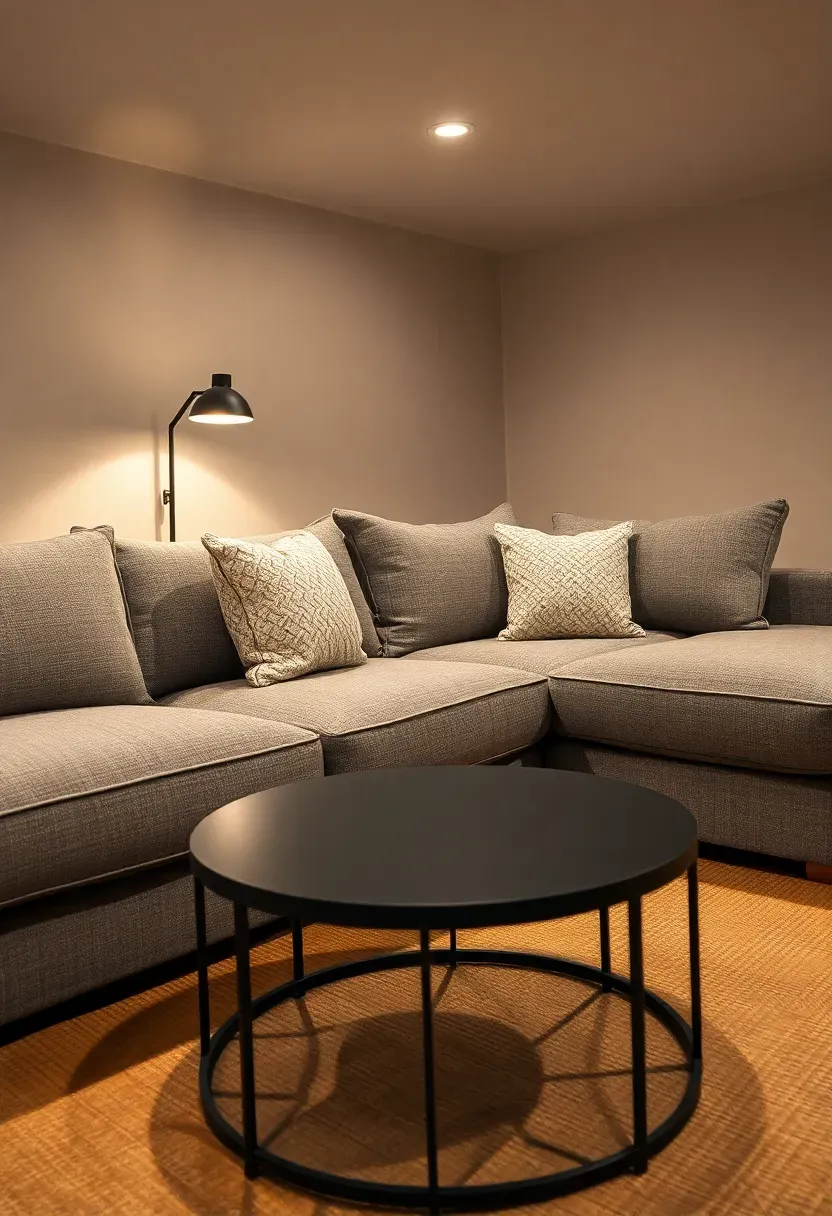
Basement ceilings typically sit between 7 and 8 feet — sometimes lower around ductwork and beams. Standard sofas with tall backs eat into that already tight vertical space and make the room feel cramped. A sectional with a seat height of 15 to 17 inches and a back height under 30 inches keeps sightlines open across the room. Modular designs let you reconfigure pieces as the room's purpose shifts. For basements specifically, look for frames with legs (not skirted bases) so air circulates underneath, which matters in spaces prone to dampness. Performance fabrics like Crypton or Sunbrella resist moisture and clean up easily.
Tips
- Float the sectional away from walls by 3 to 4 inches to prevent mildew behind cushions
- Choose a chaise section to replace the need for a separate ottoman — it saves floor space
- Darker upholstery hides wear better in high-use basement hangout rooms
Recommended
Items for this idea
5. Faux Window Light Boxes
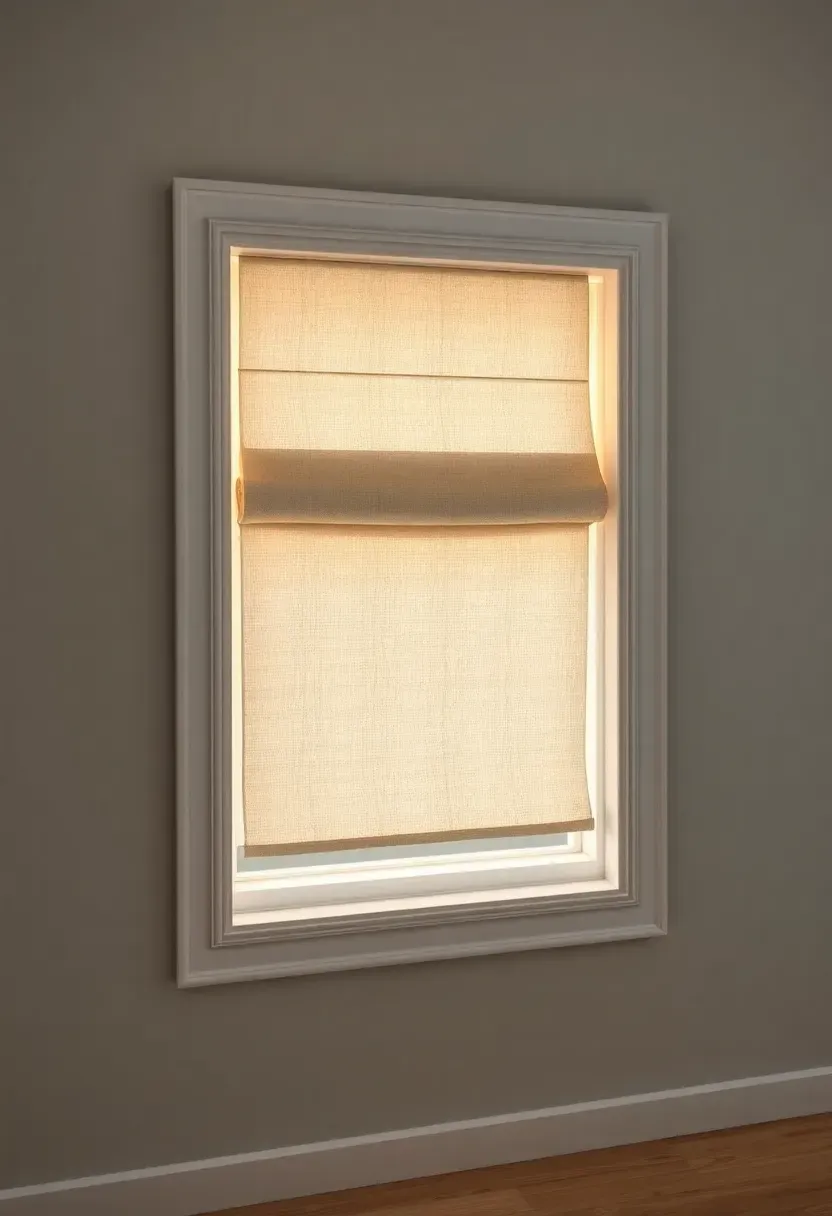
This one sounds gimmicky until you see it done well. A faux window is essentially a backlit LED panel framed to look like a window, sometimes with a frosted diffuser or a printed scene behind it. Mounted at the same height where a window would sit on an upper floor, it triggers a subtle psychological response — your brain registers "daylight source" and the room feels less enclosed. Commercial versions from companies like Covelit run $300 to $800 per unit. A cheaper DIY approach uses an LED light panel from an art supply store, a simple wood frame, and sheer curtain fabric draped across it.
Steps to install
- Choose a wall location at the same height as windows in your upper floors — usually 36 to 42 inches from the floor to the sill
- Mount the LED panel flush or recessed into the wall if you have stud depth available
- Frame it with casing that matches your upstairs window trim for consistency
- Add a sheer roman shade or curtain — this sells the illusion more than the light itself
6. Floating Shelves for Display
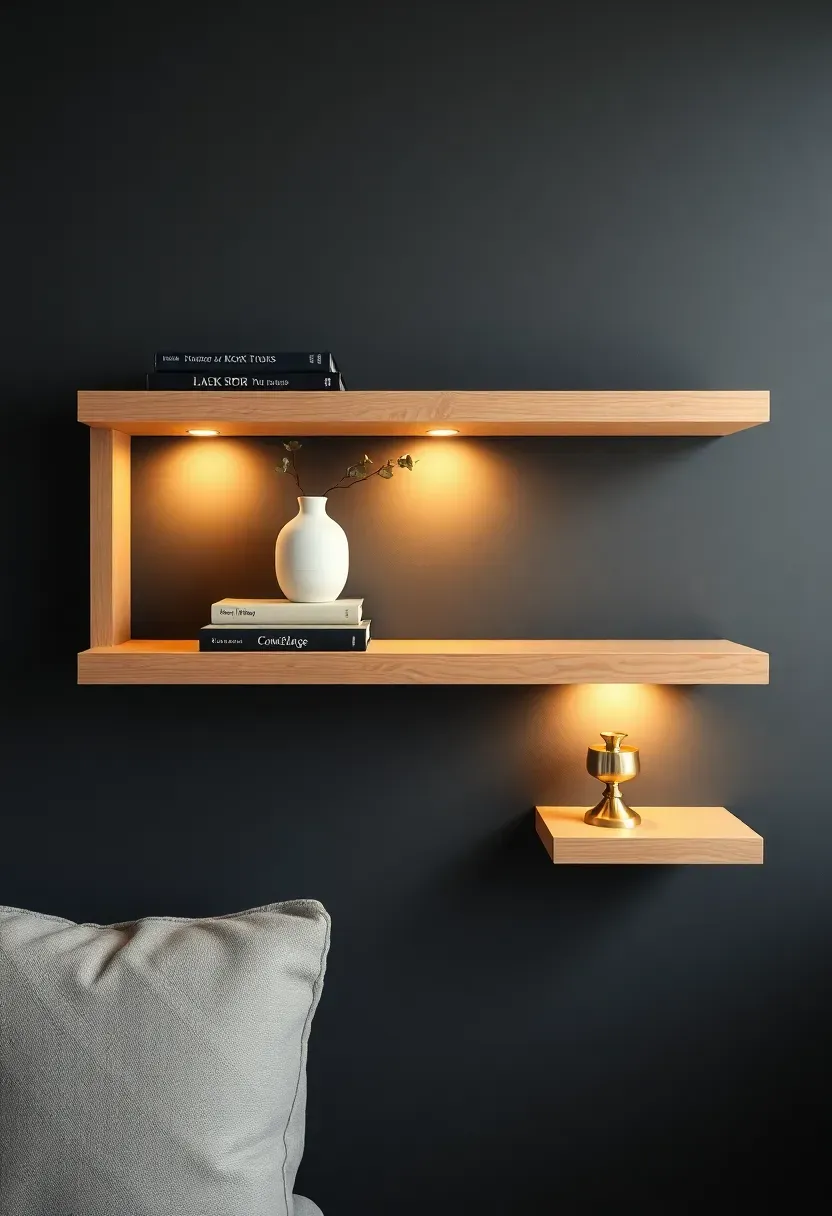
Floating shelves solve two basement problems at once: they add storage without floor-standing furniture that crowds the space, and they give you a surface for decorative objects that make the room feel personal. The key in basements is mounting them into studs or using proper masonry anchors if your walls are concrete block. Space shelves 12 to 16 inches apart vertically, and keep the depth at 8 to 10 inches — deeper shelves feel bulky in rooms with low ceilings. Style them with a mix of books, small framed prints, and one or two objects with some height (a ceramic vase, a candlestick) to draw the eye upward.
Tips
- Add LED puck lights or strip lighting under each shelf to create a warm glow effect
- Group items in odd numbers — three objects per section reads better than two or four
- Leave 30% of the shelf surface empty so it looks curated rather than cluttered
Recommended
Items for this idea
7. Vinyl Plank Flooring Over Concrete
The case for vinyl plank
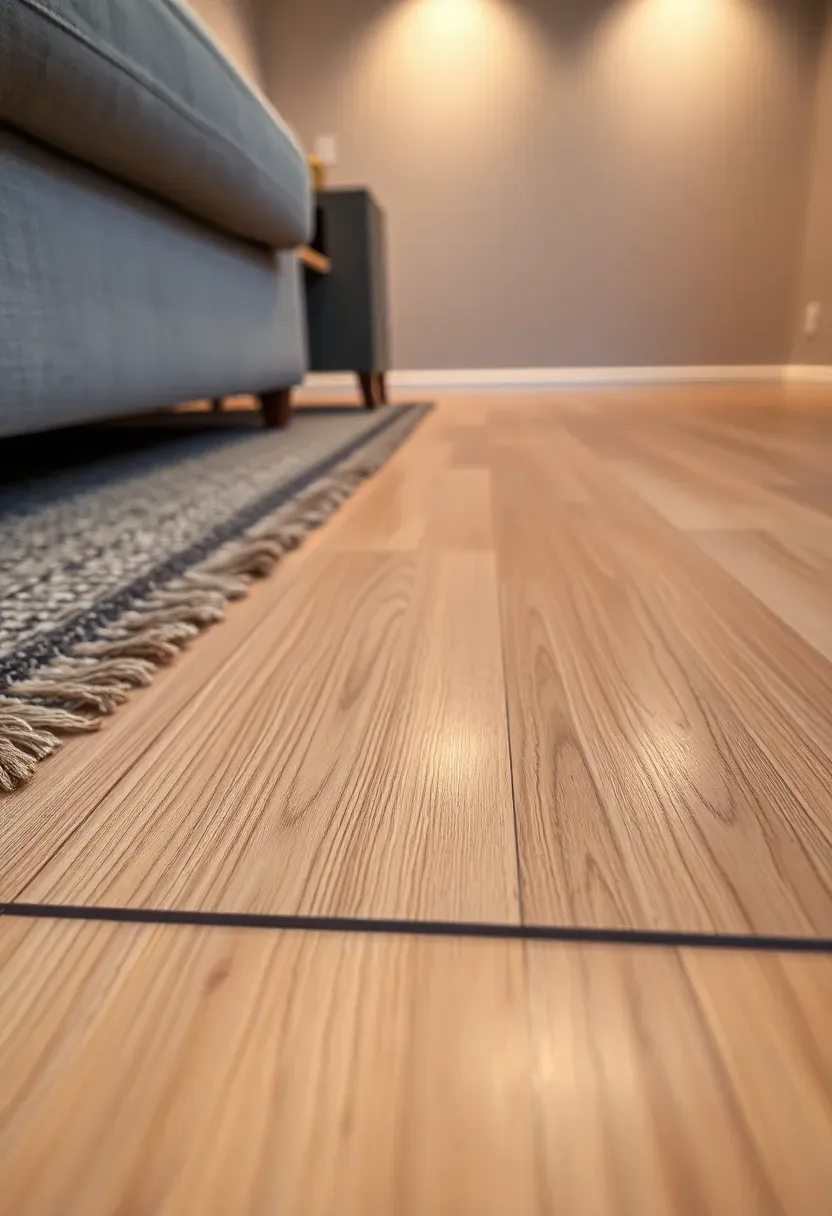
Carpet traps moisture and gets musty. Hardwood warps. Tile is cold underfoot. Luxury vinyl plank (LVP) handles all three basement challenges — it is waterproof, dimensionally stable, and warmer than tile or bare concrete. Modern LVP is 5 to 7mm thick with a rigid core that clicks together without glue, floating over the concrete slab. You do not need to level minor imperfections, though anything over 3/16 inch should be ground down or filled.
Installation notes
Acclimate planks in the basement for 48 hours before installing. Use a vapor barrier underlayment (6-mil poly sheeting) even if the manufacturer says it is optional — basements generate moisture from below. Run planks parallel to the longest wall. Expect to spend $2.50 to $5 per square foot for mid-range LVP with a 20-mil wear layer.
Choose vinyl plank if
- Your basement has any history of minor water intrusion
- You want the look of wood without the maintenance risk
- You plan to sell within 10 years — buyers expect finished flooring, and LVP photographs well
8. Oversized Floor Mirror
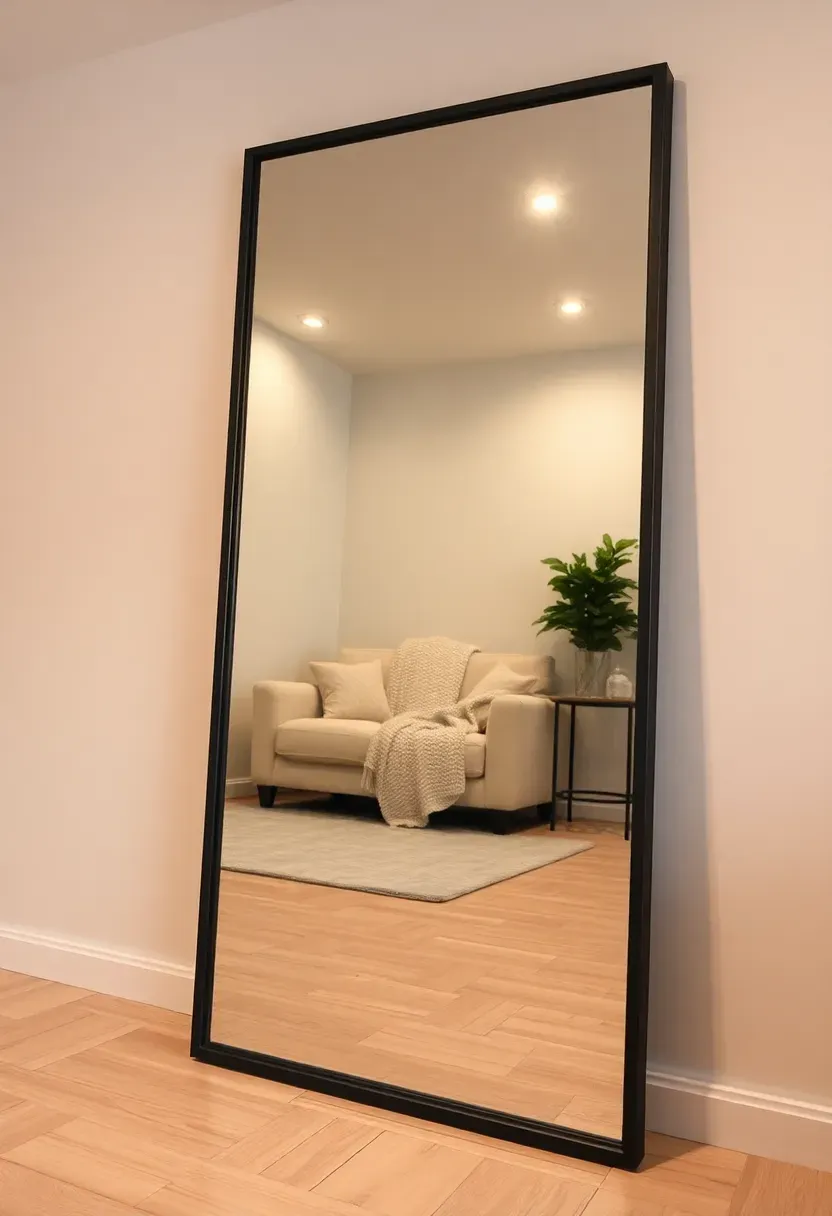
A mirror taller than 5 feet leaning against a basement wall doubles the perceived depth of the room and bounces light from your recessed cans or sconces back into the space. Position it opposite your primary light source for maximum effect. In basements, lean rather than wall-mount — a 40-pound mirror needs serious anchoring in concrete block, and leaning gives you flexibility to reposition. Secure it with an anti-tip furniture strap for safety. Thin black or brass frames work well. Avoid ornate frames that compete with the rest of the room in a space that already feels compact.
Tips
- Place the mirror where it reflects something worth looking at — a styled shelf, a light fixture, artwork
- Angle the base about 3 inches from the wall and tilt the top slightly forward for the best reflection
- Clean with microfiber only — glass cleaner spray can damage backing over time in humid basements
Recommended
Items for this idea
9. Built-In Reading Nook
Making use of dead space
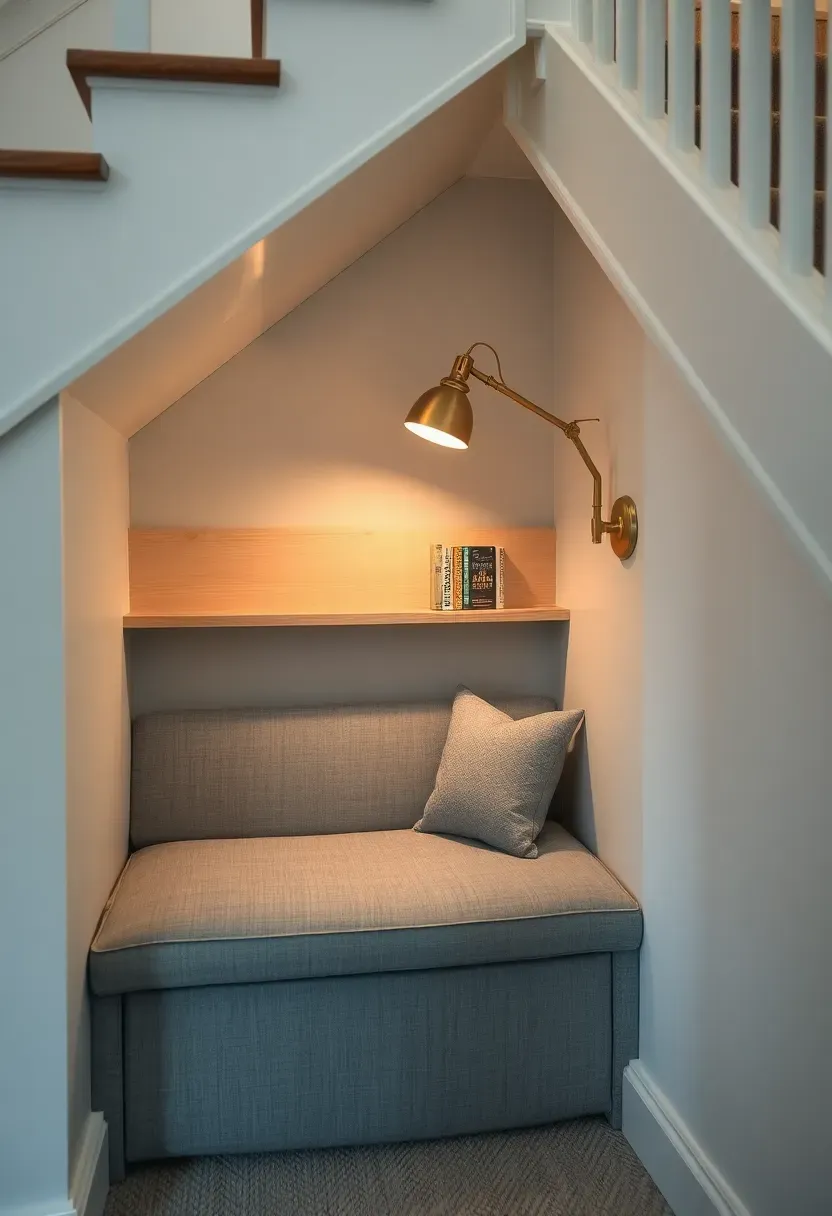
Every basement has awkward corners — under the stairs, beside the mechanical room, the short wall where the ceiling drops below 6 feet. These spots are useless for standard furniture but perfect for a built-in reading nook. Frame a bench seat at 18 inches high, add a hinged top for storage inside, and upholster the seat with outdoor-rated foam (it resists mildew). Line the back wall with shallow shelves for books.
What makes it work
The enclosed feeling that makes a nook uncomfortable in a large room actually feels right in a basement. It creates a micro-environment within the larger space. Add a sconce or clip-on reading light, a few throw pillows, and you have a spot that adults and kids will fight over.
Good locations
- Under the staircase where ceiling height tapers
- In an alcove between structural columns
- Along a short wall where a full-height bookcase would not fit
10. Ceiling-Mounted Curtain Dividers
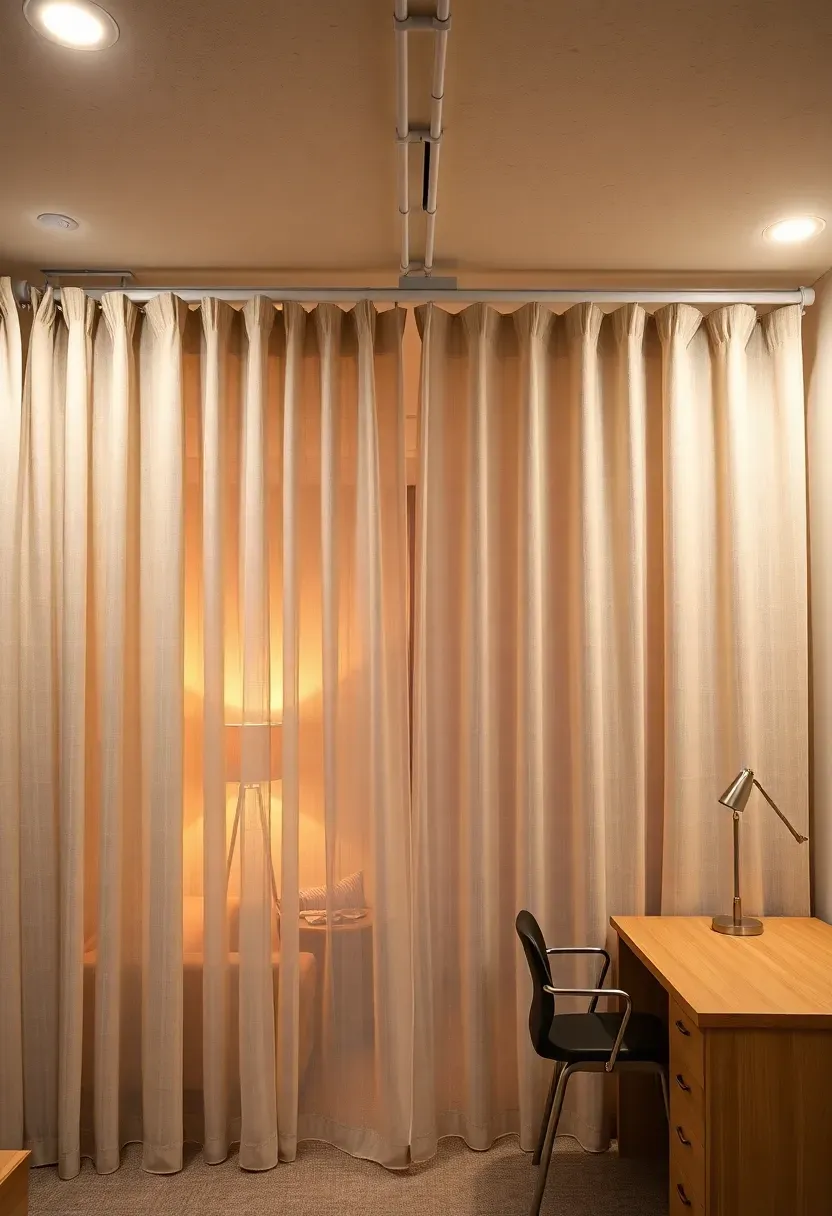
Open basements look bigger but function worse — sound carries, activities compete, and the space lacks definition. Ceiling-mounted curtain tracks let you divide the room on demand without permanent walls. Hospital-style ceiling tracks from companies like RoomDividersNow cost $40 to $80 for a 12-foot run and hold medium-weight curtain panels. For basements, use heavyweight linen or velvet panels that absorb sound rather than sheer fabrics that just provide visual separation. Mount the track directly into floor joists using lag screws. The beauty of this approach is reversibility: open the curtains and you have one big room. Close them and you have a private office, guest room, or media zone.
Tips
- Run the track in an L-shape or U-shape to create a fully enclosed pocket within the larger room
- Choose panels that reach the floor by 1/2 inch — too long and they pool, too short and they look like shower curtains
- Add a second track parallel to the first for layered curtains if you need both blackout and sheer options
Recommended
Items for this idea
11. Gallery Wall with Mixed Frames
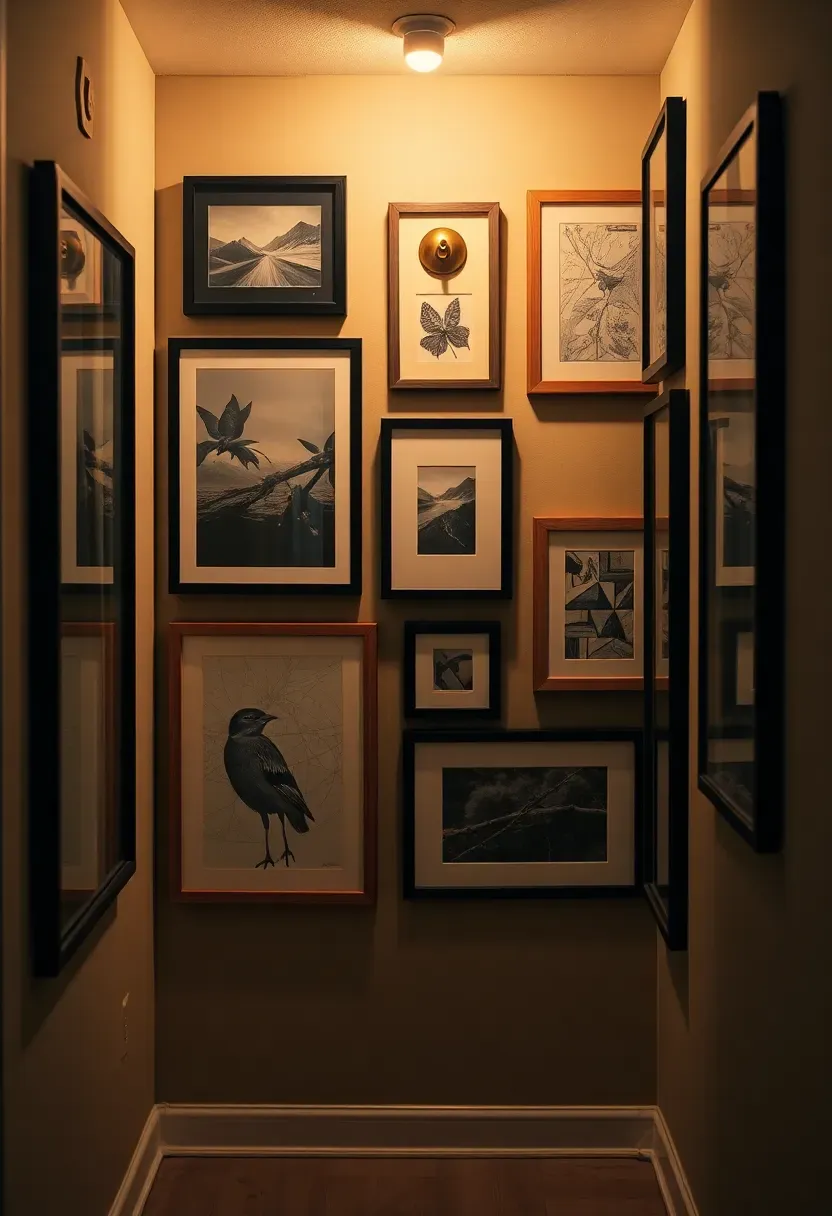
A gallery wall works especially well in basements because it gives the eye something to focus on besides the lack of windows. The trick to making it look deliberate rather than random is limiting your palette to two or three frame finishes (black, natural wood, and white is a reliable combination) while varying the sizes. Start with the largest piece slightly left of center at eye level, then build outward. Keep spacing between frames consistent at 2 to 3 inches. In basements, picture lights or LED strip lighting along the top of the grouping make a dramatic difference — without directed light, the wall just fades into the background.
Tips
- Lay out the arrangement on the floor first and take a photo before hammering anything
- Mix art types: one photograph, one text print, one abstract, one personal item like a map or vintage poster
- Use command strips on drywall to avoid excessive holes while you experiment with placement
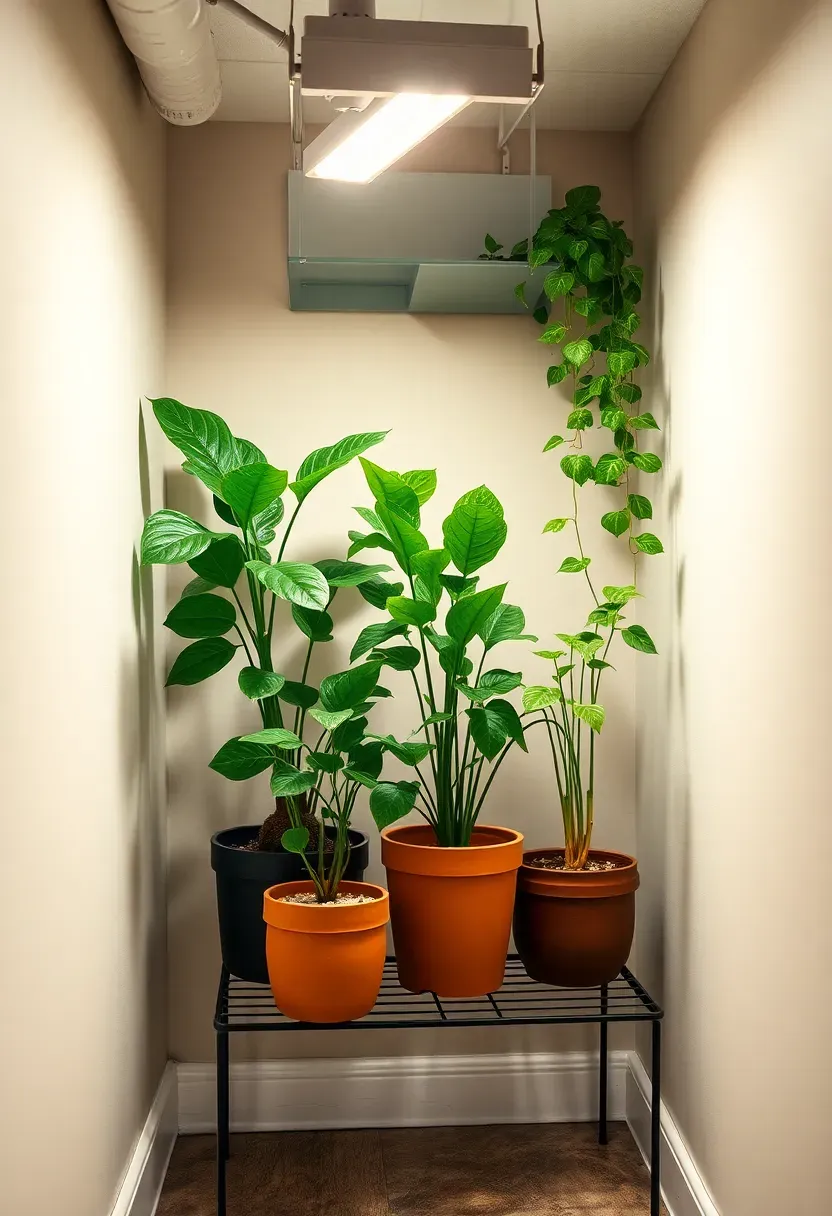
12. Indoor Plant Corner with Grow Lights
Why bother with plants underground
Plants in a basement seem counterintuitive — no sunlight, cooler temperatures, higher humidity. But certain species do well in exactly those conditions, and the presence of living greenery makes a windowless room feel dramatically less bunker-like. Pothos, snake plants, ZZ plants, and philodendrons all tolerate low light. The catch is that "low light" in plant terms still means more photons than a dim basement provides, so you need supplemental lighting.
Setting up grow lights
Full-spectrum LED grow lights disguised as track lighting or pendant fixtures provide the light plants need without the purple glow of older grow lamps. Position lights 12 to 24 inches above plant canopy. Run them on a timer for 12 to 14 hours daily. Expect to spend $30 to $70 per fixture for a white-spectrum LED bar that blends into your decor.
Best picks for basements
- Snake plant: nearly indestructible, tolerates neglect and variable humidity
- Pothos: trails from shelves, grows in water or soil, handles low light
- Cast iron plant: slow-growing, does not need attention, handles cool basement temperatures
Recommended
Items for this idea
13. Patterned Tile Accent Floor
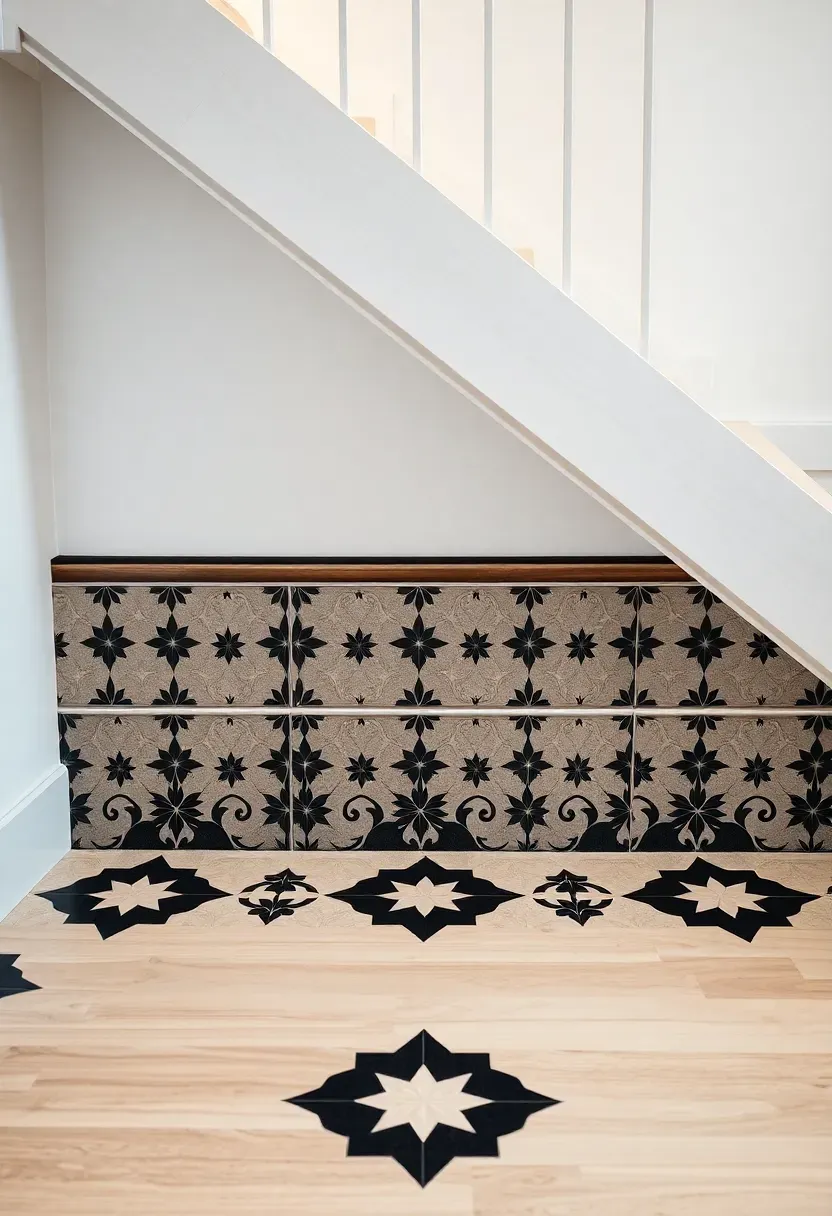
You do not need to tile the entire basement. A patterned tile insert in a specific zone — the entryway at the bottom of the stairs, the area under a bar, or a defined seating area — adds visual interest and creates natural zones without walls. Encaustic cement tiles with geometric patterns in black, white, and gray work in most basement color schemes. Set them directly on the concrete slab with modified thinset. Border the patterned section with a solid-color tile or transition strip where it meets the rest of your flooring. The pattern does the heavy lifting, so keep surrounding surfaces simple.
Tips
- Seal cement tiles before and after grouting — they are porous and will stain otherwise
- Keep the patterned area under 40 square feet so it reads as an accent, not a busy mess
- Black and white patterns photograph well for Pinterest and real estate listings
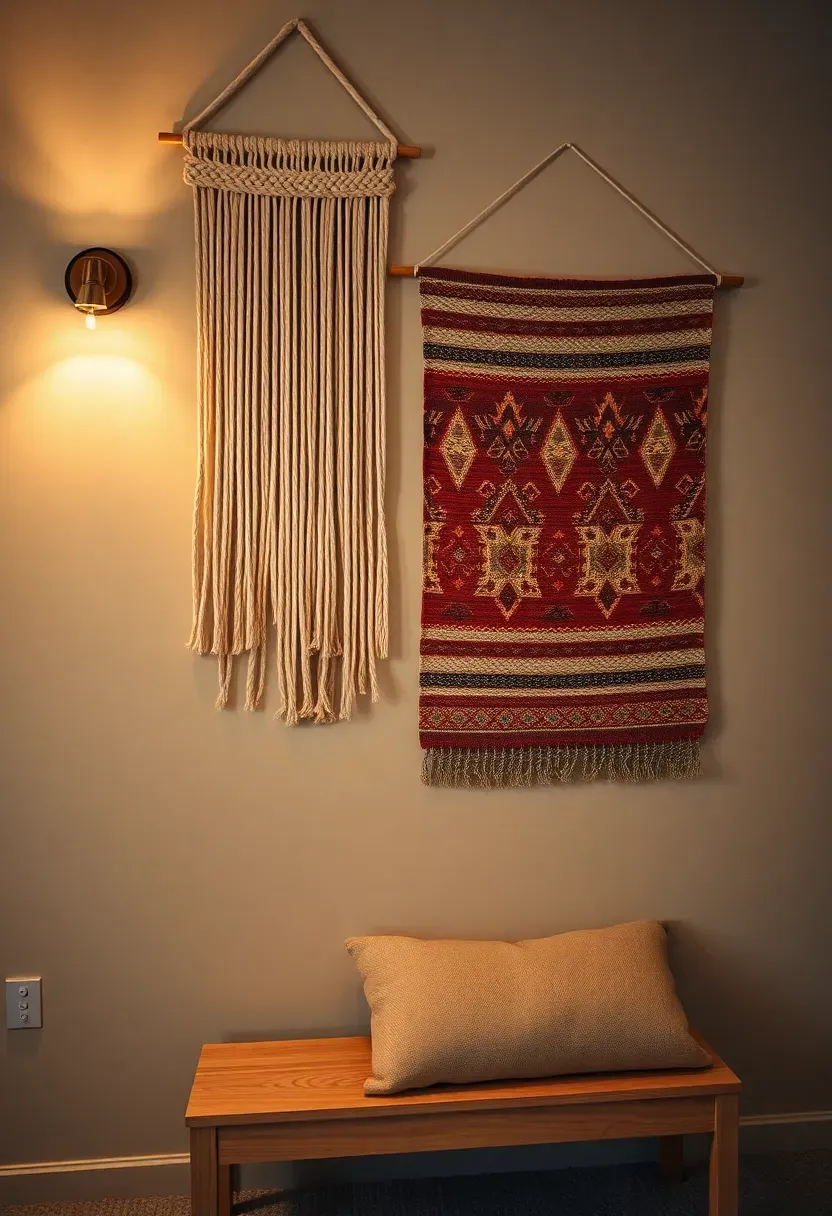
14. Woven Textile Wall Hangings
An alternative to paint and panels
Fabric on walls adds warmth in a way that paint cannot replicate. Woven wall hangings — macrame, kilim rugs mounted on rods, or large-scale tapestries — absorb sound (useful in echo-prone basements) and introduce texture and color simultaneously. A single oversized piece above a sofa or bed makes more impact than several small ones scattered around.
Practical considerations
In basements, fiber choice matters. Avoid pieces made from untreated cotton or linen that can develop mildew in humid conditions. Wool, synthetic blends, or cotton-poly mixes hold up better. Mount hangings an inch away from the wall using spacers behind the hanging rod so air circulates behind the fabric. If your basement runs a dehumidifier, you are probably fine with most materials.
Choose textile hangings if
- You want to soften hard concrete or block walls without the commitment of paneling
- You rent and cannot make permanent changes
- You need acoustic dampening in an open-plan basement
Recommended
Items for this idea
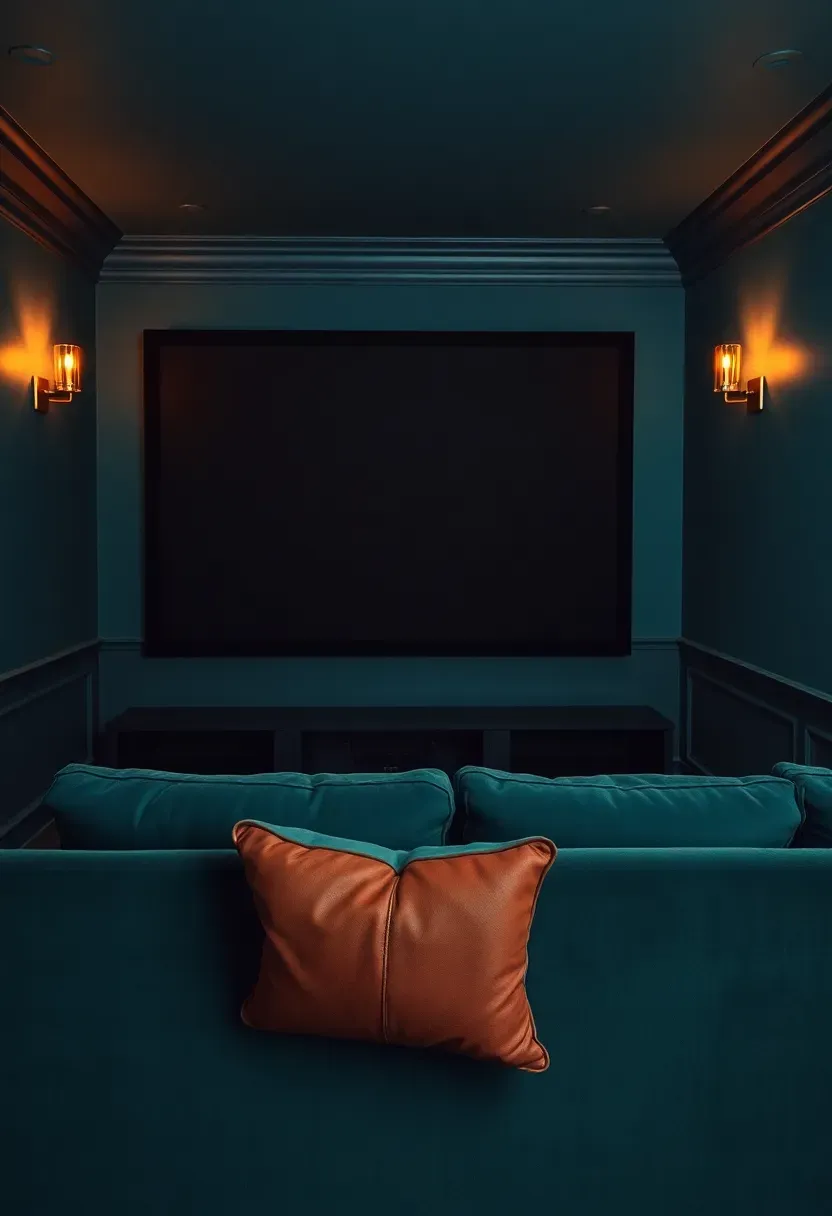
15. Color-Drenched Media Room
Instead of fighting the darkness of a windowless basement, lean into it. A color-drenched room uses a single saturated color — deep teal, forest green, navy, or burgundy — on walls, ceiling, and trim. This technique, sometimes called color cocooning, eliminates visual boundaries and makes the room feel deliberate and enveloping. It works best in dedicated media rooms or lounges where the moody atmosphere is the point. Pair it with velvet or chenille upholstery in a complementary dark tone, brass or copper accents for warmth, and a mix of candle-style sconces and recessed lighting on dimmers.
Tips
- Use satin or semi-gloss finish so the color has some sheen — flat paint in a dark room absorbs all light
- Pick one metallic accent tone (brass OR chrome, not both) and repeat it in hardware, frames, and fixtures
- Add one contrasting element — a cream throw, a light-colored rug — so the room has a focal point
16. Modular Storage Wall
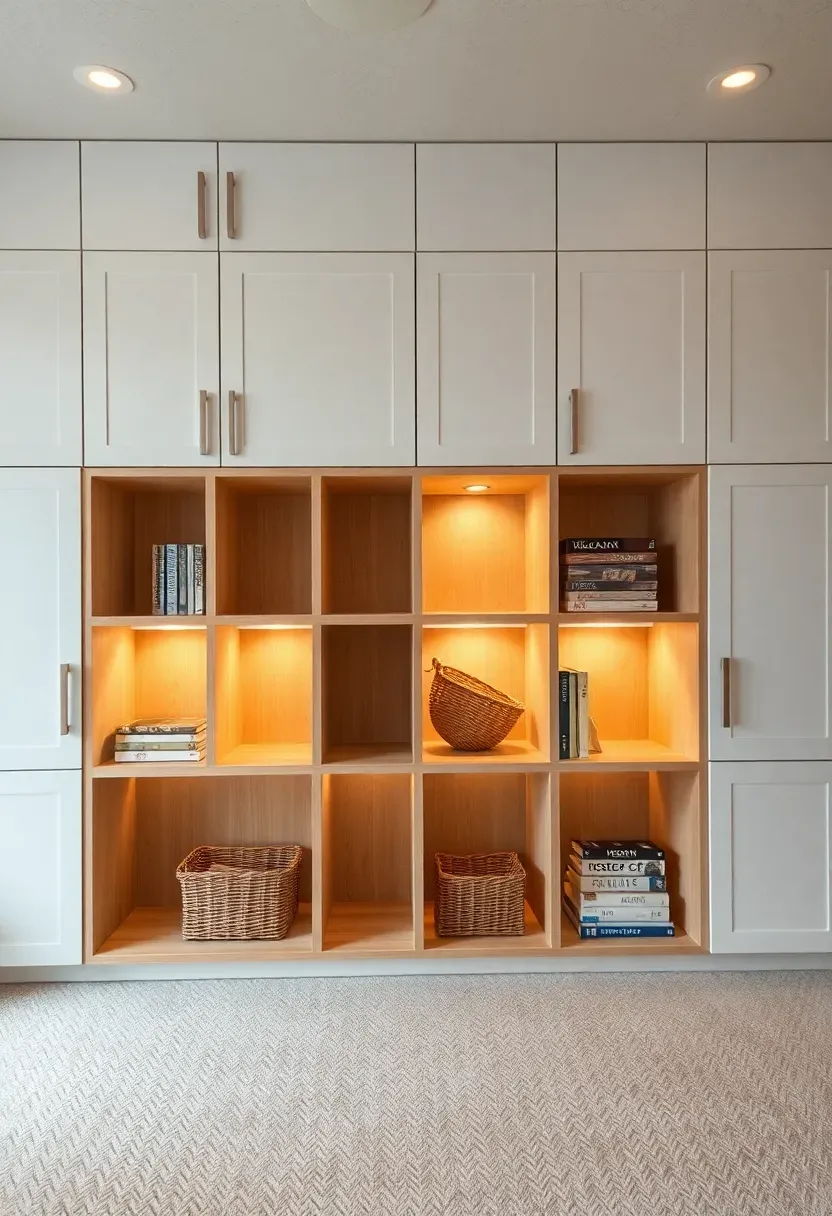
Basements accumulate things. Board games, holiday decorations, sports equipment, tools — without dedicated storage, these items take over and the space never feels decorated, just occupied. A full-wall modular storage system with a mix of closed cabinets and open cubbies contains the chaos while functioning as a visual feature. IKEA's Besta or Kallax lines are popular budget options. For a more custom look, combine upper closed cabinets with open lower cubbies, add integrated LED lighting inside the open sections, and paint the entire unit the same color as the wall behind it so it recedes into the architecture.
Tips
- Anchor all tall units to the wall — basements have uneven floors that can cause unsecured furniture to tip
- Use baskets inside open cubbies for items you do not want visible
- Keep the top 12 inches below the ceiling clear to avoid a cramped look
Recommended
Items for this idea
17. Vintage Rug Layering
How it works
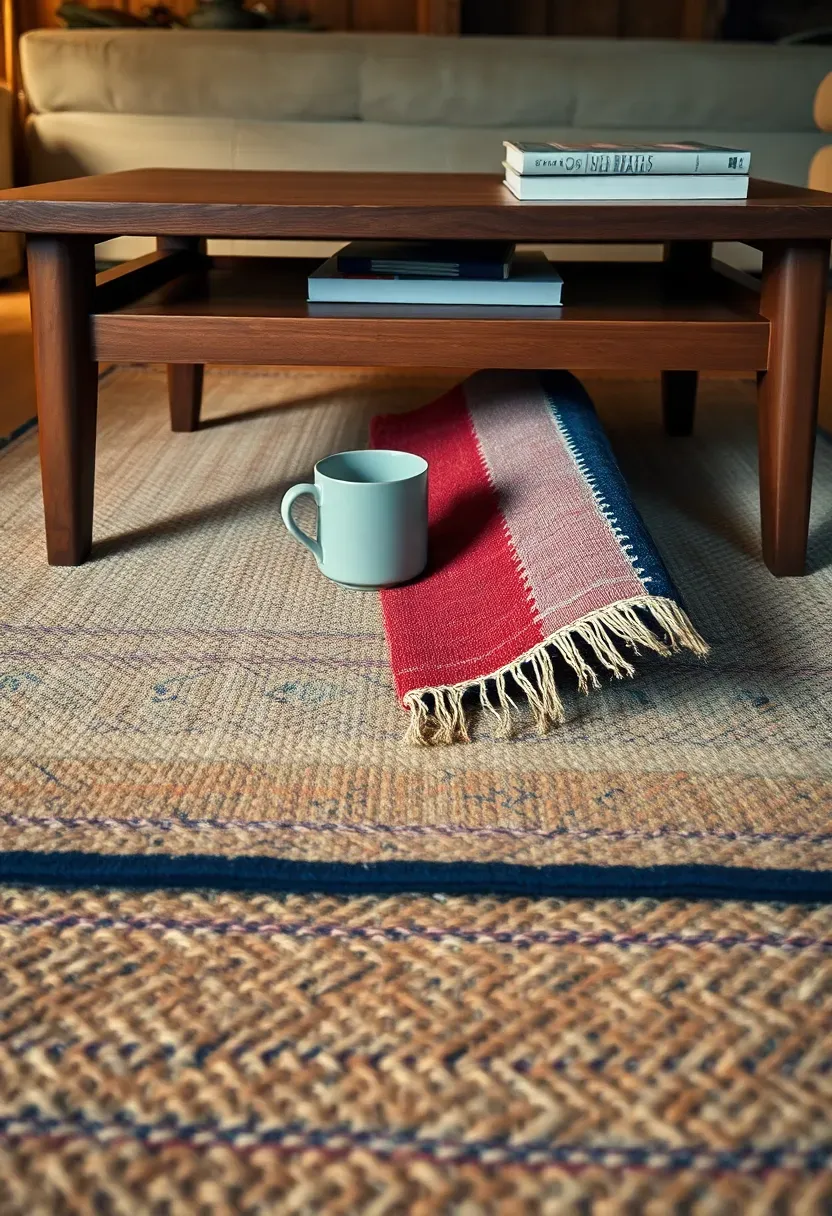
Layering two or three rugs of different sizes, textures, and patterns creates a collected, lived-in look that a single rug cannot achieve. Start with a large, neutral base rug — sisal, jute-look synthetic, or a faded flatweave — and layer a smaller, more colorful vintage rug on top at an angle. The overlap creates visual richness and defines sub-areas within the basement. This approach works particularly well when your furniture arrangement creates multiple zones.
Sourcing tips
Estate sales, Facebook Marketplace, and vintage rug dealers on Etsy offer worn Turkish, Moroccan, and Persian rugs at a fraction of new prices. Look for pieces with some wear — they actually work better for layering because the faded colors blend more easily. Budget $50 to $200 for a 4x6 vintage rug with character.
Choose rug layering if
- You want a relaxed, bohemian feel without committing to a single large expensive rug
- Your basement floor has patches of different materials or repairs you want to hide
- You prefer a decorating approach that evolves over time as you find new pieces
18. Statement Pendant Cluster
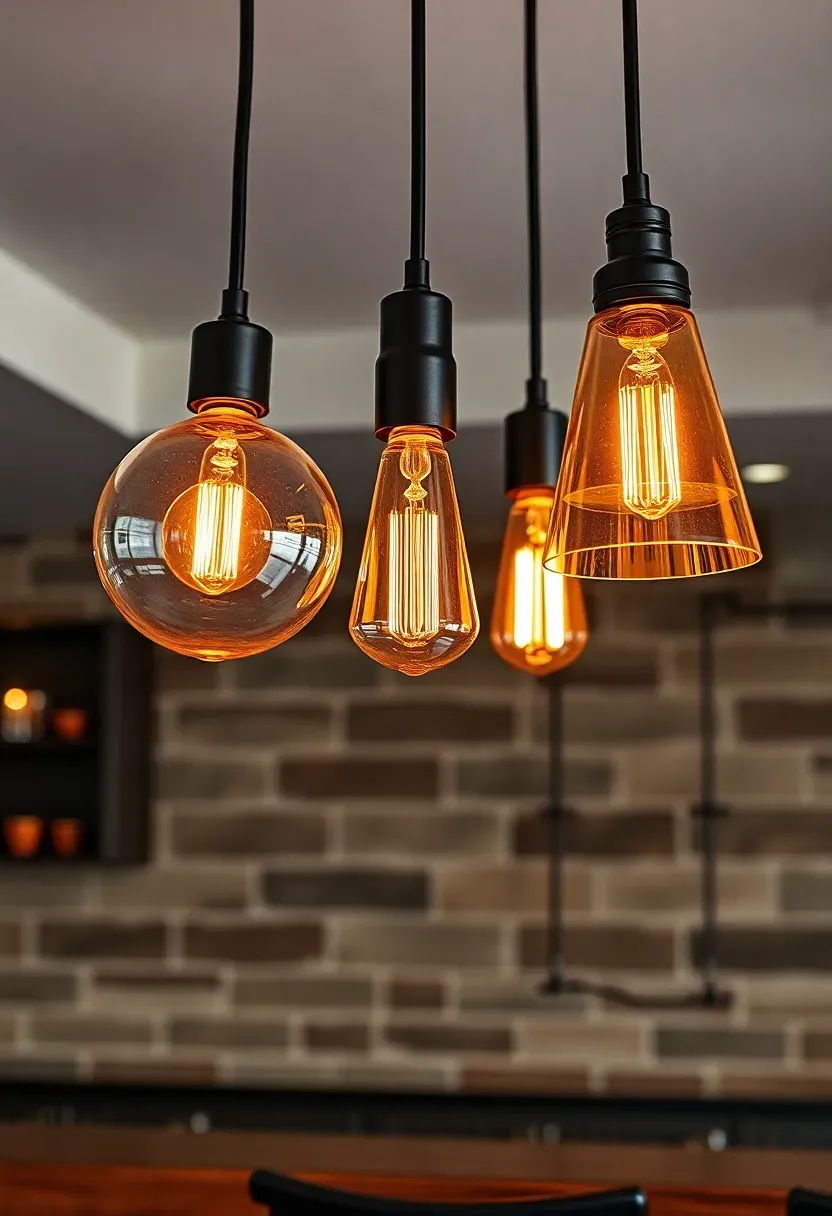
A cluster of pendant lights — three to five fixtures hung at staggered heights from a single ceiling point or along a beam — draws the eye upward and creates a focal point in a room that usually lacks one. This works over a bar, dining table, or the center of a seating group. In basements with 7-foot ceilings, use mini pendants (6 to 8 inch diameter) rather than full-size fixtures so they do not obstruct headroom. Hang the lowest pendant at 60 inches from the floor if it is over a table, or 72 inches in a walkway. Edison-style filament bulbs on dimmers give you adjustable ambiance without separate lamp purchases.
Tips
- Use a multi-port ceiling canopy to cluster three pendants from a single junction box
- Mix pendant shapes within one finish color for a curated but not matchy look
- Clear glass shades keep the visual weight light in compact basement rooms
Recommended
Items for this idea
19. Cozy Basement Guest Suite
Beyond the air mattress
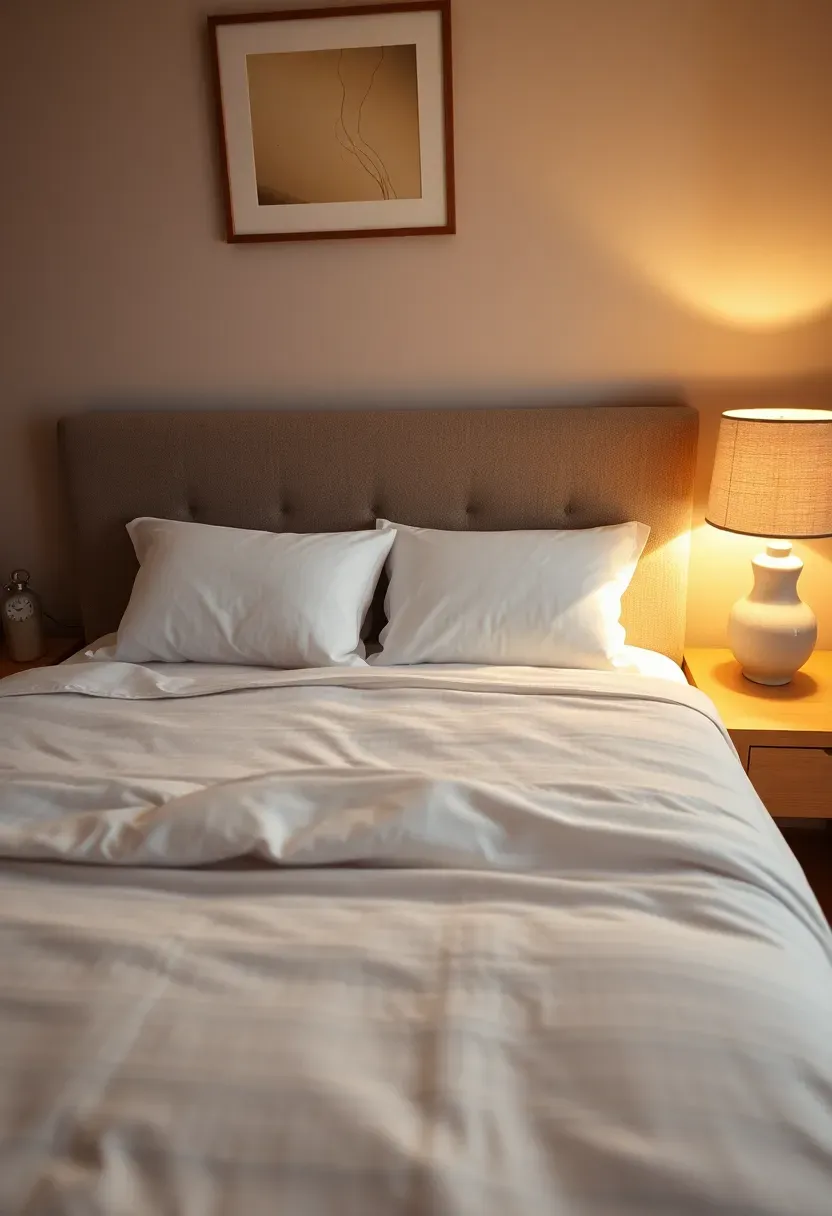
A dedicated guest setup in the basement gives visitors genuine privacy and gives you back your spare bedroom for everyday use. The minimum for a comfortable basement guest suite: a real bed (queen or full — never a twin for adult guests), matching nightstands with lamps, a small dresser or luggage rack, and blackout curtains on a ceiling track to enclose the sleeping area if the basement is open-plan.
Making it feel like a room
Treat the guest area like a budget hotel room. Provide fresh white bedding, a bedside water carafe, a small clock (guests without windows cannot tell what time it is), and a power strip with USB ports within reach of the bed. A bedside rug, a piece of art above the headboard, and a table lamp on a dimmer complete the setup.
Details that matter
- Add a white noise machine — basements carry sound from furnaces, water heaters, and laundry machines
- Place a small fan nearby for air circulation since basement air can feel still
- Include a luggage bench or rack so guests do not live out of a suitcase on the floor
Quick FAQ
Do basements need special paint? Yes, specifically for concrete or block walls. Use a masonry primer before your topcoat, and choose a paint with mildewcide. Drywall over framed walls can take standard interior paint, but always in eggshell or satin finish for moisture resistance.
What is the cheapest way to make a basement feel finished? Paint everything the same warm white (walls, ceiling, pipes, ductwork), add one large area rug, and install three to five light sources at different heights. These three moves cost under $500 total and change the room more than any single expensive purchase.
Can I decorate a basement without finishing the walls? Absolutely. Exposed concrete or block walls look intentional when paired with industrial-style furniture, metal shelving, and warm textiles. Seal the walls with a clear masonry sealer, then decorate around them rather than trying to hide them.
How do I deal with basement humidity when decorating? Run a dehumidifier to keep relative humidity between 30% and 50%. Choose synthetic fabrics over natural fibers, use furniture with legs instead of skirted bases, and maintain air gaps between furniture and walls. Avoid porous materials like untreated wood directly on concrete floors.
Is basement decorating worth it for resale value? Finished and decorated basements add usable square footage that appraisers and buyers notice, though below-grade space typically appraises at 50% to 75% of above-grade value per square foot. A well-decorated basement photographs well in listings and can be the differentiating factor between similar homes.
The best basement decorating moves share a common thread: they treat the space as a room worth designing, not a problem to solve. Start with lighting and flooring since those two elements set the foundation for everything else. Add furniture and textiles next. Save the decorative details — art, plants, pendant lights — for last, once you know how the room actually gets used. You do not need to do all 19 ideas at once. Pick three or four that match how you want to use the space, execute them well, and build from there.
Pinterest cover for 19 Basement Decorating Ideas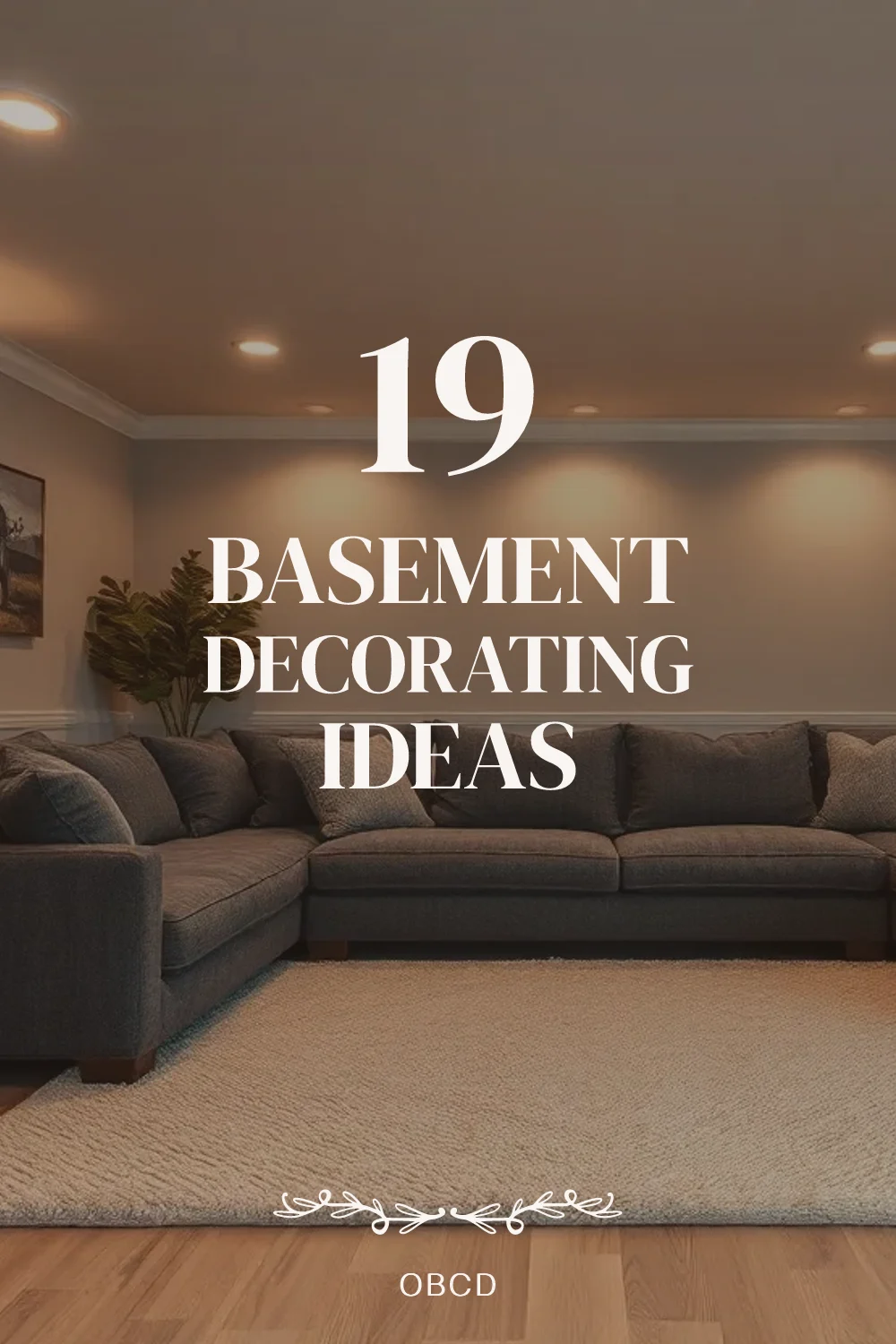
About the author
OBCD
CGI visualization and interior design content. We create detailed 3D renders and curate practical design ideas for every room in your home.