25 Basement Apartment Ideas
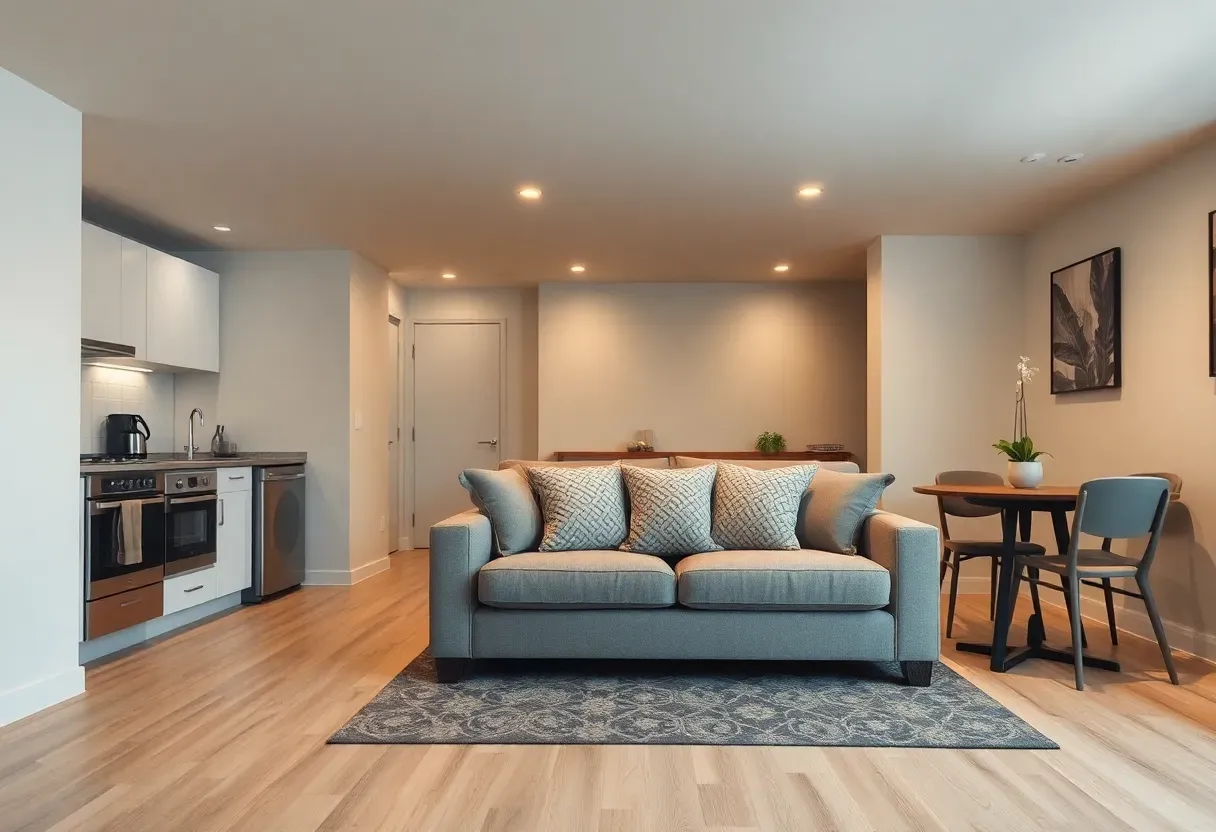
I spent two years living in a basement apartment in Brooklyn, and the biggest lesson was this: the space itself is not the problem. The problem is treating it like a regular apartment and expecting it to behave like one. Basement apartments play by their own rules — light comes from different places (or nowhere), sound travels differently through concrete, and moisture is a constant background variable you cannot ignore. Once you stop fighting those realities and start designing around them, a below-grade unit can be genuinely comfortable. Some of my favorite living arrangements have been underground. These 25 ideas cover the specific challenges and opportunities of basement apartment living, from structural basics to the finishing details that make it feel like home.
Here you will find ideas moving from foundational decisions like layout and moisture control through lighting, kitchenette design, sleeping areas, storage, and the finishing touches that pull a basement apartment together.
Table of Contents
- Open-Plan Layout with Defined Zones
- Egress Window Bedroom
- Compact Galley Kitchenette
- Luxury Vinyl Plank Throughout
- Recessed Lighting Grid on Dimmers
- Dehumidifier Closet
- Murphy Bed for Dual-Purpose Rooms
- Bathroom with Walk-In Shower
- Light Well Garden View
- Reflective Surfaces Strategy
- Built-In Banquette Dining
- Acoustic Treatment for Ceiling Noise
- Under-Stair Storage System
- Mini Laundry Station
- Electric Fireplace Feature Wall
- Floor-to-Ceiling Curtain Dividers
- Painted Concrete Accent Floor
- Compact Home Office Nook
- Horizontal Window Shelf Garden
- Smart Ventilation Setup
- Warm Color Palette for Depth
- Modular Sofa for Flexible Seating
- Pendant Cluster Over Kitchen Counter
- Entryway with Coat and Shoe Storage
- Gallery Wall to Add Personality
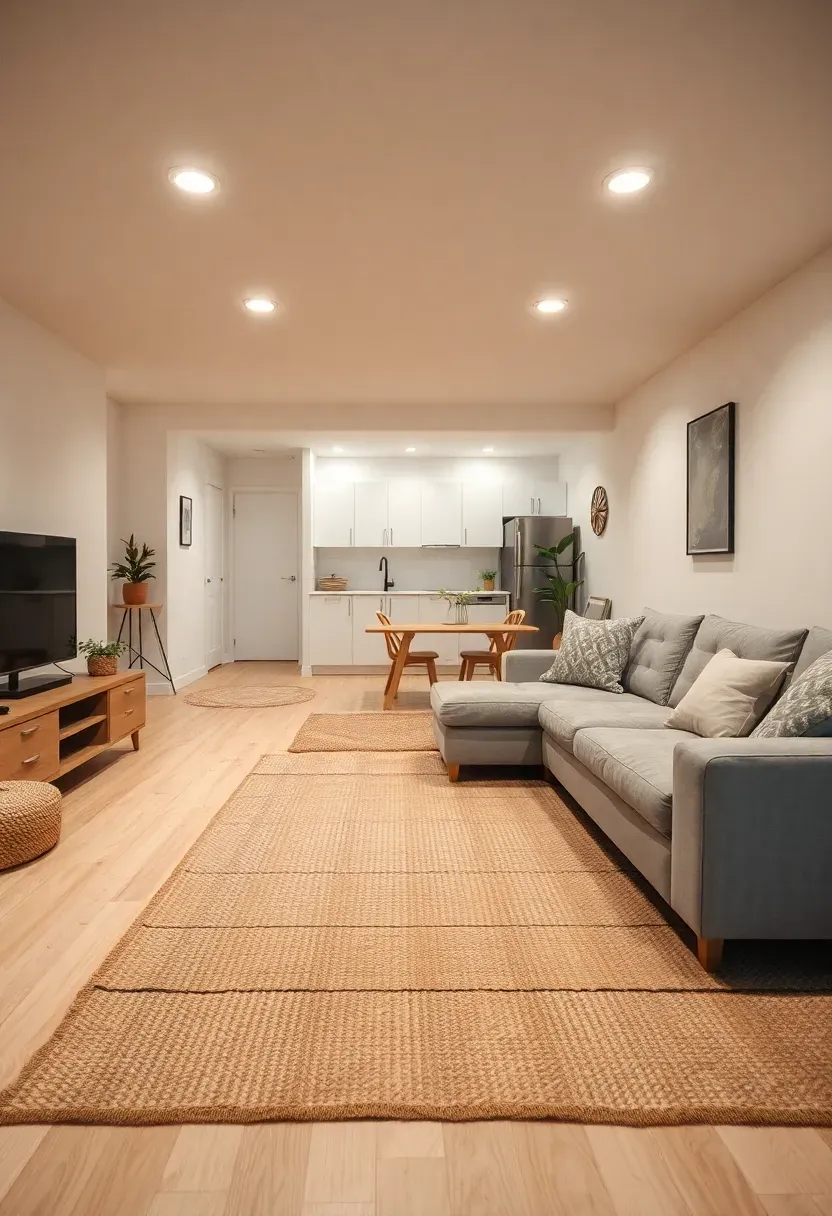
1. Open-Plan Layout with Defined Zones
Why basements need this approach
Most basement apartments sit between 400 and 800 square feet with ceiling heights around 7 to 8 feet. Adding walls eats into that limited volume fast and blocks whatever light you have from reaching the full space. An open floor plan keeps air and light circulating while furniture placement, rugs, and lighting changes handle the job of separating zones. Place your sofa perpendicular to the wall as a natural room divider between living and dining. Use a different rug under each zone.
Steps to plan it
- Map your utility access points first — water heater, electrical panel, sump pump — these cannot be blocked
- Position the sleeping area farthest from the entry for privacy and noise separation
- Keep a clear sightline from the main entry to the far wall so the space reads as large on first impression
Watch out for
- Do not push all furniture against walls — floating pieces in the middle creates better flow
- Leave 36 inches minimum for walkways between zones to meet most building codes
We picked a few things that go well with this idea: AEOCKY 50-Pint Basement Dehumidifier (★4.6), Nexaro 50-Pint Smart Basement Dehumidifier (★4.7) and hOmeLabs Wi-Fi Dehumidifier (50-Pint) (★4.5). As an Amazon Associate we earn from qualifying purchases.
2. Egress Window Bedroom
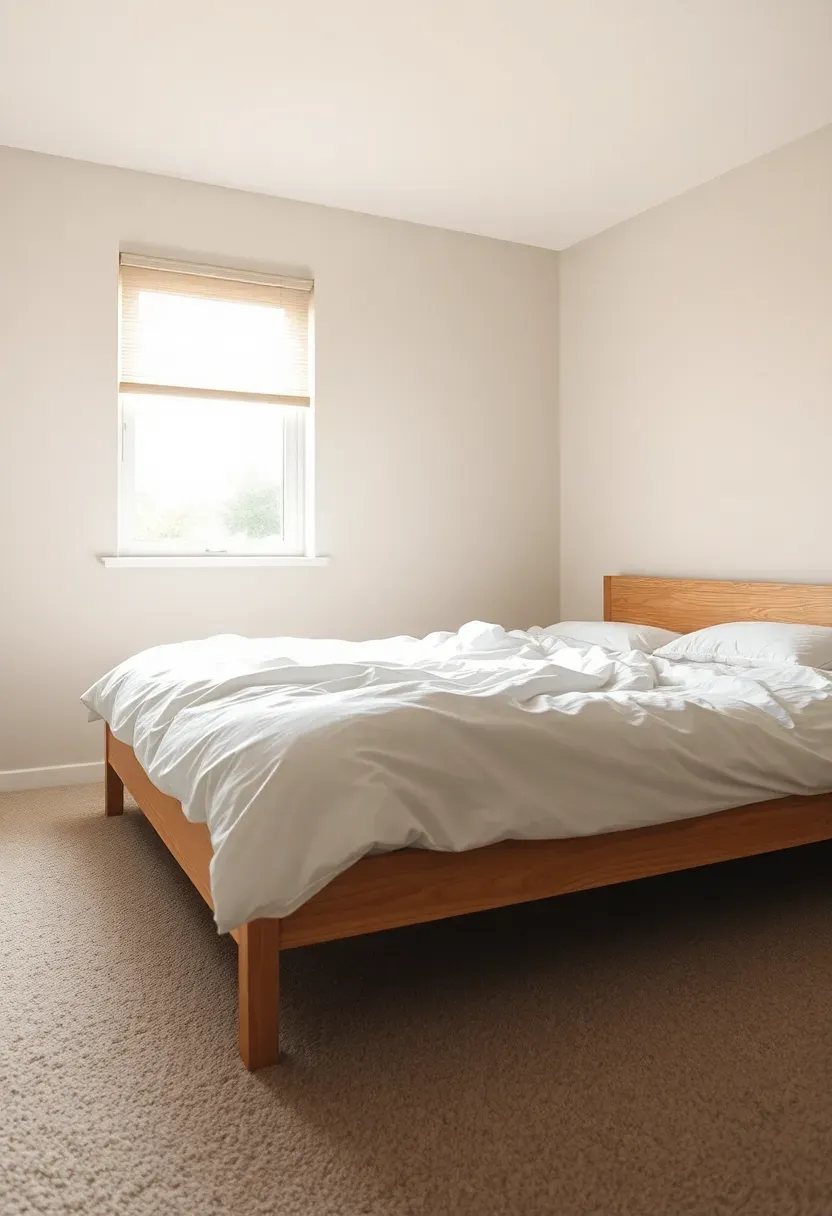
Building codes in most jurisdictions require any basement room used as a bedroom to have an egress window — a window large enough for an adult to climb through in an emergency. The minimum is typically 5.7 square feet of opening area with a sill no higher than 44 inches from the floor. This is not optional, and it is actually a design advantage. An egress window brings in real daylight, provides cross-ventilation, and gives the sleeping area a connection to the outdoors that other basement rooms lack. If your basement does not have one, adding an egress window well with a polycarbonate cover runs roughly $2,500 to $5,000 installed.
Tips
- Frame the window with wide trim painted the same color as the wall to make it look larger
- Install a cellular shade that opens from both top and bottom for privacy without blocking all light
- Place the bed on the wall adjacent to the window, not directly below it — drafts in winter make under-window sleeping uncomfortable
We picked a few things that go well with this idea: ROWHY Modular Corduroy Sectional with Ottoman (★4.3), Vongrasig L-Shaped Convertible Apartment Sofa (★4.0) and U-Shaped Modular Cloud Couch with Ottoman (★4.0). As an Amazon Associate we earn from qualifying purchases.
3. Compact Galley Kitchenette
The challenge
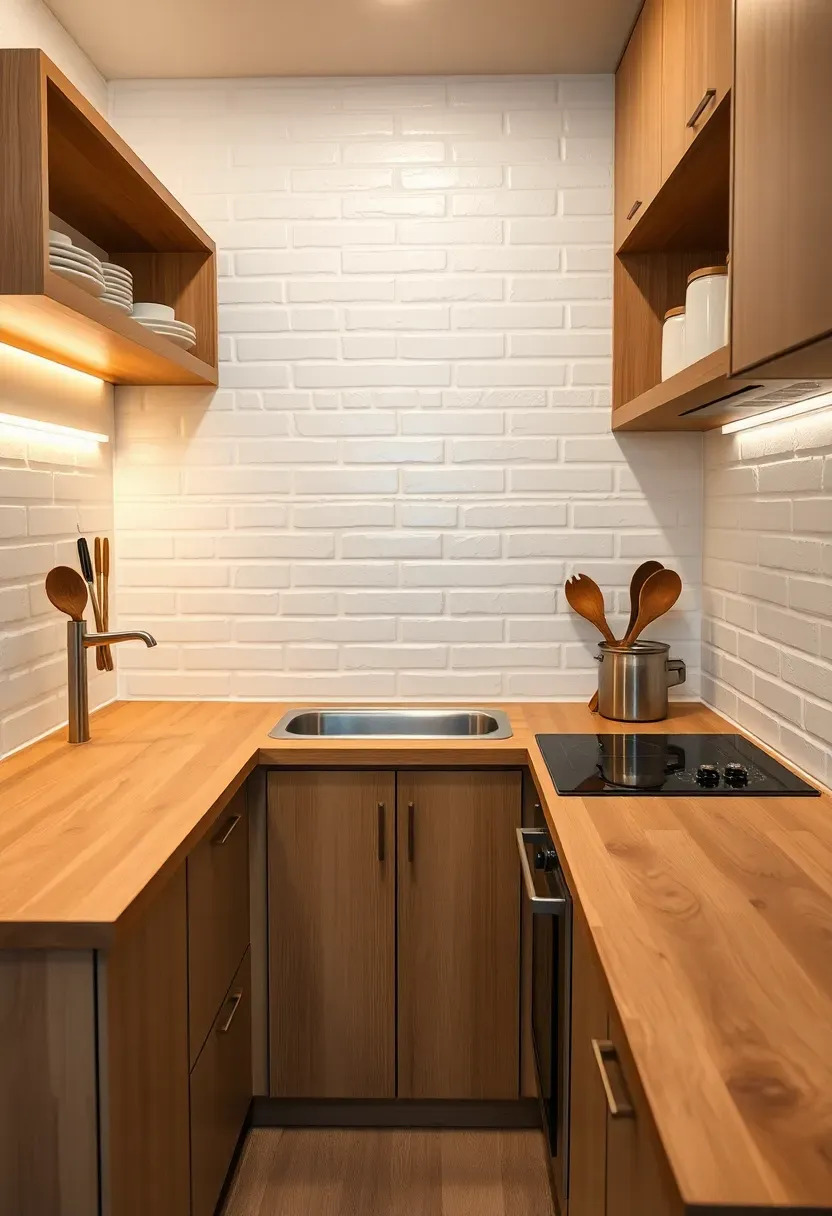
Full kitchens rarely fit in basement apartments without major plumbing work. A galley kitchenette — two parallel counters or one counter with an island — covers most cooking needs in a 6- to 8-foot run. The key constraint is drain slope: basement plumbing often relies on a sewage ejector pump, which adds $1,200 to $2,000 to the project. Plan your sink location close to existing drain lines to minimize cost.
What works well
A 24-inch apartment-size refrigerator, a two-burner induction cooktop, a microwave mounted under the upper cabinet, and a single-bowl undermount sink give you a fully functional cooking station in about 48 square feet. Butcher block countertops are affordable and warm up a space that can feel cold. Open shelving instead of upper cabinets keeps the room feeling tall.
Choose if
- You cook daily: Prioritize counter space and ventilation — an under-cabinet range hood vented to the exterior is worth the installation cost
- You mostly reheat and assemble: Skip the cooktop and put a good microwave and toaster oven on the counter instead
We picked a few things that go well with this idea: PuraFlame Bernice 60-Inch Smart Linear Fireplace (★4.6), EUHOMY 60-Inch Wall Recessed Electric Fireplace (★4.7) and BOSSIN 72-Inch Ultra-Thin Linear Fireplace (★4.3). As an Amazon Associate we earn from qualifying purchases.
4. Luxury Vinyl Plank Throughout
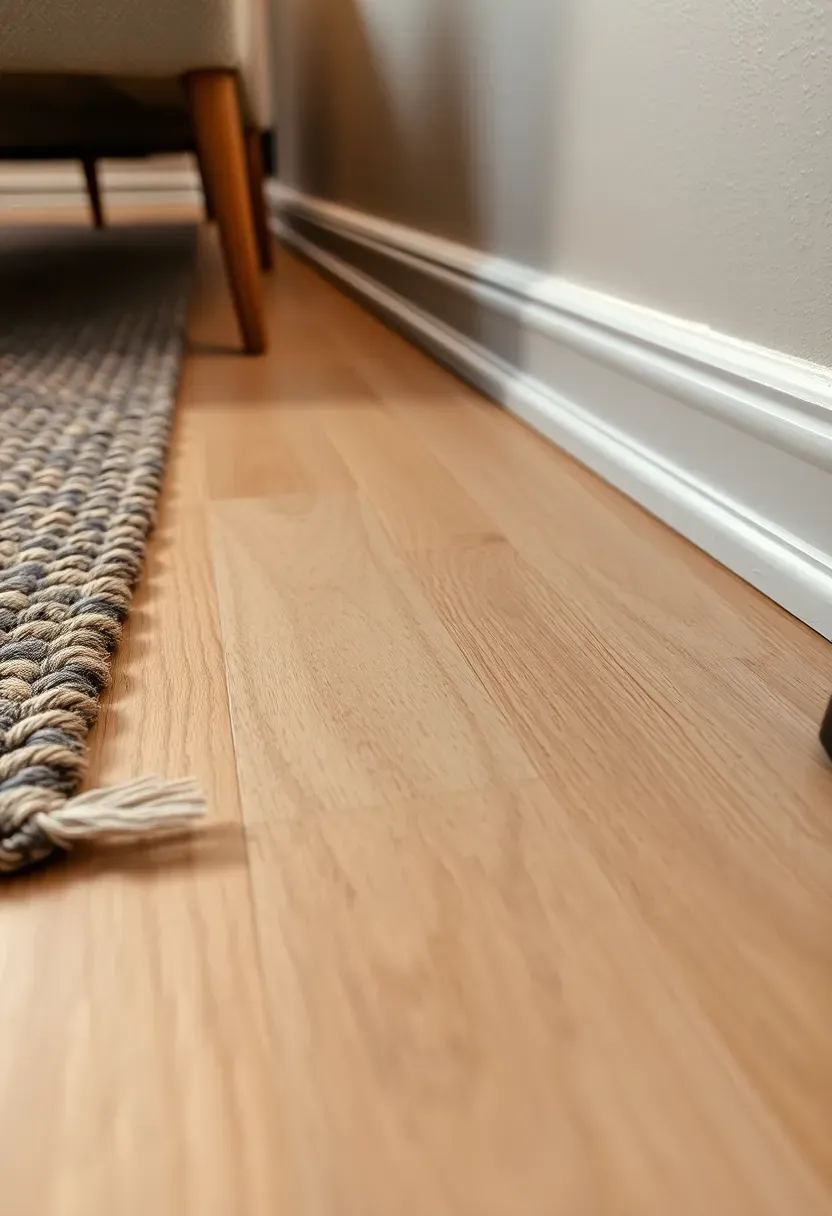
Concrete basement floors are cold, hard on joints, and ugly. Carpet traps moisture and gets moldy. Hardwood warps. Luxury vinyl plank (LVP) solves all three problems at once. Modern LVP is 100% waterproof, installs as a floating floor directly over concrete without glue, and comes in convincing wood-grain patterns that cost $2 to $5 per square foot. A 600-square-foot basement takes a weekend to install. The rigid-core varieties (SPC) feel solid underfoot and do not flex over minor concrete imperfections.
Tips
- Always use the manufacturer's recommended underlayment — it adds warmth and absorbs sound from footsteps
- Leave a quarter-inch expansion gap at every wall, hidden by baseboards
- Light oak or natural maple tones open up dark basements better than dark walnut or espresso finishes
Recommended
Items for this idea
5. Recessed Lighting Grid on Dimmers
The core issue
Basement apartments with no windows — or just small ones — depend entirely on artificial light to feel livable. A single ceiling fan light or a couple of table lamps creates pools of brightness surrounded by dark corners, which makes the room feel smaller than it is.
The solution
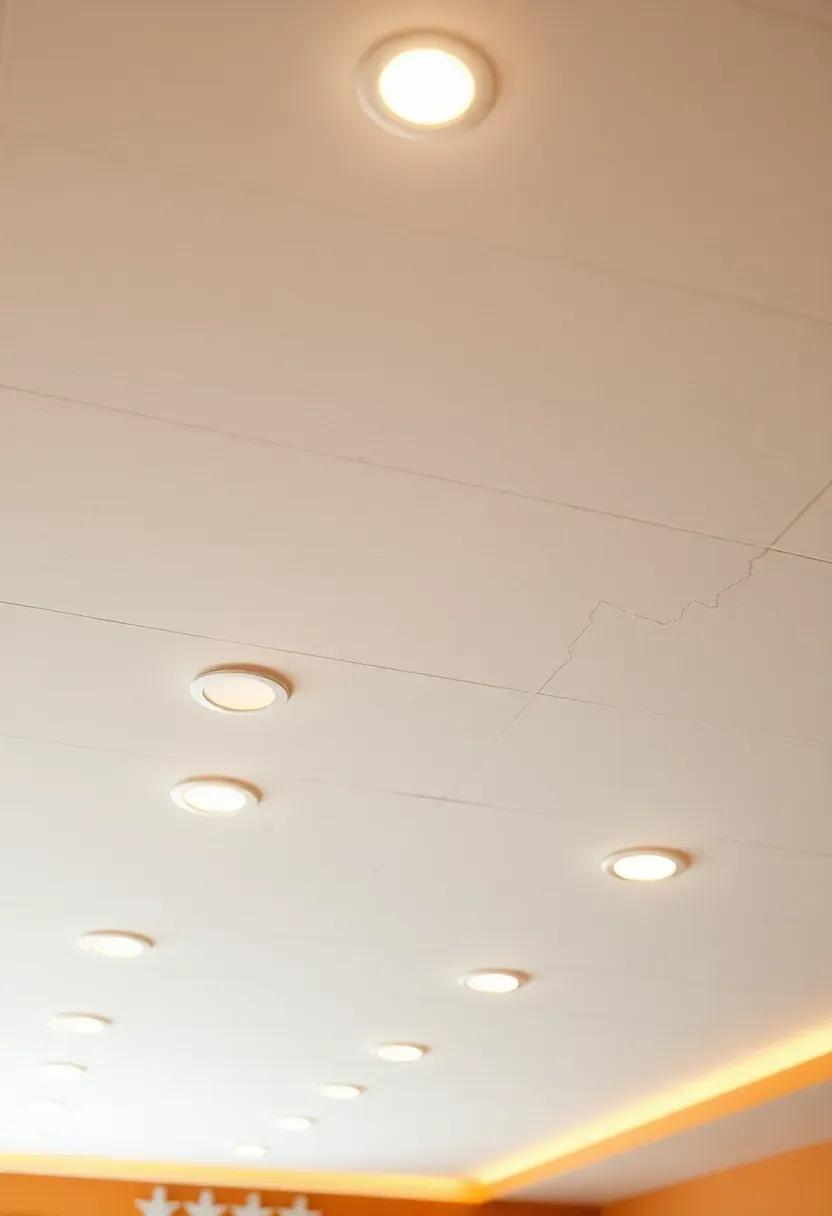
Install slim-profile LED recessed lights (4-inch canless wafer types work well with low ceilings) in a grid pattern spaced about 5 feet apart. Wire them to a dimmer switch. At full brightness they provide even ambient light for cooking and cleaning. Dimmed to 40%, they create a warm evening atmosphere. The total cost for a 10-light grid including a Lutron Caseta dimmer switch runs about $250 to $400 in materials.
Pros and cons
- Pro: Wafer-style LEDs sit nearly flush with the ceiling — they steal less than half an inch of headroom
- Pro: 2700K color temperature feels like afternoon sunlight
- Con: Requires ceiling access — if your basement has a finished drywall ceiling, you will need to cut holes and potentially fish wires
6. Dehumidifier Closet
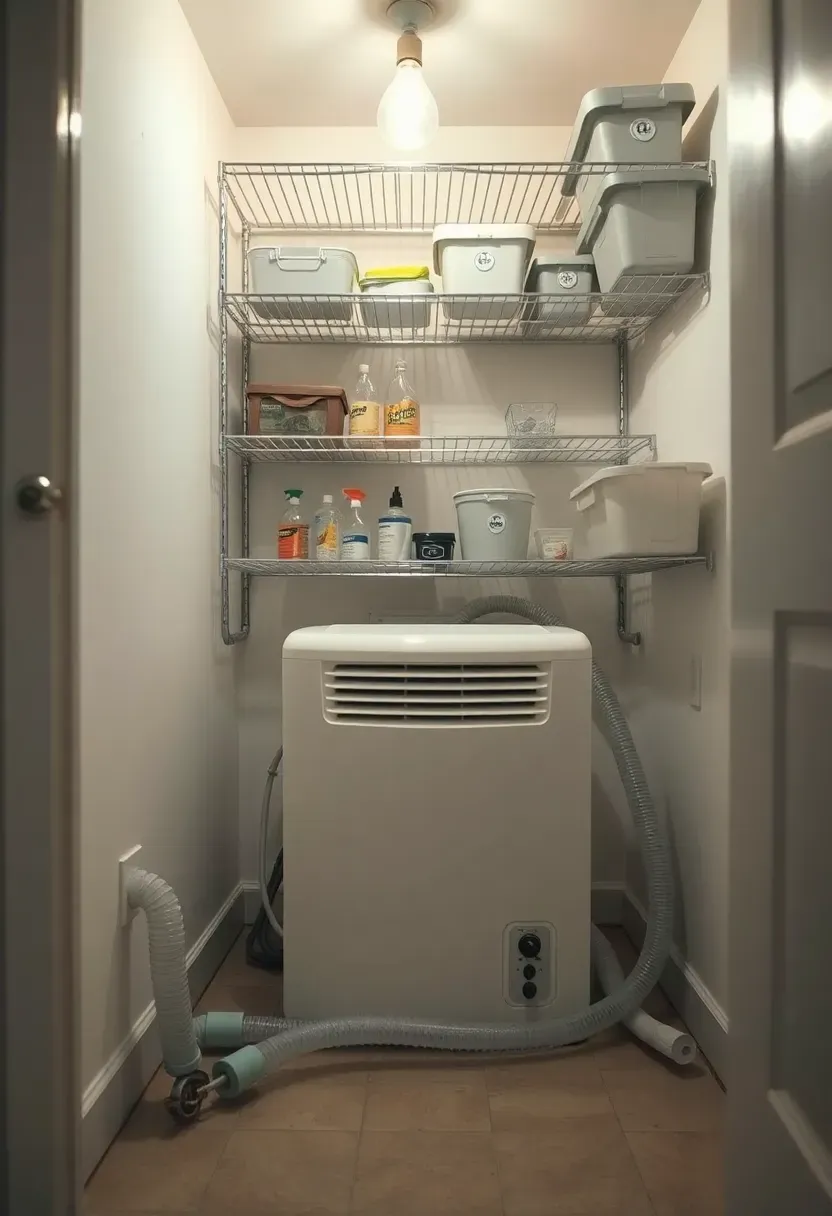
Humidity is the hidden enemy of every basement apartment. Above 60% relative humidity, mold starts growing on organic materials — drywall paper, wood, fabric. A whole-house dehumidifier rated for 50 to 70 pints per day handles most basement apartments. Build a small utility closet around it with louvered doors for airflow, run the drain hose to the nearest floor drain or sump pit, and forget about it. The alternative — a portable unit with a bucket you empty twice a day — gets abandoned within a month. Every long-term basement resident I know who skipped this step regretted it by the first humid summer.
Tips
- Set the target to 45-50% relative humidity and leave it there year-round
- Install a hygrometer in the main living area so you can spot problems before they become visible mold
- Insulate cold water pipes in the closet — condensation on pipes is a sneaky moisture source people overlook
Recommended
Items for this idea
7. Murphy Bed for Dual-Purpose Rooms
When it makes sense
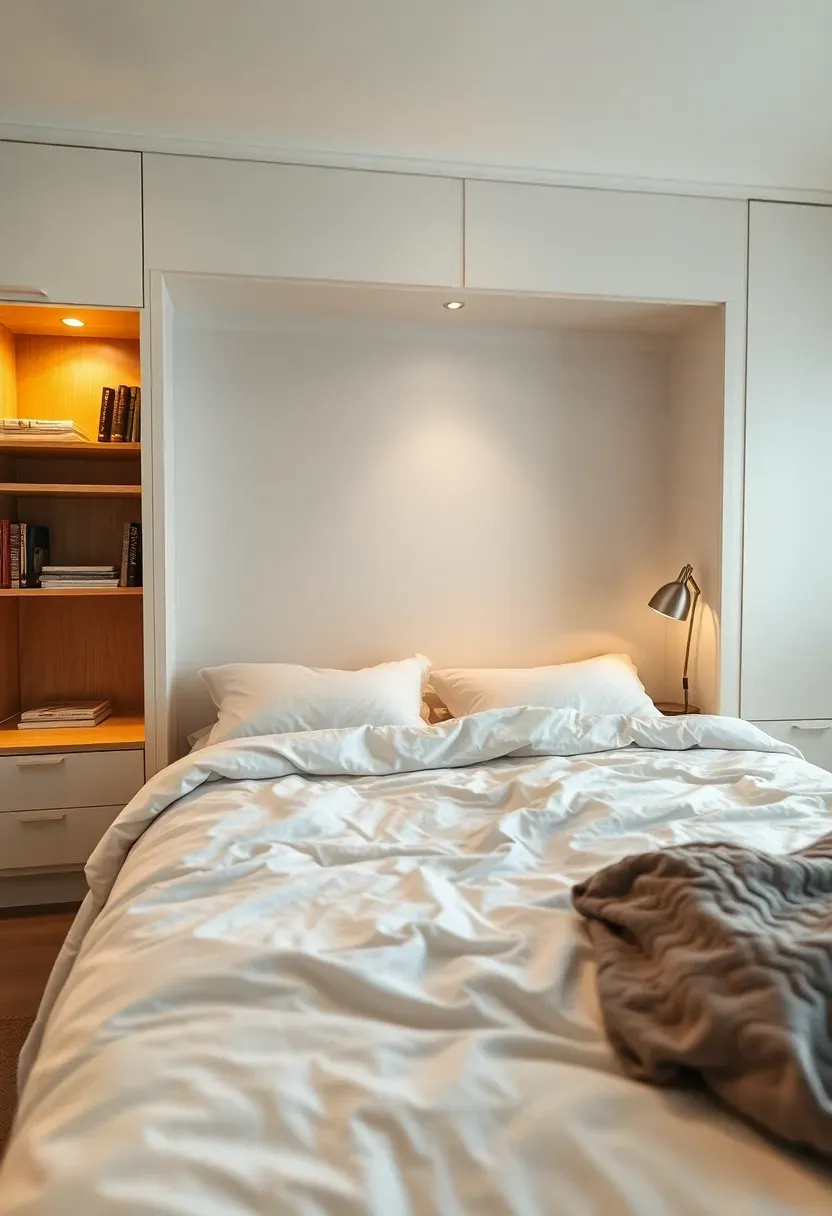
Studio-style basement apartments under 500 square feet cannot afford to give a bed permanent floor space. A wall-mounted Murphy bed folds up to reveal the living room during the day. Modern piston-lift mechanisms make them easy to operate — no more wrestling with springs. Pair it with side cabinets that serve as nightstands when the bed is down and bookshelves when it is up.
Steps to install
- Choose the wall farthest from windows and entry — you want the bed to disappear from the main sightline
- Verify the wall is structural or add blocking between studs — a loaded queen Murphy bed pulls roughly 200 pounds of force on the mount
- Install the cabinet frame first, level it precisely, then mount the bed mechanism
- Add a shallow shelf across the top for a reading light and phone charger — details that make the bed feel permanent even though it folds away
Watch out for
- Budget $1,500 to $3,000 for a quality hardware kit plus cabinet materials
- Do not mount on a wall shared with a neighbor's unit — the thud of deployment carries through concrete
8. Bathroom with Walk-In Shower
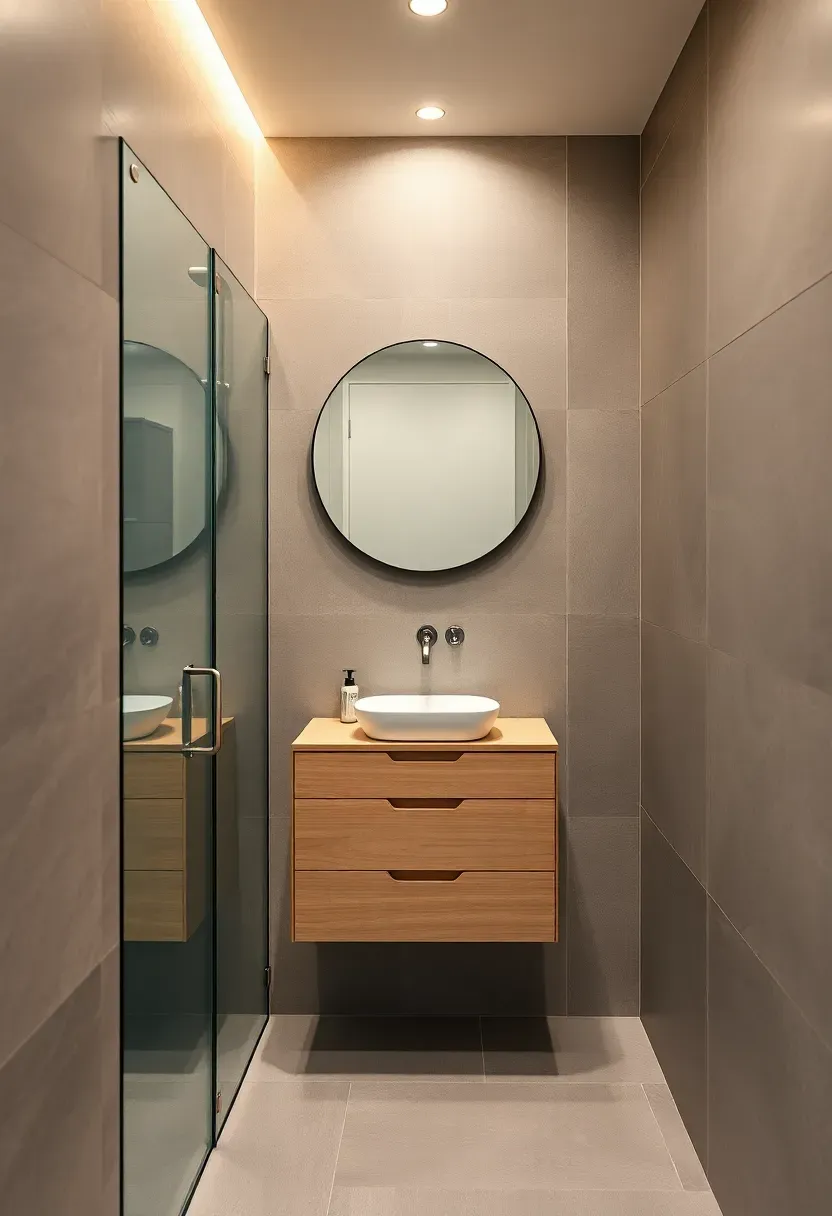
A basement bathroom adds enormous value to the apartment but requires careful planning around the existing plumbing stack and floor drain locations. A walk-in shower with a linear drain is better than a tub in most basement apartments for two reasons: it takes less floor space (a 36x36-inch shower stall is plenty), and the curbless entry makes the bathroom feel larger. Large-format porcelain tiles — 12x24 inches or bigger — on both walls and floor reduce grout lines and the maintenance that comes with them. Wall-mounted vanities clear floor space and let you mop underneath.
Tips
- A sewage ejector pump is required if the shower drain sits below the main sewer line — factor $800 to $1,500 for the pump
- Glass shower panels instead of curtains keep the room visually open
- Include a high-CFM exhaust fan vented to the exterior — moisture in a basement bathroom with no window will cause problems fast
Recommended
Items for this idea
9. Light Well Garden View
Origins of the idea
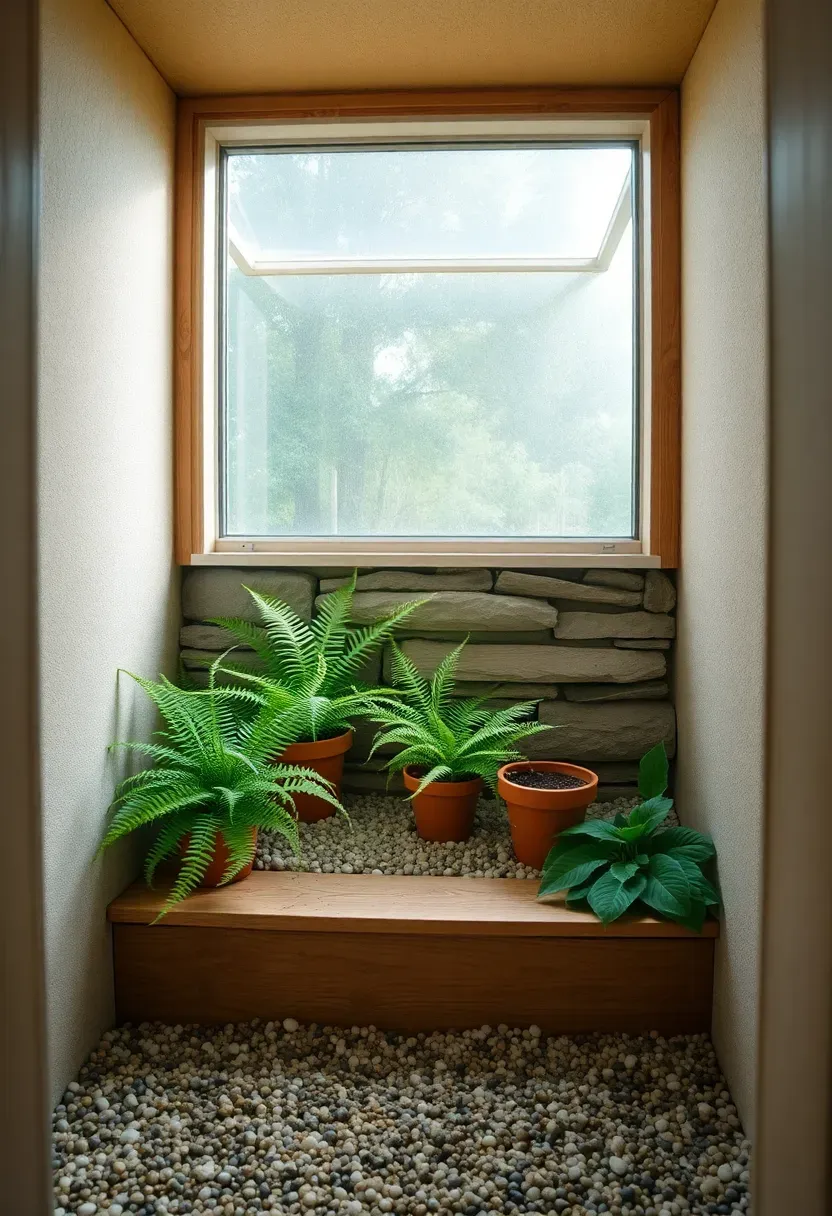
Basement light wells — the corrugated metal or concrete pits around egress windows — are usually treated as necessary ugliness. Landscape architects in Scandinavian countries started treating them as miniature garden spaces in the 1990s, recognizing that even a small patch of green visible from below grade changes how a room feels.
Modern approach
Line the well with stacked stone veneer or pressure-treated wood instead of leaving corrugated steel exposed. Add a 4-inch gravel drainage layer at the bottom, place potted shade-loving plants (hostas, ferns, heuchera) on a stepped shelf system, and install a clear polycarbonate cover to keep rain and debris out while allowing light through. From inside the apartment, you now have a view of greenery instead of dirt and rust.
Apply at home
- Choose plants rated for your USDA zone that tolerate shade and occasional flooding
- Install a small solar-powered LED strip along the well wall for a soft glow at night
- Clean the polycarbonate cover twice a year — dirt buildup defeats the purpose
10. Reflective Surfaces Strategy
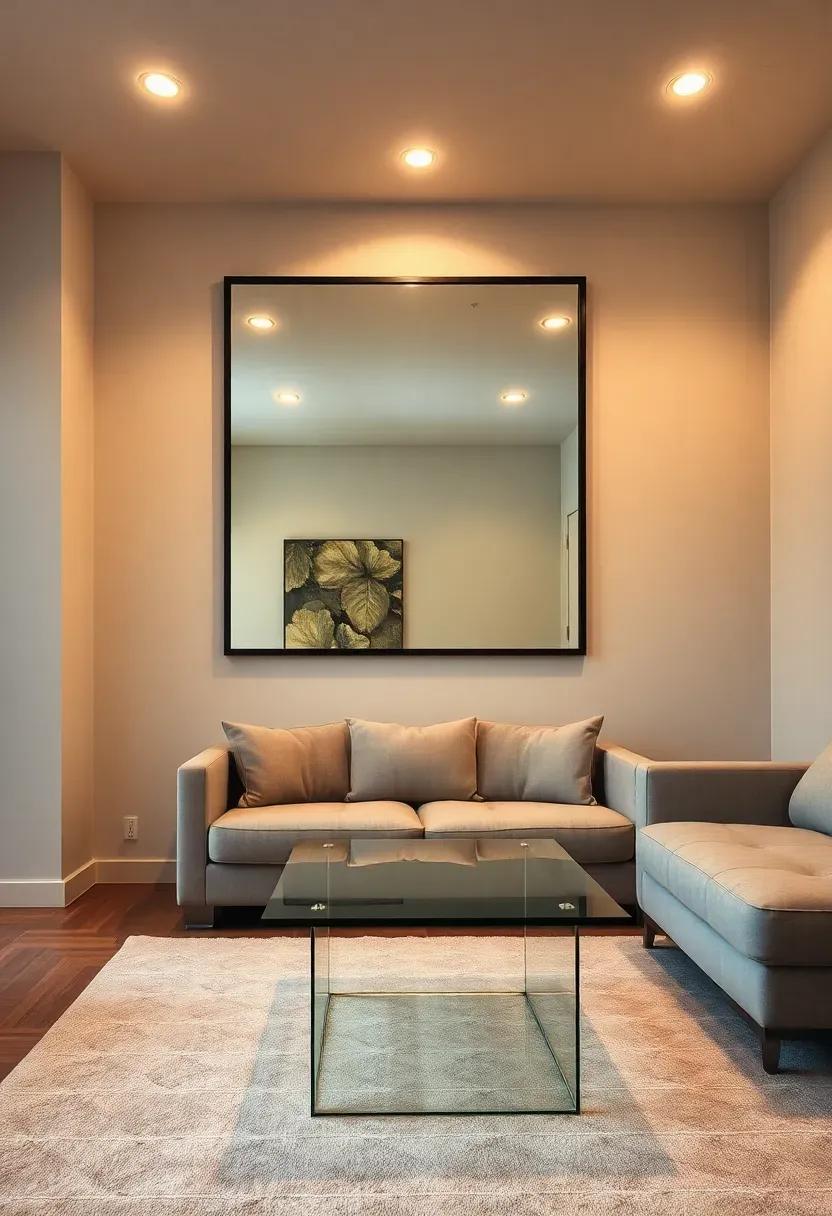
Mirrors, glass-top tables, glossy tile backsplashes, and metallic light fixtures all bounce whatever light you have around a basement apartment. This is not about making the place look like a dance studio — it is about strategic placement. One large mirror (at least 36x48 inches) on the wall opposite your strongest light source effectively doubles the perceived brightness of that area. A glass coffee table lets you see the rug beneath it, which makes the floor area read as larger. Satin or semi-gloss paint finish on walls reflects about 35-40% more light than flat paint.
Tips
- Lean a floor mirror against the wall at a slight angle rather than mounting flat — it reflects the ceiling and creates height
- Avoid placing mirrors directly facing each other across a narrow room — the infinite-tunnel effect feels disorienting
- Brushed nickel or polished chrome fixtures reflect light without the yellow tint of brass
Recommended
Items for this idea
11. Built-In Banquette Dining
The problem
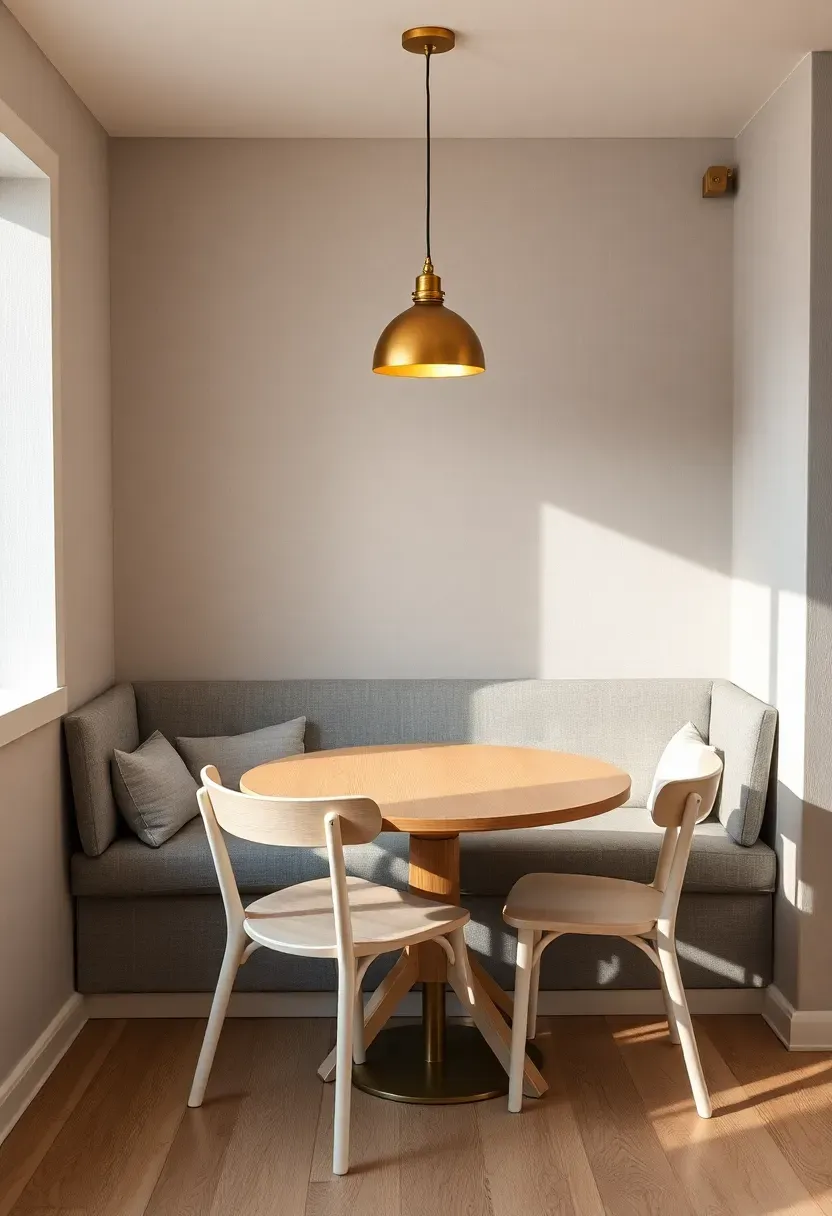
Dining tables with chairs need at least 36 inches of clearance on all sides for people to sit and stand. In a 500-square-foot basement apartment, that eats 80 to 100 square feet — a fifth of the total space — for a table you use twice a day.
The solution
A built-in banquette bench along one wall or in a corner eliminates clearance on two sides. The bench seat doubles as storage — lift-top or drawer-front designs hide table linens, small appliances, or pantry overflow. Pair it with a round table (easier to navigate around than rectangular) and two lightweight chairs on the open side. The whole setup takes about 40 square feet.
Pros and cons
- Pro: Seating for four to six people in half the floor space of a traditional dining set
- Pro: Storage under the seats solves two problems at once
- Con: Moving is harder — the bench is essentially furniture built into the wall
12. Acoustic Treatment for Ceiling Noise
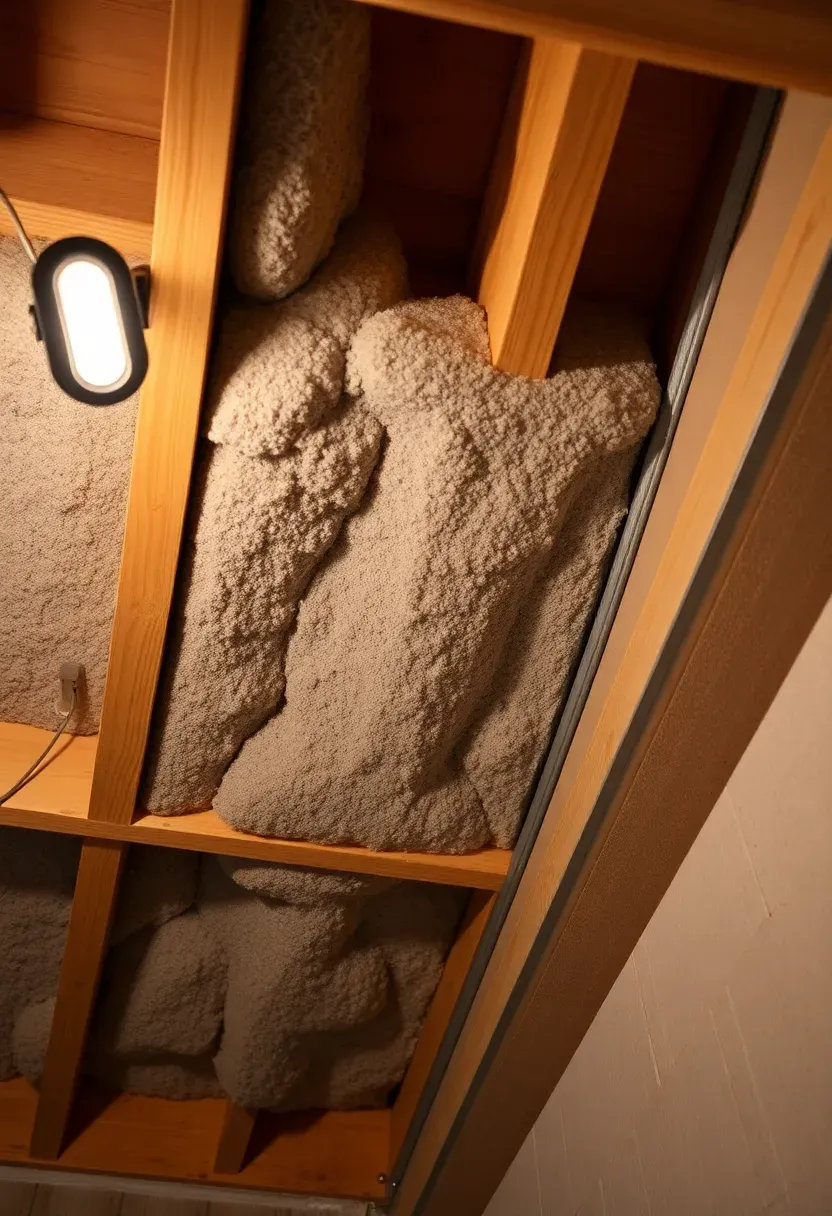
Living under someone else's floor means hearing footsteps, dropped objects, and muffled conversations. A finished drywall ceiling alone does not solve this. The most effective approach combines three layers: mineral wool insulation batts (Roxul/Rockwool Safe 'n' Sound) fitted between joists, resilient channel strips screwed perpendicular to joists, and 5/8-inch Type X drywall screwed to the channels. The resilient channel decouples the drywall from the joists, breaking the direct vibration path. This assembly cuts noise transmission by roughly 50-55 STC (Sound Transmission Class), which is enough to make normal conversation and walking above nearly inaudible.
Tips
- Do not screw through the resilient channel into the joist — it defeats the decoupling; only screw drywall into the channel flanges
- Seal all gaps around pipes, ducts, and electrical boxes with acoustical caulk — sound leaks through even tiny openings
- Budget about $3 to $5 per square foot for materials in a DIY installation
Recommended
Items for this idea
13. Under-Stair Storage System
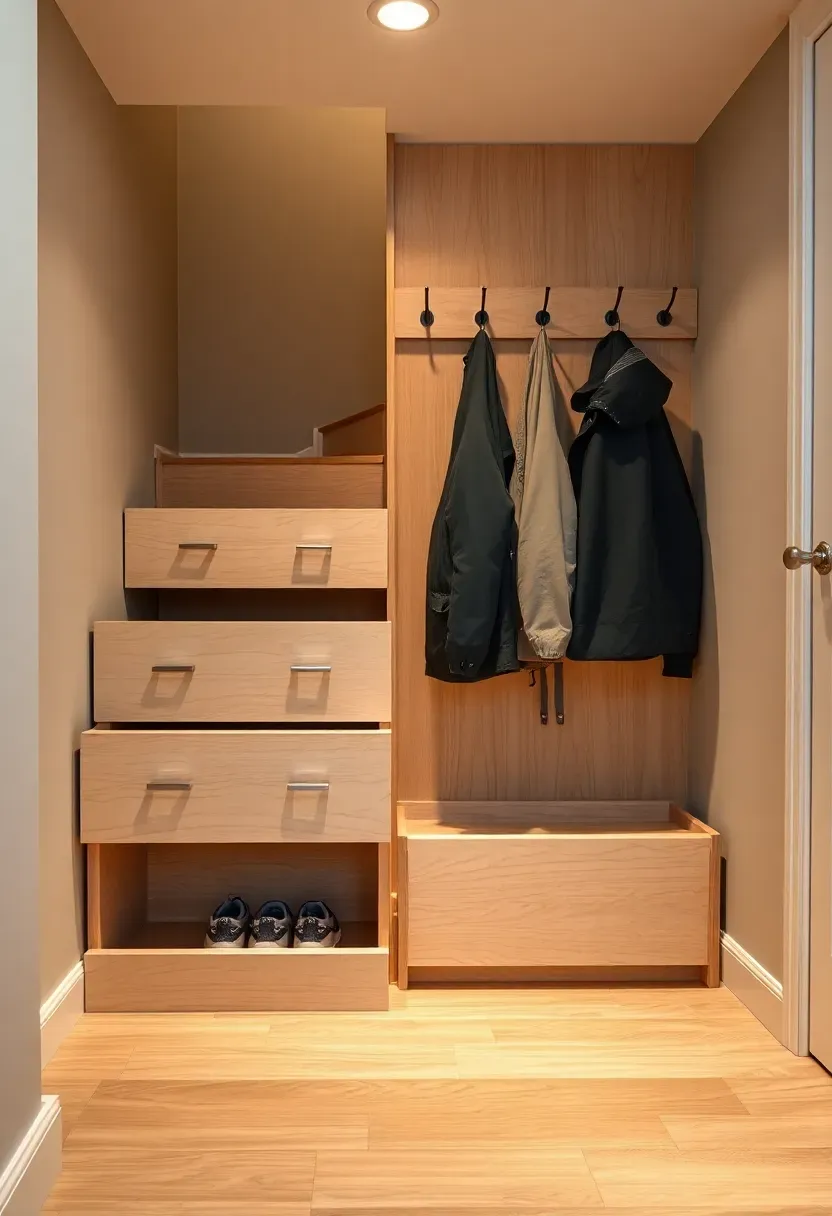
The triangular space beneath the staircase leading down to your basement apartment is usually wasted or used as a disorganized dumping ground. Custom pull-out drawers that follow the slope of the stairs maximize every cubic inch. The tallest section near the bottom of the stairs works for coat hanging and vacuum storage. The mid-height section fits pull-out shelving for shoes, bags, and seasonal items. The shortest section near the top accommodates shallow drawers for keys, mail, and small supplies. A set of plywood pull-out drawers with full-extension slides costs about $300 to $600 in materials for a DIY build.
Tips
- Use 3/4-inch plywood for drawer boxes — particle board swells in basement humidity
- Add soft-close drawer slides to avoid slamming noise that travels upstairs
- Paint or finish the interior white so you can actually see what is inside the deep sections
14. Mini Laundry Station
A vs B: Stackable unit vs. combo washer-dryer
Having laundry in a basement apartment is a genuine quality-of-life upgrade. Two main options fit small spaces.
Stackable washer and dryer
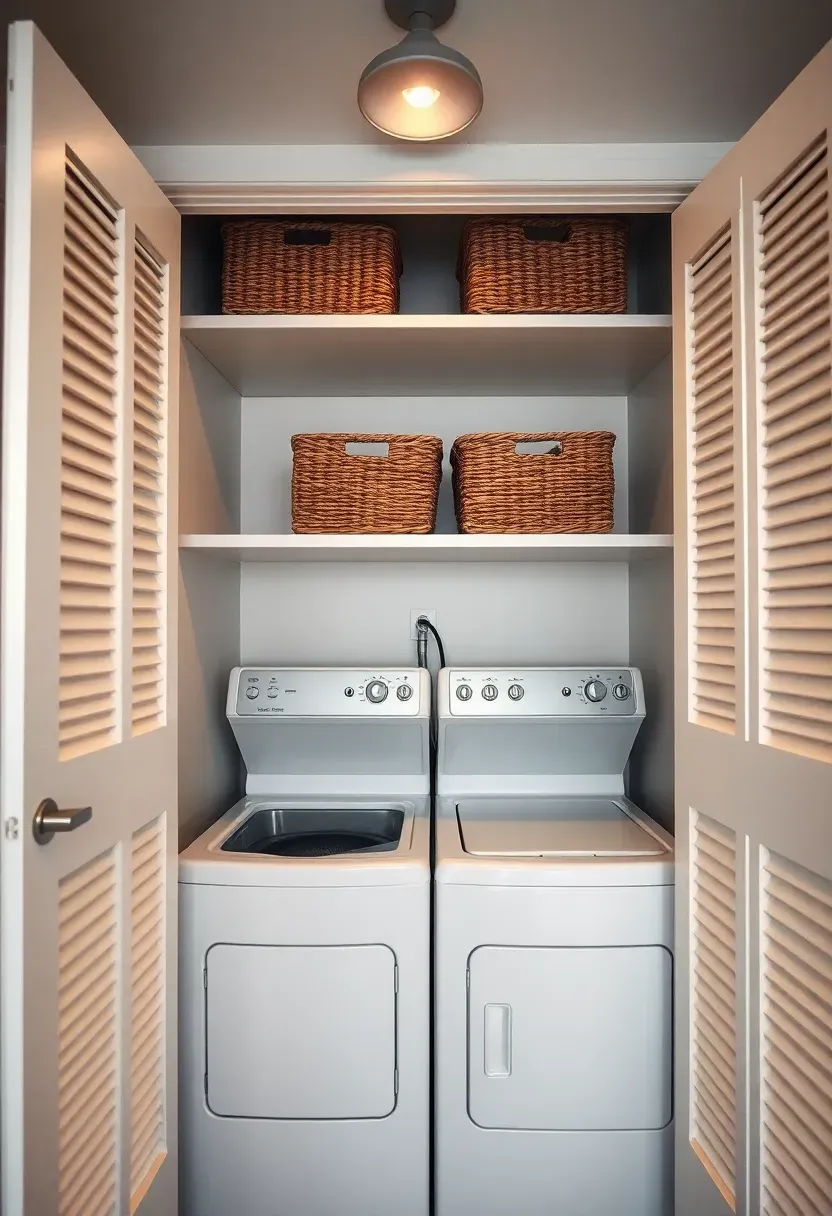
A 24-inch compact stackable pair (Bosch 300 series or similar) fits in a closet 27 inches wide and 30 inches deep. The dryer vents through a 4-inch duct to the exterior. Drying performance is strong and fast. You need both a water hookup and a vent path to the outside wall.
Ventless combo unit
A single all-in-one unit washes and dries in the same drum using condensation drying. No exterior vent needed — just a water hookup and a drain. The trade-off: drying cycles take 2 to 3 hours, and load capacity is smaller. LG and Bosch make reliable models around $1,200 to $1,600.
Choose if
- Pick stackable if you have exterior wall access for venting and do 4+ loads per week
- Pick combo if you lack venting options or only do 1-2 loads weekly
Recommended
Items for this idea
15. Electric Fireplace Feature Wall
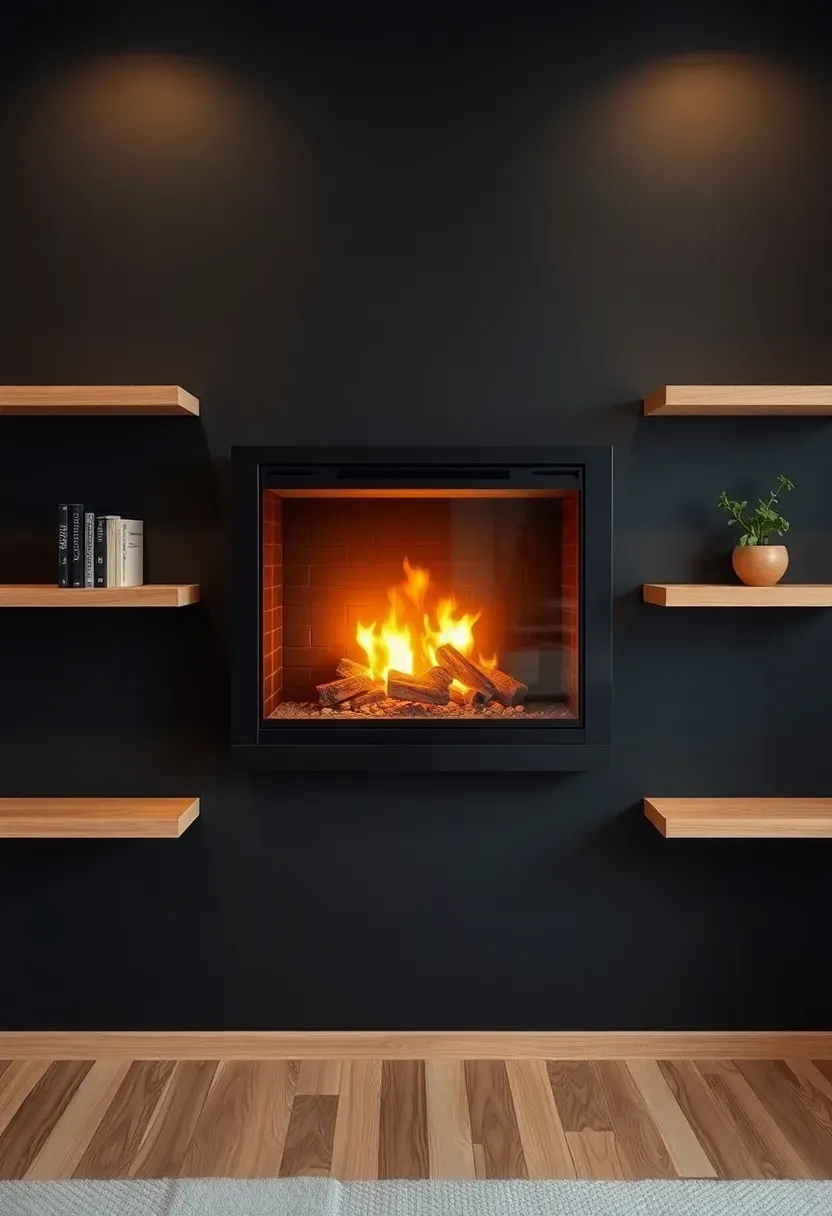
Gas fireplaces require venting that is expensive and complicated in basements. Wood-burning is usually prohibited in below-grade apartments. An electric fireplace insert gives you the visual warmth and some supplemental heat without any venting, gas lines, or chimney. Mount a 50- to 60-inch linear insert on a feature wall finished in stacked stone veneer, dark paint, or wood slat panels. The wall becomes the focal point of the living area. Modern inserts from Dimplex and Napoleon produce realistic flame effects with adjustable color temperature. They draw about 1,500 watts on the heating setting — roughly the same as a space heater.
Tips
- Recess the insert into the wall for a built-in look — most models need only 5 to 6 inches of depth
- Add floating shelves flanking the fireplace for books and decor to build out the feature wall
- Use the flame-only mode without heat during warmer months for ambiance
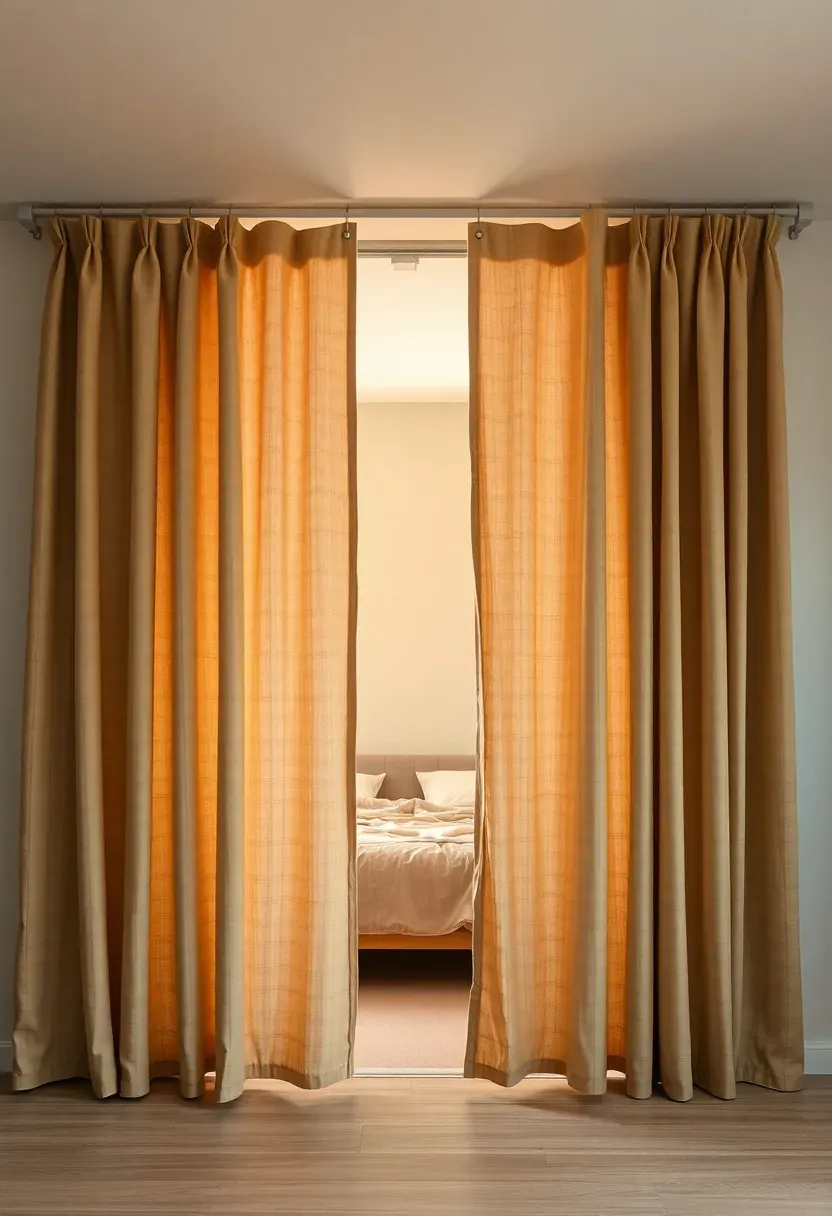
16. Floor-to-Ceiling Curtain Dividers
Ceiling-mounted curtain tracks offer the most flexible room division in a basement apartment. Unlike bookshelves or half-walls, curtains can be pulled open to restore the full open-plan layout or closed for privacy when sleeping or on a video call. Hospital-style ceiling tracks (available at medical supply stores for about $40 to $80 per 8-foot section) curve smoothly and support heavy fabric without sagging. Heavy linen or cotton canvas in a neutral tone blocks sightlines without making the space feel closed off. The fabric also absorbs sound, which helps with the acoustic challenges of below-grade living.
Tips
- Mount the track 1 to 2 inches from the ceiling — the higher the curtains hang, the taller the room feels
- Choose fabric that is at least semi-opaque but not blackout — you want light to filter through during the day
- Wash curtains every 2 to 3 months in a basement environment to prevent musty smells from absorbed humidity
Recommended
Items for this idea
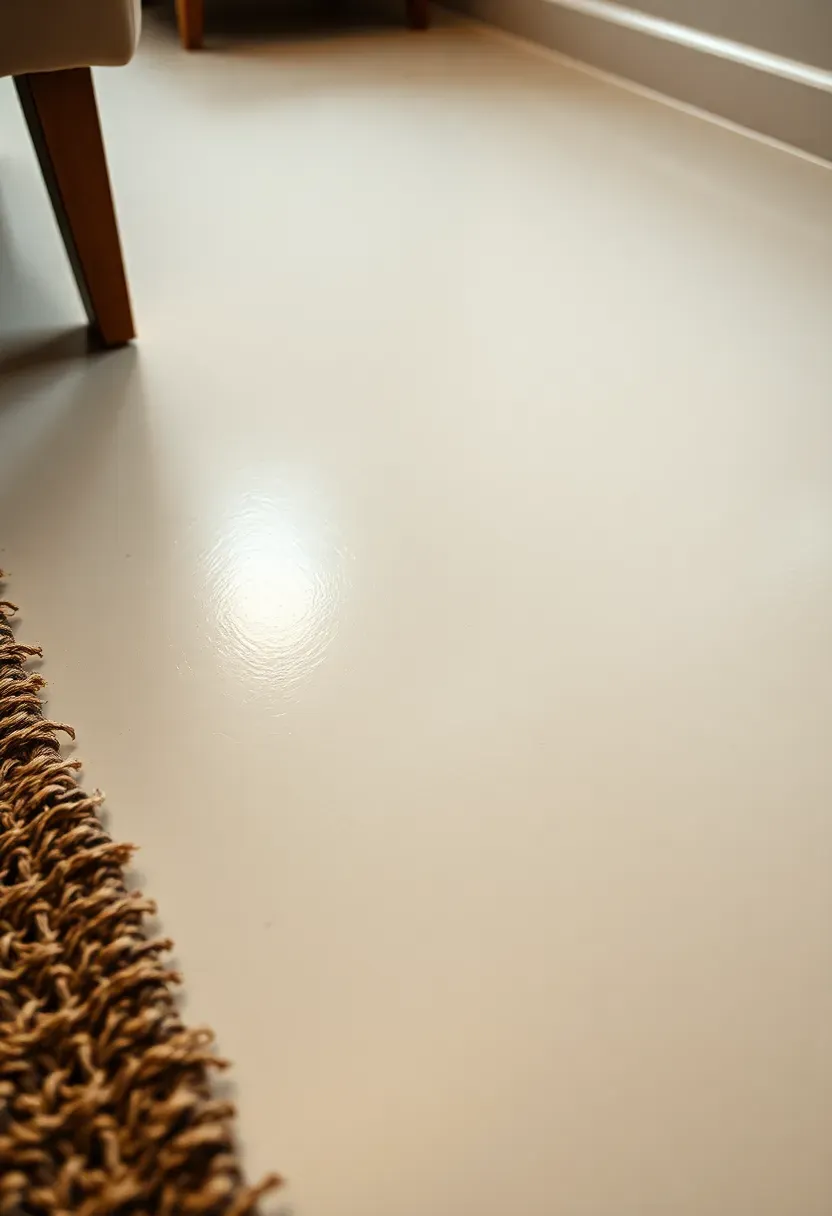
17. Painted Concrete Accent Floor
Step-by-step approach
If luxury vinyl is not in the budget, painted concrete is a solid alternative that costs under $200 for an entire apartment floor. The key is proper surface preparation — skip this and the paint peels within months.
Steps
- Clean the concrete with TSP (trisodium phosphate) solution and let it dry for 48 hours
- Fill any cracks or divots with hydraulic cement and sand smooth
- Apply a concrete primer rated for below-grade use — this seals against moisture vapor
- Roll on two coats of porch and floor paint (Benjamin Moore Floor & Patio is reliable) in your chosen color
- After 72 hours of curing, apply two coats of clear polyurethane for durability and a subtle sheen
Watch out for
- Test for moisture first by taping a plastic sheet to the floor for 24 hours — if condensation forms underneath, you need a moisture barrier before painting
- Geometric tape patterns (checkerboard, diamonds, stripes) add visual interest and disguise imperfections in old concrete
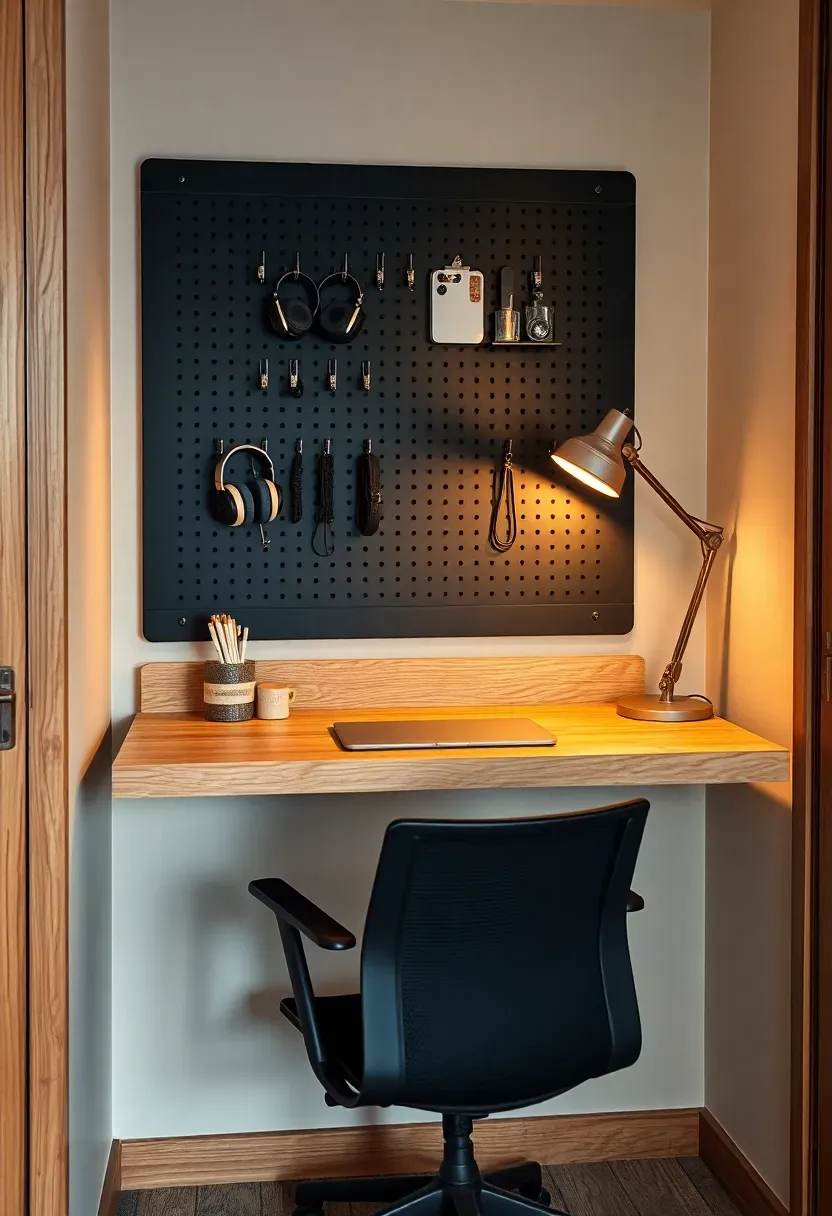
18. Compact Home Office Nook
A wall-mounted floating desk takes up zero floor space when paired with a chair that tucks underneath. The ideal width is 48 inches — enough for a laptop, a notebook, and a coffee cup without feeling cramped. Mount a pegboard above the desk for organizing cables, headphones, and supplies without drilling multiple holes. Task lighting matters more here than anywhere else in the apartment because you are likely far from any window. A swing-arm desk lamp with adjustable color temperature (3000K for evening work, 4000K for daytime focus) costs about $40 to $80 and makes a noticeable difference in eye strain.
Tips
- Position the desk on a wall perpendicular to any window rather than facing or backing the window — this minimizes screen glare and backlight on video calls
- A small USB-powered desk fan improves air circulation in corners of the basement that feel stagnant
- Keep the desk surface clear and use vertical storage — visual clutter in a small space compounds the closed-in feeling
Recommended
Items for this idea
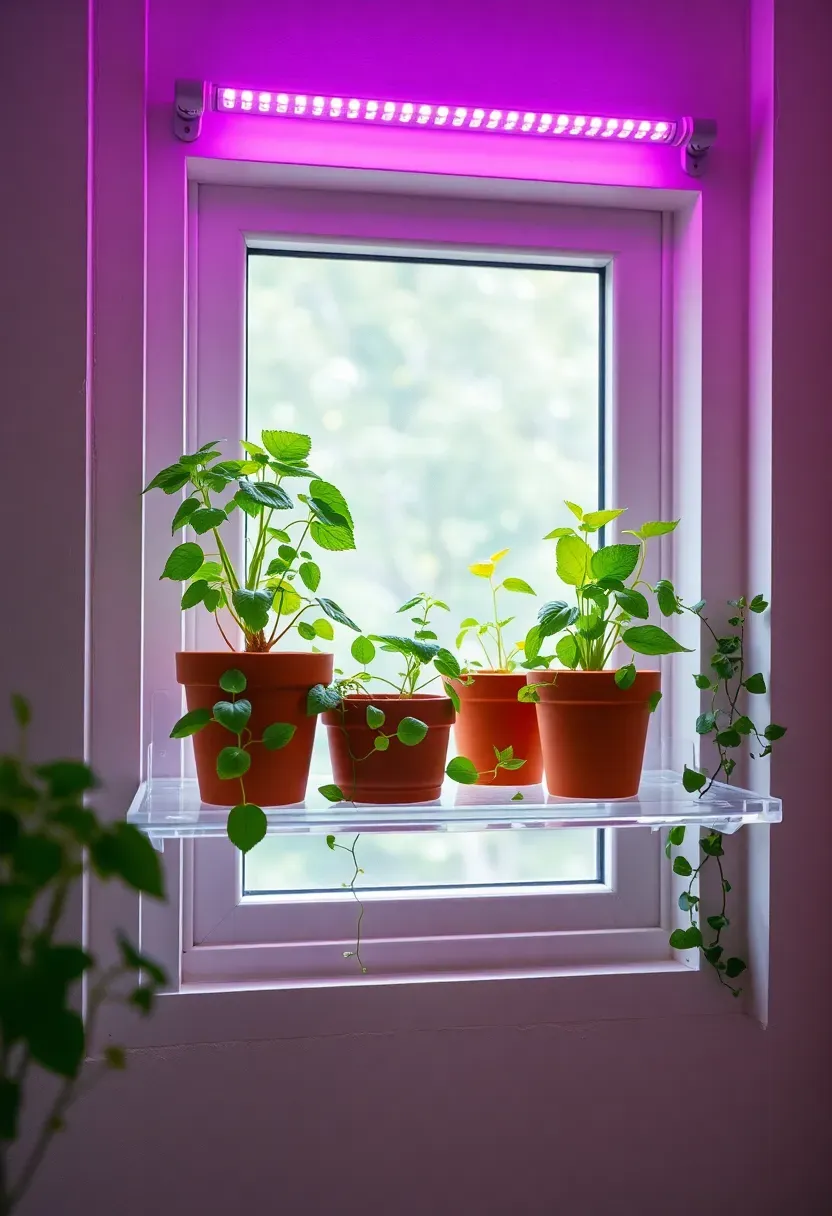
19. Horizontal Window Shelf Garden
Basement windows are typically short and wide — 32 to 36 inches across but only 12 to 18 inches tall. A shelf garden across that window captures whatever natural light comes in and adds living greenery that makes the space feel less underground. Mount a clear acrylic shelf across the window opening and line it with small 3- to 4-inch pots of herbs (basil, mint, thyme) or trailing plants (pothos, string of hearts). A supplemental grow light strip mounted to the top of the window frame fills in during short winter days. The herbs are functional — you are growing ingredients — and the trailing plants soften the hard edges of the window frame.
Tips
- Clear or white pots maximize light reflection back toward the plants
- Water sparingly and use pots with drainage — overwatering near a window sill leads to mold on the frame
- Rotate pots weekly so all sides of the plants get equal light exposure
20. Smart Ventilation Setup
Why this matters underground
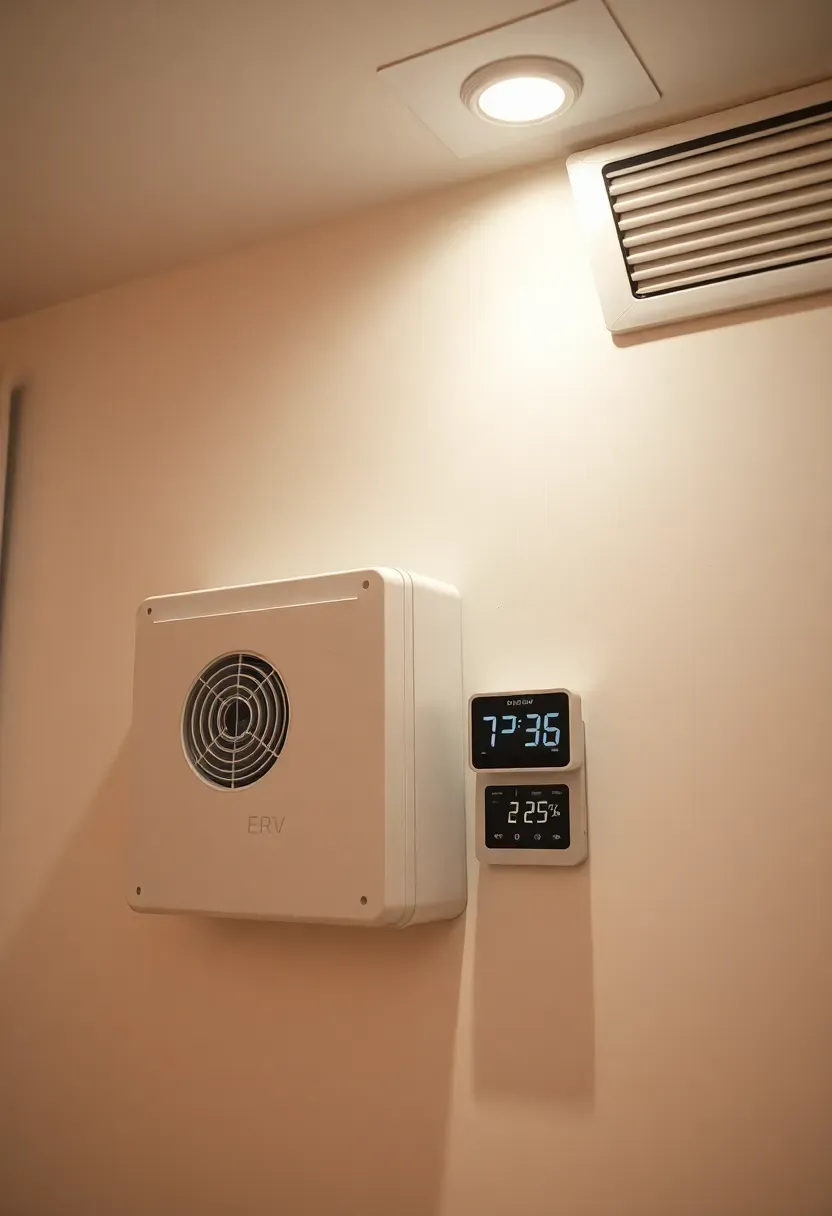
Basement apartments have limited natural airflow. Without mechanical ventilation, CO2 levels rise, humidity concentrates, and cooking odors linger for hours. An ERV (Energy Recovery Ventilator) exchanges stale indoor air with fresh outdoor air while recovering heat from the outgoing air stream — so you are not paying to heat or cool air that immediately leaves. A single-room ERV unit like the Lunos e2 or Panasonic WhisperComfort mounts in an exterior wall and runs quietly at about 20 decibels.
How to set it up
- Choose an exterior wall location — ideally the wall farthest from your sleeping area to minimize awareness of outdoor noise
- Core-drill a 6- to 8-inch hole through the foundation wall (hire this out unless you own a core drill)
- Mount the unit, seal around it with hydraulic cement and caulk, and connect to power
- Pair with a smart air quality monitor (Airthings or Awair) that tracks CO2, humidity, and VOCs so you know the system is working
Recommended
Items for this idea
21. Warm Color Palette for Depth
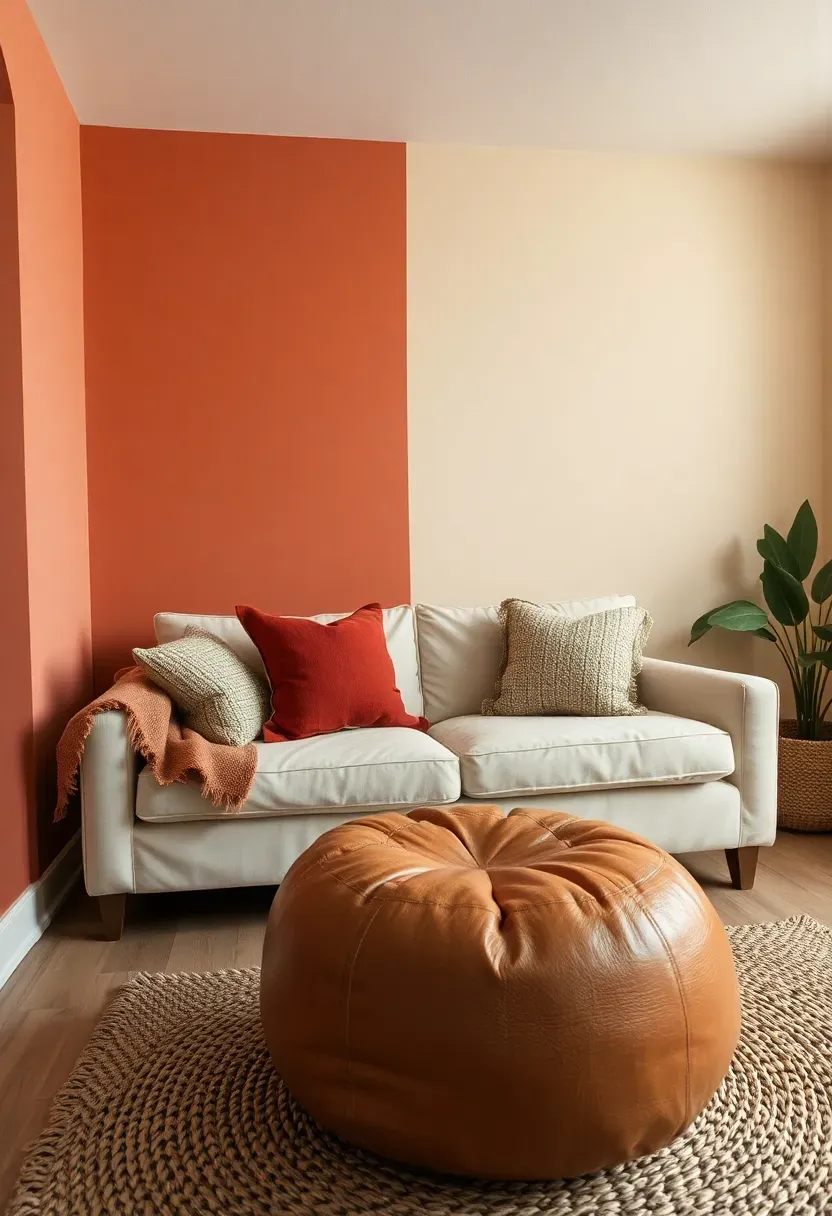
Cool colors — blue-grays, stark whites, icy greens — make basement apartments feel colder and more clinical than they already are. Warm tones do the opposite. Terracotta, warm cream, olive, caramel, and deep rust create a sense of coziness that works with the enclosed nature of below-grade spaces rather than against it. You do not need to go dark on every wall. Paint one accent wall in a rich warm tone (Benjamin Moore Cinnamon 2174-20 or Sherwin-Williams Cavern Clay SW 7701) and keep the remaining walls in a warm white like Swiss Coffee. The contrast gives depth without reducing perceived size.
Tips
- Warm-toned LED bulbs (2700K) reinforce the palette — cool-white LEDs will fight against warm paint colors
- Textiles are the easiest way to layer warm tones — rust-colored throw pillows, a cream wool blanket, a caramel leather pouf
- Avoid pure black accents, which create harsh contrast in artificial light — use charcoal or dark brown instead
22. Modular Sofa for Flexible Seating
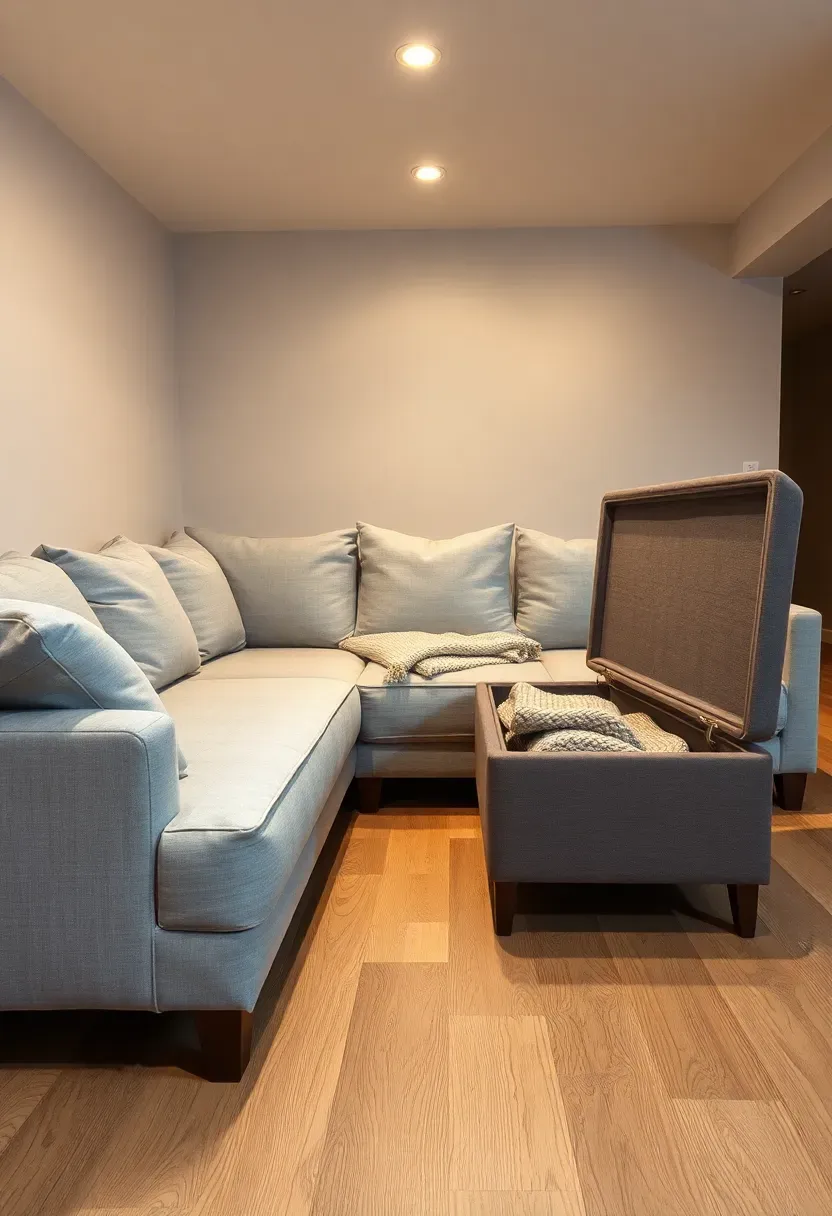
A standard three-seat sofa is difficult to get down basement stairs. Modular sofas ship in pieces that fit through narrow stairwells and doorways — each module is typically 30 to 36 inches wide. Once assembled, you can rearrange the configuration as your needs change: L-shape for movie nights, straight line for entertaining, individual chairs pulled apart for a gathering. Brands like Article, Floyd, and Campaign make modules with removable and washable covers, which matters in a space where humidity can make fabric smell musty over time. Keep seat height at 16 to 17 inches and back height under 30 inches to preserve sightlines under low ceilings.
Tips
- Order in a light neutral fabric — dark upholstery absorbs light that basement apartments cannot spare
- Add a storage ottoman as the end module so cushions and blankets have a home
- Position the sofa to float in the room rather than pushing it against a cold exterior wall
Recommended
Items for this idea
23. Pendant Cluster Over Kitchen Counter
What it does for the space
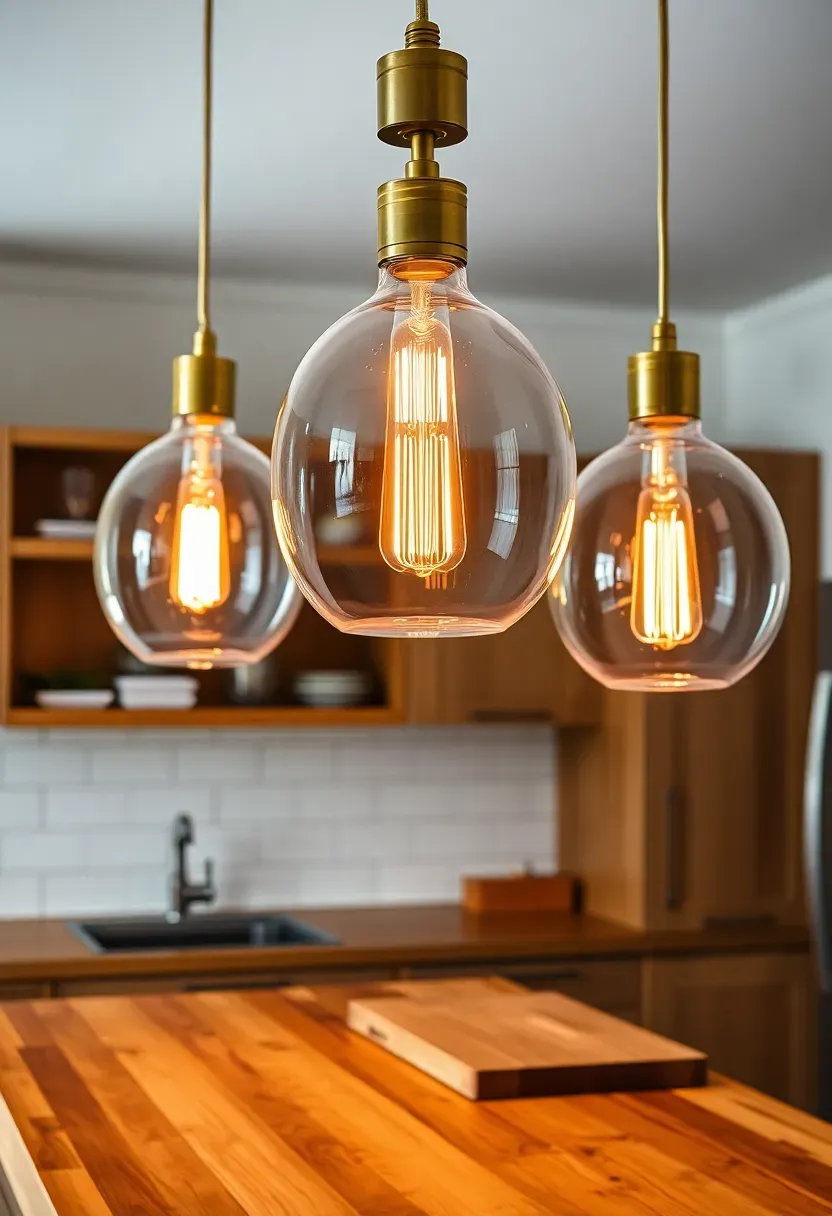
Recessed lights handle general illumination, but a cluster of two or three pendant lights over the kitchen counter creates a visual anchor that separates the cooking zone from the rest of the apartment. Hang them at 28 to 34 inches above the counter surface — high enough to not block sightlines, low enough to create a defined pool of warm task light. Glass or open-frame pendants work best because they do not block light the way opaque drum shades do.
Practical details
Edison-style LED filament bulbs (2200K to 2700K) inside clear glass pendants give warm light and look good when visible. Wire all three pendants to the same switch, ideally a dimmer. The total fixture cost runs $60 to $200 for a cluster of three depending on brand. Install a ceiling hook or canopy plate rated for the combined weight.
Choose if
- Low ceiling (under 7.5 ft): Use flush or semi-flush mini pendants with a drop of 10 inches max
- Standard ceiling (7.5-8 ft): Standard pendant drops of 18 to 24 inches work fine
24. Entryway with Coat and Shoe Storage
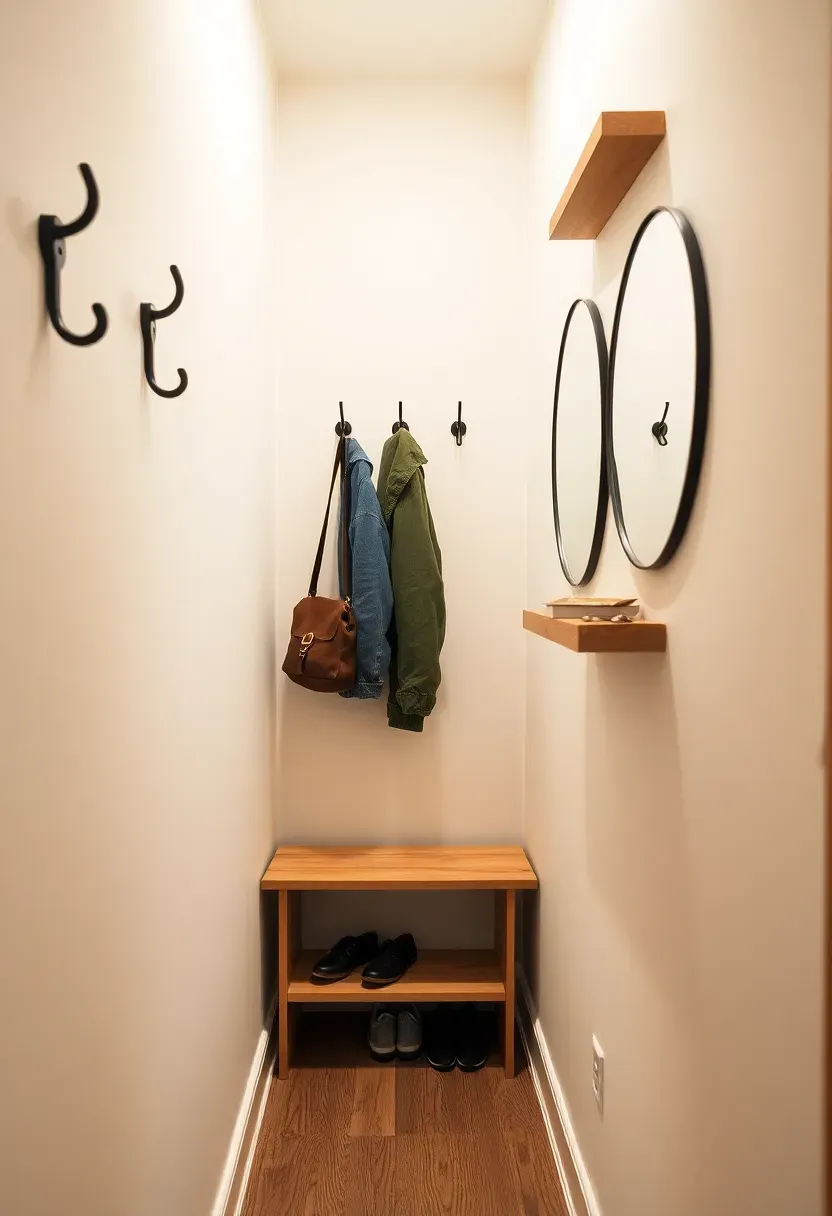
The entry to a basement apartment is usually a narrow hallway at the bottom of a staircase — not much room to work with. A wall-mounted coat rack with 4 to 6 hooks takes care of jackets and bags without a closet. Below it, a slim bench (12 to 14 inches deep) with a shoe shelf underneath handles daily footwear. Mount a mirror on the opposite wall to check yourself before heading out and to bounce light from the main living space back into the entry. Add a small shelf or wall-mounted tray for keys and mail. The whole setup occupies a strip about 14 inches deep along one wall and turns a forgettable transition space into something functional.
Tips
- Use a boot tray under the bench during wet months — basement floors near the entry get damp from tracked-in rain and snow
- Stick to wall-mounted everything so the floor stays clear for mopping
- A single sconce or puck light at the entry makes coming home feel welcoming rather than descending into darkness
Recommended
Items for this idea
25. Gallery Wall to Add Personality
Why it matters here
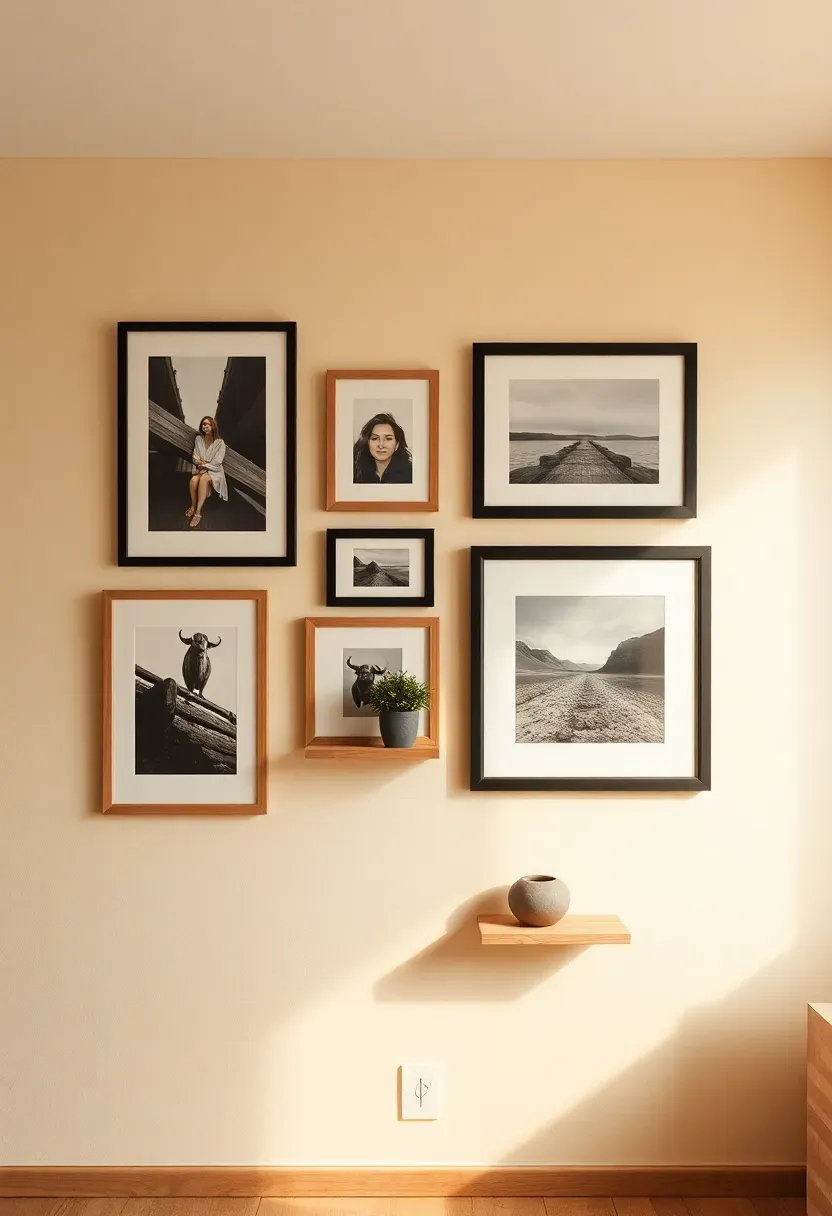
Basement apartment walls are often large unbroken planes of drywall or painted concrete block. Without art or decor, they feel institutional. A gallery wall — a curated arrangement of framed prints, photographs, and small shelves — breaks up that blankness and gives the apartment a sense of identity that says someone lives here rather than someone is just passing through.
How to plan it
Pick one wall visible from the main seating area. Lay out your arrangement on the floor first, using kraft paper templates taped to the wall to test positions before drilling. Mix frame sizes and orientations — a grid of identical frames reads as a waiting room. Include one or two small shelves for 3D objects (a plant, a ceramic, a small sculpture) to add depth.
Apply at home
- Keep frame styles to two or three — too many types looks chaotic rather than curated
- Warm-toned mats and frames blend better in basement lighting than bright white or silver
- Start with the largest piece at eye level and build outward from there
Quick FAQ
Do basement apartments need special permits? In most cities, yes. A legal basement apartment typically requires permits for egress windows, separate utility metering, fire-rated ceiling assemblies, and minimum ceiling height (usually 7 feet). Check your local zoning and building codes before starting work — unpermitted units can result in fines and forced removal of finishes.
How do you deal with musty smell in a basement apartment? Persistent musty odor almost always traces back to moisture. A properly sized dehumidifier set to 45-50% relative humidity handles most cases. If the smell persists, check for water intrusion at wall-floor joints, seal concrete with a vapor barrier paint, and run an ERV for continuous fresh air exchange.
Can you get enough natural light in a basement apartment? You will never match an upper-floor apartment, but you can get closer than most people expect. Egress windows, window wells with reflective liners, light-colored walls, mirrors positioned opposite light sources, and full-spectrum LED lighting at 2700-3000K create an environment that does not feel dark or oppressive. The goal is layered light, not one bright fixture.
Is a basement apartment a good rental investment? In high-cost housing markets, a legal basement apartment can generate $800 to $2,500 per month in rental income depending on location and finish level. The conversion typically costs $30,000 to $75,000 including plumbing, electrical, egress, and finishes. Most owners recoup the investment within 2 to 4 years.
What flooring holds up best in a basement apartment? Luxury vinyl plank is the consensus winner for basement apartments. It is waterproof, installs over concrete without adhesive, feels warmer underfoot than tile, and comes in wood-look patterns that make the space feel residential. Porcelain tile is the second-best option for bathrooms and kitchenette areas where water exposure is heavier.
A basement apartment done right is not a compromise — it is a different kind of living space with its own strengths. The quiet, the consistent temperature, the privacy from street noise — these are features, not limitations. Focus your budget on the things that matter most underground: moisture control, lighting, and ventilation. Get those three right, and everything else is just picking finishes and arranging furniture. Start with whichever idea on this list addresses your biggest pain point and build from there.
Pinterest cover for 25 Basement Apartment Ideas
About the author
OBCD
CGI visualization and interior design content. We create detailed 3D renders and curate practical design ideas for every room in your home.