25 Basement Furniture Ideas
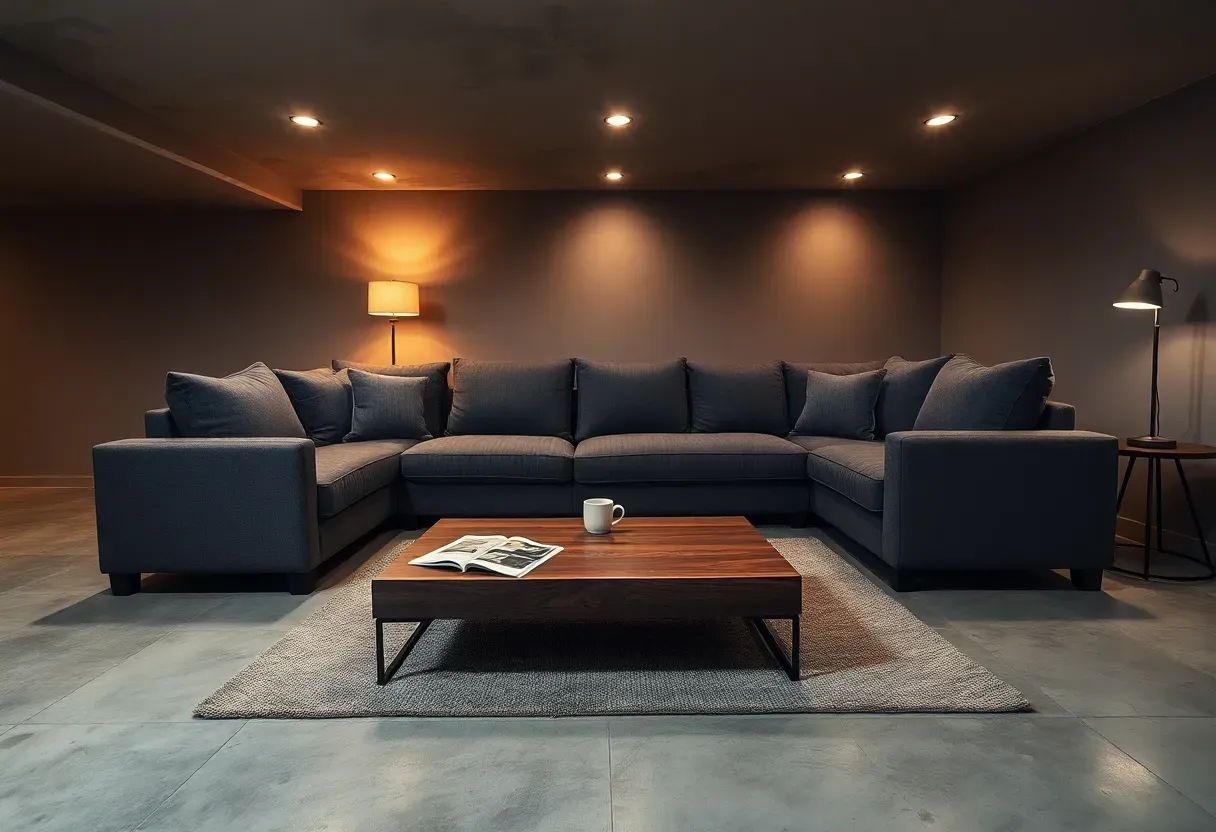
Furnishing a basement is a different game than filling out your main floor. Ceiling heights run lower, natural light is scarce or nonexistent, and moisture lurks behind the walls waiting to ruin anything you bring down those stairs. But those constraints also narrow your choices in a useful way. You stop agonizing over trendy pieces and start asking practical questions: Will this fabric survive humidity? Can I move this around the stairwell? Does the scale actually fit a room with 7-foot ceilings? The 25 ideas below focus on furniture that works specifically in below-grade conditions — pieces chosen for durability, proportion, and the kind of comfort that makes people actually want to hang out down there.
Here is a mix of seating, storage, entertainment, and game furniture organized by function, with honest notes on what to watch for.
Table of Contents
- Low-Profile Modular Sectional
- Leather Reclining Sofa
- Upholstered Storage Bench
- Industrial Metal Shelving Unit
- Rolling Bar Cart
- Convertible Sleeper Sofa
- Pub-Height Game Table
- Bean Bag Lounge Cluster
- Cube Storage Media Console
- Wall-Mounted Floating Desk
- Farmhouse Coffee Table with Shelf
- Theater-Style Recliner Row
- Foosball or Air Hockey Table
- Narrow Console Table Behind the Sofa
- Stackable Stools for the Bar Area
- Storage Ottoman Set
- Corner Bookcase Tower
- Futon with Wooden Frame
- Poker Table with Dining Top
- Floor Cushion Seating Area
- Sideboard Buffet for Entertaining
- Pegboard Wall Organizer Station
- Tufted Daybed with Trundle
- Rustic Wood Slab Side Table
- Freestanding Wardrobe Cabinet
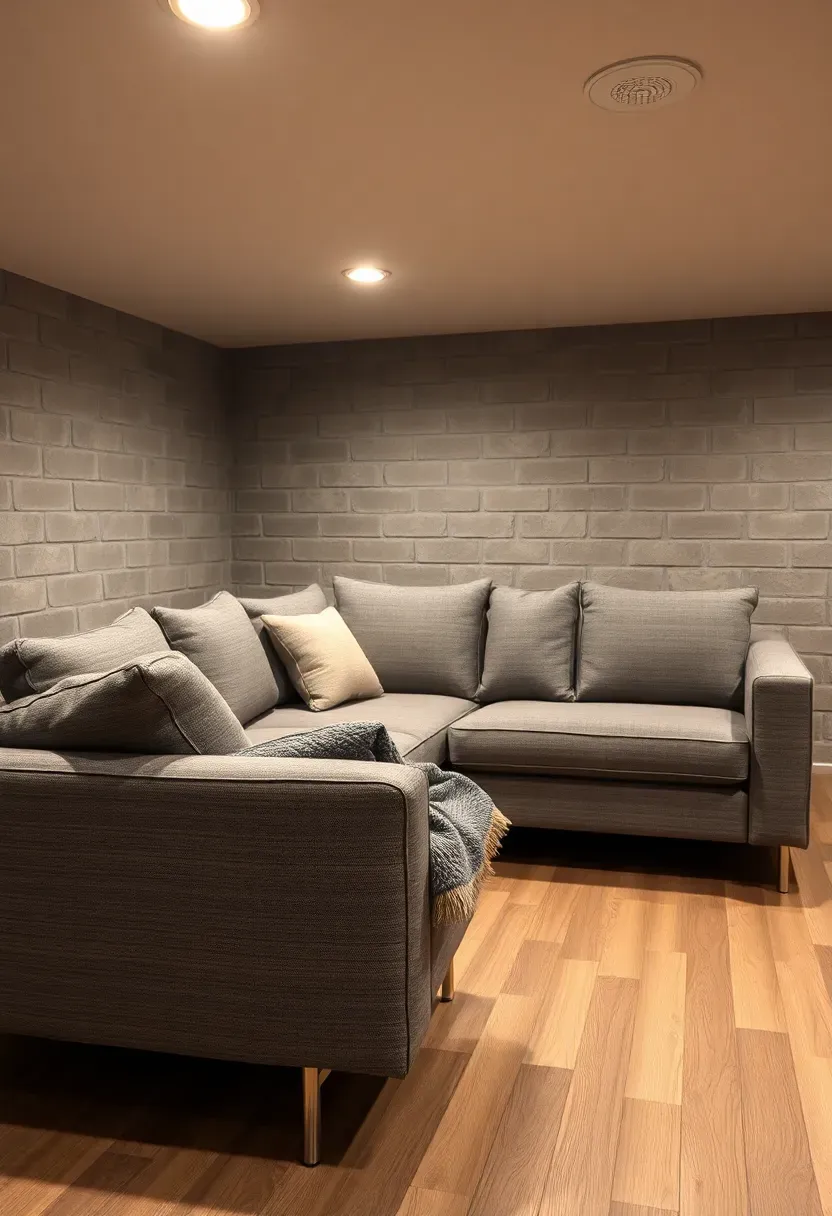
1. Low-Profile Modular Sectional
Standard sofas sit around 34 to 36 inches tall, and in a basement with 7-foot ceilings, that eats up visual space fast. A modular sectional with a back height under 30 inches keeps sightlines open and makes the room feel less cramped. The modular part matters too — you can rearrange pieces when you want a different layout, and individual sections fit down narrow basement stairs where a one-piece sofa would get stuck.
What to look for
- Removable, washable covers in polyester or performance fabric that handles humidity
- Legs at least 4 inches high so air circulates underneath and moisture does not get trapped
- Sections no wider than 30 inches for stair-friendly delivery
We picked a few things that go well with this idea: Cloud Couch Modular Sectional (108") (★4.5), U-Shaped Modular Sleeper Sectional with Storage (★4.1) and Corduroy L-Shape Modular Couch (108") (★4.8). As an Amazon Associate we earn from qualifying purchases.
2. Leather Reclining Sofa
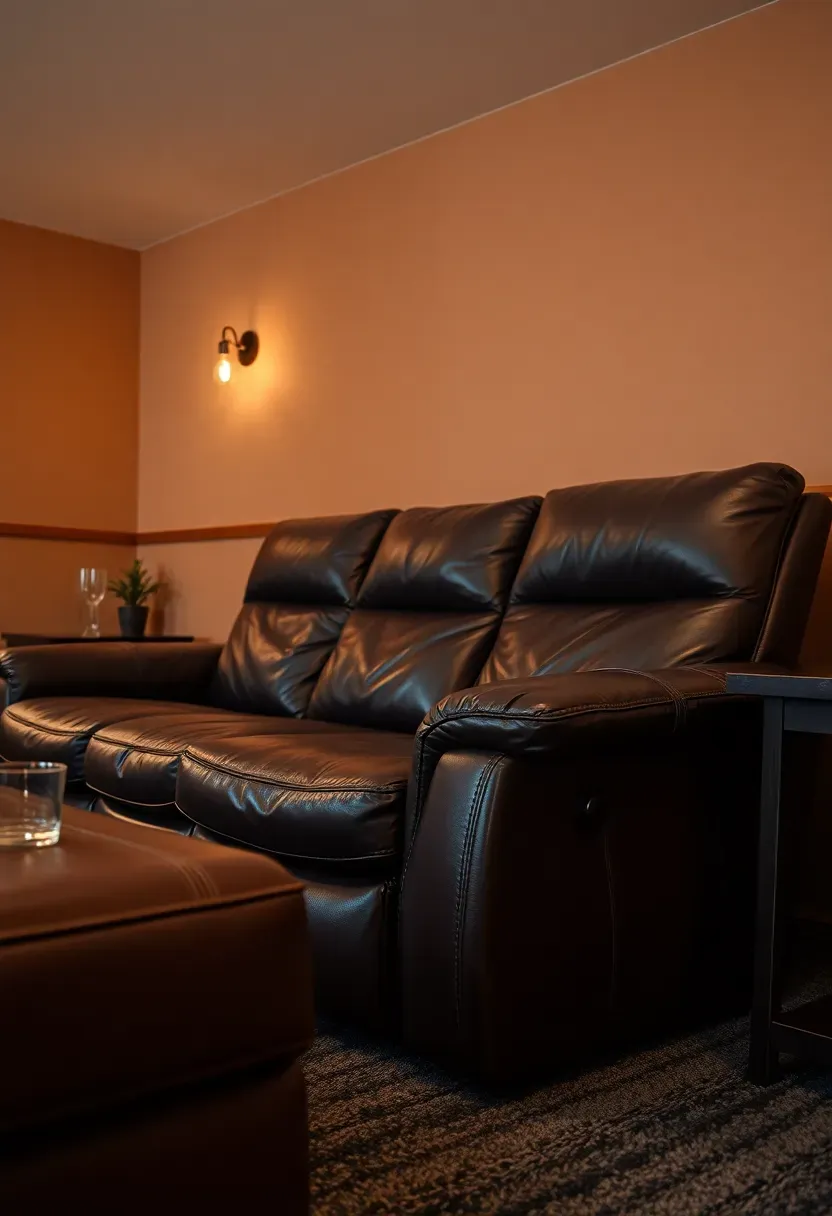
Why leather works below grade
Fabric sofas in basements often develop that musty smell within a year or two. Leather — real or high-quality faux — resists moisture absorption in ways woven textiles simply cannot. A reclining mechanism adds comfort for movie nights without needing separate ottomans that clutter limited floor space.
The tradeoff
Genuine leather costs more and scratches visibly. Faux leather (polyurethane) costs less and holds up well in humidity but can peel after 3 to 5 years with heavy use. Bonded leather should be avoided entirely — it flakes apart in damp conditions.
Choose leather if
- Your basement humidity stays above 50% regularly
- You have pets that shed or scratch
- You want something easy to wipe down after kids' spills
We picked a few things that go well with this idea: Best Choice 54" Regulation Foosball Table (★4.4), 12-in-1 Combo Game Table (48") (★4.6) and 12-in-1 Multi-Sport Game Table (48") (★4.6). As an Amazon Associate we earn from qualifying purchases.
3. Upholstered Storage Bench
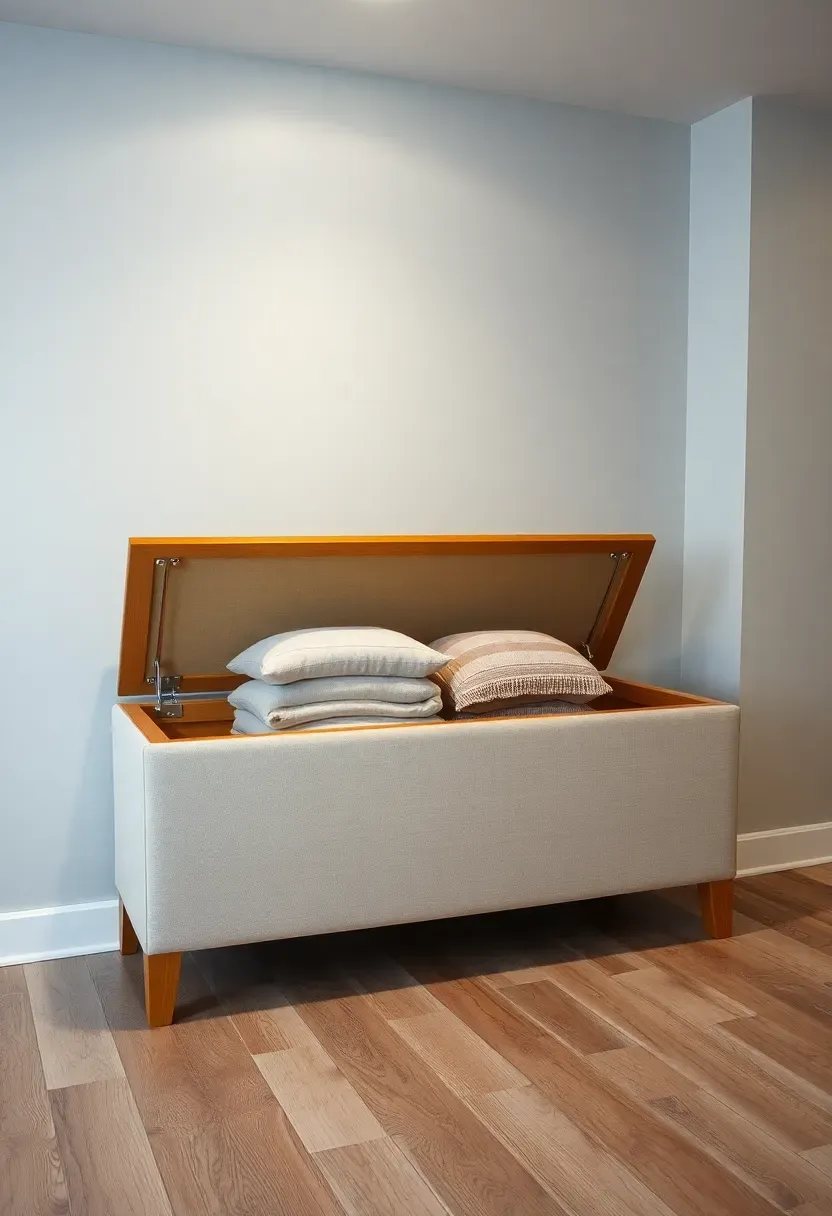
Basements need hidden storage more than any other room. Between extra blankets, board games, seasonal gear, and cables, clutter accumulates fast. A storage bench along a wall serves triple duty — seating, storage, and a surface for trays and drinks. Look for models with a hydraulic lift rather than a hinged lid so you can open them with one hand.
Tips
- Line the interior with cedar blocks or silica gel packs to manage moisture
- Pick a bench with ventilation holes in the base panel
- Pair two benches end-to-end along a wall to create an L-shaped nook with throw pillows
We picked a few things that go well with this idea: Faux Leather Tufted Storage Ottoman Set (2-Pack) (★4.8), Round Storage Ottoman Set with Removable Lid (★4.8) and Oakvivo Faux Leather Storage Ottoman (2-Pack) (★4.8). As an Amazon Associate we earn from qualifying purchases.
4. Industrial Metal Shelving Unit
From garage to living space
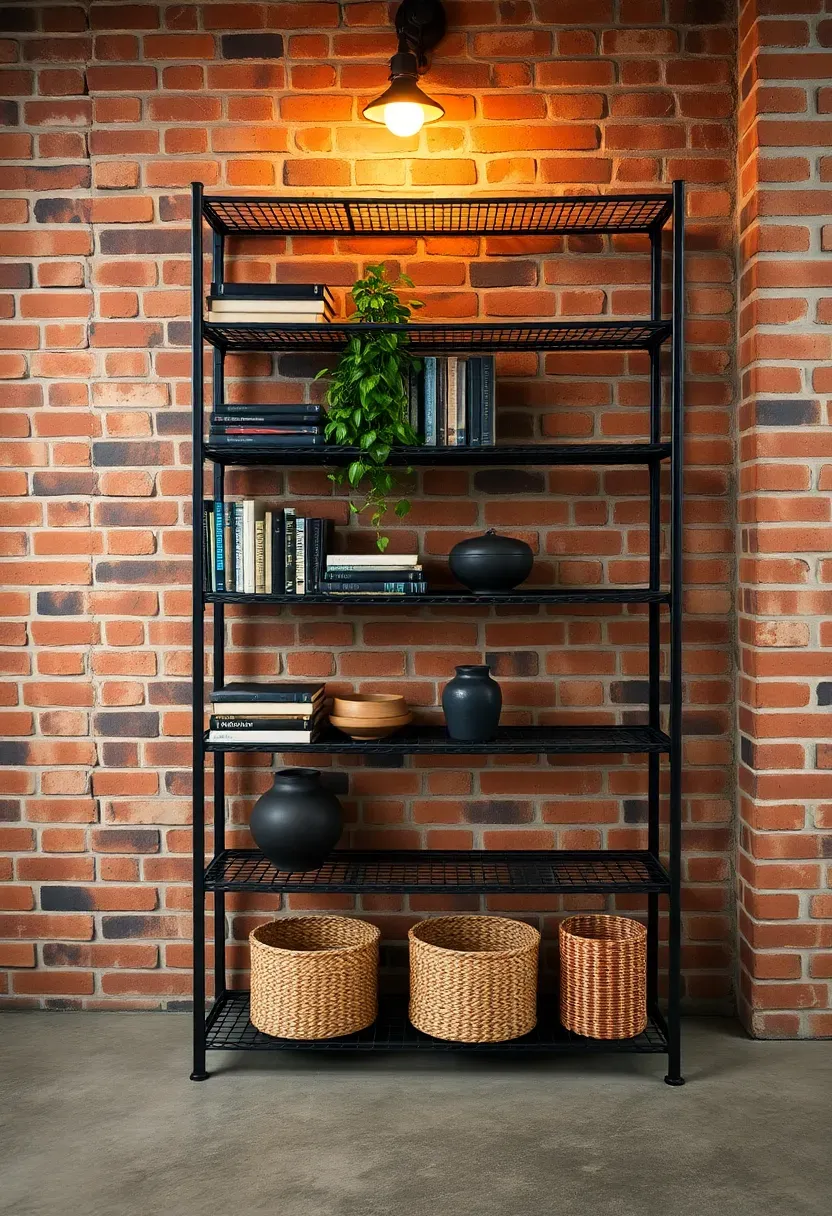
Wire or steel shelving gets a bad reputation because people associate it with utility rooms. But powder-coated metal shelf units in black or brass finishes look sharp in a basement, especially against concrete or painted block walls. They will not warp from humidity the way MDF bookshelves do, and they weigh enough to stay stable without wall anchoring on uneven floors.
Styling it right
The trick is treating it like furniture rather than utility storage. Alternate books and objects. Leave some shelves partially empty. Add a few plants that tolerate low light — pothos, ZZ plants, or snake plants. Use matching baskets on the bottom shelf to corral smaller items.
Watch out
- Avoid chrome finishes in damp basements — they pit and corrode over time
- Check weight ratings per shelf; most consumer units hold 250 to 350 pounds each
Recommended
Items for this idea
5. Rolling Bar Cart
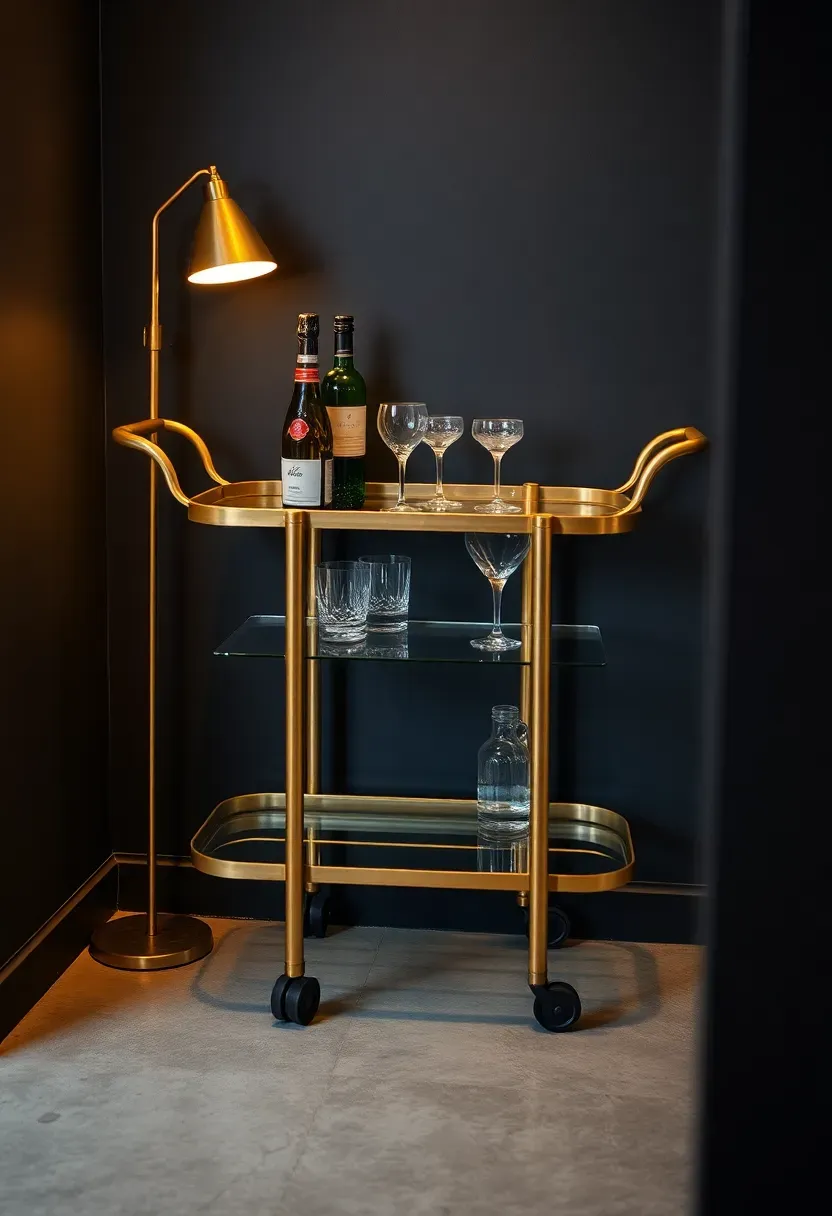
A bar cart works better than a built-in wet bar if you are not ready to commit to plumbing and permanent cabinetry. It rolls where you need it — next to the sofa for a movie night, beside the game table during poker games, or tucked into a corner when not in use. Budget around $80 to $250 for a solid two-tier cart in metal and glass.
Tips
- Pick rubber or silicone-coated wheels that will not scratch sealed concrete or LVP floors
- Stock the bottom tier with heavier bottles for stability
- Wipe metal frames weekly in humid basements to prevent water spots and tarnish
6. Convertible Sleeper Sofa
The problem
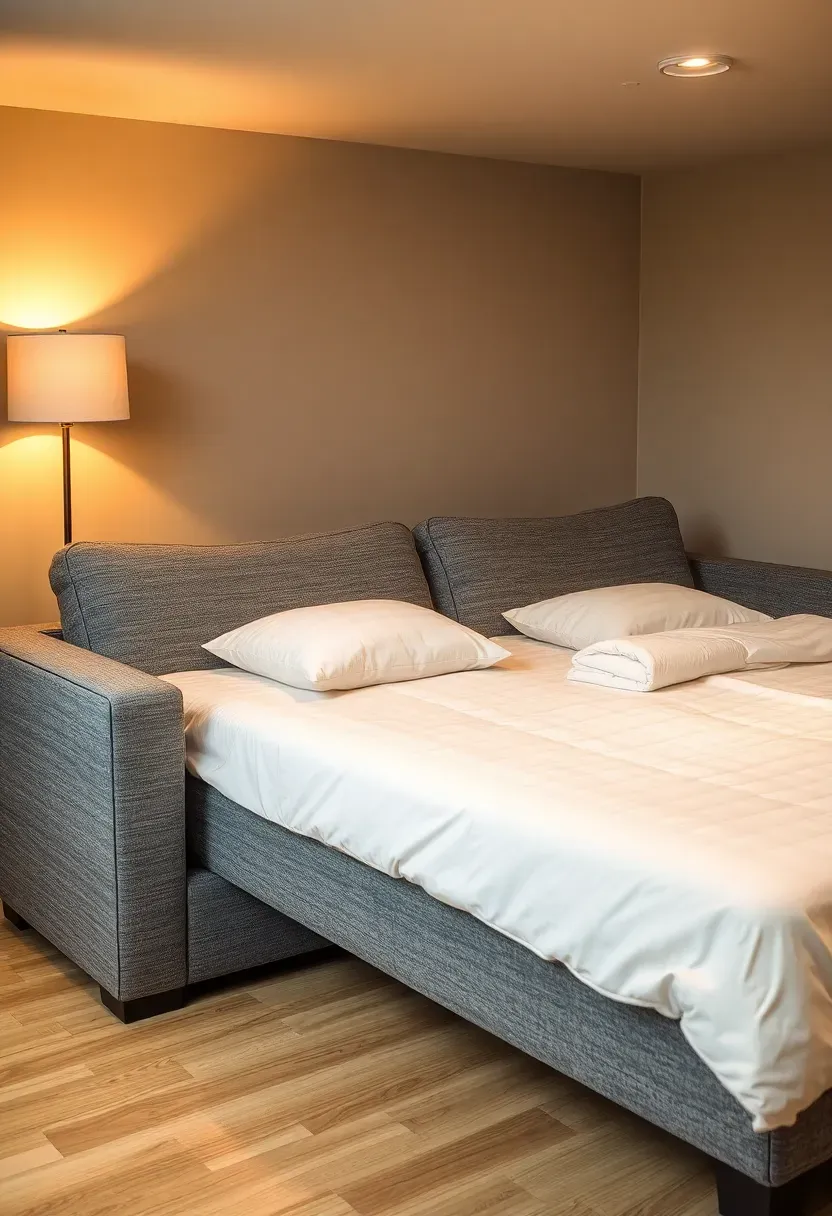
Basements frequently double as guest rooms, but a permanent bed wastes space 350 days a year. A dedicated sofa bed lets you reclaim that square footage for daily use while keeping a guest-ready option.
The solution
Modern sleeper sofas have moved well past the thin-mattress-on-a-metal-frame era. Memory foam sleeper mechanisms fold out to a genuine 5-inch mattress that guests actually sleep on without complaining. Some newer designs skip the fold-out entirely and convert the seat cushions themselves into a flat sleeping surface.
Pros and cons
- Pro: No need for a separate guest bedroom setup
- Pro: Many models store bedding inside the base
- Con: Quality sleeper mechanisms add $300 to $600 to the sofa price
- Con: Heavier than standard sofas — plan your stair route carefully
Recommended
Items for this idea
7. Pub-Height Game Table
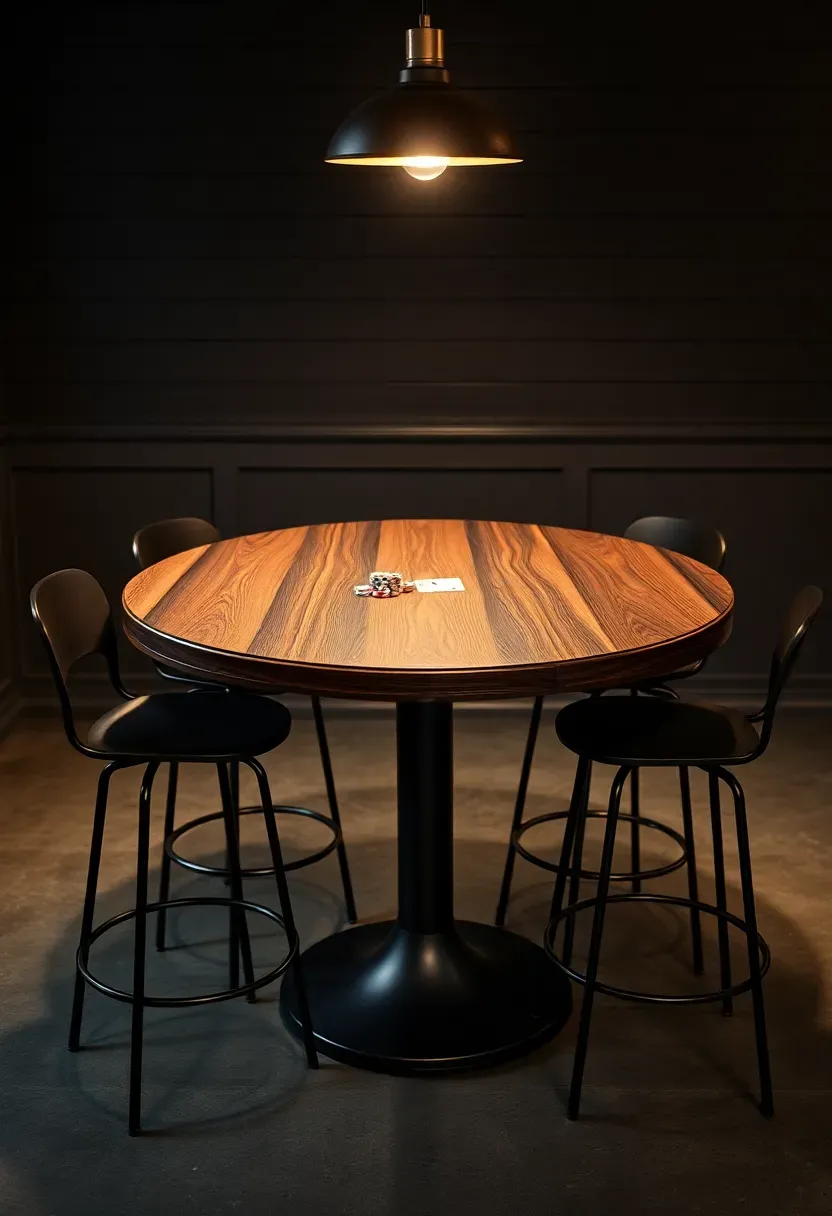
Pub-height tables (40 to 42 inches) work surprisingly well in basements. The taller profile makes low ceilings feel less oppressive by drawing the eye upward, and they naturally encourage standing or perching on stools rather than sinking into chairs. Use it for cards, board games, puzzles, or casual meals when you have people over.
Tips
- Round tops under 48 inches in diameter seat 4 without crowding a basement layout
- Pair with backless stools so they tuck fully under the table when not in use
- Choose a pedestal base instead of four legs — it gives more knee room and keeps the floor clear
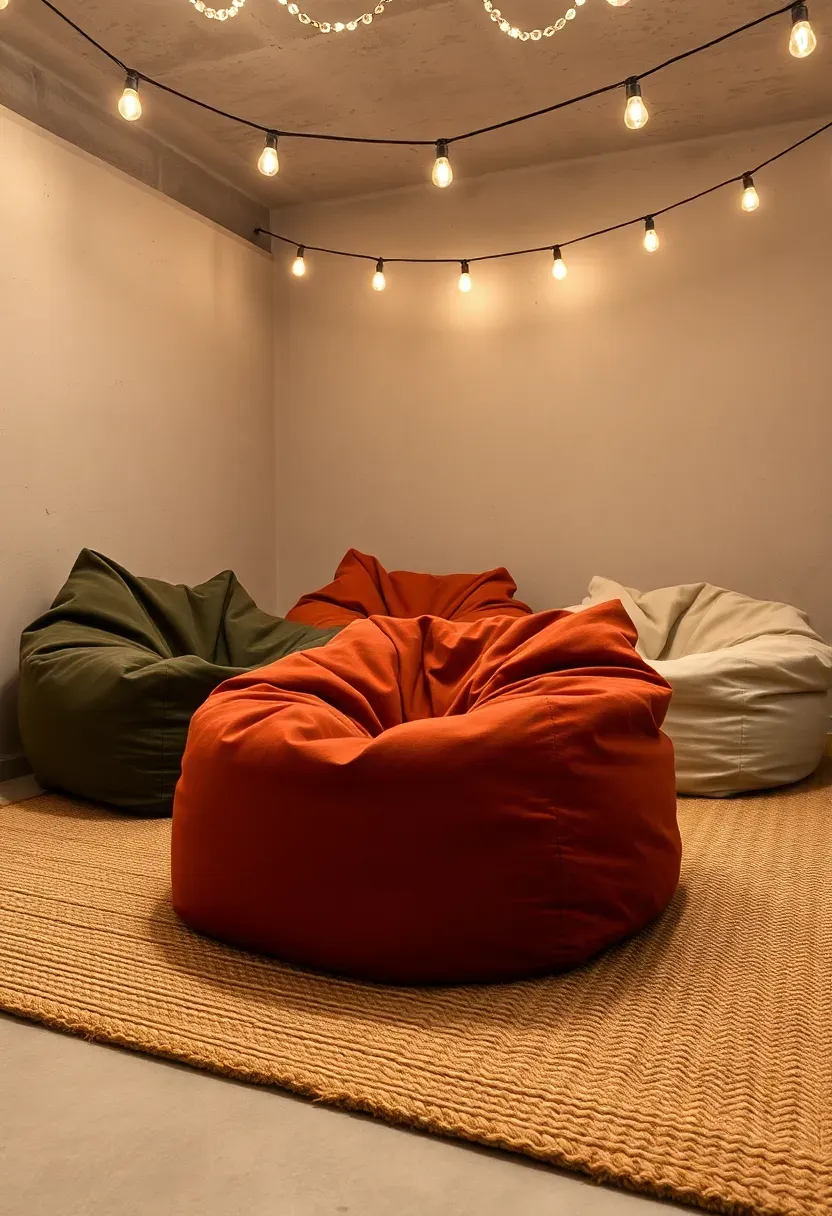
8. Bean Bag Lounge Cluster
Step 1: Choose the right fill
Expanded polystyrene (EPS) beads are standard but compress within months. Shredded memory foam holds shape longer and provides actual support. For a basement, shredded foam also resists moisture better because it does not trap water the way bead cavities can.
Step 2: Pick washable covers
Basement bean bags need removable, machine-washable outer covers. Canvas or outdoor-rated polyester works best. Avoid suede or velvet — they hold odors in damp spaces.
Step 3: Arrange with intention
Scatter three to five large bean bags around a low table or directly facing a projector screen. Add a thick area rug underneath to define the zone and insulate against cold concrete. This setup costs under $500 total and kids will prefer it over any formal seating.
Recommended
Items for this idea
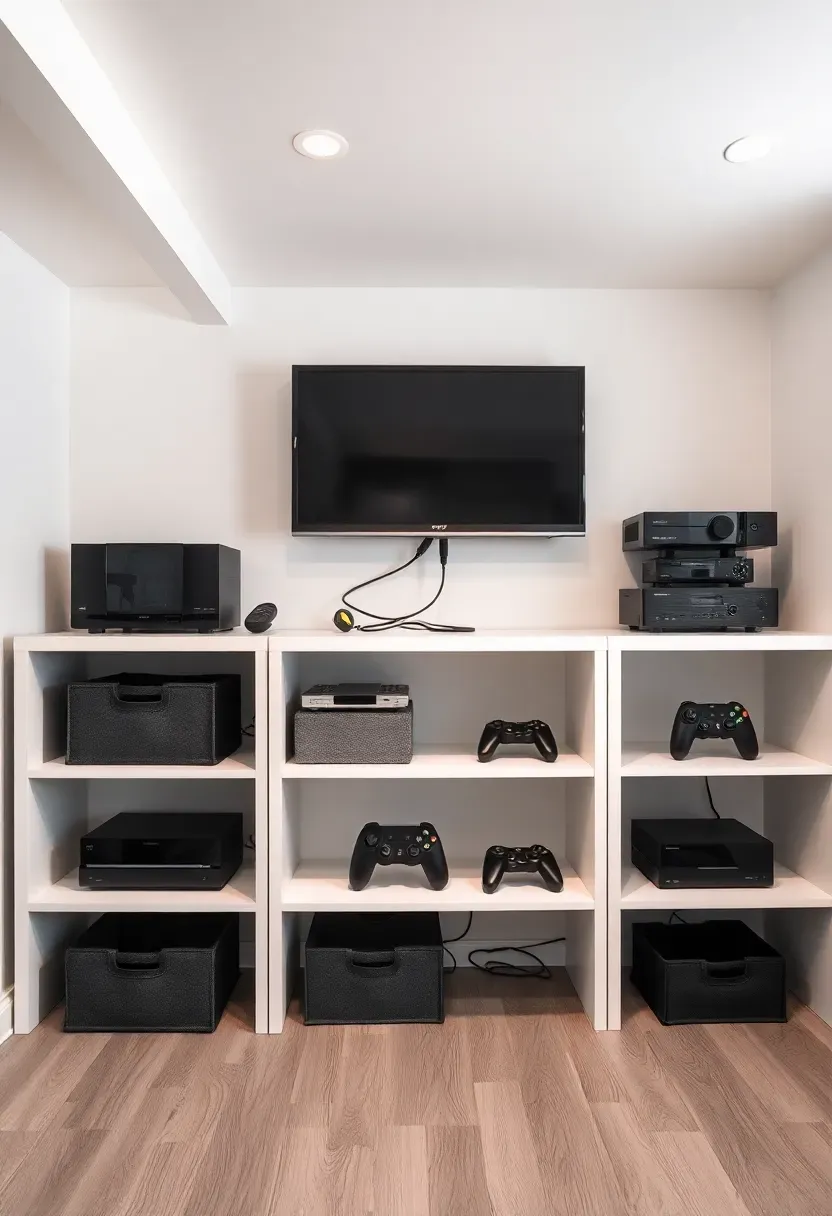
9. Cube Storage Media Console
Cube organizer units — the kind with interchangeable inserts — make surprisingly effective media consoles in basements. A 2x4 Kallax-style unit on its side puts the TV at a comfortable height (about 24 inches to the base) and gives you 8 cubbies for game consoles, streaming devices, controllers, and media. The open-back design helps with cable management and air circulation around electronics.
Tips
- Anchor the unit to the wall even on its side — a TV on top makes it top-heavy
- Use fabric bins in some cubbies and leave others open for gear that needs ventilation
- Skip particle board if your basement floods; plywood or solid wood versions last longer
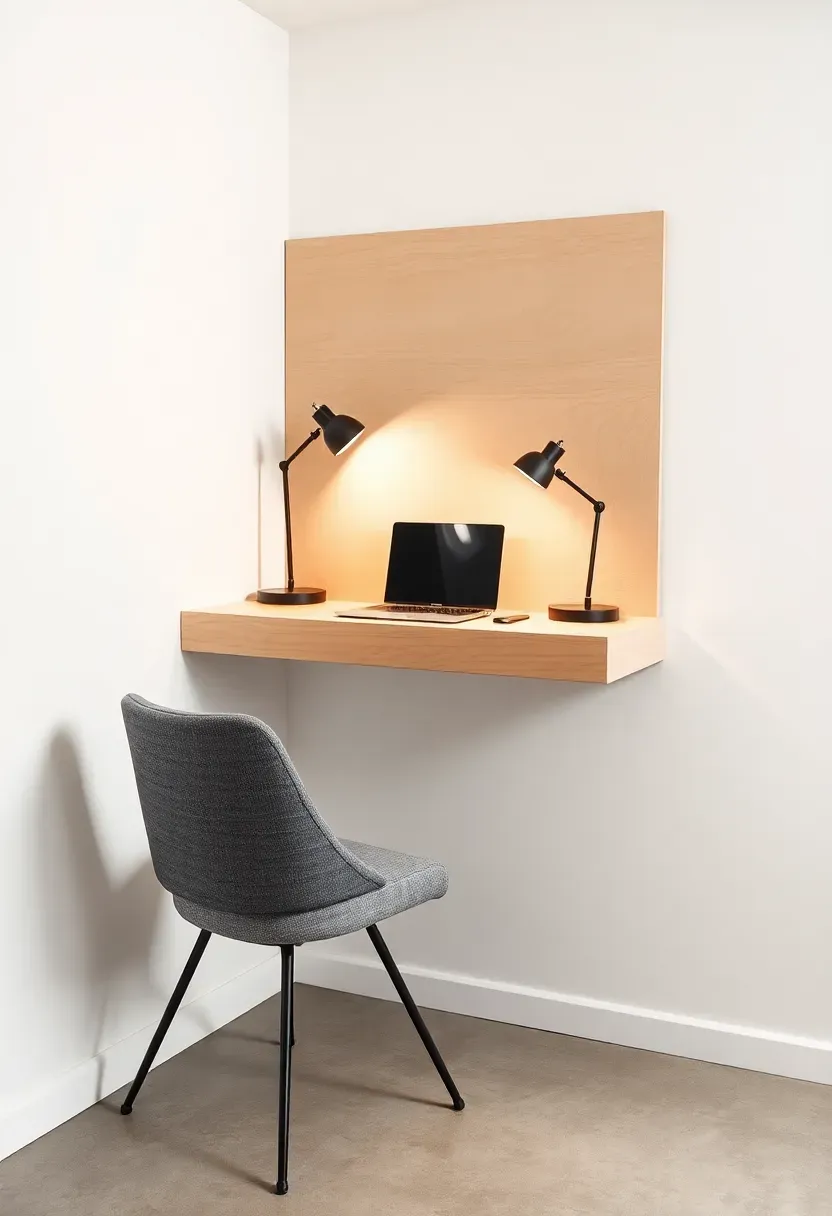
10. Wall-Mounted Floating Desk
A vs B: Floating desk vs. freestanding desk
A freestanding desk takes 6 to 10 square feet of floor space. In a basement where every foot matters, a wall-mounted floating desk cantilevered from the studs frees up the floor entirely. You get a work surface that folds down or stays fixed, with the area underneath open for a chair or storage bin.
Choose floating if
- Your basement doubles as a workspace only part-time
- You want to vacuum or mop freely underneath
- Floor space is under 200 square feet total
Choose freestanding if
- You need deep drawers for filing
- Your setup requires dual monitors with heavy arms
- You work from the basement full-time and need ergonomic adjustability
Recommended
Items for this idea
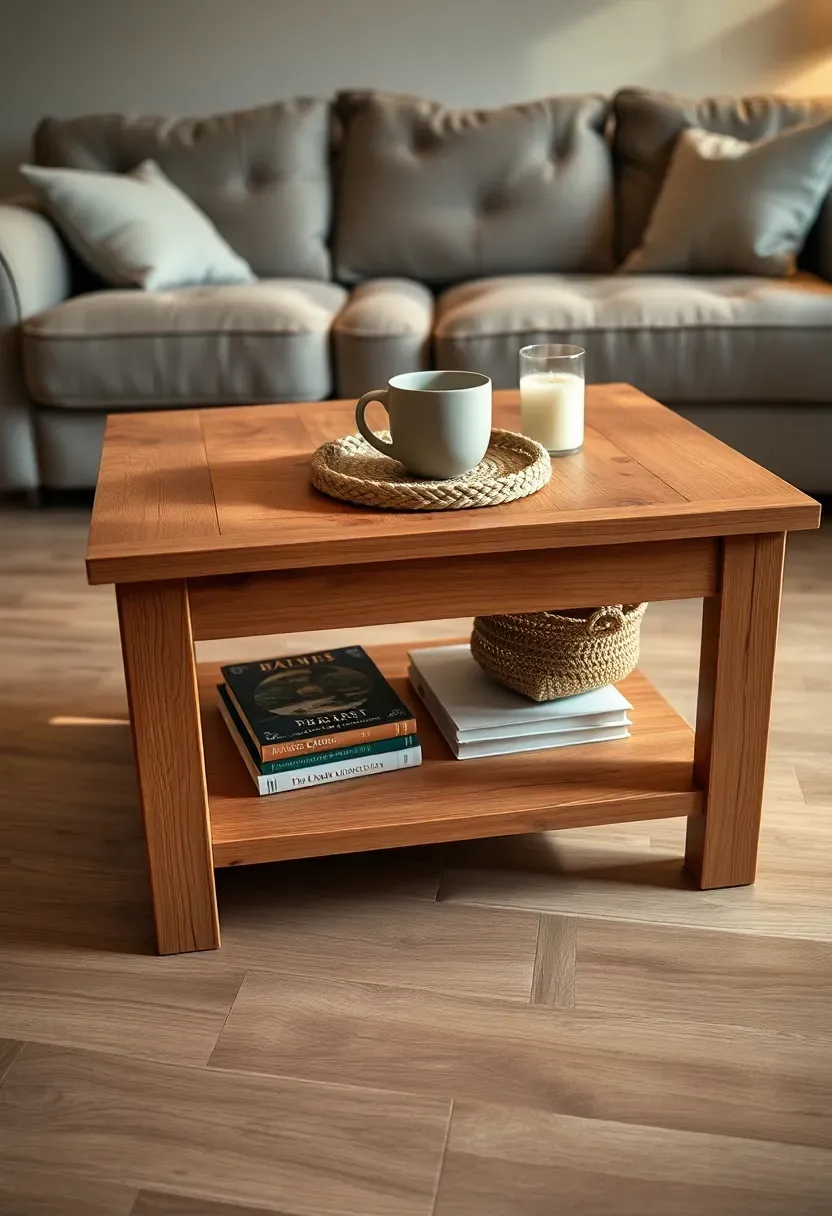
11. Farmhouse Coffee Table with Shelf
A coffee table with an open lower shelf solves two problems at once in a basement. The shelf keeps remotes, magazines, and coasters within reach without piling them on the surface. Farmhouse-style tables with thick legs and a weathered wood finish also tolerate the knocks and ring marks that come with heavy basement use better than glossy lacquered surfaces.
Tips
- Solid pine or reclaimed wood handles humidity swings better than veneered MDF
- Apply a matte polyurethane coat to raw wood surfaces to protect against drink condensation
- Size the table so it clears the sofa by 14 to 18 inches on each side for walkway room
12. Theater-Style Recliner Row
Origins of the home theater chair
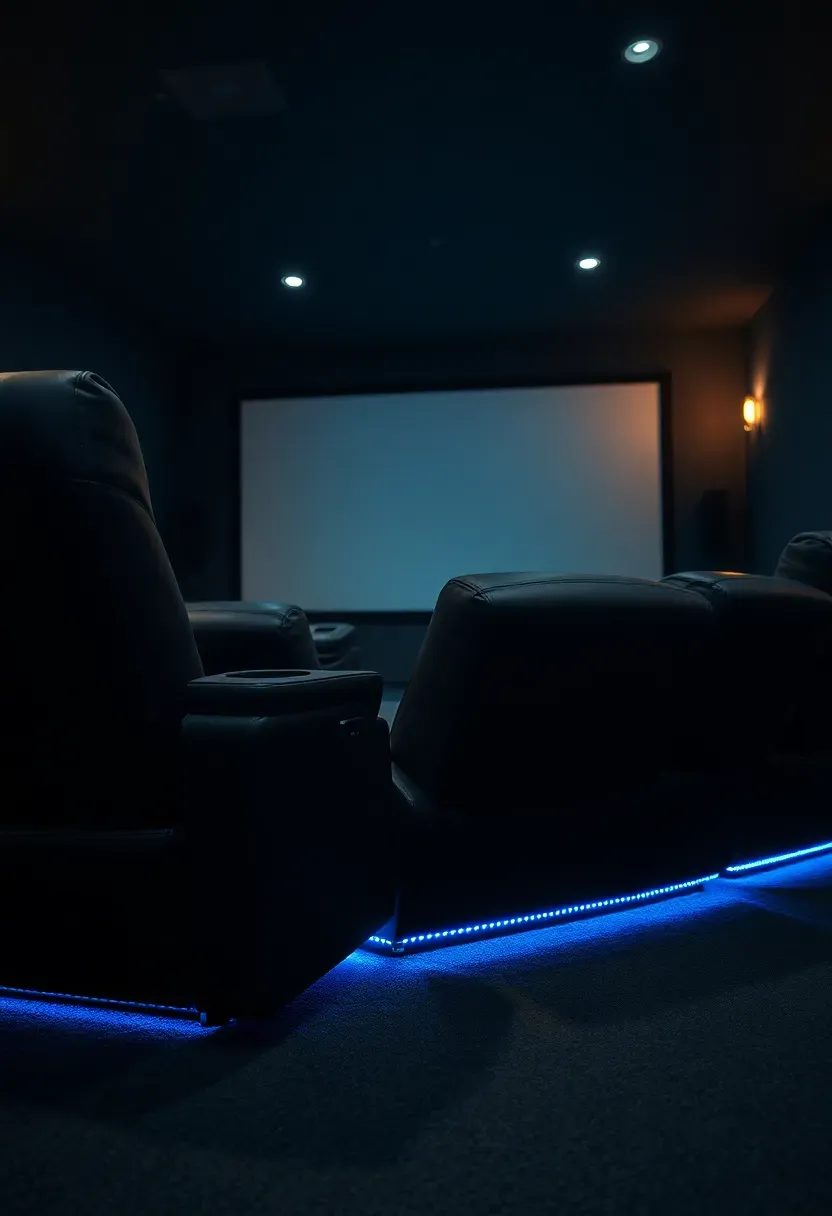
Dedicated theater seating started showing up in residential basements in the early 2000s when projectors dropped below $1,000. What used to be a custom-build luxury is now available as modular recliner sets starting around $600 for a three-seat row. Most include cupholders, USB charging ports, and LED lighting along the base.
Modern application
Current models come with power recline, adjustable headrests, and even built-in bass shakers that sync with your subwoofer. A single row of three or four seats fits against the back wall of most basements and leaves the front area open.
Making it work at home
- Measure the recline depth — most chairs need 18 to 22 inches behind the backrest when fully extended
- Leave the back row on a 6-inch riser for stadium sightlines if you have the ceiling height
- Dark upholstery hides stains and reduces light reflection on the screen
Recommended
Items for this idea
13. Foosball or Air Hockey Table
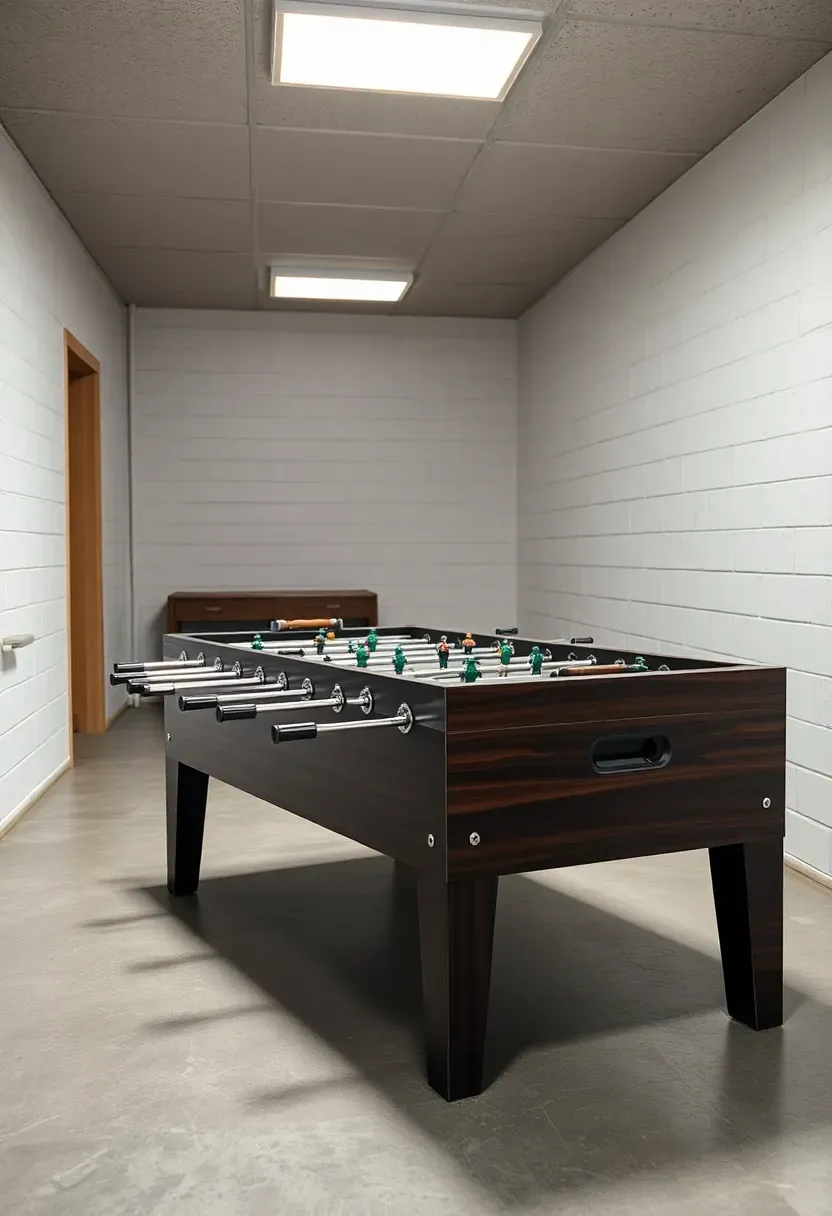
A game table anchors a basement rec room in a way that no amount of throw pillows and wall art can match. Foosball tables need a 5x3-foot footprint plus 3 feet of clearance on each end for the rods. Air hockey tables run 4x7 feet and need space on all four sides. Pick based on your room dimensions — foosball fits narrow spaces better.
Tips
- Place the table on a level surface; use furniture shims on uneven concrete
- Budget $300 to $800 for a table sturdy enough to survive aggressive play
- Keep a dehumidifier nearby — warped surfaces ruin gameplay on both types
14. Narrow Console Table Behind the Sofa
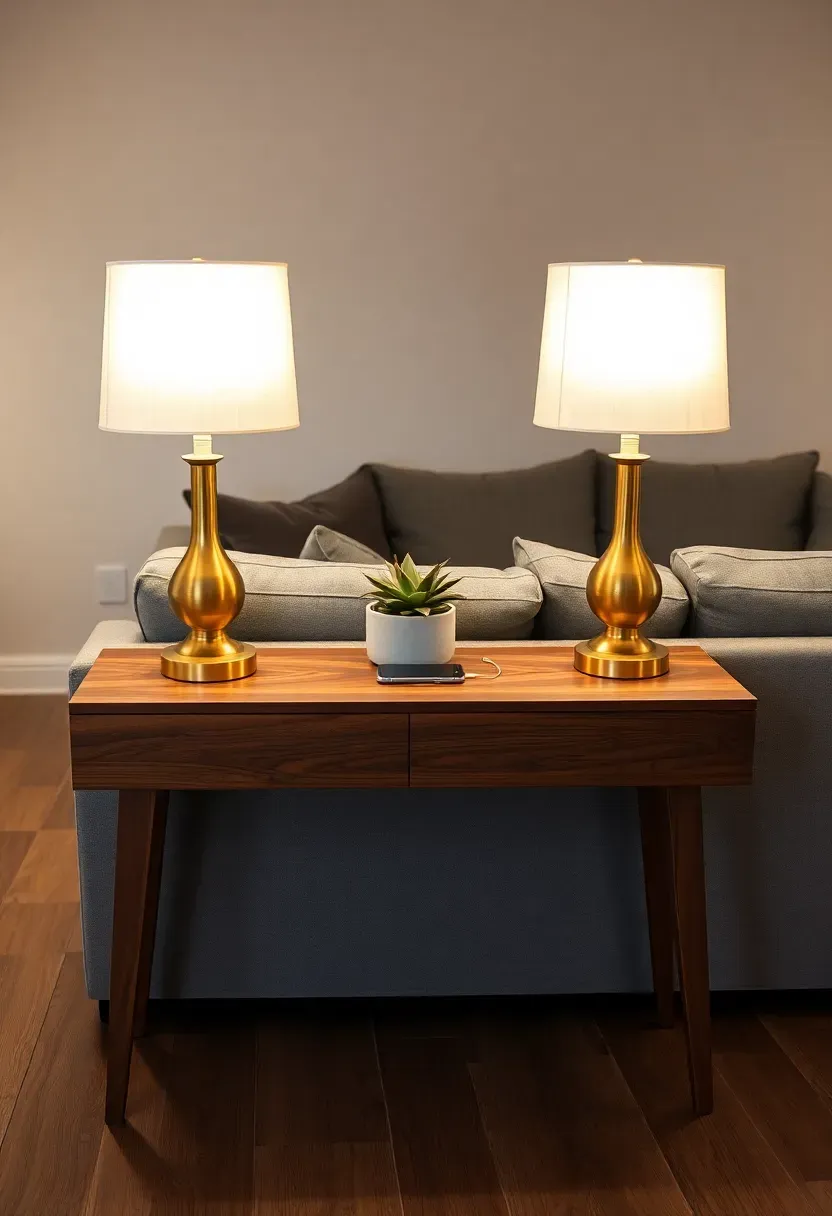
When a sectional floats in the middle of a basement room, the back of the sofa faces open space. A narrow console table (10 to 14 inches deep) placed flush against the sofa back creates a surface for table lamps, a charging station, or drinks for people sitting at the game table behind it. It also visually divides the room into zones without blocking sightlines.
Tips
- Match the console height to the sofa back height for a seamless look
- Run a power strip along the back of the console for lamps and phone chargers
- Use a table with a lower shelf for additional storage in baskets
Recommended
Items for this idea
15. Stackable Stools for the Bar Area
The problem
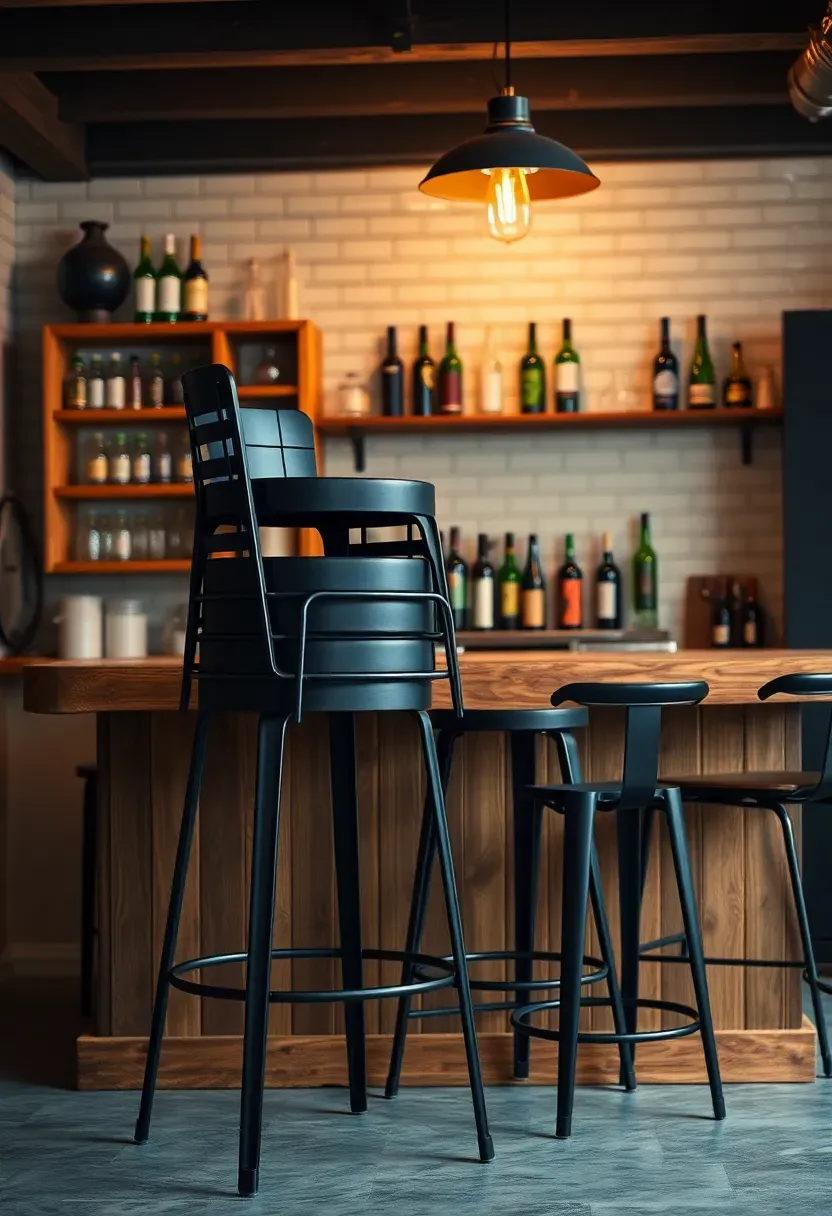
Basement bar areas need seating for guests but cannot afford to have six stools taking up floor space permanently. Standard bar stools with backs and armrests barely fit through basement doorways.
The solution
Stackable metal stools — the Tolix-style or similar industrial designs — nest on top of each other in a column when not in use. Pull out what you need for a party and stack the rest in a closet. They weigh 8 to 12 pounds each, survive spills without damage, and come in dozens of powder-coated colors.
Pros and cons
- Pro: Store 4 stools in the footprint of one
- Pro: Metal resists humidity, mold, and stains
- Con: No back support for long sitting sessions
- Con: Cold to sit on in unheated basements — add a cushion pad
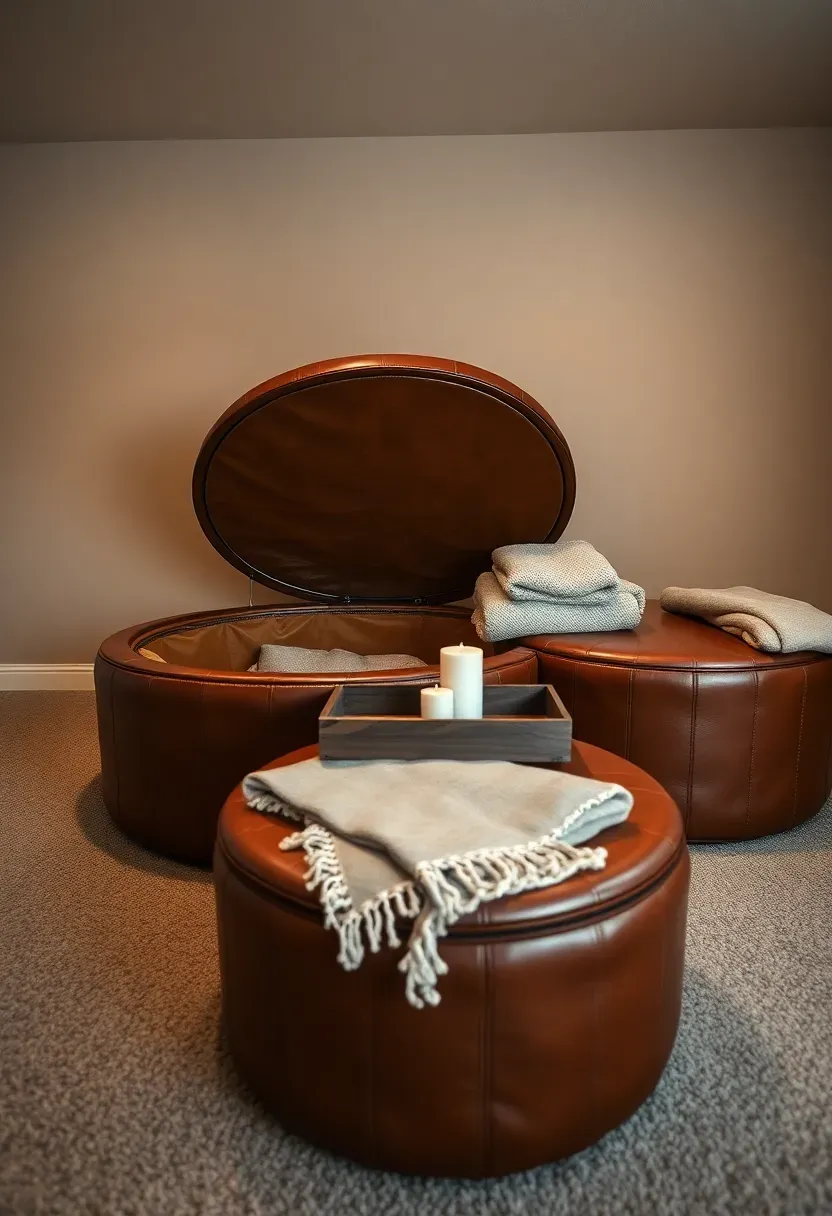
16. Storage Ottoman Set
Storage ottomans are the Swiss army knife of basement furniture. Use them as footrests during movies, extra seating when guests come over, and hidden storage for throws, remotes, and game controllers the rest of the time. A matched set of three in different sizes nests together when you need floor space and spreads out when you need seating.
Tips
- Faux leather or vinyl exteriors resist basement moisture better than fabric
- Flat tops double as serving surfaces with a tray on top
- Choose models with reinforced lids rated for sitting — some decorative ottomans collapse under adult weight
Recommended
Items for this idea
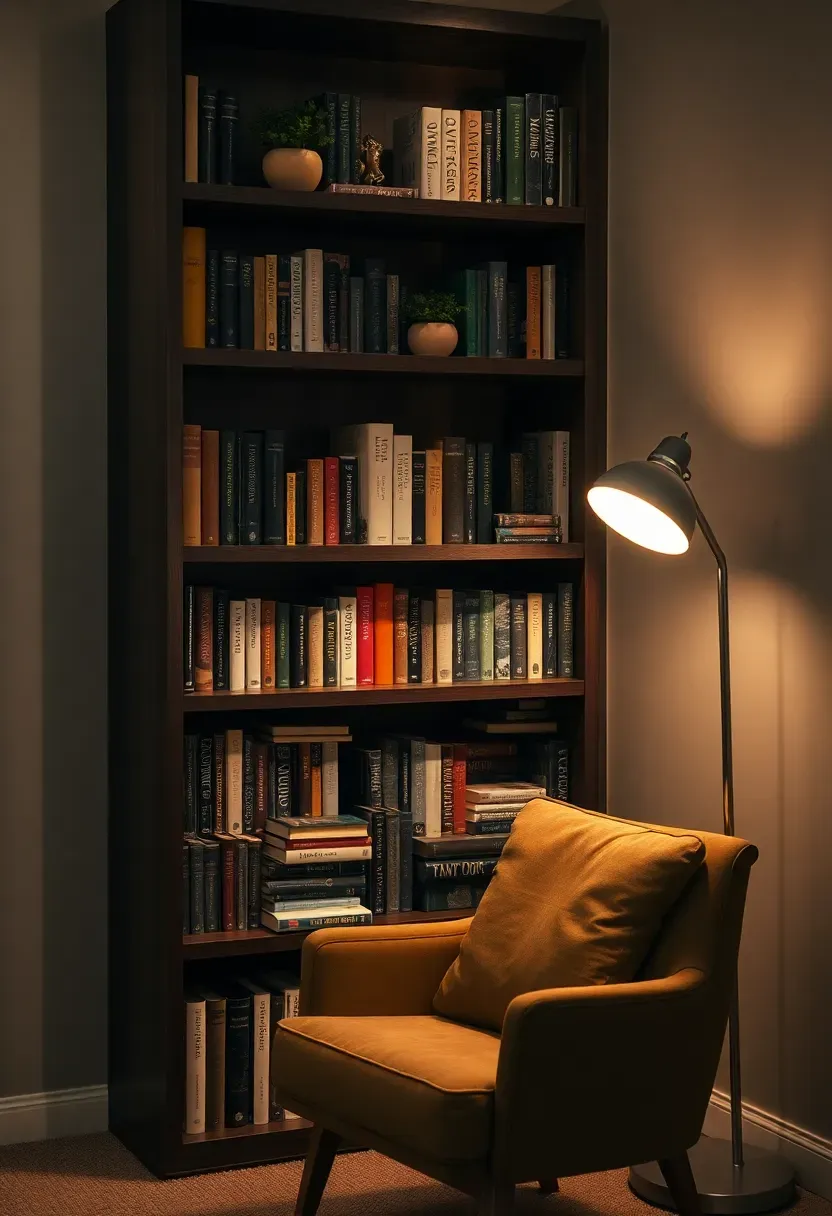
17. Corner Bookcase Tower
Corners in basements tend to go completely unused. A tall, narrow bookcase designed for corner placement occupies roughly 2 square feet of floor space while providing 5 to 6 shelves of vertical storage. Position it beside a reading chair with a floor lamp and you have a dedicated reading nook that takes up almost no room.
Tips
- Secure tall bookcases to the wall with anti-tip straps — especially important on uneven basement floors
- Avoid placing directly against an exterior wall where condensation collects; leave a 1-inch gap
- Use the bottom shelf for heavier items to lower the center of gravity
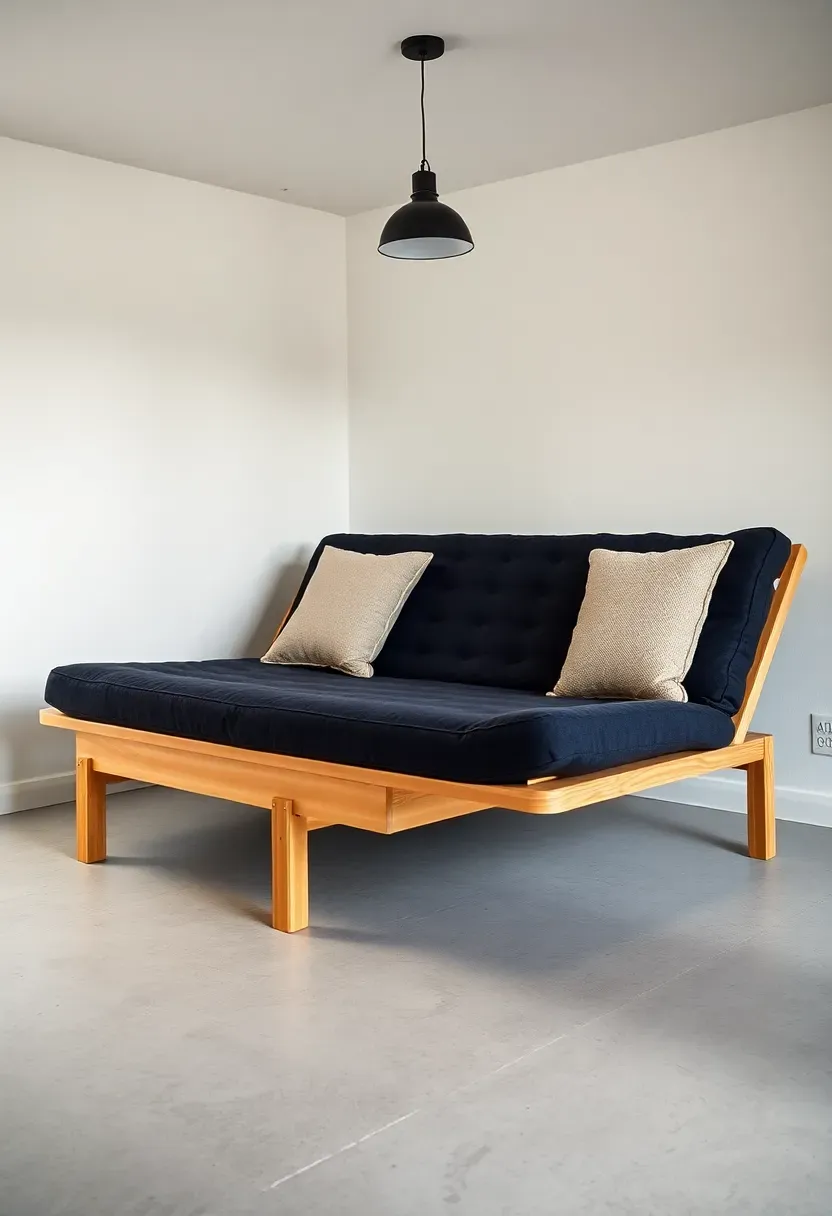
18. Futon with Wooden Frame
Why not just a sofa bed?
Futons cost less, weigh less, and require zero mechanical parts that can jam or break. A solid hardwood frame (birch or rubberwood) resists warping from humidity better than metal frames, which can rust in damp basements. The mattress folds flat for sleeping or props up for sitting — no unfolding mechanism, no springs, no drama.
Limitations worth knowing
Futon mattresses compress over time and need replacement every 3 to 5 years with regular use. They sit lower than standard sofas, which some people find hard to get up from. And the aesthetic leans casual — this is not the piece for a polished entertaining space.
Best for
- Teen hangout rooms and gaming setups
- Guest sleeping that happens a few times a year
- Basements where you want to keep the budget under $400
Recommended
Items for this idea
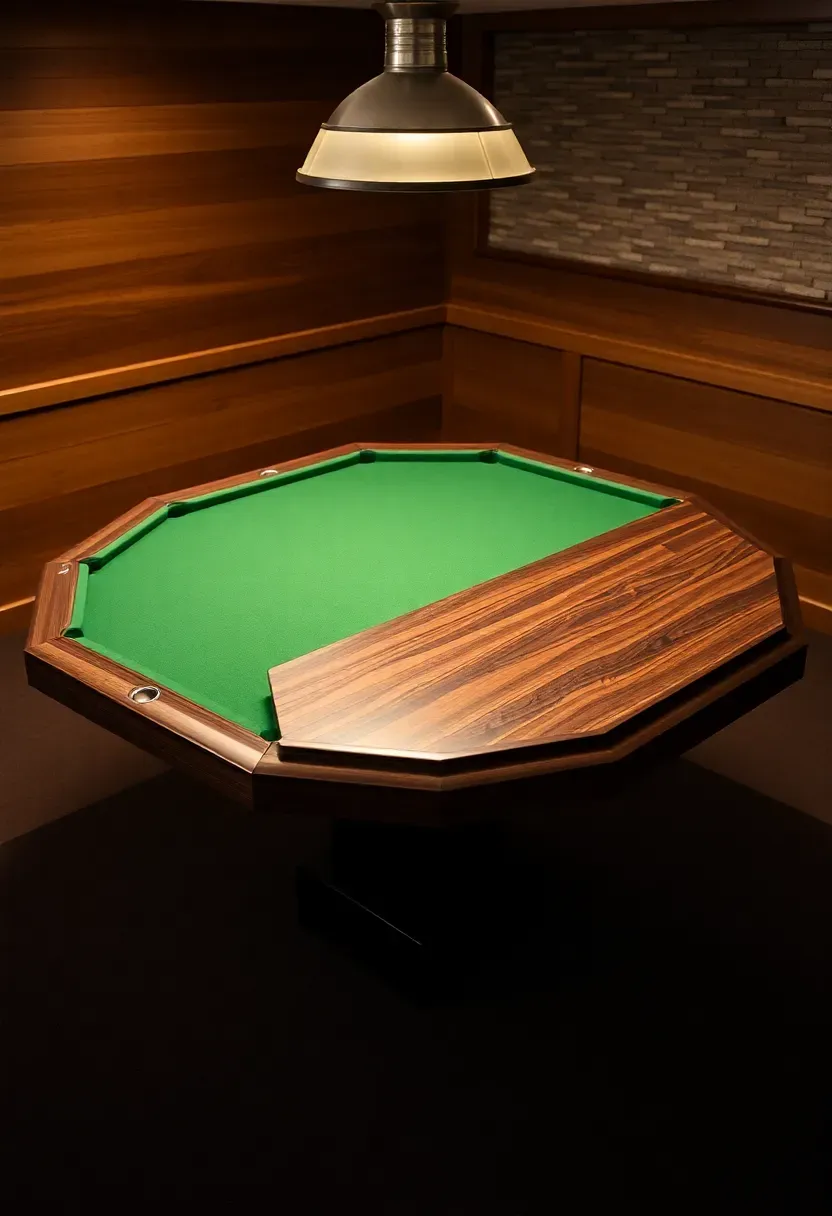
19. Poker Table with Dining Top
A dedicated poker table takes up permanent real estate for a game that happens once a week at best. Dual-purpose poker tables solve this with a reversible top — felt on one side for cards, solid wood or laminate on the other for dining. The octagonal shape seats 6 to 8 comfortably and fits better in basement rooms than rectangular dining tables.
Tips
- Look for built-in chip trays and cup holders on the poker side
- Pedestal bases give more legroom than four-leg designs at an octagonal shape
- Store the alternate top vertically behind a door or on a wall mount to save space
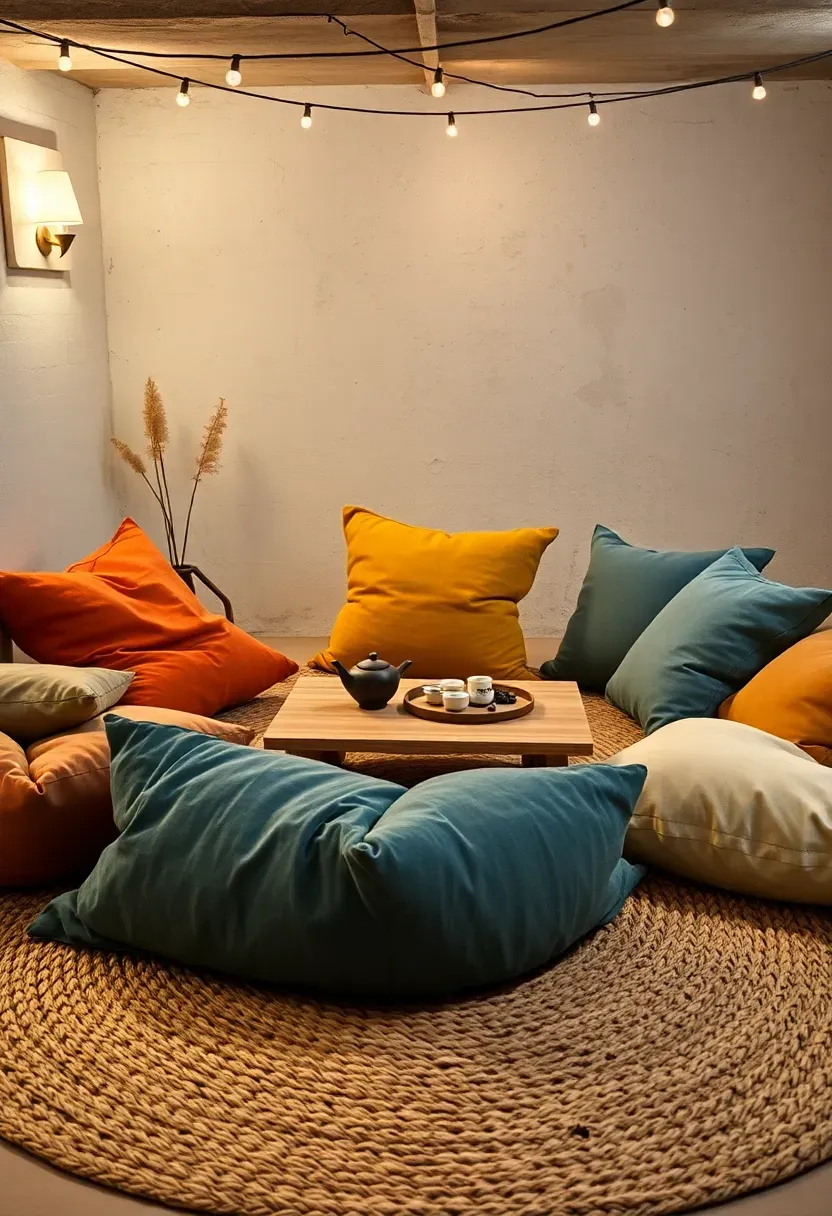
20. Floor Cushion Seating Area
Step 1: Build the base layer
Start with a thick, moisture-resistant rug pad directly on the concrete. Top it with an area rug that is at least 8x10 feet to define the zone. This insulates against cold floors and provides the foundation for everything else.
Step 2: Layer the cushions
Large floor cushions (24x24 inches or bigger) in mixed textures create informal seating without any furniture footprint. Supplement with a few meditation-style zafu cushions and cylindrical bolsters for back support.
Step 3: Add a low table
A Japanese-style low table (12 to 16 inches high) in the center serves drinks, snacks, and board games. The entire setup costs under $300 and can be cleared completely when you need the floor space for exercise or kids' play.
Watch out
- Wash cushion covers monthly in a basement — they absorb odors faster than you expect
- Avoid down-filled cushions; synthetic fill dries faster if exposed to moisture
Recommended
Items for this idea
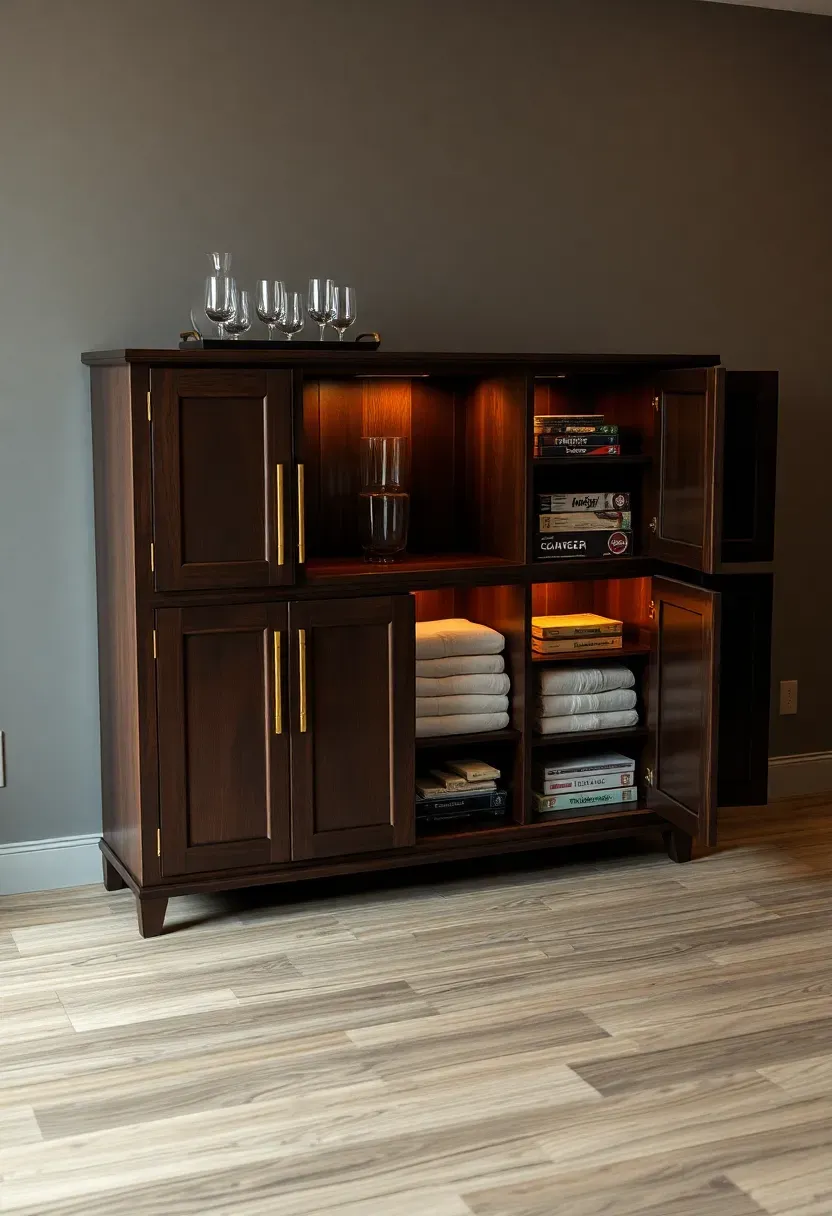
21. Sideboard Buffet for Entertaining
A sideboard gives you serving surface, closed storage, and display space in a single piece. During parties, the top holds food and drinks. The rest of the time, the cabinets store barware, board games, extra linens, or anything else that needs a home. Sideboards range from 48 to 72 inches wide, so measure your wall before shopping.
Tips
- Solid wood or plywood construction handles basement humidity; avoid particleboard
- Add stick-on LED strip lights inside the cabinet for a subtle glow when doors open
- Position at least 6 inches from exterior walls to prevent moisture wicking into the back panel
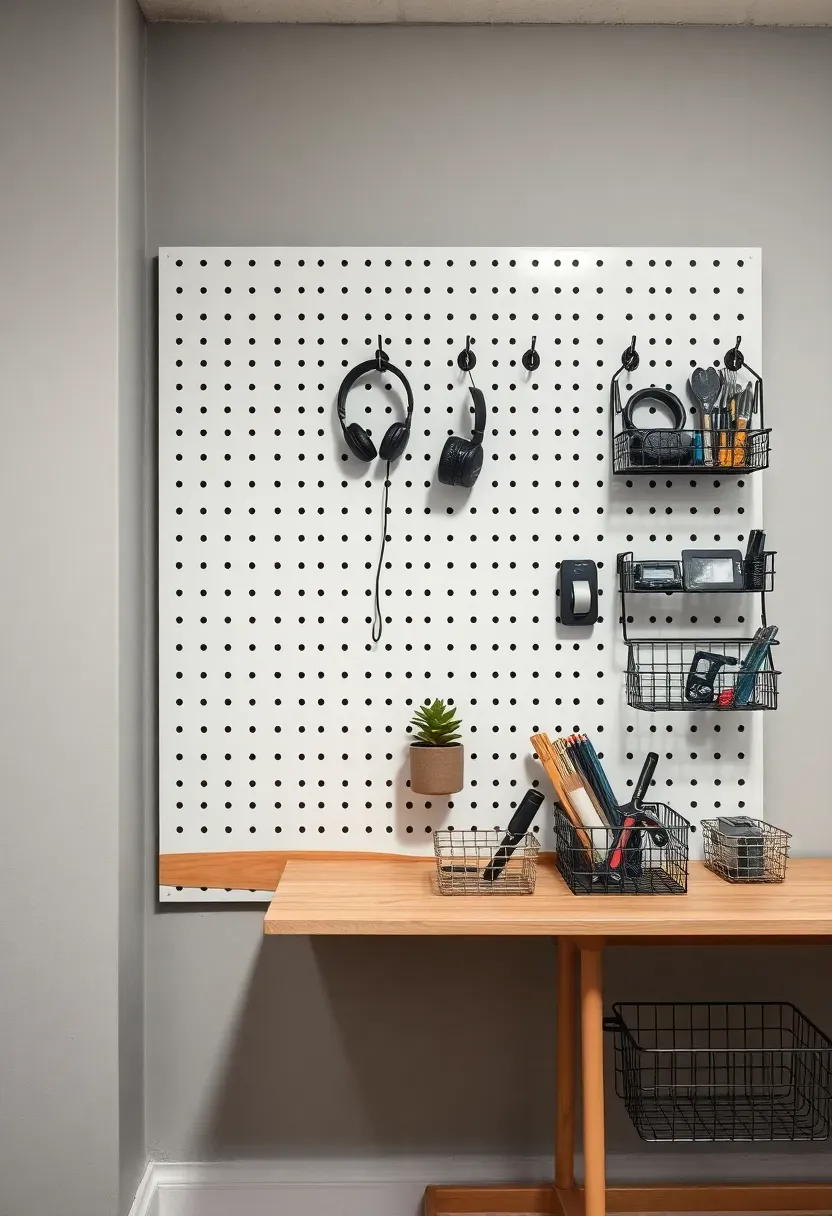
22. Pegboard Wall Organizer Station
From workshop to living space
Pegboard started in garages and workshops, but painted pegboard panels in white, black, or a bold color work as functional wall decor in a finished basement. Mount a 4x4-foot panel beside a desk or above a workbench and use hooks, shelves, and bins to organize everything from headphones and controllers to craft supplies and tools.
Modern versions
Metal pegboard panels with a powder-coated finish look cleaner than traditional hardboard and resist moisture damage. Some systems use proprietary hooks that lock in place rather than sliding around. Prices start at $40 for a basic panel and reach $150 for a full accessories kit.
Making it work
- Mount directly into studs or use toggle bolts on drywall — pegboard needs secure anchoring to hold weight
- Leave 3/4-inch standoff space between the pegboard and the wall so hooks can insert properly
- Group items by function: one zone for electronics, one for office supplies, one for tools
Recommended
Items for this idea
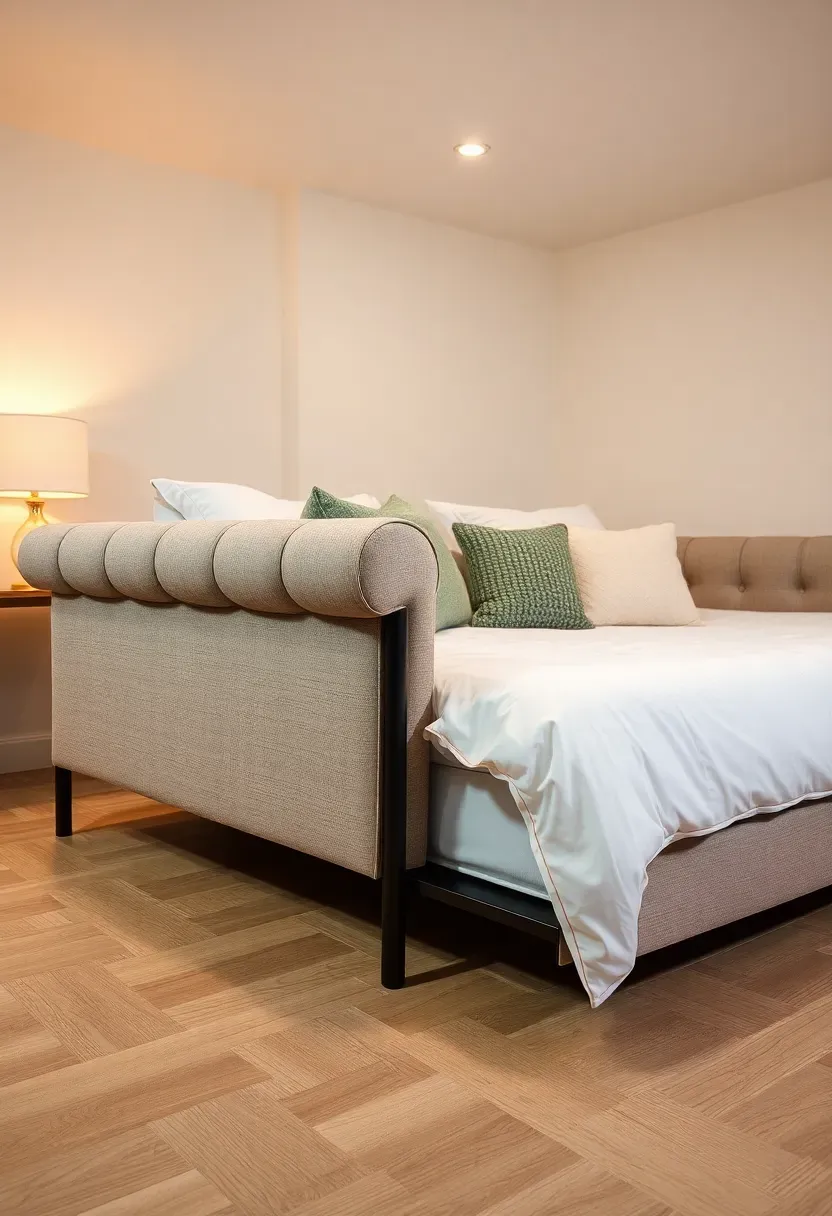
23. Tufted Daybed with Trundle
A daybed bridges the gap between sofa and bed more gracefully than either a futon or a sleeper sofa. The tufted back and arms make it look like a proper couch during the day, and the trundle slides out at night to give you two twin-sized sleeping surfaces. For a basement guest room that also serves as a hangout spot, this is one of the most space-efficient solutions.
Tips
- Choose a metal frame with a baked-on finish rather than solid wood to prevent warping
- Use 8-inch mattresses on both the daybed and trundle — thinner mattresses feel temporary
- Add a mattress protector with waterproof backing to guard against basement humidity
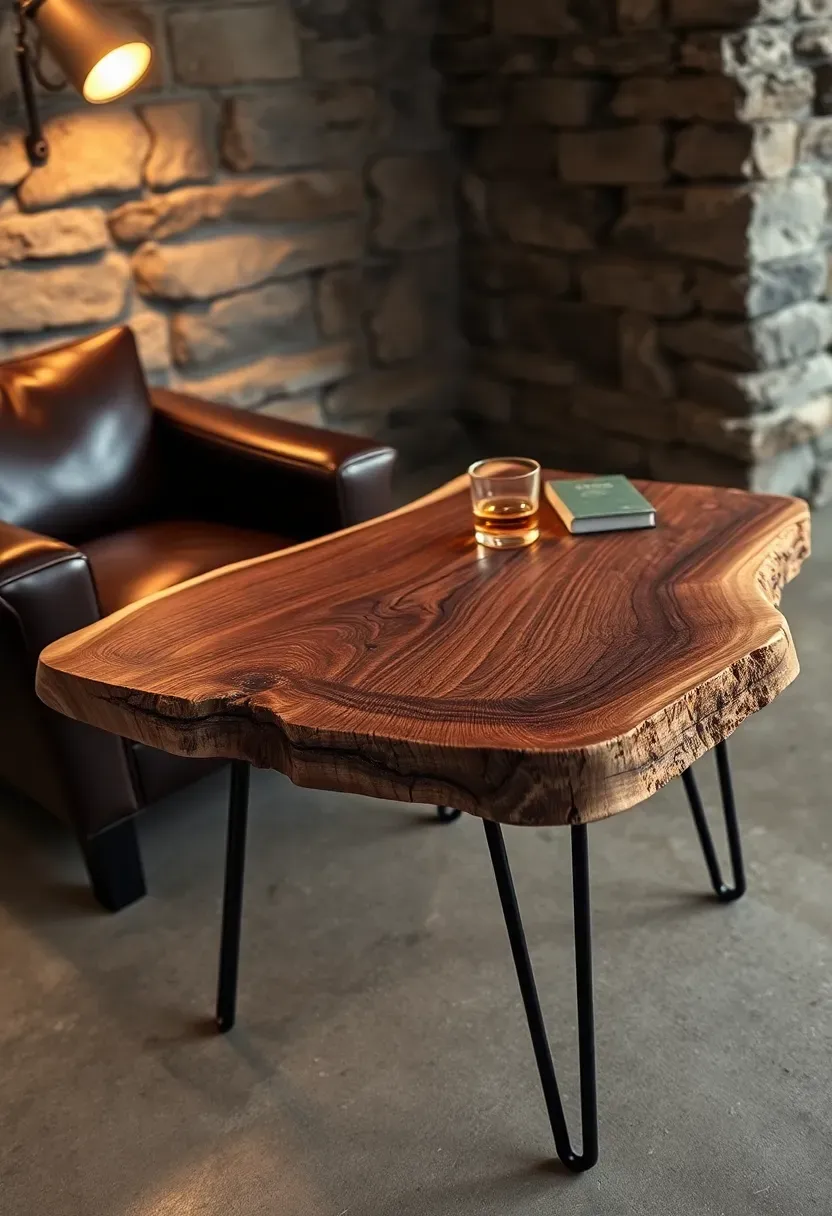
24. Rustic Wood Slab Side Table
A live-edge wood slab on hairpin legs makes a side table that feels intentional rather than decorator-catalog generic. Each piece looks different because the natural edge varies by tree. In a basement with concrete walls and industrial lighting, that organic shape provides contrast and warmth that manufactured furniture cannot replicate.
Tips
- Seal all surfaces including the bottom with polyurethane or epoxy resin to prevent moisture absorption
- Hairpin legs in matte black steel cost $15 to $30 for a set of four and screw directly into the slab
- Keep the slab thickness at 1.5 to 2 inches for a side table — thicker slabs get heavy and look out of scale
Recommended
Items for this idea
25. Freestanding Wardrobe Cabinet
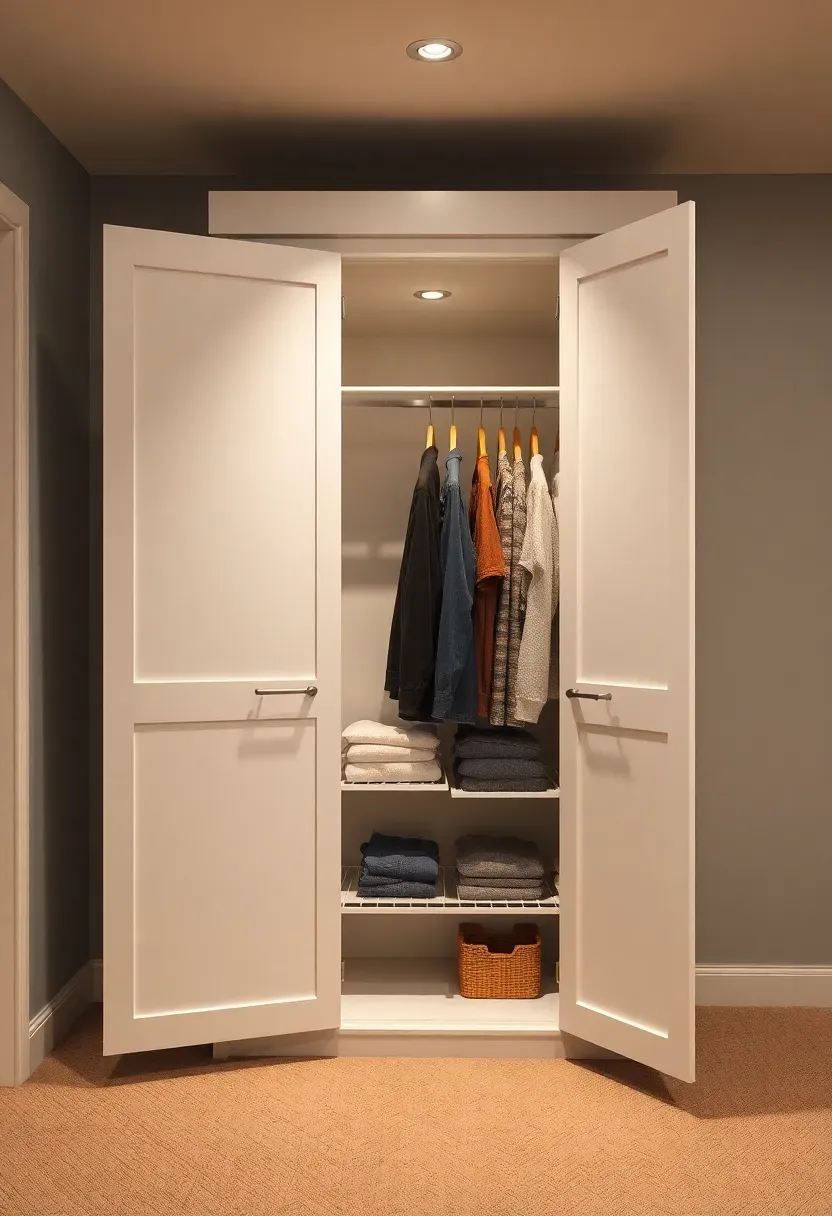
Basements rarely have closets, but if yours doubles as a guest room or a teenager's hangout, you need somewhere to hang coats and store bags. A freestanding wardrobe cabinet — 36 to 48 inches wide with a hanging rod and shelves — provides closet functionality without construction. IKEA PAX frames, in particular, can be configured to fit under low ceilings with the legs removed.
Tips
- Measure ceiling height before buying — some wardrobes stand 80 inches tall and will not fit under 7-foot basement ceilings
- Add a few moisture-absorbing sachets inside to prevent musty odors in closed storage
- Secure the wardrobe to the wall with an anti-tip strap, especially on uneven concrete floors
Quick FAQ
Does basement furniture need to be waterproof? Not waterproof, but moisture-resistant. Basements typically run 50 to 60% relative humidity, which is enough to warp particleboard and grow mold on natural fabrics over time. Choose solid wood, metal, or synthetic upholstery, and run a dehumidifier to keep levels below 50%.
Can I use a regular sofa in a basement? You can, but expect a shorter lifespan. Fabric sofas absorb ambient moisture and develop odors faster underground. If you go with a standard sofa, pick one with removable, washable covers and elevate it on legs rather than a skirted base that traps humidity underneath.
What is the best way to move large furniture into a basement? Measure your stairway width, ceiling height at the turn, and doorframe dimensions before ordering anything. Modular furniture and flat-pack pieces solve most access problems. For one-piece items, tilt and pivot through stairwells — or check whether the piece disassembles with the legs or back removed.
How do I prevent furniture from smelling musty? Keep humidity below 50% with a dehumidifier, ensure at least some air circulation with a fan or HVAC vent, and clean upholstery every few months. Placing activated charcoal bags near fabric furniture absorbs odors between cleanings.
Is it worth investing in expensive furniture for a basement? Spend on pieces that get daily use — your main sofa, the media console, the game table. Accent furniture like side tables, stools, and storage bins can be budget-friendly since they are easier to replace if moisture damage eventually occurs.
A furnished basement does not need to look like a showroom. It needs to work — to handle humidity, fit through awkward stairwells, and survive the kind of use that happens when people actually relax. Start with the biggest piece that fits your layout, build outward from there, and prioritize materials that handle below-grade conditions. The rest is just personal taste and a tape measure.
Pinterest cover for 25 Basement Furniture Ideas
About the author
OBCD
CGI visualization and interior design content. We create detailed 3D renders and curate practical design ideas for every room in your home.