23 Basement Decor Ideas
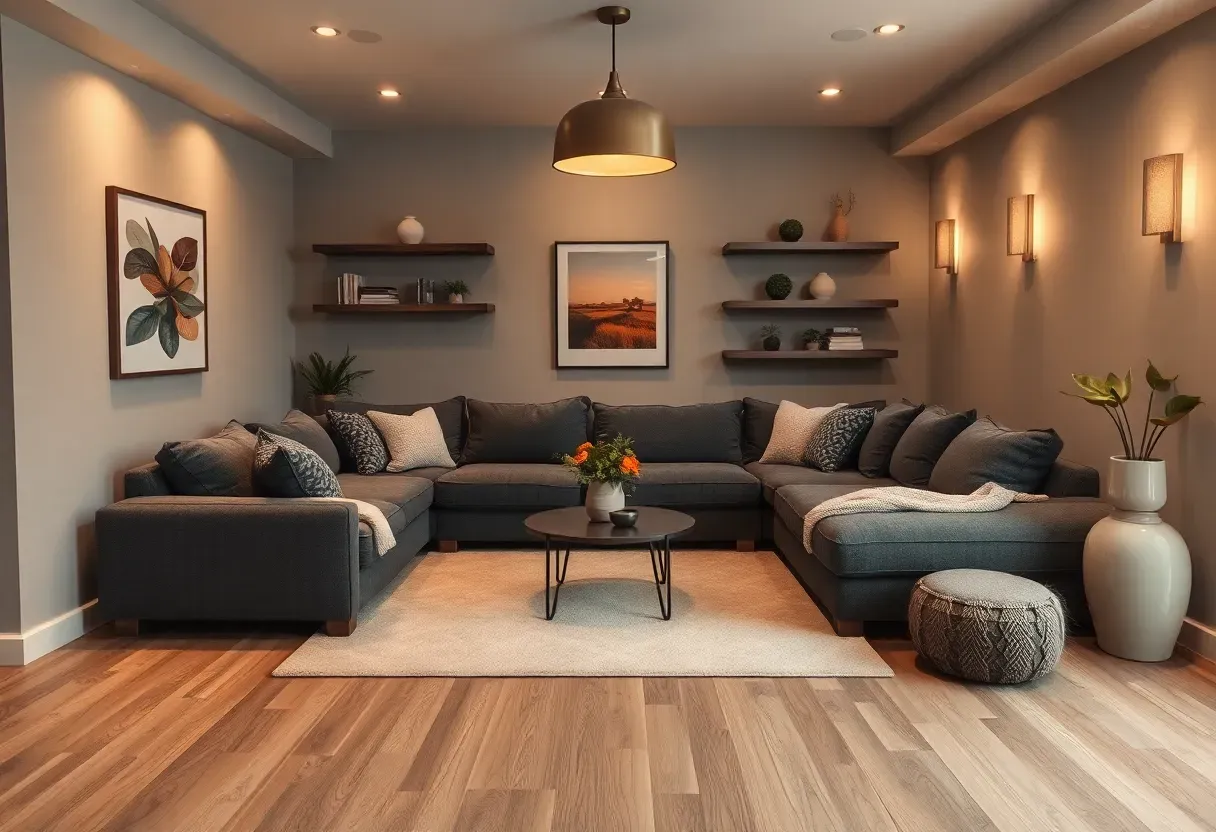
I spent two years ignoring my basement. It had bare walls, a single overhead light, and a couch I dragged down the stairs because it did not fit through the living room doorway anymore. Then I hung one piece of art, swapped the bulb for something warmer, and tossed a rug on the concrete. Suddenly people wanted to hang out down there. That is how basement decorating works — small additions compound fast because you are starting from a blank canvas. These 23 ideas cover the specific decor pieces that make the biggest difference in below-grade rooms, from wall treatments to textiles to lighting details.
Each idea focuses on a single decor element you can add without major renovation. Start anywhere that catches your attention.
Table of Contents
- Oversized Canvas Wall Art
- Layered Area Rugs
- Wall Sconce Lighting
- Decorative Ladder Shelf
- Trailing Plants on High Shelves
- Textured Throw Pillows
- Floor-to-Ceiling Curtains
- Woven Basket Collection
- LED Strip Accent Lighting
- Framed Botanical Prints
- Chunky Knit Blankets
- Decorative Tray Styling
- Faux Brick Accent Wall
- Tall Floor Vases
- Pendant Light Over Seating
- Floating Picture Ledges
- Moroccan-Style Pouf Seating
- Decorative Wall Clock
- Stacked Book Displays
- Ceramic Table Lamps
- Woven Wall Tapestry
- Corner Plant Stand Arrangement
- Decorative Mirror Grouping
1. Oversized Canvas Wall Art
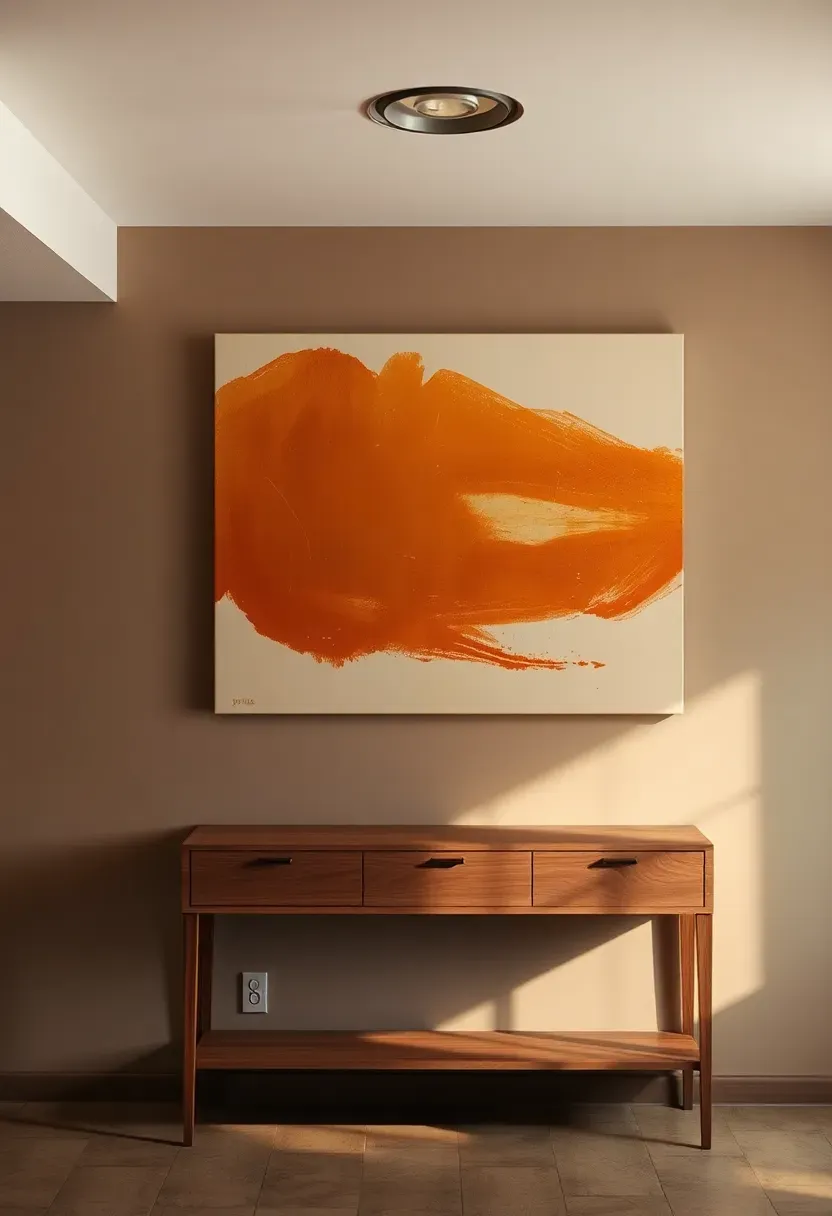
A single large canvas — 36x48 inches or bigger — does more for a basement wall than a cluster of small frames. The scale reads as intentional and gives the room a focal point that pulls attention away from low ceilings or lack of windows. Abstract pieces in warm earth tones (terracotta, olive, ochre) work well because they add color without competing with your furniture. Mount the center of the canvas at 57 inches from the floor, which is standard gallery height and feels right even with 7-foot ceilings.
Tips
- Canvas is lighter than framed glass, which matters when mounting on concrete block — a single masonry anchor handles it
- Avoid glossy prints in windowless basements because they reflect overhead light as a glare spot
- Lean an oversized canvas on a console table if you want a more casual, changeable look
We picked a few things that go well with this idea: Oversized Neutral Abstract Canvas Art (40x40) (★5.0), Minimalist Earth Tone Canvas Art (30x30) (★4.0) and YETHEN Textured Earth Tone Canvas (24x48) (★5.0). As an Amazon Associate we earn from qualifying purchases.
2. Layered Area Rugs
Why layering beats a single rug
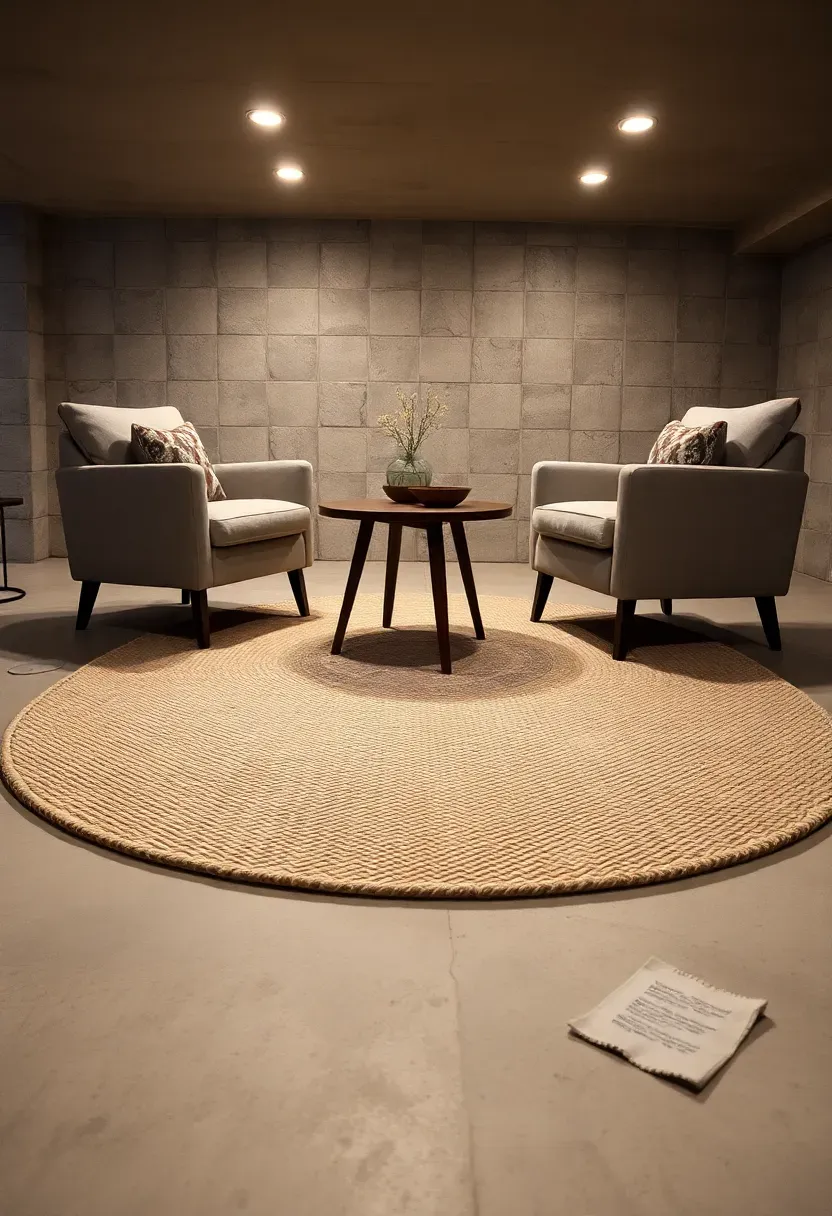
One rug defines a zone. Two rugs overlapping at different angles create depth, texture, and the impression that the room has been curated over time rather than furnished in a single trip to HomeGoods. Start with a large neutral base rug (8x10 minimum for seating areas) in a flatweave or sisal-look synthetic. Layer a smaller vintage-style rug on top, offset at a slight angle so both patterns show. The combination covers cold concrete, dampens echo, and introduces color without painting a single wall.
Pros and cons
- Pro: Lets you mix price points — an inexpensive base rug with a nicer accent rug on top
- Pro: Easy to swap the top rug seasonally or when your taste changes
- Con: Use rug tape between layers to prevent shifting, especially on smooth concrete
We picked a few things that go well with this idea: Dimmable Gold Plug-In Wall Sconces (2-Pack) (★4.6), TRLIFE Brass Swing Arm Sconces (Set of 2) (★4.4) and TRLIFE Large Brass Dimmable Sconces (Set of 2) (★4.4). As an Amazon Associate we earn from qualifying purchases.
3. Wall Sconce Lighting
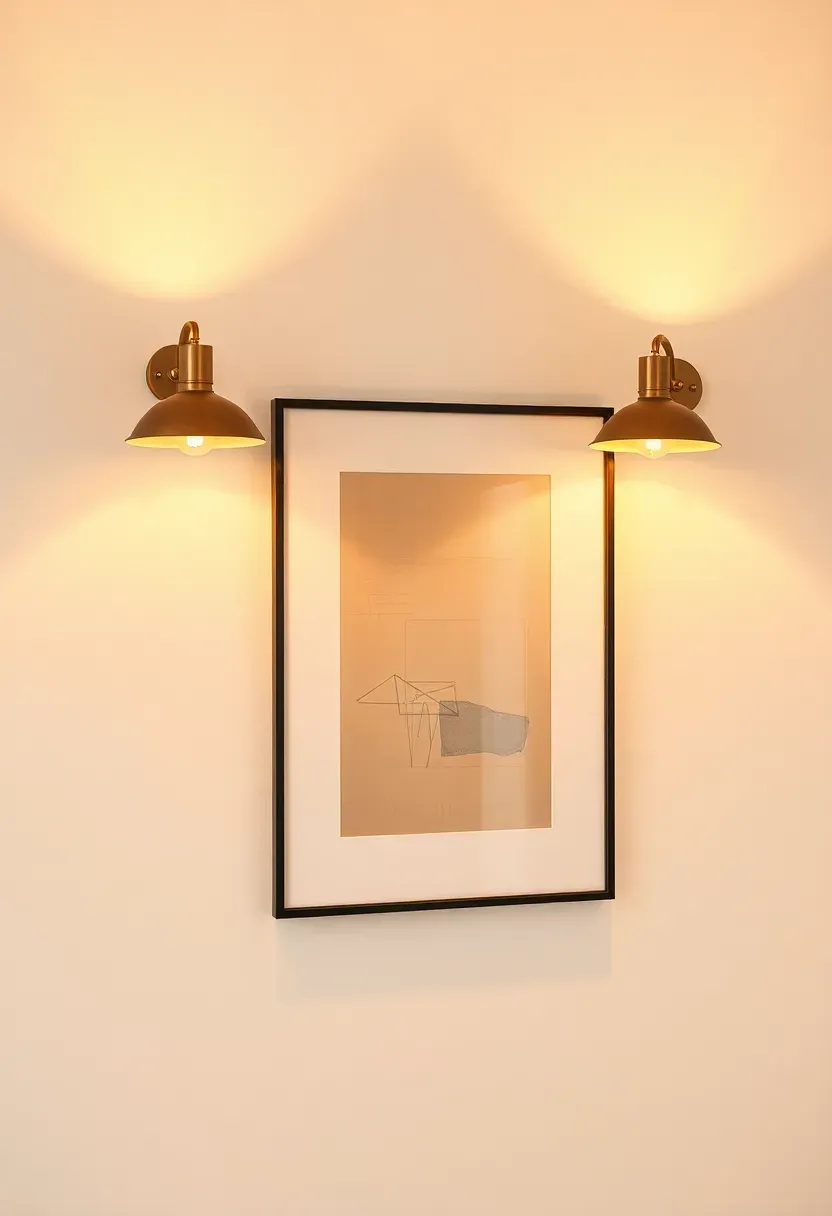
Wall sconces at eye level accomplish something recessed ceiling lights cannot: they create a sense of horizon. In a windowless basement, your brain misses the horizontal band of light that windows normally provide. Mounting sconces 60 to 66 inches from the floor on your longest wall fills that gap. Brass or matte black plug-in sconces are the practical choice since they avoid hardwiring into concrete block walls. Position them in pairs — flanking artwork, a mirror, or a sofa — for balanced light. Run the cords behind cord covers painted to match the wall color.
Tips
- Choose sconces with 2700K bulbs on dimmers for the warmest, most adjustable output
- Uplighting sconces bounce light off the ceiling and make low rooms feel taller
- Space pairs 48 to 60 inches apart depending on what they flank
We picked a few things that go well with this idea: Foindtower Chenille Textured Pillow Covers (Set of 2) (★4.7), Striped Boucle Boho Pillow Covers (Set of 2) (★4.6) and MIULEE Corduroy Patchwork Pillow Covers (Set of 2) (★4.6). As an Amazon Associate we earn from qualifying purchases.
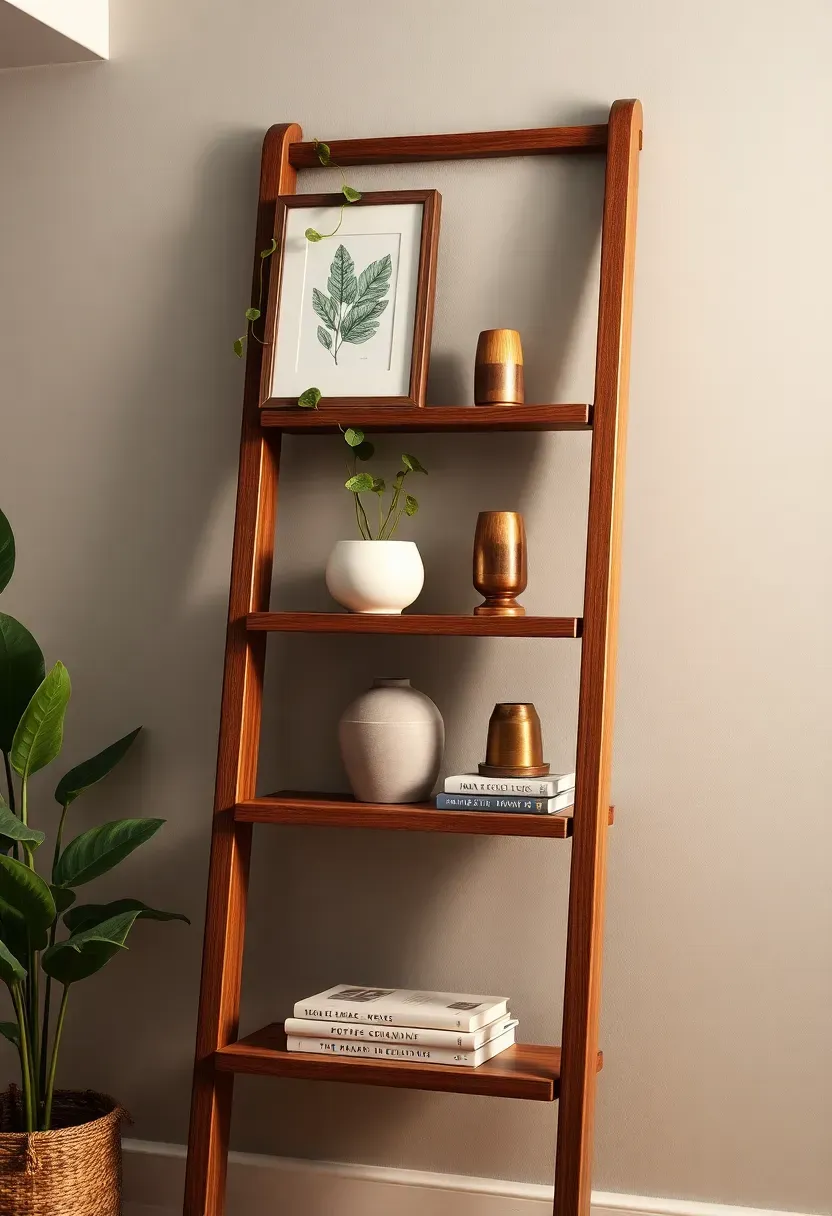
4. Decorative Ladder Shelf
A lighter alternative to bookcases
A leaning ladder shelf takes up about 18 inches of wall space and 12 inches of floor depth while giving you five tiers of display surface. In basements where floor space matters, that compact footprint is an advantage over traditional bookcases. The angled profile also draws the eye upward, which helps in rooms with lower ceilings. Wood ladder shelves in walnut or oak tones bring warmth to an otherwise cool underground room.
How to style it
- Place the heaviest items on the bottom two shelves for stability
- Mix materials across tiers — a ceramic pot, a framed print, a brass object, a small trailing plant
- Leave the top shelf spare with just one or two items so it does not look like a cluttered bookstore
Watch out for
- Secure the top of the ladder to the wall with an L-bracket — it will slide forward otherwise
- Avoid placing near dehumidifier exhaust, which can dry out and crack wooden shelves
Recommended
Items for this idea
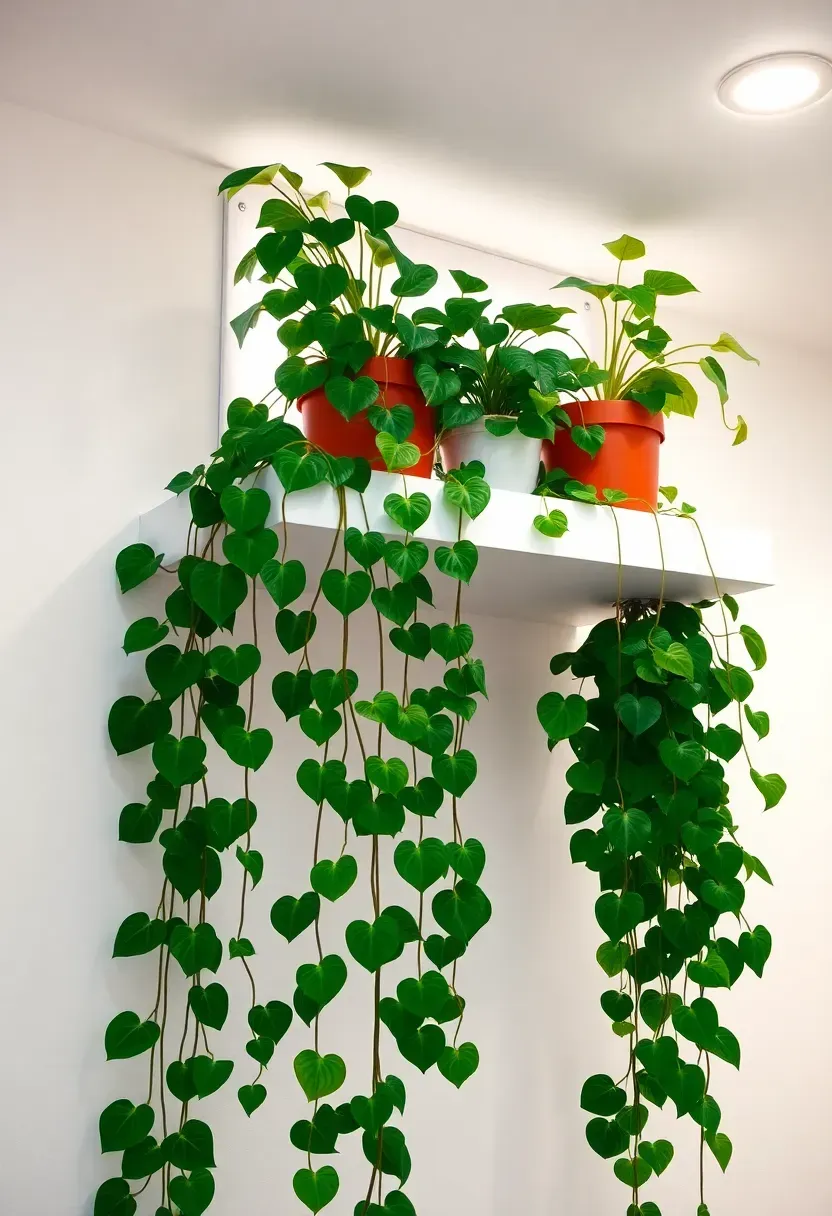
5. Trailing Plants on High Shelves
Mounting a shelf near the ceiling (8 to 12 inches below) and lining it with trailing plants — pothos, string of hearts, tradescantia — creates a band of greenery that softens hard ceiling lines. The trails grow downward over weeks and eventually frame the wall like a living curtain. This approach keeps plants out of the way and uses vertical space that would otherwise sit empty. The catch in basements is light: mount a slim LED grow bar behind the shelf lip, pointed at the pots. Set it on a timer for 12 hours daily. Pothos and philodendrons tolerate the low ambient light between cycles.
Tips
- Use lightweight plastic pots with saucers to avoid water damage to the shelf
- Rotate pots monthly so growth stays even
- Wipe leaves every two weeks — basement dust settles on foliage faster than you expect
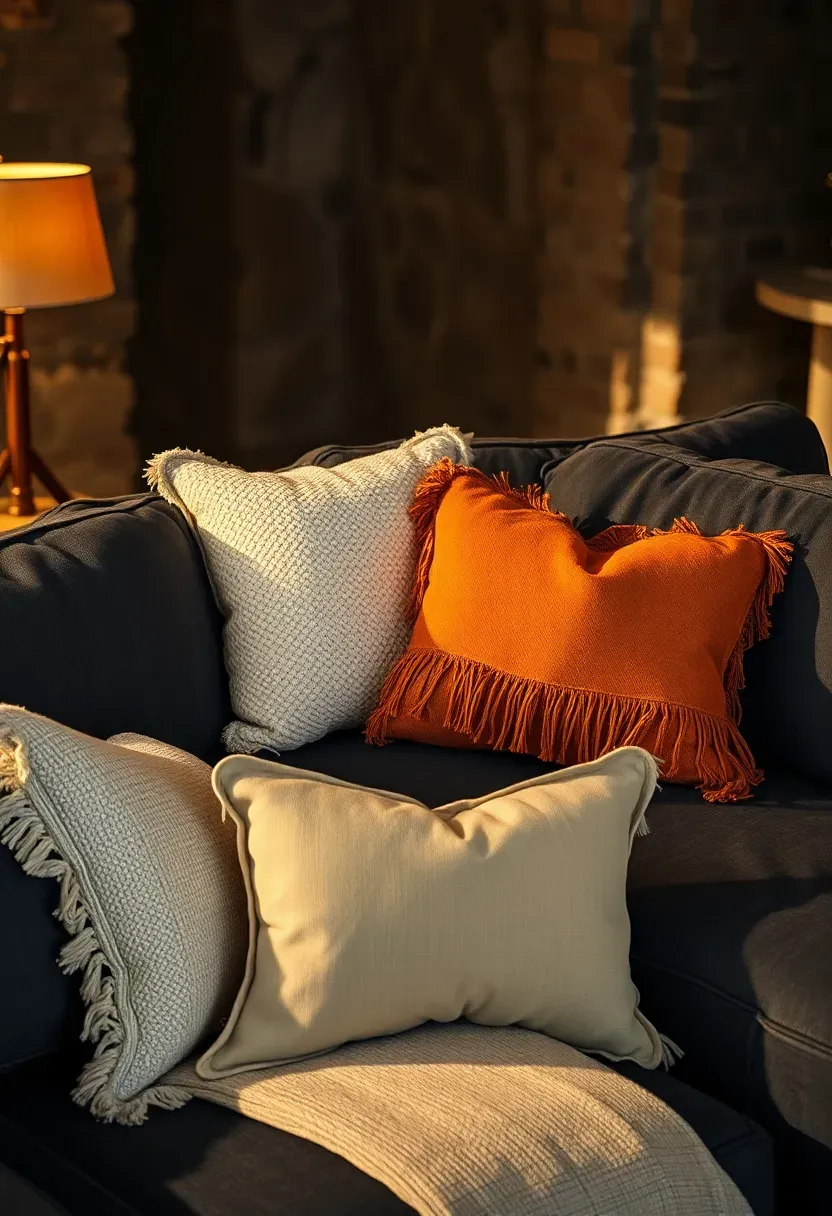
6. Textured Throw Pillows
Throw pillows are the fastest decor swap in any room, but they matter more in basements where you typically have fewer surfaces carrying color and pattern. A set of four to five pillows in mixed textures — one bouclé, one linen, one velvet, one with embroidery or fringe — adds dimension that solid fabric alone cannot. Stick to a three-color palette pulled from your rug or art. In basements, warm tones like mustard, burnt orange, terracotta, and cream fight the cool underground temperature both visually and literally.
Tips
- Buy pillow covers separately from inserts — down-alternative inserts in 20x20 and 22x22 sizes hold their shape better than polyester fill
- Vary sizes: two 22-inch, two 20-inch, and one lumbar pillow per sofa section
- Wash covers quarterly since basement humidity can make fabrics feel stale faster
Recommended
Items for this idea
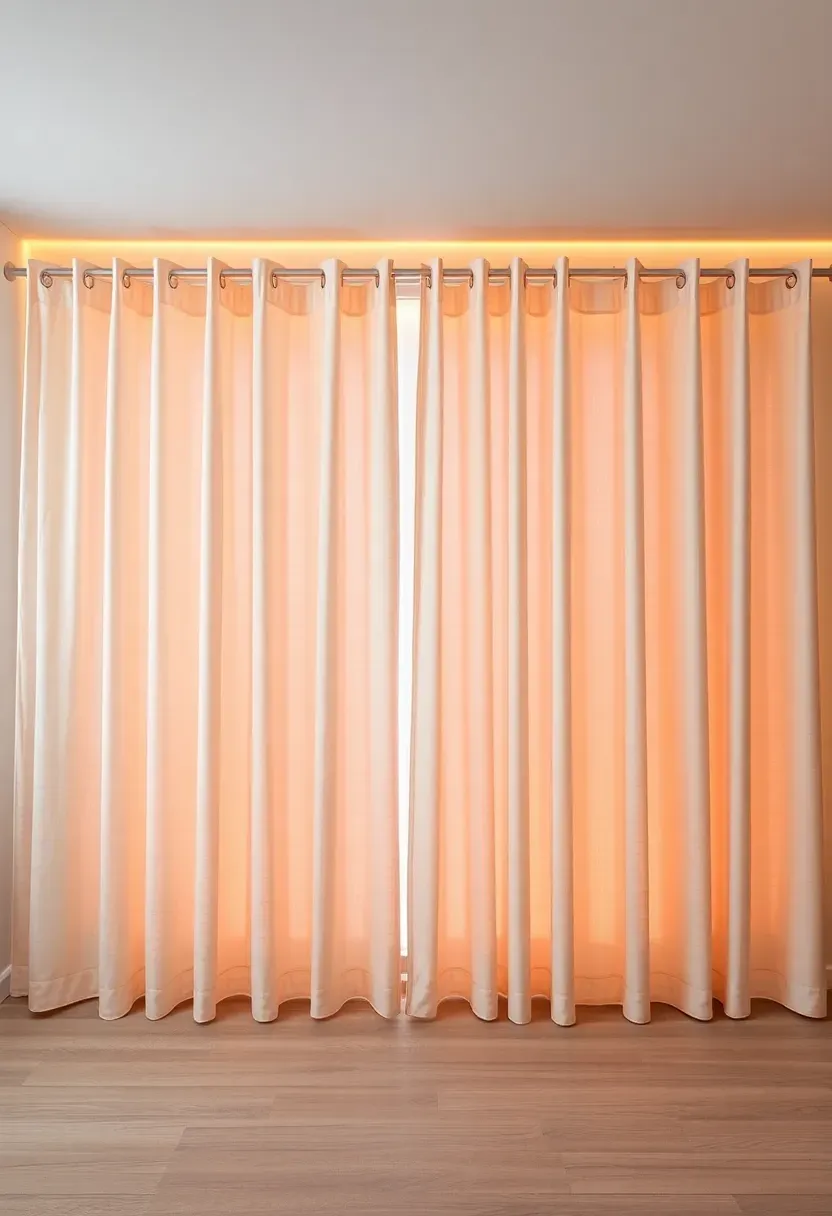
7. Floor-to-Ceiling Curtains
Not just for windows
Curtains in a windowless room sound odd until you see the effect. Hanging floor-to-ceiling panels along a full wall — even one with no window behind it — adds softness, absorbs sound, and creates the subconscious impression of a window wall. Use a ceiling-mounted track (hospital-style tracks from RoomDividersNow work well) and heavyweight linen or cotton-blend panels in an off-white or light gray. The fabric should puddle 1/2 inch on the floor for a finished look. Backlight the curtain wall with a warm LED strip along the ceiling track to simulate the glow of diffused daylight.
Choose curtains if
- Your basement walls are unfinished concrete or block and you want to cover them without construction
- You need sound dampening in an open-plan layout
- You want to zone the space — pull curtains closed to separate a sleeping area from a lounge
8. Woven Basket Collection
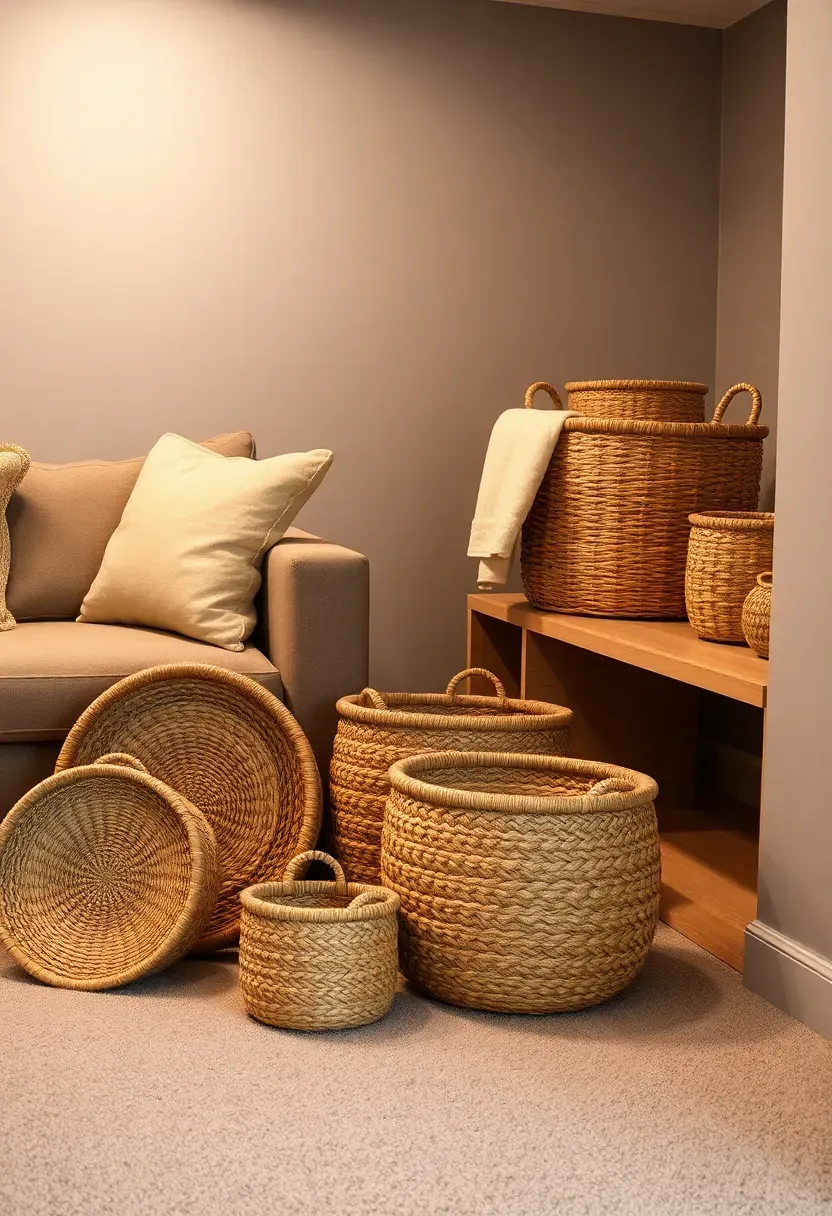
Baskets handle the intersection of storage and decor better than almost anything else in a basement. A cluster of woven seagrass or rattan baskets in graduated sizes contains blankets, remotes, game controllers, and kids' toys while adding organic texture to a space that tends toward hard, cool surfaces. Place large baskets on the floor beside furniture, medium ones on lower shelves, and small ones on console tables. The natural fiber tones — tan, honey, warm brown — complement both modern and traditional basement setups without requiring a specific color commitment.
Tips
- Line baskets with cotton bags if storing items that snag on woven fibers
- Spray baskets with a clear matte sealant to resist humidity-related softening
- Group baskets in odd numbers (three or five) for the most natural arrangement
Recommended
Items for this idea
9. LED Strip Accent Lighting
Small investment, outsized impact
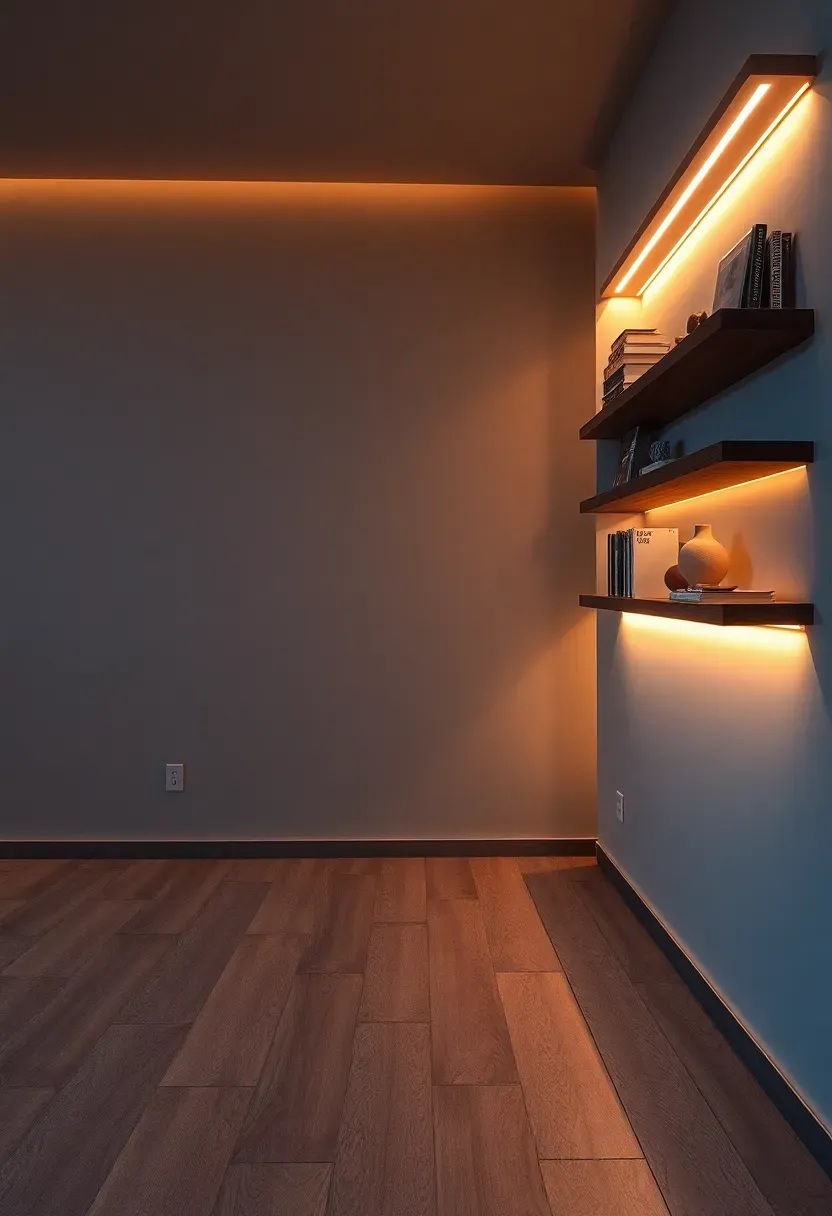
LED strips are the most cost-effective way to add atmosphere to a basement. A 16-foot roll costs $12 to $25, draws minimal power, and sticks to almost any surface with built-in adhesive backing. The placement determines the effect: behind shelving units for a gallery glow, along the base of walls for a floating floor illusion, under bar countertops for a lounge vibe, or along the top perimeter of the room to visually raise the ceiling.
Installation
- Clean the mounting surface with rubbing alcohol so the adhesive holds
- Use warm white (2700K) for living areas — RGB color-changing strips look dated fast
- Tuck the strip into aluminum channels with diffuser covers to eliminate visible LED dots
- Connect to a dimmer switch or smart plug so you can adjust intensity by time of day
Watch out for
- Cheap strips develop hot spots and uneven brightness within months — spend the extra $5 for a name brand like Philips Hue or Govee
10. Framed Botanical Prints
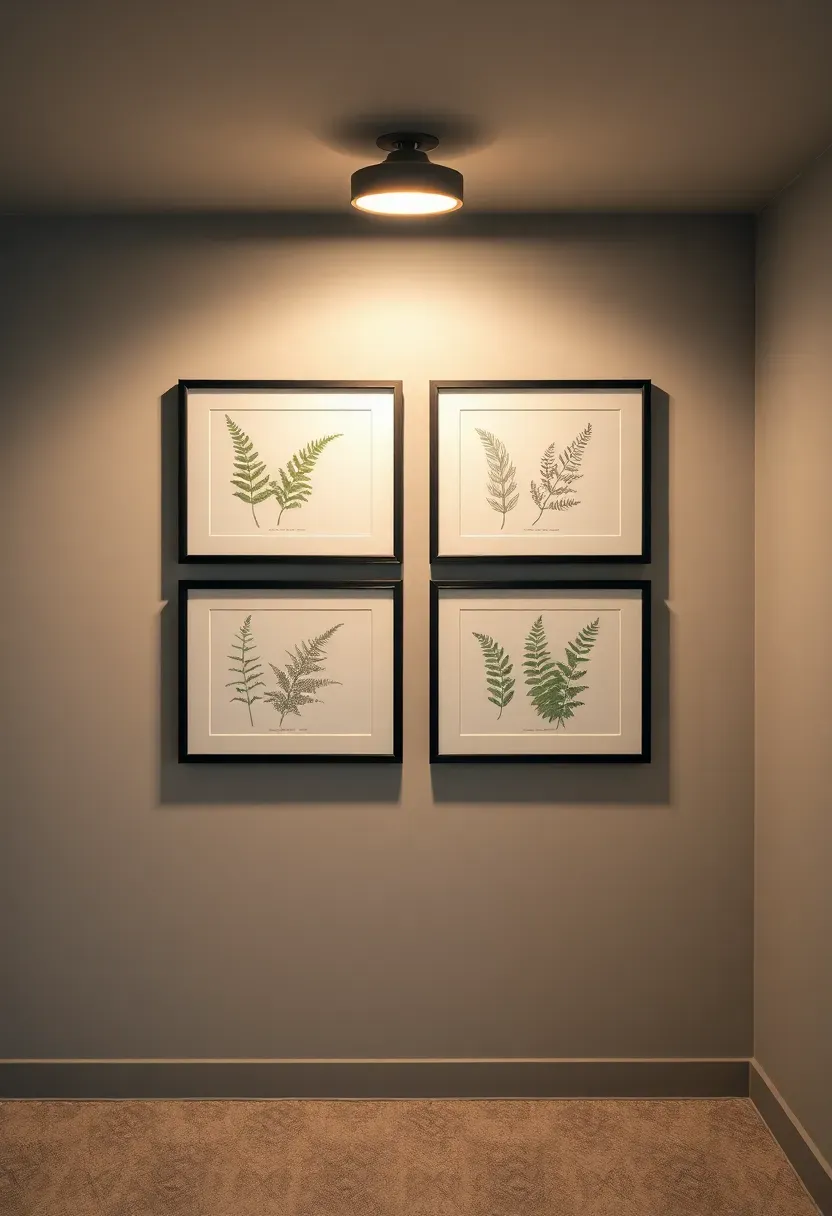
A grid of botanical prints — four, six, or nine matching frames in a tight arrangement — brings order and a touch of nature to basement walls that otherwise tend toward blank or cluttered. The uniformity of matching frames provides structure while the plant subjects add organic softness. Black frames on light walls or light wood frames on dark walls create the best contrast. Print quality matters: look for archival giclée prints on matte paper rather than glossy reproductions. Vintage botanical illustrations from 18th and 19th-century naturalists are available as high-resolution downloads from the Biodiversity Heritage Library for free.
Tips
- Standard frame sizes (8x10, 11x14, or 16x20) keep costs low since custom framing adds up fast
- Use UV-protective glass even in basements — fluorescent and LED light still fades prints over years
- Hang the grid as a single unit with 2-inch spacing between frames for the tightest, most polished look
Recommended
Items for this idea
11. Chunky Knit Blankets
Function meets texture
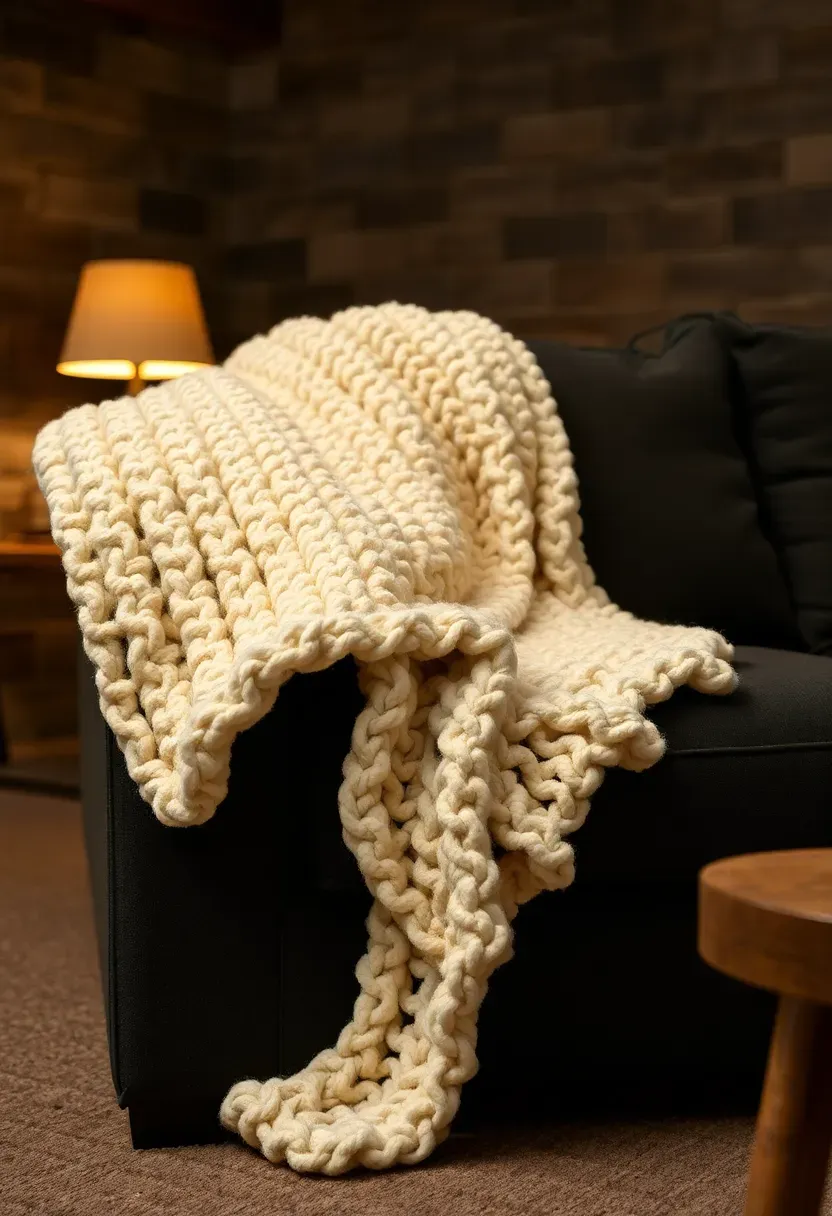
A thick, hand-knit or machine-knit blanket draped over a sofa arm or folded at the foot of a daybed adds a single texture that changes the feel of the entire seating area. Basements run 5 to 10 degrees cooler than upper floors, so blankets actually get used rather than just sitting there for looks. Chenille and acrylic knits in chunky gauge hold up better in basements than wool, which can absorb humidity and develop a musty smell. Neutral tones — cream, oatmeal, light gray — keep the look calm. One statement blanket per seating zone is enough.
Pros and cons
- Pro: Instantly makes a room feel intentionally cozy rather than unintentionally cold
- Pro: Machine-washable options from Bearaby or Pottery Barn last years
- Con: Pet hair clings to chunky knits — keep a lint roller nearby if you have animals
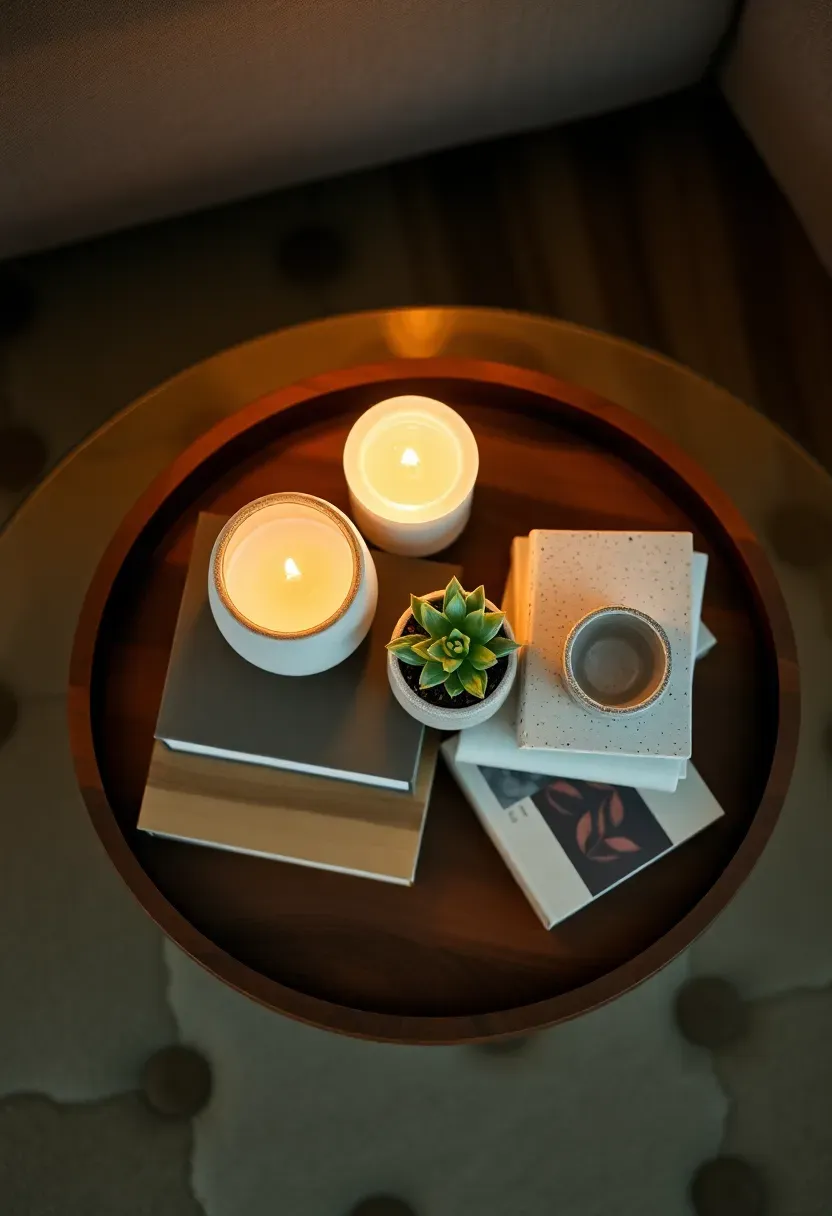
12. Decorative Tray Styling
A tray on a coffee table or ottoman corrals small items into a deliberate grouping that reads as decor instead of clutter. The tray itself — wood, marble, brass, woven — sets the material tone. Inside it, place three to five objects at varying heights: a candle, a small potted succulent, a stack of two books, and a ceramic bowl or sculptural object. This formula works because the tray creates a boundary that your eye interprets as a curated vignette. Without the tray, the same objects scattered across a table look like you forgot to clean up.
Tips
- Round trays on rectangular tables (and vice versa) create better visual contrast than matching shapes
- Rotate objects seasonally — swap candle scents, swap in a different small plant, change the top book
- Keep the tray no larger than two-thirds the width of the surface it sits on
Recommended
Items for this idea
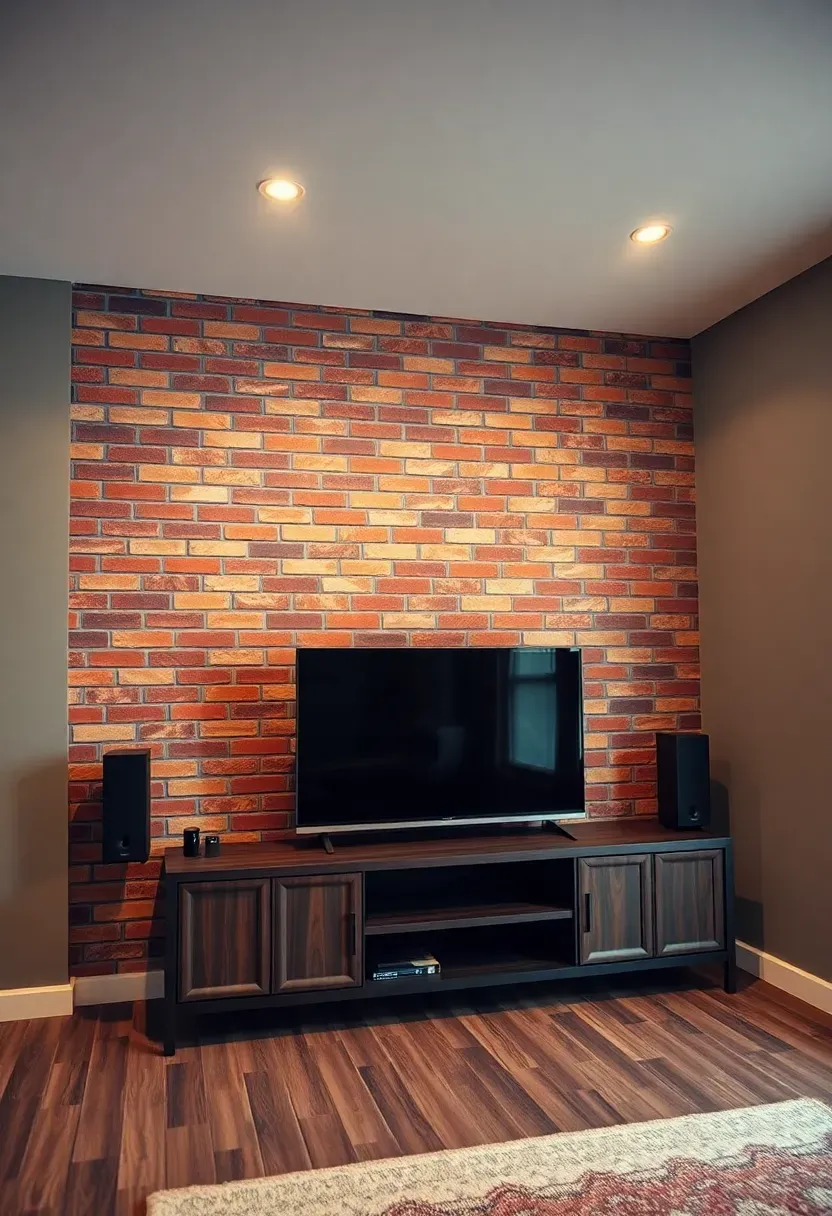
13. Faux Brick Accent Wall
A renter-friendly option
Real exposed brick is a renovation project. Faux brick panels — either peel-and-stick tiles or lightweight polyurethane panels — install in an afternoon and give you the same visual warmth without demolishing drywall or sealing actual masonry. Modern faux brick products from NextWall, Peel & Impress, and Art3d have enough dimensional texture to pass casual inspection. Apply them to one accent wall behind your media setup, bar area, or headboard. The warm red-brown tones of traditional brick counteract the cool, gray tendency of underground rooms.
Steps to install
- Clean the wall surface thoroughly — peel-and-stick products fail on dusty or damp surfaces
- Start from the bottom center of the wall and work outward so cuts are symmetrical at edges
- Use a utility knife to trim around outlets and switches
- Press each panel firmly with a J-roller for full adhesive contact
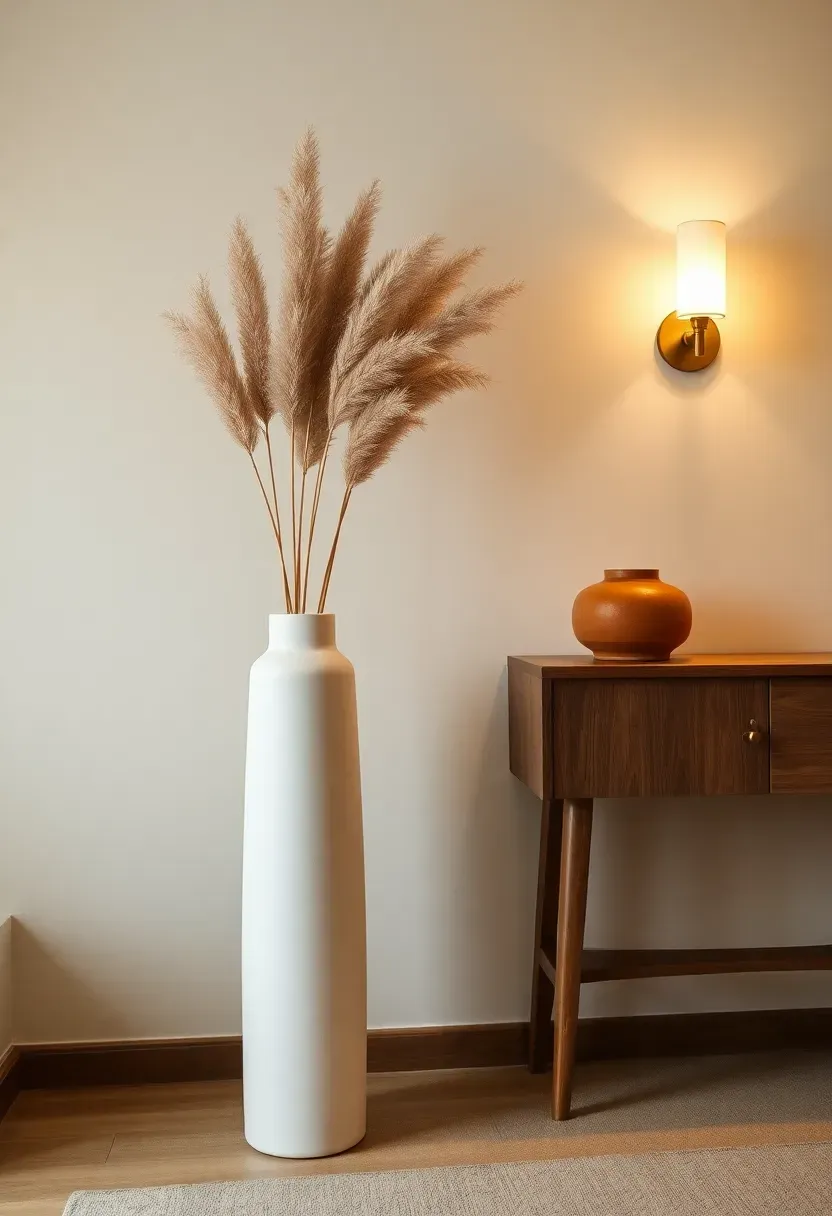
14. Tall Floor Vases
Floor vases between 24 and 36 inches tall fill vertical space that furniture misses. Place one or two beside a console table, in an empty corner, or flanking a media unit. They draw the eye upward and add sculptural presence without taking meaningful floor area. Matte ceramic in white, terracotta, or black works in most basement palettes. Fill them with dried pampas grass, tall branches, or leave them empty — an empty vase with an interesting shape is enough on its own. Avoid fresh flowers in basements since the lack of airflow accelerates wilting and water develops bacteria faster.
Tips
- Weight the base with sand or pebbles inside if the vase is lightweight and could tip
- Odd groupings (one tall, one medium) create more visual interest than matched pairs
- Stick to matte finishes — glossy ceramics show every fingerprint and water spot
Recommended
Items for this idea
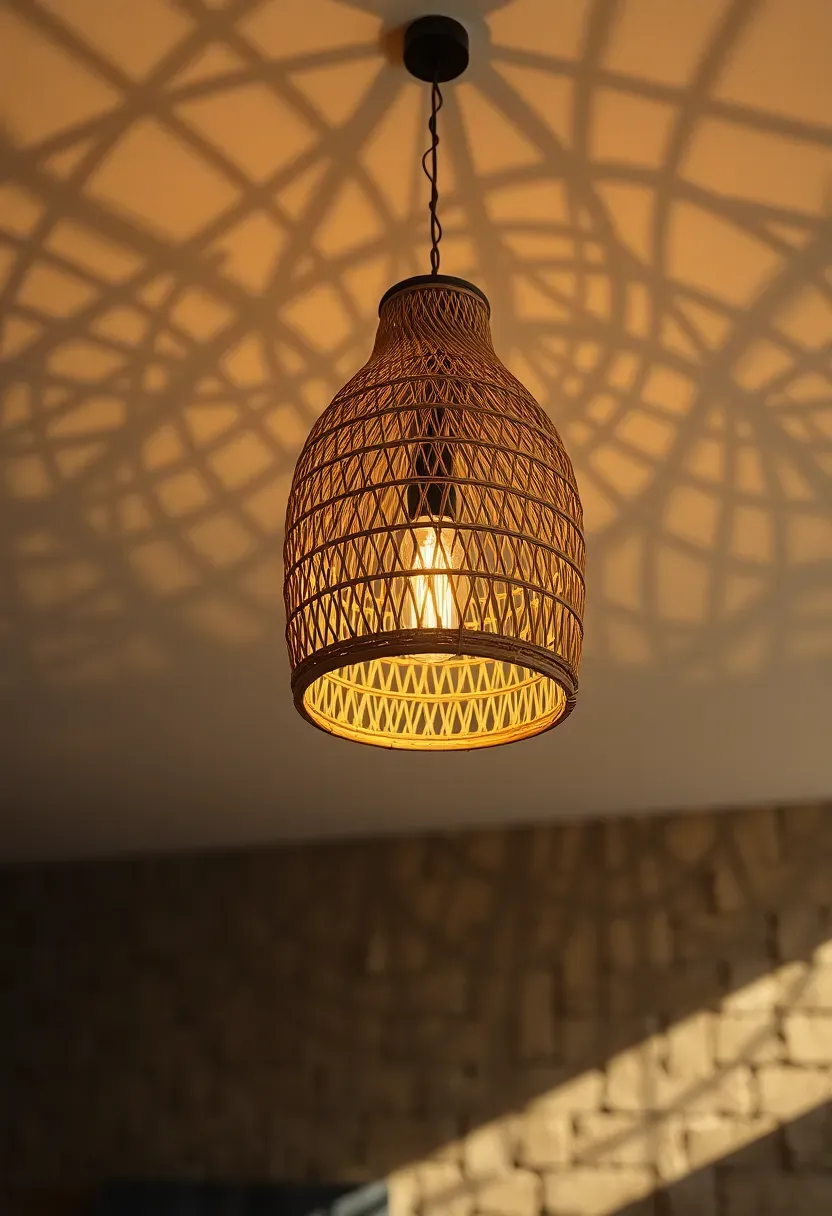
15. Pendant Light Over Seating
A pendant light hung over a specific zone — the coffee table area, a reading chair, or a game table — marks that spot as the center of the room. It is a wayfinding signal that says "gather here." In basements with 7 to 8 foot ceilings, choose pendants with a maximum 12-inch diameter and hang the bottom of the shade at 66 to 72 inches from the floor to avoid head clearance issues. Rattan, woven fiber, or perforated metal shades cast patterned shadows on the ceiling and walls, adding texture through light rather than objects. Plug-in pendants with swag hooks avoid the need for hardwiring.
Tips
- Install a ceiling hook rated for the pendant weight plus a safety margin — toggle bolts into drywall, tapcons into concrete
- Use a filament LED bulb (4W to 6W) for warm, visible glow without excessive brightness
- Pair the pendant with existing recessed lights on a separate dimmer so you control ambiance by zone
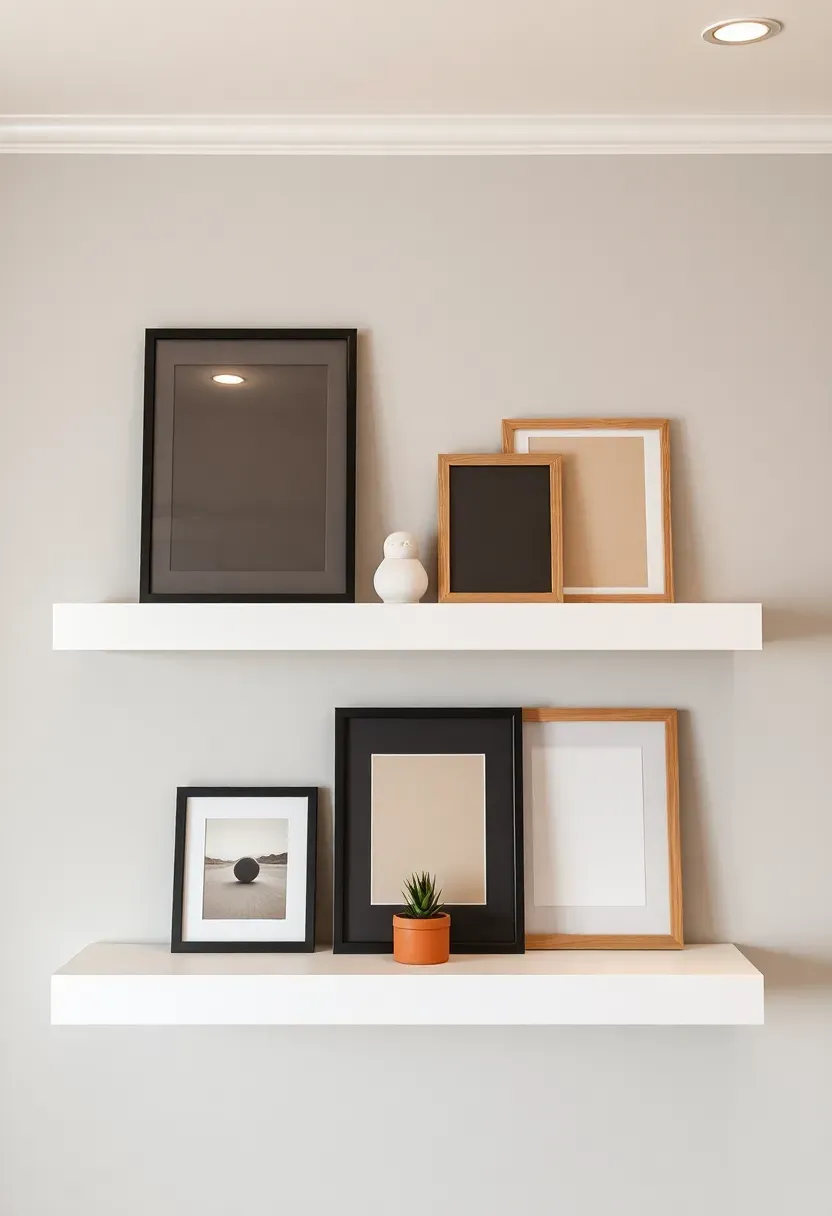
16. Floating Picture Ledges
Flexible art display without commitment
Picture ledges — narrow shelves with a front lip — let you lean frames, postcards, and small objects without putting holes in the wall for each piece. Install two or three ledges at staggered heights on a single wall, then arrange frames overlapping slightly for a relaxed, layered look. Swap pieces whenever you want since nothing is permanently mounted. IKEA's Mosslanda ledge ($10 for a 45-inch length) is the standard budget option. Paint it to match your wall color so the ledge disappears and the art takes focus.
How to style it
- Start with the largest frame centered on each ledge as an anchor
- Overlap smaller frames in front, leaning at slight angles
- Tuck in non-frame objects — a small plant, a postcard, a ceramic figure — to break up the row of rectangles
Recommended
Items for this idea
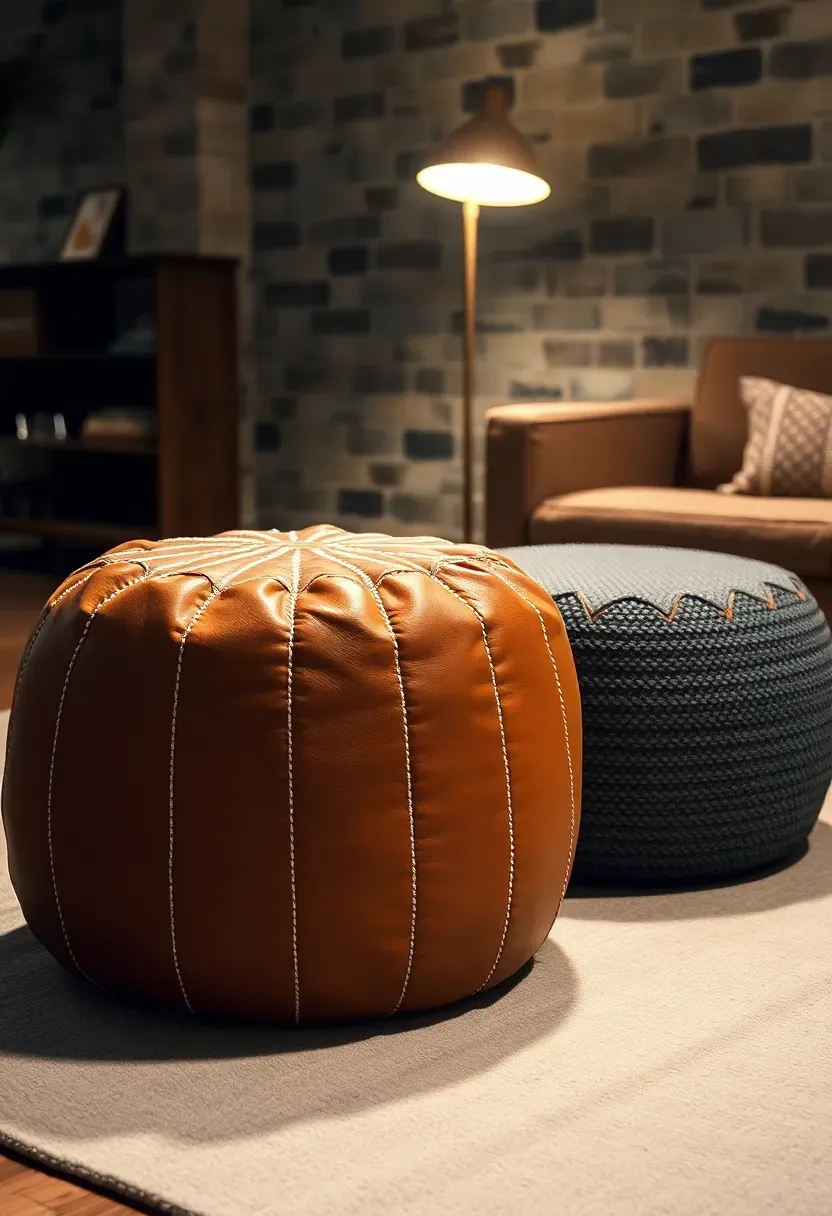
17. Moroccan-Style Pouf Seating
Poufs solve the extra-seating problem without the bulk of additional chairs. A leather or woven pouf tucked under a console table or beside a coffee table takes up minimal space until someone needs a seat, a footrest, or a surface for a drink. Moroccan-style poufs in genuine or faux leather develop a nice patina over time and hold up in basement conditions better than fabric poufs that absorb humidity. They come pre-stuffed or as covers you fill with old blankets and clothing — the DIY route saves money and repurposes textiles. One or two poufs per seating group is the right density.
Tips
- Genuine leather poufs need occasional conditioning in dry basement environments to prevent cracking
- Place a furniture pad underneath to prevent dye transfer to carpet or vinyl flooring
- 18-inch diameter is the most versatile size — large enough to sit on, small enough to tuck away
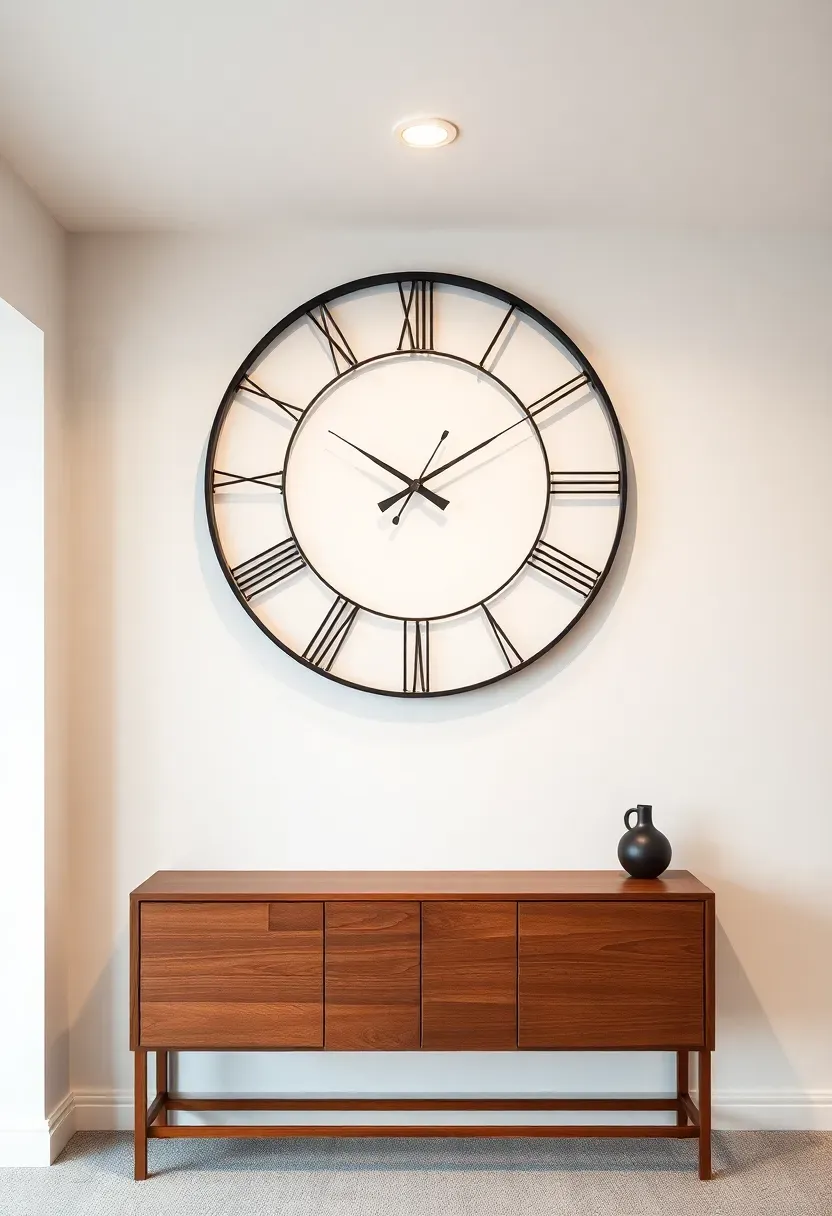
18. Decorative Wall Clock
Practical decor for a windowless room
In a basement without windows, you lose all sense of time passing. A wall clock is genuinely functional decor — not just decorative filler. Choose one with a face diameter of 20 to 30 inches so it reads clearly from across the room. Minimalist metal-frame clocks with open faces (no lens) in black or brass suit modern basements. Vintage-style station clocks work for traditional spaces. Mount it on the wall you face most often from primary seating.
Pros and cons
- Pro: Fills a large wall area with a single piece that has actual daily utility
- Pro: Available at every price point from $25 (Target, IKEA) to $200+ (West Elm, Pottery Barn)
- Con: Ticking mechanisms annoy some people — choose a silent quartz movement if noise sensitivity is a concern
Recommended
Items for this idea
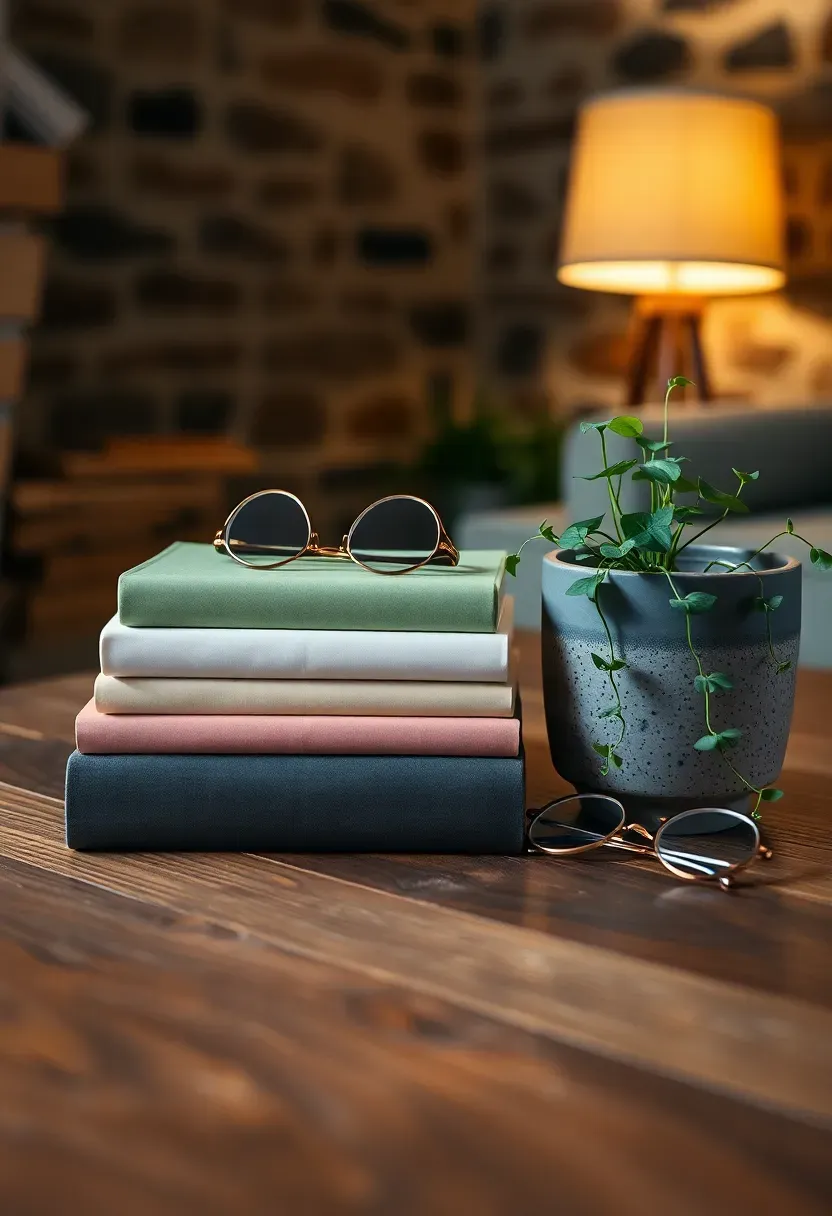
19. Stacked Book Displays
Books are overlooked as decor, which is odd given how well they work. A stack of three to four hardcovers on a coffee table, console, or shelf adds color, height, and personality for almost no cost. Pull from your own collection or source vintage books from thrift stores based on spine color rather than content. Stack them horizontally with the largest on the bottom. Place a small object on top — a brass figurine, a crystal, a tiny pot — to cap the composition. Scatter two or three stacks across the room at different heights for a collected, lived-in feel.
Tips
- Remove dust jackets if the hardcover underneath has a better color or texture
- Alternate stack orientations: some horizontal, some vertical, to avoid repetition
- Coffee table books about photography, architecture, and travel double as actual reading material for guests
20. Ceramic Table Lamps
Better light, better look
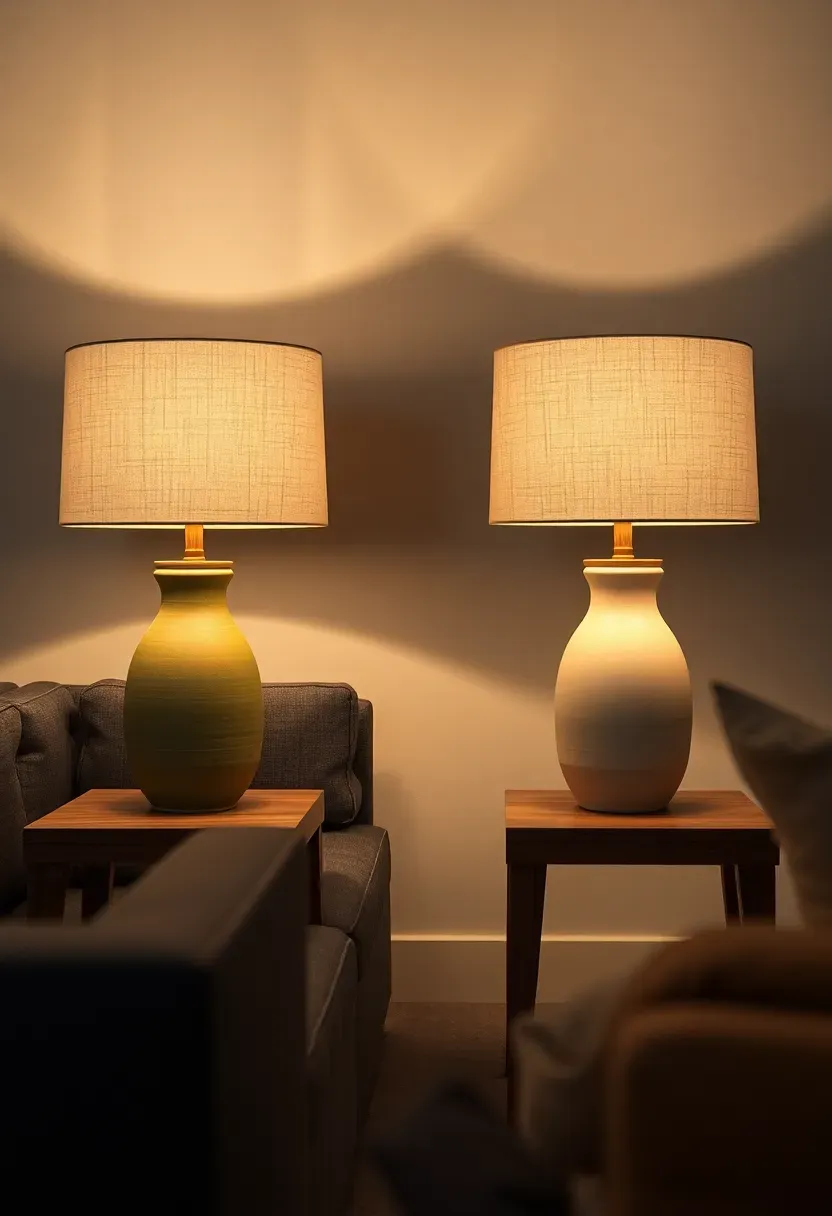
Table lamps on side tables or consoles add mid-level light that ceiling fixtures and floor lamps miss. The pool of light a table lamp casts creates an intimate circle around seating — read by it, talk beside it, or let it glow in the background while the overhead stays off. Ceramic bases in solid colors (white, navy, olive, terracotta) bring weight and material interest. Pair them with linen or fabric drum shades that diffuse light softly rather than directing it downward. In basements, lamps do the job that windows do upstairs: they make corners feel inhabited.
How to choose
- The base should be proportional to the table — a lamp that is taller than 1.5x the table height looks top-heavy
- Match shade color to your dominant neutral (white shade for light rooms, cream or oatmeal for warm rooms)
- Use 2700K LED bulbs rated at 800 lumens for reading-level brightness without harshness
Recommended
Items for this idea
21. Woven Wall Tapestry
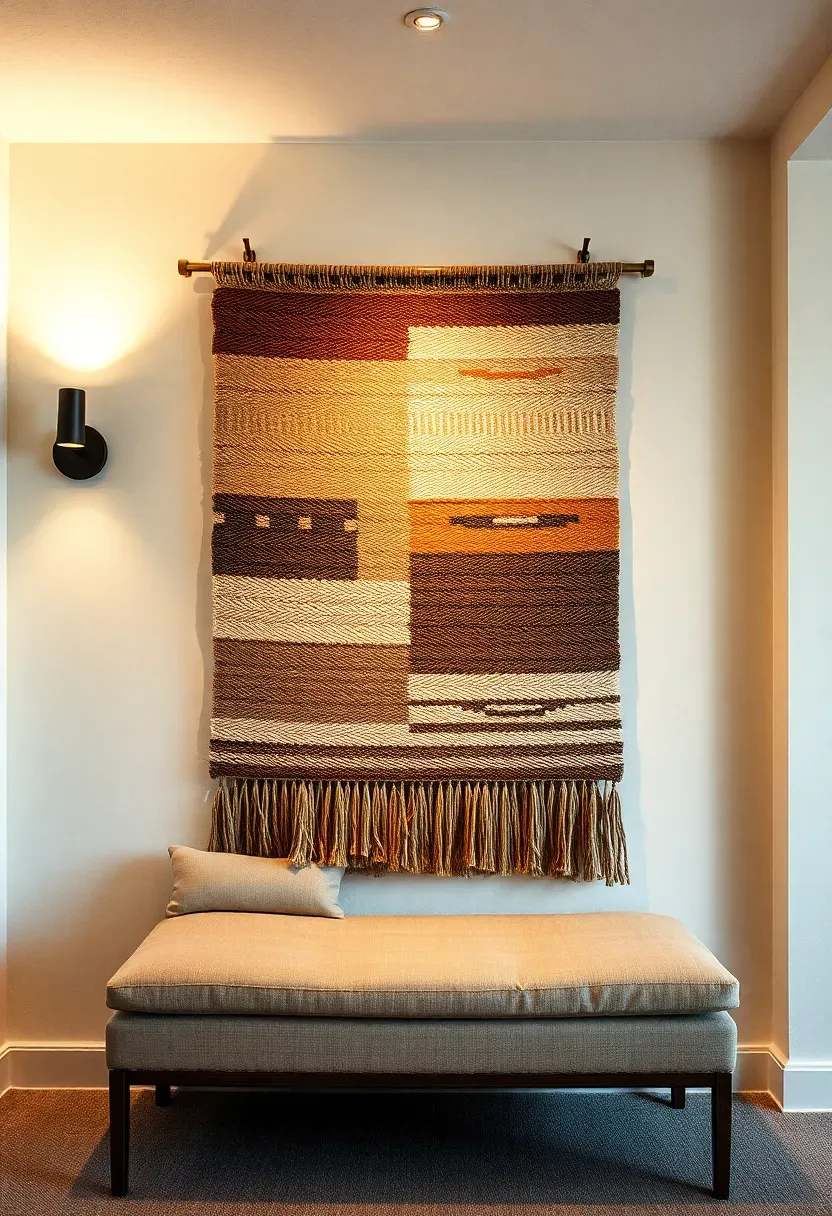
A textile wall hanging in a windowless room accomplishes three things at once: it absorbs sound that would bounce off hard surfaces, it introduces pattern and color on a large scale, and it softens the visual hardness of drywall or concrete. Look for handwoven pieces in wool-blend or cotton-poly fabrics — avoid pure cotton in basements since it absorbs moisture. Mount the tapestry on a wooden dowel or brass rod using two hooks spaced evenly. Size matters: go at least 36 inches wide for impact above a sofa or bed. Smaller pieces get lost on basement walls where proportions already feel off.
Tips
- Keep the tapestry 1 inch away from the wall using spacer washers behind the hooks for air circulation
- Earthy palettes (clay, sage, sand, charcoal) ground the room without overwhelming it
- Pair with one or two matching throw pillow fabrics to tie the wall piece into the rest of the room
22. Corner Plant Stand Arrangement
Turning dead corners into green focal points
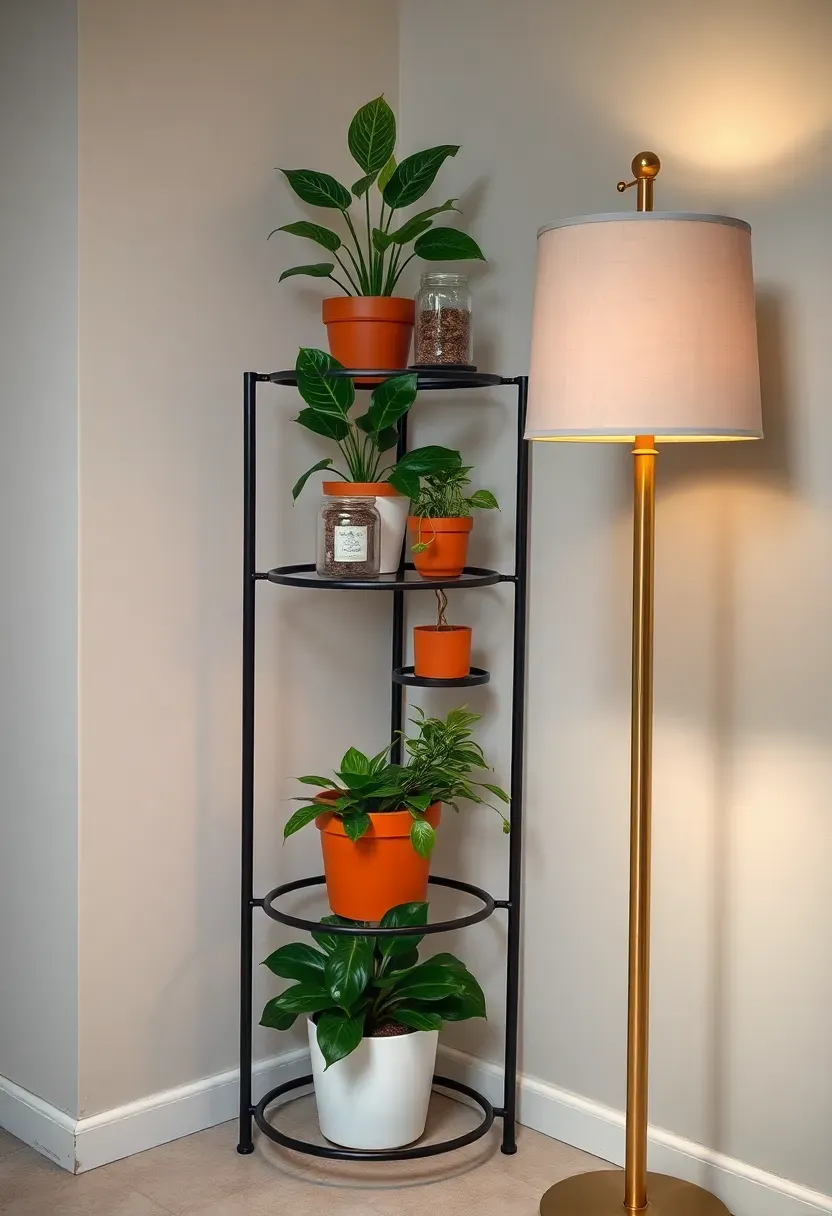
Every basement has at least one corner where furniture does not fit and nothing happens. A tiered metal or wooden plant stand fills that dead zone with living decor at multiple heights. Choose a stand with three to five tiers and populate it with a mix of plant sizes: a bushy fern or peace lily on the bottom tier, smaller pots of pothos cuttings and succulents on upper levels. Position a floor lamp or clip-on grow light nearby to supply the supplemental light these plants need underground.
Plant picks for basement corners
- Peace lily: tolerates low light, signals when it needs water by drooping
- ZZ plant: goes weeks without water, handles fluorescent-only environments
- Bird's nest fern: thrives in the humidity that basements naturally provide
- Pothos cuttings in water: zero soil, zero mess, roots visible in glass jars for added visual interest
Recommended
Items for this idea
23. Decorative Mirror Grouping
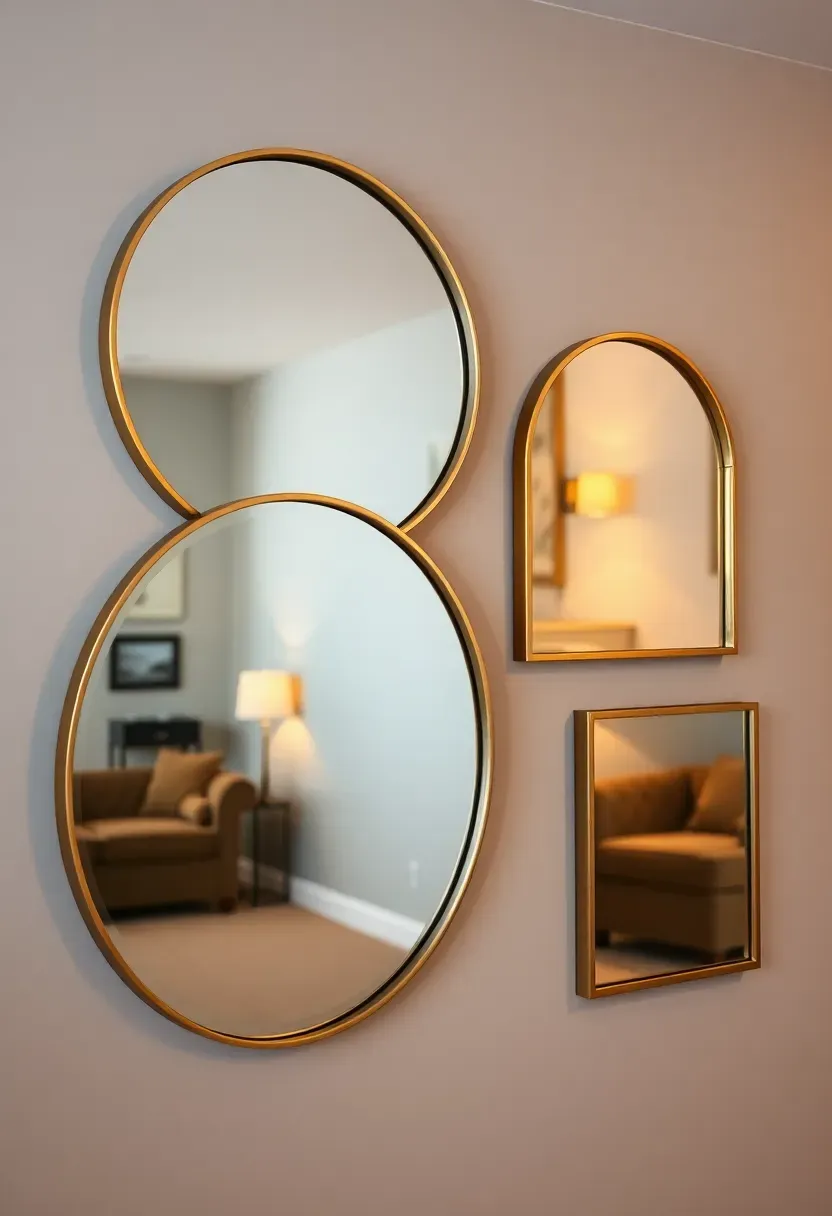
Mirrors appear on every "brighten a dark room" list for good reason — they bounce whatever light exists back into the space and create the illusion of depth on flat walls. But a single mirror can feel utilitarian. Grouping three mirrors of different shapes and sizes on one wall turns them into a decorative installation. Mix a large round mirror with a smaller arched one and a rectangular accent mirror. Keep frames in the same finish family (all brass, all black, or all natural wood) so the group reads as intentional. Position the grouping opposite your primary light source for maximum reflection.
Tips
- The largest mirror should be at least 24 inches in diameter to anchor the group
- Arrange them on the floor first, photograph the layout, then transfer to the wall
- Avoid placing mirrors where they reflect ceiling fixtures directly — the glare is harsh
Quick FAQ
Where should I start when decorating a basement on a budget? Lighting and one large rug. These two changes shift the entire feel of the room for under $200 combined. Plug-in wall sconces ($30 to $50 each) plus a warm LED strip ($15) replace the single overhead bulb problem. A large area rug ($80 to $150 for a synthetic 8x10) covers cold flooring and anchors your furniture into a real room.
Do plants actually survive in basements? Certain species do well with supplemental light. Pothos, snake plants, ZZ plants, and peace lilies tolerate the low ambient light between grow lamp cycles. Mount a full-spectrum LED bar on a 12-hour timer and most low-light houseplants will grow steadily. Avoid sun-loving plants like succulents or fiddle leaf figs unless you invest in serious grow lighting.
How many decor pieces does a basement need before it looks finished? Less than you think. A decorated basement needs four categories covered: something on the walls (art, mirrors, or a tapestry), something on the floor (a rug), light at three different heights (ceiling, wall, table), and textiles on seating (pillows and a blanket). Once those four are in place, the room reads as intentionally designed. Everything beyond that is refinement.
Will basement humidity damage my decor? It can if you ignore it. Run a dehumidifier to keep relative humidity between 30% and 50%. Choose synthetic rug fibers over natural jute or sisal. Use mildew-resistant fabrics for pillows and curtains. Keep furniture and wall hangings slightly away from walls so air circulates behind them. With these precautions, standard home decor holds up fine.
Can I decorate a basement with unfinished walls? Yes, and it can actually look good. Hang curtain panels from ceiling tracks to cover concrete or block walls. Use freestanding shelving units instead of wall-mounted ones. Lean large art against walls rather than mounting into masonry. Lay area rugs directly on sealed concrete. The key is treating unfinished surfaces as a backdrop rather than a problem to hide.
Start with whatever catches your eye, but if you want a sequence that builds logically: lighting first, then rugs, then wall decor, then textiles, then accent pieces. Each layer builds on the previous one, and you will notice the room feeling different after just two or three additions. The goal is not to fill every surface — it is to make the basement feel like a room someone chose to decorate rather than a space that happened to accumulate stuff.
Pinterest cover for 23 Basement Decor Ideas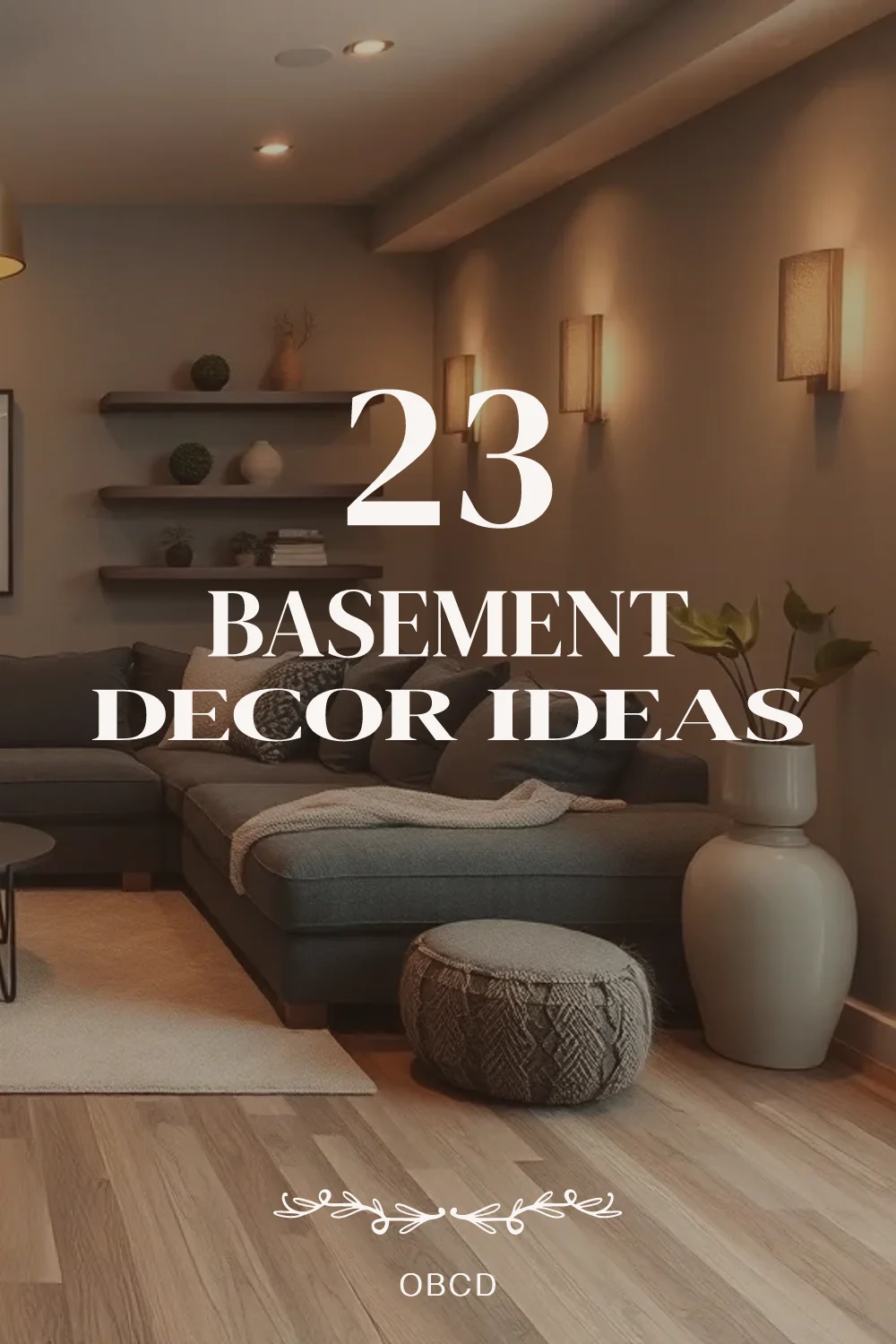
About the author
OBCD
CGI visualization and interior design content. We create detailed 3D renders and curate practical design ideas for every room in your home.