21 Basement Door Ideas
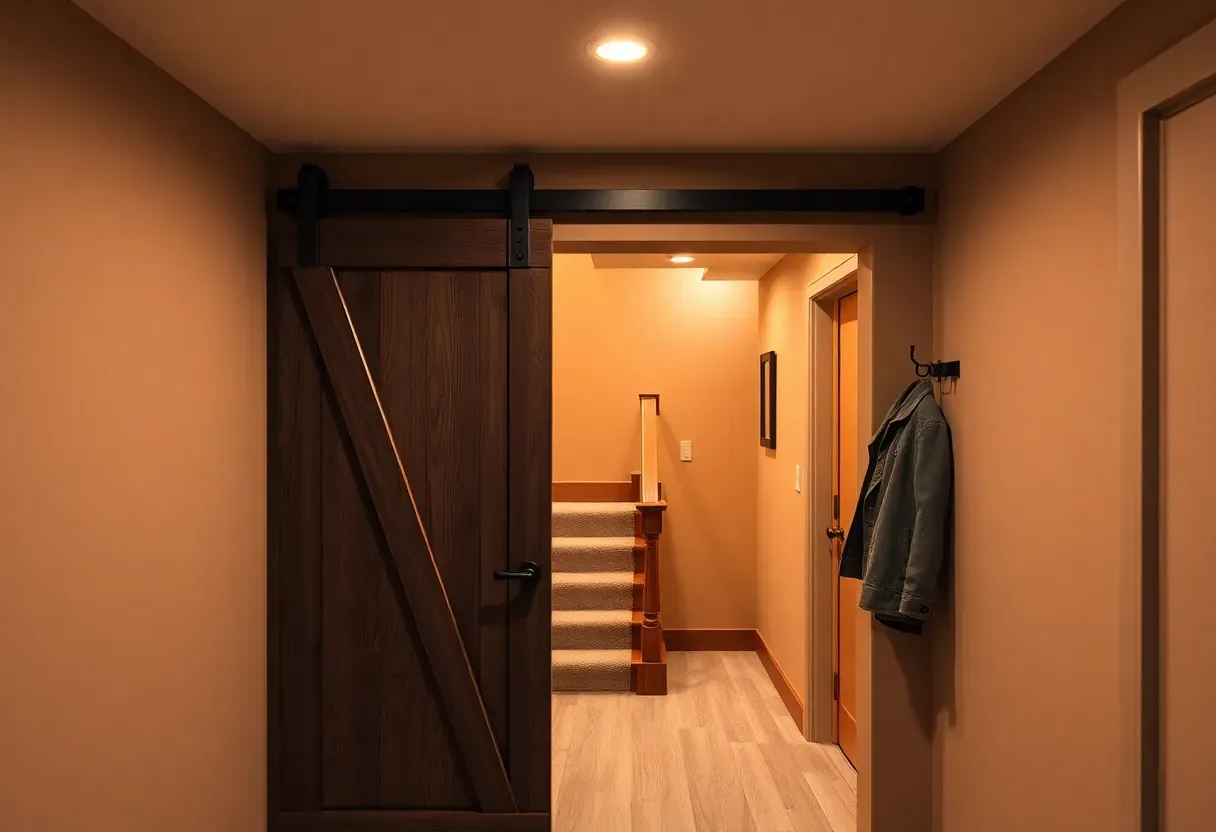
The door to your basement does more work than you probably give it credit for. It blocks sound from a noisy laundry cycle, holds back cold drafts rising from below-grade concrete, and sets the first impression for any finished space downstairs. Yet most basement doors are cheap hollow-core slabs that came with the house. Replacing or upgrading that single door changes how the whole area feels — and often costs less than $500 for the door itself, plus a weekend of installation time. Below are 21 door ideas organized by style, function, and budget.
Here are options ranging from rustic barn doors and sleek pocket doors to full glass panels and creative hidden entries.
Table of Contents
- Classic Barn Door on Steel Track
- Pocket Door for Tight Hallways
- French Doors with Frosted Glass
- Sliding Glass Panel Door
- Dutch Door for Open-Air Feel
- Hidden Bookshelf Door
- Bold Painted Accent Door
- Rustic Reclaimed Wood Door
- Modern Flush Panel Door
- Arched Top Door
- Steel-and-Glass Industrial Door
- Louvered Door for Ventilation
- Bifold Doors for Wide Openings
- Soundproof Studio Door
- Shaker-Style Panel Door
- Mirrored Door Panel
- Pivot Door Statement Piece
- Farmhouse Screen Door
- Frosted Acrylic Sliding Door
- Chalkboard-Painted Door
- Curtain Doorway Alternative
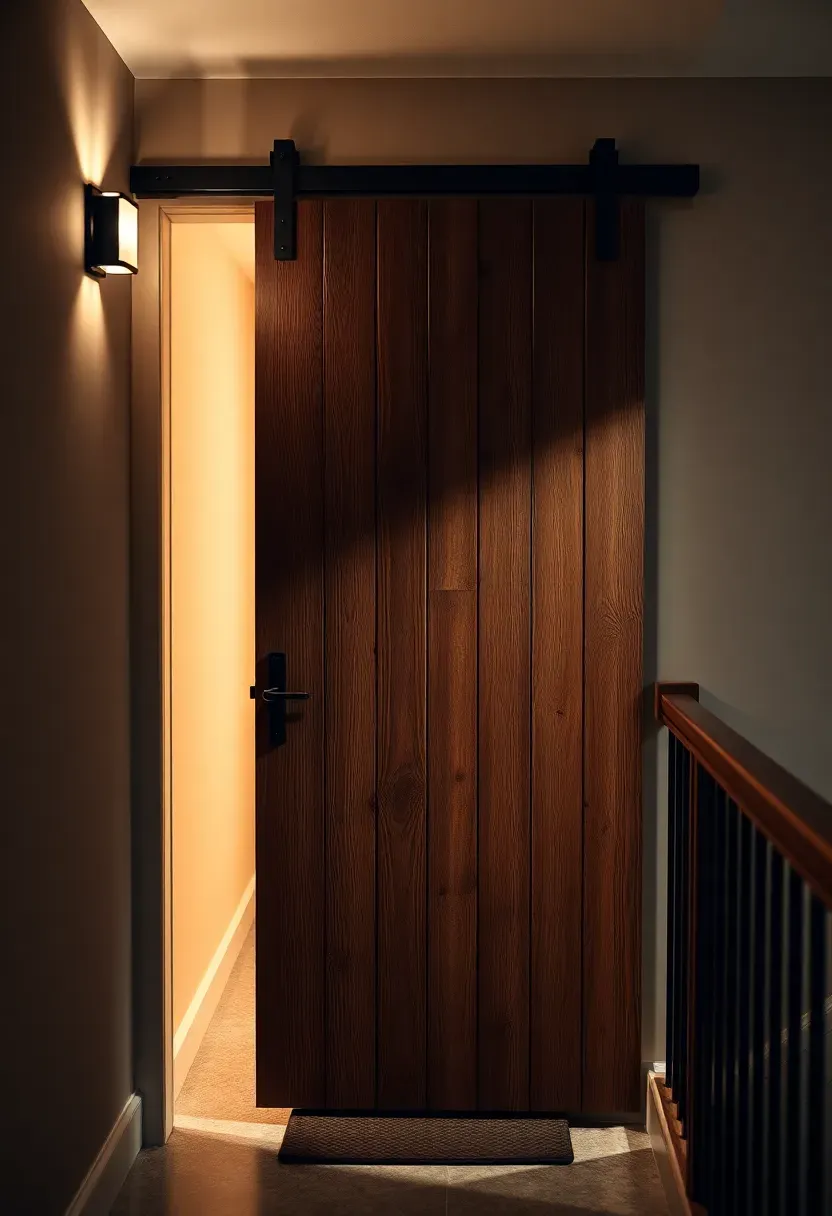
1. Classic Barn Door on Steel Track
Barn doors have stuck around because they solve a real problem — they do not swing into hallways or stairwells. A basement barn door mounted on a flat-track system slides along the wall, clearing floor space entirely. Most kits include the rail, rollers, and a floor guide to prevent lateral swaying. Standard door widths of 36 or 42 inches work fine. The look leans rustic by default, but slab-style barn doors in painted MDF read completely modern.
Tips
- Measure the wall space beside the opening — you need at least the door width of clear wall for the door to slide fully open
- Pick a top-mount bracket system rated for the door weight, typically 100 to 200 lbs capacity
- Add a privacy lock latch if the basement serves as a guest bedroom or bathroom
We picked a few things that go well with this idea: SMARTSTANDARD 6.8FT Barn Door Hardware Kit (★4.6), SMARTSTANDARD Heavy Duty Barn Door Kit with Handle (★4.5) and 6FT Heavy Duty Sliding Barn Door Kit (★4.8). As an Amazon Associate we earn from qualifying purchases.
2. Pocket Door for Tight Hallways
Why pocket doors work below grade
Basements often have narrow corridors where a swinging door eats up half the walkable space. Pocket doors disappear into the wall cavity, giving you the full width of the opening without any door arc to dodge.
Installation reality
Retrofitting a pocket door means opening the wall to install a metal frame kit — figure $200 to $400 for the hardware and a full day of carpentry. New construction is simpler since you frame the pocket before drywall goes up. The trade-off is that the pocket wall cannot hold electrical outlets or plumbing, so plan your layout accordingly. For basements with finished walls, a surface-mounted sliding door may be easier.
Pros and cons
- Pro: Zero floor footprint when open, ideal for tight basement layouts
- Pro: Clean sight lines when fully recessed — the door effectively vanishes
- Con: Wall repair and reframing required for retrofit installations
We picked a few things that go well with this idea: D-Shape Rubber Door Seal Strip Soundproof (★4.1), Q-Shaped Soundproof Door Seal Strip (26FT) (★4.5) and Self-Adhesive TPE Door Seal Strip (23FT) (★4.1). As an Amazon Associate we earn from qualifying purchases.
3. French Doors with Frosted Glass
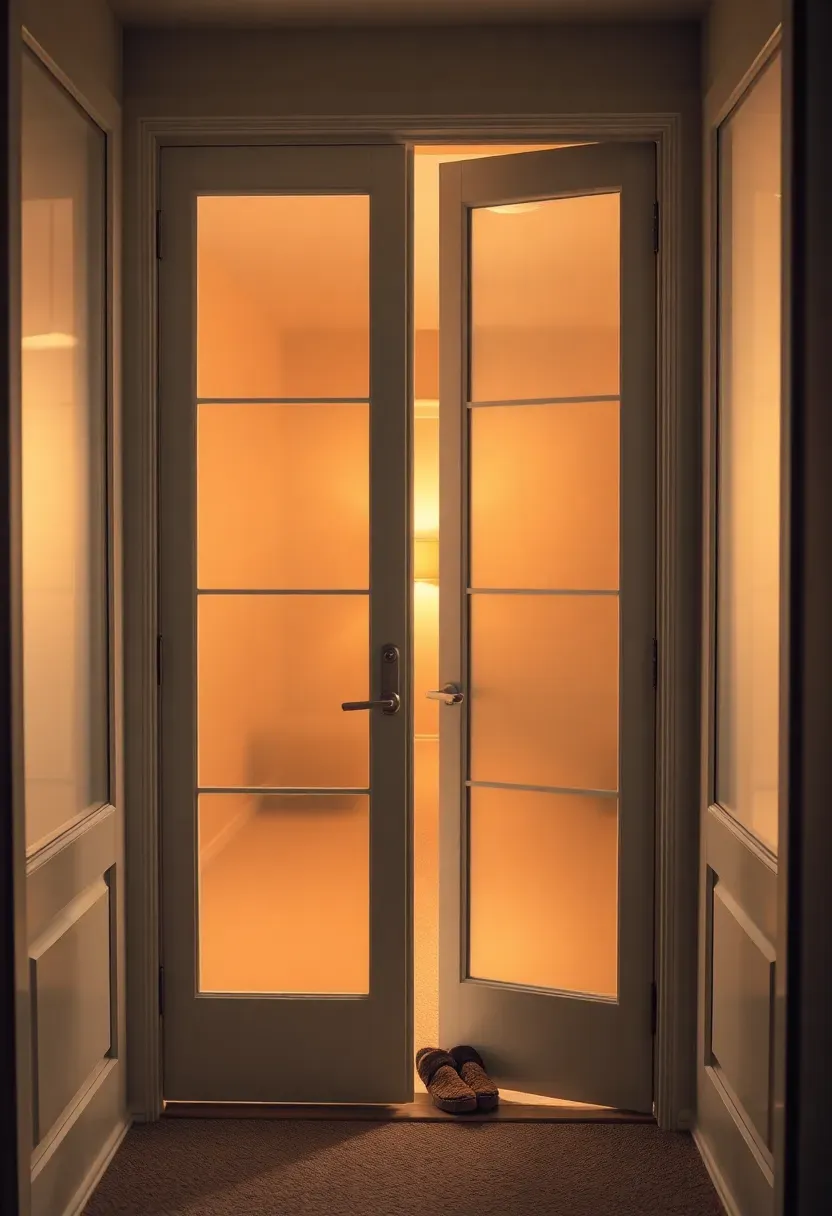
French doors bring something basements desperately need — light transfer between floors. Frosted glass panes let brightness pass through while blurring the view enough for privacy. A standard 60-inch double French door set fits most basement stairwell openings. The frosted treatment can be actual acid-etched glass, adhesive film (around $12 per roll), or factory-frosted tempered panels. Solid wood frames in white or black paint pair well with almost any basement style.
Tips
- Use tempered glass rated for interior doors — building codes require it for safety in doorways
- Choose a ball-catch or roller latch to keep both doors shut without a deadbolt
- Frosted film is removable, so you can switch to clear glass later if you change your mind
We picked a few things that go well with this idea: Matte Black Privacy Door Handles (6-Pack) (★4.7), Estmoon Matte Black Door Lever Set (5-Pack) (★4.7) and Kwikset Casey Passage Door Lever Matte Black (★4.6). As an Amazon Associate we earn from qualifying purchases.
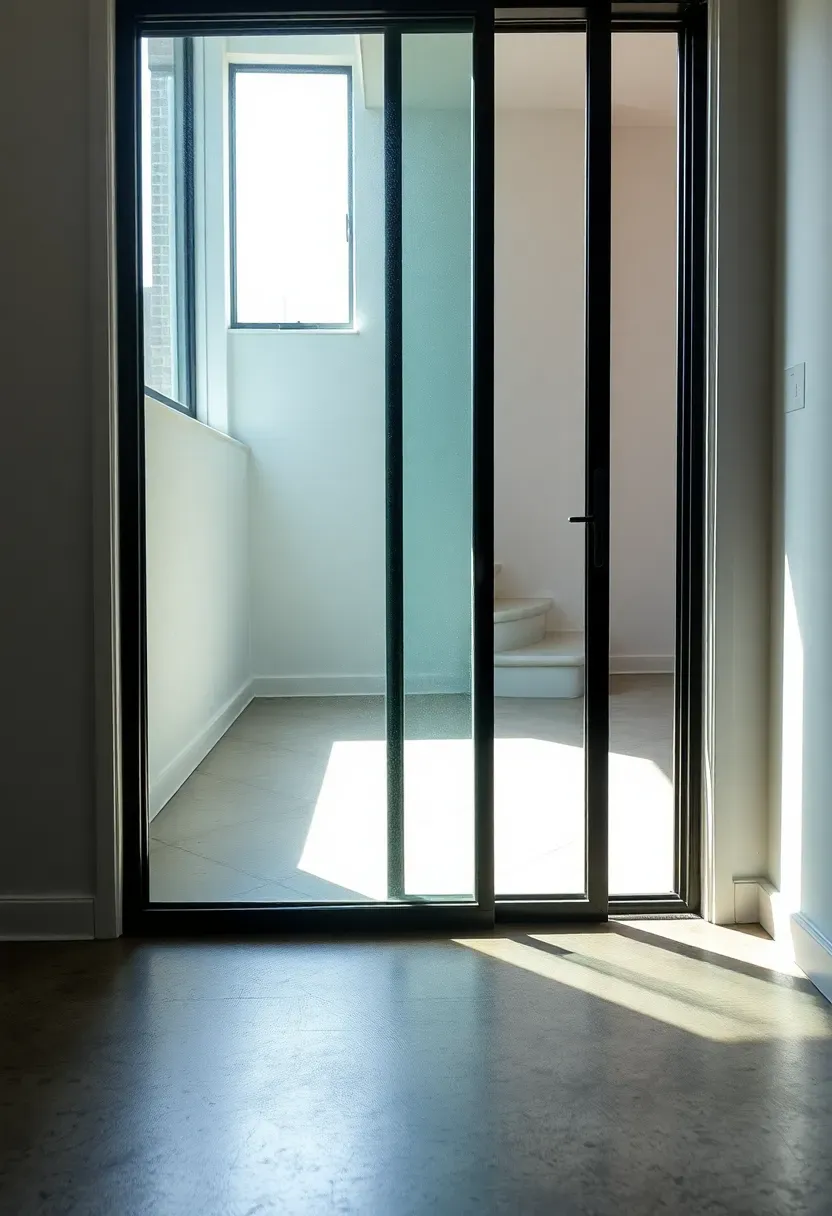
4. Sliding Glass Panel Door
A single sliding glass panel on a ceiling-mounted track gives basements a loft-like quality. Unlike a barn door, the transparent surface keeps sightlines open between floors, which helps smaller basements feel less boxed in. Most residential versions use a slim aluminum frame — black anodized is the popular choice — around a single sheet of tempered glass. Total weight runs about 80 to 120 lbs for a 36-inch-wide panel, so the track hardware needs to match.
What to watch out for
- Glass doors offer zero sound isolation, so skip this option if the basement doubles as a media room or home office
- Fingerprints show constantly on clear glass; a satin or rain-texture finish cuts maintenance in half
- The track must be anchored into framing, not just drywall — use toggle bolts if studs do not line up
Recommended
Items for this idea
5. Dutch Door for Open-Air Feel
Dutch doors split horizontally, so you can open the top half for airflow while the bottom half stays shut. At a basement stairwell, this keeps pets and toddlers from wandering downstairs while letting air circulate — a genuine advantage in basements that tend to feel stuffy. You can buy pre-built Dutch doors from about $350 or convert an existing slab door by cutting it in half and adding a shelf ledge at the split point. Hardware includes a standard hinge set plus a barrel bolt or slide latch to lock the two halves together when closed.
Tips
- Position the split at 40 to 42 inches from the floor for a comfortable leaning height
- Add weatherstripping along the split seam to reduce drafts and sound leakage
- Paint the top and bottom halves different colors for a two-tone accent look
6. Hidden Bookshelf Door
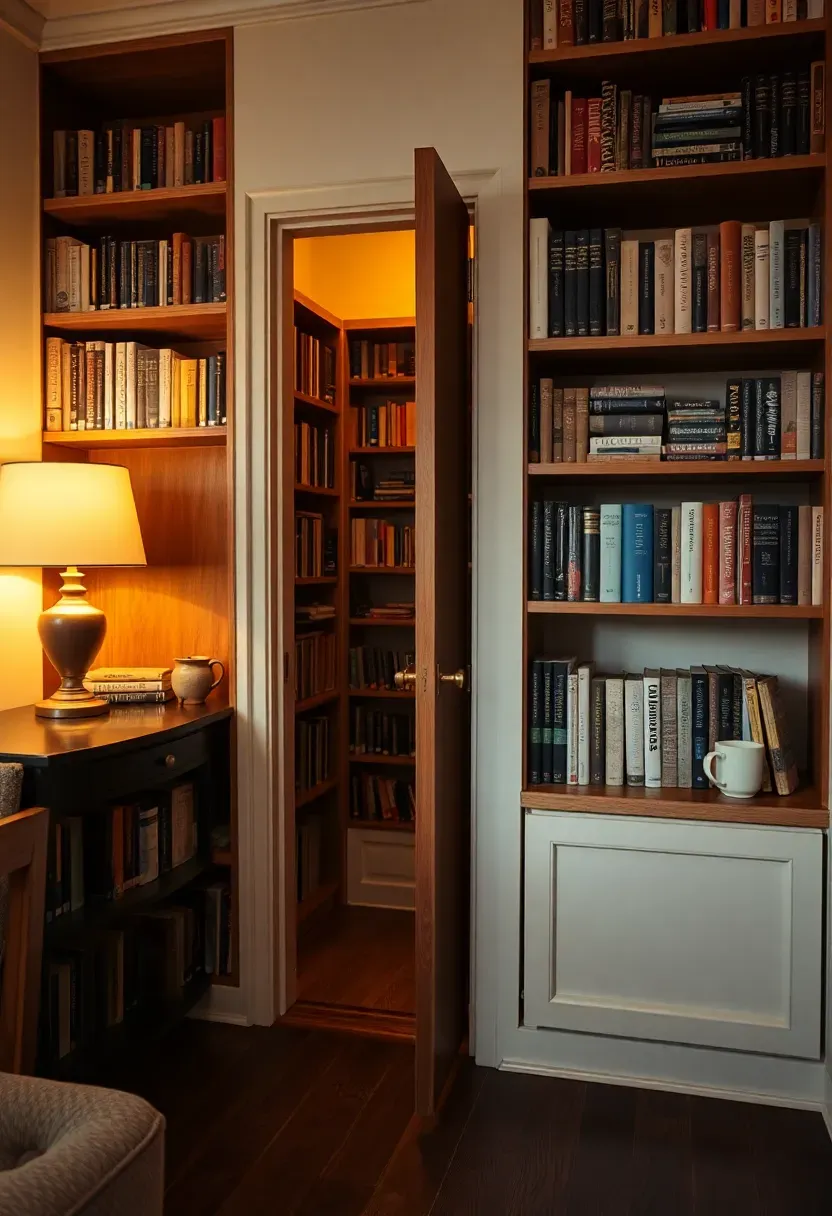
The appeal
A bookshelf that swings open to reveal a staircase is not just a novelty — it genuinely saves wall space by combining storage with a doorway. In living rooms or hallways where a visible basement door feels out of place, a bookshelf door blends seamlessly with the wall.
How to build one
Pre-made bookshelf door kits from Murphy Door or similar brands start around $1,200 and include the pivot hinge, shelving unit, and mounting hardware. DIY versions using a heavy-duty pivot hinge (rated for 200+ lbs) and custom shelving run less but demand precise alignment. The shelf depth is typically 8 to 10 inches, which fits paperbacks and small decor but not deep binders.
Choose this if
- Your basement entrance opens into a main living space and you want to minimize its visual presence
- You have enough wall clearance for the shelf unit to swing outward without hitting furniture
Recommended
Items for this idea
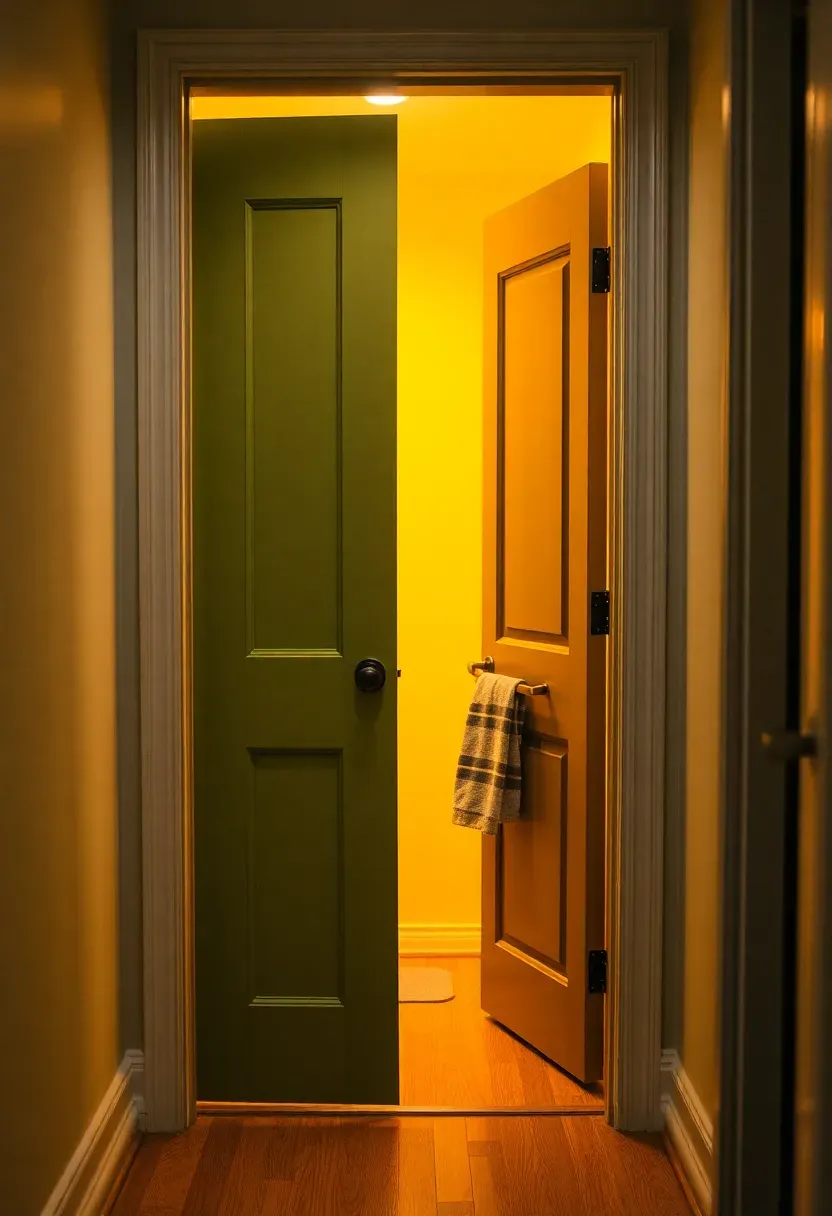
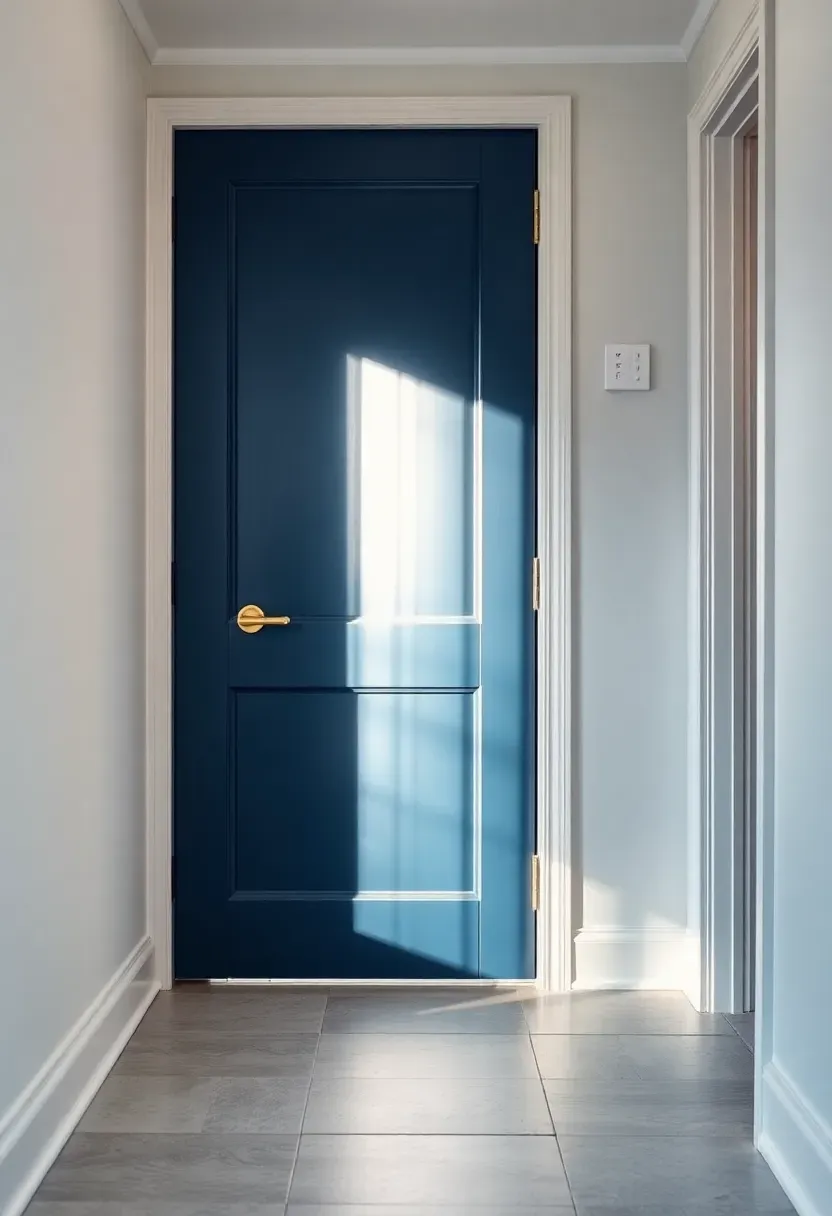
7. Bold Painted Accent Door
The cheapest way to change how a basement door looks is also the most obvious — paint it. A single bold color on the door slab turns a forgettable passage into an intentional design choice. Deep navy, forest green, charcoal, or even bright yellow can work depending on the hallway palette. One quart of quality interior semi-gloss covers a standard door with two coats. The entire project takes about three hours including drying time between coats.
Step by step
- Remove the door from hinges and lay it flat on sawhorses
- Sand lightly with 220-grit, wipe with a tack cloth, then apply a bonding primer
- Roll two thin coats of your chosen color using a foam roller for a smooth finish
- Rehang after 24 hours of cure time
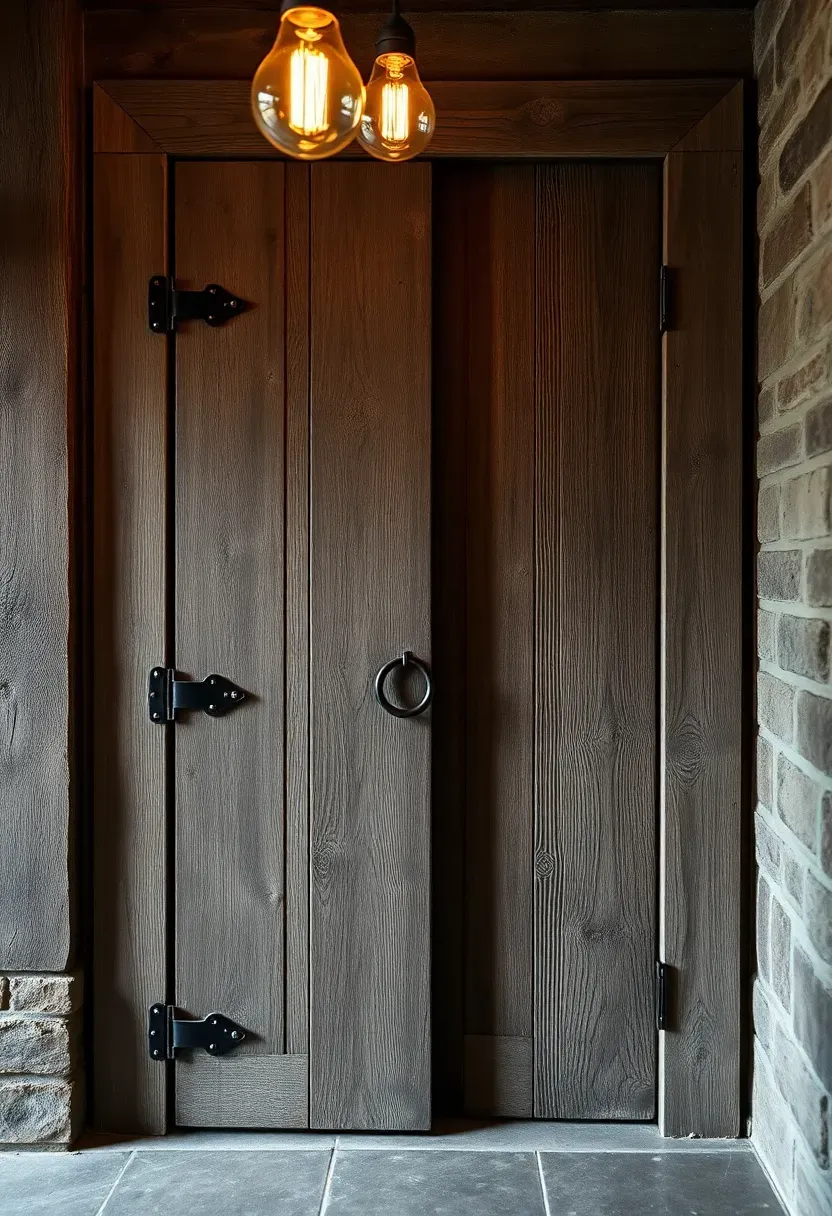
8. Rustic Reclaimed Wood Door
Reclaimed lumber has character that new wood cannot replicate — nail holes, saw marks, and weathered grain patterns give each door a one-off appearance. Barn boards, old fence planks, or salvaged pallet wood can be assembled into a Z-brace or crossbuck pattern door. The material itself is often free or very cheap from demolition sites and online marketplace listings. Finishing with a clear matte polyurethane preserves the aged look without adding shine.
Tips
- Check reclaimed boards for embedded nails, lead paint (pre-1978 buildings), or pest damage before bringing them inside
- Plane boards to a uniform thickness so the door hangs flat and closes evenly against the jamb
- Pair with wrought-iron or black strap hinges to lean into the rustic aesthetic
Recommended
Items for this idea
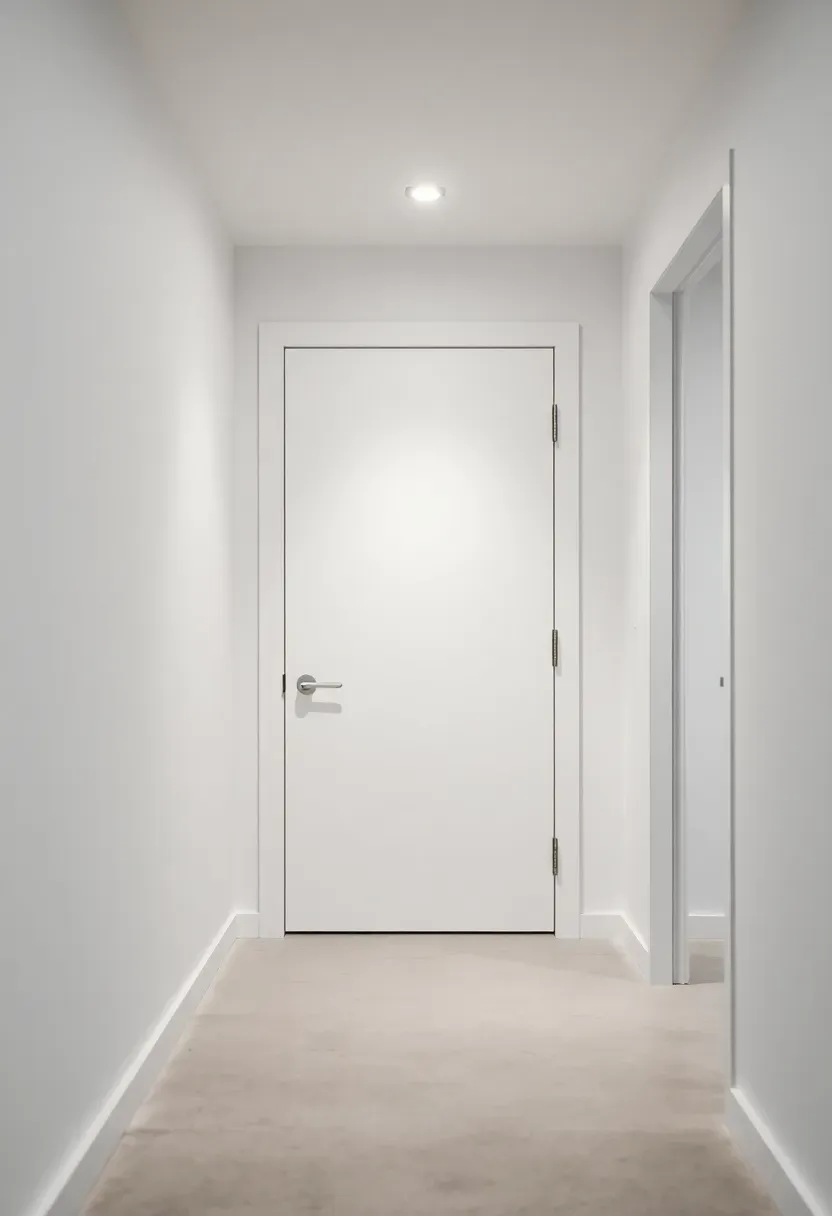
9. Modern Flush Panel Door
Clean lines for contemporary basements
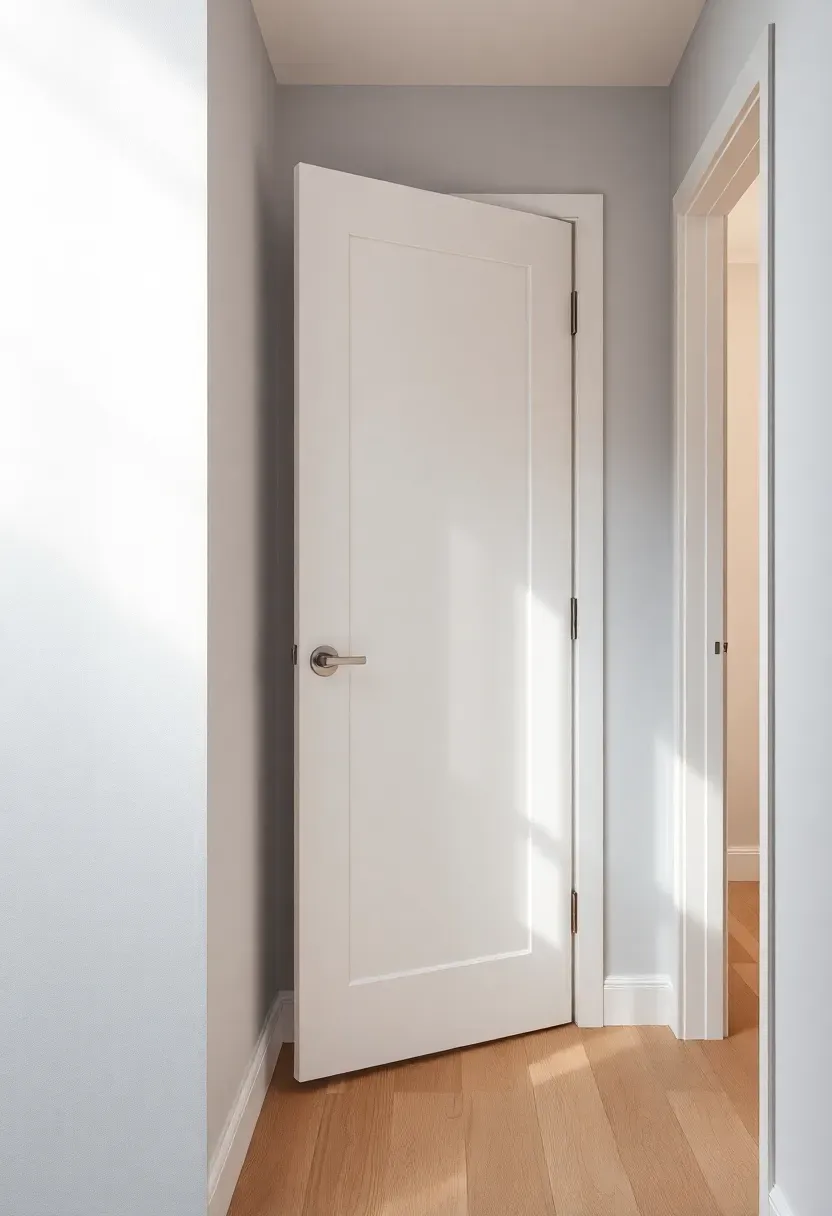
Flush doors — flat slabs with no raised panels, no molding, no visual fuss — suit modern and minimalist basement finishes. A solid-core flush door in white or light gray virtually disappears into drywall, which is exactly the point when you want the basement itself to be the focus.
What makes a good one
Solid-core versions weigh 50 to 70 lbs and block significantly more sound than hollow-core alternatives, an important detail for basement use. Look for doors with a particleboard or MDF core rather than cardboard honeycomb. Price ranges from $120 for a basic Masonite slab to $400 for a factory-primed solid-core unit. Concealed hinges push the minimal look even further.
Pros and cons
- Pro: Neutral appearance works with any basement style from industrial to Scandinavian
- Pro: Solid core provides decent sound dampening without specialty acoustic treatment
- Con: Flat surfaces show scuffs and handprints more readily than paneled doors
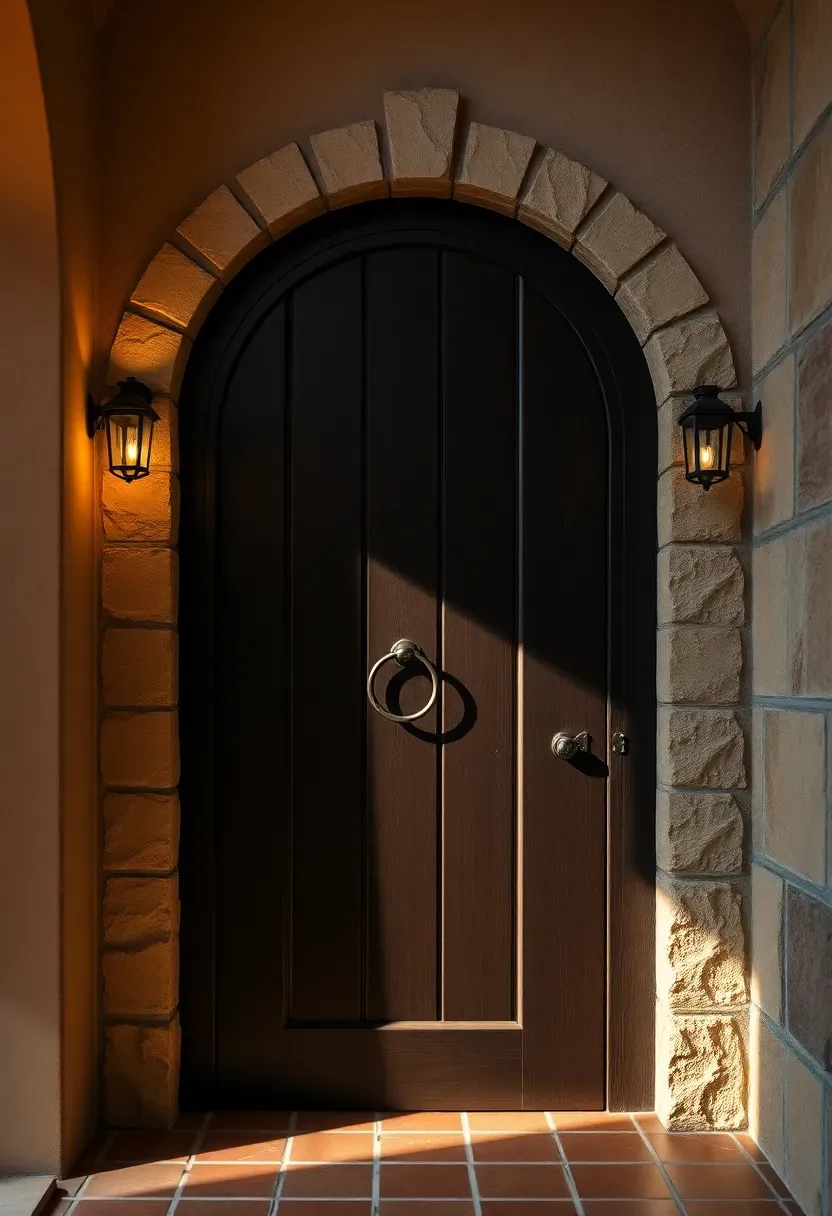
10. Arched Top Door
An arched doorway instantly adds architectural interest to an otherwise boxy basement entry. The curved top softens the transition and nods toward Mediterranean, Gothic, or old-world European styles. Pre-hung arched doors are available from specialty suppliers starting around $600, or you can have a carpenter modify a rectangular door by adding an arched header and custom trim. The arch works best when the ceiling height at the top of the stairs allows at least 7 feet of clearance.
Tips
- Match the arch radius to other curved elements in the home — if you have arched windows, repeat the same curve
- Use the arch as a framing device by adding recessed lighting above to highlight the shape
- A pointed Gothic arch reads dramatic; a gentle Roman arch reads classic and soft
Recommended
Items for this idea
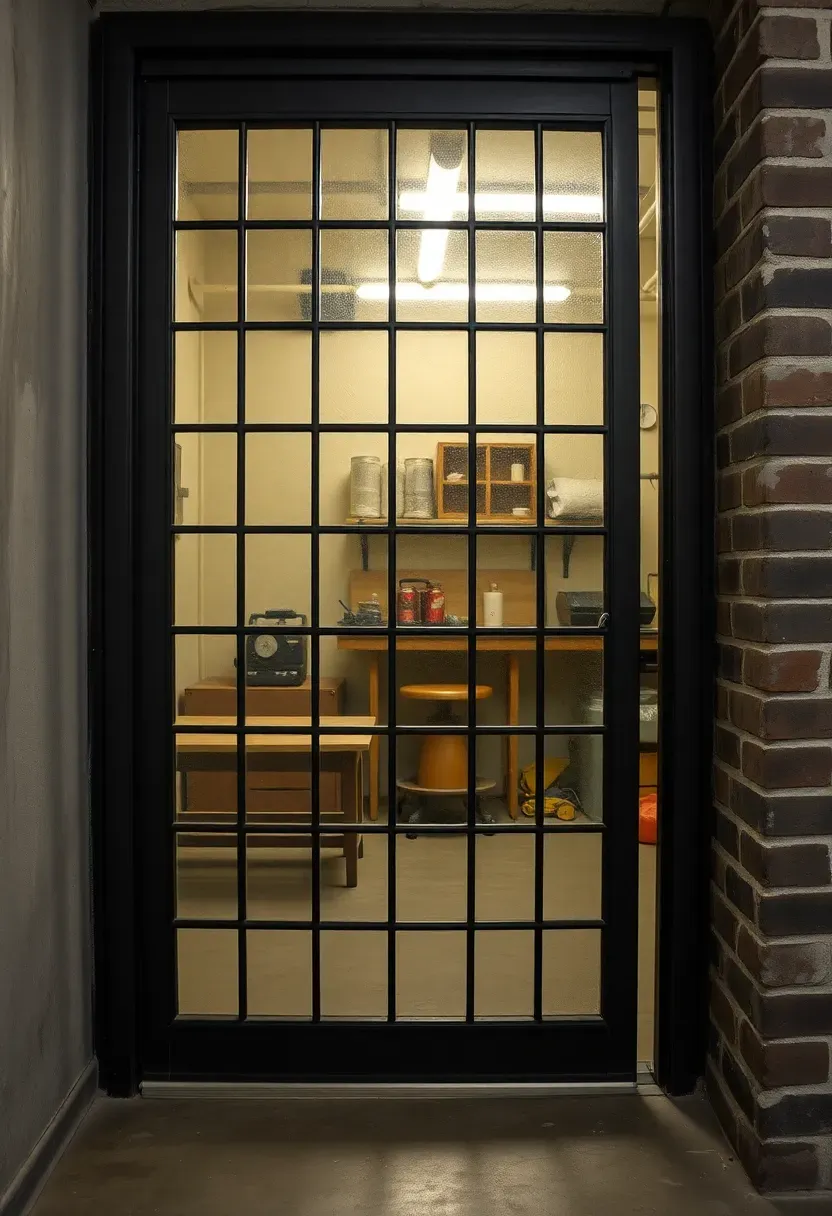
11. Steel-and-Glass Industrial Door
Steel-framed doors with divided glass panes borrow from warehouse and factory architecture. In a basement, they bridge the gap between keeping the space enclosed and maintaining an open feel. The black steel grid pattern against clear or reeded glass creates a strong visual without being heavy-handed. These doors weigh more than wood — expect 90 to 150 lbs depending on size — so you need commercial-grade hinges and proper structural support in the frame.
Step by step
- Measure the rough opening carefully; steel doors have less tolerance for out-of-square frames than wood
- Order a pre-hung unit with the frame included — custom welding on-site costs significantly more
- Shim and level the frame, then anchor with concrete screws if mounting into a block or poured wall
- Seal the glass-to-steel joints with clear silicone to prevent rattling
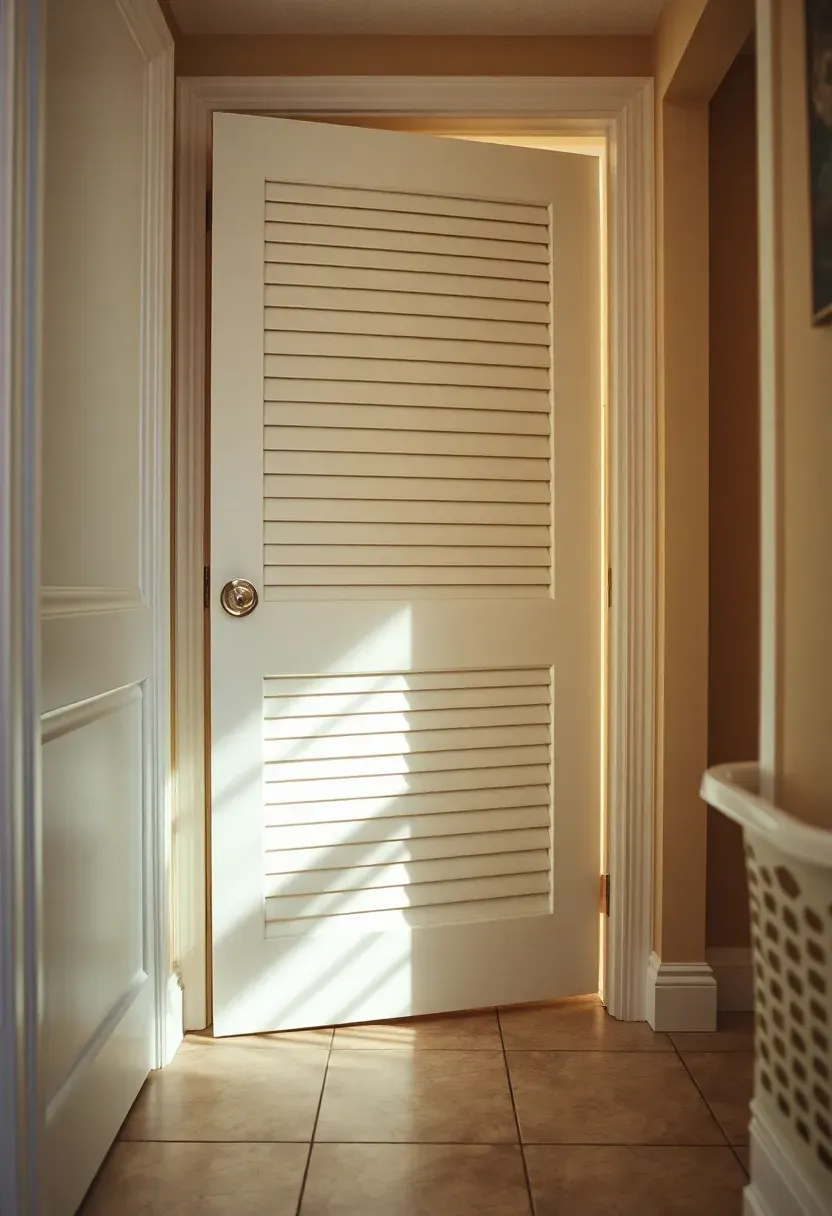
12. Louvered Door for Ventilation
Basements that house furnaces, water heaters, or laundry equipment need airflow to function properly and meet building codes. A louvered door — with angled slats that allow air to pass through even when shut — handles this without leaving the doorway open. Standard louvered doors in pine or composite run $60 to $150 at any home center. They come in full-louver or half-louver styles, where the top half has slats and the bottom is a solid panel.
Tips
- Check local building codes — many require a minimum number of square inches of free airflow for mechanical rooms
- Half-louver doors offer a compromise between ventilation and visual privacy
- Paint or stain louvered doors before installation since reaching between individual slats after hanging is tedious
Recommended
Items for this idea
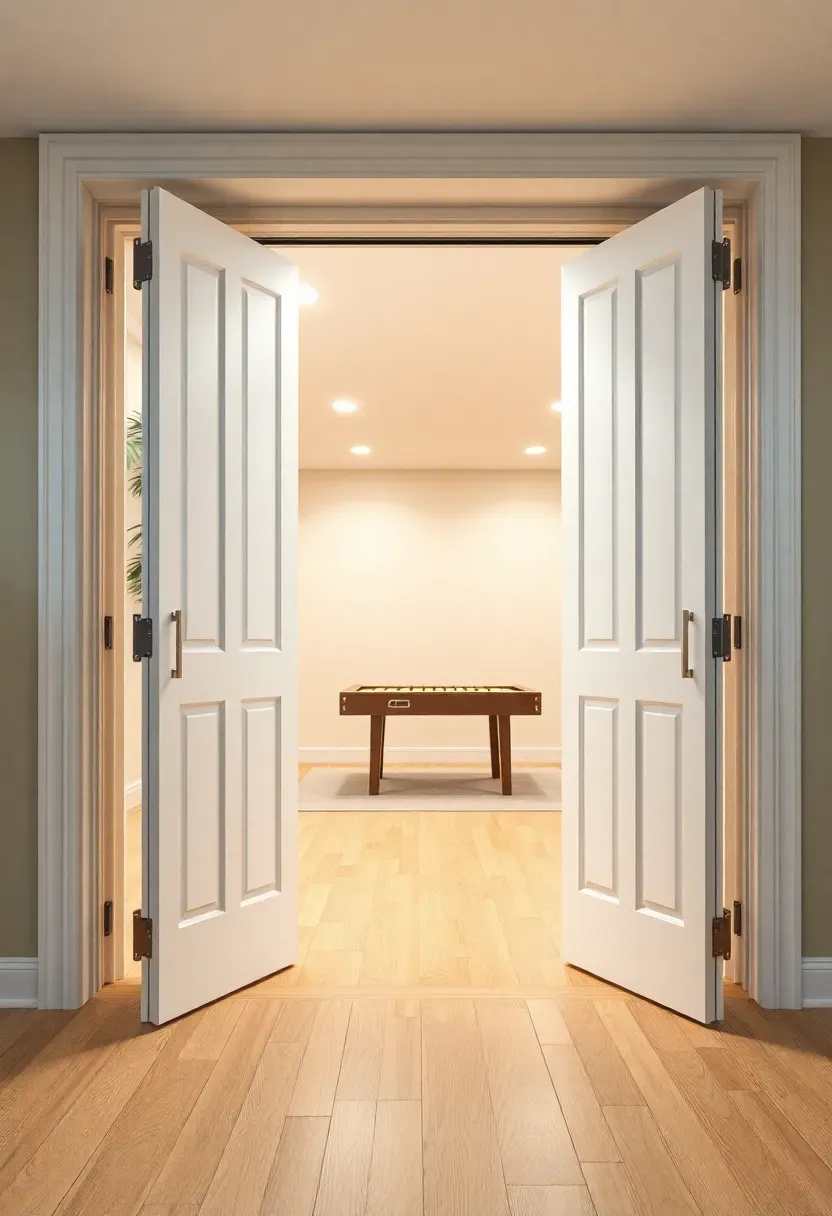
13. Bifold Doors for Wide Openings
When the opening is too wide for a single door
Some basement stairwells or pass-throughs span 48 to 72 inches — wider than a standard single door can cover. Bifold doors fold in half as they slide on an overhead track, handling widths up to 96 inches with a four-panel configuration.
Practical details
Bifold hardware kits cost $15 to $30 and work with most flat or paneled door slabs. The folding action means the doors project about 10 inches into the room when open, so account for that clearance. For basements used as playrooms or recreation areas, bifolds let you open the space up completely when you want flow between floors, then close it off for noise or temperature control.
Choose this if
- Your basement opening measures 48 inches or wider and a single swing door would be impractical
- You want the option to fully open the passage during gatherings or daily use
14. Soundproof Studio Door
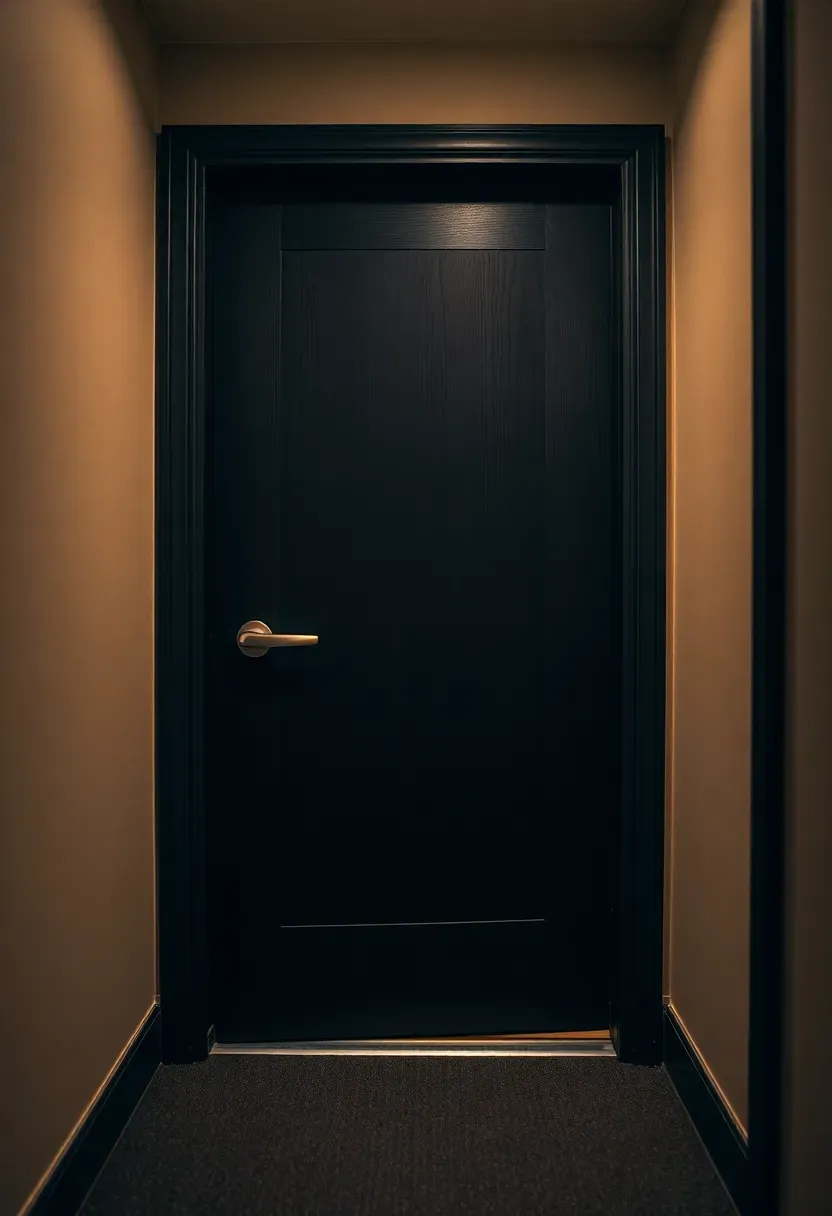
If your basement is a home theater, music room, or recording space, the door is the weakest link in your sound isolation chain. Standard interior doors have an STC (Sound Transmission Class) rating around 20 to 25. A proper acoustic door with solid-core construction, perimeter gaskets, and an automatic door bottom seal pushes that to STC 45 or higher. Prices range from $400 for a DIY-sealed solid-core slab to $2,000-plus for a purpose-built studio door from brands like Soundproof Windows or Overly.
What to watch out for
- The door seal matters as much as the door itself — any gap, even 1/8 inch, dramatically reduces sound blocking
- Automatic drop seals on the bottom edge compress against the threshold when the door closes
- Double-door vestibule setups (two doors with an air gap between them) achieve STC 55+ for serious isolation needs
Recommended
Items for this idea
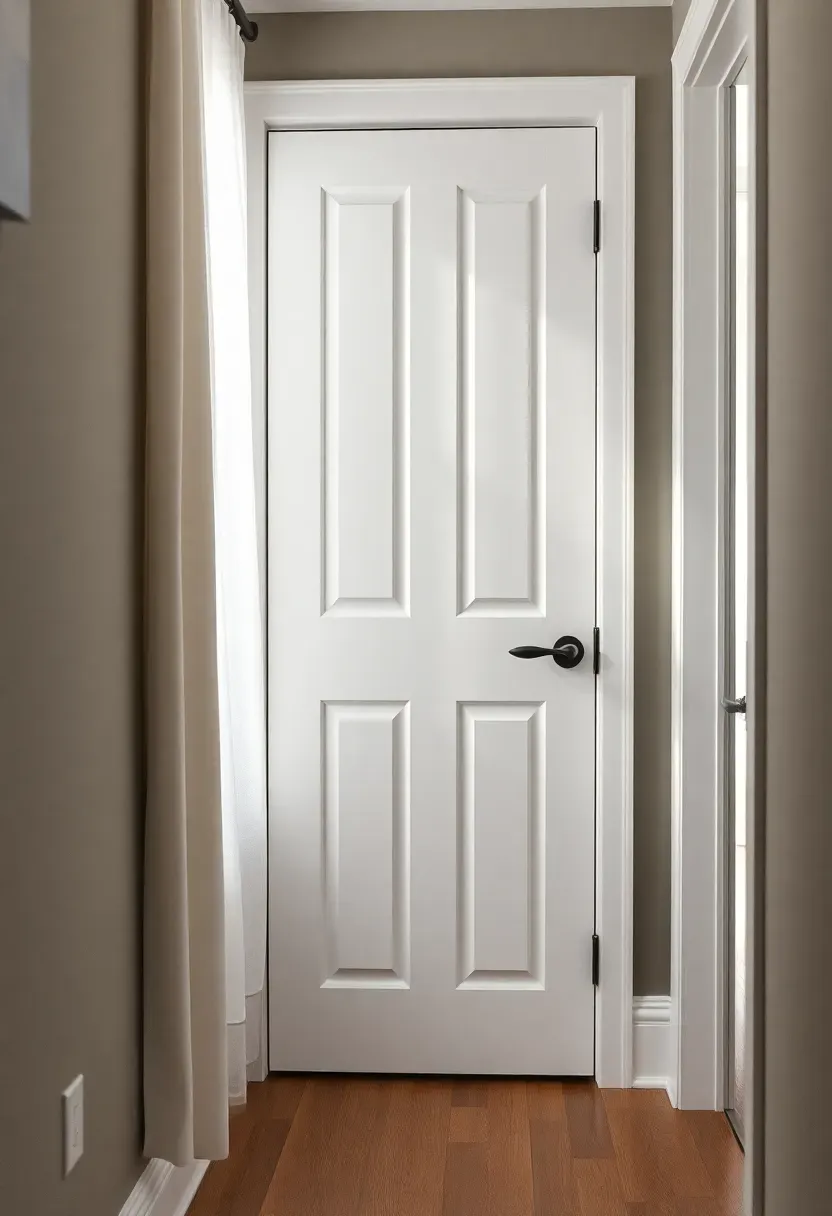
15. Shaker-Style Panel Door
Shaker doors hit the middle ground between ornate raised-panel doors and stark flat slabs. The recessed flat panels with clean stile-and-rail framing suit transitional homes that are neither fully traditional nor fully modern. Five-panel Shaker doors are the most common configuration, available in hollow-core ($80 to $120) and solid-core ($180 to $300) versions. White paint is the standard, but these also look sharp in black, sage green, or left in natural wood with a clear coat.
Tips
- Solid-core Shaker doors weigh about 55 lbs — use three hinges instead of two for long-term sag prevention
- Match the door style to your existing interior doors for visual consistency throughout the house
- Matte black or brushed brass hardware pairs well with the simple Shaker profile
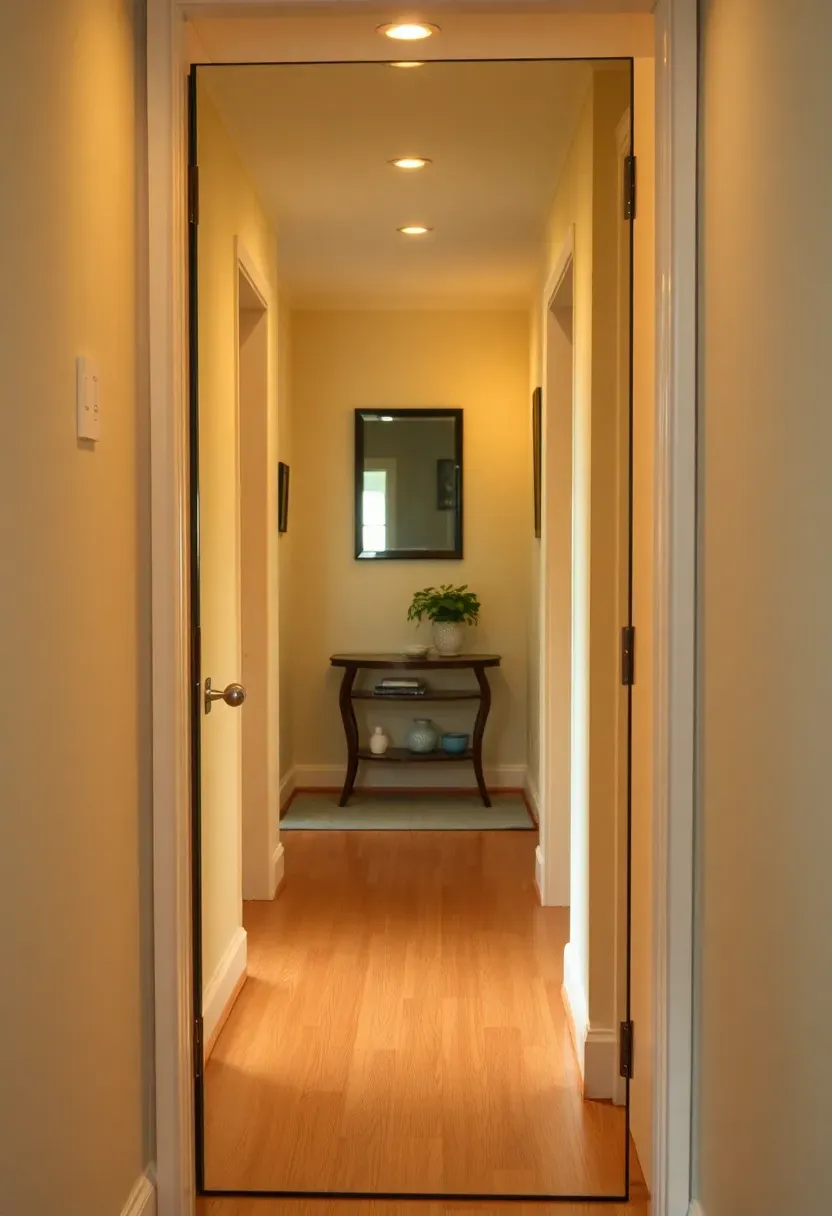
16. Mirrored Door Panel
A full-length mirror mounted on or built into the basement door serves a dual purpose. It reflects light back into the hallway, making the area around the stairwell feel larger and brighter. It also gives you a head-to-toe mirror without dedicating wall space elsewhere. Mirror doors come as prefabricated units or you can adhesive-mount a frameless mirror panel onto an existing flat door. Weight is the main concern — a 36-by-80-inch mirror panel adds about 25 lbs to the door, so verify the hinges can handle the total load.
Tips
- Use safety-backed mirror glass to prevent shattering into sharp shards if the door takes a hard impact
- Frame the mirror with a thin wood or metal border if the edges look unfinished against the door slab
- Position the door so the mirror does not directly face another mirror, which creates a disorienting infinite-reflection effect
Recommended
Items for this idea
17. Pivot Door Statement Piece
How pivot doors differ from standard doors
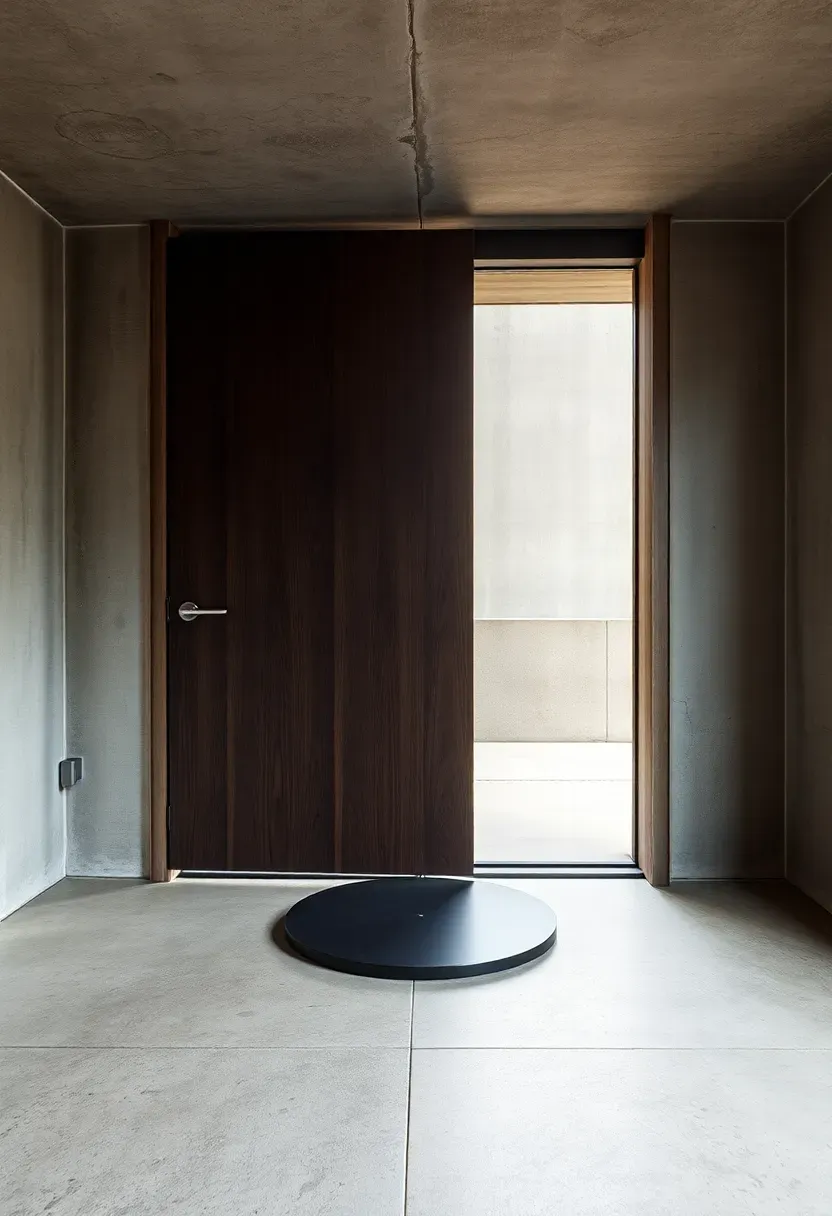
Instead of side-mounted hinges, a pivot door rotates on a point set into the floor and the header. This allows for much wider and taller doors — 48 inches wide or more — that would sag on conventional hinges. The rotation axis is typically set one-third from the edge, so the door swings both inward and outward with a portion visible on each side.
Making it work for a basement
Pivot hardware kits like FritsJurgens or Rixson handle doors up to 500 lbs. For a basement entrance, the dramatic scale of a pivot door turns a mundane hallway into a focal point. Materials range from solid wood slabs to metal-clad panels. Budget $300 to $800 for the pivot hardware alone, plus the door slab cost.
Pros and cons
- Pro: Handles oversized openings that would require double doors with a conventional approach
- Pro: The floating rotation effect creates architectural drama with a single element
- Con: Floor-mounted pivot points require cutting into the subfloor, complicating installation
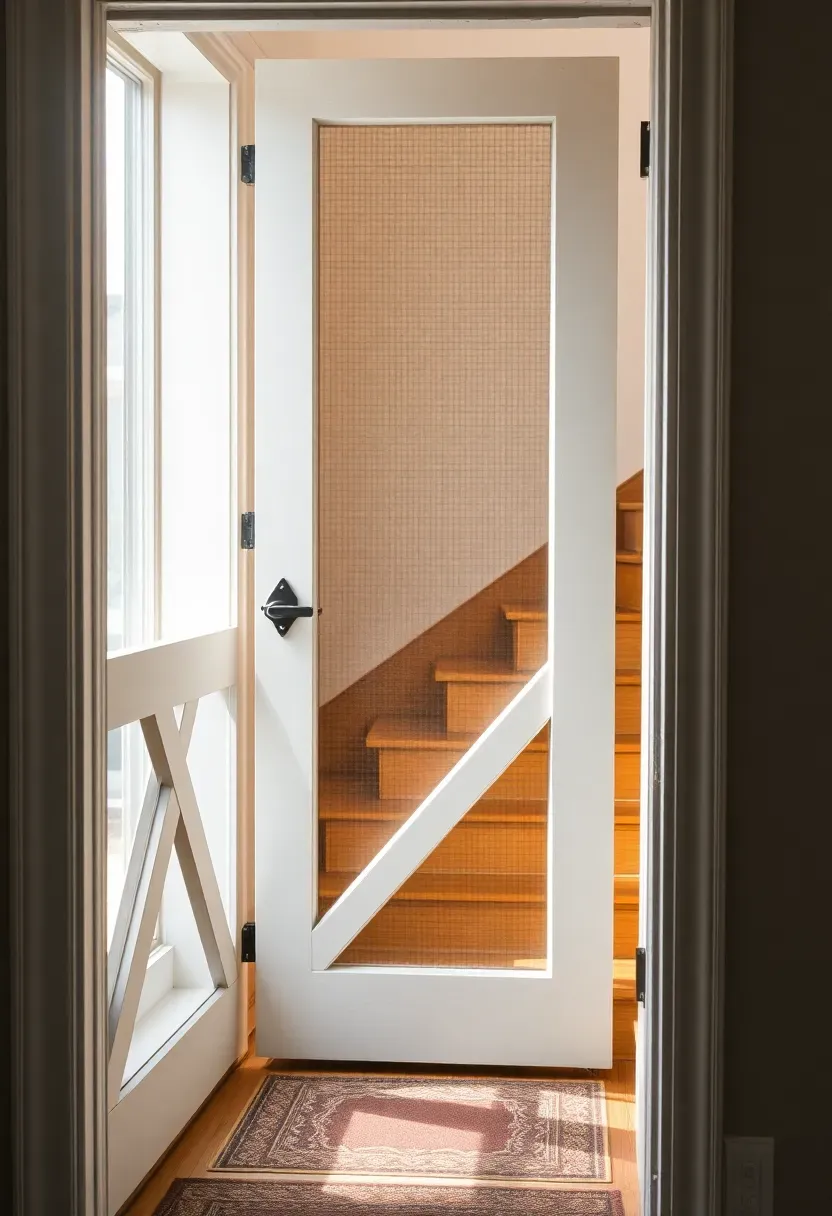
18. Farmhouse Screen Door
Screen doors are not just for front porches. Mounting one at a basement entrance allows air to move freely between floors while keeping the visual boundary intact. This works particularly well for walkout basements or below-grade spaces where summer humidity needs ventilation to avoid musty conditions. A simple wood-frame screen door with a spring closer runs $50 to $120. The farmhouse aesthetic — white paint, crossbuck pattern, black hardware — makes it feel intentional rather than temporary.
Step by step
- Measure the opening and buy a pre-hung screen door or cut a wood-frame kit to fit
- Mount with exterior-grade hinges since the basement side may have higher humidity
- Add a pneumatic door closer to prevent slamming
- Replace the screen mesh seasonally if it tears or sags
Recommended
Items for this idea
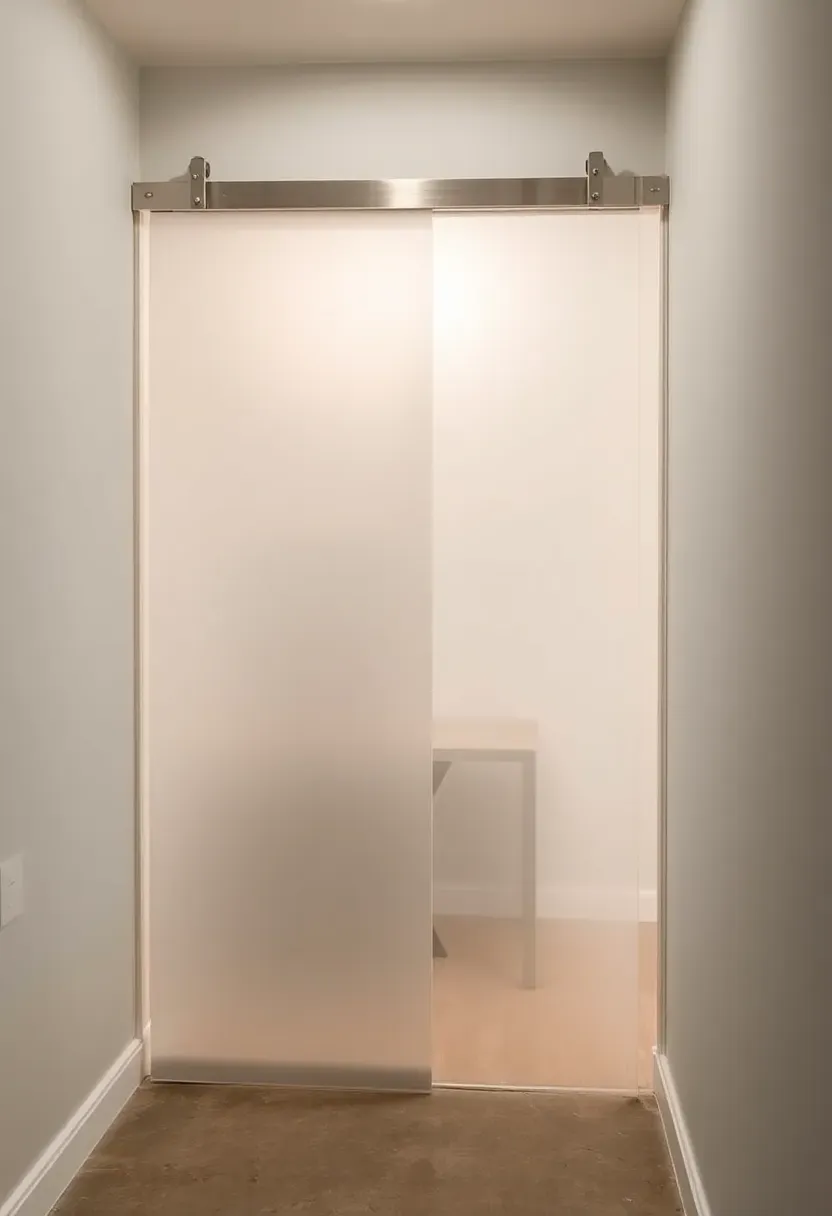
19. Frosted Acrylic Sliding Door
Acrylic panels weigh a fraction of glass — about 50% less at the same thickness — while still diffusing light. A frosted acrylic slab mounted on a barn-door-style track gives you the sliding convenience and light transfer without the heft or breakage risk of glass. This is a good fit for basement home offices or guest rooms where you want privacy without a closed-off feeling. Material cost for a 36-by-84-inch frosted acrylic sheet runs $80 to $150, plus $60 to $100 for the track hardware.
Tips
- Acrylic scratches more easily than glass — clean with a microfiber cloth and plastic-safe cleaner, not paper towels
- Choose 1/4-inch thickness minimum for rigidity; thinner sheets flex and bow
- Edge-light the panel with an LED strip for a subtle ambient glow at night
20. Chalkboard-Painted Door
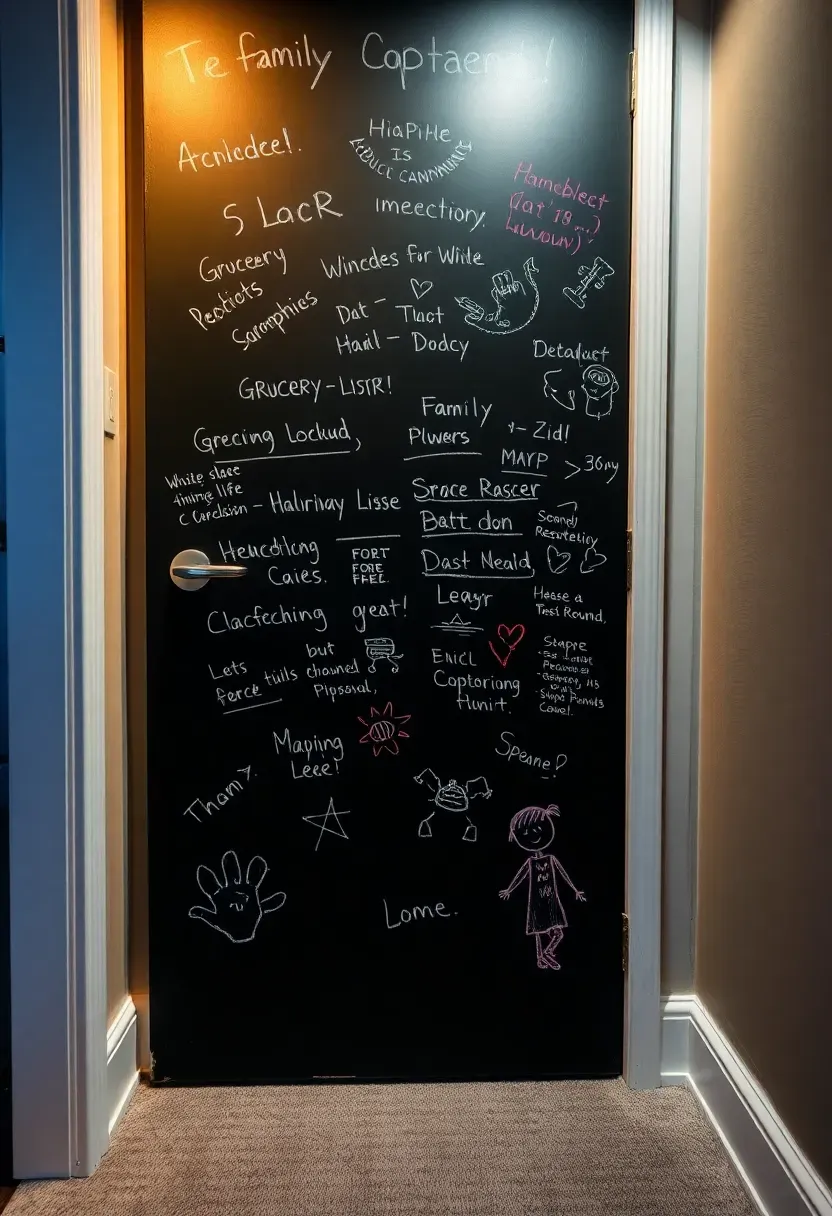
Two coats of chalkboard paint turn any flat door into a rewritable surface. For basements used as playrooms, craft spaces, or family hangout areas, a chalkboard door doubles as a message board, score keeper, or art canvas. The paint itself costs about $12 to $18 per quart — enough for two coats on a standard door. It applies over primed wood, MDF, or metal surfaces. After curing for three days, season the surface by rubbing the side of a chalk stick across the entire area, then erasing.
Tips
- Use magnetic primer underneath if you also want the door to hold magnets
- Chalk markers produce brighter colors and less dust than traditional chalk sticks
- Wipe down weekly with a damp cloth to prevent ghost images from old writing
Recommended
Items for this idea
21. Curtain Doorway Alternative
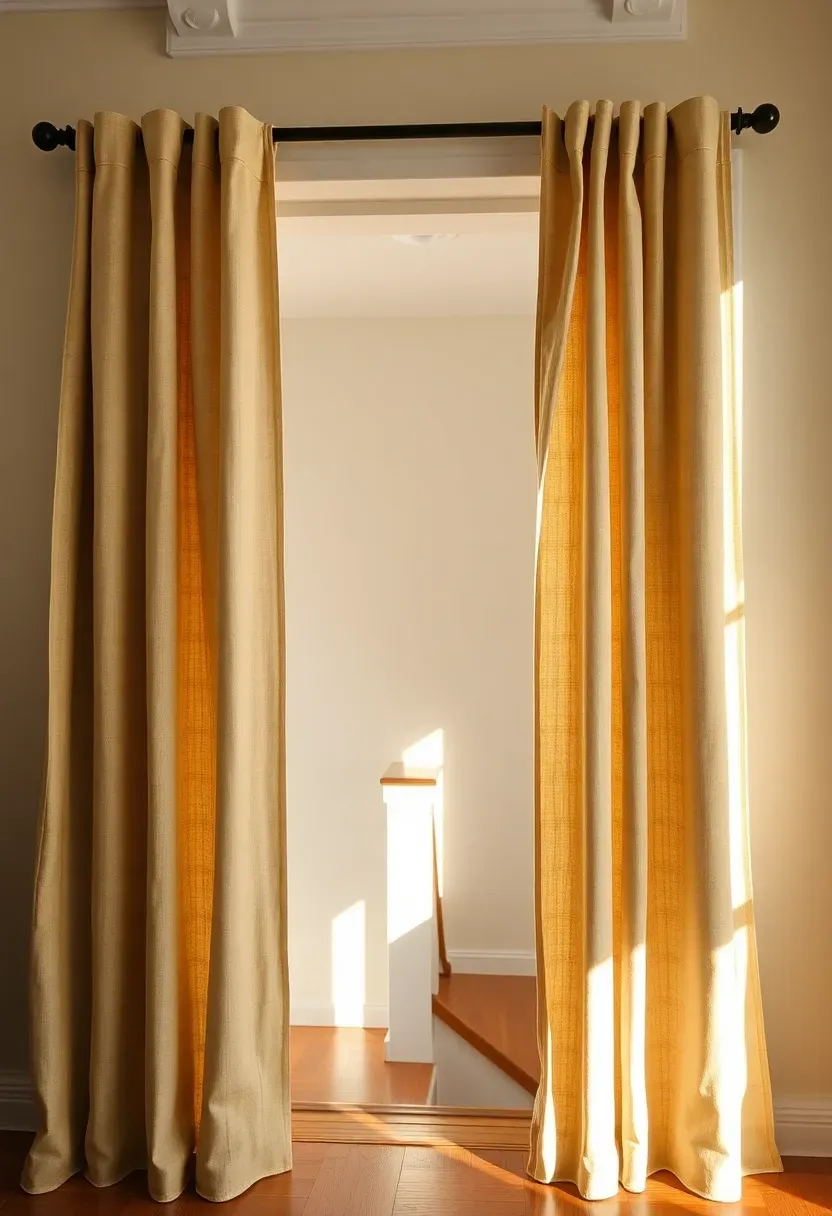
Not every basement opening needs a door at all. A curtain hung from a tension rod or mounted rod brackets defines the threshold while staying completely flexible. Heavy fabrics like linen, velvet, or canvas provide some sound dampening and thermal separation. A floor-length curtain panel for a 36-inch opening costs $20 to $60. This approach works best when the basement is used casually — a laundry area, storage space, or seasonal hangout — rather than a bedroom or bathroom that requires real privacy.
Tips
- Use a ceiling-mounted curtain track instead of a rod for a cleaner look with no visible hardware
- Weighted curtain hems keep the fabric from billowing when HVAC kicks on
- Double up with a sheer panel behind a heavier curtain for layered light control
Quick FAQ
Do basement doors need to be fire-rated? It depends on your local building code. Many jurisdictions require a 20-minute fire-rated door between an attached garage and living space, and some extend this to basement entries — especially if the basement houses a furnace or water heater. Check with your local building department before choosing a door.
Which basement door style blocks the most noise? Solid-core doors with perimeter gaskets and a threshold seal perform best. An STC rating of 30 or higher is adequate for general household noise. For dedicated media rooms or music studios, look for doors rated STC 45 or above, or install a double-door airlock setup.
Can I install a barn door on a basement opening myself? Yes, most flat-track barn door kits are designed for DIY installation. You need a drill, level, stud finder, and about two hours. The critical step is anchoring the track into wall studs or using heavy-duty toggle bolts — the track carries the full weight of the door.
Is frosted glass or frosted acrylic better for a basement door? Glass is more scratch-resistant and looks sharper long term. Acrylic is lighter, shatter-resistant, and cheaper. For high-traffic basement doors or homes with children, acrylic is the more practical choice. For a polished finish in a guest suite, glass wins.
What is the cheapest way to improve a basement door? Paint. A quart of quality semi-gloss paint, a foam roller, and three hours of work can completely change the look of an existing door for under $25.
Your basement door does not have to be an afterthought or a builder-grade placeholder. Whether you spend $25 on a bold paint job or $2,000 on a pivot door, the right choice depends on what the basement is used for and how much you care about noise, airflow, and looks. Start with function — does the space need sound isolation, ventilation, or just a visual boundary? — then pick a style that fits. Every option on this list works within a weekend timeline and a reasonable budget, so there is no real excuse to keep living with that hollow-core slab that rattles every time someone walks past it.
Pinterest cover for 21 Basement Door Ideas
About the author
OBCD
CGI visualization and interior design content. We create detailed 3D renders and curate practical design ideas for every room in your home.