19 Basement Gym Ideas
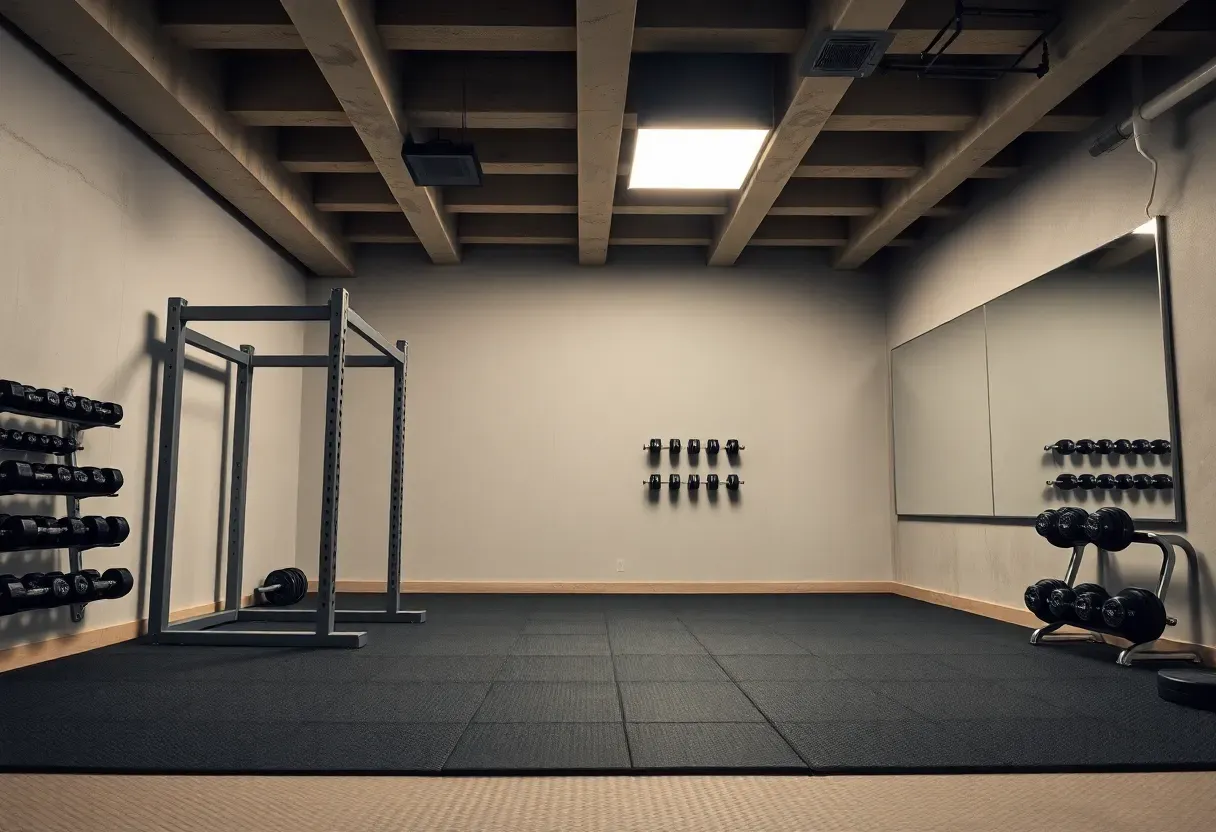
My basement sat empty for four years after we moved in. Boxes piled in one corner, a broken dehumidifier in another, and a vague plan to "do something with it someday." The thing that finally got me to clear it out was the math: a decent gym membership runs $50 to $80 a month around here, which adds up to $600 to $960 a year. Two years of that covers a solid home gym setup. The basement already had concrete floors, climate control from the HVAC system, and zero windows to worry about. It just needed purpose.
Here are 19 ideas covering layout, flooring, equipment zones, and finishing details for a basement gym that actually gets used.
Table of Contents
- Interlocking Rubber Floor Tiles
- Full-Wall Mirror Installation
- Compact Power Rack Station
- Dedicated Cardio Zone
- Yoga and Stretching Corner
- Heavy Bag Boxing Area
- Indoor Climbing Wall
- Dumbbell Wall Rack System
- Resistance Band Anchor Wall
- Cable Machine Nook
- Rowing and Bike Corner
- Plyometric Platform Area
- Recovery and Foam Rolling Station
- Overhead LED Lighting Upgrade
- Sound System and Motivation Wall
- Ventilation and Dehumidifier Setup
- Adjustable Bench and Barbell Corner
- Gymnastic Rings and Suspension Trainers
- Multi-Sport Court Flooring
1. Interlocking Rubber Floor Tiles
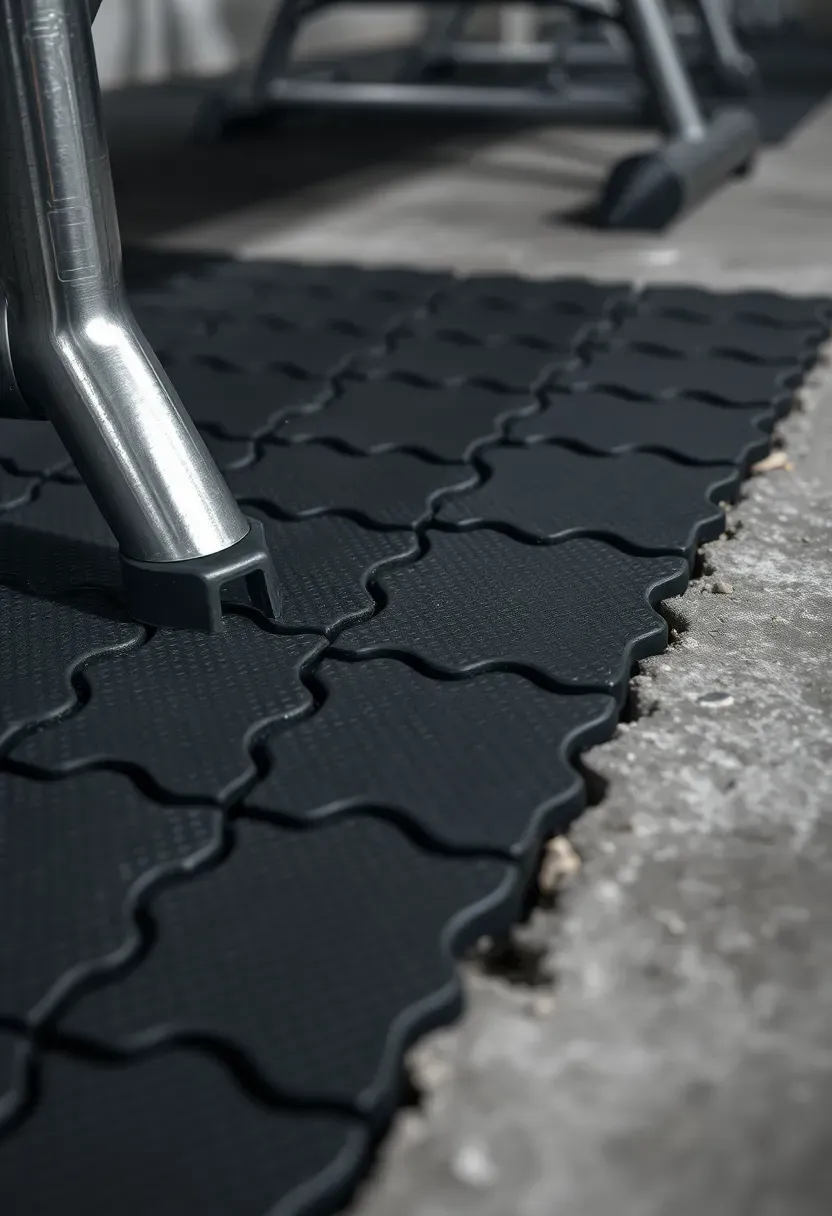
Get the floor right before buying a single piece of equipment. Concrete is hard on joints, slippery when sweaty, and cracks under dropped weights. Interlocking rubber tiles — typically 24x24 inches and 3/8 to 3/4 inch thick — snap together without adhesive and sit directly on the slab. The thicker 3/4-inch option handles Olympic lifts and deadlift drops without cracking the concrete beneath. A 200-square-foot area costs roughly $300 to $500 depending on thickness. They also dampen sound, which matters when you live above the gym.
Tips
- Clean concrete thoroughly and patch any low spots before laying tiles so they sit flat
- Buy 10% extra tiles for cuts around support columns and walls
- Choose tiles with a flat surface rather than diamond plate if you plan to do floor exercises barefoot
We picked a few things that go well with this idea: ProsourceFit Interlocking Gym Floor Tiles (36-Pack) (★4.6), bemaxx EVA Interlocking Gym Floor Mats (18-Pack) (★4.4) and PRAISUN Thick Rubber Gym Flooring (12-Pack) (★4.7). As an Amazon Associate we earn from qualifying purchases.
2. Full-Wall Mirror Installation
Why mirrors matter for a home gym
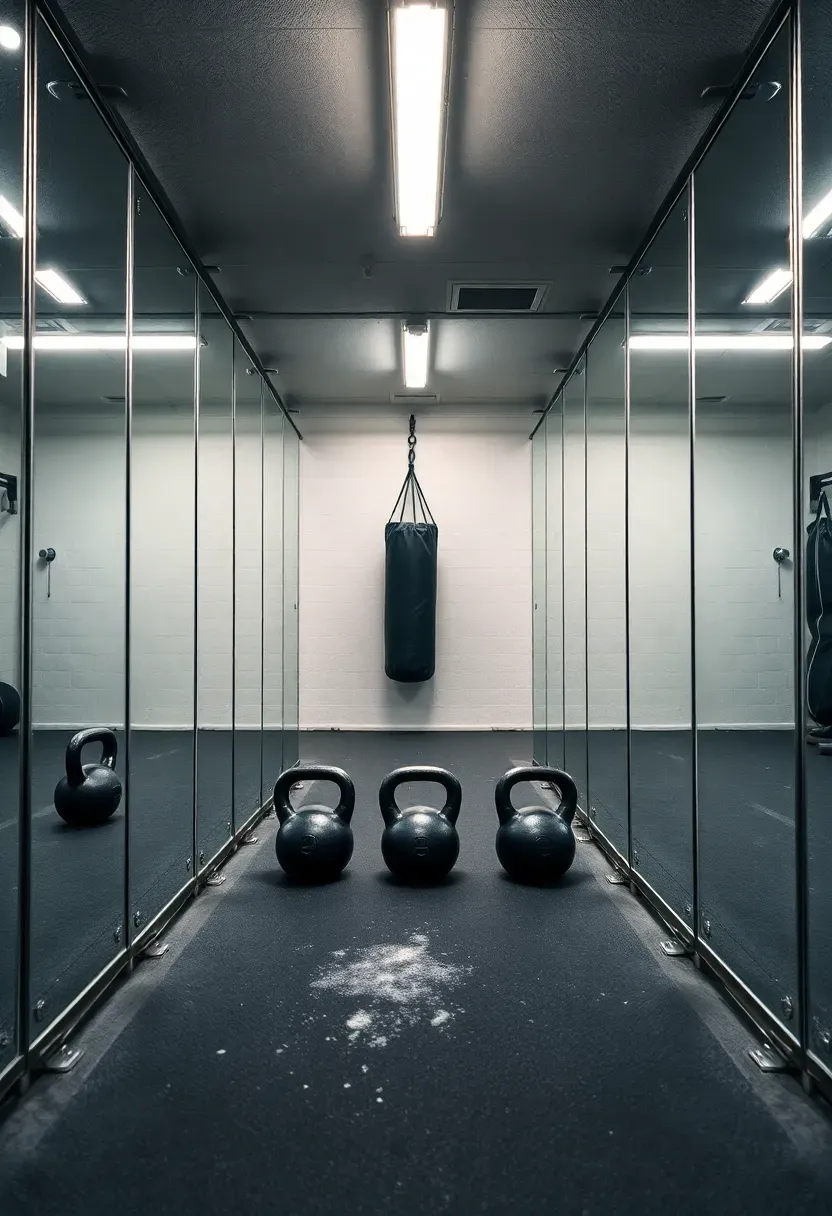
Form check is the main reason commercial gyms cover their walls in mirrors, and your basement gym needs it just as much. Without a training partner, a mirror is your only real-time feedback on squat depth, bar path, and shoulder alignment. Mirrors also bounce light around the room, making a low-ceiling basement feel noticeably larger.
Installation options
Glue-on acrylic mirror panels from home improvement stores run about $5 to $8 per square foot and weigh far less than real glass — important in a space where barbells occasionally go sideways. Real glass gym mirrors look better but cost $10 to $15 per square foot installed. For a 4x8-foot section, budget $160 to $480 for acrylic or $320 to $960 for glass. Mount them on the wall you face most often during lifts.
Pros and cons
- Pro: Immediate form feedback without needing a phone camera or spotter
- Pro: Makes the room feel twice as large, especially with good lighting
- Con: Acrylic scratches easily and shows cleaning streaks more than glass
We picked a few things that go well with this idea: Sportsroyals Multi-Function Power Rack with Pulley (★4.5), Ultra Fuego Power Cage with Cable Pulley (★4.6) and CAP Barbell Power Rack Exercise Stand (★4.3). As an Amazon Associate we earn from qualifying purchases.
3. Compact Power Rack Station
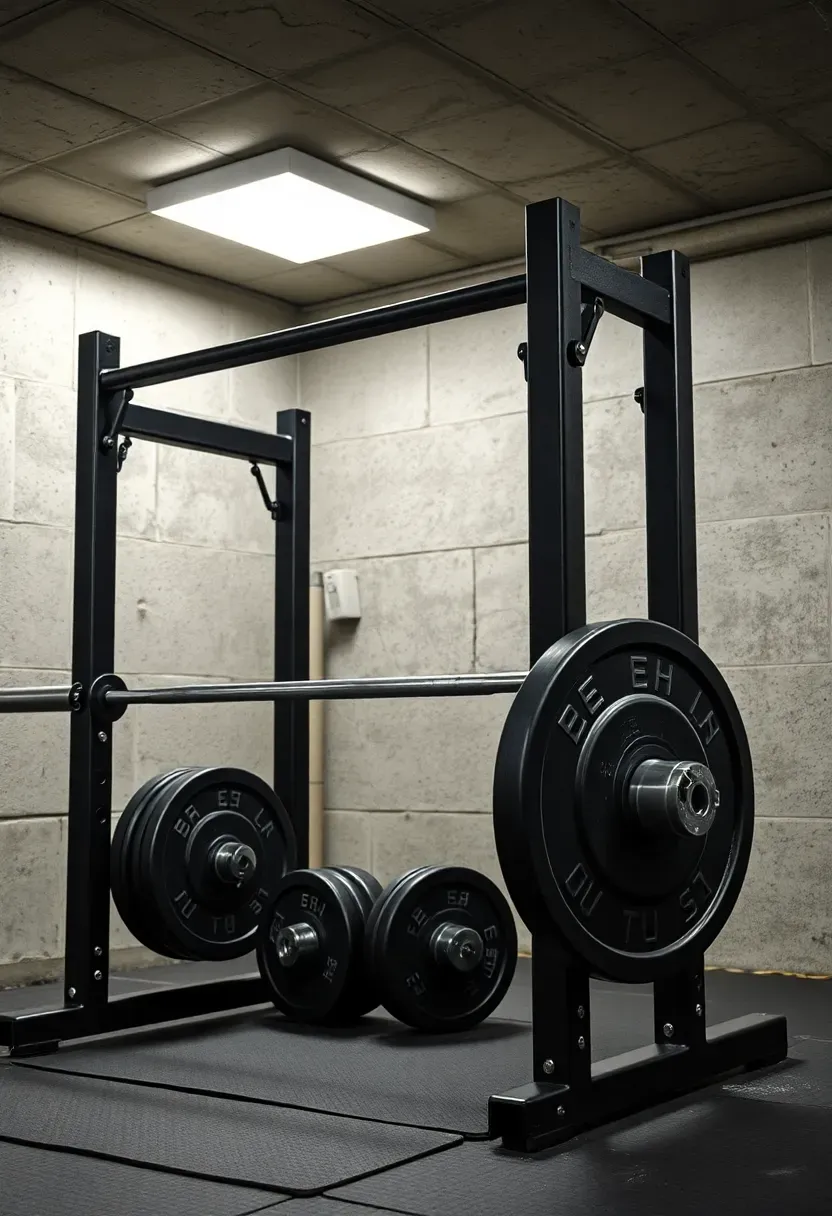
A power rack is the centerpiece of any serious home gym. It handles squats, bench press, overhead press, pull-ups, and barbell rows — five compound lifts from one piece of equipment. Basement ceilings typically sit between 7 and 8 feet, so measure before ordering. Short racks designed for low ceilings (80 to 84 inches tall) exist from brands like Titan, Rep Fitness, and Rogue. Bolt the rack into the concrete slab using wedge anchors for stability. The footprint is usually about 4x4 feet, but leave 3 feet of clearance on each side for plate loading.
Tips
- Check ceiling height at the lowest point, accounting for ductwork and pipes
- A half rack works if full-cage dimensions are too tight for your layout
- Add J-cups at multiple heights so you can quickly switch between squat and bench setups
We picked a few things that go well with this idea: High Density Foam Roller Recovery Set (★4.5), 5-in-1 Foam Roller Muscle Recovery Kit (★4.4) and 6-in-1 Foam Roller Deep Massage Set (★4.3). As an Amazon Associate we earn from qualifying purchases.
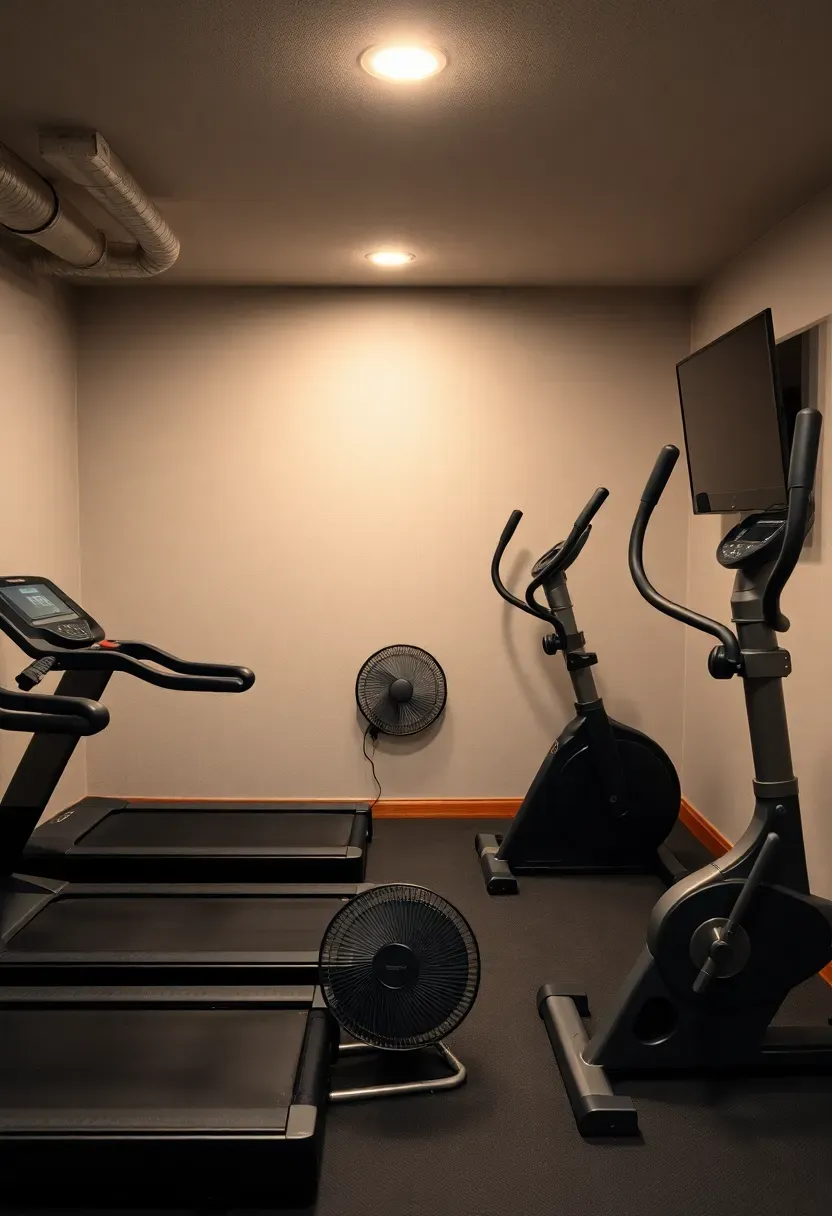
4. Dedicated Cardio Zone
The problem with mixing cardio and weights
Putting a treadmill next to your squat rack seems efficient until you realize the vibration from running shakes the barbell in the J-cups and the noise drowns out anything else. Cardio machines also generate heat and humidity, which accelerates rust on nearby iron equipment.
A better layout
Designate one end of the basement as the cardio area, ideally near the HVAC return vent for airflow. A treadmill footprint is roughly 6x3 feet, a bike about 4x2 feet, and an elliptical around 6x2.5 feet. Mount a TV on the wall at eye height — cardio is easier when you can watch something. Keep a small fan pointed at this zone. If budget is tight, a single rower handles both cardio and strength for about $300 to $900 depending on resistance type.
Watch out
- Treadmills on upper floors cause structural vibration, but basements on concrete slab handle the load fine
- Route a dedicated 20-amp circuit to the cardio zone if running a motorized treadmill
Recommended
Items for this idea
5. Yoga and Stretching Corner
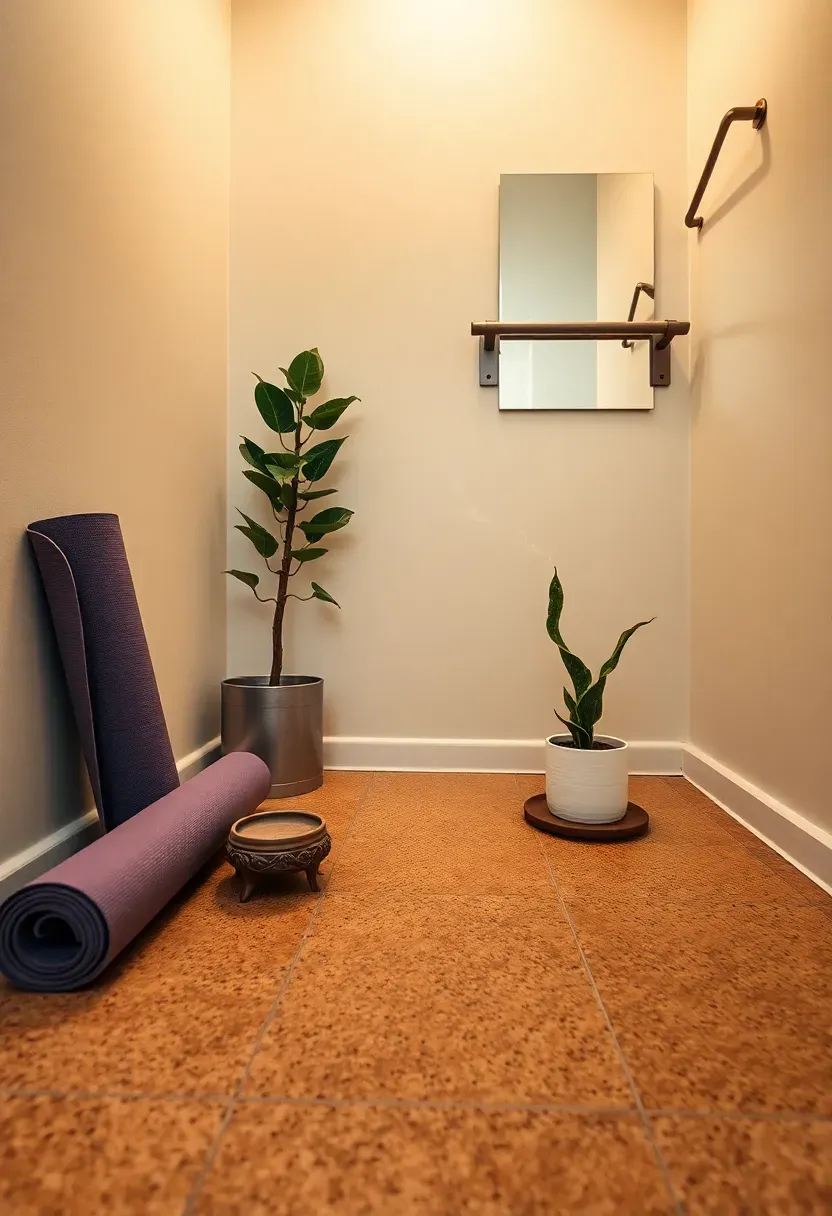
Not every square foot of your basement gym needs to hold heavy equipment. A 6x8-foot section with cork or rubber flooring, a wall-mounted barre or ballet bar at hip height, and a mirror gives you a dedicated space for mobility work, yoga flows, and post-workout stretching. Cork tiles feel warmer underfoot than rubber and absorb sound well. Hang a few resistance bands on wall hooks nearby. This corner also works as a warm-up area before lifting sessions, which most home gym owners skip because they never set up the space for it.
Tips
- Cork flooring tiles (12x12 or 24x24 inch) glue down easily and cost about $3 to $6 per square foot
- Install a dimmer switch on the overhead light so you can lower brightness for evening stretching
- A small Bluetooth speaker mounted in this corner keeps the vibe separate from the heavier lifting area
6. Heavy Bag Boxing Area
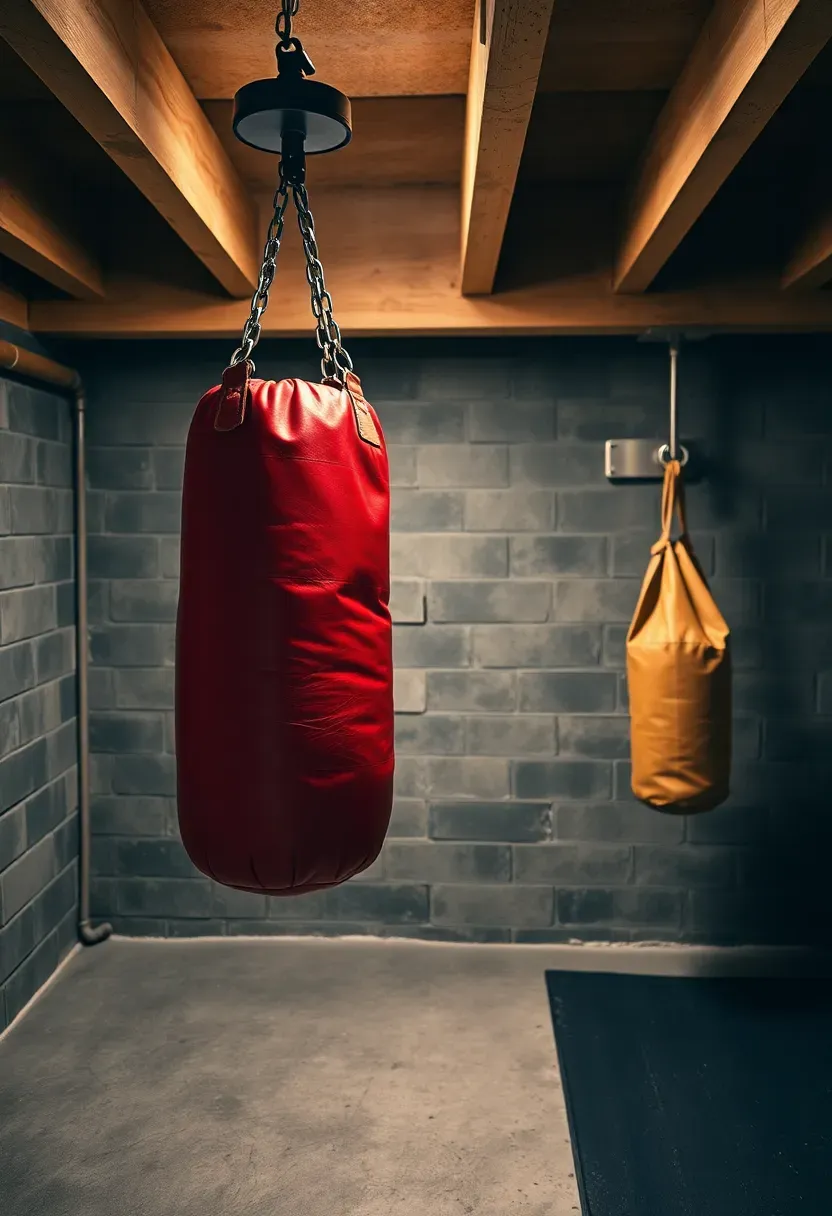
Hanging a heavy bag in the basement is one of the best cardio investments you can make, but the mounting matters. A 70- to 100-pound bag puts serious rotational force on whatever it hangs from. If your basement has exposed joists, bolt a heavy bag mount across two joists using lag bolts — never hang from a single joist. For finished ceilings, a freestanding heavy bag stand avoids structural questions entirely, though it takes up more floor space (about 4x4 feet). Pair the heavy bag with a speed bag platform mounted on an adjacent wall stud for a full boxing station.
How to set it up
- Locate a structural beam or doubled joist that can handle dynamic loads
- Install a swivel mount rated for at least 150 lbs to prevent chain twist
- Place a 4x4-foot rubber mat section below the bag for dropped sweat and foot traction
- Keep 5 feet of clearance around the bag in every direction so it can swing freely
Recommended
Items for this idea
7. Indoor Climbing Wall
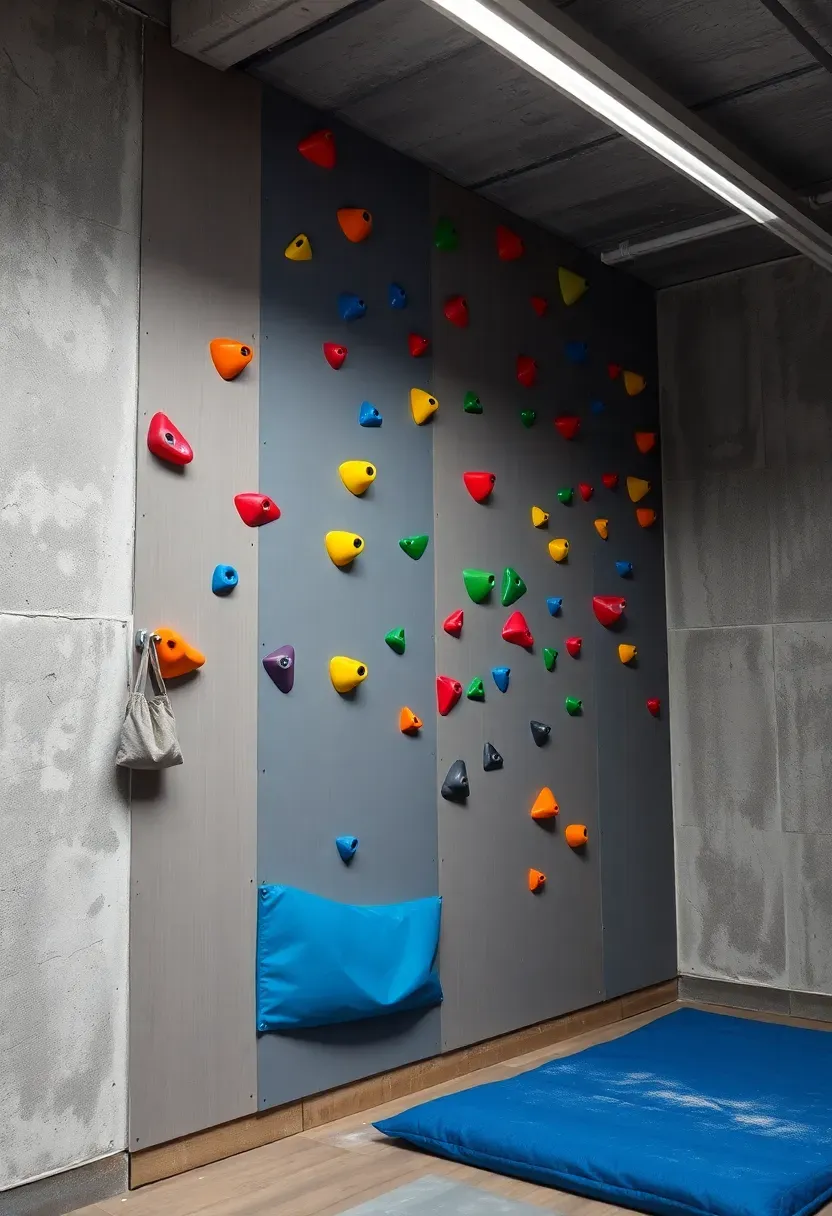
A climbing wall turns dead wall space into a full-body workout station. Basement walls are usually concrete block or poured concrete, which actually makes mounting easier — you can use concrete anchors to attach a plywood backer panel, then screw T-nut climbing holds anywhere you want. A 10x8-foot section with 40 to 60 holds costs $400 to $800 for materials. Set the wall at a slight overhang (10 to 15 degrees past vertical) for a harder workout. Place a 4-inch-thick crash pad below. Kids love these too, which means your gym doubles as a play area.
Tips
- Use 3/4-inch ACX plywood attached to furring strips so the T-nuts have clearance behind the panel
- Rearrange holds every few months to create new routes and prevent plateau
- Add a hangboard at the top for grip-strength training between climbing sessions
8. Dumbbell Wall Rack System
Floor racks vs. wall-mounted racks
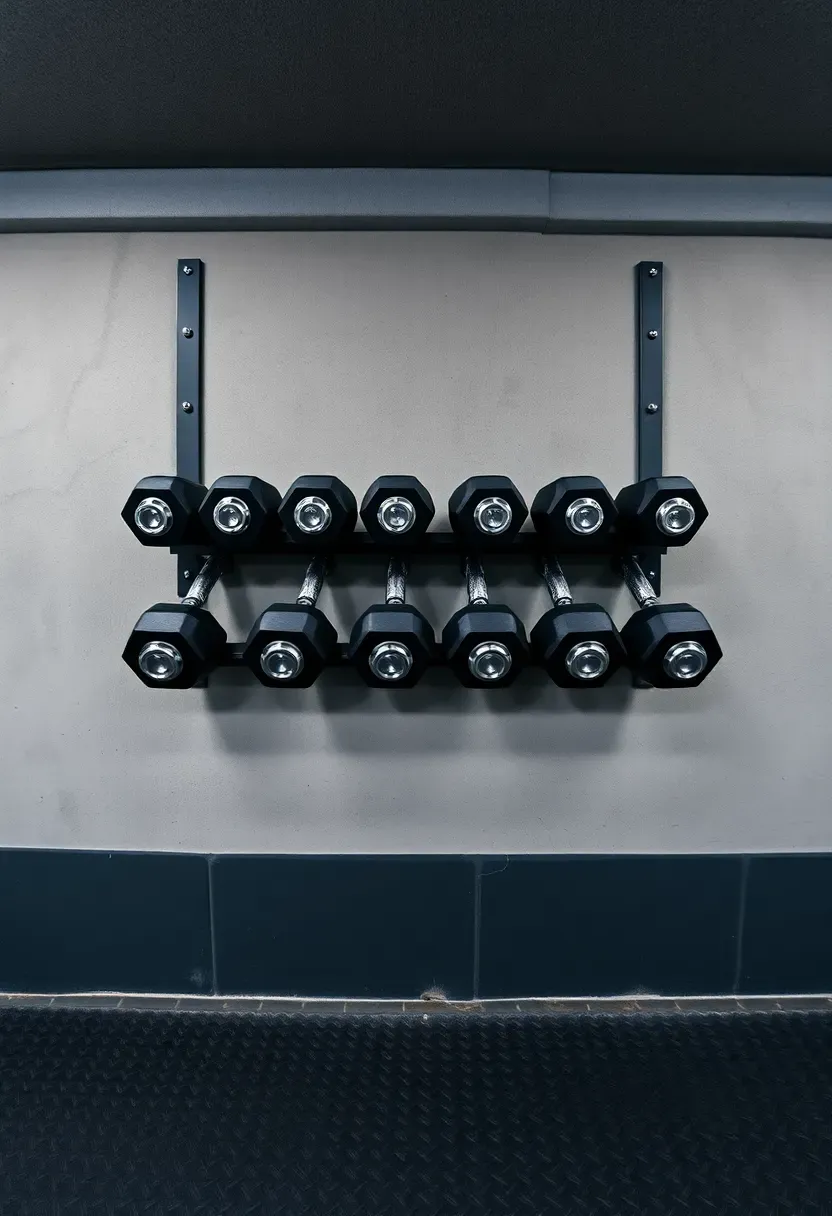
Floor-standing dumbbell racks eat up 2x5 feet of floor space and create dead zones behind them where dust collects. Wall-mounted racks bolt into studs (or directly into concrete basement walls) and hold dumbbells at waist height, freeing the floor completely. They also force you to organize by weight since each slot is visible.
What to buy
A basic wall-mounted rack holding 5 to 6 pairs of dumbbells costs $80 to $200. The sturdier versions use 2-inch steel tubing and support up to 500 lbs total. If you go adjustable — a single pair of adjustable dumbbells from 5 to 52.5 lbs — you skip the rack entirely and save massive space, though the per-set cost runs $300 to $400.
Choose wall-mounted if
- Your basement gym is under 200 square feet
- You already own 4+ pairs of fixed dumbbells
- You want the floor clear for burpees, kettlebell swings, or floor press
Recommended
Items for this idea
9. Resistance Band Anchor Wall
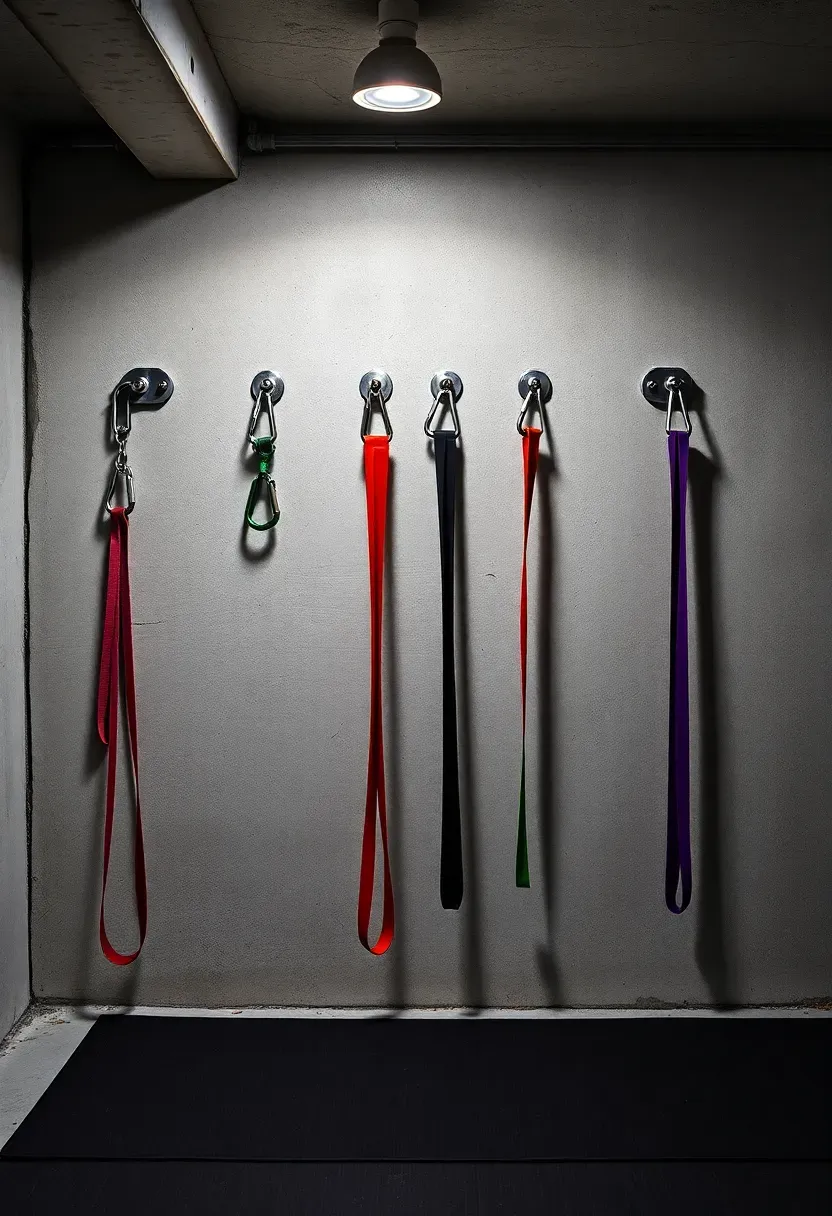
This one costs under $50 and adds dozens of exercises to your routine. Screw three or four heavy-duty anchor plates into the concrete wall at ankle, knee, chest, and overhead height. Each anchor holds a carabiner clip that connects to looped resistance bands. You get cable-fly movements, face pulls, tricep pushdowns, and leg abductions without a $2,000 cable machine. The anchors handle pull forces up to 300 lbs each when properly installed with concrete sleeve anchors.
Tips
- Space anchors 16 inches apart vertically for maximum exercise variety
- Use 41-inch loop bands rather than tube bands with handles — they last longer and offer more attachment options
- Mark the wall with tape labels showing which band color matches which resistance level
10. Cable Machine Nook
Why cables beat free weights for some exercises
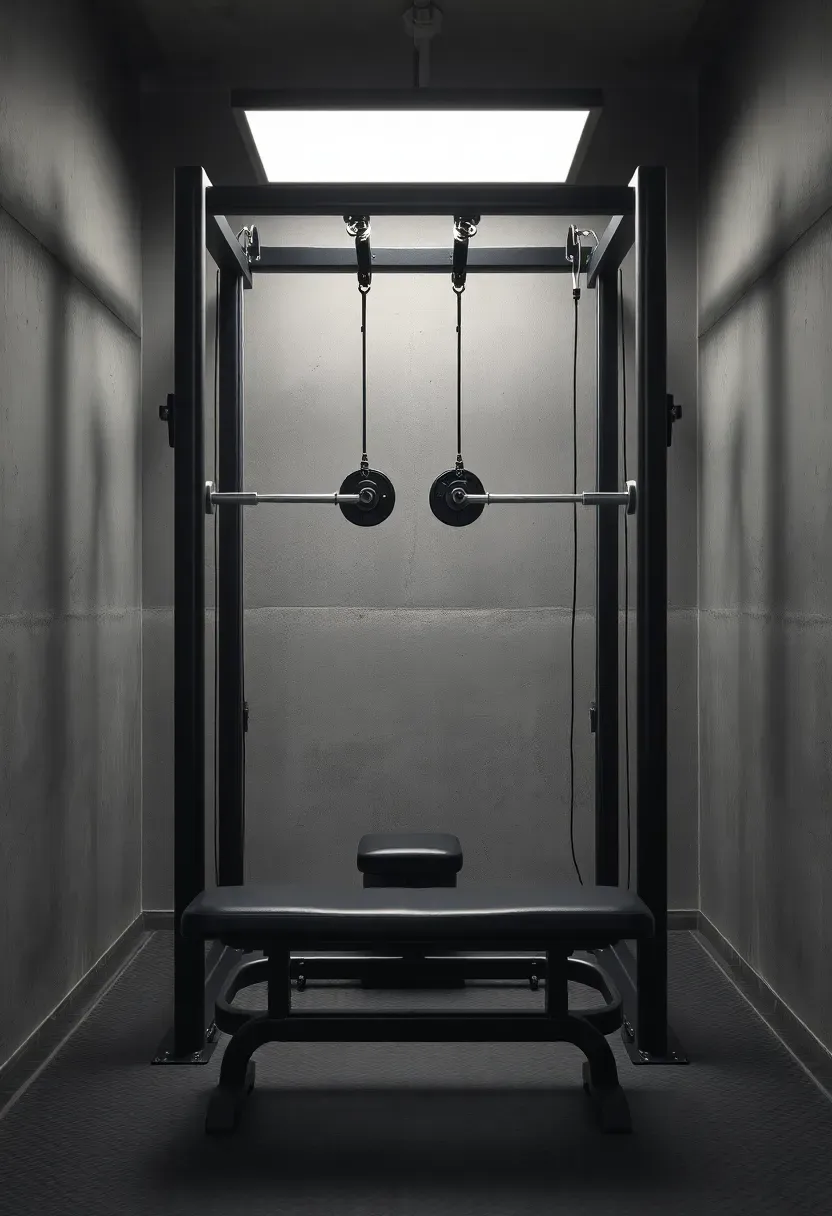
Free weights are king for compound lifts, but cables maintain constant tension through the entire range of motion. That matters for lateral raises, cable crossovers, face pulls, and rotator cuff work where gravity limits free-weight effectiveness at certain angles.
Making it fit
A functional trainer (dual adjustable pulley system) needs roughly 4x7 feet of floor space and 7 feet of ceiling clearance. Compact models from Inspire, XMark, and Titan fit under standard basement ceilings. Most weigh 300 to 500 lbs fully loaded, so place them on the concrete slab rather than over floor drains. Budget $800 to $2,500 depending on weight stack size. Position the machine facing a mirror so you can watch cable path during unilateral movements.
Pros and cons
- Pro: Hundreds of exercise variations from one footprint
- Pro: Safer for solo training since there is no barbell to get pinned under
- Con: Heavy and nearly impossible to move once positioned — commit to placement
Recommended
Items for this idea
11. Rowing and Bike Corner
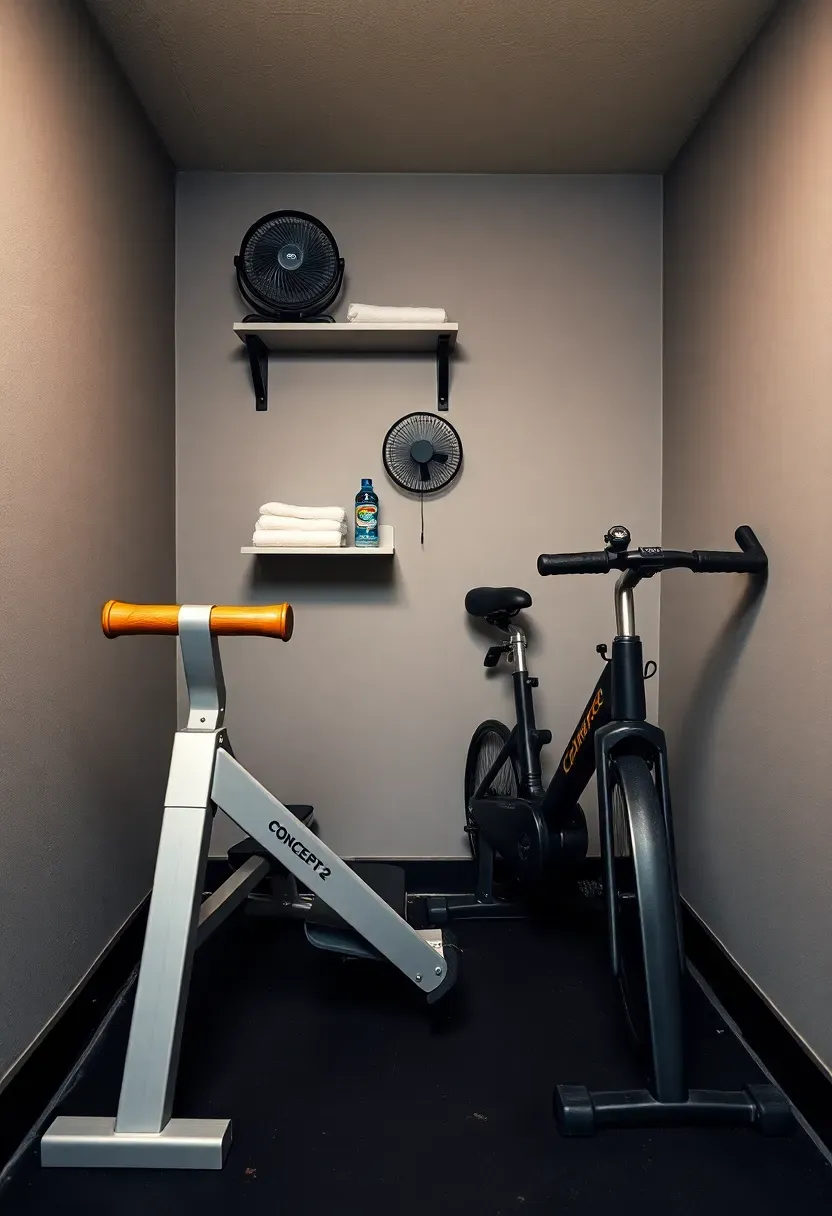
Rowers and air bikes deserve their own alcove because both generate serious noise and wind. A Concept2 rower is 8 feet long during use but folds to stand vertically against a wall when stored — a huge advantage in a tight basement. An air bike (like the Rogue Echo or Assault Bike) stays in place at about 4x2 feet. Together they cover steady-state cardio, HIIT intervals, and active recovery days. Place them near a wall outlet for any digital monitors and mount a small shelf for a water bottle and towel at arm height.
Tips
- A rower on rubber flooring is quiet enough to use at 5 AM without waking anyone upstairs
- Air bikes are louder — position them away from ductwork that carries sound to upper floors
- Both machines have low impact on joints, which makes them better basement choices than treadmills for long sessions
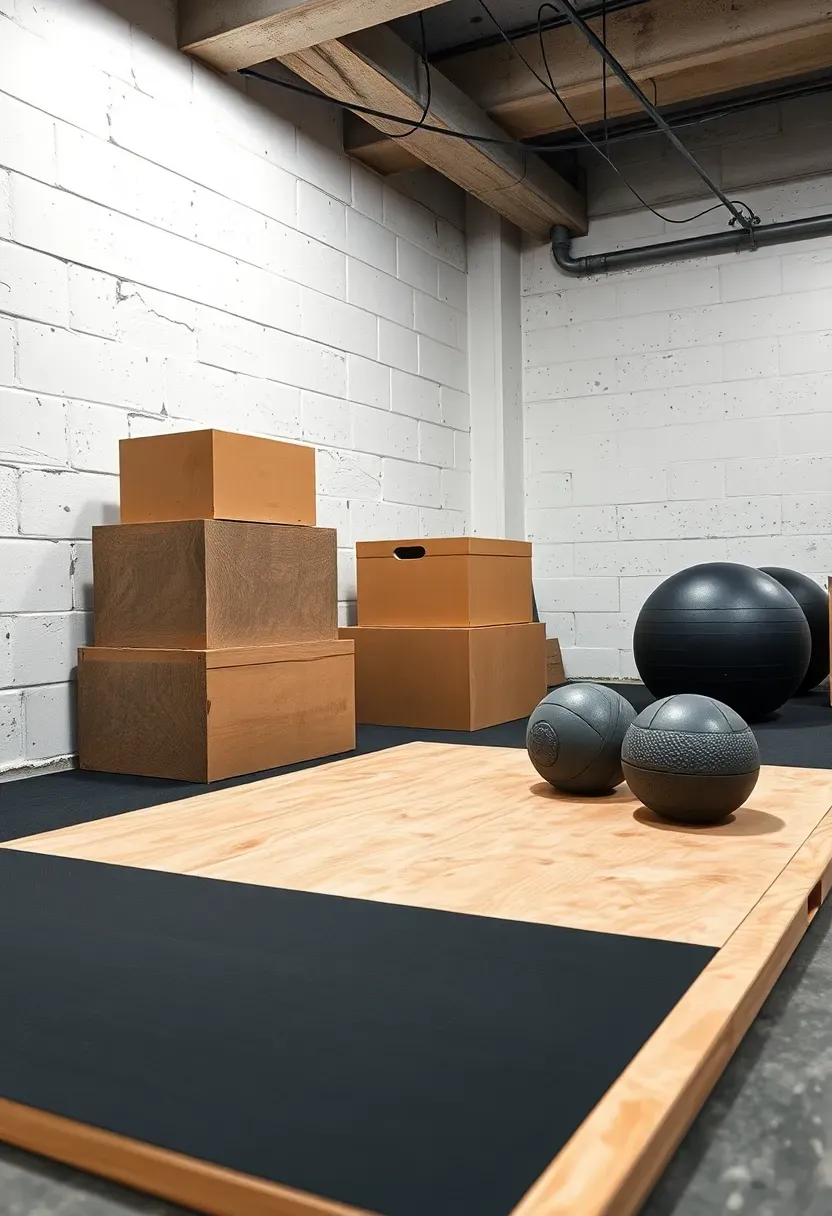
12. Plyometric Platform Area
Box jumps, broad jumps, and medicine ball slams need a surface that absorbs impact and a ceiling high enough to clear your head at the top of a jump. Build a dedicated plyo platform using two layers of 3/4-inch plywood topped with a horse stall mat, roughly 6x8 feet. This gives a stable, forgiving surface for explosive movements.
How to build it
- Cut plywood sheets to your desired platform size and screw the two layers together
- Lay a 3/4-inch rubber stall mat on top, trimmed to match
- Place the platform against a wall so it does not slide during lateral movements
- Add plyo boxes in 20, 24, and 30-inch heights beside the platform
Watch out
- Measure ceiling height minus your height with arms raised — you need at least 12 inches of clearance for box jumps
- Medicine ball slams on concrete without a platform will crack the slab over time
Recommended
Items for this idea
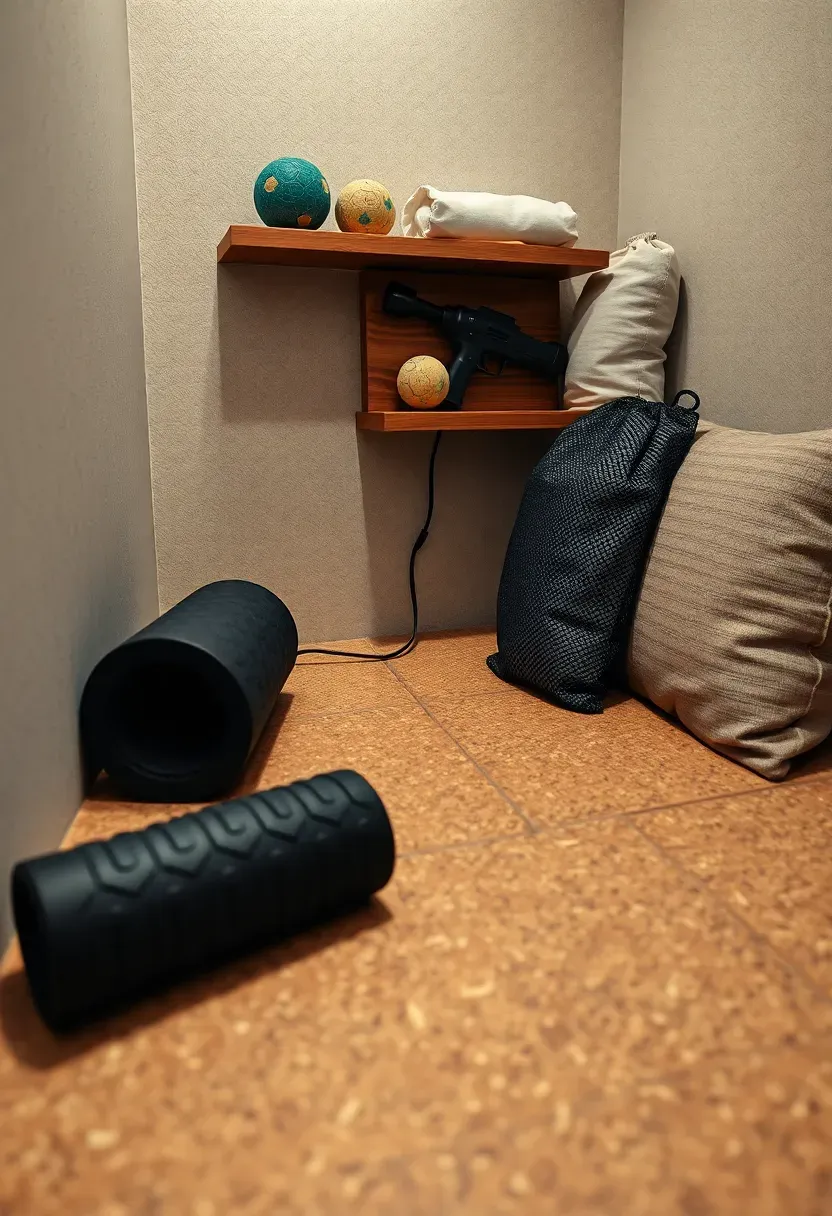
13. Recovery and Foam Rolling Station
Most home gyms skip recovery entirely, and it shows in how quickly people burn out or get injured. Carve out a 5x5-foot section with softer flooring — cork or thick rubber — and stock it with a foam roller, lacrosse ball, massage gun, and a yoga bolster. Mount a small shelf on the wall for the massage gun and its attachments. A wall-mounted stretching strap or pull-up assist band at shoulder height helps with doorway-style stretches. This zone costs $100 to $200 to set up and pays for itself in reduced soreness and fewer skipped sessions.
Tips
- Place this station near the gym exit so you pass through it on the way out — you are more likely to use it
- A heated pad or small space heater in this corner during winter makes foam rolling less miserable
- Keep a timer visible here so you actually spend 5 to 10 minutes rolling instead of rushing through it
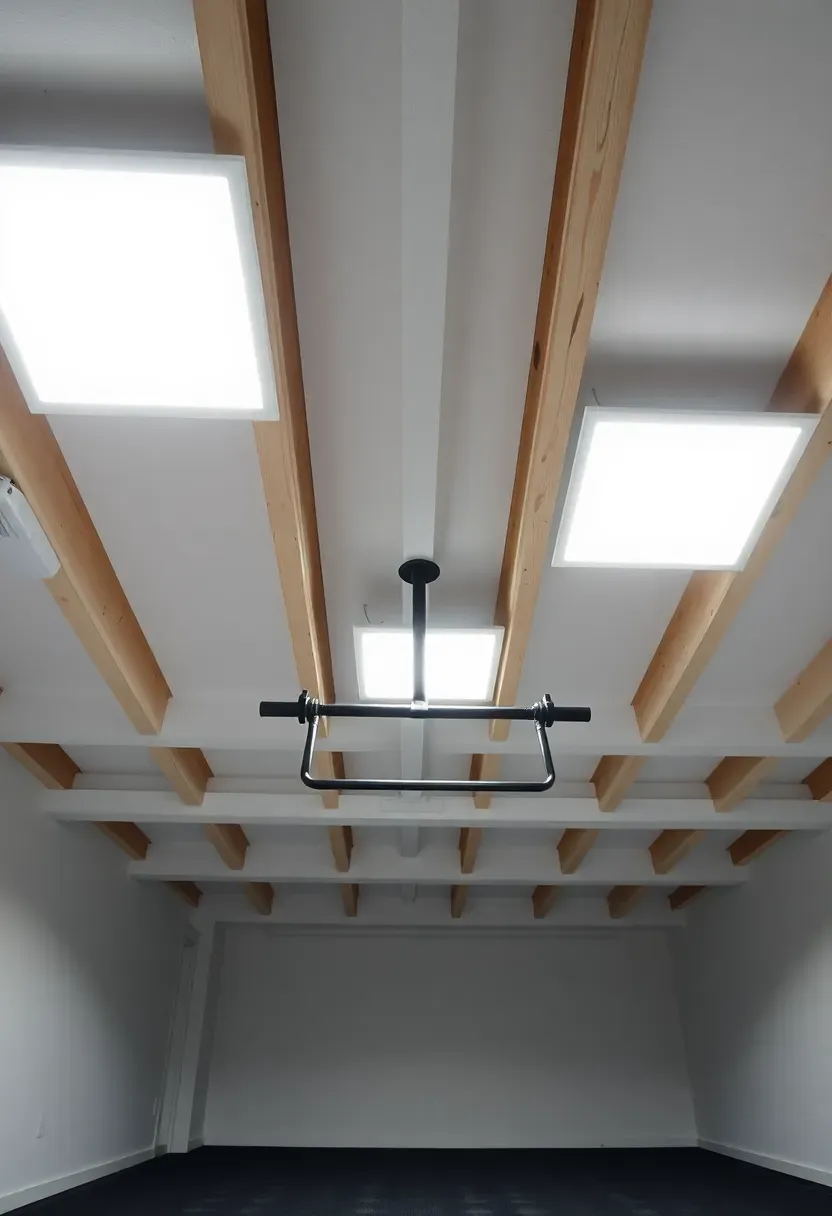
14. Overhead LED Lighting Upgrade
Basements are dark by nature, and bad lighting kills motivation. Replace any existing fluorescent tubes with 4-foot LED shop lights or flush-mount LED panels rated at 4000K to 5000K color temperature. That range mimics daylight without the harsh blue tint of higher Kelvin ratings. Install enough fixtures to hit 50 to 70 foot-candles at floor level — roughly one 4-foot LED fixture per 30 to 40 square feet of gym space. Avoid recessed cans in basements with low ceilings since they require 6+ inches of cavity you may not have.
Tips
- Linkable LED shop lights daisy-chain together on a single switch, reducing wiring work
- Add a separate circuit or smart switch for the lifting area versus the cardio or yoga zone
- Avoid warm-white (2700K) lighting in the gym — it reads as sleepy rather than energizing
Recommended
Items for this idea
15. Sound System and Motivation Wall
Sound setup
A single waterproof Bluetooth speaker in the $50 to $100 range handles most basement gyms fine. Mount it high in a corner pointing down toward the center of the room for even coverage. If you want more, a pair of bookshelf speakers on wall brackets connected to a small Class D amplifier fills even a large basement with clean sound for under $200 total.
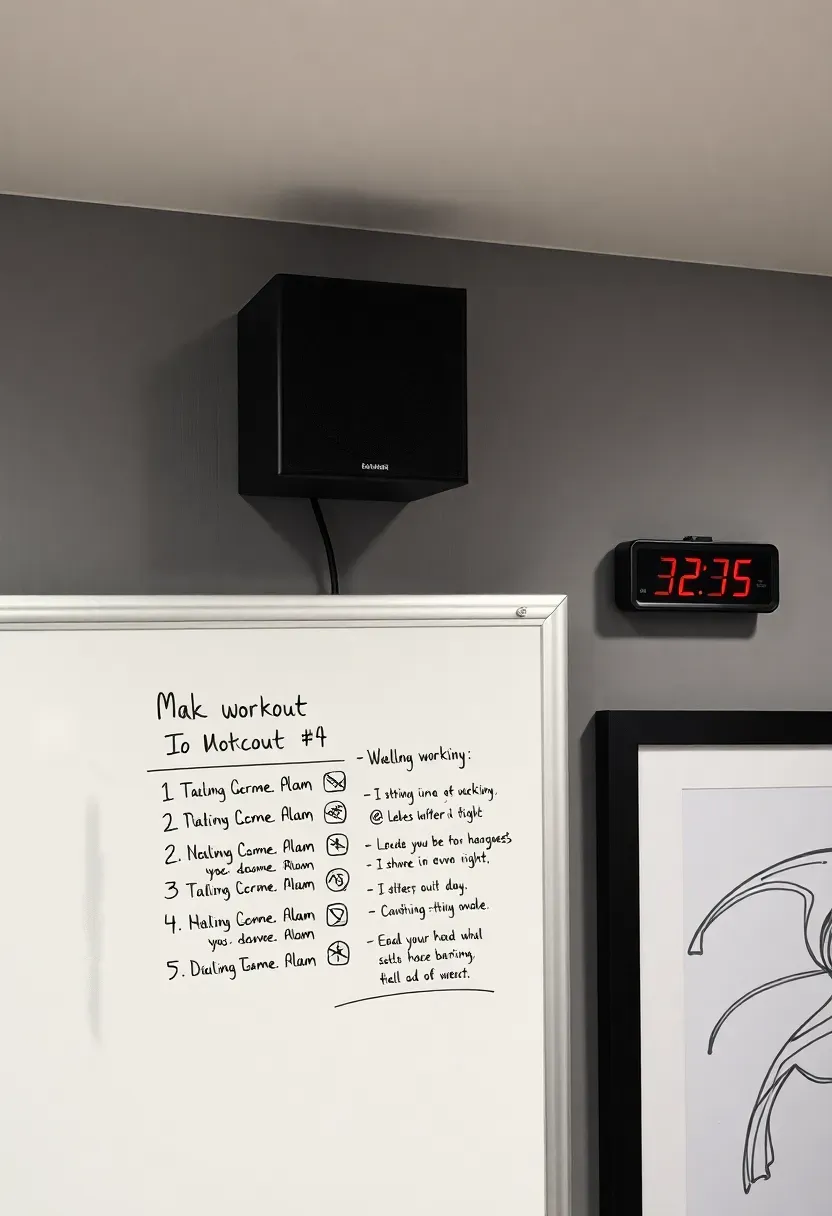
Motivation wall
Dedicate one wall section to a whiteboard or chalkboard where you track your current program, personal records, and weekly goals. Seeing progress written out — not just logged in an app — creates accountability. Add a few photos or posters that mean something to you personally, not generic fitness slogans. A wall-mounted clock with a seconds hand or a digital interval timer ($20 to $40) handles rest periods and timed sets.
Choose this if
- You train alone and need external cues to maintain intensity
- Your phone speaker is not cutting it for heavy squat sessions
- You want a visual reminder of what you hit last week
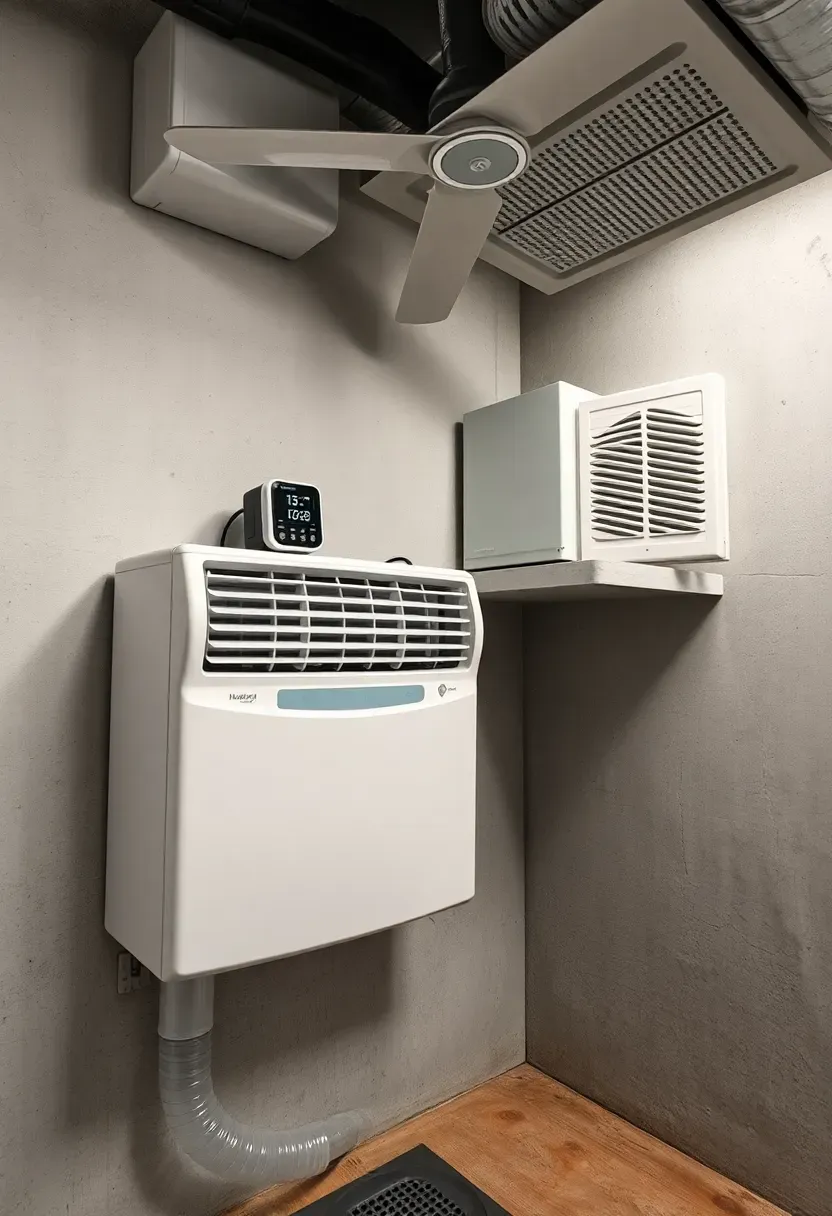
16. Ventilation and Dehumidifier Setup
Basements trap moisture. Add a sweating human and it gets worse fast — rust on barbells, mold on walls, and a permanent gym-sock smell that seeps into the upstairs. A 50-pint dehumidifier ($200 to $350) running continuously keeps relative humidity below 50%, which is the threshold where mold stops growing and steel stays dry. Route the drain hose to a floor drain or sump pit so you never have to empty a tank.
How to improve airflow
- Install a bathroom exhaust fan (110+ CFM) vented to the exterior if your basement has a rim joist accessible to the outside
- Place a box fan or wall-mount oscillating fan to circulate air during workouts
- Keep HVAC vents open in the gym area — some homeowners close basement vents to save energy, which backfires in a gym
- Run the dehumidifier 24/7, not just during workouts, to maintain stable conditions
Recommended
Items for this idea
17. Adjustable Bench and Barbell Corner
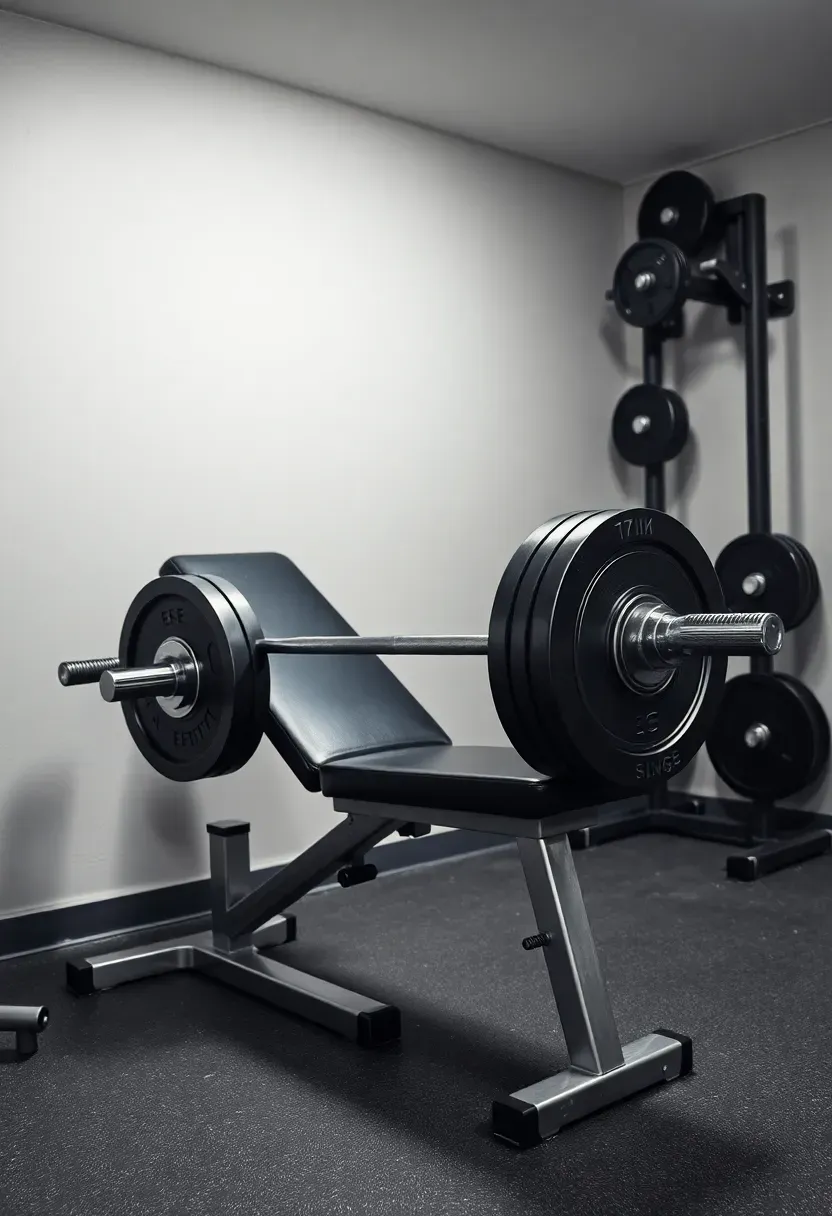
An adjustable bench paired with a barbell and a set of plates covers flat bench press, incline press, seated shoulder press, bent-over rows, and Romanian deadlifts. If you already have a power rack (idea 3), you can bench inside it with the safety arms as your spotter. If you skipped the rack, a pair of independent barbell stands with adjustable height work for bench and squat at a fraction of the cost — about $80 to $150 versus $400+ for a rack. Choose a bench that adjusts from flat to at least 75 degrees for full pressing versatility.
Tips
- A 300-lb Olympic weight set (bar plus plates) runs $250 to $400 and handles most lifters for years
- Bumper plates cost more but let you deadlift and drop without damaging your floor or the plates
- Store plates on a wall-mounted tree to keep the floor clear — $40 to $80 for a basic model
18. Gymnastic Rings and Suspension Trainers
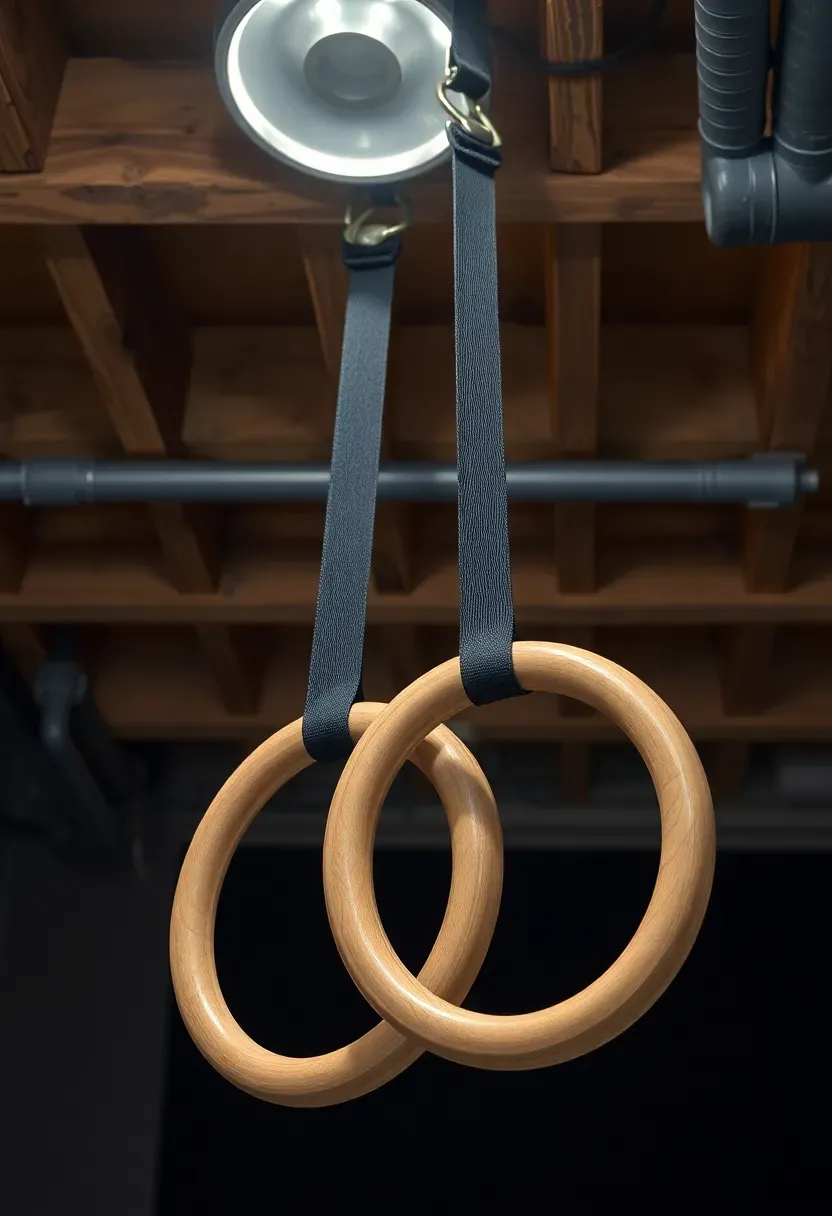
Gymnastic rings are the most underrated piece of home gym equipment. A pair costs $30 to $60, mounts to a single ceiling joist or pull-up bar with heavy-duty straps, and unlocks ring dips, ring push-ups, muscle-ups, inverted rows, and L-sits. Suspension trainers like TRX straps serve a similar role with a lower skill floor — they mount the same way and handle hundreds of bodyweight exercises by adjusting your angle to the floor.
How to set them up
- Find a ceiling joist with no ductwork or pipes below it
- Install two eye bolts rated for 500+ lbs each, spaced shoulder-width apart
- Loop the ring straps through the eye bolts and adjust height for your exercise
- Mark common strap lengths with tape so you can switch exercises quickly
Watch out
- Ceiling height limits ring work — you need at least 8 feet to do dips with legs tucked
- Drywall ceilings hide joists; use a stud finder and verify with a test drill before hanging your bodyweight from anything
Recommended
Items for this idea
19. Multi-Sport Court Flooring
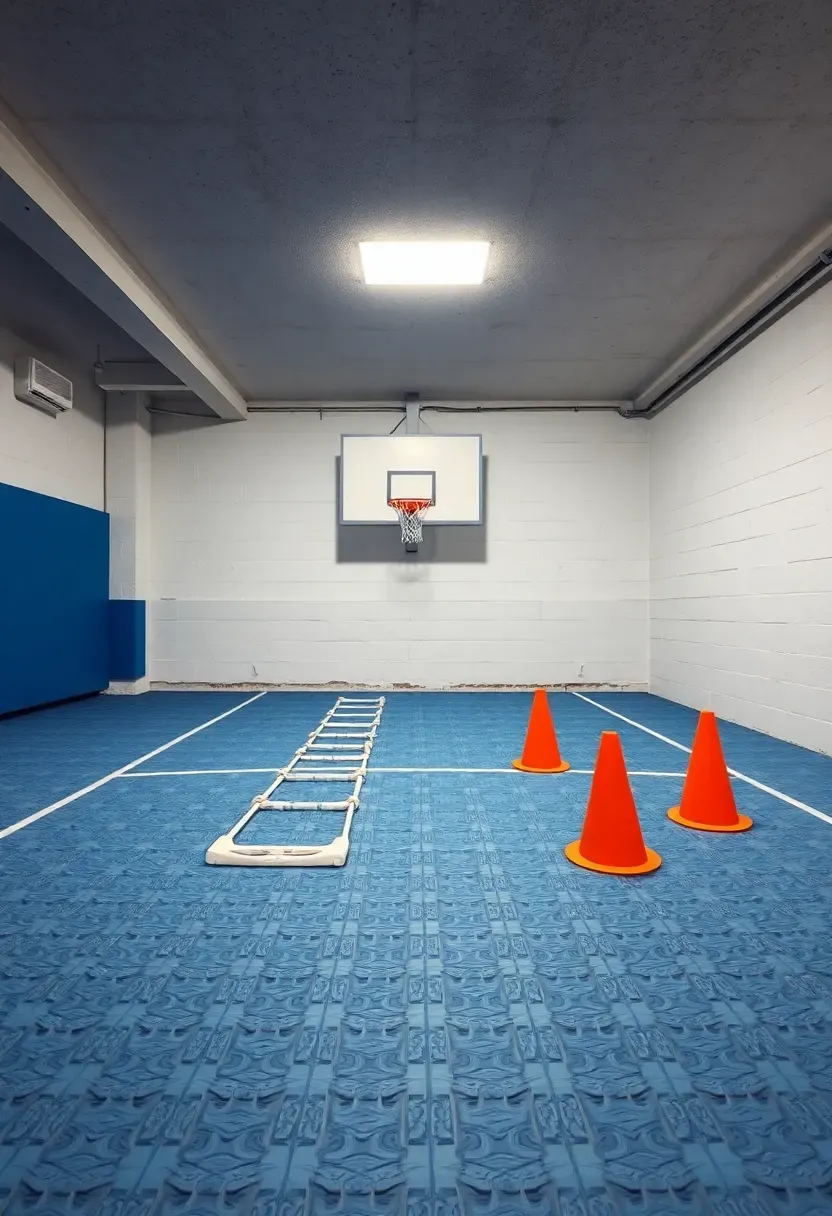
If your basement is large enough — 500+ square feet of open space — sport court tiles turn it into a versatile training area. These interlocking polypropylene tiles snap together over concrete and provide a consistent, slightly cushioned surface for agility drills, basketball shooting, jump rope, and footwork training. A half-court basketball setup needs about 30x30 feet, but even a 20x15-foot area works for agility ladders, cone drills, and small-sided practice. The tiles run $3 to $6 per square foot and come in multiple colors, so you can mark out boundary lines and training zones without paint.
Tips
- Court tiles add about 5/8 inch of height, so check clearance under ductwork and at doorways
- A wall-mounted adjustable basketball hoop handles ceiling heights from 7.5 to 10 feet
- These tiles are removable — you can reconfigure or take them with you if you move
Quick FAQ
How much does it cost to build a basement gym? A basic setup — rubber flooring, an adjustable bench, a barbell set, and a pull-up bar — runs $700 to $1,200. A mid-range gym with a power rack, cable machine, and cardio equipment sits between $3,000 and $6,000. High-end builds with full flooring, mirrors, lighting, and commercial-grade equipment can exceed $10,000.
What is the best flooring for a basement gym? Interlocking rubber tiles in 3/4-inch thickness handle most home gym needs. They protect the concrete, reduce noise, and cushion joints. For yoga areas, cork tiles feel warmer. Avoid foam tiles — they compress under heavy equipment and wear out quickly.
Do I need a permit to build a gym in my basement? Usually no, as long as you are not changing the structure, adding plumbing, or altering electrical panels. Adding a bathroom to your gym area or framing new walls may trigger a permit. Check your local building department — a quick phone call saves potential headaches.
Will basement gym equipment cause moisture problems? Only if you skip climate control. A dehumidifier keeping humidity below 50% prevents rust and mold. Wipe down equipment after use, keep rubber mats clean, and ensure air circulates through the space. Most problems come from ignoring ventilation, not from the equipment itself.
Can my basement floor support heavy gym equipment? A standard 4-inch residential concrete slab handles 250 to 300 PSI, which is more than enough for any home gym equipment. A loaded squat rack with 500 lbs of plates concentrates force on four small feet, but that is still well within tolerances. Place rubber mats under everything as a precaution.
Building a basement gym is one of those projects where starting small actually works. Get the flooring down, add a barbell and bench, and see if you use it for a month before investing in a power rack or cable machine. The best gym is the one you show up to, and having it ten seconds from your couch removes the biggest barrier to consistency. Pick three or four ideas from this list that match how you train, set a budget, and get the floor done first — everything else builds from there.
Pinterest cover for 19 Basement Gym Ideas
About the author
OBCD
CGI visualization and interior design content. We create detailed 3D renders and curate practical design ideas for every room in your home.