27 Basement Bar Designs for Every Style
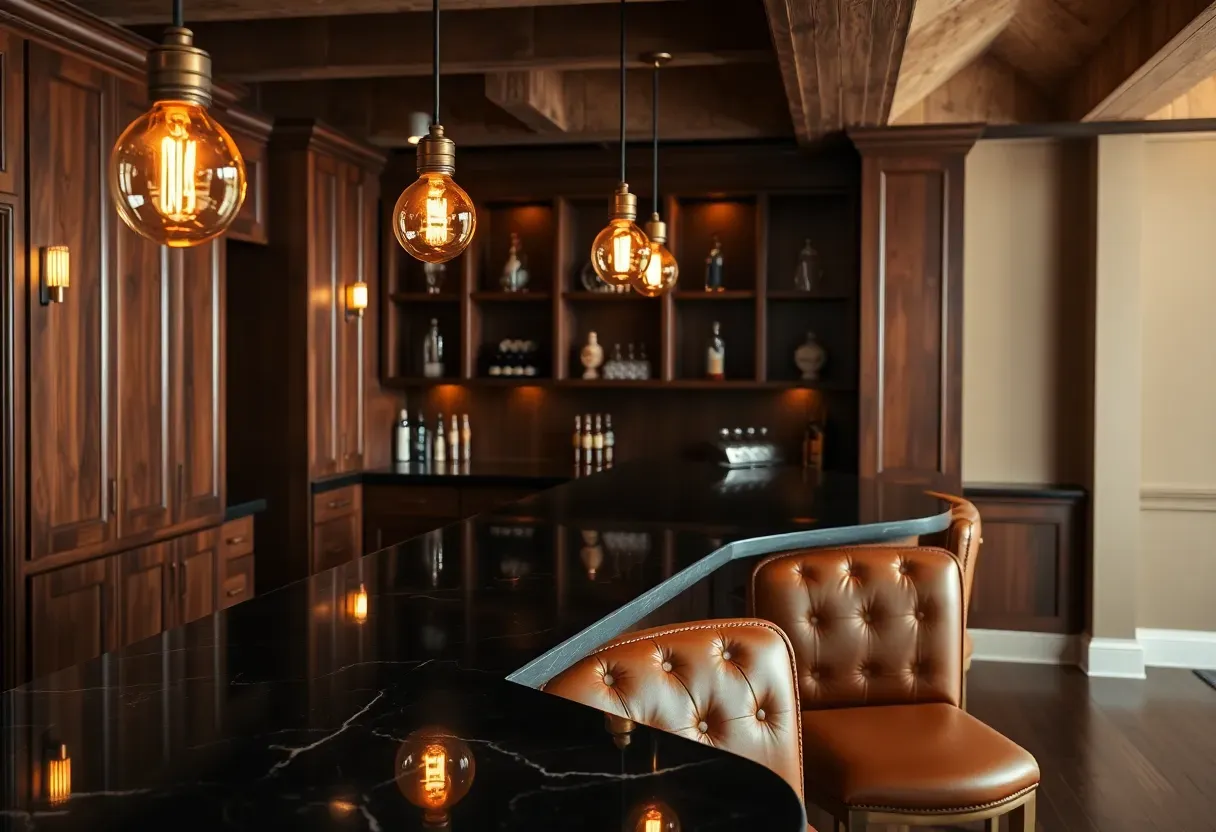
Most basement bars start the same way: someone buys a mini fridge, shoves it next to a folding table, and calls it done. It works for a while, until you realize you are mixing drinks on a wobbly surface under a bare bulb while guests crowd the stairs. A properly planned bar turns that forgotten lower level into the room people actually want to hang out in. The layout, counter height, plumbing access, and lighting all matter more below grade than they do on the main floor because you are working around ductwork, low ceilings, and limited natural light.
Here are 27 bar setups — from small corner builds to full pub replicas — organized so you can jump straight to what fits your space and budget.
Table of Contents
- Classic Wet Bar with Sink
- Rustic Pub Corner
- Speakeasy Lounge
- Modern Minimalist Bar
- Sports Bar Setup
- Wine Bar and Tasting Nook
- Tiki Bar Retreat
- Industrial Pipe Bar
- Built-In Under-Stair Bar
- Farmhouse Bar with Shiplap
- Mid-Century Cocktail Lounge
- Brewery Tap Wall
- Compact Dry Bar Cabinet
- Dark Moody Whiskey Bar
- Outdoor-Indoor Bar at Walkout
- Art Deco Glam Bar
- Game Room Bar Combo
- Coastal Bar with Reclaimed Wood
- Japanese Izakaya Corner
- L-Shaped Bar with Seating
- Floating Shelf Bar Wall
- Copper and Leather Pub
- Neon-Lit Retro Bar
- Stone and Timber Lodge Bar
- Murphy Bar Fold-Down
- Theater and Bar Hybrid
- Full Basement Tavern
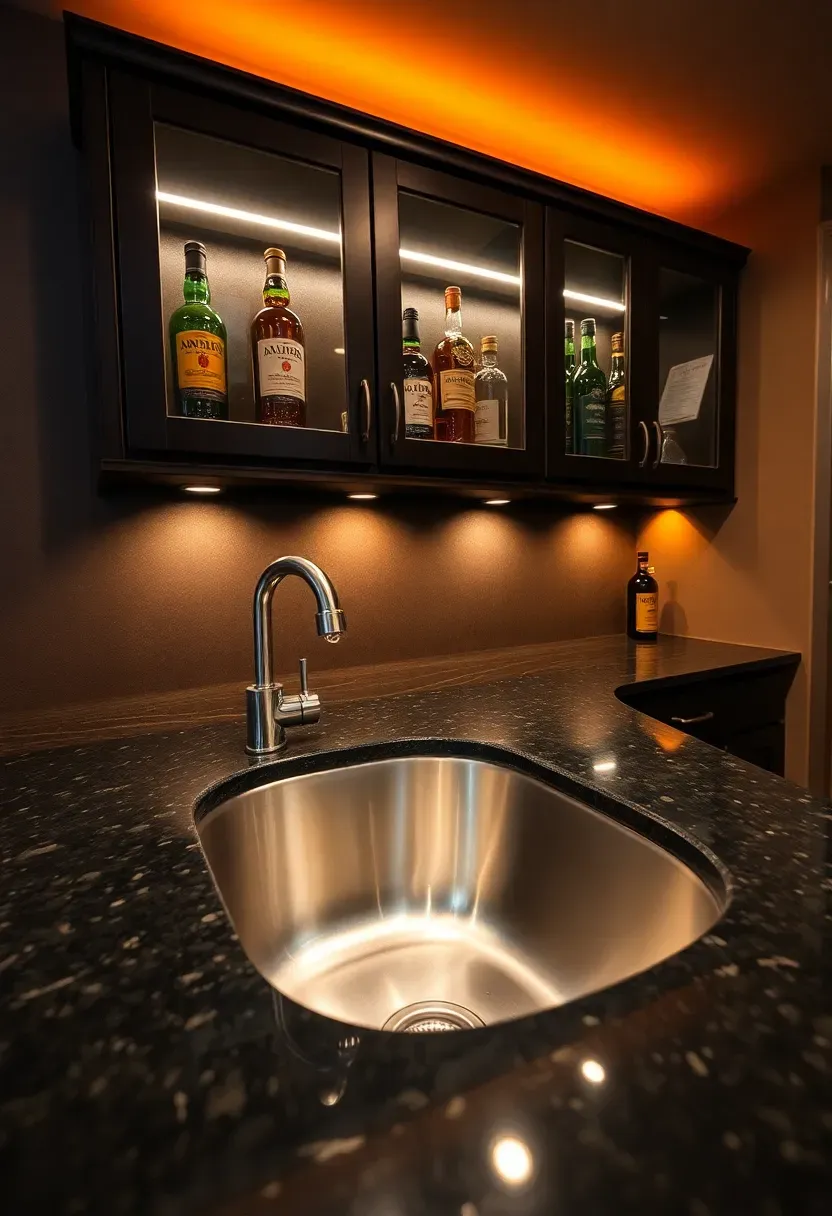
1. Classic Wet Bar with Sink
A wet bar separates casual drink setups from real entertaining spaces. Running water means you can rinse glasses, dump ice, and clean up without hauling everything upstairs. The plumbing is the hard part — you need both supply lines and a drain, and in a basement that often means breaking into the concrete slab or tying into an existing bathroom rough-in. Budget $1,500 to $3,000 for the plumbing alone if no lines exist nearby. Position the sink close to an existing bathroom or laundry stack to cut costs. A small bar sink (10x14 inches) handles cocktail prep without eating into counter space.
Tips
- A 10-inch bar sink keeps counter space usable while still handling rinse duties
- Place the wet bar within 8 feet of existing drain lines to minimize plumbing costs
- Install a point-of-use water heater under the cabinet so you are not running a long hot-water line
We picked a few things that go well with this idea: Rustic Freestanding Wine Bar Cabinet (★4.6), GDLF Fluted Bar Cabinet with Fridge Space (★4.7) and BROTTAR Bar Cabinet with LED and Fridge (★4.2). As an Amazon Associate we earn from qualifying purchases.
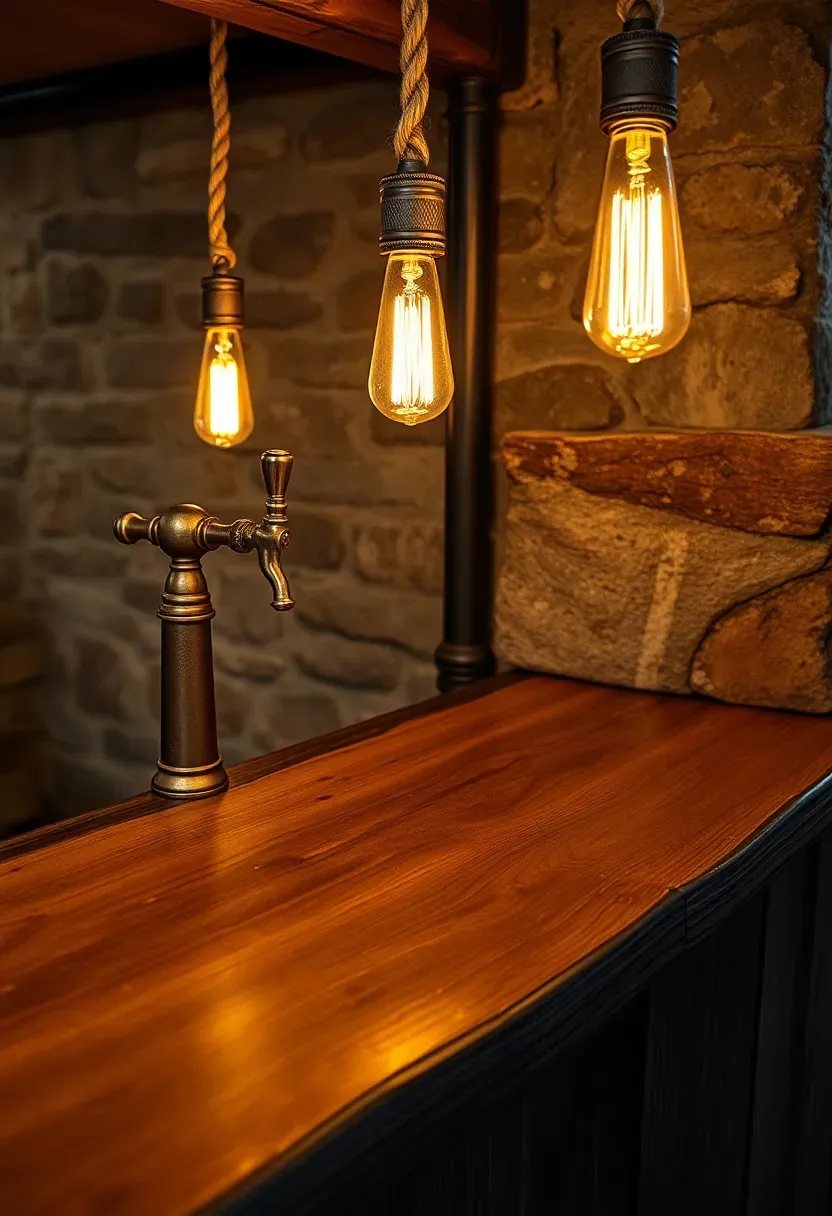
2. Rustic Pub Corner
Why it works underground
Basements already feel like pubs — low ceilings, dim lighting, enclosed walls. Instead of fighting that, lean into it with rough-sawn lumber, iron hardware, and warm-toned lighting.
Building the look
Reclaimed barn wood makes a convincing bar top for $8-$15 per board foot from salvage yards. Sand it enough to prevent splinters but leave the patina. Seal with a marine-grade polyurethane (three coats minimum) to handle spills and condensation rings. Pair with black iron pipe foot rails and vintage-style tap handles even if you are only pouring from bottles. The tap handles are decorative props that sell the whole illusion for under $40 each on resale sites.
Pros and Cons
- Pros: Budget-friendly materials, hides basement imperfections, ages well
- Cons: Reclaimed wood needs thorough pest inspection, heavy material to work with alone
We picked a few things that go well with this idea: Kavaas LED Bar Neon Sign (★4.7), Dimmable Happy Hour LED Neon Sign (★4.7) and LED Neon Bar Wall Sign USB Powered (★4.9). As an Amazon Associate we earn from qualifying purchases.
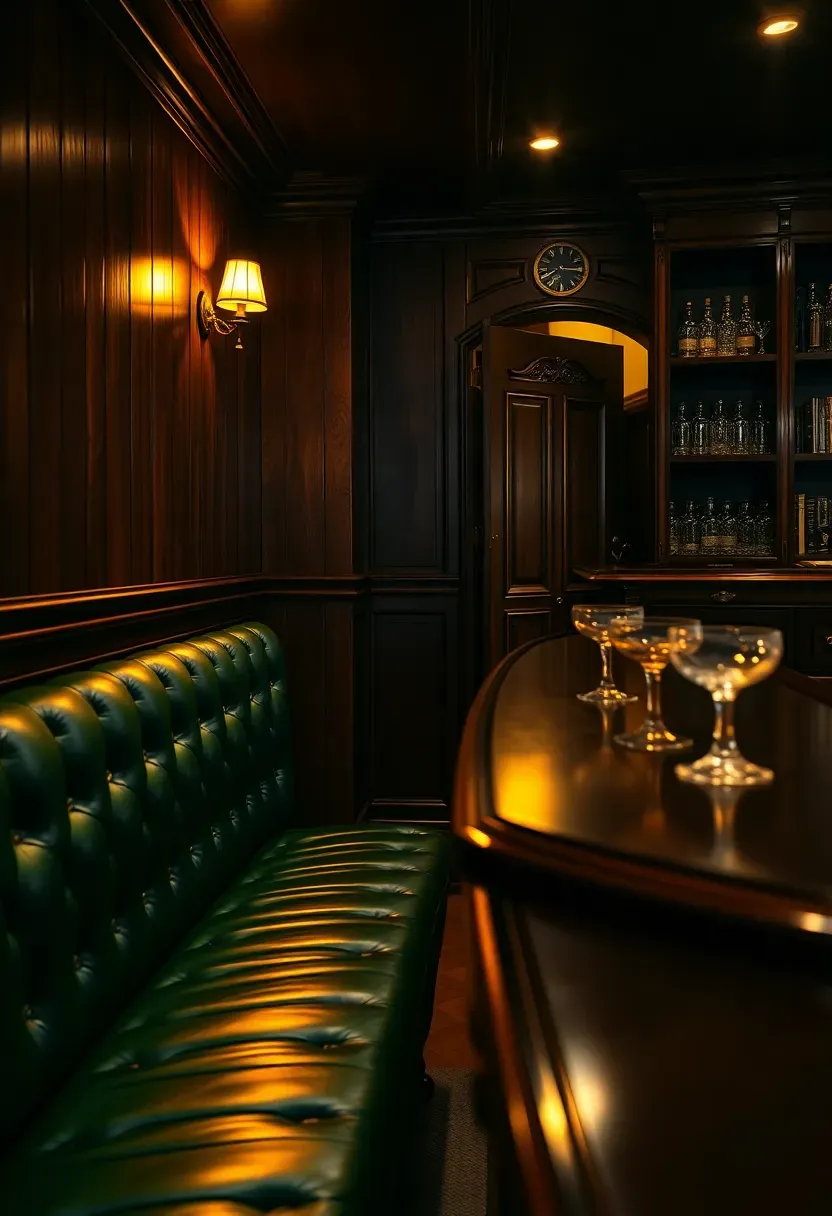
3. Speakeasy Lounge
The hidden-bar concept works perfectly in a basement because the space is already tucked away from the main living areas. A bookcase door or panel entrance adds theater without requiring structural changes — prefab hidden door kits run $800 to $2,500 depending on size. Behind that entrance, keep the palette dark: charcoal walls, brass or antique gold fixtures, and tufted leather seating. Low pendant lights at 24-inch intervals along the bar create pools of warm light rather than overhead wash. The goal is intimacy, so keep the space compact. A speakeasy that seats six feels right; one that seats twenty feels like a banquet hall.
Design details
- Velvet or leather upholstery handles drink spills better than fabric
- Install a dimmer on every light circuit — speakeasy mood lives or dies by lighting control
- A vintage cash register or rotary phone on the back bar sells the era without major investment
We picked a few things that go well with this idea: KITESSENSU Cocktail Shaker Bartender Kit with Stand (★4.7), 18-Piece Stainless Steel Bartender Kit (★4.6) and HMYBAR 22-Piece Cocktail Shaker Set (★4.8). As an Amazon Associate we earn from qualifying purchases.
4. Modern Minimalist Bar
How to get the look
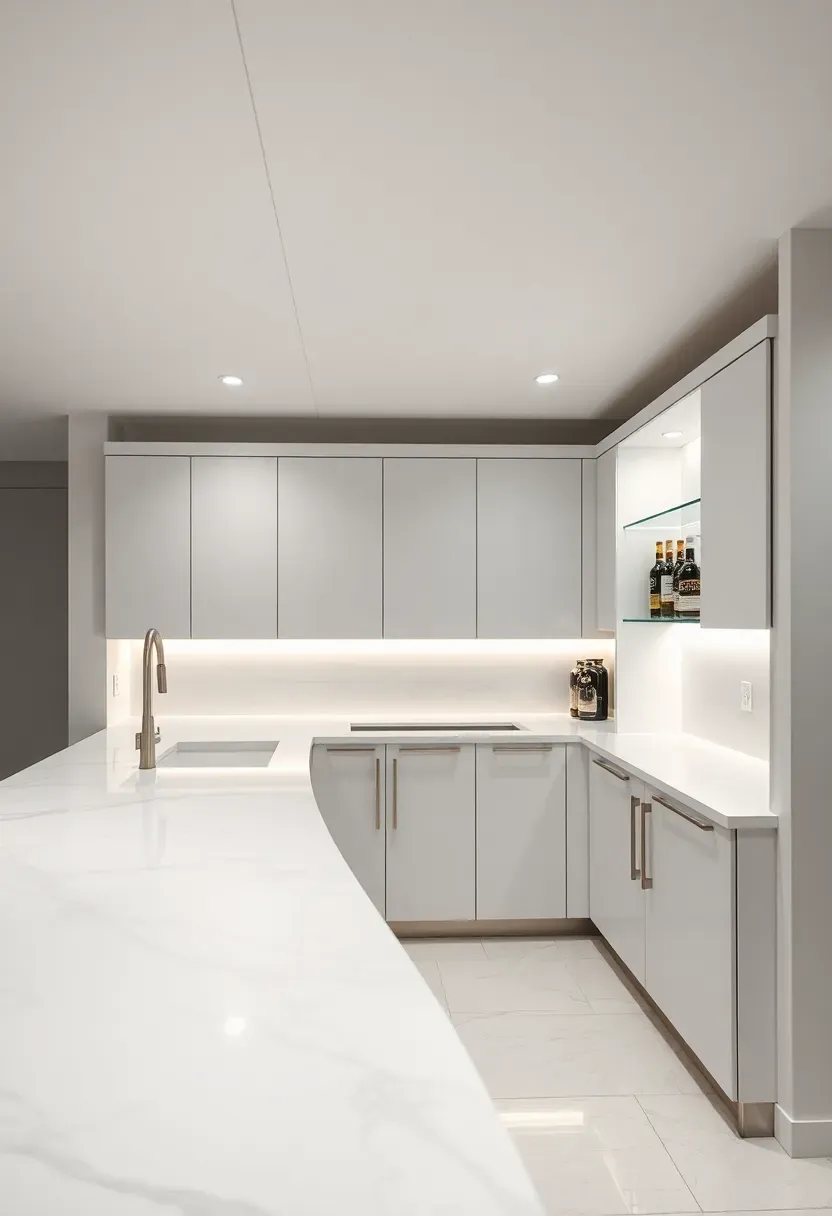
Strip away everything decorative and let materials do the talking. A waterfall-edge quartz counter in white or concrete gray becomes the focal point. Flat-panel cabinets with push-to-open hardware eliminate visible pulls. LED strips under the counter overhang and inside glass-front uppers provide all the light you need.
Step 1: Counter selection
Quartz in the 2cm thickness looks sleeker than the standard 3cm. Dekton and Neolith are alternatives that resist heat if you plan to set down hot glasses. Budget $60-$100 per square foot installed.
Step 2: Cabinet finish
Go handleless with either push-latch or j-pull edge profiles. Matte white, matte black, or walnut veneer all read modern without dating fast.
Step 3: Lighting integration
Recessed LED channels in aluminum profiles give a cleaner line than stick-on strips. Run them under the counter lip, inside display shelves, and along the toe kick for a floating effect.
Watch out
Fingerprints show on every glossy surface in dim basement light. Stick to matte finishes or be prepared to wipe down constantly.
Recommended
Items for this idea
5. Sports Bar Setup
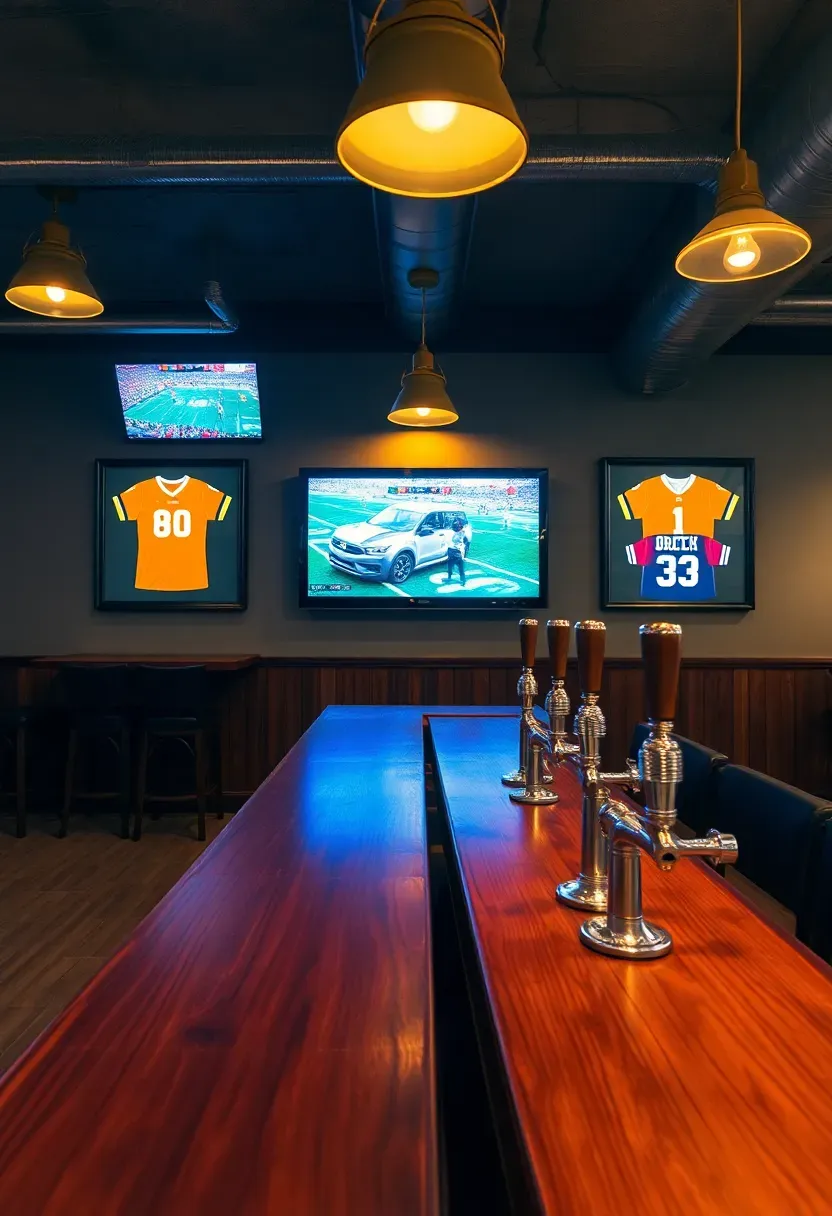
A dedicated sports bar needs three things beyond drinks: screens visible from every seat, sound that does not echo into mud, and seating that lets people face the action. Mount TVs at eye level from a standing position (center of screen at roughly 60 inches) rather than up near the ceiling where necks crane. For a 12-foot bar wall, two 55-inch screens side by side cover multiple games without requiring a single massive display. Run all cables through the wall or through surface-mount raceways painted to match — exposed HDMI cables kill the look immediately.
Tips
- Acoustic panels behind the bar reduce echo in concrete-walled basements dramatically
- A beer tap system with a dedicated kegerator under the bar costs $500-$800 and pays for itself in one football season
- Use commercial-grade rubber bar mats along the serving edge to protect the counter and muffle glass noise
6. Wine Bar and Tasting Nook
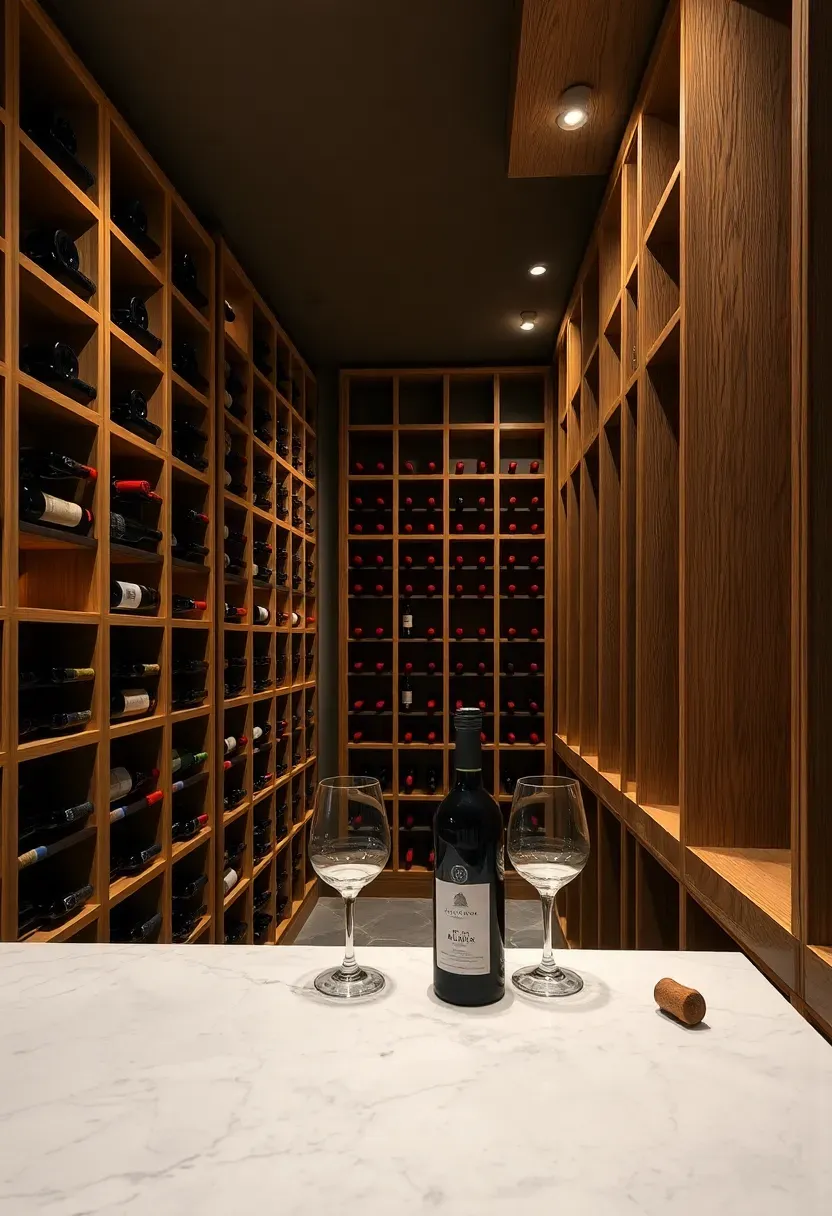
Basements offer naturally cool, stable temperatures — exactly what wine storage demands. A wine-focused bar leans on display storage rather than draft systems. Floor-to-ceiling racking along one wall holds 200+ bottles in a 6-foot span. Place a narrow tasting counter (18-24 inches deep is plenty) opposite the racking so guests face the collection while sampling. Keep the surface in marble, soapstone, or honed granite — materials that stay cool to the touch and pair visually with bottle glass. Avoid overhead fluorescent or bright LED; wine does not belong under harsh light. Use low-wattage spots angled to graze the bottles from the side.
Tips
- Maintain 55-60 degrees F and 60-70% humidity for long-term storage
- Label shelves by region or varietal so guests can browse without pulling bottles
- A small decanting station with a carafe shelf adds function without needing plumbing
Recommended
Items for this idea
7. Tiki Bar Retreat
The origin
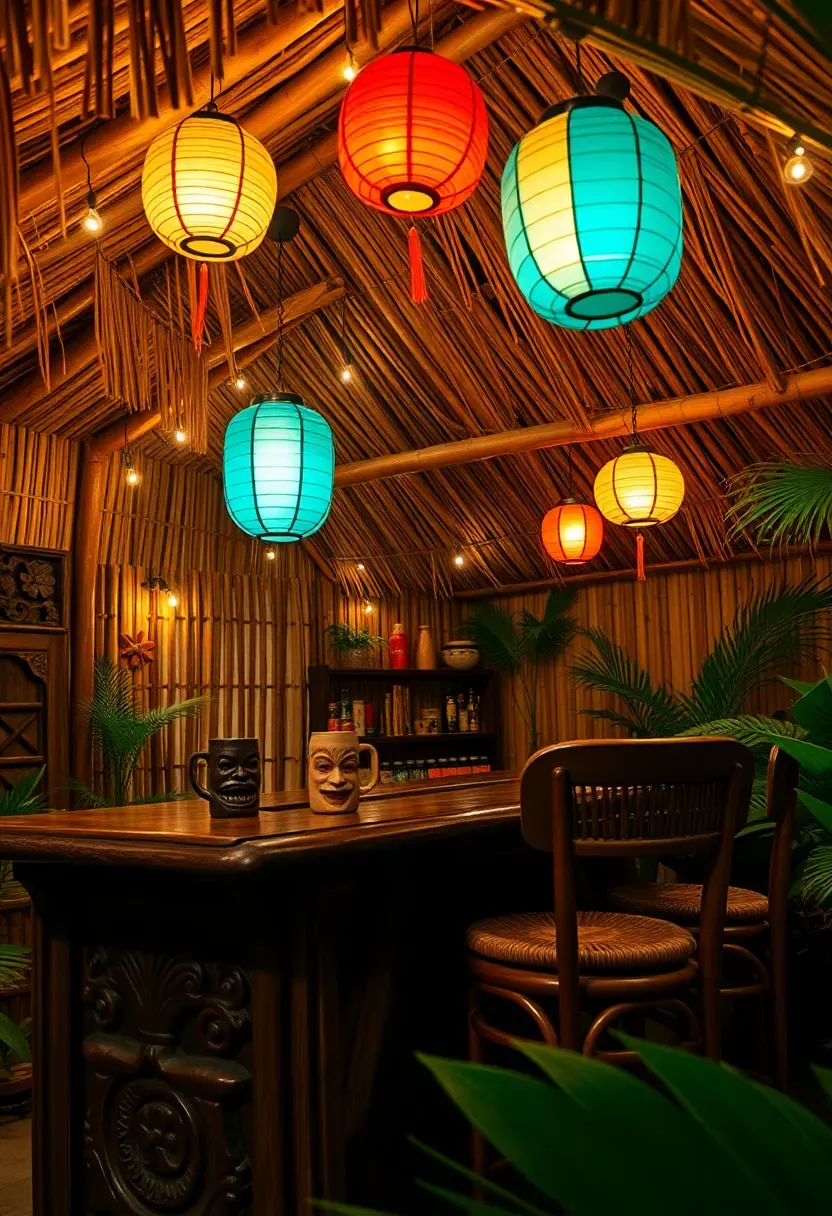
Tiki bars emerged in 1930s Hollywood — Don the Beachcomber opened the first one in 1933. The aesthetic borrows heavily from Polynesian architecture but was never meant to be authentic; it was always about escapism. That fantasy element makes it perfect for a windowless basement where you already need to create atmosphere from scratch.
The modern version
Bamboo reed paneling ($15-$25 per 4x8 sheet) covers bland drywall fast. A thatched roof over the bar area uses synthetic thatch tiles that mount on a simple 2x4 frame and will not mold in basement humidity like real palm. Carved tiki mugs, shell garlands, and a rum-heavy drink menu finish the scene. Paint the ceiling dark blue or black and hang string lights to suggest a night sky.
Apply at home
- Source real bamboo for the bar face and synthetic for the ceiling — real bamboo on the ceiling traps dust
- Keep drinks tropical: stock orgeat, falernum, passion fruit syrup, and three rum varieties
- Add a small tabletop fountain; the water sound deepens the immersion significantly
8. Industrial Pipe Bar
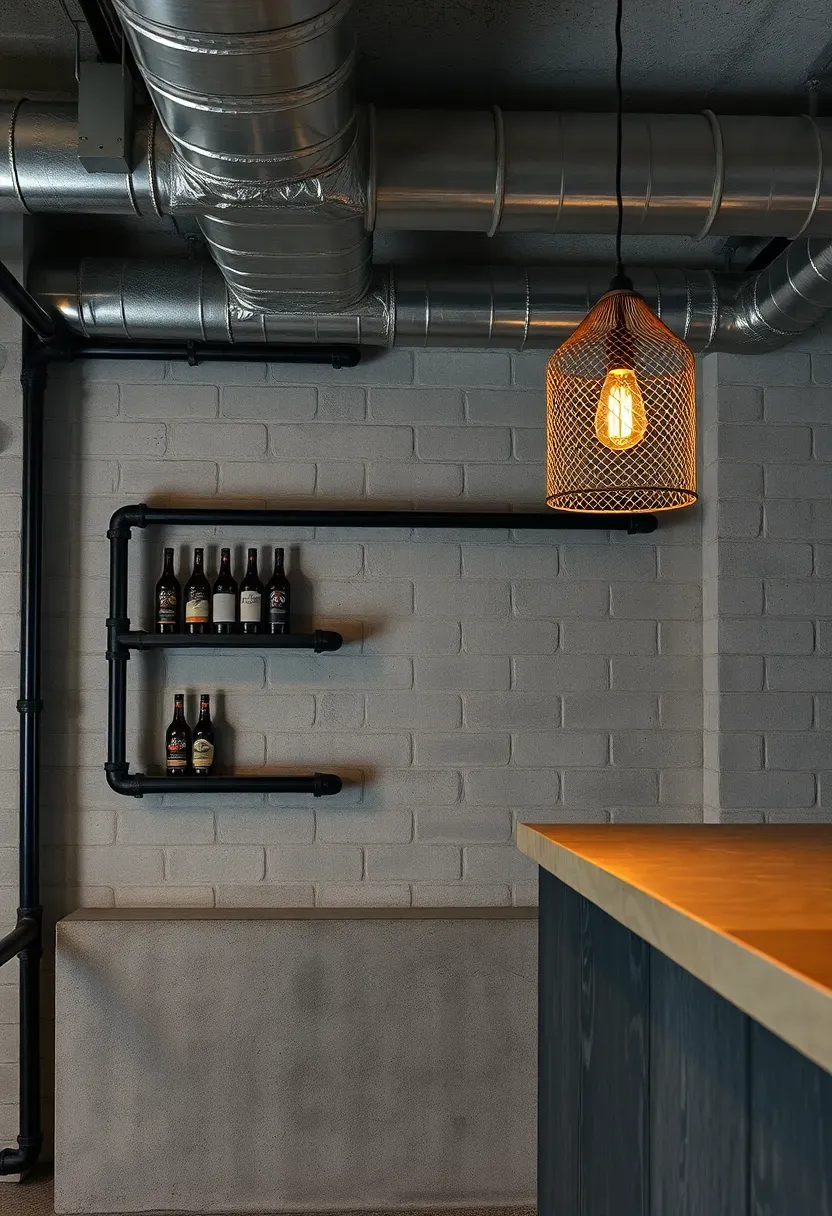
Exposed ductwork, steel beams, and concrete — basements hand you industrial materials for free. Build the shelving and foot rail from black iron pipe fittings (3/4-inch diameter is standard). A single shelf unit costs about $80-$120 in pipe and flanges from any hardware store. Pour a concrete countertop using Quikrete Countertop Mix for roughly $5 per square foot in materials, though you will spend a weekend on forming, pouring, and curing. The result looks like it belongs in a Brooklyn loft. Seal the concrete with a food-safe penetrating sealer and reapply annually.
Tips
- Leave the basement ceiling open and spray-paint all exposed pipes and ducts matte black for a unified look
- Edison-style bulbs in metal cage pendants complete the industrial vocabulary
- Add a chalkboard menu board — it fits the aesthetic and lets you update drink specials
Recommended
Items for this idea
9. Built-In Under-Stair Bar
The problem
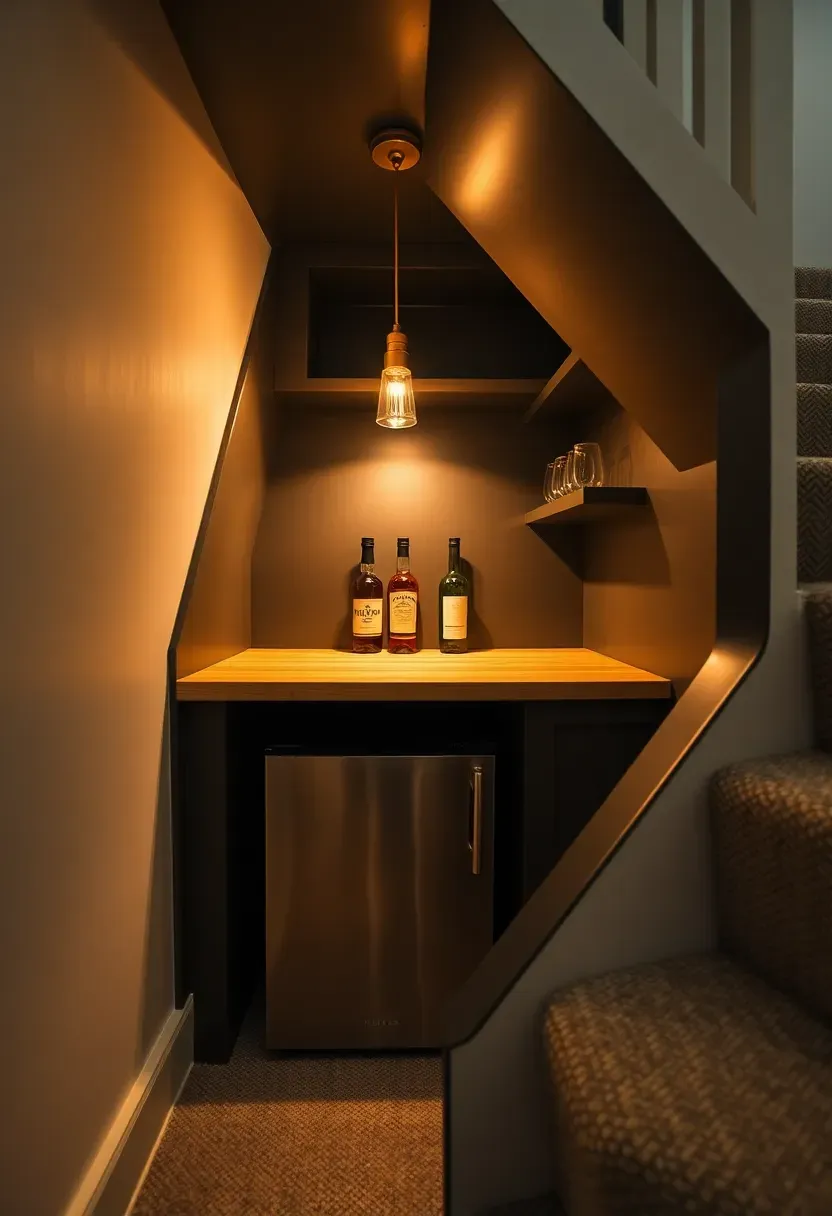
Basement stairs eat into floor space and the triangular void beneath them usually collects junk. That dead zone measures roughly 25-35 square feet in most homes — enough for a functioning bar but too awkward for standard cabinetry.
The solution
Custom-build shelving that follows the stair angle. The tallest section (where the top of the stairs meets the ceiling) fits a standing-height bar counter with bottle storage behind it. The middle section works for a mini fridge or wine cooler. The shortest section near the floor holds glassware in pull-out drawers. The whole build can be framed in 2x4s, faced with plywood and painted, for under $500 in materials if you do the work yourself. Add a single pendant light at the counter position and the space goes from dead storage to conversation piece.
Pros and Cons
- Pros: Uses otherwise wasted space, no footprint loss, surprisingly roomy once built
- Cons: Limited headroom at the short end, non-standard dimensions mean custom everything
10. Farmhouse Bar with Shiplap
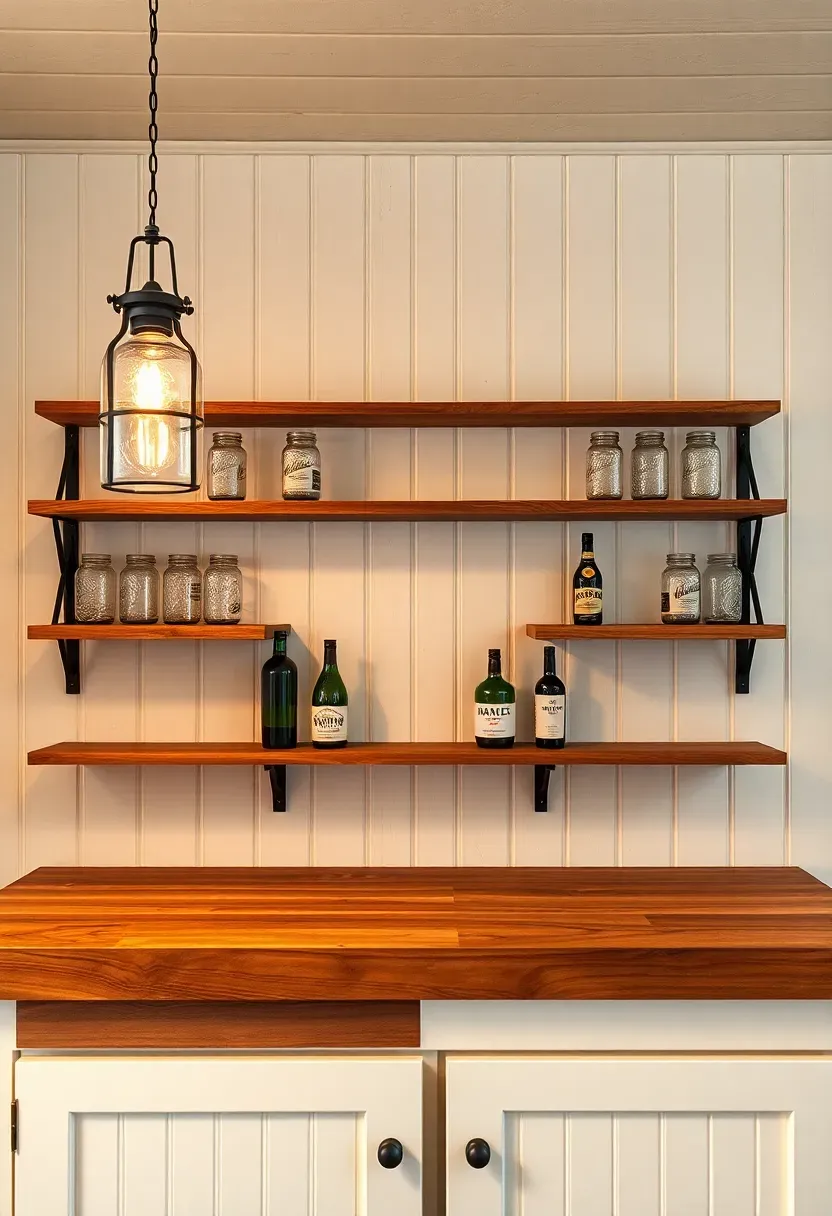
Shiplap behind a bar adds texture without eating into already tight basement dimensions — each board is only 3/4 inch thick. Use real pine shiplap rather than MDF in a basement; MDF swells if it absorbs moisture from concrete walls. Prime the back of every board with a moisture-blocking primer before installation. Paint it white for the classic farmhouse look, or leave it raw and seal with a matte water-based poly for a warmer tone. Top the bar with a butcher block counter sealed with mineral oil and beeswax. Open shelving in matching wood holds bottles and glassware in view.
Tips
- Leave a 1/4-inch gap between shiplap and the concrete wall for air circulation
- Mason jar pendant lights and black iron brackets reinforce the farmhouse theme
- A galvanized metal ice bucket on the counter serves as both decor and function
Recommended
Items for this idea
11. Mid-Century Cocktail Lounge
What makes it mid-century
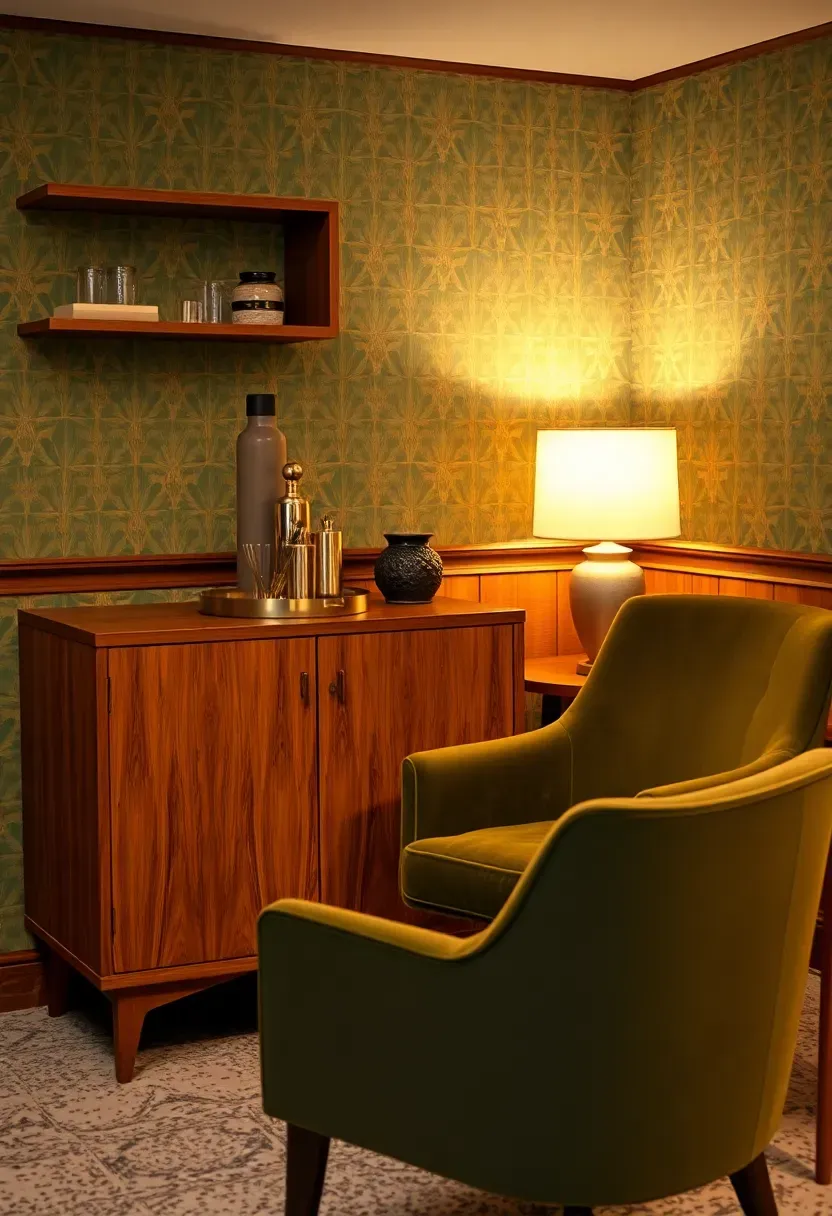
Clean lines, warm wood tones (especially walnut and teak), tapered furniture legs, and a restrained color palette of mustard, olive, teal, and burnt orange. The era ran roughly 1945-1969, and its cocktail culture was inseparable from its design.
Building the bar
A walnut veneer bar cabinet on tapered legs is the centerpiece. Vintage originals from the 1960s run $400-$1,200 at estate sales; reproductions from West Elm and Article cost $600-$900 new. Behind it, install a geometric or atomic-pattern wallpaper on the accent wall. Keep everything else simple — a low-pile area rug, a couple of lounge chairs with angled wooden arms, and brass bar tools displayed on a tray.
Choose if
- You prefer warm, organic materials over chrome and glass
- Your basement has at least 7.5-foot ceilings (low-slung furniture needs vertical room to breathe)
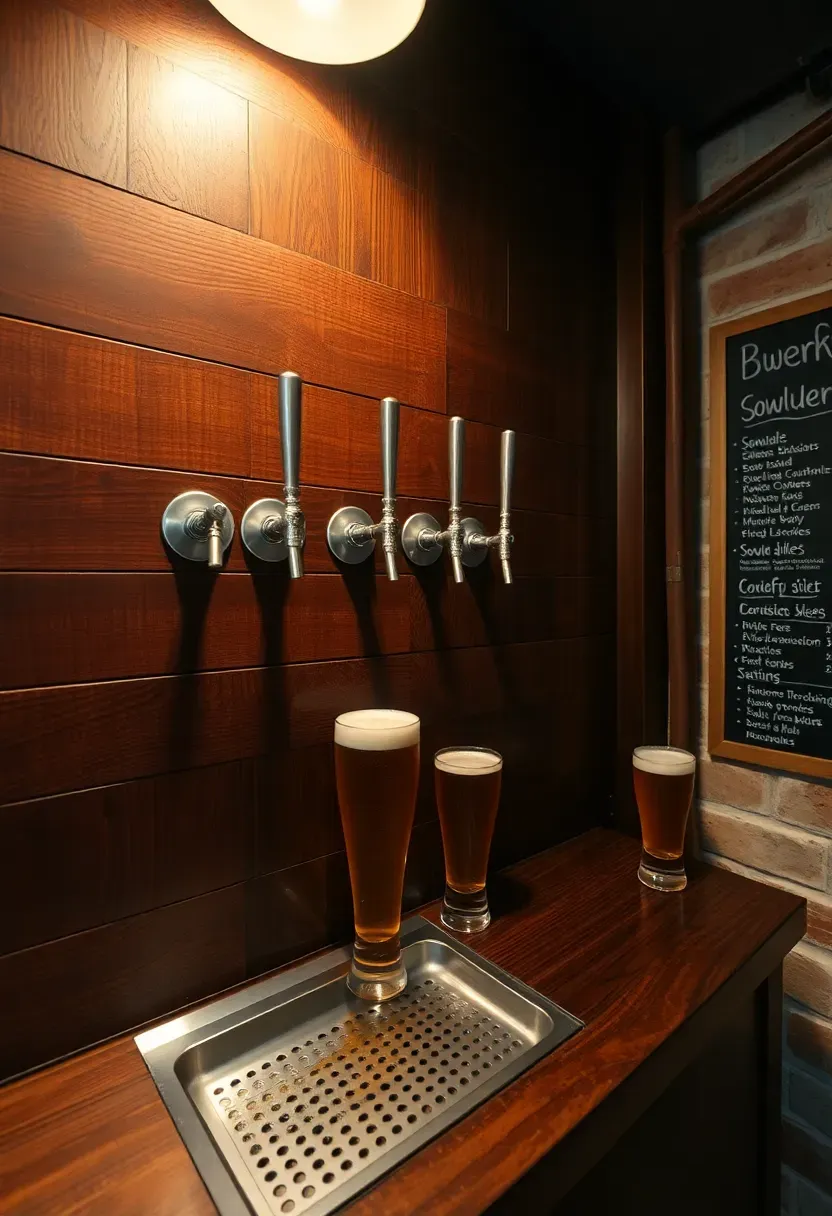
12. Brewery Tap Wall
A tap wall turns one flat surface into the entire bar experience. Mount four to eight commercial tap handles on a cooled glycol panel or run direct-draw lines from a kegerator behind the wall. Direct-draw (where the keg sits within 5 feet of the faucet) keeps costs under $1,000 for a four-tap setup. Glycol-cooled long-draw systems start at $2,500 but let you hide kegs in a utility closet 25 feet away. The wall itself should be a durable surface — stained hardwood planks, blackened steel, or even chalkboard paint so you can write the current lineup. A narrow counter below the taps (12 inches deep) gives people a place to set glasses without needing a full bar.
Tips
- Clean tap lines every two weeks with BLC solution to prevent flavor buildup
- A trough drain in the counter catches drips and simplifies cleanup
- Label taps with small chalkboard tags rather than permanent signage so you can rotate beers
Recommended
Items for this idea
13. Compact Dry Bar Cabinet
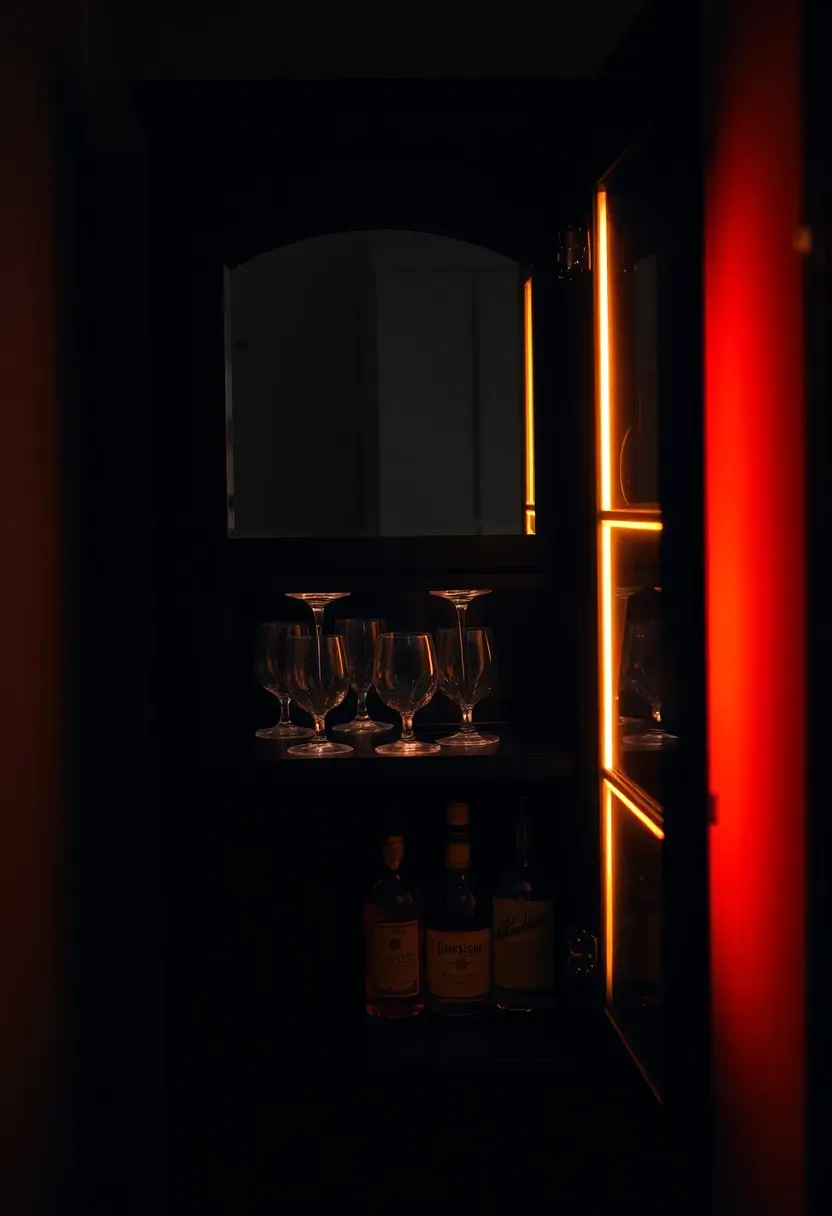
No plumbing, no construction, no permits. A dry bar cabinet is the fastest path from bare basement to functional drink station. Look for a piece with a fold-down front that becomes the serving surface, interior shelving for bottles, and a mirrored back panel that doubles the visual depth of your collection. Stock a battery-powered LED strip inside for lighting without an electrician. Good options exist at every price point: IKEA Bestå hacked with a piano hinge runs $200, while solid-wood bar cabinets from Crate and Barrel or Pottery Barn sit in the $800-$1,500 range. Keep a small ice bucket and a quality cocktail set nearby, and you have a complete bar in under four square feet.
Tips
- A mirror on the cabinet back makes a small collection look full
- Store a silicone ice tray in the upstairs freezer and transport ice in an insulated bucket
- Fold-down doors double as a serving counter, so reinforce hinges with piano hinge hardware rated for 50+ pounds
14. Dark Moody Whiskey Bar
The problem
Most basements feel dark and people try to fix it with brighter paint and more lights. But a whiskey bar should be dark. The question is how to make darkness feel intentional rather than neglected.
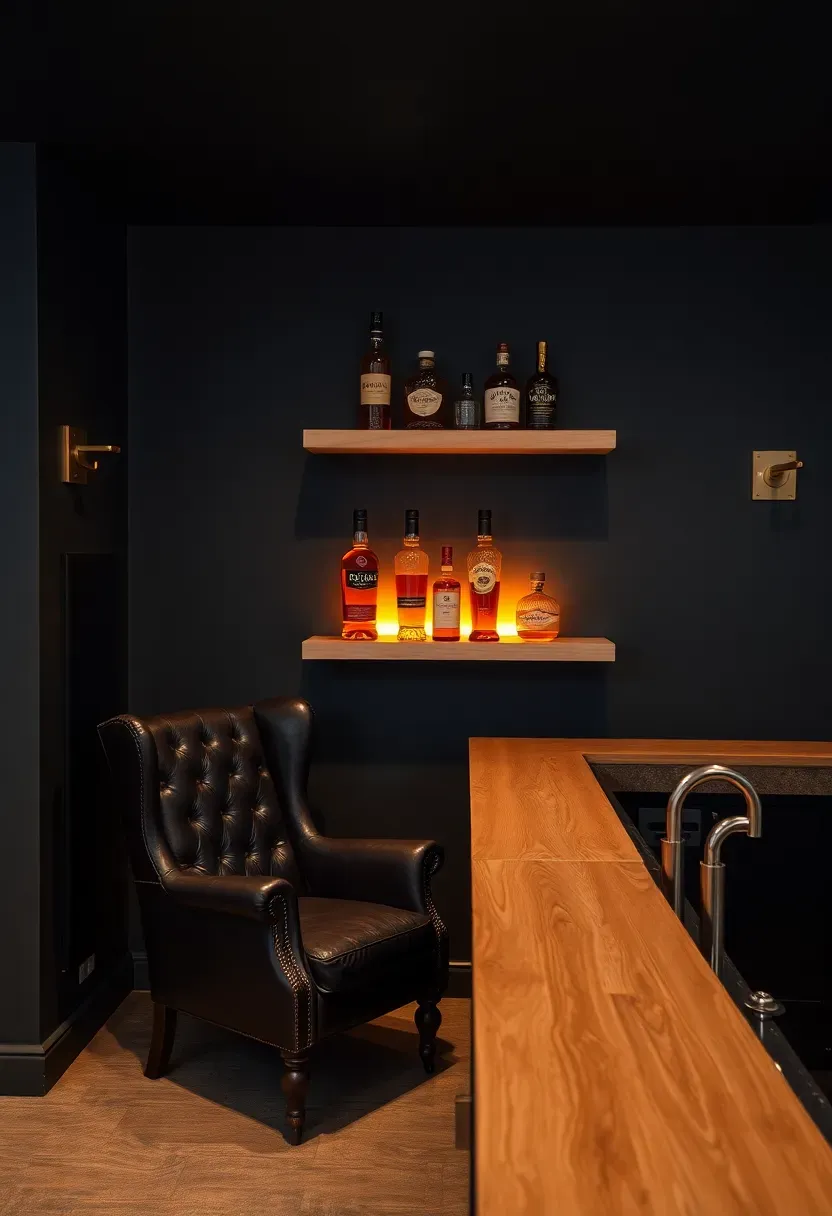
The solution
Paint walls in a saturated deep tone — Sherwin-Williams Tricorn Black or Benjamin Moore Wrought Iron. Use matte finish to absorb light rather than bounce it around. Then layer targeted warm lighting: glass-shaded sconces at 5-foot height intervals, an amber-toned LED strip behind the back bar, and one pendant over the pour station. The amber glow through whiskey bottles creates its own light source. Display bottles on floating oak shelves with 14 inches of vertical spacing (enough for tall bourbon bottles). Leather club chairs, a small humidor, and a set of Glencairn glasses round out the setup.
Pros and Cons
- Pros: Low ceilings and no windows become assets, materials are simple and affordable
- Cons: Not versatile for other uses, needs good ventilation if cigars are part of the plan
Recommended
Items for this idea
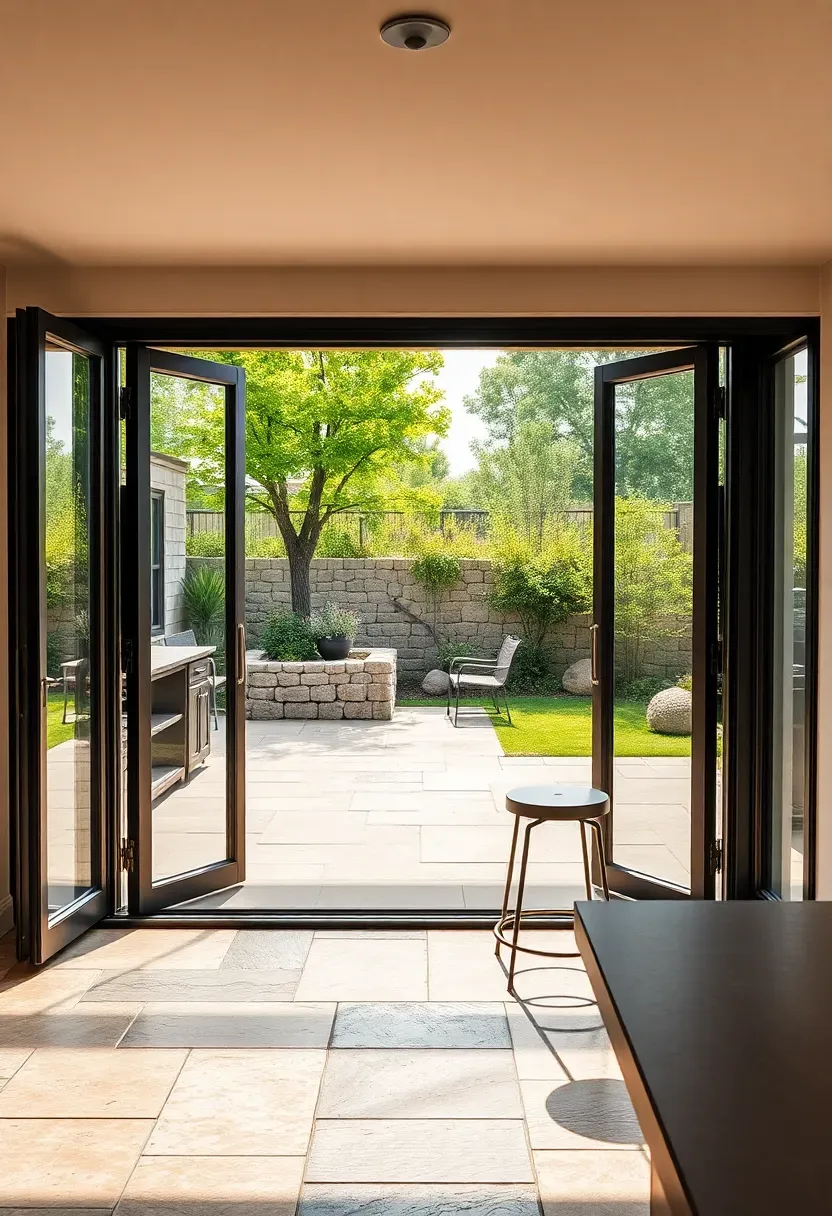
15. Outdoor-Indoor Bar at Walkout
If your basement has a walkout to a patio or yard, you have the single best bar location in the house. Install bifold or sliding patio doors (budget $2,000-$5,000 depending on width) and run the bar counter from inside to outside through the door opening. When doors are open, the bar serves both the basement and the patio simultaneously. Use a continuous countertop material on both sides — porcelain slab or sealed concrete handles weather exposure. Outside, add two to four fixed stools. Inside, keep the full bar setup with refrigeration and storage. This layout makes you the neighbor with the best party spot from May through October.
Tips
- Porcelain slab countertops resist UV, frost, and stains better than natural stone outdoors
- Install a retractable awning over the exterior counter to protect from rain and sun
- Drainage grade should slope away from the door opening to prevent water intrusion
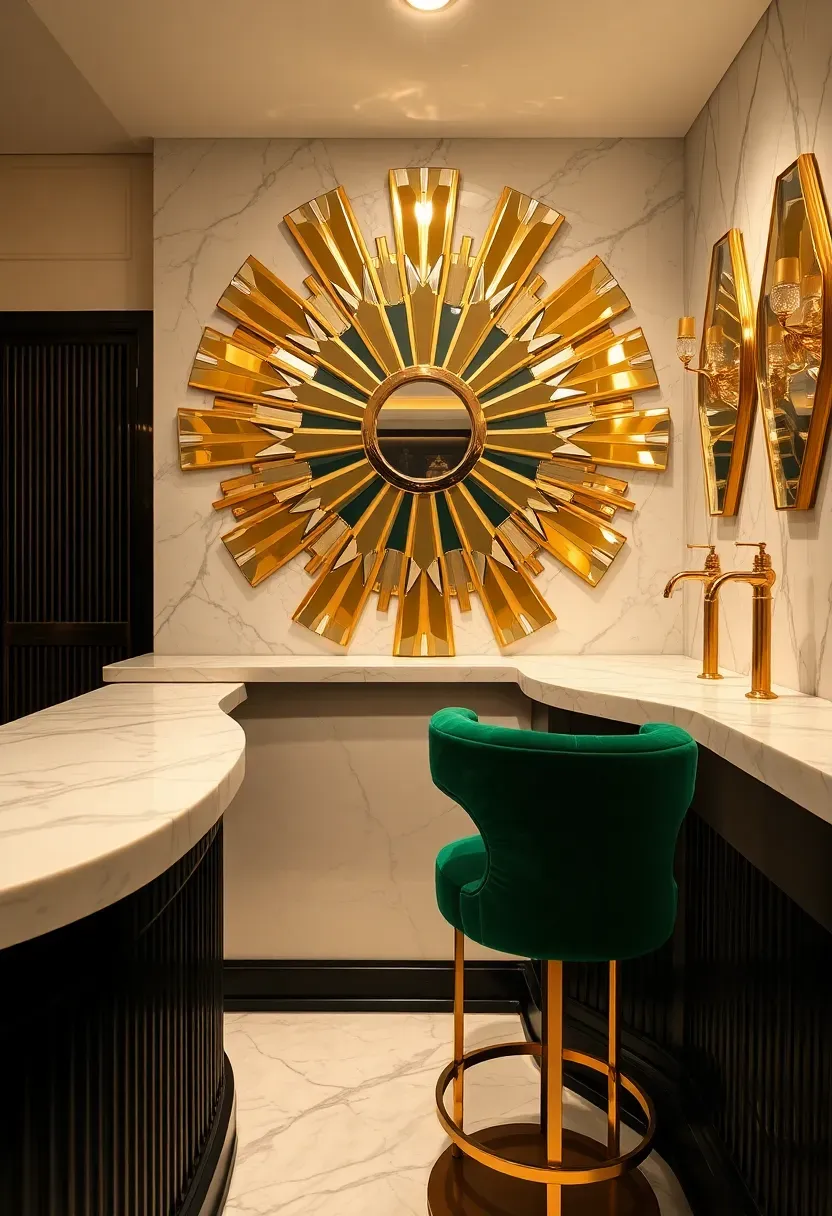
16. Art Deco Glam Bar
Art deco leans on geometry, metallics, and rich materials. A curved or arched bar counter (even a subtle curve adds drama) in white or green marble anchors the space. Behind the bar, install a geometric mirror arrangement — sunburst mirrors or tiled mirror panels with beveled edges. Fixtures in polished brass or gold finish, velvet upholstered stools in emerald or navy, and terrazzo or high-gloss tile on the floor complete the look. This style costs more per square foot than rustic or industrial because the materials and finishes demand precision. But in a basement where the bar is the entire reason for the room, the investment concentrates in a small footprint.
Design details
- Fluted glass panels on cabinet fronts add texture and hide clutter
- A geometric tile border on the floor defines the bar zone without a rug
- Keep glassware in crystal or cut glass to match the era
Recommended
Items for this idea
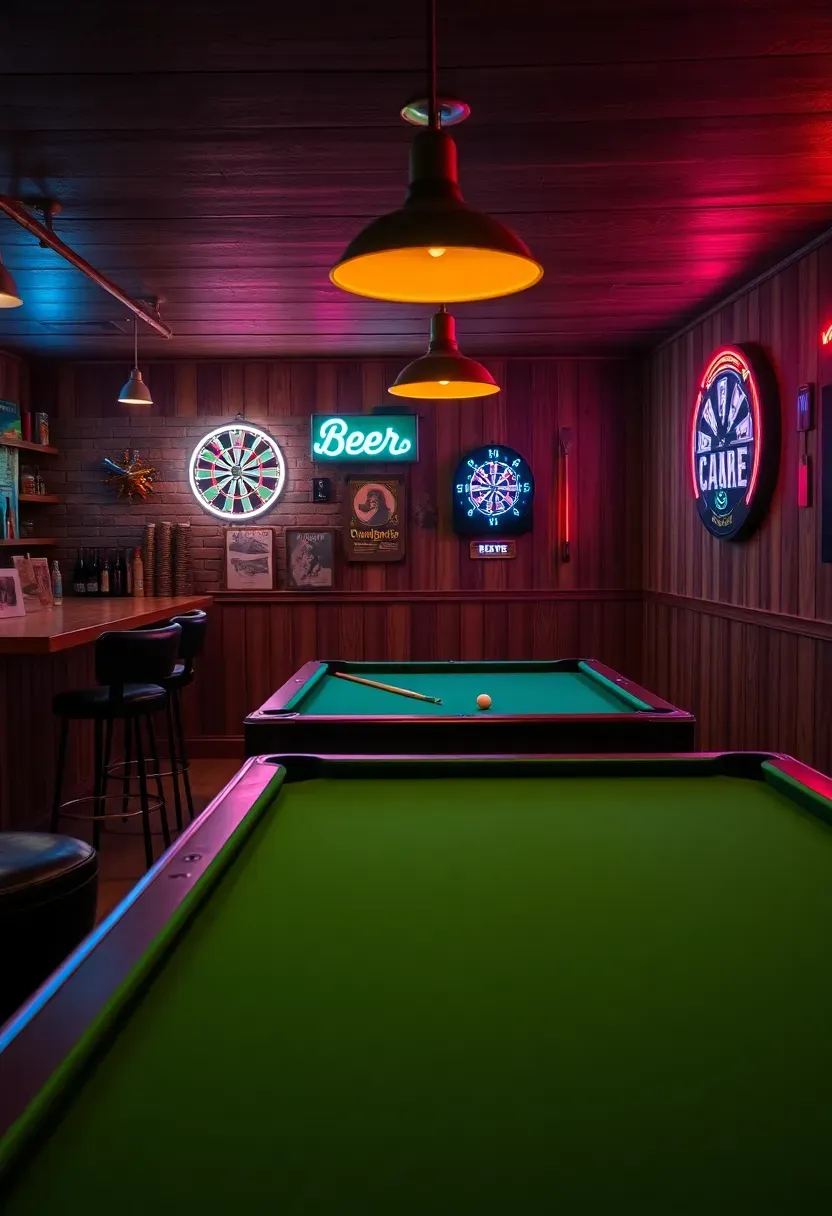
17. Game Room Bar Combo
How to divide the space
A combined game room and bar needs clear zones. Place the bar along one wall so it does not eat into the game area. A pool table needs a minimum 5-foot clearance on all sides for cue strokes — measure this first and build the bar around whatever space remains. Dartboards need 7 feet 9.25 inches from face to throw line, so mount them on a wall perpendicular to the bar to prevent anyone standing at the counter from catching an errant dart.
Step 1: Bar placement
Run the bar along the shortest wall, keeping it to 8-10 feet long with three to four stools. This preserves maximum floor space for games.
Step 2: Game zone layout
Center the pool table or table tennis with clearance measured from cue length (58 inches standard). Anchor the dartboard at regulation 5 feet 8 inches center height.
Step 3: Shared lighting
Hang a pool table light at 36 inches above the playing surface. The bar gets its own pendant line at a different height to separate the zones visually.
Watch out
Carpet under a pool table is fine, but bar areas need hard flooring for spill cleanup — use luxury vinyl plank or tile in the bar zone.
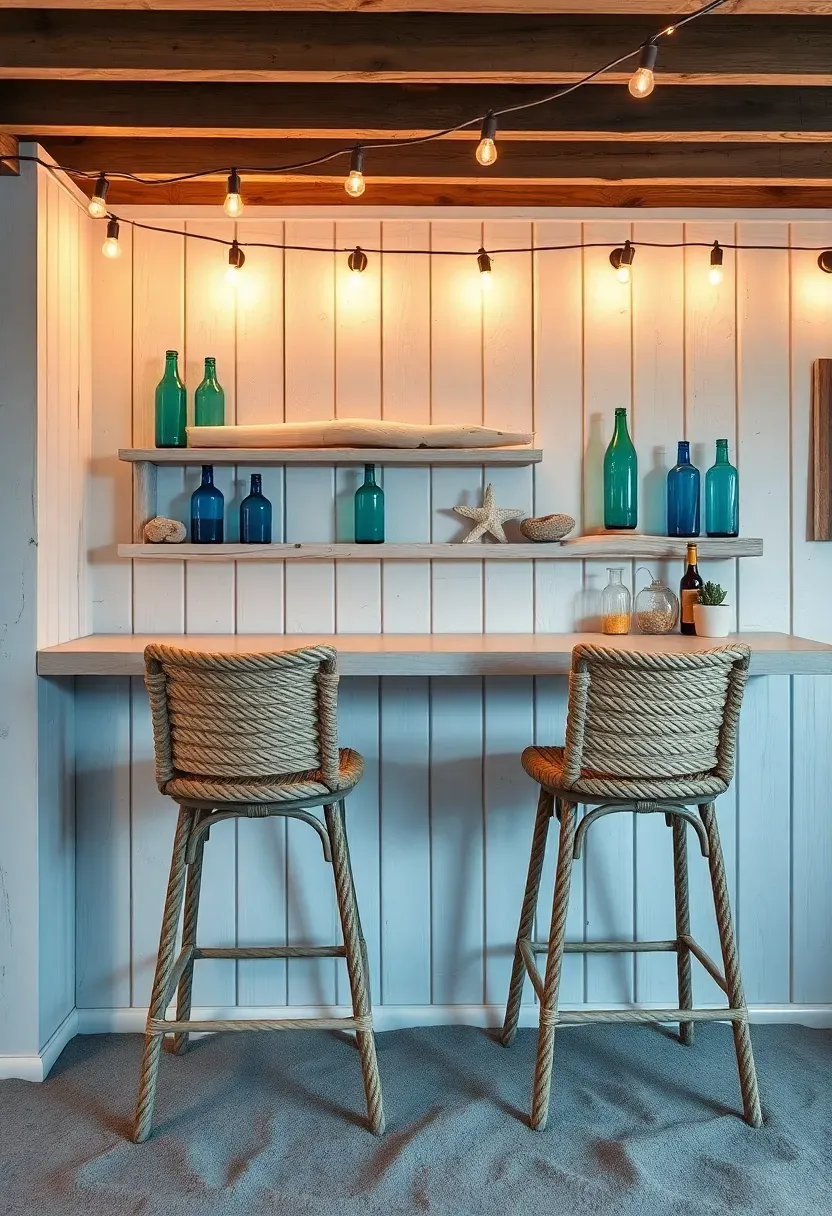
18. Coastal Bar with Reclaimed Wood
Whitewashed reclaimed lumber, rope details, and a blue-green palette make this bar feel like a dockside shack in the best way. Source weathered fence boards or pallet wood — sand lightly, apply a white wash (50/50 latex paint and water), and let the grain show through. Use this on the bar face and back wall. Wrap bar stool legs or footrail brackets with manila rope for texture. Display bottles on driftwood-style shelves. The color scheme stays in the white, sand, and ocean-blue range. This is one of the cheaper basement bar builds because the materials are meant to look rough, so imperfections are welcome rather than something you need to hide.
Tips
- Blue sea glass bottles filled with string lights make cheap, effective accent lighting
- A surfboard mounted on the wall works as both decor and a conversation piece
- Use a water-based whitewash rather than oil so the finish does not yellow over time in a windowless space
Recommended
Items for this idea
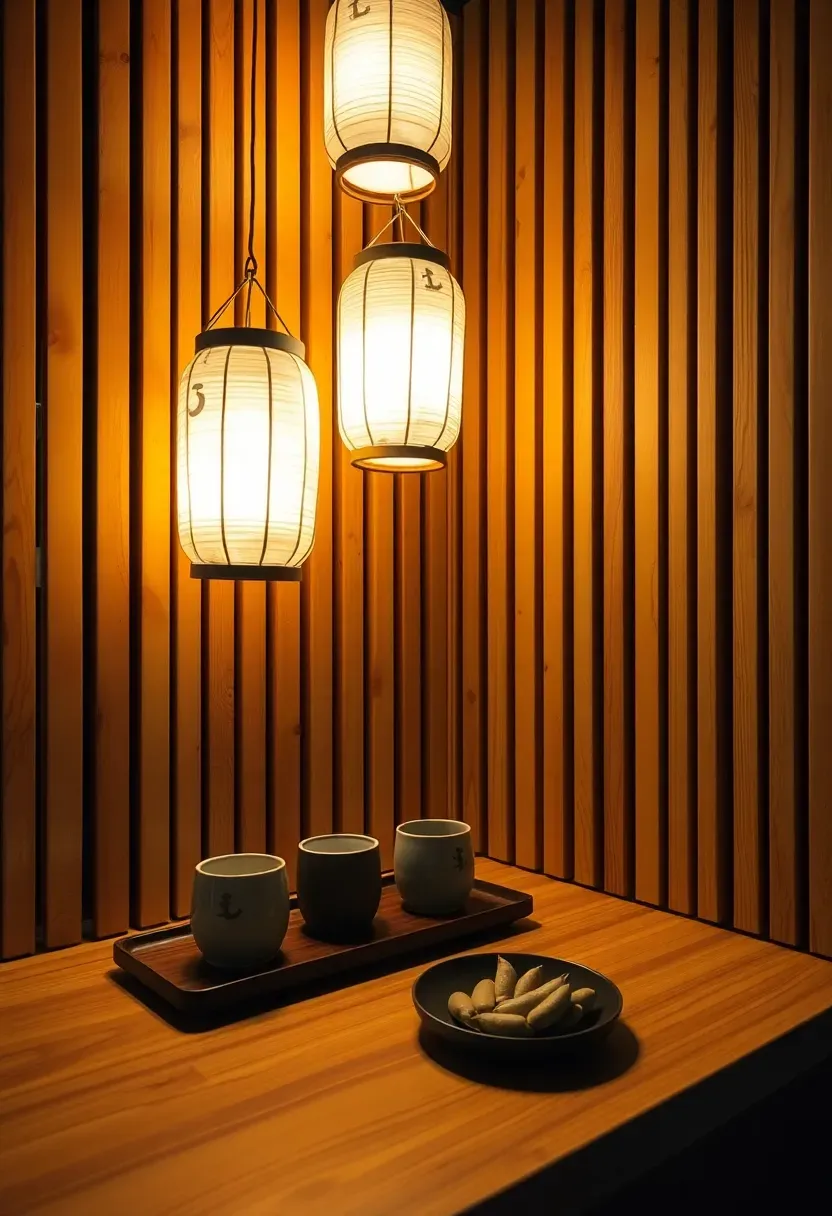
19. Japanese Izakaya Corner
The origin
Izakayas are Japanese pubs — casual, intimate, often tucked into basements or back alleys in cities like Tokyo and Osaka. They emphasize small plates and drinks in a compact, warm setting where the bartender is close enough to talk to every guest.
The modern version
Build a narrow counter (14-16 inches deep, 6-8 feet long) from edge-grain cedar or hinoki cypress. Seat four people maximum on one side. Behind the counter, install vertical wood slat screens (1x2 lumber spaced 1.5 inches apart) to partially conceal bottle storage while filtering light. Hang two or three paper lanterns (chochin) at staggered heights. Serve drinks in ceramic cups and small carafes rather than standard barware. The beauty of this design is its footprint — the entire bar fits in 30 square feet.
Apply at home
- Cedar naturally resists moisture and smells wonderful without any finish needed
- Stock sake, Japanese whisky (Suntory Toki is an affordable daily pour), and Asahi or Sapporo beer
- A small rice cooker behind the bar lets you serve onigiri or ochazuke as bar snacks
20. L-Shaped Bar with Seating
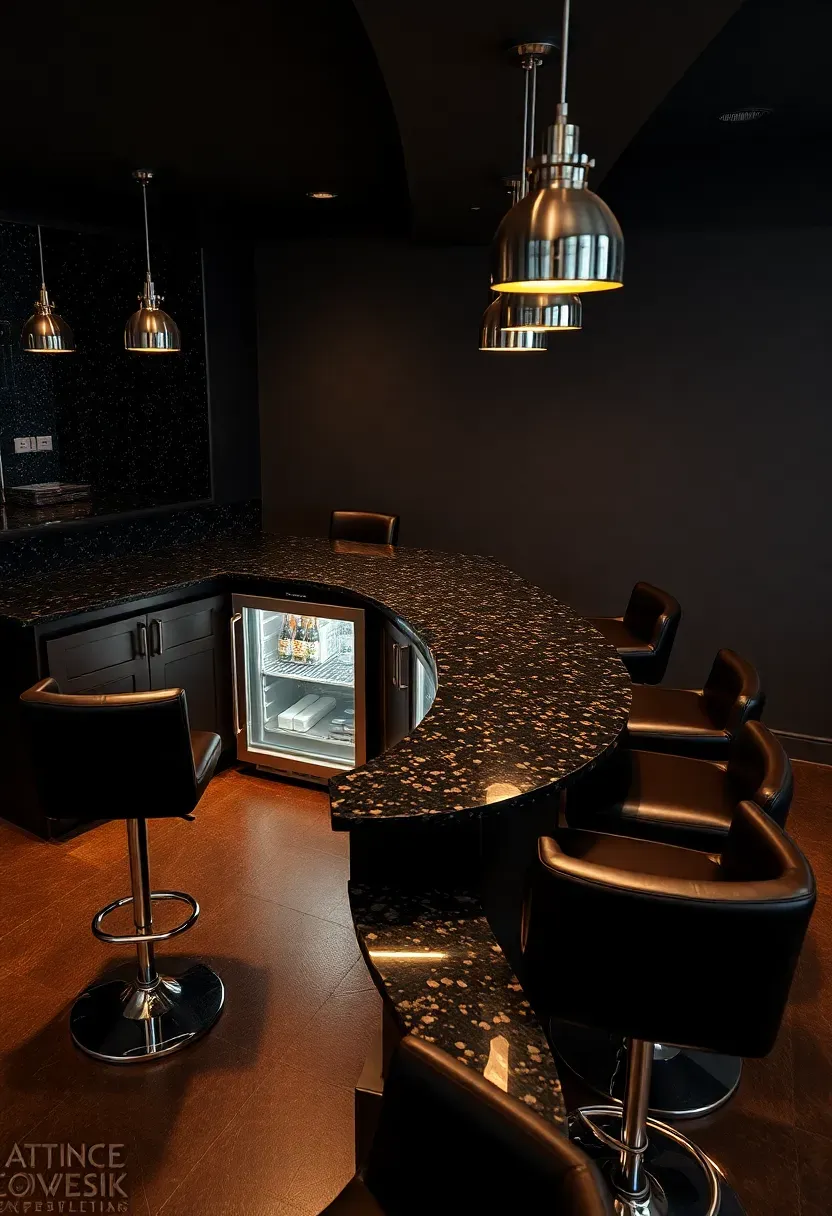
An L-shape uses a corner — the most underused part of any basement — and turns it into the largest possible counter run without dominating the room. The standard dimensions work out to a 10-foot primary run and a 6-foot return, giving you 16 linear feet of counter at bar height (42 inches). That seats six comfortably with 24 inches per stool. Behind the bar, the corner becomes deep storage: an under-counter fridge on one leg, a dishwasher drawer on the other, and a sink where the two runs meet. The L also creates a natural enclosed workspace for the person mixing drinks, which keeps the mess hidden from guests sitting at the counter.
Tips
- Set the overhang at 10-12 inches on the guest side for knee clearance
- Place the sink at the inside corner where plumbing runs are shortest
- A raised glass rack mounted to the ceiling above the inner corner keeps stemware accessible and visible
Recommended
Items for this idea
21. Floating Shelf Bar Wall
The problem
You want a bar but you do not want to lose floor space to a full counter and cabinet setup. Maybe the basement doubles as a family room or workout space and a permanent bar would crowd the room.
The solution
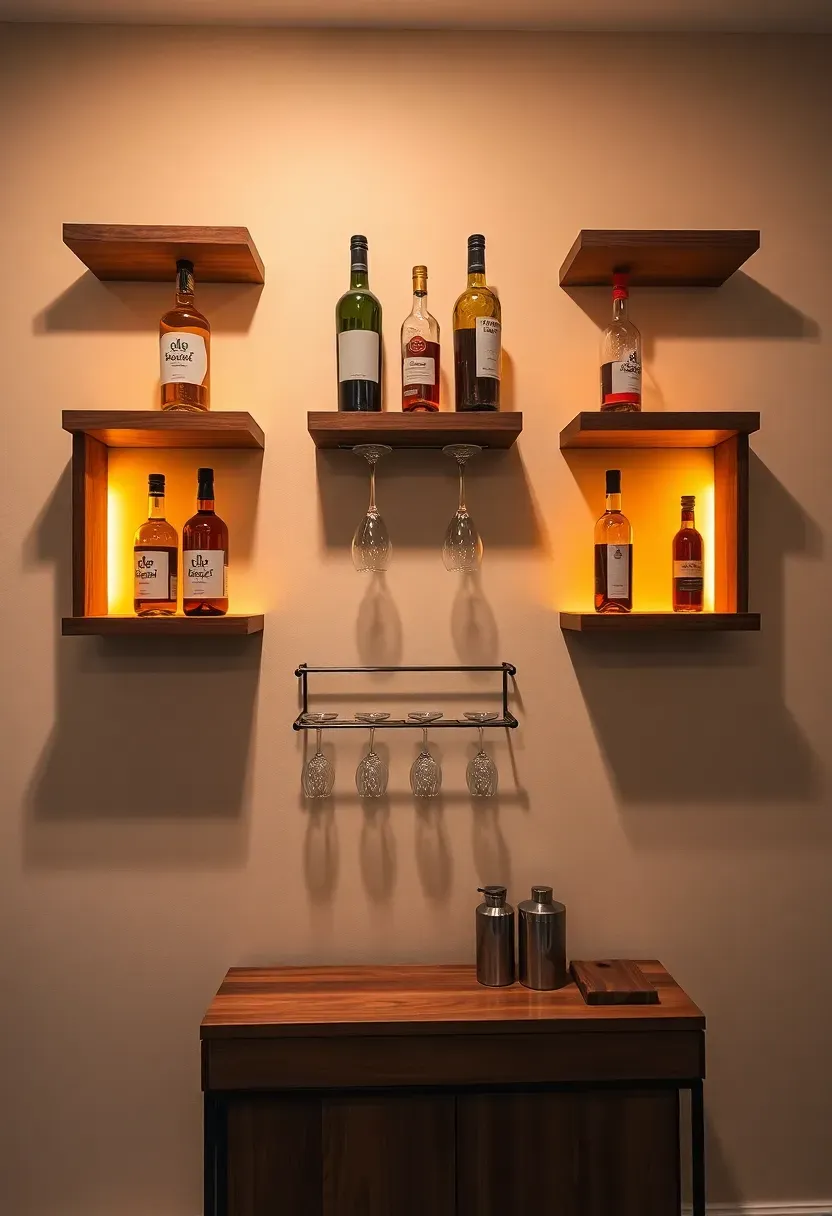
Mount three to five floating shelves (10-12 inches deep) on a single wall. Use heavy-duty French cleat systems rated for 50 pounds per shelf — bottles are heavier than people expect. Bottom shelf holds the mixing station with a cutting board and tools. Middle shelves display spirits. Top shelf stores glassware. Below the bottom shelf, set a narrow console table or wall-mounted drop-leaf (12 inches deep when folded) as a prep surface. Add an LED strip behind each shelf for backlighting that makes bottles glow. The whole setup projects less than 14 inches from the wall and folds nearly flat when not in use.
Pros and Cons
- Pros: Zero floor footprint when folded, works in multi-use rooms, easy to install in a weekend
- Cons: No refrigeration unless you add a separate mini fridge, limited prep space
22. Copper and Leather Pub
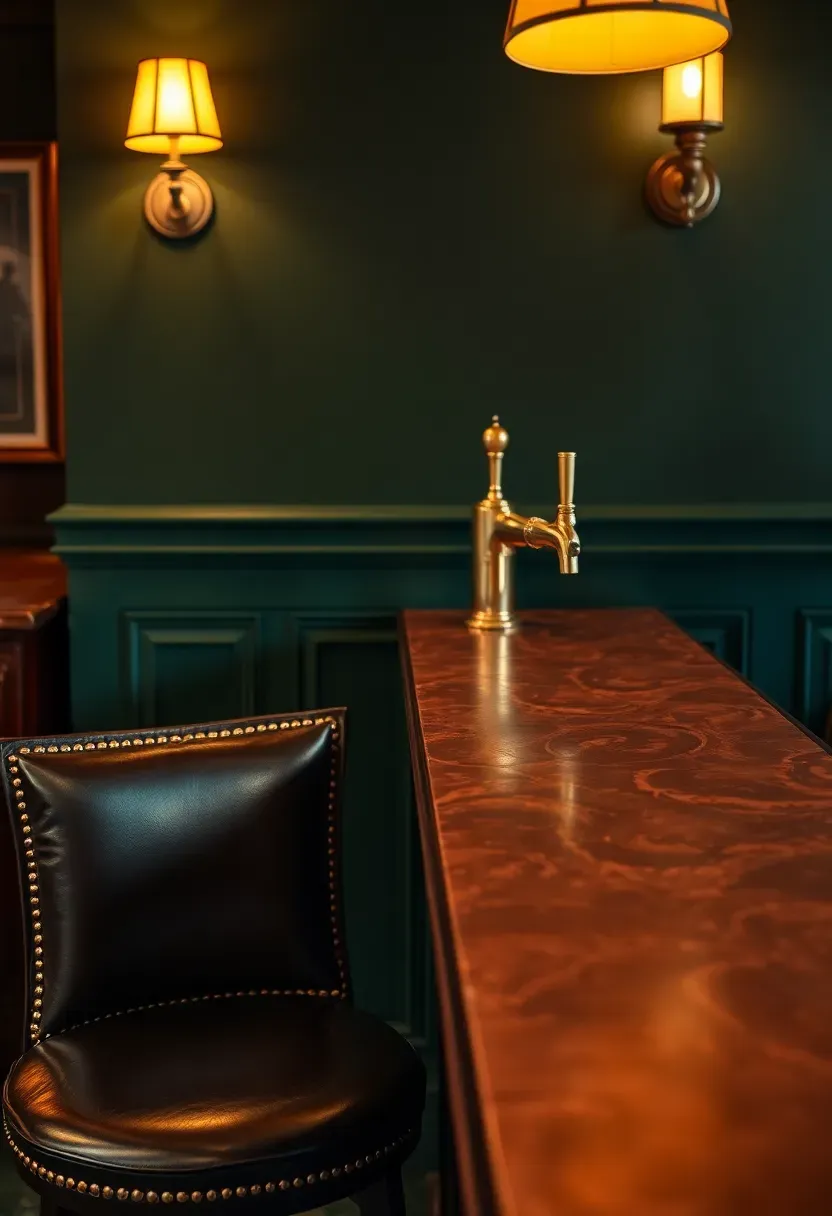
Copper develops a living patina that changes with use — water rings, finger oils, and spills all contribute to a unique surface that looks better at year five than year one. A copper sheet (20-gauge, around $12 per square foot) wraps over a plywood substrate and folds at the edges. Leave it raw and unsealed for the full patina effect, or seal with lacquer if you prefer the shiny penny look. Pair the copper counter with dark green or burgundy walls, leather-upholstered stools with nailhead trim, and brass draft tap handles. The combination reads as an old Irish or English pub without the sticky floors. Budget roughly $800-$1,200 for a copper wrap on a 10-foot counter.
Tips
- Lemon juice and salt speed up patina if you want the aged look faster
- Copper is antimicrobial, making it genuinely more hygienic than most bar surfaces
- Dark green paint (like Farrow and Ball Studio Green) against copper creates the classic pub palette
Recommended
Items for this idea
23. Neon-Lit Retro Bar
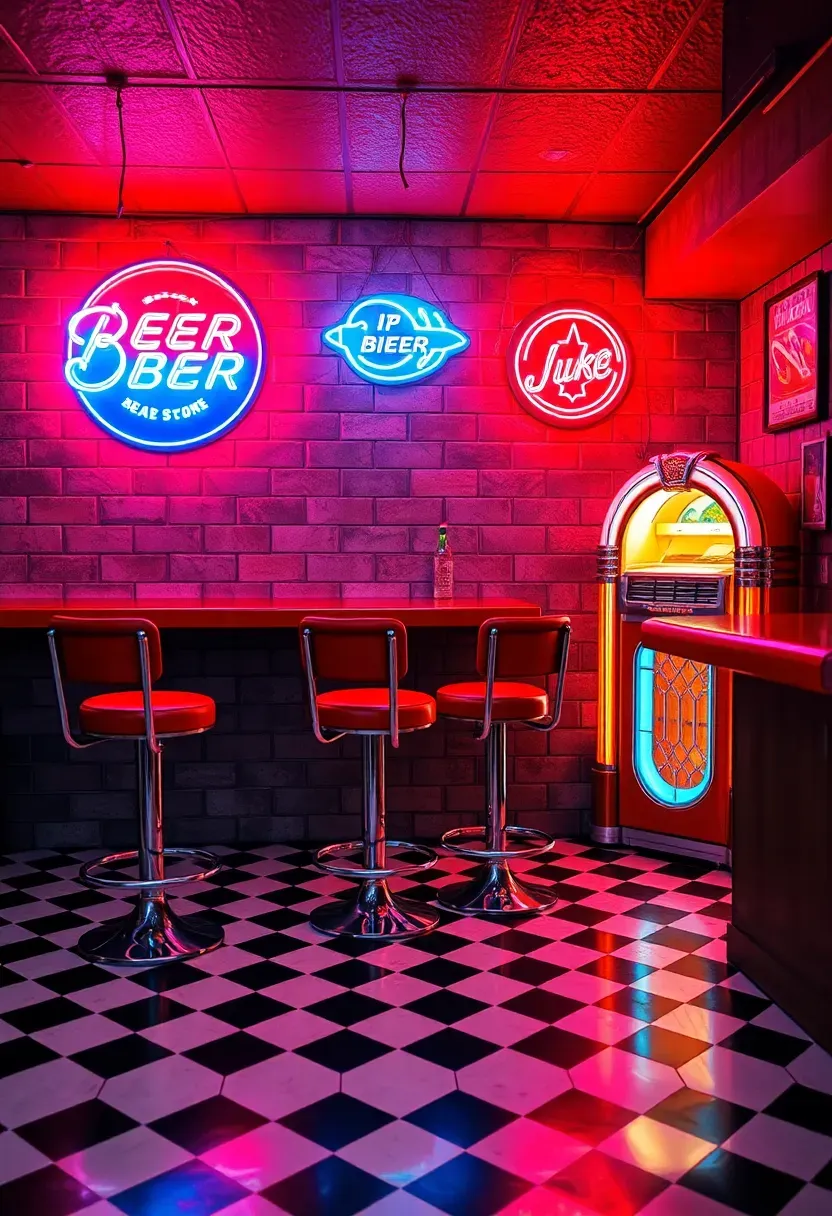
Neon (or LED neon flex, which is cheaper and safer) turns any basement bar from forgettable to photogenic. Pick a theme decade — 1950s diner, 1970s disco, or 1980s arcade — and let the neon set the mood. Custom neon signs run $150-$400 for a simple word or logo through Etsy shops; vintage beer signs from the 1980s sell for $50-$200 at flea markets. Mount three to five signs at varying heights on the back bar wall. Complement with a checkered floor (peel-and-stick vinyl tiles do the job for $2 per square foot), chrome or vinyl stools, and a countertop in solid-color laminate — Formica still makes the same boomerang and starburst patterns from the 1950s.
Tips
- LED neon flex runs cool and uses a 12V transformer — safe for unattended use in a basement
- A vintage jukebox (or a Bluetooth speaker inside a jukebox shell) anchors the theme
- Keep the rest of the room dim so the neon does the visual heavy lifting
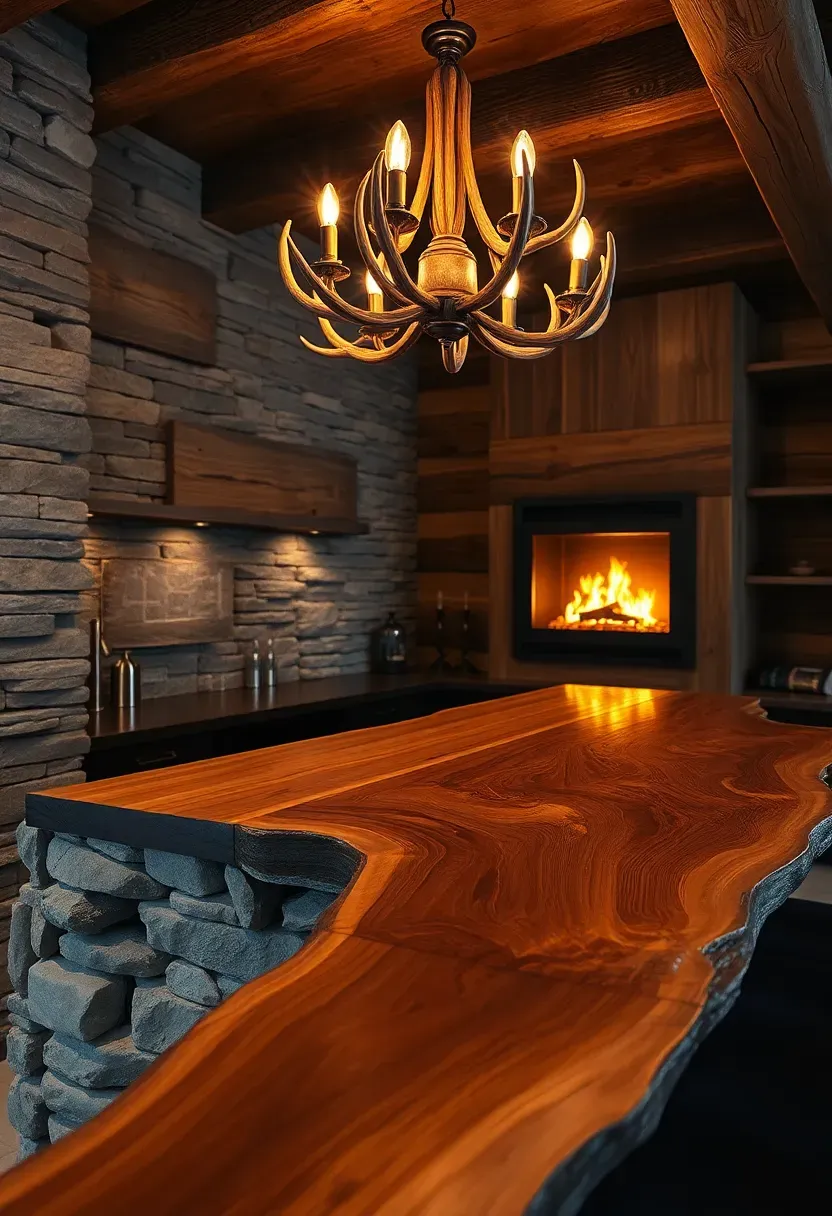
24. Stone and Timber Lodge Bar
How to build it
Stack natural stone veneer (not full-thickness stone — veneer runs 1-2 inches deep and $8-$14 per square foot) on the bar face. Top with a live-edge wood slab — walnut, maple, or white oak — at 42-inch bar height. The slab needs a steel L-bracket support system or a timber knee wall behind the stone. Overhead, mount an antler chandelier or a wrought-iron fixture with candle-style bulbs.
Step 1: Stone veneer base
Build a plywood frame for the bar front. Apply stone veneer panels with construction adhesive and mortar joints. Dry-stack (mortarless) looks more natural for a lodge feel.
Step 2: Live-edge slab
Source a slab 2-3 inches thick and 18-24 inches deep. Sand to 220 grit and finish with a bar-top epoxy for a waterproof, glass-smooth surface. Epoxy pours cost about $80-$120 for an 8-foot slab.
Step 3: Atmosphere layers
Add a small electric fireplace insert in the wall adjacent to the bar. Leather and plaid upholstery on seating. Mounted fish, antlers, or vintage ski equipment on walls.
Watch out
Live-edge slabs must be fully dried (kiln-dried to 6-8% moisture content) before finishing, or they will crack and warp in a heated basement.
Recommended
Items for this idea
25. Murphy Bar Fold-Down
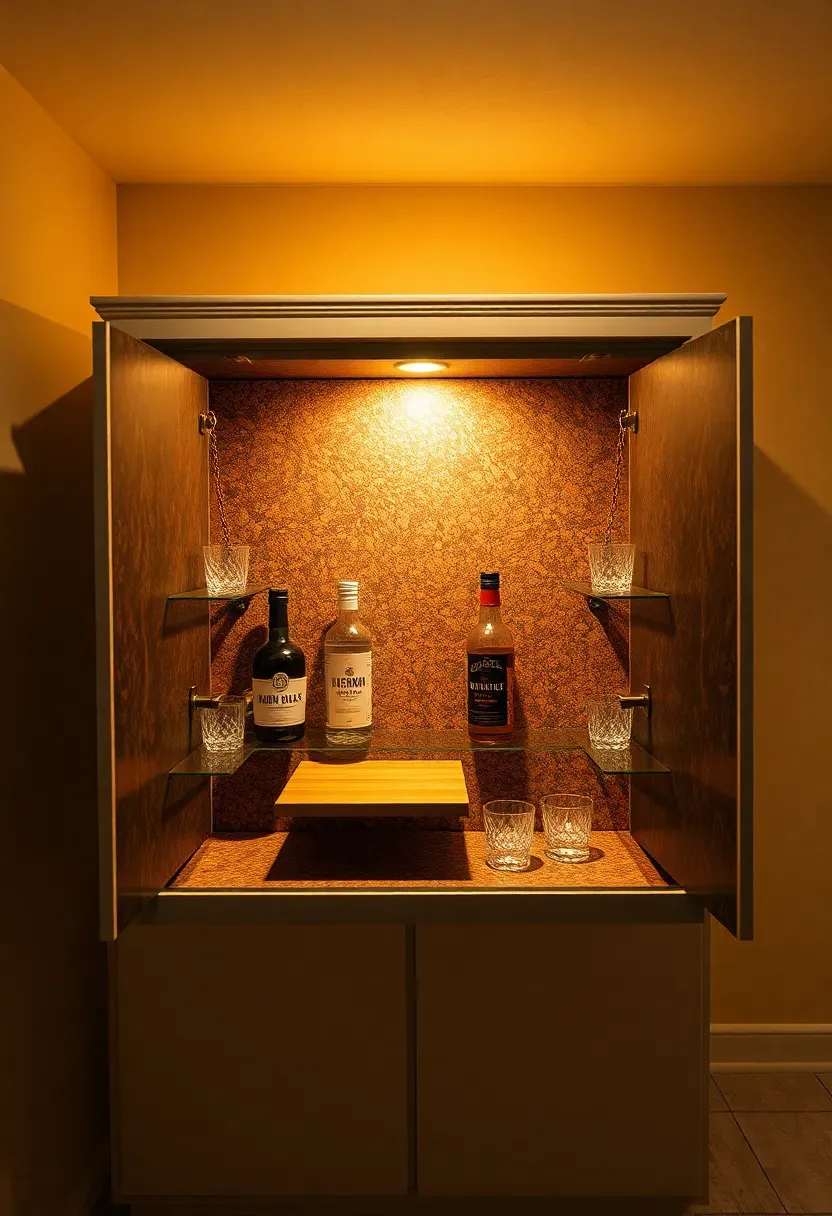
A Murphy bar operates on the same principle as a Murphy bed — it folds flat against the wall when not in use. The cabinet mounts to studs, opens on heavy-duty piano hinges or gas struts, and drops down to form a serving surface at 36-42 inches depending on your preference. Inside, shelves hold six to eight bottles and a row of glasses. Closed, it looks like a framed piece of art or a flat cabinet panel. Open, it is a fully functional one-person bar. Plans are available free on woodworking sites, and the total build costs $150-$300 in plywood, hinges, gas struts, and finish. This is the best bar option for basements that serve double duty as guest rooms or home gyms.
Tips
- Gas struts rated for the loaded weight prevent the door from slamming open
- A magnetic latch keeps it closed securely when folded up
- Line the interior with felt or cork to cushion bottles during opening and closing
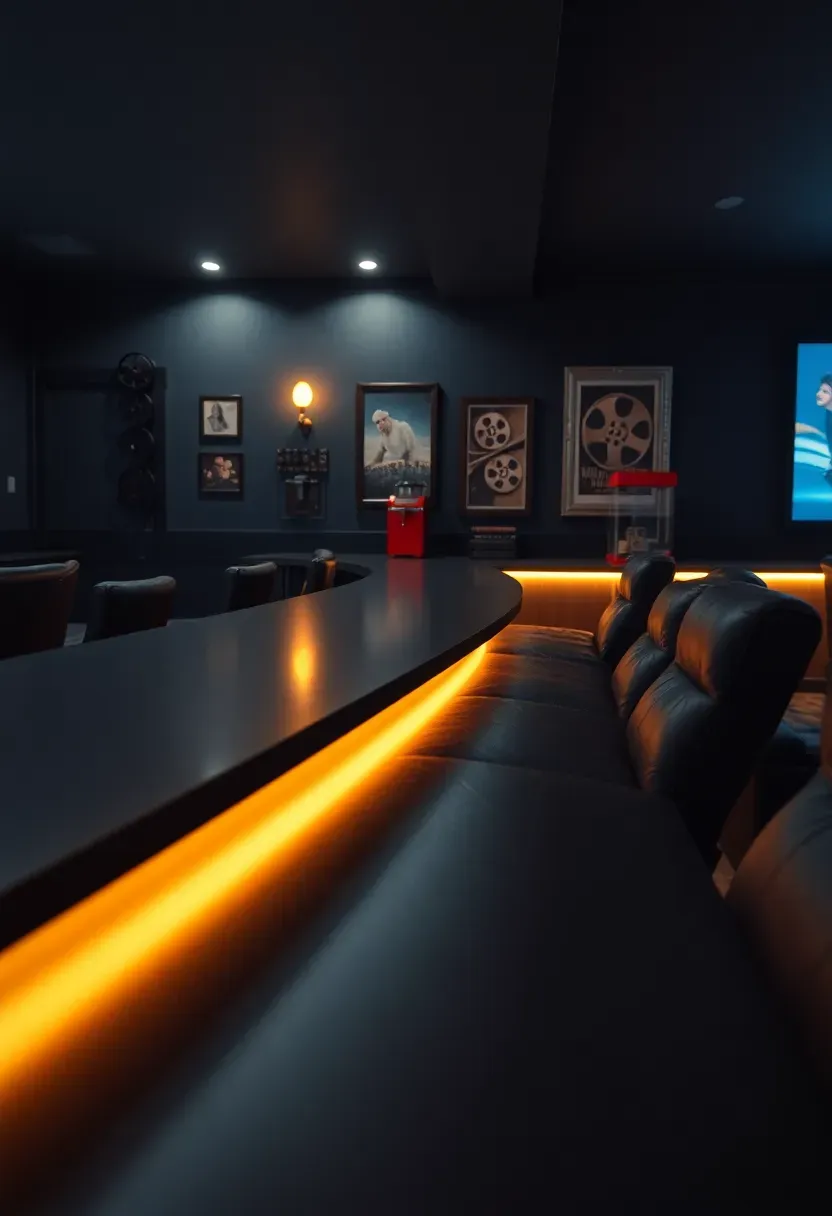
26. Theater and Bar Hybrid
Place the bar behind the last row of theater seating so it serves the room without blocking sightlines. A counter at 36 inches (rather than standard 42-inch bar height) keeps it below seated eye level when someone is in the back row. Run it the full width of the room if possible — 10-14 feet — with a mini fridge, microwave, and popcorn machine underneath. This layout means nobody leaves the room for refills during a movie. The back bar wall gets the decorative treatment: framed vintage movie posters, a film reel clock, or shadow boxes with ticket stubs. Keep the bar lighting on a separate circuit from the theater lights so you can dim or kill the bar lights during showtime without fumbling.
Tips
- Under-counter LED strips on a motion sensor illuminate the bar area when someone approaches
- A counter-depth beverage fridge (15 inches deep) fits under a 24-inch-deep countertop without protruding
- Soundproof the back wall behind the bar to prevent bottle clinks from competing with the movie audio
Recommended
Items for this idea
27. Full Basement Tavern
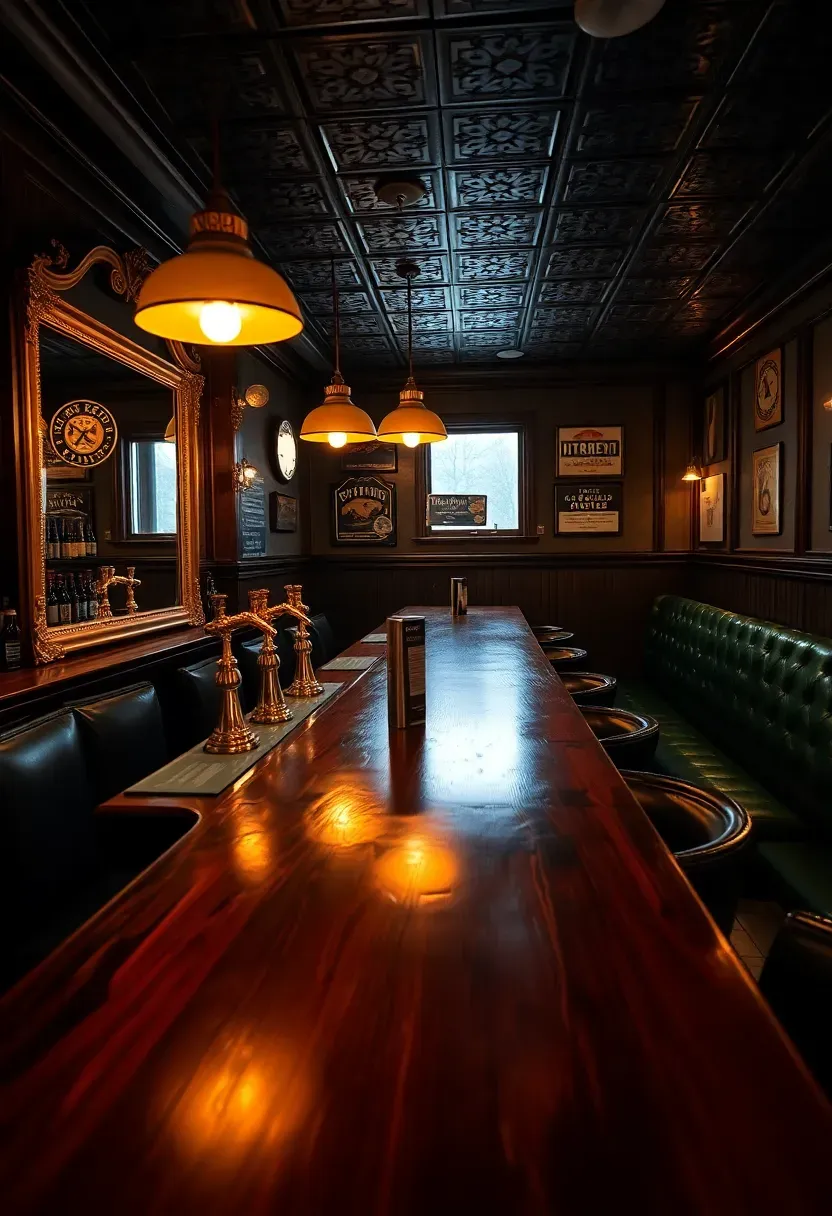
This is the everything build — a bar that replicates a real commercial pub in your basement. It requires the most space (minimum 300 square feet dedicated), the most plumbing (sink, dishwasher, floor drain), and the highest budget ($10,000-$25,000 depending on finishes). The bar counter runs 12-16 feet with six to eight stools. A back bar with a full mirror, three-tier bottle display, and glass rail sits behind the bartender position. Add two to four booth seats along the opposite wall, a jukebox or mounted TV, and vintage pub signage. Floor drain is essential for cleanup — tile the bar area floor with commercial-grade porcelain that slopes 1/8 inch per foot toward the drain.
The build breakdown
Structure
Frame the bar from 2x6 lumber with a plywood skin. Standard bar dimensions: 42 inches tall, 24 inches deep on the work side, 16-18 inches deep on the guest side with a 10-inch overhang.
Back bar
Build a tiered shelf unit against the wall, 6-7 feet tall. Install a mirror behind the middle tier to double the visual depth of your bottle collection. LED strip lighting behind each shelf tier.
Systems
A three-tap direct-draw kegerator, an under-counter dishwasher, and a bar sink form the working core. Add a speed rail (the metal trough that holds frequently used bottles within arm's reach) along the bartender side.
Finishing
Brass foot rail ($15-$25 per linear foot for solid brass), rubber bar mat along the serving edge, and a clear epoxy or polyurethane top coat on the counter rated for commercial bar use.
Quick FAQ
How much does a basement bar cost to build? It depends entirely on plumbing. A dry bar with no sink runs $500-$2,000 in materials for a DIY build. Add a wet bar with sink and the plumbing alone costs $1,500-$3,000 on top of materials. A full tavern-style bar with taps, dishwasher, and custom millwork can reach $10,000-$25,000. The counter material is the second biggest cost driver after plumbing.
Do I need a permit for a basement bar? If you are adding plumbing, electrical circuits, or structural framing, most municipalities require a building permit. A dry bar with no new electrical or plumbing typically does not need one. Check your local building code — some jurisdictions classify a bar with a sink as a "second kitchen" which triggers additional requirements for egress windows and ventilation.
What is the best countertop material for a home bar? Granite and quartz are the most popular because they resist stains, heat, and scratches. Butcher block looks great but needs regular sealing and shows water rings. Copper develops character over time but reacts to acidic drinks. For budget builds, laminate has come a long way and costs a fraction of stone. Epoxy over plywood is another budget option that creates a waterproof, glass-smooth surface.
Can I put a kegerator in the basement without special ventilation? A kegerator needs 3-4 inches of clearance on all sides for air circulation, and the compressor generates heat similar to a small refrigerator. In a finished basement with normal HVAC, this is rarely a problem. In an unfinished or sealed-off space, the heat can build up. Just make sure the area around the kegerator is not enclosed in a tight cabinet without ventilation holes.
How do I prevent moisture problems behind a basement bar? Always leave an air gap between the bar structure and the foundation wall. Use pressure-treated lumber for any framing that contacts concrete. Apply a waterproof membrane (like RedGard) on the concrete wall before building in front of it. Run a dehumidifier if your basement humidity consistently exceeds 60 percent. Moisture behind a bar leads to mold that you will not see until it is a serious problem.
A basement bar does not need to be complicated or expensive to make a real difference in how you use that space. Start with the version that fits your plumbing situation and budget — even a simple dry bar cabinet or a set of floating shelves can shift a basement from storage dump to gathering spot. The key is committing to one style instead of trying to blend five different aesthetics into one wall. Pick the design that makes you want to invite people over, and build from there.
Pinterest cover for 27 Basement Bar Designs for Every Style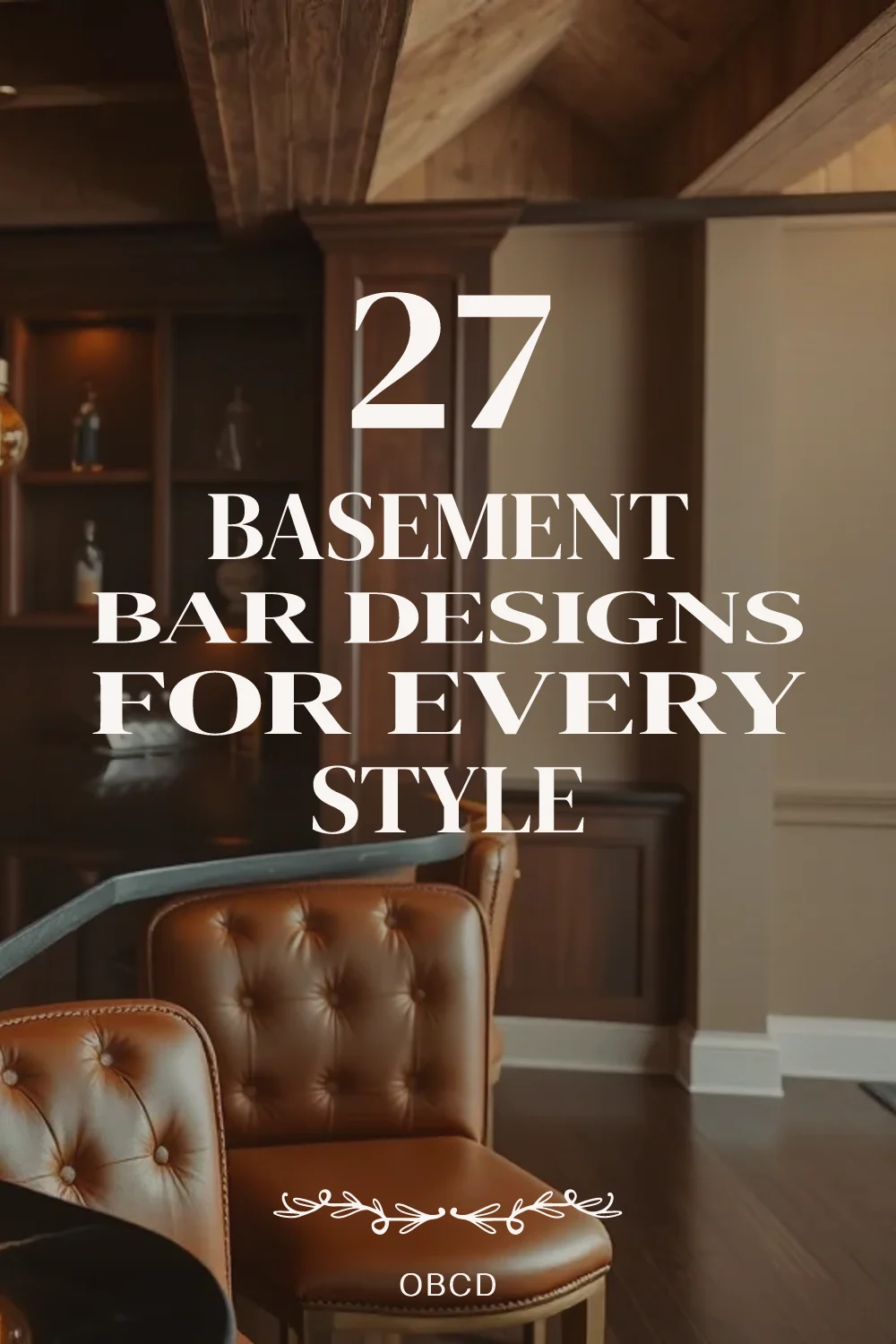
About the author
OBCD
CGI visualization and interior design content. We create detailed 3D renders and curate practical design ideas for every room in your home.