29 Basement Entertainment Ideas Worth Trying
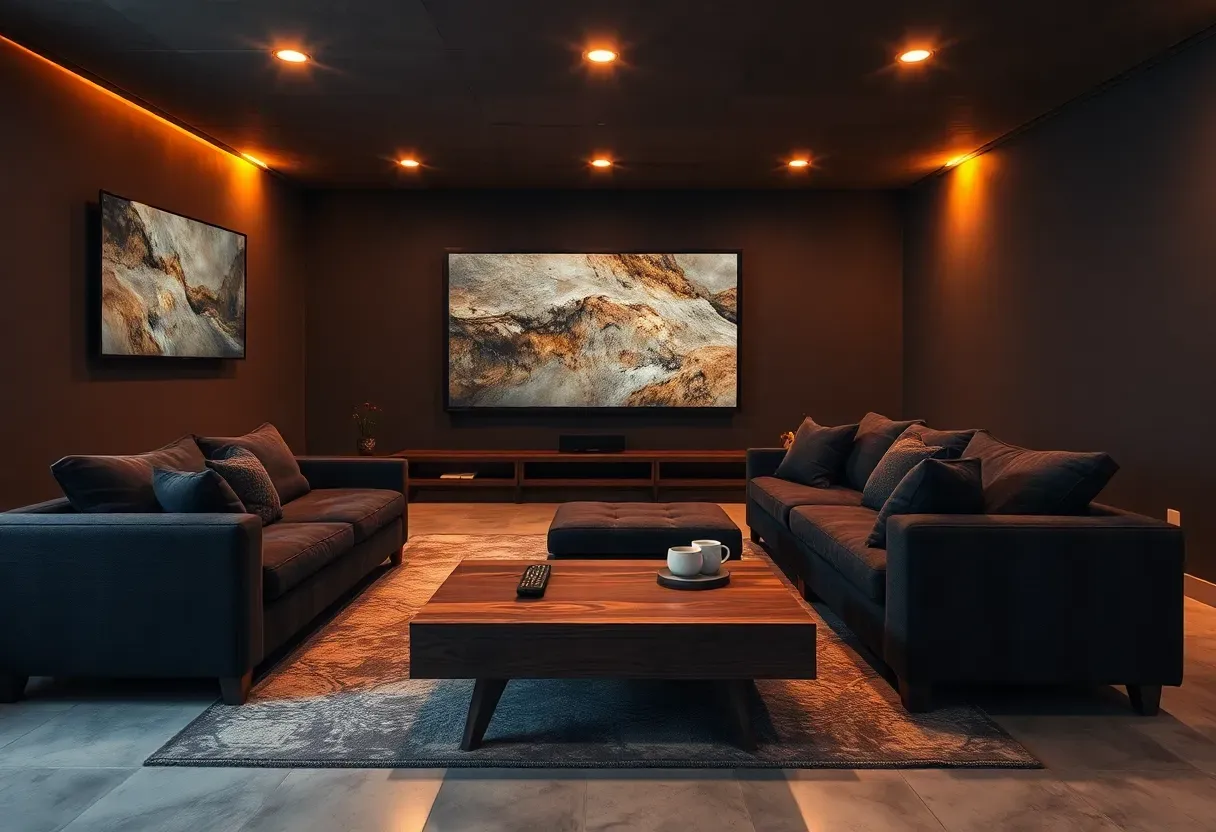
My neighbor spent $40,000 finishing his basement and ended up with what amounts to a second living room nobody uses. The furniture is nice, the paint is fine, but there is nothing to actually do down there. That is the trap most people fall into — they finish the space without giving it a purpose. A basement meant for entertainment needs specific gear, layout choices, and lighting decisions that differ from every other room in the house. The low ceilings, lack of windows, and concrete subfloor are not drawbacks here. They are advantages if you plan around them.
Below you will find 29 ideas grouped loosely by activity type — watching, playing, listening, and socializing. Pick the ones that match how you actually spend your free time.
Table of Contents
- Ultrawide Curved Screen Wall
- Tabletop RPG Den
- Indoor Basketball Shooting Range
- Speakeasy Cocktail Lounge
- Turntable and Hi-Fi Corner
- Ping Pong Arena
- Immersive Home Cinema
- Sim Racing Cockpit
- Puzzle and Strategy Game Library
- Basement Pub with Taps
- Rock Climbing Accent Wall
- Retro Console Museum
- Drum Practice Room
- Indoor Putting Green
- Golf Simulator Enclosure
- Whiskey Tasting Bar
- LED Dance Lounge
- PC Gaming Battlestation
- Popcorn and Candy Bar Station
- Shuffleboard Alley
- Cigar and Reading Room
- Murder Mystery Party Room
- Indoor Playground Climbing Area
- Open Mic and Music Stage
- Foosball Tournament Corner
- Wine Bar with Tasting Counter
- Podcast and Streaming Studio
- Dual-Zone Sports Viewing Room
- Convertible Guest and Game Room
1. Ultrawide Curved Screen Wall
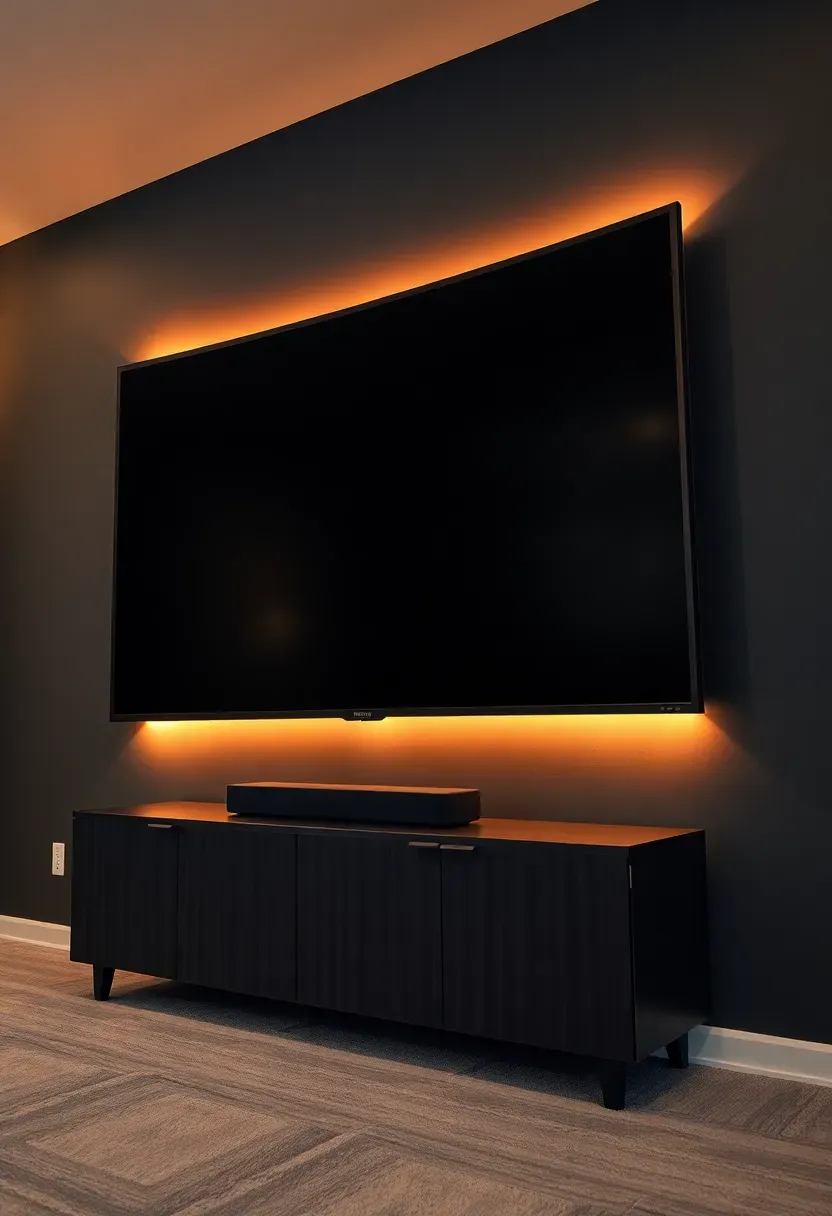
Forget the standard 65-inch TV. A 98-inch or 100-inch ultrawide curved display creates a field of view that pulls you into whatever you are watching. The curve matters in basements because seating distances are usually shorter — 8 to 10 feet — and a flat panel that large develops noticeable brightness falloff at the edges from that range. Mount it on a dark-painted recessed wall to kill reflections. Budget $3,000 to $6,000 for a 98-inch from TCL or Hisense, which is less than most projector-and-screen combos once you factor in the screen.
Setup tips
- Use bias lighting strips behind the TV to reduce eye strain during long sessions
- Keep ambient room lighting on dimmers so you can adjust without full blackout
- HDMI 2.1 cable runs through the wall are worth the effort during install
We picked a few things that go well with this idea: Mdbebbron 120-Inch Foldable Projector Screen (★4.4), 120-Inch Motorized Projector Screen with Remote (★4.5) and VIVOHOME 120-Inch Pull Down Projector Screen (★4.4). As an Amazon Associate we earn from qualifying purchases.
2. Tabletop RPG Den
Why basements are ideal
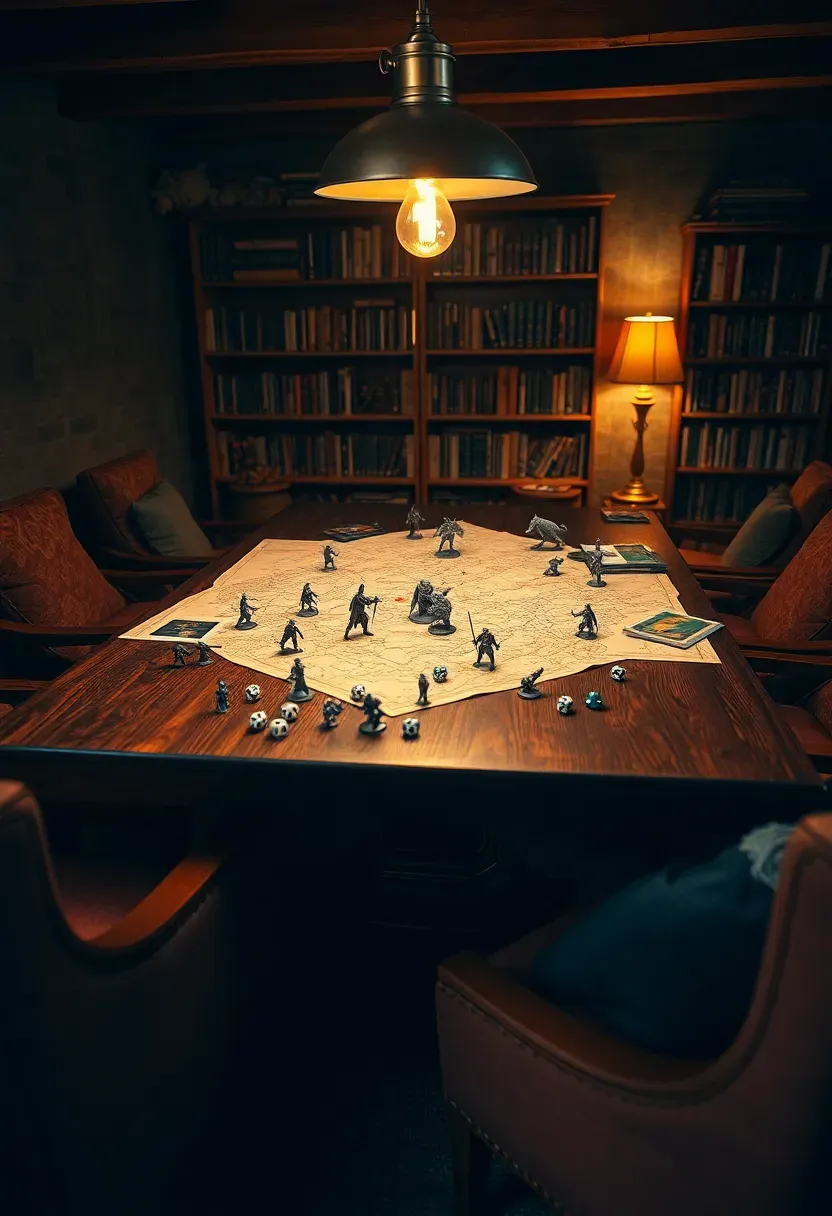
Sound isolation. A four-hour D&D session gets loud — dice rolling, arguments about rules, someone doing a terrible dwarf accent. Basements contain all of that without bothering anyone upstairs.
Building the space
The centerpiece is the table. A 4x6-foot gaming table with a recessed play area, cup holders, and a felt surface runs $800 to $2,000 from companies like Wyrmwood or GameToppers. Surround it with comfortable chairs that support long sits — not folding chairs. Add wall-mounted shelves for miniatures and a small TV on the wall for maps and reference images. Overhead lighting should be warm and adjustable.
Things to consider
- Dedicated storage for campaign materials keeps the table clear between sessions
- A mini fridge nearby eliminates trips upstairs mid-game
We picked a few things that go well with this idea: KITESSENSU Cocktail Shaker Bartender Kit with Stand (★4.7), 18-Piece Stainless Steel Bartender Kit (★4.6) and HMYBAR 22-Piece Cocktail Shaker Set with Bamboo Stand (★4.8). As an Amazon Associate we earn from qualifying purchases.
3. Indoor Basketball Shooting Range
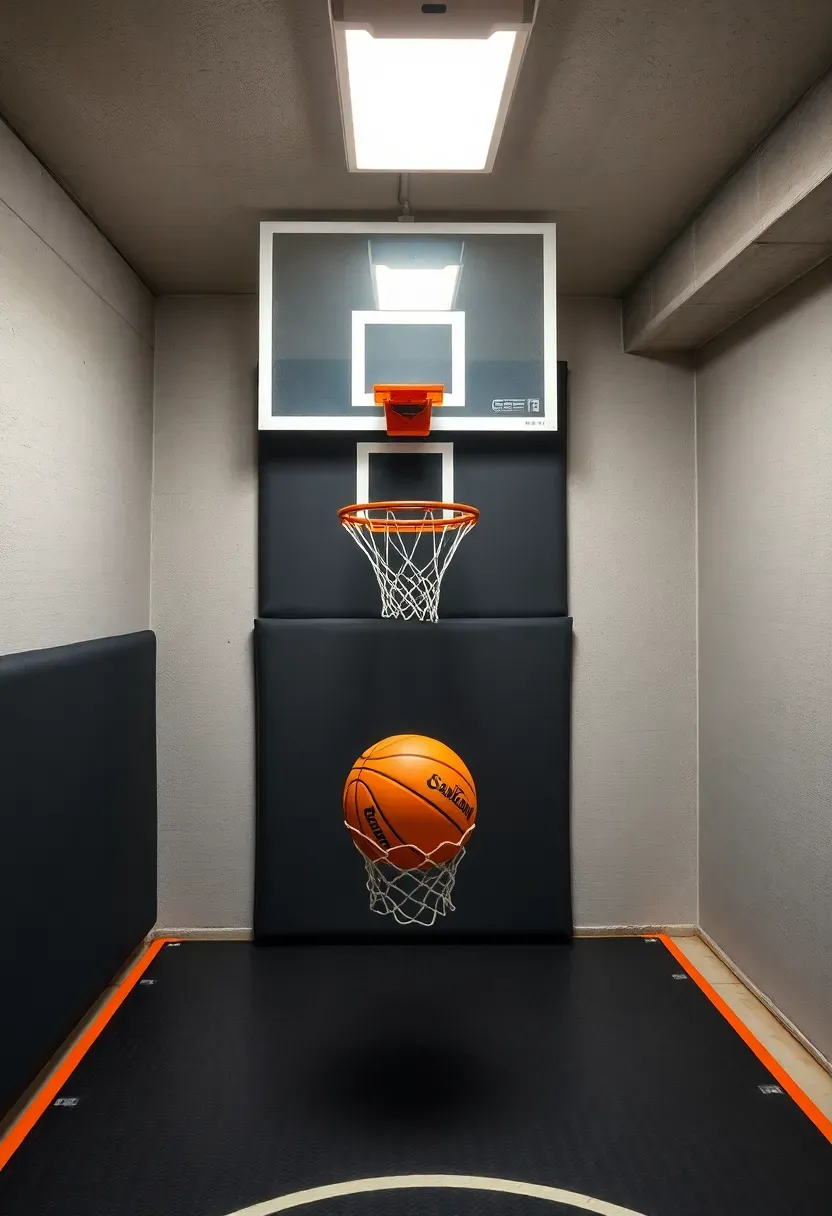
You need 9 feet of ceiling clearance minimum, and 10 feet is better. A half-court shooting setup with a wall-mounted adjustable hoop, a ball return net, and rubberized sport flooring fits in a space as small as 12 by 16 feet. The ball return net is the key piece — without it, you are chasing balls into walls constantly. Companies like Dr. Dish make automated return systems starting around $2,500. Use 3/4-inch rubber gym tiles on the floor to protect the slab and absorb impact noise.
Quick checklist
- Measure ceiling height before buying any hoop
- Pad the wall behind the backboard with 2-inch foam panels
- Acoustic dampening on the ceiling prevents dribbling sound from traveling up
We picked a few things that go well with this idea: KSIPZE 100ft RGB LED Strip Lights (★4.4), Leeleberd 100ft RGB LED Strip Lights (2-Pack) (★4.4) and Govee RGBIC Smart LED Strip Lights (16.4ft) (★4.4). As an Amazon Associate we earn from qualifying purchases.
4. Speakeasy Cocktail Lounge
The problem with most basement bars
They look like a TGI Friday's franchise that lost its lease. Neon beer signs, sticky laminate countertops, and a TV showing sports on mute. Nothing wrong with that if it is what you want, but a speakeasy approach creates something with actual atmosphere.
The solution
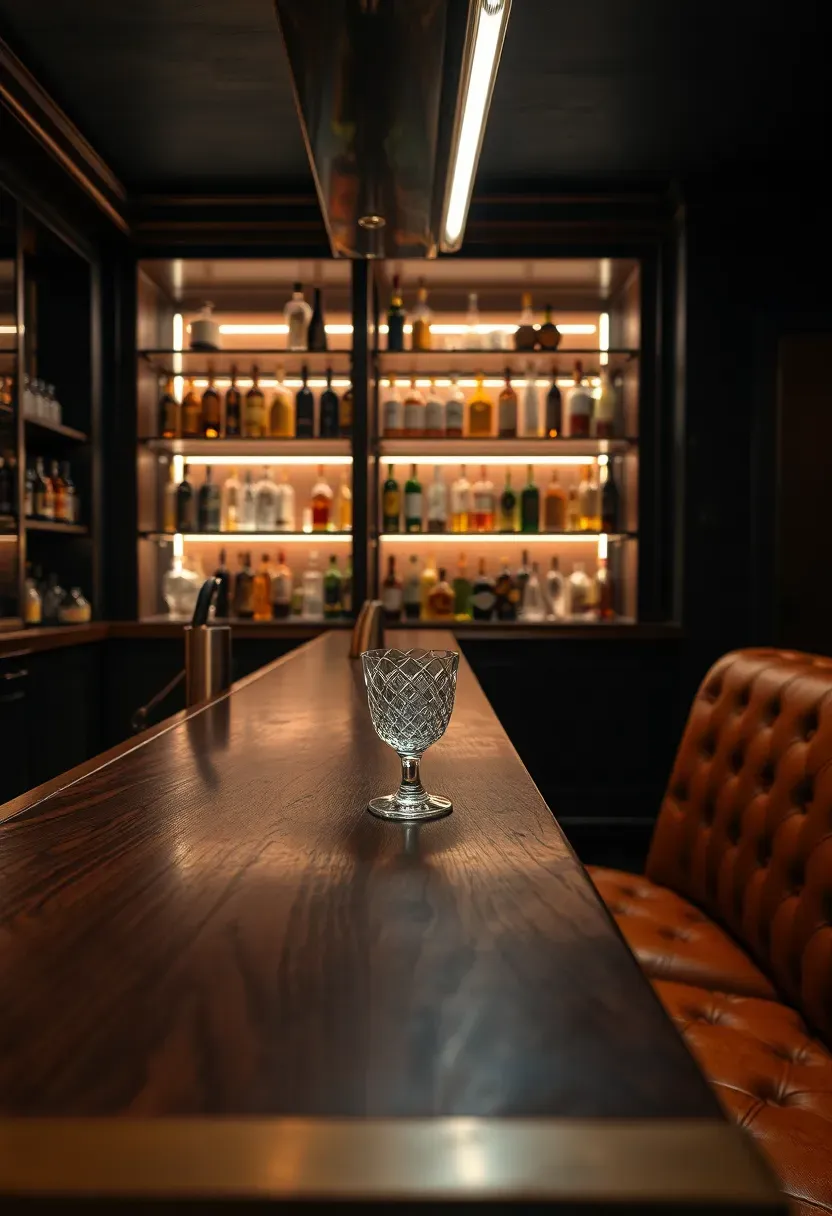
Dark walls — think Benjamin Moore Wrought Iron or Sherwin-Williams Tricorn Black. A solid wood bar top, 42 inches high, with a brass foot rail. Open shelving behind the bar for bottles, backlit with warm LED strips. Leather or velvet bar stools. No TVs. The whole point is conversation. A quality cocktail setup (shaker, jigger, strainer, muddler, ice mold) costs under $100. Add a small ice machine for $150 to $300.
Pros and cons
- Pro: Impressive for guests, relatively affordable to build
- Pro: Dark color palette hides basement imperfections
- Con: Requires plumbing for a bar sink, which adds cost
- Con: No natural light makes it feel closed-in during daytime use
Recommended
Items for this idea
5. Turntable and Hi-Fi Corner
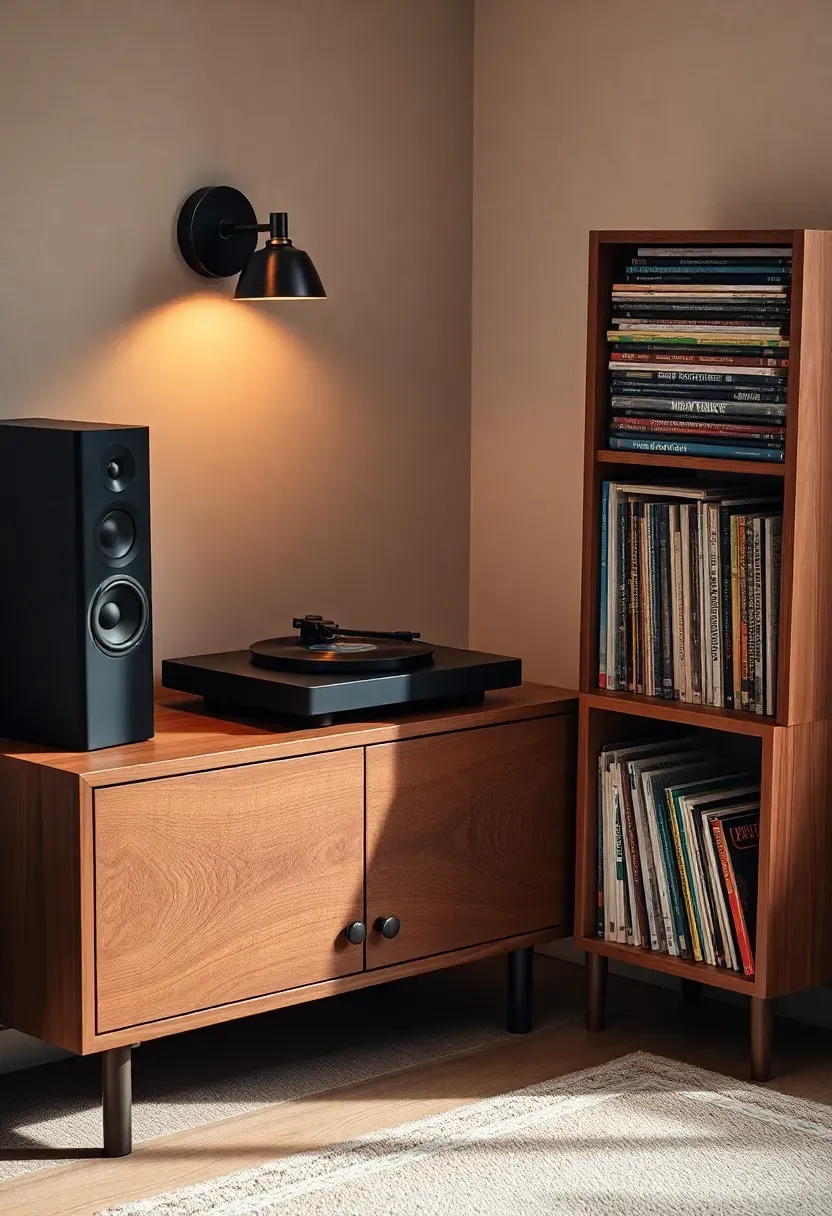
Basements are acoustically dead compared to above-grade rooms, and that is exactly what vinyl playback prefers. No window reflections, thick walls, and carpet or rugs absorb the frequencies that cause muddiness. Set up a quality turntable — an Audio-Technica AT-LP120 or a Rega Planar 1 — on a vibration-damped surface like a wall-mounted shelf or a heavy credenza. Pair it with passive bookshelf speakers (Elac Debut or Wharfedale Diamond) and a decent integrated amp. Budget $600 to $1,500 for the whole chain. Store records vertically in cube shelving nearby.
Tips
- Keep the turntable away from subwoofers to avoid feedback through the needle
- A wool felt mat reduces static better than the rubber mats most turntables ship with
- Room temperature matters — vinyl warps above 80 degrees, so check your HVAC
6. Ping Pong Arena
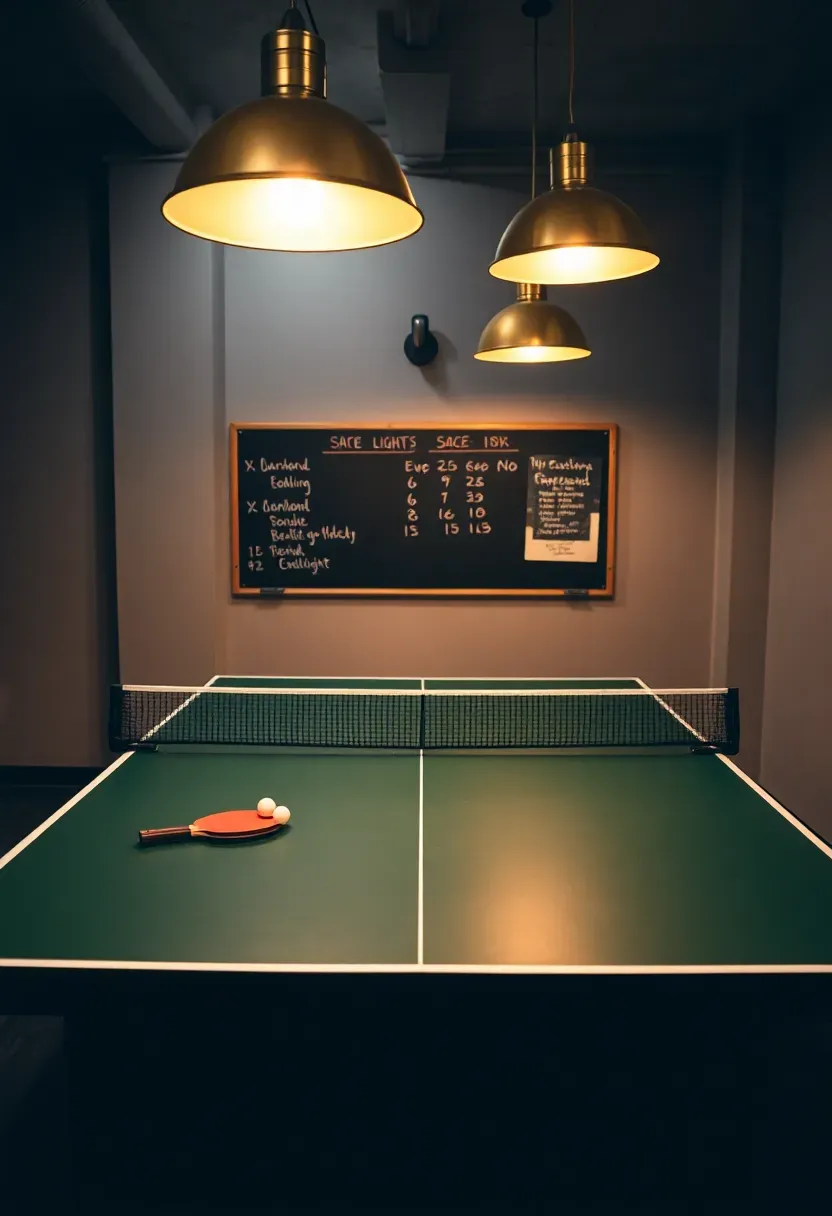
A regulation ping pong table is 5 by 9 feet, but you need at least 5 feet of clearance on each end and 3 feet on the sides for comfortable play. That means a minimum footprint of roughly 14 by 17 feet. Use a JOOLA or STIGA competition-grade table ($400 to $700) rather than a cheap folding model — the bounce consistency difference is immediately noticeable. Hang pendant lights centered over the table at about 6.5 feet so they do not interfere with high serves. Mount a chalkboard scoreboard on the wall. Rubber flooring underneath protects both the slab and dropped paddles.
Tips
- A ball catch net behind each end saves you from crawling under furniture constantly
- Keep spare balls and paddles in a wall-mounted rack
- A ceiling fan on low speed moves air without affecting ball trajectory
Recommended
Items for this idea
7. Immersive Home Cinema
How to step beyond a basic projector setup
-
Build a riser. A second row of seating elevated 8 to 12 inches on a framed platform gives everyone an unobstructed view. Frame it with 2x8 lumber, top with plywood, and carpet it to match the room.
-
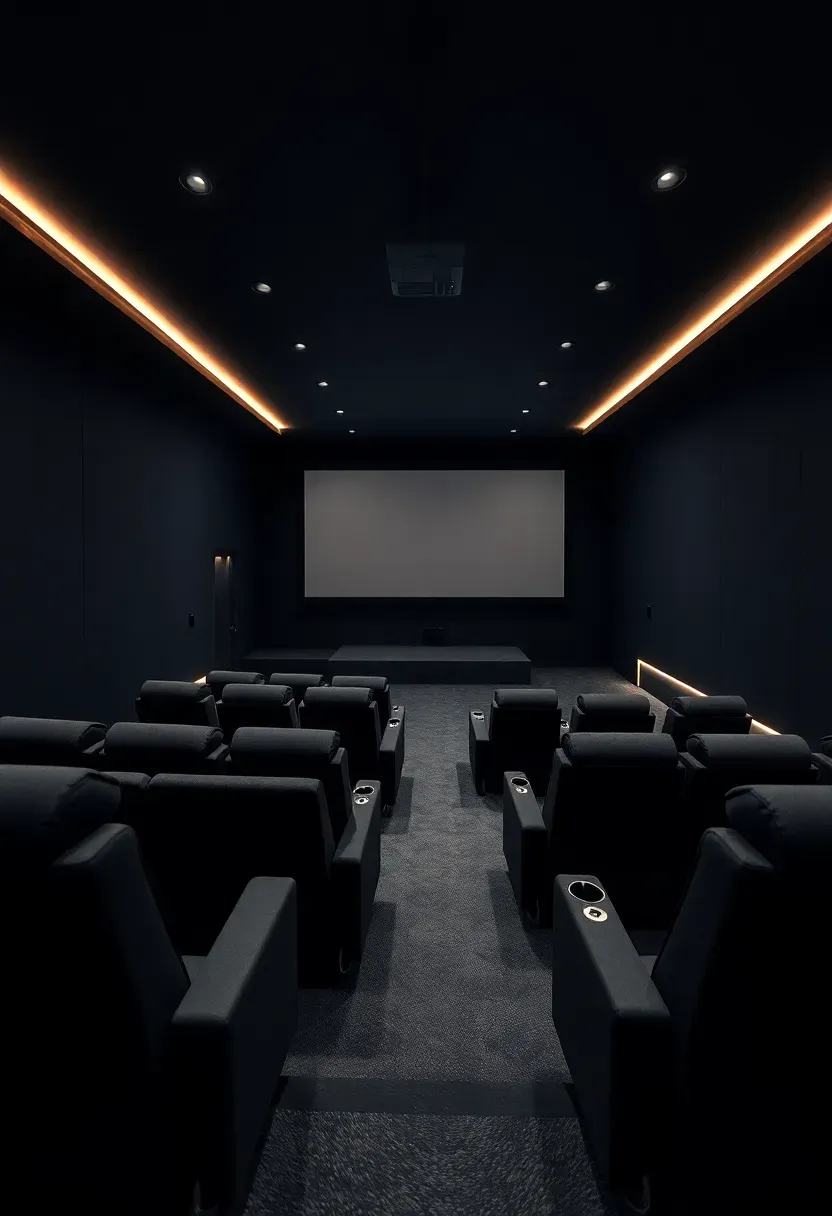
Install a proper screen. A fixed-frame screen (Silver Ticket or Elite Screens, $200 to $500) stays taut and wrinkle-free unlike pull-down models. Size it at 120 to 135 inches for a 12-foot viewing distance.
-
Handle sound correctly. A 5.1.2 Atmos setup with in-ceiling height channels makes basement movie nights feel like a commercial theater. Route all wiring before finishing the walls.
Watch out for
- Projector throw distance — measure before buying, not after
- HVAC returns near the screen create visible vibrations on pull-down screens
- Light leaks from stairwells ruin contrast; install a door or heavy curtain
8. Sim Racing Cockpit
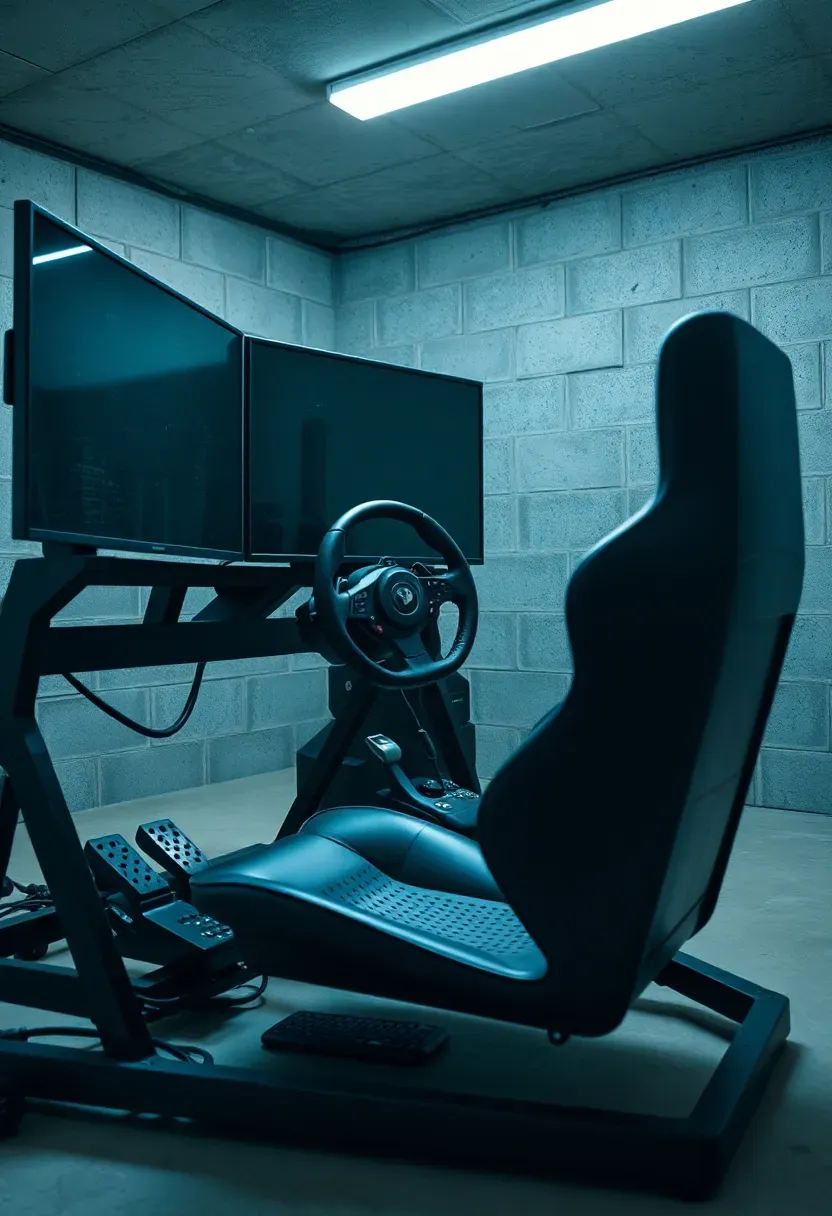
A full sim racing rig occupies about 4 by 6 feet of floor space and delivers an experience that keeps people occupied for hours. The basics: a racing seat frame (Playseat or Next Level Racing, $300 to $600), a force-feedback wheel (Logitech G923 or Fanatec CSL DD at $250 to $500), and pedals with a load cell brake. Triple 27-inch monitors or a single 49-inch ultrawide complete the visual setup. Mount the whole rig on a plywood platform with rubber feet to prevent it from sliding on concrete. The basement stays cool enough that extended sessions do not overheat the electronics.
Tips
- A buttkicker transducer bolted to the seat frame adds physical vibration for under $200
- Cable management channels along the frame prevent tripping hazards
- Acoustic foam behind the monitors reduces fan noise reflection
Recommended
Items for this idea
9. Puzzle and Strategy Game Library
The appeal
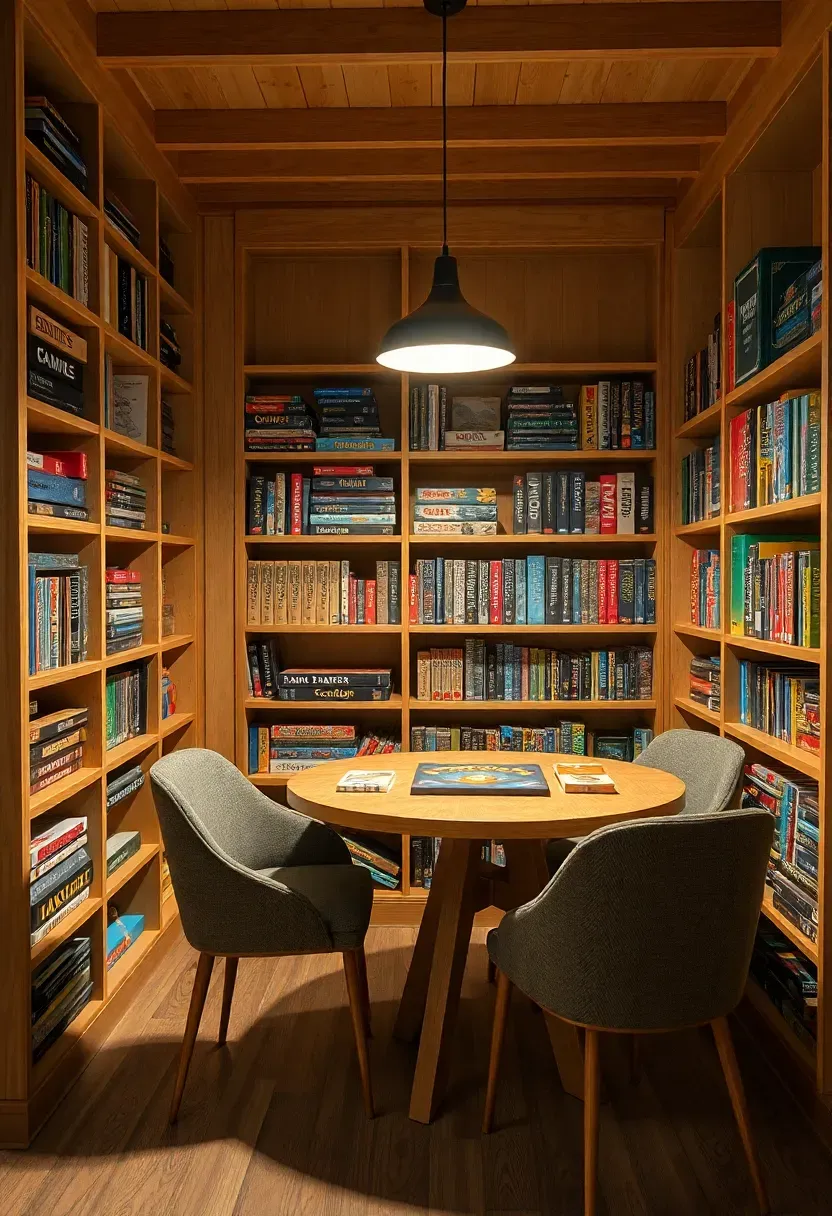
Board games are having a genuine resurgence. The modern titles — Wingspan, Terraforming Mars, Brass Birmingham — are complex enough to hold adult attention for two to three hours. A dedicated basement space for them means you never have to clear the dining table mid-game.
Setting it up
Install deep shelves (at least 12 inches) along one wall to hold boxes. Kallax units from IKEA work fine and hold the weight. Center a large table — 3x5 feet minimum — with good overhead lighting. Pendant lights on a dimmer work better than recessed cans because they focus light on the table surface. Add a small side table for drinks so nothing spills on the game. A drawer unit nearby stores extra dice, card sleeves, and scoring pads.
Choose this if
- You host game nights regularly and need a permanent setup
- You prefer slower-paced entertainment over screen-based options
10. Basement Pub with Taps
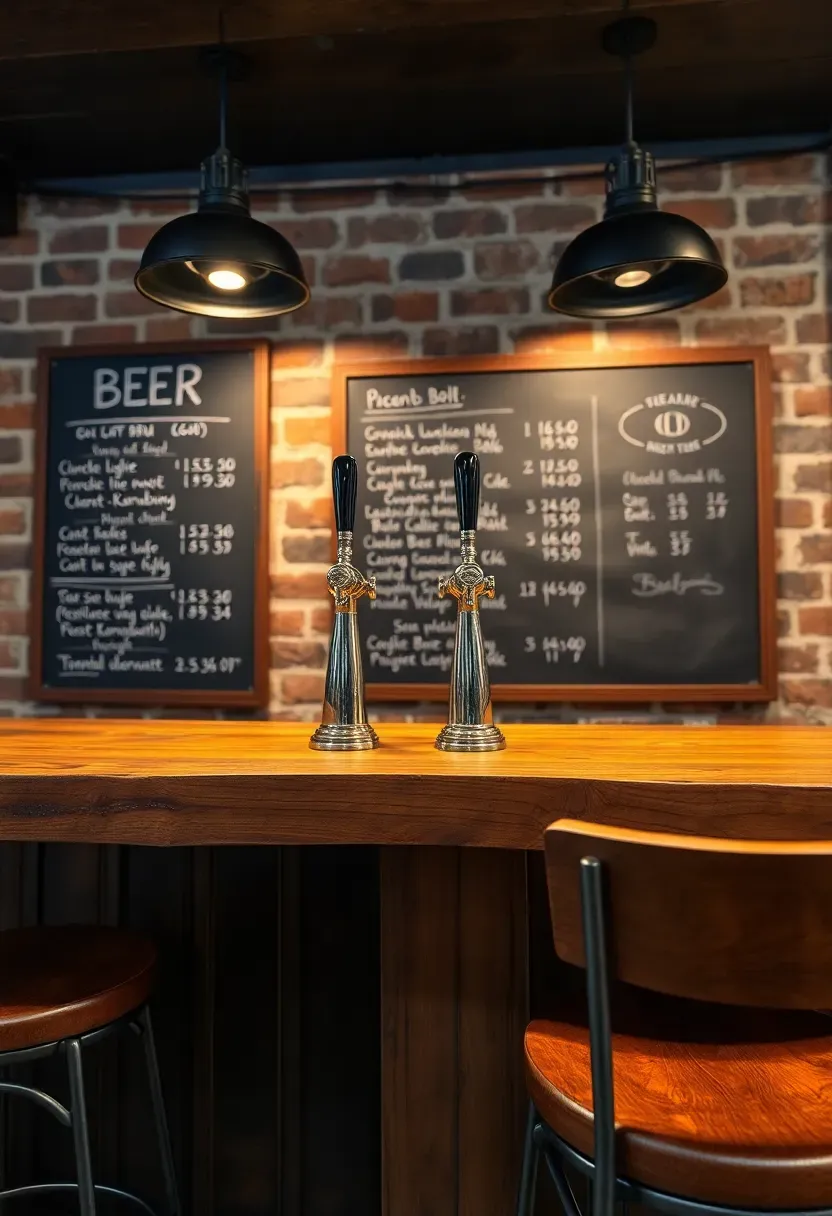
Running a kegerator with two to three taps is simpler than most people assume. A dual-tap kegerator costs $500 to $800, fits under a bar counter, and keeps two kegs cold. The bar itself can be built from 2x4 framing, plywood, and a butcher block or epoxy-finished countertop for under $600 in materials. Mount a chalkboard above the taps for listing what is on draft. The key detail most people miss is the drip tray — without one, your floor gets sticky within a week. Stainless drip trays with drains run $30 to $80 and mount directly to the bar face.
Tips
- CO2 tank refills run about $15 to $25 and last through one full keg
- Keep a spare set of beer line and fittings — clogs happen
- Bar height should be 42 inches; stool seat height should be 30 inches
Recommended
Items for this idea
11. Rock Climbing Accent Wall
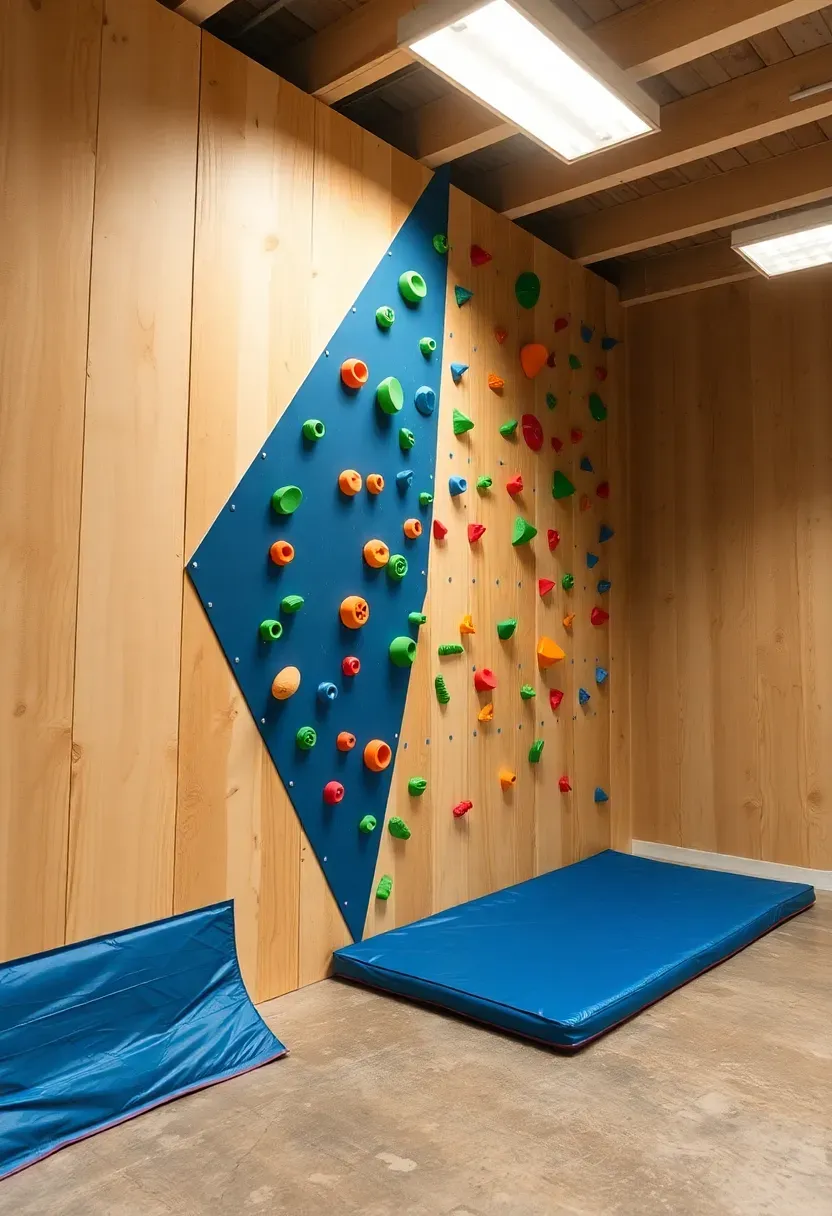
A basement climbing wall sounds ambitious, but a bouldering traverse wall (horizontal, not vertical) needs only 8 feet of ceiling height and works on any wall at least 12 feet long. Build a framework of 3/4-inch plywood over 2x4 furring strips attached to the studs. Drill a grid of T-nut holes on 8-inch centers for bolt-on climbing holds. A starter set of 50 holds costs $80 to $150. Lay a 4-inch-thick crash pad below (gymnastics mats work fine). This burns energy, builds grip strength, and kids will use it daily.
Tips
- Use birch plywood — it holds T-nuts better than pine
- Sand all edges smooth before mounting holds
- Angle the wall 10 to 15 degrees past vertical for added difficulty
12. Retro Console Museum
Origins
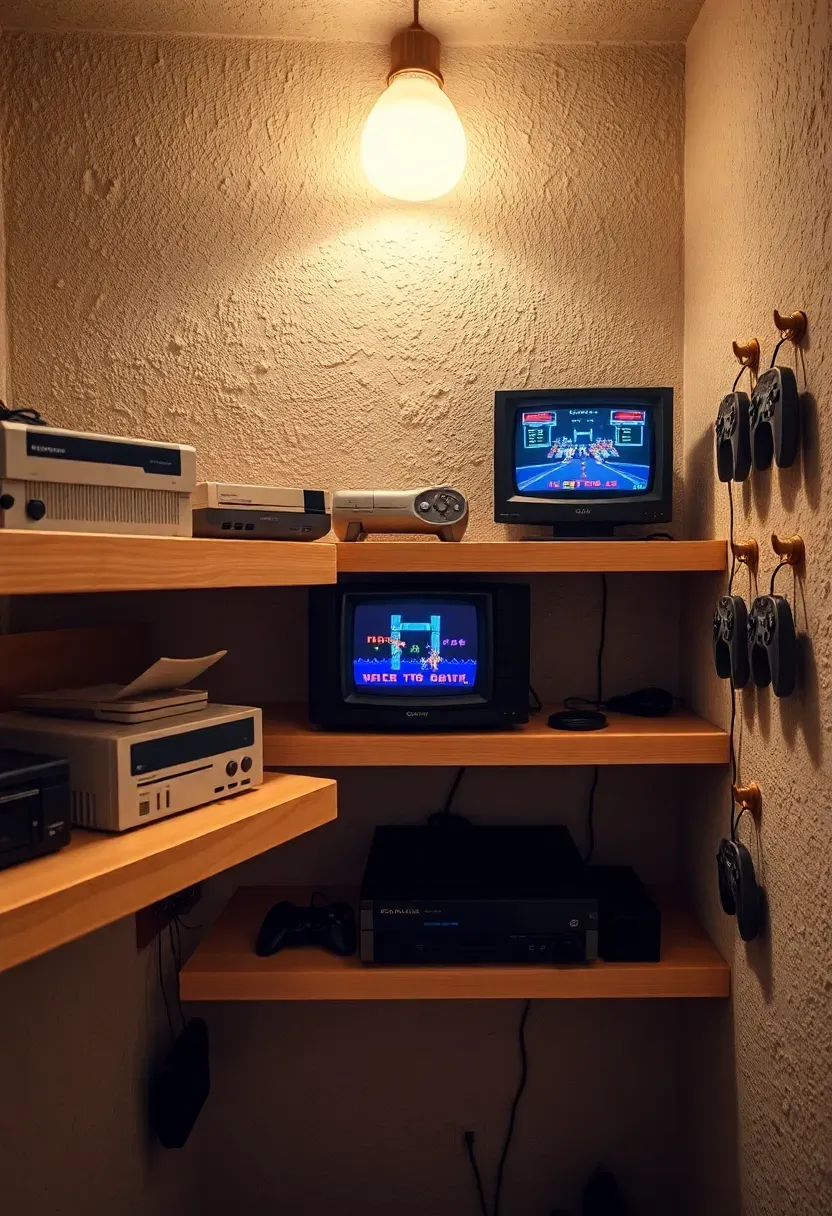
The first generation of home consoles — Atari 2600, Intellivision, ColecoVision — hit living rooms in the late 1970s. Forty-plus years later, original hardware in working condition has become genuinely collectible. A basement museum setup preserves and displays these machines properly.
Modern approach
Mount a CRT television (13 to 20 inches) on a sturdy shelf — retro consoles look wrong on flat panels because they were designed for scanlines. Display consoles on floating shelves with controllers hung on wall hooks. Keep humidity below 55% with a dehumidifier; moisture corrodes old circuit boards. Label each system with a small brass nameplate showing the console name and release year. Budget $50 to $300 per console depending on condition and rarity.
Apply at home
- Start with whatever you grew up playing and expand from there
- Facebook Marketplace and local estate sales beat eBay pricing for bulky items
- A surge protector with individual switches lets you power each console separately
Recommended
Items for this idea
13. Drum Practice Room
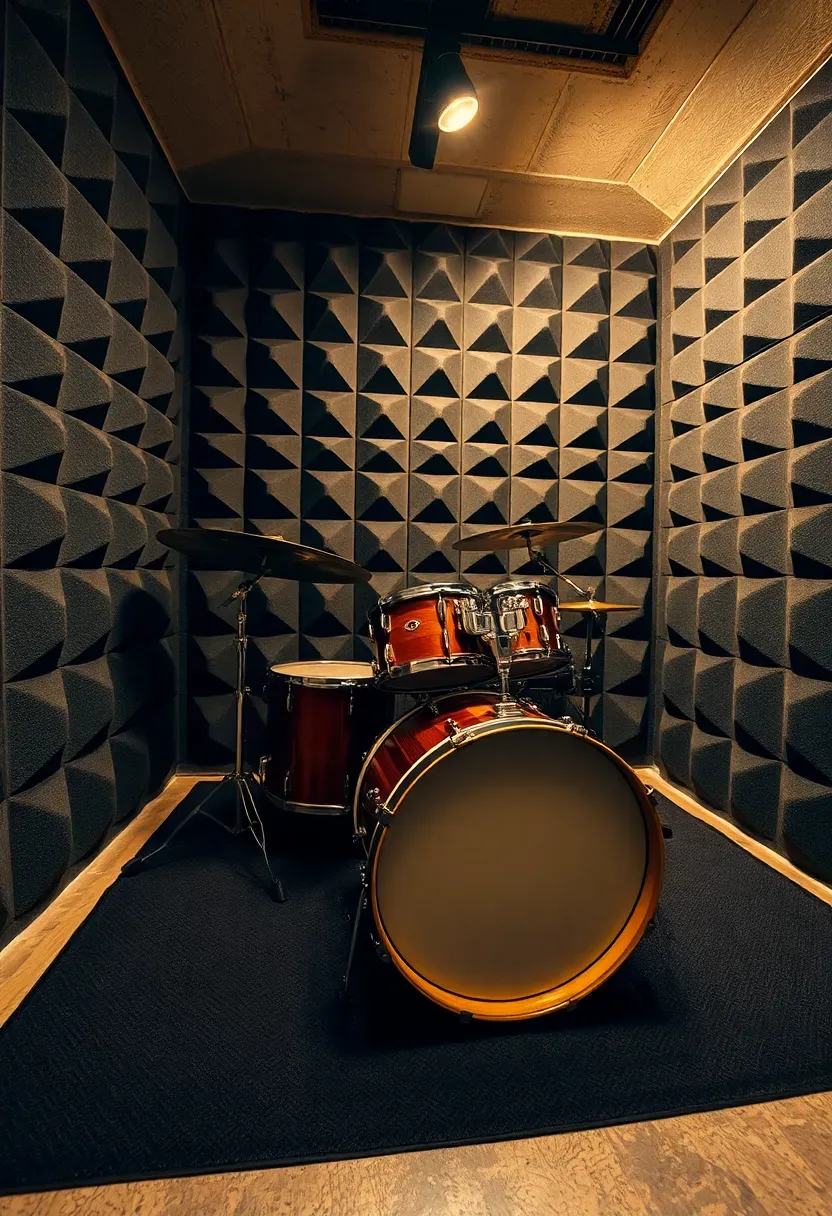
Drums are the instrument most likely to get you evicted or divorced, which makes a basement the only realistic place to play them at home. Acoustic treatment is not optional here. Line the walls with 2-inch acoustic foam panels and hang moving blankets on any hard surfaces you cannot cover. A thick rubber drum rug on the floor ($50 to $100) isolates the kick drum vibration from the slab. If you cannot fully soundproof, consider a hybrid approach: electronic drums (Roland TD-07KV, around $700) for weeknight practice, acoustic kit for weekend sessions when neighbors are out.
Tips
- A tennis ball riser (drum platform on tennis ball feet) reduces vibration transfer dramatically
- Ventilation matters — drummers generate a lot of body heat in a small sealed room
- Record your practice with a single overhead condenser mic to track progress
14. Indoor Putting Green
-
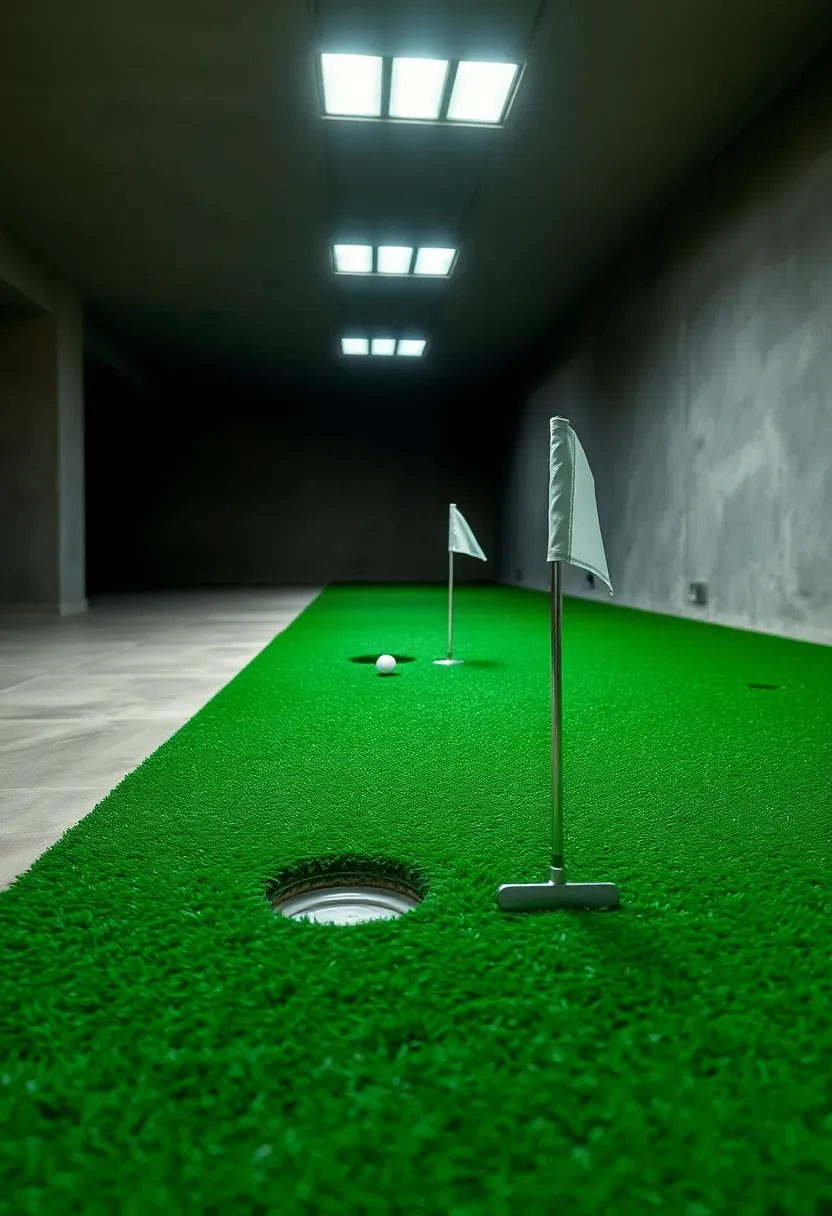
Choose the turf. A stimp speed of 10 to 11 matches most public golf courses. Birdie Ball or Big Moss make residential putting mats in lengths from 4 to 15 feet, priced $200 to $800. Longer is better — you want enough room for 10-foot putts.
-
Install it properly. Lay the turf over a smooth subfloor. If your concrete has cracks or bumps, put down 1/4-inch plywood first. Some mats come with foam underlayment; use it.
-
Add practice aids. A putting mirror for alignment, a gate drill for face control, and three to four cups at varying distances give you a complete practice station.
Watch out for
- Cheap turf develops creases that never flatten — invest in a reputable brand
- Basements with radiant floor heating can cause turf adhesive to soften over time
Recommended
Items for this idea
15. Golf Simulator Enclosure
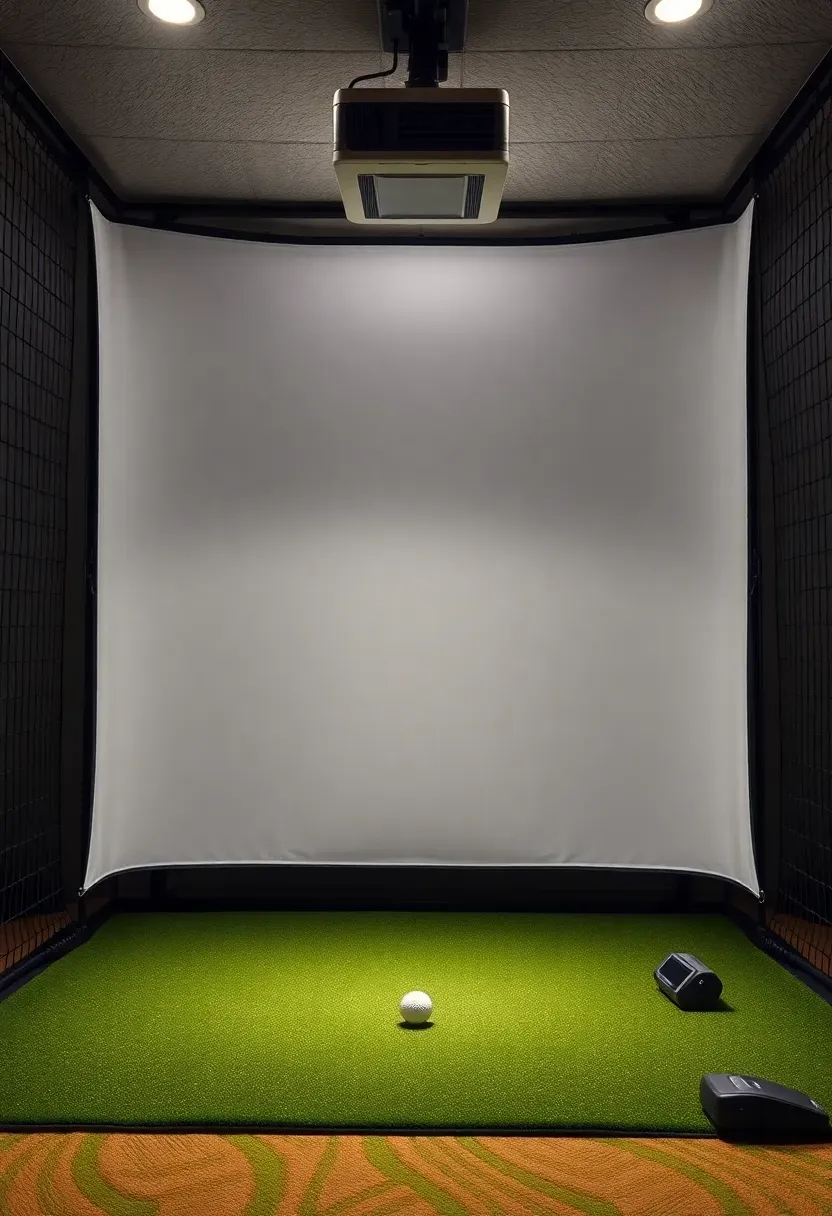
A full golf simulator needs a space at least 10 feet wide, 15 feet deep, and 9 feet tall. The ceiling height is the deal-breaker — anything under 9 feet limits your club selection to irons only. The setup: an impact screen ($200 to $600), a ceiling-mounted projector, a hitting mat, and a launch monitor. The launch monitor is where most of the cost lives. A Garmin Approach R10 ($550) handles casual use; a FlightScope Mevo+ ($2,000) provides tour-level accuracy. Build a frame from 2x4s or metal conduit for the enclosure and line it with side netting to catch shanks.
Tips
- Projector should be behind and above the golfer, not behind the screen
- A high-density foam hitting mat saves your joints compared to thin rubber
- Ball speed in a basement can damage drywall — protect side walls within 6 feet of the tee
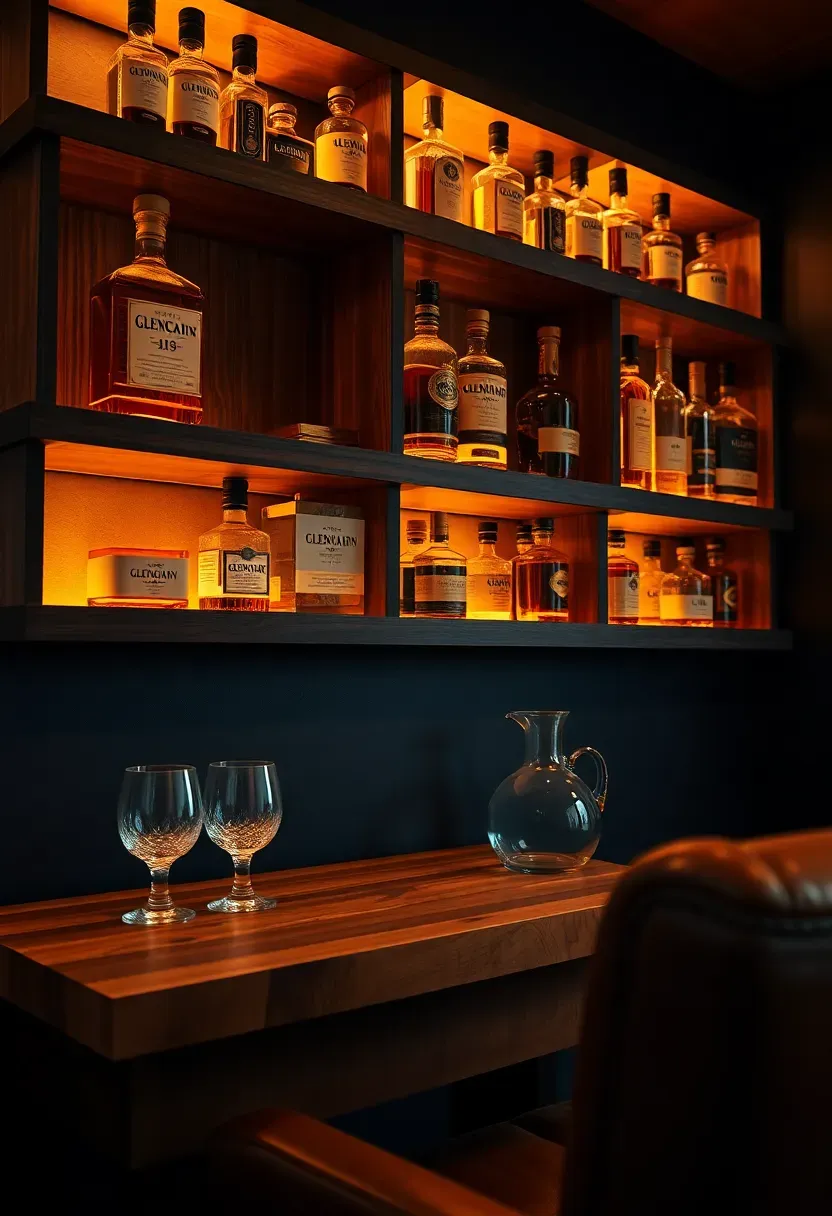
16. Whiskey Tasting Bar
Why it fits a basement
Whiskey does not need refrigeration, direct sunlight ruins it, and the ideal serving temperature is 60 to 65 degrees — which is exactly what most basements maintain year-round without intervention. A basement whiskey bar practically stores itself.
How to build it
A wall-mounted shelf unit with adjustable shelves displays bottles at eye level. Backlight the shelves with warm white LED strips (2700K). Below, a small counter with a butcher block surface provides a tasting area. Glencairn glasses ($8 each) are the standard tasting vessel. Add a water carafe and a dropper bottle — a few drops of water opens up the nose on cask-strength pours. A leather club chair or two nearby and dim lighting complete the atmosphere.
Choose this if
- You collect whiskey and need climate-appropriate storage
- You prefer a low-key social setting over a full bar operation
Recommended
Items for this idea
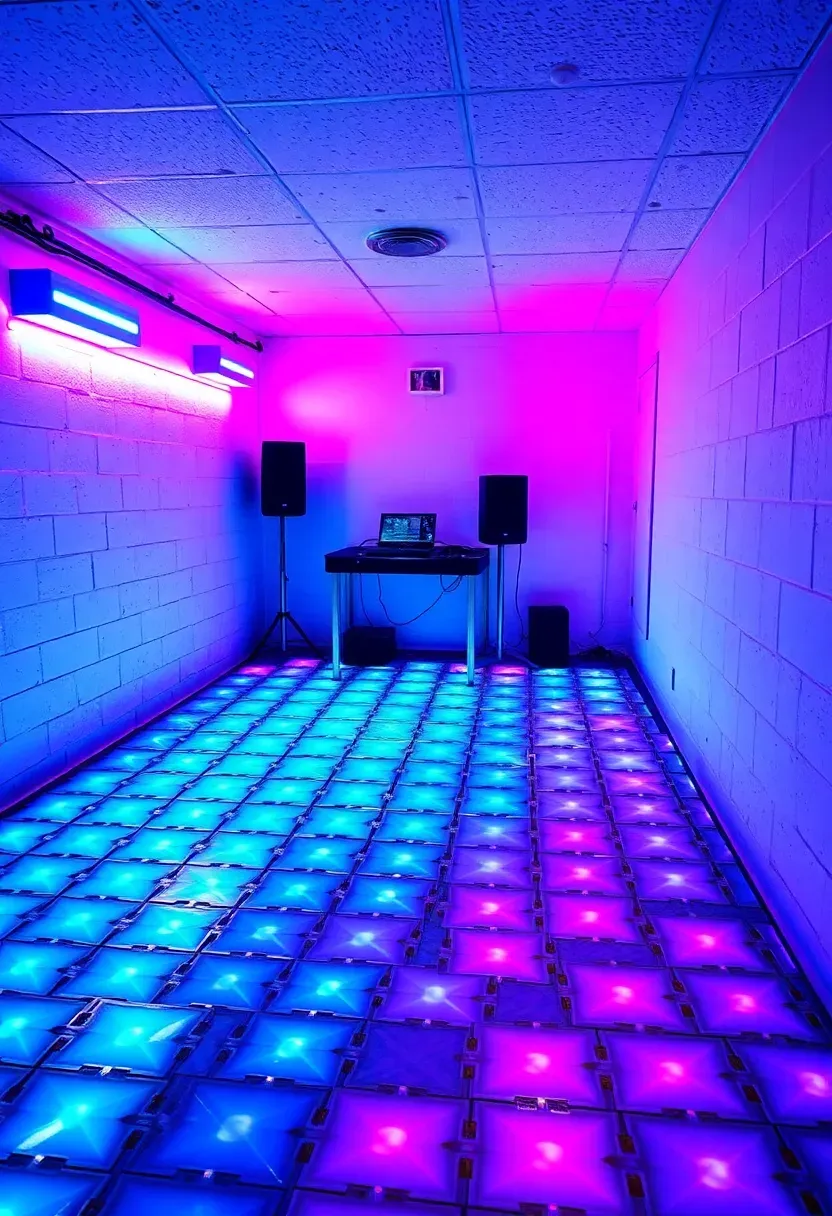
17. LED Dance Lounge
Clear out the furniture, install an LED floor panel system or just lay down interlocking LED dance tiles ($300 to $800 for a 6x6-foot section), and you have a private dance floor. Wall-mounted RGB light bars (Govee or Philips Hue, $60 to $150) handle atmosphere. A small DJ booth — really just a table with a controller, laptop, and powered speakers — anchors one end of the room. Bluetooth speakers work for casual use, but wired PA speakers ($200 to $400 per pair) handle bass without distortion. The basement location means you can crank volume at midnight without a noise complaint.
Tips
- Rubber-backed flooring under dance tiles prevents slipping on concrete
- A fog machine adds atmosphere but triggers smoke detectors — disable the nearest one temporarily
- Mirror panels on one wall double the perceived size of the space
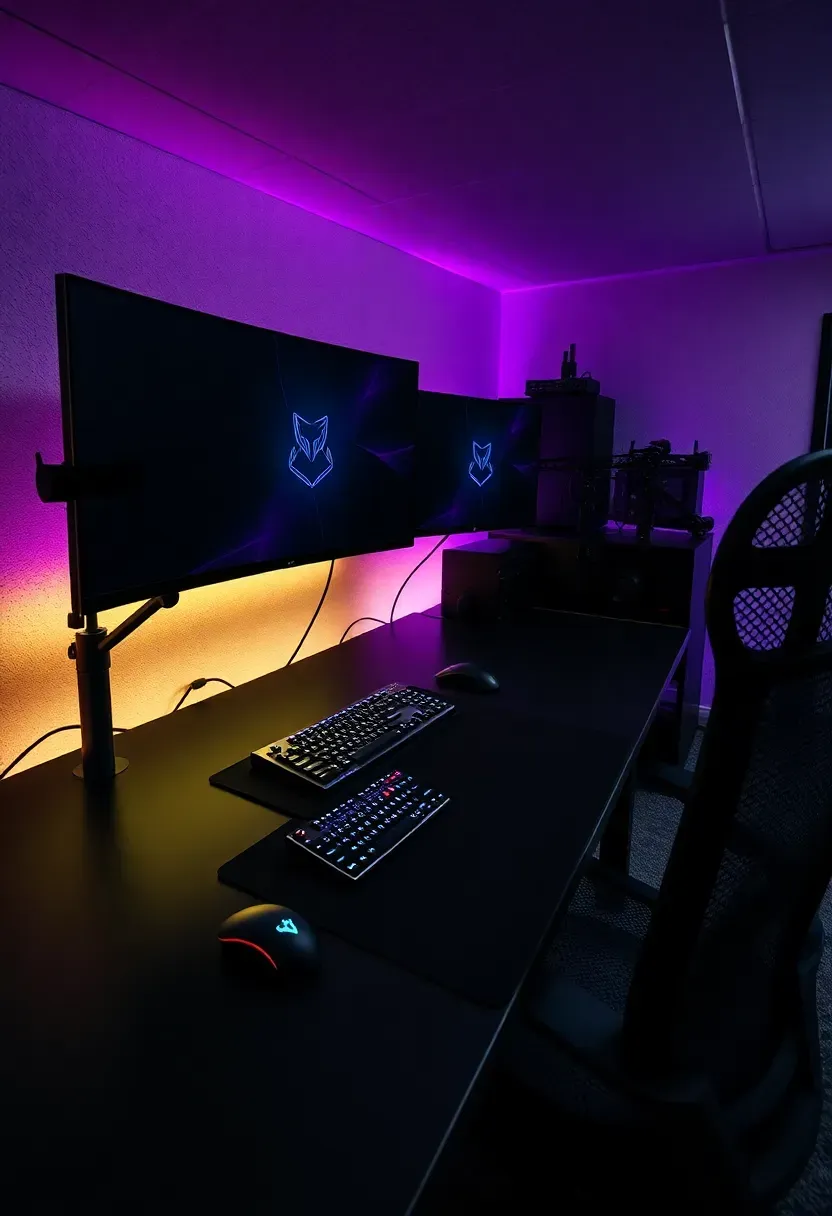
18. PC Gaming Battlestation
Basements run 5 to 10 degrees cooler than upper floors, which means your gaming PC runs cooler and quieter. Build a dedicated desk setup along one wall: a 60-inch sit-stand desk, dual or triple 27-inch monitors on a gas-spring arm, and a properly grounded outlet (important on concrete slabs where static builds up). Route all cables through a J-channel mounted under the desk. Use a UPS (uninterruptible power supply) rated for 1000VA or higher — basement circuits sometimes share loads with HVAC equipment, and a voltage dip mid-raid is infuriating.
Tips
- Wired ethernet to the basement is always worth running — Wi-Fi through floors adds latency
- Acoustic panels behind the monitors reduce echo during voice chat
- A dehumidifier prevents condensation on cold metal components in summer
Recommended
Items for this idea
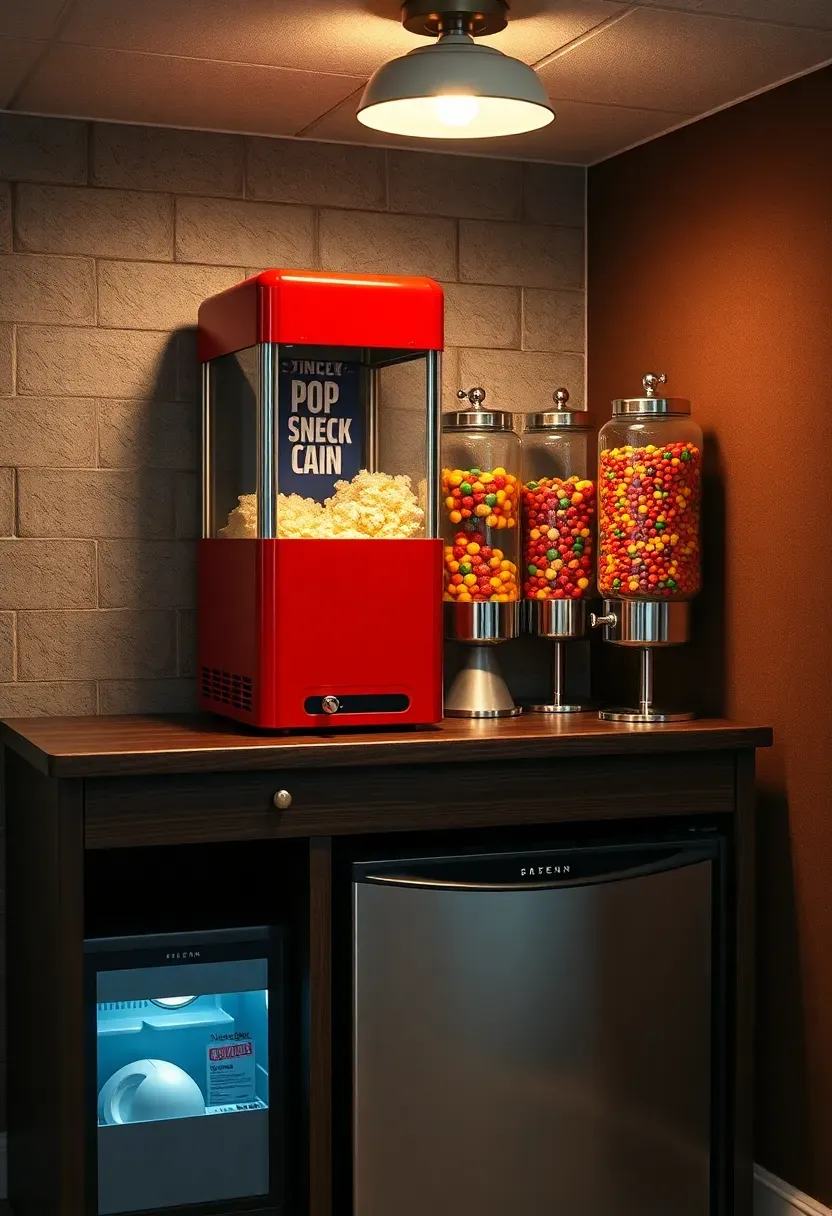
19. Popcorn and Candy Bar Station
A commercial-style popcorn machine (Nostalgia or Great Northern, $80 to $200) is the anchor piece. Set it on a countertop or rolling cart with gravity-feed candy dispensers alongside — the kind with twist knobs that dispense M&Ms, Skittles, or gummy bears. Add a mini fridge below for sodas and bottled water. The whole station takes up about 3 feet of wall space and costs under $400 total. It is a small investment that makes movie nights feel like an event rather than just watching a screen in the dark.
Tips
- Buy popcorn kernels in bulk — a 12-pound bag from a restaurant supplier costs about the same as three boxes from the grocery store
- Line the candy dispensers with parchment paper liners for easy cleaning
- Keep a small trash bin next to the station to contain the mess
20. Shuffleboard Alley
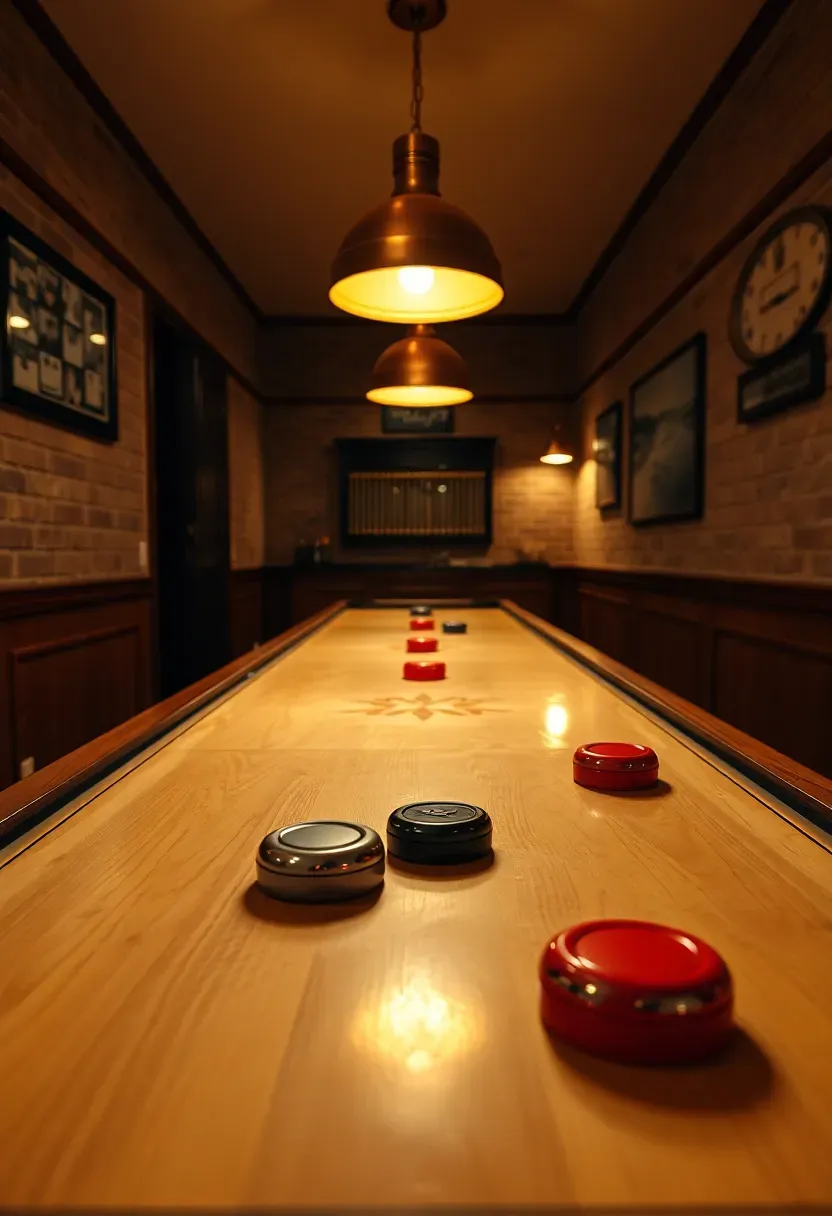
Shuffleboard tables range from 9 to 22 feet, and a basement hallway or long narrow room is the perfect spot for one. A 12-foot table fits most basements with room to spare on each end for players. Look for a table with a polymer-coated playing surface rather than bare wood — it needs less maintenance and resists the moisture fluctuations common in basements. Budget $800 to $2,000 for a quality 12-footer. Hang a pendant light over each end of the table and mount a scoreboard on the wall. Silicone-based shuffleboard wax (speed powder) keeps the pucks gliding smoothly.
Tips
- Level the table with a machinist's level, not a standard bubble level
- Keep spare puck sets in a wall-mounted rack
- A slight coat of furniture paste wax on the gutters prevents puck damage
Recommended
Items for this idea
21. Cigar and Reading Room
The problem
Cigar smoke permeates everything. Drywall, carpet, fabric, ductwork — all of it absorbs the smell and holds it indefinitely. Smoking indoors anywhere else in the house is a non-starter.
The solution
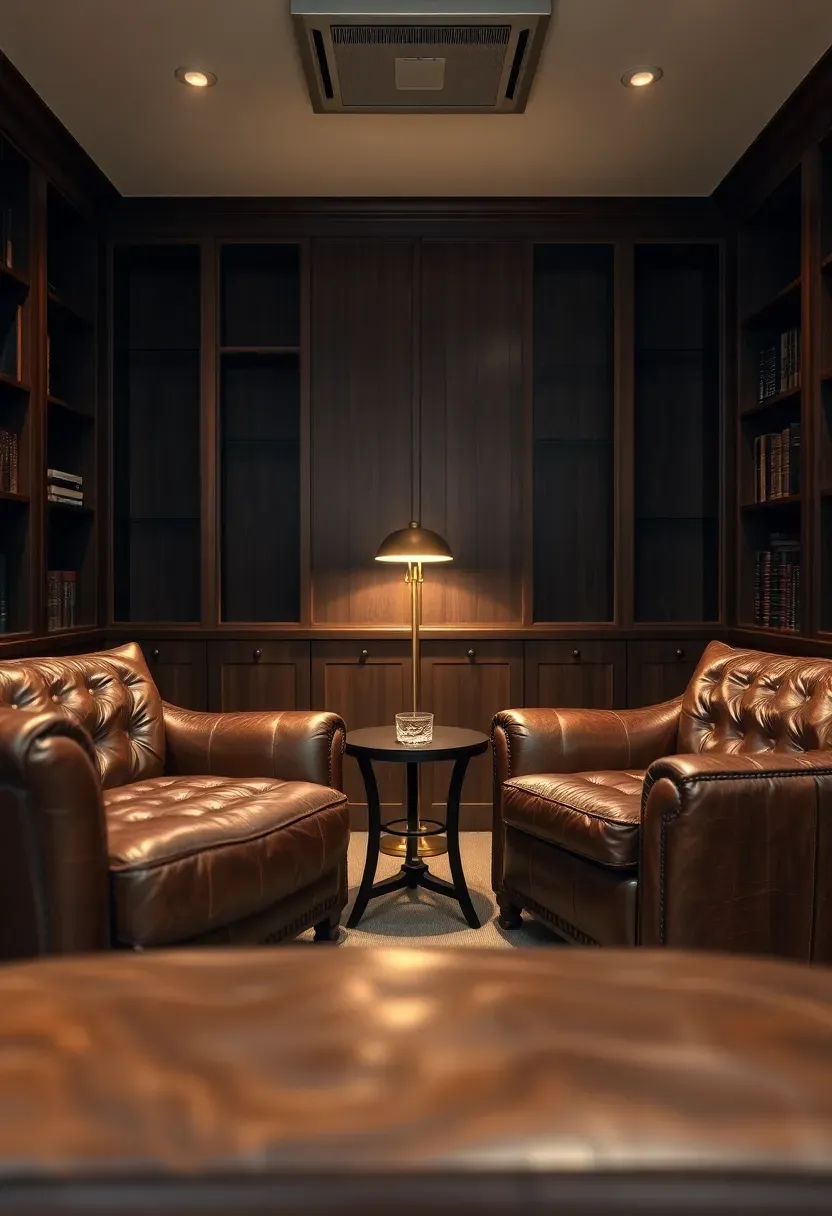
A sealed basement room with a dedicated exhaust system. Install a 200-CFM inline fan venting through a basement window or drilled wall penetration with a backdraft damper. Negative air pressure pulls smoke out before it settles into surfaces. Use washable surfaces: tile or vinyl plank flooring, leather furniture, painted concrete block walls. Skip the carpet entirely. Add built-in bookshelves, a reading lamp, and a humidor cabinet. This creates a genuine retreat rather than a room that just happens to allow smoking.
Pros and cons
- Pro: Contained space keeps smoke out of the rest of the house
- Pro: Basement temperature and humidity suit cigar storage
- Con: Ventilation installation costs $300 to $800
- Con: Resale value of the room may suffer from smoke residue
22. Murder Mystery Party Room
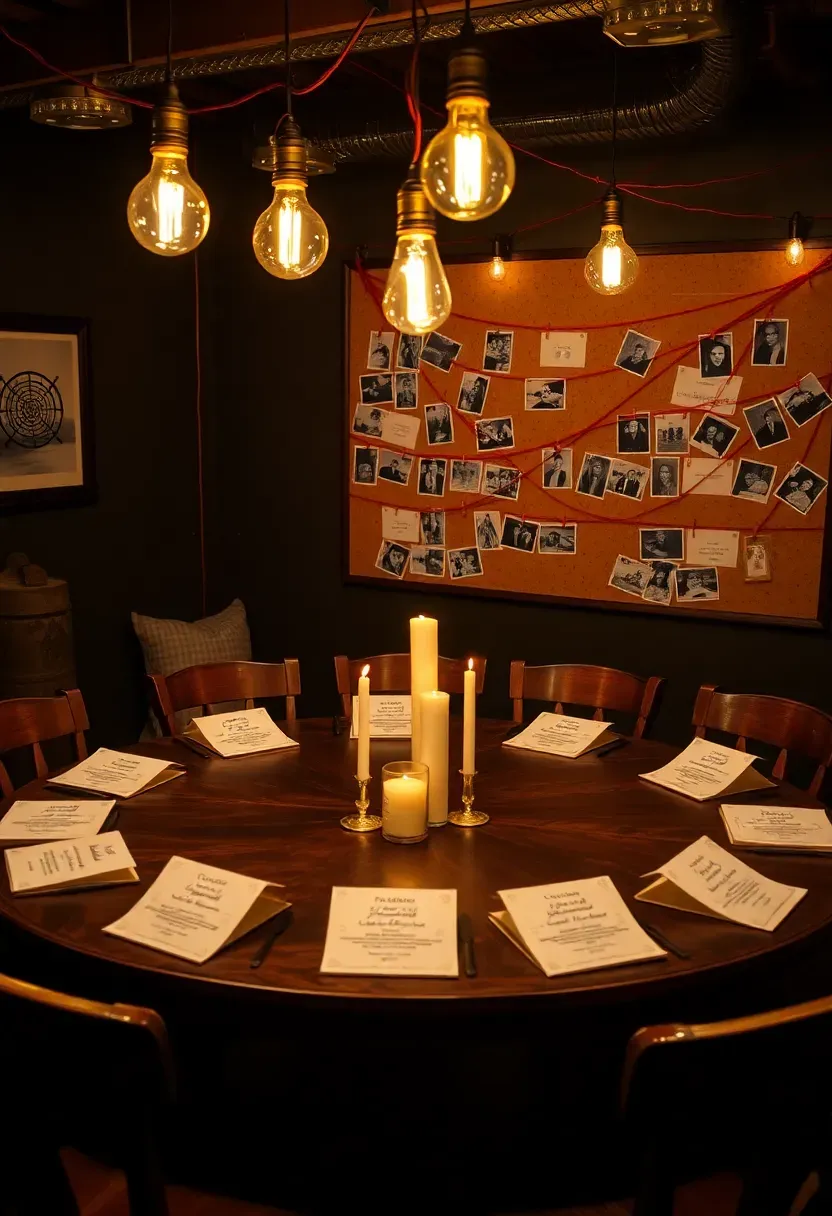
Dedicate a basement room to themed party nights. Mount a large corkboard or magnetic board on one wall for clue displays and suspect photos. Set up a round table with place cards and character folders at each seat. Atmospheric lighting is everything here — Edison bulbs on dimmer switches, LED candles, and a few theatrical spotlights ($15 each at party supply stores). A Bluetooth speaker hidden behind decor handles background music and sound effects. Stock a closet with costume accessories, props, and printed game kits. Companies like Hunt A Killer and Night of Mystery sell boxed games for $25 to $50.
Tips
- Rotate themes monthly to keep things fresh — noir, Victorian, 1920s, sci-fi
- A fog machine at the entrance sets the mood before guests even sit down
- A photo booth corner with props gives guests something to take home
Recommended
Items for this idea
23. Indoor Playground Climbing Area
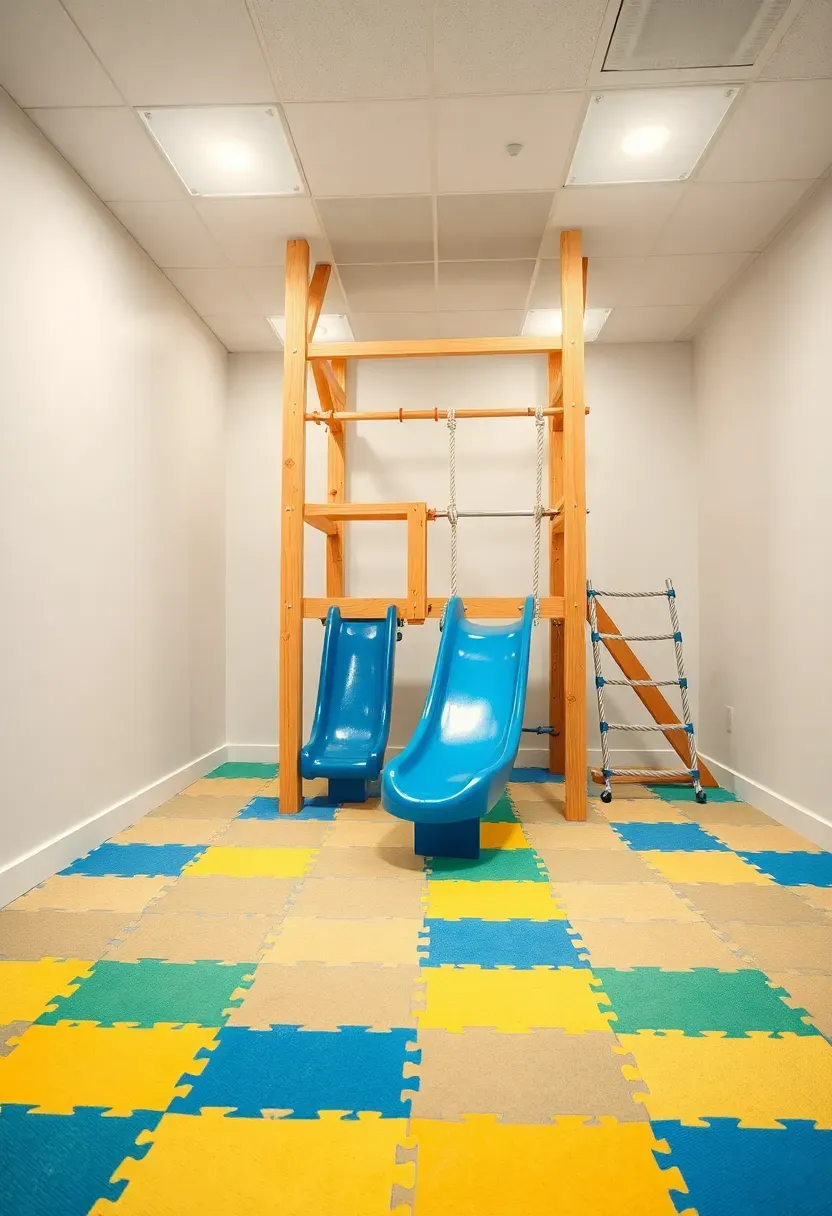
For families with kids under 10, a basement climbing and play structure keeps them active when outdoor weather fails. Modular indoor playground kits from companies like Avenlur or Jupiter Climber ($300 to $1,200) include climbing walls, monkey bars, rope ladders, and slides sized for residential ceilings. Cover the entire floor area with 2-inch interlocking EVA foam tiles ($1 to $2 per square foot) for impact absorption. Paint the walls in bright, washable semi-gloss. This room will see more daily use than almost any other idea on this list if you have young kids.
Tips
- Bolt the structure to wall studs, not just the floor — kids will test every joint
- Foam tiles should extend 3 feet beyond the structure perimeter on all sides
- Install a baby gate at the door if the play area is near stairs
24. Open Mic and Music Stage
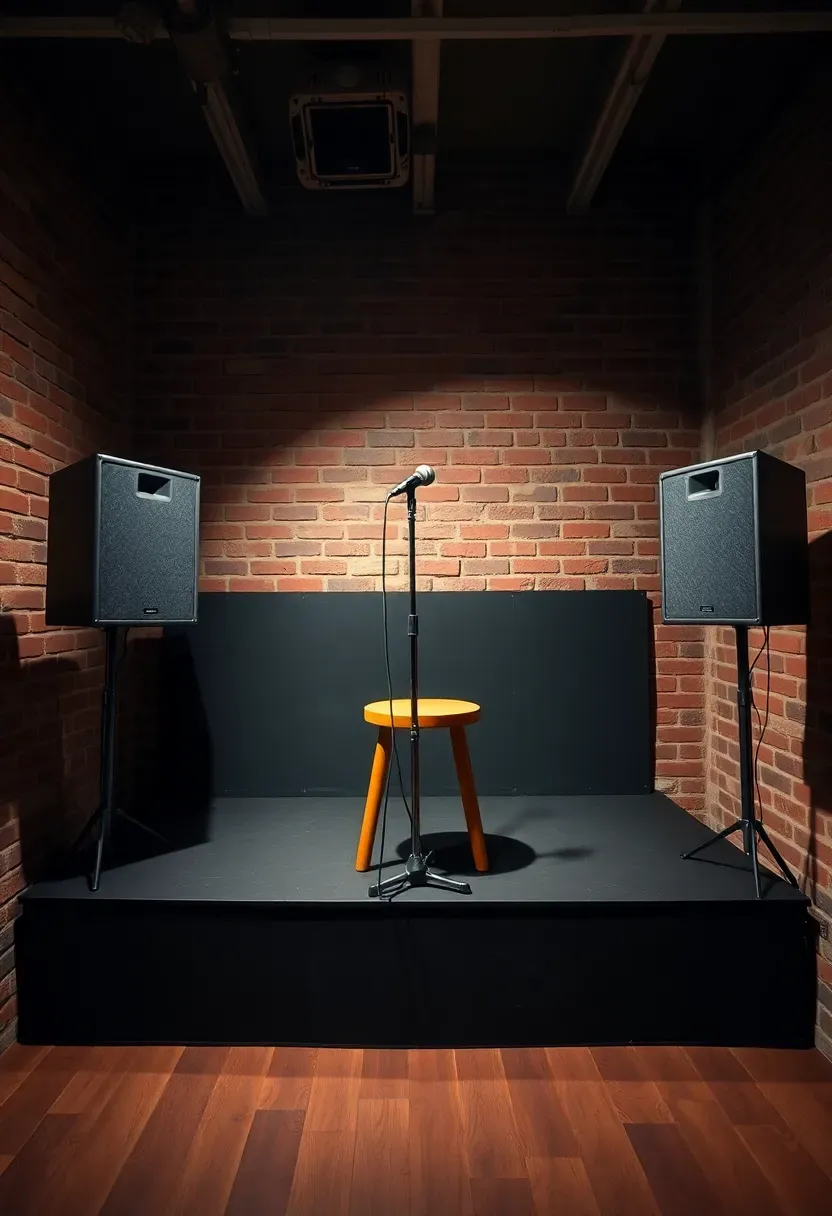
Build a small raised platform — 4x8 feet, 8 inches high — from framed 2x4s topped with 3/4-inch plywood and painted matte black. Add a vocal PA system: two powered speakers on stands ($200 to $400 for the pair), a small mixer ($80 to $150), and a dynamic microphone like the Shure SM58 ($100). That is everything you need for acoustic performances, poetry readings, comedy sets, or karaoke without the dedicated booth. String lights or a single spotlight overhead marks the stage area. Set up folding chairs or floor cushions for the audience.
Tips
- A monitor speaker facing the performer helps them hear themselves over the room
- Acoustic panels on the back wall prevent vocal echo from muddying the sound
- Record performances with a phone on a tripod for social media content
Recommended
Items for this idea
25. Foosball Tournament Corner
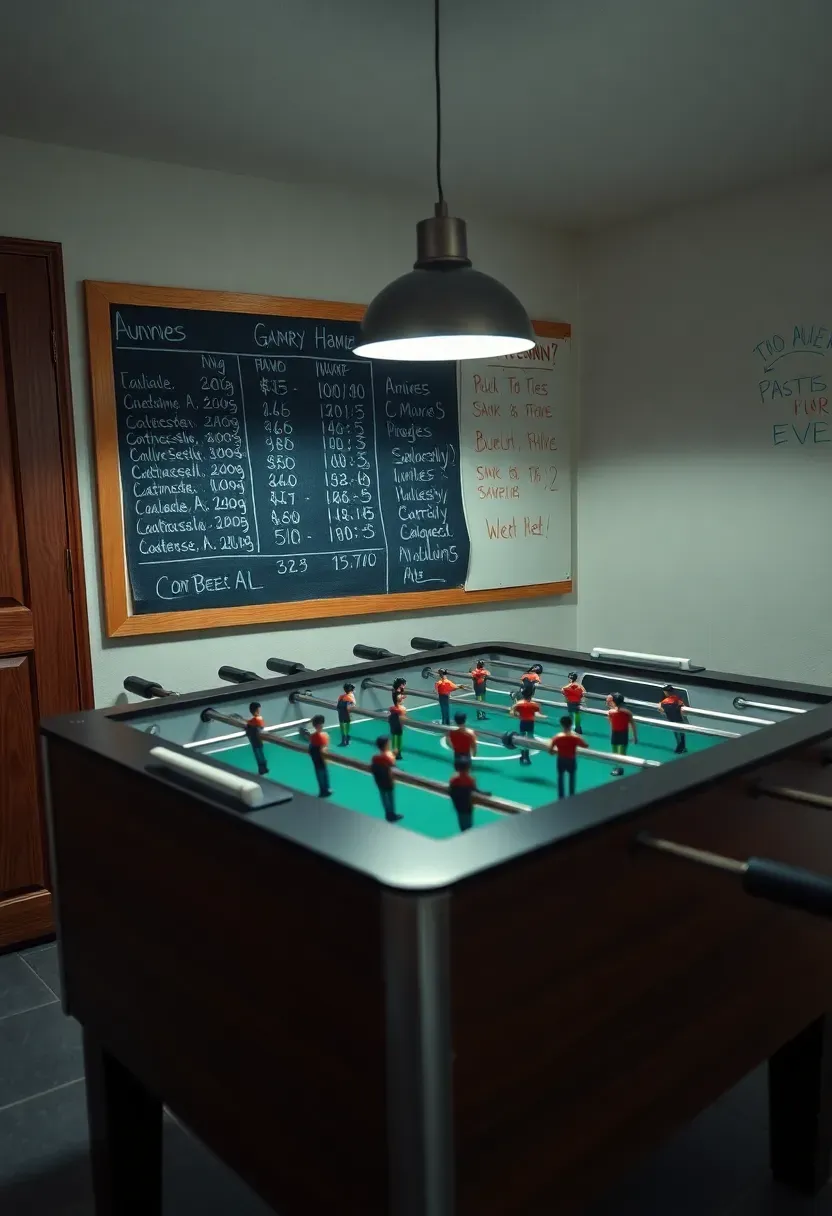
A quality foosball table — Tornado Classic or Warrior Professional — costs $400 to $1,200 and lasts decades with minimal maintenance. Unlike pool tables, foosball tables do not need leveling with the same precision and take up far less space (roughly 30 by 56 inches plus standing room). Mount a chalkboard tournament bracket on the adjacent wall for hosting round-robin events. Rubber flooring underneath prevents the table from walking during intense play. Adequate overhead lighting is critical — a single pendant centered over the table at 6 feet eliminates shadows on the playing surface.
Tips
- Replace rod bearings every two to three years for smooth spin
- Silicone lubricant on the rods, never WD-40 — it attracts dust
- Keep a backup set of balls in a drawer; they crack eventually
26. Wine Bar with Tasting Counter
Why basements work
Basements naturally maintain temperatures between 55 and 65 degrees with minimal effort. That range overlaps perfectly with ideal wine storage conditions, especially for reds. Adding humidity control (a small humidifier set to 60 to 70 percent) completes the environment.
Building it out
Wall-mount a modular wine rack system — metal or wood, holding 50 to 100 bottles. Below it, install a 36-inch-high counter with a stone or butcher block surface for tasting. Three to four bar stools, pendant lighting, and a small slate board for tasting notes complete the setup. A dual-zone wine cooler ($300 to $600) under the counter keeps whites at serving temperature while reds rest on the rack at room temp.
Choose this if
- You buy wine by the case and need proper storage
- You want a social space that does not revolve around a television
Recommended
Items for this idea
27. Podcast and Streaming Studio
A basement recording space benefits from naturally low ambient noise — no traffic, no wind, no foot traffic overhead if you add carpet. Treat the walls with a mix of acoustic foam panels and heavy moving blankets for cheap but effective sound dampening. Set up a desk with a USB condenser microphone (Rode PodMic or Audio-Technica AT2020, $100 to $150), an audio interface (Focusrite Scarlett Solo, $120), and a laptop. For video streaming, add a ring light and a webcam or mirrorless camera. The total investment for a professional-sounding setup runs $400 to $800 — less than one month of commercial studio rental.
Tips
- Position the desk away from HVAC vents — duct noise ruins recordings
- A noise gate plugin eliminates furnace rumble during editing
- Hang a blanket behind the host position as a makeshift vocal booth
28. Dual-Zone Sports Viewing Room
-
Mount two screens. Two 65-inch TVs on the same wall, angled slightly inward, let you watch two games simultaneously. Wall mount them at eye level from seated position (center of screen at 42 inches) with 6 to 8 inches of gap between them.
-
Split the audio. Use wireless headphone zones — each TV outputs to a different wireless headphone channel. For casual viewing, keep one TV on muted with closed captions and the other on speakers.
-
Add the extras. A scoreboard-style LED sign showing live scores from other games. Team memorabilia on floating shelves. A mini fridge and snack counter along the side wall.
Watch out for
- Two TVs on the same circuit can trip a 15-amp breaker if other devices share the load
- Wireless headphone latency varies by brand — test before committing to a system
Recommended
Items for this idea
29. Convertible Guest and Game Room
Not every basement has enough square footage for a single-purpose entertainment room. A convertible setup uses a Murphy bed ($800 to $2,000 installed) that folds into a wall cabinet, freeing up the floor for a game table, exercise equipment, or open hangout space during non-guest periods. Choose a Murphy bed with built-in shelves on each side that stay accessible whether the bed is up or down. A folding card table and stacking chairs store in a closet when the bed deploys. This approach gets you two rooms in one without compromising either function.
Tips
- Murphy beds need to anchor into studs or concrete block — drywall anchors are not sufficient
- A 6-inch memory foam mattress fits most Murphy bed frames and stays comfortable
- Install a reading sconce on each side so guests do not need a nightstand lamp
Quick FAQ
How much does it cost to finish a basement for entertainment? A basic finish — framing, insulation, drywall, flooring, and electrical — runs $25 to $50 per square foot in most markets. A 600-square-foot basement costs $15,000 to $30,000 before any furniture or equipment. The entertainment gear itself varies wildly depending on what you choose.
Do I need a permit to finish my basement? Almost always, yes. Electrical work, plumbing, egress windows, and structural changes require permits in most jurisdictions. Skipping the permit can create issues when you sell the house — unpermitted finished space often gets valued at zero by appraisers.
What flooring works best in a basement entertainment room? Luxury vinyl plank is the default answer because it handles moisture, looks decent, and costs $2 to $5 per square foot installed. Rubber tile works better under heavy equipment. Carpet tile is good for theater rooms and play areas but risky in basements without a vapor barrier.
Can I add a bathroom to my basement entertainment area? Yes, but plumbing below the main sewer line requires an upflush toilet system or a sewage ejector pit. Upflush units (Saniflo, $600 to $1,200) are simpler to install. An ejector pit is more reliable long-term but costs $1,500 to $3,000 including the pit, pump, and plumbing.
How do I handle low ceilings in a basement? Recessed LED lights instead of hanging fixtures, low-profile furniture, horizontal design elements, and painting the ceiling the same color as the walls all reduce the visual impact of low ceilings. Avoid drop ceilings if possible — they eat 4 to 6 inches of height.
A finished basement entertainment room does not need to look like a showroom or cost five figures. Start with one clear purpose — watching, playing, listening, or socializing — and build outward from there. The best setups I have seen grew over time, adding a piece here and a feature there, shaped by how the room actually gets used rather than by a Pinterest mood board. Pick two or three ideas from this list that match your habits, get the infrastructure right first (lighting, flooring, sound control), and let the rest develop naturally.
Pinterest cover for 29 Basement Entertainment Ideas Worth Trying
About the author
OBCD
CGI visualization and interior design content. We create detailed 3D renders and curate practical design ideas for every room in your home.