19 Basement Gym Ideas
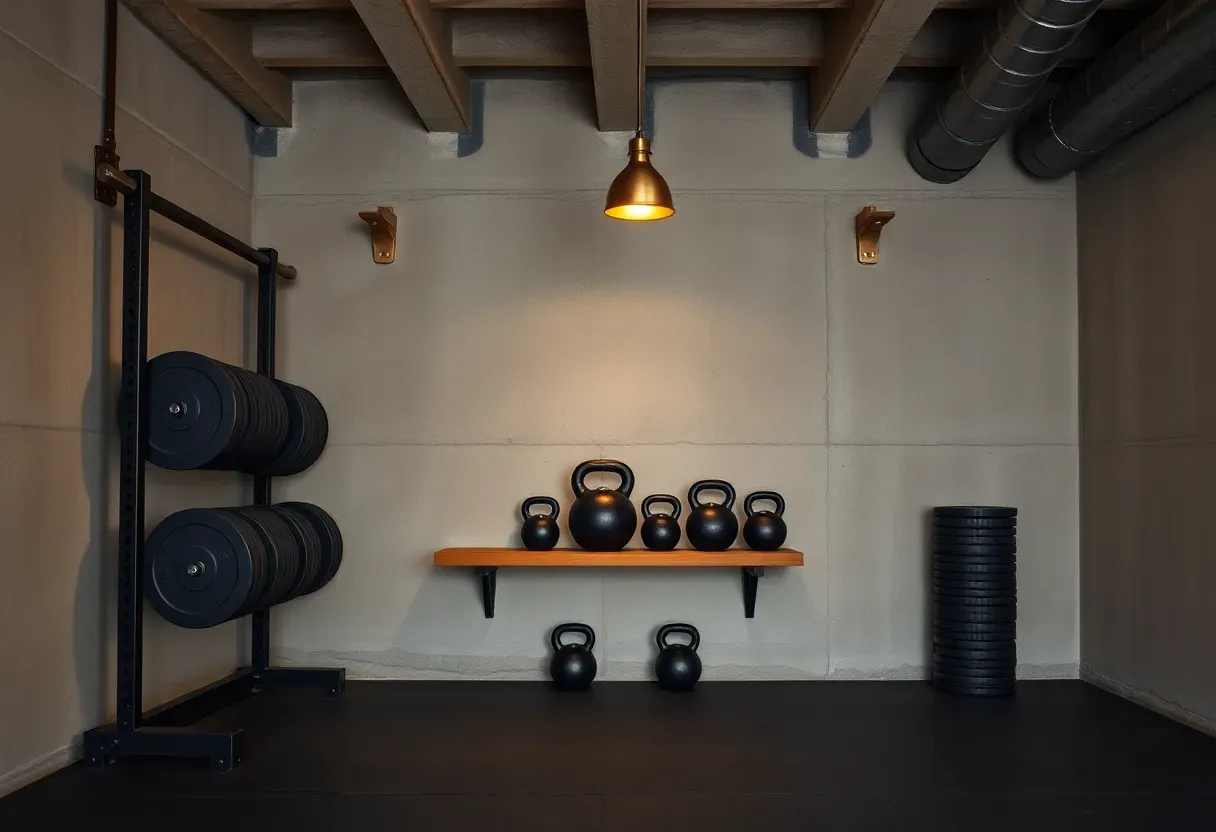
Last winter I helped a friend gut his unfinished basement to build a gym. The space was 600 square feet of bare concrete, exposed joists, and one sad lightbulb. Eight weekends and about $4,200 later, he had a fully functional training space with zones for lifting, bodyweight work, and recovery. The biggest lesson was that layout matters more than equipment. A $3,000 rack in a poorly planned room gets used less than a $200 barbell in a space that flows well. Below are 19 ideas drawn from that build and others I have seen work in real basements.
Each idea targets a specific aspect of your setup, from floor prep to finishing touches.
Table of Contents
- Garage-Style Raw Concrete Aesthetic
- Dedicated Deadlift Platform
- Wall-Mounted Fold-Away Squat Rack
- CrossFit Rig With Pull-Up Stations
- Kettlebell Training Corner
- Battle Rope Anchor Station
- Pegboard Climbing Wall
- Basement Sauna and Cold Plunge Combo
- Olympic Lifting Platform
- Sled Push Track
- TRX and Bodyweight Circuit Wall
- Under-Stair Equipment Storage
- Mini Basketball and Agility Area
- Spin Bike Studio Setup
- Punching and Kick Pad Wall
- Garage-Door Access for Fresh Air
- Epoxy-Coated Gym Floor
- Smart Mirror Training Station
- Budget Build Under $1,000
1. Garage-Style Raw Concrete Aesthetic
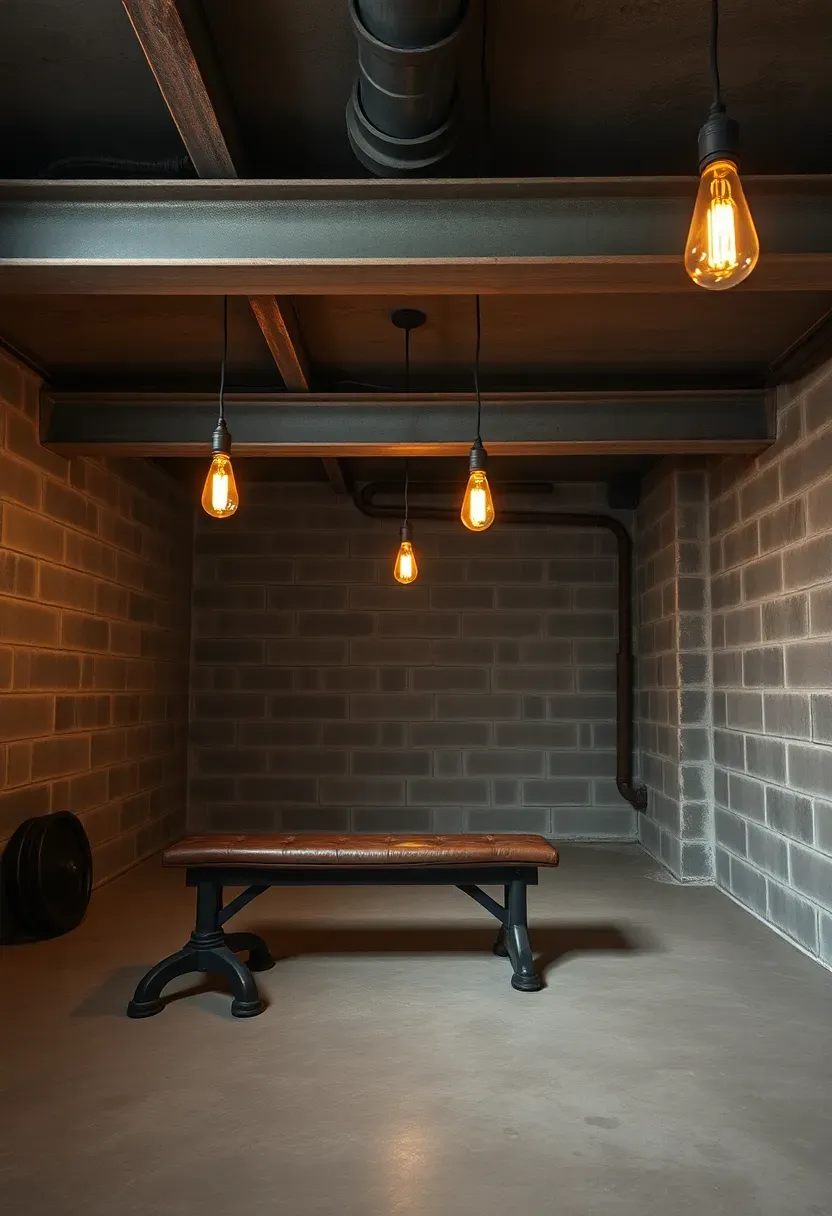
Skip the drywall. Exposed concrete walls, bare ceiling joists, and industrial pendant lights create a no-frills training environment that actually motivates harder sessions. Seal the concrete with a clear penetrating sealer to prevent dust and moisture wicking. Paint the joists matte black to hide ductwork and wiring overhead. Hang a few steel hooks for jump ropes and bands. The raw look costs almost nothing compared to finishing the space, and it handles the inevitable scuffs and dings from equipment without showing damage. This approach works best in basements where you want function over polish.
Tips
- Apply a concrete densifier before sealing to harden the surface and reduce dusting
- Use clip-on Edison bulb fixtures on the joists for warm, industrial lighting at about $15 each
- Mount a large industrial clock on the exposed wall for interval timing
We picked a few things that go well with this idea: ProsourceFit Interlocking Gym Floor Tiles (36-Pack) (★4.6), ProsourceFit Interlocking Gym Floor Tiles (12-Pack) (★4.6) and Bemaxx EVA Interlocking Gym Floor Mats (18-Pack) (★4.4). As an Amazon Associate we earn from qualifying purchases.
2. Dedicated Deadlift Platform
Why a separate platform matters
Deadlifts generate the most floor impact of any lift. Dropping 300+ pounds on bare concrete, even with rubber mats, eventually cracks the slab. A dedicated platform absorbs that force and gives you a level, stable pulling surface. It also defines a zone — when you step onto the platform, you know what you are there to do.
How to build one
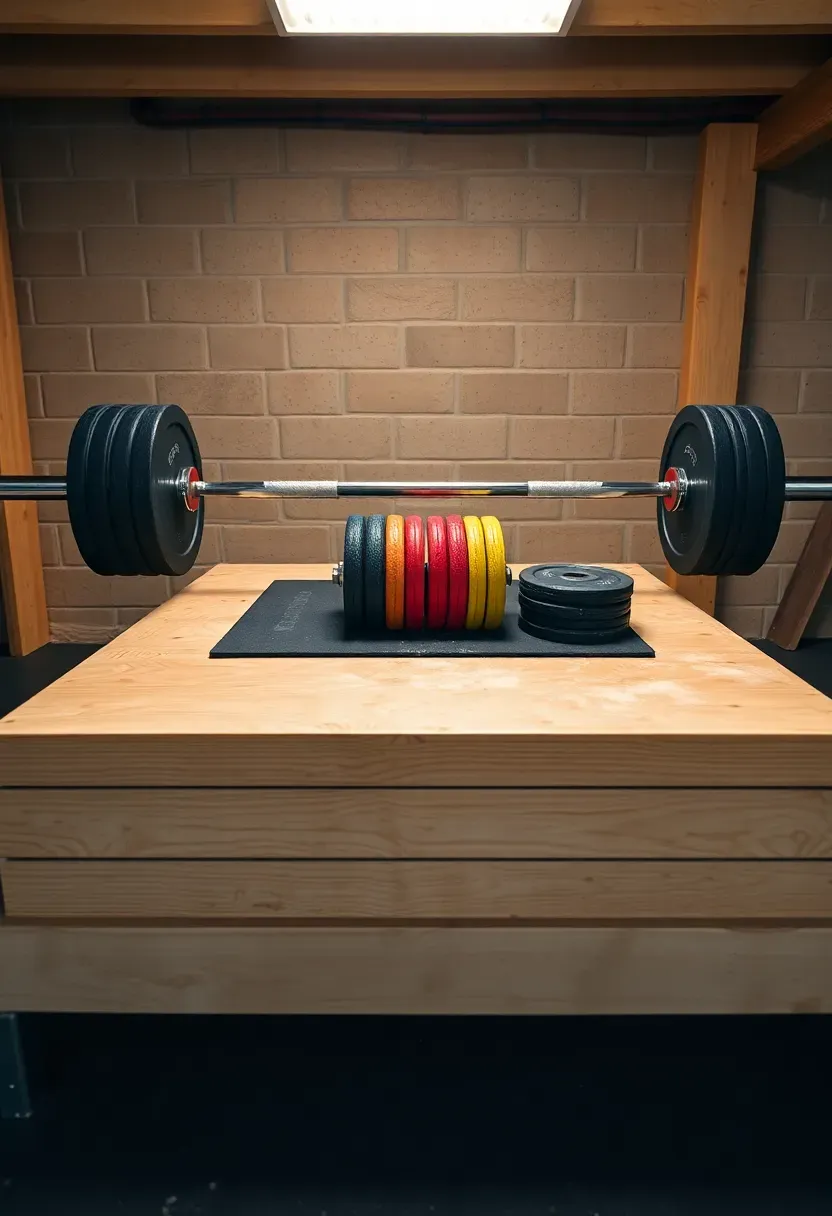
Cut two sheets of 3/4-inch plywood to 8x4 feet and screw them together. Center a 4x4-foot piece of 3/4-inch horse stall mat where your feet go. On each side, add another layer of plywood for the plates to land on. Total cost runs $120 to $180. Bolt the platform to the concrete with tapcon screws if you want it permanent, or leave it floating for flexibility.
Pros and cons
- Pro: Protects your foundation from repeated heavy drops
- Pro: Creates a defined, level lifting surface even on slightly uneven concrete
- Con: Takes up a fixed 8x4-foot footprint that cannot be easily repositioned
We picked a few things that go well with this idea: Multi-Functional Power Cage with Pulley System (★4.6), Sportsroyals Power Rack with LAT Pulley (★4.5) and CAP Barbell Power Rack Stand (★4.3). As an Amazon Associate we earn from qualifying purchases.
3. Wall-Mounted Fold-Away Squat Rack
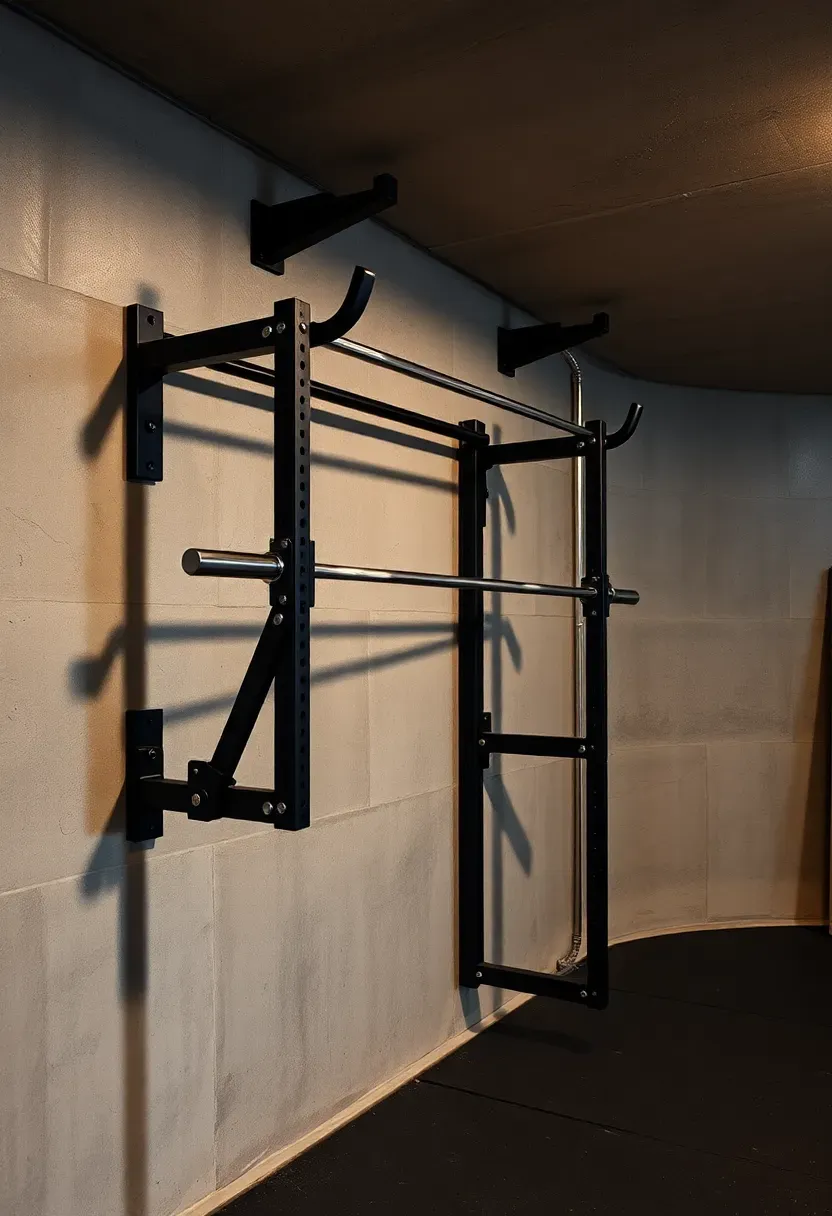
Small basements benefit from equipment that disappears when not in use. A fold-away rack mounts to the wall studs or concrete with heavy-duty brackets and swings flat when you finish squatting. Brands like PRx Performance and Rogue make models rated for 1,000+ lbs that fold to just 5 inches from the wall. When folded, you reclaim the entire floor for bodyweight circuits, stretching, or cardio. The catch is you need a solid mounting surface — poured concrete or concrete block walls work best. Drywall over studs works too, but you must hit every stud with lag bolts.
Tips
- Measure your barbell length before buying — a 7-foot Olympic bar needs at least 8 feet of wall clearance when racked
- Install the J-cups at your exact squat and bench heights before tightening everything down
- Add a pull-up bar attachment on top if ceiling height allows — most fold-away racks offer this option
We picked a few things that go well with this idea: CAP Barbell Cast Iron Kettlebell Set (★4.6), Yes4All Vinyl Coated Cast Iron Kettlebell (★4.6) and Yes4All Vinyl Coated Kettlebell (Heavy) (★4.6). As an Amazon Associate we earn from qualifying purchases.
4. CrossFit Rig With Pull-Up Stations
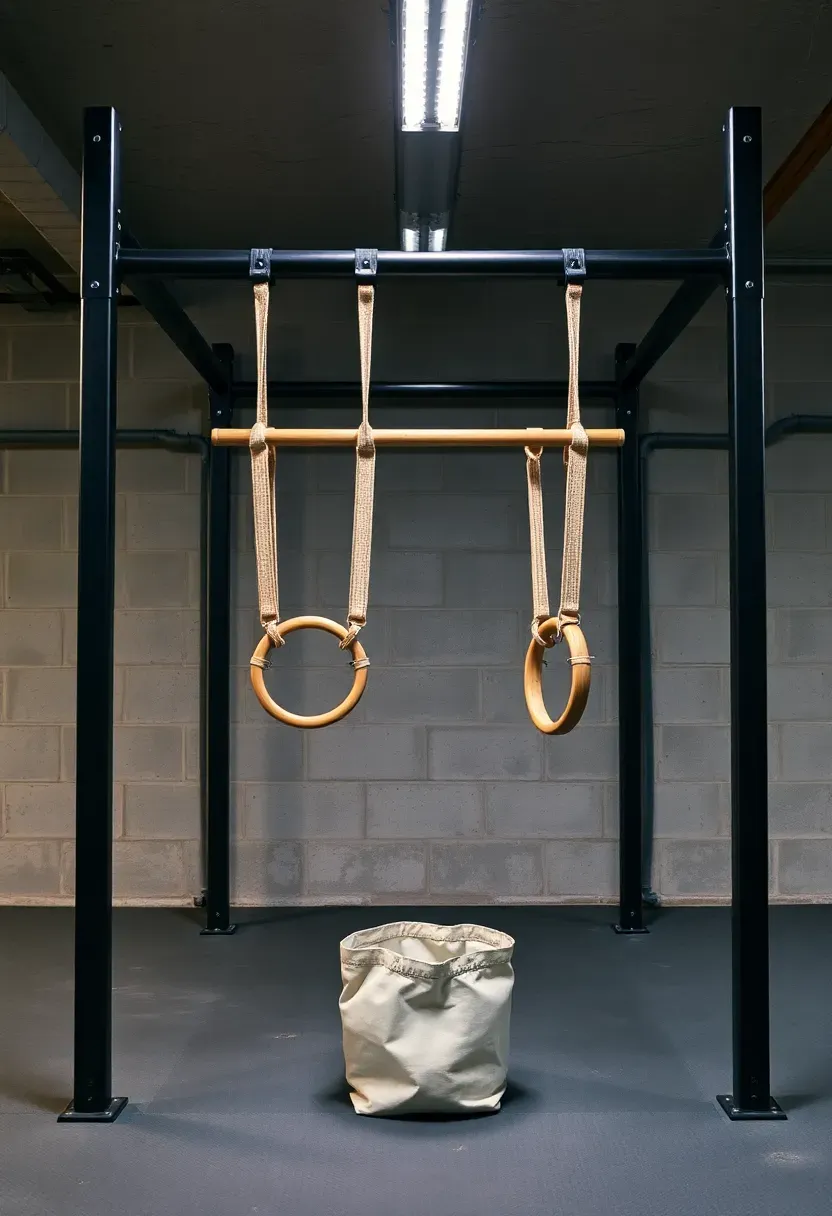
A freestanding CrossFit rig turns your basement into a box gym. These modular steel structures bolt together and offer pull-up bars at multiple heights, ring attachment points, and j-hooks for barbell work. A basic two-post wall-mount rig costs $500 to $800 and handles one person. A four-post freestanding unit runs $1,200 to $2,500 and supports muscle-ups, kipping, and heavier loads. Ceiling height is the limiting factor — you need at least 9 feet for kipping pull-ups, or 8 feet if you stick to strict movements only.
How to set it up
- Bolt the rig uprights into the concrete slab with 1/2-inch wedge anchors
- Level the crossbeams using a torpedo level before tightening
- Hang gymnastic rings from the front crossbeam and a climbing rope from the rear
- Leave 6 feet of clearance behind the rig for ring muscle-ups and rope climbs
Recommended
Items for this idea
5. Kettlebell Training Corner
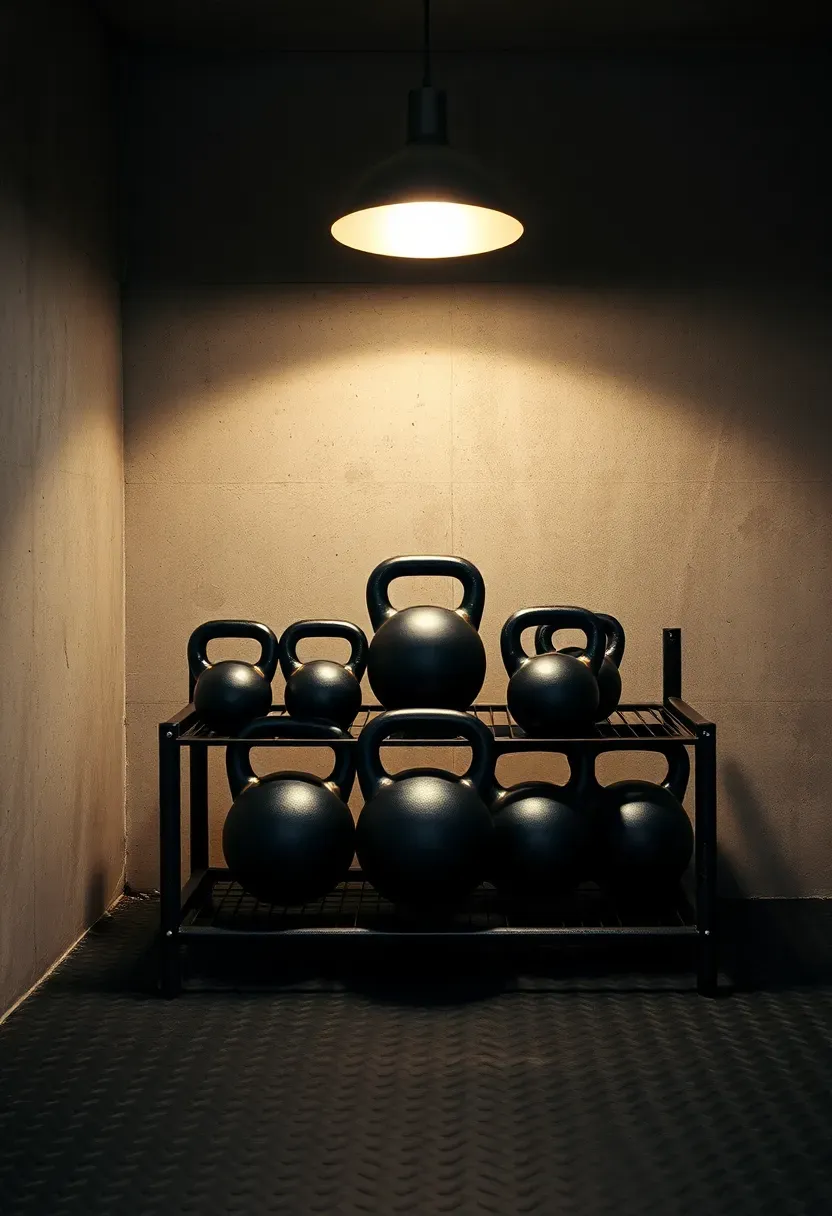
Kettlebells take up almost no space and cover strength, cardio, and mobility in a single tool. A dedicated corner with a tiered rack, 6x6 feet of rubber flooring, and enough ceiling height for overhead swings is all you need. Start with three weights: a light one for Turkish get-ups and halos (8-12 kg), a medium for swings and cleans (16-20 kg), and a heavy for deadlifts and farmer carries (24-32 kg). Wall-mount the rack to save floor space. The entire setup — three kettlebells plus a rack — costs $250 to $450 depending on whether you buy cast iron or competition style.
Tips
- Competition kettlebells have a uniform size regardless of weight, which makes technique more consistent
- Mark a 6-foot radius on the floor with tape for your swing zone — this keeps you from drifting into other equipment
- A chalk bowl on a small shelf prevents grip failure during high-rep sets
6. Battle Rope Anchor Station
The problem with battle ropes indoors
Battle ropes need length — a 50-foot rope folded in half requires 25 feet of straight-line clearance. Most basements do not have that kind of uninterrupted run. The fix is a shorter 30-foot rope (15 feet per side) or a 40-foot rope run diagonally across the space.
The solution
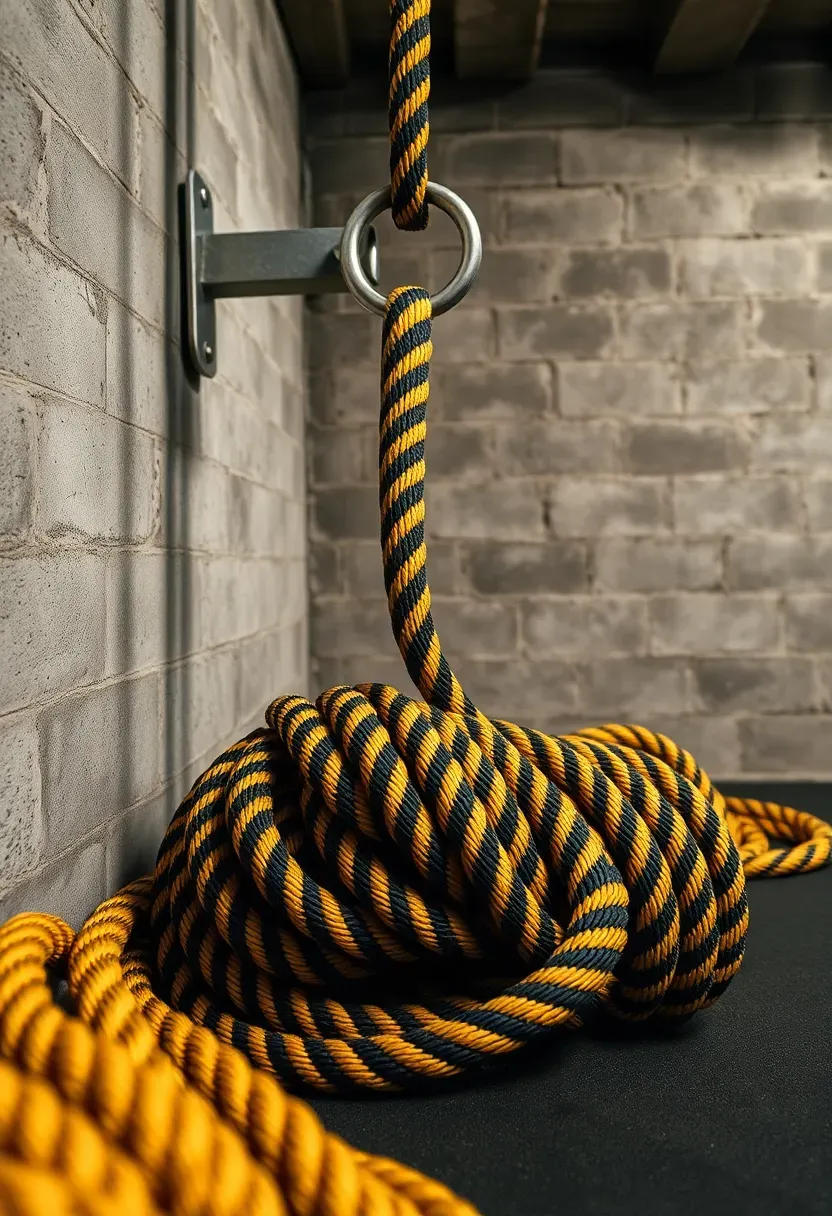
Anchor the rope to a wall-mounted D-ring rated for 1,000+ lbs, bolted into concrete with expansion anchors. The D-ring sits 12 inches off the floor. Lay a rubber runner mat along the rope path to protect the floor from friction. A 1.5-inch diameter rope works for most people; 2-inch ropes add serious grip and forearm challenge. Budget $60 to $120 for the rope and $20 for the anchor hardware.
Pros and cons
- Pro: One of the highest calorie-burn exercises per minute — roughly 10 to 12 calories per minute at moderate intensity
- Pro: Zero impact on joints, unlike running or box jumps
- Con: Noisy on hard floors, especially with heavier ropes — a thick mat under the midpoint helps
Recommended
Items for this idea
7. Pegboard Climbing Wall
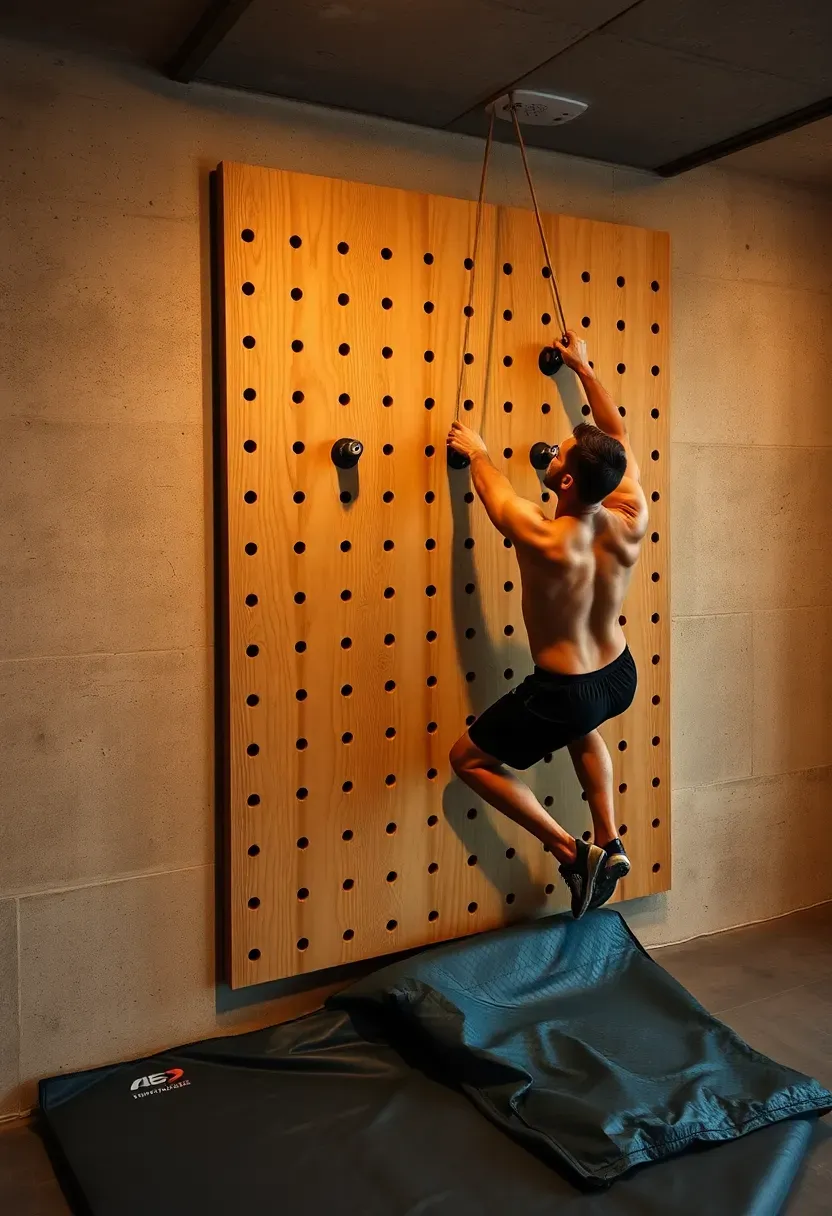
A pegboard is a simpler, cheaper alternative to a full climbing wall and builds brutal upper body and grip strength. Mount a 2x4-foot section of hardwood (maple or oak, 1.5 inches thick) to the concrete wall using lag bolts into sleeve anchors. Drill a grid of 1-inch holes spaced 6 inches apart. Use two steel or wooden pegs to climb vertically, diagonally, or traverse horizontally. The board costs $80 to $150 for materials, and the workout difficulty scales with body weight — no additional equipment needed.
Tips
- Sand the hole edges smooth so the pegs slide easily and do not snag
- Install the board so the top holes sit at maximum arm reach — typically 7 to 8 feet high
- Place a crash mat below for failed attempts, especially when fatigued
8. Basement Sauna and Cold Plunge Combo
Origins of contrast therapy
Finnish sauna culture dates back over 2,000 years, and Nordic athletes have used heat-cold cycling for recovery long before it became trendy on social media. The basic protocol — 15 to 20 minutes of dry heat followed by 2 to 5 minutes of cold immersion — increases blood circulation and reduces muscle soreness after heavy training sessions.
Modern basement version
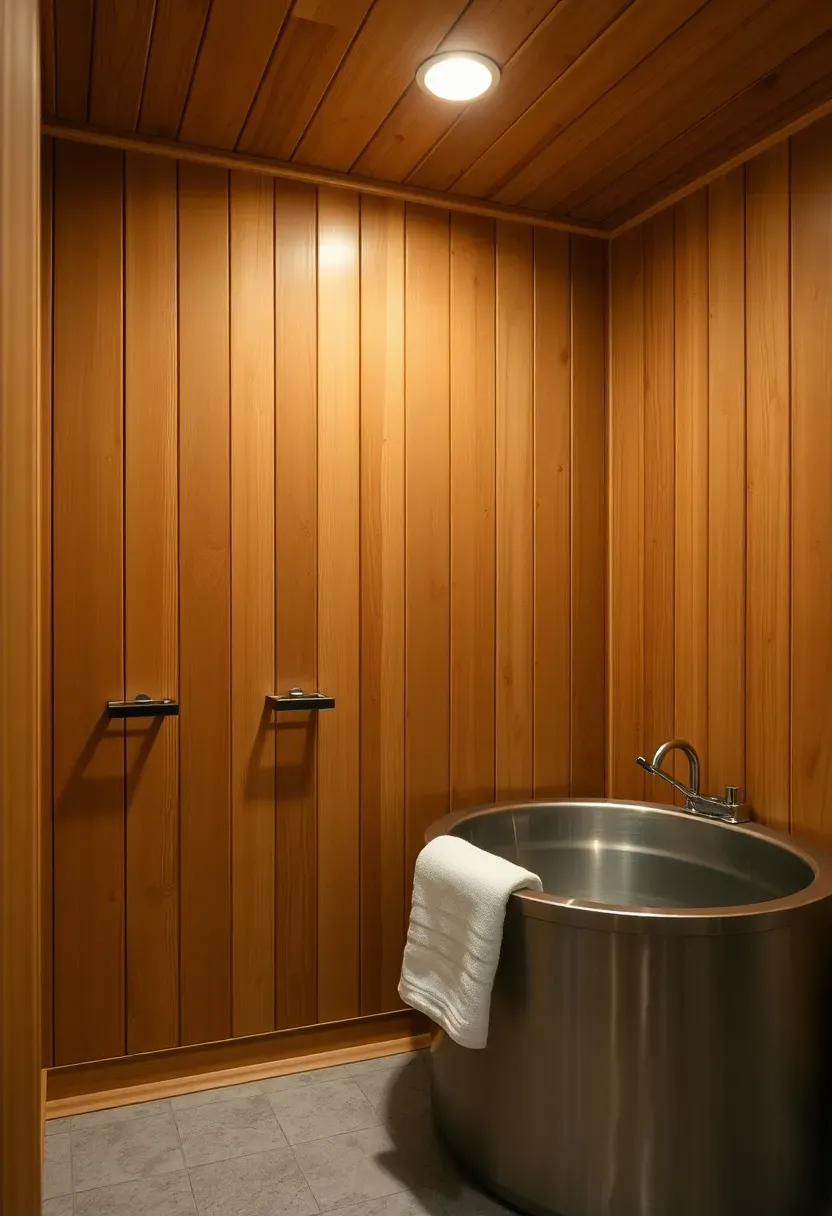
A prefab barrel sauna fits in a 5x7-foot footprint and plugs into a standard 240V outlet. Pair it with a cold plunge tub or stock tank (Rubbermaid 100-gallon, about $100) with a chiller unit or bags of ice. Total investment ranges from $2,500 for a budget setup to $8,000+ for an infrared sauna with a dedicated cold plunge system. The basement location works well because concrete stays naturally cool, reducing chiller energy costs.
Apply at home
- Install a floor drain near both units for water overflow
- Run a dedicated 240V circuit for the sauna heater — do not share circuits with gym equipment
- Keep towels and a robe hook within arm's reach of the plunge tub
Recommended
Items for this idea
9. Olympic Lifting Platform
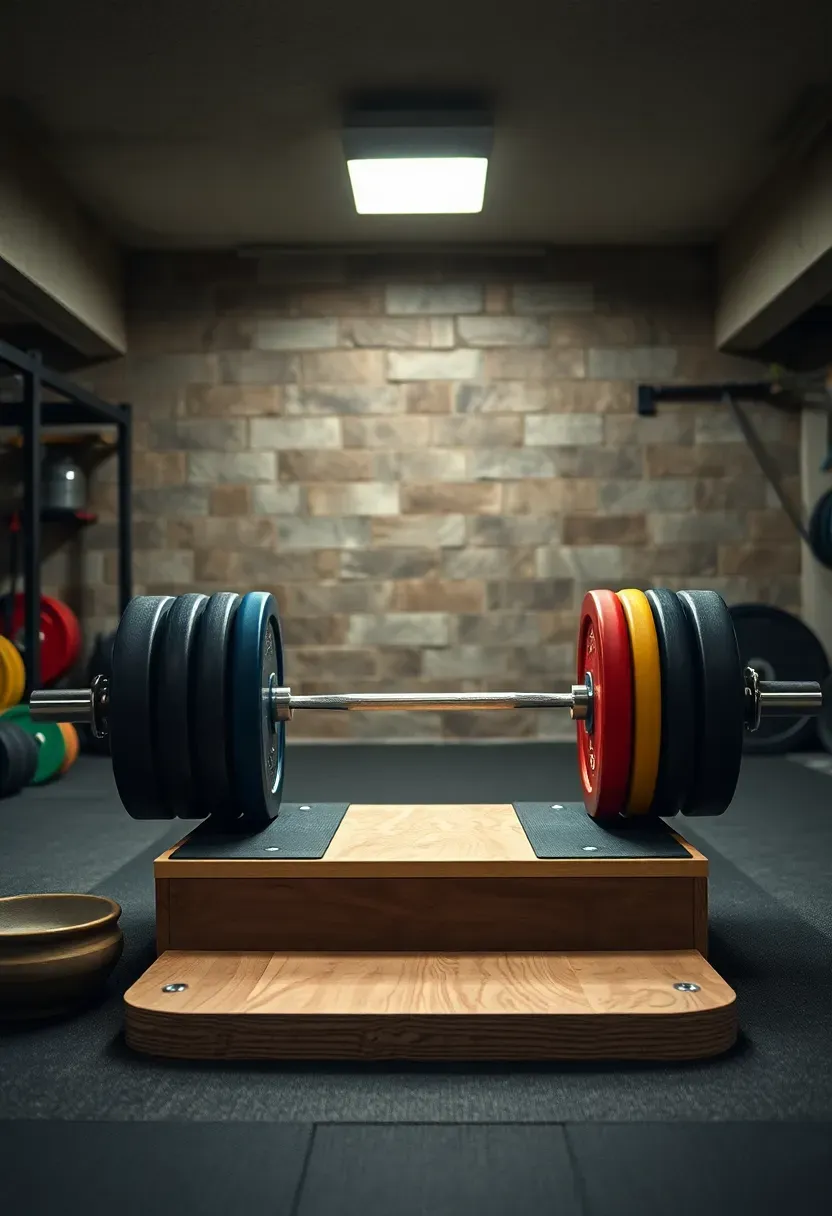
Olympic lifts — snatches and clean-and-jerks — demand a purpose-built surface. The platform needs to handle repeated drops from overhead with loaded bars. Build it larger than a deadlift platform: 8x8 feet minimum. Three layers of 3/4-inch plywood on the bottom, a center section of hardwood (maple or birch, 4x4 feet) for your feet, and flanking sections of horse stall mat for plate landings. Screw each layer together with 2-inch wood screws in a grid pattern every 12 inches.
How to build it
- Lay the first plywood layer directly on the sealed concrete
- Glue and screw two more plywood layers on top, staggering the seams
- Cut and inset the hardwood center piece flush with the surrounding mat
- Trim two stall mat pieces to fill each side, butting tightly against the wood
Watch out
- Olympic lifts require at least 9 feet of ceiling clearance for a 6-foot-tall lifter pressing overhead
- Bumper plates are non-negotiable — iron plates damage the platform and floor on drops
- Noise travels through concrete slabs; consider adding a layer of foam beneath the base plywood
10. Sled Push Track
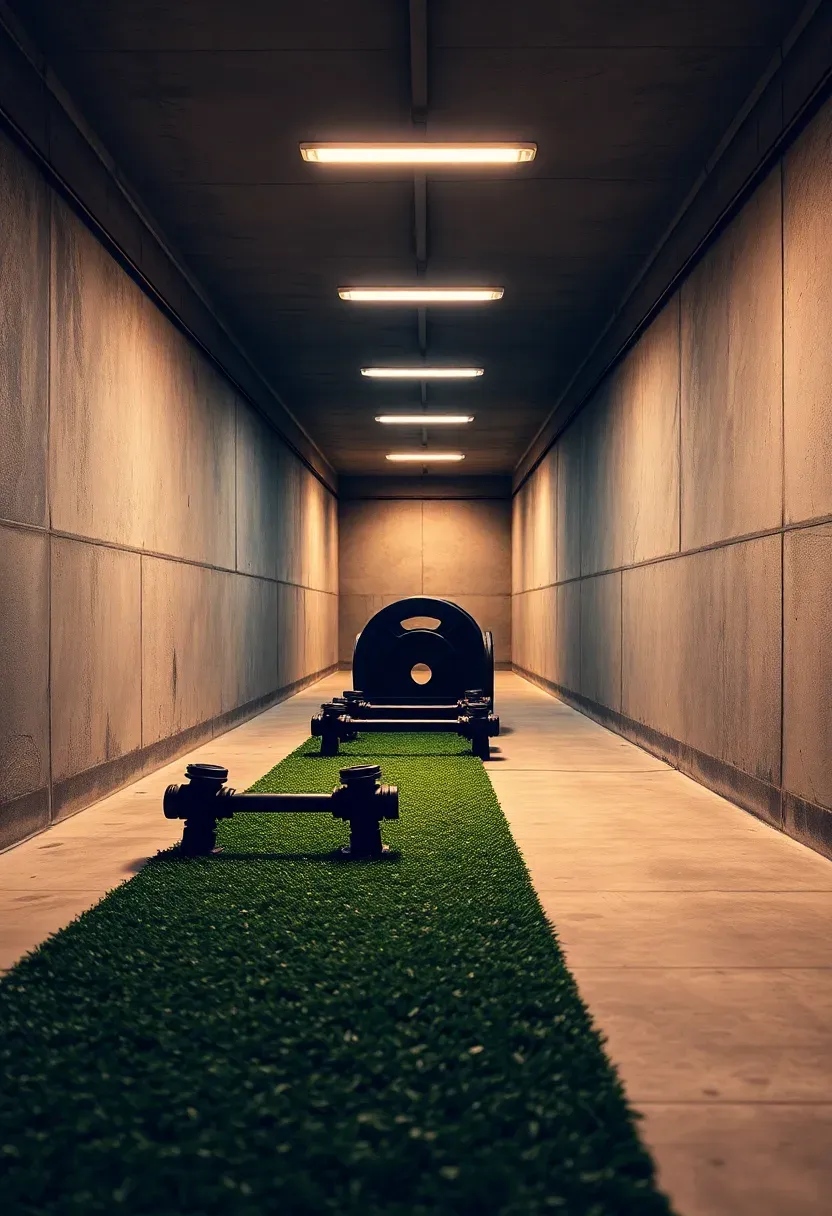
A turf sled track is the ultimate conditioning tool and surprisingly feasible in a basement with at least 20 feet of length. Lay a 4-foot-wide strip of artificial turf directly on the concrete — no adhesive needed since the sled weight holds it in place. A basic prowler sled costs $150 to $300 and works for pushes, pulls, and drags. Load it with standard weight plates. The turf strip runs about $3 to $5 per linear foot, so a 20-foot track costs $60 to $100. Roll the turf against the wall when not in use to free the floor.
Tips
- Short-pile turf (under 1 inch) provides the right amount of friction without being too grabby
- Attach a pulling harness or rope to the sled for backward drags and lateral work
- A 20-foot track works for short bursts; if you have 30+ feet, you can do continuous pushes without resetting
Recommended
Items for this idea
11. TRX and Bodyweight Circuit Wall
TRX vs. gymnastic rings
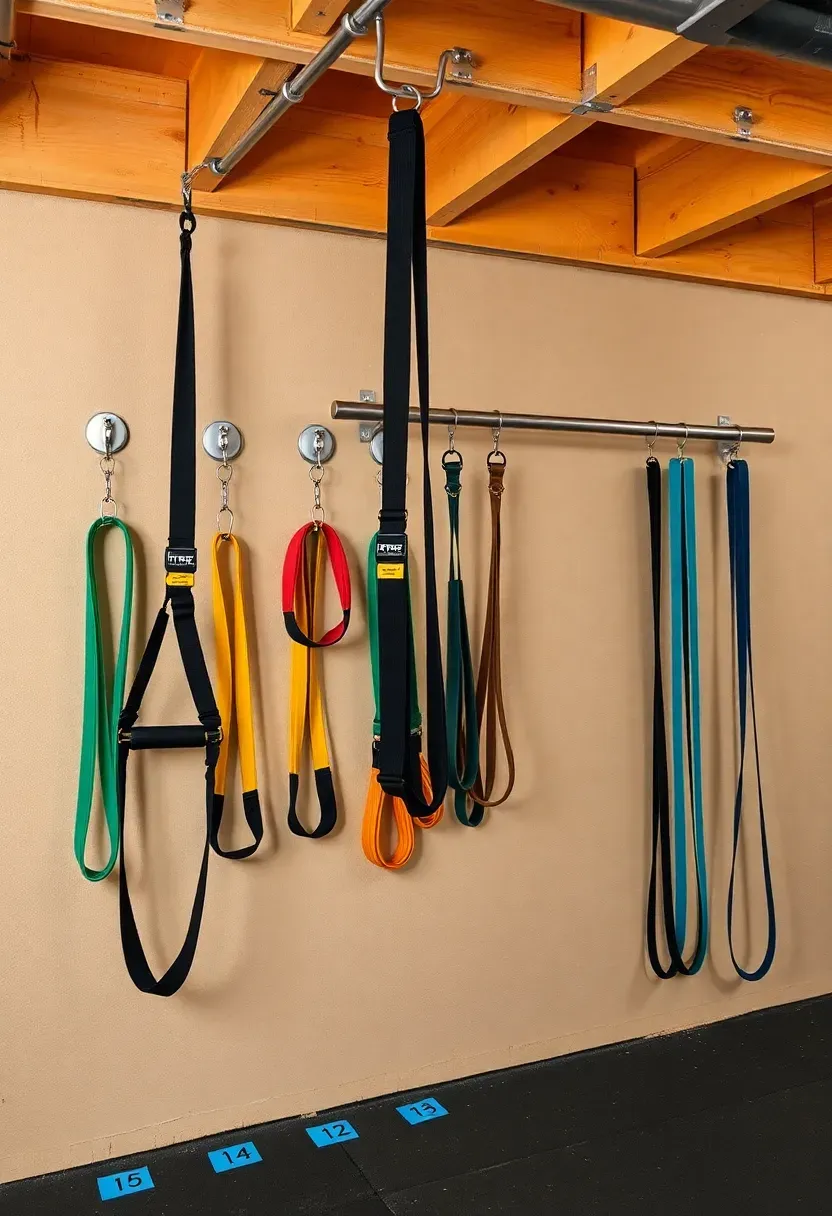
Both mount from ceiling joists and use body weight for resistance. TRX straps have foam handles and a single anchor point, making them easier for beginners and quicker to adjust between exercises. Rings require two anchor points and more upper body strength but offer greater exercise variety for advanced users. For a basement circuit wall, mount both — TRX on one joist, rings on the next — and alternate during circuits.
Building the circuit
Designate a 10-foot wall section with five stations spaced 2 feet apart: TRX rows, ring dips, wall-mounted pull-up bar, floor push-up zone, and a plyo step. Number each station with painter's tape. Set a timer for 40 seconds work, 20 seconds transition, and rotate through all five. The whole wall setup costs under $200.
Choose TRX if
- You are new to suspension training and want an easier learning curve
- You train alone and need quick angle adjustments between sets
- Your ceiling height is under 8 feet, limiting ring dip clearance
12. Under-Stair Equipment Storage
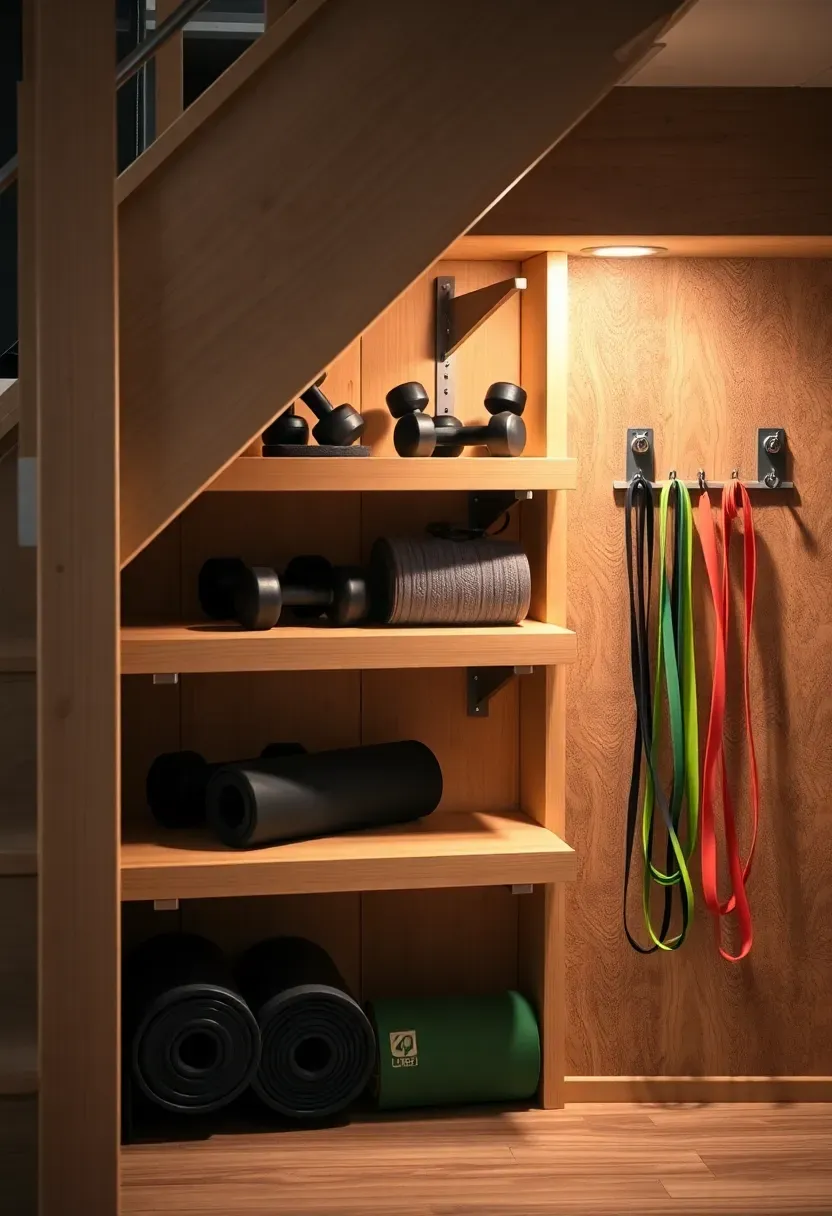
The triangular void beneath the basement stairs is dead space in most homes. Convert it into organized gym storage with tiered shelves that follow the stair angle. Build shelves from 3/4-inch plywood at 12-inch intervals — shorter shelves near the low end hold kettlebells and dumbbells, taller sections near the top store foam rollers, yoga mats, and jump ropes. Add pegboard on the back wall for resistance band hooks and small accessories. A curtain rod with a canvas curtain keeps everything hidden when not in use.
Tips
- Reinforce shelves holding heavy weights with L-brackets screwed into the stair stringers
- Label each shelf zone so equipment goes back to the same spot every time
- Use S-hooks on the pegboard for jump ropes, lifting straps, and wrist wraps
Recommended
Items for this idea
13. Mini Basketball and Agility Area
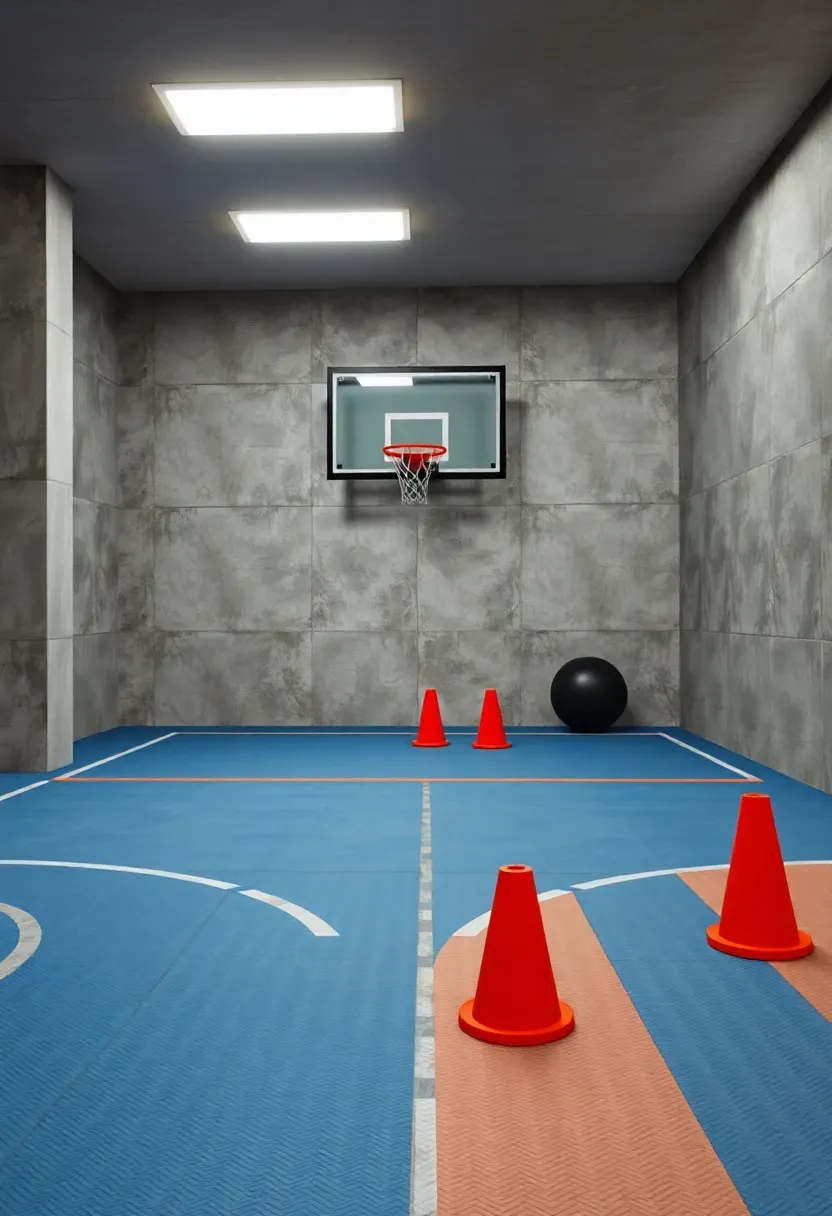
Even a 15x15-foot cleared section of basement works for shooting practice, agility ladder drills, and cone work. Lay interlocking sport court tiles over the concrete for proper ball bounce and joint protection. Mount an adjustable mini basketball hoop (they adjust from 7 to 10 feet) on the far wall with lag bolts into concrete. Keep a set of agility cones, a speed ladder, and a reaction ball in a bin nearby. This zone doubles as a warm-up area before lifting sessions and a play space for kids.
How to set it up
- Clear the area of any obstacles — exposed pipes, support columns, low ductwork
- Snap together sport court tiles starting from one corner, working outward
- Mount the hoop at a height matching your ceiling minus 6 inches of clearance
- Mark shooting lines and agility drill patterns with colored tape on the tiles
14. Spin Bike Studio Setup
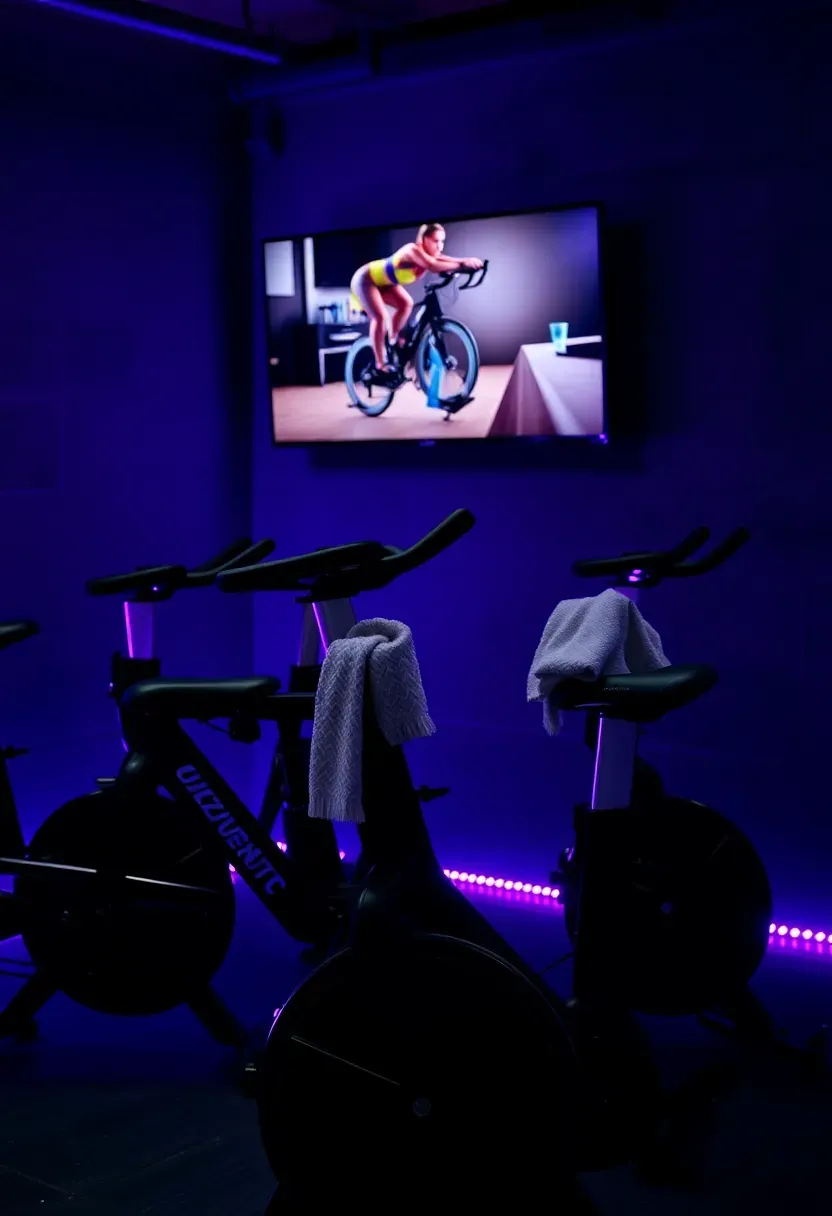
A dedicated spin area turns your basement into a cycling studio for a fraction of monthly class fees. Position two or three bikes facing a wall-mounted TV or projector screen. Run LED strip lights along the baseboard in RGB mode for the studio atmosphere. A single Peloton-style bike costs $1,400 to $2,500, but basic spin bikes with tablet holders work fine for $300 to $600 paired with a $13/month app subscription. The key detail most people miss: bikes generate heat and humidity. Point a fan directly at the riding area and keep a towel rack within arm's reach.
Tips
- Level each bike individually — basement floors often slope toward a drain
- Mount the screen at eye height when seated on the bike, not standing height
- Rubber mat under each bike catches sweat and prevents rust on the concrete
Recommended
Items for this idea
15. Punching and Kick Pad Wall
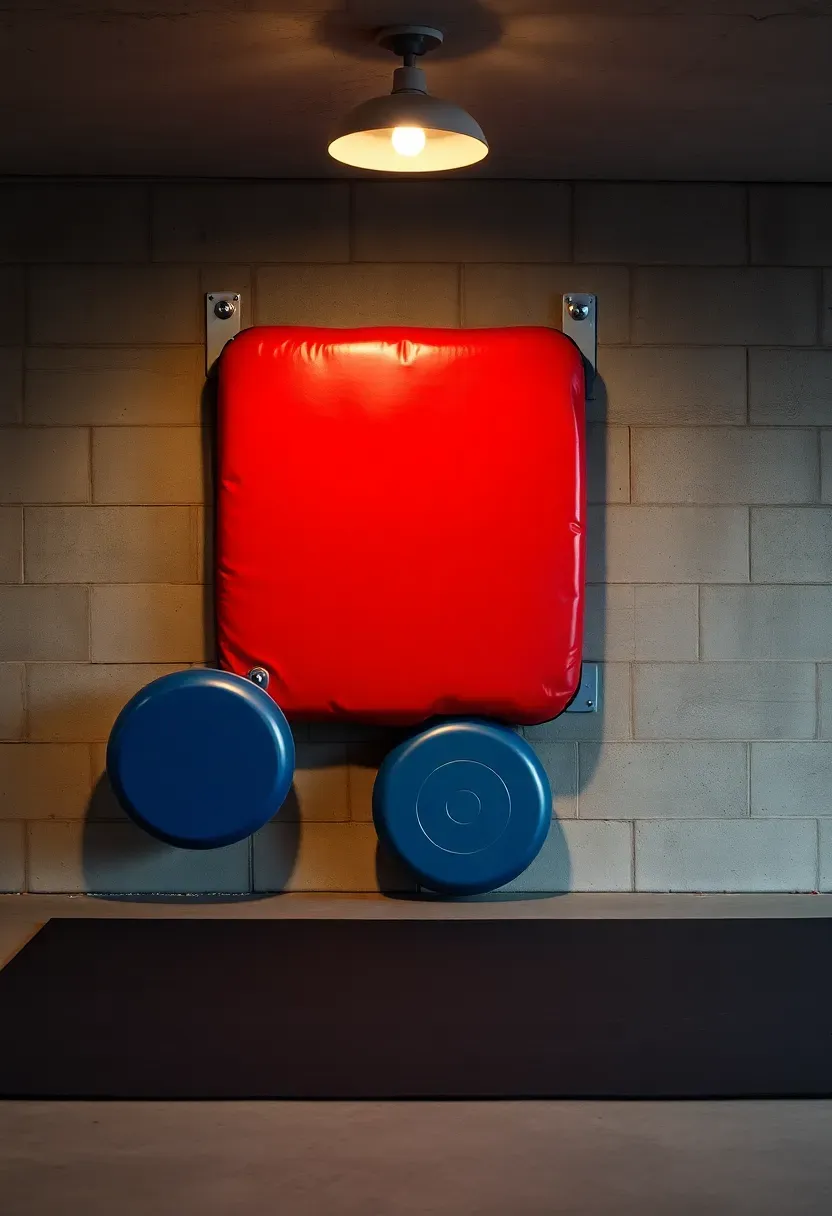
A wall-mounted pad system gives you heavy bag benefits without ceiling mounting concerns. Commercial wall pads bolt to concrete or studs and absorb punches, kicks, elbows, and knees. A basic 2x4-foot wall pad runs $200 to $500. Mount it at chest height for boxing combos and add a second lower pad at thigh height for kick practice. Place a 4x6-foot rubber mat in front for stable footing. This setup avoids the noise and swing clearance issues of a hanging heavy bag.
Tips
- Wall pads need 1/2-inch bolts into concrete sleeve anchors for solid mounting — toggle bolts through drywall alone will fail
- Wrap your hands even when hitting pads to protect your wrists and knuckles
- Position the pad on a wall without pipes or wiring behind it — the impact force transfers through the wall
16. Garage-Door Access for Fresh Air
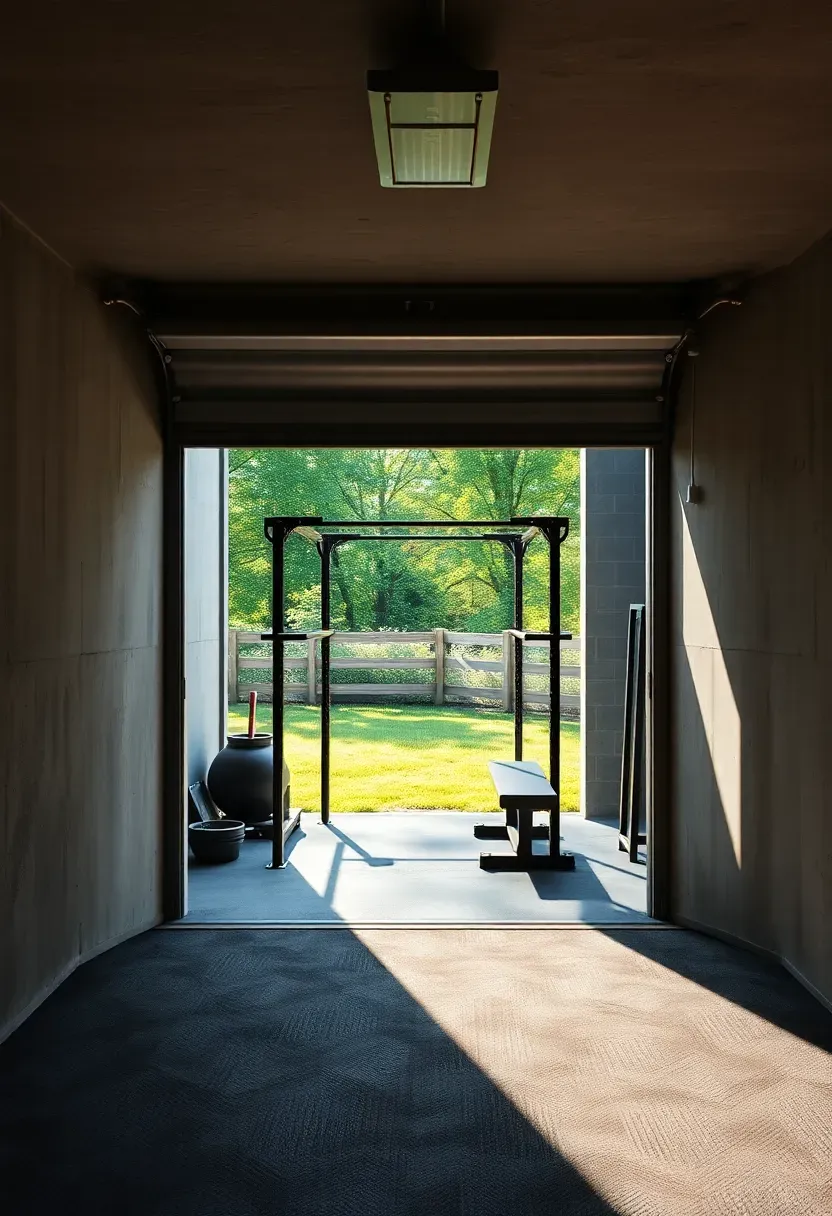
If your basement has a walkout exit or grade-level wall, consider installing a garage-style door or enlarging an existing window well into a door opening. Fresh air during workouts eliminates the stuffy, underground feeling that makes some people avoid basement gyms. A single-car garage door (8x7 feet) installed in a walkout wall costs $800 to $2,000 including framing and the door itself. Open it during warm months and close it in winter. The opening also lets you carry large equipment in without navigating stairs.
How to set it up
- Hire a structural engineer to assess which walls are load-bearing before cutting any openings
- Install a steel lintel above the opening to carry the load
- Choose an insulated garage door (R-value 12+) for year-round use
- Add a threshold seal at the bottom to keep water and pests out when closed
Watch out
- This modification requires a building permit in most jurisdictions
- Walkout basements are the only practical candidates — fully underground walls cannot be opened this way
Recommended
Items for this idea
17. Epoxy-Coated Gym Floor
Rubber tiles vs. epoxy
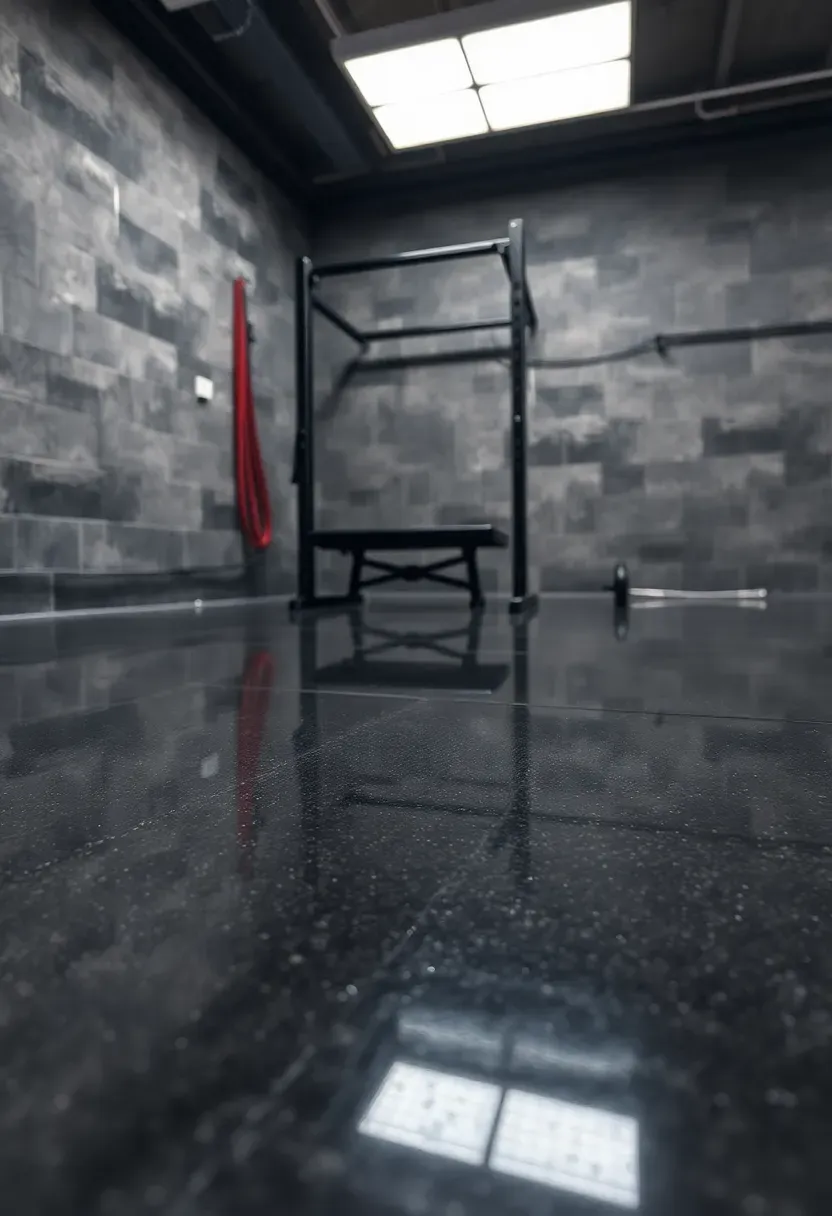
Rubber tiles are the default basement gym floor, but epoxy coating offers a different set of advantages. Epoxy bonds directly to the concrete, sealing it against moisture, dust, and stains permanently. It creates a smooth, easy-to-clean surface that looks professional. The tradeoff: epoxy is hard — no impact absorption for dropped weights. Use it in areas where you do machine work, cardio, or bodyweight exercises, and lay rubber mats in the lifting zones.
Application process
- Grind or acid-etch the concrete to open the pores for epoxy adhesion
- Apply a primer coat, then two coats of epoxy with anti-slip additive mixed in
- Let each coat cure for 24 hours before walking on it, 72 hours before placing equipment
- Total cost for a 400-square-foot basement runs $600 to $1,200 for DIY, $2,000 to $4,000 professional
Choose epoxy if
- You want a finished, showroom-quality floor appearance
- Your gym focuses more on machines and cardio than heavy free weights
- Moisture seeping through the slab is a recurring problem — epoxy acts as a vapor barrier
18. Smart Mirror Training Station
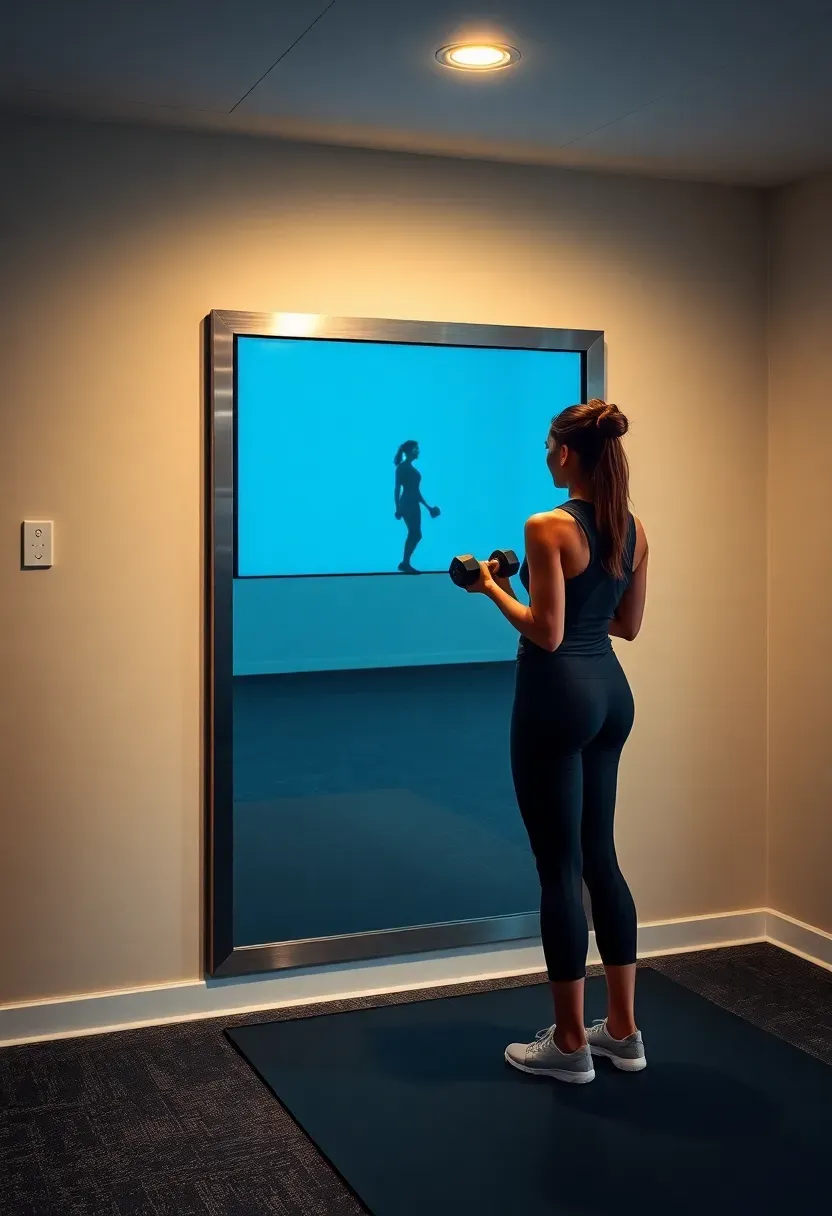
Smart mirrors like the Lululemon Studio Mirror, Tempo, and NordicTrack Vault mount flush to the wall and function as both a mirror for form checks and a screen for guided workouts. They run $1,000 to $1,700 for the hardware plus $30 to $40 per month for classes. The appeal in a basement gym is space efficiency — the mirror takes up zero floor space and replaces both a TV and a standard mirror. You get live and on-demand classes for strength, HIIT, yoga, and boxing without leaving your basement.
Tips
- Mount the mirror on a wall with a nearby outlet — most do not support battery operation
- Position it so your full body is visible from 5 feet away, typically with the center at chest height
- Turn off the smart features when you want a plain mirror for barbell work — the screen overlay can be distracting
Recommended
Items for this idea
19. Budget Build Under $1,000
What you get for $1,000
You can build a fully functional basement gym for under $1,000 if you prioritize compound movements and skip the machines. Here is one breakdown: horse stall mats from a farm supply store for flooring ($50 per 4x6-foot mat, buy three for $150), a used Olympic barbell and 300 lbs of iron plates from marketplace listings ($200 to $350), a flat/incline bench ($100 to $150), a doorway pull-up bar ($25), a jump rope ($10), and a set of resistance bands ($30). Total: $515 to $715, leaving room for a kettlebell or a set of gymnastics rings.
Where to save
- Farm supply stores sell the same rubber stall mats that gym retailers mark up 200%
- Used barbells and plates hold their value but sell for 30 to 50% off retail on local marketplaces
- Skip adjustable dumbbells at first — a barbell handles the same movements at lower cost
Where not to cut corners
- Do not buy a barbell under 28mm shaft diameter or without knurling — cheap bars bend and slip
- Avoid thin foam tiles as primary flooring — they compress to nothing under load within weeks
- A solid bench matters more than a fancy one — check the weight rating and weld quality before buying
Quick FAQ
Is a basement gym worth the investment? For consistent lifters, absolutely. A mid-range setup pays for itself in 2 to 3 years compared to commercial gym memberships, and you never wait for equipment. The convenience factor alone — walking downstairs instead of driving 15 minutes — typically increases training frequency by 1 to 2 sessions per week based on what home gym owners report.
What ceiling height do I need for a basement gym? Seven feet handles most exercises including standing overhead press for average-height lifters. Eight feet opens up pull-ups, kipping, and box jumps. Below 7 feet, stick to seated and floor-based movements or install a shorter rack designed for low ceilings.
How do I keep a basement gym from smelling? Run a dehumidifier at 45 to 50% relative humidity around the clock. Wipe equipment down after every session with a vinegar-water solution. Wash gym mats monthly with a floor cleaner designed for rubber. Keep airflow moving with a fan, and avoid leaving sweaty towels or clothes in the space.
Can I install a basement gym in a rental? Yes, with non-permanent equipment. Rubber interlocking tiles, a doorway pull-up bar, adjustable dumbbells, and a foldable bench leave no marks. Avoid drilling into walls or concrete. When you move, everything comes with you.
Do I need special electrical work for a basement gym? A standard 15-amp circuit handles lights, fans, and a TV. Motorized treadmills need a dedicated 20-amp circuit. Saunas and high-powered equipment require 240V service, which means calling an electrician. Check your panel capacity before adding multiple high-draw items.
A basement gym does not need to look like a commercial facility to work like one. Start with the floor and one anchor piece of equipment — a barbell, a rack, or even just a set of rings and a pull-up bar. Train on it for a month before spending more. The ideas here range from $150 budget builds to $8,000 sauna-plunge setups, but the ones that get used share one thing: they match how you actually train, not how you imagine training. Pick the three ideas closest to your workout style, set a hard budget, and get the floor done this weekend.
Pinterest cover for 19 Basement Gym Ideas
About the author
OBCD
CGI visualization and interior design content. We create detailed 3D renders and curate practical design ideas for every room in your home.