23 Basement Paint Color Ideas
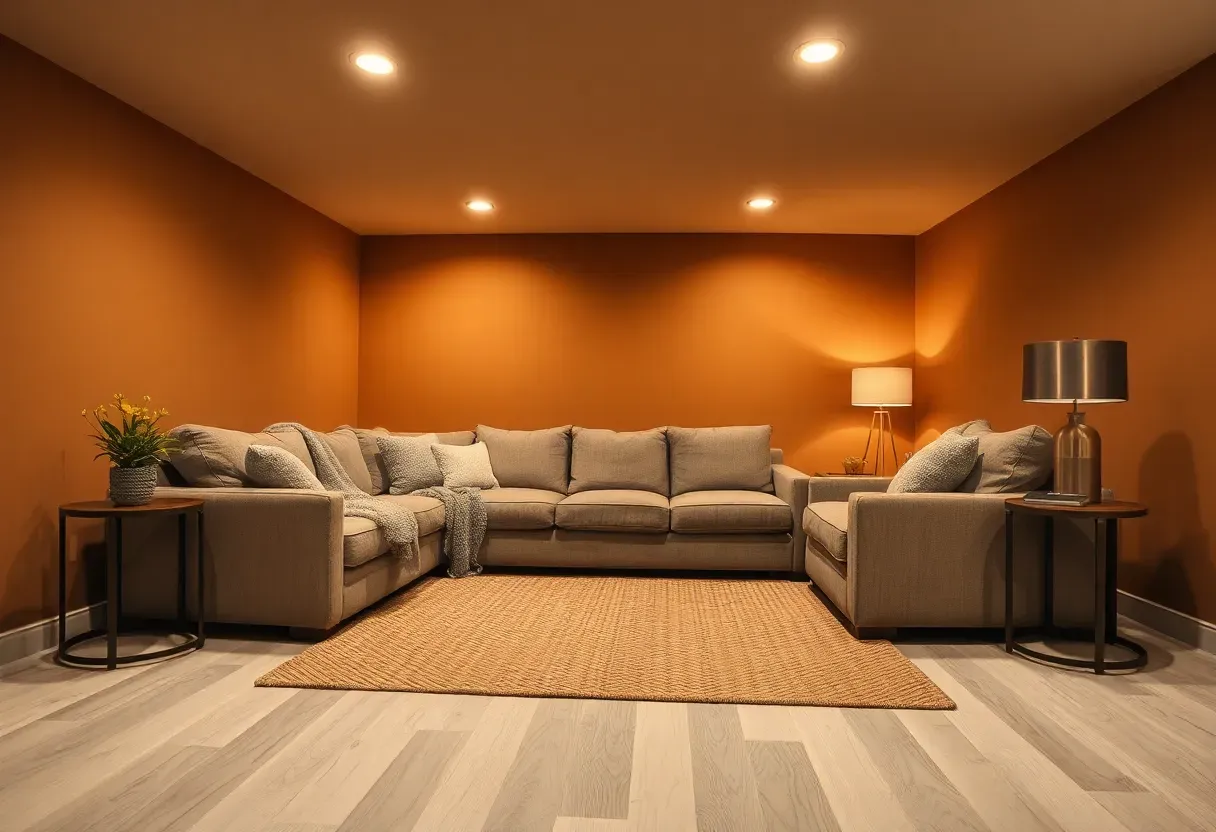
I spent three weekends last year repainting my own basement — twice, because the first color looked nothing like the swatch once it dried under fluorescent light. That is the curse of below-grade spaces. Colors shift underground. Natural light is minimal or nonexistent, ceilings hang low, and the ambient temperature skews cooler than the rest of the house. A shade that feels cheerful in a second-floor bedroom can look dingy or flat in a basement. The 23 paint colors below have been picked specifically for how they behave in low-light, enclosed rooms where the walls do most of the visual work.
Browse by mood — start with the warm neutrals if your basement feels cold, skip to the bold tones if it already has decent lighting.
Table of Contents
- Accessible Beige
- Pale Denim Blue
- Warm Mushroom Brown
- Deep Emerald Green
- Soft Linen White
- Muted Coral
- Slate Blue-Gray
- Rich Burgundy
- Golden Wheat
- Dusty Mauve
- Hunter Green
- Warm Pewter
- Midnight Navy
- Clay Pot Terracotta
- Icy Mint
- Burnt Sienna Accent
- Stormy Charcoal
- Pale Apricot
- Muted Olive
- Smoky Plum
- Warm Caramel
- Steel Blue
- Creamy Almond
1. Accessible Beige
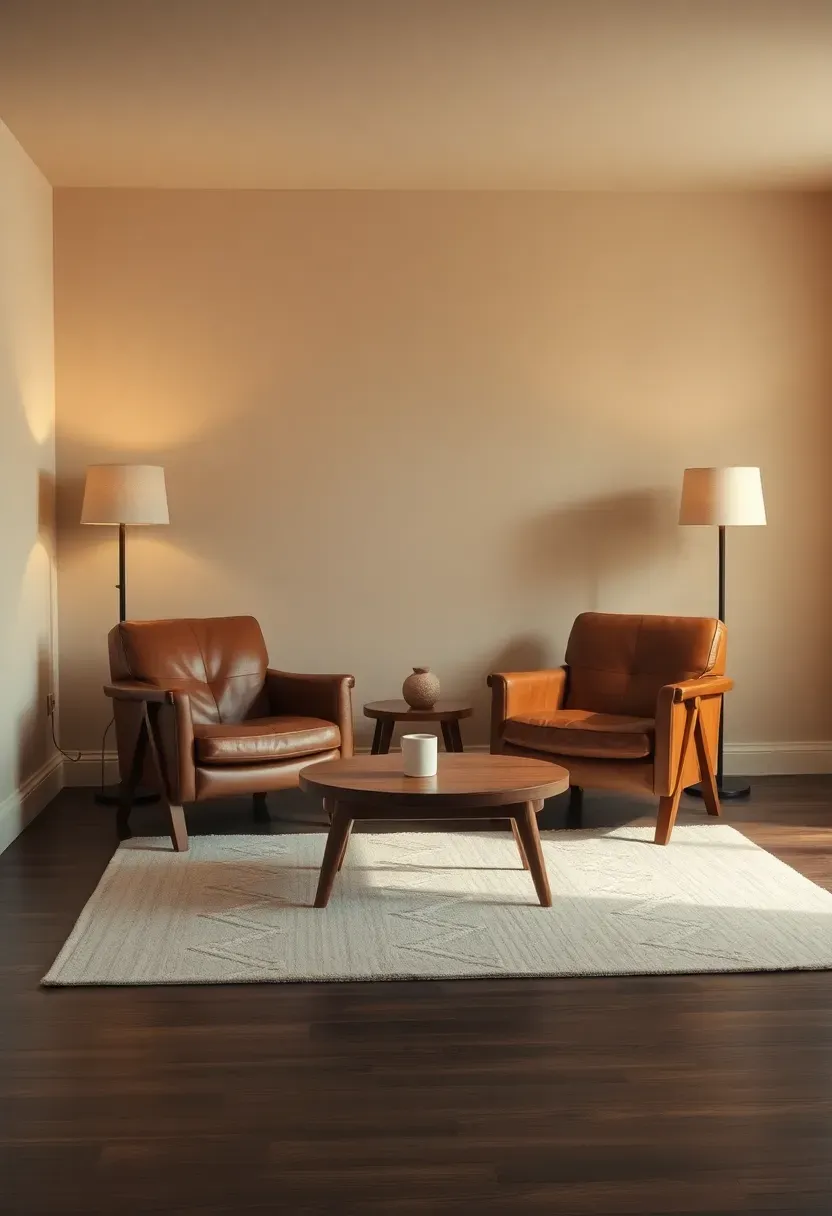
Sherwin-Williams Accessible Beige (SW 7036) is probably the most reliable starting point for any basement. It reads warm without tipping into yellow territory, and it holds up under both warm-white and cool-white bulbs. The gray undertone keeps it from looking dated the way pure beige can. Pair it with white trim and medium-toned hardwood or luxury vinyl plank flooring. In a north-facing basement with no windows, this color still manages to feel grounded and calm rather than washed out.
Why It Works Underground
- Gray undertone prevents the muddy look that pure beige gets under fluorescent lights
- Warm enough to counter the natural chill of concrete-adjacent rooms
- Neutral enough to anchor any furniture style from mid-century to farmhouse
We picked a few things that go well with this idea: Zinsser Perma-White Mildew-Proof Paint (Quart) (★4.5), KILZ Basement Waterproofing Paint (1 Gallon) (★4.6) and INSL-X WaterBlock Masonry Waterproofer (1 Gallon) (★4.6). As an Amazon Associate we earn from qualifying purchases.
2. Pale Denim Blue
The Problem with Blue in Basements
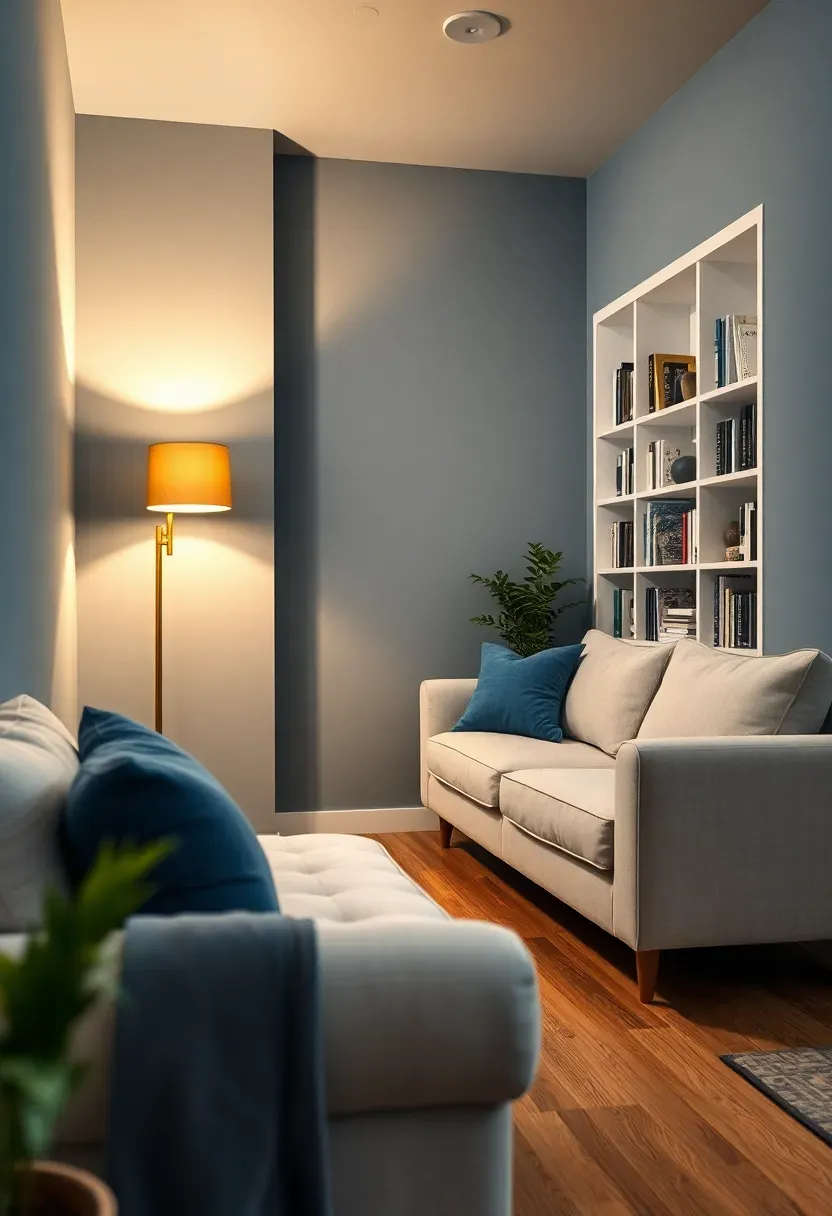
Blue is the color people want most and regret fastest in basements. Too bright and it feels like a nursery. Too dark and the room becomes a cave. Pale denim — think Sherwin-Williams Languid Blue (SW 6226) — sits right in the middle. It has enough gray to stay sophisticated and enough blue to actually register as a color rather than a slightly tinted neutral.
Getting It Right
Use an eggshell finish on walls to bounce some light around without creating obvious glare. Keep the ceiling white and the trim crisp. Add a warm-toned area rug or wood accent to prevent the room from feeling sterile. This shade works particularly well in basement guest rooms where you want the space to feel restful without being dark.
We picked a few things that go well with this idea: TJOY BR30 Dimmable LED Bulbs (12-Pack) (★4.4), Ensenior 6-Inch LED Recessed Lights (12-Pack) (★4.7) and Amico 6-Inch Ultra-Thin LED Recessed Lights (12-Pack) (★4.7). As an Amazon Associate we earn from qualifying purchases.
3. Warm Mushroom Brown
Mushroom brown lands between taupe and cocoa — a color that practically disappears into the background while making everything else in the room look more expensive. Benjamin Moore Weimaraner (AF-155) or Sherwin-Williams Poised Taupe (SW 6039) both hit this range. The warmth is subtle. It does not scream brown the way chocolate paint does; instead it wraps the room in a quiet, grounded tone that works especially well in basement dens and media rooms where you want the walls to recede.
Tips
- Pair with cream or ivory accents instead of stark white for a cohesive warmth
- Works best with warm-white LED bulbs around 2700K color temperature
- Add brass or copper light fixtures to amplify the earthy undertone
We picked a few things that go well with this idea: Bates Paint Roller and Brush Set (11-Piece) (★4.5), Rhibak Paint Roller Kit with Extension Pole (27-Piece) (★4.4) and Pro Grade Paint Roller Kit (10-Piece) (★4.4). As an Amazon Associate we earn from qualifying purchases.
4. Deep Emerald Green
Going Dark on Purpose
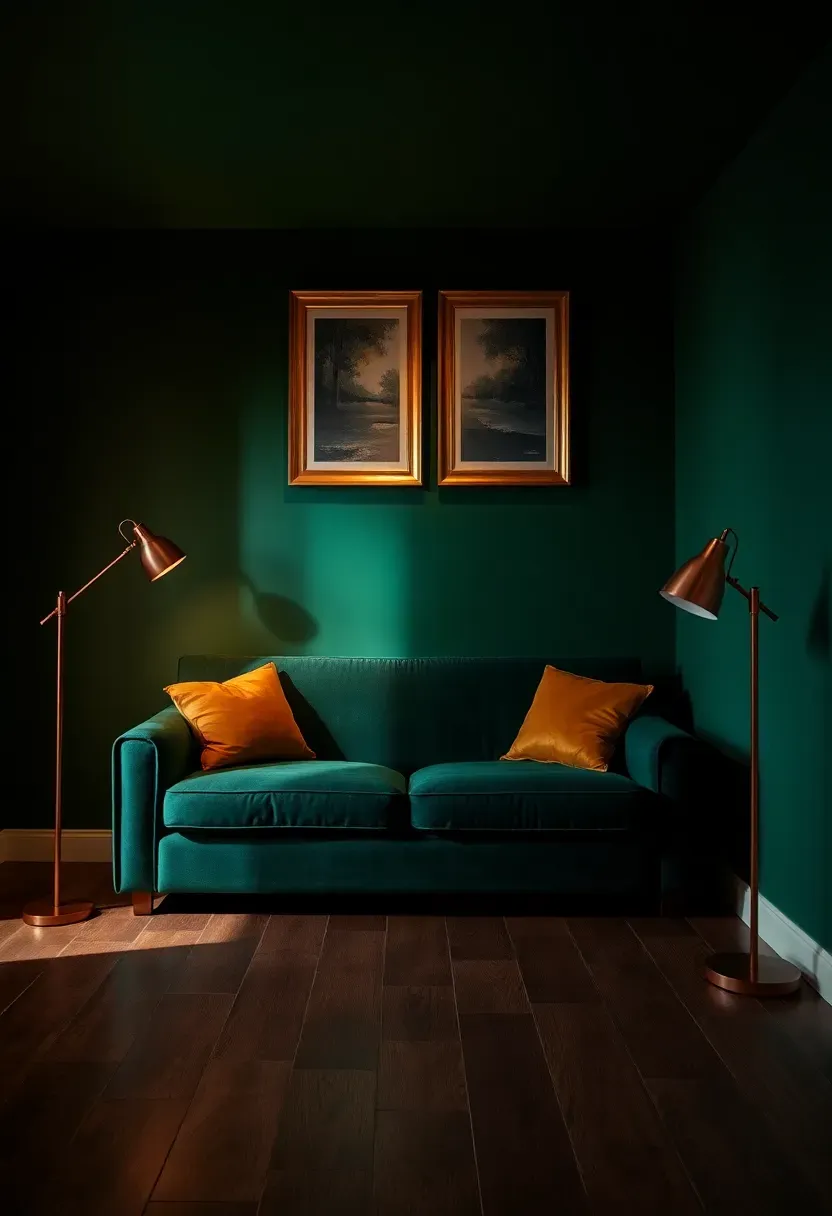
Most advice tells you to keep basements light. Deep emerald breaks that rule and gets away with it because the color itself carries visual richness that compensates for the lack of sunlight. Benjamin Moore Hunter Green (2041-10) or Farrow and Ball's Beverly (310) give you that depth without looking black in dim conditions.
How to Pull It Off
- Commit fully — paint all four walls, not just one accent
- Use satin or semi-gloss finish to catch and reflect whatever light you have
- Layer in warm metallics: brass lamps, gold picture frames, copper plant pots
- Keep the floor light — pale wood, beige carpet, or a large cream rug
Watch Out
- Test a large swatch on two different walls and look at it at night under your actual lighting before committing
Recommended
Items for this idea
5. Soft Linen White
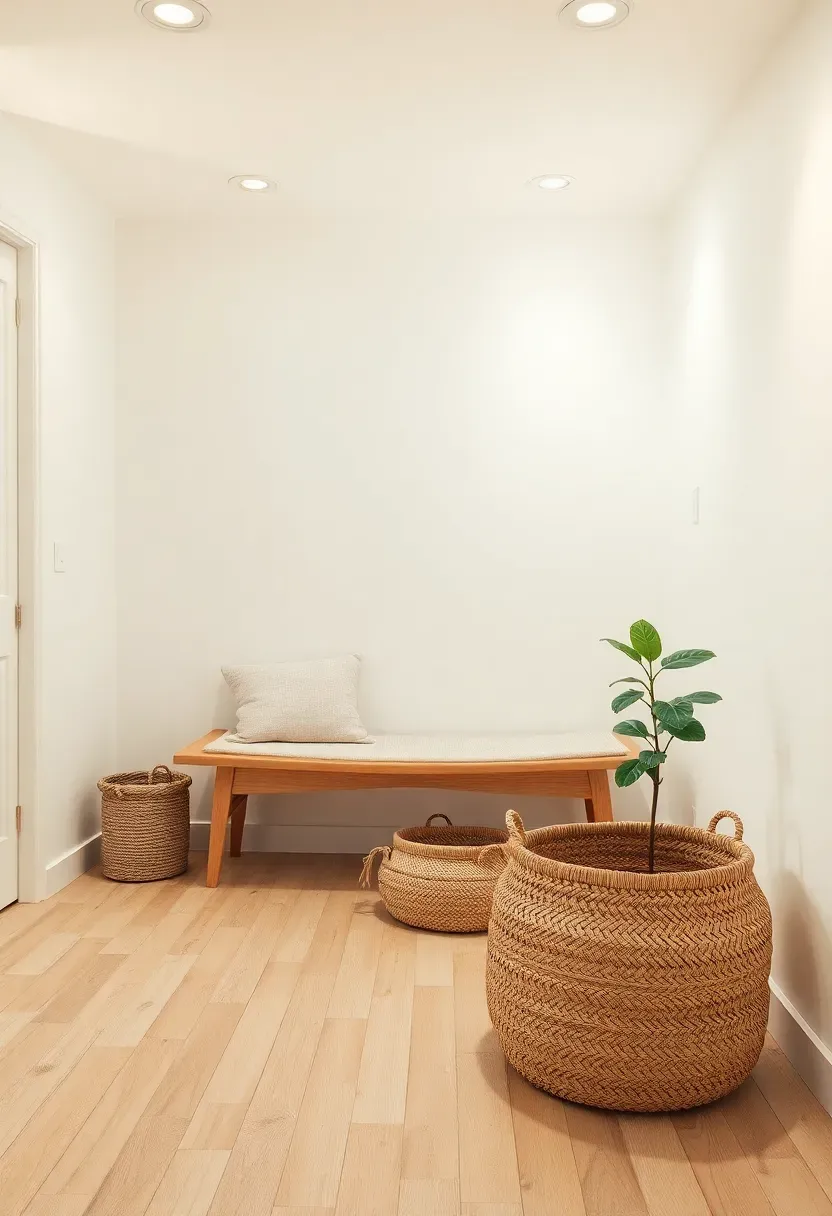
Not all whites are equal, and in a basement the wrong white is worse than a color. Cool whites with blue or gray undertones turn basements into walk-in refrigerators. Linen white — Benjamin Moore White Dove (OC-17) is the benchmark — has a whisper of yellow-cream that keeps walls from feeling clinical. It maximizes whatever light enters the space while staying warm. This is the safe pick, and there is nothing wrong with safe when your basement already has interesting furniture, art, or built-ins doing the heavy lifting.
Tips
- Apply in flat or matte finish on ceilings, eggshell on walls
- Use it as a whole-basement envelope when you want the architecture to disappear
- Pair with warm wood tones and woven textiles to avoid a sterile feel
6. Muted Coral
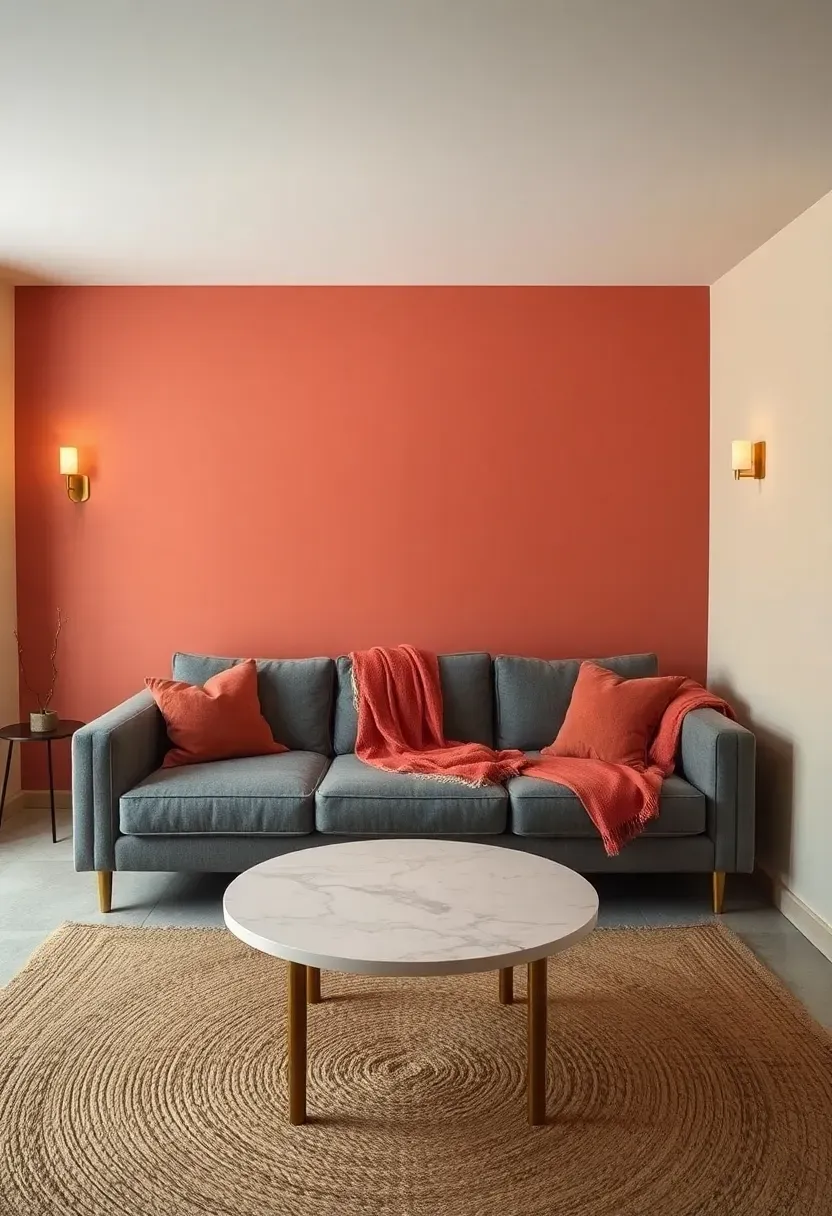
Coral sounds risky for a basement, but muted versions work surprisingly well. Farrow and Ball Setting Plaster (231) or Benjamin Moore Dusty Coral (AF-195) read as warm, slightly pink neutrals rather than anything loud. The effect in a basement is similar to candlelight — it flatters skin tones and makes the space feel inhabited and comfortable. Use it on one accent wall behind a sofa or on all walls in a smaller basement bathroom or powder room.
Choose This If
- Your basement feels cold and cave-like despite adequate lighting
- You want warmth without going the predictable beige or tan route
- The room serves as a guest suite or entertainment space
Skip This If
- Your basement already gets warm afternoon light through egress windows
Recommended
Items for this idea
7. Slate Blue-Gray
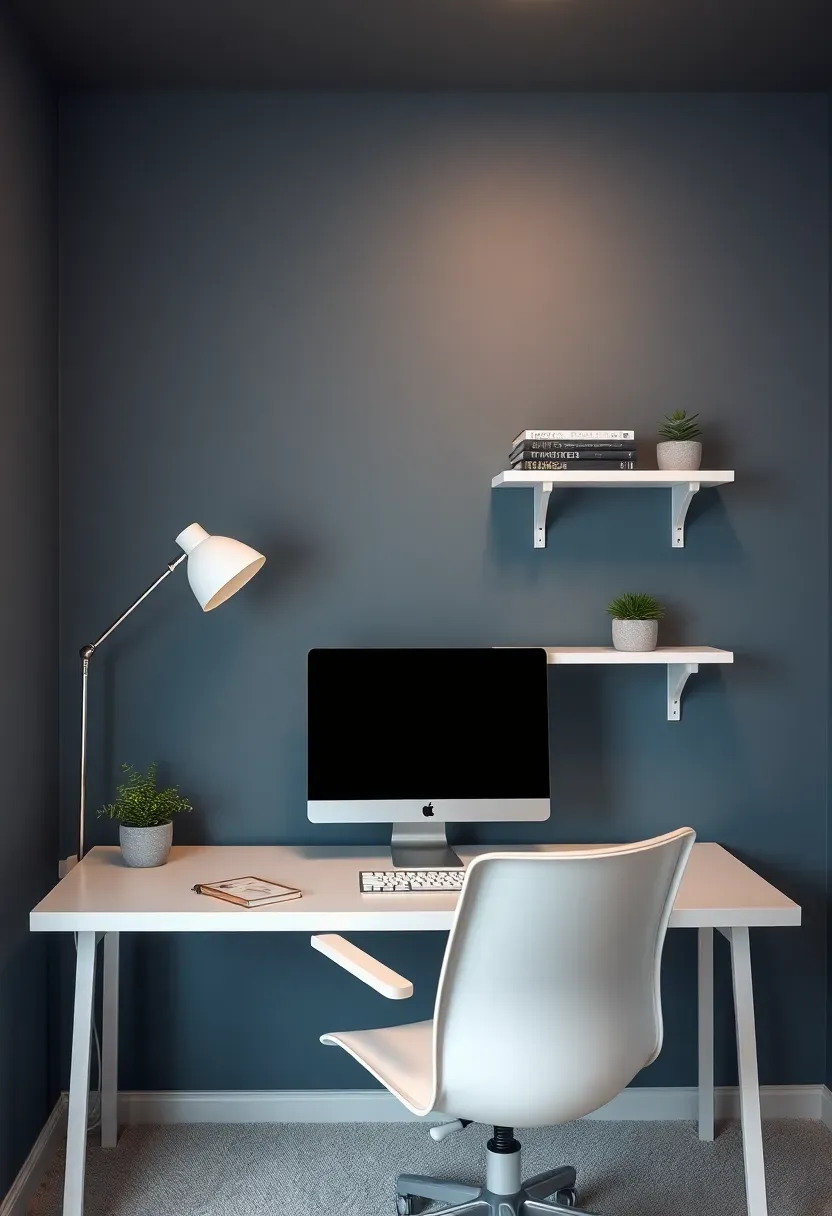
Slate blue-gray sits at the intersection of professional and comfortable, which makes it a natural fit for basement home offices and studies. Sherwin-Williams Misty (SW 6232) or Benjamin Moore Nimbus Gray (2131-50) both deliver this look. The blue is barely there — more of a suggestion than a statement. In artificial light the color shifts between gray and blue depending on the bulb temperature, which gives the walls a subtle complexity that flat gray lacks.
Tips
- Pair with white or light gray trim for a clean contrast
- A matte finish reduces glare on screens if used in a home office
- Add one warm element — a leather chair, a walnut shelf — to prevent the room from feeling too cool
8. Rich Burgundy
Why This Color Belongs Underground
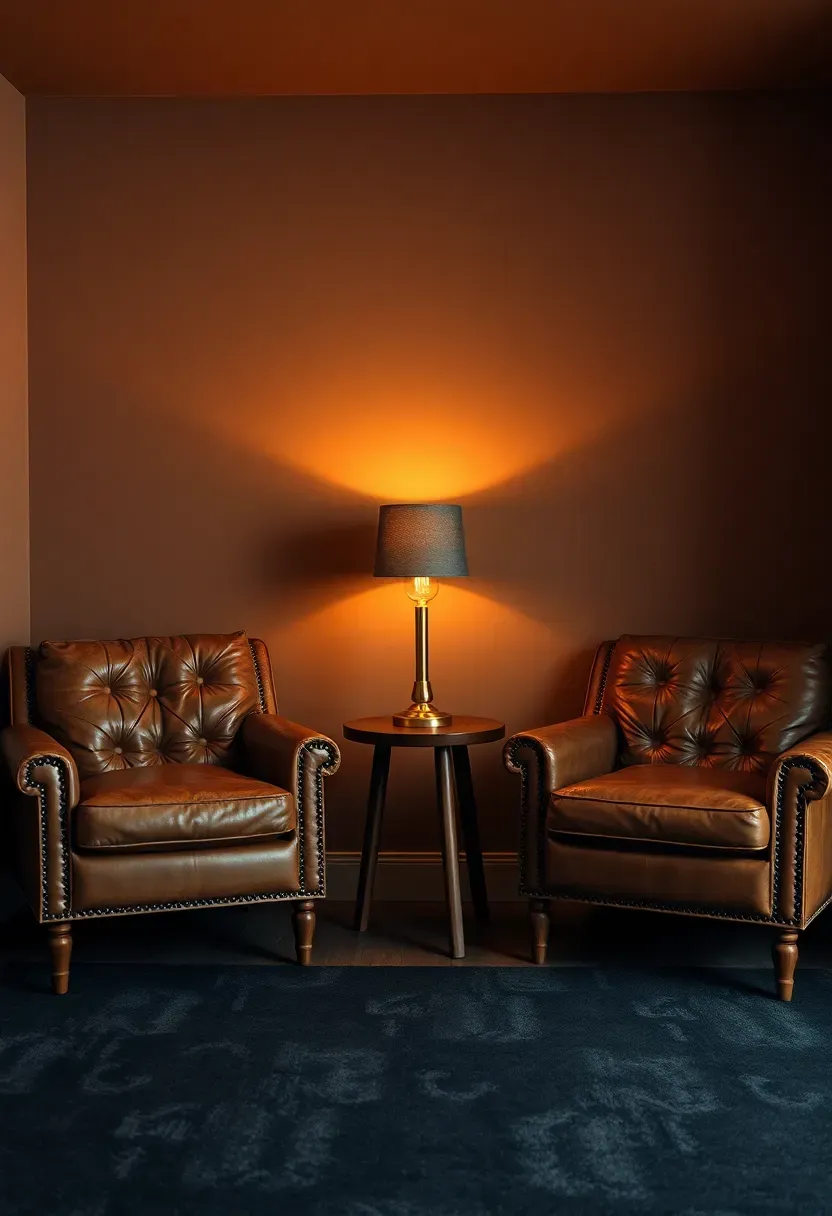
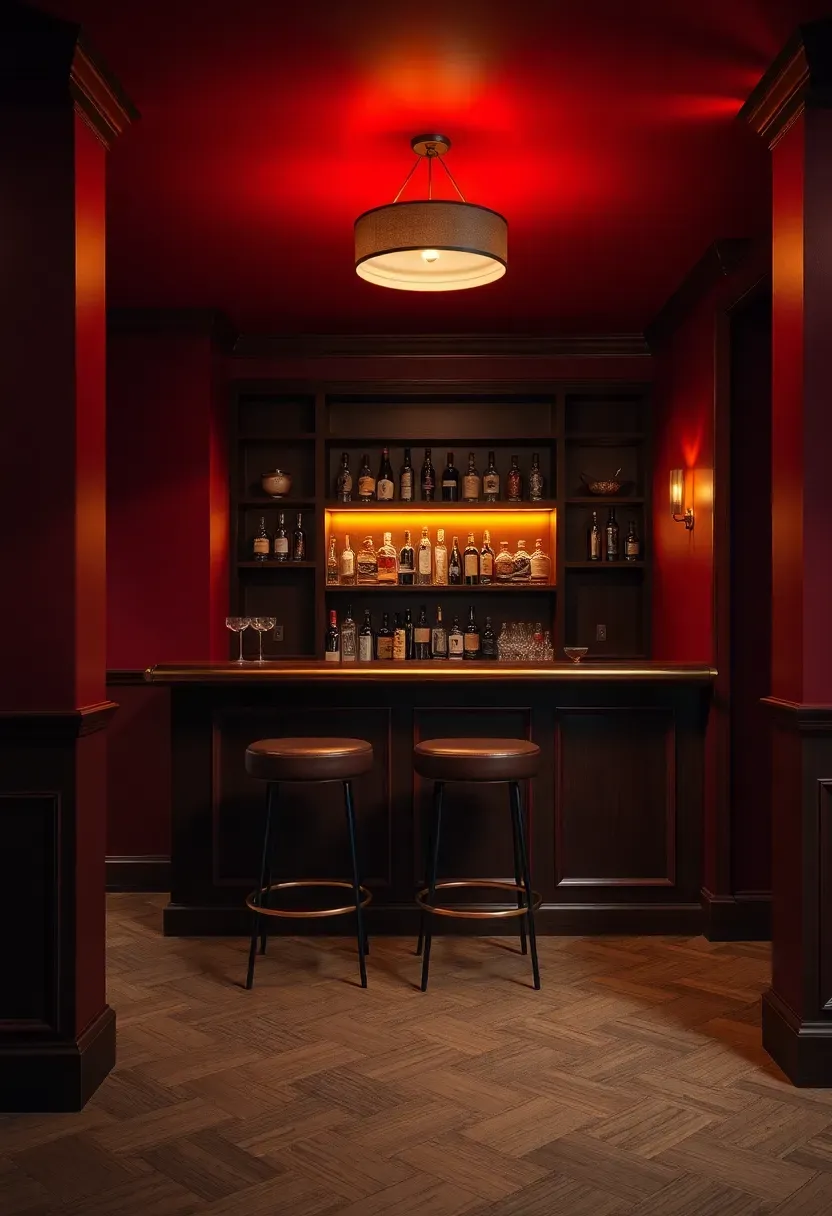
Burgundy is one of those colors that actually benefits from low light. In a sun-drenched room it can feel overwhelming, but in a basement it creates an intimate, library-like atmosphere. Benjamin Moore Dinner Party (AF-300) or Sherwin-Williams Burgundy (SW 6300) give you that deep wine-red without veering into maroon.
Best Rooms for This Color
- Basement bars and cocktail lounges
- Home theaters where you want the walls to absorb attention
- Reading nooks tucked into finished basement corners
Pair With
- Dark walnut wood, brass hardware, and warm-toned leather upholstery
Recommended
Items for this idea
9. Golden Wheat
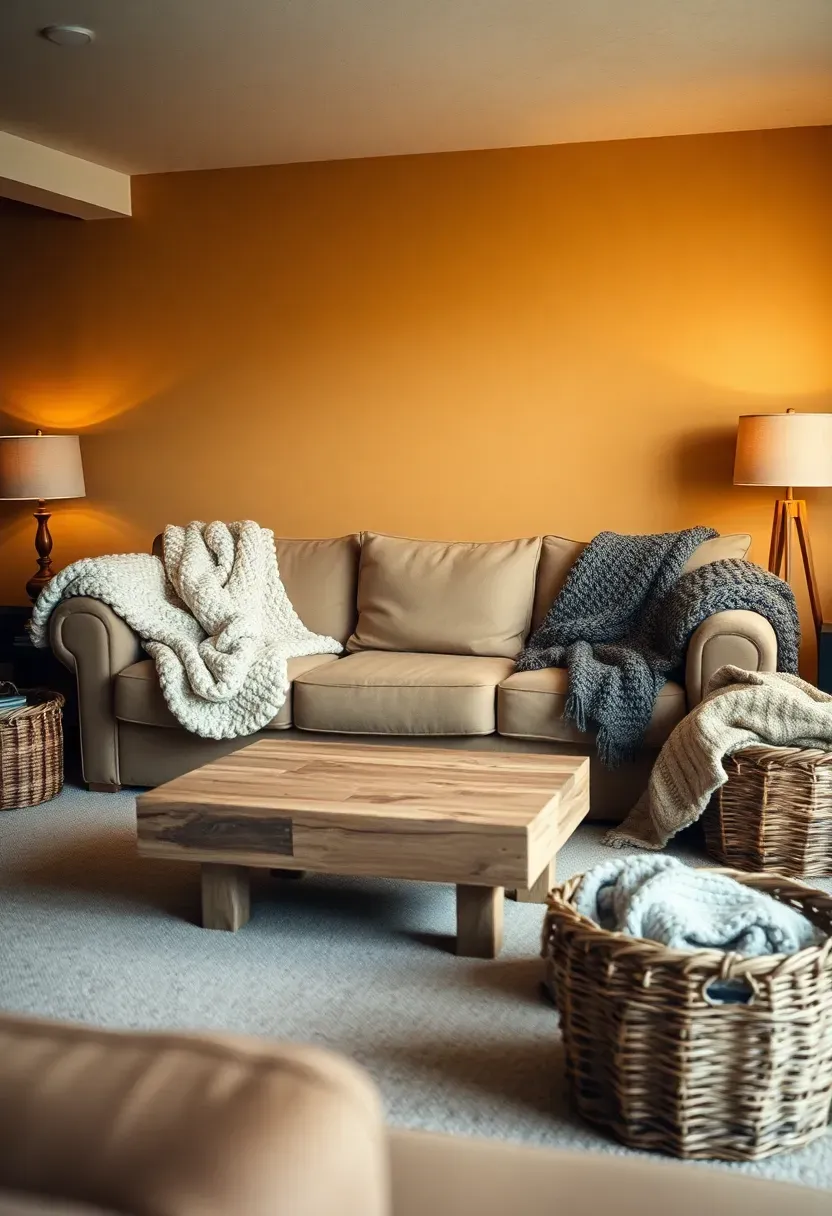
Golden wheat occupies the narrow band between yellow and tan that somehow avoids the pitfalls of both. It does not go sour the way pure yellow can, and it has more personality than standard tan. Sherwin-Williams Restrained Gold (SW 6129) is a dependable pick. In a basement, this color simulates the warm glow of late-afternoon sunlight — useful when your actual sun exposure is zero. It works in family rooms, playrooms, and any multi-purpose basement space where you need a color that energizes without overwhelming.
Tips
- Best with warm-white (2700K) or soft-white (3000K) bulbs
- Avoid pairing with cool grays — stick to creams, browns, and warm wood
- Consider a half-wall application with white below for a relaxed cottage look
10. Dusty Mauve
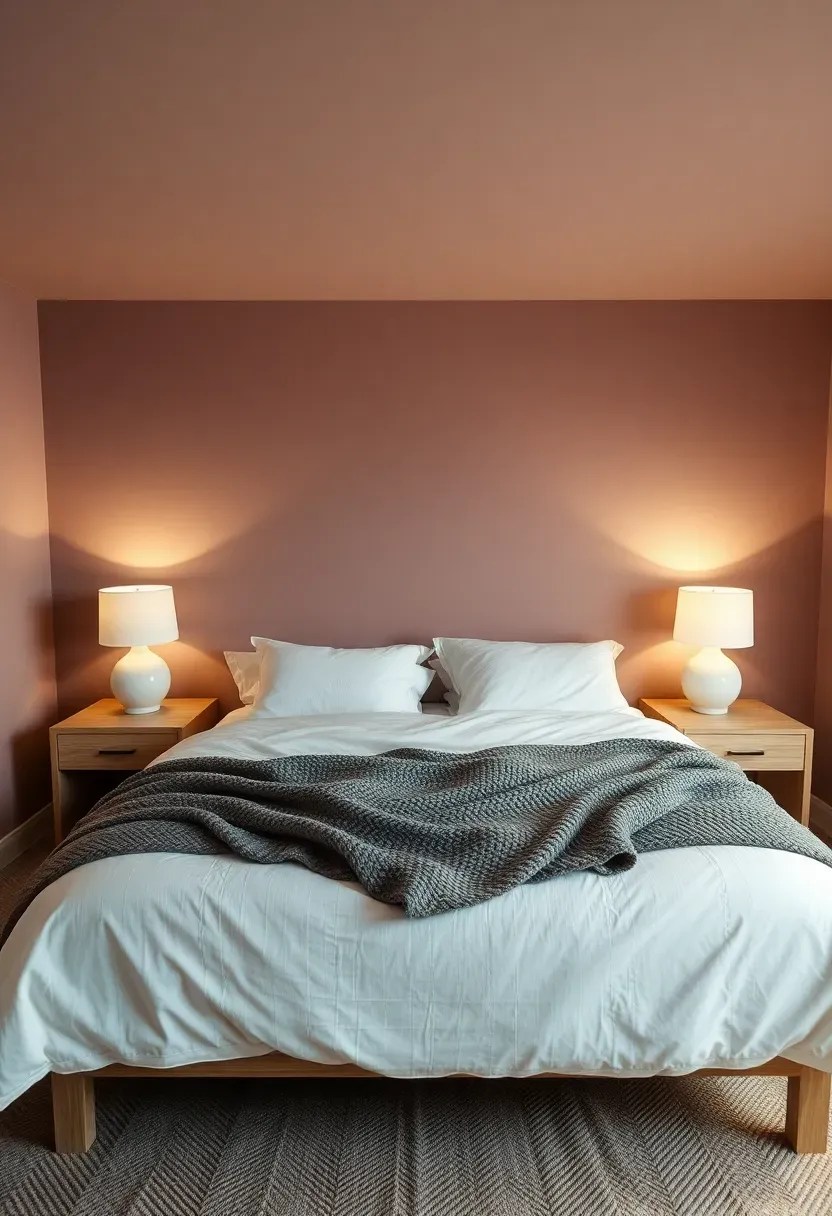
Dusty mauve reads differently than pink. Where pink can feel juvenile, mauve carries a muted sophistication that suits adult spaces. Sherwin-Williams Orchid (SW 0071) or Benjamin Moore Cinnamon Slate (CSP-360) both sit in this territory — a blush-gray hybrid that changes character depending on the lighting. Under warm bulbs it leans rosy; under cooler light it looks almost gray. That chameleon quality makes it forgiving in basements where the light sources might vary from one corner to another.
Tips
- Works particularly well in basement guest bedrooms and sitting rooms
- Pair with soft sage green accents for a complementary scheme
- Matte or eggshell finish keeps the look subdued
Recommended
Items for this idea
11. Hunter Green
Hunter Green vs. Emerald
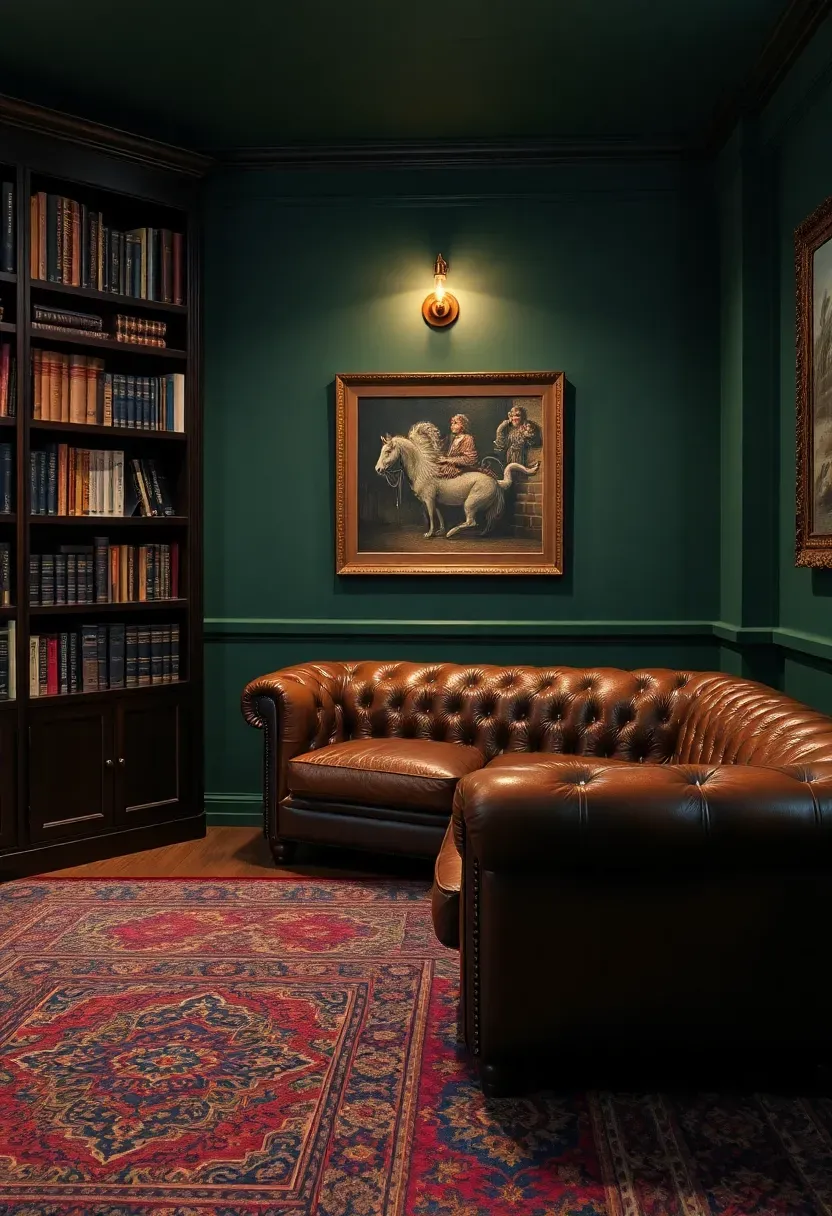
Where emerald (idea 4) is jewel-toned and dramatic, hunter green is earthier and more traditional. Think British racing green or the color of a well-worn waxed jacket. Benjamin Moore Essex Green (HC-188) delivers this look. It is darker and more blue-based than emerald, which makes it feel grounded rather than flashy.
Where It Works
- Basement libraries with floor-to-ceiling bookshelves
- Pool table rooms where the wall color can echo the felt
- Wine cellars or tasting rooms paired with stone or brick
Recommendation
Choose hunter green if your basement style leans classic or traditional. Choose emerald if you want something more modern and vibrant.
12. Warm Pewter
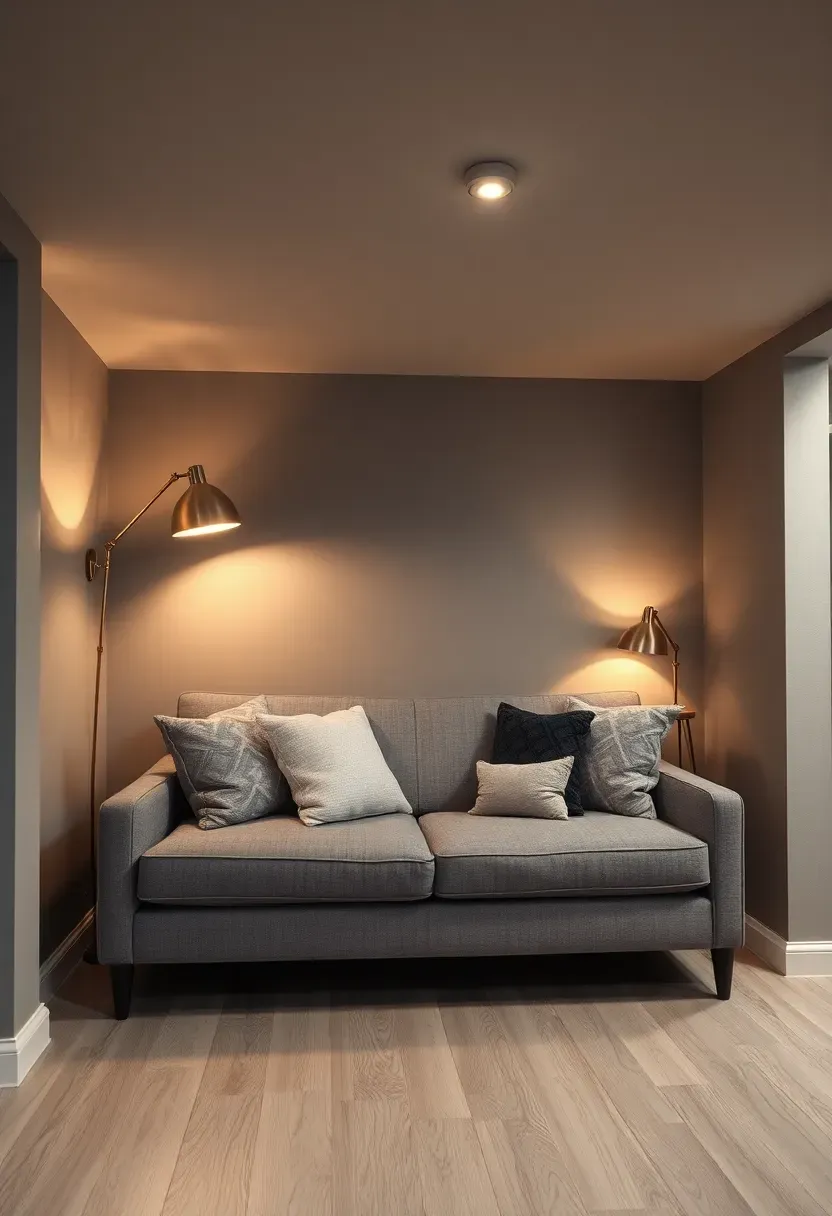
Pewter gray with warm undertones splits the difference between gray and greige. It is the color for people who want gray walls but find most grays too cold for a basement. Sherwin-Williams Mega Greige (SW 7031) or Benjamin Moore Revere Pewter (HC-172) both deliver this. Revere Pewter in particular has become a modern classic — warm enough for basements, neutral enough to work with virtually any decor. It photographs well too, which matters if you plan to list the house eventually.
Tips
- Apply in eggshell for a slight sheen that reflects light without looking glossy
- Use darker gray accents (throw pillows, area rugs) to create depth
- Works with both warm and cool-toned furniture
Recommended
Items for this idea
13. Midnight Navy
The Darkest Blue That Still Feels Livable
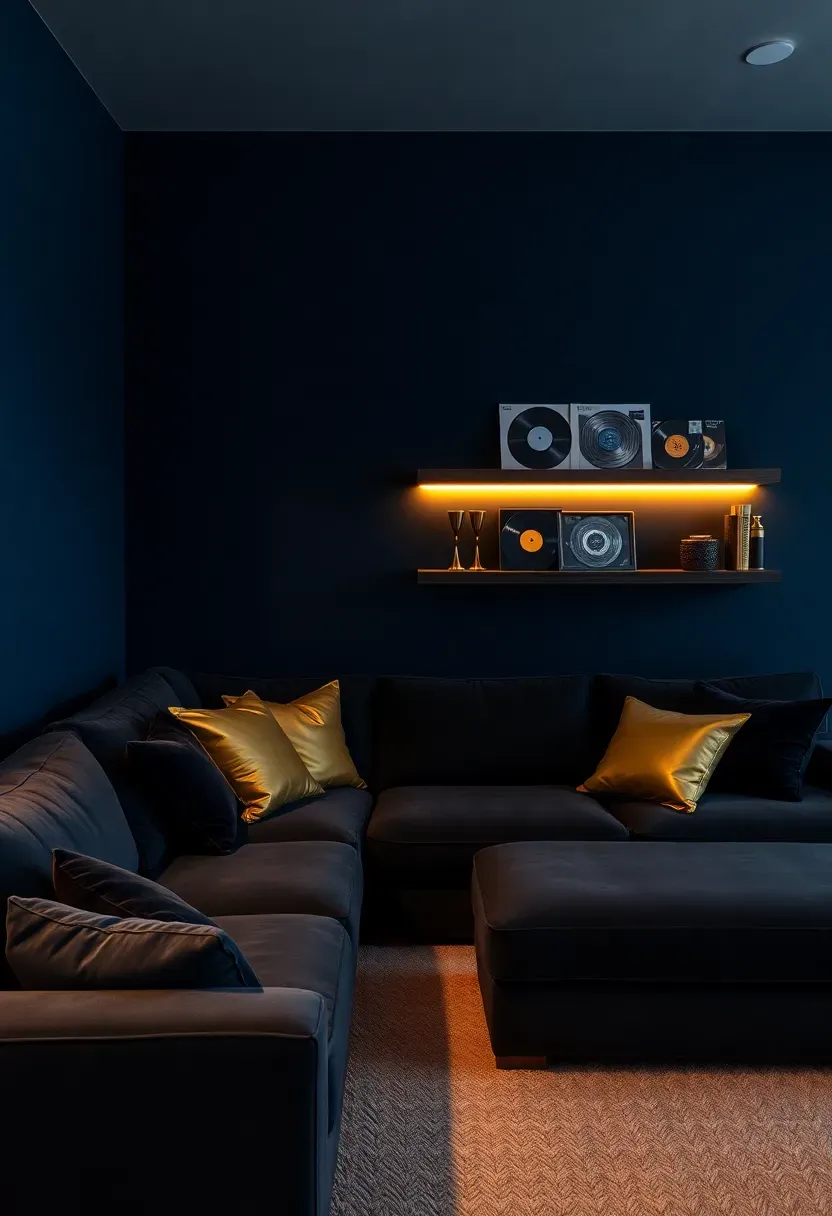
Midnight navy is darker than standard navy but not quite black. Farrow and Ball Hague Blue (30) or Benjamin Moore Hale Navy (HC-154) both occupy this space. In a basement, midnight navy creates an enveloping, cocoon-like atmosphere. The color absorbs ambient noise visually the same way carpet absorbs it acoustically — everything feels quieter and more contained.
How to Make It Work
Use it in rooms with a clear purpose: home theaters, bars, game rooms, or music studios. Avoid it in multi-purpose spaces where you need the room to feel open. Balance the darkness with plenty of warm-toned lighting — table lamps, sconces, and LED strips under shelves or bar counters all help.
14. Clay Pot Terracotta
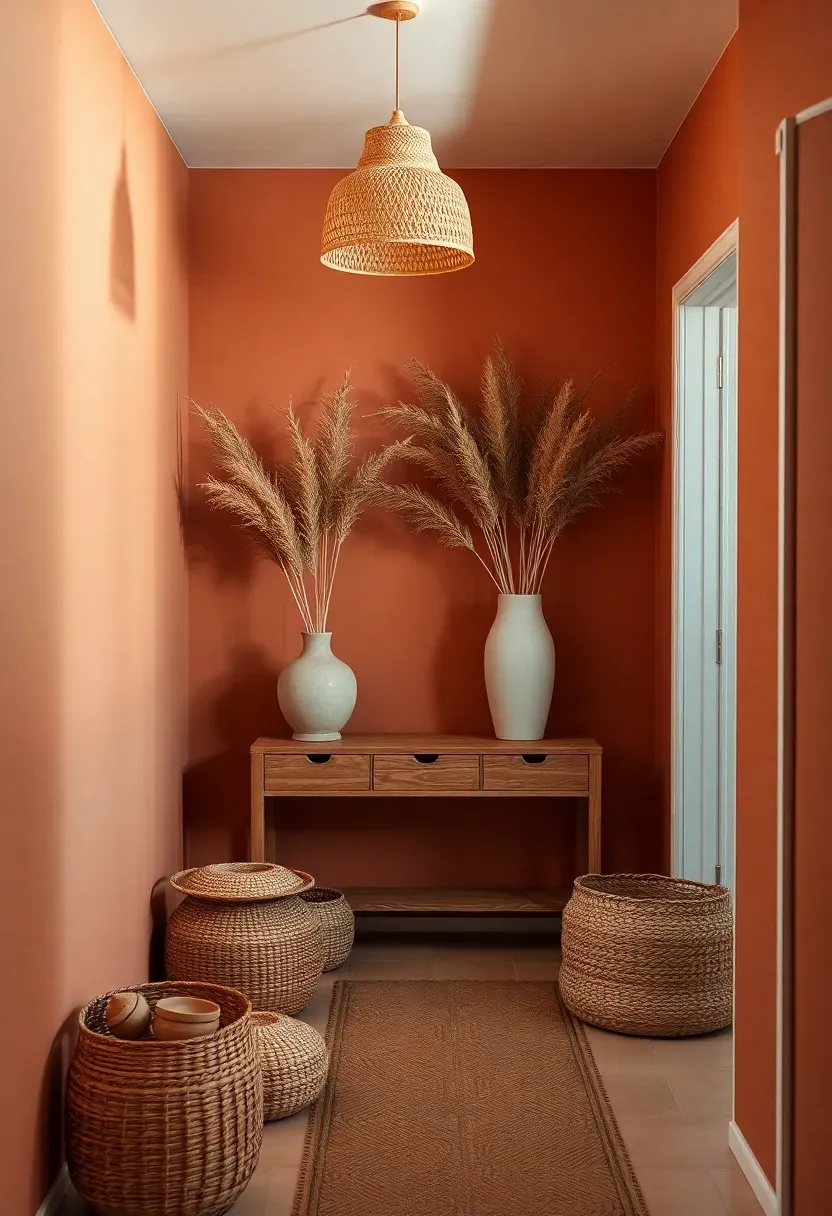
Terracotta had a major comeback starting around 2019 and shows no sign of fading. The specific shade matters though — avoid the bright orange-red versions and look for the dusty, clay-like tones. Sherwin-Williams Cavern Clay (SW 7701) was their 2019 Color of the Year and remains one of the best basement-appropriate terracottas. It brings genuine warmth to underground spaces and pairs naturally with concrete floors, which is convenient since many basements have exactly that.
Tips
- Pair with sage green, cream, or warm white for a natural palette
- Linen and jute textures reinforce the earthy character
- Use on one feature wall if four walls feels like too much
Recommended
Items for this idea
15. Icy Mint
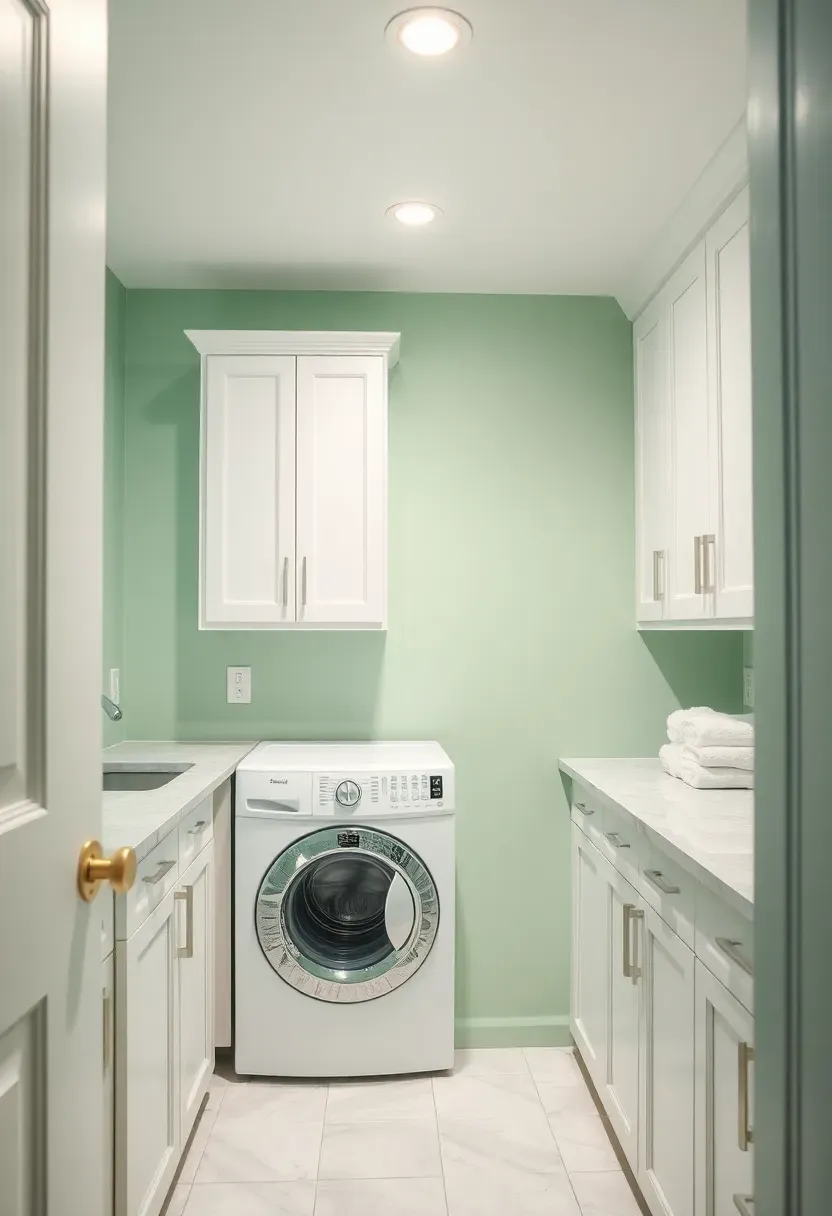
Icy mint falls into the category of colors that sound wrong for basements but work if you handle them carefully. Sherwin-Williams Dewy (SW 6469) or Benjamin Moore Fresh Mint (2037-70) give you a barely-there green with cool undertones. The trick is to use it only in basements that have some natural light — even a single egress window or a light well makes a difference. In total darkness, mint can look pallid. With even modest daylight, it reads as crisp and clean.
Choose This If
- Your basement has at least one window or light well
- You want a spa-like feel in a basement bathroom or laundry area
- The room has white cabinetry or fixtures that benefit from a soft color backdrop
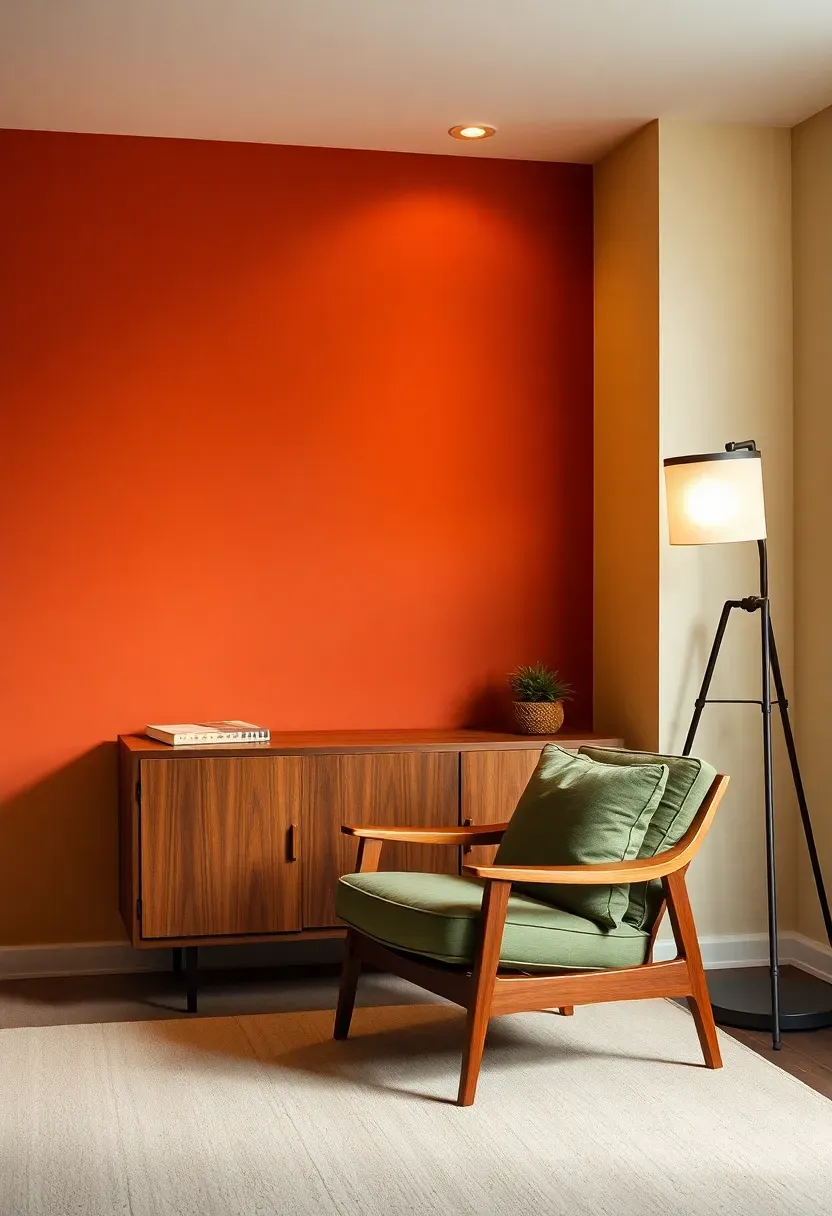
16. Burnt Sienna Accent
Full Room vs. Accent
Burnt sienna on all four walls can overwhelm a small basement. On a single accent wall behind a sofa, a fireplace, or a TV, it anchors the room without dominating it. Sherwin-Williams Fired Brick (SW 6335) or Benjamin Moore Firenze (AF-225) give you that deep red-brown with enough sophistication to avoid looking like a sports bar.
Step by Step
- Choose your focal wall — usually the one you face when entering the room
- Paint the remaining three walls in a complementary warm white or cream
- Apply two coats of burnt sienna in eggshell or satin finish
- Style with warm metals, leather, and natural wood to tie the palette together
Recommended
Items for this idea
17. Stormy Charcoal
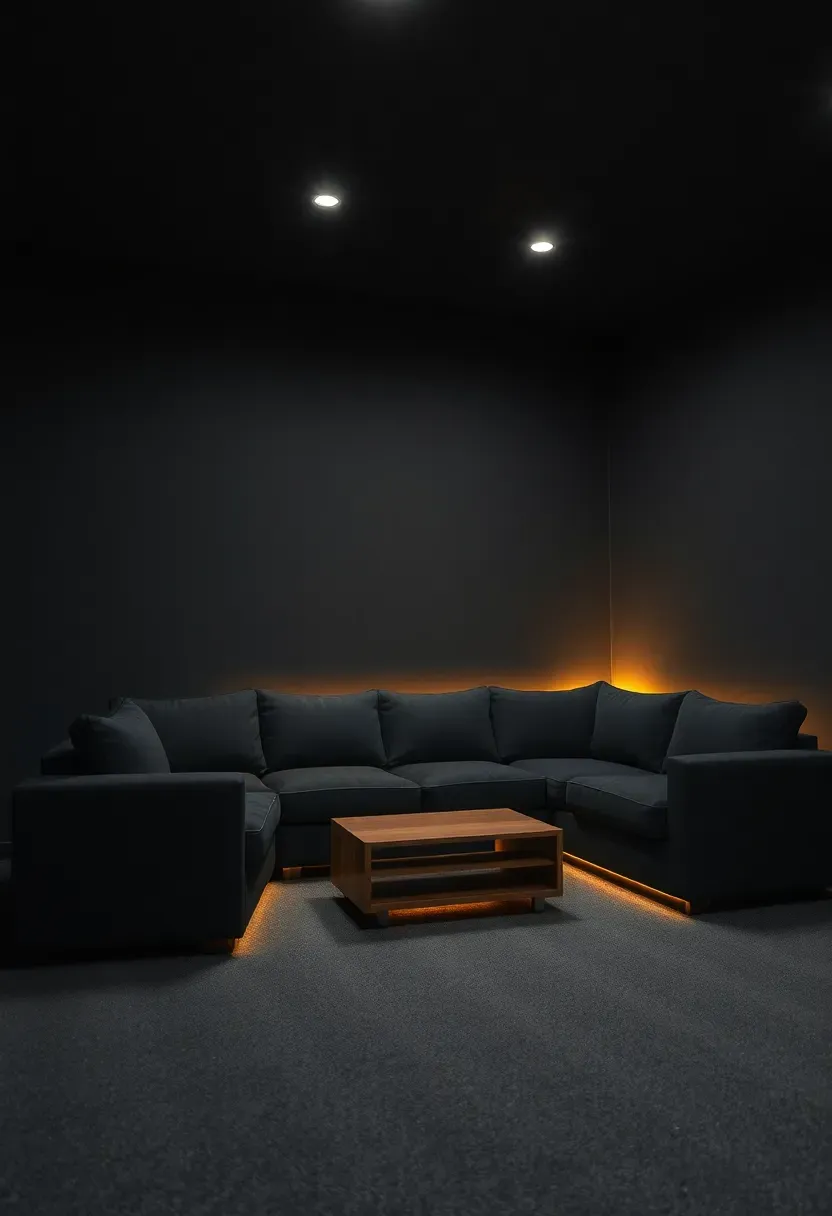
Charcoal is not gray and it is not black — it occupies a middle ground that feels deliberate. Benjamin Moore Kendall Charcoal (HC-166) is the reference standard. In a basement media room, charcoal walls reduce glare on screens, absorb distracting reflections, and create a theater-like immersion that lighter colors cannot match. The key difference between charcoal and black: charcoal still shows wall texture and dimension, while true black tends to flatten surfaces into a void.
Tips
- Matte finish absorbs the most light and reduces screen glare
- Use warm white sconces or LED strips for ambient lighting
- A lighter ceiling prevents the room from feeling like a bunker
18. Pale Apricot
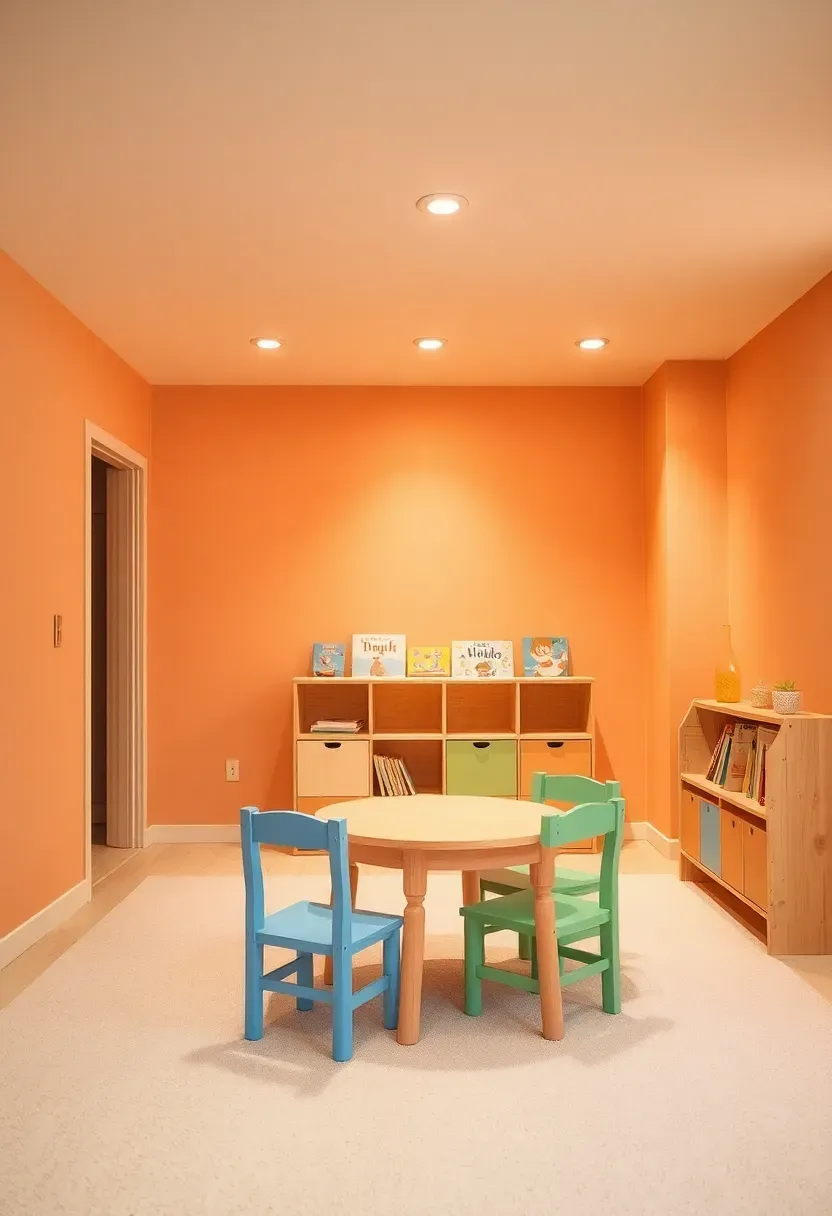
Pale apricot brings warmth and energy without the intensity of orange or the blandness of cream. Benjamin Moore Apricot Beige (OC-7) or Sherwin-Williams Naive Peach (SW 6631) both deliver a gentle, peachy glow that makes basements feel less underground. This is a particularly good choice for basement playrooms and family spaces where you want the atmosphere to feel inviting and slightly playful. The color has enough pigment to read as intentional but stays soft enough that it will not clash with kids' toys, bright artwork, or mismatched furniture.
Tips
- Pairs well with white woodwork and soft gray accents
- Warm-white bulbs enhance the peach tone; avoid cool-white LEDs
- Consider using it on all walls for a gentle enveloping effect
Recommended
Items for this idea
19. Muted Olive
Why Olive Outperforms Other Greens in Basements
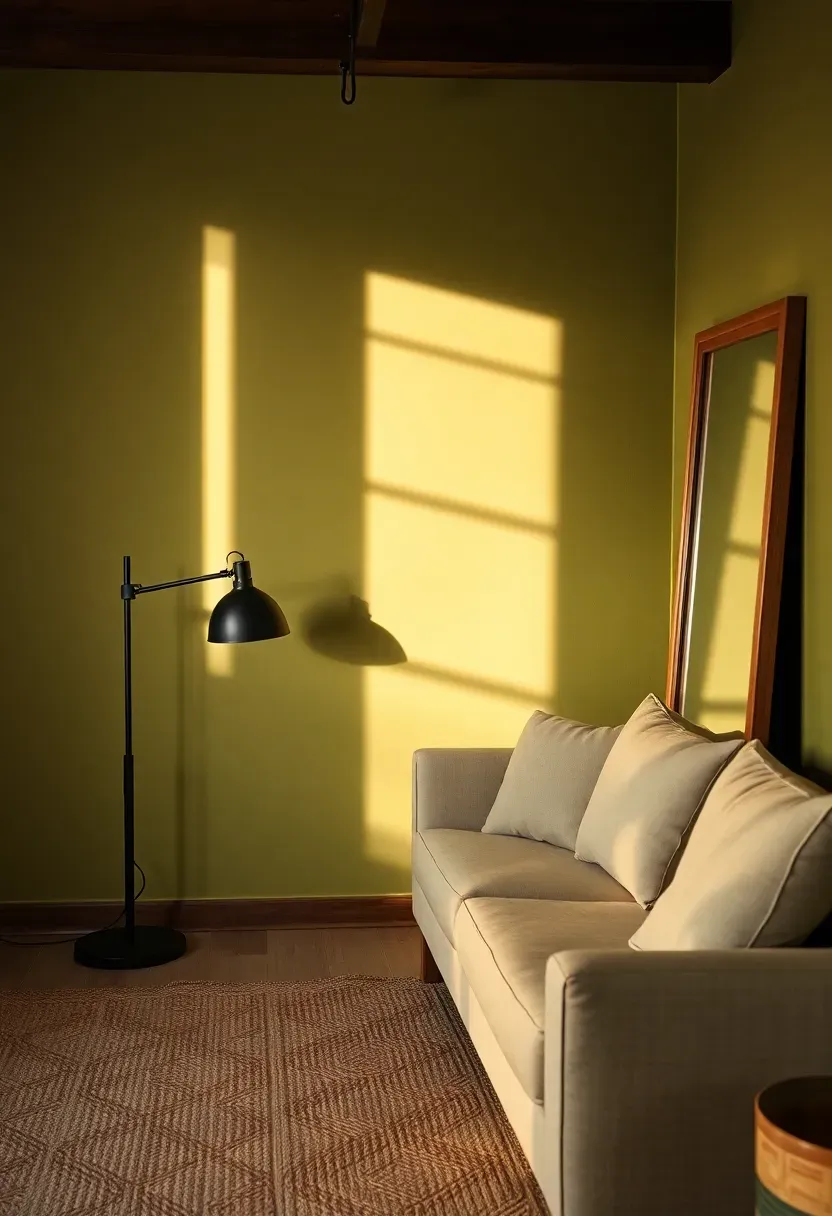
Olive green contains enough yellow to stay warm in low-light spaces, unlike pure greens that can turn sickly without sunlight. Sherwin-Williams Dried Thyme (SW 6186) or Farrow and Ball Treron (292) both read as sophisticated olive tones. The yellow undertone acts as a built-in warmth modifier, which means olive holds its character under artificial light better than most greens.
Apply It
Use olive on all walls in a medium-sized basement to create a den-like feel. It pairs exceptionally well with tan leather furniture, woven jute rugs, and black iron light fixtures. For a lighter touch, combine one olive accent wall with three walls in warm off-white.
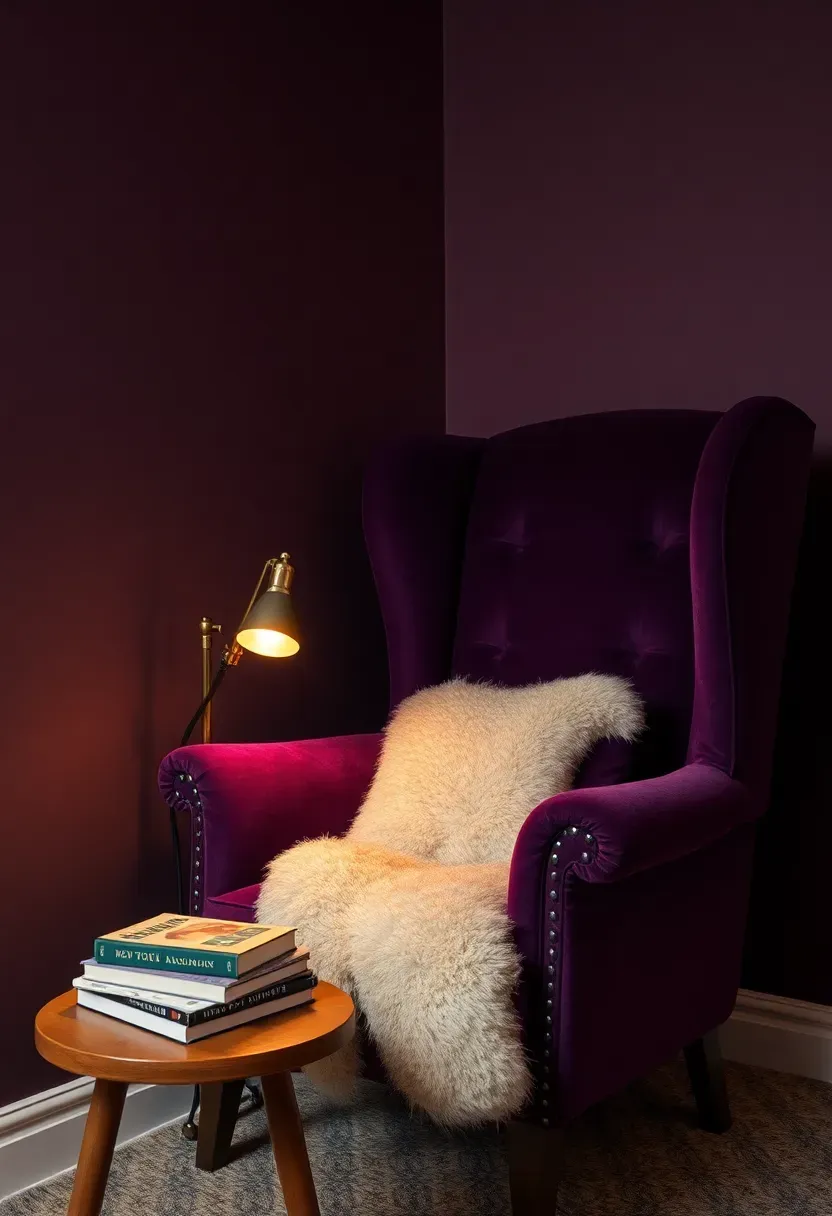
20. Smoky Plum
Smoky plum is the color for people who want something moody and unusual without going fully dark. Benjamin Moore Black Raspberry (2072-20) or Sherwin-Williams Plummy (SW 6558) give you a muted purple-brown that looks distinguished rather than eccentric. In a basement, plum benefits from the same low-light advantage as burgundy and navy — the reduced light softens the color and makes it feel enveloping rather than aggressive.
Tips
- Best in single-use rooms: reading nooks, wine storage areas, small home offices
- Pair with warm gray, cream, and antiqued gold for a refined look
- Avoid bright white trim — opt for off-white or cream instead
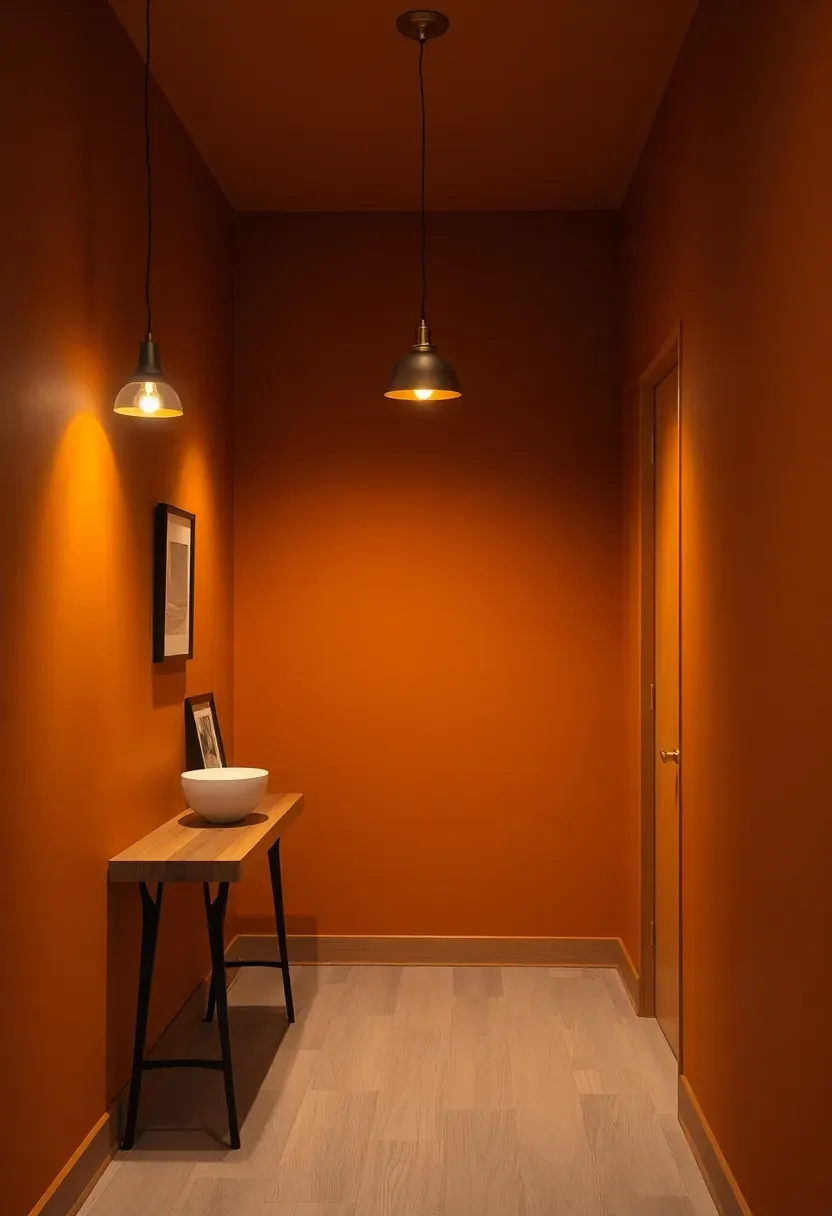
Recommended
Items for this idea
21. Warm Caramel
Warm caramel sits between gold and brown — richer than tan but lighter than chocolate. Sherwin-Williams Toasty (SW 6095) or Benjamin Moore Roxbury Caramel (HC-42) both deliver this mid-tone warmth. In a basement, caramel mimics the effect of warm wood paneling without the cost or commitment. It works in open-plan basements where you need a single color to carry through multiple functional zones without becoming boring or repetitive.
Tips
- Eggshell finish gives the best balance of warmth and subtle light reflection
- Dark wood furniture looks grounded against caramel; avoid light birch or maple
- Warmer than greige but more polished than tan
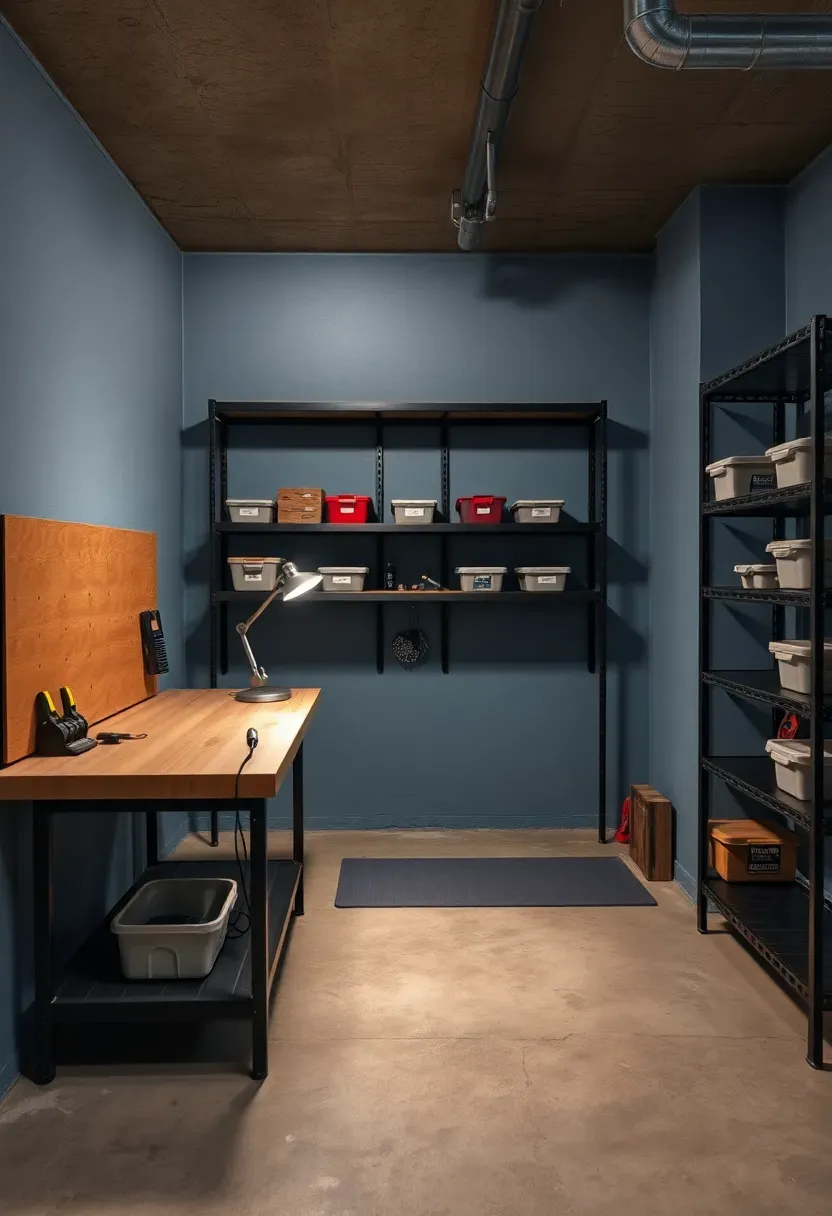
22. Steel Blue
Between Gray and Blue
Steel blue is what you get when navy grows up and calms down. It is serious without being somber, cool without being cold. Sherwin-Williams Distance (SW 6243) or Benjamin Moore Van Courtland Blue (HC-145) both occupy this precise territory. The gray component keeps it grounded; the blue component gives it character.
Where It Fits
Steel blue is a natural for basement home gyms, workshops, and utility rooms — spaces where you want the color to feel clean and purposeful. It also holds up well in basement bathrooms, especially when paired with white tile and chrome fixtures. Avoid it in rooms with no warm elements, as it can push the temperature perception too cool on its own.
Recommended
Items for this idea
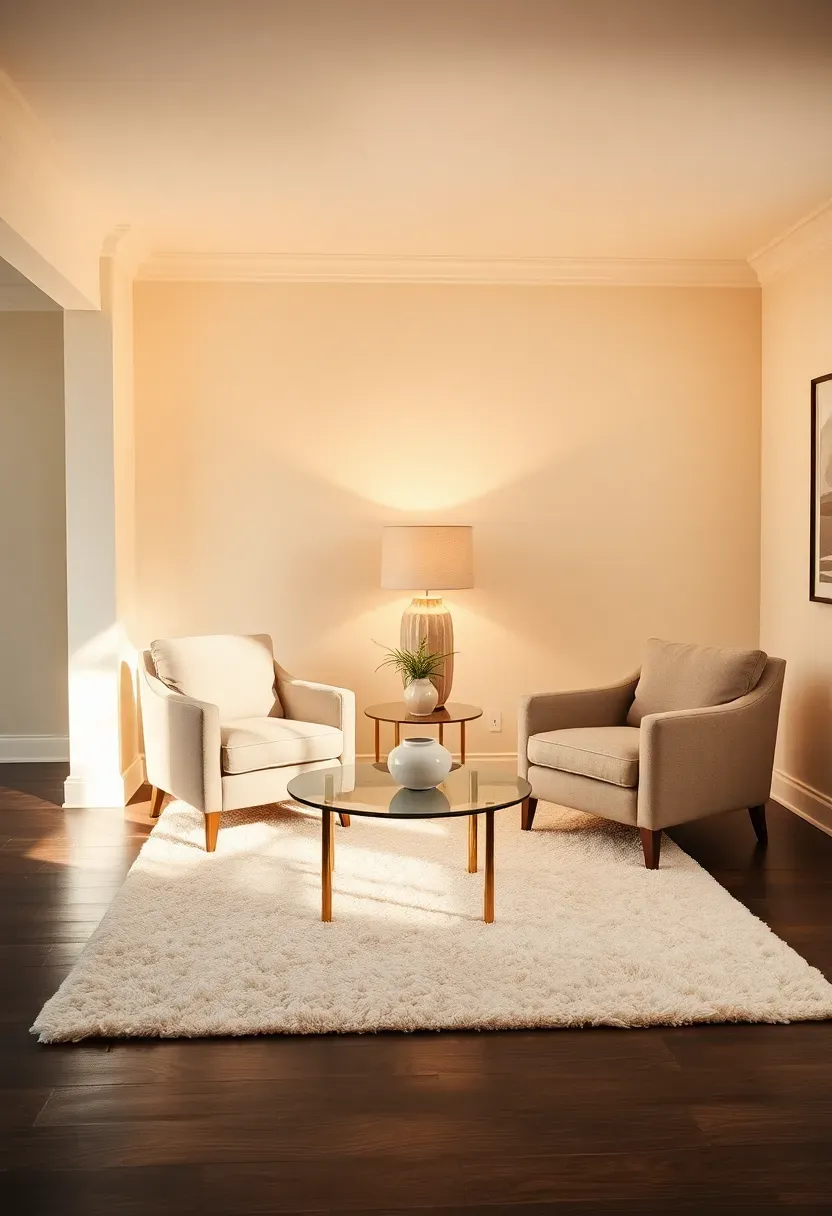
23. Creamy Almond
If you started this list looking for something safe but not boring, creamy almond is your answer. Benjamin Moore Shaker Beige (HC-45) or Sherwin-Williams Creamy (SW 7012) both fall here — neither white nor beige, but a warm, slightly yellow-tinted neutral that makes basements feel finished and intentional. Unlike stark white, creamy almond absorbs the harshness of overhead lighting and returns a softer glow. Unlike standard beige, it has enough warmth to feel cozy rather than builder-grade.
Tips
- Best all-over color for basements where you want the walls to disappear
- Works with every flooring type from tile to carpet to LVP
- A matte or flat finish looks most natural; satin if you need washability
Quick FAQ
Which paint sheen works best in a basement? Eggshell is the most versatile choice. It reflects enough light to brighten a dim space but hides wall imperfections better than satin or semi-gloss. Use flat on ceilings and semi-gloss on trim and doors.
Do dark paint colors make basements feel smaller? Not necessarily. A dark color applied consistently across all walls can actually make boundary lines disappear, which can make a room feel larger. The key is adequate lighting — add layered sources like sconces, lamps, and LED strips.
Should I use the same color for walls and ceiling? In basements with low ceilings (under 7.5 feet), painting the ceiling the same color or a slightly lighter shade of the wall color can make the room feel taller. A contrasting white ceiling draws the eye upward but also highlights how low it is.
Is moisture-resistant paint necessary for basement walls? If your basement has any history of dampness, use a paint with mildew-resistant additives or a dedicated basement waterproofing paint as a primer coat. Standard latex over a moisture barrier primer works in most finished basements.
Can I mix two paint colors from this list in one room? Absolutely — a two-tone approach using a darker shade on one accent wall and a lighter complementary color on the remaining walls is one of the most effective ways to add depth. Stick to colors from the same undertone family (warm with warm, cool with cool).
The best basement paint color is the one that fixes your specific problem. Cold room? Go warm — caramel, terracotta, golden wheat. Dark cave? Try a warm white or pale apricot and add better lighting. Already well-lit? Take a risk with emerald, navy, or plum. Paint is the cheapest and most reversible renovation you can do, so grab a sample pot before committing to a gallon. Test it on a 2-by-2-foot square, live with it for 48 hours under your actual lighting conditions, and then decide. That single step will save you the three-weekend repaint I learned about the hard way.
Pinterest cover for 23 Basement Paint Color Ideas
About the author
OBCD
CGI visualization and interior design content. We create detailed 3D renders and curate practical design ideas for every room in your home.