19 Basement TV Room Ideas
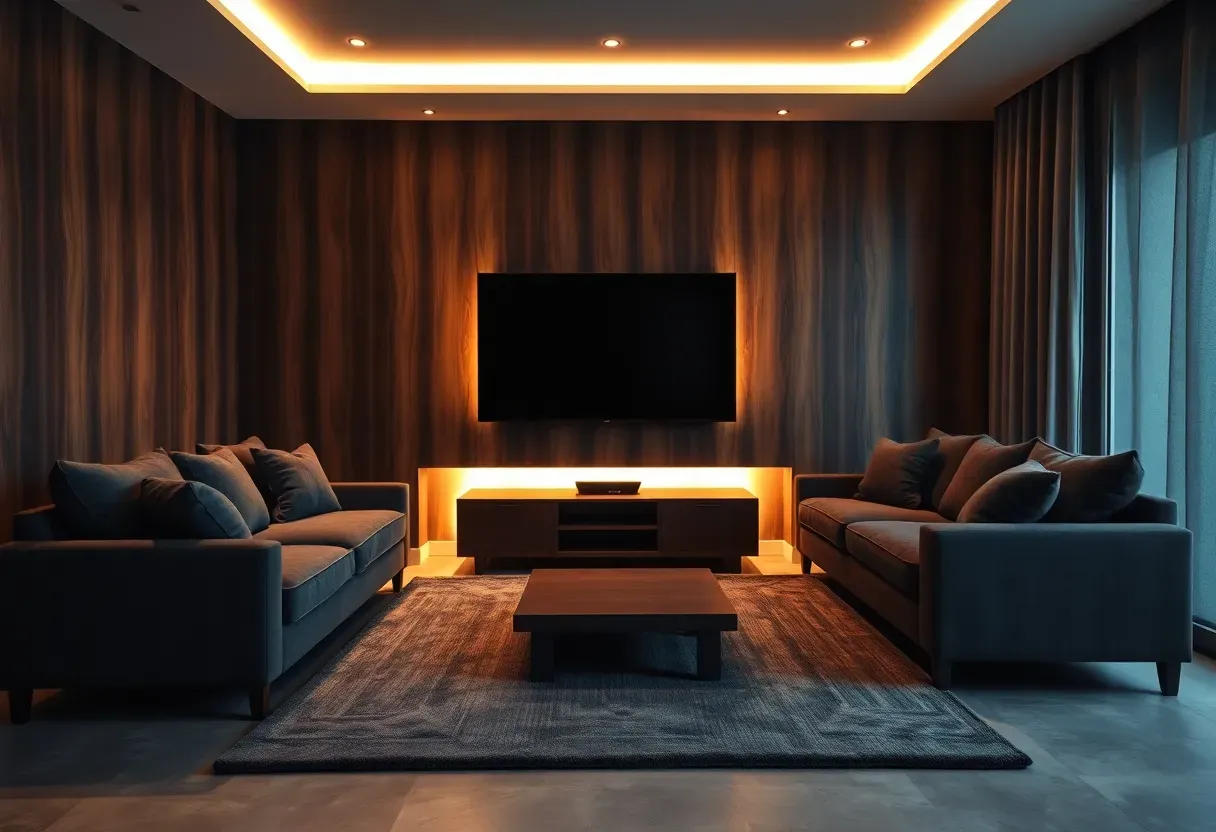
Most basements already have the one thing a great TV room needs: no windows competing with the screen. That built-in darkness, which makes basements feel gloomy for other purposes, becomes an advantage once you point a television at the right wall and arrange comfortable seating around it. The challenge is everything else -- controlling moisture, getting sound right, picking finishes that survive below-grade humidity, and making the space feel deliberate rather than like an afterthought shoved into a concrete box. These nineteen ideas cover layouts, materials, and details that actually matter when you are building a TV room underground.
Below you will find setups ranging from full dedicated theaters to casual lounge corners, with notes on acoustics, lighting control, and furniture that holds up in basement conditions.
Table of Contents
- Blackout Theater With Tiered Seating
- Reclaimed Wood Accent Wall Behind the TV
- L-Shaped Sectional Pit
- Projector and Motorized Screen Combo
- Soundproofed Ceiling Panels
- Low-Profile Media Console With Cable Management
- LED Bias Lighting Strip Behind the Screen
- Carpet Tile Flooring for Warmth and Acoustics
- Built-In Snack Bar Along the Back Wall
- Floating Shelves for Game Consoles and Gear
- Dual-Zone Layout With a Reading Nook
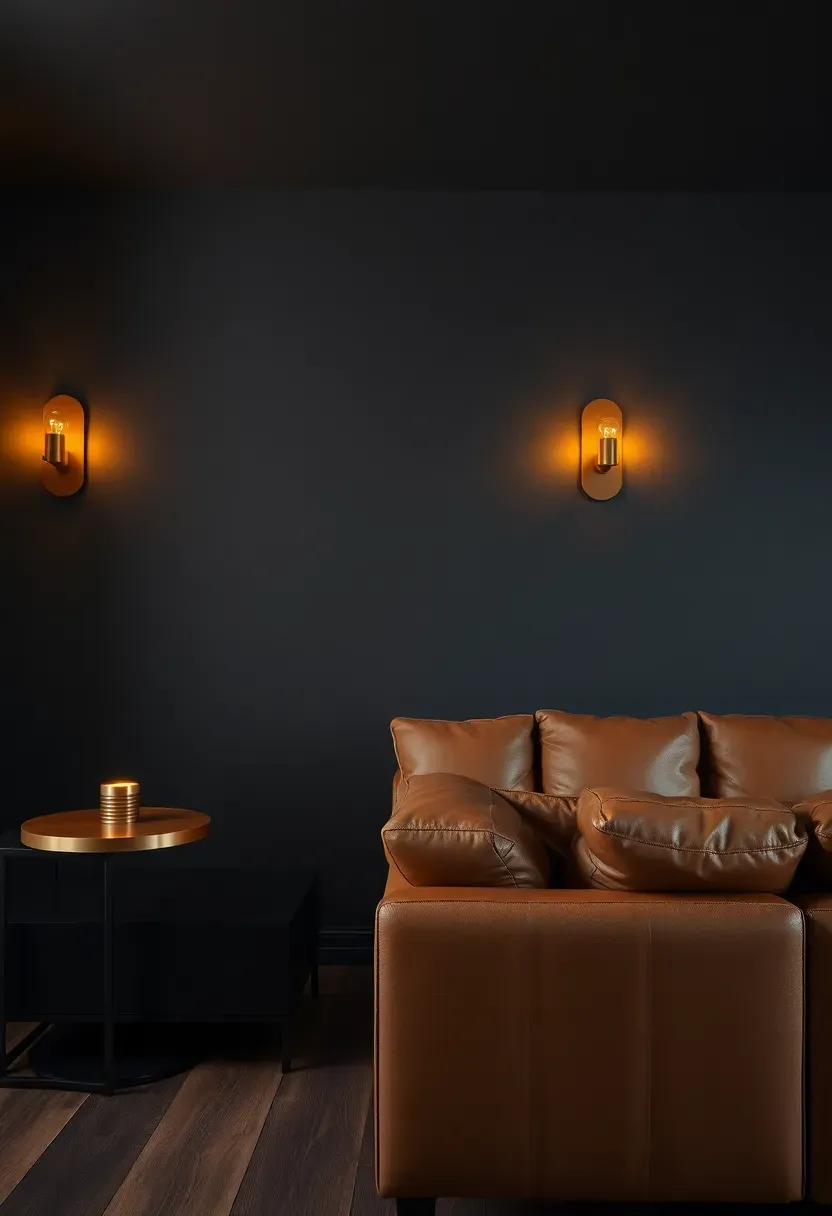
- Dark Paint Palette With Warm Metallics
- Corner TV Setup for Awkward Floor Plans
- Acoustic Panel Art on Side Walls
- Oversized Bean Bag Pit for Kids
- Fireplace and TV Shared Wall
- Daybed Viewing Lounge
- Gaming Station With Split Screen Setup
- Basement Bar and TV Combo
1. Blackout Theater With Tiered Seating
How It Works
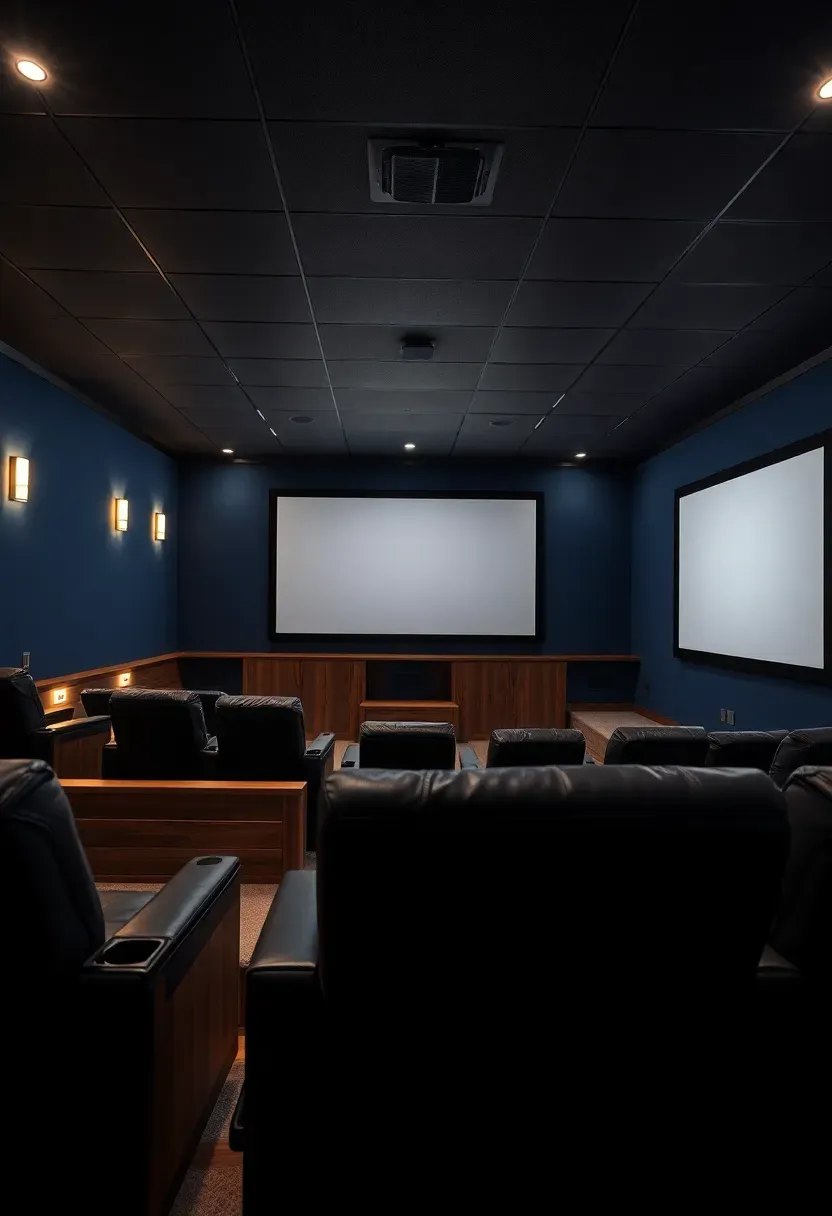
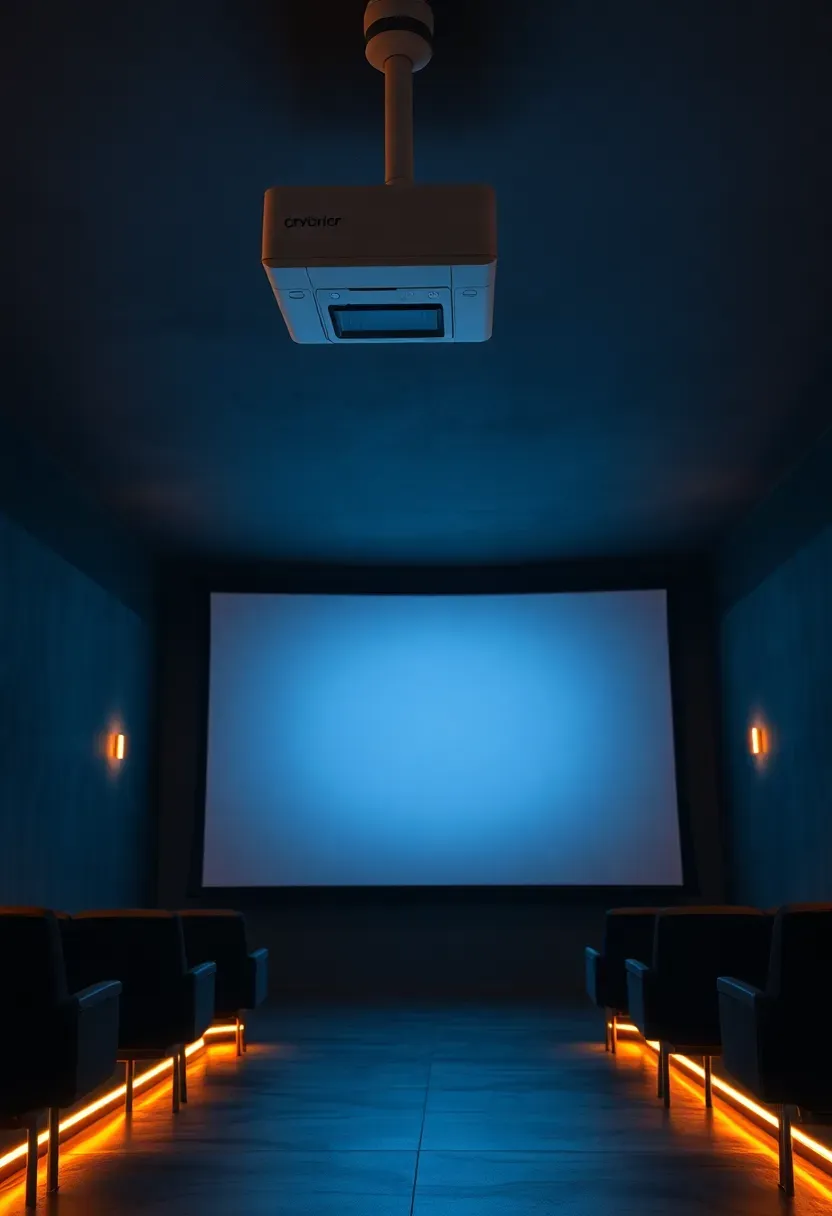
Building a dedicated theater means committing one section of your basement entirely to watching. Tiered platforms -- usually built from 2x10 lumber framed at 10- and 20-inch heights -- give every row a clear sightline to the screen. The risers also hide wiring and can incorporate floor vents for HVAC. Paint every surface in the room a flat dark charcoal or deep navy to kill light reflections. Skip the glossy trim paint you would use upstairs; matte finishes absorb stray light from the screen edges instead of bouncing it around the room.
Watch Out
- Tiered builds add weight; verify your floor joists can handle the load before framing
- Leave at least 90 centimeters of aisle width between rows for safe exit in the dark
- Flat dark paint shows scuffs easily, so keep a touch-up can on hand
We picked a few things that go well with this idea: SUAWY U-Shaped 7-Seat Modular Sleeper Sofa (★4.1), Korser L-Shaped Corduroy Modular Sectional Sofa (★4.2) and Corduroy Memory Foam Modular Sectional (3-Seat) (★4.6). As an Amazon Associate we earn from qualifying purchases.
2. Reclaimed Wood Accent Wall Behind the TV
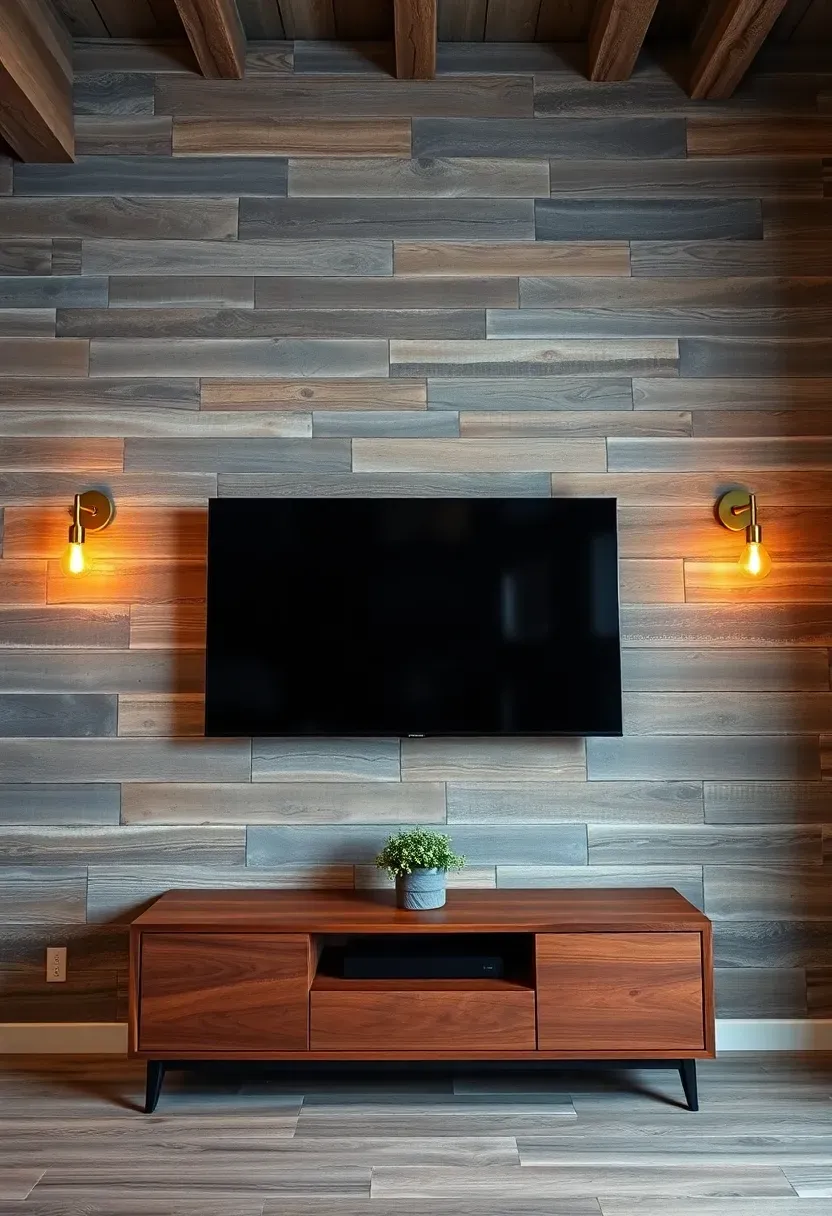
Reclaimed wood planks mounted behind the screen add texture without competing with whatever is playing. The natural grain variation breaks up what would otherwise be a flat drywall expanse, and wood absorbs mid-range sound frequencies slightly better than painted gypsum. Source planks from salvage yards or pallet wood suppliers -- look for boards between 10 and 15 centimeters wide with varied tones. Seal them with a matte polyurethane to prevent dust trapping and reduce any musty smell from the wood's previous life.
Tips
- Use a moisture barrier behind the planks if your basement wall is concrete block
- Stagger board lengths randomly; repeating patterns look artificial
- Pre-drill mounting holes to avoid splitting old, dry lumber
We picked a few things that go well with this idea: KANTUTOE RGB TV Backlight Strip (16.4ft) (★4.4), PANGTON VILLA USB TV Bias Lighting (8.2ft) (★4.4) and Govee RGBIC Smart TV LED Backlight (★4.5). As an Amazon Associate we earn from qualifying purchases.
3. L-Shaped Sectional Pit
The Problem
Standard sofas pushed against a basement wall leave awkward dead zones in the center of the room and force everyone to sit in a line. Nobody wants the end seat where you have to crane your neck 40 degrees to see the screen.
The Solution
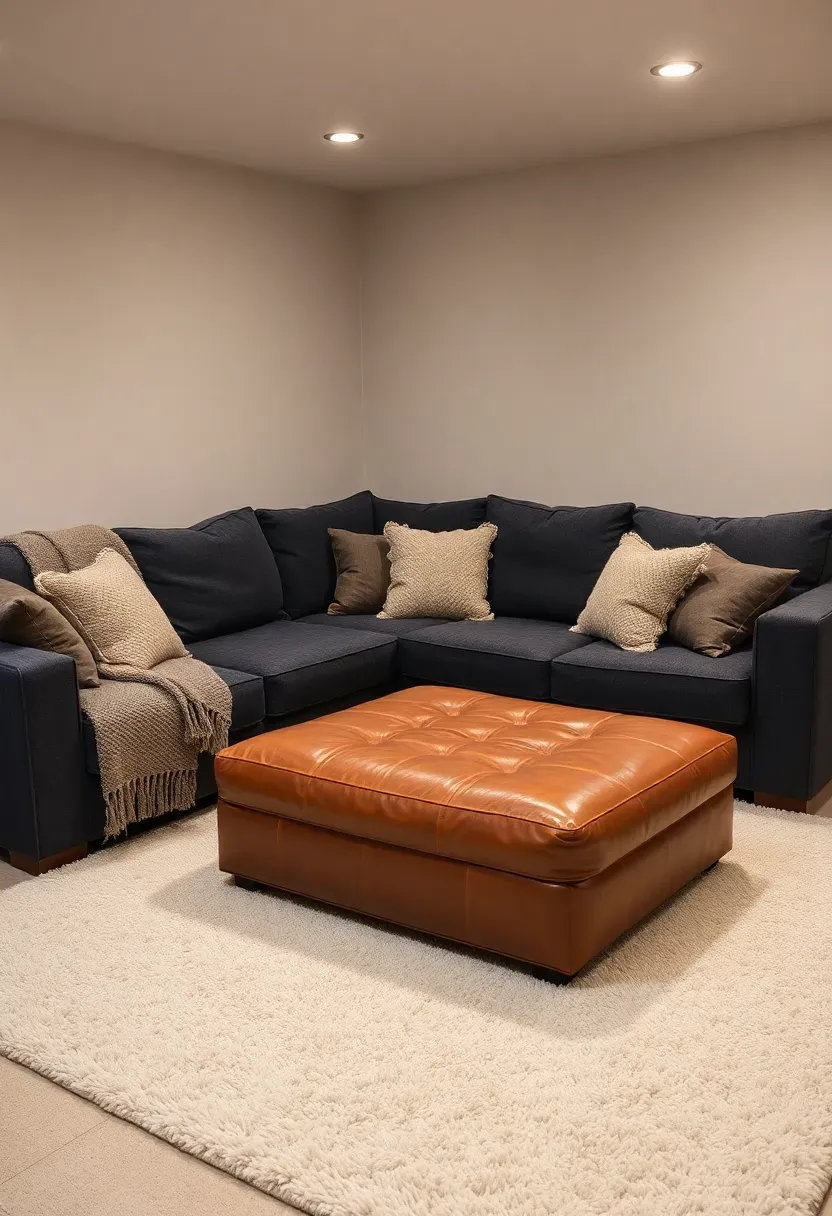
An L-shaped sectional tucked into a corner wraps viewers around the TV in a natural arc. Add an oversized ottoman or two in front to extend the seating into a pit-style layout where people can sprawl during long movie sessions. Choose a sectional with removable, washable covers -- basement humidity can encourage mildew in fabric that stays damp, and spills during movie night are guaranteed. Performance fabrics like Crypton or Revolution weave resist both moisture and stains without the plasticky feel of old-school microfiber.
Pros and Cons
Pros: Seats six or more without extra chairs, creates a cozy enclosed feel, the L-shape naturally defines the room's boundary
Cons: Hard to move down narrow basement stairs (measure twice, order modular pieces), and the corner seat becomes a dead zone if the TV is directly ahead
We picked a few things that go well with this idea: Focusound Acoustic Foam Wedge Panels (52-Pack) (★3.8), Self-Adhesive High-Density Acoustic Panels (8-Pack) (★4.4) and TroyStudio Thick Acoustic Foam Panels (36-Pack) (★4.2). As an Amazon Associate we earn from qualifying purchases.
4. Projector and Motorized Screen Combo
Step 1: Choose the Right Projector
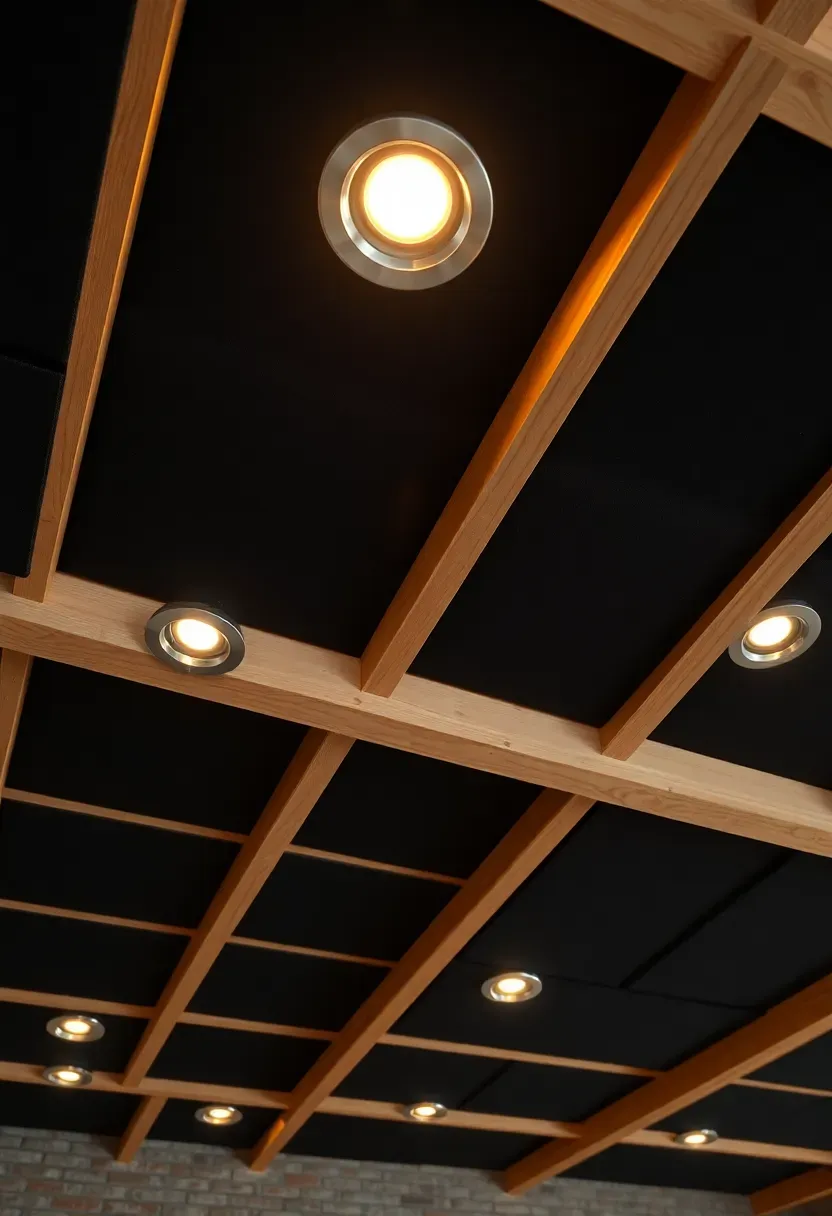
For basements with 2.4-meter ceilings (standard in most homes), a short-throw projector mounted within a meter of the screen delivers a 120-inch image without needing a long room. Budget around $800 to $1,500 for a 4K-capable model with enough lumens for a dim basement -- 2,000 to 2,500 ANSI lumens works well in near-blackout conditions.
Step 2: Install the Motorized Screen
A motorized screen retracts into a ceiling-mounted housing when not in use, freeing the wall for other purposes. Run the power cable along the ceiling joists before finishing the drywall. Most motorized screens include a remote and can integrate with smart home systems so the screen drops when you start a movie app.
Step 3: Handle Audio Separately
Projector speakers are universally weak. Pair the setup with a soundbar mounted below the screen or, better, a 5.1 surround system with rear speakers on the back wall. The projector handles the picture; dedicated speakers handle everything else.
Watch Out
- Projector bulbs last 3,000 to 5,000 hours; budget for replacement every few years
- Motorized screens need a power outlet within reach -- plan this during rough-in electrical
Recommended
Items for this idea
5. Soundproofed Ceiling Panels
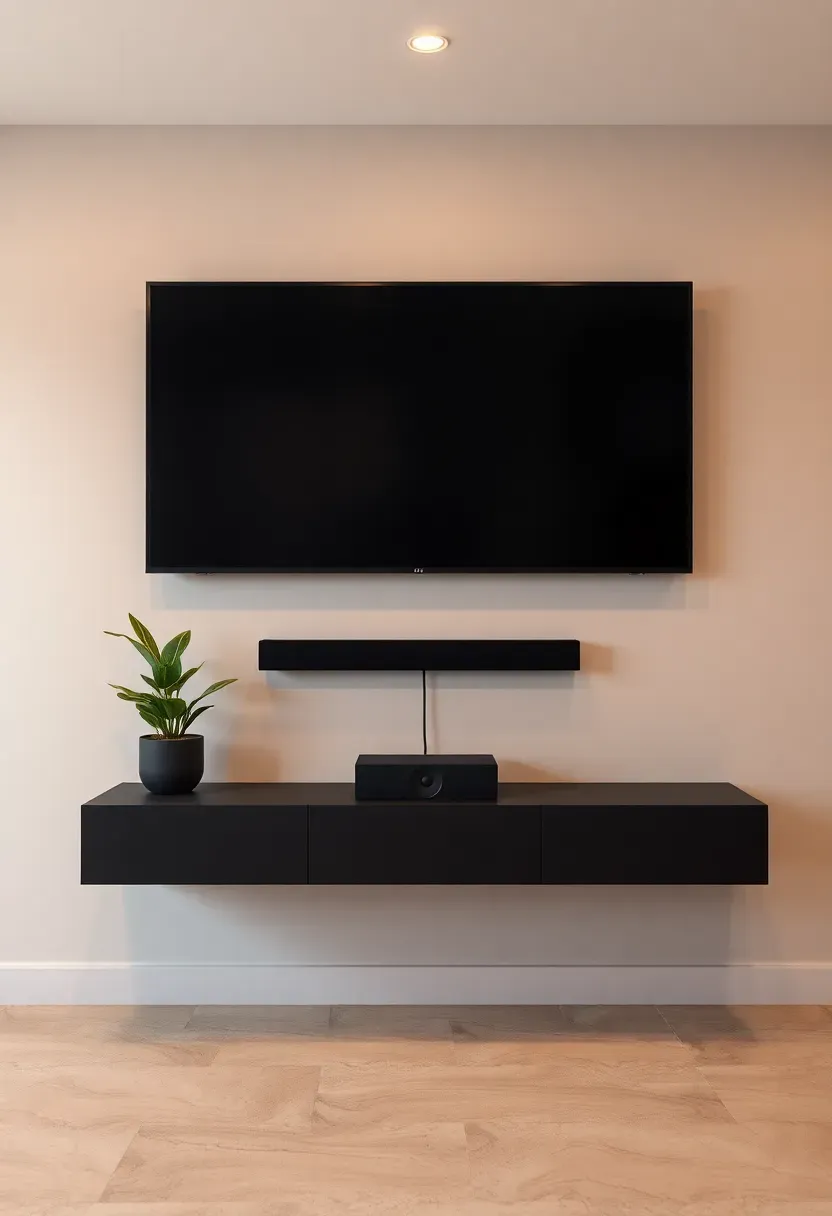
Basement TV rooms sit directly below living spaces, and the sound travels both ways. Fabric-wrapped acoustic panels installed between ceiling joists absorb bass rumble from your subwoofer before it rattles the kitchen floor above. Rockwool insulation batts (the same product used for fireproofing) fitted snugly into each joist bay and covered with acoustically transparent fabric cost roughly $4 to $6 per square foot installed. The result is noticeably less sound bleed upstairs and a tighter, cleaner audio experience in the room itself because you have eliminated flutter echo off a hard ceiling.
Tips
- Choose dark fabric for the panels to maintain the theater feel
- Leave gaps around recessed lights for heat dissipation
- Combine ceiling treatment with a thick area rug on the floor for maximum absorption
6. Low-Profile Media Console With Cable Management
Why It Matters
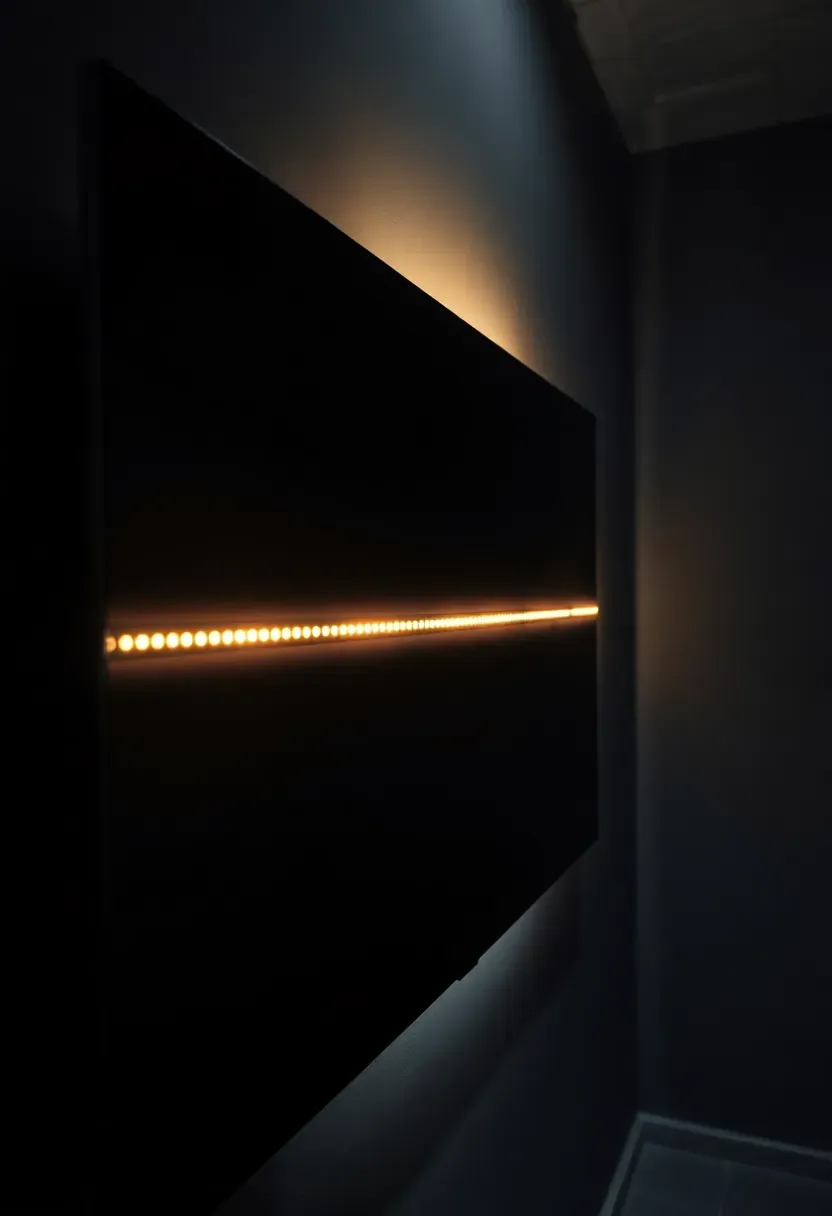
A tangled nest of HDMI cables, power strips, and streaming device cords kills the look of any TV room. A media console with integrated cable management -- routing channels molded into the back panel and a ventilated compartment for heat-generating devices -- keeps the mess hidden. Wall-mounted floating consoles work especially well in basements because they keep the floor clear, which matters when you need to run a dehumidifier or check for moisture at the base of the wall.
Practical Pointers
- Measure your component stack before buying; most consoles fit a soundbar, game console, and streaming box but struggle with a full AV receiver
- Choose a console depth of 30 to 40 centimeters to avoid it jutting too far into the room
- Mount the console at least 15 centimeters off the floor for easy vacuuming underneath
Recommended
Items for this idea
7. LED Bias Lighting Strip Behind the Screen
This is the single cheapest upgrade that makes the biggest visual difference in a basement TV room. A strip of warm-white LEDs (around 6,500K is too blue; aim for 4,000K to 4,500K) stuck to the back edge of the TV creates a glow on the wall behind it. That glow reduces the contrast ratio between the bright screen and the pitch-dark basement wall, which means less eye fatigue during long viewing sessions. A basic USB-powered strip costs under $15 and plugs directly into the TV's USB port so it turns on and off with the set.
Tips
- Avoid RGB color-changing strips for primary bias lighting; the shifting colors distract from the picture
- Position the strip 5 centimeters from the edge of the TV for even coverage
- If your TV lacks a USB port, use a small USB adapter plugged into the same outlet
8. Carpet Tile Flooring for Warmth and Acoustics
Carpet Tiles vs. Wall-to-Wall
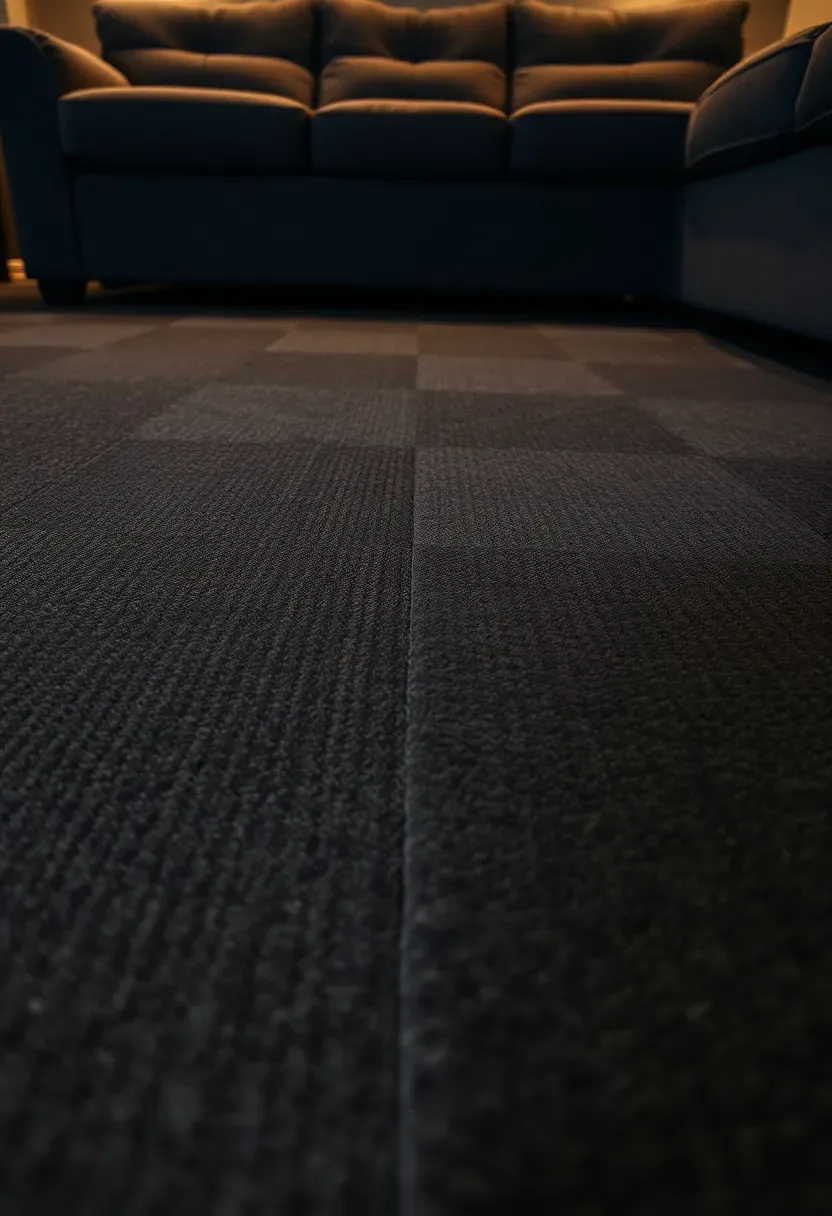
Carpet tiles beat wall-to-wall carpet in basements for one practical reason: if a section gets wet from a leak or spill, you pull up the affected tiles instead of ripping out the entire carpet. Each tile typically measures 50x50 centimeters and clicks or adheres independently. They also absorb reflected sound from the floor, which tightens dialogue clarity on your TV speakers.
Choose If...
Pick carpet tiles if your basement has a history of minor moisture issues, you want easy replacement, or you prefer mixing tile colors for a subtle pattern. Pick luxury vinyl plank if you plan to use the room for exercise or dancing and need a hard surface, and add a thick area rug in the viewing zone instead.
Recommendation
Interface FLOR tiles or Shaw carpet tiles in a dark neutral color offer commercial-grade durability at residential prices, and both manufacturers sell individual replacement tiles if one gets stained years later.
Recommended
Items for this idea
9. Built-In Snack Bar Along the Back Wall
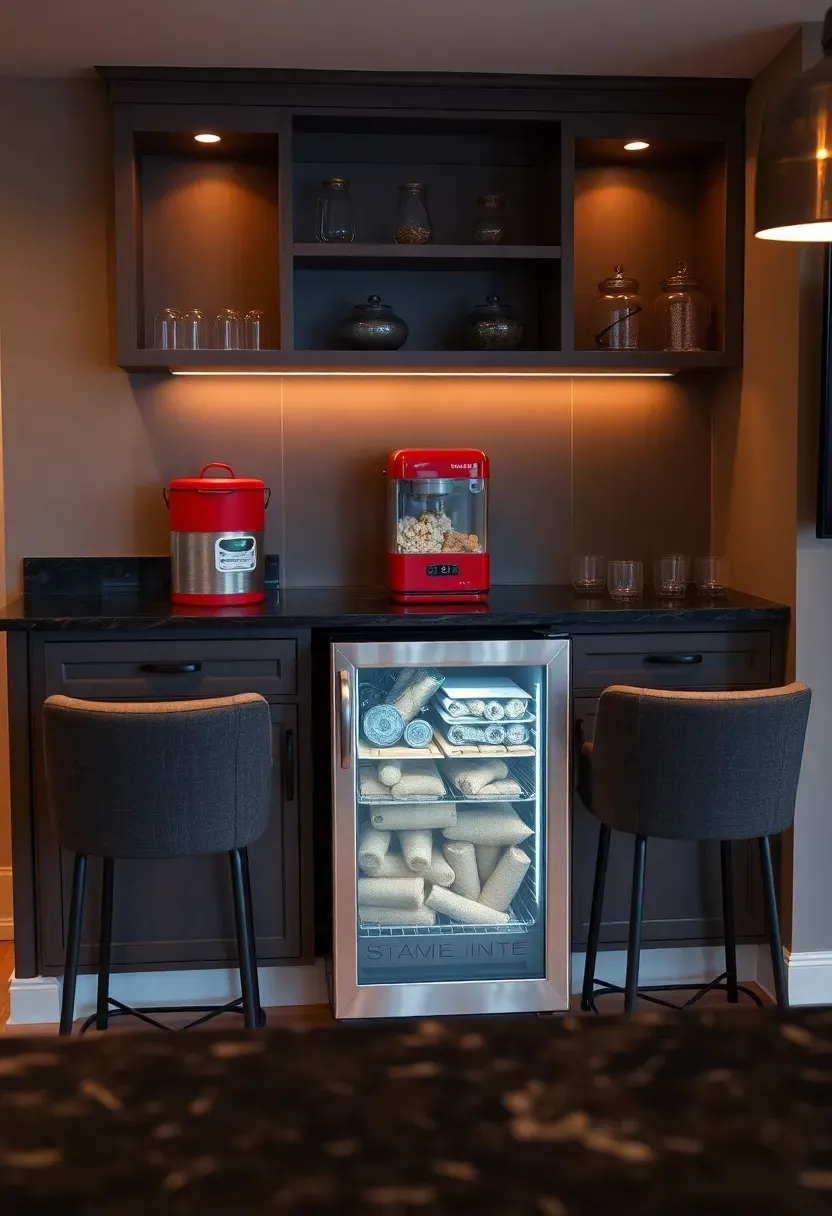
Putting a snack counter along the back wall creates a second viewing tier without building risers. Three or four bar-height stools behind the main seating area let latecomers join the movie without blocking anyone's view. The counter itself houses a mini fridge, a popcorn machine, and storage for snacks and drinks. Run a dedicated 20-amp circuit for the fridge and any small appliances -- basements often have limited outlet capacity on existing circuits, and tripping a breaker during the climax of a film is a memorable experience for all the wrong reasons.
Tips
- Keep the counter depth at 40 centimeters so it does not eat too much floor space
- Install a small sink with a drain line if plumbing is accessible -- it saves trips upstairs
- Use quartz or sealed granite for the counter surface to handle condensation rings
10. Floating Shelves for Game Consoles and Gear
The Problem
Game consoles, controllers, VR headsets, and streaming boxes pile up fast. Stacking them inside a closed cabinet traps heat, and leaving them on the floor invites trips and tangled cords.
The Solution
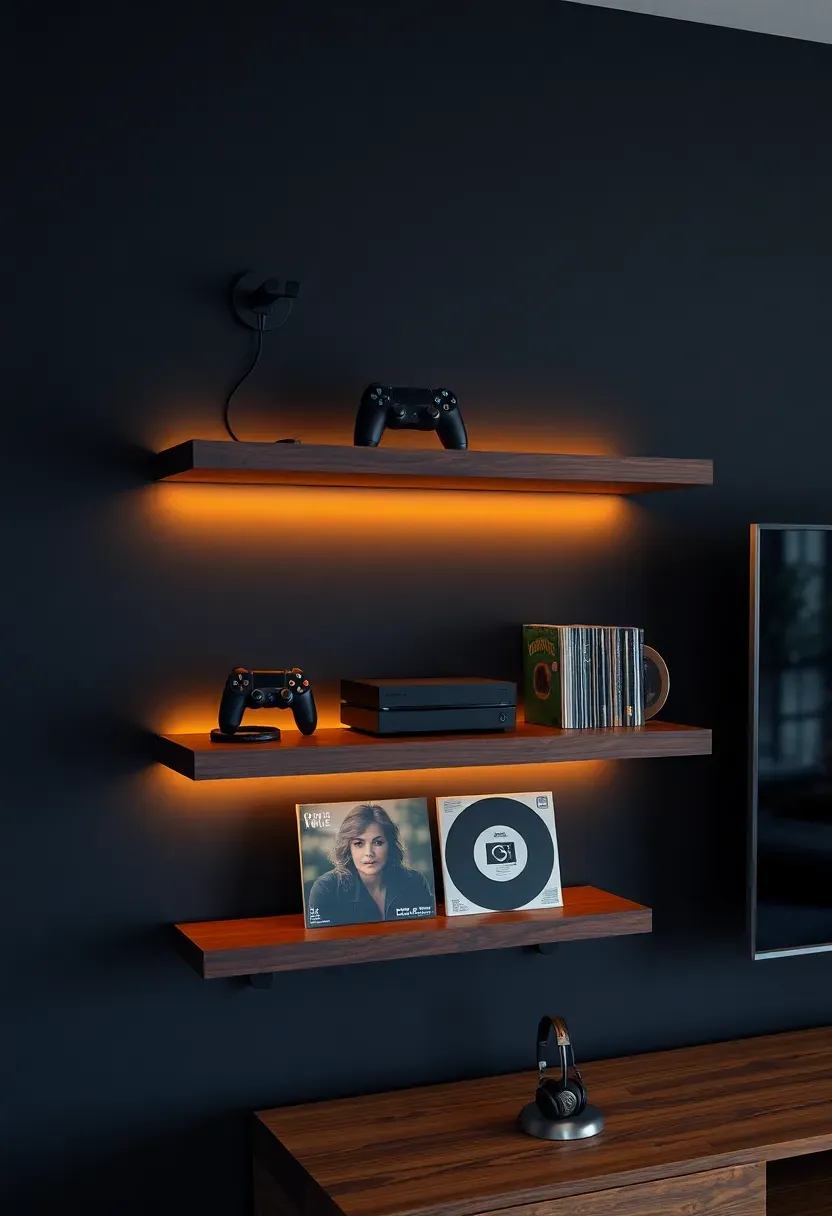
Open floating shelves flanking the TV give each device its own ventilated spot. Space shelves 30 centimeters apart vertically to allow airflow above heat-producing consoles. Run power and HDMI cables through the wall using a low-voltage cable pass-through kit (about $10 at any hardware store) to keep wires invisible. Add a small LED strip under each shelf for a subtle glow that helps you find controllers in the dark without flooding the room with overhead light.
Pros and Cons
Pros: Easy to access and swap devices, good ventilation, visually clean when cables are routed through the wall
Cons: Open shelves collect dust faster than closed cabinets, and the gear is visible even when the room is used for other purposes
Recommended
Items for this idea
11. Dual-Zone Layout With a Reading Nook
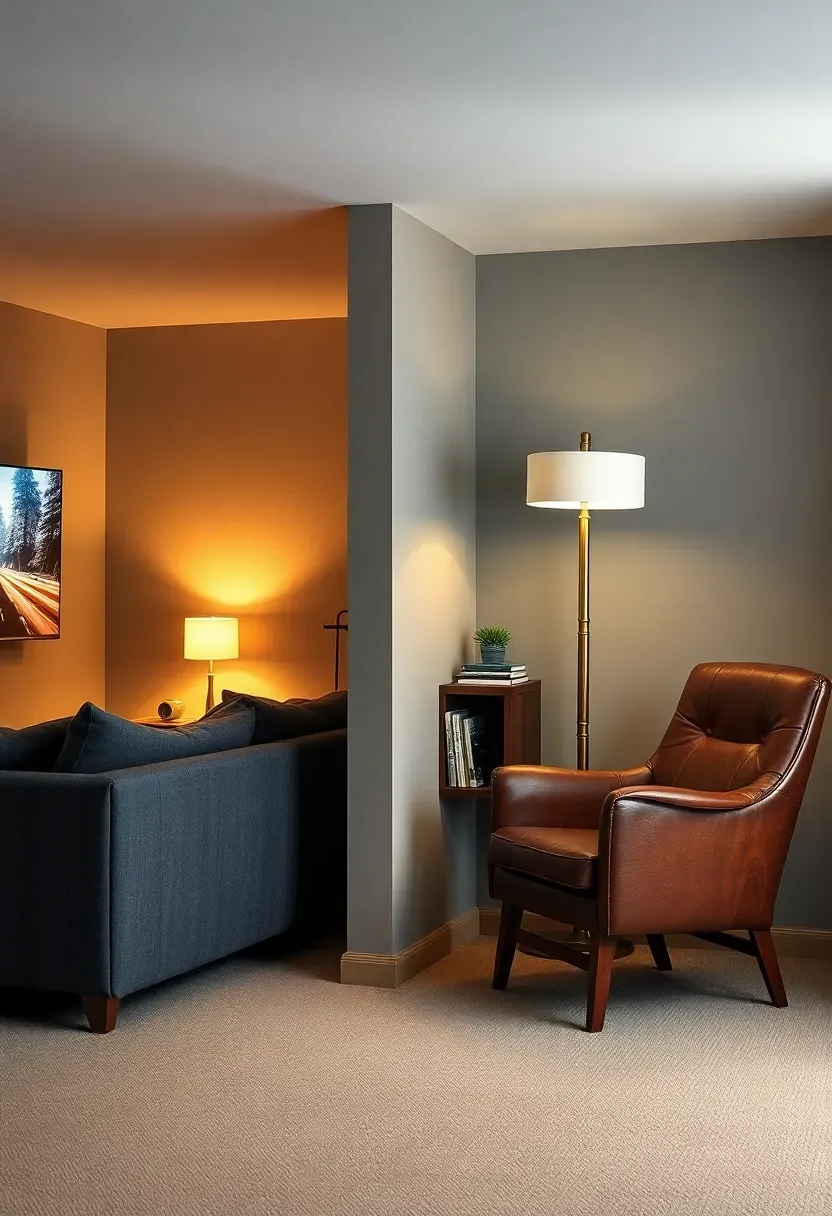
Not everyone in the household wants to watch at the same time. A low half-wall or open bookcase divider splitting the basement into a TV zone and a quiet reading corner means two people can use the space simultaneously without headphones or arguments. Position the reading nook behind or to the side of the TV area so the screen's glow does not reach the armchair. A directional floor lamp with a focused beam (like an Anglepoise or a pharmacy-style lamp) keeps reading light contained. The key dimension: at least 1.5 meters between the divider and the reading chair so it feels like its own space, not a leftover gap.
Tips
- Use the bookcase divider for additional sound dampening by filling it with books and fabric bins
- Point the TV speakers away from the reading nook or use a soundbar with directional audio
- Add a thick curtain on a ceiling track for full visual separation when needed
12. Dark Paint Palette With Warm Metallics
Origins
Dark-walled media rooms trace back to professional screening rooms from the 1970s, where flat black interiors prevented light from bouncing off walls and degrading the projected image. The concept filtered into residential design in the early 2000s as home theater systems became affordable.
Modern Take
Today the formula works best when you offset the darkness with warm metallic accents -- brass sconces, a copper side table, aged bronze hardware on the media console. These reflective touches catch the TV's glow and keep the room from feeling like a cave. Paint the walls in a flat-finish dark charcoal (Benjamin Moore "Soot" or Sherwin-Williams "Iron Ore" are popular picks) and use satin or semi-gloss only on the trim for a subtle contrast.
Apply at Home
- Limit metallics to three or four objects so they read as accents, not a theme
- Add a cognac or caramel leather piece for warmth against the dark walls
- Test paint samples on the wall and view them with the TV on; colors shift dramatically under screen light
Recommended
Items for this idea
13. Corner TV Setup for Awkward Floor Plans
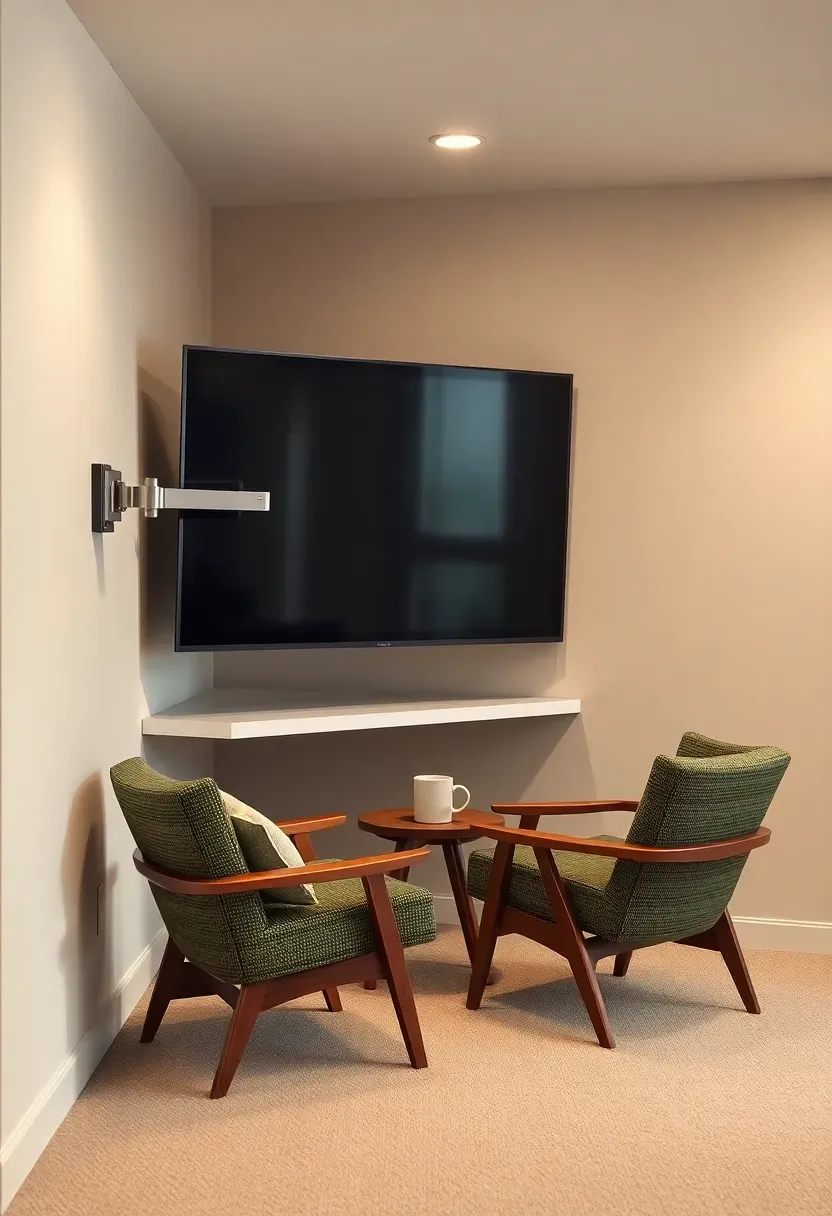
Basements often have structural columns, stairwell walls, or mechanical chases that break up the room into irregular shapes. Instead of fighting the layout by centering the TV on a wall that forces half the seating into a bad angle, mount it in a corner at 45 degrees to the adjacent walls. A corner mount opens up more seating positions because viewers can spread in a wider arc. Build or buy a triangular floating console that tucks into the corner below the TV to hold components. The wasted space behind the console becomes hidden storage for cables, routers, or a small UPS battery backup.
Tips
- Use a full-motion articulating mount so you can angle the screen toward the primary seating zone
- Place the center of the screen at seated eye height (approximately 100 to 110 centimeters from the floor)
- Corner placement shortens the viewing distance, so avoid screens larger than 65 inches unless the room is wide
14. Acoustic Panel Art on Side Walls
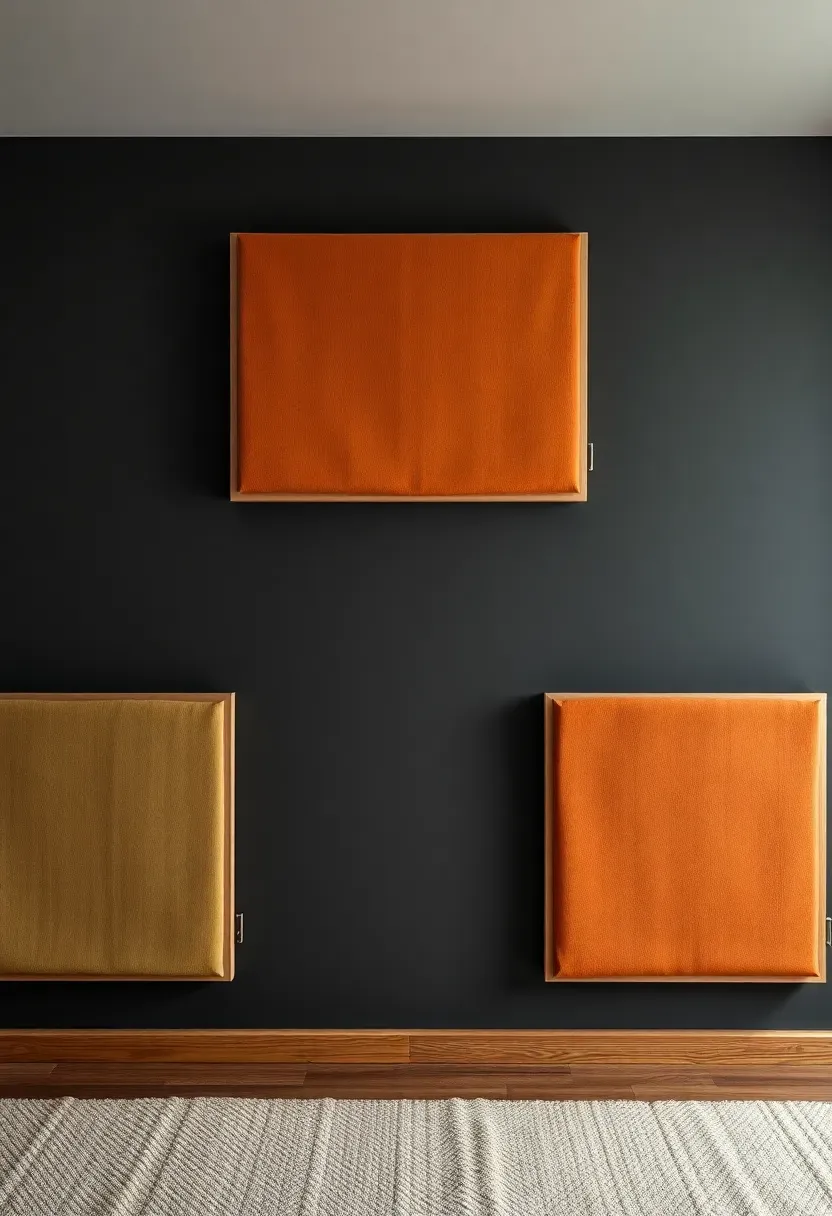
Plain foam acoustic panels look like a recording studio, not a living space. Fabric-wrapped panels printed with artwork, photography, or abstract patterns serve the same acoustic purpose while doubling as wall decor. Companies like Acoustimac and GIK Acoustics let you upload custom images. Place them at the first reflection points on the side walls -- the spots where sound bouncing off the TV wall hits the sides before reaching your ears. Treating these spots cleans up dialogue intelligibility and reduces that hollow, echoey quality that plagues untreated basement rooms.
Tips
- Panels at least 5 centimeters thick absorb frequencies down to 250 Hz; thinner panels only catch high frequencies
- Hang them at seated ear height, roughly centered at 90 centimeters from the floor
- Three or four panels per side wall is enough for most rooms under 30 square meters
Recommended
Items for this idea
15. Oversized Bean Bag Pit for Kids
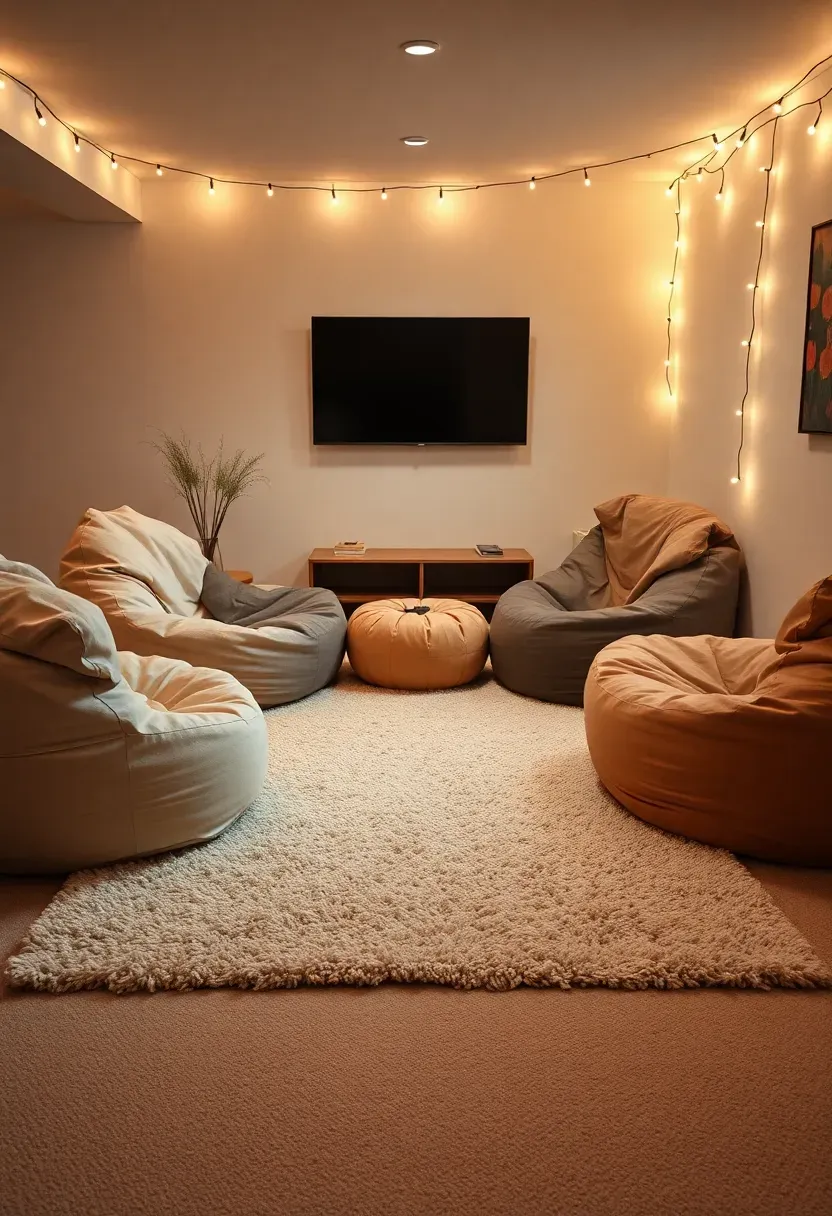
Dedicated kid seating means the main sofa stays intact and nobody fights over cushions. Five or six oversized bean bags (the 130-centimeter diameter kind, not the floppy dorm room versions) arranged in a semicircle on a thick shag rug create a soft, crash-proof pit that kids naturally gravitate toward. Fill them with shredded memory foam instead of polystyrene beads -- the foam holds its shape better, does not flatten as fast, and makes no noise when kids shift positions during a movie. Washable microsuede covers handle juice spills and the inevitable Cheeto dust.
Tips
- Anchor the rug with non-slip pads so bean bags do not slide on hard flooring
- Store bags vertically against the wall when the room is used for other purposes
- Add a low shelf with labeled bins nearby for remotes, headphones, and chargers
16. Fireplace and TV Shared Wall
The Debate
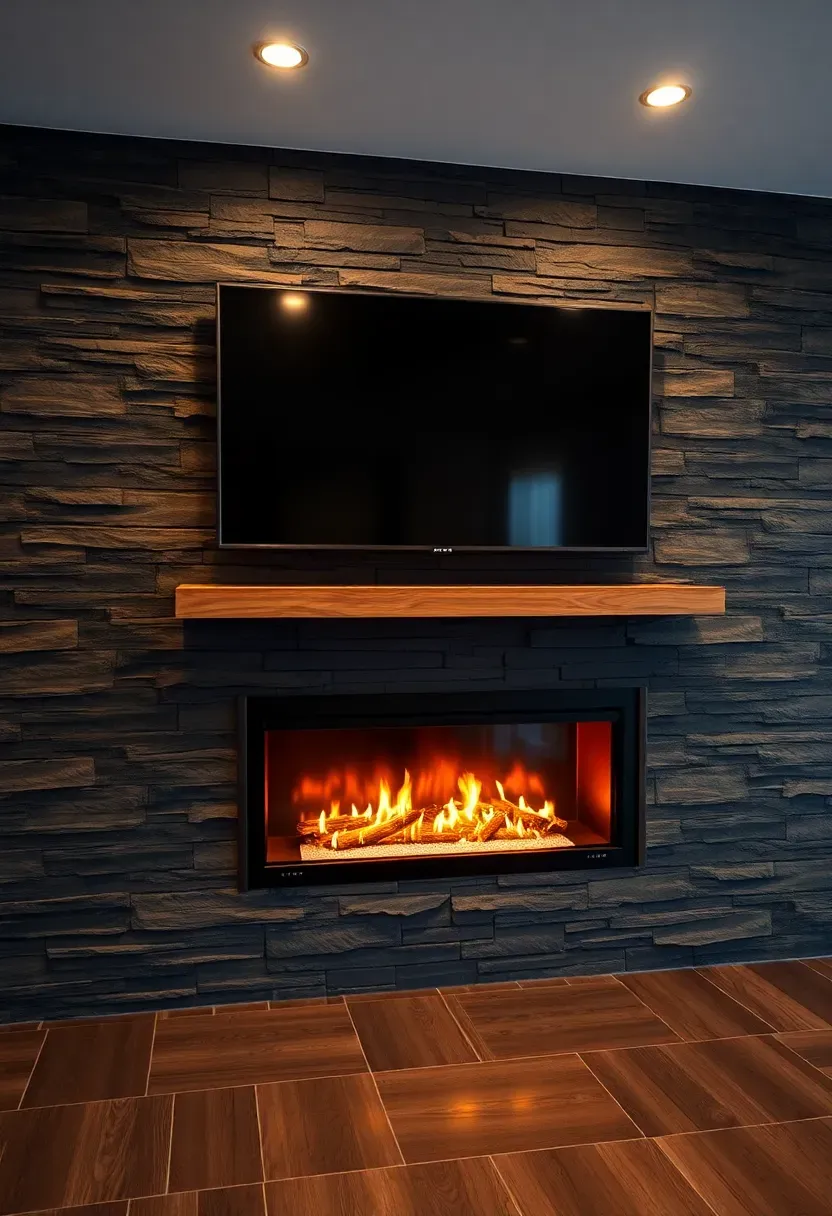
Mounting a TV above a fireplace gets criticized in design circles, and the concern is valid for wood-burning and gas units that push heat upward. But a linear electric fireplace installed below the TV sidesteps the heat problem entirely. Electric units vent heat from the front or bottom, not the top, so the TV stays safe. The combination gives a basement room a focal point that works year-round -- the fireplace adds warmth and ambient glow in winter, and the TV handles the rest of the year.
Making It Work
Separate the two elements with a mantle or a 15-centimeter gap of stone or tile cladding. This visual break prevents the wall from looking like an appliance showroom. Recess the fireplace into the wall by framing a niche in the stud cavity so it sits flush rather than protruding into the room. Wire both units to a single smart switch or remote so you can control them from the sofa.
Recommended
Items for this idea
17. Daybed Viewing Lounge
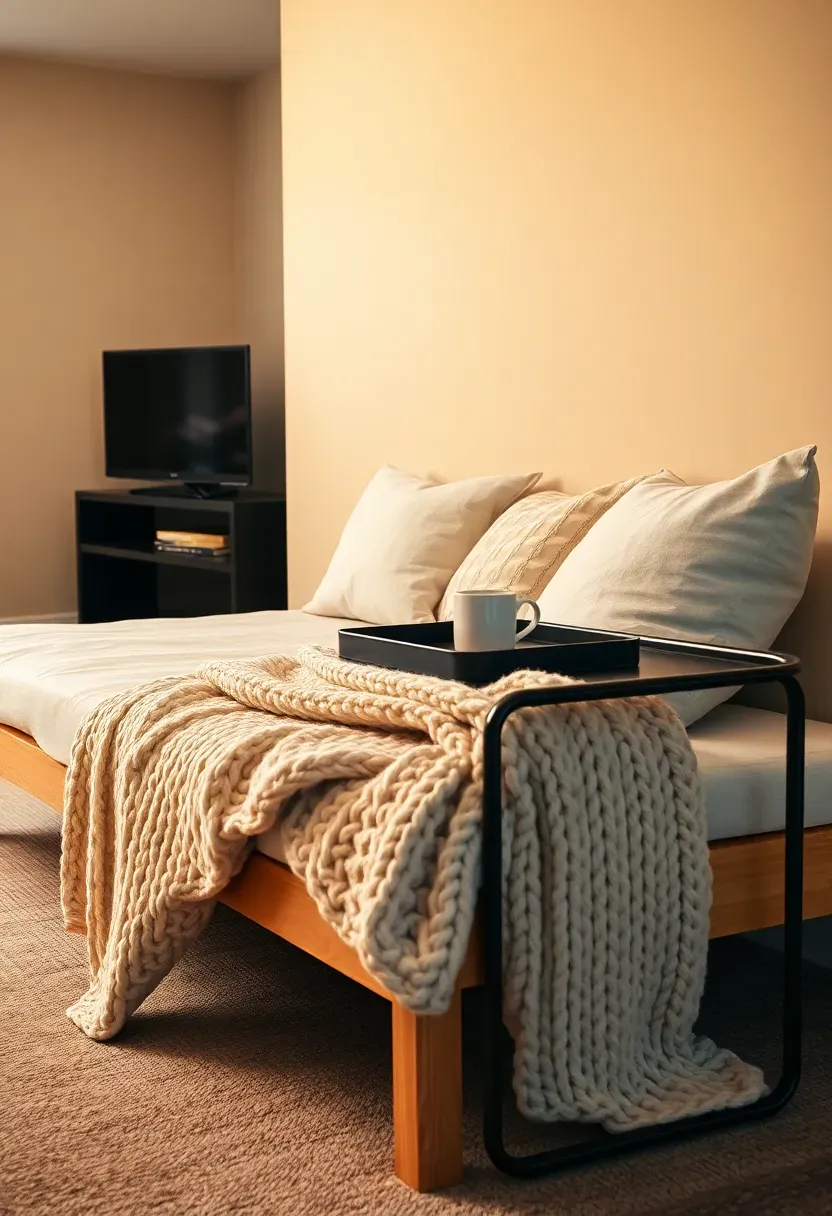
A daybed against the side wall turns the TV room into a space that works for afternoon naps, overnight guests, and solo binge-watching sessions. Choose a daybed frame with a trundle underneath for a second sleeper that tucks away completely when not needed. The daybed's backrest doubles as a sofa back during viewing hours, and its length (usually 190 to 200 centimeters) gives one person enough room to stretch out fully. Pile it with a mix of firm bolster pillows for seated support and softer throws for lying down.
Tips
- Pick a daybed with a pop-up trundle that rises to the same height as the main mattress for a king-sized sleeping surface
- Use indoor-outdoor fabric for the bolsters to resist basement humidity
- Position a small C-shaped side table that slides over the mattress for drinks and snacks
18. Gaming Station With Split Screen Setup
For Gamers
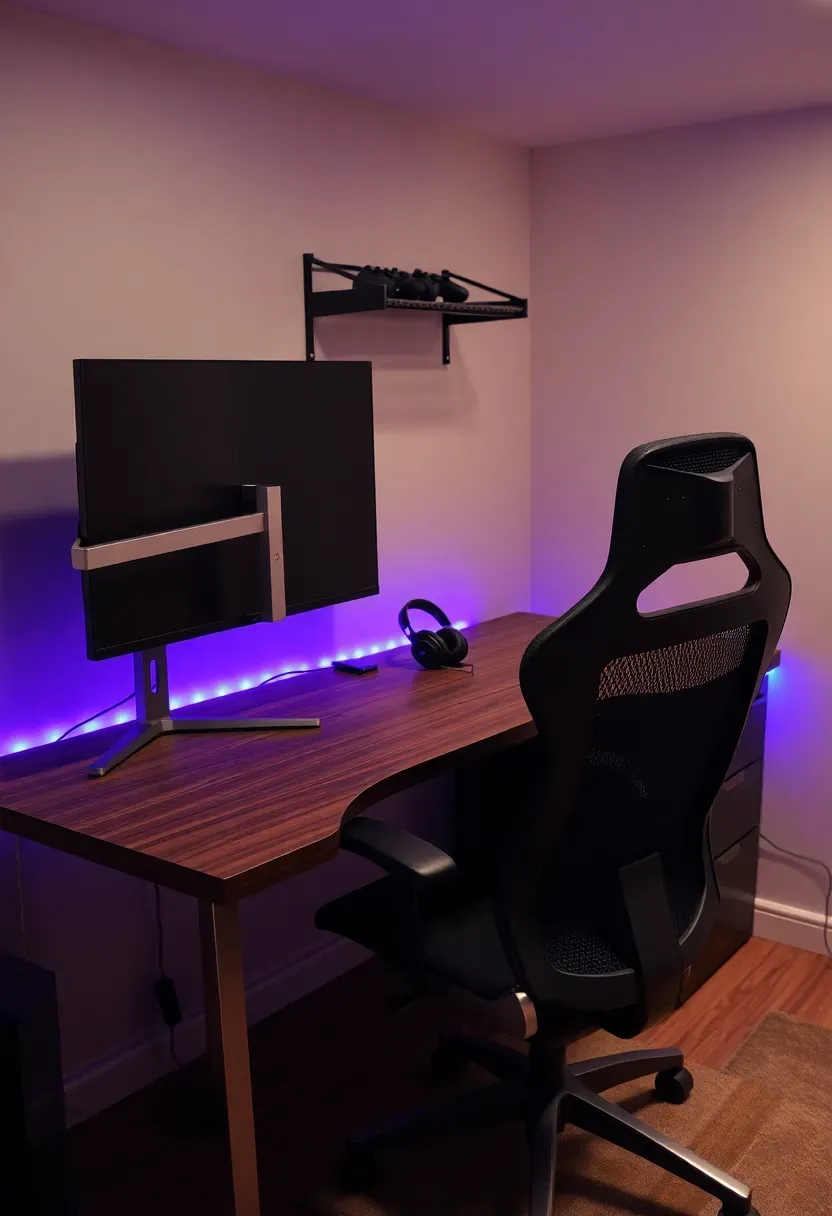
If gaming matters as much as watching, dedicate one section of the TV room to a proper station instead of forcing both uses onto a single screen. A 160-centimeter-wide desk against a side wall holds two 32-inch monitors or one ultrawide (34 inches or larger). Mount the monitors on adjustable arms clamped to the desk to free up surface space for a keyboard, mouse pad, and controller stand. Run an HDMI splitter from a console to both the gaming monitors and the main TV so you can switch the game to the big screen when friends come over.
Watch Out
- Gaming chairs with high backs block the TV view for anyone sitting behind them; push the desk against the wall so the chair faces away from the main viewing area
- Separate the gaming zone's lighting from the main room so RGB strips do not bleed into movie viewing
- Use a surge protector rated for gaming equipment; basements are prone to power fluctuations during storms
Recommended
Items for this idea
19. Basement Bar and TV Combo
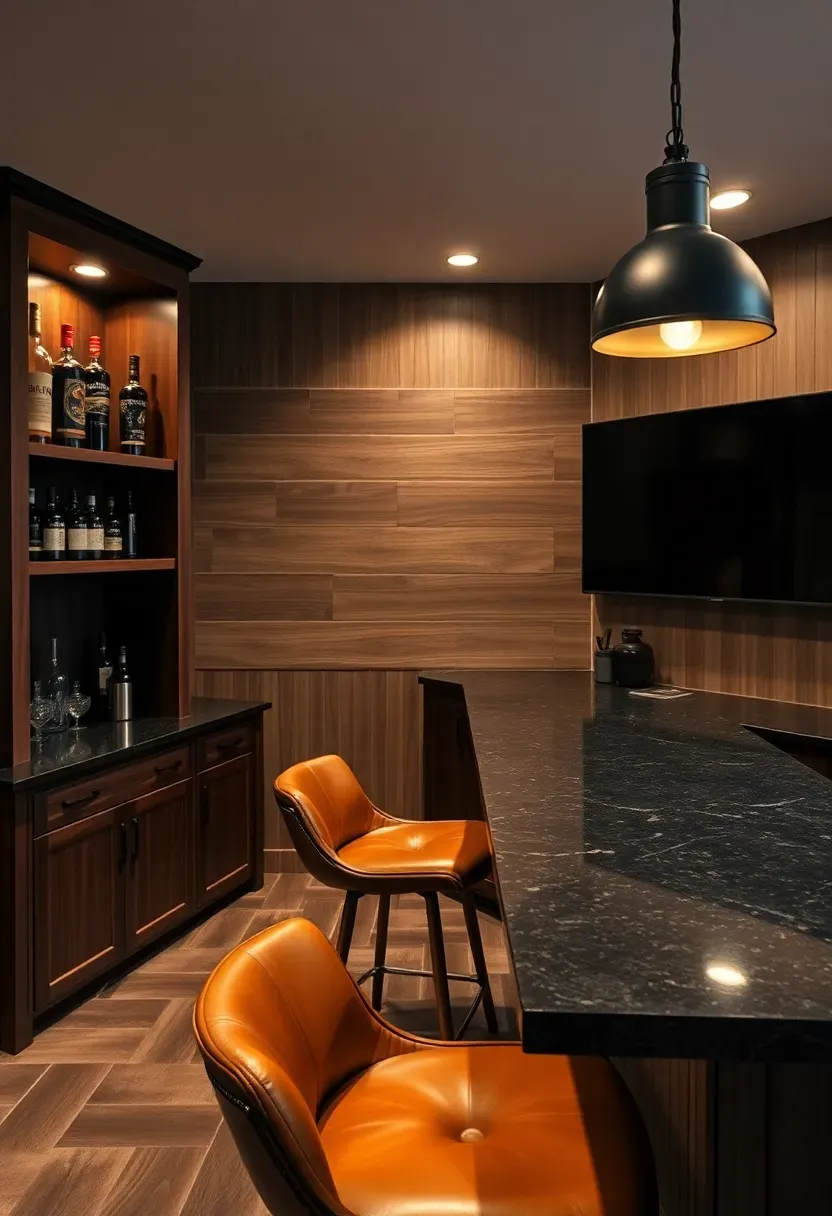
Combining a bar with the TV room creates the kind of space where people actually want to hang out on weekends. Place the bar along one wall perpendicular to or adjacent to the TV wall so viewers at the counter can still see the screen without turning fully around. Keep the bar compact -- a 240-centimeter counter with four stools, a mini fridge, and open shelving for glasses and bottles handles most hosting needs without dominating the room. Pendant lights over the bar on a dimmer let you set them low during movies and bright during game-day parties.
Tips
- Install the bar counter at 107 centimeters (standard bar height) so standing guests can see over seated viewers
- Use LED strip lighting under the counter and inside open shelves for a soft glow that does not interfere with the screen
- Add a small dishwasher drawer if plumbing is available; hand-washing glasses kills the host's evening
Quick FAQ
Do basement tv rooms need a dehumidifier? Almost always, yes. Below-grade spaces naturally collect moisture through the concrete slab and foundation walls. A dehumidifier set to maintain 40 to 50 percent relative humidity protects your electronics, prevents musty smells, and keeps fabric upholstery from developing mildew. Drain-line models that empty into a floor drain run continuously without you needing to dump a bucket.
What size tv works best for a basement room? Measure your primary viewing distance in inches and divide by 1.5 to get an ideal screen size. A viewing distance of 240 centimeters (roughly 94 inches) suggests a 60- to 65-inch screen. Basements with shorter viewing distances work better with a moderately sized TV than an oversized one that forces you to scan the image.
Can I install a projector in a basement with low ceilings? Yes, if you use a short-throw or ultra-short-throw model. These projectors sit within 30 to 60 centimeters of the screen and produce images up to 120 inches diagonally. Standard long-throw projectors need 3 meters or more of clearance, which most basements cannot provide.
Is carpet or hard flooring better for a basement tv room? Carpet absorbs sound reflections and feels warmer underfoot, but it carries mildew risk in damp basements. Carpet tiles offer a middle ground -- acoustic benefits with easy replacement if moisture strikes. Luxury vinyl plank with a thick area rug in the seating zone gives you the best of both materials.
How do I soundproof a basement tv room from the floor above? Insulate the ceiling joist bays with mineral wool batts, add a layer of mass-loaded vinyl over the joists, and finish with drywall on resilient channel clips. This sandwich approach blocks both airborne sound (dialogue, music) and impact noise (footsteps from upstairs). Sealing gaps around pipes and ducts matters as much as the main ceiling treatment.
A basement TV room does not need a massive budget or a professional installer to feel like a real destination in your home. Start with the basics -- good seating position, bias lighting, and some form of sound treatment -- and build from there as your habits reveal what the room actually needs. The best setups grow over time rather than arriving fully formed, because how you use the room in January looks different from how you use it in July. Pick two or three ideas from this list, get them right, and let the room tell you what comes next.
Pinterest cover for 19 Basement TV Room Ideas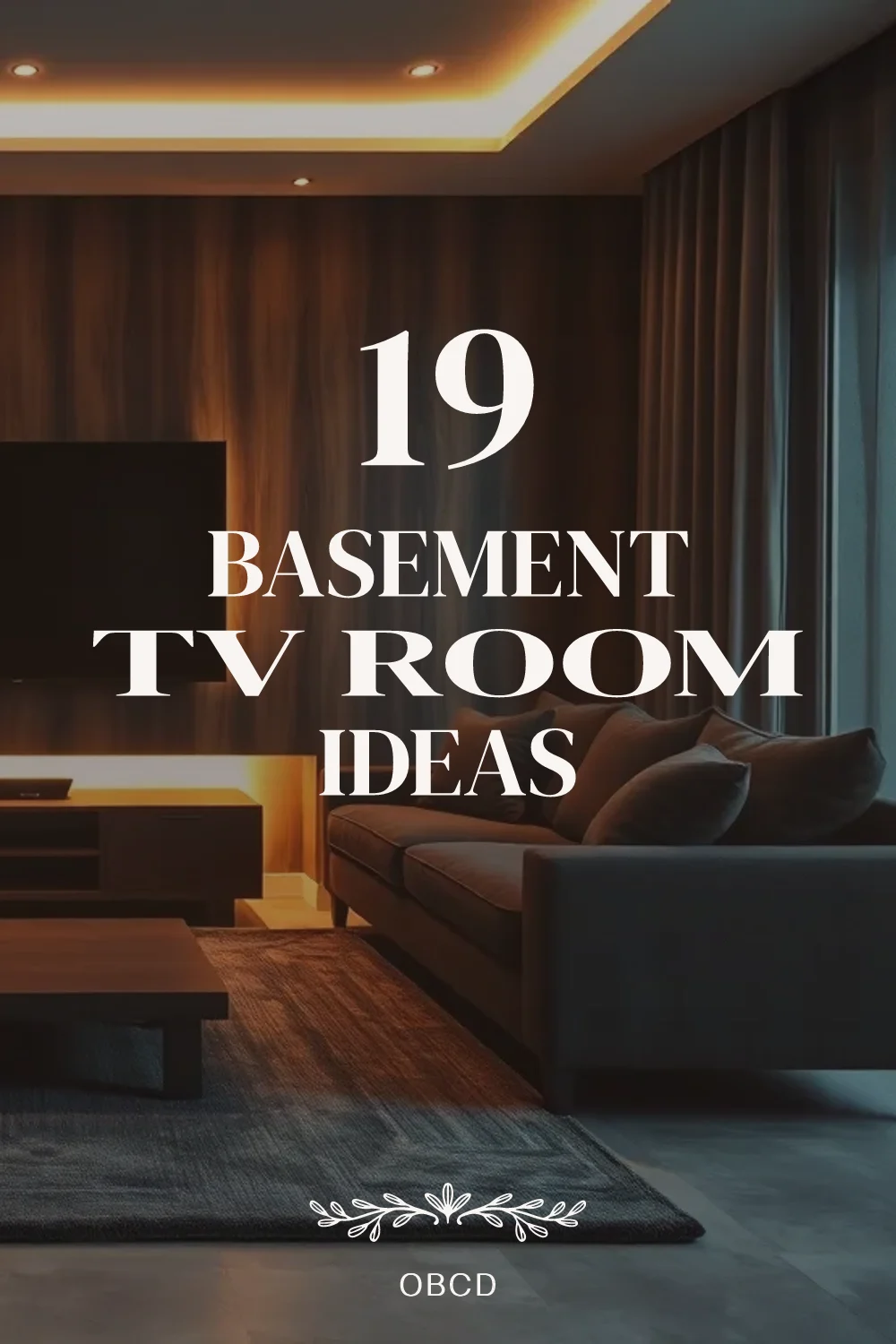
About the author
OBCD
CGI visualization and interior design content. We create detailed 3D renders and curate practical design ideas for every room in your home.