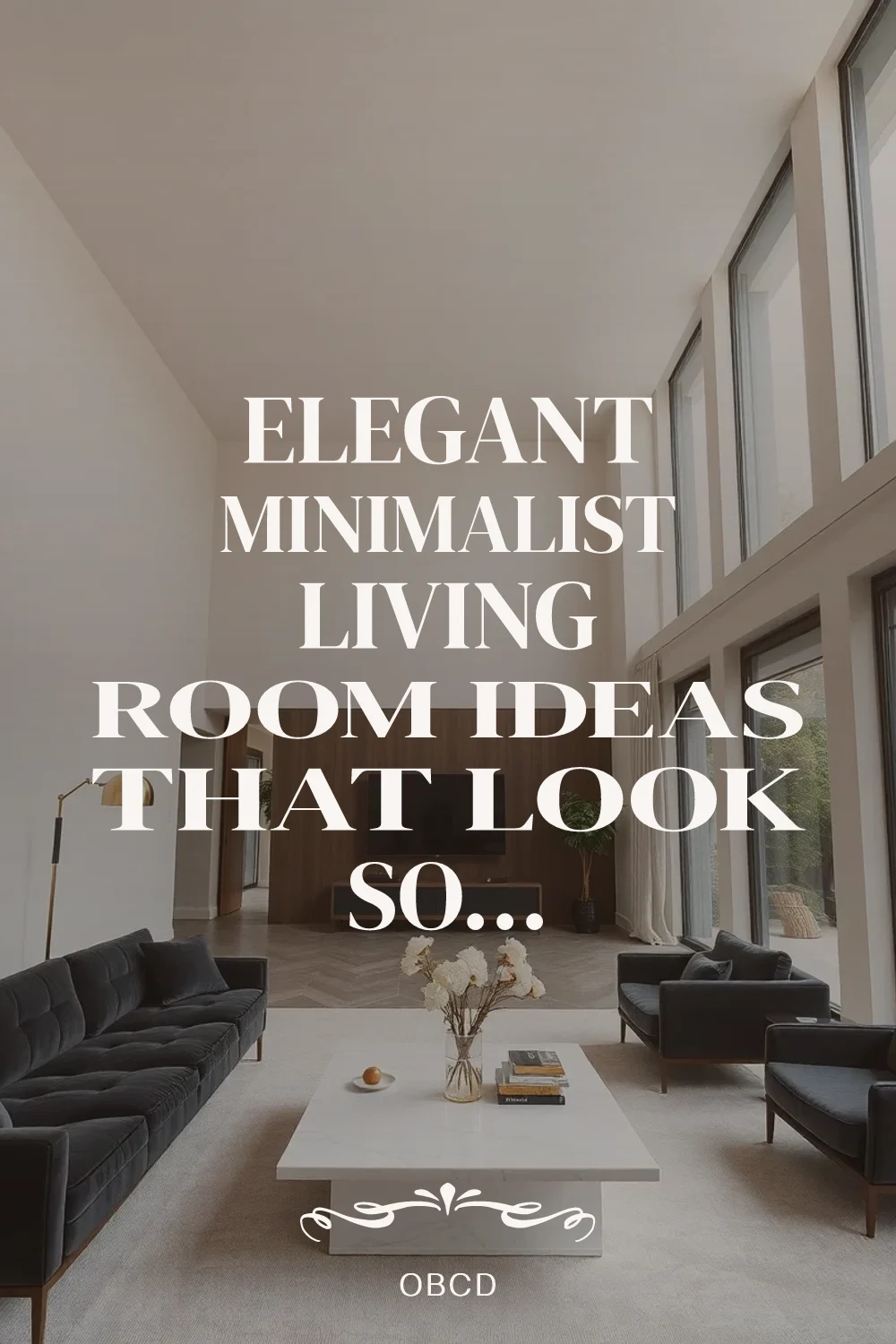
27 Elegant Minimalist Living Room Ideas That Feel Luxe
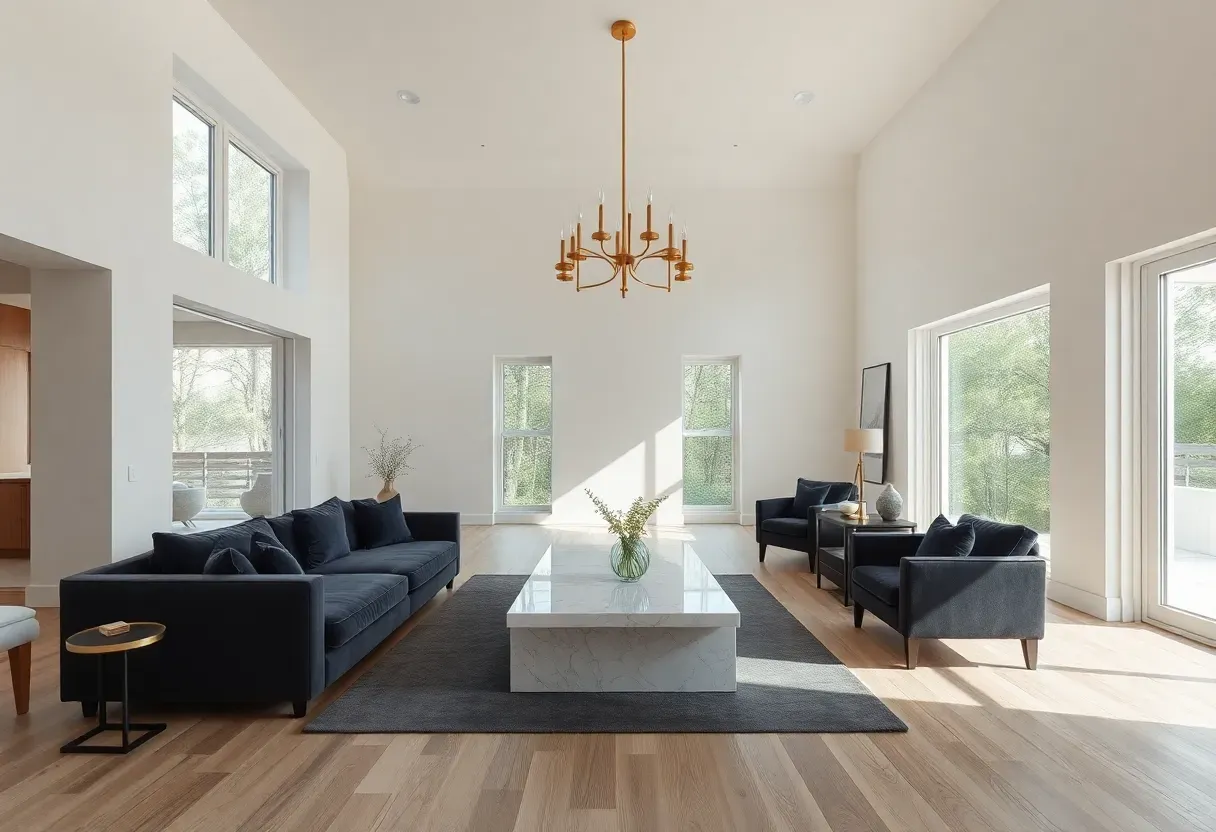
The best elegant minimalist living room ideas prove that luxury comes from restraint, not abundance. Instead of filling a space with objects, this approach relies on exceptional materials, impeccable proportions, and the confidence to let empty space speak for itself. An elegant minimalist living room feels simultaneously calm and grand, simple and refined, welcoming and impressive. It is a balancing act that rewards thoughtful editing and quality-over-quantity decisions at every turn.
The secret behind a luxury minimalist living room lies in architectural elegance. High ceilings become features rather than just volume. Natural light works as a primary design element. Materials speak through inherent quality -- marble, brass, velvet, walnut -- rather than applied ornamentation. Furniture pieces earn their place through sculptural presence and refined details. The result is a sophisticated minimalist decor scheme that feels quietly luxurious, effortlessly polished, and timelessly serene -- whether you rent a small apartment or own a spacious home.
These 27 elegant minimalist living room ideas will help you create a refined neutral living room that exudes sophistication without sacrificing the calm and simplicity essential to minimalist design.
Quick FAQ
What makes minimalist design elegant rather than plain?
Elegance emerges from material quality, refined proportions, and architectural details. Plain minimalism uses basic materials and simple forms; elegant minimalism invests in exceptional materials like marble, brass, velvet, and walnut, plus furniture with refined silhouettes and thoughtful detailing.
Can elegant minimalism work in small living rooms?
Absolutely. In small spaces, choose fewer but finer pieces. One exceptional sofa, one statement light fixture, and one luxurious rug create more impact than multiple average items. Use mirrors to amplify space and light, and keep proportions slender to maintain elegance without bulk.
What colors work best for elegant minimalist living rooms?
Neutrals form the foundation: cream, warm gray, charcoal, and navy as accents. The key is depth within neutrals -- layering multiple shades of the same color creates richness. Metals (brass, chrome) provide accent without adding hue.
How do I add warmth to elegant minimalism?
Warmth comes through materials: wood tones, velvet upholstery, wool rugs, and brass finishes. Layer textures within a unified color palette. Lighting also matters -- warm ambient lighting (2700-3000K) creates elegant coziness that cool lighting lacks.
Is elegant minimalism expensive?
It can be, but it does not need to be prohibitive. Invest in one or two exceptional pieces (sofa or rug) and supplement with simpler, well-designed items. Quality shows more than quantity -- one marble-topped table creates more elegance than three mediocre ones.
How do I keep elegant rooms from feeling formal or stiff?
Introduce casual elements: textured throws, slightly rumpled linen pillows, organic shapes, or living plants. Avoid perfection -- slightly asymmetric arrangements, softened edges, and mixed materials create approachable elegance.
As an Amazon Associate I earn from qualifying purchases.
Table of Contents
- 1. Soaring Ceilings with Minimal Decoration
- 2. Marble Focal Wall
- 3. Brass Accent Console
- 4. Velvet Upholstery in Neutral Tones
- 5. Floor-to-Ceiling Drapery
- 6. Single Statement Chandelier
- 7. Reflective Surfaces Strategically Placed
- 8. Monochromatic Layering
- 9. Architectural Built-Ins
- 10. Suspended Fireplace
- 11. Wide-Plank Hardwood Floors
- 12. Floating Media Console
- 13. Curved Furniture Silhouettes
- 14. Floor-to-Ceiling Windows
- 15. Integrated Lighting Design
- 16. Luxury Rug Foundation
- 17. Statement Stone Coffee Table
- 18. Architectural Ceiling Treatment
- 19. Refined Neutral Palette
- 20. Open Concept with Zoning
- 21. Indoor-Outdoor Connection
- 22. Custom Built-In Seating
- 23. Sculptural Division
- 24. Double-Height Space
- 25. Gallery-Style Art Presentation
- 26. Concealed Storage
- 27. Focused Conversation Area
1. Soaring Ceilings with Minimal Decoration
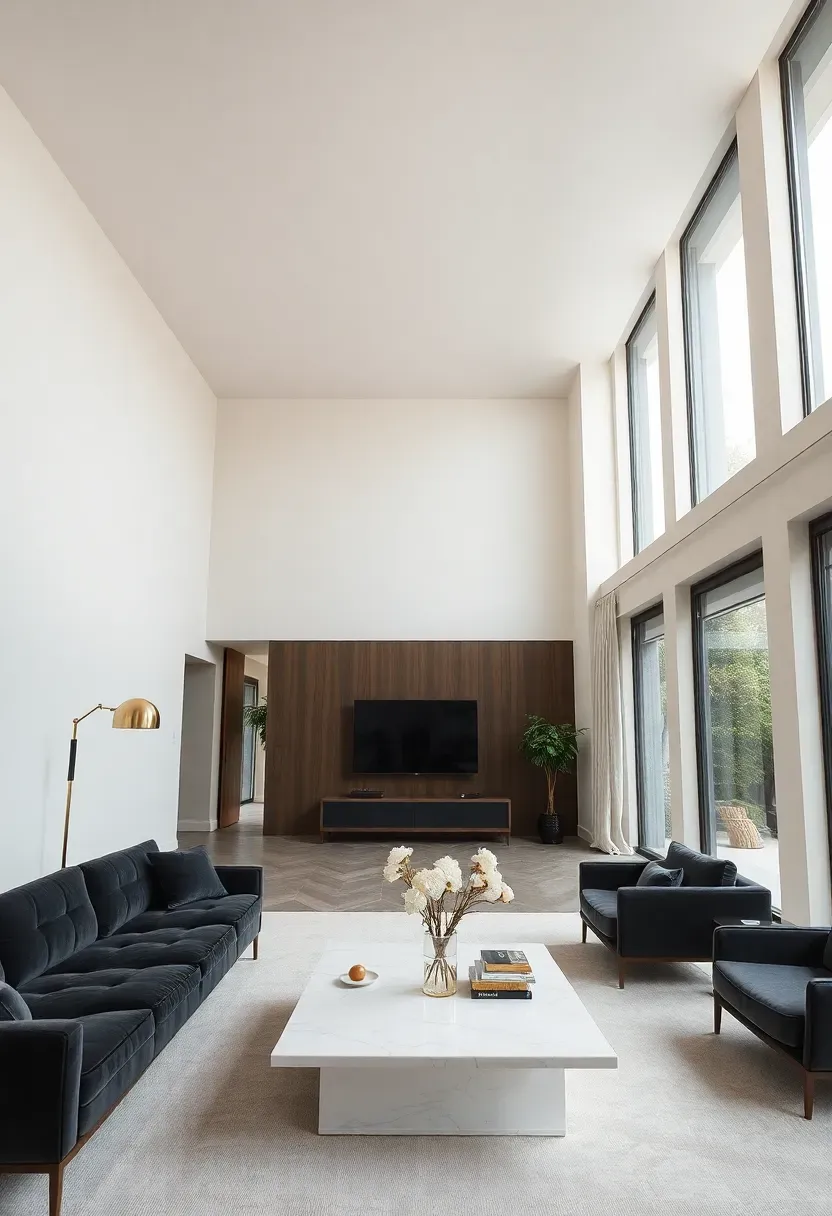
High ceilings create immediate elegance through vertical drama and spaciousness. The key is keeping ceiling areas mostly bare—no excessive beams, coffers, or treatments that compete with the height itself. Let the volume speak. If your living room has standard ceilings, create the illusion of height through vertical elements: floor-to-ceiling drapery, tall artwork, or vertical paneling on one wall. Paint ceilings the same color as walls in a soft matte finish to blur the boundary and make walls feel taller. Or extend wall color onto ceiling for seamless continuity. The elegance comes from the sense of airiness and grandeur that vertical space provides, not from decorative elements added to the ceiling plane itself. Less truly is more when celebrating height.
Tips
- Draw eyes up with vertical art or tall floor lamps
- Keep furniture low-profile to emphasize height-to-furniture ratio
- Avoid horizontal ceiling treatments that visually lower the space
Best for: living rooms with ceiling height over 10 feet
What this gives you: immediate grandeur without decorative excess
We picked a few things that go well with this idea: decorUhome Velvet Chenille Pillow Covers (2-Pack) (★4.6), MIULEE Velvet Textured Pillow Covers (2-Pack) (★4.7) and Phantoscope Velvet Throw Pillow Covers (2-Pack) (★4.7). As an Amazon Associate we earn from qualifying purchases.
2. Marble Focal Wall
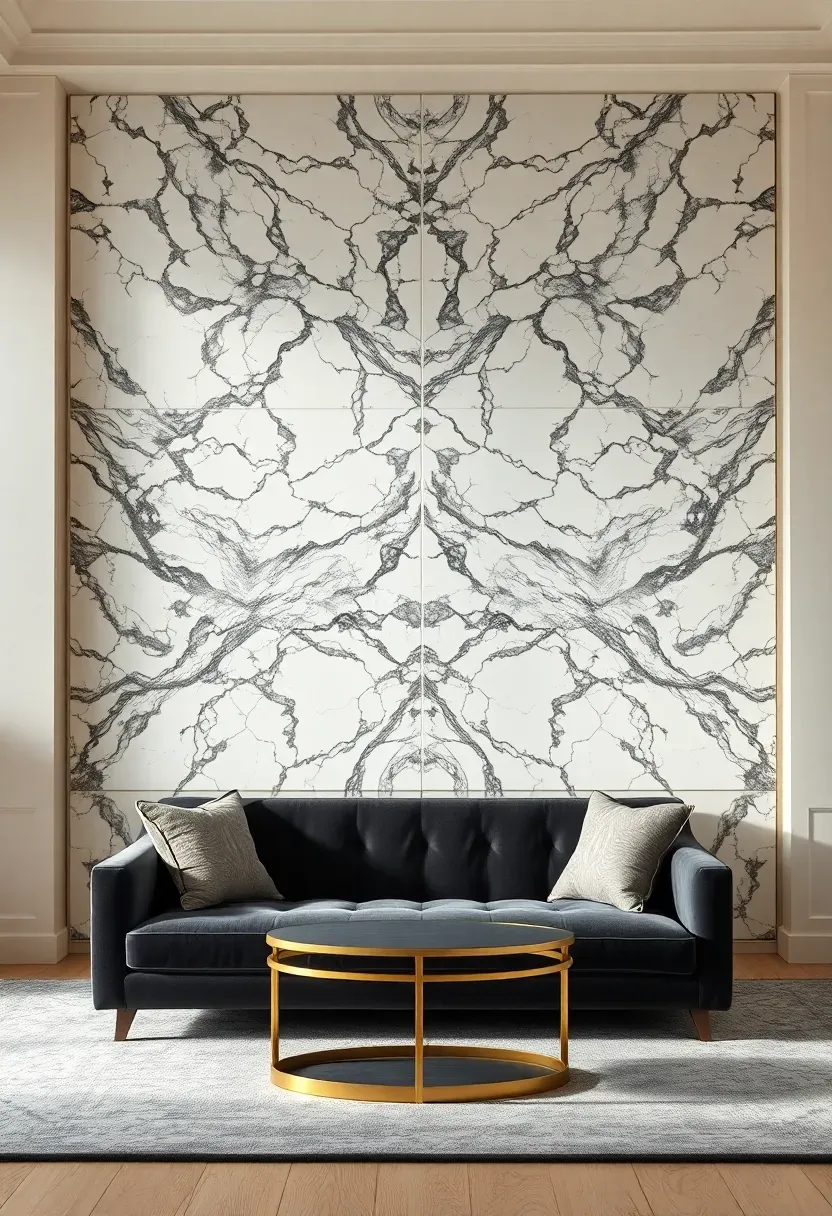
A marble wall behind the main seating area creates luxurious elegance through natural stone's inherent beauty. Bookmatched marble slabs—where two slabs are cut from the same block and opened like a book—create symmetrical veining that's architecturally striking. Choose marble in subtle tones: Calacatta with white background and gray veining, or Arabescato with soft gray patterns. The stone becomes the room's primary artwork, eliminating the need for additional wall decoration. Keep surrounding walls crisp white or soft cream to let the marble take prominence. This treatment works particularly well behind media consoles or as the backdrop for floating shelving. The marble's natural variations provide organic interest while the material itself communicates refined luxury and timeless sophistication.
Tips
- Bookmatching requires careful slab selection—work with experienced stone yards
- Honed marble finish feels more elegant than glossy polished
- Consider marble sealing to protect against etching from acidic substances
Budget note: marble veneer panels offer luxury look at lower cost than full slabs
What this gives you: architectural luxury that replaces traditional wall art
We picked a few things that go well with this idea: Cozy Castle 2-Tier Glass Console Table Gold (★4.6), Modern Glass Console Table Stainless Steel Gold (★4.4) and MAJARO Modern Glass Console Table Gold (★4.7). As an Amazon Associate we earn from qualifying purchases.
3. Brass Accent Console
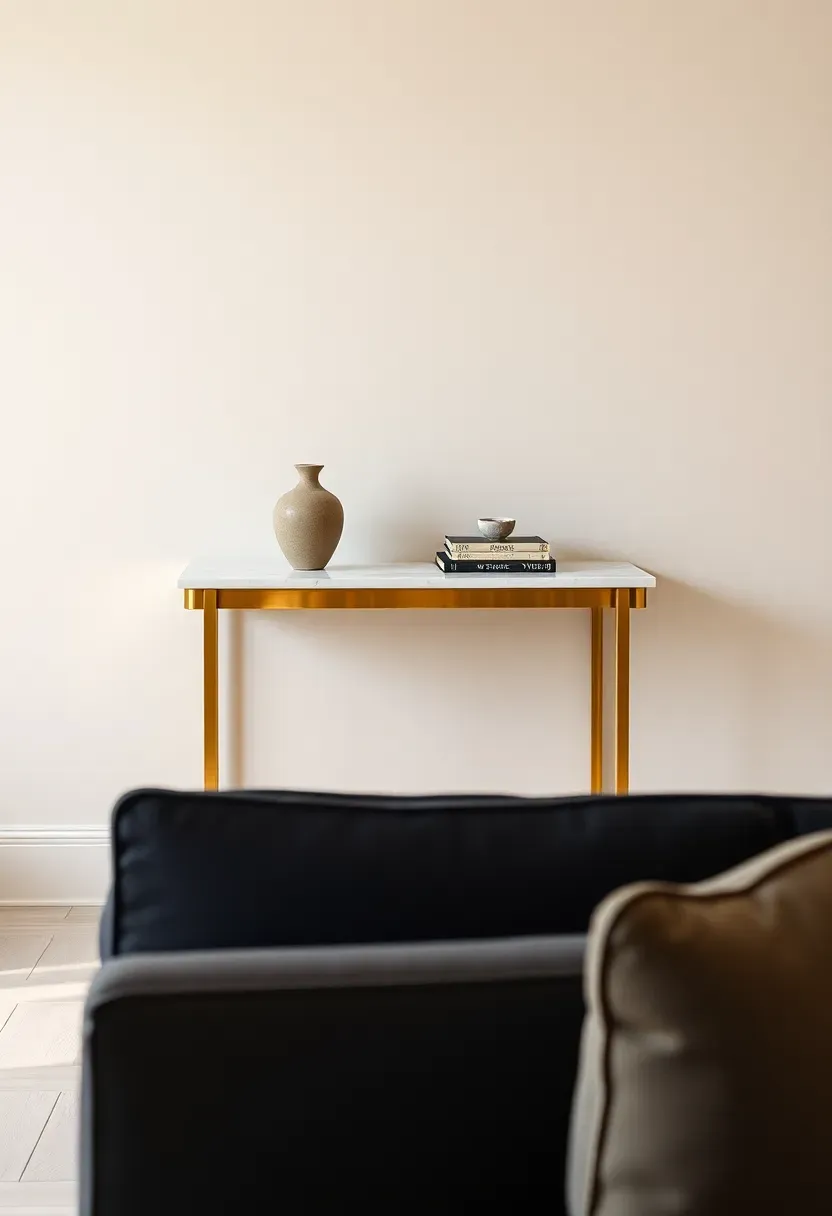
A console table in polished or brushed brass adds warm metallic elegance that catches light and draws the eye. Position it against a focal wall or behind the main sofa. The console's slender profile provides refined surface area for a few carefully chosen objects—a vase, a stack of books, one art piece—without adding visual bulk. Choose a design with clean lines and minimal ornamentation; let the brass material itself provide the luxury through its warmth, reflectivity, and association with fine craftsmanship. Brass pairs beautifully with marble tops, dark wood finishes, or as all-metal construction. The metal warms cool color palettes and adds a layer of refined richness that feels timeless rather than trendy. One well-chosen brass piece elevates the entire room's sophistication level.
Tips
- Brushed brass shows fewer fingerprints than polished
- Keep console decor minimal—let the brass be the statement
- Coordinate with other brass accents in room for cohesion
Best for: entry-facing walls or behind sofas
What this gives you: warm metallic luxury that doesn't overwhelm
We picked a few things that go well with this idea: Modern Faux Marble Coffee Table Grey (★4.8), GiftGo 3-Tier Faux Marble Coffee Table (★4.4) and Tribesigns 2-Tier Faux Marble Coffee Table (★4.4). As an Amazon Associate we earn from qualifying purchases.
4. Velvet Upholstery in Neutral Tones
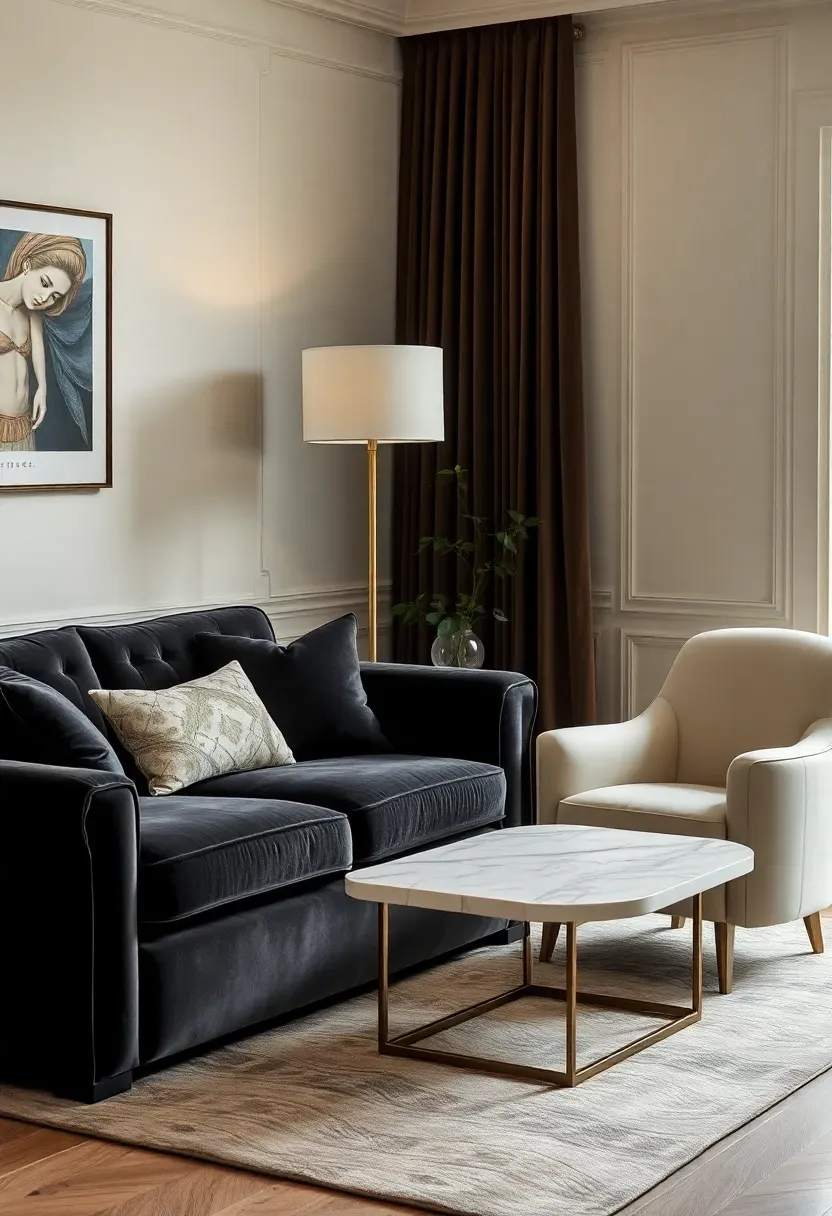
Velvet furniture in sophisticated neutrals—charcoal, navy, cream, or taupe—provides tactile luxury and visual richness. Choose velvet for the primary sofa or accent chairs to create an immediate sense of refinement. The fabric's pile catches light beautifully, creating subtle color variation that adds depth without pattern. In elegant minimalist living rooms, velvet becomes the primary texture, providing softness and warmth while maintaining monochromatic calm. Keep velvet colors subdued rather than bold; let the fabric itself be the luxury statement, not the hue. Velvet pairs exceptionally well with sleek materials like marble, glass, or polished metal, creating delicious textural contrast. One velvet piece—a sofa or two armchairs—elevates the entire room's elegance quotient.
Recommended
Items for this idea
Tips
- Velvet shows wear—rotate cushions and vacuum regularly with soft brush
- Cotton or linen velvet feels more casual than silk velvet
- Test velvet samples in your space—pile direction affects color appearance
Best for: primary seating or statement accent pieces
What this gives you: tactile luxury that elevates through material quality
5. Floor-to-Ceiling Drapery
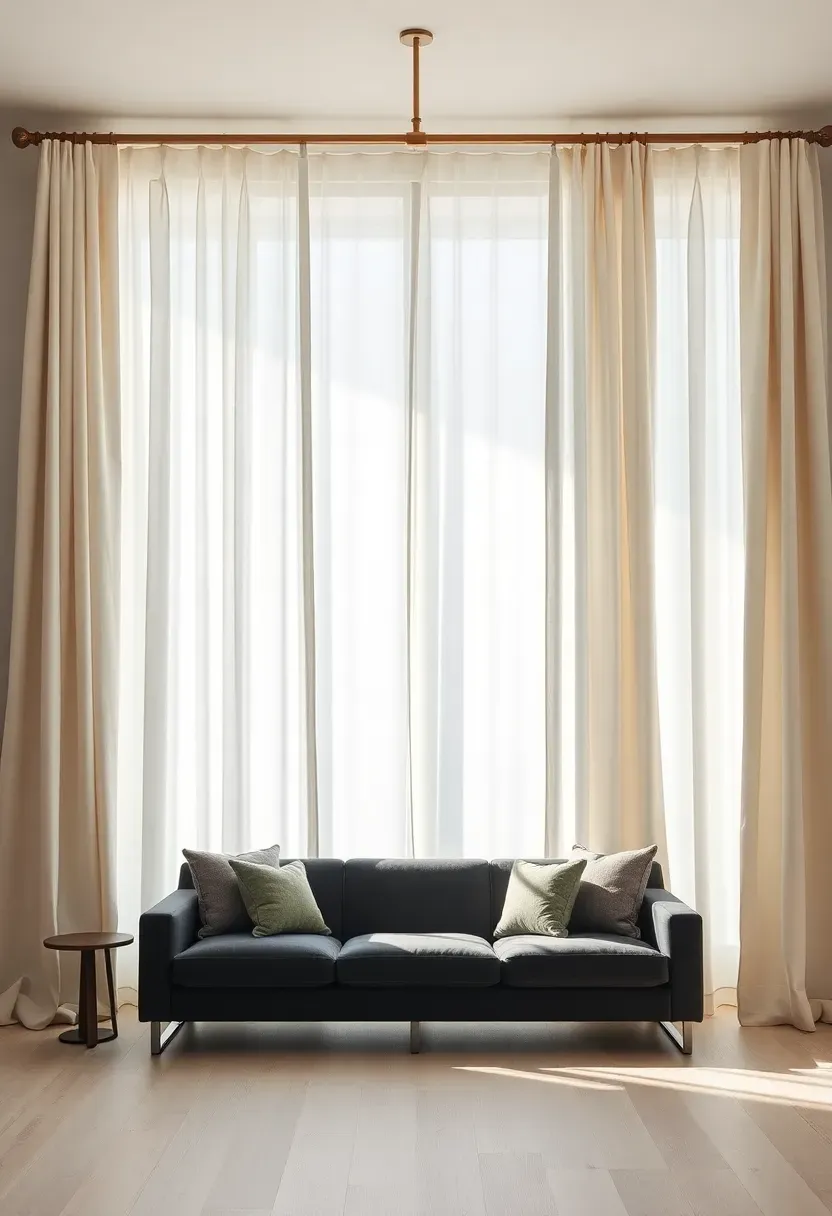
Install drapery panels that extend from ceiling to floor for immediate elegance and vertical emphasis. Even if windows are standard height, mount curtain rods at ceiling level and let panels puddle slightly on the floor or just barely brush it. This treatment makes rooms feel taller and more luxurious while framing views beautifully. Choose fabrics in substantial weights—linen, velvet, or heavyweight silk—that hang with graceful folds rather than flimsy gathers. In elegant minimalist spaces, keep drapery colors neutral and solid rather than patterned. The luxury comes from the fabric's quality and the proportions of the installation, not from printed designs. Floor-to-ceiling drapery also provides excellent light control and acoustic softening, making rooms feel more serene and comfortable.
Tips
- Mount rods 4-6 inches above window trim for ceiling-to-floor installation
- Choose rod length 8-12 inches wider than window on each side
- Lined panels provide better light control and more luxurious hang
Best for: living rooms with any ceiling height—creates illusion of height
What this gives you: vertical elegance and improved proportions
6. Single Statement Chandelier
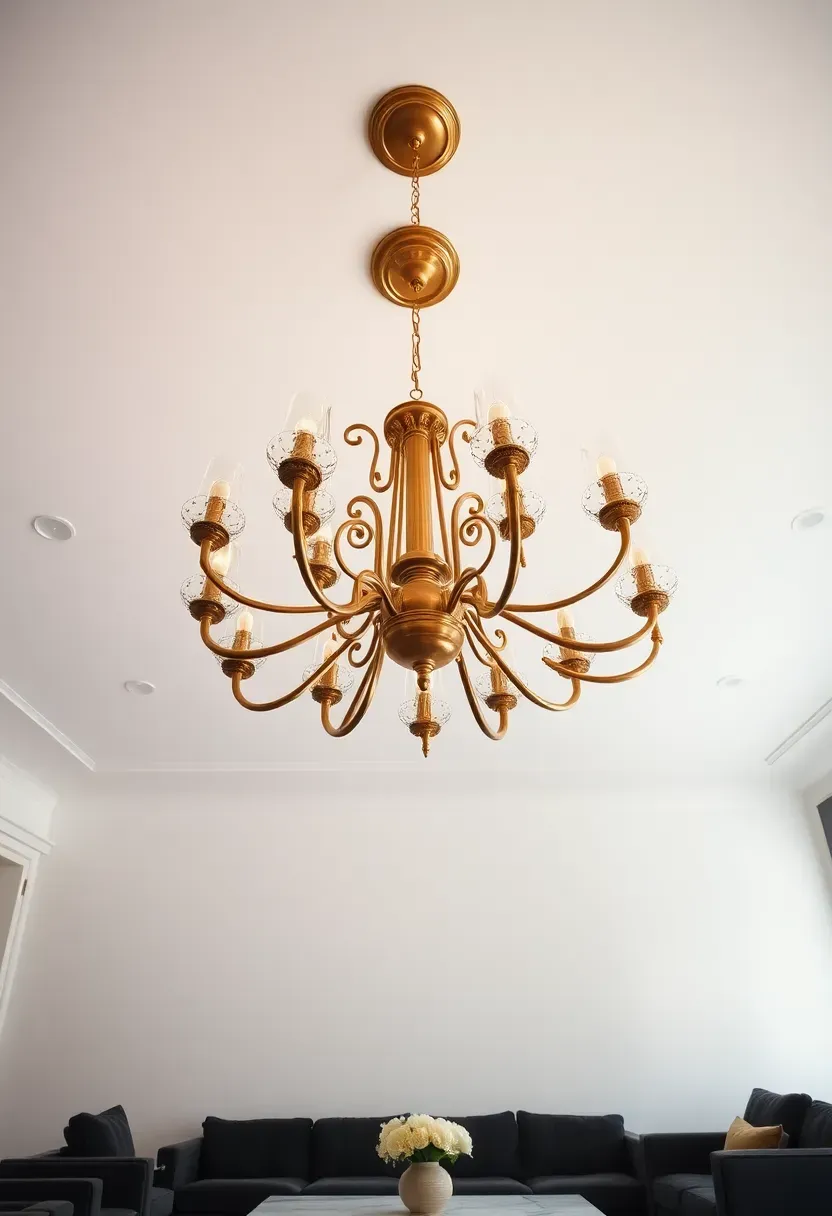
One dramatic chandelier provides all the ceiling decoration an elegant minimalist living room needs. Choose fixtures with substantial presence: large-scale geometric shapes, cascading crystals, or multiple arms with distinctive silhouettes. Position the chandelier centrally over the coffee table or slightly offset toward the seating area. The fixture becomes sculpture as much as light source, drawing the eye upward and creating conversation. Keep surrounding ceiling areas clean and uncluttered to let the chandelier dominate. Dimmers are essential—statement lighting should be adjustable for different moods, from bright and welcoming to soft and intimate. The chandelier's scale should relate to room size; larger rooms demand fixtures with greater presence and physical size.
Recommended
Items for this idea
Tips
- Hang chandelier 28-34 inches above coffee table for ideal viewing angle
- Consider chandelier's visual weight when selecting—balance room proportions
- Clean chandelier regularly to maintain sparkle and elegance
Best for: living rooms with ceiling height over 9 feet
What this gives you: sculptural ceiling presence and dramatic focal point
7. Reflective Surfaces Strategically Placed
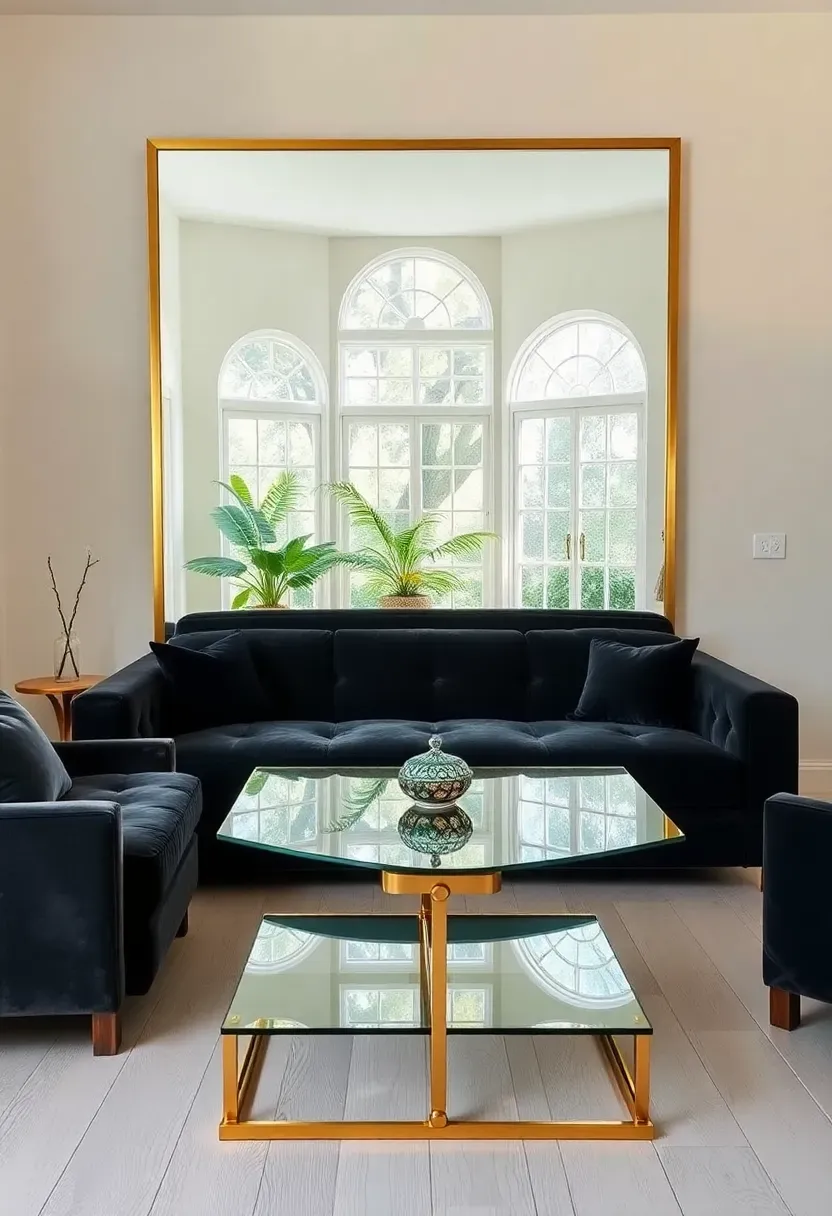
Incorporate mirrors, glass, or polished metal to amplify light and create elegant spaciousness. A large mirror positioned opposite windows doubles natural light and views. Glass tables or shelving visually disappear, making rooms feel larger. Polished metal surfaces—brass, chrome, copper—add sparkle and reflectivity that catches light beautifully. In elegant minimalist living rooms, use reflective surfaces strategically rather than excessively. One well-placed mirror, one glass tabletop, or metal accent pieces create more impact than multiple reflective elements scattered throughout. Position mirrors to capture desirable views or reflect artwork. The reflections add layers of visual interest without requiring additional objects, maintaining minimalist calm while enhancing elegance.
Tips
- Position mirrors to reflect best views or maximum natural light
- Clean reflective surfaces frequently—fingerprints diminish elegance
- Consider what mirrors reflect—ensure it's a beautiful scene
Best for: smaller living rooms or spaces with limited natural light
What this gives you: amplified spaciousness and brightness
8. Monochromatic Layering
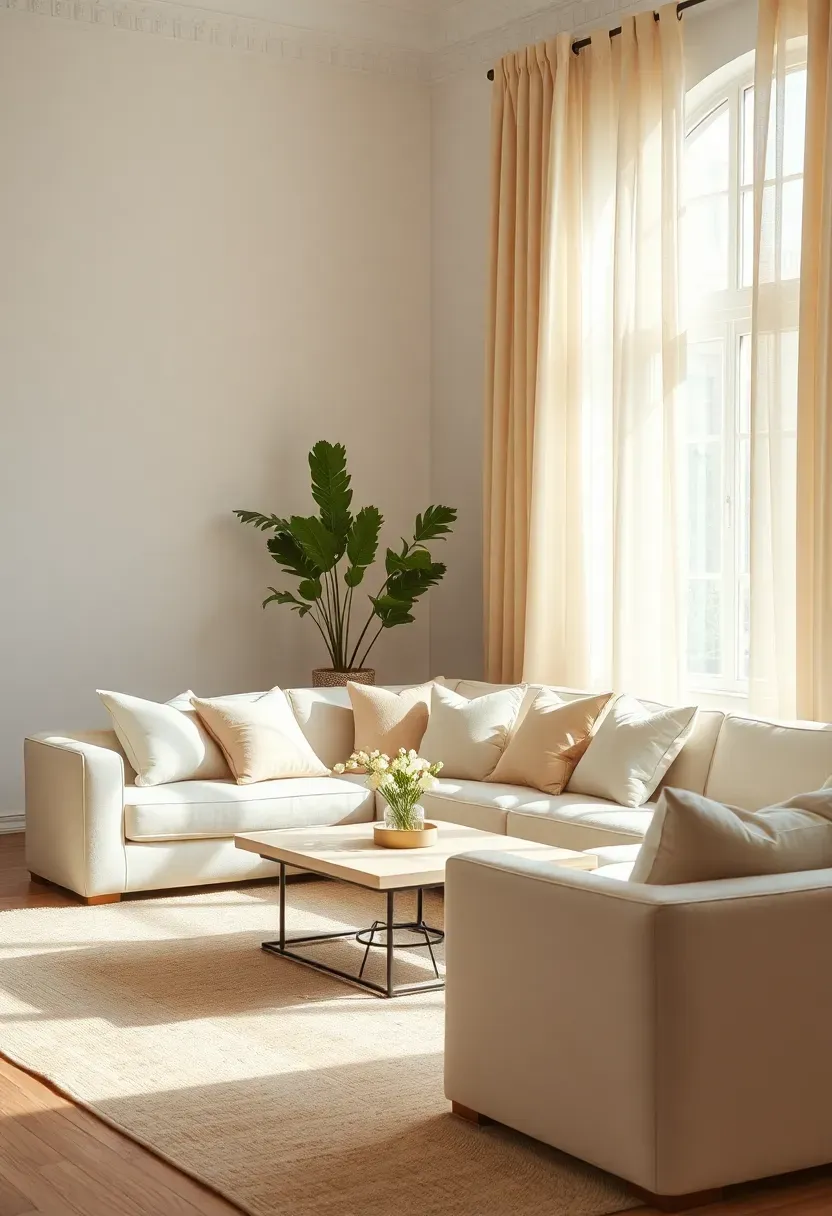
Create richness through layering multiple shades of one color rather than introducing multiple hues. An elegant minimalist living room might use five shades of cream: ivory walls, oatmeal sofa, taupe rug, champagne velvet pillows, and vanilla drapery. This monochromatic approach creates depth and sophistication while maintaining visual calm. The eye notices subtle color variations and textural differences rather than being distracted by contrasting colors. Layer light to dark within one color family for more drama, or keep tones similarly saturated for serenity. Materials become more noticeable when colors are unified—wood grain, velvet pile, marble veining, and brass sheen all stand out more without competing colors. Monochromatic schemes feel inherently elegant and intentional. If warm earth tones appeal to you, browse our [minimalist living room ideas with earth tones](/posts/60_19-inspiring-minimalist-living-room-ideas-with-earth-tones-for-a-comfortable-living-space/) for more palette inspiration.
Recommended
Items for this idea
Tips
- Gather material samples and test together—subtle differences matter
- Include both matte and sheen finishes within the color family
- Natural light changes color perception—test at different times of day
Best for: creating sophisticated calm without visual complexity
What this gives you: layered richness with harmonious simplicity
9. Architectural Built-Ins
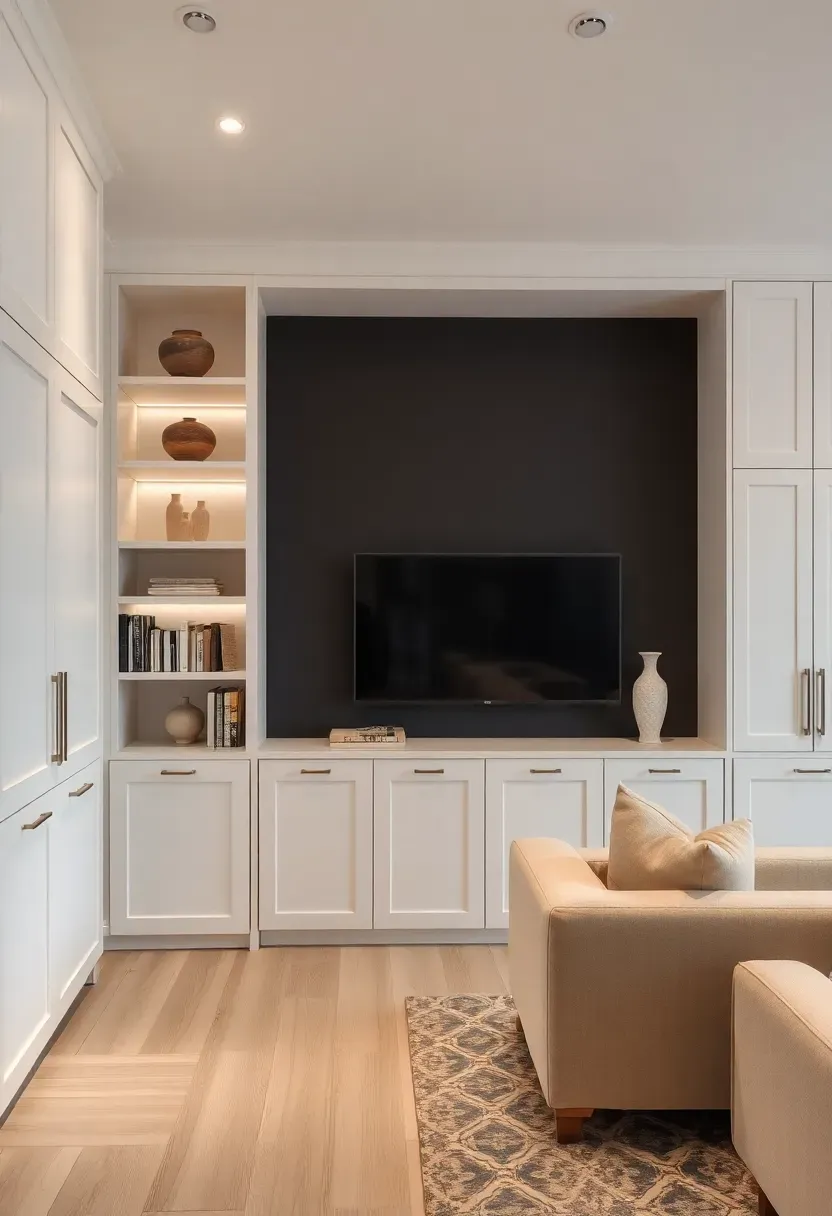
Custom built-in cabinetry provides refined storage while becoming architectural feature itself. Floor-to-ceiling bookcases, media units, or display cabinets create polished, intentional organization that feels sophisticated rather than utilitarian. Choose designs with slab-style doors (minimal visible hardware), integrated pulls, or push-latch mechanisms for clean minimalist appearance. Built-ins should match wall color or contrast elegantly—white built-ins against charcoal walls, or walnut units against cream backdrops. The key is seamless integration: built-ins should feel like original architecture rather than added furniture. Include lighting integration—LED strips inside glass-front cabinets or under upper shelves—to highlight displayed objects and create ambient elegance.
Tips
- Include adjustable shelving for flexible display options
- Integrated lighting requires advance planning for electrical access
- Choose quality hardware—soft-close mechanisms feel luxurious
Best for: living rooms with storage needs or display collections
What this gives you: architectural organization with concealed clutter
10. Suspended Fireplace
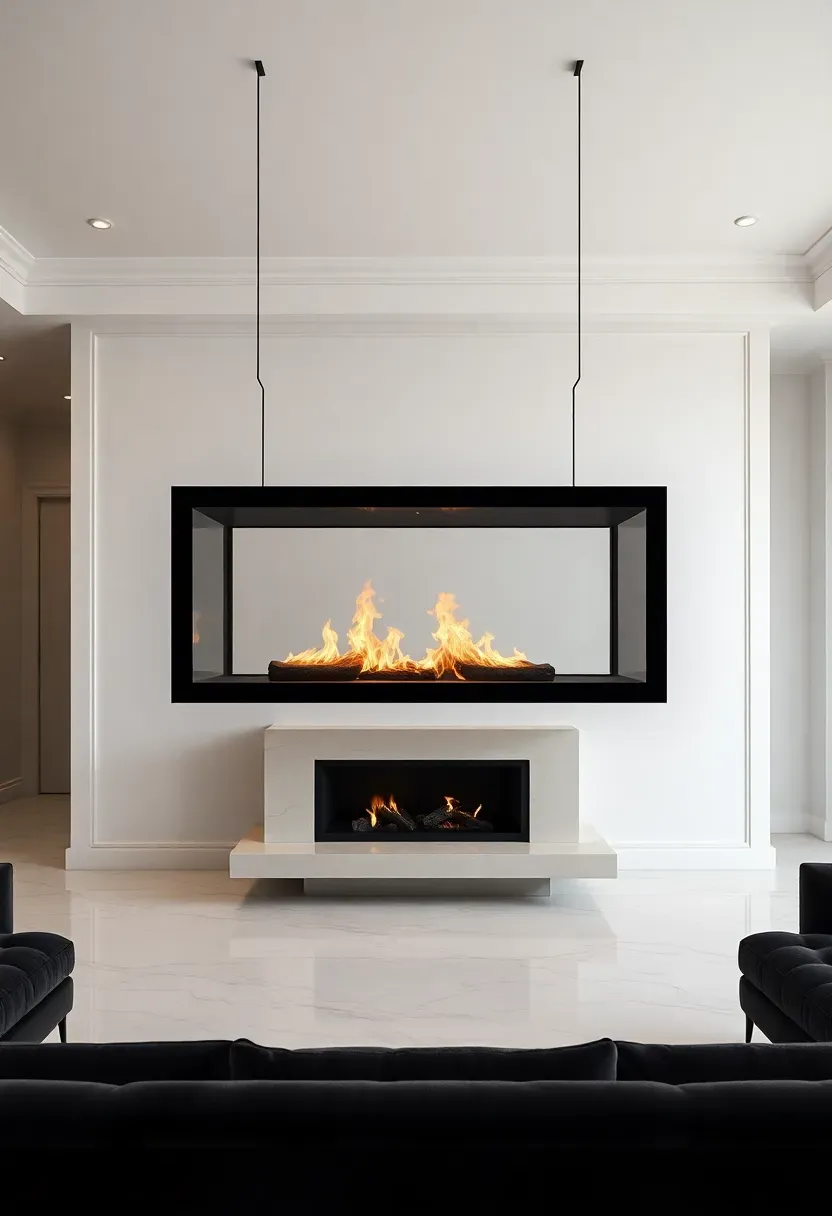
A suspended or double-sided fireplace becomes sculptural art while providing warmth and focal point. These modern fireplaces appear to float, anchored by ceiling mount or minimal structural support. The see-through design allows fire to be viewed from multiple seating areas, creating drama and interest. Choose models with clean surrounds and minimal framing—let the flames themselves be the decoration. Position fireplaces to divide spaces elegantly: between living and dining areas, or as room center with seating arranged around both sides. The fireplace becomes architectural sculpture that adds movement and life through flickering flames. Even when not in use, the fireplace's sleek presence provides modern elegance.
Recommended
Items for this idea
Tips
- Professional installation essential for suspended fireplaces
- Consider fuel type—gas provides convenience, wood offers tradition
- Include adequate ventilation for proper operation
Best for: open-concept spaces or rooms needing division
What this gives you: sculptural focal point with functional warmth
11. Wide-Plank Hardwood Floors
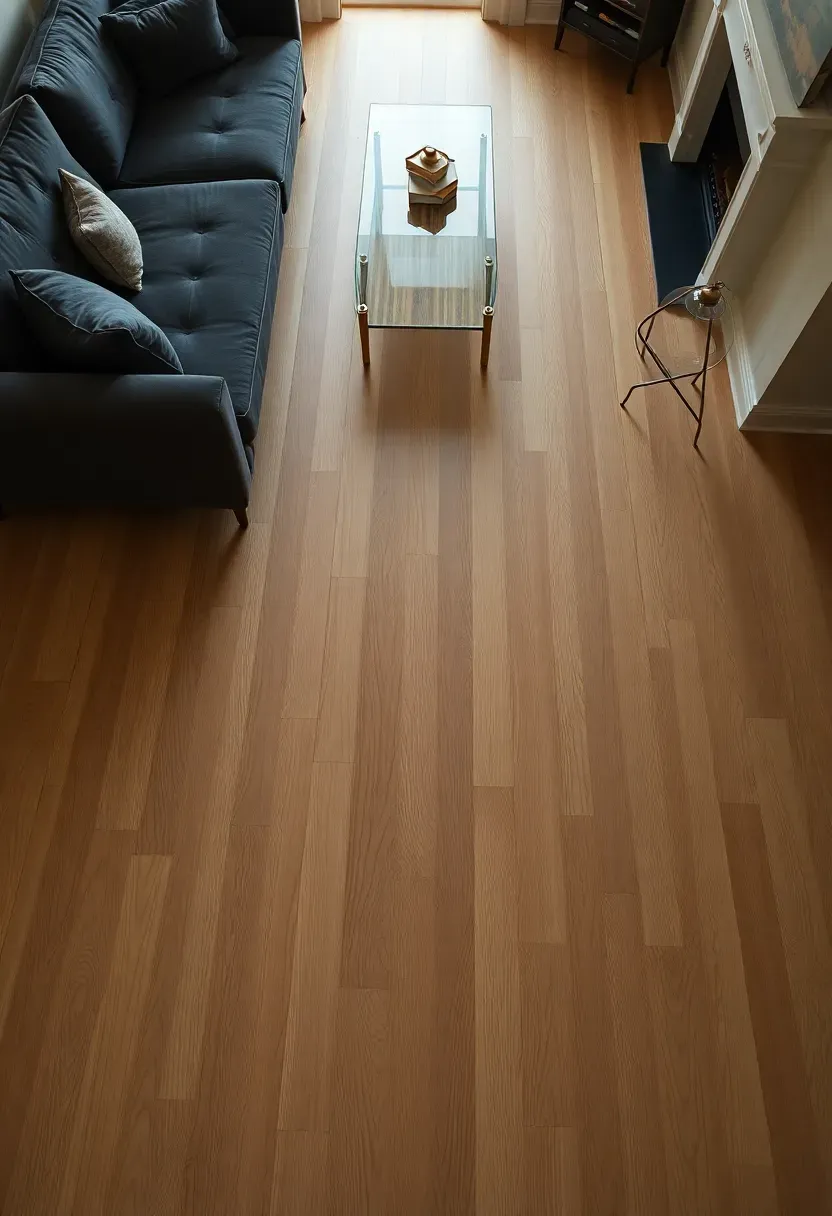
Wide hardwood planks (5 inches or wider) create immediate elegance through substantial proportions and visible grain patterns. Choose species with refined character: white oak with subtle grain, walnut with rich color depth, or rift-sawn white oak with remarkably straight, consistent grain. Wider planks feel more luxurious and traditional narrow strips, with fewer seams creating cleaner visual field. Select matte or satin finishes rather than high-gloss for contemporary elegance. Floors should extend continuously from living room to adjacent spaces for seamless flow. In elegant minimalist rooms, the floor becomes a significant visual element—its quality, color, and installation contribute materially to overall sophistication.
Tips
- Engineered hardwood provides stability for wide-plank installations
- Matte finishes show fewer scratches and require less maintenance
- Consider radiant floor heating—luxury that's invisible but appreciated
Best for: living rooms of any size—wide planks make small rooms feel larger
What this gives you: refined foundation with luxurious proportions
12. Floating Media Console
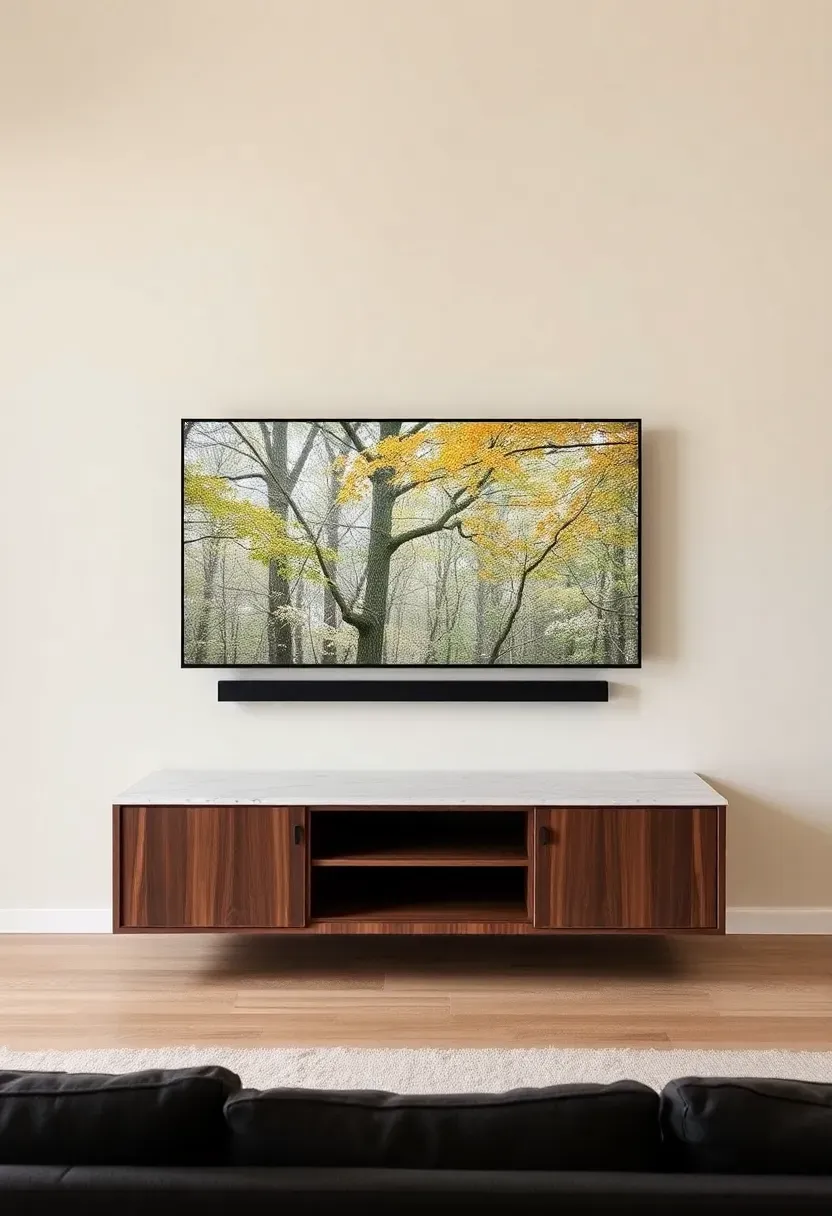
A wall-mounted media console creates sleek elegance while maintaining floor visibility and easy cleaning. Choose consoles with substantial fronts—solid wood, lacquer, or stone slab—mounted with hidden brackets so they appear to float. The floating design leaves floor space open underneath, creating visual lightness and making rooms feel larger. Include integrated cable management to keep cords invisible; messy wires instantly diminish elegance. Consoles should extend slightly beyond media width for visual balance—6-12 inches overhang on each side. In elegant minimalist spaces, the media console becomes refined cabinetry rather than tech furniture. Choose materials that complement other room elements: walnut console with oak floors, marble top with marble accent wall, brass hardware with other brass accents.
Recommended
Items for this idea
Tips
- Professional installation required for proper weight support
- Include power access inside cabinet for hidden device charging
- Consider ventilation for electronic components inside cabinet
Best for: living rooms with media and screen display needs
What this gives you: tech integration that feels architectural rather than utilitarian
13. Curved Furniture Silhouettes
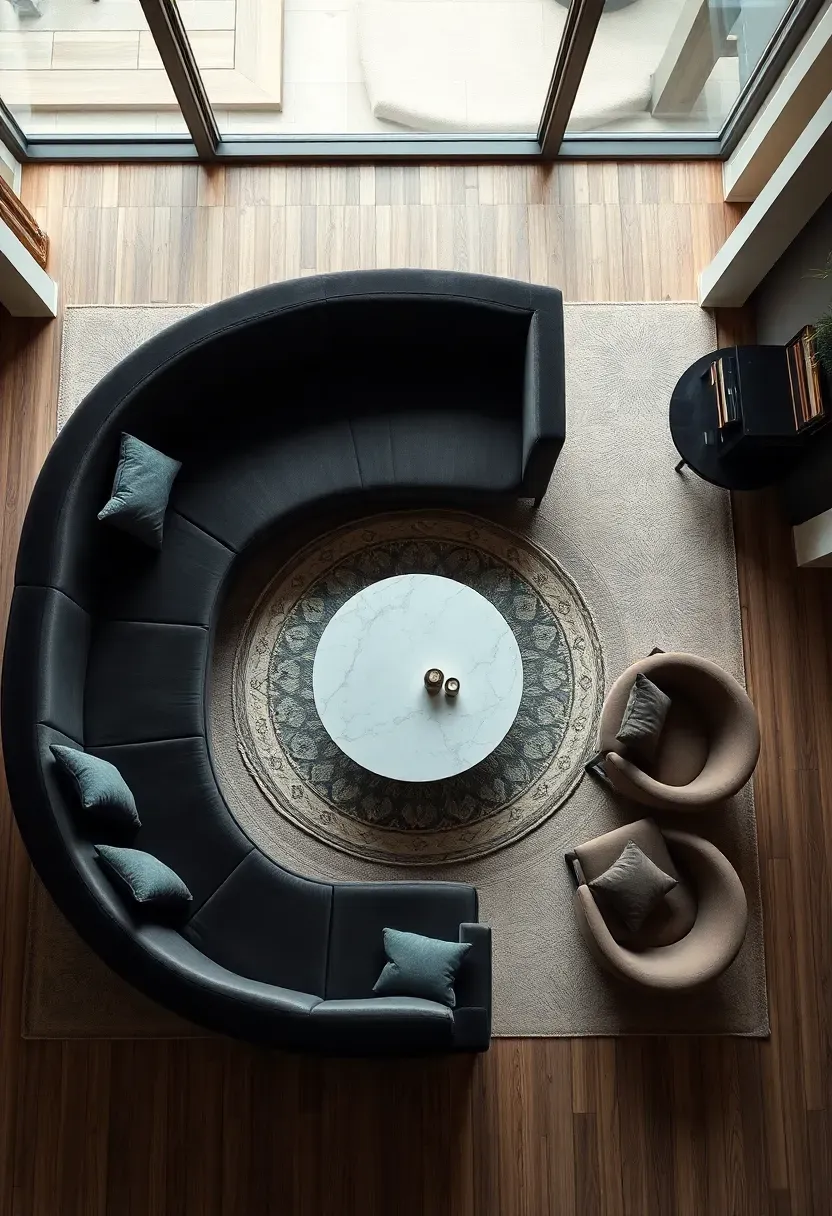
Introduce curved furniture shapes to soften minimalism and add refined elegance. Curved sofas, round coffee tables, or circular rugs create organic contrast to rectangular rooms and linear architecture. In elegant minimalist living rooms, one or two curved elements provide sophistication without requiring additional decoration. A curved sofa invites conversation and creates graceful flow. Round tables eliminate hard corners and feel more welcoming. Curved shapes also break up boxy room proportions, adding visual interest that's sculptural rather than decorative. Choose curves with generous proportions—petite curves feel tentative, substantial curves feel confident and luxurious. Balance curved elements with linear pieces for dynamic tension.
Tips
- Curved sofas require careful space planning—allow adequate circulation
- Round tables work well in square rooms, oval in rectangular rooms
- Balance curves with straight lines for dynamic rather than chaotic energy
Best for: softening minimalism and adding graceful movement
What this gives you: sculptural sophistication through form rather than decoration
14. Floor-to-Ceiling Windows
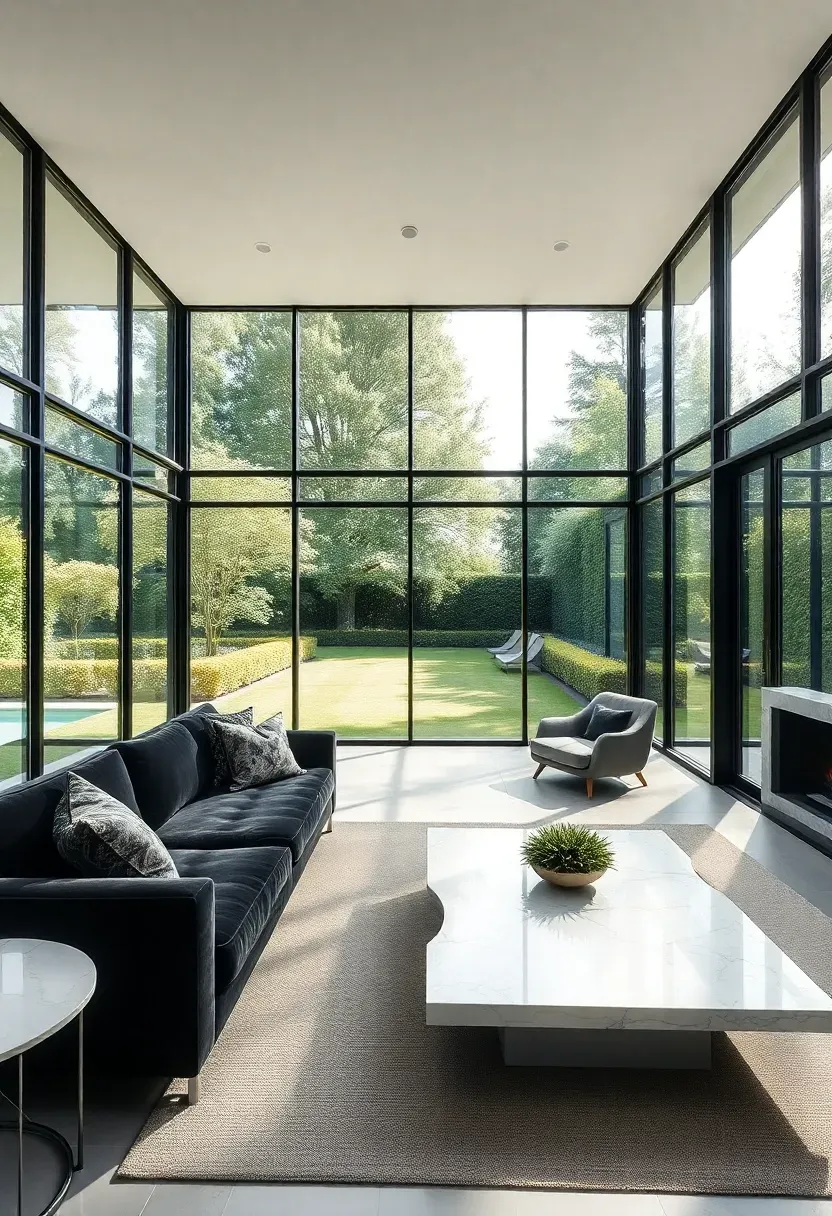
Floor-to-ceiling glass walls create elegant connection to outdoors while flooding living rooms with natural light. The transparency makes spaces feel larger and more luxurious, blurring boundaries between interior and exterior. If architectural changes aren't possible, maximize existing windows: remove treatments entirely or use minimal sheer panels. Frame views carefully—what's visible outside becomes part of interior design. In elegant minimalist living rooms, windows become living art, providing changing scenery throughout day and seasons. The abundant natural light enhances material quality: marble glows, velvet sheens, brass sparkles. Floor-to-ceiling glass also emphasizes architectural modernity and creates resort-like atmosphere regardless of location.
Recommended
Items for this idea
Tips
- Consider window films for UV protection without sacrificing views
- Minimal framing—thin profiles—maximizes glass and elegance
- Automated shades provide light control when needed
Budget note: if new windows aren't feasible, maximize existing with minimal treatments
What this gives you: luxurious light and connection to outdoors
15. Integrated Lighting Design
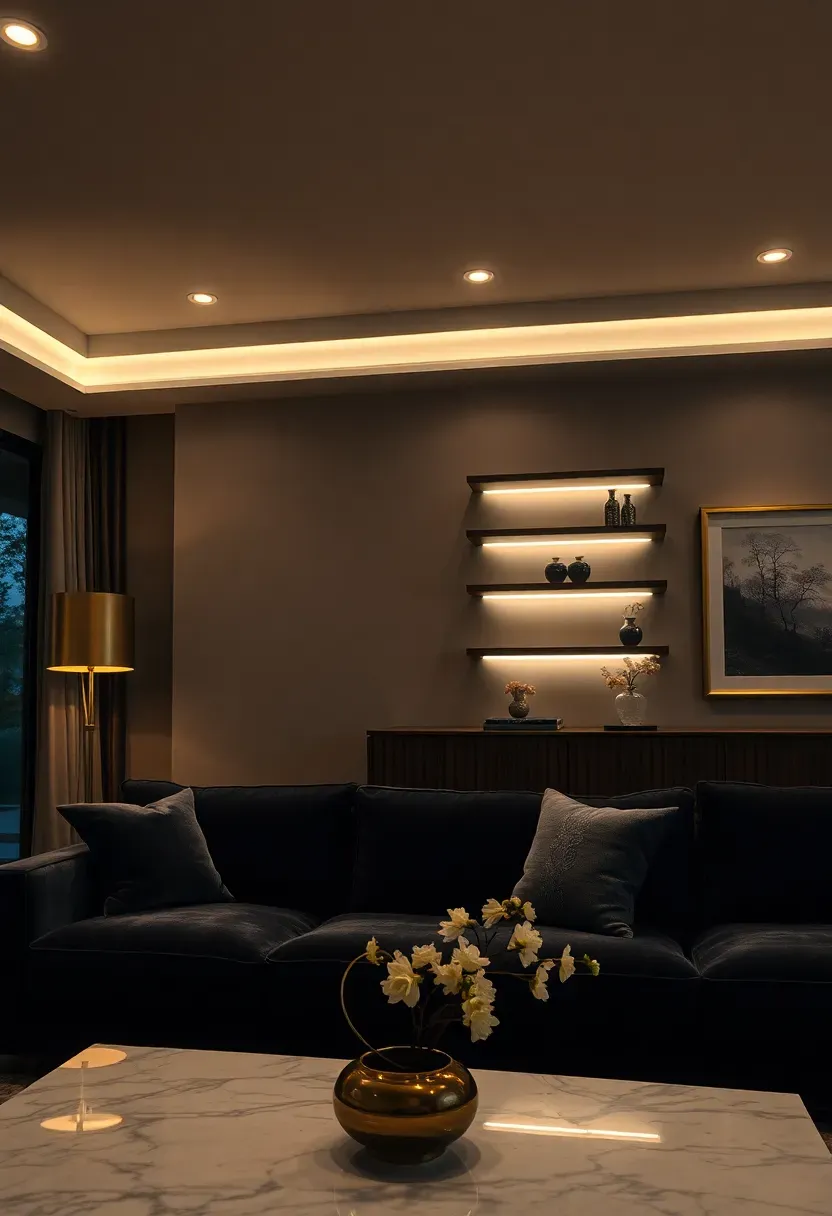
Layer multiple light sources for sophisticated ambiance that transforms rooms from day to night. Combine ambient ceiling lighting (recessed cans or flush mounts), task lighting (floor or table lamps), and accent lighting (picture lights, shelf LEDs, or sconces). Install everything on dimmers for complete control over mood. In elegant minimalist living rooms, lighting fixtures themselves should be refined: sleek floor lamps with slender profiles, minimal table lamps with refined bases, architectural sconces that blend with walls rather than protruding. The layering creates depth and dimension, while dimmability allows precise adjustment for different occasions—bright for cleaning, medium for reading, dim for entertaining. Good lighting elevates everything else, making materials glow and colors deepen. For a deeper dive into fixtures and placement, see our guide to [minimalist living room lighting ideas](/posts/121_27-minimalist-living-room-lighting-ideas-light-reimagined-for-a-comfortable-living-space/).
Tips
- Warm white bulbs (2700-3000K) create more elegant ambiance than cool daylight
- Layer 4-5 light sources for medium-sized living rooms
- Consider smart lighting systems for convenient scene control
Best for: living rooms used day and night for multiple activities
What this gives you: transformable ambiance through light control
16. Luxury Rug Foundation
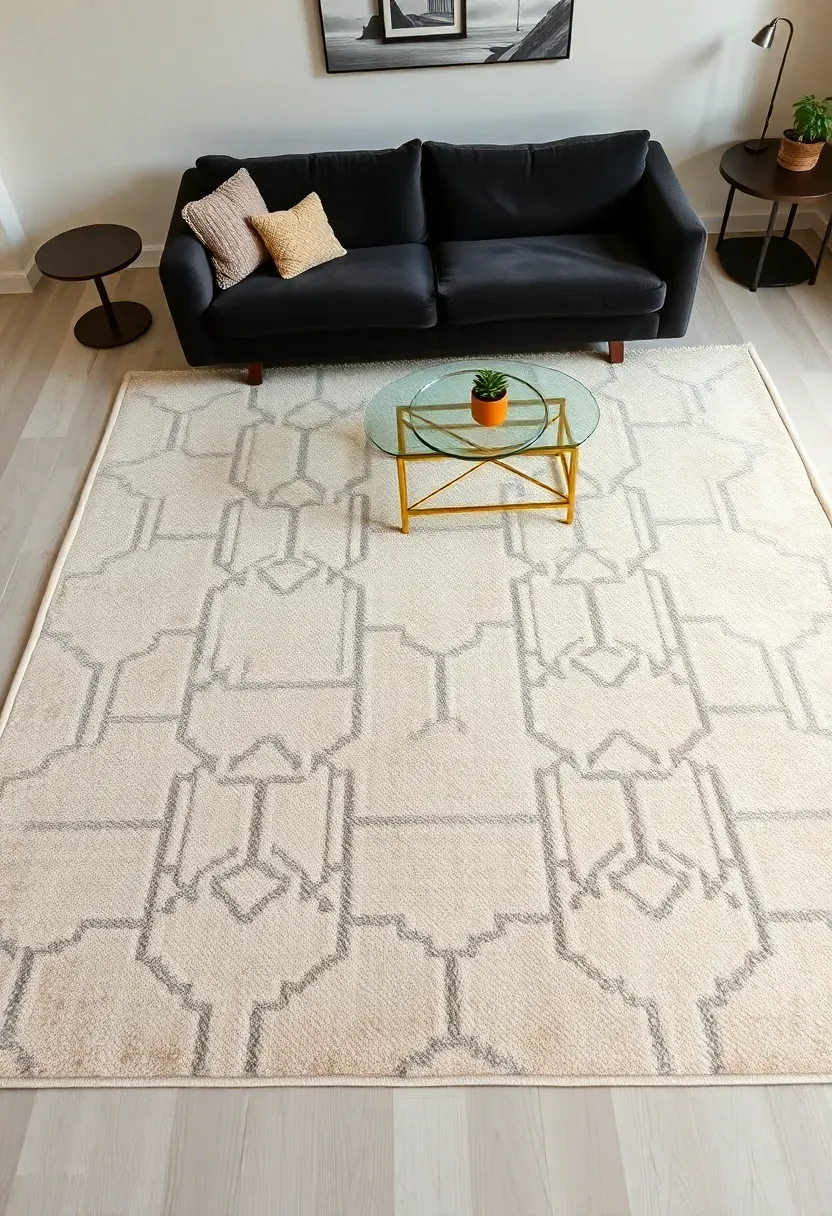
A large, high-quality rug provides elegant foundation that ties the room together while adding material richness. Choose substantial sizes—room-scale rugs that extend under all furniture fronts or at least under the front legs of major pieces. Materials matter: hand-knotted wool, silk blends, or high-quality synthetic with plush pile. In elegant minimalist living rooms, rug patterns should be subtle or solid; let material quality and texture provide luxury rather than bold prints. Border designs, subtle geometric patterns, or tonal variations add sophistication without visual noise. The rug should feel luxurious underfoot—plush pile, substantial weight, refined edges. A beautiful rug elevates even simple furniture, making everything around it feel more expensive and considered.
Recommended
Items for this idea
Tips
- Rug pads prevent slipping and extend rug life
- Professional cleaning maintains luxury appearance
- Size up—bigger rugs make rooms feel larger and more elegant
Best for: living rooms with hard surface floors needing softening
What this gives you: material luxury and spatial cohesion
17. Statement Stone Coffee Table
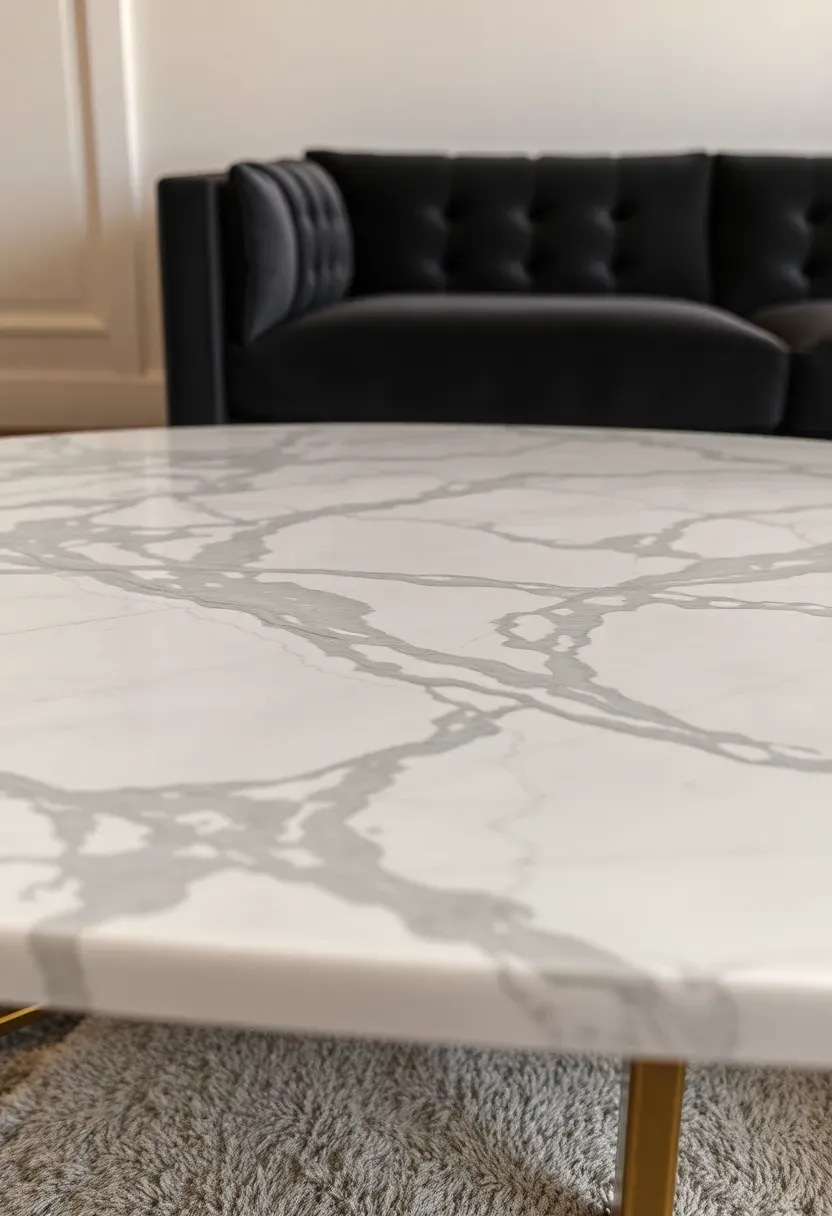
A coffee table in luxurious stone—marble, travertine, or onyx—becomes sculptural art while providing functional surface. Choose substantial proportions: thick tops (2-3 inches) and generous overall size for presence. Stone tables should feel substantial and permanent rather than delicate or temporary. Round, oval, or organic shapes soften minimalism; rectangular or square shapes reinforce architectural lines. The stone's natural patterns become visual interest—marble veining, travertine pits, onyx translucency. In elegant minimalist living rooms, one exceptional stone table provides more impact than multiple decorative objects. Pair with minimalist bases: sleek metal, simple wood, or floating glass supports that don't compete with the stone's beauty.
Tips
- Sealing stone prevents staining from coffee or wine spills
- Coasters essential—acidic liquids etch marble and travertine
- Consider honed finish—shows fewer scratches than polished
Best for: living rooms where coffee table is central focal point
What this gives you: sculptural luxury through natural material
18. Architectural Ceiling Treatment
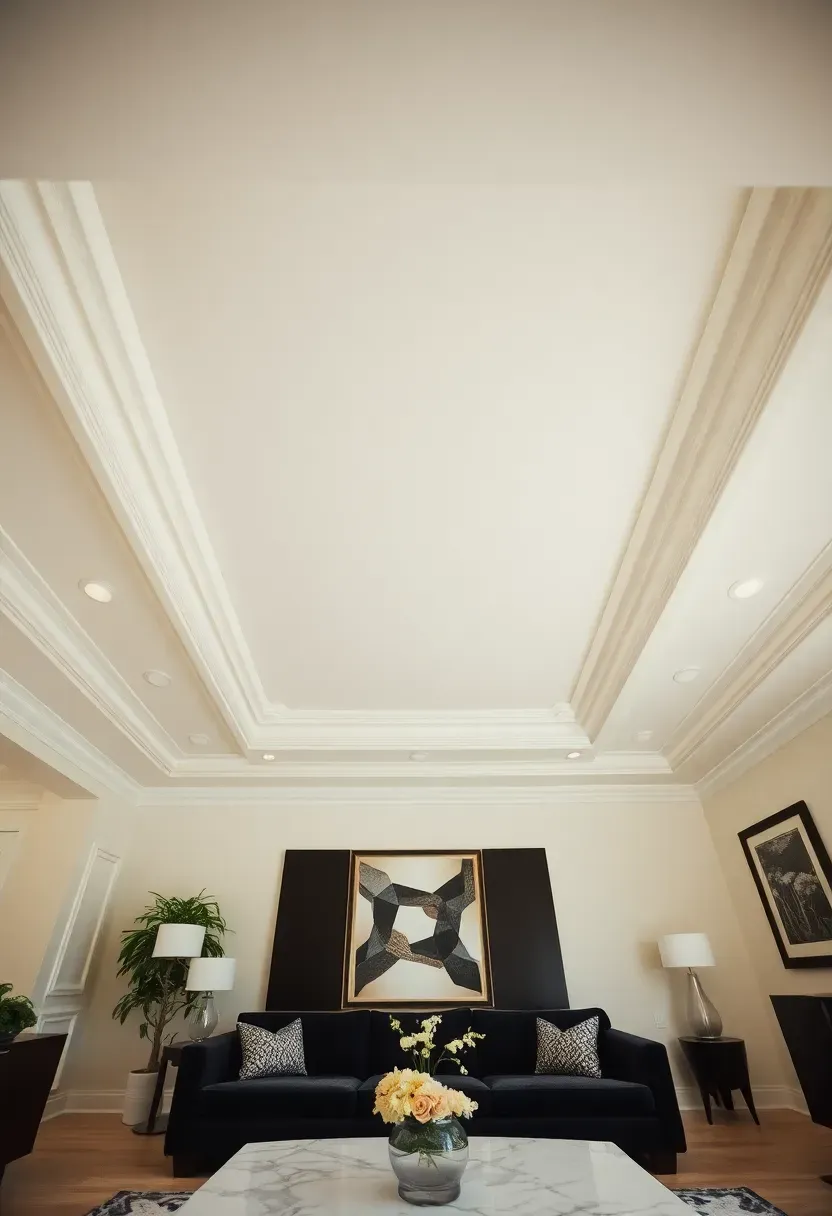
Add subtle architectural interest to ceilings through refined treatments that enhance without overwhelming. Options include tray ceilings (recessed central portion), cove molding (curved transition where walls meet ceiling), or beam details (even faux beams painted to match). The key is subtlety—treatments should be noticed gradually rather than immediately apparent. Paint ceilings the same color as walls, or one shade lighter, for seamless integration. In elegant minimalist living rooms, ceiling refinement creates polish without ornamentation. The treatments feel like original architecture rather than added decoration. Even simple rooms benefit from refined ceiling details—they provide subtle sophistication that elevates the entire space through architectural quality rather than decorative objects.
Recommended
Items for this idea
Tips
- Cove molding provides graceful transition and shadow detail
- Recessed lighting in trays creates ambient upward glow
- Faux beams painted to match ceiling add depth without visual weight
Best for: living rooms with standard ceilings needing elevation
What this gives you: architectural polish without decorative clutter
19. Refined Neutral Palette
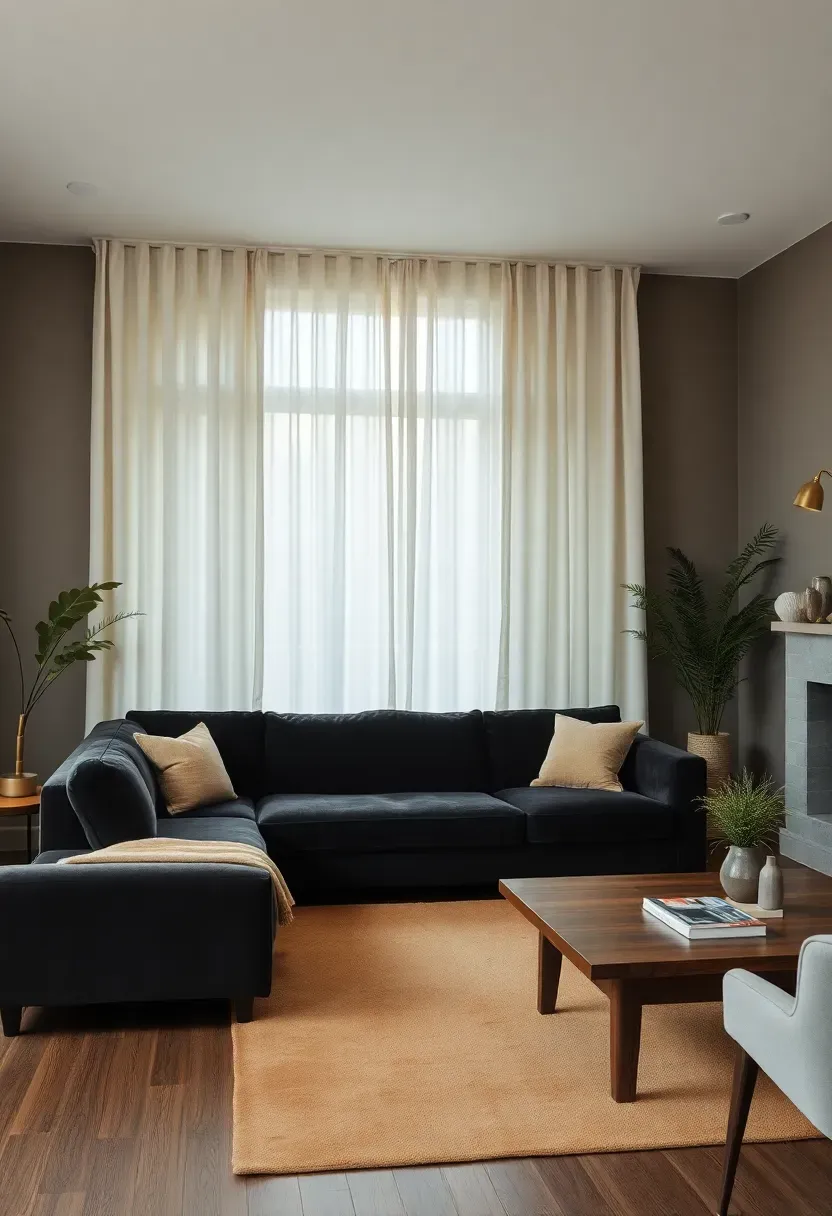
Elegance emerges from sophisticated neutral combinations rather than bold color statements. Build palettes from refined neutrals: charcoal, navy, cream, camel, taupe, and warm grays. These colors feel inherently luxurious and timeless. Limit to 2-3 neutral colors maximum for cohesion. For example: charcoal sofa, cream walls, camel rug, with brass and wood accents. Or navy velvet, cream drapery, warm gray walls, with chrome and glass elements. The sophistication comes from color quality—rich saturation, depth within neutrals—rather than variety. Include both warm and cool undertones for dynamic tension, but keep them harmonious. Metals provide accent without introducing additional hues: brass warms cool palettes, chrome cools warm ones.
Tips
- Test large samples—neutral undertones shift dramatically in different light
- Include both matte and sheen finishes for added sophistication
- Natural materials (wood, stone, metal) provide accent without color
Best for: creating timeless elegance that won't feel dated
What this gives you: sophisticated calm through refined color
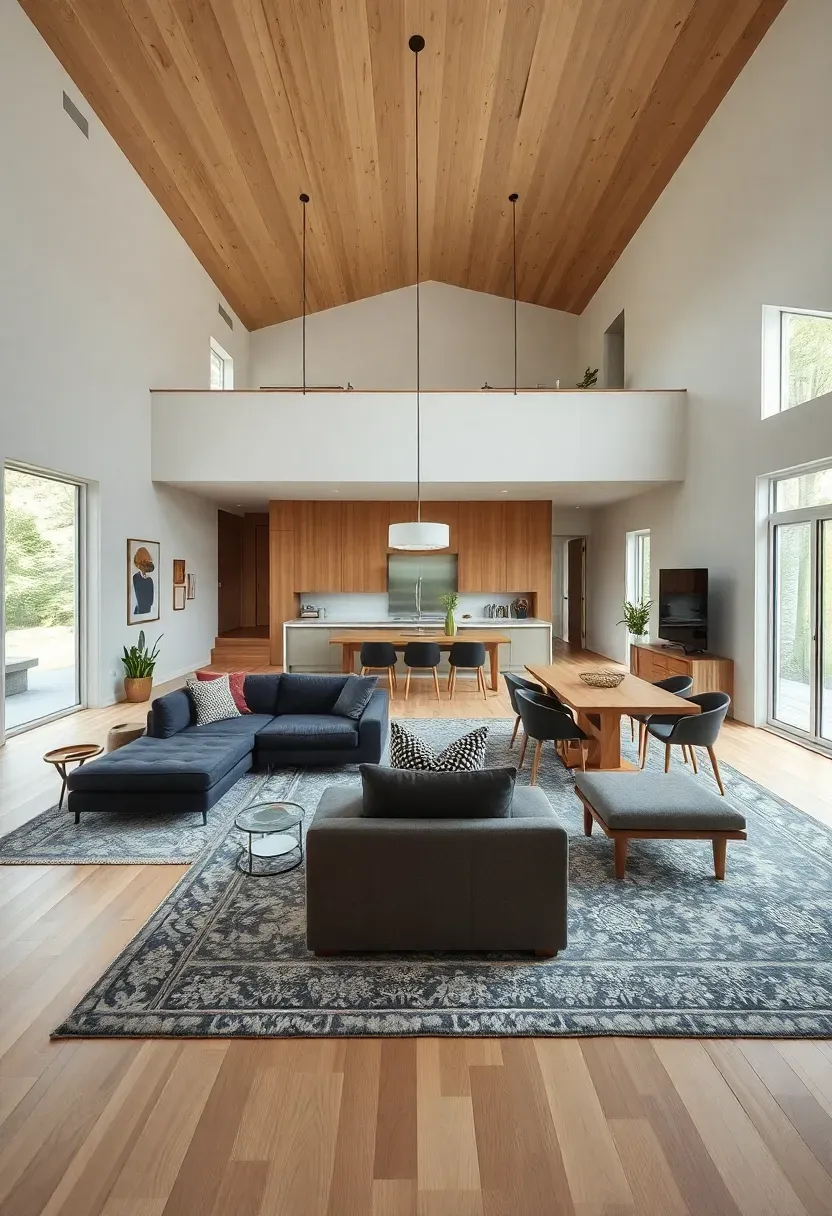
20. Open Concept with Zoning
In open-concept living spaces, create elegant separation through strategic furniture placement and subtle zoning rather than walls. Use area rugs to define living zones within larger spaces. Position sofas to create boundaries while maintaining flow. Consistent flooring material unifies spaces while furniture groupings differentiate functions. Lighting also zones spaces—pendant lights over conversation areas, floor lamps near reading nooks. In elegant minimalist open plans, maintain generous circulation between zones. The spaces should feel connected yet distinct—unified through material consistency but differentiated through furniture arrangements. This approach creates spaciousness while preserving each area's function and identity.
Recommended
Items for this idea
Tips
- Allow minimum 4-6 feet circulation between major furniture groupings
- Consistent flooring unifies—avoid different materials that chop spaces
- Lighting helps define zones without physical barriers
Best for: open-concept homes needing spatial definition
What this gives you: organized spaciousness with elegant flow
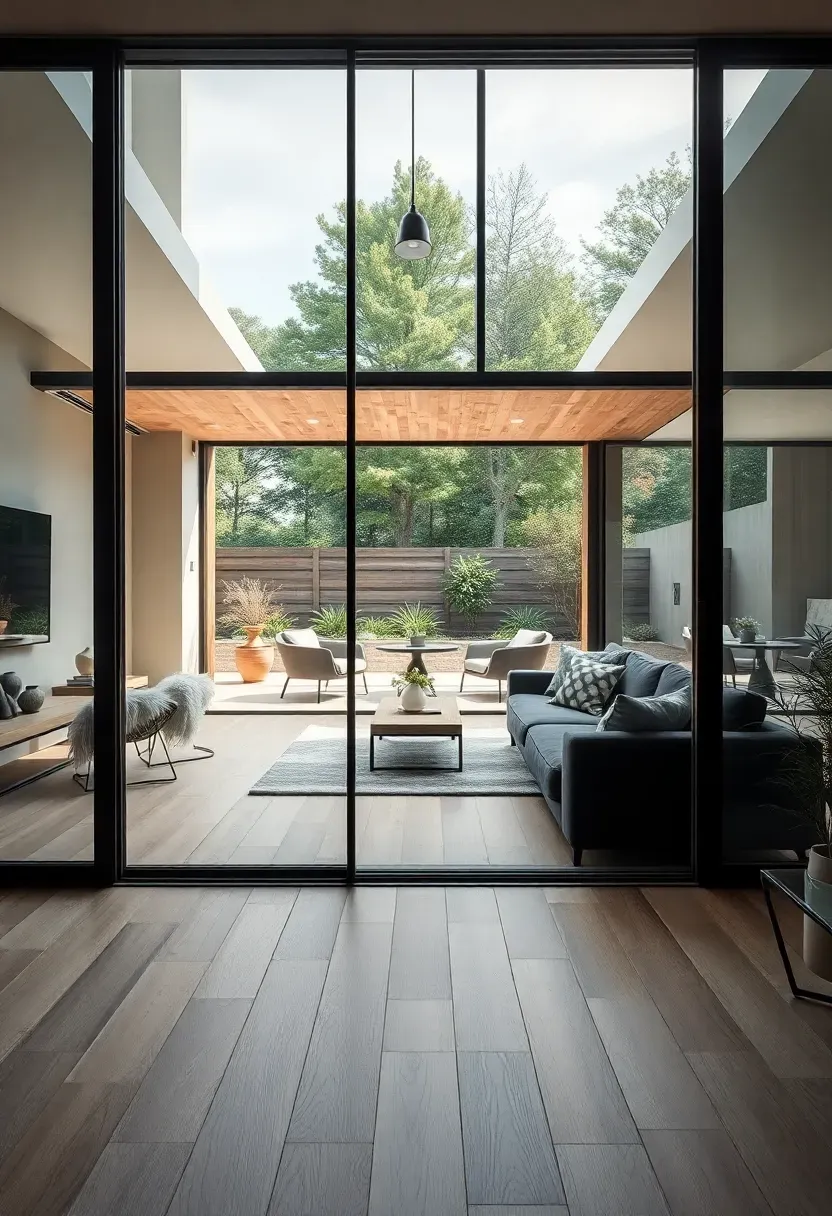
21. Indoor-Outdoor Connection
Create elegant transition between living room and outdoor spaces through consistent flooring, sliding glass doors, or complementary design. Extend living room flooring material onto outdoor patio for seamless flow. Use large sliding or folding glass doors that disappear when opened, blurring indoor-outdoor boundaries. Design outdoor spaces as extensions of living room: similar furniture styles, coordinated colors, or continuous material palettes. In elegant minimalist homes, this connection makes living rooms feel larger and more luxurious by borrowing outdoor space. The transition should feel effortless rather than abrupt—same flooring, consistent ceiling height, complementary design language. Even views to well-designed gardens or courtyards extend living spaces visually.
Tips
- Same flooring indoors and outdoors creates seamless transition
- Large sliding doors with minimal frames maximize opening
- Coordinate outdoor furniture style with indoor for continuity
Best for: homes with patios, decks, or garden access
What this gives you: expanded living space through outdoor connection
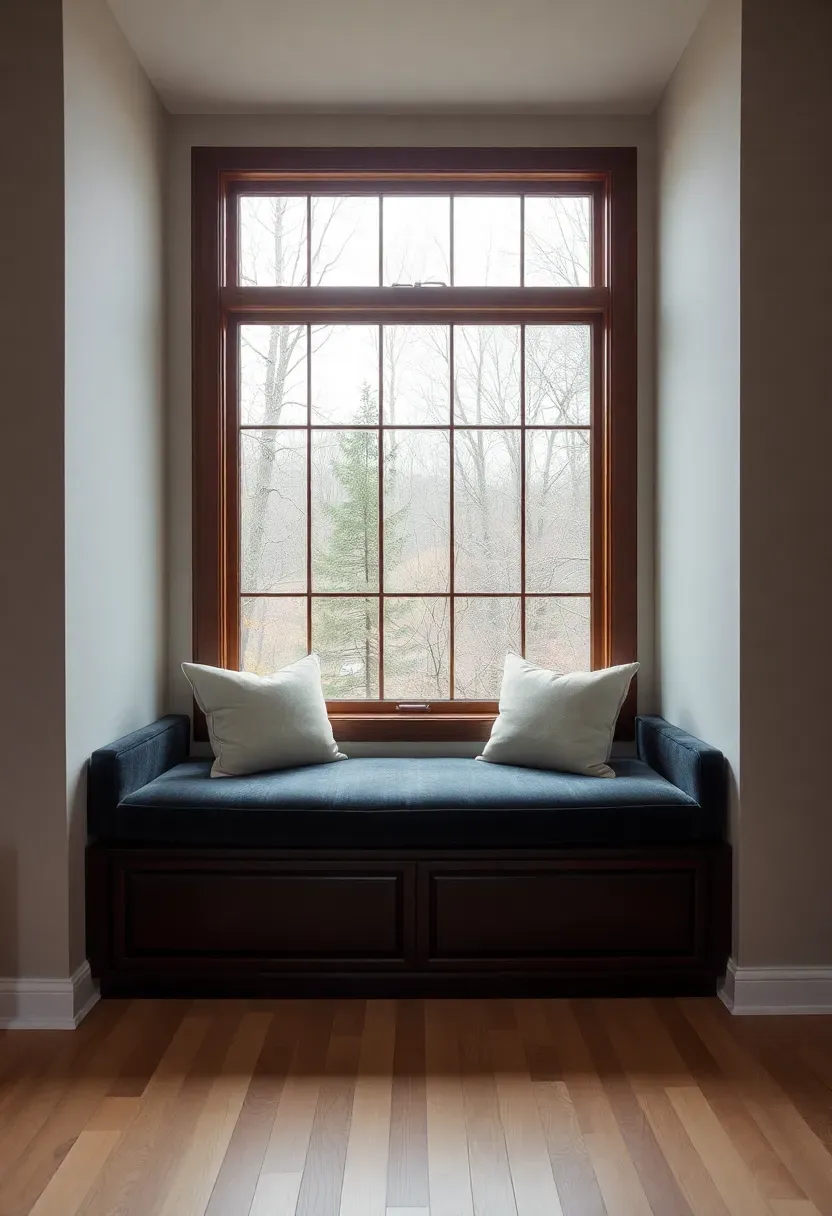
22. Custom Built-In Seating
Built-in window seats or banquettes provide elegant seating while becoming architectural features. These permanent installations feel refined and intentional, offering comfortable seating without consuming floor space with furniture. Built-ins should align with window proportions for integrated appearance. Include storage inside for functional elegance—hidden compartments keep clutter concealed. Upholstery in luxurious fabrics—velvet, leather, or high-quality linen—adds comfort and refinement. In elegant minimalist living rooms, built-in seating maximizes views and light while providing sophisticated, space-efficient seating. The architectural integration feels permanent and polished rather than temporary and added. Include pillows for comfort, but keep quantity minimal to maintain elegance.
Recommended
Items for this idea
Tips
- Include storage with hydraulic lifts for hidden functionality
- Water-resistant fabrics smart if windows may condensate
- LED strip under seat creates floating effect and ambient light
Best for: living rooms with windows or alcoves suitable for built-ins
What this gives you: architectural seating with concealed storage
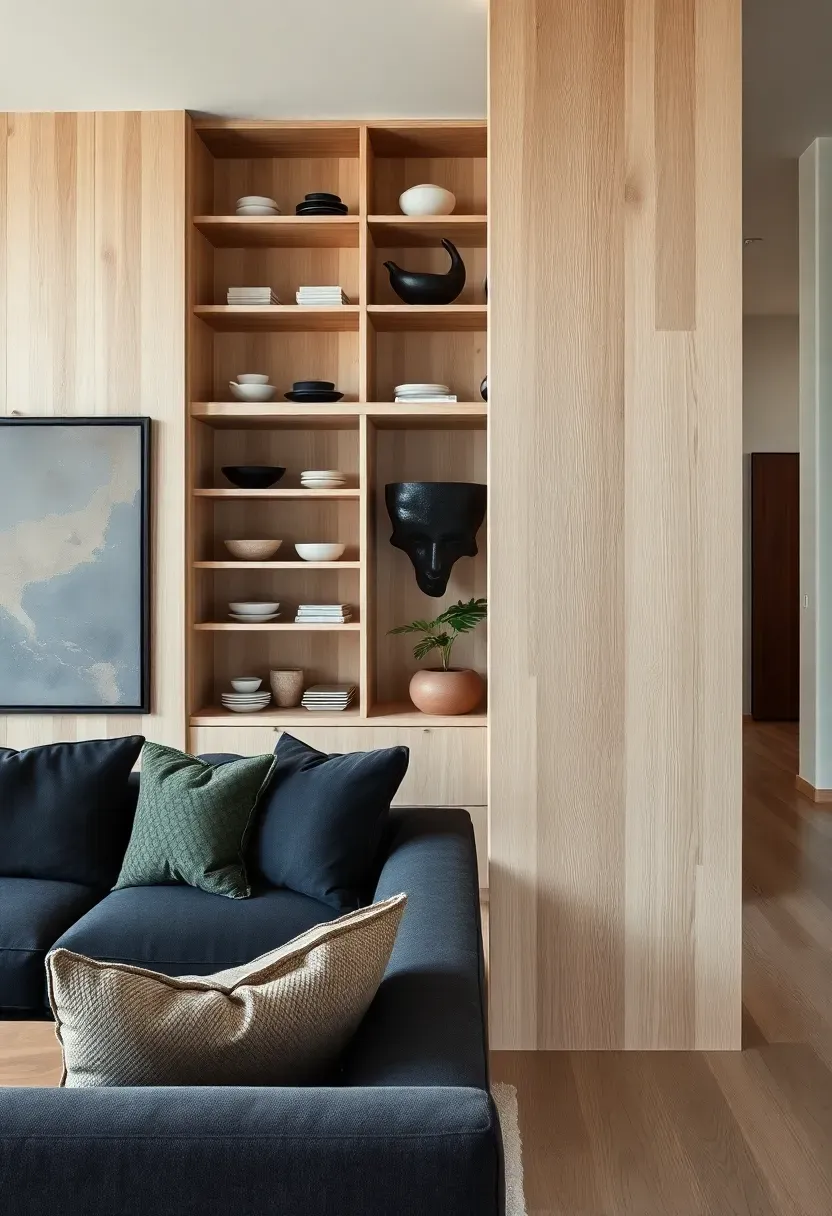
23. Sculptural Room Division
Elegant room dividers—open shelving, partial walls, or freestanding screens—separate spaces without blocking light or views. Choose dividers that are beautiful from both sides and allow glimpses through rather than complete opacity. Open bookcases, slat walls, or metal screens create separation while maintaining spaciousness. In elegant minimalist living rooms, dividers become sculptural elements that define zones without walls. Position dividers to separate living from dining, or create entry vestibules, or mask work areas. The divider itself should be refined: slim profile, quality materials, excellent craftsmanship. Rather than feeling like temporary partitions, elegant dividers feel like intentional architecture that adds sophistication while providing functional separation.
Tips
- Dividers should be beautiful from both sides for flexible use
- Open designs maintain light and views better than solid screens
- Consider weight—substantial dividers may need wall attachment
Best for: open-concept spaces needing elegant separation
What this gives you: sculptural division without sacrificing spaciousness
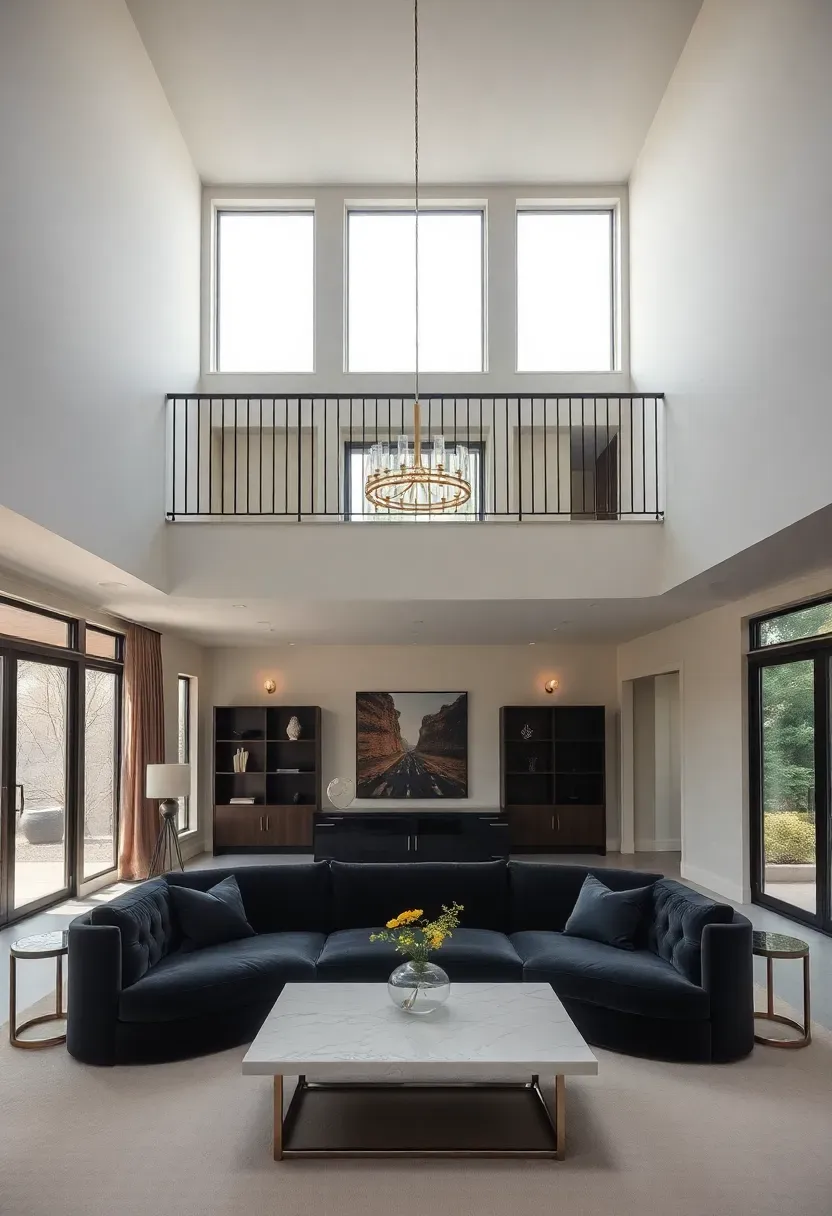
24. Double-Height Space
Two-story living rooms with double-height ceilings create dramatic elegance through vertical volume and grand proportions. The soaring space feels immediately luxurious and expansive. Key is balancing scale—furniture must be substantial enough to hold its own in voluminous spaces. Choose larger sofas, taller floor lamps, bigger art pieces. Include architectural elements at human scale within the large space—a mezzanine, a loft, or a second-floor walkway visible from below. Lighting becomes crucial; chandeliers can hang lower in tall spaces, creating intimacy at human scale while celebrating height. In double-height elegant minimalist rooms, maintain clean lines and uncluttered surfaces to avoid feeling overwhelmed by volume. Let the height itself be the luxury.
Recommended
Items for this idea
Tips
- Furniture scale must relate to ceiling height—go bigger than standard
- Second-floor railings become visible design elements—choose refined materials
- Consider catwalk or mezzanine for architectural interest at upper level
Best for: homes with existing double-height architecture
What this gives you: dramatic grandeur through vertical volume
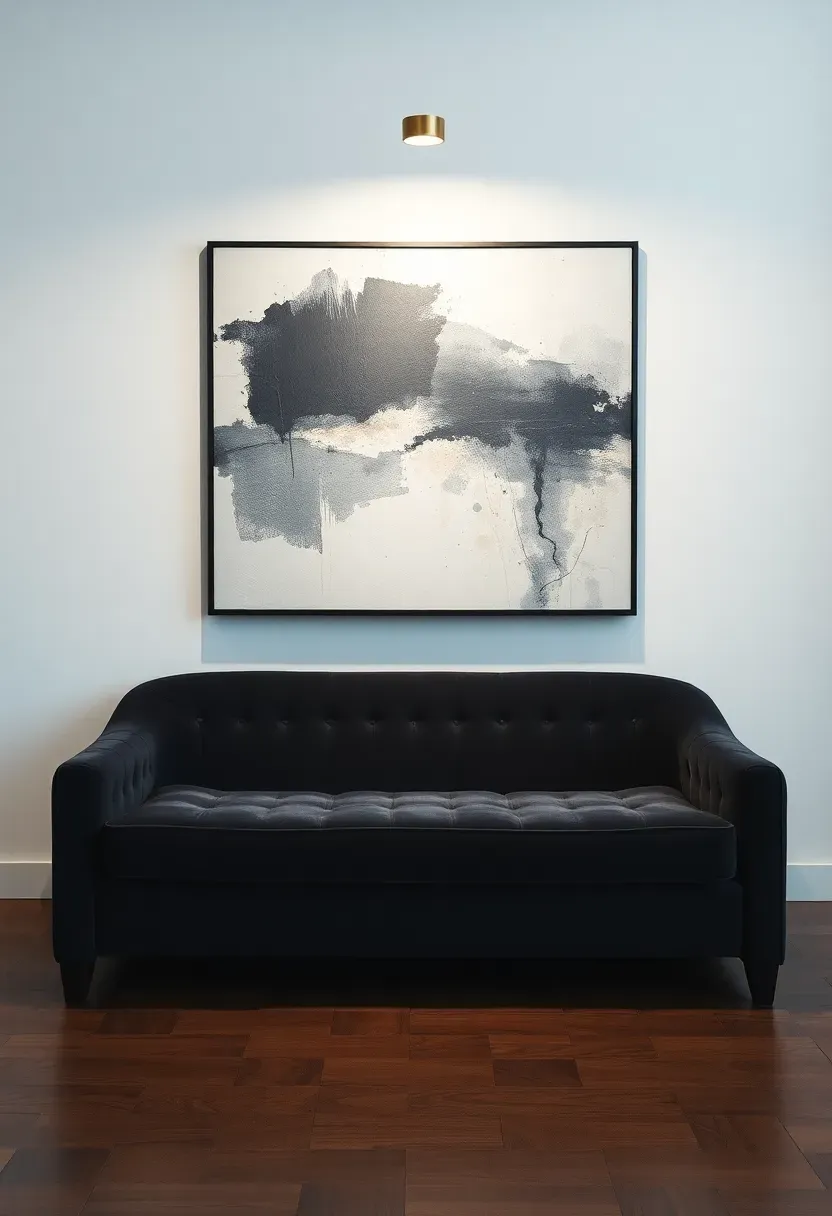
25. Gallery-Style Art Presentation
Display artwork with museum-style precision for immediate elegance. One large piece creates dramatic impact; a curated grouping feels intentional and sophisticated. Art should be framed elegantly—contemporary float frames for modern pieces, ornate gold frames for traditional works, or clean white gallery frames for photography. Hang art at eye level with generous spacing around each piece—empty wall space is as important as the art itself. In elegant minimalist living rooms, art becomes primary decoration, replacing accessories and objects. Choose artwork that speaks to you personally but also fits the room's refined aesthetic. The presentation matters as much as the art itself—thoughtful framing, precise hanging, and adequate breathing room elevate both the artwork and the entire room.
Tips
- Hang art center 57-60 inches from floor for optimal viewing
- Picture lights add drama and highlight artwork as featured element
- Groupings should relate through style, frame, or subject for cohesion
Best for: art collectors or those wanting one statement element
What this gives you: cultural sophistication without decorative clutter
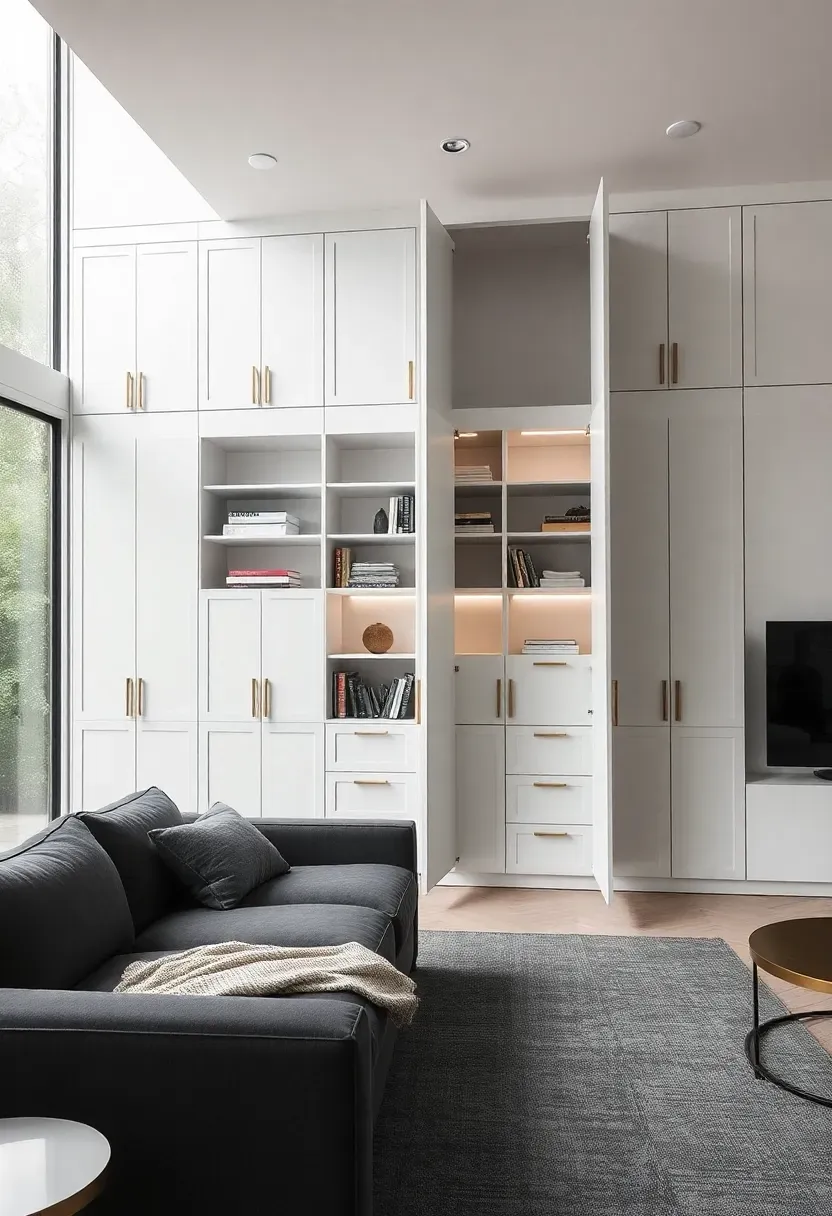
26. Concealed Storage
Elegant minimalism requires excellent hidden storage to maintain serene surfaces. Built-in cabinets, closet systems, or furniture with concealed compartments keep clutter invisible. Storage should be ample—generous space for everything—so items can be organized without cramming. In living rooms, include media storage, linen storage, and general-purpose hidden cabinets. The key is accessibility: stored items should be easily retrievable, or they won't get used. Soft-close mechanisms, pull-out shelves, and drawer organizers enhance functionality. In elegant spaces, cabinet fronts should align perfectly with walls or other millwork for seamless integration. The luxury lies in having everything you need available but nothing visible to disrupt the calm.
Recommended
Items for this idea
Tips
- Include mix of shelf sizes and drawer depths for varied storage needs
- LED lighting inside cabinets activates when doors open
- Soft-close hardware feels luxurious and prevents slamming
Best for: anyone wanting to maintain clutter-free surfaces
What this gives you: organized calm with everything accessible but nothing visible
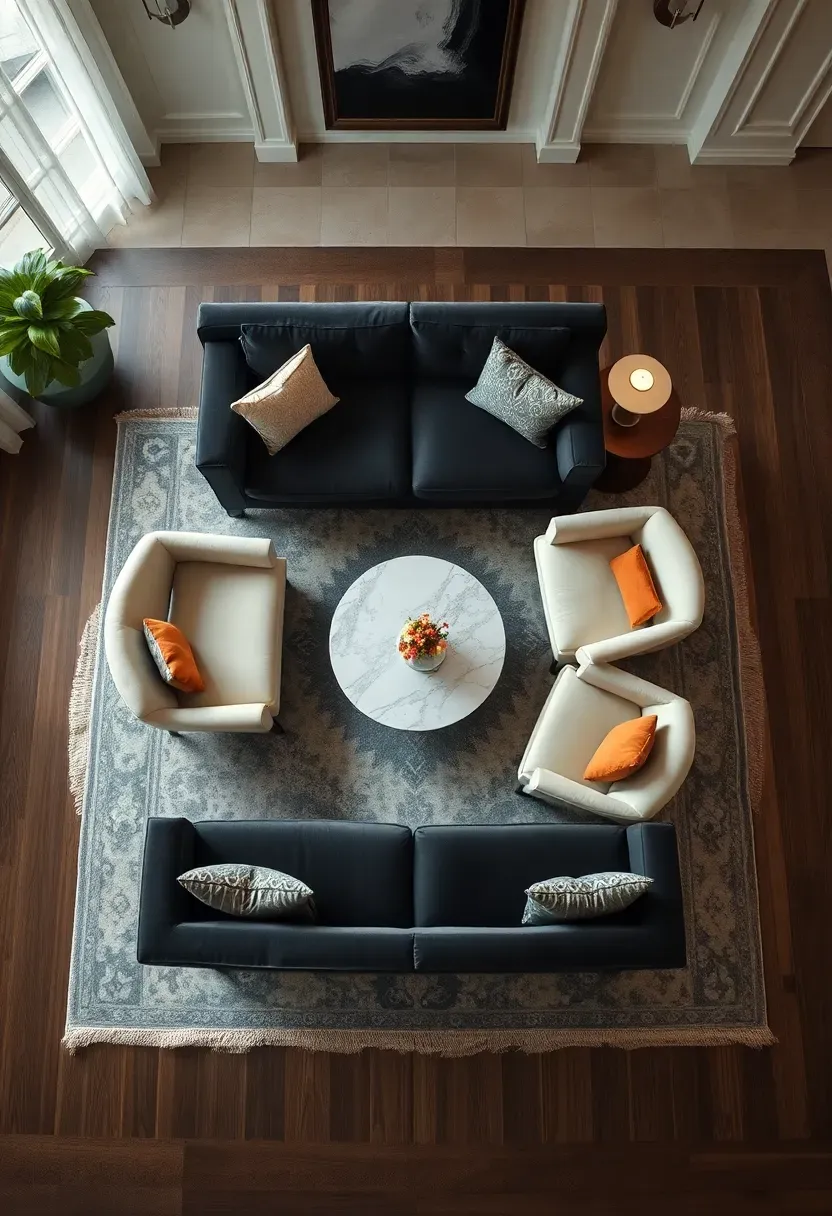
27. Focused Conversation Area
Create an intimate conversation area as the room's heart, even in spacious living rooms. Arrange primary seating—sofa and two chairs—in intimate grouping that facilitates conversation rather than dispersing furniture throughout large spaces. Anchor the area with a rug that defines the zone. Center a coffee table within reach of all seats. This focused arrangement creates warmth and intimacy regardless of overall room size. In elegant minimalist living rooms, the conversation area feels inviting and approachable rather than vast and formal. Maintain generous circulation around the perimeter but keep seating close enough for comfortable conversation. The intimacy feels luxurious—a well-planned space for human connection amid elegant surroundings.
Tips
- Keep conversation seats within 8 feet of each other for easy talking
- Rug should extend under front legs of all seating pieces
- One conversation area creates more intimacy than multiple seating zones
Best for: living rooms of any size—creates intimacy in large spaces
What this gives you: human-scaled warmth within elegant surroundings
Elegant minimalist living room design proves that sophistication and simplicity are not opposites but complements. The 27 ideas above focus on architectural quality, material excellence, and refined proportions rather than decorative abundance. True elegance emerges from what's omitted as much as what's included—the confidence to let empty space breathe, the restraint to choose quality over quantity, the discernment to select only what truly enhances the space. This approach yields living rooms that feel calm yet grand, simple yet luxurious, welcoming yet impressive. The elegance feels authentic rather than applied, earned through thoughtful decisions about materials, scale, and arrangement rather than through decorative objects or ornate details. For more foundational approaches, explore our full collection of [minimalist living room ideas](/posts/97_minimalist-living-room-ideas/). In the elegant minimalist living room, less becomes more not through deprivation but through curation -- every element earns its place through beauty, quality, and perfect proportion. Whether you are styling a rental apartment or a home you own, these elegant minimalist living room ideas give you a roadmap to refined calm that never goes out of style.
About the author
OBCD
CGI visualization and interior design content. We create detailed 3D renders and curate practical design ideas for every room in your home.