23 Japandi Living Room Ideas That Blend Zen and Hygge (2026)
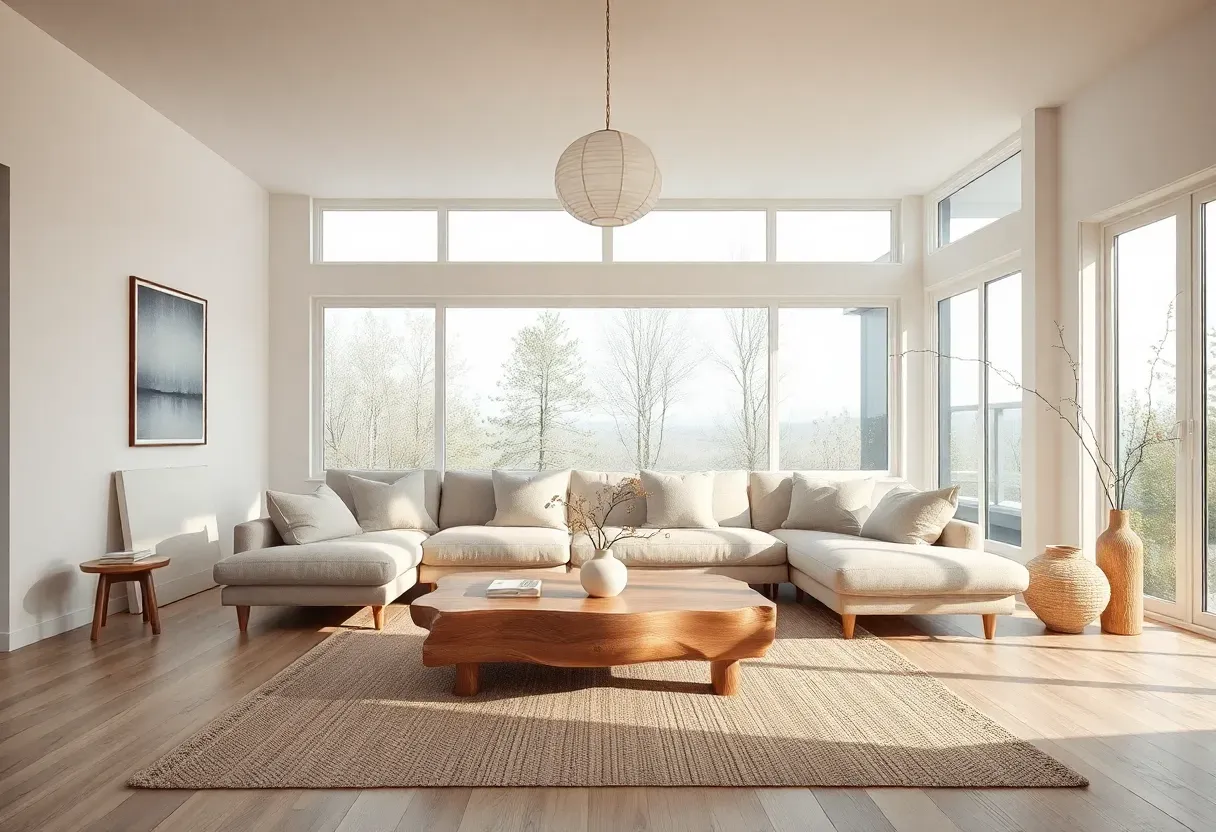
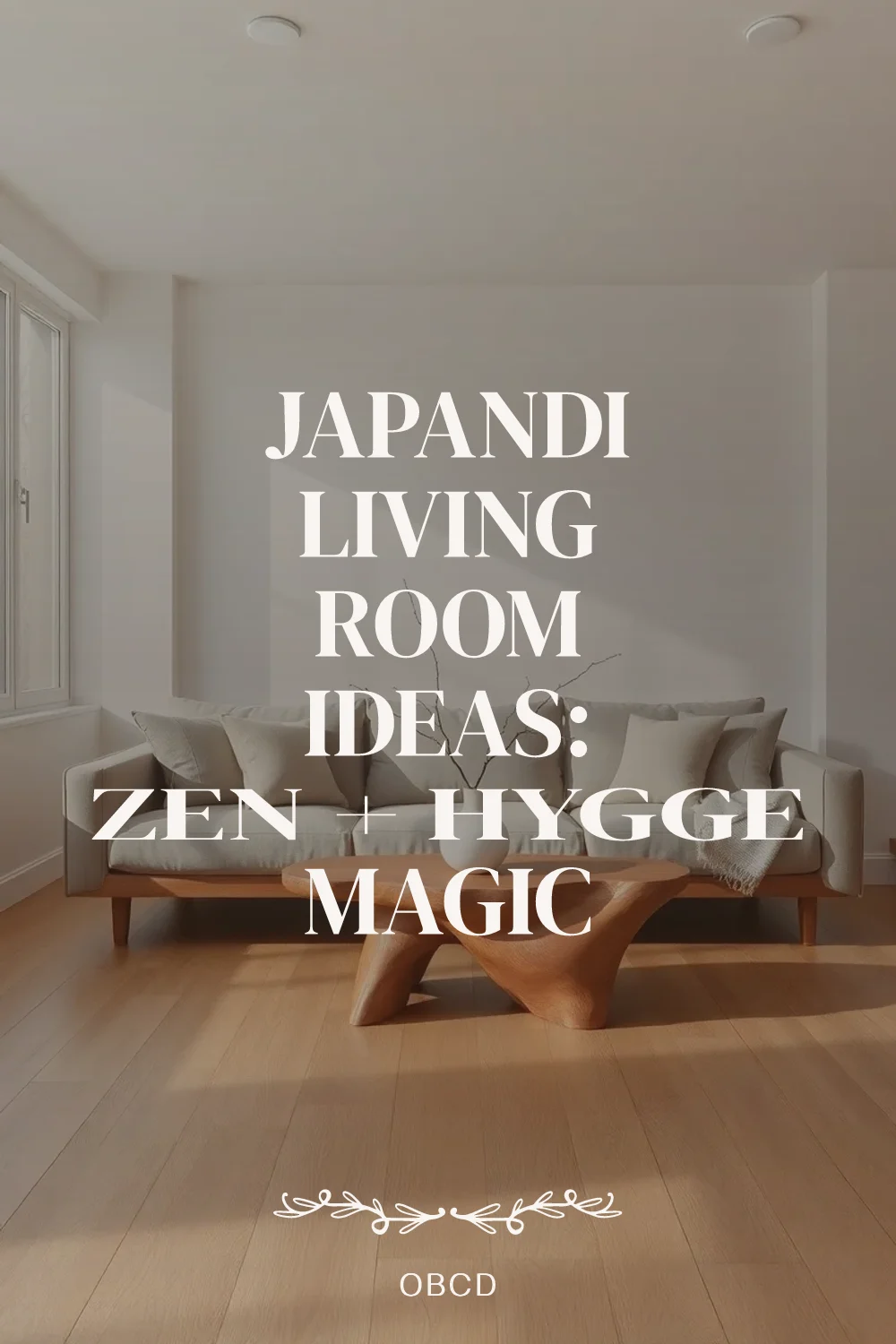
Looking for japandi living room ideas that bring calm and warmth to your space? A minimalist Japandi living room is the perfect marriage of Japanese zen philosophy and Scandinavian hygge, creating a room that feels both serene and warmly inviting. This design approach combines clean lines, negative space, and intentional simplicity with cozy natural materials and understated warmth. The result is a living room that feels calm, functional, and effortlessly livable—where every element serves a purpose while contributing to an atmosphere of tranquil comfort.
The beauty of Japandi interior design lies in its balance: Japanese precision and restraint prevent spaces from feeling cluttered or overwhelming, while Scandinavian warmth and texture ensure rooms never feel sterile or cold. This fusion creates living rooms that feel both sophisticated and approachable, modern and timeless, spacious yet intimate. Whether you're decorating a small rental apartment or a suburban family room, these japandi living room ideas can transform your space into a sanctuary of mindful living where form and function exist in perfect harmony.
What makes Japandi particularly appealing for modern renters and homeowners is its emphasis on quality over quantity, natural materials, and sustainable craftsmanship. Many of these ideas work beautifully in apartments without drilling or permanent changes. This approach isn't about minimalism for minimalism's sake—it's about creating spaces that support a slower, more intentional way of living surrounded by objects that bring joy and serve genuine purpose. The Japandi living room becomes a place to unwind, connect, and find peace amid the chaos of daily life.
Quick FAQ
What defines a Japandi living room?
Japandi blends Japanese minimalism (clean lines, low furniture, neutral palette, zen philosophy) with Scandinavian coziness (warm woods, textured textiles, hygge comfort). The result is a space that feels both serene and inviting, with intentional simplicity, natural materials, and functional beauty.
What colors work best in a Japandi living room?
Stick to a neutral foundation: warm whites, soft grays, beige, and cream as your base. Add warmth through light wood tones (oak, ash, birch) and subtle earthy accents (sage green, terracotta, soft blue). The palette should feel calm and cohesive, with one or two accent colors maximum.
How do I make a minimalist living room feel cozy?
Embrace texture through textiles: wool or linen throws, cotton pillows, natural fiber rugs. Incorporate warm wood tones, soft lighting (floor lamps, warm-toned LEDs), and plants. Layering textures adds depth and warmth without clutter, creating hygge comfort within minimalist restraint.
What furniture styles work in Japandi living rooms?
Low-profile sofas with clean lines, wooden coffee tables with organic shapes, minimalist shelving, and floor cushions. Furniture should feel grounded and substantial rather than delicate. Japanese-inspired low seating works beautifully alongside Scandinavian mid-century pieces.
Can Japandi work in small living rooms?
Absolutely. Japandi's emphasis on minimal clutter, low furniture, and neutral colors actually makes small spaces feel larger and more serene. Use multi-functional furniture, maximize natural light, keep furniture low to maintain visual spaciousness, and embrace negative space as a design element.
How do I add personality to a Japandi living room?
Focus on craftsmanship and natural materials: a hand-thrown ceramic vase, a woven wall hanging, a statement wooden bowl, or a carefully chosen piece of art. Plants also add life and personality. The key is editing—choose fewer pieces but make each one meaningful and beautiful.
As an Amazon Associate I earn from qualifying purchases.
Table of Contents
- 1. Neutral Foundation with Warm Wood Accents for a Japandi Living Room
- 2. Low-Profile Seating with Floor Cushions
- 3. Sliding Wood Panel Room Divider
- 4. Integrated Storage with Wooden Slats
- 5. Sunken Conversation Pit Design
- 6. Shoji Screen Inspired Lighting
- 7. Minimalist Stone and Wood Fireplace
- 8. Floating Low Entertainment Unit
- 9. Indoor Garden Corner with Tatami Flooring
- 10. Paper Lantern Style Pendant Lights
- 11. Built-in Window Seat with Storage
- 12. Exposed Wood Beam Ceiling
- 13. Minimalist Tea Ceremony Corner
- 14. Hidden TV Behind Wooden Panels
- 15. Zen Garden Inspired Coffee Table
- 16. Wall-Mounted Desks with Fold-Down Seats
- 17. Low Platform Sofa with Integrated Table
- 18. Suspended Wood and Rope Shelving
- 19. Paper Screen Accent Wall
- 20. Minimalist Genkan Entry Transition
- 21. Tatami Reading Nook with Shoji Screen
- 22. Low Wooden Bench with Linen Seating
- 23. Integrated Plant Shelf Divider
1. Neutral Foundation with Warm Wood Accents for a Japandi Living Room
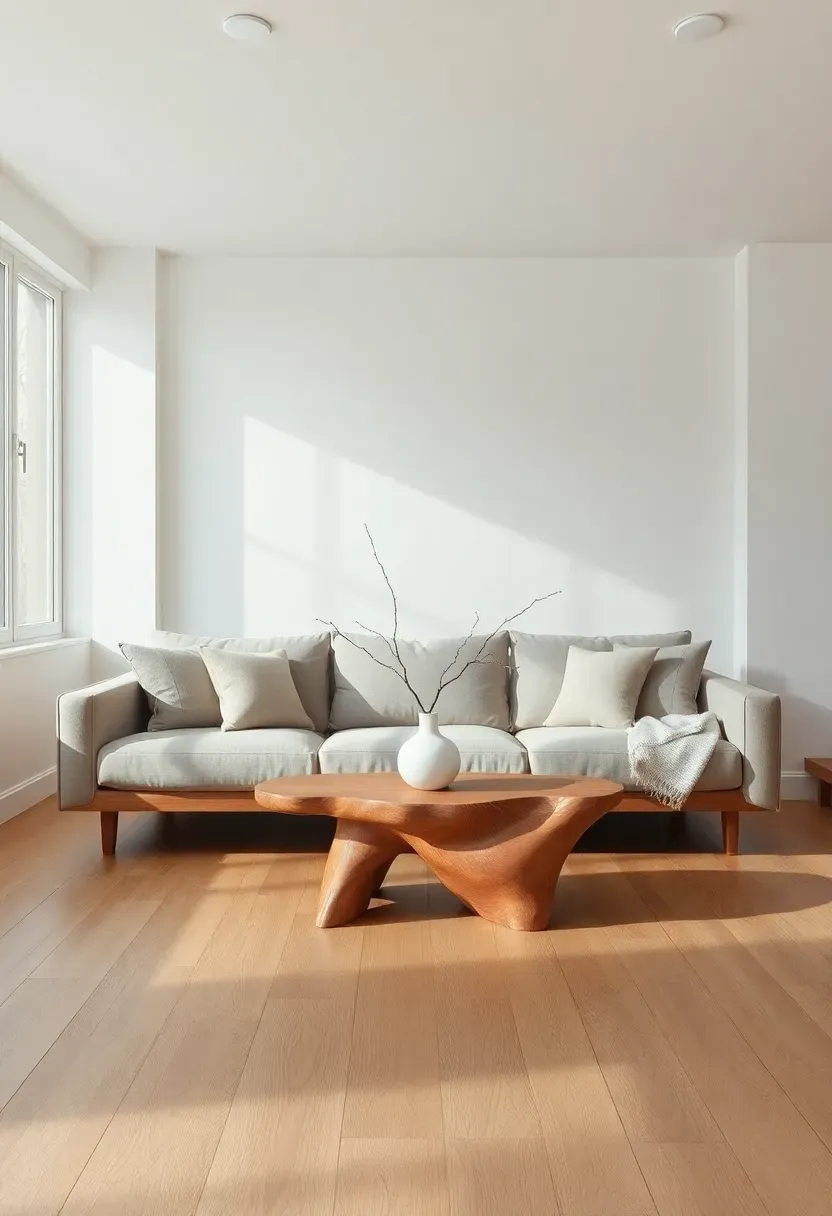
A Japandi living room begins with a neutral foundation—warm white or soft gray walls, light flooring, and plenty of natural light—anchored by substantial wood elements that bring warmth and organic presence. Japanese minimalism contributes the restrained palette and emphasis on empty space, while Scandinavian coziness arrives through honey-toned oak furniture, wool textiles, and layered lighting. The key is selecting woods with warm undertones (oak, ash, walnut) rather than cool or bleached tones, ensuring the space feels inviting despite its minimalist restraint. This approach creates a serene backdrop that allows texture and craftsmanship to take center stage rather than bold colors or pattern.
Tips
- Do choose warm white (with yellow undertones) rather than stark white for walls to maintain coziness
- Don't mix too many wood tones—stick to one dominant wood species for 70% of furniture
- If the space feels too neutral, add texture through woven baskets, ceramic pieces, or plants
Best for: open-plan living spaces where neutral walls create flow while maintaining distinct zones
What this gives you: a serene, versatile foundation that feels both calming and warmly livable
We picked a few things that go well with this idea: COMAX Corduroy Folding Floor Sofa Beige (★4.3), COMAX Corduroy Folding Floor Sofa Green (★4.3) and Winzoo Convertible Grey Floor Futon Sofa (★4.4). As an Amazon Associate we earn from qualifying purchases.
2. Low-Profile Seating with Floor Cushions
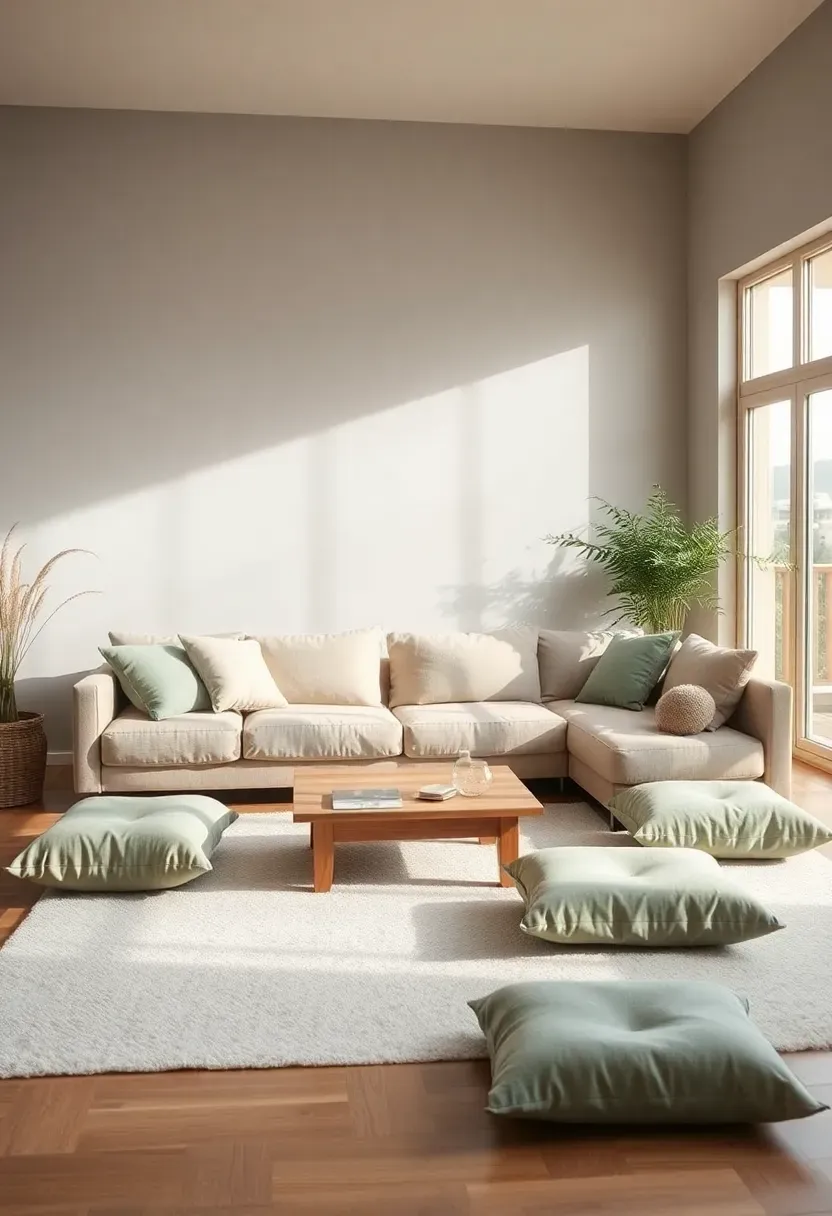
Embracing Japanese floor culture while maintaining Scandinavian comfort, this Japandi living room features low-profile sofas paired with floor cushions for flexible, relaxed seating that encourages connection and grounded living. The low furniture maintains visual spaciousness by leaving vertical space open above, while floor cushions in linen or cotton provide casual, hygge-inspired coziness. This seating arrangement works particularly well in rooms with beautiful views or architectural details, as the low sightlines draw attention outward rather than blocking perspectives. The combination creates an atmosphere of intentional relaxation—where sitting closer to the ground feels both meditative and comfortably informal.
Tips
- Do keep floor cushions easily stackable or storable to maintain minimalist clarity when not in use
- Don't sacrifice comfort—ensure cushions are substantial (4-6 inches thick) with quality fill
- If low seating feels too informal for all occasions, add one elevated armchair as an alternative
Placement note: ideal for rooms with garden views or where low sightlines maximize architectural features
What this gives you: a relaxed, grounded living space that encourages informal connection and mindful presence
We picked a few things that go well with this idea: Henjjras White Oblate Paper Pendant Shade (★4.5), Fivemengo Rice Paper Globe Pendant Light (★4.5) and Nogy Japanese Rice Paper Lantern Lamp (★4.2). As an Amazon Associate we earn from qualifying purchases.
3. Sliding Wood Panel Room Divider
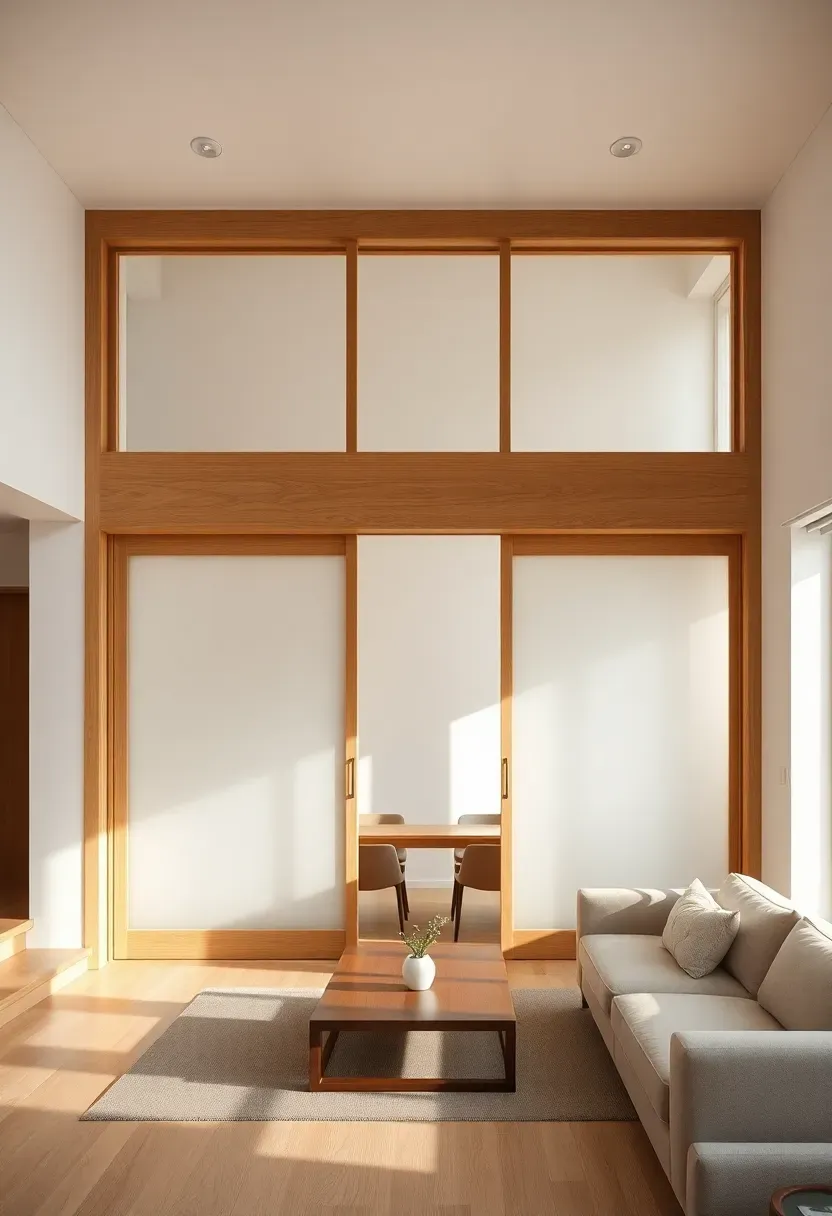
Inspired by Japanese shoji screens but adapted with Scandinavian materials, a sliding wood panel room divider creates flexible spatial definition without blocking light or disrupting openness. The panels feature light wood frames with translucent frosted glass or rice paper inserts, allowing soft light to filter through while separating living zones. This Japandi element honors Japanese spatial flexibility—where rooms transform through sliding screens—while using Nordic materials and simplified construction. The divider can separate dining from living areas, create a reading nook, or hide a workspace when not in use, all while maintaining visual connection and airiness characteristic of both design traditions.
Tips
- Do use translucent inserts (frosted glass, rice paper, acrylic) rather than solid wood to maintain light flow
- Don't make panels floor-to-ceiling in standard rooms—7-8 feet height maintains openness
- If privacy isn't needed, consider open wood slat panels instead of fully covered screens
Versatile function: panels can create temporary rooms or define zones without permanent walls
What this gives you: flexible spatial separation that maintains openness and light while honoring Japanese design principles
We picked a few things that go well with this idea: Solid Walnut Triangle Mid-Century Coffee Table (★4.3), Mid-Century Solid Wood Triangle Tea Table (★5.0) and Semjar Acacia Wood Oval Nesting Tables Set (★4.5). As an Amazon Associate we earn from qualifying purchases.
4. Integrated Storage with Wooden Slats
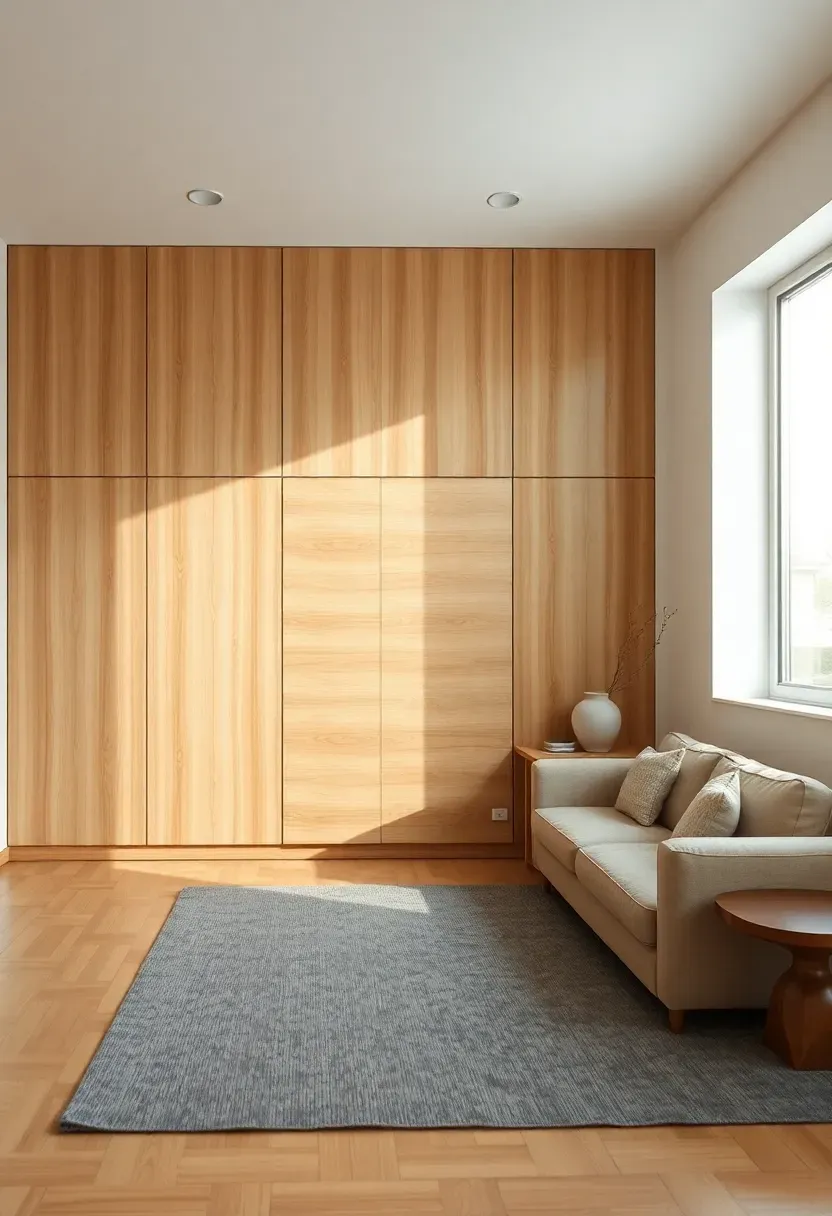
Wall-to-wall storage with horizontal wooden slat doors creates a Japandi living room that feels spacious despite substantial storage capacity. The slat design references Japanese screens while allowing air circulation and visual lightness, while the warm wood tones bring Scandinavian coziness to what could otherwise feel sterile. Floor-to-ceiling storage hides clutter behind uniform minimal doors, maintaining the serene uncluttered aesthetic essential to both Japanese and Scandinavian design. The horizontal slats add rhythm and texture without visual weight, creating storage that feels architectural rather than utilitarian. This approach works particularly well in modern apartments or family rooms where hiding everyday items is essential for maintaining calm.
Recommended
Items for this idea
Tips
- Do extend slat doors to the ceiling for a seamless, built-in appearance that maximizes storage
- Don't mix door styles—keep all storage behind matching slat doors for visual calm
- If full slat doors feel too textured, consider solid wood bottom panels with slat uppers
Clutter control: floor-to-ceiling storage hides everything behind uniform minimal doors
What this gives you: a serene, organized living space where substantial storage never disrupts visual calm
5. Sunken Conversation Pit Design
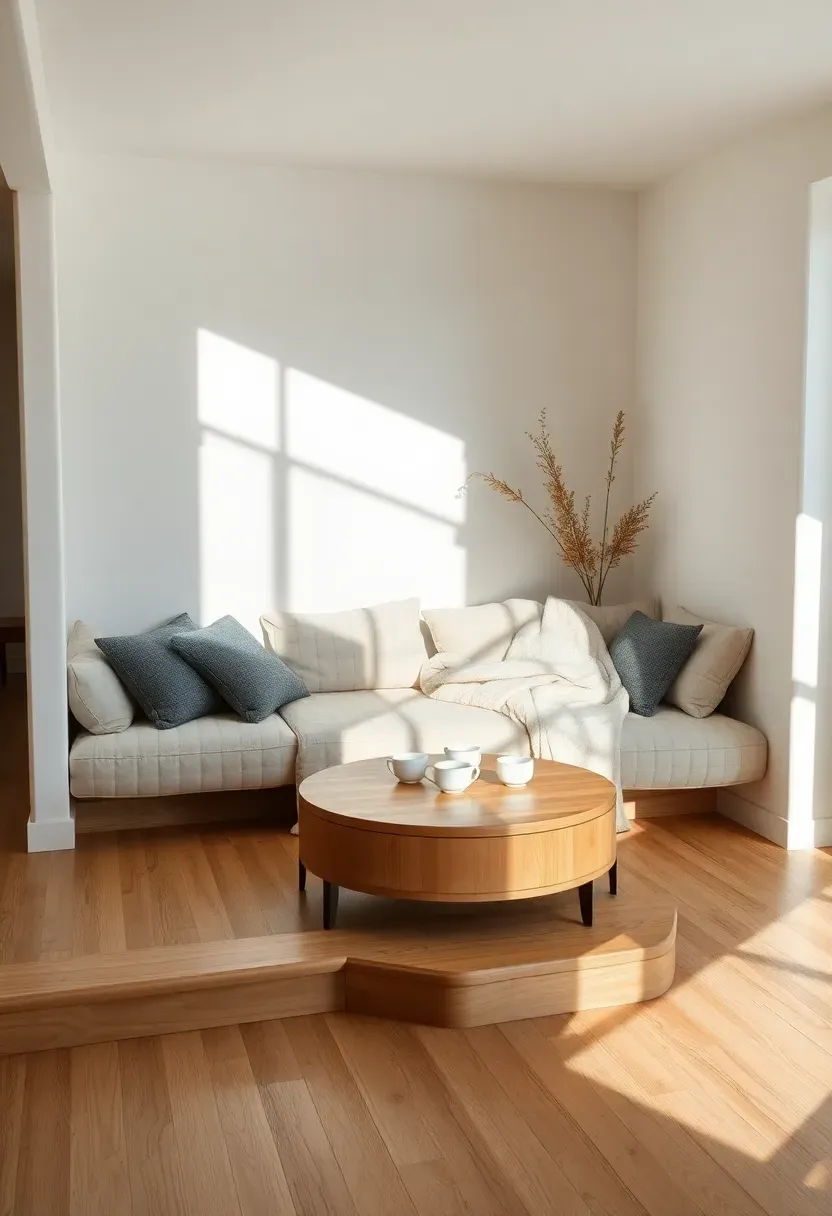
A sunken conversation pit—referencing Japanese engawa spaces where floor levels define zones—creates a deeply cozy and intimate gathering area within a larger Japandi living room. The depression (typically 6-12 inches below floor level) creates natural separation without walls, while built-in upholstered seating provides comfortable, relaxed lounging that encourages face-to-face connection. Scandinavian influence arrives through soft textiles, wool throws, and wood detailing, while Japanese minimalism keeps the pit's design clean and uncluttered. This architectural feature transforms a living room into a destination space—perfect for reading, conversation, or unwinding—while maintaining open sightlines and the sense of spaciousness essential to both design philosophies.
Tips
- Do keep the pit depth modest (6-12 inches) for easy accessibility and visual integration
- Don't forget lighting—integrate recessed floor lights or table lamps to brighten the sunken space
- If a full pit feels too permanent, consider a raised platform instead for similar zone definition
Architectural statement: sunken spaces create intimate gathering zones without walls
What this gives you: an intimate, conversation-friendly zone that maintains open spatial flow
6. Shoji Screen Inspired Lighting
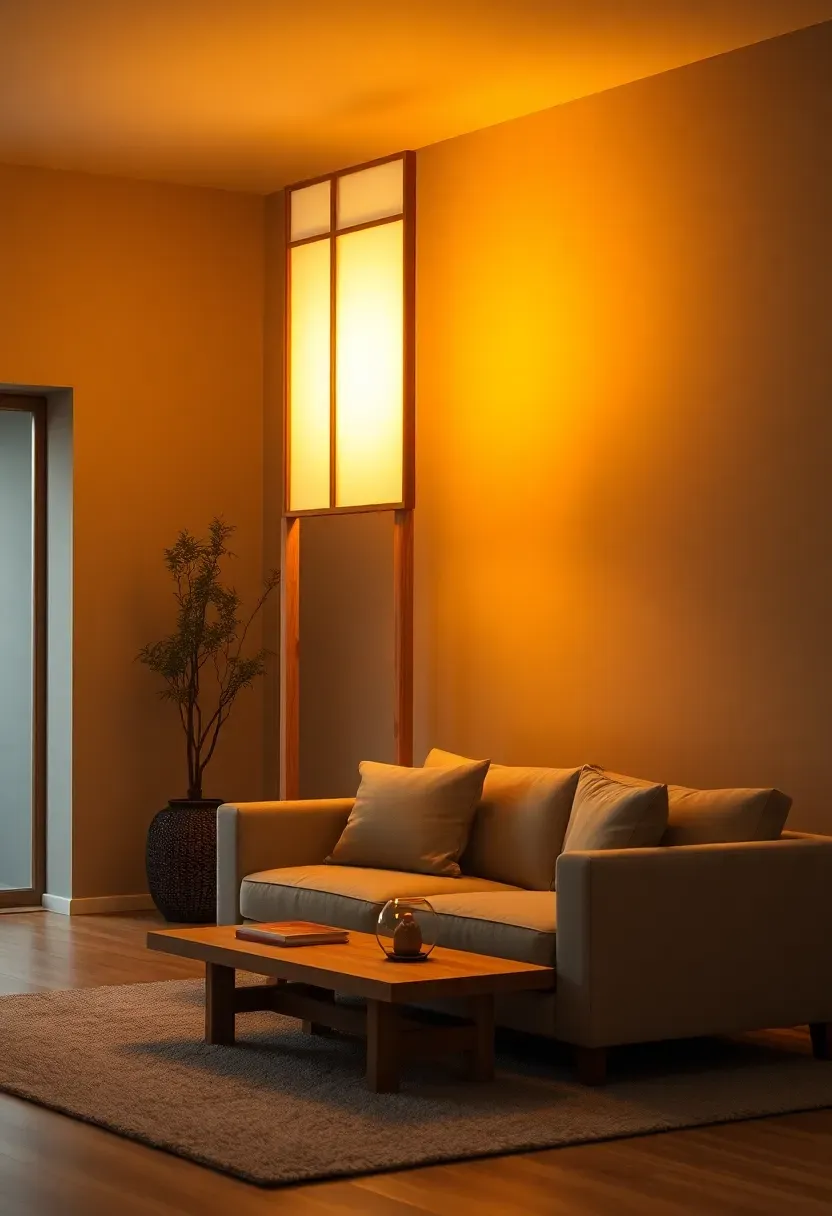
Lighting fixtures inspired by traditional Japanese shoji screens bring diffused, gentle illumination to a Japandi living room while serving as sculptural focal points. These fixtures feature wooden frames with translucent paper or frosted glass panels, creating soft ambient light that flatters rather than harshly illuminates. The geometric grid patterns reference Japanese traditional design while simplified forms and Nordic materials (light oak, birch) maintain Scandinavian sensibility. Place these as floor lamps, pendant lights, or wall sconces to create layered lighting that transforms the living room's atmosphere from bright and functional to soft and hygge-cozy as evening arrives. The combination honors both cultures' appreciation for beautiful, functional objects that elevate everyday life.
Recommended
Items for this idea
Tips
- Do use warm-toned LEDs (2700K-3000K) within fixtures to maintain hygge coziness
- Don't overdo shoji-style lighting—one or two statement fixtures create more impact than many
- If traditional shoji feels too literal, simplify to geometric boxy forms with translucent panels
Lighting layer: shoji fixtures provide ambient light that complements task and accent lighting
What this gives you: beautiful ambient lighting that creates atmosphere while serving as sculptural art
7. Minimalist Stone and Wood Fireplace
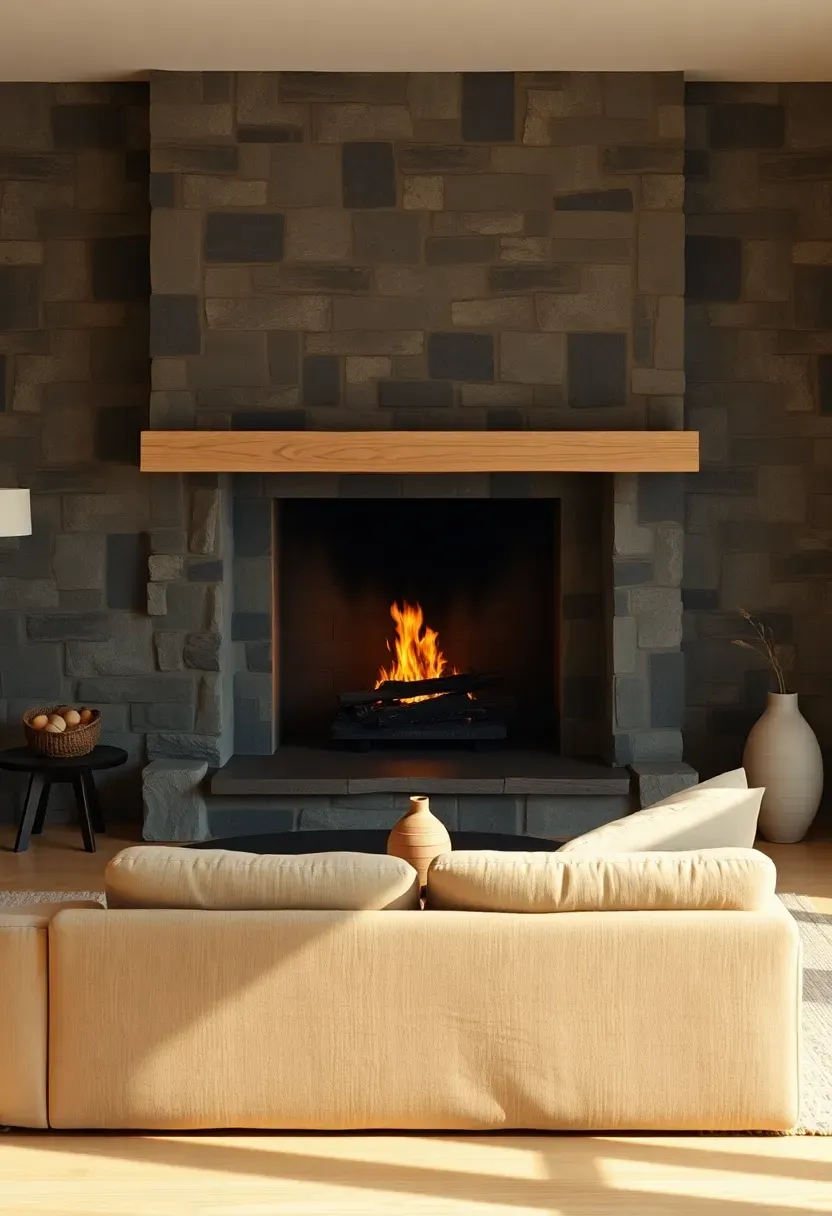
A minimalist fireplace combining rough stone veneer with smooth wood cladding creates a Japandi focal point that honors both Japanese wabi-sabi appreciation for natural materials and Scandinavian love for warm, functional hearths. The stone—whether slate, limestone, or river rock—provides organic texture and visual weight, while the wood mantle or surround in light oak or ash adds warmth and craftsman detailing. The fireplace itself maintains clean lines, avoiding ornate detailing in favor of material beauty and restrained form. This combination creates a gathering point that feels both grounded and refined, embodying Japandi's balance of rough and smooth, natural and crafted, ancient and modern.
Tips
- Do keep the stone selection monochromatic for sophisticated minimalism—avoid multicolored or chaotic patterns
- Don't add ornate mantles or decorative elements—let materials and simplicity speak
- If stone feels too rustic, consider concrete or plaster for the surround instead
Natural focal point: fireplace combines warmth with wabi-sabi material appreciation
What this gives you: a warm, grounding focal point that embodies Japandi's material consciousness
8. Floating Low Entertainment Unit
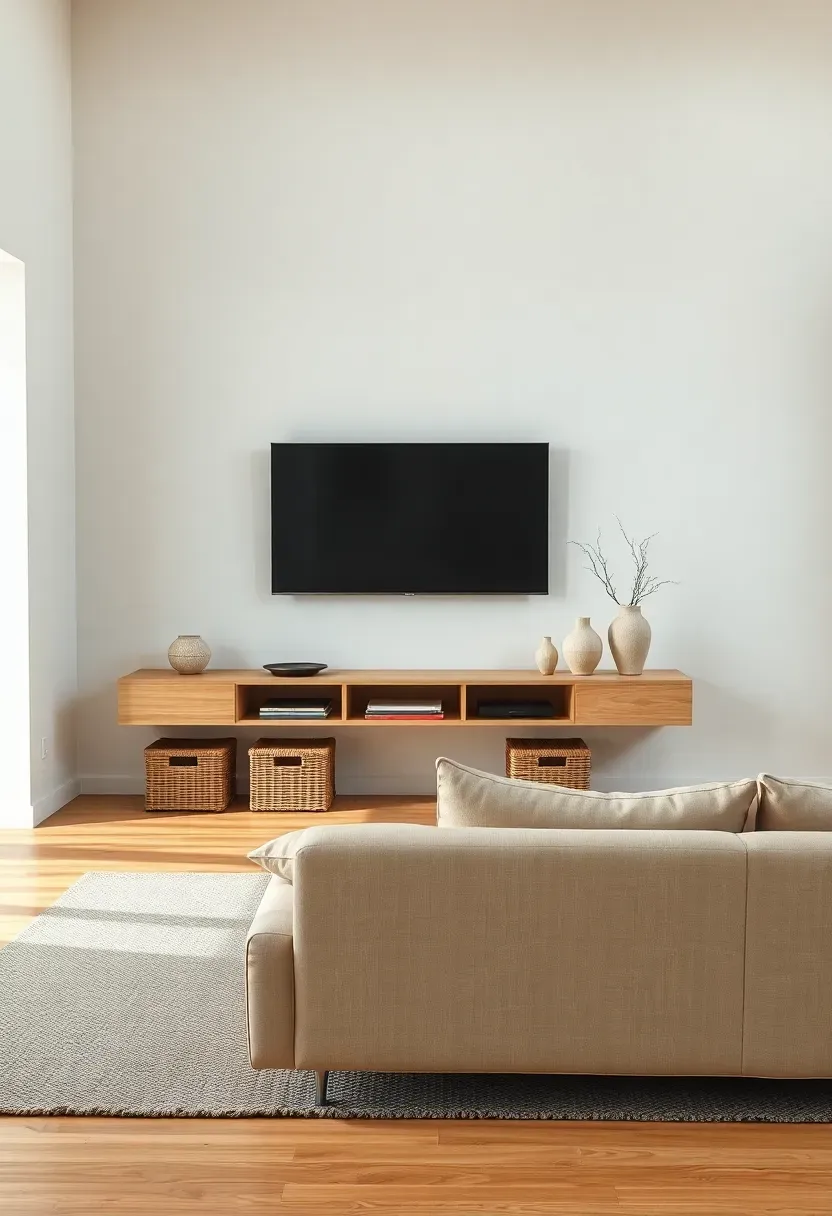
A low-profile floating media console in light wood creates a Japandi entertainment setup that feels both modern and wonderfully serene. By keeping the unit low (12-18 inches tall) and wall-mounted, the design maintains open floor space and doesn't block sightlines, while the floating appearance adds lightness and modern minimalism. Japanese influence shows in the low, horizontal emphasis and restraint—no visible hardware, minimal drawers, clean lines. Scandinavian coziness arrives through warm wood tones, possibly with woven basket storage below. The unit houses media essentials while maintaining visual calm, proving that technology can coexist with serene design when thoughtfully integrated rather than hidden or displayed as the room's focus.
Recommended
Items for this idea
Tips
- Do keep the console proportionate to TV width—approximately 2/3 the TV width for visual balance
- Don't place the unit too high—12-18 inches from floor maintains low, grounding effect
- If floating installation isn't possible, a very low cabinet on slender legs can achieve similar lightness
Tech integration: floating unit houses media without becoming the room's dominant feature
What this gives you: functional media storage that maintains Japandi serenity through restrained, low-profile design
9. Indoor Garden Corner with Tatami Flooring
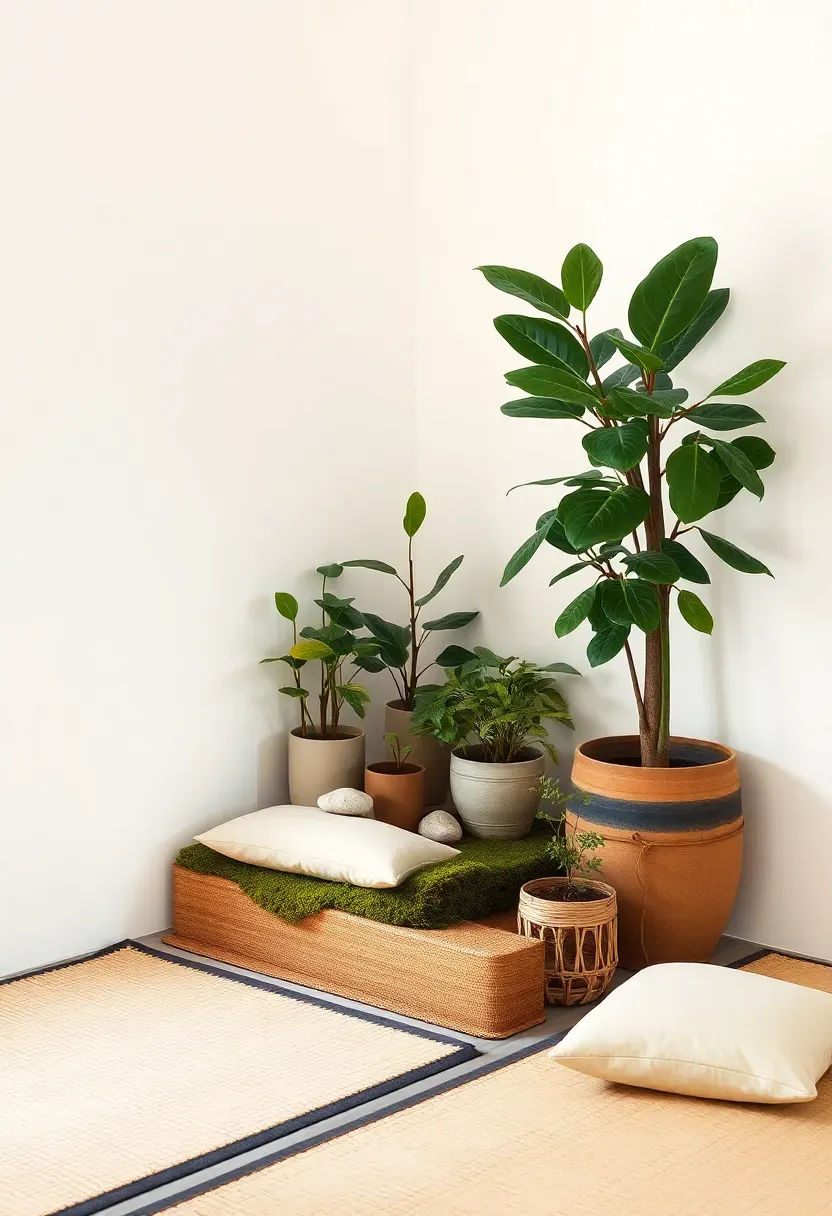
Dedicating a corner to an indoor garden with tatami mat flooring creates a Japandi living space that brings Japanese zen gardens indoors while maintaining Scandinavian warmth. The tatami platform (raised 4-6 inches) defines the nature zone, while potted plants, moss, or small stones reference traditional Japanese garden elements. Scandinavian influence arrives through warm textiles (cushions for tatami seating), simple planters in natural materials, and the absence of ornate or symbolic decoration. This green corner becomes a living sanctuary within the living room—a place for meditation, reading, or simply breathing deeply among plants. The combination honors Japanese reverence for nature and Nordic biophilic design, creating space that feels both wild and contemplatively ordered.
Tips
- Do select plants with varied leaf shapes and heights for visual interest without needing decoration
- Don't overplant—leave substantial empty space on the tatami for movement and breathing room
- If tatami feels too traditional, a wooden platform with rugs can achieve similar zone definition
Biophilic design: indoor garden corner brings nature's calm into daily living space
What this gives you: a dedicated nature sanctuary that embodies Japandi's reverence for organic, mindful living
10. Paper Lantern Style Pendant Lights
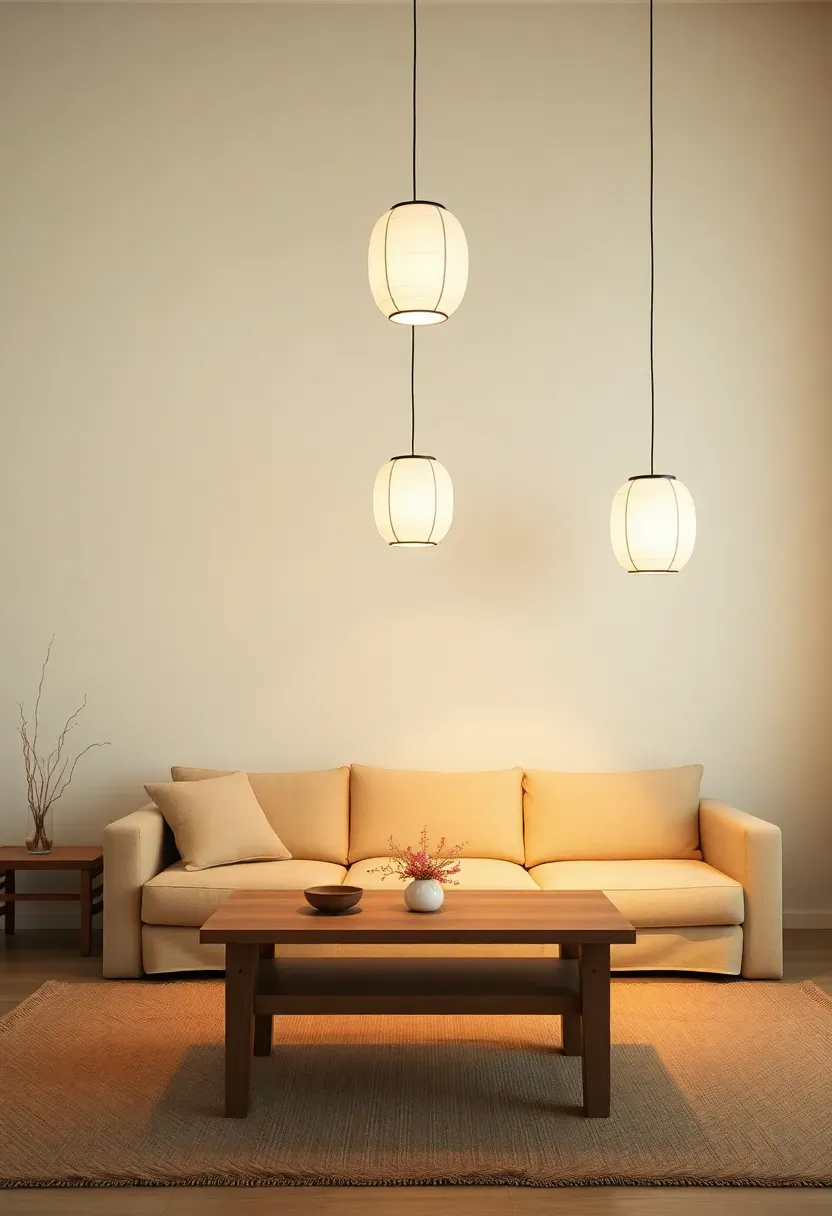
Pendant lights inspired by traditional Japanese paper lanterns (chochin) bring sculptural beauty and soft, diffused illumination to a Japandi living room while referencing cultural craft traditions. These fixtures feature translucent paper or frosted glass shades in simple geometric shapes—spheres, cylinders, or slightly irregular organic forms—hung from minimal cords at varying heights. The Japanese influence is obvious in the material and form reference, while Scandinavian minimalism arrives through simplified shapes, neutral colors (white, cream, soft gray), and absence of ornate decoration. Clustered over a coffee table or dining area, these pendants create a warm, inviting glow that transforms the living room into a hygge haven while honoring Japanese paper craft and Nordic functional beauty.
Recommended
Items for this idea
Tips
- Do hang pendants at varying heights (24-30 inches apart) for visual interest without asymmetry
- Don't choose lanterns with visible internal hardware—minimal cords and fixtures maintain purity
- If paper feels too delicate, frosted glass or acrylic offers similar diffusion with durability
Sculptural lighting: paper lanterns serve as art while providing ambient illumination
What this gives you: beautiful lighting that transforms atmosphere while honoring Japanese craft traditions
11. Built-in Window Seat with Storage
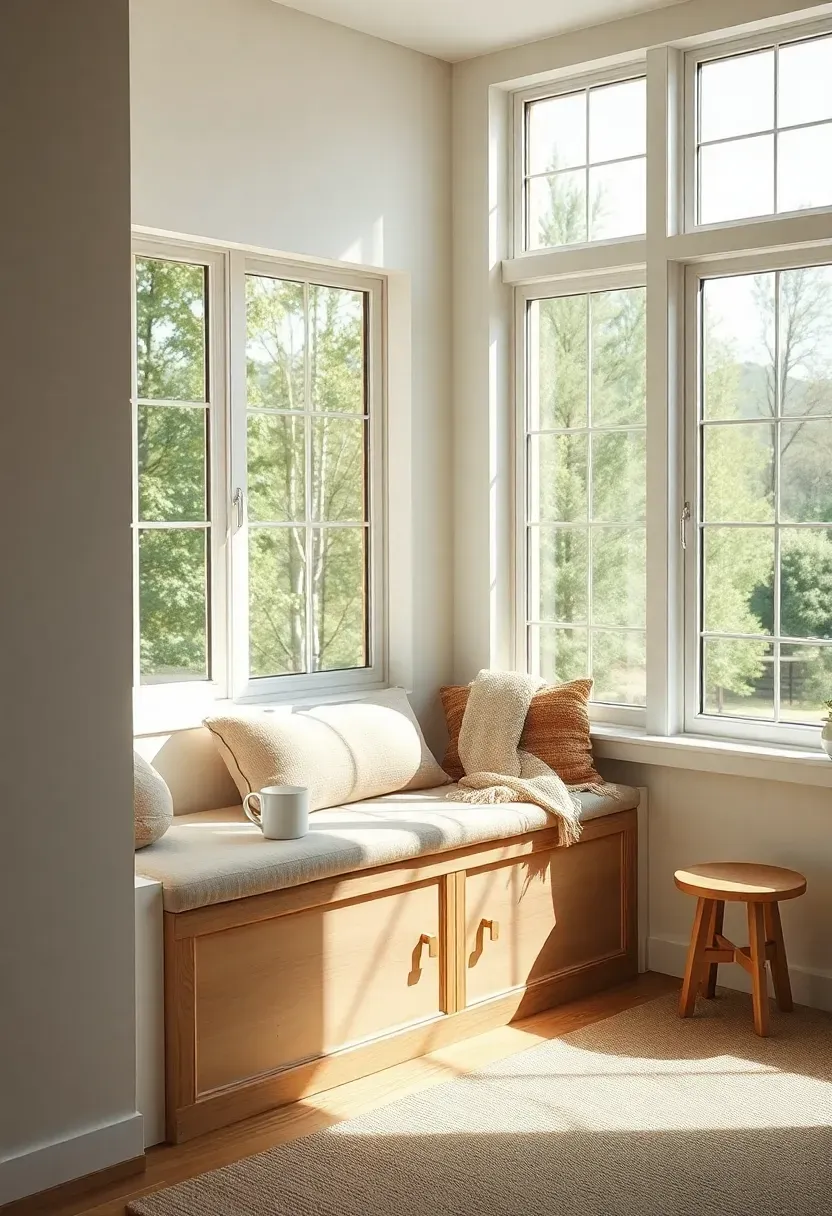
A built-in window seat with hidden storage creates a Japandi living room feature that combines Japanese spatial efficiency with Scandinavian hygge comfort. The seat, positioned beneath windows to maximize natural light and views, features a upholstered cushion in linen or wool for cozy reading or contemplation. Beneath the hinged seat lid, hidden storage blankets throws, pillows, or other items, maintaining the living room's uncluttered serenity. Japanese influence shows in the built-in, space-saving custom design and low profile, while Scandinavian coziness arrives through soft textiles, perhaps a knitted throw, and a small side table for tea or books. This spot becomes the room's most coveted corner—a private sanctuary within shared space.
Tips
- Do make the seat depth generous (24-30 inches) for comfortable lounging rather than just perching
- Don't forget back support—either build in a padded back or place substantial pillows against the wall
- If a full built-in isn't possible, a low bench with storage baskets below can achieve similar function
Functional sanctuary: window seat combines storage with the room's most desirable spot
What this gives you: a cozy, storage-smart reading nook that maximizes both views and organization
12. Exposed Wood Beam Ceiling
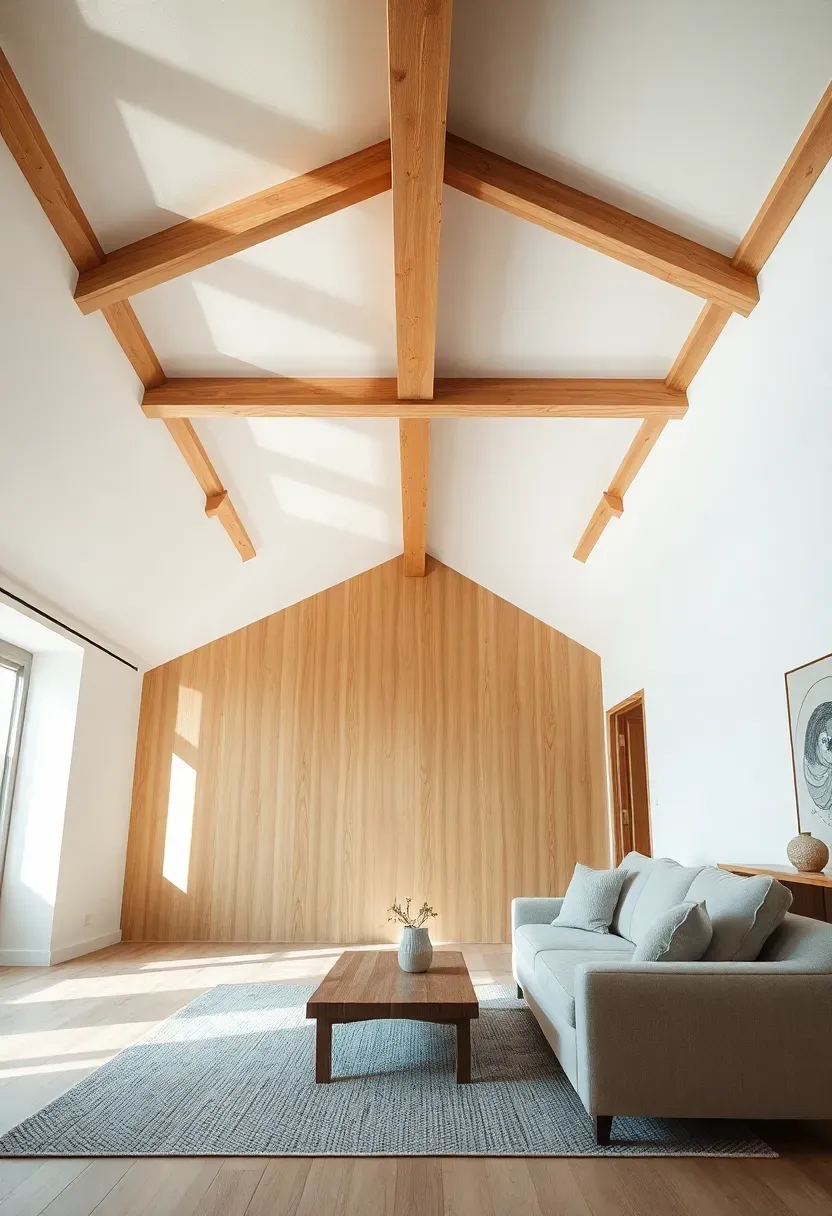
An exposed wood beam ceiling adds architectural warmth and craftsmanship to a Japandi living room, referencing both Japanese timber-frame construction and Scandinavian rustic vernacular. The beams—whether original to the space or added as decorative elements—bring natural material overhead, creating a sense of shelter and craftsmanship. Painted or plastered ceilings between beams keep the overall feel bright and airy, preventing the space from feeling dark or heavy. Japanese influence shows in the emphasis on structural honesty and natural materials, while Scandinavian sensibility maintains brightness through white ceiling surfaces. This architectural feature adds character and warmth without decoration, embodying Japandi's belief that honest construction and natural materials create beauty without ornamentation.
Recommended
Items for this idea
Tips
- Do keep beams consistently finished—either all natural or all painted—for visual calm
- Don't add beams with irregular spacing or placement—maintain architectural logic and order
- If structural beams aren't possible, decorative box beams can achieve similar warmth and rhythm
Architectural warmth: exposed beams add character without decoration or clutter
What this gives you: overhead warmth and craftsmanship that makes the living room feel sheltered and authentic
13. Minimalist Tea Ceremony Corner
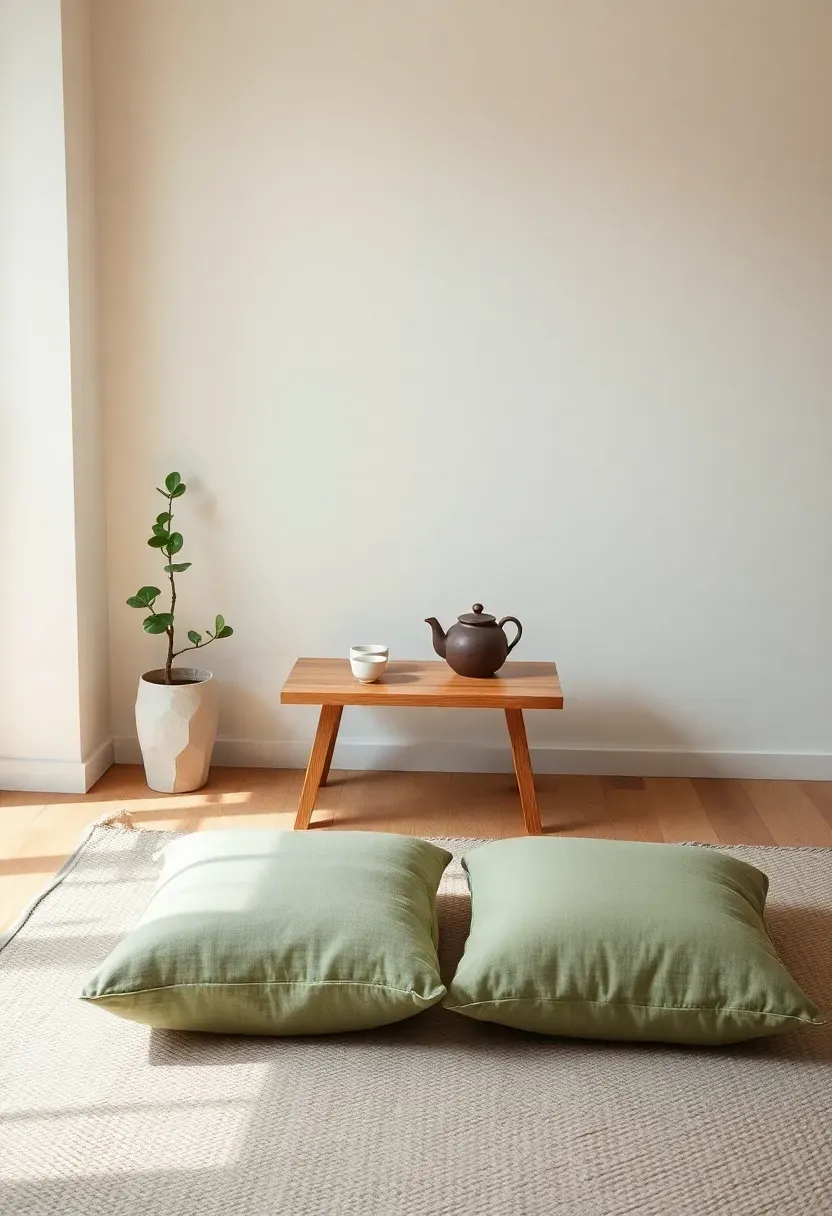
A dedicated tea ceremony corner brings Japanese mindfulness and ritual into a Japandi living room while maintaining Scandinavian simplicity and warmth. This small but intentional space might feature a low wooden table (chabudai style), floor cushions, and minimal tea equipment—perhaps a ceramic teapot and simple cups. Scandinavian influence keeps the feeling casual rather than formal: linen cushions, a wool throw, perhaps a small potted plant. This isn't about recreating authentic chanoyu ceremony but rather creating a space for mindful tea drinking, contemplation, or intimate conversation. The corner becomes a daily ritual space that slows time and encourages presence, embodying Japandi values of intentionality, appreciation for simple crafts, and finding beauty in quiet moments.
Tips
- Do keep tea equipment minimal and beautiful—quality over quantity, pieces you love handling daily
- Don't over-accessorize—the beauty lies in emptiness and simplicity, not decorative objects
- If floor seating isn't comfortable, a very low table with standard-height chairs can work similarly
Daily ritual: tea corner creates space for mindfulness and slow moments
What this gives you: a dedicated space for mindful pause that embodies Japandi's intentional living philosophy
14. Hidden TV Behind Wooden Panels
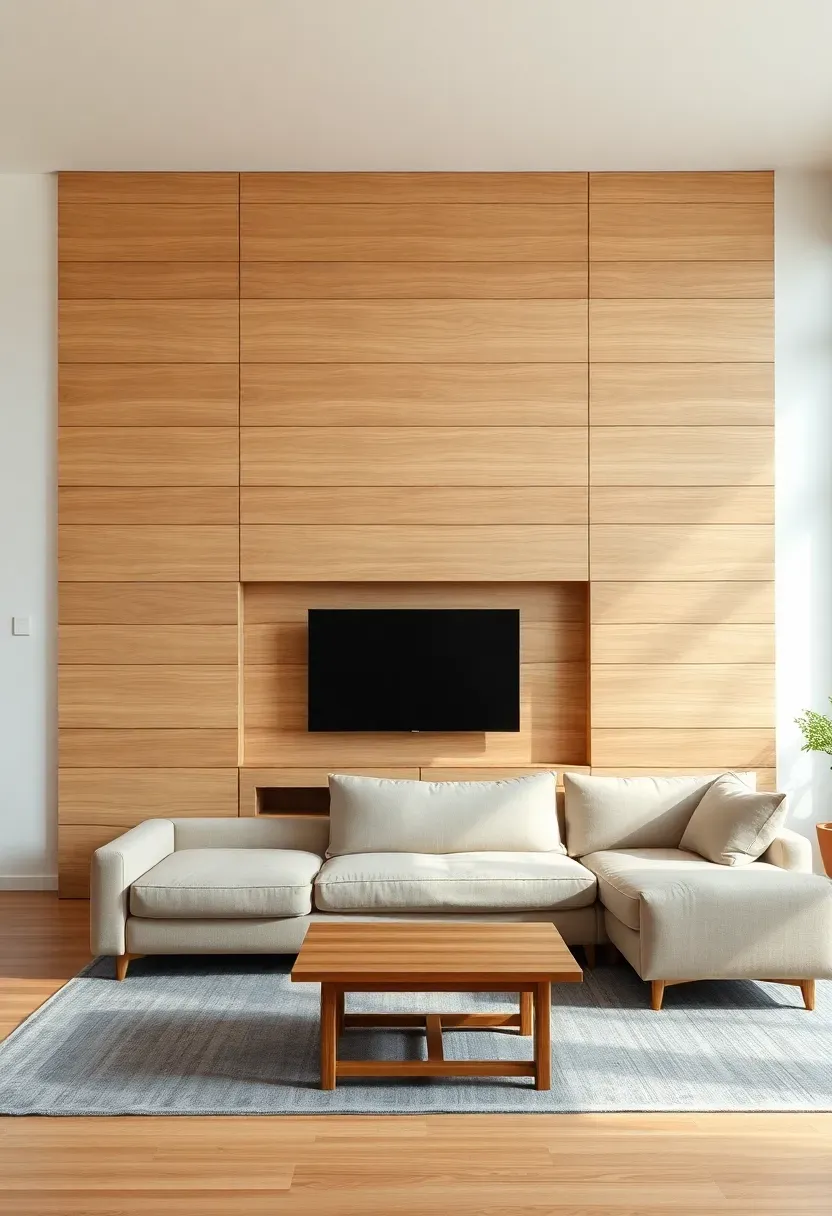
Concealing a television behind sliding wooden panels creates a Japandi living room where technology doesn't disrupt visual serenity. When not in use, the TV disappears behind matching wood paneling that reads as architectural wall treatment rather than media cabinet. Japanese influence shows in the sliding door mechanism and the preference for hiding functional elements behind uniform surfaces. Scandinavian minimalism maintains clean, simple panel design without ornamentation. This approach allows a living room to prioritize conversation, reading, or views when the TV is off, transforming into an entertainment space only when desired. The panels might also hide media equipment, cords, or storage, creating a completely uncluttered facade that maintains calm regardless of what's stored behind.
Recommended
Items for this idea
Tips
- Do integrate the paneling with other built-in storage for a seamless, custom look
- Don't forget ventilation and heat dissipation for electronics behind closed panels
- If full sliding panels feel too involved, a cabinet with matching wood doors achieves similar concealment
Visual calm: hidden TV prevents technology from dominating the room's aesthetic
What this gives you: a living room that prioritizes serenity while accommodating modern entertainment needs
15. Zen Garden Inspired Coffee Table
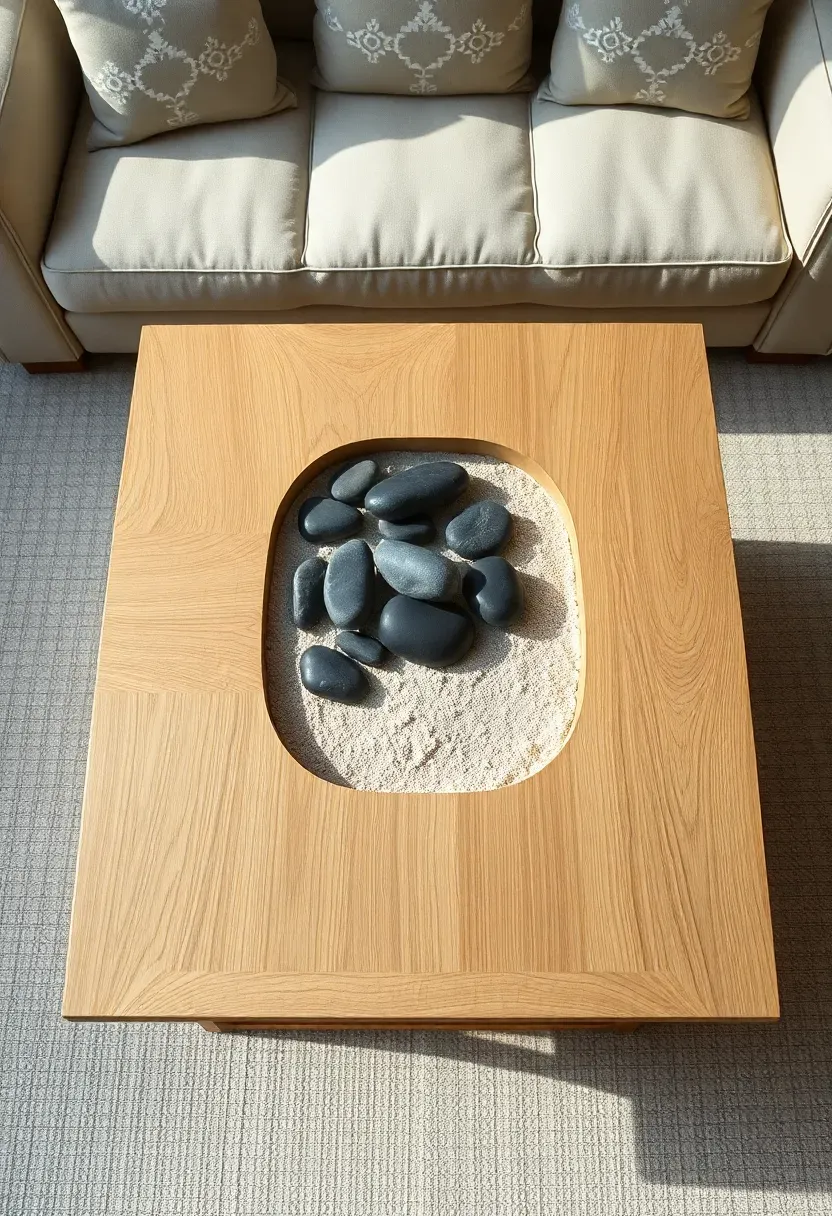
A coffee table that references zen garden design principles brings contemplative beauty to a Japandi living room while serving as a functional centerpiece. This might be a low table with a recessed surface filled with sand or smooth stones, or a table with clean lines and materials that evoke garden aesthetics—perhaps raw wood edge detailing, stone-like concrete finish, or a shape that references natural forms. Japanese influence shows in the meditative, wabi-sabi appreciation for natural materials and imperfection. Scandinavian minimalism maintains restrained form and functional clarity. The table becomes more than furniture—it's a daily reminder of mindfulness and nature's quiet beauty, anchoring the living room with intentionality rather than mere utility.
Tips
- Do keep the table low (12-16 inches tall) to maintain Japanese floor culture and unobstructed sightlines
- Don't overcomplicate the design—the beauty lies in material honesty and simple form
- If a zen garden table feels too literal, raw or live-edge wood with organic shape evokes similar nature connection
Meditative focal point: coffee table becomes daily reminder of mindfulness and nature
What this gives you: a functional art piece that embodies Japandi's contemplative, material-conscious values
16. Wall-Mounted Desks with Fold-Down Seats
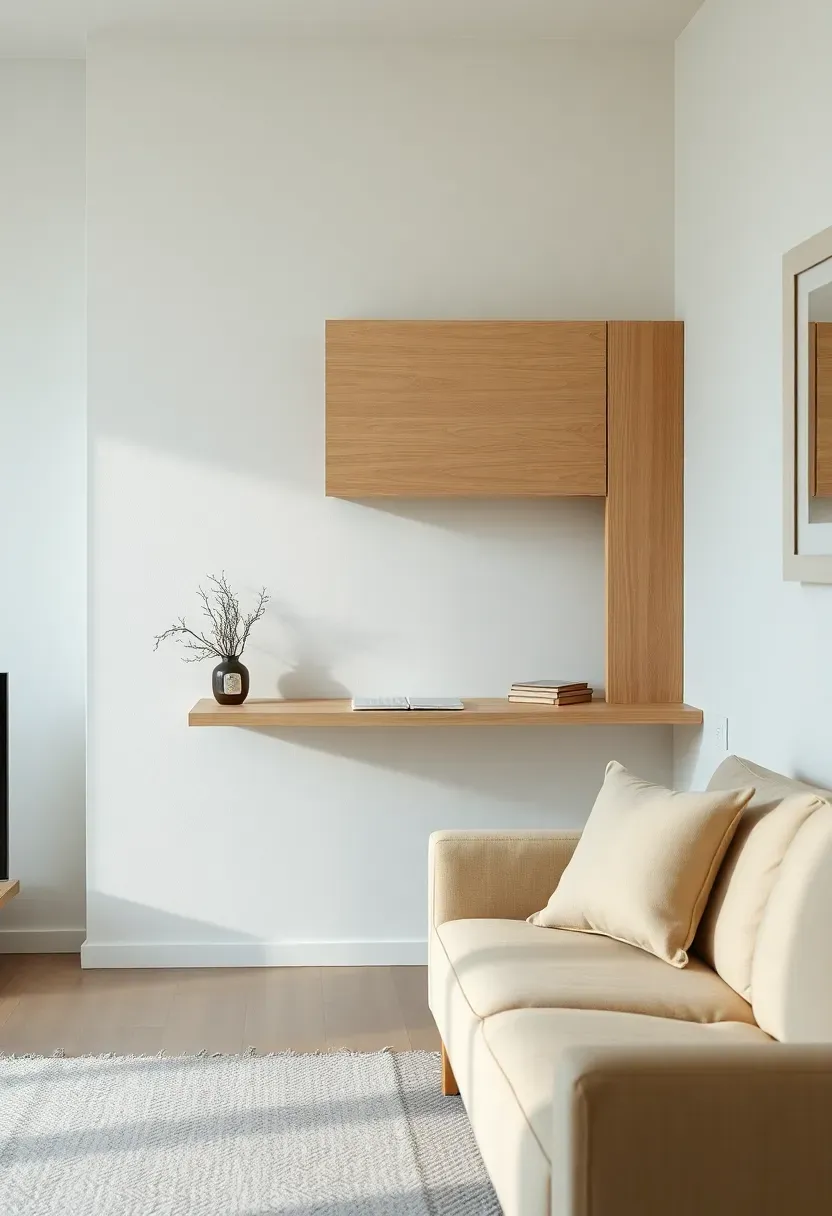
Wall-mounted desks with fold-down or storable seating create a Japandi living room workspace that appears only when needed, maintaining open, uncluttered space the rest of the time. Japanese influence shows in the space-efficient, disappearing design and the preference for multi-functional surfaces. Scandinavian minimalism maintains clean, simple cabinetry and warm wood finishes. When folded up, the desk becomes a shallow cabinet or disappears entirely into paneling. When lowered, it provides functional workspace for a laptop, writing, or creative projects. This approach acknowledges modern needs for home workspace while refusing to let technology dominate living areas, embodying Japandi's balance of function and serenity.
Recommended
Items for this idea
Tips
- Do integrate cable management and storage within the cabinet to keep workspace truly clutter-free
- Don't make the desk too small—minimum 36 inches wide provides functional work surface
- If fold-down feels too mechanical, a built-in desk with matching cabinet front creates similar concealment
Adaptable space: workspace appears when needed, disappears when not
What this gives you: functional workspace that never disrupts the living room's serene openness
17. Low Platform Sofa with Integrated Table
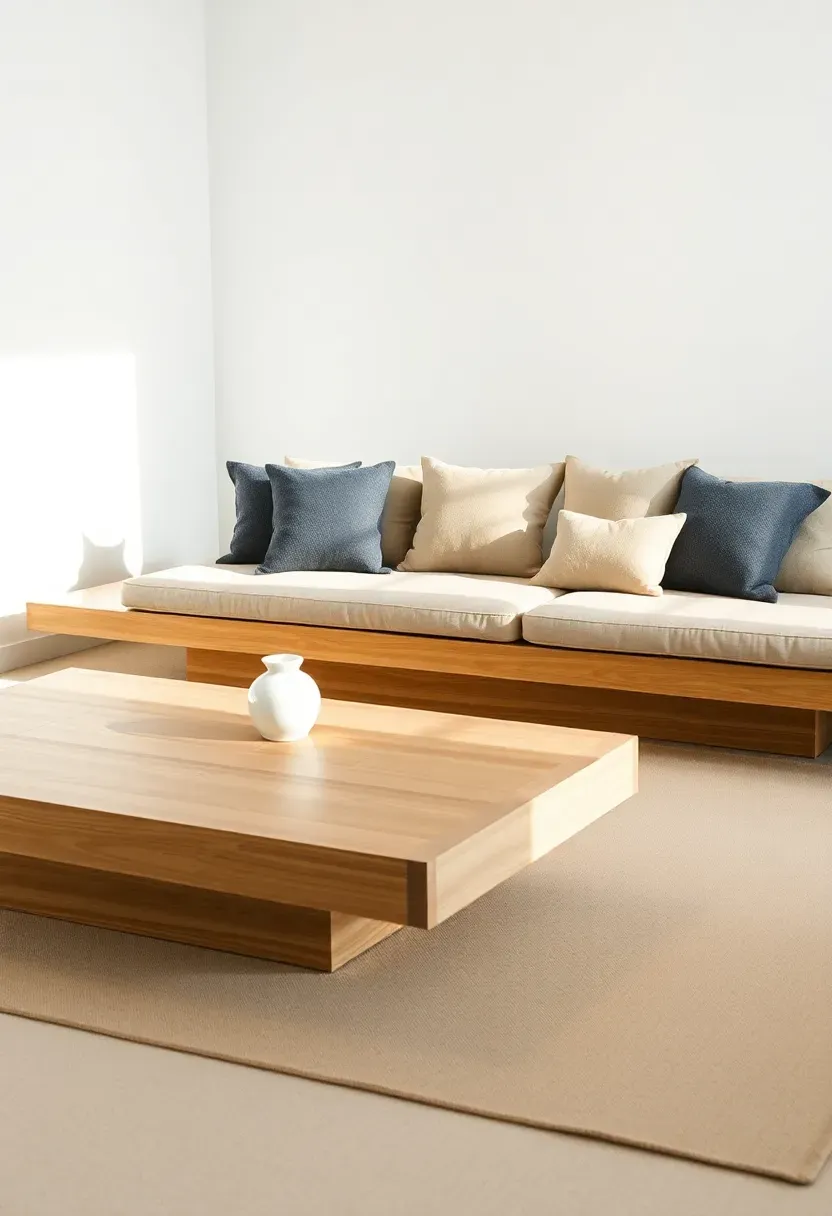
A low platform sofa with an integrated wooden table creates a Japandi living room seating solution that feels both modern and wonderfully grounded. The sofa sits on a continuous wooden platform (6-8 inches high) that extends to form a coffee table, creating a unified, horizontal composition that references Japanese floor seating while maintaining Western comfort. Scandinavian influence shows in the sofa's clean lines, warm upholstery, and wool throw pillows. This integrated design reduces furniture count (one piece instead of separate sofa and table) while creating a cohesive, architectural presence. The low profile maintains open sightlines and spaciousness, while the continuous platform defines the seating zone without walls or rugs, embodying Japandi's spatial efficiency and visual calm.
Tips
- Do keep the platform height modest (6-8 inches) for easy accessibility while maintaining low-profile effect
- Don't make the table extension too small—minimum 24x18 inches provides functional surface
- If a full integrated platform feels too permanent, separate low sofa and table at same height can achieve similar cohesion
Unified design: platform combines sofa and table into one cohesive, minimal piece
What this gives you: reduced furniture count and visual clutter while maintaining comfort and function
18. Suspended Wood and Rope Shelving
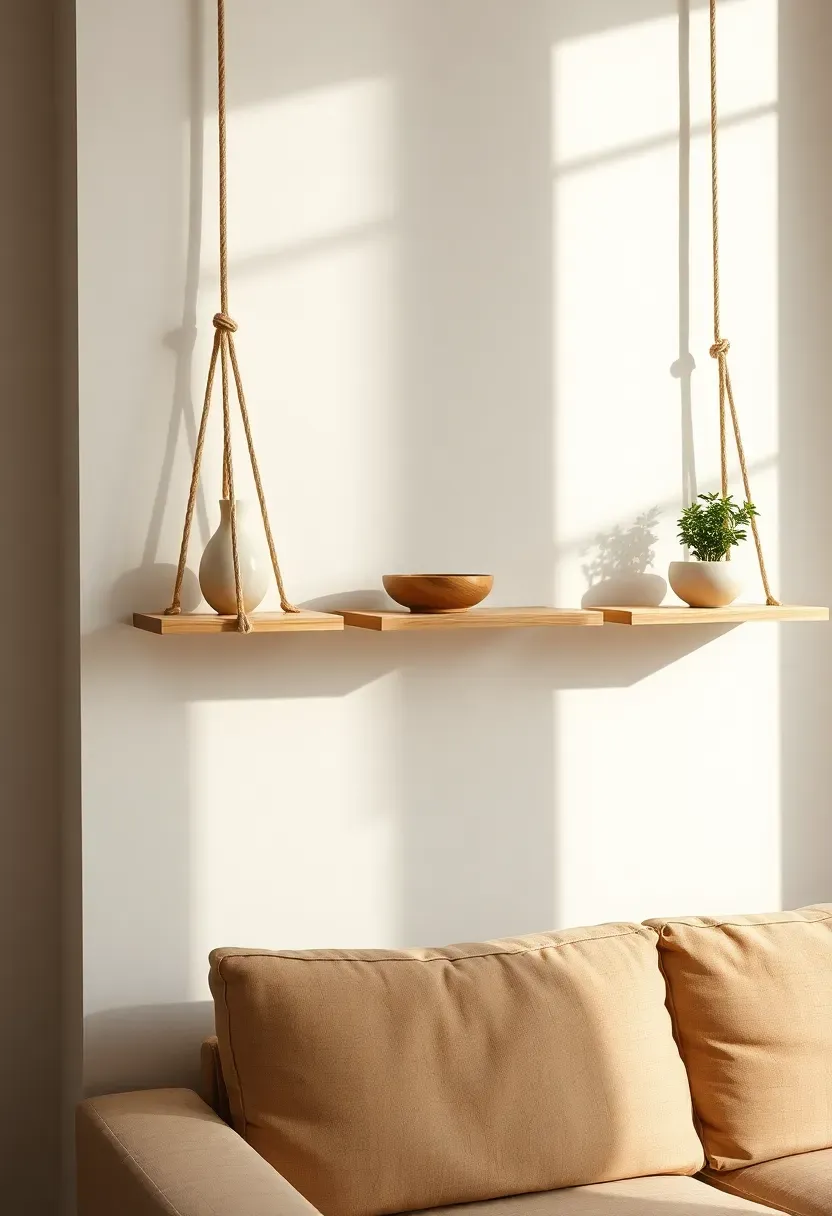
Suspended shelves using wooden planks and natural rope create Japandi wall storage that feels both sculptural and warmly organic. Unlike traditional brackets or floating mounts, the rope suspension adds visible craftsmanship and references Japanese joinery traditions while maintaining Scandinavian simplicity. The shelves—warm oak or ash planks with visible grain—provide storage or display for carefully edited objects. The rope's natural texture and visible suspension create visual interest without decoration, while the minimal hardware maintains clean aesthetics. This approach honors both cultures' appreciation for honest construction and natural materials, creating storage that feels handmade and intentionally rustic rather than mass-produced or sterile.
Recommended
Items for this idea
Tips
- Do use thick rope (minimum 1 inch diameter) for substantial visual presence and strength
- Don't overload shelves—minimal object display maintains the design's calm and intentional beauty
- If rope feels too rustic, leather straps or thin metal cables can achieve similar suspension with different aesthetic
Handcrafted feel: rope suspension adds visible craftsmanship and warmth
What this gives you: storage that serves as sculptural art while displaying meaningful objects
19. Paper Screen Accent Wall
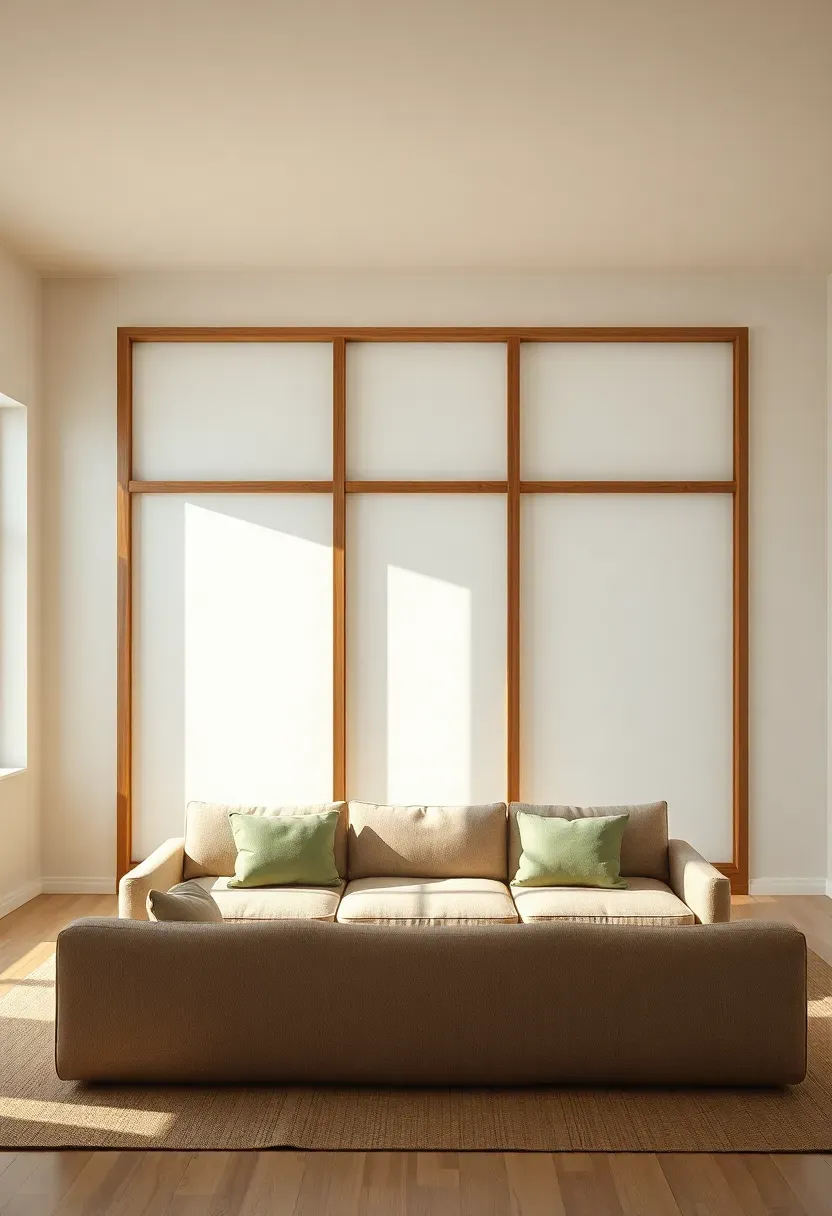
An accent wall featuring shoji-inspired paper or translucent panels creates a Japandi living room focal point that filters light beautifully while referencing Japanese traditional architecture. The panels might be floor-to-ceiling or cover a portion of the wall, framed in light wood with translucent paper, rice paper, or frosted glass inserts. Scandinavian influence keeps the design minimal and simplified—no intricate lattice work, just clean rectangular panels. During daylight, the wall glows with soft filtered light. At night, backlit or front-lit, it becomes a glowing sculptural element. This wall creates privacy while maintaining brightness, filters harsh light, and serves as a beautiful backdrop for low furniture, embodying Japandi's balance of function and ethereal beauty.
Tips
- Do use durable paper alternatives (rice paper, translucent vinyl, or frosted acrylic) for longevity
- Don't place furniture directly against the wall—leave space to appreciate light filtering through panels
- If full wall installation feels too permanent, a large-scale screen or room divider can achieve similar effect
Luminous backdrop: paper screen wall glows with filtered natural light
What this gives you: a beautiful functional element that transforms light while referencing Japanese tradition
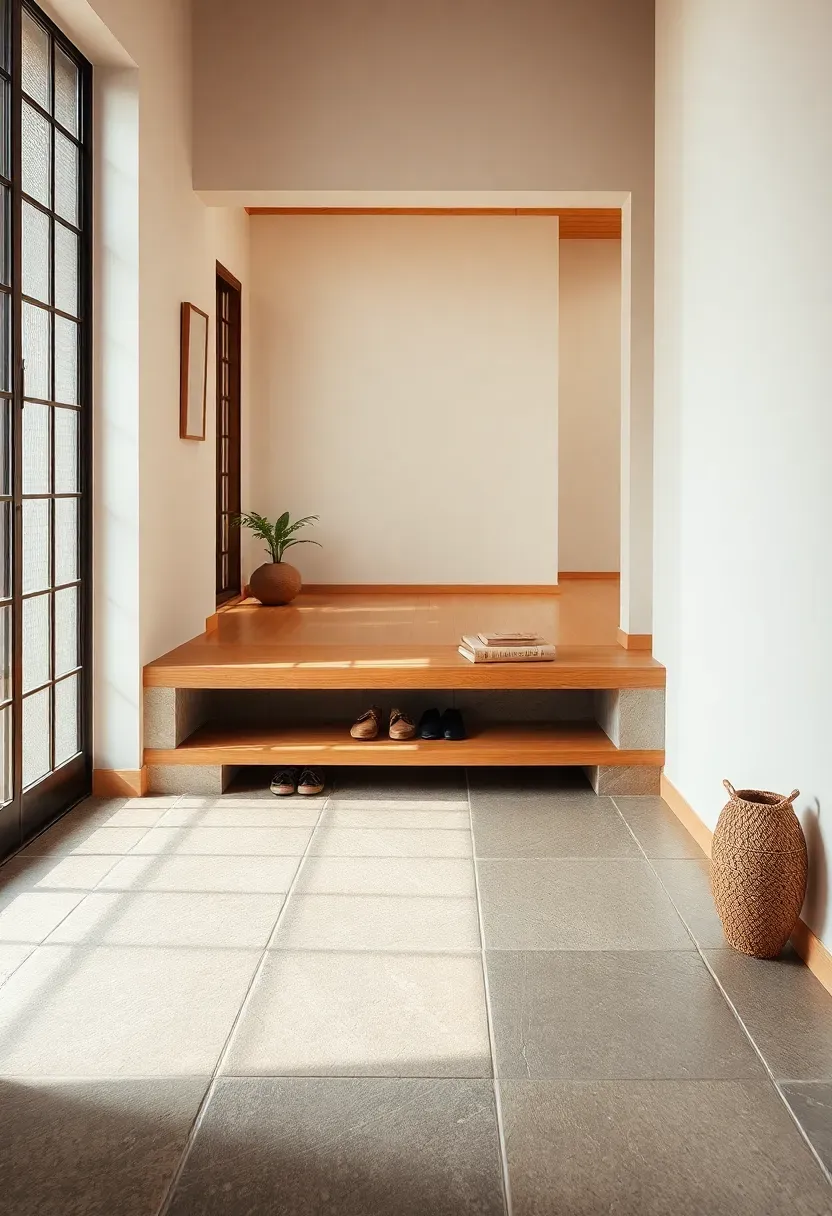
20. Minimalist Genkan Entry Transition
Creating a simplified genkan-style entry transition within or adjacent to the living room brings Japanese ritual and mindfulness to a Japandi home while maintaining Scandinavian simplicity. The genkan—a lowered area or distinct zone for removing shoes—might be created with a slight floor level change (one step down), a different flooring material (stone or wood planks), or simply a clearly defined entry zone with shoe storage and a bench. Scandinavian influence keeps the design minimal and functional: a low wooden bench, simple shoe rack or cabinet, perhaps a small mirror or plant. This entry ritual creates a daily transition moment, leaving the outside world behind and entering a sanctuary of calm, embodying Japandi's intentionality and respect for the home as sacred space.
Recommended
Items for this idea
Tips
- Do include seating (bench or stool) for comfortable shoe removal even if you rarely use it
- Don't clutter the entry—keep only daily shoes and essentials, store others elsewhere
- If a level change isn't possible, a distinct flooring material can achieve similar zone definition
Daily ritual: genkan creates mindful transition from outside to sanctuary
What this gives you: a designated entry moment that reinforces the home as separate, sacred space
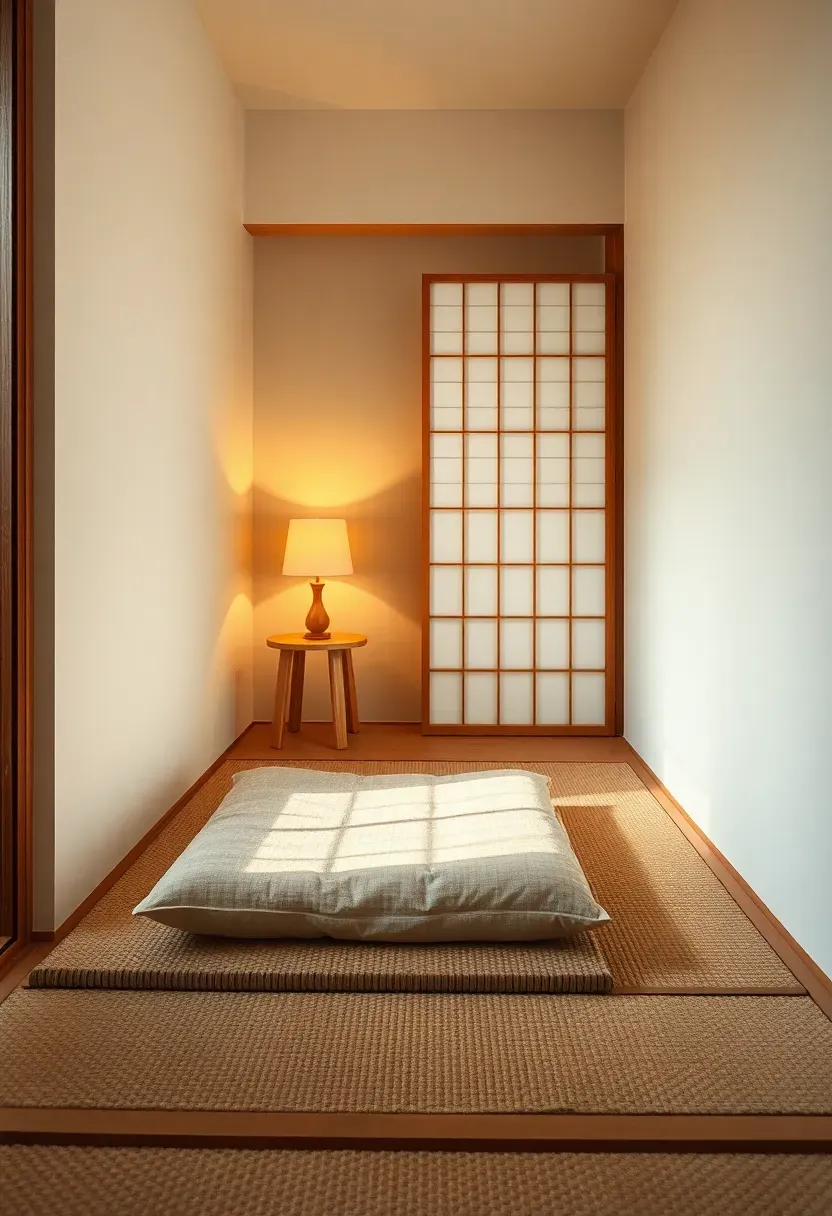
21. Tatami Reading Nook with Shoji Screen
A dedicated reading nook featuring tatami mat flooring and a shoji screen creates a Japandi sanctuary within the living room for quiet contemplation and escape. The raised tatami platform (4-6 inches high) defines the space, while a floor cushion or low bench provides comfortable seating. A shoji screen—either a freestanding room divider or sliding door—creates privacy and filters light beautifully. Scandinavian influence adds warmth through textiles (wool throw, linen cushion), a small side table for tea, and perhaps a reading lamp with warm glow. This nook becomes the living room's most intimate corner—a place to withdraw from social space while remaining connected to the room's overall calm and openness.
Tips
- Do make the tatami platform large enough for comfortable lounging (minimum 5x7 feet)
- Don't fully enclose the nook—the shoji screen should filter light and view, not completely isolate
- If tatami feels too traditional, a wooden platform with plush rug can achieve similar zone definition
Private sanctuary: reading nook provides escape within shared living space
What this gives you: an intimate retreat for reading or contemplation that maintains connection to the room's overall calm
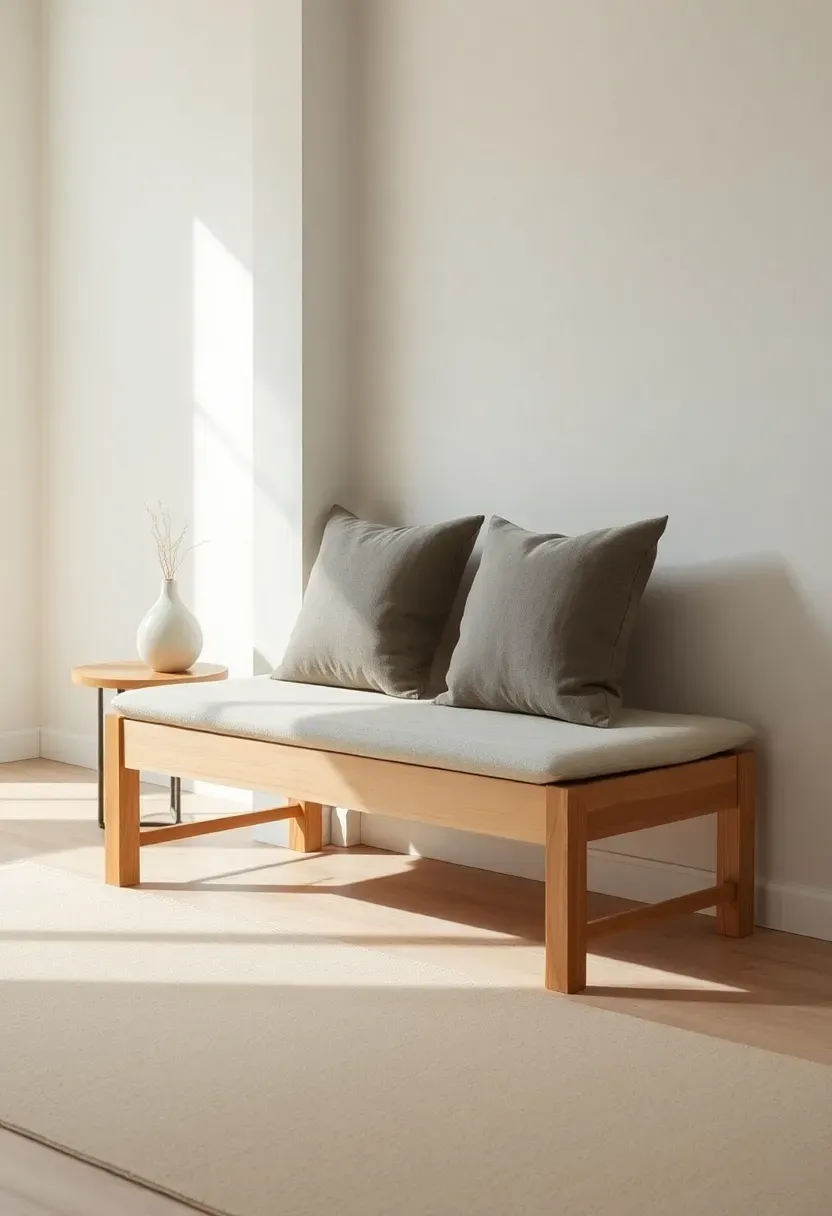
22. Low Wooden Bench with Linen Seating
A low wooden bench with linen cushion or upholstered top creates versatile Japandi living room seating that can function as sofa alternative, additional seating, or purely decorative element. The bench—typically 12-16 inches tall, 4-6 feet long—references Japanese low furniture and floor culture while Scandinavian design contributes clean lines, light wood (oak, ash, birch), and soft linen upholstery. This piece works beautifully along a wall, behind a sofa, or as room divider when placed perpendicular to walls. The low profile maintains open sightlines, while the bench's slim footprint preserves floor space. Upholstered in linen or wool with subtle decorative pillows, it provides comfort without bulk, embodying Japandi's balance of minimalism and hygge warmth.
Recommended
Items for this idea
Tips
- Do choose substantial upholstery (3-4 inches thick) for comfort—benches shouldn't feel hard or unwelcoming
- Don't make the bench too narrow (minimum 18 inches deep) for comfortable seating
- If upholstered top feels too formal, a solid wood bench with linen cushions works equally well
Versatile seating: bench serves multiple functions while maintaining minimal footprint
What this gives you: flexible, space-efficient seating that embodies Japandi's functional beauty
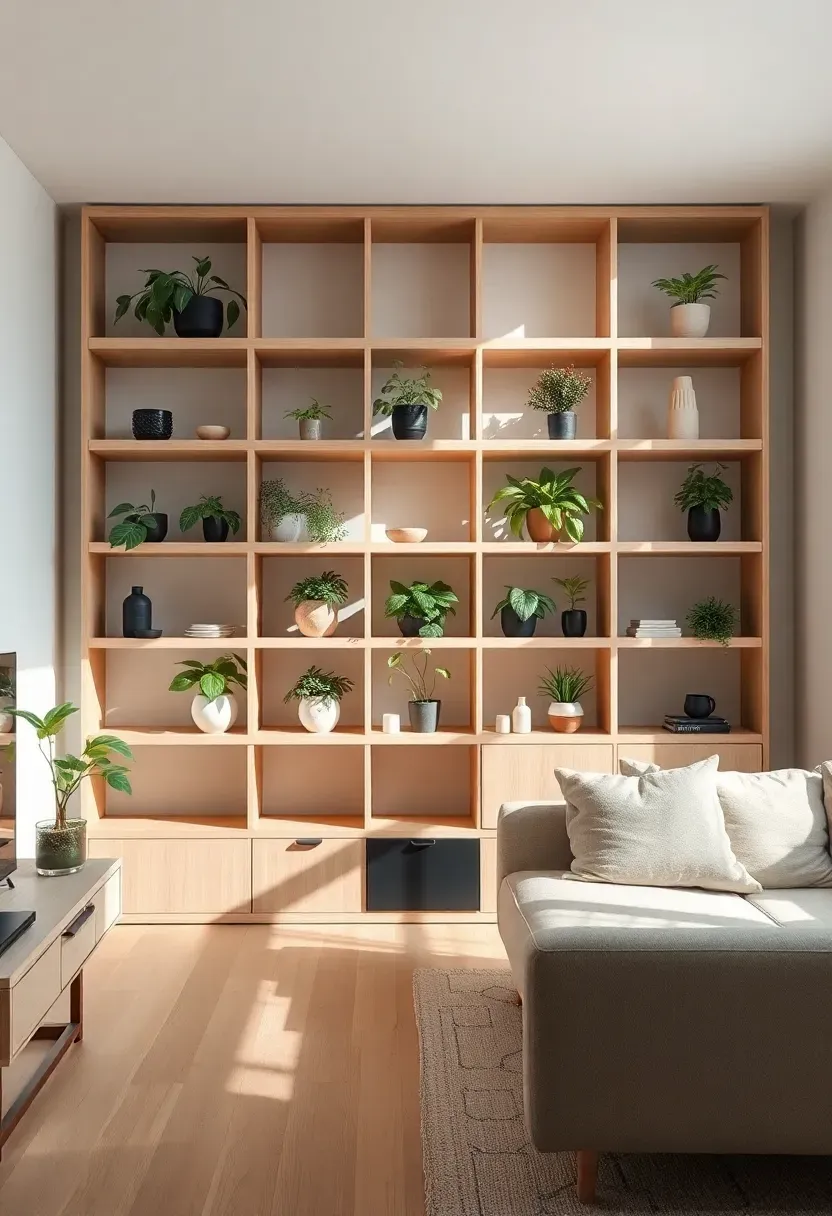
23. Integrated Plant Shelf Divider
A floor-to-ceiling shelving unit designed specifically for plants creates a Japandi living room divider that brings nature indoors while maintaining openness and light flow. The open shelf design—light wood frame with multiple levels—holds plants at various heights, creating a living screen rather than solid wall. Japanese influence shows in the appreciation for bringing nature indoors and the shelf's clean, geometric structure. Scandinavian minimalism maintains the design's simplicity and prevents over-styling. This plant divider separates zones (dining from living, workspace from relaxation) without blocking light or sight, maintaining Japandi's emphasis on spaciousness and connection. The plants add life, movement, and organic beauty, transforming the divider from furniture to living architecture.
Tips
- Do select plants with varied forms—trailing, upright, broad-leaf, spiky—for visual diversity without decoration
- Don't overfill shelves—substantial empty space maintains Japanese minimalist aesthetics
- If plants feel too high-maintenance, preserved moss, dried branches, or very hardy plants can achieve similar effect
Living divider: plant shelf creates separation while adding life and air-purifying benefits
What this gives you: a functional room divider that's also beautiful, living architecture bringing nature indoors
These 23 japandi living room ideas show how Japanese zen philosophy and Scandinavian hygge combine to create spaces that feel both serene and warmly inviting. The key to successful Japandi design lies in balance—minimalist restraint without sterility, warmth without clutter, natural materials without rusticity. Each idea honors both traditions' respect for craftsmanship and functional beauty while creating living rooms that support modern, intentional lifestyles. Whether you incorporate one element or fully embrace the warm minimalist aesthetic, Japandi principles can transform even a small rental living room into a sanctuary of calm and comfort—a space that nurtures both peaceful contemplation and cozy togetherness.
About the author
OBCD
CGI visualization and interior design content. We create detailed 3D renders and curate practical design ideas for every room in your home.