21 Minimalist Navy Blue Living Room Ideas That Feel Bold Yet Calm
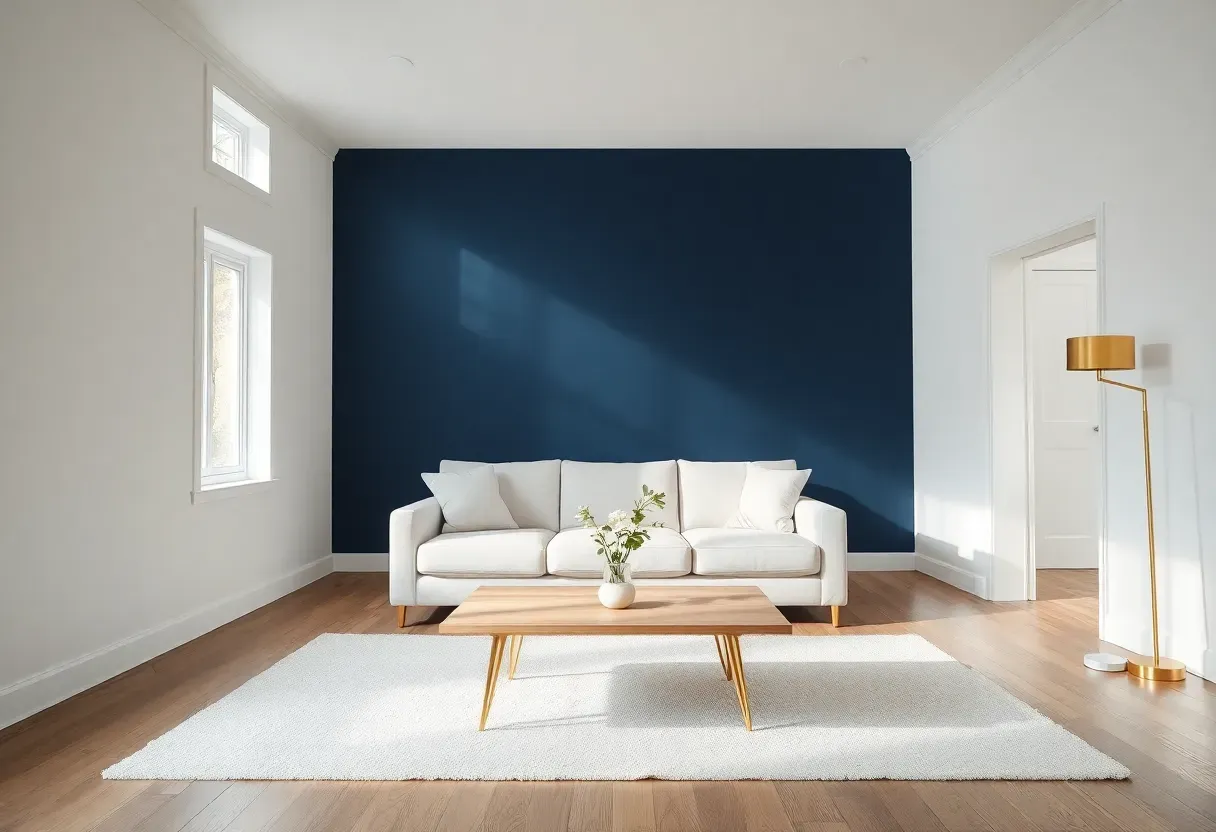
Looking for **minimalist navy blue living room ideas** that feel bold yet calm? Navy blue represents the perfect intersection of sophistication and restraint -- a color choice that feels dramatically elegant while maintaining the uncluttered aesthetic essential to modern living spaces. Unlike brighter blues that can feel energetic or playful, navy carries inherent gravitas and depth, creating spaces that feel both grounded and refined. This saturated dark blue works beautifully in minimalist interiors because it provides strong visual interest without needing pattern, ornamentation, or additional colors. The result is a living room that feels luxurious and intentional, where navy becomes the protagonist in a carefully composed narrative of color, texture, and light.
The challenge and art of navy blue minimalist design lies in balance—preventing the space from feeling dark, heavy, or overwhelming while maximizing navy's sophisticated presence. Successful navy living rooms achieve this through strategic use of white and light neutrals, abundant natural light, reflective surfaces, and thoughtful material selection. The navy might dominate through wall color, large furniture pieces, or architectural elements, but it's always counterbalanced by brightness and breathing room. This approach creates rooms that feel cocoon-like and intimate rather than cave-like, dramatic without being oppressive, bold while remaining serene and livable.
What makes navy particularly appealing for modern living rooms is its versatility across design styles and its ability to create atmosphere without requiring extensive decoration. Navy works equally well in contemporary apartments, traditional homes, industrial lofts, or coastal retreats. It pairs beautifully with warm woods, metallic accents, crisp whites, and natural textures. Whether you are a renter looking for commitment-free navy blue accent wall ideas or a homeowner planning a full navy living room makeover, these minimalist navy blue living room ideas prove that bold color and minimalism combine to create spaces of exceptional character and calm.
Quick FAQ
Does navy blue make a living room feel too dark?
Not when balanced correctly. Navy feels dramatic rather than dark when paired with ample white (ceilings, trim, furniture), abundant natural light, and reflective surfaces. The key is ensuring at least 50-60% of the room is light or neutral to counterbalance navy's depth.
What colors pair best with navy blue in minimalist spaces?
Crisp white, cream, light gray, warm beige, tan, camel, tan, gold, brass, copper, and light wood tones (oak, birch, maple). Limit accent colors to one maximum—perhaps terracotta, sage green, or blush pink—in small doses.
Should navy go on walls or furniture?
Both work beautifully. Navy walls create drama and cocoon-like intimacy—ideal for larger rooms or those with abundant natural light. Navy furniture (sofa, sectional, armchair) provides bold impact while maintaining flexibility—perfect if you're renting or prefer commitment-free color.
How do I keep a navy living room from feeling overwhelming?
Maintain substantial negative space, limit furniture to essential pieces, use white or light-colored rugs to ground the space, incorporate mirrors to reflect light, and ensure excellent lighting (natural + layered artificial). The navy should feel intentional, not all-encompassing.
What lighting works best in navy blue living rooms?
Warm-toned lighting (2700K-3000K) is essential to prevent navy from feeling cold or harsh. Layer ambient, task, and accent lighting. Consider metallic fixtures (brass, gold, copper) that add warmth and sparkle against dark blue.
Can navy blue work in small living rooms?
Yes, but use navy strategically rather than everywhere. Consider one navy accent wall, navy furniture with light surroundings, or navy lower cabinets with white upper walls. Avoid floor-to-ceiling navy on all walls in small spaces—it can feel enclosing.
As an Amazon Associate I earn from qualifying purchases.
Table of Contents
- 1. Single Navy Accent Wall with White Surround
- 2. Navy Sectional with Cream Oasis
- 3. Floor-to-Ceiling Navy Dramatic Statement
- 4. Navy Built-in Cabinets with White Walls
- 5. Navy and Warm Wood Scandinavian Balance
- 6. Navy Fireplace Wall as Focal Point
- 7. Navy Lower Cabinets with White Uppers
- 8. Navy Velvet Sofa in Minimalist White Room
- 9. Navy and Brass Metallic Accent Theme
- 10. Navy Paneling with Modern Minimalism
- 11. Navy and Natural Jute Texture Layering
- 12. Navy Ceiling with Light Walls (Inverted Drama)
- 13. Navy and Tan Earth Tone Sophistication
- 14. Navy Window Wall with Reflective Surfaces
- 15. Navy and Copper Warm Metallic Accents
- 16. Navy Bookcases with Light Backing
- 17. Navy and Concrete Industrial Edge
- 18. Navy Arch with Soft Interior Beyond
- 19. Navy and Sage Green Nature Connection
- 20. Navy Wide-Plank Flooring with Light Walls
- 21. Navy and Camel Warm Neutral Elegance
1. Single Navy Accent Wall with White Surround
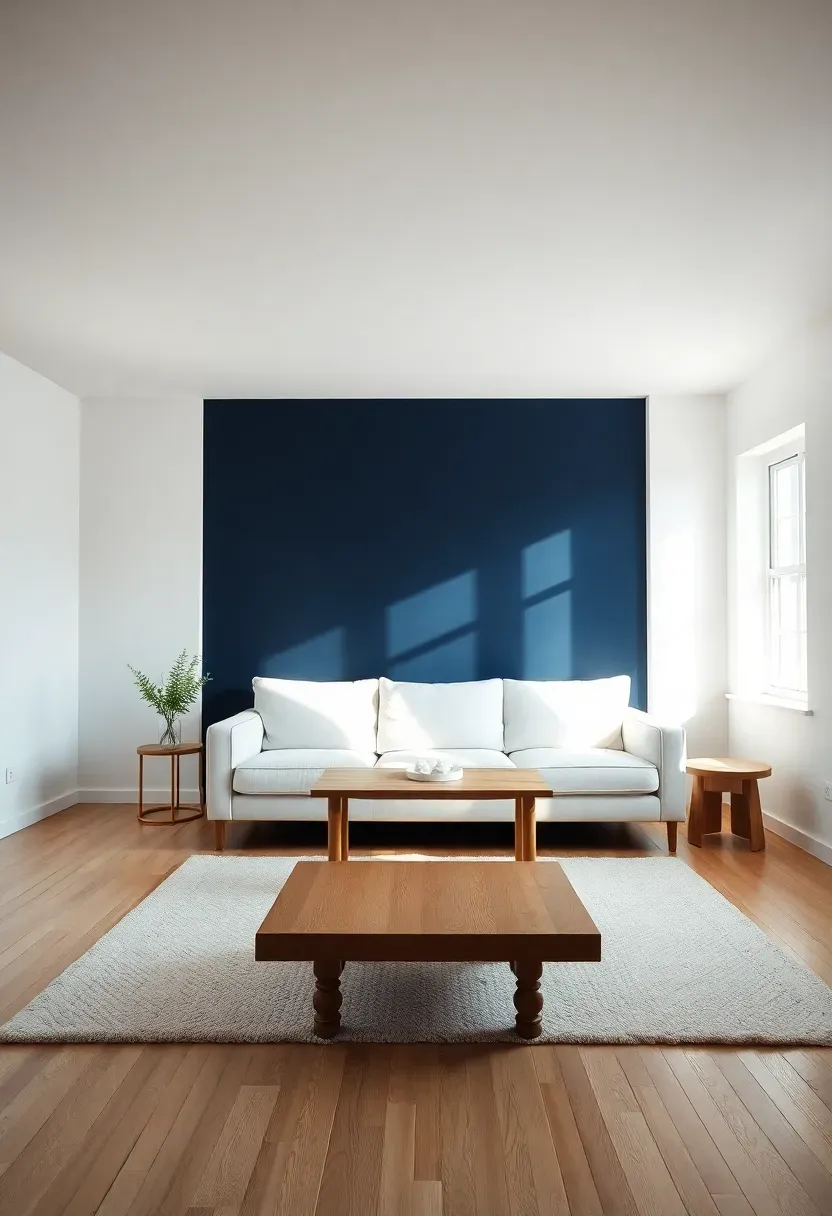
A single navy accent wall creates a dramatic focal point in a minimalist living room while maintaining brightness and spaciousness through white surrounding walls. This approach works beautifully behind a sofa, media console, or dining area, creating defined zones without sacrificing openness. The navy wall becomes the room's protagonist—a bold statement that draws the eye and provides depth—while white walls, ceiling, and trim maintain airiness and prevent the space from feeling enclosed. This selective use of navy feels intentional and sophisticated rather than overwhelming, perfect for those who want dramatic color without full-room commitment. The contrast between navy and white creates visual energy and modern edge, embodying minimalist principles of "less is more" through color restraint rather than absence.
Tips
- Do choose the wall behind your largest furniture piece (sofa, media console) for maximum impact
- Don't paint accent walls randomly—select the wall that naturally draws focus when entering the room
- If navy feels too heavy, add a large mirror or gallery wall on the accent wall to break up the color
Commitment-free drama: single wall provides navy impact while keeping options open for change
What this gives you: bold color drama without overwhelming the space or requiring full-room commitment
We picked a few things that go well with this idea: Jennifer Taylor Tufted Velvet Sofa Navy (84") (★4.4), Jennifer Taylor Alana Lawson Velvet Sofa (★4.5) and RXRRXY Mid-Century Velvet Loveseat Navy (67") (★4.4). As an Amazon Associate we earn from qualifying purchases.
2. Navy Sectional with Cream Oasis
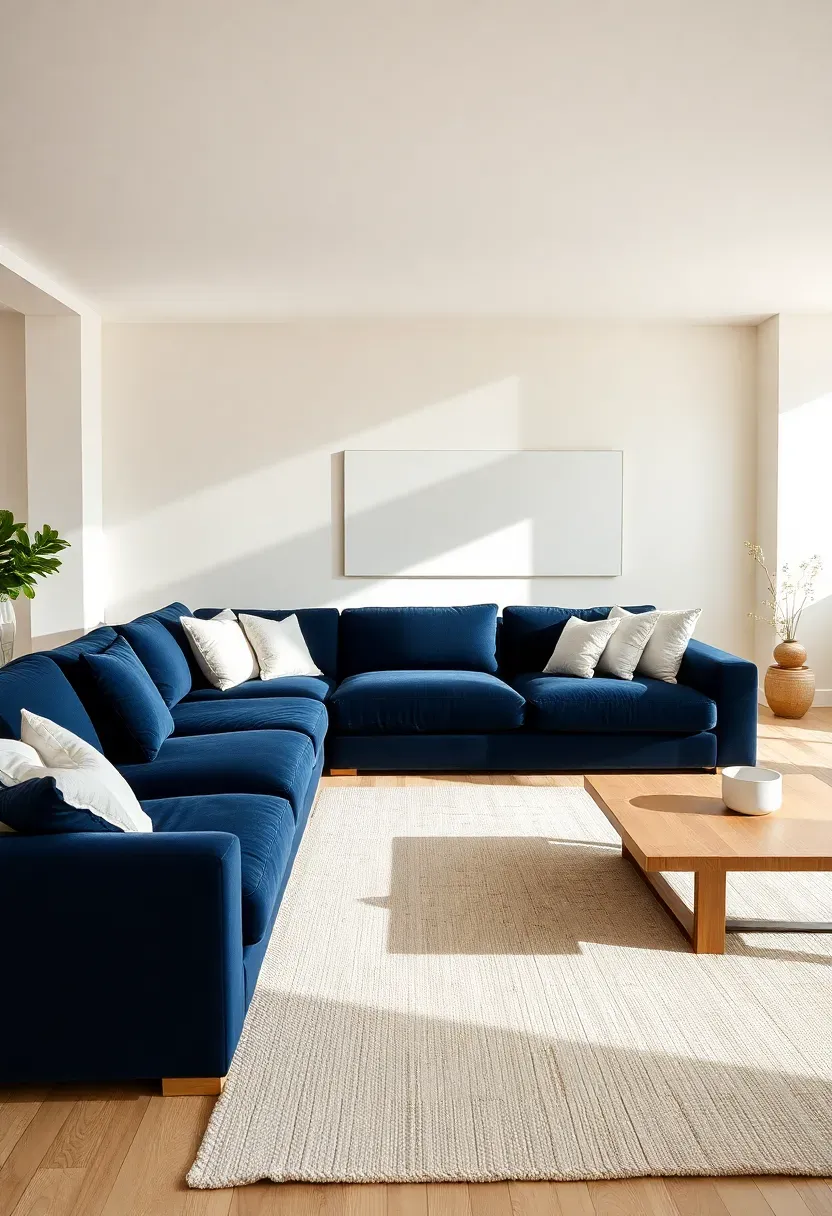
A navy blue sectional sofa surrounded by cream and white elements creates a minimalist living room where dark furniture provides sophisticated anchor while light surroundings maintain spaciousness and brightness. The navy sectional becomes the room's star—a substantial, confident piece that grounds the space with its weight and depth. Cream walls, white ceiling, light rug, and cream accents throw pillows, throws, and accessories—create a light, airy environment that prevents the navy from dominating. This color-block approach feels modern and intentional, with navy providing depth and cream providing breathing room. The result is a living room that feels both cocoon-like and expansive, bold yet serene, perfect for those who want strong furniture presence without wall color commitment.
Tips
- Do choose cream with warm undertones rather than cool white to balance navy's coolness
- Don't overwhelm the navy sofa with too many pillows—3-5 accent pillows maximum for minimal clarity
- If navy feels too dark, add a light-colored throw blanket to brighten the furniture visually
Furniture-first approach: navy through furniture allows color flexibility and rental-friendly design
What this gives you: bold navy impact with commitment-free flexibility and easy color changes
We picked a few things that go well with this idea: Nintiue Modern Arc Dimmable Floor Lamp Gold (★4.5), O'Bright Dimmable LED Pharmacy Lamp Antique Brass (★4.4) and Adjustable Modern Brass Floor Lamp (55-65") (★4.5). As an Amazon Associate we earn from qualifying purchases.
3. Floor-to-Ceiling Navy Dramatic Statement
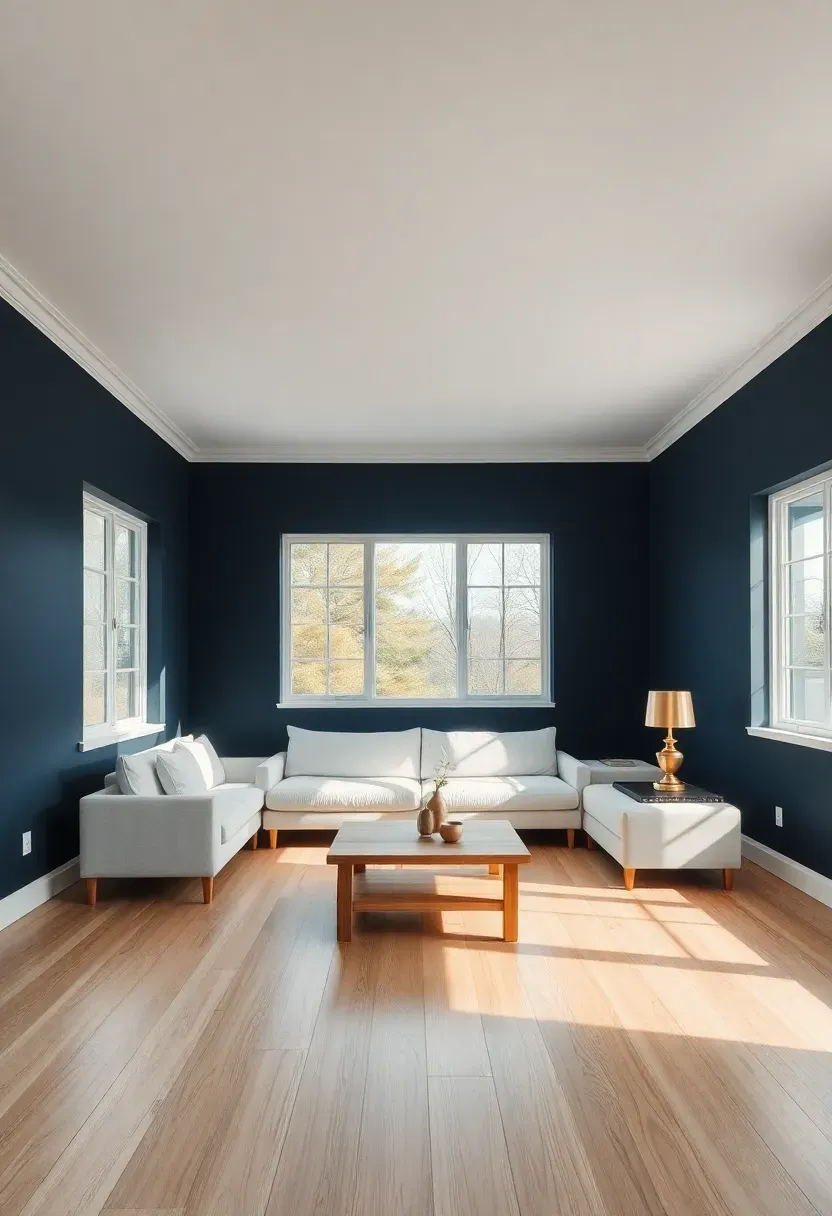
Floor-to-ceiling navy walls on all four sides create a minimalist living room of exceptional drama and intimacy—a bold choice that results in a cocoon-like sanctuary when balanced with sufficient light and white elements. This full-navy approach works best in rooms with abundant natural light, high ceilings, or multiple windows, where the darkness feels rich and enveloping rather than cave-like. White or very light flooring provides essential contrast and brightness, while white ceiling maintains some vertical spaciousness. The navy walls create a unified, immersive environment that feels both sophisticated and surprisingly cozy—like being wrapped in a beautifully tailored suit. This approach embodies maximal minimalism: bold color choice with restrained furniture and decor, where the navy itself becomes the primary decoration and the room's strongest statement.
Tips
- Do ensure excellent lighting—warm-toned LED fixtures, multiple light sources, perhaps metallic accents to add sparkle
- Don't attempt full navy in small north-facing rooms without excellent artificial lighting
- If full-navy feels too dark, add large mirrors or substantial white furniture pieces for contrast
Maximal impact: floor-to-ceiling navy creates enveloping drama and sophisticated intimacy
What this gives you: a boldly dramatic living room that feels cocoon-like and luxuriously immersive
We picked a few things that go well with this idea: CaliTime Chenille Pillow Covers Navy (2-Pack) (★4.7), JIAHANNHA Velvet Navy Pillow Covers (2-Pack) (★4.6) and Utopia Bedding Throw Pillow Inserts (4-Pack) (★4.6). As an Amazon Associate we earn from qualifying purchases.
4. Navy Built-in Cabinets with White Walls
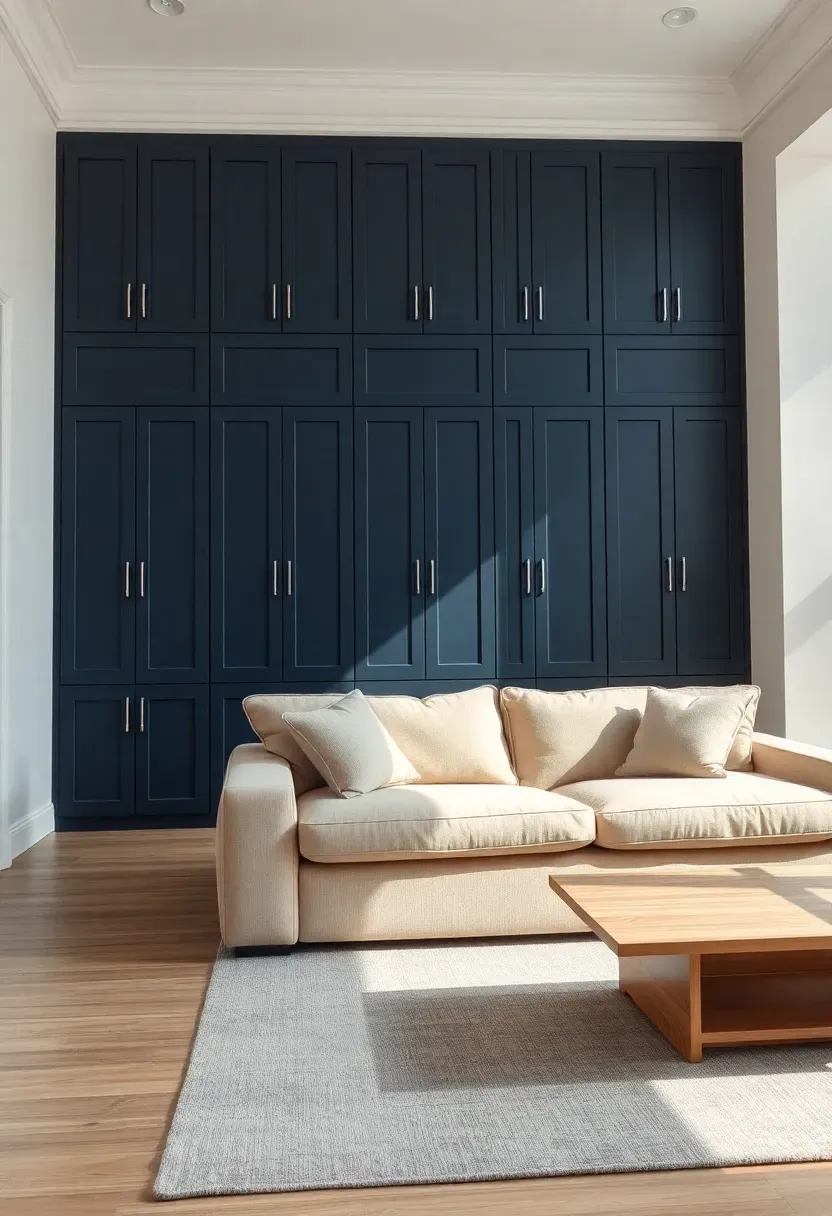
Navy blue built-in cabinets against white walls create a minimalist living room with sophisticated color blocking and exceptional storage capabilities. The navy cabinets—whether floor-to-ceiling wall units or a media console—provide strong visual weight and organizational function, while white walls maintain brightness and spaciousness. This approach proves that storage doesn't need to disappear or blend in; navy cabinets become architectural features that define the space while hiding everyday clutter behind closed doors. The contrast between navy's depth and white's brightness creates dynamic visual energy, while the built-in nature maintains minimalist lines and lack of visual clutter. This combination works particularly well in modern homes, apartments, or family rooms where substantial storage is essential but design sophistication isn't negotiable.
Recommended
Items for this idea
Tips
- Do choose minimal or integrated hardware for sleek, uninterrupted navy surfaces
- Don't mix cabinet finishes—keep all storage behind matching navy doors for visual calm
- If floor-to-ceiling feels too heavy, consider navy lower cabinets with open shelving above
Storage as architecture: navy built-ins become design features while hiding clutter
What this gives you: substantial storage that enhances rather than disrupts minimalist aesthetic
5. Navy and Warm Wood Scandinavian Balance
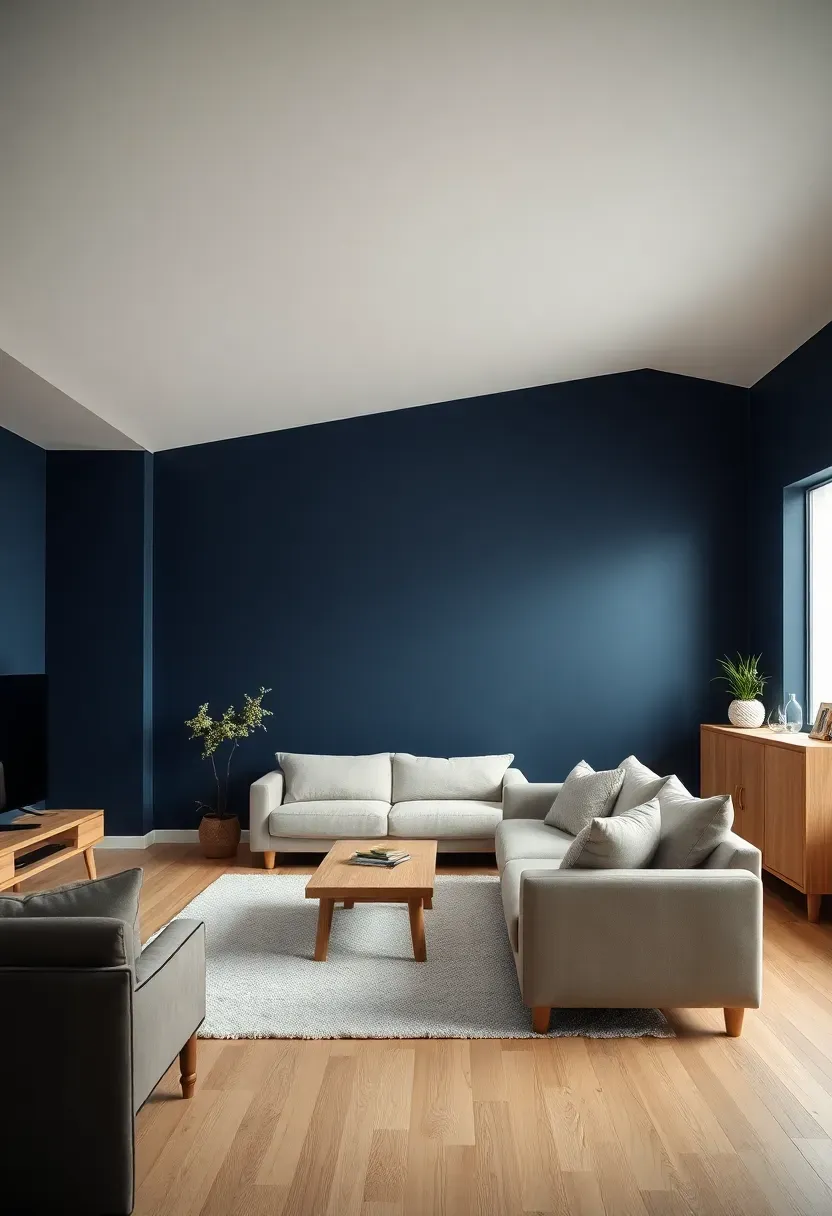
Navy blue walls or furniture paired with warm light wood elements create a minimalist living room that balances cool sophistication with Scandinavian warmth and organic presence. The navy provides depth and drama, while light oak, birch, or maple wood furniture and flooring add essential warmth and natural character. This combination honors both Nordic minimalism's love for natural materials and bold color's ability to create atmosphere. The wood tones prevent navy from feeling cold or stark, while navy prevents the space from feeling too light or insubstantial. This balance creates a living room that feels lived-in and welcoming despite its dramatic color, perfect for those who want navy's sophistication without sacrificing comfort or warmth. The result is a space that feels both contemporary and timeless, bold yet thoroughly livable.
Tips
- Do choose warm-toned woods (oak, maple, birch) rather than cool woods (ash, maple) to balance navy
- Don't mix multiple wood species—stick to one type for 70% of wood elements for cohesion
- If navy walls feel too dark, increase white trim and ceiling brightness for contrast
Cool-warm harmony: navy and light wood create perfect temperature balance
What this gives you: sophisticated navy presence warmed by natural wood's organic character
6. Navy Fireplace Wall as Focal Point
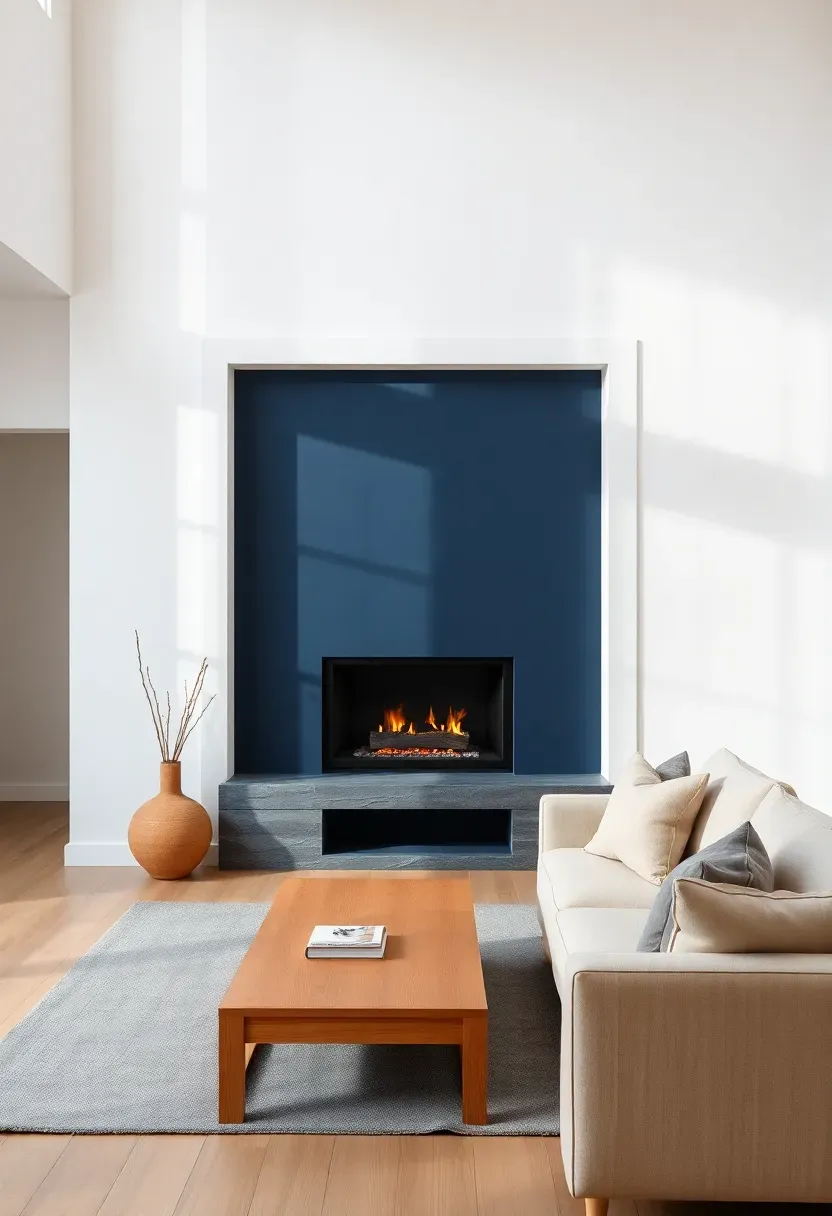
A navy blue fireplace wall creates a stunning focal point in a minimalist living room, adding drama and sophistication while the fireplace itself provides warmth and gathering energy. The navy surround—whether it extends floor-to-ceiling or frames the firebox—draws the eye and anchors the room, becoming the natural center of attention. White or light gray surrounding walls maintain brightness and prevent the space from feeling enclosed, while the fire's glow creates beautiful contrast against the dark blue background. This combination works with both traditional and modern fireplace designs, proving that navy can enhance various architectural styles. The navy fireplace wall becomes more than a feature—it's the room's protagonist, defining the space's character while maintaining minimalist restraint through clean lines and lack of ornamentation.
Recommended
Items for this idea
Tips
- Do extend navy to the ceiling for maximum drama if the fireplace is centrally located
- Don't forget lighting—install wall sconces or picture lights to highlight the navy when fire isn't lit
- If full navy feels too heavy, consider navy lower panels with white upper wall above
Natural focal point: navy fireplace wall becomes room's dramatic center
What this gives you: a stunning architectural feature that defines the space while providing warmth
7. Navy Lower Cabinets with White Uppers
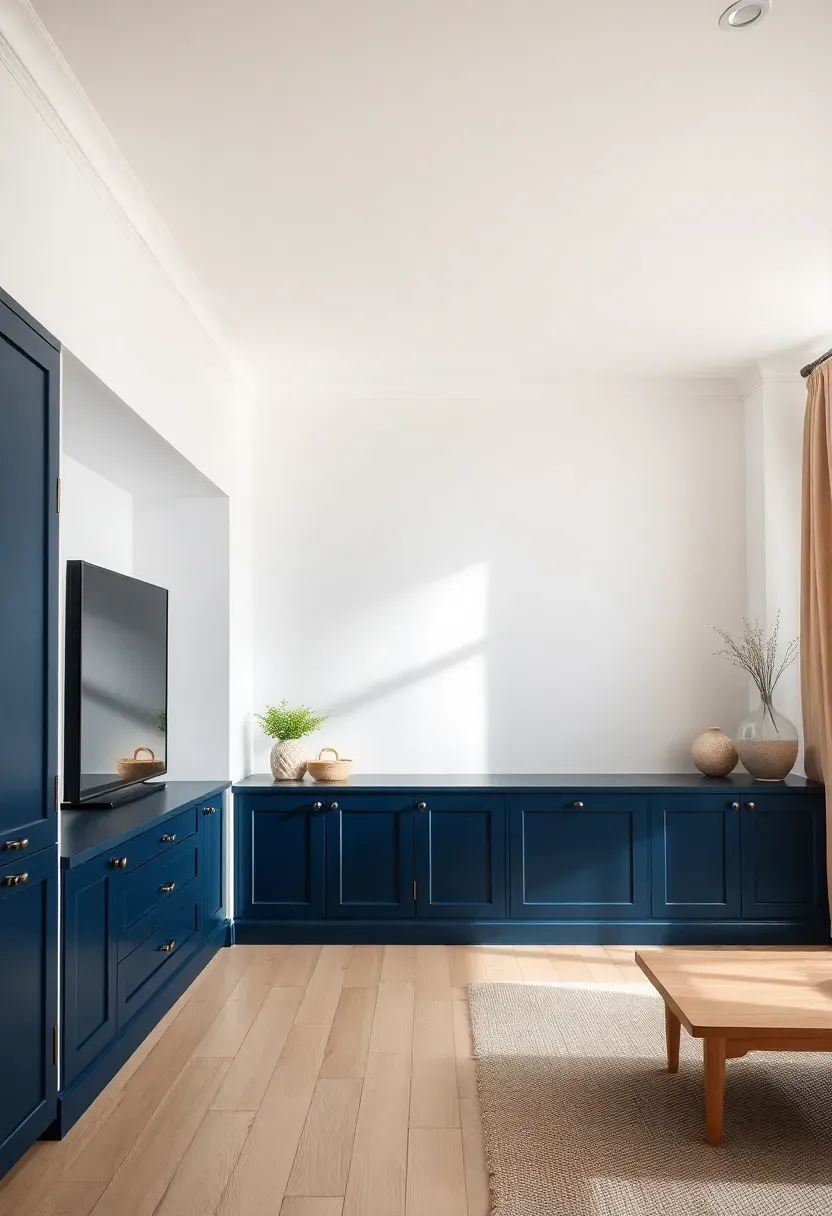
Navy blue lower cabinets or storage paired with white upper walls create a minimalist living room with color blocking that feels both grounded and airy. This approach—common in Scandinavian design—places darker colors at eye level and below while keeping upper surfaces bright and open. Navy lower units (media console, sideboard, bookcases) provide visual weight and anchoring, while white walls above maintain spaciousness and brightness. The transition between navy and white can be sharp and clean or softened with a trim piece or shelf. This combination works particularly well in rooms with standard ceiling heights, where navy on all walls might feel too heavy but color presence is still desired. The result is a living room that feels balanced, sophisticated, and intentionally composed.
Tips
- Do keep the transition line clean and straight for sharpest minimalist aesthetic
- Don't make lower navy units too tall—60-72 inches maximum maintains upper wall brightness
- If you want more navy presence, extend the color slightly higher but keep majority white above
Grounded brightness: navy lower with white upper creates perfect color-weight balance
What this gives you: navy presence without sacrificing spaciousness or brightness
8. Navy Velvet Sofa in Minimalist White Room
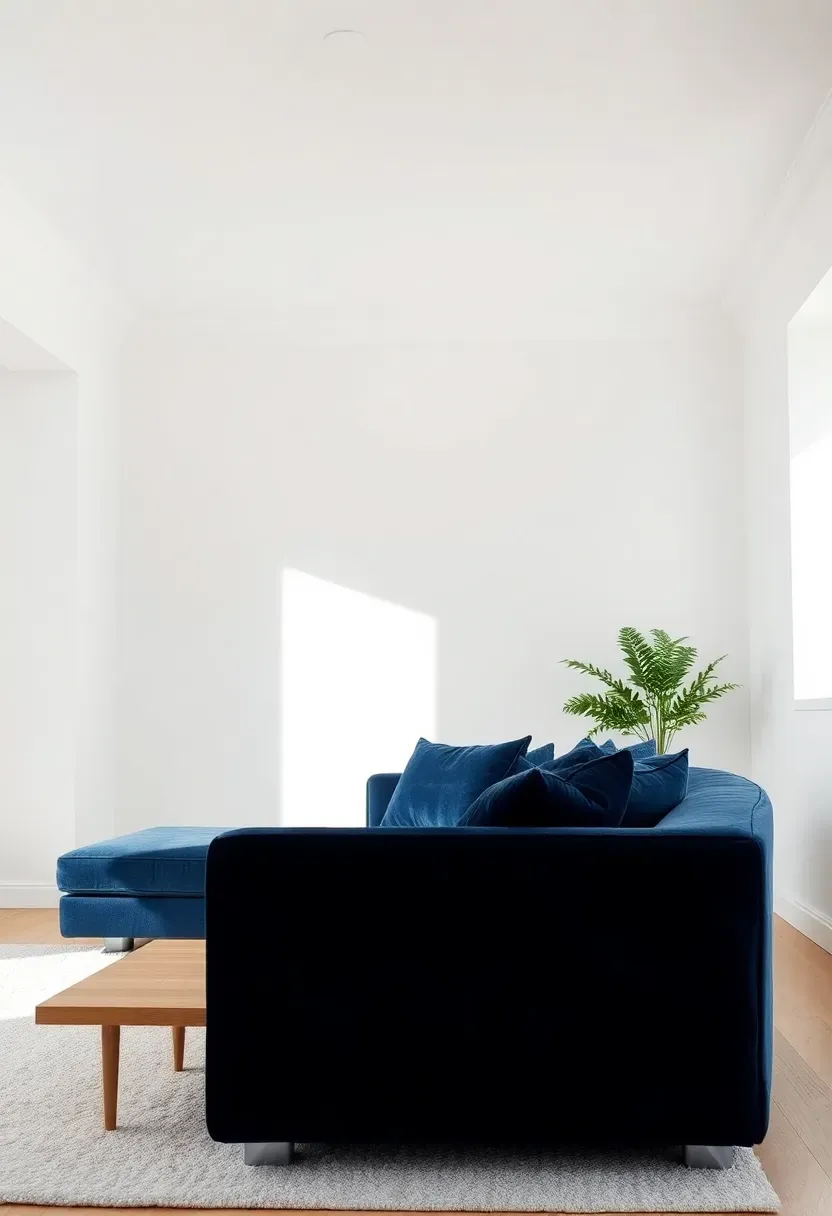
A navy velvet sofa in an otherwise white minimalist living room creates a stunning centerpiece that feels luxurious, dramatic, and surprisingly timeless. The velvet texture adds depth, richness, and light-reflective properties that flat navy lacks, while the white surroundings (walls, rug, curtains, ceiling) maintain spaciousness and prevent visual overwhelm. This single navy statement piece carries the entire room's color scheme, proving that one bold element can provide sufficient interest in a minimalist space. The navy velvet sofa becomes a work of art—a sculptural, tactile object that draws attention and invites touch while anchoring the room with its substantial presence. This approach works beautifully for those who want luxury and drama without commitment to wall color or extensive color schemes.
Recommended
Items for this idea
Tips
- Do choose high-quality velvet with good light reflection for maximum sophistication
- Don't add competing bold colors—let navy velvet be the sole protagonist
- If velvet feels too formal, navy linen or cotton provides similar impact with casual ease
Statement piece: navy velvet sofa becomes room's luxurious focal point
What this gives you: dramatic luxury through one beautifully crafted statement piece
9. Navy and Brass Metallic Accent Theme
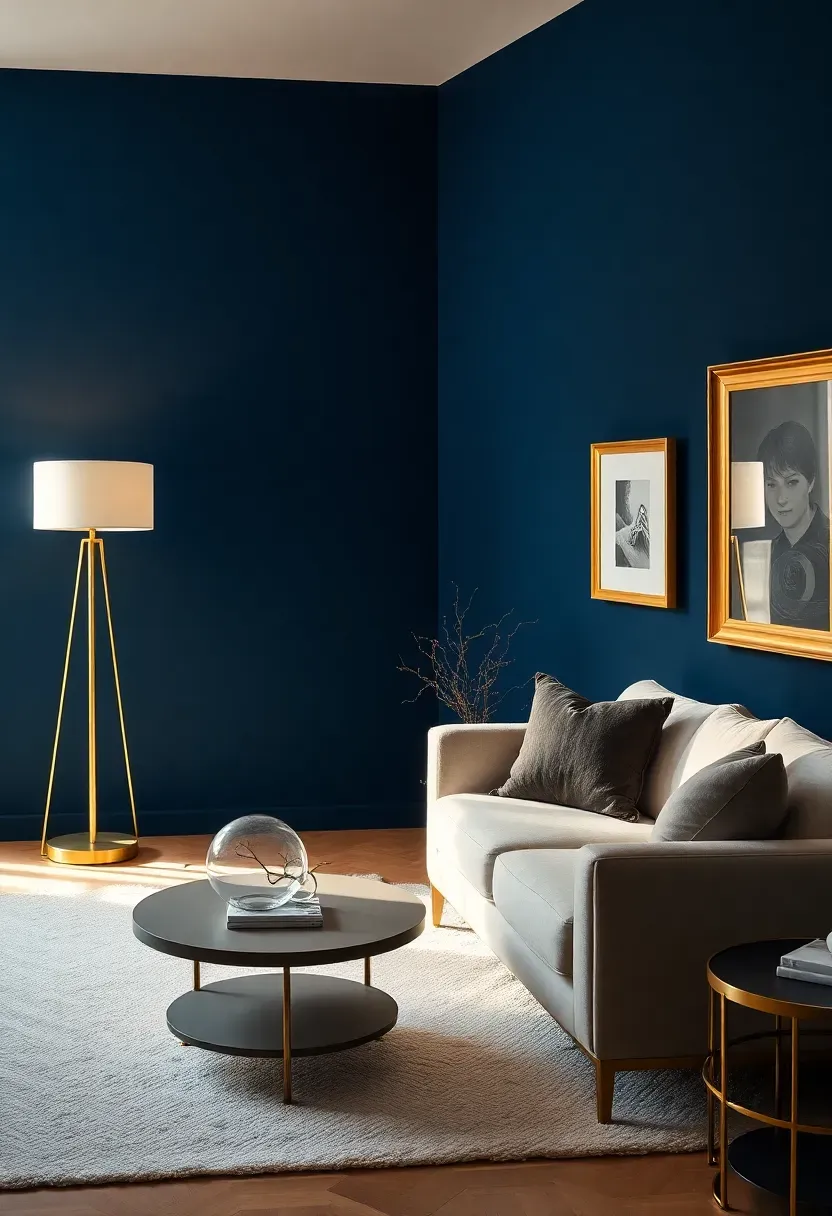
Navy blue walls or furniture paired with brass metallic accents create a minimalist living room of exceptional warmth and sophistication. The brass—whether in lighting fixtures, hardware, furniture legs, or decorative objects—adds sparkle, warmth, and reflective qualities that beautifully complement navy's depth. Brass's golden tones prevent navy from feeling cold or stark, while navy provides the perfect dark backdrop that makes brass truly pop. This combination feels luxurious and timeless, referencing both Art Deco glamour and modern minimalism. The metallic accents add visual interest without clutter, creating light play and sparkle that enlivens the space while maintaining restraint. A navy and brass living room feels carefully curated and elegantly composed, perfect for those who want minimalist calm with a touch of glamour.
Tips
- Do use brass consistently rather than mixing metals—3-5 brass elements create cohesion without overkill
- Don't choose bright chrome or nickel—warm brass (not yellow gold) complements navy best
- If brass feels too traditional, unlacquered brass or brushed gold provides similar warmth with modern edge
Metallic warmth: brass adds sparkle and warmth against navy's depth
What this gives you: sophisticated glamour through metallic accent restraint
10. Navy Paneling with Modern Minimalism
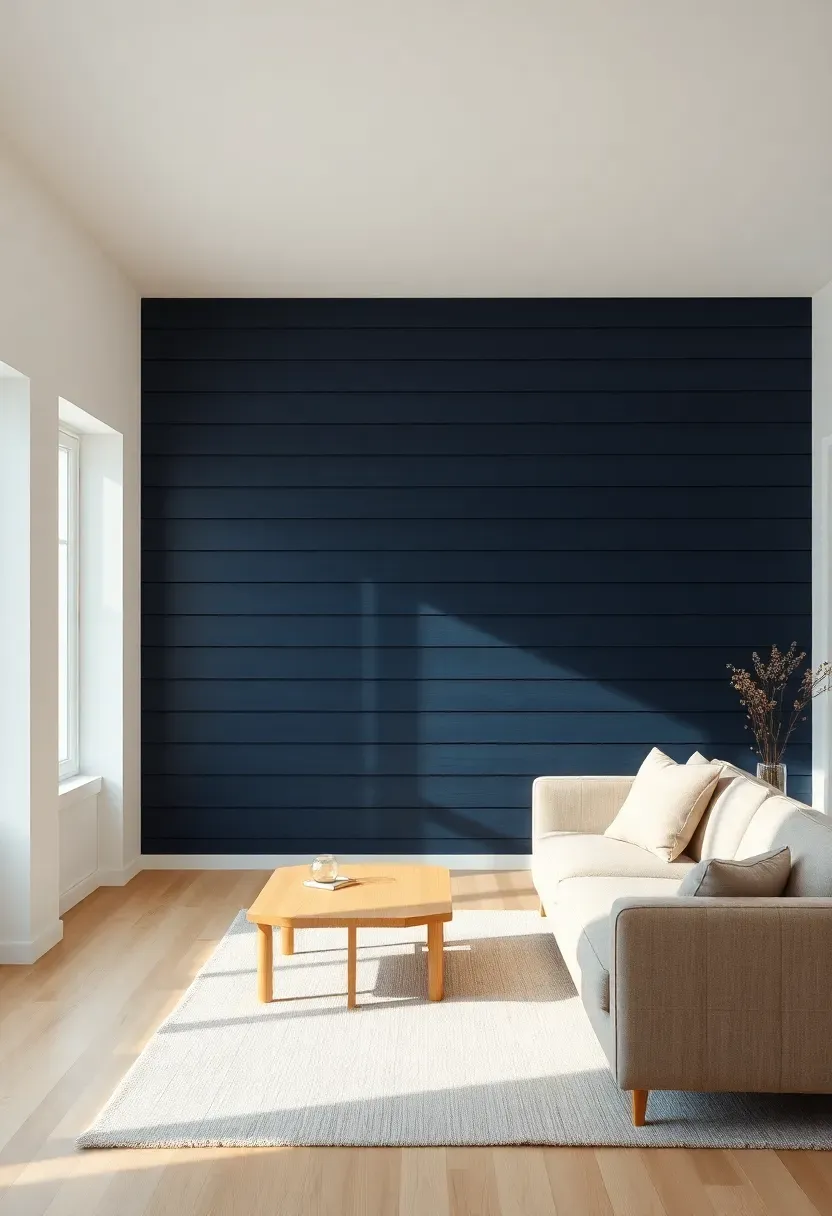
Navy blue wall paneling creates architectural interest and sophisticated depth in a minimalist living room while maintaining clean lines and contemporary appeal. The paneling—whether wide horizontal planks, shaker-style rectangles, or floor-to-ceiling boards—adds texture and shadow play that flat navy lacks, creating visual richness without ornamentation. This architectural detail references traditional wainscoting or board-and-batten but simplified for modern minimalism. Navy paneling works particularly well on one wall or as wainscoting (lower wall portion), while upper walls remain white for brightness. The result is a living room that feels custom, substantial, and thoughtfully detailed—a space where craftsmanship and material quality replace decoration as the primary source of visual interest.
Recommended
Items for this idea
Tips
- Do keep paneling simple and geometric—avoid ornate molding or decorative details
- Don't panel all walls—one accent wall or lower wall wainscoting provides sufficient impact
- If horizontal paneling feels too traditional, vertical wide planks offer modern alternative
Architectural depth: navy paneling adds texture without ornamentation
What this gives you: custom-built sophistication through architectural detail rather than decoration
11. Navy and Natural Jute Texture Layering
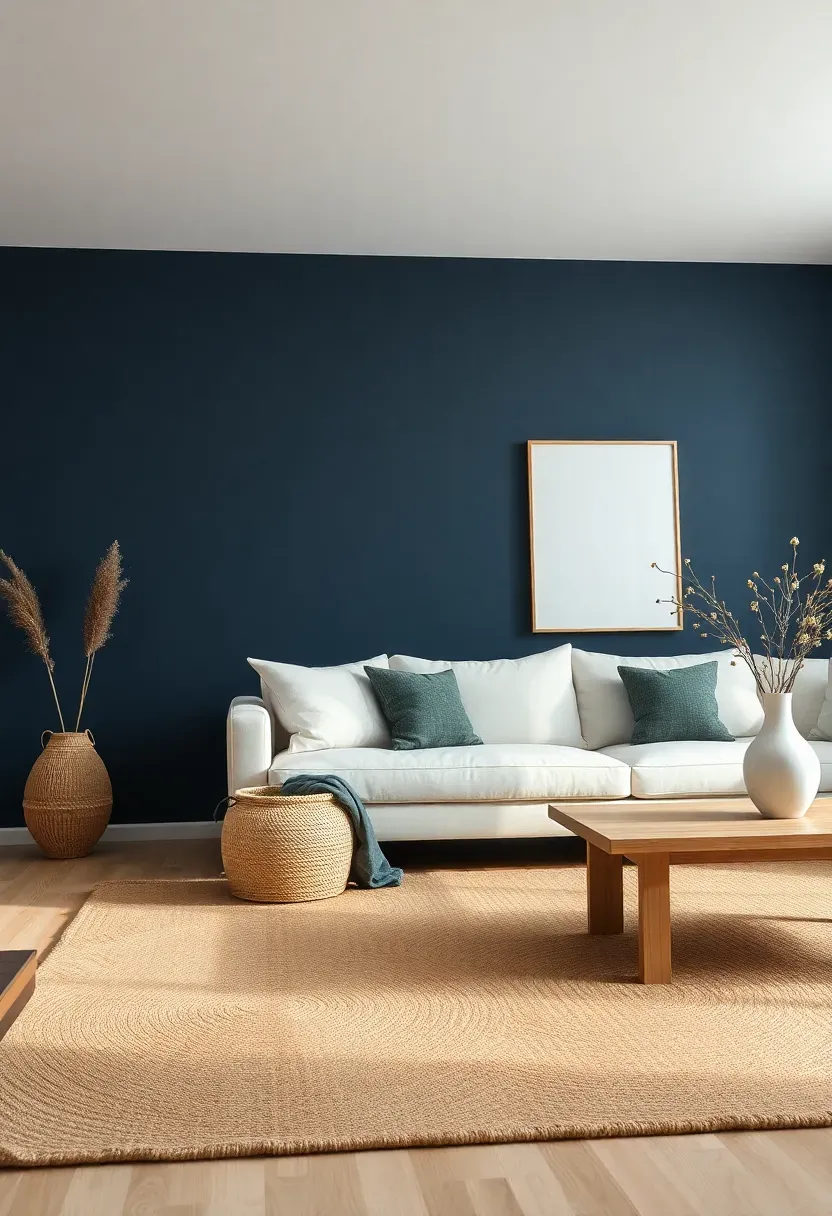
Navy blue combined with natural jute textures creates a minimalist living room with sophisticated material contrast and organic warmth. The navy—whether on walls, furniture, or cabinetry—provides rich, smooth color, while jute rugs, baskets, or textiles add nubby texture and natural character. This combination of sleek navy and rough jute creates tactile interest without visual clutter, appealing to both the eye and hand. Jute's warm tan tones provide necessary warmth against navy's coolness, while navy gives jute's casual naturalism a more refined, sophisticated edge. This material pairing works beautifully in coastal, organic, or bohemian-inspired minimalist spaces, proving that navy can feel relaxed and approachable rather than formal or severe when paired with the right natural textures.
Tips
- Do use jute generously (large area rug rather than small accent piece) for maximum texture impact
- Don't overdo natural textures—one jute element plus perhaps one basket provides sufficient contrast
- If jute feels too rough, sisal or seagrass offers similar texture with softer hand
Texture contrast: smooth navy and nubby jute create sophisticated material interplay
What this gives you: tactile richness and organic warmth within navy's sophisticated presence
12. Navy Ceiling with Light Walls (Inverted Drama)
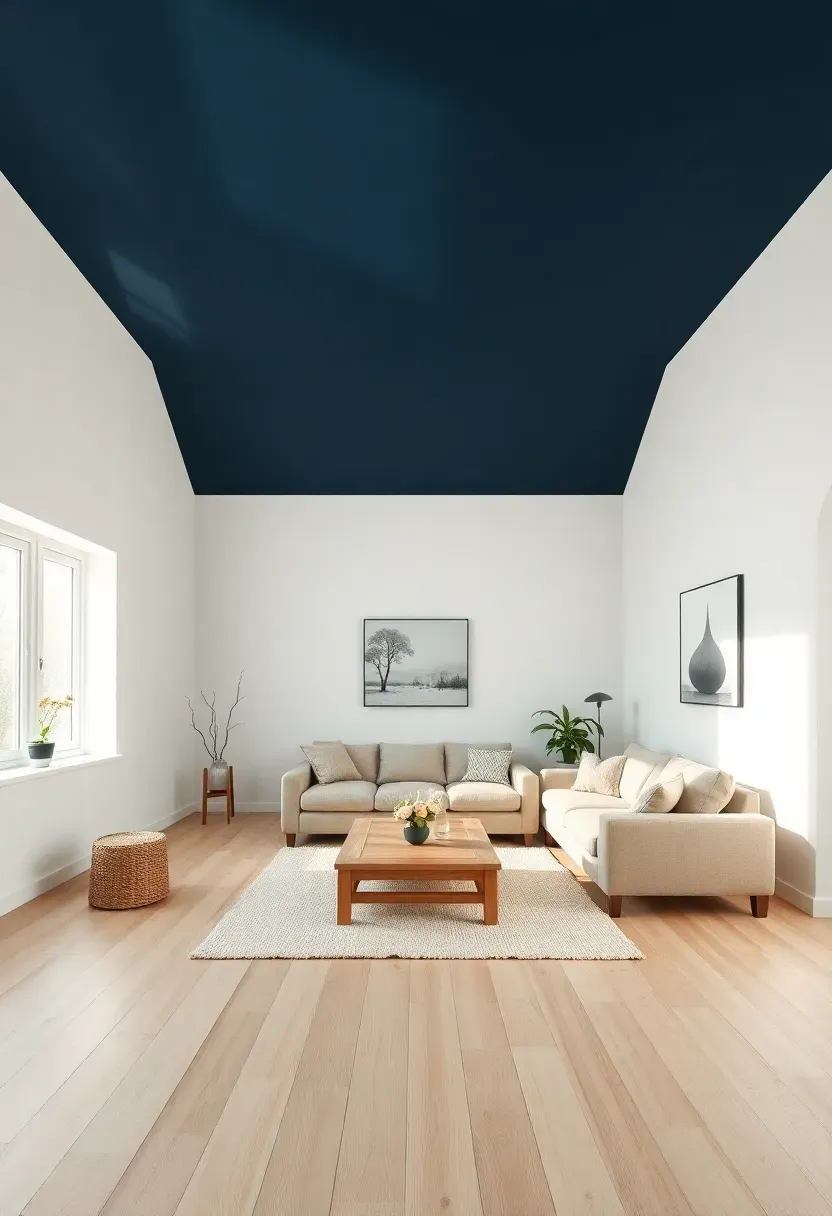
A navy blue ceiling with white walls creates an inverted minimalist living room where dramatic color overhead creates intimacy and surprise while light walls maintain brightness. This unexpected approach—painting the ceiling instead of walls—feels innovative and design-forward, creating a room that feels like being under a beautiful dark sky. The navy ceiling draws the eye upward and adds visual weight overhead, making the space feel cocooned and enveloping without darkening walls. White walls maintain brightness and spaciousness, while the ceiling color creates drama and surprise. This unconventional approach works particularly well in rooms with interesting ceiling height or architectural details, turning the often-overhead "fifth wall" into a design feature. The result is a living room that feels unique and memorable while maintaining minimalist simplicity.
Recommended
Items for this idea
Tips
- Do ensure excellent lighting—warm-toned ceiling fixtures or uplighting to brighten navy surface
- Don't attempt navy ceilings in rooms with low height (under 9 feet) or limited natural light
- If full navy ceiling feels too dramatic, consider navy paneling or navy beams on white ceiling
Inverted drama: navy ceiling creates unexpected overhead intimacy
What this gives you: innovative drama that surprises and delights while maintaining minimalist calm
13. Navy and Tan Earth Tone Sophistication
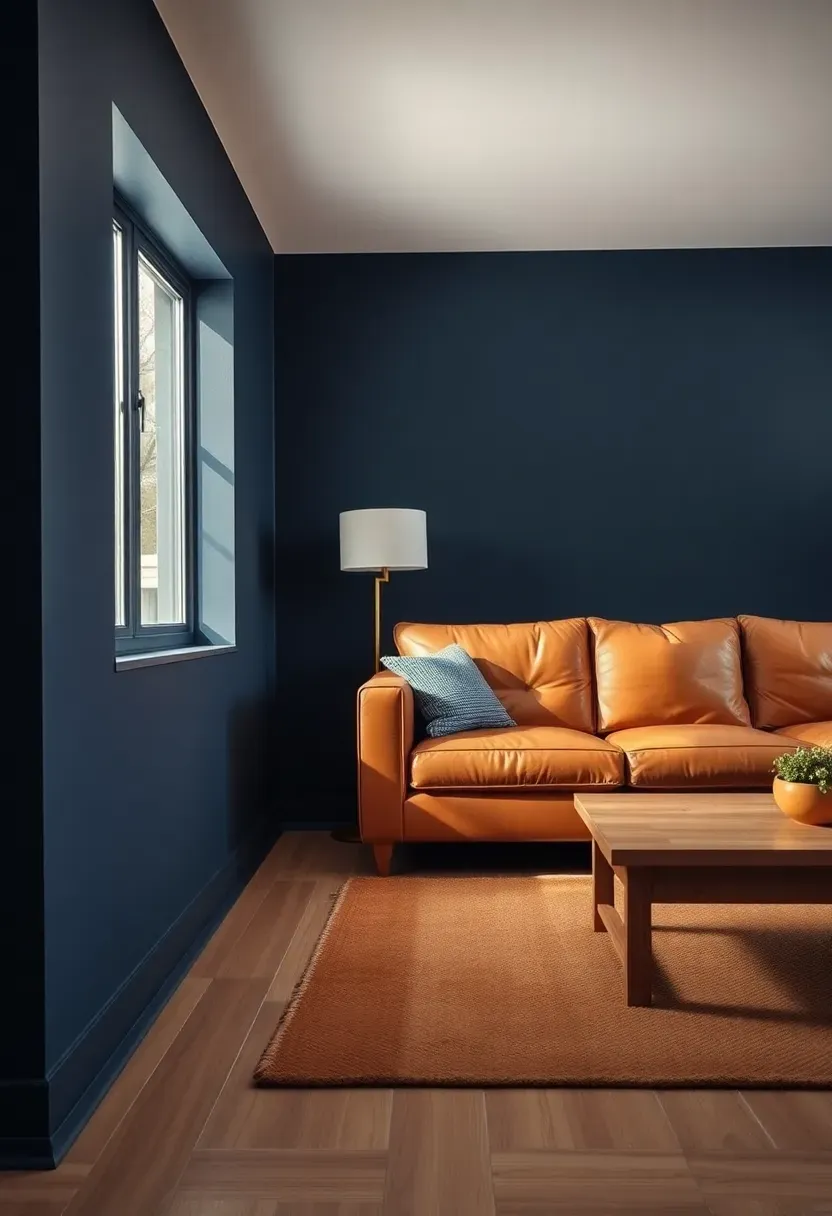
Navy blue paired with tan and camel earth tones creates a minimalist living room that feels warm, sophisticated, and wonderfully livable. The navy provides depth and drama, while tan elements (sofa, rug, throw pillows, accessories) add essential warmth and organic character. This color combination bridges cool and warm tones, creating a balanced environment that feels neither too cold nor too brown. Tan's earthiness grounds navy's sophistication, making the space feel approachable and comfortable rather than formal or stark. This pairing works beautifully with wood furniture, leather accents, and natural materials, creating a cohesive palette that feels rich and layered despite its minimalism. The result is a living room that feels both luxurious and thoroughly livable—sophisticated enough for design enthusiasts, comfortable enough for everyday family life.
Tips
- Do choose tan with warm golden undertones rather than cool gray-brown for best navy complement
- Don't introduce additional colors—navy and tan with white create sufficient richness
- If tan feels too brown, cream or beige provides similar warmth with more neutrality
Cool-warm harmony: navy and tan create perfectly balanced sophistication
What this gives you: warm, approachable luxury that feels both designed and livable
14. Navy Window Wall with Reflective Surfaces
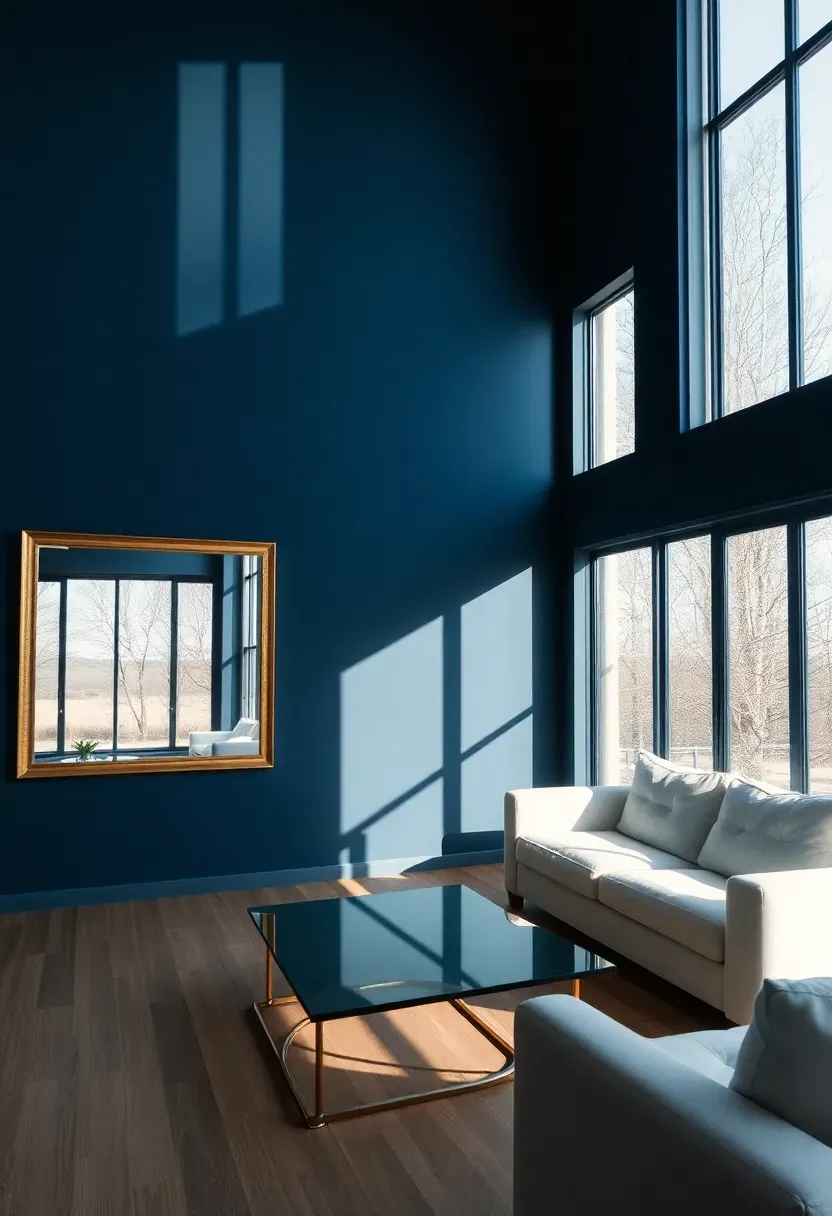
A navy blue wall featuring windows becomes a stunning focal point in a minimalist living room, especially when enhanced with reflective surfaces that amplify light and create sparkle. The navy window wall frames views beautifully while creating dramatic contrast between dark interior and bright exterior. Mirrors placed strategically on adjacent walls reflect both natural light and the navy itself, creating depth and visual interest. Glass or metallic accents (mirrors, brass fixtures, glass table surfaces) add reflective qualities that enliven the navy without clutter. This approach maximizes the room's connection to outdoors while using navy to create interior drama and sophistication. The result is a living room that feels both connected to nature and richly atmospheric—where navy's depth enhances rather than diminishes the view.
Recommended
Items for this idea
Tips
- Do place mirrors to reflect both window light and the navy wall for maximum depth
- Don't cover navy window walls with heavy drapes—simple panels or none preserve the drama
- If mirrors feel too decorative, metallic accessories (brass, copper) provide similar reflectivity
Framed views: navy window wall creates dramatic frame for outdoor connection
What this gives you: enhanced views and light while adding sophisticated navy drama
15. Navy and Copper Warm Metallic Accents
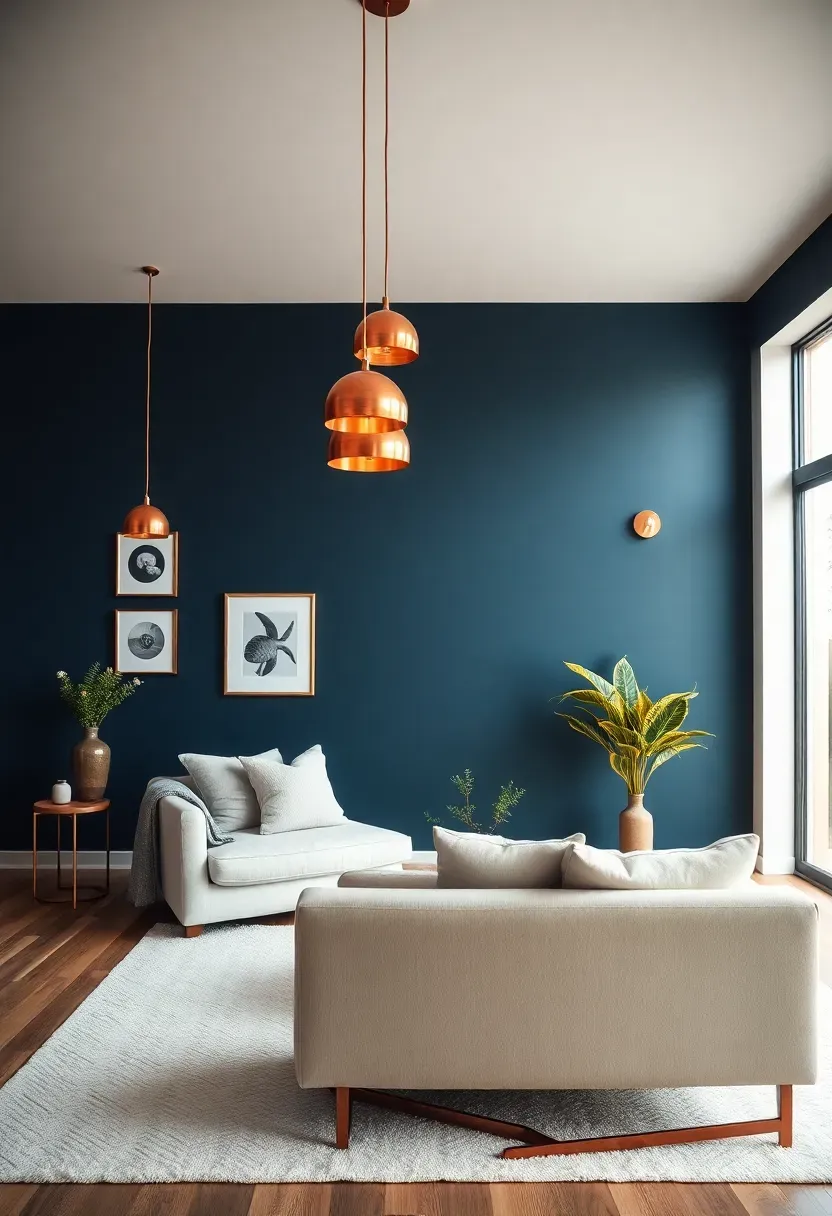
Navy blue paired with copper metallic accents creates a minimalist living room with warmth, richness, and contemporary edge. Copper's reddish-orange tones provide beautiful contrast and warmth against navy's cool blue depth, creating a color combination that feels both sophisticated and unexpectedly organic. The copper—whether in lighting fixtures, hardware, furniture legs, or decorative objects—adds metallic warmth and visual interest without clutter. Copper's slightly more casual feeling than brass makes navy feel more approachable and relaxed, perfect for contemporary or industrial-inspired spaces. This combination creates a living room that feels carefully composed yet comfortably livable, where metallic accents add sparkle and warmth while navy provides sophisticated backdrop. The result is a space that feels modern, warm, and uniquely characterful.
Tips
- Do use copper consistently for cohesion—3-4 copper elements create sufficient presence
- Don't mix copper with brass or gold—choose one metallic family for sophistication
- If bright copper feels too new, aged or brushed copper provides similar warmth with patina character
Metallic warmth: copper adds organic warmth against navy's cool depth
What this gives you: contemporary sophistication through warm metallic accents
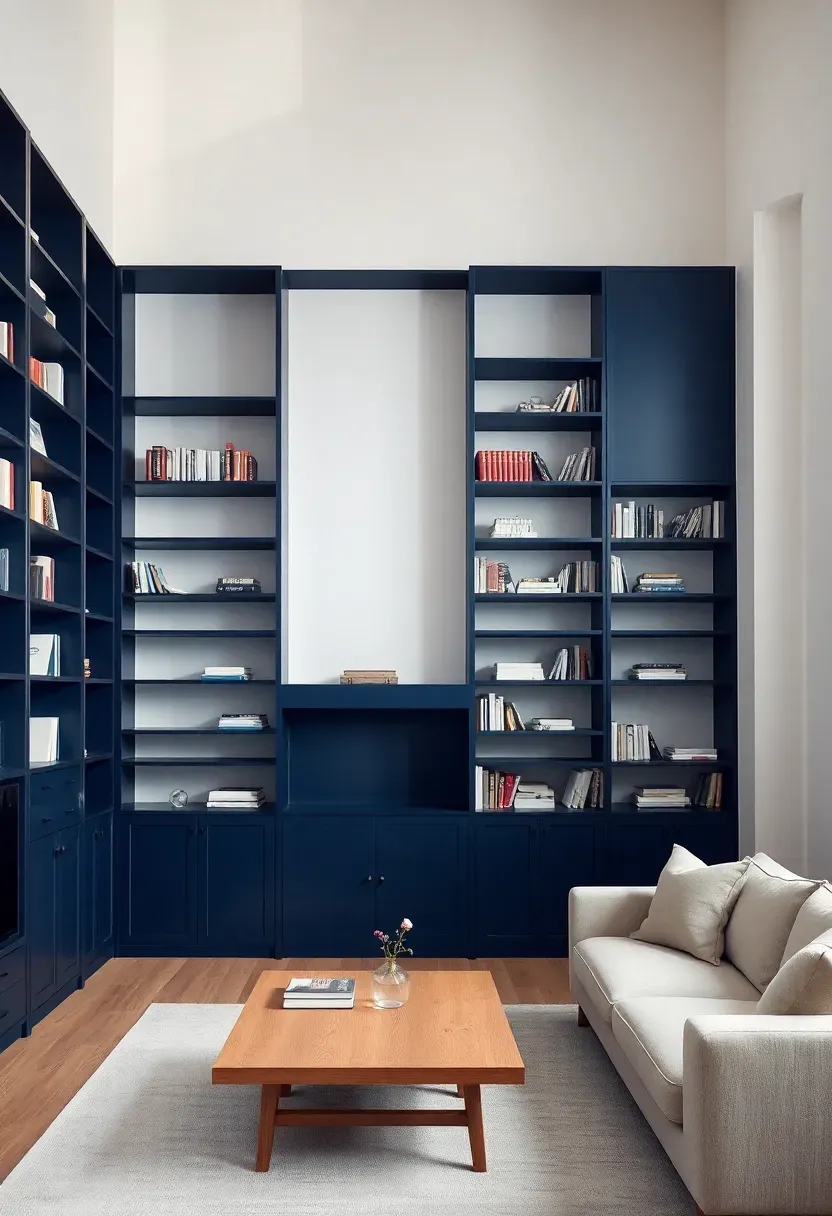
16. Navy Bookcases with Light Backing
Navy blue bookcases or shelving units with light backs or interior panels create a minimalist living room feature that combines storage with dramatic color contrast. The navy exterior provides substantial presence and sophistication, while light-colored interiors (white, cream, or light wood) create beautiful depth and shadow play. Built-in or freestanding navy bookcases can house books, objects, and media while becoming architectural features rather than mere furniture. The contrast between navy's dark exterior and light interior creates visual intrigue without requiring decorative objects or accessories. This approach works beautifully as room dividers, wall units, or flanking a fireplace or media console, adding both function and dramatic design to the living space.
Recommended
Items for this idea
Tips
- Do keep displayed items minimal and organized—let the navy/light contrast be the primary feature
- Don't overfill shelves—substantial empty space maintains minimalist aesthetic
- If built-ins aren't possible, navy freestanding bookcases with light back panels achieve similar effect
Storage as art: navy bookcases become architectural features
What this gives you: substantial storage that enhances rather than disrupts design
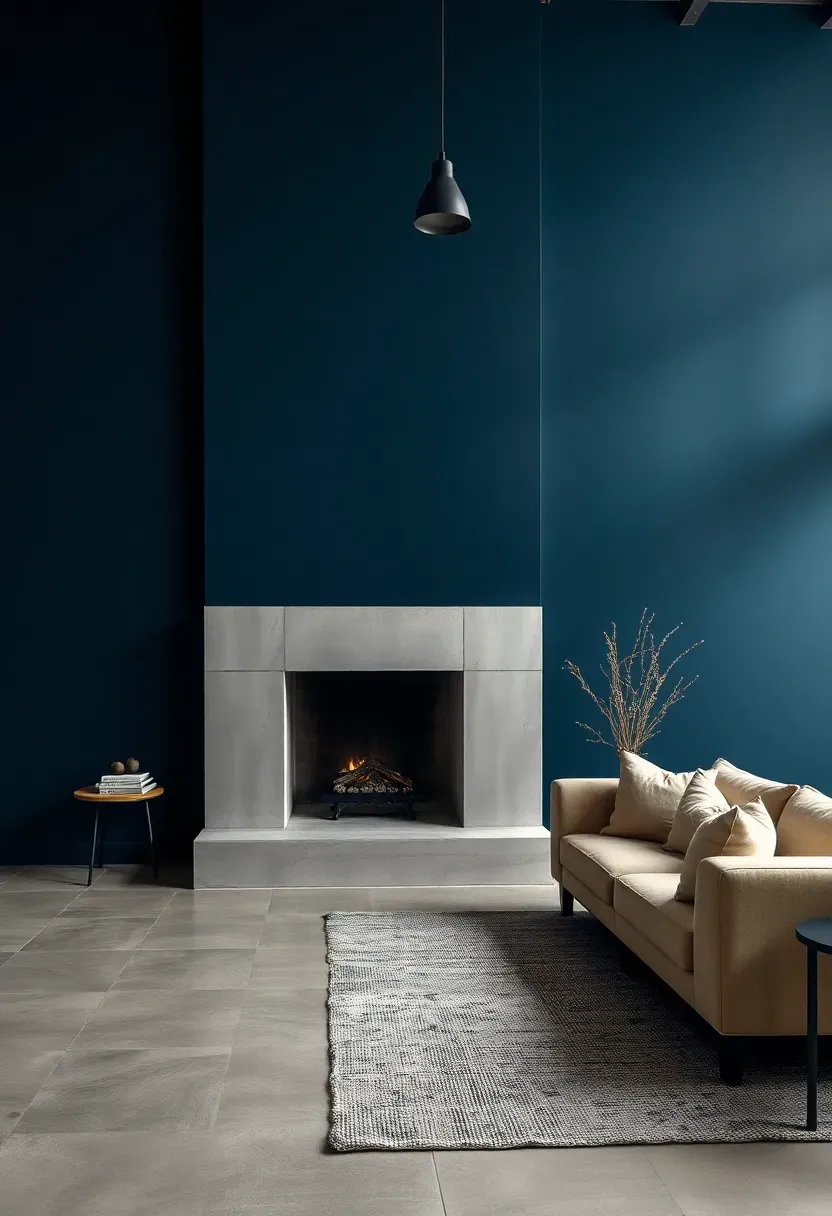
17. Navy and Concrete Industrial Edge
Navy blue combined with concrete elements creates a minimalist living room with industrial edge and sophisticated modernism. The navy's rich color softens concrete's rawness, while concrete's gray tones provide neutral balance that prevents navy from feeling too bold. This combination works beautifully in lofts, modern apartments, or industrial-inspired spaces where raw materials meet refined color. Navy might appear on walls, furniture, or architectural elements, while concrete surfaces (flooring, fireplace surround, accent wall) provide textural contrast and urban character. The result is a living room that feels contemporary, urban, and design-forward—perfect for those who want industrial minimalism softened by navy's warmth and sophistication rather than harsh grays.
Tips
- Do soften concrete with textiles (rugs, throws, pillows) to prevent the space from feeling too cold
- Don't overdo raw materials—concrete plus navy is sufficient; avoid exposed brick or duct unless intentional
- If concrete feels too cold, add warm wood elements or brass/copper accents for temperature balance
Industrial sophistication: navy softens concrete's rawness with rich color
What this gives you: urban edge tempered by navy's sophisticated warmth
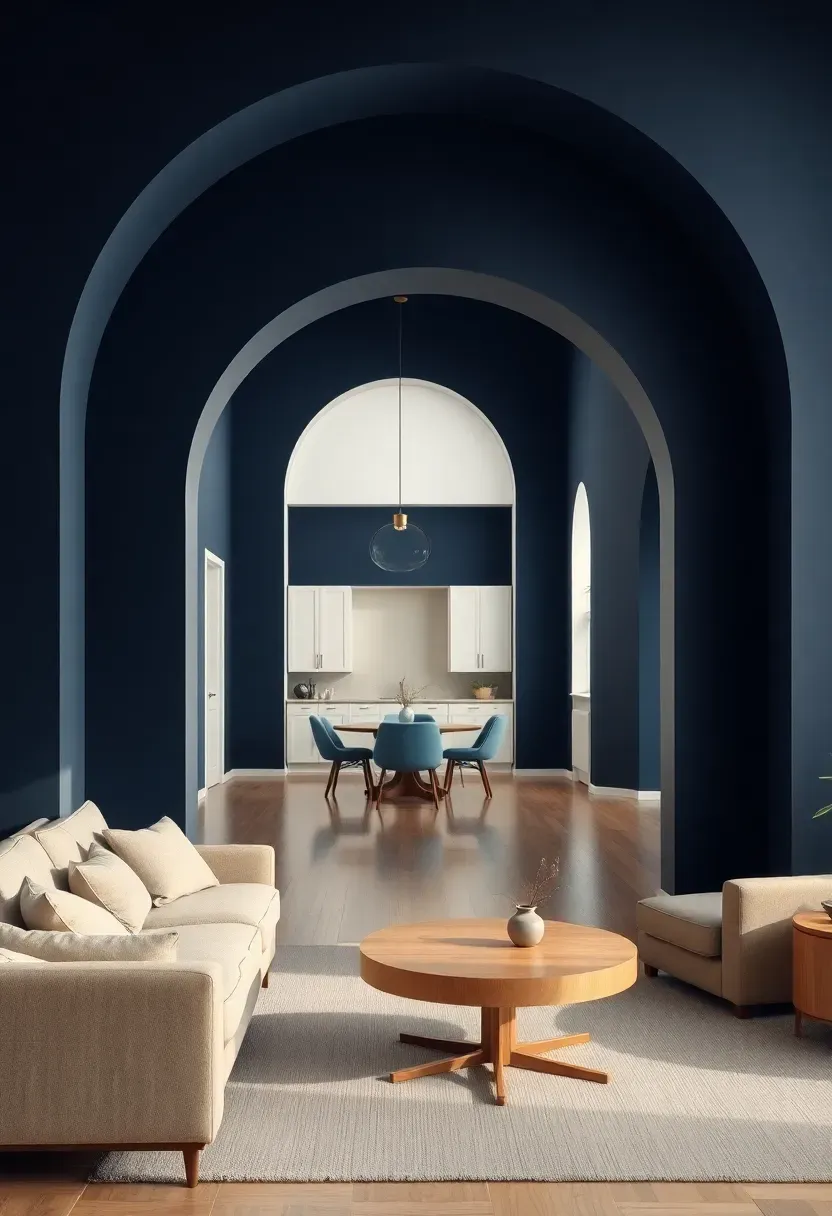
18. Navy Arch with Soft Interior Beyond
A navy blue archway or opening leading to a lighter space creates a minimalist living room feature that adds architectural interest and sophisticated transition. The navy arch frames the opening between rooms, creating a dramatic threshold that draws the eye and defines spatial separation without doors or walls. Beyond the arch, the continuing space might be white, cream, or light gray—creating beautiful contrast and depth as light spills through from the brighter space into the navy room. This architectural detail works particularly well in open-plan homes or where living spaces connect to dining areas, hallways, or kitchens. The navy arch becomes a design feature itself—a simple geometric form that adds sophistication and defines space without clutter. This approach proves that color and architecture can combine to create minimalist drama without decoration or furniture.
Recommended
Items for this idea
Tips
- Do make arch openings substantial (minimum 5-6 feet wide) for dramatic impact and flow
- Don't add architraves or decorative molding—simple arch shape maintains minimalism
- If a full arch feels too architectural, a navy doorway with squared-off top provides similar drama
Architectural drama: navy arch creates sophisticated spatial transition
What this gives you: architectural interest and space definition without furniture or clutter
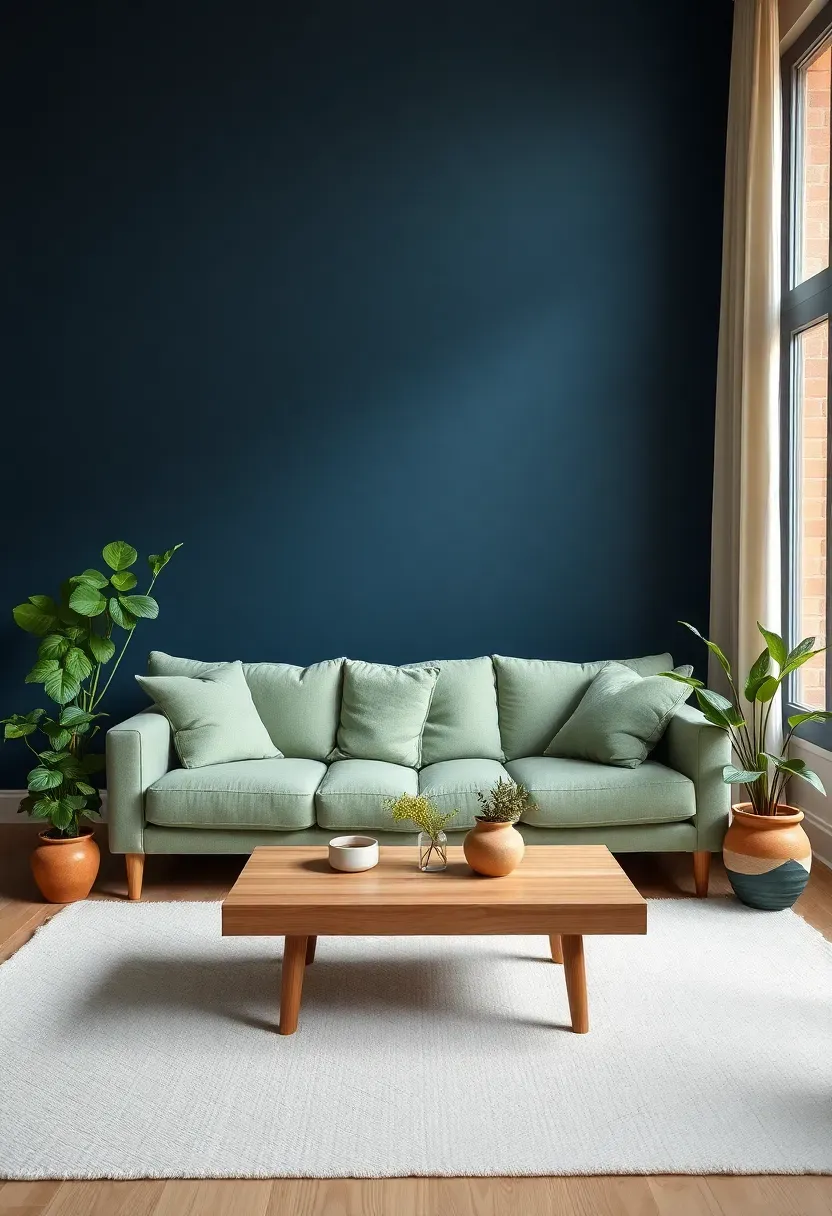
19. Navy and Sage Green Nature Connection
Navy blue paired with sage green creates a minimalist living room with sophisticated nature-inspired color harmony. Both colors derive from the natural world—navy from deep water and night sky, sage from foliage and grass—creating a combination that feels organic and calming. The navy provides depth and drama, while sage adds soft, earthy freshness that prevents the space from feeling too dark or serious. This pairing works beautifully when sage appears through plants, textiles, or accent pieces against navy walls or furniture, or when navy and sage appear as complementary blocks in the room's architecture. The result is a living room that feels connected to nature while remaining thoroughly modern and sophisticated—a space where bold color meets organic calm.
Tips
- Do use sage as secondary color—navy should remain dominant for sophistication
- Don't introduce additional colors—navy, sage, white/cream create sufficient richness
- If sage feels too muted, olive or forest green provides similar nature connection with more intensity
Nature's harmony: navy and sage create organic, calming color balance
What this gives you: sophisticated color palette grounded in natural world inspiration
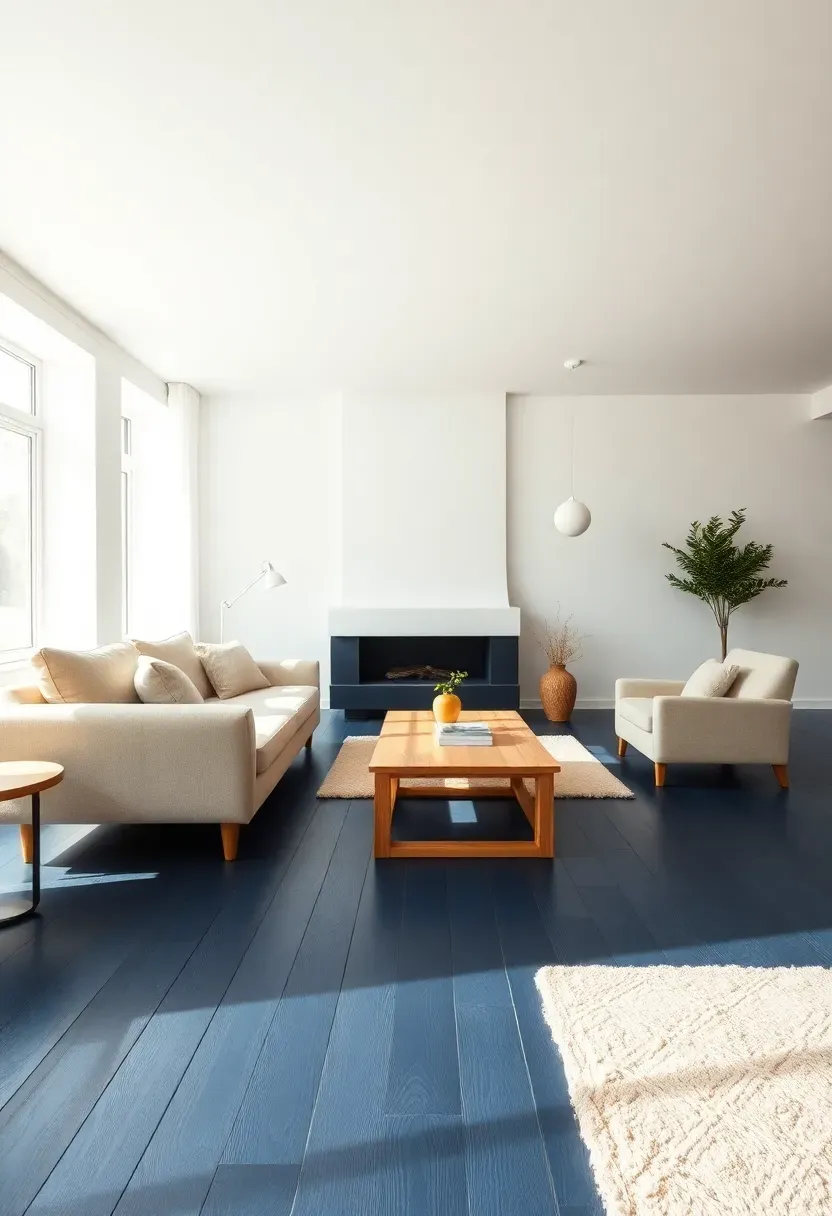
20. Navy Wide-Plank Flooring with Light Walls
Navy blue wide-plank flooring paired with white or cream walls creates an inverted minimalist living room where dramatic color underfoot balances bright surroundings. This unconventional approach places navy where it's least expected—on the floor—creating visual interest and drama while maintaining bright, airy walls and ceiling. Navy flooring, particularly in wide planks, adds character and sophistication, especially when the wood grain shows through the stain or when the material is quality hardwood or luxury vinyl. Light walls and ceiling maintain spaciousness and prevent the dark floor from feeling overwhelming. This color reversal works particularly well in rooms with abundant natural light or where wall color commitment isn't desirable. The result is a living room that feels unique and design-forward while maintaining minimalist simplicity.
Recommended
Items for this idea
Tips
- Do choose wide planks (minimum 6-8 inches) to showcase navy flooring's character
- Don't attempt navy flooring in small, dark rooms without excellent artificial lighting
- If solid navy flooring feels too bold, navy and white patterned floor provides similar drama with more lightness
Inverted drama: navy flooring creates unexpected color sophistication
What this gives you: unique color statement while keeping walls bright and neutral
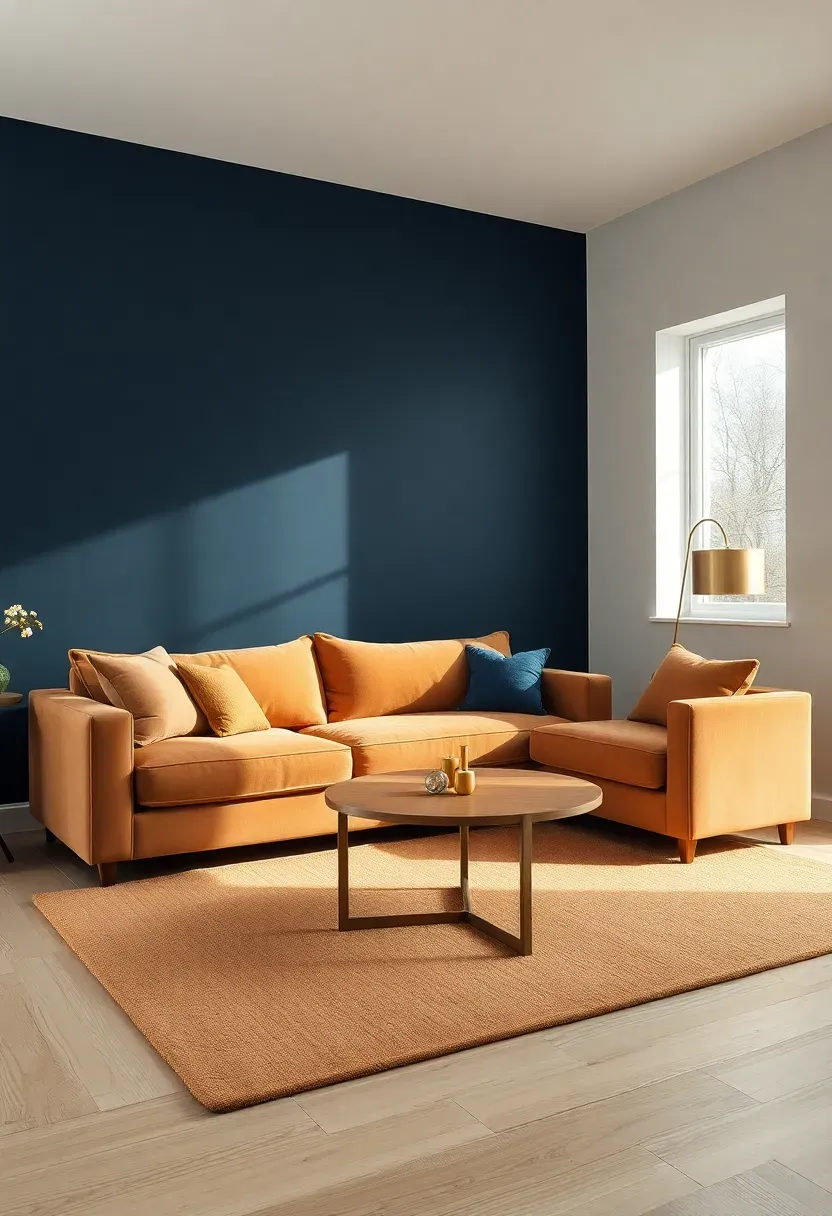
21. Navy and Camel Warm Neutral Elegance
Navy blue paired with camel warm neutrals creates a minimalist living room of exceptional sophistication and timeless elegance. Camel—a warm tan with golden undertones—provides beautiful warmth and richness that complements navy's cool depth without competing. This combination might feature navy walls or furniture with camel sofa, rug, or accents, or navy and camel appearing in equal measure as blocking elements. The warmth of camel prevents navy from feeling stark or cold, while navy gives camel's neutrality drama and refinement. This pairing works beautifully with wood furniture, brass or copper accents, and natural materials, creating a cohesive palette that feels luxurious, layered, and thoroughly inviting. The result is a living room that feels elegant and sophisticated enough for formal spaces yet comfortable enough for everyday family life.
Tips
- Do choose camel with golden rather than gray undertones for best navy complement
- Don't introduce third colors—navy, camel, and white/cream create perfect trio
- If camel feels too brown, cognac or warm tan provides similar warmth with more neutrality
Timeless sophistication: navy and camel create elegant, balanced luxury
What this gives you: warm, sophisticated elegance that feels both designed and wonderfully livable
These 21 minimalist navy blue living room ideas demonstrate how bold color can enhance rather than compromise minimalist design. The key to successful navy living rooms lies in balance -- counterbalancing navy's depth with sufficient light, white, or warm neutrals to maintain brightness and spaciousness. Whether you choose a single navy accent wall, a navy velvet sofa, or a full floor-to-ceiling navy statement, each approach creates living rooms of exceptional character while supporting minimalist principles of restraint and intentionality. For renters, navy through furniture and removable decor offers commitment-free drama that moves with you. For homeowners, navy walls and built-ins create lasting architectural sophistication. Bold color and minimalism are not contradictions but complementary forces in creating exceptional, personally meaningful spaces.

About the author
OBCD
CGI visualization and interior design content. We create detailed 3D renders and curate practical design ideas for every room in your home.