19 Minimalist Organic Living Room Ideas That Feel Alive
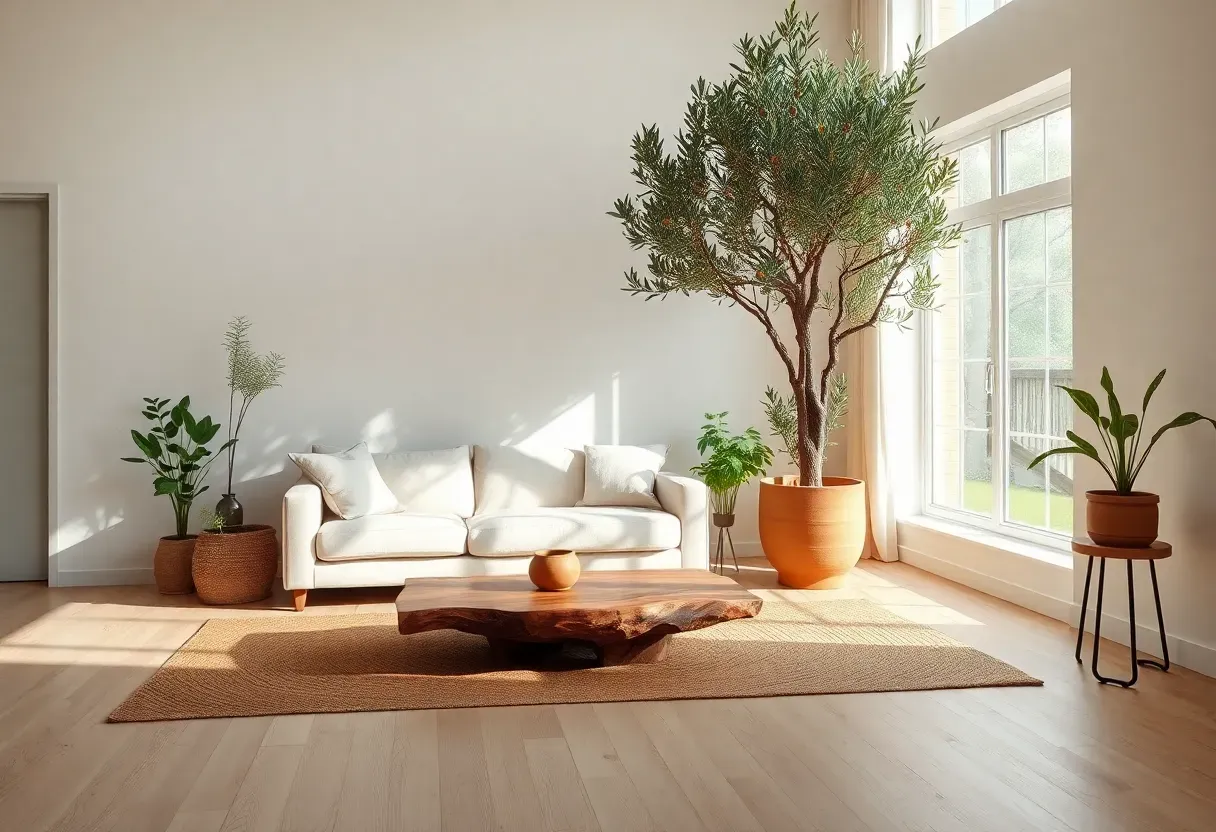
These minimalist organic living room ideas show how natural materials and biophilic design can transform even a small rental into a calming retreat. By combining clean minimalist lines with the warmth of raw wood, stone, linen, and living plants, you create a space that feels both serene and genuinely alive. Whether you rent or own, this approach works on any budget because it prioritizes fewer, better pieces made from honest materials.
Nature-inspired minimalism emphasizes sustainable materials like untreated wood, natural stone, linen, and jute while embracing organic shapes and earthy color palettes. Unlike stark contemporary minimalism, organic minimalism celebrates imperfections -- visible wood grain, stone variations, and handwoven textures add depth and character. These organic living room decor choices connect you to the natural world even in a small apartment.
Biophilic design goes beyond adding plants -- it integrates natural patterns, optimizes daylight, creates visual connections to the outdoors, and uses materials that age beautifully over time. An organic minimalist living room feels breathable, authentic, and grounded in its environment while maintaining the clutter-free calm that makes minimalism so appealing for everyday living. Explore all 19 ideas below to find the earthy minimalist look that fits your home.
Quick FAQ
What defines an organic minimalist living room?
Organic minimalist living rooms combine clean lines and clutter-free spaces with natural materials, earthy colors, and biophilic elements. The style emphasizes raw textures like wood grain and stone, sustainable furnishings, and indoor plants while maintaining minimalist simplicity.
How can I make my living room feel more organic?
Introduce natural materials like wood furniture, linen textiles, jute rugs, and stone accents. Add indoor plants of varying heights, maximize natural light, choose earthy paint colors, and incorporate organic shapes in decor. Avoid synthetic materials and overly polished surfaces.
What colors work best for organic minimalist spaces?
Earthy neutrals form the foundation: warm whites, cream, beige, taupe, soft gray, and warm wood tones. Accent colors draw from nature—sage green, terracotta, ochre, muted olive, and soft slate blue. These colors create a calming, grounded atmosphere.
Do I need many plants for an organic minimalist look?
Quality matters more than quantity. Three to five well-placed plants of varying sizes create impact without clutter. Consider one statement tree-like ficus or olive tree, a hanging plant, and smaller tabletop plants. Group plants near natural light for visual cohesion.
What materials should I prioritize for organic minimalism?
Focus on solid wood (oak, walnut, maple, ash), natural stone (marble, slate, limestone), linen, cotton, wool, jute, seagrass, rattan, and terracotta. Avoid particle board, synthetic fabrics, and high-gloss finishes. Choose materials that show natural variations and age gracefully.
Can organic minimalism work in small apartments?
Absolutely. Choose multifunctional wooden furniture, use vertical space for hanging plants, select light-neutral colors to expand space, and incorporate one large statement piece like a live-edge shelf or massive plant. Keep surfaces clear and let natural materials provide warmth.
As an Amazon Associate I earn from qualifying purchases.
1. Light Wood Floors with Linen Sofa Foundation
A light oak or maple hardwood floor creates an instant organic foundation that brings warmth and natural character to your minimalist living room. Pair pale wood floors with a creamy linen-upholstered sofa and simple wooden accent tables to establish a serene neutral base that feels simultaneously clean and inviting. The visible wood grain patterns add visual interest without introducing clutter, while the linen's subtle texture provides tactile comfort against the smooth wood surfaces.
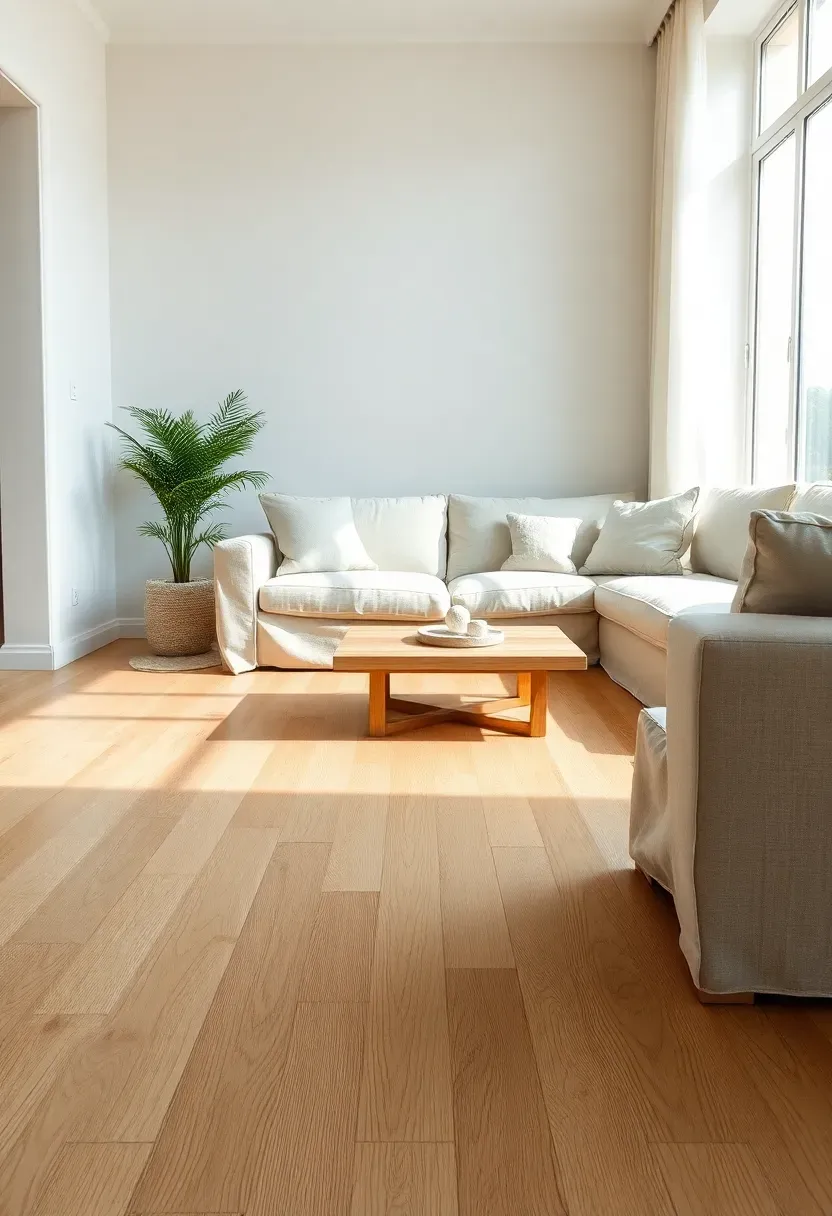
Hyper-realistic 3/4 view of a minimalist organic living room with light oak wood flooring showing visible grain patterns, cream linen sofa with relaxed cushions, light wood coffee table with natural edges. Materials: white oak hardwood, natural linen, raw wood. Warm diffused natural light from large window, soft shadows. Serene minimalist composition with indoor plant in corner. Shallow depth of field, sharp details on wood grain and linen texture, visible room context with white walls. No text, no logos, no watermarks.</p>
These minimalist organic living room ideas show how natural materials and biophilic design can transform even a small rental into a calming retreat. By combining clean minimalist lines with the warmth of raw wood, stone, linen, and living plants, you create a space that feels both serene and genuinely alive. Whether you rent or own, this approach works on any budget because it prioritizes fewer, better pieces made from honest materials.. Hyper-realistic 3/4 view of a minimalist organic living ro
Prompt: Nature documentary captured on Hasselblad X2D 100C with XCD 90V lens at f/4. Hyper-realistic 3/4 view of a minimalist organic living room with light oak wood flooring showing visible grain patterns, cream linen sofa with relaxed cushions, light wood coffee table with natural edges. Materials: white oak hardwood, natural linen, raw wood. Warm diffused natural light from large window, soft shadows. Serene minimalist composition with indoor plant in corner. Shallow depth of field, sharp details on wood grain and linen texture, visible room context with white walls. No text, no logos, no watermarks.
Tips
- Choose wide-plank flooring (6-8 inches) for greater visual impact and more prominent grain patterns
- Leave wood natural or use clear matte finish—avoid stains that obscure grain character
- Layer a jute or wool rug under the coffee table to add warmth and define seating area
Best for: North-facing rooms where warm wood floors counteract cool natural light
What this gives you: A timeless organic foundation that warms minimalist spaces while maintaining airy simplicity
We picked a few things that go well with this idea: Cotton Muslin 6-Layer Throw Blanket Oatmeal (★4.4), Minupwell Pure Flax Linen Throw Blanket (★4.4) and Hsoftify Pure Linen Fringe Throw Blanket (★4.6). As an Amazon Associate we earn from qualifying purchases.
2. Monochromatic Earth Tones with Textural Depth
Create a sophisticated organic minimalist space by layering multiple shades of the same earthy color family—think varied taupes from sand to deep brown, or graduated creams from ivory to warm oatmeal. This monochromatic approach eliminates visual noise while allowing different textures to shine: smooth linen upholstery against nubby wool throw blankets, sleek wood surfaces beside rough-hewn stone accents, and matte ceramics contrasting with glossy terracotta. The result is a room that feels cohesive and calming yet rich with sensory variety.
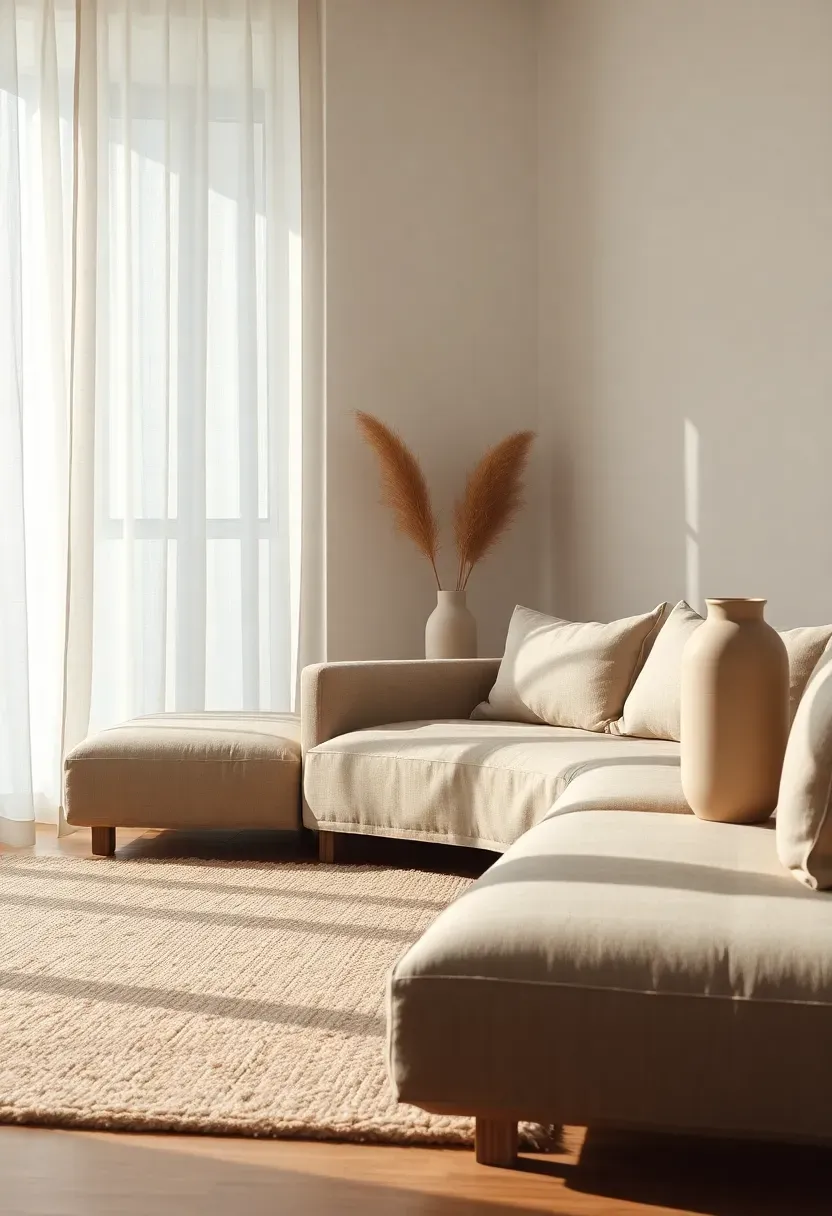
Hyper-realistic 3/4 view of minimalist living room in monochromatic taupe palette—taupe linen sofa, oatmeal wool rug, varying brown tones in wood accents, beige ceramic vase. Materials: natural linen, wool texture, light walnut wood, matte ceramic. Soft natural light from window, creating subtle shadow variations on textures. Textural depth without color contrast. Clean minimalist composition with organic shapes. Shallow depth of field, sharp focus on texture details. No text, no logos, no watermarks.</p>
These minimalist organic living room ideas show how natural materials and biophilic design can transform even a small rental into a calming retreat. By combining clean minimalist lines with the warmth of raw wood, stone, linen, and living plants, you create a space that feels both serene and genuinely alive. Whether you rent or own, this approach works on any budget because it prioritizes fewer, better pieces made from honest materials.. Hyper-realistic 3/4 view of minimalist living room in mono
Prompt: Nature documentary captured on Hasselblad X2D 100C with XCD 90V lens at f/4. Hyper-realistic 3/4 view of minimalist living room in monochromatic taupe palette—taupe linen sofa, oatmeal wool rug, varying brown tones in wood accents, beige ceramic vase. Materials: natural linen, wool texture, light walnut wood, matte ceramic. Soft natural light from window, creating subtle shadow variations on textures. Textural depth without color contrast. Clean minimalist composition with organic shapes. Shallow depth of field, sharp focus on texture details. No text, no logos, no watermarks.
Tips
- Include at least five different textures in the same color family to create richness without contrast
- Vary sheen levels within monochromatic scheme—matte walls, semi-gloss wood, glossy ceramics
- Add one living element (plant or fresh branches) for gentle natural color variation
Budget/Time: Start with textiles (throw pillows, blankets, rug) before investing in larger furniture pieces
What this gives you: A sophisticated, calming space where texture provides visual interest without color clutter
We picked a few things that go well with this idea: S&L Homes Jute Cotton Handwoven Area Rug (★4.0), Nourison Courtyard Natural Jute Area Rug (★4.4) and nuLOOM Elfriede Jute Cotton Handwoven Rug (★4.4). As an Amazon Associate we earn from qualifying purchases.
3. Indoor Tree as Living Sculpture
Transform your living room by placing a substantial indoor tree—such as a ficus, olive tree, or dragon tree—in a prominent corner as living sculpture. Choose a tree with an interesting trunk form and dense foliage that reaches toward the ceiling, creating vertical drama while softening architectural lines. The tree becomes both art and air purifier, bringing genuine life into minimalist spaces while connecting the interior to nature. Underplant with smooth river stones or moss in a wide, low ceramic pot to complete the organic sculpture presentation.
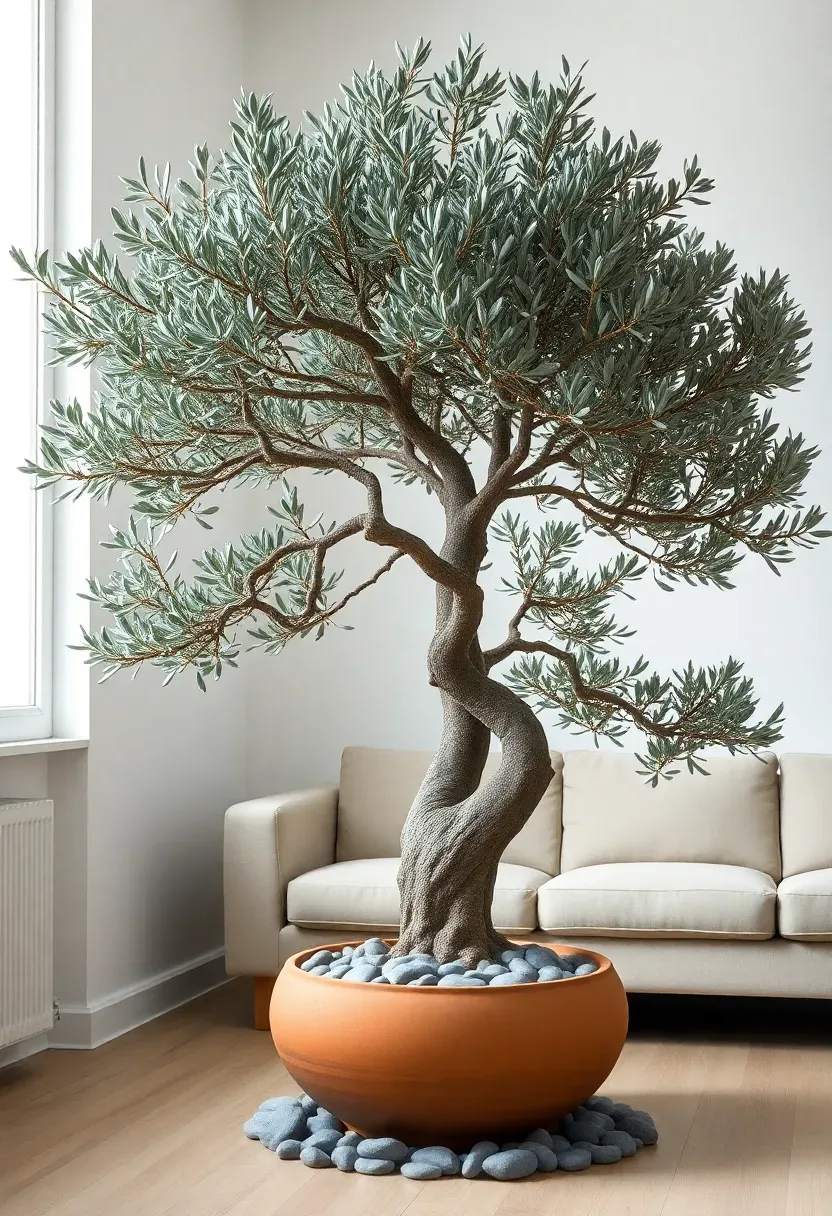
Hyper-realistic 3/4 view of minimalist living room with large indoor olive tree in corner, gnarled trunk reaching toward ceiling, dense grey-green foliage creating canopy effect. Wide low terracotta pot with smooth grey river stones at base. Light beige sofa in background, white walls, light wood floor. Materials: living plant, terracotta ceramic, river stones. Natural light from window, plant casting soft organic shadow. Tree as sculptural focal point. Shallow depth of field, sharp details on trunk texture and leaves. No text, no logos, no watermarks.</p>
These minimalist organic living room ideas show how natural materials and biophilic design can transform even a small rental into a calming retreat. By combining clean minimalist lines with the warmth of raw wood, stone, linen, and living plants, you create a space that feels both serene and genuinely alive. Whether you rent or own, this approach works on any budget because it prioritizes fewer, better pieces made from honest materials.. Hyper-realistic 3/4 view of minimalist living room with la
Prompt: Nature documentary captured on Hasselblad X2D 100C with XCD 90V lens at f/4. Hyper-realistic 3/4 view of minimalist living room with large indoor olive tree in corner, gnarled trunk reaching toward ceiling, dense grey-green foliage creating canopy effect. Wide low terracotta pot with smooth grey river stones at base. Light beige sofa in background, white walls, light wood floor. Materials: living plant, terracotta ceramic, river stones. Natural light from window, plant casting soft organic shadow. Tree as sculptural focal point. Shallow depth of field, sharp details on trunk texture and leaves. No text, no logos, no watermarks.
Tips
- Position tree near natural light source but not in direct draft from windows or heating vents
- Choose planter with drainage tray or use cachepot to protect floors from watering overflow
- Rotate tree monthly for even growth toward light—prevents bare spots and lopsided development
Best for: Rooms with high ceilings where tree can grow to full height without obstruction
What this gives you: A living focal point that purifies air, adds organic movement, and creates genuine connection to nature
We picked a few things that go well with this idea: Terracotta Ceramic Farmhouse Vase Set of 3 (★4.5), Dobbyby Rustic Terracotta Whitewashed Flower Vase (★4.7) and Neutral Ceramic Decorative Vase Set of 4 (★4.7). As an Amazon Associate we earn from qualifying purchases.
4. Stone Accent Wall with Warm Wood Balance
Introduce raw natural texture by cladding one living room wall in slate, limestone, or travertine tiles installed with minimal grout lines for maximum organic impact. The cool grey or beige stone provides dramatic textural contrast while maintaining neutral sophistication. Balance the stone's cool solidity with abundant warm wood elements—light oak flooring, walnut shelving, or maple furniture—to create comfortable temperature contrast. The stone wall becomes permanent art, bringing geological history indoors while grounding the space with earthy permanence.
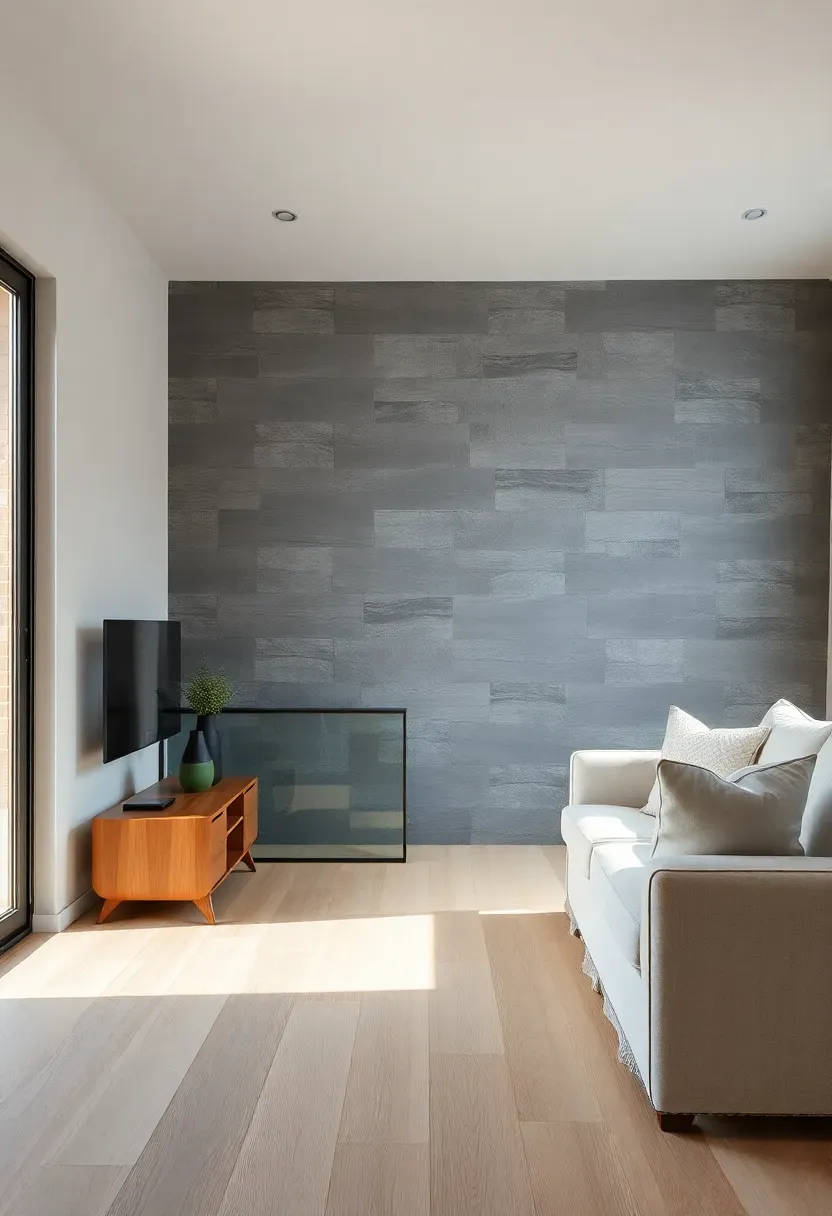
Hyper-realistic 3/4 view of minimalist living room featuring floor-to-ceiling slate accent wall with visible natural stone variations and subtle grey-blue tones. Light oak flooring, low walnut media console, cream linen sofa. Materials: natural slate stone, white oak wood, walnut, linen. Natural light from side window, stone creating cool shadow depth. Warm wood balancing cool stone texture. Clean composition with stone wall as focal point. Shallow depth of field, sharp details on stone texture. No text, no logos, no watermarks.</p>
These minimalist organic living room ideas show how natural materials and biophilic design can transform even a small rental into a calming retreat. By combining clean minimalist lines with the warmth of raw wood, stone, linen, and living plants, you create a space that feels both serene and genuinely alive. Whether you rent or own, this approach works on any budget because it prioritizes fewer, better pieces made from honest materials.. Hyper-realistic 3/4 view of minimalist living room featuri
Recommended
Items for this idea
Tips
- Install stone on wall least likely to need drilling later to avoid challenging mounting for art or TV
- Choose honed or tumbled (not polished) finish for more organic, less formal appearance
- Consider stone veneer panels for easier installation than full-depth stone with similar visual effect
Placement note: Stone walls work best when balanced with at least 60% warm wood in the remaining space
What this gives you: Permanent organic texture that adds depth and character while requiring zero maintenance
5. Jute and Natural Fiber Textiles for an Organic Living Room
Layer natural fiber textiles throughout your living room to create warmth and organic texture underfoot. Start with a large jute or sisal rug as the foundation, then layer a smaller wool or cotton rug in the seating area for softness and pattern. Add linen throw pillows, a chunky wool blanket draped casually, and woven baskets for storage. These layered natural fibers create textural richness that feels cozy and collected rather than stark, while the neutral palette maintains minimalist simplicity.
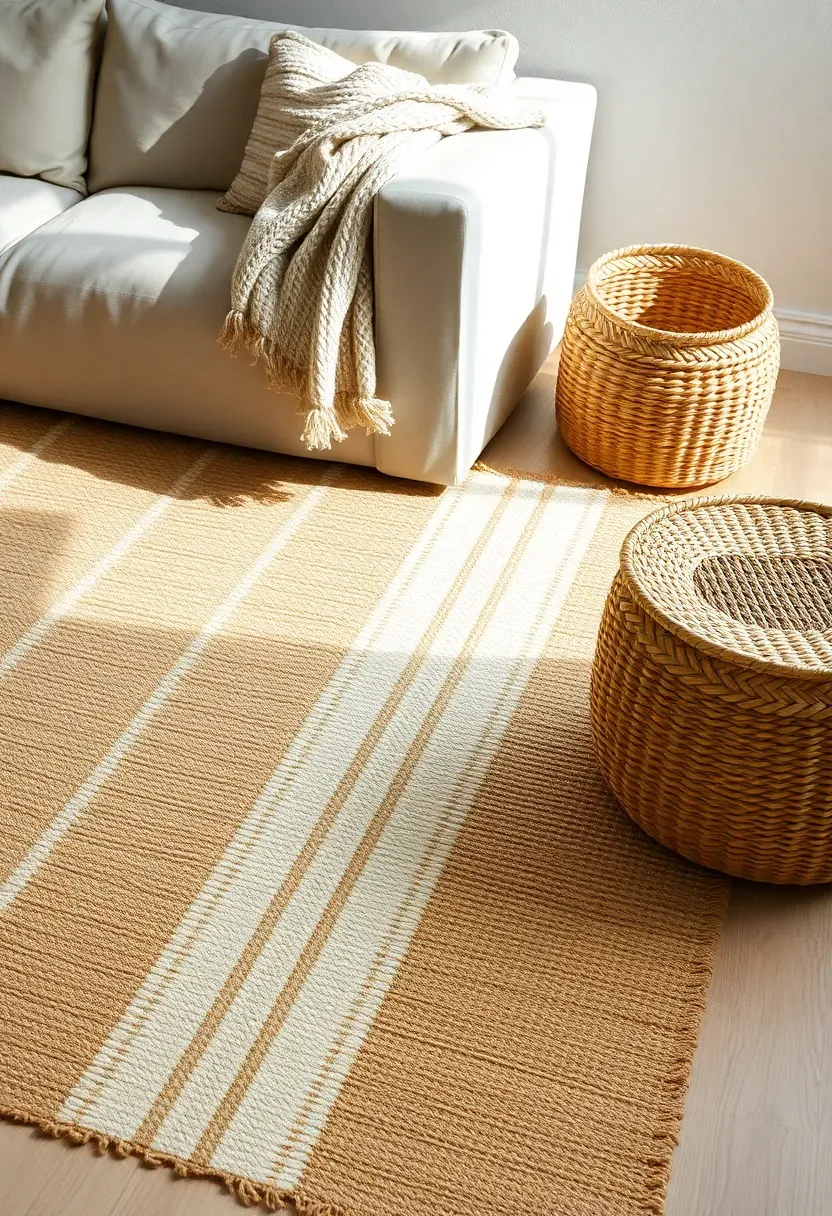
Hyper-realistic 3/4 view of minimalist living room with layered natural fiber rugs—large jute rug base with smaller wool rug overlay in cream and subtle stripe pattern. Linen sofa with chunky knit wool blanket draped over arm. Woven seagrass basket for storage. Light wood floor visible. Materials: jute fiber, wool weave, natural linen, seagrass basket. Natural light creating texture shadows in fibers. Warm neutral palette. Shallow depth of field, sharp details on fiber textures. No text, no logos, no watermarks.</p>
These minimalist organic living room ideas show how natural materials and biophilic design can transform even a small rental into a calming retreat. By combining clean minimalist lines with the warmth of raw wood, stone, linen, and living plants, you create a space that feels both serene and genuinely alive. Whether you rent or own, this approach works on any budget because it prioritizes fewer, better pieces made from honest materials.. Hyper-realistic 3/4 view of minimalist living room with la
Recommended
Items for this idea
Tips
- Use rug pads between layered rugs to prevent slipping and protect underlying fibers
- Vary weave scales—chunky knit blanket, fine linen, rough jute—for textural contrast
- Replace synthetic textiles with natural fibers gradually as budget allows—start with most visible pieces
Avoid if: You have allergies—natural fibers can trap more dust and allergens than synthetics
What this gives you: Instant warmth and texture through sustainable materials that age beautifully and improve with use
6. Built-In Low Walnut Shelving System
Install floor-to-ceiling built-in shelving in rich walnut wood, keeping proportions low and horizontal rather than tall and vertical for organic flow. Design shelves with varying depths and cabinet doors below to hide clutter, displaying only curated objects, ceramics, and plants above. The dark wood warmth grounds the room while the built-in integration maintains minimalist lines. Walnut's natural color variation adds visual interest without needing colorful decor, and the horizontal orientation feels more organic and less imposing than vertical bookcases.
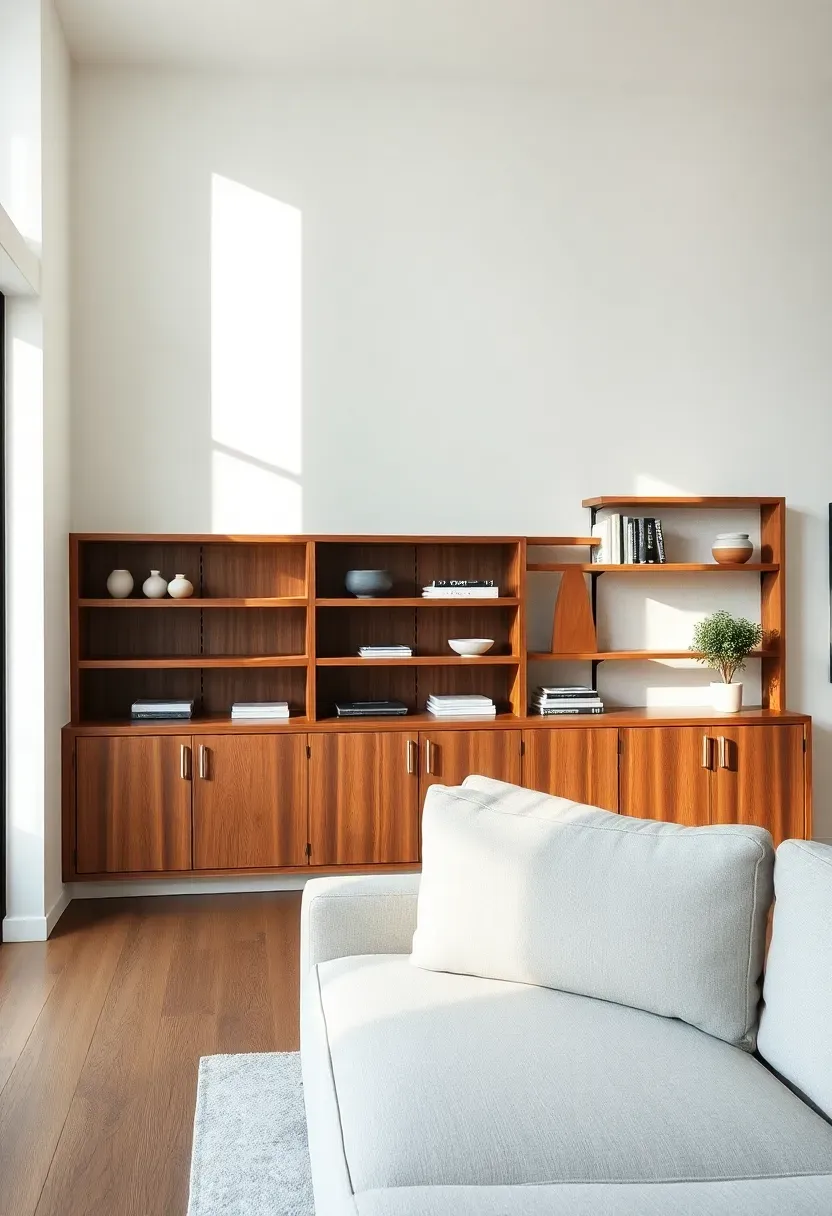
Hyper-realistic 3/4 view of minimalist living room with floor-to-ceiling built-in walnut shelving unit along one wall, horizontal orientation with low cabinet bases. Shelves displaying curated ceramics, books, and small potted plants. Warm walnut wood with visible grain variation. Light neutral sofa in foreground, white walls. Materials: solid walnut wood, matte ceramic vessels. Natural light from window, walnut creating warm shadow depth. Built-in maintaining clean lines. Shallow depth of field, sharp details on wood grain. No text, no logos, no watermarks.</p>
These minimalist organic living room ideas show how natural materials and biophilic design can transform even a small rental into a calming retreat. By combining clean minimalist lines with the warmth of raw wood, stone, linen, and living plants, you create a space that feels both serene and genuinely alive. Whether you rent or own, this approach works on any budget because it prioritizes fewer, better pieces made from honest materials.. Hyper-realistic 3/4 view of minimalist living room with fl
Recommended
Items for this idea
Tips
- Include some closed cabinet doors (at least 30%) to hide unsightly items and maintain minimalist calm
- Space shelves at varied heights to accommodate different objects and create visual rhythm
- Consider integrated LED strip lighting under upper shelves for warm ambient glow in evening
Best for: Serious storage needs where you want concealed functionality without sacrificing style
What this gives you: Seamless storage that displays treasures beautifully while hiding clutter behind closed doors
7. Floor-to-Ceiling Windows with Plant Connection
Maximize natural light and outdoor views with expansive floor-to-ceiling glazing that blurs the boundary between interior and exterior. Position plants directly in front of the glass so their silhouettes create organic patterns against the light, and choose furniture arrangement that frames outdoor views like living art. The abundant daylight changes throughout the day, creating natural mood shifts, while the visual connection to gardens or trees brings constant organic movement and seasonal changes into the minimalist space.
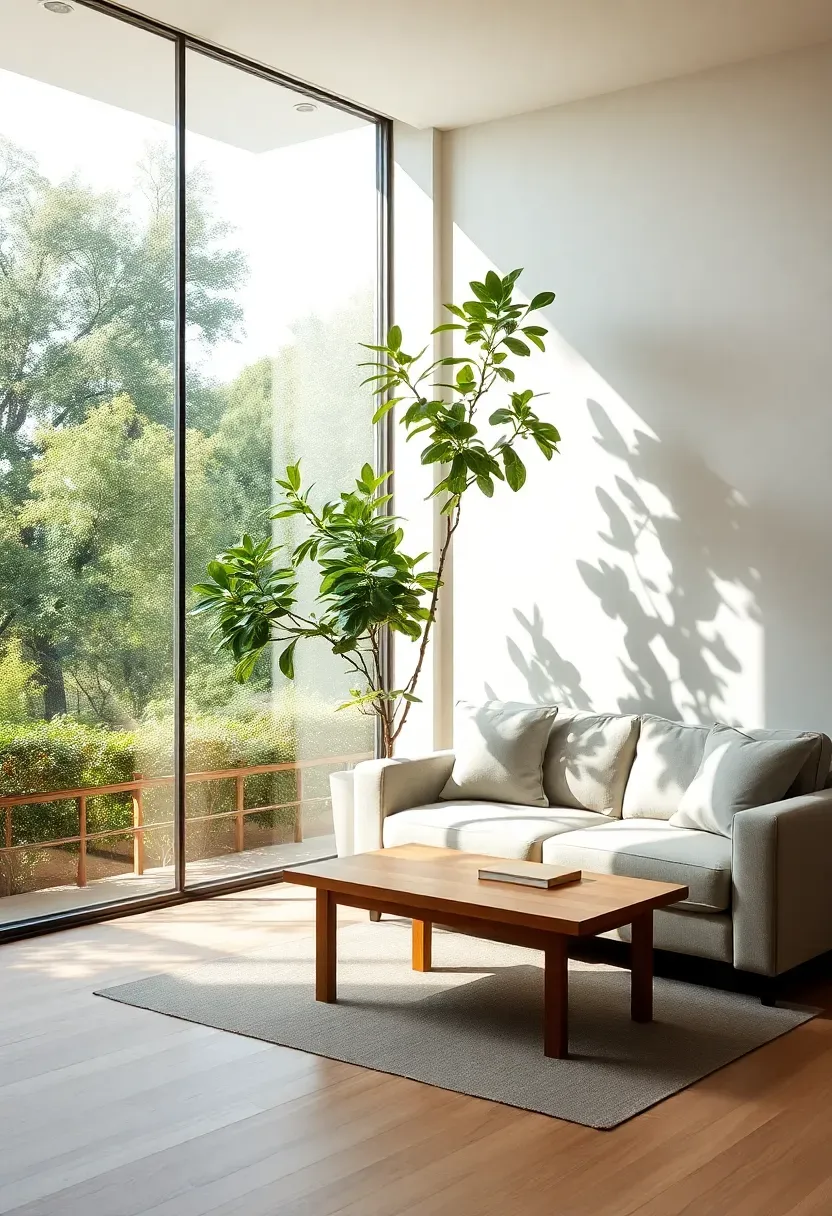
Hyper-realistic 3/4 view of minimalist living room with floor-to-ceiling glass windows on one wall showing outdoor greenery and trees beyond. Large potted ficus tree positioned near glass, its silhouette creating organic shadow pattern. Light linen sofa facing window, minimal wood coffee table. White walls and light oak floor. Materials: glass, living plant, linen, light oak wood. Abundant natural light flooding space, creating minimal shadows. Indoor-outdoor visual connection. Sharp details on plant and textures. No text, no logos, no watermarks.</p>
These minimalist organic living room ideas show how natural materials and biophilic design can transform even a small rental into a calming retreat. By combining clean minimalist lines with the warmth of raw wood, stone, linen, and living plants, you create a space that feels both serene and genuinely alive. Whether you rent or own, this approach works on any budget because it prioritizes fewer, better pieces made from honest materials.. Hyper-realistic 3/4 view of minimalist living room with fl
Recommended
Items for this idea
Tips
- Install solar shades or sheer curtains to control glare while maintaining view connection
- Choose window trim and frames in natural wood rather than white for warmer organic integration
- Position seating to take advantage of views—arrangement should frame landscape like art
Placement note: Consider privacy—ground-floor glass may require strategic landscaping or window films
What this gives you: Daily connection to nature's rhythms, abundant daylight, and constantly changing organic views
8. Live-Edge Coffee Table as Centerpiece
Choose a substantial coffee table featuring a live-edge walnut or maple slab that preserves the tree's natural edge profile, making each piece unique. The organic, irregular edge shape provides dramatic contrast to clean-lined sofas and rectangular room geometry while the wood's natural figuring and color variation become art. Pair with simple stools or a minimalist sofa to let the table's natural form take center stage. Live-edge furniture brings genuine forest presence into minimal rooms, celebrating nature's perfect imperfections.
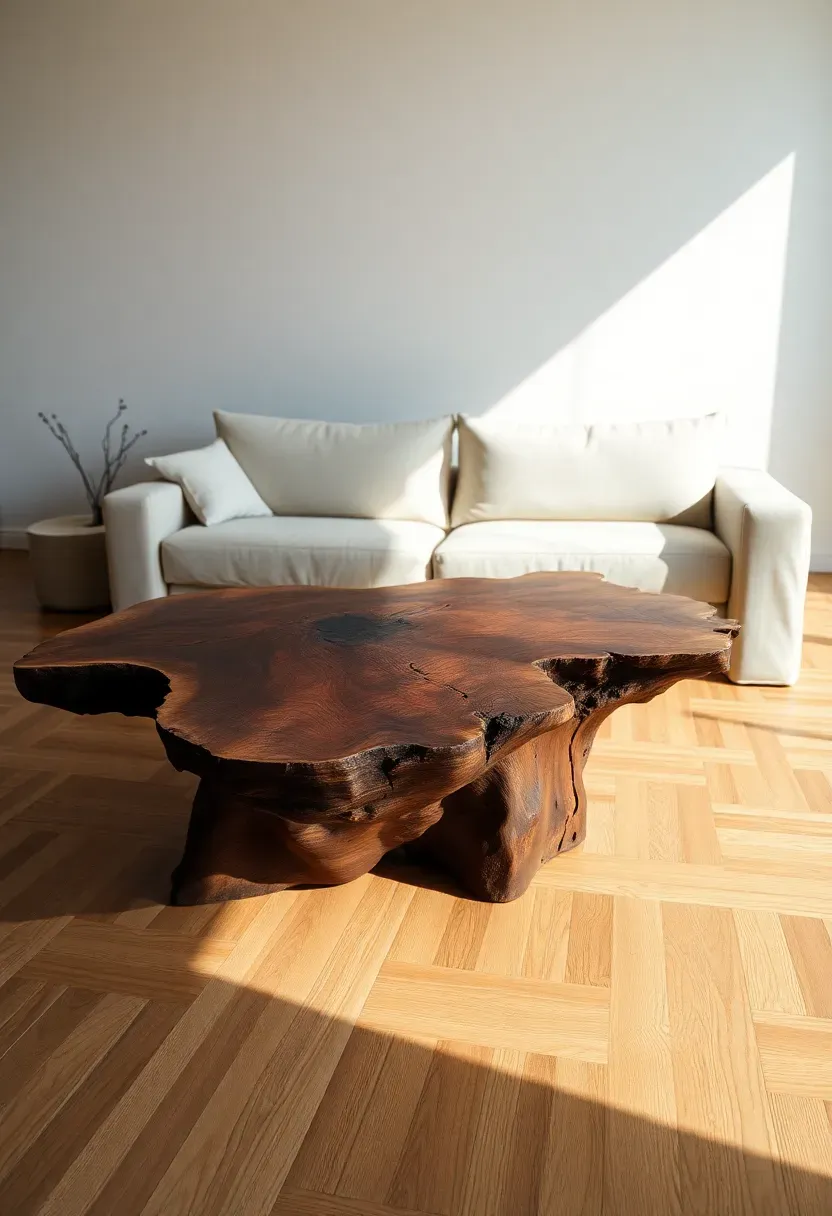
Hyper-realistic 3/4 view of minimalist living room centered on large live-edge walnut coffee table, natural irregular edge profile preserved with bark on, rich brown wood with visible grain figuring. Cream linen sofa beyond, light oak floor. Table as sculptural centerpiece. Materials: solid walnut slab with natural edge, linen upholstery. Natural light from window, wood casting soft shadow. Organic shape contrasting clean rectangular room lines. Shallow depth of field, sharp focus on live-edge details and wood grain. No text, no logos, no watermarks.</p>
These minimalist organic living room ideas show how natural materials and biophilic design can transform even a small rental into a calming retreat. By combining clean minimalist lines with the warmth of raw wood, stone, linen, and living plants, you create a space that feels both serene and genuinely alive. Whether you rent or own, this approach works on any budget because it prioritizes fewer, better pieces made from honest materials.. Hyper-realistic 3/4 view of minimalist living room centere
Recommended
Items for this idea
Tips
- Seal live-edge surfaces with matte wax or oil finish rather than glossy polyurethane for natural appearance
- Choose slab thickness proportional to room scale—2-3 inches for substantial presence without bulk
- Keep surrounding decor minimal so table's organic form gets full attention without competition
Best for: Large living rooms where a substantial table can hold its own as sculptural centerpiece
What this gives you: A one-of-a-kind furniture piece that's both functional sculpture and connection to forest origins
9. Earthy Neutral Palette with a Single Green Accent
Keep your living room's foundation strictly neutral—cream walls, light wood floors, beige upholstery—then introduce one vivid green element as the sole accent color. This might be a single olive tree, an emerald velvet armchair, sage green ceramics, or a large trailing pothos plant. The lone green accent creates refreshing visual pop and genuine organic connection while maintaining minimalist restraint. This approach makes spaces feel simultaneously calming and energized, with the green element acting as living art.
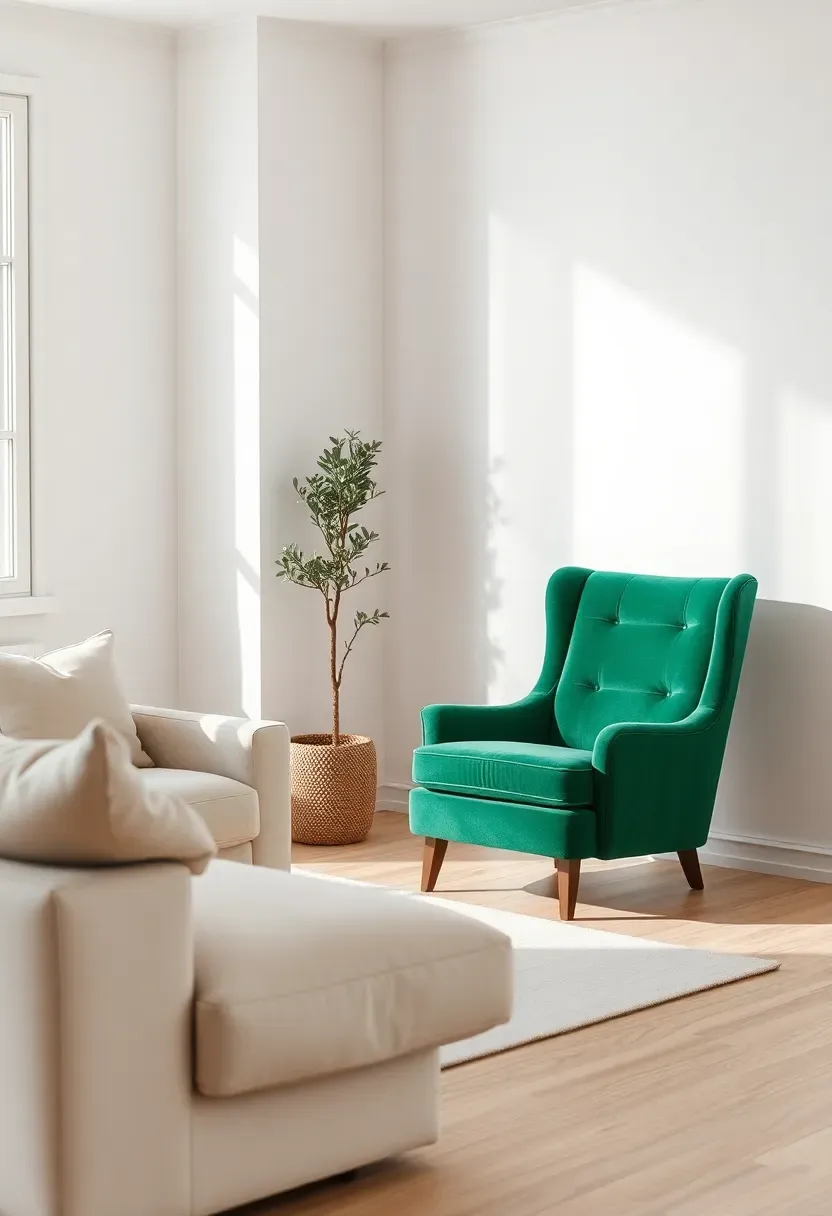
Hyper-realistic 3/4 view of minimalist living room in neutral cream, beige, and light wood palette, featuring single emerald green velvet armchair as only color accent. Cream linen sofa, light oak floor, white walls. Green armchair providing vivid color pop. Small olive tree in corner echoing green accent. Materials: velvet upholstery, linen, light oak wood. Natural light from window, green creating vibrant shadow contrast. Monochrome neutral with single color focus. Shallow depth of field, sharp details on velvet texture. No text, no logos, no watermarks.</p>
These minimalist organic living room ideas show how natural materials and biophilic design can transform even a small rental into a calming retreat. By combining clean minimalist lines with the warmth of raw wood, stone, linen, and living plants, you create a space that feels both serene and genuinely alive. Whether you rent or own, this approach works on any budget because it prioritizes fewer, better pieces made from honest materials.. Hyper-realistic 3/4 view of minimalist living room in neut
Recommended
Items for this idea
Tips
- Choose green accent that connects to plants in room for cohesive color story—tree leaves echoing chair color
- Place accent piece where it receives natural light to maximize color richness and visual impact
- If using plant as accent, choose decorative pot that contrasts with neutral palette for added definition
Best for: Minimalists who crave minimal color but still want organic freshness and visual energy
What this gives you: Focused color impact that creates energy and nature connection while maintaining calm minimalism
10. Rattan and Cane Accent Furniture
Introduce woven rattan or cane furniture pieces to bring organic pattern and natural material warmth to minimalist living rooms. Choose a cane-back chair, rattan coffee table, or woven screen to add textural complexity without adding visual clutter. The open weave patterns create visual rhythm while the natural rattan color adds warmth. These pieces have a handcrafted quality that softens minimalist precision, and their light visual weight maintains spaciousness while adding character.
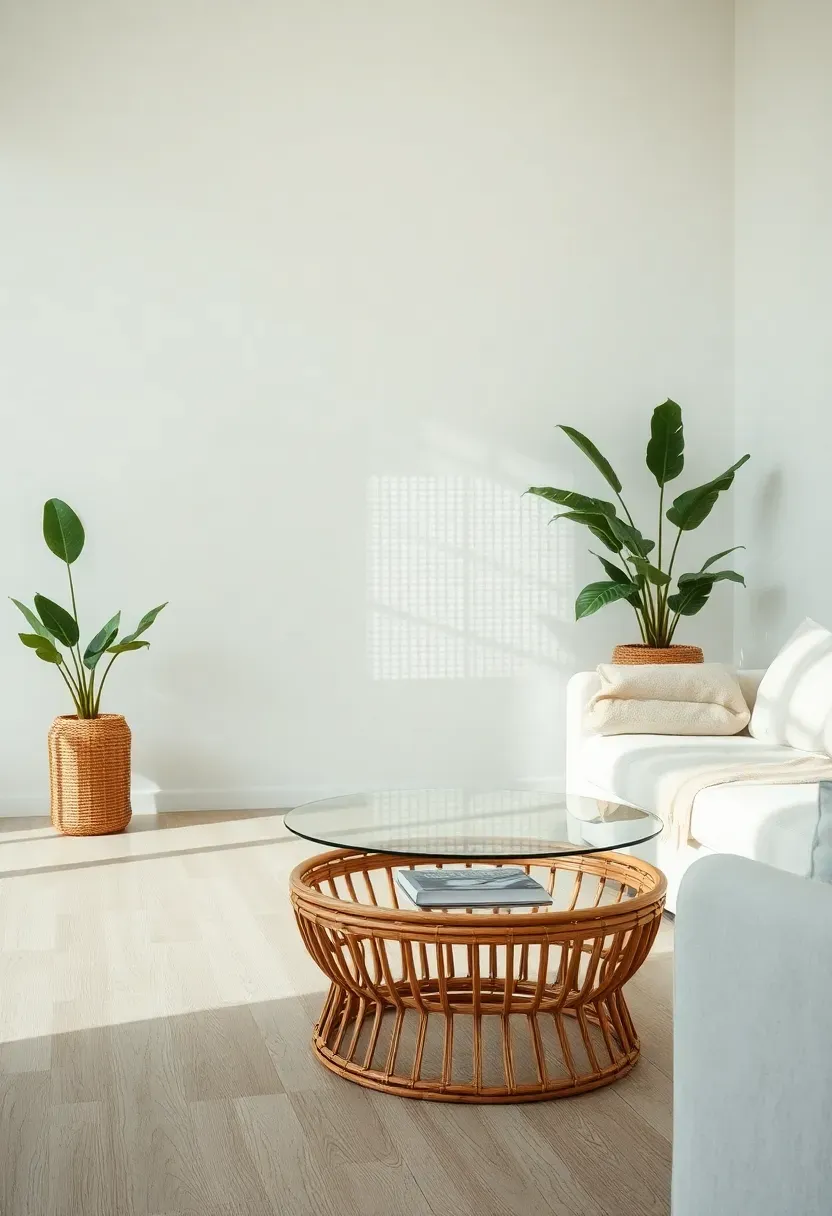
Hyper-realistic 3/4 view of minimalist living room featuring cane-back accent chair with visible woven pattern, rattan coffee table with glass top, light linen sofa. Light wood floor, white walls. Woven textures adding organic pattern complexity. Materials: natural cane weaving, rattan poles, linen upholstery, light oak. Natural light creating shadow patterns through cane weave. Handcrafted quality contrasting clean modern lines. Shallow depth of field, sharp details on woven texture. No text, no logos, no watermarks.</p>
These minimalist organic living room ideas show how natural materials and biophilic design can transform even a small rental into a calming retreat. By combining clean minimalist lines with the warmth of raw wood, stone, linen, and living plants, you create a space that feels both serene and genuinely alive. Whether you rent or own, this approach works on any budget because it prioritizes fewer, better pieces made from honest materials.. Hyper-realistic 3/4 view of minimalist living room featuri
Recommended
Items for this idea
Tips
- Mix cane/rattan with solid wood pieces rather than using all-woven furniture for better balance
- Position woven pieces to catch natural light—shadow patterns through weave create beautiful movement
- Dust cane regularly with soft brush—woven patterns can trap dust in crevices over time
Budget/Time: Vintage cane chairs are often more affordable than new and have superior craftsmanship
What this gives you: Organic pattern and handcrafted warmth that adds character without visual clutter
11. Skylight for Natural Light Emphasis
Install a skylight or solar tube to flood your minimalist living room with overhead natural light that changes dynamically throughout the day. The top-down illumination creates different shadow patterns than side windows, illuminating plant life from above for healthier growth and more dramatic silhouettes. Daylight through skylights feels brighter and more uplifting, and the view of sky adds organic movement—passing clouds, changing light quality, and even stargazing potential at night. The connection to sky brings nature's ceiling into minimal rooms.
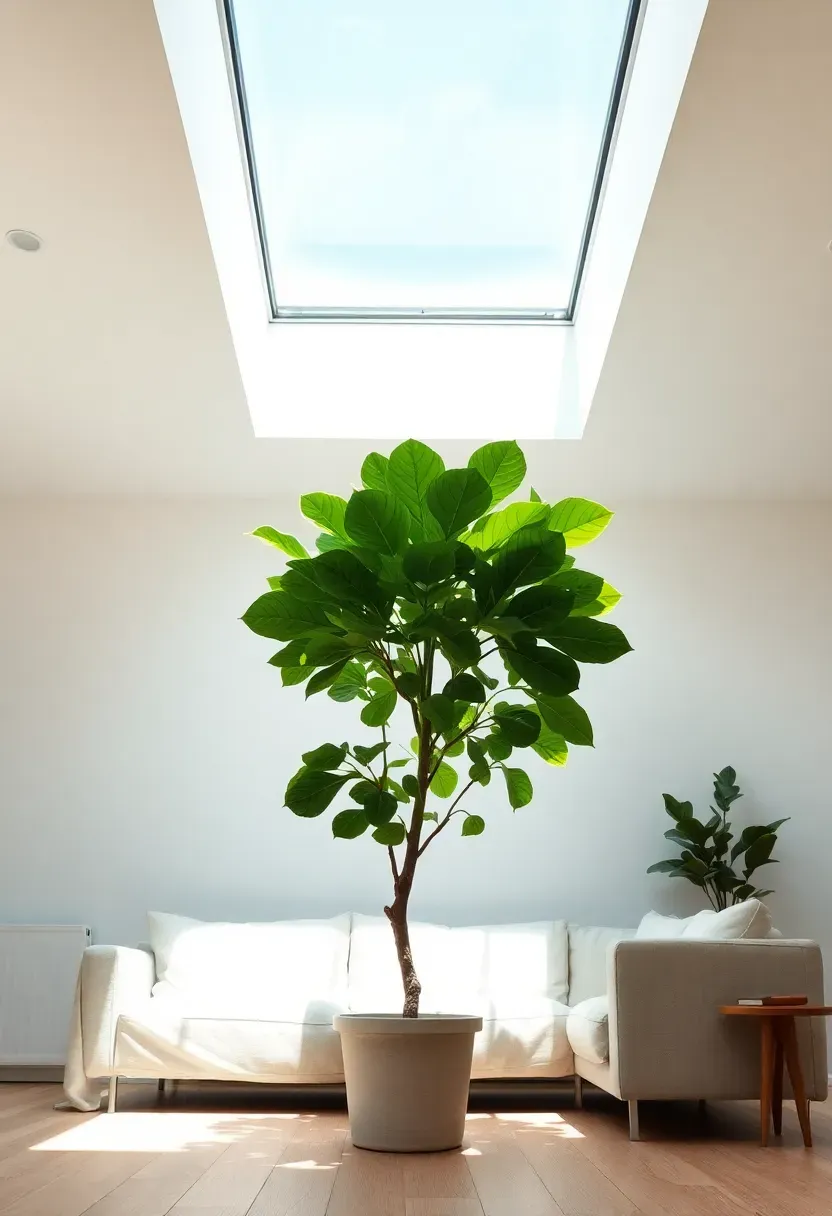
Hyper-realistic 3/4 view of minimalist living room with large rectangular skylight in ceiling, bright natural light flooding downward. Potted fiddle leaf fig tree beneath skylight, illuminated from above creating dramatic canopy shadows. Light linen sofa, light wood floor, white walls. Overhead daylight creating different shadow quality than side windows. Blue sky visible through skylight. Materials: living plant, linen, light oak wood. Sharp details on plant leaves and textures. No text, no logos, no watermarks.</p>
These minimalist organic living room ideas show how natural materials and biophilic design can transform even a small rental into a calming retreat. By combining clean minimalist lines with the warmth of raw wood, stone, linen, and living plants, you create a space that feels both serene and genuinely alive. Whether you rent or own, this approach works on any budget because it prioritizes fewer, better pieces made from honest materials.. Hyper-realistic 3/4 view of minimalist living room with la
Recommended
Items for this idea
Tips
- Install skylight with UV-filtering glass to protect furniture and floors from sun damage
- Add solar shade or blind for light control and heat regulation during intense summer sun
- Position light-loving plants directly under skylight for ideal growing conditions
Placement note: Skylights work best over seating areas or plant zones rather than TV/media areas to prevent glare
What this gives you: Dynamic overhead daylight that creates healthy plant growth and dramatic shadow patterns
12. Terracotta and Warm Ceramic Accents for Natural Warmth
Scatter terracotta and warm ceramic pieces throughout your living room to add earthy warmth and handcrafted quality. Use terracotta pots for plants, handmade ceramic vases on shelves, warm-colored ceramic bowls on tables, and decorative vessels in muted oranges, reds, and browns. These fired clay pieces bring geological warmth to minimal spaces, and their handmade variations celebrate authentic craftsmanship. The warm terracotta tones beautifully complement wood furniture and green plants while adding organic color that feels grounded rather than decorative.
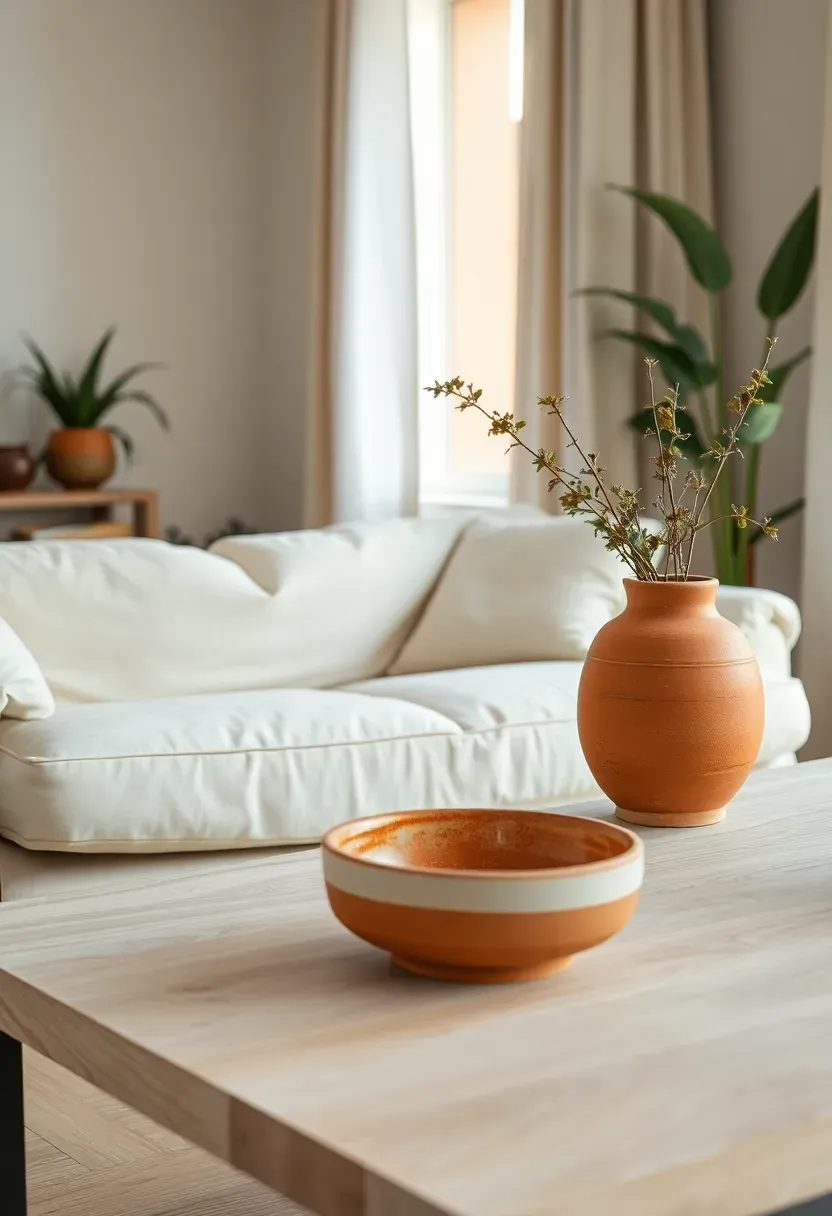
Hyper-realistic 3/4 view of minimalist living room with warm terracotta accents—terracotta pots with plants, handmade ceramic vase in warm ochre, ceramic bowl on coffee table. Cream linen sofa, light oak floor, neutral walls. Warm earthy clay tones creating focal points. Materials: terracotta clay, handmade ceramic, linen, light oak wood. Natural light from window, terracotta casting warm reddish shadows. Handcrafted quality adding warmth. Shallow depth of field, sharp details on ceramic textures. No text, no logos, no watermarks.</p>
These minimalist organic living room ideas show how natural materials and biophilic design can transform even a small rental into a calming retreat. By combining clean minimalist lines with the warmth of raw wood, stone, linen, and living plants, you create a space that feels both serene and genuinely alive. Whether you rent or own, this approach works on any budget because it prioritizes fewer, better pieces made from honest materials.. Hyper-realistic 3/4 view of minimalist living room with wa
Recommended
Items for this idea
Tips
- Group ceramic pieces in odd numbers (3 or 5) for more organic, less studied arrangements
- Choose matte or satin glazes rather than high-gloss for more natural, less formal appearance
- Mix terracotta with glazed ceramics to create textural variety within warm color palette
Best for: Rooms dominated by cool wood tones that need warming with rich earthy clay colors
What this gives you: Handcrafted warmth and geological authenticity that elevates minimal spaces without clutter
13. Organic Curved Furniture Shapes
Introduce furniture with curved, organic shapes—rounded sofas, circular coffee tables, arc floor lamps—to soften architectural lines and create flowing movement through your living room. While minimalist design often emphasizes rectangles and squares, organic curves feel more natural and ergonomic, mimicking shapes found in nature. A curved sofa creates inviting conversation zones, a round table facilitates easier circulation, and arc lamps provide graceful overhead lighting. These curved forms create visual rhythm that breaks up rigid geometry.
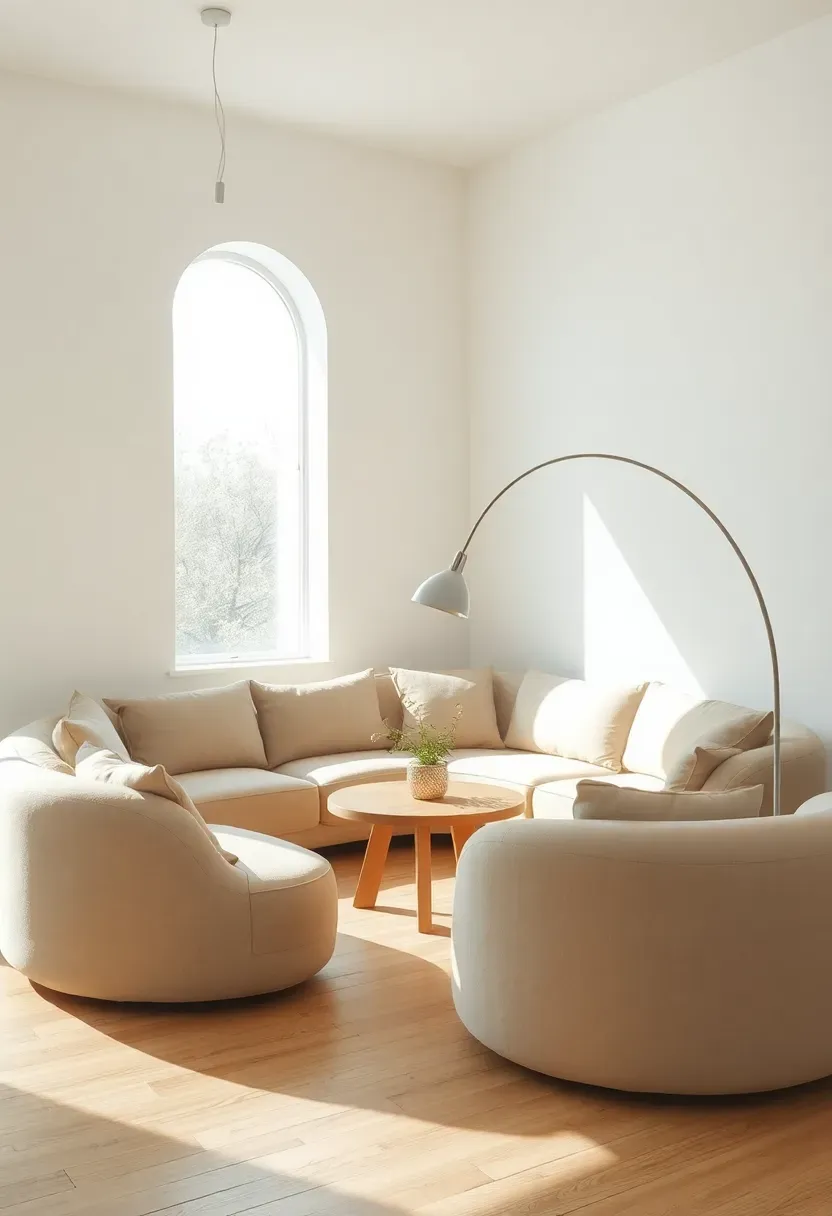
Hyper-realistic 3/4 view of minimalist living room featuring curved sectional sofa in soft beige linen, circular low coffee table in light wood, arc floor lamp with curved stem. Organic curved shapes contrasting straight wall lines. Light wood floor, white walls. Materials: linen upholstery, solid wood table, metal arc lamp. Natural light from window, curved forms creating flowing shadows. Ergonomic organic shapes. Shallow depth of field, sharp details on textures and curves. No text, no logos, no watermarks.</p>
These minimalist organic living room ideas show how natural materials and biophilic design can transform even a small rental into a calming retreat. By combining clean minimalist lines with the warmth of raw wood, stone, linen, and living plants, you create a space that feels both serene and genuinely alive. Whether you rent or own, this approach works on any budget because it prioritizes fewer, better pieces made from honest materials.. Hyper-realistic 3/4 view of minimalist living room featuri
Recommended
Items for this idea
Tips
- Balance curved furniture with some straight-lined pieces to prevent space from feeling too soft or formless
- Consider traffic flow—curved furniture should facilitate movement, not obstruct pathways
- Use round rug under curved seating to reinforce organic geometry and define zone
Avoid if: Your room is very small—curved furniture can require more square footage than rectangular pieces
What this gives you: Softer, more ergonomic spaces that feel natural and flowing rather than rigidly geometric
14. Vertical Garden as Feature Wall
Transform an entire living room wall into a vertical garden with mounted planters, trailing vines, and mounted tillandsia, creating a living tapestry of greenery. Install shelving with integrated planters, wall-mounted pots, or a dedicated vertical garden system to grow herbs, ferns, and trailing plants vertically. This biophilic feature creates dramatic organic impact while purifying air and providing fresh herbs if you choose edible plants. The living wall becomes dynamic art that changes and grows, bringing genuine forest energy indoors.
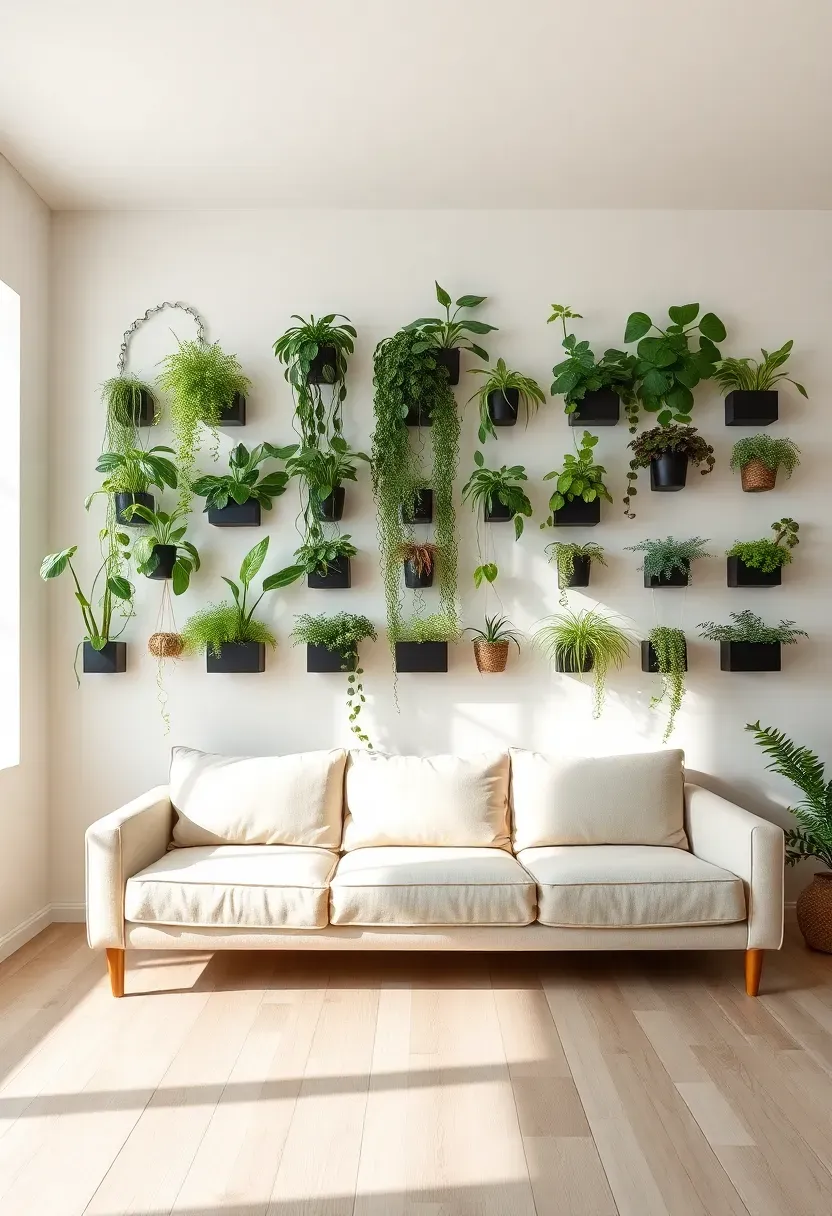
Hyper-realistic 3/4 view of minimalist living room with entire wall transformed into vertical garden—wall-mounted rectangular planters at varied heights, pothos and philodendron vines trailing downward, mounted tillandsia, small ferns. Living green tapestry. Minimal cream sofa and light wood floor in foreground. White ceiling. Materials: living plants, wall planters, wood floors, linen sofa. Natural light from side window, plants casting organic shadows. Vertical garden as feature wall art. Sharp details on plant varieties. No text, no logos, no watermarks.</p>
These minimalist organic living room ideas show how natural materials and biophilic design can transform even a small rental into a calming retreat. By combining clean minimalist lines with the warmth of raw wood, stone, linen, and living plants, you create a space that feels both serene and genuinely alive. Whether you rent or own, this approach works on any budget because it prioritizes fewer, better pieces made from honest materials.. Hyper-realistic 3/4 view of minimalist living room with en
Recommended
Items for this idea
Tips
- Install waterproof backing and proper drainage system before planting to prevent water damage
- Choose plants with similar light and water requirements for easier maintenance
- Include automated drip irrigation system if possible—vertical gardens dry out faster than horizontal plantings
Budget/Time: Start small with 3-5 wall planters and expand as you learn maintenance routine
What this gives you: Dramatic living art that purifies air and brings vibrant forest energy into minimal rooms
15. Unpolished Stone Flooring with Warm Rugs
Install unpolished natural stone flooring—travertine, limestone, or slate—with visible natural variations and subtle textures for permanent organic presence underfoot. The cool, solid stone grounds the space with geological permanence while providing excellent thermal mass for temperature regulation. Layer warm wool or cotton rugs in seating areas to soften the stone and add comfort. Stone flooring feels cool in summer, can be warmed with rugs in winter, and develops beautiful patina over years of use.
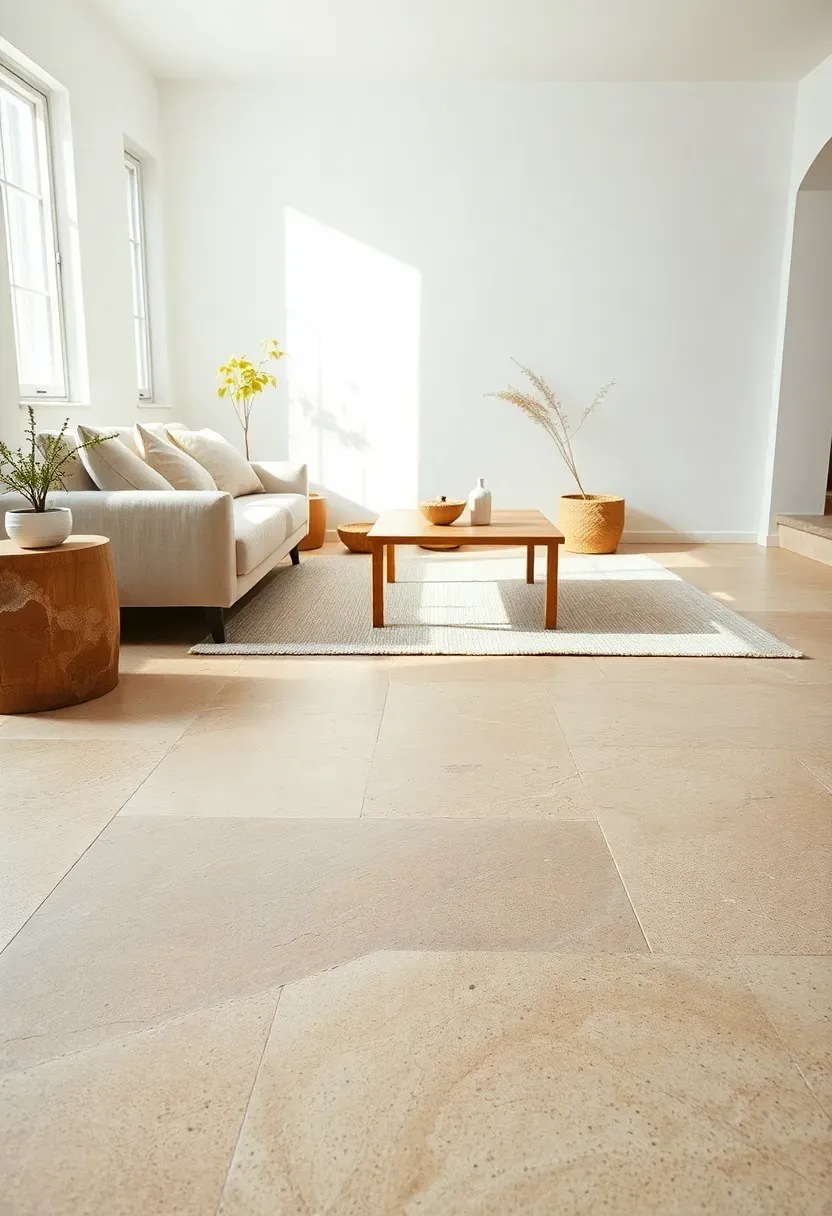
Hyper-realistic 3/4 view of minimalist living room with unpolished travertine stone flooring showing visible natural variations, fossils, and subtle texture in warm beige tones. Large wool rug in cream with subtle pattern under seating area. Linen sofa, light wood coffee table. White walls. Materials: natural travertine stone, wool rug, linen upholstery, light oak wood. Natural light from window, stone texture creating subtle shadows. Cool stone balanced by warm rug. Shallow depth of field, sharp details on stone surface. No text, no logos, no watermarks.</p>
These minimalist organic living room ideas show how natural materials and biophilic design can transform even a small rental into a calming retreat. By combining clean minimalist lines with the warmth of raw wood, stone, linen, and living plants, you create a space that feels both serene and genuinely alive. Whether you rent or own, this approach works on any budget because it prioritizes fewer, better pieces made from honest materials.. Hyper-realistic 3/4 view of minimalist living room with un
Recommended
Items for this idea
Tips
- Choose honed or tumbled finish rather than polished for better slip resistance and more organic appearance
- Seal stone properly with penetrating sealer to prevent staining while maintaining natural appearance
- Use rug pads over stone to prevent slipping and add cushioning for comfort underfoot
Best for: Homes in warm climates where stone's cooling properties provide natural temperature regulation
What this gives you: Permanent organic flooring with thermal mass that ages beautifully and connects home to earth
16. Exposed Natural Wood Ceiling Beams
Expose or add natural wood ceiling beams to bring overhead warmth and architectural character to your minimalist living room. The horizontal wood lines create visual rhythm while drawing the eye upward, making rooms feel larger and more dynamic. Choose reclaimed timber with visible aging, hand-hewn beams with tool marks, or smooth new wood with prominent grain depending on your preferred aesthetic. Wood beams add organic ceiling interest that makes minimal spaces feel handcrafted and substantial rather than stark.
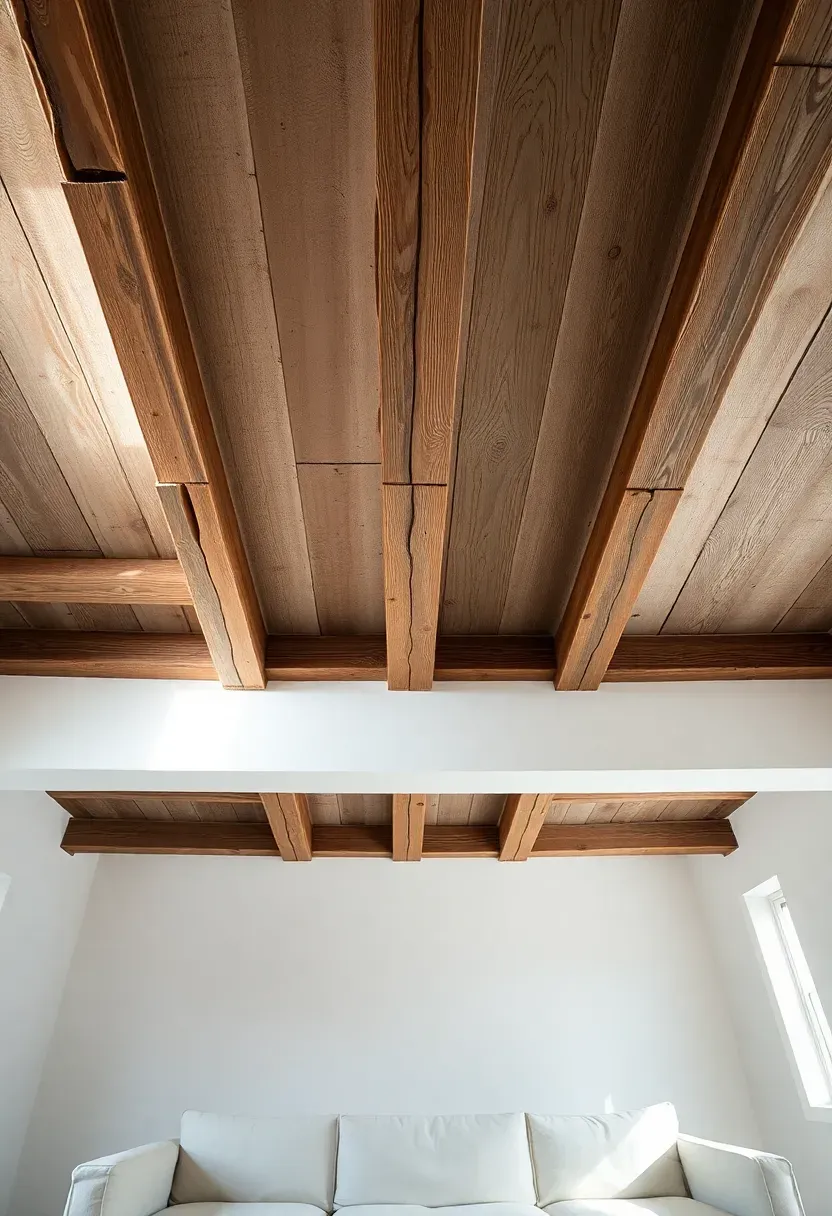
Hyper-realistic 3/4 view of minimalist living room looking upward toward exposed natural wood ceiling beams, reclaimed timber with visible aging, nail holes, and weathered grey-brown patina. White plaster ceiling between beams. Cream sofa and light wood floor below. Materials: reclaimed timber beams, plaster ceiling, linen upholstery. Natural light from window, beams casting warm linear shadows downward. Architectural interest overhead. Sharp details on wood texture and weathering. No text, no logos, no watermarks.</p>
These minimalist organic living room ideas show how natural materials and biophilic design can transform even a small rental into a calming retreat. By combining clean minimalist lines with the warmth of raw wood, stone, linen, and living plants, you create a space that feels both serene and genuinely alive. Whether you rent or own, this approach works on any budget because it prioritizes fewer, better pieces made from honest materials.. Hyper-realistic 3/4 view of minimalist living room looking
Recommended
Items for this idea
Tips
- Space beams evenly for architectural rhythm—typically 4-6 feet apart depending on room proportions
- Coordinate beam wood tone with flooring wood for cohesive relationship rather than matching perfectly
- Consider adding beam detail even on flat ceilings using faux beams for architectural interest without structural work
Best for: Rooms with high ceilings that can accommodate beams without reducing headroom uncomfortably
What this gives you: Overhead architectural warmth that makes minimal spaces feel handcrafted and substantial
17. Monstera and Large Leaf Plant Statement
Make a bold botanical statement with a large-leafed plant like monstera deliciosa, bird of paradise, or philodendron selloum that brings dramatic tropical foliage into minimalist rooms. These plants' substantial leaves create living sculpture with architectural presence—the monstera's perforated leaves, bird of paradise's heliconia flowers, or philodendron's deeply lobed foliage add visual drama. Large-leafed plants fill corners beautifully, create organic contrast to clean furniture lines, and purify air while adding genuine jungle energy.
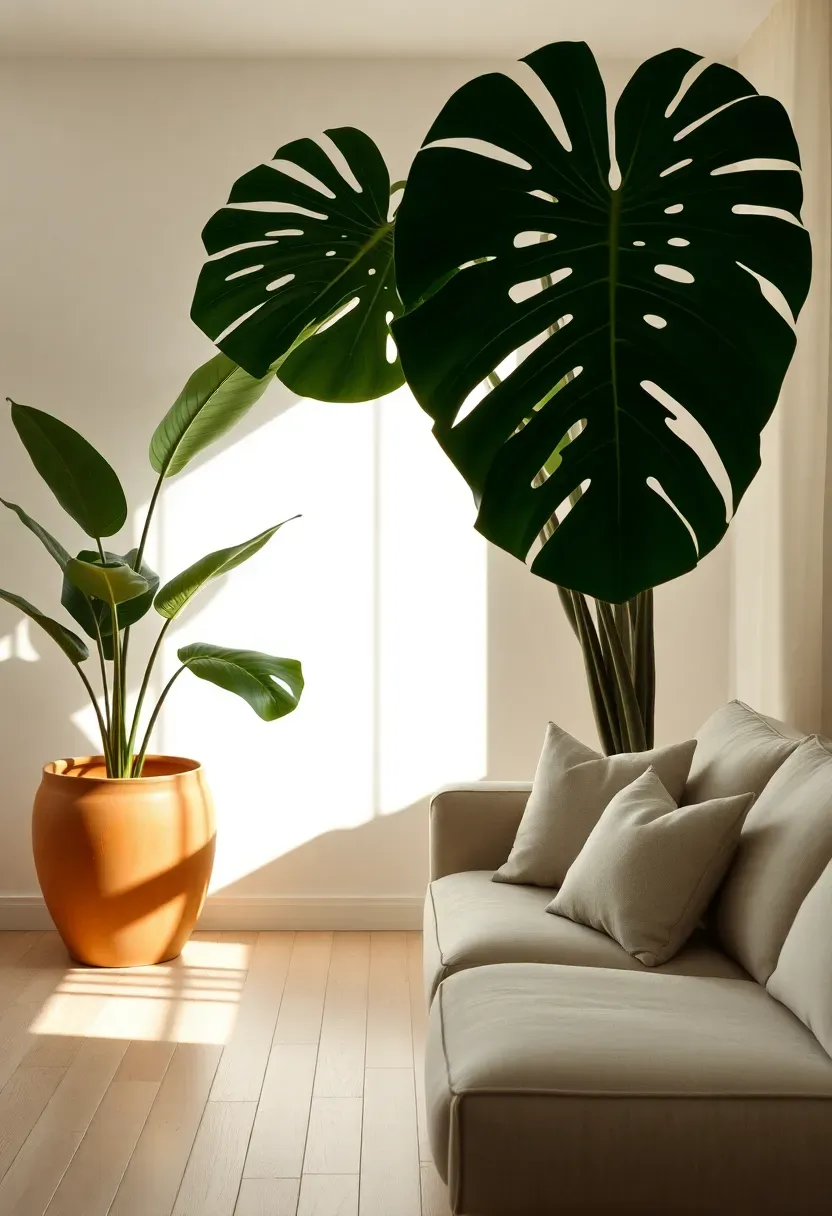
Hyper-realistic 3/4 view of minimalist living room featuring large monstera deliciosa plant in corner, dramatic perforated leaves creating architectural presence, plant reaching 5-6 feet tall. Large ceramic pot in warm terracotta. Cream linen sofa, light wood floor, white walls. Materials: living monstera plant, terracotta pot, linen upholstery. Natural light from nearby window, monstera casting dramatic leaf shadow patterns. Large leaves as sculptural element. Shallow depth of field, sharp details on leaf perforations and texture. No text, no logos, no watermarks.</p>
These minimalist organic living room ideas show how natural materials and biophilic design can transform even a small rental into a calming retreat. By combining clean minimalist lines with the warmth of raw wood, stone, linen, and living plants, you create a space that feels both serene and genuinely alive. Whether you rent or own, this approach works on any budget because it prioritizes fewer, better pieces made from honest materials.. Hyper-realistic 3/4 view of minimalist living room featuri
Recommended
Items for this idea
Tips
- Rotate monstera monthly toward light for even growth—plants tend to lean toward windows over time
- Wipe large leaves monthly with damp cloth to remove dust and maintain healthy photosynthesis
- Provide humidity tray or mist regularly—monstera thrive in humid environments similar to tropical origin
Best for: Empty corners that need substantial presence without adding furniture or clutter
What this gives you: Dramatic living sculpture that brings tropical energy and purifies air while adding architectural greenery
18. Neutral Woven Textures for a Cohesive Organic Look
Create a cohesive organic minimalist living room by using woven textures consistently across multiple elements—woven grasscloth wallpaper, seagrass rugs, rattan furniture, cane webbing, and jute storage baskets. The repeated woven language creates visual harmony while the varying weave scales (fine to chunky) add textural richness. Keeping everything in neutral tones—cream, beige, tan, oatmeal—maintains minimalist calm while the diverse woven textures create sensory interest that makes spaces feel collected and warm.
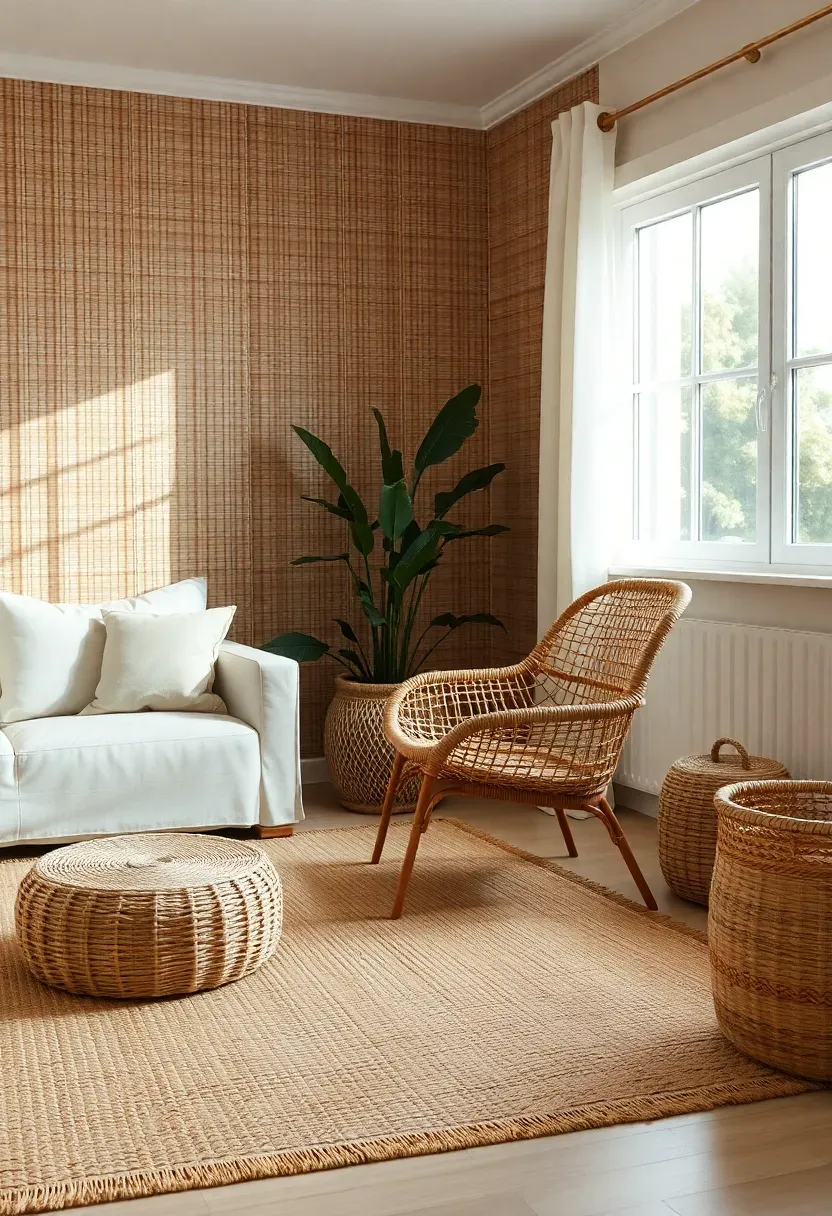
Hyper-realistic 3/4 view of minimalist living room featuring woven grasscloth wallpaper in neutral tan, large seagrass rug, cane-back chair, rattan side table, jute storage basket. All elements showcasing woven textures in neutral palette. Cream linen sofa, light wood floor. Materials: grasscloth wallpaper, seagrass weaving, cane webbing, rattan poles, jute fiber, linen upholstery. Natural light from window, woven textures creating subtle shadow patterns. Cohesive woven language. Sharp details on various weave scales. No text, no logos, no watermarks.</p>
These minimalist organic living room ideas show how natural materials and biophilic design can transform even a small rental into a calming retreat. By combining clean minimalist lines with the warmth of raw wood, stone, linen, and living plants, you create a space that feels both serene and genuinely alive. Whether you rent or own, this approach works on any budget because it prioritizes fewer, better pieces made from honest materials.. Hyper-realistic 3/4 view of minimalist living room featuri
Recommended
Items for this idea
Tips
- Vary weave scales deliberately—fine grasscloth, medium rattan, chunky jute—for textural variety
- Keep color palette strictly neutral to let textures shine without color competition
- Consider practicality—woven materials in high-traffic areas may show wear more quickly
Avoid if: You have pets—woven textures can snag on claws and be difficult to clean
What this gives you: Cohesive organic warmth through repeated woven language that creates sophisticated textural richness
19. Indoor-Outdoor Flow with Large Glazing
Install expansive sliding or folding glass doors that completely open to connect your living room with outdoor terrace, garden, or patio, creating seamless flow between interior and exterior. When weather permits, the boundary disappears, doubling your living space and bringing fresh air, natural sounds, and outdoor scents indoors. Use continuous flooring material from inside to out—same wood or stone running through both spaces—to strengthen connection. This indoor-outdoor integration is ultimate biophilic design, merging minimal interiors with natural environment.
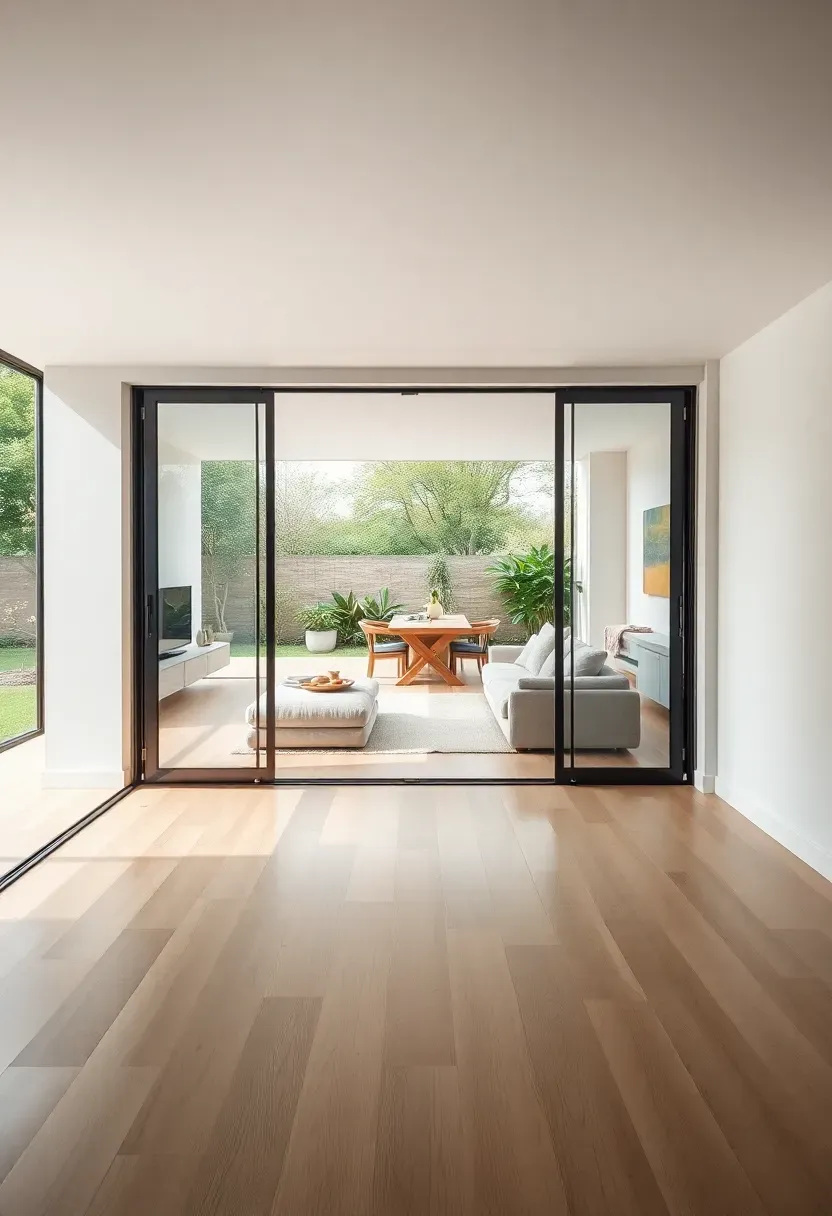
Hyper-realistic 3/4 view of minimalist living room with large sliding glass doors fully open to outdoor terrace, creating seamless indoor-outdoor flow. Light oak flooring continues from interior to exterior terrace. Cream linen sofa visible indoors, outdoor dining table beyond. Greenery and trees visible on terrace. White walls, minimal decor. Materials: glass doors, continuous oak flooring, linen upholstery, outdoor wood furniture. Abundant natural light, blurring interior-exterior boundary. Biophilic connection to outdoors. Sharp details throughout both spaces. No text, no logos, no watermarks.</p>
These minimalist organic living room ideas show how natural materials and biophilic design can transform even a small rental into a calming retreat. By combining clean minimalist lines with the warmth of raw wood, stone, linen, and living plants, you create a space that feels both serene and genuinely alive. Whether you rent or own, this approach works on any budget because it prioritizes fewer, better pieces made from honest materials.. Hyper-realistic 3/4 view of minimalist living room with la
Recommended
Items for this idea
Tips
- Install flush threshold tracks to eliminate tripping hazard and create true seamless flow
- Include adequate overhang or awning outdoors to protect interior from rain when doors are open
- Consider insect screens or curtains to keep bugs out while maintaining open connection
Best for: Climates with mild weather much of the year where indoor-outdoor living is practical regularly
What this gives you: Ultimate biophilic connection that doubles living space and brings nature fully into daily life
These 19 minimalist organic living room ideas demonstrate how natural materials, biophilic design, and thoughtful restraint create spaces that feel both serene and vibrantly alive. By prioritizing quality natural materials -- wood, stone, linen, jute, terracotta -- and integrating living plants through strategic placement, you can achieve minimalism's calming clarity without sacrificing warmth and character. If you love this earthy direction, explore our [minimalist living room ideas with earth tones](/posts/60_19-inspiring-minimalist-living-room-ideas-with-earth-tones-for-a-comfortable-living-space/) for more warm palette inspiration, or try [cozy Scandinavian living room ideas](/posts/128_cozy-scandinavian-living-room-ideas/) for a lighter Nordic approach to natural interiors.
Whether you start with a single statement tree, layer natural fiber textiles, or commit to larger installations like stone walls or indoor gardens, each organic addition strengthens your living room's connection to nature while maintaining minimalist calm. For renters who love the blend of Japanese and Scandinavian aesthetics, our [earthy modern living room ideas](/posts/98_earthy-modern-living-room-ideas/) offer complementary design approaches. These spaces support wellbeing through natural materials, abundant daylight, indoor plants, and sustainable choices -- proving that minimalism and organic warmth are complementary rather than contradictory.