25 Japanese Tiny House Ideas That Bring Zen to Small Spaces
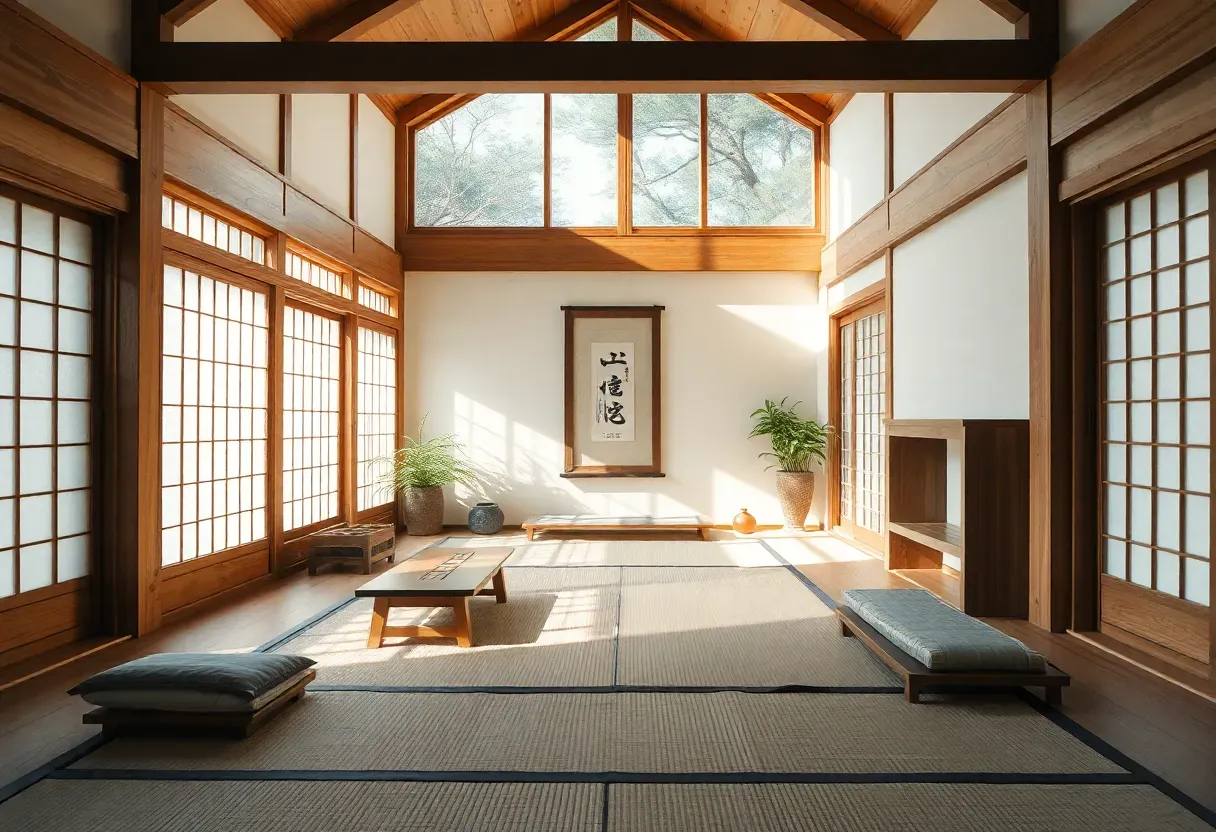
Japanese tiny house ideas prove that less truly can be more. By integrating traditional Japanese design principles—shoji screens, tatami rooms, genkan entries, and deep connection to nature—these compact homes achieve remarkable serenity and functionality despite minimal square footage.
The Japanese approach to small space design emphasizes natural materials, flexible room definitions, and meticulous organization. Every element serves multiple purposes, and the boundary between indoor and outdoor living dissolves through strategic choices that expand perceived space. We found that even small apartments benefit enormously from these zen-inspired techniques.
Whether you're building a dedicated Japanese minimalist tiny home or infusing Japanese simplicity into a rental apartment, these 25 ideas demonstrate how centuries-old design philosophy creates profoundly livable compact spaces on any budget. If you're new to the concept, our guide on [what is Japanese minimalism](/posts/154_what-is-japanese-minimalism-lifestyle-the-art-of-mindful-living/) provides essential background on this timeless philosophy.
Quick FAQ
What defines a Japanese tiny house interior?
Japanese tiny house interiors feature natural materials (wood, paper, stone), flexible room partitions (shoji screens), tatami flooring, low furniture, genkan entry areas, and strong indoor-outdoor connection. The design emphasizes minimalism, horizontal lines, and purposeful emptiness (ma) that creates calm.
How do Japanese design principles make small spaces feel larger?
Japanese design expands space through visual continuity—consistent flooring, neutral palettes, and seamless indoor-outdoor transitions. Shoji screens diffuse light while allowing views, tatami creates flexible floor space, and low furniture maintains open sight lines. The emphasis on horizontal lines draws the eye across rather than up.
What is a genkan and why is it essential?
The genkan is a sunken entry area where shoes are removed, separating the outside world from the home's interior. Even in tiny houses, this transition zone creates psychological separation, keeps floors clean, and establishes a ritual of entering that immediately shifts mindset to home mode.
Can tatami flooring work in modern tiny houses?
Absolutely. Tatami mats create flexible floor space that serves as seating, sleeping, and walking surface. The standard tatami size (approximately 3x6 feet) dictates room proportions, ensuring harmonious dimensions. Modern alternatives include tatami-looking flooring or incorporating one tatami room as a multipurpose space.
How do Japanese tiny houses handle storage?
Japanese design emphasizes invisible storage—built-in cabinetry (oshiire), under-floor compartments, and multi-level solutions. The concept of shikiri (division) creates designated storage zones. Furniture often incorporates storage (bed drawers, step stools), and seasonal rotation keeps only current items accessible.
What colors work best in Japanese-inspired tiny houses?
Neutral, earthy palettes dominate—creamy whites, soft grays, natural wood tones, with accents of deep indigo, vermilion, or moss green. The emphasis is on materials rather than colors—letting wood grain, paper texture, and stone provide visual interest while maintaining calm expansiveness.
As an Amazon Associate I earn from qualifying purchases.
1. Genkan Entry with Transition Ritual
The genkan serves as the vital transition zone between exterior and interior—a sunken entry area where shoes are removed. In Japanese tiny houses, this space- and budget-conscious feature establishes immediate psychological separation from the outside world while keeping floors pristine. Even a 6-inch depression creates distinct entry zones.
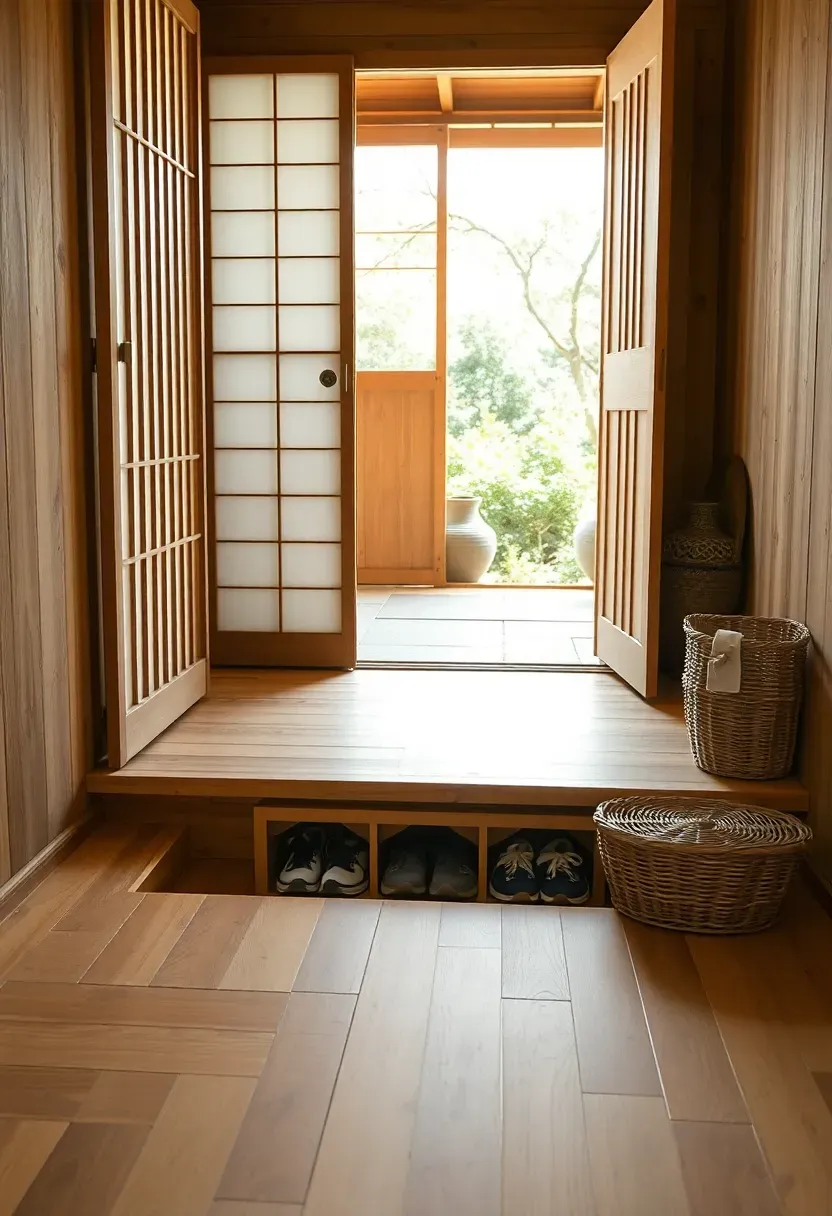
Hyper-realistic wide shot of Japanese tiny house genkan entry. Sunken wooden platform (6 inches below main floor) with shoe storage cubbies below, natural wood floorboards continuing into main space. Materials: light oak wood, white shoji screen door partially open, slate tile entry at exterior door, woven tanago basket. Soft natural daylight from doorway, highlighting the level change and wood grain. Shallow depth of field showing shoe storage details and wood textures. Visible room context—glimpse of tatami room beyond. Authentic Japanese minimalist mood.</p>
Japanese tiny house ideas prove that less truly can be more. By integrating traditional Japanese design principles—shoji screens, tatami rooms, genkan entries, and deep connection to nature—these compact homes achieve remarkable serenity and functionality despite minimal square footage.. Hyper-realistic wide shot of Japanese tiny house genkan entry. Sunken wooden platform (6 inches below main floor) with shoe storage cubbies below, natural wood floorboards continuing into main space. Materials:
Prompt: Nature documentary captured on Hasselblad X2D 100C with XCD 90V lens at f/4. Hyper-realistic wide shot of Japanese tiny house genkan entry. Sunken wooden platform (6 inches below main floor) with shoe storage cubbies below, natural wood floorboards continuing into main space. Materials: light oak wood, white shoji screen door partially open, slate tile entry at exterior door, woven tanago basket. Soft natural daylight from doorway, highlighting the level change and wood grain. Shallow depth of field showing shoe storage details and wood textures. Visible room context—glimpse of tatami room beyond. Authentic Japanese minimalist mood.
Tips
- Minimum genkan depth is 24 inches for comfortable shoe removal—36 inches is ideal
- Install built-in shoe storage beneath the raised floor for invisible functionality
- If you can't create a depression, use a different flooring material to define the zone
Best for: all Japanese-style tiny houses—this is the most essential traditional element
What this gives you: psychological transition from outside to inside while protecting floors from street dirt
We picked a few things that go well with this idea: Roundhill 4-Panel Natural Shoji Room Divider (★4.6), Roundhill 4-Panel Cherry Shoji Room Divider (★4.6) and Roundhill 4-Panel Black Shoji Room Divider (★4.6). As an Amazon Associate we earn from qualifying purchases.
2. Shoji Screen Room Dividers
Shoji screens—translucent paper panels in wooden grids—define Japanese interiors while allowing light to penetrate. In tiny houses, these sliding panels replace solid walls, creating flexible room divisions that can open for space or close for privacy. The diffused light effect creates serene ambiance while maintaining visual connection between zones.
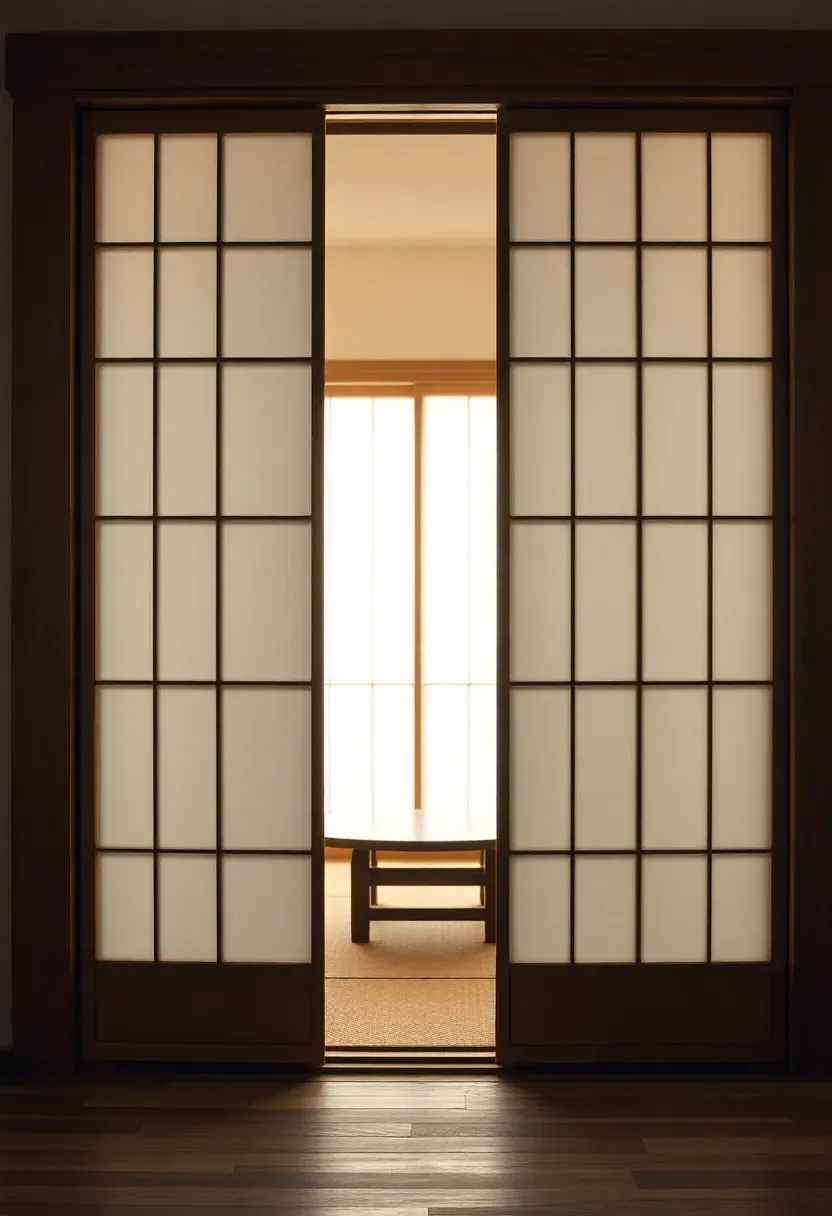
Hyper-realistic straight-on view of shoji screen divider in Japanese tiny house. White washi paper panels in natural cedar grid, sliding on wooden track. Behind shoji: soft glow of tatami room with low table. Materials: natural wood frame, translucent paper creating soft light diffusion, tatami flooring visible through screen. Warm ambient light filtering through paper, creating organic shadows and serene atmosphere. Shallow depth of field showing paper texture and grid details. Visible room context—glimpse of kitchen area beyond. Tranquil Japanese interior mood.</p>
Japanese tiny house ideas prove that less truly can be more. By integrating traditional Japanese design principles—shoji screens, tatami rooms, genkan entries, and deep connection to nature—these compact homes achieve remarkable serenity and functionality despite minimal square footage.. Hyper-realistic straight-on view of shoji screen divider in Japanese tiny house. White washi paper panels in natural cedar grid, sliding on wooden track. Behind shoji: soft glow of tatami room with low table. Ma
Prompt: Nature documentary captured on Hasselblad X2D 100C with XCD 90V lens at f/4. Hyper-realistic straight-on view of shoji screen divider in Japanese tiny house. White washi paper panels in natural cedar grid, sliding on wooden track. Behind shoji: soft glow of tatami room with low table. Materials: natural wood frame, translucent paper creating soft light diffusion, tatami flooring visible through screen. Warm ambient light filtering through paper, creating organic shadows and serene atmosphere. Shallow depth of field showing paper texture and grid details. Visible room context—glimpse of kitchen area beyond. Tranquil Japanese interior mood.
Tips
- Use fiberglass reinforced washi paper for durability—traditional paper tears too easily for daily use
- Mount shoji on ceiling tracks rather than floor tracks to eliminate tripping hazards in tiny spaces
- Consider combining shoji with solid panels (fusuma) for both privacy and light diffusion
Best for: separating sleeping from living areas, or defining flexible multipurpose rooms
What this gives you: flexible room division that maintains light flow and visual spaciousness
We picked a few things that go well with this idea: Aircliff Twin Roll-Up Foam Tatami Floor Mattress (★4.6), LOBOTOU Queen Slatted Wood Roll-Up Tatami Mat (★4.3) and Knotless Solid Wood Full Roll-Up Tatami Floor Bed (★4.2). As an Amazon Associate we earn from qualifying purchases.
3. Tatami Room Multipurpose Space
The tatami room embodies Japanese flexibility—serving as living room, bedroom, dining room, or meditation space depending on time of day. In tiny houses, dedicating even a 6x9-foot area to tatami creates remarkable versatility. The springy straw mat surface provides comfortable seating, sleeping, and floor space while defining a distinctly Japanese zone.
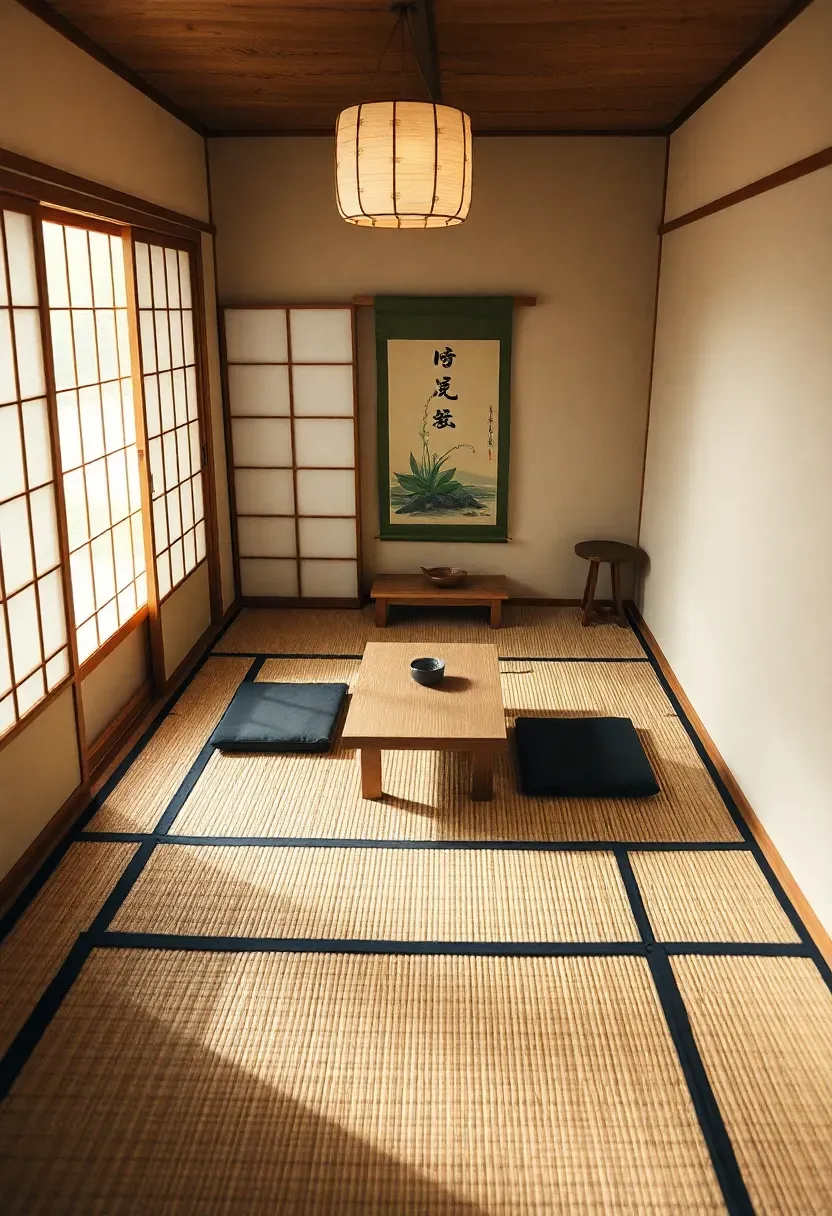
Hyper-realistic high-angle view of small tatami room (4.5 tatami mats) in Japanese tiny house. Rush-covered tatami mats with black cloth borders, low chabudai tea table, two zaisu floor chairs, tokonoma alcove with scroll and ikebana arrangement. Shoji screen to left. Materials: natural straw tatami, light wood table, cream wall surfaces, paper lantern overhead. Soft natural light from shoji, creating peaceful shadows on tatami texture. Shallow depth of field showing tatami weave and ikebana details. Authentic Japanese minimalist living mood.</p>
Japanese tiny house ideas prove that less truly can be more. By integrating traditional Japanese design principles—shoji screens, tatami rooms, genkan entries, and deep connection to nature—these compact homes achieve remarkable serenity and functionality despite minimal square footage.. Hyper-realistic high-angle view of small tatami room (4.5 tatami mats) in Japanese tiny house. Rush-covered tatami mats with black cloth borders, low chabudai tea table, two zaisu floor chairs, tokonoma alcove w
Prompt: Nature documentary captured on Hasselblad X2D 100C with XCD 90V lens at f/4. Hyper-realistic high-angle view of small tatami room (4.5 tatami mats) in Japanese tiny house. Rush-covered tatami mats with black cloth borders, low chabudai tea table, two zaisu floor chairs, tokonoma alcove with scroll and ikebana arrangement. Shoji screen to left. Materials: natural straw tatami, light wood table, cream wall surfaces, paper lantern overhead. Soft natural light from shoji, creating peaceful shadows on tatami texture. Shallow depth of field showing tatami weave and ikebana details. Authentic Japanese minimalist living mood.
Tips
- Standard tatami mat size (approx. 3x6 feet) determines room proportions—design in tatami increments
- If traditional tatami isn't practical, use wood flooring with tatami mats that can be rolled up
- Incorporate at least one solid wall for tokonoma (display alcove)—essential focal point
Best for: tiny houses over 200 square feet where multipurpose spaces maximize functionality
What this gives you: one room serving multiple functions through flexible, floor-based living
We picked a few things that go well with this idea: Henjjras Large White Oblate Paper Pendant Lampshade (★4.5), Fivemengo 23.6in Globe Rice Paper Pendant Lantern (★4.5) and Qiokhgi 22-Inch White Oval Paper Lantern Pendant (★4.4). As an Amazon Associate we earn from qualifying purchases.
4. Engawa Transitional Space
The engawa is a wooden transitional space between interior and exterior—part porch, part hallway. In tiny houses, this narrow corridor along one wall creates a sunlit sitting area that expands perceived space while providing a spot for tea, contemplation, or simply enjoying garden views. It's essentially indoor-outdoor architecture.
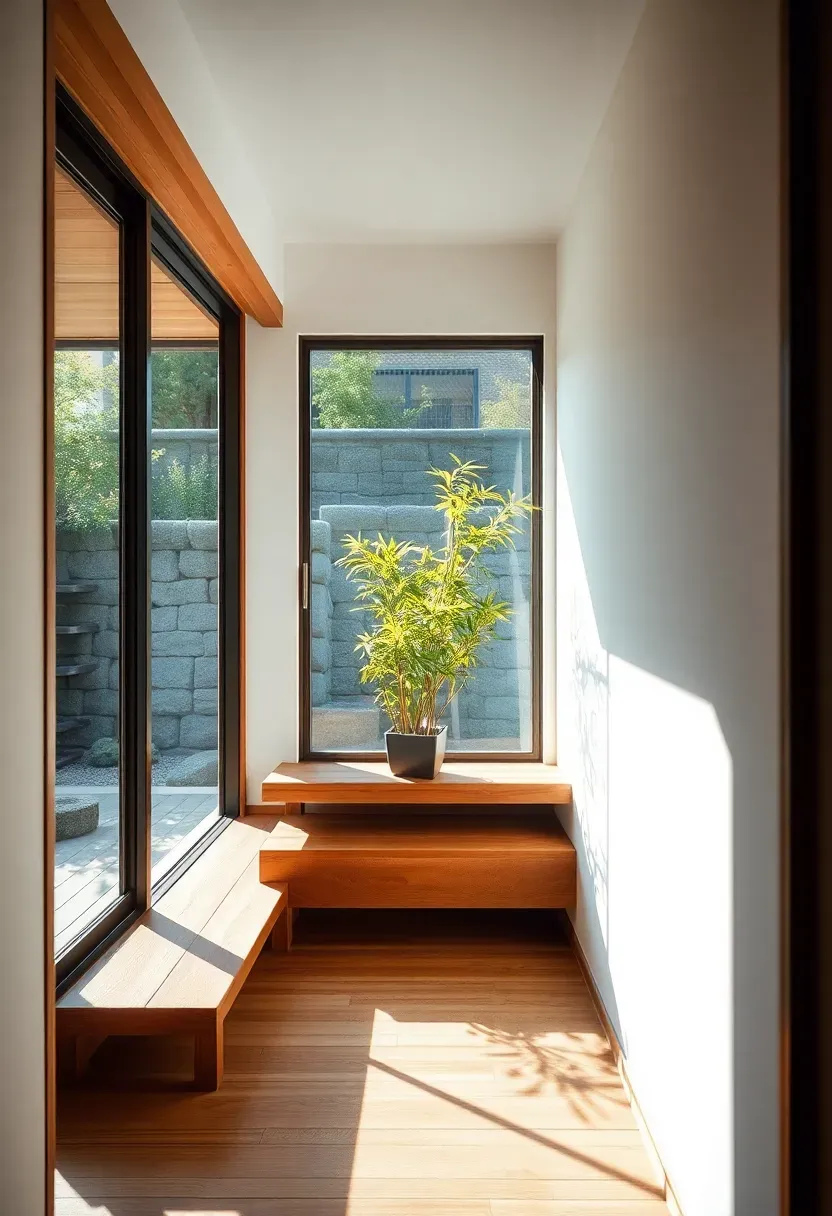
Hyper-realistic side view of engawa transitional space in Japanese tiny house. Narrow wooden corridor (3 feet wide) running along glass wall with sliding doors opening to small garden. Engawa features raised wooden platform, low window seat, bamboo plant in container. Materials: natural wood floorboards, floor-to-ceiling glass, white walls, stone garden beyond. Bright natural daylight from garden, creating long shadows and strong indoor-outdoor connection. Shallow depth of field showing wood grain and plant details. Serene Japanese indoor-outdoor living mood.</p>
Japanese tiny house ideas prove that less truly can be more. By integrating traditional Japanese design principles—shoji screens, tatami rooms, genkan entries, and deep connection to nature—these compact homes achieve remarkable serenity and functionality despite minimal square footage.. Hyper-realistic side view of engawa transitional space in Japanese tiny house. Narrow wooden corridor (3 feet wide) running along glass wall with sliding doors opening to small garden. Engawa features raised woo
Recommended
Items for this idea
Tips
- Minimum engawa width is 30 inches for comfortable seating—36 inches is ideal
- Face engawa toward a garden view, courtyard, or even a carefully arranged plant container
- If space is limited, create a partial engawa rather than full-length corridor
Best for: tiny houses with some outdoor access or those overlooking gardens, courtyards, or natural views
What this gives you: expanded living space that blurs indoor-outdoor boundaries while providing a contemplative zone
5. Tokonoma Focal Alcove
The tokonoma is a raised alcove for displaying art, ikebana, or calligraphy—the spiritual and aesthetic centerpiece of Japanese rooms. In tiny houses, this intentionally empty space (save for one carefully chosen object) creates a focal point that embodies the principle of shibui—subtle, unobtrusive beauty. Even a shallow recess transforms a plain wall.
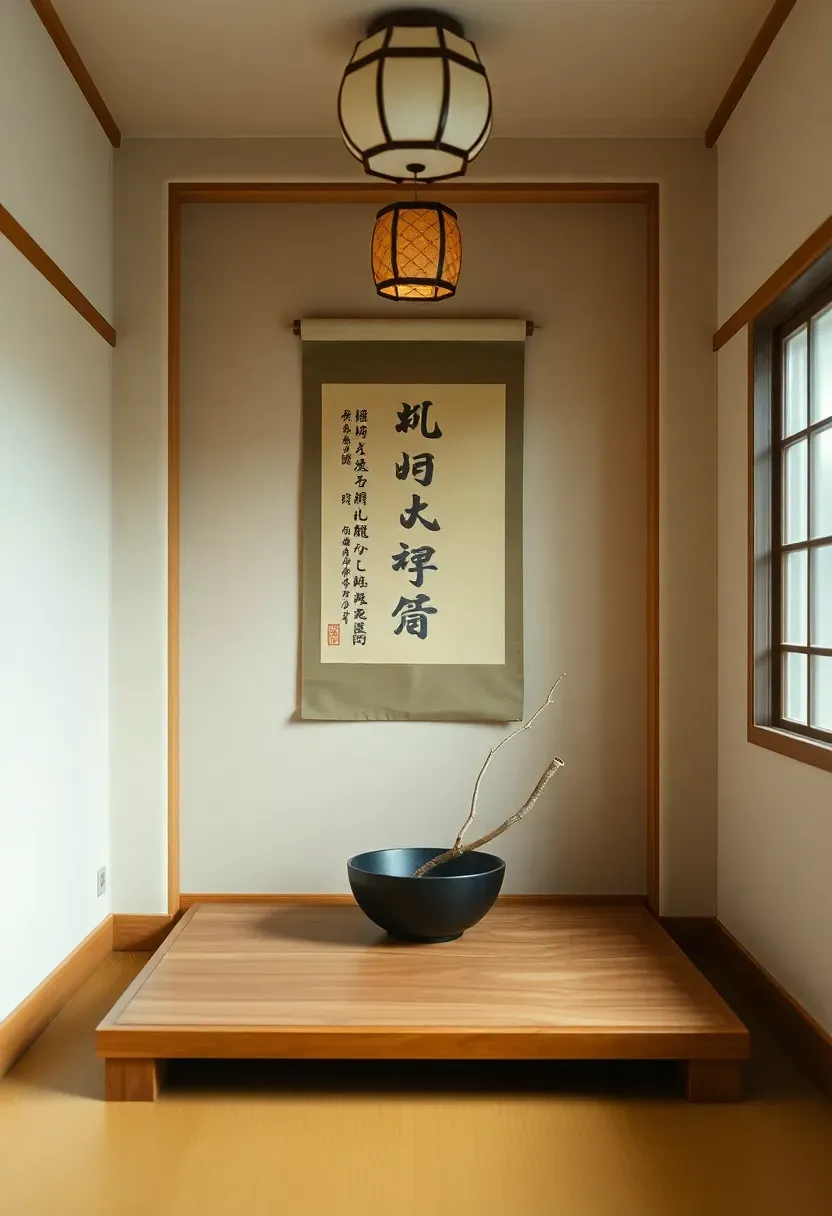
Hyper-realistic straight-on view of tokonoma alcove in Japanese tiny house tatami room. Raised wooden platform (6 inches above floor), alcove with calligraphy scroll hung on back wall, ceramic bowl with single branch arrangement below. Tokonoma features subtle wooden frame, natural paper-textured wall surround. Materials: light wood, cream plaster walls, black ceramic bowl, dried branch. Soft ambient light from paper lantern and window, emphasizing minimalist display. Shallow depth of field showing scroll texture and branch details. Meditative Japanese aesthetic mood.</p>
Japanese tiny house ideas prove that less truly can be more. By integrating traditional Japanese design principles—shoji screens, tatami rooms, genkan entries, and deep connection to nature—these compact homes achieve remarkable serenity and functionality despite minimal square footage.. Hyper-realistic straight-on view of tokonoma alcove in Japanese tiny house tatami room. Raised wooden platform (6 inches above floor), alcove with calligraphy scroll hung on back wall, ceramic bowl with single b
Recommended
Items for this idea
Tips
- Minimum tokonoma depth is 18-24 inches for proper visual proportion
- Display only one object at a time—rotate seasonally to keep the space fresh
- The base should always be wood—even if walls are painted or plastered
Placement note: position tokonoma in the main tatami room, usually the most prestigious wall
What this gives you: spiritual focal point that demonstrates restraint while adding authentic Japanese character
6. Fusuma Sliding Doors
Fusuma are solid sliding panels covered in paper or fabric, providing privacy and sound insulation that shoji cannot. In tiny houses, fusuma allow rooms to be reconfigured instantly—bedroom can become living room, or two small rooms can merge for larger gatherings. The smooth surface offers canvas for subtle patterns or artwork.
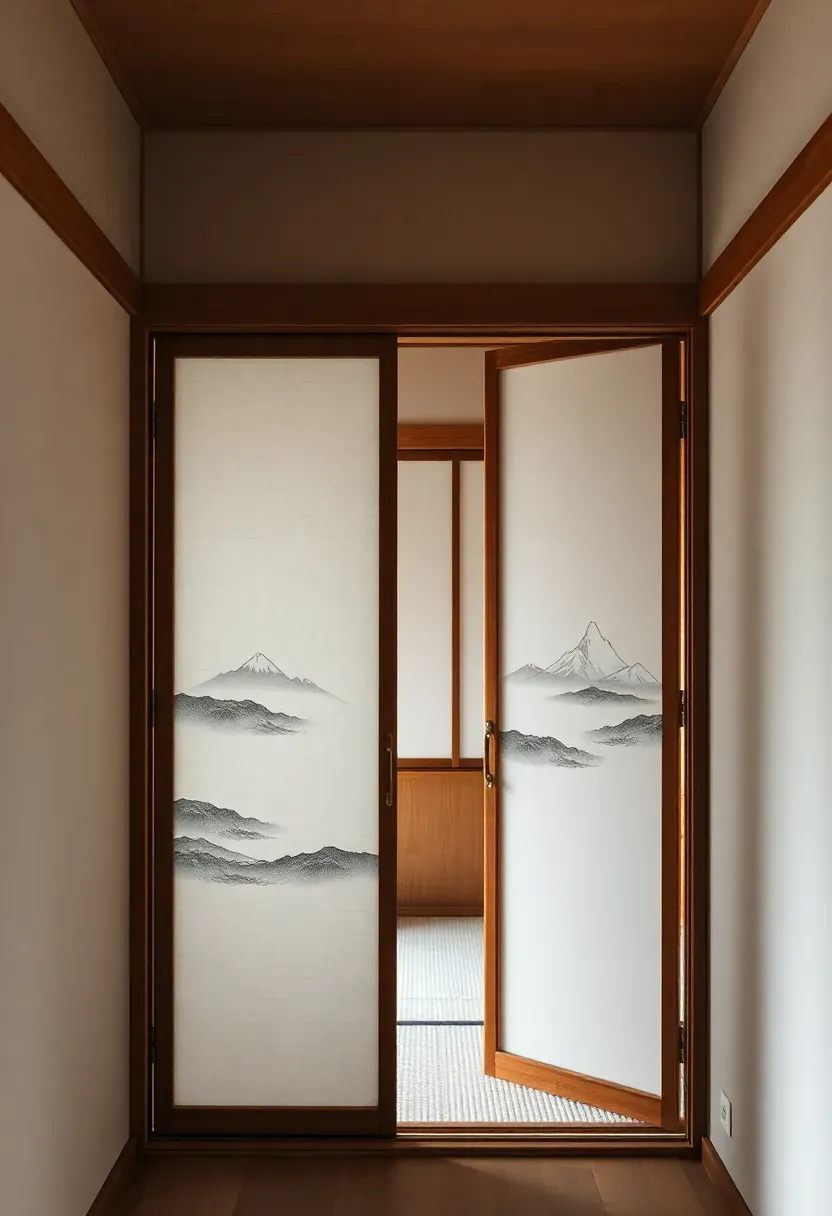
Hyper-realistic straight-on view of fusuma sliding doors in Japanese tiny house. White paper-covered panels with subtle mountain landscape design, natural wood grid, sliding on wooden track partially open to reveal tatami room beyond. Materials: rice paper with muted ink painting, cedar frame, tatami flooring visible through opening. Soft diffused daylight, highlighting paper texture and subtle artwork. Shallow depth of field showing fusuma surface details and wood grain. Tranquil Japanese interior mood with artistic fusuma.</p>
Japanese tiny house ideas prove that less truly can be more. By integrating traditional Japanese design principles—shoji screens, tatami rooms, genkan entries, and deep connection to nature—these compact homes achieve remarkable serenity and functionality despite minimal square footage.. Hyper-realistic straight-on view of fusuma sliding doors in Japanese tiny house. White paper-covered panels with subtle mountain landscape design, natural wood grid, sliding on wooden track partially open to rev
Recommended
Items for this idea
Tips
- Choose durable paper or fabric coverings—traditional washi is delicate for high-traffic areas
- Install door pulls at sitting height (approximately 24 inches from floor) for natural access
- Mix fusuma with shoji—solid panels where privacy is needed, translucent where light is priority
Best for: dividing flexible rooms where privacy and sound control are sometimes needed
What this gives you: instant room reconfiguration while maintaining Japanese aesthetic
7. Low Furniture Strategy
Japanese interiors embrace low seating and surfaces, which maintains open sight lines and makes ceilings feel higher. In tiny houses, this approach eliminates bulky furniture while creating casual floor-based living. Floor chairs (zaisu), low tables, and platform beds maximize vertical space while establishing distinctly Japanese comfort.
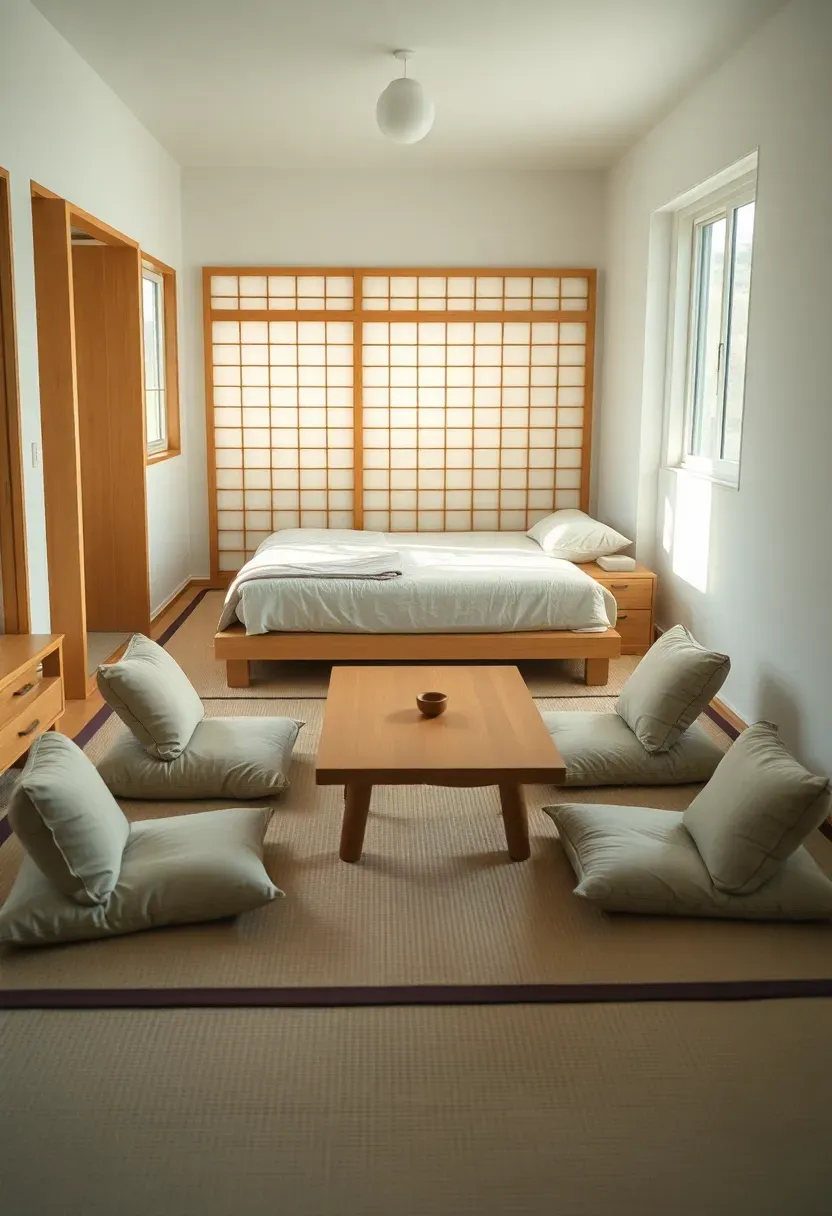
Hyper-realistic 3/4 view of Japanese tiny house living area with low furniture. Low chabudai tea table (10 inches high) with four zaisu floor chairs, floor cushions in neutral tones. Platform bed in background (12 inches high) with simple linens. Shoji screen to side. Materials: light wood furniture, cream fabrics, tatami flooring, white walls. Bright natural light from window, emphasizing low furniture's open feel. Shallow depth of field showing fabric textures and wood details. Airy Japanese minimalist living mood.</p>
Japanese tiny house ideas prove that less truly can be more. By integrating traditional Japanese design principles—shoji screens, tatami rooms, genkan entries, and deep connection to nature—these compact homes achieve remarkable serenity and functionality despite minimal square footage.. Hyper-realistic 3/4 view of Japanese tiny house living area with low furniture. Low chabudai tea table (10 inches high) with four zaisu floor chairs, floor cushions in neutral tones. Platform bed in background (
Recommended
Items for this idea
Tips
- Standard table height for floor seating is 10-14 inches—significantly lower than Western tables
- If floor seating isn't comfortable, use low chairs (12-16 inch seat height) rather than standard height
- Platform beds should include storage beneath—12-inch height allows 6-inch drawers plus mattress
Best for: all Japanese-style tiny houses—this is fundamental to the aesthetic and spatial efficiency
What this gives you: open sight lines and higher ceilings while maintaining authentic Japanese character
8. Integrated Step Storage
Japanese design transforms every structural element into storage opportunity. In tiny houses with lofts or raised platforms, steps become drawers, cabinets, or compartments. This invisible storage approach maintains clean lines while maximizing utility—a hallmark of Japanese minimalism where function hides behind beauty.
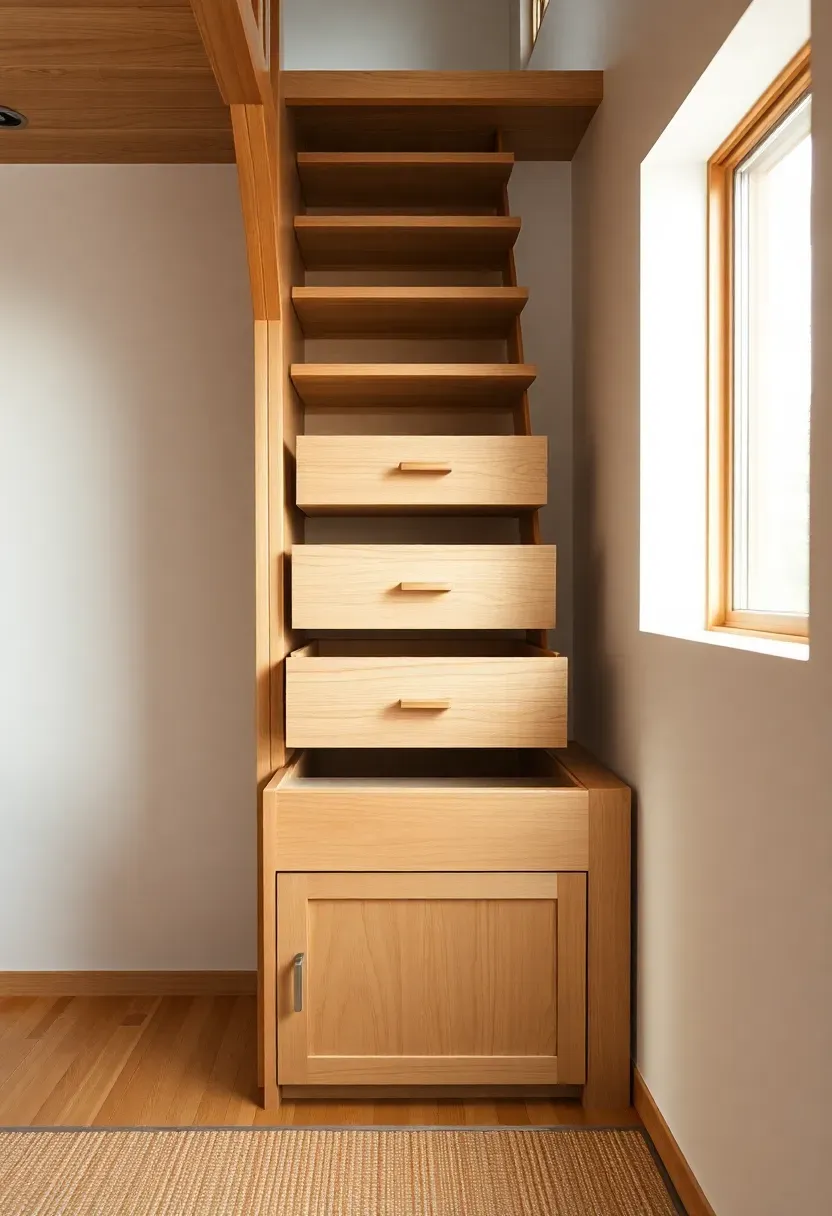
Hyper-realistic side view of wooden stairs with integrated storage in Japanese tiny house. Three steps ascending to loft, each step featuring pull-out drawer with minimal handles. Under-stair cabinet door at bottom. Materials: light oak wood with subtle grain, white walls, tatami flooring foreground. Warm ambient light from window, highlighting drawer details and wood texture. Shallow depth of field showing drawer handle details and wood joinery. Functional Japanese minimalist mood with hidden storage.</p>
Japanese tiny house ideas prove that less truly can be more. By integrating traditional Japanese design principles—shoji screens, tatami rooms, genkan entries, and deep connection to nature—these compact homes achieve remarkable serenity and functionality despite minimal square footage.. Hyper-realistic side view of wooden stairs with integrated storage in Japanese tiny house. Three steps ascending to loft, each step featuring pull-out drawer with minimal handles. Under-stair cabinet door at bot
Recommended
Items for this idea
Tips
- Use push-latch hardware rather than pulls for seamless appearance—tap to open
- Maximum comfortable step riser height is 8 inches—higher feels like a ladder
- Consider combining step storage with under-stair cabinet for bulkier items
Best for: tiny houses with lofts, raised platforms, or any vertical change requiring steps
What this gives you: substantial invisible storage without sacrificing clean aesthetics
9. Butsudan Spiritual Niche
The butsudan is a Buddhist altar for daily prayer and reflection—an essential element in traditional Japanese homes. In tiny houses, this small cabinet or recessed niche creates a spiritual anchor point without consuming significant space. Even a shallow wall-mounted cabinet provides designated space for mindfulness practice.
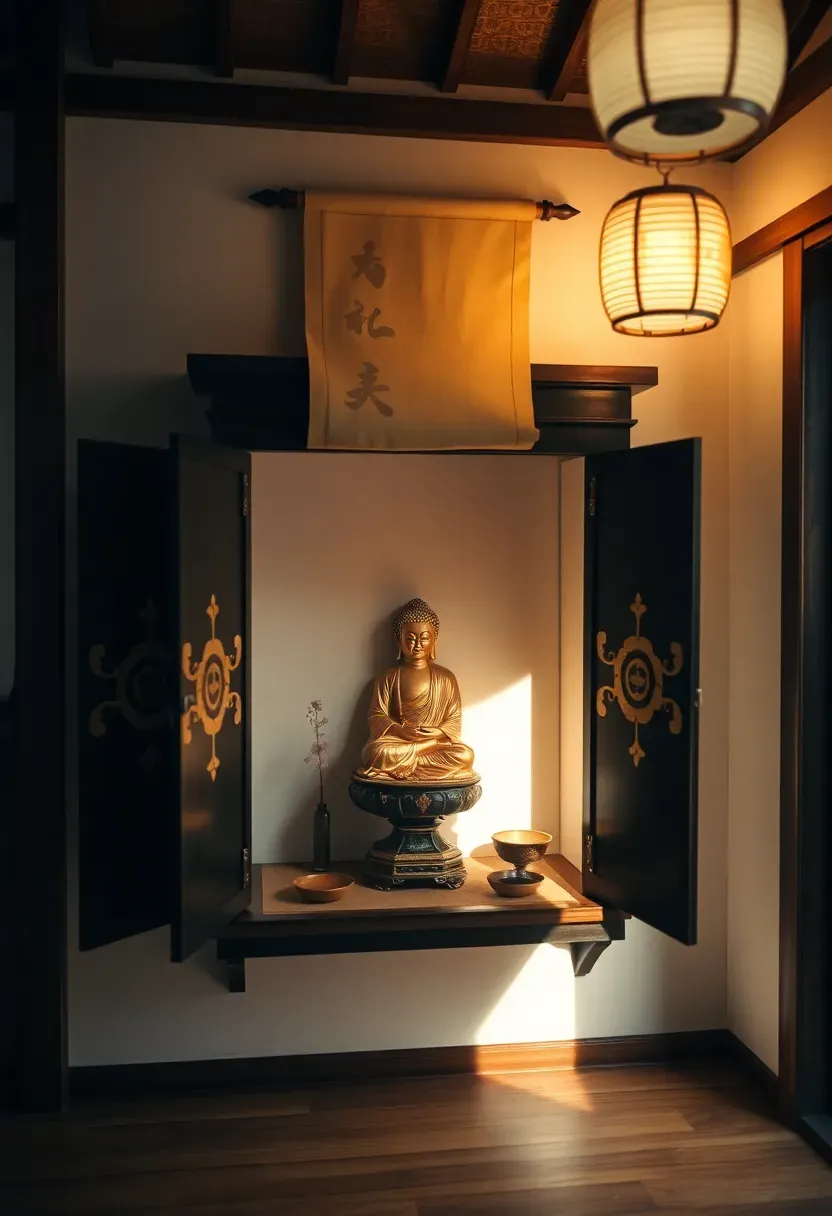
Hyper-realistic straight-on view of butsudan cabinet in Japanese tiny house. Wall-mounted wooden cabinet (24 inches wide, 36 inches high) with doors open to reveal gold Buddha statue, small incense burner, offering bowls. Cabinet features black lacquer finish with gold leaf accents, scroll hanging above. Materials: dark wood, gold leaf, white walls, wood floor. Warm ambient light from nearby paper lantern, creating serene glow around altar. Shallow depth of field showing statue details and incense burner. Spiritual Japanese interior mood.</p>
Japanese tiny house ideas prove that less truly can be more. By integrating traditional Japanese design principles—shoji screens, tatami rooms, genkan entries, and deep connection to nature—these compact homes achieve remarkable serenity and functionality despite minimal square footage.. Hyper-realistic straight-on view of butsudan cabinet in Japanese tiny house. Wall-mounted wooden cabinet (24 inches wide, 36 inches high) with doors open to reveal gold Buddha statue, small incense burner, offer
Recommended
Items for this idea
Tips
- Position butsudan in quiet area—bedroom corner or dedicated wall away from traffic
- If religious practice isn't your focus, adapt this concept as a general mindfulness space
- Include small cabinet below for storing incense, matches, and prayer items
Best for: practitioners of Buddhism or anyone incorporating spiritual practice into tiny house living
What this gives you: designated spiritual space that supports daily mindfulness practice
10. Washitsu Hybrid Room
The washitsu (Japanese-style room) represents the heart of traditional homes, but in tiny houses, hybrid approaches work best. Combining tatami flooring with Western elements—like a low bed or storage walls—creates a Japanese-inspired space that accommodates modern needs while maintaining authentic character.
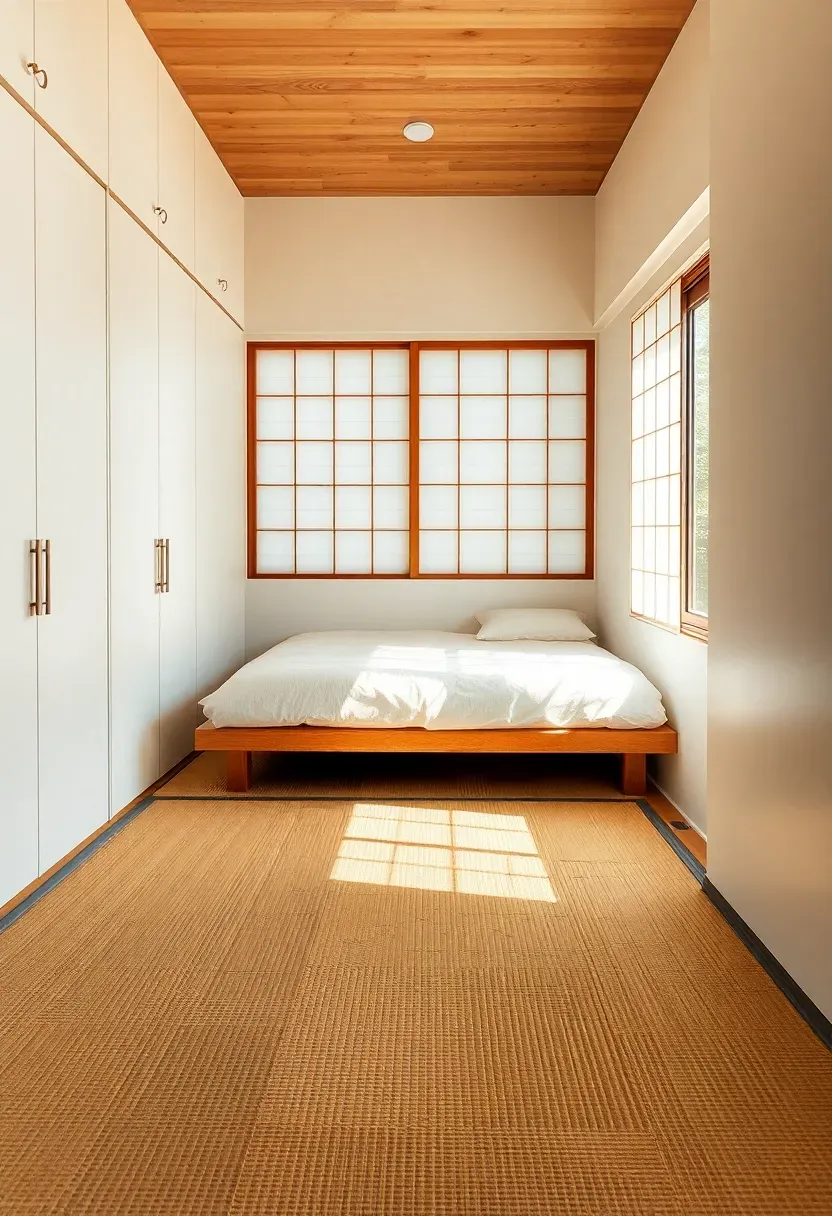
Hyper-realistic wide shot of washitsu hybrid room in Japanese tiny house. Tatami flooring covering main space, one wall with floor-to-ceiling white storage cabinets, low platform bed with simple linens, shoji screen to window. Materials: straw tatami mats, white lacquer cabinets, natural wood bed frame, cream bedding. Soft natural light from shoji, creating peaceful shadows on tatami. Shallow depth of field showing tatami texture and cabinet details. Modern Japanese fusion mood.</p>
Japanese tiny house ideas prove that less truly can be more. By integrating traditional Japanese design principles—shoji screens, tatami rooms, genkan entries, and deep connection to nature—these compact homes achieve remarkable serenity and functionality despite minimal square footage.. Hyper-realistic wide shot of washitsu hybrid room in Japanese tiny house. Tatami flooring covering main space, one wall with floor-to-ceiling white storage cabinets, low platform bed with simple linens, shoji sc
Recommended
Items for this idea
Tips
- Allocate at least 50% of floor area to tatami for authentic Japanese feel
- Choose low-profile storage (maximum 18 inches deep) to preserve floor space
- Keep one wall free for tokonoma or future shoji/fusuma installation
Best for: those wanting Japanese character without fully committing to traditional floor-based living
What this gives you: Japanese authenticity with Western practicality in compact footprint
11. Loft Sleeping Area
Japanese tiny houses often utilize vertical space through lofted sleeping areas. A loft maximizes daytime living space while creating a cozy sleeping nook above—one of the best strategies for [making a tiny house feel bigger](/posts/133_how-to-make-a-tiny-house-feel-bigger-20-pro-tips/). The loft should maintain headroom for sitting and incorporate Japanese elements like shoji screening, tatami flooring, or paper lanterns for continuity with main living areas.
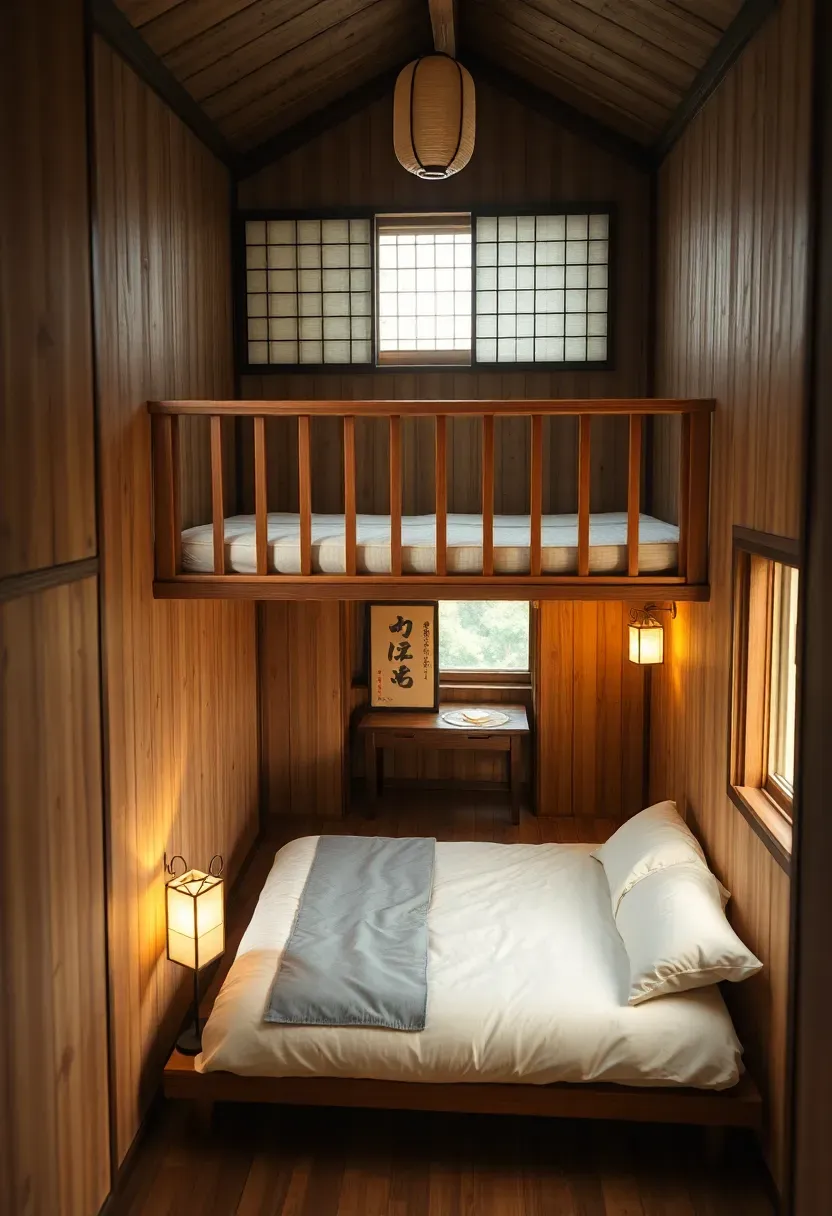
Hyper-realistic view from Japanese tiny house loft sleeping area. Low platform bed (12 inches high) with simple linens, shoji screen railing overlooking main living space below. Loft features tatami flooring, paper lantern, small tokonoma with scroll. Below: tatami room with low table visible through railing. Materials: wood throughout, cream bedding, white paper surfaces. Warm ambient light from lantern and window, creating cozy sleeping nook atmosphere. Shallow depth of field showing bedding texture and railing details. Serene Japanese loft bedroom mood.</p>
Japanese tiny house ideas prove that less truly can be more. By integrating traditional Japanese design principles—shoji screens, tatami rooms, genkan entries, and deep connection to nature—these compact homes achieve remarkable serenity and functionality despite minimal square footage.. Hyper-realistic view from Japanese tiny house loft sleeping area. Low platform bed (12 inches high) with simple linens, shoji screen railing overlooking main living space below. Loft features tatami flooring, pa
Recommended
Items for this idea
Tips
- Minimum loft headroom is 30 inches for comfortable sitting—less feels claustrophobic
- Use shoji screens as loft railings for light diffusion rather than solid barriers
- Incorporate reading lights at pillow level rather than ceiling fixtures
Best for: tiny houses with ceiling height over 12 feet that can accommodate comfortable lofts
What this gives you: maximized daytime living space while maintaining cozy, distinctly Japanese sleeping quarters
12. Compact Ofuro Soaking Tub
The ofuro (deep soaking tub) is central to Japanese bathing culture—physically and spiritually cleansing. In tiny houses, a compact soaking tub provides profound relaxation despite minimal space. Even a small deep tub (36x36 inches) offers full-body immersion, and the ritual of soaking transforms bathing from chore to meditation.
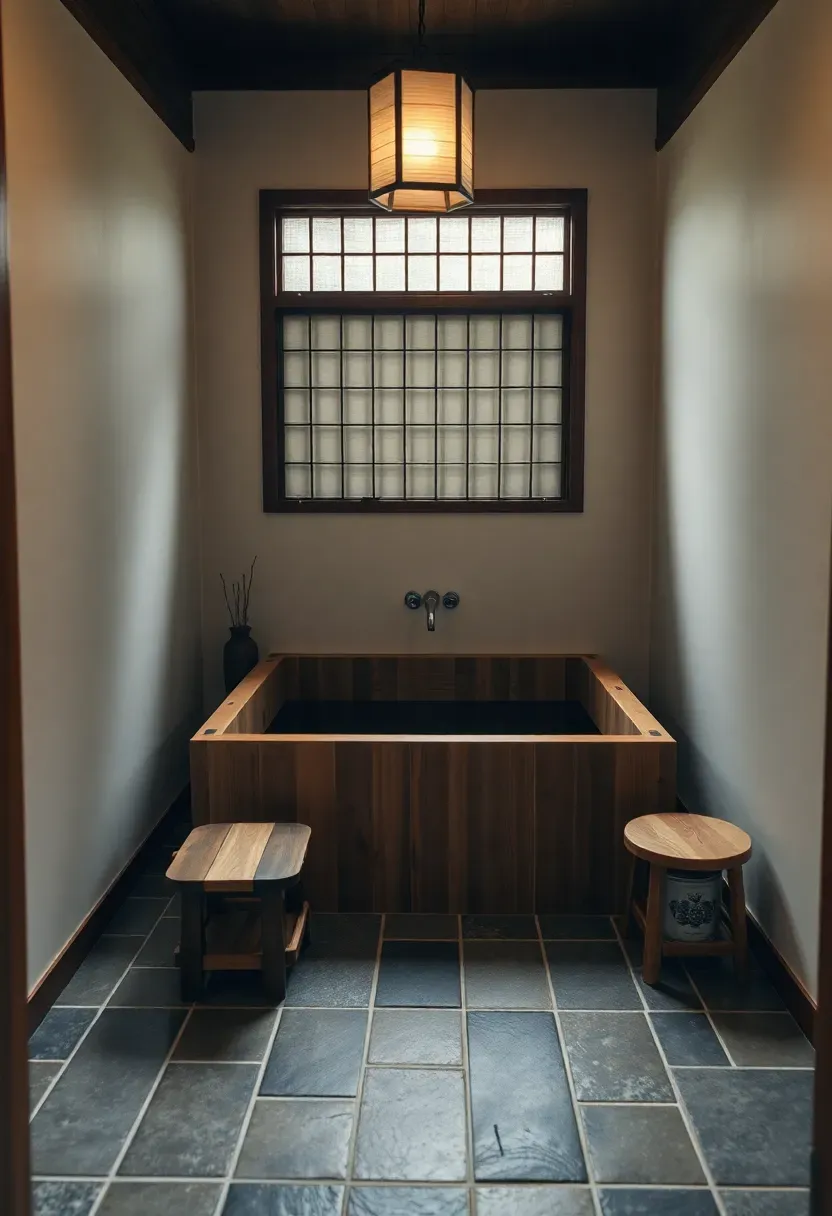
Hyper-realistic straight-on view of compact ofuro soaking area in Japanese tiny house bathroom. Deep square wooden tub (36x36 inches, 30 inches deep) with bench seating, stone tile floor, small wooden stool and bucket nearby. Shoji window above tub. Materials: hinoki wood tub, slate tile floor, white plaster walls, bamboo accents. Warm ambient light from overhead lantern and shoji window, creating serene bathing atmosphere. Shallow depth of field showing wood grain and water surface. Meditative Japanese bathroom mood.</p>
Japanese tiny house ideas prove that less truly can be more. By integrating traditional Japanese design principles—shoji screens, tatami rooms, genkan entries, and deep connection to nature—these compact homes achieve remarkable serenity and functionality despite minimal square footage.. Hyper-realistic straight-on view of compact ofuro soaking area in Japanese tiny house bathroom. Deep square wooden tub (36x36 inches, 30 inches deep) with bench seating, stone tile floor, small wooden stool and
Recommended
Items for this idea
Tips
- Minimum comfortable ofuro dimensions are 30x30 inches—36x36 allows relaxation
- Consider a gas or electric heater to maintain water temperature for long soaks
- Include a waterproof stool for pre-bath seating in Japanese tradition
Best for: those who value bathing as ritual and relaxation in tiny house living
What this gives you: profound relaxation and authentic Japanese bathing experience in minimal space
13. Vertical Bamboo Accents
Bamboo embodies Japanese aesthetics—strong yet flexible, natural yet refined. In tiny houses, bamboo elements add organic texture without consuming space. Bamboo poles as room dividers, window blinds, or decorative accents bring natural warmth while maintaining the minimalist Japanese palette.
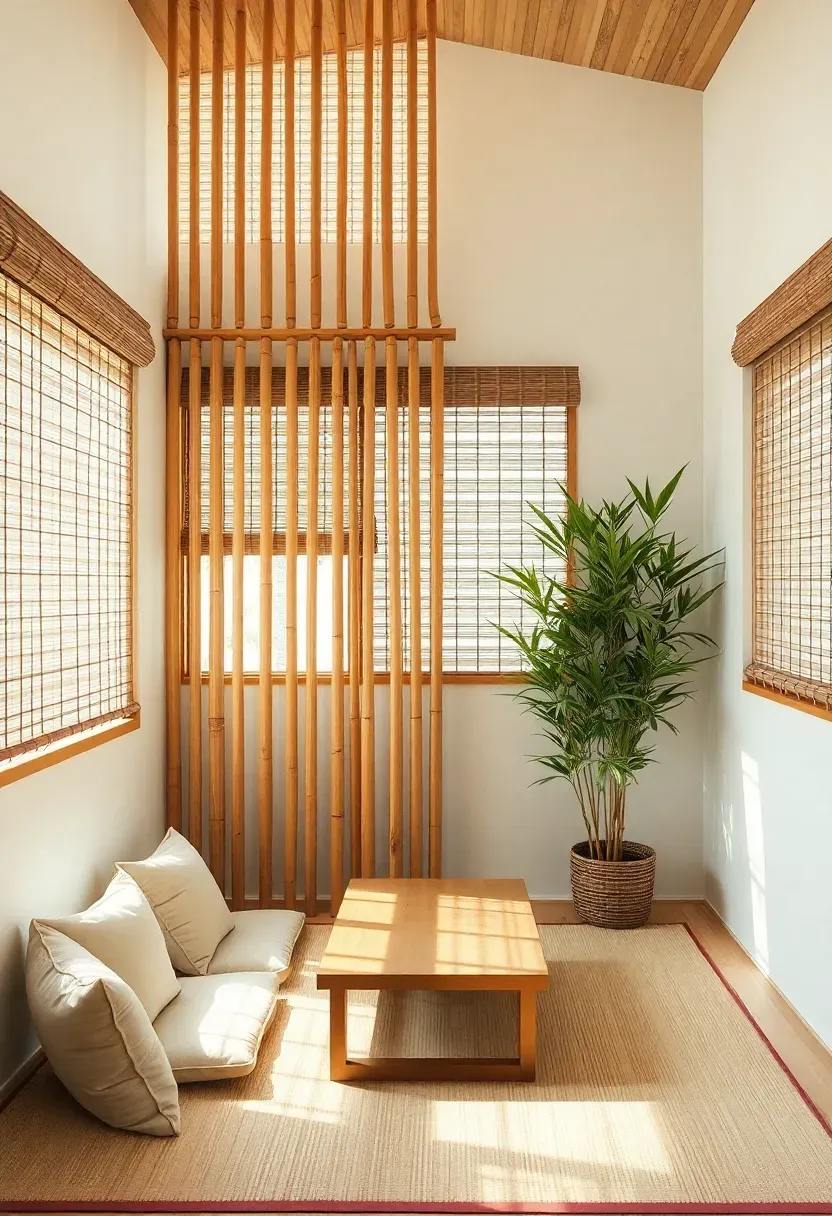
Hyper-realistic wide shot of Japanese tiny house living area with bamboo accents. Vertical bamboo poles as room divider (partial screen), bamboo roll-up blinds on windows, bamboo plant in corner. Living area features low table, floor cushions, tatami flooring. Materials: natural bamboo poles, cream tatami, light wood furniture, white walls. Bright natural light through bamboo blinds, creating organic shadow patterns. Shallow depth of field showing bamboo texture and joint details. Natural Japanese minimalist mood with botanical elements.</p>
Japanese tiny house ideas prove that less truly can be more. By integrating traditional Japanese design principles—shoji screens, tatami rooms, genkan entries, and deep connection to nature—these compact homes achieve remarkable serenity and functionality despite minimal square footage.. Hyper-realistic wide shot of Japanese tiny house living area with bamboo accents. Vertical bamboo poles as room divider (partial screen), bamboo roll-up blinds on windows, bamboo plant in corner. Living area fea
Recommended
Items for this idea
Tips
- Use bamboo as accent rather than dominant material—too much feels like theme restaurant
- Choose dried bamboo for structural elements (dividers, screens) and live bamboo for plants
- Pair bamboo with other natural materials (wood, stone, paper) for authentic Japanese balance
Best for: adding organic texture to Japanese-inspired interiors without sacrificing minimalism
What this gives you: natural warmth and authentic Japanese character in compact spaces
14. Window-Facing Layout
Japanese homes traditionally position main living areas to face gardens or views. In tiny houses, orienting furniture toward windows expands perceived space and strengthens indoor-outdoor connection. Even a modest window becomes focal point when seating, bed, or desk faces outward rather than toward walls.
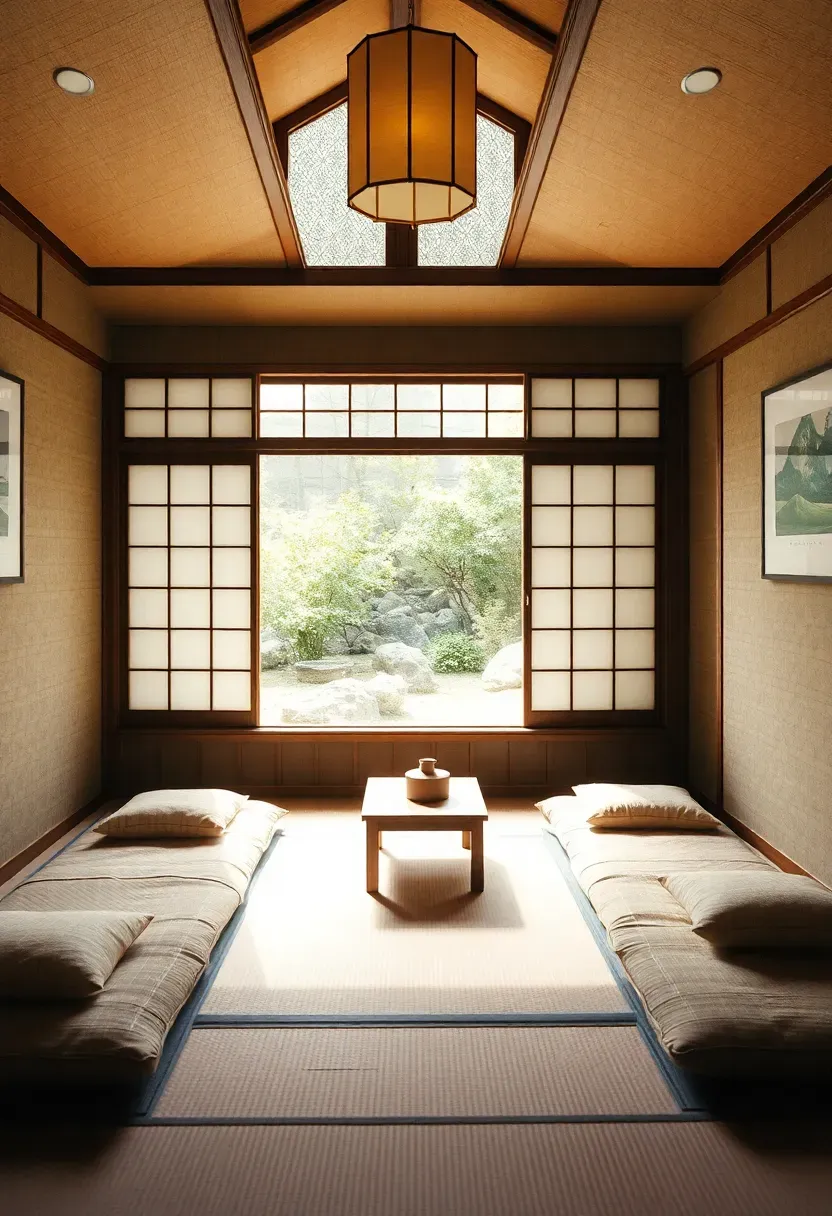
Hyper-realistic view from Japanese tiny house interior toward large window. Low seating area with floor cushions and small table positioned to face window view. Window features shoji screen partially open, showing small garden beyond. Interior: tatami flooring, paper lantern, minimal decor. Materials: wood, paper, cream fabrics, stone visible beyond window. Bright natural light from garden, creating strong indoor-outdoor connection. Shallow depth of field showing garden details through shoji. Serene Japanese living with garden view mood.</p>
Japanese tiny house ideas prove that less truly can be more. By integrating traditional Japanese design principles—shoji screens, tatami rooms, genkan entries, and deep connection to nature—these compact homes achieve remarkable serenity and functionality despite minimal square footage.. Hyper-realistic view from Japanese tiny house interior toward large window. Low seating area with floor cushions and small table positioned to face window view. Window features shoji screen partially open, showi
Recommended
Items for this idea
Tips
- Position primary seating or bed to face the best view—even if it requires rearranging layout
- Use shoji screens or sheer curtains to maintain privacy while preserving views
- Extend flooring material to window sill to visually expand interior space
Best for: tiny houses with any window access to gardens, courtyards, or natural views
What this gives you: expanded perceived space and stronger indoor-outdoor connection
15. Hidden Kitchen Concept
Japanese kitchens prioritize function over display—appliances and storage disappear behind seamless fronts. In tiny houses, hidden kitchens maintain minimalist aesthetics while providing full functionality. Sliding panels, bi-fold doors, or pocket doors conceal the workspace when not in use, preserving calm living areas.
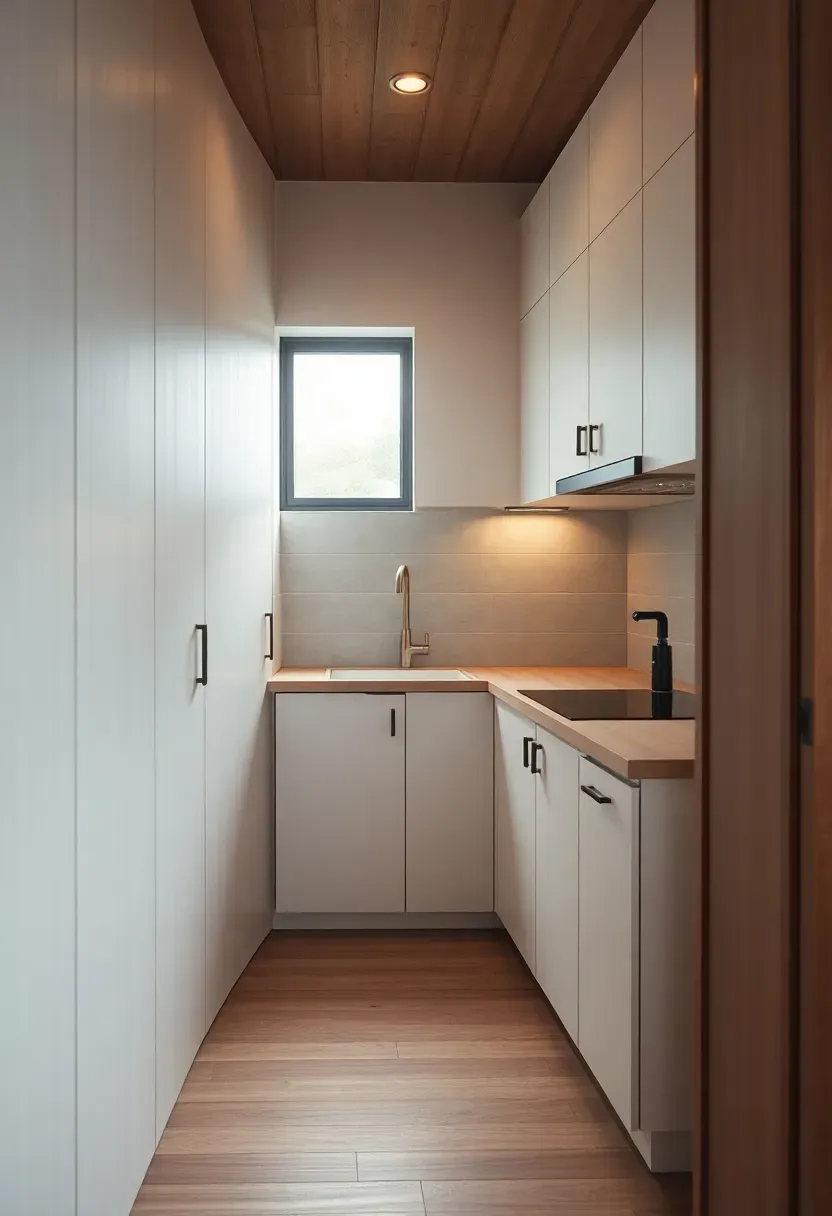
Hyper-realistic straight-on view of hidden kitchen in Japanese tiny house. Bi-fold doors closed to conceal kitchen, appearing as seamless wall paneling. One door partially open to reveal compact sink, induction cooktop, upper cabinets. Materials: white lacquer cabinetry, light wood countertops, gray backsplash, wood floor. Ambient light from nearby window, highlighting seamless cabinet fronts. Shallow depth of field showing cabinet details and partially revealed kitchen. Minimalist Japanese kitchen with hidden functionality mood.</p>
Japanese tiny house ideas prove that less truly can be more. By integrating traditional Japanese design principles—shoji screens, tatami rooms, genkan entries, and deep connection to nature—these compact homes achieve remarkable serenity and functionality despite minimal square footage.. Hyper-realistic straight-on view of hidden kitchen in Japanese tiny house. Bi-fold doors closed to conceal kitchen, appearing as seamless wall paneling. One door partially open to reveal compact sink, induction
Recommended
Items for this idea
Tips
- Choose bi-fold or pocket doors rather than sliding doors for full kitchen access when open
- Include sufficient ventilation—hidden kitchens trap moisture and cooking odors
- Design counter depth at 20-24 inches maximum for tiny house proportions
Best for: studio tiny houses where kitchen visibility disrupts living area aesthetics
What this gives you: full kitchen functionality when needed, seamless minimalism when not
16. Paper Lantern Lighting
Japanese paper lanterns (chochin) provide soft, ambient illumination that creates serene atmosphere. In tiny houses, these lightweight fixtures add character without visual weight. Floor lamps, ceiling pendants, or table lanterns in washi paper diffuse light gently while maintaining the Japanese material palette.
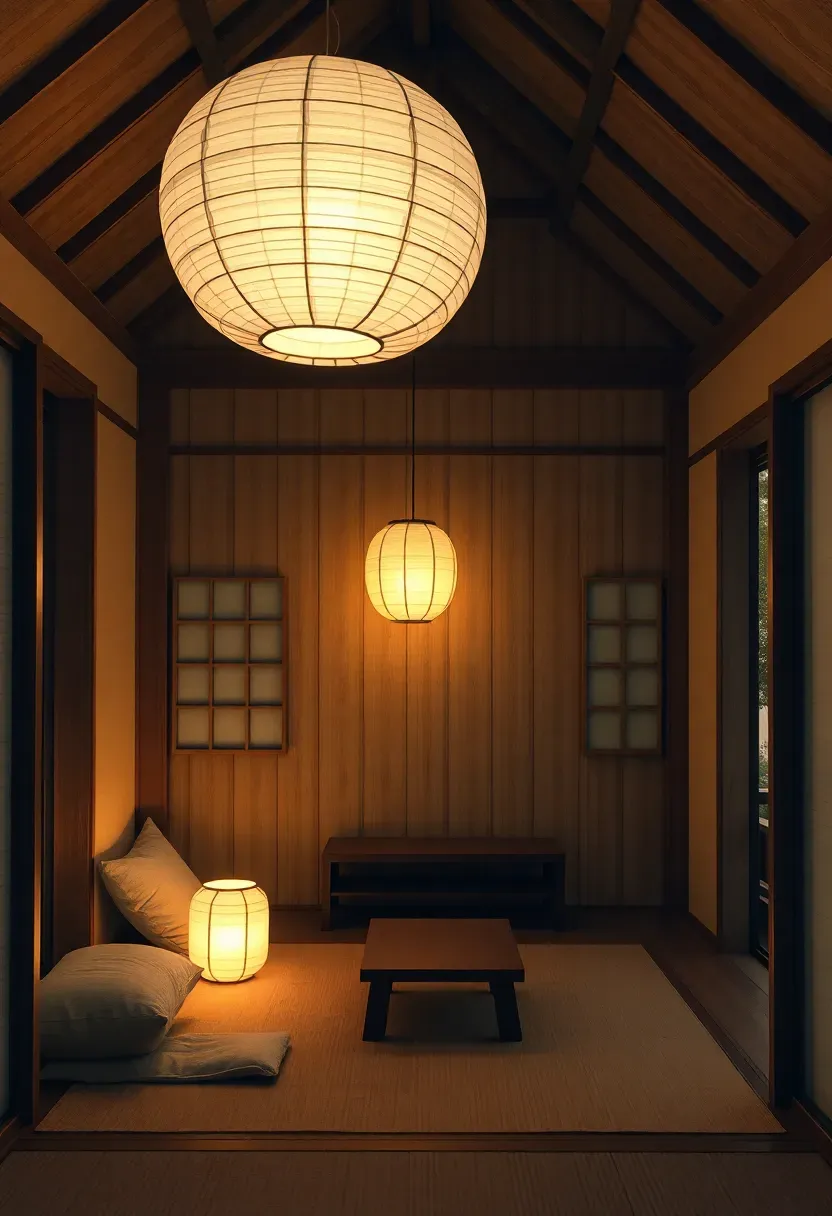
Hyper-realistic wide shot of Japanese tiny house living area with paper lantern lighting. Large round paper lantern hanging from ceiling (24 inches diameter), smaller floor lamp in corner. Living area with low table, floor cushions, tatami flooring. Lanterns emit soft warm glow, illuminating space with gentle shadows. Materials: white washi paper, wood frame, tatami flooring, cream fabrics. Warm ambient light emphasizing paper texture and organic shapes. Serene Japanese evening atmosphere mood.</p>
Japanese tiny house ideas prove that less truly can be more. By integrating traditional Japanese design principles—shoji screens, tatami rooms, genkan entries, and deep connection to nature—these compact homes achieve remarkable serenity and functionality despite minimal square footage.. Hyper-realistic wide shot of Japanese tiny house living area with paper lantern lighting. Large round paper lantern hanging from ceiling (24 inches diameter), smaller floor lamp in corner. Living area with low t
Recommended
Items for this idea
Tips
- Use LED bulbs with warm color temperature (2700K) to maintain traditional lantern warmth
- Hang primary ceiling lantern at least 7 feet from floor for adequate headroom
- Combine paper lanterns with task lighting—paper alone is insufficient for kitchen work
Best for: all Japanese-inspired tiny houses—paper lanterns are essential aesthetic and atmospheric elements
What this gives you: soft ambient lighting and authentic Japanese character without visual weight
17. Wood Continuity Throughout
Japanese interiors often feature continuous wood flooring from entry through all living areas. In tiny houses, this unbroken surface expands perceived space and creates visual flow. Using one wood species and finish throughout ties zones together while maintaining the Japanese emphasis on natural materials.
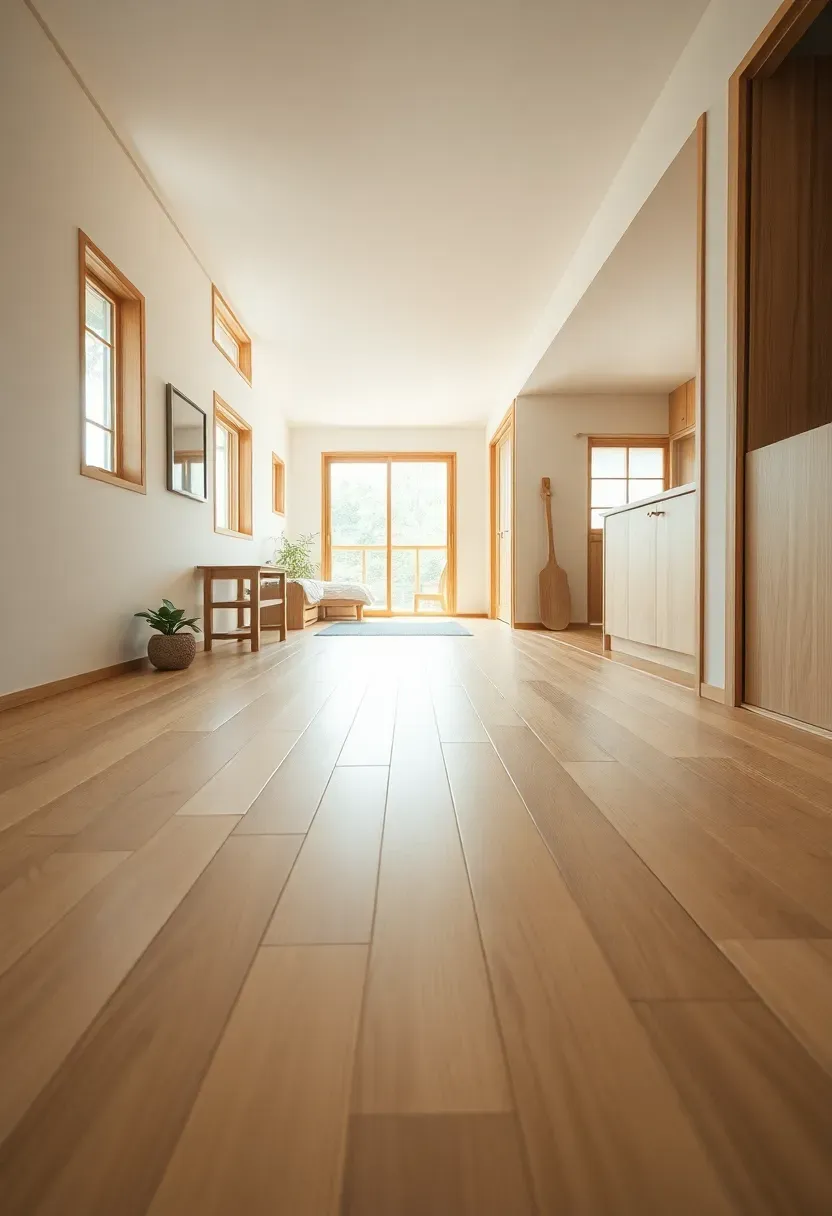
Hyper-realistic high-angle shot showing continuous wood flooring flowing through Japanese tiny house. Light oak floorboards running from genkan entry through tatami room edge (wood border), kitchen, and sleeping area. Floorboards maintain consistent direction and finish throughout. Materials: natural light oak with subtle grain, white walls, wood cabinetry. Bright natural light from multiple windows, emphasizing floor continuity and spatial flow. Shallow depth of field showing wood grain and floor details. Expansive Japanese minimalist mood.</p>
Japanese tiny house ideas prove that less truly can be more. By integrating traditional Japanese design principles—shoji screens, tatami rooms, genkan entries, and deep connection to nature—these compact homes achieve remarkable serenity and functionality despite minimal square footage.. Hyper-realistic high-angle shot showing continuous wood flooring flowing through Japanese tiny house. Light oak floorboards running from genkan entry through tatami room edge (wood border), kitchen, and sleeping
Recommended
Items for this idea
Tips
- Run flooring parallel to longest dimension for visual expansion
- Use same wood species for flooring, cabinetry, and trim for maximum continuity
- If tatami room is included, maintain wood border at perimeter for material connection
Best for: all Japanese-style tiny houses—wood continuity is fundamental to the aesthetic
What this gives you: visual continuity that expands perceived space and ties all zones together
18. Noren Doorway Curtains
Noren are traditional split curtains hung in doorways, providing privacy while allowing easy passage. In tiny houses, noren define zones without blocking light or airflow. These fabric panels add color and pattern while marking transitions between spaces—kitchen entry, closet opening, or even as room dividers.
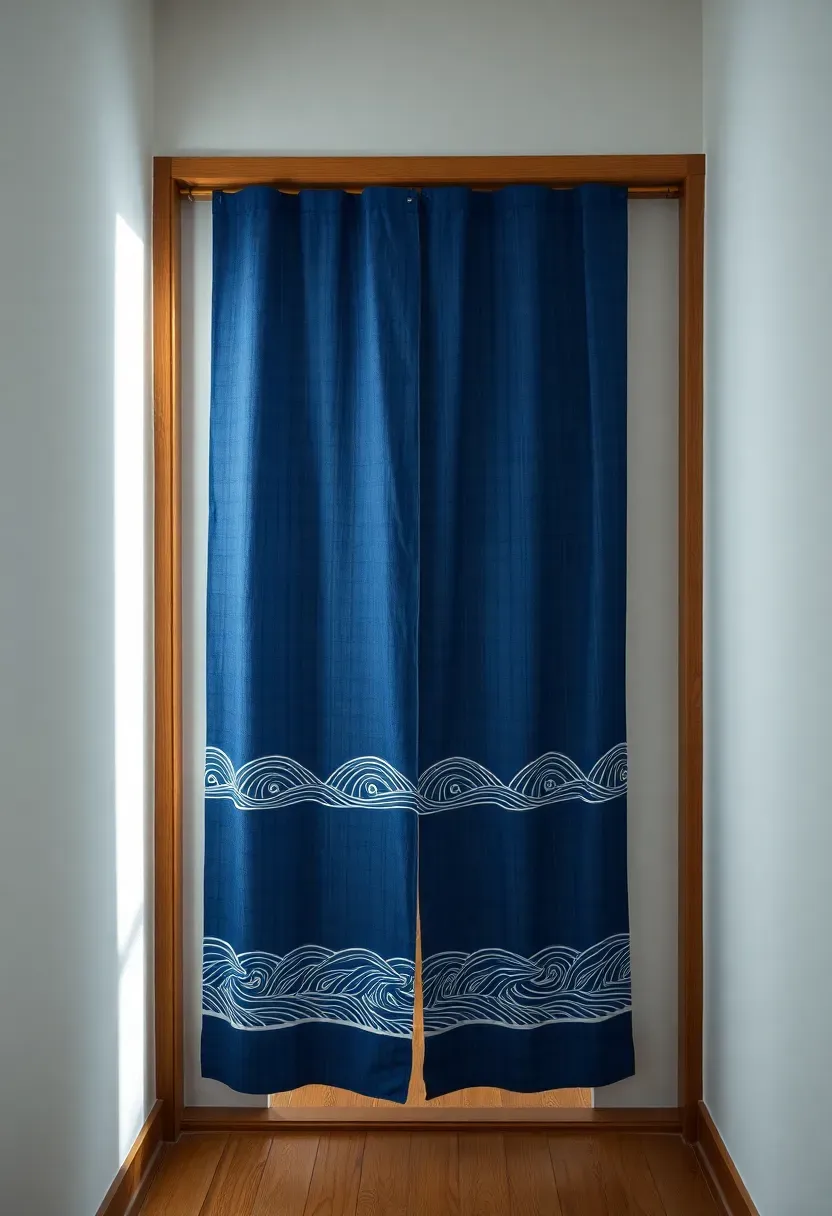
Hyper-realistic straight-on view of noren curtain in Japanese tiny house doorway. Blue indigo noren with white wave pattern hanging in doorway, split center allowing passage through to kitchen beyond. Noren features subtle Japanese design, weighted bottom hem. Materials: cotton fabric, wooden hanging rod, wood doorframe, white walls. Soft natural light from both sides, fabric partially translucent. Shallow depth of field showing fabric texture and pattern details. Authentic Japanese doorway treatment mood.</p>
Japanese tiny house ideas prove that less truly can be more. By integrating traditional Japanese design principles—shoji screens, tatami rooms, genkan entries, and deep connection to nature—these compact homes achieve remarkable serenity and functionality despite minimal square footage.. Hyper-realistic straight-on view of noren curtain in Japanese tiny house doorway. Blue indigo noren with white wave pattern hanging in doorway, split center allowing passage through to kitchen beyond. Noren feat
Recommended
Items for this idea
Tips
- Standard noren length reaches approximately 2 inches above floor for easy passage
- Choose indigo-dyed cotton for traditional appearance—synthetic fabrics lack authentic drape
- Weight bottom hem with small coins or washers for proper hanging and movement
Best for: defining zones in open tiny houses without blocking light or requiring solid doors
What this gives you: space definition and privacy while maintaining airflow and authentic Japanese character
19. Zaisu Seating without Legs
Zaisu are chairs with seats but no legs—designed for tatami floor comfort. In tiny houses, zaisu provide back support for floor living while maintaining low-profile aesthetics. These chairs can be stacked or slid under tables when not in use, preserving open floor space.
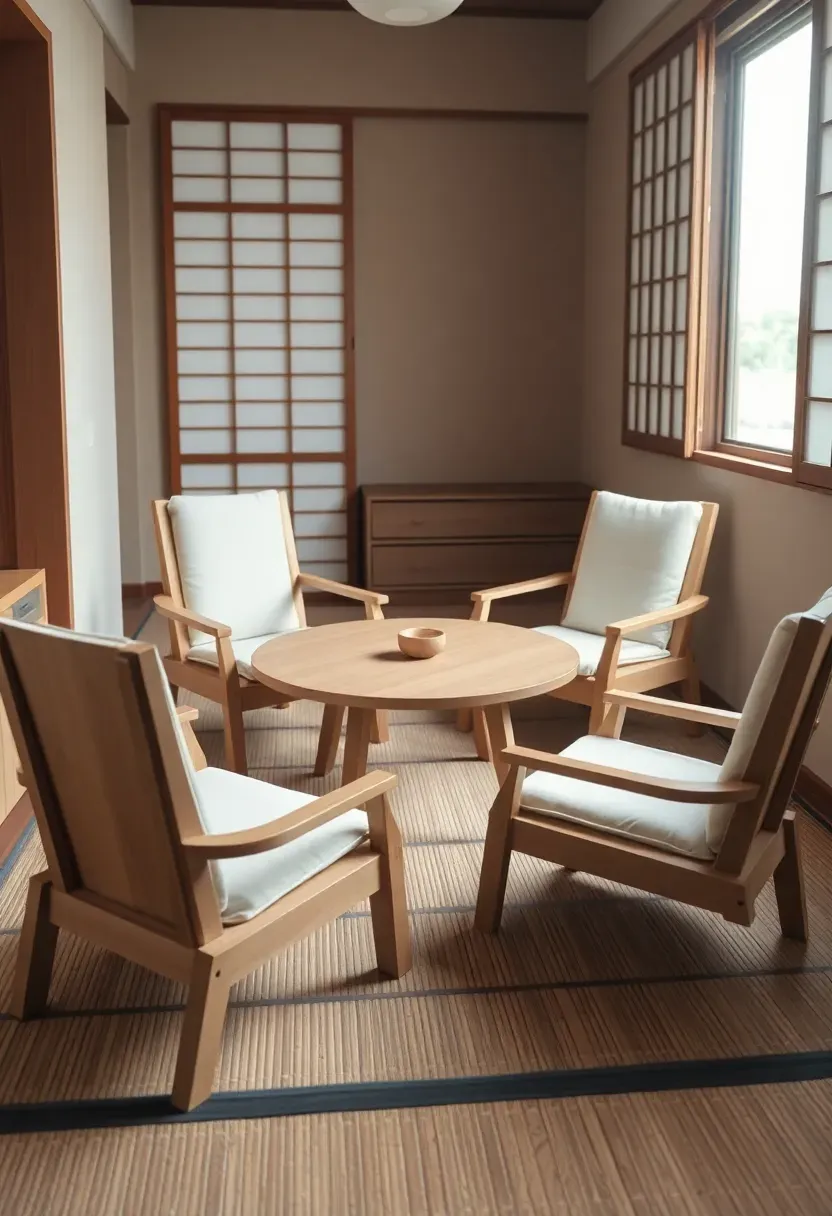
Hyper-realistic 3/4 view of zaisu floor chairs around low table in Japanese tiny house. Four zaisu chairs with wooden backs and cushioned seats around chabudai table, tatami flooring throughout. Chairs feature clean modern design with traditional proportions. Materials: light wood chair backs, cream cushion fabric, straw tatami, small tea set on table. Soft natural light from shoji window, highlighting chair details and floor texture. Shallow depth of field showing fabric textures and wood grain. Authentic Japanese floor seating mood.</p>
Japanese tiny house ideas prove that less truly can be more. By integrating traditional Japanese design principles—shoji screens, tatami rooms, genkan entries, and deep connection to nature—these compact homes achieve remarkable serenity and functionality despite minimal square footage.. Hyper-realistic 3/4 view of zaisu floor chairs around low table in Japanese tiny house. Four zaisu chairs with wooden backs and cushioned seats around chabudai table, tatami flooring throughout. Chairs feature c
Recommended
Items for this idea
Tips
- Choose zaisu with removable cushions for cleaning and seasonal fabric changes
- Store zaisu partially under tables when not in use to preserve open floor space
- If zaisu aren't available, use floor cushions with back support pillows for similar effect
Best for: tatami rooms or any Japanese-inspired space with floor seating
What this gives you: back support for floor living while maintaining low-profile Japanese aesthetics
20. Indigo Textile Accents
Japanese indigo (aizome) provides the traditional accent color in neutral interiors. In tiny houses, indigo textiles—noren, cushion covers, throws, or bedding—add sophisticated color without overwhelming calm spaces. The deep blue grounds while connecting to Japanese textile heritage.
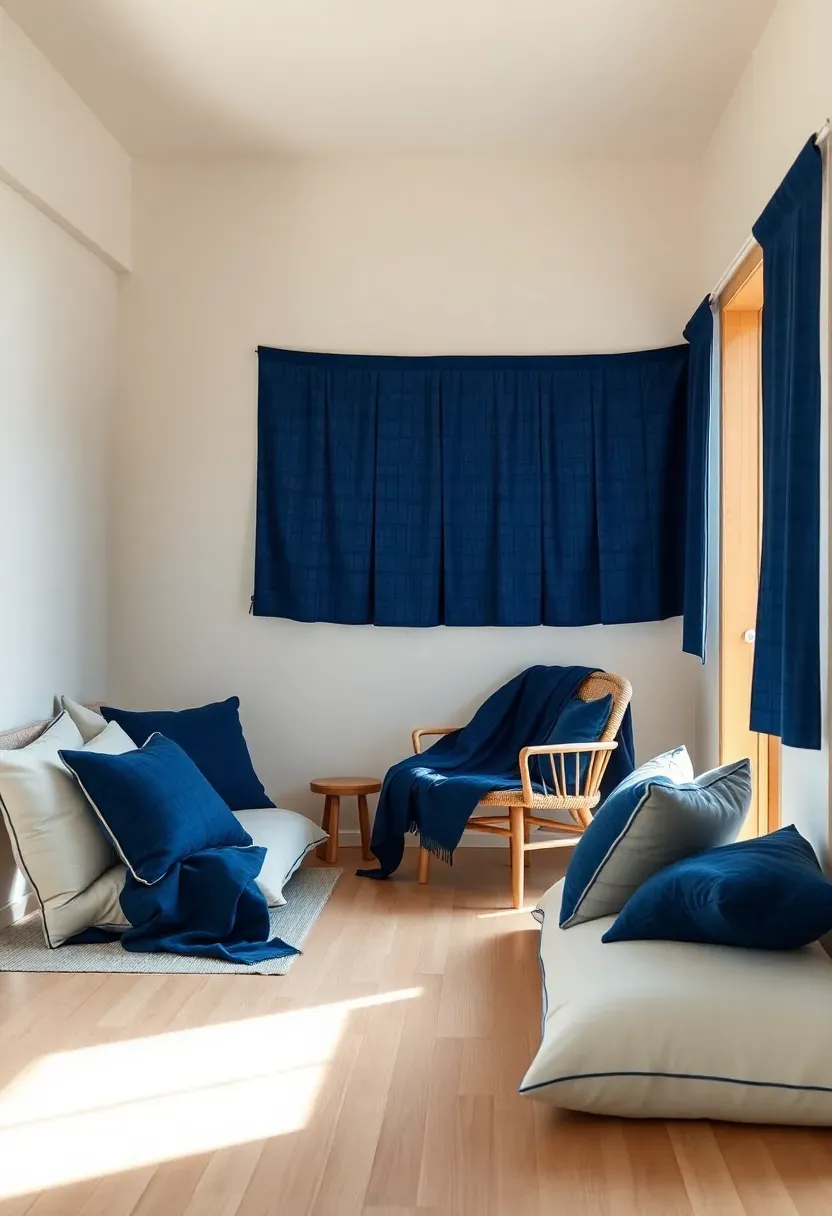
Hyper-realistic wide shot of Japanese tiny house living area with indigo accents. Neutral cream walls, light wood floors, low furniture with indigo cushion covers, indigo throw draped over chair, indigo noren in doorway. Pops of deep blue against neutral background create sophisticated contrast. Materials: cream fabrics, indigo-dyed textiles, light wood, white plaster. Bright natural light from window, highlighting indigo richness against neutral palette. Shallow depth of field showing fabric textures and indigo details. Refined Japanese minimalist mood with color accents.</p>
Japanese tiny house ideas prove that less truly can be more. By integrating traditional Japanese design principles—shoji screens, tatami rooms, genkan entries, and deep connection to nature—these compact homes achieve remarkable serenity and functionality despite minimal square footage.. Hyper-realistic wide shot of Japanese tiny house living area with indigo accents. Neutral cream walls, light wood floors, low furniture with indigo cushion covers, indigo throw draped over chair, indigo noren in
Recommended
Items for this idea
Tips
- Limit indigo to 2-3 major pieces plus smaller accents—too much dark color shrinks tiny spaces
- Choose traditionally dyed indigo rather than synthetic blue for authentic color depth
- Repeat indigo in at least three locations for visual cohesion
Best for: adding sophisticated color to Japanese-inspired neutral interiors
What this gives you: authentic Japanese accent color that grounds while maintaining calm
21. Stone Garden Integration
Japanese tiny houses often connect to tsuboniwa (small courtyard gardens). In compact homes, even a minimal stone garden arrangement viewed from windows creates profound sense of natural connection. A few strategically placed rocks, moss, or small stones transform outdoor space into contemplative extension of interior.
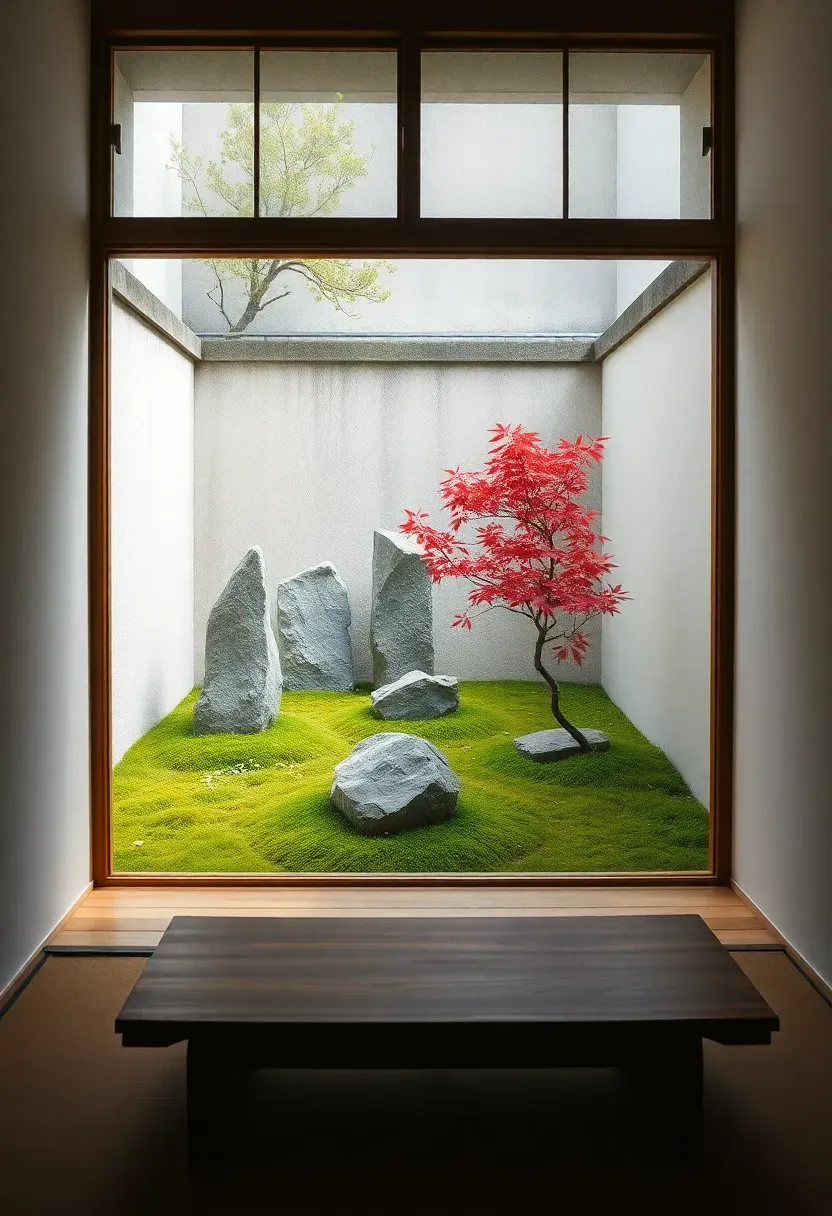
Hyper-realistic view from Japanese tiny house interior toward small stone garden. Large window overlooking courtyard with three vertical stones of varying sizes, moss ground cover, small maple tree in corner. Interior shows tatami floor and low table positioned toward garden view. Materials: natural stones, green moss, red maple leaves, wood floor, white walls. Soft natural light emphasizing garden details and indoor-outdoor connection. Shallow depth of field showing stone textures and maple leaves. Serene Japanese courtyard garden mood.</p>
Japanese tiny house ideas prove that less truly can be more. By integrating traditional Japanese design principles—shoji screens, tatami rooms, genkan entries, and deep connection to nature—these compact homes achieve remarkable serenity and functionality despite minimal square footage.. Hyper-realistic view from Japanese tiny house interior toward small stone garden. Large window overlooking courtyard with three vertical stones of varying sizes, moss ground cover, small maple tree in corner. In
Recommended
Items for this idea
Tips
- Even a 3x3-foot area can become a tsuboniwa—scale stones to space
- Position primary seating or bed to face garden for maximum visual connection
- If outdoor space isn't possible, create interior stone garden in large planter or recessed area
Best for: tiny houses with any outdoor access—even a small courtyard or balcony
What this gives you: profound connection to nature in minimal outdoor space
22. Recessed Floor Seating
Traditional Japanese tearooms feature recessed floor areas where guests sit. In tiny houses, creating a slightly sunken conversation pit defines seating zone without furniture while maintaining clean sight lines. Even a 6-inch depression creates distinct lounge area while emphasizing floor-based Japanese living.
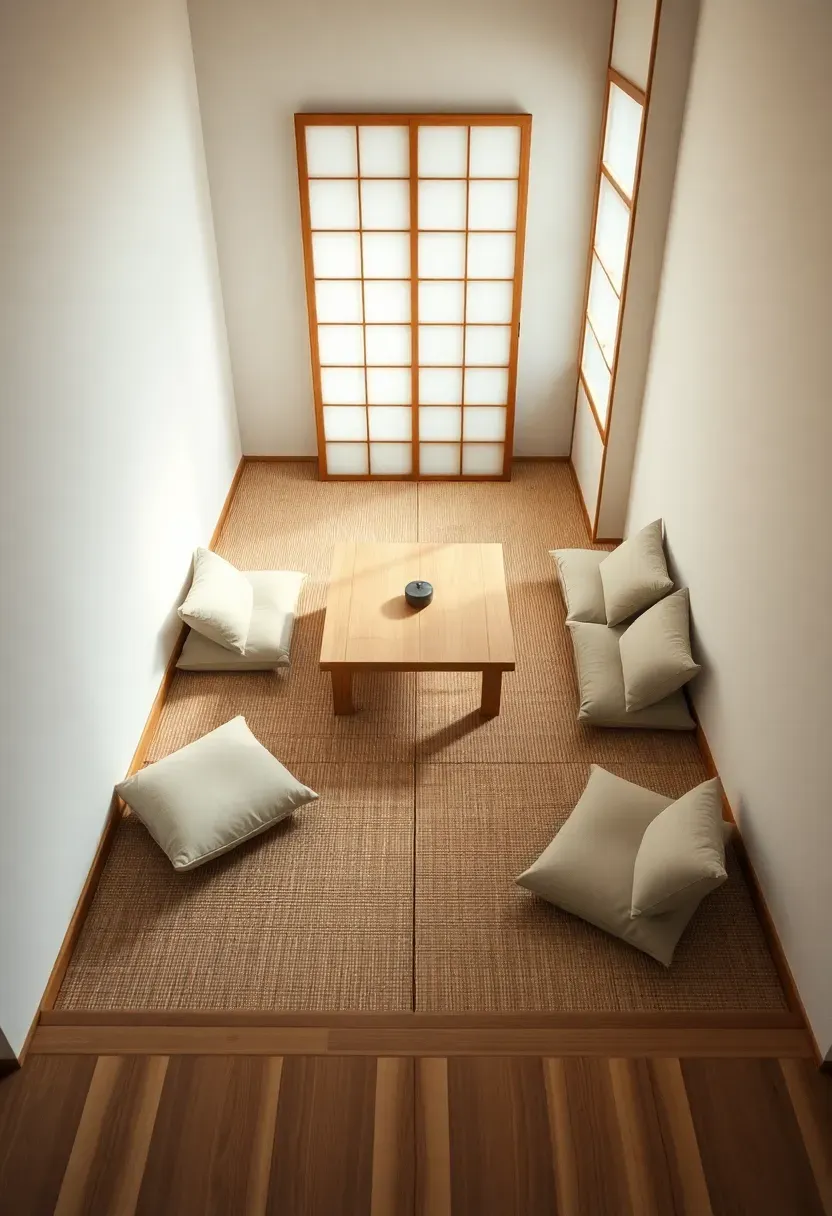
Hyper-realistic high-angle view of recessed floor seating area in Japanese tiny house. Sunken conversation pit (6 inches below main floor) with tatami flooring, surrounded by raised wooden platform with floor cushions positioned around edge. Low table in center. Shoji screen to side. Materials: straw tatami, light wood platform, cream cushions, white walls. Soft natural light from shoji, highlighting level change and seating arrangement. Shallow depth of field showing tatami texture and cushion details. Japanese floor seating innovation mood.</p>
Japanese tiny house ideas prove that less truly can be more. By integrating traditional Japanese design principles—shoji screens, tatami rooms, genkan entries, and deep connection to nature—these compact homes achieve remarkable serenity and functionality despite minimal square footage.. Hyper-realistic high-angle view of recessed floor seating area in Japanese tiny house. Sunken conversation pit (6 inches below main floor) with tatami flooring, surrounded by raised wooden platform with floor cu
Recommended
Items for this idea
Tips
- Maximum comfortable sunken depth is 8 inches—more feels difficult to exit
- Include step or ramp access for mobility considerations
- Use raised platform perimeter as seating surface or display space
Best for: tiny houses where floor seating is primary living approach
What this gives you: defined seating zone without furniture while maintaining authentic Japanese character
23. Minimal Kitchen Workstation
Japanese kitchens prioritize efficiency and order—a single continuous work surface handles all tasks. In tiny houses, a minimal workstation with sink, cooktop, and minimal prep surface (36-48 inches total) provides full functionality. The key is meticulous organization and "clean as you go" philosophy.
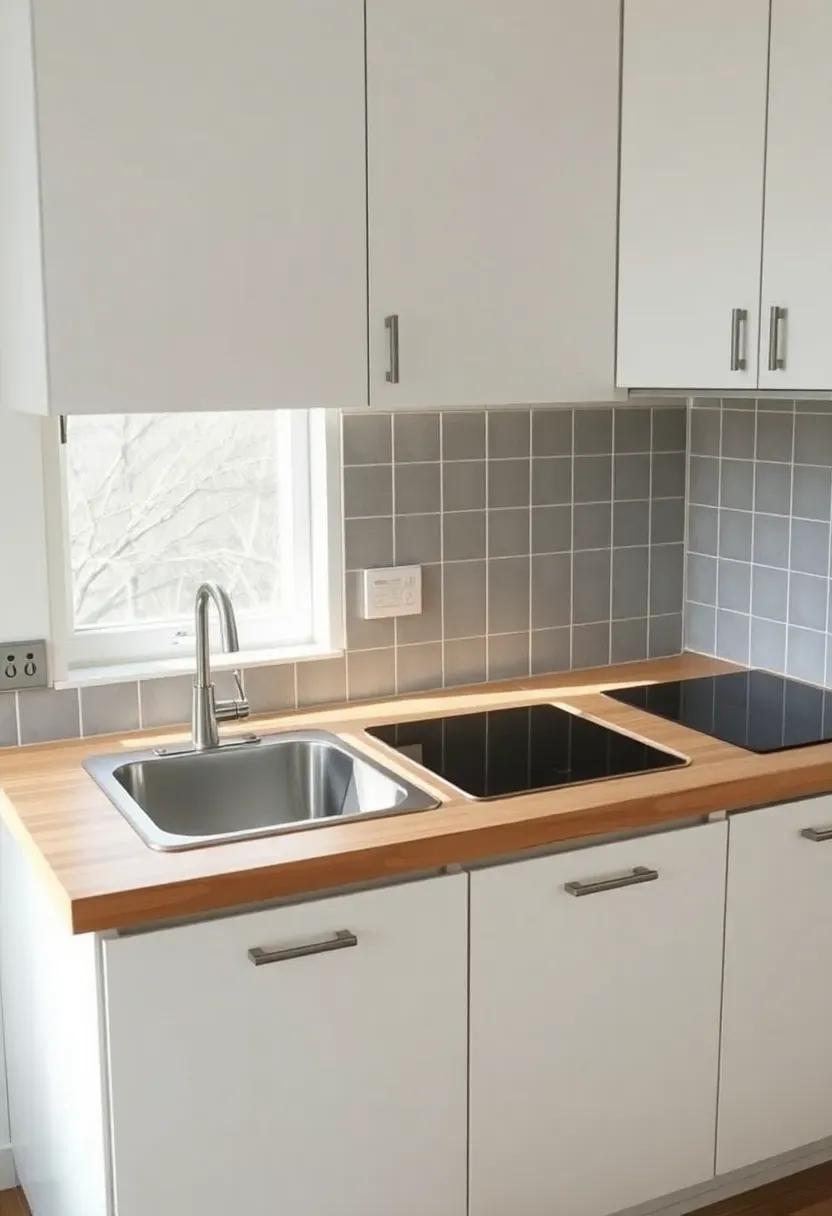
Hyper-realistic straight-on view of minimal Japanese kitchen workstation. Single 42-inch countertop with undermount sink left, two-burner induction cooktop right, small drainboard between. Upper cabinets with white doors, lower cabinets hidden. Materials: light wood countertop, white lacquer cabinetry, stainless steel appliances, gray tile backsplash. Bright natural light from window, emphasizing clean surfaces and minimalism. Shallow depth of field showing countertop details and cabinet hardware. Ultra-minimal Japanese kitchen mood.</p>
Japanese tiny house ideas prove that less truly can be more. By integrating traditional Japanese design principles—shoji screens, tatami rooms, genkan entries, and deep connection to nature—these compact homes achieve remarkable serenity and functionality despite minimal square footage.. Hyper-realistic straight-on view of minimal Japanese kitchen workstation. Single 42-inch countertop with undermount sink left, two-burner induction cooktop right, small drainboard between. Upper cabinets with wh
Recommended
Items for this idea
Tips
- Minimum functional workstation width is 36 inches—48 allows comfortable prep
- Choose undermount sink and flush cooktop for maximum continuous counter surface
- Design dedicated storage for each tool category—knives, prep, cooking, cleaning
Best for: those who cook simply and prioritize minimalism over extensive kitchen facilities
What this gives you: full kitchen functionality in minimal footprint through efficiency and organization
24. Suspended Ceiling Shelves
Japanese design utilizes vertical space for storage while maintaining clean floor areas. In tiny houses, suspended shelves hung from ceiling beams or structural points provide display and storage without consuming wall or floor space. These floating surfaces maintain open sight lines while offering practical utility.
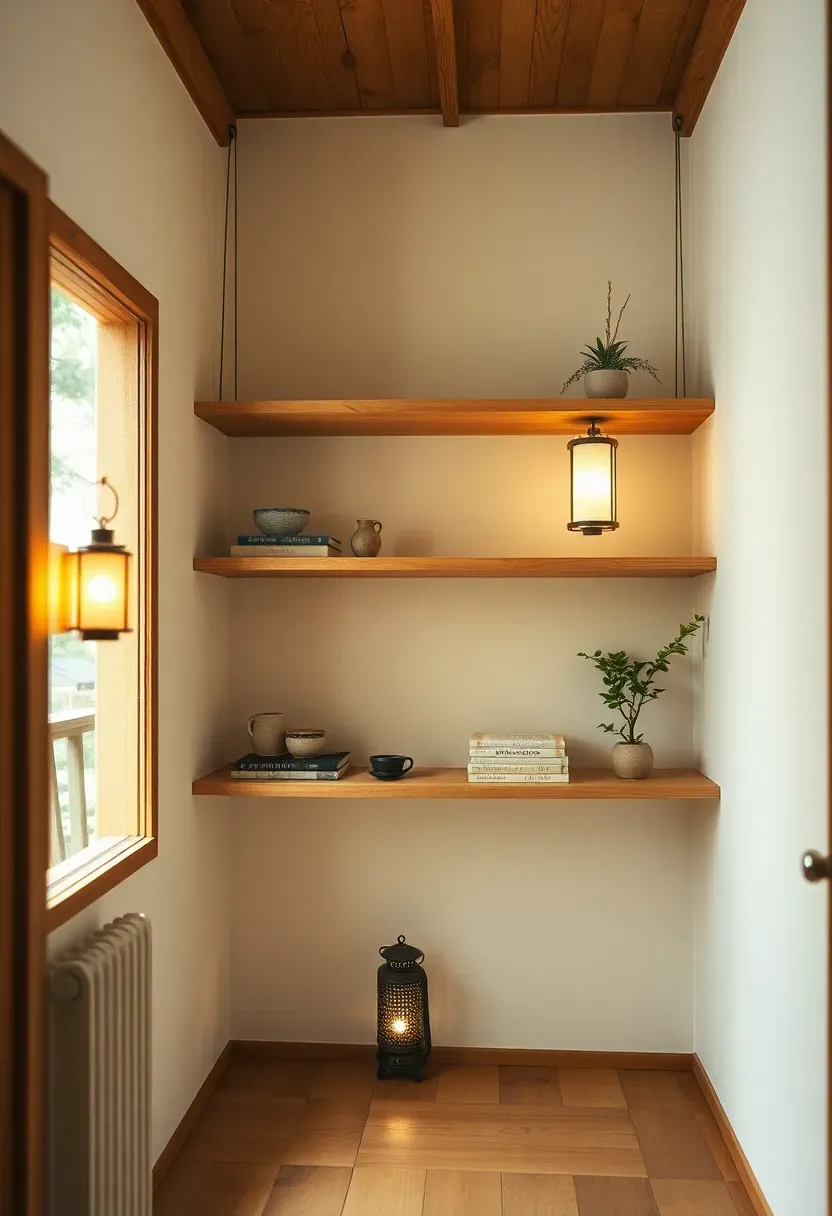
Hyper-realistic upward-angle view of suspended shelves in Japanese tiny house. Three wooden shelves (10 inches deep) hung from ceiling beams with thin steel cables, displaying ceramics, books, small plants. Shelves float away from walls, maintaining open floor space below. Materials: light wood shelves, steel cable, white walls, wood floor. Warm ambient light from nearby lantern, highlighting shelf details and displayed objects. Shallow depth of field showing ceramic textures and shelf mounting. Minimal Japanese storage innovation mood.</p>
Japanese tiny house ideas prove that less truly can be more. By integrating traditional Japanese design principles—shoji screens, tatami rooms, genkan entries, and deep connection to nature—these compact homes achieve remarkable serenity and functionality despite minimal square footage.. Hyper-realistic upward-angle view of suspended shelves in Japanese tiny house. Three wooden shelves (10 inches deep) hung from ceiling beams with thin steel cables, displaying ceramics, books, small plants. Shel
Recommended
Items for this idea
Tips
- Maximum shelf span without center support is 36 inches for stability
- Hang shelves at standing head height (6-7 feet) for easy access without ducking
- Use thin cables or rods to maintain visual lightness—thick supports feel heavy
Best for: displaying collections or providing storage when wall space is limited
What this gives you: vertical storage and display without sacrificing floor space or clean sight lines
25. Ma Emptiness Principle
Ma—the intentional emptiness or pause between objects—is perhaps the most profound Japanese design principle, closely related to the concept of [minimalist living in a tiny house](/posts/114_minimalist-living-in-a-tiny-house-simple-life-small-spaces/). In tiny houses, embracing empty space rather than filling every surface creates calm and expansiveness. Leaving walls partially bare, maintaining clear floor areas, and resisting clutter allows the mind to rest and space to breathe.
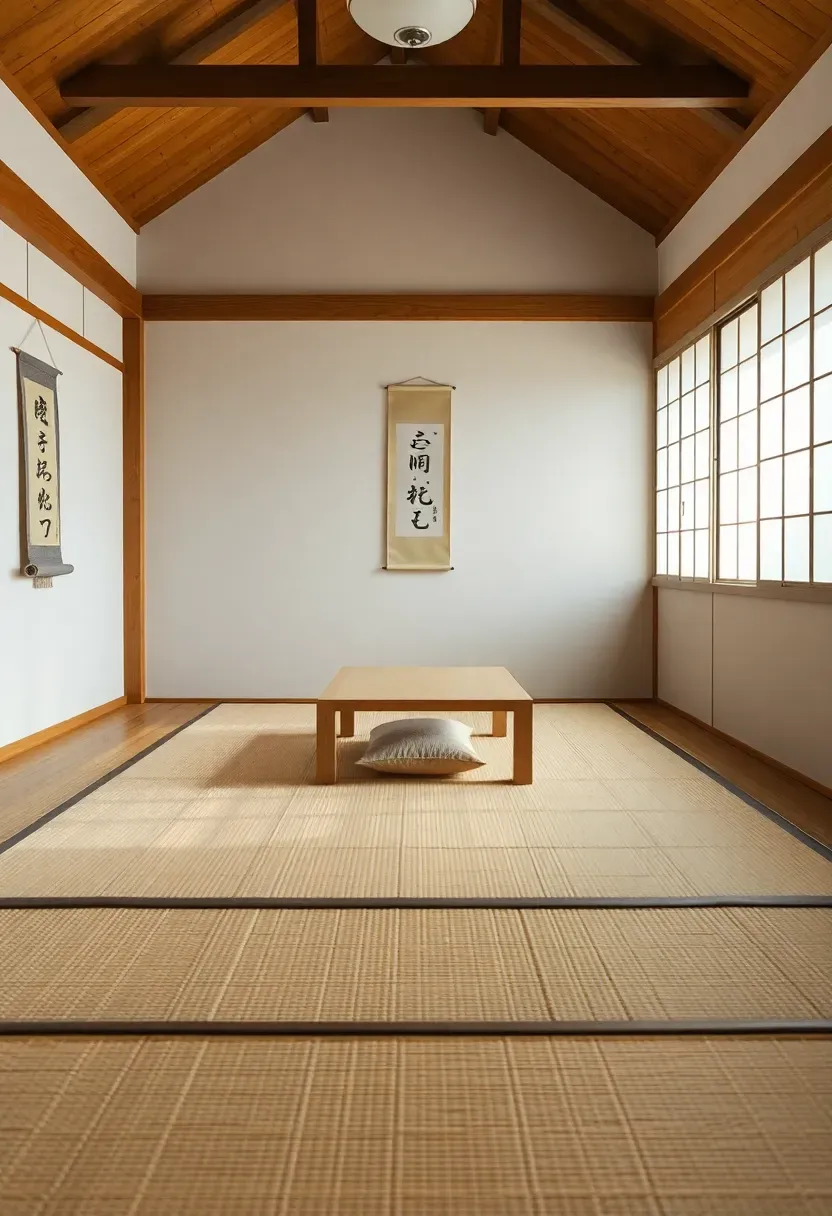
Hyper-realistic wide shot of Japanese tiny house living area embodying ma principle. Minimal furnishings: low table at center, single floor cushion, one scroll on wall. Tatami flooring, white shoji screen, abundant empty floor space. No clutter, no excessive decor—intentional emptiness creating serene calm. Materials: straw tatami, light wood table, cream fabrics, white paper surfaces. Abundant natural light emphasizing emptiness and simplicity. Shallow depth of field showing tatami texture and scroll details. Profound Japanese minimalism mood.</p>
Japanese tiny house ideas prove that less truly can be more. By integrating traditional Japanese design principles—shoji screens, tatami rooms, genkan entries, and deep connection to nature—these compact homes achieve remarkable serenity and functionality despite minimal square footage.. Hyper-realistic wide shot of Japanese tiny house living area embodying ma principle. Minimal furnishings: low table at center, single floor cushion, one scroll on wall. Tatami flooring, white shoji screen, abund
Recommended
Items for this idea
Tips
- Leave at least 30% of wall surfaces bare—art on every wall creates visual clutter
- Maintain clear floor paths—don't let furniture block circulation even slightly
- Edit regularly: if an item doesn't serve purpose or bring joy, release it
Best for: all Japanese-inspired tiny houses—ma is the foundation of Japanese aesthetics
What this gives you: profound calm and expansiveness that makes tiny spaces feel generous rather than cramped
These Japanese tiny house ideas offer a profound blueprint for small-space living that prioritizes tranquility over accumulation. By integrating traditional elements—genkan entries, shoji screens, tatami rooms, and engawa transitions—with modern functionality, these compact homes achieve remarkable serenity despite minimal square footage. In our experience, even adopting two or three of these Japanese design principles transforms how a small apartment feels.
Whether you're building a dedicated Japanese-inspired tiny house or simply incorporating zen elements into a rental apartment, the key lies in embracing the philosophy of less but better. Every element serves multiple purposes, materials celebrate natural beauty, and empty space becomes design feature rather than waste. These Japanese tiny house ideas demonstrate that the most profound luxury in small spaces isn't more square footage—it's more peace, intention, and harmony with our surroundings. For more inspiration, explore our [modern tiny house ideas](/posts/93_modern-tiny-house/) or our complete [guide to tiny house living](/posts/164_ultimate-guide-to-tiny-house-living-tips-essentials/).