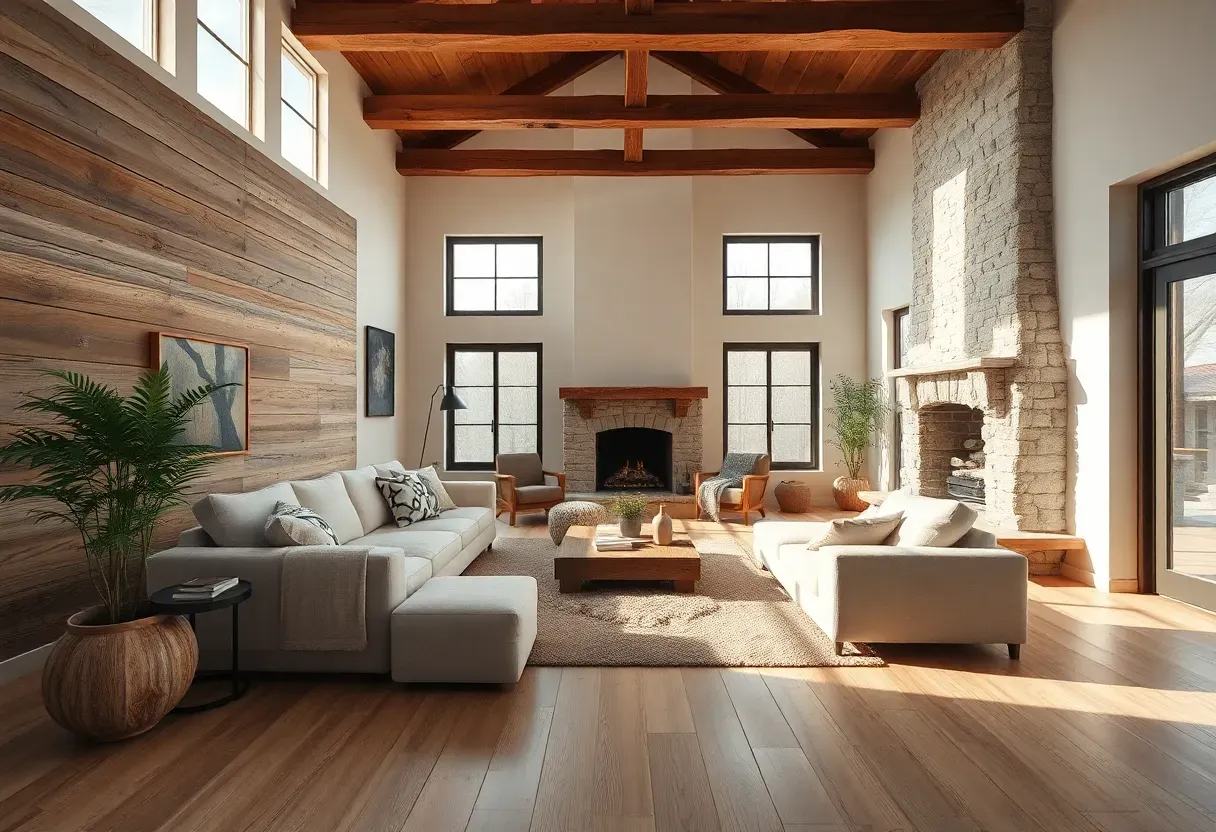
living-room

17 Rustic Minimalist Living Room Ideas: Cozy Simplicity That Create a Welcoming Living Room

17 Rustic Minimalist Living Room Ideas: Cozy Simplicity

Rustic minimalist living room design combines the warmth of raw natural materials with the calming clarity of simplified spaces, creating rooms that feel both grounded and effortlessly spacious. This design philosophy embraces the beauty of imperfection—natural wood grain, textured stone, worn leather—while eliminating unnecessary decoration that competes for attention. The result is a living space that feels authentic, livable, and deeply welcoming without sacrificing the peaceful serenity that minimalism provides.

The magic of rustic minimalism lies in its ability to create cozy warmth through materiality rather than clutter, where a single rough-hewn beam or reclaimed wood floor carries more visual weight and emotional resonance than entire rooms filled with accessories. This approach particularly suits living rooms where family gathering, relaxation, and everyday life take precedence over formal entertaining or museum-quality displays. By focusing on quality materials, honest construction, and purposeful layouts, rustic minimalist living rooms become sanctuaries of calm comfort.

These 17 rustic minimalist living room ideas demonstrate how to blend rough-hewn warmth with modern simplicity, creating spaces that feel curated without feeling decorated, spacious without feeling stark, and welcoming without sacrificing sophistication.

Quick FAQ

What defines rustic minimalist style?

Rustic minimalism combines raw natural materials like reclaimed wood, stone, and leather with simplified forms, neutral palettes, and clutter-free surfaces. It embraces material warmth and natural imperfection while maintaining clean lines and edited spaces typical of minimalism.

How do I keep a rustic room from feeling cluttered?

Edit ruthlessly—keep only pieces that serve a purpose or bring genuine joy. Use larger statement furniture rather than many small pieces. Choose storage that hides clutter completely. Embrace negative space around key pieces. Let materials provide the interest rather than accessories.

What colors work best in rustic minimalist living rooms?

Warm neutrals—cream, beige, warm gray, taupe—serve as the perfect backdrop for natural wood tones. Add limited accent colors inspired by nature: sage green, terracotta, deep navy, or warm rust. Keep the palette restrained with one dominant neutral and two accent colors maximum.

Can rustic minimalism work in small living rooms?

Absolutely—in fact, it's ideal for small spaces. The simplified furniture footprint and lack of clutter maximize available floor space. Light neutral walls and natural materials keep small rooms feeling airy rather than cramped. Choose appropriately scaled furniture and edit down to essentials.

What flooring works best for rustic minimalist living rooms?

Wide-plank hardwood, especially reclaimed or wire-brushed oak, provides warmth and character. Natural stone, polished concrete, or warm-toned tile work beautifully as alternatives. Layer with simple natural fiber rugs to define zones and add softness without adding visual clutter.

How do I add warmth without adding clutter?

Focus on material warmth rather than decorative accessories. Textured throws, linen pillows, and wool rugs add coziness through touch rather than visual clutter. Use lighting layers—warm bulbs at different heights—to create ambiance. Let wood grain, stone texture, and fabric weave provide the richness.

Table of Contents

  1. 1. Reclaimed Wood Accent Wall
  2. 2. Exposed Ceiling Beams
  3. 3. Natural Stone Fireplace
  4. 4. Live Edge Coffee Table
  5. 5. Neutral Linen Sofa
  6. 6. Minimalist Built-In Shelving
  7. 7. Wide-Plank Hardwood Floors
  8. 8. Simple Window Treatments
  9. 9. Woven Texture Layering
  10. 10. Single Statement Light Fixture
  11. 11. Low-Profile Furniture
  12. 12. Indoor Plant Integration
  13. 13. Hidden Storage Solutions
  14. 14. Monochromatic Wood Tones
  15. 15. Raw Wood Console
  16. 16. Simple Leather Accent
  17. 17. Negative Space Emphasis

1. Reclaimed Wood Accent Wall

A reclaimed wood accent wall serves as the perfect rustic minimalist statement piece, providing rich texture, natural warmth, and authentic character through weathered planks while maintaining clean simplified lines that don't compete with other room elements. The wall becomes the room's artwork, telling the story of the wood's previous life through nail holes, saw marks, and natural patina while creating a warm backdrop that makes everything around it feel more intentional and considered. This approach works particularly well behind seating areas or as a focal wall opposite the main entrance, drawing the eye and anchoring the room without requiring additional decoration or accessories.
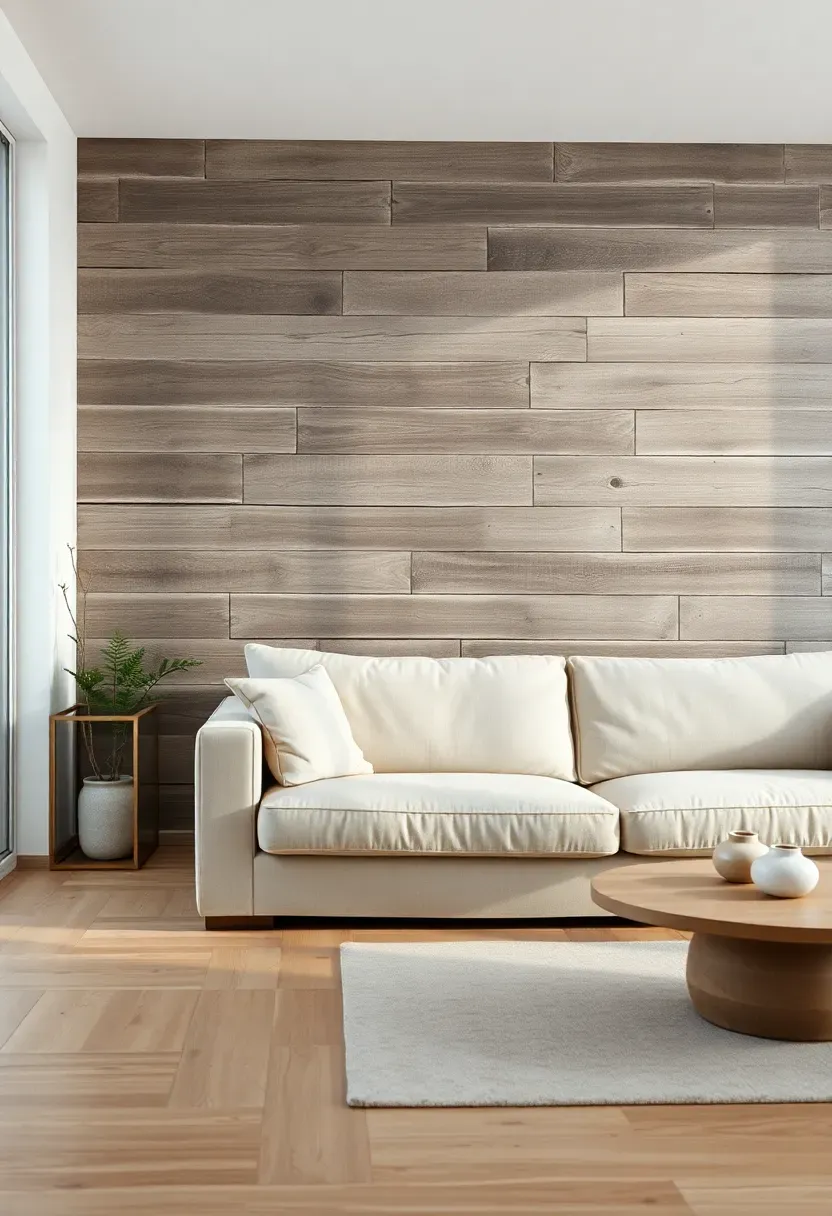
Hyper-realistic 3/4 view of rustic minimalist living room with reclaimed wood accent wall behind linen sofa. Materials: weathered gray-brown wood planks with nail holes and saw marks, cream linen sofa, light oak floor, minimal ceramic accessories. Soft diffused daylight from large window, creating subtle shadows emphasizing wood texture. Clean composition with wall as dominant feature. Shallow depth of field focusing on wood grain detail. No text, no logos, interior design magazine style.</p>
Rustic minimalist living room design combines the warmth of raw natural materials with the calming clarity of simplified spaces, creating rooms that feel both grounded and effortlessly spacious. This design philosophy embraces the beauty of imperfection—natural wood grain, textured stone, worn leather—while eliminating unnecessary decoration that competes for attention. The result is a living space that feels authentic, livable, and deeply welcoming without sacrificing the peaceful serenity that
Prompt: Nature documentary captured on Hasselblad X2D 100C with XCD 90V lens at f/4. Hyper-realistic 3/4 view of rustic minimalist living room with reclaimed wood accent wall behind linen sofa. Materials: weathered gray-brown wood planks with nail holes and saw marks, cream linen sofa, light oak floor, minimal ceramic accessories. Soft diffused daylight from large window, creating subtle shadows emphasizing wood texture. Clean composition with wall as dominant feature. Shallow depth of field focusing on wood grain detail. No text, no logos, interior design magazine style.

Tips

  • Source planks of similar thickness for easier installation and more uniform appearance
  • Leave some natural gaps between boards rather than tight installation for authentic look
  • Consider horizontal installation for contemporary feel, vertical for traditional rustic
  • Keep the rest of the room very simple—this wall is enough visual interest on its own

Best for: living rooms lacking architectural character or focal points

What this gives you: instant warmth and character without permanent architectural changes

2. Exposed Ceiling Beams

Exposed ceiling beams bring architectural gravitas and rustic warmth to minimalist living rooms, adding structural interest overhead while maintaining clean simplified walls and surfaces below. The beams create natural room definition and visual rhythm overhead, drawing the eye upward and making ceilings feel higher even as they add warmth and character. Whether original to the home or added as decorative elements, beams work beautifully with minimalist aesthetics because they provide texture and interest without consuming floor space or requiring additional furniture or accessories.
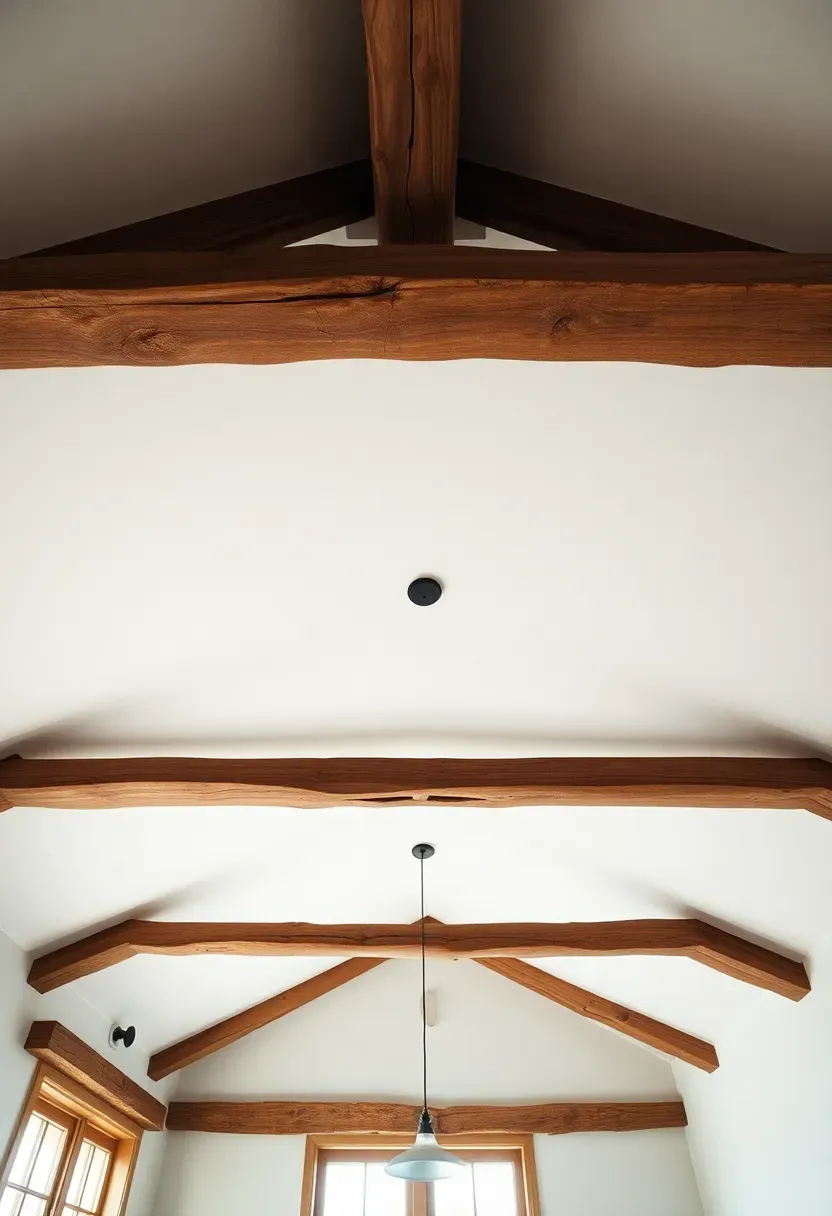
Hyper-realistic view looking up at exposed rough-hewn wood ceiling beams in rustic minimalist living room with white plaster ceiling between. Materials: distressed natural oak beams, white ceiling, simple modern pendant lights visible. Soft ambient daylight from windows below. Architectural composition showing beam pattern and ceiling texture. No text, no logos, architectural detail photography style.</p>
Rustic minimalist living room design combines the warmth of raw natural materials with the calming clarity of simplified spaces, creating rooms that feel both grounded and effortlessly spacious. This design philosophy embraces the beauty of imperfection—natural wood grain, textured stone, worn leather—while eliminating unnecessary decoration that competes for attention. The result is a living space that feels authentic, livable, and deeply welcoming without sacrificing the peaceful serenity that
Prompt: Nature documentary captured on Hasselblad X2D 100C with XCD 90V lens at f/4. Hyper-realistic view looking up at exposed rough-hewn wood ceiling beams in rustic minimalist living room with white plaster ceiling between. Materials: distressed natural oak beams, white ceiling, simple modern pendant lights visible. Soft ambient daylight from windows below. Architectural composition showing beam pattern and ceiling texture. No text, no logos, architectural detail photography style.

Tips

  • Keep beams similar in scale and spacing for cohesive appearance
  • Consider painting beams white if you want texture without strong color contrast
  • Original beams carry more authentic character than faux alternatives
  • Wire lighting through beams to maintain clean ceiling surface between

Placement note: space beams 3-4 feet apart for balanced ceiling rhythm

What this gives you: architectural interest without sacrificing floor space

3. Natural Stone Fireplace

A natural stone fireplace creates an organic focal point that grounds the living room in elemental materials while providing the cozy warmth that's essential to rustic minimalism. The irregular shapes and varied textures of fieldstone, slate, or limestone bring authentic character that can't be replicated with manufactured materials, creating a hearth that feels genuinely ancient even in new construction. This approach works particularly well when the stone treatment extends from floor to ceiling, making the fireplace a dramatic architectural element that eliminates the need for artwork or additional wall decoration while serving as the natural gathering point for the room.
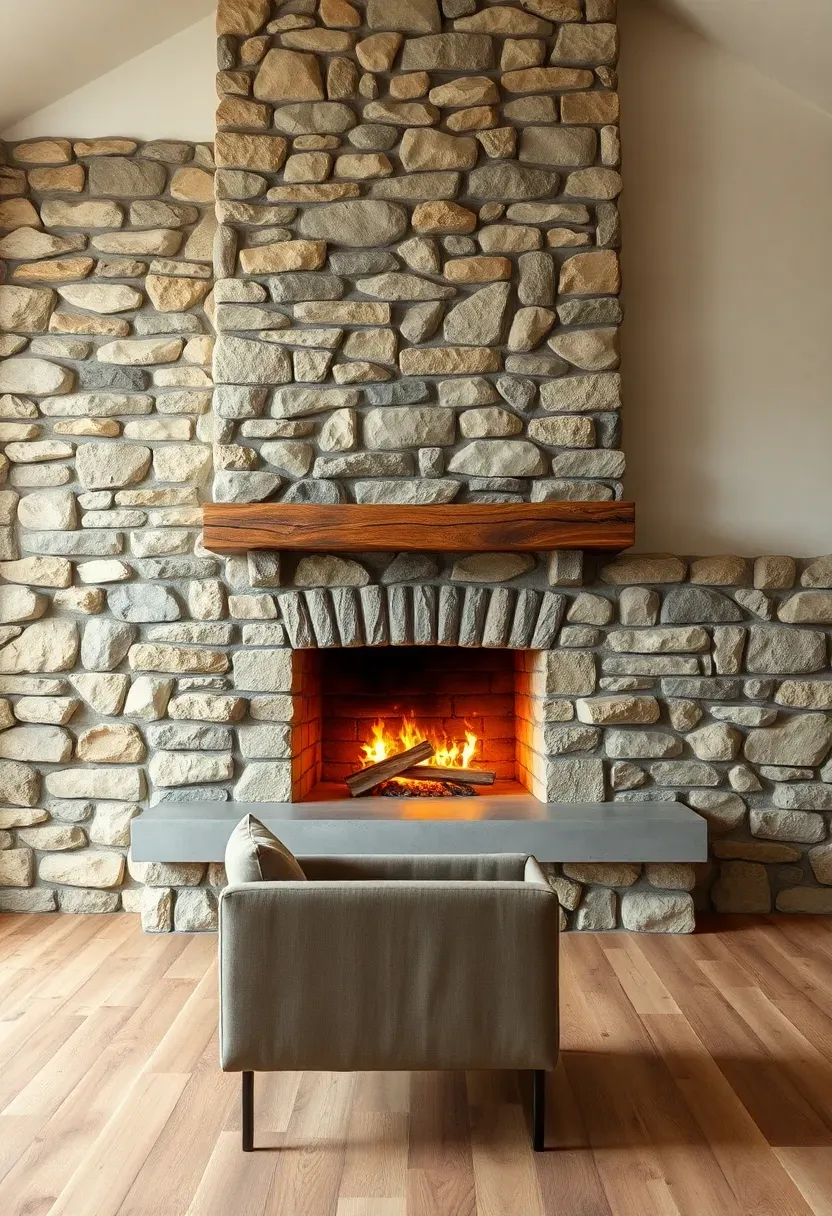
Hyper-realistic front view of rustic minimalist living room with natural stone fireplace wall reaching from floor to ceiling. Materials: irregular fieldstone in warm grays and tans, simple wood mantel, white plaster walls surrounding, concrete hearth. Warm ambient lighting from fire glow. Clean composition with fireplace as dominant element. Minimal furniture in foreground—simple linen armchair. No text, no logos, interior design magazine style.</p>
Rustic minimalist living room design combines the warmth of raw natural materials with the calming clarity of simplified spaces, creating rooms that feel both grounded and effortlessly spacious. This design philosophy embraces the beauty of imperfection—natural wood grain, textured stone, worn leather—while eliminating unnecessary decoration that competes for attention. The result is a living space that feels authentic, livable, and deeply welcoming without sacrificing the peaceful serenity that
Prompt: Nature documentary captured on Hasselblad X2D 100C with XCD 90V lens at f/4. Hyper-realistic front view of rustic minimalist living room with natural stone fireplace wall reaching from floor to ceiling. Materials: irregular fieldstone in warm grays and tans, simple wood mantel, white plaster walls surrounding, concrete hearth. Warm ambient lighting from fire glow. Clean composition with fireplace as dominant element. Minimal furniture in foreground—simple linen armchair. No text, no logos, interior design magazine style.

Tips

  • Keep mantel minimal and substantial—overly delicate mantels look out of scale
  • Consider dry-stacking stone without visible grout for more authentic rustic appearance
  • Extend stone treatment to ceiling for maximum dramatic impact
  • Choose stone with varied sizes and shapes for more organic, less manufactured look

Best for: living rooms in open floor plans needing natural focal point

What this gives you: authentic architectural character that anchors entire room

4. Live Edge Coffee Table

A live edge coffee table brings organic sculptural beauty to rustic minimalist living rooms, celebrating the natural form of the tree while providing a functional surface that feels like found artwork rather than mass-produced furniture. The natural edge—whether kept raw with bark, sanded smooth, or filled with resin—tells the story of the tree's growth, creating an instant focal point that provides all the visual interest a coffee table area needs. This approach works beautifully because one statement piece carries more weight than multiple smaller tables, maintaining the minimalist philosophy of fewer but better things.
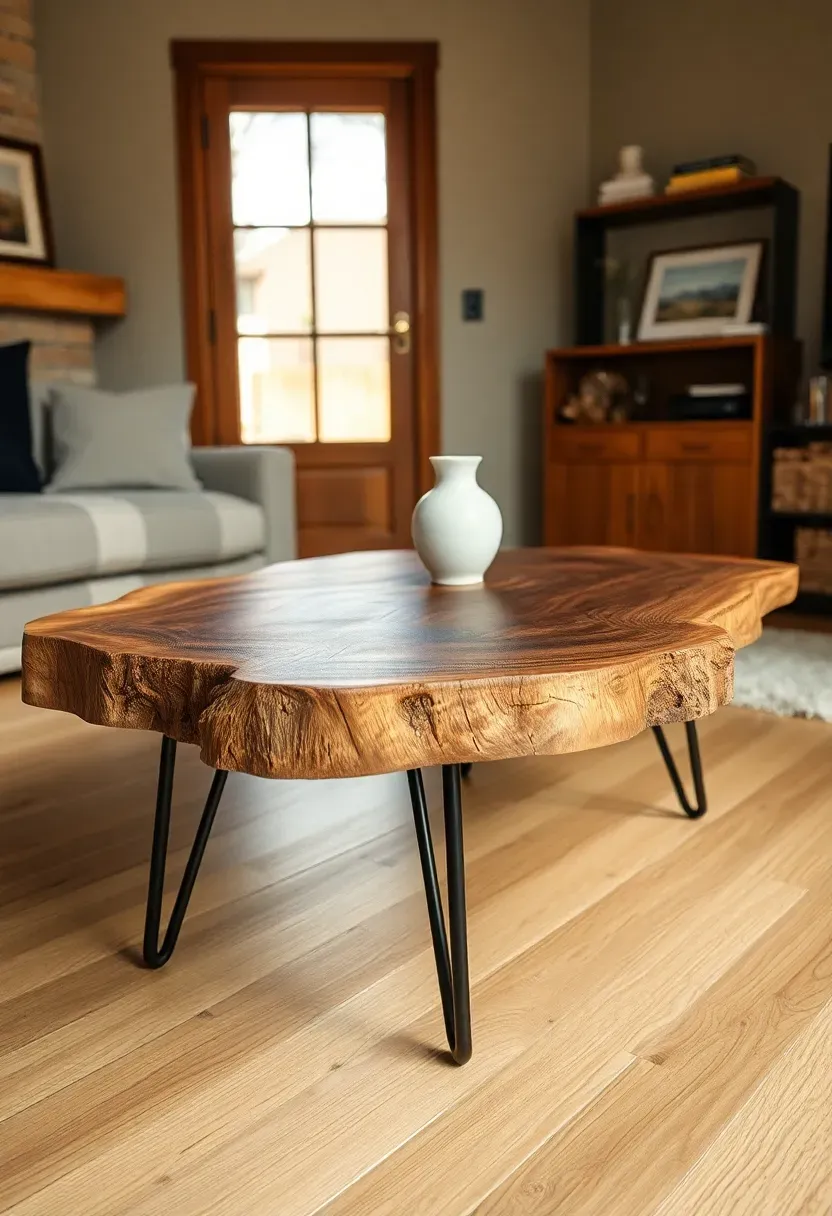
Hyper-realistic detail view of live edge walnut coffee table in rustic minimalist living room. Materials: natural walnut slab with raw bark edge, hairpin matte black legs, light oak floor, simple ceramic vase table accessory. Warm diffused daylight from nearby window. Composition showing table as sculptural element with raw organic edge prominent. No text, no logos, furniture design magazine style.</p>
Rustic minimalist living room design combines the warmth of raw natural materials with the calming clarity of simplified spaces, creating rooms that feel both grounded and effortlessly spacious. This design philosophy embraces the beauty of imperfection—natural wood grain, textured stone, worn leather—while eliminating unnecessary decoration that competes for attention. The result is a living space that feels authentic, livable, and deeply welcoming without sacrificing the peaceful serenity that
Prompt: Nature documentary captured on Hasselblad X2D 100C with XCD 90V lens at f/4. Hyper-realistic detail view of live edge walnut coffee table in rustic minimalist living room. Materials: natural walnut slab with raw bark edge, hairpin matte black legs, light oak floor, simple ceramic vase table accessory. Warm diffused daylight from nearby window. Composition showing table as sculptural element with raw organic edge prominent. No text, no logos, furniture design magazine style.

Tips

  • Choose slab thickness proportional to room scale—thicker for larger rooms
  • Keep base simple and minimal to let the slab shine without competing
  • Seal properly with matte finish that enhances grain without adding shine
  • Allow at least 18 inches clearance between table and seating for comfortable flow

Avoid if: you prefer perfectly smooth uniform surfaces—live edge is inherently irregular

What this gives you: functional sculpture that serves as room's artistic element

5. Neutral Linen Sofa

A neutral linen sofa provides the perfect foundation for rustic minimalist living rooms, offering casual sophistication and comfortable durability while maintaining the calm simplified palette that allows natural materials and textures to take center stage. The natural slight wrinkles and relaxed drape of linen embody rustic authenticity, while neutral cream, oatmeal, or warm gray colors provide a soothing backdrop that works with virtually any wood tone and stone color. Linen's natural texture means the sofa provides visual interest through materiality rather than pattern or color, making it ideal for minimalist environments where every piece must earn its place through both function and subtle beauty.
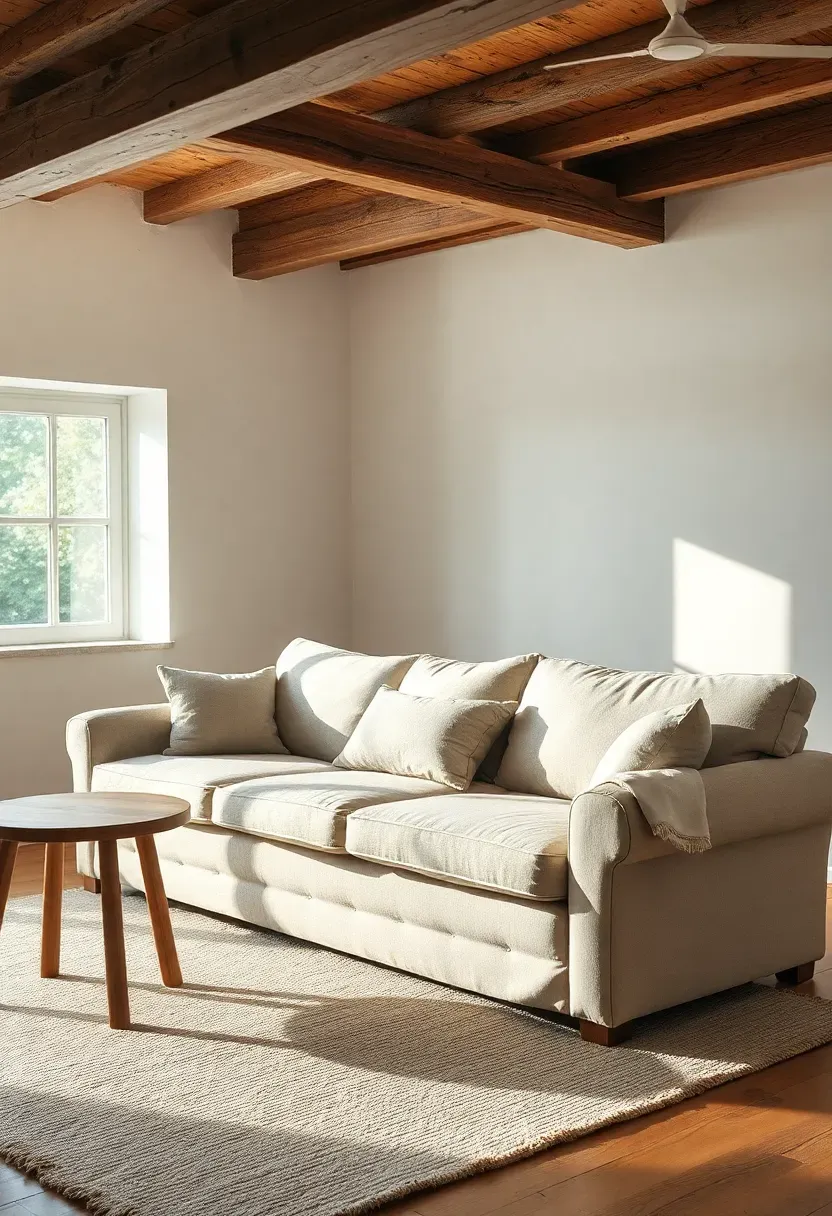
Hyper-realistic 3/4 view of cream linen sofa in rustic minimalist living room with exposed beam ceiling. Materials: relaxed oatmeal linen upholstery, light wood side table, wool rug, minimal throw pillow. Soft natural daylight from window, gentle shadows showing linen texture. Clean composition with sofa as room anchor. No text, no logos, interior design magazine style.</p>
Rustic minimalist living room design combines the warmth of raw natural materials with the calming clarity of simplified spaces, creating rooms that feel both grounded and effortlessly spacious. This design philosophy embraces the beauty of imperfection—natural wood grain, textured stone, worn leather—while eliminating unnecessary decoration that competes for attention. The result is a living space that feels authentic, livable, and deeply welcoming without sacrificing the peaceful serenity that
Prompt: Nature documentary captured on Hasselblad X2D 100C with XCD 90V lens at f/4. Hyper-realistic 3/4 view of cream linen sofa in rustic minimalist living room with exposed beam ceiling. Materials: relaxed oatmeal linen upholstery, light wood side table, wool rug, minimal throw pillow. Soft natural daylight from window, gentle shadows showing linen texture. Clean composition with sofa as room anchor. No text, no logos, interior design magazine style.

Tips

  • Embrace the natural wrinkles of linen—overly neat looks unnatural with fabric
  • Choose slipcovered options for washable practicality that still looks relaxed
  • Test fabric samples in your actual lighting—linen shifts color dramatically in different light
  • Consider performance linen blends for families while maintaining natural appearance

Best for: primary living rooms where comfort and longevity matter

What this gives you: comfortable, durable, and beautifully understated foundation

6. Minimalist Built-In Shelving

Built-in shelving painted to match walls creates storage that nearly disappears, maintaining the clean simplified surfaces essential to minimalism while providing necessary display and storage space for books and objects. The key to rustic minimalist shelving is severe editing—each shelf should contain breathing room around objects rather than being filled to capacity, with grouped items creating visual moments rather than scattered clutter. This approach works particularly well flanking fireplaces or filling alcoves, where the shelving becomes architectural rather than furniture-like, maintaining the room's calm while providing function.
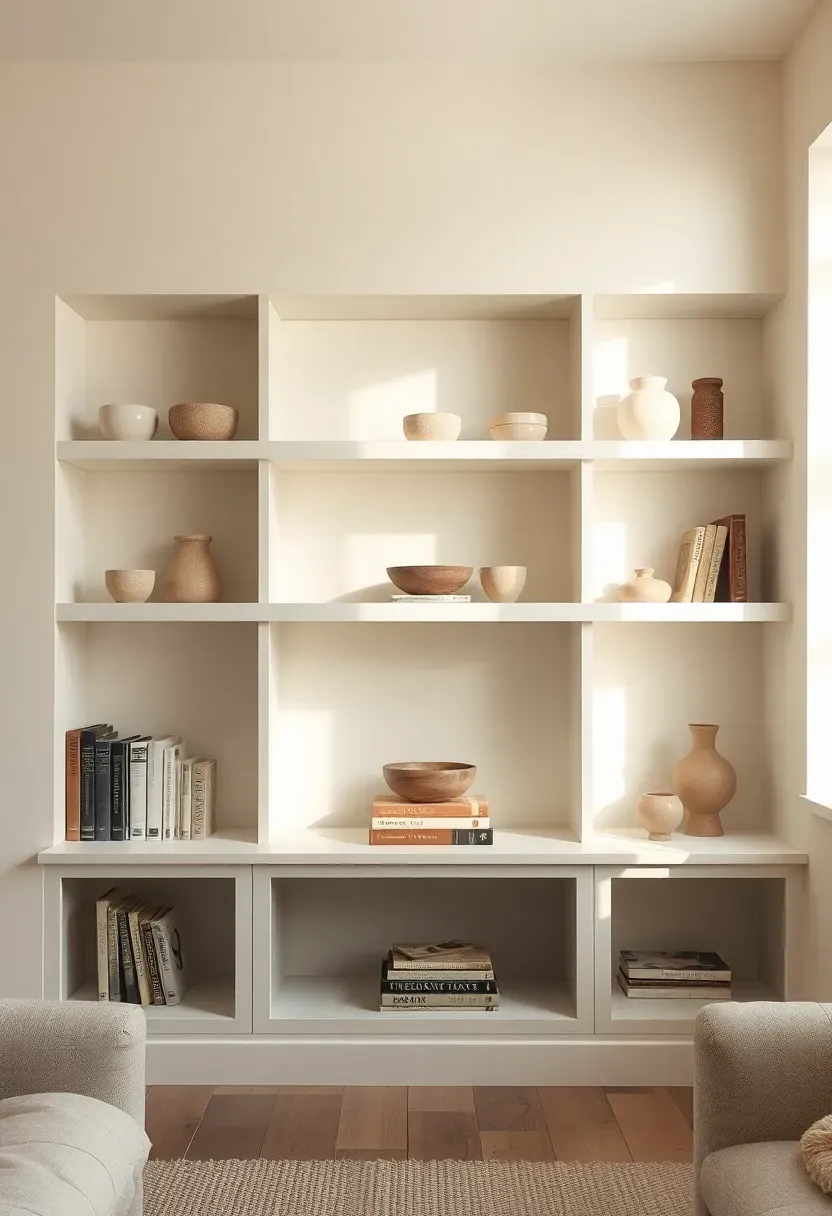
Hyper-realistic front view of built-in shelving units in rustic minimalist living room, painted to match cream walls. Materials: white painted wood shelves, collection of neutral ceramic objects, vintage books, small wooden bowl. Natural daylight from window, soft shadows creating depth. Composition showing edited objects with negative space between. No text, no logos, interior design magazine style.</p>
Rustic minimalist living room design combines the warmth of raw natural materials with the calming clarity of simplified spaces, creating rooms that feel both grounded and effortlessly spacious. This design philosophy embraces the beauty of imperfection—natural wood grain, textured stone, worn leather—while eliminating unnecessary decoration that competes for attention. The result is a living space that feels authentic, livable, and deeply welcoming without sacrificing the peaceful serenity that
Prompt: Nature documentary captured on Hasselblad X2D 100C with XCD 90V lens at f/4. Hyper-realistic front view of built-in shelving units in rustic minimalist living room, painted to match cream walls. Materials: white painted wood shelves, collection of neutral ceramic objects, vintage books, small wooden bowl. Natural daylight from window, soft shadows creating depth. Composition showing edited objects with negative space between. No text, no logos, interior design magazine style.

Tips

  • Paint shelves the same color as walls for seamless integration
  • Include some closed lower cabinet doors to hide clutter completely
  • Keep objects neutral in color—wood, ceramic, linen, leather—rather than bright accents
  • Group objects in odd numbers and vary heights for visual interest

Avoid if: you're a collector who struggles to edit—built-ins require discipline

What this gives you: storage that maintains calm while displaying curated objects

7. Wide-Plank Hardwood Floors

Wide-plank hardwood floors provide substantial warmth and character underfoot while maintaining the clean continuous surfaces that minimalism requires, with fewer seams creating calmer visual flow and more board surface showing off natural grain patterns. The width of individual planks—6 inches or more—feels more substantial and rustic than narrow traditional flooring, while wire-brushed or hand-scraped surfaces add authentic texture that doesn't read as distressed or worn. This flooring choice works particularly well in open floor plans where continuous flooring unifies spaces without calling attention to itself through pattern or color variation.
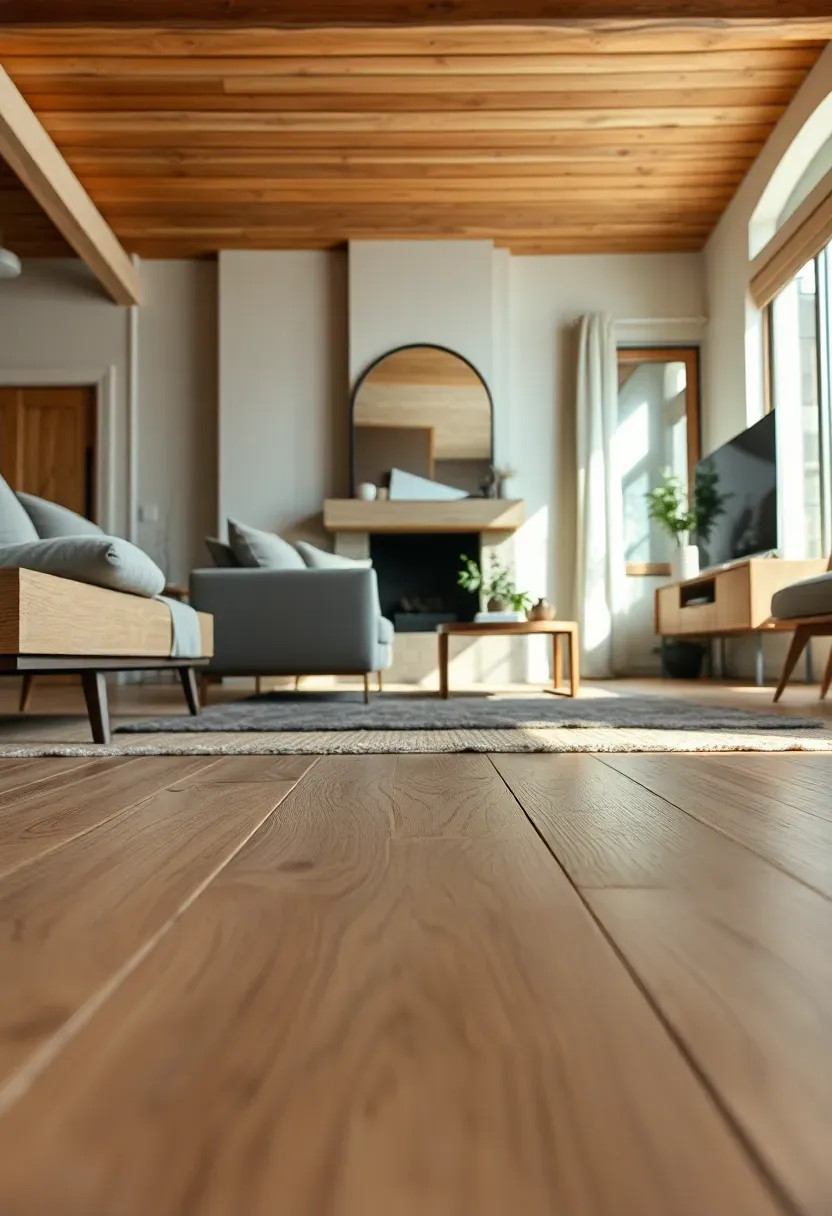
Hyper-realistic detail view of wide-plank white oak hardwood flooring in rustic minimalist living room. Materials: 8-inch wide oak planks with wire-brushed texture, natural matte finish, subtle grain variation, simple area rug edge visible. Natural daylight streaming across floor, emphasizing plank width and texture. Low angle composition focusing on floor. Shallow depth of field. No text, no logos, architectural detail photography style.</p>
Rustic minimalist living room design combines the warmth of raw natural materials with the calming clarity of simplified spaces, creating rooms that feel both grounded and effortlessly spacious. This design philosophy embraces the beauty of imperfection—natural wood grain, textured stone, worn leather—while eliminating unnecessary decoration that competes for attention. The result is a living space that feels authentic, livable, and deeply welcoming without sacrificing the peaceful serenity that
Prompt: Nature documentary captured on Hasselblad X2D 100C with XCD 90V lens at f/4. Hyper-realistic detail view of wide-plank white oak hardwood flooring in rustic minimalist living room. Materials: 8-inch wide oak planks with wire-brushed texture, natural matte finish, subtle grain variation, simple area rug edge visible. Natural daylight streaming across floor, emphasizing plank width and texture. Low angle composition focusing on floor. Shallow depth of field. No text, no logos, architectural detail photography style.

Tips

  • Choose matte finish rather than glossy for more authentic rustic appearance
  • Consider random width planks for more casual, less uniform look
  • Test wood samples with your furniture and lighting—colors shift dramatically
  • Allow wood to acclimate indoor for weeks before installation to prevent warping

Best for: open floor plans where continuous flooring unifies spaces

What this gives you: warm character foundation that never goes out of style

8. Simple Window Treatments

Minimalist window treatments in rustic living rooms should frame views and provide privacy without adding visual clutter or competing with the room's natural materials. Simple woven wood blinds, linen roller shades, or natural solar shades provide texture and warmth while maintaining clean lines that don't interrupt the wall surface. The key is choosing treatments that disappear when not in use—whether fully raised, rolled, or stacked—rather than elaborate drapery with multiple layers that create visual noise. This approach allows the architecture and views to take center stage while providing necessary light control and privacy.
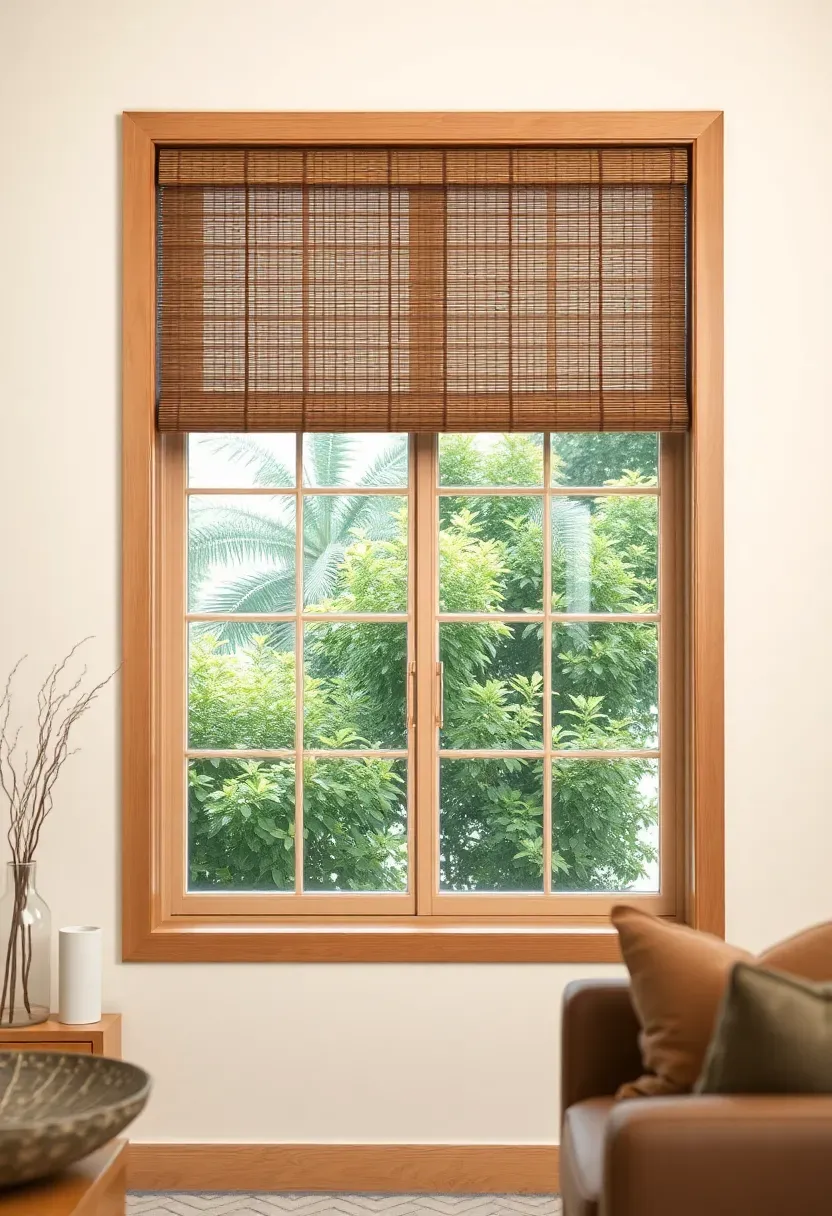
Hyper-realistic view of large window in rustic minimalist living room with simple natural woven wood blinds partially raised. Materials: bamboo-style woven blinds, light oak window trim, cream walls, greenery visible through glass. Natural daylight coming through window, soft shadows from blind texture. Clean composition showing window as frame for outside view. No text, no logos, interior design magazine style.</p>
Rustic minimalist living room design combines the warmth of raw natural materials with the calming clarity of simplified spaces, creating rooms that feel both grounded and effortlessly spacious. This design philosophy embraces the beauty of imperfection—natural wood grain, textured stone, worn leather—while eliminating unnecessary decoration that competes for attention. The result is a living space that feels authentic, livable, and deeply welcoming without sacrificing the peaceful serenity that
Prompt: Nature documentary captured on Hasselblad X2D 100C with XCD 90V lens at f/4. Hyper-realistic view of large window in rustic minimalist living room with simple natural woven wood blinds partially raised. Materials: bamboo-style woven blinds, light oak window trim, cream walls, greenery visible through glass. Natural daylight coming through window, soft shadows from blind texture. Clean composition showing window as frame for outside view. No text, no logos, interior design magazine style.

Tips

  • Mount blinds outside window frame for maximum light and view when raised
  • Choose natural materials—bamboo, grasses, reeds—over synthetic alternatives
  • Skip valances and decorative elements that add unnecessary layers
  • Consider motorization for hard-to-reach windows while maintaining clean appearance

Budget/Time: moderate investment that lasts 10+ years with quality materials

What this gives you: light control without sacrificing view or clean aesthetic

9. Woven Texture Layering

Layering woven textures—jute, sisal, seagrass, hemp—adds warmth and dimension to rustic minimalist living rooms without introducing color or pattern that competes with the room's calm simplicity. These natural fiber rugs and textiles provide tactile comfort underfoot while their subtle variations in tone and weave create visual interest that reads as sophisticated rather than busy. The key is choosing large-scale simple rugs rather than layered multiple smaller pieces, allowing one substantial woven foundation to ground the seating area while providing all the texture the room needs through materiality alone.
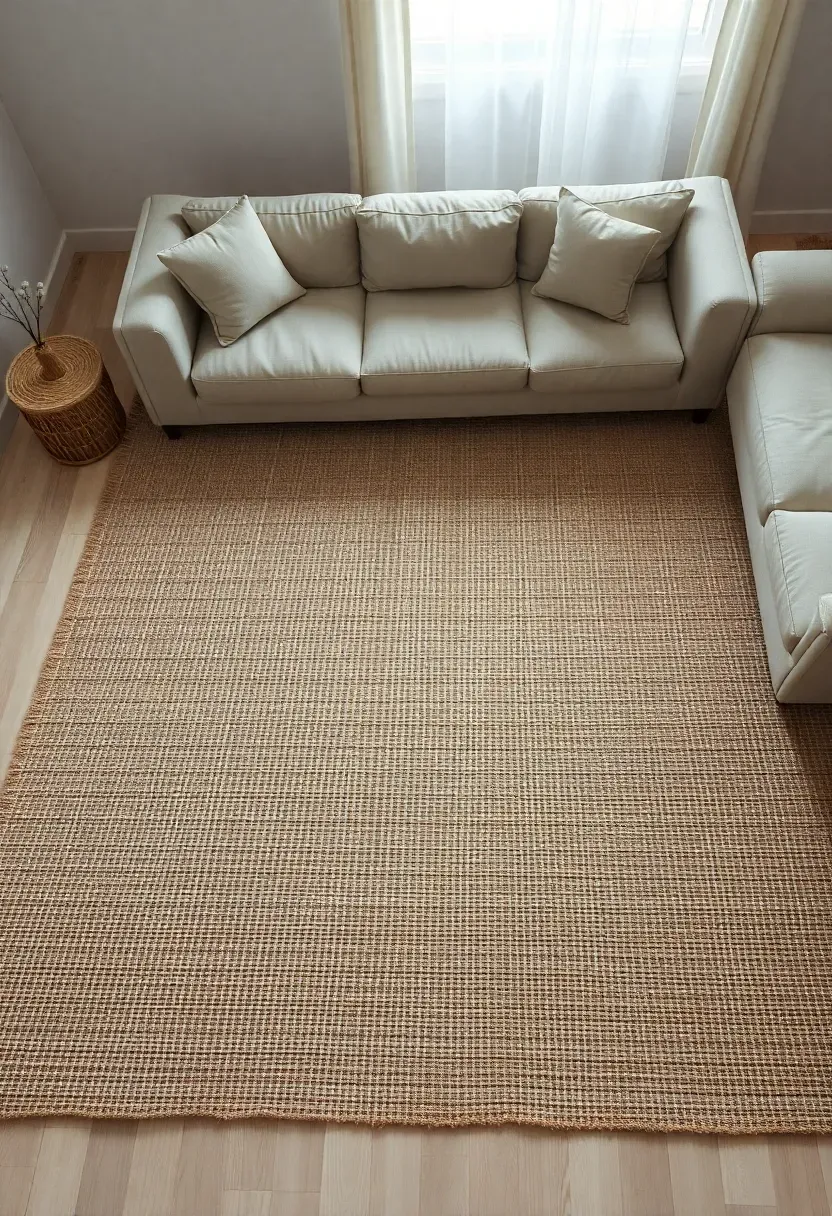
Hyper-realistic overhead view of large jute rug anchoring seating area in rustic minimalist living room. Materials: natural jute rug with subtle weave texture variation, light wood floor beyond, simple linen sofa edge visible. Soft ambient daylight. Composition showing rug as textural foundation. Focus on fiber texture and natural color variation. No text, no logos, interior design magazine style.</p>
Rustic minimalist living room design combines the warmth of raw natural materials with the calming clarity of simplified spaces, creating rooms that feel both grounded and effortlessly spacious. This design philosophy embraces the beauty of imperfection—natural wood grain, textured stone, worn leather—while eliminating unnecessary decoration that competes for attention. The result is a living space that feels authentic, livable, and deeply welcoming without sacrificing the peaceful serenity that
Prompt: Nature documentary captured on Hasselblad X2D 100C with XCD 90V lens at f/4. Hyper-realistic overhead view of large jute rug anchoring seating area in rustic minimalist living room. Materials: natural jute rug with subtle weave texture variation, light wood floor beyond, simple linen sofa edge visible. Soft ambient daylight. Composition showing rug as textural foundation. Focus on fiber texture and natural color variation. No text, no logos, interior design magazine style.

Tips

  • Choose rugs with bound edges rather than fringe for cleaner modern look
  • Size rug large enough that front legs of all seating pieces rest on it
  • Consider rug pads for comfort and to prevent slipping on smooth floors
  • Embrace natural color variations in fibers as part of rustic authenticity

Best for: living rooms with neutral palettes needing warmth without color

What this gives you: textural richness that enhances calm rather than competing with it

10. Single Statement Light Fixture

One substantial light fixture rather than multiple smaller pieces creates a stronger focal point while maintaining the minimalist principle of fewer but better elements. A large-scale pendant in natural materials—woven rattan, hand-blown glass, hammered bronze, or raw wood—becomes sculptural overhead art that provides necessary illumination while serving as the room's primary decorative element. This approach works particularly well in rooms with vaulted or exposed beam ceilings, where a substantial fixture can hang at dramatic height without feeling overpowering, creating a vertical focal point that draws the eye upward.
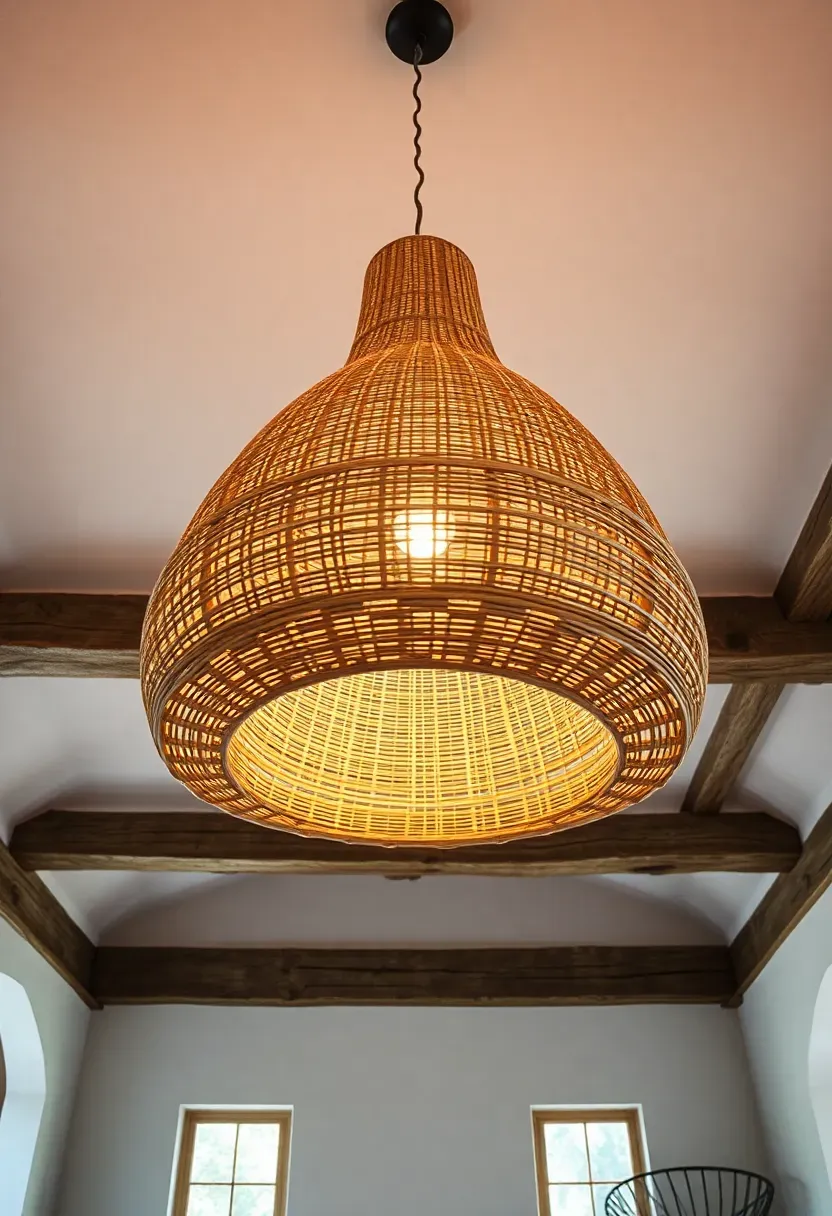
Hyper-realistic view looking up at large-scale woven rattan pendant light in rustic minimalist living room with exposed beam ceiling. Materials: natural rattan dome shade, warm bulb glow visible, rough oak beams, white plaster ceiling. Ambient lighting from fixture creating warm glow overhead. Architectural composition with fixture as dominant ceiling element. No text, no logos, lighting design magazine style.</p>
Rustic minimalist living room design combines the warmth of raw natural materials with the calming clarity of simplified spaces, creating rooms that feel both grounded and effortlessly spacious. This design philosophy embraces the beauty of imperfection—natural wood grain, textured stone, worn leather—while eliminating unnecessary decoration that competes for attention. The result is a living space that feels authentic, livable, and deeply welcoming without sacrificing the peaceful serenity that
Prompt: Nature documentary captured on Hasselblad X2D 100C with XCD 90V lens at f/4. Hyper-realistic view looking up at large-scale woven rattan pendant light in rustic minimalist living room with exposed beam ceiling. Materials: natural rattan dome shade, warm bulb glow visible, rough oak beams, white plaster ceiling. Ambient lighting from fixture creating warm glow overhead. Architectural composition with fixture as dominant ceiling element. No text, no logos, lighting design magazine style.

Tips

  • Size fixture generously—typical rule: diameter in inches equals room width in feet divided by two
  • Hang bottom of fixture 60-66 inches above floor for dining, 68-72 inches for living areas
  • Put fixture on dimmer for adjustable ambiance from bright task light to soft glow
  • Skip additional table lamps if fixture provides sufficient ambient light

Placement note: center fixture over main seating area or coffee table

What this gives you: sculptural overhead element that provides all necessary illumination

11. Low-Profile Furniture

Choosing low-profile furniture—sofas and chairs with lower seat heights and backs—makes ceilings feel higher and rooms feel more spacious while maintaining a casual relaxed comfort that suits rustic minimalist aesthetics. This approach works particularly well in rooms with architectural features like exposed beams or vaulted ceilings, where lower furniture creates dramatic vertical proportion and emphasizes the room's height overhead. Low-profile pieces also feel more modern and less formal, supporting the casual authenticity that defines rustic minimalism while maintaining clean simplified silhouettes.
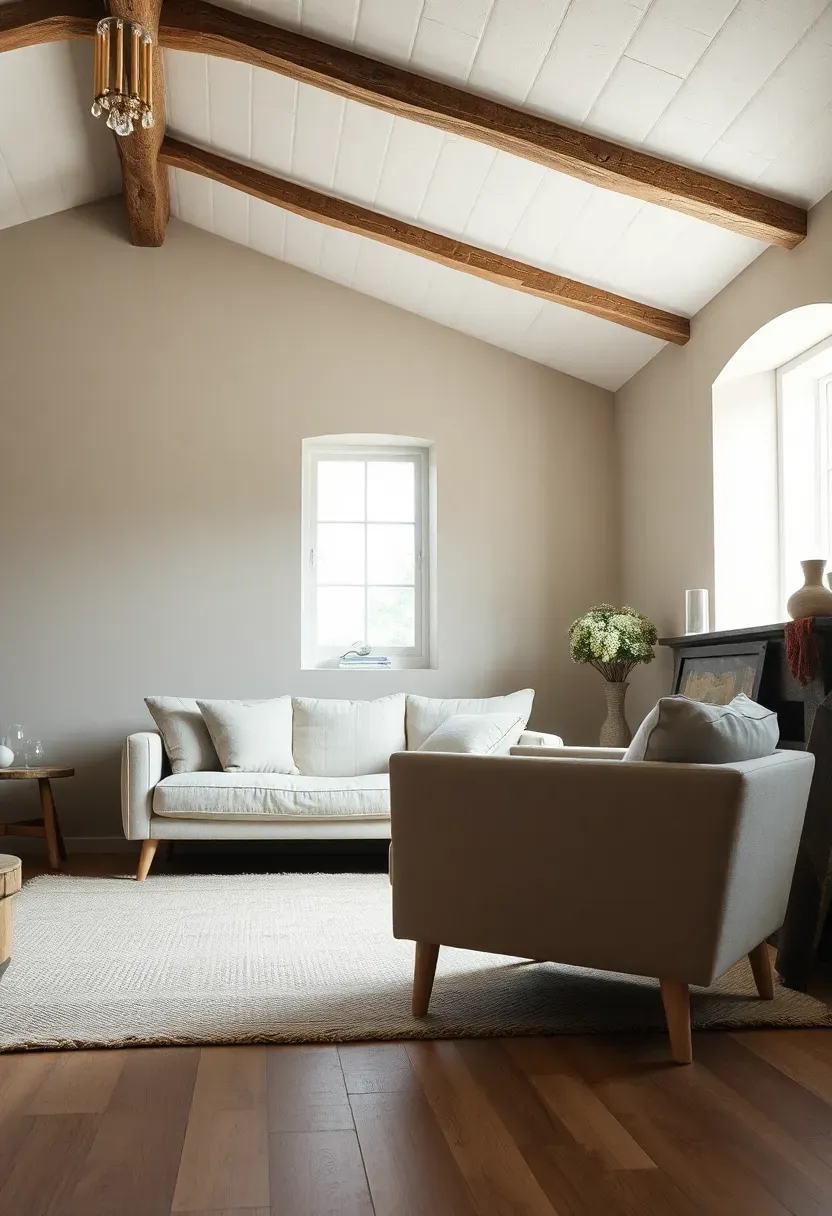
Hyper-realistic 3/4 view of low-profile linen sofa and low-slung armchair in rustic minimalist living room with vaulted ceiling. Materials: cream linen upholstery, light wood furniture legs, exposed beam ceiling above, wool rug. Natural daylight from window. Composition showing furniture scale relative to room height. Clean lines with relaxed comfortable appearance. No text, no logos, interior design magazine style.</p>
Rustic minimalist living room design combines the warmth of raw natural materials with the calming clarity of simplified spaces, creating rooms that feel both grounded and effortlessly spacious. This design philosophy embraces the beauty of imperfection—natural wood grain, textured stone, worn leather—while eliminating unnecessary decoration that competes for attention. The result is a living space that feels authentic, livable, and deeply welcoming without sacrificing the peaceful serenity that
Prompt: Nature documentary captured on Hasselblad X2D 100C with XCD 90V lens at f/4. Hyper-realistic 3/4 view of low-profile linen sofa and low-slung armchair in rustic minimalist living room with vaulted ceiling. Materials: cream linen upholstery, light wood furniture legs, exposed beam ceiling above, wool rug. Natural daylight from window. Composition showing furniture scale relative to room height. Clean lines with relaxed comfortable appearance. No text, no logos, interior design magazine style.

Tips

  • Measure seat height—anything under 32 inches reads as low-profile and modern
  • Consider comfort carefully—very low sofas can be difficult for some to get up from
  • Balance low furniture with some vertical elements like lamps or tall plants
  • Keep backs relatively low to maintain sightlines and spacious feeling

Best for: living rooms with high ceilings or architectural overhead features

What this gives you: enhanced feeling of space and ceiling height

12. Indoor Plant Integration

Large-scale indoor plants bring living organic elements into rustic minimalist living rooms, providing natural sculpture that enlivens spaces without adding clutter or requiring additional decorative objects. The key is choosing fewer but larger plants rather than many small ones—a dramatic fiddle leaf fig, architectural snake plant, or substantial tree provides more impact while maintaining minimalist simplicity. Plants in simple terracotta or neutral ceramic pots add life and movement through natural growth while connecting the interior to nature outside, reinforcing the organic authenticity that makes rustic minimalism feel grounded and real.
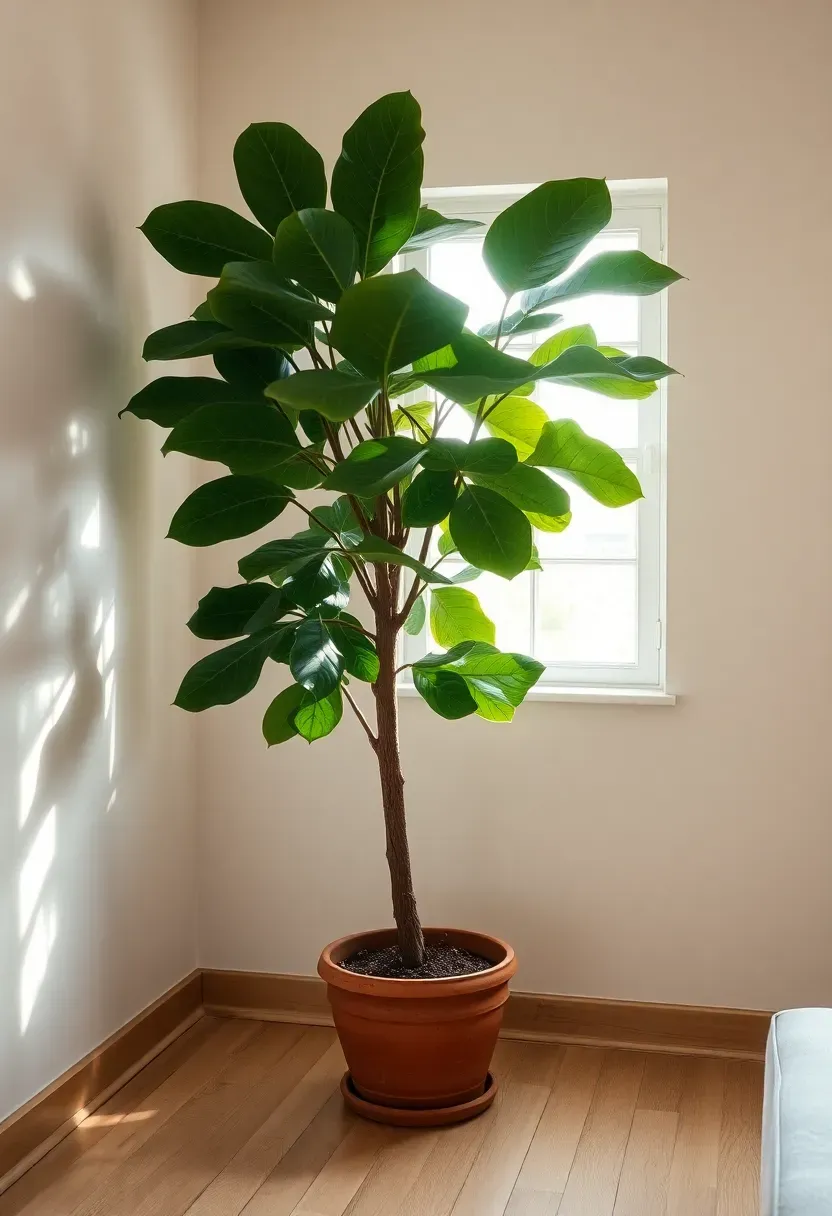
Hyper-realistic corner view of large fiddle leaf fig tree in rustic minimalist living room near window. Materials: tree with substantial trunk and large glossy leaves, simple terracotta pot, light oak floor, cream walls, window with soft daylight. Composition showing plant as living sculpture in corner. Natural shadows through leaves. No text, no logos, interior lifestyle magazine style.</p>
Rustic minimalist living room design combines the warmth of raw natural materials with the calming clarity of simplified spaces, creating rooms that feel both grounded and effortlessly spacious. This design philosophy embraces the beauty of imperfection—natural wood grain, textured stone, worn leather—while eliminating unnecessary decoration that competes for attention. The result is a living space that feels authentic, livable, and deeply welcoming without sacrificing the peaceful serenity that
Prompt: Nature documentary captured on Hasselblad X2D 100C with XCD 90V lens at f/4. Hyper-realistic corner view of large fiddle leaf fig tree in rustic minimalist living room near window. Materials: tree with substantial trunk and large glossy leaves, simple terracotta pot, light oak floor, cream walls, window with soft daylight. Composition showing plant as living sculpture in corner. Natural shadows through leaves. No text, no logos, interior lifestyle magazine style.

Tips

  • Choose plants suited to your actual light conditions—most living rooms have medium light
  • Consider tree-scale plants for drama rather than many small tabletop plants
  • Keep pots simple and neutral—terracotta, white ceramic, or natural wood
  • Group plants in odd numbers for more natural, less designed appearance

Avoid if: you travel frequently or struggle with plant care

What this gives you: living sculpture that brings nature indoors organically

13. Hidden Storage Solutions

Rustic minimalism requires clever hidden storage that maintains calm clutter-free surfaces while providing practical places to stash everyday items. Built-in window seats with storage beneath, ottomans that open, coffee tables with drawers, and consoles with cabinet fronts all provide function without disrupting visual simplicity. The key is choosing storage that reads as furniture or architecture rather than obvious storage pieces—upholstered cubes, wood chests, or closed cabinets that blend with walls maintain the room's serene appearance while hiding the necessary objects of daily life completely from view.
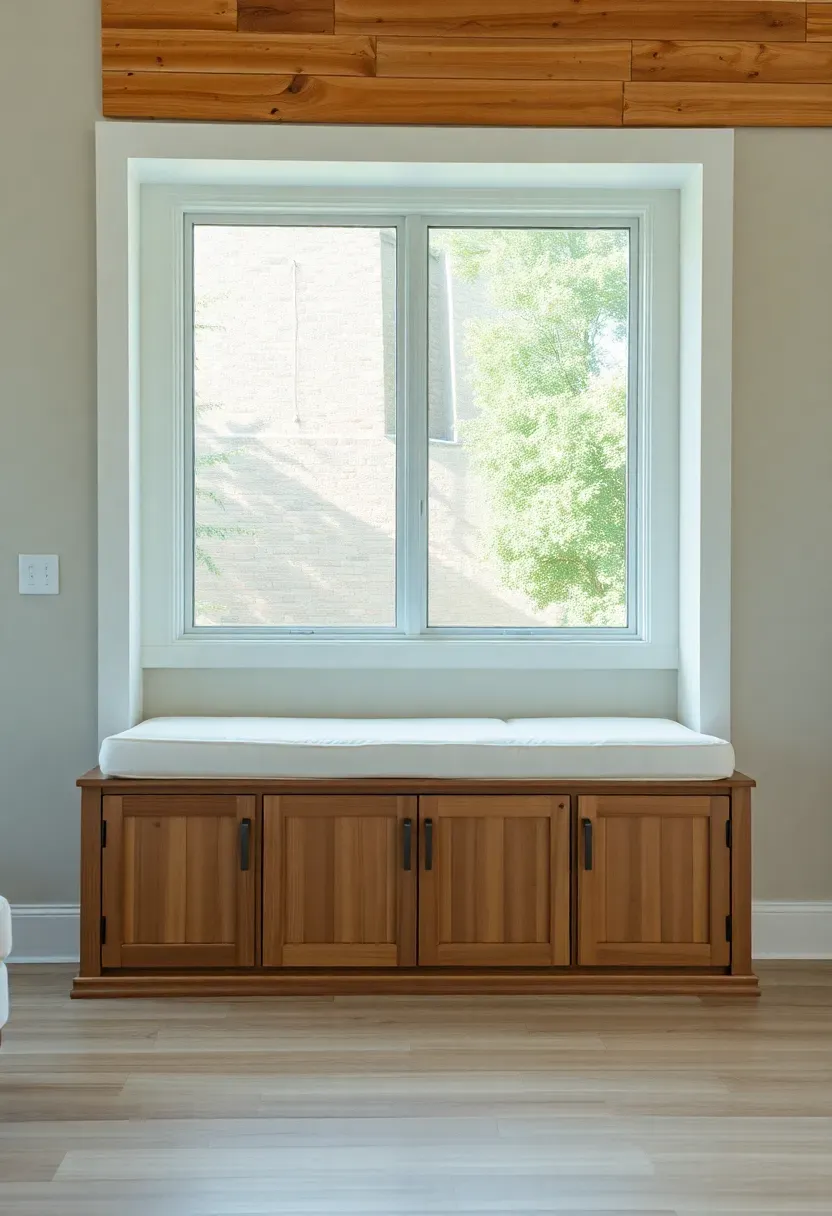
Hyper-realistic view of built-in window seat with storage beneath in rustic minimalist living room. Materials: white upholstered seat cushion, wood base with paneling showing storage doors, reclaimed wood wall behind, natural daylight streaming through window. Clean composition showing seat as both seating and storage. No visible clutter or contents. No text, no logos, interior design magazine style.</p>
Rustic minimalist living room design combines the warmth of raw natural materials with the calming clarity of simplified spaces, creating rooms that feel both grounded and effortlessly spacious. This design philosophy embraces the beauty of imperfection—natural wood grain, textured stone, worn leather—while eliminating unnecessary decoration that competes for attention. The result is a living space that feels authentic, livable, and deeply welcoming without sacrificing the peaceful serenity that
Prompt: Nature documentary captured on Hasselblad X2D 100C with XCD 90V lens at f/4. Hyper-realistic view of built-in window seat with storage beneath in rustic minimalist living room. Materials: white upholstered seat cushion, wood base with paneling showing storage doors, reclaimed wood wall behind, natural daylight streaming through window. Clean composition showing seat as both seating and storage. No visible clutter or contents. No text, no logos, interior design magazine style.

Tips

  • Choose hardware that's minimal or push-latch for cleaner appearance
  • Consider soft-close hinges to prevent slamming and maintain serenity
  • Size ottomans generously so they feel intentional rather than afterthought
  • Design window seats with 18-21 inch seat height for comfortable sitting

Best for: families or anyone with abundant belongings to hide

What this gives you: clutter-free calm without sacrificing practical storage

14. Monochromatic Wood Tones

Keeping all wood elements in similar tones creates visual harmony and sophistication in rustic minimalist living rooms, allowing texture and grain variation to provide interest rather than contrasting colors. Whether choosing all light oak, all walnut, or all reclaimed barn wood, the monochromatic approach feels more intentional and curated while maintaining the warmth that natural wood provides. This strategy works particularly well when mixing different wood elements—floors, beams, furniture, trim—because the consistent tone creates flow even as different pieces and construction methods add authentic character through variation.
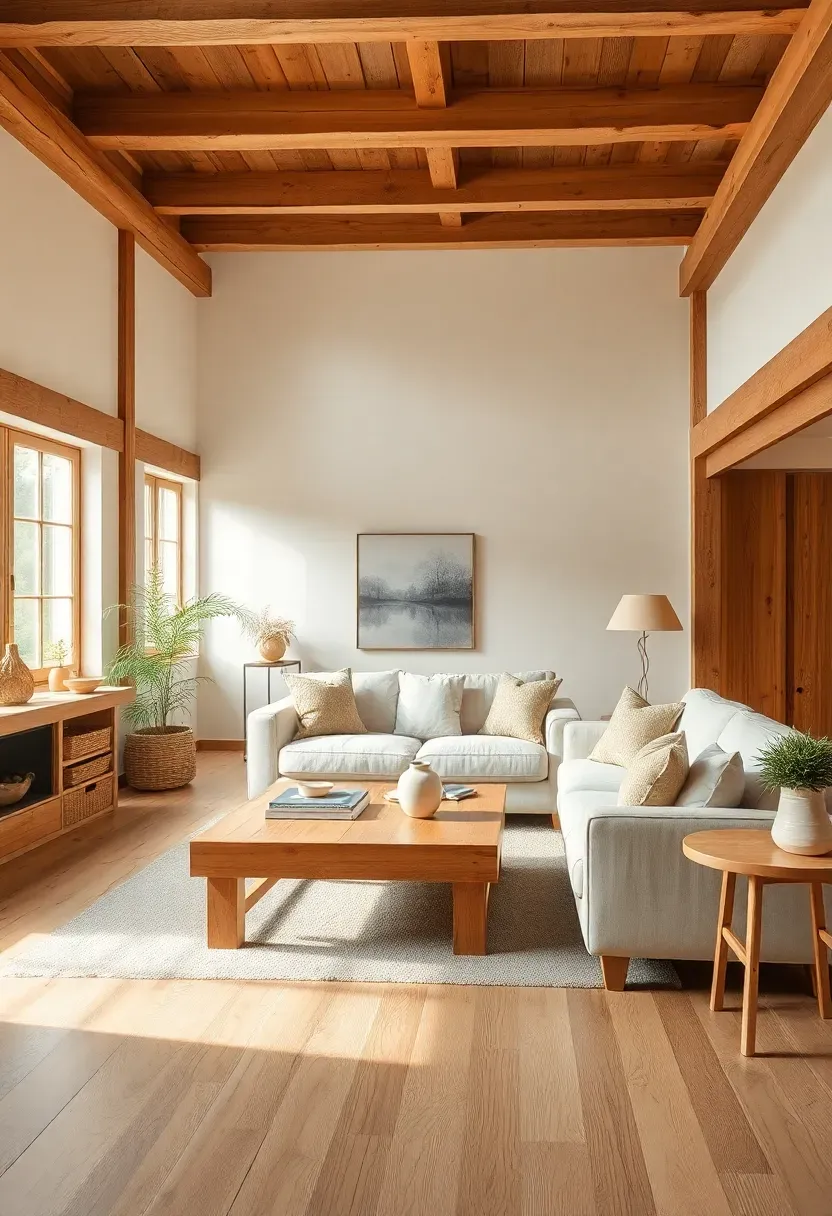
Hyper-realistic wide view of rustic minimalist living room with all wood elements in similar light oak tone. Materials: light oak floor, exposed oak beams, oak coffee table, oak side table, cream linen sofa. Natural daylight from windows. Composition showing wood harmony throughout. Clean edited spaces with wood tones as consistent element. No text, no logos, interior design magazine style.</p>
Rustic minimalist living room design combines the warmth of raw natural materials with the calming clarity of simplified spaces, creating rooms that feel both grounded and effortlessly spacious. This design philosophy embraces the beauty of imperfection—natural wood grain, textured stone, worn leather—while eliminating unnecessary decoration that competes for attention. The result is a living space that feels authentic, livable, and deeply welcoming without sacrificing the peaceful serenity that
Prompt: Nature documentary captured on Hasselblad X2D 100C with XCD 90V lens at f/4. Hyper-realistic wide view of rustic minimalist living room with all wood elements in similar light oak tone. Materials: light oak floor, exposed oak beams, oak coffee table, oak side table, cream linen sofa. Natural daylight from windows. Composition showing wood harmony throughout. Clean edited spaces with wood tones as consistent element. No text, no logos, interior design magazine style.

Tips

  • Bring wood samples when shopping to compare tones in your actual lighting
  • Consider staining existing wood to match new pieces for cohesive appearance
  • Don't worry about exact matching—variation in grain and finish adds authenticity
  • Keep undertones consistent—avoid mixing red-toned and yellow-toned woods

Best for: rooms mixing multiple wood elements from different sources

What this gives you: sophisticated cohesion through material consistency

15. Raw Wood Console

A raw wood console table behind a sofa or against a wall provides essential surface space and storage while adding substantial organic character through natural materials and handcrafted construction. Whether featuring rough-hewn planks, natural edge details, or visible joinery, the console becomes both functional piece and sculptural element that provides warmth and authenticity without requiring additional decoration above or around it. This approach works particularly well in open floor plans where the console helps define the living area from adjacent spaces while maintaining flow through its airy, simplified design.
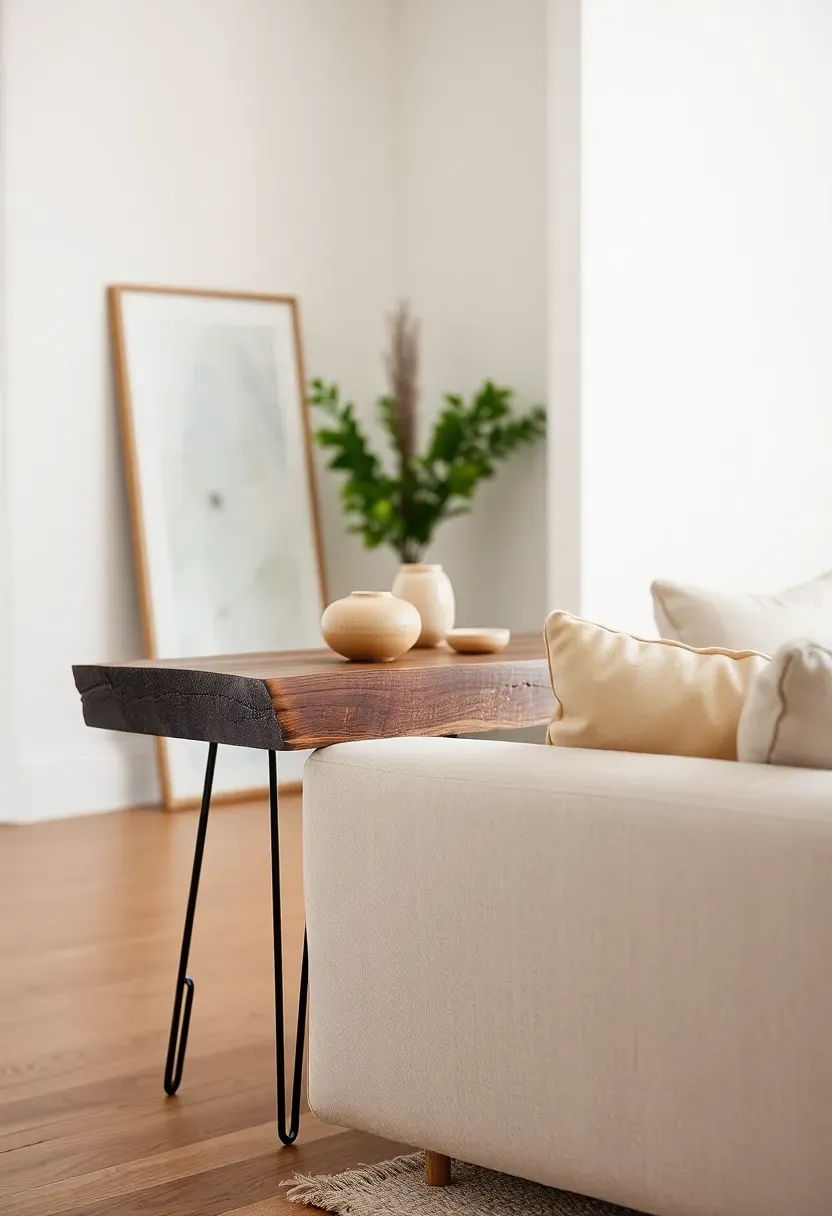
Hyper-realistic 3/4 view of raw wood console table behind linen sofa in rustic minimalist living room. Materials: rough-hewn walnut console with natural edge, hairpin legs, cream linen sofa back, minimal ceramic objects and lamp on console surface. Soft ambient daylight. Composition showing console as textural accent. Shallow depth of field. No text, no logos, interior design magazine style.</p>
Rustic minimalist living room design combines the warmth of raw natural materials with the calming clarity of simplified spaces, creating rooms that feel both grounded and effortlessly spacious. This design philosophy embraces the beauty of imperfection—natural wood grain, textured stone, worn leather—while eliminating unnecessary decoration that competes for attention. The result is a living space that feels authentic, livable, and deeply welcoming without sacrificing the peaceful serenity that
Prompt: Nature documentary captured on Hasselblad X2D 100C with XCD 90V lens at f/4. Hyper-realistic 3/4 view of raw wood console table behind linen sofa in rustic minimalist living room. Materials: rough-hewn walnut console with natural edge, hairpin legs, cream linen sofa back, minimal ceramic objects and lamp on console surface. Soft ambient daylight. Composition showing console as textural accent. Shallow depth of field. No text, no logos, interior design magazine style.

Tips

  • Size console approximately two-thirds the length of sofa for balanced proportion
  • Choose console with storage if you need concealed space for clutter
  • Keep surface styling minimal—one lamp, one object maximum
  • Consider caster wheels for flexibility to move as needed

Best for: defining living zones in open floor plans

What this gives you: functional surface that doubles as sculptural art

16. Simple Leather Accent

One quality leather piece—a club chair, ottoman, or cushion—adds authentic warmth and natural materiality to rustic minimalist living rooms while providing the sophisticated durability that only leather offers. The patina that develops over time tells the story of the room's use, creating character that can't be replicated with new materials. This approach works beautifully because a single leather element provides all the richness and contrast needed, making additional leather pieces unnecessary and maintaining the minimalist philosophy of restraint while celebrating authentic materials that age beautifully rather than wearing out.
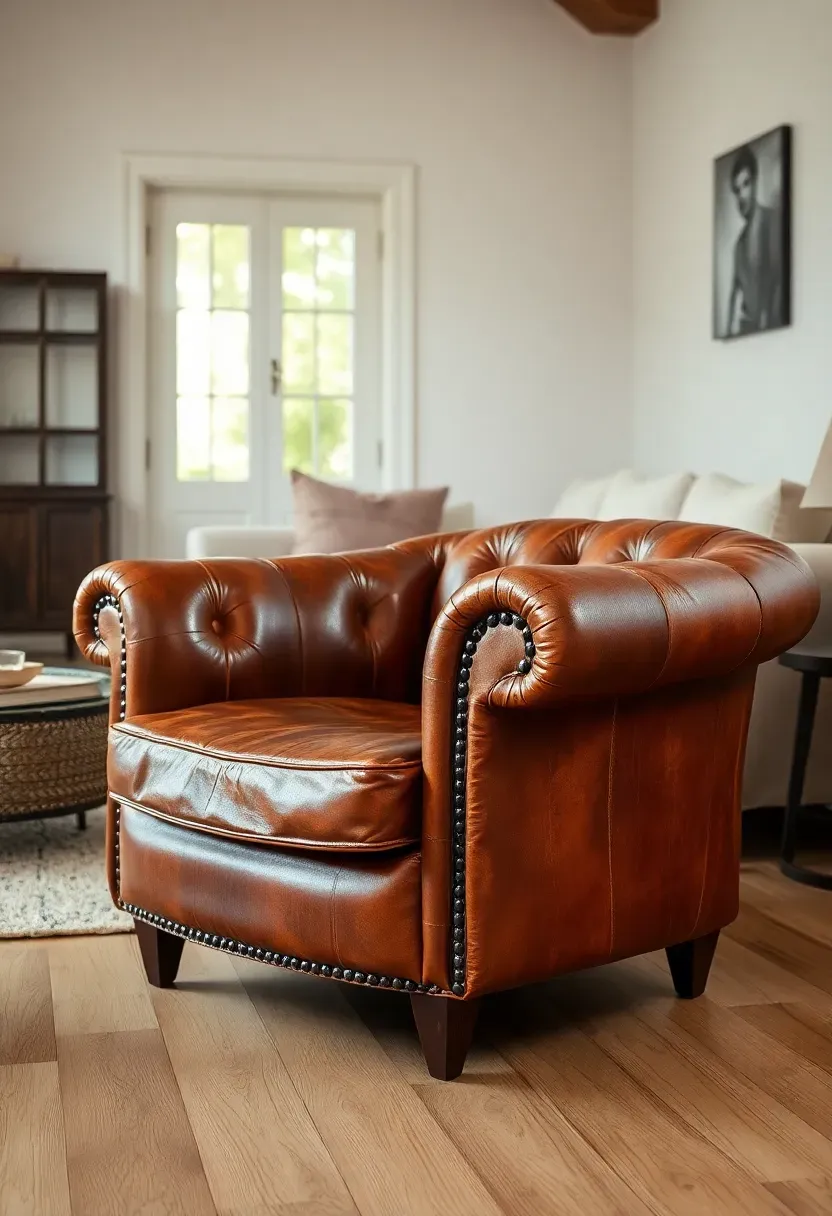
Hyper-realistic detail view of cognac leather club chair in rustic minimalist living room with light wood floor. Materials: vintage cognac leather with visible patina and character, nailhead trim, wood legs, cream linen sofa visible in background. Warm ambient daylight. Composition showing leather as rich accent material. Focus on leather texture and color. No text, no logos, furniture design magazine style.</p>
Rustic minimalist living room design combines the warmth of raw natural materials with the calming clarity of simplified spaces, creating rooms that feel both grounded and effortlessly spacious. This design philosophy embraces the beauty of imperfection—natural wood grain, textured stone, worn leather—while eliminating unnecessary decoration that competes for attention. The result is a living space that feels authentic, livable, and deeply welcoming without sacrificing the peaceful serenity that
Prompt: Nature documentary captured on Hasselblad X2D 100C with XCD 90V lens at f/4. Hyper-realistic detail view of cognac leather club chair in rustic minimalist living room with light wood floor. Materials: vintage cognac leather with visible patina and character, nailhead trim, wood legs, cream linen sofa visible in background. Warm ambient daylight. Composition showing leather as rich accent material. Focus on leather texture and color. No text, no logos, furniture design magazine style.

Tips

  • Embrace natural leather variations and imperfections as part of authentic character
  • Consider full-grain or top-grain leather for longest life and best patina development
  • Condition leather regularly to maintain suppleness and prevent cracking
  • Position leather where sunlight won't fade or dry out the leather over time

Avoid if: you prefer vegan materials or new pristine appearance

What this gives you: authentic warmth that develops character with age

17. Negative Space Emphasis

The most important principle of rustic minimalism is embracing empty space—leaving walls partially bare, allowing floors to show around rugs, keeping surfaces largely clear, and resisting the urge to fill every corner. This negative space creates breathing room that allows the room's natural materials and architectural features to shine while maintaining the calm serenity that defines minimalism. The practice of intentional emptiness feels luxurious rather than sparse, confident rather than incomplete, creating rooms that feel carefully considered rather than randomly decorated.
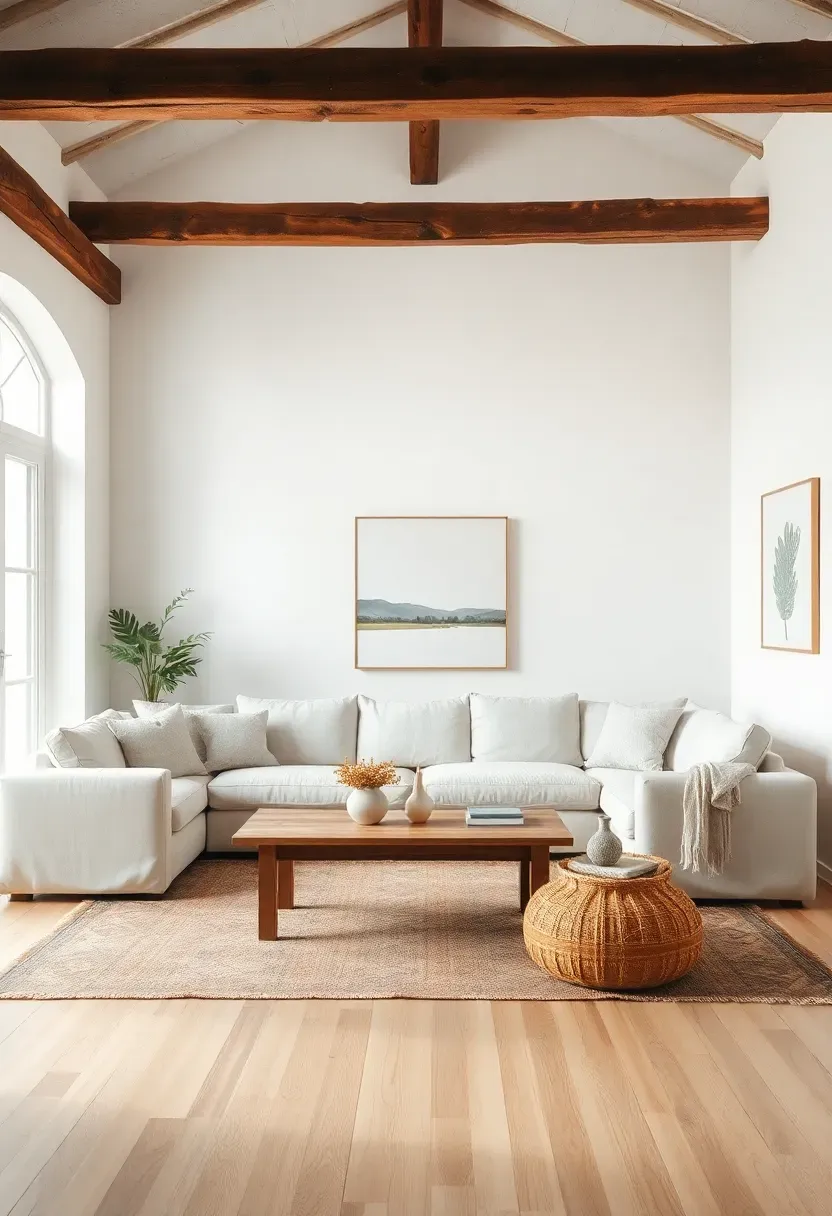
Hyper-realistic wide view of rustic minimalist living room emphasizing negative space around furniture. Materials: cream linen sofa, wood coffee table, exposed beams, light oak floor showing around rug edges, white walls with minimal art. Natural daylight from large windows. Clean composition showing generous empty space around furniture. No clutter, minimal accessories. No text, no logos, architectural interior magazine style.</p>
Rustic minimalist living room design combines the warmth of raw natural materials with the calming clarity of simplified spaces, creating rooms that feel both grounded and effortlessly spacious. This design philosophy embraces the beauty of imperfection—natural wood grain, textured stone, worn leather—while eliminating unnecessary decoration that competes for attention. The result is a living space that feels authentic, livable, and deeply welcoming without sacrificing the peaceful serenity that
Prompt: Nature documentary captured on Hasselblad X2D 100C with XCD 90V lens at f/4. Hyper-realistic wide view of rustic minimalist living room emphasizing negative space around furniture. Materials: cream linen sofa, wood coffee table, exposed beams, light oak floor showing around rug edges, white walls with minimal art. Natural daylight from large windows. Clean composition showing generous empty space around furniture. No clutter, minimal accessories. No text, no logos, architectural interior magazine style.

Tips

  • Leave at least 30 inches of walkway clearance around main seating pieces
  • Keep some walls entirely bare rather than filling every surface
  • Edit surfaces to 3-5 objects maximum rather than abundant displays
  • Resist the urge to fill corners—empty space feels intentional and confident

Placement note: negative space should feel intentional, not accidental

What this gives you: serene calm that makes the room feel larger and more luxurious

Rustic minimalist living rooms achieve the perfect balance between warm authenticity and modern simplicity, creating spaces that feel both grounded and serene, welcoming and sophisticated. By focusing on quality natural materials, editing ruthlessly, and embracing negative space, these rooms provide sanctuary from visual overload while maintaining the cozy comfort that makes living rooms truly livable. The 17 ideas demonstrated here show how less truly becomes more when every material, every piece, and every empty space is intentional—resulting in rooms that feel timeless rather than trendy, authentic rather than decorated, and genuinely welcoming rather than merely impressive. Whether starting from scratch or gradually editing an existing room, the principles of rustic minimalism offer a path to living spaces that nurture calm while celebrating the beauty of natural materials and honest construction.

Pinterest cover for 17 Rustic Minimalist Living Room Ideas: Cozy Simplicity That Create a Welcoming Living Room