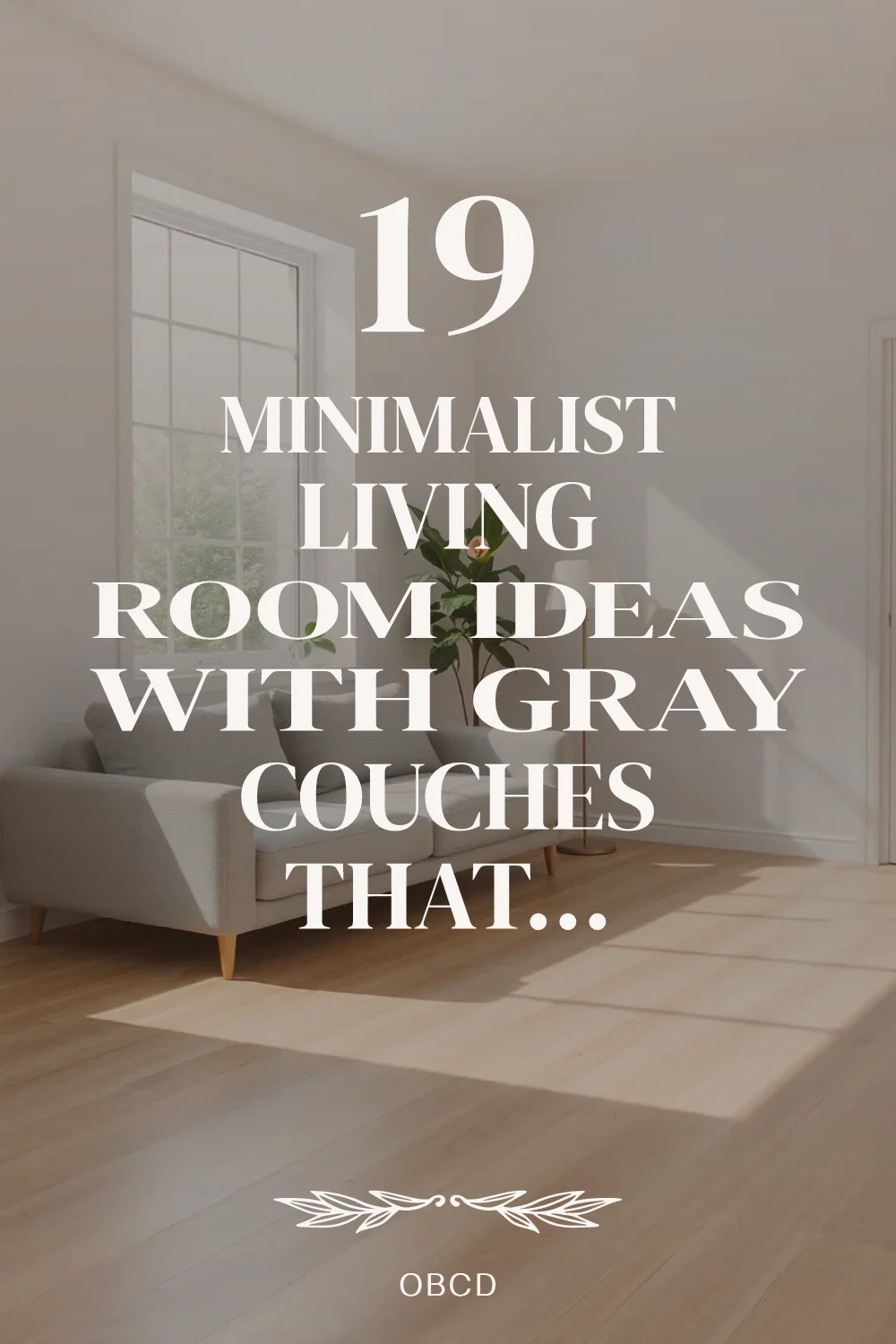
19 Minimalist Living Room Ideas with a Gray Couch (Renter-Friendly)
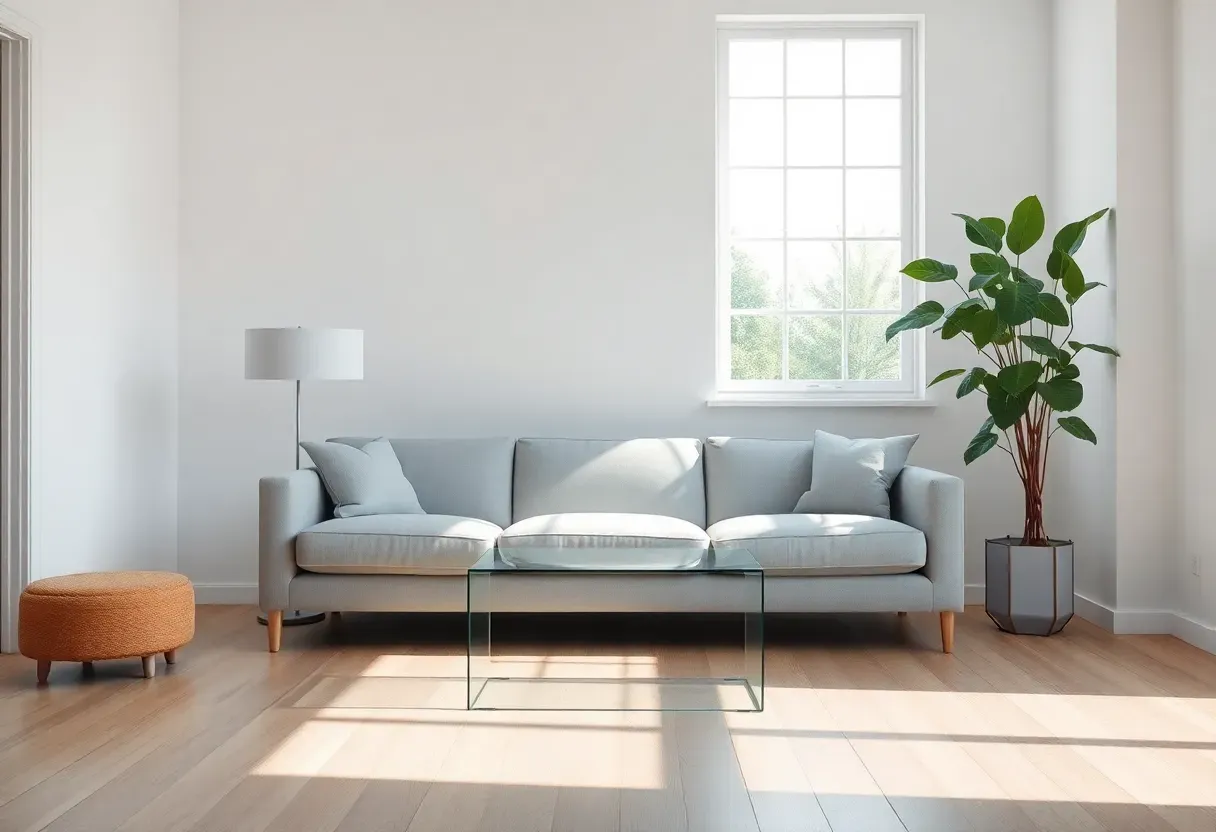
A minimalist living room with a gray couch is one of the easiest ways to create a serene yet welcoming space, especially in a rental apartment where permanent changes are off the table. Gray anchors a room without overwhelming the senses, giving you a calming backdrop that invites relaxation while keeping your decor sophisticated and clutter-free.
Neutral color palettes centered around gray upholstery open up endless possibilities for layering textures and subtle accents on a budget. Whether you lean toward warm charcoal or cool dove gray, these sofas bring understated elegance that adapts to Scandinavian, Japandi, or modern styles without a single nail hole in the wall.
The key to gray sofa living room decor lies in balancing the couch with thoughtful elements—warm wood tones, soft textiles, and strategic lighting—that transform austerity into comfort. These 19 renter-friendly ideas demonstrate how restraint and warmth can coexist, proving that minimalist design never means sacrificing hospitality.
Quick FAQ
Why choose a gray couch for a minimalist living room?
Gray is inherently neutral, providing a versatile backdrop that works with any color scheme while maintaining visual calm. It's sophisticated yet understated, perfect for minimalist aesthetics that prioritize simplicity over bold statements.
How do I keep a gray couch from making the room feel cold?
Introduce warm wood tones, layered textiles, and ambient lighting. Natural materials like jute, wool, and linen add warmth, while metallic accents in brass or copper reflect light and create cozy depth against gray upholstery.
What colors work best with gray sofas in minimalist spaces?
White walls create crisp contrast, while black adds graphic sophistication. Earth tones like beige, tan, and terracotta bring warmth. For subtle color, consider sage green or dusty blue accents that maintain the serene palette.
Should I choose a light or dark gray couch?
Light gray (dove, pearl) makes small spaces feel larger and airier, while dark gray (charcoal, slate) adds drama and coziness. Consider your room's natural light—lighter grays brighten dark rooms, darker grays ground bright spaces.
How do I style a gray couch without making it look cluttered?
Limit accessories to 2-3 carefully chosen pieces. A single throw blanket, two textured pillows, and one statement side table maintain minimalist principles while adding personality. Edit ruthlessly—every item should earn its place.
What rug styles complement gray sofas in minimalist rooms?
Natural fiber rugs like jute or sisal add organic texture. For softness, choose solid wool or low-pile cotton in neutral tones. Avoid busy patterns—simple geometric or border designs maintain the clean aesthetic while defining the seating area.
As an Amazon Associate I earn from qualifying purchases.
Table of Contents
- 1. Light Gray Couch with White Walls for a Bright, Airy Room
- 2. Charcoal with Warm Wood
- 3. Dove Gray with Black Accents
- 4. Gray Sectional in an Open-Concept Layout
- 5. Gray with Natural Light
- 6. Textured Gray Upholstery
- 7. Low-Profile Gray Sofa
- 8. Gray Couch with Indoor Plants for a Biophilic Touch
- 9. Monochromatic Gray Scheme
- 10. Gray Couch with Art Wall
- 11. Scandinavian-Inspired Gray Sofa Styling
- 12. Gray with Leather Accents
- 13. Floating Gray Sofa
- 14. Gray with Brick Wall
- 15. Two-Toned Gray
- 16. Gray with Metallic Touches
- 17. Curved Gray Sofa
- 18. Gray with Floor Cushions
- 19. Gray Couch Against a Dark Accent Wall
1. Light Gray Couch with White Walls for a Bright, Airy Room
A light gray couch against crisp white walls creates an effortlessly bright and airy minimalist living room that feels expansive yet intimate. This pairing maximizes natural light, making the space feel larger while maintaining the serene quality that defines minimalist design. The subtle contrast between dove gray upholstery and white walls adds depth without visual weight, creating a canvas that feels both sophisticated and approachable.
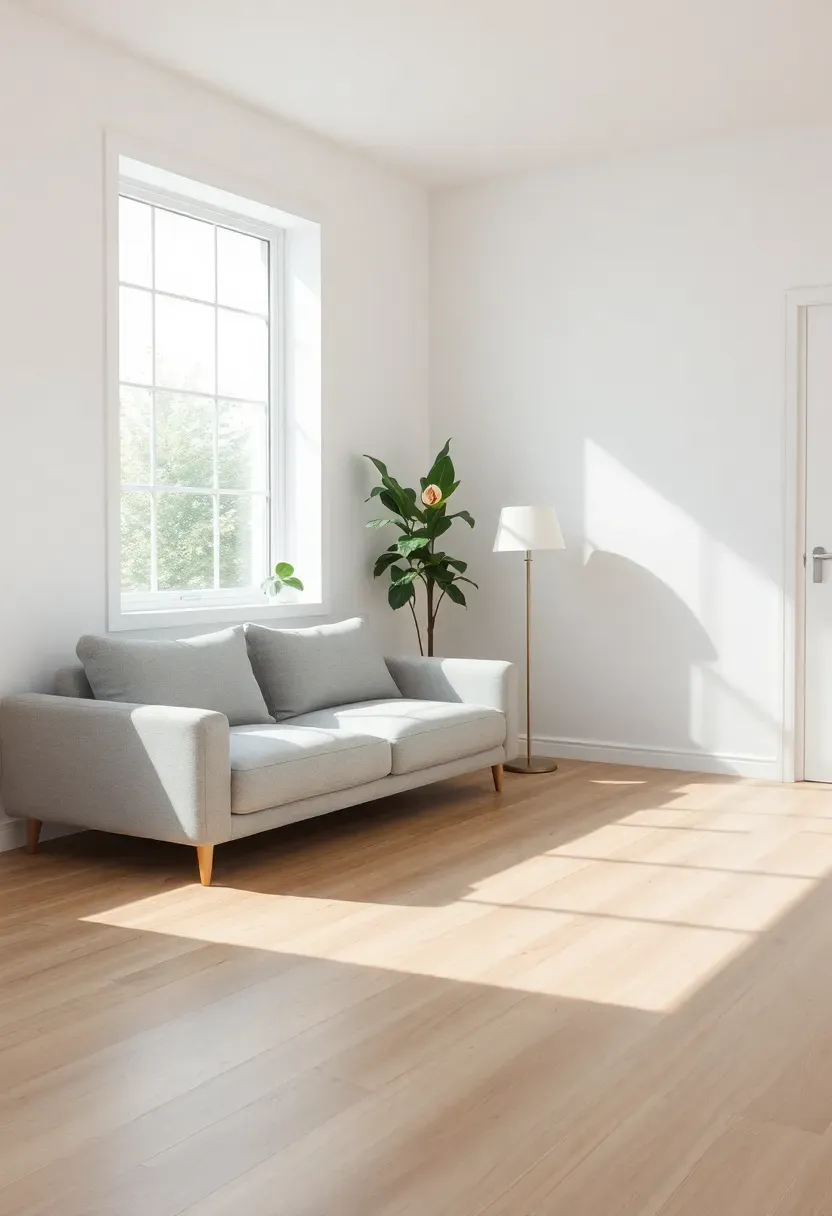
Placement note: Position the sofa perpendicular to the main window to avoid blocking light while creating a natural conversation area. Leave at least 30 inches between the sofa and coffee table for easy movement.
Layering textures becomes essential when working with such a restrained palette. A chunky knit throw in a slightly darker gray adds visual interest without introducing color, while linen pillows in off-white create subtle dimension. The key is varying textures within the same color family—this maintains the minimalist aesthetic while preventing the room from feeling flat or sterile. Natural light does the heavy lifting here, highlighting the interplay of fabrics throughout the day.
Tips
- Choose a gray with warm undertones to avoid a cold feeling against white walls
- Add a jute rug to introduce organic texture and ground the seating area
- Keep window treatments minimal or skip them entirely to maximize light
What this gives you: A bright, serene space that feels open and welcoming while maintaining minimalist purity.
We picked a few things that go well with this idea: Topfinel Corduroy Throw Pillow Covers Set of 4 (★4.7), Topfinel Striped Corduroy Gray Pillow Covers 18x18 (★4.6) and Aegero Corduroy Boho Striped Pillow Covers Pack of 2 (★4.6). As an Amazon Associate we earn from qualifying purchases.
2. Charcoal with Warm Wood
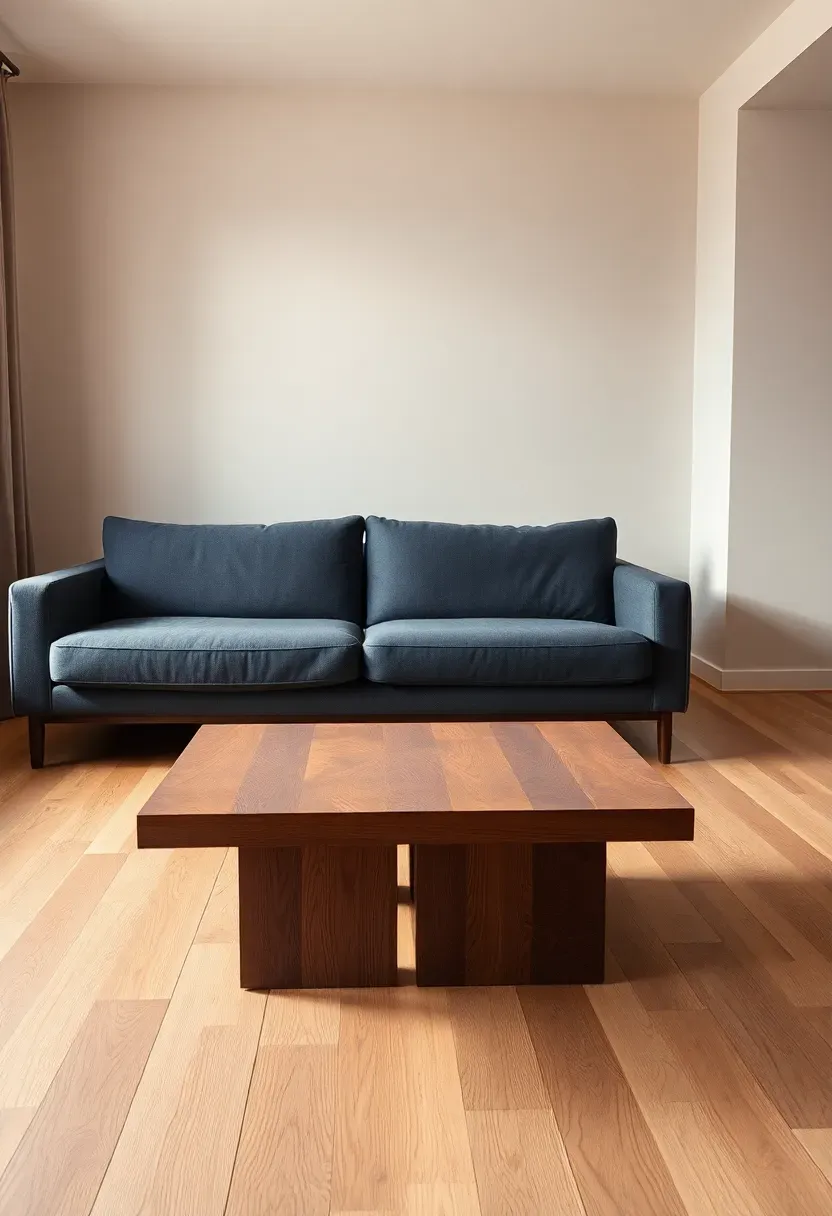
A charcoal gray couch anchored by warm wood elements creates dramatic contrast in a minimalist living room while maintaining cozy sophistication. The deep richness of charcoal upholstery provides a strong visual anchor that balances beautifully with lighter wood tones, preventing the space from feeling too austere. This combination leverages the timeless appeal of contrast—dark against light—while keeping the overall palette restrained and cohesive.
When pairing charcoal with wood, choose warm-toned varieties like walnut, mahogany, or oak with amber undertones. These woods have inherent warmth that softens the severity of dark gray, creating inviting balance. A walnut coffee table with clean lines or oak floating shelves can provide just enough wood to warm the space without cluttering it. The goal is harmony between the dark sofa and wood elements—they should feel like intentional partners in the design rather than competing elements.
Tips
- Do choose wood with visible grain patterns to add organic warmth against the sleek gray
- Don't introduce too many dark elements—let the charcoal couch be the darkest piece
- If space feels too heavy, add a light-colored area rug to brighten the floor plane
Best for: North-facing rooms or spaces with limited natural light where the warm wood counterbalances darker tones.
What this gives you: A sophisticated, grounded living room that feels dramatic yet welcoming through the interplay of dark and warm elements.
We picked a few things that go well with this idea: Scandinavian Walnut Solid Wood End Table (★4.5), Bifins Round Nesting Coffee Table Set of 3 (★4.0) and Martin Svensson Mid-Century Round Wood End Table (★4.8). As an Amazon Associate we earn from qualifying purchases.
3. Dove Gray with Black Accents
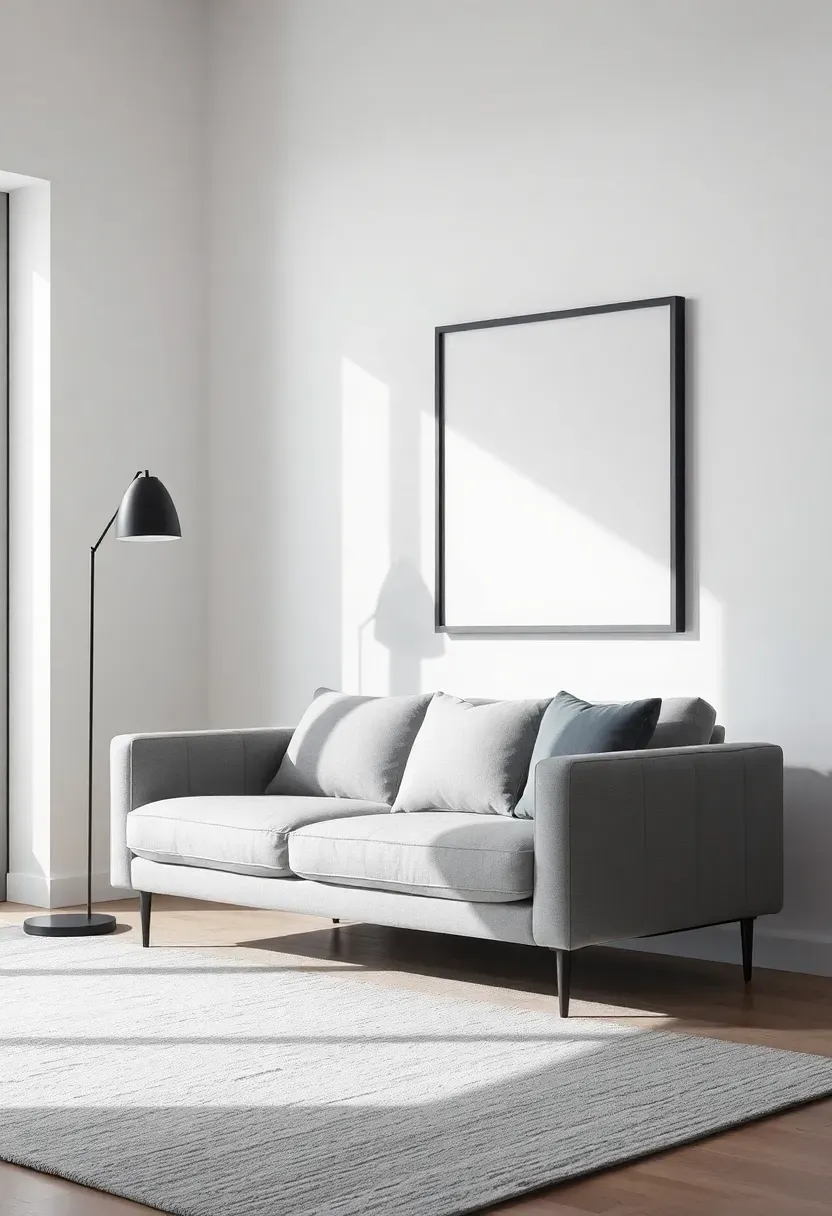
A dove gray couch layered with strategic black accents creates a graphic minimalist living room with bold sophistication. This monochromatic approach uses value contrast rather than color to create visual interest, resulting in a space that feels strikingly modern yet utterly serene. The softness of dove gray provides approachable comfort, while black elements add crisp definition and architectural strength.
Black accents should be intentional and limited—this isn't about filling the room with dark pieces, but rather placing them where they'll have maximum impact. A black floor lamp with a slender profile, a black-framed mirror or artwork, or black metal picture frames can provide the necessary contrast without overwhelming the space. The key is restraint: one or two black elements per visual field maintain the minimalist aesthetic while creating the graphic punch that makes this combination so compelling.
Tips
- If you're new to black accents, start with one piece—a lamp or frame—and assess the balance
- Then consider adding a second element, but stop before the room feels dominated by dark pieces
- Black picture frames or a black vase on the coffee table can be subtle starting points
What this gives you: A modern, graphic living space that feels curated and confident through the power of monochromatic contrast.
We picked a few things that go well with this idea: Framed 3 Piece Black White Abstract Wall Art (★4.6), Framed 2 Piece Silver Gray Mountain Abstract Art (★4.4) and Minimalist Silver Gray Abstract Framed Wall Art (★4.6). As an Amazon Associate we earn from qualifying purchases.
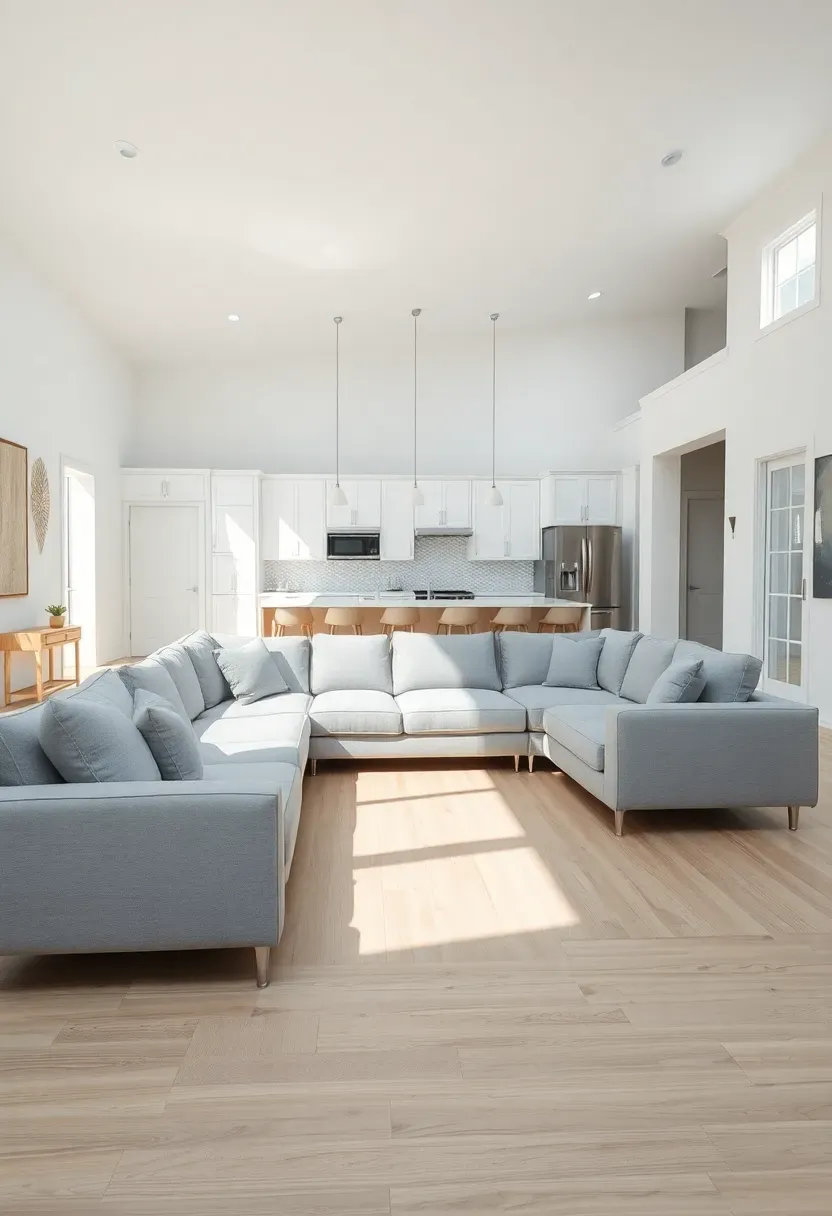
4. Gray Sectional in an Open-Concept Layout
A gray sectional sofa creates natural definition in an open-concept living room while maintaining the minimalist principle of effortless flow. In homes where the living room connects to dining or kitchen areas without walls, the sectional becomes an architectural element that subtly delineates zones without blocking sight lines or disrupting the sense of spaciousness. This approach solves the practical challenge of open layouts while honoring minimalist aesthetics.
Budget/Time: Sectionals typically cost more than standard sofas but eliminate the need for additional seating pieces, potentially balancing the budget.
When selecting a gray sectional for an open layout, prioritize low-profile designs with clean lines that don't create visual barriers. A light gray sectional can anchor the space while maintaining airiness, while darker charcoal adds weight and coziness. Position the sectional to create a natural conversation pocket, with its back floating away from walls if space allows. This placement strategy maintains the open feeling while clearly defining the living area through furniture arrangement rather than physical barriers.
Recommended
Items for this idea
Tips
- Choose a sectional with an ottoman rather than a chaise for flexibility in rearranging
- Use a rug to further define the living zone—make sure it's large enough to extend beyond the sectional
- Avoid sectionals with overstuffed cushions; sleek profiles work better in open minimalist spaces
What this gives you: A defined living area within an open floor plan that feels spacious yet intimate, solved through thoughtful furniture placement rather than walls.
5. Gray with Natural Light
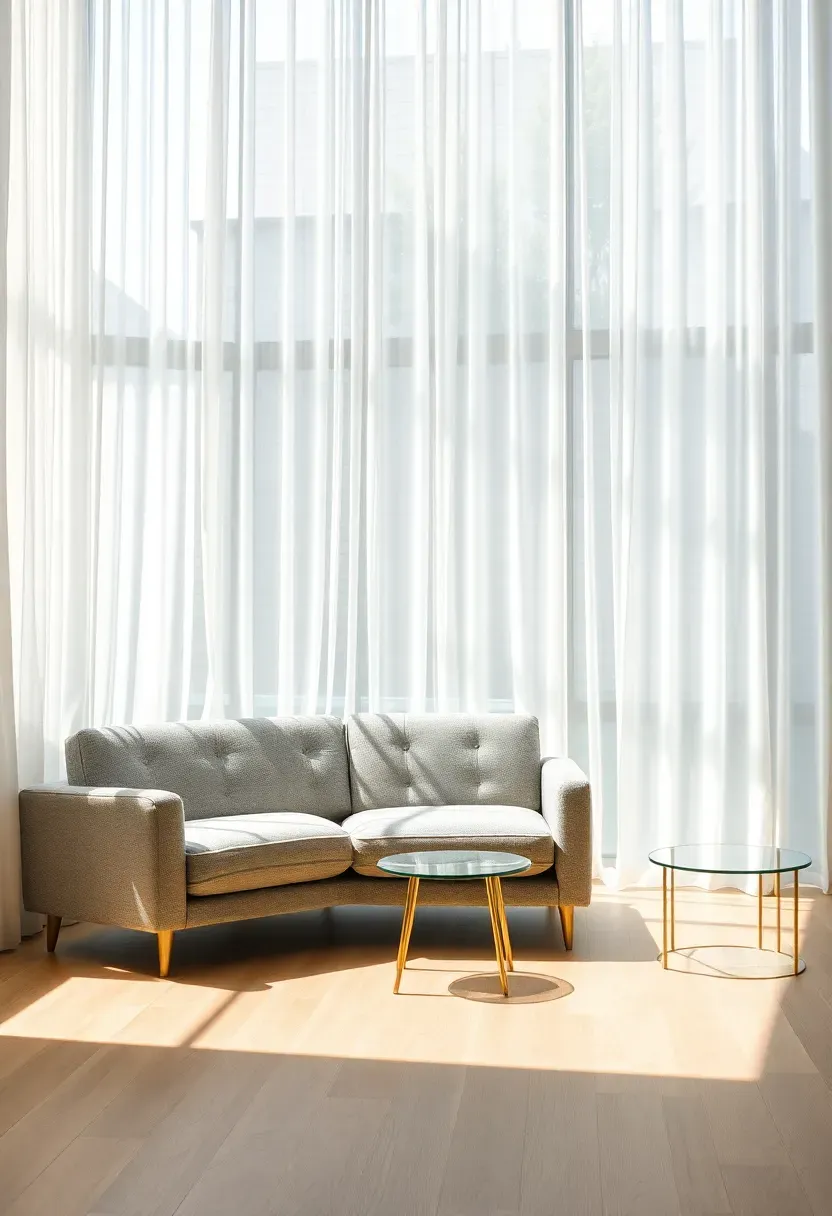
Positioning a gray couch to maximize natural light transforms the upholstery into a dynamic element that changes character throughout the day, creating a minimalist living room that feels alive and ever-evolving. Gray fabric has a unique quality—it reflects and absorbs light differently depending on the time of day and angle of sun, making the sofa itself a participant in the room's ambiance rather than just a static piece of furniture.
The magic happens when you position the sofa to capture this light play. In east-facing rooms, morning light makes gray fabric appear warmer and softer, while west-facing exposure brings golden-hour tones that deepen the color in the afternoon. South-facing rooms provide consistent bright light that keeps gray feeling fresh, while north-facing light emphasizes gray's cooler, more sophisticated qualities. Understanding your room's orientation helps you choose the perfect gray undertone—warm grays for north light, cool grays for south light.
Tips
- Do observe the sofa at different times of day before finalizing its position
- Don't place it where direct harsh sunlight will fade the fabric over time
- If light is too intense, sheer curtains filter it while maintaining brightness
What this gives you: A living room that feels dynamic and connected to natural rhythms, with the gray couch serving as a canvas for changing light throughout the day.
6. Textured Gray Upholstery
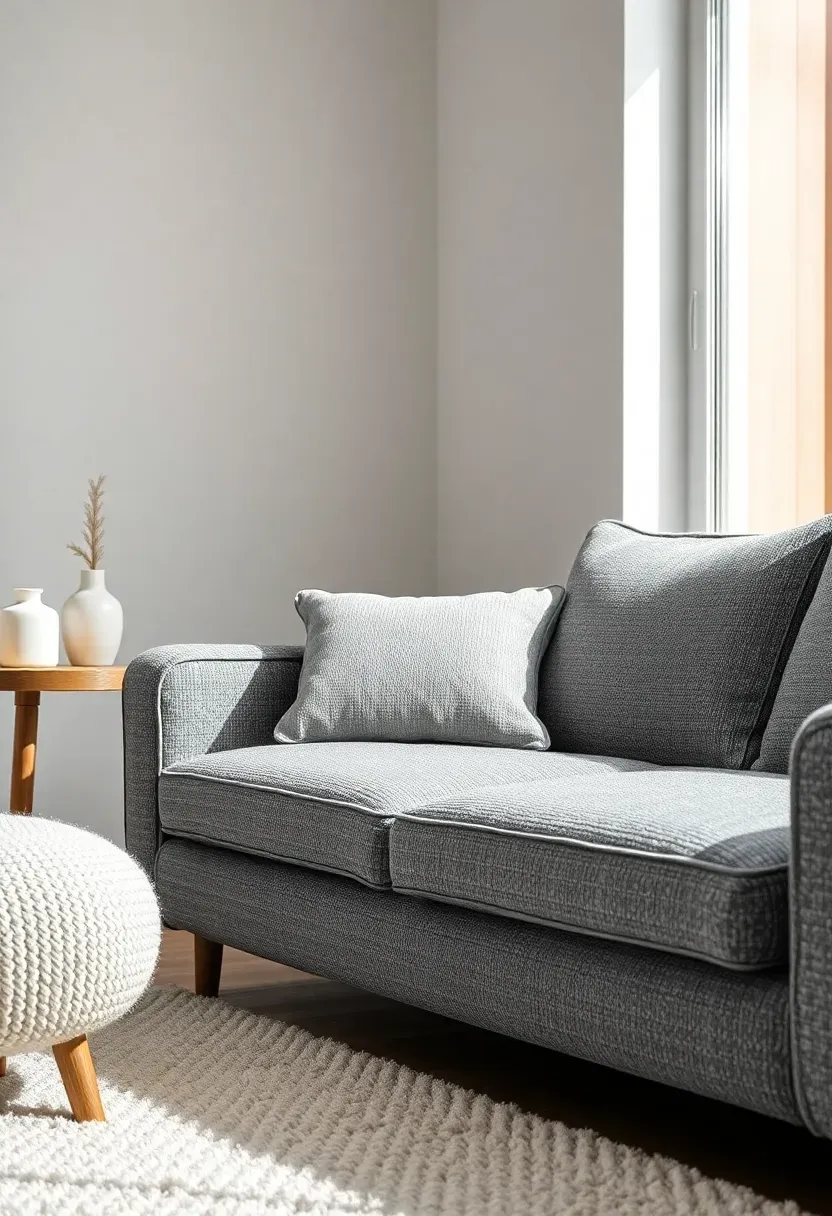
A gray couch with visible texture—whether bouclé, chenille, tweed, or corduroy—adds sensory richness to a minimalist living room without compromising the clean aesthetic. In minimalist design, where color is often restrained, texture becomes the primary vehicle for visual interest and tactile comfort. A textured gray sofa invites touch and creates depth, proving that minimalism doesn't mean minimal sensory experience.
Texture choice should align with the room's overall mood. Bouclé's looped yarn creates cozy softness perfect for casual minimalist spaces, while smooth velvet adds refined luxury. Chenille offers subtle texture that reads as sophisticated from afar but reveals complexity up close, and tweed brings casual elegance with its varied yarn patterns. The key is choosing one dominant texture per piece and allowing it to shine—avoid combining multiple textured upholstery pieces in the same room, which can feel busy despite the neutral color.
Recommended
Items for this idea
Tips
- Pro/Con: Bouclé is incredibly cozy but can trap debris—consider lifestyle before choosing
- Fix: Textured fabrics show wear less than smooth options, making them practical for high-traffic areas
- Vacuum regularly with an upholstery attachment to maintain texture and prevent matting
Avoid if: You have pets that shed—textured fabrics can be challenging to keep free of fur.
What this gives you: A minimalist living room that feels rich and inviting through tactile texture, adding depth and comfort without color or clutter.
7. Low-Profile Gray Sofa
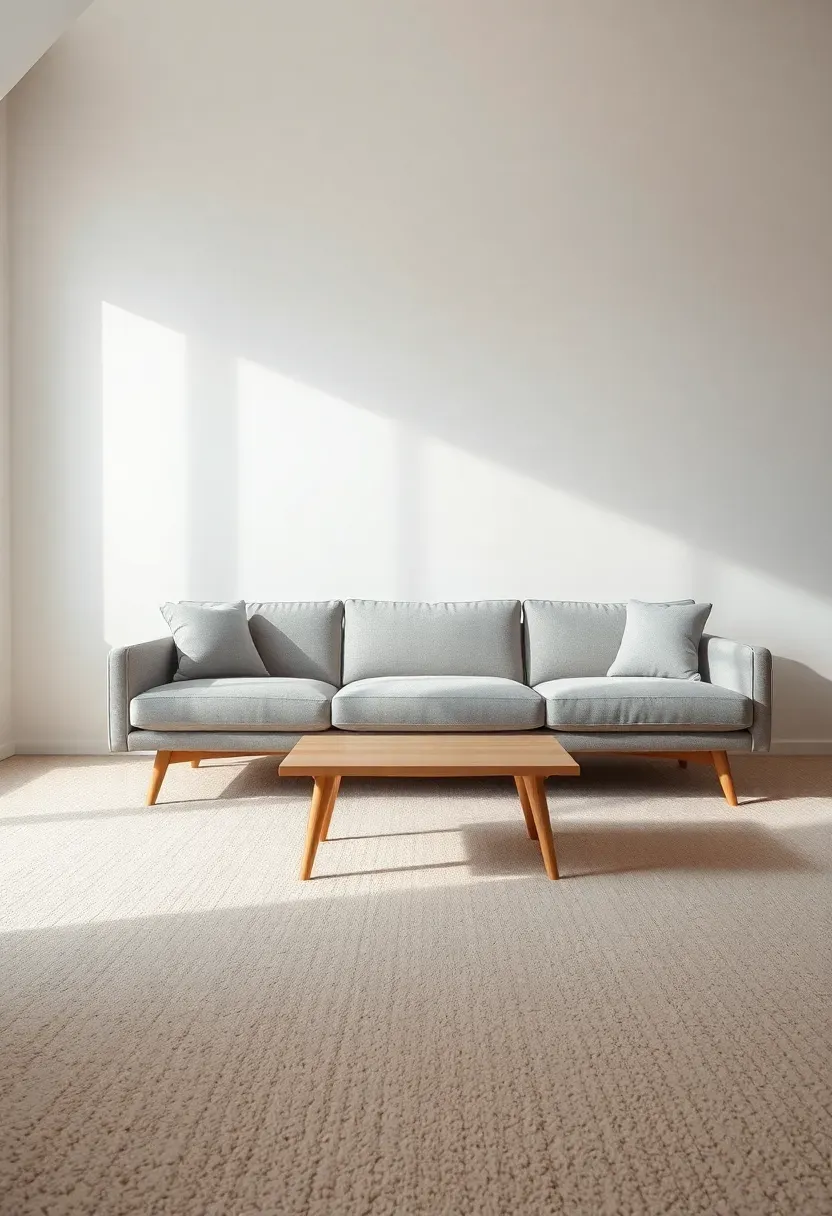
A low-profile gray couch creates visual breathing room in a minimalist living room while maintaining comfortable seating, proving that furniture height directly impacts perceived spaciousness. Low sofas—typically with seat heights around 15 inches compared to the standard 18 inches—sit closer to the ground, allowing more wall space to remain visible above them. This simple adjustment makes rooms feel larger and airier while preserving the minimalist principle of visual lightness.
Beyond the spatial benefits, low-profile sofas offer a contemporary aesthetic that aligns perfectly with modern minimalism. Their streamlined proportions create clean horizontal lines that feel calming and grounded. When selecting a low gray sofa, prioritize designs with slim legs that elevate the frame slightly off the floor—this prevents the piece from feeling heavy or floor-bound, maintaining the sense of openness that makes minimalism so appealing. Pair with low tables and seating to maintain consistent visual height throughout the room. If you are working with a compact layout, our minimalist living room ideas for small spaces go deeper on space-saving furniture.
Tips
- Do test the seat height before purchasing—some people find very low sofas difficult to rise from
- Don't pair low sofas with overly tall furniture, which can feel visually unbalanced
- Low-profile works best in rooms with standard 8-foot ceilings; very low ceilings may feel compressed
What this gives you: A living room that feels significantly larger and airier through strategic furniture proportions, without sacrificing comfort or style.
8. Gray Couch with Indoor Plants for a Biophilic Touch
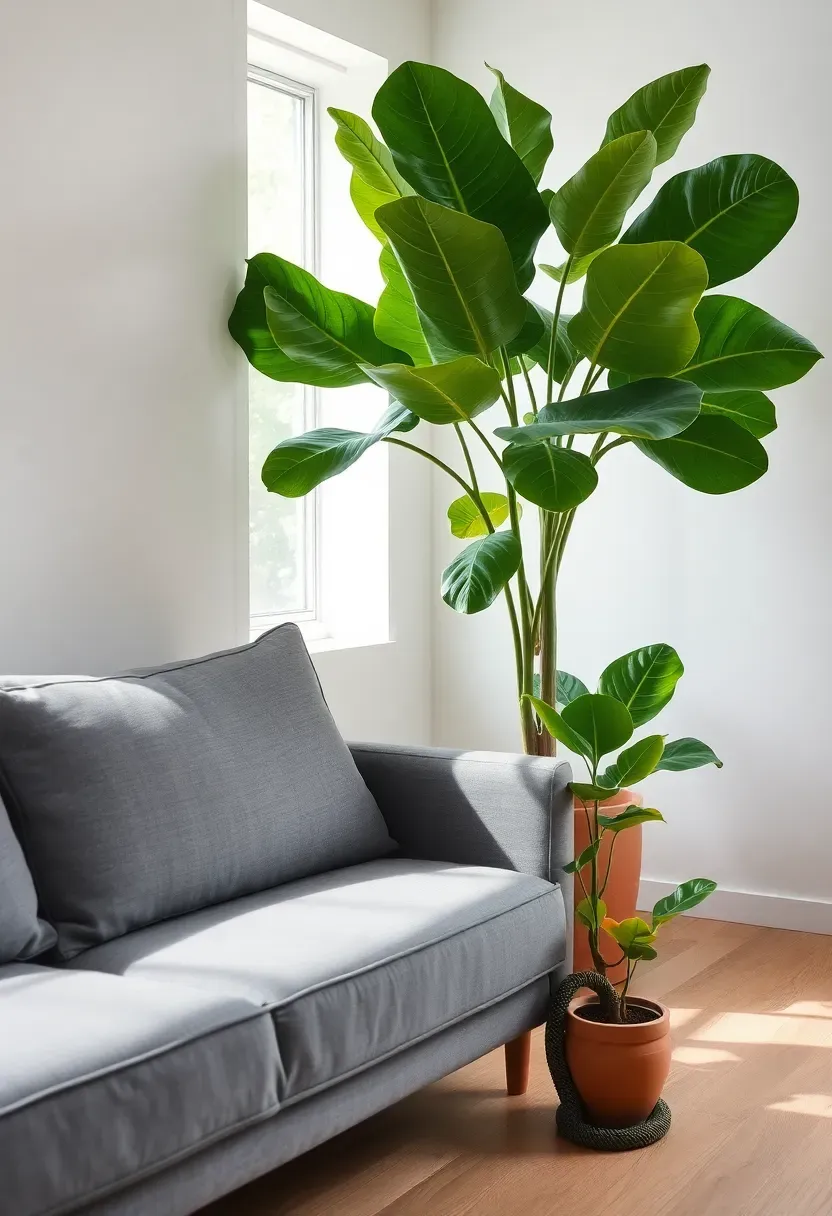
A gray couch paired with indoor plants creates a minimalist living room that feels alive and refreshing, introducing natural vitality that softens the clean lines and neutral palette. Plants bring organic shapes, living textures, and subtle color variations that complement gray upholstery without overwhelming the minimalist aesthetic. This combination bridges the gap between austere minimalism and biophilic design, resulting in spaces that feel both disciplined and nurturing.
The key is choosing plants that suit your lifestyle and light conditions rather than filling the space indiscriminately. A single large statement plant like a fiddle leaf fig or bird of paradise can anchor the room, while smaller plants on shelves or the coffee table add touches of life without creating clutter. Snake plants, ZZ plants, and pothos offer low-maintenance options that thrive in various light conditions. Consider plants with architectural shapes—spiky dracaena or trailing ivy—that create interesting silhouettes against the solid form of the gray sofa.
Recommended
Items for this idea
Tips
- If you're new to plants, start with one forgiving species and assess your commitment before adding more
- Then gradually expand your plant collection as you gain confidence and understand your space's light
- Group plants in odd numbers for natural visual arrangements that feel intentional rather than scattered
What this gives you: A minimalist living room that feels fresh and energizing through the presence of living plants, softening clean lines with natural vitality.
9. Monochromatic Gray Scheme
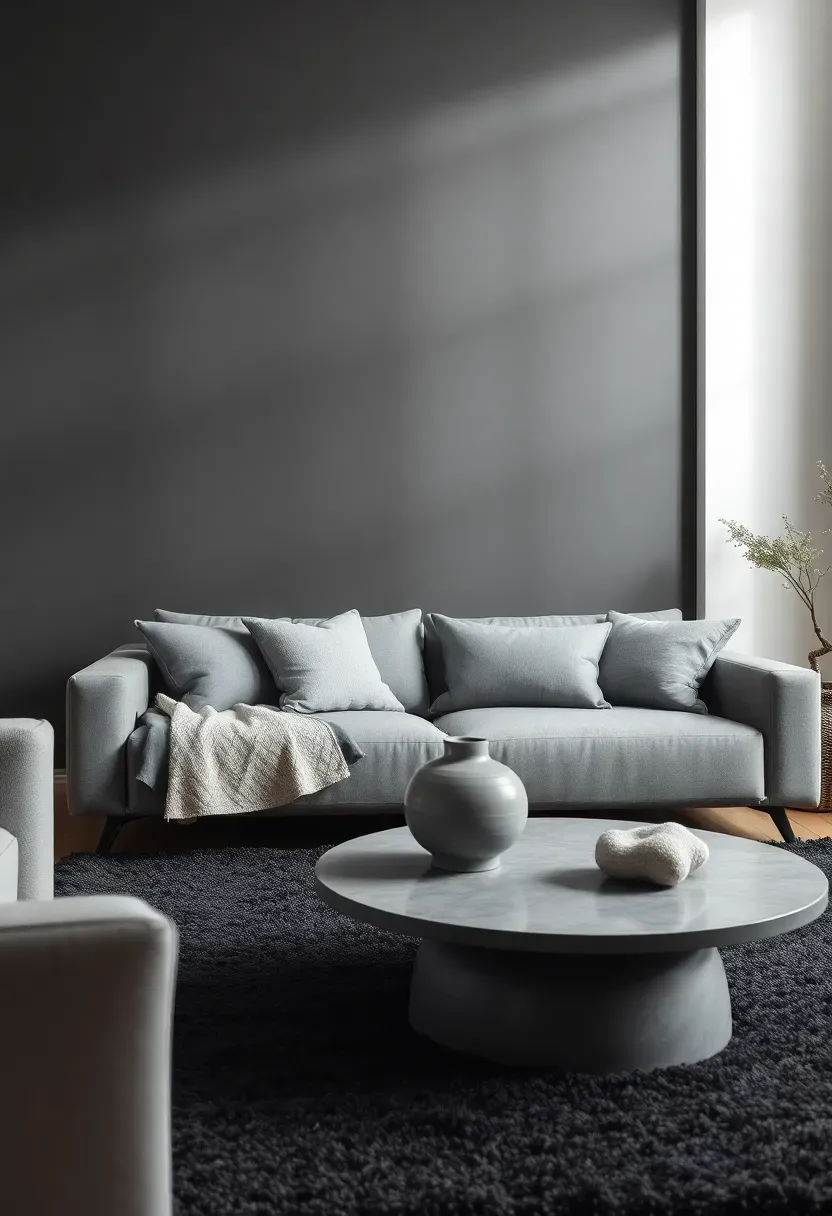
Embracing a full monochromatic gray palette—from charcoal walls to dove gray upholstery to light gray accents—creates a sophisticated minimalist living room that feels dramatic yet serene through the power of tone-on-tone layering. This approach requires confidence but rewards it with spaces that feel curated, cohesive, and remarkably calming. The absence of color doesn't mean absence of interest; instead, it allows texture, light, and form to take center stage.
Success with monochromatic gray lies in varying values and textures to prevent the room from feeling flat. Layer at least three distinct shades of gray—a dark wall color or charcoal rug, medium gray upholstery, and light accents in pillows or artwork. Within each value, incorporate different textures: smooth leather, nubby wool, sleek metal, plush velvet. This variety of surface quality creates visual richness that compensates for the lack of color contrast. The result is a room that feels layered and complex while maintaining the soothing unity that monochromatic schemes provide. For a similar tone-on-tone philosophy with a Japanese twist, check out our Japandi living room ideas.
Tips
- Start with three values of gray—dark, medium, light—and distribute them unevenly for visual interest
- Then add texture variation within each value through different materials and fabric weaves
- Include one unexpected material—metal, glass, or wood finish in a gray tone—for subtle contrast
What this gives you: A bold, sophisticated living room that feels dramatically cohesive through monochromatic layering, with texture and light providing the visual interest that color typically supplies.
10. Gray Couch with Art Wall
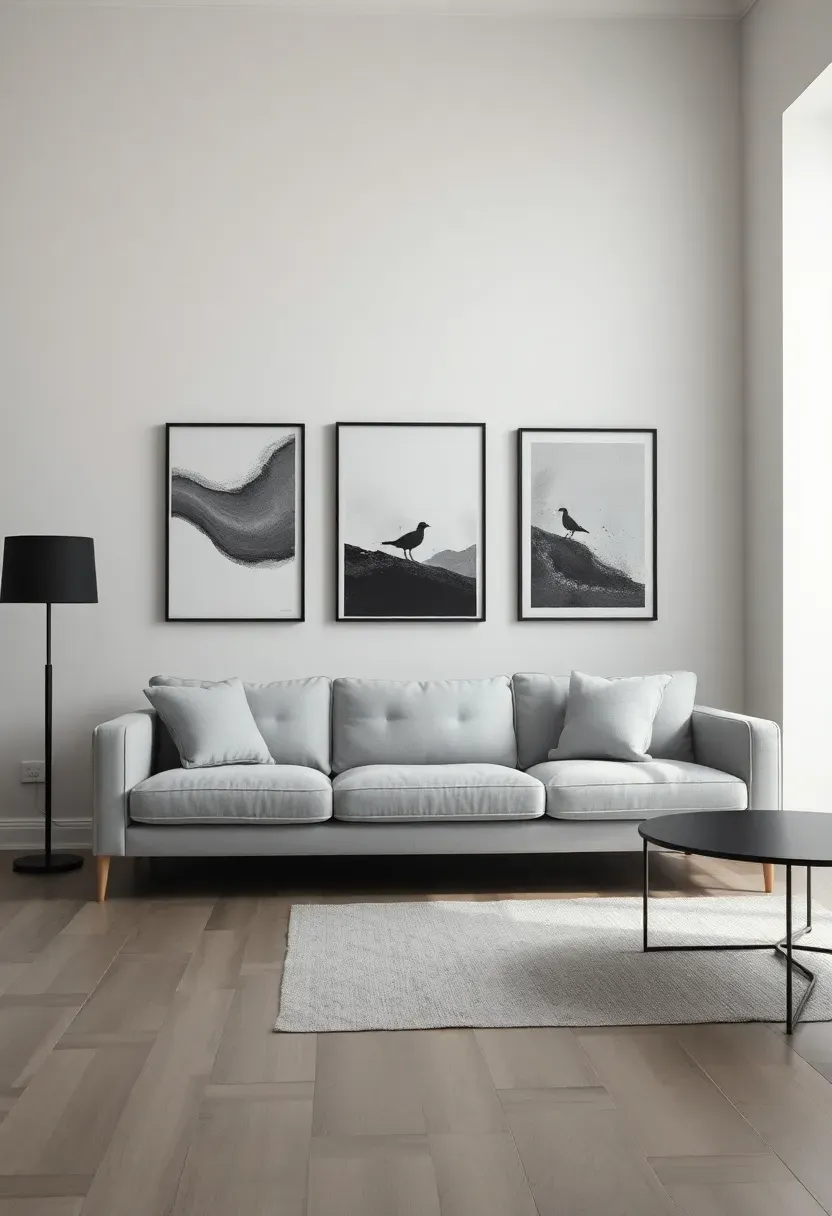
A gray couch facing a curated art wall transforms the minimalist living room into a gallery-like space that feels personal and expressive while maintaining clean aesthetics. The neutral backdrop of gray upholstery allows artwork to take center stage without competition, creating a focal wall that adds character and tells your story. This approach proves that minimalism and personal expression aren't mutually opposite—when done thoughtfully, art enhances the serene quality rather than disrupting it.
Creating an impactful art wall requires editing and restraint. Choose one large statement piece or arrange a small collection of 2-3 artworks with consistent themes—similar color palettes, frame styles, or subject matter. Hang them at eye level with the center approximately 60 inches from the floor, leaving ample negative space around each piece. The goal is a curated feel, not a cluttered gallery wall. For maximum impact, choose artwork that incorporates gray tones that visually connect to the couch, creating a subtle thread of cohesion throughout the space.
Recommended
Items for this idea
Tips
- Before hanging art, arrange pieces on the floor to test composition and spacing
- Then transfer to the wall once satisfied—this avoids multiple nail holes from experimentation
- Use picture-hanging strips for lightweight pieces to avoid wall damage in rentals
What this gives you: A personalized minimalist living room that feels curated and expressive, with art adding character while the gray sofa maintains serene calm.
11. Scandinavian-Inspired Gray Sofa Styling
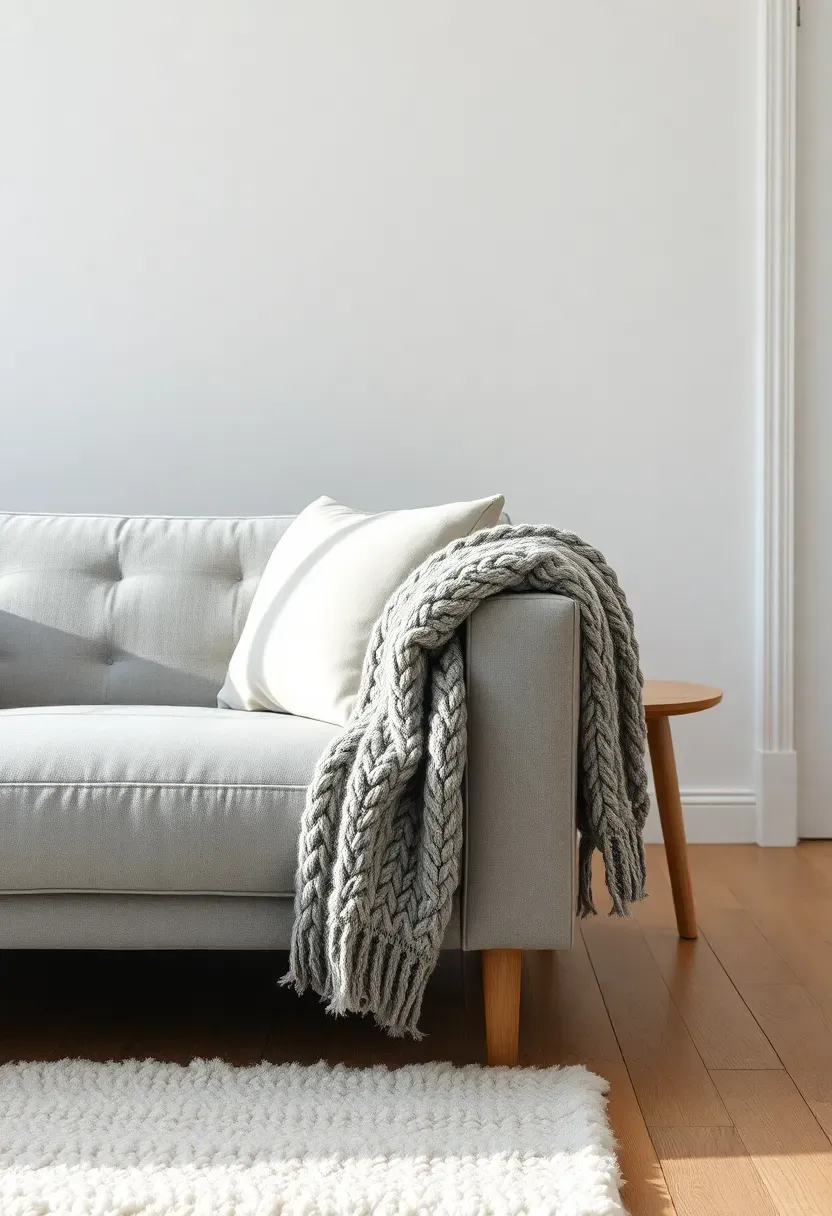
A gray couch styled with Scandinavian design principles creates a minimalist living room that feels effortlessly functional and warmly inviting through clean lines, natural materials, and cozy textiles. Scandinavian minimalism differs from stark modernism in its embrace of hygge—the Danish concept of cozy contentment—proving that minimalism can be both disciplined and deeply comfortable. The gray sofa becomes the foundation for layers of warmth rather than a cold statement piece.
The Scandinavian approach centers on light wood floors, simple functional furniture, and an abundance of textiles that invite touch. For more on this aesthetic, see our cozy Scandinavian living room ideas. A light gray sofa works beautifully with white walls and light oak or birch flooring, creating the bright palette characteristic of Nordic design. Layer a sheepskin or chunky knit throw over the sofa back, add linen pillows in soft neutrals, and include a wool or jute rug to ground the space. Functional pieces like a teak side table or bentwood chair add authenticity. The goal is livable minimalism—rooms that feel edited yet meant for daily living, not museum display.
Tips
- Incorporate vintage Scandinavian pieces like a teak coffee table or bentwood chair for authenticity
- Then balance them with modern elements to prevent the room from feeling like a period set
- Keep window treatments minimal or nonexistent to maximize light—Nordic design prioritizes brightness
What this gives you: A minimalist living room that feels bright, functional, and genuinely welcoming through Scandinavian design principles, with the gray sofa as a cozy anchor.
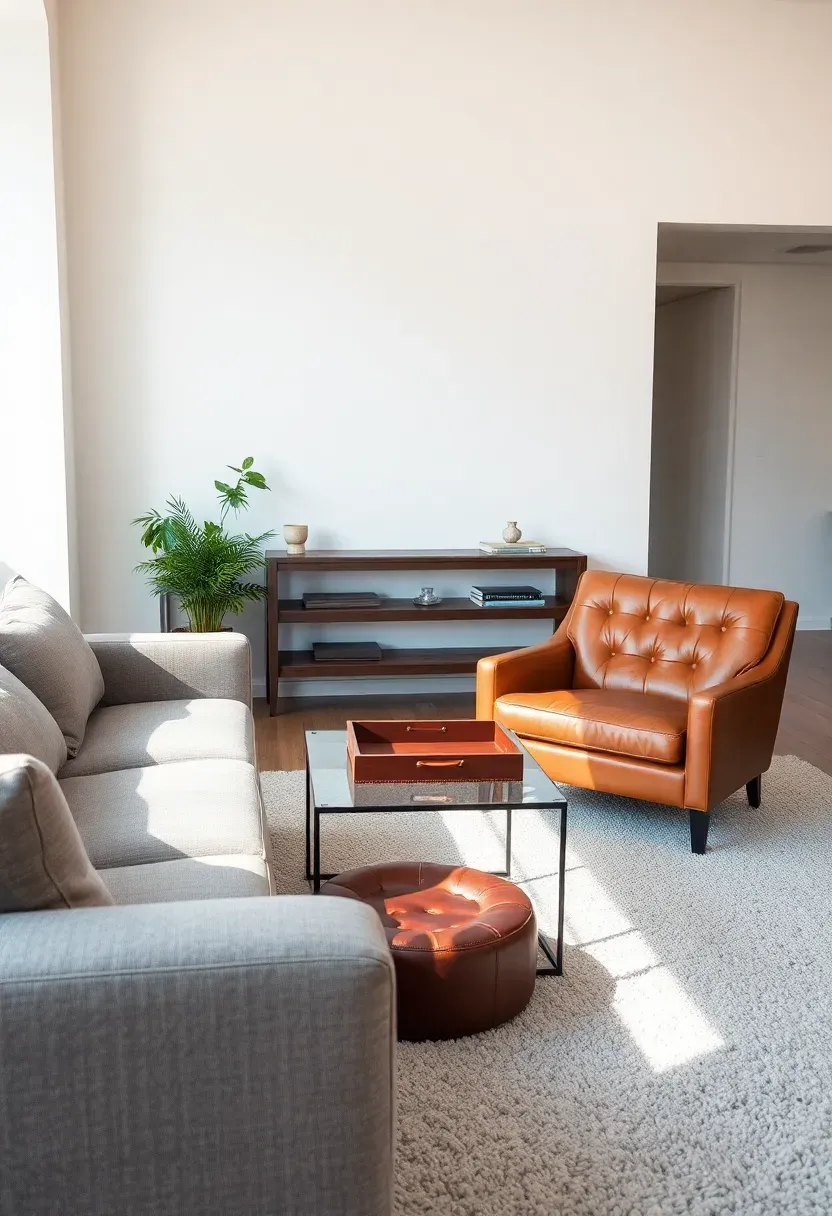
12. Gray with Leather Accents
Combining a gray fabric couch with leather accents creates a minimalist living room with sophisticated textural contrast and warm undertones that prevent the space from feeling cool or sterile. Leather brings natural warmth, rich patina, and tactile variety that complements gray upholstery beautifully. This material pairing speaks to minimalist principles through quality rather than quantity—fewer pieces, but each chosen for material excellence and lasting appeal.
Leather accents can take many forms: a leather chair or ottoman in cognac or saddle brown provides warm contrast against cool gray, while a black leather pillow adds edge and sophistication. Even smaller leather elements—a valet tray on the coffee table, leather-wrapped picture frames, or a leather plant pot—can introduce the material without major furniture commitments. The key is balance—leather should be an accent, not dominate the space. A single quality leather piece alongside the gray sofa creates a curated, intentional feel that celebrates material craftsmanship.
Recommended
Items for this idea
Tips
- Choose warm leather tones (cognac, saddle, chestnut) to counterbalance cool gray upholstery
- Avoid black leather which can create too much contrast and feel harsh in a serene minimalist space
- Embrace leather's natural patina over time—it adds character and warmth to the room
What this gives you: A refined minimalist living room with material richness and textural sophistication, where gray fabric and leather create luxurious yet restrained contrast.
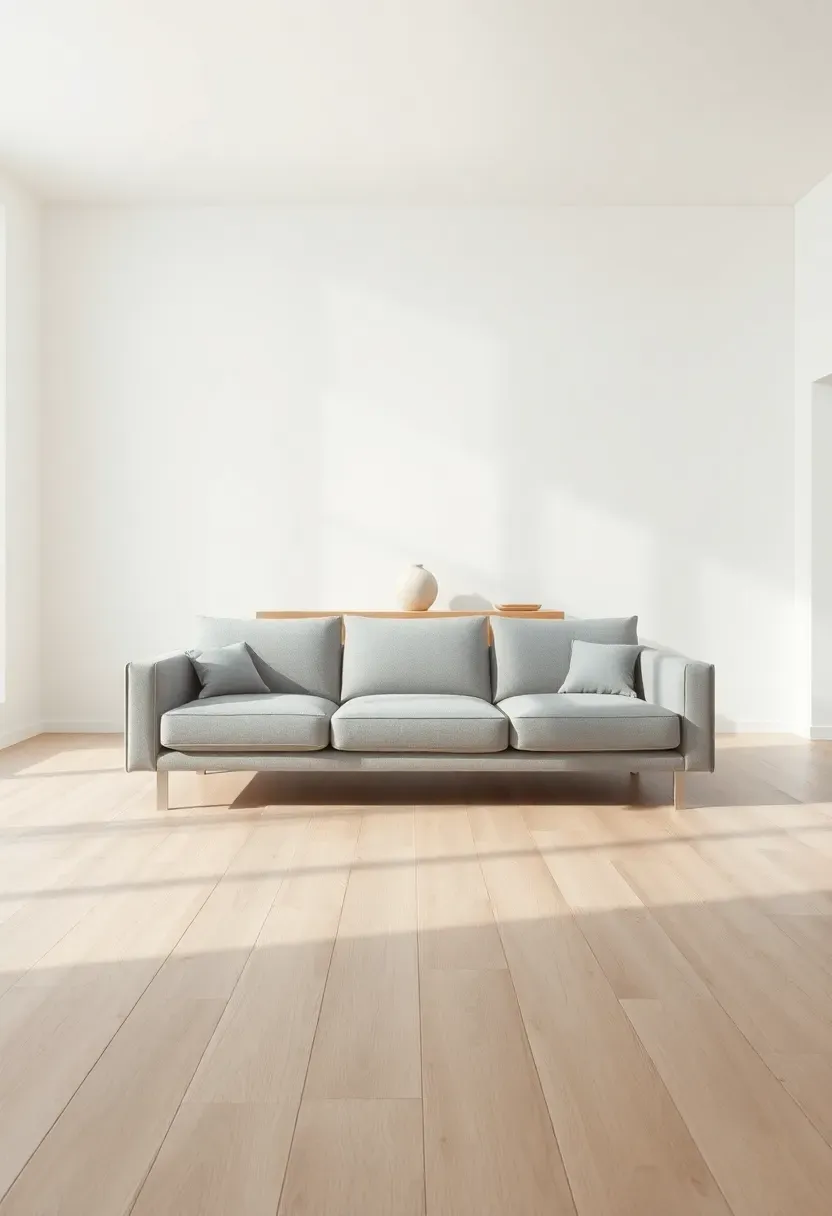
13. Floating Gray Sofa
Positioning a gray couch away from walls—floating it in the center of the room—transforms a minimalist living room by creating dynamic flow and maximizing usable space. This placement strategy challenges conventional furniture arrangement, replacing perimeter-based layouts with a more intentional approach that defines zones while maintaining openness. The floating sofa becomes a room divider and conversation starter, proving that minimalist design is as much about negative space as it is about the objects within it.
Floating a sofa works particularly well in open-concept spaces or large living rooms where the sofa can serve as a subtle divider between functional areas. Position the gray couch to create a natural conversation zone, with its back defining the boundary without blocking sight lines. Behind the sofa, consider a console table, a statement floor lamp, or simply open space that reinforces the airy quality. This approach requires confidence—leaving walls bare feels counterintuitive to many—but rewards it with rooms that feel larger, more dynamic, and intentionally spacious.
Tips
- Ensure there's at least 30-36 inches of walkway behind the floating sofa for comfortable movement
- If the back of the sofa feels unfinished, add a low console table or a tall floor lamp behind it
- This placement works best when the sofa has an attractive back—avoid styles with mismatched or unattractive rear upholstery
Best for: Open-concept spaces where the sofa can define the living zone without blocking flow to adjacent areas.
What this gives you: A dynamic, spacious living room that feels thoughtfully arranged through intentional furniture placement, maximizing both usable space and visual openness.
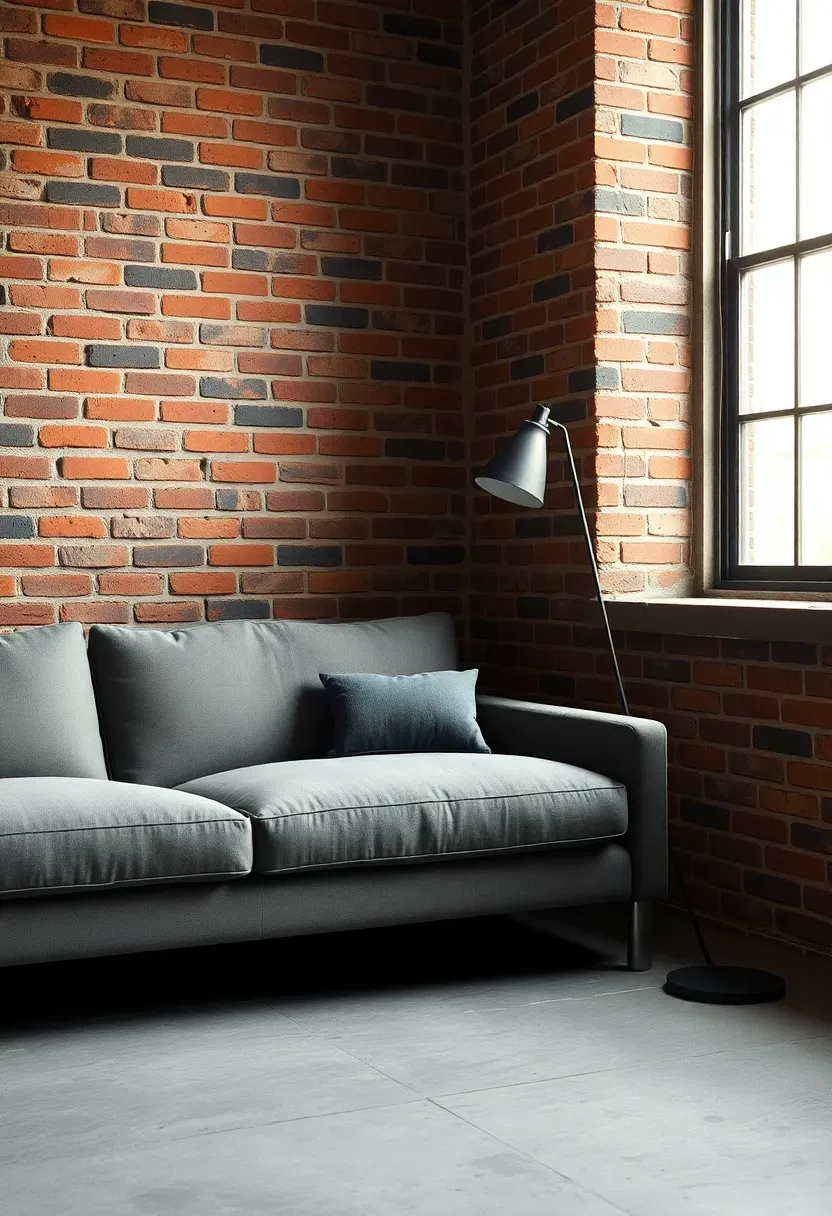
14. Gray with Brick Wall
A gray couch against an exposed brick wall creates a minimalist living room with industrial edge and raw textural contrast that feels both sophisticated and approachably authentic. The smooth uniformity of gray upholstery provides a clean counterpoint to brick's irregular texture, creating visual interest through material contrast rather than color or pattern. This pairing celebrates the beauty of imperfection—brick's natural variations add character while the gray sofa maintains a sense of refined calm.
Brick walls come in various tones—red brick creates warm contrast against cool gray, while white-washed or gray brick provides a more monochromatic, moody effect. The sofa's gray shade should complement the brick's undertones: warm gray with red brick, cool gray with white-washed brick. Keep surrounding elements simple to let this material pairing shine—plain walls, simple flooring, and minimal decor prevent the space from feeling busy. The brick becomes the room's artwork, with the gray sofa as its quiet, sophisticated counterpart.
Recommended
Items for this idea
Tips
- If the brick feels too busy, consider painting it white or gray for a subtler textural effect
- Then add simple artwork or a mirror that doesn't compete with the brick's inherent pattern
- Embrace the brick's imperfections—cracks, color variations, and mortar lines are part of its appeal
What this gives you: A minimalist living room with industrial character and authentic warmth, where smooth gray upholstery contrasts beautifully against brick's organic texture.
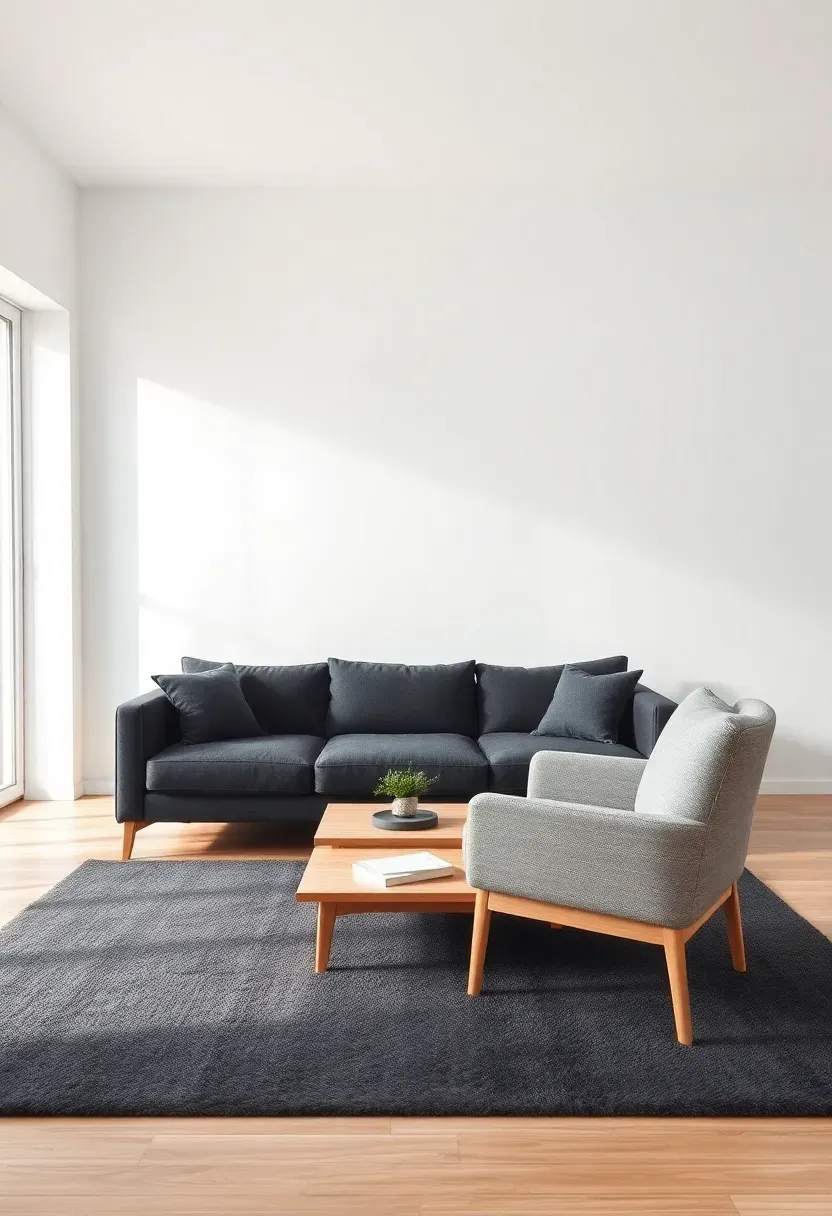
15. Two-Toned Gray
Layering two distinct shades of gray—one for the sofa, another for a secondary seating piece or major accent—creates a minimalist living room with sophisticated tonal depth that feels curated and cohesive. This two-toned approach adds visual complexity while maintaining the serene quality that makes gray so appealing in minimalist spaces. Rather than introducing a new color, you're expanding the gray palette, creating richness through variation within the same hue family.
The key is choosing gray tones that are different enough to create contrast but similar enough to feel harmonious. A charcoal gray sofa paired with a dove gray armchair creates dramatic yet sophisticated contrast, while two medium grays in slightly different undertones (one cool, one warm) produce subtler dimension. Consider also mixing textures within the two grays—smooth velvet on one piece, nubby wool on another—which adds another layer of interest. This approach works best when one gray dominates (typically the sofa) and the secondary gray plays a supporting role.
Tips
- Choose grays at least three shades apart for clear contrast—too similar can look mismatched
- Avoid using equal amounts of each gray; let one shade dominate and the other accent
- Ground the combination with a rug in either of the two gray tones to create visual cohesion
What this gives you: A minimalist living room with sophisticated tonal layering, where two shades of gray create depth and interest while maintaining serene cohesion.
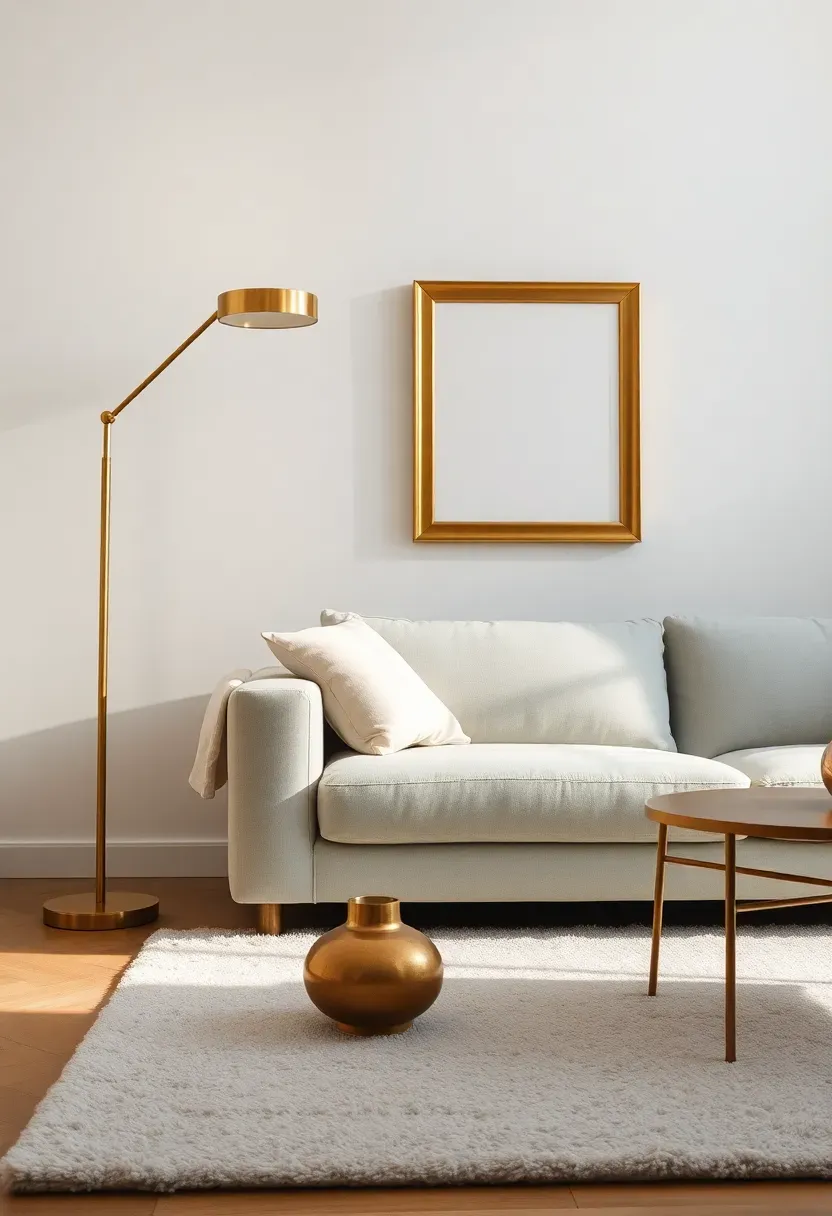
16. Gray with Metallic Touches
A gray couch accented with metallic elements—brass, copper, or chrome—creates a minimalist living room with subtle glamour and light-reflecting warmth that prevents the space from feeling flat or monotonous. Metal finishes add visual sparkle and sophistication through their reflective qualities, catching and bouncing light around the room. This combination proves that minimalist spaces can have luxury touches without sacrificing the clean aesthetic—metallic accents provide just enough shine to elevate the gray foundation.
Metallic choice should align with the room's overall mood. Brass and gold tones bring warmth that counterbalances cool gray, making them ideal for creating cozy welcoming vibes. Chrome and silver reinforce gray's modern edge, perfect for sleek contemporary minimalist spaces. Copper offers a bridge between warm and cool tones, providing versatility. The key is using metal as an accent—a brass lamp, a copper vase, a chrome picture rail—rather than dominating the space. Too much metal feels glitzy rather than sophisticated; restraint keeps it refined.
Recommended
Items for this idea
Tips
- Mix metallic finishes rather than matching everything—brass with copper creates layered warmth
- If you're uncertain about commitment, start with small metallic accessories before investing in major pieces
- Then gradually expand as you find balance—metallic accents should enhance, not overwhelm
Best for: Rooms with limited natural light where metallic accents help brighten and add sparkle through reflection.
What this gives you: A minimalist living room with sophisticated glamour, where metallic accents catch light and add warmth while the gray sofa maintains serene calm.
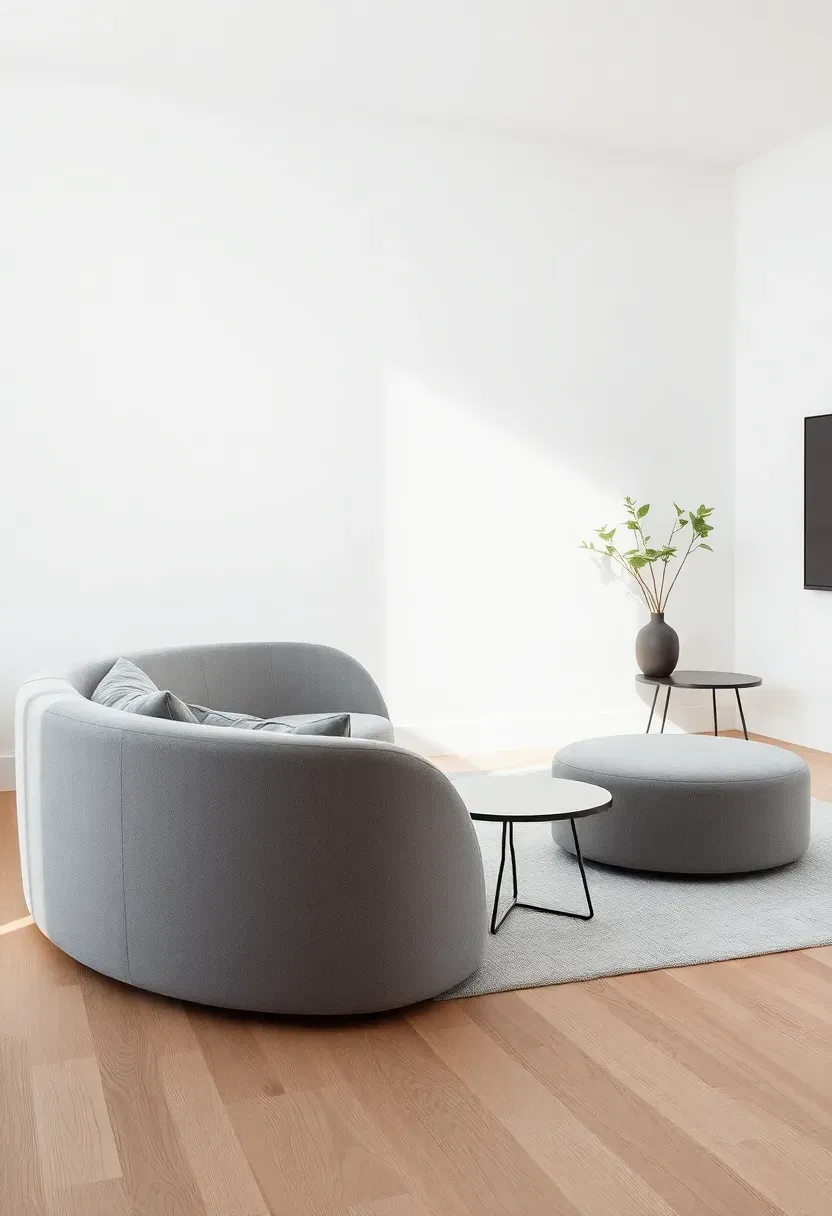
17. Curved Gray Sofa
A curved gray sofa introduces organic shape to a minimalist living room, softening the straight lines and right angles that typically define minimalist spaces while maintaining clean aesthetics. The curved silhouette adds visual interest through form rather than color or pattern, creating a focal point that feels both contemporary and inviting. This shape choice breaks up rigid geometry while honoring minimalist principles—curves are still clean when executed without ornamentation or excess.
Curved sofas work particularly well as room dividers in open-concept spaces or as statement pieces in square rooms. Their gentle arc creates a natural conversation zone while allowing flow around the perimeter. When positioning a curved gray sofa, leave space around it to appreciate the shape—cramming it against walls or in corners defeats the purpose. Pair with curved or round accent pieces—a circular coffee table, round side tables, or a curved lamp—to reinforce the organic geometry. Keep surrounding elements simple to let the sofa's form be the star.
Tips
- Curved sofas typically require more floor space than straight sofas of equal seating capacity
- Ensure you have at least 3 feet of clearance around the curved back for the shape to breathe
- This style works best in rooms where the sofa can float rather than be pushed against a wall
What this gives you: A minimalist living room with soft organic appeal, where the curved gray sofa adds visual interest through form while maintaining clean contemporary aesthetics.
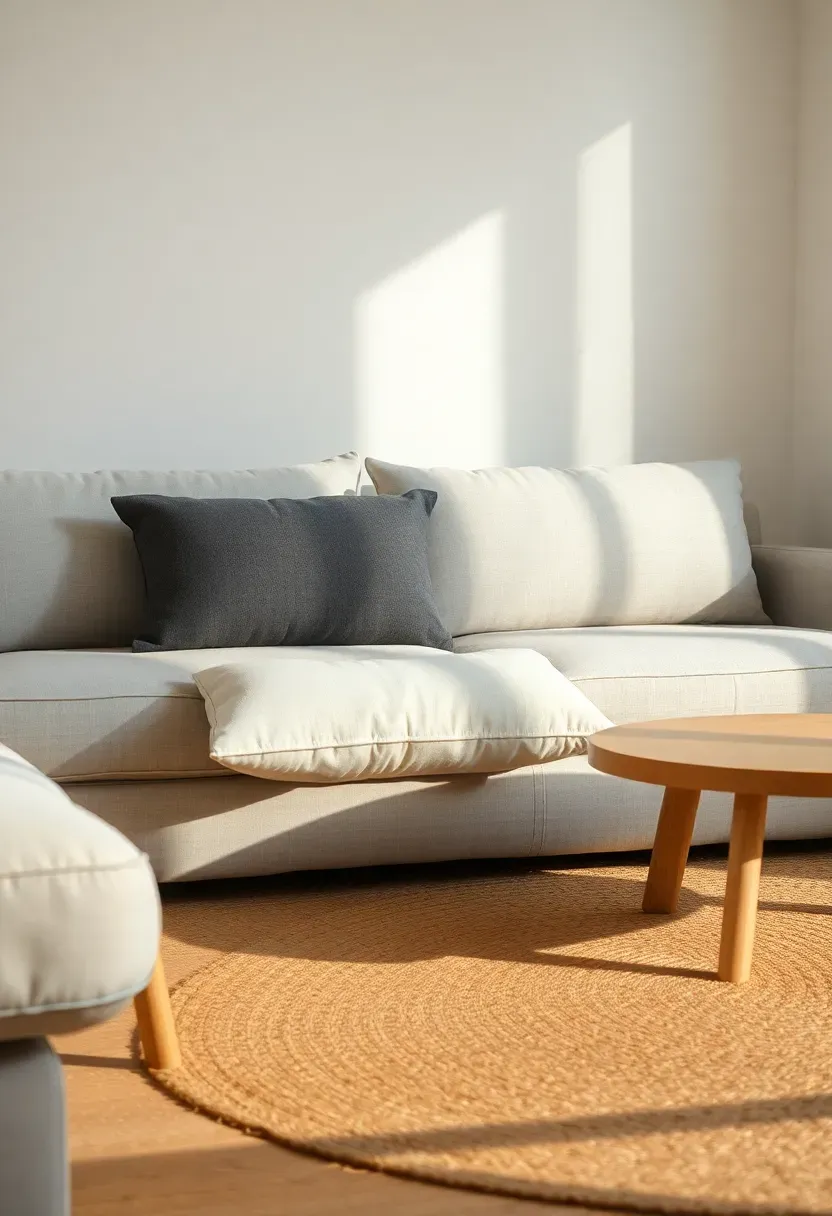
18. Gray with Floor Cushions
Pairing a gray couch with floor cushions creates a minimalist living room that feels relaxed and casual while maintaining the clean aesthetic through thoughtful restraint. Floor cushions add informal seating options and visual interest without introducing additional furniture pieces, preserving the open quality that makes minimalism so appealing. This combination embraces the Japanese concept of flexible living—seating that can be rearranged or moved as needed, adapting to different occasions and moods.
Floor cushions work best when they're designed intentionally rather than scattered randomly. Choose cushions in fabrics that relate to the gray sofa—either matching gray for a monochromatic look, or complementary neutrals like white, tan, or black. Stack them neatly in a corner when not in use, or arrange them around a low table for informal seating. The key is keeping them contained and intentional, not strewn about. For maximum comfort, choose substantial cushions (at least 4 inches thick) with removable covers for easy cleaning. This approach adds casual comfort without sacrificing minimalist order.
Recommended
Items for this idea
Tips
- Do choose cushions with removable covers for easy cleaning, especially if you have children or pets
- Don't leave cushions scattered—when not in use, stack them neatly to maintain minimalist order
- Consider cushion thickness—thin pillows feel like decor rather than functional seating
What this gives you: A flexible, relaxed minimalist living room with informal seating options, where floor cushions add casual comfort without introducing additional furniture pieces.
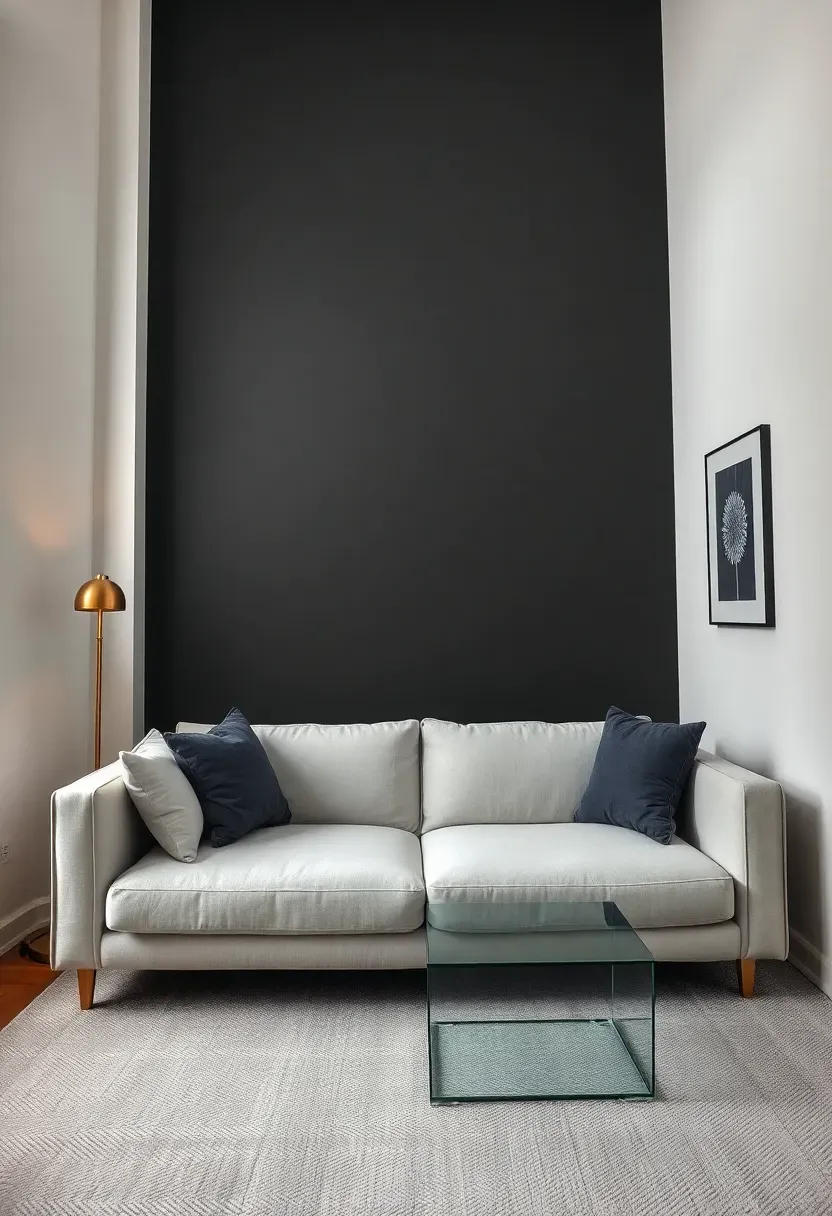
19. Gray Couch Against a Dark Accent Wall
Positioning a gray couch against a dark painted wall creates a minimalist living room with dramatic contrast and sophisticated depth that feels bold yet serene. This unexpected pairing—the gray sofa against charcoal, navy, or black walls—creates a gallery-like atmosphere where the furniture seems to float against the dark backdrop. Rather than feeling heavy or cave-like, dark walls create depth and focus, making the gray couch appear more luminous and the overall space more intentional.
Success with this combination lies in the specific gray shade and wall color pairing. A light gray sofa against charcoal walls creates sophisticated monochromatic contrast. Medium gray against navy or forest green walls introduces subtle color while maintaining dramatic depth. Dove gray against pure black creates high-contrast graphic drama. Whatever the combination, ensure adequate lighting—dark walls absorb light, so layered ambient lighting becomes essential for maintaining warmth. The result is a living room that feels cocoon-like and intimate while preserving minimalist principles.
Tips
- If you're hesitant about painting all walls dark, start with one accent wall behind the sofa
- Then assess the feel before committing to more dark walls—you can always expand later
- Layer lighting with floor lamps, table lamps, and sconces to prevent dark walls from feeling oppressive
What this gives you: A dramatic, sophisticated minimalist living room with bold contrast and intimate depth, where the gray couch glows against its dark backdrop.
A minimalist living room with gray couch achieves the perfect balance between serene simplicity and welcoming comfort through thoughtful layering of textures, strategic material contrasts, and intentional furniture placement. Whether you choose light gray with white walls for airy brightness, charcoal with warm wood for grounded sophistication, or dove gray with black accents for graphic drama, the versatility of gray upholstery provides endless possibilities for creating spaces that feel both curated and comfortably livable.
The true power of this design approach lies in its restraint—each element earns its place through careful consideration rather than accumulation. By focusing on quality materials, varied textures within a restrained palette, and the interplay of light and form, these 19 ideas demonstrate that minimalist living rooms can be visually rich and genuinely inviting without relying on color or excess. The gray couch becomes the perfect anchor for this philosophy—neutral enough to recede when needed, substantial enough to ground the space, and versatile enough to adapt to evolving tastes while maintaining timeless appeal. For even more layouts and color pairings, browse our expanded guide to minimalist living room ideas with gray couches.
About the author
OBCD
CGI visualization and interior design content. We create detailed 3D renders and curate practical design ideas for every room in your home.