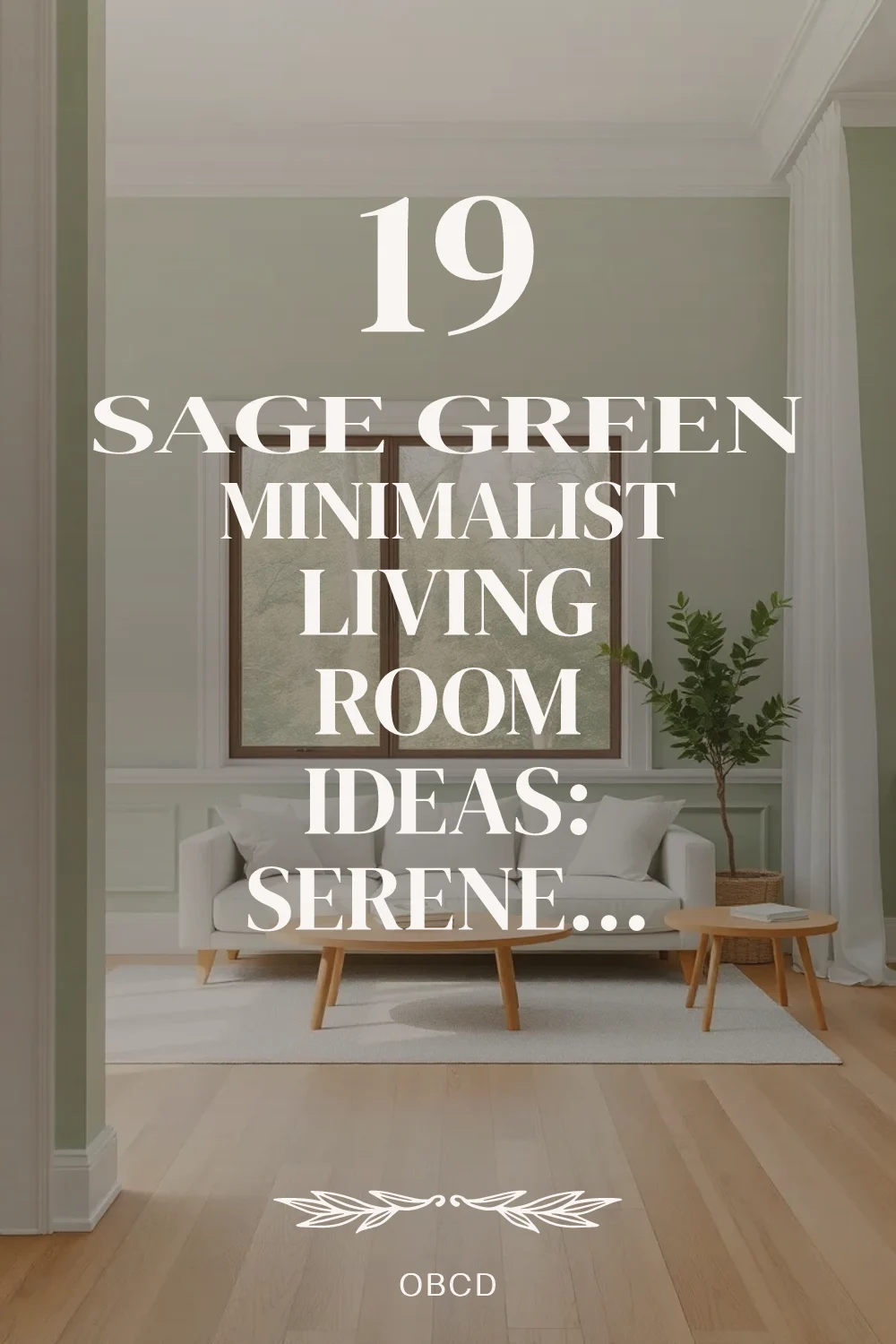
19 Sage Green Minimalist Living Room Ideas for a Calm Retreat
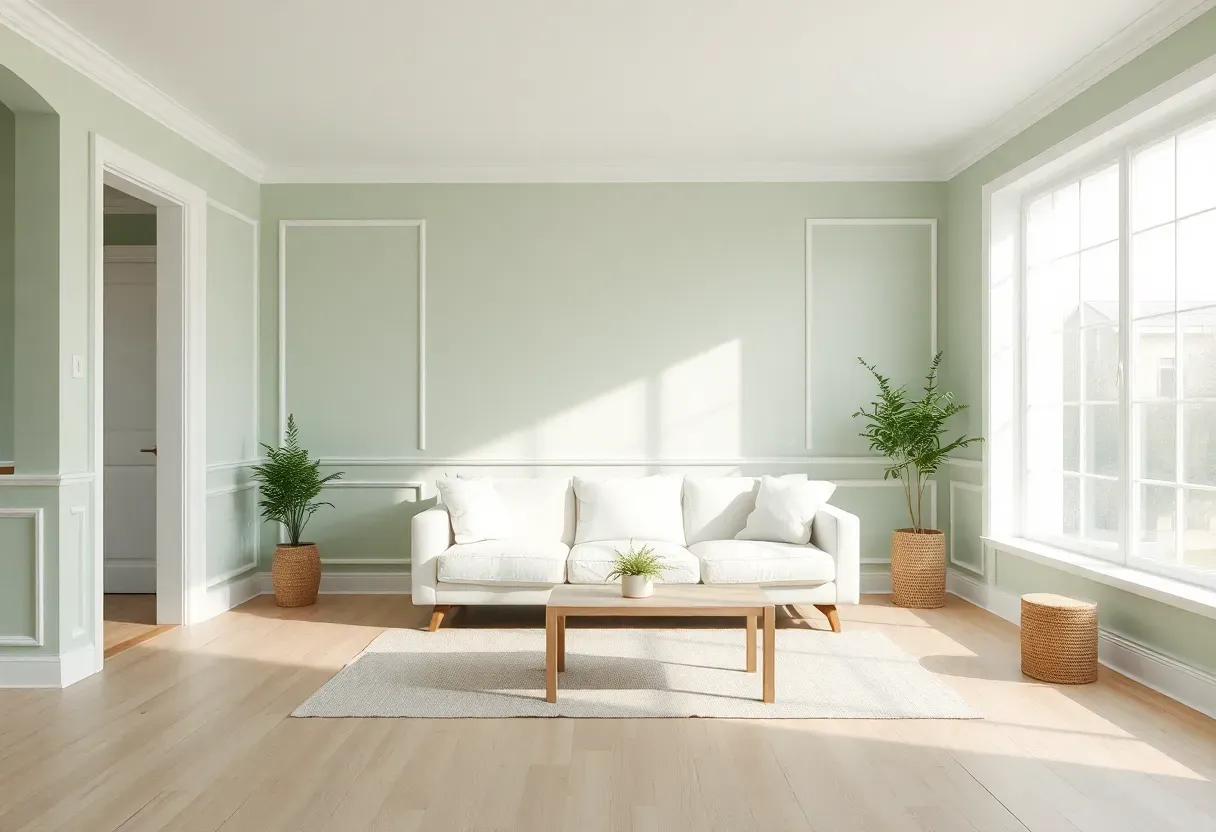
A sage green minimalist living room brings nature's tranquility indoors while keeping every surface clean and uncluttered. This muted green hue creates a serene backdrop that promotes relaxation and mindfulness, making it an ideal choice for renters and small apartment dwellers who want style and calm without permanent renovations.
The beauty of sage green living room ideas lies in their versatility -- the color pairs effortlessly with warm wood tones, crisp whites, and natural textures. Whether you are working with a compact studio or an open-plan space, this soothing shade adapts to different lighting conditions, furniture styles, and budgets.
What sets sage green apart is its ability to make rooms feel grounded and connected to nature without overwhelming the senses. The 19 renter-friendly ideas below showcase how to decorate with sage green on a budget, from accent walls and velvet sofas to curtains you can take with you when you move.
Quick FAQ
Is sage green good for small living rooms?
Yes, sage green is excellent for small spaces as it reflects light naturally and creates an airy feel. Light sage tones make walls recede visually, while darker sage shades add cozy depth without making rooms feel cramped.
What colors go with sage green in a minimalist living room?
Sage green pairs beautifully with white, cream, warm wood tones, natural textures like jute and linen, and accent colors like terracotta, mustard yellow, or navy blue. The key is keeping the palette restrained for true minimalist appeal.
Should I paint all walls sage green?
Not necessarily. A single sage green accent wall creates focal impact, while painting all four walls in light sage establishes a serene sanctuary. Consider natural light — darker sage works well in bright rooms, lighter sage shines in north-facing spaces.
How do I keep a sage green room from looking dated?
Focus on modern minimalist furniture with clean lines, incorporate contemporary lighting fixtures, and balance sage green with crisp white trim and architectural details. Avoid heavy traditional patterns — opt for geometric or abstract textures instead.
Does sage green work with gray furniture?
Sage green and gray create a sophisticated, calming combination. Warm gray sofas complement sage walls beautifully, while cool gray tones add contemporary edge. Add wood accents to warm up the palette and prevent the space from feeling too cool. For dedicated gray sofa inspiration, see our minimalist living room ideas with a gray couch.
What lighting works best in sage green living rooms?
Natural daylight enhances sage green's subtle beauty, so maximize window light. For artificial lighting, warm white LED bulbs (2700-3000K) maintain the color's soothing quality. Layered lighting with floor lamps and wall sconces creates depth and ambiance.
As an Amazon Associate I earn from qualifying purchases.
Table of Contents
- 1. Light Sage Green Walls with White Trim for an Airy Feel
- 2. Sage Green Sectional with Natural Jute Rug
- 3. Monochromatic Sage with Texture Variety
- 4. Sage Green Accent Wall with Oak Furniture
- 5. Sage Green Built-in Storage Units
- 6. Velvet Sage Sofa in Minimalist Room
- 7. Sage and White Color Block Design
- 8. Sage Green Window Treatments (No-Drill Renter Option)
- 9. Dark Sage Feature Wall
- 10. Sage Green with Brass Accents
- 11. Sage Green Open Shelving
- 12. Light Sage with Beige Furniture
- 13. Sage Green Ceiling Design
- 14. Sage and Terracotta Earth Tones
- 15. Sage Green Room Divider
- 16. Matte Sage Green Kitchen Extension
- 17. Sage Green with Indoor Plants for a Biophilic Living Room
- 18. Two-Tone Sage Green Walls
- 19. Sage Green Minimalist Gallery Wall
1. Light Sage Green Walls with White Trim for an Airy Feel
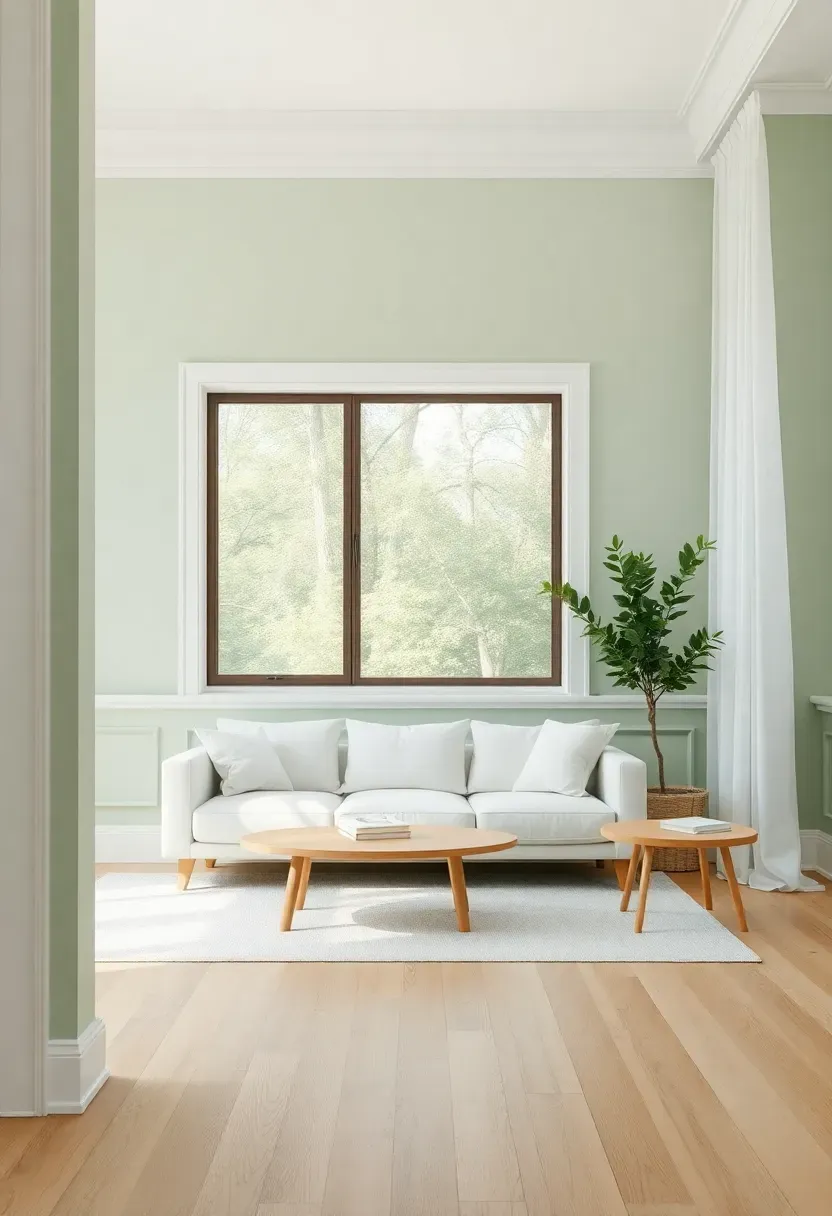
Light sage green walls create an instant sense of calm while white trim adds crisp definition and architectural interest. This classic combination works in any living room size, making small spaces feel open and larger rooms feel cozy and gathered. The subtle green hue softens natural light beautifully, creating a gentle atmosphere throughout the day.
Tips
- Choose sage with subtle gray undertones for modern appeal
- Semi-gloss white trim creates elegant contrast against flat sage walls
- Keep ceilings white to maintain height and brightness
What this gives you: A timeless foundation that pairs with any furniture style and color scheme while promoting daily calm.
We picked a few things that go well with this idea: MIULEE Sage Green Velvet Pillow Covers 20x20 (★4.6), MIULEE Sage Green Velvet Pillow Covers 18x18 (★4.6) and FEVERQIYI Sage Green Velvet Pillow Covers Set (★4.4). As an Amazon Associate we earn from qualifying purchases.
2. Sage Green Sectional with Natural Jute Rug
A sage green sectional becomes the serene focal point of your living room when anchored by a natural jute rug that adds organic texture and warmth. This combination brings earthy sophistication to minimalist spaces, creating an inviting seating area that feels both contemporary and connected to nature. The neutral palette allows architectural features to shine while maintaining visual interest through textural contrast.
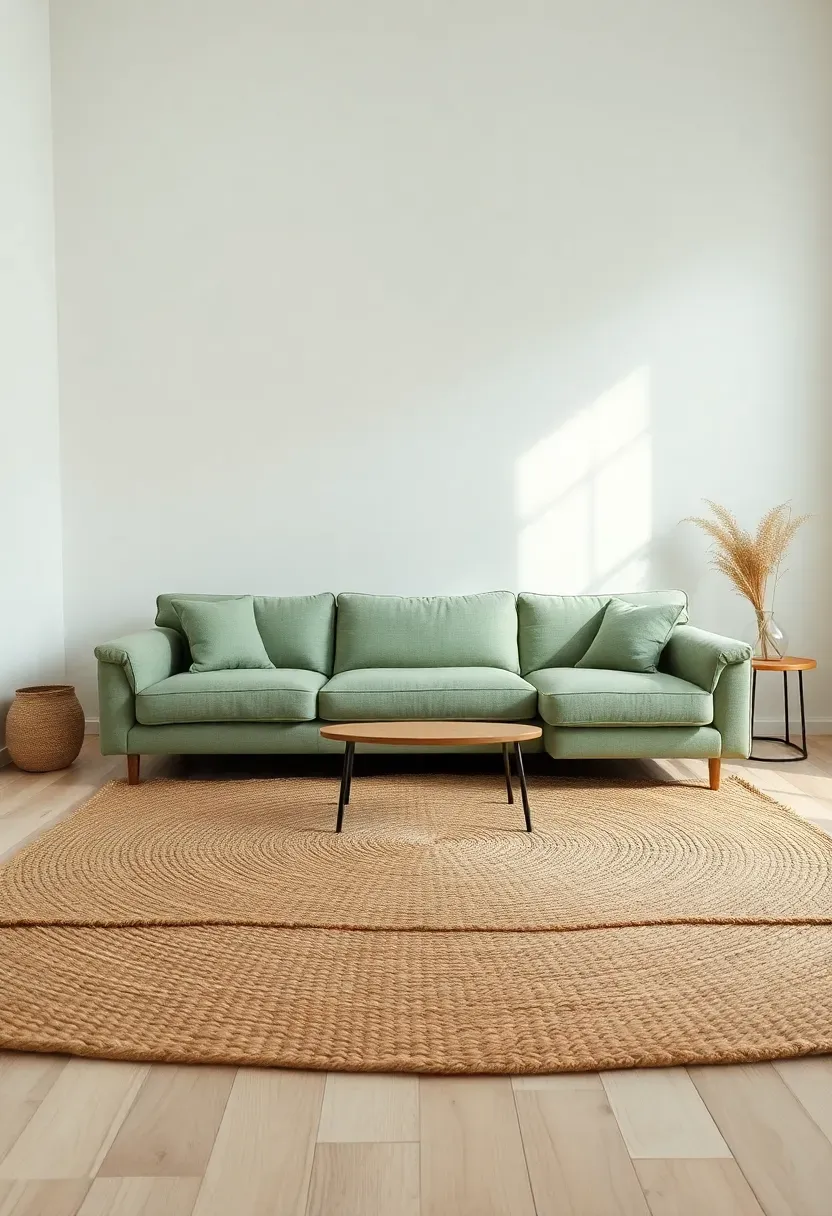
Placement note: Position the sectional to face the room's primary light source, whether that's a window or architectural feature, to maximize how the sage green color appears throughout the day as natural light shifts.
Tips
- Choose performance fabrics in sage green for practical durability
- Layer a larger jute rug with a smaller flatweave for definition
- Wooden furniture legs in oak or walnut complement both sage and jute
Best for: Open-plan living areas where you want to define the seating zone without using walls or dividers.
What this gives you: A nature-inspired seating arrangement that feels sophisticated yet relaxed, perfect for both everyday living and entertaining.
We picked a few things that go well with this idea: S&L Homes Jute Cotton Hand Woven Area Rug 5x8 (★4.0), Nuloom Ashli Hand Woven Natural Jute Rug 5x8 (★4.3) and Beverly Rug Easy Jute Natural Washable Area Rug (★4.4). As an Amazon Associate we earn from qualifying purchases.
3. Monochromatic Sage with Texture Variety
Embrace sage green in multiple shades while maintaining monochromatic harmony through varied textures — this approach creates depth without visual clutter. Layer light sage walls with medium sage upholstery, darker sage accents, and textural elements like woven poufs, velvet cushions, and linen draperies. The result is a sophisticated living room that feels curated yet calm.
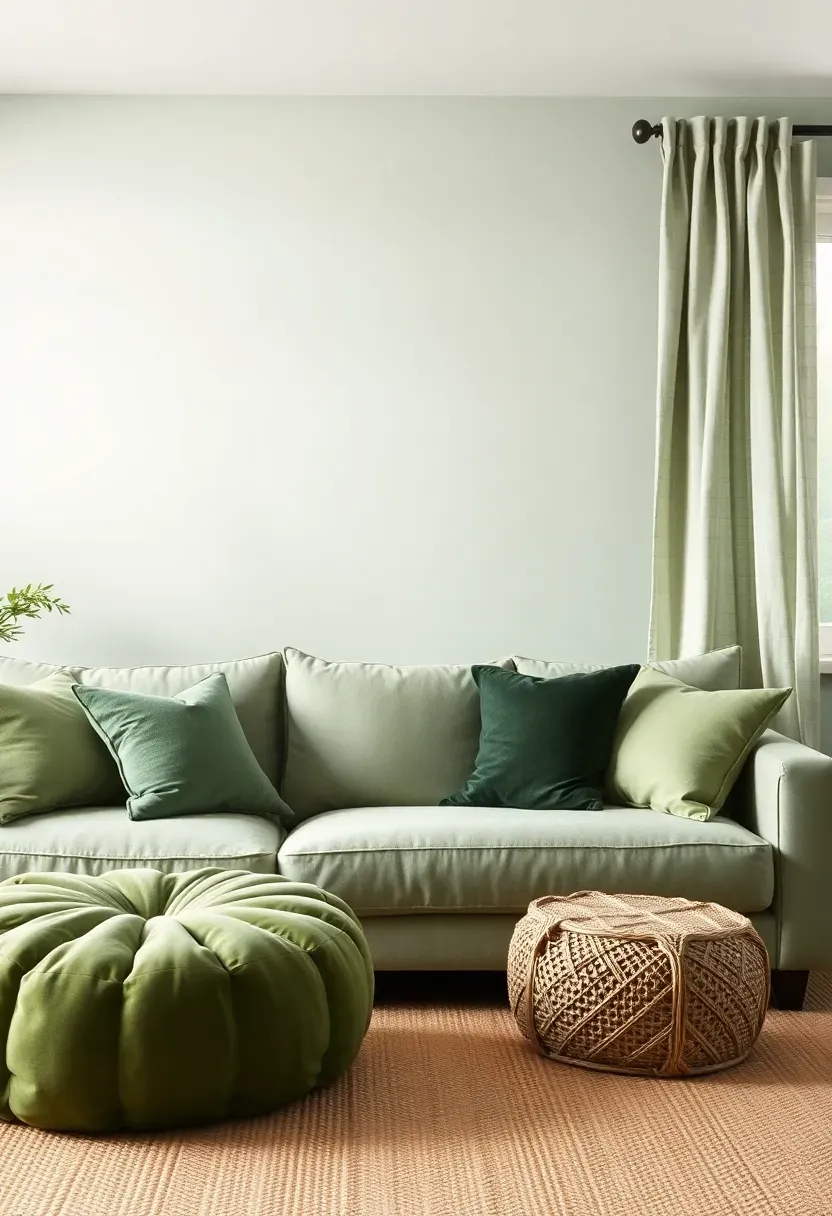
Why it works: Monochromatic schemes automatically create harmony, while texture variation prevents the space from feeling flat or one-dimensional.
Tips
- Vary sheen levels — matte walls, satin curtains, velvet pillows
- Mix natural textures (jute, wood, linen) with refined ones (velvet, metal)
- Use 3-5 shades of sage for enough contrast without losing harmony
What this gives you: A sophisticated, cohesive space that feels intentionally designed while maintaining the calming benefits of a limited color palette.
We picked a few things that go well with this idea: Nintiue Modern Arc Dimmable Gold Floor Lamp (★4.5), O'Bright Dimmable LED Pharmacy Floor Lamp Brass (★4.5) and O'Bright Ted Drum Shade Minimalist Floor Lamp Brass (★4.3). As an Amazon Associate we earn from qualifying purchases.
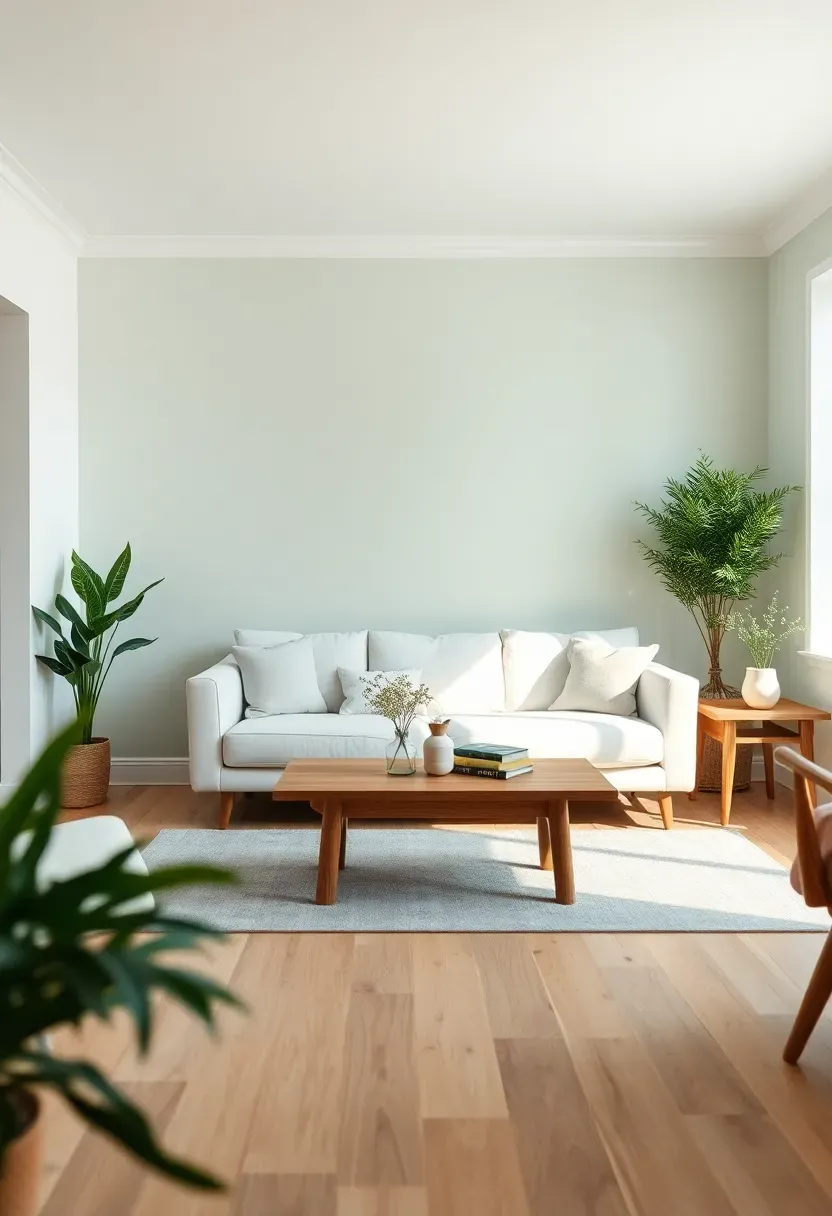
4. Sage Green Accent Wall with Oak Furniture
A single sage green accent wall behind your main seating area creates focal impact while oak furniture brings warmth and natural character to balance the cool green tones. This strategic use of color adds personality without overwhelming the minimalist aesthetic, perfect for renters or those hesitant to commit to an all-green room.
Recommended
Items for this idea
Tips
- Choose medium to dark sage for accent walls to create sufficient contrast
- Extend sage to adjacent walls partially for a cohesive, intentional look
- White or cream walls on remaining surfaces keep the space bright
Avoid if: Your room has poor natural light — dark sage accent walls can make dim spaces feel cave-like without careful lighting design.
What this gives you: Bold color impact with minimal commitment, creating a memorable focal point that transforms an otherwise neutral living room.
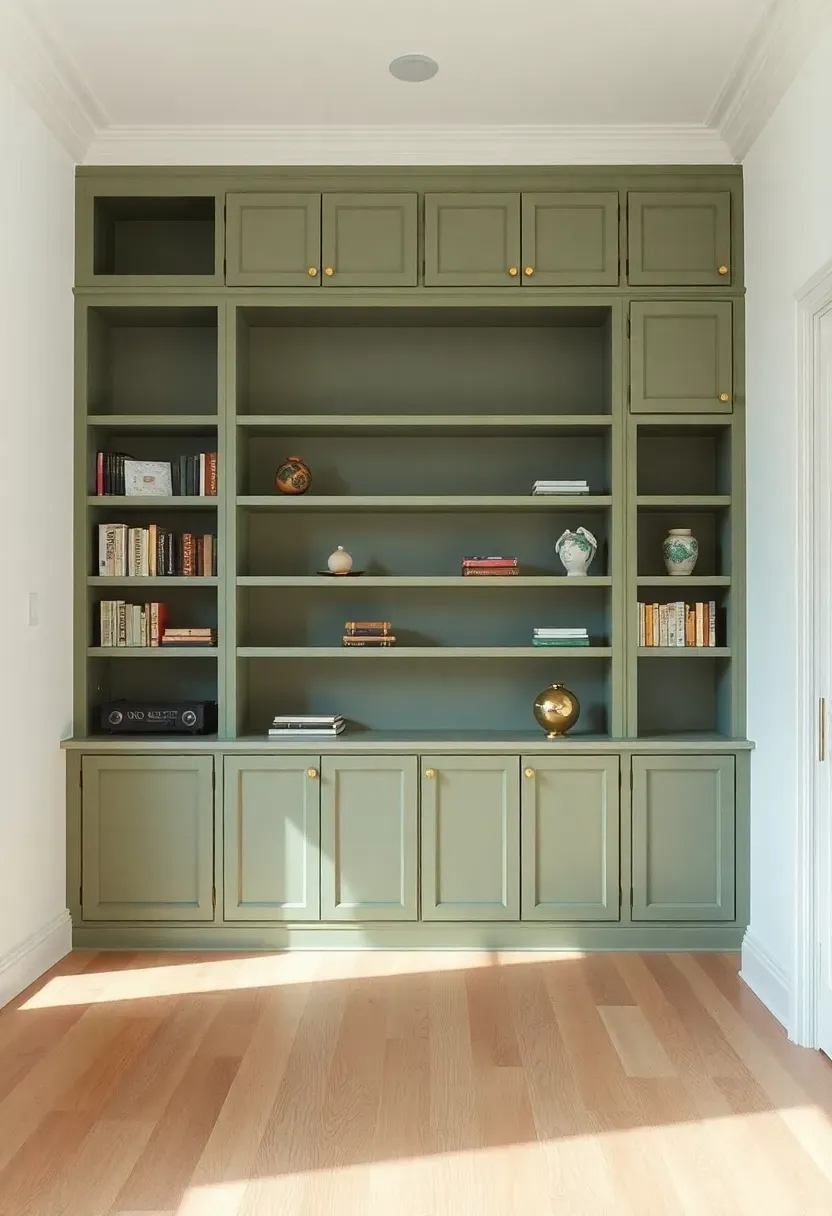
5. Sage Green Built-in Storage Units
Paint built-in storage units in sage green to create architectural features that blend storage with style. This approach works particularly well in minimalist living rooms where clutter must be concealed — the sage cabinetry becomes part of the design rather than purely functional, while maintaining the serene color scheme throughout the space.
Tips
- Satin or eggshell finish shows cabinetry details while staying easy to clean
- Brass or matte black hardware adds sophisticated contrast
- Style shelves sparsely — a few well-chosen objects beat cluttered arrangements
Budget/Time: Painting existing built-ins costs $50-150 in supplies and takes 1-2 weekends for DIY transformation.
What this gives you: Functional storage that enhances rather than detracts from your minimalist design, maintaining calm while concealing everyday items.
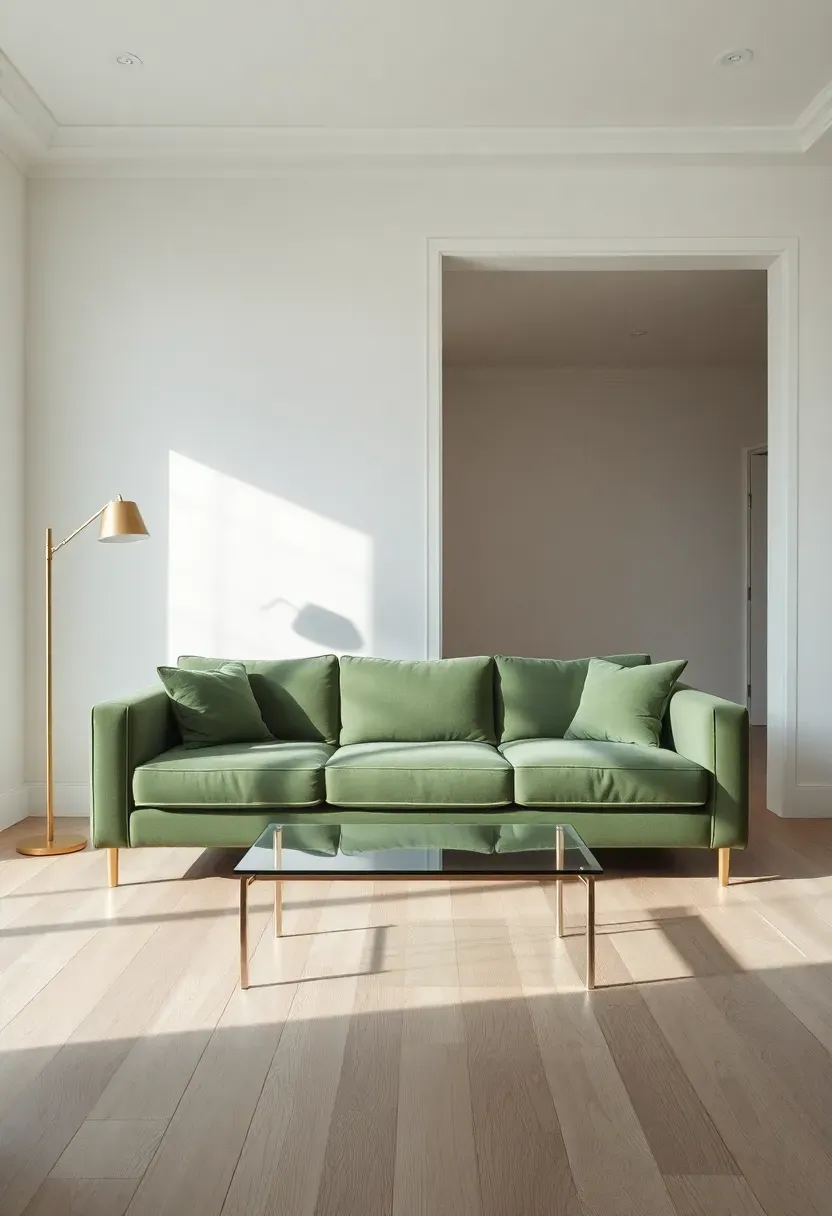
6. Velvet Sage Sofa in Minimalist Room
A velvet sage green sofa introduces luxury and tactile appeal to minimalist living rooms while serving as the room's primary color anchor. The rich fabric adds depth and sophistication that elevates simple surroundings, creating a focal point that feels both elegant and inviting. Velvet's light-reflecting qualities make sage green appear dynamic and changing throughout the day.
Recommended
Items for this idea
Common mistake: Over-accessorizing around a statement velvet sofa. Let the fabric be the star — keep surrounding pieces simple and let the velvet's texture provide the visual interest.
Tips
- Test velvet samples in your space — color appears different on pile fabric
- Velvet shows wear, so choose high-quality synthetic blends for durability
- Keep velvet away from direct sunlight to prevent fading
What this gives you: A luxurious focal point that adds personality and richness to minimalist spaces without requiring colorful accessories or pattern.
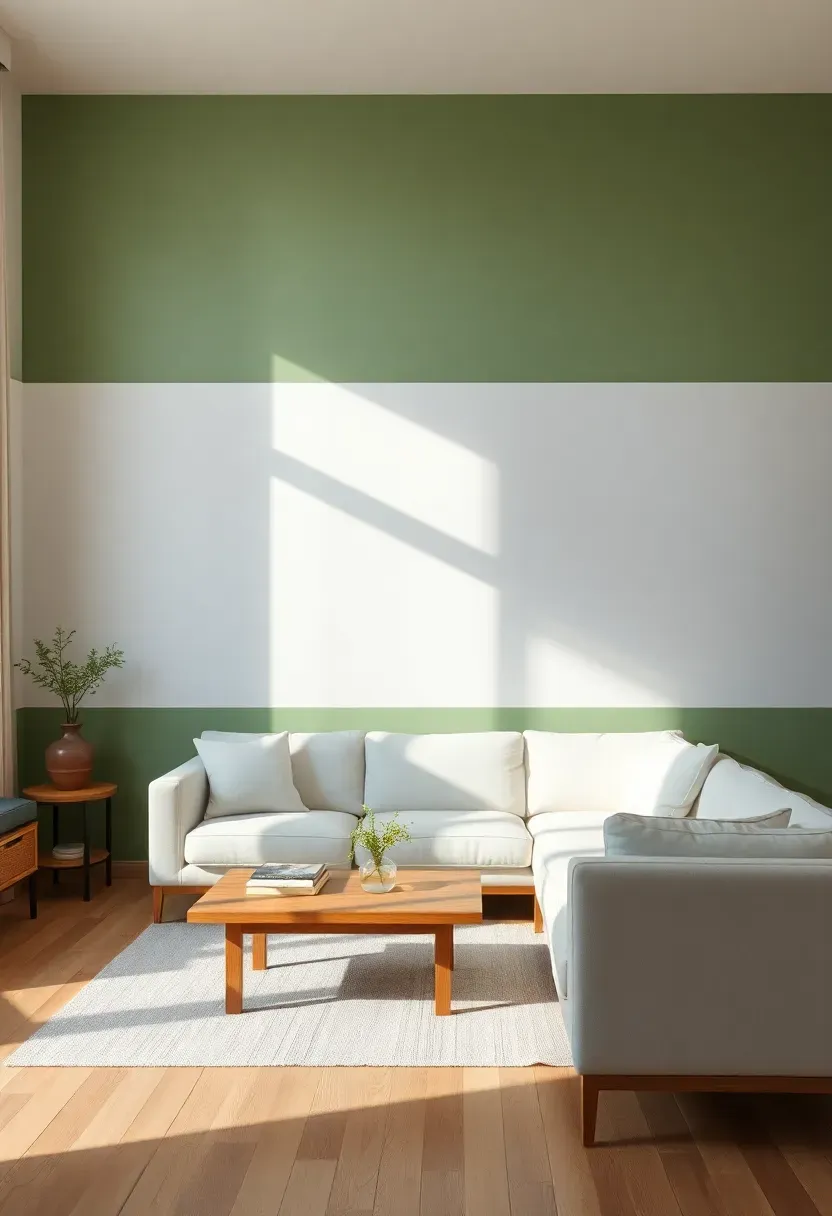
7. Sage and White Color Block Design
Color block sage green and white for a graphic, modern approach that feels fresh and intentional. Paint distinct sections of walls in each color — perhaps sage on the lower half and white above, or create geometric blocks that define different zones within an open-plan living room. This architectural use of color creates visual interest while maintaining minimalist restraint.
Tips
- Use painter's tape and laser levels for perfectly crisp color boundaries
- Consider architectural features — block color around fireplaces or windows
- Extend color blocking to ceiling for cohesive, envelope-like rooms
Best for: Open-plan spaces where you want to define zones without adding furniture or physical dividers that interrupt flow.
What this gives you: Architectural color definition that creates zones and visual interest while maintaining a clean, uncluttered minimalist aesthetic.
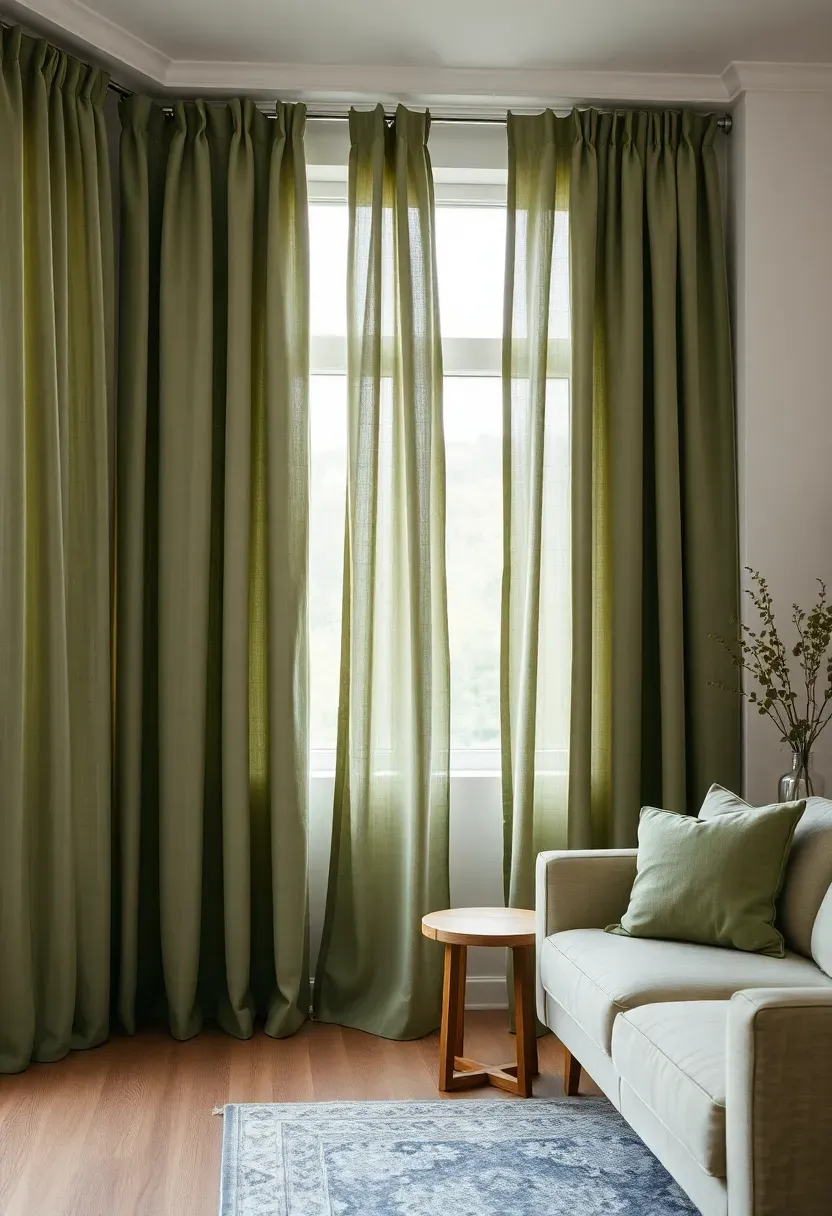
8. Sage Green Window Treatments (No-Drill Renter Option)
Sage green curtains or Roman shades frame windows with natural color while providing privacy and light control. This approach brings sage green into the room through textiles rather than wall color, making it ideal for renters or those who prefer flexible design elements that can be changed seasonally. The fabric softens the overall room while adding another layer of color harmony.
Recommended
Items for this idea
Tips
- Hang curtains high and wide to make windows appear larger
- Line sage curtains with white fabric for privacy while maintaining appearance
- Choose linen or cotton blends for natural texture that complements sage
Rental note: Perfect solution for renters who can't paint — sage curtains transform neutral rental walls without permanent changes.
What this gives you: Flexible color introduction through soft furnishings that can be updated or replaced as your style evolves.
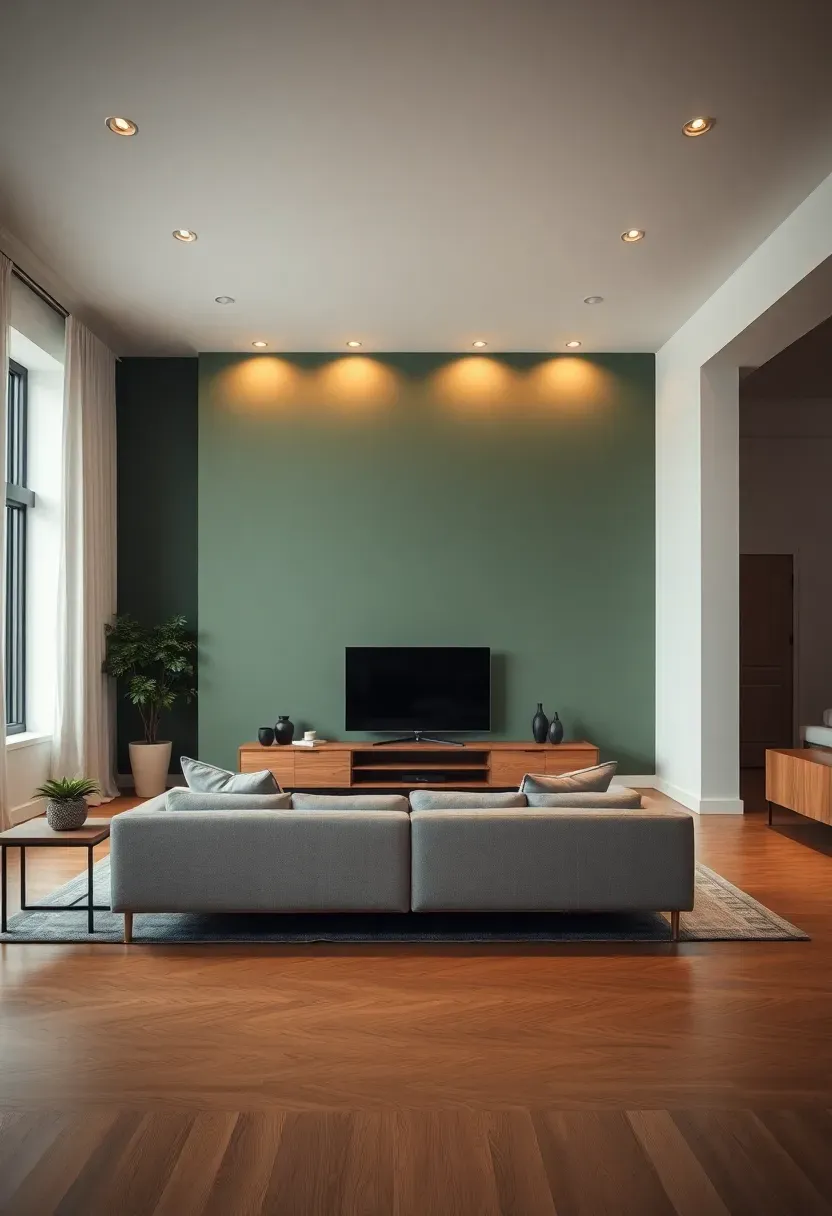
9. Dark Sage Feature Wall
A dark sage feature wall creates dramatic depth and sophistication in minimalist living rooms while maintaining the calming green palette. This rich, saturated sage tone adds visual weight that anchors the space, making it particularly effective in large living rooms or spaces with high ceilings where lighter colors might feel too airy or insubstantial.
Tips
- Dark sage absorbs light — ensure adequate ambient and task lighting
- Matte finish dark sage feels sophisticated, satin adds subtle sheen
- Extend dark sage to the ceiling for a cocooning, intimate effect
What this gives you: Dramatic focal impact that creates sophistication and depth while maintaining the calming properties of green.
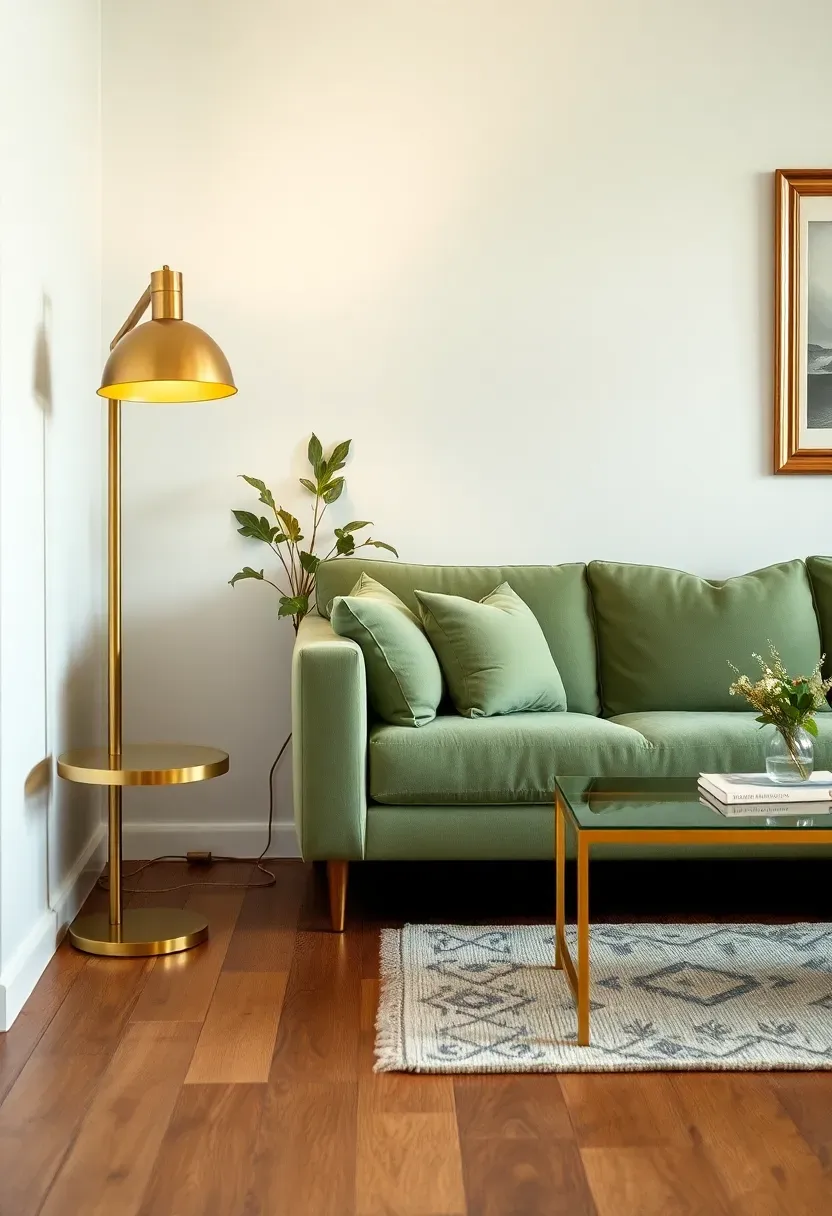
10. Sage Green with Brass Accents
Combine sage green walls or upholstery with brass accents for a sophisticated, warm-meets-cool color pairing that feels elegant and contemporary. Brass lighting fixtures, furniture legs, picture frames, and decorative objects introduce metallic warmth that complements sage green's cool undertones, creating a balanced palette that feels rich yet restrained.
Recommended
Items for this idea
Tips
- Mix brass finishes — unlacquered for patina, polished for shine
- Keep brass accents minimal for maximum impact
- Warm wood tones bridge brass and sage for cohesive triad
What this gives you: Sophisticated warmth that elevates sage green from casual to elegant without breaking the minimalist aesthetic.
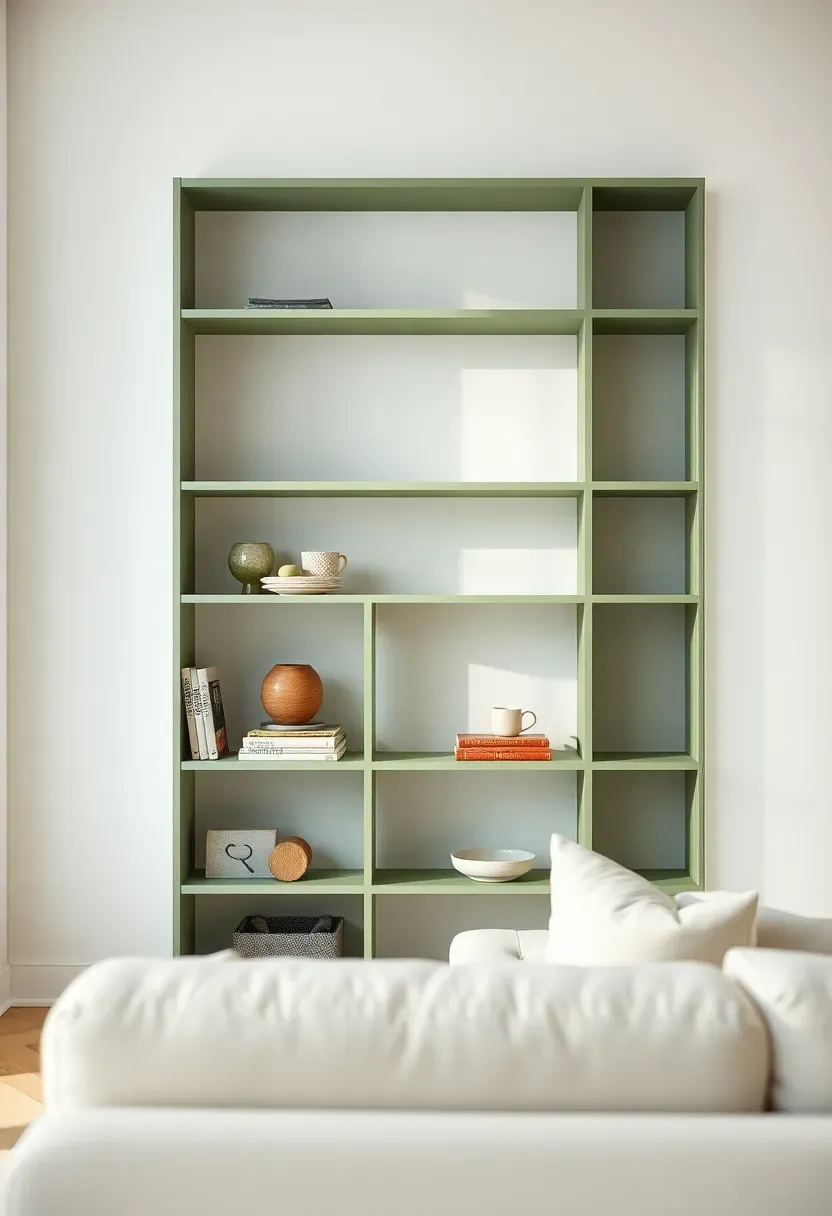
11. Sage Green Open Shelving
Paint open shelving or bookcases in sage green to create storage that doubles as decor while maintaining your minimalist color scheme. Sage green shelves disappear into the background when styled sparingly, allowing displayed objects to take focus while reinforcing the room's serene palette. This approach works particularly well in built-in units or modular shelving systems.
Tips
- Style shelves with restraint — negative space is part of minimalist appeal
- Group objects in odd numbers for visual harmony
- Mix displayed objects with concealed storage for practical minimalism
Styling approach: Edit displays regularly — rotate objects seasonally rather than accumulating pieces permanently.
What this gives you: Storage that enhances your color scheme while providing display space for meaningful objects within a minimalist framework.
12. Light Sage with Beige Furniture
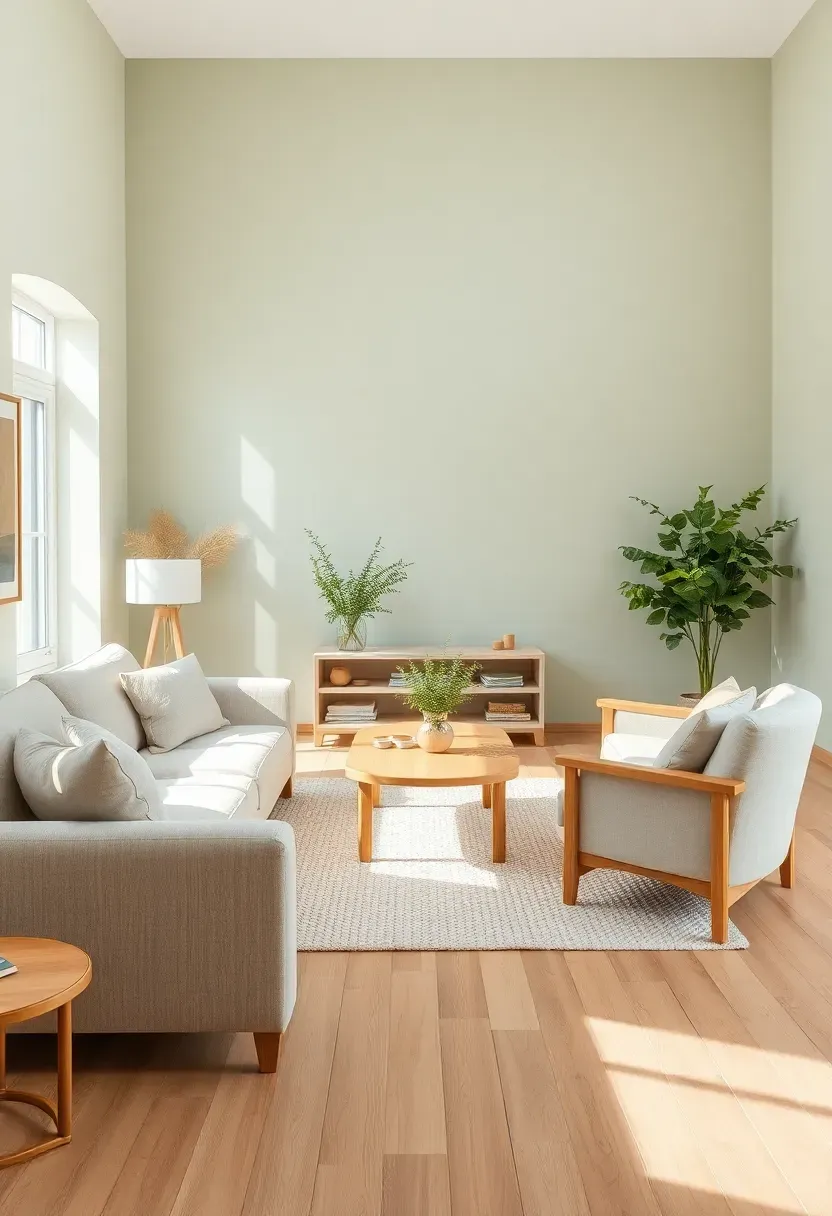
Light sage green walls create a serene backdrop for beige furniture, resulting in a neutral, calming living room that feels warm and inviting. This color combination bridges cool and warm tones — sage provides the fresh, calming green influence while beige furniture adds warm undertones that prevent the space from feeling too cool or clinical.
Recommended
Items for this idea
Tips
- Choose sage with warm gray undertones to bridge with beige furniture
- Add texture through throws, pillows, and rugs to prevent monotony
- Wood furniture in oak or walnut ties sage and beige together
What this gives you: A soothing, neutral living room that feels warm and inviting while maintaining the calming benefits of green.
13. Sage Green Ceiling Design
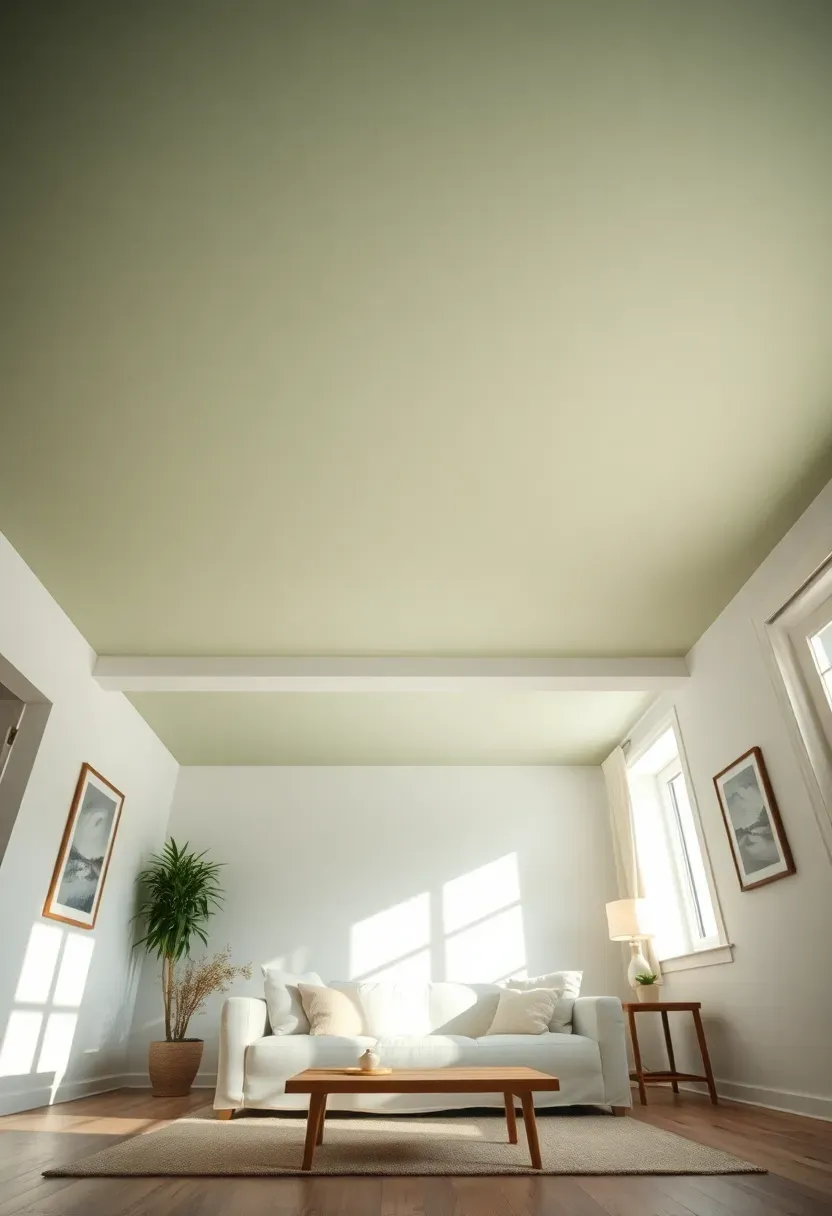
Paint your ceiling sage green while keeping walls white for an unexpected, enveloping effect that creates intimacy and calm. This unconventional approach draws the eye upward and makes rooms feel cocooning and serene, particularly effective in living rooms with high ceilings or architectural details like crown molding that you want to highlight.
Tips
- Flat finish ceiling paint hides imperfections better than eggshell
- Extend sage to crown molding for cohesive, built-in look
- Light sage ceilings keep rooms bright, dark sage creates cozy drama
What this gives you: An unexpected, sophisticated design element that creates intimacy and calm while making your living room memorable.
14. Sage and Terracotta Earth Tones
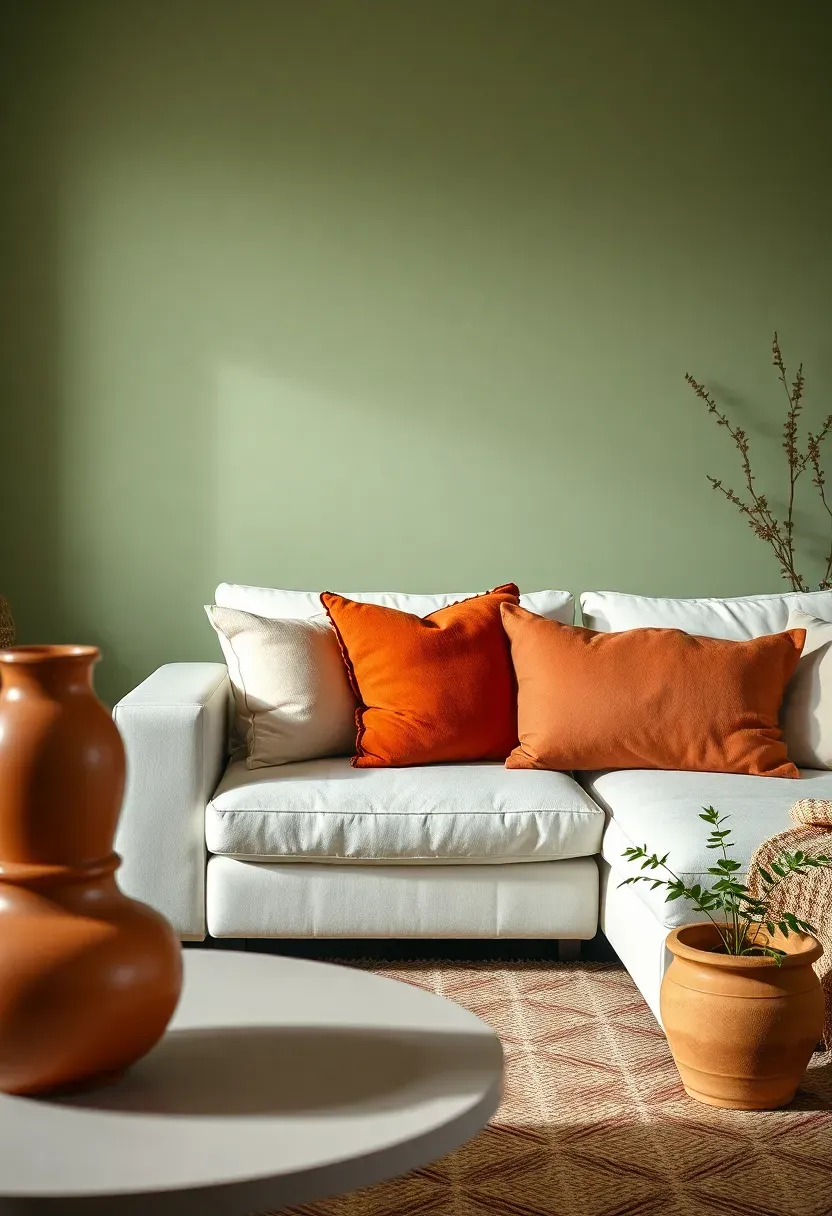
Pair sage green with terracotta accents for an earthy, warm color combination that brings natural sophistication to minimalist living rooms. The cool green balances terracotta's warm orange undertones, creating a harmonious palette inspired by desert landscapes and Mediterranean gardens. This pairing feels grounded, organic, and inherently calming. For more ideas using warm natural palettes, see our minimalist living room ideas with earth tones.
Recommended
Items for this idea
Tips
- Keep terracotta as an accent — too much overwhelms sage's calm
- Natural materials like clay, linen, and jute reinforce the earthy palette
- Warm wood tones bridge sage and terracotta beautifully
Placement: Terracotta works best as small accents scattered throughout the room rather than concentrated in one area.
What this gives you: An earthy, warm color palette that feels sophisticated and grounded while maintaining sage green's calming influence.
15. Sage Green Room Divider
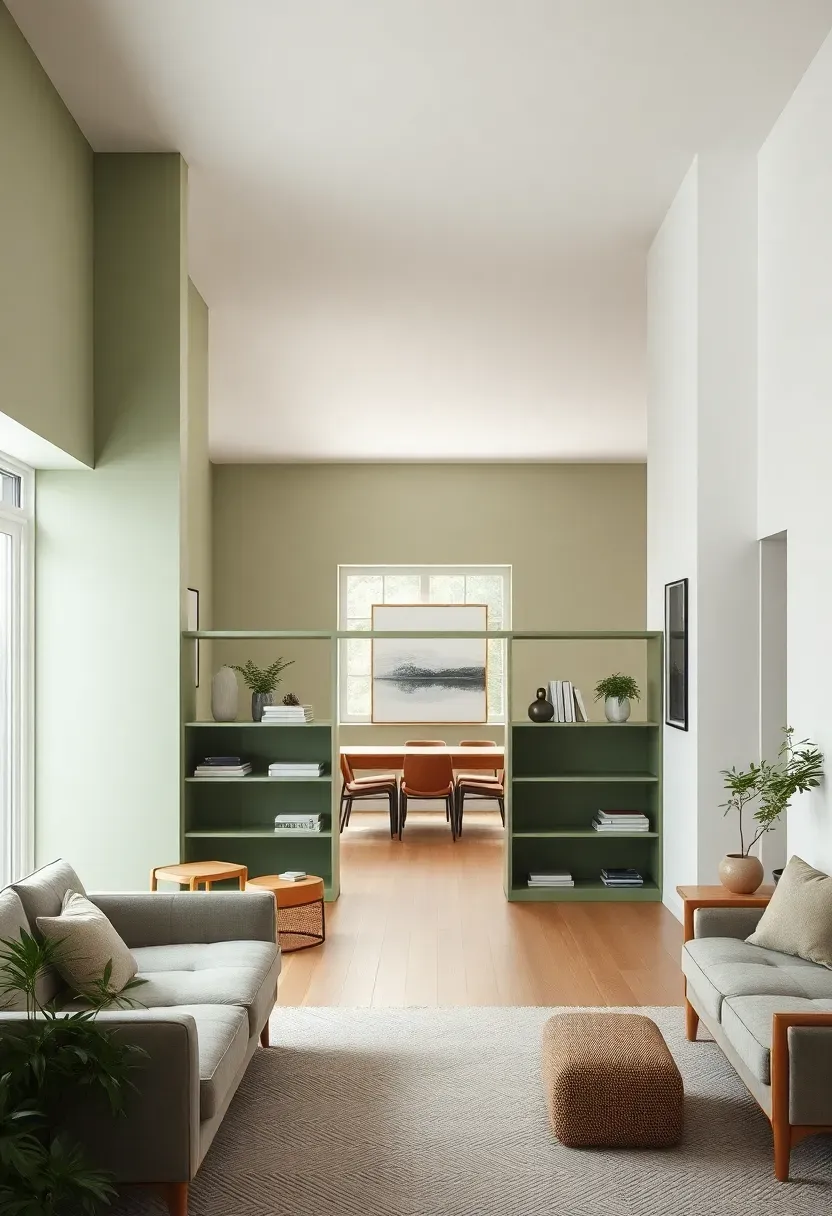
Use a sage green room divider or open shelving unit to separate zones within your living space while maintaining color continuity. This approach works particularly well in open-plan apartments or combined living-dining areas where you want to create subtle separation without blocking light or interrupting flow.
Tips
- Open dividers maintain light flow while defining zones
- Match divider sage to wall color for continuity, or go darker for contrast
- Style open shelving dividers sparingly to maintain minimalist feel
What this gives you: Functional space definition that enhances your color scheme while maintaining openness and light flow.
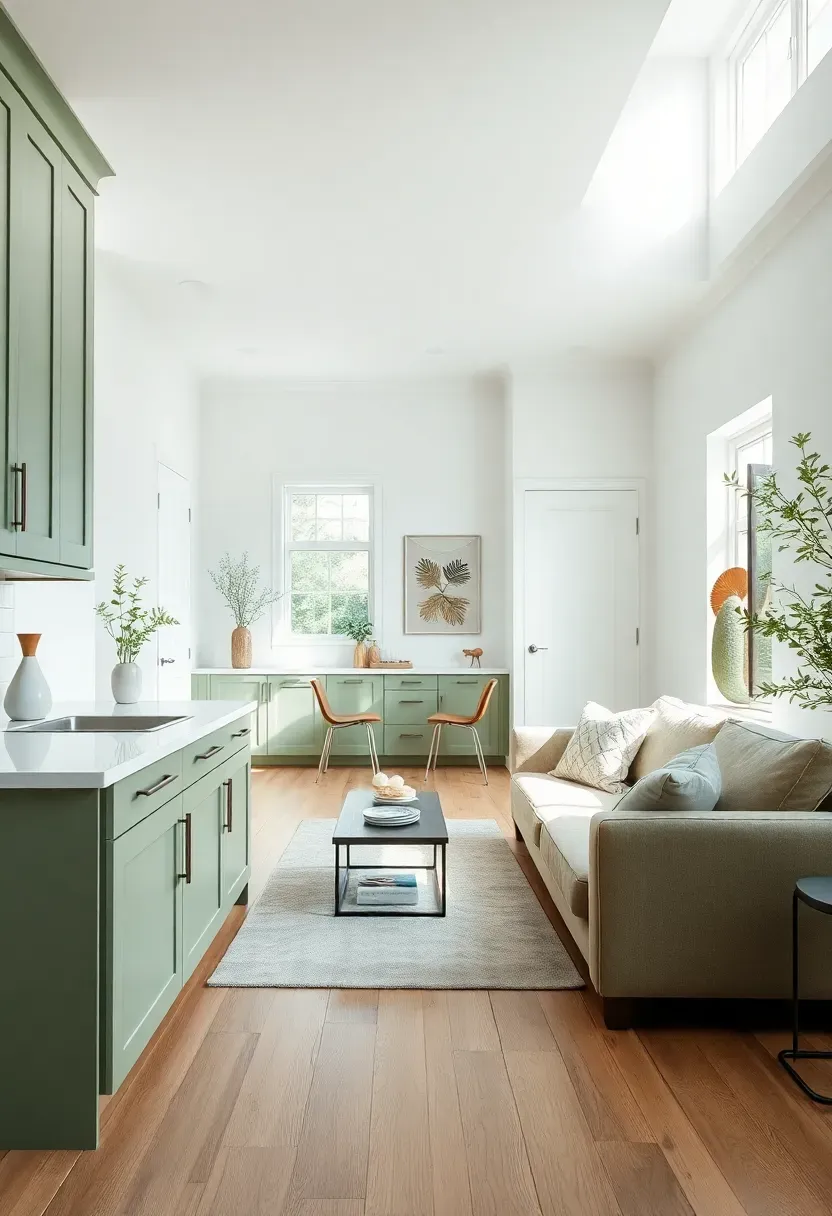
16. Matte Sage Green Kitchen Extension
Extend sage green into kitchen areas within open-plan living spaces for cohesive color flow that connects zones without jarring transitions. Matte sage green cabinets or walls create visual continuity between cooking and lounging areas, making open-plan homes feel unified and intentional rather than fragmented.
Recommended
Items for this idea
Tips
- Matte finish cabinets feel sophisticated and hide fingerprints
- Consistent sage tone creates unity, vary application by zone for interest
- White countertops and backsplashes keep sage kitchen feeling bright
What this gives you: Cohesive color flow that unifies open-plan spaces while maintaining distinct zones for different activities.
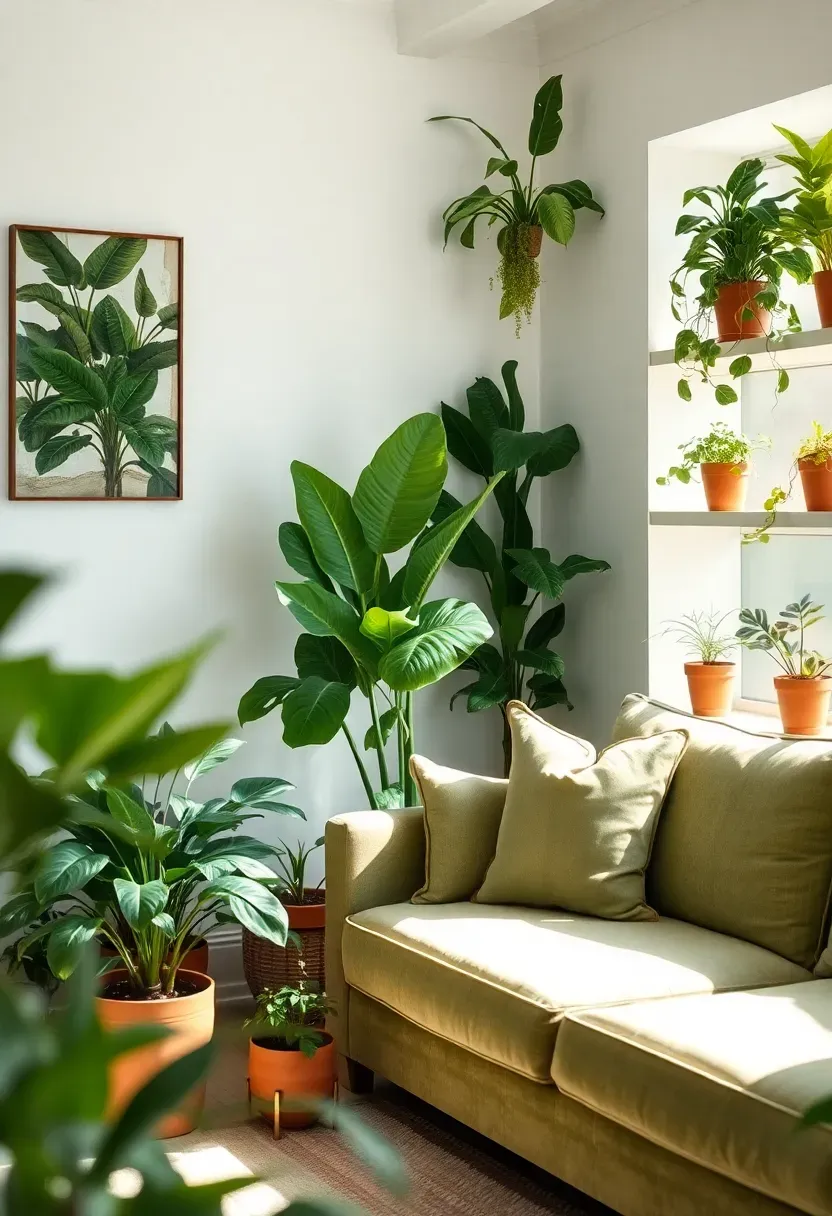
17. Sage Green with Indoor Plants for a Biophilic Living Room
Amplify sage green's natural qualities by pairing it with indoor plants that echo and enhance its botanical influence. The combination of sage green walls or furniture with living greenery creates a layered, biophilic environment that feels connected to nature and inherently calming. This approach works beautifully in minimalist living rooms where plants become the primary decor. If you love the nature-forward look, our organic modern living room ideas take it even further.
Tips
- Vary plant sizes and heights for visual interest and depth
- Natural pots in terracotta or concrete reinforce organic feel
- Group plants in odd numbers and vary shapes for natural arrangements
Plant care: Choose plants suited to your light conditions — fiddle leaf figs and monsteras need bright indirect light, while snake plants and ZZ plants tolerate lower light.
What this gives you: A living, breathing environment that amplifies sage green's calming qualities through natural biophilic design.
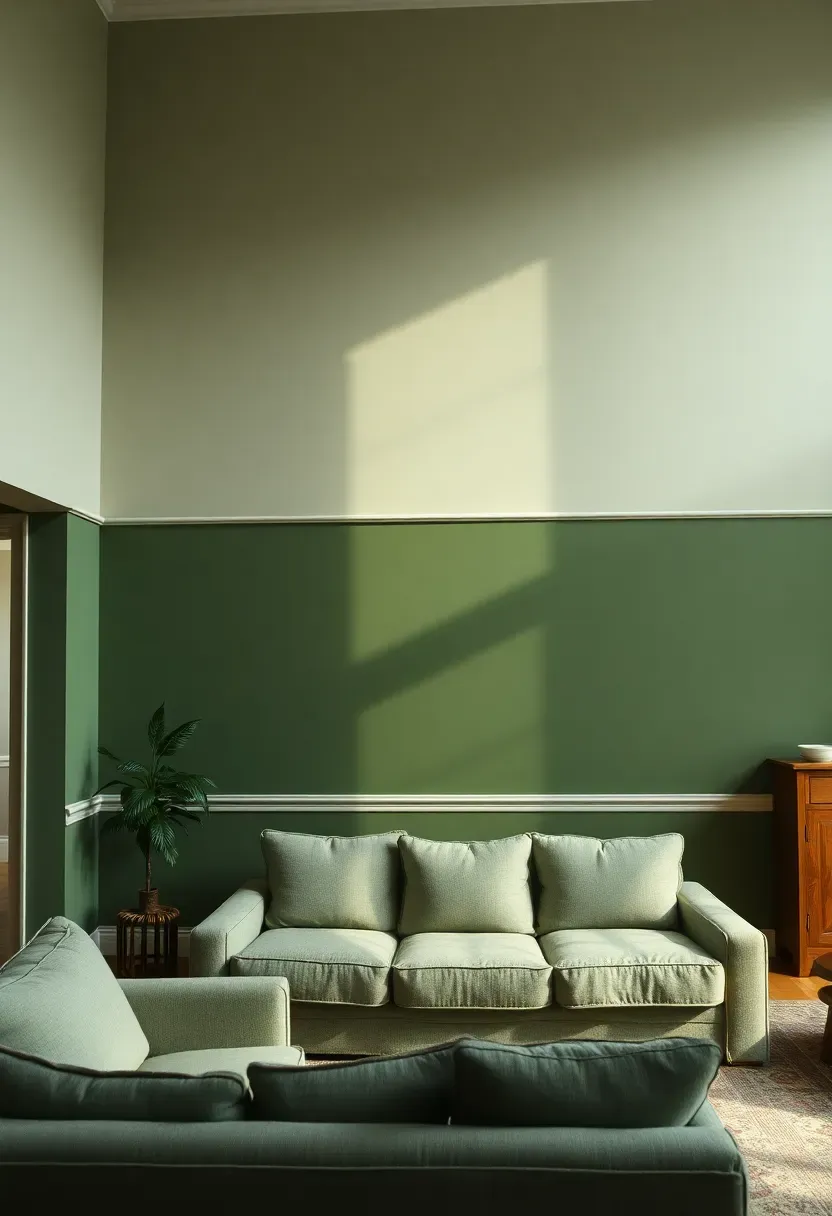
18. Two-Tone Sage Green Walls
Create visual interest with two-tone sage green walls — perhaps lighter sage on upper walls and darker sage on the lower half, or vice versa. This architectural color treatment adds sophistication and depth while maintaining the monochromatic calm of a single-color palette. The result is a living room that feels intentionally designed and visually dynamic.
Recommended
Items for this idea
Tips
- Darker sage on bottom feels grounding, lighter on top feels expansive
- Chair rails or picture rails provide clean color transition lines
- Extend darker sage to window trim for cohesive, custom look
What this gives you: Architectural color interest that adds sophistication while maintaining the calming benefits of a limited palette.
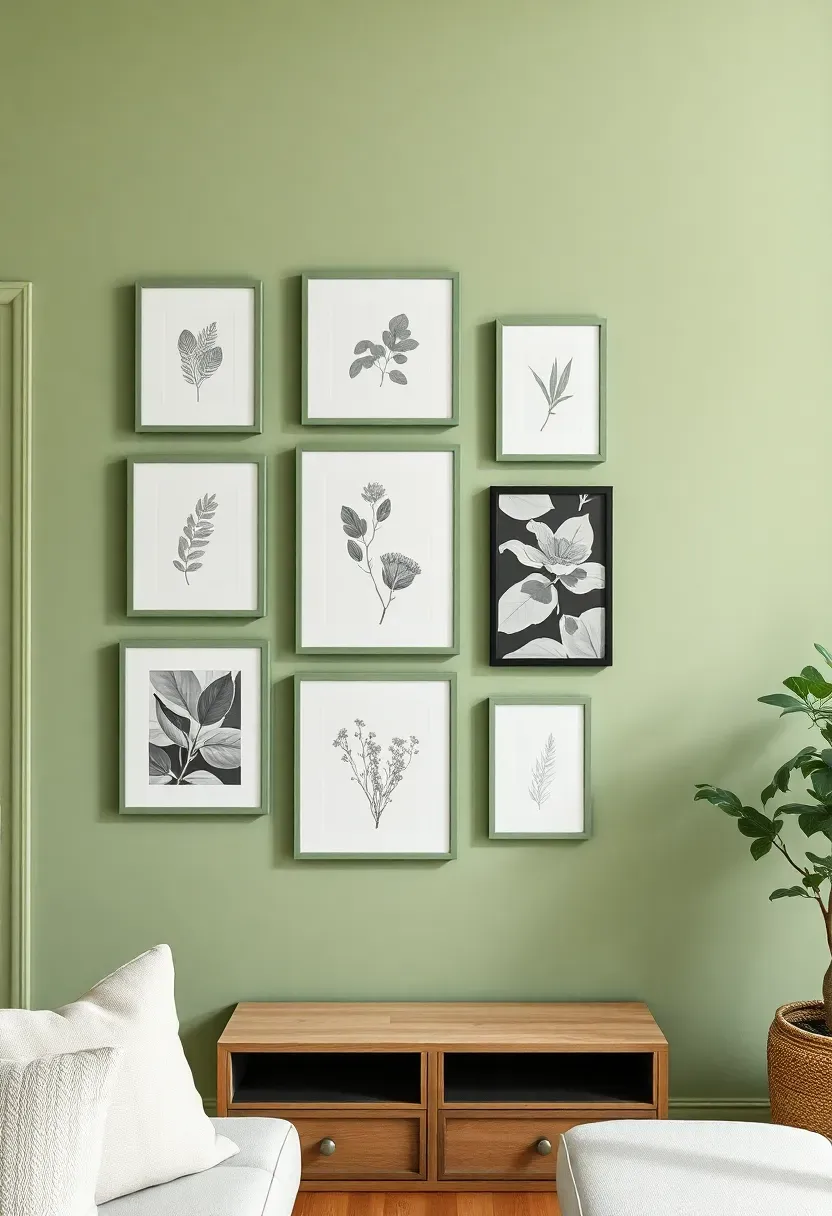
19. Sage Green Minimalist Gallery Wall
Create a gallery wall with sage green frames, sage-toned artwork, or botanical prints that echo your wall color for subtle, sophisticated display. This approach adds visual interest and personality while maintaining color harmony — the sage elements recede slightly, creating a quiet, curated gallery that feels intentional rather than cluttered.
Tips
- Mix frame styles but keep sage color consistent for unity
- Include negative space between pieces for minimalist appeal
- Botanical prints and nature photography reinforce sage's organic mood
What this gives you: Personal expression and visual interest that maintains color harmony and calm within your minimalist framework.
These 19 sage green minimalist living room ideas demonstrate the versatility and calming power of this sophisticated green hue. From light sage walls that create serene backdrops to dark sage feature walls that add dramatic depth, there's an approach for every space and style preference. The key is choosing sage green applications that enhance your room's architecture, lighting, and lifestyle while maintaining the minimalist principles of restraint, intentionality, and calm. If sage has you thinking about green upholstery, explore our green couch living room ideas for even more inspiration.
About the author
OBCD
CGI visualization and interior design content. We create detailed 3D renders and curate practical design ideas for every room in your home.