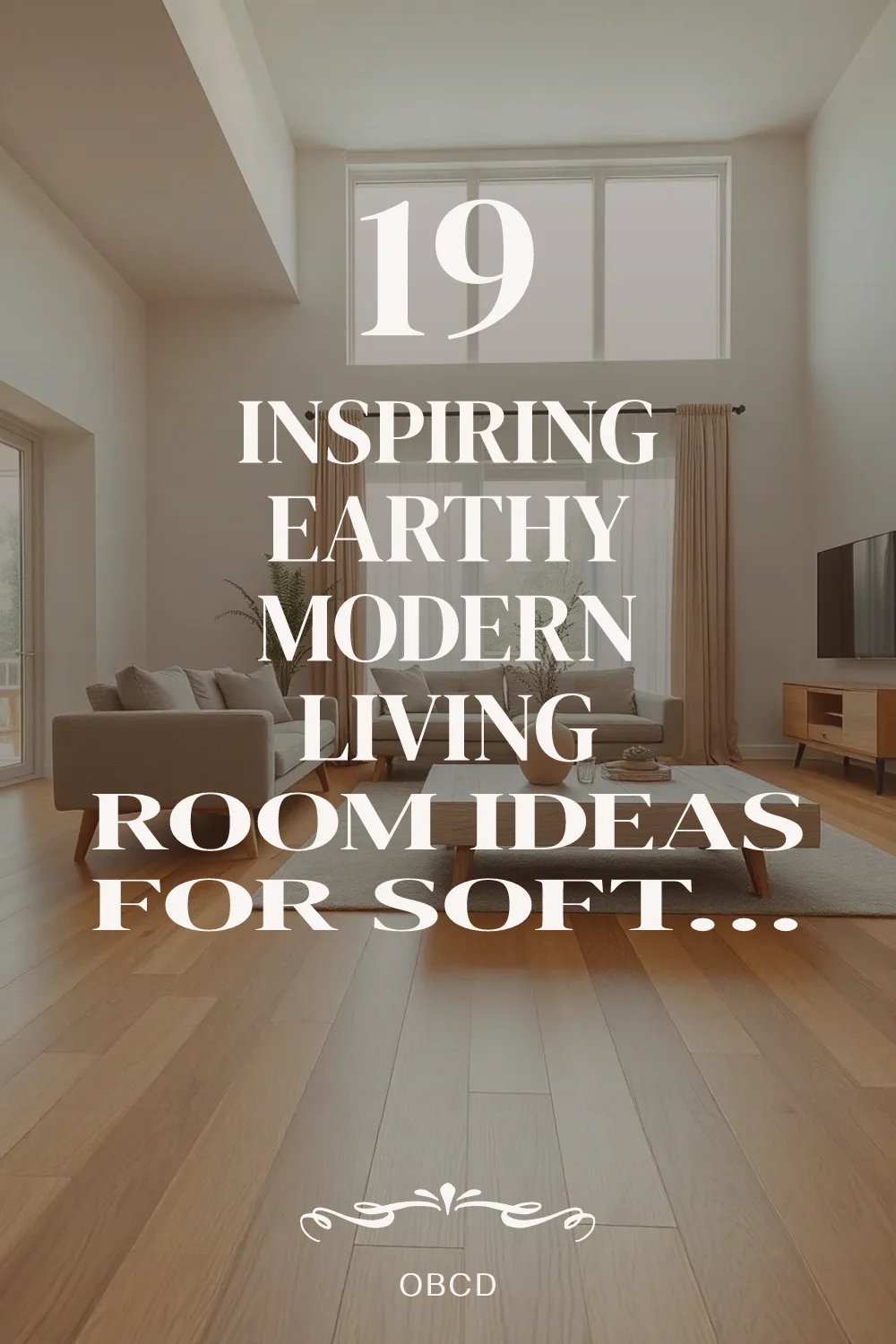
19 Earthy Modern Living Room Ideas for Natural Warmth
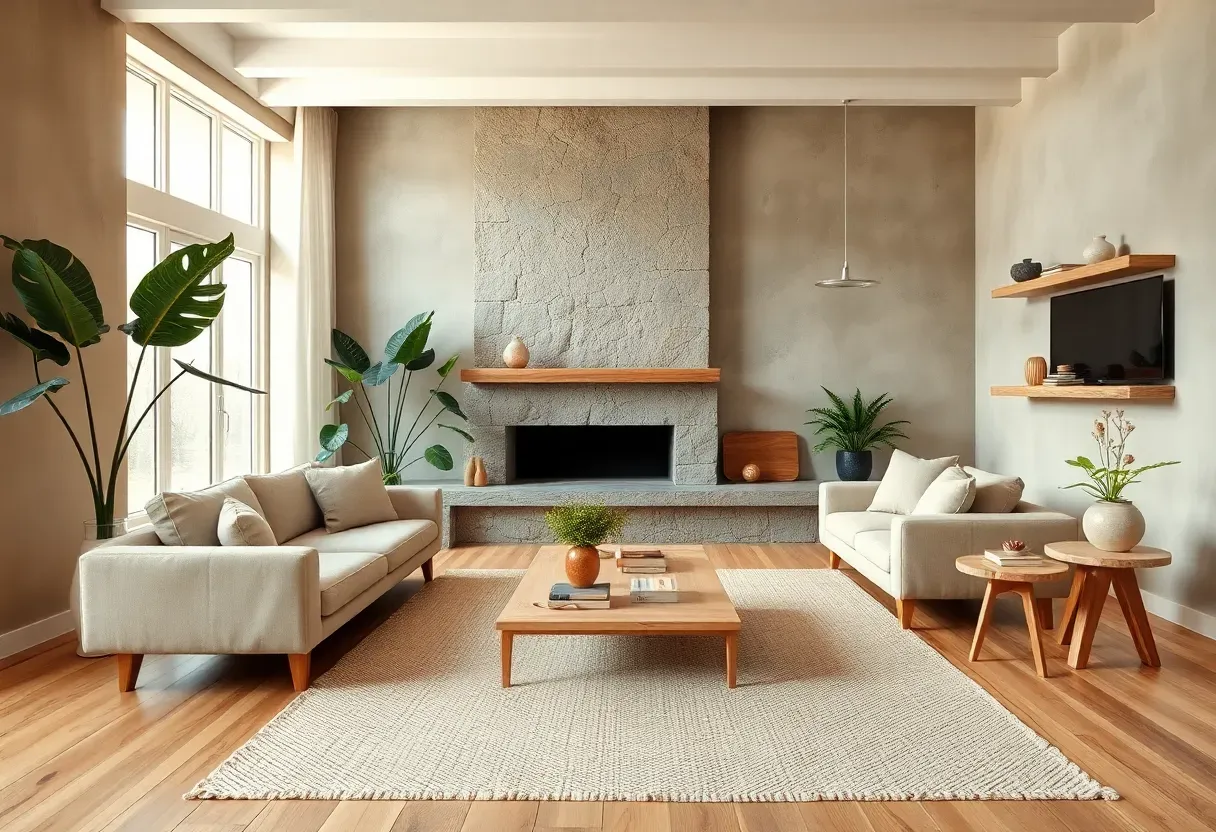
These earthy modern living room ideas show how to blend warm natural materials with clean contemporary lines for a space that feels grounded, cozy, and unmistakably current. Whether you are decorating a rental apartment or refreshing a home you own, the earthy living room look is surprisingly easy to achieve with the right palette and a few intentional material choices.
The earthy modern aesthetic draws from biophilic design -- pairing raw wood, stone, linen, and terracotta with sleek furniture and uncluttered surfaces. This natural modern living room style works especially well in small spaces because warm neutrals and organic textures make rooms feel larger and more inviting without adding visual noise.
What makes earth tone living room decor so versatile is that most of the key pieces -- jute rugs, linen throws, ceramic planters, bamboo blinds -- are renter-friendly and budget-conscious. The 19 ideas below cover everything from wall color to furniture selection to lighting, giving you a complete roadmap for an organic modern living room you will actually want to come home to.
Quick FAQ
What colors work best in an earthy modern living room?
Warm neutrals form the foundation: think beige, taupe, warm gray, cream, and soft terracotta. These can be layered with deeper earth tones like sage green, warm brown, or dusty blue for depth. Keep the palette cohesive with undertones that complement rather than clash.
How do I prevent an earthy living room from looking rustic or dated?
Pair organic materials with sleek, contemporary furniture and architectural details. Clean lines, minimal hardware, and uncluttered surfaces keep the look modern. Avoid overly distressed pieces and limit decorative accessories to maintain visual lightness.
What natural materials should I prioritize in an earthy modern space?
Focus on wood (light oak, walnut, or teak) with visible grain, stone (travertine, limestone, or slate), natural fibers (linen, jute, wool), and terracotta or ceramics. These materials bring authentic warmth while aging beautifully over time.
Can an earthy modern living room work in a small space?
Absolutely. Choose lighter wood tones and reflective surfaces to maintain brightness. Use one or two statement natural elements (like a live-edge table or stone accent) rather than overwhelming the space. Keep furniture low-profile and legs exposed to maintain a sense of airiness.
How do I add warmth without clutter in a modern earthy living room?
Layer textures instead of adding more objects. A wool rug, linen curtains, a leather chair, and a wood coffee table create warmth through material variety. Use plants strategically—large statement plants or small groupings rather than scattered small pots.
What lighting works best for earthy modern living rooms?
Warm LED bulbs (2700K-3000K) enhance the natural palette. Mix ambient lighting (warmth from ceiling fixtures) with task lighting and accent lights on natural materials. Consider lamps with ceramic, wood, or stone bases to reinforce the organic theme.
As an Amazon Associate I earn from qualifying purchases.
Table of Contents
- 1. Light Oak Flooring as an Earthy Living Room Foundation
- 2. Terracotta Accent Wall for Warm Earth Tones
- 3. Stone Fireplace Surround as Room Anchor
- 4. Linen Sectional and Raw Wood Coffee Table Pairing
- 5. Monstera Plant Cluster in Ceramic Planters
- 6. Beige Jute Rug for Organic Texture on a Budget
- 7. Woven Leather Armchair as Textural Accent
- 8. Warm Gray Walls with Walnut for a Natural Modern Look
- 9. Low-Slung Sofa with Raised Legs for Airiness
- 10. Floating Wood Shelves with Ceramic Objects
- 11. Cream Wool Rug with Visible Weave Texture
- 12. Large Fiddle Leaf Fig in Natural Corner
- 13. Travertine Side Tables for Earthy Modern Decor
- 14. Soft Terracotta Throws on Neutral Upholstery
- 15. Reed Sconces with Warm LED Lighting
- 16. Bamboo Blinds and Linen Panels for Renter-Friendly Windows
- 17. Live-Edge Console Table Against White Wall
- 18. Sage Green Accent Chair with Warm Wood Frame
- 19. Ceiling Beams Exposed and Painted in Warm White
1. Light Oak Flooring as an Earthy Living Room Foundation
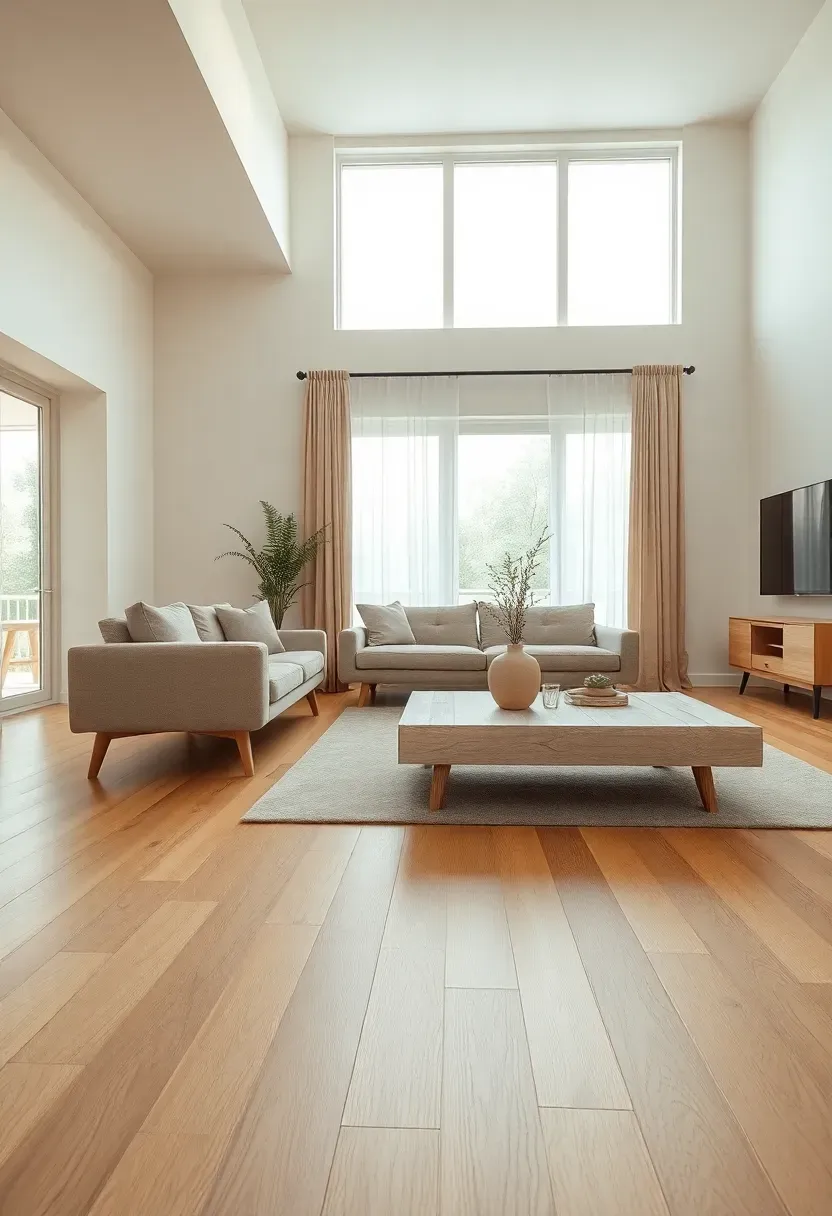
Light oak wood flooring establishes an immediate connection to nature while providing a warm foundation that feels contemporary rather than rustic. The visible grain pattern adds visual interest without overwhelming the space, and the pale honey tone keeps the room bright and expansive. This natural pairing works exceptionally well because the wood brings organic warmth that balances the starkness often associated with minimalist design. Unlike dark hardwoods that can make rooms feel smaller, light oak reflects natural light and creates an illusion of more square footage.
Tips
- Do choose wider planks (5-7 inches) for a more contemporary look that emphasizes the natural grain pattern
- Don't mix multiple wood species—keep all wood elements in the same tone for cohesion
- If replacing flooring isn't an option, light oak-look engineered hardwood offers the same aesthetic at a lower cost
Best for: open-plan living spaces where flooring continuity creates visual flow
What this gives you: A warm, nature-connected foundation that brightens the room while maintaining modern simplicity
We picked a few things that go well with this idea: MIULEE 4-Pack Earthy Corduroy Throw Pillow Covers (★4.6), MIULEE 4-Pack Neutral Chenille Boho Pillow Covers (★4.6) and MIULEE 4-Pack Brown Chenille Textured Pillow Covers (★4.6). As an Amazon Associate we earn from qualifying purchases.
2. Terracotta Accent Wall for Warm Earth Tones
A terracotta accent wall infuses your living room with the warmth of sun-baked earth while creating a striking backdrop that feels both current and timeless. This rich clay tone pairs beautifully with neutral built-in storage units in cream or warm white, creating contrast that feels organic rather than jarring. The key to keeping this modern lies in the undertone—choose a terracotta with pinkish-orange rather than red-brown notes for a fresher, more contemporary feel. The accent wall approach allows you to incorporate bold earthy color without overwhelming the space, and the built-ins provide practical storage that maintains the room's streamlined aesthetic.
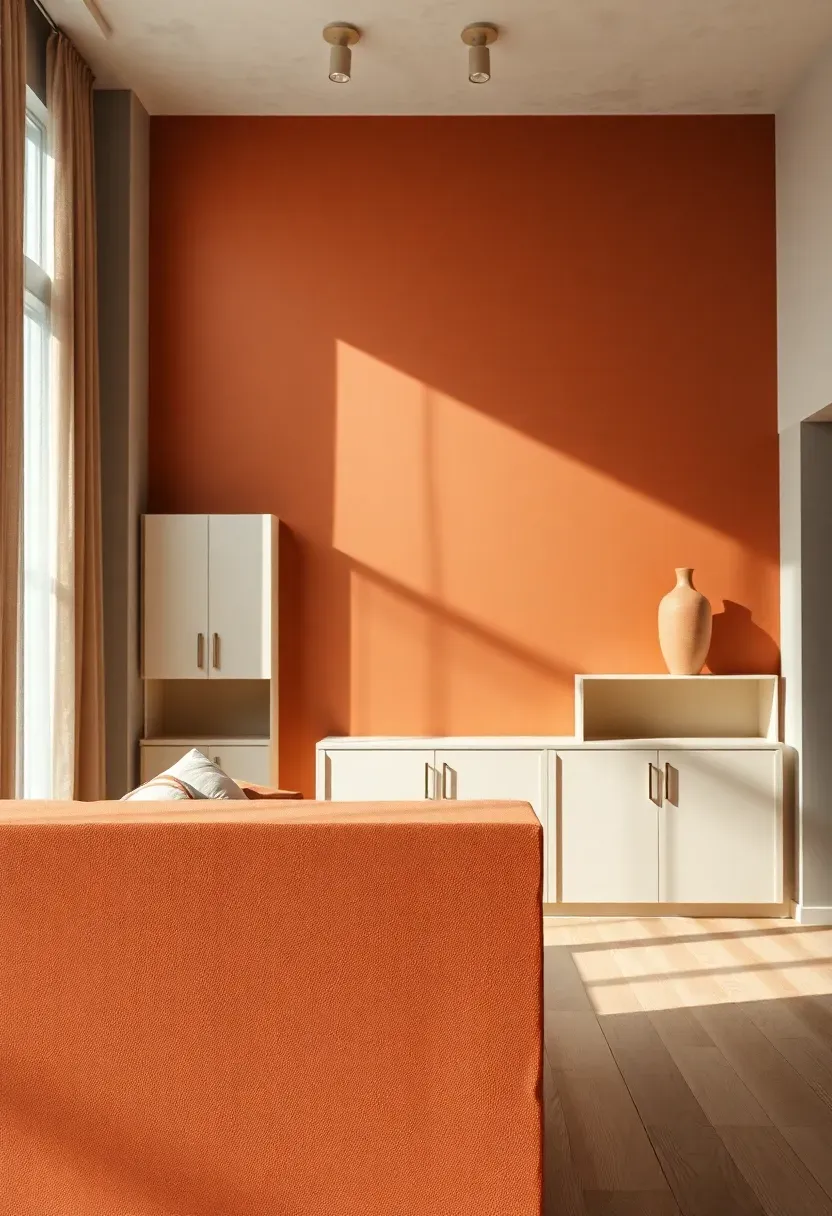
Placement note: Position the terracotta wall behind your main seating area or television console for maximum impact. This creates a natural focal point that draws the eye without competing with other elements. If your room lacks architectural interest, the accent wall adds depth and dimension that makes the space feel designed rather than generic.
Unlike feature walls in trendy colors that can quickly feel dated, terracotta has enduring appeal rooted in historical architecture and Mediterranean design. The color connects your modern living room to centuries-old building traditions while feeling fresh in its application. Pair the wall with minimalist built-ins that have simple slab doors and minimal hardware—this allows the terracotta to take center stage while providing the functional storage modern living requires.
Tips
- If you're hesitant about committing to an entire wall, start with terracotta paint on the wall behind open shelving—this introduces the color in a smaller dose
- Then gradually expand to the full wall once you've lived with the color and confirmed it works with your lighting
- For rental spaces, removable wallpaper in a terracotta solid color or subtle geometric pattern can achieve a similar effect without permanent changes
Budget/Time: Paint costs $40-60 per gallon; one gallon typically covers 350-400 sq ft. Weekend project.
What this gives you: A warm, earthy focal point that adds personality while maintaining contemporary sophistication
We picked a few things that go well with this idea: S&L Homes Jute Cotton Farmhouse Area Rug 8x10 (★4.0), HOMEMONDE Braided Jute Natural Farmhouse Area Rug (★4.3) and S&L Homes Jute Cotton Farmhouse Area Rug 6x9 (★4.0). As an Amazon Associate we earn from qualifying purchases.
3. Stone Fireplace Surround as Room Anchor
A stone fireplace surround grounds your earthy modern living room with the raw authenticity of natural materials while serving as a commanding visual anchor. Whether you choose limestone, travertine, or slate, the inherent variations in each stone piece create visual interest that eliminates the need for additional decoration. The texture of natural stone contrasts beautifully with smooth plaster walls and sleek furniture, creating that essential modern-earthy balance through material juxtaposition. Unlike manufactured stone veneers which can look artificial, full-depth stone or high-quality natural veneer brings genuine character and thermal mass that regulates temperature naturally.
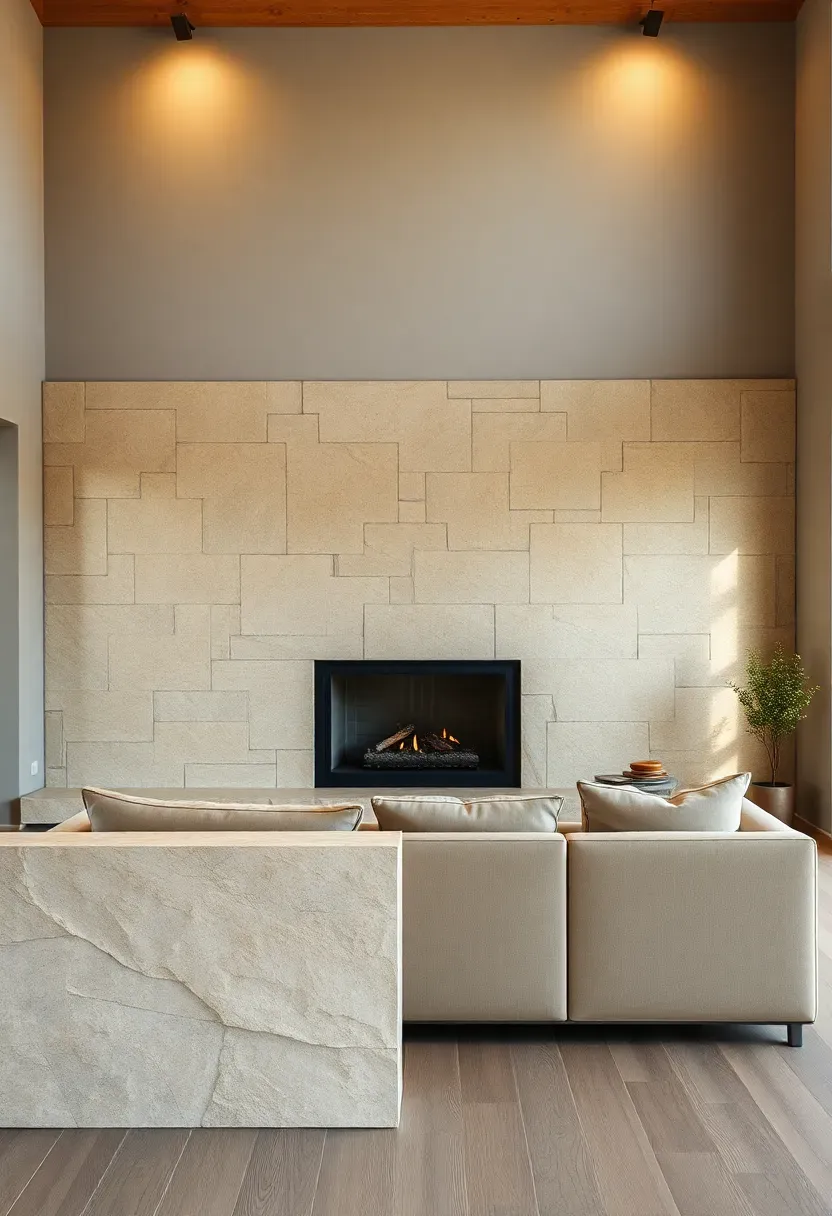
Why it works: Stone has been used in fireplace construction for millennia because it's heat-resistant, durable, and develops a beautiful patina over time. In an earthy modern context, the fireplace surround becomes a bridge between ancient building techniques and contemporary design sensibilities.
The hearth naturally becomes the room's gathering point, so making this element visually substantial reinforces the living room's role as a social space. A stone surround works particularly well because its texture is engaging up close but reads as a unified surface from a distance—this creates visual depth without feeling busy. Keep the stone selection relatively monochromatic within the earthy spectrum (warm grays, beiges, or soft browns) rather than mixing multiple colors, which can feel chaotic in a modern setting.
Tips
- Do extend the stone to the ceiling for a dramatic modern look, or stop at mantle height for a more traditional proportion
- Don't clutter the mantel—stone is visually substantial enough that minimal styling has maximum impact
- Pro/Con: Natural stone is expensive but adds significant home value and never needs replacing
- Con/Fix: If budget is limited, use stone only on the surround face and drywall returns—this achieves the look for roughly half the cost
- Fix: Painted brick can achieve a similar textural effect at a fraction of the cost, though it lacks the depth of real stone
Best for: rooms with existing fireplaces or new construction where the hearth can be positioned as the central element
What this gives you: A permanent, natural focal point that adds warmth, texture, and architectural interest while connecting your space to ancient building traditions
We picked a few things that go well with this idea: Steve Silver Solona Acacia Carved Wood Side Table (★4.8), Fultyle Round Modern Solid Wood Leg Side Table (★4.4) and WELLAND Live Edge Cedar Natural Side Table (★4.5). As an Amazon Associate we earn from qualifying purchases.
4. Linen Sectional and Raw Wood Coffee Table Pairing
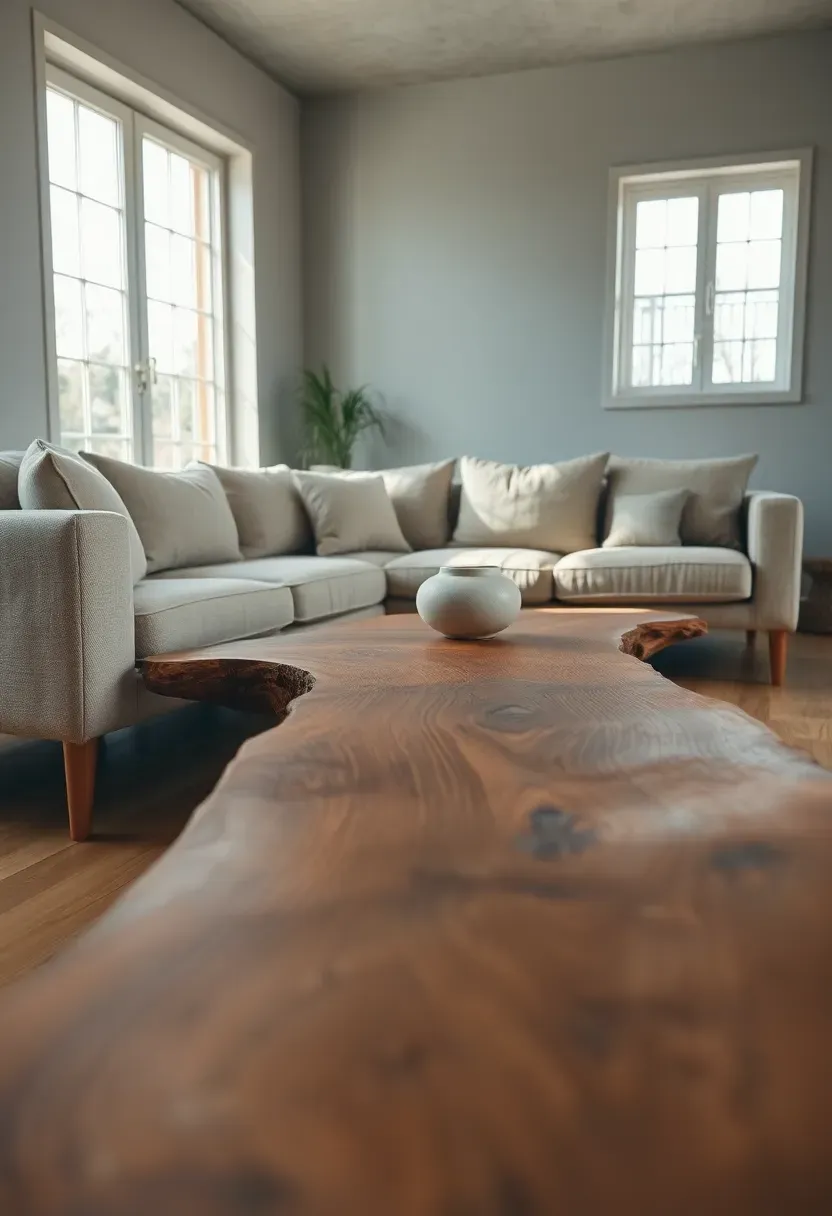
A linen-upholstered sectional paired with a raw wood coffee table creates the quintessential earthy modern seating arrangement, combining relaxed comfort with natural sophistication. Linen's inherent slub texture and subtle variations add visual depth that elevates the fabric beyond solid-color upholstery, while its breathable nature keeps the seating comfortable year-round. The raw wood table—whether live-edge walnut, reclaimed oak, or teak with natural edges—introduces the authentic irregularities of nature into your living room. These two pieces work together because they share an organic quality while representing different natural materials: the softness of flax and the solidity of wood.
Recommended
Items for this idea
Common mistake: Choosing wood that's too evenly finished or tables with thick, glossy polyurethane coatings that look manufactured and synthetic. The appeal of raw wood lies in its natural edges, visible grain, and matte or hand-rubbed oil finish that lets the material's true character show through.
When selecting your linen sectional, consider a warm neutral shade like oatmeal, taupe, or soft gray that complements the wood tones in your coffee table. The beauty of this combination lies in its versatility—linen ages gracefully, developing a softer hand over time, while wood typically looks richer as it develops a patina. Avoid stark white linen which can feel clinical; warmer tones maintain the cozy atmosphere essential to earthy modern design. For the coffee table, prioritize substantial scale—a piece that feels generous rather than dainty balances the visual weight of a sectional.
Tips
- Do choose linen with a visible weave and natural slub for authentic texture
- Don't select wood furniture with thick, glossy finishes that look synthetic
- If raw edge feels too rustic, choose wood with eased (slightly rounded) edges for a more refined look while maintaining natural character
Budget/Time: Quality linen sectionals run $2000-4000; raw wood tables $800-2500 depending on size and wood species
What this gives you: A comfortable, visually engaging seating arrangement that celebrates natural materials while maintaining contemporary ease
5. Monstera Plant Cluster in Ceramic Planters
A cluster of Monstera deliciosa plants in ceramic planters brings vibrant life into your earthy modern living room while reinforcing the connection to nature that defines this aesthetic. The Monstera's large, perforated leaves create dramatic sculptural forms that function as living art, while their glossy surfaces catch and reflect light, adding movement to the space. Grouping three plants of varying heights creates visual rhythm and prevents the arrangement from feeling static or contrived. The ceramic planters—choose unglazed terracotta, matte beige, or soft gray with visible throwing rings—provide the earthy foundation that grounds the tropical foliage.
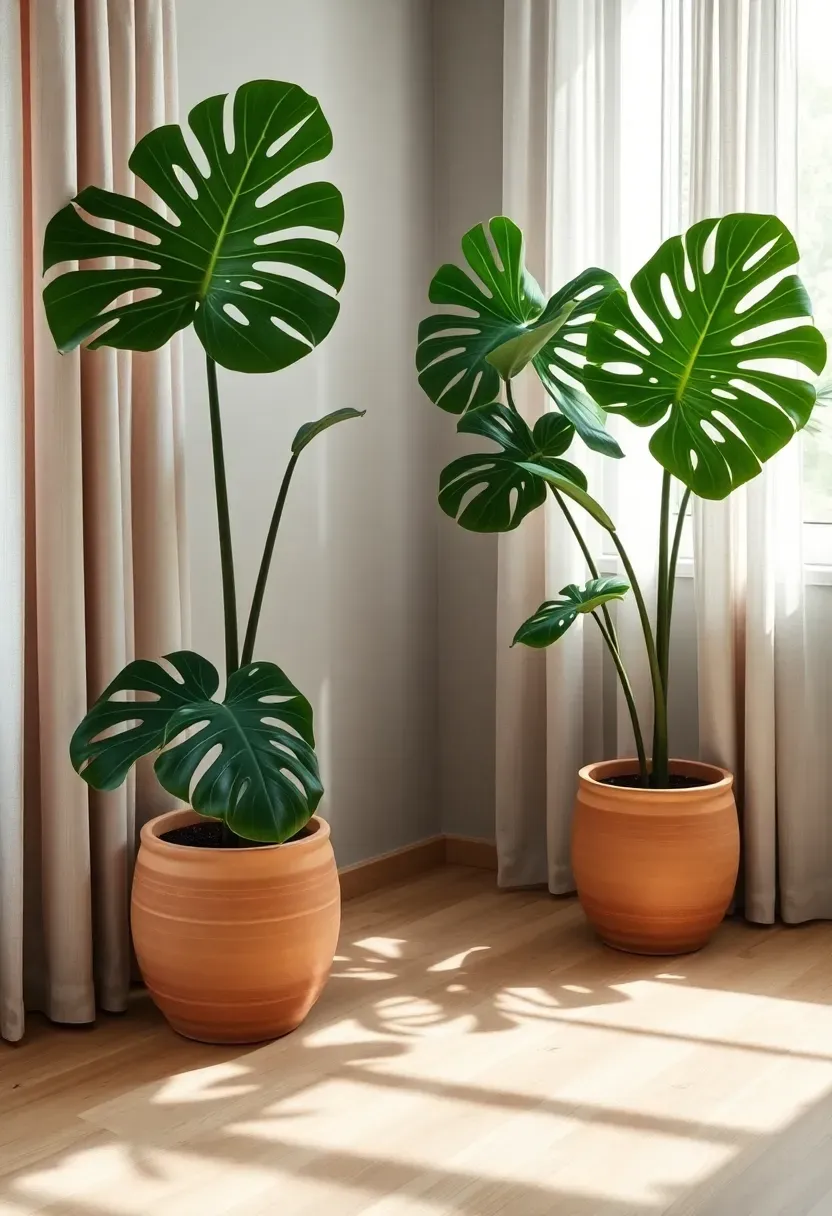
Placement note: Position your Monstera cluster in a corner with adequate natural light or near sliding doors leading to outdoor spaces. This placement maximizes the plant's health while creating a natural transition between indoors and out. If your living room lacks corners, an empty wall bay or the space beside a sofa works equally well provided there's sufficient light.
What makes Monsteras particularly suited to earthy modern interiors is their architectural quality—these plants have strong structural forms that complement clean lines and uncluttered spaces. Unlike ferns or trailing plants that can feel messy, Monstera leaves are orderly and deliberate in their arrangement. The plants grow relatively quickly (6-10 inches per month in ideal conditions), so your modest initial investment will soon become a substantial presence that literally brings life to the room. For ceramic planters, choose pieces with organic shapes—slightly irregular rounds or ovals feel more authentic than perfect cylinders.
Tips
- Do use pots with drainage holes and saucers to prevent root rot—Monsteras prefer consistently moist but not waterlogged soil
- Don't place in direct sun which can scorch leaves, or dark corners which cause leggy growth
- Rental-friendly: If drilling drainage holes isn't an option, use a plastic nursery pot inside the decorative ceramic and water in the sink, allowing excess to drain before replacing
Best for: bright living rooms with large windows or doors that provide the indirect sunlight Monsteras crave
What this gives you: Living sculpture that purifies air, adds dramatic greenery, and reinforces the biophilic connection central to earthy modern design
6. Beige Jute Rug for Organic Texture on a Budget
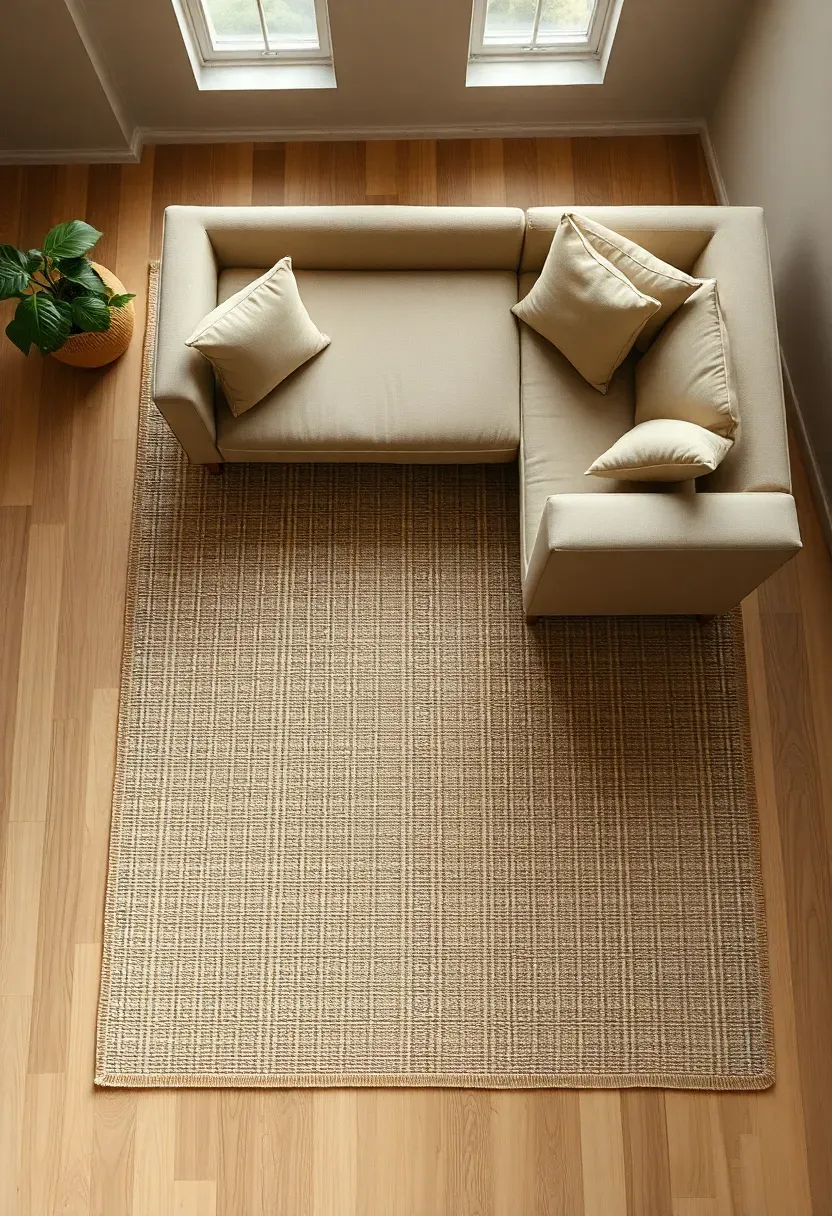
A beige jute rug layered over smooth hardwood or polished concrete flooring introduces essential textural contrast while adding organic warmth that defines the earthy modern aesthetic. Jute's natural fiber construction creates visible texture that adds visual interest without introducing pattern or color, making it ideal for minimalist spaces that crave subtle depth. The neutral beige tone bridges warm wood floors and cool plaster walls, creating visual continuity that ties the room together. Layering a jute rug over smooth flooring is particularly effective because it creates a designated living zone without visual barriers—unlike patterned rugs that can feel like islands floating in a room, jute's subtle texture reads as a natural extension of the floor.
Recommended
Items for this idea
Placement strategy: Size matters significantly—choose a rug large enough that the front legs of all seating furniture rest on it, or for a more modern approach, go even larger so all furniture sits completely on the rug. This creates a unified seating arrangement rather than fragmented floating pieces. In open-plan spaces, a jute rug helps define the living area without walls or visual dividers.
The beauty of jute lies in its durability and sustainability—this rapidly renewable fiber grows without pesticides or fertilizers, making it an environmentally conscious choice that aligns with the authentic values of earthy modern design. Unlike synthetic rugs that can off-gas chemicals, jute is natural and biodegradable. The material develops a softer hand over time while maintaining its structural integrity, making it a long-term investment in both style and sustainability. For pure earthy modern minimalism, choose natural jute without backing; for added comfort and sound absorption, select jute with a thin latex or cotton backing.
Tips
- Do vacuum regularly with suction only (no beater bar) and rotate quarterly for even wear
- Don't place jute in damp areas or bathrooms—natural fibers are susceptible to mold and mildew in humid conditions
- Micro-hack: Layer a smaller vintage or patterned rug over the jute to add color and personality while maintaining the textural foundation
- Micro-hack: Use jute rug pads to prevent slipping and extend rug life—they provide cushioning and protect both rug and floor
- Micro-hack: Sprinkle baking soda before vacuuming to neutralize odors without damaging natural fibers
Budget/Time: Quality jute rugs cost $3-7 per sq ft; a 9x12 rug runs $300-800. Immediate impact, no installation.
What this gives you: A sustainable, textural foundation that defines your living area while adding organic warmth and visual continuity
7. Woven Leather Armchair as Textural Accent
A woven leather armchair introduces sophisticated craftsmanship and rich textural complexity into your earthy modern living room while providing comfortable seating that develops character over time. The weaving process—whether full leather, leather-wrapped rope, or leather straps on a frame—creates dimensional texture that catches light and shadow differently from smooth upholstery. This textural quality means the chair remains visually interesting from every angle, eliminating the need for additional pattern or decoration. Leather's natural aging process creates a beautiful patina that makes the chair more attractive with use, unlike fabric that can show wear or fade.
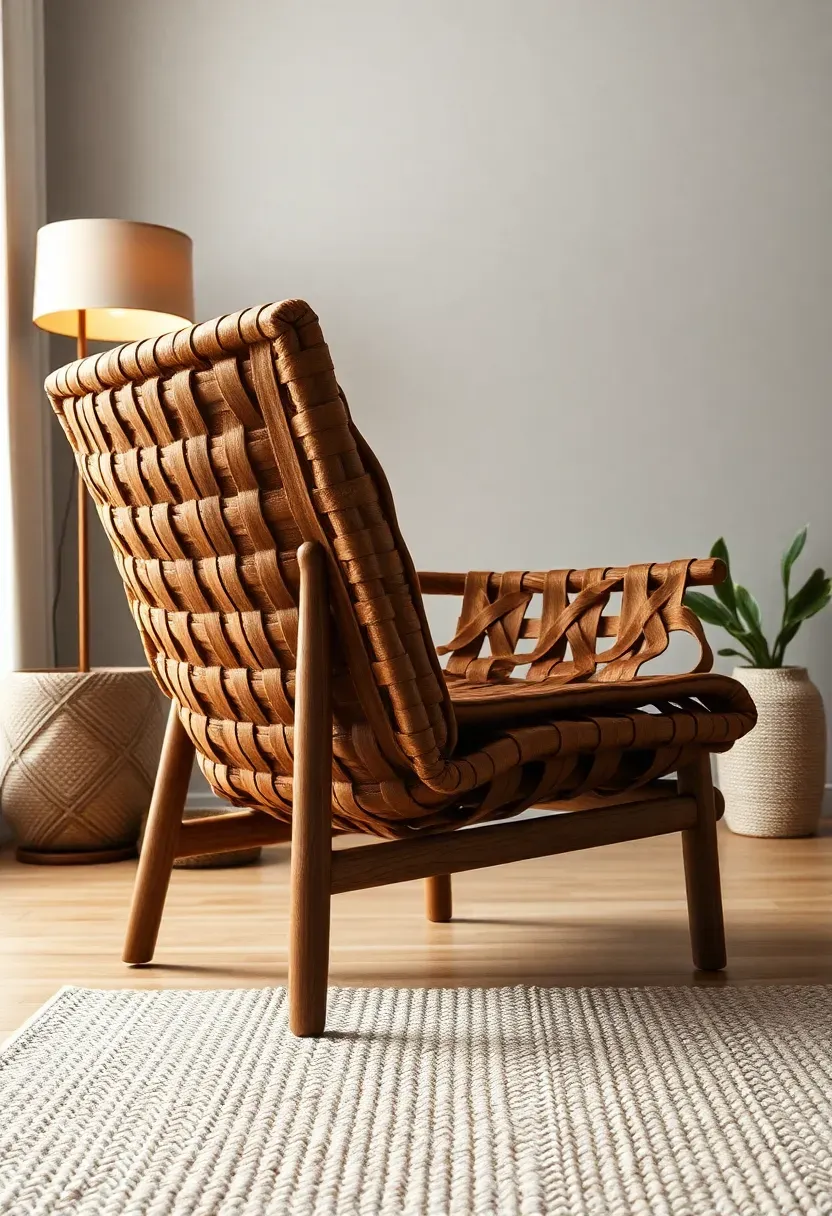
Unlike traditional leather armchairs with rolled arms and tufting that can feel formal or old-fashioned, woven leather designs typically feature cleaner lines and exposed wood frames that align with contemporary aesthetics. The weaving technique itself has global roots—from Danish cord weaving to Mexican leather strapping—adding cultural depth to your design. Choose leather in warm cognac, chestnut, or natural tan rather than black or stark white for the most authentic earthy effect. The woven construction is also practical: the open weave allows air circulation, making the chair comfortable even in warm weather, and the leather is easy to clean with minimal maintenance.
Tips
- Do condition leather every 6-12 months with a quality leather conditioner to prevent drying and cracking
- Don't place in direct sunlight which can fade leather and dry out the weave
- If authentic woven leather exceeds budget, look for leather-wrapped rope chairs which offer similar aesthetic at lower cost
Best for: reading corners or as an accent chair alongside a neutral sofa, where its textural complexity can be appreciated up close
What this gives you: A comfortable, visually engaging seating piece that combines artisanal craftsmanship with natural materials and develops character over time
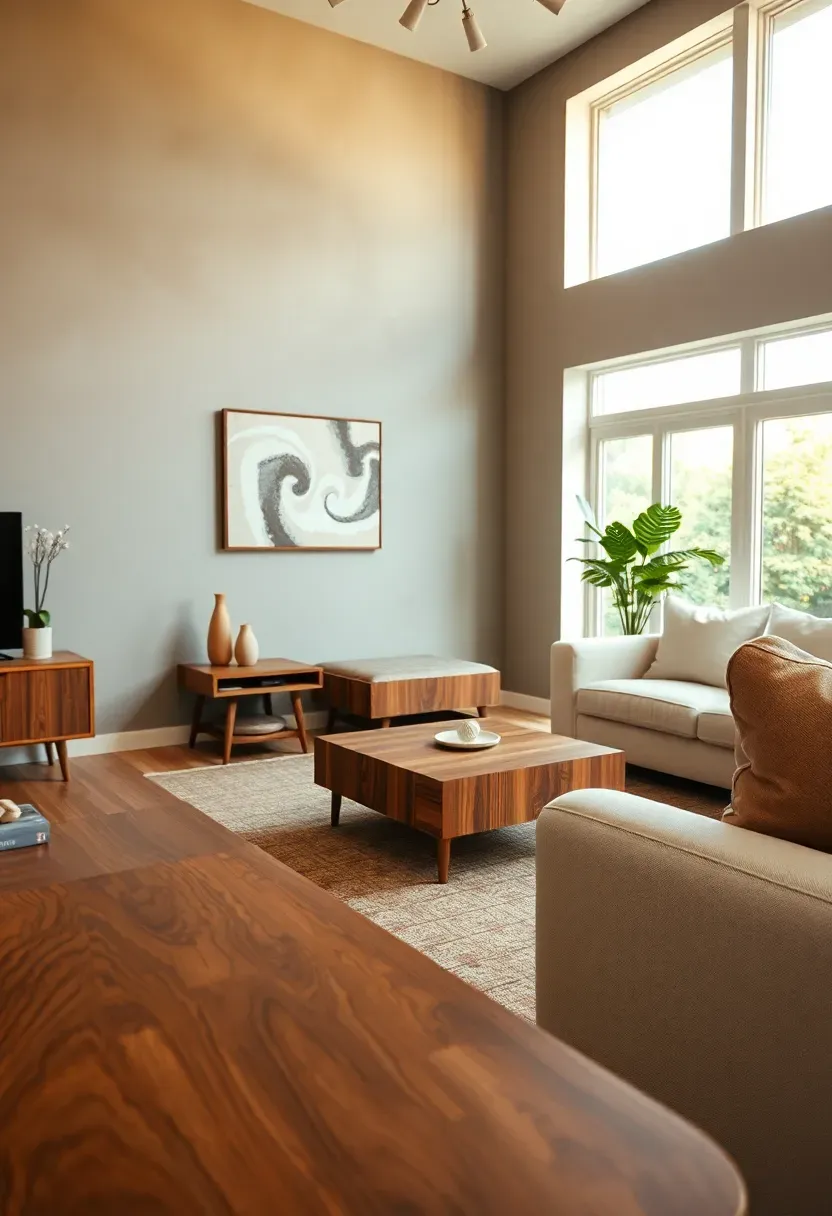
8. Warm Gray Walls with Walnut for a Natural Modern Look
Warm gray walls create a sophisticated neutral backdrop that allows walnut furniture to take center stage while maintaining the cozy atmosphere essential to earthy modern design. Unlike cool grays with blue undertones that can feel sterile, warm grays have subtle brown or violet undertones that read as cozy and inviting. This nuanced wall color provides enough contrast to showcase walnut's rich grain patterns and amber tones without competing for attention. The combination works exceptionally well because warm gray is essentially a neutralized earth tone—it carries the warmth of brown without the heaviness, creating a light-filled space that still feels grounded.
Recommended
Items for this idea
Why it works: Warm gray walls act as a sophisticated canvas that makes wood tones appear richer and more vibrant. This color choice also increases visual flexibility—you can easily change accessories, textiles, or accent colors over time without repainting, as warm gray complements virtually any earthy palette.
When selecting your warm gray paint, test samples in your actual lighting conditions—natural light, bulb temperature, and room orientation dramatically affect how paint reads. A gray that looks perfect in a north-facing room may appear muddy in a south-facing space. For walnut furniture, choose gray with slight brown undertones (often labeled "greige" or "warm gray") rather than purple-tinted grays which can clash with wood's warm tones. Keep the finish flat or eggshell rather than glossy—this minimizes wall imperfections and creates a more organic, plaster-like appearance that suits the earthy modern aesthetic.
Tips
- Do paint large sample patches on multiple walls and observe at different times of day before committing
- Don't assume all "warm grays" are equal—undertone variations range from pink to brown to green
- Pro/Con: Professional painting costs $2-4 per sq ft but ensures flawless results; DIY saves money but requires significant time and skill
- Con/Fix: If warm gray feels too dark for your space, choose one shade lighter than your sample—large expanses of color read darker than small chips
- Fix: Use warm gray only on an accent wall if full-room painting feels overwhelming, paired with warm white on remaining walls
Budget/Time: Quality paint $40-60/gal; 300 sq ft room needs 2-3 gallons. Weekend DIY project.
What this gives you: A sophisticated neutral backdrop that enhances wood tones while creating a light-filled, cozy atmosphere
9. Low-Slung Sofa with Raised Legs for Airiness
A low-slung sofa with raised legs creates visual lightness that prevents an earthy modern living room from feeling heavy or grounded in an oppressive way. The low profile (typically 30-32 inches from floor to top of back cushion) keeps sightlines open across the room, making the space feel larger and more connected. Exposed legs—whether tapered wood, sleek metal, or angular acrylic—lift the furniture off the floor, allowing your rug and flooring to remain visible and creating a sense of spaciousness even in smaller rooms. This design choice is particularly effective in earthy modern spaces because it balances the substantial natural materials (wood, stone, leather) with visual lightness that maintains contemporary ease.
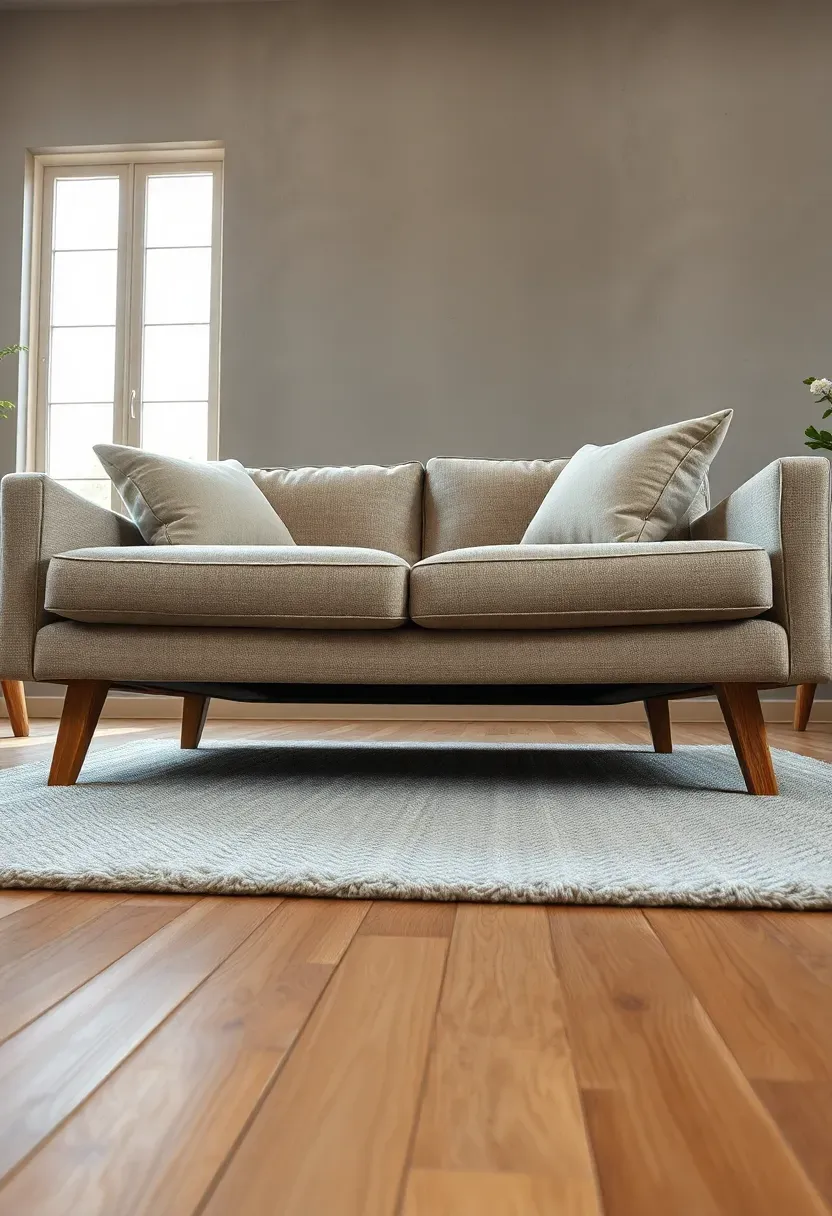
Common mistake: Choosing sofas with boxy, floor-grazing skirts or heavy bases that create a visual barrier between furniture and floor. While these designs can work in traditional or maximalist spaces, they feel dated and heavy in earthy modern interiors where visual lightness is essential.
The appeal of low-slung sofas extends beyond aesthetics—this profile encourages relaxation and creates a more informal, comfortable atmosphere that aligns with the cozy values of earthy modern design. When selecting your sofa, prioritize models with substantial cushions that provide comfort despite the low profile; thin, flat cushions may look sleek but prove uncomfortable for extended lounging. For upholstery, choose textured solids in warm neutrals or natural materials like linen, cotton canvas, or leather that age gracefully. Avoid microfiber or performance fabrics that feel synthetic—the tactile quality of your upholstery should reinforce the room's connection to natural materials.
Tips
- Do measure your ceiling height—very low ceilings (under 8 feet) may require slightly higher furniture to maintain proper proportions
- Don't sacrifice comfort for style—test sofas in person whenever possible, sitting for at least 5 minutes to assess cushion density and support
- If standard low-slung sofas feel too low for comfortable entry/exit, choose medium-height (34-36 inches) with visible legs instead
Best for: rooms with standard to high ceilings where vertical space can be maximized, and open-plan living areas where sightlines matter
What this gives you: Visually light seating that maintains spaciousness and openness while providing comfortable, relaxed lounging
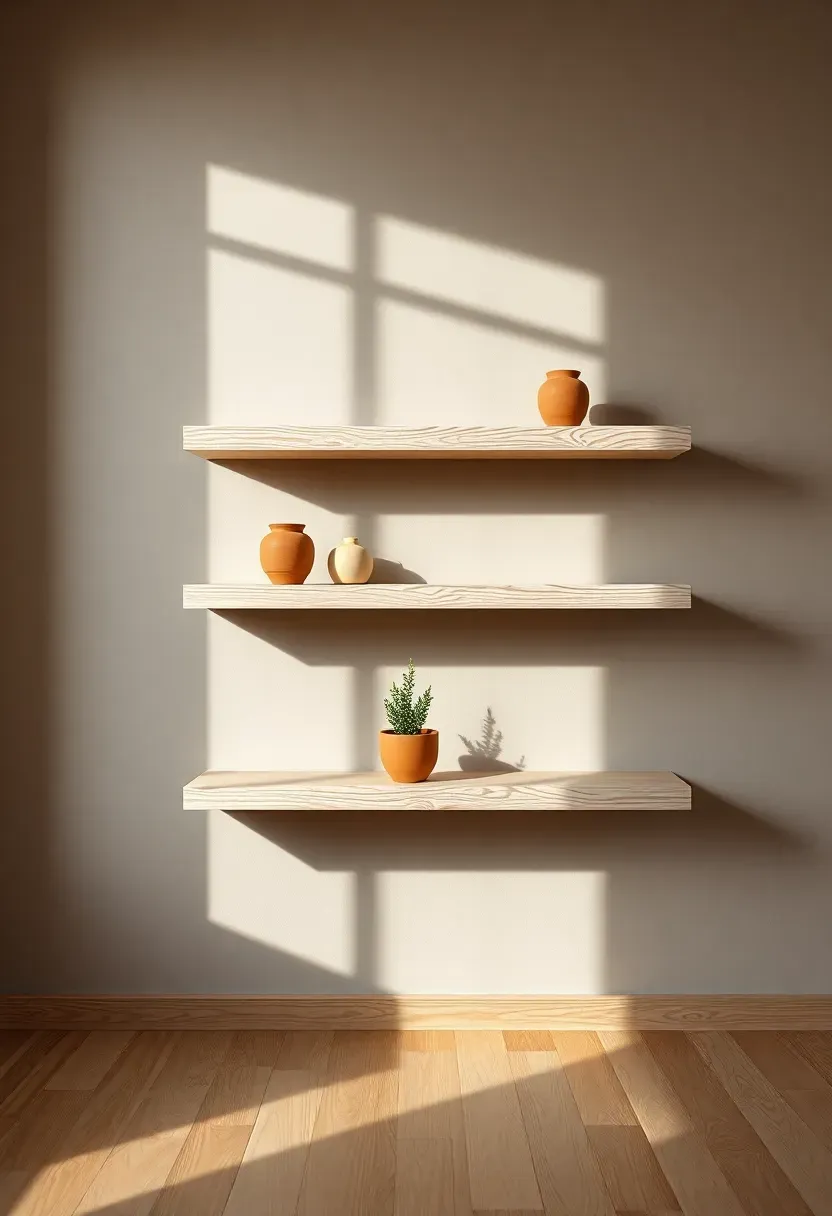
10. Floating Wood Shelves with Ceramic Objects
Floating wood shelves create minimalist display surfaces that celebrate both natural materials and your carefully curated objects while maintaining the uncluttered aesthetic essential to earthy modern design. Unlike bookcases or closed cabinets that can feel heavy and space-consuming, floating shelves appear weightless, expanding the perceived volume of your room. Wood shelves—choose white oak, walnut, or maple with visible grain—bring warmth and organic texture that prevents the display from feeling sterile. The key to keeping this modern lies in restraint: limit displayed items to 2-3 objects per shelf, incorporating ceramic pieces, small plants, and books with earthy color spines.
Recommended
Items for this idea
Placement note: Position shelves asymmetrically rather than in perfectly matched pairs—this creates visual interest and prevents the arrangement from feeling rigid or formulaic. Consider staggering shelf heights or leaving more space between some shelves than others for a more dynamic composition that feels organic rather than measured.
When selecting objects for display, prioritize materials that reinforce the earthy palette: ceramic vessels in unglazed terracotta, matte beige, or soft gray; small succulents or trailing plants in simple pots; books with cloth-bound covers in natural tones; and found objects like smooth stones or driftwood. Avoid colorful ceramics, shiny metals, or items that feel too decorative or precious—the goal is casual authenticity rather than formal display. Group objects in odd numbers (threes work exceptionally well) and vary their heights to create visual rhythm. The beauty of floating shelves lies in their versatility—they can showcase plants, art, books, or meaningful objects while maintaining the minimalist aesthetic.
Tips
- Do locate studs before installation—floating shelves carry significant weight and require secure anchoring
- Don't overload shelves or display items that extend too far beyond the shelf edge, which creates visual imbalance
- If drilling into your rental isn't an option, lightweight floating shelves with adhesive strips or picture rail systems can achieve a similar look
Budget/Time: Quality floating shelves $50-150 each depending on size and wood. 1-2 hour installation.
What this gives you: Display space that celebrates natural materials and meaningful objects while maintaining visual lightness and uncluttered calm
11. Cream Wool Rug with Visible Weave Texture
A cream wool rug with visible weave texture anchors your earthy modern living room with luxurious softness underfoot while maintaining the neutral palette that keeps the space feeling light and expansive. The cream tone—warmer than stark white but cooler than yellow-tinged ivory—bridges cool wall colors and warm wood furniture, creating visual continuity throughout the room. What distinguishes this rug choice is the visible weave texture: whether looped Berber, flatweave, or hand-knotted with visible pile, the textural variation adds visual interest that eliminates the need for pattern or color. Wool is naturally stain-resistant, durable, and sustainable, making it a practical choice that aligns with the authentic values of earthy modern design.
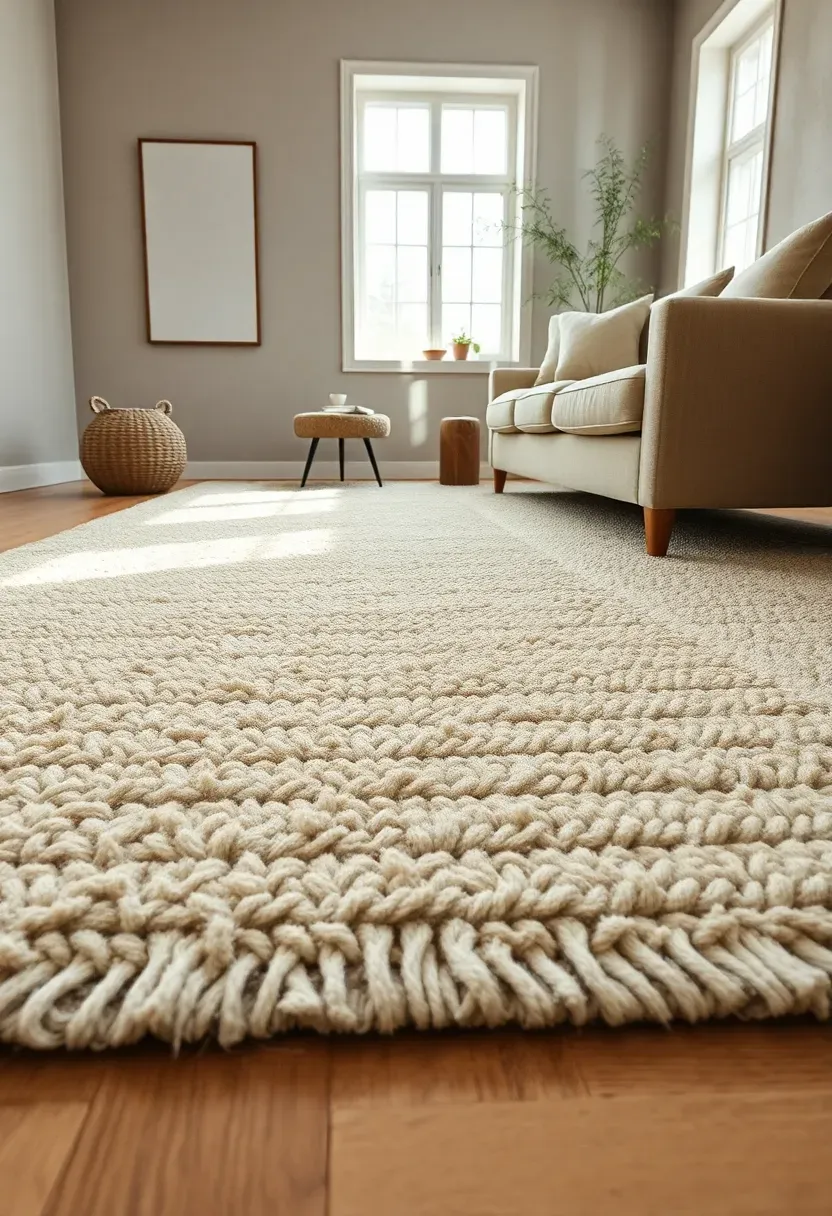
Unlike synthetic rugs that can feel slick or plasticky, wool has inherent warmth and texture that makes it genuinely pleasant to walk on barefoot. The natural fiber regulates temperature—cool in summer, warm in winter—and has acoustic properties that absorb sound, making your living room feel quieter and more serene. For earthy modern spaces, prioritize wool rugs with minimal or no backing—this allows the fiber's natural texture to show through and creates a more organic appearance. If you have floor heating, wool is an ideal choice because it conducts warmth effectively while remaining comfortable to walk on.
Tips
- Do rotate your wool rug every 3-6 months for even wear, especially in high-traffic areas
- Don't steam clean wool—this can damage fibers and cause shrinkage; use professional dry cleaning or gentle spot cleaning instead
- If authentic wool exceeds budget, look for high-quality wool blends (80-90% wool with 10-20% synthetic) which offer similar benefits at lower cost
Best for: defining seating areas in open-plan spaces and adding softness underfoot in rooms with hard flooring
What this gives you: Luxurious softness, natural durability, and textural interest that anchors your room while maintaining light, neutral sophistication
12. Large Fiddle Leaf Fig in Natural Corner
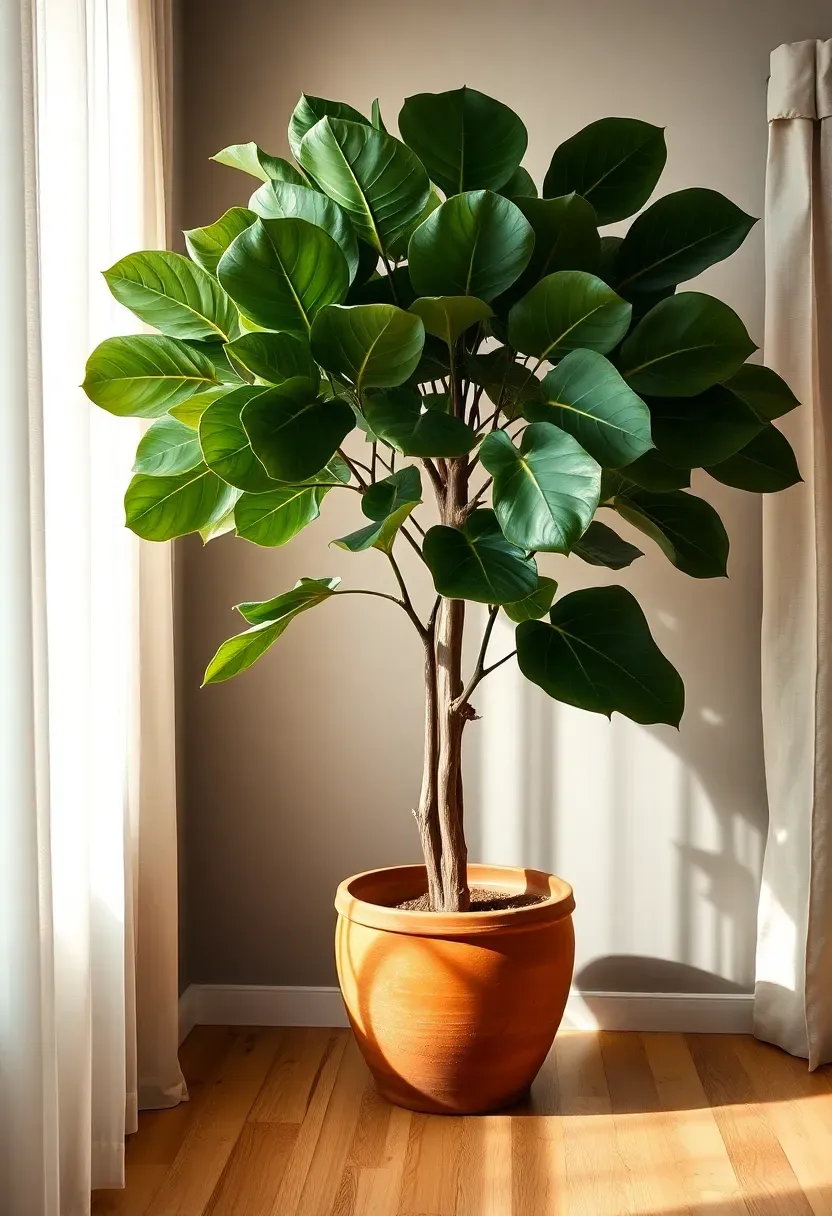
A large fiddle leaf fig tree (Ficus lyrata) positioned in a natural corner brings dramatic verticality and lush foliage into your earthy modern living room while reinforcing the biophilic connection central to this aesthetic. The fiddle leaf fig's large, violin-shaped leaves create substantial visual presence that functions as living sculpture, while its height (6-10 feet when mature) draws the eye upward and balances horizontal furniture arrangements. Unlike smaller plants that can feel peripheral, a substantial fig tree becomes a genuine design element that shapes the room's composition. Placing it in a corner maximizes its impact while using otherwise underutilized space—the plant's voluminous canopy fills vertical volume without consuming valuable floor area.
Recommended
Items for this idea
Light requirements: Fiddle leaf figs require bright, filtered light for 6-8 hours daily. Position near large windows or glass doors, but avoid direct sun which can scorch leaves. Rotate the plant quarterly for even growth, and dust leaves monthly with a damp cloth to maintain photosynthesis efficiency.
The appeal of fiddle leaf figs in earthy modern interiors lies in their architectural form—their upright growth habit and substantial leaves complement clean lines and uncluttered spaces. These plants grow relatively quickly when provided adequate light (12-18 inches per year), so your investment will soon become a substantial presence. For containers, choose simple unglazed terracotta or ceramic pots in neutral tones that complement rather than compete with your color palette. Avoid decorative or brightly colored pots that feel incongruous with the earthy modern aesthetic. If your corner lacks natural light, consider grow lights—modern LED grow lights blend into the decor while providing the spectrum plants need.
Tips
- Do water when the top 2-3 inches of soil feel dry—fiddle leaf figs prefer consistently moist but not waterlogged soil
- Don't place near heating vents or drafty windows which cause stress and leaf drop
- If your fig outgrows its space, prune selectively to maintain shape rather than replacing—these plants respond well to judicious trimming
Budget/Time: 5-6 foot figs cost $150-400; substantial mature specimens up to 10 feet run $500-1500
What this gives you: Dramatic vertical presence, living sculpture, and improved air quality while reinforcing the nature connection essential to earthy modern design
13. Travertine Side Tables for Earthy Modern Decor
Travertine side tables with organic shapes introduce the sophisticated texture and natural variation of stone into your earthy modern living room while providing practical surfaces that feel sculptural rather than purely functional. Travertine—a limestone formed by mineral springs—has visible natural pits and subtle color variations (cream, beige, soft tan) that make each piece unique while maintaining the neutral palette essential to earthy modern design. The organic shapes—rounded, oval, or irregular forms—soften the angular lines typical of modern furniture, creating visual contrast that feels dynamic rather than chaotic. Unlike perfectly round or geometric tables that can feel manufactured, organic shapes suggest natural erosion or water-worn forms, reinforcing the connection to earth processes.
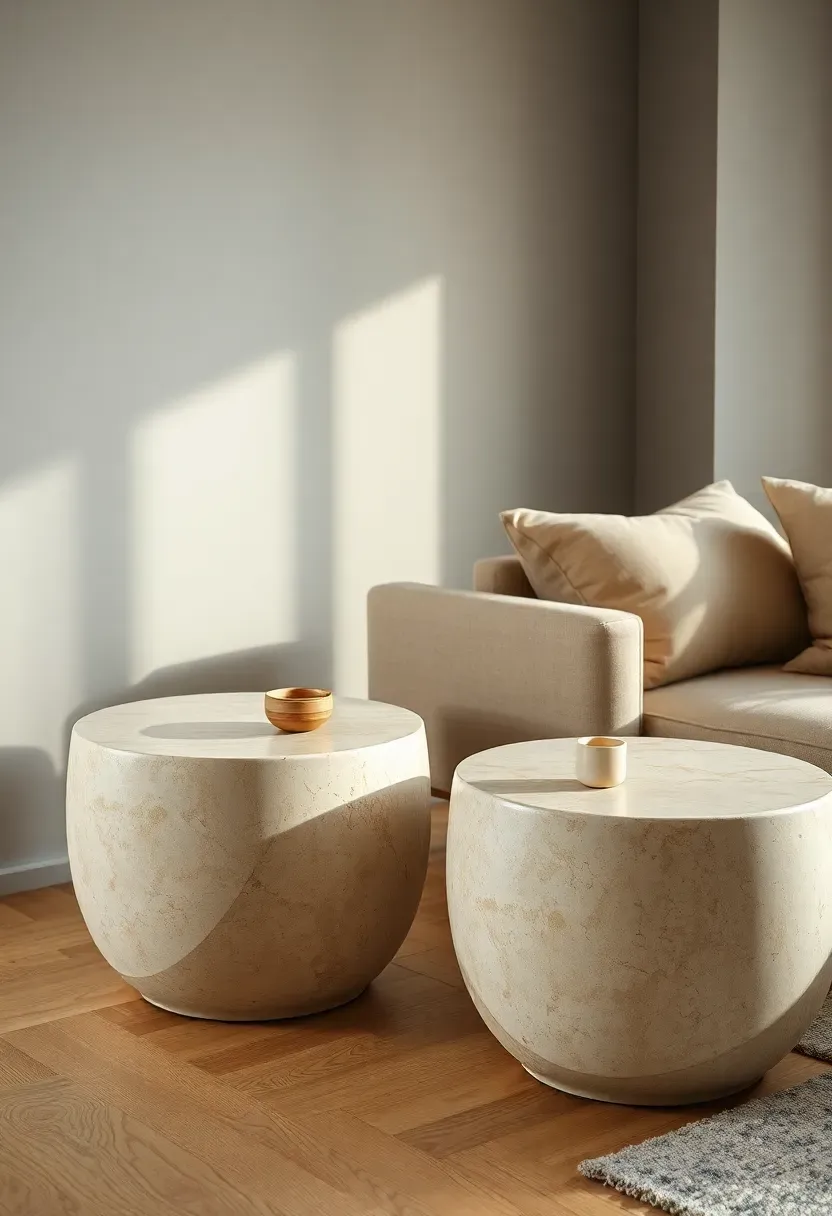
Placement note: Position travertine tables beside seating where their surfaces will be used regularly—beside sofas, armchairs, or bedside. The stone's cool surface is actually pleasant to the touch in warm weather, and the substantial weight ensures stability. Because travertine is a natural material, each table will have unique characteristics, so if you're using multiple tables, expect and celebrate variation rather than exact matching.
Travertine's natural pitting and variation means the tables don't require additional decoration—a small stack of books or a single ceramic vessel is sufficient. The stone's texture provides visual interest without pattern, maintaining the minimalist aesthetic. For durability, choose travertine that has been filled (the natural pits smoothed with resin) rather than unfilled, which can trap dirt and be difficult to clean. The filled version maintains the visual character while being more practical for daily use. Travertine pairs exceptionally well with wood furniture—the warm stone tones complement rather than compete with wood's natural grain, creating material harmony that feels sophisticated rather than matched.
Tips
- Do use coasters—while travertine is relatively stain-resistant, acidic liquids can etch the surface
- Don't place near heat sources or in direct sunlight which can cause discoloration over time
- If authentic travertine exceeds budget, high-quality porcelain or ceramic tiles that mimic travertine's appearance offer similar visual effect at lower cost
Best for: beside seating pieces where their sculptural quality can be appreciated and surfaces will be used regularly
What this gives you: Practical surfaces with sculptural presence that celebrate natural stone's unique character while maintaining earthy modern sophistication
14. Soft Terracotta Throws on Neutral Upholstery
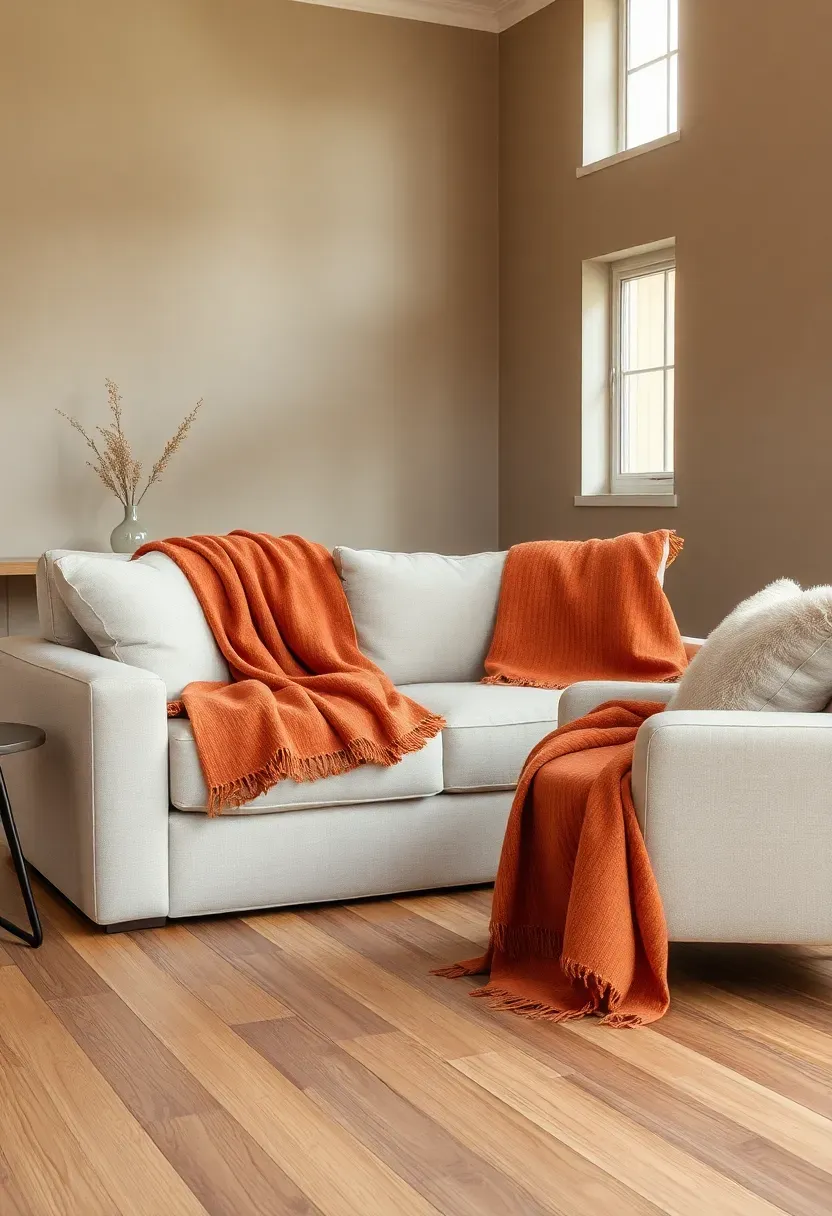
Soft terracotta throws draped across neutral upholstery introduce warm accent color into your earthy modern living room while maintaining the relaxed, casual atmosphere essential to this aesthetic. The terracotta tone—a muted orange-brown with pinkish undertones—echoes sun-baked clay and desert landscapes, bringing warmth that feels organic rather than synthetic. When layered over neutral sofas or armchairs in cream, beige, or warm gray, the throws create color blocking that feels sophisticated rather than cluttered. The beauty of this approach lies in its flexibility: throws can be rearranged, removed seasonally, or replaced inexpensively as your taste evolves, making them a low-commitment way to introduce color.
Recommended
Items for this idea
Unlike structured accent pillows which can feel formal and require precise arrangement, throws have an inherently casual quality that suits earthy modern spaces' relaxed vibe. Drape them deliberately but not perfectly—some natural folding and soft creases make the arrangement feel approachable and lived-in. Choose throws with substantial weight and quality construction: merino wool, cashmere blends, or heavy cotton feel luxurious and drape beautifully. Lightweight or synthetic throws can look skimpy and defeat the purpose. For the most authentic earthy effect, select throws with visible texture—ribbed knits, subtle woven patterns, or gentle napping add visual interest that complements rather than competes with other textures in the room.
Tips
- Do follow care labels carefully—many natural fiber throws require dry cleaning or gentle hand washing
- Don't choose bright orange or red terracotta—look for muted, dusty tones with subtle variation
- If terracotta feels too warm for your space, similar throws in sage green, dusty blue, or warm gray provide accent color with the same casual approach
Budget/Time: Quality throws $80-200 depending on fiber content; immediate impact, no installation
What this gives you: Flexible accent color and cozy warmth that can be rearranged seasonally while maintaining relaxed sophistication
15. Reed Sconces with Warm LED Lighting
Reed sconces with warm LED lighting provide ambient illumination that celebrates natural materials while creating the cozy atmosphere essential to earthy modern living rooms. The reed construction—whether actual dried reeds woven around frames or ceramic with reed-like texturing—introduces organic texture that remains visible even when lights are off, making these fixtures decorative as well as functional. Warm LED bulbs (2700K-3000K) produce light that enhances the earthy palette rather than washing it out with cool or blue-toned illumination. Sconces are particularly effective in earthy modern spaces because they provide lighting without consuming table or floor space, maintaining the uncluttered aesthetic while creating layered illumination that adds depth and dimension.
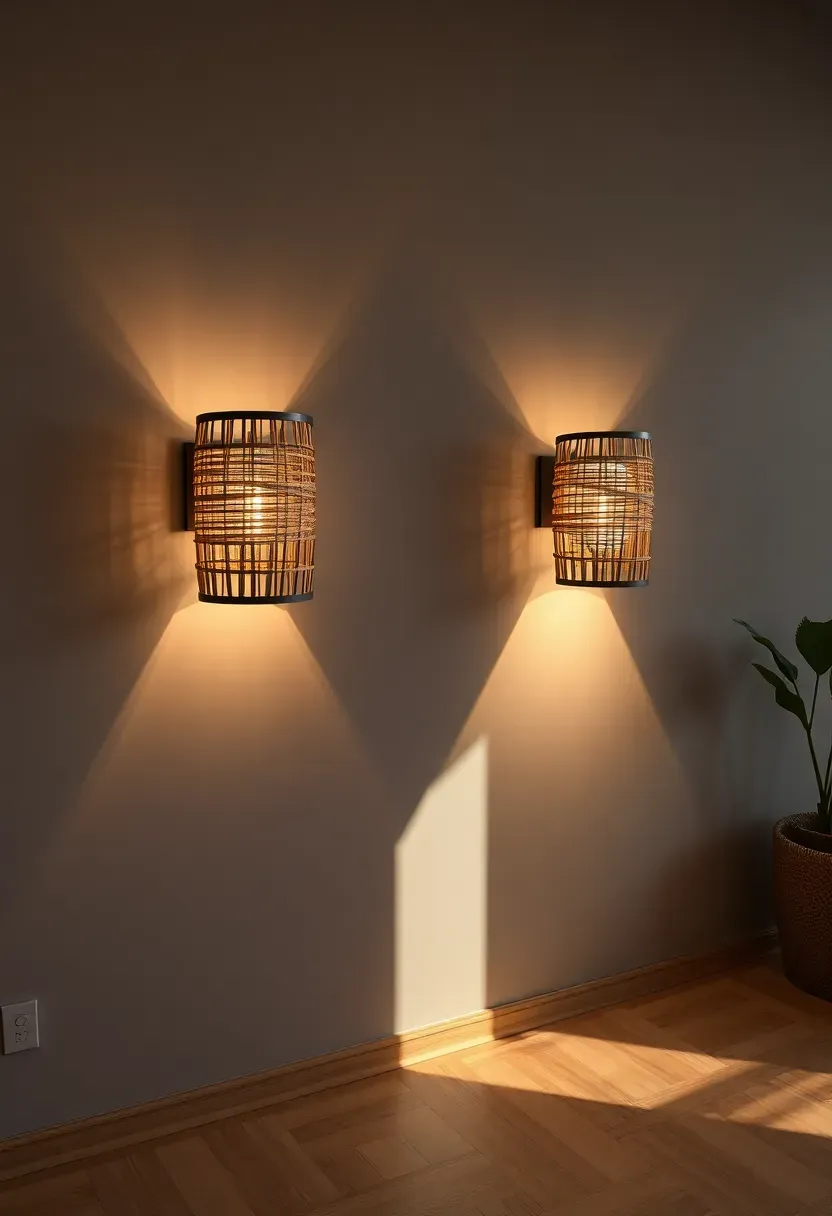
Layered lighting approach: Position reed sconces at eye level (approximately 60-66 inches from floor to center of fixture) on either side of a focal point like a fireplace, television, or artwork. This symmetry creates balance and provides even ambient lighting that eliminates harsh shadows. Layer sconces with floor lamps and table lamps for complete illumination—this three-layer approach (ambient, task, accent) creates a warm, welcoming atmosphere.
When selecting reed sconces, prioritize fixtures with substantial reed or rattan construction rather than thin, fragile materials that look cheap. The reeds should be tightly woven or wrapped for durability and a refined appearance. For maximum earthy modern authenticity, choose fixtures with visible construction—the natural ends of reeds, visible wrapping, or subtle variations that celebrate hand craftsmanship. Avoid overly uniform or perfect-looking reedwork which can appear mass-produced and synthetic. The warm glow of LED bulbs filtering through reed textures creates beautiful shadow patterns on walls, adding visual interest that enhances the room's ambiance after dark.
Tips
- Do use warm white LED bulbs (2700K-3000K) rather than cool or daylight LEDs which feel harsh and clinical
- Don't place reed sconces in damp bathrooms or outdoor spaces where moisture can damage natural materials
- If hardwired sconces aren't an option, battery-powered or plug-in sconces with cord covers can achieve similar looks without electrical work
Best for: flanking fireplaces, artwork, or television units where their symmetrical placement creates balance and ambient illumination
What this gives you: Ambient lighting that celebrates natural materials and creates cozy warmth while maintaining uncluttered simplicity
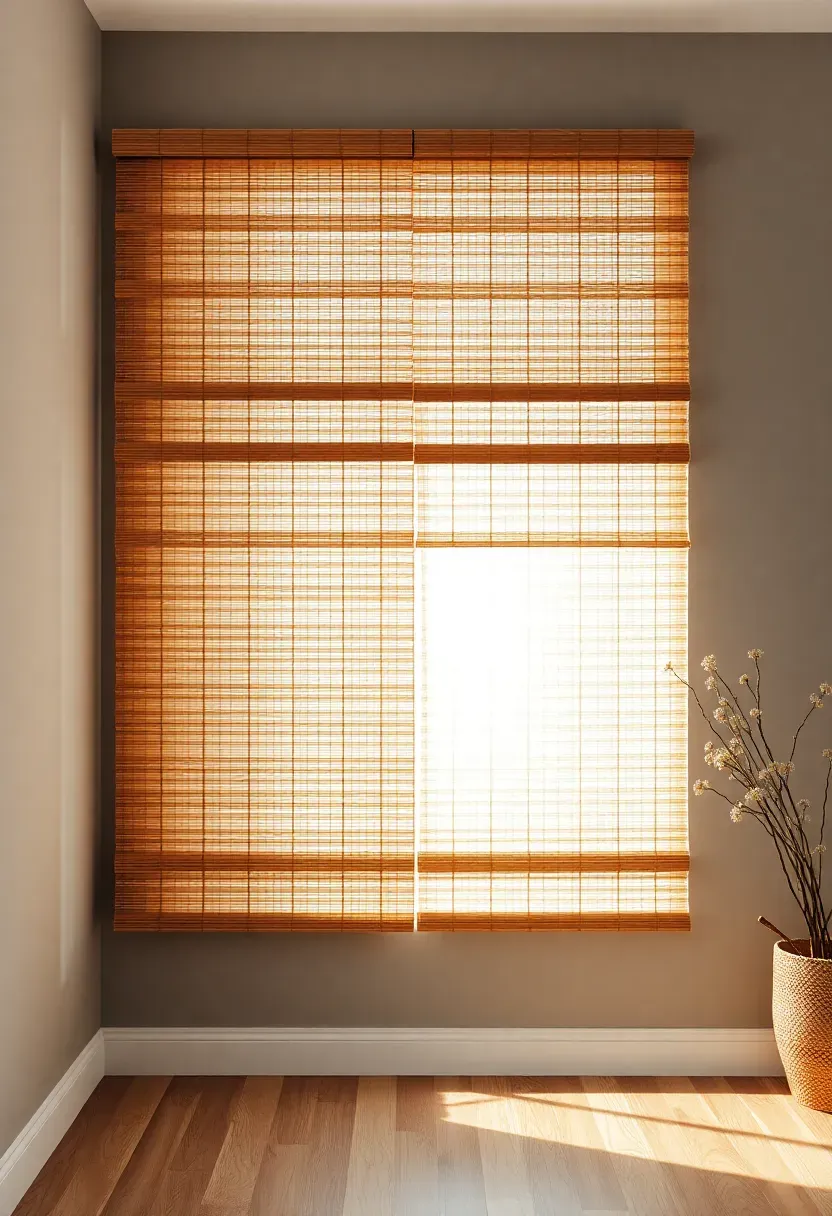
16. Bamboo Blinds and Linen Panels for Renter-Friendly Windows
Natural bamboo blinds layered with sheer linen panels create window treatments that celebrate natural materials while providing flexible light control essential to earthy modern living rooms. The bamboo blinds—woven from natural bamboo slats with visible color variations from tan to warm brown—bring authentic texture and organic warmth to windows while filtering harsh sunlight into soft, diffused illumination. The sheer linen panels layered over or under the blinds add softness and privacy while maintaining the room's connection to the outside world. This layered approach feels sophisticated rather than casual, and the combination of natural materials reinforces the earthy palette while creating visual interest through texture rather than pattern or color.
Recommended
Items for this idea
Unlike heavy drapes that can feel formal and consume visual weight, bamboo blinds and sheer panels maintain the light, airy quality essential to modern spaces. The blinds can be raised fully for unobstructed views and maximum natural light, lowered partially for filtered light, or closed completely for privacy—this flexibility allows you to adjust the room's atmosphere throughout the day. Sheer linen panels provide a constant soft layer that frames windows and adds fabric warmth without blocking light or views. The translucency of sheer linen creates beautiful light filtering effects, while its natural slub texture adds visual interest that reads as sophisticated rather than plain.
Tips
- Do mount bamboo blinds inside the window frame for a streamlined modern look, or outside for greater light control
- Don't choose bamboo with colorful stains or finishes—natural, unstained bamboo maintains the most authentic earthy appearance
- If bamboo feels too casual for your space, woven wood shades in similar natural materials (grass, jute, reeds) offer the same aesthetic with a more refined finish
Budget/Time: Bamboo blinds $50-150 per window; linen panels $100-300 per panel. Professional installation recommended.
What this gives you: Flexible light control, natural texture, and softness that celebrates materials while maintaining modern lightness
17. Live-Edge Console Table Against White Wall
A live-edge console table positioned against a white wall creates a striking focal point that celebrates the natural irregularity of wood while maintaining the clean backdrop essential to earthy modern design. The live edge—whether walnut, oak, maple, or teak—preserves the tree's natural shape, including bark inclusions, curves, and variations that make each piece unique. Against a smooth white wall, this organic form creates dramatic contrast that eliminates the need for additional decoration. The console table format works exceptionally well because it provides surface area for displaying a few carefully chosen objects (ceramic vessels, small plants, books) while maintaining a low profile that doesn't obstruct sightlines or make the space feel cluttered.
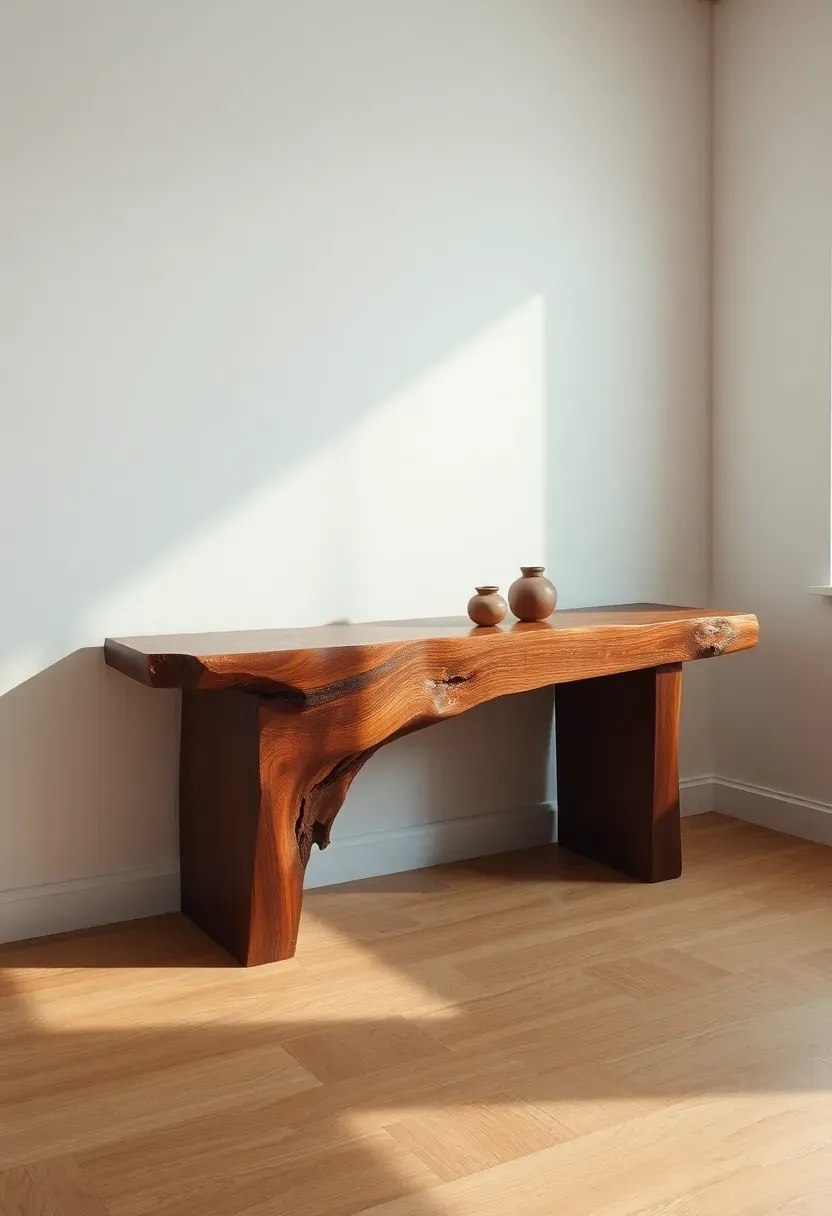
Placement note: Position your live-edge console behind a sofa, along an empty wall, or in an entryway where its sculptural quality can be appreciated. The table should be substantial enough to feel intentional but not so large that it overwhelms the space. A width of 48-60 inches works well in most living rooms, providing surface area without consuming excessive wall space.
What makes live-edge furniture particularly suited to earthy modern interiors is its authentic connection to natural processes. Each piece tells the story of the tree it came from—growth patterns, climate conditions, and natural characteristics are visible in the wood's grain and edge formation. This narrative quality adds depth to your design that manufactured furniture cannot replicate. For the most sophisticated look, choose live-edge pieces with natural or oil-rather than glossy polyurethane finishes. The matte finish allows the wood's true character to show through and feels more authentic in an earthy modern context. Pair the console with simple, minimal objects—don't overcrowd the surface, as the beauty lies in the wood itself.
Tips
- Do choose pieces with natural edge irregularities rather than perfectly uniform curves—authentic live edges have variation and character
- Don't place in direct sunlight or near heat sources which can cause cracking or checking in the wood
- If authentic live-edge exceeds budget, tables with eased (slightly rounded) edges rather than perfectly square edges provide some organic character at lower cost
Best for: behind sofas, along empty walls, or in entryways where sculptural quality can be appreciated as a focal point
What this gives you: A sculptural focal point that celebrates natural wood's unique character while maintaining clean modern simplicity
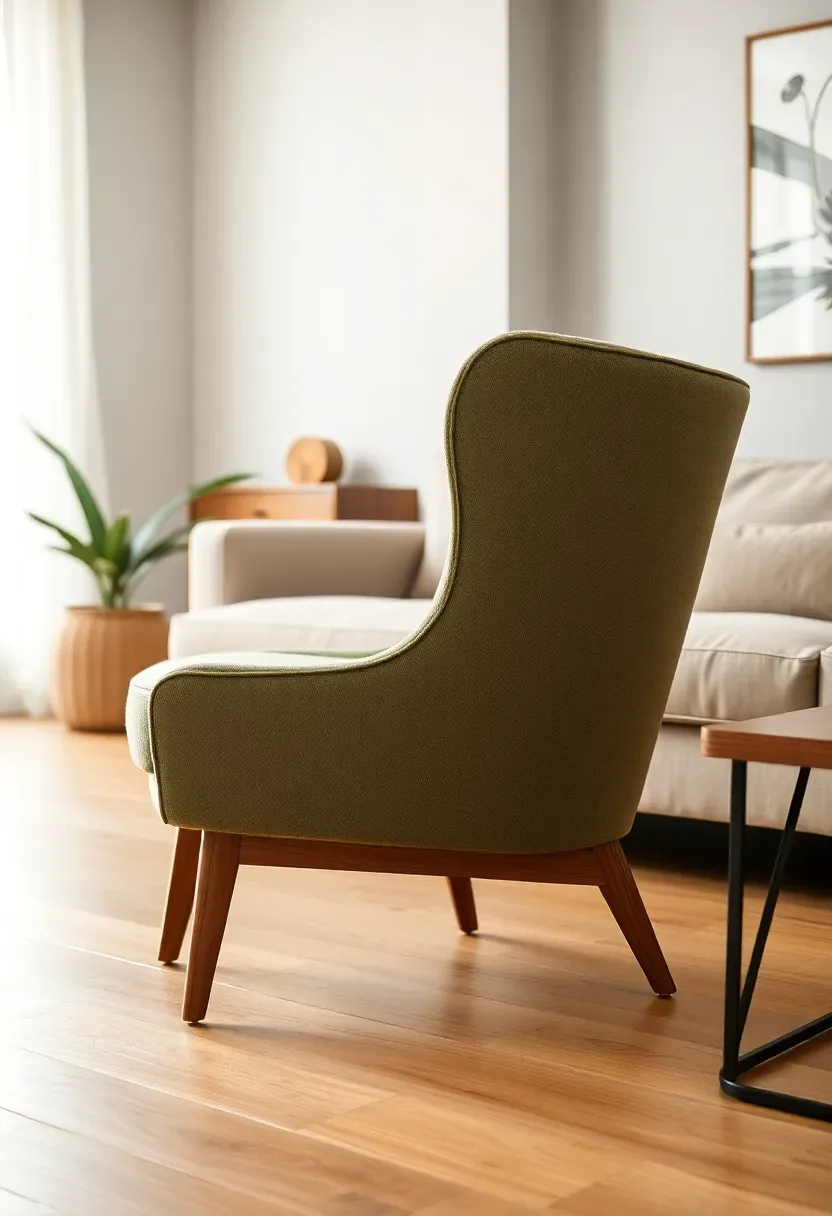
18. Sage Green Accent Chair with Warm Wood Frame
A sage green accent chair with warm wood frame introduces muted color into your earthy modern living room while maintaining the organic palette and natural material focus essential to this aesthetic. Sage green—a soft gray-green with yellow undertones—echoes natural foliage, moss, and dried sage, creating a connection to plant life without feeling tropical or overly verdant. The warm wood frame (walnut, oak, or teak) grounds the chair in natural materials and creates continuity with other wood elements in your room. Unlike brighter greens that can feel artificial or seasonal, sage is a sophisticated neutral that complements warm beige, cream, and gray tones while adding subtle color depth that prevents the space from feeling monochromatic.
Recommended
Items for this idea
The accent chair format allows you to introduce color in a controlled, measured way—unlike painting walls or buying a major sofa, a single chair can be replaced or moved if your taste changes. This makes sage green an accessible entry point into color for those who typically gravitate toward neutrals. When selecting your chair, look for designs with visible wood construction—exposed frames, tapered legs, or visible joinery—that celebrate craftsmanship and material honesty. Avoid chairs where wood is completely hidden by upholstery; the interplay between fabric and frame is part of the earthy modern appeal. For upholstery, choose textured solids or subtle patterns that add visual interest without competing with the green tone.
Tips
- Do test green samples in your actual space—lighting dramatically affects how sage reads, ranging from gray to yellow to blue undertones
- Don't choose bright kelly or mint greens—sage should be muted, dusty, and sophisticated rather than fresh or candy-like
- If sage feels too colorful, similar muted greens like olive, forest, or eucalyptus provide the same organic connection with different saturation levels
Best for: as a counterpoint to neutral sofas or as part of a mixed seating arrangement where color creates visual interest
What this gives you: Muted organic color and material richness that adds sophistication while maintaining earthy modern calm
19. Ceiling Beams Exposed and Painted in Warm White
Exposed ceiling beams painted in warm white create architectural interest and vertical dimension in your earthy modern living room while adding warmth through color choice rather than raw wood tone. This treatment celebrates the structural bones of your space—whether original beams, new faux beams added for character, or structural elements in new construction—while maintaining the light-filled quality essential to modern spaces. Painting beams warm white rather than leaving them natural wood or staining them dark creates a sophisticated contrast with walls (whether white, warm gray, or cream) that adds visual interest without consuming the space with heavy color. The warm white undertone prevents the clinical feel that pure white can introduce, maintaining the cozy atmosphere central to earthy modern design.
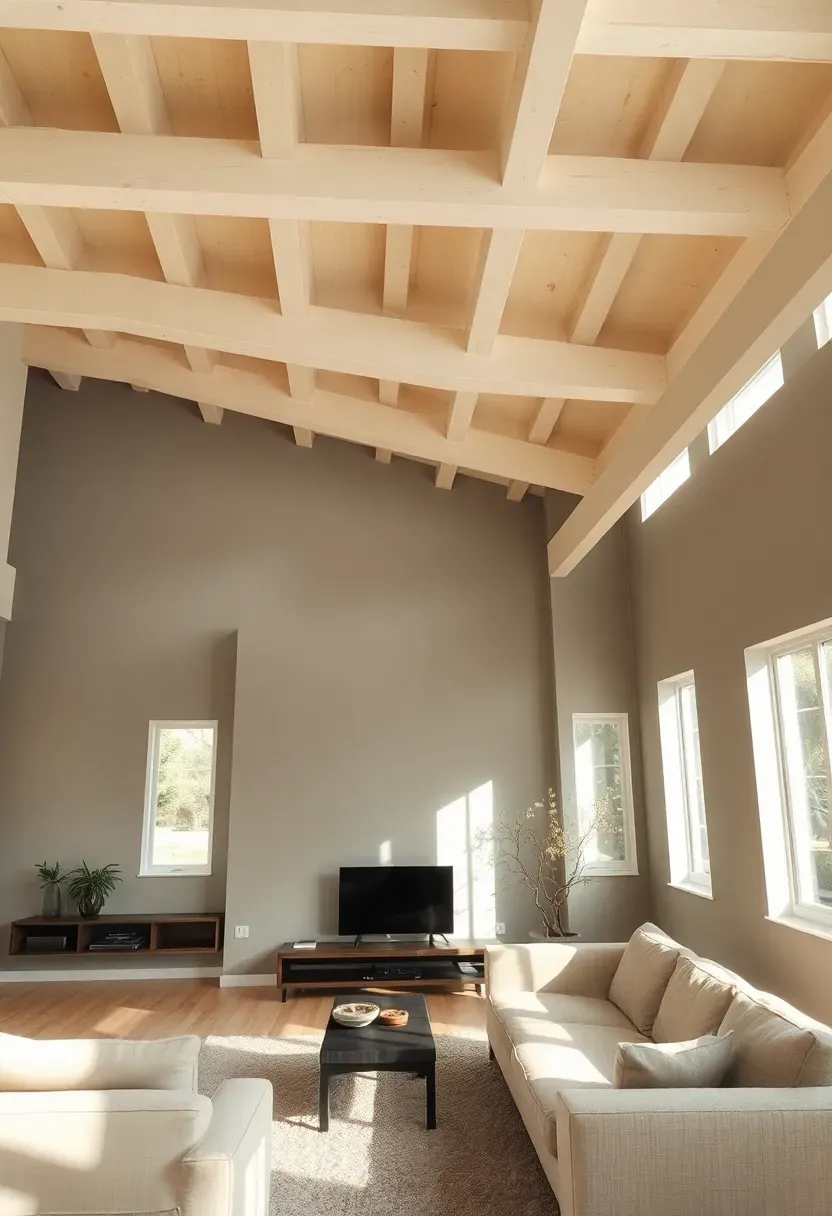
Architectural benefit: Exposed beams create natural visual breaks that define zones within open-plan spaces without walls. In living rooms with high or vaulted ceilings, beams add human scale and intimacy. In standard-height rooms, they add architectural detail that makes the space feel custom and considered rather than generic.
The warm white paint choice is strategic—it allows beams to recede slightly (compared to dark stained beams which dominate) while still contributing textural variation and shadow play. Natural light creates beautiful shadows as the sun moves across the room, and evening lighting adds dimension through the beam structure. This treatment works particularly well in rooms with smooth plaster ceilings—the contrast between sleek surfaces and beam structure creates architectural depth. For the most authentic look, choose warm white with subtle yellow or pink undertones rather than gray-tinted whites which can read as cool.
Tips
- Do use the same warm white paint on beams and trim for continuity, or a slightly warmer white on beams for subtle contrast
- Don't paint beams stark white or high-gloss—this creates harsh contrast and feels synthetic rather than organic
- If your home lacks structural beams, faux beams made from lightweight material (polyurethane foam or hollow wood) can be added to create the same architectural detail
Budget/Time: Painting existing beams $200-500; adding faux beams $1000-3000 depending on material and room size
What this gives you: Architectural interest, vertical dimension, and shadow play that adds character while maintaining light, modern warmth
These 19 earthy modern living room ideas show that warm neutrals, organic textures, and natural materials can work together to create a space that feels grounded, sophisticated, and genuinely cozy. Most of these ideas are renter-friendly and budget-conscious -- you do not need to gut-renovate a room to achieve the earthy modern look. Start with one or two changes, like a jute rug and terracotta throws, and build from there. The result is a natural modern living room that celebrates authenticity and feels like a retreat you will actually want to spend time in.
About the author
OBCD
CGI visualization and interior design content. We create detailed 3D renders and curate practical design ideas for every room in your home.