17 Basement Bedroom Ideas for Cozy Underground Rooms
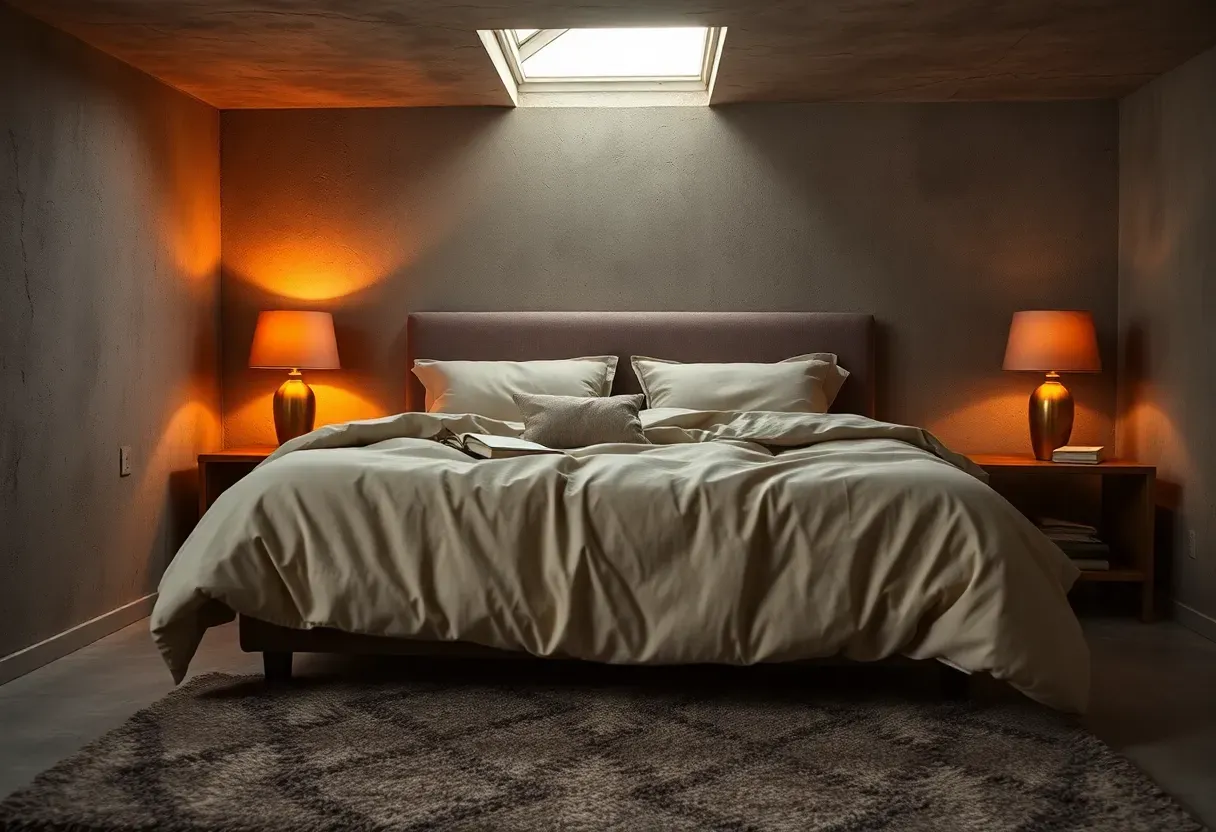
My first apartment was a basement unit with one small window near the ceiling and pipes running along the wall above the bed. I hated it for about two weeks. Then I hung blackout curtains, added three lamps at different heights, and put a thick wool rug over the cold concrete. Suddenly it was the best room I had ever slept in — pitch dark, dead quiet, and cool enough that I never needed a fan. Basements get a bad reputation, but with the right moves they become genuinely great bedrooms.
Below you will find 17 basement bedroom setups covering everything from moisture management to lighting tricks that make a below-grade room feel open and inviting.
Table of Contents
- Egress Window Bedroom with Natural Light
- Moody Dark Walls Below Grade
- Exposed Concrete Ceiling
- Daylight Basement with Garden Access
- Industrial Pipe and Brick Accent
- Cozy Low Ceiling Reading Nook
- Built-In Bed with Alcove Storage
- Scandinavian Bright White Basement
- Carpeted Warmth Underfoot
- Basement Guest Suite with Kitchenette
- Teen Hangout Bedroom
- Luxury Basement Primary Suite
- Rustic Stone Wall Feature
- Home Theater Meets Bedroom
- Moisture-Resistant Basement Bedroom
- Basement Bedroom with Faux Skylight
- Walk-Out Basement Retreat
1. Egress Window Bedroom with Natural Light
Why It Matters
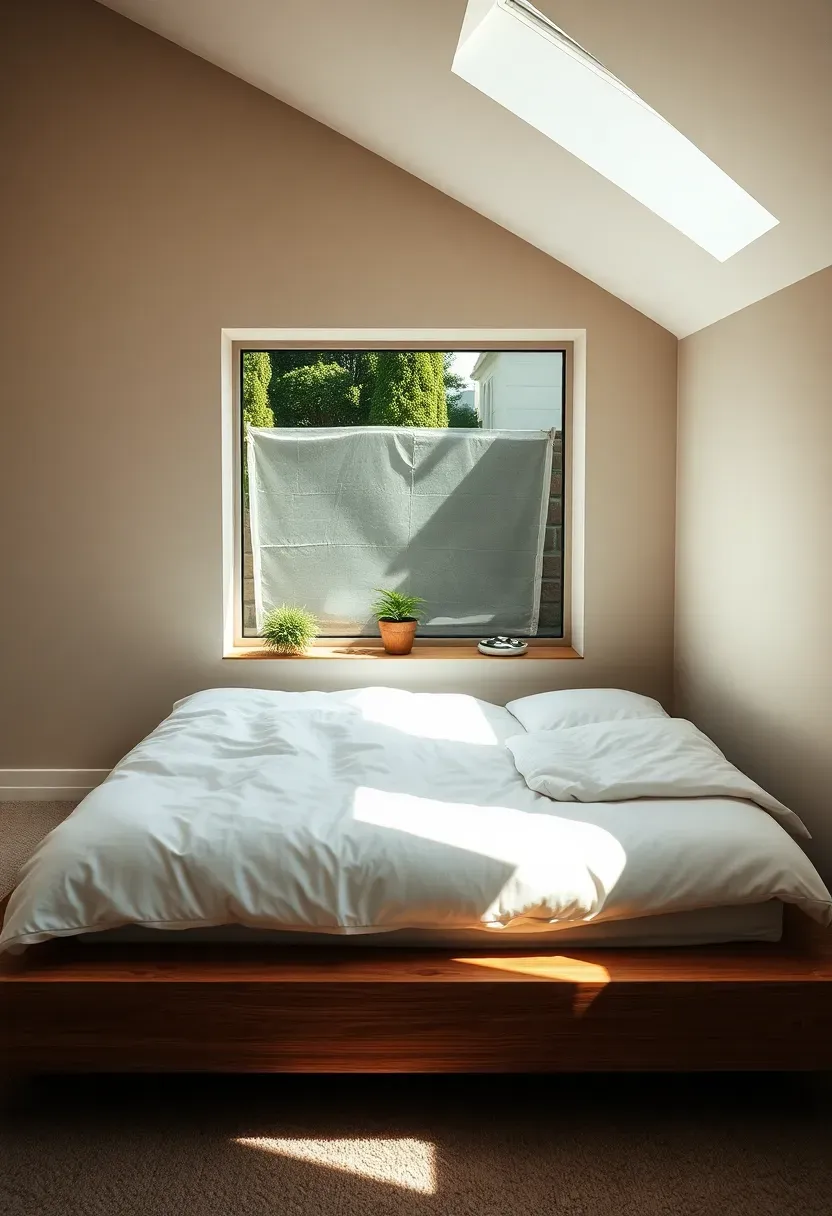
Most building codes require at least one egress window in any basement bedroom — typically 5.7 square feet of opening area and a sill no higher than 44 inches from the floor. That is not just a safety box to check. A properly sized egress window changes the entire feel of the room, bringing in daylight that bounces off light-colored walls and makes the ceiling feel higher than it actually is.
How to Maximize It
Position the bed so you wake up facing the window. Use a window well with a polycarbonate cover to keep rain and debris out while still allowing light through. Paint the window well interior white to reflect more light into the room. Skip heavy curtains — a simple roller shade in a light linen fabric gives privacy at night without blocking morning sun.
Quick Tips
- Install a window well drain connected to the perimeter drain tile
- Add a small shelf of potted herbs on the sill for greenery
- Use a light-colored headboard to reflect daylight deeper into the room
We picked a few things that go well with this idea: 95oz Quiet Dehumidifier 1000 Sq Ft (★4.3), ToLife 95oz Basement Dehumidifier (★4.2) and 98oz Dehumidifier with Humidity Display (★5.0). As an Amazon Associate we earn from qualifying purchases.
2. Moody Dark Walls Below Grade
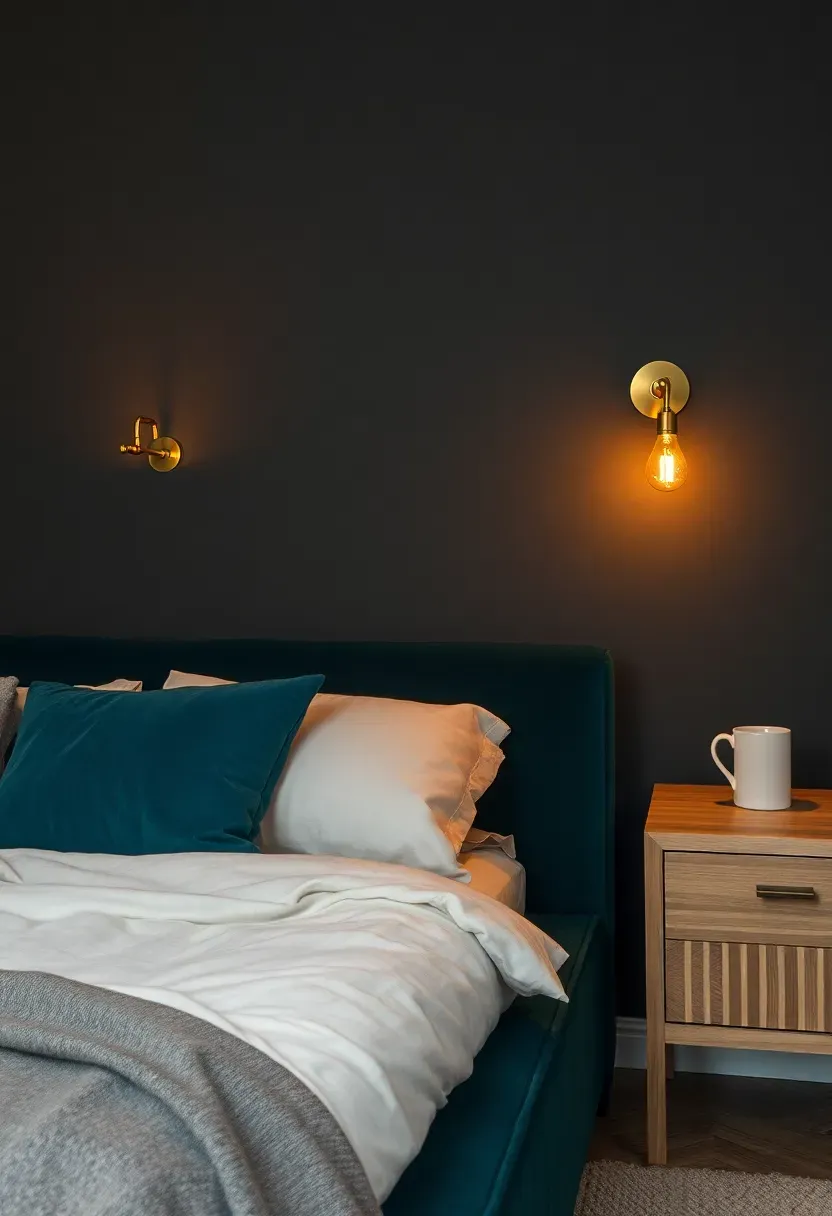
Basements already lack natural light, so the usual advice is to paint everything white. But leaning into the darkness can work just as well. A deep charcoal, forest green, or navy wall paired with warm-toned lighting creates a cocoon effect that actually feels intentional rather than gloomy. The key is contrast — dark walls need at least one lighter element to anchor the eye. A cream-colored duvet, a pale wood nightstand, or a brass reading lamp all do the job. Matte paint finishes hide the minor imperfections common in basement walls better than satin or gloss.
Making It Work
- Use at least three light sources: overhead, task, and accent
- A large mirror on one wall bounces existing light around the room
- Stick to matte or eggshell paint to reduce glare on uneven surfaces
We picked a few things that go well with this idea: Lithonia 2x4 LED Flat Panel Light (★4.3), Lithonia 1x4 LED Flat Panel Light (★4.6) and 2x4 LED Sky Panel Dimmable (4-Pack). As an Amazon Associate we earn from qualifying purchases.
3. Exposed Concrete Ceiling
The Appeal
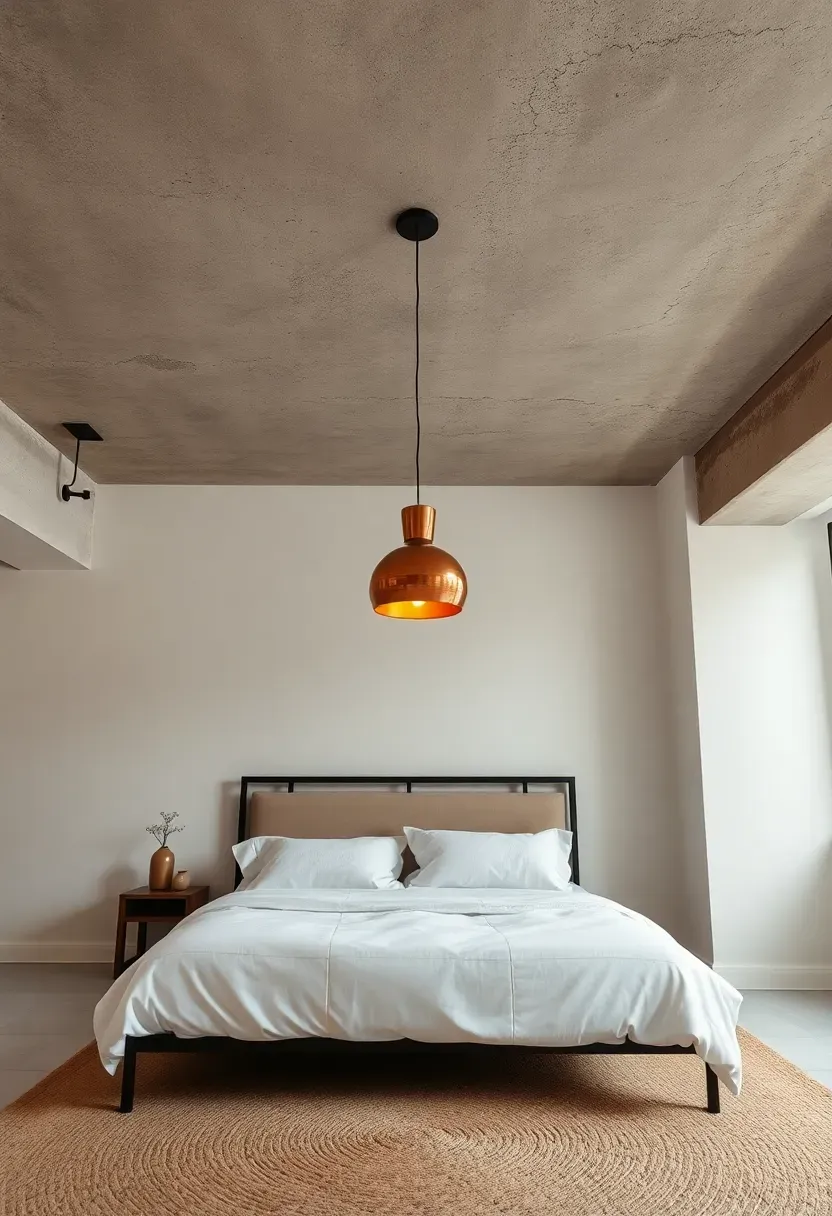
Leaving the basement ceiling unfinished saves money on drywall and gains you an inch or two of headroom — which matters when ceilings are already low. Raw concrete has a visual weight that pairs well with industrial and minimalist furniture. The surface absorbs sound differently than drywall, giving the room a quieter, almost padded quality.
The Tradeoff
Exposed concrete can feel cold. You need to compensate with textiles: a thick area rug, upholstered headboard, and layered bedding. Paint the concrete a warm off-white or soft gray if the raw look feels too harsh. Seal it with a concrete sealer regardless of color to prevent dust from shedding onto the bed below.
Watch Out
- Inspect for cracks before sealing — hairline cracks are cosmetic, wider ones may need structural evaluation
- Insulate above the concrete if the floor above is unheated
- Route any exposed wiring through surface-mounted conduit for code compliance
We picked a few things that go well with this idea: Homary Japanese Low Profile Platform Bed (★5.0), 5-Inch Low Profile Metal Bed Base (★4.6) and 4-Inch Heavy Duty Low Platform Frame (★4.6). As an Amazon Associate we earn from qualifying purchases.
4. Daylight Basement with Garden Access
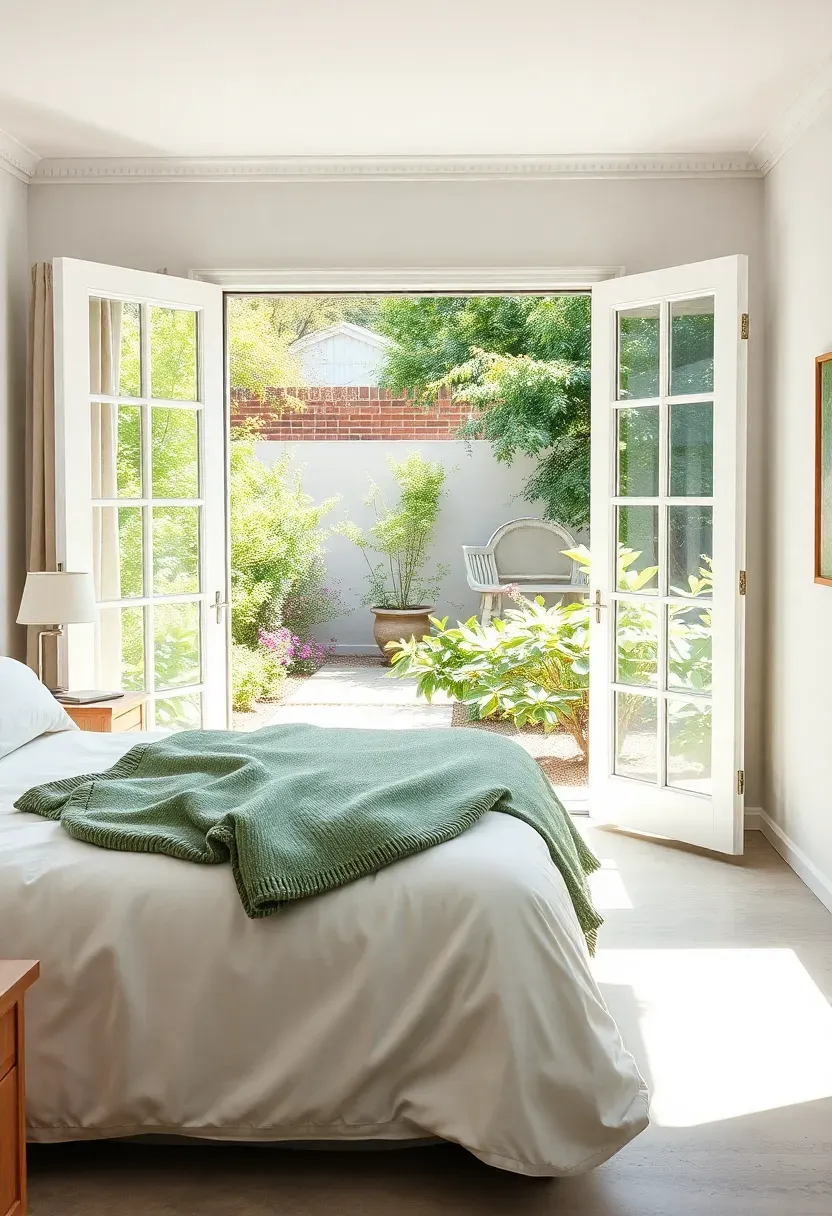
A walk-out or daylight basement sits partially above grade on at least one side, which means you can install full-size windows or even French doors that open directly to the yard. This is the gold standard for basement bedrooms because it solves the two biggest complaints — lack of light and feeling trapped underground — in one structural advantage.
Design Approach
Treat this room more like a ground-floor bedroom than a basement. Use floor-length curtains instead of short window treatments. Place a bench or reading chair near the doors to create a sitting area with a garden view. If the patio is at the same level, consider a small outdoor seating area just outside that extends the living space visually.
Pros and Cons
- Pro: Natural ventilation, emergency exit, and garden views
- Pro: Resale value increases significantly with a legal daylight bedroom
- Con: More expensive to waterproof than a fully below-grade wall
- Con: Ground-level access may raise security concerns — add a deadbolt and window locks
Recommended
Items for this idea
5. Industrial Pipe and Brick Accent
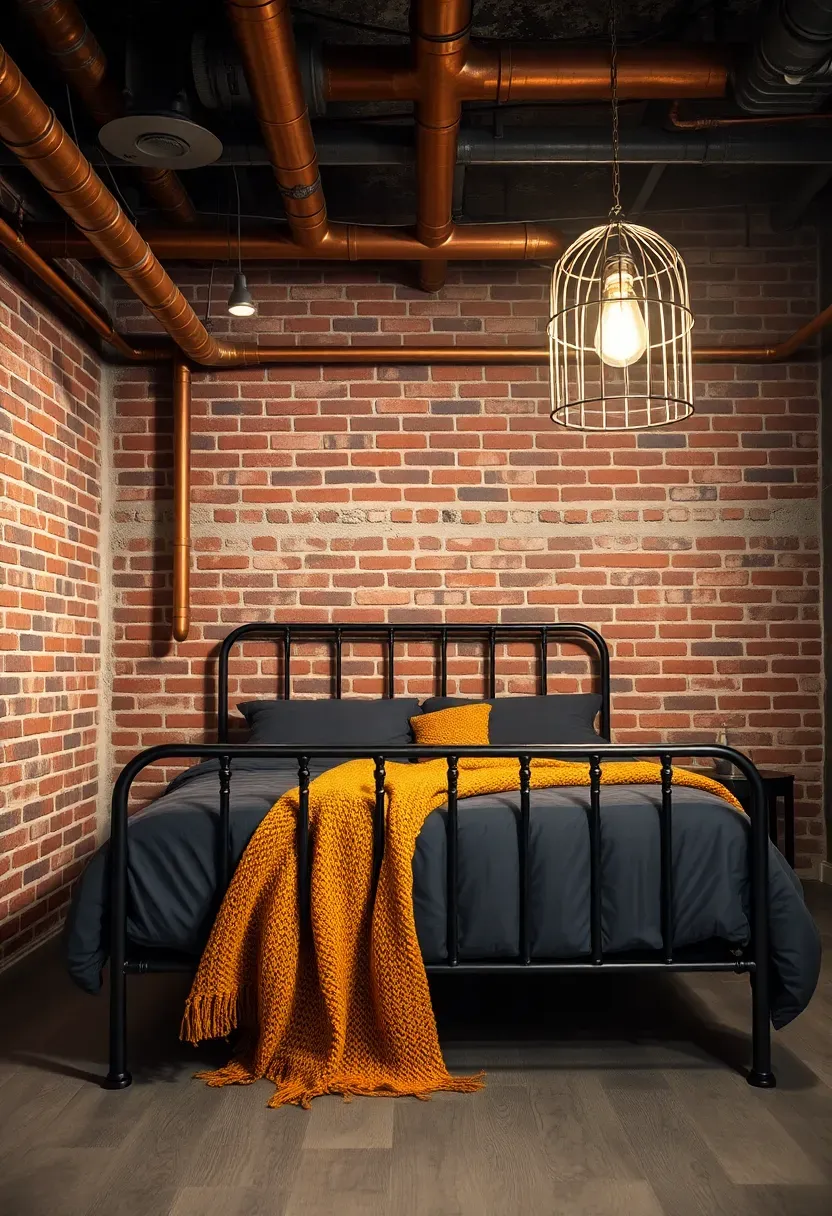
Exposed pipes and ductwork are usually things people try to hide. In a basement bedroom, making them a feature saves labor and gives the room an honest, loft-like character. Paint the pipes a single color — matte black for contrast against light walls, or copper metallic to warm up the space. If the wall behind the bed is poured concrete or block, applying a thin brick veneer (about half an inch thick) adds texture without eating into floor space.
Tips
- Wrap any hot water pipes with foam insulation before painting to prevent heat loss and burns
- Use clip-on pendant lights that attach to pipes for flexible task lighting
- Pair brick with soft textiles — a chunky knit throw or linen curtains — to keep the room from feeling hard
6. Cozy Low Ceiling Reading Nook
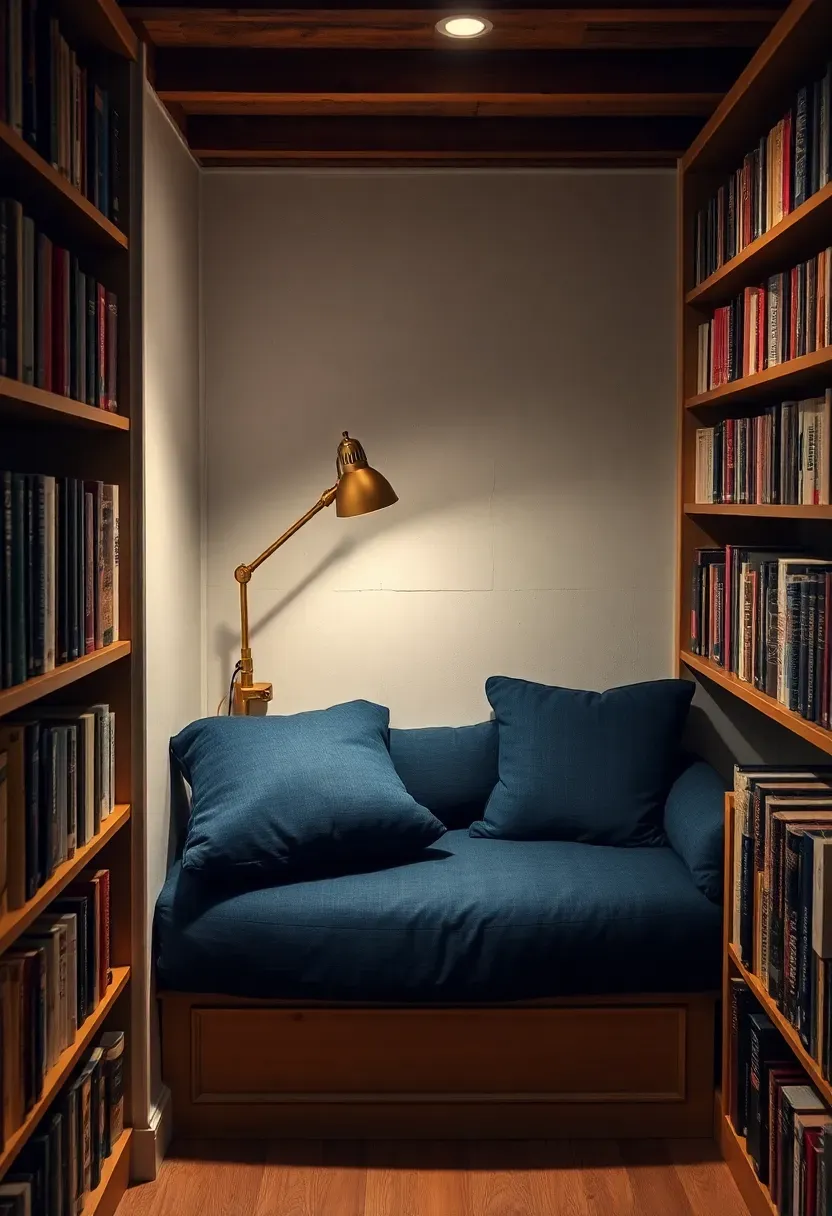
Not every basement has eight-foot ceilings. Some older homes have basements with seven feet or less of clearance, which rules out a standard bedroom layout but works perfectly as a sleeping nook. Build a platform bed low to the ground — six inches high at most — and line the surrounding walls with shallow shelving. The tight space stops feeling cramped and starts feeling like a sleeping cabin or a berth on a train.
Steps to Build
- Measure the ceiling height and subtract 24 inches for sitting clearance above the mattress
- Build a simple plywood platform at that height, with drawers underneath for storage
- Mount LED strip lights along the top edge of the shelves for soft, diffused illumination
- Add a thick mattress topper and extra pillows to lean against while reading
Watch Out
- Check local code for minimum ceiling height in sleeping rooms (usually 7 feet for at least 50% of the floor area)
- Install a hardwired smoke detector — this is non-negotiable in any sleeping space
Recommended
Items for this idea
7. Built-In Bed with Alcove Storage
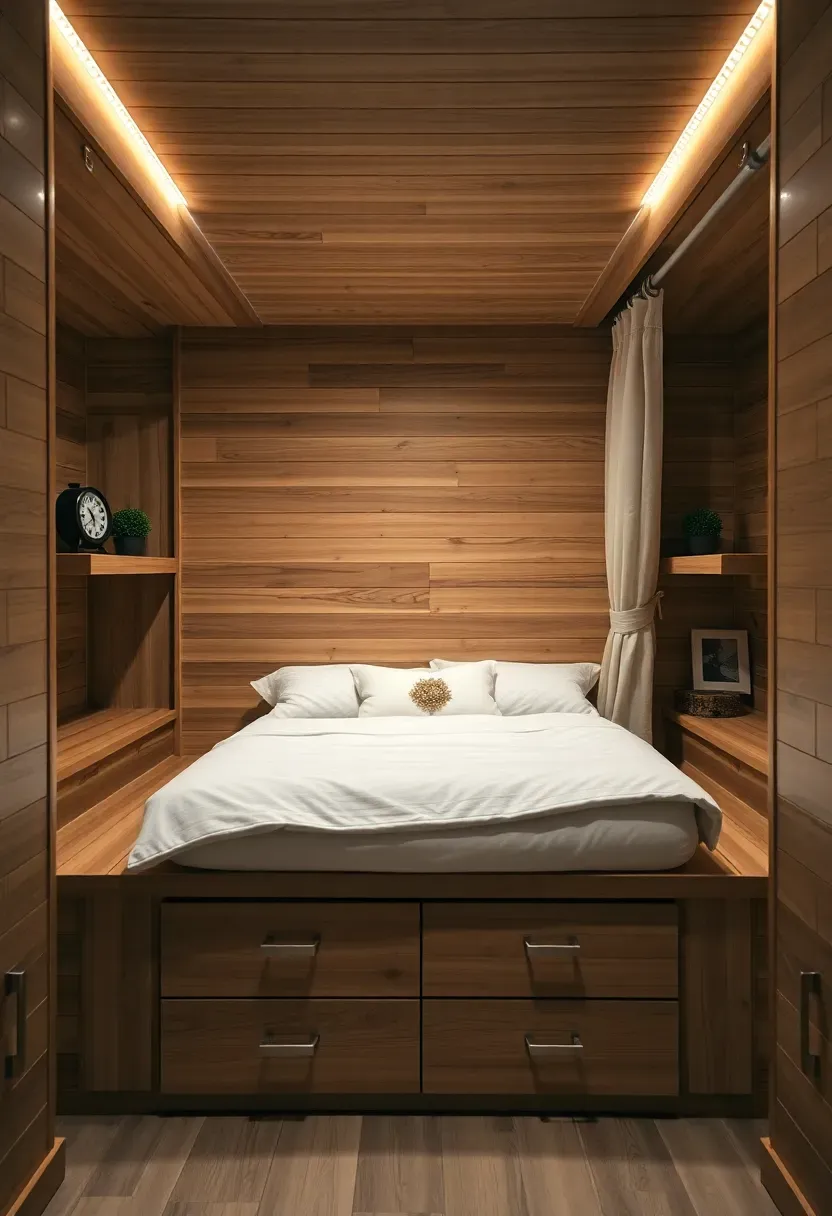
Basement walls are thick. Use that depth. Framing a bed alcove into the wall — even just 12 inches deep — creates a defined sleeping zone that feels separate from the rest of the room. Line the alcove with wood paneling or padded upholstery, and build drawers into the base and shelves into the sides. The result is a compact, self-contained sleeping area that keeps the rest of the basement free for other uses. This approach works especially well in open-plan basements where you want the bedroom to feel distinct without adding a full partition wall.
Tips
- Use tongue-and-groove cedar planks inside the alcove for a warm scent and natural moisture resistance
- Wire a USB charging outlet into one of the side shelves
- Hang a curtain across the opening for privacy in shared basement spaces
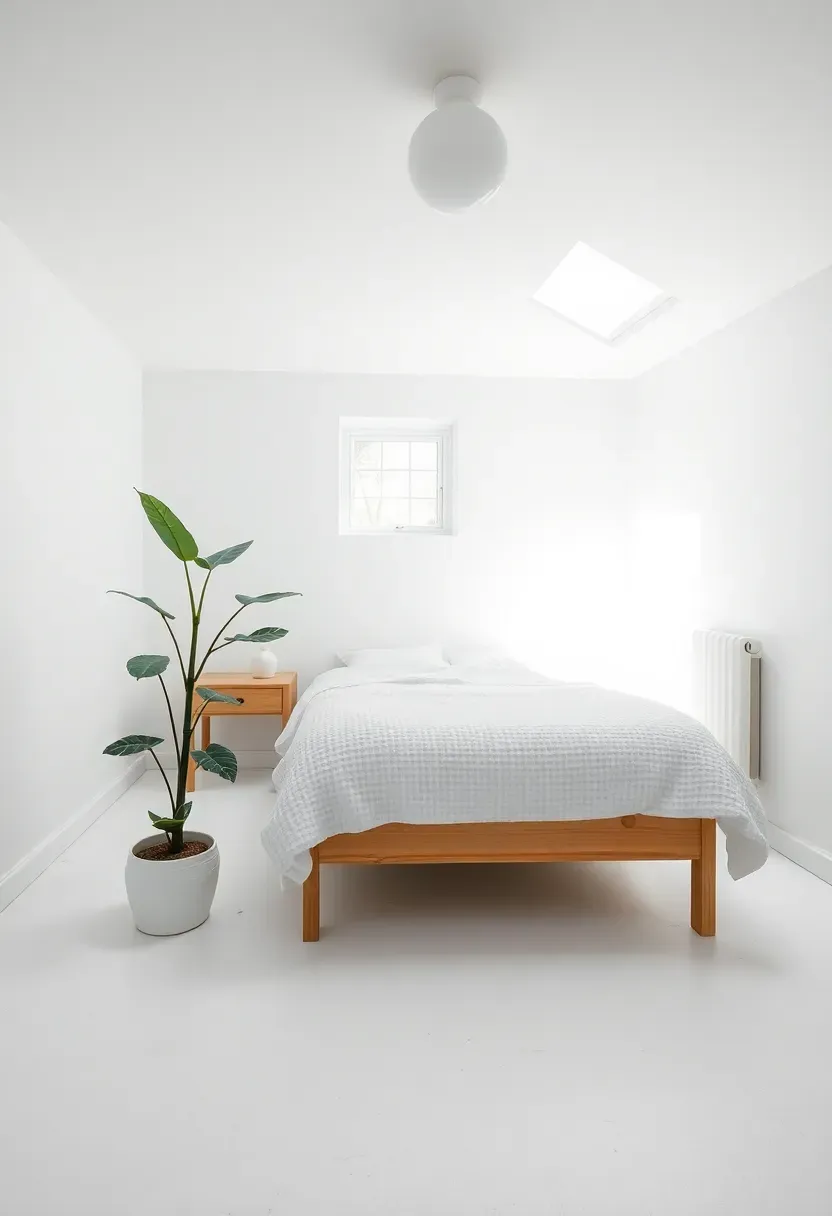
8. Scandinavian Bright White Basement
The Idea
White paint on every surface — walls, ceiling, trim, even the floor if it is concrete — is the most effective way to make a basement feel larger and brighter. Scandinavian design leans heavily on this approach, pairing all-white backgrounds with light-toned wood furniture (birch, ash, maple) and a few carefully chosen textiles in muted colors.
Why It Works Underground
Basements with limited windows benefit from high-reflectance surfaces. White walls bounce whatever light enters from windows or fixtures across the room multiple times. The effect is subtle but cumulative. Add one or two green plants for color and air quality. Keep furniture legs visible — beds on legs, nightstands with open bottoms — so the eye can travel under them, which makes the floor area feel larger.
Choose If
- You have small or few windows
- You prefer a calm, uncluttered sleeping environment
- You want maximum light from minimum sources
Recommended
Items for this idea
9. Carpeted Warmth Underfoot
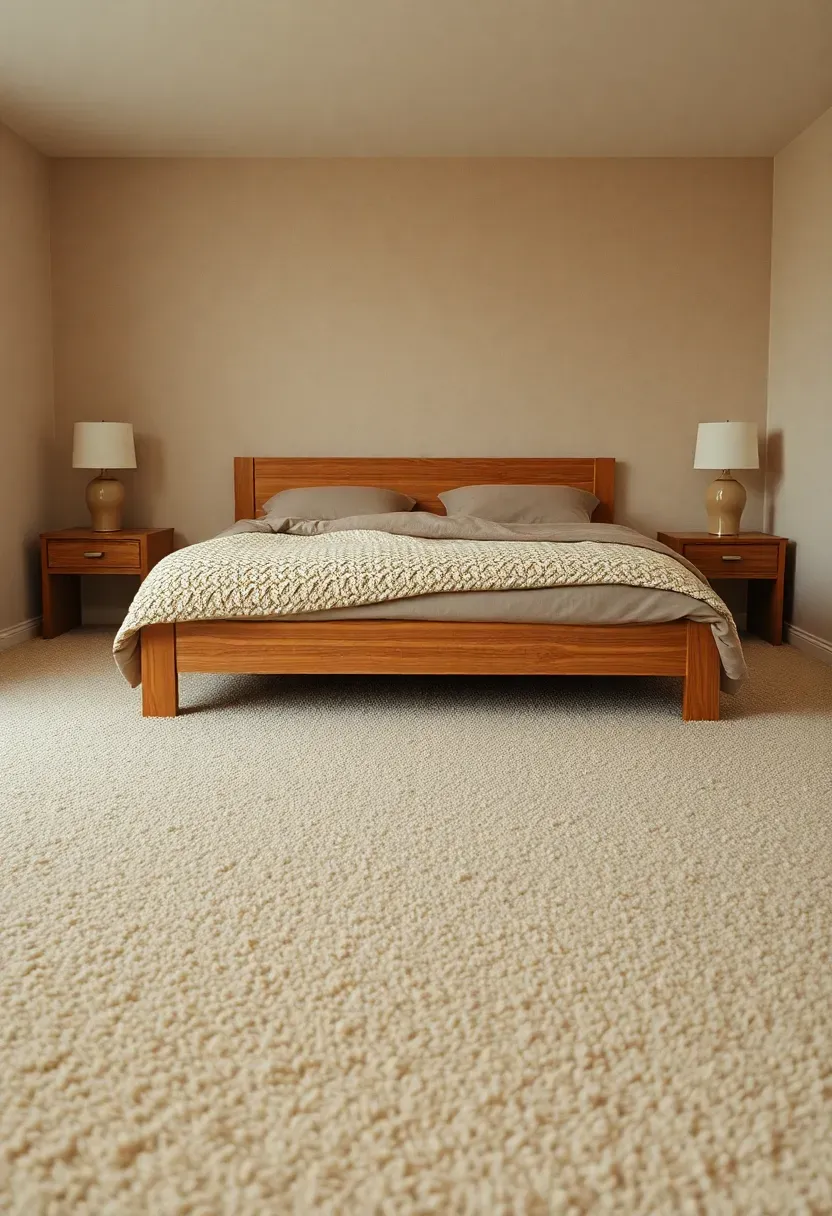
Concrete basement floors are cold. Radiant floor heating is the ideal fix but costs thousands. Carpet is the practical alternative. A good quality carpet with a thick pad underneath insulates the floor, dampens sound, and immediately makes the room feel warmer. Choose a low-pile or loop carpet in a neutral tone — beige, warm gray, or oatmeal — for easy vacuuming and a clean look. Avoid shag or ultra-high pile in basements because they trap moisture.
Important Considerations
- Install a vapor barrier (6-mil polyethylene sheet) under the pad to block moisture migration from the slab
- Choose synthetic fibers (nylon or polyester) over wool — synthetics resist mildew in damp conditions
- Run a dehumidifier during humid months to keep relative humidity below 50 percent
10. Basement Guest Suite with Kitchenette
The Problem
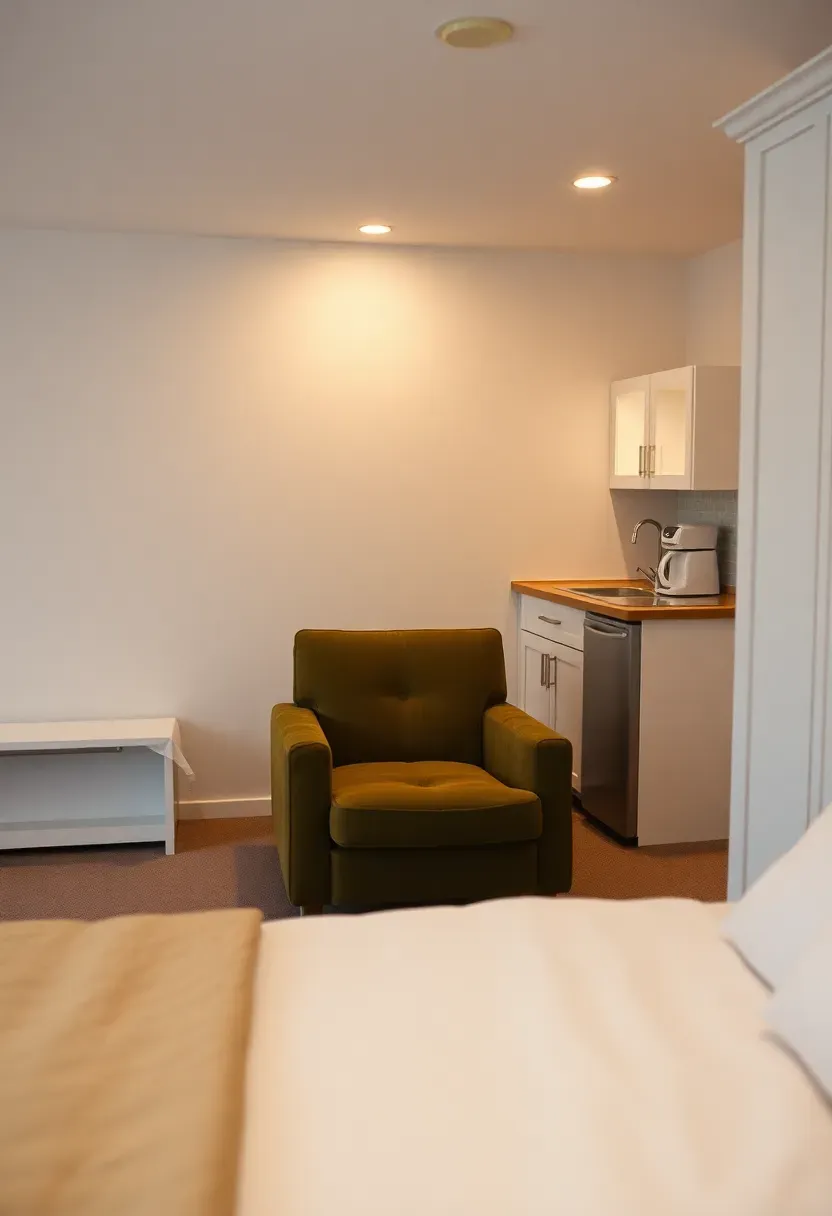
Guests staying more than one night in a basement bedroom need to trek upstairs for every glass of water and morning coffee. It disrupts the household and makes the guest feel like an imposition.
The Solution
Add a simple kitchenette along one wall — a 30-inch base cabinet, a compact sink, a mini fridge, and a single-cup coffee maker. No stove. The plumbing is already close by in most basements (near the laundry or utility room), which keeps costs down. A countertop of butcher block or laminate, a small shelf for mugs and plates, and a task light over the counter complete the setup. Total footprint is about 6 linear feet.
Pros and Cons
- Pro: Guests get independence and privacy
- Pro: Increases rental potential if you ever list the space on Airbnb
- Con: Requires plumbing hookup and potentially a permit
- Con: Takes wall space away from other furniture
Recommended
Items for this idea
11. Teen Hangout Bedroom
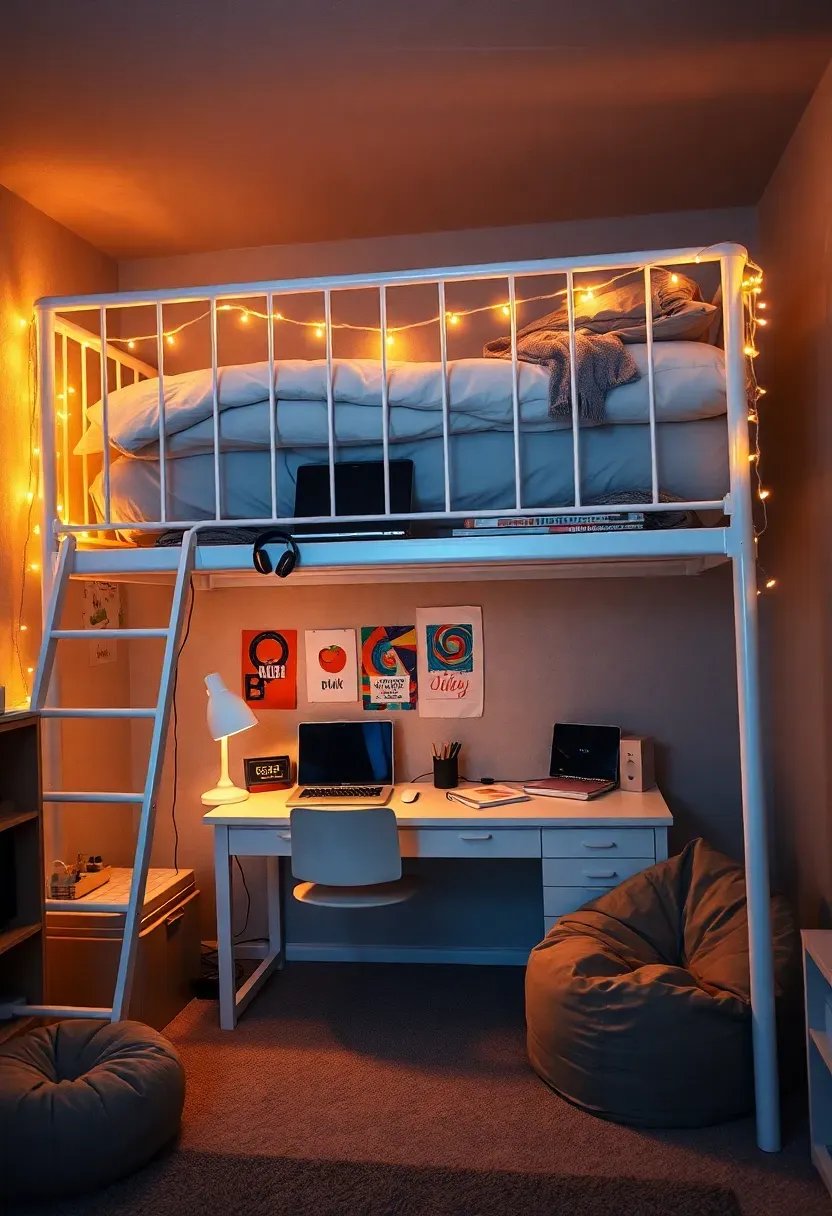
Teenagers want distance from the rest of the family without actually leaving the house. A basement bedroom delivers exactly that. The design priorities shift here — the room needs to handle sleeping, studying, socializing, and gaming in one space.
How to Set It Up
- Start with a loft bed to free up floor area underneath for a desk or couch
- Create a separate zone for friends to hang out — a futon or bean bags facing a wall-mounted screen works well
- Install a mini fridge and a microwave on a sturdy shelf so snacks do not require kitchen trips
- Use peel-and-stick wall tiles or removable wallpaper so the teen can personalize without permanent damage
Watch Out
- Soundproof the ceiling with resilient channel and two layers of 5/8-inch drywall if noise transfer upstairs is a concern
- Add a bathroom if the budget allows — even a simple half-bath changes the dynamic entirely
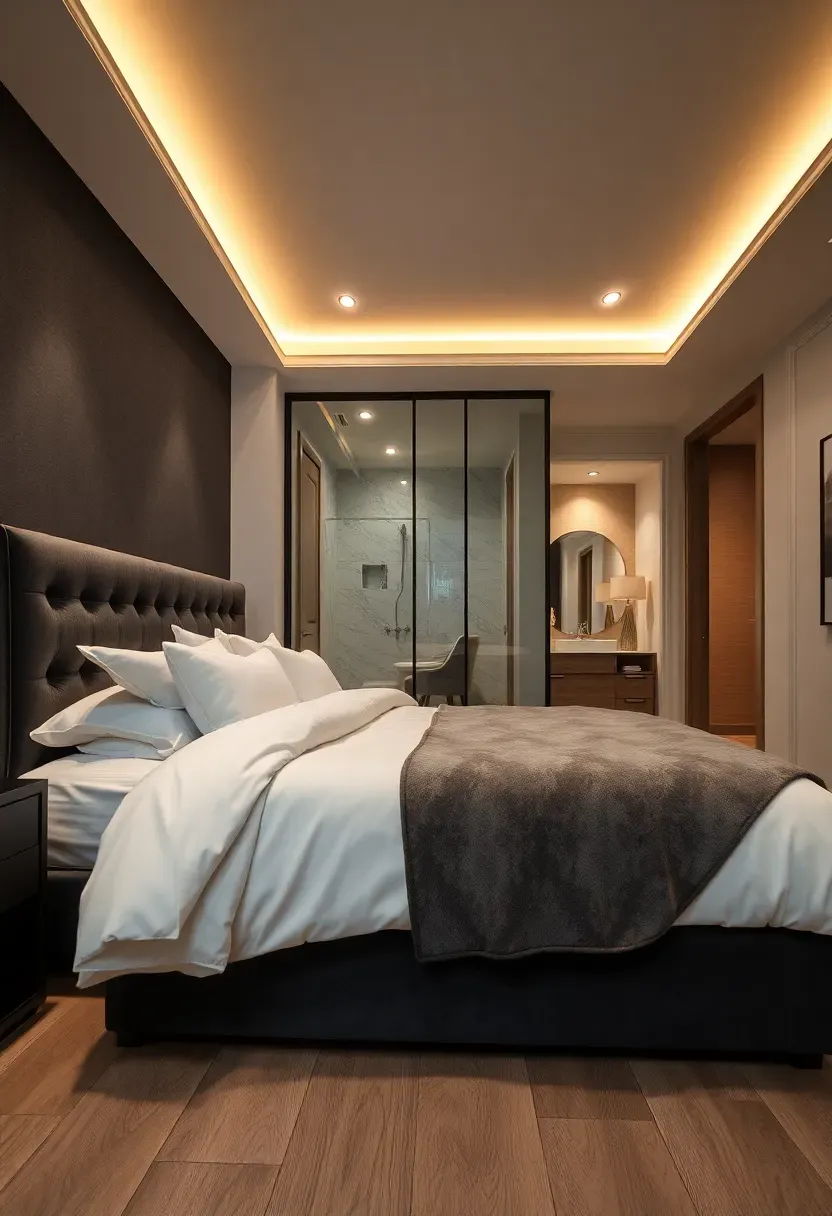
12. Luxury Basement Primary Suite
Moving the primary bedroom to the basement is unconventional, but it has real advantages. You get the quietest room in the house, naturally cool temperatures for sleeping, and the ability to build a larger suite than most upper floors can accommodate. Think king-size bed with clearance on three sides, a walk-in closet, and an ensuite bathroom — all possible because basements offer uninterrupted floor space without load-bearing walls breaking it up.
Key Details
- Install a coffered or tray ceiling with recessed LED strips to add visual height
- Use luxury vinyl plank flooring that mimics wide-plank oak — it handles moisture better than real hardwood
- Add a gas fireplace insert on an interior wall for ambiance and supplemental heat
- Ensure the HVAC system has a dedicated zone for the basement to maintain consistent temperature
Recommended
Items for this idea
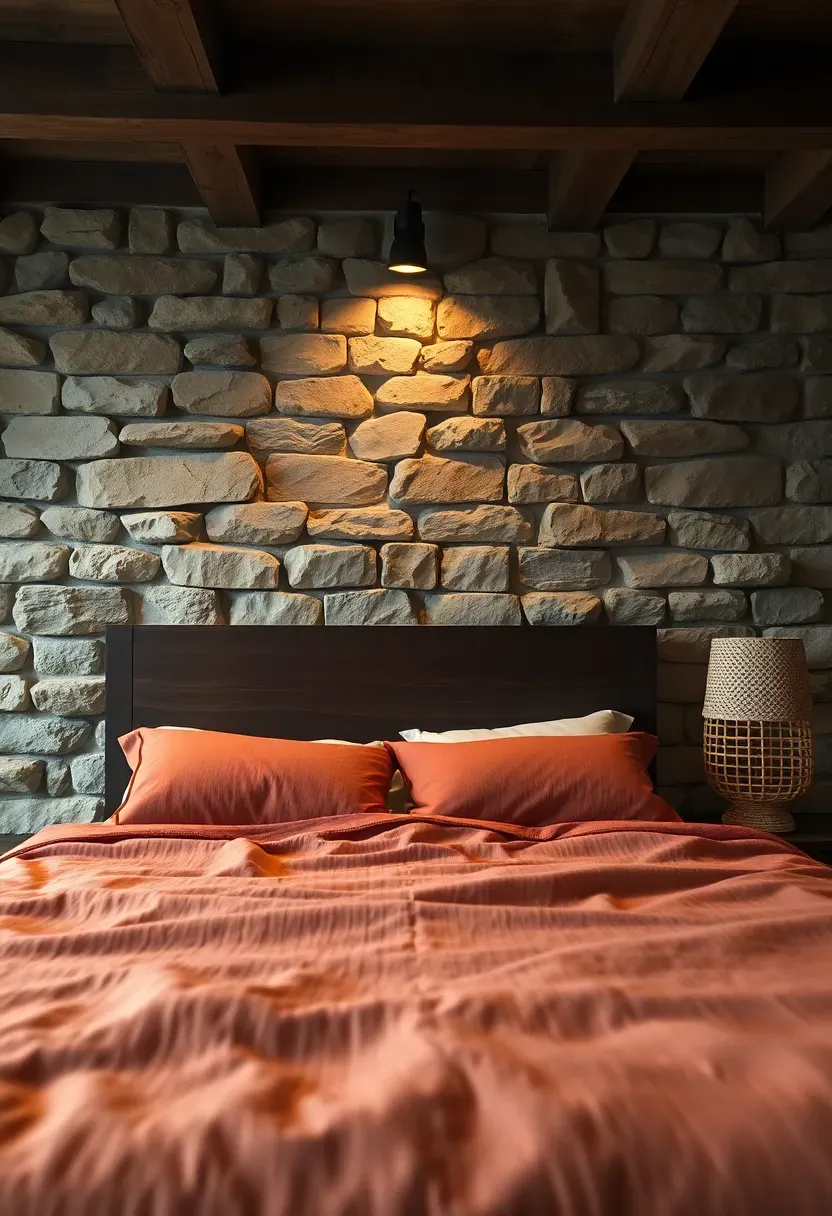
13. Rustic Stone Wall Feature
Origins
Stone walls in basements are not just decorative — in many older homes, the foundation itself is stacked fieldstone or cut limestone. Rather than covering it with drywall, cleaning and sealing the original stone turns a structural necessity into the room's best feature.
Modern Application
If your basement walls are poured concrete, you can still get the look with stone veneer panels that attach directly to the wall with construction adhesive. Natural stone veneer weighs 8-15 pounds per square foot, while manufactured stone veneer runs about 5-8 pounds. Either works on a concrete wall without additional structural support. Focus the stone on the headboard wall only — covering all four walls will make the room feel like a cave.
Apply at Home
- Point-light the stone wall with adjustable spotlights to highlight texture
- Pair with warm wood furniture and soft fabrics to balance the hard surface
- Seal natural stone with a penetrating sealer to prevent moisture absorption
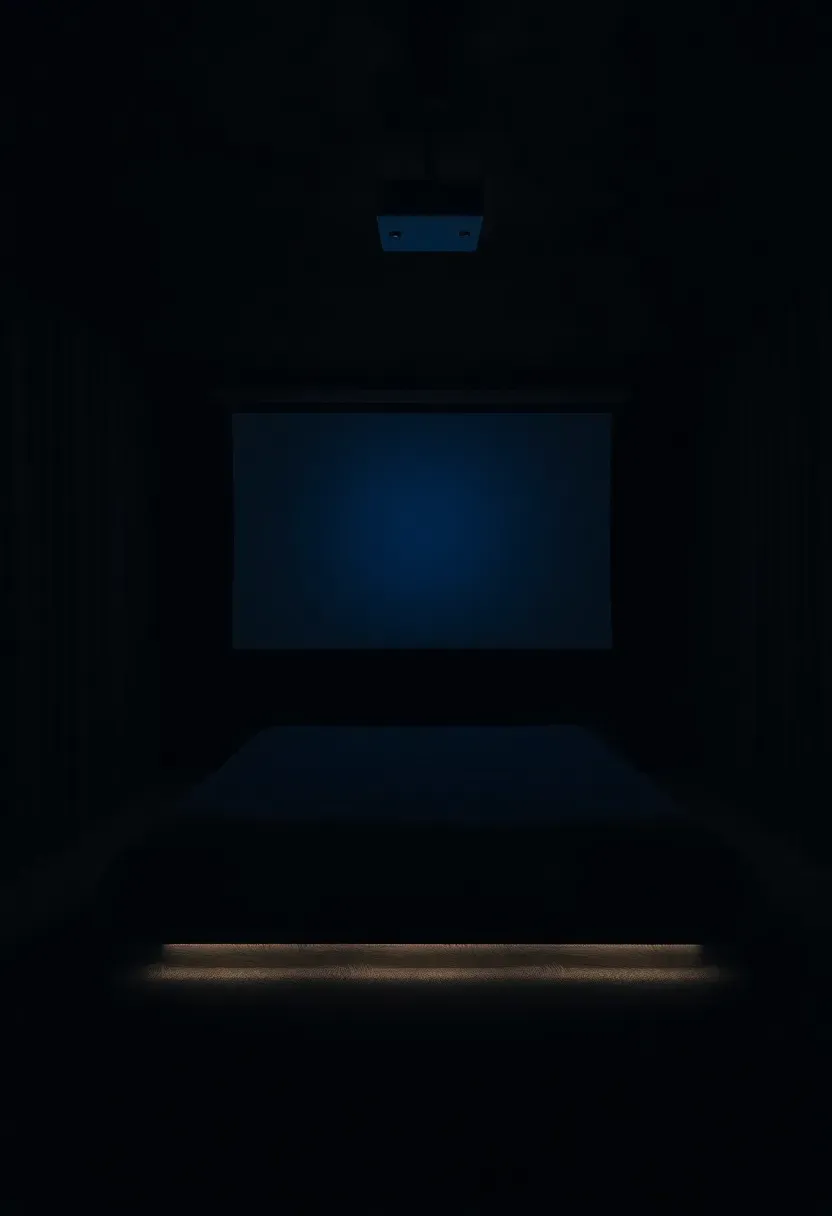
14. Home Theater Meets Bedroom
Basements are already dark, which is exactly what a projector needs. Combining a bedroom with a home theater space works surprisingly well if you plan the layout right. Mount a motorized projector screen on the wall opposite the bed so it retracts during the day and drops down at night. Place the projector on a ceiling mount behind the headboard. The bed becomes the best seat in the house.
Tips
- Use acoustic panels on the side walls (fabric-wrapped fiberglass, 2 inches thick) for better sound and reduced echo
- Position a 5.1 surround system with the center channel below the screen and surrounds at ear height on side walls
- Blackout the egress window with a fitted panel that removes easily in case of emergency
- A universal remote that controls lights, screen, and projector simplifies the nightly routine
Recommended
Items for this idea
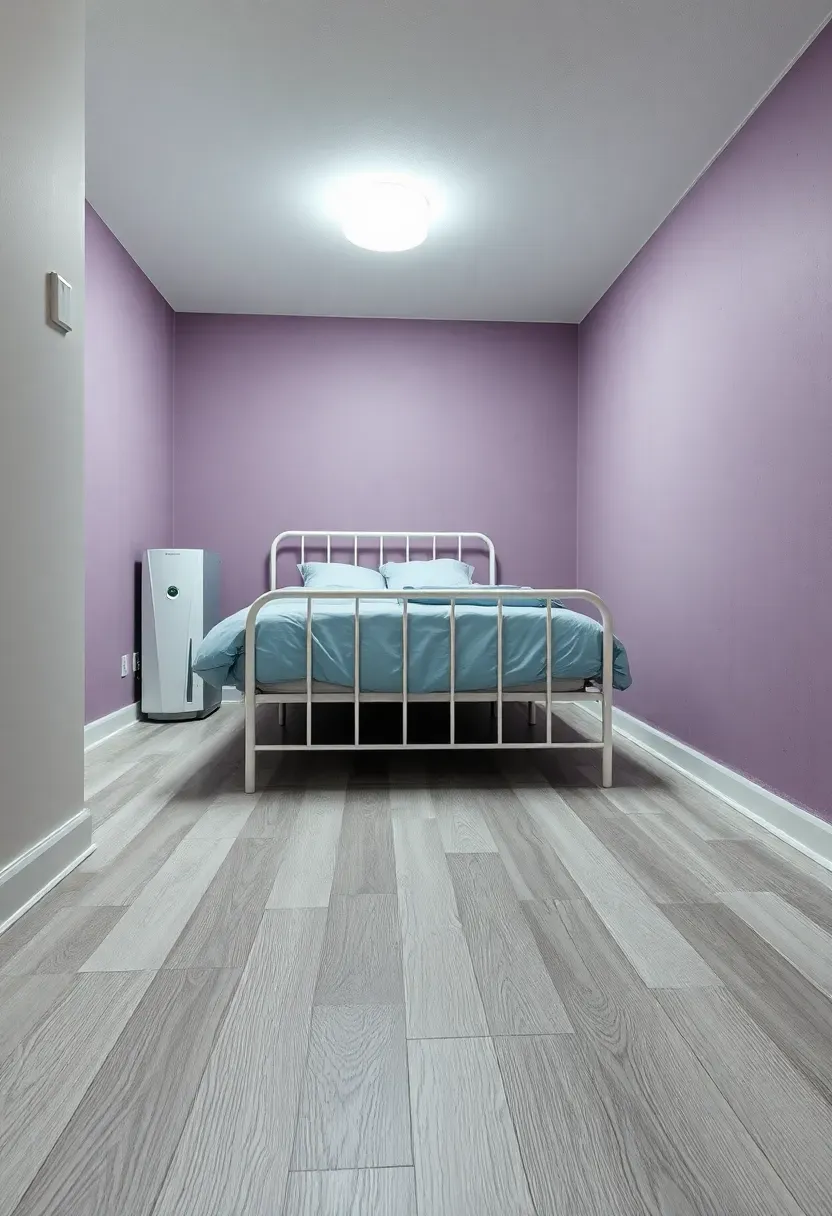
15. Moisture-Resistant Basement Bedroom
The Issue
Water is the number one enemy of basement bedrooms. Even without visible leaks, moisture migrates through concrete walls and floors as vapor. Over time, that moisture feeds mold, warps wood, and makes the room smell musty. Ignoring it does not make it go away.
The Fix
Start with the envelope. Apply a waterproof membrane (like Drylok or a sheet membrane) to the interior concrete walls before framing. Use steel studs instead of wood — steel does not rot. Hang mold-resistant drywall (the green or purple board) and paint it with mold-inhibiting primer. On the floor, skip hardwood entirely. Luxury vinyl plank, ceramic tile, or sealed concrete are your three best options. Run a whole-room dehumidifier ducted into the HVAC system to keep humidity between 30 and 50 percent year-round.
Pros and Cons
- Pro: A properly waterproofed basement bedroom lasts decades without mold issues
- Pro: Mold-resistant materials cost only 10-15% more than standard ones
- Con: Exterior waterproofing (excavation and membrane) adds significant cost
- Con: A dehumidifier adds to monthly energy bills
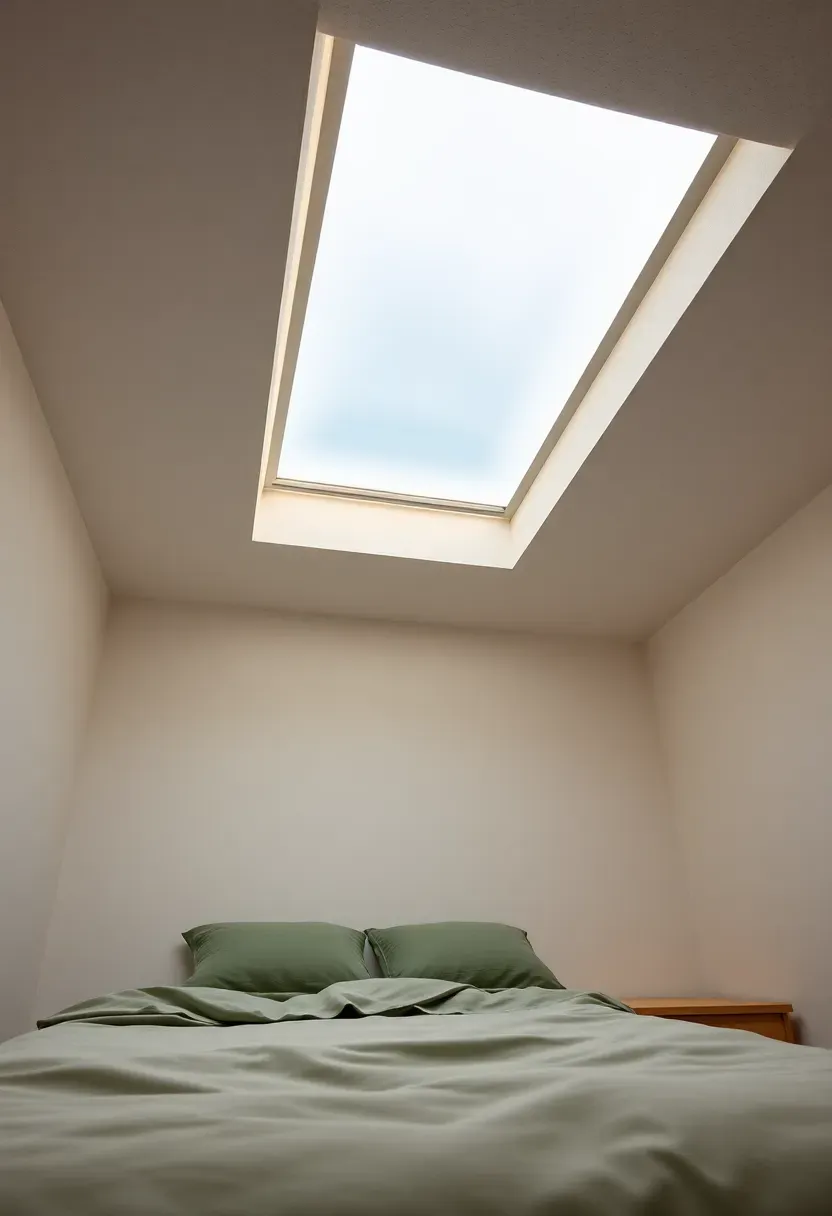
16. Basement Bedroom with Faux Skylight
You cannot cut a hole in a basement ceiling for a real skylight — there is an entire house above you. But LED skylight panels that mimic natural daylight have gotten remarkably good. These panels sit flush with the ceiling, emit light at 5000-6500K (daylight color temperature), and some even simulate cloud movement. The psychological effect is significant: your brain reads the light as coming from above and outdoors, reducing the closed-in feeling that basements can trigger.
Steps to Install
- Frame a recessed opening in the ceiling drywall, typically 2x4 feet
- Install the LED panel with a diffusing lens that softens the light
- Connect it to a smart switch or timer so it follows natural daylight cycles — bright in the morning, dimmer in the evening
- Surround the panel with a shallow light well (even 3 inches deep) to enhance the skylight illusion
Watch Out
- Cheap panels flicker. Look for panels rated flicker-free with a CRI above 90
- Do not install directly above the pillow — position it toward the foot of the bed or in the center of the room
Recommended
Items for this idea
17. Walk-Out Basement Retreat
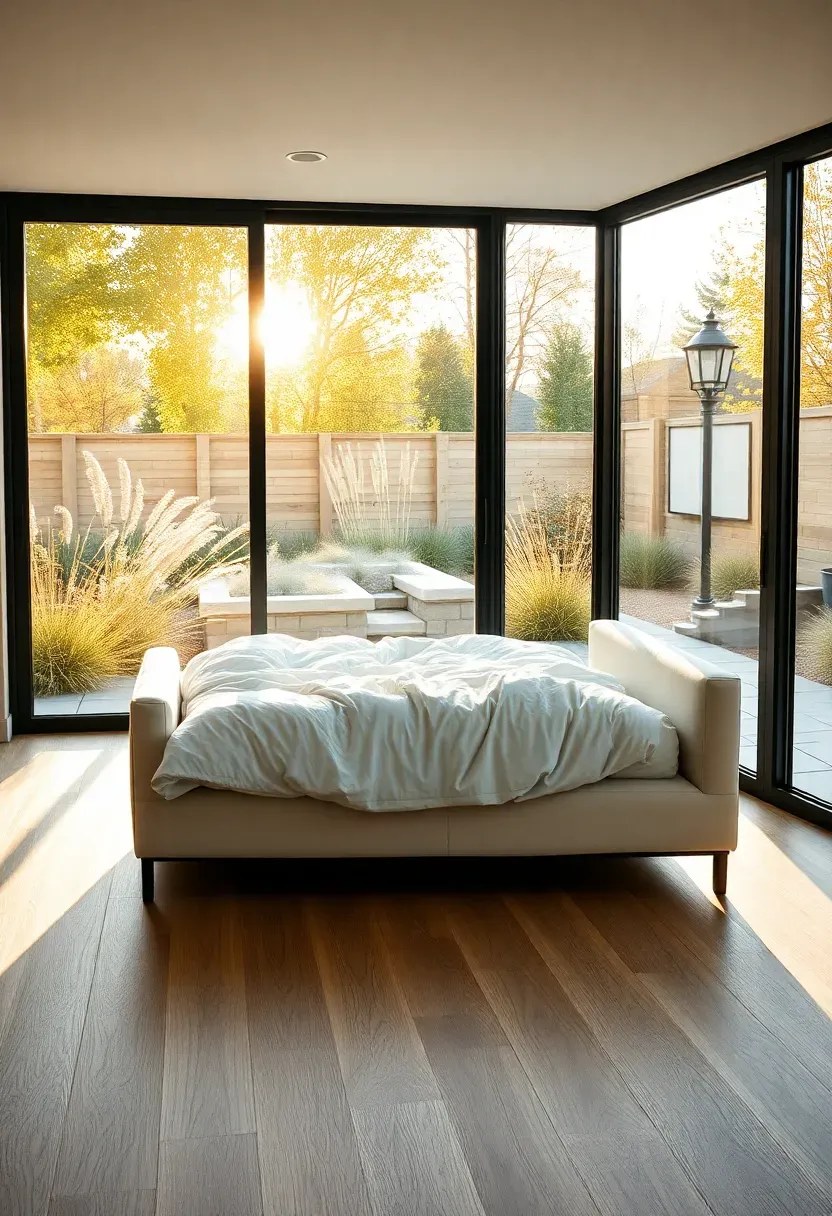
A walk-out basement sits on a sloped lot where one full wall is at grade level or above. This gives you the option for floor-to-ceiling windows or sliding glass doors on that wall, making the room feel less like a basement and more like a ground-floor suite. The remaining three walls are below grade, which still gives you the cool temperature and quiet benefits of a basement bedroom.
Design Approach
Orient the bed to face the glass wall so you wake up to the view. Use the below-grade walls for closets, storage, and the bathroom — they do not need windows. If the walk-out opens to a private area of the yard, skip the curtains on the glass wall entirely and let the landscape become the room's backdrop. A small patio or deck just outside the door extends the living area in warm months and provides an emergency exit year-round.
Choose If
- Your lot has a natural slope of at least 4-6 feet from front to back
- You want a private suite with its own outdoor access
- You are willing to invest in proper drainage and grading around the exposed wall
Quick FAQ
Does a basement bedroom need an egress window to be legal? Yes, in nearly every jurisdiction. The International Residential Code requires at least one egress window or door with a minimum opening of 5.7 square feet, a sill height no more than 44 inches from the floor, and a minimum width of 20 inches. Without it, you cannot legally call the room a bedroom on a listing.
What is the best flooring for a basement bedroom? Luxury vinyl plank is the most popular choice because it is waterproof, comfortable underfoot, and available in realistic wood grain patterns. Ceramic tile works well in damp climates but feels cold without radiant heating. Carpet over a vapor barrier is the warmest option, but it carries a mold risk if humidity is not controlled.
How do I prevent musty smells in a basement bedroom? Run a dehumidifier to maintain humidity below 50 percent. Seal the concrete walls and floor with a waterproof coating. Ensure proper ventilation — either mechanical (an HRV or ERV system) or natural (operable windows). Wash bedding weekly and use mold-resistant paint on all surfaces.
Are basement bedrooms colder than upstairs rooms? Typically yes, by 5 to 10 degrees Fahrenheit. The surrounding soil keeps basement temperatures between 55 and 65 degrees year-round. This is an advantage for sleeping in summer but requires supplemental heating in winter. A dedicated HVAC zone, an electric baseboard heater, or a small space heater solves the issue.
Can I add a bathroom to a basement bedroom? You can, but it often requires an upflush toilet system or a sewage ejector pump because the sewer line is above the basement floor level. Budget $8,000 to $15,000 for a basic basement half-bath and $15,000 to $25,000 for a full bath with a shower. The investment pays off in both daily convenience and resale value.
Basement bedrooms reward you for the effort. The quiet, the darkness, the constant cool temperature — these are things people pay good money for in hotel rooms and never quite achieve upstairs at home. Start with the moisture and egress issues because those are safety and structural. Once the room is dry and legal, the design part is the fun part. Pick one or two ideas from this list that match your basement's strengths and budget, and build from there. You do not need to do everything at once. Even a fresh coat of paint, a thick rug, and a couple of good lamps can turn a neglected basement into a room you actually want to sleep in.
Pinterest cover for 17 Basement Bedroom Ideas for Cozy Underground Rooms
About the author
OBCD
CGI visualization and interior design content. We create detailed 3D renders and curate practical design ideas for every room in your home.