19 Basement Office Ideas That Actually Work
Most people write off their basement as dead storage. Boxes of holiday decorations, old furniture, a treadmill nobody uses. But that same space — often the quietest room in the house — sits there with real square footage going to waste. I spent two years working from a basement office myself, and the silence alone made it worth the effort. No street noise, no doorbell interruptions, just deep focus.
Here are 19 basement office setups that solve the real challenges: limited natural light, moisture, low ceilings, and the general "cave" feeling that nobody wants.
Table of Contents
- Daylight Basement With Full Windows
- Egress Window Light Well
- Industrial Concrete and Steel
- Warm Wood Paneling Office
- White and Bright Minimalist
- L-Shaped Corner Desk Layout
- Library Wall Home Office
- Dual-Purpose Guest Room Office
- Standing Desk Basement Setup
- Exposed Brick Accent Office
- Moisture-Resistant Vinyl Plank Office
- Drop Ceiling With Recessed Lighting
- Basement Pod Office
- Mid-Century Modern Below Grade
- Multi-Monitor Developer Den
- Cozy Carpet Tile Office
- Open Plan Basement Workspace
- Sound-Insulated Recording Office
- Budget Unfinished Basement Office
1. Daylight Basement With Full Windows
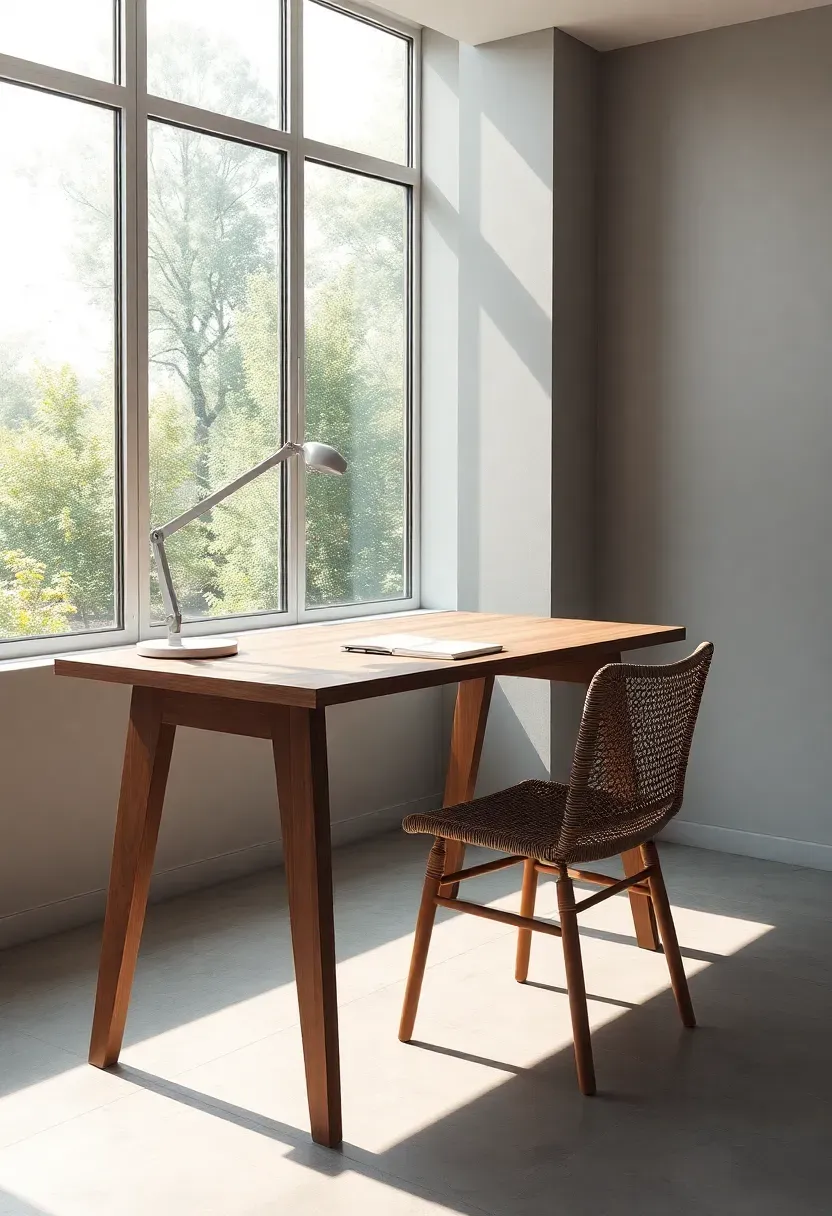
If your lot slopes even slightly, one wall of your basement might accommodate full-size or oversized windows. This is the gold standard for a below-grade office because it eliminates the biggest complaint — feeling trapped underground. Position your desk facing or perpendicular to the window wall so natural light reaches your workspace without causing monitor glare. A sheer roller shade handles direct afternoon sun without blocking the view entirely.
Why It Beats Upper Floors
- Ground-level thermal mass keeps the room 8-12 degrees cooler in summer without AC
- Exterior noise is naturally dampened by the surrounding earth
- Window wells can double as small planter boxes for greenery right outside your view
We picked a few things that go well with this idea: Sunco 2x4 LED Flat Panel (6-Pack) (★4.6), OKQ 2x4 LED Flat Panel (4-Pack) (★4.5) and Sunco 2x4 LED Flat Panel (24-Pack) (★4.6). As an Amazon Associate we earn from qualifying purchases.
2. Egress Window Light Well
The Problem
Most basements have tiny hopper windows near the ceiling that let in almost no usable light. You end up relying entirely on artificial sources, which causes eye fatigue during long work sessions and makes the space feel claustrophobic.
The Fix
An egress window with an enlarged light well changes the room dramatically. The window itself is large enough to sit beside, and the well can be lined with white or light-colored material to bounce daylight deeper into the room. Budget around $2,500-$4,500 for professional installation including the well excavation.
Honest Tradeoffs
- Pro: Adds emergency egress, increases home value, major light improvement
- Con: Requires excavation, potential waterproofing work, permit needed in most areas
- Pro: Can be fitted with a window well cover to prevent debris and water entry
We picked a few things that go well with this idea: ErGear Electric Standing Desk 48x24 (★4.5), Furmax Electric Standing Desk 55x24 (★4.4) and HUANUO Small Electric Standing Desk 32" (★4.6). As an Amazon Associate we earn from qualifying purchases.
3. Industrial Concrete and Steel
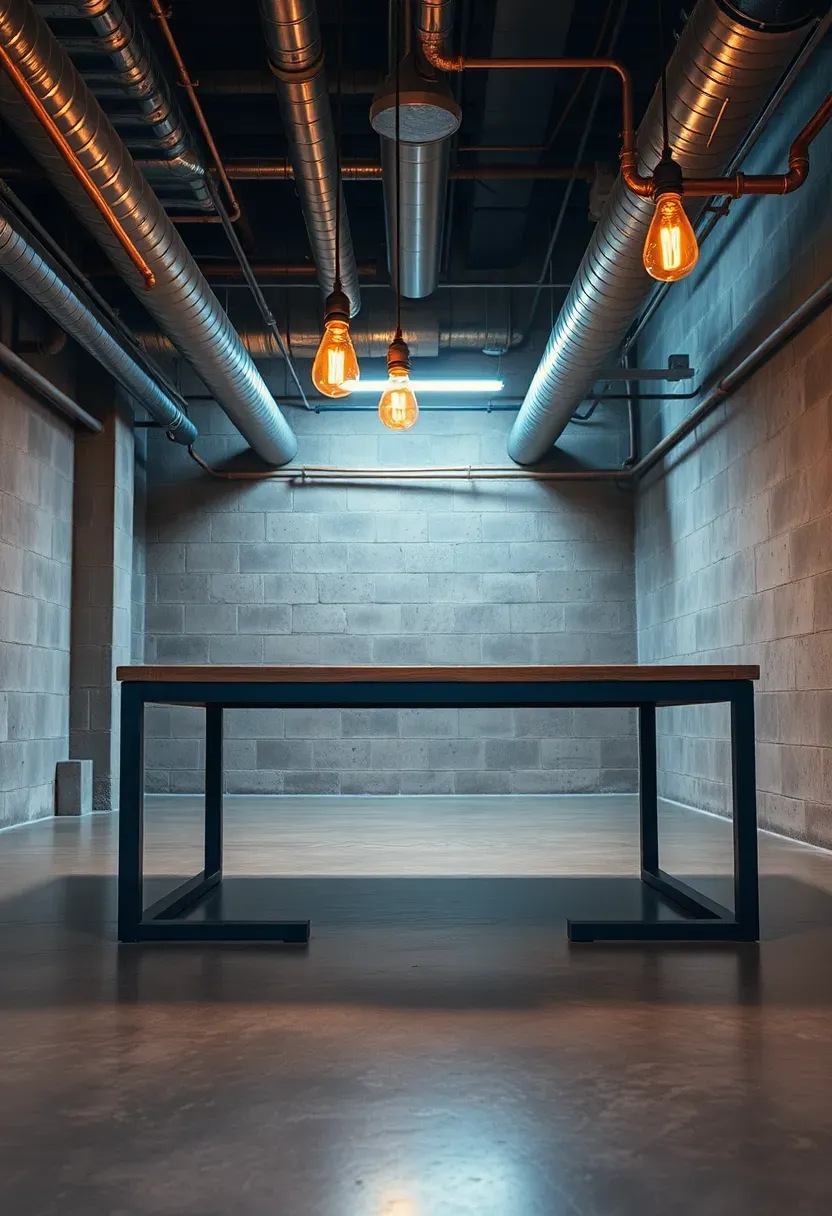
Instead of hiding every basement surface behind drywall, lean into what is already there. Polished or sealed concrete floors cost less than installing new flooring and look deliberately chosen rather than unfinished. Pair them with a steel-frame desk, black metal shelving, and pendant lights hung from exposed joists or ductwork. The raw materials absorb sound differently than finished rooms — you get a workspace that feels grounded and honest.
Tips
- Seal concrete with a penetrating sealer to prevent dust and moisture wicking
- Add a large area rug under your chair for warmth and acoustic softening
- Use warm-temperature bulbs (2700-3000K) to offset the cool tones of concrete and metal
We picked a few things that go well with this idea: AEOCKY 50-Pint Basement Dehumidifier (★4.6), Nexaro 50-Pint Basement Dehumidifier 5000sqft (★4.7) and AEOCKY 80-Pint Energy Star Dehumidifier (★4.5). As an Amazon Associate we earn from qualifying purchases.
4. Warm Wood Paneling Office
How to Get the Cabin Feel Without the Kitsch
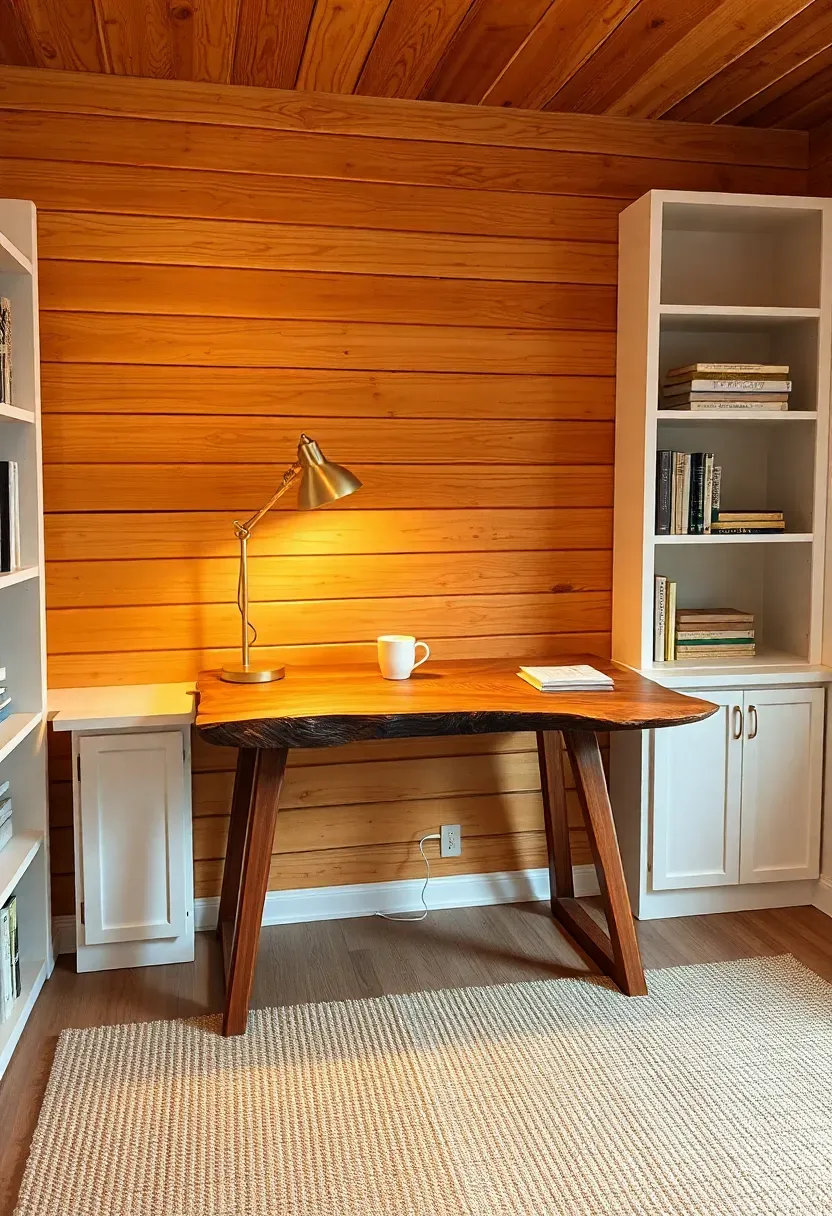
Wood paneling in a basement walks a fine line. Done carelessly, it reads as a 1970s rec room. Done well, it creates a cabin-like warmth that makes you forget you are underground.
Step 1: Choose the Right Wood
Pick a light to medium-toned species — white oak, cedar, or poplar — in a horizontal orientation. Horizontal lines make low ceilings feel wider. Avoid dark stains that shrink the room visually.
Step 2: Install Over Moisture Barrier
Always mount paneling on furring strips with a vapor barrier behind them. Direct contact with foundation walls invites mold. Leave a quarter-inch gap at the floor.
Step 3: Balance With Modern Elements
Pair the wood with a simple metal or white desk, modern lighting, and minimal decor. The contrast keeps the room from feeling like a hunting lodge.
Watch Out
- Never use real wood paneling in a basement with active moisture problems — solve the water issue first
- Engineered wood panels handle humidity swings better than solid planks
Recommended
Items for this idea
5. White and Bright Minimalist
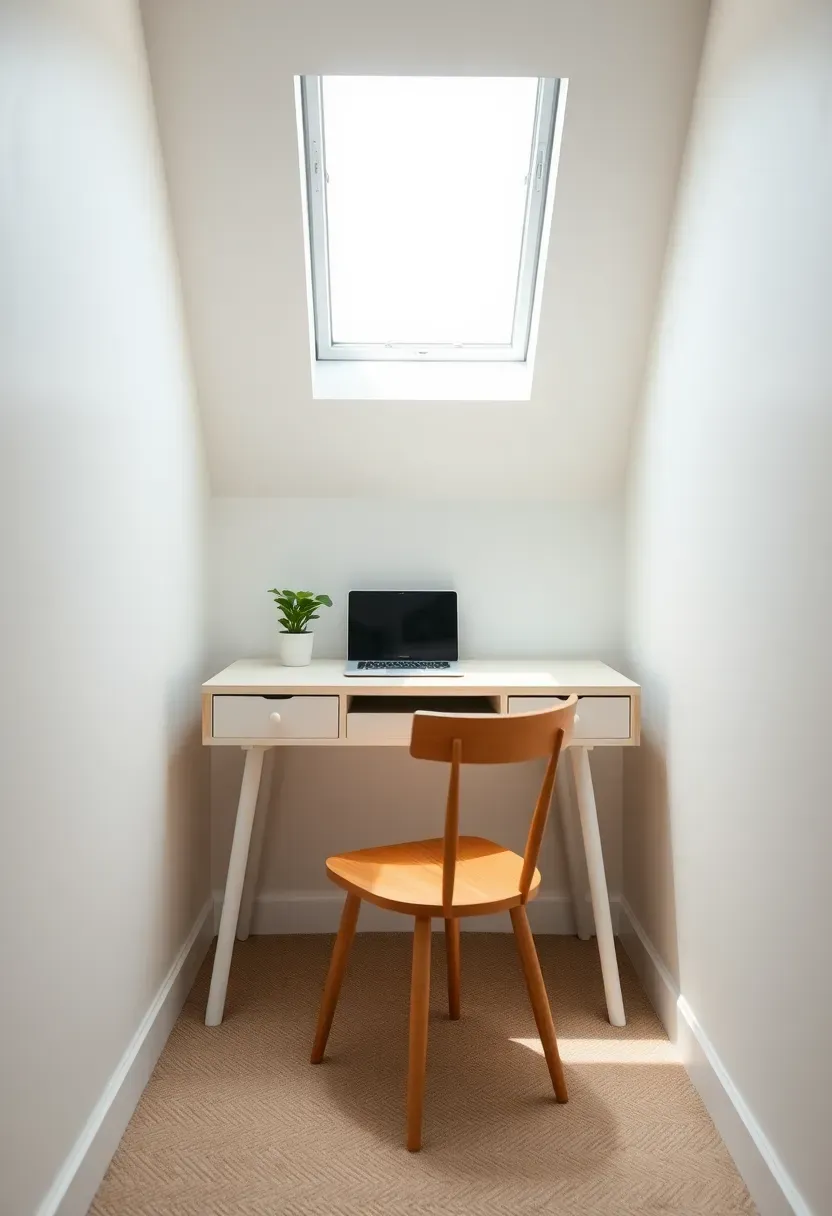
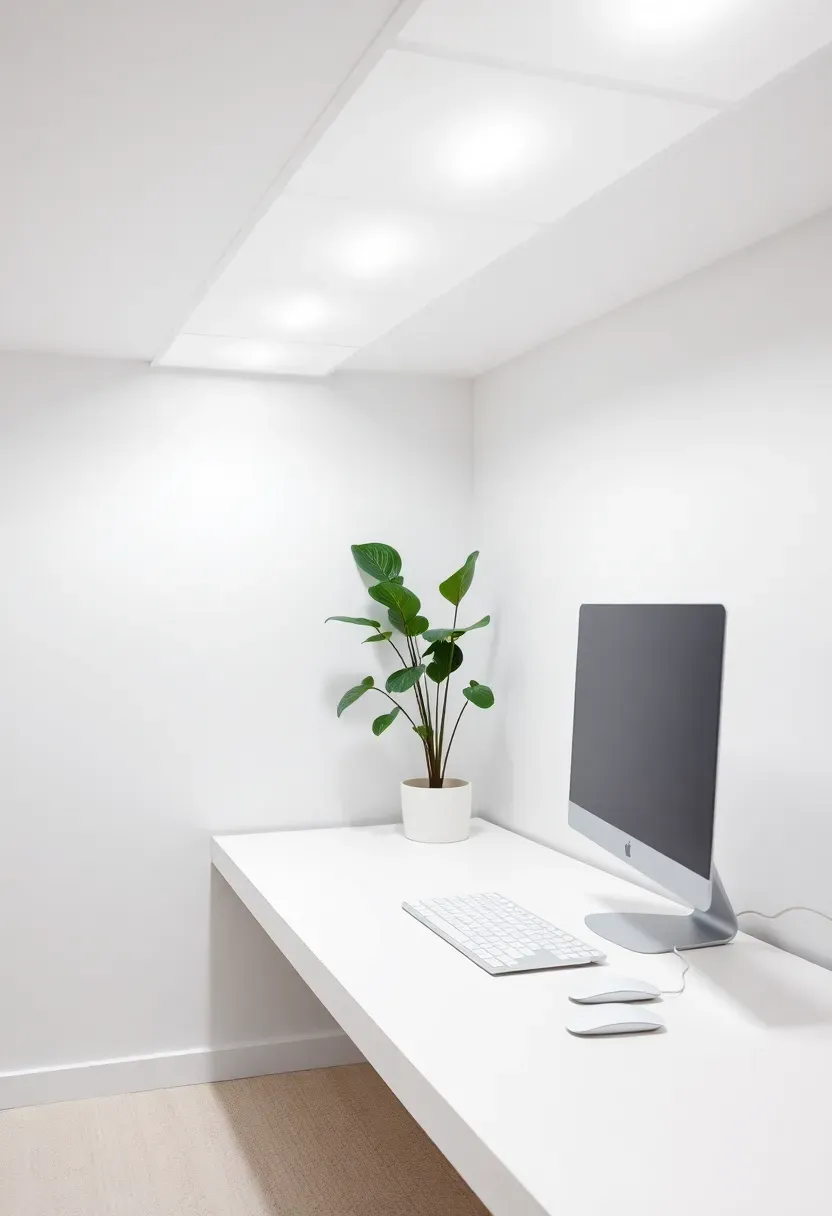
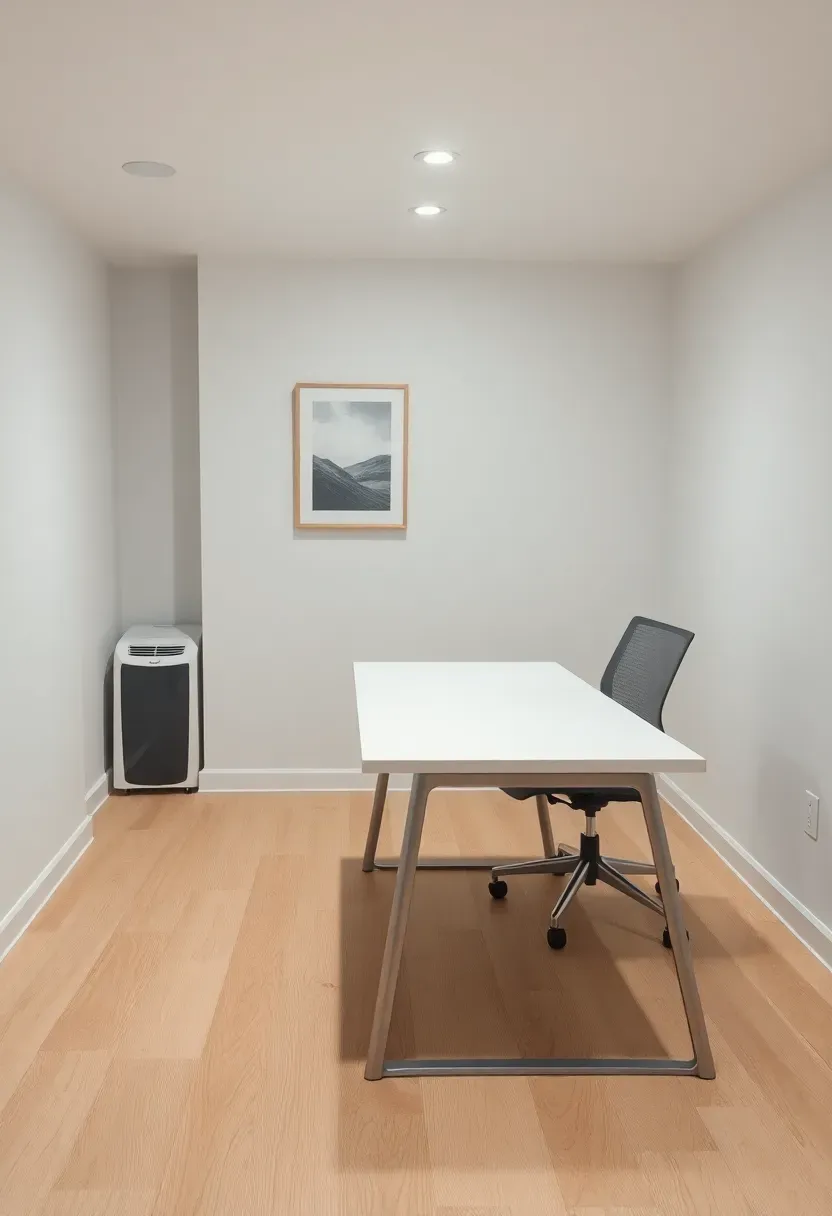
The fastest way to fight basement darkness is to go aggressively light. White walls, white ceiling, white or very pale desk surface, and high-CRI LED panel lights mounted flush to the ceiling. The effect is almost clinical — which is exactly the point. Every surface bounces available light around the room, and the clean visual field reduces distractions. One or two green plants add life without clutter.
Tips
- Use paint with a satin or eggshell finish — flat white shows every scuff in a basement environment
- Install at least two 4000K LED panels to simulate overhead daylight
- A single accent color (desk lamp, chair fabric, plant pot) prevents the space from feeling sterile
6. L-Shaped Corner Desk Layout
Two Approaches: Built-In vs. Freestanding
Basements often have awkward corners where walls meet at odd angles or where ductwork drops low. An L-shaped desk turns these dead zones into the most functional part of the room.
Built-In
A custom built-in L-desk uses butcher block or plywood on wall-mounted cleats. No legs means open floor space underneath for a filing cabinet or space heater. Cost runs $200-$500 in materials for a DIY version.
Freestanding
A freestanding L-desk offers flexibility — you can reposition it if you rearrange the room later. Look for models with cable management trays built into the frame, since basement outlets tend to be sparse and awkwardly placed.
Choose Built-In If
You want a permanent, clean installation and your basement layout is finalized.
Choose Freestanding If
You rent, might move, or want to reconfigure the space seasonally.

Recommended
Items for this idea
7. Library Wall Home Office
Floor-to-ceiling shelving on one or two walls gives a basement office the feel of a private study. The books themselves add acoustic dampening — a real benefit in hard-surfaced basement rooms where sound bounces off concrete and drywall. Position your desk in front of or between the shelving units so reference material sits within reach. Closed-back bookcases also act as a second vapor barrier against foundation walls.
Tips
- Anchor all tall shelving to the wall — basement floors can be slightly uneven, making freestanding units tippy
- Mix books with a few objects (a clock, a framed photo, a small plant) to break up visual monotony
- Use puck lights or LED strip lights on shelf undersides for warm ambient glow
8. Dual-Purpose Guest Room Office
The Challenge
You need a home office daily, but you also need a guest room a few times a year. Dedicating an entire basement room to either one feels wasteful.
The Solution
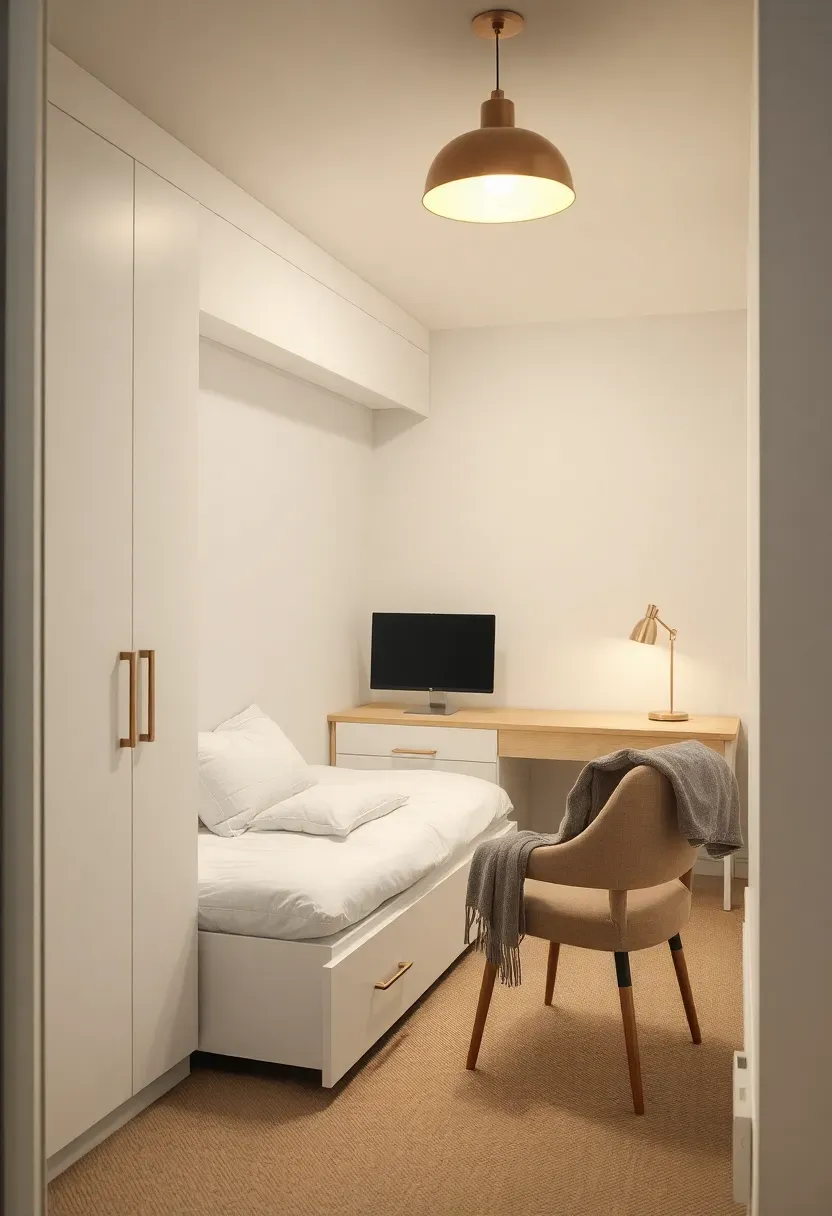
A murphy bed or high-quality fold-out sofa paired with a desk that can stay in place regardless of bed position. Wall-mounted desks and floating shelves work best because they do not interfere with the bed's swing path. When guests arrive, you fold down the bed and the room transforms in under a minute. Your monitors and desk stay put along the opposite wall.
Pros and Cons
- Pro: One room serves two purposes without compromise on either
- Con: Murphy beds cost $1,500-$4,000 installed, and cheap ones feel flimsy
- Pro: Guests appreciate a private basement room — it is quiet and separated from household activity
Recommended
Items for this idea
9. Standing Desk Basement Setup
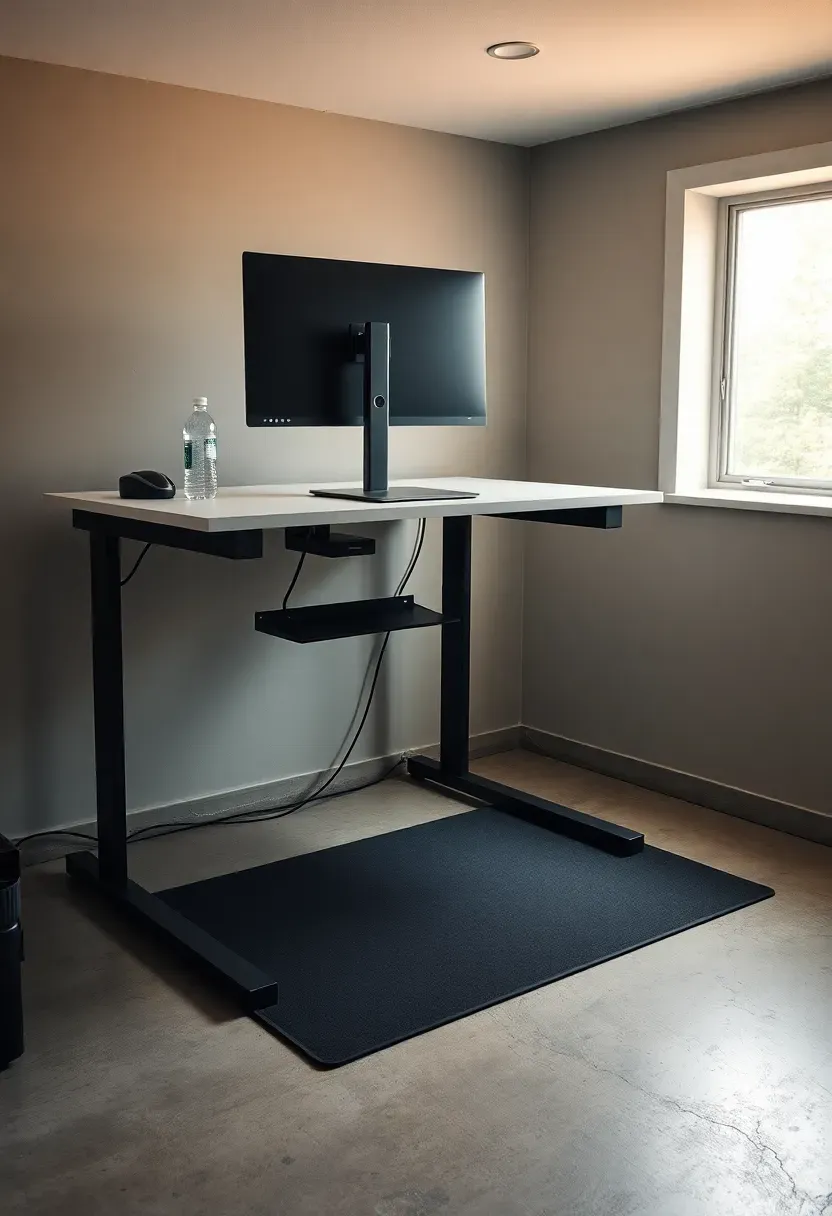
Standing desks pair well with basements for a specific reason: the concrete subfloor is perfectly flat and stable. No wobble, no bounce, no vibration from people walking in adjacent rooms. Add an anti-fatigue mat (not a rug — a proper mat with beveled edges) and position a stool nearby for breaks. The ceiling height matters here. Measure your standing elbow height plus monitor clearance and confirm your basement ceiling accommodates it. Most finished basements at 7.5 feet work fine for people under 6'2".
Tips
- Electric sit-stand desks with memory presets make the transition effortless
- Route cables through a desk-mounted tray rather than letting them puddle on the concrete
- Keep a small fan nearby — standing generates more body heat than sitting, and basements can feel stuffy
10. Exposed Brick Accent Office
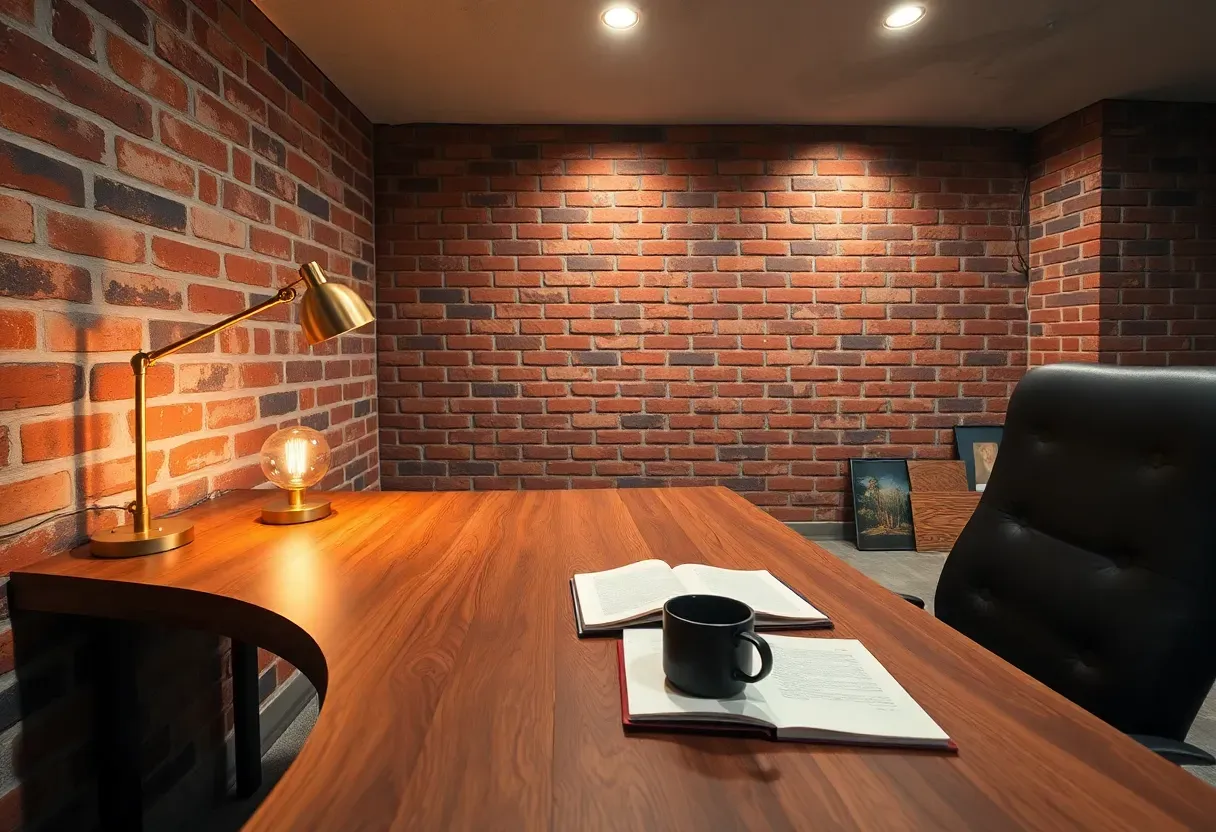
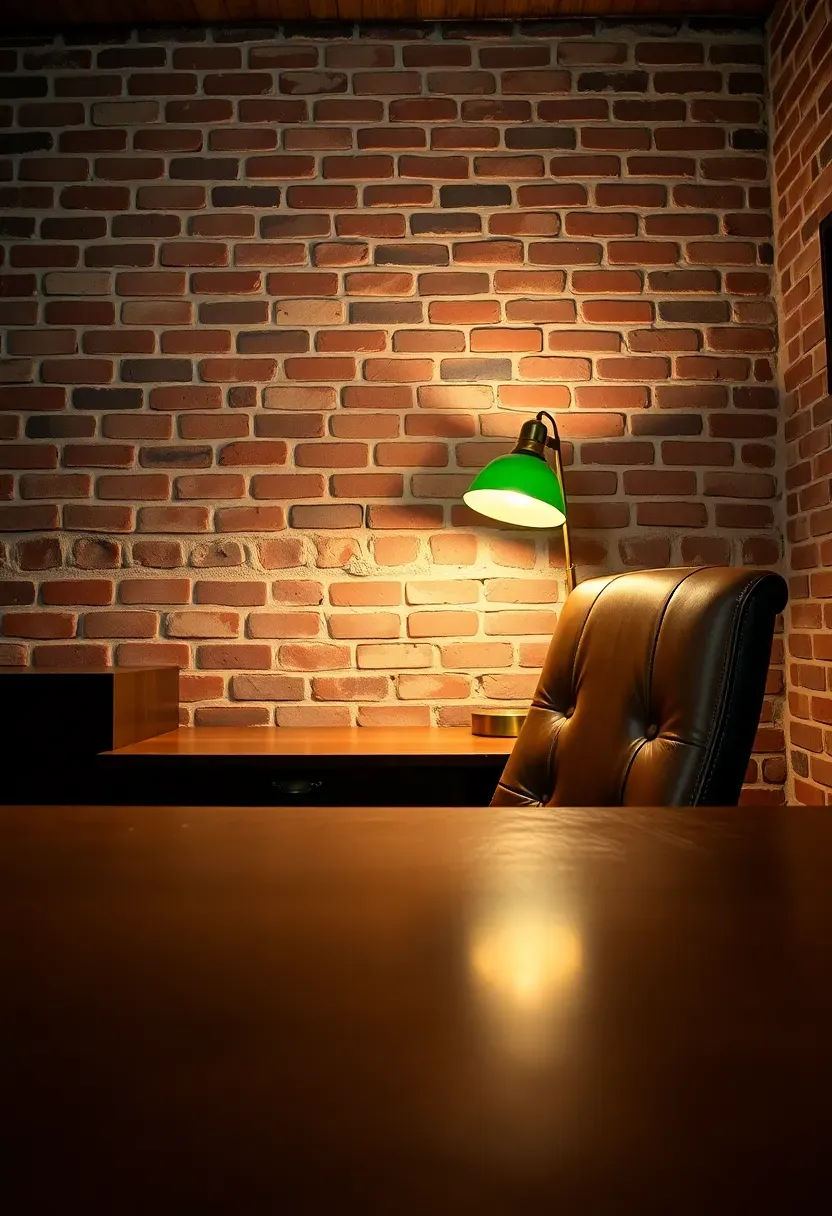
Some older basements have foundation walls built with brick rather than poured concrete. If yours does, exposing and cleaning a section creates a backdrop that no wallpaper or paint can match. The texture adds visual depth to a room that might otherwise feel flat, and the reddish-brown tones warm up the space naturally. Seal the brick with a clear masonry sealer to prevent dust and moisture migration. Pair it with a dark wood or leather-topped desk for a workspace that feels established rather than decorated.
Tips
- Test a small area first — some old brick crumbles when exposed and may need repointing
- Avoid hanging heavy items directly on brick without proper masonry anchors
- A single wall of brick works best; all four walls can feel overwhelming underground
Recommended
Items for this idea
11. Moisture-Resistant Vinyl Plank Office
Why Basements Kill Hardwood
Real hardwood flooring absorbs moisture from the concrete slab beneath it. Within a year or two, boards cup, buckle, and develop mold on their undersides. Engineered hardwood fares slightly better but still risks delamination in damp basements.
The Better Option
Luxury vinyl plank (LVP) is 100% waterproof, clicks together without glue, and floats over the slab with a built-in underlayment. It looks convincingly like wood from desk-chair distance. Install it over a 6-mil poly vapor barrier for extra protection. The floating installation means you can pull it up if you ever need to address a slab crack or water intrusion.
Choose LVP If
Your basement has any history of dampness, condensation on walls, or musty smell.
12. Drop Ceiling With Recessed Lighting
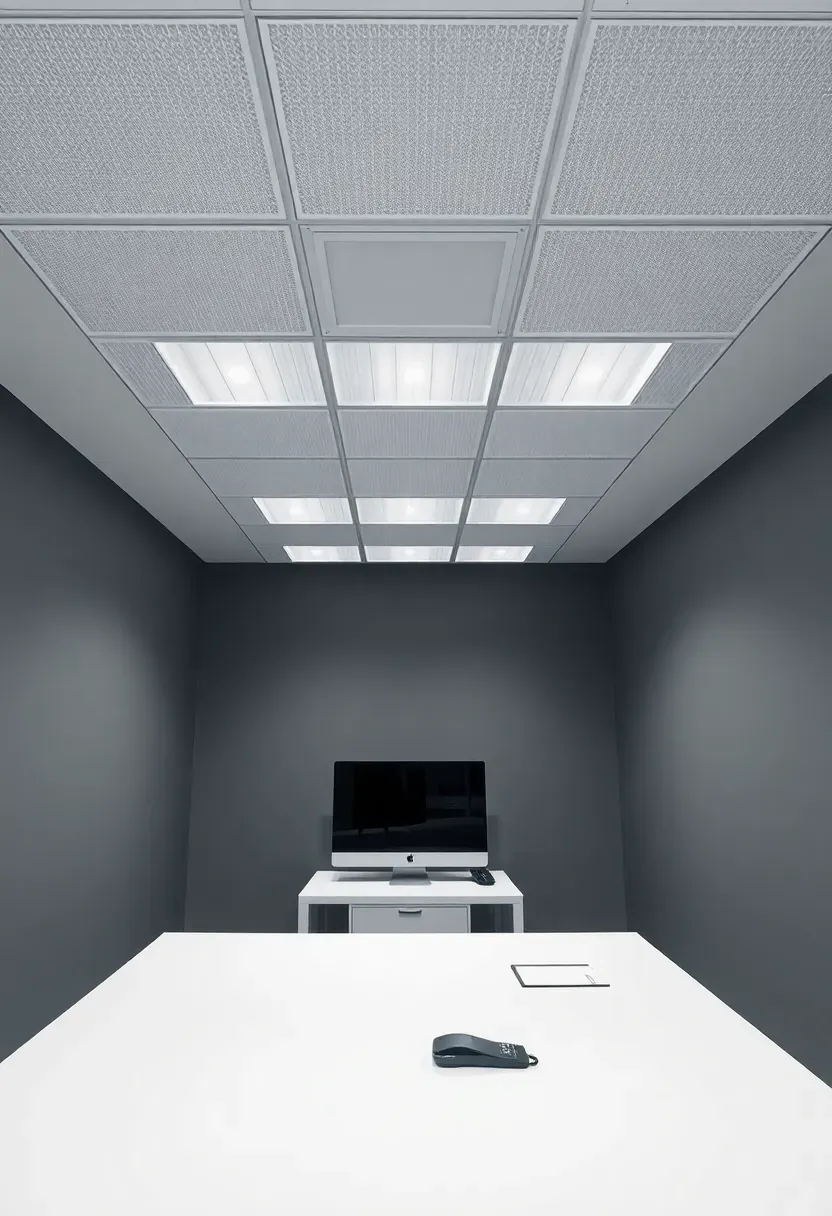
Drop ceilings get a bad reputation, but modern versions with narrow-profile grid systems and flat LED panels look nothing like the sagging foam tiles from the 1980s. The real advantage is access: you can reach plumbing, wiring, and ductwork above without tearing anything out. For a basement office, install 2x2 LED flat panels rated at 4000K in the grid directly above your desk area, and use warmer 3000K panels elsewhere in the room. The layered color temperature creates a subtle zone distinction between work and relaxation areas.
Tips
- Choose a grid system with a black or slim white profile — standard chrome looks dated
- Acoustic drop ceiling tiles reduce echo significantly in hard-surfaced basements
- Plan your layout so the grid aligns with the room rather than starting awkwardly off-center
Recommended
Items for this idea
13. Basement Pod Office
From Open Basement to Private Room in a Weekend
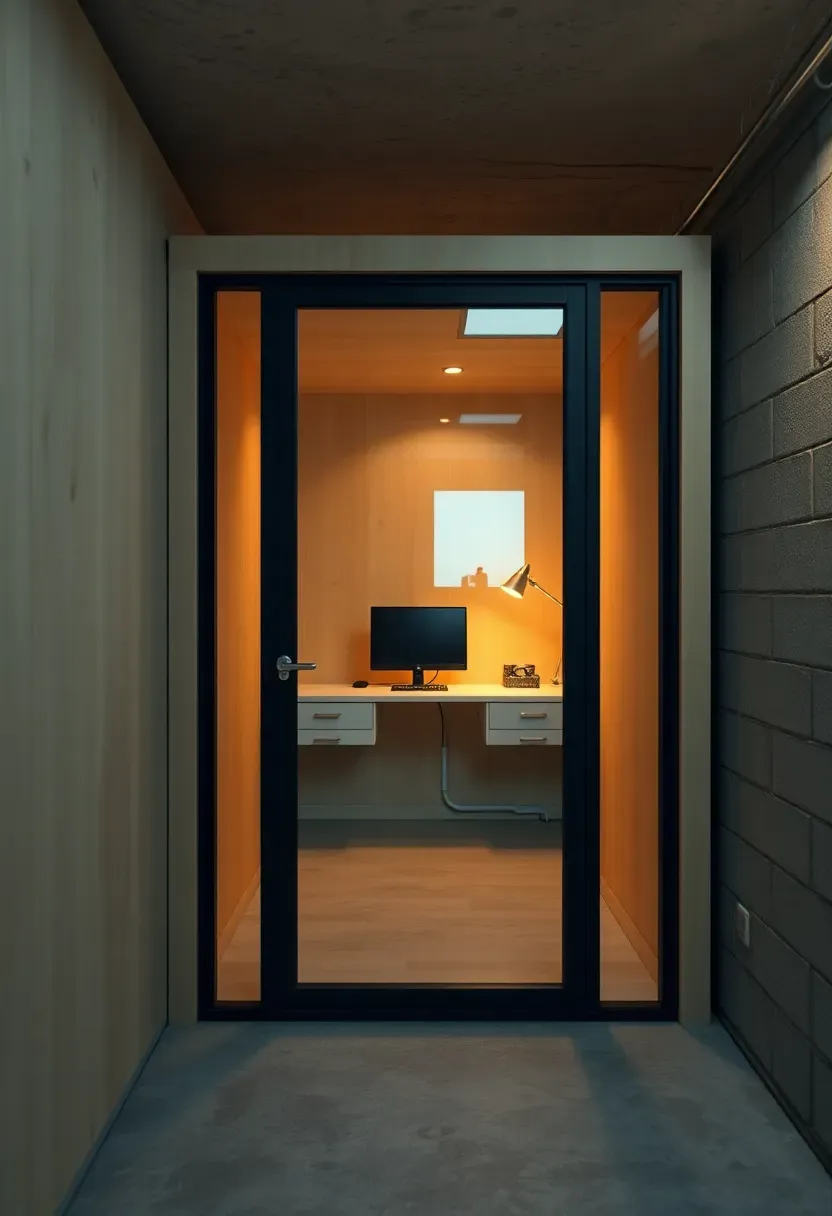
A freestanding office pod — essentially a room-within-a-room — solves privacy and climate control without permanent construction. Companies like Autonomous and Room sell prefab pods sized for one or two people. For the DIY route, frame a small enclosure with 2x4s, add drywall or plywood panels, and install a solid-core door.
Step 1: Size It Right
Minimum interior dimensions for a single-person pod: 6 feet by 7 feet. This fits a 60-inch desk, a chair with rollback space, and a small shelf.
Step 2: Ventilation Is Non-Negotiable
A sealed pod in a basement traps humidity and CO2 fast. Install a small exhaust fan ducted to the main basement space, or use an ERV unit sized for the cubic footage.
Step 3: Sound and Light
Line interior walls with acoustic panels. Install a dedicated lighting circuit so the pod has independent control from the rest of the basement.
Watch Out
- Check local codes — some jurisdictions require egress from enclosed habitable spaces
- Pods on concrete need a small raised floor platform to prevent moisture wicking
14. Mid-Century Modern Below Grade
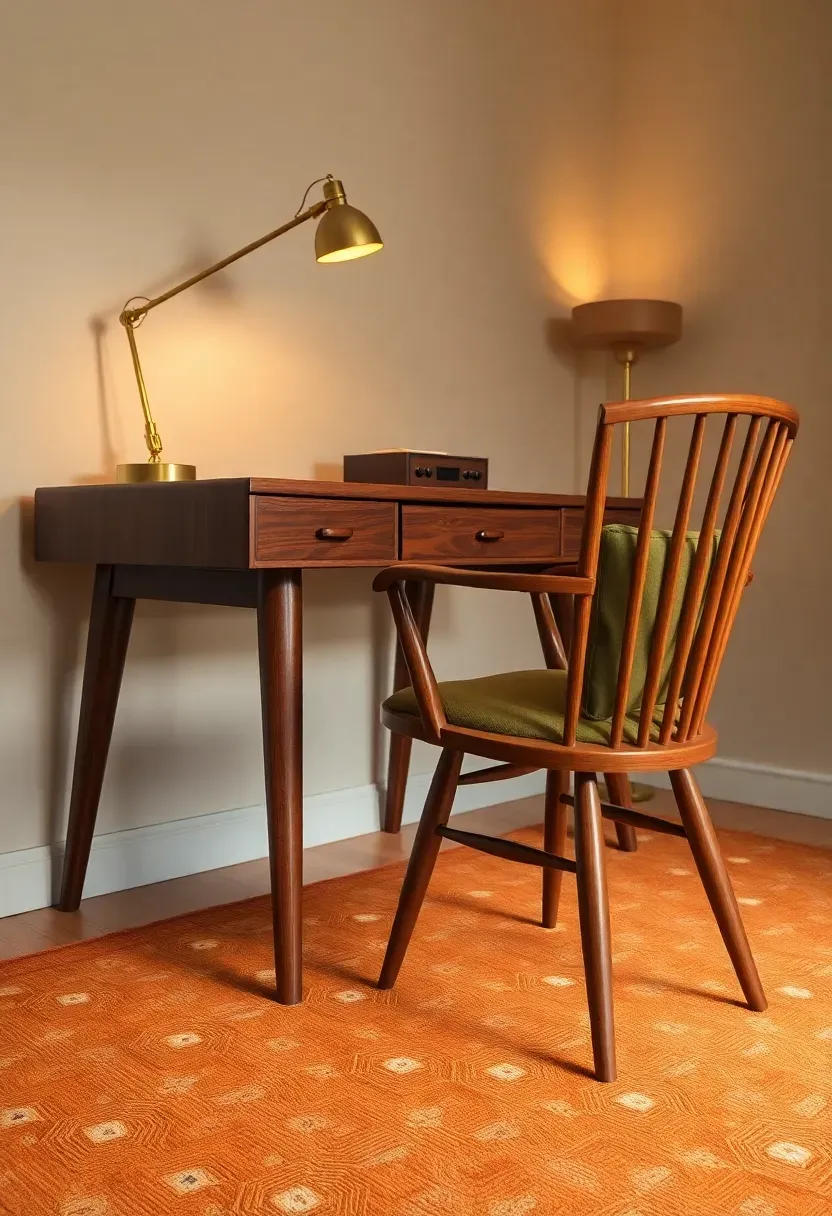
Mid-century design actually suits basements well. The low-slung furniture profiles work with reduced ceiling heights rather than fighting them. A teak or walnut desk with tapered legs, a molded plywood or upholstered shell chair, and a brass gooseneck lamp create a workspace that feels intentional and composed. Keep the color palette to warm neutrals — camel, olive, burnt orange — with one white or cream wall to reflect light. A geometric rug anchors the desk area and softens the floor.
Tips
- Authentic vintage pieces often cost less than new reproductions at estate sales and online auctions
- Avoid high-back executive chairs — they clash visually and eat headroom
- A credenza behind the desk provides storage while maintaining the era-appropriate silhouette
Recommended
Items for this idea
15. Multi-Monitor Developer Den
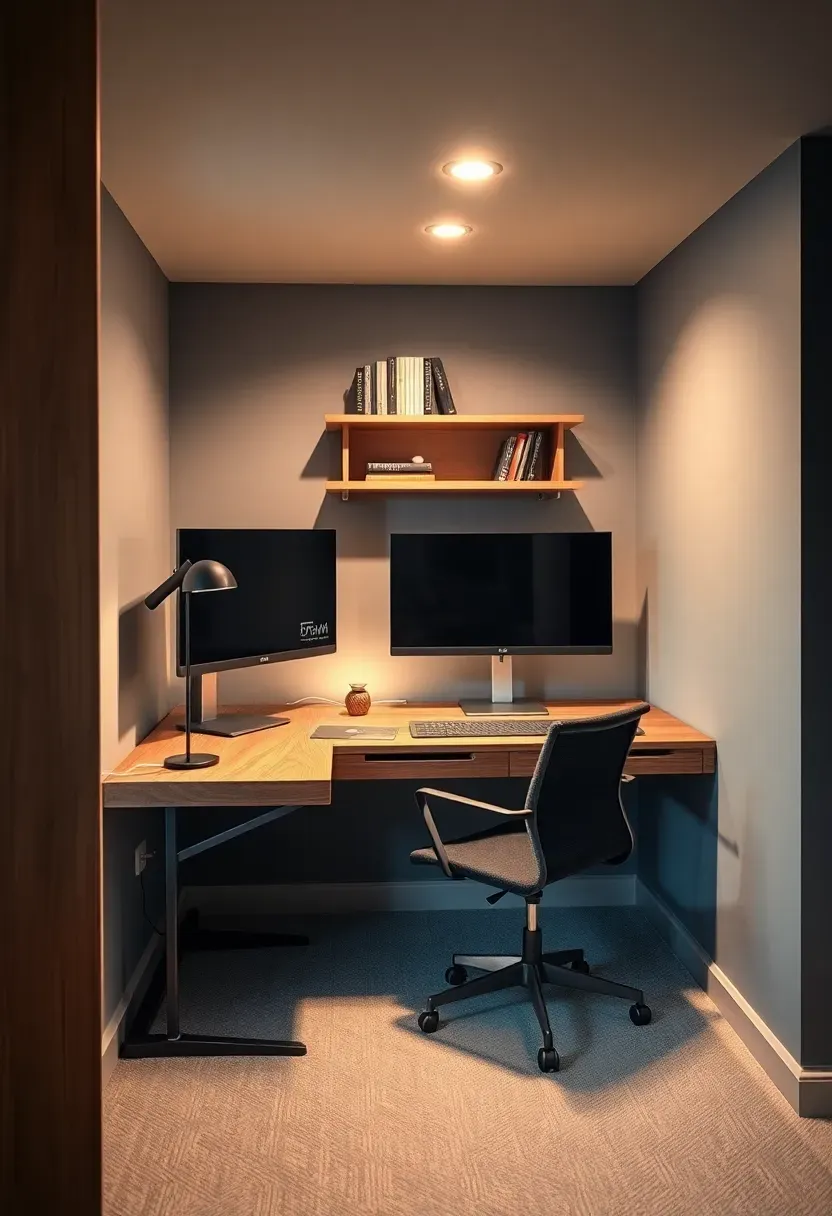
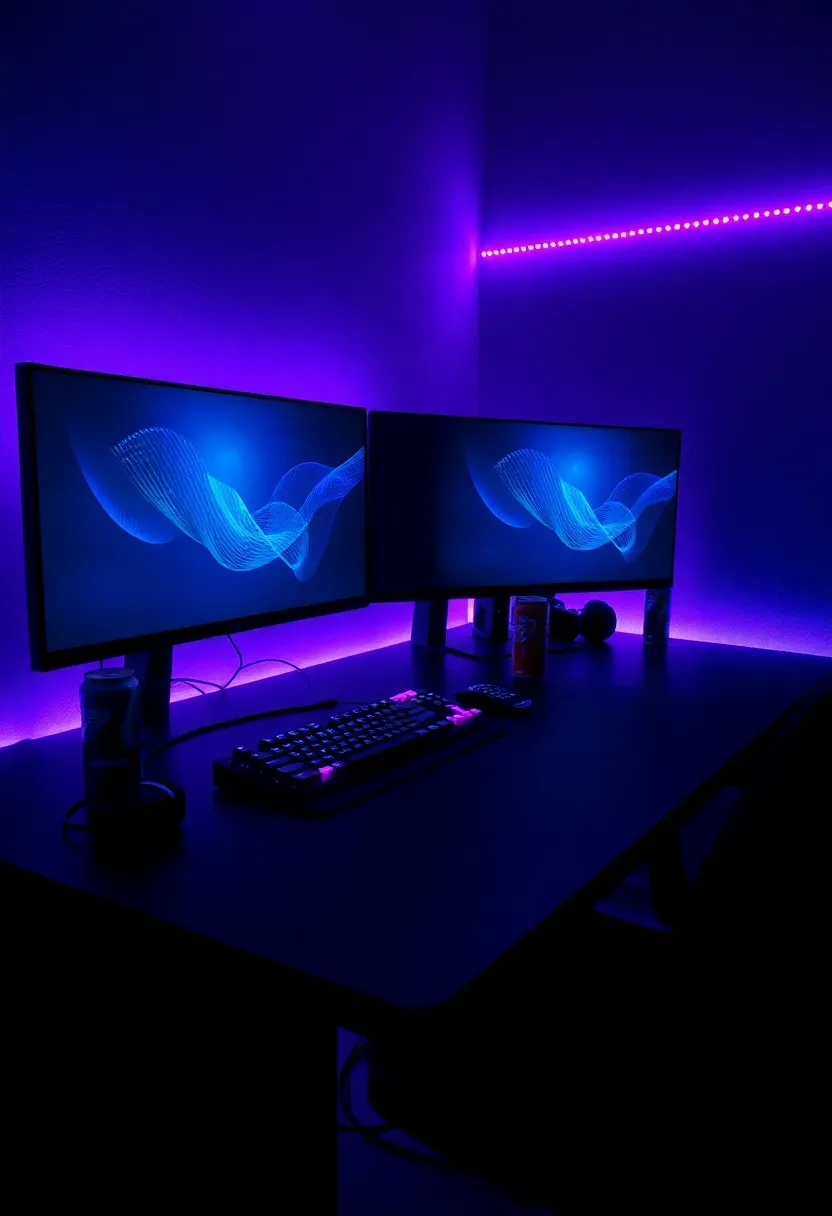
Basements are ideal for multi-monitor setups because you control every light source. No shifting sunlight means no glare management. Mount two or three monitors on a single articulating arm clamped to a deep (30-inch minimum) desk. Run all cables through a desk grommet to a power strip mounted to the desk's underside. Add bias lighting — an LED strip on the back of the monitors — set to 6500K to reduce eye strain during long sessions. The rest of the room can stay dim.
Tips
- Hardwire your internet connection — basement WiFi signals are often weak through floor joists
- A UPS (uninterruptible power supply) protects your work during power flickers
- Acoustic foam panels on the wall behind you improve video call audio quality
16. Cozy Carpet Tile Office
Why Carpet Tiles Beat Broadloom Below Grade
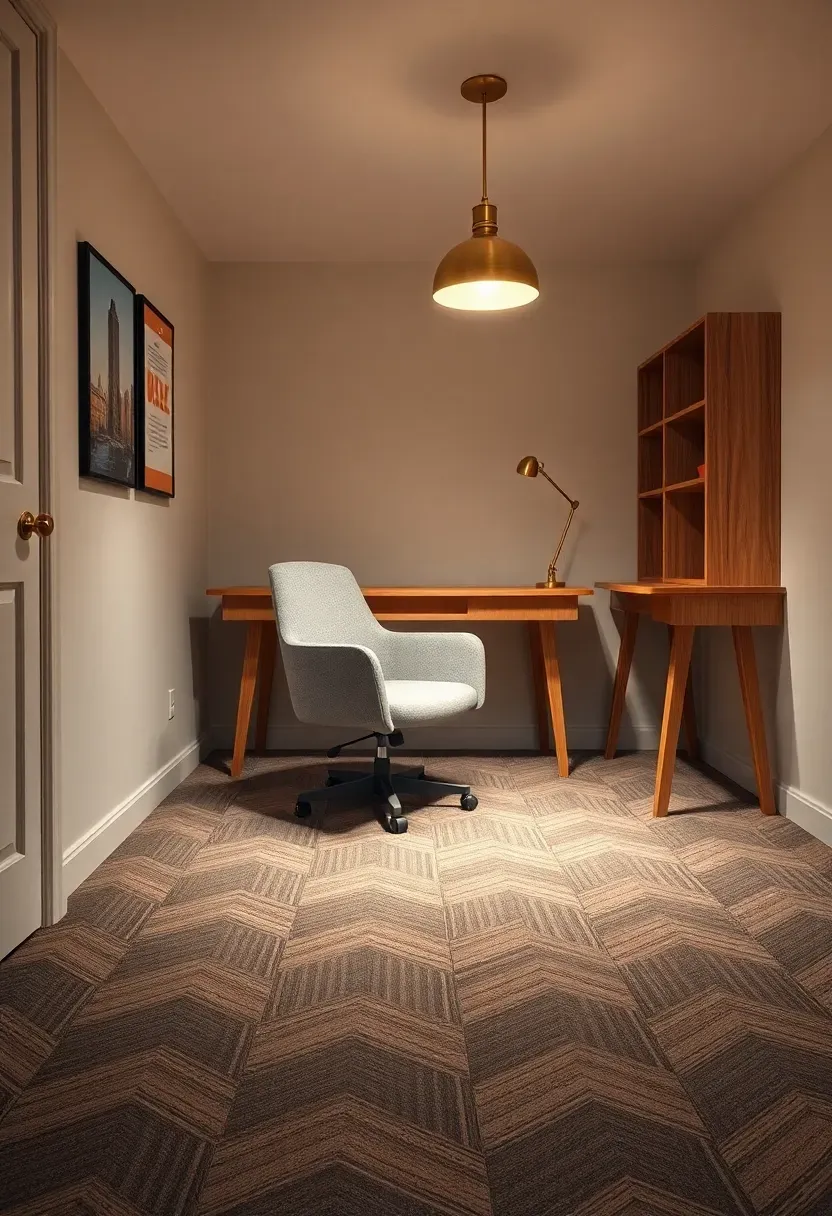
Wall-to-wall carpet in a basement is risky — if water intrudes, you tear out the entire installation. Carpet tiles solve this cleanly. If one section gets wet or stained, you pull up those tiles, dry the slab, and replace just the affected pieces. FLOR and similar brands offer residential tiles with attached moisture-barrier backing designed specifically for concrete substrates.
How It Changes the Space
The acoustic shift is immediate. Hard basement surfaces create echo that makes video calls muddy and music sound harsh. Carpet tiles absorb mid and high frequencies, making the room feel smaller in the best possible way — quieter, warmer, more contained.
Choose Carpet Tiles If
You want warmth and sound control but worry about moisture. Avoid if your basement has active water problems — fix that first.
Recommended
Items for this idea
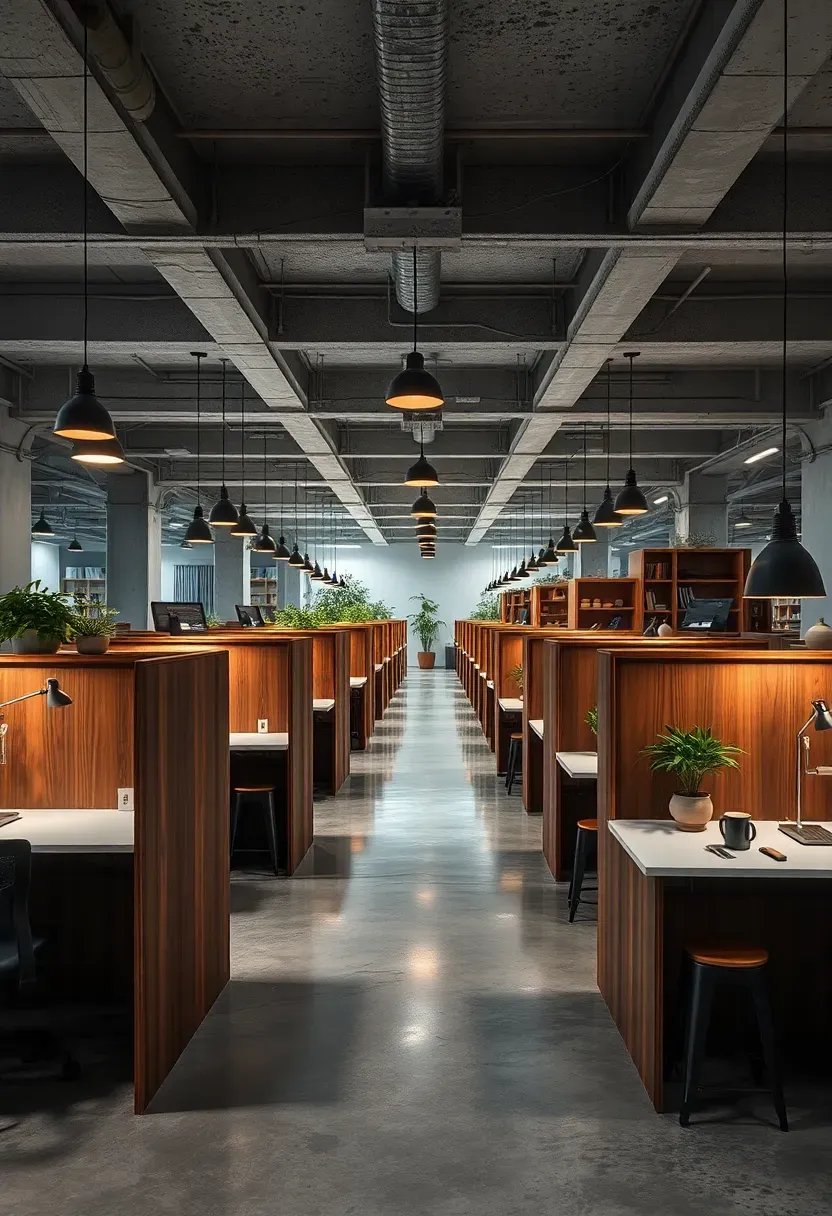
17. Open Plan Basement Workspace
If your basement spans the full footprint of the house, dedicating just one corner to an office wastes potential. An open plan approach uses low shelving units, area rugs, and pendant light clusters to define zones without walls. Your primary desk occupies one zone. A reading area with a comfortable chair sits in another. A project table or craft surface fills a third. The visual openness makes the basement feel larger, and you can move between tasks without leaving the room.
Tips
- Use consistent flooring throughout to maintain visual flow — one material, wall to wall
- Pendant lights hung at different heights over each zone create distinct pockets of atmosphere
- Keep pathways between zones at least 36 inches wide for comfortable movement
18. Sound-Insulated Recording Office
Origins
Home recording used to require purpose-built studios. Podcasters, voice-over artists, and musicians rented expensive spaces by the hour. The shift to remote work and content creation put pressure on people to record at home — and basements turned out to be naturally suited for it.
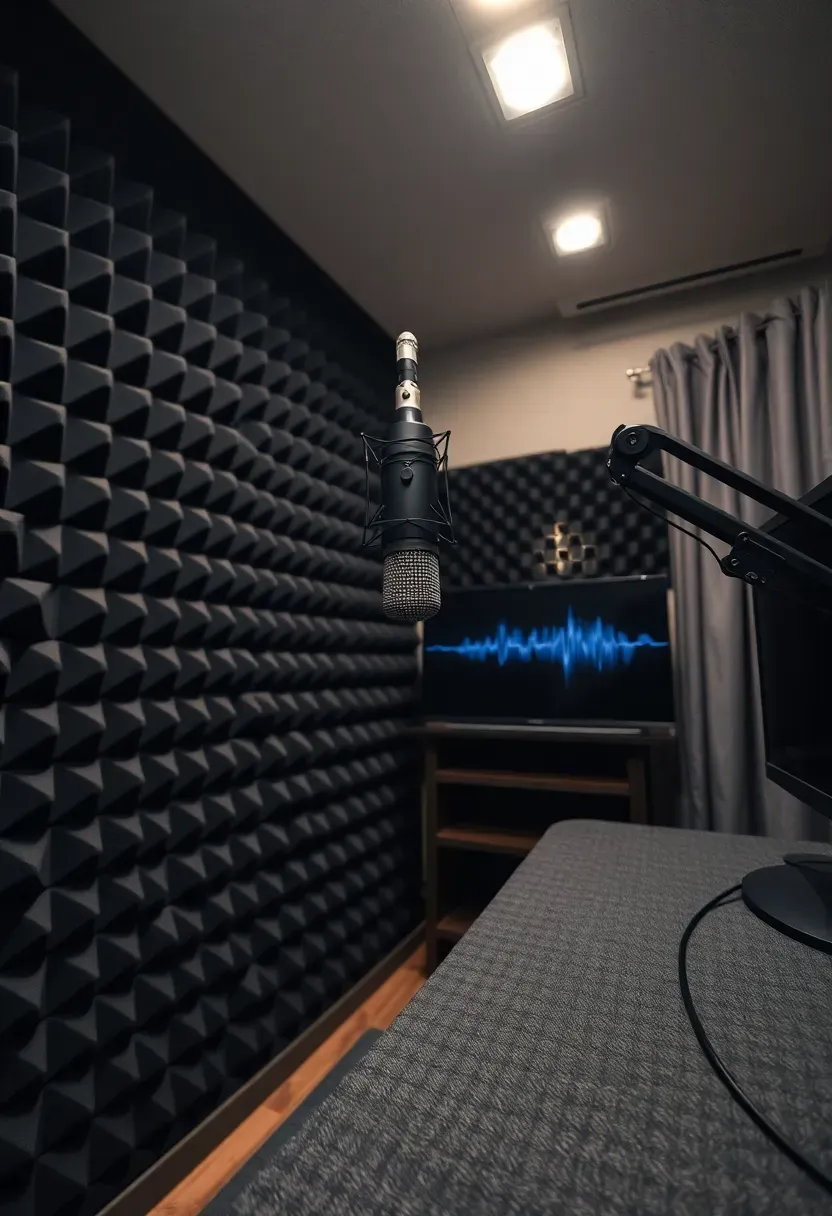
Modern Application
A basement already sits below the noise floor of the house. Add a layer of mass-loaded vinyl behind drywall, seal gaps around the door with acoustic weatherstripping, and cover two walls with 2-inch acoustic foam panels. The result is a room quiet enough for professional-grade recording. Your office desk does double duty as a recording station with a boom-mounted microphone and pop filter.
Apply at Home
Start with door sealing and one wall of acoustic panels — roughly $150 in materials. Test your recordings before investing in full-room treatment. Many people find that partial treatment is enough.
Recommended
Items for this idea
19. Budget Unfinished Basement Office
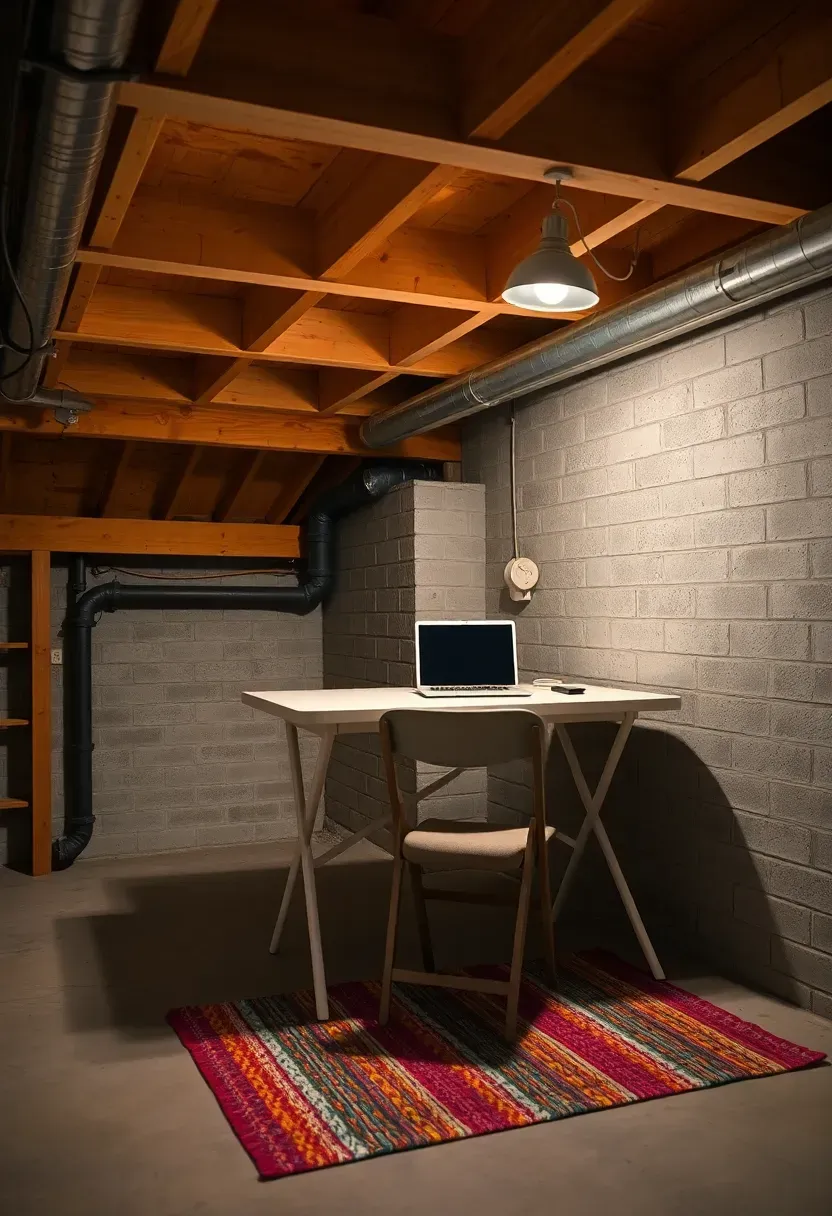
Not every basement office needs a renovation. If the space is dry, you can work down there tomorrow. A solid folding table or a door blank on sawhorses makes a desk for under $60. A clamp lamp attaches to any surface. An inexpensive area rug softens the concrete under your chair. The exposed joists and utility runs stay visible — and honestly, once you are focused on your screen, you stop noticing them. This approach works especially well as a test run before committing to a full basement build-out.
Tips
- Run a dehumidifier if relative humidity exceeds 50% — check with a $12 hygrometer
- A portable space heater with a tip-over sensor handles cold months safely
- Hang a curtain from the joists to visually separate your work area from stored items
Quick FAQ
Do basement offices need a permit? Generally not for cosmetic changes like paint, furniture, and lighting. But if you are adding walls, electrical circuits, egress windows, or plumbing, most jurisdictions require a permit and inspection. Check with your local building department before framing any new walls.
How do I deal with moisture in a basement office? Start with a dehumidifier sized for your square footage — most basement offices need a 50-pint unit. Address any visible water intrusion at the source (grading, gutters, foundation cracks) before finishing the space. A relative humidity target of 30-50% keeps both you and your equipment comfortable.
Is a basement office bad for your health? Not if the space is dry, ventilated, and well-lit. The biggest risks are mold from uncontrolled moisture and vitamin D deficiency from lack of sunlight. Run a dehumidifier, test for radon if you have not already, and take regular breaks upstairs.
What lighting works best for a basement workspace? Layer three types: overhead LED panels at 4000K for general illumination, a task lamp at your desk for focused work, and bias lighting behind your monitor to reduce eye strain. Avoid relying on a single ceiling fixture — it creates harsh shadows.
Can I deduct a basement office on my taxes? In the US, the home office deduction applies if the space is used regularly and exclusively for business. The simplified method allows $5 per square foot up to 300 square feet. Consult a tax professional for your specific situation.
A basement office is not a consolation prize — it is a genuinely good place to work. The quiet alone is worth the setup effort. Start with the basics: address moisture, get the lighting right, and pick a desk layout that fits the room. You can always add aesthetic finishes later. The important thing is to start using the space, because the longer that treadmill collects dust down there, the harder it gets to reclaim the room.
Pinterest cover for 19 Basement Office Ideas That Actually Work
About the author
OBCD
CGI visualization and interior design content. We create detailed 3D renders and curate practical design ideas for every room in your home.