25 Basement Office Ideas No Windows
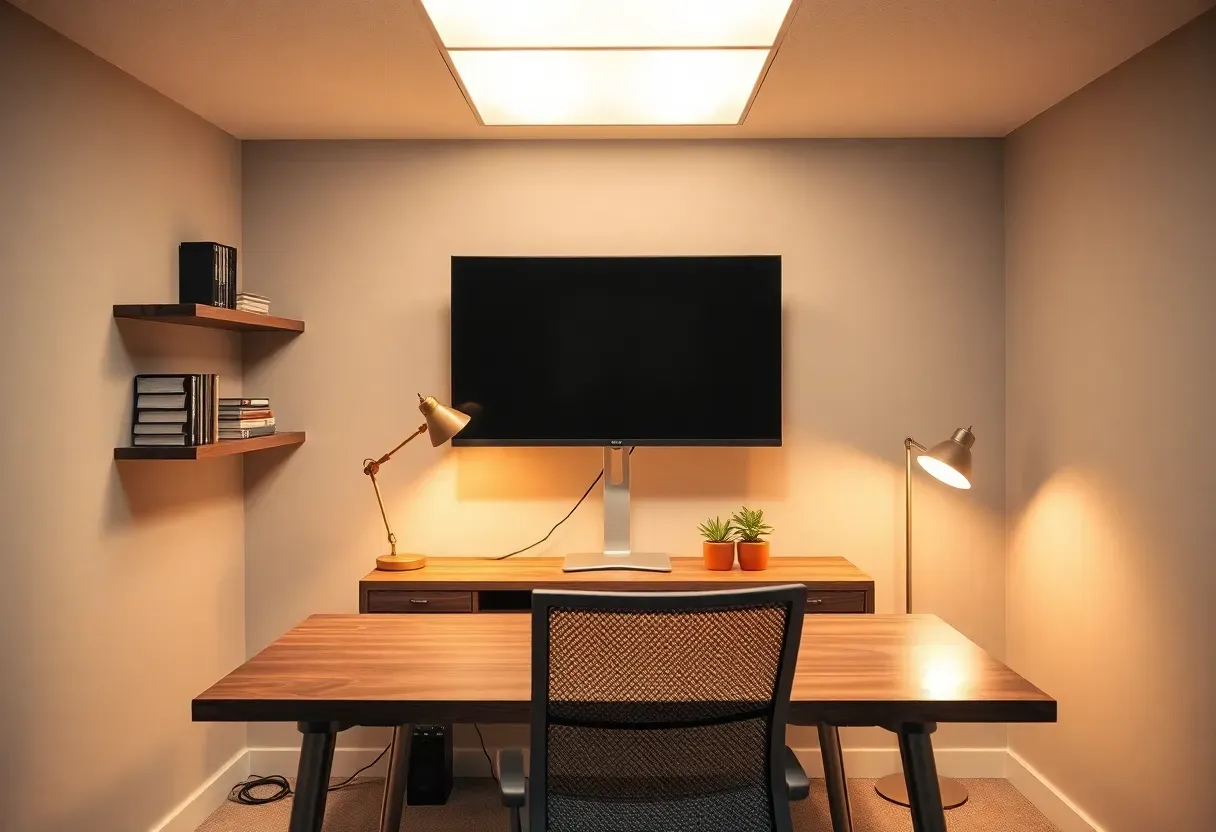
Working eight hours a day in a room without a single window sounds grim. I get it. But after helping three friends convert their windowless basements into full-time offices, I noticed something odd — two of them actually preferred it to their upstairs setups. No glare on the monitor, no distracting squirrels, consistent temperature all year. The trick is not pretending the room has windows. It is leaning into what a sealed, quiet, below-grade room does well, and then fixing the two or three things it does badly.
These 25 ideas focus specifically on basements with zero windows. No daylight basements, no egress window workarounds — just rooms that rely entirely on artificial light and smart design.
Table of Contents
- Full-Spectrum LED Panel Ceiling
- Backlit Faux Window
- Light Color Wash Walls
- Circadian Rhythm Lighting System
- Mirror Wall Behind the Desk
- Vertical Light Columns
- Warm Wood Cocoon Office
- All-White Reflective Box
- Dark Moody Library Office
- Living Green Wall
- Skylight Tube Illusion Panel
- Task Lighting Only Approach
- Floating Shelf Desk With Under-Cabinet LEDs
- Acoustic Panel Feature Wall
- Basement Office With Fireplace
- Two-Person Facing Desk Layout
- Standing Desk With Light Therapy Lamp
- Floor-to-Ceiling Curtain Wall
- Projection Wall for Ambient Scenes
- Concrete and Brass Industrial Office
- Pegboard Organization Wall
- Corner Nook Office Under Stairs
- Luxury Carpet and Sconce Office
- Ventilation-First Minimalist Setup
- Budget Basement Office Under $500
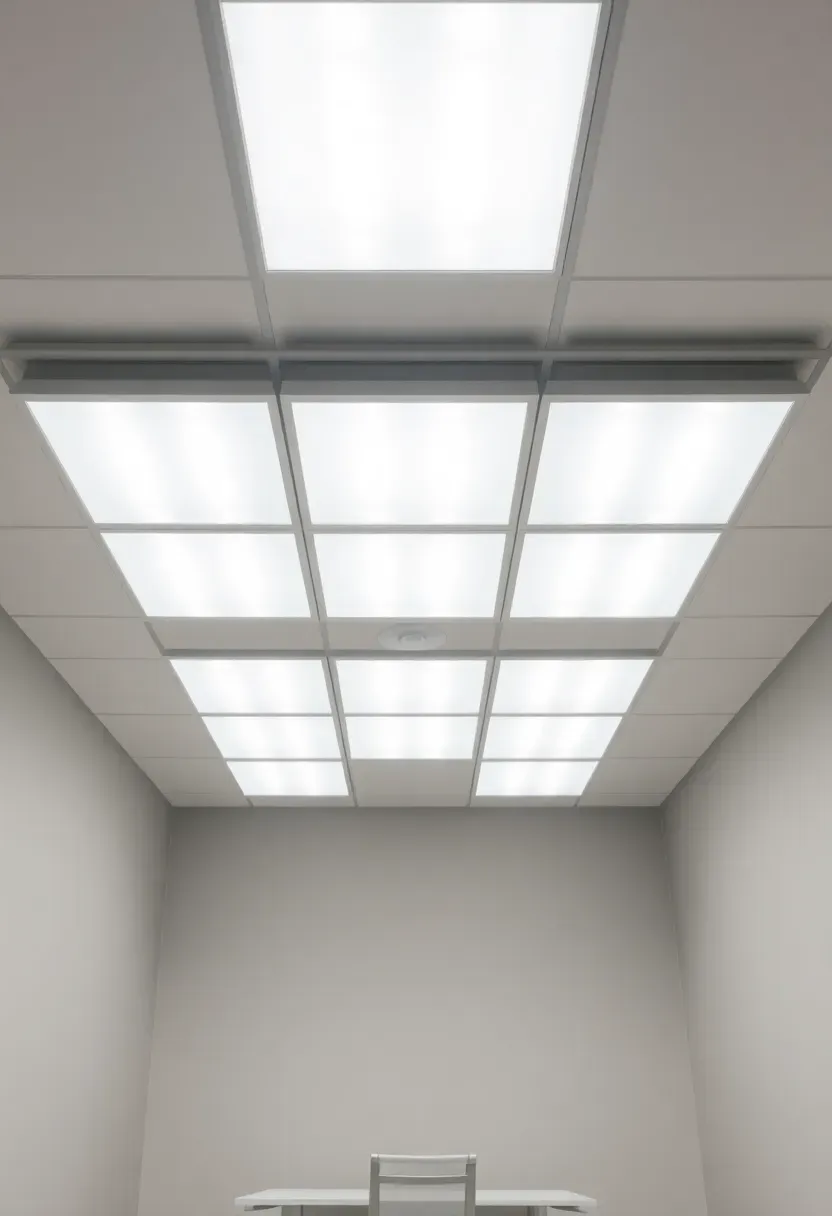
1. Full-Spectrum LED Panel Ceiling
Flat LED panels rated at 5000K-5500K mounted across the ceiling replicate the even wash of an overcast sky. Unlike recessed cans that create pools of light and shadow, panels spread illumination uniformly. This eliminates the cave feeling faster than any paint color or mirror trick. Mount them in a grid pattern using a suspended ceiling track — most panels are 2x2 or 2x4 feet and clip into standard T-bar grids. Aim for 500-700 lux at desk height, which matches a well-lit commercial office.
What to Look For
- CRI (Color Rendering Index) above 90 for accurate color perception
- Dimmable drivers so you can drop intensity during evening hours
- Flicker-free panels — cheap ones cause headaches during long sessions
We picked a few things that go well with this idea: OKQ 2x4 LED Flat Panel Light (4-Pack) (★4.5), Sunco 2x4 LED Flat Panel (6-Pack) (★4.6) and Sunco 2x4 LED Flat Panel (24-Pack) (★4.6). As an Amazon Associate we earn from qualifying purchases.
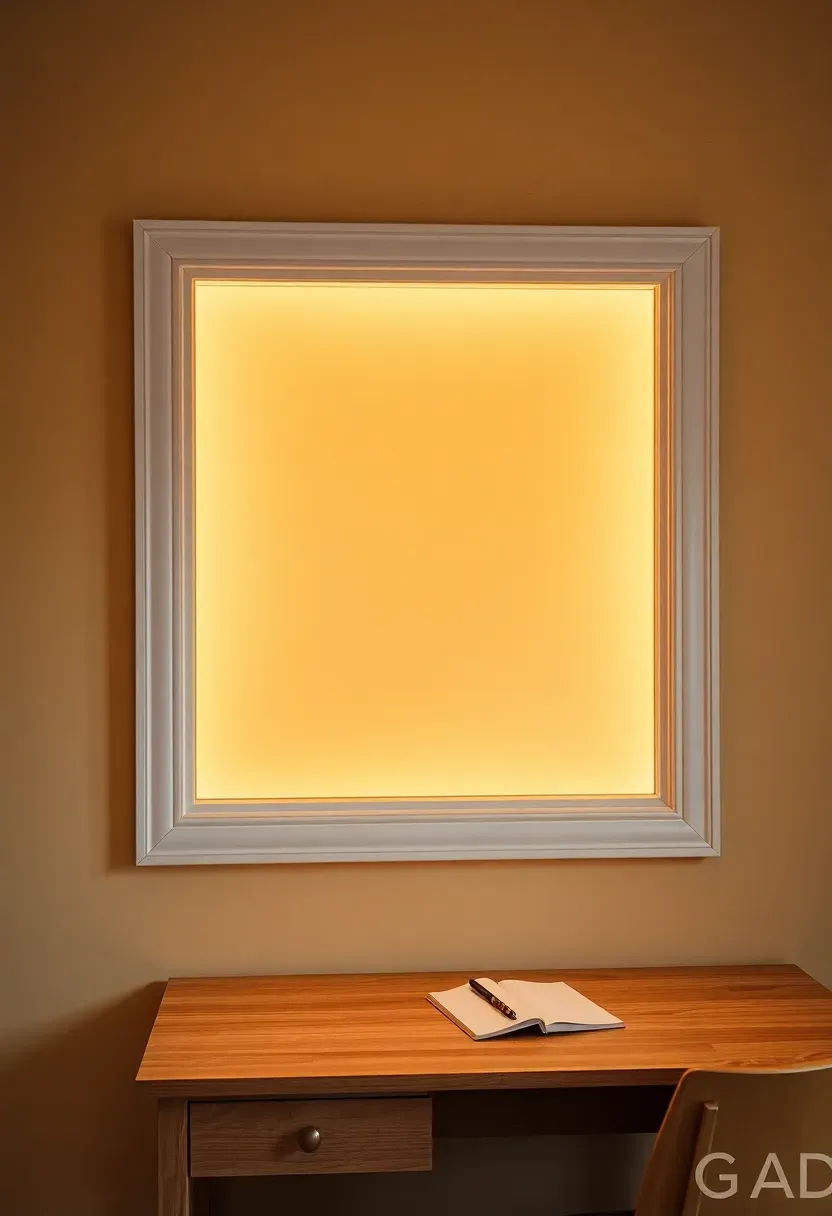
2. Backlit Faux Window
The Problem
Your brain expects directional light from a window. Overhead-only illumination feels institutional and flat, and after a few hours you start feeling disconnected from any sense of time passing.
The Fix
Build a simple frame on the wall — standard window proportions, about 30 by 48 inches — and mount a diffusion panel over an LED backlight. Use tunable white LEDs that shift from warm morning tones to cool midday and back to warm in the evening. Your peripheral vision registers it as a light source on the wall, which satisfies an unconscious spatial expectation.
Honest Tradeoffs
- Pro: Costs $150-$300 for materials, easy DIY weekend project
- Con: Does not provide actual UV light or vitamin D benefits
- Pro: Tunable color temperature adds genuine circadian rhythm support
We picked a few things that go well with this idea: Verilux HappyLight Lumi Plus 10000 Lux (★4.5), Verilux HappyLight Luxe 10000 Lux (★4.5) and UV-Free 10000 Lux Daylight Lamp (★4.0). As an Amazon Associate we earn from qualifying purchases.
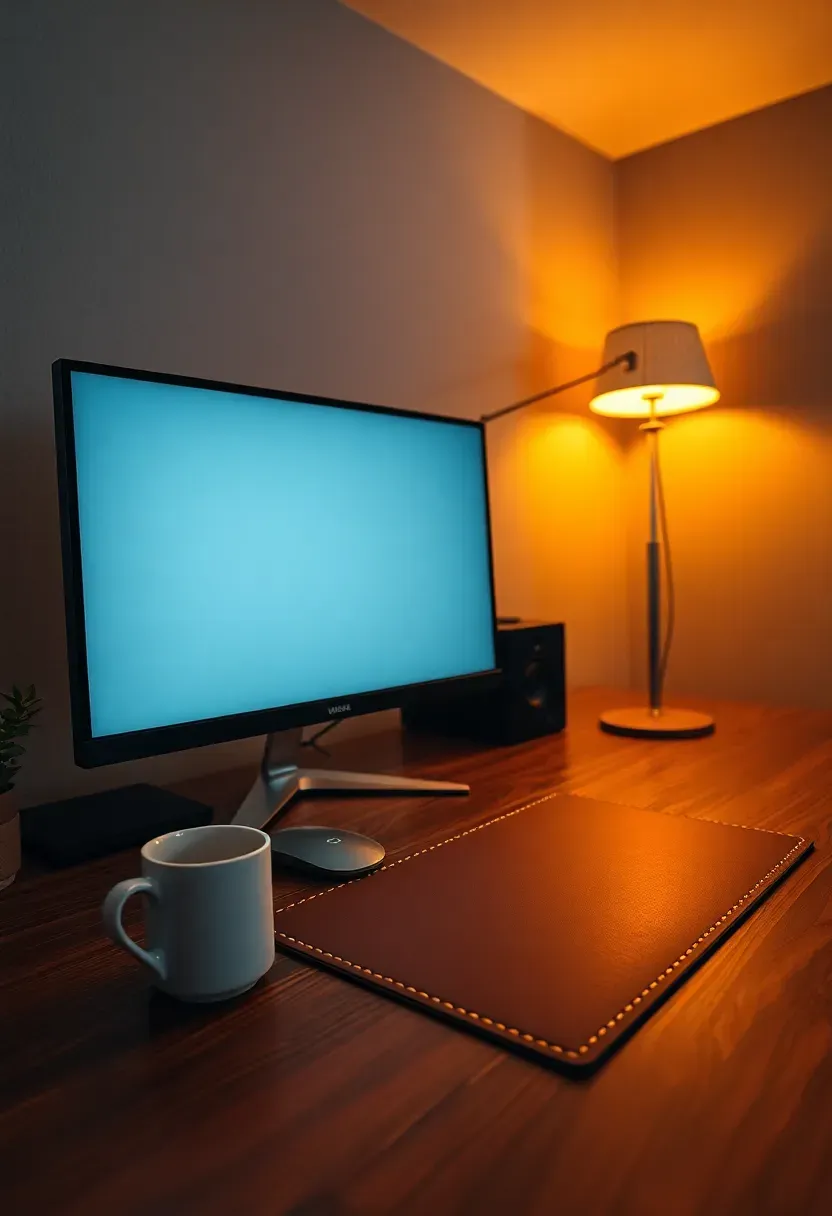
3. Light Color Wash Walls
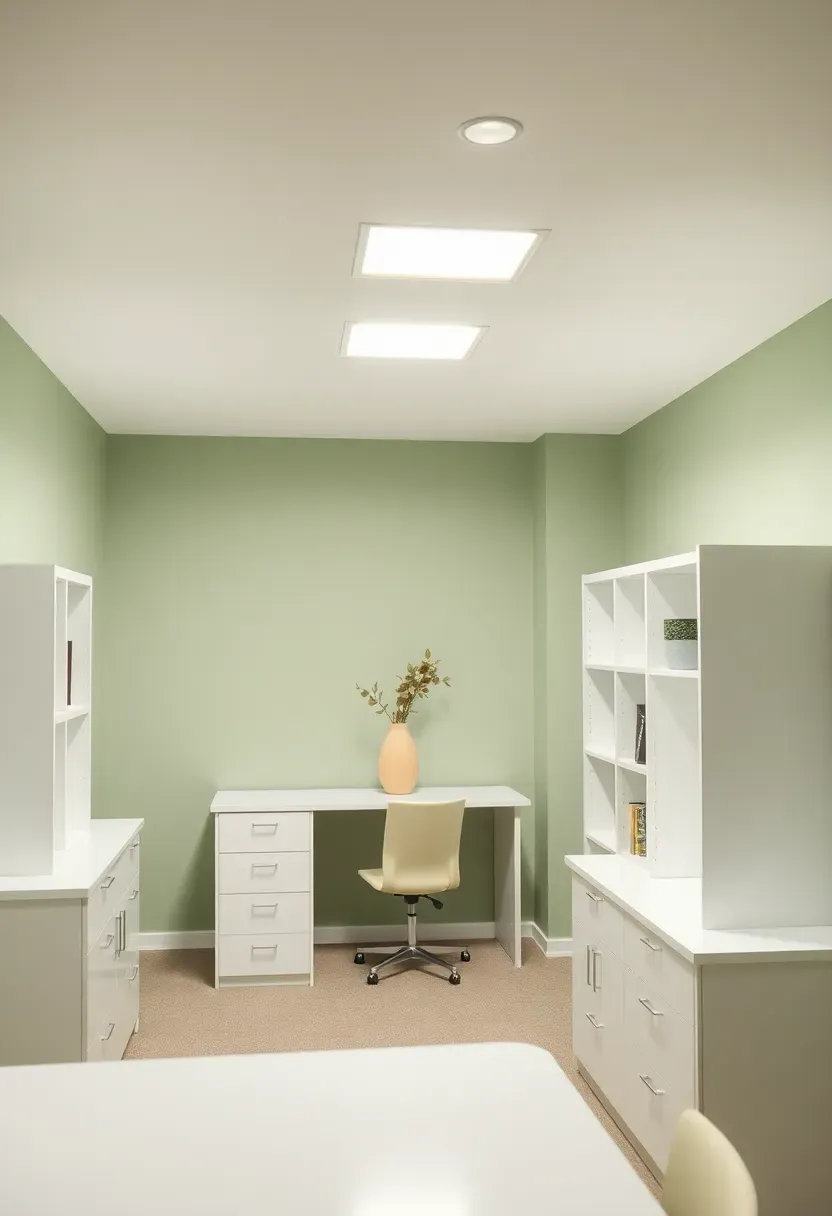
Paint alone cannot fix a windowless room, but it determines how far your light sources reach. Pale sage, soft cream, warm white, and light gray all reflect 60-75% of light hitting them compared to maybe 15% for dark charcoal. In a room that depends entirely on artificial sources, that reflectance gap is the difference between needing 6 light fixtures and needing 12. Pick a color with an LRV (Light Reflectance Value) above 65. Benjamin Moore and Sherwin-Williams list LRV on every swatch.
Quick Tips
- Matte finishes hide wall imperfections but reflect slightly less light than eggshell
- Paint the ceiling the same color or one shade lighter to avoid a hard line
- Test your color under LED light, not daylight — that is the light it will always live under
We picked a few things that go well with this idea: Art Acoustic Wall Panels (8-Pack) (★4.6), Decorative Acoustic Panels (6-Pack) (★4.6) and BUBOS Art Acoustic Panels (8-Pack) (★4.2). As an Amazon Associate we earn from qualifying purchases.
4. Circadian Rhythm Lighting System
How It Works
- Install tunable white LED fixtures or smart bulbs throughout the room.
- Program them to shift automatically — cool 5000K white in the morning, neutral 4000K midday, dropping to warm 2700K by late afternoon.
- Add a small SAD (Seasonal Affective Disorder) light at 10,000 lux on your desk for 20-30 minutes each morning.
Watch Out
- Cheap smart bulbs sometimes lose their schedule after firmware updates — stick with established brands like Philips Hue or Lutron Caseta
- Do not set evening mode too warm or the room feels like a restaurant instead of a workspace
- The SAD lamp matters more than the ambient color shift for actual mood and energy regulation
Recommended
Items for this idea
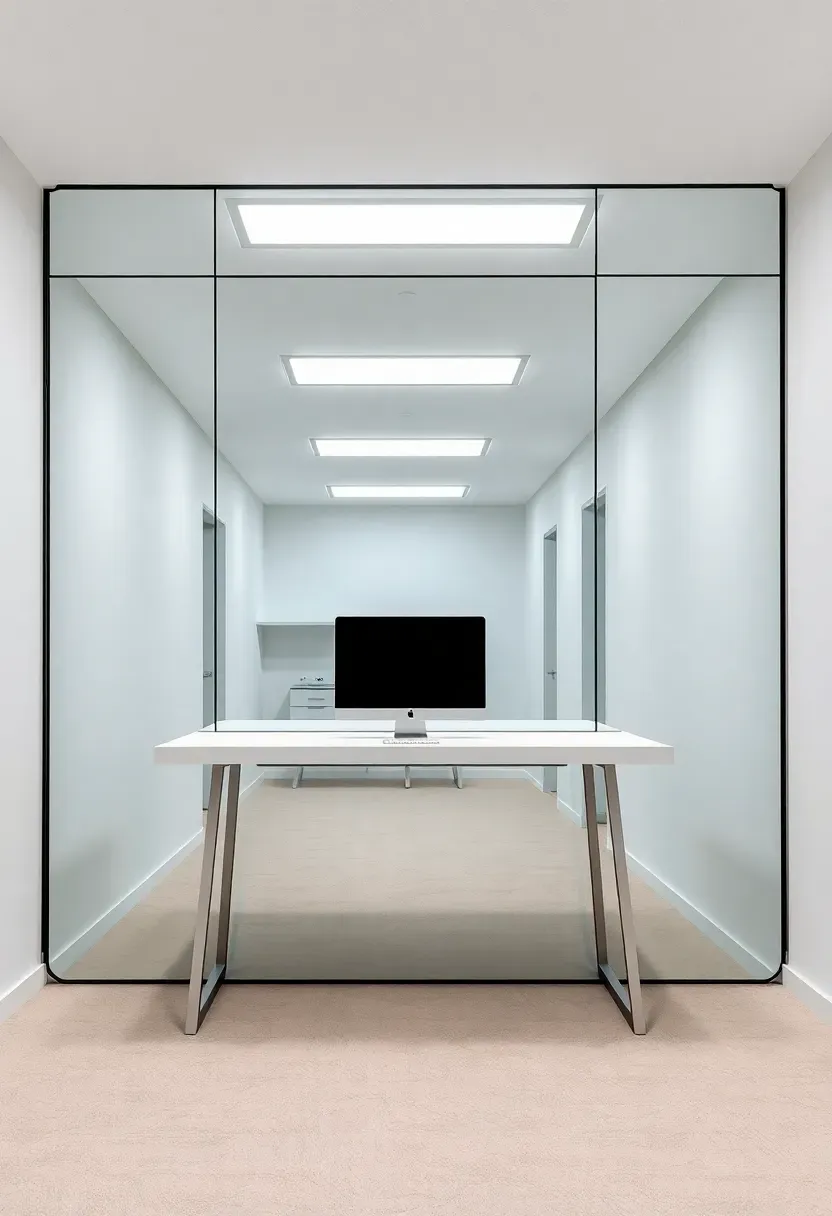
5. Mirror Wall Behind the Desk
A floor-to-ceiling mirror on the wall behind your monitor does two things at once. It doubles the visual depth of the room, making a 10-by-12 space feel like 10-by-24. And it bounces every lumen from your ceiling lights back into the room, effectively doubling your lighting efficiency. Use frameless mirror panels adhesive-mounted to the wall for a seamless look. If full mirror feels too much, try a grid of six large mirror tiles with thin black frames for a more architectural effect.
Tips
- Position the mirror behind your monitor, not facing it — you do not want to see your own reflection during video calls
- Mirrored walls amplify clutter, so keep the opposite wall clean and organized
- Anti-fog mirror film is unnecessary in a climate-controlled basement
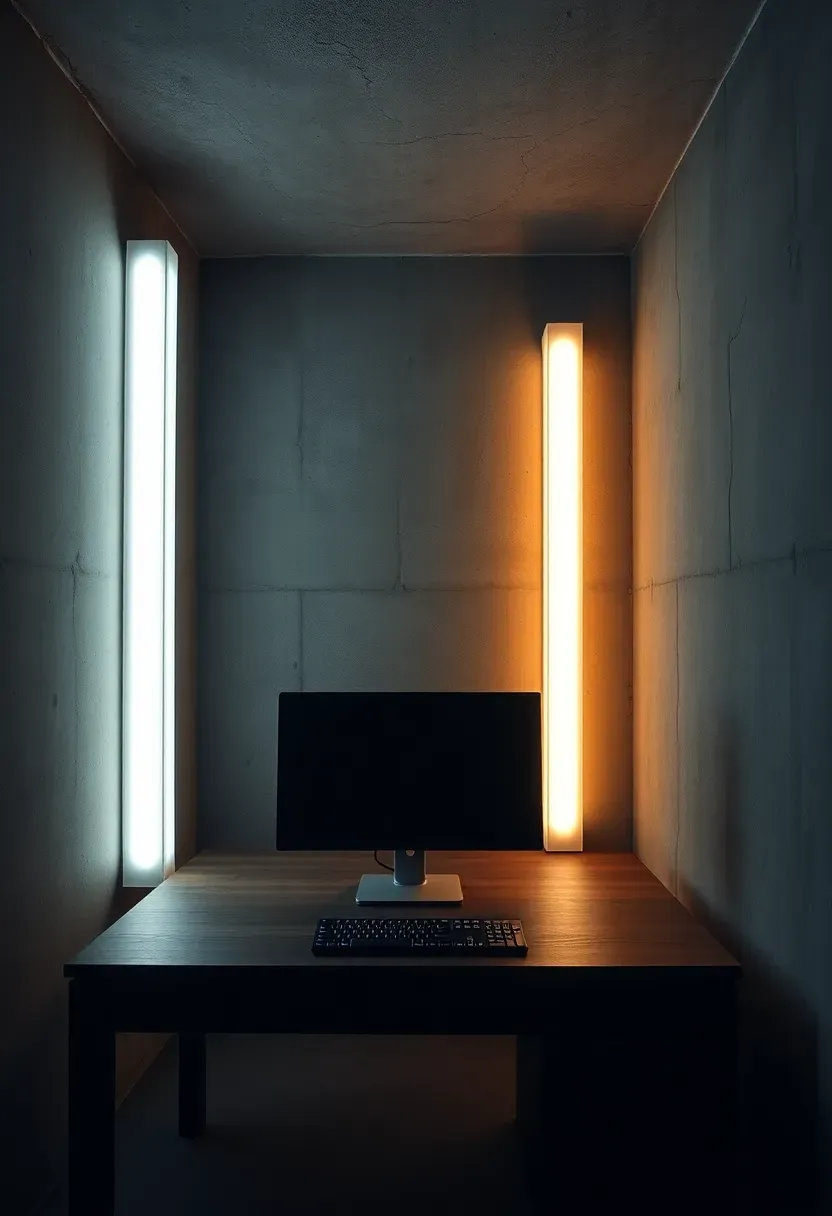
6. Vertical Light Columns
Tall, slim LED panels or LED strip channels mounted vertically on either side of the desk create the illusion of narrow sidelight windows. They draw the eye upward, counteracting the low-ceiling feeling that plagues many basements. Use frosted acrylic channels over LED strips for a soft, even glow. Two columns at 5 feet tall flanking the desk provide enough ambient light to work without overhead fixtures, giving the room a lounge-like feel that still hits adequate lux for reading.
Tips
- RGB strips let you shift to warmer tones in the evening
- Mount them 6-8 inches from the corners to avoid harsh wall washing
- Pair with a single desk lamp for task-specific brightness
Recommended
Items for this idea
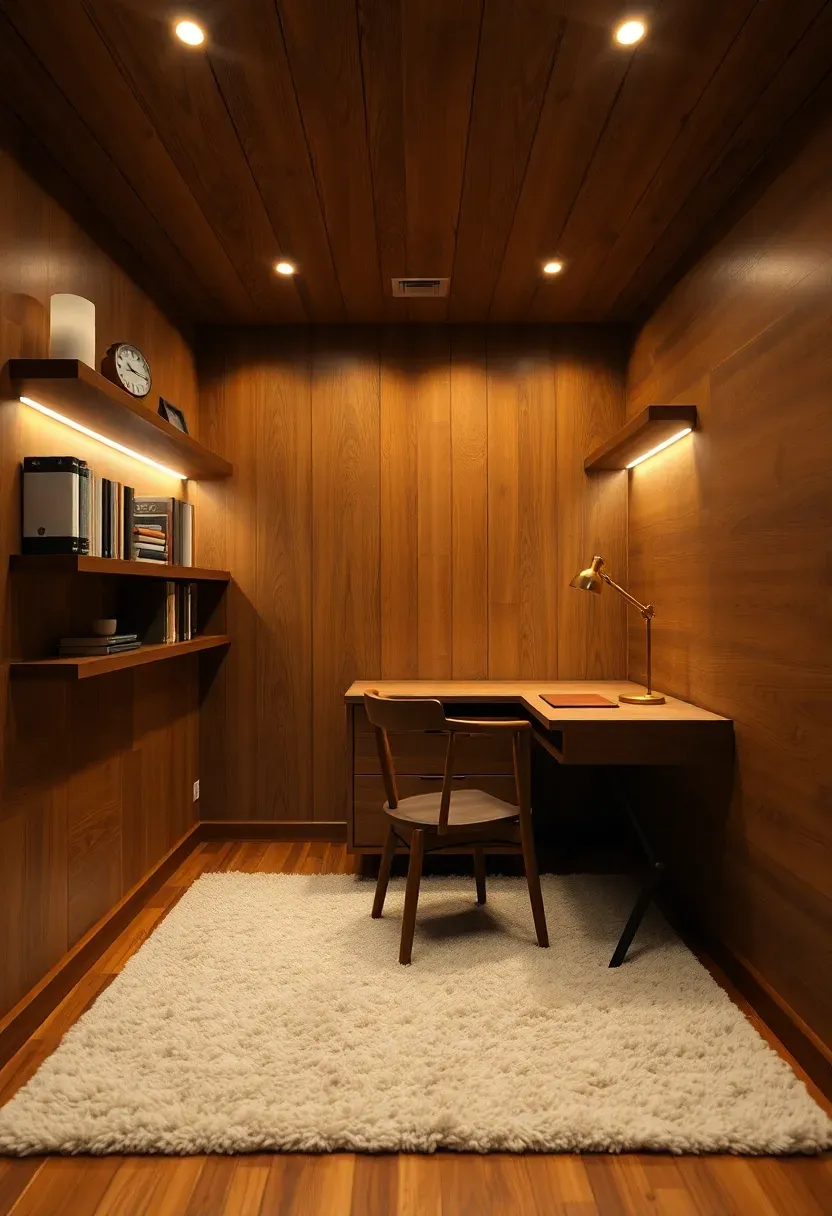
7. Warm Wood Cocoon Office
Instead of fighting the enclosed feeling of a windowless basement, lean into it. Line the walls with warm-toned wood — walnut veneer panels, cedar planks, or even affordable pine shiplap stained in honey or amber. Add recessed shelf lighting and a thick wool rug. The room stops feeling like a basement and starts feeling like the inside of a custom-built cabin. Pair the wood with leather desk accessories and a brass lamp. This approach works best in smaller rooms where the enclosure becomes a feature rather than a limitation.
Choose Your Wood If
- Budget under $500: Pine shiplap with a warm stain, about $3-4 per square foot
- Mid-range: Oak or birch veneer panels, $8-12 per square foot installed
- Splurge: Real walnut planks, $15-25 per square foot but the grain is unmatched
8. All-White Reflective Box
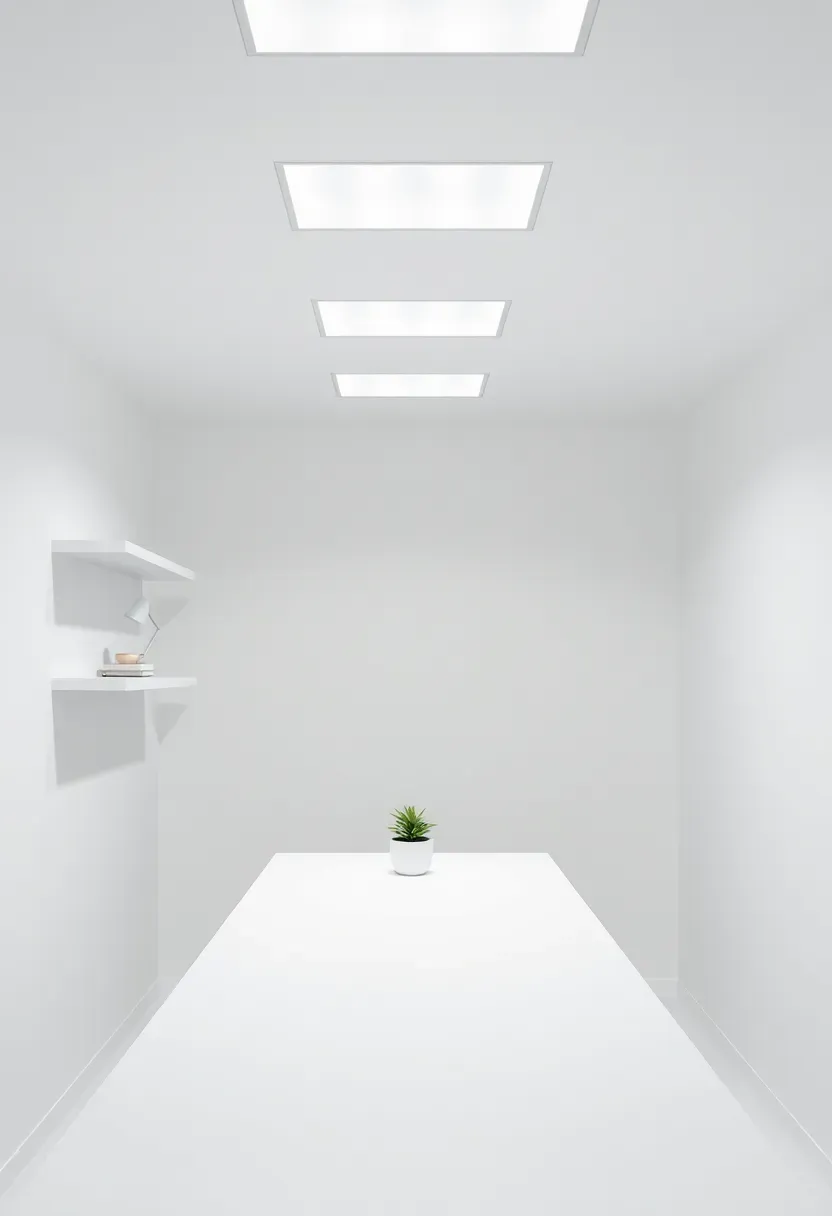
The opposite of the cocoon strategy. Paint every surface white — walls, ceiling, trim, even the desk. Use white shelving and light-colored accessories. With enough overhead LED output (aim for 600+ lux at desk level), the room feels almost clinical in its brightness. This approach works for people who find dark enclosed spaces genuinely uncomfortable. The psychological effect is significant: test subjects in all-white rooms consistently estimated room sizes 10-15% larger than identical dark rooms.
Tips
- Use warm white (3000-3500K) LEDs to avoid the "hospital" feeling
- Add one or two colored accents — a plant, a piece of art — to prevent monotony
- Glossy paint on the ceiling reflects more light than matte but shows every imperfection
Recommended
Items for this idea
9. Dark Moody Library Office
Why Go Dark in a Dark Room?
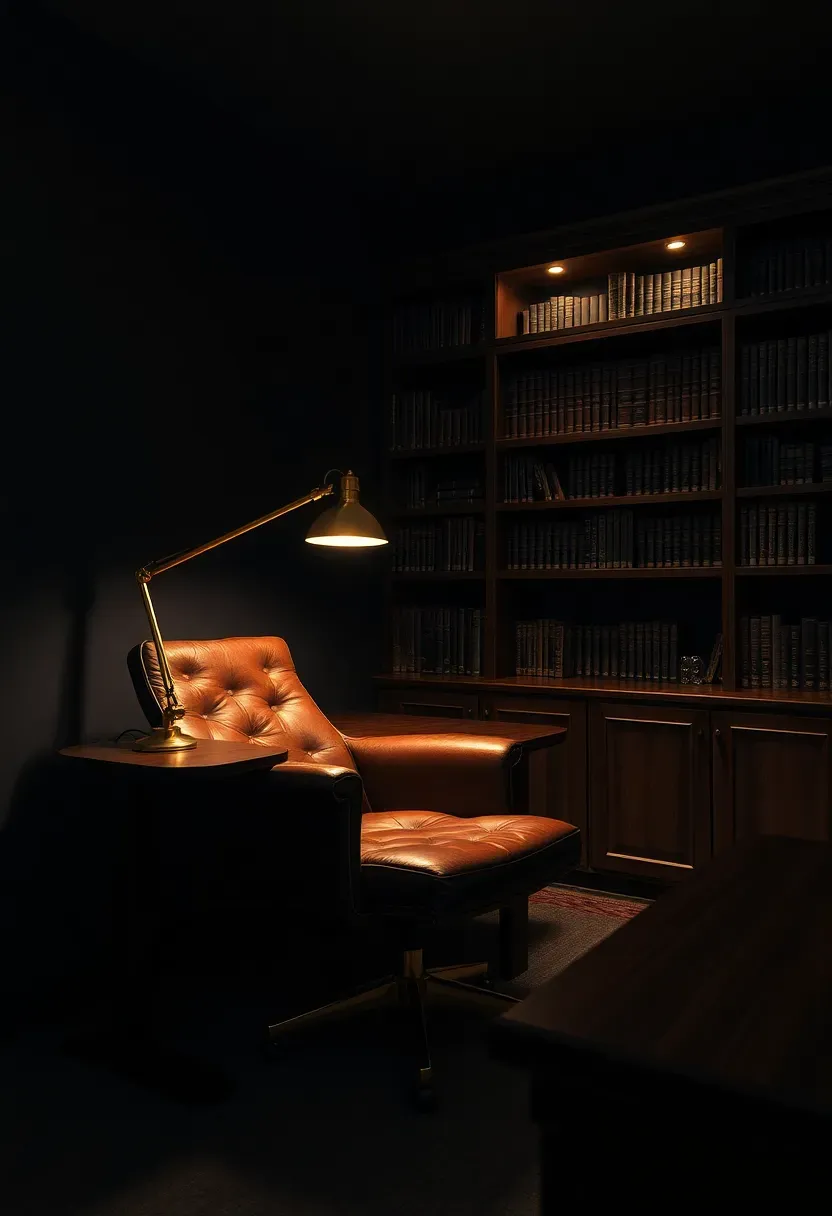
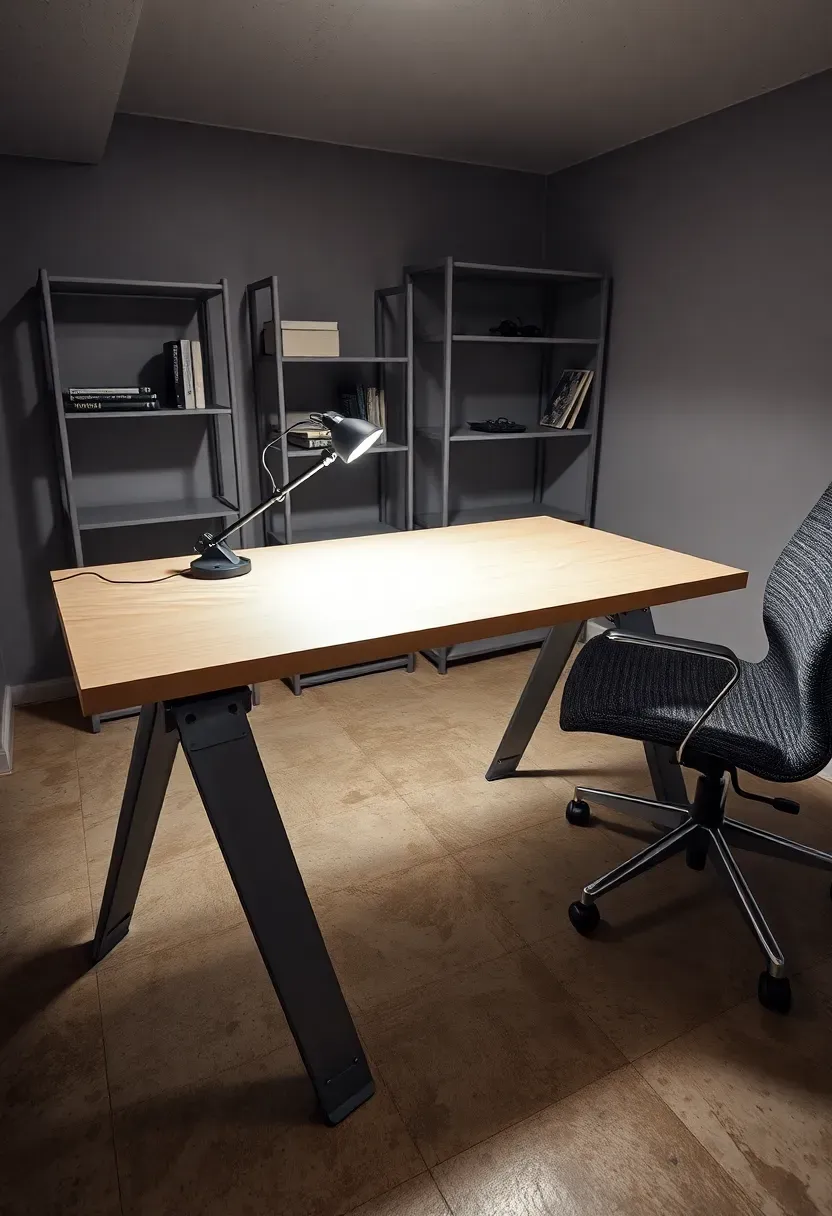
It sounds counterintuitive, but dark walls in a windowless room can feel more intentional than light ones. A navy or charcoal room with focused task lighting reads as a deliberate design choice — like a private study or a gentleman's club library. The key difference is lighting placement: every light source must be purposeful. A brass desk lamp, shelf-integrated LED strips, a warm sconce or two. No overhead fluorescents.
Make It Work
- Limit the dark color to three walls; one accent wall in a lighter shade adds depth
- Bookshelves with integrated puck lights break up the dark expanse
- Leather and brass accessories reinforce the library atmosphere
- Keep the ceiling lighter than the walls to preserve a sense of height
10. Living Green Wall
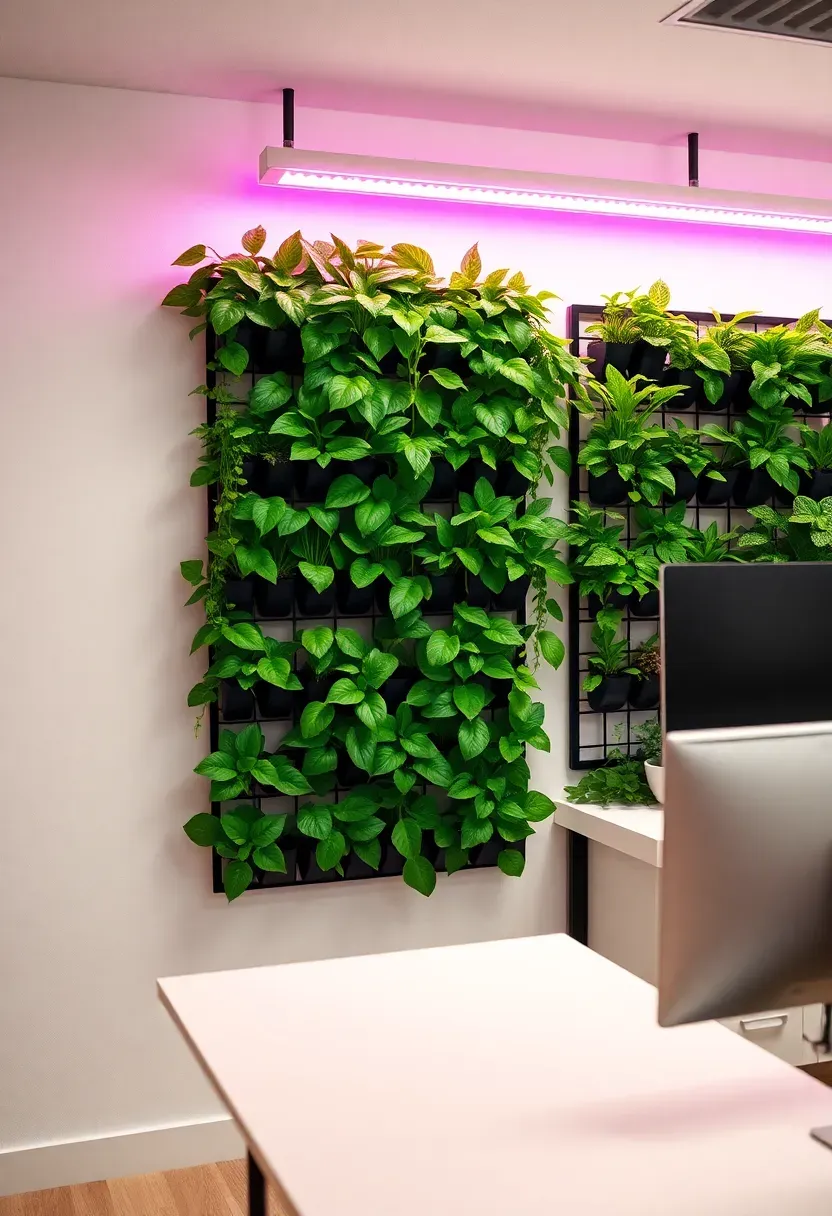
Plants do not fix the light problem, but they fix the life problem. A windowless room feels static and sterile. A vertical garden panel filled with low-light plants — pothos, ZZ plant, snake plant, philodendron — adds texture, color variation, and the subtle psychological benefit of seeing living things. Use a modular pocket planter system mounted on one wall with a small drip irrigation line hidden behind it. Supplement with a grow light bar mounted above the planter — most low-light plants need only 8-12 hours of 2000-3000 lux to stay healthy.
Tips
- Stick with pothos and snake plants if you forget to water — they tolerate neglect
- A grow light doubles as ambient wall washing, so it serves two purposes
- Replace soil with LECA (clay pebbles) to reduce the risk of fungus gnats in an enclosed room
Recommended
Items for this idea
11. Skylight Tube Illusion Panel
How It Works
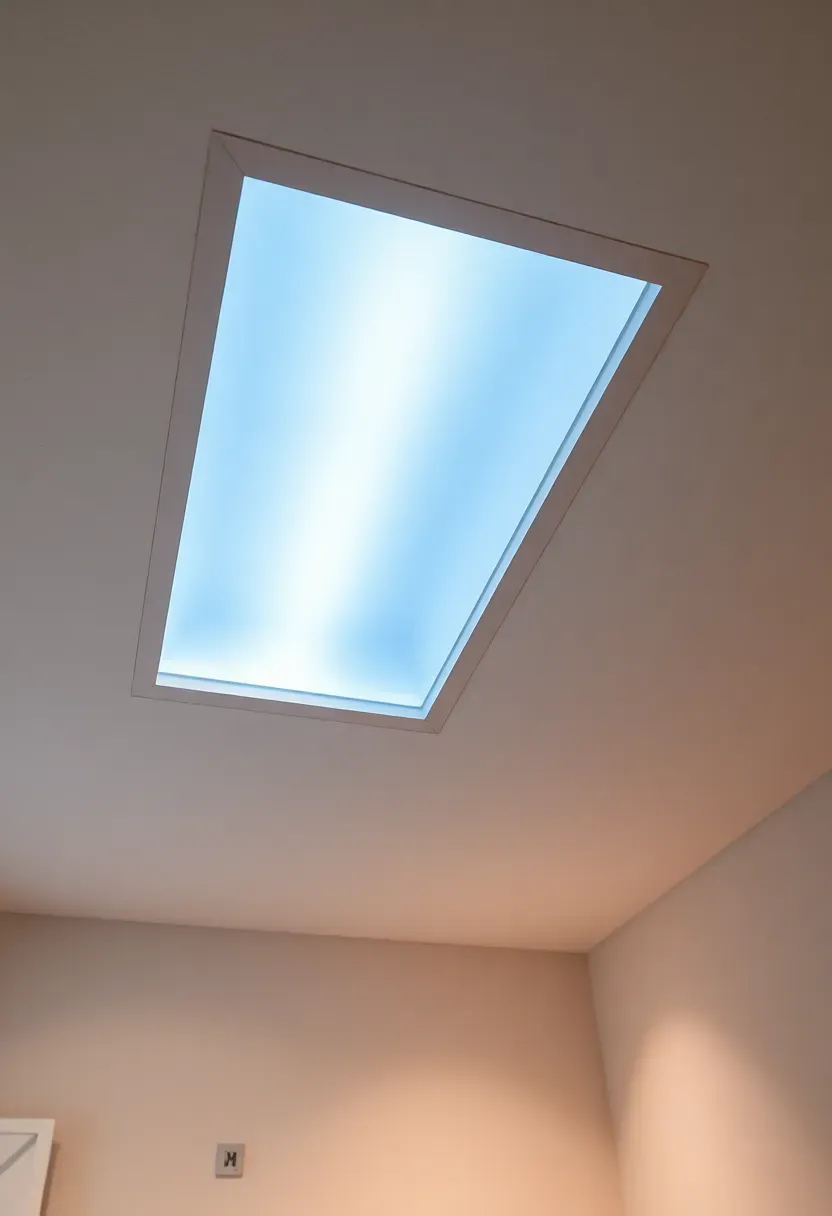
- Frame a rectangular recess in the ceiling, roughly 2 by 4 feet.
- Line the inside of the recess with reflective material and install high-CRI LED panels at the base.
- Cover the opening with a frosted diffusion panel. Set the LEDs to a cool 6000K blue-white during the day.
The result looks like a skylight letting in real sky. From below, your brain reads it as overhead daylight, which reduces the claustrophobic response that solid ceilings trigger in some people.
Watch Out
- The recess needs at least 4 inches of depth to look convincing — shallower looks like a flat light panel
- Match the color temperature to actual outdoor conditions for maximum psychological benefit
- Commercial versions exist (CoeLux, Yeelight Sky) but cost $1,500-$5,000 installed
12. Task Lighting Only Approach
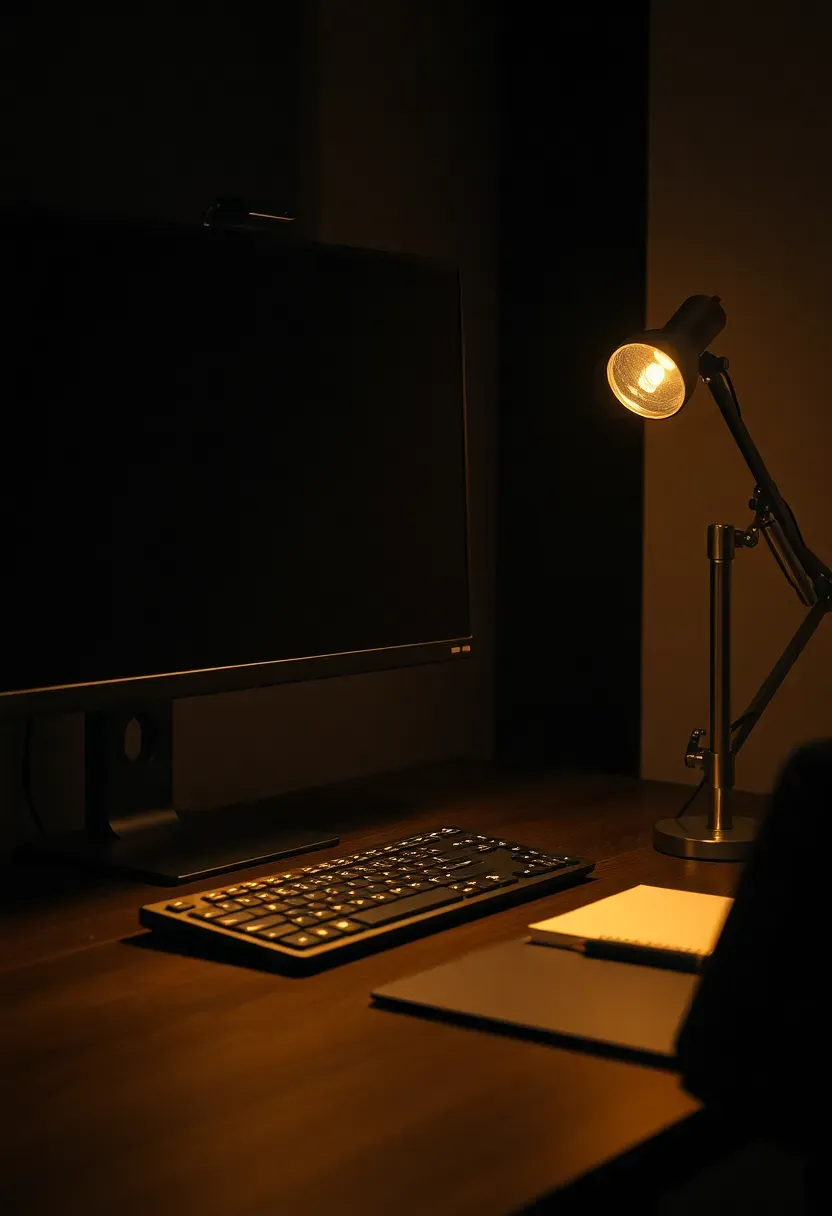
Forget illuminating the whole room. If you spend 90% of your time looking at a monitor and the desk surface in front of you, those are the only areas that need proper light. A monitor light bar (like the BenQ ScreenBar) clipped to your display, plus one good desk lamp aimed at your keyboard area, provides all the functional lux you need. The rest of the room stays in soft shadow. This setup uses less energy, reduces eye strain from brightness differences, and feels surprisingly comfortable once you try it for a full day.
Tips
- Add bias lighting (an LED strip behind the monitor) to reduce contrast between the bright screen and dark room
- A small ambient light in the corner prevents total darkness in your peripheral vision
- This approach pairs well with the dark moody library aesthetic from idea 9
Recommended
Items for this idea
13. Floating Shelf Desk With Under-Cabinet LEDs
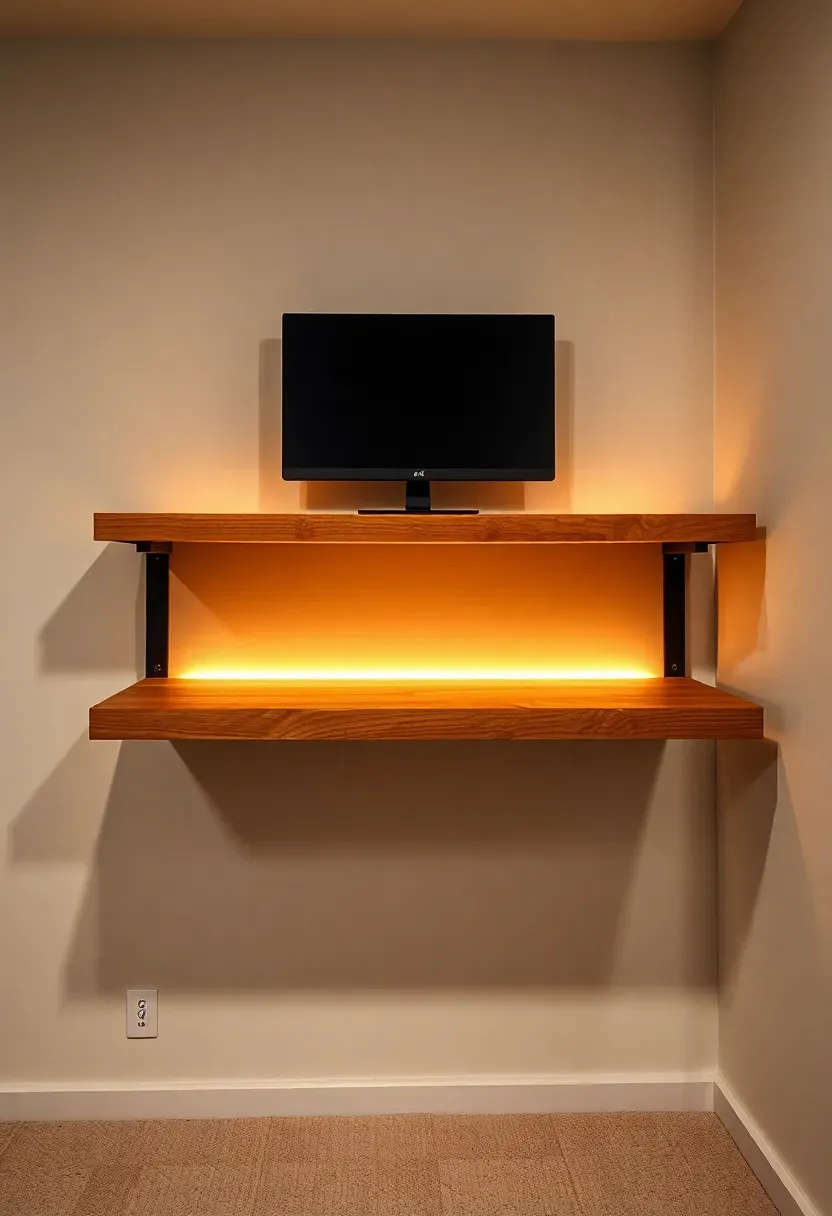
A wall-mounted floating desk keeps the floor clear, which makes a small windowless room feel less cramped. Mount an 8-foot butcher block plank to the wall with heavy-duty L-brackets, then run warm LED strip lights along the underside of the shelf. The downward-facing LEDs illuminate your keyboard and desk surface without needing a separate lamp. Add a second floating shelf 18 inches above the desk for monitor placement and small storage. The open space below the desk lets light travel to the floor and makes vacuuming effortless.
Tips
- Use 3000K warm white strips — cool white under-desk lighting feels cold on your hands
- Channel the LED strips in aluminum profiles for a cleaner line and better heat dissipation
- Rated for 1,500 lbs, French cleats are stronger than L-brackets if you want invisible mounting
14. Acoustic Panel Feature Wall
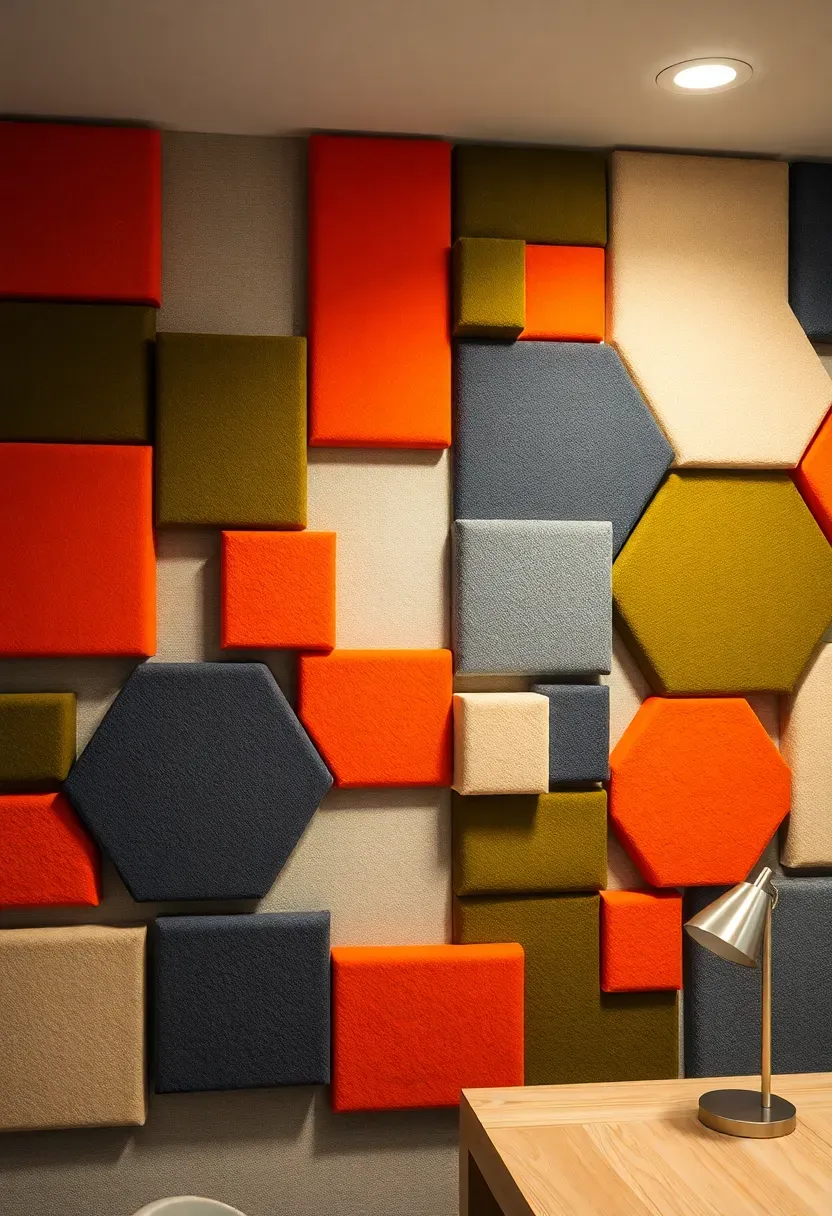
Basements with concrete walls and hard floors bounce sound around mercilessly. Every keyboard click, every video call, every chair squeak echoes. Fabric-wrapped acoustic panels fix the reverberation and double as wall art. Arrange panels in a geometric pattern using three or four complementary colors — burned orange, olive, cream, and charcoal make a strong combination. The panels absorb mid and high frequencies, making the room feel quieter and more intimate. In a windowless space, this kind of visual texture replaces the visual interest that a window view would normally provide.
Tips
- 2-inch thick panels absorb down to about 500 Hz — go 4-inch for bass trapping in corners
- Felt panels (like FilzFelt) come pre-cut in hexagons and triangles for easy pattern building
- Space panels 1 inch off the wall with Z-clips for better low-frequency absorption
Recommended
Items for this idea
15. Basement Office With Fireplace
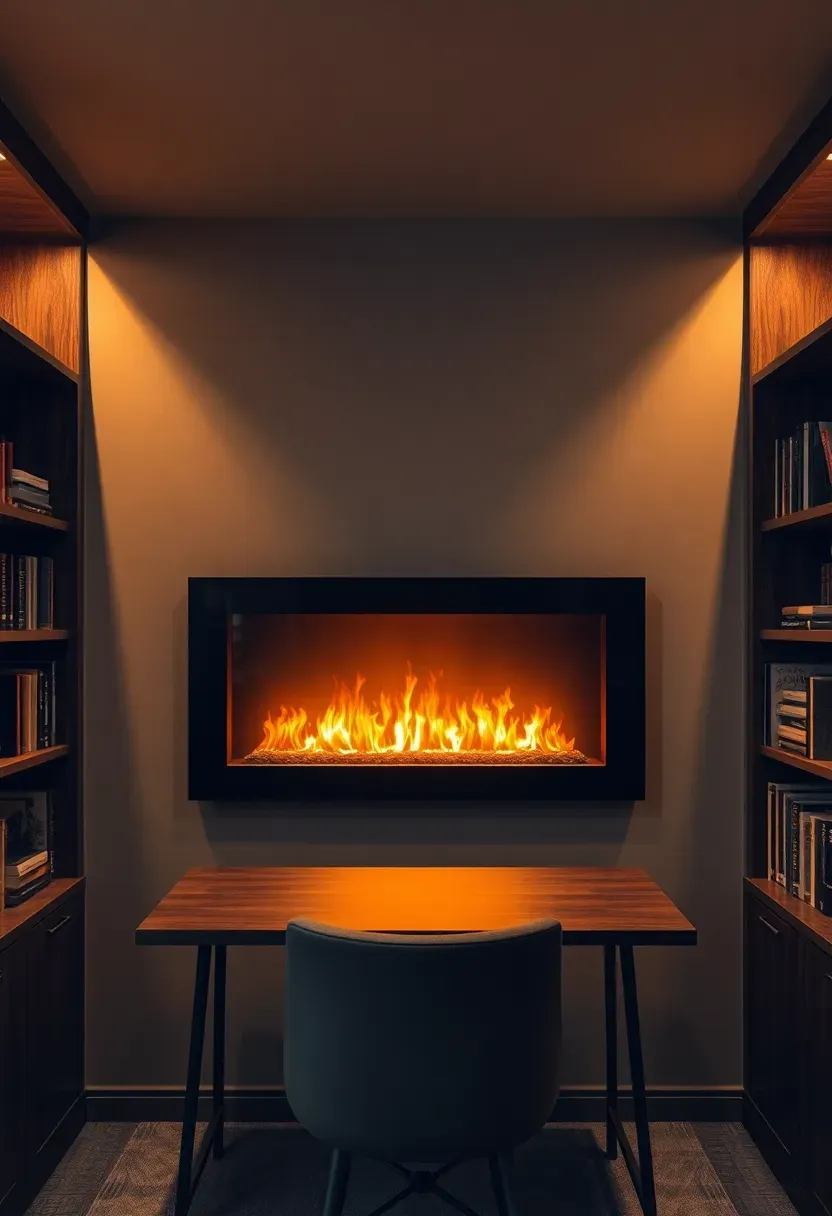
An electric fireplace insert mounted in the wall provides flickering warm light, a focal point, and actual supplemental heat — all useful in a windowless basement. Modern electric units are 13 inches deep, fit between standard studs, and run on a regular outlet. The flame effect creates movement in a room that otherwise has none, which is more psychologically important than it sounds. After hours of staring at a static screen in a sealed room, peripheral motion from flames keeps your brain from going into sensory deprivation mode.
Tips
- Choose a unit with independent flame and heat controls — you want the visual in summer too
- Linear (wide and short) inserts look more modern than traditional square fireplace shapes
- Keep the unit at eye level or slightly below, not above the desk where heat rises into your face
16. Two-Person Facing Desk Layout
The Setup
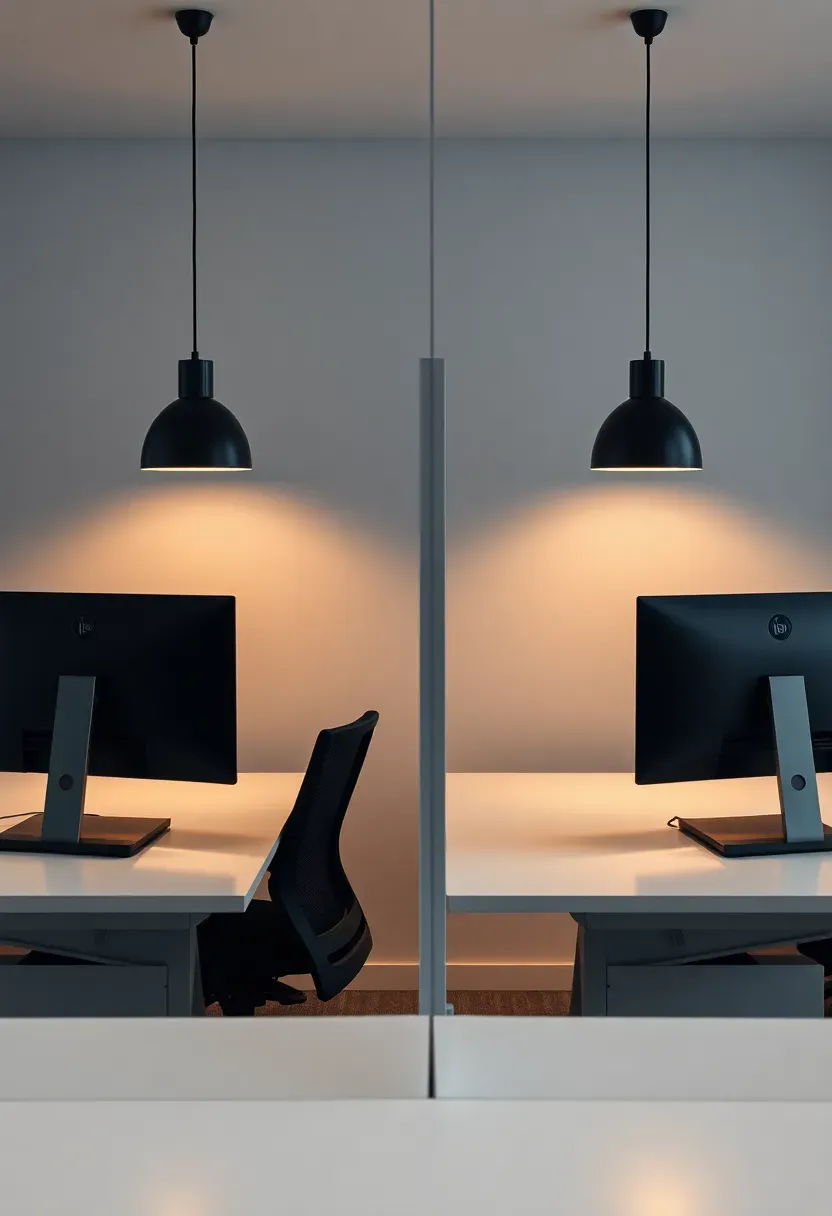
If two people work from home, a shared windowless basement office can work better than two separate cramped rooms upstairs. Place two desks facing each other with a 4-foot gap between monitors. Each person gets their own pendant light hung directly over their workspace. A thin frosted acrylic privacy divider between the monitors blocks direct sightlines during video calls while still allowing conversation.
Why It Works
- Shared space means you only need to climate-control and light one room
- Social presence reduces the isolation that windowless rooms can cause
- Each person controls their own task lighting independently
- The facing layout keeps cable runs centered along one floor channel
Recommended
Items for this idea
17. Standing Desk With Light Therapy Lamp
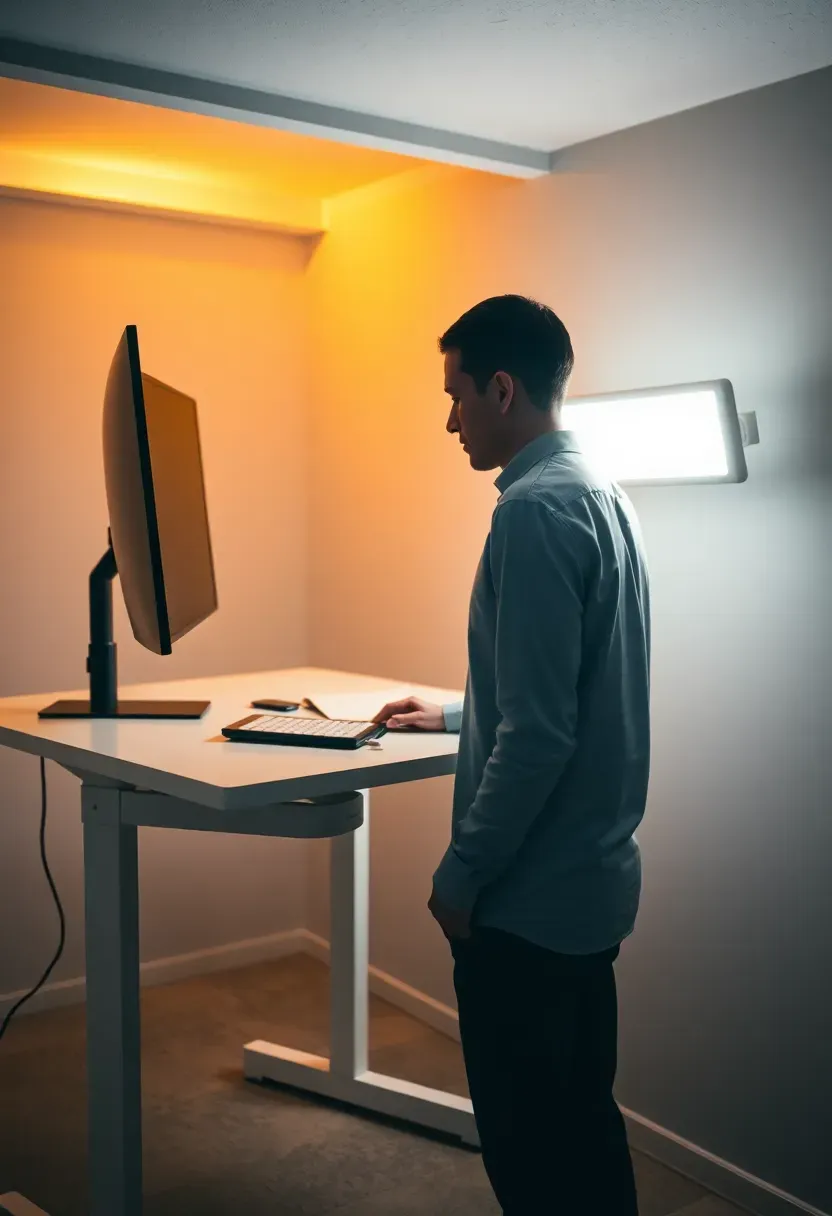
A standing desk alone does not solve the windowless problem, but pairing it with a 10,000 lux light therapy lamp positioned at arm's length addresses the biggest health concern: lack of daylight exposure. Use the lamp for the first 20-30 minutes of your workday. The combination of standing and bright light exposure in the morning has measurable effects on alertness and circadian rhythm regulation. After your light session, switch the lamp off and work under normal ambient lighting. Mount the lamp on an adjustable arm so it stays at eye level whether your desk is in sitting or standing position.
Tips
- Place the lamp at roughly 45 degrees to the side, not directly in front of your eyes
- UV-filtered lamps are essential — you want the lux without the UV exposure
- A timer switch prevents you from forgetting the lamp is on all day
18. Floor-to-Ceiling Curtain Wall
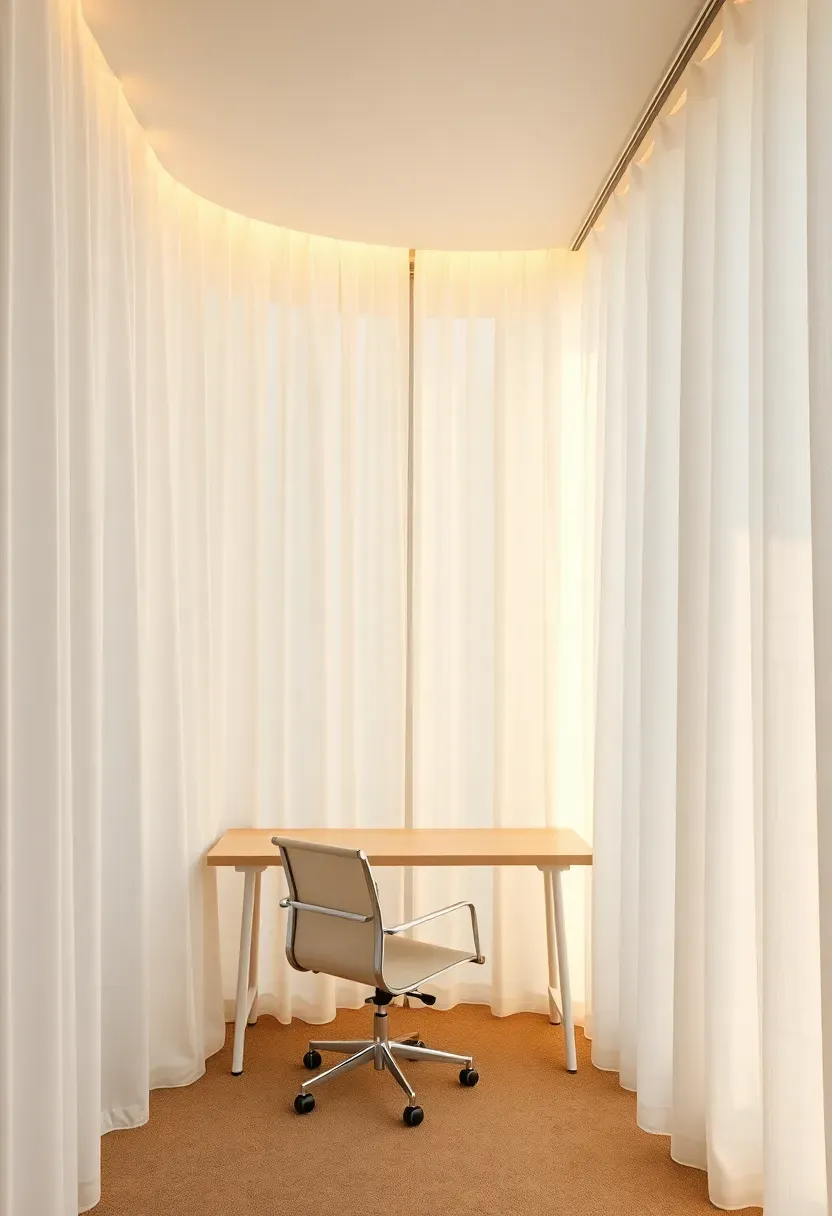
Run a ceiling-mounted curtain track across one full wall. Hang floor-to-ceiling sheer white curtains and mount a row of LED strip lights behind them at the top. The backlit fabric creates a massive, soft, diffused light surface that reads almost like a wall of frosted glass. It softens the hard edges of a concrete or drywall basement wall and adds gentle movement when the HVAC kicks on. The effect is somewhere between a photography studio and a high-end hotel suite.
Tips
- Use triple-width fabric for deep, natural folds
- Warm white (2700-3000K) LEDs behind sheer curtains create a sunset glow that flatters video call lighting
- Motorized curtain tracks let you reveal the bare wall for a different room feel
Recommended
Items for this idea
19. Projection Wall for Ambient Scenes
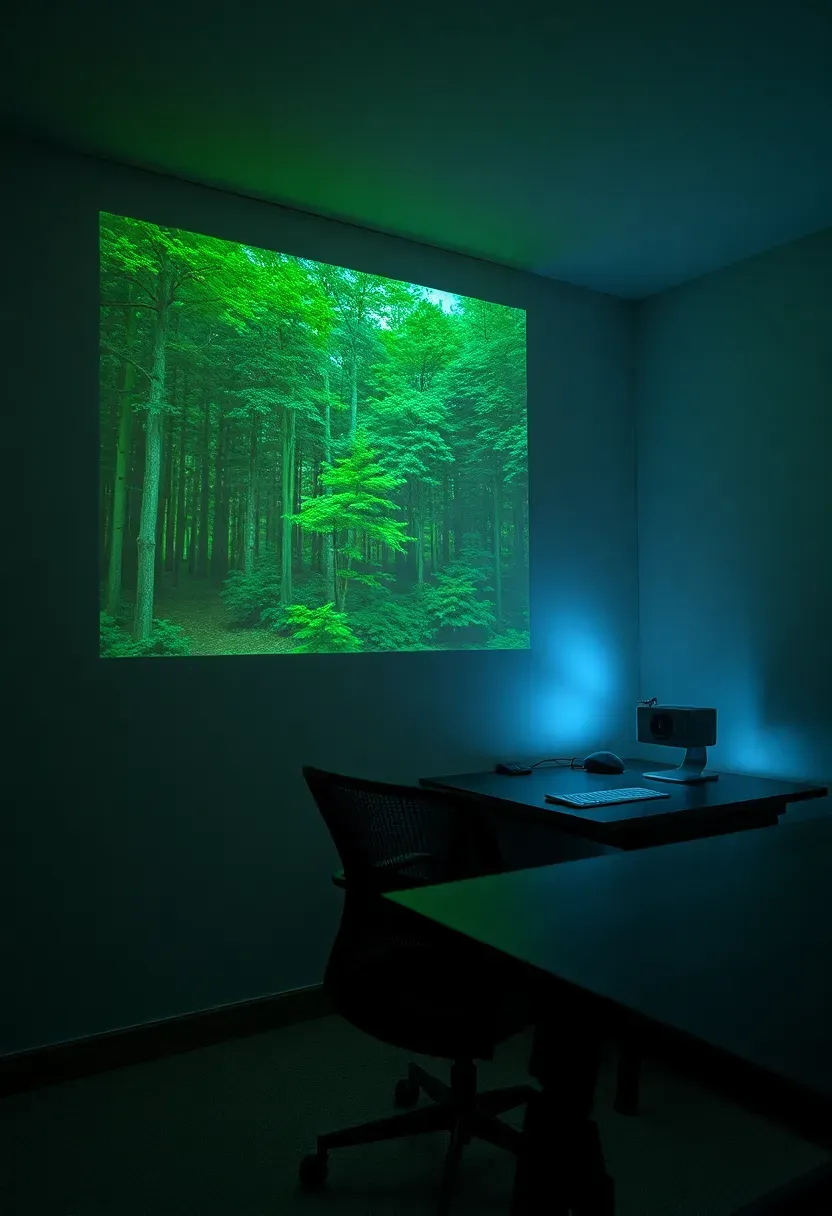
A short-throw projector aimed at a light gray wall can display a slowly moving forest scene, ocean waves, or a live window view from a world-facing webcam feed. It sounds gimmicky, but in a windowless room where you spend 8+ hours, having slow ambient motion on one wall genuinely reduces the sensory monotony. Use a dedicated wall — not behind your monitor where it would cause glare. Set the content to screensaver-like nature footage at low brightness. Several free apps (SlowTV, WindowSwap) provide hours of real-world window views from around the globe.
Tips
- Ultra-short-throw projectors sit inches from the wall and avoid casting your shadow
- Keep brightness at 30-40% for ambient background, not movie-theater levels
- A pull-down screen gives you the option to use the wall normally when not projecting
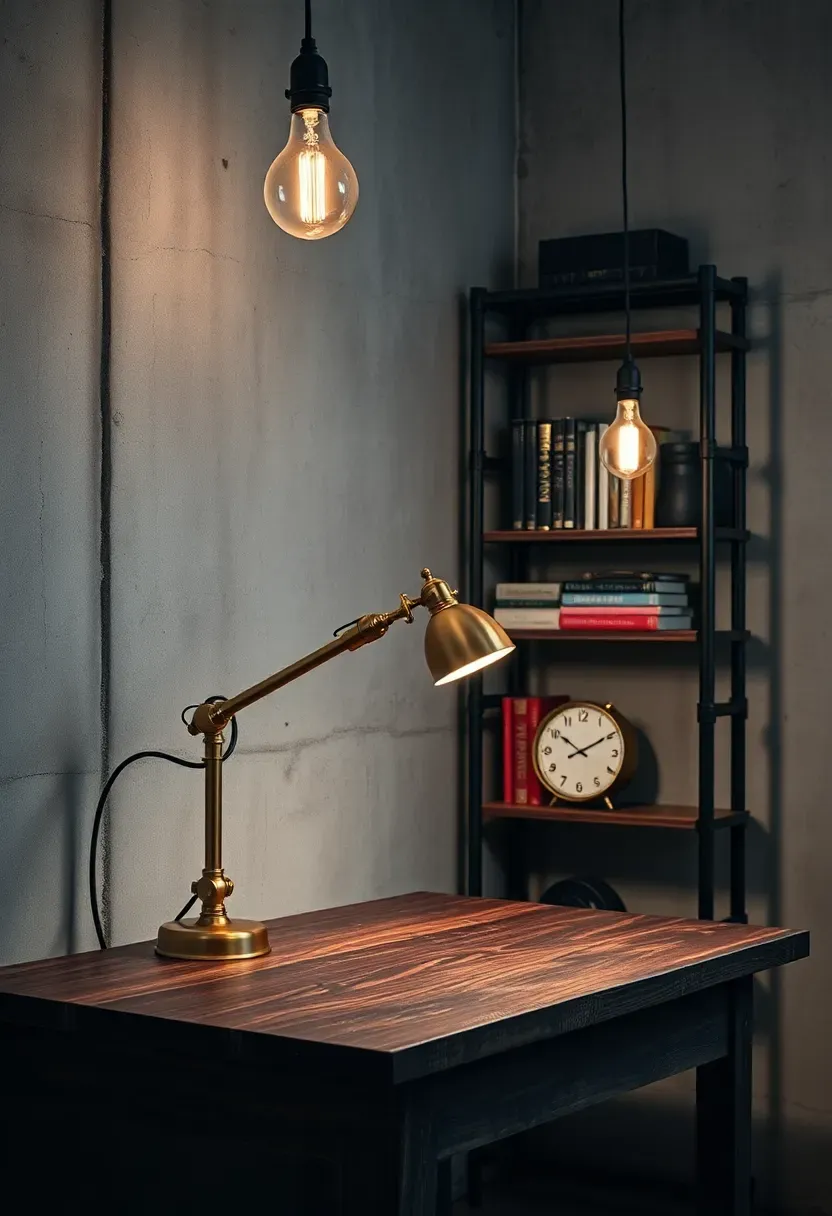
20. Concrete and Brass Industrial Office
Why This Style Works Underground
Raw concrete, which most basements already have, is the foundation of industrial design. Instead of covering it up with drywall, clean the concrete, apply a clear sealant, and pair it with brass or matte gold hardware. Steel pipe shelving, a thick reclaimed wood desk, and Edison-style LED bulbs in exposed pendant sockets complete the look. The honesty of exposed structure suits a basement better than any style that tries to pretend the room is above ground.
Apply at Home
- Seal concrete with a penetrating sealer to prevent dust and moisture
- Brass desk accessories (lamp, pen holder, clock) add warmth against the cool gray
- A large area rug prevents the cold-floor problem without hiding all the concrete
- Keep furniture minimal — industrial style loses impact when cluttered
Recommended
Items for this idea
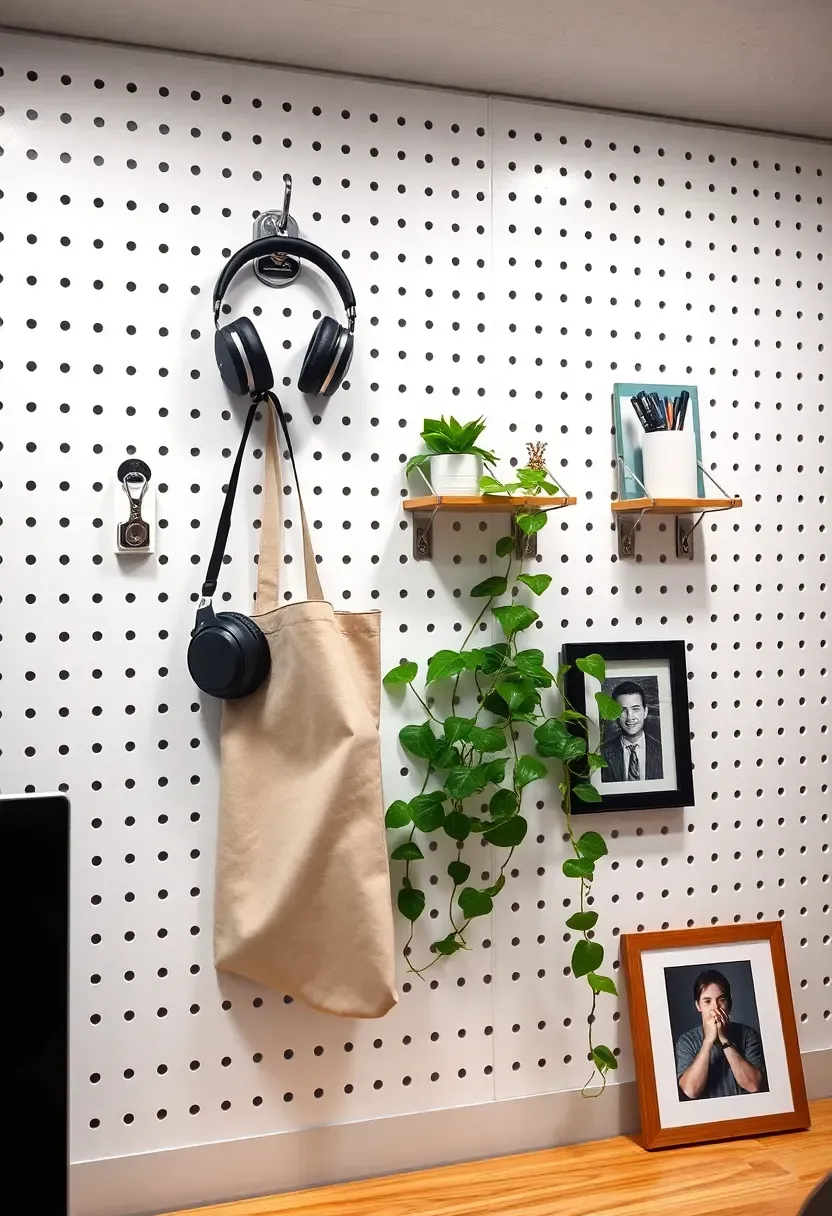
21. Pegboard Organization Wall
In a room without windows, wall space is your most abundant resource. Cover one full wall with painted pegboard and use it for everything — headphone hooks, shelf brackets, small plants, cable organizers, pen holders, light clips. Standard 1/4-inch pegboard accepts hundreds of accessory types. Paint it the same color as the surrounding wall for a seamless look, or contrast it in a darker shade to make it a deliberate feature. The pegboard keeps your desk surface clear, which matters more in a small enclosed room where clutter feels amplified.
Tips
- Mount pegboard with 3/4-inch spacers behind it so hooks actually fit through the holes
- Metal pegboard is sturdier and holds heavier items than hardboard
- Group items by function: one zone for tech, one for stationery, one for personal items
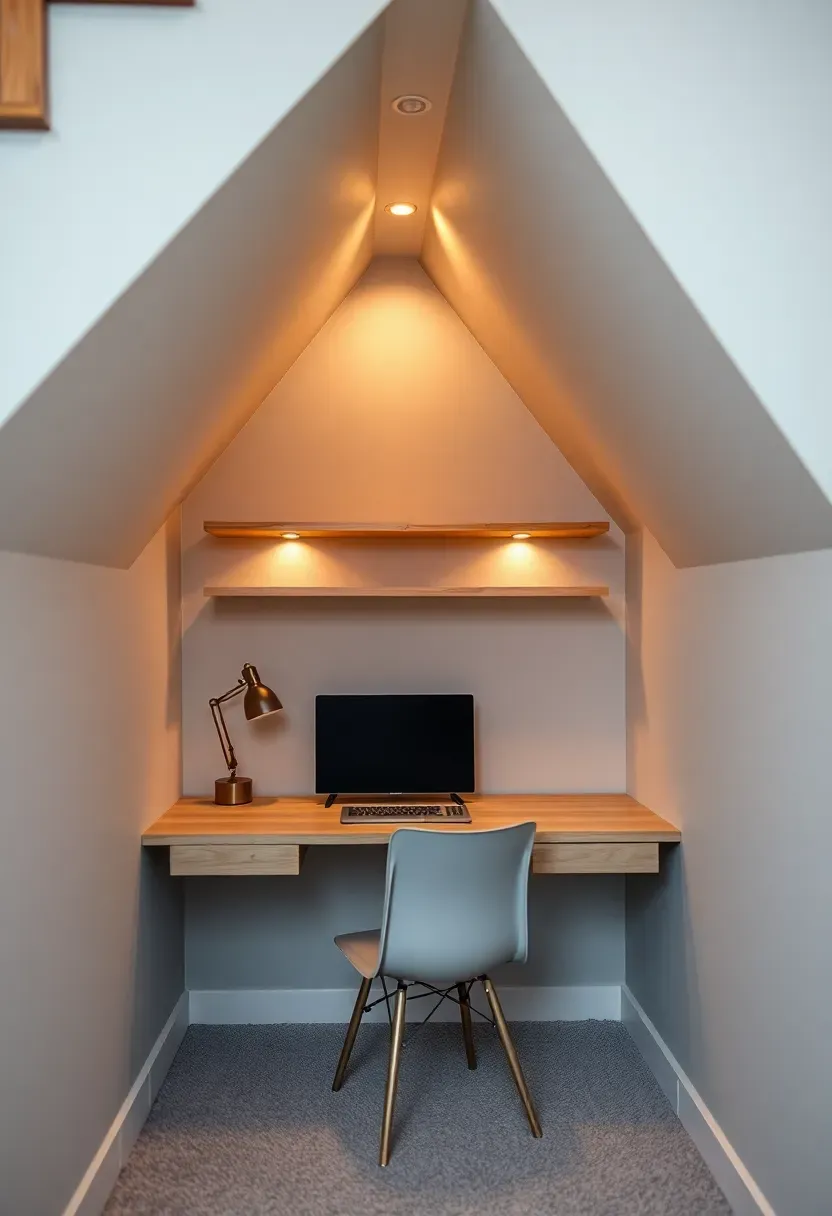
22. Corner Nook Office Under Stairs
How to Build It
- Measure the under-stair triangle. Most staircases yield a usable height of 4-6 feet at the tallest point tapering down to about 2 feet.
- Install a custom-cut desktop that follows the angle, with the tallest end where you sit.
- Add shallow shelves on the angled wall above the desk, getting smaller as the ceiling drops.
- Install 3-4 small recessed LED puck lights in the sloped ceiling directly above the work area.
Watch Out
- Ventilation is critical in such a tight space — add a small USB fan to move air
- Run power and ethernet before you close up the walls
- This works best as a secondary station for quick tasks, not an 8-hour daily setup due to the cramped dimensions
Recommended
Items for this idea
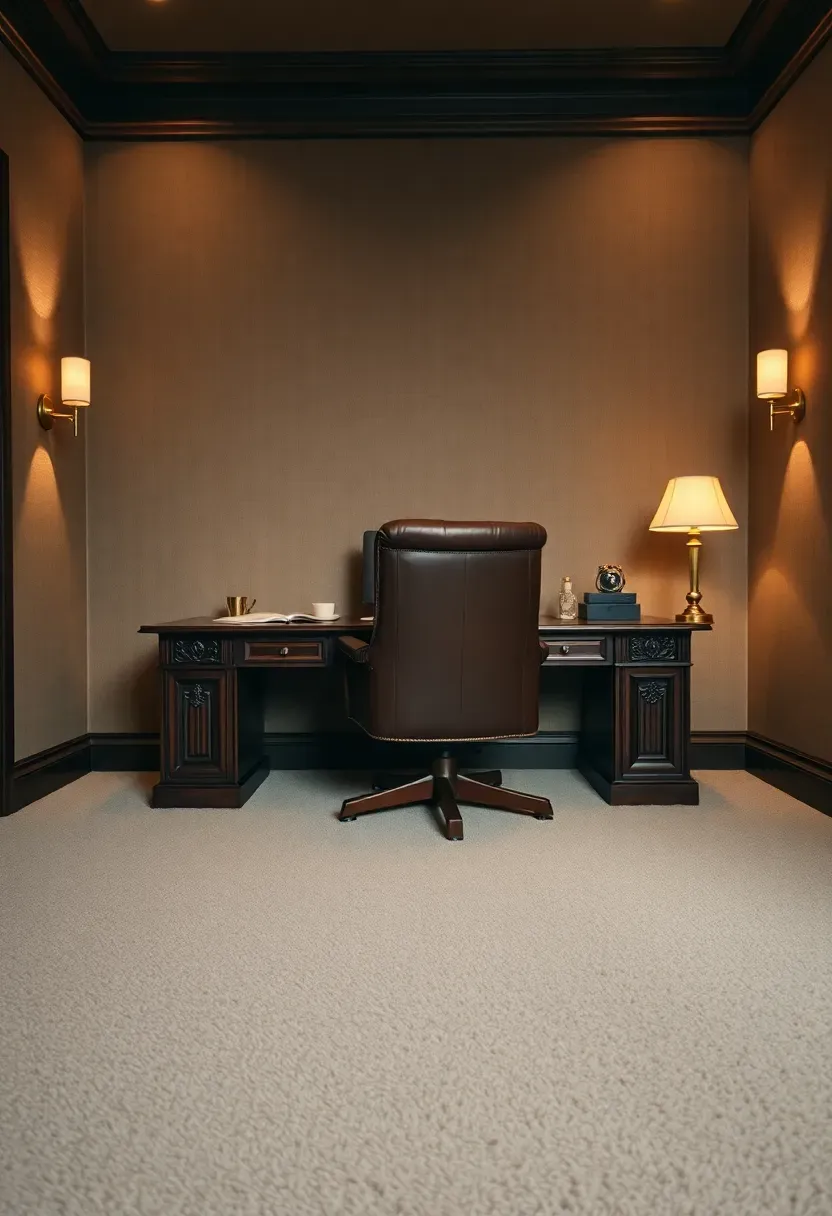
23. Luxury Carpet and Sconce Office
Hard floors in a windowless basement make the room feel cold and echoey. Wall-to-wall carpet in a medium-pile, neutral tone (greige, warm taupe, soft charcoal) instantly warms the atmosphere. Pair it with wall sconces instead of overhead lights — sconces cast upward and downward pools that feel more residential than office-like. A heavy mahogany or cherry desk, a leather executive chair, and brass sconce hardware push the room into private study territory. This setup trades the startup-office aesthetic for something closer to a law firm partner's office.
Tips
- Choose carpet tiles over broadloom for easier replacement if a section stains
- Sconces at 66 inches center height put light at the right level for seated work
- Add a dimmer to the sconce circuit for evening mode
24. Ventilation-First Minimalist Setup
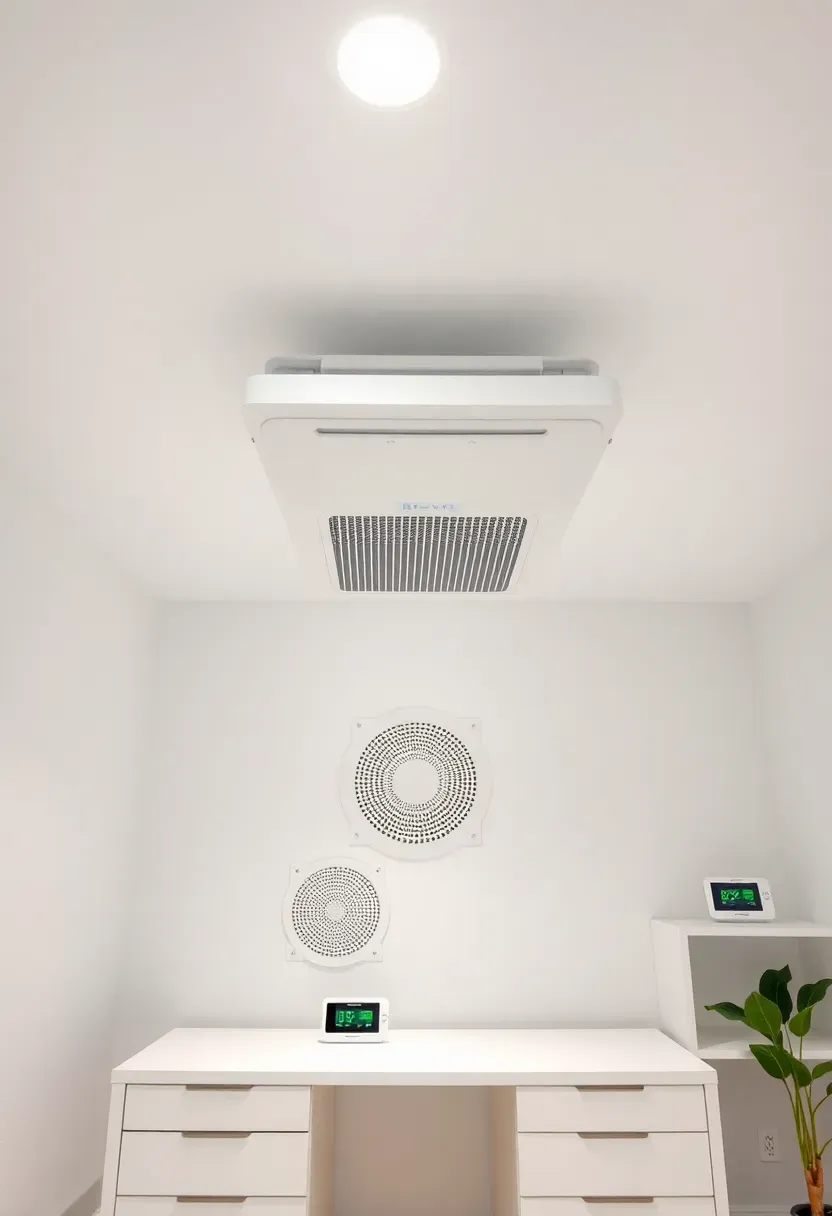
People obsess over lighting in windowless offices and completely forget about air. A sealed basement room accumulates CO2 from your breathing, which causes drowsiness, poor concentration, and headaches — often blamed on "the room just feels stuffy." An ERV (Energy Recovery Ventilator) or HRV (Heat Recovery Ventilator) exchanges stale indoor air with filtered outdoor air without losing heating or cooling. Mount a compact unit in the ceiling or high on the wall. Add a CO2 monitor on your desk. Once you see CO2 climb past 1000 ppm in a closed room after two hours, you will understand why fresh air matters more than fancy furniture.
Tips
- Panasonic WhisperComfort is a popular compact ERV at around $300
- Keep the door open when possible as the simplest ventilation hack
- An air purifier with HEPA filter handles dust but does nothing for CO2 — you need actual air exchange
Recommended
Items for this idea
25. Budget Basement Office Under $500
What You Need
- Desk ($60-$100): A solid-core door blank from the hardware store on two sawhorses or adjustable leg sets. Seventy-two inches of uninterrupted workspace for under a hundred dollars.
- Chair ($100-$150): Skip the gaming chair. A used Steelcase or Herman Miller from office liquidators runs $100-$150 and is genuinely ergonomic.
- Lighting ($50-$80): One 4-foot LED shop light from the ceiling ($20) plus a clip-on desk lamp ($30). This gets you to adequate lux levels.
- Flooring ($50-$100): Foam floor tiles or a large area rug over bare concrete.
- Extras ($50-$70): Power strip with surge protection, a basic shelf unit, cable clips.
Watch Out
- Do not skip the dehumidifier if your basement has any moisture — electronics and moisture do not coexist
- Test the space for radon before committing to daily use — a $15 test kit takes 48 hours
- A space heater with a tip-over switch is safer than a fixed baseboard in a temporary setup
Quick FAQ
Does working in a windowless basement affect your health long-term? The main concern is vitamin D deficiency from lack of sunlight exposure. A 10,000 lux light therapy lamp for 20-30 minutes each morning helps, but it does not replace actual sun. Take breaks outside during lunch. A CO2 monitor and proper ventilation address the air quality side.
Which paint color works best for a basement office with no windows? Pale warm tones with a Light Reflectance Value above 65 perform best — think Benjamin Moore Simply White (OC-117) or Sherwin-Williams Alabaster (SW 7008). These reflect maximum light from your fixtures without feeling cold or sterile.
How many lumens do I need to light a windowless office? For a 100-square-foot room, aim for 5,000-7,000 lumens total from all sources combined. That translates to roughly 500-700 lux at desk height, which matches commercial office standards. Use a free lux meter app on your phone to check.
Can I run a dehumidifier and an ERV at the same time? Yes, and in many basements you should. The ERV handles fresh air exchange while the dehumidifier manages moisture levels independently. Set the dehumidifier to maintain 40-50% relative humidity.
Is soundproofing necessary in a basement office? Basements are already quieter than upper floors due to earth insulation. But if you share the house with others, adding a solid-core door and weatherstripping the frame blocks most sound transfer from upstairs foot traffic and conversation.
A windowless basement office is not a compromise — it is a different kind of workspace. The quiet, the consistent temperature, the freedom from visual distractions outside the window. These are real advantages that open-plan offices and home desks near living rooms cannot match. Start with lighting and ventilation. Get those right and the rest is just personal style. Pick three or four ideas from this list that match your budget, spend a weekend on the basics, and give it a honest two-week trial before deciding if it works for you.
Pinterest cover for 25 Basement Office Ideas No Windows
About the author
OBCD
CGI visualization and interior design content. We create detailed 3D renders and curate practical design ideas for every room in your home.