23 Bathroom Art Ideas to Decorate Bare Walls
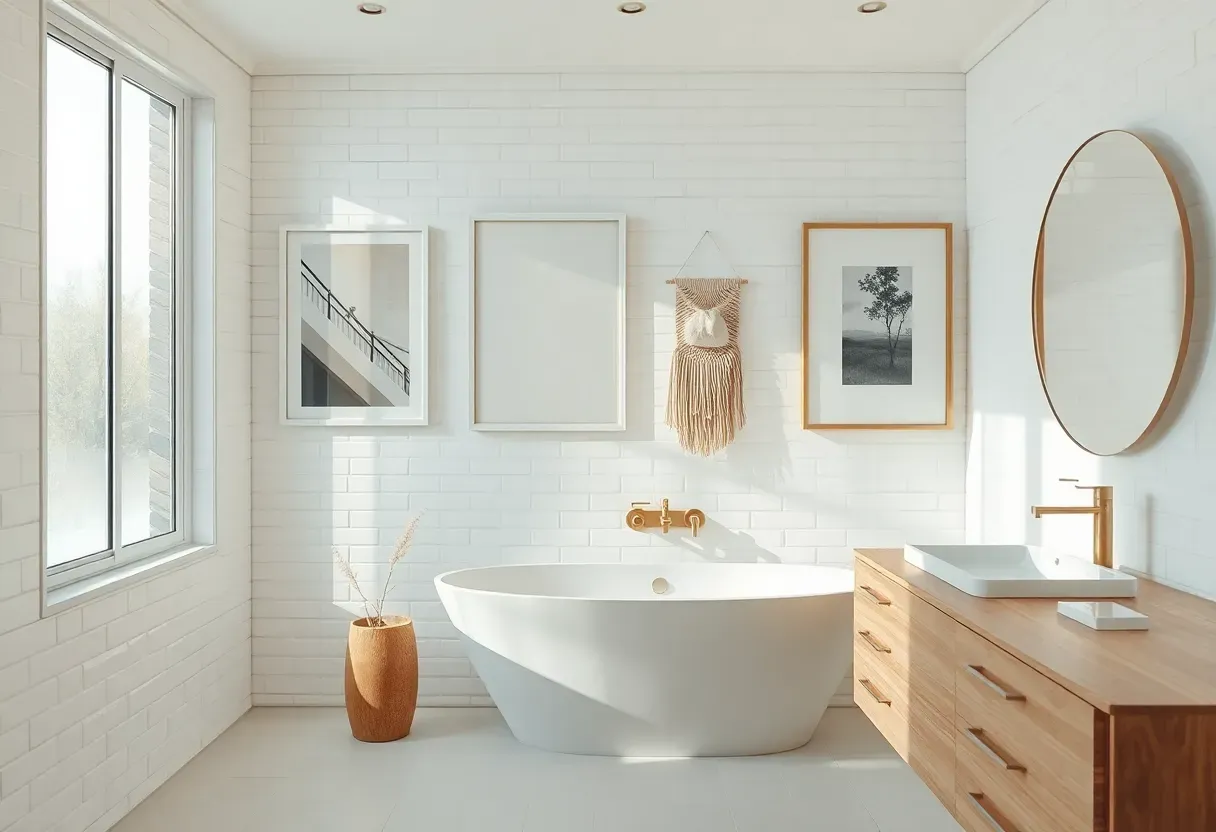
I recently counted the number of blank walls in my bathroom and came up with four. Four perfectly good surfaces doing absolutely nothing. Sound familiar? Bathrooms get skipped during decorating because people worry about moisture damage, but with the right materials and placement, nearly any art form can survive just fine. The trick is knowing which materials hold up and which spots to avoid.
Here are 23 wall art ideas that go beyond the usual framed print, each picked for durability in damp conditions and actual visual impact.
Table of Contents
- Polaroid-Style Photo Collage
- Stained Glass Window Panel
- Vintage Map Print
- Resin Ocean Art
- Rattan Sunburst Mirror
- Block-Printed Linen Panel
- Painted Terracotta Masks
- Abstract Acrylic Pour Canvas
- Coastal Rope Knot Board
- Art Deco Geometric Print
- Cyanotype Botanical Print
- Brass Wall Sconce Art
- Landscape Oil Pastel Sketch
- Embroidered Hoop Art
- Terrazzo-Inspired Paper Collage
- Vintage Botanical Chart
- Concrete Cast Relief
- Color Field Canvas Panel
- Antique Textile Fragment
- Abstract Metal Wire Sculpture
- Hand-Lettered Chalkboard Sign
- Photographic Triptych
- Painted Shutter Panel
1. Polaroid-Style Photo Collage
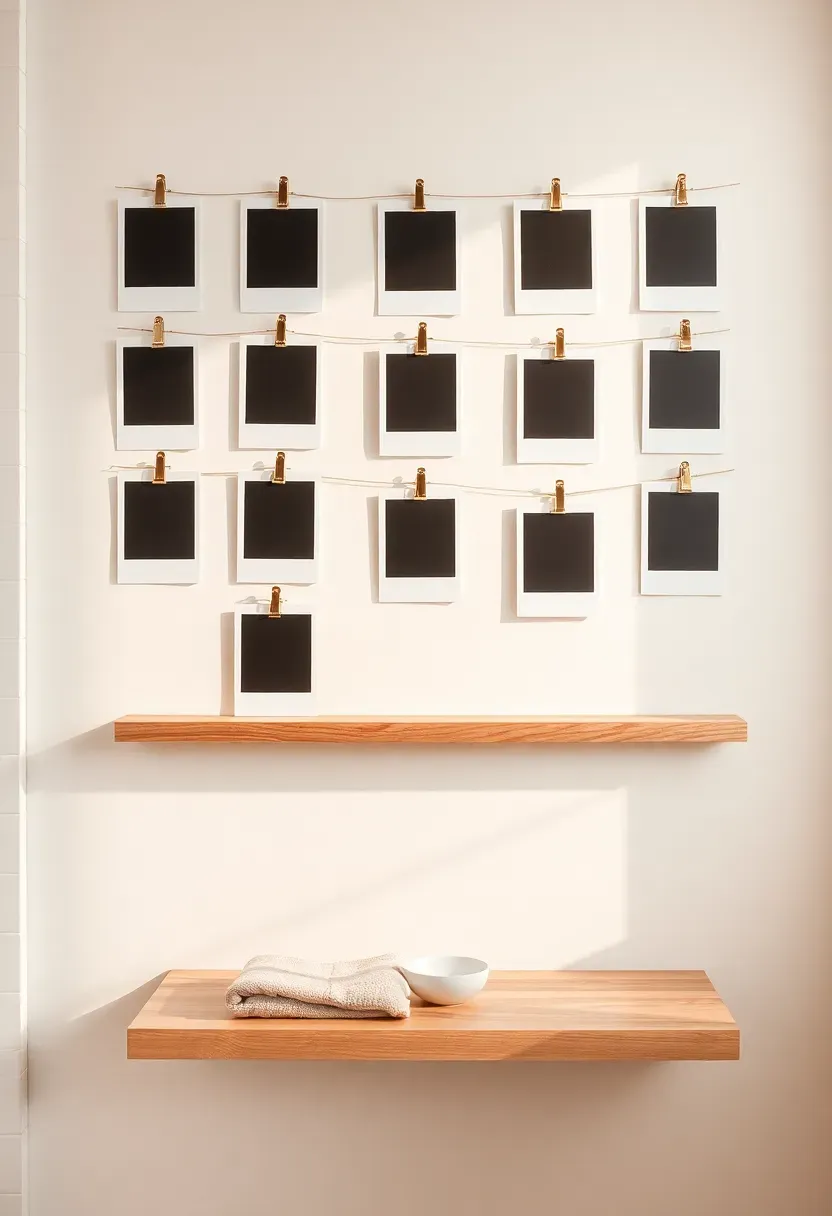
Real Polaroids fade fast in humidity, but printed replicas on cardstock hold up much better. Print your favorite photos at 3x4 inches on matte cardstock, leave a thick white border at the bottom like an Instax print, and arrange them in a loose grid with washi tape or small binder clips on a wire. The casual imperfection of a Polaroid grid reads as personal and lived-in rather than decorated. Swap out photos whenever you feel like it.
Make It Moisture-Safe
- Print on synthetic photo paper or laminate each card with a thin self-adhesive film
- Use removable mounting putty instead of tape directly on paint
- Keep the collage at least three feet from the shower spray zone
We picked a few things that go well with this idea: Framed Black White Bathroom Wall Art (★4.8), Heiple Farmhouse Bathroom Art Signs Set (★4.9) and Black White Bathroom Quotes Canvas Art (★4.8). As an Amazon Associate we earn from qualifying purchases.
2. Stained Glass Window Panel
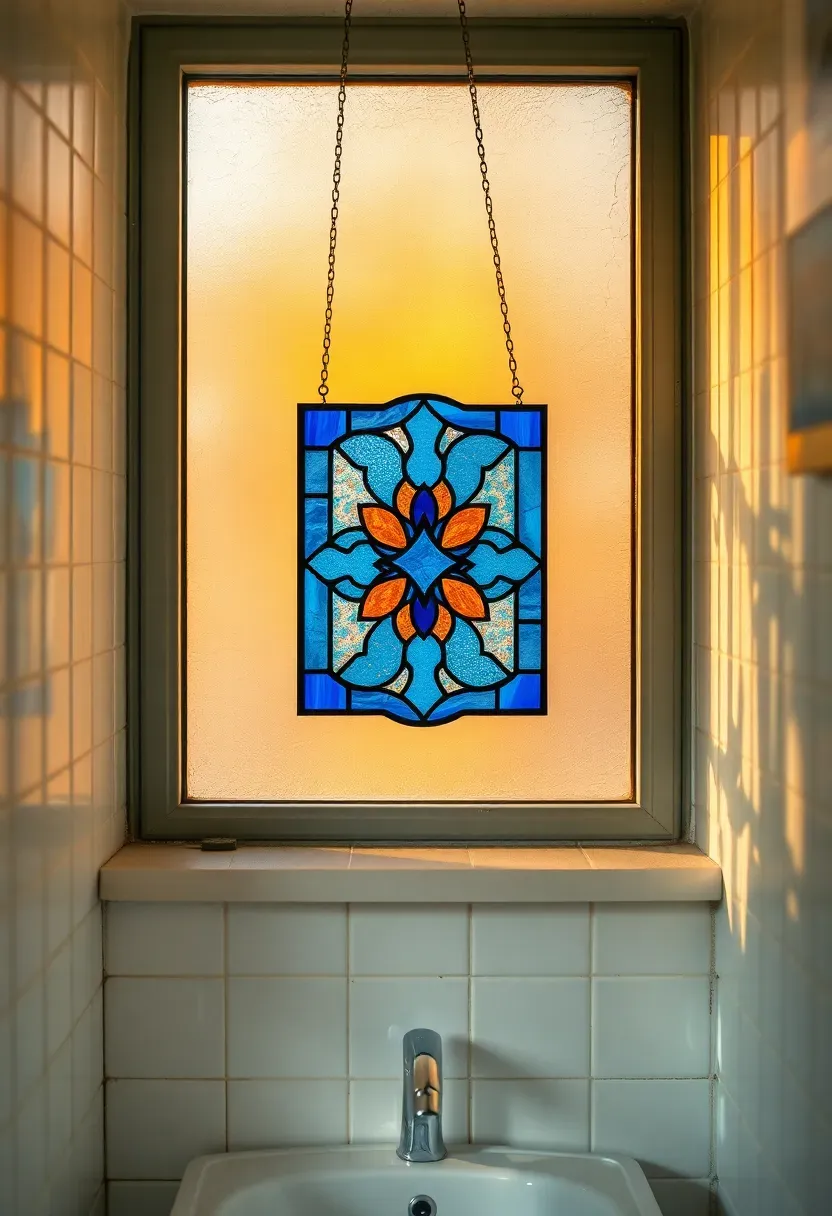
A small stained glass panel hung inside or in front of a bathroom window turns natural light into colored patterns across your walls and floor. You don't need a cathedral-sized piece. A 12x18-inch panel with a simple geometric or floral motif, hung from the window frame with two small hooks and chain, does the job. The glass is completely immune to humidity.
Why It Works Here
Bathrooms often have frosted or obscure glass windows that block the view anyway. Replacing that dead light with colored, patterned light gives the room character from the inside while maintaining privacy from the outside.
Where to Find Panels
- Salvage yards often carry single panels from demolished buildings for $30-80
- Etsy sellers produce custom panels in any size and color scheme
- DIY kits with pre-cut glass and copper foil tape cost under $50
We picked a few things that go well with this idea: OYPEIP 12" Rattan Sunburst Wall Mirror (★4.0), 24" Boho Sunburst Round Wall Mirror (★4.5) and Two's Company Rattan Sunburst Mirror (★4.5). As an Amazon Associate we earn from qualifying purchases.
3. Vintage Map Print
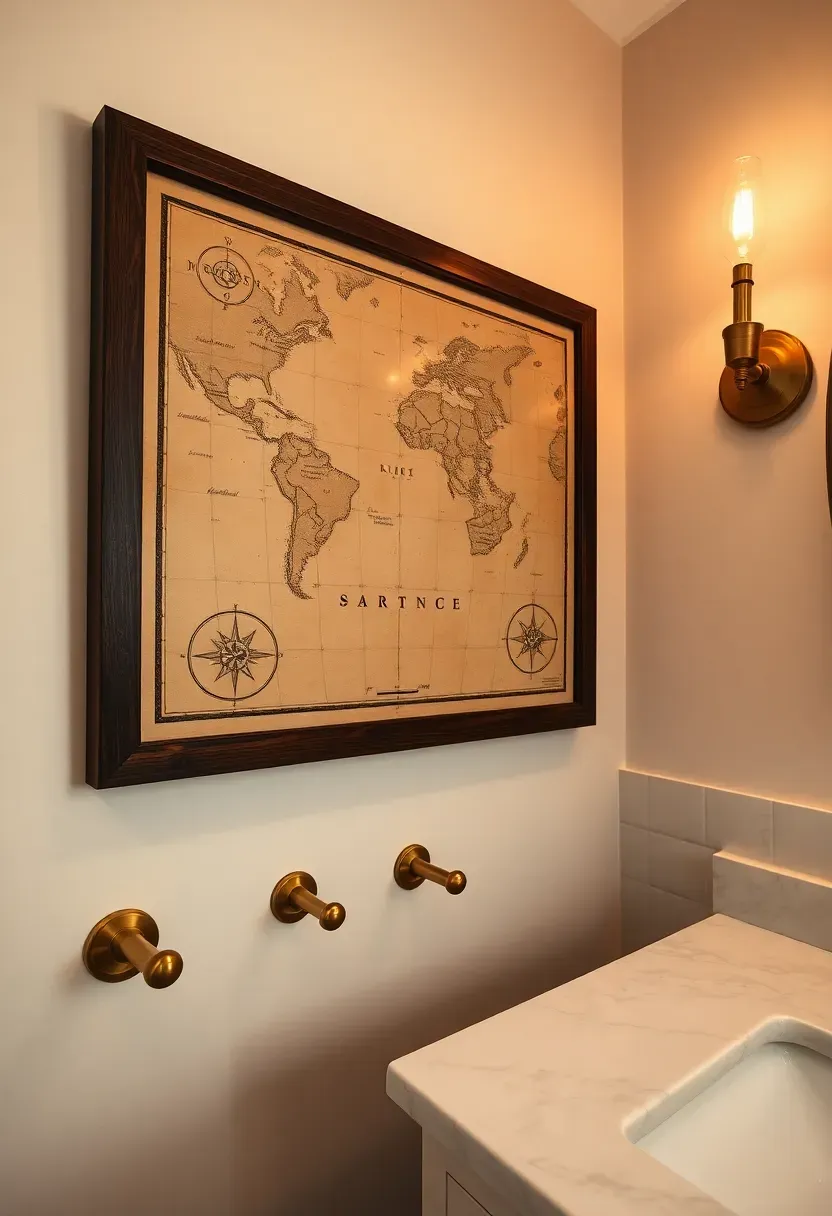
Old cartographic prints from the 1700s and 1800s have decorative qualities that modern maps lack: hand-engraved coastlines, illustrated sea monsters, ornamental compass roses, and hand-colored borders. These details reward close viewing, which is exactly what bathrooms encourage. Print a high-resolution scan on heavy cotton rag paper for authenticity. The David Rumsey Map Collection and Library of Congress both offer free high-res downloads.
Tips
- Choose maps with personal significance: the city you live in, a place you traveled, or your ancestral homeland
- Sepia and blue-toned maps pair naturally with white tile and brass hardware
- Frame behind UV-filtering acrylic to prevent yellowing under bathroom light
We picked a few things that go well with this idea: LARICEO Cyanotype Sensitizer Kit (★4.4), Jacquard Complete Cyanotype Sun Print Kit (★4.5) and Sun Print Cyanotype Paper Kit (24 Sheets) (★4.5). As an Amazon Associate we earn from qualifying purchases.
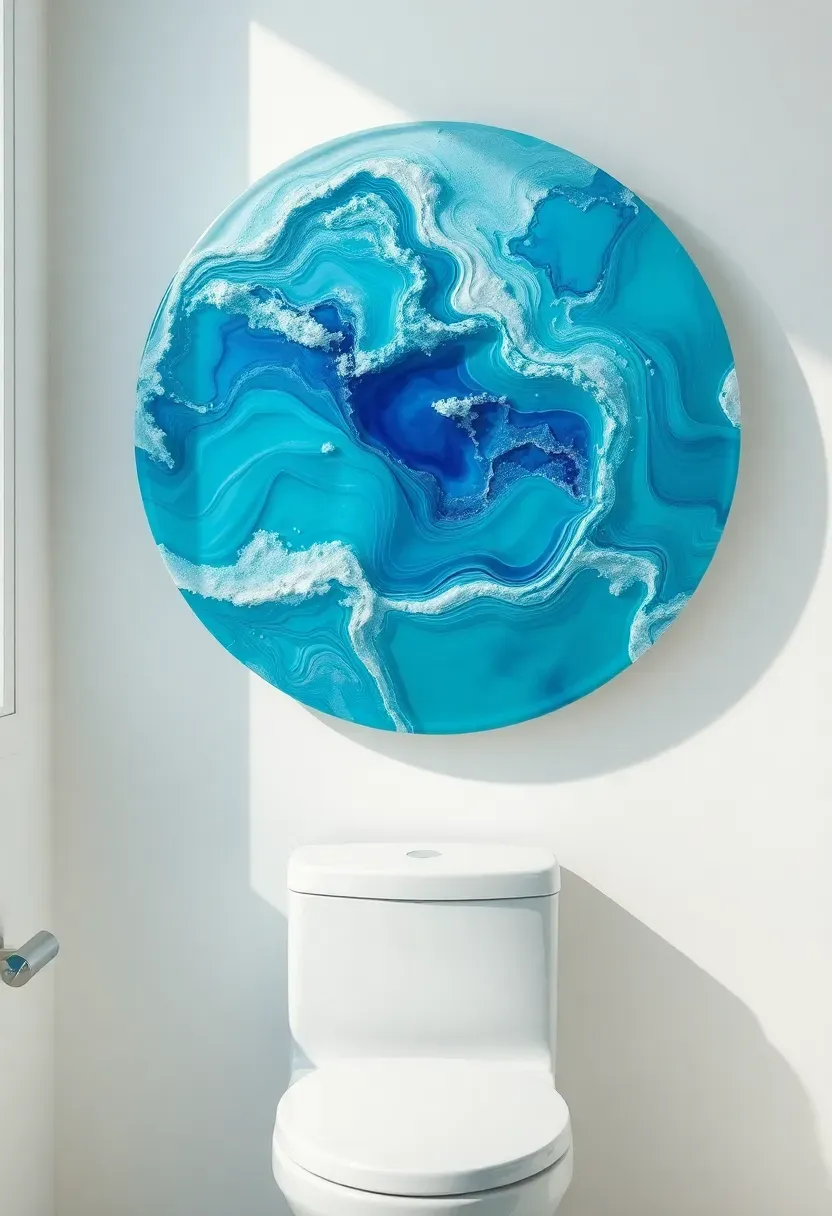
4. Resin Ocean Art
Epoxy resin poured over a round board and manipulated with a heat gun creates layered, wave-like patterns in translucent blues, teals, and whites. The cured resin surface is waterproof, glossy, and maintenance-free. A single round piece (16-24 inches) mounted above the tub or toilet adds a focal point that looks custom and expensive but costs about $40 in materials to make yourself.
The Honest Tradeoff
Pros: Completely waterproof, unique each time, satisfying to make. Catches light beautifully.
Cons: Resin is messy to work with and requires good ventilation during curing. Cheap resin yellows within a year. Invest in UV-resistant art resin (ArtResin or similar) to avoid this.
DIY Starting Point
- Round wood panel from an art supply store
- Two colors of resin pigment (ocean tones work best)
- A heat gun or torch to pop bubbles and create cell patterns
Recommended
Items for this idea
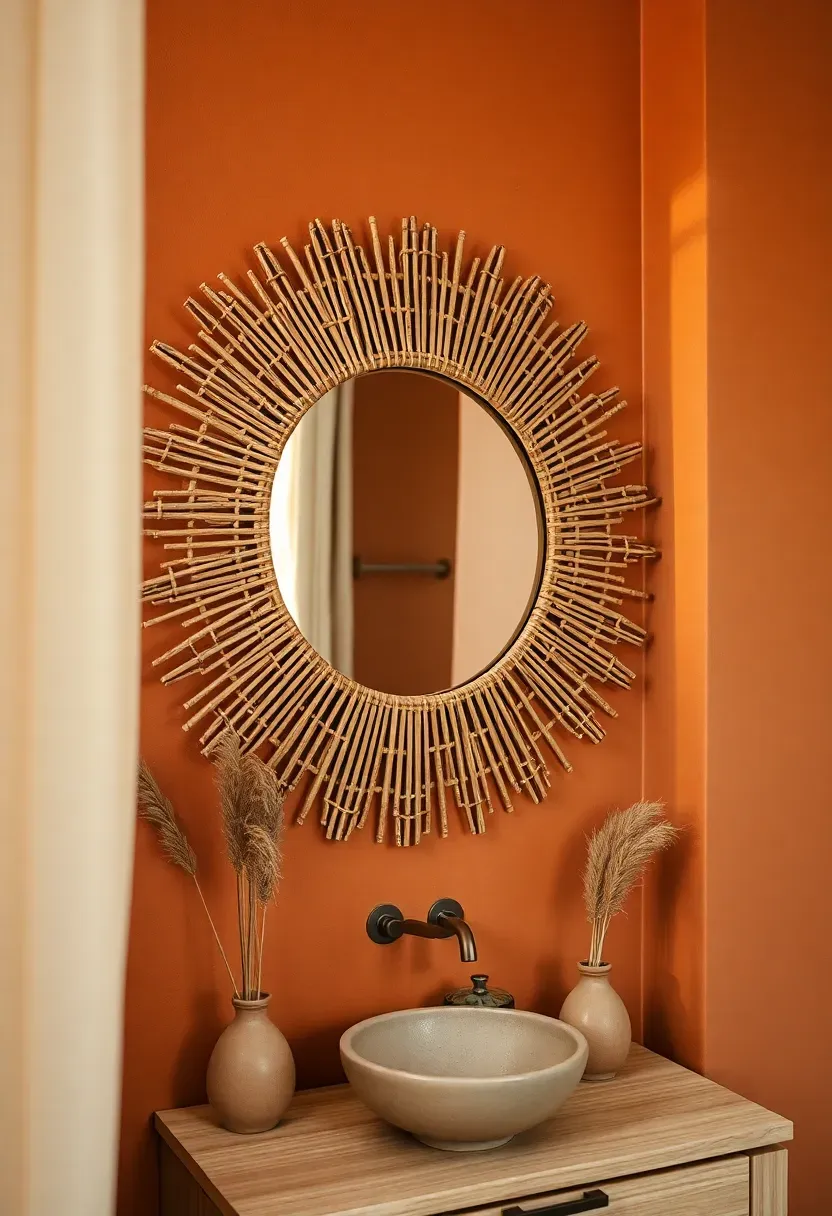
5. Rattan Sunburst Mirror
A rattan or bamboo sunburst mirror combines function and decoration in a single wall piece. The woven rays frame the reflective surface with organic texture that softens tile-heavy bathrooms. These mirrors photograph well for a reason: the radiating pattern creates visual movement on an otherwise flat wall. Natural finishes work in bohemian and coastal spaces; painted black or white, they fit modern interiors.
Sizing and Placement
- Above vanity: match the mirror diameter to the vanity width (give or take two inches)
- Above toilet: 20-28 inches in diameter fills the space without crowding
- Avoid hanging opposite a window where the mirror will create blinding glare spots
Humidity Note
Sealed rattan handles bathroom moisture well. Unsealed pieces may darken over time, which some people prefer. If you want to preserve the original color, spray with clear polyurethane before hanging.
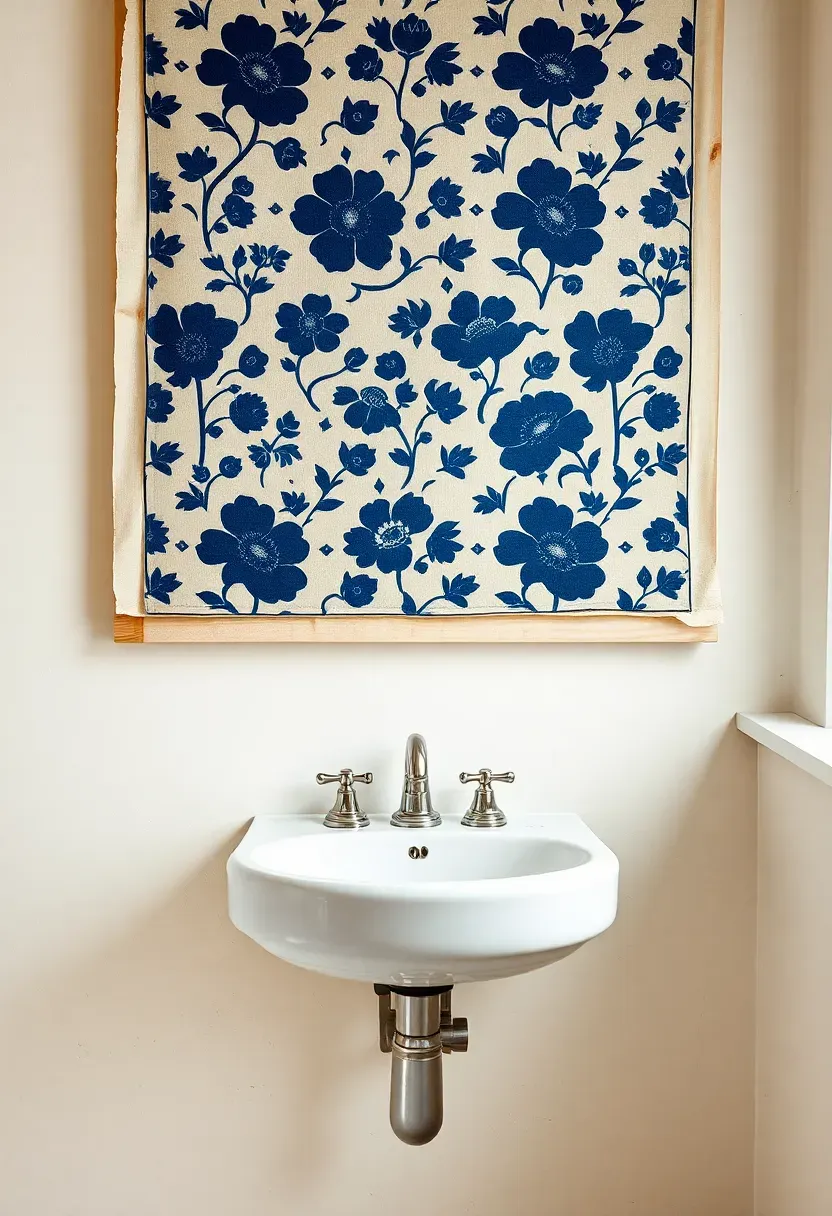
6. Block-Printed Linen Panel
Hand block-printed fabric from India, Japan, or West Africa has a visual density that machine-printed textiles cannot match. The slight irregularities in registration, ink saturation, and pattern alignment create character that reads as artisanal from across the room. Stretch a piece over canvas bars like a painting, or hang it flat behind glass in a simple frame.
Step 1: Source the Fabric
Indian block-printed cottons (like Bagru or Dabu prints) are widely available, affordable, and come in patterns from geometric to floral.
Step 2: Prepare for Hanging
Wash and iron the fabric first. Stretch it taut over heavy-duty stretcher bars, stapling at the back.
Step 3: Protect From Moisture
Spray the finished piece with fabric protector. In well-ventilated bathrooms, block-printed panels last years without issues.
Recommended
Items for this idea
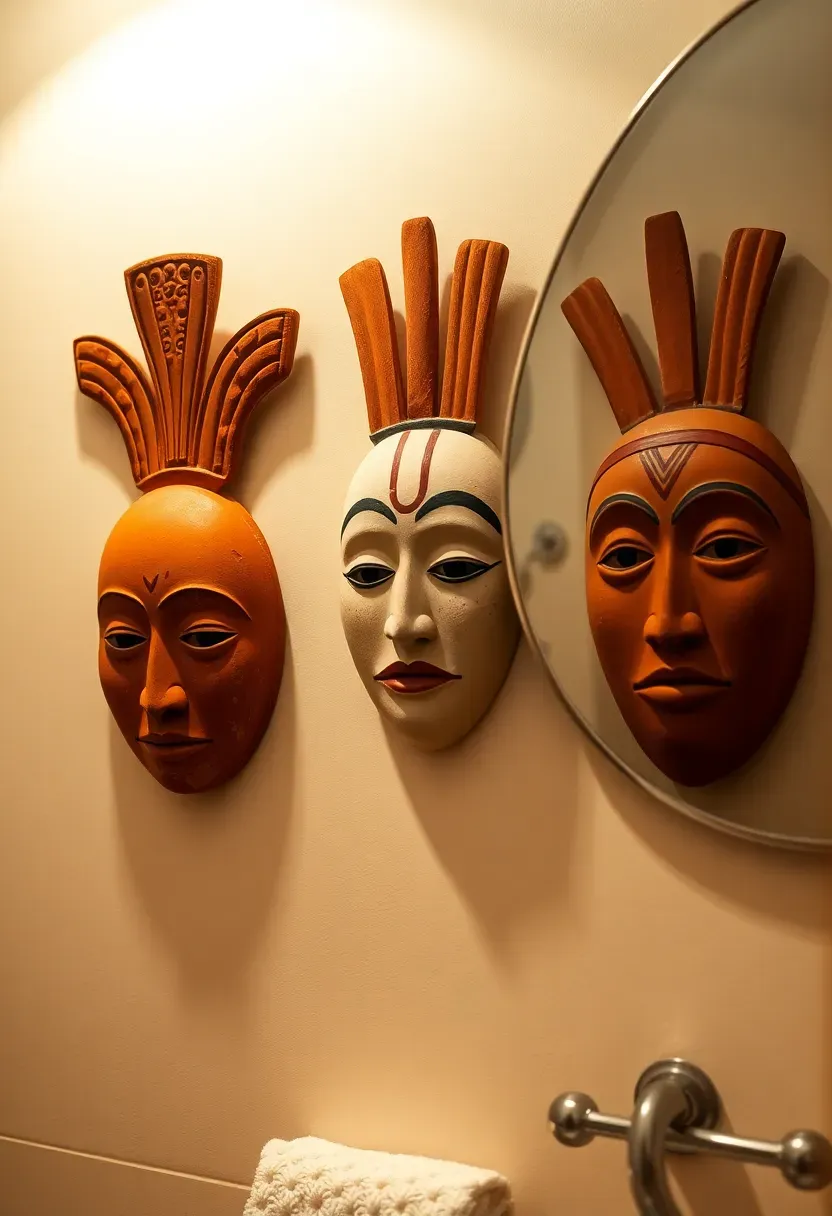
7. Painted Terracotta Masks
Decorative wall masks in terracotta, ceramic, or plaster bring sculptural presence that flat art lacks. African, Venetian, Balinese, and Mexican mask traditions each offer distinct aesthetic vocabularies. A single mask above the tub or a vertical trio beside the mirror creates an immediate conversation point. Fired clay and glazed ceramic versions handle humidity without degradation.
Tips
- Odd numbers (one or three) work better than even groupings on walls
- Mount with picture-hanging hardware rated for the mask's weight — terracotta is heavy
- Unglazed terracotta absorbs moisture; seal with clear matte spray before hanging in a bathroom
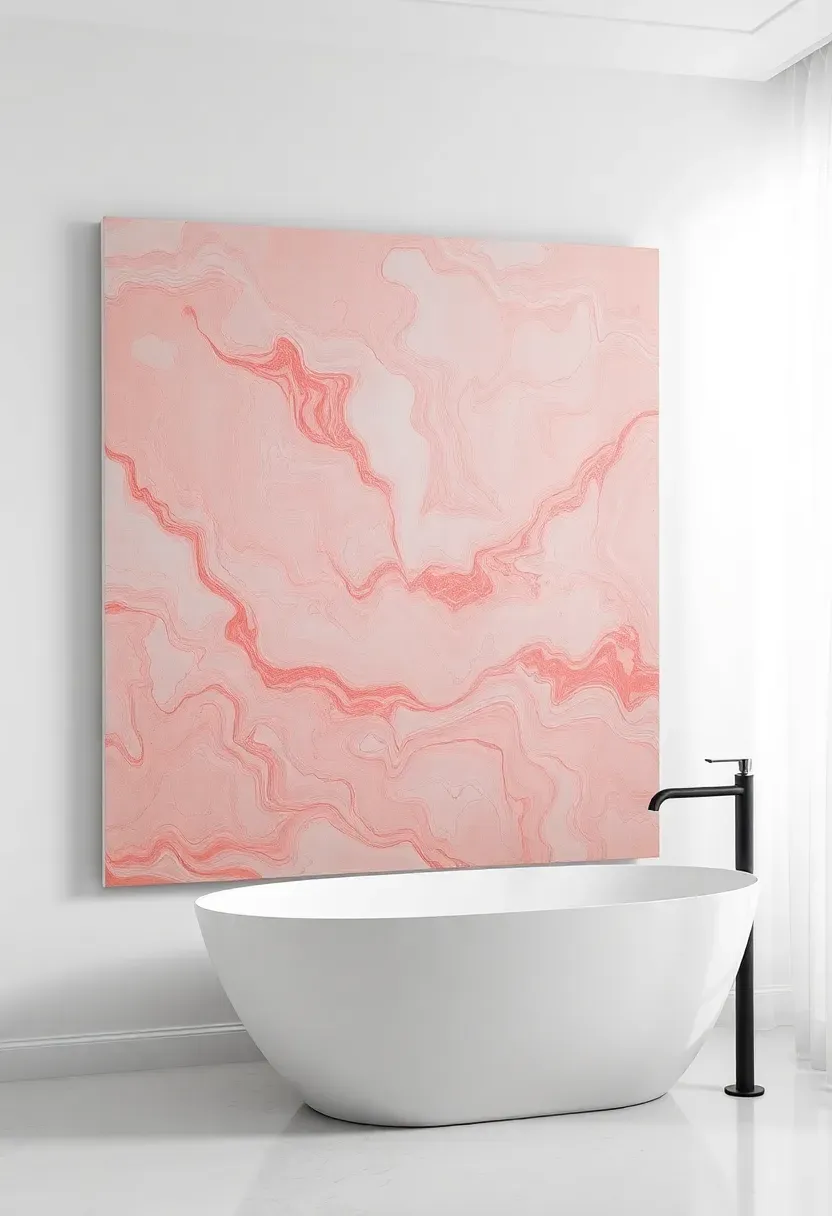
8. Abstract Acrylic Pour Canvas
Acrylic pour painting creates marbled, cellular patterns that look complex but require no drawing skill. You mix acrylic paint with pouring medium, layer colors on a canvas, and tilt until the composition pleases you. Cell patterns emerge naturally. The dried acrylic surface resists moisture, and a coat of clear varnish makes it fully wipeable.
Why This Suits Bathrooms
Abstract pours work in bathrooms because they complement rather than compete. You can match pour colors precisely to your tile, towels, or vanity finish. No other art form gives you this level of color control with this little technique required.
Watch Out
- Pours take 24-72 hours to dry fully; work in a dust-free space
- Too much silicone oil creates cells but leaves a greasy surface — varnish is mandatory
- Canvas warps from heavy paint; use cradled wood panels for pieces over 16 inches
Recommended
Items for this idea
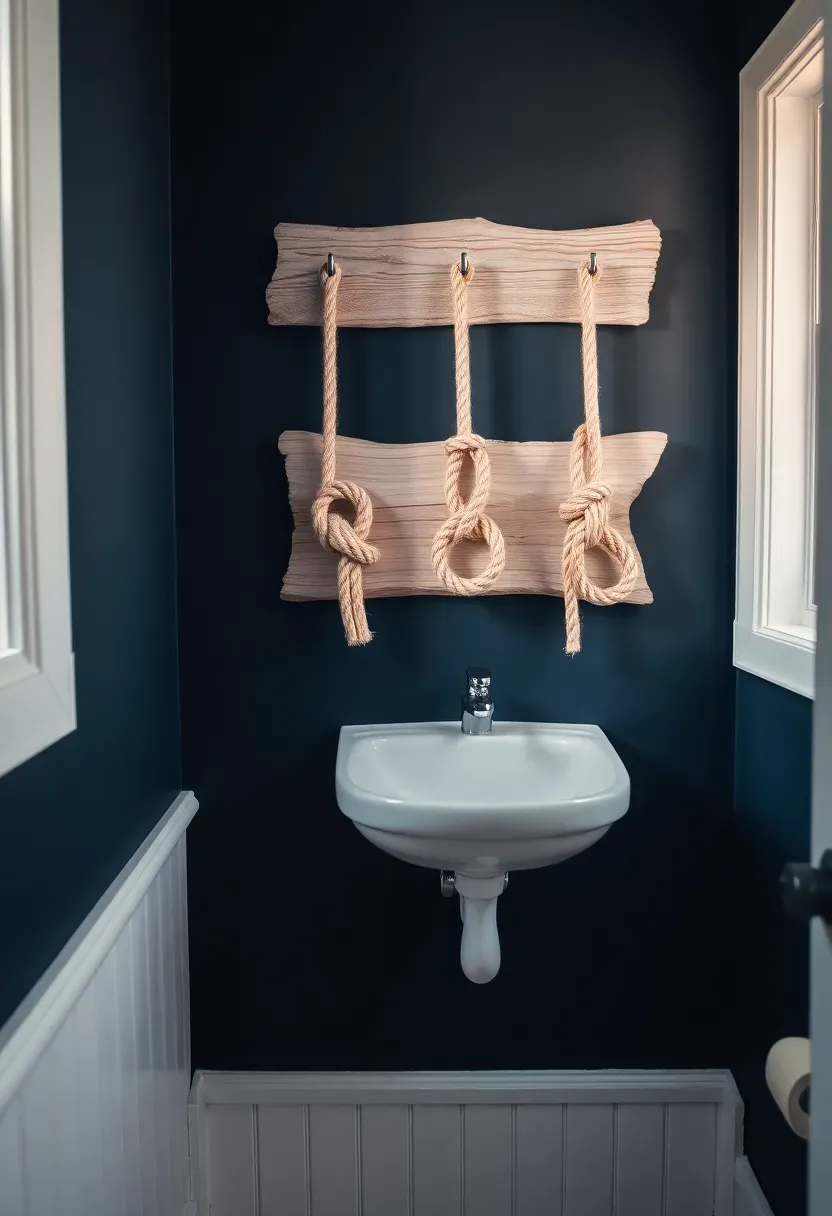
9. Coastal Rope Knot Board
Nautical knots tied in thick cotton or hemp rope and mounted on a wood board make textural wall art with genuine maritime heritage. A board showing three to five different knots — bowline, figure eight, cleat hitch, monkey fist — arranged in a row with small labels beneath each one reads as educational and decorative at once. The thick rope adds dimensional shadow that framed prints cannot.
Problem: Generic Nautical Decor Looks Cheap
Most coastal bathroom accessories are mass-produced plastic painted to look like rope or wood. They fool nobody.
Solution: Use Real Materials
Actual cotton rope on actual wood with actual knots has weight and texture that no printed version can fake. Source thick rope from a marine supply store, not a craft chain. The difference is immediately visible.
10. Art Deco Geometric Print
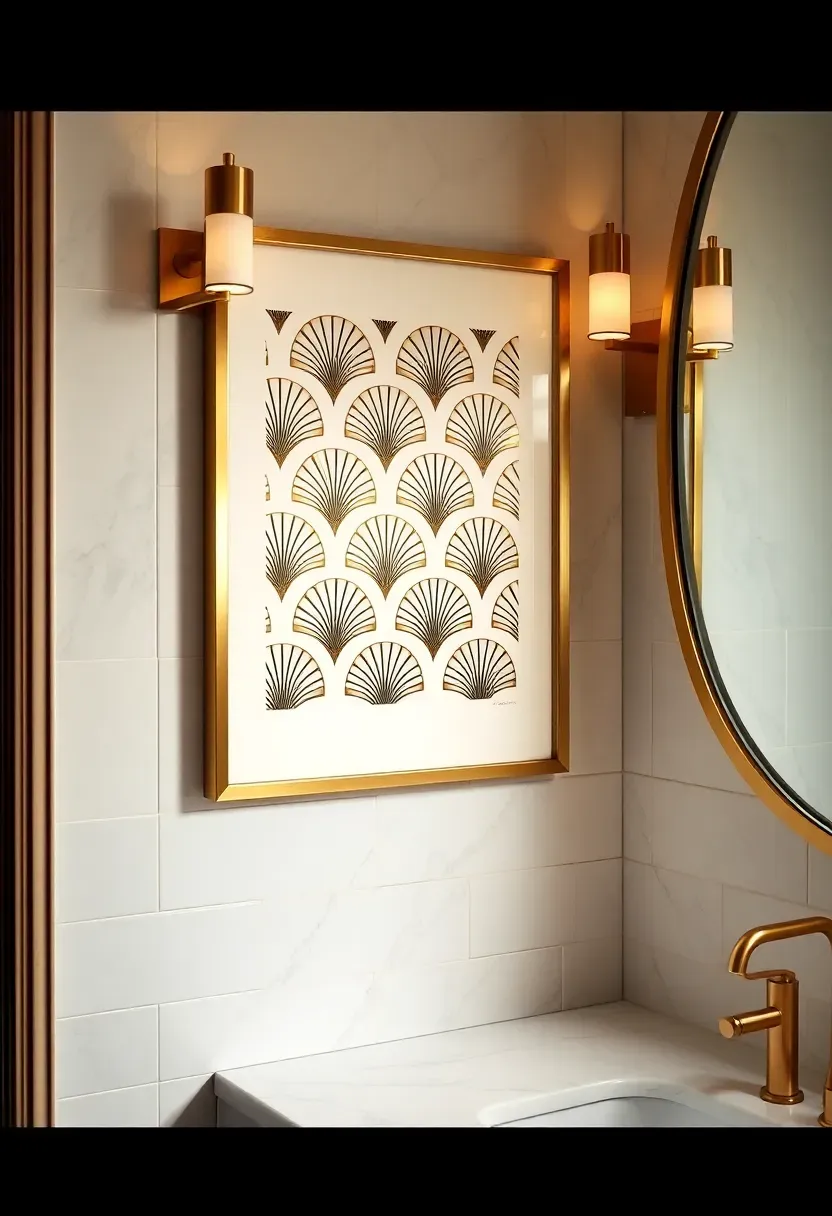
Art Deco patterns — fans, sunbursts, stepped pyramids, and repeating arcs in gold, black, and cream — translate to prints that carry authority without being figurative. The symmetry and metallic tones of Deco design pair with bathroom fixtures (brass taps, chrome towel rails, glass shelving) because they share the same material vocabulary. A single framed geometric print or a pair of matching prints flanking a mirror anchors a bathroom in a specific era without becoming a theme park.
Tips
- Metallic ink prints on black paper create genuine shimmer
- Match frame metal to your bathroom hardware (brass with brass, chrome with chrome)
- Deco patterns scale well — a small 8x10 print reads as clearly as a 24x36 poster
Recommended
Items for this idea
11. Cyanotype Botanical Print
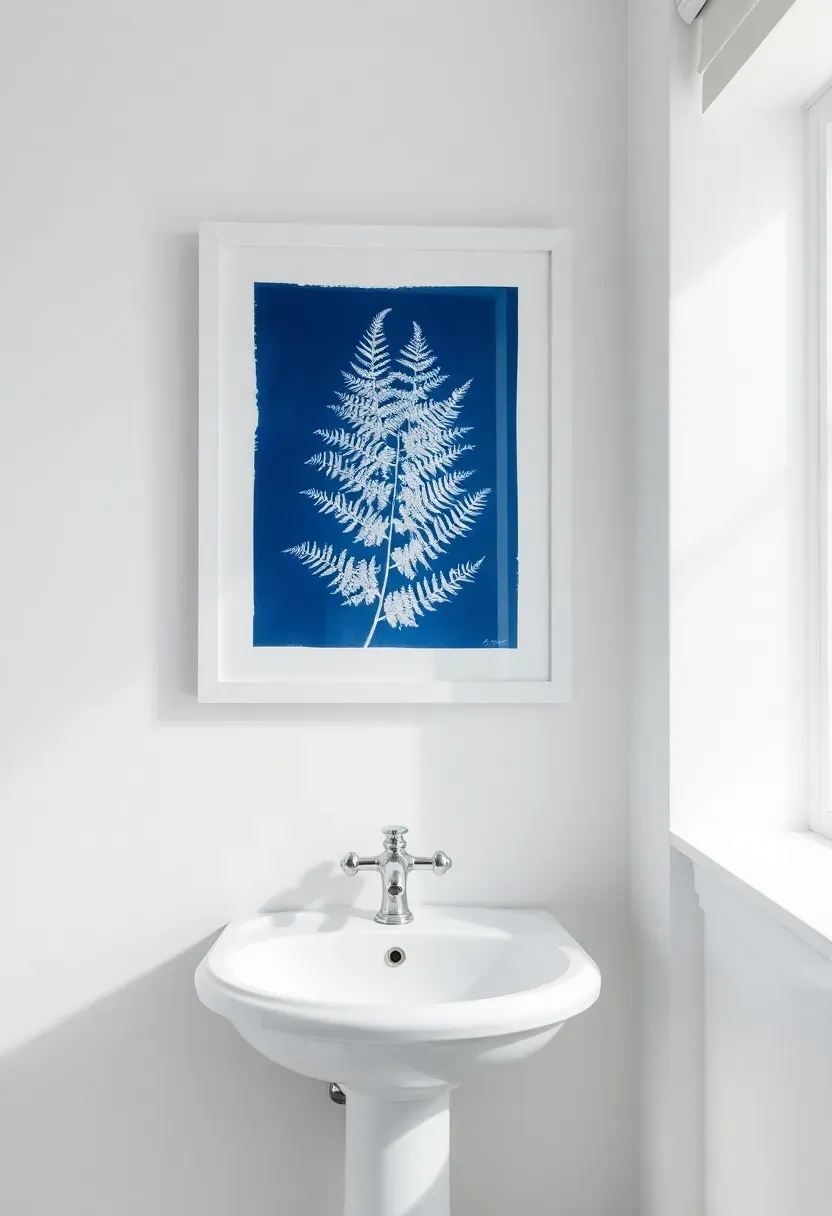
Cyanotype is a 170-year-old photographic process that produces white silhouettes on a deep Prussian blue background. Place a fern frond, flower, or leaf on treated paper, expose it to sunlight for ten minutes, and rinse with water. The result is a one-of-a-kind botanical image with a saturated blue that no digital printer matches. The process is simple enough to do at home with a $15 kit.
Origins and Modern Use
Anna Atkins used cyanotypes to catalog British algae in the 1840s, creating what many consider the first photographically illustrated book. Today, artists and hobbyists use the same chemistry. The deep blue background works naturally in bathrooms alongside white tile and chrome.
Making Your Own
- Buy pre-treated cyanotype paper or mix your own solution with ferric ammonium citrate and potassium ferricyanide
- Expose in direct sunlight (overcast days work but take longer)
- Rinse in running water until the unexposed yellow wash clears completely
12. Brass Wall Sconce Art
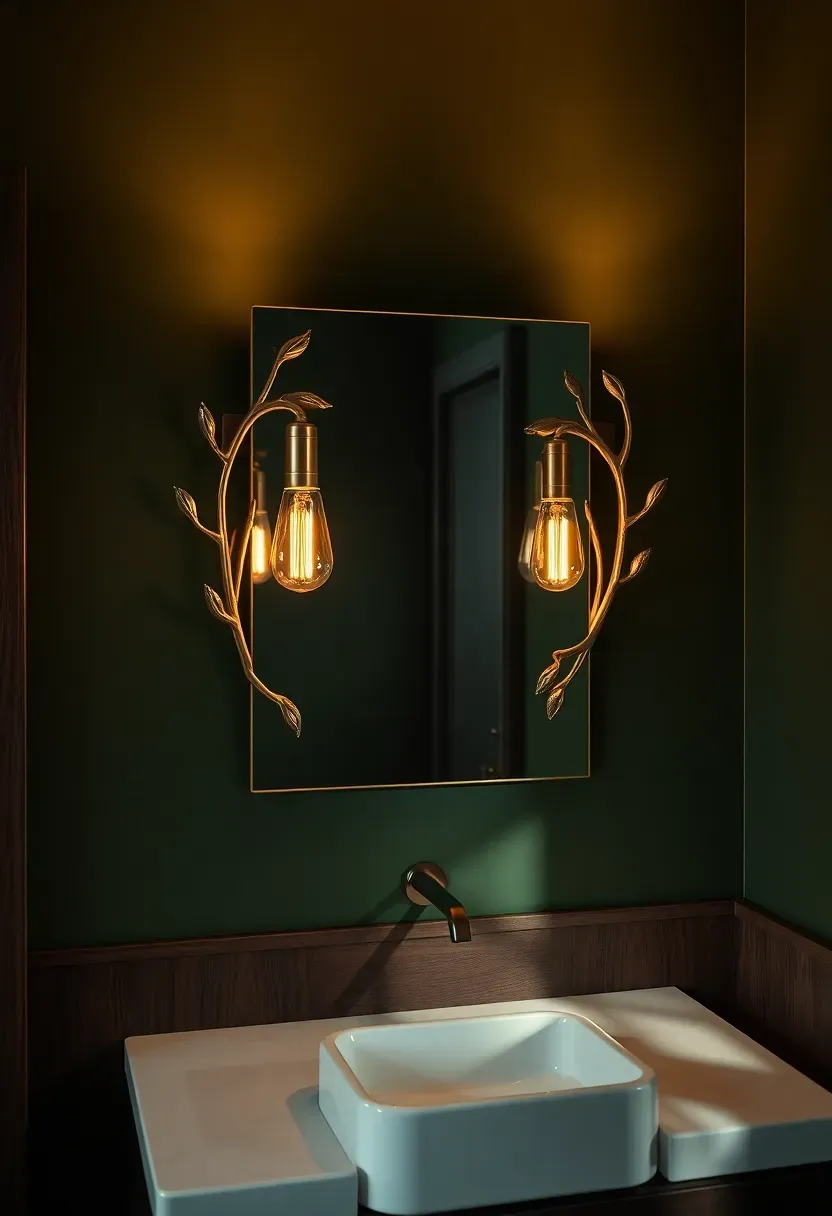
Decorative wall sconces that combine light and sculpture serve double duty in bathrooms. A pair of sculptural brass sconces flanking the mirror provides task lighting and wall art simultaneously. Look for sconces with interesting shapes — arc forms, branch silhouettes, geometric clusters — rather than standard shaded fixtures. The warm glow of brass creates ambient light that overhead fixtures miss.
Choosing Between Decorative and Functional
Primarily decorative: Small candle-style sconces that hold tapers or battery LED candles. No wiring needed. Mount with screws.
Primarily functional: Hardwired sconces with real bulbs. Require electrical work but eliminate the need for separate vanity lights.
Best Placement
Mount sconces at eye level (60-65 inches from the floor) on either side of the mirror. This position casts even light across the face and eliminates the shadows that ceiling lights create.
Recommended
Items for this idea
13. Landscape Oil Pastel Sketch
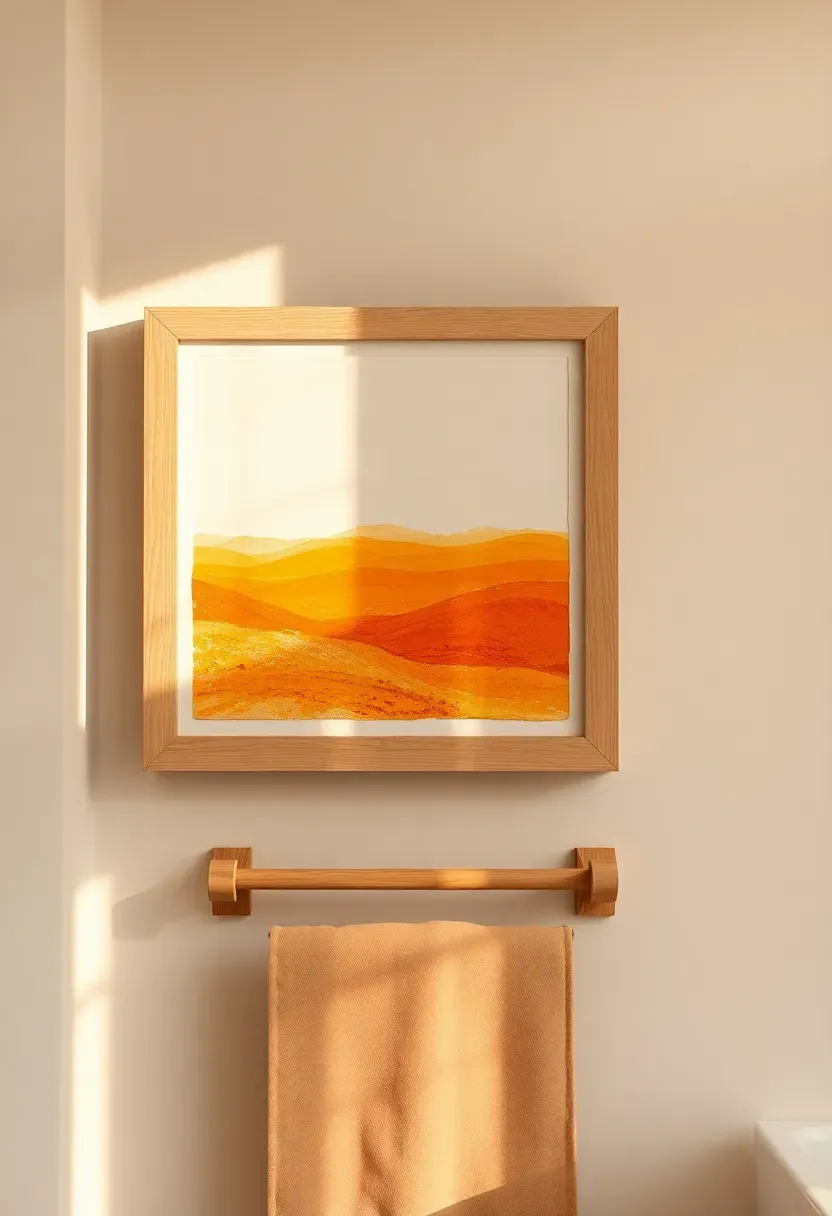
Oil pastels on paper produce rich, buttery color with visible texture that photographs and digital prints cannot replicate. A loosely rendered landscape — rolling hills, a coastline, a field — in warm tones adds an unexpectedly soft note to a hard-surfaced room. Oil pastels are wax-based and naturally water-resistant once applied, making them more bathroom-friendly than watercolors or charcoal.
Tips
- Frame behind glass or acrylic to prevent smudging (oil pastels never fully harden)
- Use a fixative spray before framing for extra protection
- Commission a small original from a local artist for $50-150 — far more interesting than a mass print
14. Embroidered Hoop Art
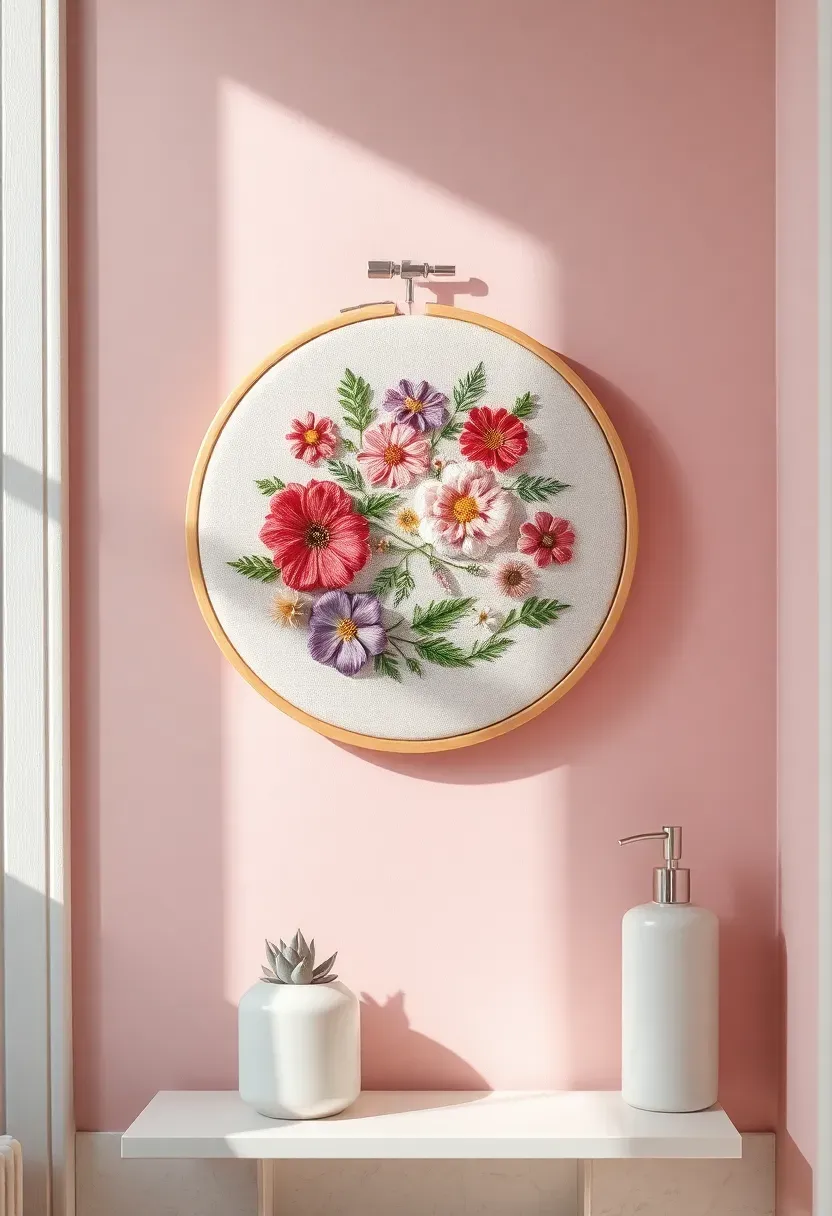
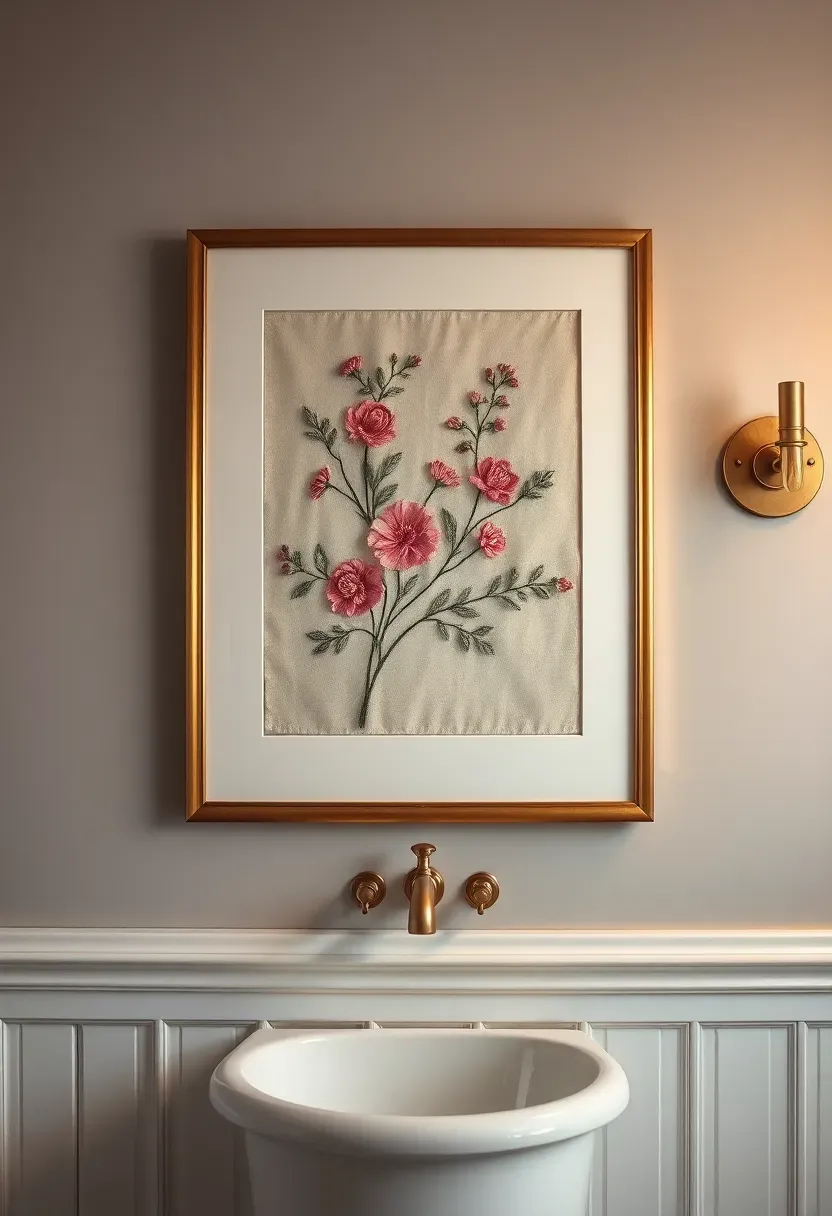
Embroidery displayed in its hoop eliminates the need for a frame and gives textile art a clean circular form. Floral motifs, abstract patterns, and even bathroom-specific phrases ("wash your hands" in French knots) all work within the 6-10 inch diameter of a standard hoop. Cotton thread on linen or cotton fabric is durable and easy to spot-clean.
Problem: Textile Art Absorbs Bathroom Moisture
Fabric-based art in wet rooms risks mildew if air circulation is poor.
Solution: Pick the Right Spot
Hang hoop art on the wall opposite the shower, near the door where air moves. Avoid the wall directly above the tub. In bathrooms with a good exhaust fan, you can place embroidery almost anywhere except inside the shower enclosure.
Scale Trick
Group three hoops of different sizes (6, 8, and 10 inches) in a triangular arrangement for visual weight that a single small hoop lacks.
Recommended
Items for this idea
15. Terrazzo-Inspired Paper Collage
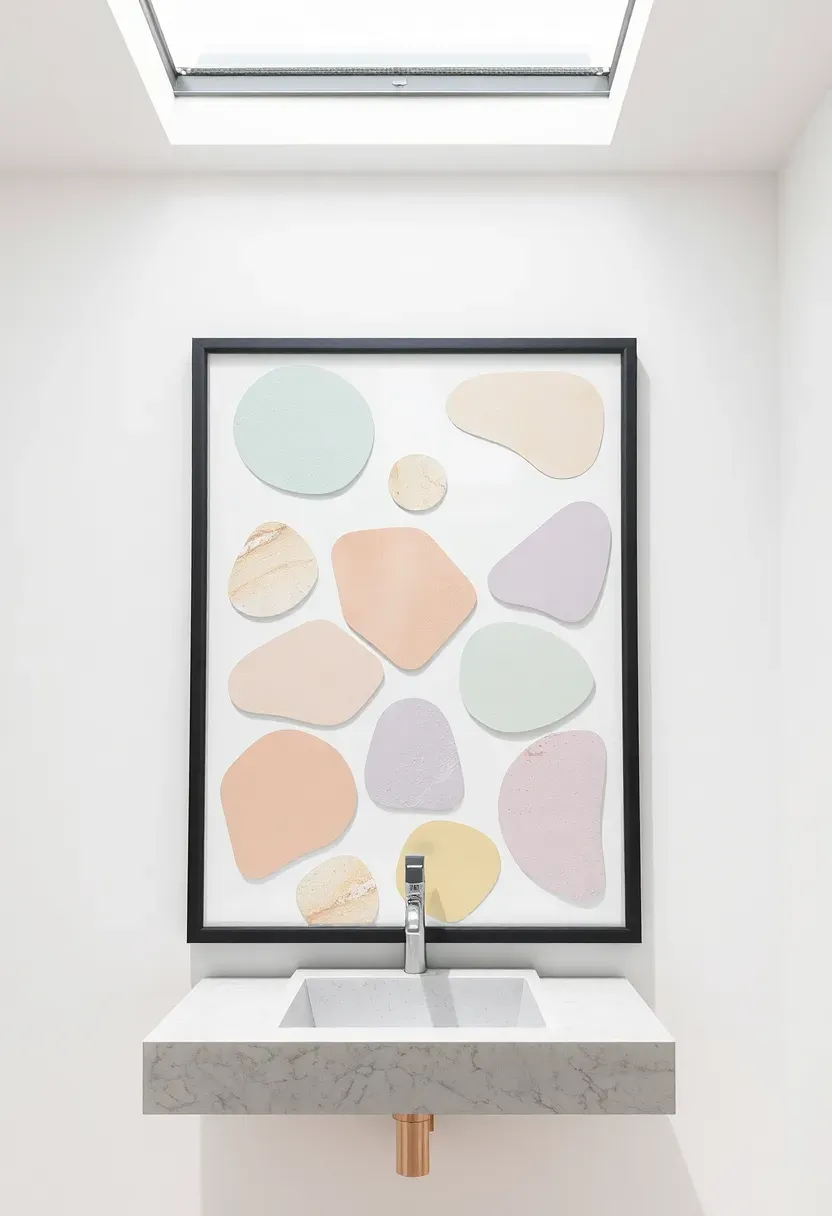
Cut pieces of colored paper in irregular organic shapes, arrange them on a white background, and glue them down. That is it. The result mimics the speckled, cheerful quality of terrazzo floors and countertops but in a wall-friendly format. Use heavy-weight origami paper, paint swatches, or card stock in a palette that coordinates with your bathroom fixtures. Frame behind glass for a clean, finished look.
Step 1: Gather Materials
Collect papers in 4-6 coordinating colors. Tear rather than cut for softer, more organic edges.
Step 2: Compose
Scatter shapes on a white board, leaving 30-40% white space. Terrazzo looks random but has even distribution — no clumps, no gaps.
Step 3: Fix and Frame
Glue shapes with acid-free adhesive. Mat with a wide white border and frame in a slim profile frame matching your hardware finish.
16. Vintage Botanical Chart
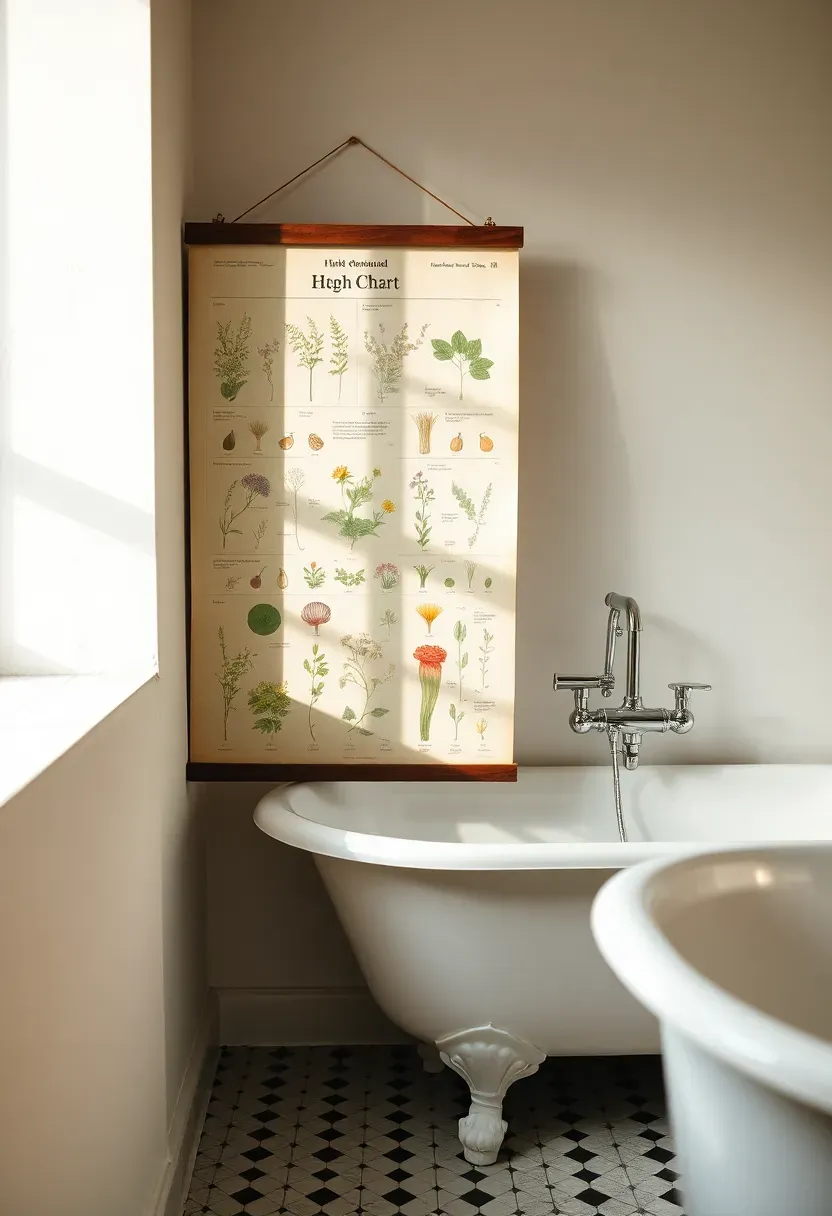
Educational botanical charts from the 1800s and early 1900s were designed to be read across a classroom, so they are large, detailed, and graphically bold. Original charts by publishers like Jung-Koch-Quentell or Deyrolle sell for hundreds, but high-quality reproductions cost $20-40 and look nearly identical. A single chart — herbs, mushrooms, cross-sections of flowers — hung flat or on a magnetic poster hanger fills a large bathroom wall instantly.
How This Differs From Botanical Prints
Botanical charts are educational diagrams: labeled, sectioned, and annotated. They have the visual density of a textbook illustration at poster scale. Standard botanical prints are artistic interpretations. Both work, but charts have a graphic directness that suits modern interiors.
Hanging Options
- Magnetic poster hangers (top and bottom) for a casual, frameless look
- Mounted on foam board and trimmed to size for a rigid display
- Rolled around a wooden dowel like a scroll for a vintage schoolroom feel
Recommended
Items for this idea
17. Concrete Cast Relief
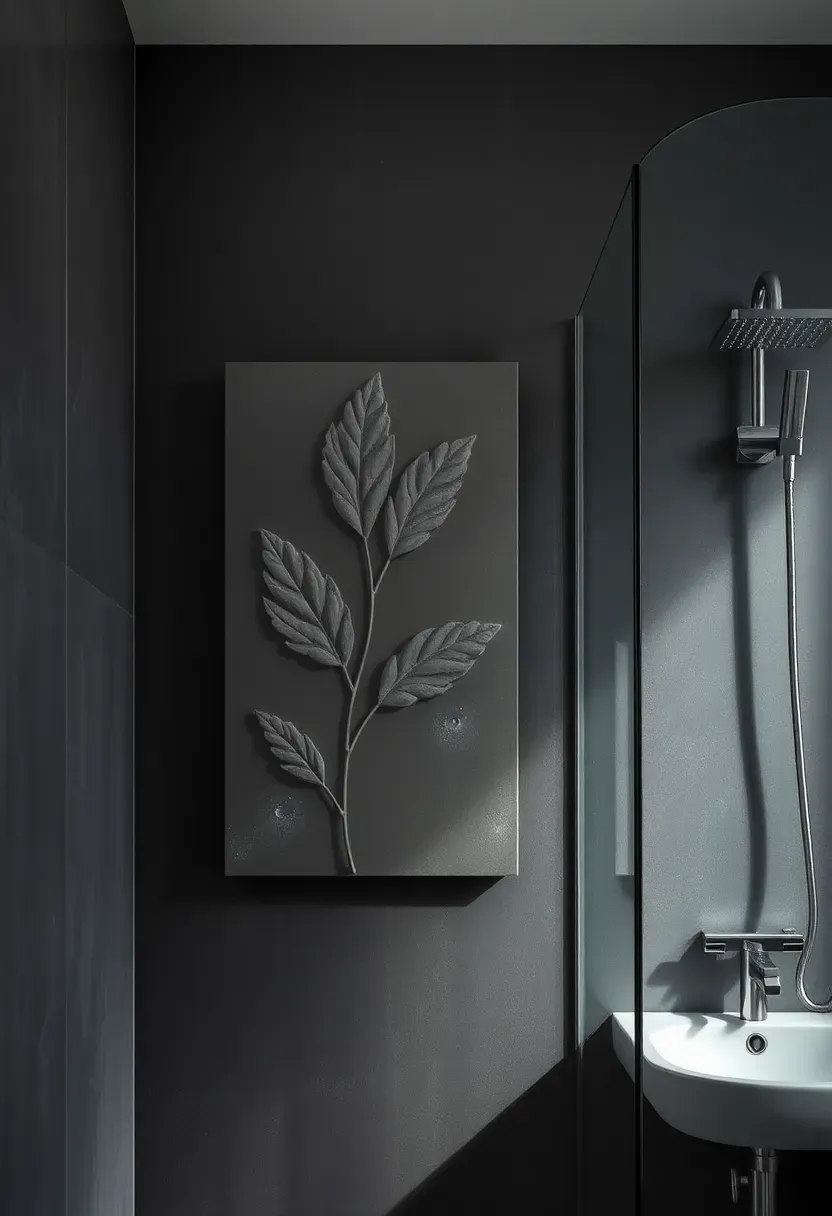
Casting concrete into silicone molds creates lightweight relief panels with industrial texture. Leaf impressions, geometric patterns, and abstract organic shapes all work. A single rectangular panel (12x24 inches) mounted beside the shower or above the vanity adds raw material contrast to polished fixtures. Sealed concrete is waterproof and gets better looking as it ages slightly.
Making a Concrete Relief Panel
- Build or buy a silicone mold in your desired pattern
- Mix rapid-set concrete with a small amount of acrylic fortifier for strength
- Pour into the mold, vibrate to release bubbles, and let cure for 24 hours
- Demold, sand edges, and seal with penetrating concrete sealer
Watch Out
Unsealed concrete absorbs water and develops stains. Two coats of sealer before mounting is not optional in a bathroom. Also, concrete panels are heavier than they look — use appropriate wall anchors.
18. Color Field Canvas Panel
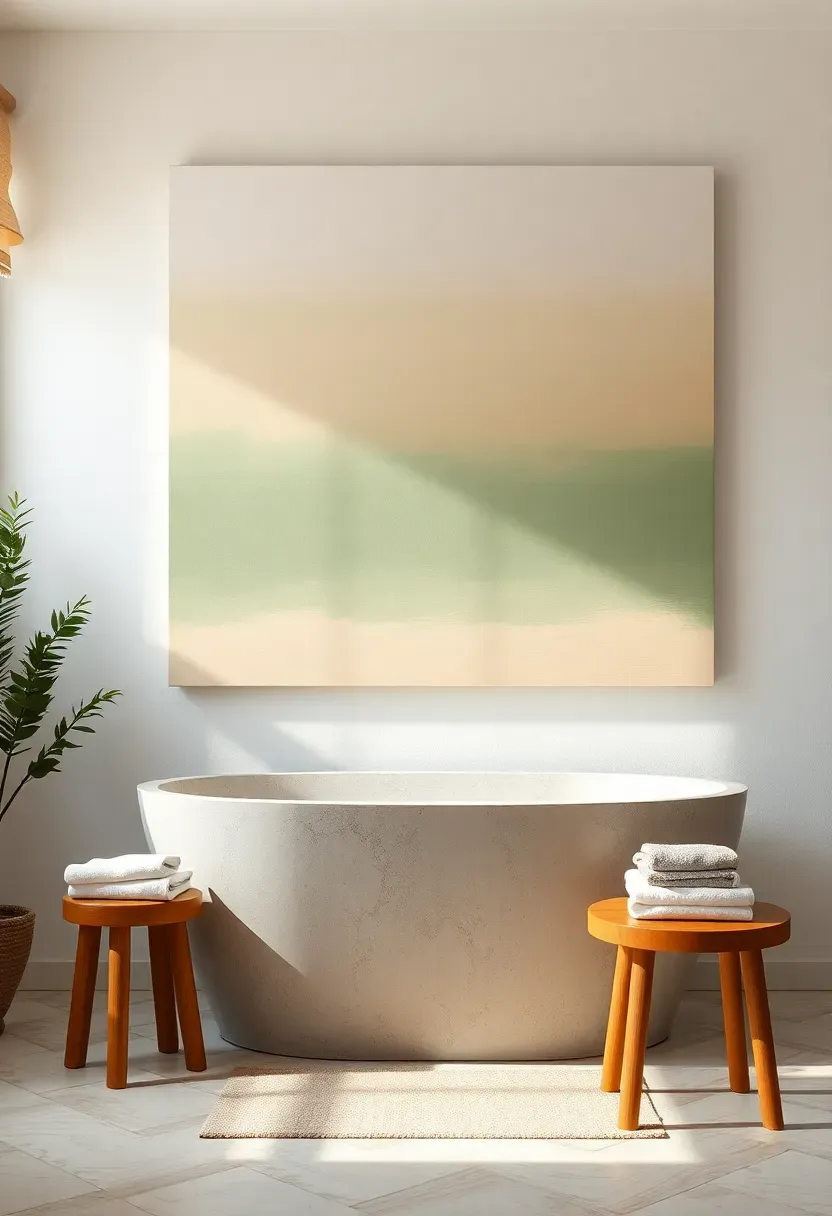
Color field painting — large areas of flat or softly graduated color with minimal detail — creates calm backgrounds rather than focal points. A canvas in tones that extend your wall color (slightly darker, slightly warmer, or a complementary shade) acts like a window into deeper color. Mark Rothko and Helen Frankenthaler perfected this approach, and it translates to bathrooms where visual rest matters more than visual stimulation.
Why Bathrooms Benefit From Quiet Art
Not every room needs a conversation piece. Bathrooms are for routine, rest, and privacy. A color field painting contributes mood without demanding attention. It is the art equivalent of a warm bath.
DIY Approach
- Buy a pre-stretched canvas (24x36 inches minimum)
- Mix two adjacent paint colors and apply in horizontal bands, blending the transition wet-on-wet
- Finish with matte varnish for moisture resistance
Recommended
Items for this idea
19. Antique Textile Fragment
A fragment of antique fabric — 18th-century brocade, Victorian needlepoint, Ottoman embroidery, or Kantha stitching — mounted and framed behind glass becomes a genuinely unique wall piece with historical depth. Textile fragments are available at estate sales and specialty dealers for far less than complete pieces, and their imperfections (faded color, worn threads, repaired sections) add authenticity.
Tips
- Mount on acid-free mat board using conservation-grade thread tacks, not adhesive
- Frame behind UV-filtering glass to slow further fading
- A fragment as small as 8x8 inches is enough when properly matted with wide borders
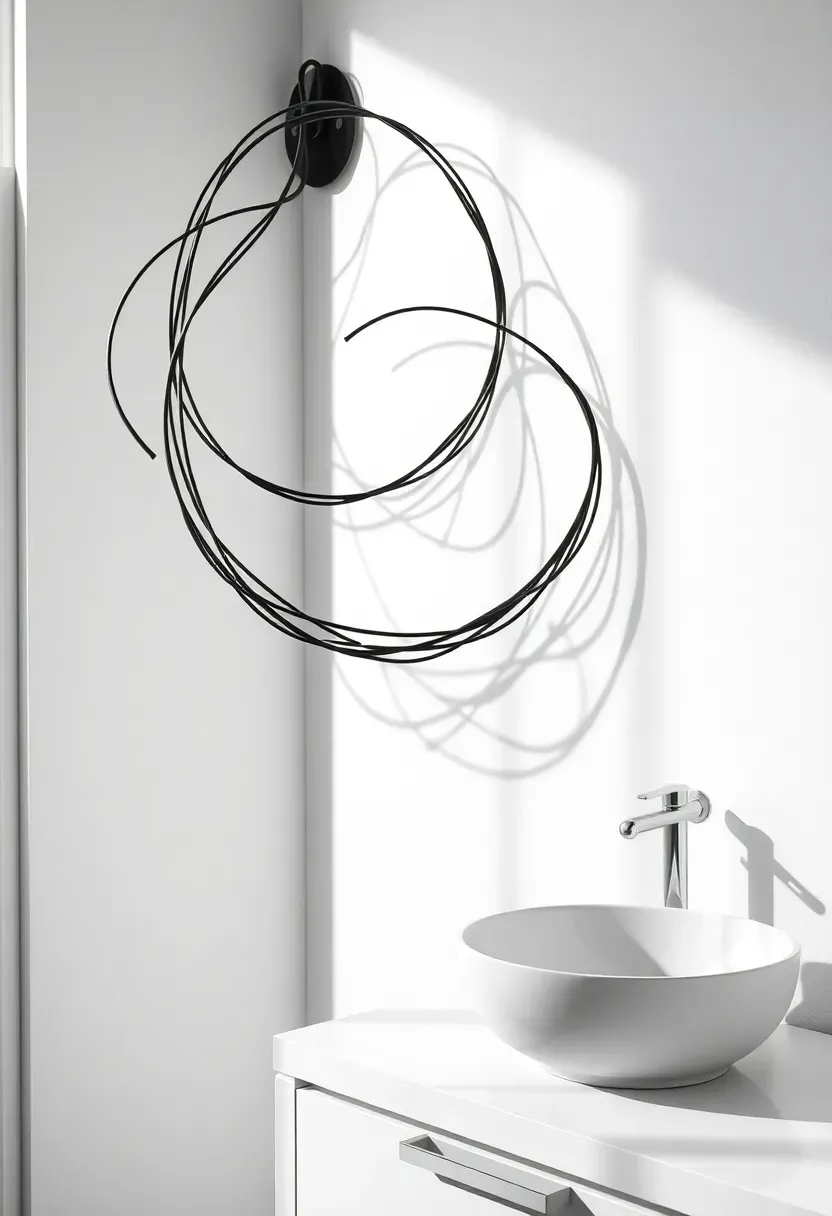
20. Abstract Metal Wire Sculpture
Thick gauge wire (steel, copper, or aluminum) bent into flowing organic or geometric shapes and mounted flat against the wall creates line art with real dimension. The wire casts shadows that shift with the light throughout the day, adding movement to a static wall. Metal wire is impervious to humidity, making this one of the safest choices for wet bathrooms.
Choosing Your Metal
Steel wire (black annealed): Bold, dark lines. Industrial feel. Prone to surface rust in very humid rooms unless sealed with clear coat.
Copper wire: Warm tone, develops green patina over time in moist air. Some people love the patina; others hate it.
Aluminum wire: Lightweight, silver tone, completely corrosion-proof. Easiest to bend by hand.
Scale
Wire art needs to be at least 18 inches in one dimension to register as intentional rather than a leftover craft project.
Recommended
Items for this idea
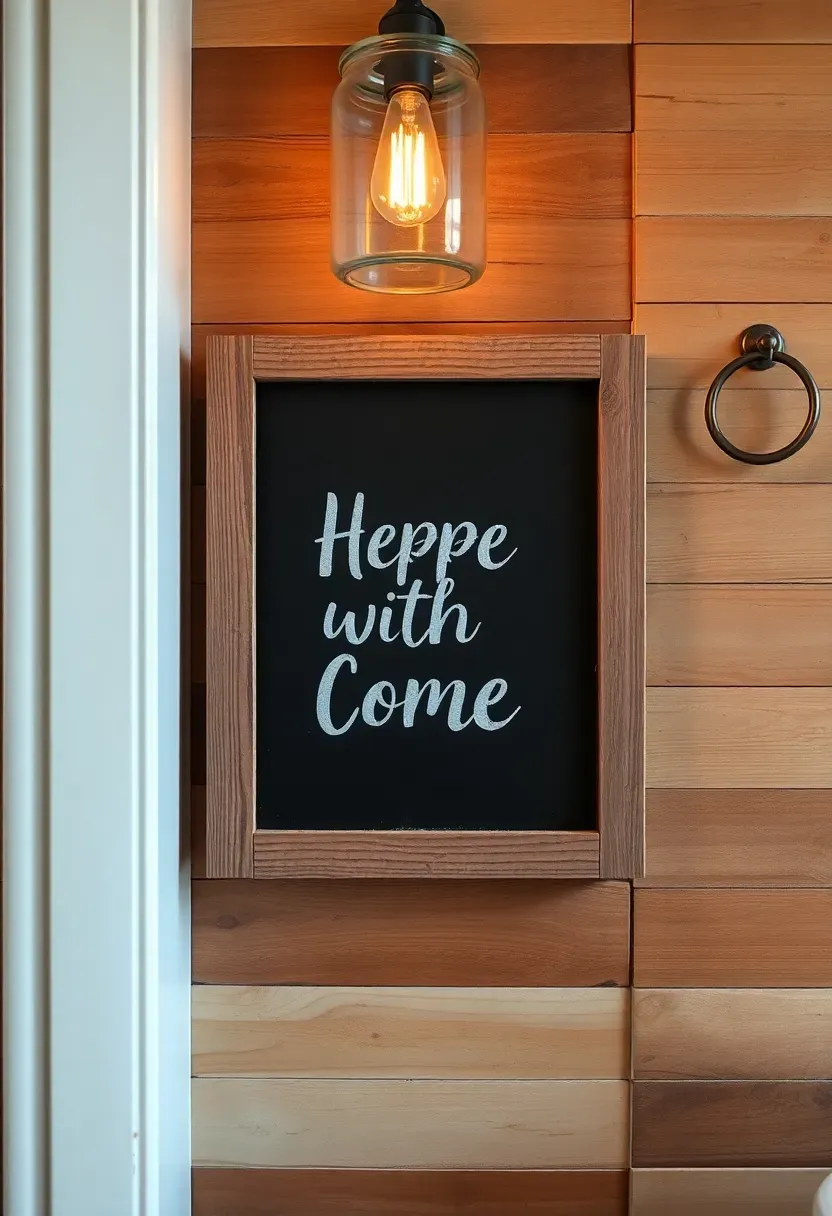
21. Hand-Lettered Chalkboard Sign
A small chalkboard (12x16 inches) with hand-lettered text adds character that printed signs cannot match. The imperfect lines and inconsistent letter spacing of real chalk work read as genuine craft. Write a favorite quote, a bath time menu of products, or house rules. Use chalk markers instead of stick chalk for sharper lines and smudge resistance.
Problem: Chalk Dust and Humidity
Regular chalk smears in humid air. Chalk dust settles on nearby surfaces.
Solution: Chalk Markers
Liquid chalk markers dry to a semi-permanent finish that resists humidity and does not produce dust. They wipe clean with a damp cloth when you want to change the message. The writing stays crisp even in steamy bathrooms.
Framing the Board
Mount the chalkboard in a reclaimed wood frame or lean it on a shelf. Hanging it with visible hardware (a chain or leather strap) adds a casual, shop-sign quality.
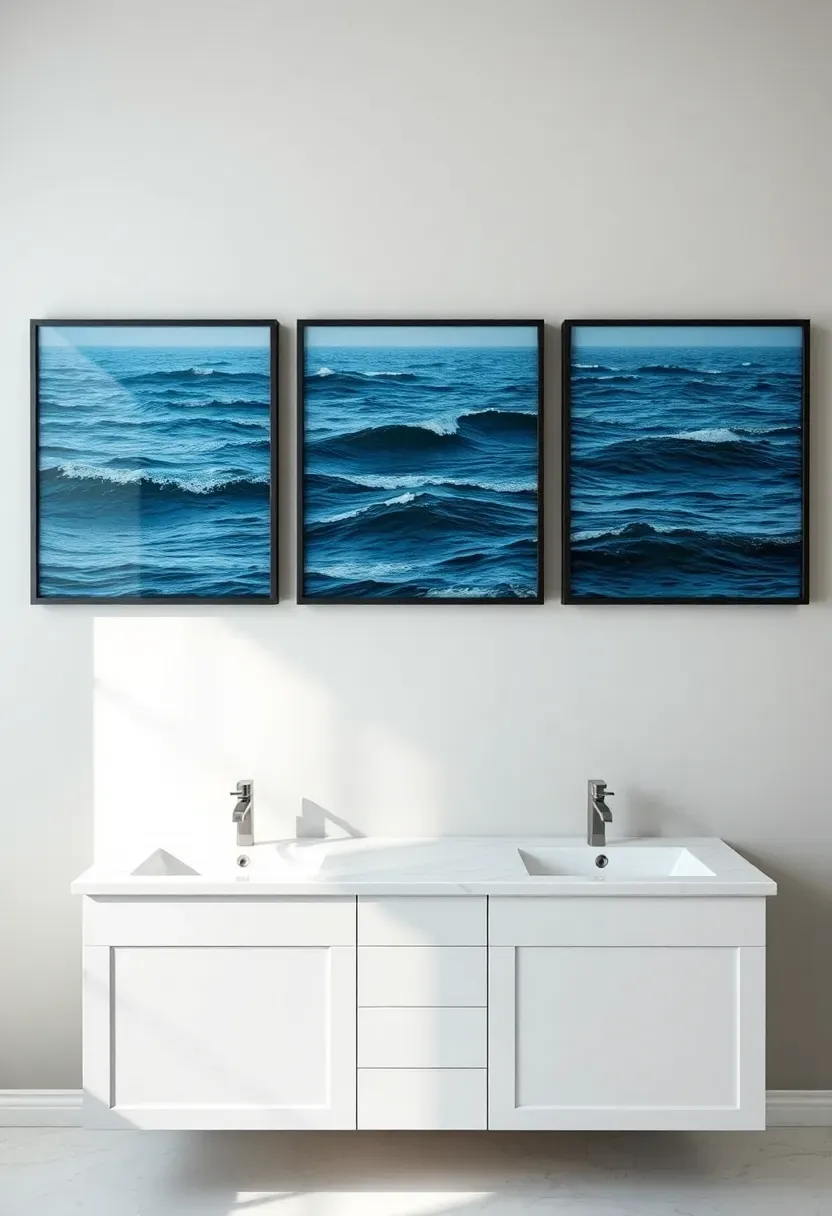
22. Photographic Triptych
A single photograph split across three panels creates a wide-format display that wraps across a wall section. Ocean horizons, forest canopies, and cloudscapes split naturally into triptych format because the subject matter has continuous horizontal flow. Print each panel on canvas or aluminum (both humidity-resistant) and hang them with one-inch gaps between panels.
Spacing Matters
Too much space between panels and the image reads as three separate prints. Too little and the gaps look like mistakes. One inch is the standard. Use a level and measure from the same baseline — uneven triptych panels are immediately obvious.
Subject Selection
- Landscapes with strong horizontal lines: horizons, mountain ridges, shorelines
- Abstract textures: marble veining, water ripples, cloud formations
- Avoid subjects with important details at the split points (faces, architecture with vertical lines)
Recommended
Items for this idea
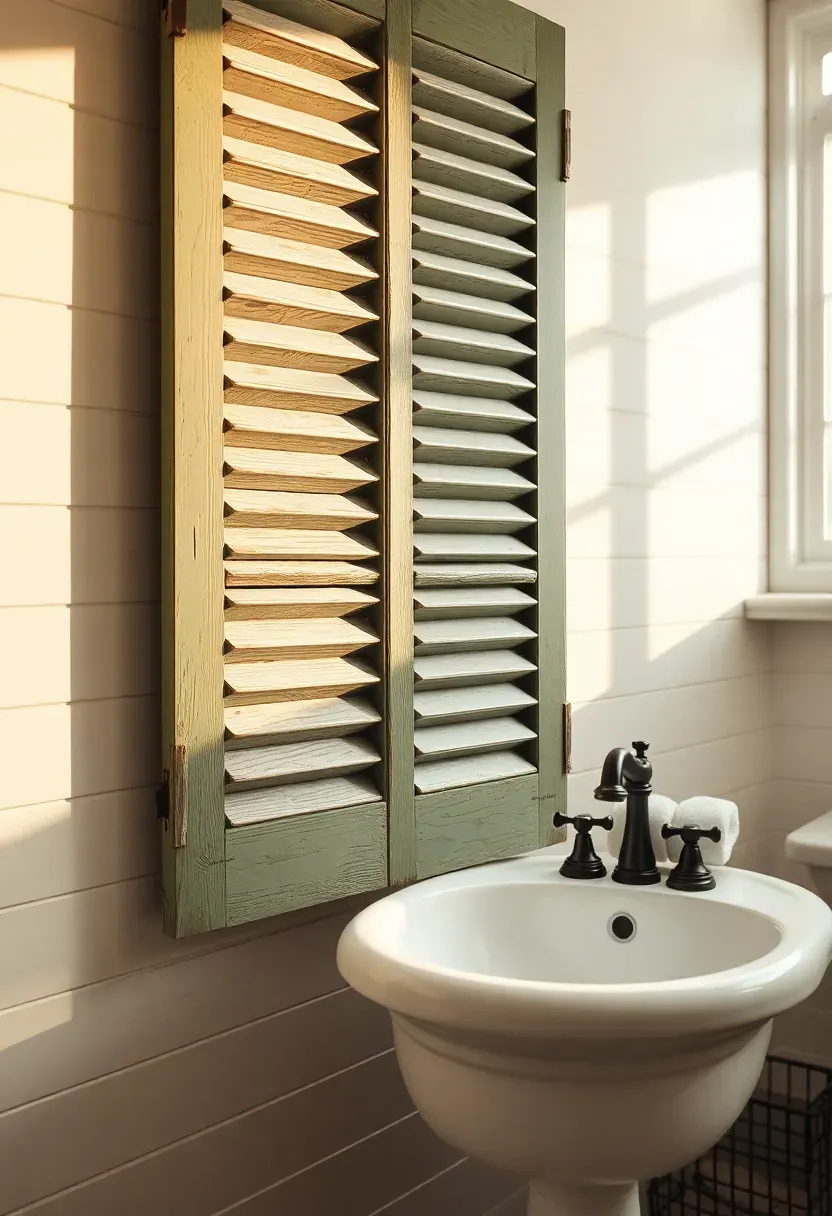
23. Painted Shutter Panel
An old wooden window shutter — the louvered kind, not the flat plantation style — leaned against or mounted on a bathroom wall adds architectural salvage character. The angled slats create shadow lines that change throughout the day. Paint the shutter a color that contrasts with your wall (sage green on white, navy on cream, matte black on gray) or leave the original paint intact if it has good patina and peeling character.
Sourcing Shutters
Architectural salvage stores, demolition yards, and online marketplaces (Facebook Marketplace, Craigslist) are reliable sources. A single shutter panel from a demolished house costs $10-25. Matching pairs cost more and work flanking a window or mirror.
Prep for Bathroom Use
- Sand lightly to remove loose paint (if the shutter predates 1978, test for lead paint first)
- Seal all surfaces with polyurethane or exterior paint to prevent moisture absorption
- Mount with French cleats for easy removal
Quick FAQ
Will humidity ruin art in my bathroom? Depends on the material and your ventilation. Metal, ceramic, sealed wood, and acrylic-based art handle steam without issues. Paper and fabric need proper framing with sealed backs and should be placed away from direct shower spray. Run your exhaust fan for 15 minutes after every shower.
What is the best wall for bathroom art? The wall you see when standing at the vanity mirror or sitting on the toilet. These are your primary viewing angles. Avoid the wall directly above the bathtub where steam concentrates, unless you are hanging something waterproof like ceramic, metal, or sealed concrete.
Can I hang art in a rental bathroom without drilling? Yes. Command strips hold frames up to 16 pounds. Adhesive hooks work for lightweight pieces. Picture ledges can be mounted with removable adhesive. For heavier items, ask your landlord — most allow small nail holes that can be patched at move-out.
How do I protect paper art from bathroom moisture? Frame behind acrylic (not glass — it is lighter and does not shatter). Seal the frame back with kraft paper tape to slow moisture intrusion. Use a mat board to keep the paper from touching the acrylic surface. Choose metal or sealed wood frames over raw wood, which warps.
Is bathroom art worth investing in? A single good piece changes how a bathroom feels more than a new shower curtain or matching towel set. You do not need to spend hundreds. A $15 cyanotype kit, a $25 salvage shutter, or a homemade resin pour each cost less than a restaurant dinner and give the room personality for years.
Bare bathroom walls are a missed opportunity, and fixing them takes less effort than most people assume. Pick one idea from this list that matches your budget and skill level. Start with the wall that bugs you most — usually the one above the toilet or the blank stretch beside the mirror. One piece is enough to shift the whole feel of the room. You can always add more later, but you might find that a single well-chosen piece is all the room actually needs.
Pinterest cover for 23 Bathroom Art Ideas to Decorate Bare Walls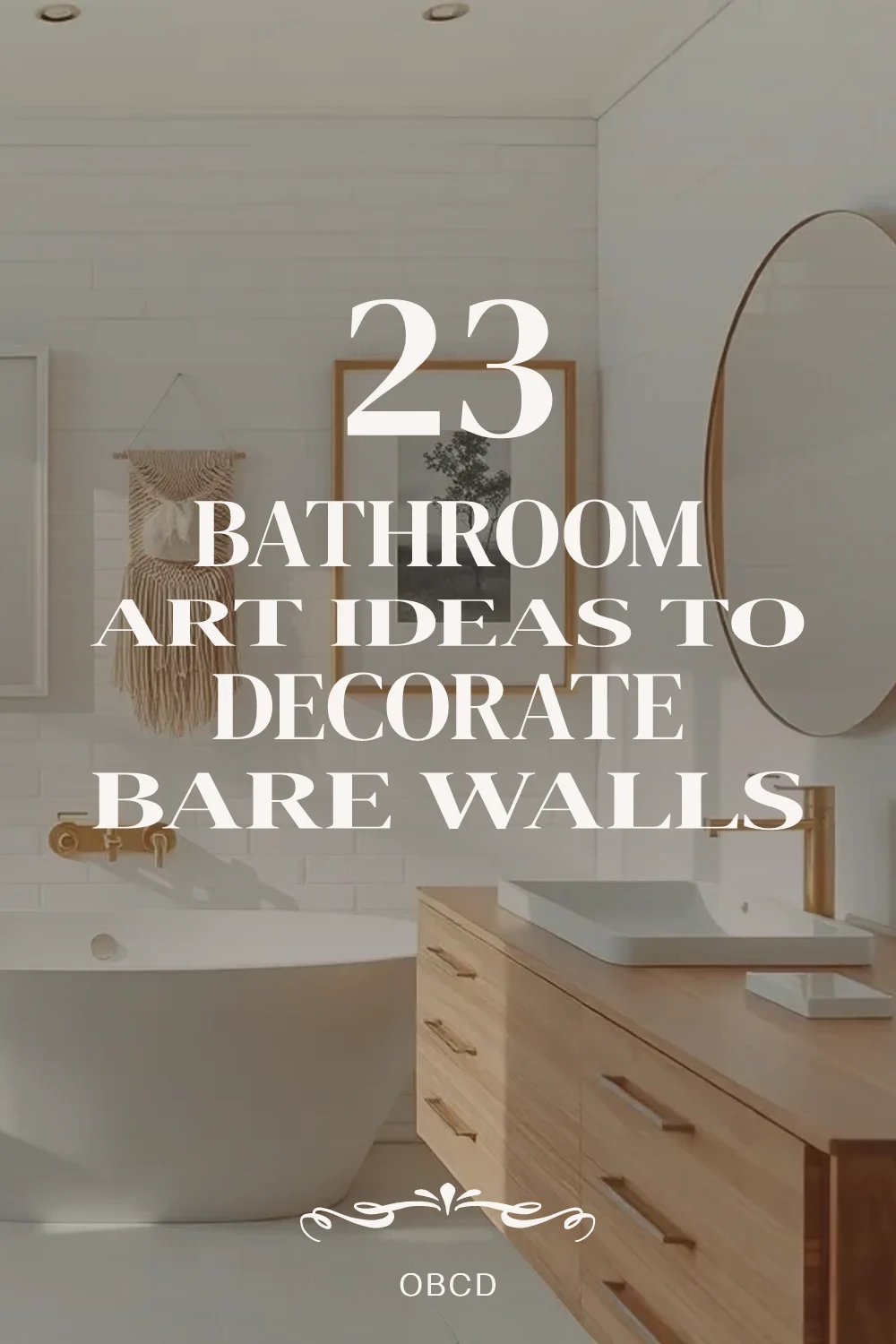
About the author
OBCD
CGI visualization and interior design content. We create detailed 3D renders and curate practical design ideas for every room in your home.