25 Bathroom Ceiling Ideas to Try in 2026
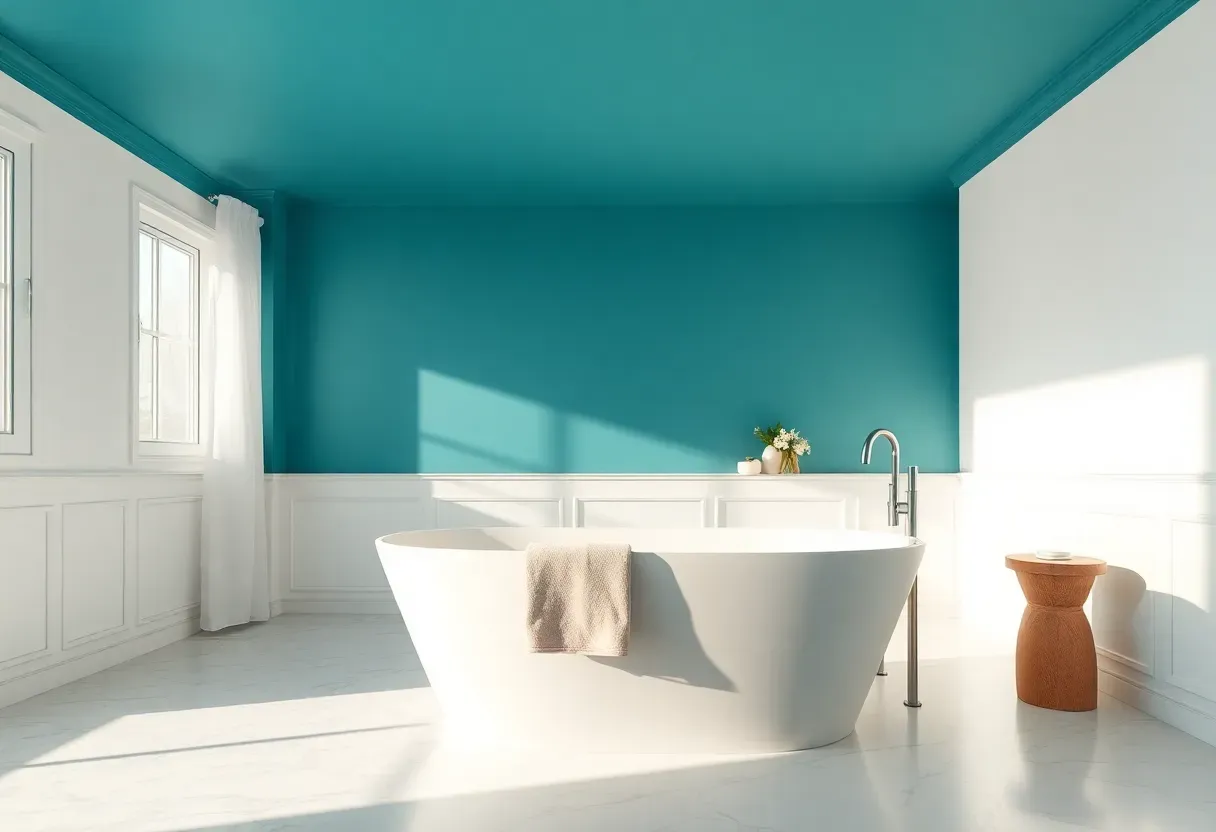
Ceilings in bathrooms get ignored. You spend weeks picking floor tile, debating grout color, and choosing the right vanity hardware, then slap on a coat of flat white paint overhead and move on. That is a missed opportunity. The ceiling is the one surface you see from the tub, and in a small room it has an outsized effect on how the space feels. The difference between a forgettable bathroom and one that actually impresses is often just the five-foot gap between your head and the drywall.
Here are 25 bathroom ceiling ideas organized by material, finish, and style. Each one accounts for moisture, ventilation, and the realities of a wet room.
Table of Contents
- Painted Ceiling in a Bold Color
- Tongue and Groove Wood Paneling
- Coffered Ceiling
- Shiplap Ceiling
- Beadboard Ceiling
- Wallpapered Ceiling
- Exposed Brick Ceiling
- Vaulted Ceiling with Skylight
- Recessed LED Panel Ceiling
- Tin Tile Ceiling
- Concrete Ceiling
- Tray Ceiling with Accent Paint
- Cedar Plank Ceiling
- Venetian Plaster Ceiling
- Glass Ceiling Panel
- Stenciled Ceiling Pattern
- Black Painted Ceiling
- Bamboo Mat Ceiling
- Ceiling with Crown Molding
- Slatted Wood Ceiling
- Mosaic Tile Ceiling
- PVC Panel Ceiling
- Faux Beam Ceiling
- Plywood Ceiling with Clear Coat
- Ceiling Garden with Hanging Plants
1. Painted Ceiling in a Bold Color
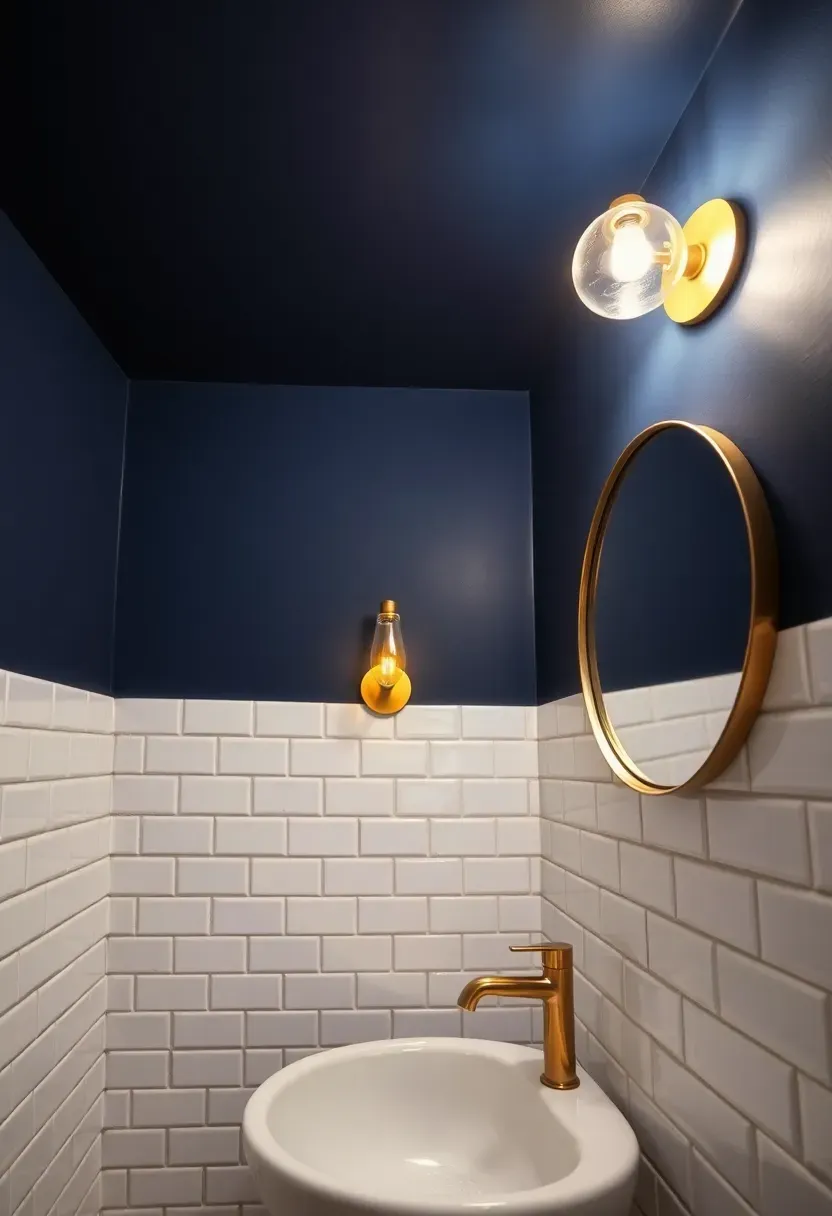
A single can of paint is the fastest way to change how a bathroom reads. Dark colors like navy, forest green, or charcoal overhead make the walls feel taller by drawing the eye up and creating depth. The trick is using semi-gloss or satin finish — flat paint absorbs moisture and develops mildew faster. Pick a color at least three shades darker than your walls for enough contrast to register as intentional rather than accidental. Primer matters too: use a mildew-resistant bathroom primer before your topcoat.
Getting the Color Right
- Test a 2x2 foot patch on the ceiling and live with it for 48 hours before committing
- Warm-toned lighting shifts blues toward purple — factor that in
- White trim at the ceiling-wall junction keeps the look clean, not heavy
We picked a few things that go well with this idea: WoodyWalls Peel and Stick Wood Planks (★4.2), WoodyWalls Premium Wood Planks Warm Sand (★4.2) and Holydecot Peel and Stick Wood Panels (★4.3). As an Amazon Associate we earn from qualifying purchases.
2. Tongue and Groove Wood Paneling
Tongue and groove boards bring the warmth of a cabin into a bathroom without looking rustic if you choose the right wood and finish. Poplar and pine are affordable and take stain well. The planks interlock tightly, which means fewer visible gaps as the wood expands and contracts with humidity shifts. For bathrooms specifically, apply two coats of marine-grade polyurethane to the boards before installation — this seals all six sides and prevents moisture from getting into the grain.
Installation Steps
- Measure your ceiling area and add 15% for waste and cuts
- Attach furring strips perpendicular to your joist direction at 16-inch intervals
- Nail the first plank groove-side against the wall, then blind-nail through the tongue of each subsequent plank
- Apply a final coat of polyurethane after installation to seal nail holes and end cuts
Watch Out For
- Insufficient ventilation is the main failure point — run your exhaust fan for 20 minutes after every shower
- Avoid MDF tongue and groove; it swells permanently when wet
We picked a few things that go well with this idea: Lepro Flush Mount LED Bathroom Light (★4.6), Hykolity Adjustable LED Ceiling Light (13-inch) (★4.6) and NOVELUX Ultra Thin LED Ceiling Light (3-Pack) (★4.5). As an Amazon Associate we earn from qualifying purchases.
3. Coffered Ceiling
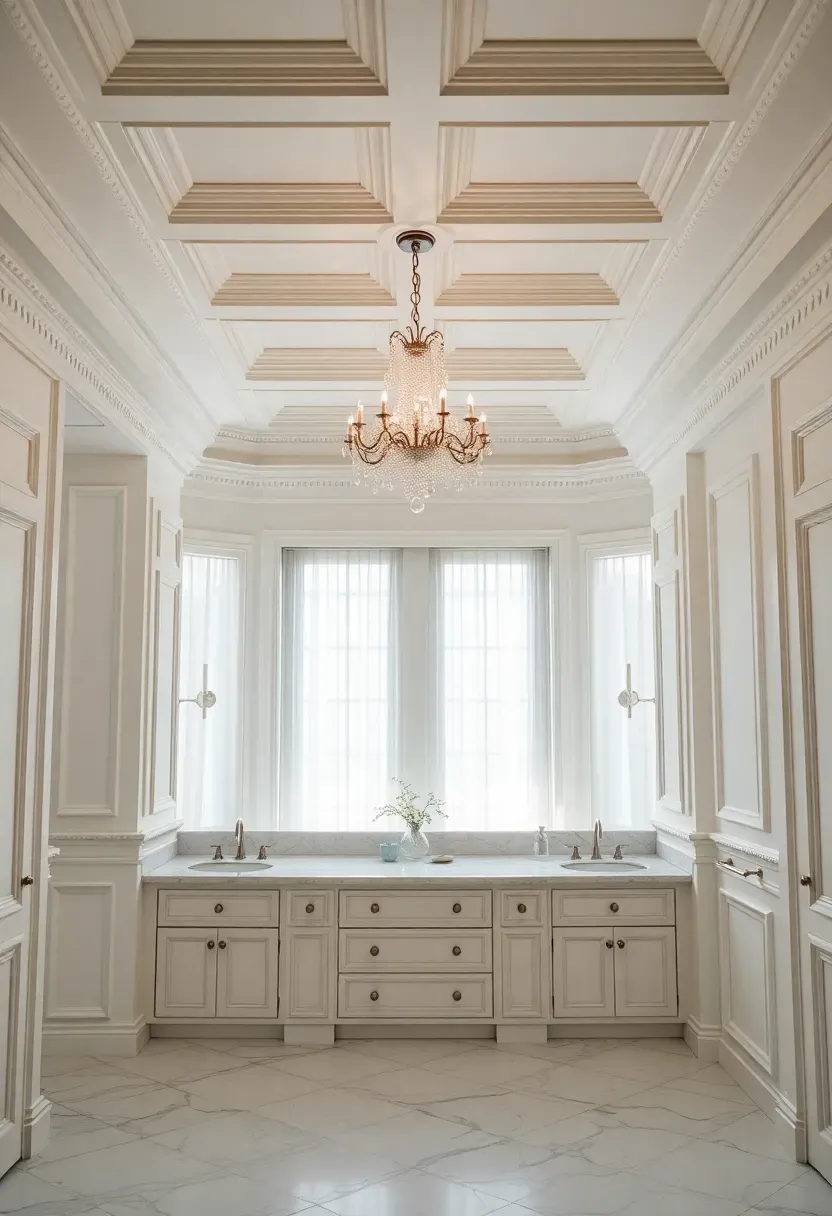
Coffered ceilings break a flat plane into a grid of recessed panels bordered by molding. The effect is architectural and formal without being fussy. In bathrooms, they work best when the ceiling height is at least 8.5 feet — anything lower and the coffer depth makes the room feel compressed. You can build coffers from MDF molding if you seal every edge and joint with primer. Paint the recessed panels a shade lighter than the grid for subtle dimension.
Choose This If
You have a primary bathroom with generous floor space and standard or above-standard ceiling height, and you want the room to feel like more than a utility space.
Skip This If
Your bathroom is under 50 square feet or has a ceiling below 8 feet. The proportions will not work.
We picked a few things that go well with this idea: AerWo Macrame Plant Hangers with Hooks (3-Pack) (★4.5), Sorbus Macrame Plant Hanger Cotton Rope (4-Pack) (★4.5) and Comtelek Macrame Plant Hanger with LED Lights (★4.4). As an Amazon Associate we earn from qualifying purchases.
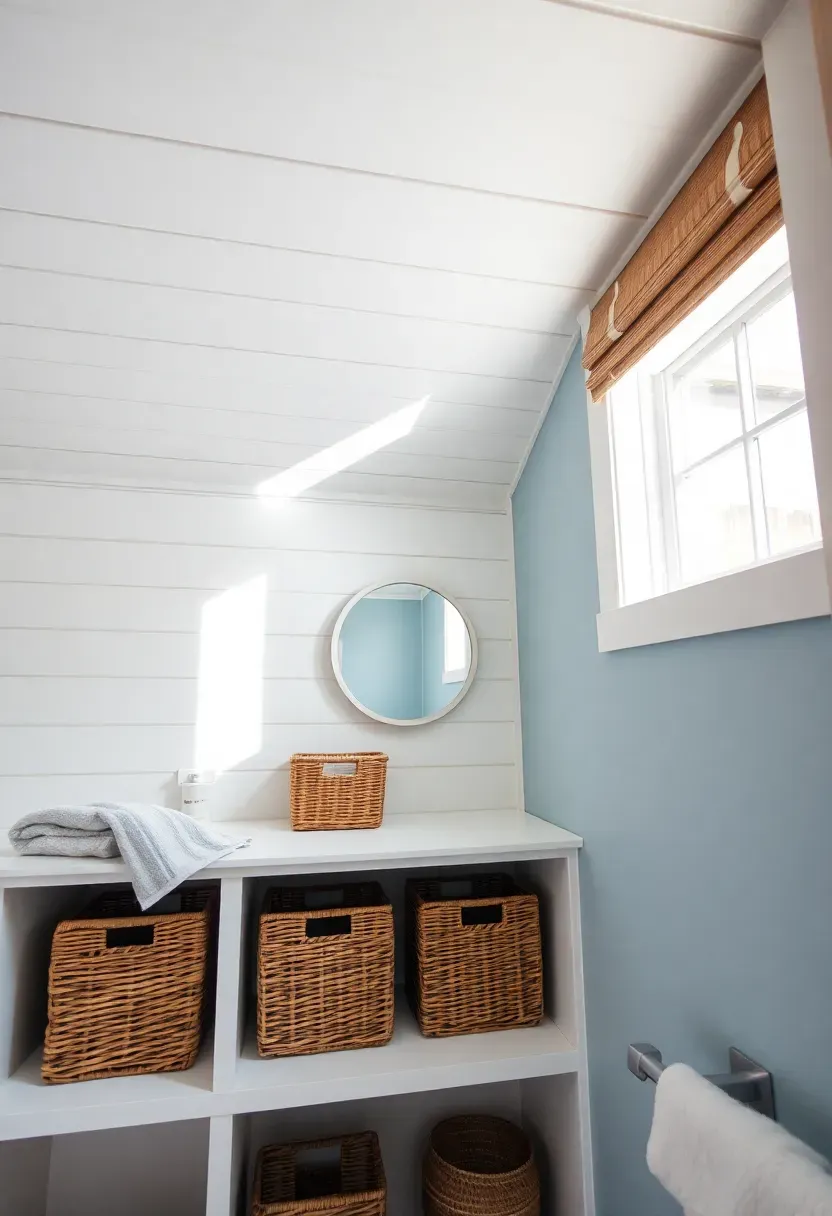
4. Shiplap Ceiling
Shiplap is tongue and groove's more casual cousin. The visible channel between boards creates shadow lines that add texture without overwhelming a small room. White-painted shiplap on the ceiling gives a bathroom a coastal or farmhouse feel depending on the rest of your finishes. The key detail most people skip: caulk the back side of each board where it meets the ceiling surface. This prevents moisture from collecting behind the planks, which is where mold grows first.
Tips
- Run boards perpendicular to the longest wall to make a narrow bathroom feel wider
- Use a brad nailer for clean installation — screws split thin shiplap boards
- Nickel-gap shiplap (with a wider channel) reads more modern than traditional overlap
Recommended
Items for this idea
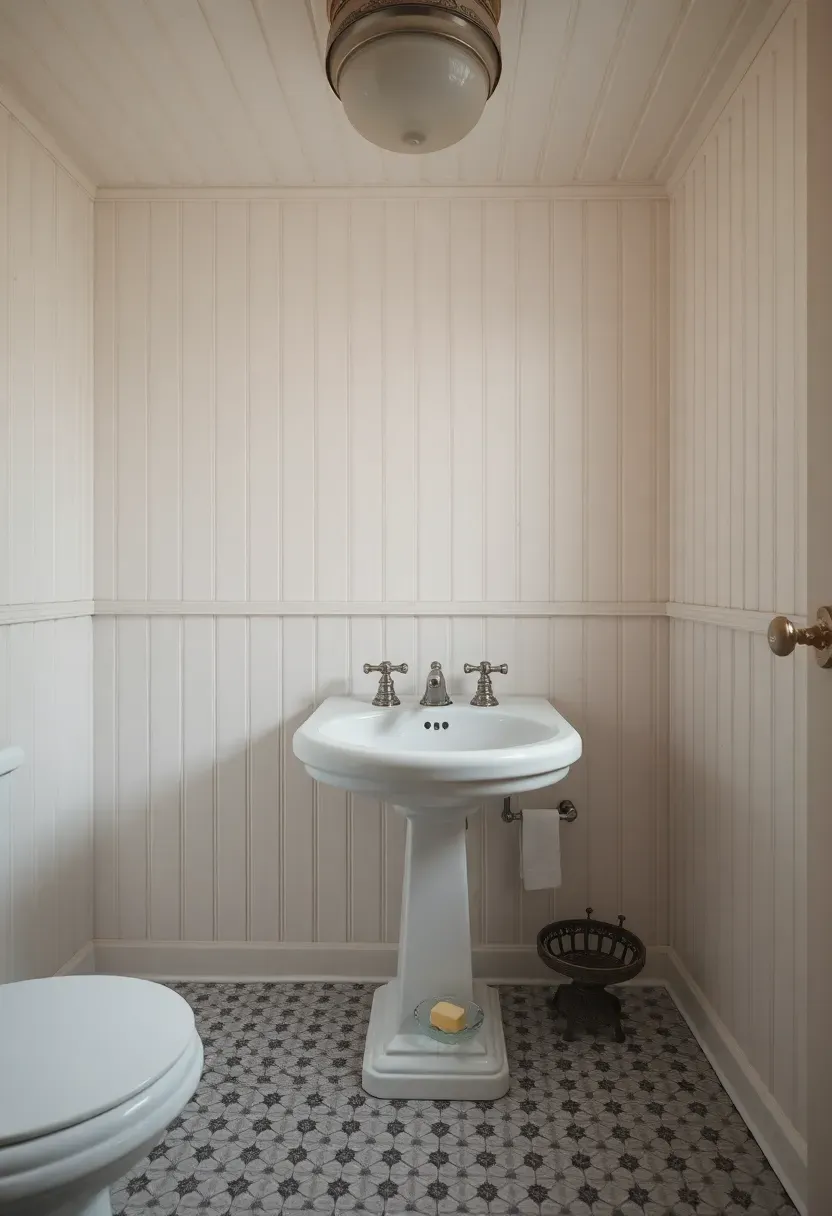
5. Beadboard Ceiling
Beadboard has tighter, more uniform grooves than shiplap, which gives it a refined cottage look. The 4x8 sheet panels are faster to install than individual planks and cost about half as much. In bathrooms, beadboard panels made from PVC or composite material outperform wood ones because they are completely waterproof. You lose a bit of the authentic texture, but you gain a ceiling that will look the same ten years from now as it does the week you install it.
Why PVC Over Wood Here
The gap between beadboard grooves traps condensation. With wood beadboard, those grooves become channels where moisture sits and paint peels. PVC beadboard has no grain to absorb water, so the grooves stay dry and the finish holds.
Where It Works Best
- Bathrooms with 8-foot ceilings where you need texture without losing headroom
- Half-baths and powder rooms where the cottage aesthetic fits the smaller scale
6. Wallpapered Ceiling
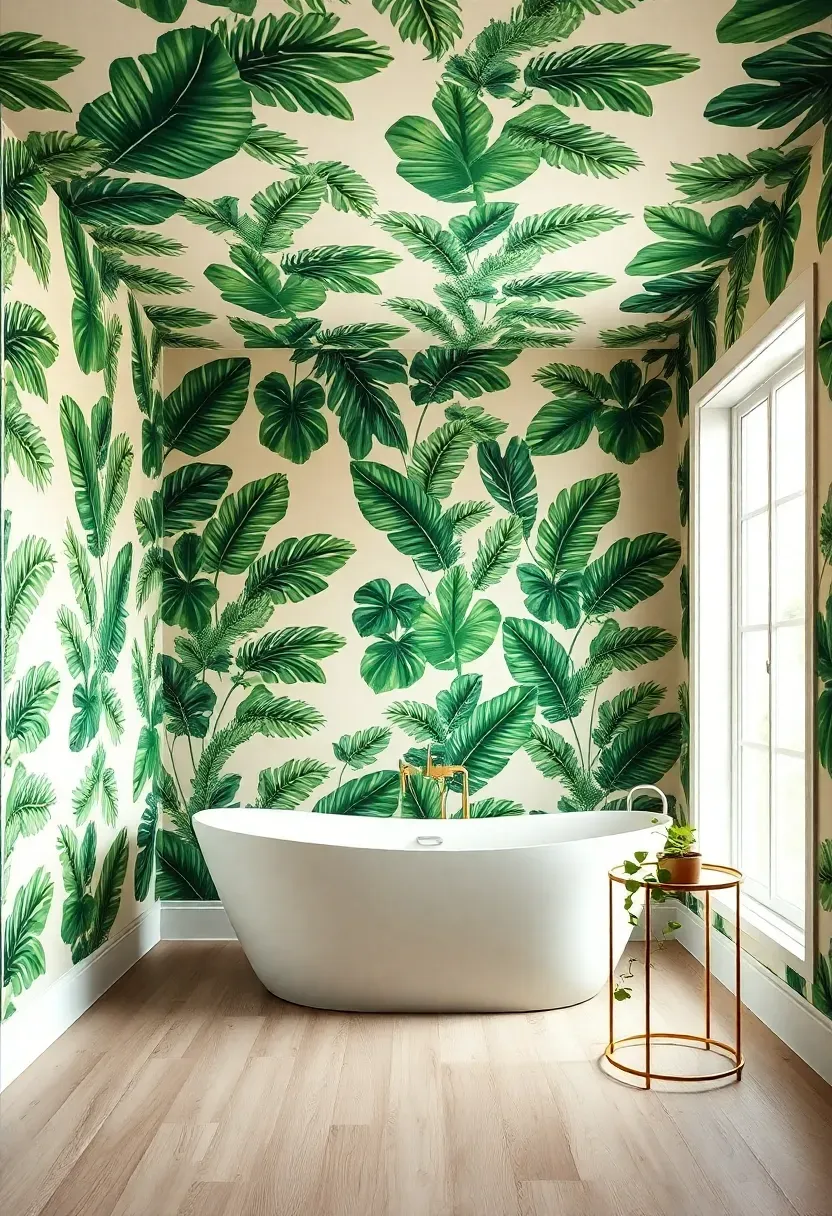
Wallpaper on a bathroom ceiling sounds risky, but peel-and-stick vinyl wallpapers handle humidity well and come off cleanly when you are ready for a change. Botanical prints, geometric patterns, and mural-style designs all work overhead. The visual effect is immediate — a patterned ceiling becomes the focal point of the room and lets you keep walls simple. Apply the paper when the bathroom is dry and cool, not after a hot shower when surfaces are damp.
Choosing the Right Pattern
- Large-scale prints work better than small repeats on ceilings — you are viewing from farther away
- Directional patterns (like trailing vines) should run toward the main entry for natural flow
- Avoid metallic or high-sheen papers above showers — they show condensation drips
Recommended
Items for this idea
7. Exposed Brick Ceiling
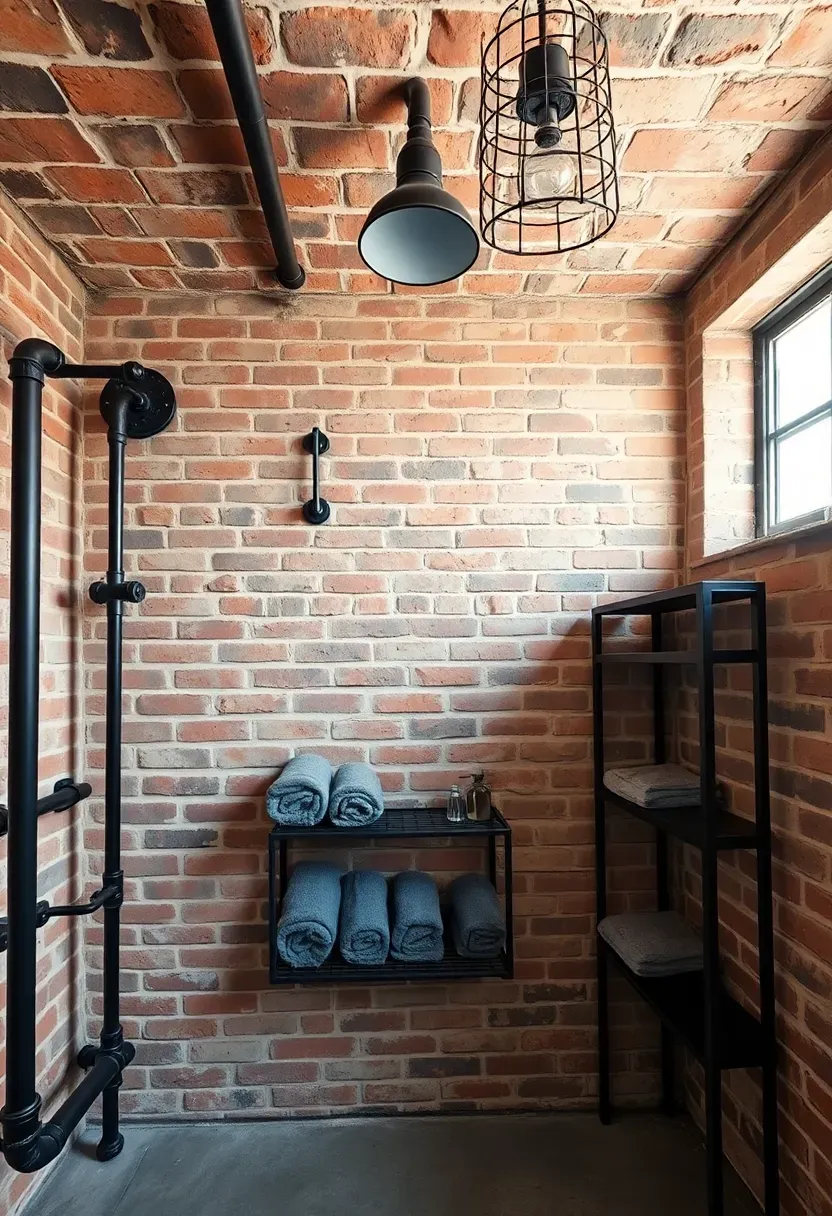
If your building has brick structure above the bathroom — common in pre-war apartments and converted industrial spaces — exposing it creates a raw, textured ceiling that no manufactured product can replicate. The color variation in old brick adds warmth. The key step is sealing: apply a breathable masonry sealer that blocks moisture absorption without trapping vapor inside the brick. Avoid polyurethane or lacquer sealers, which create a plastic film that traps dampness and eventually causes spalling.
Pros and Cons
Why it works: Unique character, no two ceilings look the same, zero maintenance once sealed properly.
The catch: You cannot create this from scratch without structural brick. Faux brick panels exist but rarely look convincing overhead. Dust from old mortar during demo is significant — seal adjacent rooms.
8. Vaulted Ceiling with Skylight
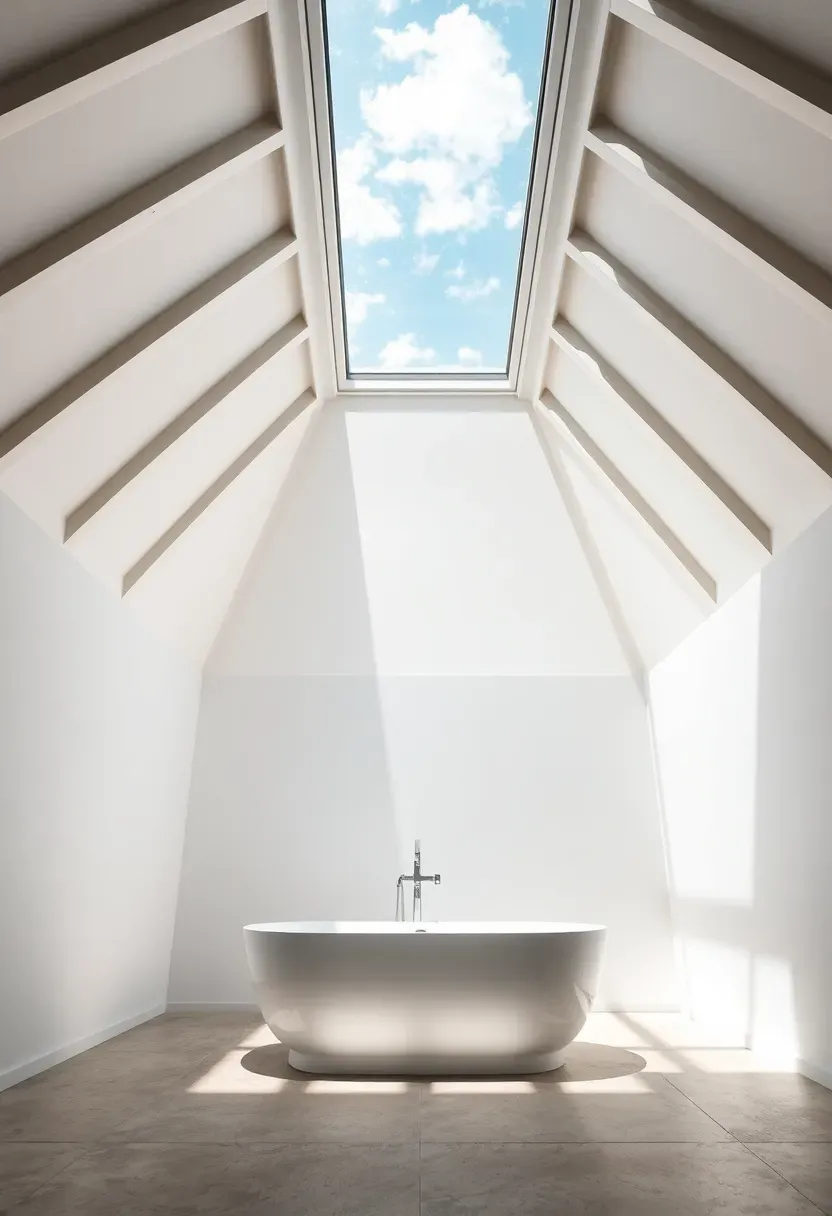
A vaulted ceiling paired with a skylight turns a bathroom into something closer to a greenhouse. Natural light from directly above eliminates shadows around the vanity and makes the room feel twice its actual size. Tubular skylights are the most practical option if you have an attic above — they channel light through a reflective tube and install without major structural changes. Fixed skylights work when you have direct roof access. Either way, use tempered or laminated glass rated for wet locations.
Planning the Installation
- Determine your roof slope and joist direction to find viable skylight positions
- Choose between fixed (no ventilation) and venting (opens to release steam) models
- Frame the opening with moisture-resistant drywall and apply waterproof membrane at all flashing joints
Watch Out For
- North-facing skylights give consistent, even light; south-facing ones can overheat a small bathroom
- Budget for a shade or blind — direct sun on a bathtub gets uncomfortable by midday
Recommended
Items for this idea
9. Recessed LED Panel Ceiling
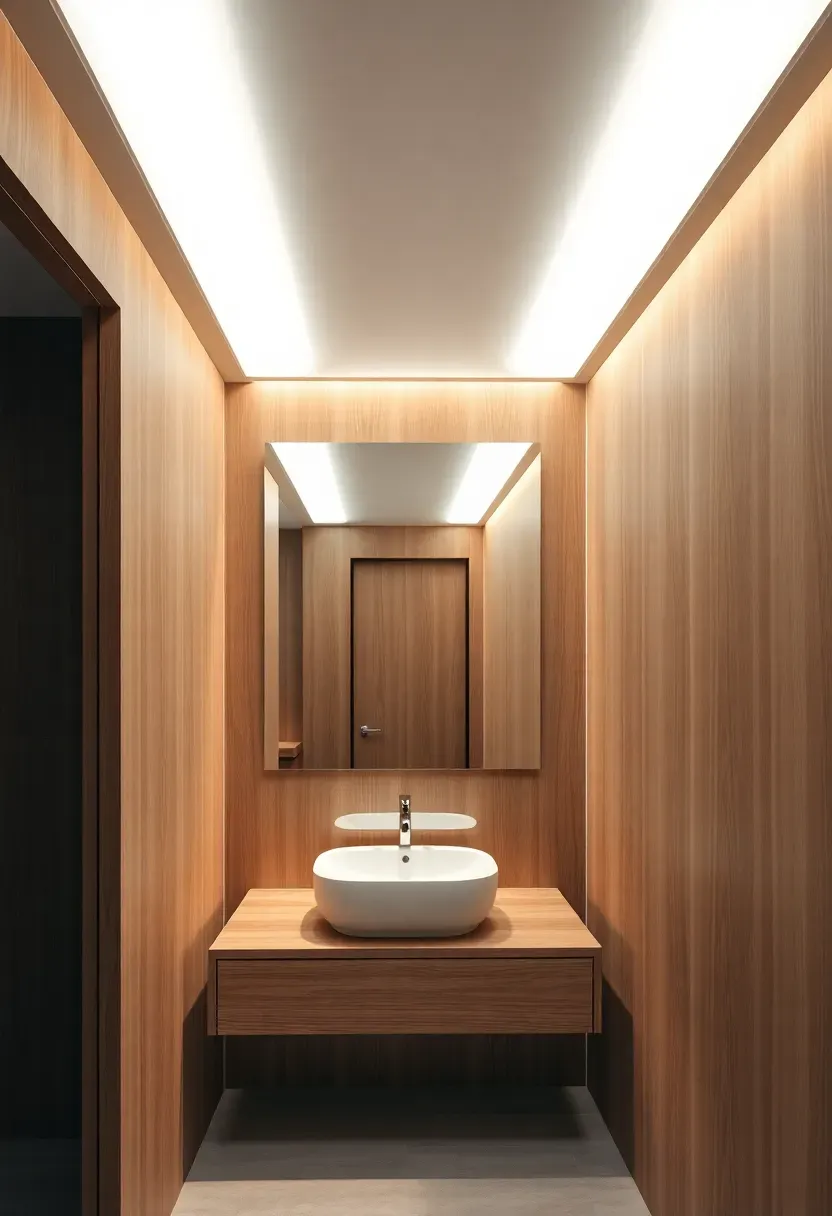
Replacing a standard ceiling with a grid of recessed LED panels gives a bathroom the even, shadowless lighting you get in a professional makeup studio. The panels sit flush with or slightly above the ceiling plane, and because they distribute light across a large area rather than from point sources, they eliminate the harsh spots and dark corners created by single fixtures. Warm white panels (2700K-3000K) keep the room from feeling clinical. Look for IP44-rated panels designed for bathroom use.
Tips
- Dimmer-compatible panels let you shift from task lighting to bath-time ambiance
- Space panels evenly across the ceiling rather than clustering above the vanity
- LED panels last 30,000-50,000 hours, so replacement is a once-a-decade event at most
10. Tin Tile Ceiling
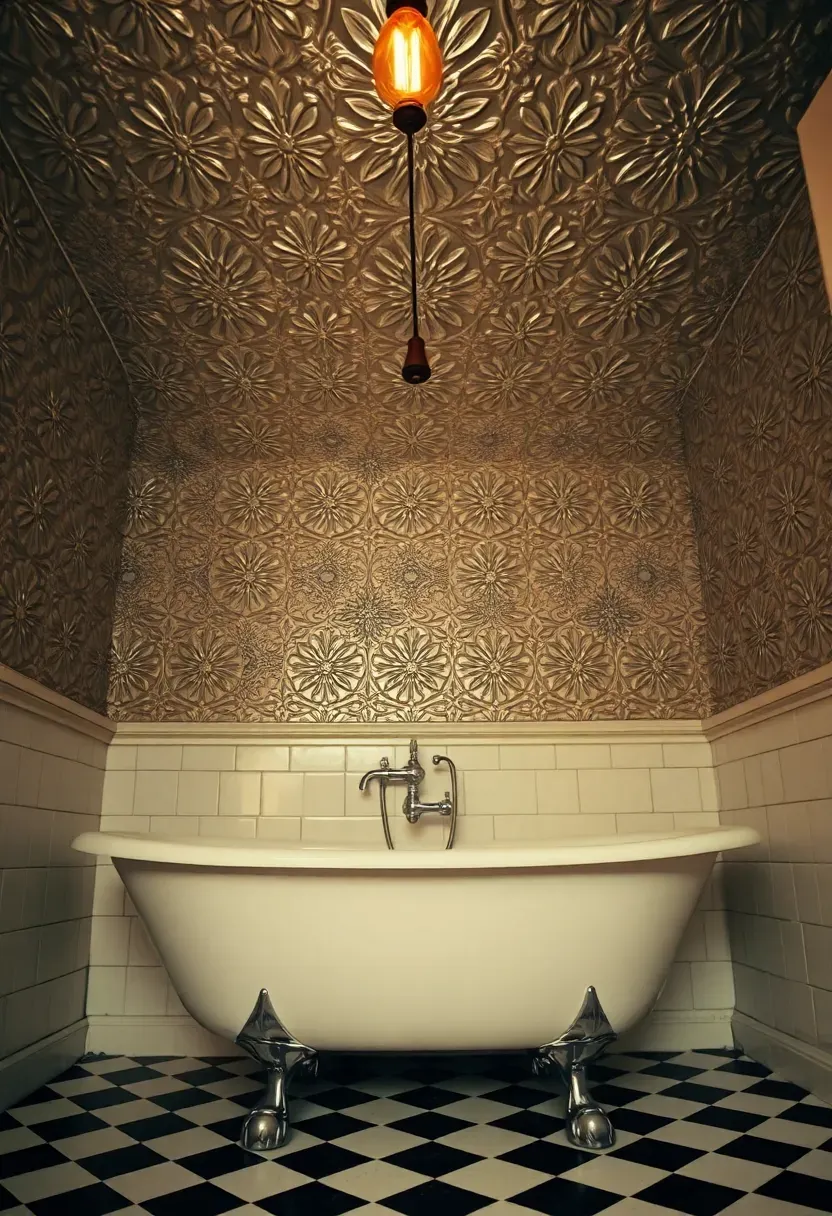
Pressed tin ceilings were standard in late 1800s American buildings, and the look translates directly to bathrooms. Modern tin ceiling tiles come in 2x2 or 2x4 foot panels that nail or glue directly to a flat ceiling. They are naturally resistant to mold and moisture, which is why they lasted 130 years in kitchens and bathrooms before drywall replaced them. You can leave them in raw tin finish, paint them white for a subtle texture, or spray them with a metallic paint for more drama.
Style vs. Practicality
Choose this if: You want visible texture and historical character and your bathroom leans traditional, Victorian, or eclectic.
Skip this if: You prefer clean modern lines. Tin tiles have a specific aesthetic that fights contemporary fixtures.
Recommended
Items for this idea
11. Concrete Ceiling
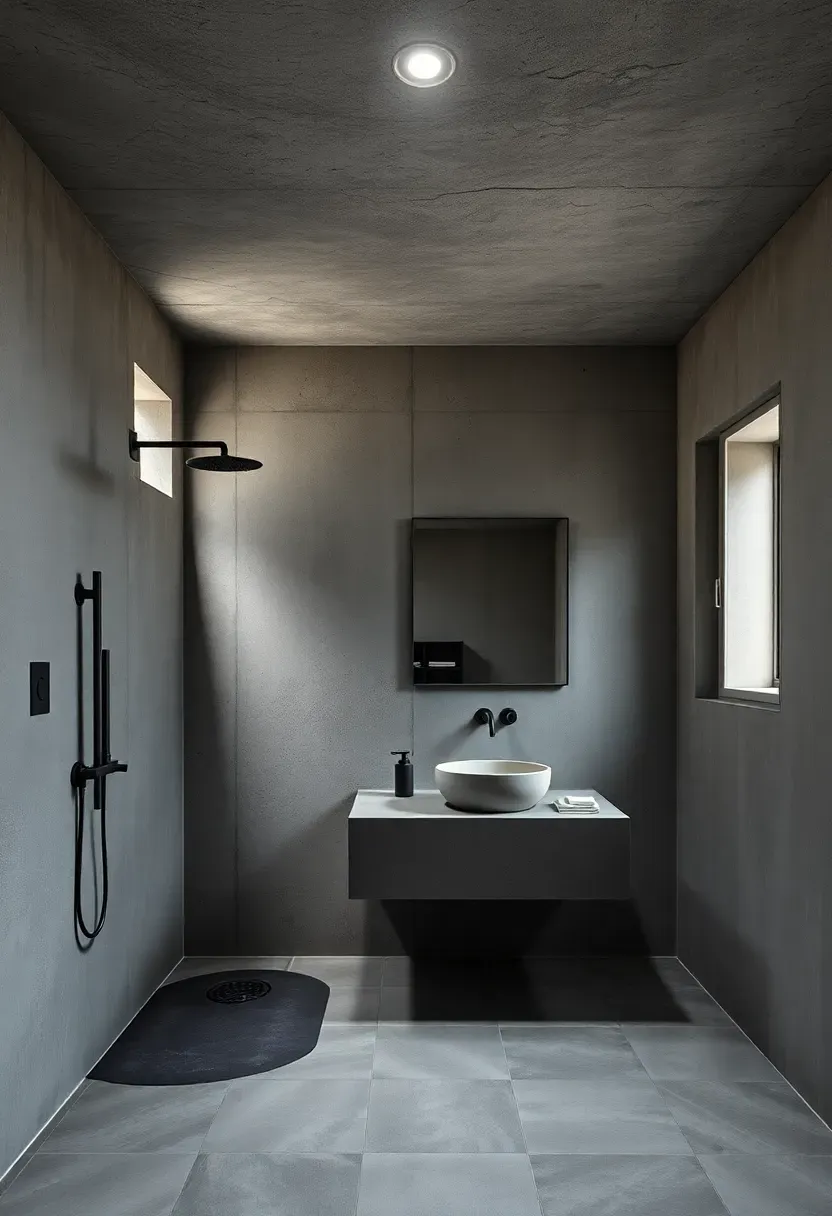
A raw concrete ceiling reads as industrial and honest. In new construction or concrete-frame buildings, leaving the slab exposed saves the cost of furring, drywall, and finishing. The form marks and slight color variation in poured concrete create a texture that pairs well with matte black fixtures, floating vanities, and large-format floor tiles. If you do not have structural concrete, a skim coat of microcement applied over existing drywall achieves a similar look at about $8-12 per square foot.
Making It Work
- Seal raw concrete with a penetrating silicone sealer to prevent water absorption
- The surface will feel cold in winter; pair it with radiant floor heating for balance
- Pendant lights and exposed-bulb sconces complement concrete better than recessed cans
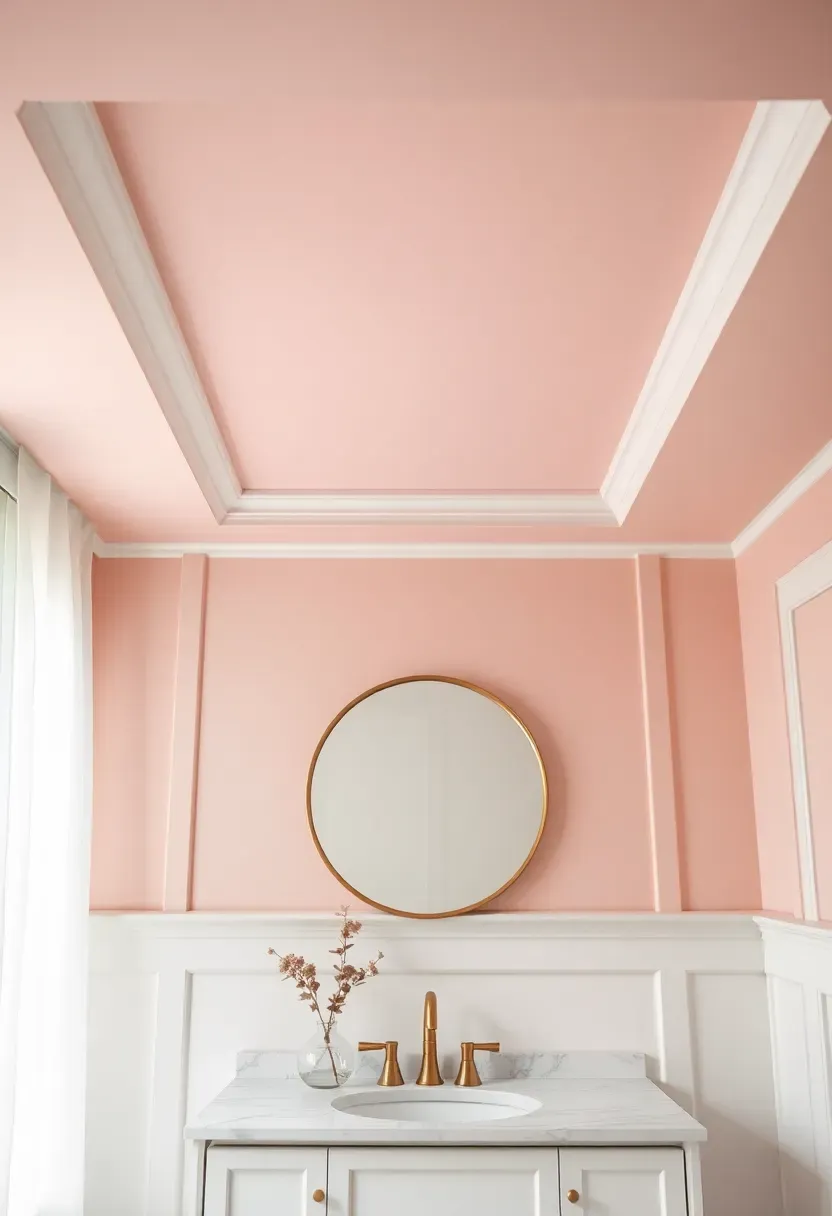
12. Tray Ceiling with Accent Paint
A tray ceiling is a recessed center section surrounded by a stepped border — basically an inverted shallow box on your ceiling. Painting the recessed area a different color from the border creates a framed effect overhead. Soft pastels (blush, sage, pale blue) in the tray with white borders keep the look gentle. Deeper colors like plum or slate in the recess with matching dark borders create a moody, cocooning effect. The step typically drops 4-6 inches and can be trimmed with simple or ornate molding.
Tips
- LED rope lighting tucked into the step adds indirect glow without visible fixtures
- The recessed panel should be at least 2 feet narrower than the total ceiling on each side
- This works in bathrooms of any size, but the proportional impact is strongest in rooms under 80 square feet
Recommended
Items for this idea
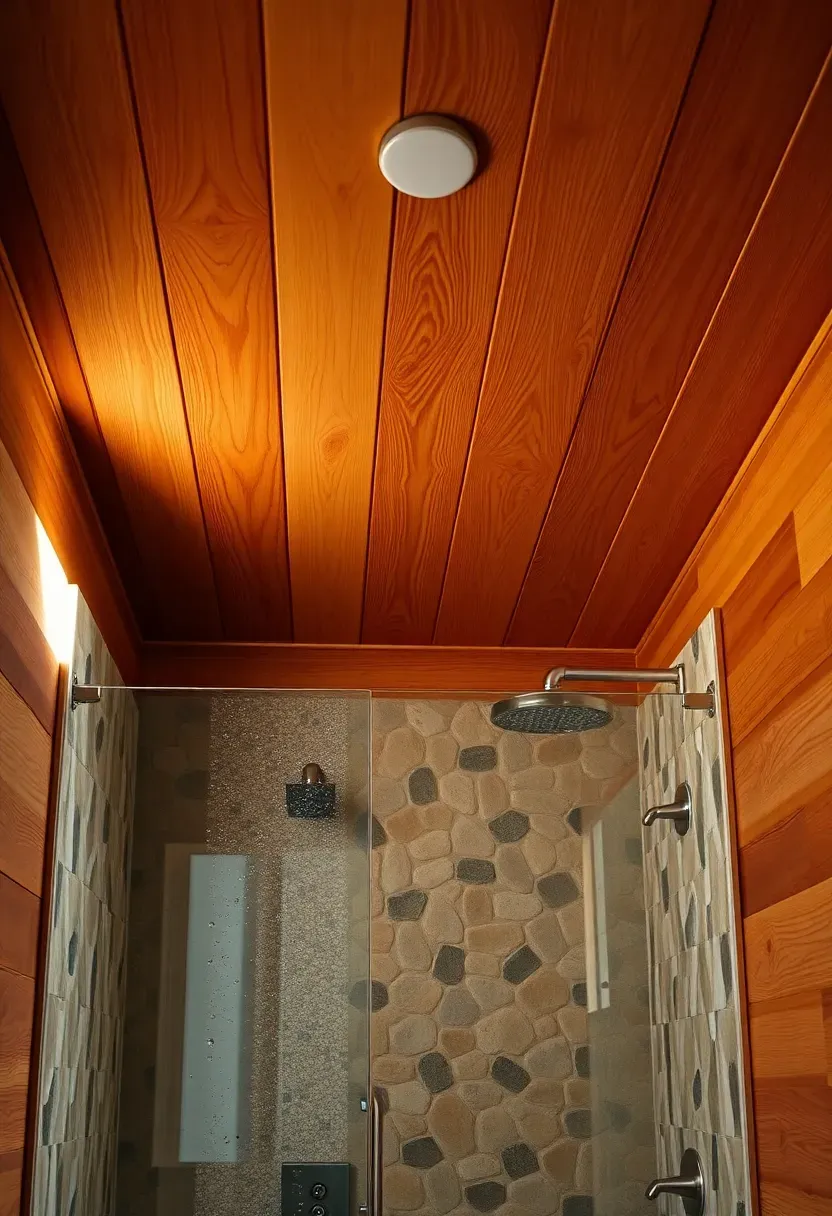
13. Cedar Plank Ceiling
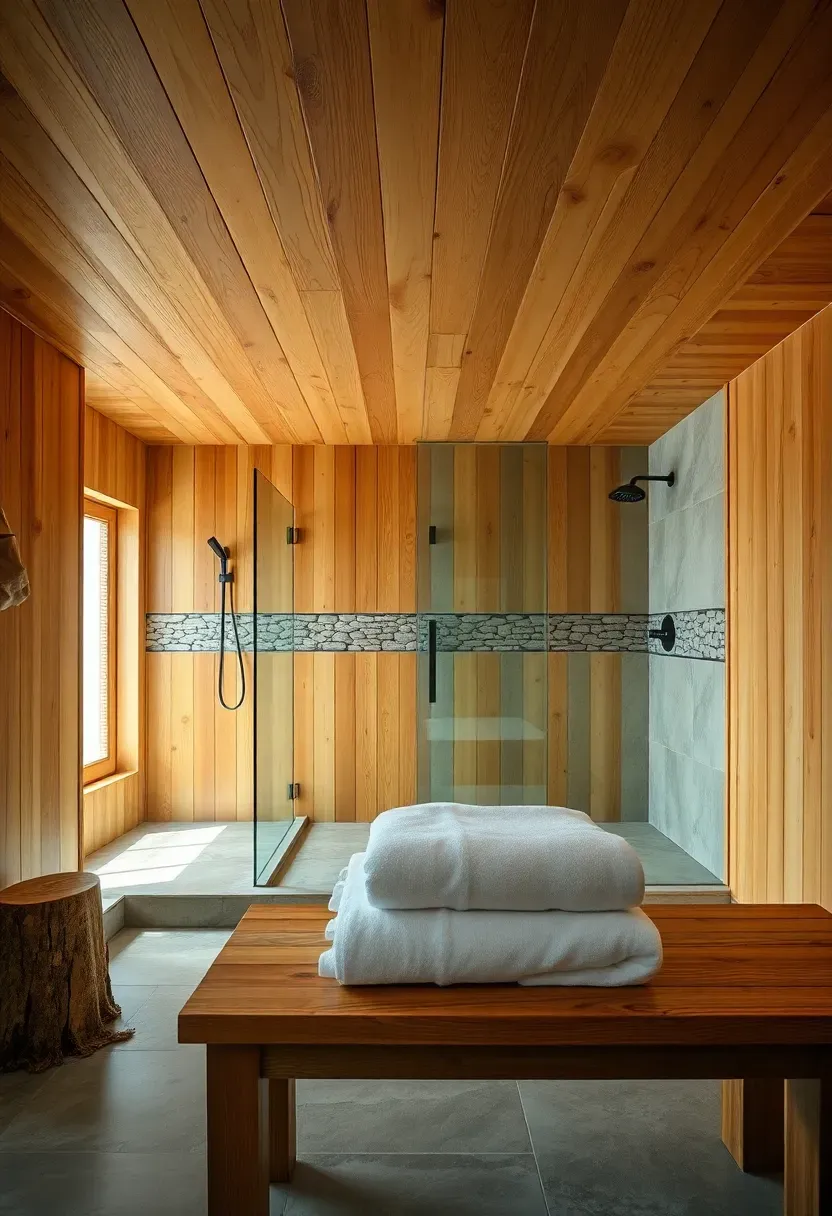
Cedar brings two things to a bathroom ceiling that other woods cannot: a warm reddish-brown color that deepens over time, and a natural resistance to moisture and insects. Western red cedar is the standard choice for saunas and outdoor decks precisely because it handles water exposure without rotting. On a bathroom ceiling, cedar planks release a faint woody scent when the room steams up — a genuine sensory bonus that no synthetic material replicates. Leave the wood unfinished or apply a single coat of natural oil to preserve the grain.
Cedar vs. Pine
| Cedar | Pine | |
|---|---|---|
| Moisture resistance | Naturally high | Low without sealing |
| Cost per sq ft | $4-7 | $2-4 |
| Color | Reddish-brown | Pale yellow |
| Scent | Yes, pleasant | Minimal |
| Maintenance | Minimal | Needs sealer + recoat |
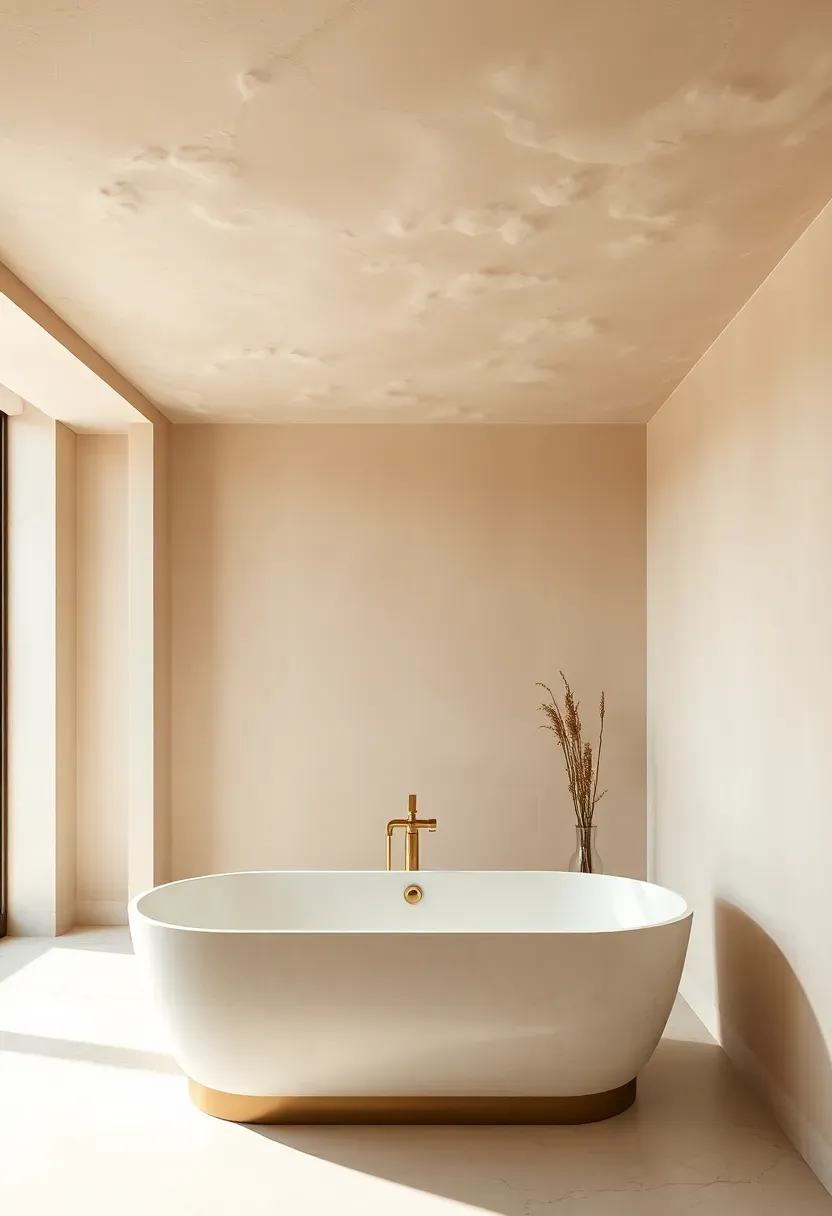
14. Venetian Plaster Ceiling
Venetian plaster is multiple thin layers of lime-based plaster burnished to create depth and a soft sheen. On a ceiling, it produces a surface that looks like polished stone — smooth but with visible movement in the finish. The material is breathable, which means moisture passes through rather than getting trapped behind it. This makes it genuinely better suited to bathrooms than regular paint. It costs more and requires a skilled applicator (plan on $15-25 per square foot installed), but the result lasts decades without peeling or bubbling.
Tips
- Lighter tones (ivory, warm white, pale grey) keep the ceiling from feeling heavy
- Ask your plasterer for a matte or low-sheen burnish rather than high gloss for bathrooms
- Venetian plaster can be tinted to match any paint color, so coordinate with your walls
Recommended
Items for this idea
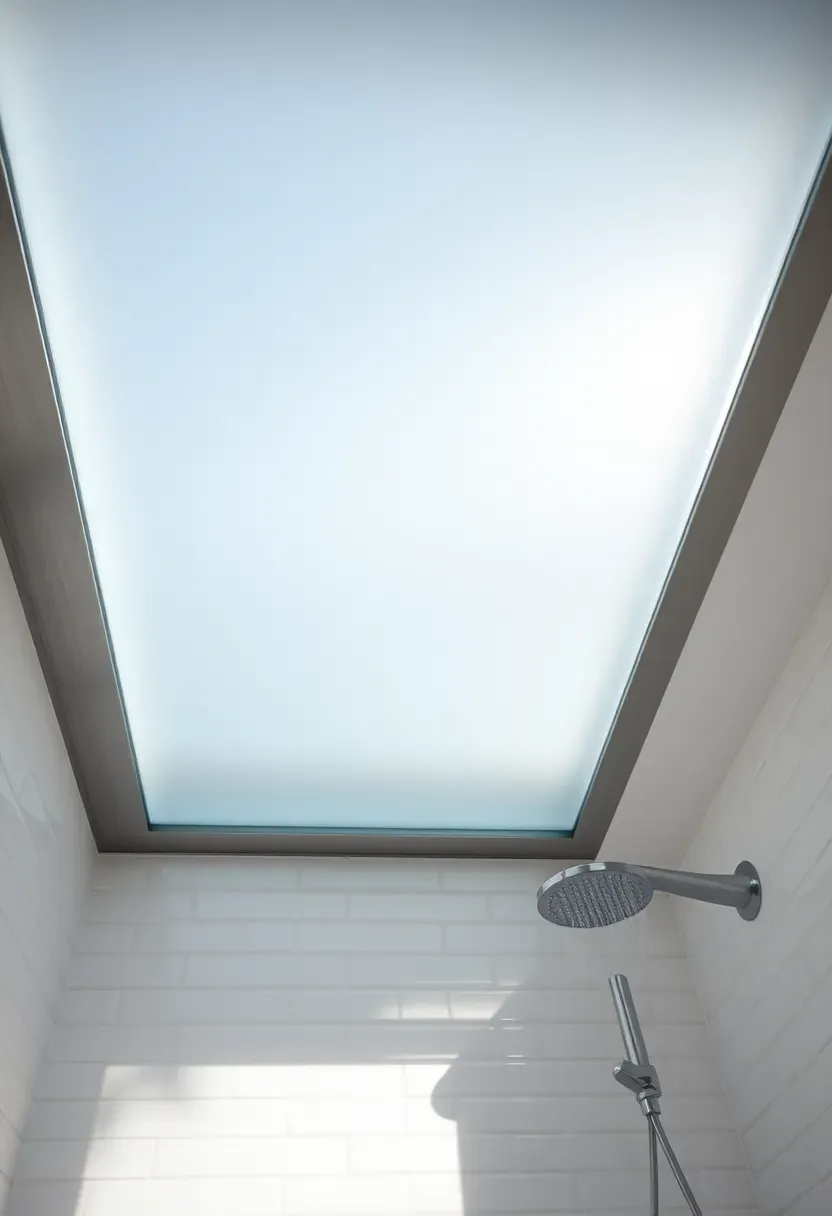
15. Glass Ceiling Panel
A glass ceiling panel — frosted, textured, or tinted — lets light pass between floors or from a roof cavity into the bathroom below. The effect is similar to a skylight but without the roof penetration. In multi-story homes, a glass panel in the bathroom ceiling can borrow light from a bright room above. Use laminated safety glass at minimum 10mm thickness, and frame it with aluminum or stainless steel channel for a clean modern edge.
Where Glass Ceilings Work
- Above enclosed showers where natural light is otherwise impossible
- In basement bathrooms below ground-floor rooms with windows
- As a partial ceiling section (not the entire ceiling) to create a light well
Where They Do Not
- Bathrooms directly below roofs without proper drainage above the glass
- Rooms where privacy from the floor above matters
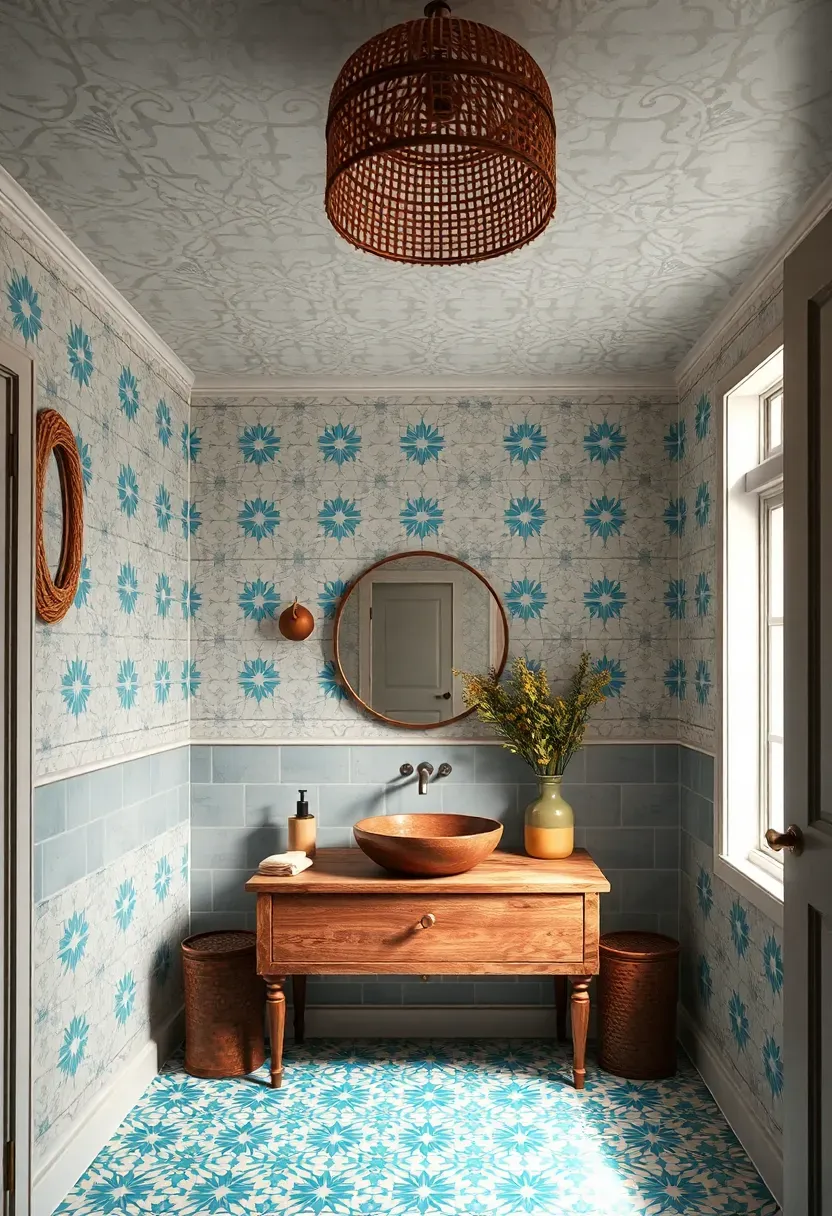
16. Stenciled Ceiling Pattern
Stenciling is wallpaper's more permanent, paint-based cousin. A repeating geometric or floral pattern applied to the ceiling with a roller and stencil template gives the room a handmade quality that printed paper cannot match. The slight imperfections — minor spacing shifts, subtle brush marks — make it look authentic rather than manufactured. Use the same semi-gloss bathroom paint you would use for walls, applied over a solid base color. Two coats through the stencil usually gives full opacity.
Choosing a Pattern
- Moroccan tile patterns and Art Deco geometrics work for bohemian and glam bathrooms
- Simple repeating dots or dashes suit modern minimalist rooms
- Scale the pattern to your ceiling size: 6-inch repeats for small bathrooms, 12-inch for larger ones
Recommended
Items for this idea
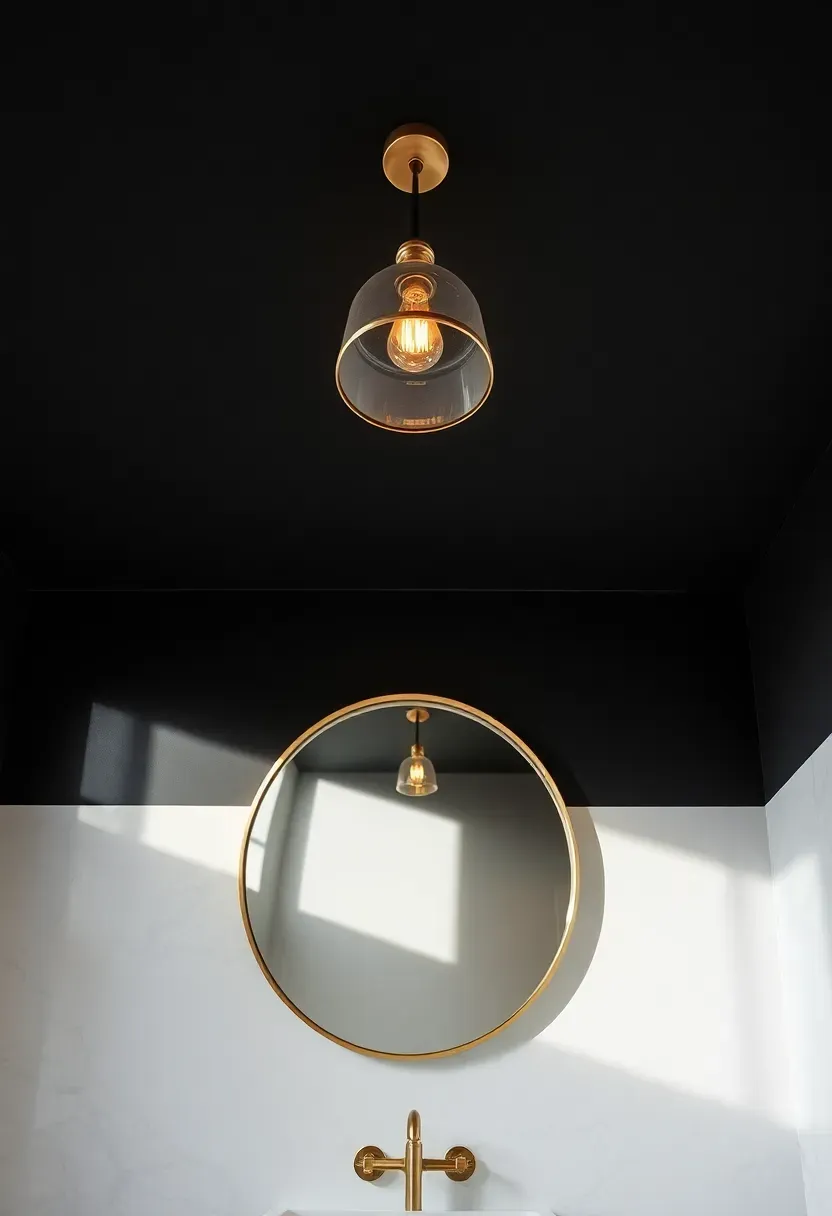
17. Black Painted Ceiling
Black on the ceiling sounds counterintuitive in a room you want to feel clean and open. But in bathrooms with white or light walls, a black ceiling creates a cap effect that makes the walls appear taller by erasing the boundary between wall and air. The room feels taller, not shorter. Matte black absorbs light and hides imperfections; satin black reflects some light back and works better in rooms with limited natural light. Use a true black (like Benjamin Moore Black 2132-10), not a dark grey, for the full effect.
Making Black Work
- White grout, white fixtures, and light floors provide the contrast that keeps the room from feeling like a cave
- A single pendant light or pair of sconces on the wall below the black ceiling becomes more dramatic against the dark background
- This pairs naturally with brass and gold hardware — the warmth of metal softens the starkness
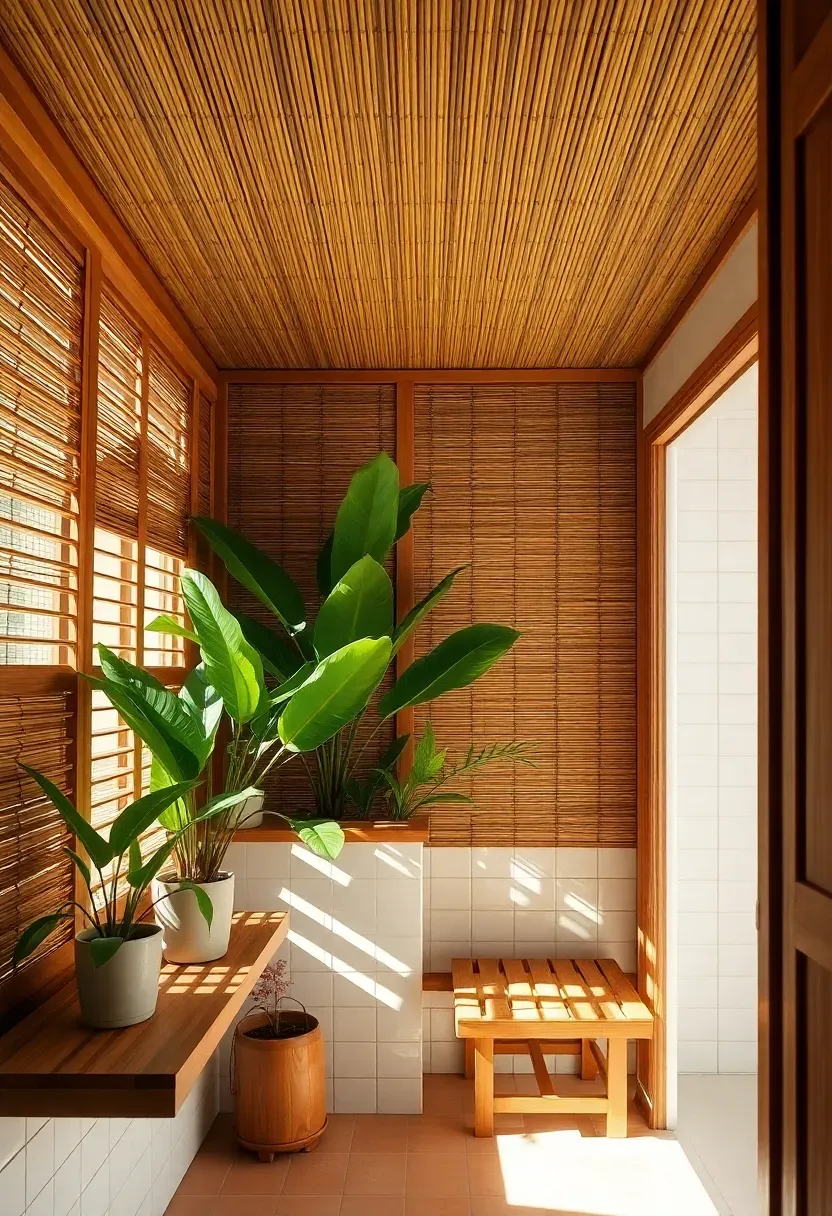
18. Bamboo Mat Ceiling
Bamboo matting glued or stapled to the ceiling adds a woven texture that immediately signals tropical or resort-style design. The mats come in 4x8 foot sheets and cost around $2-4 per square foot — one of the cheapest ceiling treatments available. Bamboo is naturally moisture-resistant and does not grow mold the way fabric or paper can. The golden-tan color warms up any bathroom. For a tighter look, frame each panel with thin wood trim strips where sheets meet.
Pros and Cons
Why it works: Affordable, lightweight, easy to install with construction adhesive, distinctive texture.
The catch: Not suited to directly above a shower where water hits it constantly. Best for the main bathroom ceiling with a separate tiled shower enclosure. It also has a specific aesthetic that requires compatible decor — it will not pair well with a sleek Italian vanity.
Recommended
Items for this idea
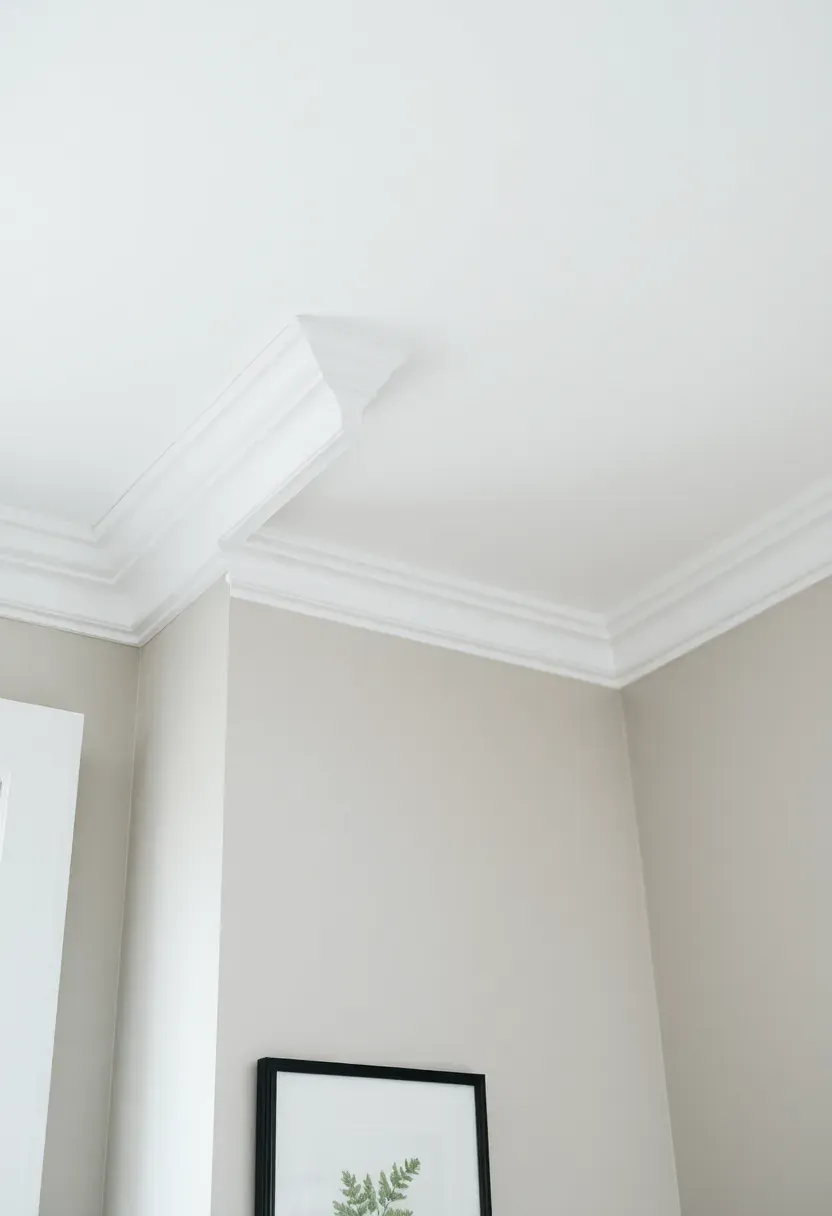
19. Ceiling with Crown Molding
Crown molding at the wall-ceiling junction does not change the ceiling surface itself, but it changes how you perceive it. The shadow line created by the molding profile gives the room a finished, architectural quality that flat drywall joints cannot achieve. In bathrooms, MDF or polyurethane foam molding outperforms wood because it does not absorb moisture or warp. Profiles between 3 and 5 inches suit standard bathroom proportions. Anything wider looks heavy unless the ceiling is above 9 feet.
Installation Steps
- Measure each wall and cut 45-degree miters at corners using a miter saw
- Apply construction adhesive to the back of each piece and press into place
- Pin with a brad nailer for hold while adhesive cures
- Fill nail holes and joints with paintable caulk, then prime and paint
Watch Out For
- Inside corners are trickier than outside corners — use coped joints for a tight fit
- Paint the molding before installing to save time on cutting in
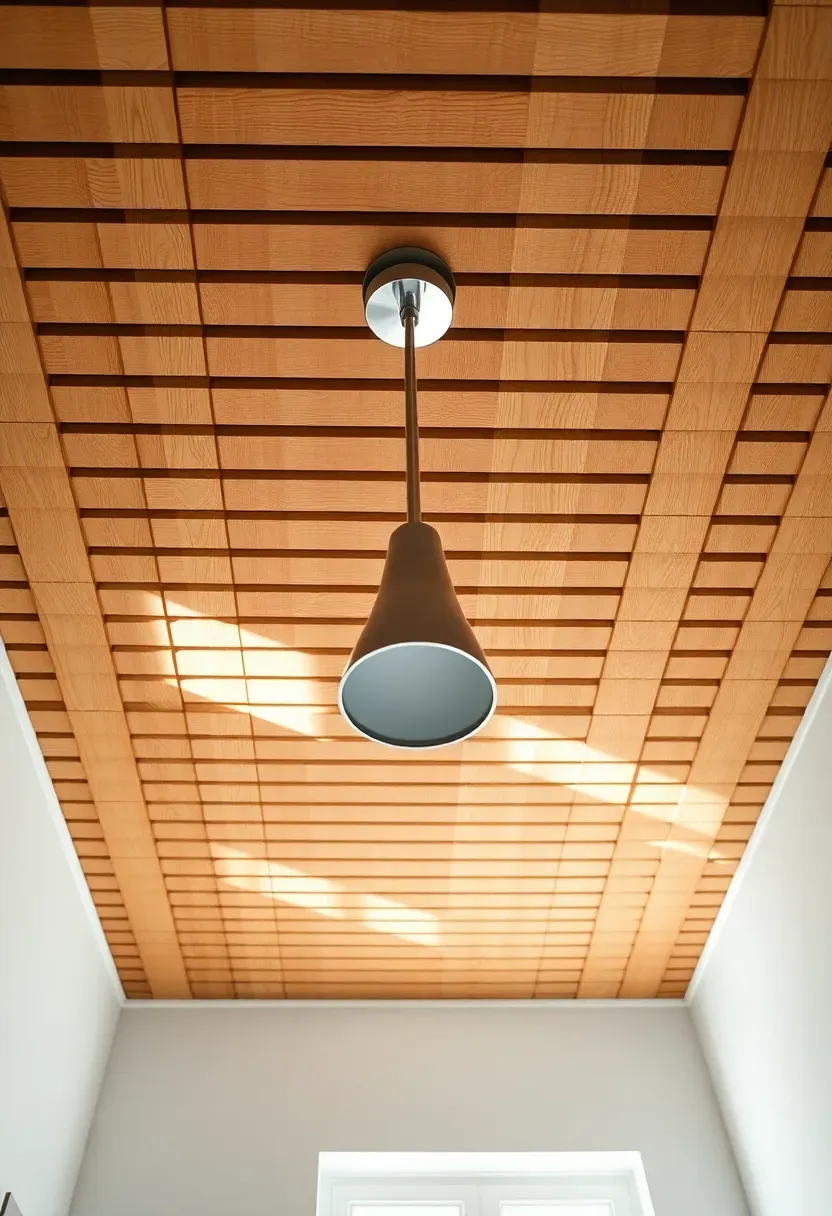
20. Slatted Wood Ceiling
Wood slats with visible gaps between them create a rhythm of light and shadow on the ceiling. Unlike solid planking, the spaces between slats let air circulate, which helps with moisture management. The slats can run parallel to the longest wall, perpendicular to it, or even diagonally for a more dynamic look. White oak, teak, and thermowood (heat-treated softwood) are all good candidates because they handle humidity without warping. Mount slats on a sub-frame with consistent spacers for even gaps.
Tips
- 1-inch gaps between 2-inch slats is a balanced proportion for most bathrooms
- Paint or stain the ceiling surface behind the slats a dark color so the gaps read as intentional depth
- Recessed lighting above the slats creates a dramatic uplight effect
Recommended
Items for this idea
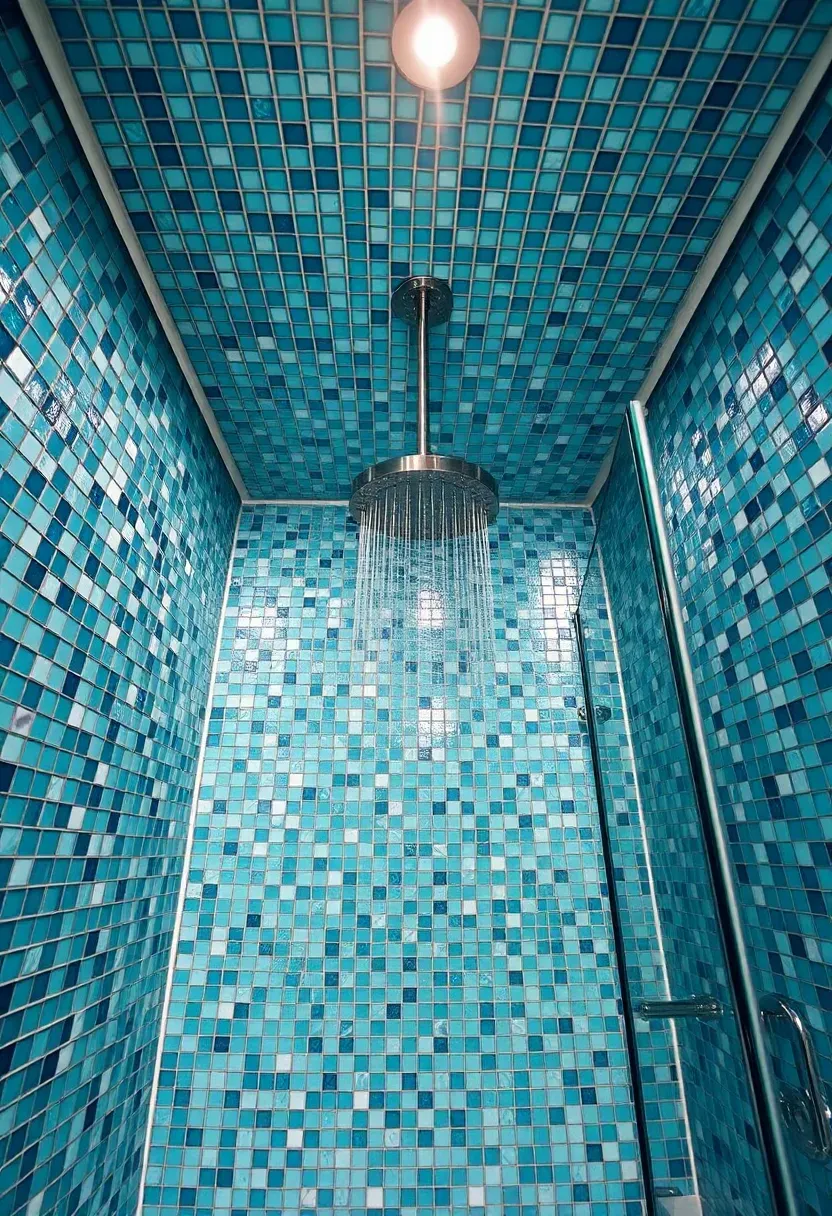
21. Mosaic Tile Ceiling
Tiling the ceiling is the most waterproof option on this list and the most labor-intensive. Mosaic sheets (1x1 or 2x2 inch tiles on mesh backing) are lighter than large-format tiles and easier to handle overhead. Glass mosaic in particular catches light and shifts color depending on the angle — blue and green glass tiles overhead can make a shower feel like a grotto. Use a premium thinset rated for overhead application and lightweight tiles. Heavy natural stone on a ceiling requires serious structural confidence.
Where to Tile
- Inside walk-in showers and wet rooms where the ceiling gets direct water contact
- Above freestanding tubs as an accent panel, not necessarily the whole ceiling
- In small powder rooms where a tiled ceiling becomes a jewel-box effect
What to Avoid
- Large format tiles (12x12+) overhead — the weight and adhesion requirements are significant
- Natural stone without confirming your ceiling framing can support the load
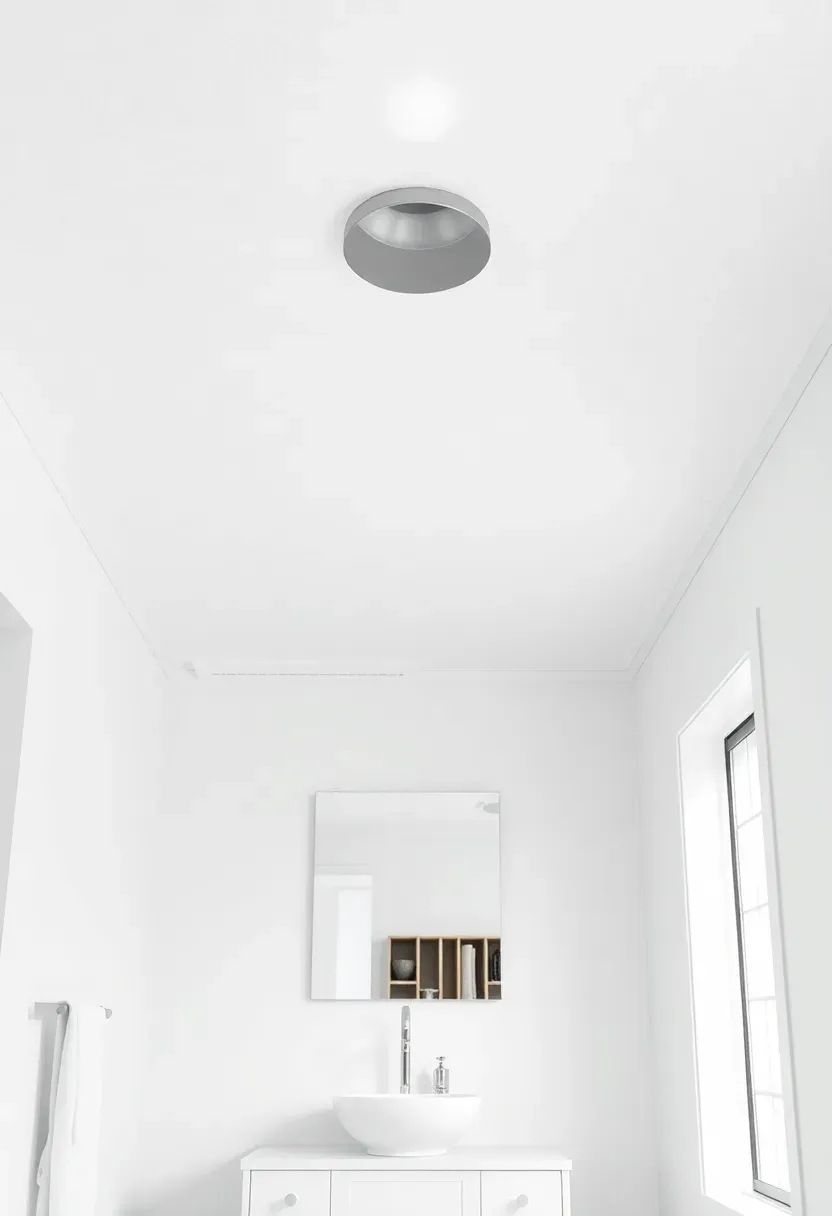
22. PVC Panel Ceiling
PVC ceiling panels are the practical choice when you need a ceiling that handles constant moisture without any maintenance. They interlock like tongue and groove boards, install with clips or adhesive, and clean with a damp cloth. Modern PVC panels come in wood grain, marble, and matte white finishes that look convincing from a few feet away. They cost $1-3 per square foot and a full bathroom ceiling takes an afternoon to install. Not the most exciting material, but reliable in high-humidity environments like rental bathrooms or pool house showers.
Choose PVC If
You want waterproof performance, fast installation, and low cost. You are willing to trade some material authenticity for zero maintenance.
Skip PVC If
You care about the look and feel of real materials. Close up, PVC reads as plastic regardless of the printed finish.
Recommended
Items for this idea
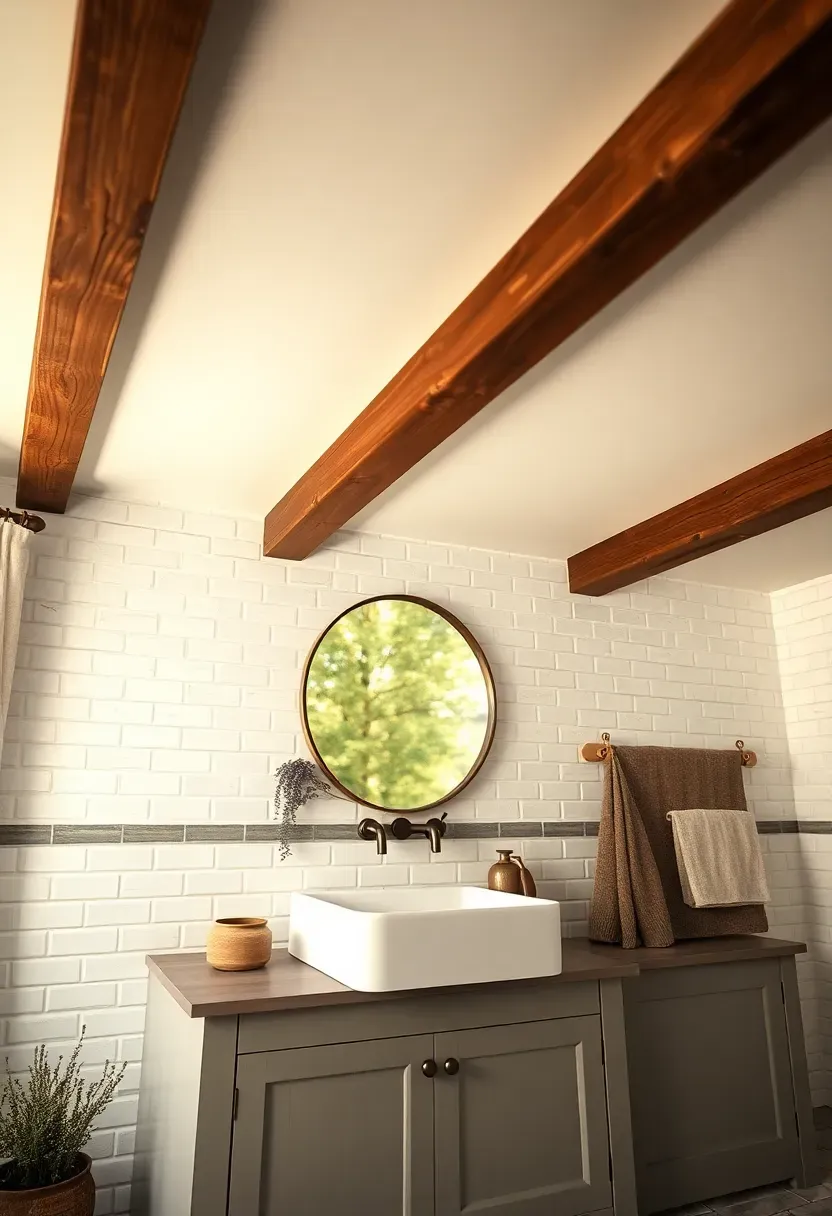
23. Faux Beam Ceiling
Real exposed beams require structural framing. Faux beams — hollow U-shaped channels made from polyurethane foam or lightweight wood — give you the visual weight of timber overhead without any load-bearing requirements. They mount directly to the ceiling with screws and adhesive. In a bathroom, faux beams work best spanning the shorter dimension of the room, spaced 3-4 feet apart. Stain-finished foam beams weigh about 1-2 pounds per linear foot compared to 8-15 pounds for solid wood, which makes installation a one-person job.
Tips
- Run wiring for pendant lights through the hollow center of foam beams to hide cables
- Space beams evenly and consistently — uneven spacing looks accidental
- Match the beam finish to any wood in the room (vanity, mirror frame, shelving) for cohesion
24. Plywood Ceiling with Clear Coat
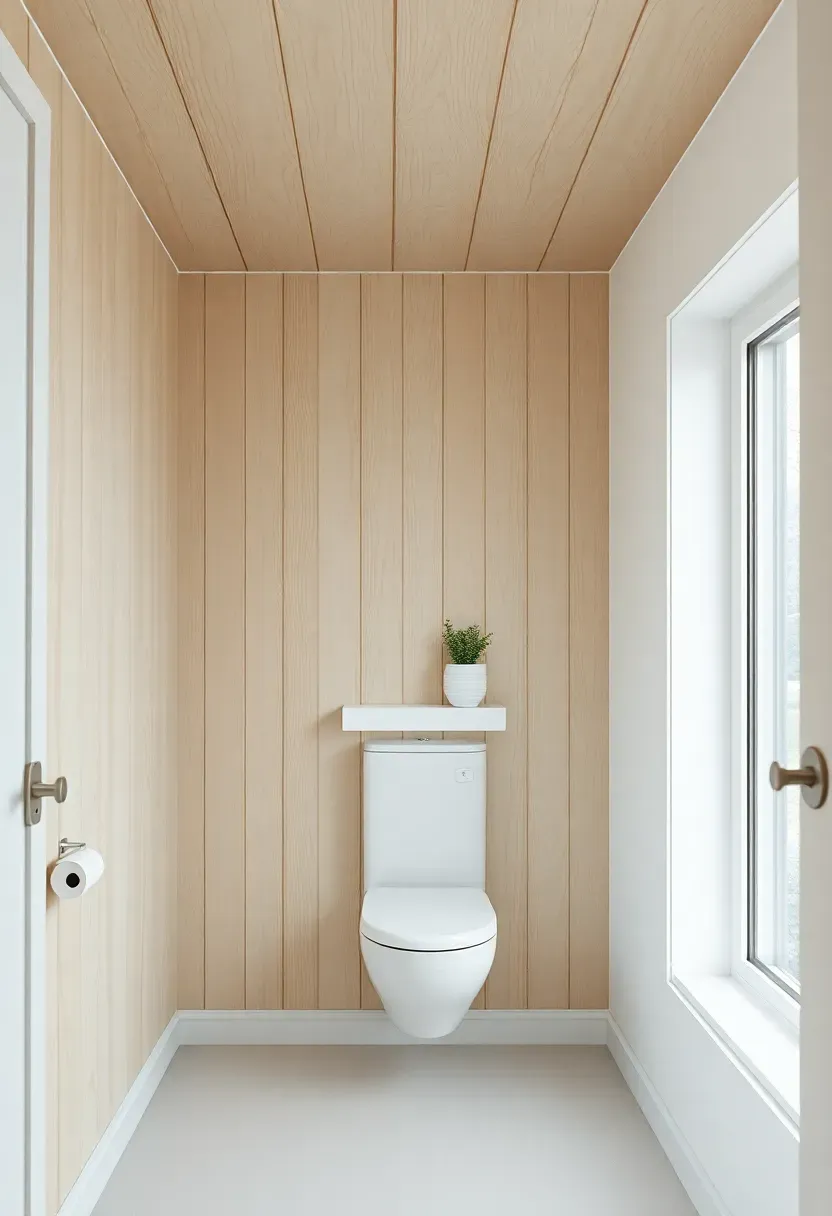
Full sheets of cabinet-grade plywood on the ceiling give you the look of wood paneling at a fraction of the cost. Baltic birch plywood has a clean, even grain with a pale tone that suits Scandinavian and Japanese-influenced bathrooms. A sheet of 4x8 Baltic birch runs about $50-70 depending on thickness — enough to cover 32 square feet. Apply three coats of water-based polyurethane to seal against moisture, sanding lightly between coats. The result is a warm, modern ceiling that looks far more expensive than it is.
Why Plywood Works
Plywood is dimensionally stable — its cross-laminated layers resist the expansion and contraction that warps solid wood planks in humid rooms. It lies flat, installs fast, and creates fewer joints than individual boards.
Finishing Details
- Use 1/4-inch plywood to minimize weight overhead
- Cover seams with thin wood battens or route a shallow V-groove at joints for a deliberate panel look
- Sand to 220 grit before finishing for a smooth, furniture-quality surface
Recommended
Items for this idea
25. Ceiling Garden with Hanging Plants
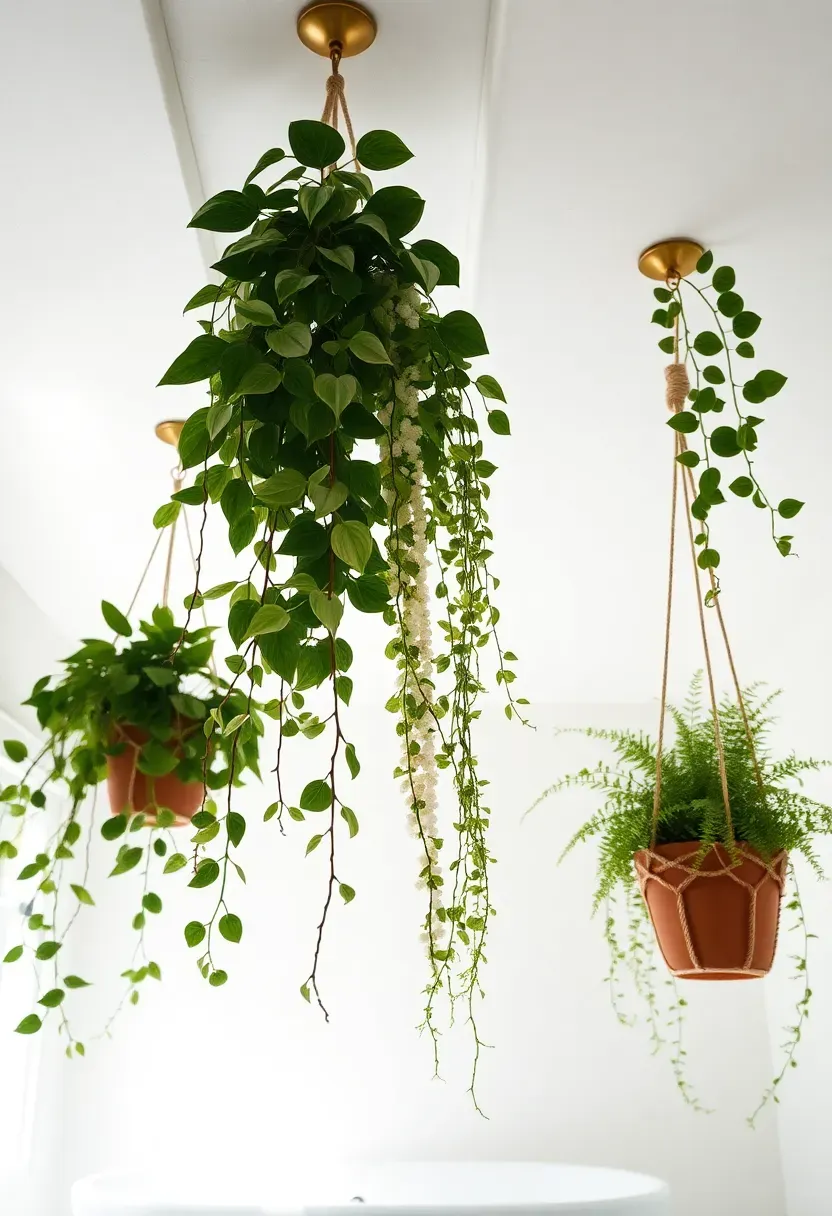
Living plants overhead turn a bathroom into something between a room and a conservatory. Trailing species like pothos, string of pearls, and philodendron heartleaf thrive in bathroom humidity and indirect light. Mount hooks directly into ceiling joists (not just drywall) and use lightweight planters — ceramic pots full of wet soil get heavy. Macrame hangers, brass ceiling hooks, and tension-mounted plant rods are all options that avoid permanent damage to the ceiling surface itself.
Best Plants for Bathroom Ceilings
- Pothos: Nearly indestructible, trails 6-10 feet, tolerates low light
- String of pearls: Delicate cascading beads, needs bright indirect light
- Boston fern: Full and lush, loves humidity, needs consistent moisture
- Staghorn fern: Mounted on a board rather than potted, sculptural
Practical Concerns
- Water drips when you water overhead plants — use planters with built-in saucers or water plants at the sink and rehang
- Check hooks monthly for loosening from moisture-related drywall softening
- Rotate plants toward light sources quarterly to prevent lopsided growth
Quick FAQ
Can you use regular paint on a bathroom ceiling? You can, but you should not. Regular flat or eggshell paint absorbs moisture and develops mildew faster in humid environments. Use semi-gloss or satin finish paint with built-in mildew resistance. Bathroom-specific formulas from most major paint brands (like Benjamin Moore Aura Bath & Spa) are worth the extra cost per gallon.
Do bathroom ceilings need special ventilation? Yes. Any ceiling treatment — wood, plaster, tile, or paint — lasts longer with proper ventilation. An exhaust fan rated for your room size (1 CFM per square foot minimum) should run during and 15-20 minutes after every shower. Without it, even moisture-resistant materials will eventually develop problems.
Is it worth tiling a bathroom ceiling? Inside a shower enclosure, absolutely — it is the most durable option. For the general bathroom ceiling outside the shower, tile is overkill unless you are going for a specific decorative effect. The cost and labor of overhead tiling is significant, and most other materials on this list handle bathroom moisture perfectly well.
Which bathroom ceiling material is cheapest? PVC panels at $1-3 per square foot installed are the most affordable. Paint is cheaper per square foot but requires more prep work (filling, sanding, priming). Bamboo matting falls in the $2-4 range and offers more character than PVC for a similar price.
Will a dark ceiling make my small bathroom feel smaller? Not necessarily. A dark ceiling with light walls creates vertical contrast that can make the room feel taller. The effect depends more on wall color and lighting than ceiling color alone. Dark ceilings work poorly only when paired with dark walls and inadequate lighting.
The ceiling is worth your attention. It is the largest uninterrupted surface in most bathrooms, and it affects lighting, acoustics, and the overall sense of enclosure more than any single fixture or accessory. Whether you spend $40 on a can of bold paint or $2,000 on cedar planking, treating the ceiling as a design element rather than an afterthought makes the whole room feel more considered. Start with the idea that fits your budget and skill level, and go from there.
Pinterest cover for 25 Bathroom Ceiling Ideas to Try in 2026
About the author
OBCD
CGI visualization and interior design content. We create detailed 3D renders and curate practical design ideas for every room in your home.