17 Bathroom Cabinet Ideas for Any Size Space
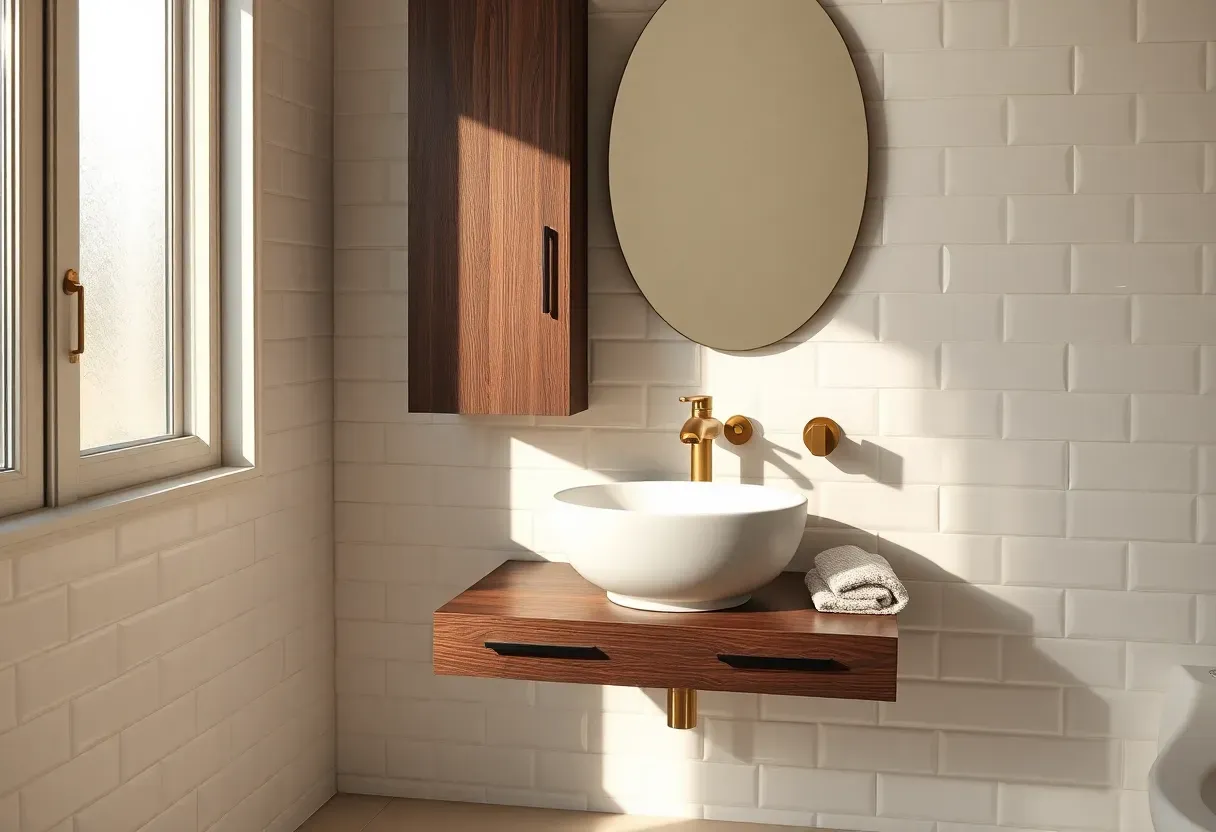
Most bathrooms have too little storage and too much clutter on the counter. Toothbrushes, skincare bottles, hair tools, cleaning supplies — they pile up fast, and open shelves only make the problem visible. The right cabinet setup gives everything a home behind closed doors. It does not require a renovation either. Some of the best bathroom cabinet upgrades are swaps: a pedestal sink traded for a vanity, a surface-mounted medicine cabinet replacing a bare mirror, or a narrow tower slotted into dead space next to the toilet.
These 17 bathroom cabinet ideas cover wall-mounted, freestanding, built-in, and recessed options. Each one addresses a specific storage problem with materials suited to moisture-heavy rooms.
Table of Contents
- Floating Vanity Cabinet
- Recessed Medicine Cabinet
- Tall Linen Tower
- Under-Sink Pull-Out Drawers
- Mirrored Wall Cabinet
- Open-and-Closed Combo Vanity
- Corner Cabinet
- Shaker-Style Vanity
- Industrial Metal and Wood Cabinet
- Built-In Niche with Door
- Narrow Over-Toilet Cabinet
- Double Vanity with Shared Center Tower
- Vintage Repurposed Dresser Vanity
- Wall-Mounted Cube Storage
- Apothecary-Style Cabinet
- Slab-Front Handleless Cabinet
- Wicker and Rattan Cabinet
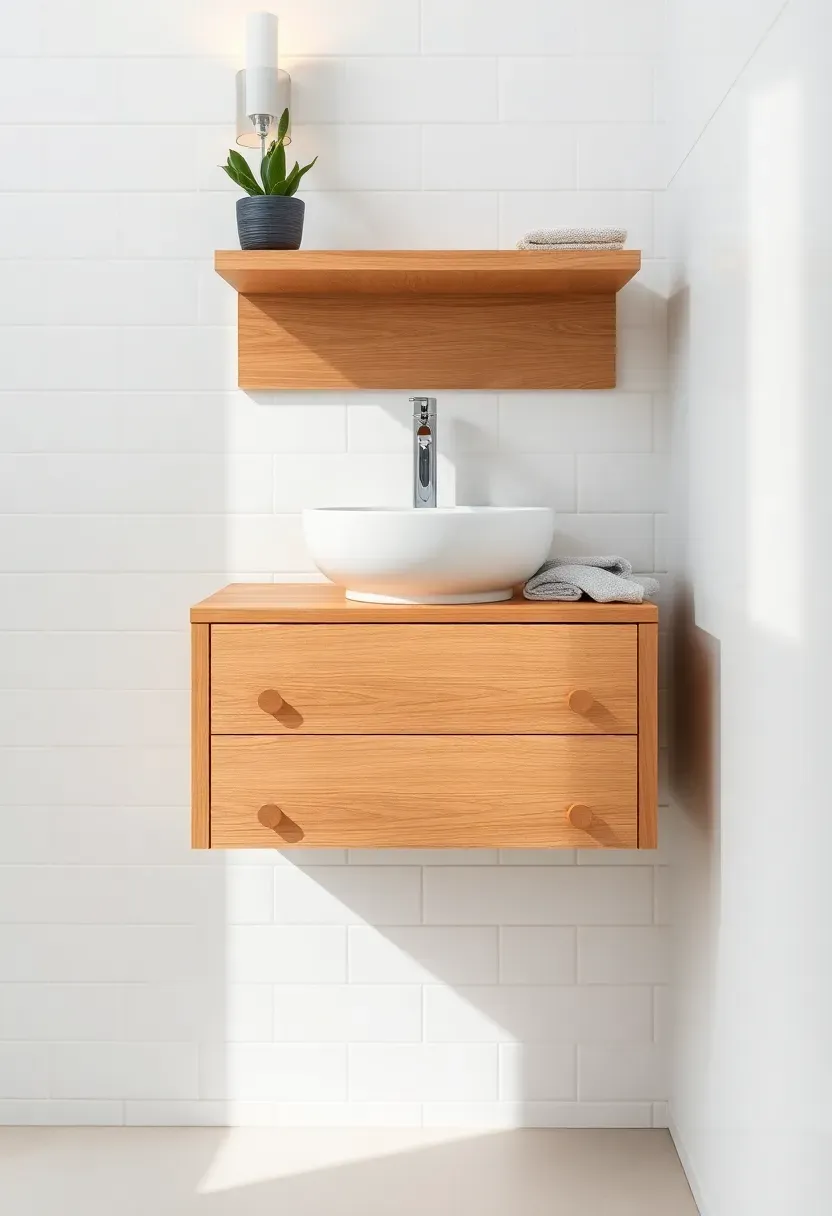
1. Floating Vanity Cabinet
Wall-mounted vanities clear floor space underneath, which makes a small bathroom feel larger and simplifies mopping. The gap beneath also lets you install accent lighting strips that wash the floor with a soft glow. Most floating vanities attach to a steel cleat bolted into wall studs — the studs carry the weight, so you need at least two. Plywood construction holds up better than particleboard in humid rooms. Look for soft-close drawer slides rated for bathroom use; cheap hardware corrodes within a year.
Tips
- Mount the vanity at 34 inches from finished floor to the top — standard counter height
- Use expanding foam behind the cleat to seal the gap and prevent moisture intrusion
- Choose a vessel sink if your vanity depth is under 18 inches to avoid cramped counter space
We picked a few things that go well with this idea: 24-Inch Floating Vanity with Double Drawers (Black) (★4.1), 30-Inch Floating Vanity with LED Light (★4.5) and 24-Inch Floating Vanity with Double Drawers (White) (★4.1). As an Amazon Associate we earn from qualifying purchases.
2. Recessed Medicine Cabinet
Why Bother with Recessed?
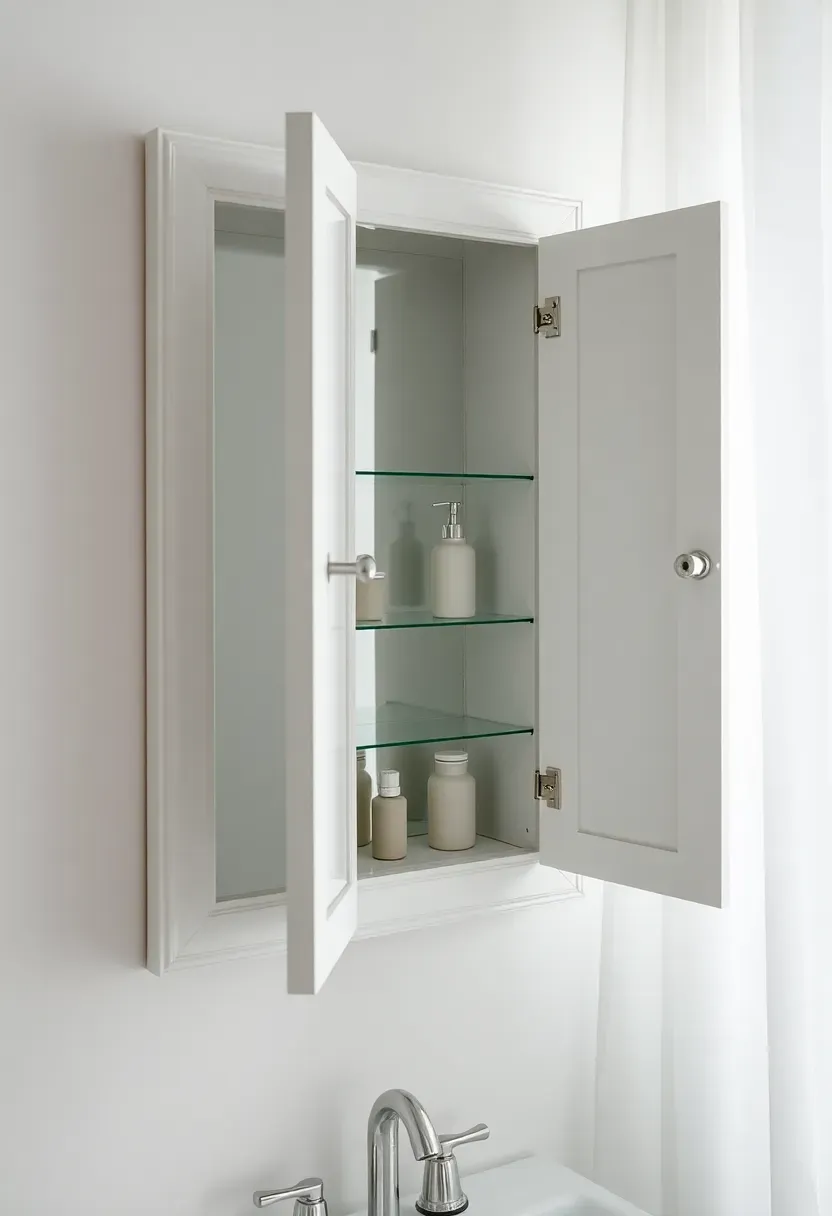
Surface-mounted cabinets jut out 4-5 inches from the wall. In a narrow bathroom, that is enough to block a door swing or crowd the vanity mirror. Recessed cabinets sit flush inside the wall cavity, giving you the same shelf depth without stealing room.
How to Install One
Cut the drywall between two studs, frame the opening with 2x4 lumber, and slide the cabinet unit in. Most standard models fit a 14.5-inch stud bay. Wider options require cutting one stud and installing a header, which adds structural work.
Pros and Cons
- Pros: Clean sightlines, full-depth shelving, keeps counter clear
- Cons: Cannot install on exterior walls with insulation, requires drywall patching if removed
We picked a few things that go well with this idea: Shintenchi Over-Toilet Storage Cabinet (White) (★4.2), Kitsure 3-Tier Over-Toilet Storage Rack (Black) (★4.5) and GloTika 3-Tier Over-Toilet Storage Shelf (Black) (★4.5). As an Amazon Associate we earn from qualifying purchases.
3. Tall Linen Tower
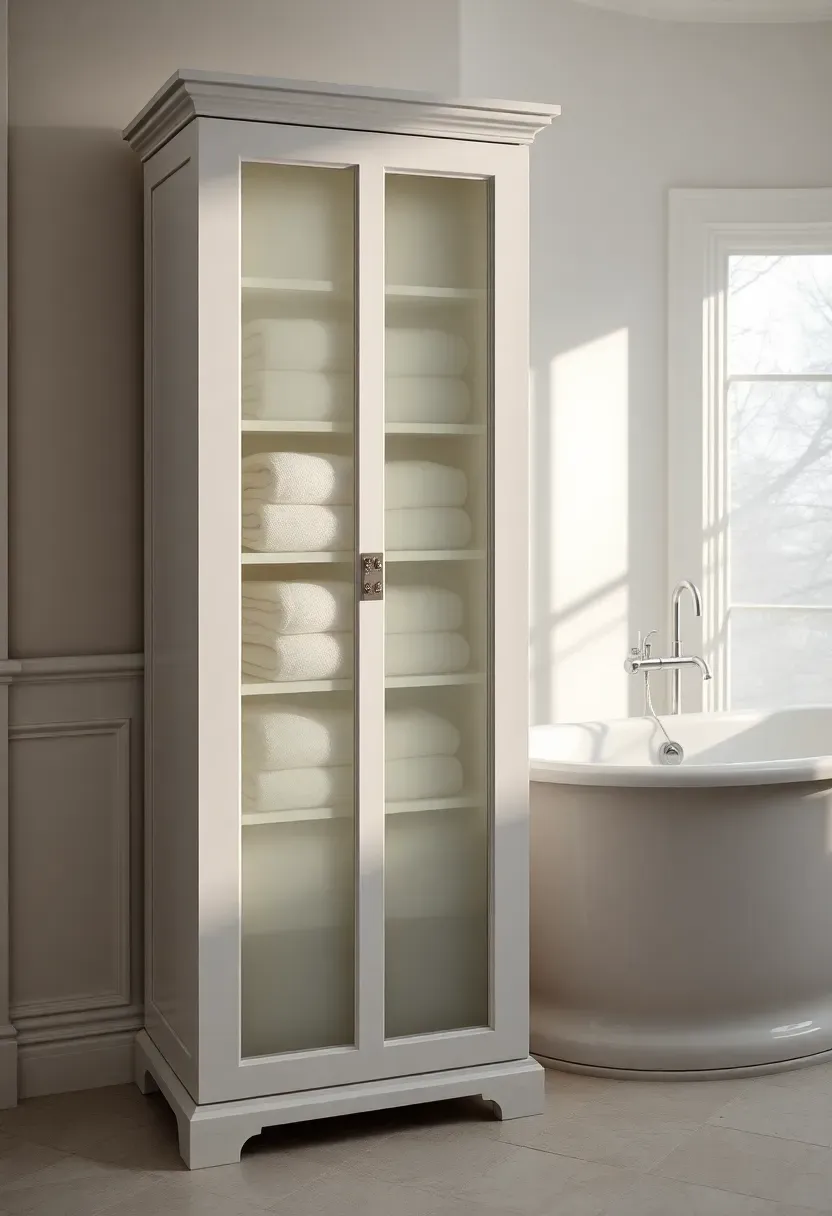
A linen tower occupies about 15 inches of floor width and gives you five to six shelves of vertical storage. That is enough for bath towels, extra toilet paper, first-aid supplies, and cleaning products — all behind one door. Place it next to the shower or bathtub for easy towel access. The bottom shelf should sit at least 4 inches off the floor if your bathroom floods during heavy use. Freestanding towers are renter-friendly since they do not require wall anchoring, though tipping brackets are smart if you have small children.
Choosing the Right Material
- Solid wood or marine-grade plywood for long-term durability in damp air
- Thermofoil-wrapped MDF is budget-friendly but peels at edges after 3-5 years
- Avoid flat-pack particleboard — it swells permanently when wet
We picked a few things that go well with this idea: Vtopmart 2-Tier Pull-Out Organizer (4-Pack) (★4.6), Vtopmart Large Stackable Storage Drawers (4-Pack) (★4.7) and HIHEGD 2-Tier Pull-Out Cabinet Organizer (★4.5). As an Amazon Associate we earn from qualifying purchases.
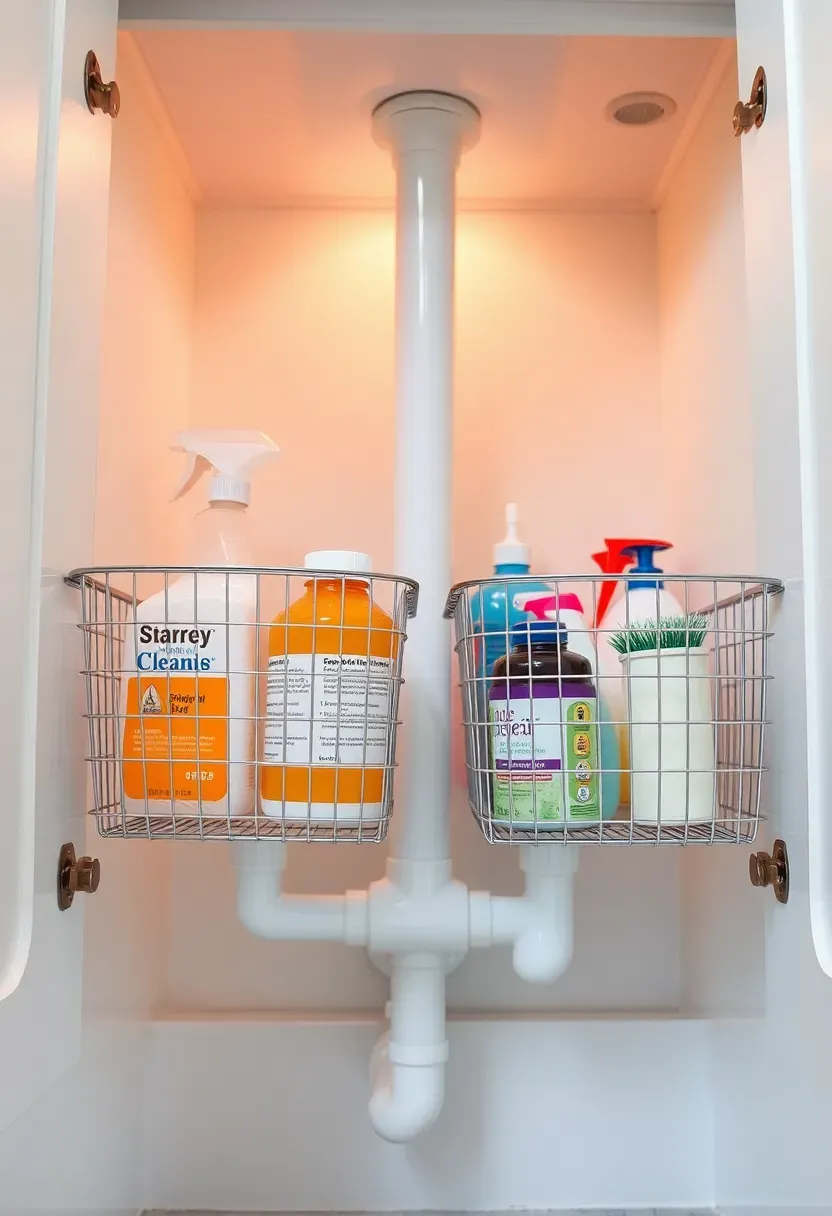
4. Under-Sink Pull-Out Drawers
The Problem
The space under most bathroom sinks is a black hole. Pipes eat into shelf depth, bottles get shoved to the back, and you end up pulling everything out just to find the floss.
The Fix
Replace fixed shelving with U-shaped pull-out drawers that curve around the plumbing. Full-extension ball-bearing slides let you access the entire drawer depth without crouching. Most retrofit kits work with standard 24-inch and 30-inch vanity bases. You lose about 2 inches of width on each side for the slide hardware, but the trade-off is worth it.
Watch Out
- Measure your drain trap clearance before ordering — P-traps sit at different heights
- Soft-close mechanisms prevent slamming but add $8-12 per slide
- Line the drawer bottoms with rubberized shelf liner to contain leaks
Recommended
Items for this idea
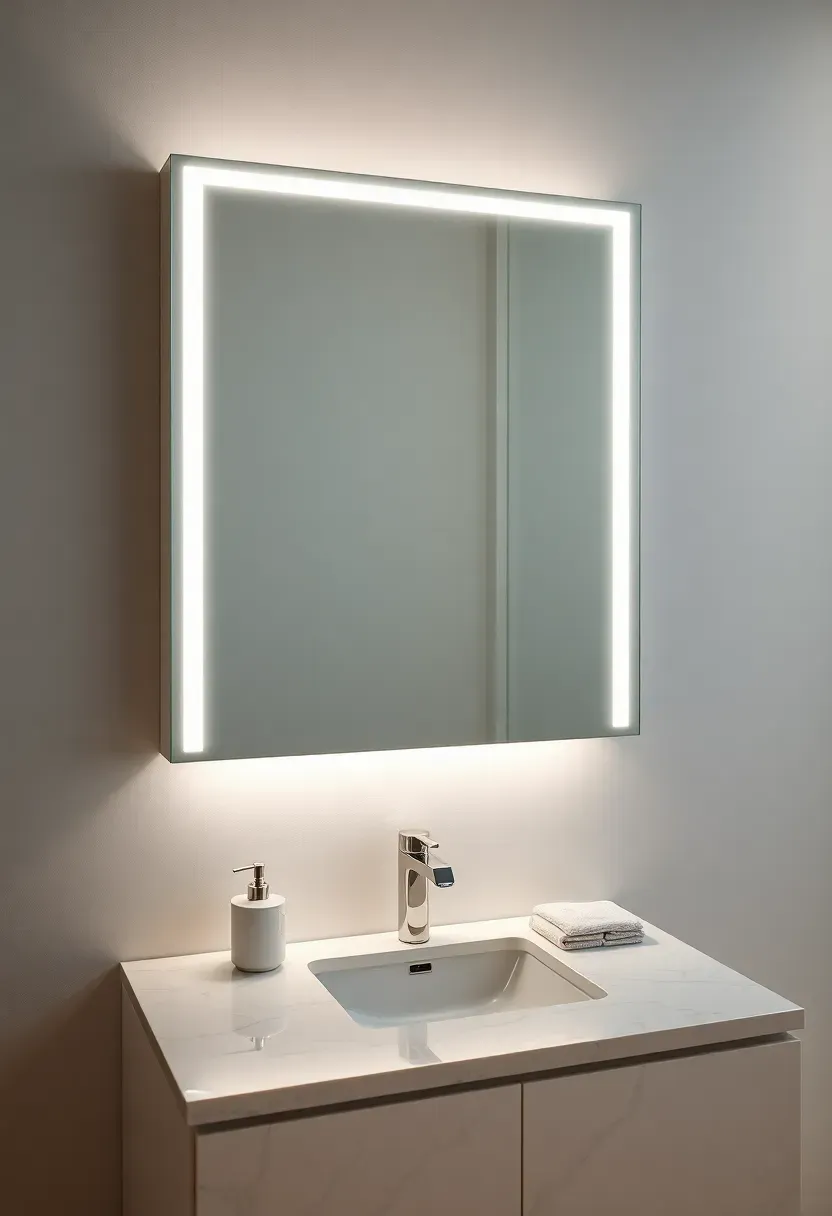
5. Mirrored Wall Cabinet
Mirrored cabinets serve double duty: storage and grooming mirror in one fixture. Modern versions include integrated LED lighting along the edges, defogger pads on the back of the glass, and electrical outlets inside the cabinet for charging electric toothbrushes or shavers. The key measurement is projection depth — anything over 5 inches starts looking bulky. Most mirrored cabinets mount with a French cleat system, which lets you level them precisely after hanging.
Tips
- Choose a cabinet width that matches or slightly exceeds your vanity width for visual balance
- Frameless mirrors read more contemporary; framed versions suit traditional bathrooms
- Three-panel hinged designs let you angle side mirrors for close-up views
6. Open-and-Closed Combo Vanity
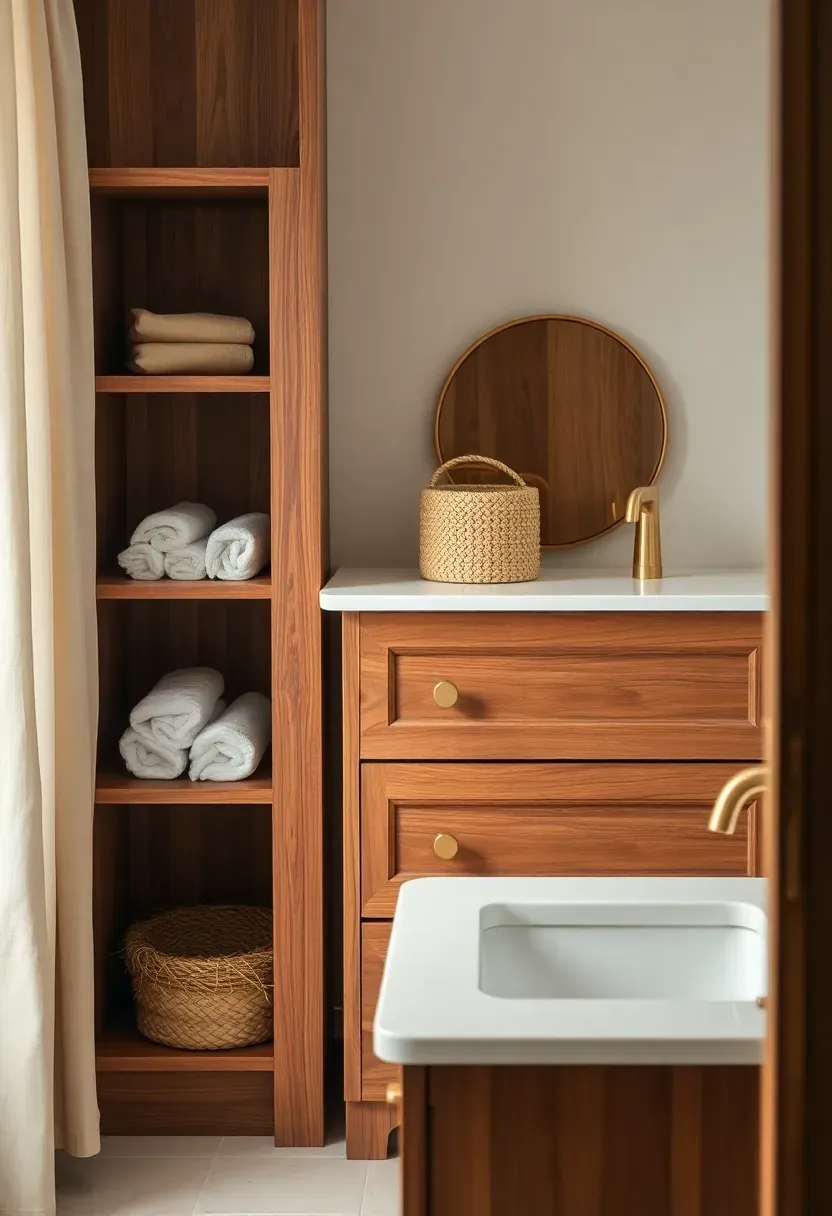
Open Side vs. Closed Side
This layout splits storage into display and concealment. Open shelves hold rolled towels, a plant, or a basket — items that look good visible. Closed drawers hide medications, cleaning products, and half-used tubes of toothpaste. The visual variety breaks up a wall of cabinet doors and adds depth to the room.
When It Works Best
Combo vanities suit bathrooms where you want warmth without full-on open shelving chaos. They also help in shared bathrooms: one person gets drawers, the other gets shelves.
Choose If
- You want to display decorative items but hide daily mess
- Your bathroom has a single vanity wall with no room for separate storage pieces
Recommended
Items for this idea
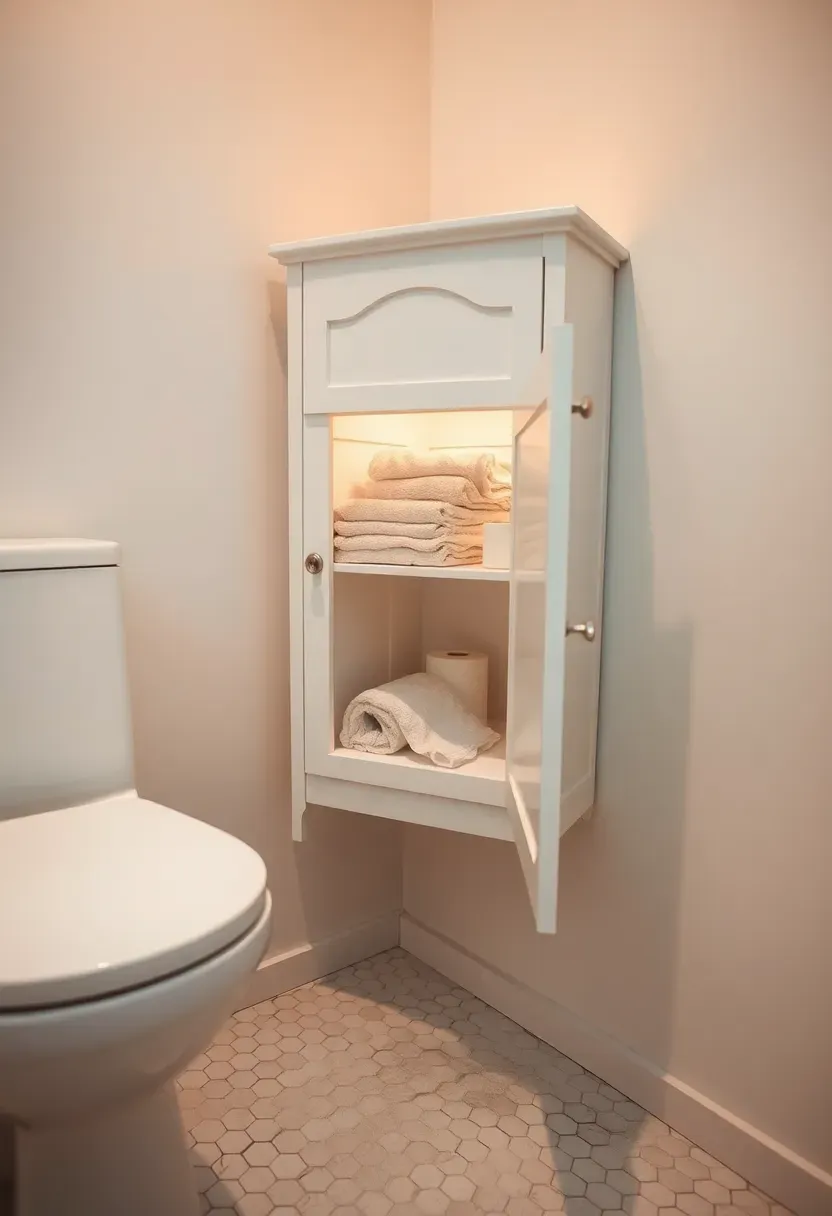
7. Corner Cabinet
Corners are wasted real estate in most bathrooms. A triangular or curved-front corner cabinet reclaims that dead zone and holds more than you would expect — shaving kits, hand towels, spare soap. Wall-mounted corner units work above the toilet tank or beside the mirror. Floor-standing versions tuck next to the vanity where a standard rectangle would not fit. The angled doors swing open without blocking traffic paths, which matters in tight layouts. Measure both walls meeting at the corner and check for plumb; older houses often have corners that are not true 90 degrees.
Tips
- Lazy Susan inserts inside corner cabinets prevent items from getting lost in the back
- Mount wall units at eye level for daily-use items, higher for backup supplies
- White or glass-front doors keep the corner feeling light rather than boxy
8. Shaker-Style Vanity
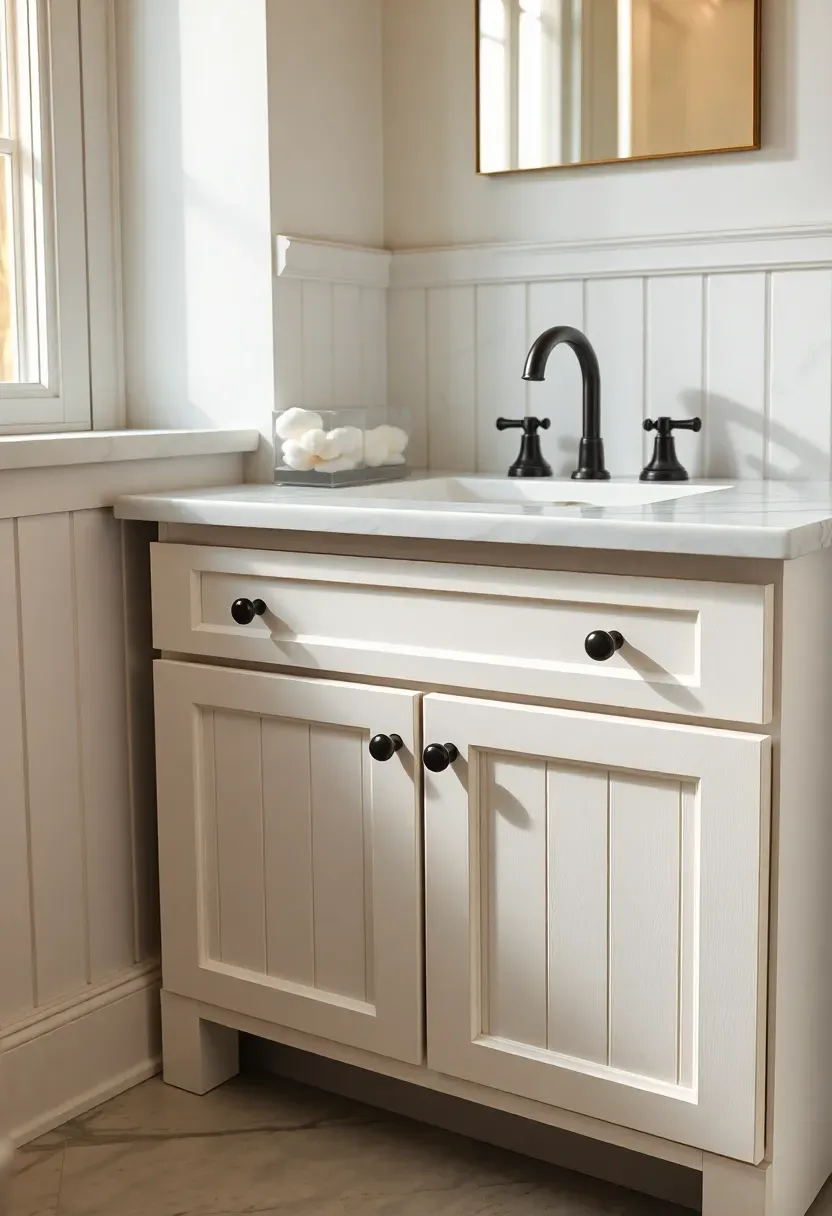
Shaker cabinets have a five-piece door with a flat center panel and no ornamentation. That simplicity is why they work in almost any bathroom, from farmhouse to contemporary. The recessed panel creates a subtle shadow line that gives the door dimension without clutter. White and gray shaker vanities dominate the market, but painted sage green, navy, or black versions add more character. The style originated with the Shaker religious community in the 1700s, where functional craft and material honesty were core values — an ethos that still holds up.
Picking Hardware
- Iron or oil-rubbed bronze knobs match the traditional roots
- Brushed gold or brass pulls lean the style toward transitional
- Skip ornate pulls — they fight the Shaker philosophy of plainness
Recommended
Items for this idea
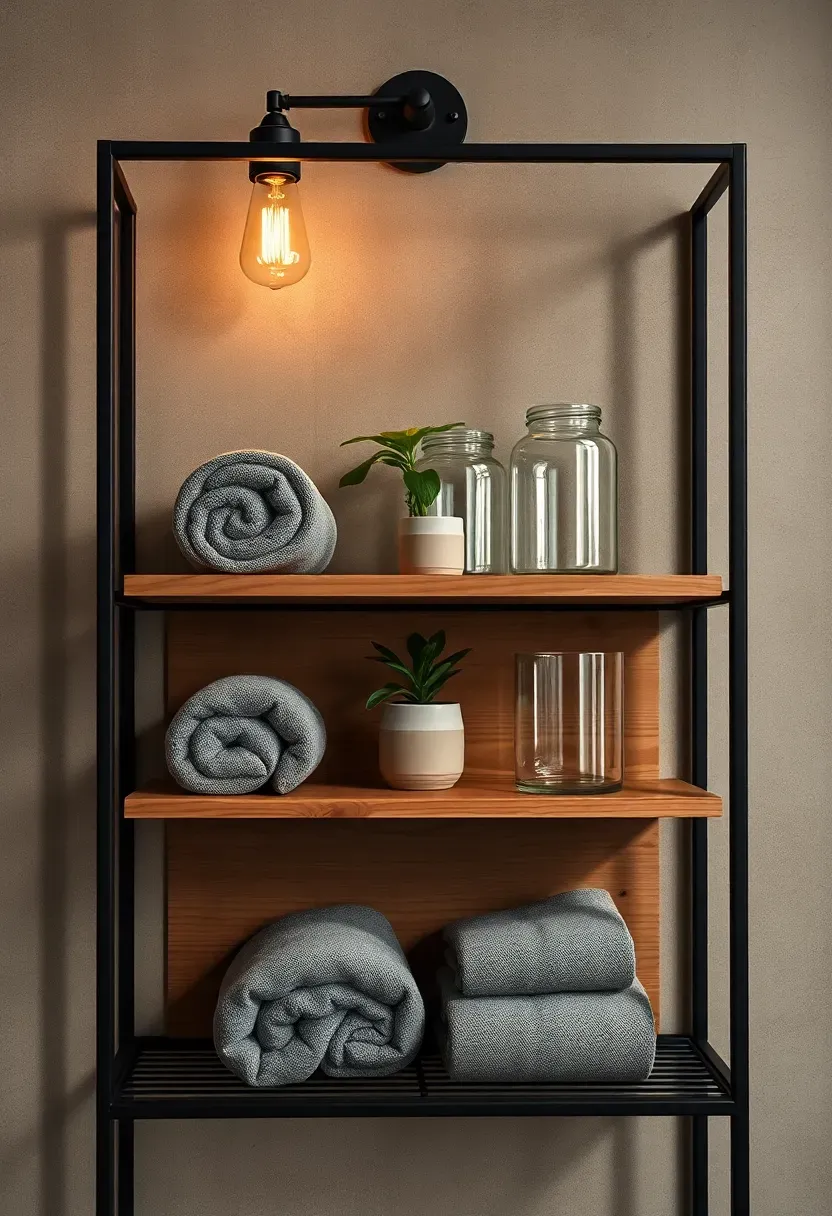
9. Industrial Metal and Wood Cabinet
Where This Style Comes From
Industrial bathroom furniture borrows from early 20th-century factory and warehouse fittings — exposed steel, raw wood, visible fasteners. The aesthetic peaked in loft conversions during the 2000s and has since mellowed into a more refined version that mixes powder-coated steel frames with finished wood.
Modern Application
Pair a steel-frame open cabinet with a concrete or butcher block countertop. The metal resists moisture better than wood alone, and the open design keeps air circulating around damp towels. Black powder-coated steel is the most common finish; it hides fingerprints and water spots.
Use This Approach If
- Your bathroom already has exposed plumbing or concrete floors
- You want durability without worrying about wood swelling
10. Built-In Niche with Door
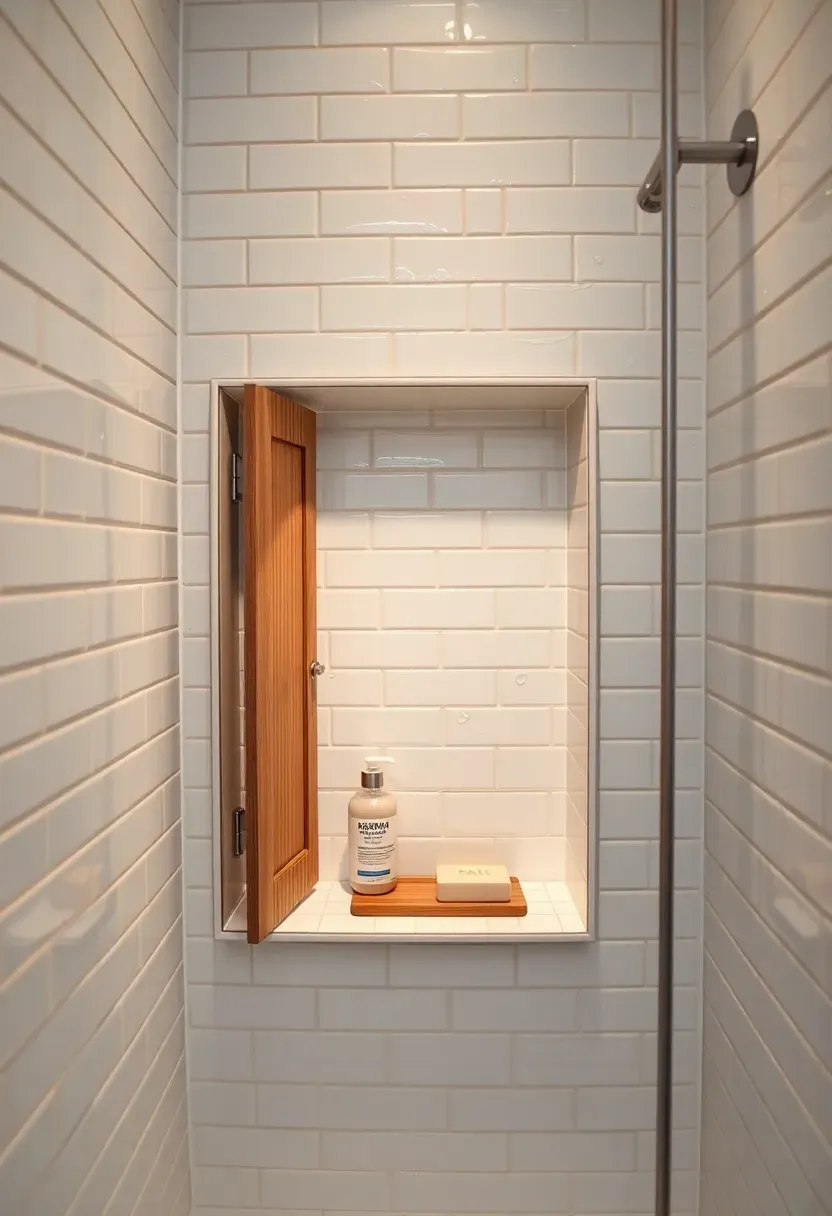
A shower niche without a door collects soap scum and displays every bottle. Adding a small hinged or sliding door to a recessed niche turns it into a miniature cabinet — concealed, clean, and waterproof if tiled properly. The niche gets framed during the rough-in stage with 2x4 lumber and lined with a waterproof membrane like Kerdi board. Standard niche depth is 3.5 inches (one stud depth), enough for most bottles. Tile the interior, add a stainless steel piano hinge, and mount a tile-matched door.
Step by Step
- Frame the niche opening between studs during wall construction
- Line all surfaces with waterproof membrane, overlapping seams by 2 inches
- Tile the interior, slope the bottom shelf slightly toward the shower to drain water
- Attach the door panel with a concealed hinge so it opens flush
Recommended
Items for this idea
11. Narrow Over-Toilet Cabinet
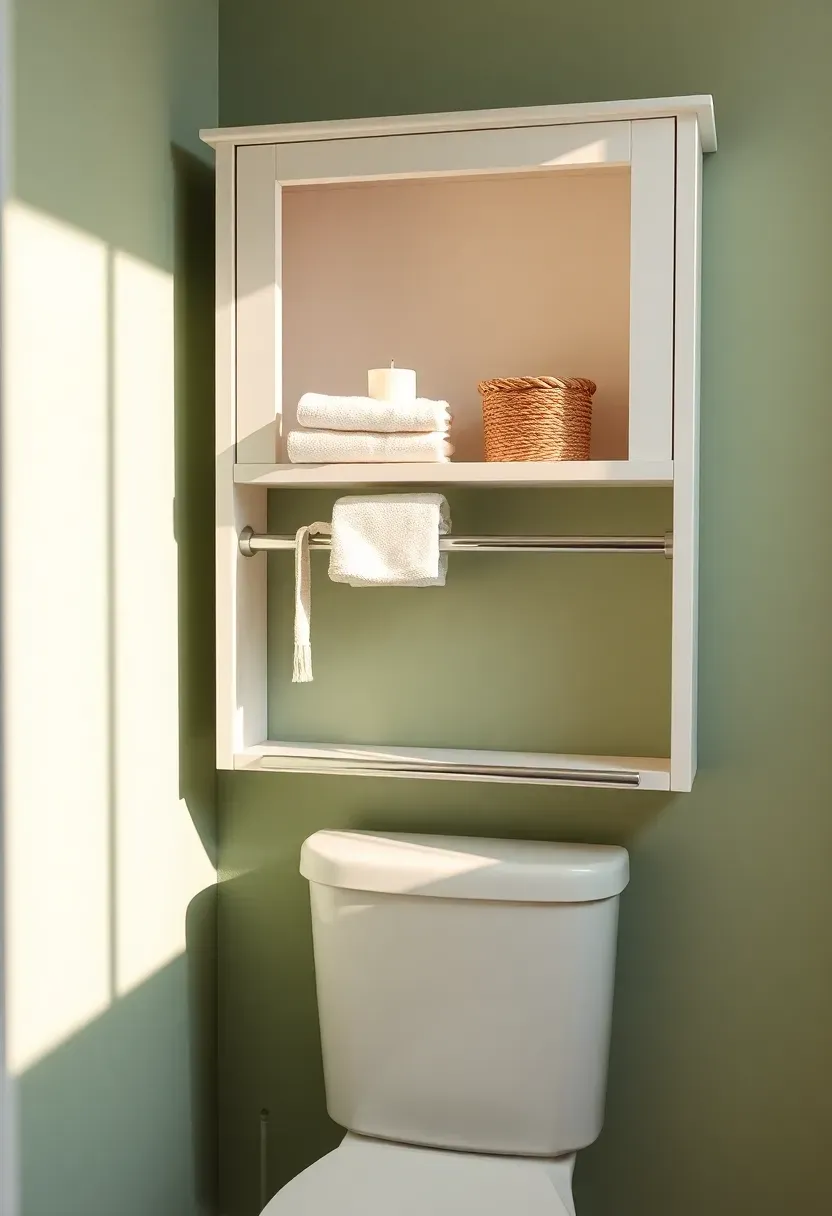
The wall above the toilet is often the largest unused vertical surface in a small bathroom. A narrow cabinet mounted here — typically 24 inches wide and 8 inches deep — holds toilet paper, hand towels, and air freshener without interfering with the tank lid or flushing. Keep the bottom edge at least 12 inches above the tank to avoid bumping your head. Enclosed cabinets look tidier than open shelves, and they keep dust off stored items. Anchor into studs, not just drywall anchors, since the cabinet weight plus contents can exceed 30 pounds.
Tips
- Match the cabinet finish to your vanity for visual cohesion
- Magnetic catches are quieter than roller catches in a bathroom
- Add a towel bar to the bottom rail for a hand towel — one fixture, two functions
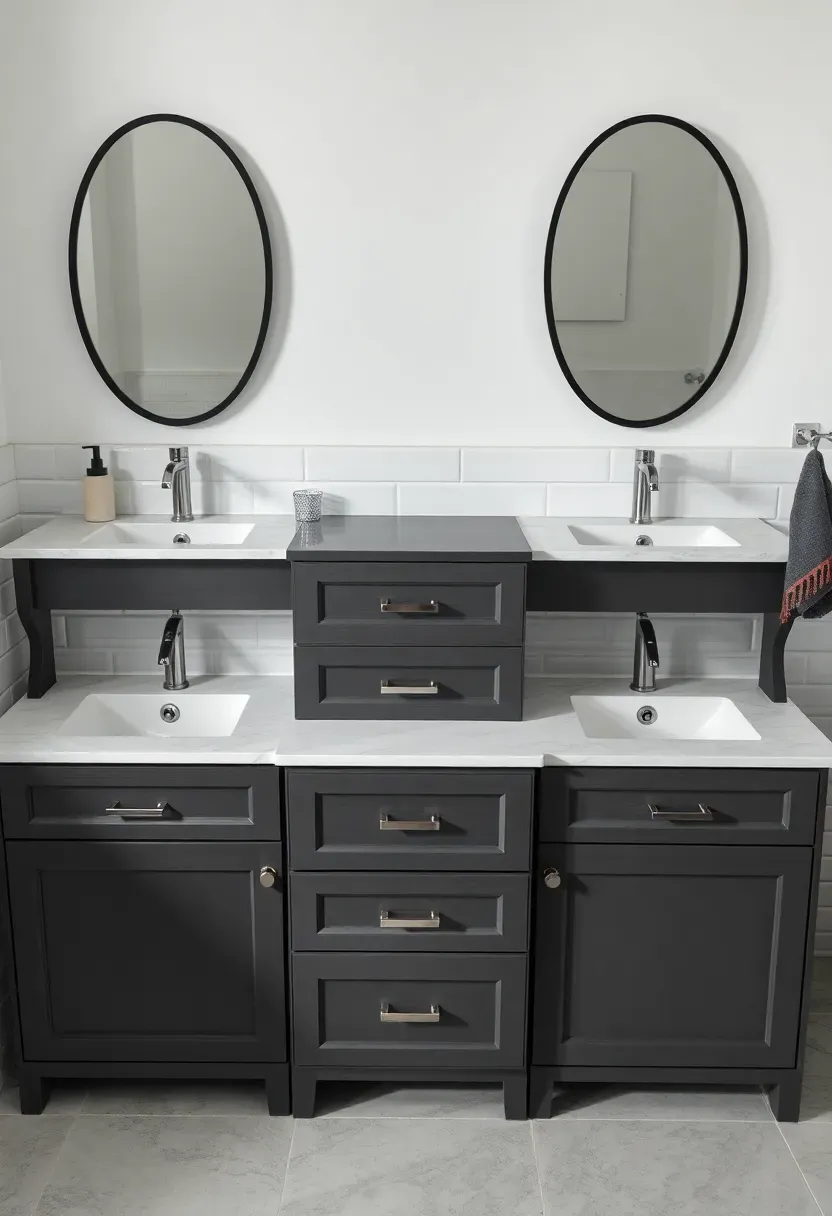
12. Double Vanity with Shared Center Tower
The Layout
Two sinks flanking a vertical storage tower give each person their own counter while sharing a central cabinet for items both use — toothpaste, mouthwash, cotton swabs. The tower sits between the sinks at the same height as the vanity top, creating a continuous surface line.
Why It Works
Separate sink areas reduce morning congestion. The center tower eliminates the need for a separate linen closet if you size it tall enough (60-72 inches). Drawers on the tower work better than shelves because you can organize by category without stacking.
Best For
- Primary bathrooms shared by two people
- Vanity walls wider than 60 inches where a single long counter would feel monotonous
Recommended
Items for this idea
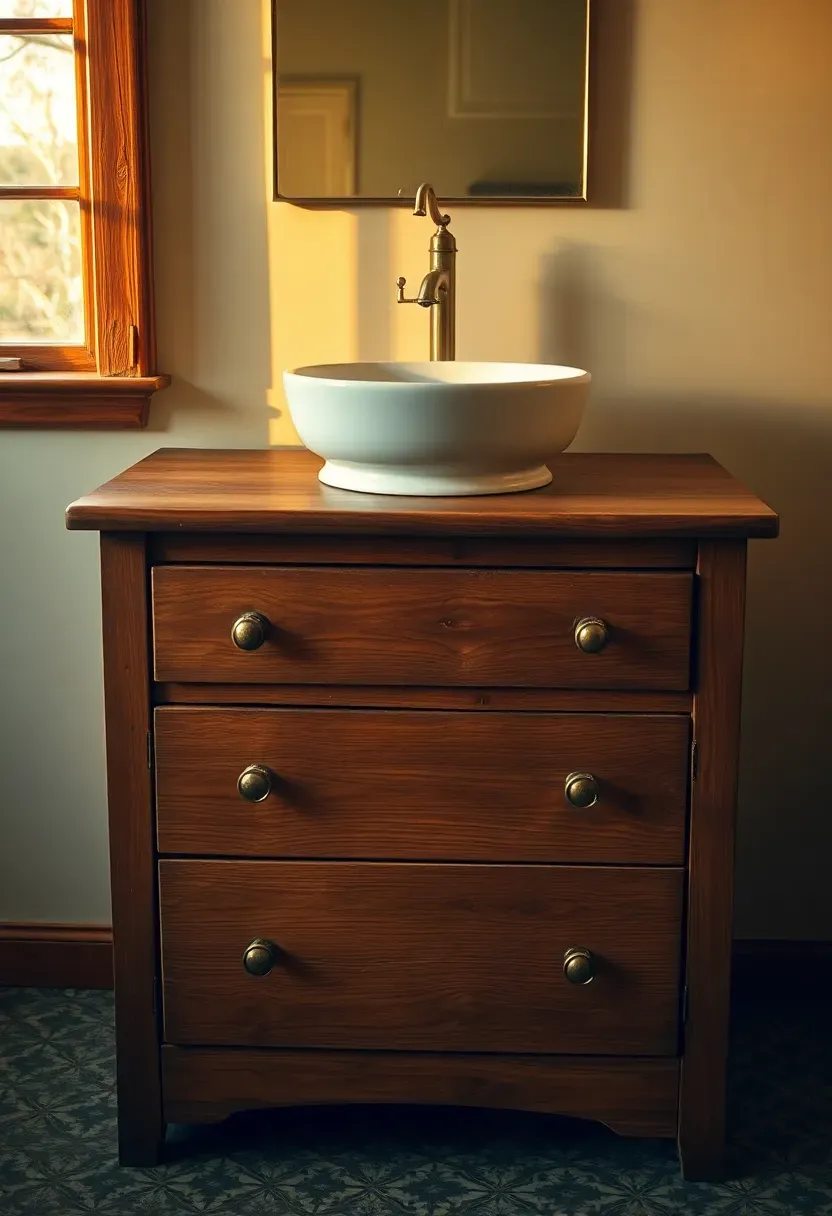
13. Vintage Repurposed Dresser Vanity
Old dressers from estate sales or thrift shops make distinctive vanity bases. A dresser with three or four drawers provides more organized storage than most purpose-built vanities — one drawer for hair tools, one for medications, one for linens. The conversion requires cutting the top drawer to accommodate plumbing, sealing all wood surfaces with marine varnish, and fitting a vessel or undermount sink into the countertop. Budget around $200-400 for the conversion on top of the dresser cost. The result is a one-of-a-kind piece with patina and history that no catalog vanity can match.
Watch Out For
- Verify the dresser back is solid enough to cut a plumbing access hole without cracking
- Legs that sit directly on tile need rubber caps or felt pads to prevent scratching
- Dovetail-jointed drawers hold up to humidity better than stapled or nailed joints
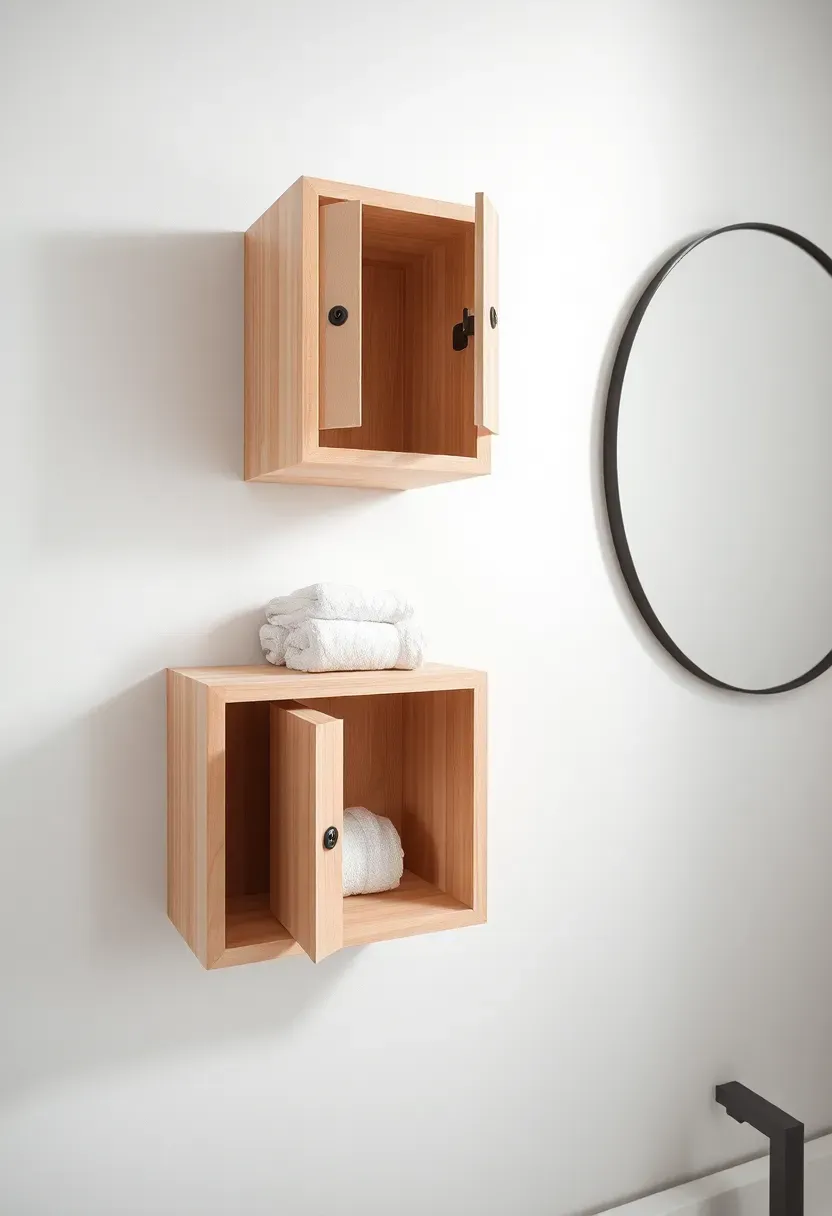
14. Wall-Mounted Cube Storage
Cube cabinets mount individually, so you arrange them in whatever pattern fits your wall. Three cubes in a vertical stack, a horizontal row of four, an asymmetric cluster — the layout adapts to your space and changes if you move. Each cube holds about as much as a medicine cabinet shelf. Solid doors hide contents; open cubes display folded towels or plants. Mounting requires one anchor point per cube driven into a stud. Birch plywood cubes with a clear coat handle bathroom humidity well and age gracefully.
Arrangement Ideas
- Stack three vertically beside the mirror for a narrow column of storage
- Mount two at different heights for a staggered gallery look
- Combine open and doored cubes in the same grouping for contrast
Recommended
Items for this idea
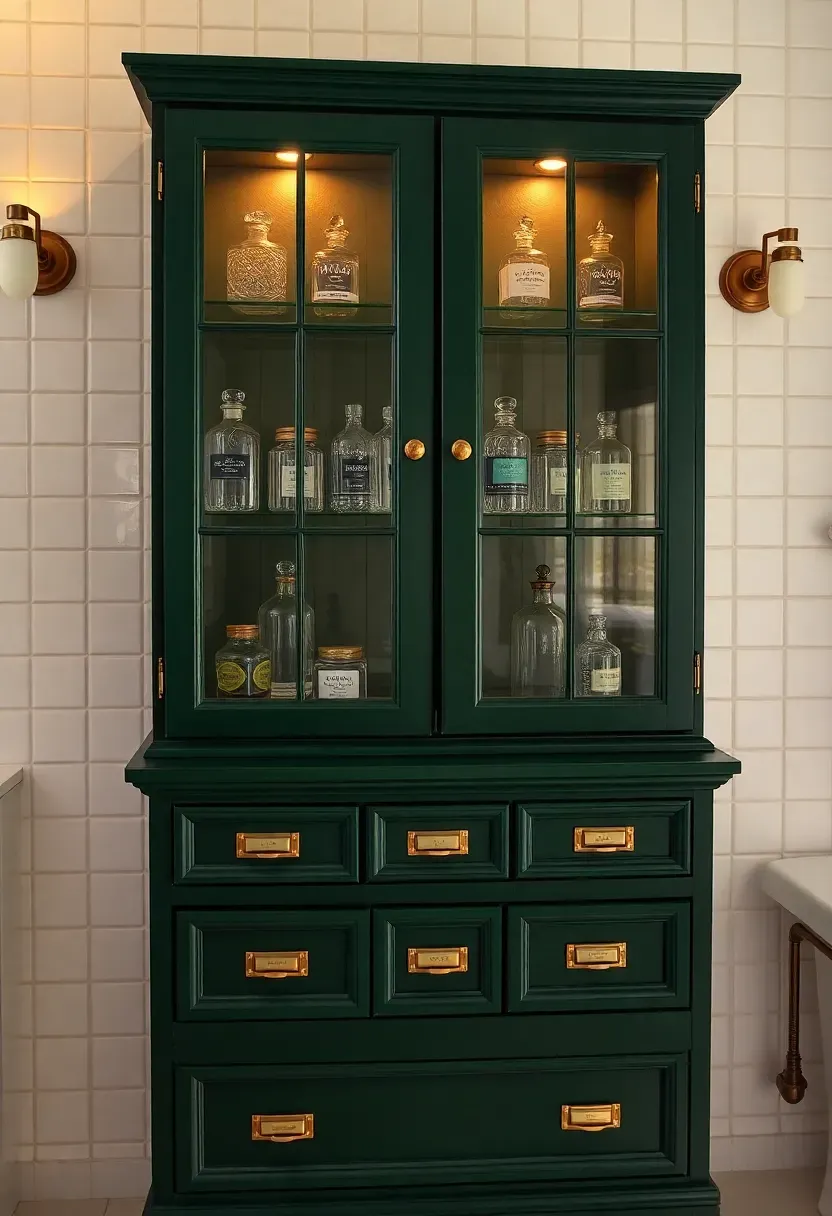
15. Apothecary-Style Cabinet
Origins
Apothecary cabinets date to 18th-century pharmacies where small drawers held herbs, powders, and tinctures. The form — many small drawers in a tall narrow frame — translates well to bathrooms where you need to sort dozens of small items: cotton balls, bandages, medications, hair ties, razor blades.
Modern Adaptation
Contemporary apothecary cabinets use the same multi-drawer layout but with moisture-resistant finishes and updated hardware. Dark green, matte black, and natural wood are common palette choices. Glass upper doors let you see what is on each shelf without opening the cabinet.
Consider This If
- You have lots of small items that get lost in deep drawers
- You want a furniture-like piece that adds character rather than blending in
16. Slab-Front Handleless Cabinet
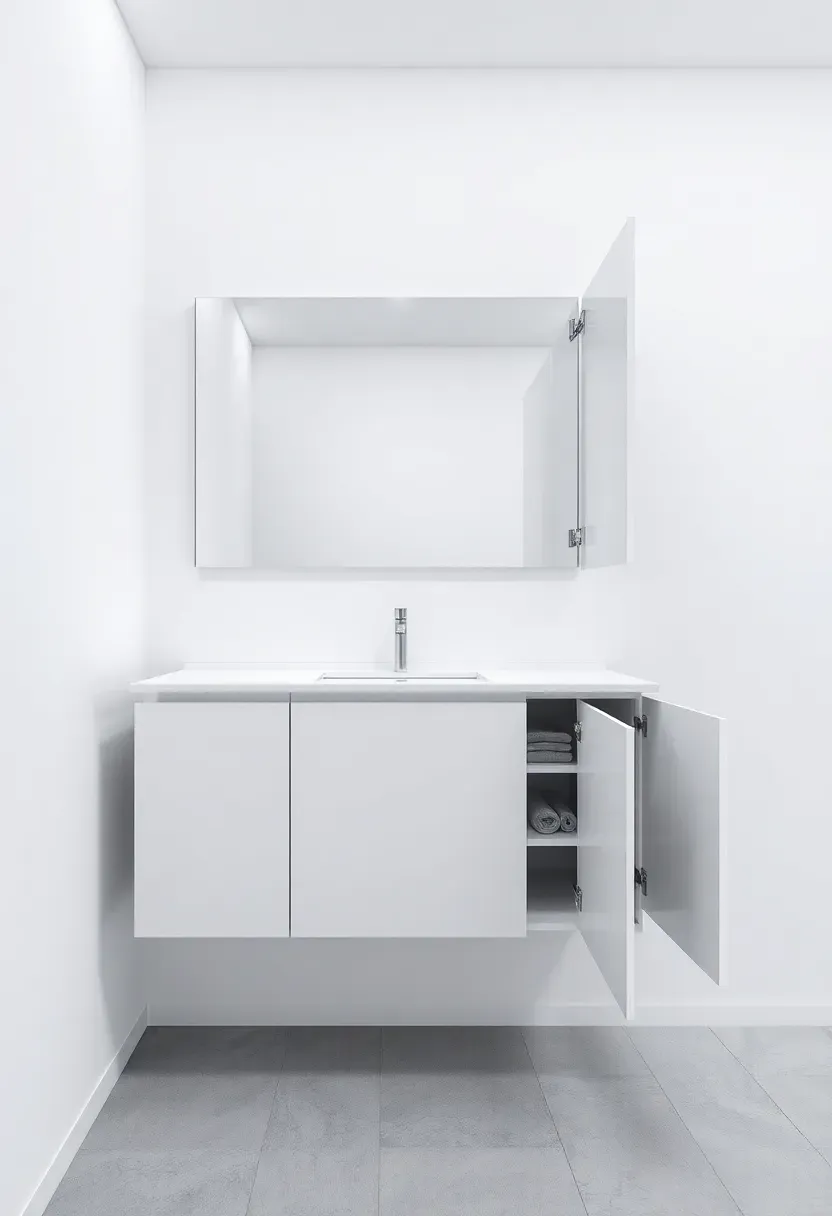
Slab doors are flat panels with no frame, no raised center, no routed edges. Without handles, the surface is completely smooth — nothing to snag a towel on, nothing to collect grime around. Push-to-open mechanisms or integrated finger pulls at the top or bottom edge replace knobs. The look reads distinctly modern and works particularly well in small bathrooms because unbroken surfaces make walls feel wider. The downside is that fingerprints and water spots show on glossy finishes. Matte lacquer or textured laminate solves that.
Tips
- Matte finishes hide fingerprints; high-gloss shows every touch
- Push-to-open hardware costs $3-5 per hinge — a minor upgrade
- Keep slab doors aligned precisely; gaps are more visible without frames to hide them
Recommended
Items for this idea
17. Wicker and Rattan Cabinet
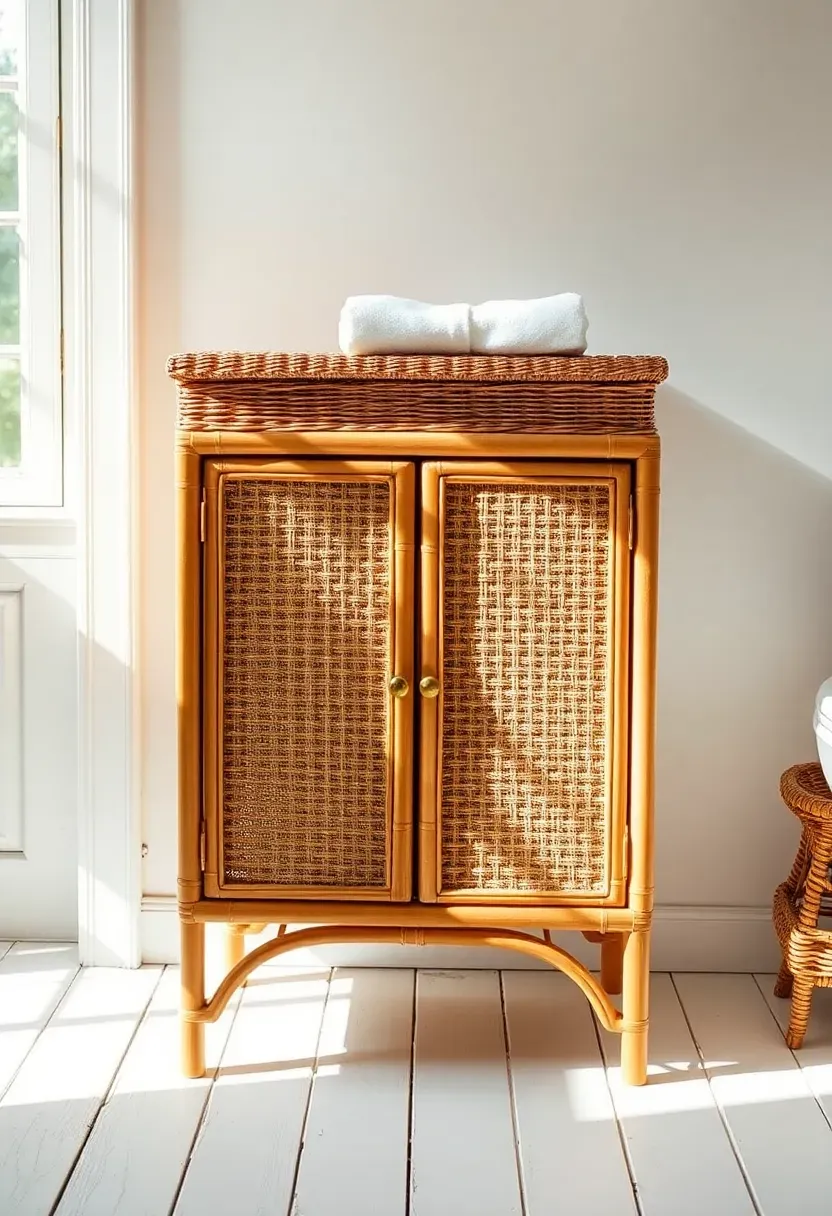
Wicker and rattan introduce texture and warmth that hard surfaces like tile, glass, and porcelain cannot provide. A freestanding rattan cabinet with woven doors softens a bathroom that feels too clinical. The natural material breathes, which actually helps in a humid room — air circulates through the weave and discourages mildew on stored linens. Real rattan (not plastic imitation) lasts well if kept away from direct water splash. Position these cabinets outside the wet zone — beside the door, against a dry wall, or in a hallway niche adjacent to the bathroom.
Care and Placement
- Wipe down with a damp cloth monthly; vacuum the weave pattern with a brush attachment
- Keep at least 24 inches from the shower or tub splash zone
- Apply a thin coat of clear lacquer annually to prevent drying and splitting
Quick FAQ
Where should I put cabinets in a small bathroom? Use vertical space first. Over-toilet cabinets, tall linen towers, and wall-mounted cubes store plenty without eating floor area. Recessed medicine cabinets also add depth inside the wall rather than outside it.
Are floating vanity cabinets strong enough for heavy countertops? Yes, when properly anchored into studs with a steel cleat. Floating vanities routinely support stone countertops weighing 80-120 pounds. The key is using at least two studs and lag bolts rated for the load.
What cabinet material holds up best in bathroom humidity? Marine-grade plywood and solid hardwood with polyurethane finish resist moisture well. Thermofoil over MDF is a budget option but can peel at edges after several years. Avoid raw particleboard entirely.
Can I install bathroom cabinets as a renter? Freestanding options like linen towers, rattan cabinets, and cube shelves need no permanent installation. Over-toilet cabinets require two screws into studs — small holes that are easy to patch when you move out.
How deep should bathroom cabinets be? Standard vanity depth is 21 inches, but wall-mounted cabinets and medicine cabinets work well at 4-6 inches deep. Over-toilet units typically run 6-8 inches. Anything deeper than necessary wastes space and blocks movement in tight bathrooms.
Bathroom cabinets are not glamorous purchases, but they determine whether your bathroom actually functions day to day. Pick one or two ideas from this list that match your layout, measure twice, and commit to materials that can handle steam and splashes. A single well-placed cabinet does more for a bathroom than a full repaint.
Pinterest cover for 17 Bathroom Cabinet Ideas for Any Size Space
About the author
OBCD
CGI visualization and interior design content. We create detailed 3D renders and curate practical design ideas for every room in your home.