21 Bathroom Floor Tiles Ideas
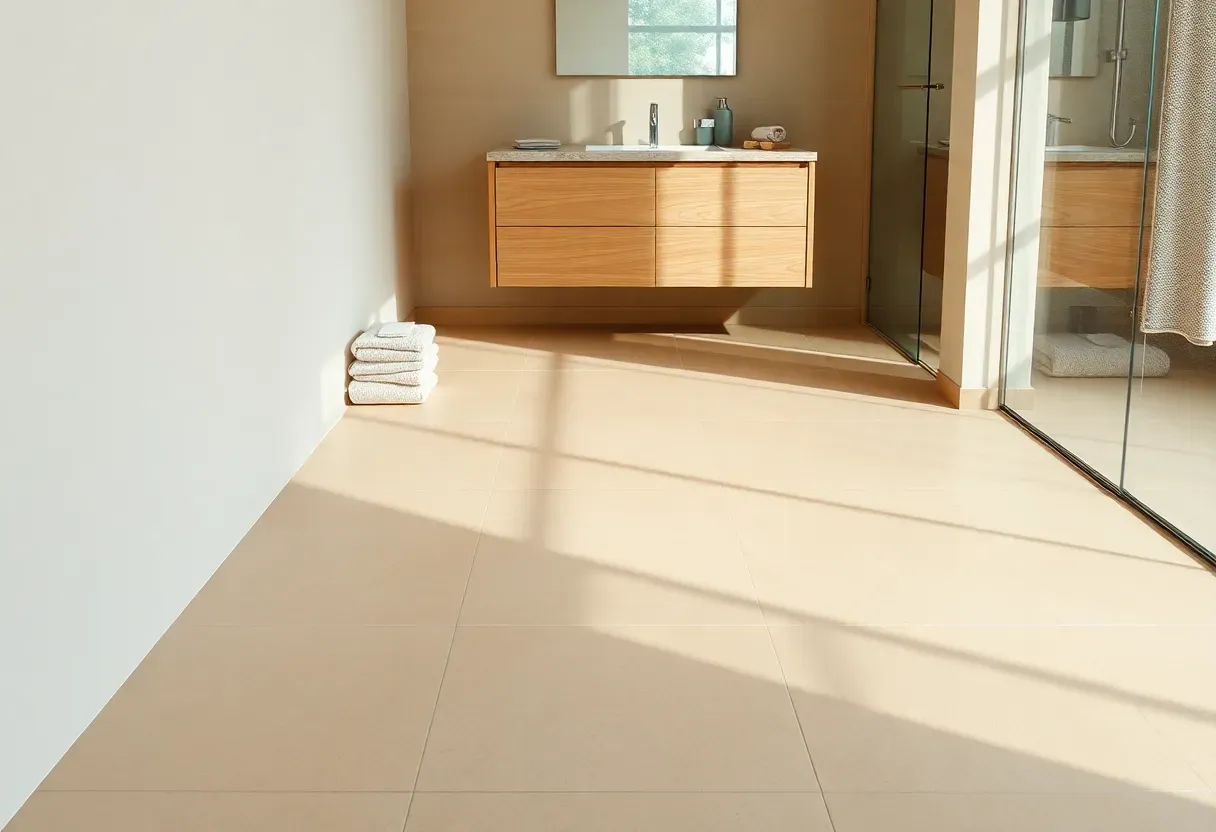
Your bathroom floor takes more abuse than any other surface in the house. Standing water from showers, temperature swings from heated floors to cold winter mornings, dropped bottles of shampoo, daily foot traffic in bare feet. Yet most people pick their floor tile in about ten minutes at the hardware store, usually defaulting to whatever neutral porcelain is on sale. That is a missed opportunity. The floor sets the entire mood of a bathroom — it is the largest uninterrupted surface you see, and the one you physically touch every single day.
These 21 bathroom floor tiles ideas range from safe classics to bold patterns, with honest notes on cost, maintenance, and which tiles actually hold up in wet environments.
Table of Contents
- Large-Format Porcelain Slabs
- Classic White Marble Hexagon Mosaic
- Encaustic Cement Tiles
- Wood-Look Porcelain Planks
- Penny Round Mosaic in Matte Black
- Zellige Tiles on the Floor
- Terrazzo Tiles
- Herringbone Porcelain Layout
- Natural Slate in Charcoal
- Geometric Patterned Porcelain
- Limestone with a Honed Finish
- Black and White Checkerboard
- Micro Mosaic in Earthy Tones
- Travertine Tiles
- Concrete-Look Porcelain
- Fish Scale Mosaic
- Arabesque Shaped Tiles
- Basket Weave Marble Pattern
- Glazed Brick-Format Tiles
- Fluted Three-Dimensional Porcelain
- Pebble Mosaic Floor
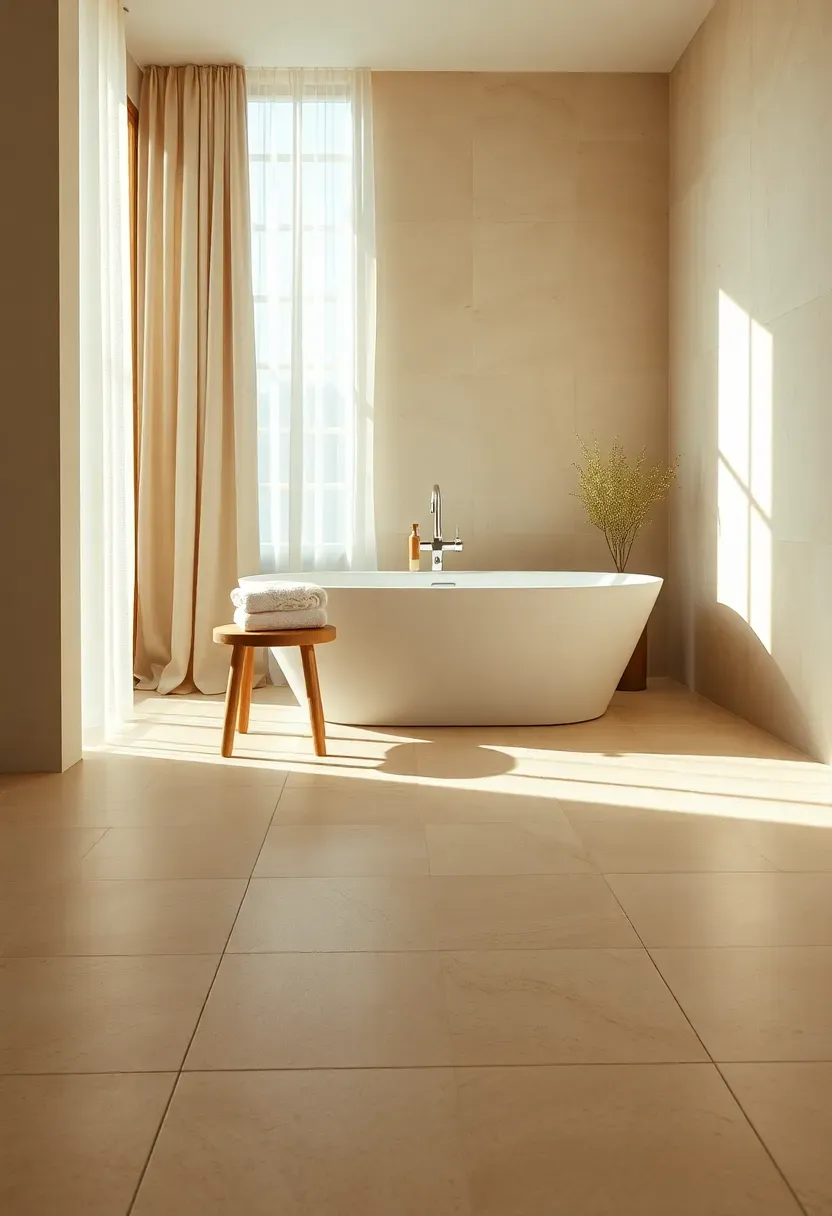
1. Large-Format Porcelain Slabs
Oversized porcelain slabs — typically 24x48 inches or larger — create a seamless, almost grout-free appearance. Fewer grout lines means less scrubbing, less staining, and a visual openness that makes small bathrooms feel bigger than they are. Most large-format tiles now come in thicknesses around 6mm, which makes them lighter than you would expect but still remarkably durable.
Tips
- Use a rectified (precision-cut) tile for the tightest possible grout lines
- Hire a professional installer — large slabs crack easily during handling
- Choose a matte or textured finish for wet areas to prevent slipping
We picked a few things that go well with this idea: Nexus Marble Peel & Stick Floor Tiles (20-Pack) (★4.0), FloorPops Bonneville Grey Marble Peel & Stick Tiles (★4.4) and WESTICK White Marble Peel & Stick Tiles (20-Pack) (★4.0). As an Amazon Associate we earn from qualifying purchases.
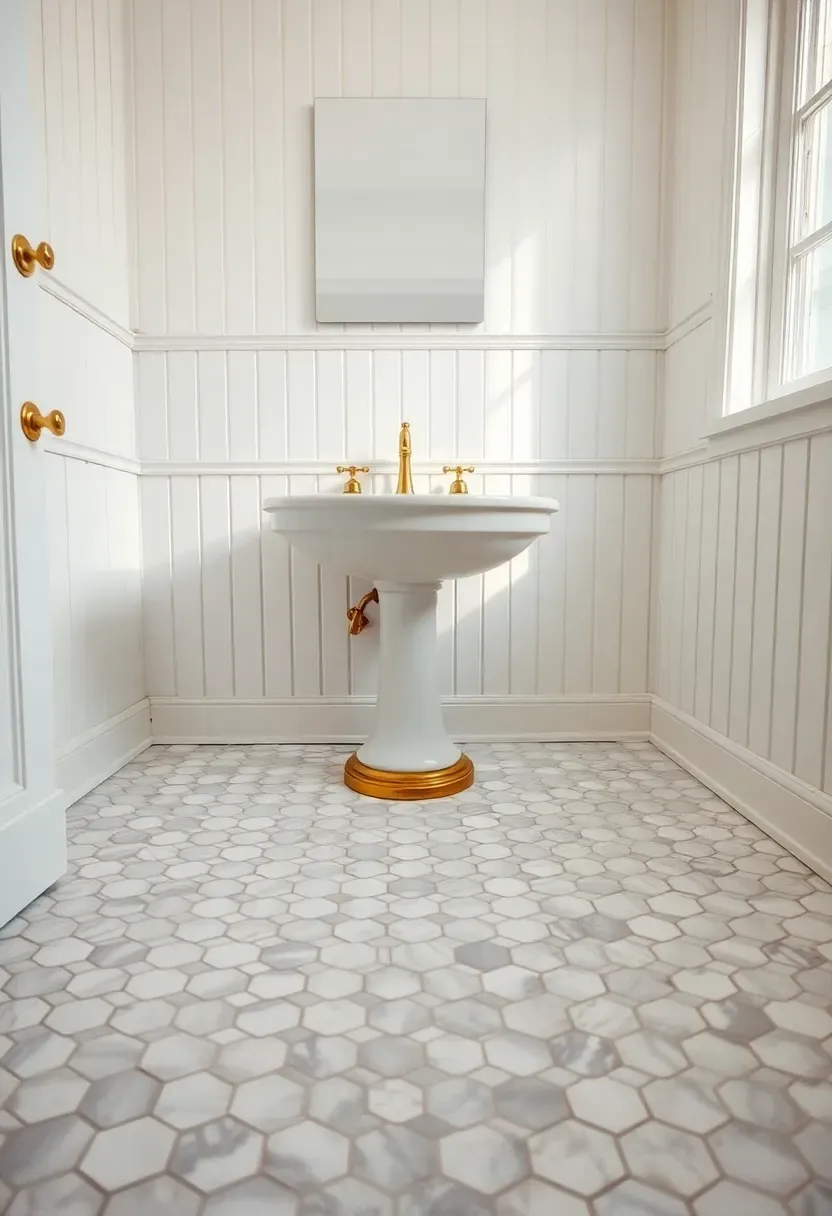
2. Classic White Marble Hexagon Mosaic
Nothing says traditional bathroom quite like a white marble hex floor. The small-scale hexagon pattern has been used in American bathrooms since the early 1900s, and it persists because it genuinely works — visually, functionally, and in terms of slip resistance thanks to all those grout lines providing texture underfoot.
The Honest Tradeoff
Marble is porous. It stains, it etches from acidic cleaners, and it requires sealing once or twice a year. If you accept these quirks and use a penetrating sealer, the patina that develops over years actually adds character rather than looking neglected.
Care Routine
- Seal with an impregnating sealer before grouting and again annually
- Clean with pH-neutral stone cleaner only — no vinegar, no bleach
- Wipe up colored spills immediately (hair dye is the worst offender)
We picked a few things that go well with this idea: DGSL Tile Leveling System with Plier (400-Piece) (★4.4), Tile Leveling System Kit (800-Piece) (★4.6) and DGSL Tile Leveling System with Mallet (1200-Piece) (★4.4). As an Amazon Associate we earn from qualifying purchases.
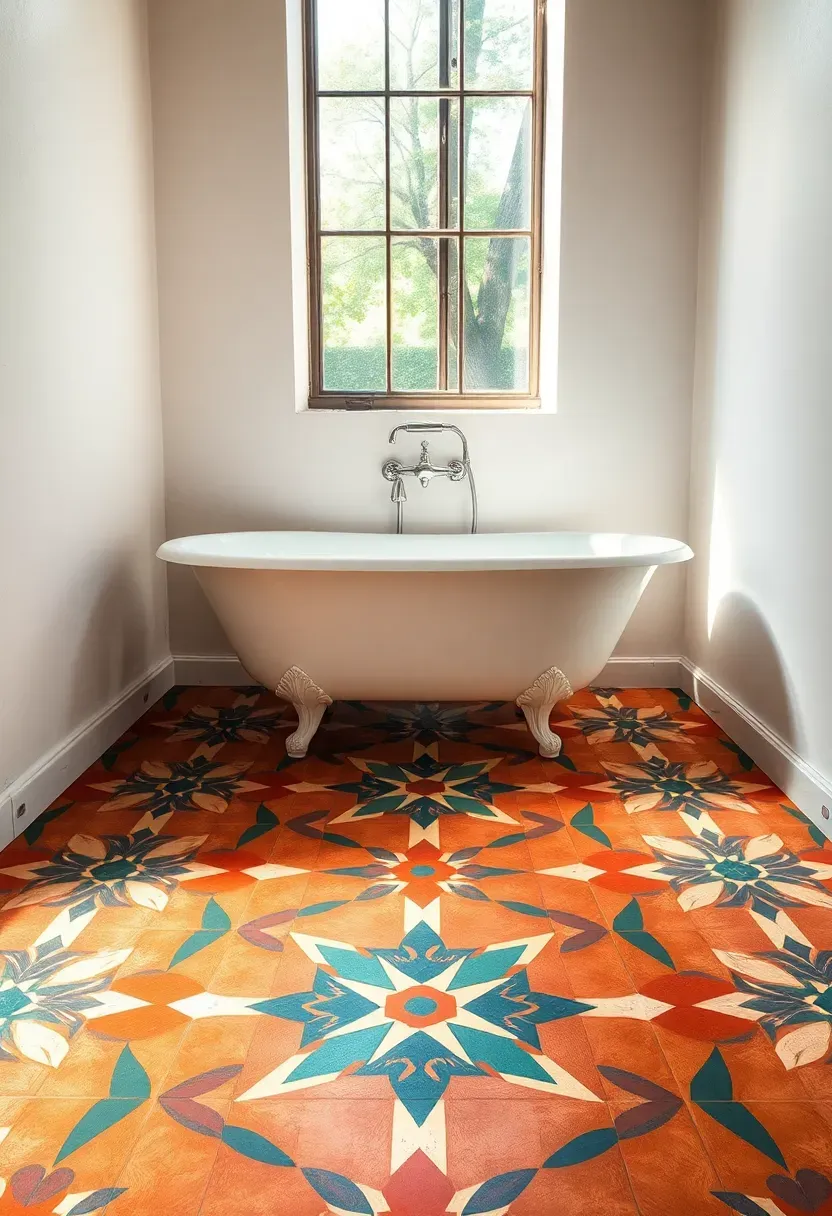
3. Encaustic Cement Tiles
Encaustic cement tiles are not fired like ceramic. Instead, pigmented cement is hydraulically pressed into molds, which produces rich, matte colors that go all the way through the tile body. Each tile has slight variations — no two are identical. They bring personality to bathroom floors in a way that mass-produced porcelain simply cannot match.
Why They Work in Bathrooms
The naturally matte surface provides decent traction when wet. The color depth holds up over decades because the pigment is not just a surface glaze. And the visual weight of a patterned cement floor anchors the room without needing much else in terms of decor.
Watch Out For
- They must be sealed — cement is absorbent and will stain without protection
- Efflorescence (white haze) can appear in the first few months; it fades naturally
- They chip more easily than porcelain at the edges
We picked a few things that go well with this idea: Miracle Sealants 511 Penetrating Stone Sealer (Pint) (★4.5), Waterproof Grout Sealer Spray (17.6 oz) (★4.3) and Miracle Sealants 511 Penetrating Stone Sealer (Quart) (★4.5). As an Amazon Associate we earn from qualifying purchases.
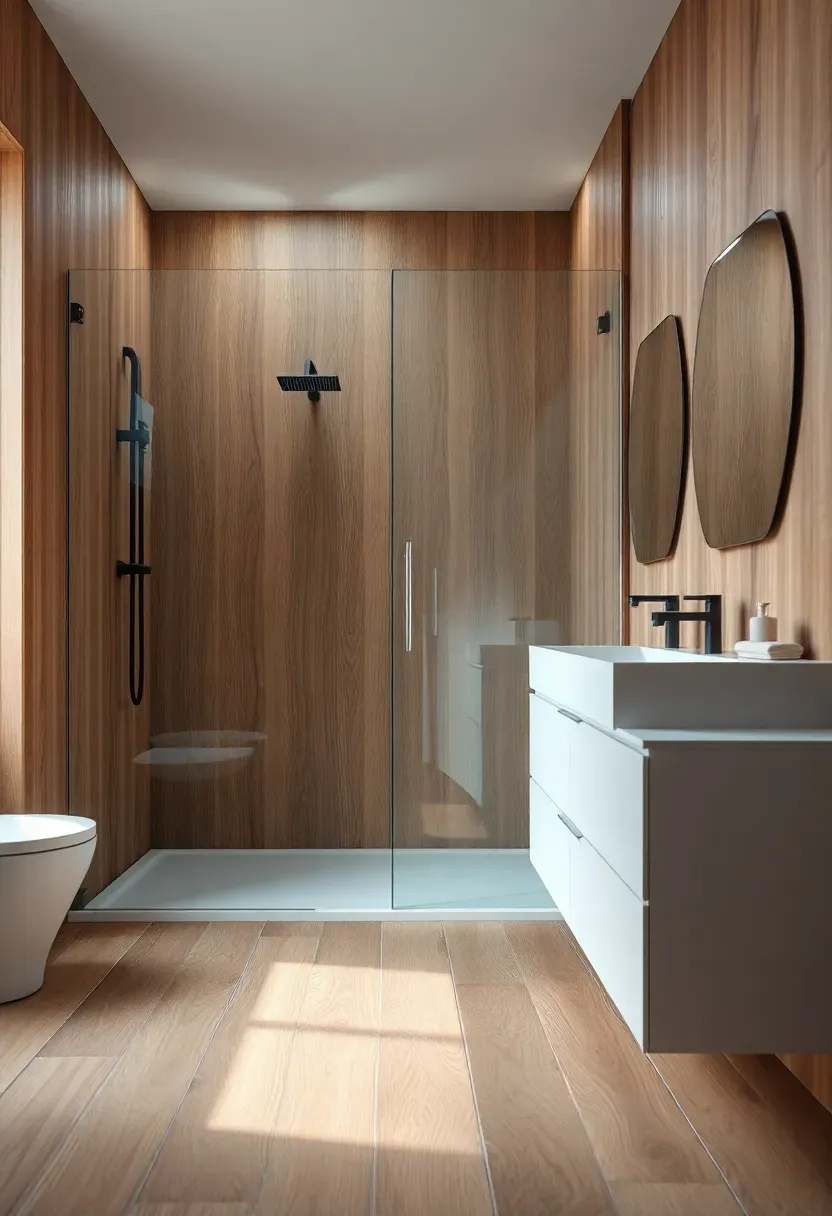
4. Wood-Look Porcelain Planks
Real wood and wet bathrooms do not mix, but porcelain planks that mimic oak, walnut, or reclaimed barnwood get remarkably close to the real thing. Modern inkjet printing technology has advanced to the point where even the grain texture is embossed into the surface — you can feel it underfoot.
Step 1: Pick Your Wood Tone
Light oak reads airy and Scandinavian. Medium walnut feels warm and grounded. Dark ebony or reclaimed grey works in moody, masculine spaces. Match the tone to your vanity material and wall color before committing.
Step 2: Choose the Right Size
6x36-inch planks are standard and work in most bathrooms. For larger rooms, 8x48-inch planks reduce grout lines and look more realistic. Avoid anything shorter than 24 inches — it starts looking like parquet rather than plank flooring.
Step 3: Install with Staggered Joints
Offset each row by at least one-third of the plank length. Random stagger patterns look more natural than a uniform brick-lay offset.
Watch Out For
Porcelain planks warp during firing more than square tiles. Check each box for flatness before installing, and use a larger trowel notch to compensate for any lippage.
Recommended
Items for this idea
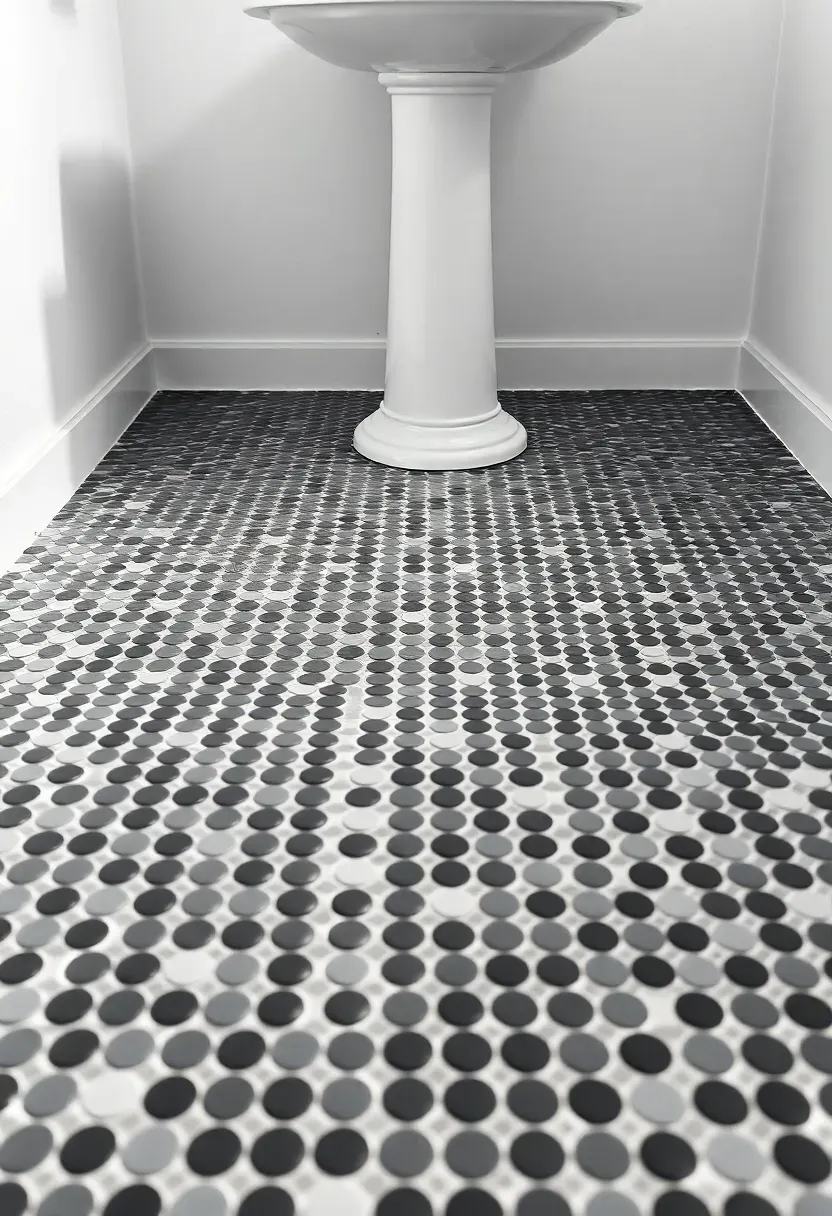
5. Penny Round Mosaic in Matte Black
Small-scale penny rounds in matte black deliver maximum visual impact with minimal complexity. The circular shape softens the geometry of a typically angular room, and the high grout-to-tile ratio provides excellent grip in wet conditions. This is one of the most slip-resistant options available.
Tips
- White grout creates a graphic, high-contrast look; dark grout is more forgiving day-to-day
- Matte finish is essential — glossy black penny rounds show every water spot and footprint
- Order 15% overage for cuts and breakage; small mosaics waste more material at edges
6. Zellige Tiles on the Floor
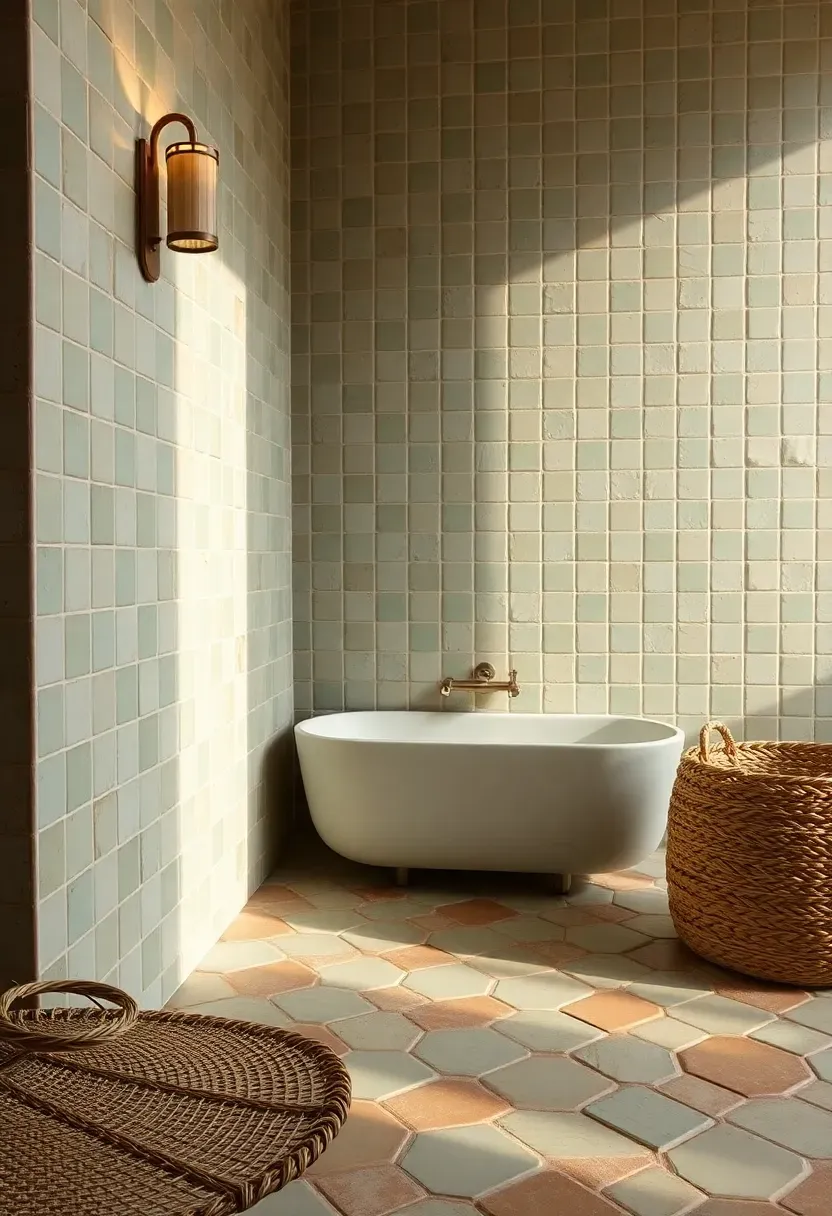
Zellige — hand-cut, glazed terracotta from Morocco — is everywhere on walls right now, but it works on floors too with the right expectations. The glaze crazes and chips over time, the surface is slightly uneven, and no two tiles match exactly. That is the entire point. A zellige floor has a handmade warmth that factory tiles cannot replicate.
Issue: Durability Concerns
Zellige is softer than porcelain and the glaze will show wear in high-traffic areas within a few years. In a primary bathroom with moderate foot traffic, this is manageable. In a family bathroom with kids, it might wear too quickly.
Solution: Strategic Placement
Use zellige on the floor of a powder room or low-traffic guest bathroom where it will age gracefully. For high-traffic primary bathrooms, consider zellige on walls and choose a tougher tile for the floor.
Pros and Cons
- Pros: Unmatched handmade character, warm glaze depth, unique installation
- Cons: Expensive per square foot, irregular thickness complicates installation, softer than porcelain
Recommended
Items for this idea
7. Terrazzo Tiles
Terrazzo has cycled from 1970s mall flooring to a genuinely desirable material. Modern terrazzo tiles come pre-cast with controlled chip sizes and color palettes that range from subtle (white marble chips in white cement) to bold (pink, green, and brass fragments). The speckled surface hides dirt and water spots better than almost anything else on this list.
Comparing: Pre-Cast Tiles vs. Poured In Place
Pre-cast terrazzo tiles arrive ready to install like any other tile. Grout lines are visible. Easier to source and install. Costs roughly $8-15 per square foot for materials.
Poured-in-place terrazzo creates a seamless, monolithic floor. Requires specialized installers. Costs $25-50+ per square foot installed. Best for larger bathrooms where the seamless look justifies the premium.
Choose If
You want a surface that is genuinely low-maintenance, hides imperfections, and brings mid-century or Mediterranean energy without committing to a loud pattern.
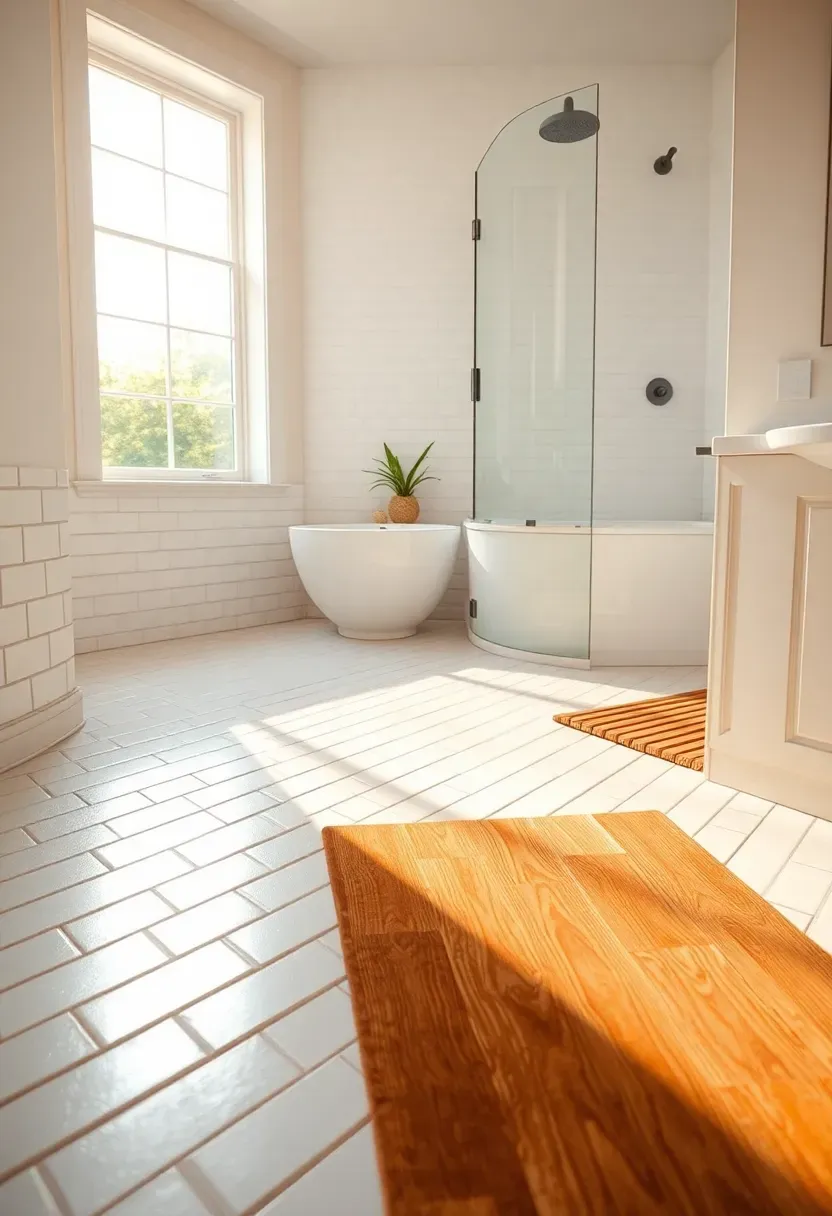
8. Herringbone Porcelain Layout
Same tile, completely different effect. Taking a standard rectangular porcelain tile and laying it in a herringbone pattern adds movement and sophistication without costing a penny more in materials. The angled layout draws the eye along the length of the room, which is particularly useful in narrow bathrooms where you want to create a sense of flow.
Tips
- 2x8 or 3x12 inch tiles produce the most balanced herringbone scale for bathroom floors
- Use a single grout color that closely matches the tile for a subtle effect
- A 45-degree herringbone (standard) feels classic; a 90-degree version (straight herringbone) feels more contemporary
Recommended
Items for this idea
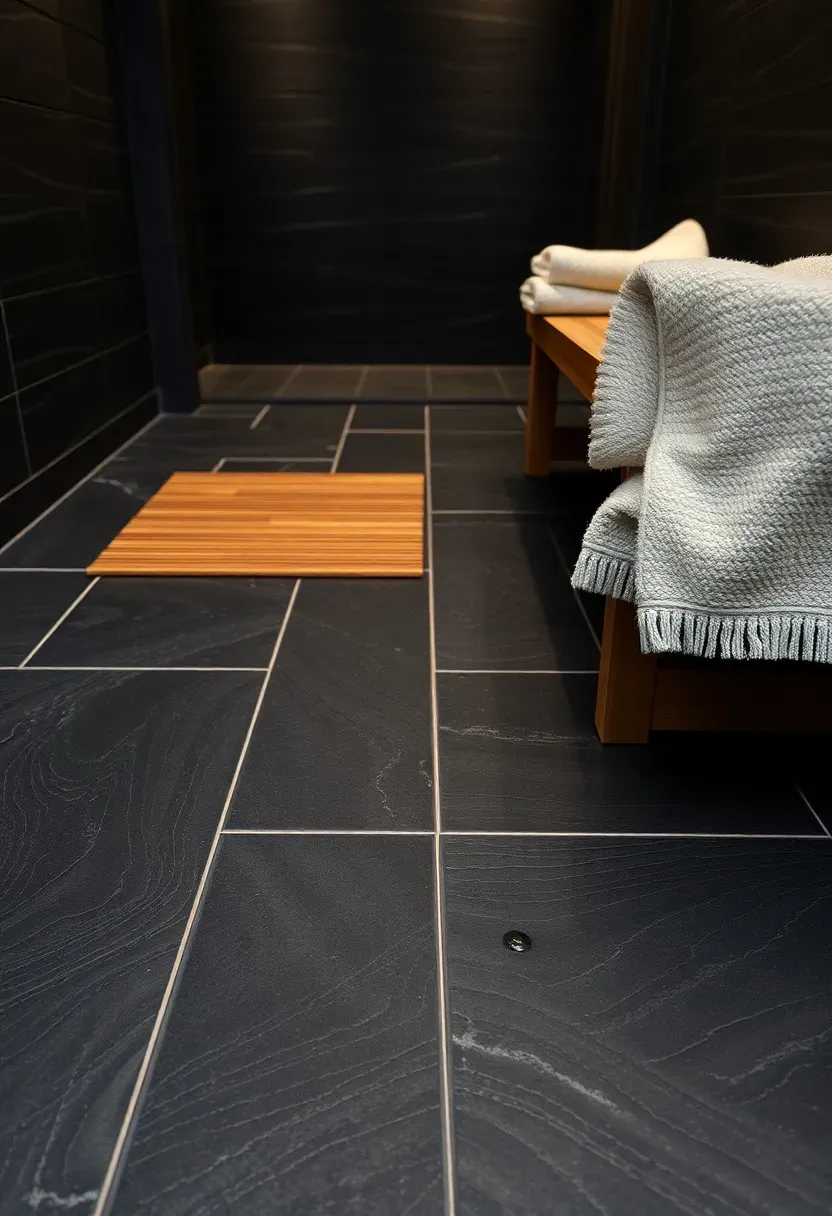
9. Natural Slate in Charcoal
Slate brings genuine geological texture to a bathroom floor. The natural cleft surface — those fine ridges and layers formed over millions of years — provides excellent traction and a tactile quality that manufactured tiles cannot replicate. Charcoal slate in particular grounds a bathroom with a quiet authority that pairs well with both modern fixtures and rustic wood accents.
Why It Works
The dark surface hides water spots and minor dirt. The cleft texture means you never slip, even stepping out of the shower with wet feet. And because each piece has unique mineral veining, the floor has a natural variation that keeps it from looking monotonous.
Watch Out For
- Slate must be sealed — it is porous and will absorb moisture and stains without protection
- The cleft surface collects grit in the low spots; regular sweeping is necessary
- Cheap slate can flake or delaminate; buy from a reputable stone yard and check each piece
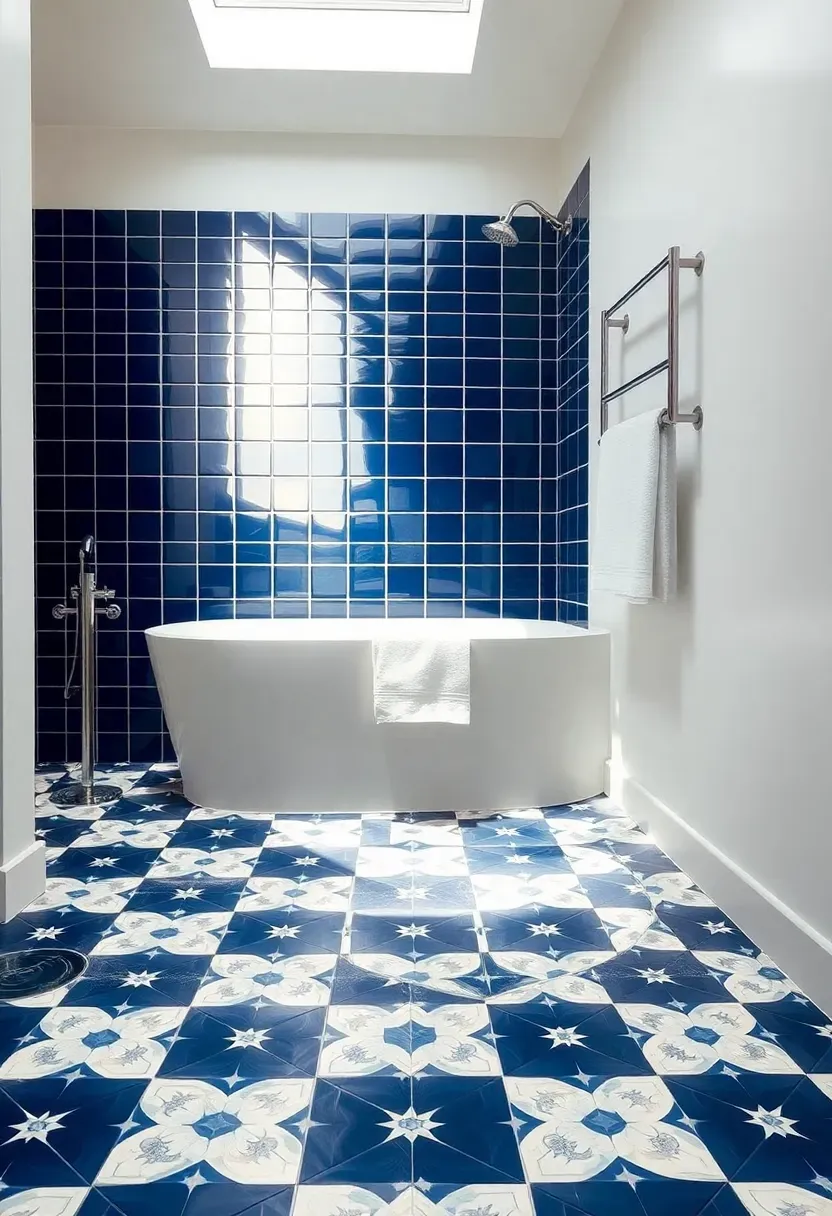
10. Geometric Patterned Porcelain
Patterned porcelain tiles printed with geometric motifs — diamonds, stars, interlocking cubes — give you the look of encaustic cement without the sealing requirements. The pattern is digitally printed and then fired under the glaze, so it will not wear off or fade. For renters or anyone who wants a bold floor without the upkeep, this is a pragmatic choice.
Step 1: Select Your Pattern Scale
Small, intricate patterns suit compact bathrooms and add visual density. Larger, simpler geometric repeats work better in spacious rooms where tiny patterns would get lost.
Step 2: Plan the Layout
Geometric tiles often have a directional pattern. Dry-lay at least a 3x3 grid before committing to your adhesive to verify the repeat aligns correctly and looks intentional.
Step 3: Handle the Borders
The edges of a geometric tile floor require careful cuts. Plan your layout so that the most visible border (usually opposite the door) gets full or near-full tiles. Push awkward cuts behind the toilet or under the vanity.
Recommended
Items for this idea
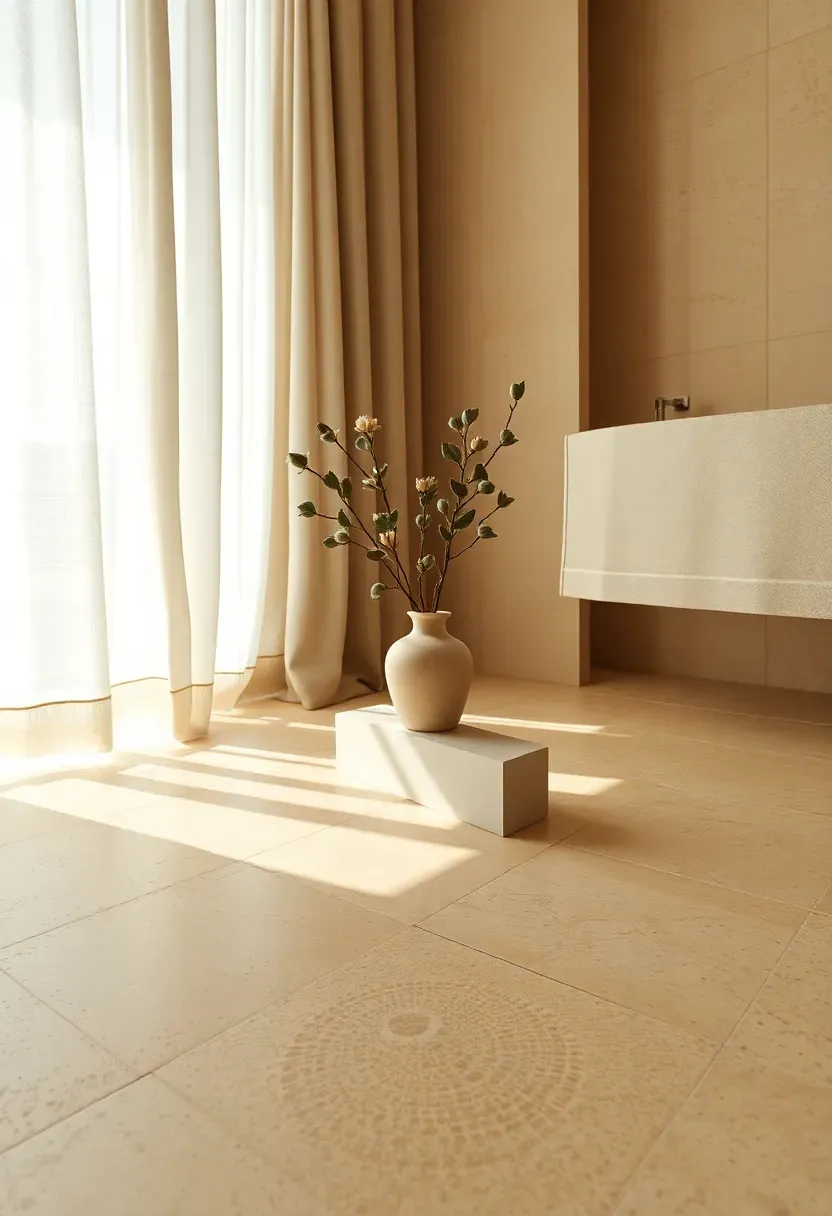
11. Limestone with a Honed Finish
Limestone offers a softness — both visual and tactile — that harder stones lack. The honed (matte) finish feels warm and smooth underfoot, almost chalky, which is surprisingly pleasant on bare feet. Colors range from cool grey to warm honey, with subtle fossil imprints that add organic detail.
Issue: It Scratches and Etches
Limestone is one of the softer natural stones. Acidic products, dragged furniture, and even gritty shoes will mark it. This is not a tile for a busy family bathroom.
Solution: Accept the Aging
In the right context — a primary bathroom, a powder room, a guest bath — limestone develops a lived-in patina that many homeowners come to prefer over the original polished surface. Embrace it as part of the material's story.
Pros and Cons
- Pros: Warm underfoot, beautiful natural variation, timeless appearance
- Cons: Requires sealing, scratches easily, limited to low-traffic bathrooms
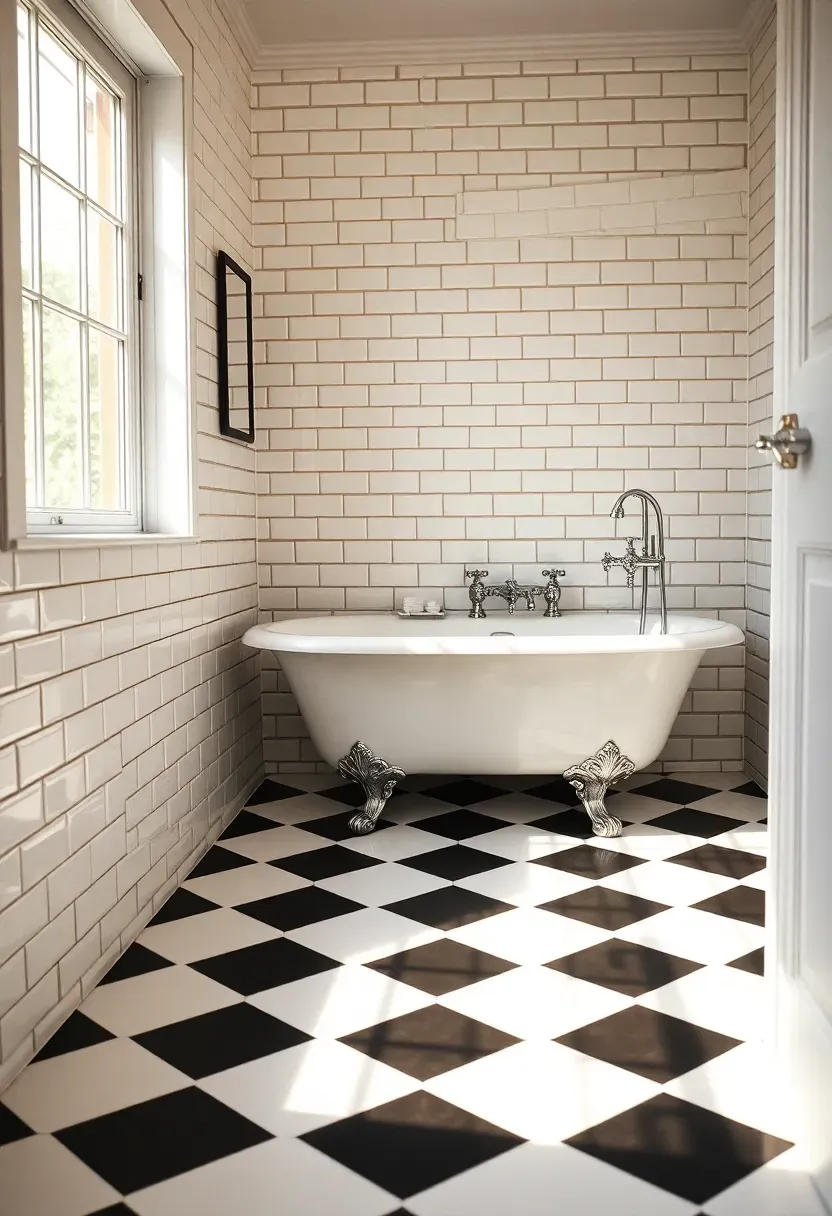
12. Black and White Checkerboard
The checkerboard floor is one of those designs that transcends trend cycles. It worked in Victorian bathrooms, it worked in 1950s diners, and it works now. The key to keeping it from feeling dated is pairing it with contemporary fixtures and clean lines rather than leaning into full retro styling.
Origins
Black and white marble checkerboard floors appeared in European palaces as early as the 17th century, then migrated to Victorian row houses and early American apartment buildings. The pattern endured because it is graphically simple but spatially dynamic.
Modern Approach
Use porcelain rather than marble for durability. Go with a 12x12 or larger tile size for a cleaner, more contemporary proportion. Tight grout lines in medium grey keep the focus on the pattern rather than the grid.
Apply at Home
- Works best in bathrooms with at least 30 square feet of visible floor — too small and the pattern feels cramped
- Pair with white walls and natural wood accents to keep the look fresh
- A diagonal layout (tiles rotated 45 degrees) adds more movement than a straight grid
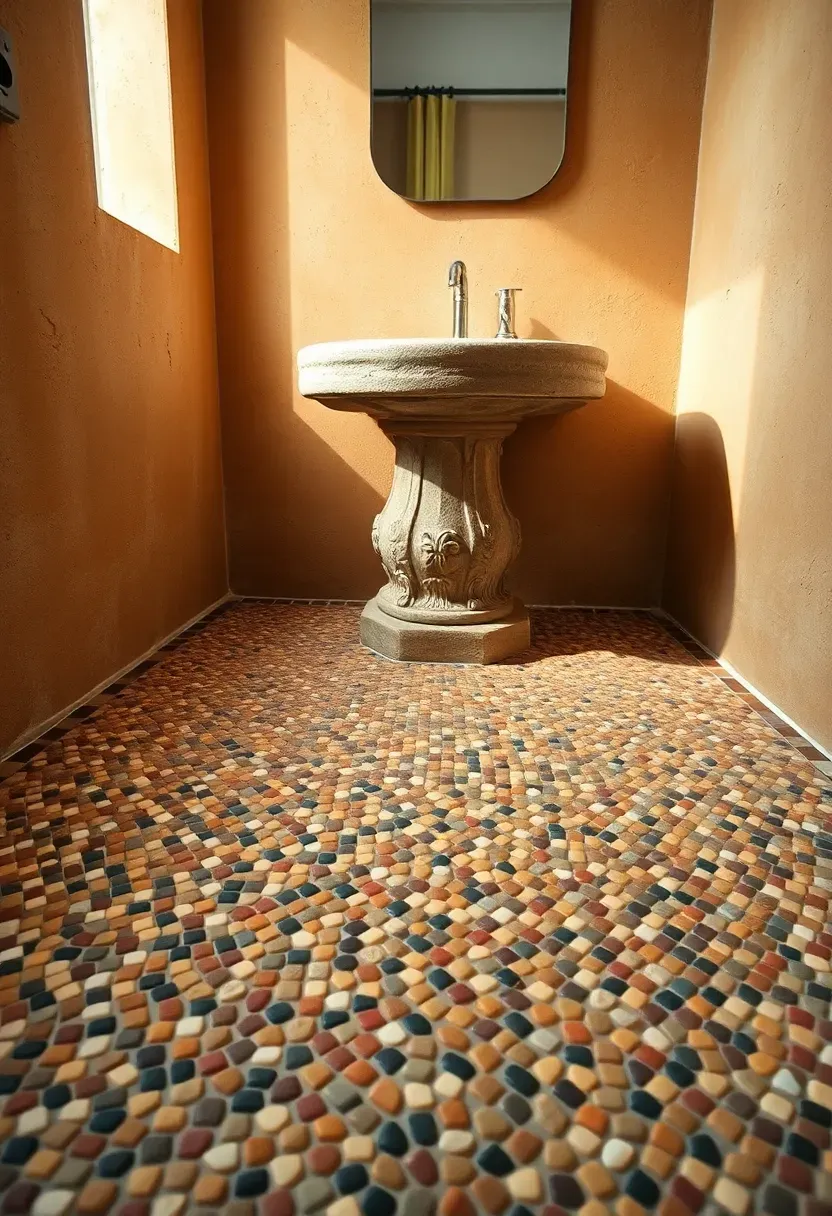
Recommended
Items for this idea
13. Micro Mosaic in Earthy Tones
Micro mosaics — tiles under one inch — create a texture-rich surface that reads almost like fabric on the floor. In earthy tones of terracotta, sand, olive, and clay, they bring a Mediterranean or desert-inspired warmth that feels organic and grounding. The extensive grout network acts as built-in slip resistance.
Tips
- Use epoxy grout for micro mosaics — standard cement grout stains too easily in such narrow joints
- Stick with mesh-backed sheets for installation; loose micro tiles are impractical for DIY
- Pair with simple, unadorned walls to let the floor be the statement
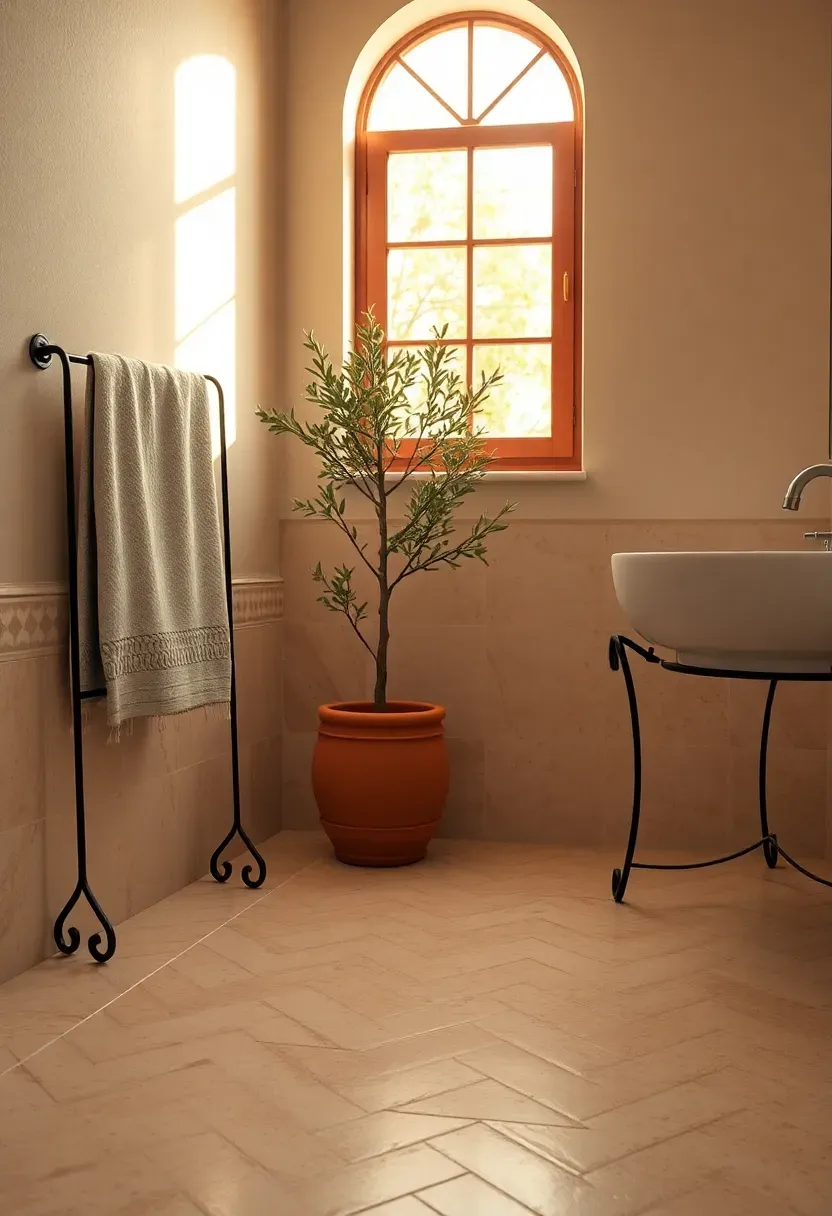
14. Travertine Tiles
Travertine sits somewhere between marble and limestone in both appearance and hardness. The characteristic pitting — small holes formed by mineral springs — gives it a texture that no manufactured tile can imitate. Filled and honed travertine offers a smoother surface suitable for bathroom floors while retaining some of that natural pitting for visual interest.
Comparing: Filled vs. Unfilled
Filled travertine has the natural holes patched with resin or cement, then honed smooth. Easier to clean, more consistent surface, better for bathrooms.
Unfilled travertine leaves the holes exposed for a more rustic look. Dirt, moisture, and soap residue collect in the holes. Not recommended for bathroom floors unless you are committed to frequent cleaning.
Recommendation
Go with filled and honed for bathroom floors. Save the unfilled, tumbled look for outdoor terraces or entryway accents where the rustic texture is appropriate and easier to maintain.
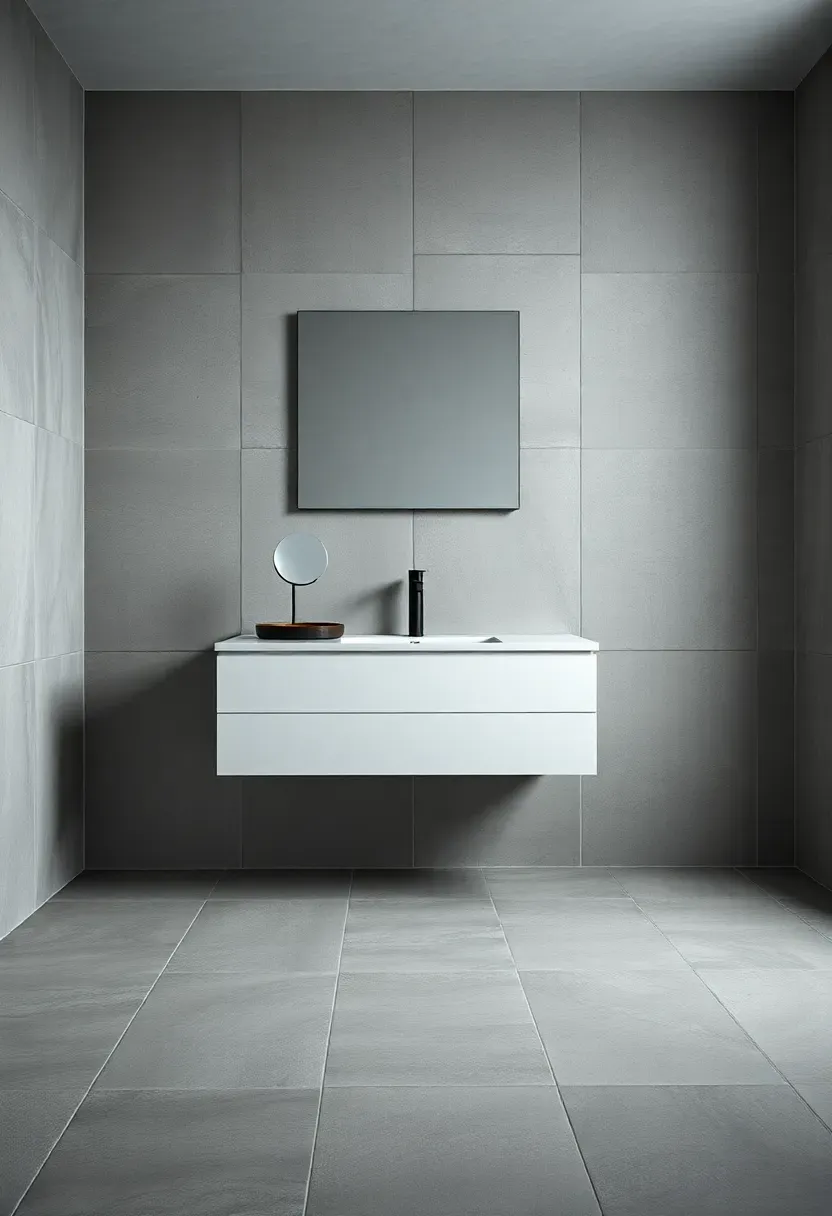
Recommended
Items for this idea
15. Concrete-Look Porcelain
Actual concrete floors in bathrooms require specialized sealing and crack maintenance. Concrete-look porcelain gives you the raw, industrial aesthetic — the mottled grey surface, the subtle color variation, the utilitarian vibe — without any of the upkeep headaches. It pairs well with matte black fixtures, floating vanities, and warm wood accents.
Tips
- Choose a tile with subtle surface variation rather than a flat, uniform grey — too uniform looks fake
- A slight texture or anti-slip rating (R10 or higher) is important for wet bathroom use
- Large formats (24x24 or 24x48) look most convincing; small tiles break the concrete illusion
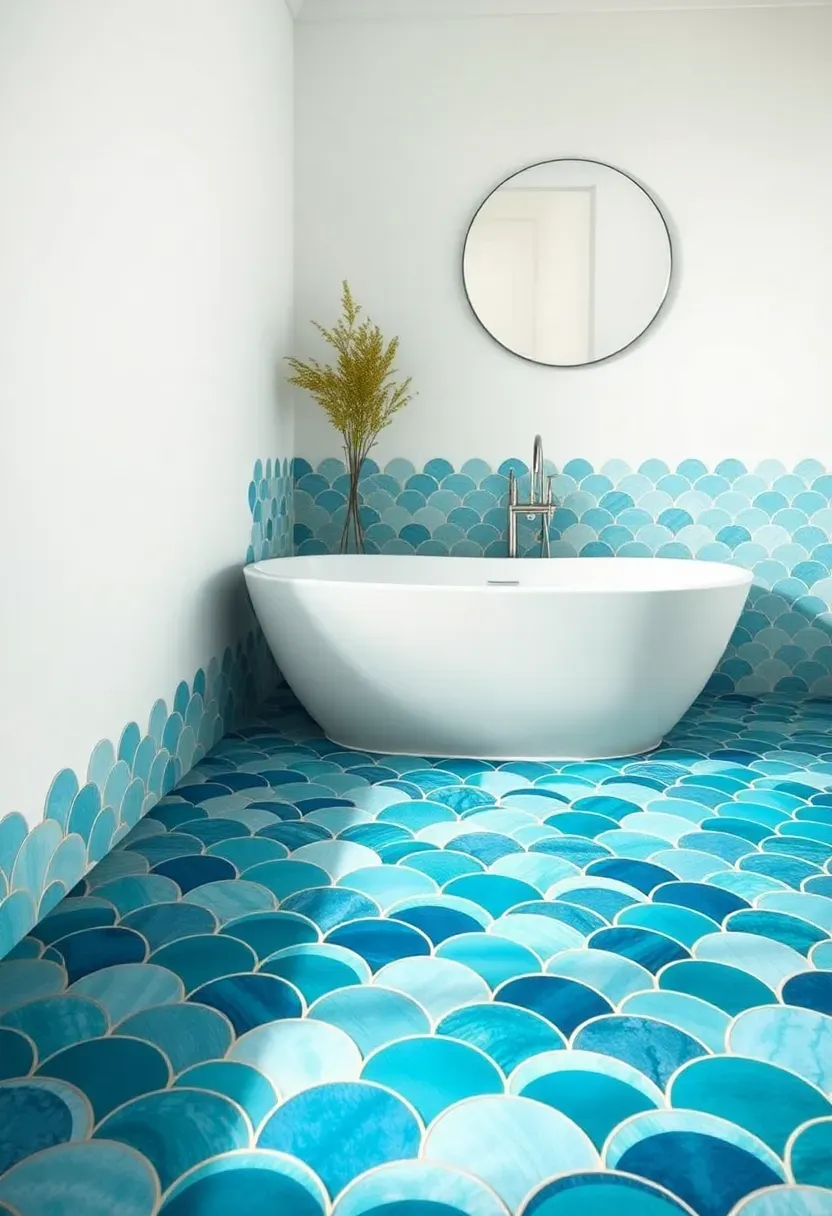
16. Fish Scale Mosaic
Fan-shaped or fish scale tiles create a scalloped, organic pattern that references water and marine life — fitting for a bathroom. The overlapping curves produce a rhythm that feels more fluid than any rectilinear tile layout. In blues, greens, or white, they lean coastal. In metallics or neutrals, they feel art deco.
Issue: Grouting Complexity
The curved edges of fish scale tiles create irregular grout joints that are harder to fill evenly. Grout lines vary in width across the tile, which can look messy if not done carefully.
Solution: Hire a Tile Setter with Mosaic Experience
This is not a beginner-friendly installation. A skilled tile setter will use the right trowel technique and grout application to keep the joints clean and even. Ask to see previous fish scale work before hiring.
Pros and Cons
- Pros: Unique visual rhythm, strong design statement, excellent slip resistance from all the grout
- Cons: Labor-intensive installation, higher cost, harder to clean grout in curved joints
Recommended
Items for this idea
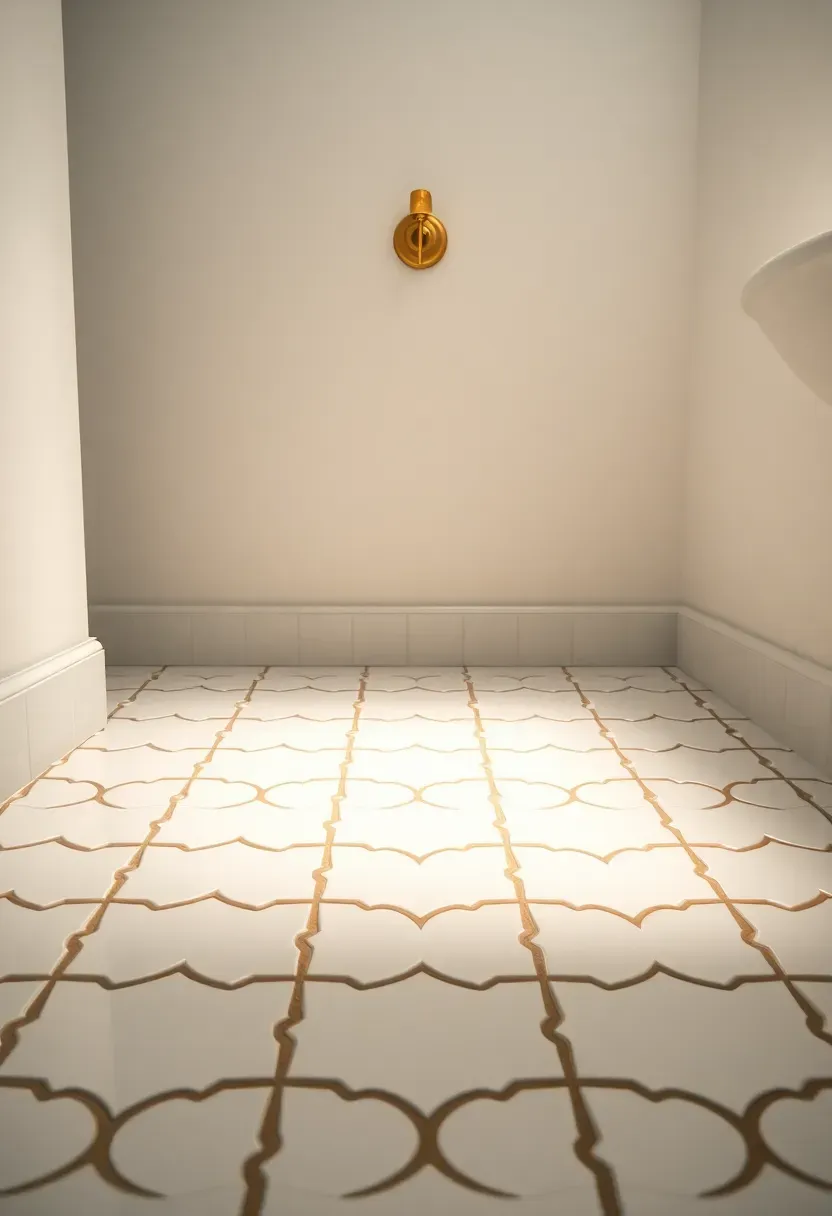
17. Arabesque Shaped Tiles
The lantern or arabesque shape — a pointed oval with a cinched waist — originates from Islamic architecture and adds an ornamental quality that rectangular tiles lack. On a bathroom floor, the interlocking shapes create a complex-looking pattern from a single tile type. White or cream versions keep things calm; jewel tones make a bolder play.
Tips
- The irregular shape means more grout surface area — use a grout color that complements rather than contrasts the tile
- Glossy glazes look beautiful but can be slippery when wet; choose matte or semi-matte for floors
- These tiles pair well with simple rectangular wall tiles to avoid visual competition
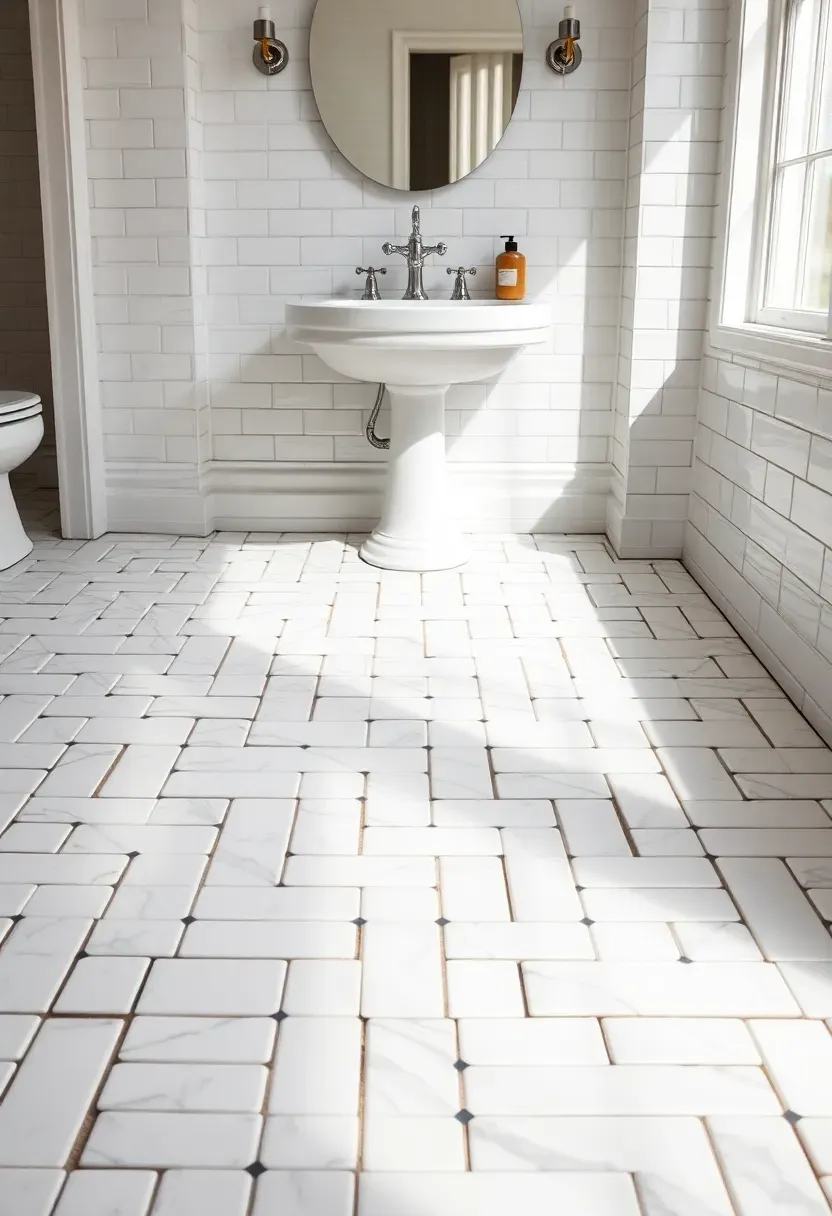
18. Basket Weave Marble Pattern
The basket weave pattern alternates rectangular marble pieces with small square dots at the intersections. It is one of the most recognizable traditional bathroom floor patterns, especially in pre-war New York apartments and brownstones. The weave creates a subtle three-dimensional optical illusion that adds depth without being overwhelming.
Origins
Basket weave mosaic patterns date back to Roman baths, where artisans used marble tessera to create durable, decorative floors. The pattern migrated through European and eventually American residential architecture, becoming a standard in early 20th-century bathrooms.
Modern Interpretation
Contemporary versions swap traditional Carrara marble for porcelain reproductions or use colored marble for the accent dots — black dots on white rectangles, brass-toned dots on grey marble. These small variations refresh the pattern without losing its classic DNA.
Apply at Home
- Best suited to bathrooms under 80 square feet where the small-scale pattern can shine
- Pair with subway tile walls for a period-appropriate look, or with modern flat panels for contrast
- Seal marble versions twice a year and use pH-neutral cleaners exclusively
Recommended
Items for this idea
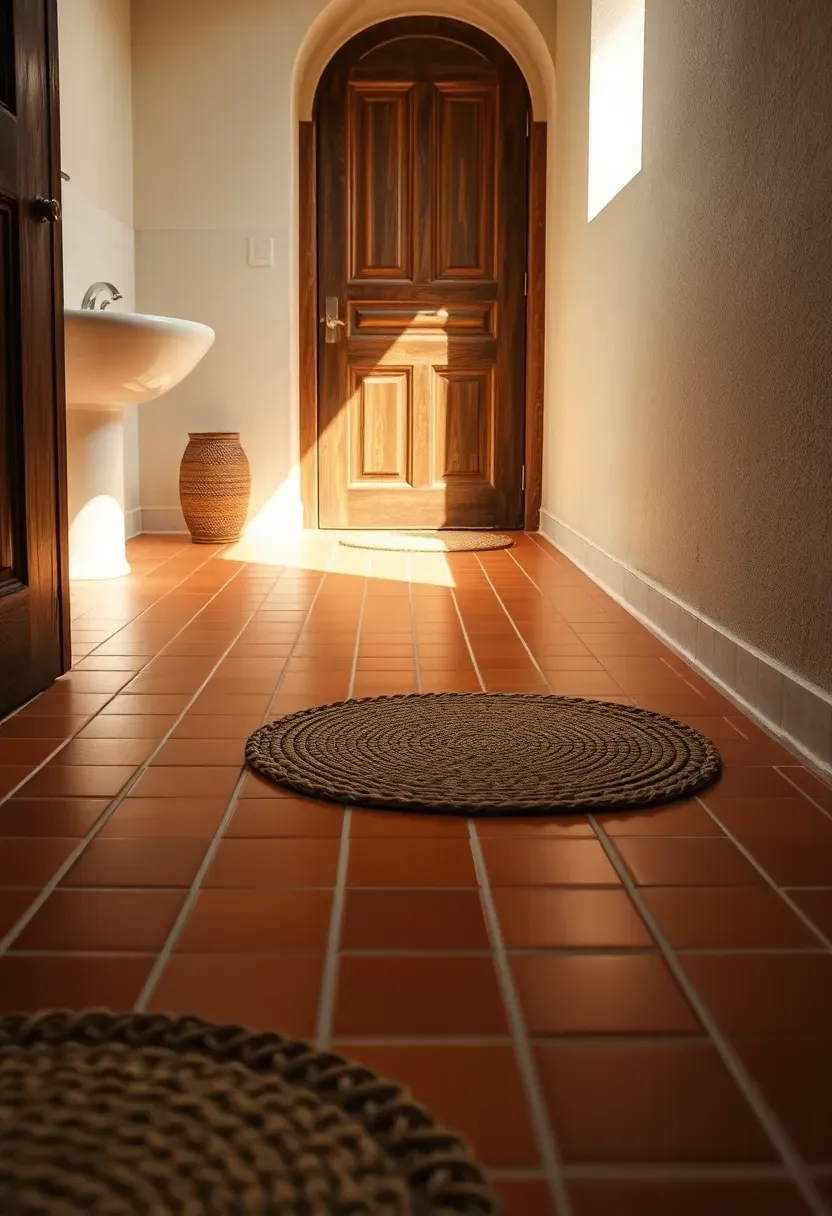
19. Glazed Brick-Format Tiles
Brick-shaped tiles (approximately 2.5x8 inches) bring a relaxed, slightly rustic quality to bathroom floors. The elongated proportion works well in running bond, herringbone, or stacked layouts. Glazed versions in terracotta, olive, cream, or dusty blue add color while remaining easy to clean — the glaze seals the surface, unlike raw brick.
Step 1: Pick Your Layout
Running bond (offset by half) is the most common and easiest to install. Herringbone adds formality. Stacked (no offset) feels modern and graphic.
Step 2: Choose the Glaze Finish
Glossy glaze reflects light and opens up small rooms but can be slippery. Matte or satin glaze provides better traction and hides water spots. A crackle glaze adds vintage character but requires sealing to prevent staining in the craze lines.
Step 3: Consider the Grout Width
Brick tiles with wide grout joints (3/16 inch or more) read as rustic and relaxed. Tight joints (1/16 inch) look more refined and contemporary. Match the grout aesthetic to the overall bathroom style.
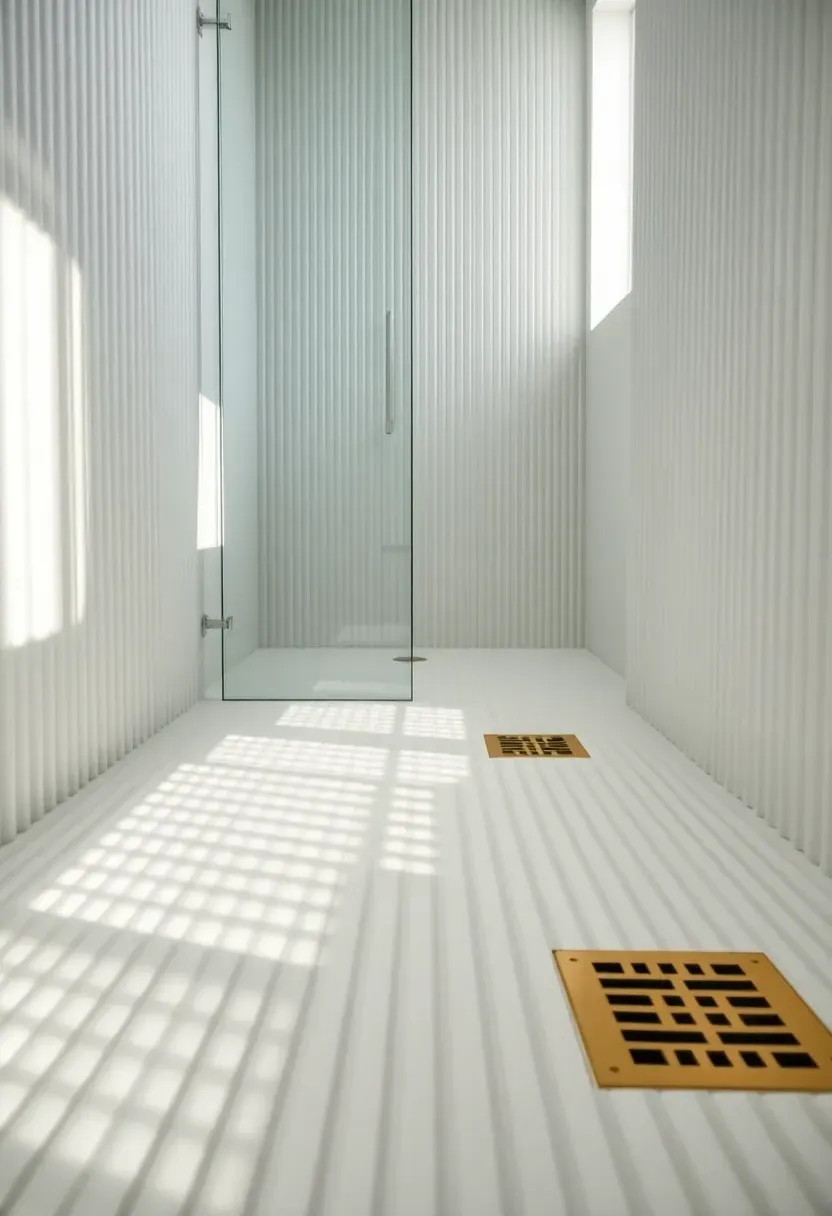
20. Fluted Three-Dimensional Porcelain
Fluted tiles — porcelain with extruded vertical ridges — add a tactile, architectural dimension to bathroom floors. The ridges cast shadows that shift throughout the day as light changes angle. Originally designed for wall applications, fluted tiles have moved to floors in luxury residential projects where texture is a design priority.
Why It Works
The ridges provide natural grip underfoot, making fluted tiles one of the few decorative options that also improves safety in wet areas. The shadow play adds visual interest to neutral palettes without requiring color or pattern.
Watch Out For
- Dirt and soap residue settle in the grooves; plan for more frequent mopping than flat tiles
- Not ideal beneath freestanding furniture — chair legs and bath mats do not sit flat
- Available in limited sizes from specialty manufacturers; lead times can be long
Recommended
Items for this idea
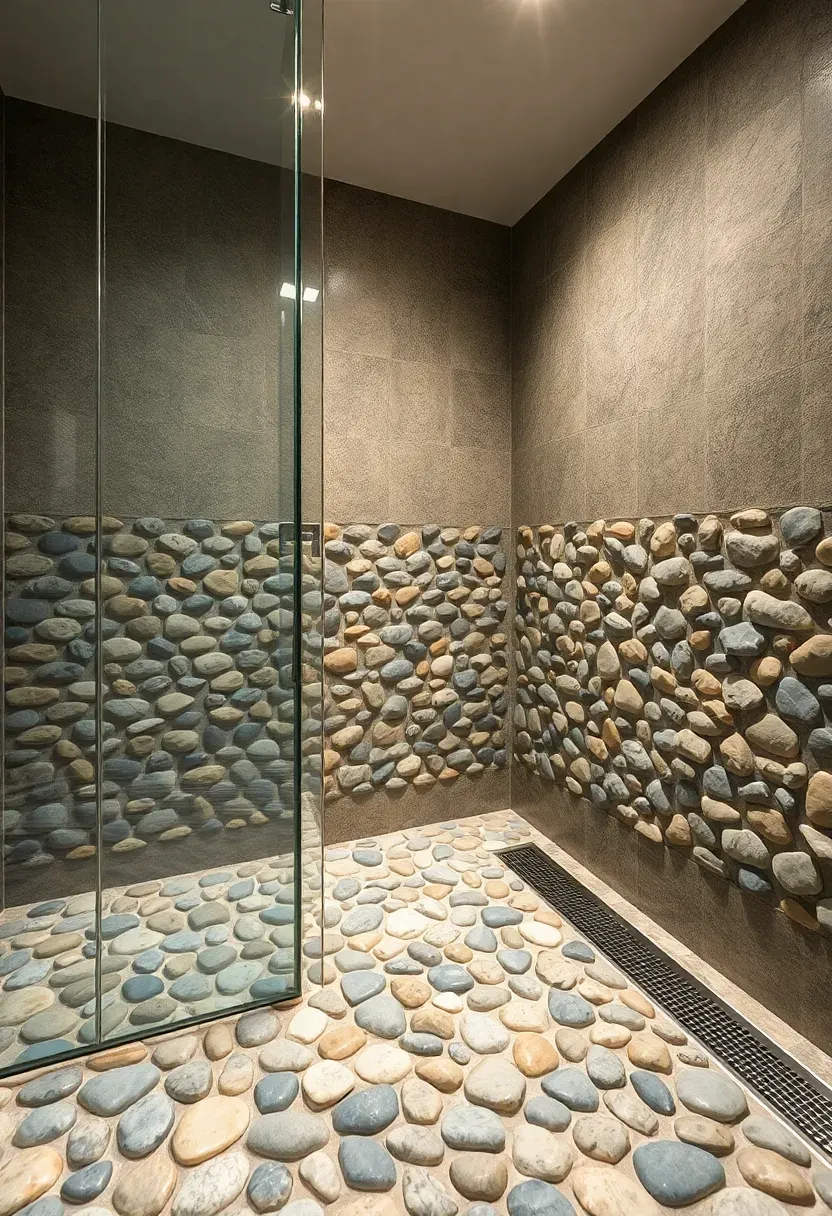
21. Pebble Mosaic Floor
Flat-cut river pebbles mounted on mesh sheets create a floor that feels like stepping on a smooth riverbed. The organic, irregular shapes and natural color variations — grey, tan, cream, charcoal — bring an outdoor quality indoors. Pebble floors are especially popular in walk-in showers where the texture provides grip and the look reinforces a spa atmosphere.
Issue: Grout Maintenance
The deep, irregular grout joints between pebbles trap soap, mildew, and moisture. Without diligent maintenance, a pebble floor can become a cleaning headache within months.
Solution: Epoxy Grout and Regular Sealing
Use epoxy grout from the start — it resists moisture, staining, and mildew far better than cement grout. Seal the pebbles themselves with a penetrating stone sealer annually. Spray the floor with a daily shower cleaner to prevent buildup between deep cleans.
Pros and Cons
- Pros: Spa-like feel, excellent traction, unique organic appearance
- Cons: Time-consuming installation, high grout maintenance, uncomfortable for some bare feet (varies by pebble flatness)
Quick FAQ
Which bathroom floor tile is the lowest maintenance? Large-format porcelain with rectified edges and minimal grout lines. Porcelain is non-porous, stain-resistant, and does not require sealing. The fewer grout joints you have, the less scrubbing you will do over the years.
Can I install bathroom floor tiles myself? Standard square or rectangular porcelain tiles on a flat subfloor are a reasonable DIY project. Mosaics, natural stone, large-format slabs, and patterned tiles with directional layouts are better left to experienced installers who can handle cuts, lippage, and alignment.
Do bathroom floor tiles need to be sealed? Porcelain and glazed ceramic do not. Natural stone — marble, limestone, slate, travertine — absolutely does, typically once or twice per year depending on traffic and moisture exposure. Cement tiles also require sealing before and after grouting.
What tile size works best for small bathrooms? Both extremes work well. Large-format tiles (24x24 or bigger) reduce visual clutter and make tight spaces feel more open. Small mosaics (2 inches or under) create texture that distracts from the room's compact dimensions. Mid-size tiles in the 6x6 to 12x12 range tend to emphasize the grid pattern, which can make small rooms feel busier.
Is radiant floor heating compatible with all tile types? Most tile types work well over radiant heat systems. Porcelain and ceramic are ideal conductors. Natural stone works but heats more slowly due to its density. Avoid tiles installed with thick mortar beds — thin-set over an electric mat or hydronic tubing gives the best heat transfer.
The best bathroom floor tile is the one that matches how you actually use the space. A guest powder room can handle delicate marble or handmade zellige because it sees light traffic. A family bathroom needs the durability of porcelain or slate. Pick based on your real life, not just the showroom display, and you will end up with a floor that still looks good five years from now.
Pinterest cover for 21 Bathroom Floor Tiles Ideas
About the author
OBCD
CGI visualization and interior design content. We create detailed 3D renders and curate practical design ideas for every room in your home.