27 Bathroom Closet Organization Ideas
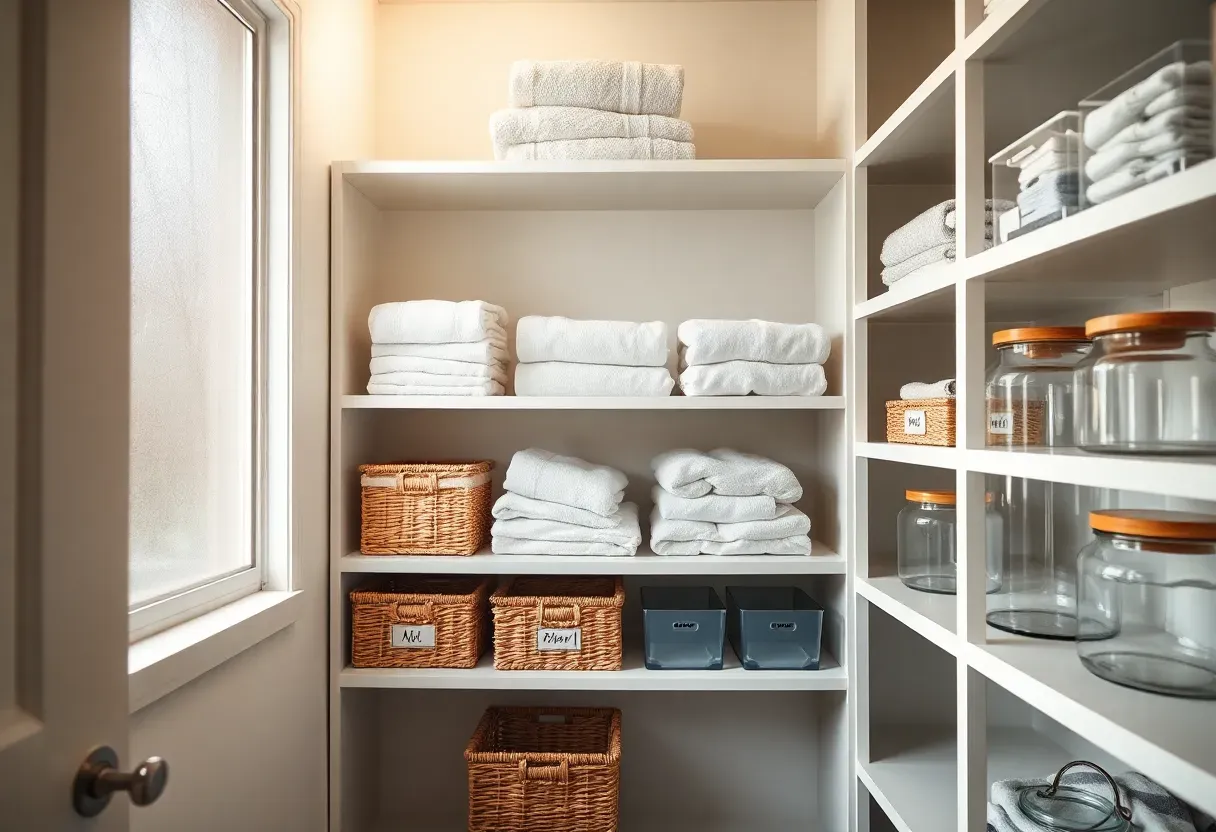
Last year I pulled everything out of my bathroom closet and counted forty-seven items I had forgotten existed. Expired sunscreen from two summers ago, three unopened boxes of bandages, hotel shampoo bottles I was apparently collecting. The closet had enough shelf space for everything I actually needed. The real issue was that nothing had a system. Towels were stuffed wherever they fit, toiletries migrated from shelf to shelf, and the back corners became a graveyard for products past their prime.
Fixing it took one afternoon and a handful of inexpensive organizers. Below are 27 bathroom closet organization ideas that cover shelving, bins, door storage, and layout strategies for closets of every size.
Table of Contents
- Shelf Risers for Double-Stacked Towels
- Clear Labeled Bins by Category
- Over-the-Door Pocket Organizer
- Pull-Out Wire Baskets on Glides
- Tension Rod Under a Shelf for Spray Bottles
- Woven Basket Set for Linens
- Lazy Susan on a Deep Shelf
- Stackable Acrylic Drawers
- Door-Mounted Towel Bars
- Zone-Based Shelf Layout
- Narrow Rolling Cart for Gaps
- Magnetic Strips Inside the Door
- Adjustable Shelf Dividers
- Tiered Spice Rack for Small Bottles
- Fabric Drawer Inserts
- Labeled Glass Jars for Cotton Supplies
- Command Hook Grid on Closet Wall
- Under-Shelf Hanging Basket
- Color-Coded Towel Filing System
- Expandable Bamboo Shelf Organizer
- Closet Door Mirror with Hidden Storage
- Vacuum-Sealed Bag Storage for Bulky Items
- Top-Shelf Seasonal Rotation Bin
- Magazine Holder for Hair Tool Storage
- Shoe Organizer Repurposed for Toiletries
- Pegboard Closet Wall Panel
- Monthly Declutter Basket System
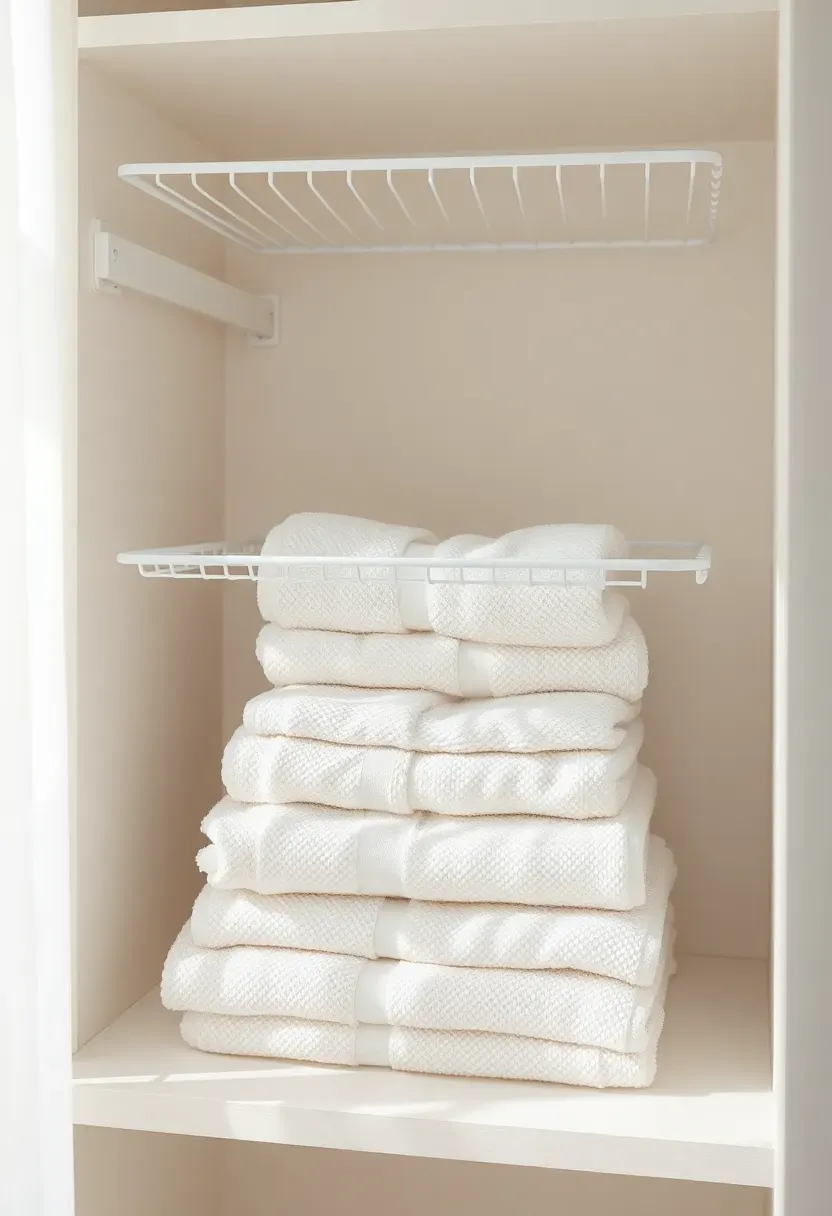
1. Shelf Risers for Double-Stacked Towels
Most bathroom closet shelves are tall enough for two stacks of folded towels, but without a riser the top stack just slides into the bottom one. A simple wire or bamboo shelf riser creates a second level within a single shelf, effectively doubling your towel capacity. Place everyday towels on the lower level where they are easy to grab and guest towels up top. The riser also improves airflow around folded linens, which matters in a humid bathroom environment.
Choosing the Right Riser
- Measure the distance between shelves before ordering — you need at least 12 inches of clearance
- Wire risers allow more airflow than solid ones
- Bamboo looks nicer but needs a wipe-down every few weeks to prevent moisture buildup
We picked a few things that go well with this idea: Vtopmart 2-Tier Clear Pull-Out Organizer (4-Pack) (★4.6), Collapsible Fabric Closet Shelf Bins (6-Pack) (★4.6) and Vtopmart Stackable Acrylic Storage Drawers (3-Pack) (★4.7). As an Amazon Associate we earn from qualifying purchases.
2. Clear Labeled Bins by Category
The Core Issue
Bathroom closets accumulate random products that migrate between shelves until nobody knows where anything lives.
The Solution
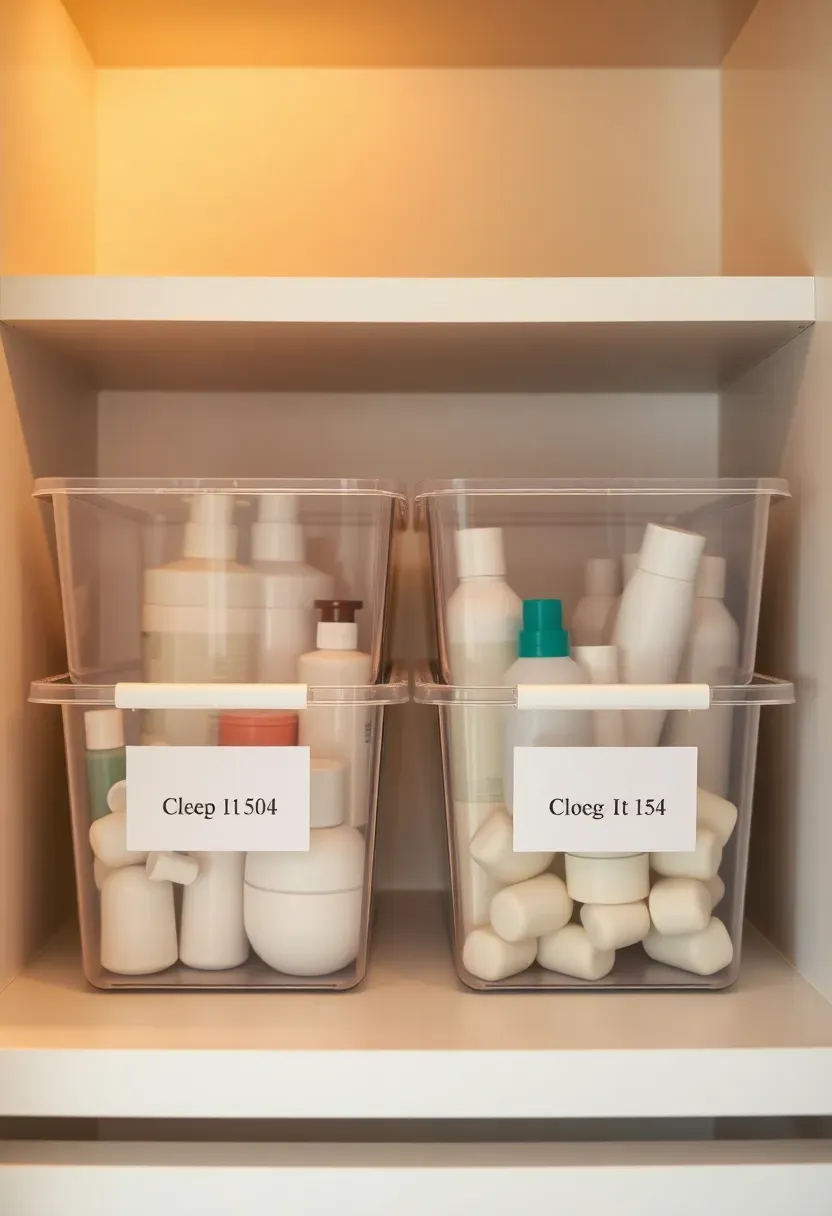
Assign one clear bin per category: first aid, hair care, skincare, dental supplies, cleaning products. Label each bin on the front, not the top, so you can read it while standing. Clear bins let you scan contents without pulling the whole container out. When a bin gets full, that is your signal to purge expired or duplicate items rather than expanding into more shelf space. The constraint itself becomes the organizing principle.
Pros and Cons
Pros: Visible contents, easy to pull out and return, forces category limits Cons: Rigid bin sizes may not match oddly shaped shelves, labels peel in humid air unless you use waterproof vinyl
We picked a few things that go well with this idea: JARLINK 5-Shelf Over Door Organizer (★4.8), 5-Tier Over Door Organizer with Mesh Pockets (2-Pack) (★4.6) and Heavy-Duty 4-Shelf Over Door Storage Rack (★4.7). As an Amazon Associate we earn from qualifying purchases.
3. Over-the-Door Pocket Organizer
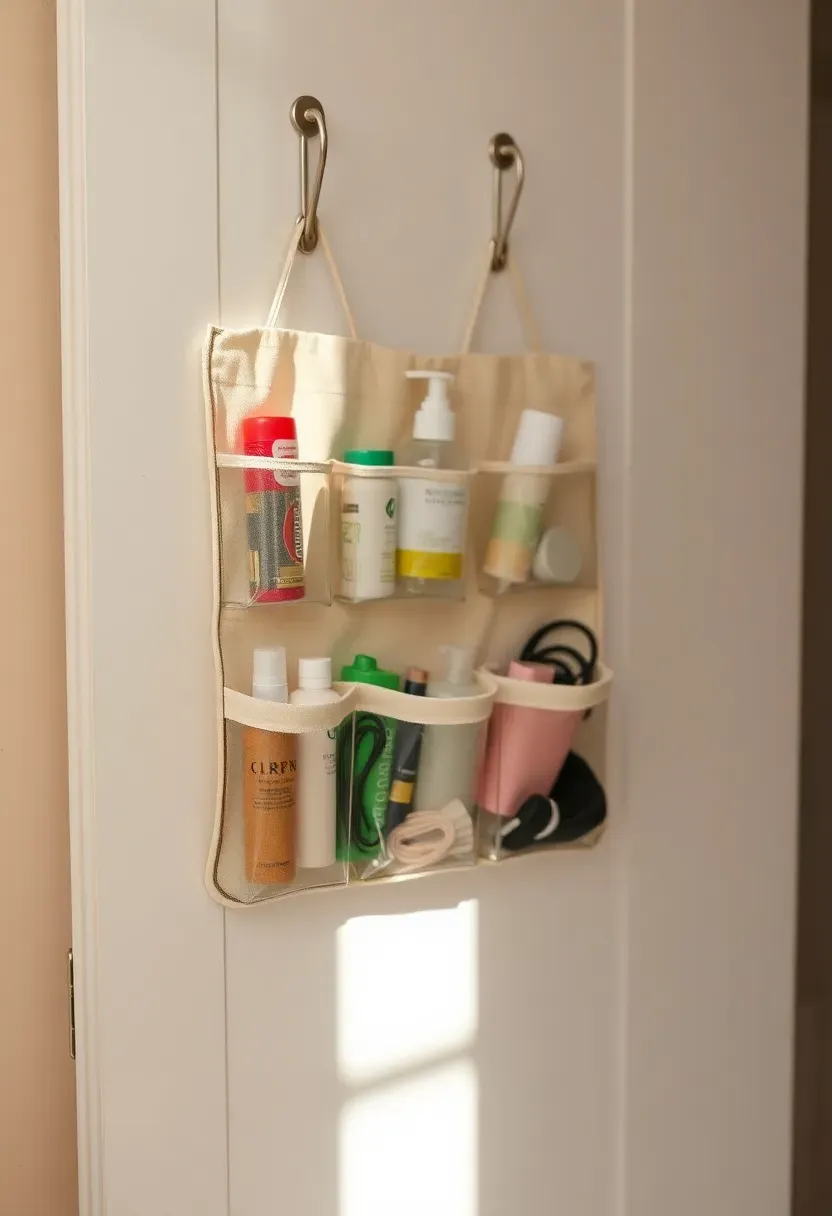
The back of your bathroom closet door is prime real estate that almost everyone ignores. A fabric or clear-pocket over-the-door organizer adds twelve to twenty-four small storage slots without using any shelf space. Dedicate the top pockets to items you grab daily — deodorant, hair ties, contact solution. Use the lower pockets for backstock and less frequent items. The key is not overfilling any single pocket, because a bulging organizer prevents the door from closing flush.
Styling Details
- Clear-pocket versions let you find items faster in dim closets
- Choose one with reinforced metal hooks rather than flimsy plastic ones
- Trim the bottom row of pockets if they catch on the door frame
We picked a few things that go well with this idea: Woven Rope Storage Baskets (5-Pack) (★4.6), Honey-Can-Do Water Hyacinth Baskets (Set of 3) (★4.7) and CubesLand Scalloped Paper Rope Storage Basket (★4.8). As an Amazon Associate we earn from qualifying purchases.
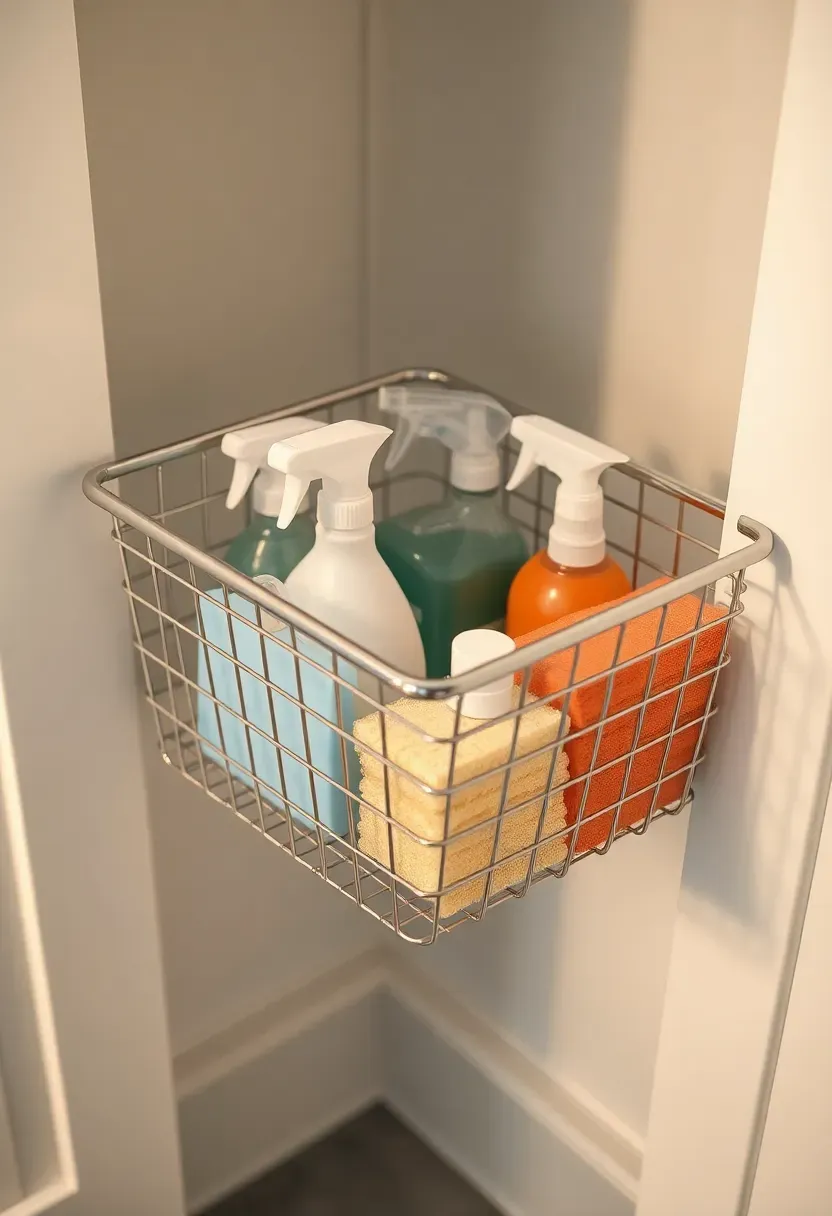
4. Pull-Out Wire Baskets on Glides
How to Reclaim Deep Shelf Space
Deep bathroom closet shelves swallow items into their back corners. Pull-out wire baskets on drawer glides solve this by letting you slide the entire shelf contents forward.
Step 1: Measure the Shelf
Record the width between closet walls, the depth from front to back, and the height available. Subtract one inch on each side for glide hardware clearance.
Step 2: Mount the Glides
Attach drawer slides to the closet sidewalls at the shelf height you want. Use a level. Crooked glides bind and make the basket hard to pull.
Step 3: Load and Adjust
Put heavier bottles and containers at the back of the basket so the weight stays centered over the glides. Lighter items go up front for easy access.
Watch Out
Make sure the basket clears any door trim when fully extended. Test the full pull-out range before loading it with products.
Recommended
Items for this idea
5. Tension Rod Under a Shelf for Spray Bottles
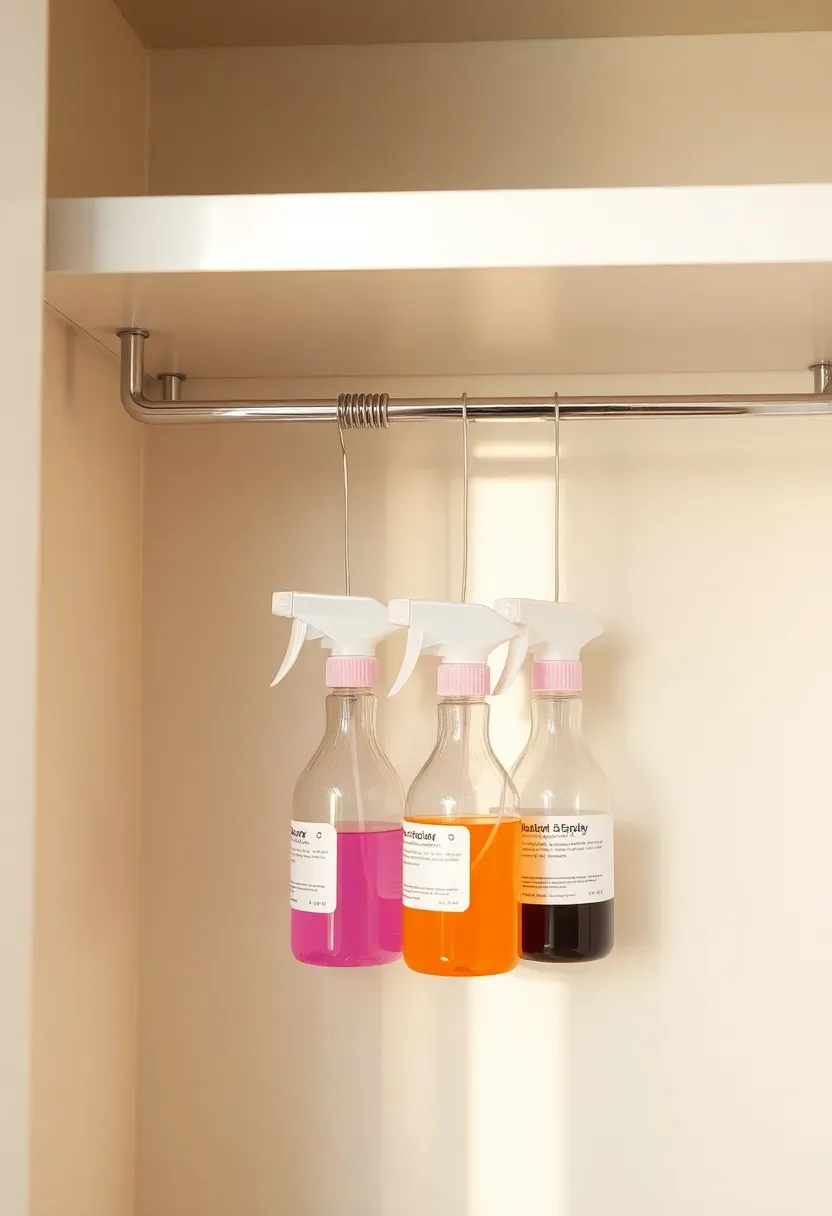
A spring-loaded tension rod installed near the underside of a shelf lets you hang spray bottles by their triggers, freeing up the shelf surface above for other items. This trick works especially well for cleaning supplies — glass cleaner, tile spray, disinfectant — that otherwise take up valuable flat storage space. The bottles hang neatly in a row, labels facing out, and you can grab one without rearranging anything. Install the rod about two inches below the shelf so the bottles have room to hang without touching the shelf beneath them.
Tips
- Test the rod's grip before loading it with heavy bottles — some tension rods slip under weight
- Limit to four or five bottles per rod to avoid overloading
- Works best in closets at least 24 inches wide
6. Woven Basket Set for Linens
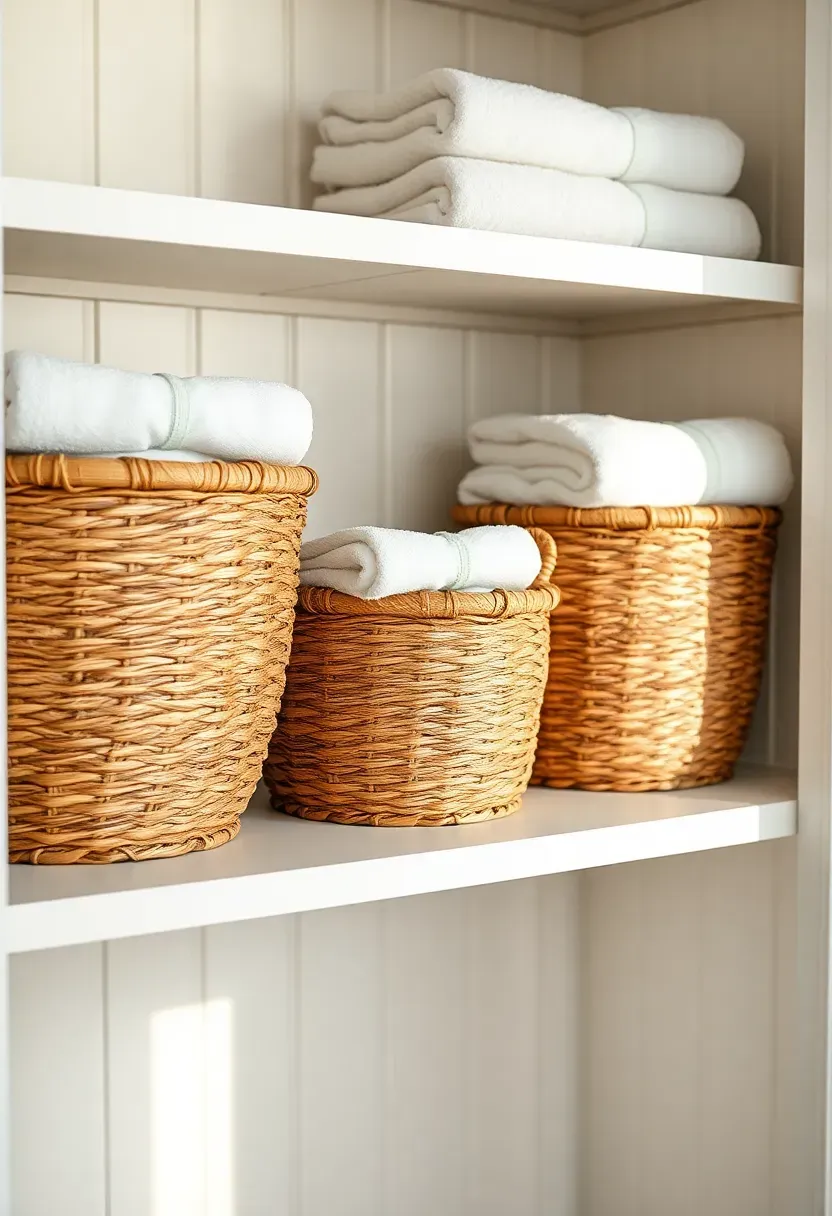
Woven baskets bring texture and warmth to an otherwise utilitarian closet while keeping folded washcloths, hand towels, and bath sheets contained. Seagrass and hyacinth baskets breathe well enough to prevent mustiness. Choose baskets that are slightly narrower than your shelves so you can slide them in and out without scraping. Three baskets in graduated sizes — large for bath towels, medium for hand towels, small for washcloths — create a tidy hierarchy that makes sense at a glance.
Tips
- Line baskets with a cotton cloth if the weave is loose enough to snag terry cloth loops
- Avoid baskets with lids in humid bathrooms since trapped moisture encourages mildew
- Label the front with a small tag if multiple family members share the closet
Recommended
Items for this idea
7. Lazy Susan on a Deep Shelf
Why Deep Shelves Fail
A 16-inch-deep shelf means products at the back are effectively invisible. You buy duplicates of things you already own because you cannot see them.
How a Lazy Susan Fixes It
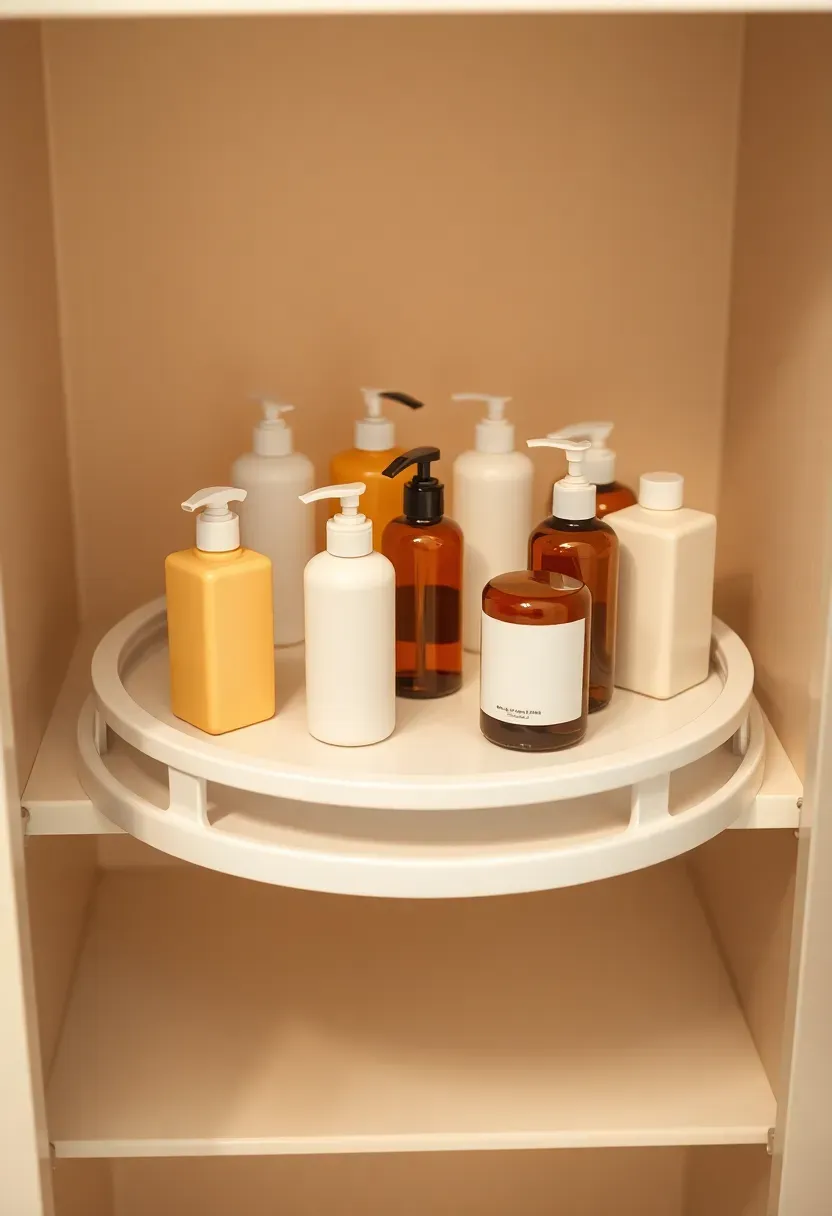
A turntable lets you spin the entire contents of a deep shelf into view with one hand. Place taller bottles at the center and shorter items toward the edge. One spin and you can see every product. The turntable also lifts items slightly off the shelf surface, making it easier to wipe the shelf clean.
Choose If
You have shelves deeper than 12 inches and store mostly bottles or jars. Skip the lazy Susan if your closet mainly holds flat-folded linens — it wastes space for those.
8. Stackable Acrylic Drawers
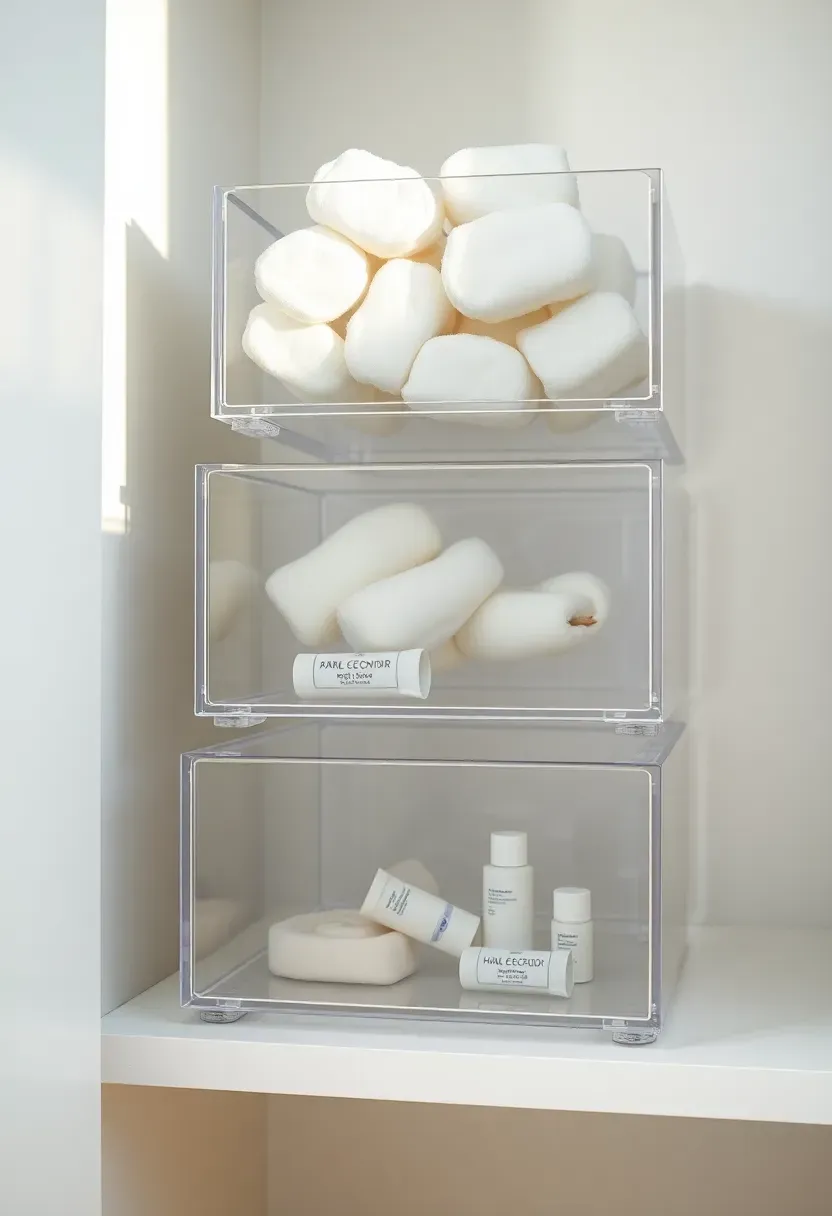
Open shelving gives you access, but small items scatter. Stackable acrylic drawers combine the visibility of open shelves with the containment of closed drawers. Each tier pulls out independently, so you reach cotton pads without disturbing the hair ties in the drawer above. Three-tier units fit most standard closet shelves. The acrylic resists moisture and cleans up easily. Stack two units side by side if you have the width, or go vertical with a four-tier tower on a narrower shelf.
Tips
- Place drawer units toward the front of deep shelves for easy access
- Line the bottom of each drawer with a non-slip mat to prevent items from sliding when you pull it open
- Reserve the top drawer for daily items and lower drawers for weekly or monthly supplies
Recommended
Items for this idea
9. Door-Mounted Towel Bars
The Core Issue
Folding towels neatly takes time, and they lose their shape fast on shelves where other items press against them.
The Solution
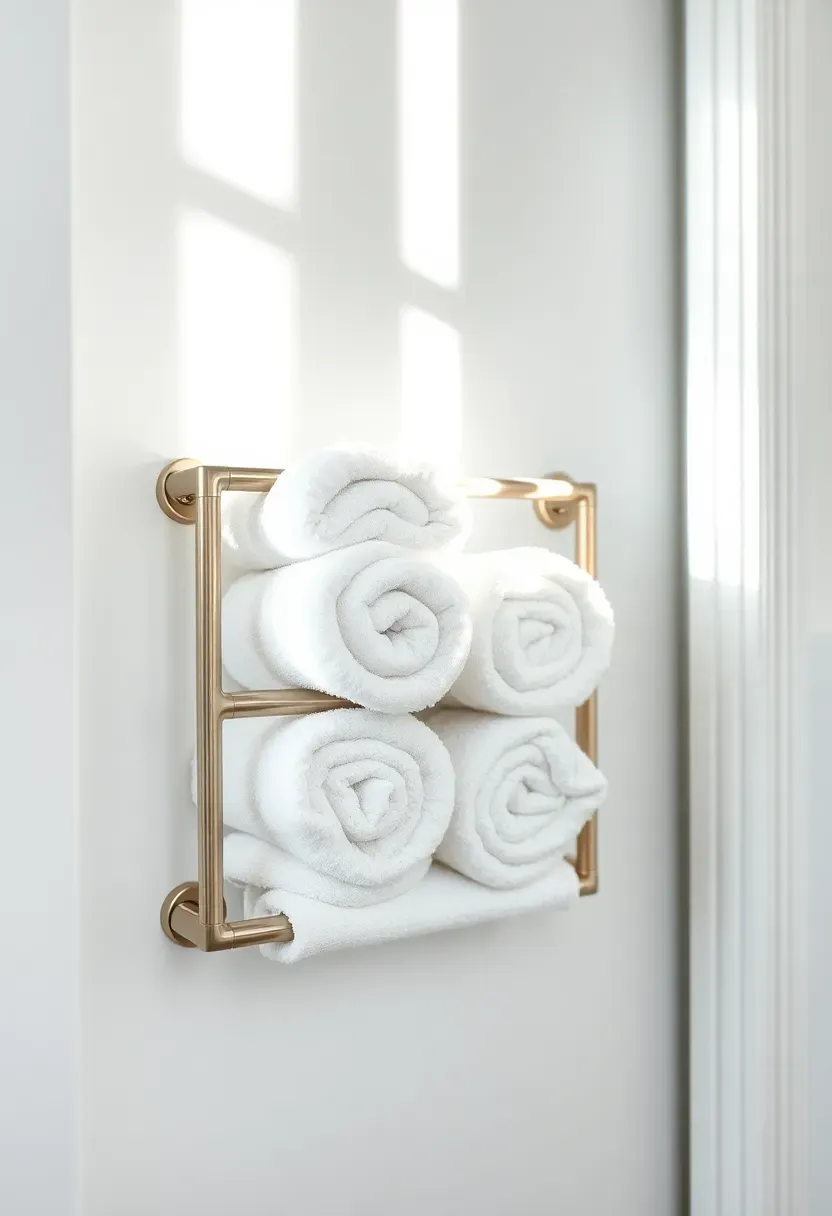
Mount two or three short towel bars (12 to 18 inches wide) vertically on the inside of your closet door. Roll hand towels or washcloths and drape them over the bars. Rolled towels stay tight, air out better than folded stacks, and the door interior holds six to ten towels without using any shelf space. Use adhesive-mount bars for rental situations or screw-mount bars for permanent installs.
Pros and Cons
Pros: Zero shelf footprint, towels dry faster rolled, looks like a spa Cons: Adds weight to the door, limited to smaller towels unless your door is wide
10. Zone-Based Shelf Layout
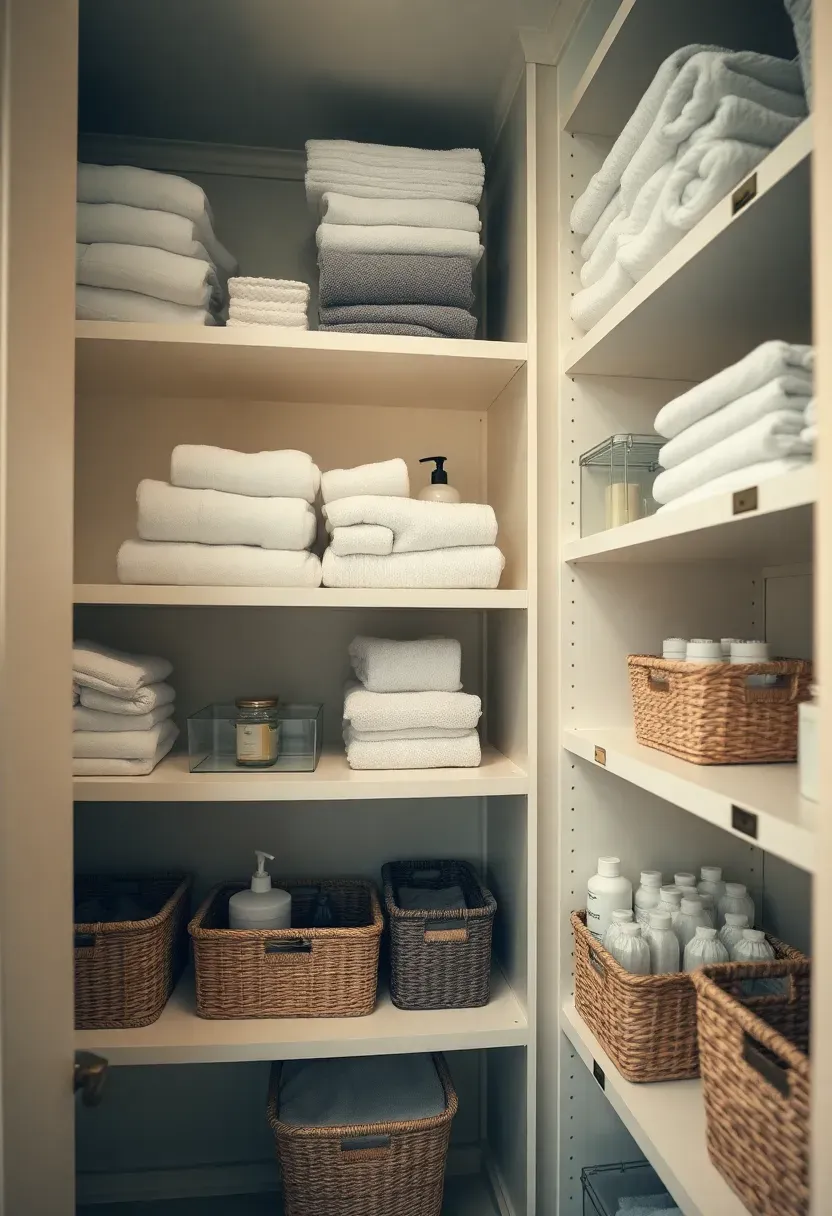
Stop thinking of your closet as a single storage area. Divide it into three to four horizontal zones based on use frequency and category. Eye-level shelves hold daily items: face towels, toothpaste backstock, skincare. The shelf above stores weekly items: hair masks, special occasion products. The top shelf keeps seasonal or rarely used things: sunscreen in winter, extra toilet paper, guest linens. Below eye level, keep cleaning supplies and bulky items like extra tissue boxes. Label each zone on the shelf edge with a small sticker or clip-on tag.
Tips
- Reassess zones every six months as your routine changes
- Keep a small empty section on each shelf — overfilling defeats the purpose
- Put the heaviest items on the lowest shelf for safety and stability
Recommended
Items for this idea
11. Narrow Rolling Cart for Gaps
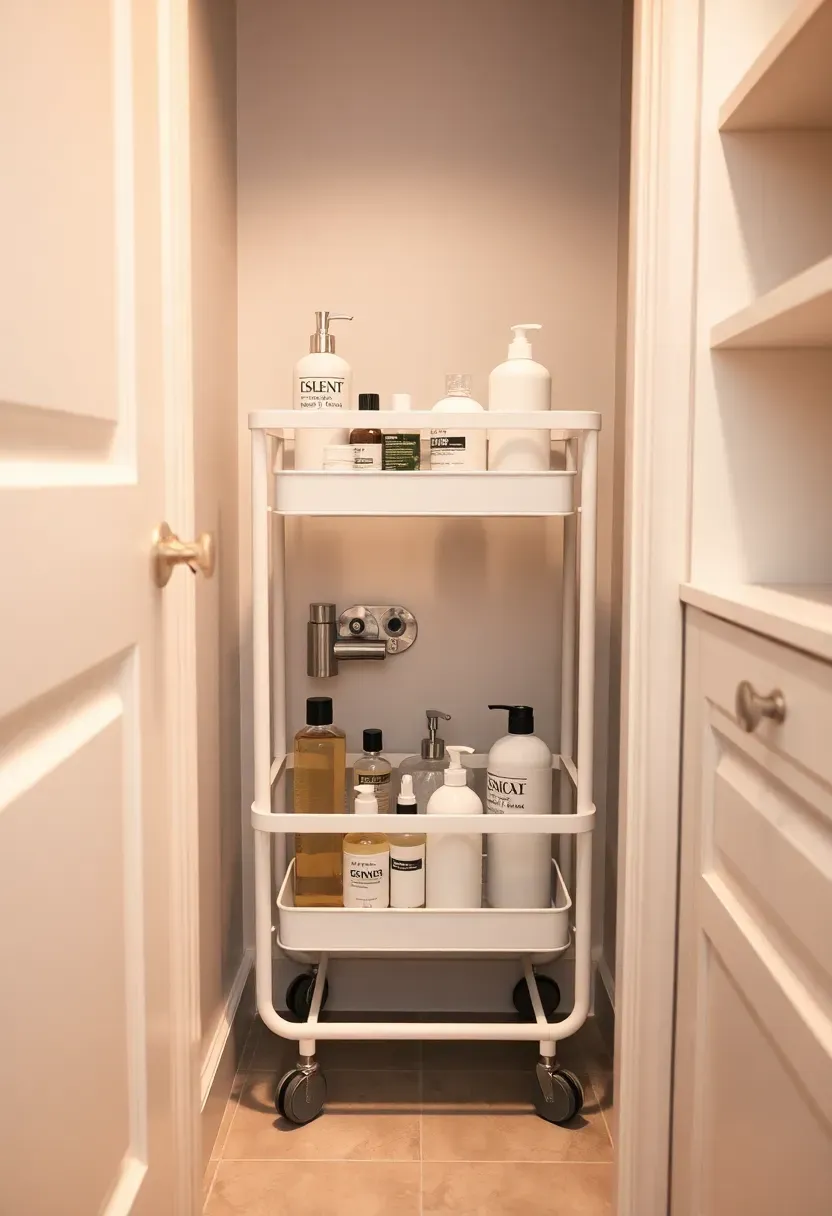
Many bathroom closets have a gap between the shelf unit and the wall, or between the shelving and the door frame. A narrow rolling cart (usually 4 to 6 inches wide) slides into that dead space and rolls out when you need access. Three-tier carts work for toiletries, cleaning supplies, or hair tools that do not fit neatly on a shelf. The wheels mean you can pull it out, grab what you need, and push it back without reorganizing anything. Look for carts with a locking wheel to prevent it from rolling out on its own.
Tips
- Measure the gap carefully — these carts vary by fractions of an inch
- Metal carts handle humidity better than plastic ones, which can warp
- Use the top tier for daily items and lower tiers for backstock
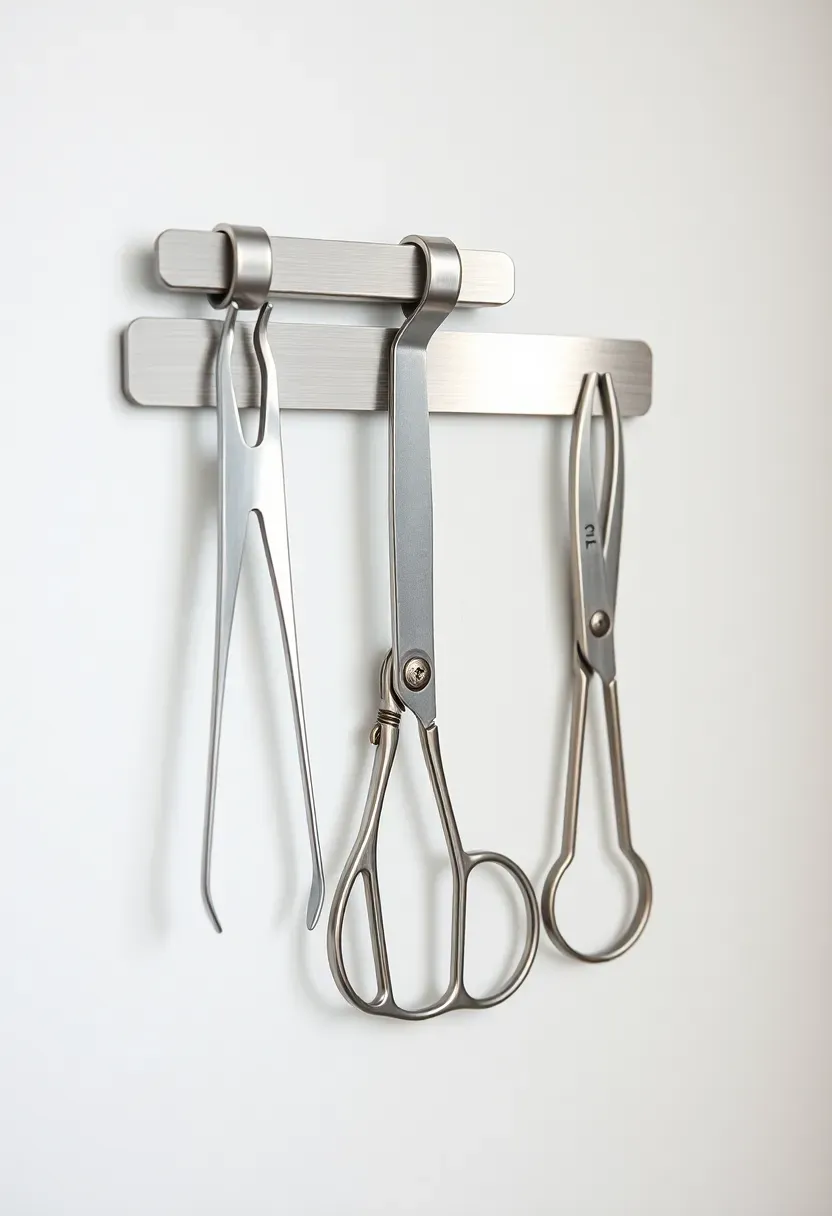
12. Magnetic Strips Inside the Door
Small metal grooming tools — tweezers, nail clippers, scissors, cuticle pushers — vanish into drawers and bins. A magnetic strip mounted vertically on the inside of the closet door keeps them visible and accessible. Stick each tool to the strip after use, and it stays exactly where you left it. These strips are the same ones sold for kitchen knife storage; they work identically for bathroom metal tools. Mount the strip at eye height so you do not have to bend down to find the right tool.
Tips
- Test each tool's magnetism before committing to this system — some stainless steel alloys do not magnetize well
- Space tools at least one inch apart to prevent them from clumping together
- Wipe the strip monthly to remove dust and moisture buildup
Recommended
Items for this idea
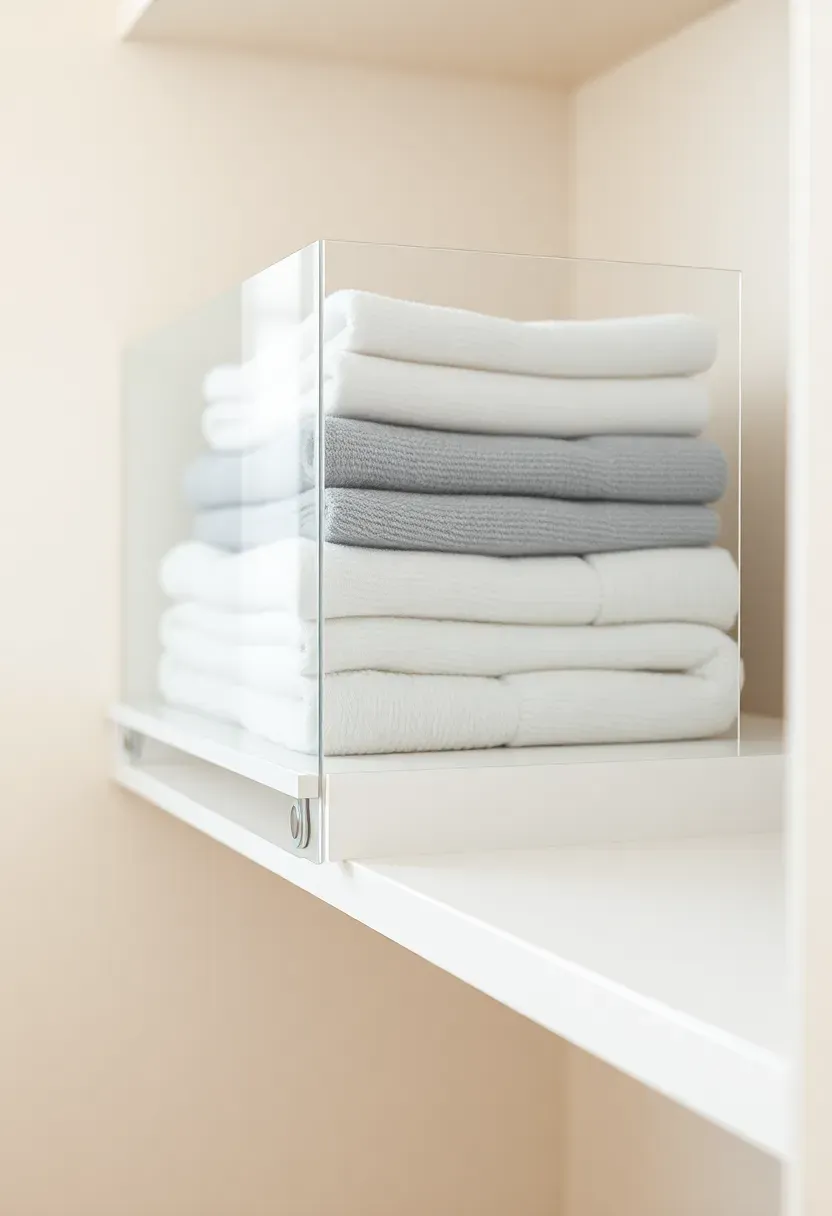
13. Adjustable Shelf Dividers
Why Stacks Topple
Folded towels and linens on open shelves drift sideways over time. Pull one towel from the middle and the whole stack leans.
How Dividers Fix It
Clip-on acrylic or wire shelf dividers create vertical partitions that keep each stack independent. The dividers slide along the shelf edge, so you can adjust spacing as your storage needs change. Two dividers per shelf typically create three sections — enough to separate bath towels from hand towels from washcloths on a single shelf. They also work for separating bins on wider shelves.
Choose If
Your closet has wide shelves (over 24 inches) and you store folded items that tend to topple. Skip dividers on narrow shelves where items already stay in place by default.
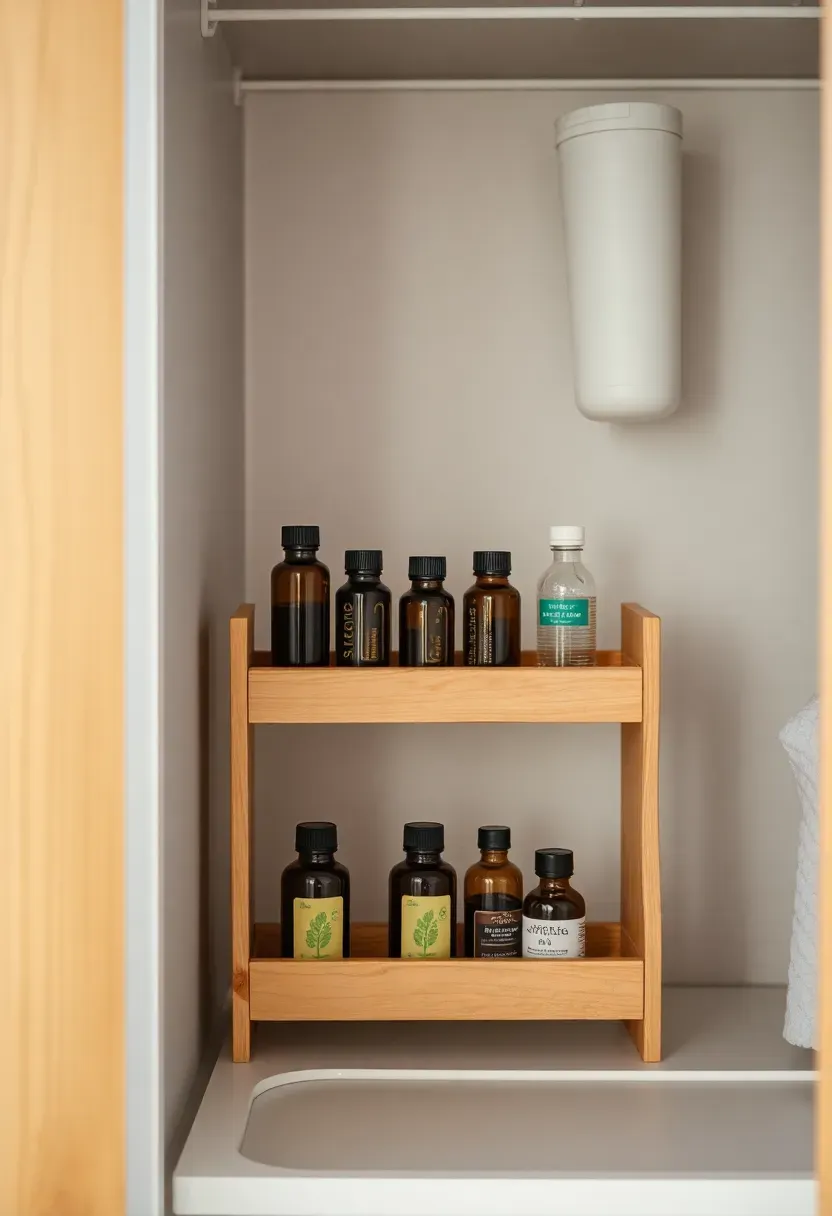
14. Tiered Spice Rack for Small Bottles
Small bottles — essential oils, travel-size toiletries, nail polish, sample products — get lost behind larger items on flat shelves. A tiered spice rack creates stepped rows so you can see every bottle at once. The back row sits higher than the front, like stadium seating for your products. Bamboo or acrylic versions resist bathroom humidity. Place the rack on a mid-level shelf where the lighting is decent enough to read labels.
Tips
- Group bottles by height rather than category for a cleaner visual line
- Leave the front row partially empty so you have room to slide bottles in and out
- Secure the rack with a small adhesive pad if your shelf is smooth and slippery
Recommended
Items for this idea
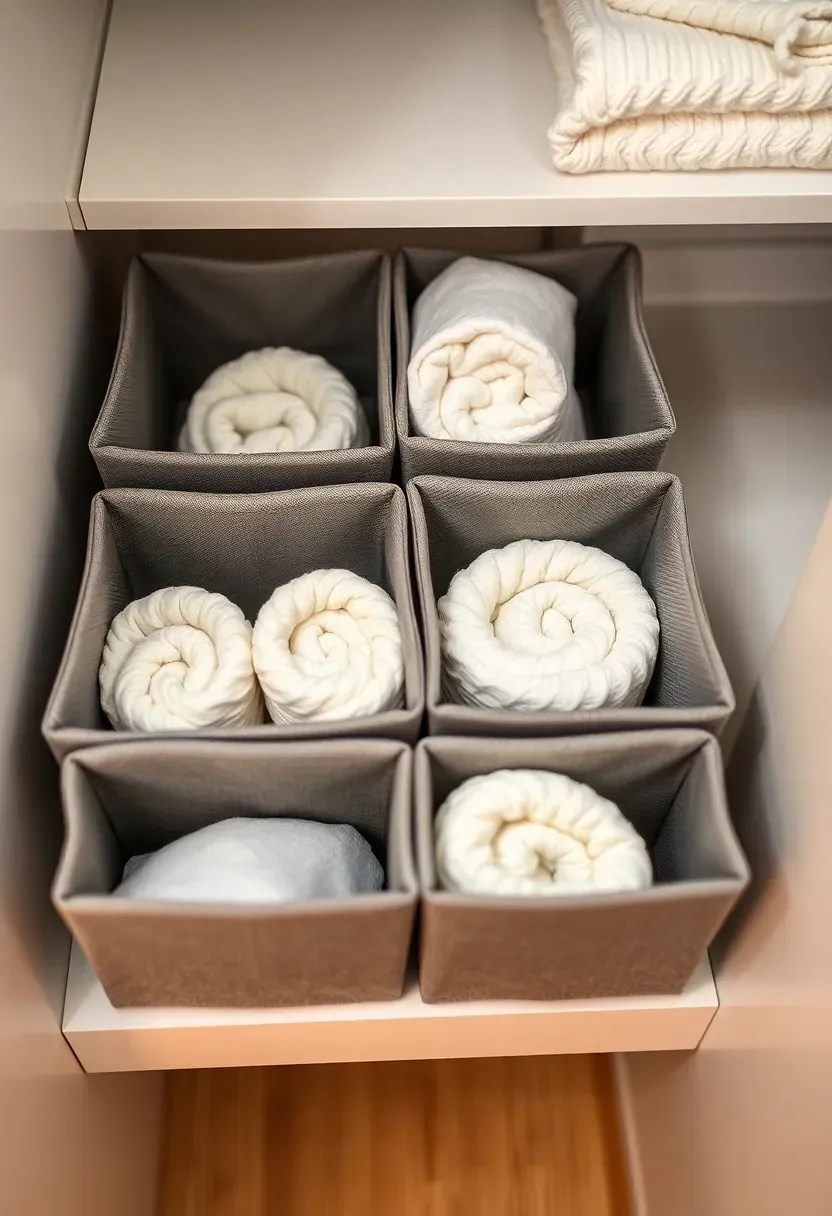
15. Fabric Drawer Inserts
Not every bathroom closet has built-in drawers, but fabric inserts create the same effect on any shelf. These collapsible boxes with internal dividers turn a flat shelf into a grid of compartments. Each cell holds a rolled washcloth, a folded hand towel, or a group of small products. The fabric breathes, which helps in humid environments, and the inserts fold flat if you need to reclaim the shelf for something else temporarily.
Tips
- Choose inserts with reinforced sides that hold their shape when partially empty
- Wash the fabric every month or two to prevent musty smells
- Gray or neutral tones hide stains better than white
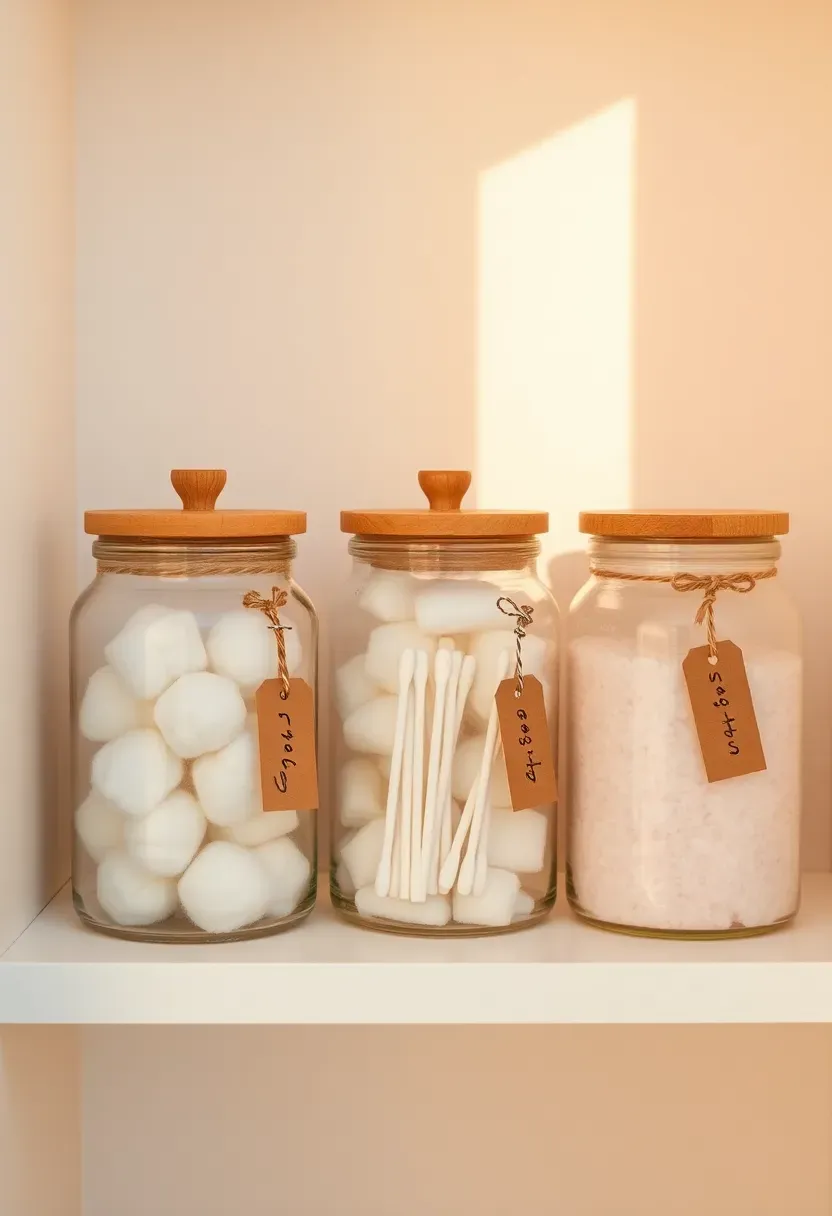
16. Labeled Glass Jars for Cotton Supplies
Loose cotton balls, cotton swabs, and bath salts look chaotic in their original packaging but clean and intentional in glass jars. Transfer bulk supplies into matching jars with airtight lids. The glass keeps moisture out and lets you see when supplies run low. Handwritten labels on a small tag or directly on the jar add a personal touch that printed labels lack. Group three jars together on a mid-level shelf where they catch a bit of light.
Tips
- Wide-mouth jars are easier to reach into than narrow ones
- Bamboo lids resist moisture better than metal ones, which can rust
- Buy jars with rubber gaskets for a proper seal in humid closets
Recommended
Items for this idea
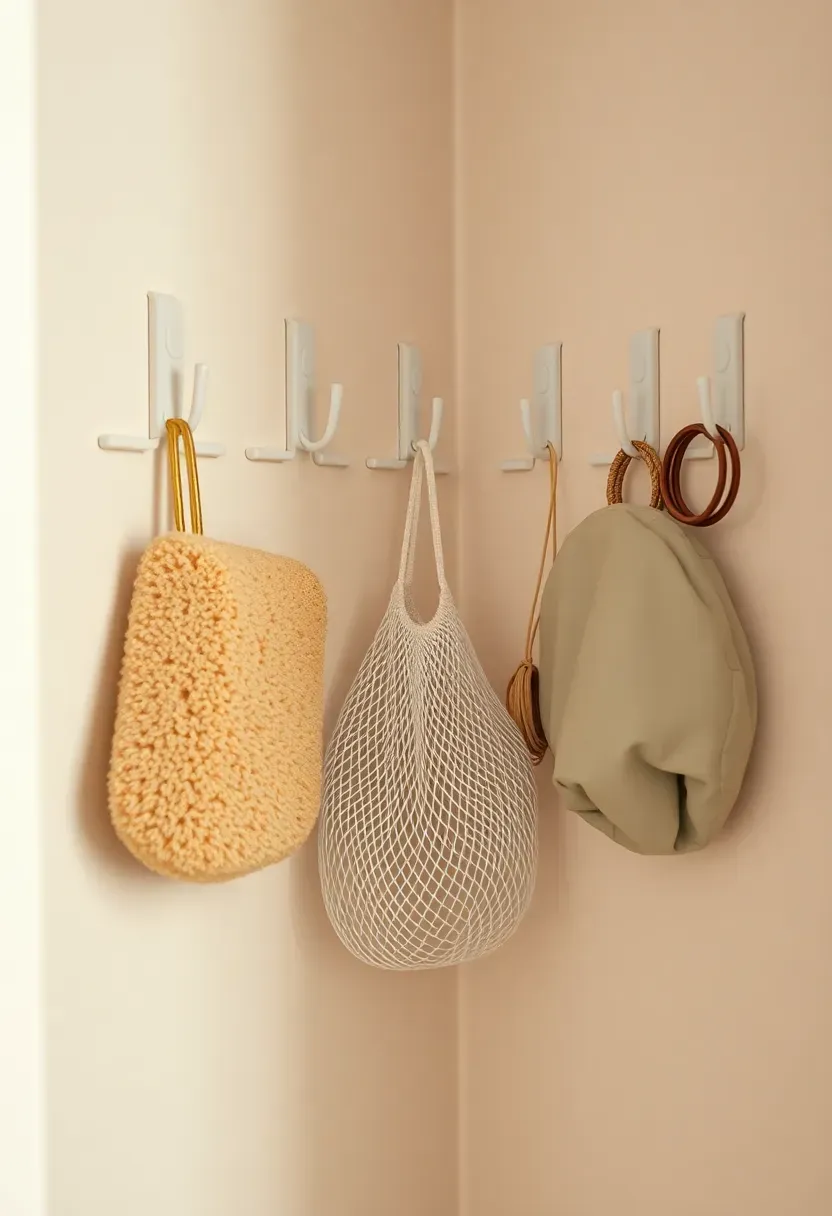
17. Command Hook Grid on Closet Wall
How to Use Vertical Wall Space
The side walls inside a bathroom closet are usually bare. A grid of adhesive command hooks turns that wall into hanging storage.
Step 1: Plan the Layout
Arrange hooks in rows spaced about four inches apart. Stagger them so hung items do not overlap. Map it out on paper first or use painter's tape on the wall.
Step 2: Mount the Hooks
Press each hook firmly for 30 seconds and wait one hour before hanging anything. This lets the adhesive bond to the wall properly.
Step 3: Assign Each Hook
One hook per item type: loofah, shower cap, hair ties on a ring, small mesh bags of travel toiletries. Labeling the wall beneath each hook sounds excessive, but it keeps the system working long-term.
Watch Out
Heavy items pull adhesive hooks off painted drywall. Limit each hook to items under one pound.
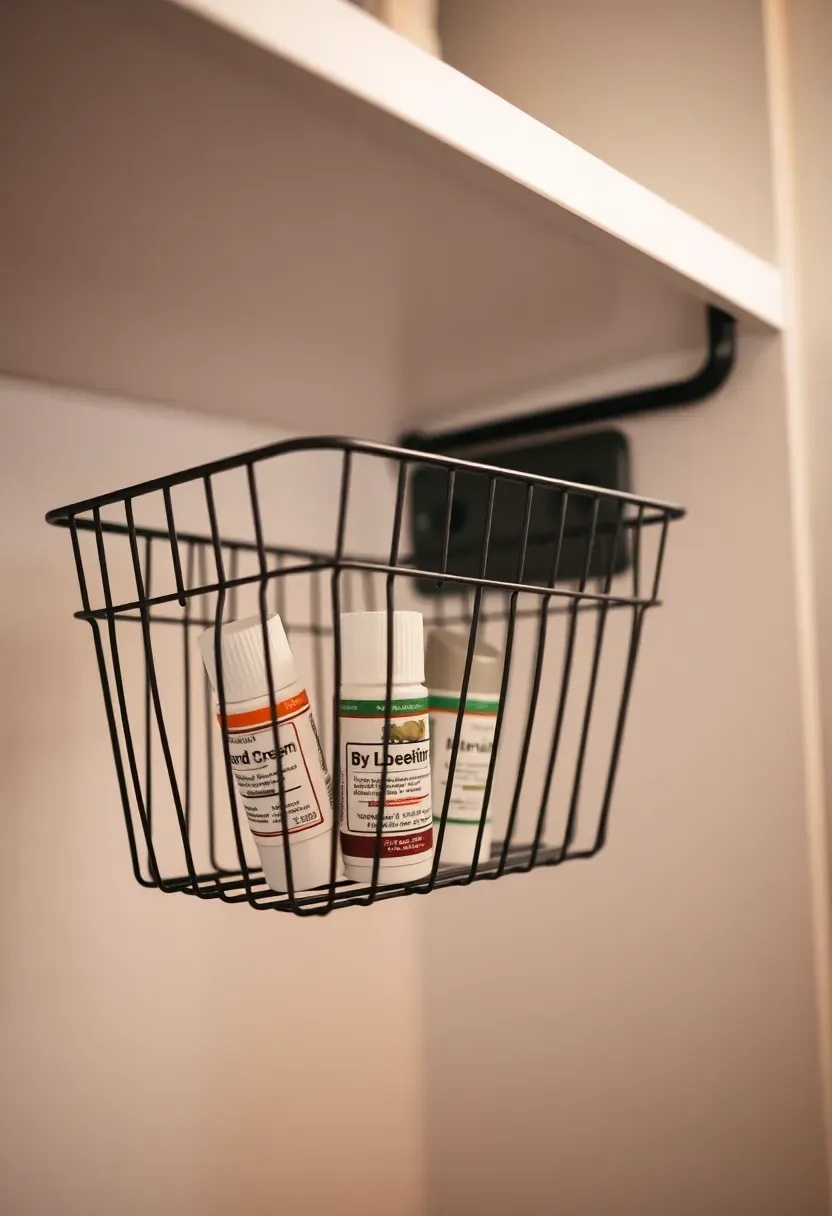
18. Under-Shelf Hanging Basket
The space between shelves often goes unused except for the few inches directly on top of the lower shelf. A wire basket that clips or slides onto the underside of the shelf above creates a hidden storage tier. It is ideal for small items that fall over on flat surfaces: tubes of hand cream, travel bottles, sample packets. The basket slides on and off without tools, making it easy to relocate as your storage needs shift.
Tips
- Check the wire gauge — thin wire baskets sag under weight
- Keep basket contents short enough that they do not block items on the shelf below
- Black or matte finishes disappear visually better than shiny chrome in a closet
Recommended
Items for this idea
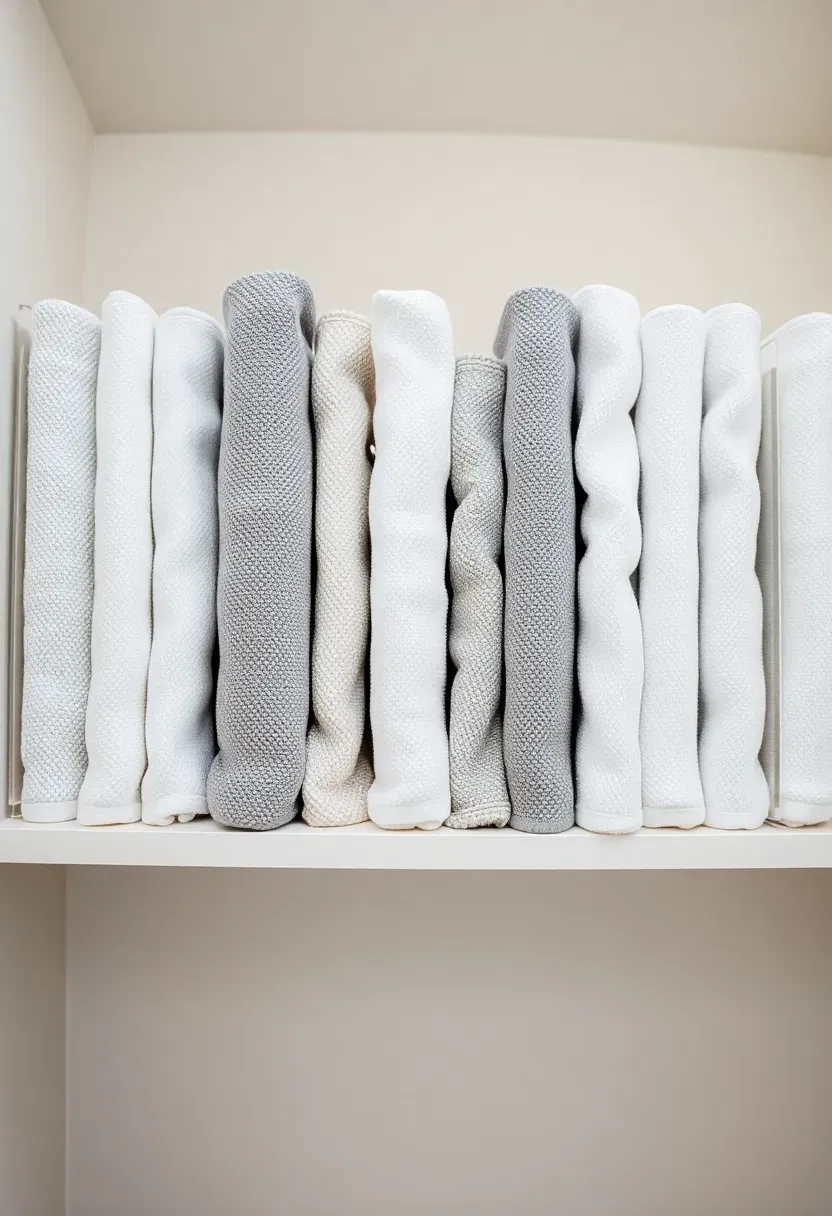
19. Color-Coded Towel Filing System
Folding vs. Filing
Traditional stacking hides towels at the bottom of the pile. Filing — standing folded towels upright like files in a cabinet — lets you see every towel at once and grab any one without disturbing the rest.
How to Set It Up
Fold each towel into thirds lengthwise, then in half, and stand it upright with the folded edge facing forward. Alternate colors: white, gray, white, gray. The color pattern makes it obvious at a glance which towels have been used and which remain fresh. Shelf dividers at each end keep the row from collapsing.
Recommendation
Best for households with matching towel sets in two or three colors. If your towels are a random assortment of patterns and sizes, filing still works but you lose the color-coding benefit.
20. Expandable Bamboo Shelf Organizer
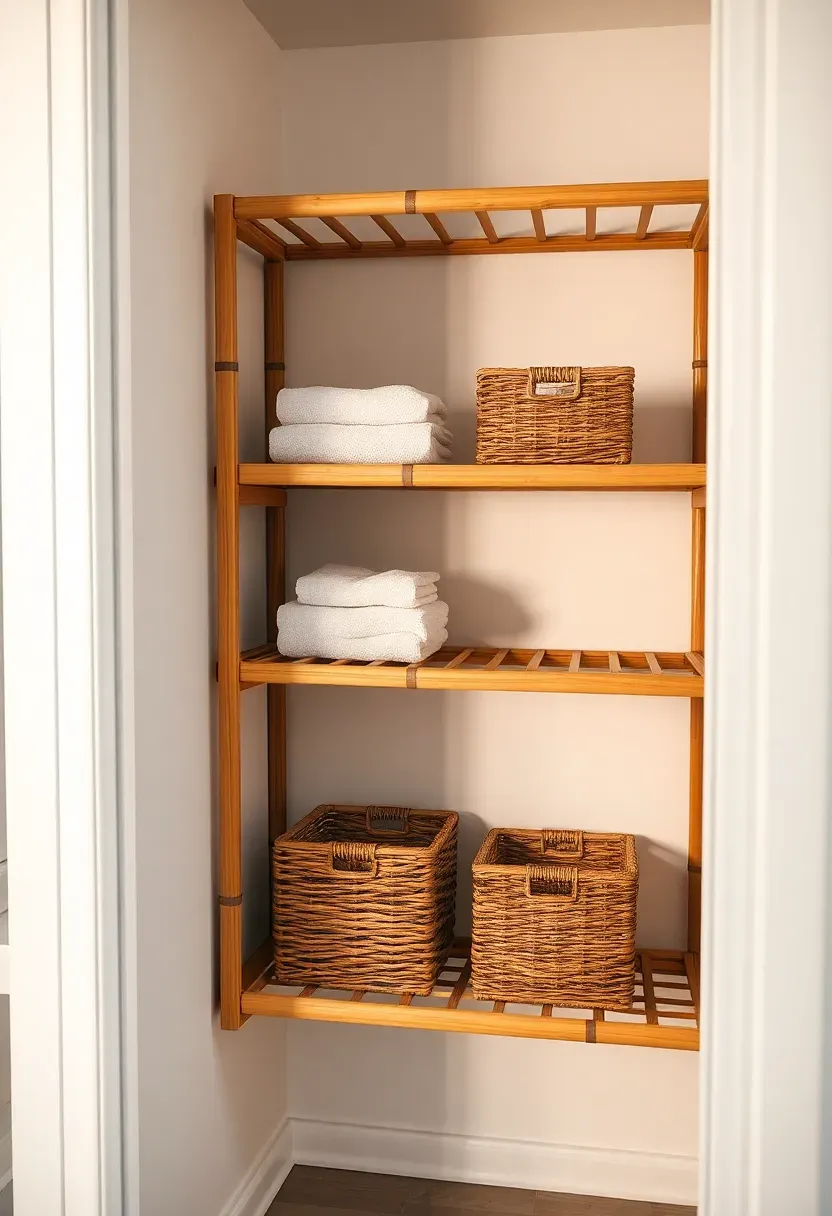
A freestanding bamboo organizer with adjustable shelves creates a closet-within-a-closet. These units sit directly on an existing shelf and subdivide the vertical space into two or three narrower tiers. The bamboo resists moisture, and the adjustable shelf heights let you customize for tall bottles on one level and short containers on another. Expandable models telescope wider to fill the full shelf width without leaving awkward gaps at the sides.
Tips
- Sand any rough spots on cheaper bamboo units to prevent towel snagging
- Place a thin shelf liner underneath to prevent sliding on smooth surfaces
- Avoid stacking heavy items on the top tier — bamboo flexes under concentrated weight
Recommended
Items for this idea
21. Closet Door Mirror with Hidden Storage
A Door That Does Two Jobs
A mirrored closet door with built-in shallow shelving on the back gives you a full-length mirror on one side and hidden storage on the other.
How It Works
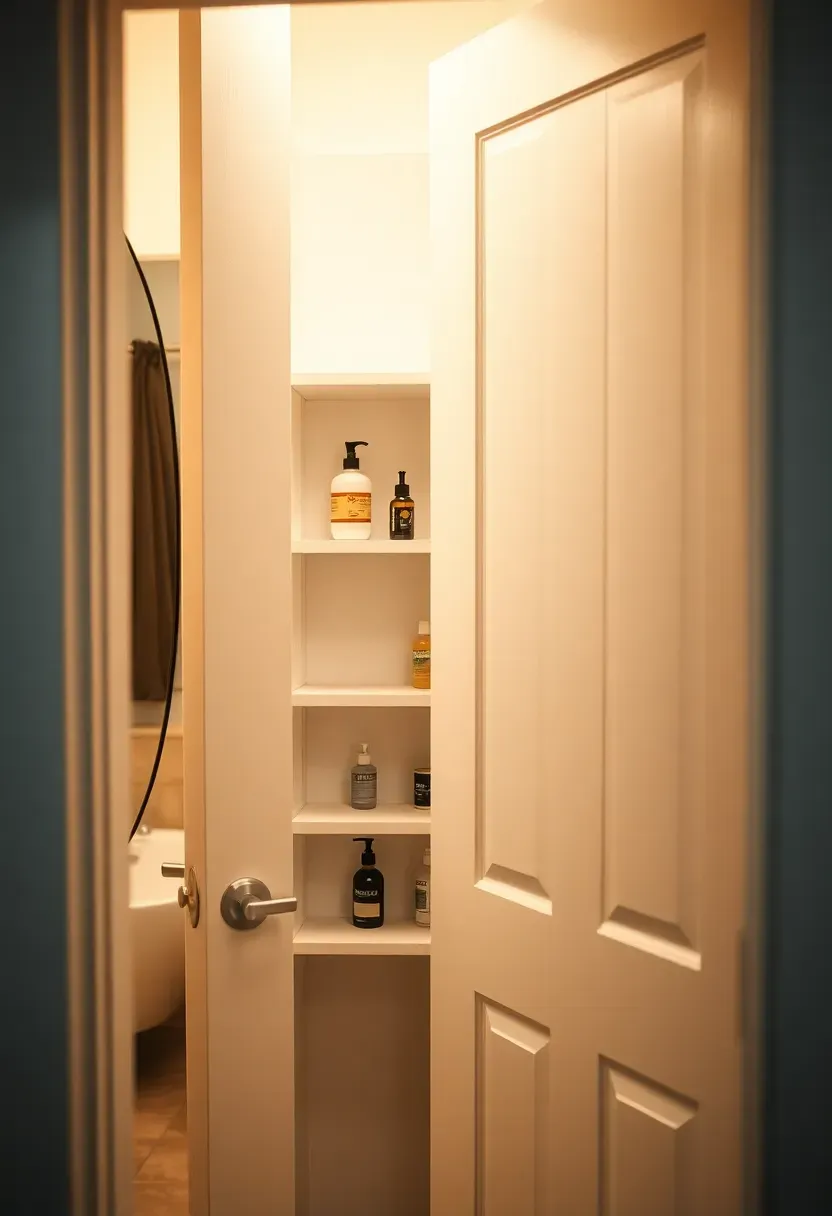
The mirror faces the bathroom. When you open the closet, the back of the door reveals several narrow shelves (about three inches deep) sized for small toiletries, medications, jewelry, and grooming tools. The shelves hide completely when the door is closed, keeping the closet looking minimal.
Choose If
You lack a full-length mirror in the bathroom and your closet door swings open into a space where you can stand back far enough to use it. Not ideal for sliding closet doors.
22. Vacuum-Sealed Bag Storage for Bulky Items
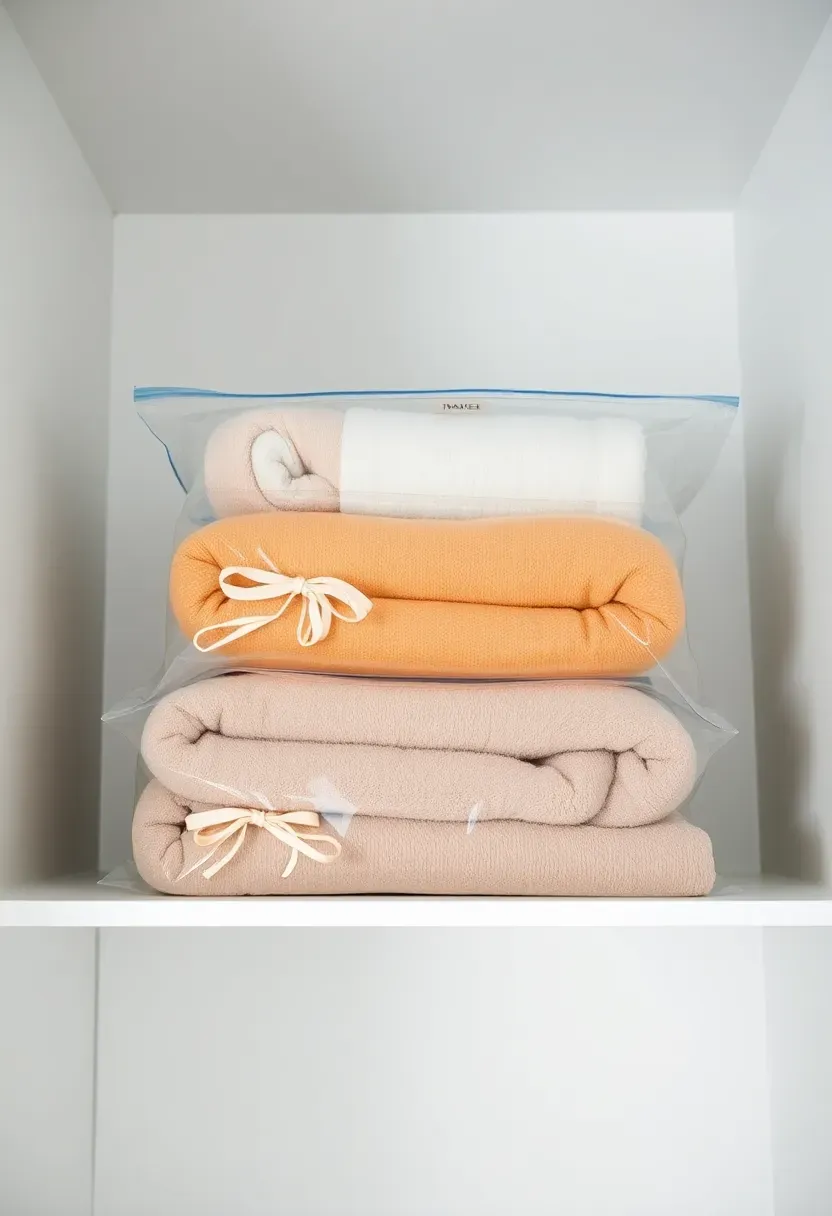
Extra blankets, guest towel sets, and bulky bathrobes take up enormous shelf space when stored normally. Vacuum-sealed bags compress them to about a third of their original volume, freeing entire shelves for items you access more often. Seal seasonal or guest items, label the bags with contents and date, and stack them flat on the top shelf. When guests arrive, break the seal and the items spring back to full size within a few hours.
Tips
- Use bags with a hand-pump valve so you do not need a vacuum cleaner every time
- Do not vacuum-seal items with delicate fibers like cashmere — the compression can damage them
- Replace bags annually since the seals weaken with repeated use
Recommended
Items for this idea
23. Top-Shelf Seasonal Rotation Bin
The Core Issue
Products you only need part of the year — heavy body lotion in winter, reef-safe sunscreen in summer, allergy eye drops in spring — clog up prime shelf space twelve months a year.
The Solution
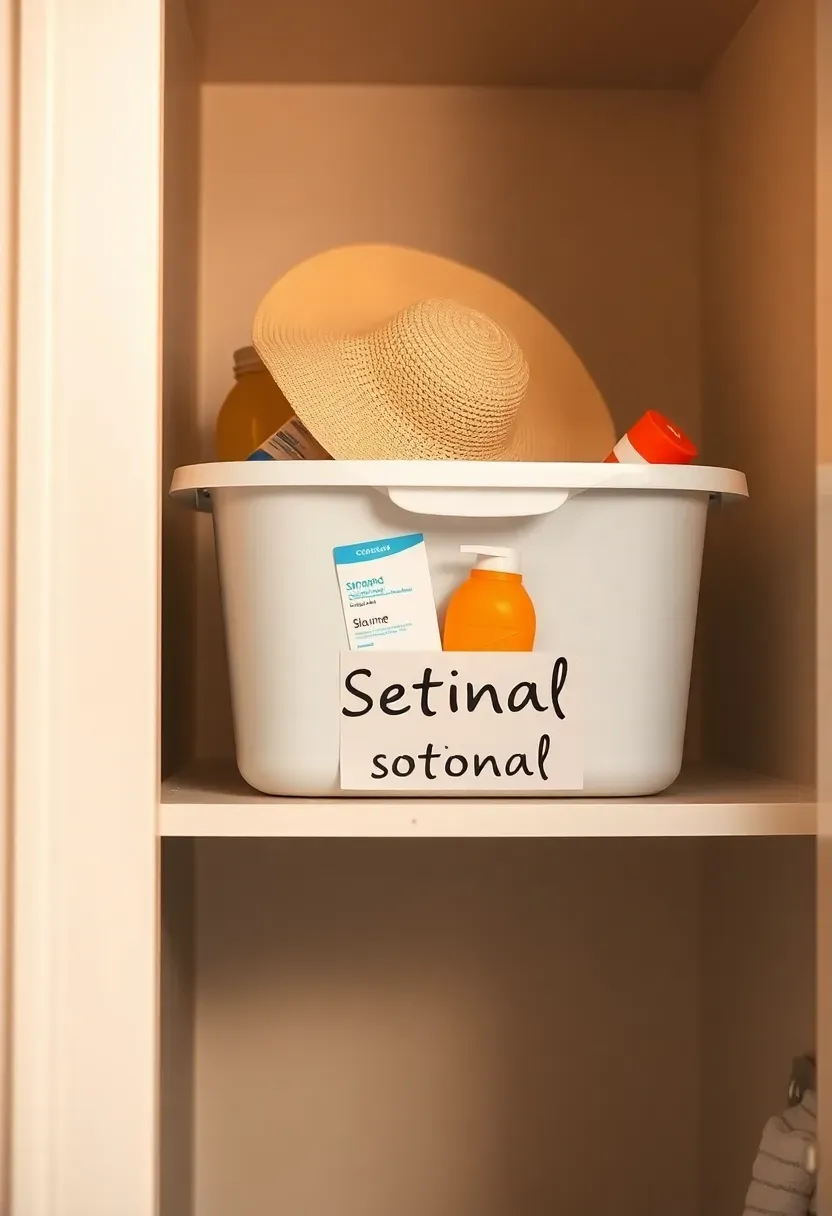
Designate one bin on the top shelf as the seasonal rotation bin. At the start of each season, swap products between this bin and your daily shelves. The bin keeps off-season items contained and out of the way. Label the bin with the current contents (not just "seasonal") so you remember what is inside without climbing up to check.
Pros and Cons
Pros: Frees daily shelf space, prevents product expiration from being forgotten, simple quarterly ritual Cons: Requires a step stool if your top shelf is high, easy to skip the quarterly swap if you are not disciplined about it
24. Magazine Holder for Hair Tool Storage
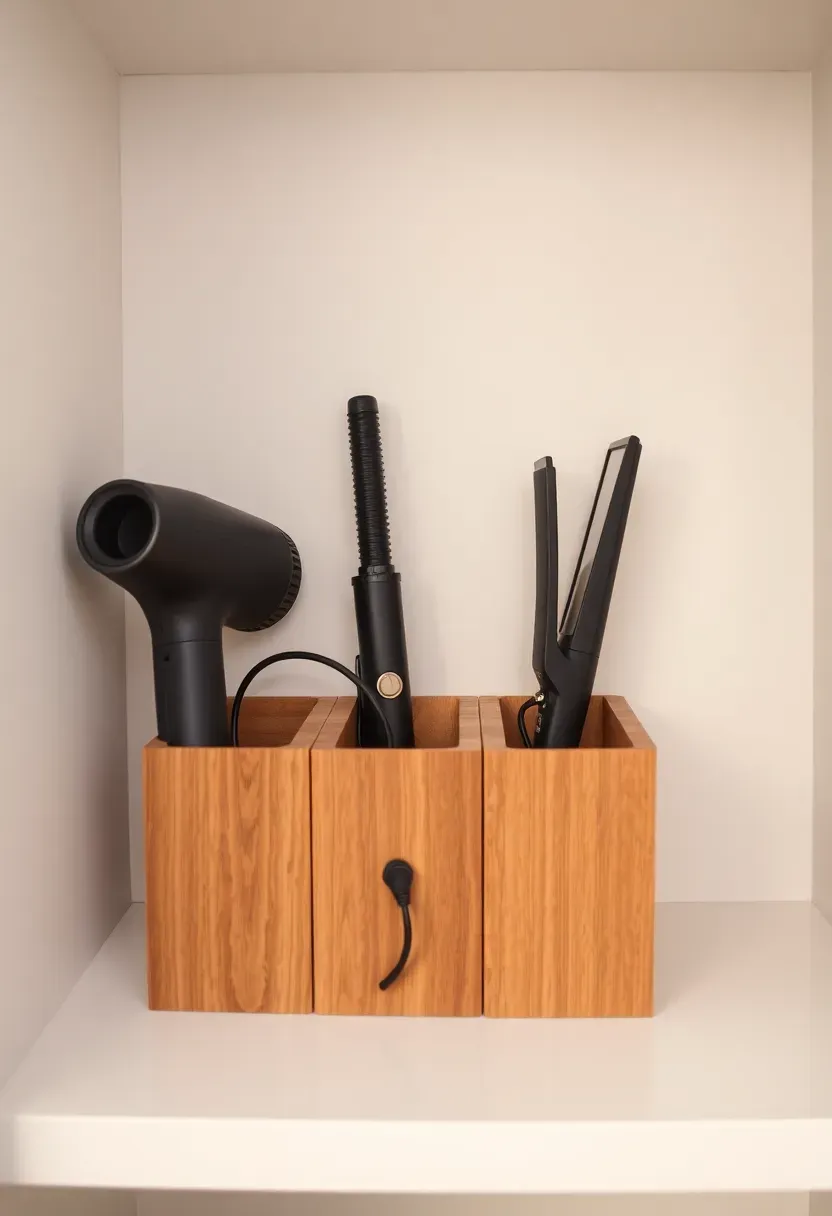
Hair dryers, curling irons, and flat irons are oddly shaped, hot after use, and constantly tangled with their own cords. A sturdy magazine holder turned on its side creates a compartment that holds one tool upright with its cord tucked inside. Line three holders in a row on a lower shelf: one per tool. The open top lets residual heat escape, and the vertical orientation means each tool has its own dedicated slot. Wooden or metal holders work best; cardboard warps from heat and humidity.
Tips
- Let tools cool for five minutes before placing them in the holder
- Wrap cords loosely rather than tightly to prevent wire damage
- Secure holders to the shelf with adhesive strips so they do not tip when you pull a tool out
Recommended
Items for this idea
25. Shoe Organizer Repurposed for Toiletries
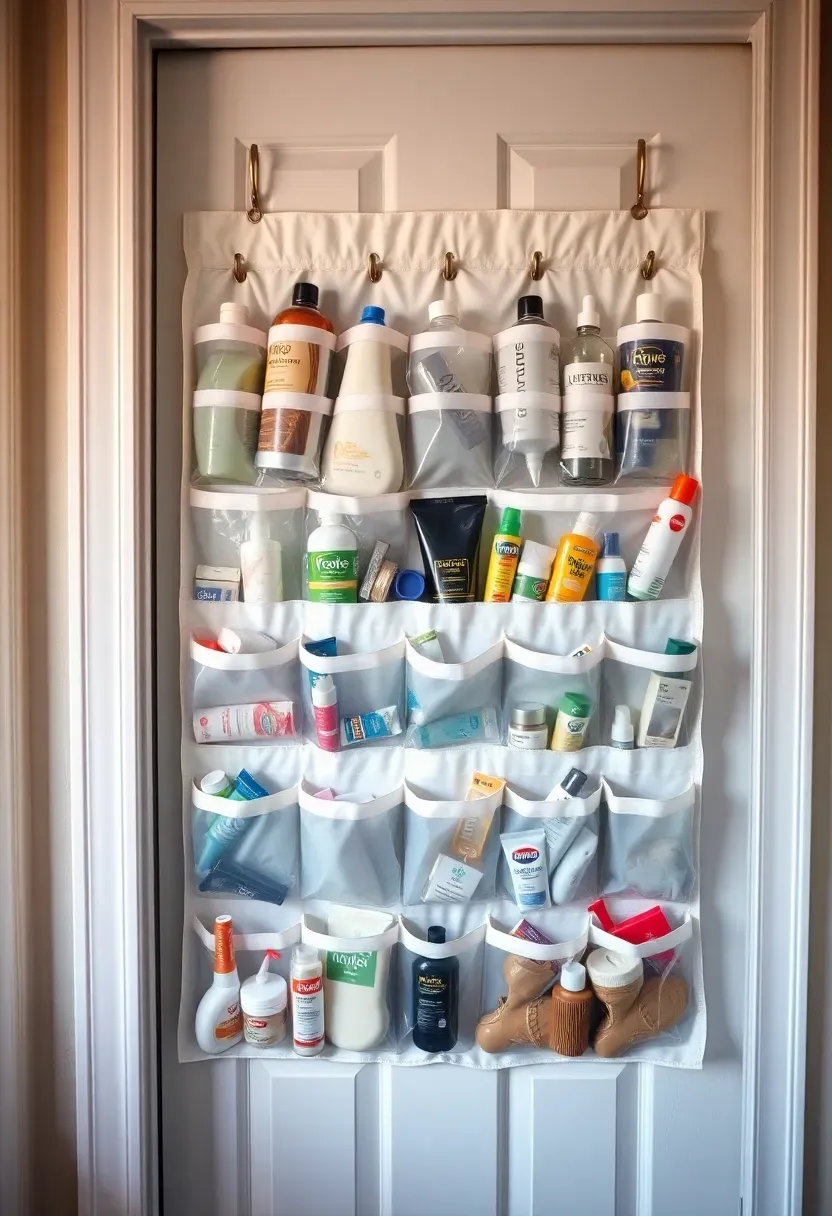
A clear hanging shoe organizer with twenty-four pockets turns the back of your closet door into a wall of sorted bathroom storage. Each pocket holds one category: sunscreen, hair products, dental supplies, first aid, medications, travel sizes. The clear pockets let you scan everything without touching it. Unlike shelves, pockets prevent bottles from falling over or migrating. This is one of the most cost-effective bathroom closet organization ideas since a shoe organizer costs less than most single storage bins.
Tips
- Cut away any pockets you do not need to reduce bulk and improve the door's closing clearance
- Reinforce the top hooks with zip ties if the organizer is heavy when fully loaded
- Dedicate one pocket per family member for personal items to prevent mixing
26. Pegboard Closet Wall Panel
How to Build a Flexible Wall System
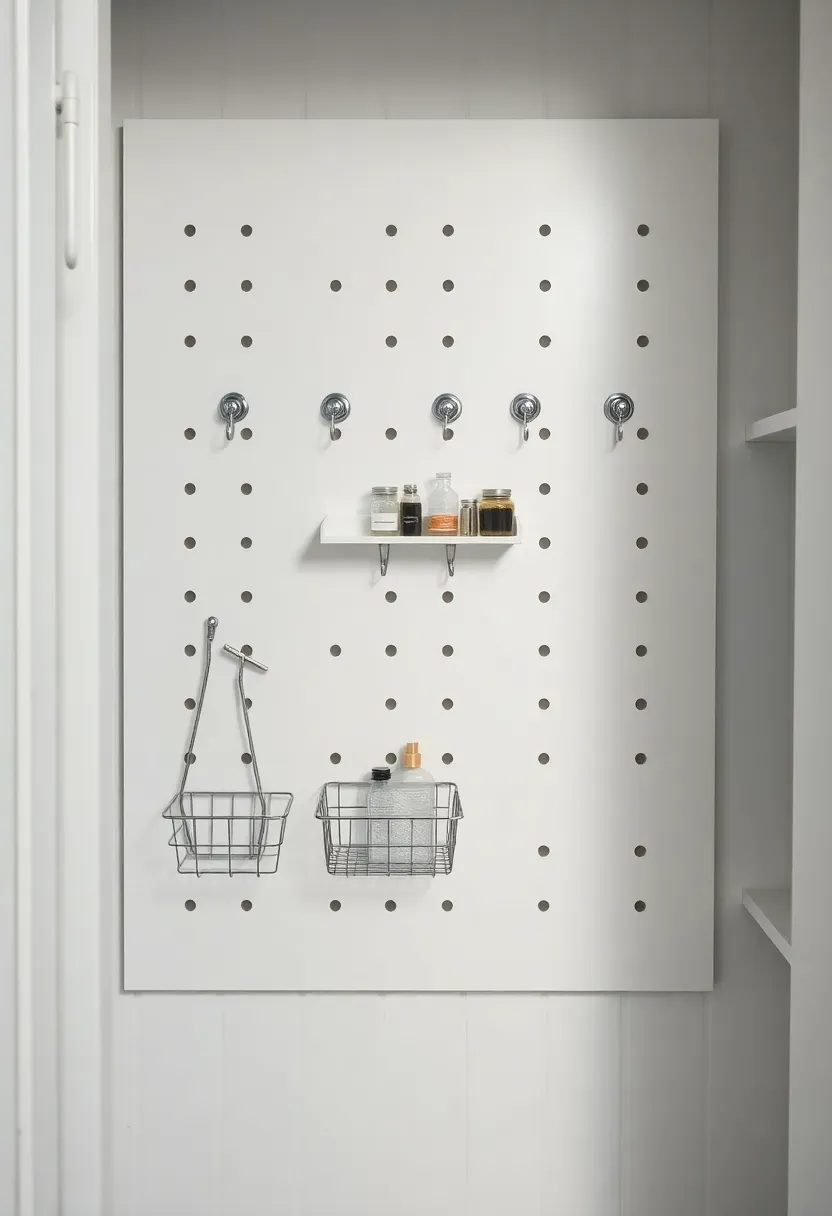
A pegboard panel mounted on the back wall of your bathroom closet lets you reconfigure storage anytime by simply moving hooks, baskets, and small shelves around the perforated surface.
Step 1: Mount the Pegboard
Cut the pegboard to fit the back wall of your closet. Mount it with spacers (about half an inch) so hooks can be inserted from behind. Use wall anchors if the closet wall is drywall.
Step 2: Add Accessories
Start with a mix of single hooks, double hooks, small wire baskets, and one or two short shelf inserts. Arrange them by category: grooming tools on hooks, small products in baskets, jars on shelves.
Step 3: Adjust Over Time
The entire point of pegboard is flexibility. After a month of use, move items that ended up in the wrong spots. The holes are forgiving — nothing is permanent.
Watch Out
Pegboard adds about an inch of depth to the back wall. Make sure your shelves still fit without interference.
Recommended
Items for this idea
27. Monthly Declutter Basket System
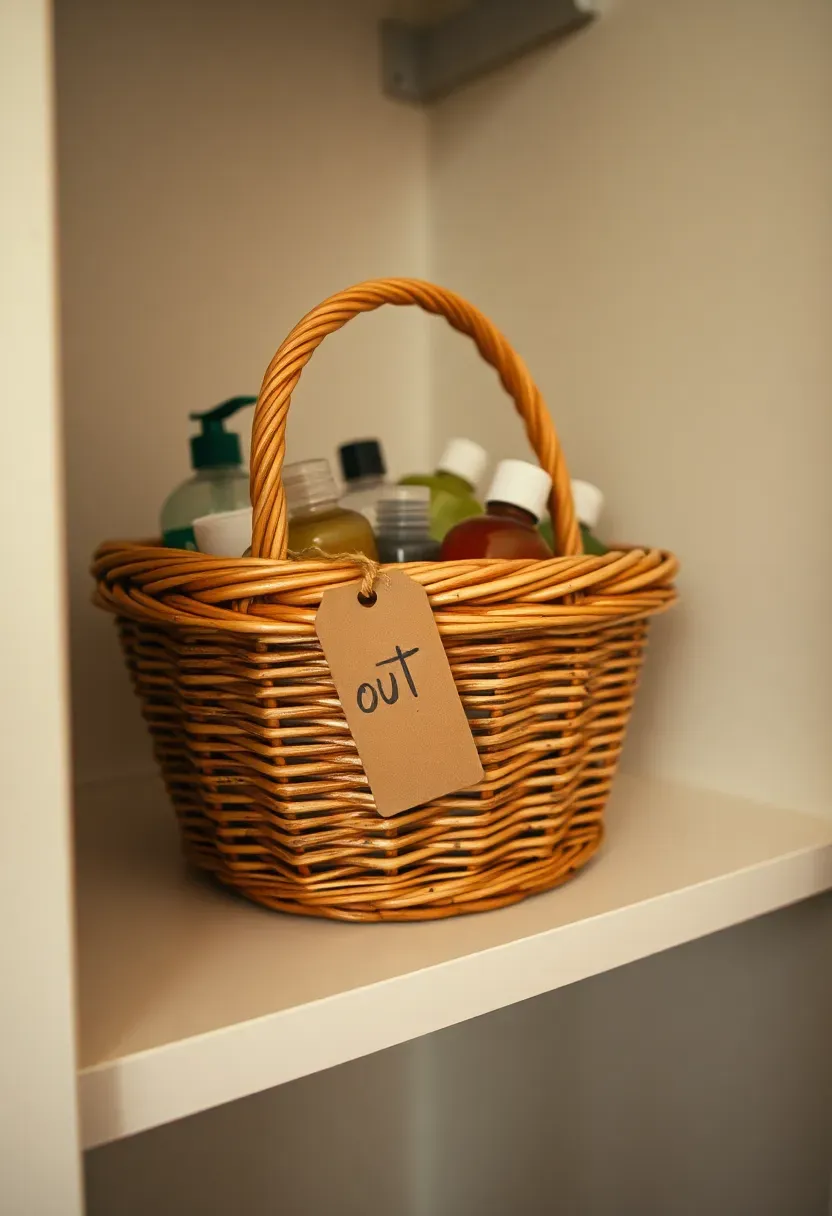
Organization systems fail when they do not account for the stuff that should leave. Place a small basket on the bottom shelf of your closet labeled "out." Throughout the month, toss in anything expired, nearly empty, or unused for over ninety days. At the end of each month, empty the basket: trash the expired items, donate the unused ones, and recycle what you can. This one habit prevents the slow accumulation that undoes every other organizational effort on this list.
Making It Sustainable
- Keep the basket small so it forces a monthly purge rather than becoming another storage bin
- Set a phone reminder for the first of each month to empty it
- Involve the whole household — everyone adds to the same basket
Quick FAQ
How often should I reorganize my bathroom closet? A full reorganization once or twice a year works for most households. The monthly declutter basket handles ongoing maintenance between those deeper sessions. Seasonal product swaps are a natural time to reassess the overall layout.
What is the best material for bathroom closet storage bins? Woven seagrass, acrylic, and powder-coated wire all handle humidity well. Avoid untreated cardboard and fabric without ventilation. If your closet lacks ventilation, lean toward open-weave baskets that allow airflow around stored linens.
Can I organize a tiny bathroom closet without removing the shelves? Yes. Door-mounted organizers, under-shelf baskets, tension rods, and shelf risers all add storage within the existing structure. The biggest gains in small closets come from vertical space — using the door back and the underside of shelves that most people ignore.
Do I need matching containers for everything? Matching containers look cohesive, but mismatched ones work just as well functionally. If budget is tight, pick one consistent color (white or clear) and buy individual pieces over time. Consistency in color matters more than consistency in brand or material.
Should bathroom medications be stored in a closet? A bathroom closet is fine for most over-the-counter products, but the humidity can degrade certain medications faster than a cool, dry location like a bedroom drawer. Check the label — anything that says "store in a cool, dry place" belongs outside the bathroom.
An organized bathroom closet is not about buying the right products. It is about assigning every item a specific home and building one habit — the monthly declutter — that keeps the system from decaying. Start with whichever idea above matches the biggest pain point in your closet right now. One shelf riser or one set of labeled bins can shift your daily experience enough to motivate the next improvement. The closet did not get chaotic overnight, and it does not need to be fixed overnight either.
Pinterest cover for 27 Bathroom Closet Organization Ideas
About the author
OBCD
CGI visualization and interior design content. We create detailed 3D renders and curate practical design ideas for every room in your home.