23 Bathroom Closet Ideas
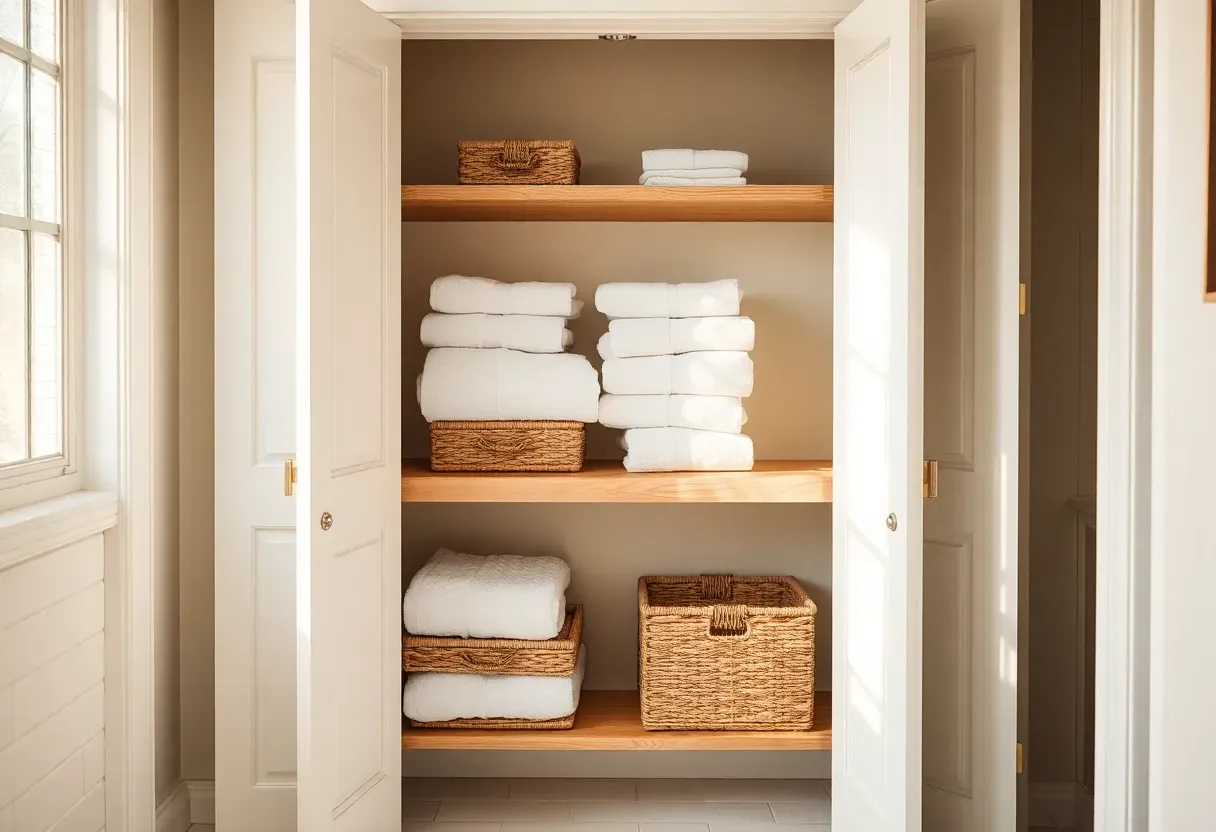
Most bathrooms get designed around the vanity, the shower, and the floor tile. The closet is an afterthought — a hollow-core door hiding a couple of wire shelves. That is a missed opportunity. A well-planned bathroom closet does more than store towels. It sets the tone for how the whole room functions, whether you are working with a deep walk-in or a narrow wall niche barely two feet wide. The right door, shelf material, and interior layout can make a cramped bathroom feel twice as organized.
Here are 23 bathroom closet ideas covering built-ins, freestanding options, door styles, interior configurations, and compact solutions for tight spaces.
Table of Contents
- Floor-to-Ceiling Built-In Linen Cabinet
- Recessed Wall Niche with Floating Shelves
- Glass-Front Cabinet Doors
- Barn Door Linen Closet
- Open Shelving Closet with Curtain
- Pull-Out Hamper Drawer Inside Closet
- Pocket Door Closet for Tight Hallways
- Built-In Between-Stud Storage
- Mirrored Closet Door with Hidden Shelves
- Freestanding Armoire as Linen Closet
- Corner Closet with Lazy Susan Shelves
- Closet with Integrated Laundry Chute
- Louvered Door Closet for Ventilation
- Shallow Closet with Pullout Trays
- Under-Stairs Bathroom Closet
- Double-Door Shaker Style Closet
- Ladder Shelf Closet Alternative
- Closet with Built-In Vanity Nook
- Frameless Glass Shower-Adjacent Closet
- Wainscot-Paneled Closet Interior
- Rolling Cart Closet for Rentals
- Alcove Closet with Arched Opening
- Medicine Cabinet Tower
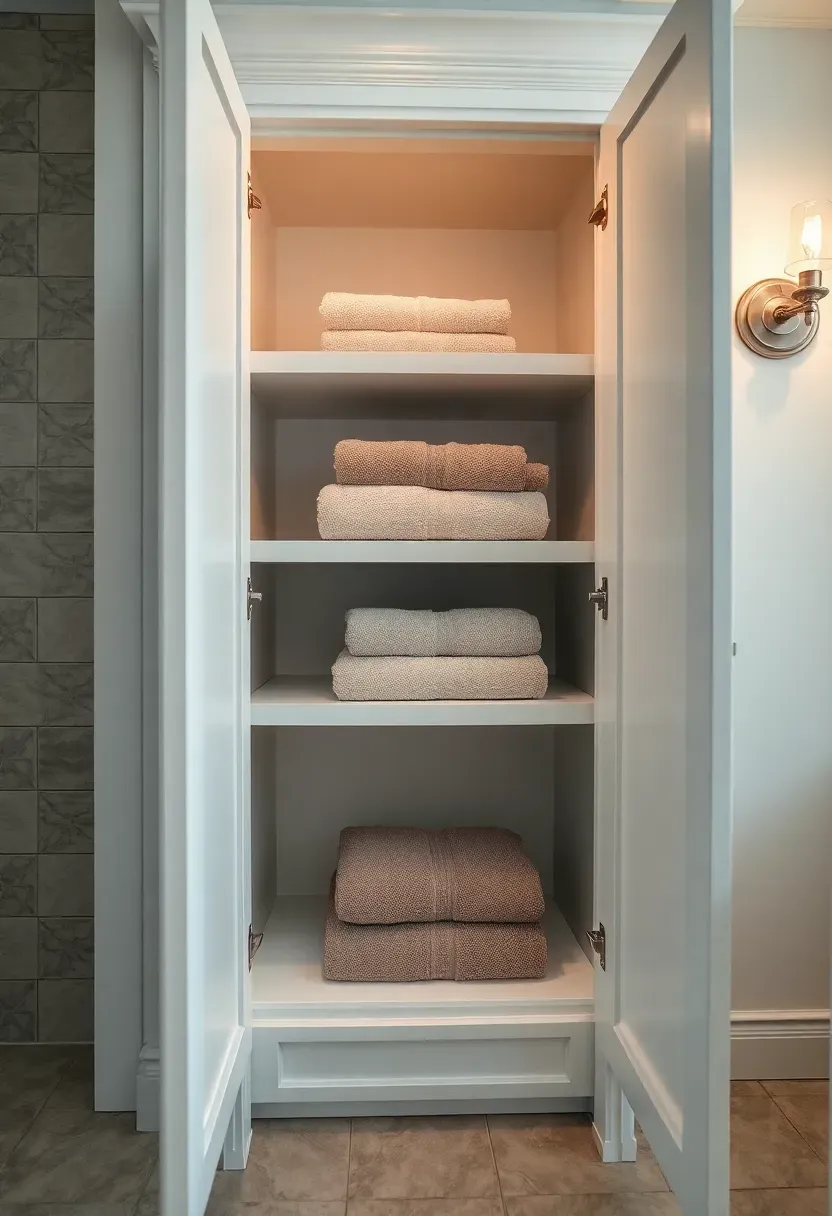
1. Floor-to-Ceiling Built-In Linen Cabinet
A floor-to-ceiling built-in makes use of vertical space that standard closets waste. The cabinet runs from baseboard to crown molding, giving you six or seven shelf levels instead of the usual three. Adjustable shelf pins let you customize spacing — taller gaps for stacked towels, shorter ones for toiletry rows. The doors sit flush with the surrounding wall, so the whole unit reads as architecture rather than furniture. Paint it the same color as the trim for a seamless look, or go with a contrasting shade to make it a feature.
Planning Notes
- Leave at least 14 inches of depth for folded bath towels
- Include one shelf at 48 inches high for easy daily access
- Soft-close hinges prevent door slamming in tiled rooms where sound carries
We picked a few things that go well with this idea: Iwell 67" Tall Bathroom Storage Cabinet (★4.4), ChooChoo Freestanding Bathroom Floor Cabinet (★4.4) and Tall 6-Door Bathroom Linen Cabinet (★4.4). As an Amazon Associate we earn from qualifying purchases.
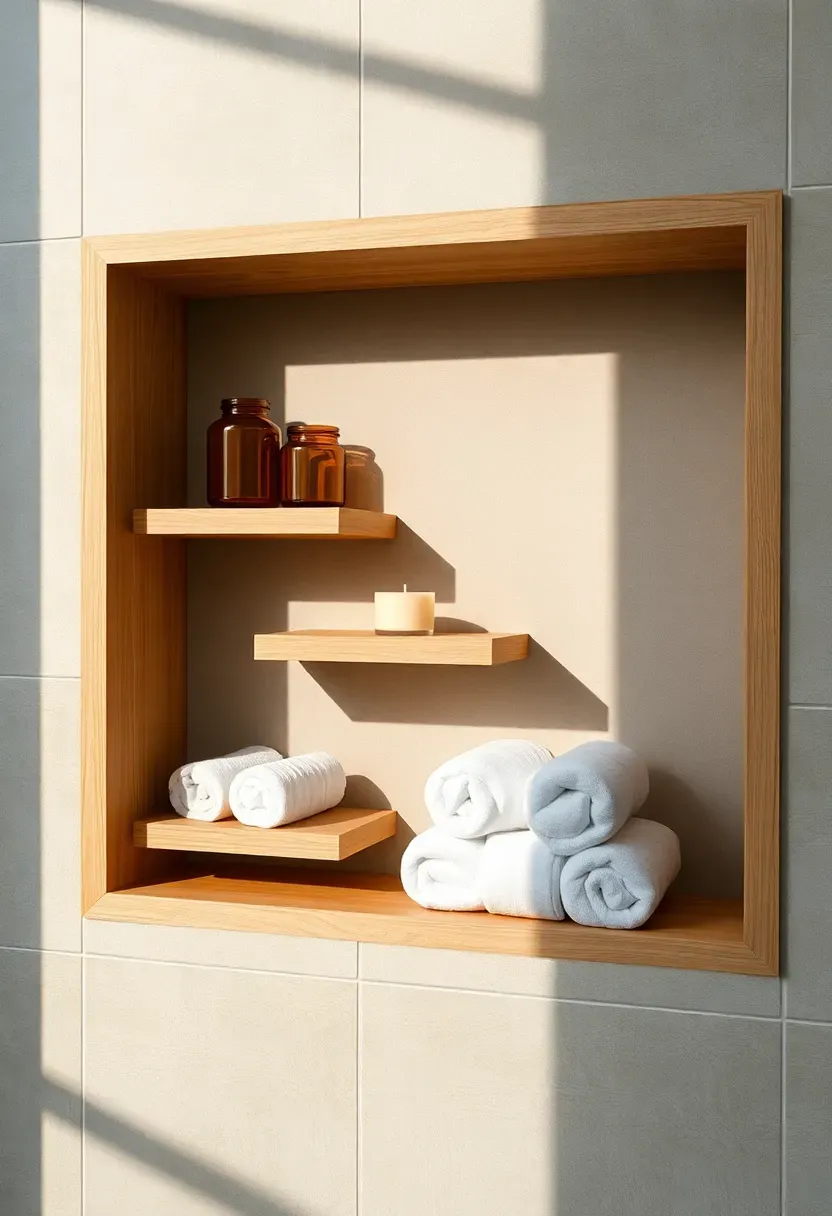
2. Recessed Wall Niche with Floating Shelves
Why It Works in Small Bathrooms
Standard closets eat into already limited floor space. A recessed niche carved between wall studs gives you 3.5 inches of depth without protruding into the room at all.
How to Build It
Start by locating two adjacent studs with a stud finder. Cut the drywall between them, frame the opening with 1x4 lumber, and install floating shelves at whatever intervals suit your storage. Tile the back wall to match the shower surround or paint it a darker accent color. The niche works best for items under four inches deep: rolled hand towels, soap dispensers, candles, small baskets of cotton rounds.
Watch Out
- Confirm no plumbing or electrical runs through the wall before cutting
- Moisture-resistant drywall (green board) is essential for niches near the shower
- Frameless niches look cleaner but need precise drywall finishing
We picked a few things that go well with this idea: SMARTSTANDARD 6.8FT Barn Door Hardware Kit (★4.5), SMARTSTANDARD 6.8FT Sliding Door Track Kit (★4.6) and SMARTSTANDARD Spruce Wood Barn Door with Hardware (★4.4). As an Amazon Associate we earn from qualifying purchases.
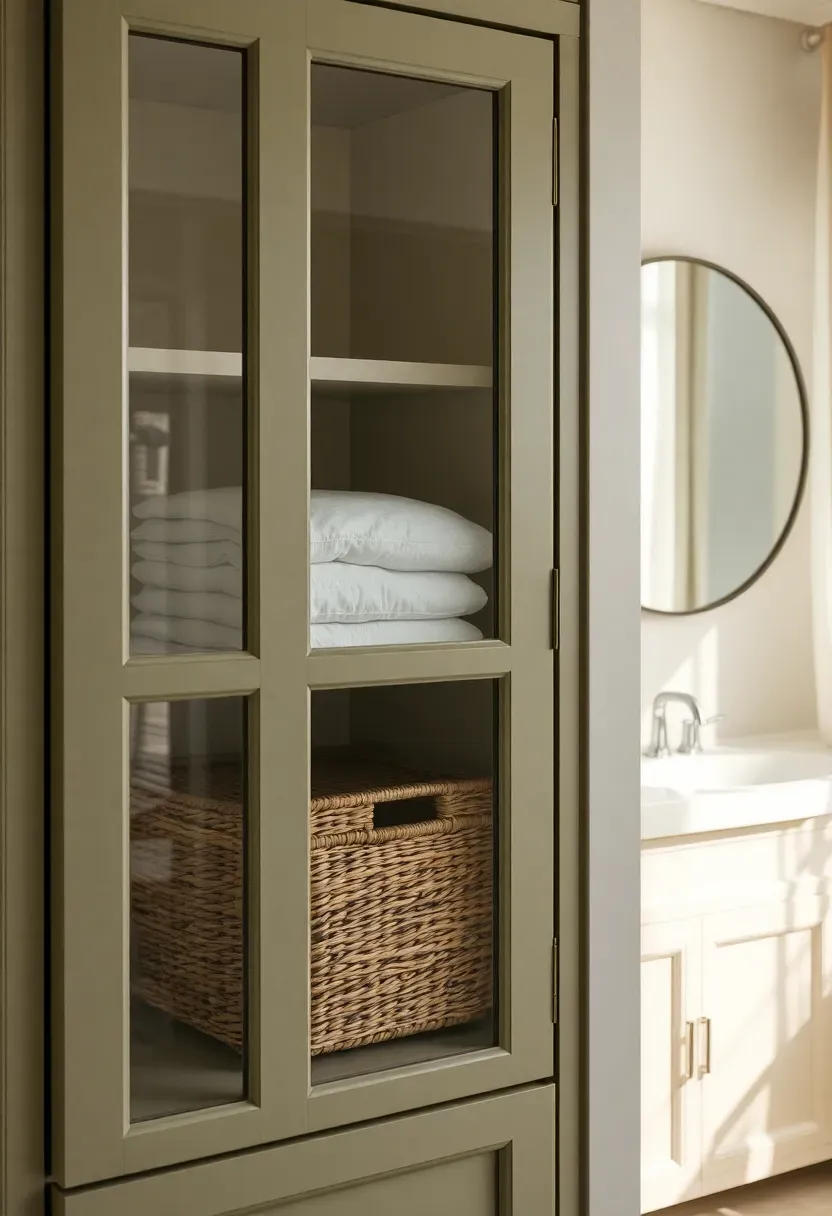
3. Glass-Front Cabinet Doors
Glass-front doors sit somewhere between fully open shelving and a solid closed cabinet. You get the visual openness of seeing your linens and accessories without the dust accumulation that comes with exposed shelves. Reeded glass or seeded glass partially obscures the contents, which is forgiving if your shelves are not perfectly styled every day. Clear glass demands more discipline — everything visible needs to earn its place. Pair glass doors with interior cabinet lighting for a look that feels more like a display case than a utility closet.
Tips
- Tempered glass is mandatory in bathrooms per most building codes
- Brass or matte black hardware against glass creates a strong contrast
- If you want to hide the mess sometimes, add a roller shade inside the cabinet
We picked a few things that go well with this idea: Commercial Grade Pocket Door Hanger Kit (★4.5), HOMOTEK Privacy Pocket Door Lock (★4.4) and Dontay Satin Brass Pocket Door Latch (2-Set) (★4.5). As an Amazon Associate we earn from qualifying purchases.
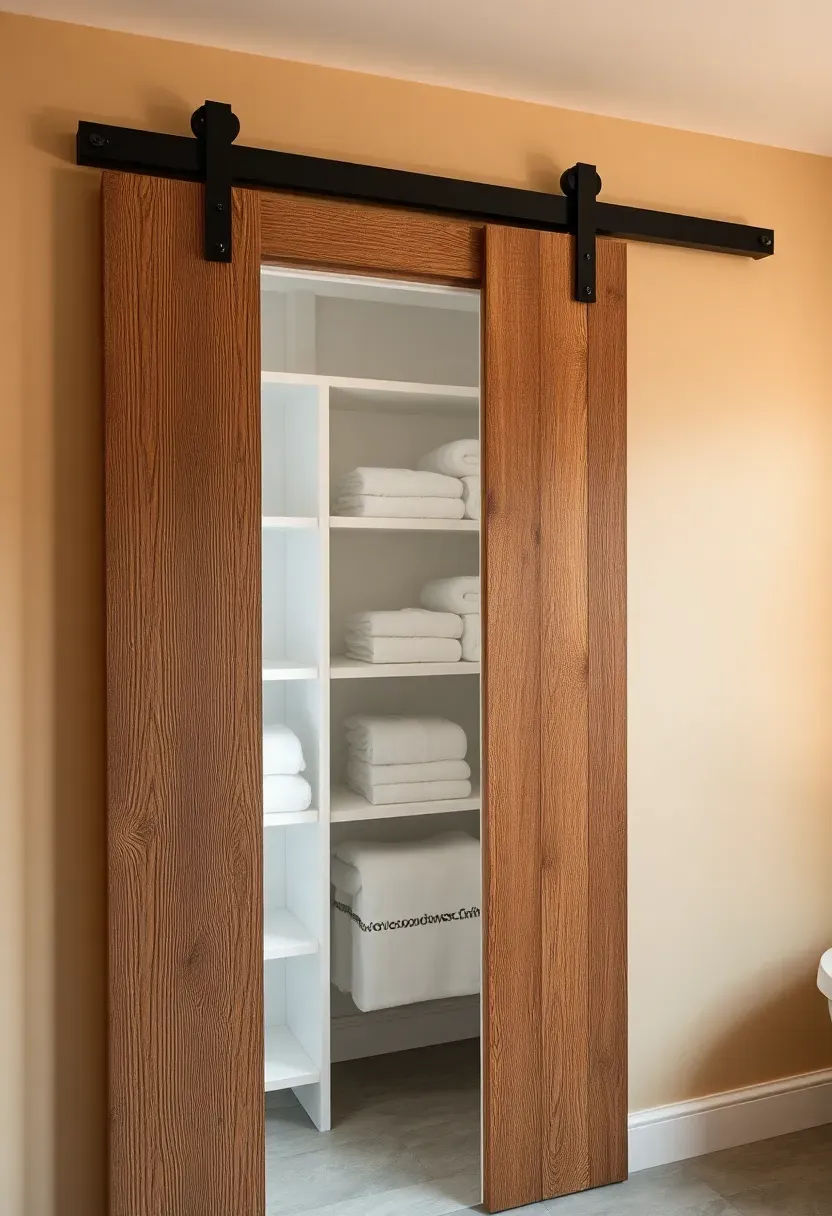
4. Barn Door Linen Closet
The Appeal
Barn doors need zero clearance for swinging open, which makes them ideal for bathrooms where a standard door would block the toilet or vanity.
The Tradeoff
A single barn door only covers the opening when closed — when slid open, it parks against the adjacent wall, covering whatever is behind it. Plan the track length so the door parks over blank wall, not over a light switch or towel hook. Barn doors also do not seal tightly, so they are not great if you need the closet to block humidity from stored linens. They work best as a style piece in drier bathrooms or hallway linen closets just outside the bathroom.
Choose If
You have a tight bathroom layout and want a door that doubles as a visual focal point.
Recommended
Items for this idea
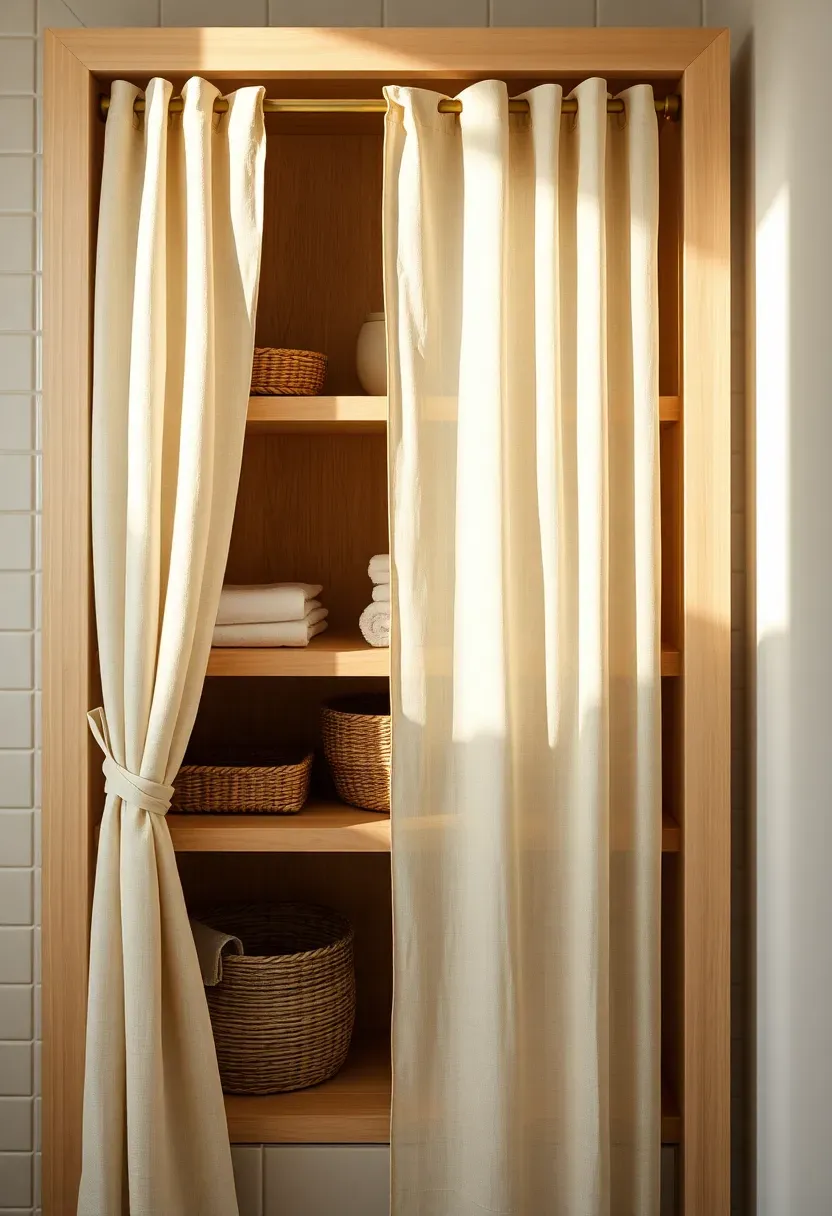
5. Open Shelving Closet with Curtain
Rip out the closet door entirely and hang a curtain rod across the opening. A linen or cotton curtain in a neutral tone softens the bathroom while hiding the shelves when you want them out of sight. This is the easiest renter-friendly option on this list. No tools beyond a tension rod. The fabric absorbs some sound, which is a minor perk in bathrooms with hard surfaces everywhere. Swap the curtain seasonally — heavier weave in winter, lightweight gauze in summer — and the closet feels refreshed without touching the shelves at all.
Tips
- Tension rods work for openings up to 40 inches; wider spans need a mounted rod
- Wash the curtain monthly to prevent mildew buildup in humid bathrooms
- Choose a curtain long enough to brush the floor so nothing underneath is visible
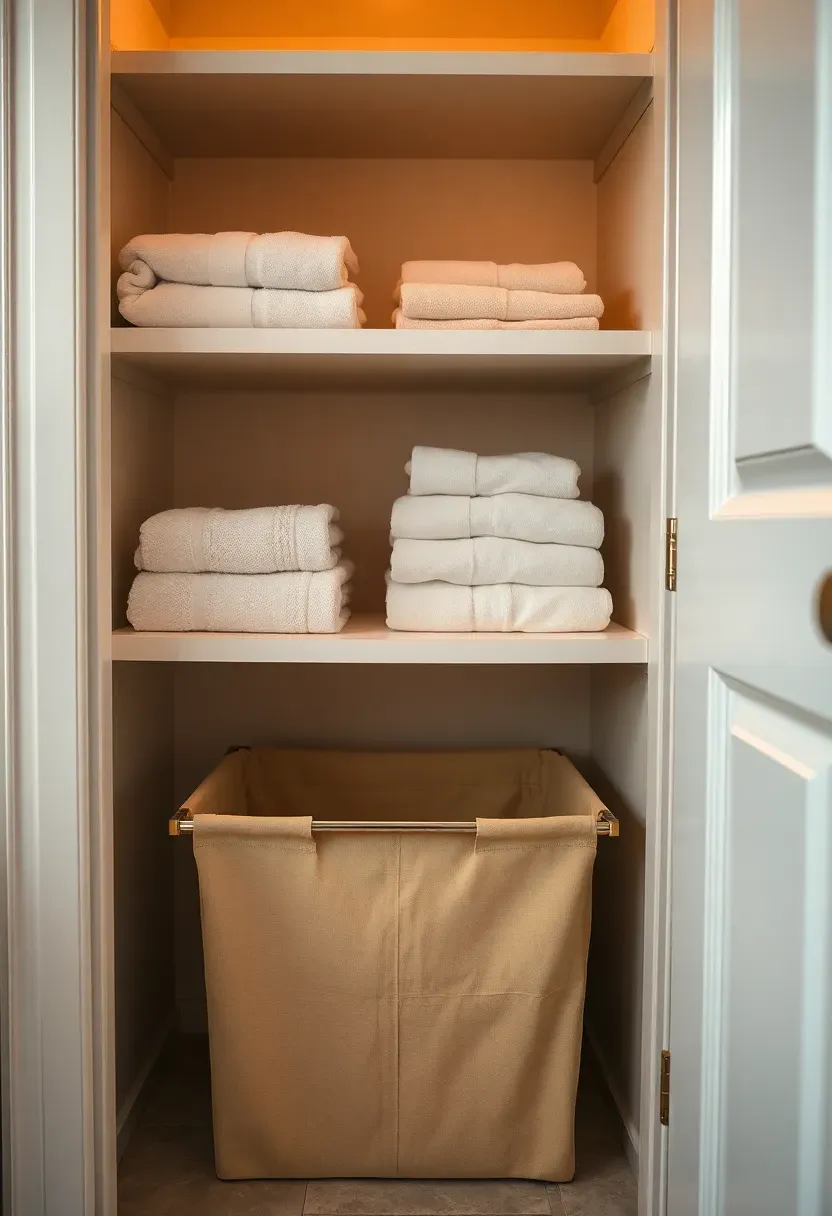
6. Pull-Out Hamper Drawer Inside Closet
Dedicating the bottom section of your bathroom closet to a pull-out hamper eliminates the need for a standalone laundry basket on the floor. Mount drawer glides inside the closet base and set a canvas or mesh hamper bag on the pull-out frame. When it is time to do laundry, lift the bag straight out and carry it to the machine. The shelves above stay reserved for clean items only, which creates a natural top-to-bottom workflow: clean towels up high, dirty laundry at the bottom.
Step by Step
- Measure the closet width and buy full-extension drawer glides rated for 50 pounds
- Build a simple plywood platform that rides on the glides
- Set a removable fabric liner inside — canvas holds up better than nylon in damp air
- Leave two inches of clearance above the hamper for easy bag removal
Recommended
Items for this idea
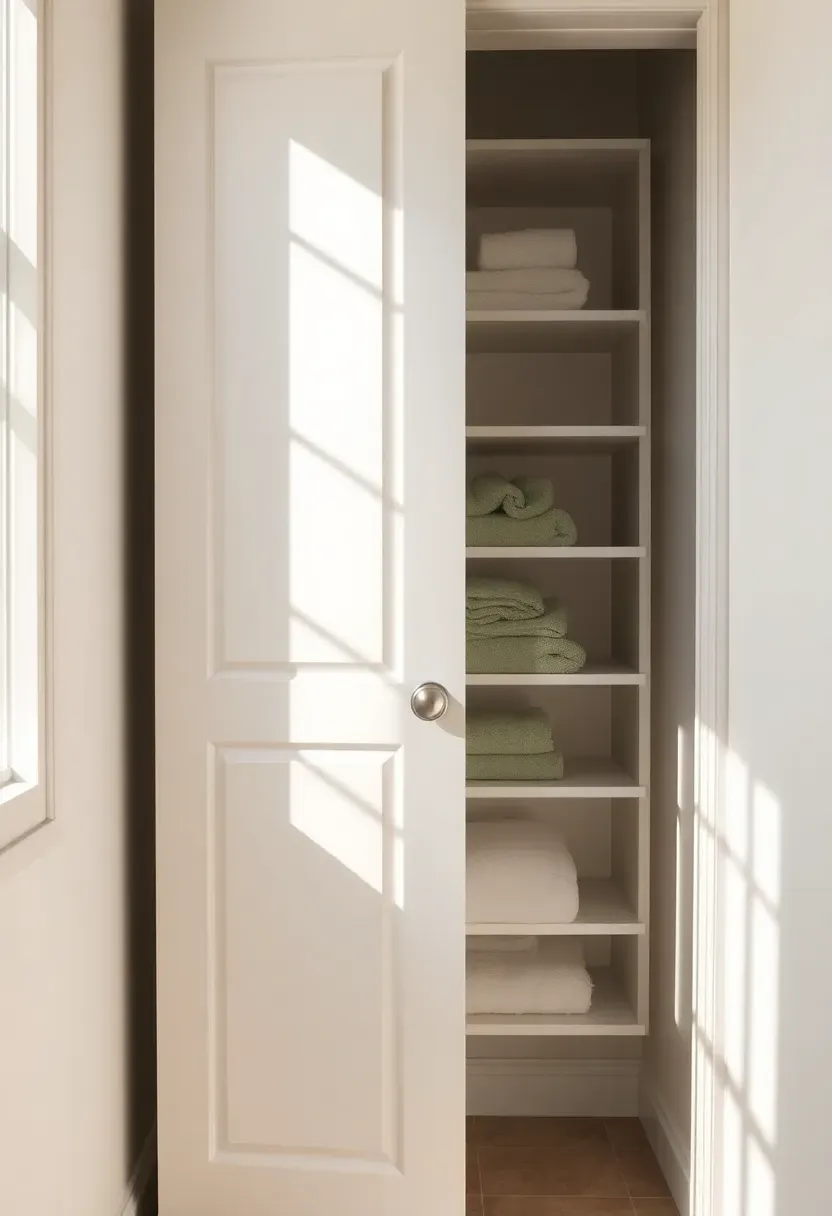
7. Pocket Door Closet for Tight Hallways
Pocket doors disappear into the wall cavity when opened, freeing up every inch of floor space in front of the closet. They are the best option for hallway linen closets where a swinging door would block traffic flow. Installation is more involved than a hinged door because you need to frame a pocket inside the wall, but the payoff in daily convenience is real. Soft-close pocket door hardware prevents the door from slamming into the wall stop, and modern kits are much smoother than the sticky tracks from twenty years ago.
Tips
- The wall cavity needs to be free of plumbing and wiring for the full width of the door
- A pocket door cannot share a wall with electrical outlets on the pocket side
- Choose solid-core doors for a quality feel and better sound dampening
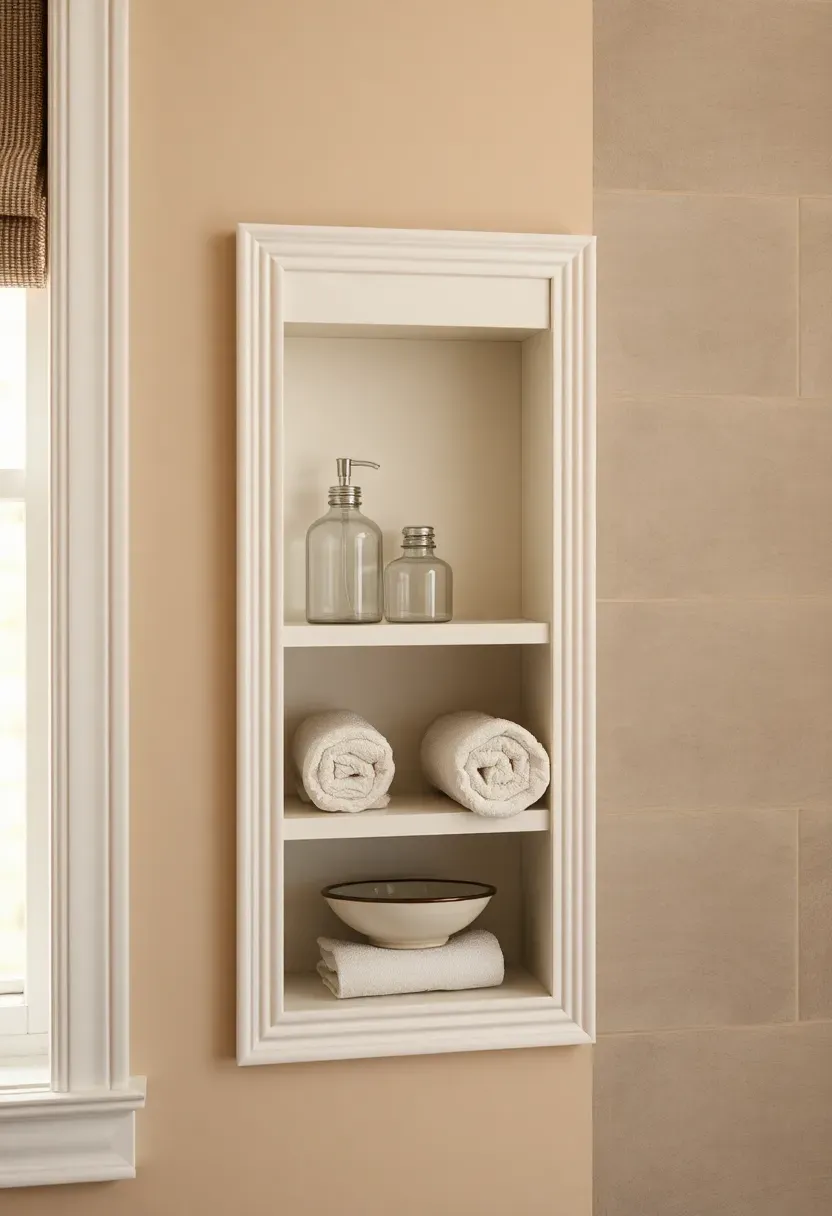
8. Built-In Between-Stud Storage
This is the minimalist cousin of the recessed niche. Instead of framing a single niche, you build a narrow cabinet that spans multiple stud bays — two, three, or even four bays across — and add a hinged or magnetic-push door to close it off. The depth stays at 3.5 inches (standard stud wall), which limits what you can store, but for toiletries, medications, and small towels it is more than enough. Installed at eye level, it replaces the medicine cabinet concept with a much larger footprint without stealing floor area.
Pros and Cons
Pros: No floor space lost, custom width, looks built into the architecture Cons: Shallow depth excludes bulky items, requires drywall patching, not viable on exterior or plumbing walls
Recommended
Items for this idea
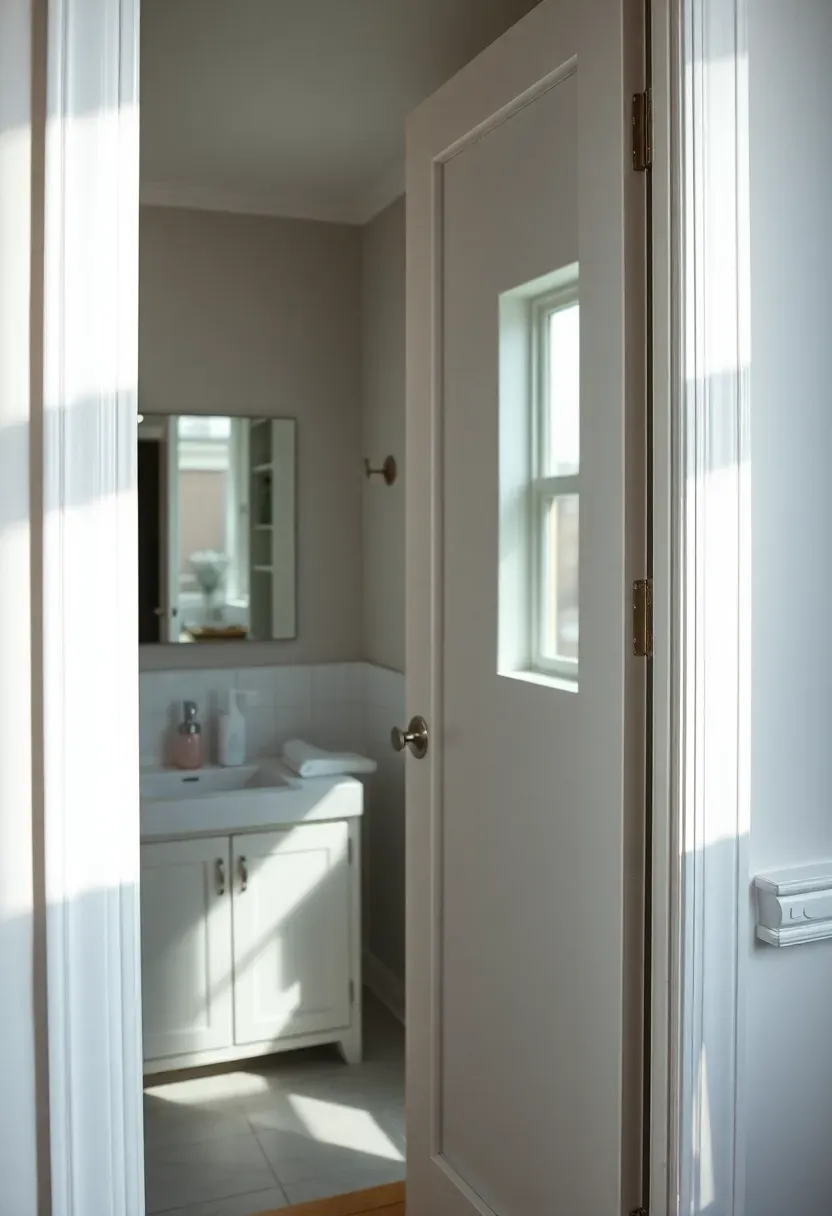
9. Mirrored Closet Door with Hidden Shelves
A full-length mirror mounted on the closet door gives the bathroom a second function without adding wall clutter. The mirror makes the room feel larger and provides a full-body view that the vanity mirror above the sink cannot. Behind it, standard closet shelves hold linens and supplies. Some versions use a piano hinge so the mirrored panel swings open to reveal shallow shelves on the door itself — a medicine cabinet scaled up to closet size.
Tips
- Use shatter-safe mirror film on the back as a precaution in wet rooms
- Frameless mirrors with polished edges look more modern than framed ones
- Keep the bottom edge at least six inches off the floor so it does not collect water splash
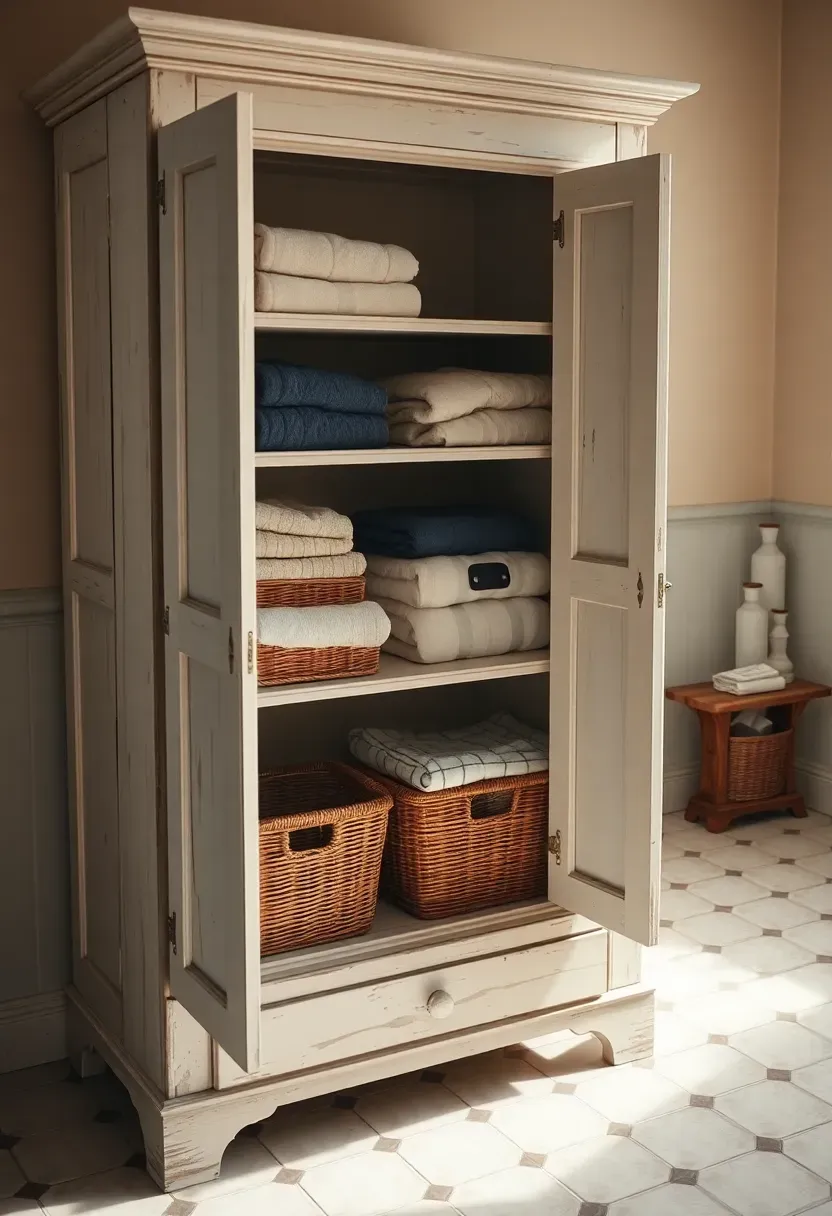
10. Freestanding Armoire as Linen Closet
The Case for Furniture Over Built-Ins
Not every bathroom has wall space for a built-in. A freestanding armoire or wardrobe placed against an open wall gives you the same storage volume without any construction. You can take it with you when you move, refinish it, or swap it entirely when your taste changes.
Making It Work
Pick an armoire with adjustable interior shelves so you can configure it for towels rather than hanging clothes. Remove the hanging rod if there is one. Add shelf liners to protect the wood from moisture, and leave the back panel slightly away from the bathroom wall to allow air circulation. Vintage armoires from estate sales often cost less than a custom built-in and add far more character to the room.
Recommendation
Best for larger bathrooms or primary suites where floor space is not the constraint.
Recommended
Items for this idea
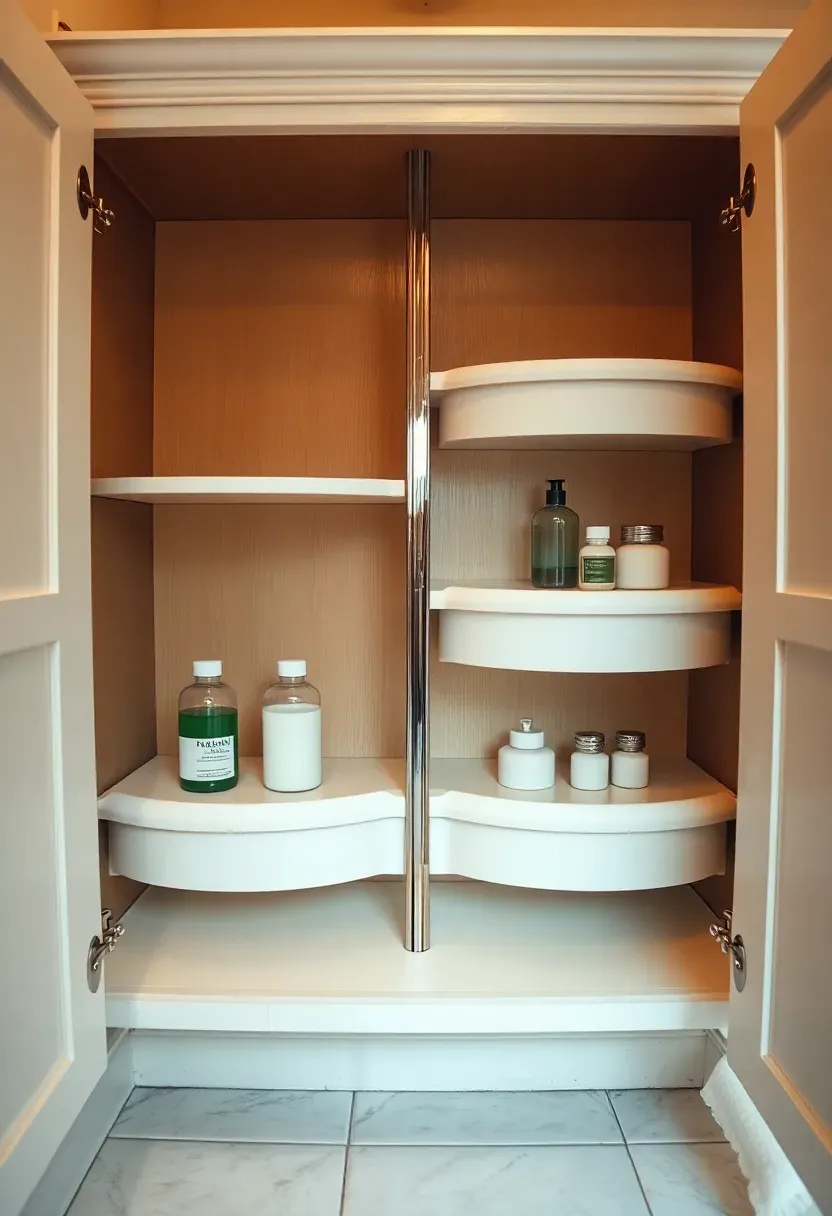
11. Corner Closet with Lazy Susan Shelves
Corner closets are notorious dead zones where items get pushed to the back and forgotten. Lazy Susan shelves solve this by rotating the entire shelf surface, bringing every item within reach from the front opening. A 270-degree lazy Susan works better than a full 360 in most corner cabinets because it leaves a gap for the door frame. Install them on every shelf level and the corner closet becomes one of the most accessible storage spots in the bathroom.
Tips
- Measure the diagonal of the cabinet interior, not just the width, when sizing the lazy Susan
- Add a small lip around the edge to prevent bottles from sliding off during rotation
- Kidney-shaped trays fit better than full circles in D-shaped corner cabinets
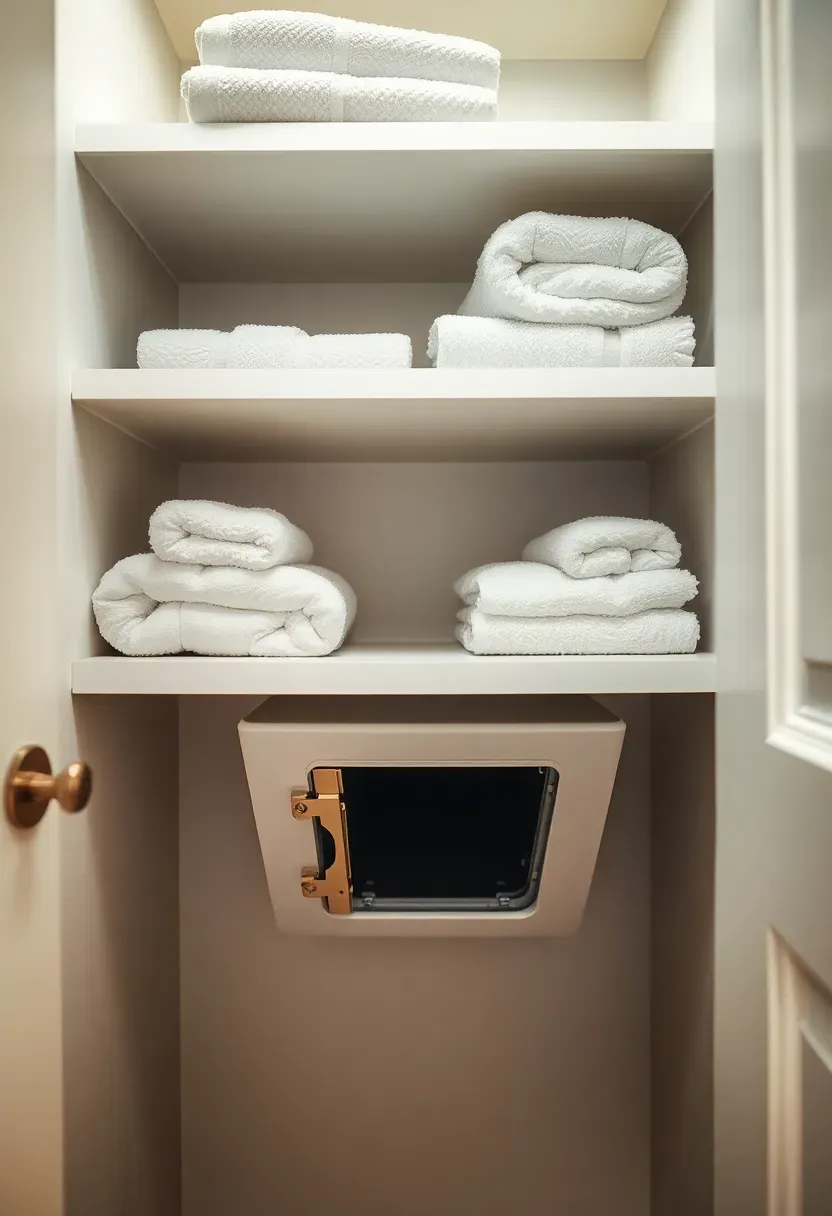
12. Closet with Integrated Laundry Chute
If your bathroom is on the second floor and the laundry room is directly below, cutting a chute through the closet floor saves you from hauling dirty towels downstairs. Frame a small opening (about 12 by 12 inches) in the closet floor, line it with a smooth PVC or sheet metal sleeve, and add a hinged door at the top so the opening stays closed when not in use. Dirty towels drop straight into a basket in the laundry room. This only works when the rooms stack vertically, but when the layout allows it, a chute is the kind of small upgrade that improves your routine every single day.
Watch Out
- Fire code in some jurisdictions requires a self-closing door on laundry chutes
- The chute needs a smooth interior lining so items do not snag
- Keep the opening small enough that a child cannot fit through it
Recommended
Items for this idea
13. Louvered Door Closet for Ventilation
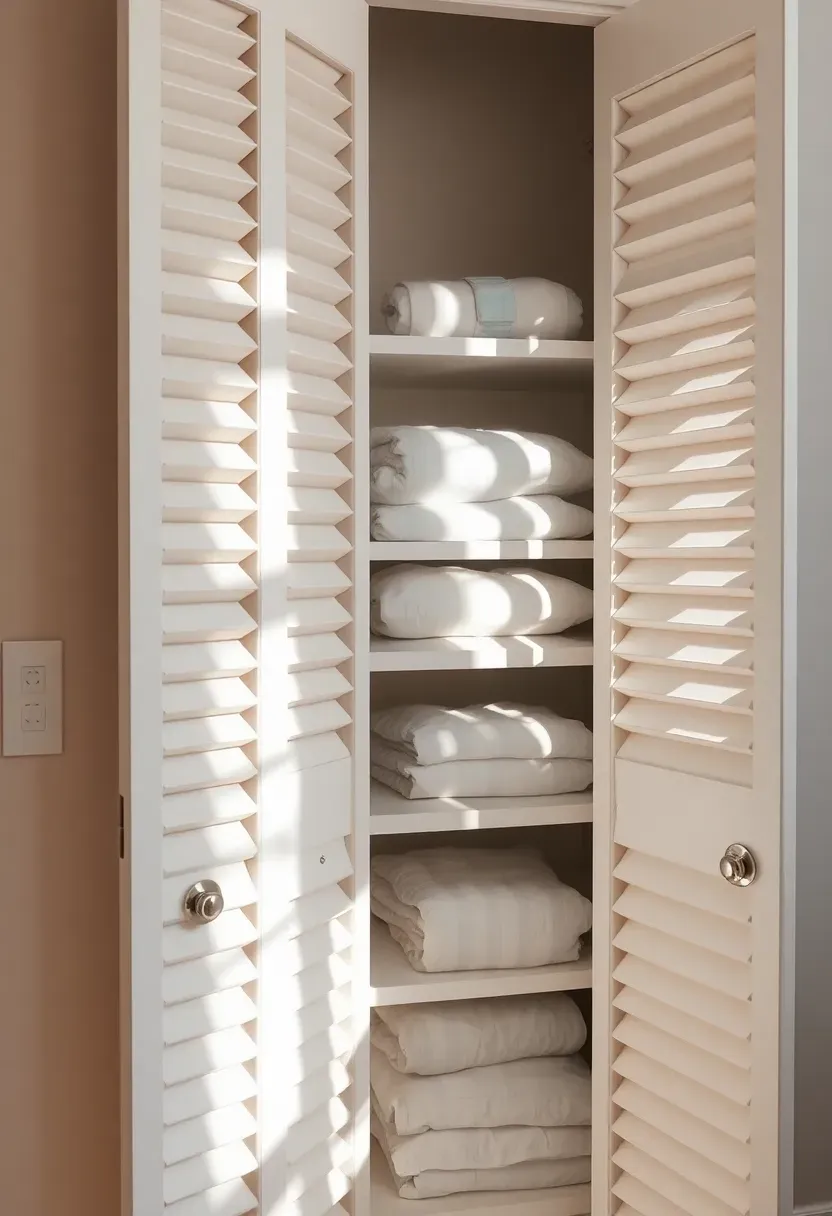
Solid closet doors trap moisture inside, which can lead to musty towels and mildew on stored linens. Louvered doors solve this with angled slats that allow constant passive airflow while keeping the contents visually hidden. The slats work like a bathroom exhaust fan in miniature — warm humid air rises out through the top louvers while cooler dry air enters through the bottom. This is especially important for closets built into interior walls without any adjacent exterior ventilation.
Tips
- Full-louver doors provide more airflow than half-louver designs
- Paint the slats with semi-gloss or satin finish for easy wipe-down
- Bifold louvered doors are the most common style and widely available at home centers
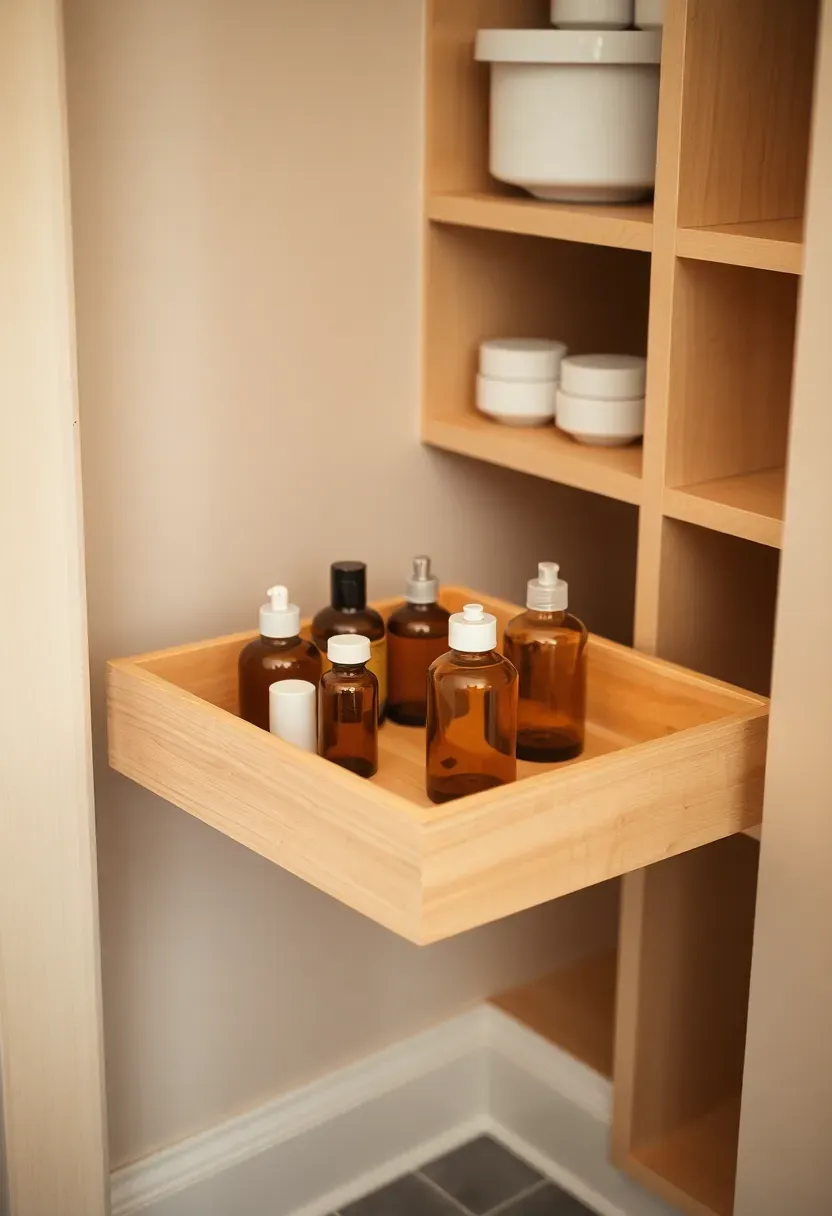
14. Shallow Closet with Pullout Trays
Shallow closets (12 inches deep or less) are difficult to organize with standard shelves because items hide behind each other. Pullout trays on full-extension glides let you slide the entire shelf toward you, exposing everything in a single motion. Think of them as wide, flat drawers. Each tray handles one category: medicines on one, hair products on another, first aid on a third. Label the tray fronts so you pull the right one without guessing.
Step by Step
- Measure the interior width and depth, subtracting half an inch on each side for glide clearance
- Build trays from half-inch plywood with two-inch sides
- Mount full-extension ball-bearing glides rated for at least 30 pounds
- Sand and seal the plywood to protect it from bathroom humidity
Recommended
Items for this idea
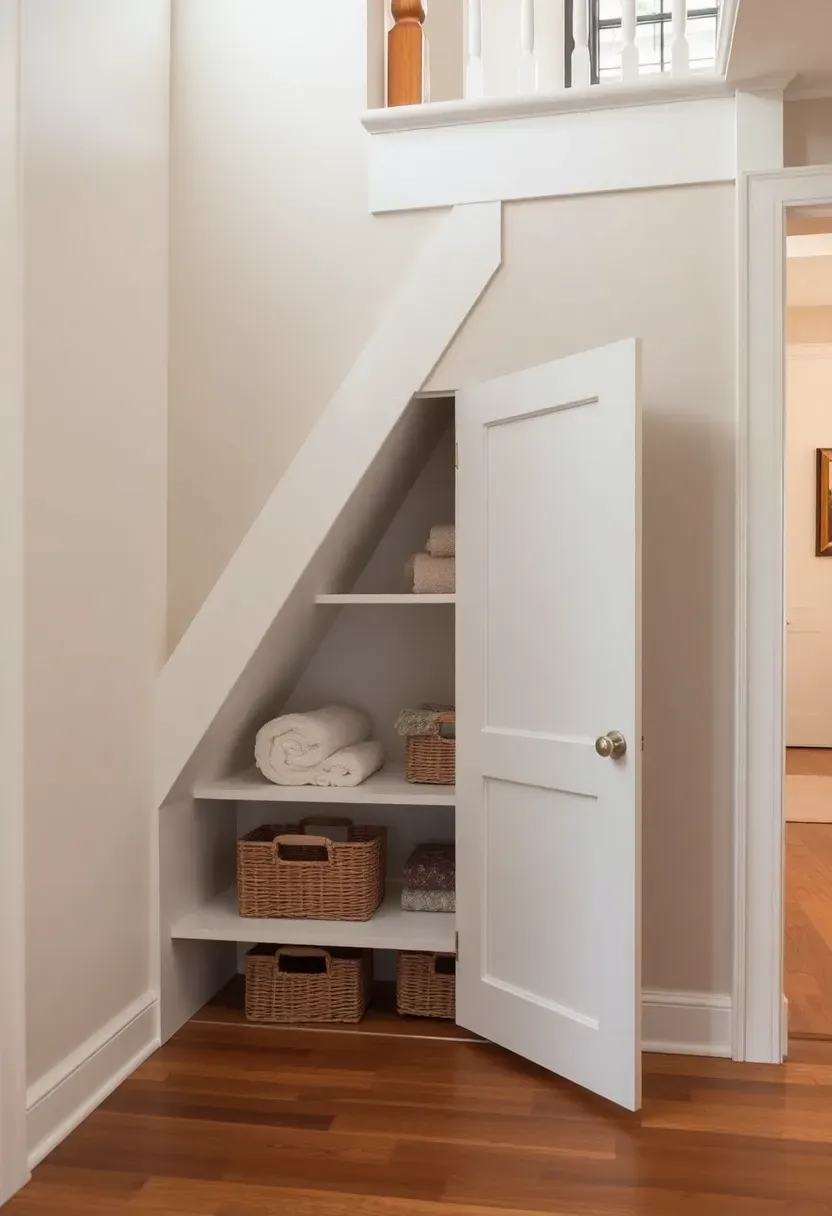
15. Under-Stairs Bathroom Closet
The triangular void under a staircase is oddly shaped but surprisingly spacious. If your bathroom or hallway sits adjacent to stairs, converting that space into a linen closet gives you storage that would otherwise go unused. The key is custom-cut angled shelves that follow the slope of the staircase — tall shelves near the high end for bath towels and blankets, short shelves near the low end for smaller items. Add a door that matches the surrounding wall paneling and the closet nearly disappears.
Tips
- Hire a carpenter for the angled shelf cuts unless you are comfortable with a miter saw
- Ventilation is critical in under-stair spaces — add a louvered door or a small vent panel
- Paint the interior white to brighten what is usually a dim space
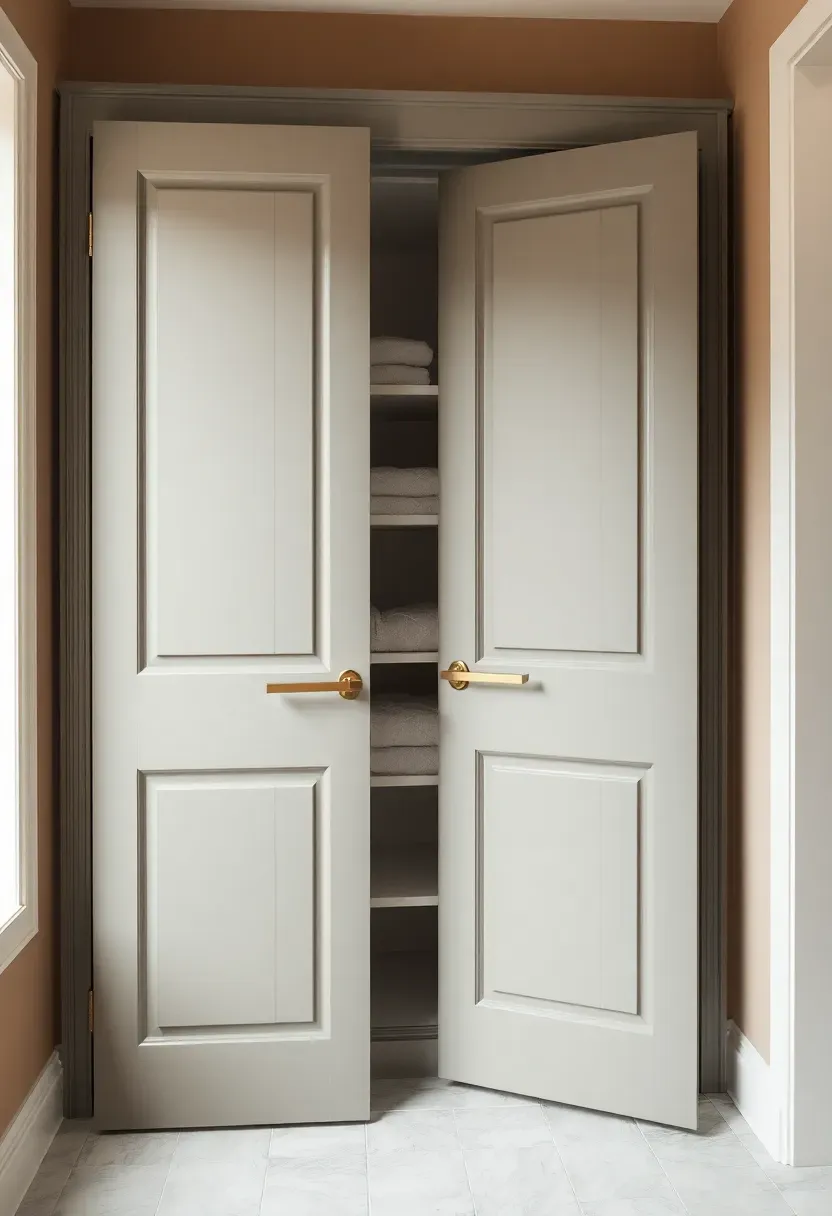
16. Double-Door Shaker Style Closet
Classic for a Reason
Shaker-style doors have a flat center panel surrounded by a simple frame — no ornate molding, no fussy details. That restraint makes them work in nearly any bathroom style from farmhouse to modern. A double-door closet with shaker panels looks substantial without being heavy. The two doors split the opening evenly, so each door is narrow enough to swing open without hitting the toilet or vanity in tight bathrooms.
Modern Touches
Swap the standard round knobs for elongated bar pulls in brushed brass or matte black. Paint the doors a shade darker or lighter than the walls — just enough contrast to define the closet without making it a focal point. Inside, keep the shelves adjustable so the closet adapts as your storage needs change.
Recommended
Items for this idea
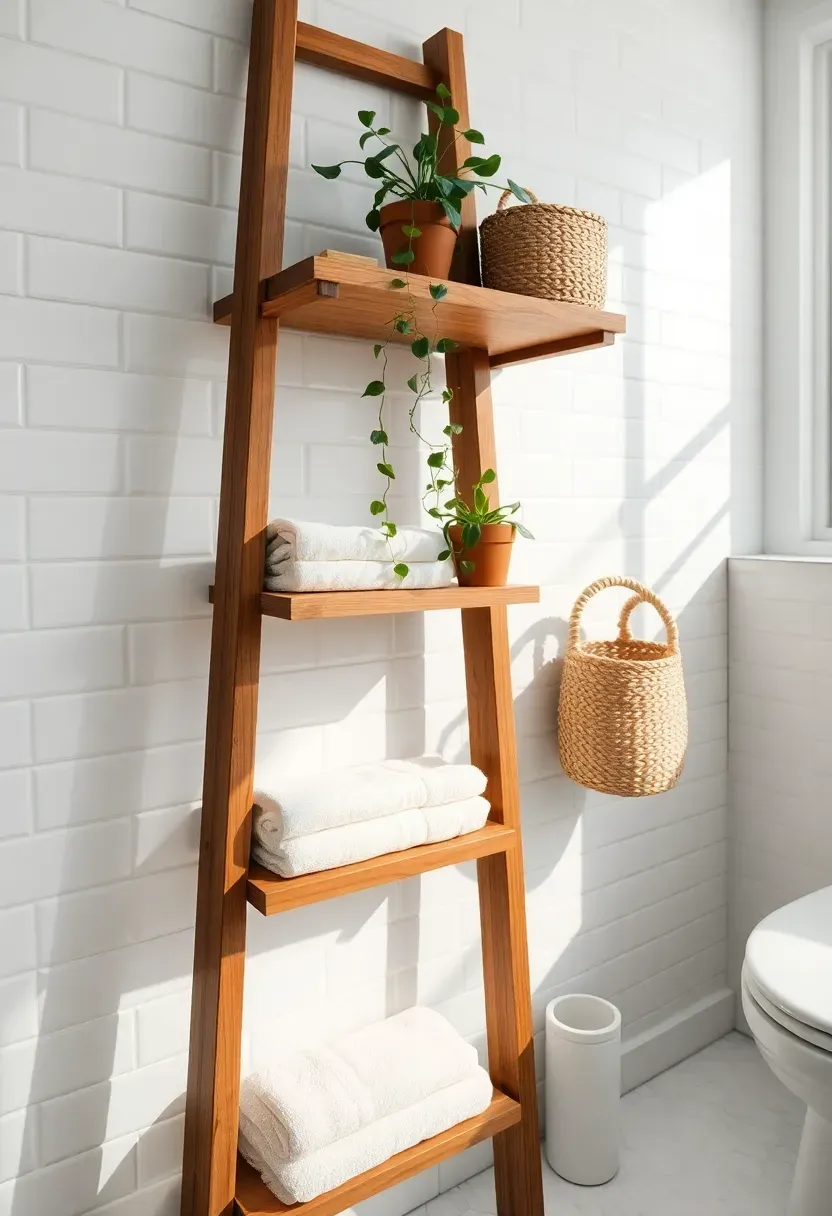
17. Ladder Shelf Closet Alternative
No closet? No problem. A leaning ladder shelf provides four to five tiers of open storage while occupying less than two square feet of floor space. The angled design means each shelf is a different depth — deeper at the bottom, shallower at top — which naturally sorts items by size. Heavy towels on the bottom rungs, lighter items and decorative pieces up high. Ladder shelves also work well in the gap between the toilet and the wall where nothing else fits comfortably.
Tips
- Anchor the top of the ladder to the wall with an L-bracket to prevent tipping
- Teak or bamboo handles bathroom humidity better than MDF or pine
- Place a small tray on each shelf to corral loose items and protect the wood
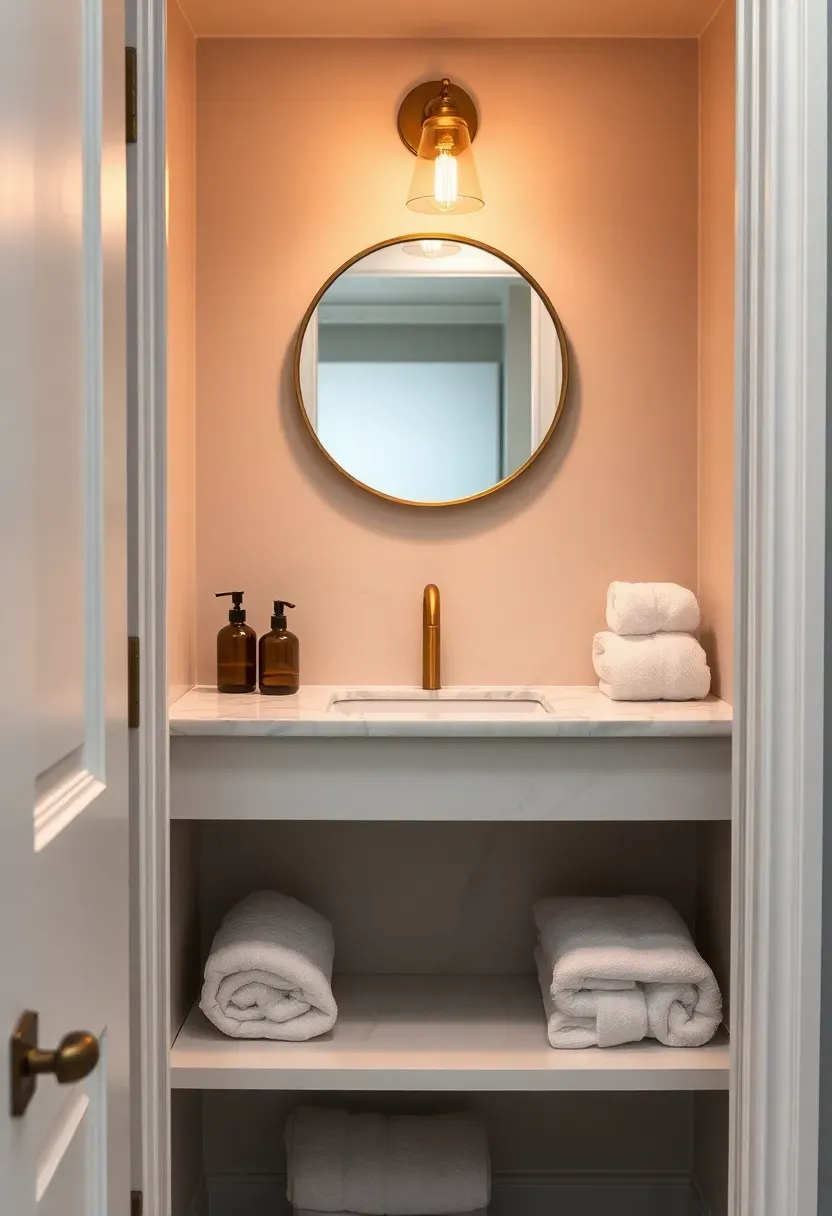
18. Closet with Built-In Vanity Nook
Carve out a section of the closet at counter height (roughly 34 inches) and install a small countertop, a mirror, and a sconce above it. You now have a secondary grooming station inside the closet — useful in shared bathrooms where two people need mirror access at the same time. The shelves above and below the nook still hold linens and supplies. Keep the countertop narrow, around 12 to 15 inches deep, and you sacrifice very little shelf space for a meaningful gain in function.
Pros and Cons
Pros: Dual mirror stations, keeps grooming products off the main vanity, adds lighting to closet interior Cons: Requires electrical work for the sconce, reduces total shelf volume, vanity surface needs a waterproof finish
Recommended
Items for this idea
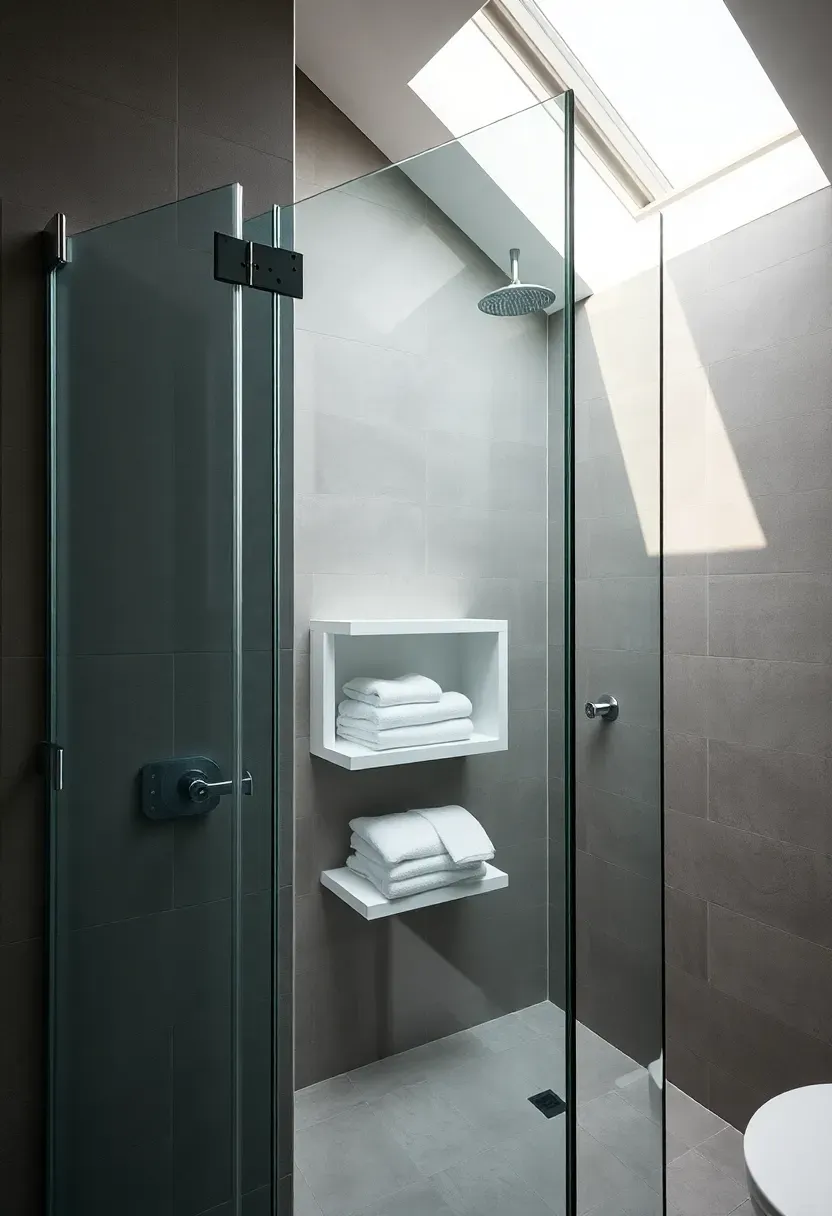
19. Frameless Glass Shower-Adjacent Closet
In open-concept wet rooms, a frameless glass panel can serve as both a shower splash guard and the wall of an adjacent linen closet. The glass keeps water off the closet contents while maintaining visual continuity across the room. This layout works best in narrow bathrooms where a solid wall between the shower and closet would make both feel cramped. Use tempered glass at minimum eight millimeters thick, and seal the edges where glass meets tile to prevent water migration.
Watch Out
- Ventilation inside the closet is essential — the glass traps heat and steam on the shower side
- Hire a professional for glass installation near water sources
- Hard water spots on the glass need regular squeegee attention
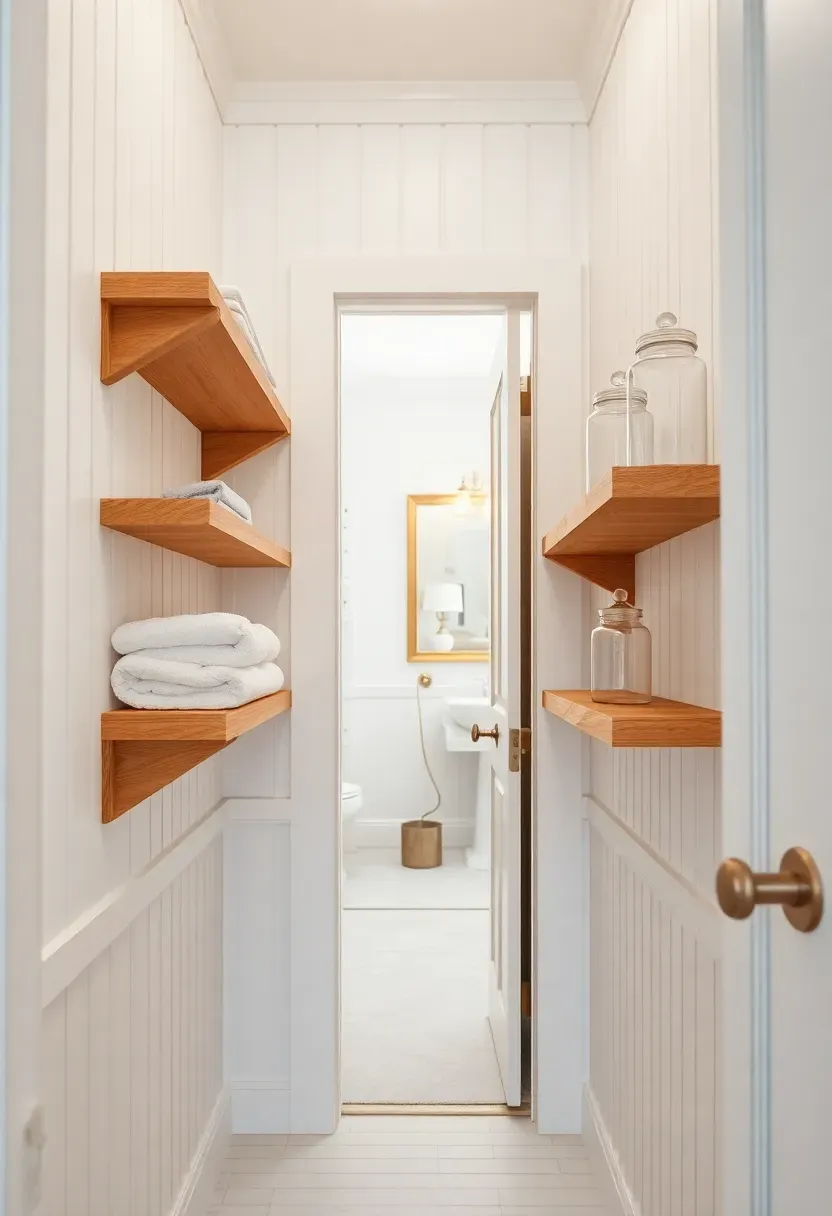
20. Wainscot-Paneled Closet Interior
Lining the inside of a bathroom closet with beadboard or shiplap wainscoting adds texture and moisture resistance to what is usually bare drywall. The paneling protects walls from scuffs when you slide bins and baskets in and out, and it gives the closet a finished look that makes even basic wire shelves feel intentional. Paint the wainscoting in semi-gloss white for easy cleaning and maximum light reflection. The small extra cost of paneling the interior pays off in durability and appearance.
Tips
- Use PVC beadboard panels rather than real wood to avoid swelling in humid air
- Run the paneling from floor to ceiling, not just the lower half, for a cohesive look
- Caulk all seams before painting to prevent moisture from seeping behind the panels
Recommended
Items for this idea
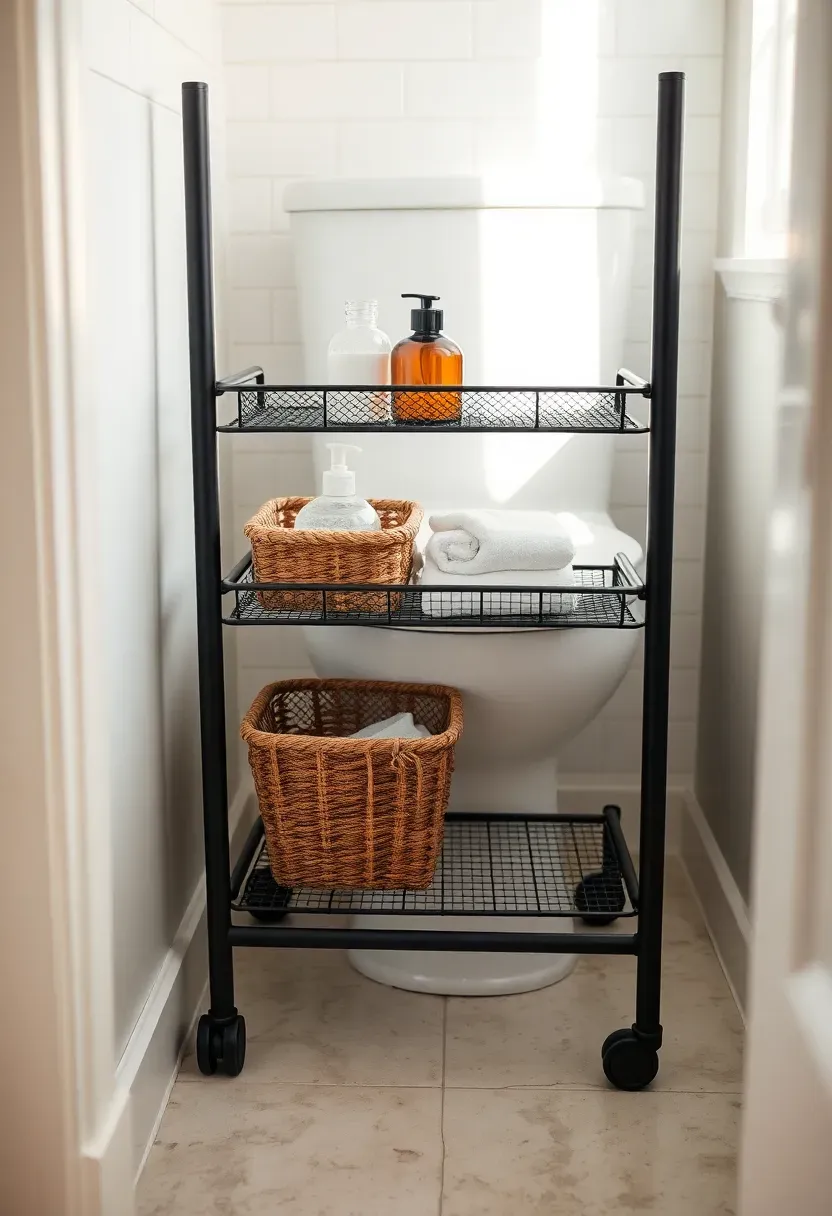
21. Rolling Cart Closet for Rentals
When you cannot build, mount, or drill, a rolling cart is the portable closet solution. A slim three-tier metal cart (about 15 inches wide) slides into the gap between the toilet and the wall, between the vanity and the bathtub, or into any narrow dead space. Load it with baskets, bottles, and folded washcloths. When you need to clean the floor, roll it out. When you move apartments, it comes with you in the car. Zero commitment, zero damage, full functionality.
Tips
- Locking casters prevent the cart from drifting on tile floors
- Matte black or white powder-coated steel resists rust in humid bathrooms
- Add small S-hooks to the cart frame for hanging loofahs or washcloths
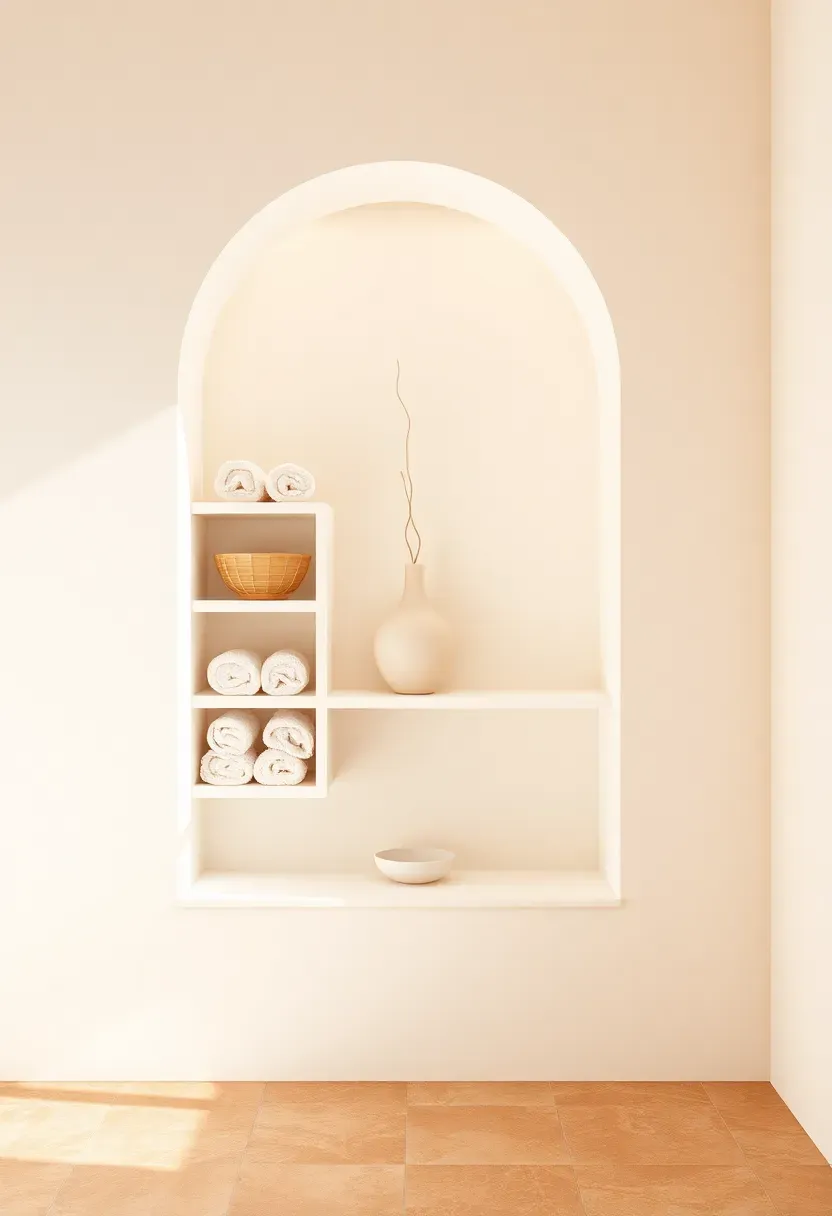
22. Alcove Closet with Arched Opening
An arched opening gives a simple alcove closet an architectural presence that a rectangular cutout cannot match. The arch reads as intentional design rather than a utility feature. Frame the arch with plaster or drywall over a flexible arch kit, then leave the opening doorless to display curated shelves of towels, candles, and ceramics. The curve draws the eye and softens a room full of hard straight edges — tile lines, mirror frames, rectangular vanities.
Tips
- A semicircular arch is easiest to frame; pointed or elliptical arches need more carpentry skill
- Recessed LED strip lighting along the arch interior adds drama without visible fixtures
- Keep shelf contents minimal — an arched opening invites people to look, so clutter stands out
Recommended
Items for this idea
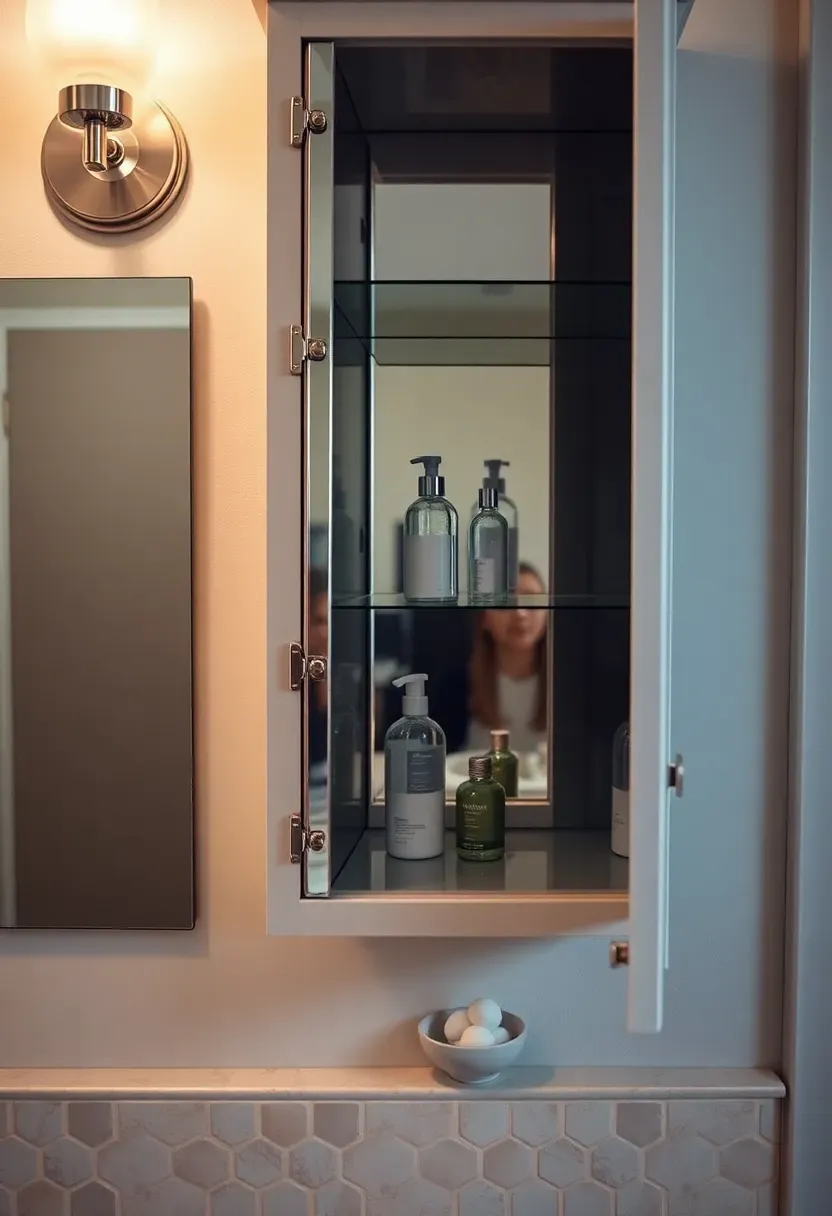
23. Medicine Cabinet Tower
Scale up the traditional medicine cabinet into a full-height tower and you get a surface-mounted closet that is only five to six inches deep but runs from counter level to the ceiling. Three or four hinged compartments stack vertically, each with its own set of interior shelves. The tower mounts directly to the wall — no stud-to-stud recess required. It works on walls where a full closet would not fit, like the narrow strip between the vanity and the door frame. Mirror the front panels and it functions as a full-length mirror too.
Step by Step
- Choose a location on a flat wall section with no obstructions above or below
- Mark stud locations and anchor the tower at a minimum of four points
- Level each cabinet section individually before tightening mounting screws
- Add soft-close hinges to every compartment door to prevent rattling
Quick FAQ
What depth should a bathroom closet be? Standard depth is 24 inches, which fits folded bath towels with a few inches to spare. If space is limited, even 12 to 14 inches works for toiletries, washcloths, and rolled hand towels. Anything deeper than 24 inches makes items at the back hard to reach without pullout shelves.
Do bathroom closets need ventilation? Yes, especially if the closet shares a wall with the shower or sits in a high-humidity zone. Louvered doors, a gap at the bottom of solid doors, or a small vent panel prevent trapped moisture from causing mildew on stored linens. Active ventilation with a small fan is rarely needed for a linen closet.
Can I add a closet to a bathroom that does not have one? Absolutely. A freestanding armoire, a rolling cart, or a wall-mounted cabinet are all no-construction options. For a permanent addition, building a between-stud recessed cabinet or framing a shallow built-in against an interior wall are relatively minor projects that a handy homeowner can tackle in a weekend.
Which closet door style works best for small bathrooms? Pocket doors and barn doors need no swing clearance, making them the top choices for tight layouts. Bifold doors are a middle ground — they fold rather than swing, so they need about half the clearance of a standard hinged door. Curtains are the simplest zero-clearance option.
How do I keep a bathroom closet smelling fresh? Airflow is the first line of defense — louvered doors or a gap under a solid door. Beyond that, placing an open box of baking soda on a back shelf absorbs odors. Cedar blocks or sachets of dried lavender tucked between towel stacks add a natural scent without chemicals. Replace them every three to four months.
A bathroom closet does not need to be elaborate to work well. Pick the format that fits your space — built-in if you own the home, freestanding or portable if you rent — and match the door style to your layout constraints. The ideas here range from weekend projects to professional installs, so start with the one that solves your biggest daily annoyance first. One good closet fix changes how the entire bathroom feels.
Pinterest cover for 23 Bathroom Closet Ideas
About the author
OBCD
CGI visualization and interior design content. We create detailed 3D renders and curate practical design ideas for every room in your home.