17 Bathroom Countertop Ideas
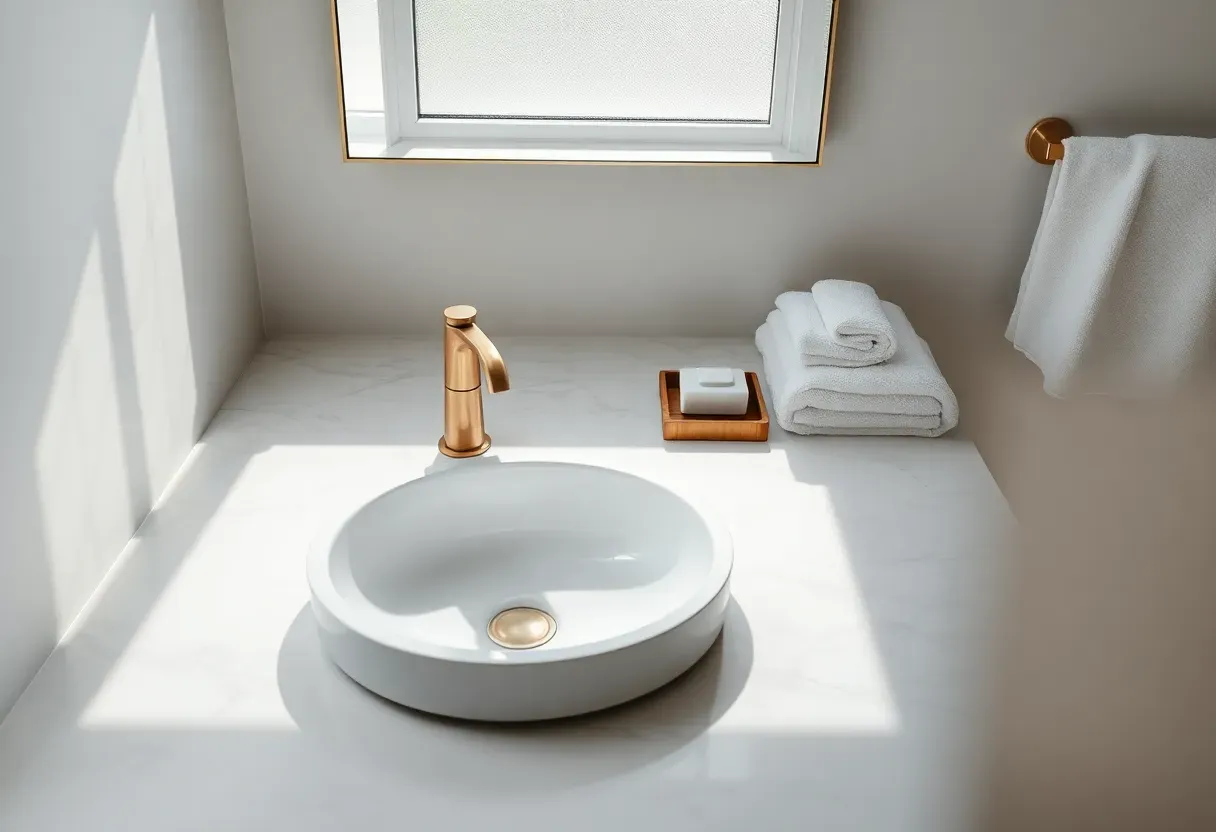
Most bathroom renovations start with the obvious picks: new tile, fresh paint, maybe a different mirror. The countertop gets less attention, even though it is the surface you touch, clean, and stare at every single day. It holds your toothbrush, catches water splashes, and sets the visual tone for the entire vanity area. Choosing the wrong material means dealing with stains, chips, or constant sealing for years. Choosing the right one means a surface that looks good and actually performs.
Here are 17 bathroom countertop ideas covering natural stone, engineered options, budget-friendly picks, and a few unexpected materials worth considering.
Table of Contents
- Carrara Marble Slab
- White Quartz with Veining
- Poured Concrete
- Butcher Block Walnut
- Soapstone
- Terrazzo
- Solid Surface Corian
- Polished Granite
- Porcelain Slab
- Recycled Glass Composite
- Live-Edge Wood Slab
- Honed Limestone
- Epoxy Resin over Plywood
- Stainless Steel
- Venetian Plaster Finish
- Quartzite
- Zellige Tile Countertop
1. Carrara Marble Slab
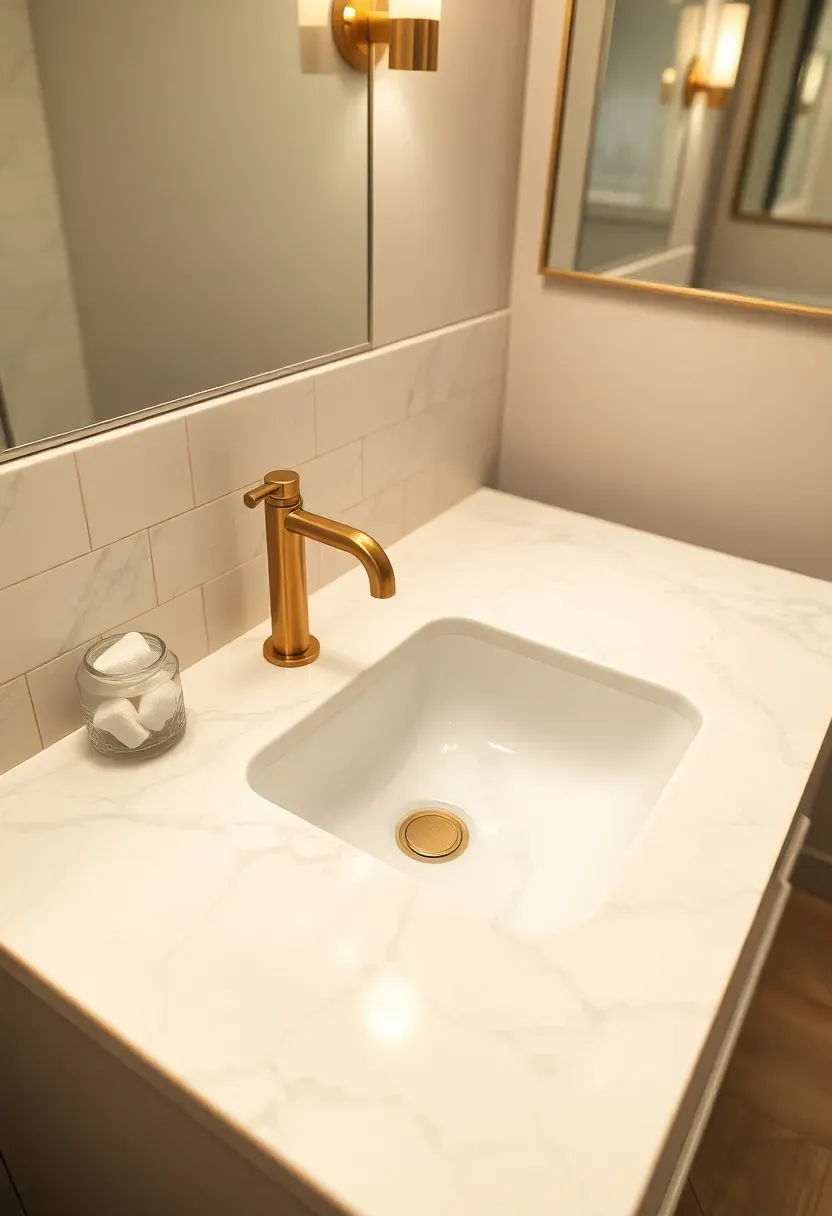
Carrara marble has been used in Italian architecture for centuries, and it remains one of the most requested bathroom countertop materials for good reason. The soft gray veining against a white or off-white base gives every vanity a sense of weight and permanence. Each slab is unique, so what you see at the stone yard is what you get. Prices typically range from $40-100 per square foot installed, depending on slab thickness and your region.
The Maintenance Reality
- Marble is porous and etches from acidic products like toothpaste, lemon-based cleaners, and some face washes -- sealing twice a year is non-negotiable
- Honed finishes hide etching better than polished surfaces, though polished marble photographs better for resale listings
- For a lower-commitment option, consider marble on a powder room vanity where daily water exposure is minimal
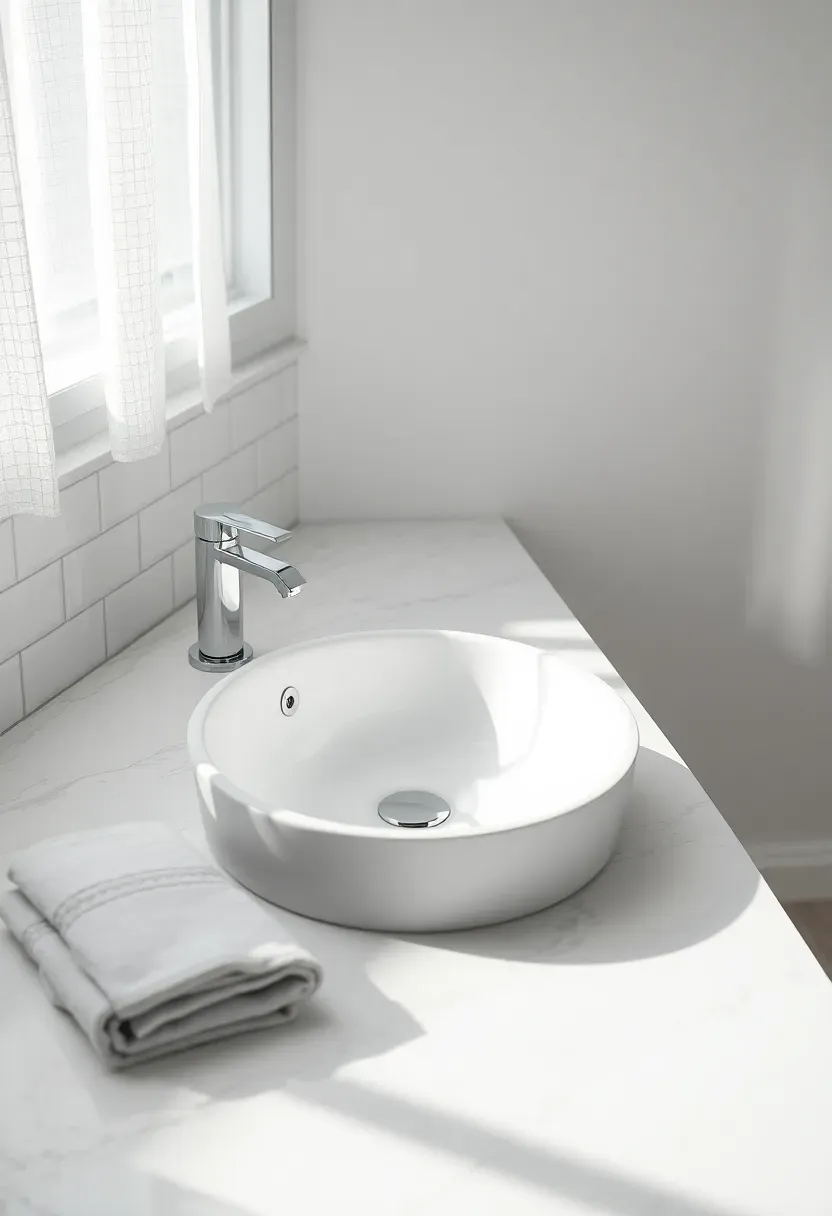
We picked a few things that go well with this idea: Miracle Sealants 511 Penetrating Stone Sealer (★4.5), Weiman Granite Stone Sealer Spray (24oz) (★4.5) and Granite Gold Water-Based Sealer Spray (24oz) (★4.5). As an Amazon Associate we earn from qualifying purchases.
2. White Quartz with Veining
Quartz countertops are engineered from roughly 90% ground natural quartz mixed with resins and pigments. The result is a non-porous surface that does not need sealing, resists staining, and can mimic the look of marble, concrete, or granite depending on the brand. Calacatta-style quartz -- white base with bold veining -- has become the default choice for bathrooms where people want the marble look without the upkeep.
Why It Works in Bathrooms
- Zero porosity means spilled mouthwash, hair dye, or makeup remover wipes up without staining
- Consistent color from slab to slab, which matters if you are doing matching countertops in a primary bath and an adjacent half bath
- Cost runs $50-120 per square foot installed, with brands like Caesarstone and Silestone at the higher end
We picked a few things that go well with this idea: Brushed Gold Widespread Bathroom Faucet (8-inch) (★4.6), FORIOUS Brushed Gold Widespread Vanity Faucet (★4.4) and Brushed Gold Centerset Bathroom Faucet (4-inch) (★4.6). As an Amazon Associate we earn from qualifying purchases.
3. Poured Concrete
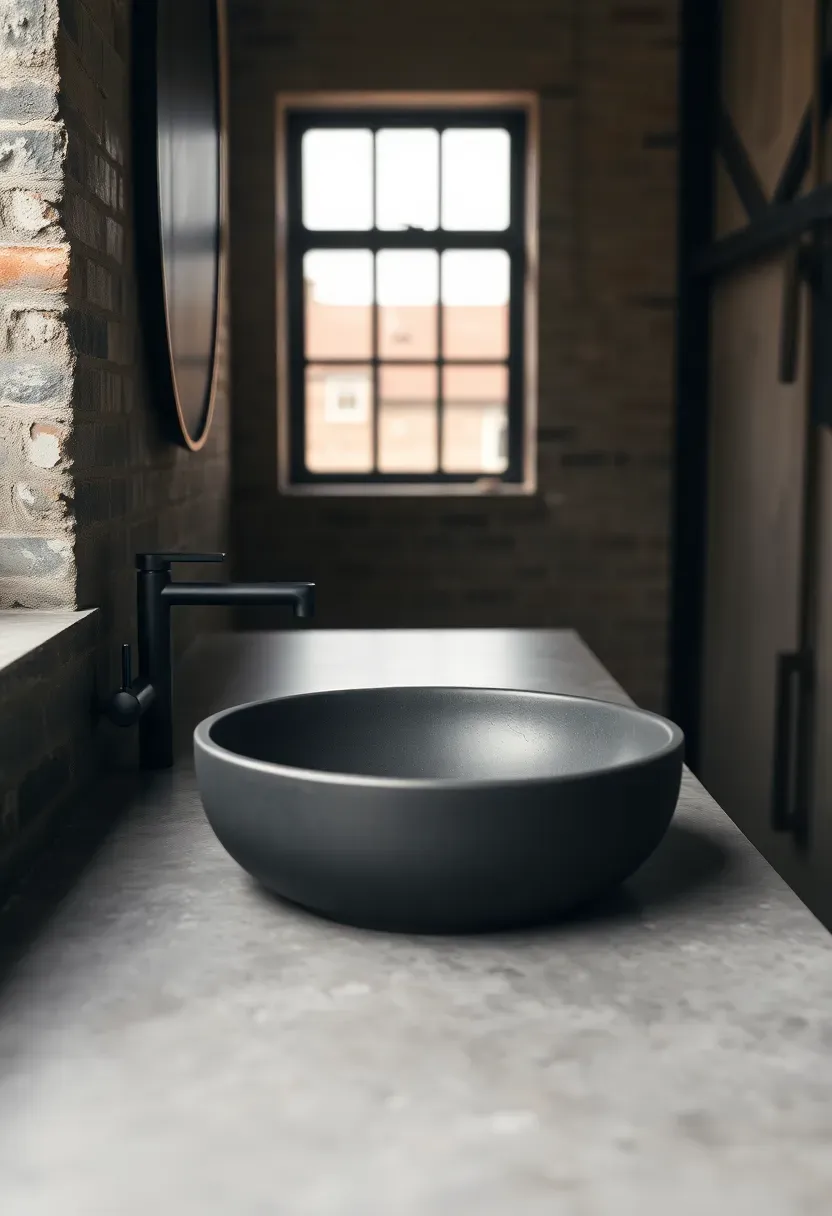
Concrete countertops suit bathrooms that lean industrial, modern farmhouse, or minimalist. A local fabricator pours the mix into a mold shaped to your vanity, embedding the sink cutout and any edge profile you want. The finished surface can be polished smooth, left slightly raw, or tinted with integral color pigments for shades ranging from charcoal to pale sage.
How to Get One
- Measure your vanity cabinet and decide on overhang, edge style, and sink type (undermount, vessel, or integrated basin)
- Find a concrete countertop fabricator -- not a general contractor -- who can show you samples of sealed finishes
- Budget $65-150 per square foot depending on complexity, and expect a 2-4 week lead time for templating, pouring, curing, and installation
Watch Out
- Concrete is heavy. Verify your vanity cabinet can handle 15-20 pounds per square foot
- Hairline cracks can develop over time; most fabricators consider these part of the material's character, not a defect
We picked a few things that go well with this idea: Stone Coat Clear Epoxy Resin Kit (1 Gal) (★4.6), Craft Resin Table Top Epoxy Kit (1 Gal) (★4.6) and TotalBoat Crystal Clear Table Top Epoxy (1 Gal) (★4.5). As an Amazon Associate we earn from qualifying purchases.
4. Butcher Block Walnut
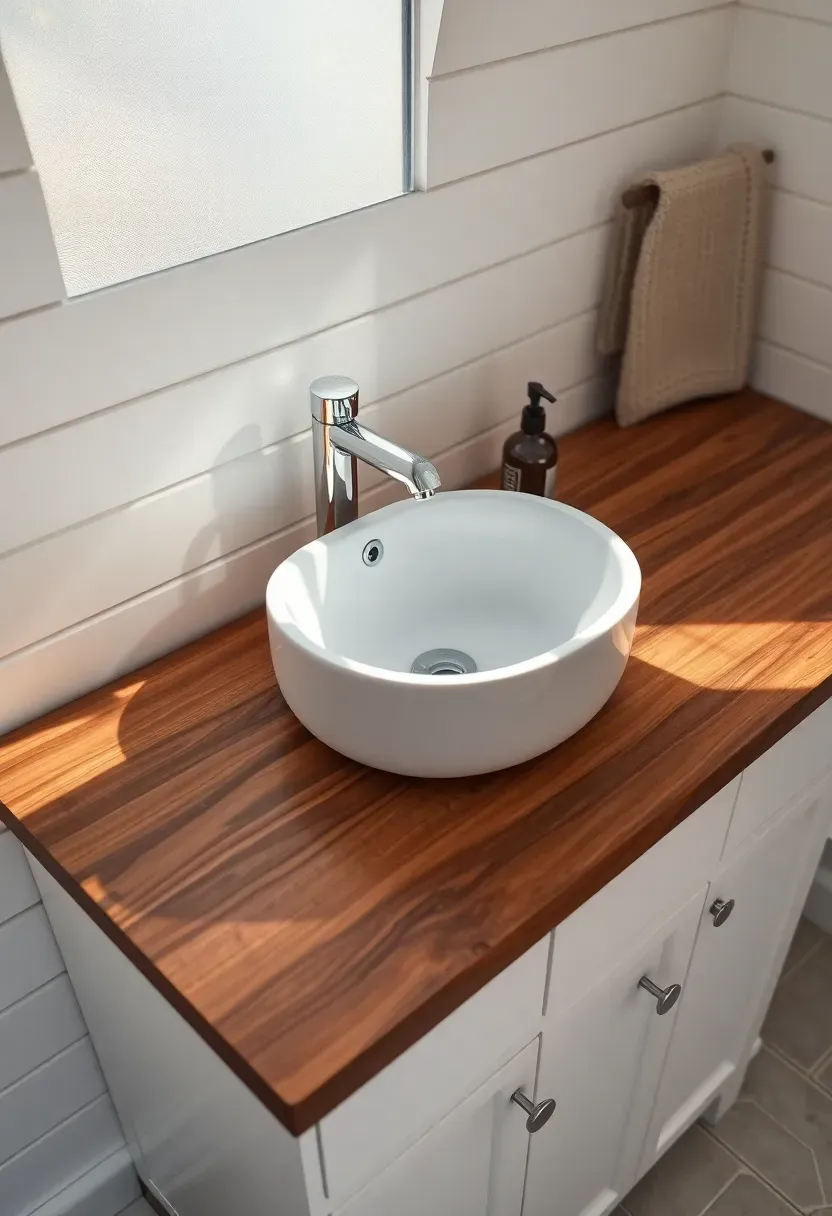
Wood countertops in bathrooms make people nervous, and that caution is partly justified. Constant water contact around the sink will damage unprotected wood within months. But with marine-grade polyurethane or a hard wax oil finish designed for wet environments, walnut butcher block holds up well in bathrooms where the homeowner wipes up standing water rather than letting it pool.
Pros and Cons
Choose walnut butcher block if: you want warmth that stone and engineered surfaces cannot deliver, and you do not mind reapplying finish once a year.
Skip it if: this is a kids' bathroom or a space where water routinely sits on the counter. Also avoid it around undermount sinks, where the exposed wood edge meets constant splash.
Recommended
Items for this idea
5. Soapstone
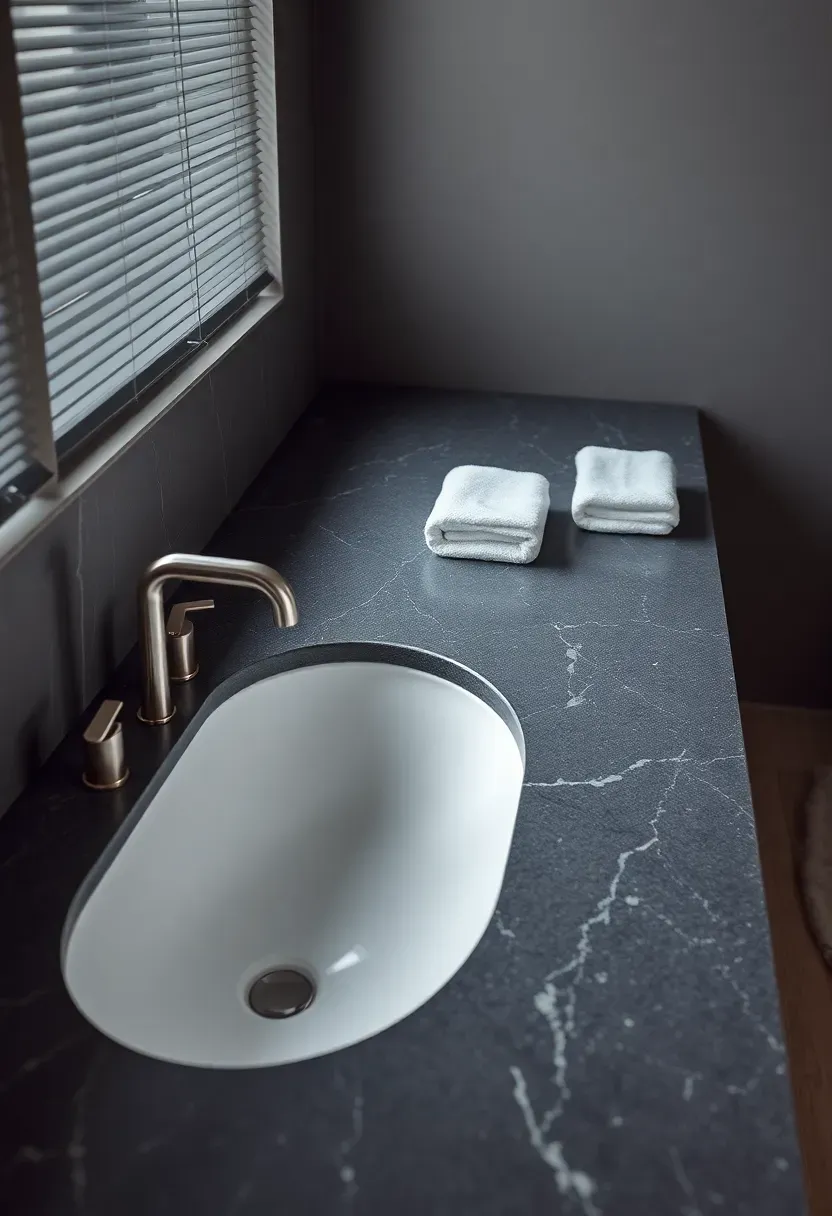
Soapstone is a dense metamorphic rock that feels smooth and slightly waxy to the touch. It is naturally non-porous, which means it does not need sealing the way marble or granite does. Fresh soapstone starts as a medium gray with lighter veining, then darkens over time as it oxidizes. You can accelerate that patina with mineral oil or let it happen gradually over a year or two.
Tips
- Soapstone scratches more easily than granite, but scratches can be sanded out with fine-grit sandpaper and a drop of mineral oil
- It resists heat, acids, and stains -- a genuine low-maintenance natural stone
- Pricing runs $70-120 per square foot installed, with limited color range (mostly grays and greens)
6. Terrazzo
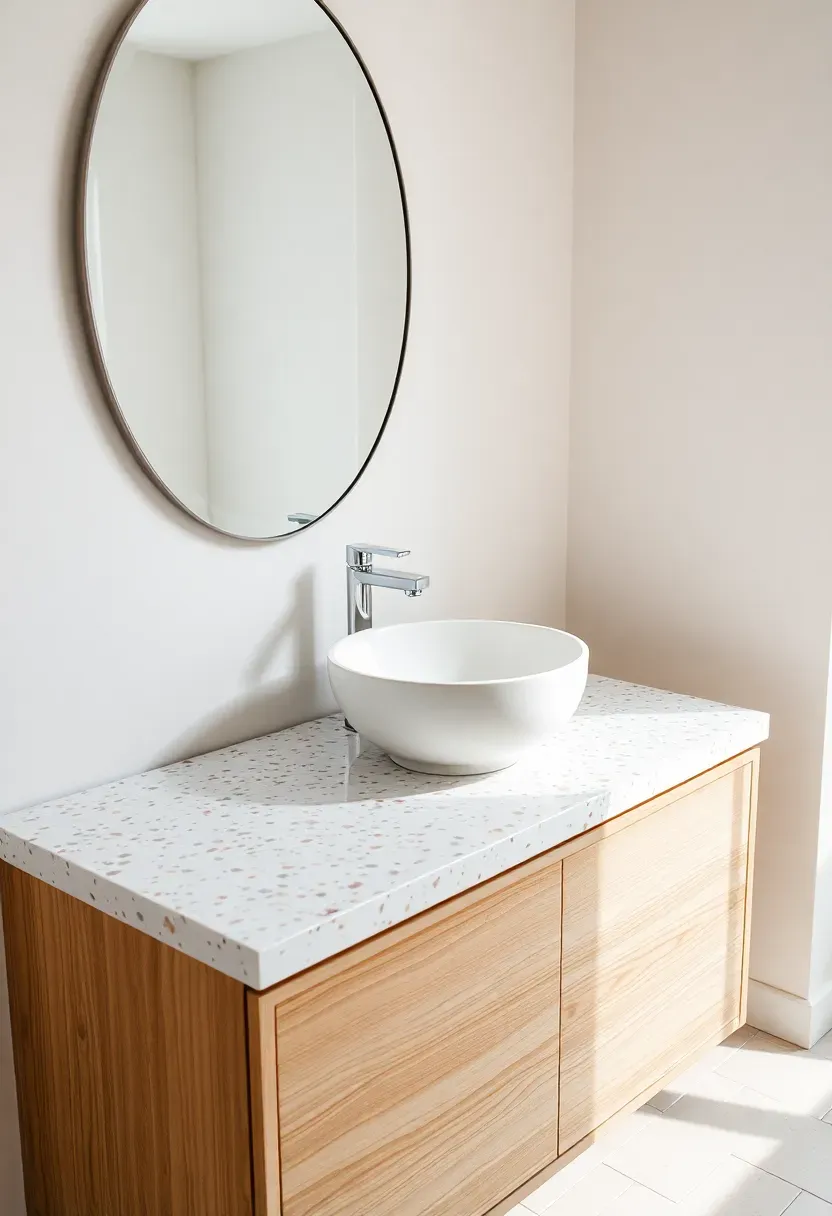
Terrazzo was everywhere in mid-century commercial buildings, and it has cycled back into residential bathrooms with a fresh look. Modern terrazzo countertops use marble, glass, or stone chips embedded in a cement or epoxy binder. You choose the chip size, color mix, and binder tone, which means the final surface can be subtle (white-on-white with small chips) or bold (large multicolored fragments in a black base).
Where Terrazzo Shines
- Powder rooms and half baths where the countertop becomes the focal point
- Bathrooms with otherwise simple finishes -- white walls, simple tile -- where terrazzo adds all the visual interest
- Custom terrazzo slabs cost $100-175 per square foot, but prefabricated terrazzo tiles at $8-15 per square foot offer a budget path to the same look
Recommended
Items for this idea
7. Solid Surface Corian
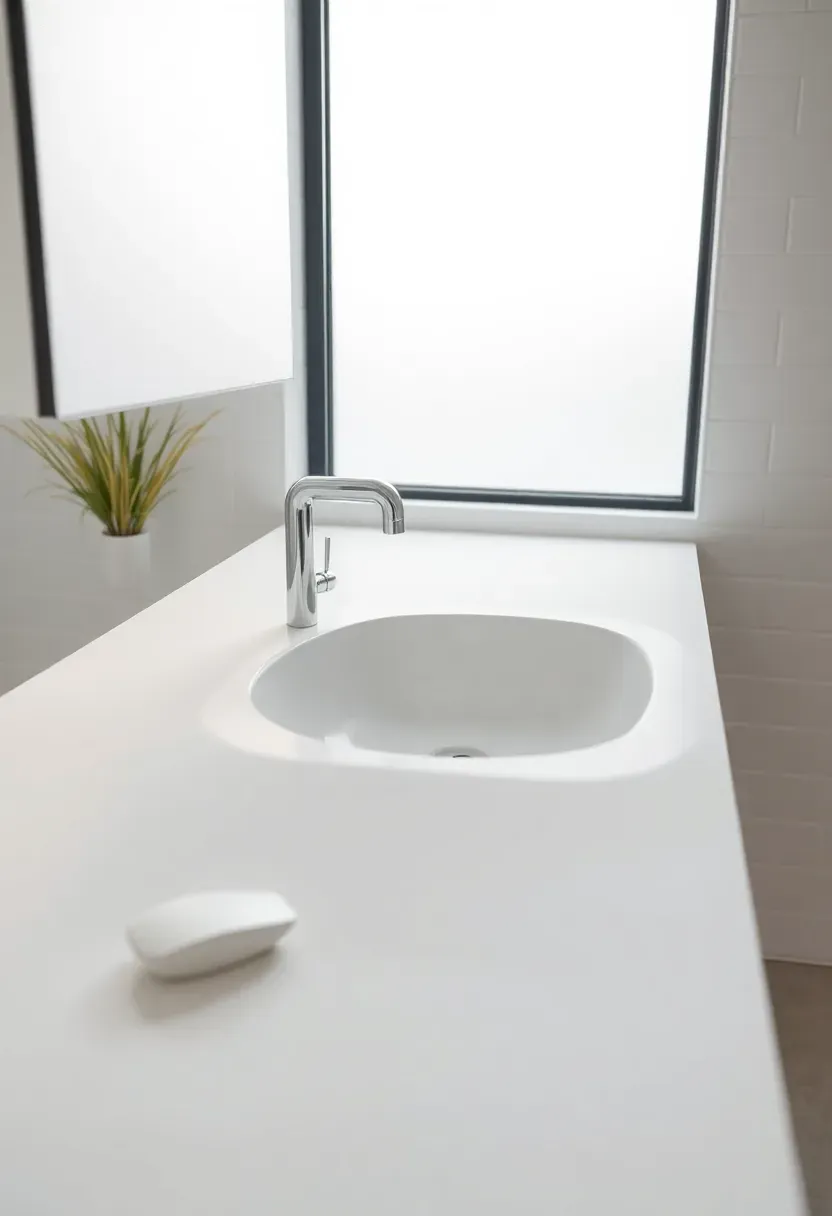
Solid surface materials like Corian are made from acrylic polymers and natural minerals. Their main advantage in bathrooms is the ability to fabricate an integrated sink basin with no seams. Water has nowhere to collect, mold has no crevice to grow in, and cleaning means one quick wipe across a continuous surface. Available in hundreds of colors and patterns, though the plain whites and off-whites remain the most popular bathroom choices.
Tips
- Minor scratches and burns can be sanded out with fine sandpaper -- the color goes all the way through the material
- Solid surface cannot handle temperatures above 350F, but that rarely matters in a bathroom
- Installed cost runs $40-80 per square foot, making it one of the more affordable seamless options
8. Polished Granite
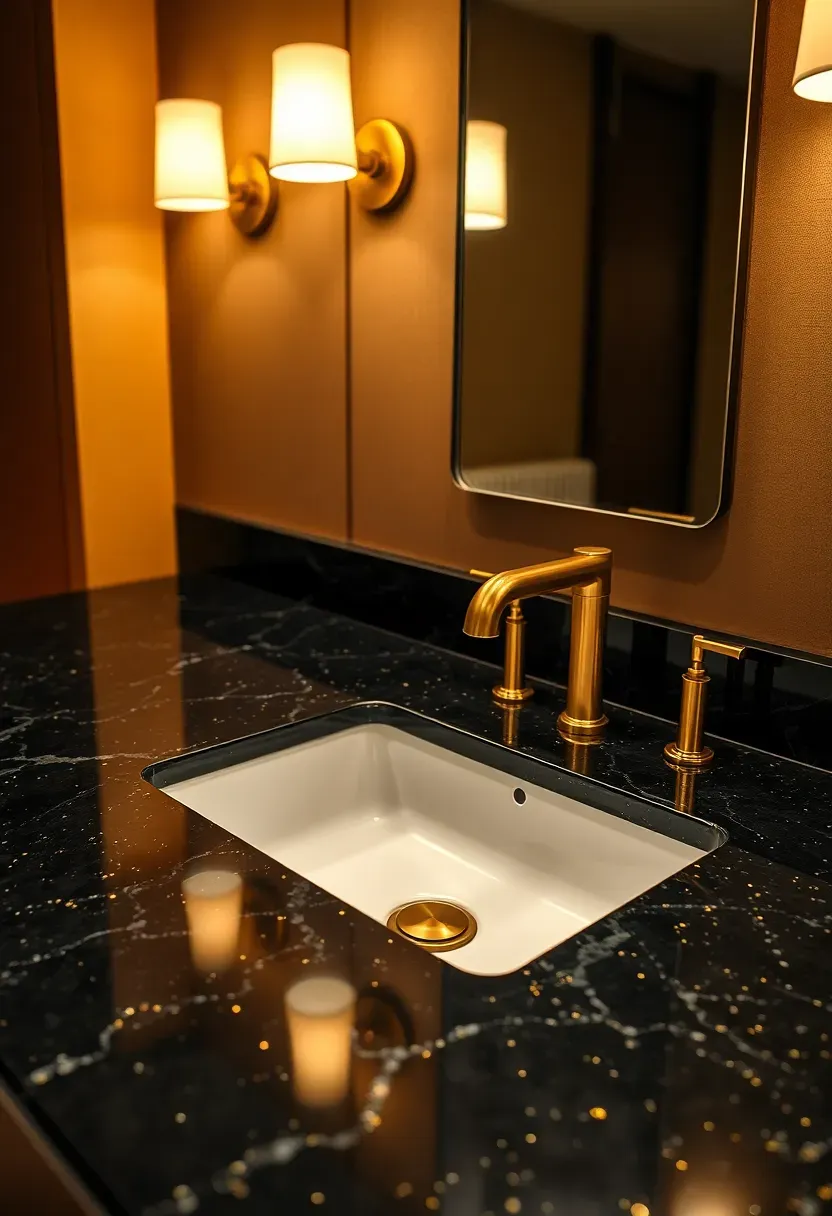
Granite lost some of its prestige when quartz marketing pushed it aside, but it remains an excellent bathroom countertop material. Natural granite is harder than marble, more heat-resistant than quartz, and available in patterns that no engineered material can fully replicate. Dark granites like Absolute Black or Black Galaxy are practically stain-proof even without sealing. Lighter colors with more feldspar content need annual sealing.
Granite vs. Quartz for Bathrooms
Choose granite if: you prefer a fully natural material, want maximum scratch and heat resistance, or found a specific slab with movement and color you love.
Choose quartz if: you want guaranteed uniformity between slabs, zero maintenance, and do not mind a slightly plastic feel compared to natural stone.
Recommended
Items for this idea
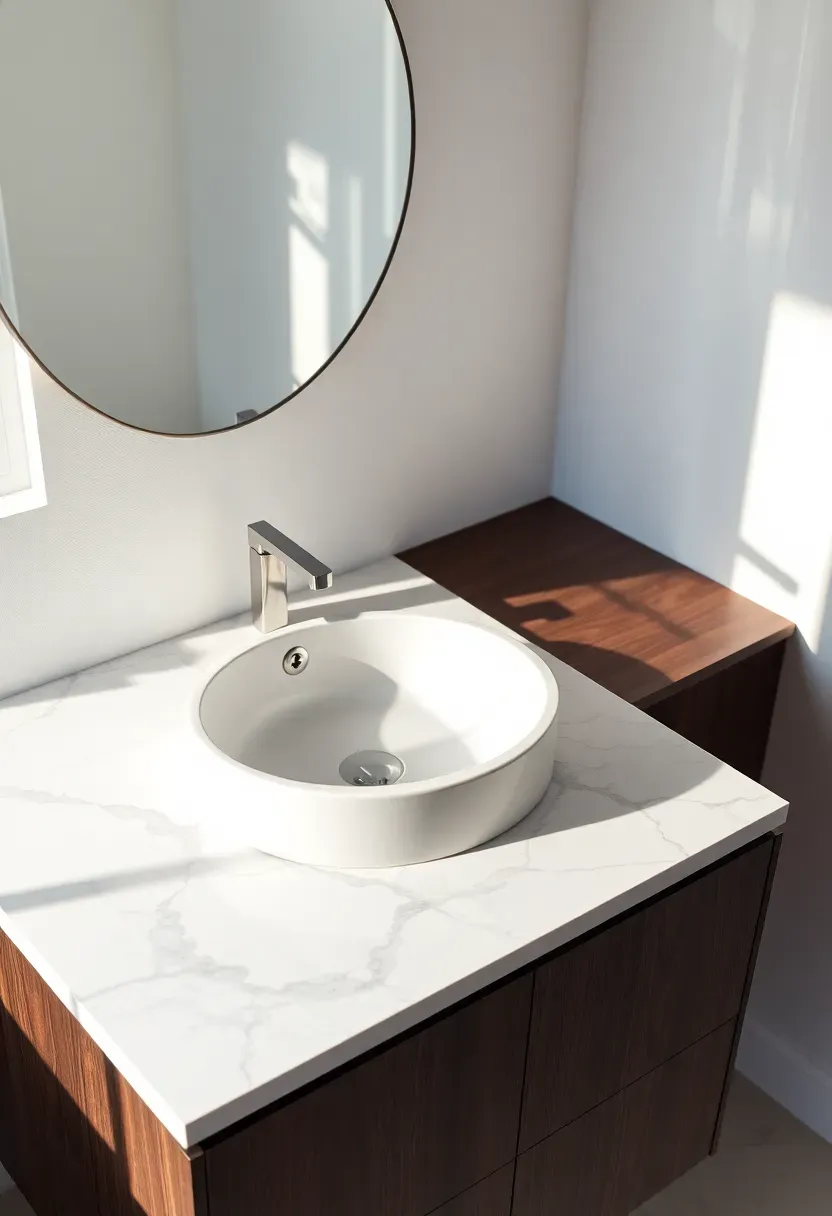
9. Porcelain Slab
Porcelain slab countertops are a relatively recent entry in the bathroom market. Brands like Dekton, Neolith, and Laminam produce large-format porcelain panels (typically 6-12mm thick) that can be cut and installed like natural stone. The surface is fired at extreme temperatures, making it scratch-resistant, UV-stable, and completely non-porous.
Steps to Consider
- Choose your slab size -- most manufacturers offer panels up to 126 x 60 inches, enough for almost any bathroom vanity without seams
- Find an installer experienced with porcelain slabs specifically, as the thin material requires different cutting and support techniques than granite or quartz
- Expect $50-100 per square foot installed, with the thinnest profiles at the lower end
Watch Out
- Thin porcelain can chip at exposed edges if struck hard, so consider a mitered edge buildup for a thicker appearance and added durability
10. Recycled Glass Composite
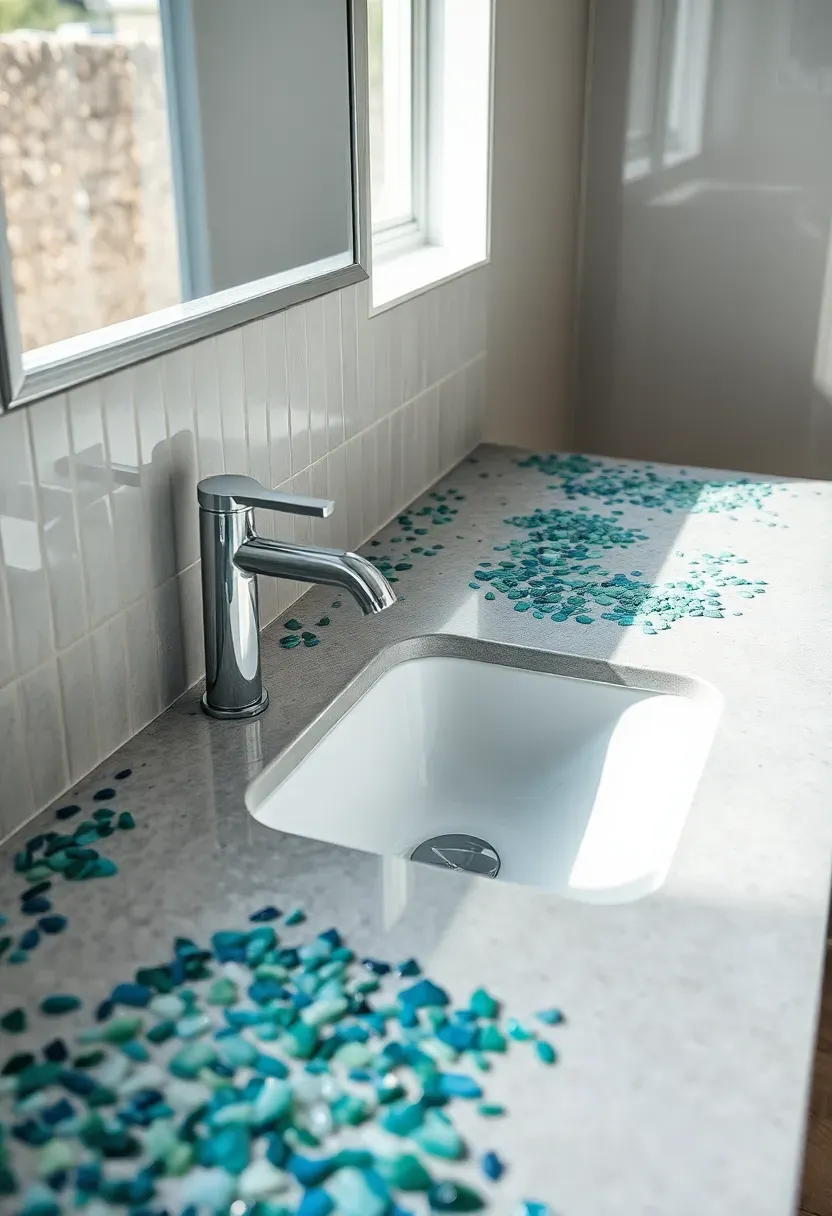
Recycled glass countertops embed crushed glass -- from old bottles, windows, and jars -- in a cement or resin binder. The result catches light differently than stone, with glass fragments creating depth and sparkle that shifts depending on the angle and lighting. Companies like Vetrazzo and IceStone are the main players. Each manufacturer offers different glass colors and aggregate sizes.
Tips
- Cement-based versions need periodic sealing, similar to concrete countertops
- Resin-based versions are non-porous and easier to maintain
- Pricing ranges from $75-125 per square foot installed
- Works best in bathrooms with natural light where the glass fragments can actually catch sun
Recommended
Items for this idea
11. Live-Edge Wood Slab
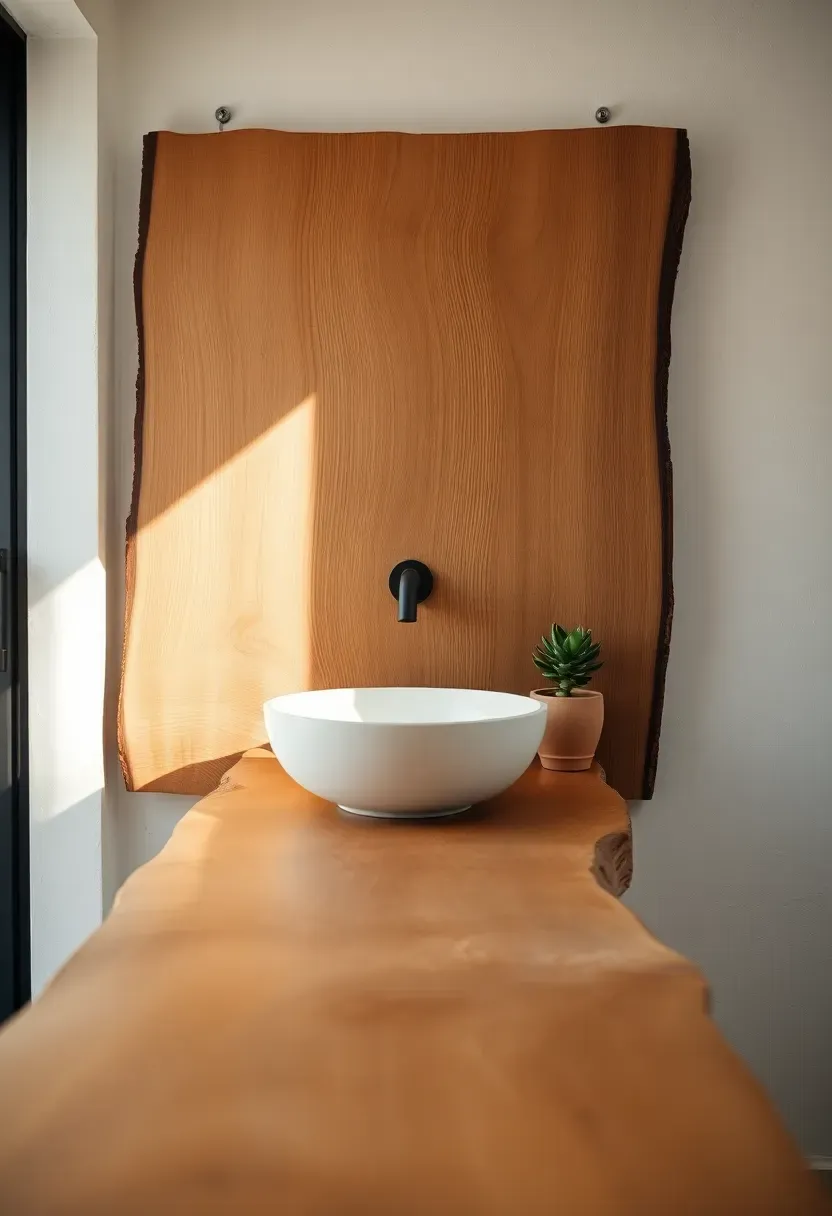
A live-edge slab keeps the tree's natural outer contour along one or both sides of the countertop. In a bathroom, this works best as a floating shelf-style vanity with a vessel sink sitting on top. The organic shape breaks up the hard geometry of tile and porcelain. Black walnut, maple, and white oak are common species. Each slab needs kiln drying, flattening, sanding, and a waterproof finish before installation.
Making It Last
- Apply a minimum of four coats of marine-grade spar urethane or an epoxy seal, especially around the sink cutout area
- Mount the slab on steel brackets bolted into wall studs -- live-edge slabs are heavy, often 30+ pounds per linear foot
- Expect to spend $200-400 for a finished slab from a local woodworker, plus installation
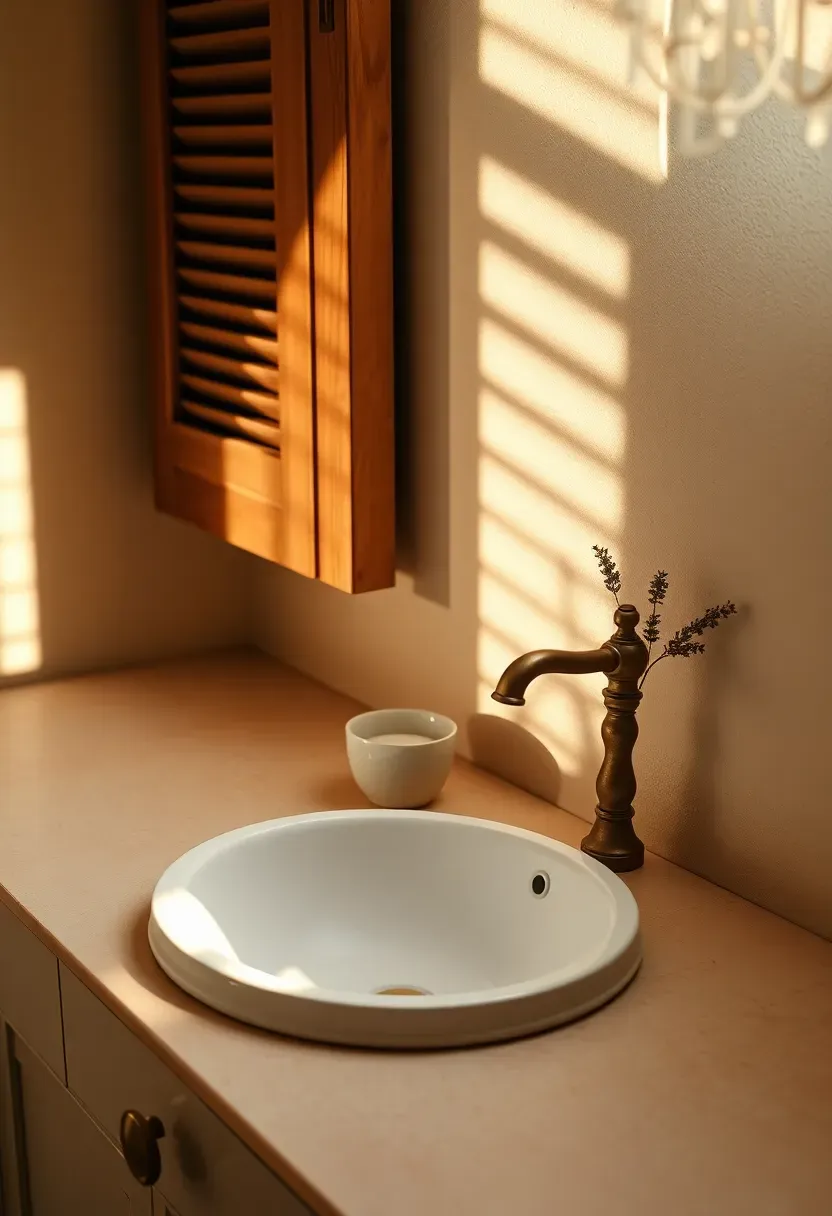
12. Honed Limestone
Limestone delivers a matte, soft-looking surface that pairs well with Mediterranean, coastal, and transitional bathroom styles. The honed finish removes any glossy sheen, giving the stone a chalky, tactile quality. Color options lean warm: cream, beige, taupe, and soft gold tones. Limestone is softer than granite or marble on the Mohs scale, which means it scratches and etches more readily.
Honest Tradeoffs
The appeal: limestone has a quiet warmth that polished stones lack. It feels less formal than marble and less cold than quartz. In a guest bathroom or powder room where daily abuse is light, it performs well.
The risk: limestone stains easily from colored liquids and etches from acidic products. Sealing helps but does not make it bulletproof. This is not the countertop for a busy family bathroom with kids using hair dye or nail polish.
Recommended
Items for this idea
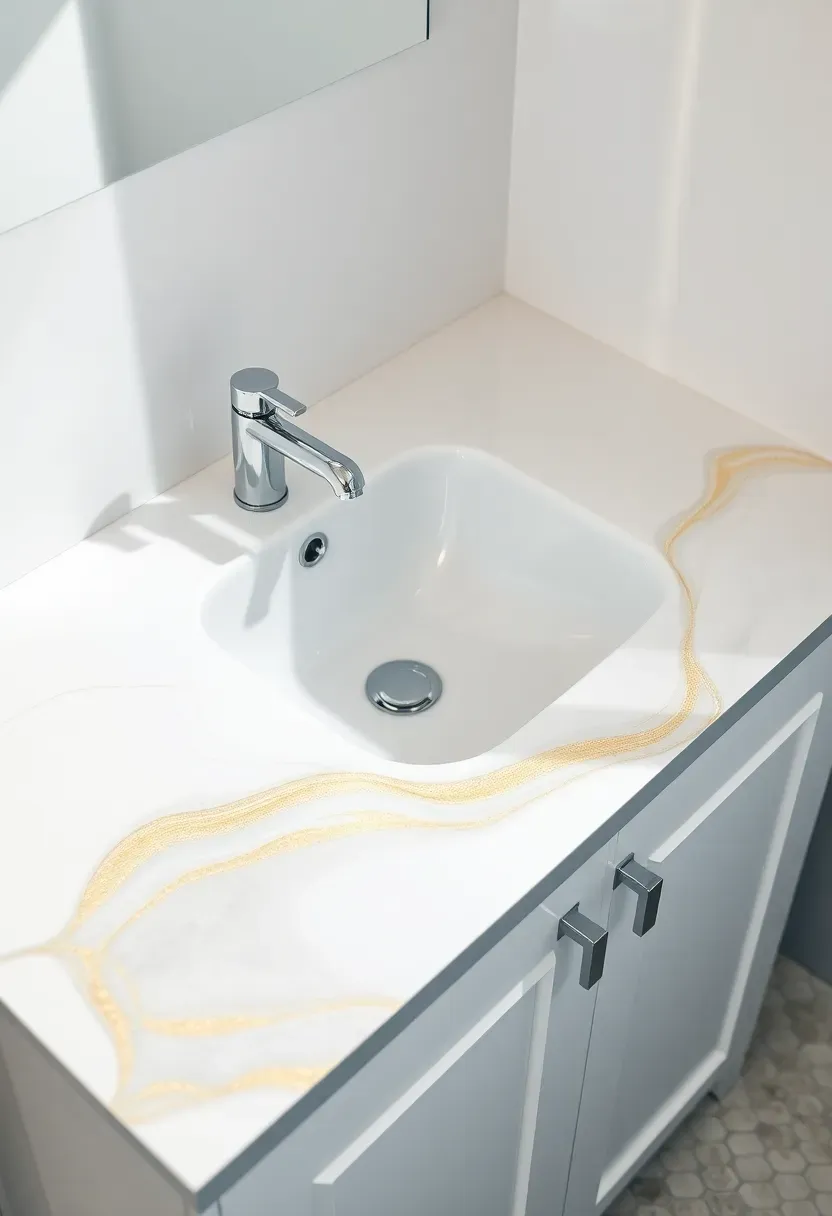
13. Epoxy Resin over Plywood
Epoxy resin countertops became a popular DIY project around 2018 and they still make sense for bathrooms on a budget. The process involves coating a plywood or MDF substrate with layers of two-part epoxy resin, which cures into a hard, glossy, waterproof surface. You can tint the resin, embed objects, or create marbled swirl effects by mixing colors during the pour.
How to Do It
- Build or buy a plywood countertop blank cut to your vanity dimensions -- 3/4-inch cabinet-grade plywood works well
- Seal all edges and the underside with an epoxy primer or shellac to prevent moisture wicking into the wood core
- Mix and pour your tinted epoxy in thin layers, using a heat gun to pop air bubbles between coats
- Allow 72 hours of cure time before mounting the sink and faucet
Watch Out
- Epoxy yellows under direct UV exposure over time; bathroom windows with strong sun may cause discoloration within a couple of years
- Material cost runs $50-100 total for a standard bathroom vanity, making this the cheapest option on the list
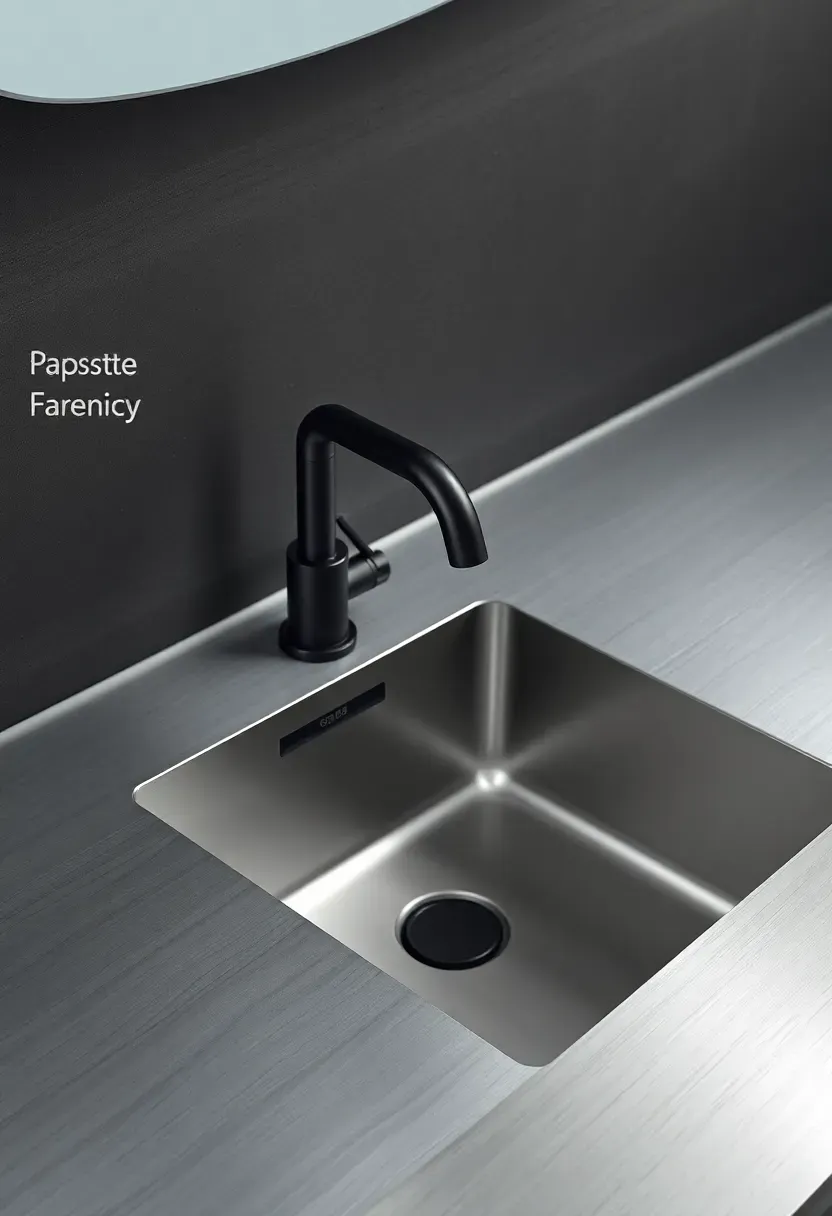
14. Stainless Steel
Stainless steel countertops appear mostly in commercial kitchens, but they work surprisingly well in modern and industrial-style bathrooms. The material is non-porous, antibacterial, heat-proof, and essentially indestructible. A fabricator will weld an undermount sink directly into the countertop for a fully seamless surface. The main drawback is fingerprints and water spots on polished finishes -- brushed or satin finishes hide marks much better.
Tips
- 16-gauge stainless is the standard residential thickness, mounted on a plywood substrate for support and sound dampening
- Custom fabrication runs $80-150 per square foot, which is comparable to mid-range stone
- Pairs well with concrete floors, dark tile, and matte black fixtures
Recommended
Items for this idea
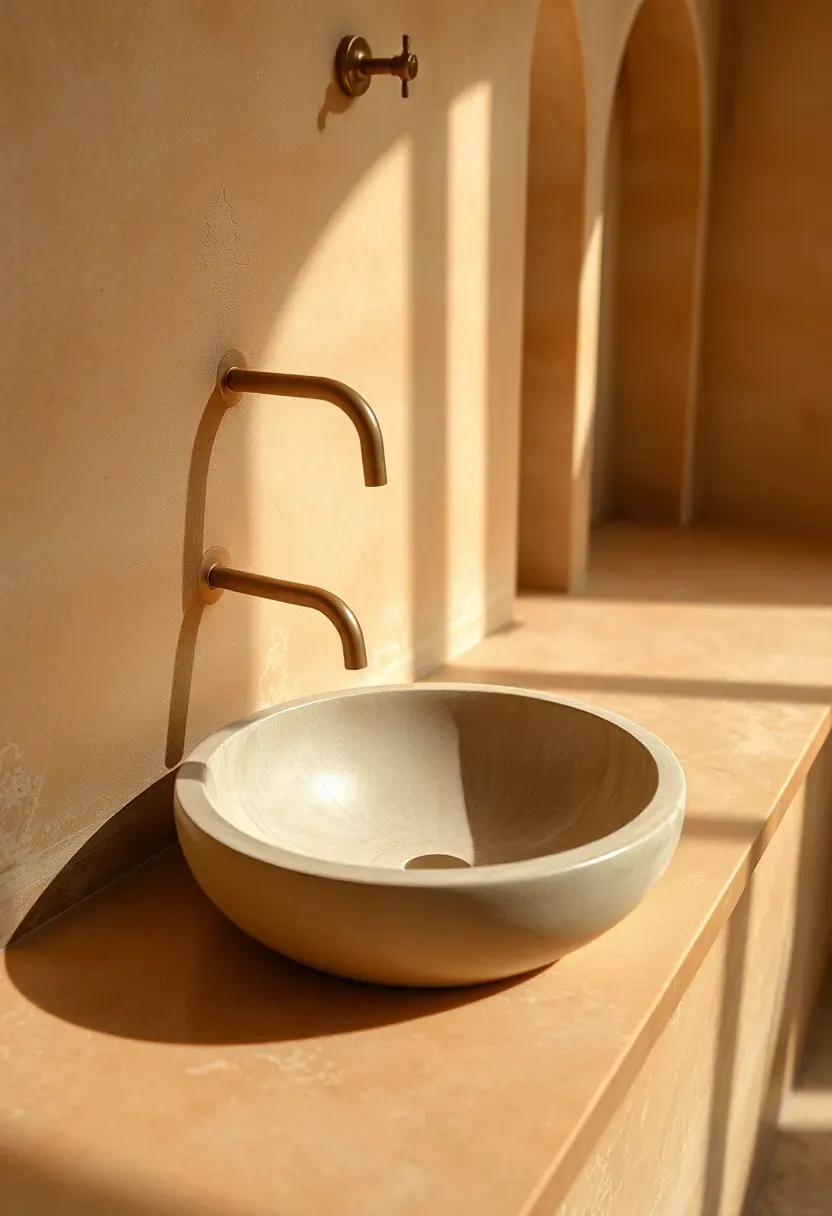
15. Venetian Plaster Finish
Venetian plaster (also called tadelakt when done with the Moroccan lime-based technique) creates a seamless, waterproof surface that can cover countertops, walls, and even the inside of shower enclosures. The finish is hand-applied in multiple thin layers, polished with a stone or trowel, and sealed with wax or soap. The result has a subtle depth and movement that painted surfaces cannot match.
What to Know
- Tadelakt is genuinely waterproof when applied correctly, making it suitable for areas around the sink
- Application is skilled work -- expect to pay $150-300 per square foot for a professional tadelakt countertop
- Color options are wide but muted: earth tones, soft whites, pale blues, and warm grays look most authentic
- Repairs are possible by re-applying plaster to damaged areas, though color matching requires skill
16. Quartzite
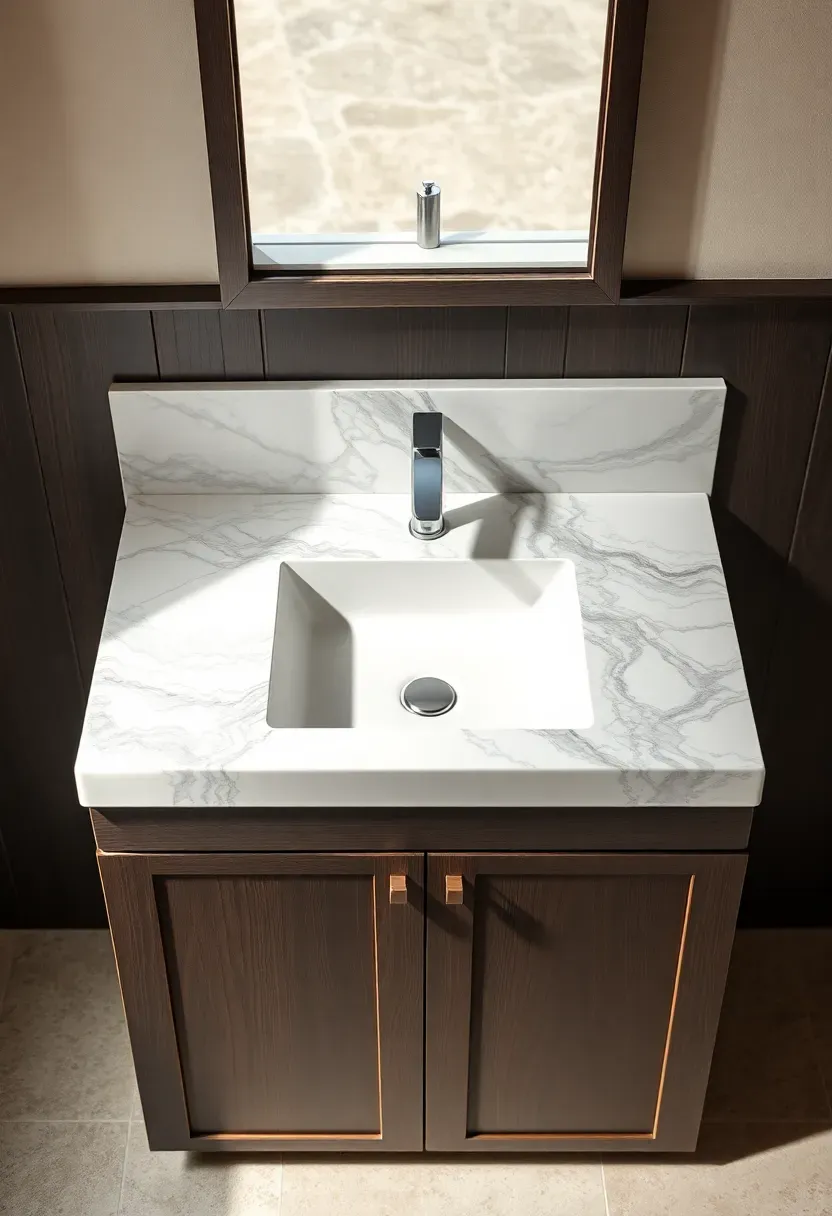
Quartzite is a natural metamorphic rock that gets confused with quartz (the engineered material) constantly. They are completely different products. Quartzite forms when sandstone is subjected to extreme heat and pressure underground, recrystallizing the quartz grains into an interlocking structure harder than granite. Slabs like Taj Mahal, Mont Blanc, and Sea Pearl offer dramatic veining that rivals marble, with much better durability.
Quartzite vs. Marble
Choose quartzite if: you want the veined look of marble with significantly better scratch and etch resistance. Quartzite scores 7 on the Mohs scale versus marble's 3.
Choose marble if: budget matters more (quartzite runs $70-200 per square foot installed, often pricier than marble) or you specifically want that softer, warmer surface feel marble provides.
Recommended
Items for this idea
17. Zellige Tile Countertop
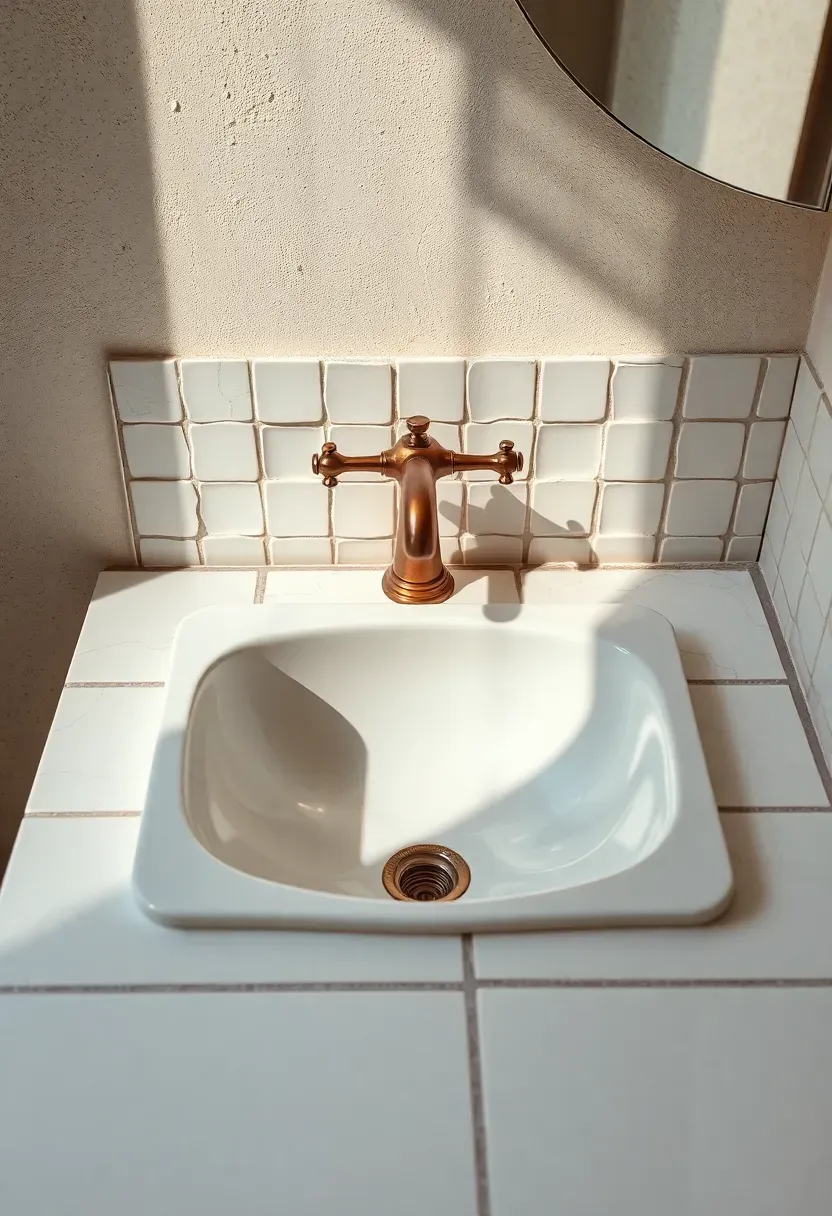
Zellige tiles are hand-cut Moroccan clay tiles with a glossy, uneven glaze that catches light at different angles. Using them on a bathroom countertop instead of the typical backsplash placement creates a textured, artisanal surface that stands apart from any slab material. Each tile is slightly different in color and shape, which is the whole point. The grout lines do add maintenance, but on a small bathroom vanity top the total grout area is manageable.
Getting It Right
- Use a cement board substrate, not bare plywood -- moisture will eventually work through grout and damage wood
- Choose epoxy grout rather than cement grout for bathroom countertop applications; it resists staining and does not need sealing
- Keep tile size between 2x2 and 4x4 inches for a countertop scale that does not look busy
- Budget $15-30 per square foot for zellige tiles plus $20-40 per square foot for installation, making this a mid-range option
Quick FAQ
Which bathroom countertop material is the lowest maintenance? Quartz and porcelain slab are the least demanding options. Both are non-porous, do not require sealing, and resist staining from common bathroom products. Wipe them with a damp cloth and mild soap. That is genuinely all they need.
Can I install a new countertop without replacing the vanity cabinet? Yes, in most cases. If your existing cabinet is structurally sound and level, a fabricator can template and install a new countertop on top of it. The sink and faucet may need to change if the new countertop uses a different sink mounting style.
What countertop works best for a small bathroom? Light-colored materials with minimal pattern keep a small bathroom feeling open. White quartz, pale solid surface, or honed white marble all work. Avoid busy patterns like bold terrazzo or dramatic veining in bathrooms under 40 square feet -- the pattern overwhelms the space.
Is marble really that hard to maintain in a bathroom? It depends on your tolerance. Marble will etch from toothpaste and develop a patina over time. Some people consider that character. Others find it frustrating. If you want marble that stays pristine, use it only in a powder room with light daily use and seal it every six months.
How thick should a bathroom countertop be? Standard thickness is 3/4 inch to 1-1/4 inches (2-3 cm). Thicker slabs at 1-1/4 inches (3 cm) look more substantial and hold up better with undermount sinks. Porcelain slabs can go as thin as 6mm with proper support underneath.
Pick the countertop material that matches how you actually use your bathroom, not just how you want it to look on camera. A busy family bathroom needs quartz or granite. A powder room for guests can handle marble or zellige tile. And if you are on a tight budget, an epoxy resin pour over plywood costs under $100 in materials and looks better than most people expect. Start with the sink style you want, then choose a countertop material that works with that mounting type -- the rest falls into place from there.
Pinterest cover for 17 Bathroom Countertop Ideas
About the author
OBCD
CGI visualization and interior design content. We create detailed 3D renders and curate practical design ideas for every room in your home.