19 Bathroom Flooring Ideas
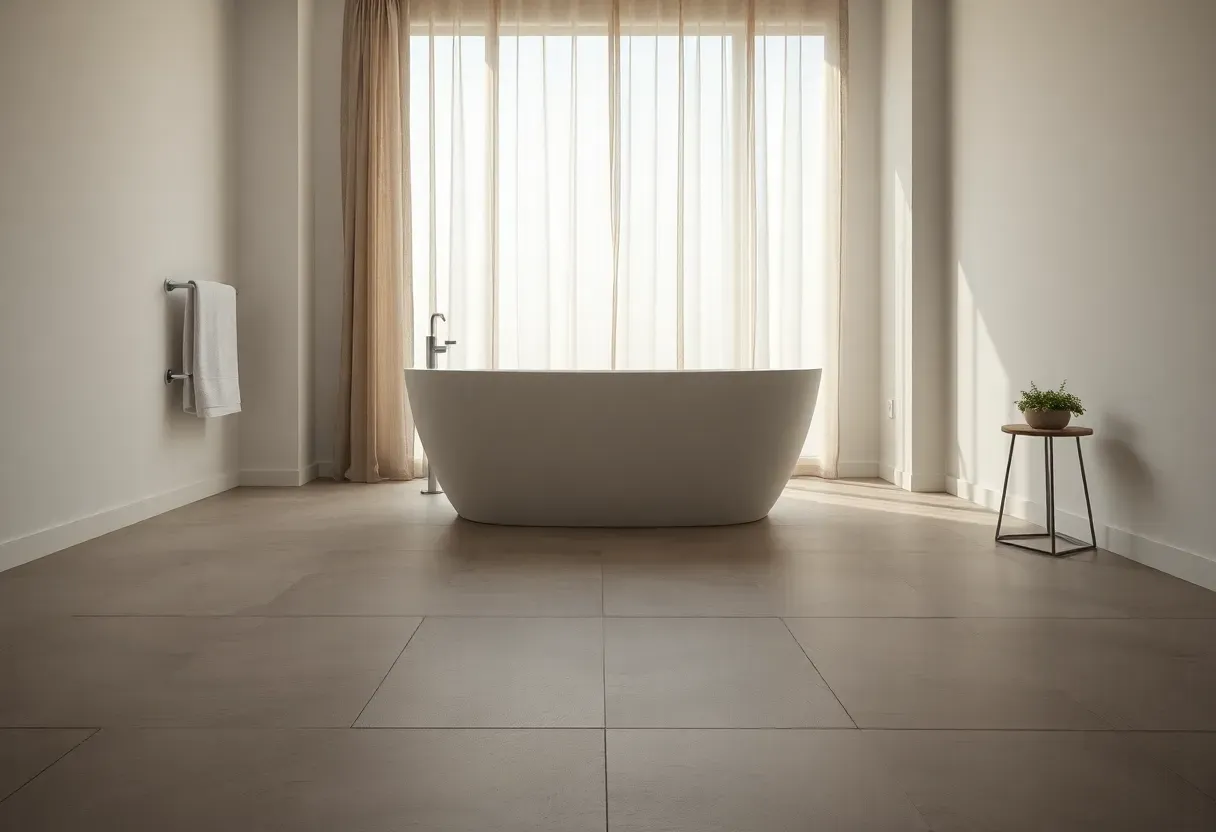
I replaced the flooring in my guest bathroom last spring and spent way too long reading about options beforehand. The short version: bathroom floors deal with water, humidity, bare feet, and dropped bottles of shampoo. Not every material handles all four. Some look great on day one and peel by month six. Others feel cold and uninviting but last for decades. The right pick depends on your budget, your tolerance for maintenance, and whether you actually enjoy the feeling of your floor at 6 AM.
Here are 19 bathroom flooring ideas that balance durability, water resistance, and appearance — organized so you can compare tradeoffs easily.
Table of Contents
- Large Format Porcelain Tile
- Penny Round Mosaic
- Luxury Vinyl Plank
- Heated Porcelain Floor
- Hexagonal Cement Tile
- Natural Stone Marble
- Pebble Tile Shower Floor
- Terrazzo Tile
- Wood-Look Porcelain Plank
- Black and White Checkerboard
- Concrete Microcement
- Slate Tile
- Herringbone Ceramic
- Vinyl Sheet Flooring
- Travertine Tile
- Zellige-Inspired Floor Tile
- Cork Flooring
- Brick-Pattern Quarry Tile
- Encaustic Patterned Tile
1. Large Format Porcelain Tile
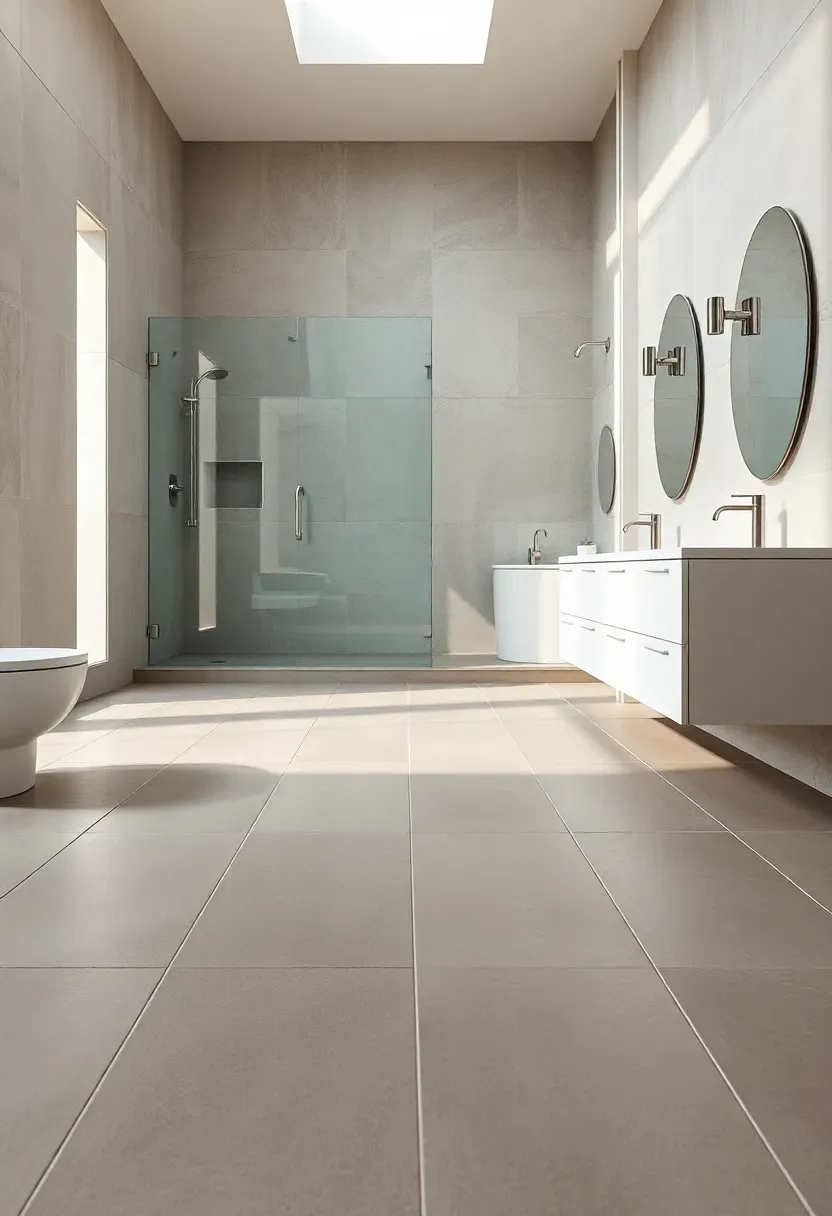
Porcelain tiles in 24x24 inch or larger formats reduce grout lines, which means fewer places for mold to take hold and less scrubbing on your knees. The bigger tiles also make a small bathroom appear larger because the eye reads fewer visual breaks on the floor. Rectified edges allow for tight grout joints — some as narrow as 1/16 inch. Porcelain is nearly waterproof on its own, absorbing less than 0.5% moisture. Choose a matte or textured finish rather than polished; wet polished porcelain is dangerously slick.
Tips
- Use a large-notch trowel and back-butter each tile to avoid lippage on big formats
- Requires a perfectly level subfloor — any dip shows as a rocking tile
- Cost runs $3-8 per square foot for the tile itself, plus professional installation
We picked a few things that go well with this idea: Daltile Florentine Porcelain Floor Tile Carrara (★4.3), Black Diamond Marble Tile Floor Cleaner (1-Quart) (★4.3) and MSI La Paloma Encaustic Porcelain Floor Tile (★4.2). As an Amazon Associate we earn from qualifying purchases.
2. Penny Round Mosaic
Why They Keep Coming Back
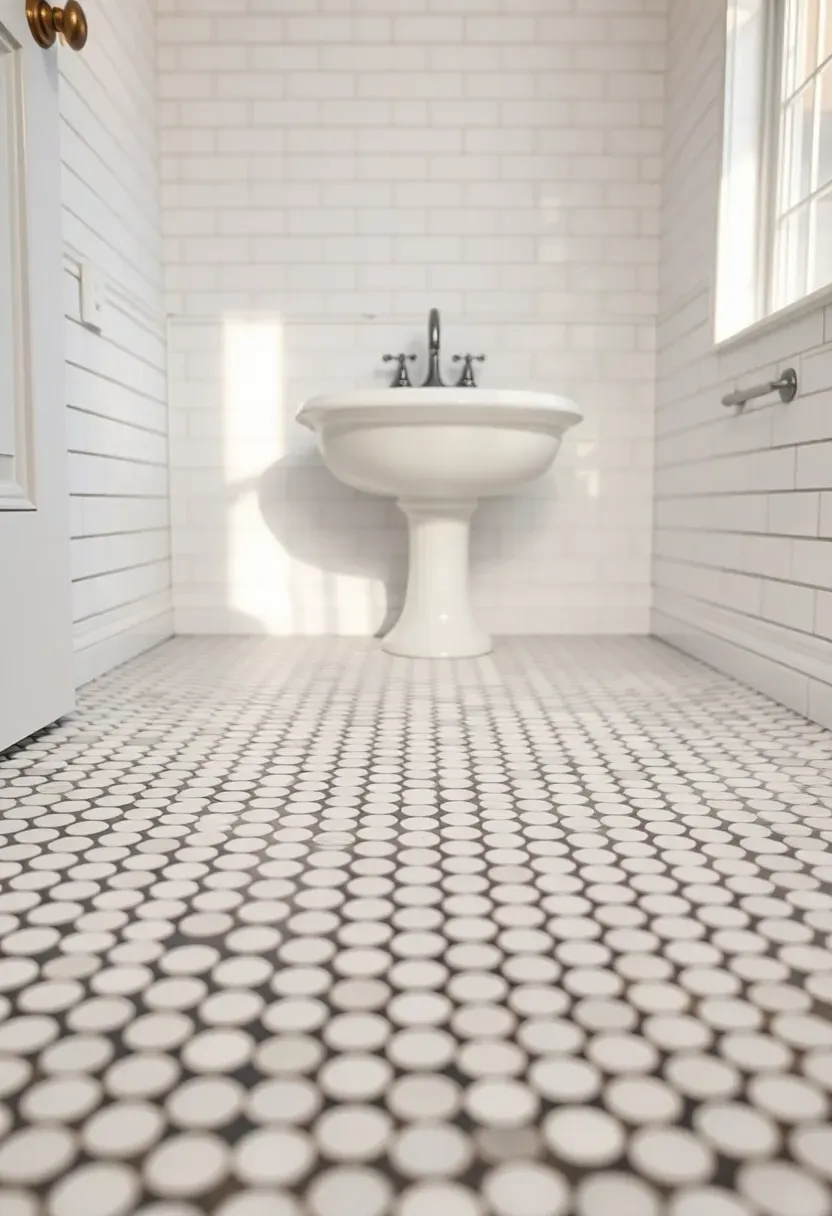
Penny rounds have been used in bathrooms since the early 1900s. They fell out of fashion in the 1970s, returned around 2010, and never really left again. The appeal is partly nostalgic and partly practical: the small tile size means lots of grout lines, which actually improves traction on a wet floor. Each grout line acts like a tiny grip channel.
Modern Version
Today's penny rounds come on mesh-backed sheets that speed installation considerably. Beyond classic white, you can find matte black, sage green, dusty pink, and mixed colorways. Unglazed porcelain penny tiles have a subtle matte texture that feels better underfoot than glazed versions, which get slippery when wet.
Installation Notes
- Mesh sheets make DIY possible, but cutting around toilets and vanities requires patience
- Epoxy grout resists staining much better than standard sanded grout in this application
- Budget about $6-12 per square foot installed
We picked a few things that go well with this idea: Art3d Peel and Stick Vinyl Plank (36-Pack) (★4.5), Art3d Interlocking Vinyl Plank Waterproof (18-Pack) (★3.9) and Art3d Peel and Stick Vinyl Plank (40-Pack) (★4.2). As an Amazon Associate we earn from qualifying purchases.
3. Luxury Vinyl Plank
Step 1: Pick the Right Core
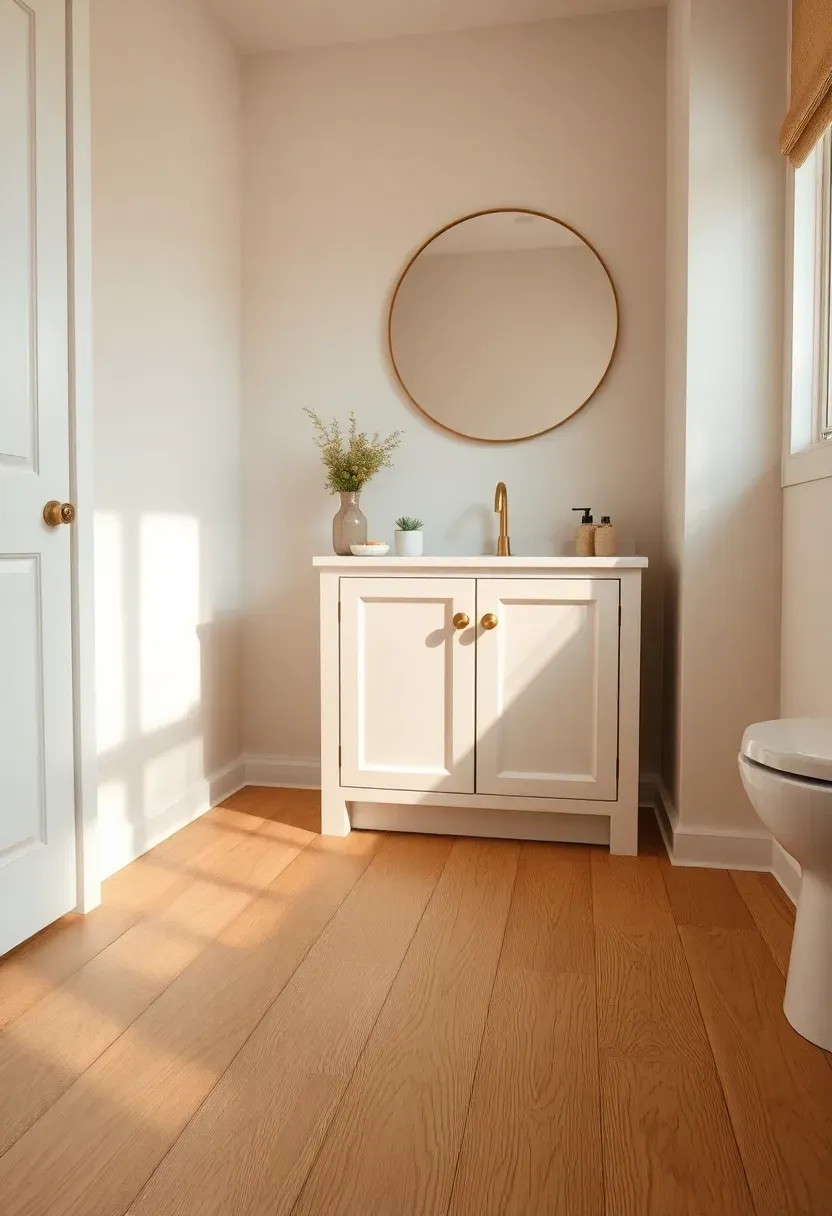
Not all LVP is the same. Rigid core (SPC) versions with a stone-polymer composite base handle moisture far better than flexible WPC types. For bathrooms specifically, look for SPC vinyl with a minimum 20-mil wear layer.
Step 2: Decide on Installation Method
Click-lock planks float over the subfloor without glue. This works fine in most bathrooms, but glue-down planks seal tighter around the perimeter and are better if you expect standing water near a tub.
Step 3: Seal the Perimeter
Even waterproof LVP can let water seep through expansion gaps at walls. Run a bead of 100% silicone caulk where the floor meets the baseboards and around toilet flanges.
Watch Out
LVP can dent under heavy point loads. Use furniture pads under vanity legs, and be careful dragging anything heavy across the surface.
We picked a few things that go well with this idea: Black Diamond Wet Look Stone Sealer (★4.1), Black Diamond Penetrating Stone Shower Sealer (1-Quart) (★4.4) and Black Diamond Color Enhancer Stone Sealer (1-Quart) (★4.2). As an Amazon Associate we earn from qualifying purchases.
4. Heated Porcelain Floor
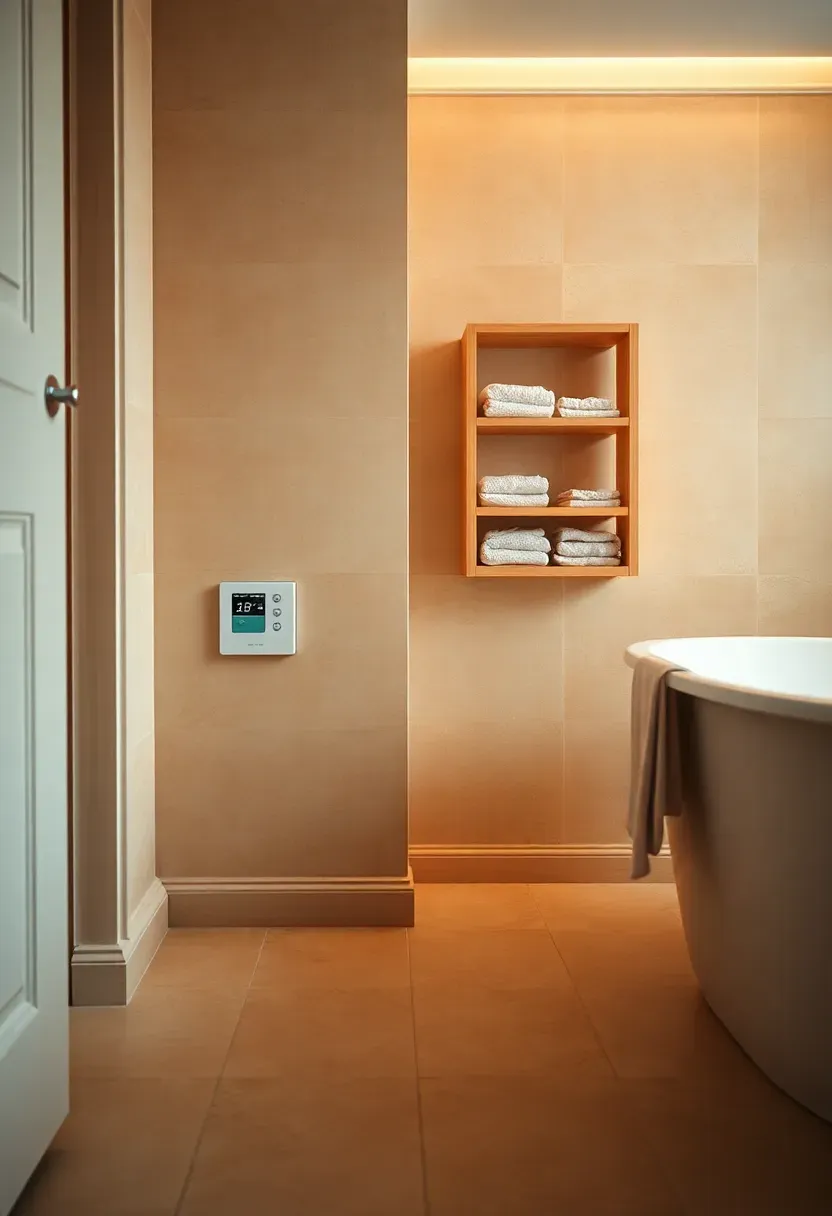
Cold bathroom tile in winter is the number one complaint about hard-surface bathroom floors. Electric radiant heat mats installed under porcelain tile solve it completely. The mats are thin — about 1/8 inch — and go down directly in the thinset layer before the tile. A programmable thermostat warms the floor before your alarm goes off. Running cost depends on your electricity rate, but heating a 50-square-foot bathroom floor typically adds $10-20 per month during winter.
What to Know
- Electric mats work with most tile types but not with floating floors like LVP
- Installation adds $8-15 per square foot on top of normal tile costs
- The thermostat should have a floor sensor, not just an air temperature sensor
Recommended
Items for this idea
5. Hexagonal Cement Tile
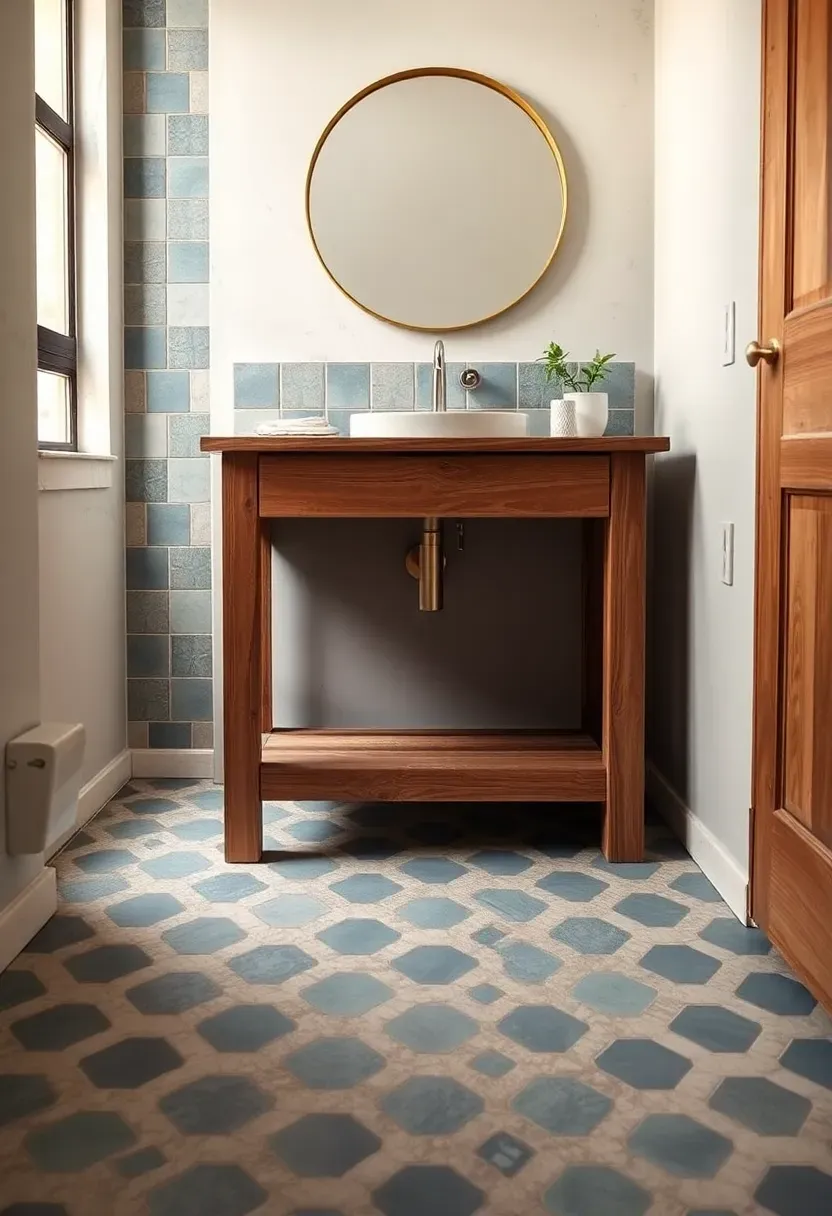
Cement tile is not ceramic — it is a pressed mixture of cement, marble dust, and pigment, cured rather than fired. The color goes all the way through rather than sitting on a glaze surface. Hexagonal shapes in two or three muted colors create geometric patterns that look handmade because they literally are. Each tile varies slightly in shade and texture. They need sealing before use and resealing annually because cement is porous, but people who love them consider that a fair trade for the depth of color and the way they age.
Tips
- Seal with a penetrating impregnating sealer, not a topical one that will peel
- Avoid acidic cleaners — vinegar and citrus-based products etch cement
- Expect the color to develop a patina over time, which is part of the charm
6. Natural Stone Marble
Marble vs. Porcelain That Looks Like Marble
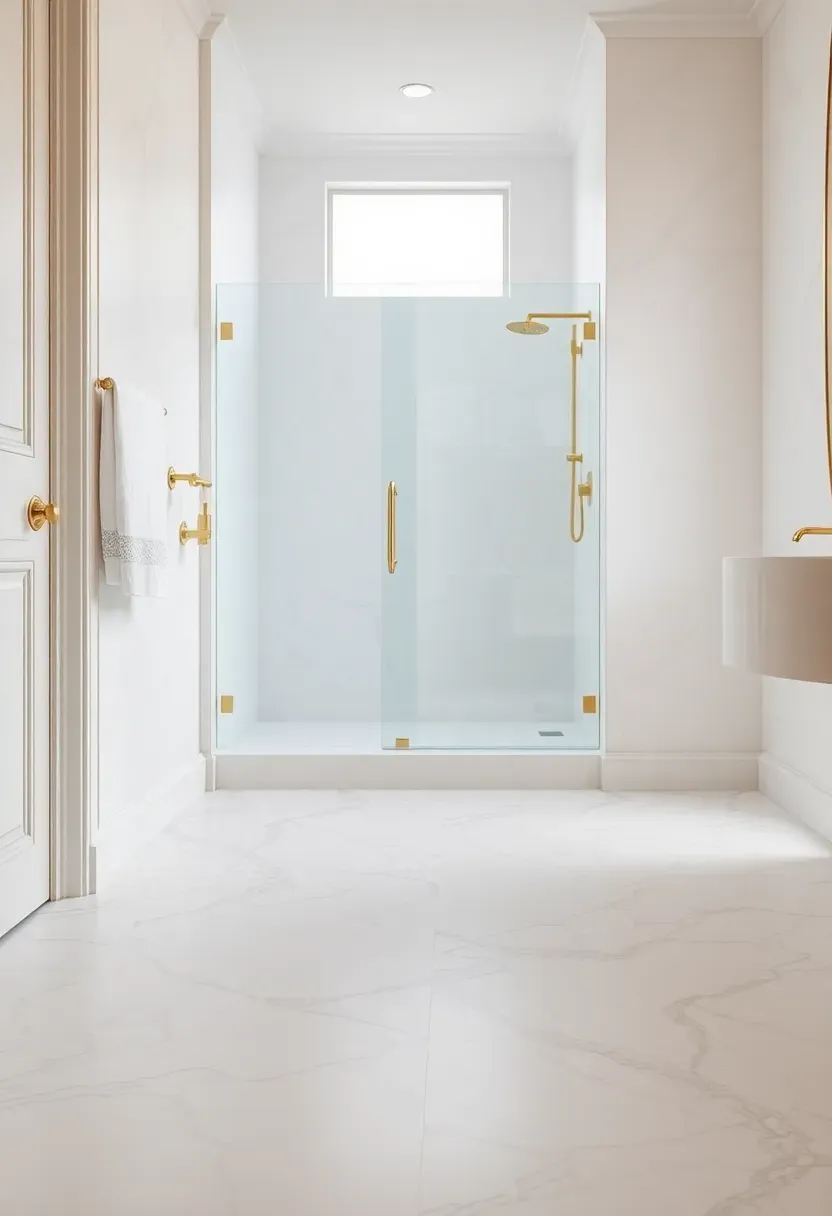
Real marble has veining that runs through the entire slab. Porcelain tiles printed to mimic marble repeat their pattern every few tiles. If you look at a porcelain marble-look floor long enough, you will spot identical veins. Real marble never repeats. It also stays cooler to the touch and feels different underfoot — denser, with a slight give that tile does not have.
The Honest Tradeoffs
Marble is porous and stains without sealing. It etches when exposed to acidic liquids. It scratches more easily than porcelain. It costs significantly more. In a bathroom, it requires annual resealing and careful product choices — no bleach-based cleaners, no vinegar.
Choose Marble If
You want an heirloom-quality floor and accept maintenance as part of ownership. A Carrara or Calacatta marble floor in a bathroom is genuinely beautiful in a way that look-alikes do not quite match.
Recommended
Items for this idea
7. Pebble Tile Shower Floor
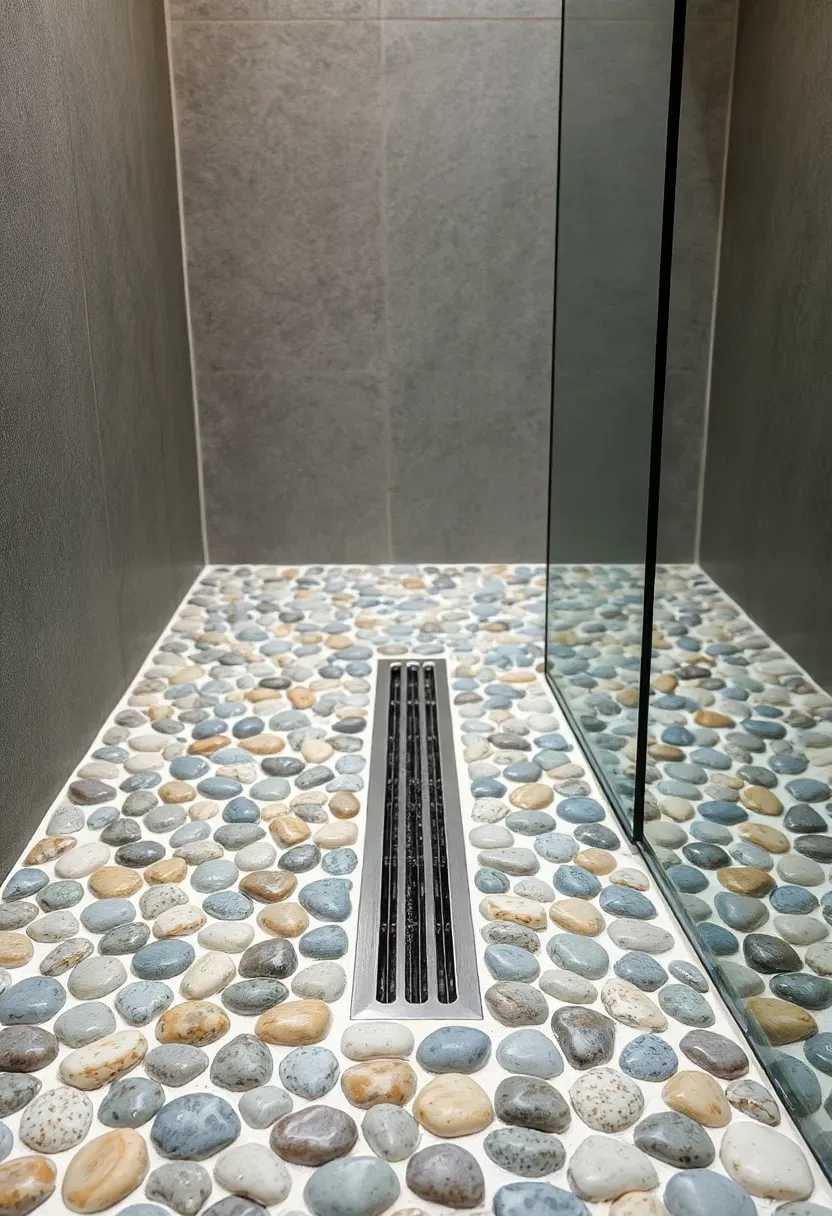
Pebble tiles work best in a specific location: the shower floor. The rounded stone surfaces provide grip underfoot and slope well toward drains because the mesh backing conforms to gentle curves. Flat pebbles (sometimes called coin pebbles) feel better on bare feet than raised round ones. The stones are typically 1-2 inches across, mounted on flexible mesh sheets. Grouting takes more material than flat tile — you need to fill all the gaps between the irregular shapes — and cleaning requires a brush since mold loves the textured surface.
Tips
- Use epoxy grout for the best mold resistance in a shower application
- Flat-profile pebbles collect less soap scum than raised round ones
- Seal the stones after grouting to prevent water absorption into the rock itself
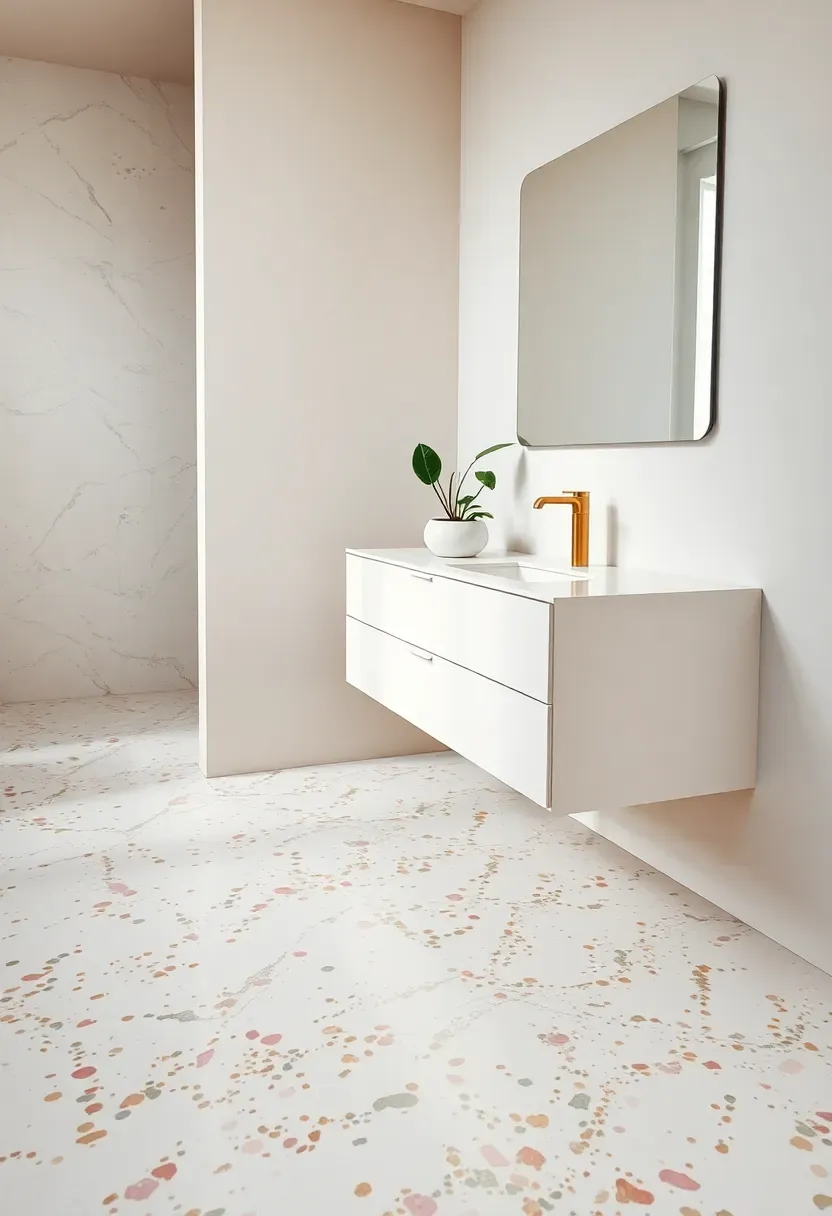
8. Terrazzo Tile
Origins
Terrazzo dates back to 15th-century Venice, where workers embedded marble chips in clay to reuse construction waste. Modern terrazzo uses chips of marble, quartz, glass, or metal suspended in a cement or epoxy binder. The floor is either poured in place or cut into tiles.
Modern Take
Terrazzo tiles (pre-made rather than poured) bring the look to bathrooms without the expense of a custom pour. Today's versions play with chip size and color — large white marble chips in a pink binder, small multicolored glass in gray cement, or metallic brass flecks in black resin. The surface polishes to a smooth, seamless-looking finish.
How to Use at Home
- Terrazzo tiles install like standard tile and are far cheaper than poured terrazzo
- Seal with a penetrating sealer for bathroom use
- Pair with simple white fixtures to let the floor be the focal point
Recommended
Items for this idea
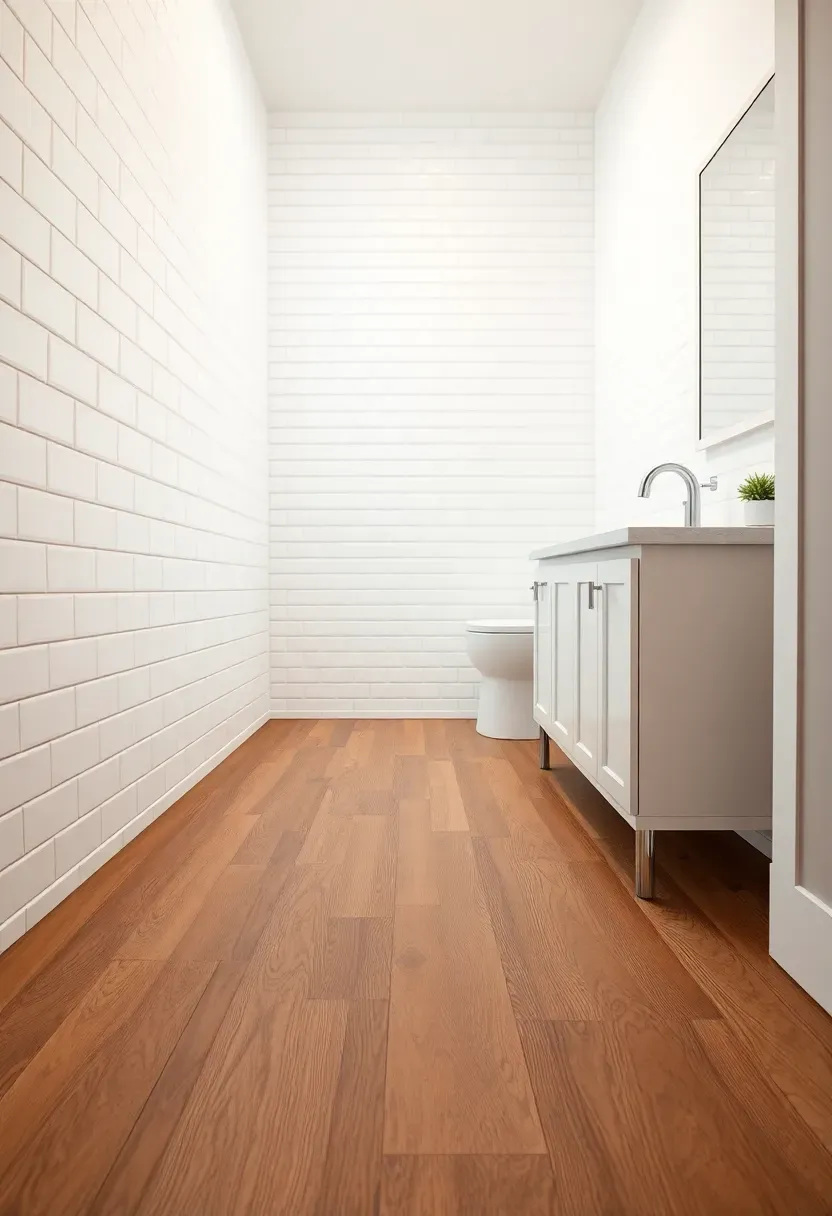
9. Wood-Look Porcelain Plank
You get the visual warmth of wood without any of the moisture anxiety. Porcelain planks printed to look like wood have improved dramatically — the better brands include textured surfaces that mimic actual wood grain you can feel with your fingers. Lay them in a straight pattern running the length of the room to make a narrow bathroom feel longer. Stagger the joints randomly rather than in a uniform offset for a more realistic appearance. Pick warm tones (walnut, honey oak) over gray-washed versions, which tend to read as obviously fake.
Tips
- Choose planks with at least 3-4 different face designs per box to avoid visible repeats
- A 1/3 offset stagger pattern looks more natural than 1/2 offset
- Rectified edges allow tighter grout joints, which reinforces the wood illusion
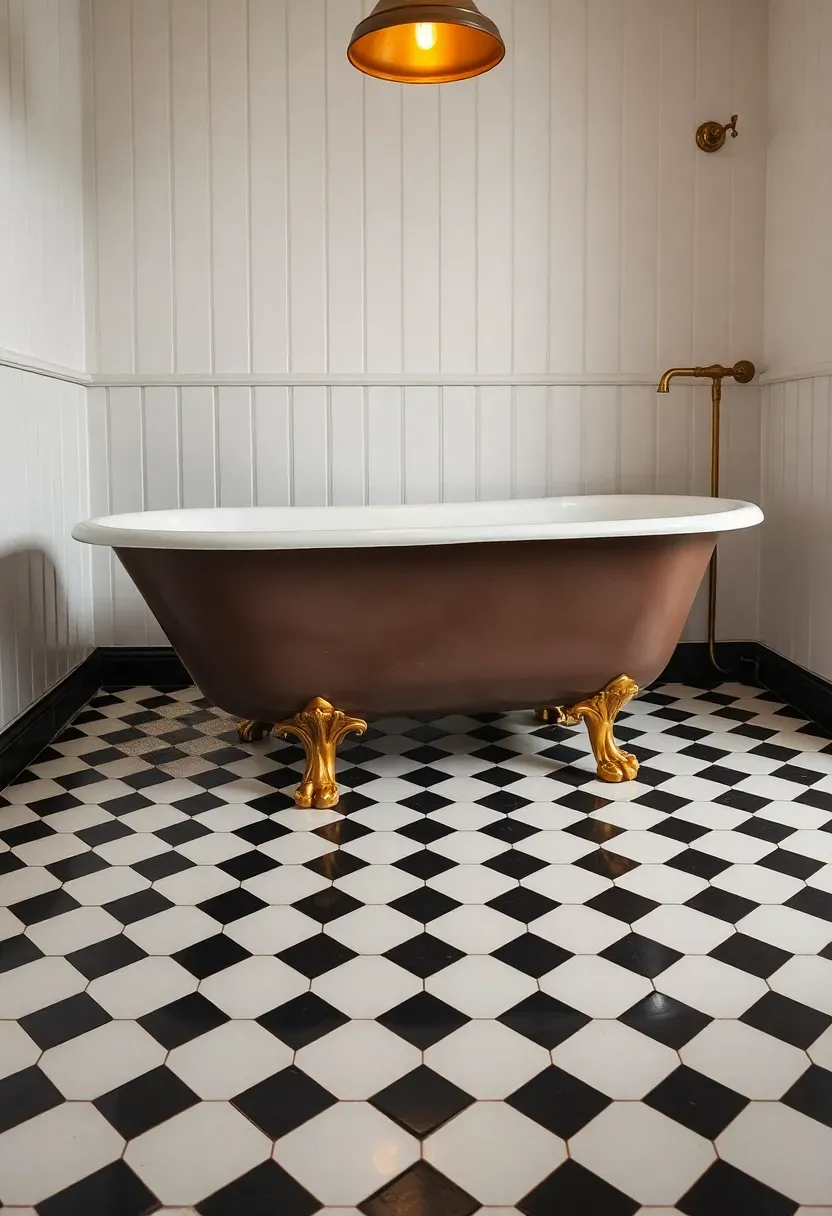
10. Black and White Checkerboard
This pattern works in bathrooms the same way it works in diners — it is bold, graphic, and instantly recognizable. The classic version uses 12x12 inch tiles set on the diagonal (diamond orientation), which makes the room feel wider than a straight grid. For a slightly softer take, use off-white and charcoal instead of pure white and black. The diagonal layout requires more cuts at the walls, so material waste runs about 15% higher than a straight layout.
Tips
- Diagonal orientation reads as more dynamic; straight grid feels more formal
- Match grout color to either the white or the black tile, not a medium gray
- Works especially well in vintage or transitional style bathrooms with period fixtures
Recommended
Items for this idea
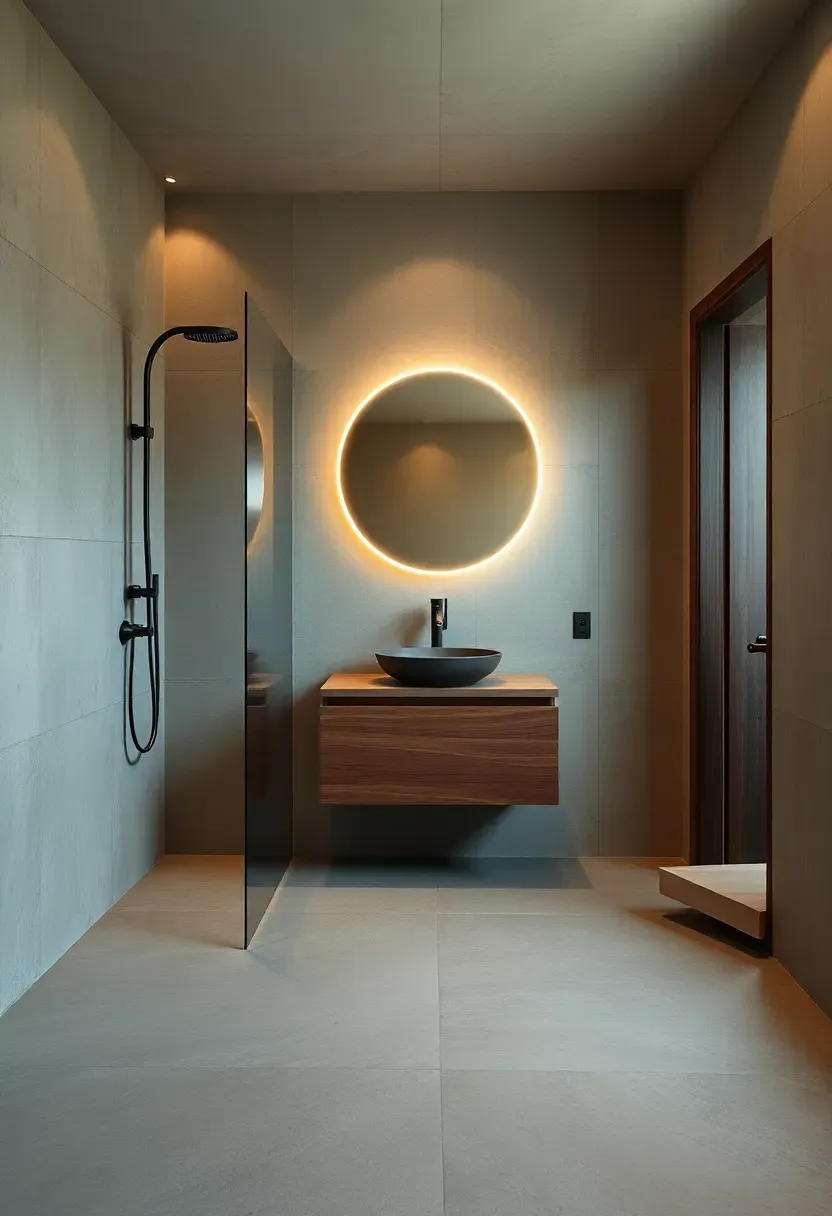
11. Concrete Microcement
The Problem
You want a seamless floor with no grout lines, no tile edges, no pattern repeats. Poured concrete is one option, but it is heavy, cracks, and requires structural support. Standard tiles always have joints.
The Solution
Microcement is a thin (2-3mm) polymer-modified cement coating applied over existing surfaces — including old tile. It cures to a smooth, continuous surface that can wrap from floor up onto walls and even into shower areas. Applied by a skilled installer in multiple thin coats, then sealed with polyurethane or epoxy, it becomes waterproof. The result is a monolithic surface with the look of polished concrete at a fraction of the weight and cost.
Pros and Cons
Upside: No grout lines, goes over existing floors, modern industrial aesthetic Downside: Requires a specialist installer, surface shows wear patterns over time, resealing every 2-3 years
12. Slate Tile
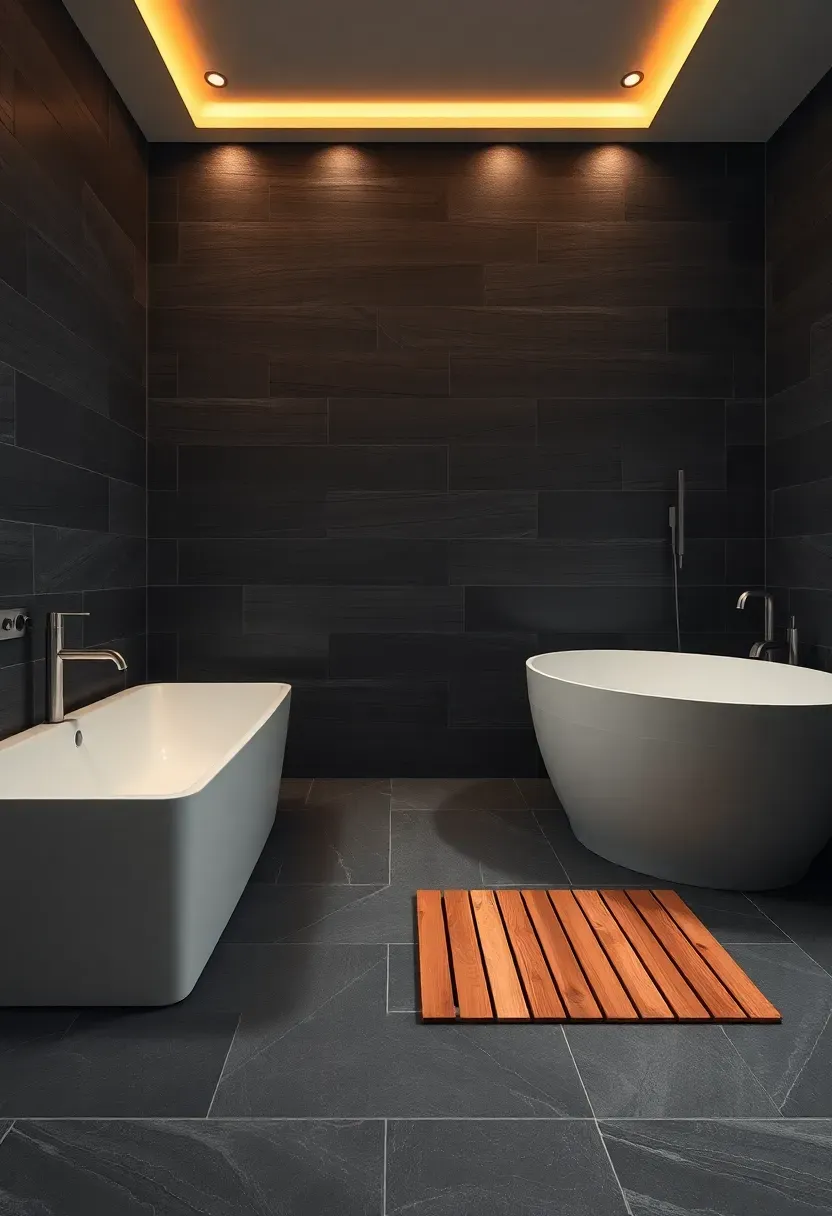
Slate has a naturally textured surface (called cleft) that provides excellent wet traction without any special treatment. The stone splits along natural planes, giving each tile a slightly rough, layered face. Color ranges from charcoal and blue-black through green, rust, and purple — sometimes multiple colors in a single tile. It is denser and less porous than marble or limestone, so it handles moisture well with basic sealing. The texture does make cleaning harder than smooth tile; a stiff brush works better than a flat mop.
Tips
- Gauged slate (machine-leveled on the back) is much easier to install than natural-cleft-back tiles
- Seal with a color-enhancing sealer to deepen the stone tones, or a natural-look sealer to keep the muted appearance
- Dark slate shows water spots less than light-colored stone
Recommended
Items for this idea
13. Herringbone Ceramic
Step 1: Choose the Tile Size
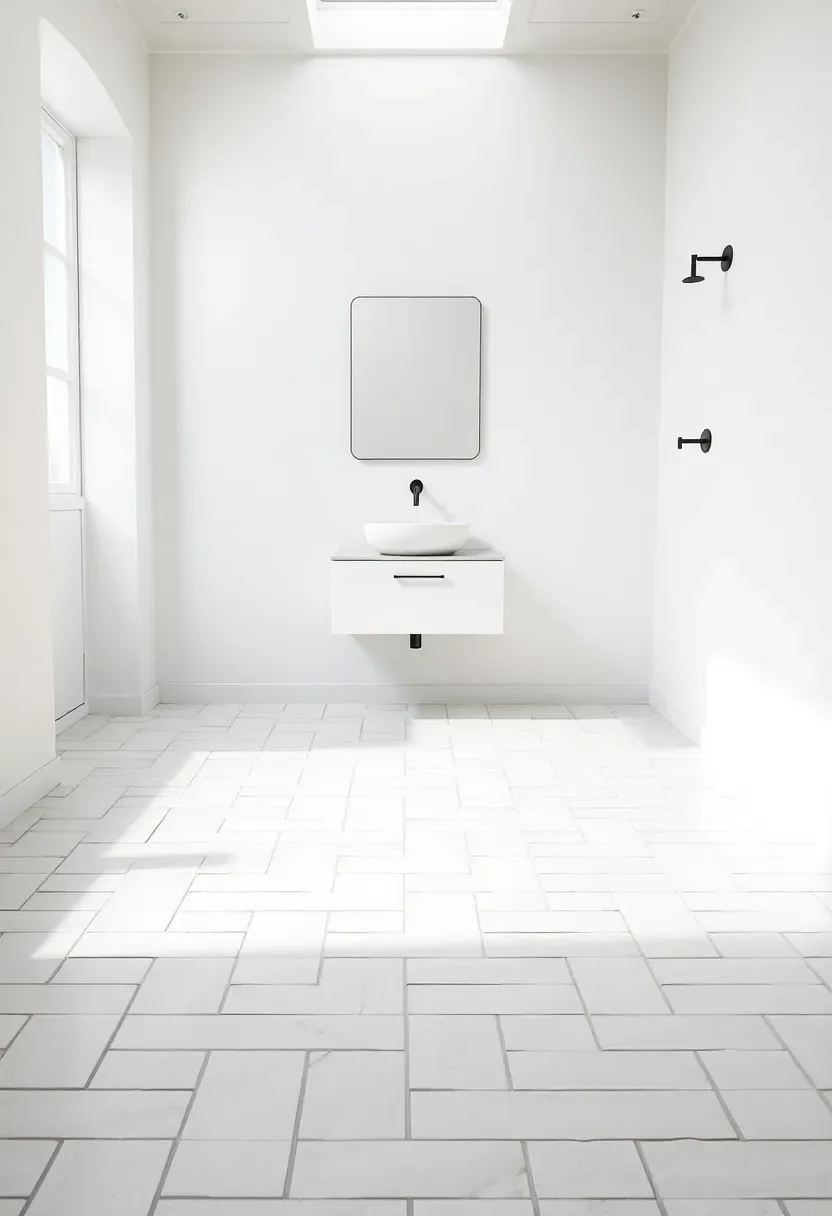
Herringbone works with rectangular tiles in a 2:1 ratio — 2x4 inch, 3x6 inch, or 4x8 inch are common. Smaller tiles create a more intricate pattern; larger tiles look bolder and install faster. For most bathrooms, 3x6 inch is the sweet spot.
Step 2: Set the Direction
The V-shaped points of a herringbone pattern can aim toward the door (draws the eye forward, elongating the room) or run side to side (making the room feel wider). Pick based on what your bathroom needs.
Step 3: Plan for Waste
Herringbone requires angled cuts along every wall edge. Budget 15-20% extra material beyond square footage to account for the cuts.
Watch Out
Herringbone has more grout lines per square foot than most patterns. Use a stain-resistant epoxy grout to keep maintenance manageable.
14. Vinyl Sheet Flooring
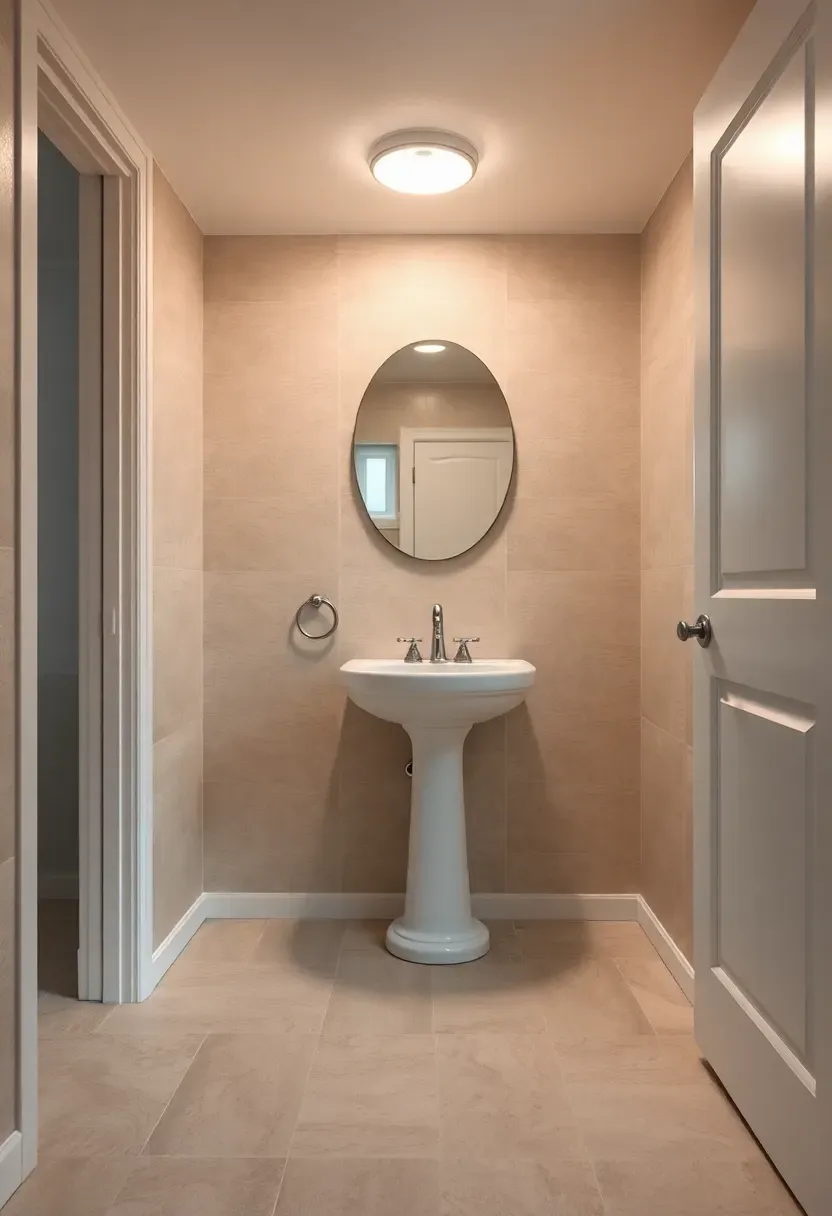
Do not dismiss sheet vinyl as a budget compromise. Modern sheet vinyl comes in realistic stone and wood patterns, installs as one continuous piece with zero seams in most bathrooms, and creates a truly waterproof surface because there are no joints for water to penetrate. It costs $1-4 per square foot for the material. The cushioned backing feels warmer and softer underfoot than any hard tile. Installation involves cutting to shape, dry-fitting, and adhering with vinyl flooring adhesive or double-sided tape.
Tips
- Fiberglass-reinforced sheet vinyl lays flatter and resists telegraphing subfloor imperfections
- Full-spread adhesive is more secure than perimeter-only taping in a bathroom
- Replace rather than repair if a section gets damaged — patching shows
Recommended
Items for this idea
15. Travertine Tile
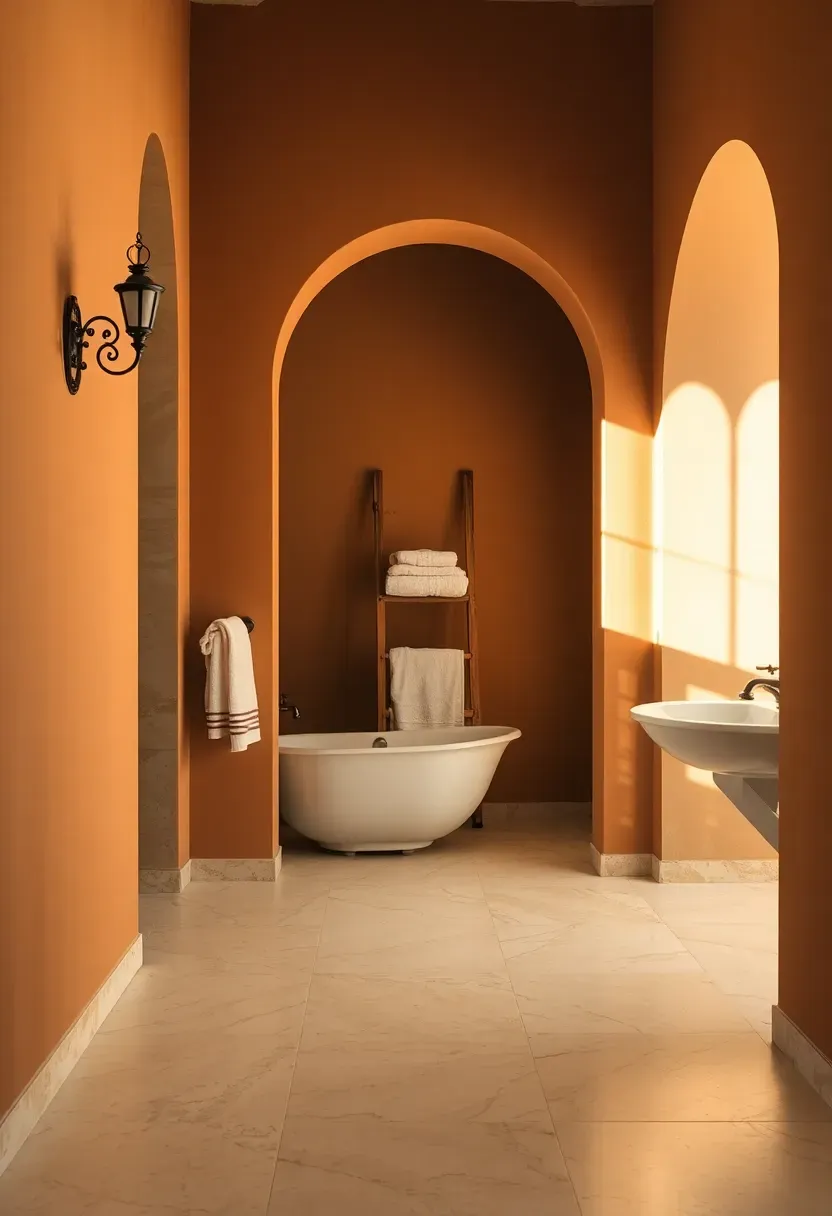
Travertine is a form of limestone deposited by mineral springs. It has natural pits and holes that are either left open (for a rustic, textured surface) or filled with epoxy or grout (for a smoother finish). In a bathroom, filled and honed travertine is the practical choice — the filled pits prevent water from pooling in crevices, and the honed matte surface gives enough traction while still looking refined. The warm ivory and beige tones work well in Mediterranean, transitional, or spa-inspired bathrooms.
Tips
- Honed finish over polished — polished travertine gets slippery and shows etching faster
- Seal every 6-12 months with a stone-specific impregnating sealer
- Avoid tumbled travertine on bathroom floors; the uneven surface collects water
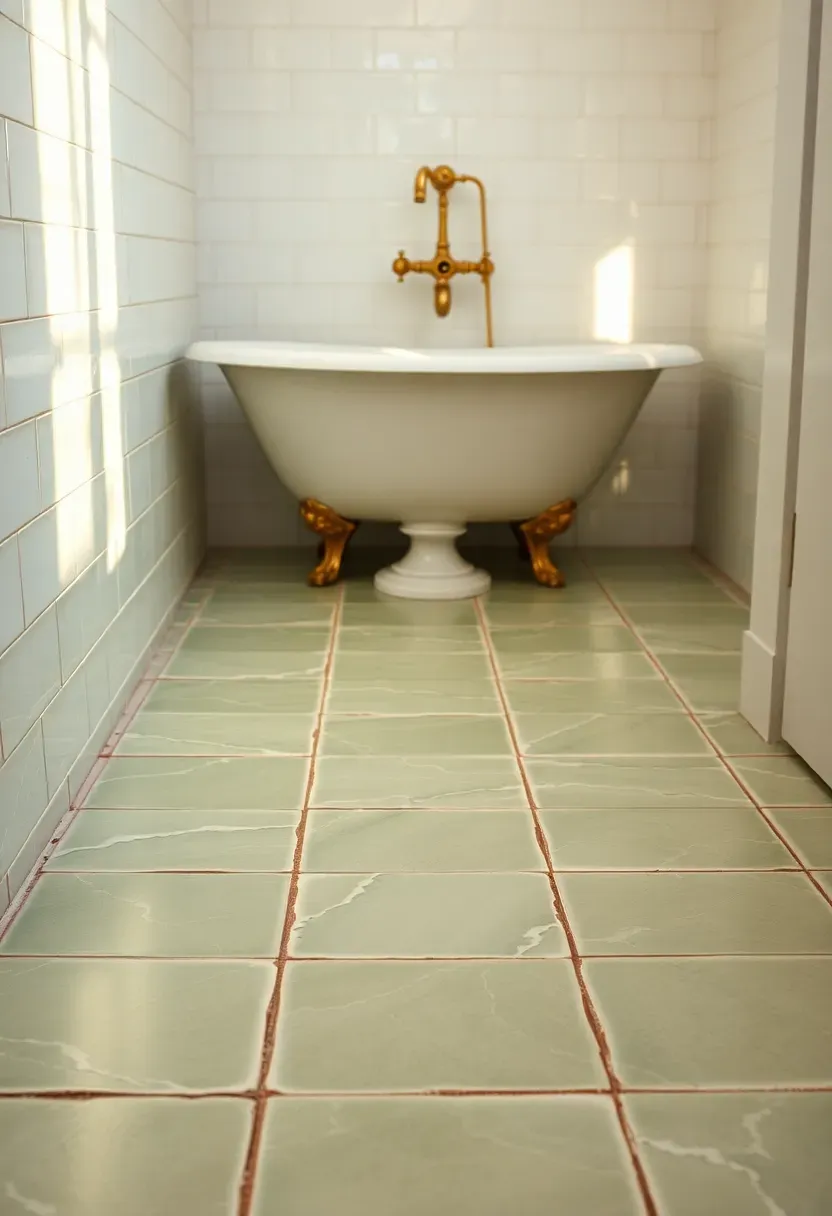
16. Zellige-Inspired Floor Tile
What Is Zellige
Zellige tiles are hand-cut and hand-glazed Moroccan tiles known for their irregular surfaces and rich color variation. Traditional zellige is made from a specific clay found in the Fez region and glazed individually, so no two tiles look alike. The slight waviness of the surface catches light at different angles, creating a shimmering effect.
For Bathroom Floors
True zellige is typically used on walls. For floors, look for zellige-inspired ceramic or porcelain tiles that capture the handmade look with better wear resistance. These replicas are thicker, more uniform in dimension (easier to install level), and fired at higher temperatures for greater durability. They come in the same rich colors — deep green, cobalt blue, terracotta, white — with intentional surface variation.
Apply at Home
- Use zellige-inspired floor tiles in a small powder room or half-bath where the pattern has maximum impact
- Keep walls simple when the floor has this much visual texture
- Pair with brass or unlacquered copper fixtures for a warm contrast
Recommended
Items for this idea
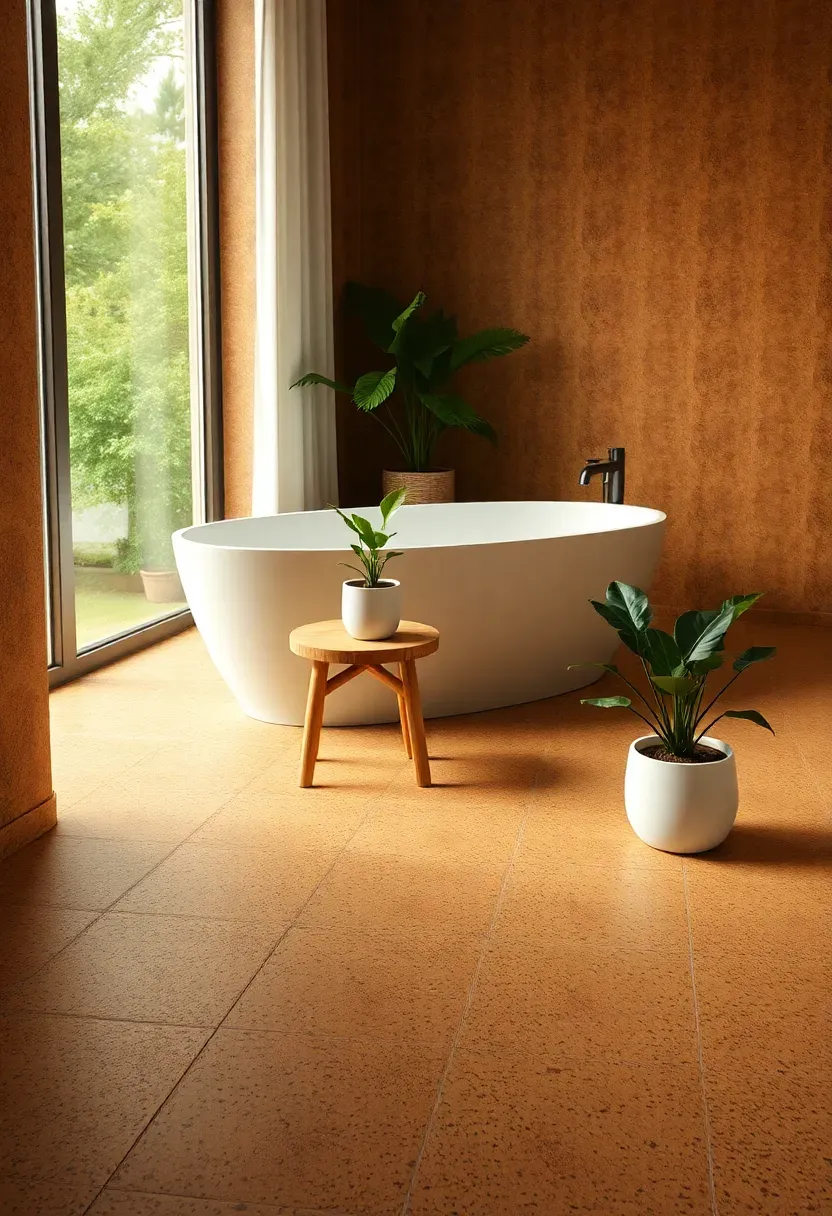
17. Cork Flooring
Cork is the surprise entry on this list. It is naturally antimicrobial, warm underfoot (cork does not conduct heat away from your feet like tile does), and has a slight cushion that is forgiving on joints. Sealed cork works in bathrooms — the key word being sealed. Factory-finished cork tiles or planks with a polyurethane topcoat resist water on the surface, but they are not fully waterproof. Spills need wiping up within a reasonable time. Cork also fades in direct sunlight, so it suits bathrooms without large south-facing windows better.
Tips
- Apply an additional coat of water-based polyurethane after installation for extra protection
- Use cork tiles with a click-lock system designed for wet areas
- Cork compresses under heavy loads but springs back — no permanent dents from normal furniture
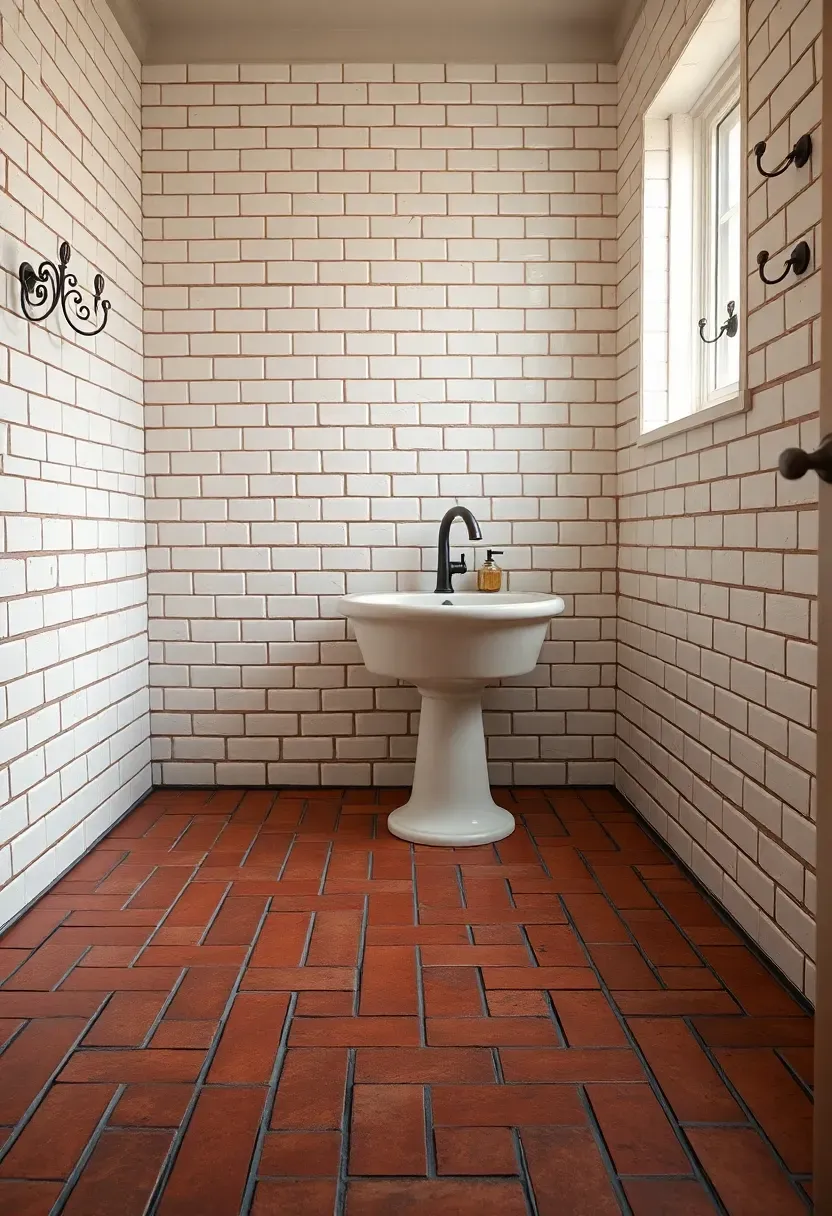
18. Brick-Pattern Quarry Tile
Quarry tile is unglazed clay fired at high temperatures. It has a dense, slightly rough surface that handles water well and provides natural slip resistance. The classic red-brown color works in farmhouse, industrial, and Spanish colonial bathrooms. Lay it in a running bond (brick) pattern with a narrow grout joint for a floor that looks like it has been there for a hundred years. Quarry tile is cheap — often $2-4 per square foot — and nearly indestructible. The tradeoff is that unglazed clay stains if not sealed, and the color options are limited to earth tones.
Tips
- Seal with a penetrating sealer before grouting to prevent grout haze from sticking to the porous surface
- Dark grout (charcoal or brown) ages better visually than light grout on quarry tile
- Avoid wax-based sealers that build up and yellow over time
Recommended
Items for this idea
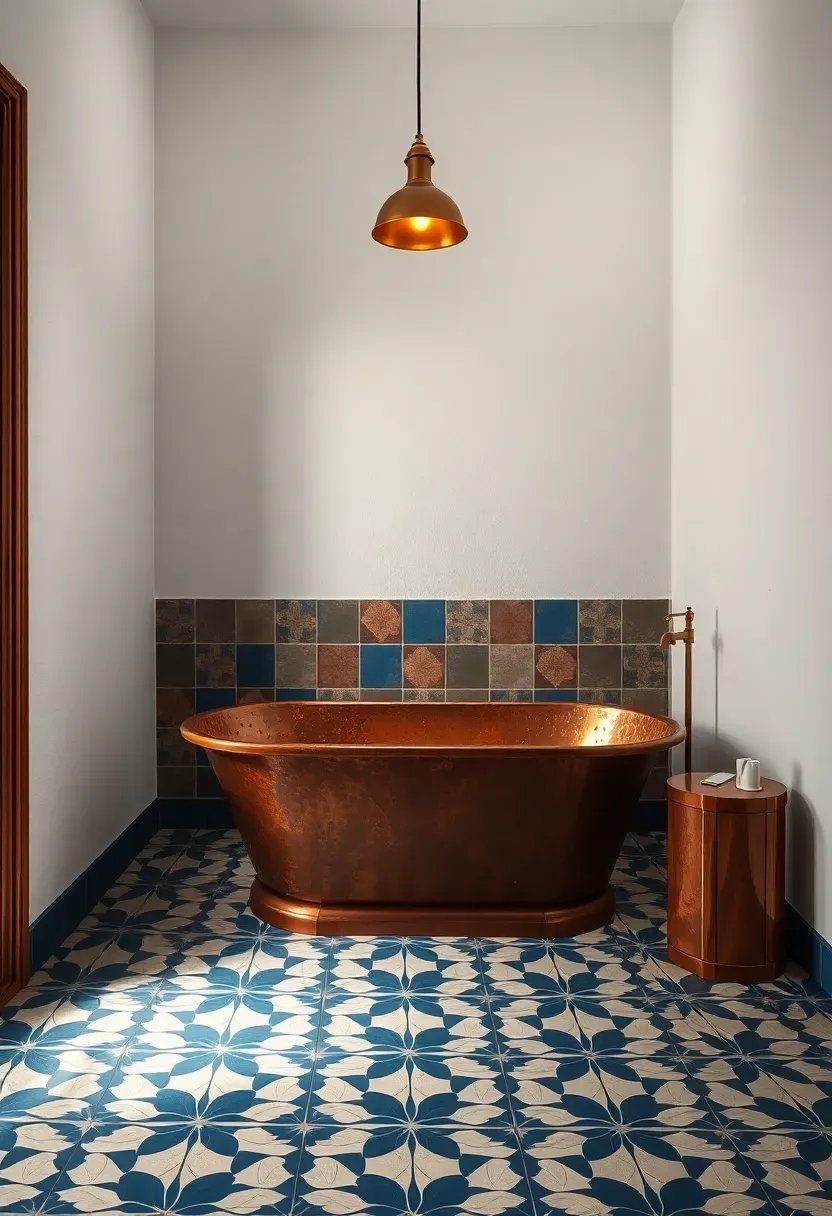
19. Encaustic Patterned Tile
Encaustic tiles use layers of colored cement to create patterns — no glaze, no printing. The design is part of the tile itself, so it does not wear off with foot traffic. These tiles turn a bathroom floor into the main design element of the room. A single bold pattern across the entire floor makes a small bathroom feel intentional and considered. Geometric motifs in two or three colors (blue and white, black and terracotta, gray and cream) are the most versatile. Because the patterns are strong, keep everything else in the room simple — plain white walls, simple fixtures, minimal accessories.
Tips
- Seal before and after grouting — encaustic cement is very porous
- Stick with geometric rather than floral patterns for a more contemporary look
- Mix patterned tiles with matching solid border tiles to frame the design
Quick FAQ
Which bathroom flooring is the most waterproof? Porcelain tile and vinyl (both sheet and LVP with SPC core) are the most water-resistant options. Porcelain absorbs less than 0.5% moisture, and vinyl is essentially impervious to water on the surface. Both handle standing water without damage if properly installed.
Can I install bathroom flooring over existing tile? Yes, in many cases. Microcement, LVP, and some thin porcelain tiles can go directly over old tile if the existing surface is level, well-bonded, and clean. This saves demolition time and cost. Check that the added height does not create problems at door transitions.
Is heated flooring worth the cost in a bathroom? If you live somewhere with cold winters and your bathroom has tile floors, radiant heat changes the daily experience significantly. The cost ($8-15 per square foot installed) pays for itself in comfort. It also reduces humidity-related issues because the warm floor helps moisture evaporate faster.
What bathroom floor is best for resale value? Porcelain tile remains the safest choice for resale. Buyers expect it, inspectors do not flag it, and it photographs well for listings. Marble adds value in higher-end homes. LVP is increasingly accepted but still perceived as a budget option by some buyers.
How do I keep grout lines clean on bathroom floors? Epoxy grout is the single best upgrade for any tiled bathroom floor. Unlike cement grout, epoxy does not absorb water or stain. It costs more and is harder to work with during installation, but it stays clean with basic mopping for years. For existing cement grout, apply a grout sealer every 6-12 months.
Your bathroom floor takes more abuse than almost any other surface in your home. Water, humidity, bare feet, cleaning chemicals, dropped razors — it deals with all of it daily. Pick a material that matches how you actually live rather than how a showroom looks. If you hate maintenance, skip natural stone and go with porcelain or LVP. If you want character that develops over time, cement tile or marble will reward you. Whatever you choose, spend the money on proper waterproofing underneath — a beautiful floor over a rotting subfloor is a very expensive mistake.
Pinterest cover for 19 Bathroom Flooring Ideas
About the author
OBCD
CGI visualization and interior design content. We create detailed 3D renders and curate practical design ideas for every room in your home.