23 Bathroom Lighting Ideas Over Mirror
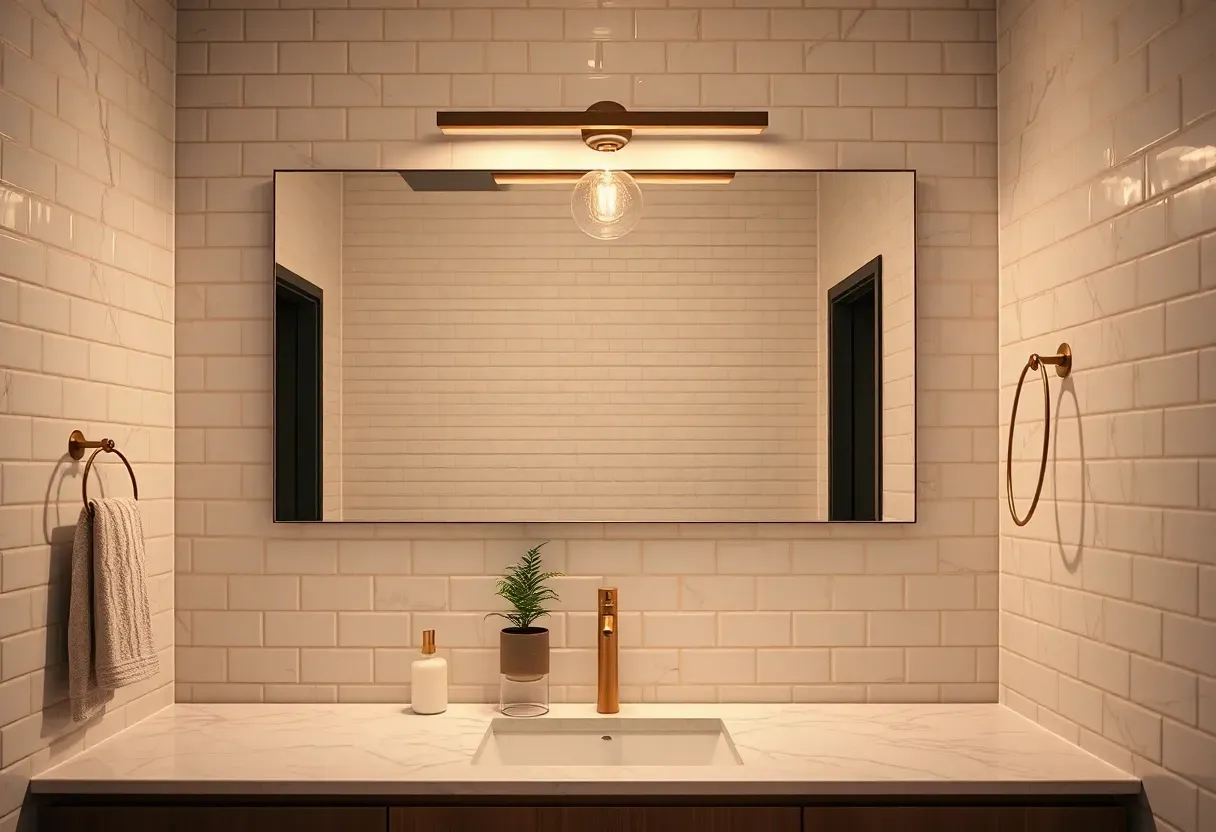
Bathroom mirrors need good light more than any other surface in the house. You stand in front of one every morning doing things that require accuracy — shaving, applying makeup, checking whether that spot on your chin is actually something to worry about. Yet most bathrooms ship with a single overhead fixture that casts shadows straight down your face, making everything harder to see. The fix is targeted lighting positioned at, above, or around the mirror itself.
Here are 23 over-mirror lighting setups organized by fixture type, from classic vanity bars to hidden LED channels. Each includes mounting specifics and guidance on color temperature.
Table of Contents
- Three-Light Vanity Bar in Brushed Brass
- Backlit LED Mirror
- Slim Picture Light
- Pair of Cylinder Sconces
- Industrial Gooseneck Lamp
- Recessed LED Channel Above Mirror
- Opal Globe Vanity Strip
- Adjustable Swing-Arm Wall Lamp
- Linear LED Pendant Over Vanity
- Hollywood-Style Bulb Frame
- Single Dome Flush Sconce
- Floating Shelf with Integrated Lighting
- Glass Cone Pendant Pair
- Matte Black Track Light
- Alabaster Wall Washer
- Vintage Schoolhouse Bracket
- Frameless Mirror with Perimeter LEDs
- Ceramic Wall Sconce Duo
- Caged Edison Bulb Fixture
- Linen Drum Shade Wall Light
- Minimalist LED Bar
- Articulated Brass Task Light
- Oversized Arch Mirror with Built-In Light
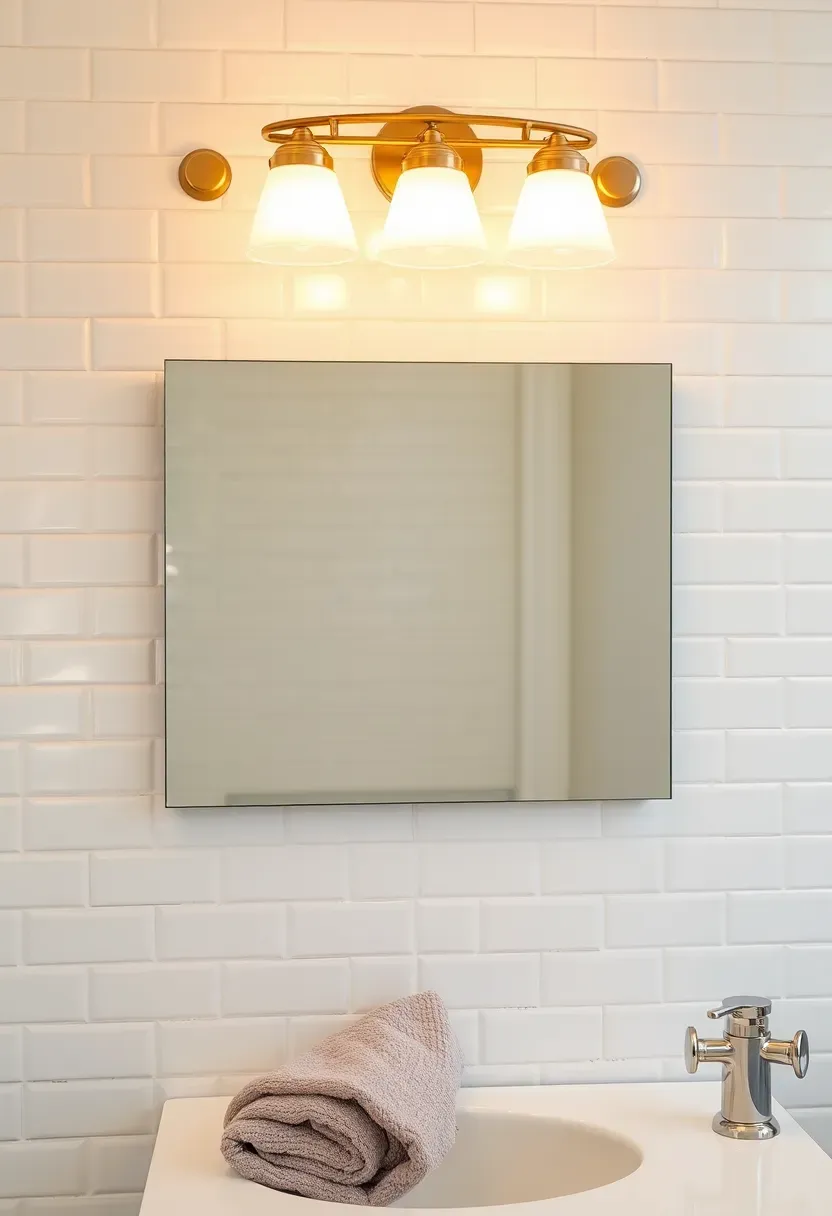
1. Three-Light Vanity Bar in Brushed Brass
The three-light vanity bar is the most common over-mirror fixture for a reason: it spreads light across the full width of a standard 36-inch mirror without requiring multiple junction boxes. Brushed brass versions have replaced chrome as the default finish in most new builds, and the warmer metal pairs well with both cool and warm tile tones. Mount it 78 inches from the floor to the fixture center for average-height users.
Tips
- Match the bar length to your mirror width — the fixture should be roughly 75% as wide as the mirror
- Use frosted glass shades to soften the light and reduce glare on the mirror surface
- Pair with a dimmer switch so you can drop the brightness for late-night bathroom trips
We picked a few things that go well with this idea: Modern 3-Light Brushed Gold Vanity Light (★4.7), CmnVmn Vintage Antique Brass 3-Light Vanity (★4.4) and Antique Brass 3-Light Vanity with Fabric Shades (★4.5). As an Amazon Associate we earn from qualifying purchases.
2. Backlit LED Mirror
Why This Works
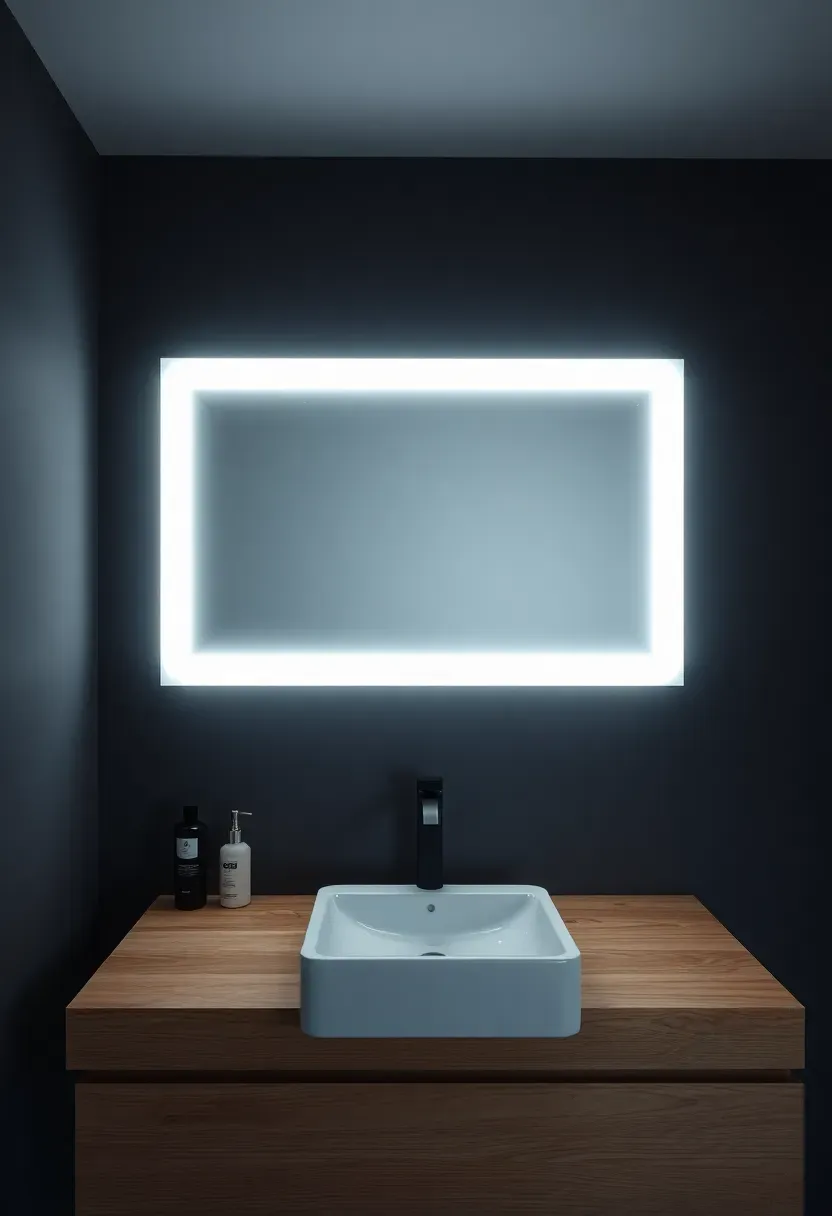
A backlit mirror places the light source behind the glass, projecting a soft halo outward along the edges. This creates even, shadow-free illumination across your face because the light wraps around the mirror's perimeter rather than hitting you from one direction. Most backlit mirrors draw 20-40 watts total, making them far more efficient than multi-bulb vanity bars.
What to Look For
Buy a mirror with a built-in defogger pad if your bathroom lacks a vent fan. Check the CRI rating — anything above 90 ensures accurate skin tone rendering. Hardwired models look cleaner than plug-in versions, but they require an electrician for installation.
Limitation
Backlit mirrors provide ambient and task light in one unit, but they cannot be aimed. If you need directional light for detailed grooming, supplement with a small sconce on the side.
We picked a few things that go well with this idea: LOAAO 24x32 LED Backlit Bathroom Mirror (★4.6), VanPokins 24x32 Dimmable LED Vanity Mirror (★4.8) and 40x30 LED Backlit Anti-Fog Bathroom Mirror (★4.2). As an Amazon Associate we earn from qualifying purchases.
3. Slim Picture Light
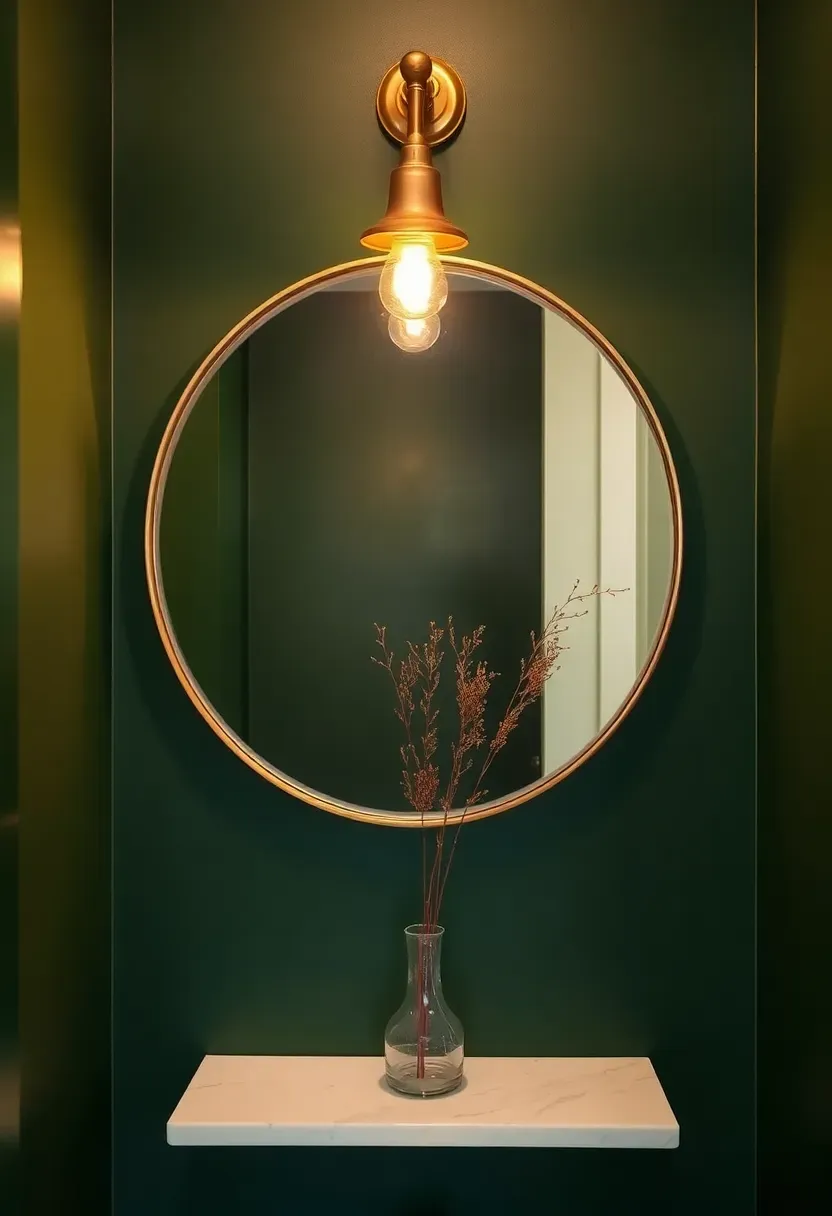
Picture lights — those slender fixtures originally designed to illuminate artwork — work surprisingly well above bathroom mirrors. The shade directs light downward in a controlled wash, hitting the mirror and your face without scattering across the ceiling. Brass and bronze finishes dominate, and most picture lights measure 14-24 inches wide.
Step 1: Measure the Mirror
The picture light should span 50-75% of the mirror's width. A 30-inch round mirror pairs best with a 16-18 inch fixture.
Step 2: Set the Height
Mount the picture light 2-3 inches above the mirror's top edge. Too close and it grazes the frame; too far and the light pool misses the useful zone.
Step 3: Pick the Right Bulb
Most picture lights use tubular T6 or T8 bulbs. Choose 2700K for warm bathrooms or 3000K for a neutral tone. Avoid anything above 4000K — it looks clinical at this close range.
We picked a few things that go well with this idea: Black and Gold Bathroom Sconces (Set of 2) (★4.7), Joosenhouse Dimmable LED Wall Sconces (Set of 2) (★4.4) and Brushed Gold Sconces with White Glass (Set of 2) (★4.4). As an Amazon Associate we earn from qualifying purchases.
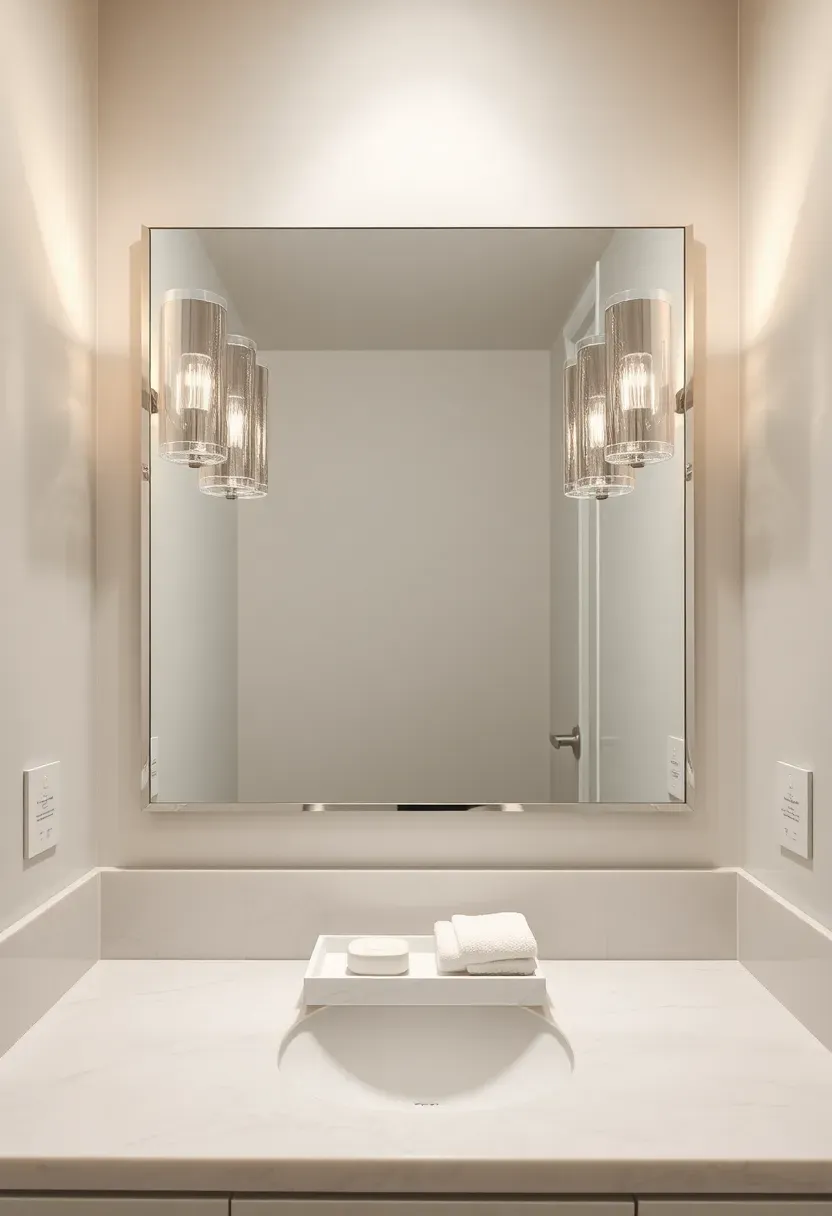
4. Pair of Cylinder Sconces
Flanking sconces mounted at face height (roughly 66 inches center from the floor) provide the best possible light for grooming because they illuminate both sides of your face equally. Cylinder sconces — tall, narrow tubes in metal or glass — are the most space-efficient option for this placement. They project only 3-4 inches from the wall, so they stay clear of the mirror edge even on narrow vanity walls.
Tips
- Space the sconces 36-40 inches apart for a single-sink vanity, wider for doubles
- Up-and-down light emission (open at both ends) creates the most flattering illumination
- Polished nickel resists bathroom humidity better than unlacquered brass, which will patina over time
Recommended
Items for this idea
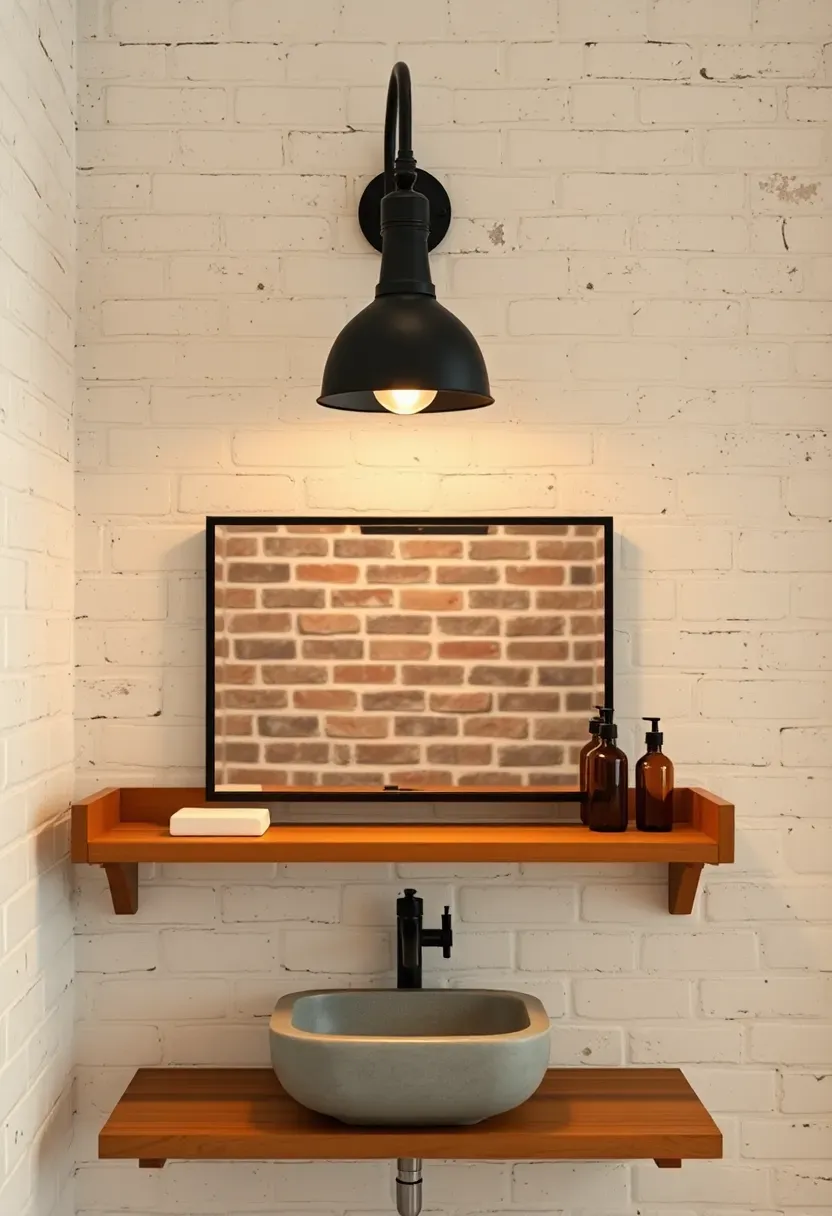
5. Industrial Gooseneck Lamp
The Problem
Standard vanity bars feel too polished for bathrooms with raw or industrial finishes — exposed brick, concrete, open pipe shelving. The fixture needs to match the material honesty of the space.
The Fix
A gooseneck lamp with a curved arm and metal dome shade brings barn-light character to the vanity area. The arm holds the shade 8-12 inches away from the wall, throwing a concentrated pool of light directly onto the mirror and counter. Matte black and oil-rubbed bronze are the typical finishes. The dome shade prevents upward light spill, keeping all the output where it matters.
Pros and Cons
- Pro: Strong directional light, durable powder-coated finish, affordable ($40-$120)
- Pro: Single junction box needed, straightforward installation
- Con: Limited spread — one gooseneck covers about 24 inches of vanity width, so double sinks need two
6. Recessed LED Channel Above Mirror
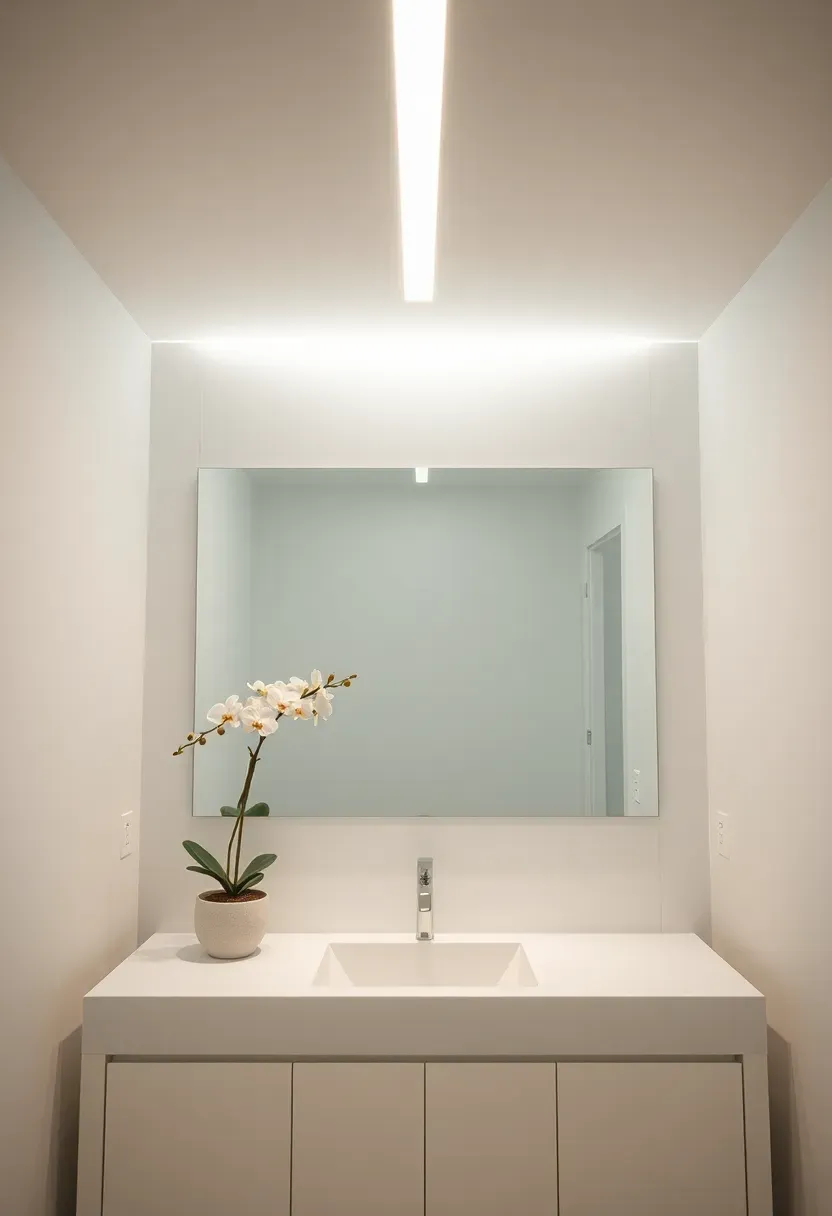
An aluminum LED channel recessed into the drywall directly above the mirror creates a seamless line of light with no visible fixture. The channel holds an LED strip behind a frosted diffuser lens, producing a uniform wash down the mirror face. This approach works best in new construction or major renovations because it requires a slot cut into the wall or ceiling soffit.
Tips
- Use a channel at least as wide as your mirror for edge-to-edge coverage
- Specify high-CRI LED strips (CRI 95+) so colors read accurately in the mirror
- Connect to a 0-10V or TRIAC dimmer — cheap dimmers cause LED flicker at low settings
Recommended
Items for this idea
7. Opal Globe Vanity Strip
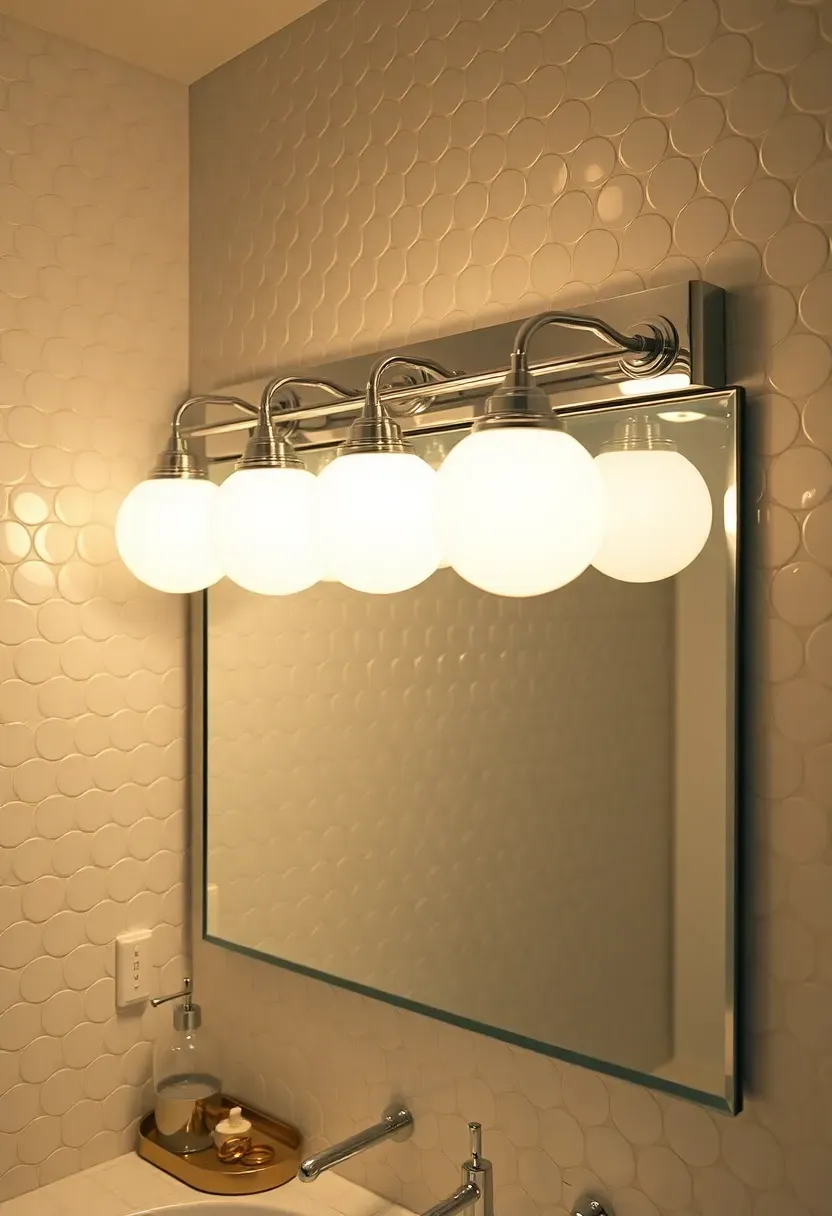
The opal globe strip — four to six white glass spheres on a horizontal bar — is a mid-century holdover that still works. The spherical shades emit light in all directions, bouncing it off the mirror, ceiling, and walls simultaneously. This makes the fixture both a task light and an ambient source. The downside is brightness: six 60-watt-equivalent globes produce a lot of light, so a dimmer is essential.
When to Choose This
Pick an opal globe strip when your bathroom has low ceilings (under 8 feet) and no room for pendant or hanging fixtures. The strip mounts flat against the wall, adding no more than 8 inches of projection. It also suits retro-themed bathrooms, mid-century renovations, and anything inspired by classic American diners.
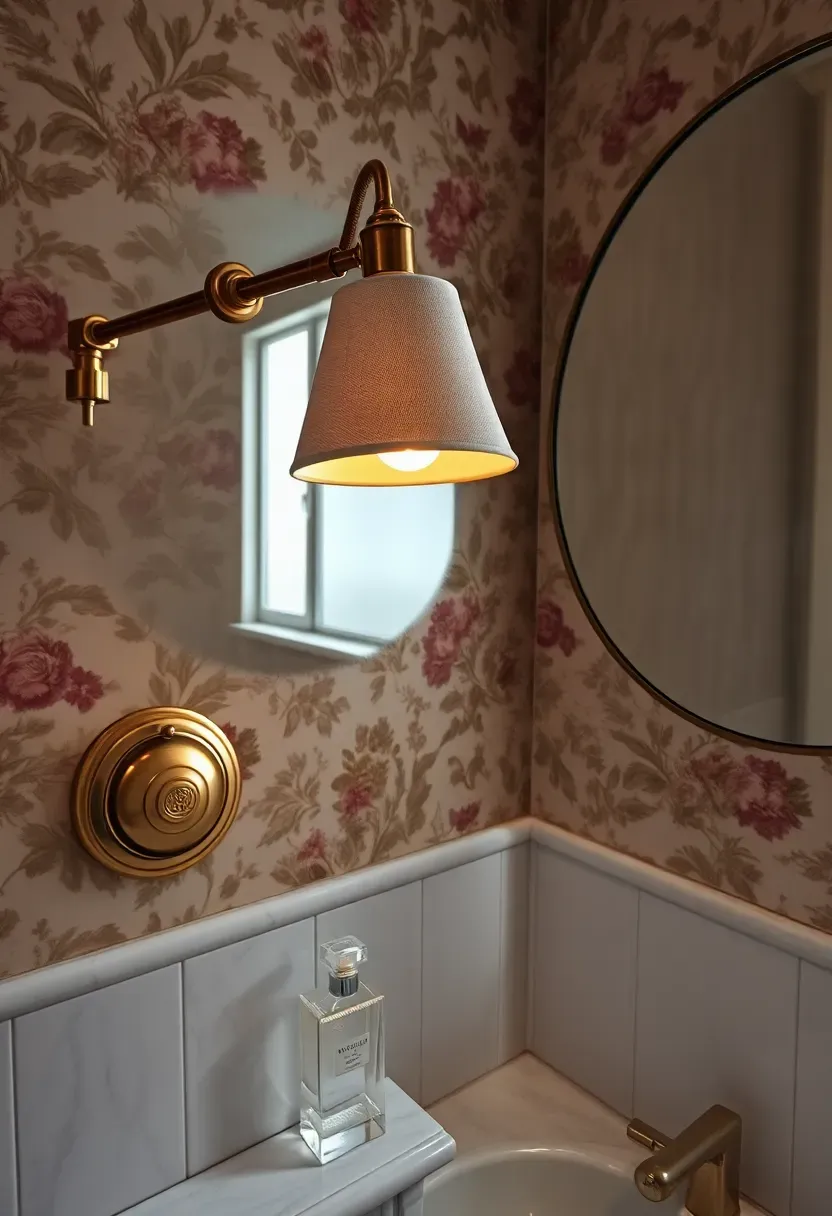
8. Adjustable Swing-Arm Wall Lamp
Why Consider This
Swing-arm lamps let you pull the light source closer when you need detail work — tweezing, applying eyeliner, contact lens insertion — and push it back flush against the wall the rest of the time. That flexibility is hard to get from any fixed-mount fixture.
Where It Fits
This approach works best next to a mirror rather than directly above it. Mount one on each side of the mirror, or use a single arm on the side where you need the most light. The style leans traditional: brass with a linen shade is the classic version. For modern bathrooms, look for matte black arms with a bare bulb or a metal cone shade.
Practical Note
Swing-arm lamps extend 18-24 inches from the wall. Make sure the arm does not swing into the mirror when extended. Leave at least 4 inches between the mirror edge and the mounting plate.
Recommended
Items for this idea
9. Linear LED Pendant Over Vanity
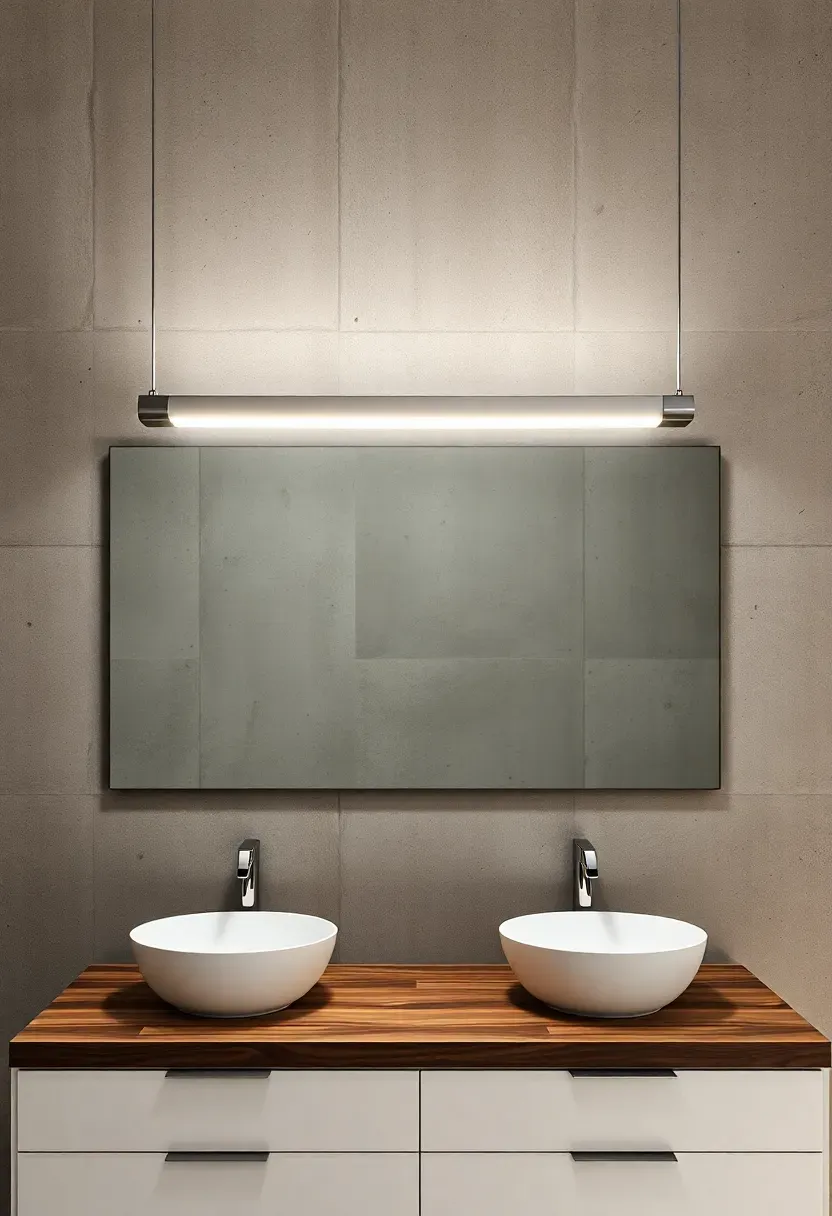
A horizontal LED pendant suspended on thin cables 6-10 inches below the ceiling puts a clean line of light directly above the mirror plane. The pendant form gives the fixture visual weight that a recessed channel lacks, making it a design element rather than just an infrastructure component. Most linear pendants run 36-60 inches long, scaling naturally with double-sink vanities.
Step 1: Determine the Drop Length
Subtract 78 inches (ideal fixture center height) from your ceiling height. That is your cable drop length. Most linear pendants include adjustable cables up to 48 inches.
Step 2: Align with the Mirror
Center the pendant over the mirror's horizontal midpoint, not the vanity's midpoint. These often differ by 2-3 inches when the vanity includes a side tower or open shelf section.
Step 3: Set Color Temperature
Choose 3000K for a balanced, slightly warm output. This temperature flatters skin tones while keeping whites looking white, which matters when checking clothing stains or tooth color.
10. Hollywood-Style Bulb Frame
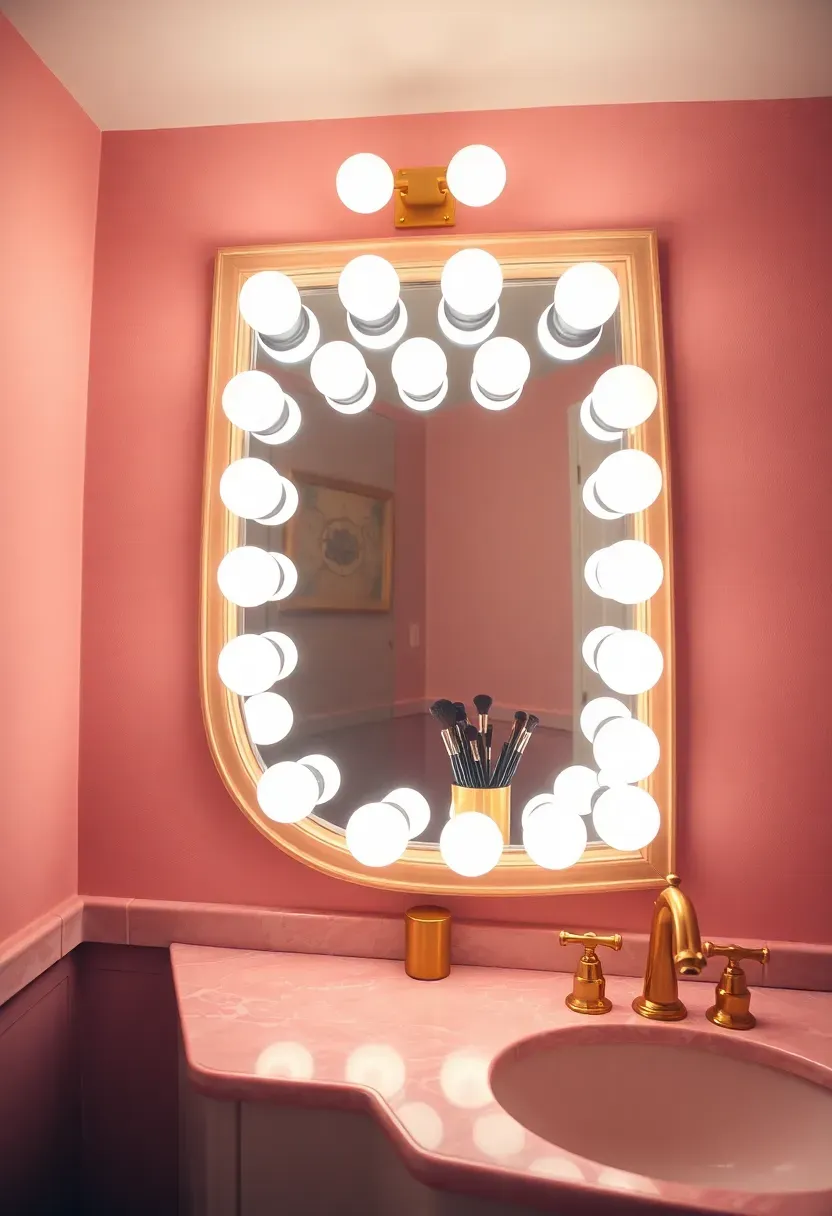
The Hollywood vanity mirror — bare round bulbs framing a rectangular mirror on three or four sides — provides the most even facial illumination of any fixture configuration. Every shadow gets filled because light arrives from above, below, and both sides simultaneously. It originated in theatrical dressing rooms and spread to residential bathrooms through celebrity culture and makeup tutorial videos.
Tips
- Use G25 globe bulbs (3.1-inch diameter) at 2700K for the authentic look
- Avoid LED filament bulbs here — they produce visible hot spots in the mirror's reflection
- Install a dimmer rated for the total wattage of all bulbs combined
- The frame can be DIY (pine strip with porcelain sockets) or purchased as a complete unit ($150-$500)
Recommended
Items for this idea
11. Single Dome Flush Sconce
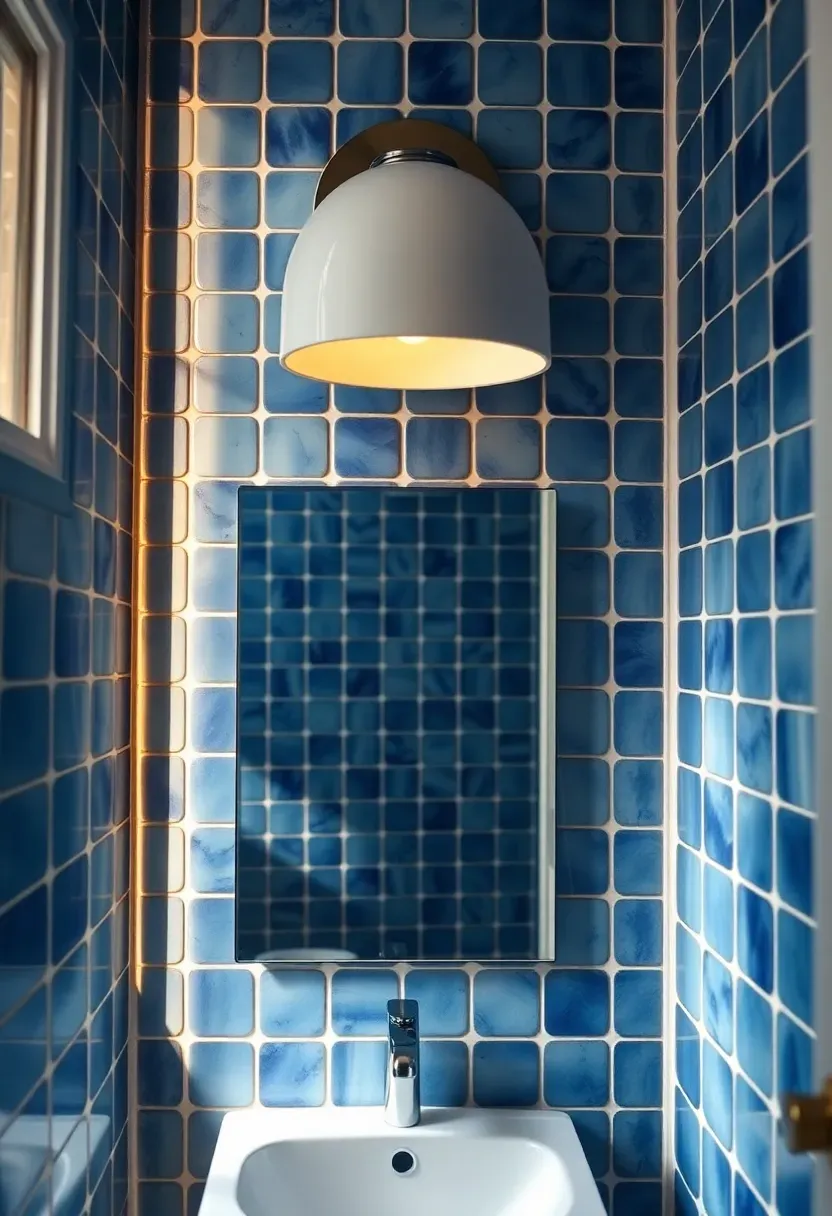
Sometimes a bathroom is too small for a multi-light bar or flanking pair. A single flush sconce — a half-dome or mushroom shape mounted directly above the mirror — handles the job in bathrooms under 40 square feet. The dome shape pushes light downward and outward, covering the mirror surface and the upper body of anyone standing in front of it.
The Trade-off
One fixture means some shadow under the chin and nose. For basic grooming this is fine. For makeup application, supplement with a portable lighted mirror on the counter. The advantage is simplicity: one junction box, one switch, one fixture.
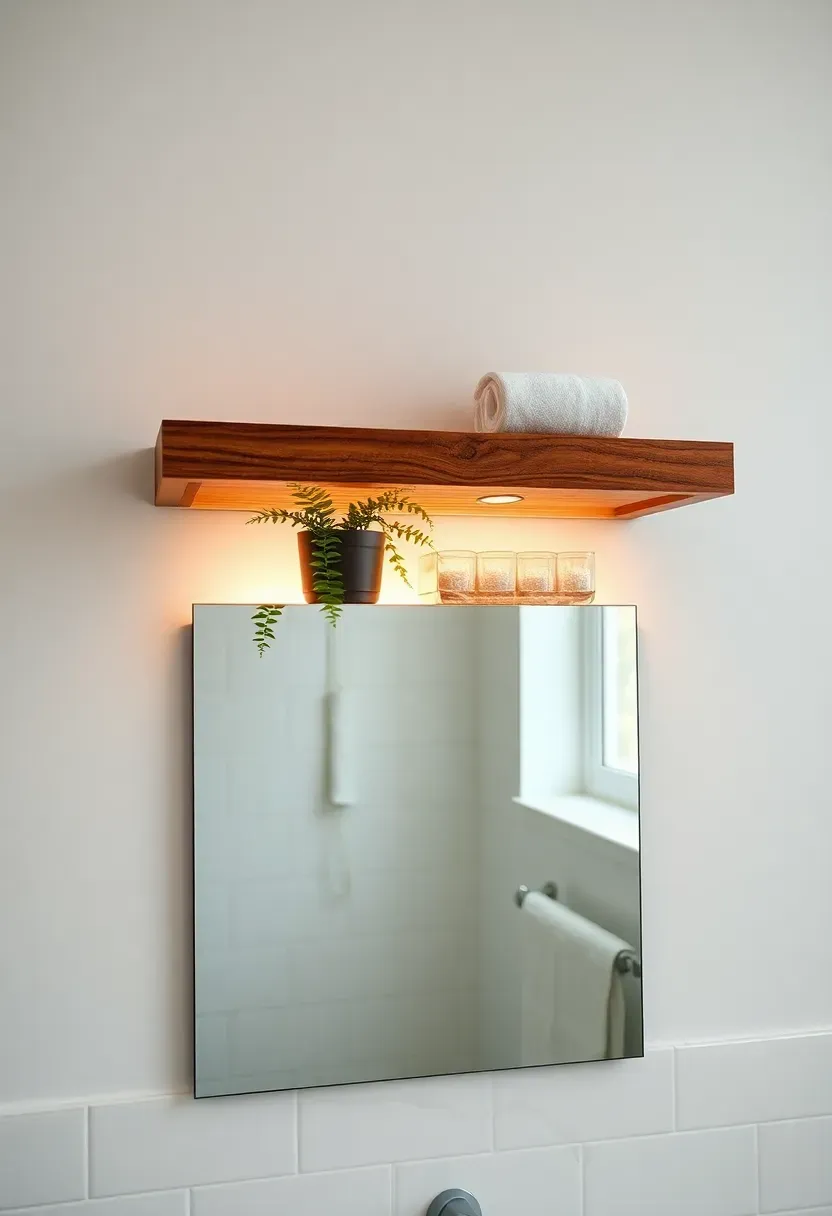
12. Floating Shelf with Integrated Lighting
The Idea
Mount a floating shelf 4-6 inches above the mirror's top edge and attach an LED strip to its underside. The shelf hides the light source completely, and the downward wash illuminates the mirror while the shelf provides storage for small items — a candle, a plant, rolled washcloths.
How to Build It
Use a 1x6 or 1x8 board in moisture-resistant wood (teak, cedar, or sealed poplar). Attach a high-CRI LED strip with adhesive backing to the shelf's bottom face, 1 inch from the front edge. Run the low-voltage wire through the wall to a driver mounted inside the vanity cabinet or behind the mirror.
Best For
Renters and anyone avoiding permanent fixture installation. The shelf can be removed without patching more than two screw holes.
Recommended
Items for this idea
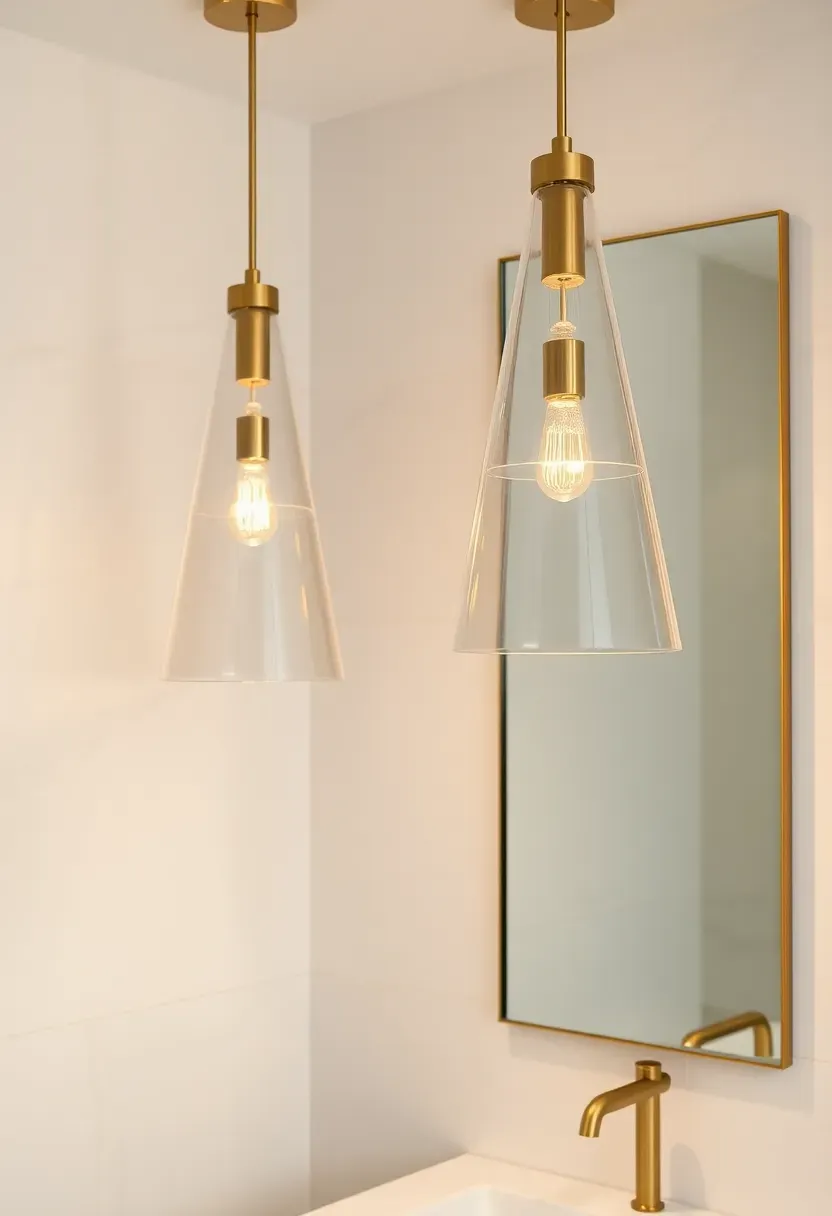
13. Glass Cone Pendant Pair
Cone-shaped glass pendants hung on either side of the mirror at staggered heights add visual interest without blocking sightlines. Clear glass keeps the fixture light and airy, while the cone directs a wider light spread downward compared to cylindrical shapes. This setup works particularly well with tall, narrow mirrors where flanking sconces might look too compact.
Tips
- Stagger the pendants by 3-4 inches in height for a relaxed, collected look
- Use canopy covers that match your faucet finish for visual continuity
- Hang the lower pendant at eye level (about 60-64 inches center from floor) for optimal face lighting
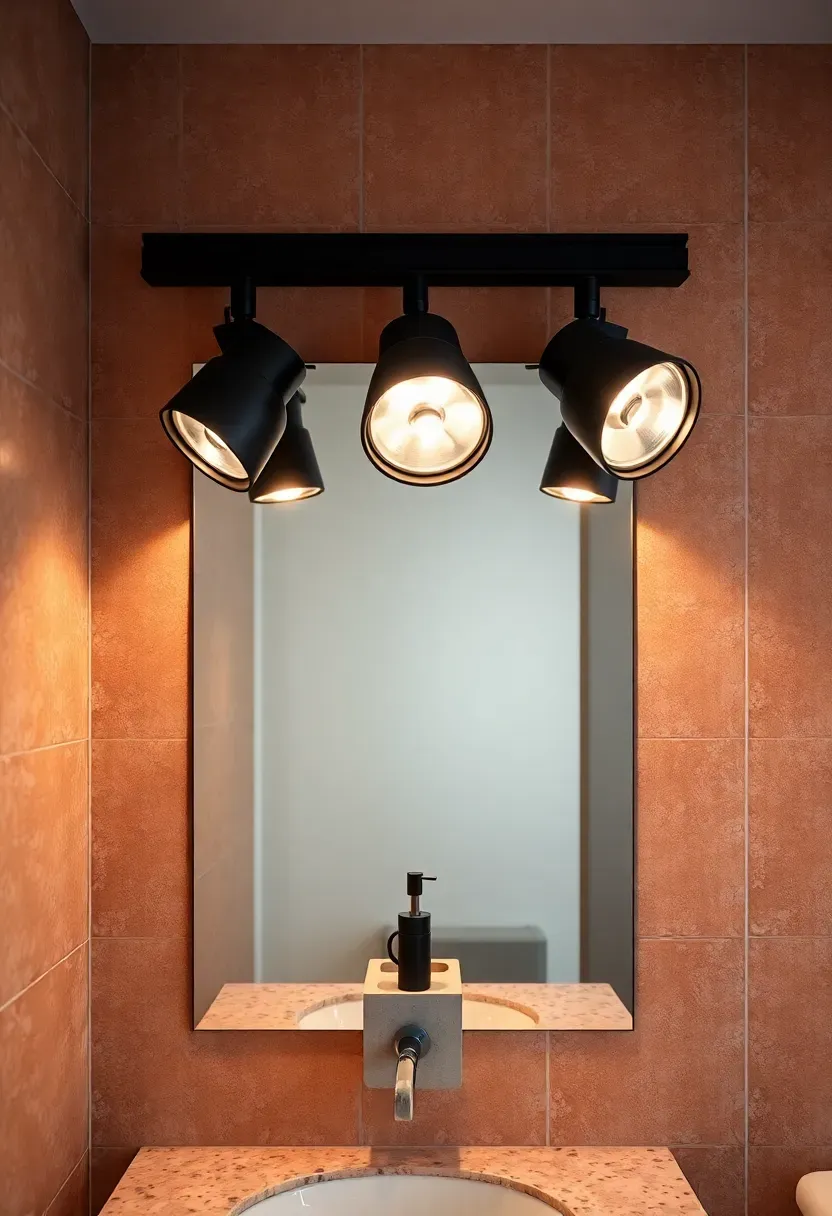
14. Matte Black Track Light
The Core Problem
Fixed vanity lights cannot be redirected. If your mirror is off-center, oversized, or shared between two people standing at different spots, the light coverage never quite lines up.
The Fix
A track light with three adjustable heads lets you aim each head independently. Point one at the left sink zone, one at the right, and one straight down at the mirror center. Matte black track hardware has shed its commercial-space stigma and now reads as intentional in modern residential bathrooms, especially alongside black faucets and matte tile.
Choosing Heads
Use gimbal-style heads with a 30-40 degree beam angle. Narrower beams create hot spots; wider beams waste light on areas that do not need it. GU10 bulbs in 3000K give the best color balance.
Recommended
Items for this idea
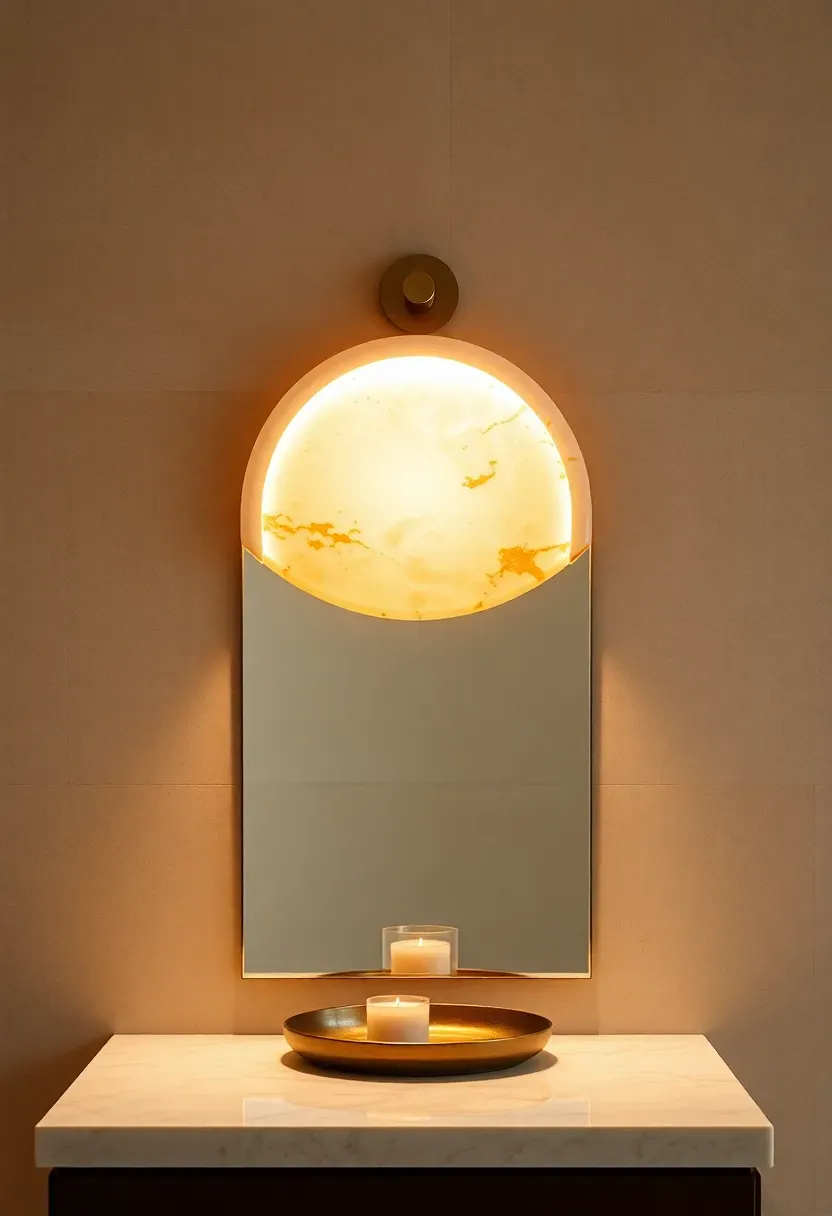
15. Alabaster Wall Washer
Alabaster — a natural stone carved thin enough to transmit light — produces a warm, uneven glow that no synthetic material can duplicate. Each piece has unique veining, so every fixture looks slightly different. A half-moon or shield-shaped alabaster sconce mounted above the mirror washes soft, diffused light downward while the stone itself glows from within.
Step 1: Verify the Stone
Real alabaster is heavy (a 12-inch sconce weighs 5-8 pounds) and cool to the touch. Resin imitations are lighter and warmer. Check the fixture's material listing carefully before buying.
Step 2: Use Low-Wattage Bulbs
Alabaster absorbs some light, so what reaches the mirror is already softened. A single 40-watt-equivalent LED behind the stone is enough. Higher wattage risks heat buildup against the stone surface.
Step 3: Secure the Mounting
The weight requires a wall anchor rated for at least 25 pounds or direct attachment to a stud. Standard drywall anchors are not sufficient for alabaster fixtures.
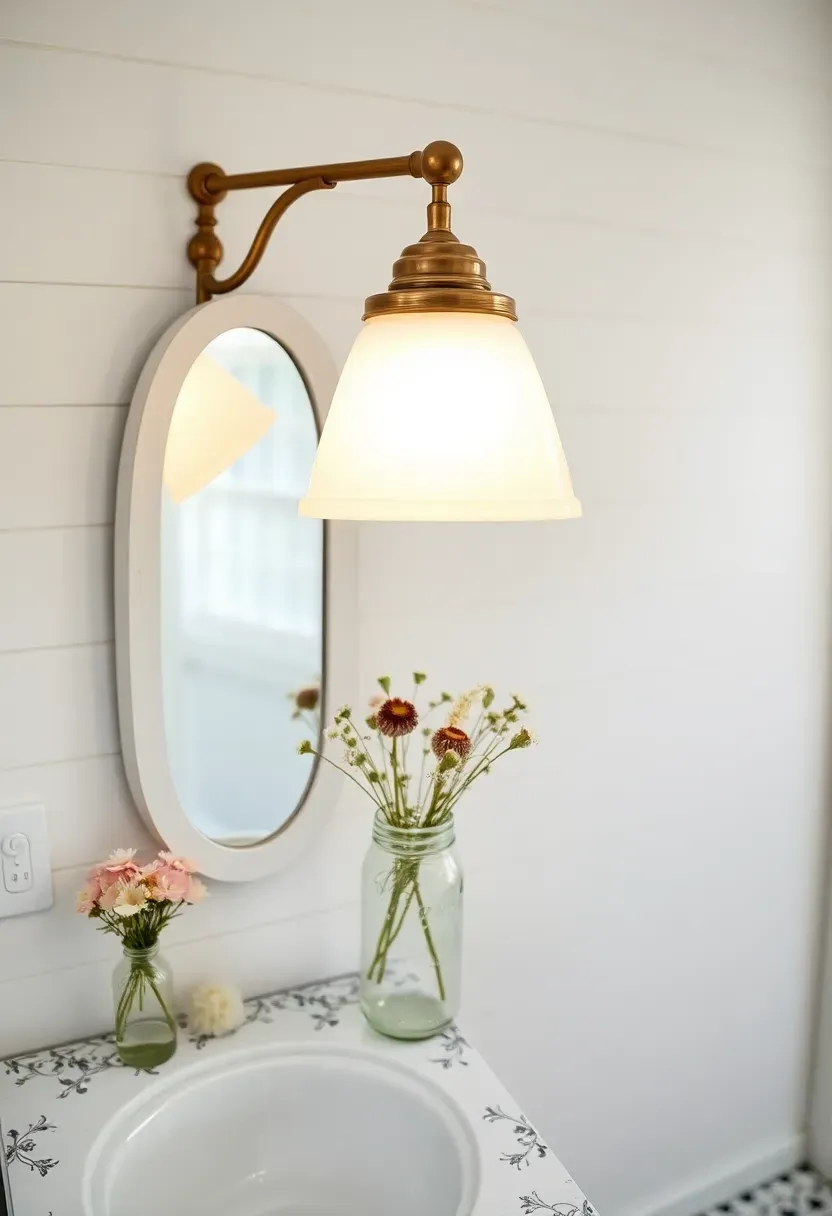
16. Vintage Schoolhouse Bracket
The schoolhouse bracket light — a single opal glass bell shade on a curved brass or iron arm — dates to early 1900s American architecture. It mounts above the mirror on a wall plate and extends the shade 6-8 inches outward, placing the light source roughly over the front edge of the vanity counter rather than flat against the wall.
Why This Placement Matters
A light source positioned slightly forward of the mirror plane reduces glare on the glass surface. You see your reflection lit by soft ambient glow rather than a bright spot bouncing back at you. The curved bracket achieves this without any complicated installation — just a standard junction box.
Recommended
Items for this idea
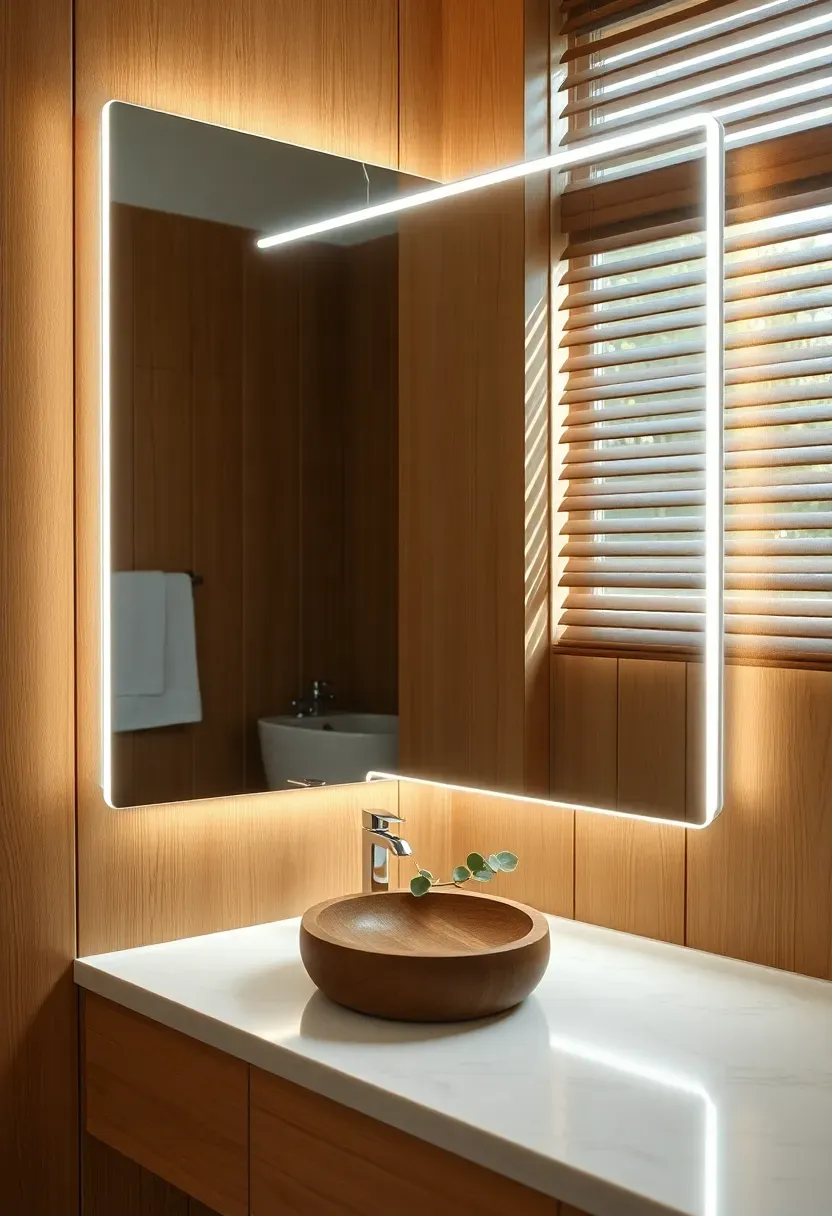
17. Frameless Mirror with Perimeter LEDs
Unlike backlit mirrors where the LED sits behind the glass, perimeter-lit mirrors place the LED strip at the very edge, visible as a thin glowing border. The effect is more architectural — closer to a light frame than a halo. These mirrors typically include touch-sensor controls for on/off and dimming, eliminating the need for a separate wall switch.
Backlit vs. Perimeter: The Difference
Backlit mirrors project light outward from behind, creating a soft glow on the wall. Perimeter mirrors emit light forward from the edge, providing more direct illumination on your face. For grooming tasks, perimeter wins. For mood lighting, backlit wins. Some high-end models offer both modes.
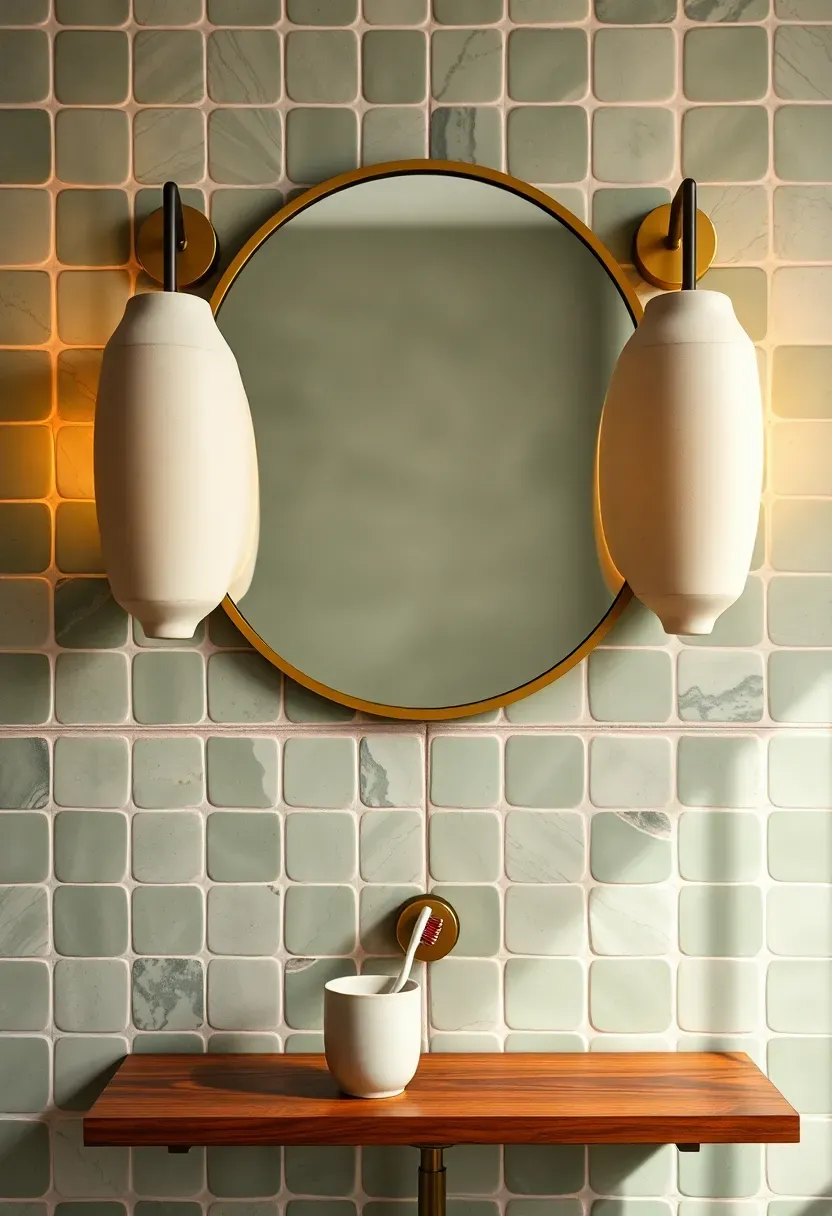
18. Ceramic Wall Sconce Duo
Handmade ceramic sconces bring texture and imperfection to bathroom walls in a way that metal and glass fixtures cannot. The clay body diffuses light softly, and the surface — whether glazed, unglazed, or partially finished — adds tactile interest above the vanity. Pair them on either side of a round mirror for balanced lighting with artisan character.
Tips
- Look for sconces by small-studio ceramicists rather than mass-market versions — the handmade quality is the entire point
- Glazed ceramic handles humidity better than unglazed bisque, which can absorb moisture over time
- Mount at 62-66 inches center from the floor, aligned with the mirror's horizontal midline
Recommended
Items for this idea
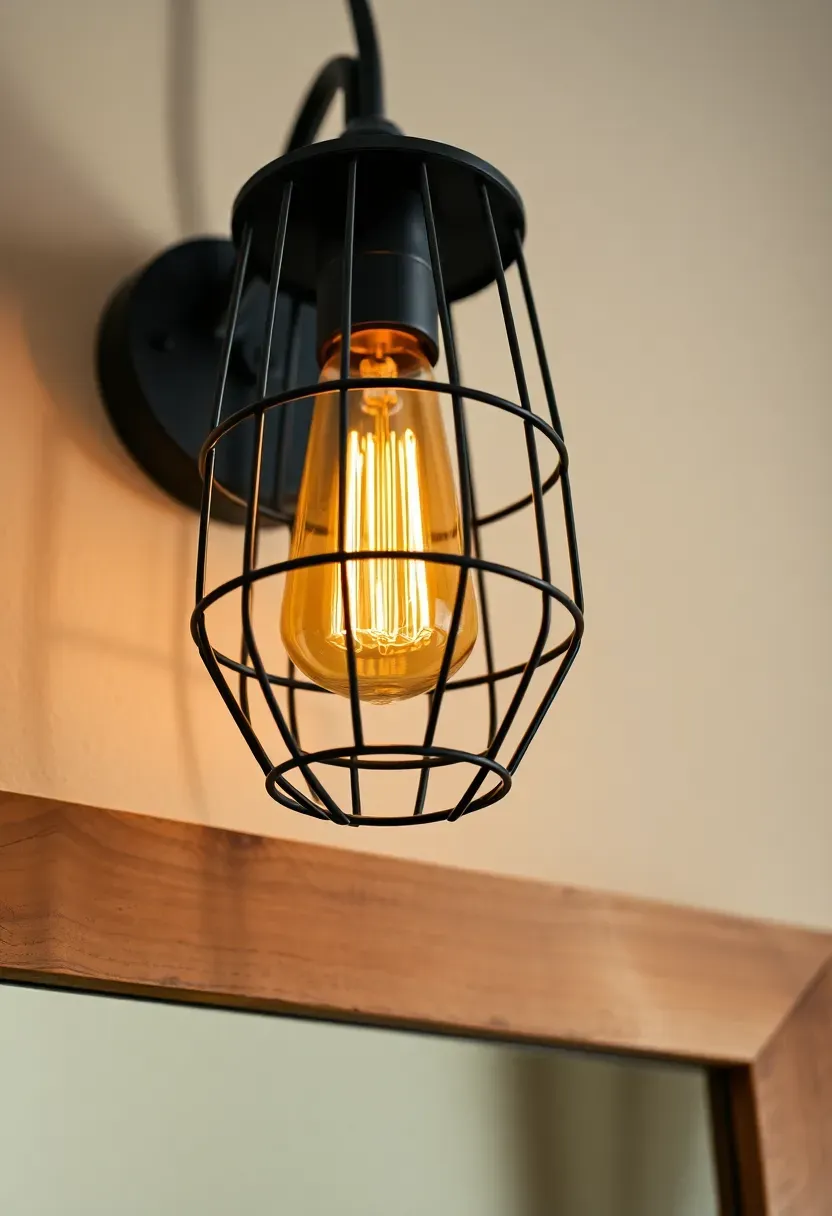
19. Caged Edison Bulb Fixture
The Appeal
A metal cage around an exposed filament bulb combines two popular aesthetic elements: industrial hardware and vintage lighting. The cage casts geometric shadow patterns on the wall and ceiling, adding visual texture to an otherwise plain surface. Above a reclaimed-wood mirror frame or in a bathroom with raw-edge details, this fixture feels right at home.
Practical Concerns
Edison-style filament bulbs prioritize appearance over output. A standard ST64 filament LED produces around 400 lumens — roughly equivalent to a 40-watt incandescent. That is enough for ambient mood but not for close-up grooming. Pair this fixture with a second light source (a lighted mirror or under-cabinet LED strip) if you need task-level brightness.
Mounting Position
Center the fixture 4-6 inches above the mirror's top edge. If using two caged fixtures flanking the mirror, match the cage diameter to the mirror frame width so the proportions stay balanced.
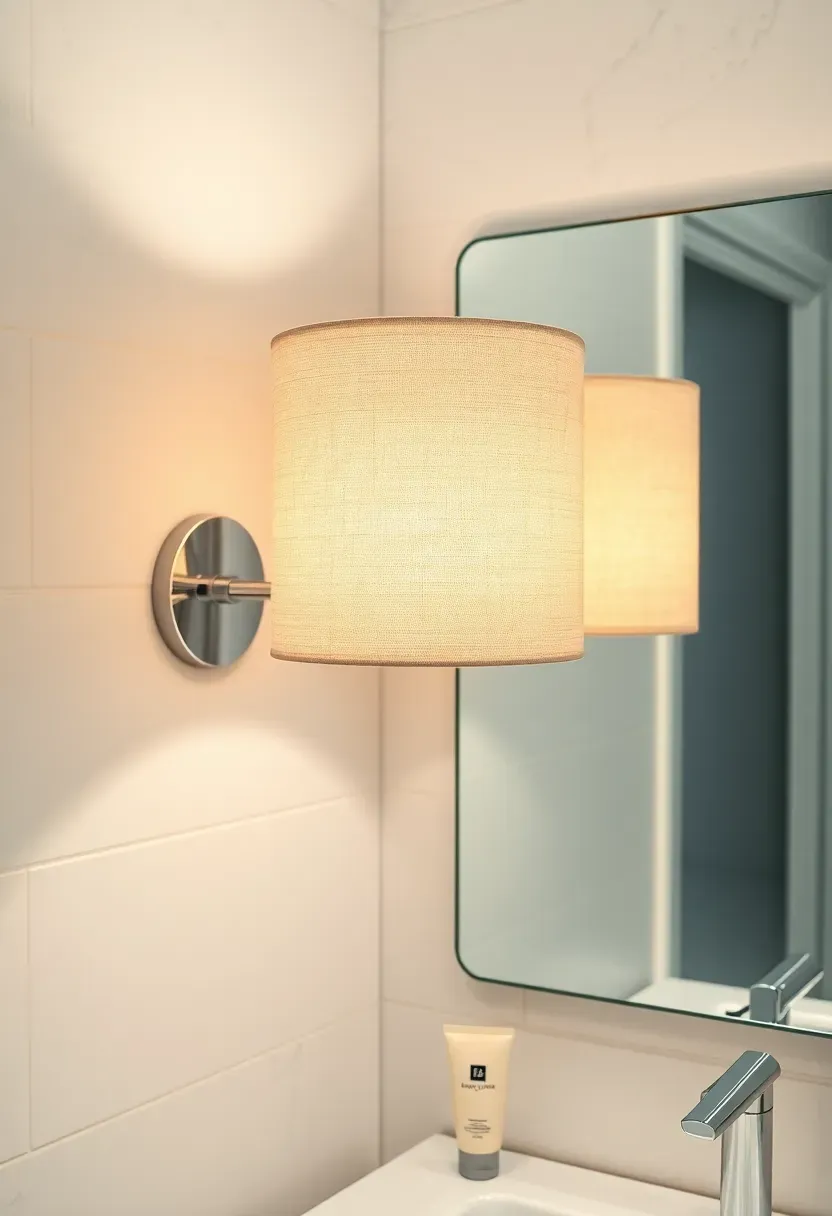
20. Linen Drum Shade Wall Light
A small drum shade (8-10 inch diameter) on a wall bracket softens bathroom lighting in a way that glass and metal alone cannot. The linen fabric filters and warms the light, reducing the harshness that bare bulbs create on reflective tile surfaces. This is a good choice for bathrooms where you want the lighting to feel closer to bedroom ambiance than clinical task lighting.
Tips
- Synthetic-blend fabric resists humidity better than pure linen — check the shade material before buying
- Use ADA-compliant slim-profile versions (under 4 inches projection) if your vanity wall is narrow
- Pair with a 2700K bulb to enhance the fabric's natural warmth
Recommended
Items for this idea
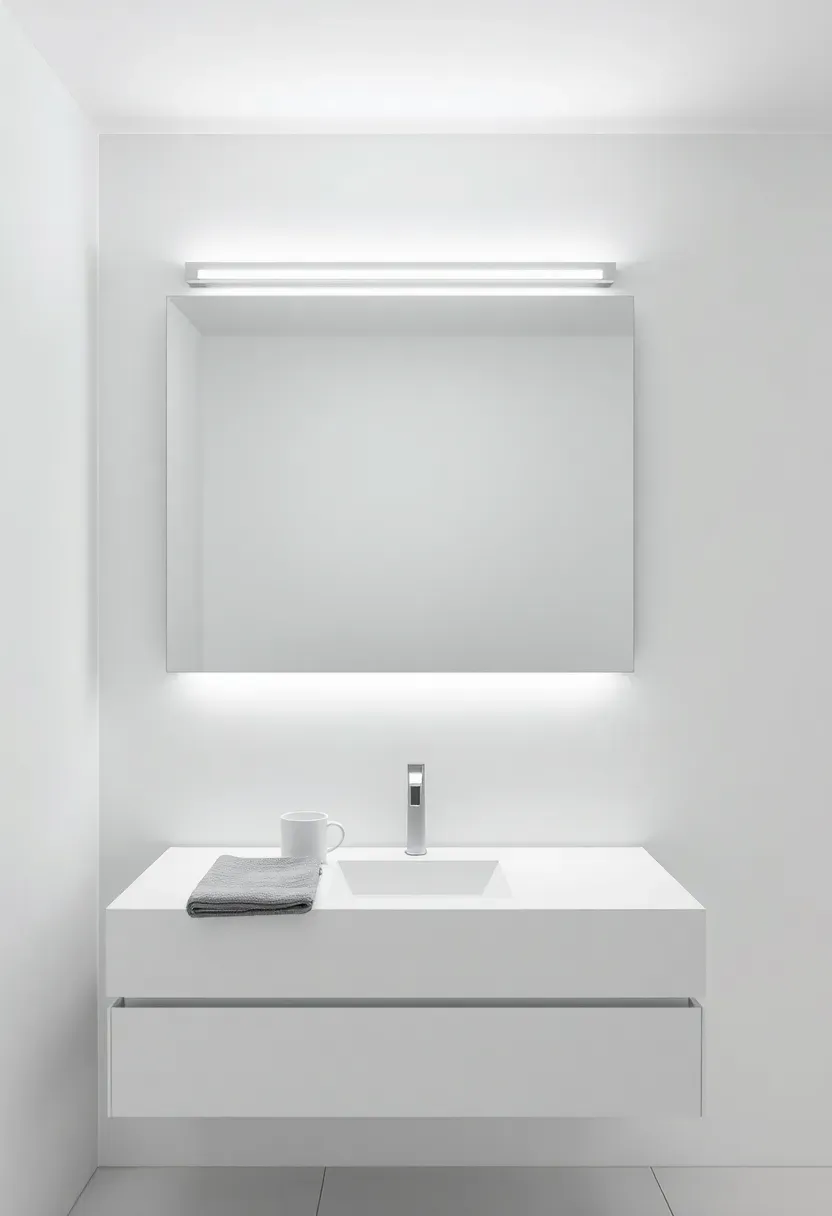
21. Minimalist LED Bar
A slim LED bar — typically 1-2 inches tall and 24-48 inches wide — is the most visually restrained over-mirror option available. It reads as an architectural detail rather than a light fixture. The integrated LEDs produce a uniform wash with no visible bulbs, sockets, or shades. White, brushed nickel, and matte black finishes cover most design directions.
Step 1: Match the Width
The bar should be 80-100% of the mirror's width. Unlike vanity bars where 75% is the rule, the minimalist bar looks best when it nearly matches the mirror edge to edge.
Step 2: Choose the Profile
Surface-mount bars sit 0.5-1 inch off the wall. Recessed bars sit flush. Surface mount is far easier to install and looks nearly identical to recessed from normal viewing distance.
Step 3: Check the Driver Location
Some LED bars house the driver internally. Others require a remote driver mounted inside the wall or vanity cabinet. Internal drivers simplify installation but generate more heat, which can reduce LED lifespan.
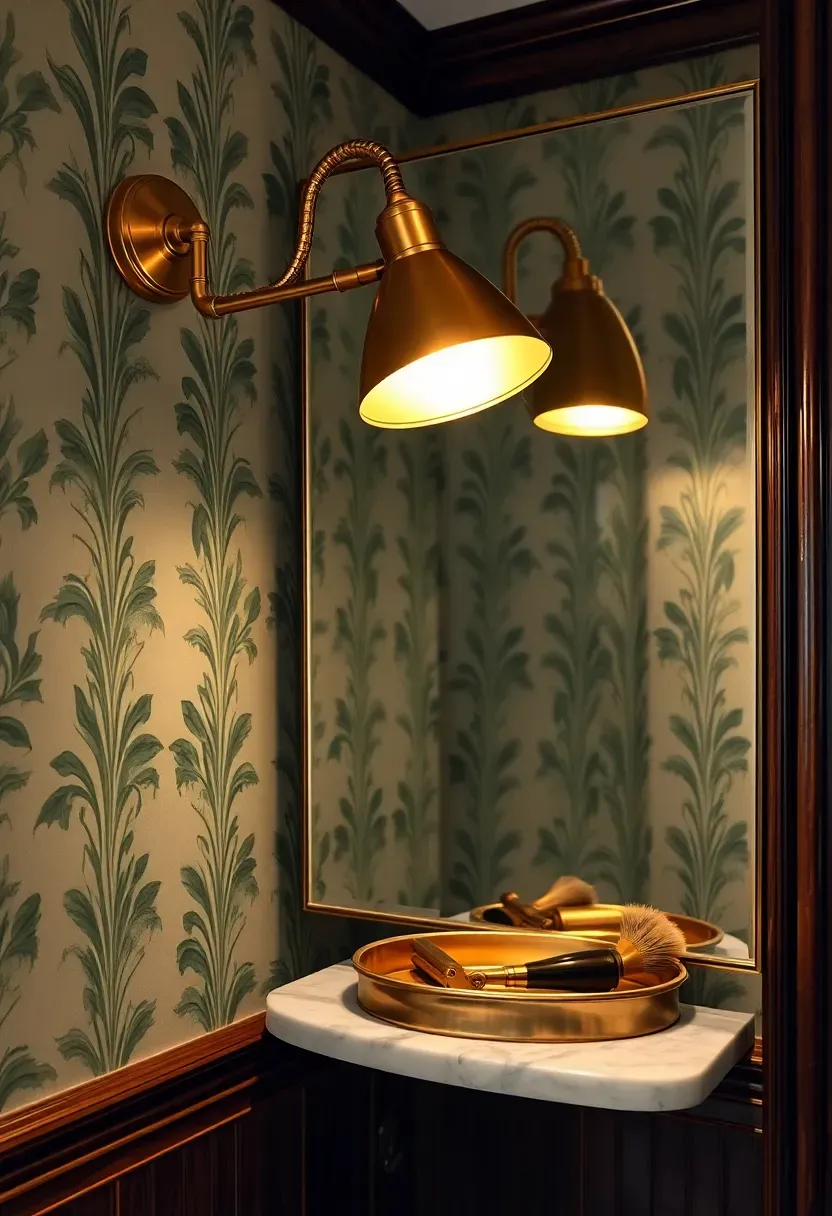
22. Articulated Brass Task Light
Borrowed from desk and workshop settings, an articulated task light with a spring-loaded arm and cone shade gives you pinpoint light control at the mirror. The arm swings, tilts, and extends, putting the light exactly where you need it. Wall-mounted versions with a dedicated backplate look more intentional than clamp-on models.
When This Makes Sense
If your bathroom routine involves detailed work — elaborate makeup, beard trimming with precision, or skincare procedures — the ability to move the light source within a 12-18 inch range is genuinely useful. For basic tooth-brushing and face-washing, it is overkill.
Recommended
Items for this idea
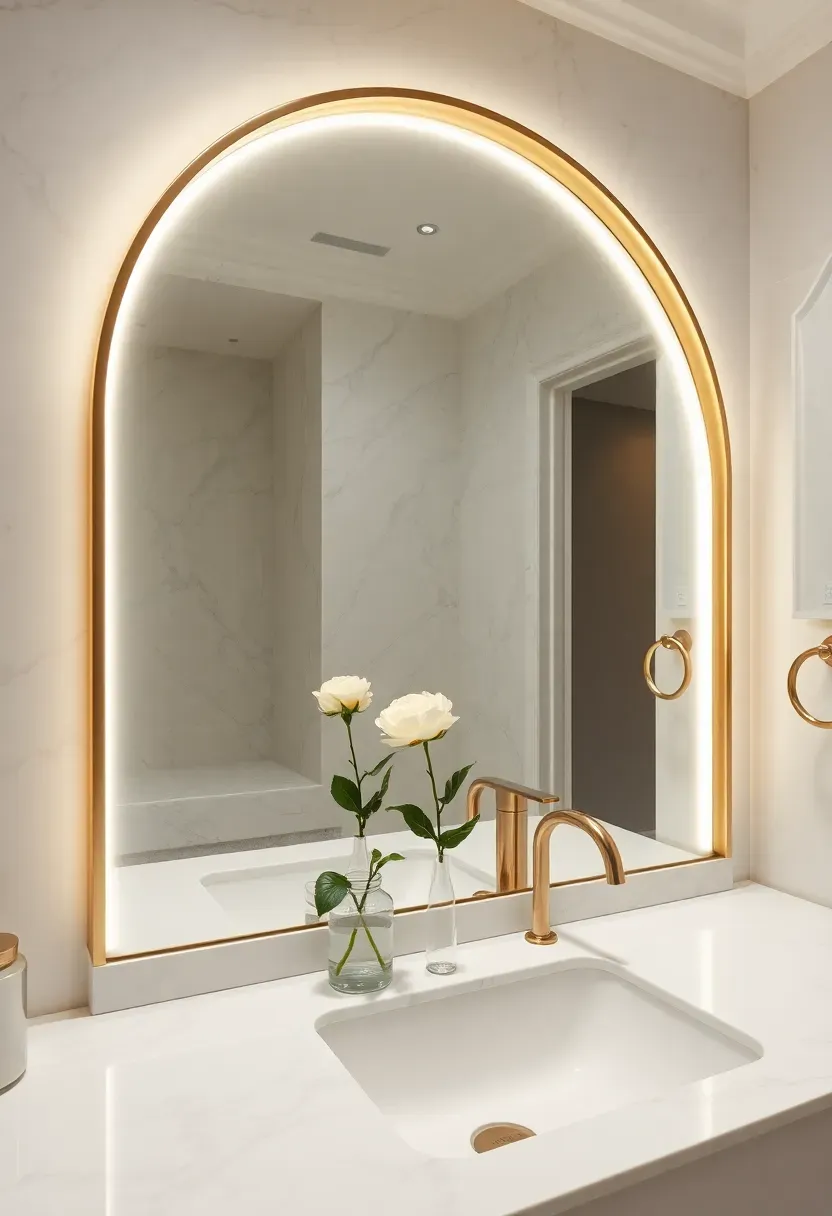
23. Oversized Arch Mirror with Built-In Light
Arched mirrors have become a dominant bathroom trend in the last three years, and manufacturers have responded by integrating LED strips directly into the arch frame. The curved light path follows the mirror's shape, producing a distinctive glow that rectangular LED mirrors cannot replicate. These mirrors typically run 24-36 inches wide and 40-60 inches tall, making them a focal point that doubles as the primary vanity light.
The Installation Question
Most arched LED mirrors weigh 25-40 pounds and require either stud mounting or heavy-duty wall anchors. Hardwired versions need a junction box positioned behind the mirror — plan this before tiling. Plug-in versions are simpler but require hiding the cord, which usually means routing it behind the mirror and down to an outlet inside the vanity.
Quick FAQ
Does color temperature actually matter for bathroom mirror lighting? Yes, and more than most people realize. Bulbs at 2700K cast a warm yellow tone that makes skin look healthy but distorts makeup colors. At 4000K, colors read more accurately but the light feels cold. For most people, 3000K is the sweet spot — warm enough to flatter, neutral enough for color accuracy.
Can I use LED strips instead of a dedicated fixture? Absolutely. Adhesive-backed LED strips attached to the wall behind or above the mirror can replicate the effect of a backlit mirror at a fraction of the cost. Use strips with a CRI of 90 or higher and connect them to a proper LED driver rather than a cheap plug-in adapter.
What is the ideal height for an over-mirror light? Mount the fixture so its center sits 78-80 inches above the finished floor. This puts the light above the head of most adults while keeping it close enough to the mirror to illuminate the face effectively. For mirrors that extend close to the ceiling, mount the light on the mirror surface itself or switch to flanking sconces.
Should bathroom vanity lights point up or down? Downward-facing shades direct more light onto the mirror and counter, which is better for task lighting. Upward-facing shades bounce light off the ceiling, creating softer ambient illumination. For dedicated grooming light, choose downward. For a bathroom that also serves as a relaxation space, upward or bi-directional fixtures offer more flexibility.
Is one light fixture enough above a double vanity? A single fixture can work if it spans at least 75% of the mirror width and produces at least 1,600 lumens. But two separate fixtures — one centered above each sink — give each person independent light control and eliminate the compromise of a shared source.
Bathroom mirror lighting comes down to two decisions: where the light sits relative to the glass, and how much control you want over its direction. Side-mounted sconces give the flattest, most shadow-free illumination. Top-mounted bars and pendants are easier to install and cover wider mirrors. Integrated LED mirrors eliminate the fixture question entirely but limit your options if you want to change the look later. Pick the approach that matches how you actually use the mirror, not just what looks good in a photo.
Pinterest cover for 23 Bathroom Lighting Ideas Over Mirror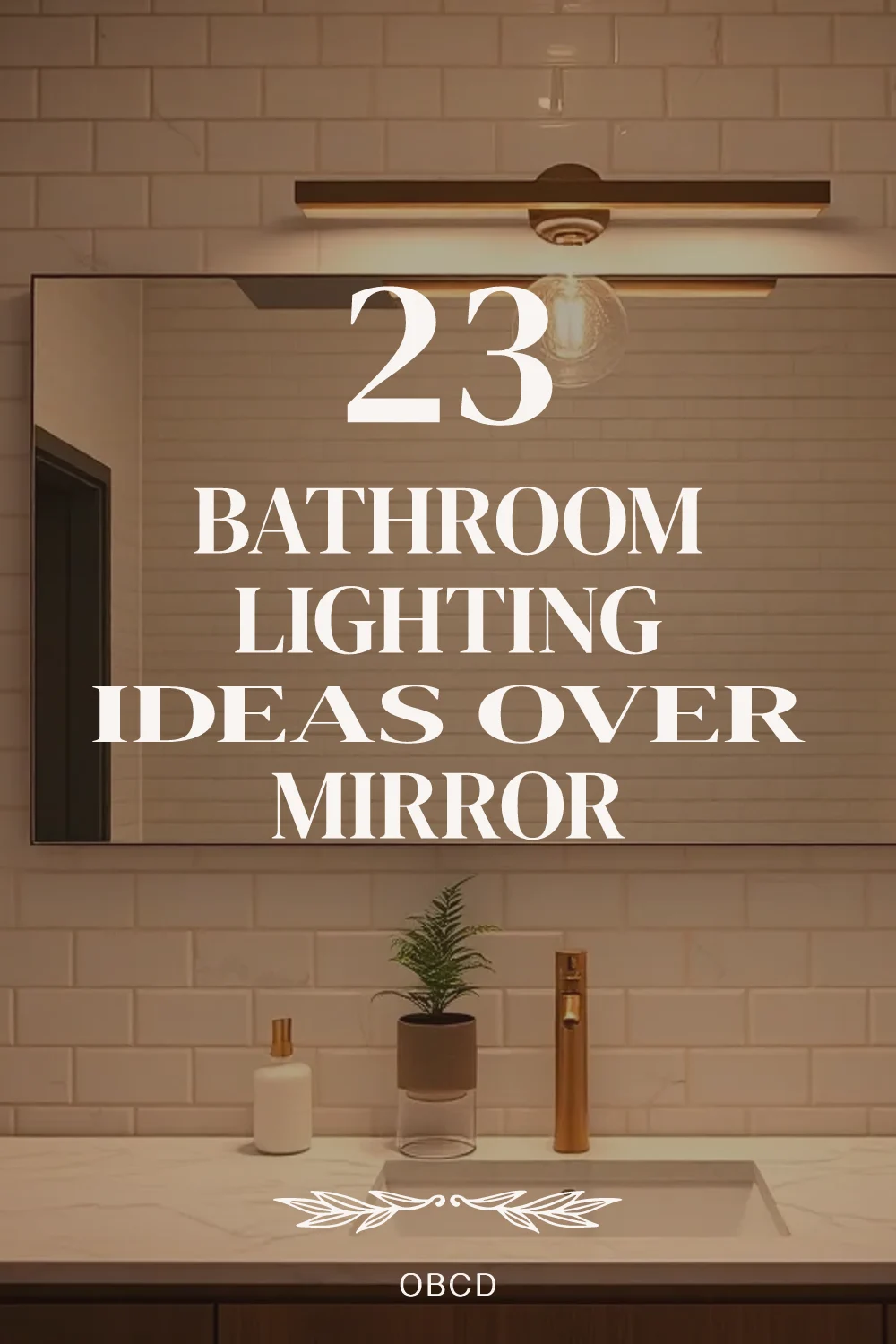
About the author
OBCD
CGI visualization and interior design content. We create detailed 3D renders and curate practical design ideas for every room in your home.