25 Bathroom Linen Closet Ideas Worth Stealing
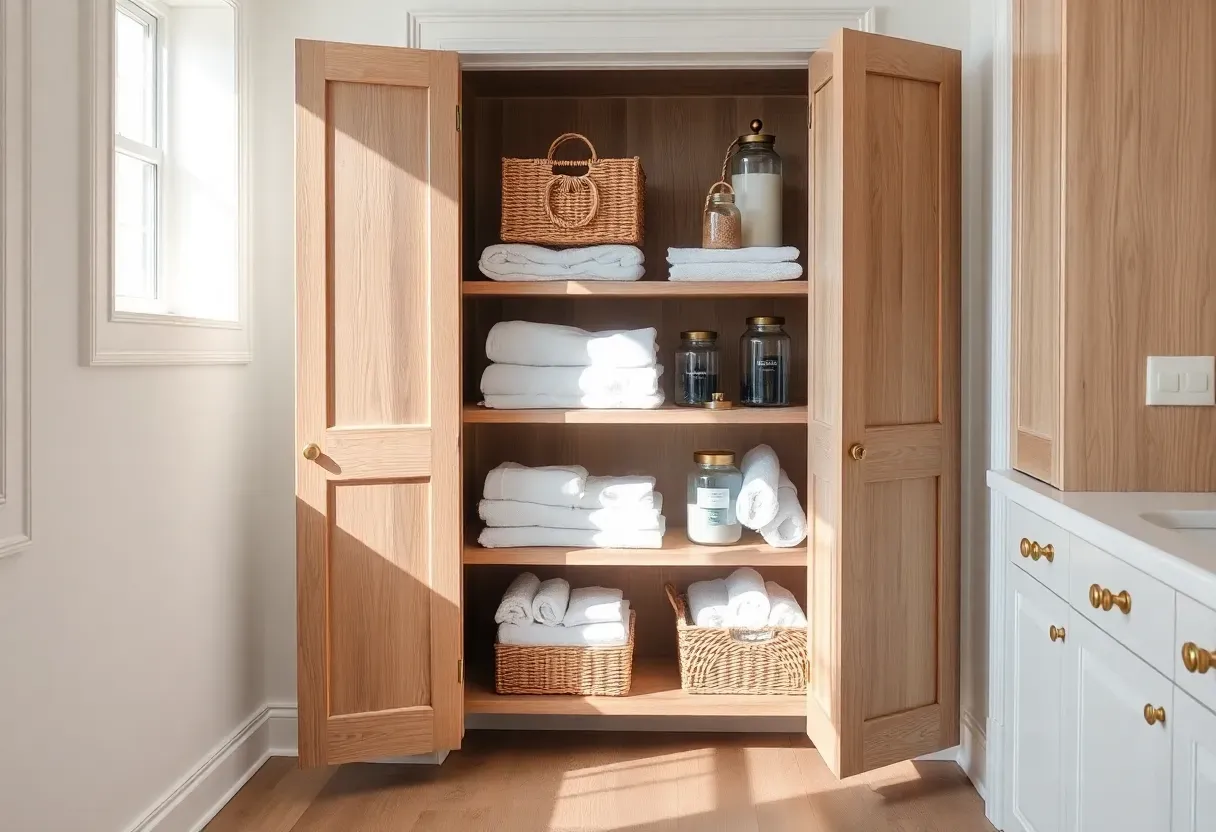
A bathroom linen closet is one of those rooms-within-a-room that either earns its keep or quietly drives you insane every morning. The difference is rarely about size. I have seen a 12-inch-deep cabinet hold a family's entire towel rotation cleanly, and a walk-in closet that looked like a thrift store explosion. What separates the two is structure: the right shelves at the right heights, doors that work for the space, and a clear spot for everything from spare washcloths to that bottle of contact lens solution you only buy once a year.
Below are 25 linen closet ideas grouped roughly by what they fix — shelving and layout, doors and access, organization systems, and finishing touches that make a closet feel less utilitarian.
Table of Contents
- Adjustable Wood Shelving
- Pull-Out Drawer Towers
- Floor-to-Ceiling Vertical Closet
- Recessed Closet Between Studs
- Sliding Barn Door
- Frosted Glass Doors
- Open Shelving Without Doors
- Cane Insert Cabinet Doors
- Tall Narrow Cabinet Beside the Toilet
- Built-In Hamper Drawer
- Labeled Wicker Baskets
- Clear Acrylic Bins
- Stackable Wire Baskets
- Roll Storage Instead of Folding
- Door-Mounted Spice Racks
- Pull-Out Hamper at the Base
- Toiletry Drawers with Dividers
- Motion-Sensor Interior Light
- Cedar-Lined Shelves
- Beadboard Closet Backing
- Color-Coded Towel Stacks
- Apothecary-Style Glass Jars
- Pegboard Backing for Tools
- Hidden Charging Station
- Antique Hardware Refresh
1. Adjustable Wood Shelving
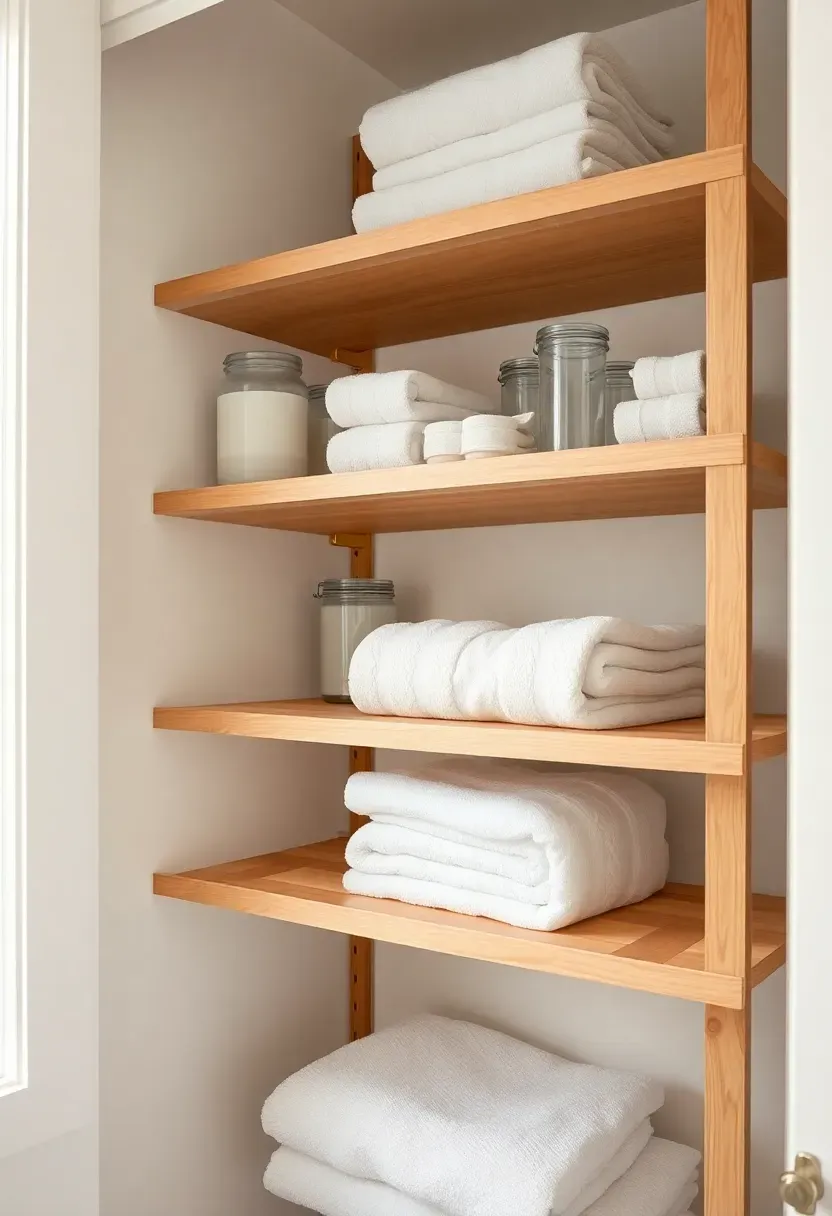
Fixed shelves lock you into whatever the previous owner thought you needed. Adjustable shelving on metal pin supports lets you reset spacing as your stuff changes — a tall section for laundry detergent, a shorter one for stacked washcloths. Use 3/4-inch plywood with a hardwood edge banding rather than particle board; bathrooms eat cheap shelving for breakfast. Drill pin holes every two inches along both sides of the closet using a shelf-pin jig. The whole job takes a Saturday afternoon and gives you a closet that adapts for the next decade instead of one that fights you every time you buy a new size of shampoo bottle.
Tips
- Pre-finish shelves with marine-grade polyurethane on all six sides before installing
- Use heavy-duty 1/4-inch shelf pins, not the bent metal ones that come with cheap kits
- Leave the bottom shelf at least 16 inches off the floor for tall items like laundry baskets
We picked a few things that go well with this idea: Walsunny Tall Narrow Linen Cabinet (White) (★4.4), Iwell 67" Tall Bathroom Cabinet with Drawer (★4.4) and HOMEFORT Slim Linen Tower with 2 Drawers (★4.3). As an Amazon Associate we earn from qualifying purchases.
2. Pull-Out Drawer Towers
The Problem
Stacked towels at the back of a deep shelf become unreachable. You pull two from the front and ignore the rest until they smell musty.
The Fix
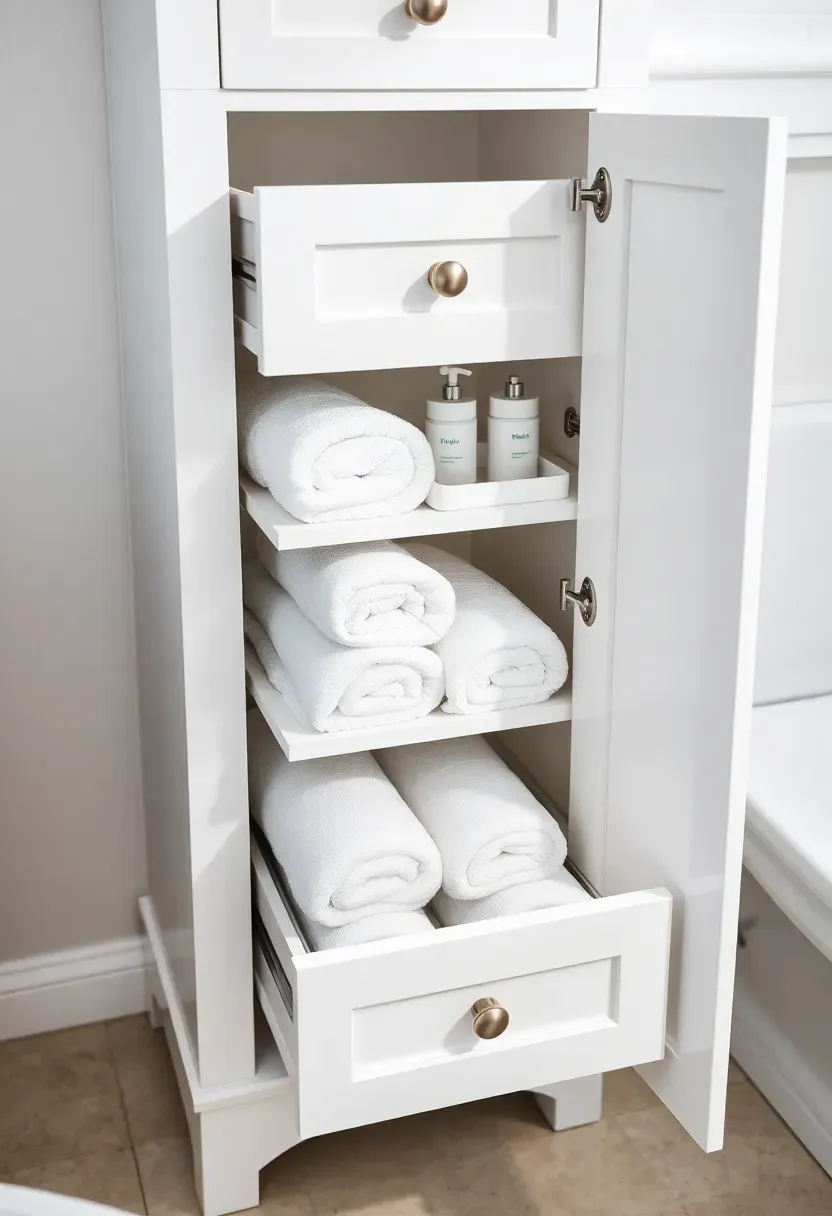
Replace the back half of your closet with a pull-out drawer tower. Standard 16-inch deep drawers on full-extension ball-bearing slides bring the contents all the way out, so the back is no longer dead space. Cut the existing closet in half horizontally and build a drawer cabinet that fits the lower section. Each drawer holds two stacks of bath towels, three of hand towels, or a row of standing toiletry bottles. Soft-close slides are worth the extra ten dollars per pair.
Pros and Cons
- Pro: No more buried towels; everything visible the moment you pull the drawer
- Pro: Doubles usable storage in the same footprint
- Con: Loses some flexibility — drawer heights are fixed once installed
Recommended
Items for this idea
3. Floor-to-Ceiling Vertical Closet
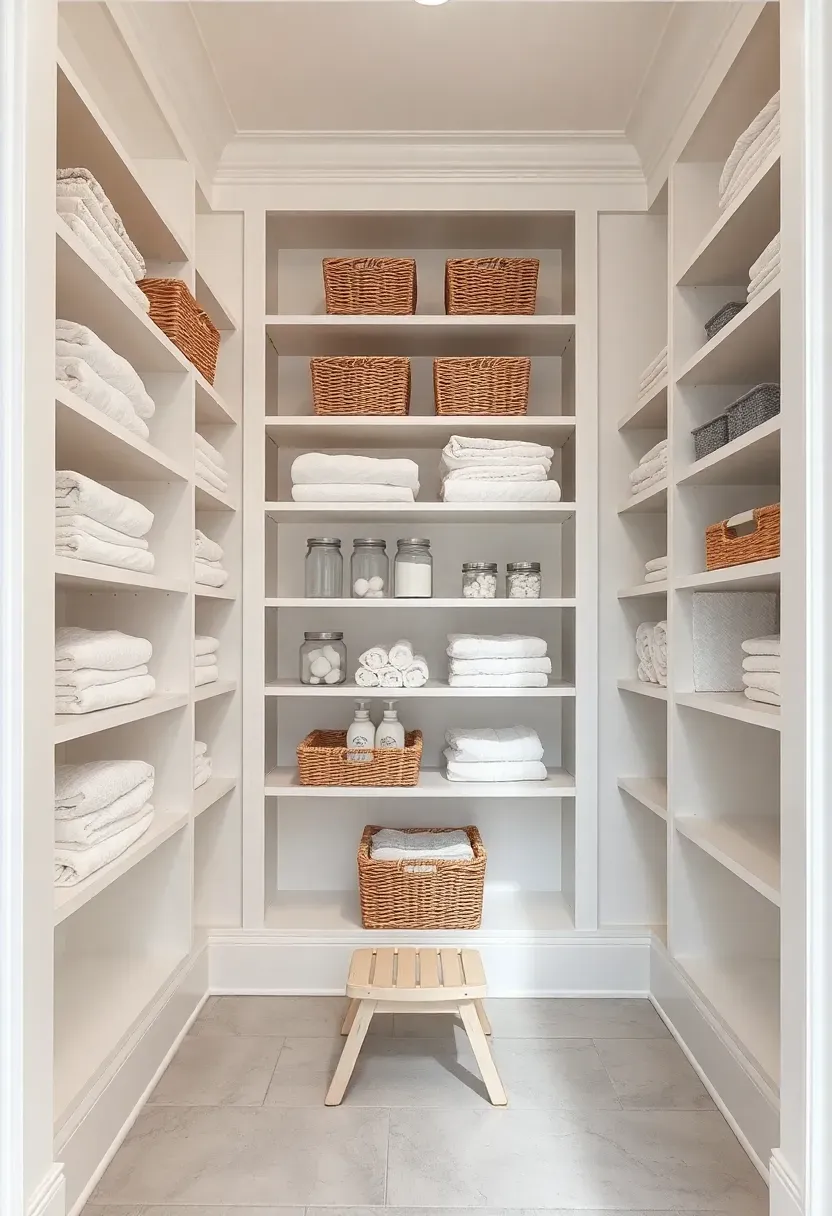
A closet that stops at six feet wastes the most useful storage in any room — the air above your head. Running shelves all the way to the ceiling adds three to four extra shelves in most homes, which is where backup supplies go: spare sheets, the bulk pack of toilet paper, the second set of beach towels. Use a small folding step stool tucked at the floor level so the top shelves are not theoretical storage. Crown molding at the top of the closet hides the gap between the highest shelf and the ceiling and makes the closet feel built-in rather than tacked on.
Tips
- Keep daily-use items between knee and shoulder height; reserve top and bottom for rare-use stock
- Anchor any tall shelving unit to studs with at least two L-brackets near the top
- Paint the interior the same color as the walls so the closet reads as part of the room
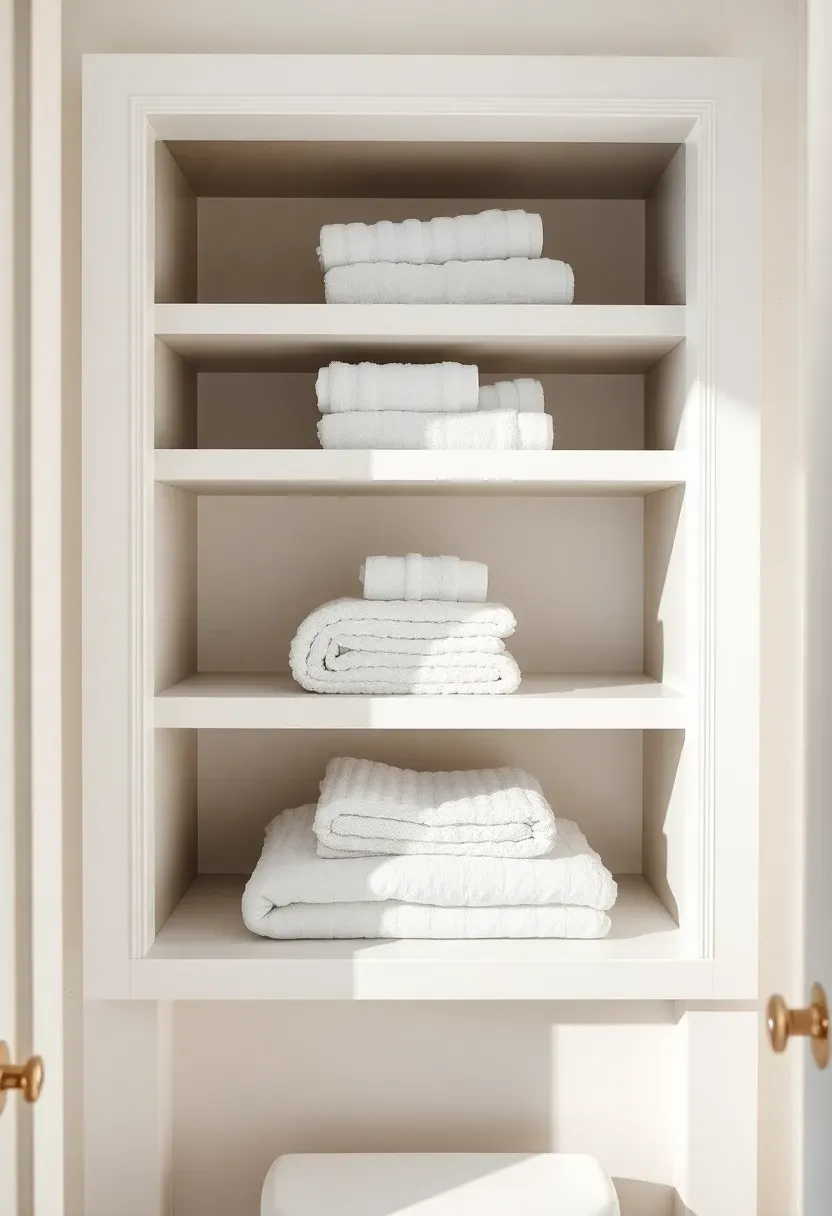
4. Recessed Closet Between Studs
How to Build One in an Existing Wall
If your bathroom has no linen closet, the wall cavity itself can become one without losing any floor space.
Step 1: Find the Right Wall
Use a stud finder to map studs and check for plumbing or electrical with a multi-function scanner. An interior, non-load-bearing wall between the bathroom and a closet or hallway is the ideal candidate. You need a clear bay between two studs, ideally 14.5 inches wide.
Step 2: Cut and Frame the Opening
Cut the drywall between studs to your planned closet height — usually 36 to 60 inches. Add 2x4 blocking at the top and bottom of the opening to create a frame. Sister a 2x4 to the existing studs on each side for a clean interior.
Step 3: Add Shelves and Trim
Install 3.5-inch deep shelves (the depth of a 2x4) on adjustable pins. Trim the opening with simple casing — a clean 2.5-inch flat trim around the perimeter looks better than fussy moldings.
Watch Out
Plumbing and electrical run inside walls. Confirm with a borescope or by carefully cutting an inspection hole before opening the full bay.
Recommended
Items for this idea
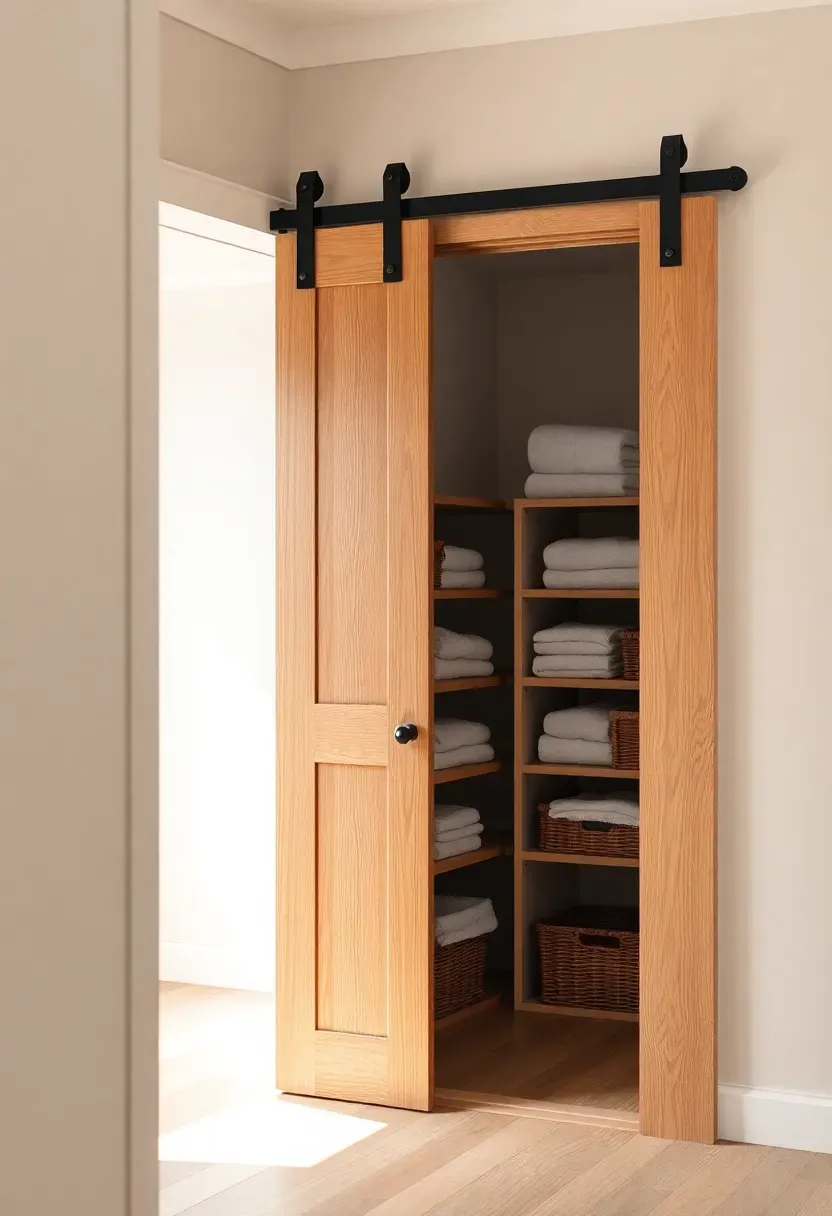
5. Sliding Barn Door
A swing door on a small bathroom linen closet eats two square feet of floor space every time it opens. A sliding barn door rides on a track above the opening and tucks against the adjacent wall when open. The door itself can be solid wood, a paneled style, or a flat slab in any finish. Hardware kits from Real Sliders, Artisan Hardware, or budget options on Amazon run $90 to $250 for the track and rollers. The opening needs at least the width of the door of clear adjacent wall space for the door to slide into.
Tips
- Choose a soft-close kit if the bathroom is near bedrooms — the slam at 6 a.m. carries
- A bottom guide pin keeps the door from swaying when slid
- Solid wood doors run heavier and need extra ceiling-mounted blocking behind drywall
6. Frosted Glass Doors
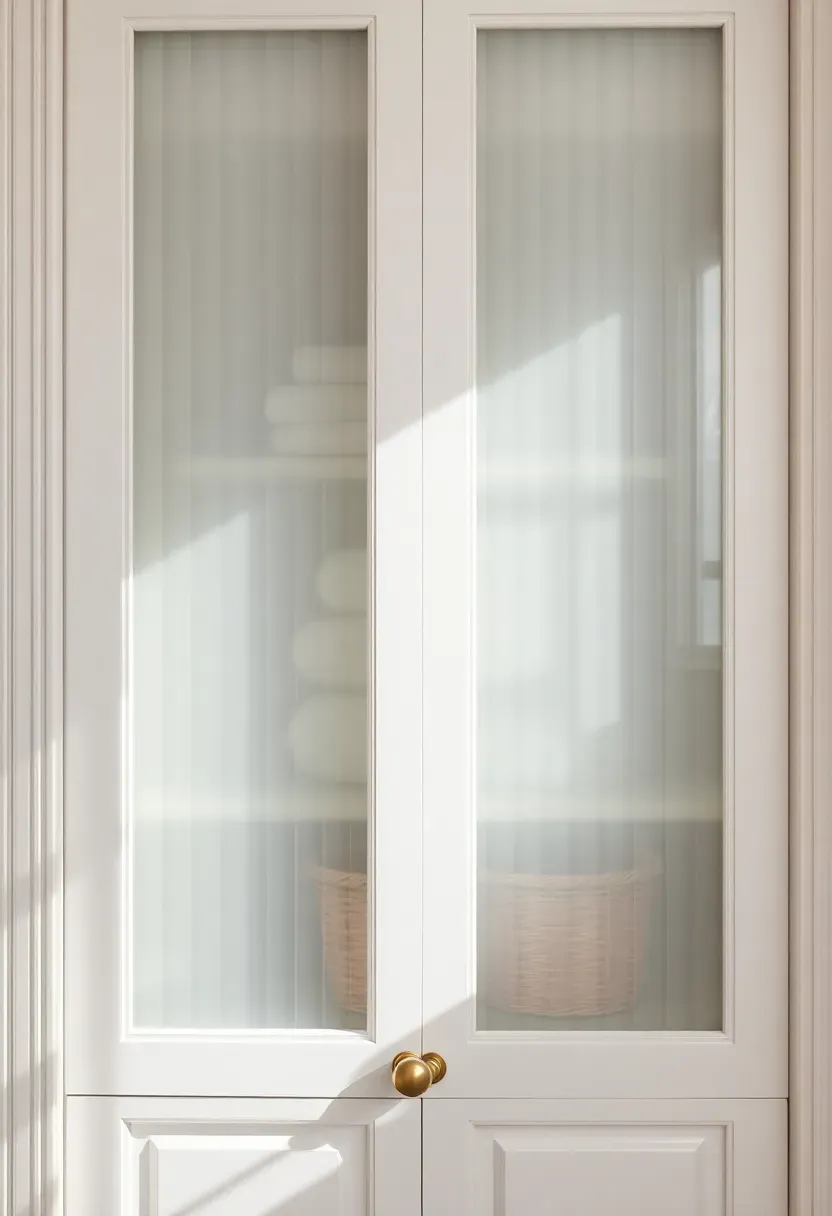
Frosted or reeded glass on linen closet doors hits a middle ground between fully open shelving and fully solid doors. You see softened shapes inside — colors and silhouettes — without the visual clutter of bottle labels and folded-towel logos. The diffused look reads as deliberate. Real glass with a sandblasted face costs more, but adhesive frosting film over plain glass is a near-perfect substitute at a tenth of the price. Apply it with a smoothing card and a soapy water solution. The film holds for years without bubbling if you do not skip the rinse step before applying.
Tips
- Reeded or fluted glass adds vertical texture and hides contents better than smooth frosted
- Use frame-style cabinet doors with a glass insert rather than full-glass slabs for a softer look
- Avoid frosted glass on closets that hold messy zones — the silhouette of clutter still reads
Recommended
Items for this idea
7. Open Shelving Without Doors
A vs B: Open Shelves vs. Cabinet Doors
The trade-off here is real and worth thinking about before you commit.
Open Shelves
Open shelving forces good habits — you fold towels properly because everyone sees them. The look is hotel-like when done well. Air moves freely, which keeps stored linens from getting that closed-closet smell. The downside: dust collects on top of every fold, and a messy week shows up immediately.
Cabinet Doors
Doors hide everything, good or bad. They protect contents from dust, steam, and curious kids. The closet becomes a storage workhorse with no styling required. The downside: you lose the visual texture of stacked towels and baskets that an open closet brings to the room.
Recommendation
Open shelving works if you actually fold things consistently and your bathroom has decent ventilation. Otherwise, cabinet doors keep the room calmer and the linens cleaner.
8. Cane Insert Cabinet Doors
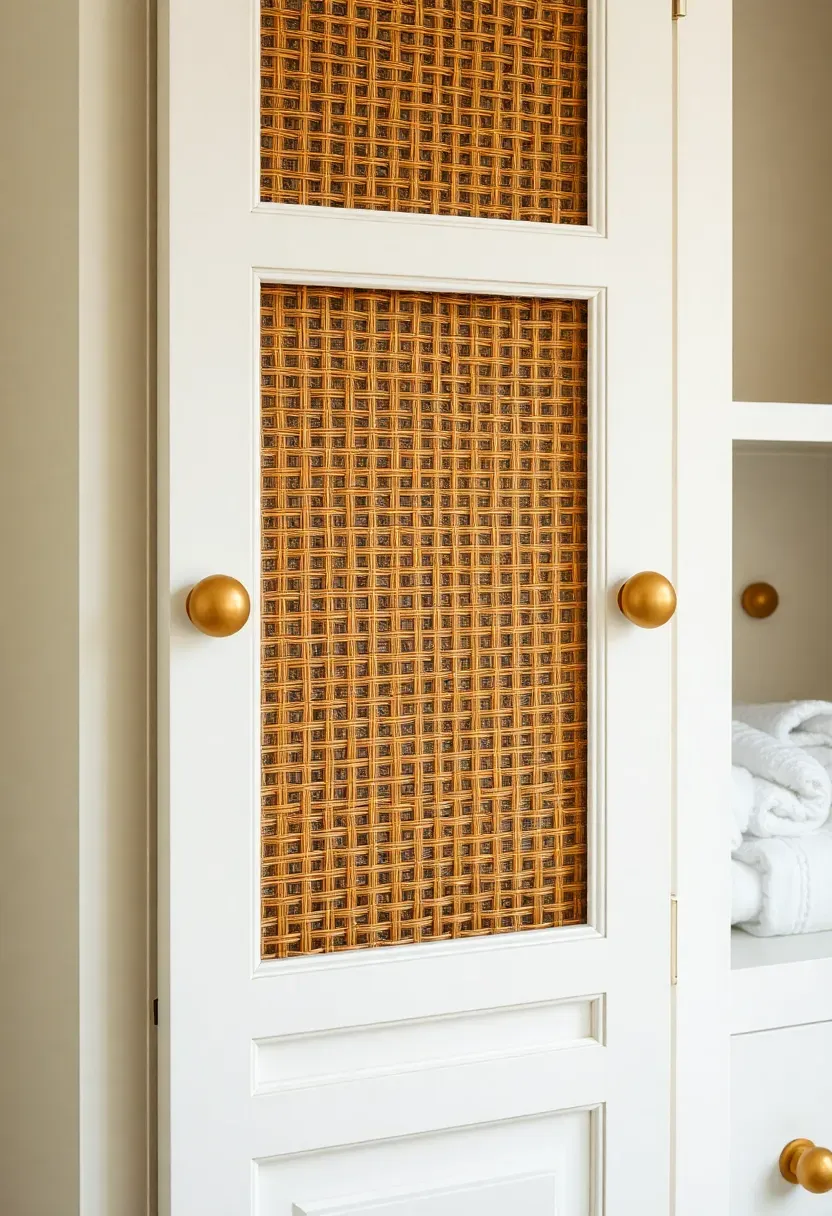
Cane webbing inserts replace solid panels in cabinet doors with woven rattan, giving a closet door visible texture without a full glass reveal. The weave breathes — useful for storing linens that need air — and the natural color softens an all-white bathroom. Pre-woven cane sheets sell by the linear foot at lumber suppliers and craft stores for $15 to $30. Cut to fit the inside of a frame-style cabinet door using a router rabbet, then secure with thin retainer strips. The whole upgrade on an existing cabinet runs about an hour per door.
Tips
- Soak cane in warm water for 30 minutes before cutting — it stretches taut as it dries
- Skip cane in bathrooms with high steam exposure; humidity over time loosens the weave
- Frame the cane behind glass for a hybrid look that combines breathability with protection
Recommended
Items for this idea
9. Tall Narrow Cabinet Beside the Toilet
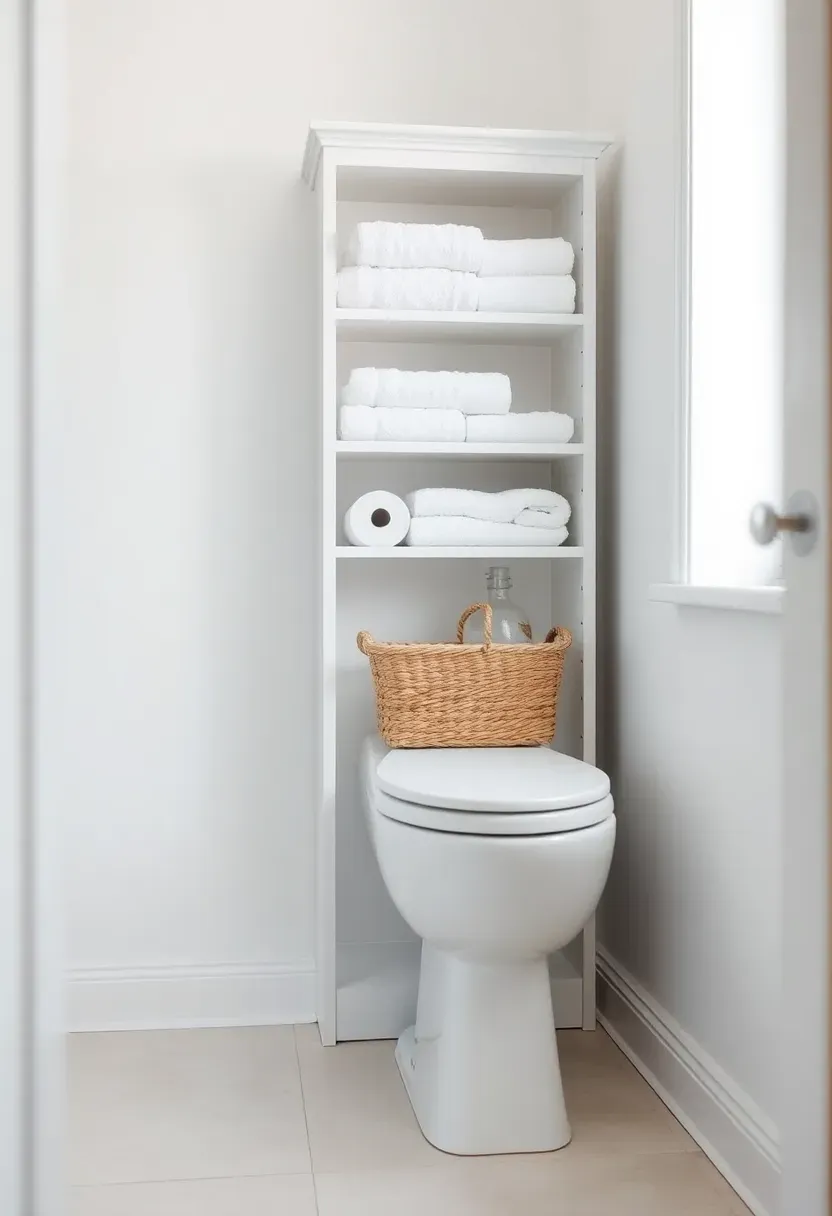
The strip of wall between a toilet and the side wall usually sits empty. A tall narrow cabinet — 10 to 14 inches wide and 60 to 72 inches tall — fits in that gap and adds real linen storage to a bathroom that otherwise has none. IKEA's GODMORGON, Wayfair's Jane line, and similar units land in the $80 to $250 range and assemble in an evening. Five interior shelves hold a surprising amount: a stack of bath towels, two stacks of hand towels, baskets of toiletries, and the toilet paper roll backup. Anchor the top of the cabinet to the wall with an L-bracket. Tall narrow furniture tips easily.
Tips
- Measure the toilet flange clearance before buying — some cabinets sit too close to the bowl
- Choose a cabinet with a closed top to keep dust off the highest shelf
- Add a shallow basket on top for spare hand towels within reach of the sink
10. Built-In Hamper Drawer
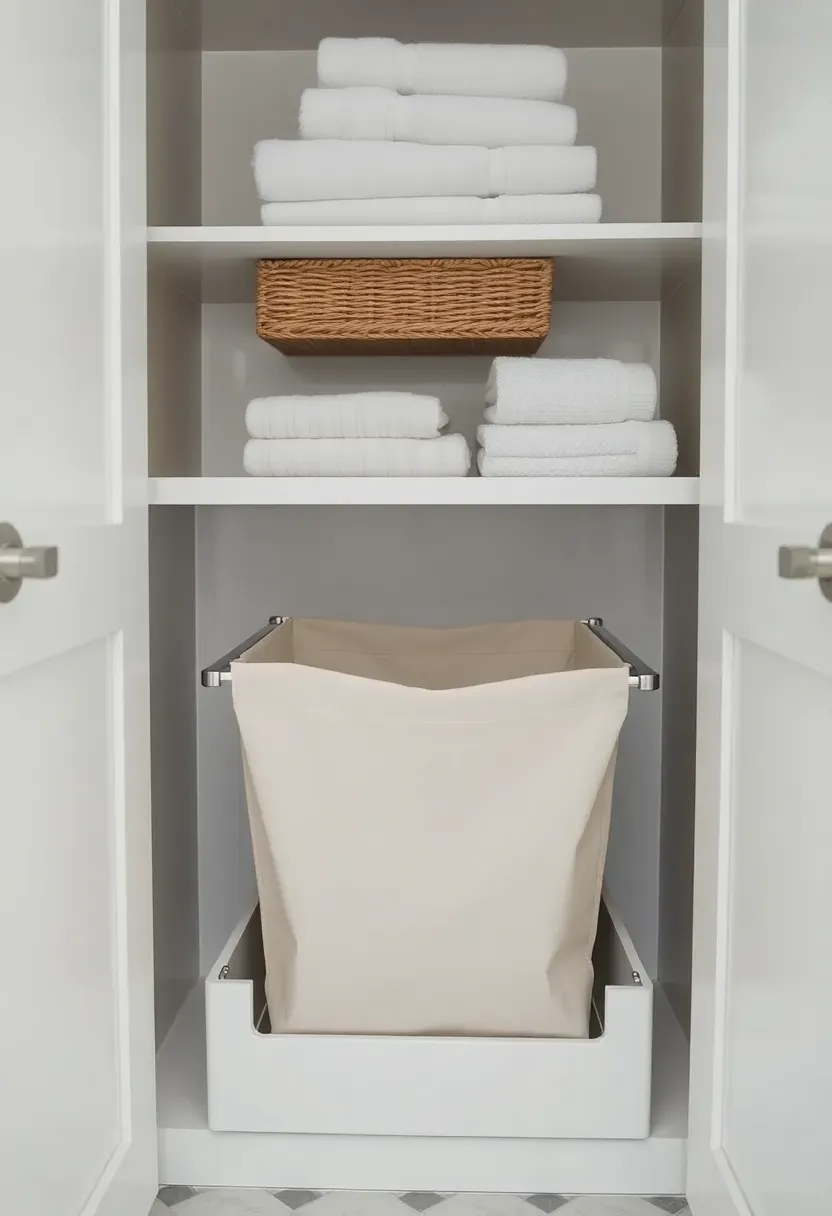
A traditional standing hamper takes up about three square feet of floor space and looks like, well, a hamper. Building a tilt-out or pull-out hamper drawer into the bottom of the linen closet hides laundry completely. The frame holds a removable canvas bag with handles, so laundry day is just lifting the bag out and carrying it to the washer. Rev-A-Shelf and Hafele sell hamper-drawer kits in 14- to 21-inch widths. The kit fits inside a standard cabinet bay with full-extension slides. A divider panel down the middle lets you separate lights from darks at the source.
Tips
- Choose a kit with a vented frame — closed sides trap moisture and odors
- Wash the canvas bag every two months to prevent musty buildup
- Mount the drawer at floor level so you do not lift weight when removing the full bag
Recommended
Items for this idea
11. Labeled Wicker Baskets
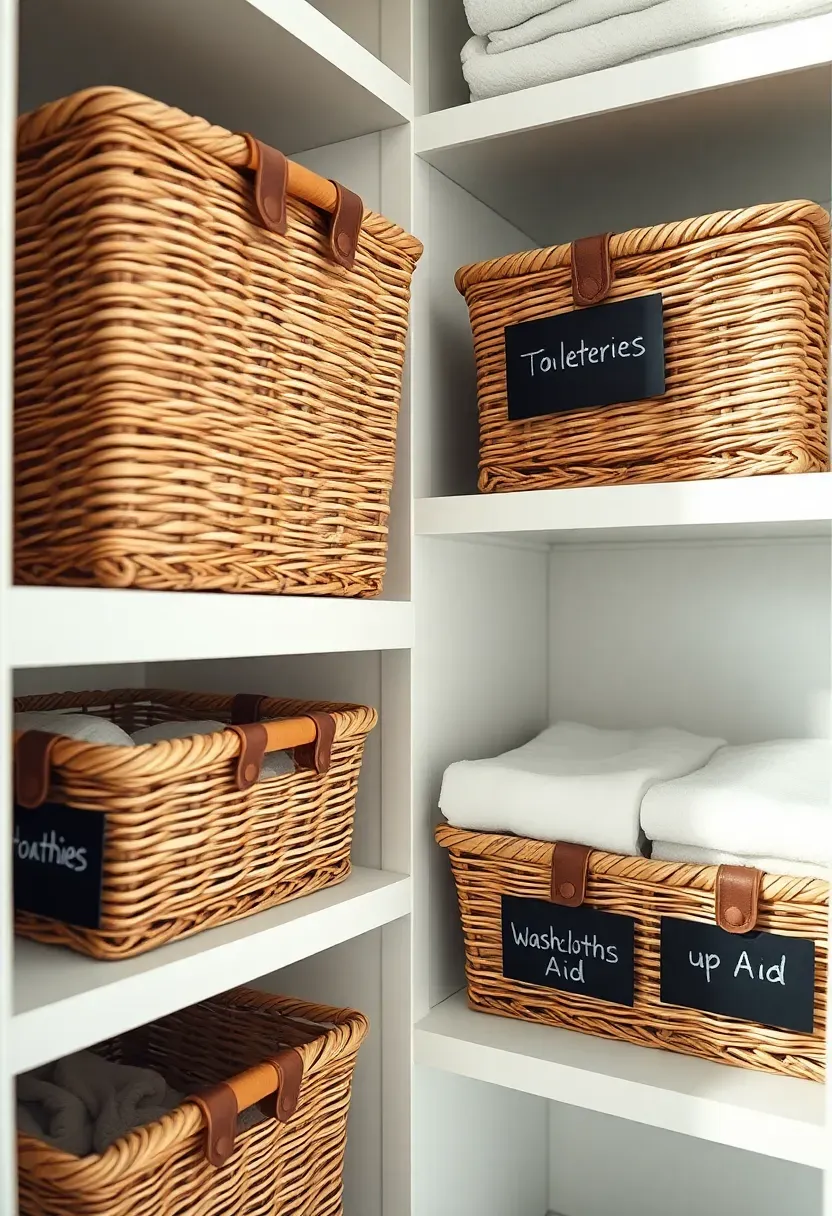
Wicker or seagrass baskets across a single shelf turn a chaotic closet into something that looks like it was organized on purpose. Each basket holds one category — first aid, hair tools, sunscreen, spare toiletries — so opening the closet means grabbing one basket instead of digging. Use baskets that match in size and material; the visual rhythm matters more than the basket itself. Add a small chalkboard tag, leather pull, or printed label to each one. Container Store and HomeGoods both sell sets of three or four matching baskets for $30 to $60.
Tips
- Measure shelf depth and height before buying — most basket failures are sizing mistakes
- Skip lined baskets in humid bathrooms; the lining traps moisture and grows mildew
- Group by frequency of use, not category, if you reach for some items daily and others yearly
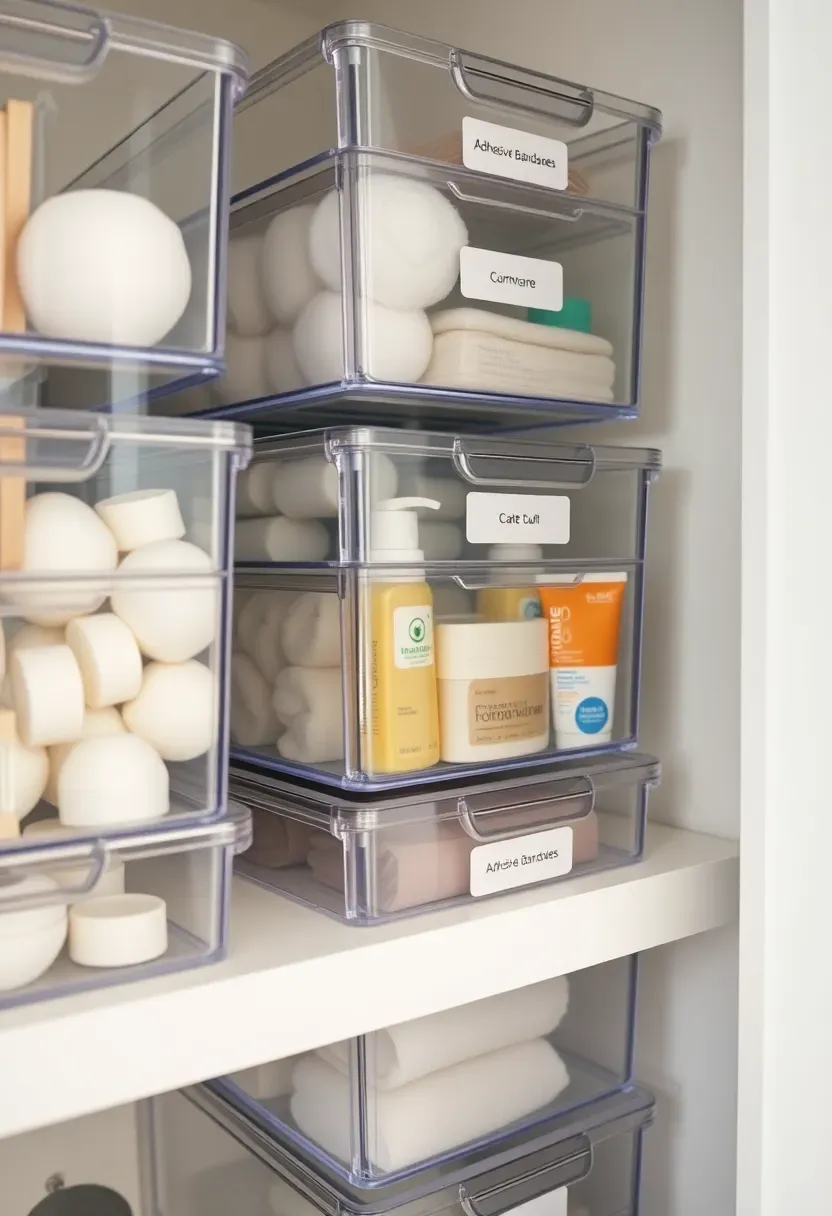
12. Clear Acrylic Bins
The Problem
Wicker baskets look pretty, but you cannot see what is inside without pulling each one out. For first aid supplies, medication, or small toiletries you grab in a rush, that opacity becomes friction.
The Solution
Clear acrylic bins solve the visibility issue cleanly. Brands like mDesign, iDesign, and Sterilite make stackable bins in dozens of sizes, from shallow trays for nail polish to deep bins for full-size shampoo bottles. Sort by category and label the front edge with a small adhesive tag. The bins themselves cost $5 to $15 each. Wipe them with rubbing alcohol every couple of months to remove the slight haze that builds up from bathroom moisture.
Pros and Cons
- Pro: Everything visible at a glance — no digging
- Pro: Easy to pull out and bring to the counter when you need to refill or check expiry dates
- Con: Acrylic scratches over time and looks less polished than wicker once it does
Recommended
Items for this idea
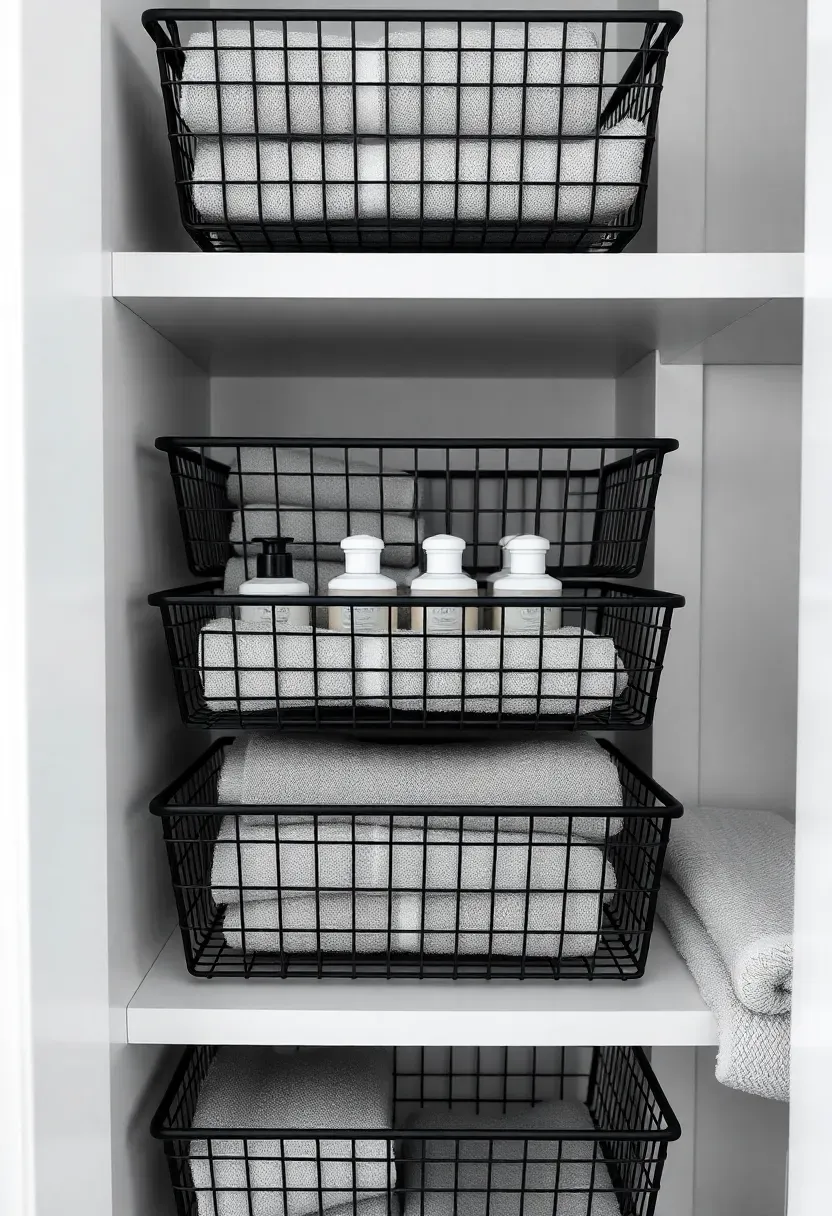
13. Stackable Wire Baskets
Wire mesh baskets bring something baskets and bins both miss: airflow. Damp washcloths or recently used pool towels need to dry between uses, and storing them in a closed basket invites mildew. Wire baskets — black, white, or natural metal — let air pass while holding contents in place. Stackable versions double or triple capacity in a single shelf. Look for ones with a flat lip on top and a recessed bottom that locks into the lip below; that interlock prevents wobble. Y-Weave and similar brands sell sturdy versions for $12 to $25 each.
Tips
- Line wire baskets with a piece of cotton fabric if they will hold small items that fall through gaps
- Powder-coated finishes resist rust; bare wire eventually corrodes in humid bathrooms
- Two stackable baskets often hold more than one larger basket of the same combined height
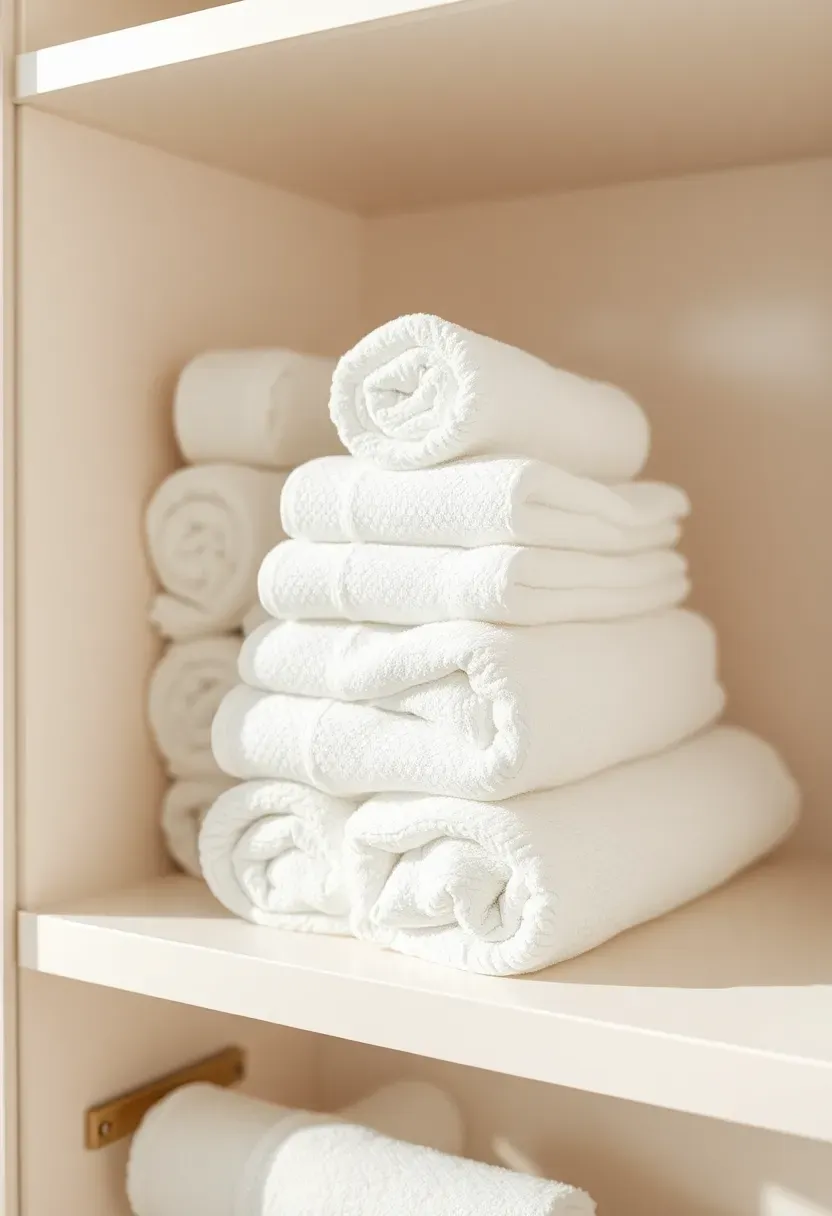
14. Roll Storage Instead of Folding
Rolling towels instead of folding flat changes how a closet works. Folded stacks force you to grab the top towel always; rolled towels stand or lay so any one of them is reachable without disturbing the rest. Rolling also packs more towels into the same shelf — a 12-inch-deep shelf that holds five folded bath towels easily holds eight rolled. The visual is hotel-spa, especially when towels are arranged in a small pyramid stack at the front of the shelf. Roll tightly from the shorter end, tuck the loose corner inward, and place rolls seam-down.
Tips
- Rolling works best on towels still slightly damp from the dryer — the fibers grip and hold the shape
- Use a thin elastic band on each roll if your towels are slippery and unrolling
- Wash and roll a few extra towels at once so refills are quick when you grab one
Recommended
Items for this idea
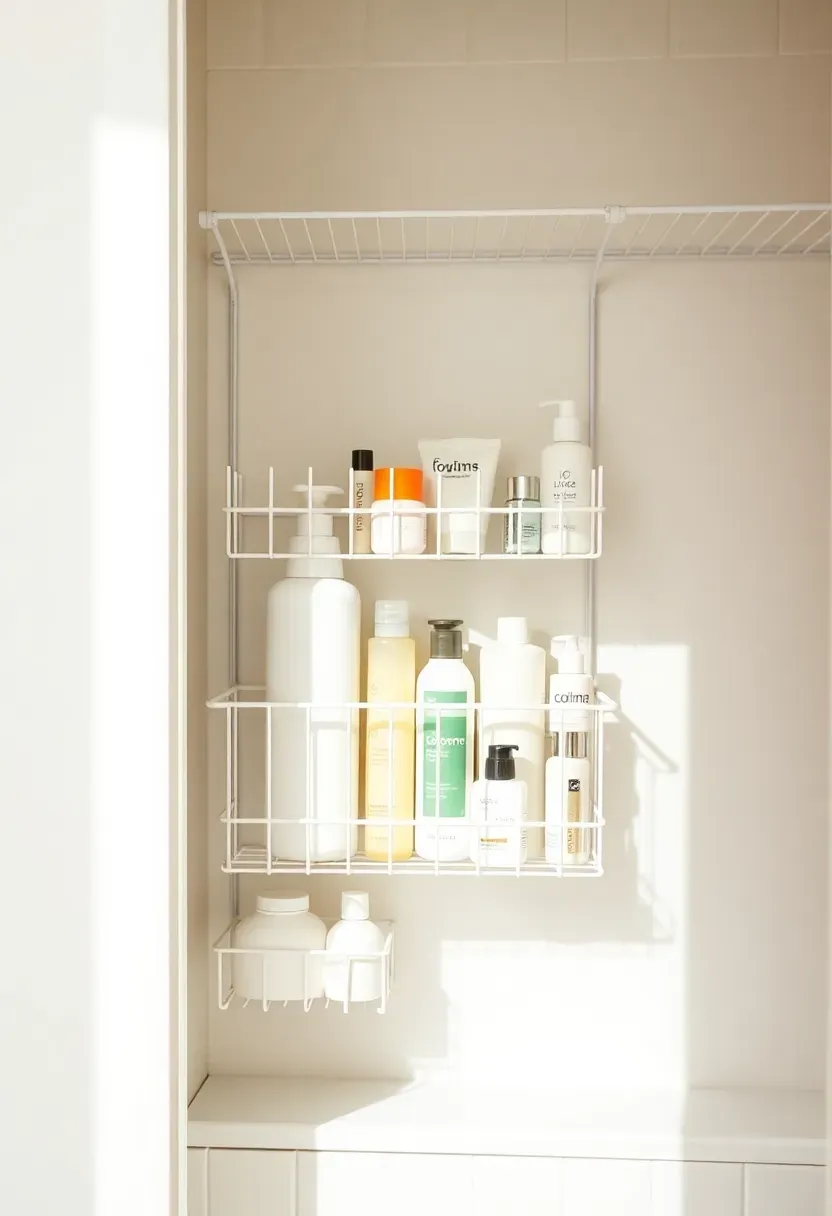
15. Door-Mounted Spice Racks
The inside of a linen closet door is the most underused storage in any bathroom. Wire spice racks — designed for a kitchen pantry — mount with two screws and create a row of shallow shelves perfect for tall, narrow toiletries. Lotion bottles, sunscreen, hairspray, contact solution, and bug spray all fit a 3-inch deep wire rack. Each rack runs $6 to $15 from IKEA, Target, or Amazon. Three or four stacked vertically convert dead door space into a visible, accessible toiletry wall. The contents stay sorted because each item has its own slot.
Tips
- Pre-drill pilot holes through the door panel; particle board cracks if you drive screws cold
- Mount racks at heights that match your most-used bottle sizes
- Skip racks on doors thinner than 3/4 inch — they cannot hold the screws long-term
16. Pull-Out Hamper at the Base
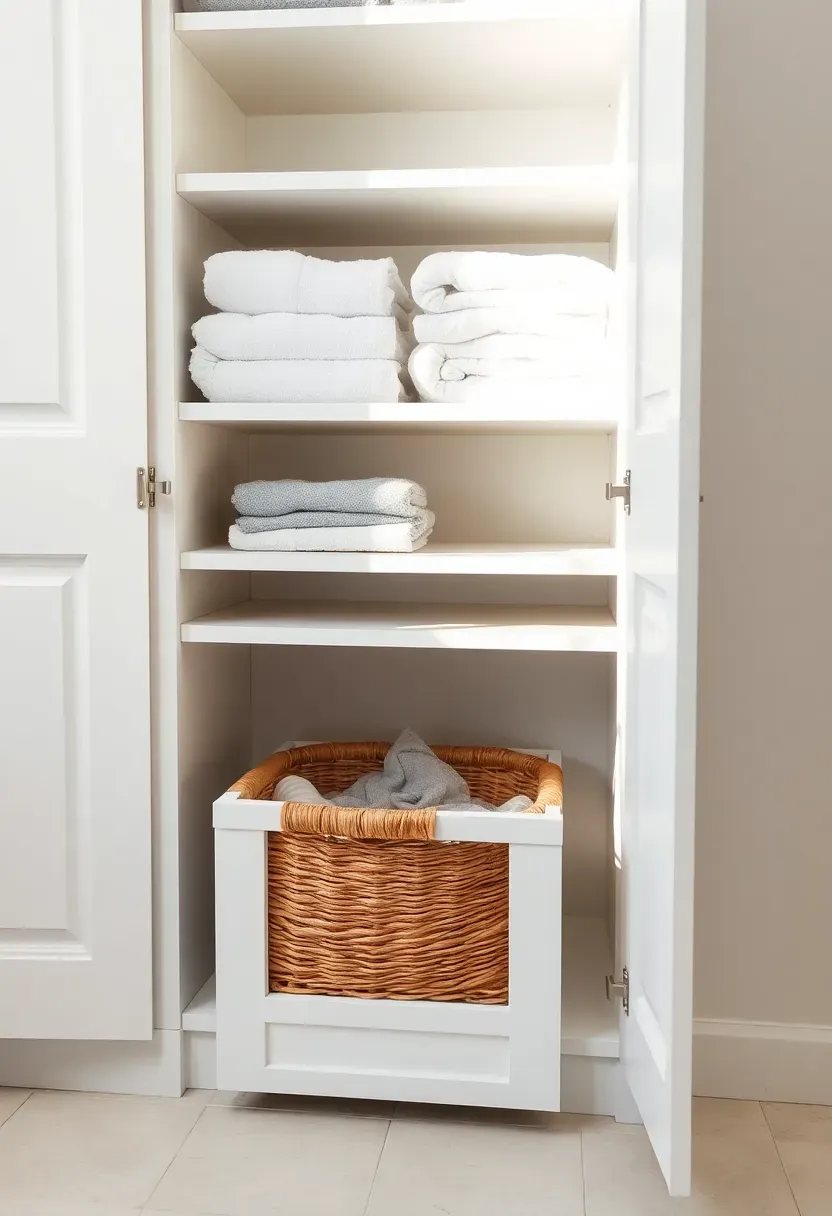
Different from a tilt-out hamper drawer, a pull-out hamper rolls forward on full-extension slides at the floor of the closet. It works in any cabinet width and pairs especially well with a closet that has wasted vertical space at the bottom. The hamper itself is usually a removable rattan or canvas bin that lifts out for laundry day. The cabinet front gets a flush panel or louvered door that hides the bin completely when closed. Total install with a kit and 21-inch slides runs about two hours.
Tips
- Add small rubber bumpers to the inside of the cabinet to silence the slam when closing
- Vented door fronts (louvers, perforated metal) keep airflow moving inside the closed bin
- Choose a hamper with handles long enough to grip even when full and heavy
Recommended
Items for this idea
17. Toiletry Drawers with Dividers
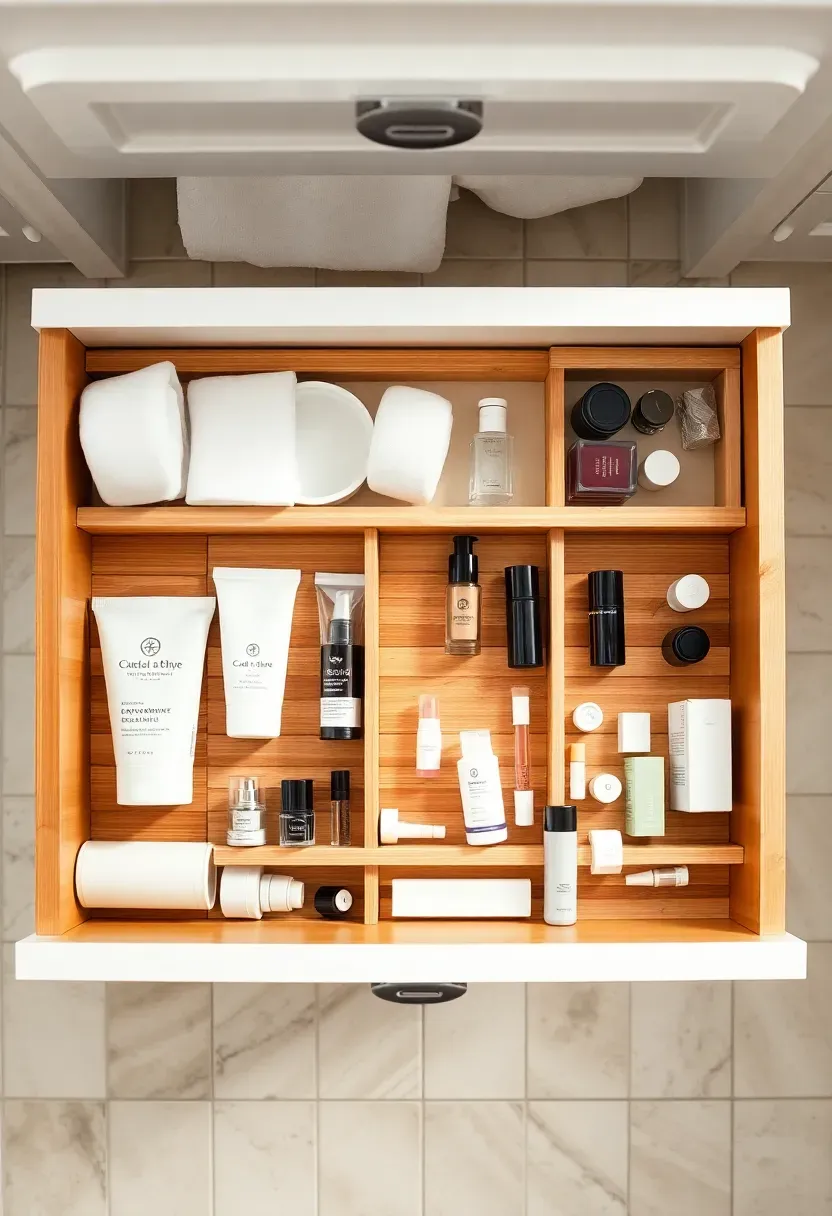
A drawer of small toiletries without dividers is a graveyard. Things slide, tip, and roll into corners. Adjustable wood or acrylic dividers turn that drawer into a grid where every tube, jar, and lipstick has a slot. iDesign and Yamazaki sell expandable bamboo divider sets that slot together at custom widths for $15 to $35. For a custom fit, cut 1/4-inch plywood strips and notch them so they interlock at right angles. Lay everything flat — vertical storage hides labels and makes you dig.
Tips
- Sort by category, not size, so you reach for the same area every time
- Add a line of low-tack felt to the bottom of the drawer to prevent items from sliding when opened
- Take inventory once a season and toss expired sunscreen, makeup, and prescription eye drops
18. Motion-Sensor Interior Light
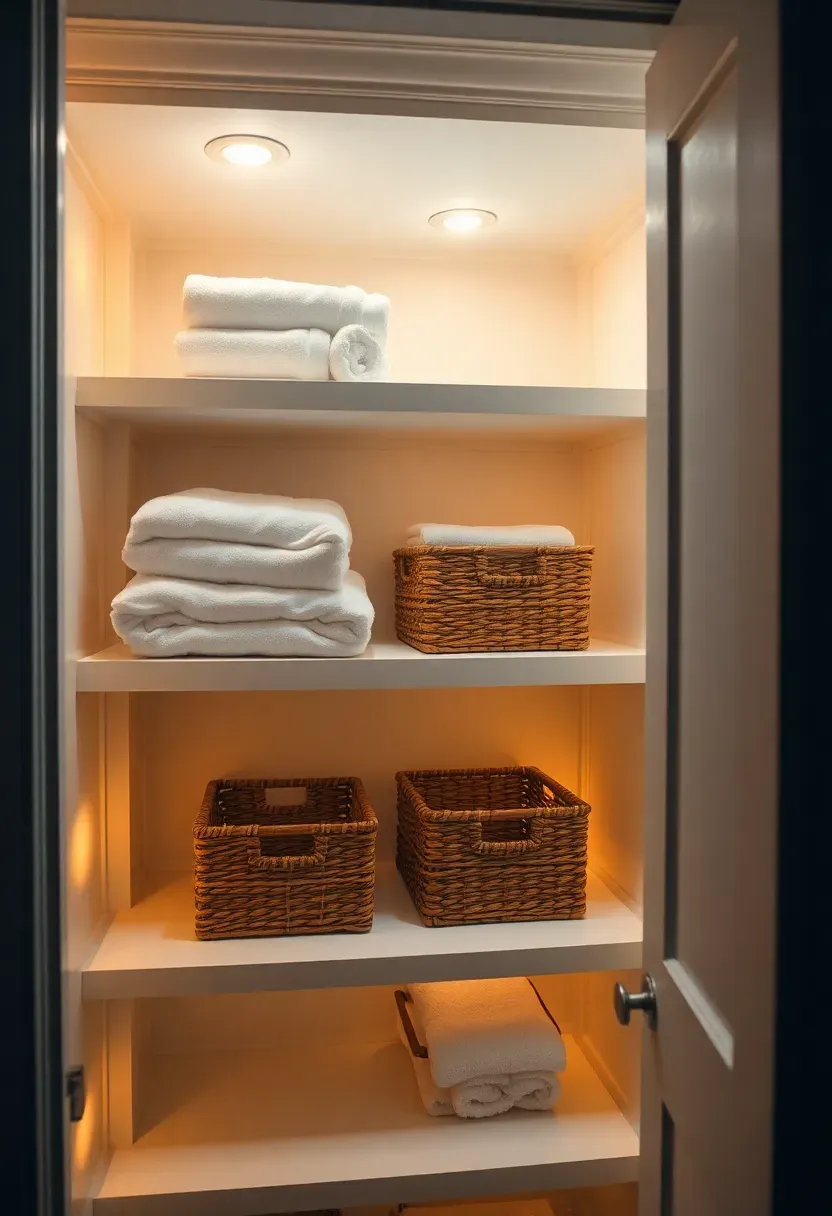
Linen closets are usually dark caves. Even with the bathroom light on, the back of a deep shelf disappears into shadow. Battery-powered motion-sensor LED puck lights stick to the underside of each shelf with adhesive backing and turn on automatically when the door opens. Brand options like Mr. Beams, Brilliant Evolution, and AmazonBasics run $15 to $30 for a three-pack. Each light lasts six to eight months on three AA batteries with normal use. The convenience of opening the closet at 2 a.m. and seeing exactly which towel you grab is real, especially in households with shared bathrooms.
Tips
- Mount lights at the front edge of each shelf so they illuminate down rather than reflecting back
- Choose warm white (3000K) over cool white — softer light matches a bathroom's evening palette
- Hardwired battery-free options exist if you have an electrician handy and a junction box nearby
Recommended
Items for this idea
19. Cedar-Lined Shelves
The Origin
Cedar has been used to line clothes chests and linen closets since at least the 17th century. The aromatic oils in Eastern red cedar repel moths, silverfish, and small insects that chew natural fibers. Older homes in the eastern United States often had a dedicated cedar closet upstairs near the bedrooms.
In a Modern Bathroom
The pest concern is less urgent today, but the scent and moisture-buffering properties still matter. Cedar planks lining the back wall and shelves of a linen closet absorb and release humidity, which helps stored towels stay drier between uses. The smell — sharp, woody, slightly sweet — is the bonus. Home Depot and Lowes sell tongue-and-groove cedar planks in 4-foot lengths for about $1.50 per square foot.
How to Use This at Home
- Sand the cedar lightly every 12 to 18 months with 220-grit paper to refresh the scent
- Skip wax or sealer — cedar needs raw exposure to release oils
- Combine cedar lining with a small lavender sachet for layered scent without overload
20. Beadboard Closet Backing
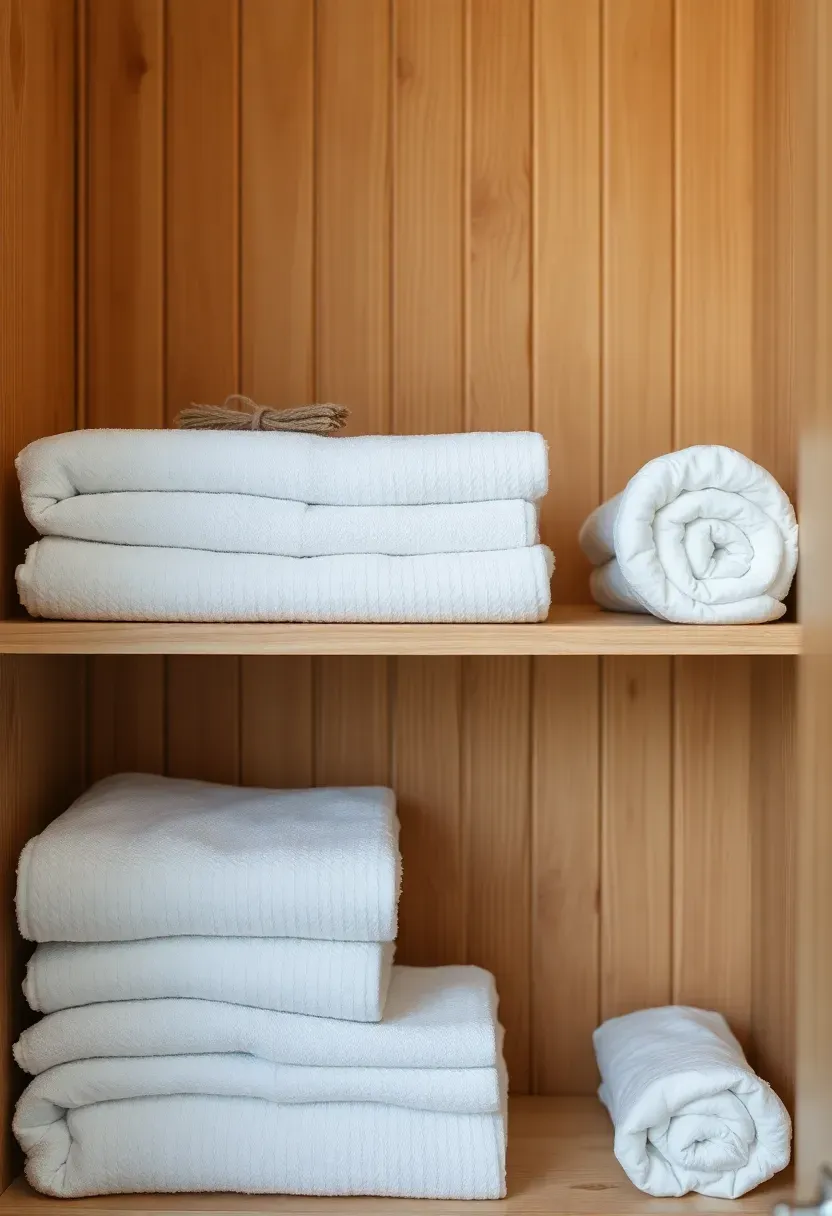
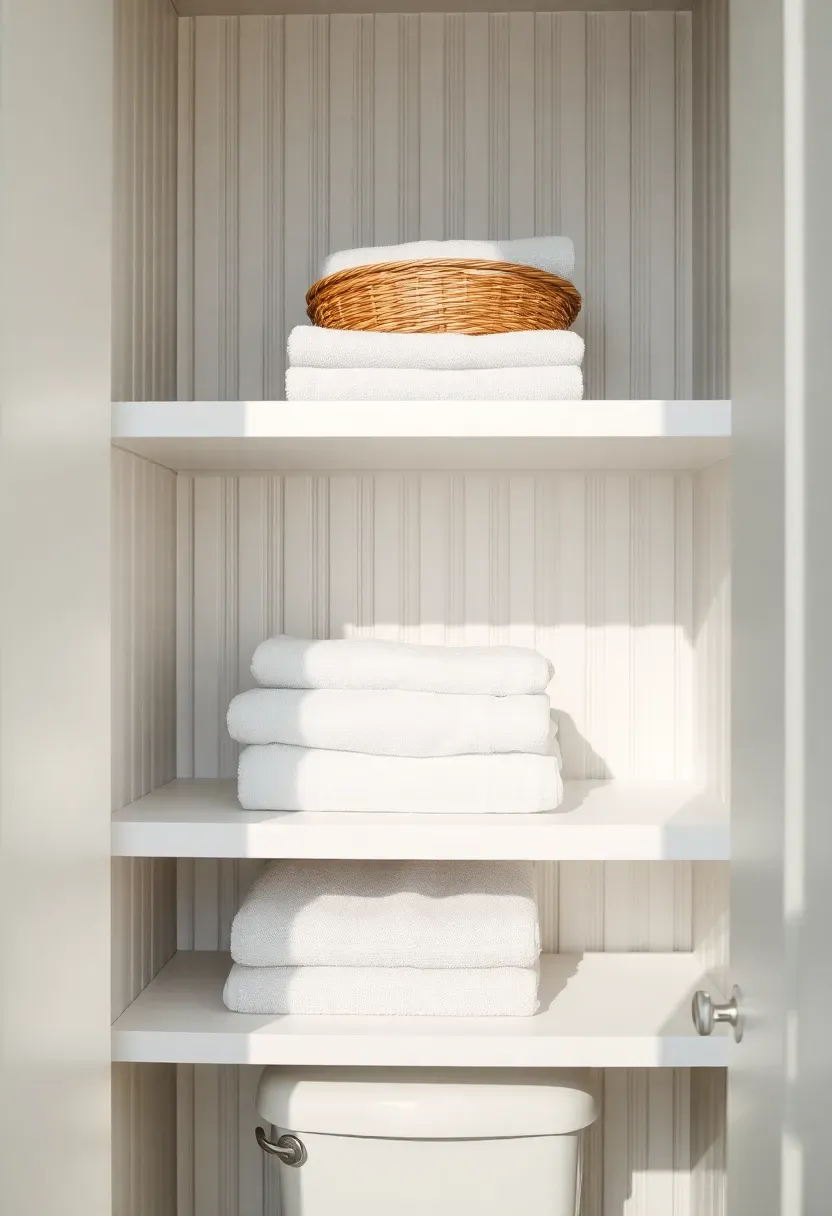
The interior of a typical linen closet is flat painted drywall — fine, but forgettable. Adding beadboard panels to the back wall and side walls of the closet gives the inside texture and weight, like a small built-in. The panels are 4-foot by 8-foot sheets of MDF or PVC with vertical bead grooves milled at one-inch intervals. Cost runs $25 to $40 per sheet. Cut to fit, glue and brad-nail in place, prime and paint the same color as the closet exterior. The ridges catch light and shadow, which makes simple stacks of folded white towels look more curated than they have any right to.
Tips
- PVC beadboard handles humidity better than MDF in steamy bathrooms
- Run the bead grooves vertically — horizontal beadboard reads as cottage-y in a small space
- Caulk the top and side seams before painting for a clean built-in look
Recommended
Items for this idea
21. Color-Coded Towel Stacks
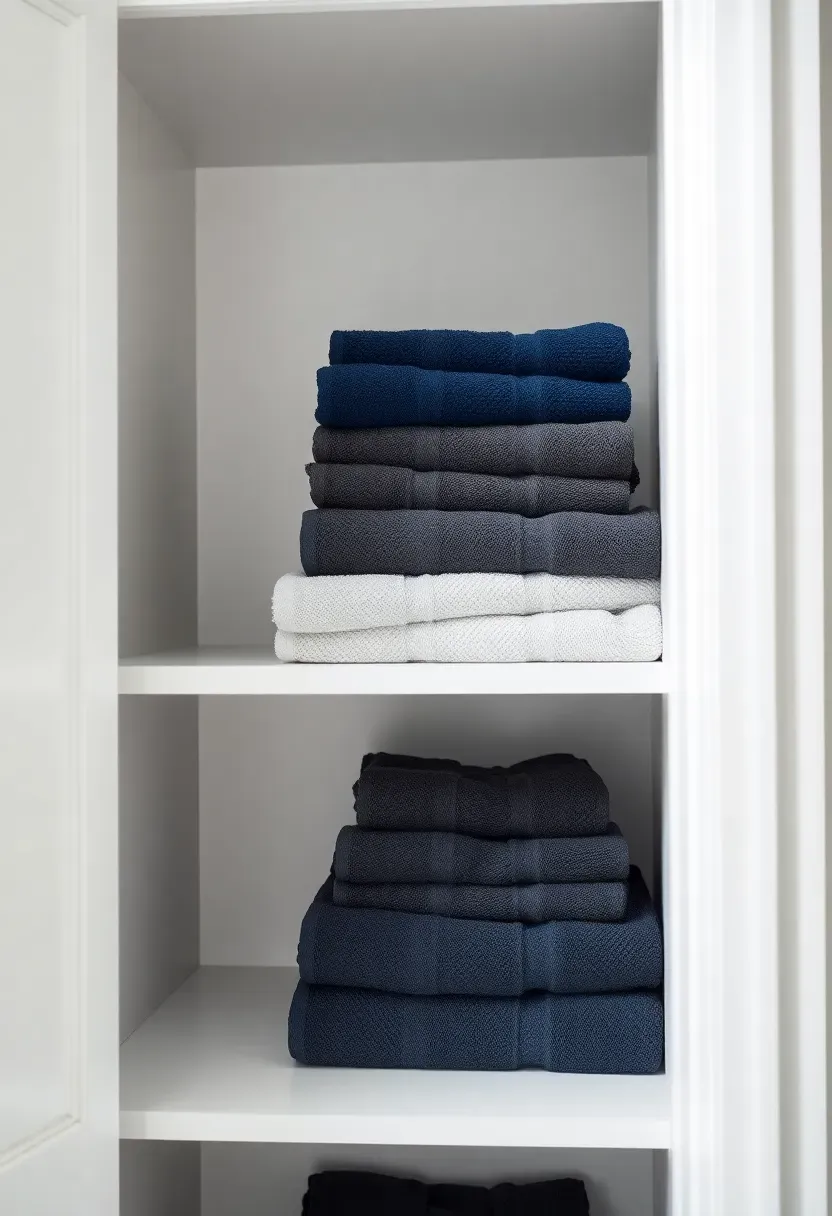
Sorting towels by color rather than mixing them creates instant visual order on open shelves and inside cabinets alike. Three stacks of different colors — say, white, charcoal, and rust — read as intentional. The same nine towels mixed look like clutter. Colors can match the bathroom palette or contrast it on purpose. The functional bonus: family members each get a color, which ends the daily debate about whose towel was just used. Buy each color in matched sets of three or four so the stacks stay even as towels rotate through the laundry.
Tips
- Stick to two or three colors maximum; more than that defeats the visual logic
- Buy backups in the same dye lot — replacements years later often shift in tone
- Fold all towels the same way (in thirds, smooth side out) for matching stack edges
22. Apothecary-Style Glass Jars
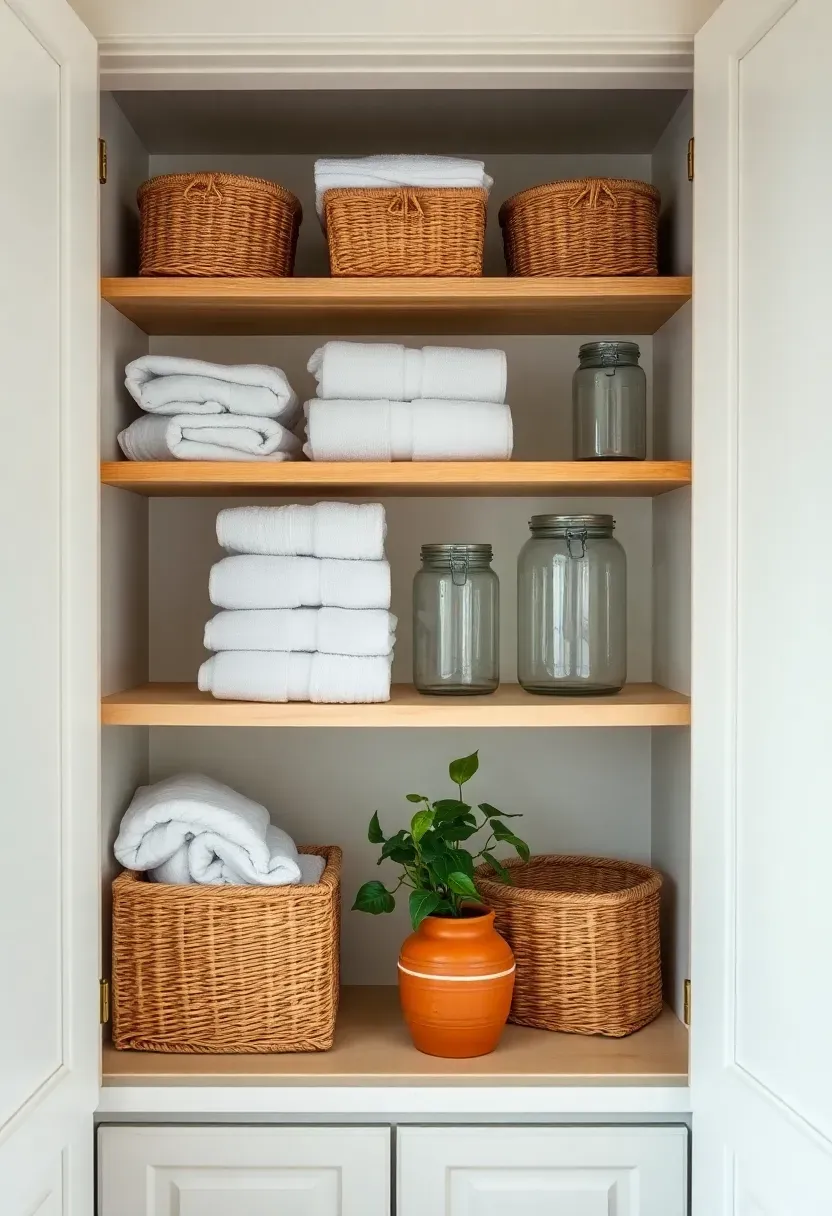
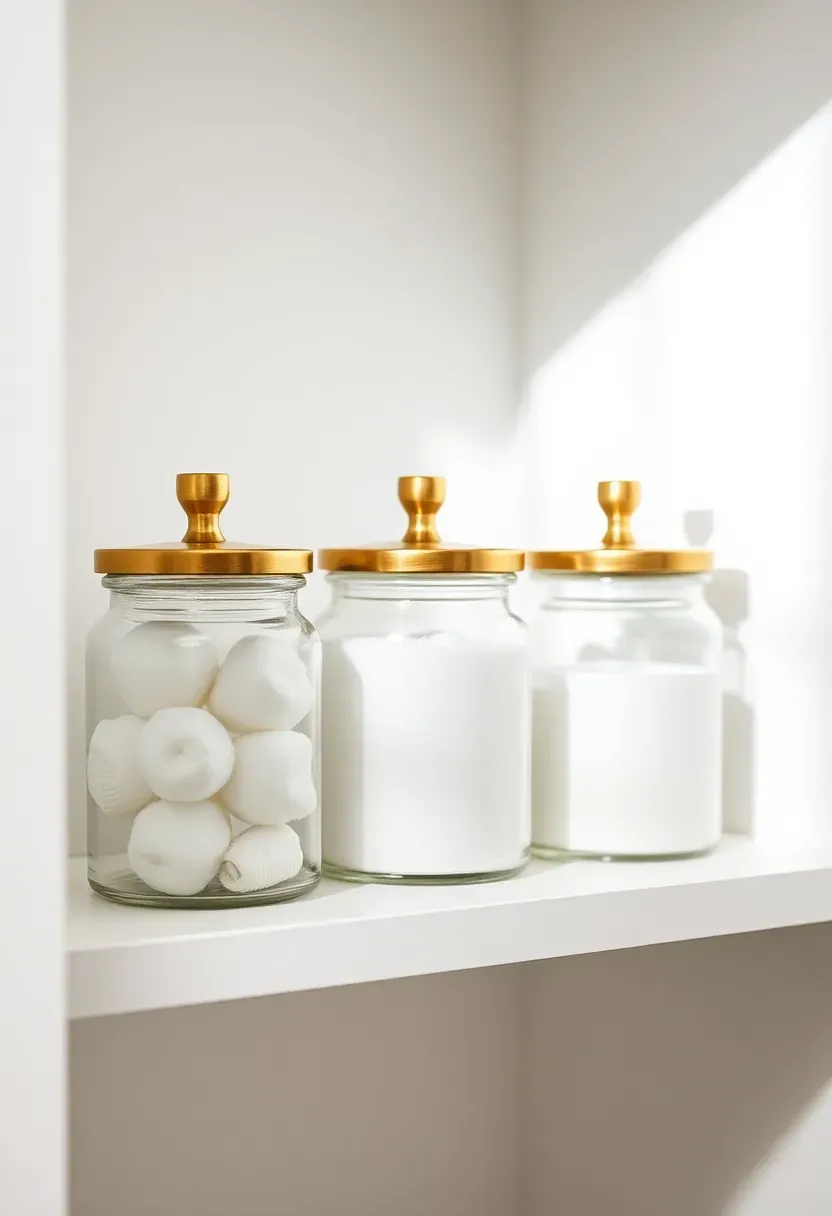
Decanting consumables — cotton balls, cotton swabs, bath salts, bar soap — into clear glass jars upgrades a closet shelf the same way it upgrades a kitchen pantry. Original packaging is colorful, branded, and visually noisy. A row of three matched glass jars with brass or wood lids reads as styled rather than stocked. Sources like Weck, Anchor Hocking, and HomeGoods sell suitable jars for $5 to $15 each. Choose wide-mouth versions so your hand fits inside without fishing. Refill rather than replace — most household consumables come in larger bulk bags or boxes that decant cleanly into jar storage.
Tips
- Label the bottoms of jars with painter's tape if contents are ambiguous
- Skip jars for products you only buy once a year — they create more friction than benefit
- Wash glass jars in the dishwasher monthly to prevent the foggy buildup from bathroom humidity
Recommended
Items for this idea
23. Pegboard Backing for Tools
The Problem
Hair tools — flat irons, curling wands, blow dryers — never fit cleanly on a shelf. Cords tangle, hot barrels touch fabric, and finding the right one means moving everything else.
The Fix
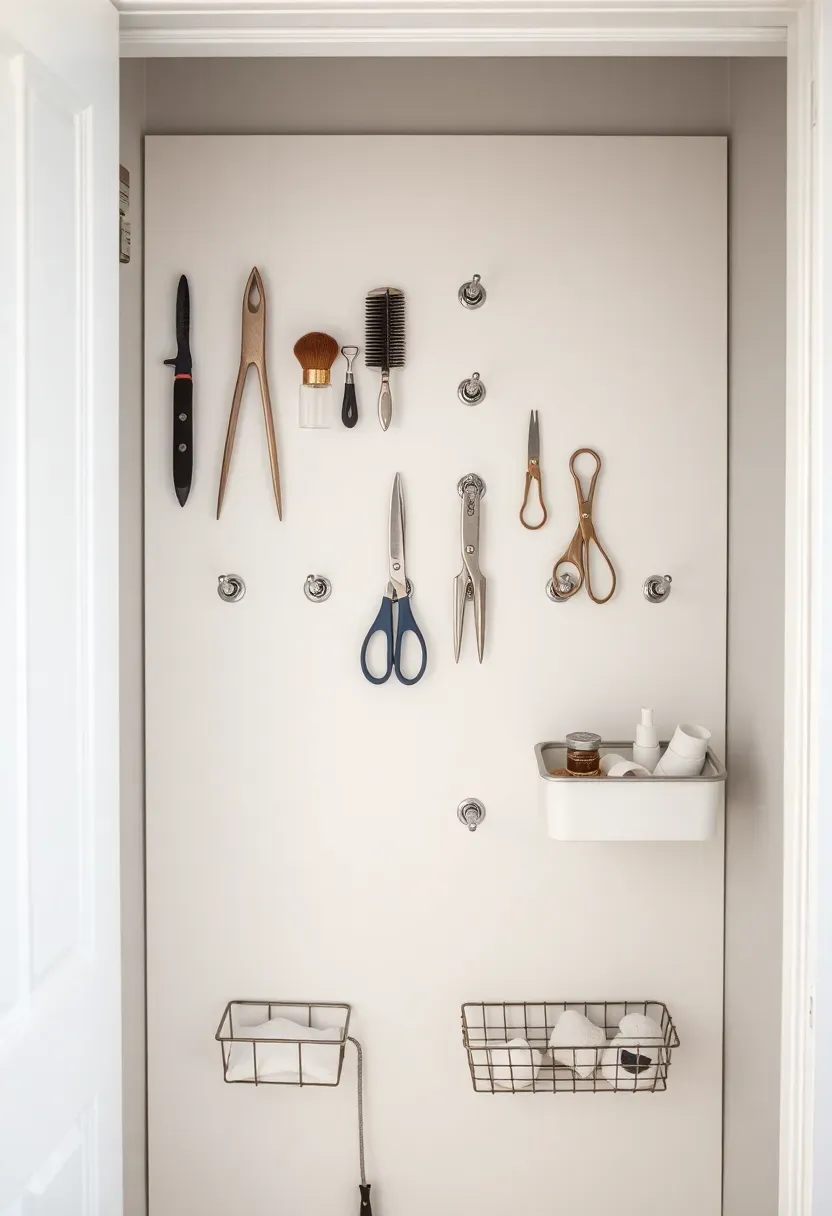
Painted pegboard mounted to the inside of a closet door or back wall hangs every tool individually. Custom hooks hold dryers by the handle, irons by the grip, and small bins on flat brackets hold scissors, hair ties, and clips. Pegboard is sold by the 2-by-4-foot panel at home centers for about $20. Paint it to match the closet, mount it with 1/2-inch standoffs so hooks slide in cleanly, and arrange tools so cords drape down and away from heat sources.
Pros and Cons
- Pro: Every tool visible and grabbable; no tangled cords
- Pro: Layout is fully customizable as your tools change
- Con: Requires the door or back wall to be 1/2-inch deeper than usual to clear the standoffs
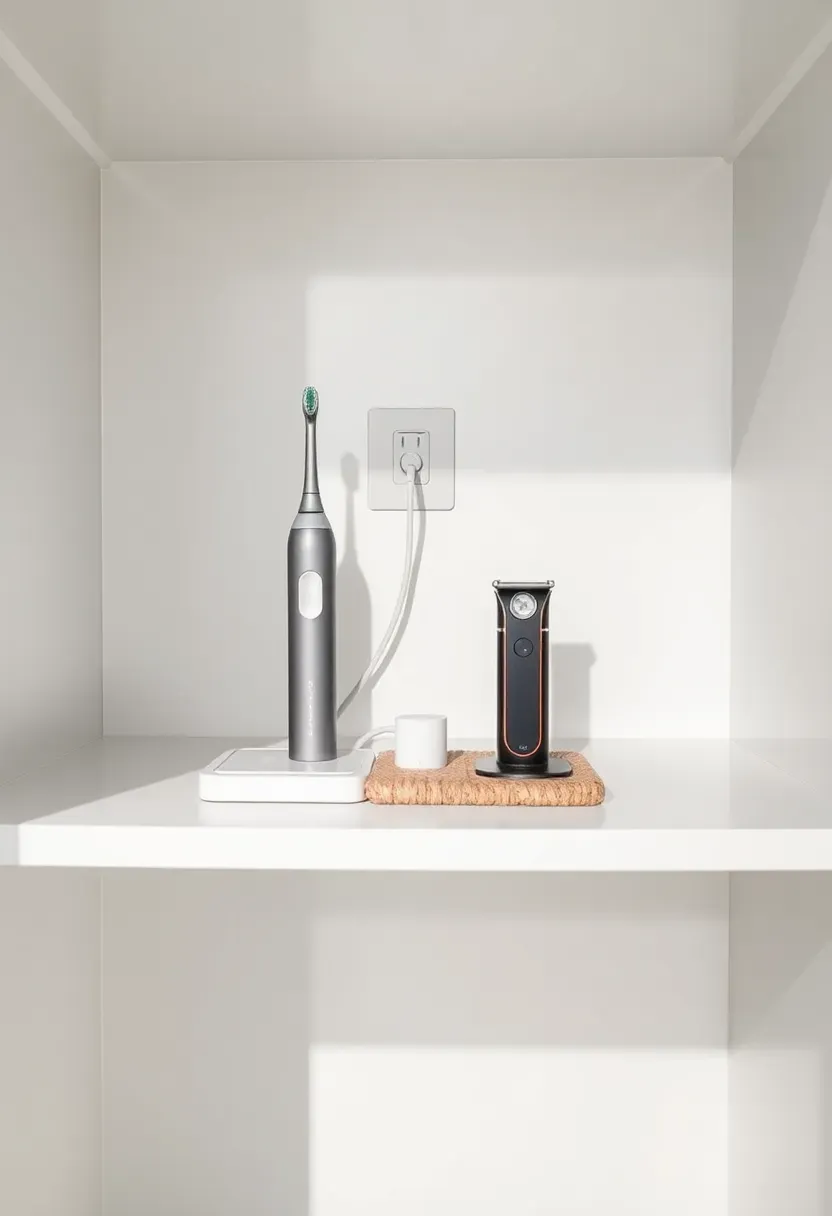
24. Hidden Charging Station
Electric toothbrushes, water flossers, and rechargeable razors all need outlet access, and the countertop is the last place you want them living. Adding an outlet inside the linen closet — wired by an electrician at the back of one shelf — turns that shelf into a charging station. The bases sit out of sight, the cords tuck behind, and the counter stays clear. A GFCI outlet rated for a bathroom run runs about $35 in parts and $150 to $250 with labor. Drill a small grommet hole at the back corner of the shelf to feed the cord cleanly.
Tips
- Group all charging items on a single shelf with one outlet and a small surge strip
- Choose a tamper-resistant GFCI outlet — code-required in any bathroom-adjacent installation
- Add a small woven tray to corral the charging bases visually
Recommended
Items for this idea
25. Antique Hardware Refresh
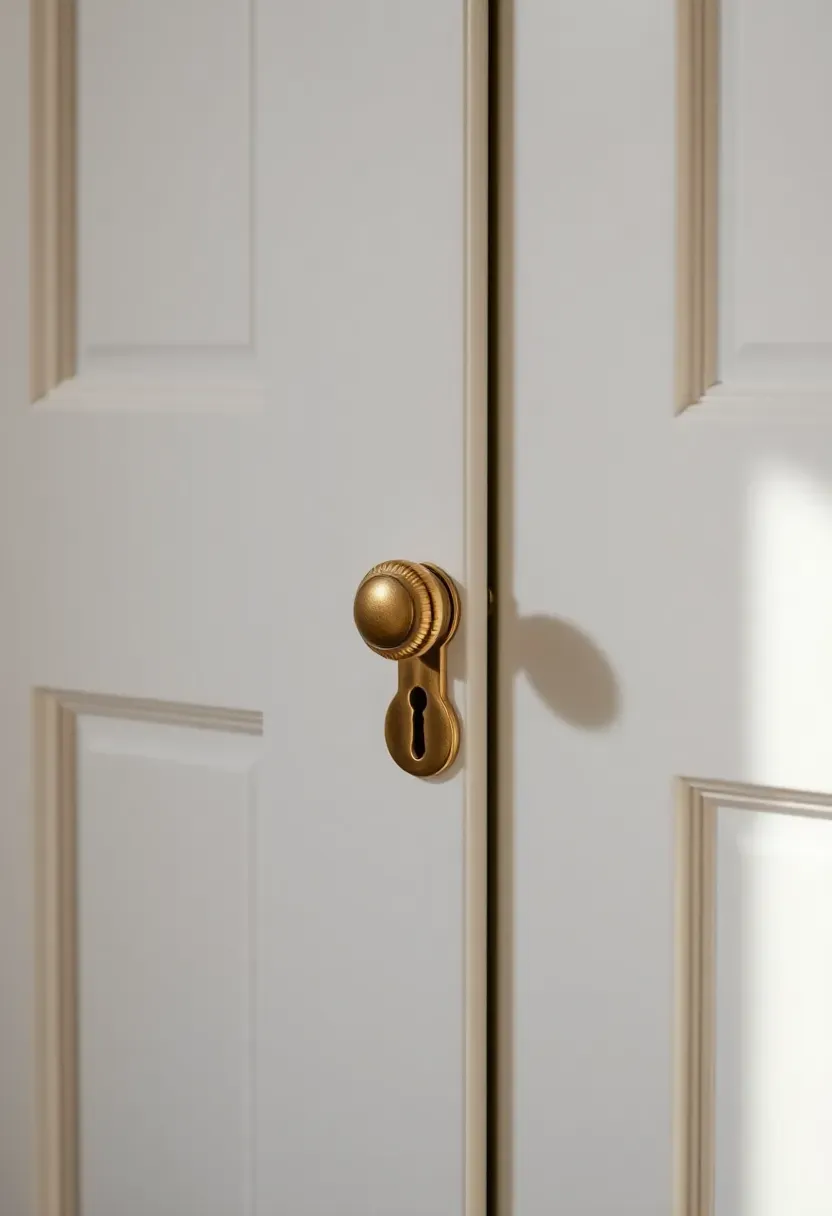
The fastest way to reset a tired linen closet without rebuilding it is to replace the door pulls and hinges. Most builder-grade closets ship with brushed nickel knobs from 2002 — fine, forgettable, and stamped from sheet metal. Antique brass cup pulls, unlacquered brass knobs, or oil-rubbed bronze drop pulls from a salvage shop or House of Antique Hardware reset the entire feel of the door. Cost: $5 to $25 per piece. Match the screw centers when ordering replacements, or fill old holes with wood filler and drill new ones if you want a different style with different spacing.
Tips
- Unlacquered brass develops a living patina; lacquered brass stays bright but eventually peels
- Use a single style throughout the closet — mixing pull types reads as accidental
- Replace exposed hinges to match the new pull finish for full visual coherence
Quick FAQ
How deep should a bathroom linen closet actually be? Twelve to sixteen inches handles most needs. Folded bath towels run about 11 inches square when folded in thirds, so a 12-inch-deep shelf holds them with no overhang. Anything deeper than 18 inches just buries whatever sits at the back.
Do I really need doors on a linen closet? No. Open shelving works in a bathroom with good ventilation and tidy habits. If your bathroom stays steamy or you struggle to keep things stacked neatly, doors are forgiving — they hide both moisture damage and chaos.
What is the best way to keep towels smelling fresh in a closed closet? Make sure towels are bone-dry before stacking, leave a small gap between stacks for airflow, and tuck a cedar block or small lavender sachet on each shelf. Replace or sand the cedar every few months to refresh the scent.
Can I add a linen closet to a bathroom that does not have one? Often yes. The wall between studs gives you about 14 inches of usable depth — enough for a shallow recessed cabinet. A tall narrow freestanding cabinet beside the toilet is the simpler option if you cannot open the wall.
Should bathroom linen closet shelves be wood, wire, or melamine? Solid wood looks best and handles weight, but it needs sealing in humid bathrooms. Melamine-coated MDF is the budget choice and resists moisture if edges are sealed. Wire shelving lets air move but leaves marks on folded towels — fine for baskets, less ideal for stacks.
A linen closet rewards small, repeated decisions more than big overhauls. Adjustable shelves, a couple of labeled baskets, and a light inside the door cover most of what makes a closet pleasant to use. Add character with hardware or a beadboard back panel only after the structure works. The best ones look almost boring on the surface — every towel where it should be, every bottle visible, nothing falling out when you open the door.
Pinterest cover for 25 Bathroom Linen Closet Ideas Worth Stealing
About the author
OBCD
CGI visualization and interior design content. We create detailed 3D renders and curate practical design ideas for every room in your home.