21 Bathroom Picture Ideas for Steamy Walls
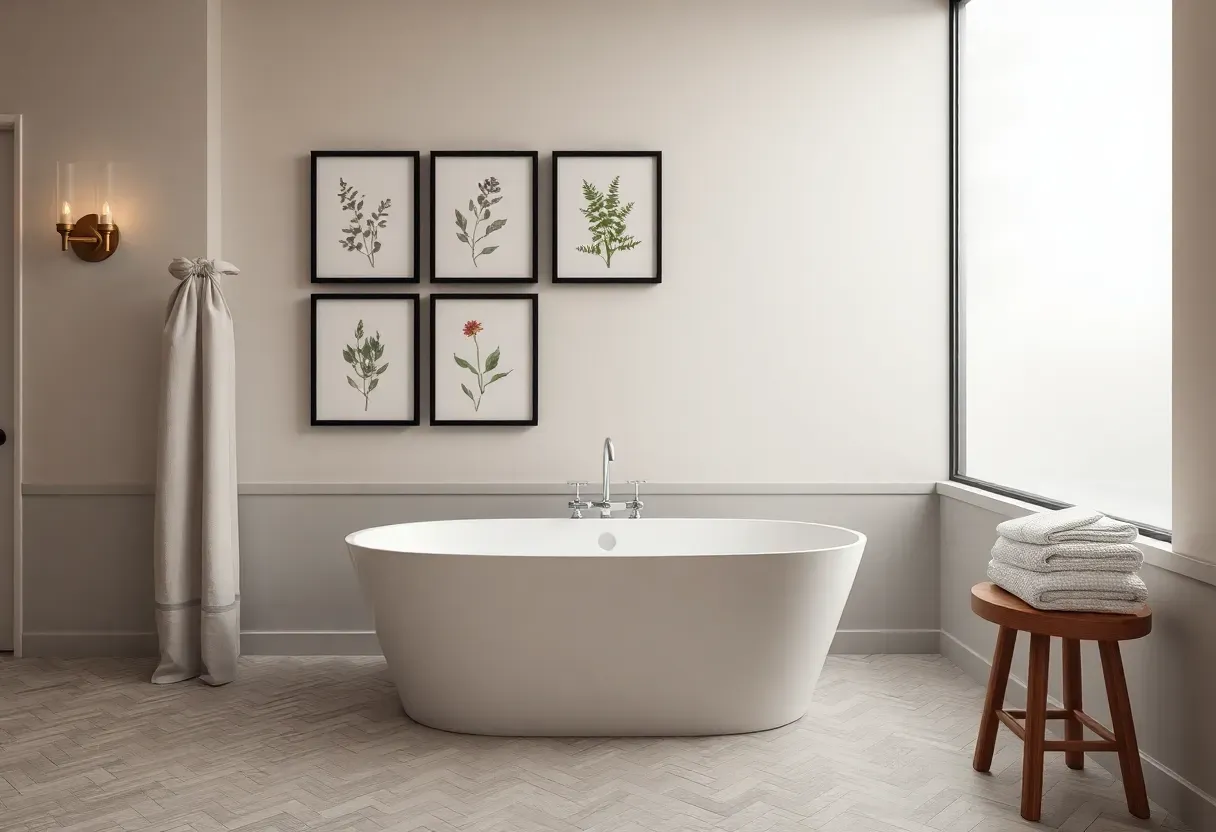
Pictures in a bathroom feel a bit like keeping books in a kitchen — a reasonable person assumes the humidity will eat them alive. Done right, it never does. The trick is matching the right kind of picture to the right wall, sealing the frame against steam, and treating the bathroom like the small intimate gallery it actually is. A guest bath is the most overlooked photography wall in any house. Visitors will stand there for ninety seconds with nothing else to look at, which is more attention than most people give the art in your living room.
Below are twenty-one ways to put pictures on bathroom walls — from a single oversized photograph to densely packed gallery clusters — with practical notes on what holds up against shower steam.
Table of Contents
- Single Oversized Black-and-White Print
- Vertical Three-Photo Stack Above the Toilet
- Symmetrical Grid of Botanical Prints
- Salon-Style Gallery Wall
- Framed Vintage Postcards
- Single Picture Ledge with Layered Frames
- Polaroid String Above the Vanity
- Acrylic Float Frames for Steam Resistance
- Small Frame Cluster Above the Towel Bar
- Family Photos in the Powder Room
- Architectural Blueprints and Maps
- Pressed Botanical Prints Behind Glass
- Black Frames Against White Subway Tile
- Antique Mirror Mixed with Photographs
- Picture Rail Molding Across One Wall
- Postage Stamp Collage in a Single Frame
- Diptych Above a Double Vanity
- Photographs Printed on Tile
- Children's Artwork Rotation Frame
- Travel Photographs in Matching Mats
- Framed Magazine Covers and Book Pages
1. Single Oversized Black-and-White Print
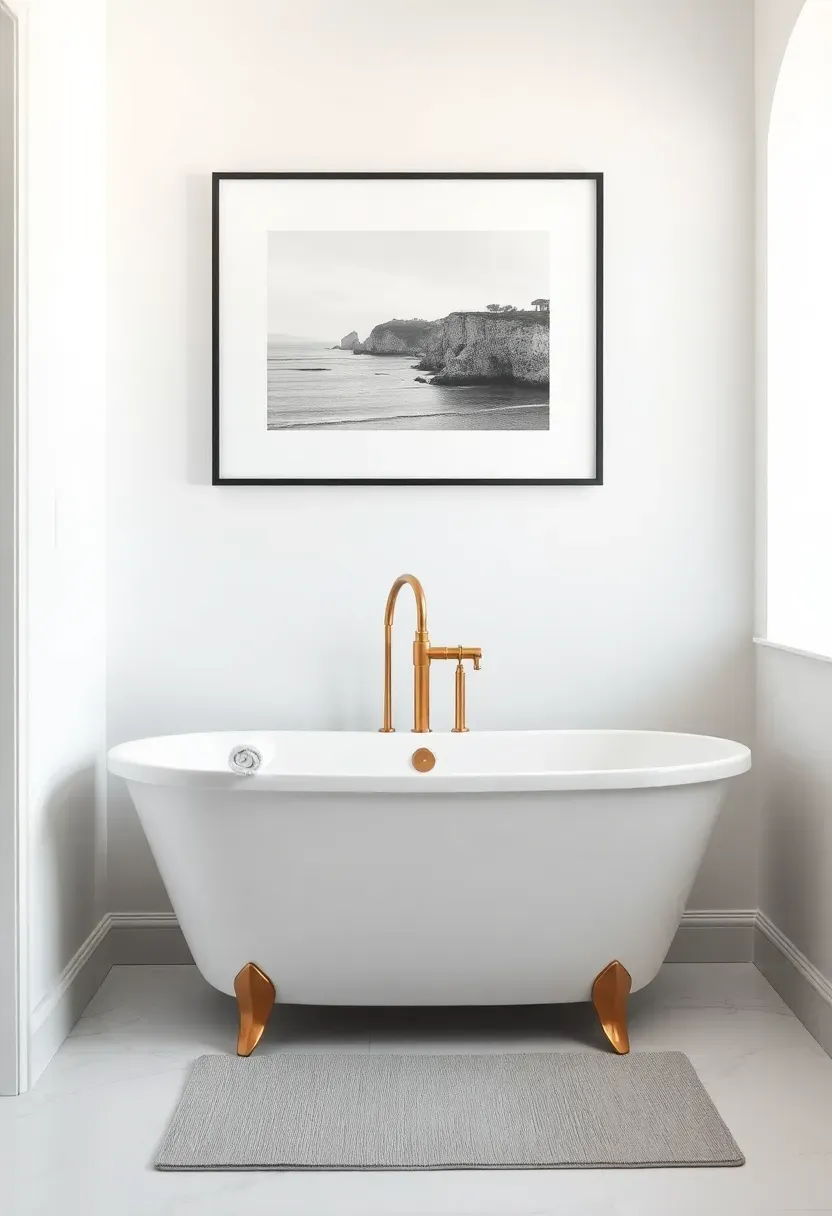
One large picture beats five small ones in a tight bathroom, and a black-and-white photograph reads as graphic rather than fussy when it has to share wall space with tile grout and a towel ring. Aim for a print at least 24 by 36 inches above a standard 60-inch tub — anything smaller floats awkwardly. Black-and-white also forgives the strange yellow cast of bathroom lighting in a way that color photography never does. Place the bottom edge of the frame six to eight inches above the tub deck so steam has room to rise without pooling against the glass.
Tips
- Choose a matte print rather than glossy; bathroom lighting hates reflections
- Use a wide white mat and thin black frame for a museum feel
- Seal the back of the frame with painter's tape to keep humid air out
2. Vertical Three-Photo Stack Above the Toilet
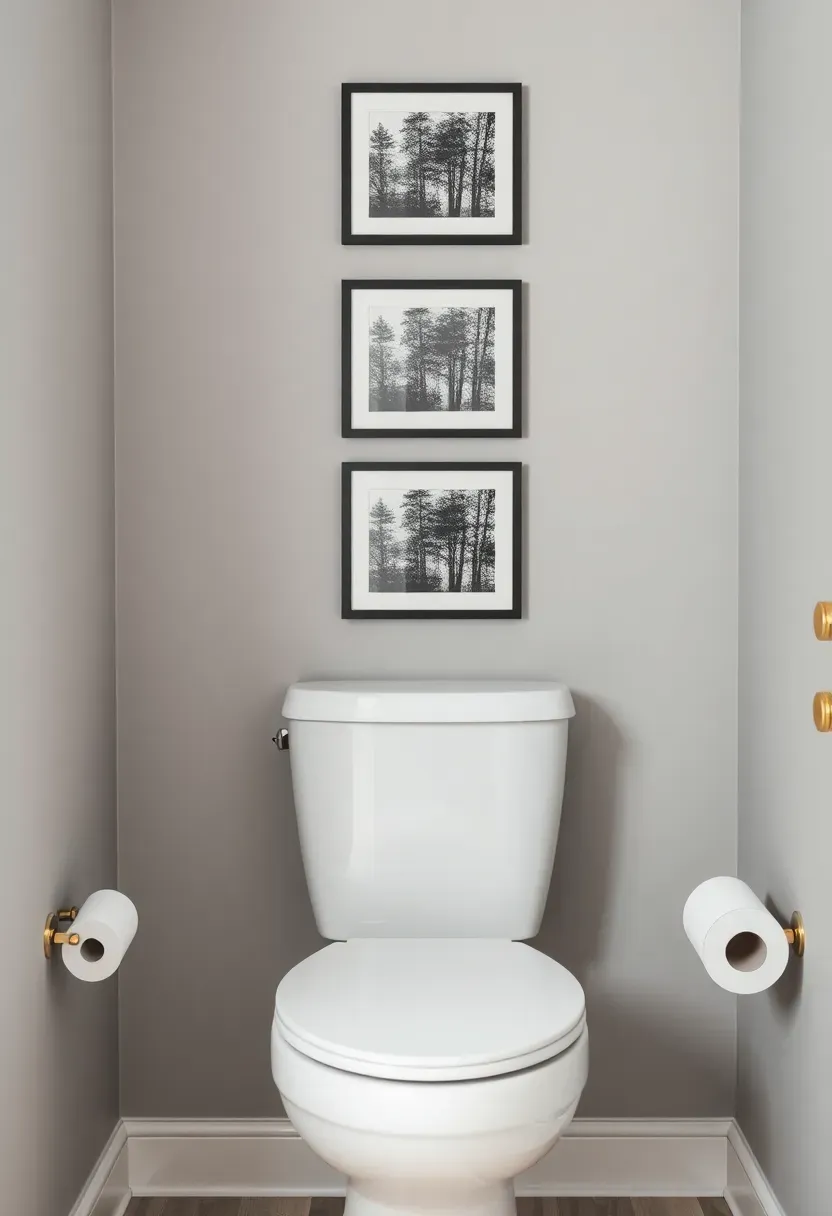
The wall above the toilet is the most consistently wasted real estate in any bathroom. A vertical stack of three identical-size photographs turns it into a deliberate composition instead of an empty rectangle. Use frames between 8 by 10 and 11 by 14 inches, spaced two inches apart, centered horizontally on the toilet tank. The eye travels up and down rather than side to side, which works with the cramped proportions of the spot. Choose three pictures that share a single visual thread — all forests, all city skylines at dusk, all close-ups of stone — so the stack reads as one piece rather than three afterthoughts.
Tips
- Hang the lowest frame eight inches above the tank lid for breathing room
- Use D-rings rather than sawtooth hangers so frames stay level when bumped
- Match frame finishes exactly; mixed metals here look accidental
Recommended
Items for this idea
3. Symmetrical Grid of Botanical Prints
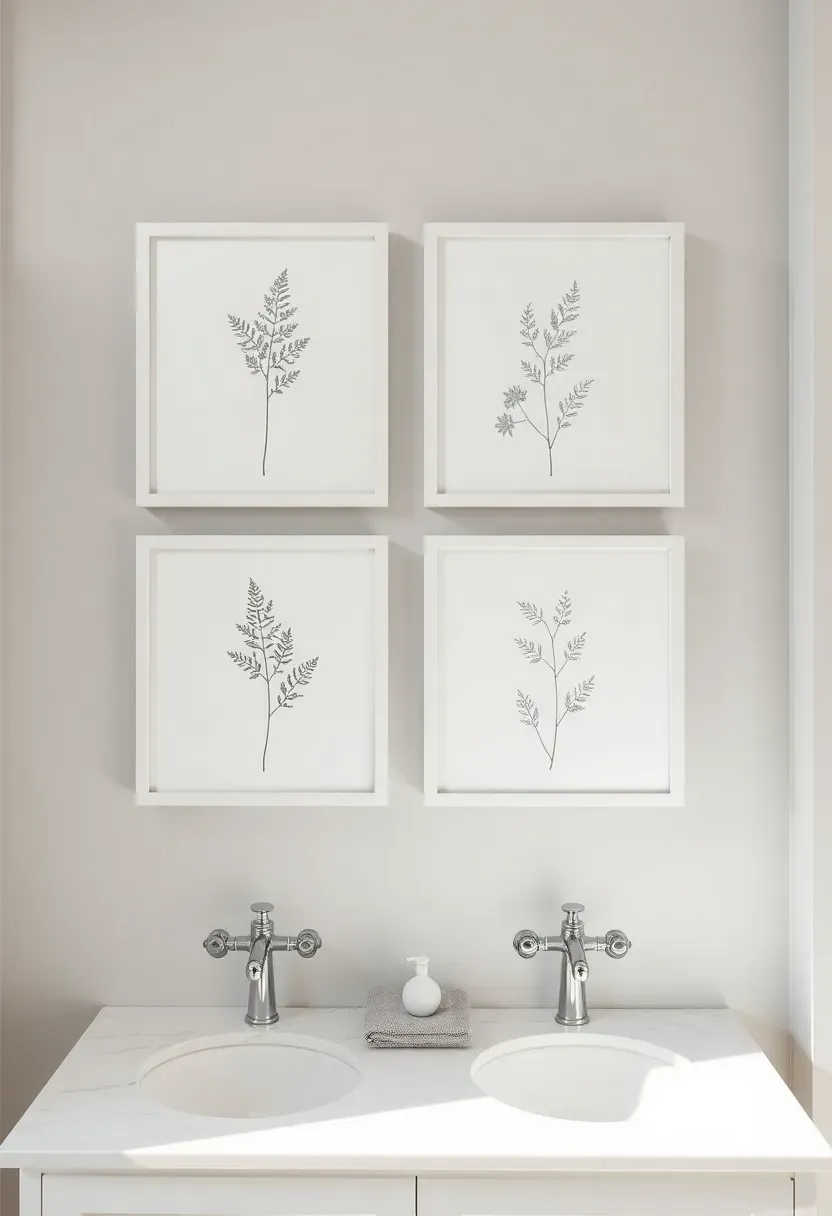
A grid of six or eight identical frames turns a bathroom into something closer to a small powder-blue museum room. Botanical prints — ferns, herbs, simple line drawings of leaves — are the safest subject matter because nothing in a botanical print looks dated in five years. Buy a multi-pack of matching frames (IKEA's Ribba and Hovsta lines are the unofficial standard) and a printable PDF of botanical illustrations from Etsy for under fifteen dollars. Lay the grid out on the floor first using the actual frames; eyeballing on the wall always ends with a hole-patching afternoon.
Tips
- Keep one and one-quarter inch of space between frames, no more
- Use a level and a pencil — laser levels lie on textured walls
- Botanical line art reads cleaner than full-color illustration
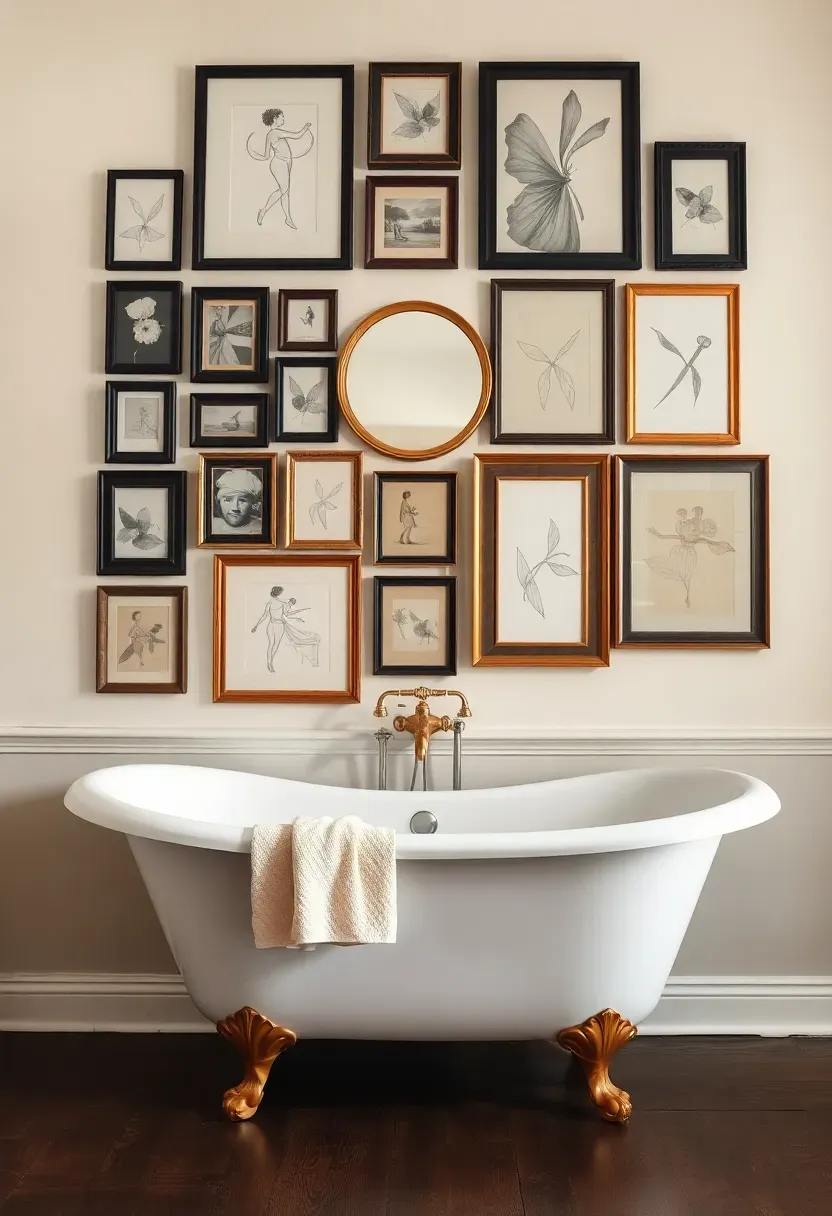
4. Salon-Style Gallery Wall
Why Bathrooms Suit Salon Style
The salon hang — frames packed close together in varied sizes, almost touching at the corners — feels chaotic in a living room but oddly perfect in a small bathroom. The room is already full of hard angles and parallel lines (tile, fixtures, mirrors), so the asymmetry softens it.
How to Lay It Out
Start with the largest frame slightly off-center as your anchor, then orbit smaller frames around it, leaving roughly one inch between any two pieces. Mix portraits, landscapes, abstract prints, and a single odd object — a small mirror, a pressed leaf in a shadow box. The mix is the point. Hang from the bathtub up so the densest cluster is at eye level when soaking, not when standing.
Pros and Cons
- Pro: Hides imperfect wall patches, dings, and the previous owner's anchor holes
- Pro: Easy to add to over time as you find new pictures
- Con: Looks lived-in rather than minimal; not for clean-line bathrooms
Recommended
Items for this idea
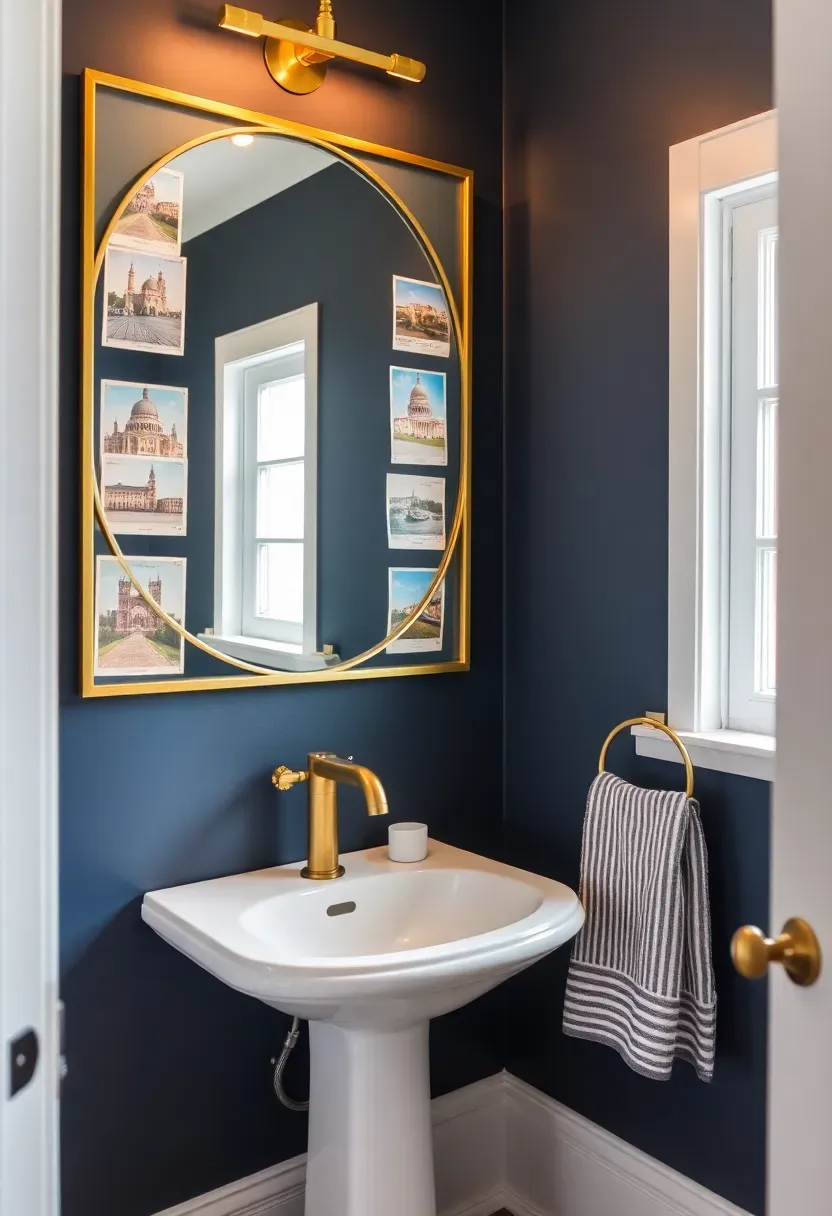
5. Framed Vintage Postcards
Vintage postcards are the cheapest collectible art still in circulation — most antique stores sell them at a dollar each, sometimes less if you buy a stack. They are also already designed to survive humidity since they were mailed in coat pockets and tucked into wet luggage. Slim brass frames at 5 by 7 inches turn them into a coherent collection. Group eight to twelve of them in a loose cluster on a single wall, ideally one with travel as a unifying theme — all 1950s beach towns, all European train stations, all national parks. The handwriting on the back becomes part of the texture if you flip a few around.
Tips
- Use acid-free mats so the postcards do not yellow against the matboard
- Hinge each postcard with linen tape rather than gluing it down
- A few flipped to show the writing adds personality
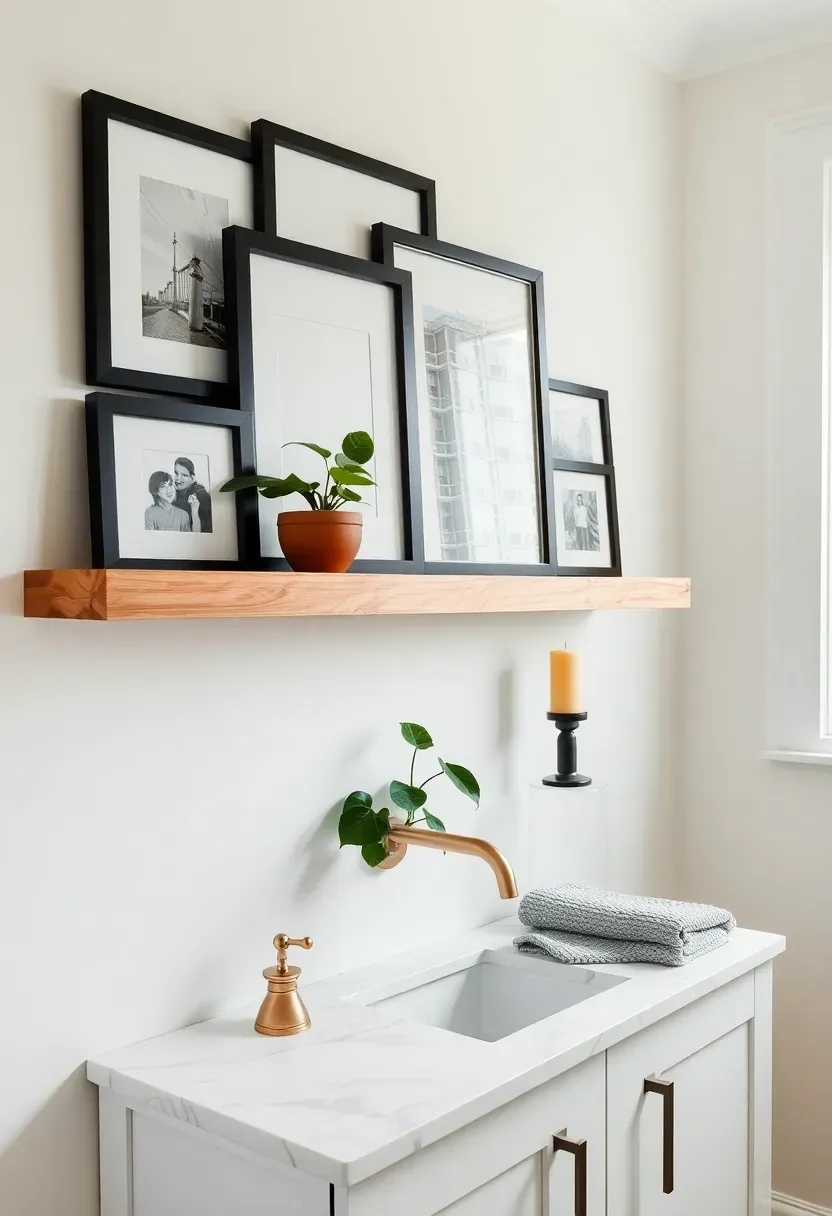
6. Single Picture Ledge with Layered Frames
A picture ledge — basically a narrow shelf with a small lip — solves the commitment problem of nail holes. Mount one ledge above the vanity at roughly chin height when standing, then layer three to five frames along its length, overlapping each by an inch or two. Swap pieces when you get bored without re-patching drywall. The ledge also gives you a spot for a small plant, a candle, or a stack of folded washcloths, so the wall reads as styled rather than purely decorative. Pottery Barn, Magnolia, and several IKEA lines sell ledges in five-foot lengths for under forty dollars.
Tips
- Anchor the ledge into studs or use heavy-duty toggle bolts
- Lean larger frames at the back, smaller ones in front
- Avoid putting anything taller than the ledge depth or it tips
Recommended
Items for this idea
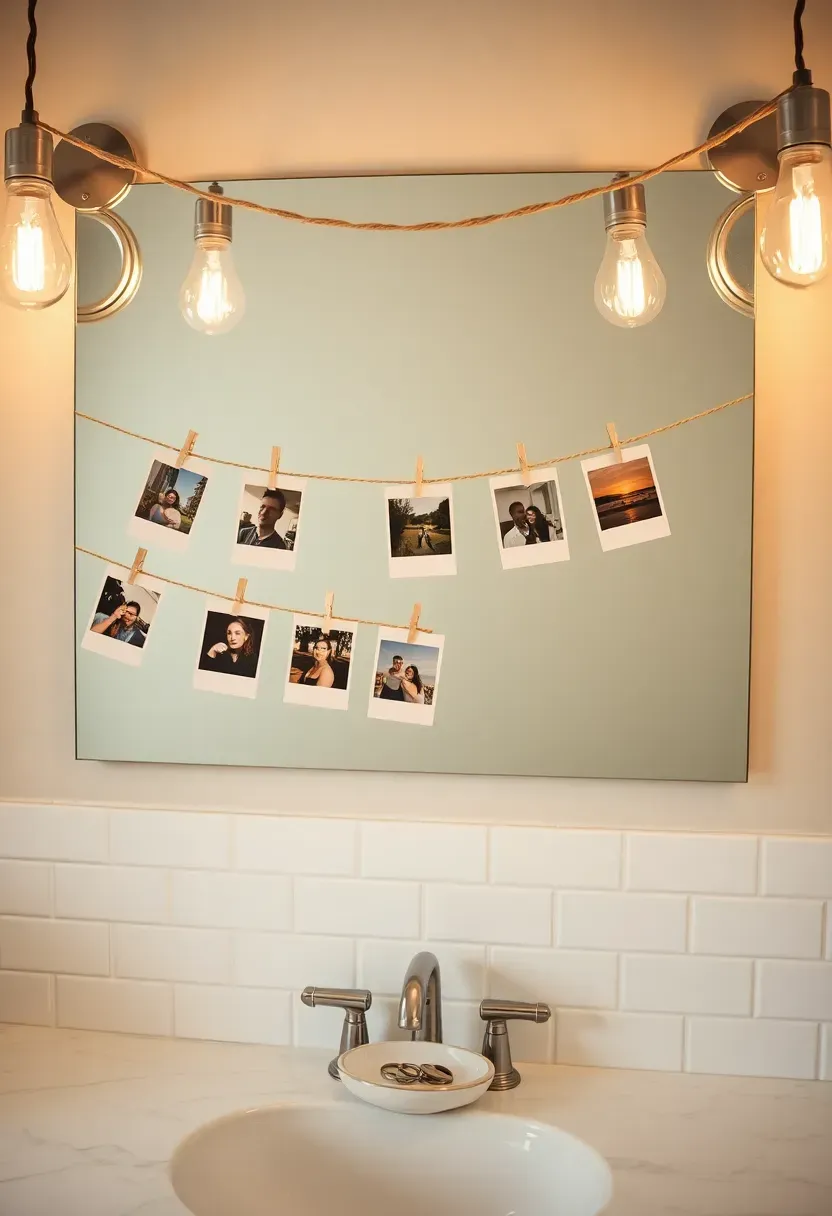
7. Polaroid String Above the Vanity
The Casual Bathroom Look
Stretch a length of twine between two small hooks on either side of the vanity mirror, then clip ten to fifteen Polaroid or instant-print photos along it with mini wooden clothespins. The look is dorm-room when done badly and Anthropologie-store when done well. The difference is curation — pick photos with a consistent palette (all warm tones, or all faded film stock) rather than every snapshot from the last vacation.
Why It Works in a Bathroom
Polaroids are surprisingly humidity-tolerant because the chemistry is sealed inside the print itself. The clothespins and twine make swapping photos a thirty-second job, so the wall stays current. Steam will eventually warp the prints; budget on rotating the lineup every six months and treating it as a rolling display, not a permanent installation.
Pros and Cons
- Pro: Zero nail holes; entire setup mounts on two small hooks
- Pro: Personal in a way that store-bought art never is
- Con: Needs occasional photo replacement as edges curl
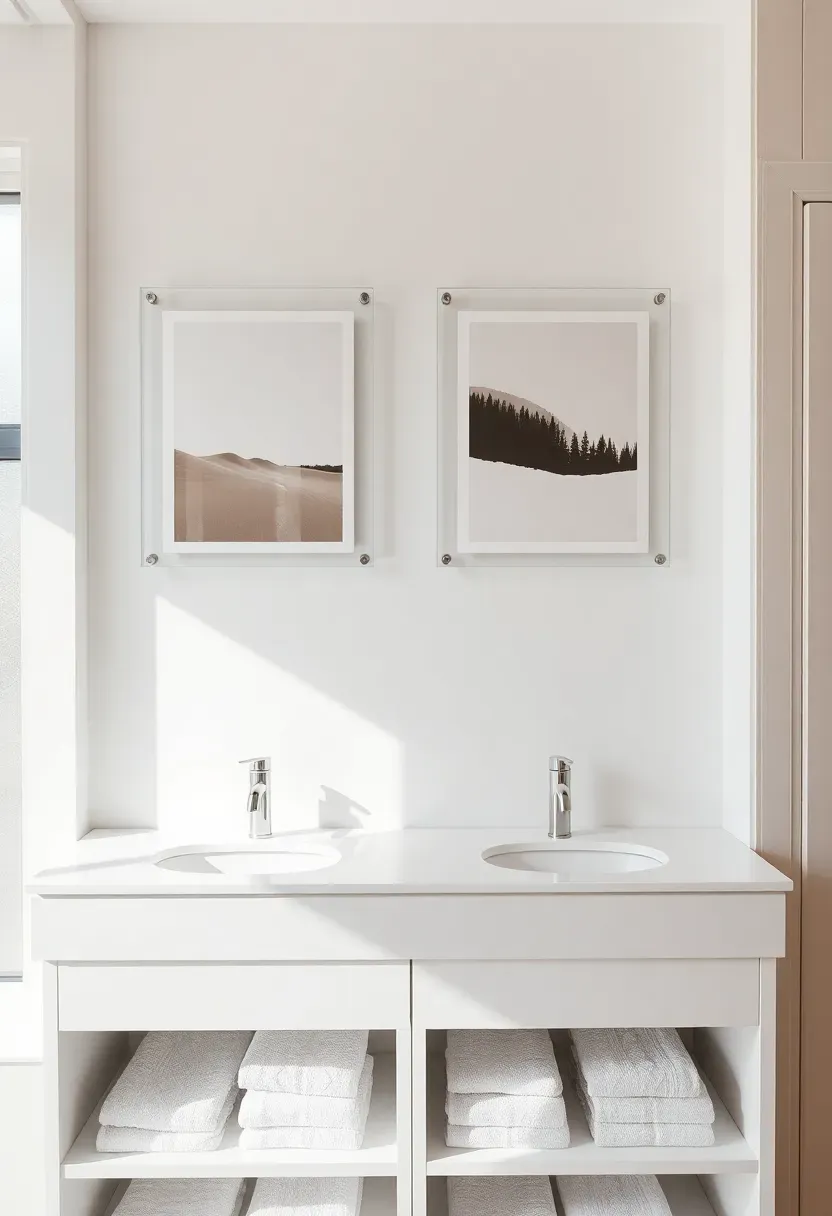
8. Acrylic Float Frames for Steam Resistance
Traditional wood frames swell, warp, and grow mildew on the back. Acrylic float frames — two pieces of clear acrylic sandwiching the print — are functionally waterproof and read as more contemporary. The print appears to hover inside the clear panel, which makes a small bathroom feel less crowded than a heavy framed piece would. Mpix, Framebridge, and several online printers sell them in standard sizes from 8 by 10 inches up to 24 by 36 inches. Use a microfiber cloth to wipe condensation off without scratching the acrylic surface.
Tips
- Avoid abrasive cleaners — they cloud acrylic permanently
- Hang with two anchors per frame; acrylic is heavier than glass
- Choose photos with clear focal points; busy images get lost behind acrylic
Recommended
Items for this idea
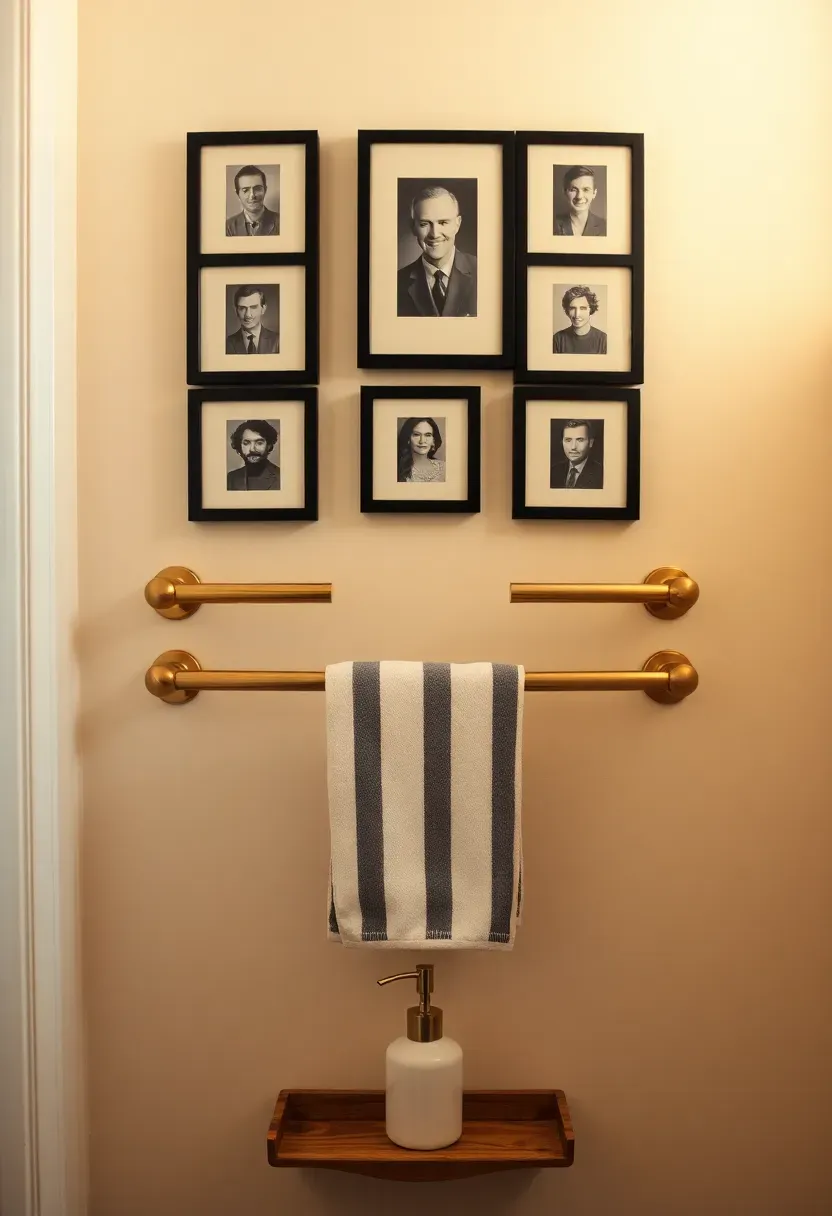
9. Small Frame Cluster Above the Towel Bar
The strip of wall above a towel bar is usually six to eight inches tall — too short for one normal frame, perfect for a row of small ones. Three to six frames in the 4 by 6 to 5 by 7 range fit comfortably and reinforce the horizontal line of the bar below them. The cluster reads as intentional rather than empty. Black-and-white portraits work especially well because the format is small enough that color would feel cluttered. Center the cluster precisely on the towel bar; an off-center group looks like someone gave up halfway.
Tips
- Measure twice, drill once — small frames magnify alignment errors
- Use Command strips for renters; small frames hold easily
- A single contrasting frame finish breaks up the row nicely
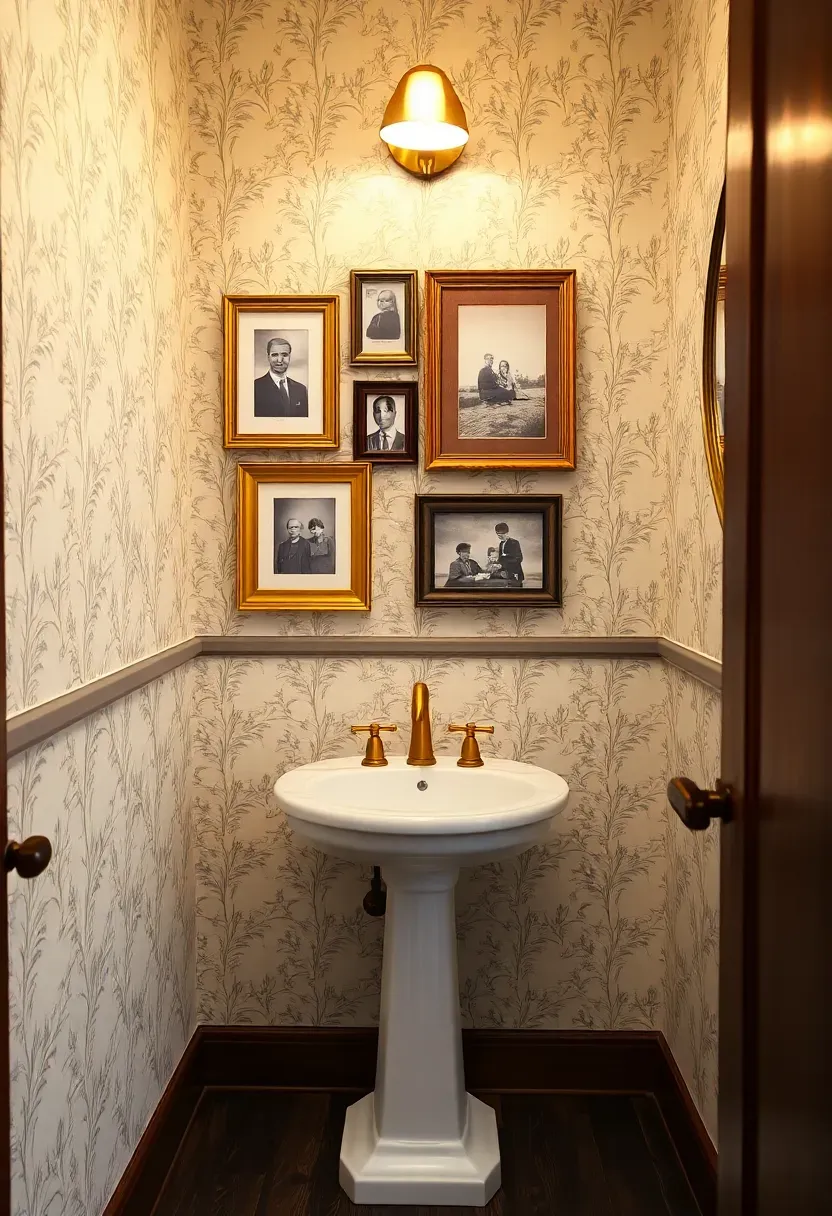
10. Family Photos in the Powder Room
Family photographs feel sentimental in a primary bedroom but exactly right in a powder room. Guests get a brief unguarded look at who lives in the house — kids on a beach, a parent's wedding photo, the dog at six weeks — without any of it feeling staged. Mix frame finishes (gold, silver, walnut, painted black) deliberately so the wall reads collected rather than coordinated. Five to seven frames is the sweet spot: enough variety, not so many that the room becomes a memorial.
Tips
- Avoid recent professional shots; candid old photos read warmer
- Vary frame sizes more than colors for cohesion
- Wallpaper behind the cluster intensifies the effect
Recommended
Items for this idea
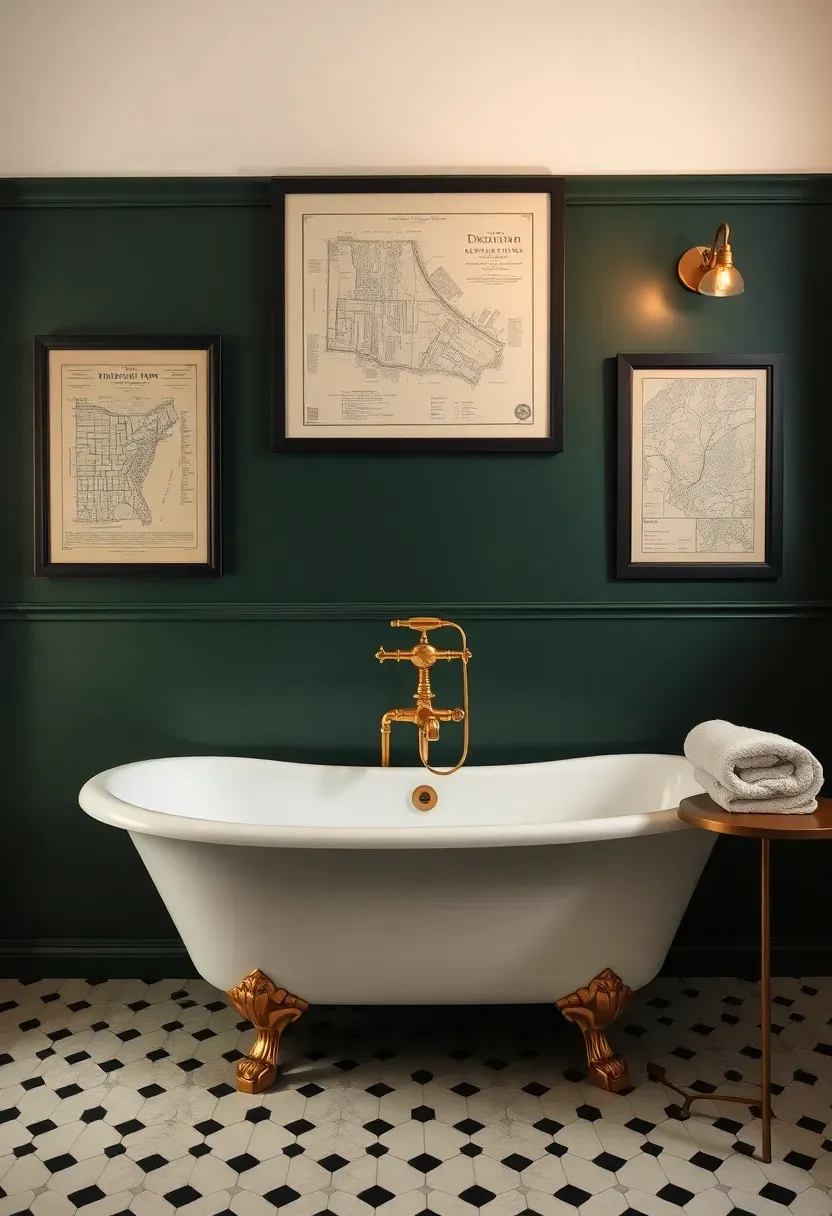
11. Architectural Blueprints and Maps
A framed blueprint or city map turns a wall into something quietly intellectual. The graphic precision — fine lines, neutral colors, clear typography — flatters bathroom tile in a way that softer art often does not. Look for a blueprint of your own house if you can find one (county archives sometimes have them), an old subway map, or a USGS topographical map of a place you have lived. Print at 18 by 24 inches or larger; small maps disappear into the wall pattern. The look pairs particularly well with a darker bathroom palette — deep green, navy, charcoal walls.
Tips
- USGS maps are public domain; large prints cost under twenty dollars
- Choose one detailed piece rather than three competing ones
- A simple black frame keeps the focus on the drawing
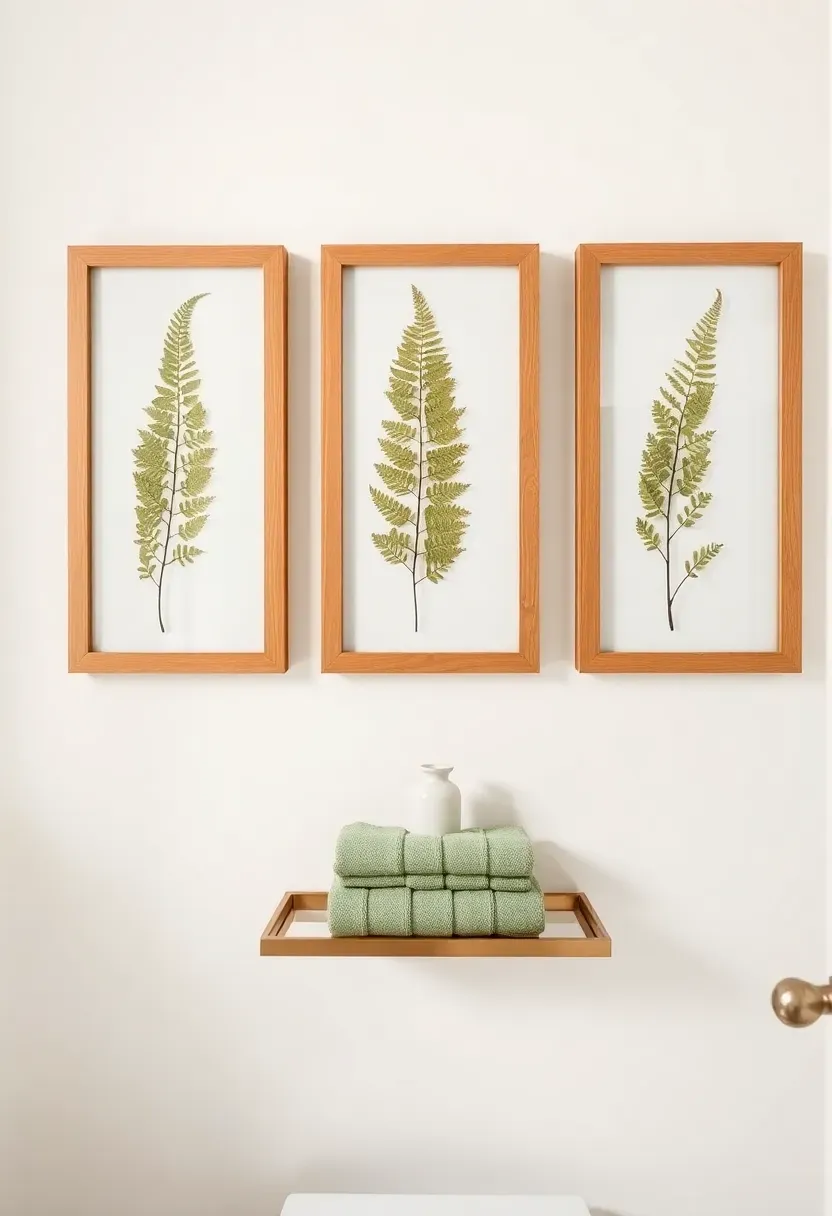
12. Pressed Botanical Prints Behind Glass
Pressed plants are halfway between picture and object. A real fern, fiddlehead, or eucalyptus stem pressed flat between two pieces of glass — no mat, no backing — looks gallery-quality with about ten dollars of materials. The plant casts a faint shadow on the wall behind, which adds depth that flat prints cannot match. Three identical frames in a row above a sink read as deliberately curated. Replace the specimens every two to three years as they lose color, which is part of the appeal — slow, seasonal change.
Tips
- Press plants flat in a heavy book for two weeks before mounting
- Use double-glass frames so light passes through the specimen
- Hang at consistent eye level rather than aligning frame tops
Recommended
Items for this idea
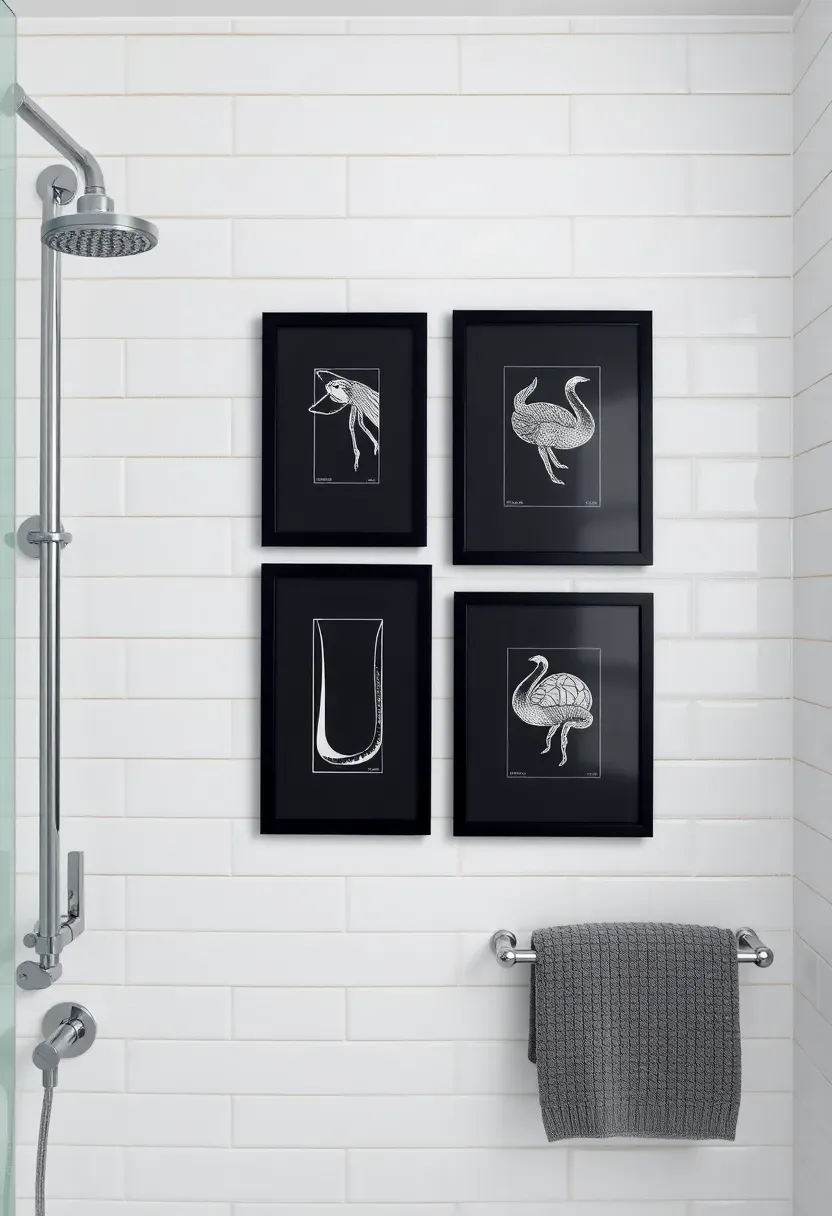
13. Black Frames Against White Subway Tile
White subway tile is the bathroom equivalent of a blank page — endlessly forgiving but visually flat without something to break it up. A trio of black-framed prints mounted directly on grouted tile (yes, you can drill into tile) gives the wall a focal point. Use a carbide bit, drill slowly, and hit the grout lines rather than tile faces whenever possible. Subjects matter less than contrast: the rule is high-contrast ink-style drawings, sharp typography, or stark photography. Anything muted or pastel disappears against tile glare.
Tips
- Drill into grout, not tile — saves the surface and is easier
- Use plastic anchors rated for masonry behind the grout
- Three frames suit subway better than five; the tile pattern competes
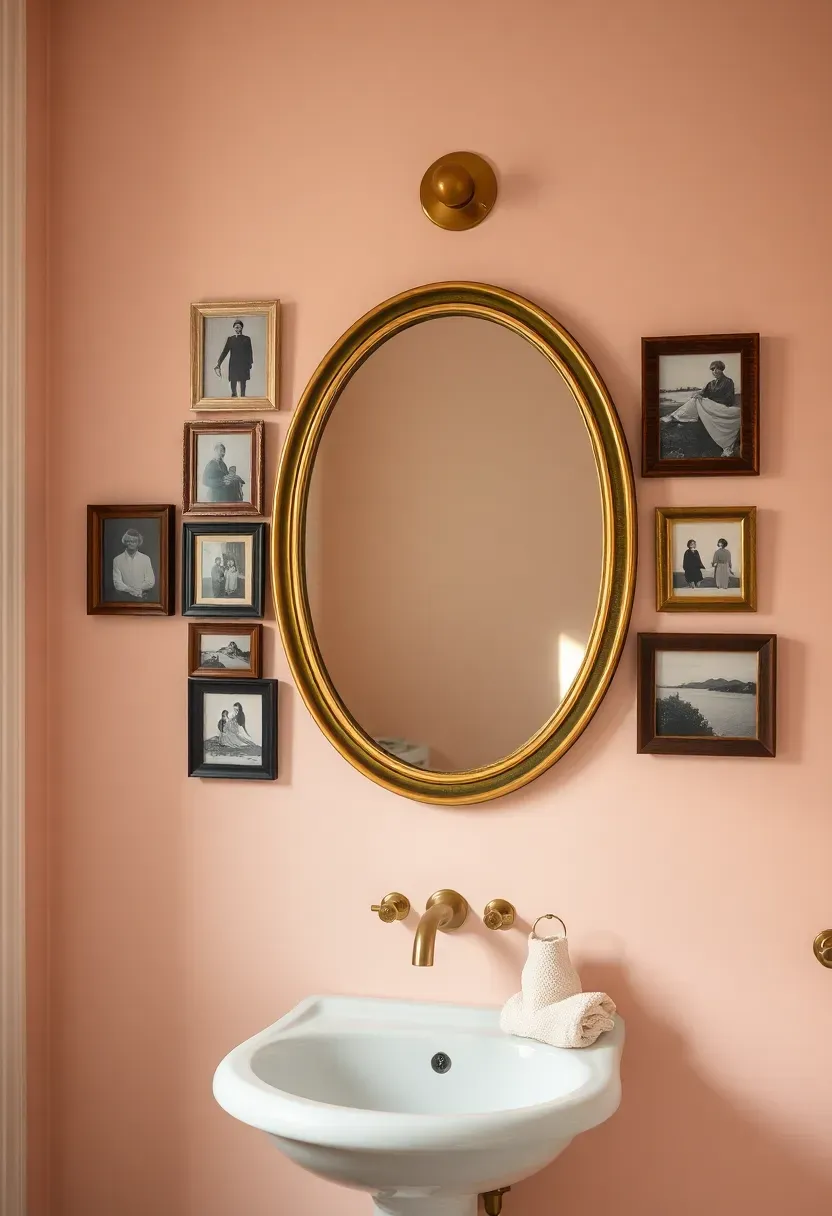
14. Antique Mirror Mixed with Photographs
A small antique mirror inside a cluster of photographs reflects light around the room and breaks the visual monotony of all-rectangular frames. Choose an oval or round mirror sized roughly to match your largest photograph in the cluster, and treat it as just another piece of art on the wall rather than a functional mirror. The reflection picks up tile, fixtures, and ambient light, which keeps the whole arrangement feeling alive even when the bathroom is empty. Estate sales and Facebook Marketplace are the cheapest sources; gilded oval mirrors run twenty to forty dollars.
Tips
- Position the mirror low enough to catch a horizontal line of fixtures
- A weathered gold finish reads warmer than polished gold
- Resilver any mirror with heavy black spots; cheap to do
Recommended
Items for this idea
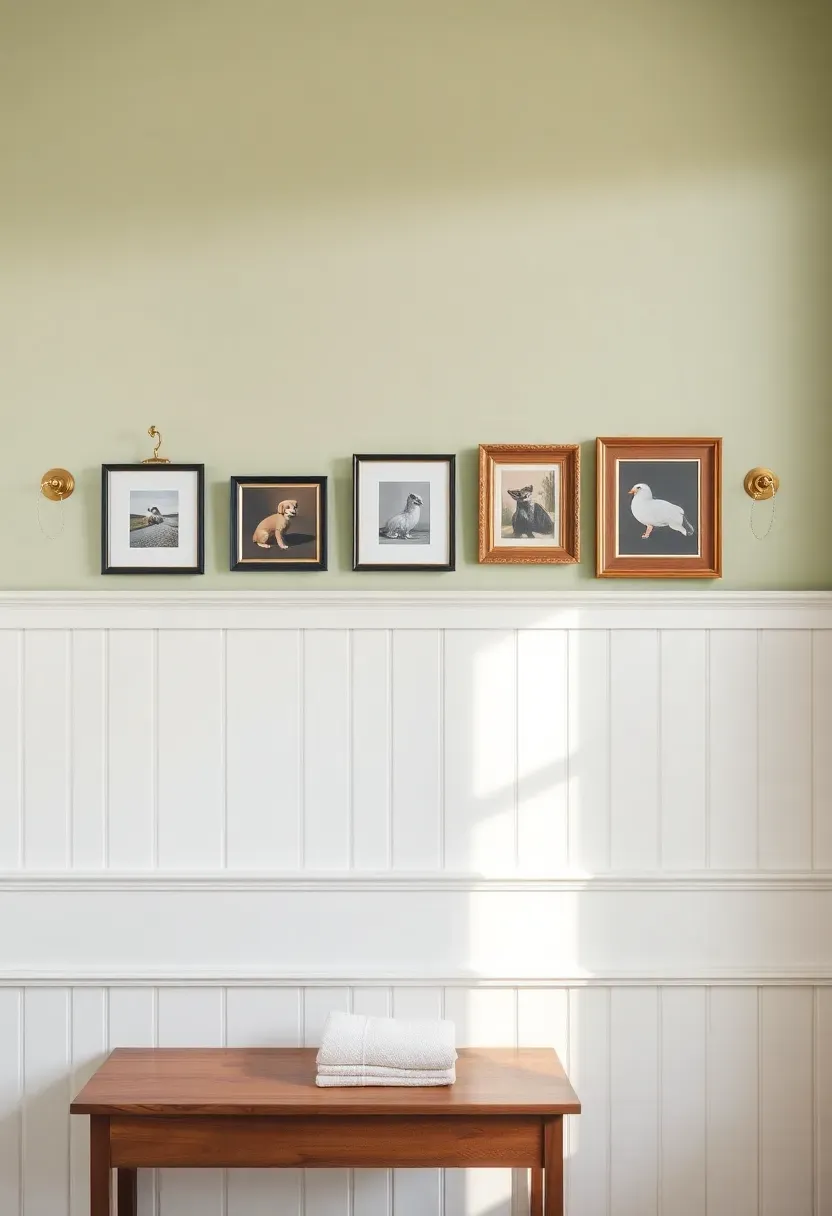
15. Picture Rail Molding Across One Wall
Picture rail molding — a thin horizontal strip mounted near the ceiling — lets you hang frames from brass hooks and chains instead of nailing into the wall. Originally a Victorian feature, it suits older homes especially well, but installs cleanly in any bathroom. Run the rail along the longest unbroken wall, install three to five hooks at varying spacings, and hang frames at staggered heights. Swapping pictures becomes a thirty-second job. The rail itself adds an architectural detail to a wall that would otherwise feel plain.
Tips
- Paint the rail to match either the trim or the wall, not both
- Use brass picture hooks rather than steel; brass develops patina
- Stagger frame heights deliberately for rhythm
16. Postage Stamp Collage in a Single Frame
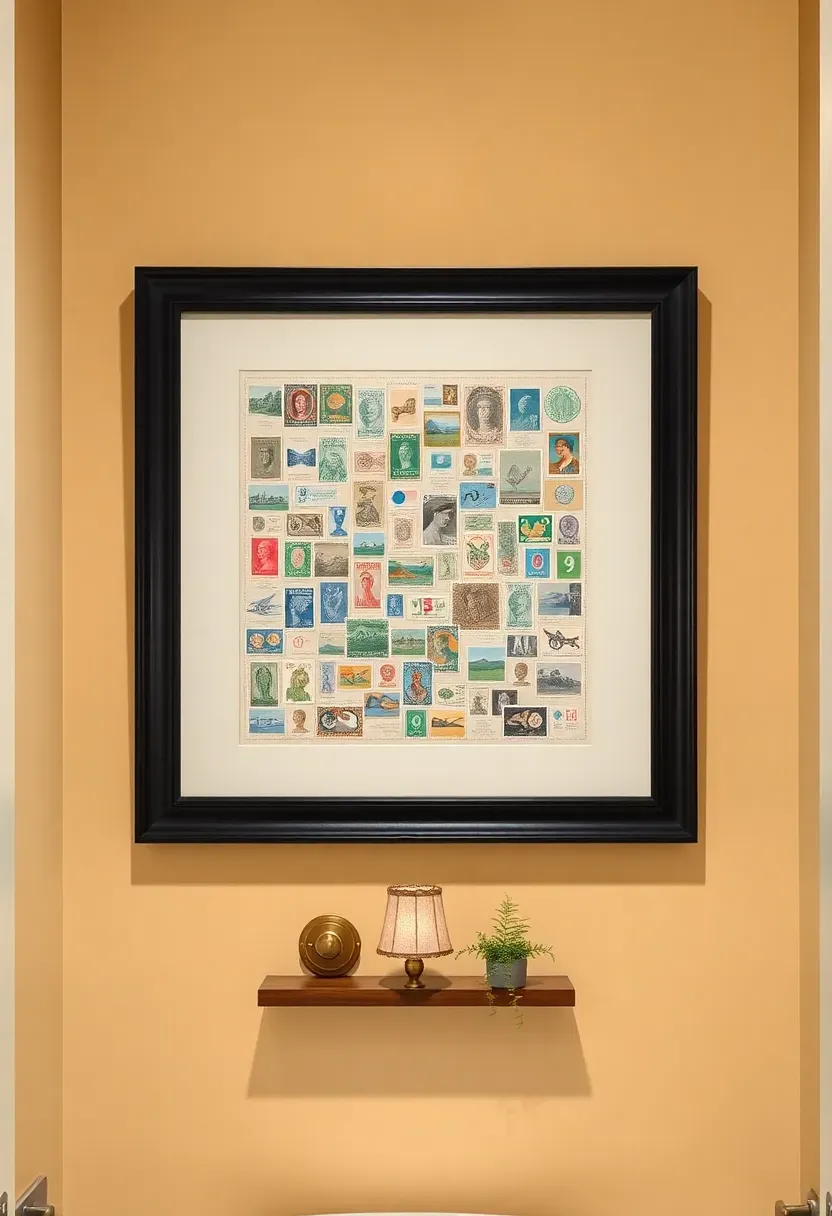
A collection of two hundred vintage postage stamps tightly arranged inside one large frame turns a tiny ephemeral object into wall-sized art. Buy a thousand-stamp lot on eBay for fifteen dollars, sort by color or country, and arrange in a grid pattern on a neutral mat. The total effect is part textile, part botanical, part abstract — the eye reads pattern before content. A single 16 by 20 inch frame holds about two hundred stamps comfortably. Place behind glass, not acrylic, to avoid static lifting the stamps off the mat.
Tips
- Sort stamps by dominant color for the strongest visual hit
- Use stamp hinges (linen, peelable) rather than permanent glue
- A simple black or natural wood frame keeps focus on the contents
Recommended
Items for this idea
17. Diptych Above a Double Vanity
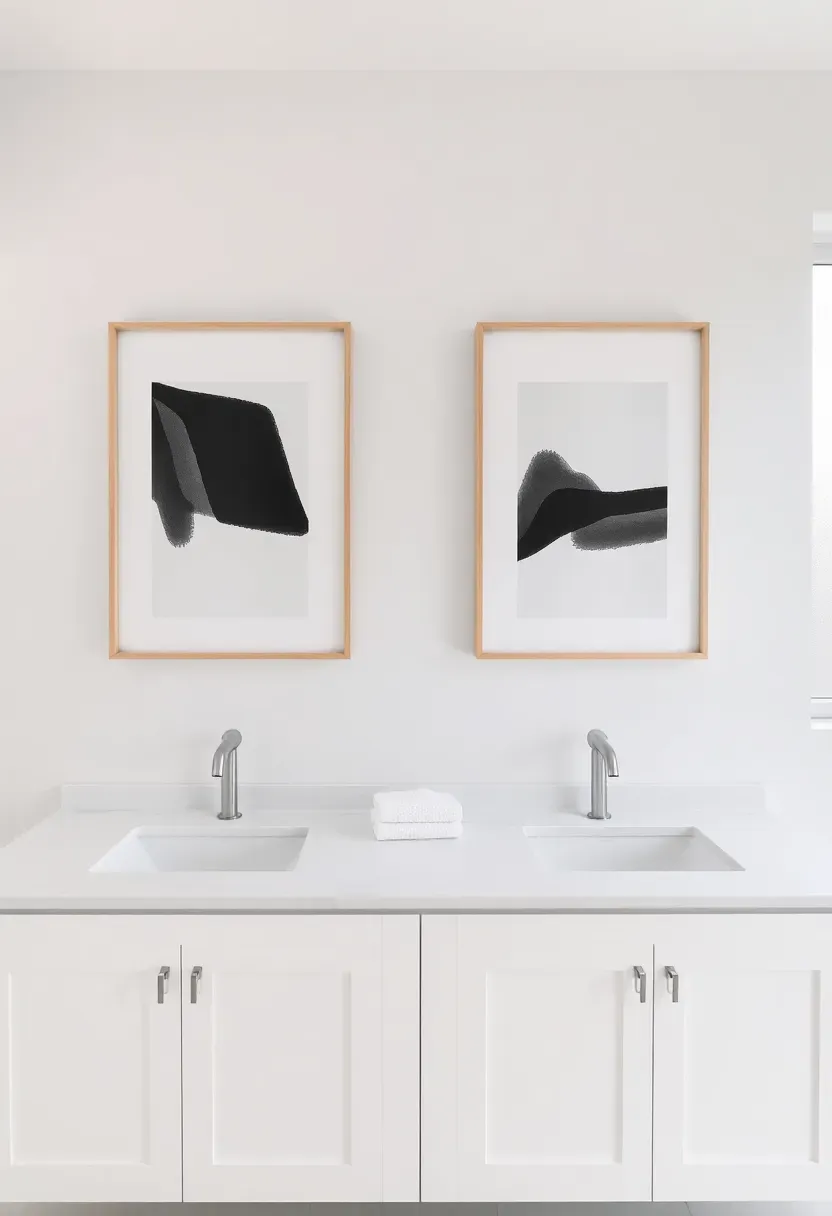
A double vanity is a wide horizontal expanse begging for art that respects the symmetry. A diptych — two pictures designed or chosen to read as one piece — mirrors the proportion. Either one continuous image split across two frames or two related-but-distinct photographs (sunrise and sunset, two halves of a landscape, a portrait pair) works. Center the gap between the frames precisely on the gap between the sinks. Frame size should be roughly two-thirds the width of each mirror below it; smaller diptychs look lost on a long counter.
Tips
- Match the frame center-line to the mirror center-line, not the sink
- Two inches between frames is standard; trust it
- Continuous-image diptychs need professional split printing
18. Photographs Printed on Tile
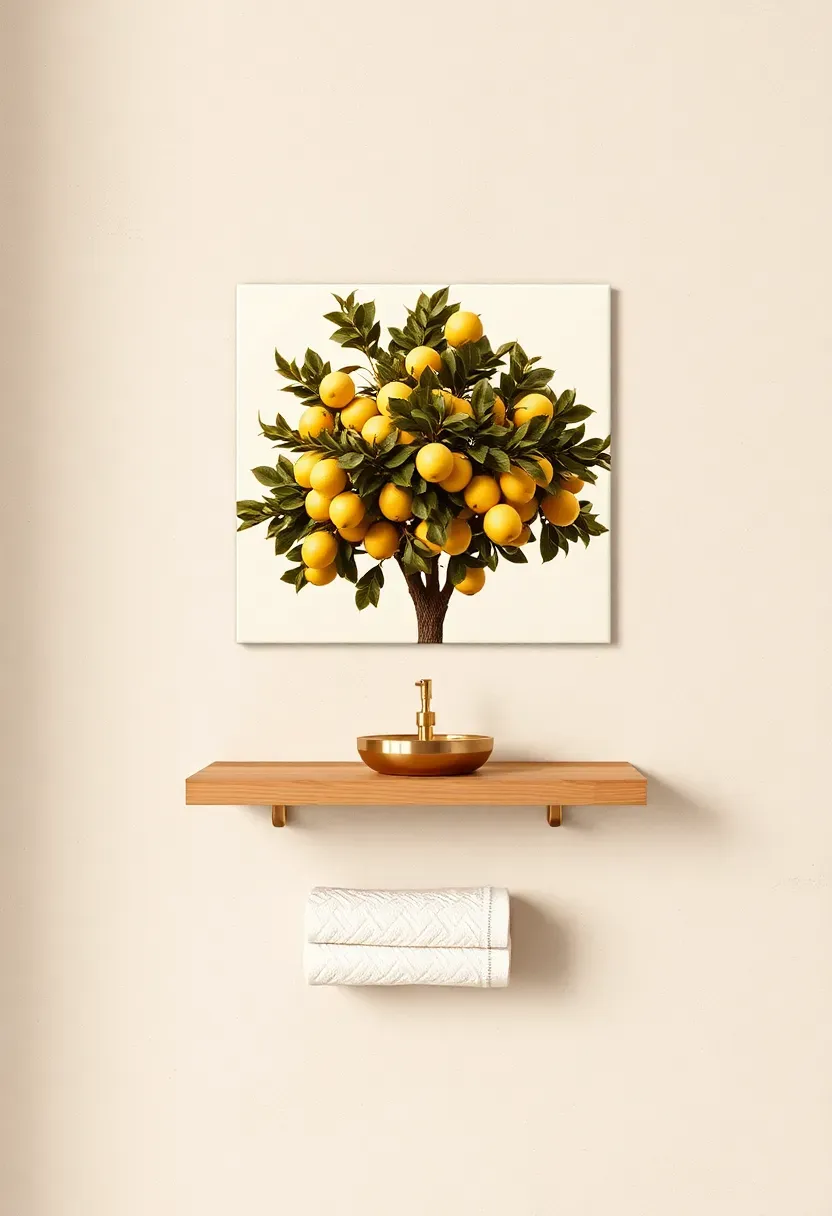
Several services print photographs directly onto ceramic tile, which then mounts to the wall like any other piece. The print is permanent, fully waterproof, and reads as somewhere between art and architecture. Cost runs about thirty to fifty dollars for a 12 by 12 inch tile. Mount with thin-set adhesive on a wall (or mastic for renters) and grout edges as you would any inset tile. Subjects with strong values — landscapes, architectural details, dense foliage — translate better than soft portraits, which can look muddy at tile resolution.
Tips
- Send a high-resolution image; phone shots rarely scale well
- Choose a single statement tile rather than several competing ones
- A grouted edge integrates the tile into surrounding walls
Recommended
Items for this idea
19. Children's Artwork Rotation Frame
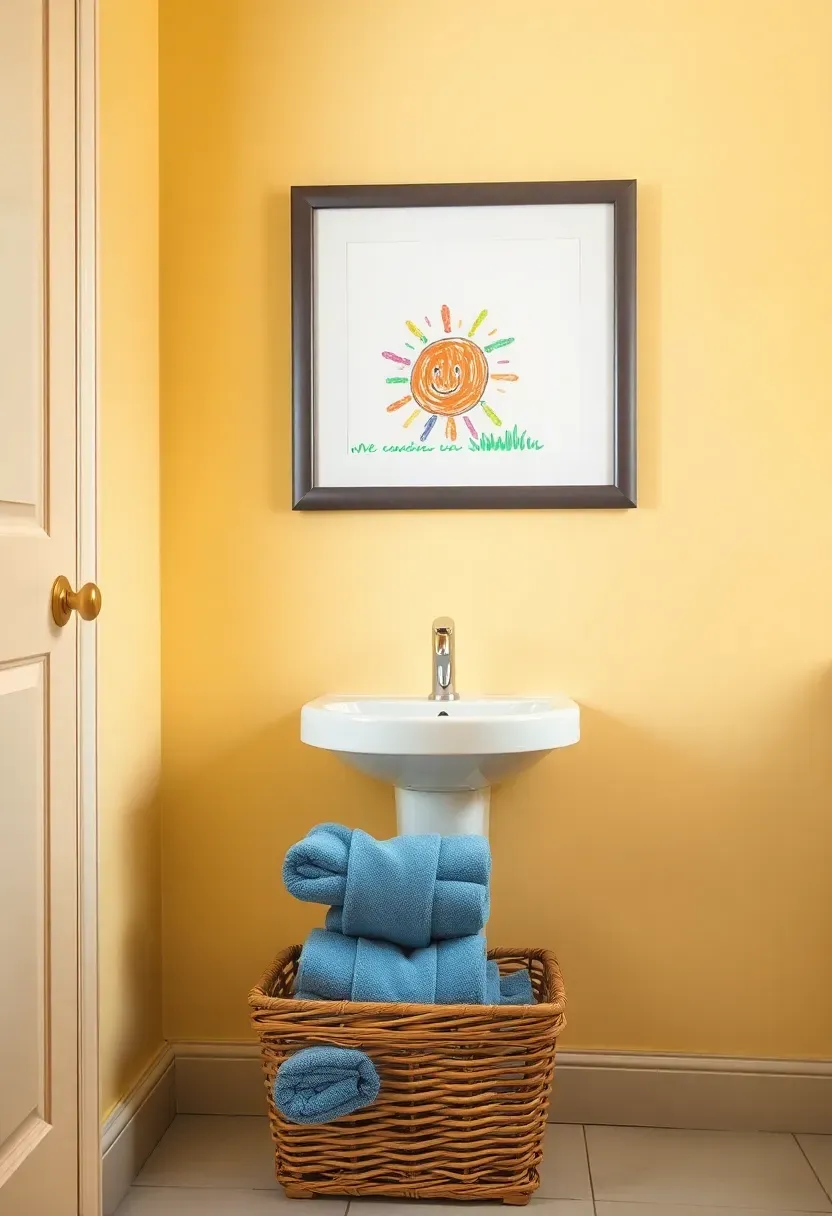
A magnetic or front-loading frame designed to swap artwork without removing the frame from the wall turns a kid's bathroom into a rotating gallery. Brands like Articulate Gallery and Lil Davinci sell frames that hold a stack of forty drawings inside, with a hinged front that flips open. Each piece gets two weeks of display, and the kid sees their work taken seriously without your fridge becoming a permanent shrine. Mount at child eye level, not adult eye level — about forty-eight inches off the floor.
Tips
- One frame per child avoids competition over wall space
- Photograph each piece before rotating into storage
- Swap art on the same day each month so it becomes a small ritual
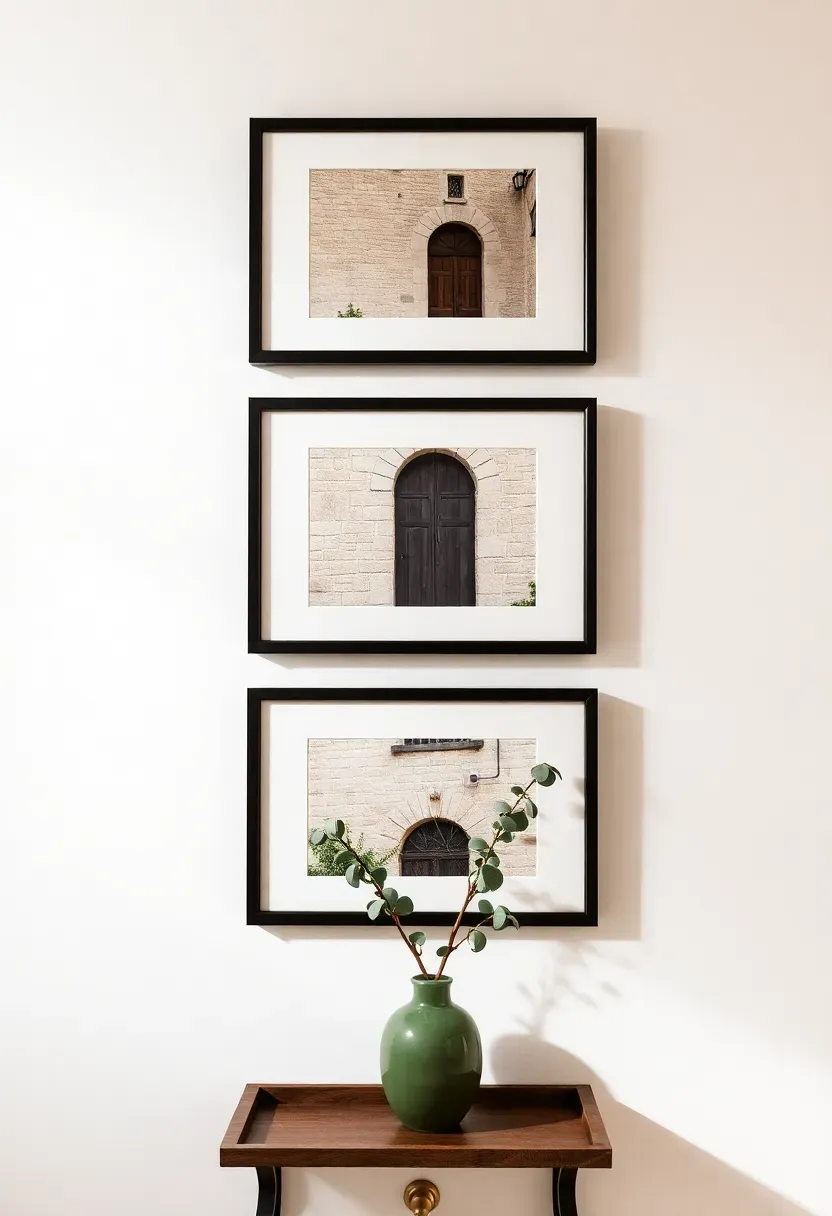
20. Travel Photographs in Matching Mats
The fastest way to make ten unrelated travel photos read as a coherent series is identical framing — same mat color, same frame finish, same outer dimensions. A wide cream mat around a smaller print pulls focus to the photograph and unifies whatever was happening in front of the lens. Group three to nine photos by theme: doorways, food markets, beaches, light through windows. The thematic constraint matters more than the geographical one; a wall of "things that are blue" from five different trips reads tighter than a chronological vacation roundup.
Tips
- Use a 3-inch mat around a 5 by 7 print inside a 11 by 14 frame
- Off-white mats read warmer than pure white
- A single theme beats a chronological cluster every time
Recommended
Items for this idea
21. Framed Magazine Covers and Book Pages
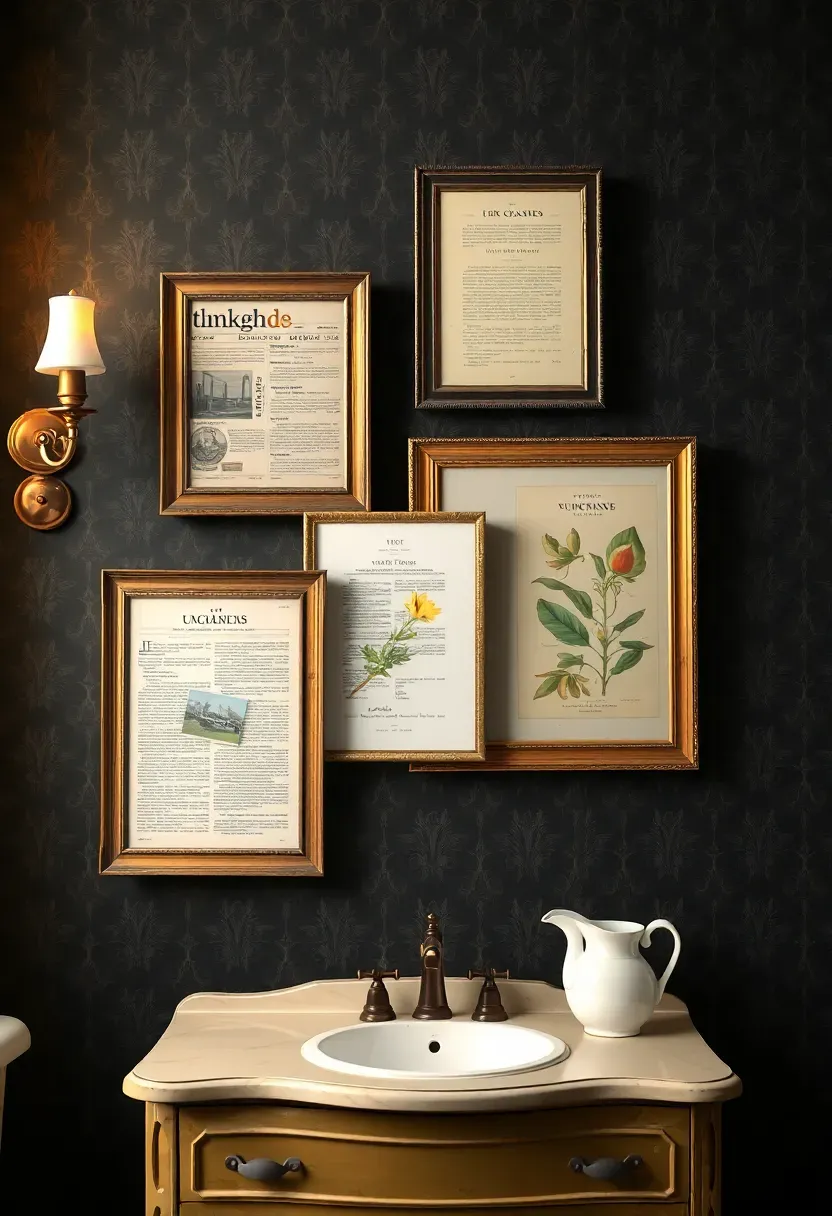
Old magazine covers — National Geographic from the 1960s, vintage Vogue, mid-century travel magazines — are graphic, cheap, and already designed to grab attention. Same for pages torn from secondhand books: botanical plates, antique anatomy diagrams, illustrated children's books. Frame them in mismatched antique frames from estate sales for an intentionally collected look. Three to five pieces in a small bathroom or above a half bath sink work better than a larger group; the visual density of magazine cover graphics is high enough that crowding them flattens the impact.
Tips
- Cut cleanly with a craft knife and metal ruler
- Acid-free mats prevent yellowing where the paper meets the matboard
- Mismatched frame finishes look intentional in odd numbers
Quick FAQ
Will steam ruin pictures hung in a bathroom? Only if you ignore the basics. Use sealed frames with backing tape, run the bathroom fan during showers, and keep frames out of the direct splash zone. A well-ventilated bathroom is no harder on artwork than a humid summer day in any other room.
What is the safest spot to hang a picture in a bathroom? Above the toilet, above the towel bar, or on the wall opposite the shower — anywhere outside the direct steam plume. The wall behind the door is also surprisingly under-used and stays drier than tub-adjacent walls.
Do I need special frames for bathroom pictures? For most bathrooms, no — sealed standard frames work fine. For bathrooms without exhaust fans or with heavy daily shower use, acrylic float frames or photographs printed on tile hold up better than wood-and-glass setups.
How high should I hang bathroom artwork? Center the picture at fifty-seven to sixty inches from the floor — standard gallery height — unless it sits above a fixture. Above a vanity or toilet, leave six to eight inches of breathing room between the fixture top and the frame bottom.
Can renters hang bathroom pictures without damaging walls? Command strips work well for frames under five pounds, and adhesive picture rails or ledges (3M makes both) hold heavier groupings. Both come off cleanly when you move out.
The bathroom is one of the few rooms in a house where you have a captive, undistracted audience for ninety seconds at a time. That is a gift, not a problem. Whether it ends up holding one large black-and-white print or thirty small frames packed corner to corner, picking pictures for a bathroom is one of the easiest and most personal decorating moves left in a finished house. Start with one wall and one piece this weekend; the rest of the room will tell you what it wants next.
Pinterest cover for 21 Bathroom Picture Ideas for Steamy Walls
About the author
OBCD
CGI visualization and interior design content. We create detailed 3D renders and curate practical design ideas for every room in your home.