27 Bathroom Mirrors Ideas That Actually Look Good
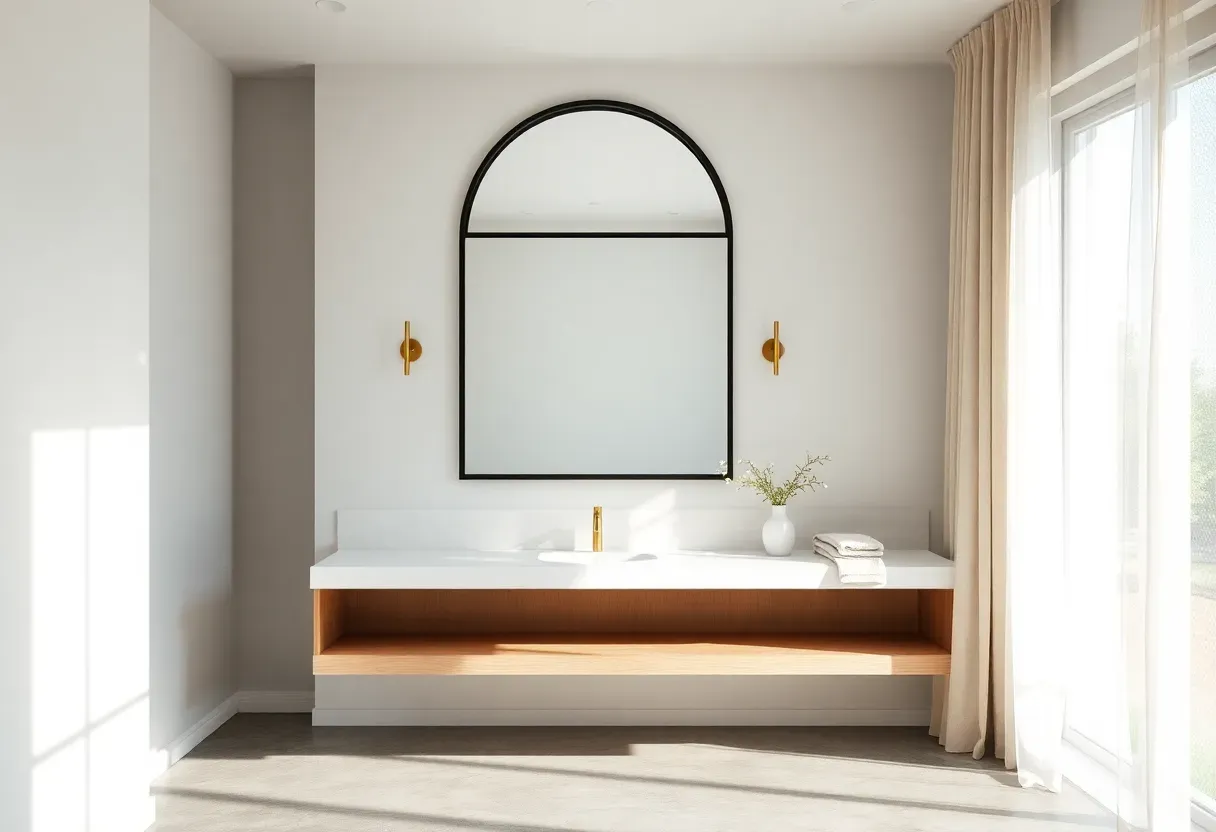
The bathroom mirror is the one piece you look at more than any other in the house, and yet it's usually the most neglected. Builder-grade slabs glued straight to the drywall, a strip of fluorescents above, no frame, no presence. Swapping that out is one of the highest-impact, lowest-budget upgrades a bathroom can get. A round brass-rimmed mirror, a pair of arched panels over a double vanity, or a frameless smart mirror with built-in LEDs can each shift the whole feel of the room without touching plumbing or tile.
Below are 27 bathroom mirrors ideas grouped loosely by what they solve — shape and proportion, frame style, lighting integration, layout for small or shared bathrooms, and a handful of DIY-friendly upgrades that work even in rentals.
Table of Contents
- Arched Black-Framed Mirror
- Round Brass Pivot Mirror
- Pill-Shaped Capsule Mirror
- Frameless Beveled Edge
- LED Backlit Smart Mirror
- Rattan-Wrapped Round Mirror
- Twin Mirrors Over Double Vanity
- Vintage Gilded Ornate Frame
- Industrial Pipe-Frame Mirror
- Tile-Framed Inset Mirror
- Full-Length Bathroom Mirror
- Medicine Cabinet With Mirror
- Octagon Shaped Statement Mirror
- Driftwood Coastal Frame
- Backlit Frosted Border Mirror
- Floating Shelf With Leaning Mirror
- Anti-Fog Heated Mirror
- Mirror Wall Behind Vanity
- Black Metal Grid Window Mirror
- Removable Adhesive Mirror Tiles
- Shaped Asymmetrical Mirror
- Pivoting Magnifying Mirror
- Convex Porthole Mirror
- DIY Wood Shim Sunburst Frame
- Layered Mirror On Mirror
- Frosted Half Mirror for Privacy
- Recessed Niche Mirror
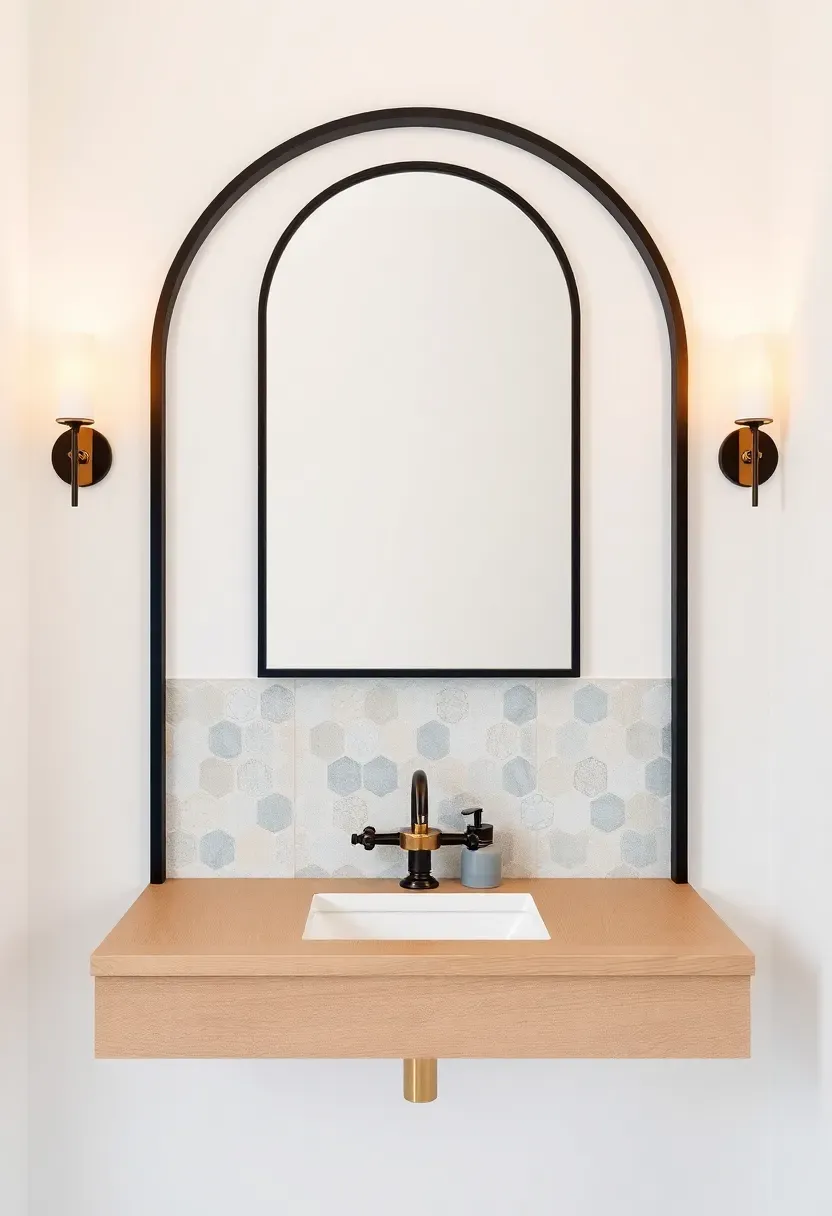
1. Arched Black-Framed Mirror
The arched silhouette has done more to update bathroom mirrors over the past three years than almost any other shape. The curve softens the boxy geometry of vanities, drawers, and tile grids, and a thin matte black metal frame reads modern without going industrial. Arched mirrors work especially well above pedestal sinks and floating vanities because the rounded top echoes the open space underneath, balancing the visual weight.
Tips
- Hang the bottom edge 6 to 8 inches above the faucet to keep splash off the glass
- Pair with two slim sconces, not three, so the symmetry of the arch carries the wall
- Skip the arch if your ceiling is under 8 feet — the curve gets lost visually
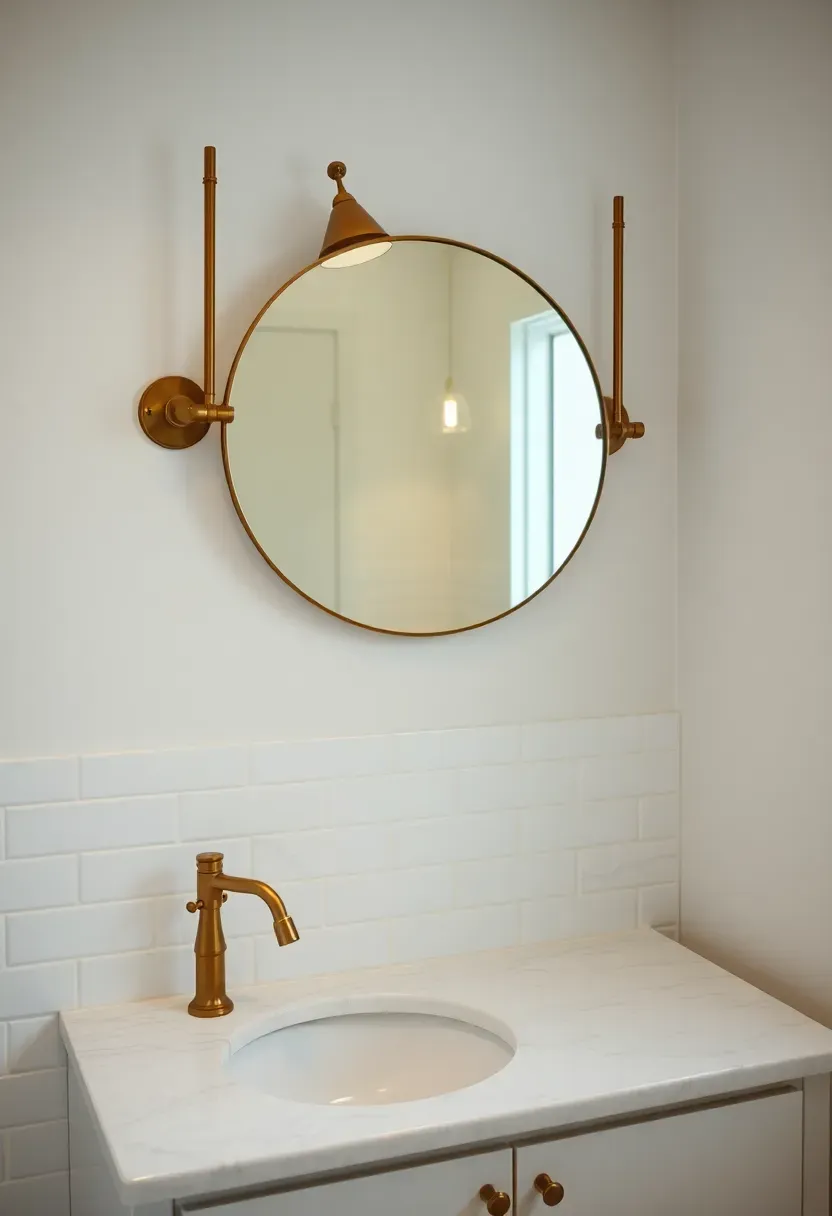
2. Round Brass Pivot Mirror
The Idea
A round mirror on a pivot frame solves a problem most people don't realize they have: the angle of a fixed mirror is set for one height, and anyone shorter or taller than that ends up craning. Pivot mirrors swing on side-mounted brackets so each user tilts the glass to their own eye line.
Why It Works in a Bathroom
Brass brackets bring warmth that pure chrome and matte black don't, and the round shape softens a vanity wall that's otherwise dominated by rectangular surfaces. A 24- to 28-inch diameter handles most single vanities; go to 30 inches if your countertop is wider than 36 inches.
Pros and Cons
Pros: adjustable angle for multiple users; brass ages beautifully; works with traditional and modern styles Cons: the brackets eat about 4 inches of wall on each side; slight gap between mirror back and wall collects dust
Recommended
Items for this idea
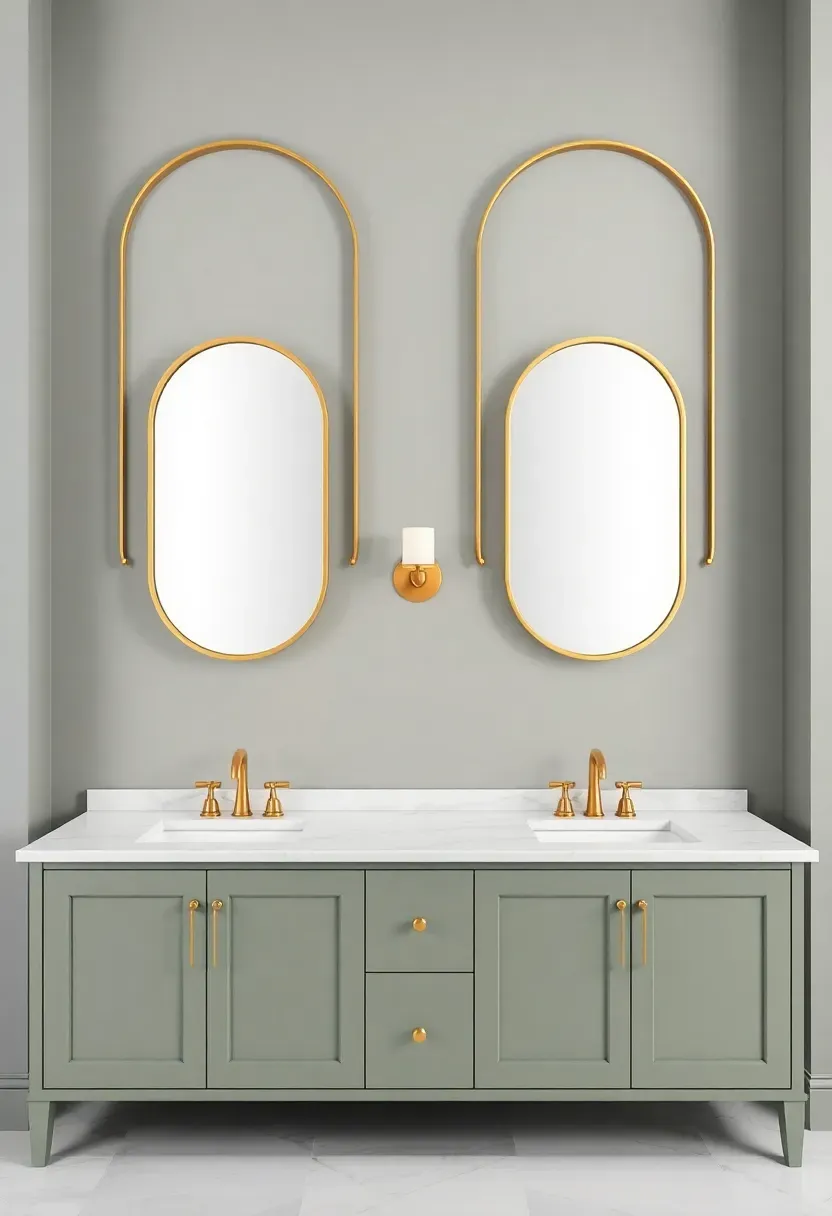
3. Pill-Shaped Capsule Mirror
The pill or capsule shape — a rectangle with both short sides rounded — sits between the rectangle and the oval and steals the best from each. You get usable face-framing height without the harsh corners of a standard rectangle. Two capsules over a double vanity look intentional and tailored, and a single tall one over a powder-room sink reads boutique-hotel polished. Brushed gold or warm brass frames keep the silhouette feeling soft; black frames push it more graphic.
Tips
- Match the capsule's width to roughly two-thirds of the sink width below
- Use a vertical orientation for petite vanities under 30 inches wide
- Keep frame thickness under half an inch to preserve the soft outline
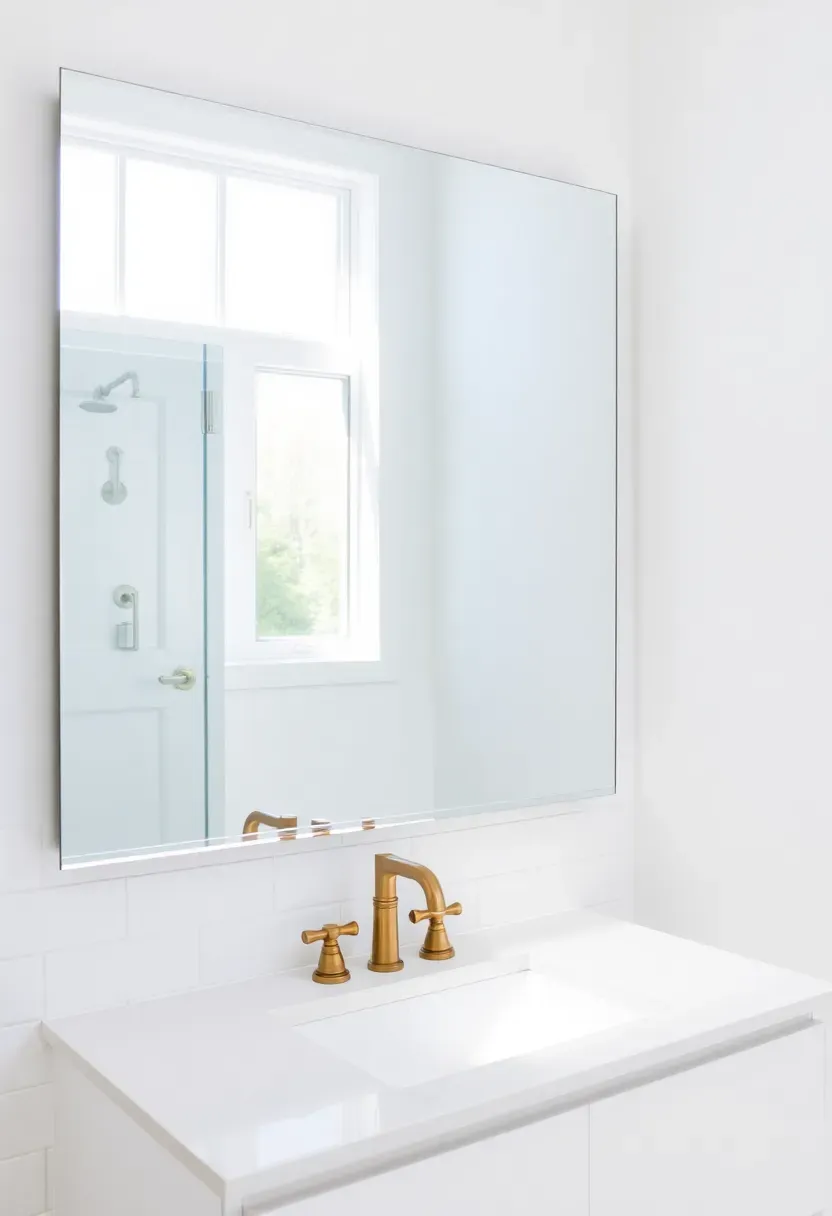
4. Frameless Beveled Edge
A frameless mirror with a polished bevel reads modern and lets the surrounding tile or wall color do the talking. The bevel — a 1- to 1.5-inch chamfered edge cut into the glass itself — catches light and creates a subtle prismatic line around the perimeter that no flat-cut mirror can reproduce. Frameless beveled mirrors are also the most forgiving choice for transitional bathrooms where you can't decide between traditional and contemporary.
Tips
- Mount with concealed J-channel clips, not visible top clips, for the cleanest look
- Order the bevel at least 1 inch wide; thinner bevels disappear visually
- Have the corners eased (slightly rounded) to soften sharp edges
Recommended
Items for this idea
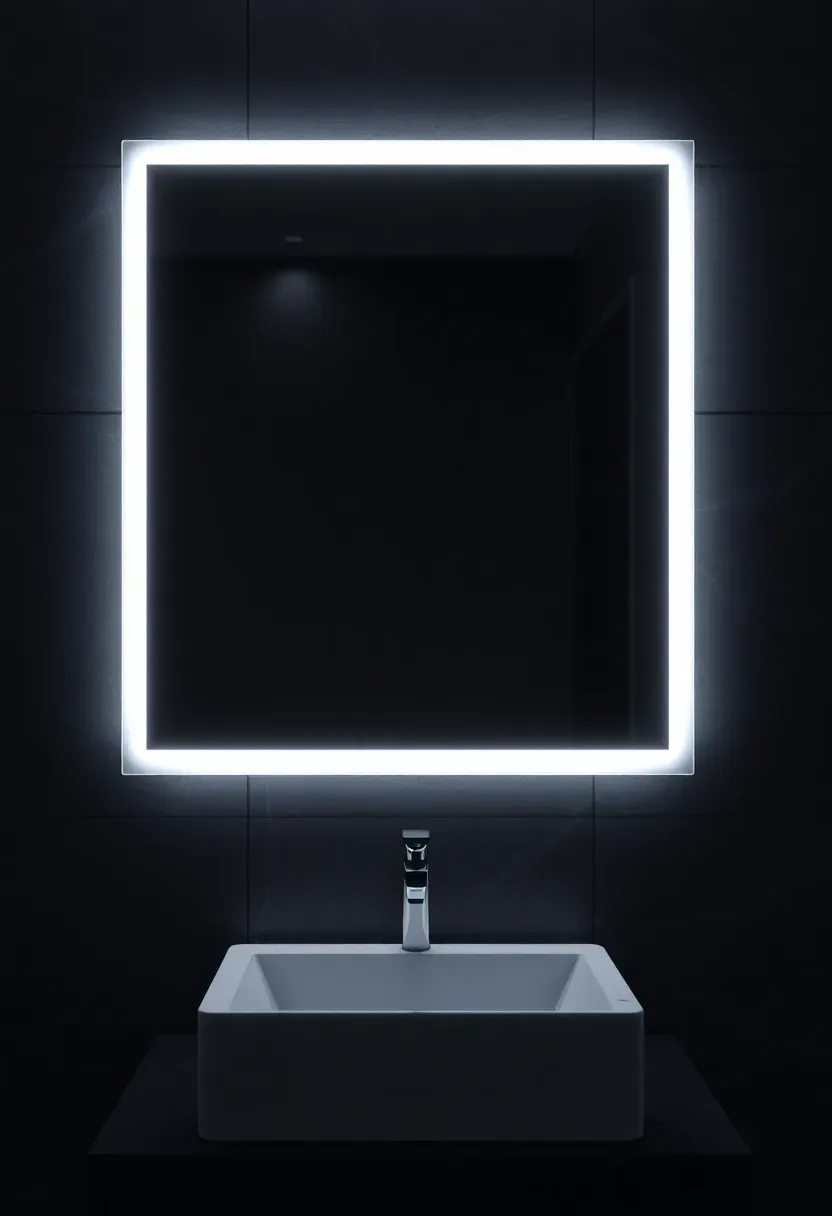
5. LED Backlit Smart Mirror
Why People Love Them
LED backlit mirrors create a halo of indirect light around the mirror's perimeter that doubles as ambient lighting and a flattering fill light for the face. Higher-end models add anti-fog heating pads, dimmable color temperature (2700K to 6500K), and Bluetooth speakers. The light is soft and shadow-free, which makes shaving and makeup application noticeably easier than with overhead lighting alone.
What to Watch For
You need a switched 120V line behind the mirror — usually a hardwire connection, sometimes a hidden plug. Touch sensors on the front edge can be finicky in steam-heavy bathrooms; a wall switch is more reliable. Cheap units use cool-white-only LEDs that look surgical; spend the extra for tunable color temperature.
Recommendation
Worth the investment for primary bathrooms used daily. Skip in guest baths where the wow factor doesn't earn the cost.
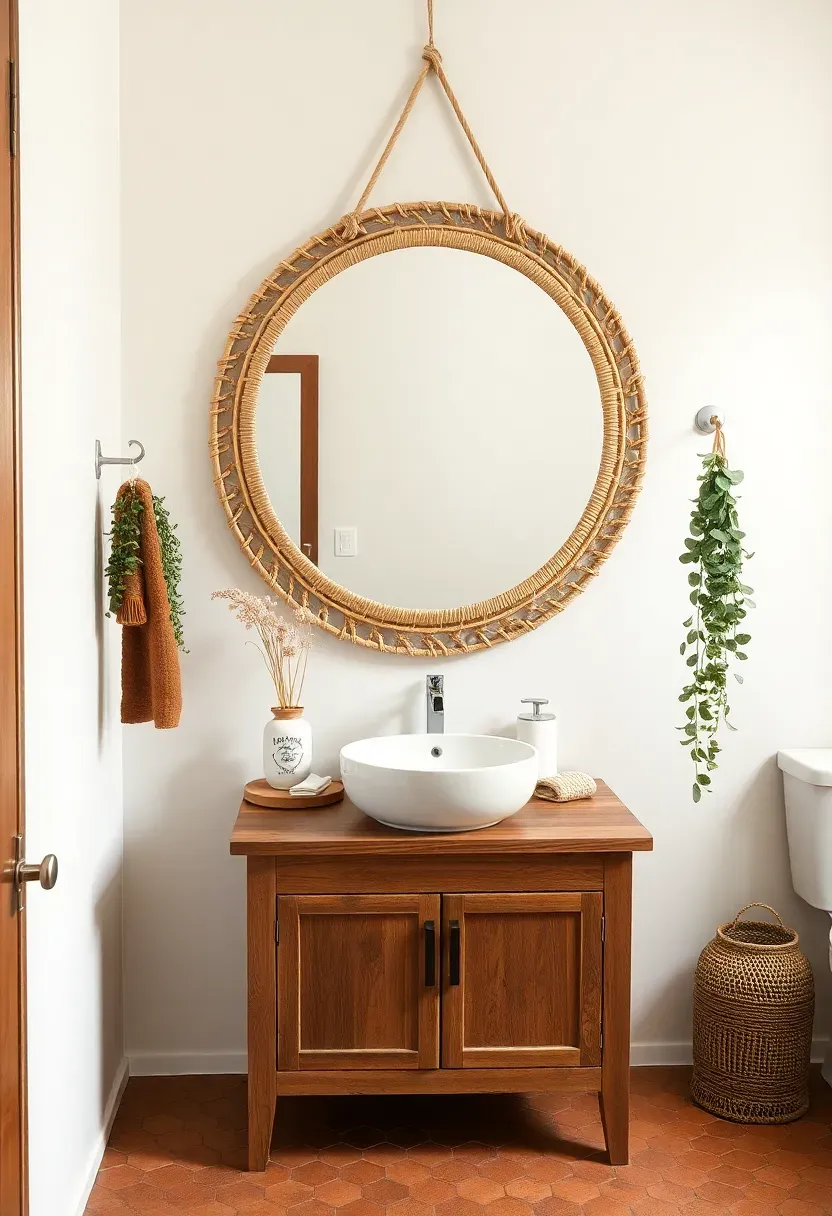
6. Rattan-Wrapped Round Mirror
Rattan and bathrooms used to be a forbidden pair — humidity and natural fiber don't mix well — but modern sealed rattan and PE rattan substitutes solve that. A round rattan-wrapped mirror brings the texture of a coastal or boho living room into the bath without going kitschy. The woven frame plays especially well against zellige tile, terracotta floors, and unlacquered brass fixtures. Diameter in the 28-to-32-inch range hits the sweet spot for most vanities.
Tips
- Look for sealed or PE rattan if your bathroom has poor ventilation
- Hang on a sturdy D-ring; rattan frames are often heavier than they look
- Keep the mirror at least 18 inches from the shower spray zone
Recommended
Items for this idea
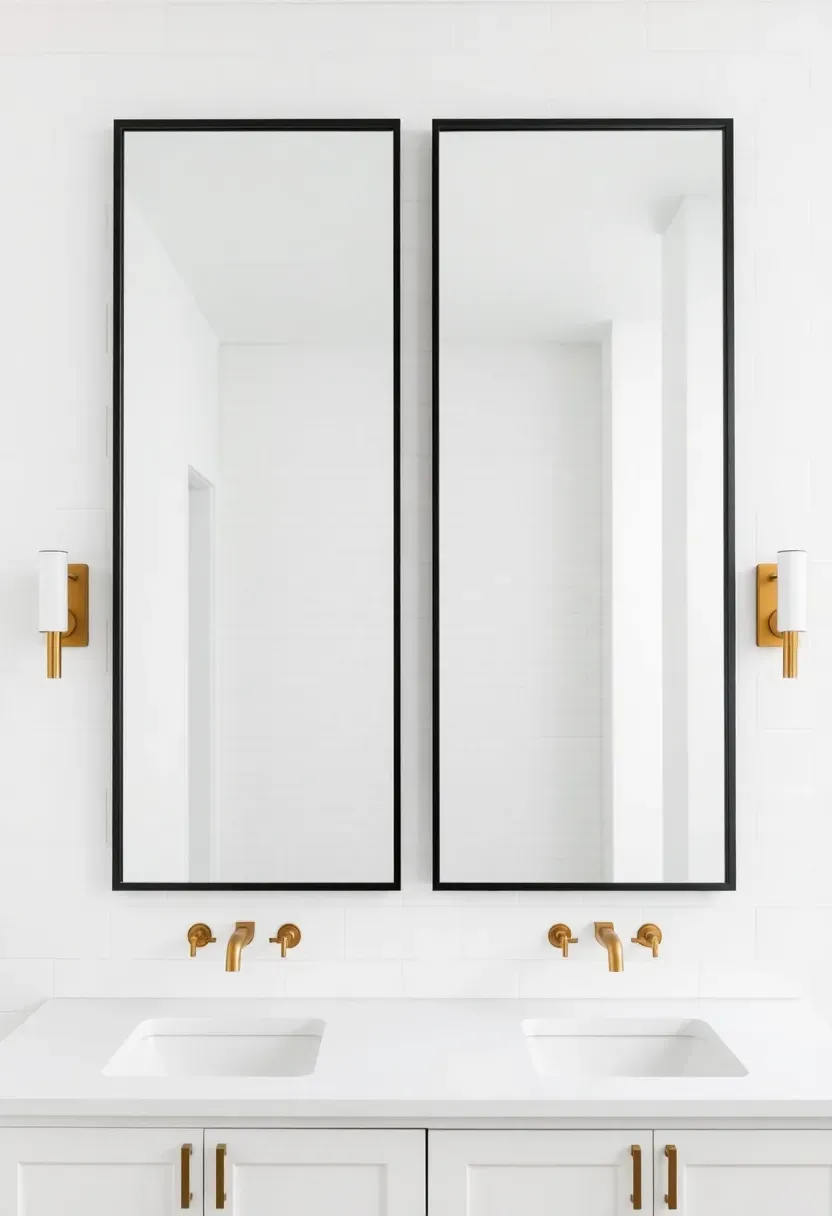
7. Twin Mirrors Over Double Vanity
The default move on a double vanity is one long mirror spanning both sinks. Two separate mirrors look more intentional and create defined zones for each user. Center each mirror over its own sink, leave 6 to 10 inches between them, and add a sconce on the outside of each — or three sconces total, with one centered between the mirrors as a shared light source. The pair-of-mirrors layout also handles uneven walls and slight asymmetries better, since each mirror can be hung independently.
Tips
- Match mirror width to roughly 70 to 80 percent of each sink's width
- Use the same hanging height (top edge) for both, even if vanities differ slightly
- Pair with a center artwork or sconce to anchor the wall between them
8. Vintage Gilded Ornate Frame
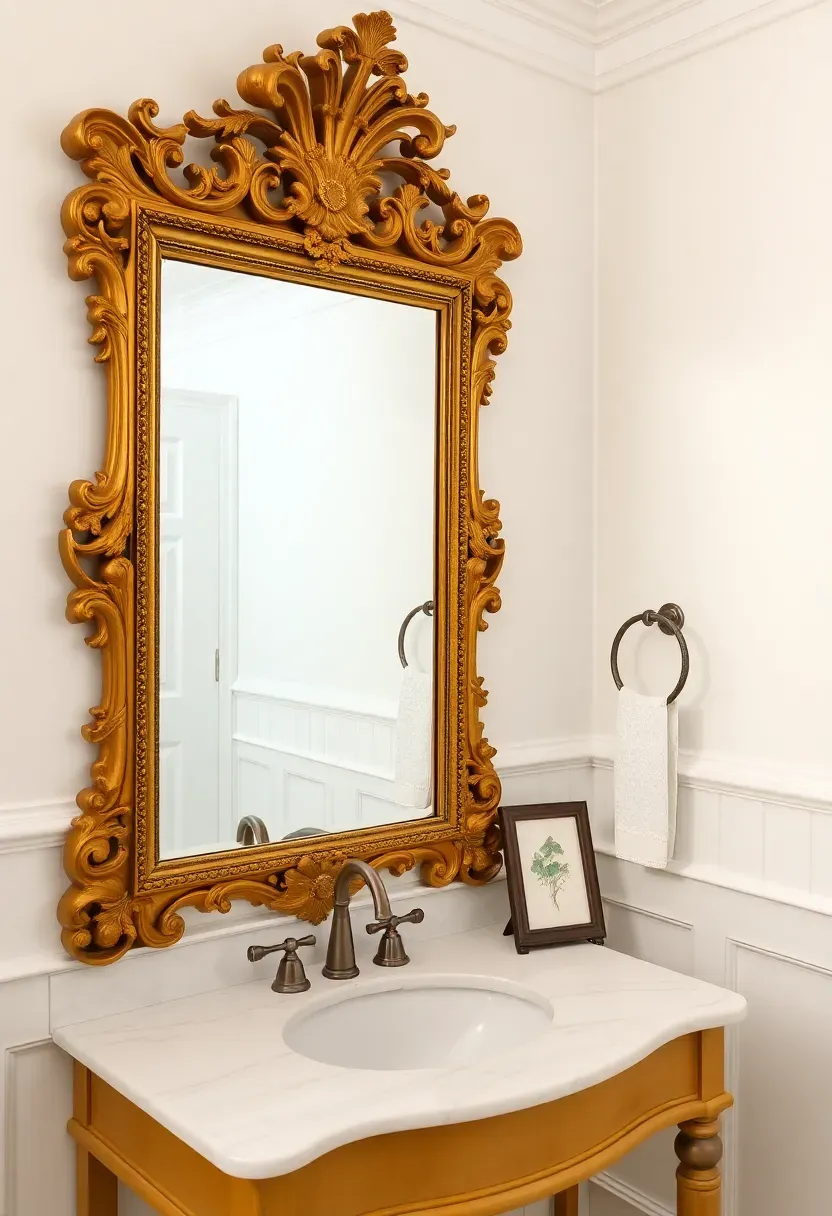
Antique gilded mirrors — the carved, scrolled, baroque-style frames — are having a quiet revival in bathrooms. One ornate piece against an otherwise clean white-tile bathroom does more for character than five accessories. Look for genuine vintage frames at estate sales or flea markets; the patina of real gold leaf has a warmth that fresh gold paint can't fake. Even a single weathered piece reads expensive in the right setting.
Tips
- Have a mirror shop replace cracked or hazy original glass; keep the frame
- Don't over-restore — small chips and rubbed gilt are part of the charm
- Balance an ornate mirror with simple, unfussy fixtures elsewhere in the room
Recommended
Items for this idea
9. Industrial Pipe-Frame Mirror
The Look
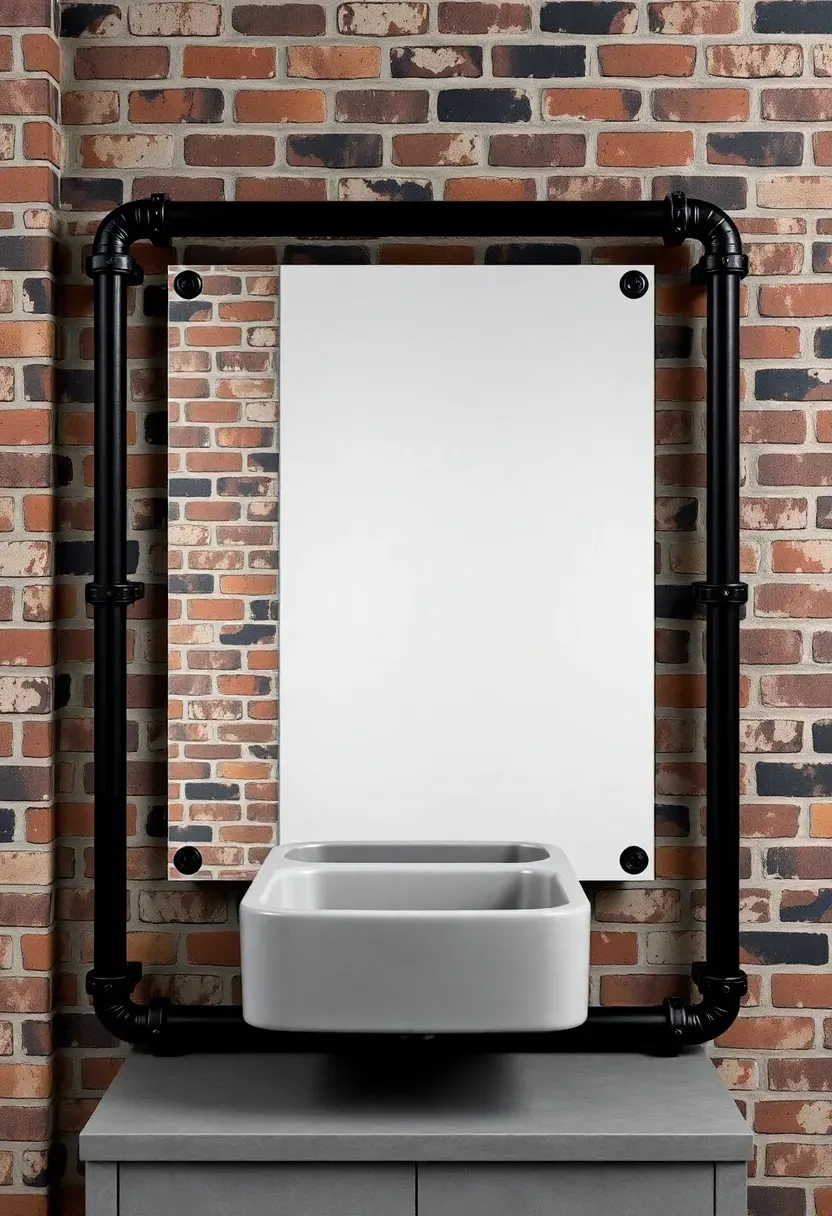
Black iron pipe fittings — elbows, tees, and floor flanges — assembled into a mirror frame give a loft or industrial bathroom genuine grit without looking like a Pinterest cliche. The pipe diameter (usually 1/2 inch or 3/4 inch) sets the visual weight; the small fittings read as crafted detail rather than plumbing leftovers.
How to Build It
Mount four pipe lengths at right angles using elbow fittings at each corner, with the mirror sandwiched between the pipe frame and a back panel. A 24-by-36-inch mirror needs about 12 feet of pipe and 4 elbows. Total cost runs $60 to $90 in materials versus $300+ for a comparable retail piece.
Pros and Cons
Pros: dirt-cheap to build; fits industrial and rustic bathrooms; durable Cons: heavy (use proper anchors); pipe can rust if not sealed in humid bathrooms
10. Tile-Framed Inset Mirror
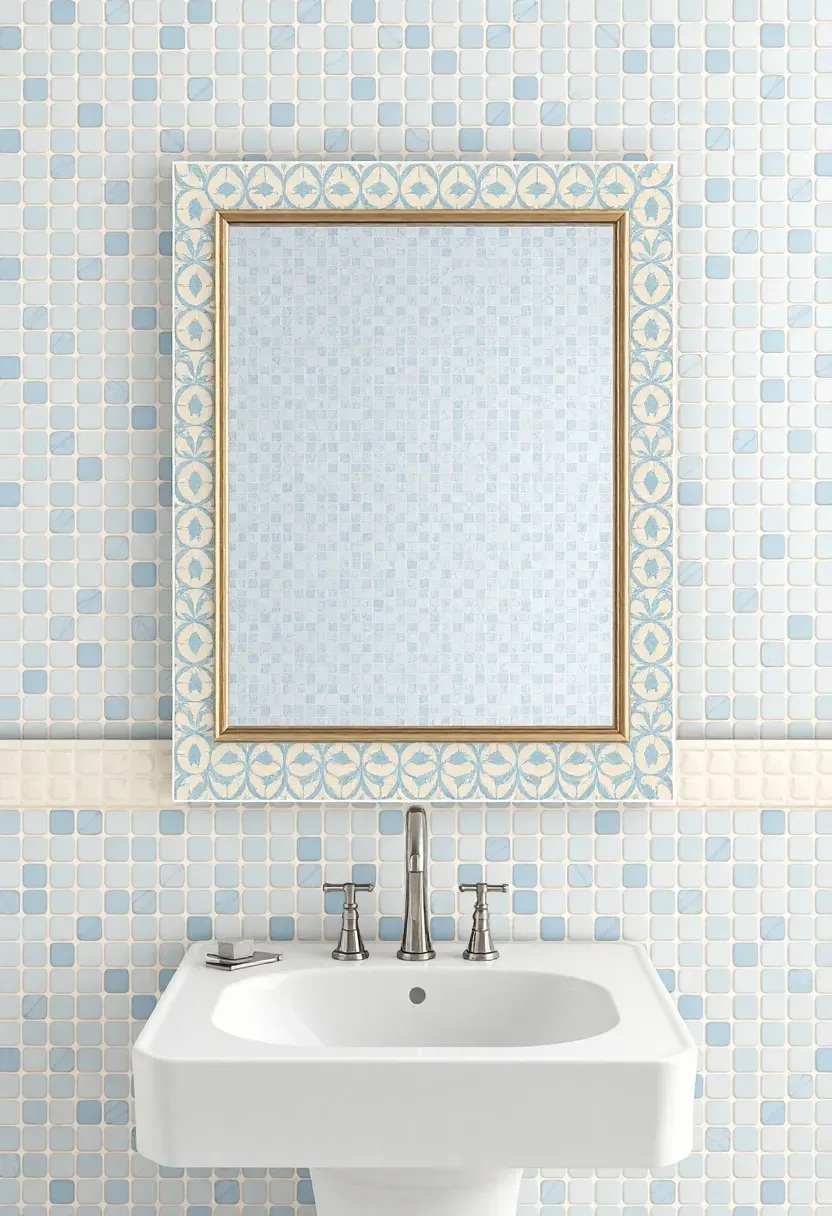
Skipping a frame entirely and instead surrounding the mirror with a border of tile creates a built-in look that feels custom and architectural. Zellige, picket, or 2-inch hex tiles all work — the trick is using the same tile as the backsplash so the mirror reads as inset rather than tacked on. This approach hides the mirror's edges completely and is particularly good for irregular or curved-corner mirrors that don't accept off-the-shelf frames.
Tips
- Plan the tile layout before installation so cuts at the mirror edge are clean
- Use a slim aluminum trim profile (Schluter) where tile meets glass
- Caulk the tile-glass joint with clear silicone, not grout
Recommended
Items for this idea
11. Full-Length Bathroom Mirror
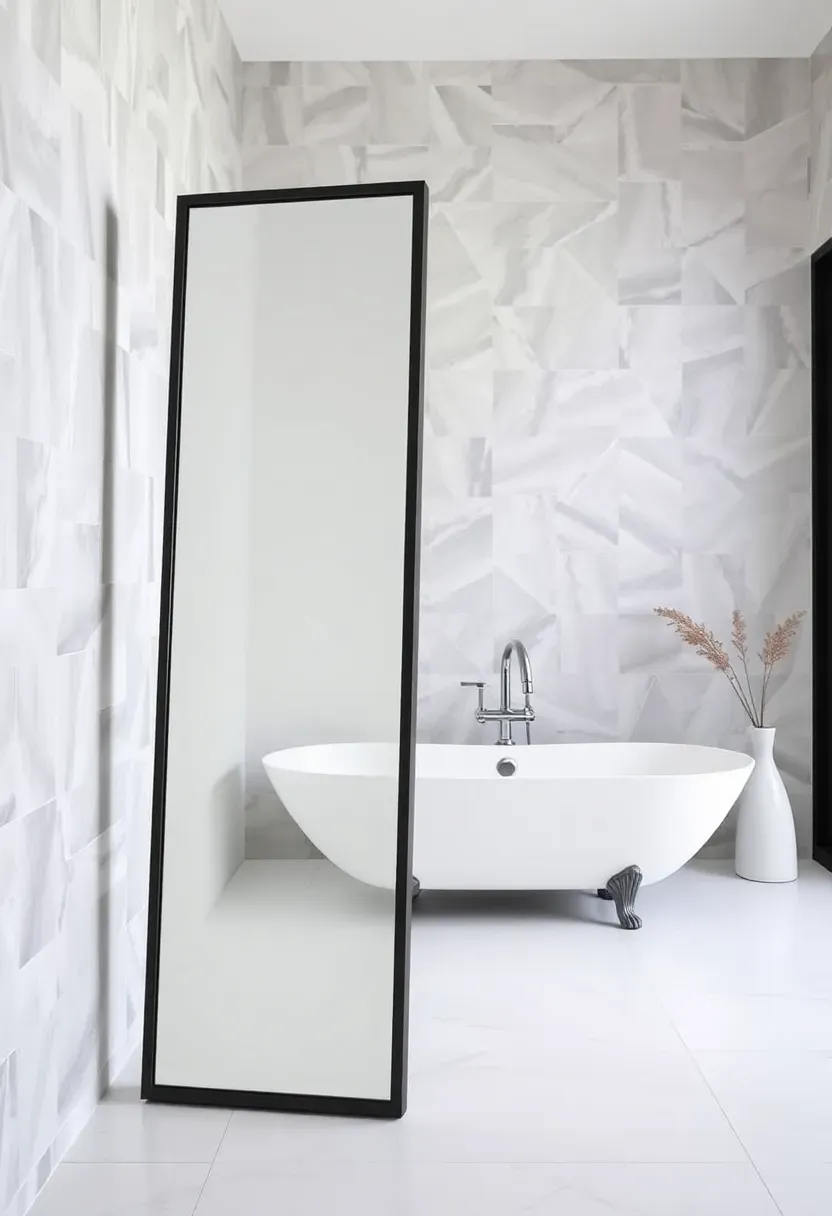
If your bathroom doubles as a dressing area — common in primary suites — a full-length mirror earns its floor space fast. A leaning floor mirror in a thin metal frame sits casually against the wall, while a wall-mounted version works better in a small footprint. The 18-by-65-inch standard size covers most outfit checks; go wider if you also use it as a vanity-area accent.
Tips
- Anchor leaning mirrors to the wall with a safety strap, especially in homes with kids
- Choose a tempered or shatter-resistant backing for floor-leaning installs
- Keep the mirror out of direct shower spray to prevent moisture damage on the back
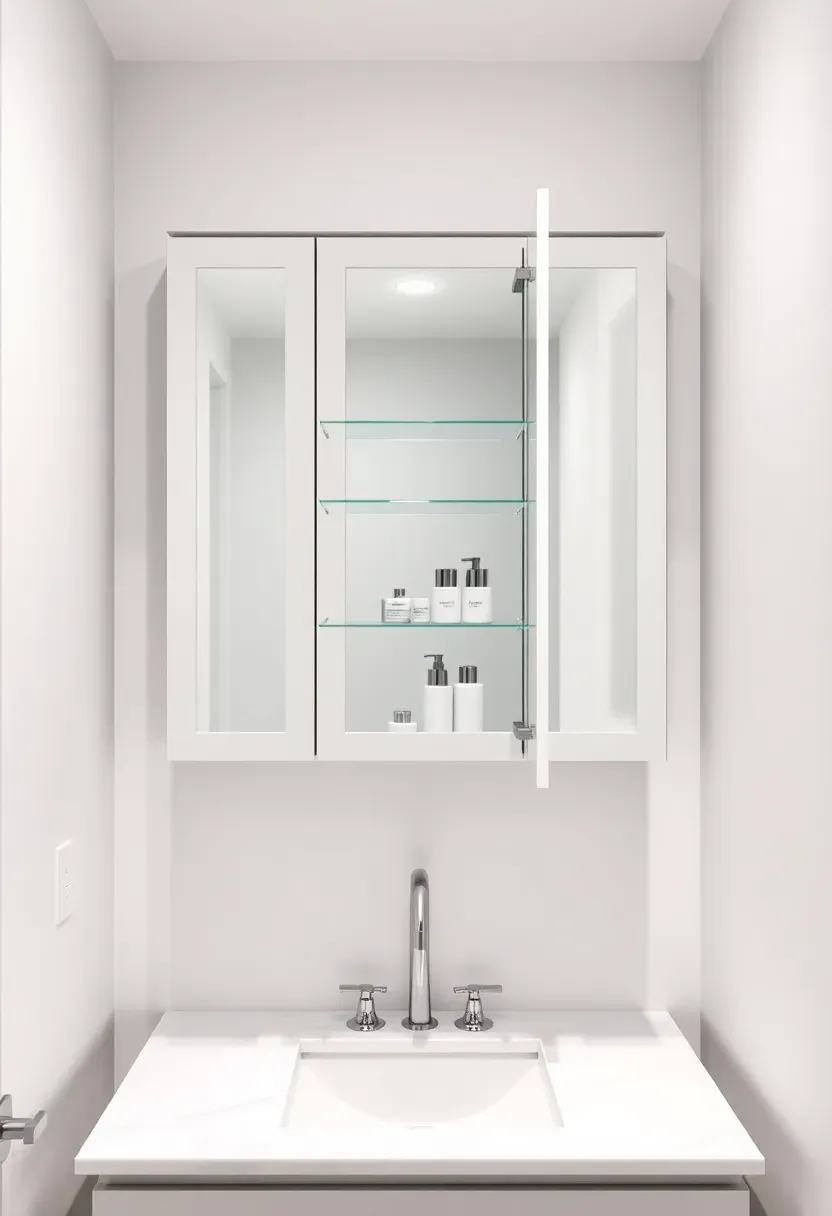
12. Medicine Cabinet With Mirror
The mirrored medicine cabinet is having a comeback as people rediscover the storage they had been giving up for purely decorative mirrors. Modern versions hide the bulk by recessing into the wall between studs (about 4 inches deep), and the mirrored fronts can include LED edge lighting and integrated outlets. Triple-door cabinets give you a clean three-panel mirror surface and three times the storage of a single mirror.
Tips
- Confirm wall depth and stud layout before committing to a recessed install
- Choose interior outlets for toothbrush chargers and electric razors
- Avoid mirrored cabinets directly over a deep stone vanity; the depth gets awkward
Recommended
Items for this idea
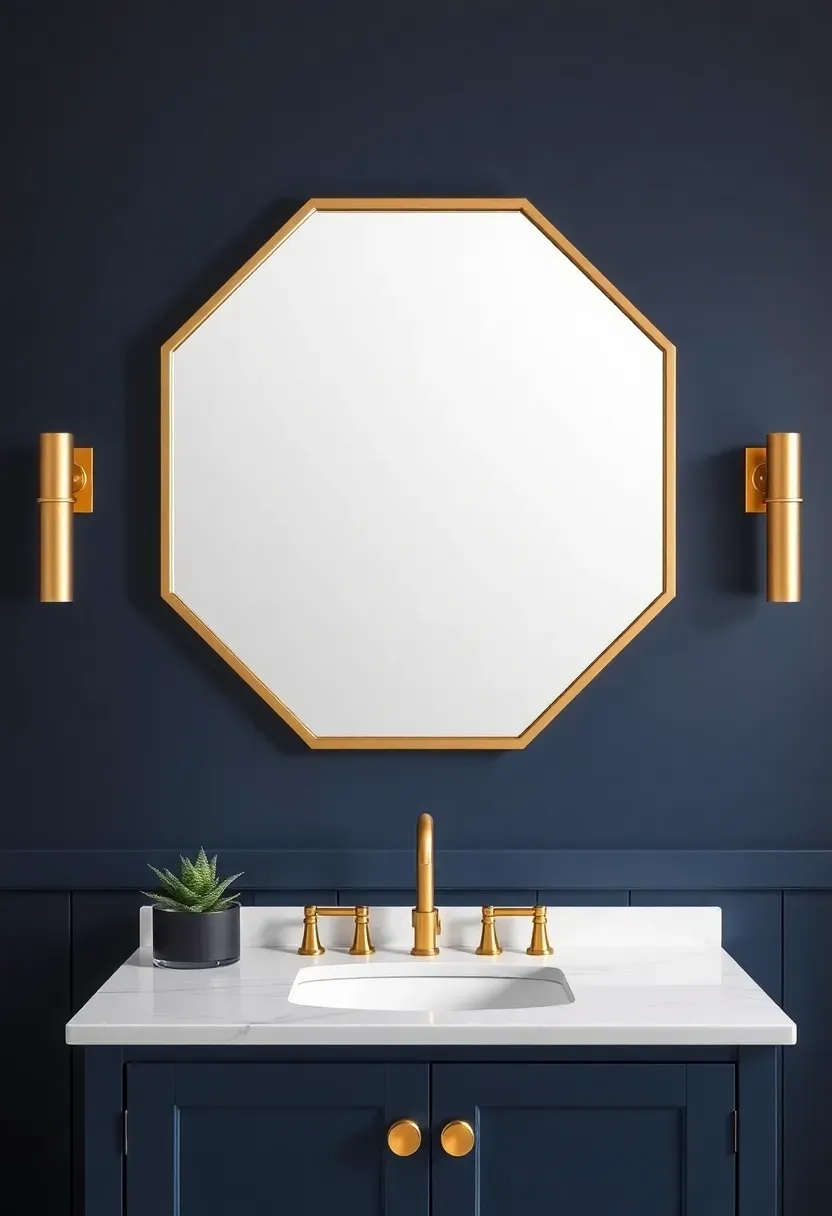
13. Octagon Shaped Statement Mirror
Octagon mirrors split the difference between a standard rectangle and a round mirror, offering more usable face-framing height while keeping enough geometric interest to stand on its own. A thin brass-edged octagon over a navy or deep-green vanity feels grown-up and slightly Art Deco without committing fully to the style. Sizes from 24 to 30 inches across the widest points work for most single vanities.
Tips
- Hang with the flat edges parallel to the floor, not on a point
- Pair with linear sconces to play geometric shapes against each other
- Consider a brass or matte black frame; chrome looks dated on this shape
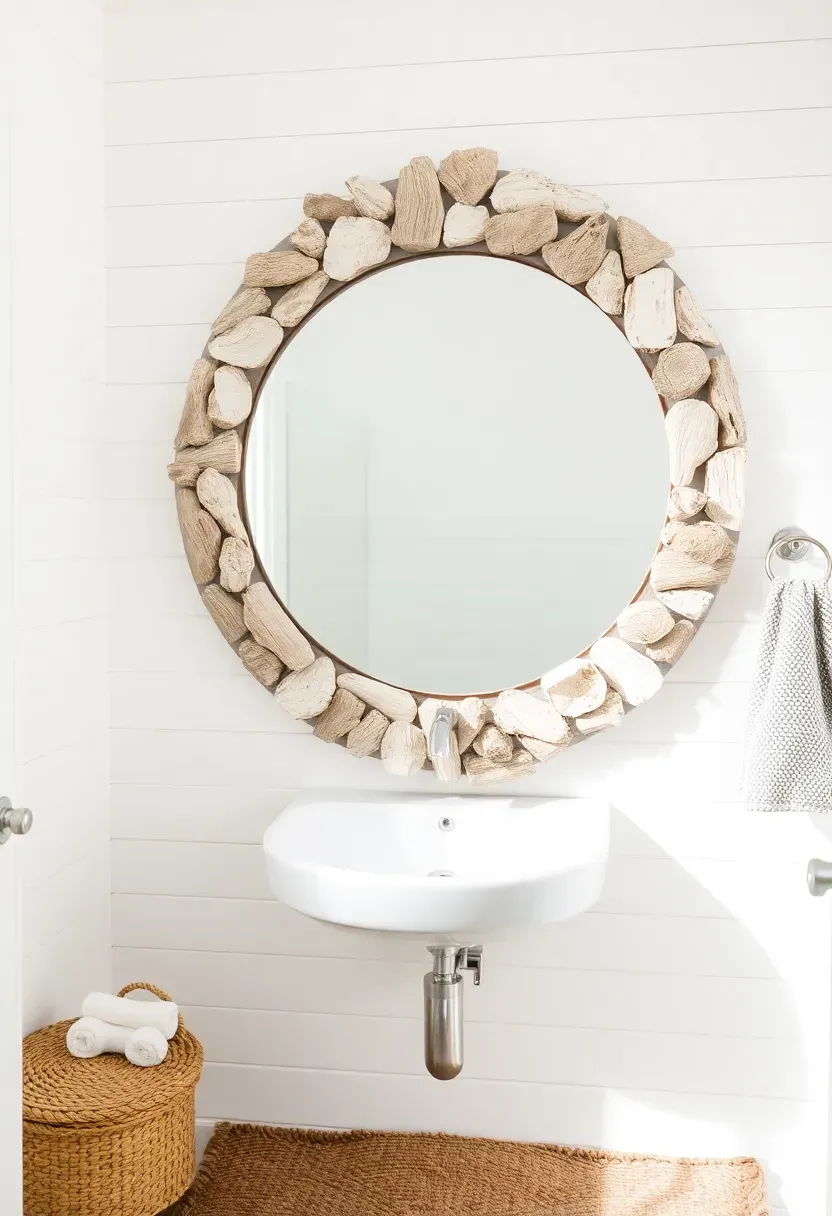
14. Driftwood Coastal Frame
A driftwood-framed mirror brings genuine texture to a coastal or beach-house bathroom without veering into novelty territory. Real driftwood — even reclaimed boards stained to look weathered — has irregular silver-grey tones that mass-produced "beach style" decor can never replicate. The frame's organic edges work especially well against shiplap walls and white subway tile.
Tips
- Seal driftwood with matte polyurethane to prevent moisture absorption
- Group small driftwood pieces around a circular mirror form for a sunburst effect
- Hang in bathrooms with a vent fan; unsealed driftwood and steam don't mix
Recommended
Items for this idea
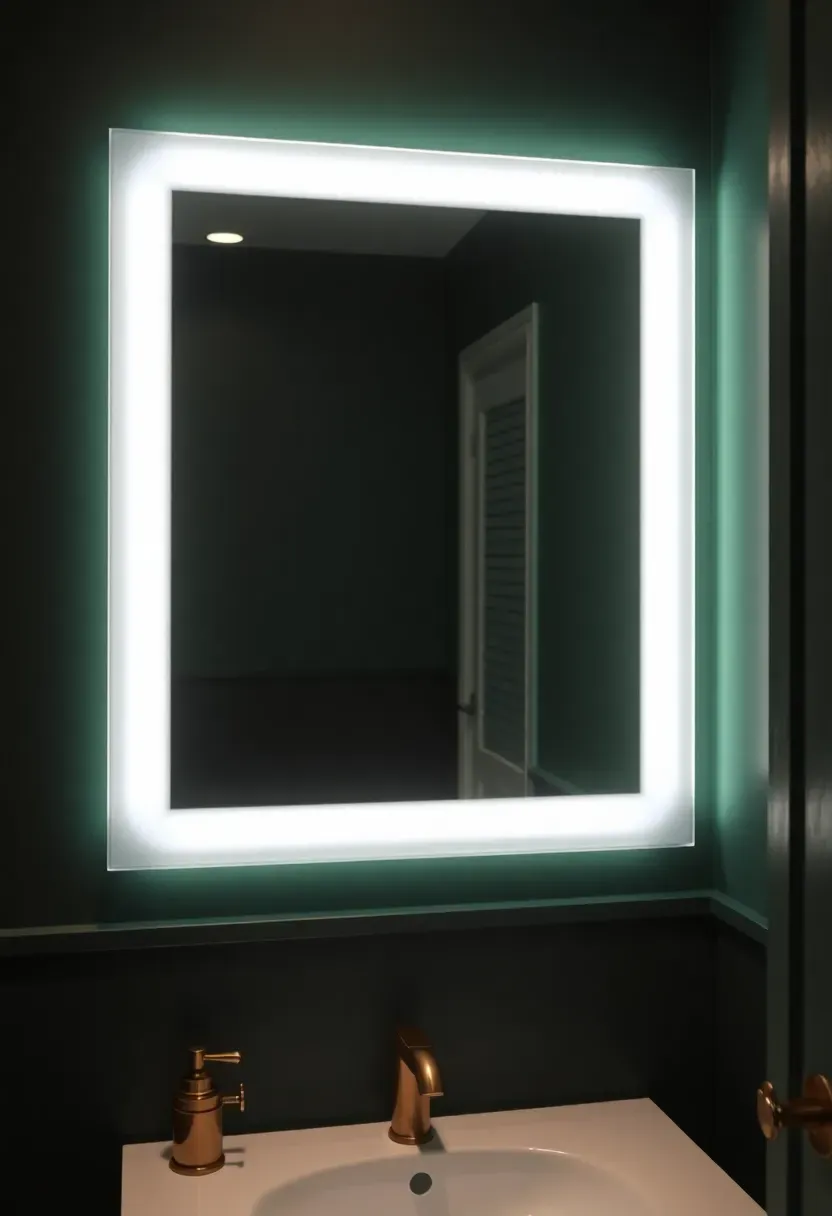
15. Backlit Frosted Border Mirror
A variation on the standard backlit mirror, this version uses an inch-wide frosted glass border that glows when the LEDs are on. The frosted band acts as a built-in frame when the lights are off and disappears when they come on. The effect is more subtle than a hard-edged backlight halo, and it works particularly well in moody, dark-painted bathrooms where a bright LED ring would feel jarring.
Tips
- Specify warm white (2700-3000K) LEDs to flatter skin tones
- Wire to a dimmer for nighttime use
- Mount with a 1-inch standoff so the backlight glow reads on the wall behind
16. Floating Shelf With Leaning Mirror
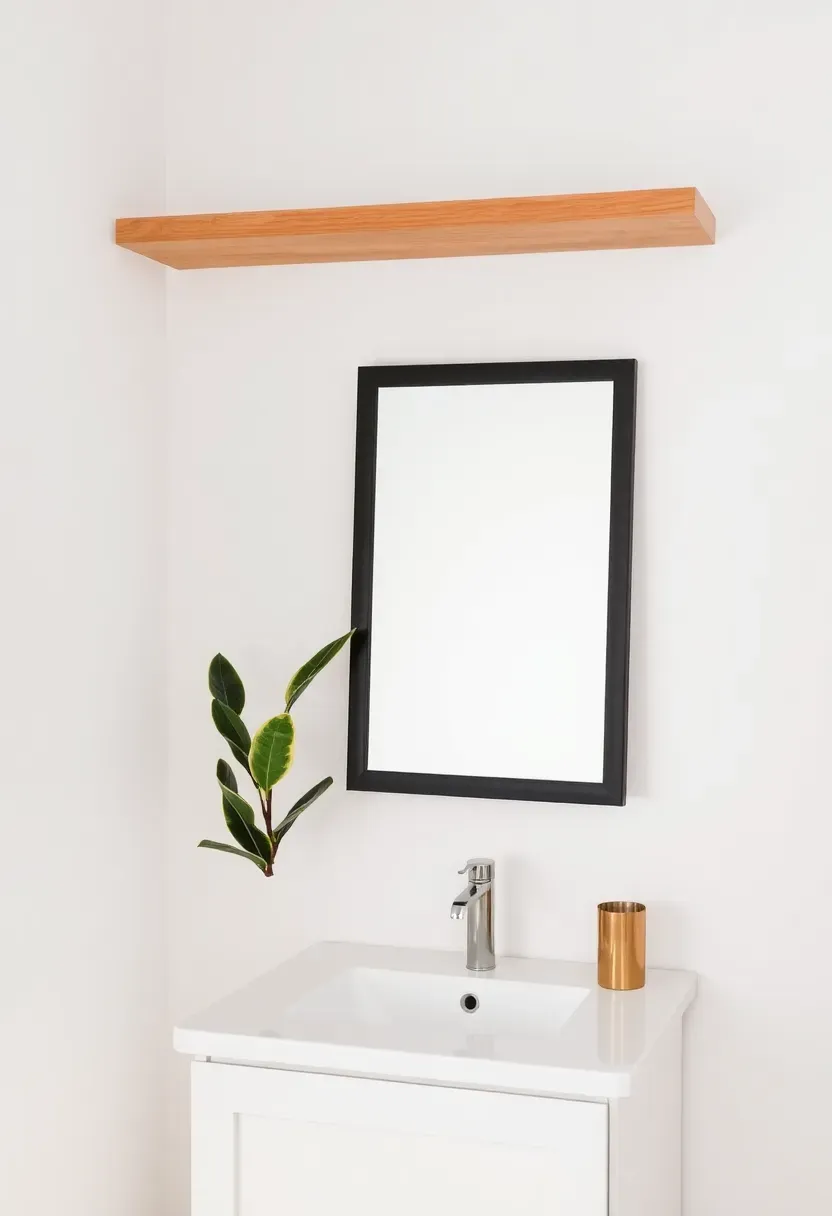
Instead of mounting the mirror to the wall, install a deep floating shelf (8 to 10 inches) above the vanity and lean the mirror on it. The shelf doubles as styling space for a small plant, a candle, or the daily-use perfume that always lives on the counter. This setup is also a renter favorite because nothing has to bolt through the mirror itself, and you can change the mirror anytime.
Tips
- Use a shelf with a front lip or use museum putty to keep the mirror from sliding
- Anchor the shelf into studs; a leaning mirror puts angled weight on the bracket
- Keep the leaning angle gentle (5-10 degrees) to avoid distortion in the reflection
Recommended
Items for this idea
17. Anti-Fog Heated Mirror
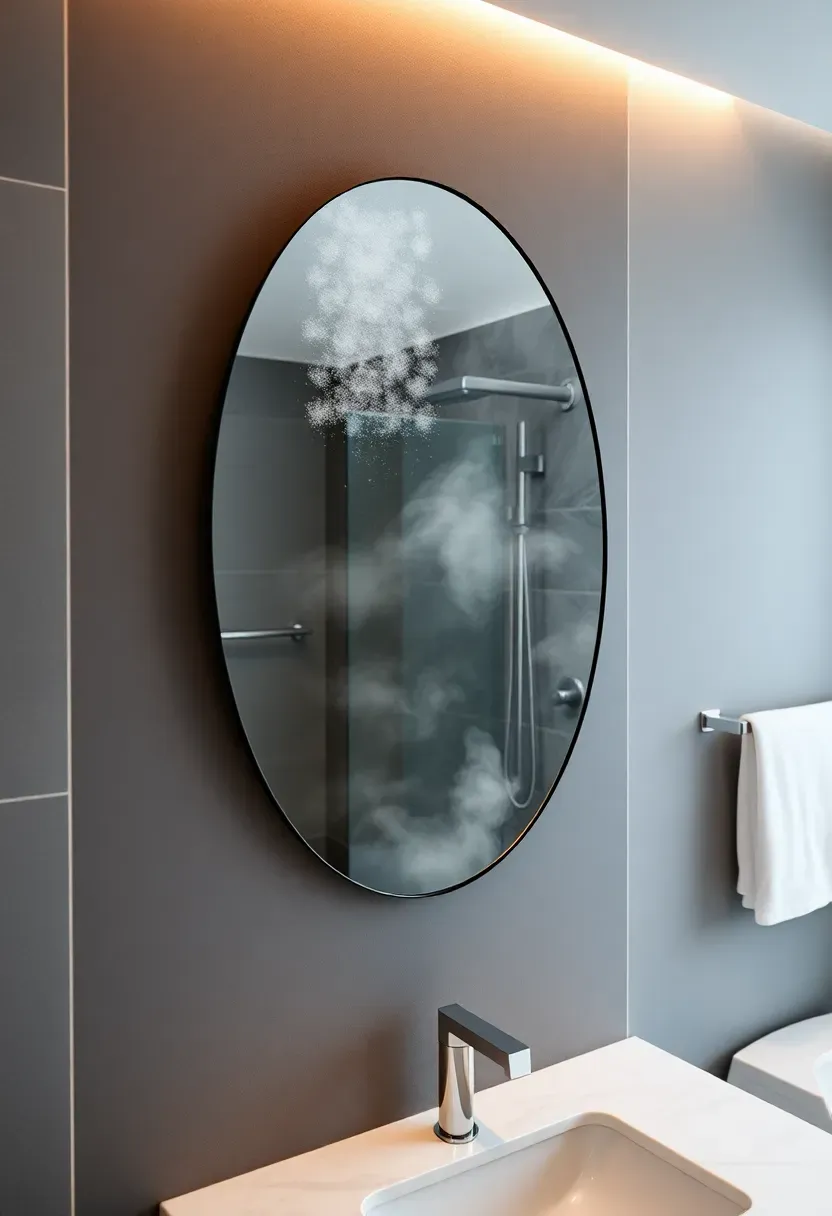
Heated demister pads behind the mirror keep a clear oval (or full surface, depending on the pad size) fog-free even in a steamy bathroom. The pad uses about 25 to 50 watts and runs continuously when the bathroom light is on. For households where someone showers and immediately needs to shave or do makeup, this is a quality-of-life upgrade that punches above its modest cost ($30 to $80 for the pad itself; installation is straightforward if you're already replacing the mirror).
Tips
- Wire the demister to the same circuit as the bathroom lights so it's always on when needed
- Size the pad to cover the head-and-shoulders zone, not the full mirror
- Combine with a strong vent fan; the demister isn't a substitute for ventilation
18. Mirror Wall Behind Vanity
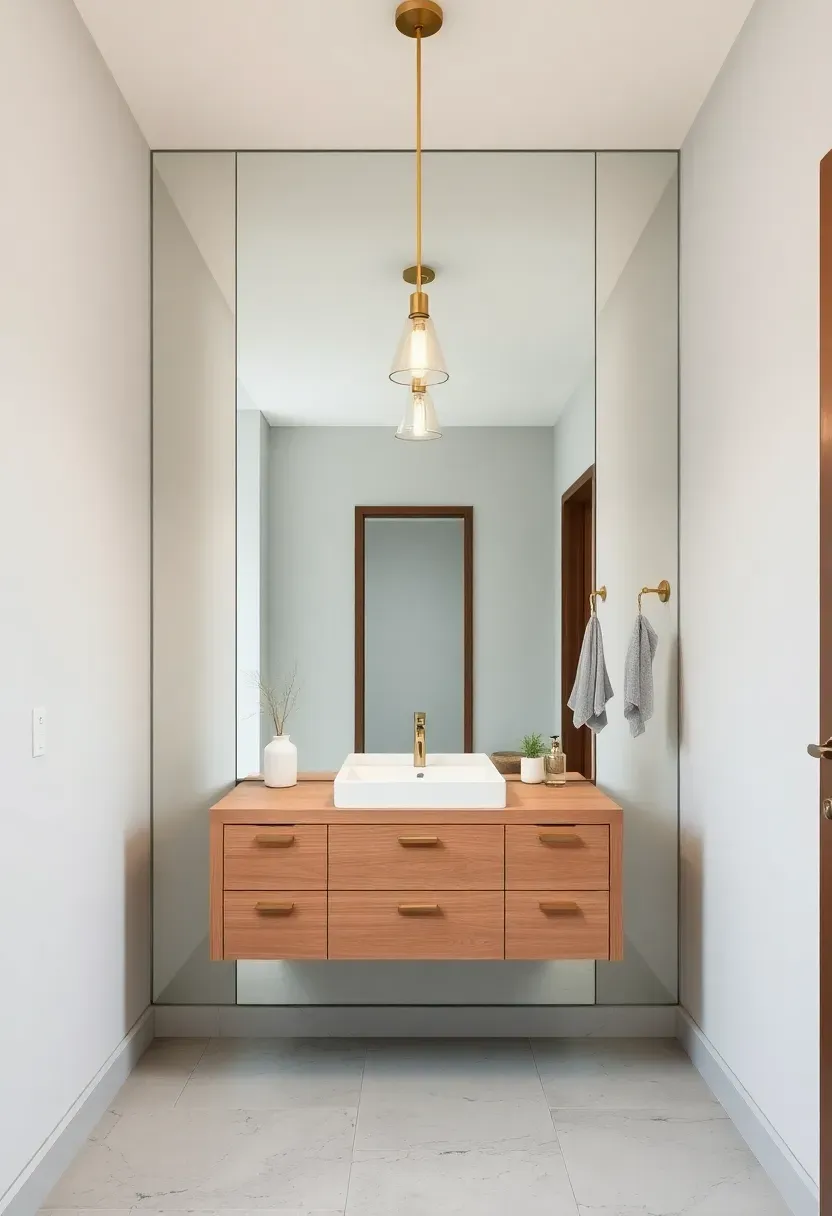
Covering the entire vanity wall in mirror — floor to ceiling, wall to wall — is the trick that makes small bathrooms feel double their size. The reflection visually duplicates the floor, ceiling, and any side wall that intersects, turning a 5-by-7 bathroom into something that reads spacious. It's a commitment (one large mirror panel custom-cut and installed by a glass shop), but the payoff is dramatic and harder to achieve any other way.
Tips
- Have the glass shop come measure; openings are rarely truly square
- Use polished edges, not raw cuts, even where the mirror butts the ceiling
- Avoid this on a wall that gets direct sun glare from a window opposite
Recommended
Items for this idea
19. Black Metal Grid Window Mirror
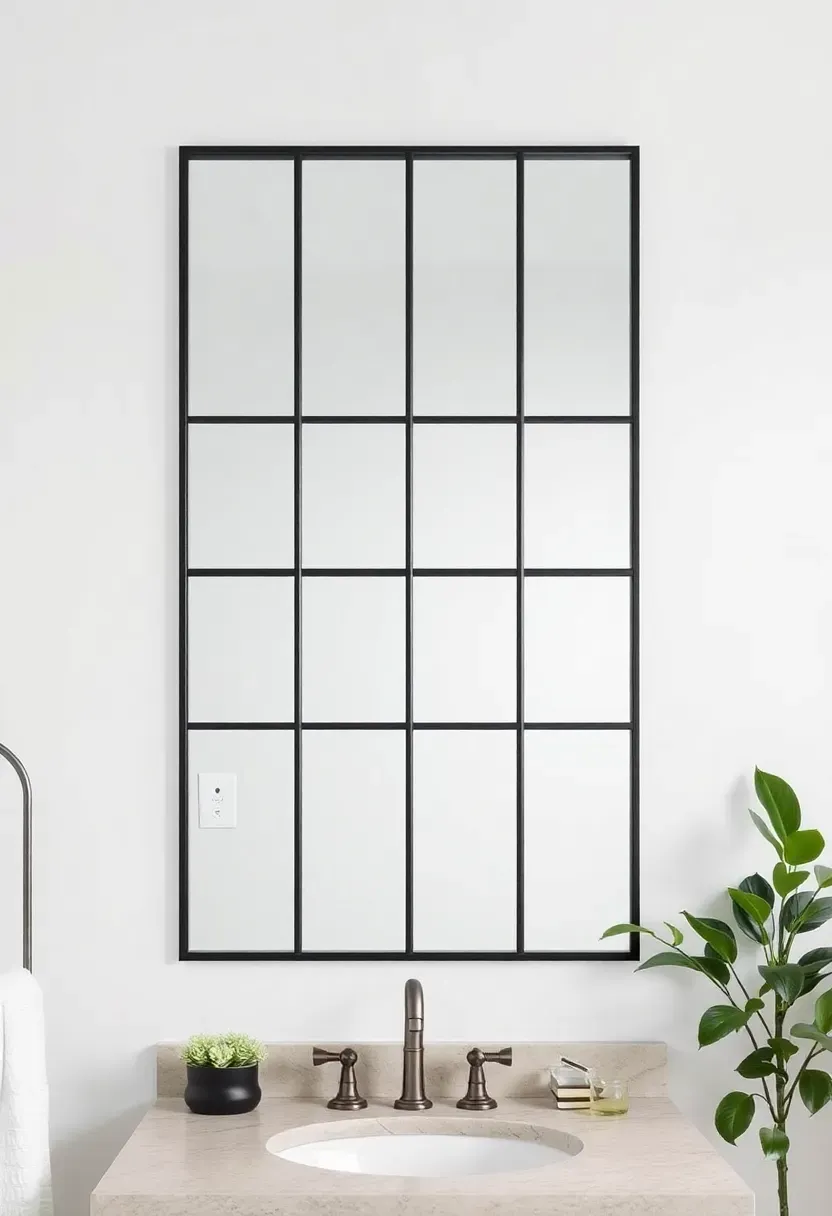
The black grid mirror — a single piece of glass with a thin metal grid laid over it — turns a flat reflective surface into something that reads as a Crittall-style steel window. The grid lines (usually 6 or 9 panes) add architectural interest in bathrooms that don't have a real window, and the matte black metal pairs well with industrial, modern farmhouse, and transitional styles.
Tips
- Choose a grid with thin (3/8 inch or thinner) bars; thicker bars look cartoonish
- Hang on a vanity wall opposite a window if possible to mirror the actual window
- Skip in bathrooms with very busy tile; the grid competes for attention
20. Removable Adhesive Mirror Tiles
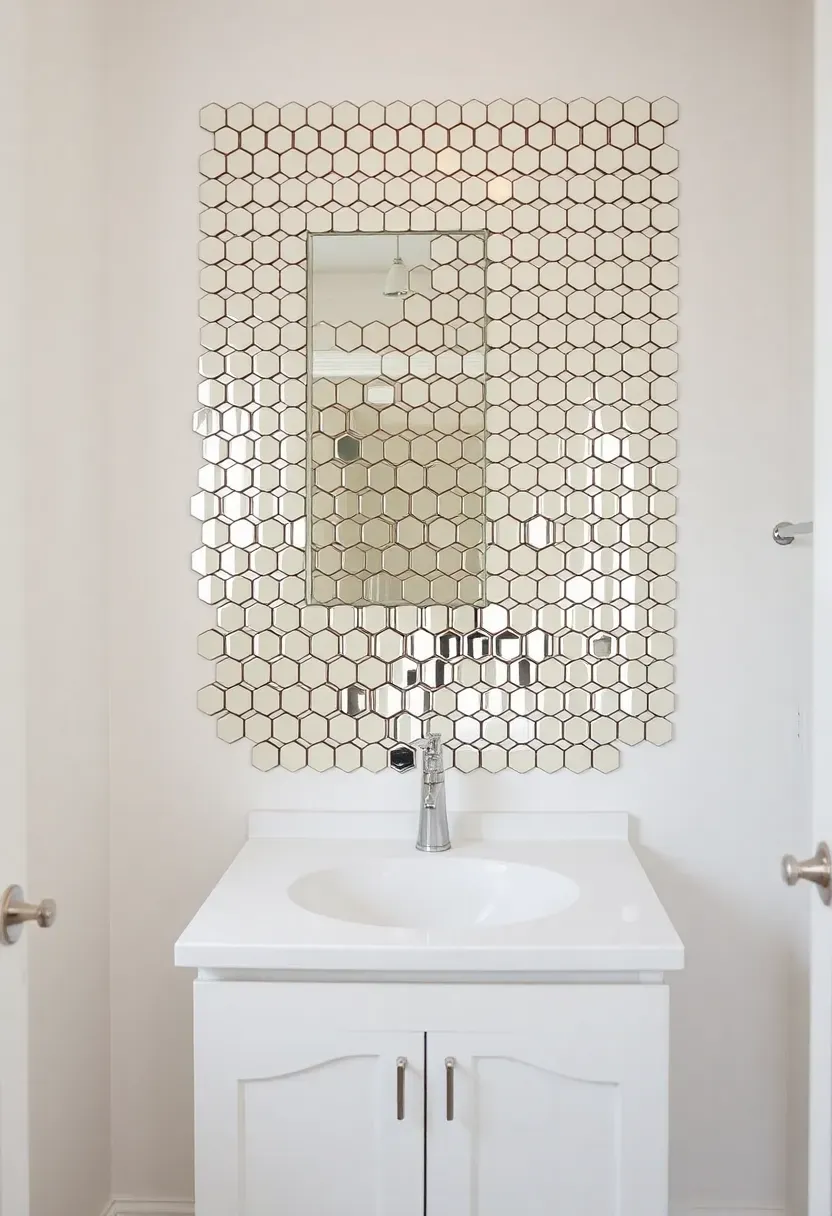
For renters who can't replace the existing mirror, peel-and-stick mirror tiles let you build a feature wall or a large mirror surface from a grid of small pieces. Hexagons, squares, and circles all work. The tiles themselves are usually acrylic mirror (not glass) and have minor distortion, so use them as a decorative accent rather than a primary face mirror. Removal is clean if you use Command-style adhesive strips instead of the tile's own backing.
Tips
- Test one tile on a small area for 48 hours before committing to the full install
- Wipe the wall thoroughly with rubbing alcohol before applying
- Skip directly above the sink; acrylic shows water spots more than glass
Recommended
Items for this idea
21. Shaped Asymmetrical Mirror
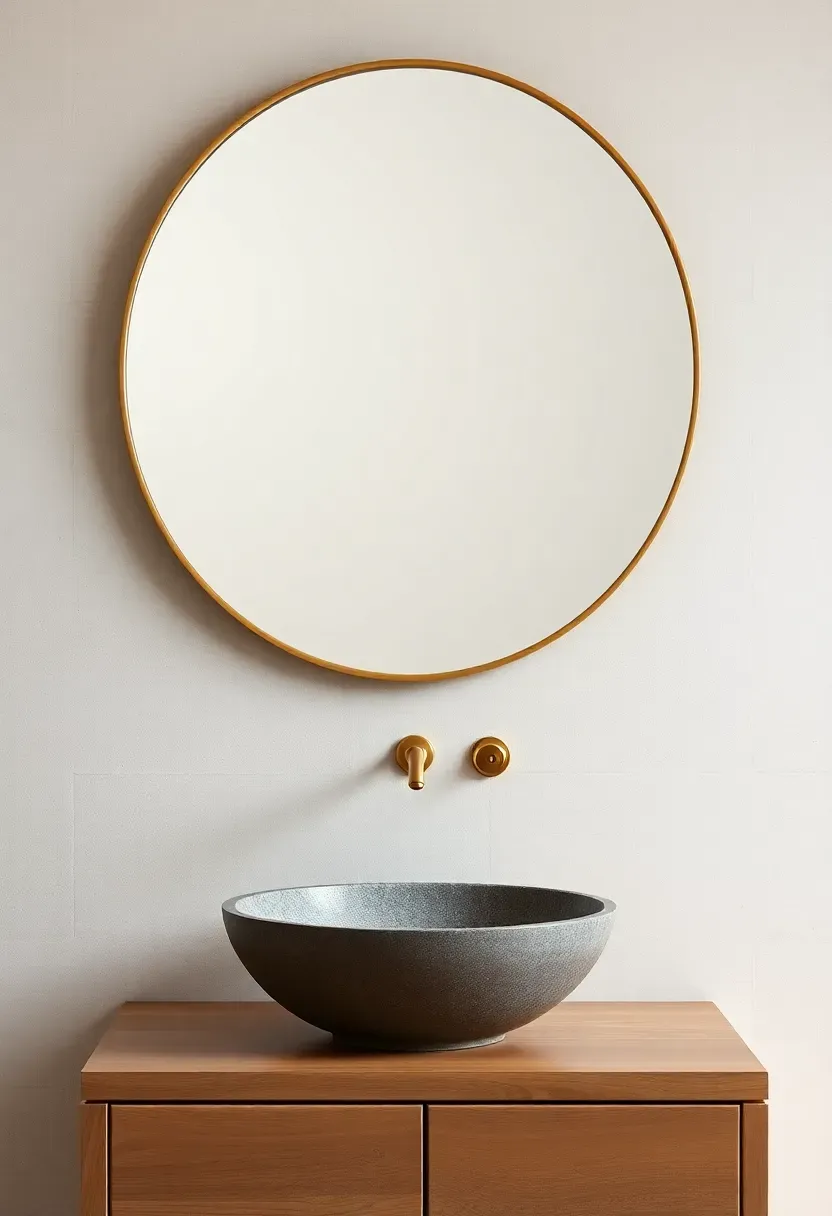
Asymmetrical or organic-shaped mirrors — irregular curves, soft blob silhouettes, off-balance ovals — have moved from gallery installations into mainstream bathrooms. The shape acts like artwork in a room that otherwise has very few opportunities for it. A single asymmetric mirror over a stone basin or above a wabi-sabi style vanity carries enormous visual weight without needing additional decor.
Tips
- One asymmetric mirror is plenty; don't pair with another statement shape
- Hang lower than a standard mirror to read more like art than utility
- Look for shapes that still leave a usable face-framing zone in the center
22. Pivoting Magnifying Mirror
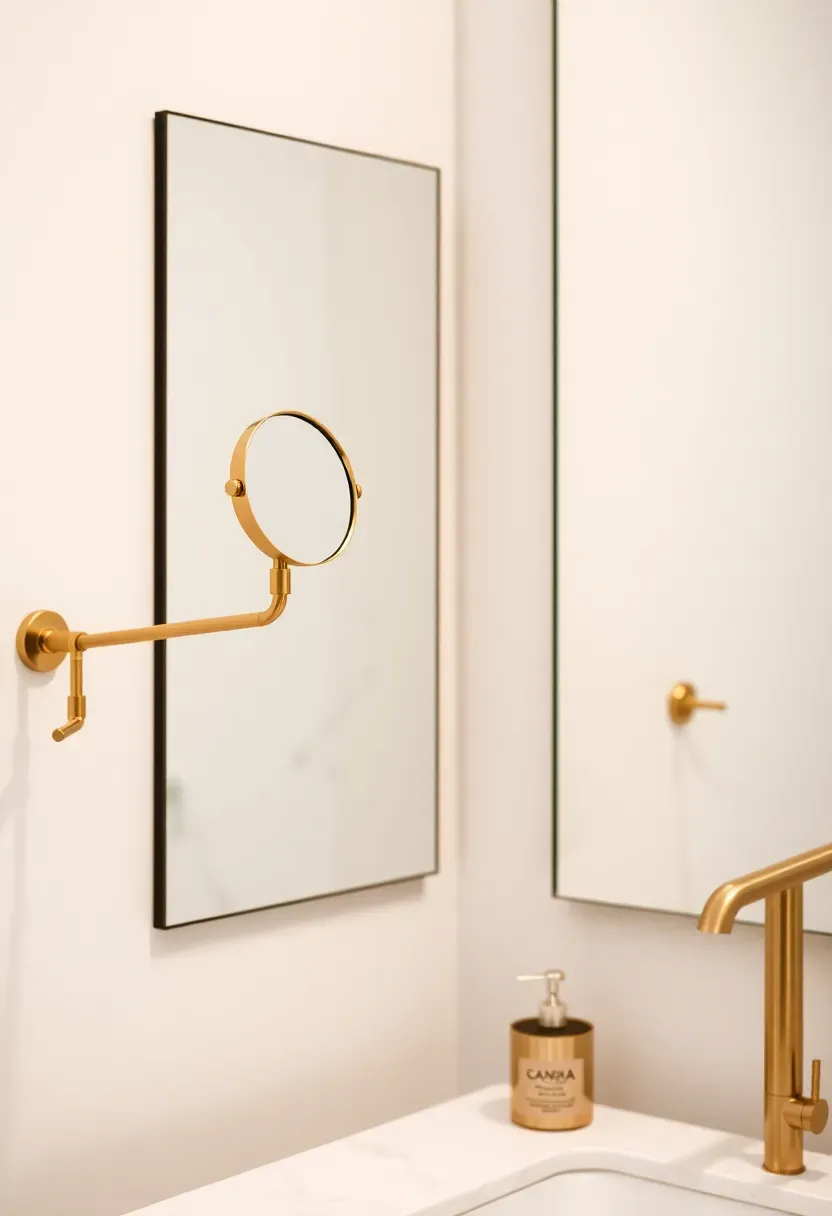
A wall-mounted pivoting magnifying mirror on an extending arm is the unsung hero of any vanity. Mount it to the side wall (or directly to the side edge of the vanity backsplash), and it folds flat against the wall when not in use, then extends 12 to 16 inches for close-up shaving, brow work, or contact-lens insertion. 5x or 7x magnification covers most needs; lighted versions add a built-in LED ring.
Tips
- Mount at sitting eye level (about 60 inches off the floor) for makeup applications
- Choose a finish that matches your faucet, not your main mirror frame
- Wired LED versions need a junction box; battery versions are simpler to install
Recommended
Items for this idea
23. Convex Porthole Mirror
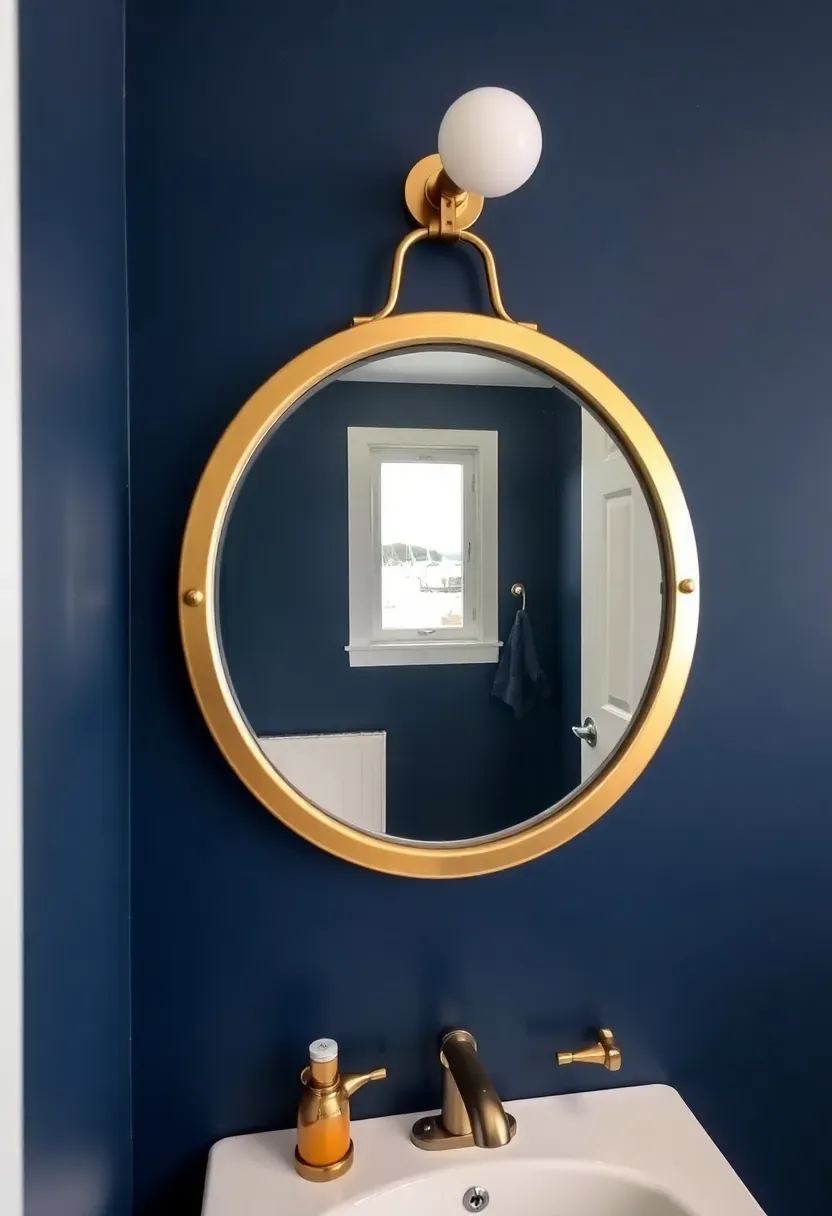
A small convex mirror — the slightly bulging glass that gives a wide-angle reflection — adds nautical character without leaning into a literal beach theme. Porthole-style versions with thick brass or chrome frames work in coastal, traditional, and even modern bathrooms as a secondary mirror or accent piece. The convex glass distorts the image, so use it as a decorative piece, not your primary face mirror.
Tips
- Hang as a secondary mirror, not above the main vanity
- Best at 12 to 18 inches in diameter; larger convex glass distorts uncomfortably
- Pairs especially well with brass plumbing and white subway tile
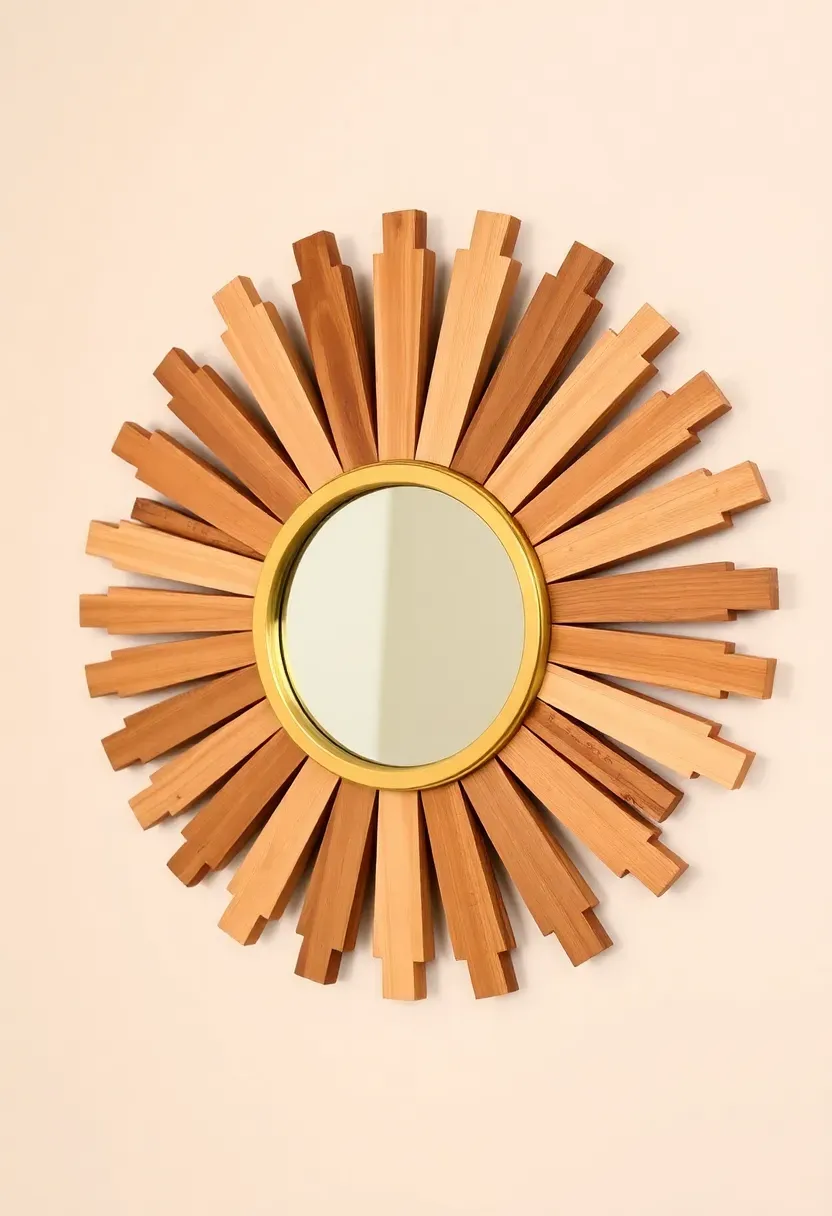
24. DIY Wood Shim Sunburst Frame
A weekend DIY: glue cedar wood shims (the thin tapered ones from any hardware store) in a radiating pattern around a basic round mirror to create a sunburst frame. Spray paint the whole assembly gold, brass, or matte black, and you've spent maybe $25 on a mirror that looks like a $200 boutique piece. The build takes about two hours including dry time.
Tips
- Use a hot-glue gun for fast assembly; reinforce with wood glue afterward
- Vary shim lengths slightly (10, 12, and 14 inches) for a more dynamic burst
- Seal with matte polyurethane if the bathroom doesn't have great ventilation
Recommended
Items for this idea
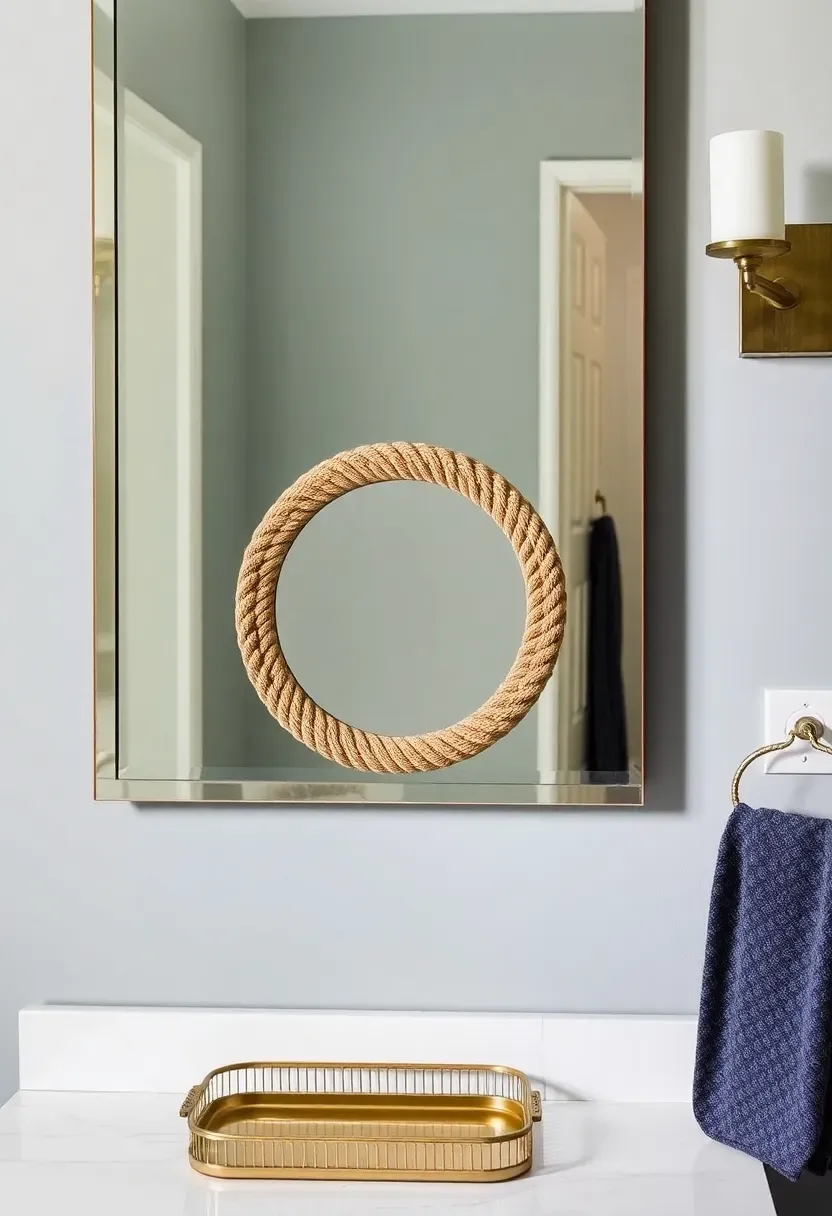
25. Layered Mirror On Mirror
Hanging a smaller decorative mirror in front of a larger wall mirror — a layered vignette borrowed from gallery walls — gives a bathroom mirror moment some unexpected depth. The smaller mirror reflects the room from a different angle and adds a tactile layer (rope frame, brass ring, or carved wood) on top of the flat back mirror. This works best when the larger mirror is plain or frameless and the front mirror is heavily textured.
Tips
- Hang the front mirror with a long ribbon or chain so it sits clearly off the back surface
- Choose front mirrors under 16 inches diameter so usable face area remains
- Skip if you actually need the back mirror for makeup or shaving
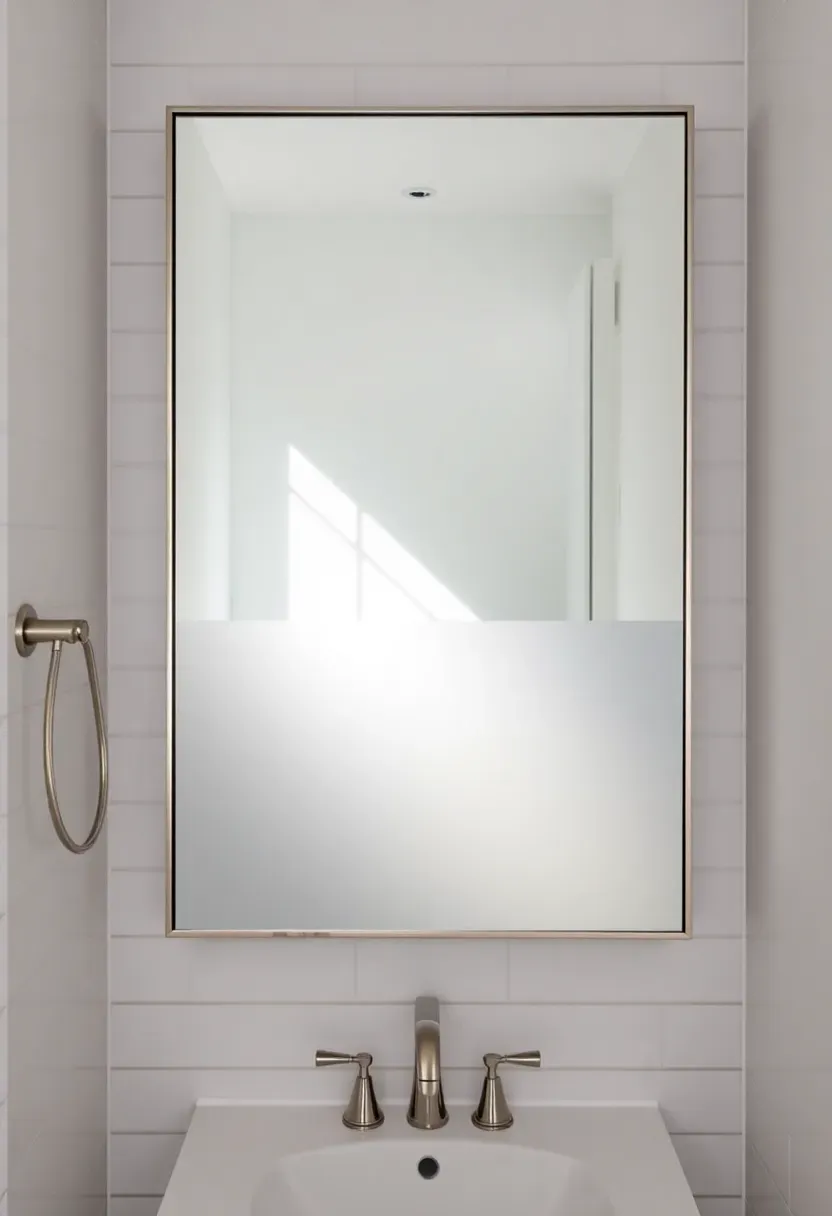
26. Frosted Half Mirror for Privacy
For bathrooms with a window directly opposite the mirror, or for glass shower walls that catch reflections, a mirror with a frosted band along the bottom or top blocks specific sightlines while keeping the rest reflective. The frosting is sandblasted directly into the glass at order time — usually a 6- to 10-inch band — and creates a soft diffused light effect rather than a hard line.
Tips
- Specify the frost gradient direction at order; can't be changed after etching
- Frost the bottom third for sink-area privacy; the top for window glare
- Pair with sheer or no window treatments since the mirror itself diffuses the view
Recommended
Items for this idea
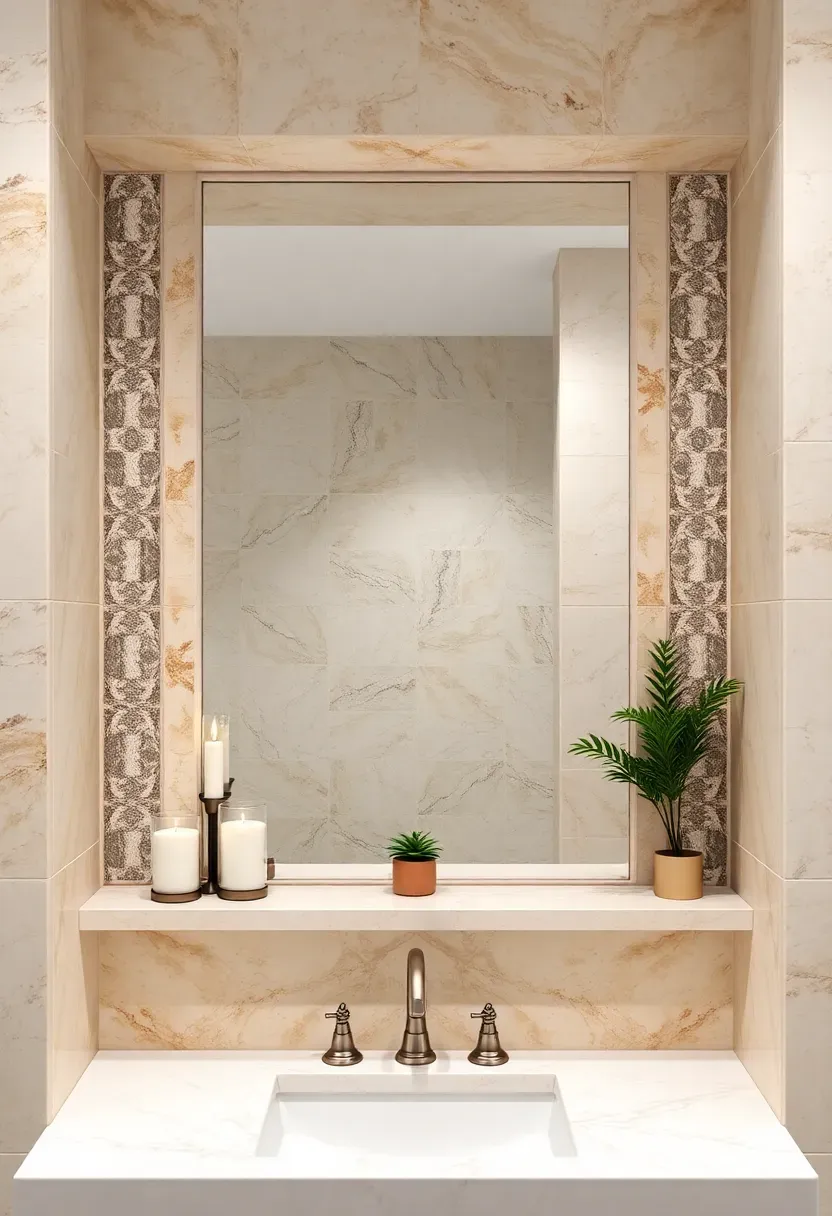
27. Recessed Niche Mirror
The most architectural of all the bathroom mirrors ideas: build a shallow recessed niche into the wall and inset the mirror flush. The niche frame becomes a permanent border of drywall return, tile, or stone, and small ledges along the niche edges become natural shelves for a candle, a soap dish, or a small plant. This is a renovation-level commitment but the payoff is a mirror that looks completely built-in and intentional.
Tips
- Plan around stud locations; recessing requires non-load-bearing wall sections
- Tile the niche return for a moisture-friendly finish
- Light the niche from inside the recess with a thin LED strip for a glowing-edge effect
Quick FAQ
What size mirror should I get for my bathroom vanity? A good rule of thumb: the mirror's width should be 70 to 80 percent of the vanity's width. A 36-inch vanity pairs well with a 26- to 30-inch mirror. Going wider than the vanity throws off proportions; going much narrower makes the wall feel sparse.
How high should I hang a bathroom mirror? Center the mirror at roughly 60 to 65 inches from the floor — the average eye level for adults. Leave at least 6 inches between the bottom edge and the faucet, and at least 4 inches between the top edge and any sconce or ceiling light.
Are LED bathroom mirrors worth it? For a primary bathroom used daily, yes. The shadow-free fill light is genuinely better for grooming, and the anti-fog and dimming features earn their keep. For a guest bath or powder room, a simpler framed mirror plus good sconces does the job for less.
Can I put a regular mirror in a bathroom? Yes, but check that the mirror has moisture-resistant backing (most modern mirrors do). Older mirrors with painted-only backings can desilver in humid bathrooms — black spots creeping from the edges within a year or two.
What's the easiest bathroom mirror upgrade for renters? A peel-and-stick frame around the existing builder mirror, or a leaning mirror on a floating shelf. Both are reversible, take under an hour, and immediately make the existing mirror look intentional.
The bathroom mirror is the rare design choice that's seen at every height, every angle, every day. Picking one that fits the room — and that you actually like looking at — pays off in a way few other upgrades do. Start with the basics: right size for the vanity, right hanging height for the people using it, and a frame (or deliberate lack of one) that fits the rest of the room. From there, the question is just how far you want to push it.
Pinterest cover for 27 Bathroom Mirrors Ideas That Actually Look Good
About the author
OBCD
CGI visualization and interior design content. We create detailed 3D renders and curate practical design ideas for every room in your home.