17 Backyard ADU Ideas That Actually Get Built
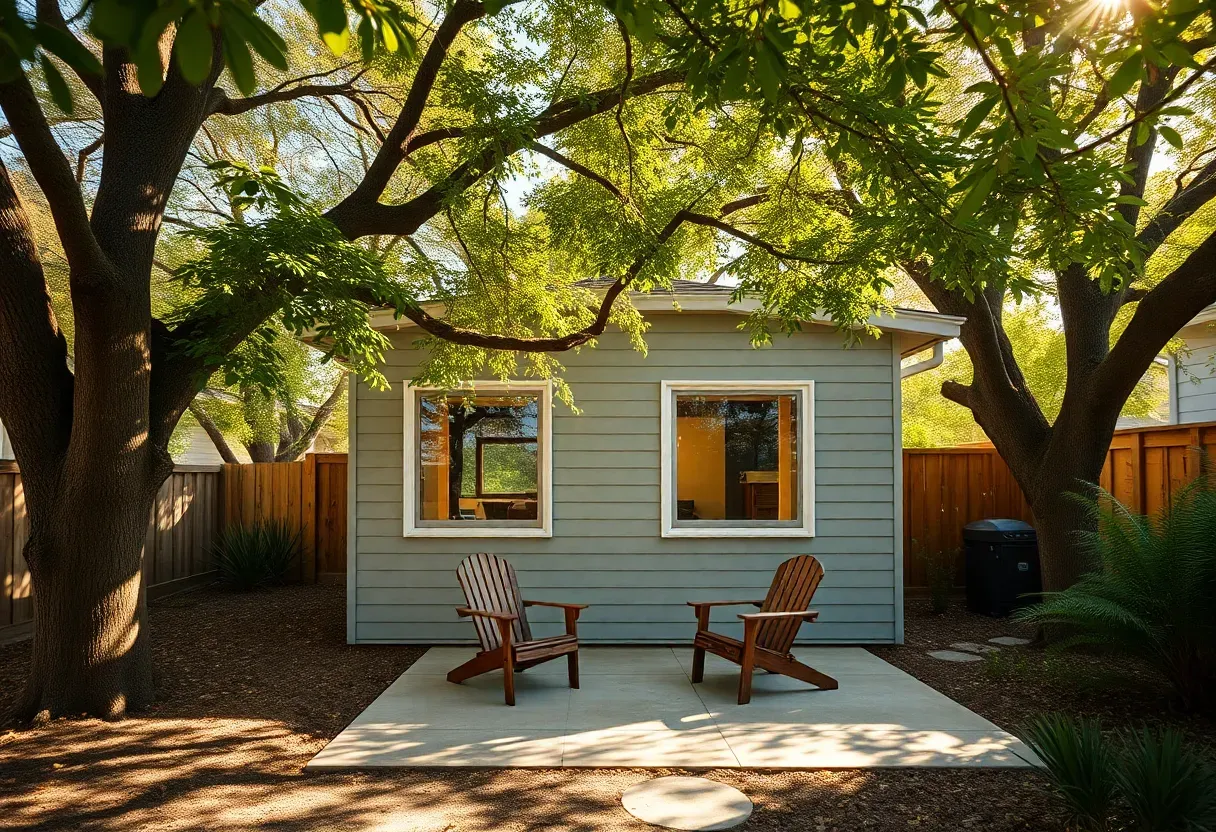
Most people researching backyard ADUs get stuck in the inspiration phase — scrolling through architect renderings of units that cost $400K and take eighteen months to permit. The reality is more interesting. Across California, Oregon, Texas, and a growing list of states that relaxed zoning laws between 2020 and 2025, homeowners are building functional backyard units for $80K to $200K. Some are prefab boxes dropped by crane in a day. Others are slow-built custom structures with full kitchens and separate utilities. The difference comes down to what you actually need the space to do.
Here are 17 approaches to backyard ADUs that real homeowners have pulled off, organized from simplest to most ambitious.
Table of Contents
- Converted Garage ADU
- Prefab Studio Pod
- Shipping Container ADU
- Above-Garage ADU
- Detached One-Bedroom Cottage
- ADU with Breezeway Connection
- L-Shaped ADU Wrapping a Courtyard
- Basement Conversion with Garden Entry
- Japanese-Inspired Compact ADU
- Passive House ADU
- Two-Story Narrow ADU
- ADU Built Into a Hillside
- Pool House That Doubles as an ADU
- Artist Studio ADU with North-Facing Clerestory
- Multigenerational ADU with Aging-in-Place Features
- Barn-Style ADU with Loft Bedroom
- Net-Zero Solar ADU
1. Converted Garage ADU
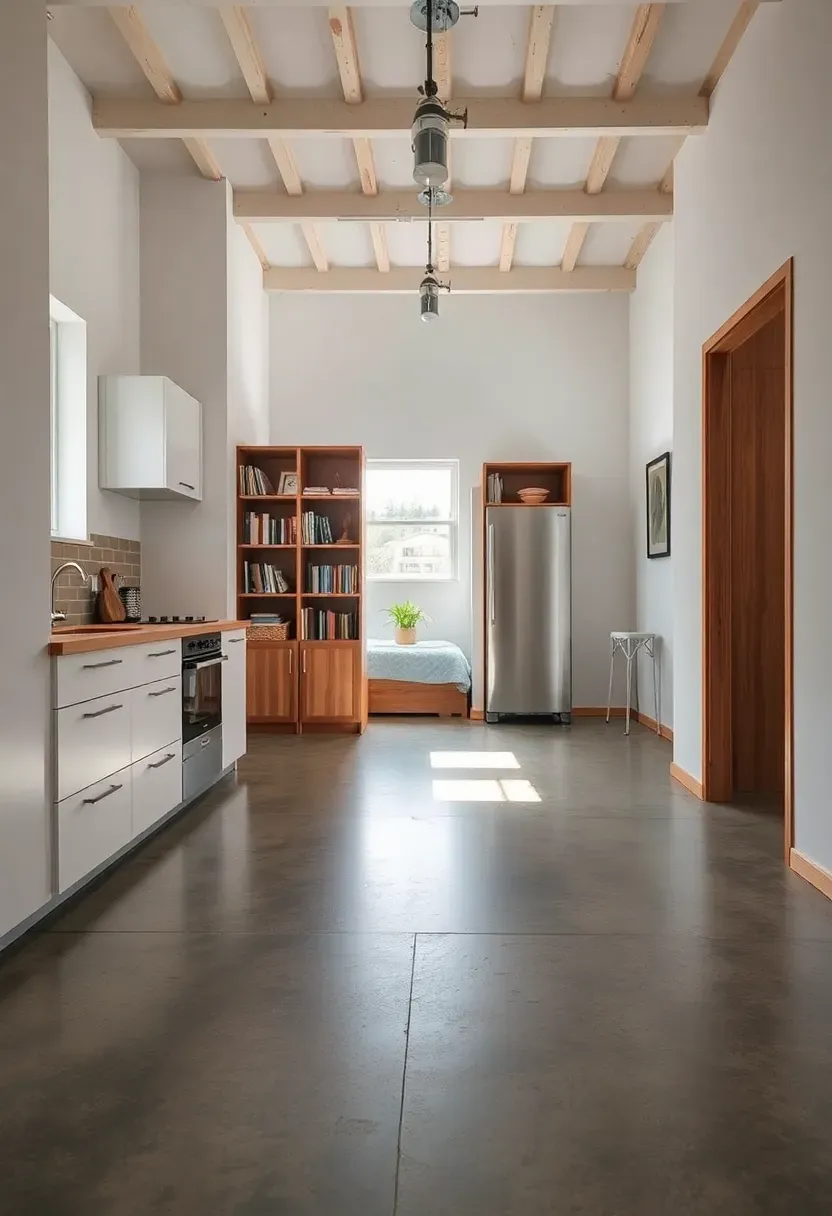
Garage conversions remain the cheapest path to a backyard ADU because the shell already exists. You skip foundation work, framing, and roofing — the three most expensive phases of any build. A standard two-car garage gives you roughly 400 square feet, enough for a studio or one-bedroom layout. The main costs are insulation, plumbing for a bathroom and kitchenette, electrical upgrades to separate the panel, and a window or two for egress. Most jurisdictions require at least one parking space replacement, which usually means adding a driveway pad.
Tips
- Check if your garage slab is thick enough — most need at least a 4-inch slab for residential conversion
- Budget $15K-$25K for plumbing rough-in if no sewer lateral exists nearby
- Keeping the garage door as a glass roll-up wall adds light and makes the space feel larger
We picked a few things that go well with this idea: Handy Home Palisade 12x8 Wood Shed Kit (★3.1), Handy Home Highland 8x6 Modern Shed (★4.5) and Handy Home Designer 12x10 Shed with Dormer (★3.8). As an Amazon Associate we earn from qualifying purchases.
2. Prefab Studio Pod
Why Prefab Appeals
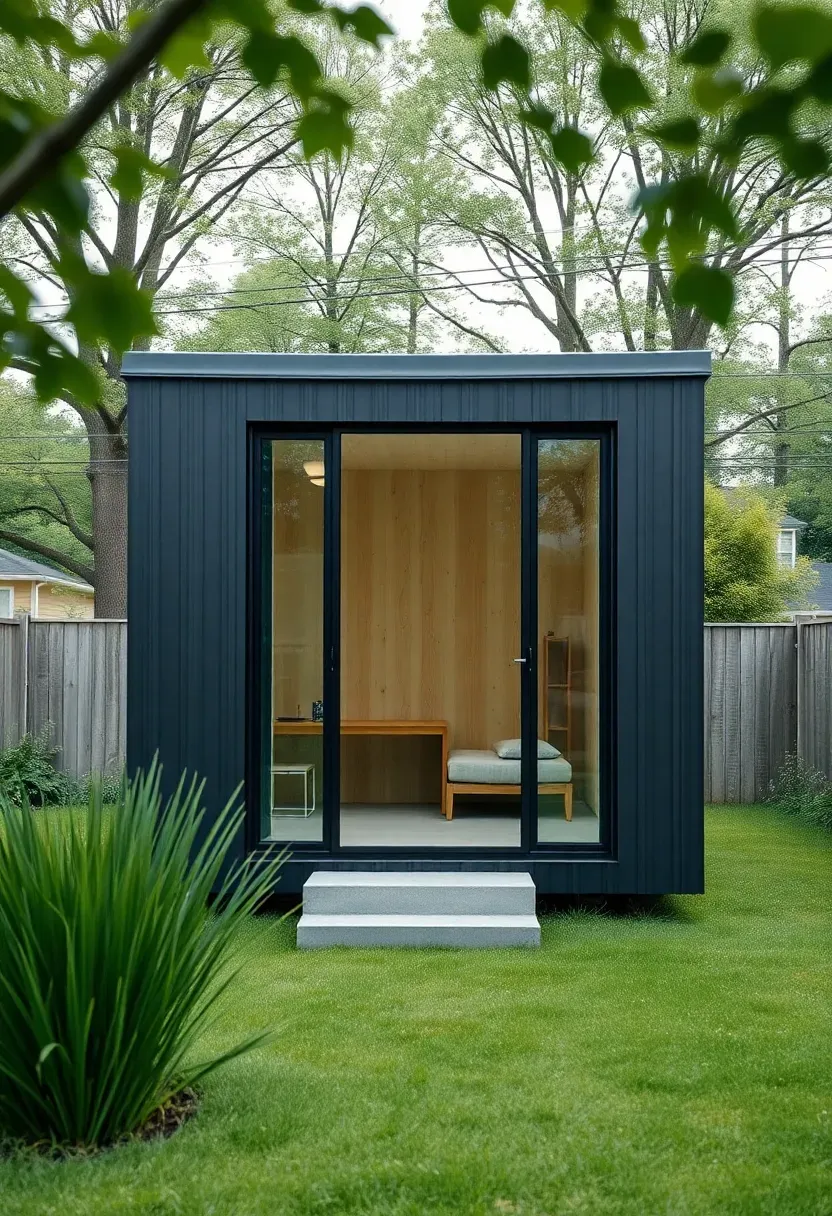
Permitting a stick-built ADU takes four to twelve months in most cities. Prefab companies like Abodu, Boxabl, and Villa Homes deliver a finished unit on a flatbed and crane it onto a prepared foundation in a single day. The structure arrives with walls, flooring, fixtures, and sometimes appliances already installed.
What You Actually Get
Most prefab studios run 200 to 400 square feet. Interiors are compact but finished — think IKEA-level cabinetry, quartz counters, mini-split HVAC, and tankless water heaters. The foundation prep and utility hookups are still on you, which adds $20K-$40K on top of the unit cost.
Pros and Cons
- Pro: Fast installation, factory quality control, predictable pricing
- Con: Limited customization, HOA resistance in some neighborhoods, still requires local permits
- Best for: Homeowners who want rental income quickly without managing a construction site
We picked a few things that go well with this idea: Senville LETO 18000 BTU Mini Split (★4.4), ACiQ 12000 BTU Mini Split with WiFi (★5.0) and Nexaro 12000 BTU 115V Mini Split (★4.2). As an Amazon Associate we earn from qualifying purchases.
3. Shipping Container ADU
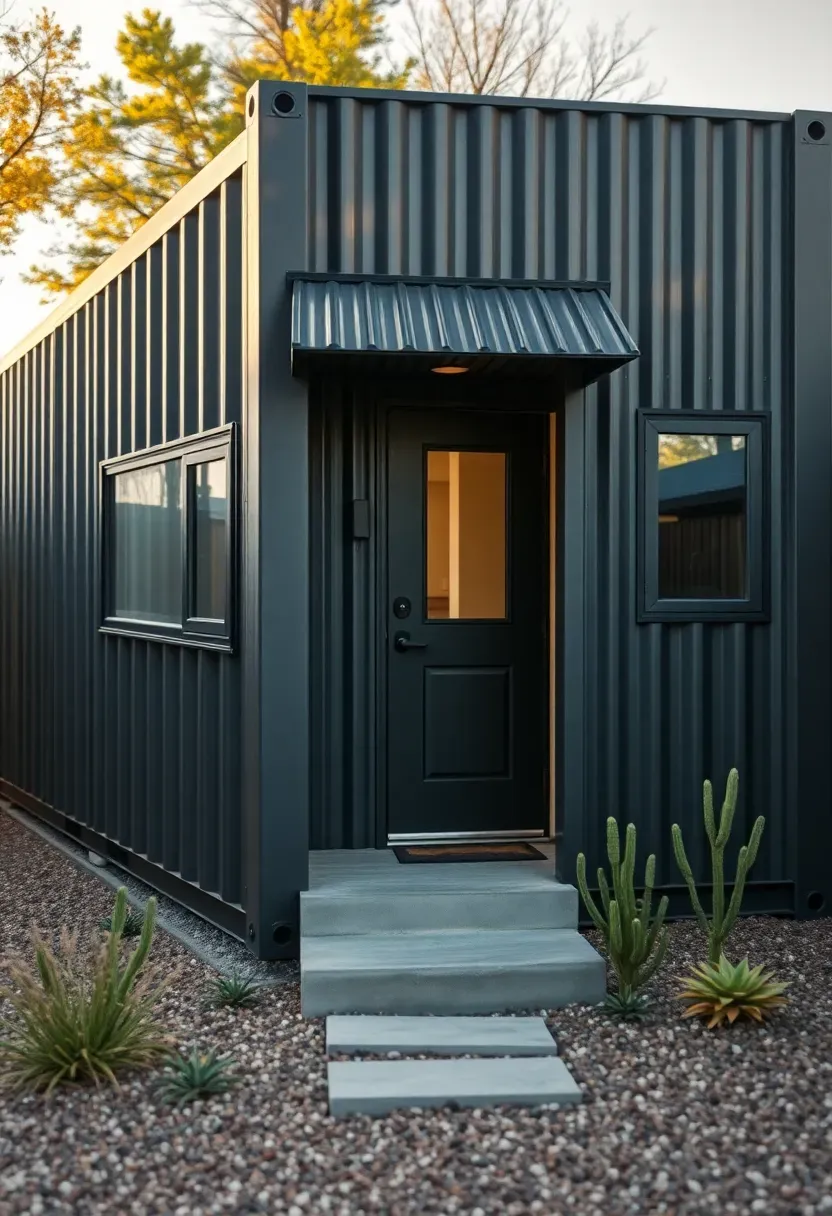
Shipping containers sound like the ultimate hack — a steel box for $3,000 that just needs windows and plumbing. The reality involves more work than most online guides admit. A standard 40-foot high-cube container gives you 320 square feet of raw space at 8 feet wide. That narrow width means every layout feels like a hallway unless you join two containers side by side. Insulation is mandatory (steel conducts heat and cold aggressively), and cutting openings for windows weakens the structure enough to require added framing.
Step by Step
- Source a one-trip container (used containers may have chemical residue from cargo)
- Hire a structural engineer to spec window and door cutouts with reinforcing steel
- Spray closed-cell foam insulation on all interior surfaces — minimum 3 inches for climate zones 4+
- Frame interior partition walls using steel studs to avoid rust compatibility issues
Watch Out
- Permitting offices in some cities classify containers as temporary structures, which blocks occupancy permits
We picked a few things that go well with this idea: SMARTSTANDARD 6.8FT Barn Door Hardware Kit (★4.5), SMARTSTANDARD 6.8FT Sliding Track Kit (★4.6) and FLYVLIEG 6FT Barn Door Hardware Kit (★4.8). As an Amazon Associate we earn from qualifying purchases.
4. Above-Garage ADU
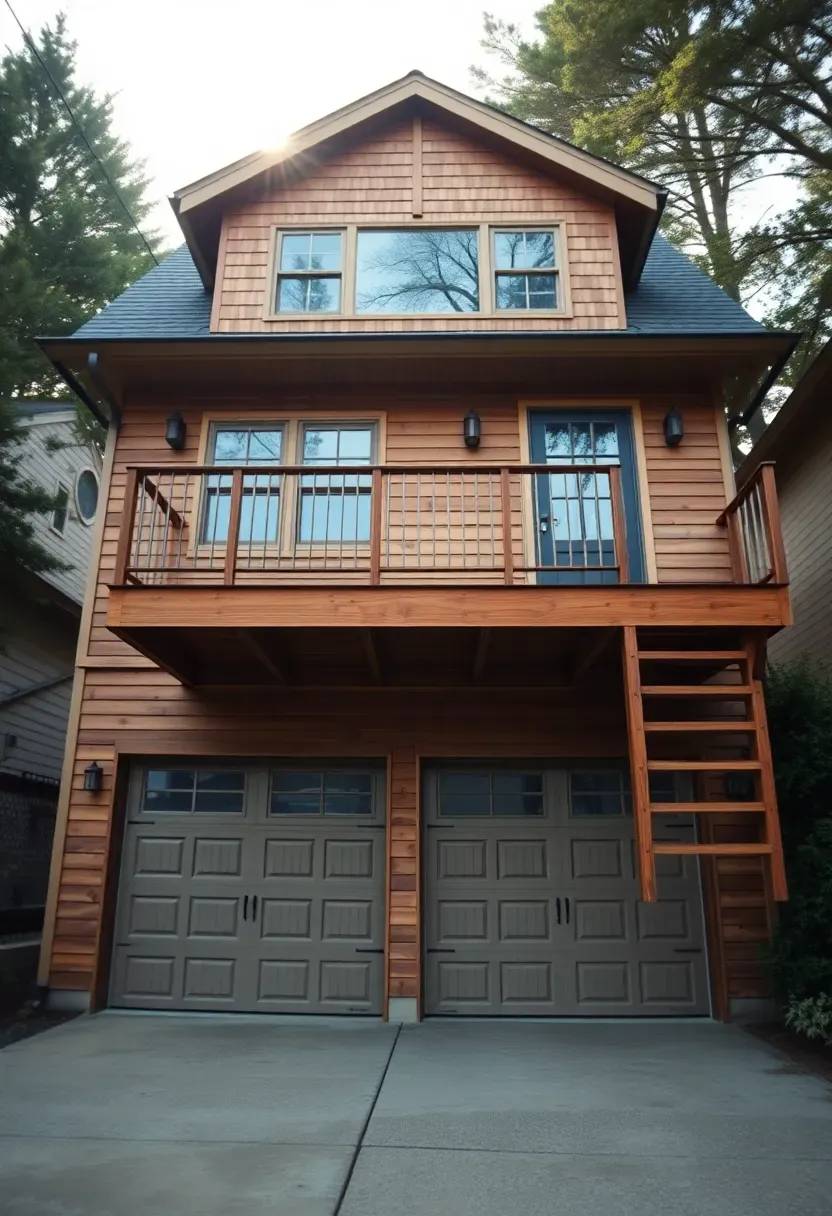
Building up instead of out preserves your yard footprint entirely. An above-garage ADU sits on top of an existing or new garage, connected by an exterior staircase. The garage below handles parking, storage, or workshop space while the unit above gets better views and natural light than any ground-level option. Structural reinforcement of the existing garage walls and foundation is the key variable — some garages can take the load with minor upgrades, others need full sistering of the rafters and foundation bolting.
Tips
- Exterior stairs must meet local egress codes — typically 36 inches wide with a covered landing
- Sound insulation between the garage ceiling and ADU floor matters more than you expect
- Fire separation between the garage and living space requires 5/8-inch Type X drywall minimum
Recommended
Items for this idea
5. Detached One-Bedroom Cottage
The Appeal of Separate Living
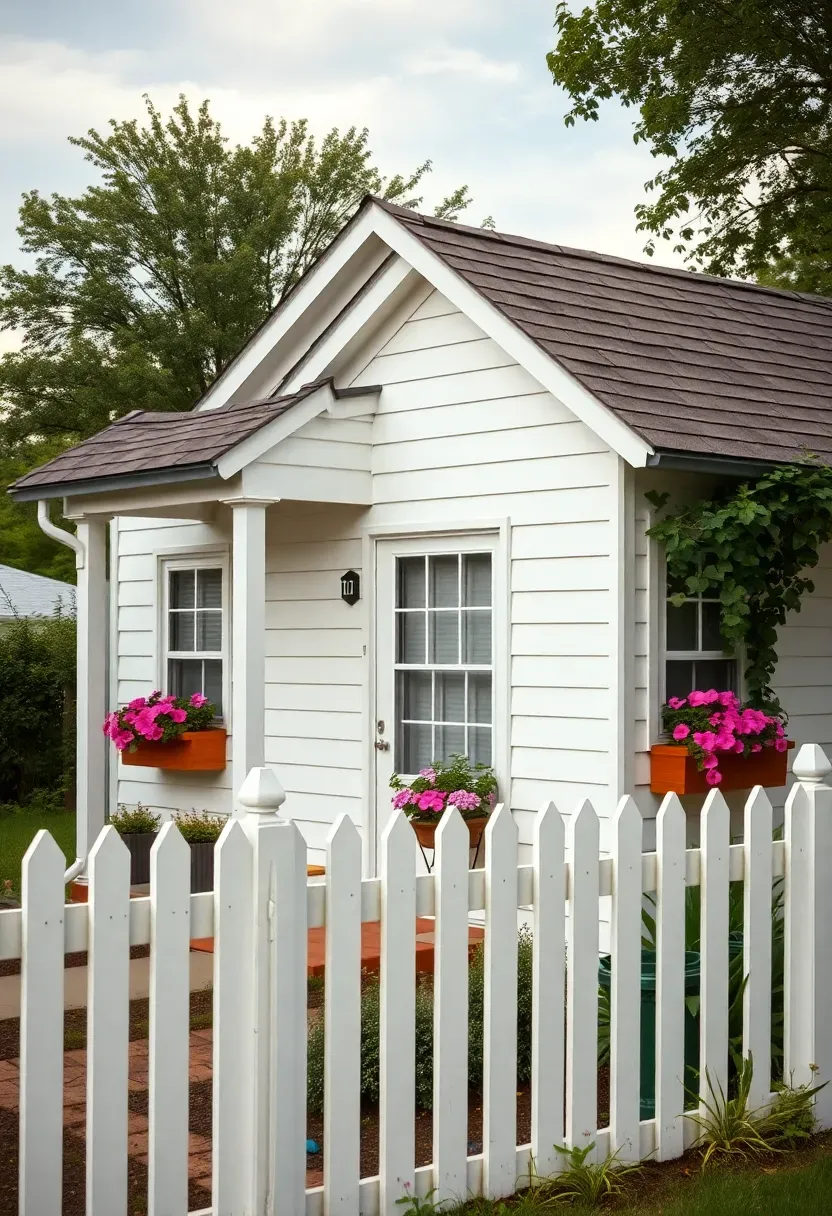
A detached one-bedroom ADU offers something no converted space can match: genuine separation from the main house. Separate entry, separate address (in some jurisdictions), separate noise. For long-term renters or aging parents, this distinction matters daily.
What 500-600 Square Feet Looks Like
A well-planned one-bedroom cottage fits a kitchen with full-size appliances, a bathroom with a tub or walk-in shower, a living area, and a bedroom that holds a queen bed with nightstands. The layout works best as an L-shape or a simple rectangle with the bedroom at one end and kitchen at the other, creating natural separation without hallways eating square footage.
Choose This If
- You want full rental income potential (one-bedrooms command higher rents than studios)
- Your lot has enough setback to place the structure 5+ feet from property lines
- You plan to keep the ADU for 10+ years and want resale value added to the property
6. ADU with Breezeway Connection
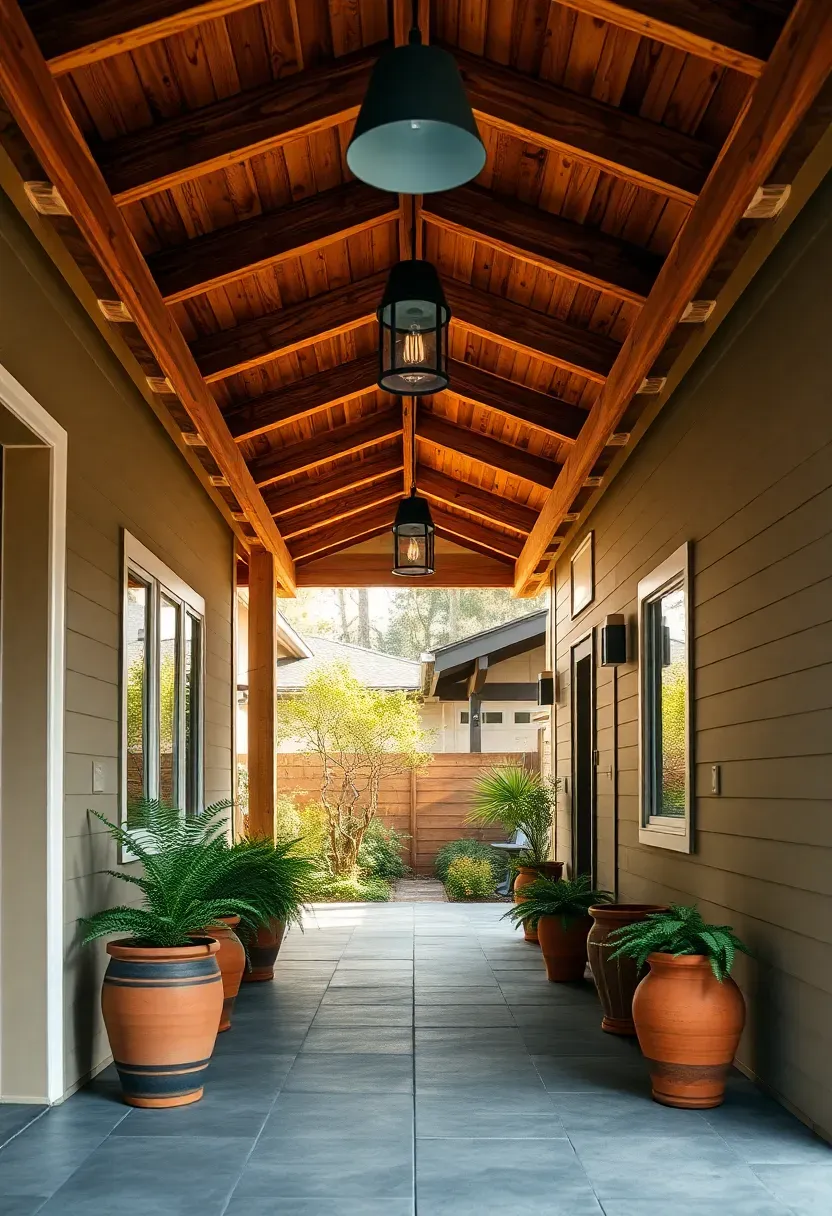
A covered breezeway between the main house and a detached ADU gives you the best of both approaches. The ADU maintains its own entrance and privacy, but the breezeway provides a dry, sheltered path for family members moving between buildings. This layout works particularly well for multigenerational families where an elderly parent wants independence but the family wants easy access for daily check-ins. Keep the breezeway open-sided — enclosing it may reclassify the ADU as an addition to the main structure, triggering different building codes.
Tips
- Breezeway width of 5-6 feet allows two people to walk side by side or a wheelchair to pass
- A translucent polycarbonate roof lets in light without the heat gain of glass
- Matching the roofline pitch of both structures makes the breezeway look intentional rather than improvised
Recommended
Items for this idea
7. L-Shaped ADU Wrapping a Courtyard
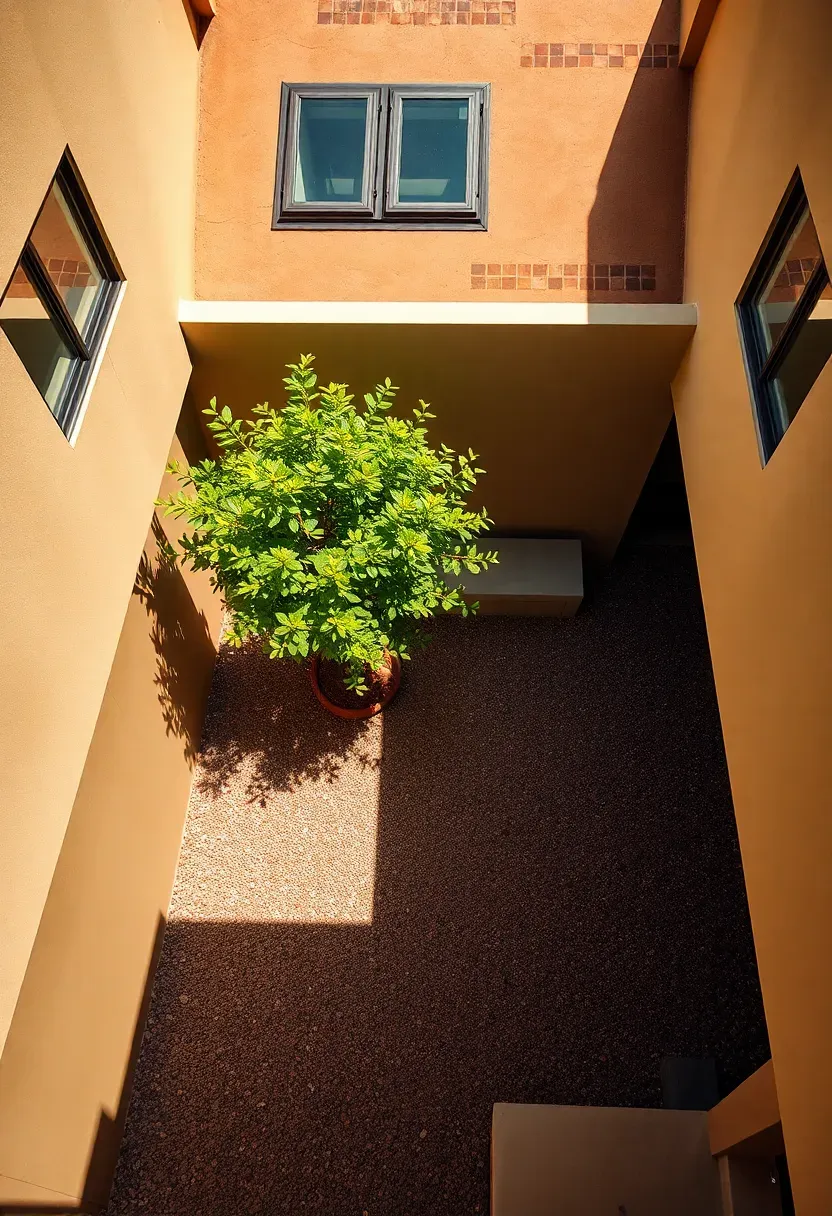
Instead of placing the ADU as a box in the corner of the lot, an L-shaped floor plan creates a private courtyard between its two wings. One wing holds the bedroom and bathroom; the other contains the kitchen and living space. The courtyard between them — even at just 10x10 feet — functions as an outdoor room with borrowed light and sheltered air. This layout costs roughly 15% more than a rectangle of equal area due to the additional corner framing, but the livability improvement is significant.
Tips
- Orient the courtyard opening away from the main house for maximum privacy
- Decomposed granite or pavers beat grass in a small courtyard — less maintenance, fewer drainage issues
- A single mature tree or large planter in the courtyard anchors the space and provides shade
8. Basement Conversion with Garden Entry
The Issue with Dark Basements
Most basement ADUs fail because they feel underground. Low ceilings, small windows, and no direct outdoor connection make the space depressing regardless of how well you finish it.
The Solution: Garden-Level Walkout
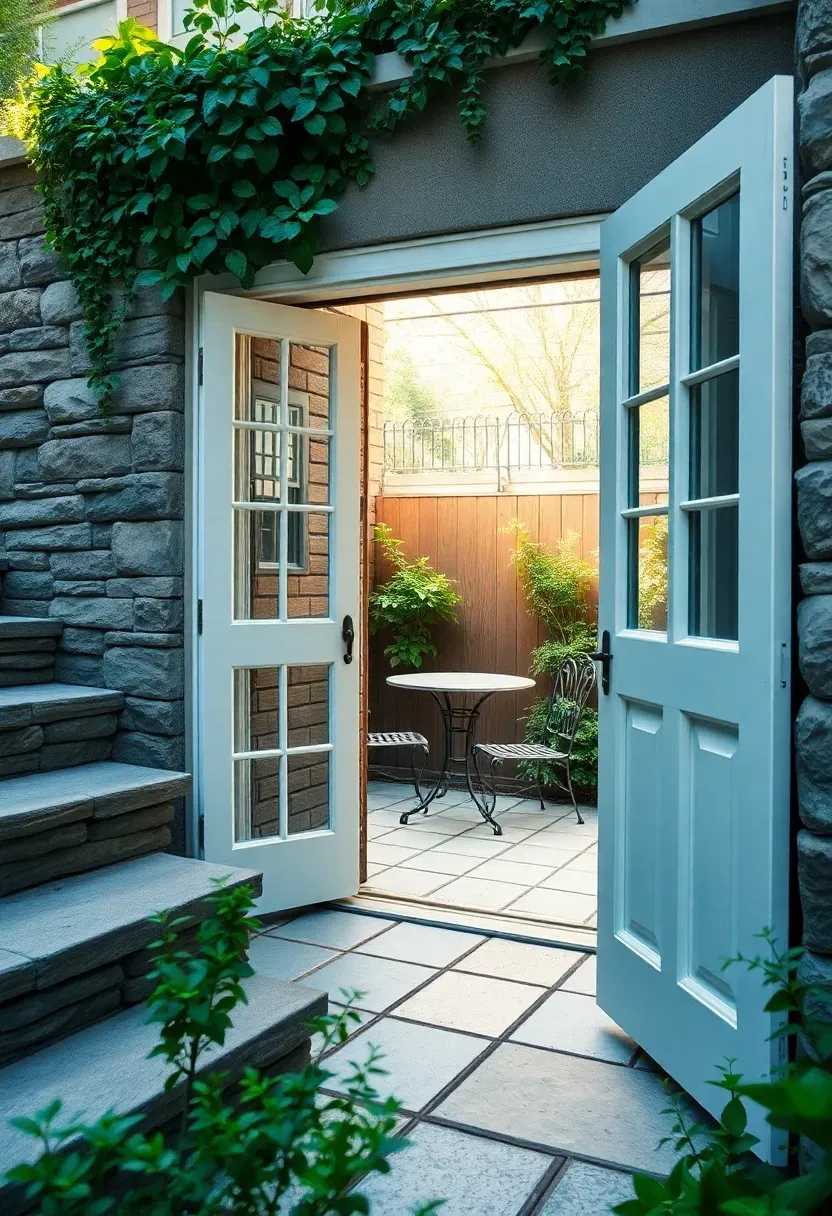
If your lot slopes even slightly, you can excavate one side of the basement to create a garden-level entry with full-height doors or windows. This walkout approach gives the ADU direct access to a patio or yard area, natural daylight from at least one wall, and the psychological benefit of feeling like a ground-floor apartment rather than a cellar. The excavation and retaining wall work adds $15K-$30K but fundamentally changes the character of the space.
Pros and Cons
- Pro: No loss of yard space, shares foundation and roof with the main house
- Con: Moisture management is ongoing, sound travels through floor joists, requires egress windows
- Best for: Sloped lots where one wall can be fully exposed to grade
Recommended
Items for this idea
9. Japanese-Inspired Compact ADU
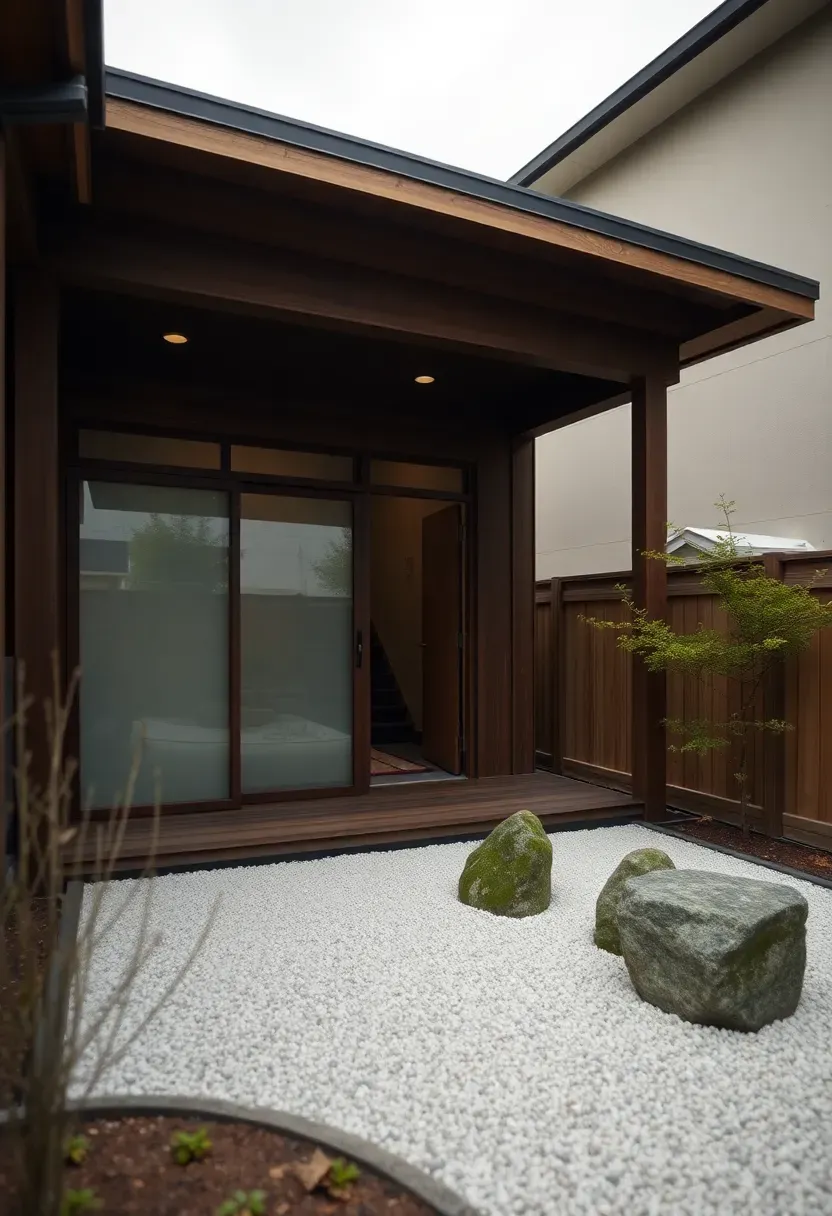
Japanese residential architecture has been solving the small-space problem for centuries. Applying those principles to a backyard ADU means built-in storage under raised floors, sliding partitions instead of swinging doors, and a deep roof overhang (engawa) that creates sheltered outdoor space without adding square footage to the building footprint. A 300-square-foot unit designed this way feels noticeably larger than a conventional 300-square-foot studio because every surface does double duty.
Tips
- Raised floor platforms (6-8 inches) create hidden storage equal to roughly 30% of the floor area
- Shoji-style sliding screens between rooms let you open the entire interior into one space when needed
- Natural materials — cedar, rice paper panels, exposed timber framing — reduce the need for drywall finishing
10. Passive House ADU
What Passive House Means in Practice
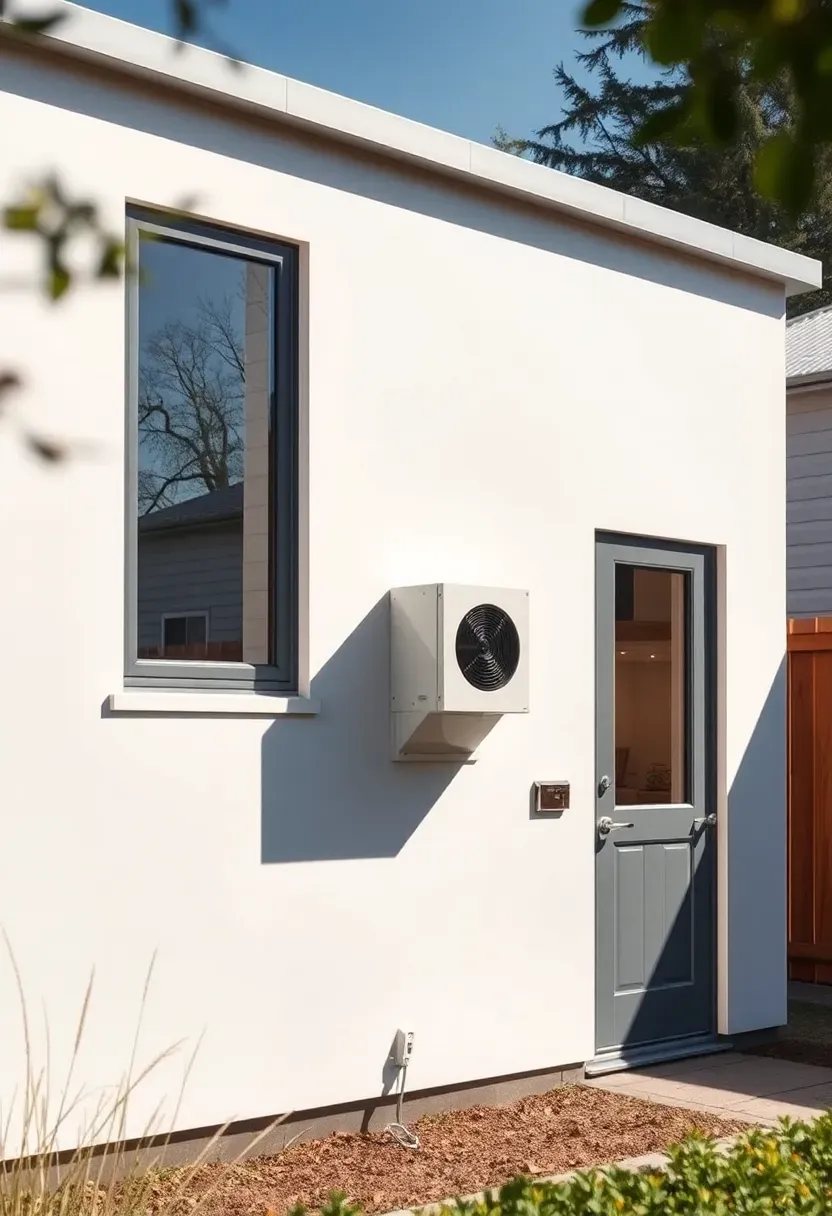
A Passive House ADU uses super-insulated walls (R-40+), triple-glazed windows, airtight construction, and a heat recovery ventilator to cut energy use by 80-90% compared to code-built structures. The heating and cooling load drops so low that a single mini-split handles the entire unit, and annual energy costs land under $200 in most climates.
Modern Application
The upfront cost premium runs 10-15% over standard construction, mostly from thicker wall assemblies and certified windows. But for a rental unit, the nearly-zero utility cost becomes a selling point that justifies higher rent. For a family member's unit, it means no arguments about thermostat settings — the space stays comfortable year-round with minimal input.
Getting Started
- Hire a Passive House consultant during design — retrofitting airtightness after framing is expensive
- The critical detail is the thermal bridge-free connection between the foundation and wall assembly
- Blower door testing during construction catches air leaks before drywall goes up
Recommended
Items for this idea
11. Two-Story Narrow ADU
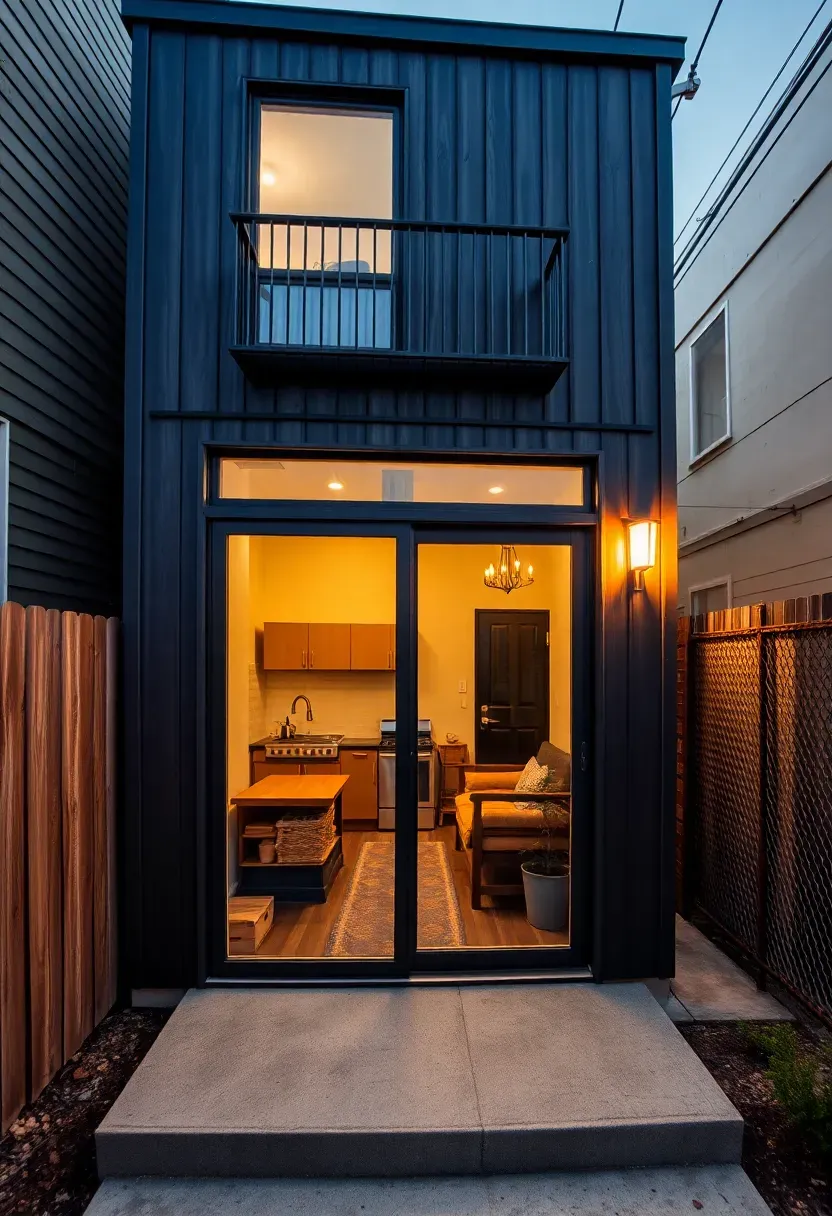
When your lot has depth but not width, a two-story ADU stacks living space vertically. A 12-foot-wide footprint — common where side setbacks leave limited room — gives you 250-300 square feet per floor. Ground floor holds the kitchen, living area, and bathroom. Upper floor is the bedroom, possibly with a small balcony. The narrow width means every room gets windows on at least two sides, and the vertical separation between public and private space feels natural.
Tips
- An open-tread staircase saves floor area compared to a boxed-in stair with walls
- Height limits vary by jurisdiction — check if your zoning allows two stories for accessory structures
- A shed roof (single slope) instead of a gable reduces the overall height while maintaining full headroom on the taller side
12. ADU Built Into a Hillside
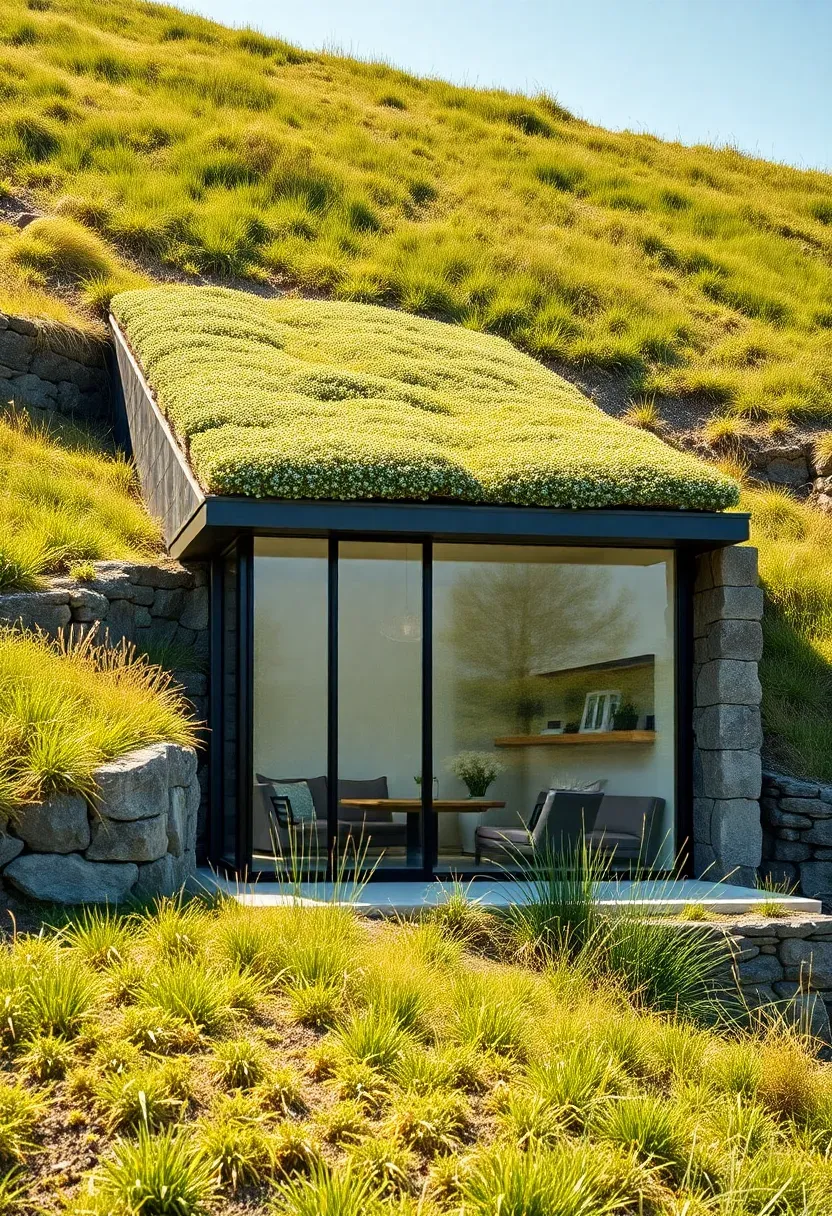
Hillside lots that seem unbuildable often work well for partially buried ADUs. By cutting into the slope and using the hill as insulation on three sides, you get a structure that stays cool in summer without air conditioning and holds heat in winter with minimal energy input. The exposed front wall — typically south-facing for solar gain — gets full-height glazing. A green roof planted with sedums or native grasses makes the structure nearly invisible from the main house above.
Step by Step
- Geotechnical survey to confirm soil stability and drainage patterns on the slope
- Excavate into the hillside, leaving 2-foot clearance around buried walls for waterproofing
- Pour reinforced concrete walls designed for lateral earth pressure
- Apply waterproof membrane and drainage board on all buried surfaces before backfilling
- Install the green roof system on top with a root barrier, drainage mat, and 4+ inches of growing medium
Watch Out
- Waterproofing failures on buried walls are expensive to fix — use redundant membrane layers and plan drainage carefully
Recommended
Items for this idea
13. Pool House That Doubles as an ADU
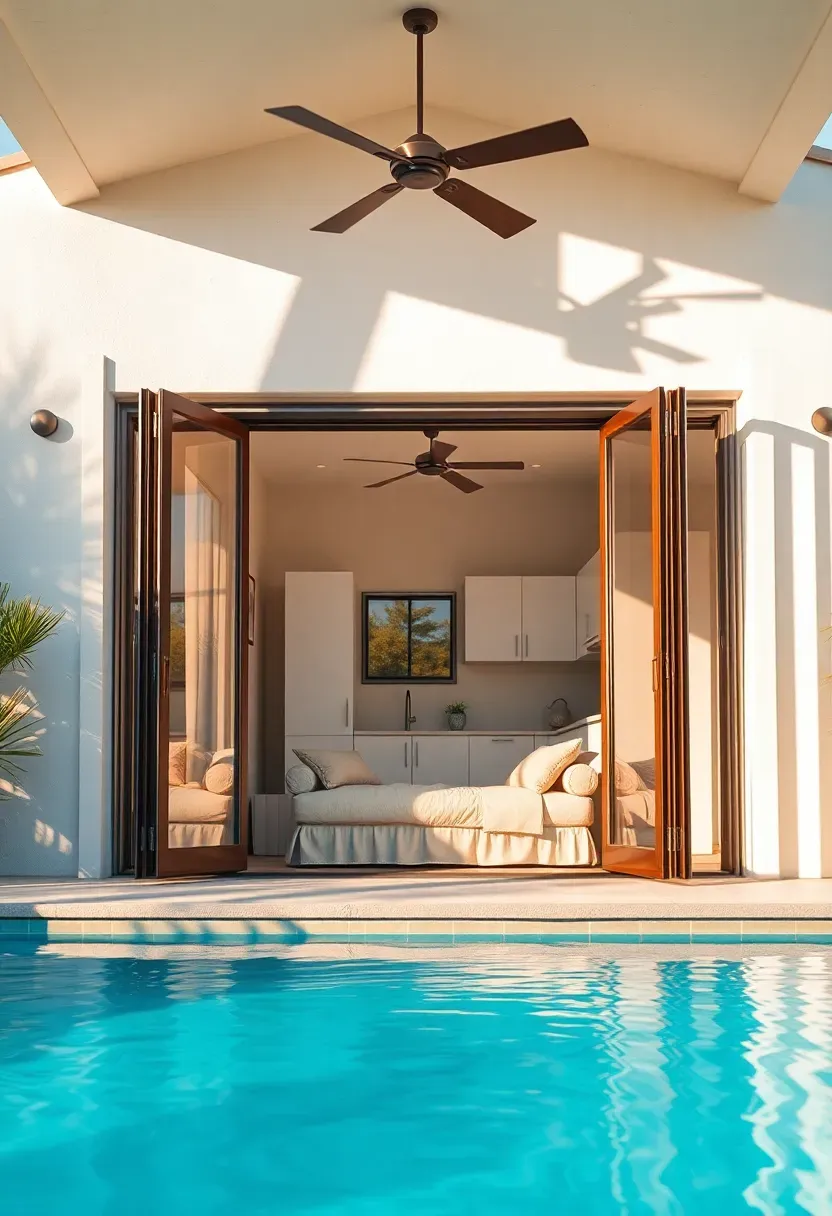
A pool house already needs a bathroom and often a small kitchen area for entertaining. Adding a sleeping space, closet, and proper insulation upgrades it from a seasonal changing room to a year-round ADU with minimal additional cost. The key is designing the structure to function in both modes — open to the pool during summer gatherings, closed and private as a living unit the rest of the year. Bifold or sliding glass walls on the pool side handle the transition.
Tips
- Include a stackable washer-dryer closet — pool house laundry doubles as ADU laundry
- Sound insulation matters when the pool pump runs at night 15 feet from the bedroom wall
- Separate the pool chemical storage from the living space with a fire-rated wall
14. Artist Studio ADU with North-Facing Clerestory
Origins of the North Light Studio
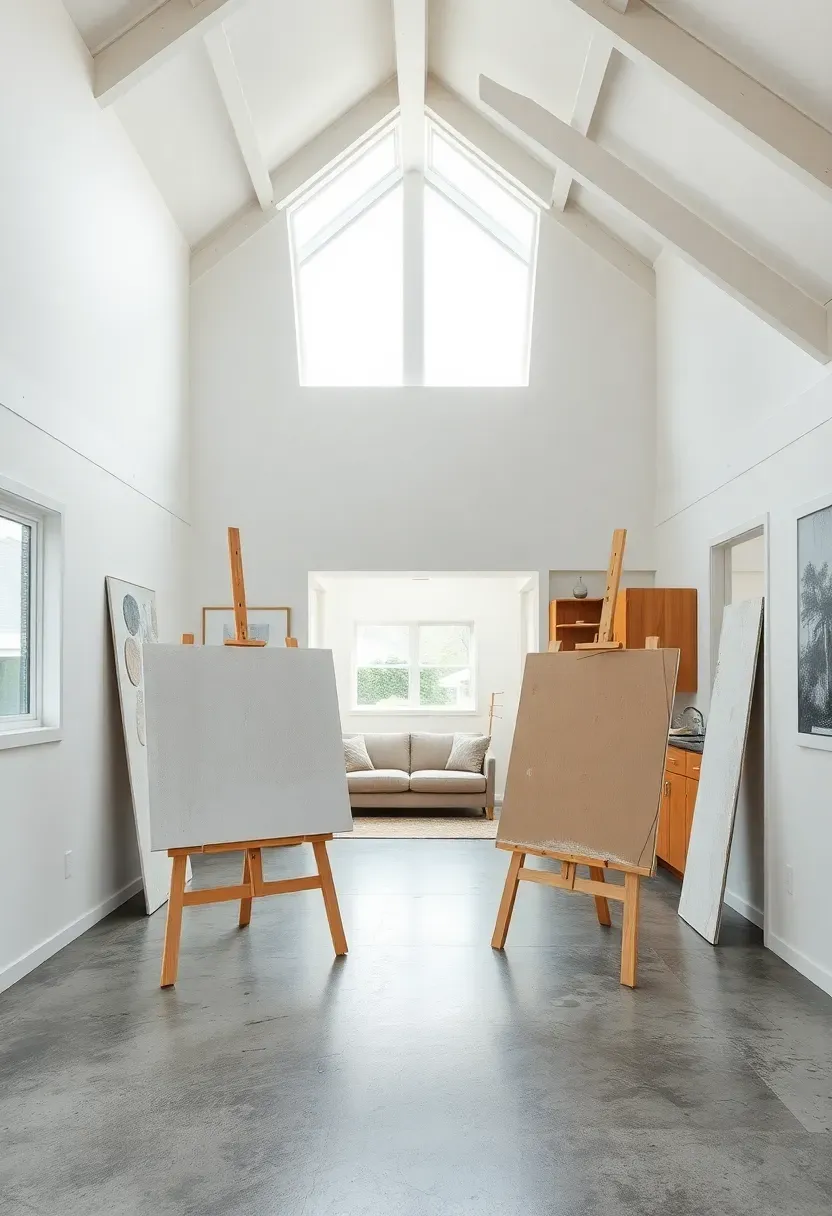
Artists have sought north-facing light since the 19th century for a simple reason: it is consistent throughout the day. No direct sun means no harsh shadows or color shifts as the light moves. A clerestory — a band of windows set high on the wall — brings this light deep into the room without sacrificing wall space at eye level for hanging work or shelving.
Modern Adaptation as ADU
Combine a north-lit studio work area with a compact living zone at the back of the structure. The front two-thirds of the floor plan stays open for creative work with 10-12 foot ceilings under the clerestory. The rear third holds a sleeping alcove, bathroom, and galley kitchen under a standard 8-foot ceiling. The height transition creates a natural division between work and rest without any walls.
Making It Yours
- Polished concrete floors handle paint spills, clay dust, and rolling furniture without damage
- A deep utility sink in the studio zone serves as both art cleanup and kitchen prep overflow
- Insulate the clerestory glazing well — high windows gain and lose heat faster than wall-level ones
Recommended
Items for this idea
15. Multigenerational ADU with Aging-in-Place Features
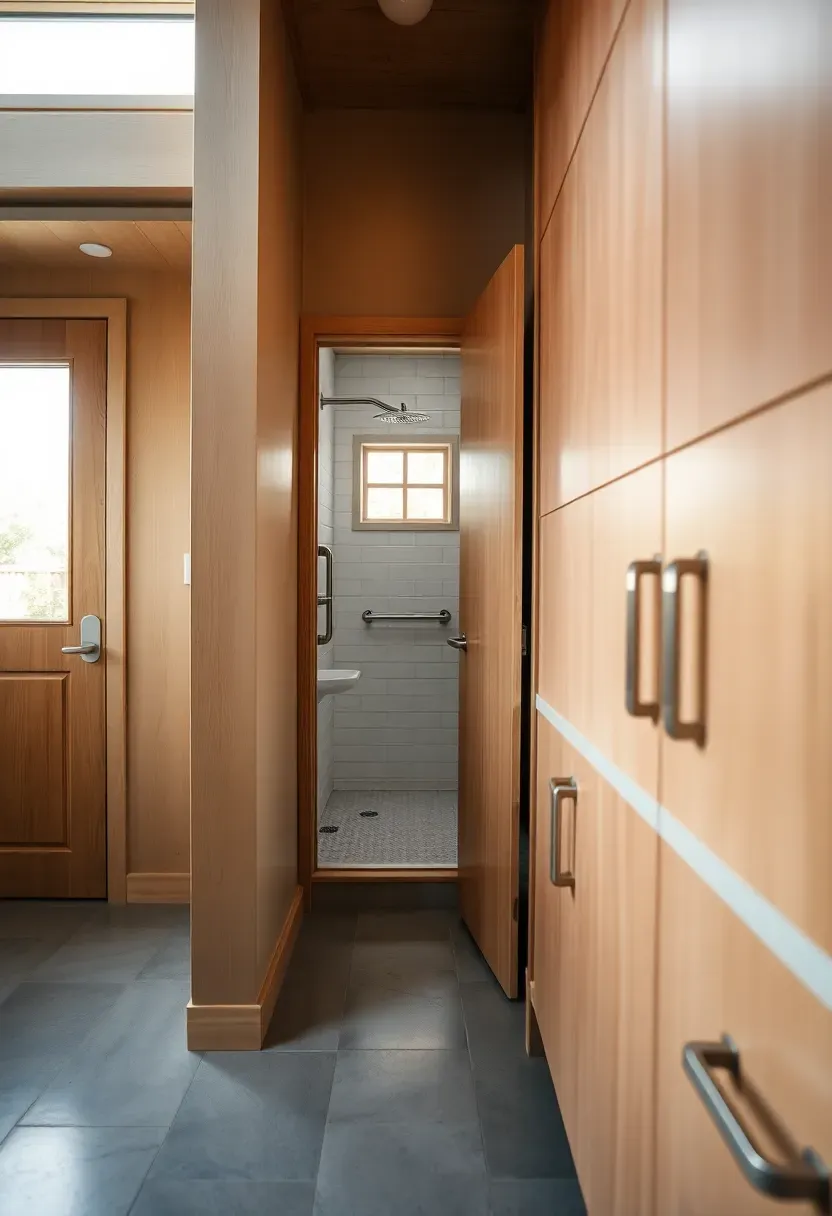
Building an ADU for an aging parent means thinking five to ten years ahead. A unit that works for a healthy 68-year-old should also work for an 80-year-old using a walker. Zero-step entries, 36-inch doorways, a curbless shower, lever handles on all doors and faucets, and blocking in the walls for future grab bar installation — these features add less than $3,000 to construction costs when built in from the start. Retrofitting them later costs three to five times that.
Tips
- Place the bedroom adjacent to the bathroom with no hallway between them
- A pocket door between bathroom and bedroom allows a caregiver to assist without navigating a swinging door
- Smart home features — voice-controlled lights, video doorbell, medical alert integration — add independence without complexity
16. Barn-Style ADU with Loft Bedroom
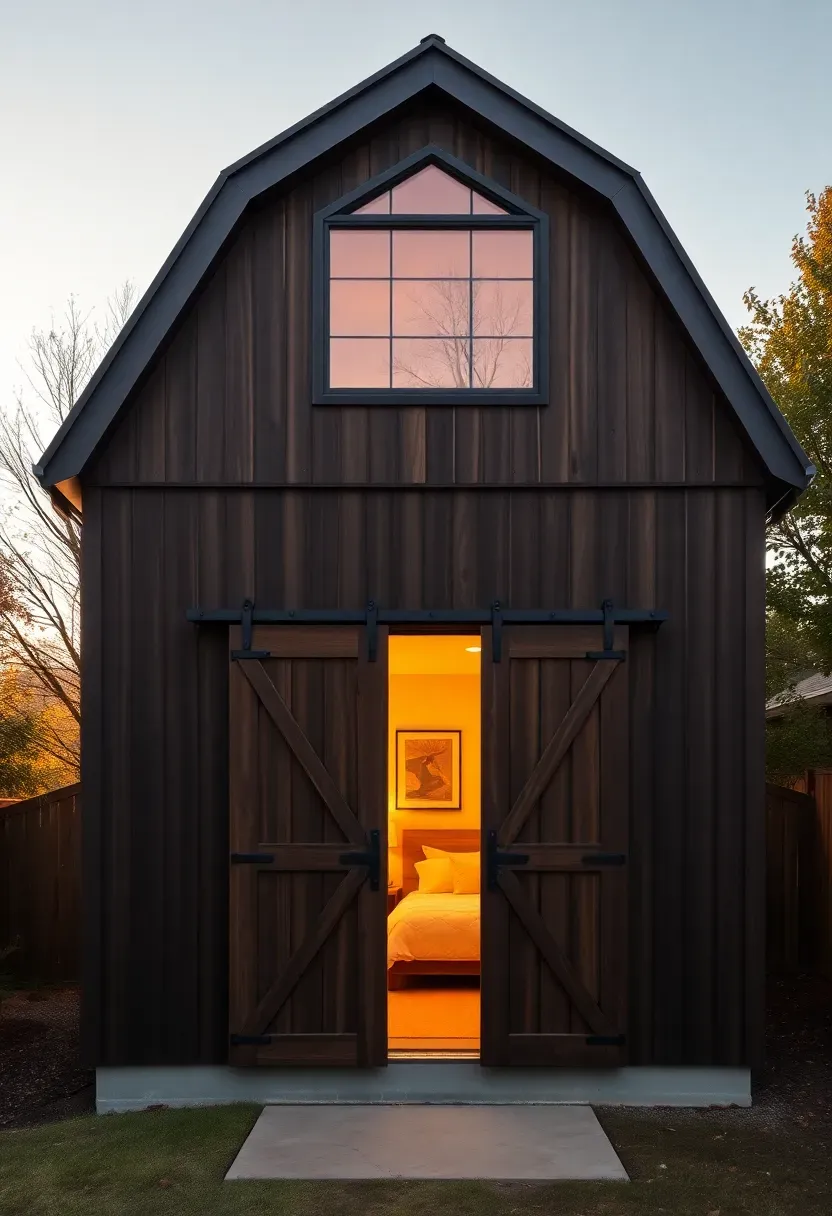
A barn silhouette — steep pitch, simple form, board-and-batten siding — fits naturally in suburban and rural backyards where a flat-roofed modern box would look out of place. The steep roof pitch creates usable loft space for a bedroom without counting it as a second story in most zoning codes (lofts under 200 square feet with ceiling heights under 7 feet often fall below the second-story threshold). The ground floor holds the kitchen, bathroom, and living area in an open plan.
Tips
- A ship ladder or alternating-tread stair to the loft saves 15 square feet compared to a standard staircase
- Barn doors on a sliding track work for bathroom and closet entries — they do not need swing clearance
- Standing-seam metal roofing on the steep pitch matches the agricultural look and lasts 50+ years
Recommended
Items for this idea
17. Net-Zero Solar ADU
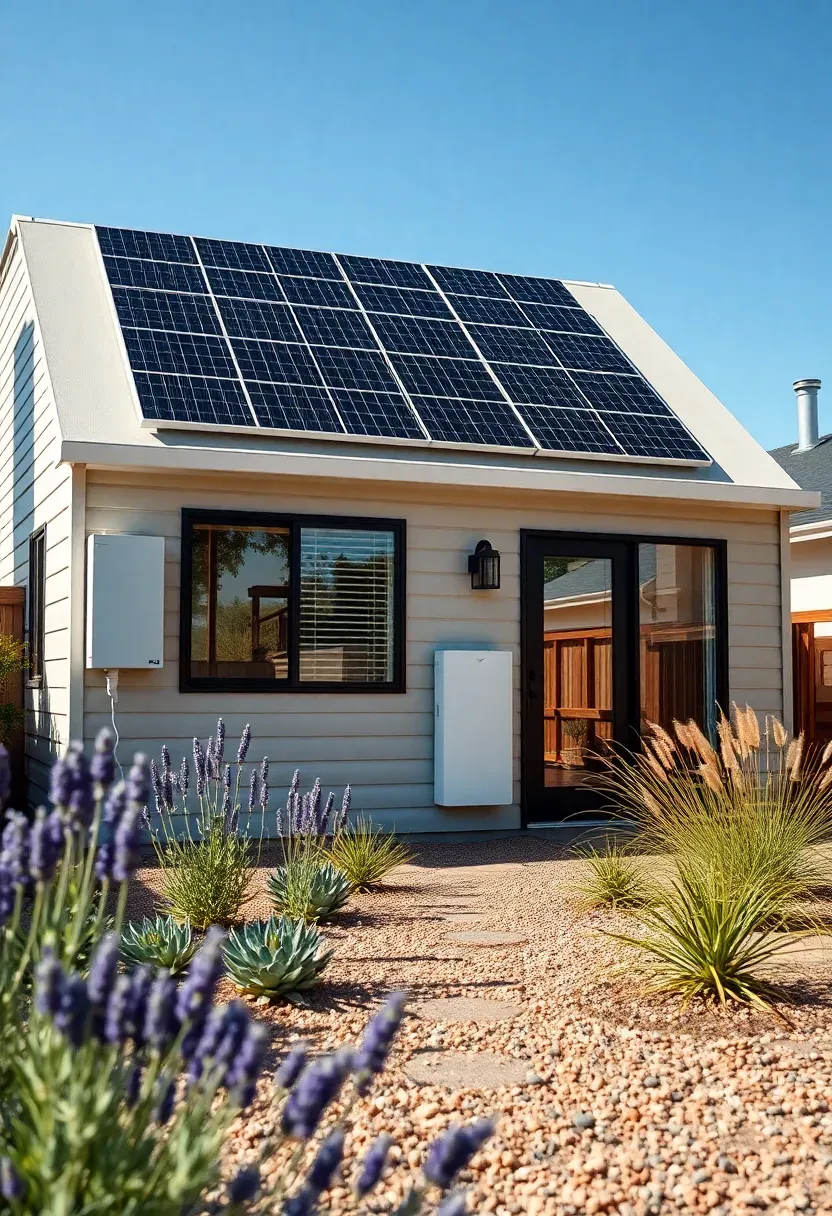
A net-zero ADU produces as much energy as it consumes over the course of a year. For a well-insulated 400-to-600-square-foot unit, this typically requires 2-4 kW of rooftop solar panels, a heat pump for heating and cooling, a heat pump water heater, and LED lighting throughout. Adding a battery system (like the Tesla Powerwall or Enphase IQ) lets the ADU run independently during grid outages and eliminates demand charges in time-of-use rate areas.
Step by Step
- Design the roof orientation and pitch to maximize solar exposure (south-facing, 15-30 degree tilt in most US latitudes)
- Size the solar array based on estimated annual consumption — typically 4,000-6,000 kWh for a small ADU
- Install a 200-amp subpanel with solar-ready wiring and a dedicated battery circuit
- Add a smart energy monitor to track production versus consumption in real time
Watch Out
- Some utility companies limit net metering for ADUs on the same meter as the main house — verify interconnection rules before committing to the solar investment
Quick FAQ
How much does a backyard ADU cost to build? Costs range widely depending on the approach. Garage conversions start around $40K-$80K. Prefab units run $100K-$180K including site prep. Custom-built detached ADUs typically fall between $150K and $300K. Permits, utility connections, and site work often add 15-25% on top of the structure cost itself.
Do I need a permit for a backyard ADU? Yes, in virtually all jurisdictions. Even prefab units require building permits, foundation inspections, and utility hookup approvals. Many states have streamlined ADU permitting since 2020, but the process still takes 2-12 months depending on your local planning department. Start with your city's planning counter or website.
Will a backyard ADU increase my property value? Research from Freddie Mac and various real estate appraisers suggests permitted ADUs add 20-35% of their construction cost to overall property value. Unpermitted ADUs are a liability — they can trigger fines, complicate sales, and void insurance coverage. Always build with permits.
Can I rent out my backyard ADU on Airbnb? Local regulations vary enormously. Some cities allow short-term rentals in ADUs with a permit. Others restrict ADU rentals to long-term tenants (30+ days). A few require the property owner to live on-site. Check your municipal code before building with short-term rental income as the business plan.
What is the typical size limit for a backyard ADU? Most jurisdictions cap detached ADUs at 800-1,200 square feet, though some allow up to 1,500 square feet on larger lots. California, for instance, allows up to 1,200 square feet for detached ADUs regardless of lot size. Height limits usually range from 16-25 feet depending on the structure type and local zoning.
A backyard ADU is one of the few home improvements that can pay for itself. Whether you build a $50K garage conversion or a $250K custom cottage, the monthly rental income or the daily value of housing a family member close by adds up faster than most renovation returns. Start with your local zoning code to see what is allowed on your lot, get three quotes from builders who have actually permitted ADUs in your city, and pick the approach that fits your timeline and budget rather than the one that looks best on a screen.
Pinterest cover for 17 Backyard ADU Ideas That Actually Get Built
About the author
OBCD
CGI visualization and interior design content. We create detailed 3D renders and curate practical design ideas for every room in your home.