27 Backyard Shade Ideas
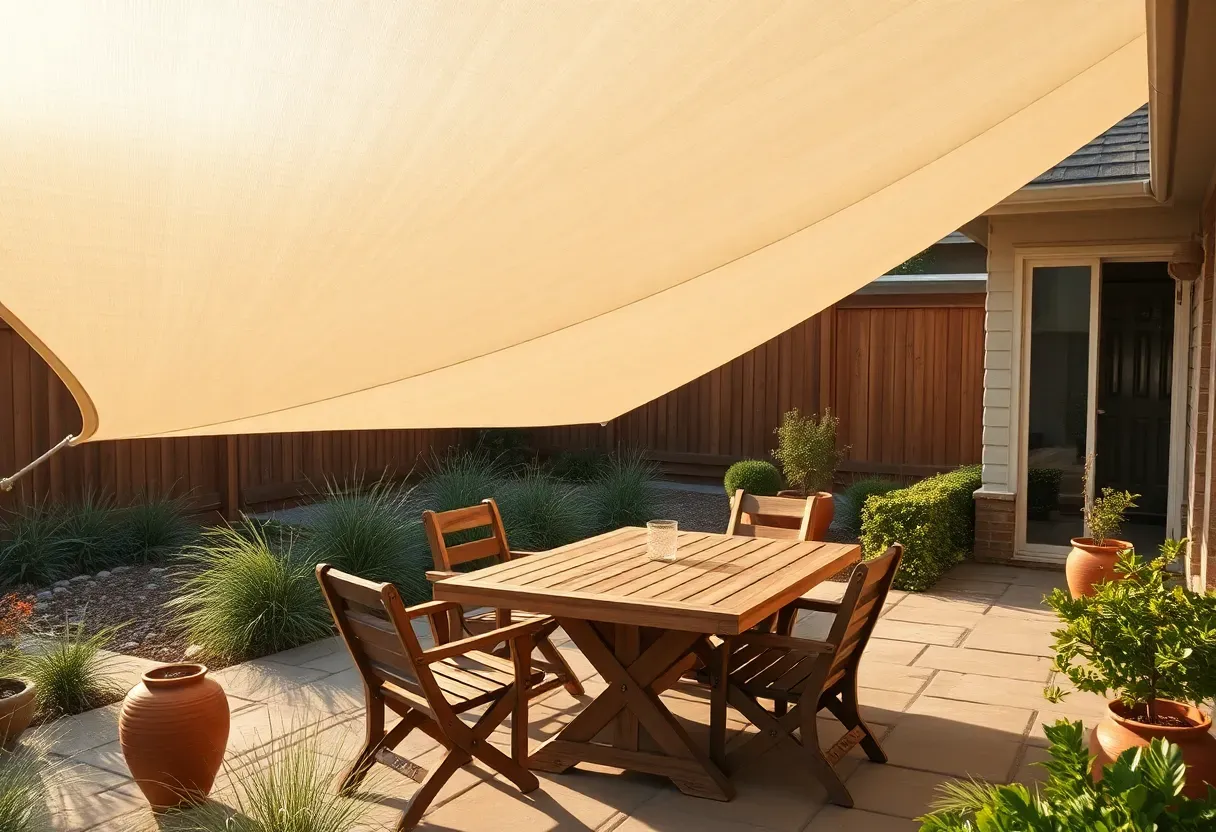
Last summer I measured the surface temperature of my uncovered patio at 2pm — 147 degrees Fahrenheit on the concrete. A chair left in direct sun was untouchable. That one reading convinced me to stop putting off shade planning. After researching and visiting dozens of yards with different setups, I found that shade solutions range from a $40 triangle of fabric to $25,000 motorized louvered roofs. The gap between those extremes holds a lot of practical, good-looking options that most people never consider. Here are 27 of them.
These backyard shade ideas run from quick weekend installs to contractor-built permanent structures, organized roughly by complexity and cost.
Table of Contents
- Triangle Shade Sail
- Rectangle Shade Sail Cluster
- Wooden Pergola
- Metal Pergola with Canopy
- Louvered Pergola Roof
- Retractable Awning
- Cantilever Umbrella
- Market Umbrella Cluster
- Attached Patio Cover
- Freestanding Pavilion
- Natural Canopy Trees
- Vine-Covered Arbor
- Bamboo Roll-Up Blinds
- Outdoor Curtain Panels
- Palapa or Tiki Hut
- Lattice Roof Panel
- Polycarbonate Roof Panels
- Shade Cloth Over Garden Beds
- Pop-Up Canopy Tent
- Deck Roof Extension
- Living Wall Shade Screen
- Sail Shade with LED Lights
- Corrugated Metal Roof Cover
- Shade Tree Hedge Row
- Cabana with Side Curtains
- Wisteria-Draped Pergola
- Motorized Louvered Roof
1. Triangle Shade Sail
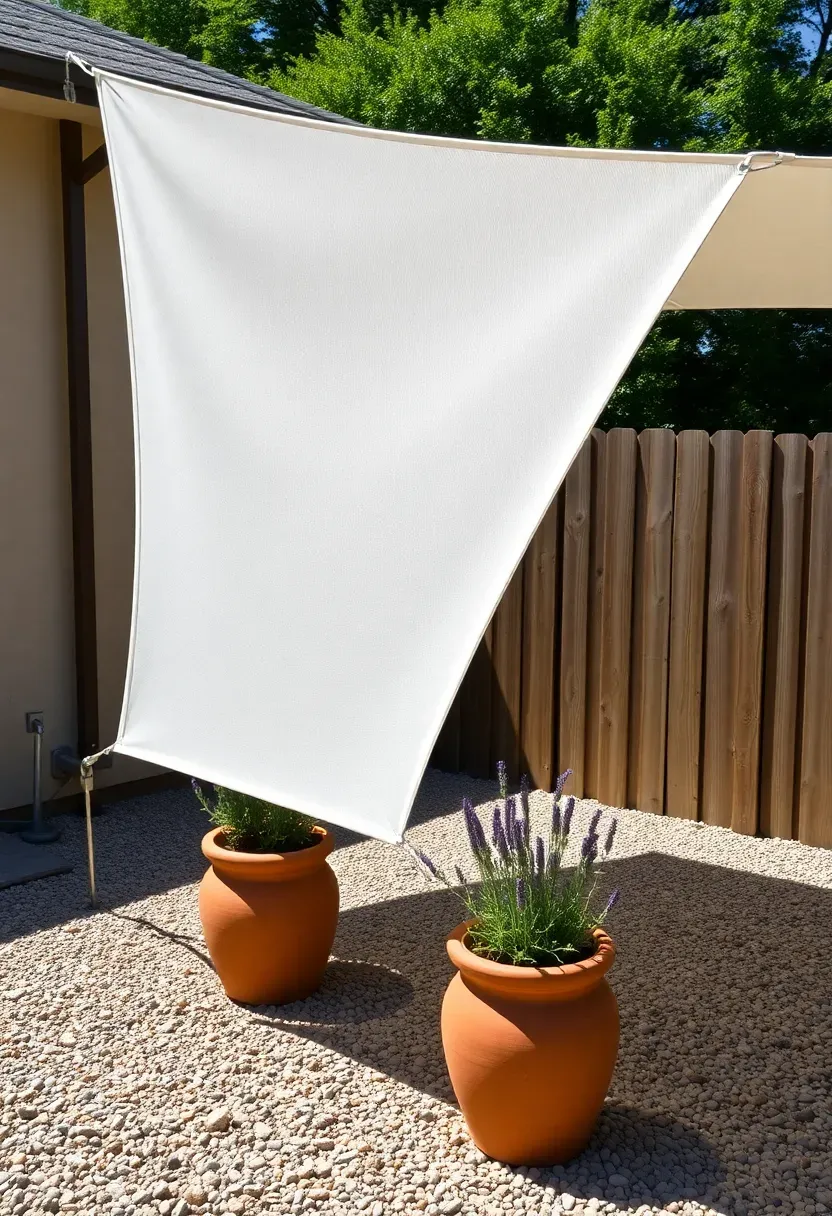
The fastest way to add backyard shade with real visual impact. A triangular shade sail mounts to three anchor points — house wall, fence post, tree trunk, or steel poles set in concrete. Most residential sails use high-density polyethylene (HDPE) fabric that blocks 85-95% of UV while letting air flow through the weave. A single 16-foot triangle runs $35-$80 for the fabric plus $50-$150 for hardware. The key to getting them right is tension. A sagging sail looks cheap and collects rainwater. Mount points should create at least a 20-degree slope for drainage.
Tips
- Set one corner higher than the other two so rain sheets off rather than pooling
- Use turnbuckles at every anchor point for fine tension adjustment
- Replace the sail every 5-7 years when UV exposure weakens the fabric
We picked a few things that go well with this idea: Sunny Guard Rectangle Shade Sail (10x13) (★4.6), Love Story Triangle Shade Sail (12ft) (★4.5) and Love Story Rectangle Shade Sail (12x16) (★4.6). As an Amazon Associate we earn from qualifying purchases.
2. Rectangle Shade Sail Cluster
Why go with multiples
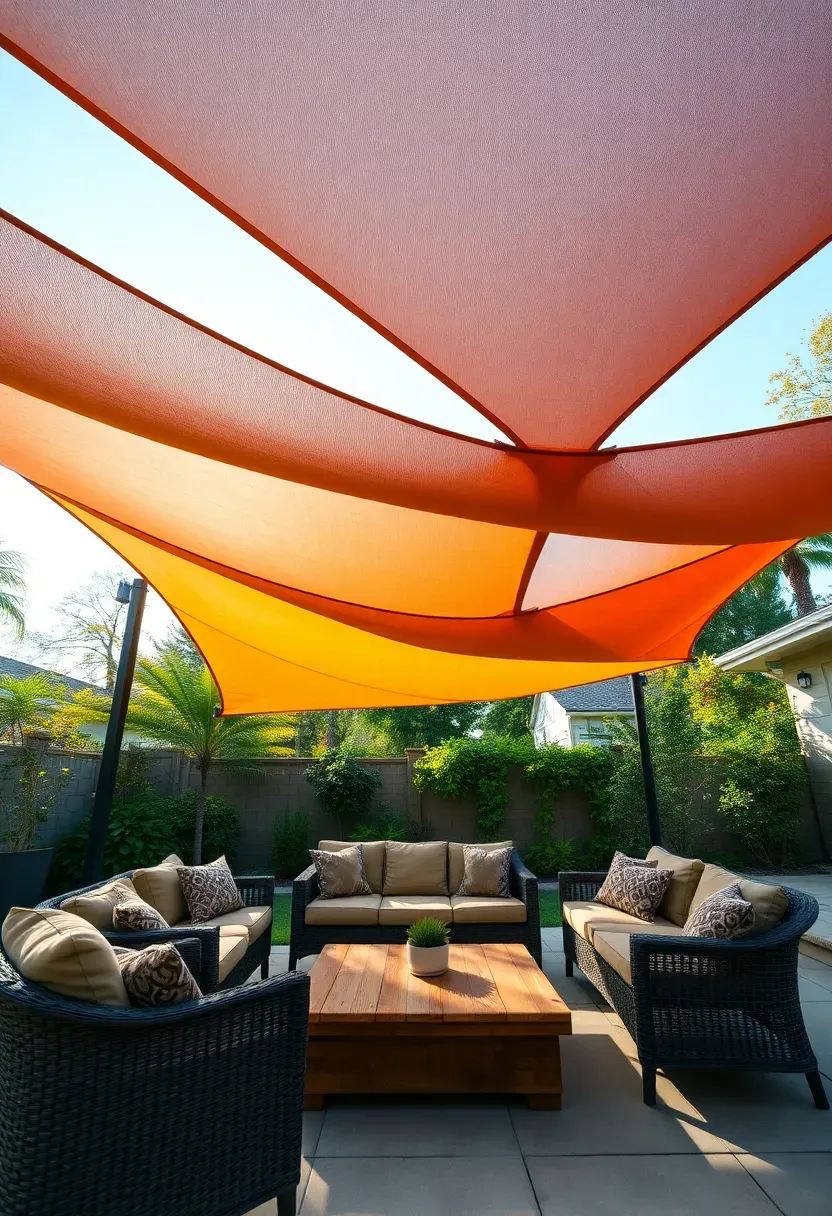
A single sail covers a limited footprint. Layering two or three rectangular sails at staggered heights and angles creates a larger shade zone with visual depth that one flat panel cannot match. The overlapping sections block nearly 100% of direct sun, while the gaps between sails let hot air escape upward. This layered approach also handles wind better — smaller individual sails catch less force than one massive sheet.
Getting the layout right
Map your sun exposure at 10am, noon, and 3pm before deciding sail positions. Most people underestimate how much the sun angle shifts during the day. A cluster typically costs $200-$500 in materials and takes a full day to install with two people. Steel posts should be set 24 inches deep in concrete for anything over 12 feet wide.
We picked a few things that go well with this idea: Heavy Duty Pergola Bracket Kit (4x4) (★4.3), MUPATER Cedar Wood Pergola Kit (12x16) (★3.9) and Louvered Metal Pergola with Gutter (12x16) (★5.0). As an Amazon Associate we earn from qualifying purchases.
3. Wooden Pergola
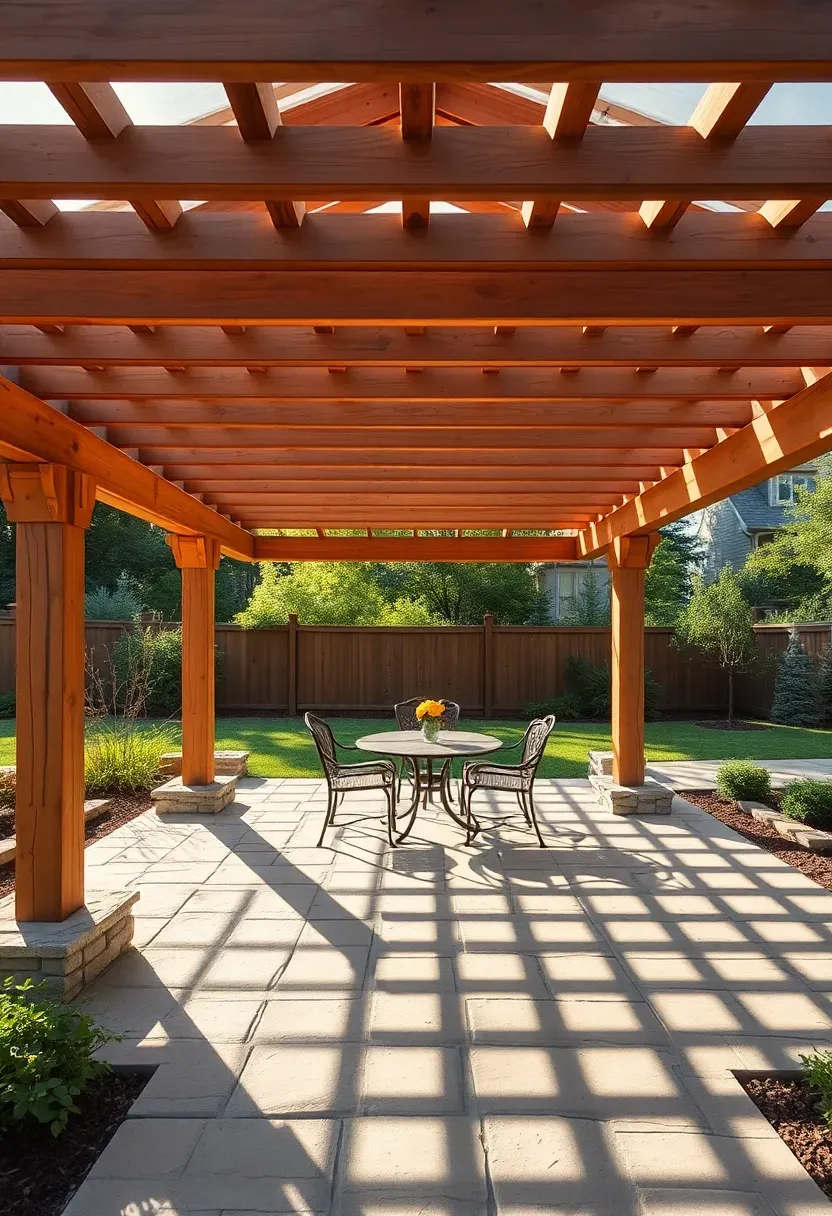
Cedar and redwood pergolas remain the most popular backyard shade structure in North America for good reason. They last 15-25 years without chemical treatment, weather to an attractive silver-gray, and provide partial shade through spaced rafters that you can customize for your climate. A 10x12-foot cedar pergola kit from a lumber yard costs $1,500-$3,000. Custom-built runs $3,000-$8,000 depending on wood species and detail work. Rafter spacing matters more than most people realize — 2-inch gaps give about 50% shade, while 6-inch gaps drop to roughly 25%.
Tips
- Apply a UV-blocking sealant within the first year if you want to keep the original wood color
- Space rafters running east-west for maximum midday shade
- Countersink lag bolts into ledger boards when attaching to the house
We picked a few things that go well with this idea: NEWBULIG 10ft Offset Cantilever Umbrella (★4.5), OLILAWN 10ft Cantilever Umbrella with Base (★4.5) and Best Choice 10ft Solar LED Cantilever Umbrella (★4.3). As an Amazon Associate we earn from qualifying purchases.
4. Metal Pergola with Canopy
The structure
Powder-coated aluminum or steel frames last longer than wood with almost no upkeep. A 10x13-foot aluminum pergola weighs about 180 pounds and handles wind loads up to 90 mph when properly anchored. Frame costs range from $800 for a basic kit to $4,000 for a heavy-gauge steel design with decorative details.
The fabric
A retractable polyester or acrylic canopy slides along tracks on the top beams. Sunbrella-type solution-dyed acrylic resists fading for 8-10 years. You pull the fabric out when you want shade and retract it during storms or winter. This combination — permanent frame, removable fabric — gives you the most flexibility for the money.
Choose this if
- You want a modern, clean-lined look
- Termites or rot are concerns in your area
- You like the option to go full sun or full shade
Recommended
Items for this idea
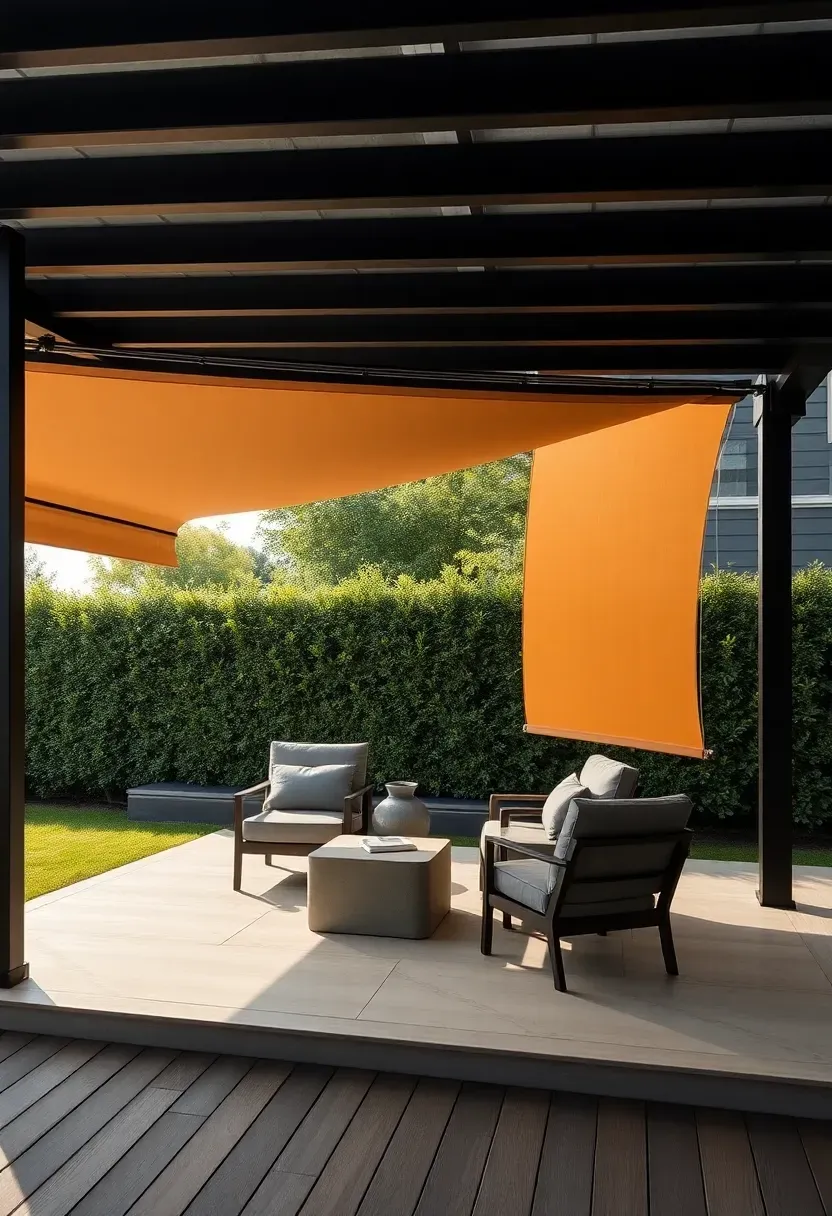
5. Louvered Pergola Roof
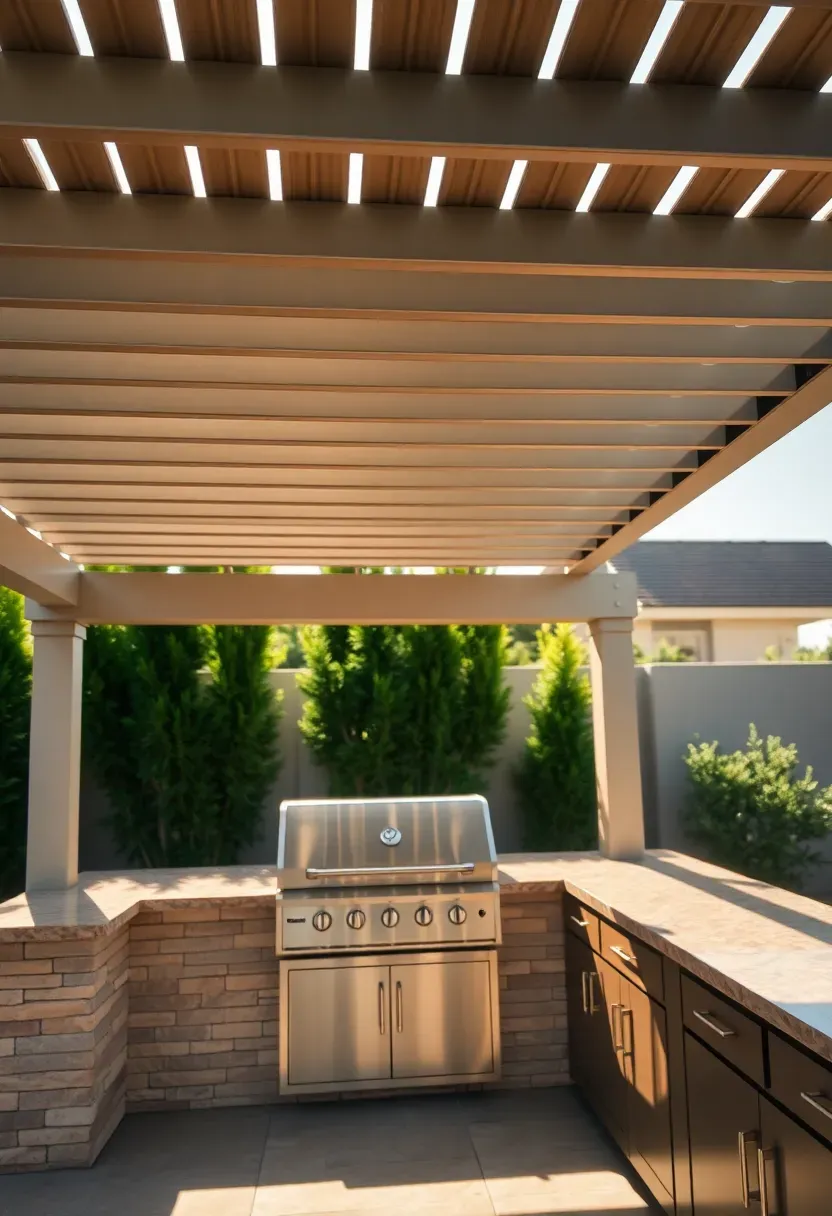
Adjustable louvers — horizontal slats that tilt from fully open to fully closed — give you real-time control over how much sun reaches your patio. Most louvered systems use extruded aluminum blades 6-8 inches wide, operated by a hand crank or electric motor. When open, they let full sun and breeze through. Tilted at 45 degrees, they cut direct sun while keeping airflow. Fully closed, they function as a solid roof that sheds rain into integrated gutters. This is the premium option. A 12x16-foot motorized louvered roof with rain sensors runs $12,000-$25,000 installed.
Tips
- Confirm the motor has a manual override in case of power failure
- Integrated gutter channels prevent dripping between blades during rain
- Add a wind sensor that auto-closes the louvers above 35 mph
6. Retractable Awning
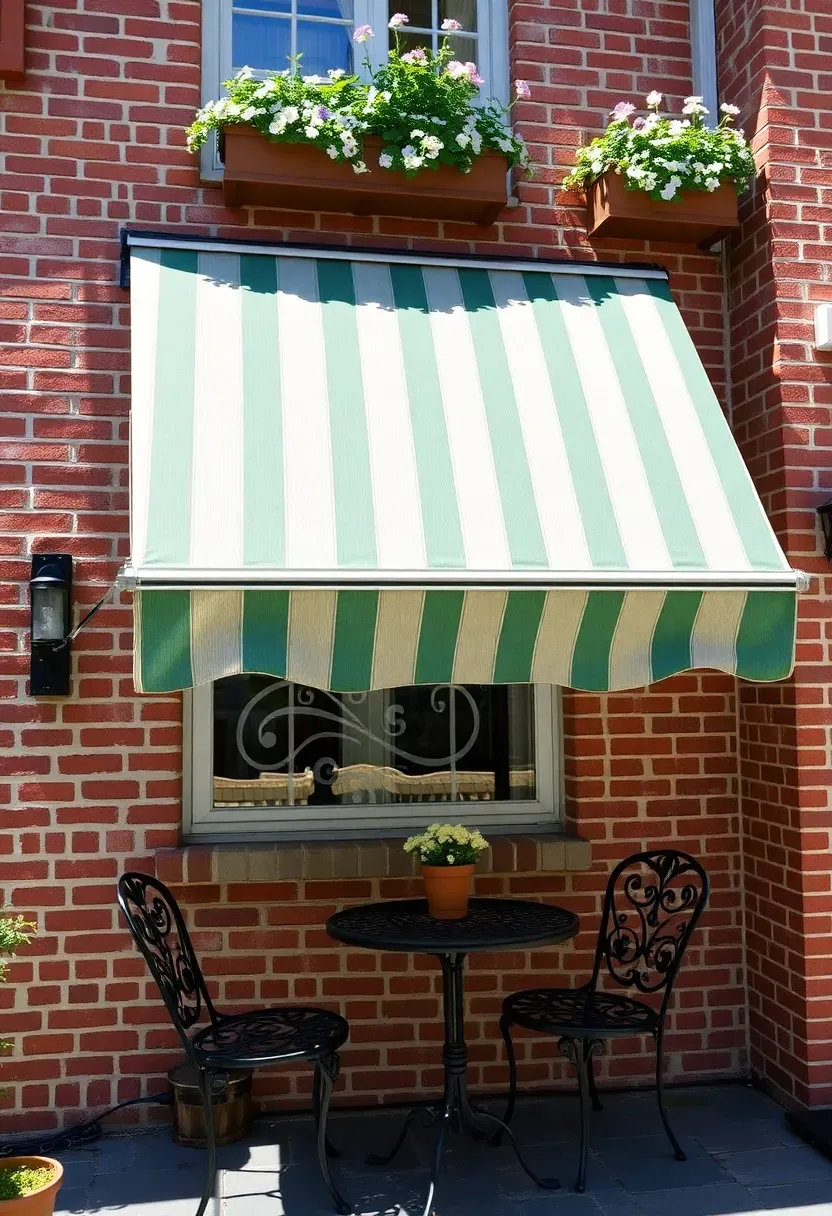
Wall-mounted retractable awnings project shade 8-14 feet from the house without any ground posts cluttering your patio. Manual crank models start around $400 for a 10-foot span. Motorized versions with wind sensors cost $1,500-$4,000. The fabric rolls onto an aluminum cassette housing that protects it when retracted. Acrylic fabrics outperform polyester for longevity — expect 8-12 years versus 4-6. The main limitation is wind. Most retractable awnings should be pulled in above 25 mph. A wind sensor that auto-retracts the awning is worth the extra $200-$300.
Watch out
- Wall mounting requires lag bolts into studs or masonry — not just siding
- Cheap models use thin arms that flex and sag within two seasons
- Projection beyond 12 feet needs intermediate support or a heavier frame
Recommended
Items for this idea
7. Cantilever Umbrella
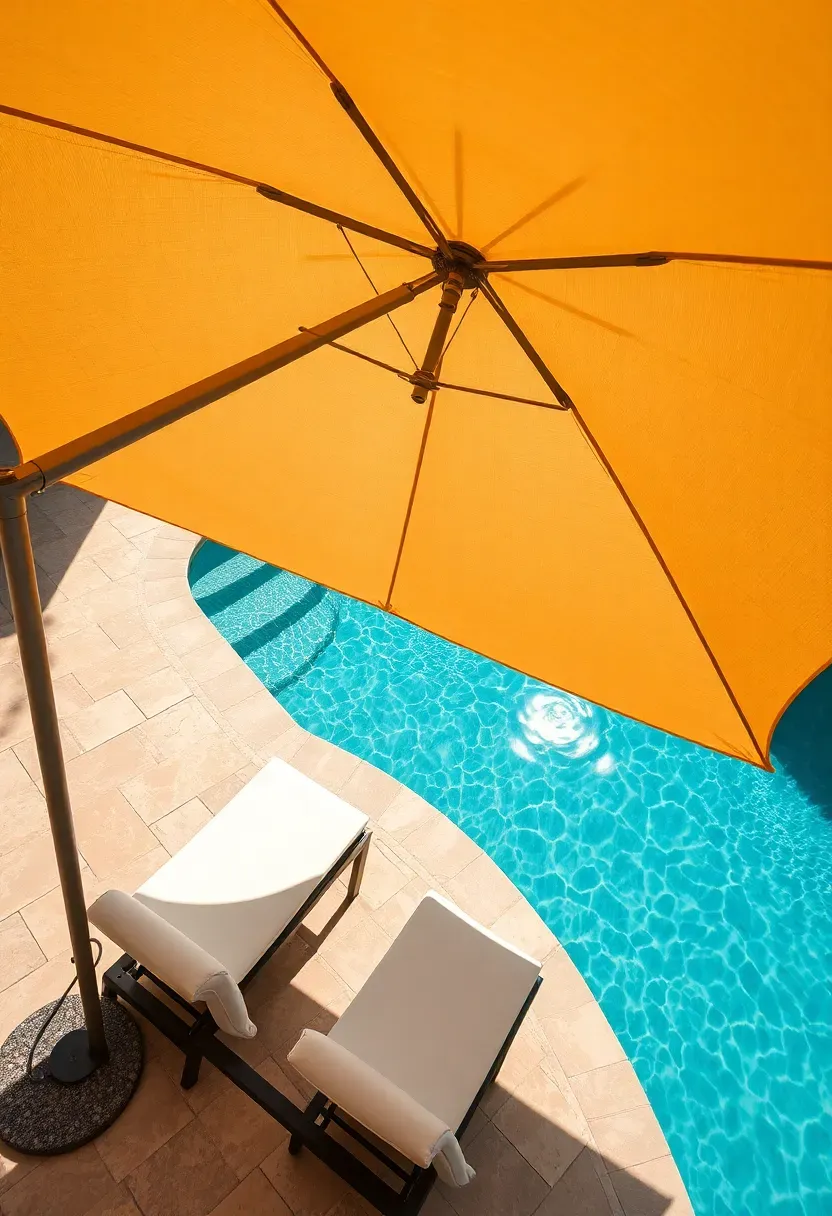
The offset pole design puts shade exactly where you need it without a center post blocking your table or view. A 10-foot cantilever umbrella covers about 78 square feet. An 11-foot model bumps that to 95 square feet. Quality matters enormously here — bargain cantilevers under $200 break at the pivot joint within a year. Spend $400-$800 on a unit with an aluminum pole, stainless steel cables, and a 60-pound wheeled base. Good ones tilt 360 degrees and adjust angle to track the sun through the afternoon.
Tips
- Fill the base with sand, not water — water evaporates and freezes, sand stays put
- Close and cover the umbrella overnight to double fabric lifespan
- A 13-foot model is worth the upgrade if you have a 6-person dining table
8. Market Umbrella Cluster
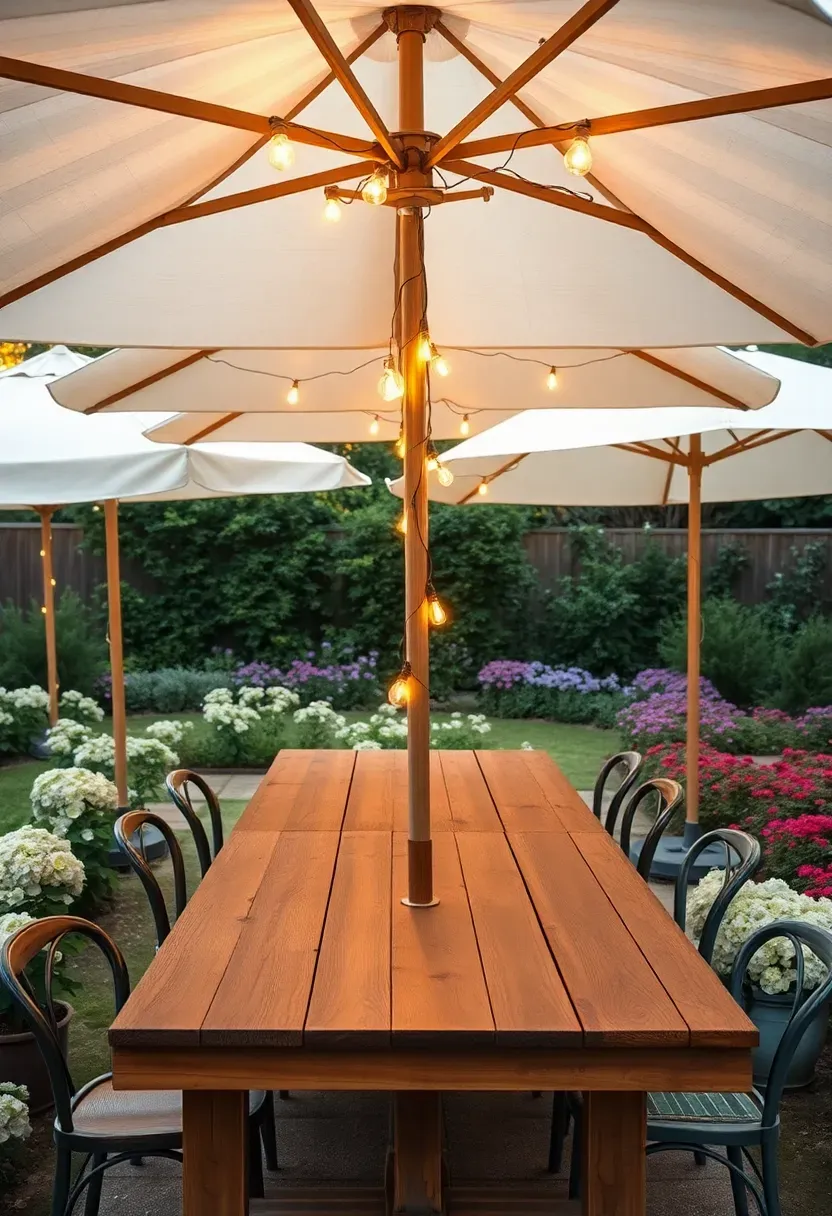
Instead of one large shade structure, scatter three or four 9-foot market umbrellas across your yard. Each one defines a zone — dining, lounging, conversation — and the arrangement feels more like a European cafe than a suburban deck. Individual umbrellas cost $60-$250 each. The visual advantage is flexibility. Move them as the sun shifts, store them in winter, replace one without redoing the whole setup. Use matching colors for a cohesive look or mix complementary tones for something livelier.
Tips
- Bolt-down bases work better than weighted ones on decks — less trip hazard
- Fiberglass ribs flex in wind rather than snapping like wood
- Crank-lift mechanisms outlast push-up designs by about three seasons
Recommended
Items for this idea
9. Attached Patio Cover
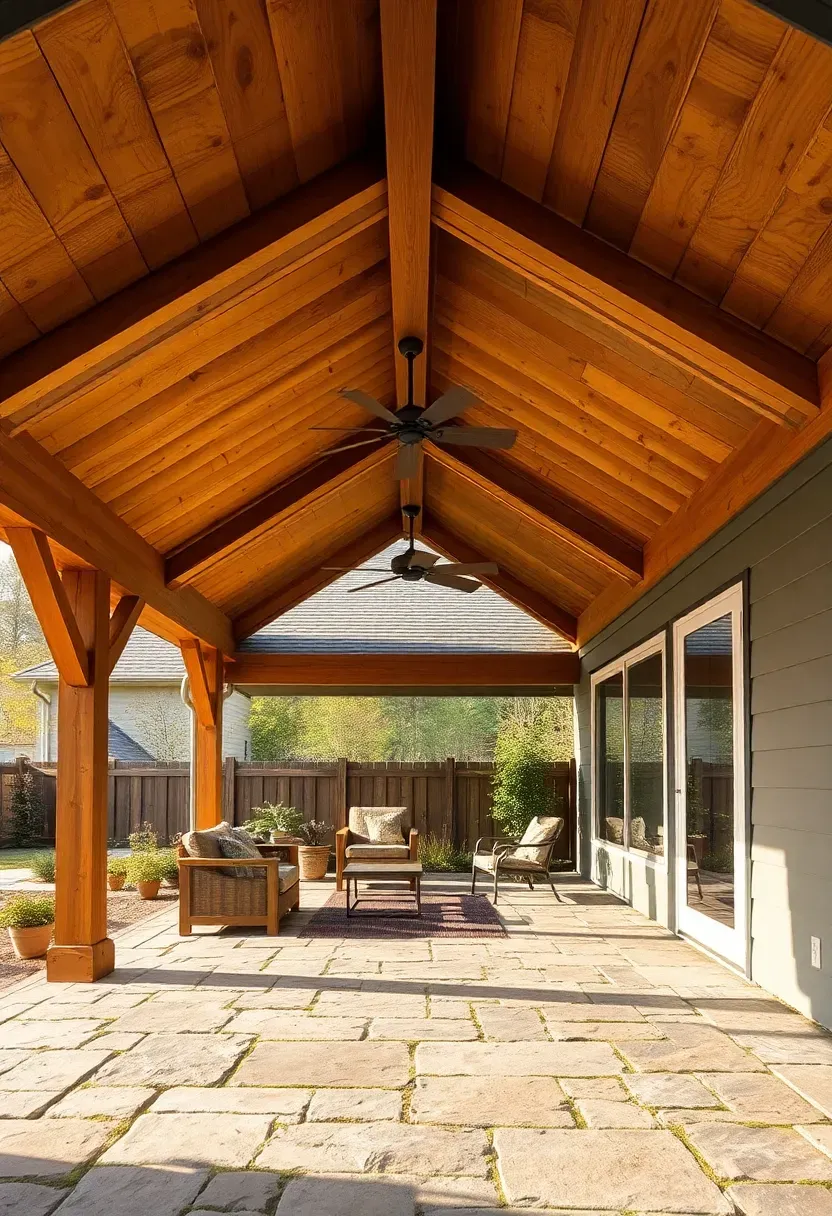
A solid-roof patio cover bolted to the house creates a permanent outdoor room. This is not a pergola with gaps — it is a weather-tight extension of your roofline that keeps rain, sun, and falling leaves off your patio furniture. Construction typically uses pressure-treated or engineered lumber for the frame with asphalt shingles, standing seam metal, or tongue-and-groove cedar overhead. A 12x16-foot attached cover runs $4,000-$12,000 depending on materials and whether you hire out or DIY the framing. Most jurisdictions require a building permit.
Steps
- Pull a building permit and confirm setback requirements with your local code office
- Attach a ledger board to the house rim joist using code-rated lag screws and flashing
- Set 6x6 support posts on concrete footings at least 36 inches deep in frost zones
- Frame the roof with 2x6 rafters at 16-inch centers and sheathe with plywood before roofing
10. Freestanding Pavilion
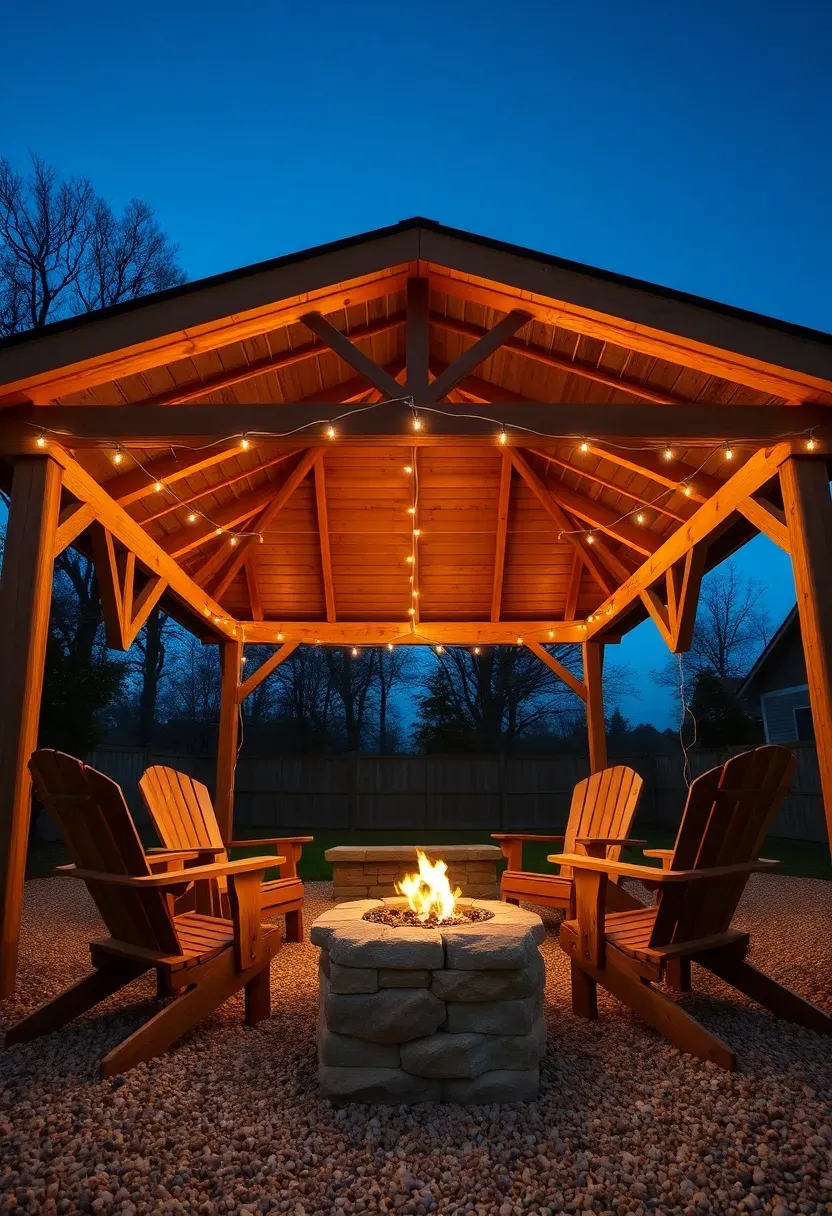
When you want shade away from the house — over a fire pit, hot tub, or garden seating area — a freestanding pavilion is the answer. Four or more posts support a fully roofed structure that stands on its own. Prefab kits in cedar or pressure-treated pine range from $2,500 to $7,000. Custom builds with hip roofs and architectural details climb to $15,000-$30,000. The advantage over an attached cover is placement freedom — put it wherever the yard needs a focal point. The disadvantage is cost, since every side needs its own structural support.
Tips
- A hip roof handles wind better than a gable because there is no flat face to catch gusts
- Run electrical conduit through one post during construction for future lighting or fan install
- Anchor posts to concrete piers with adjustable post bases to keep wood off the ground
Recommended
Items for this idea
11. Natural Canopy Trees
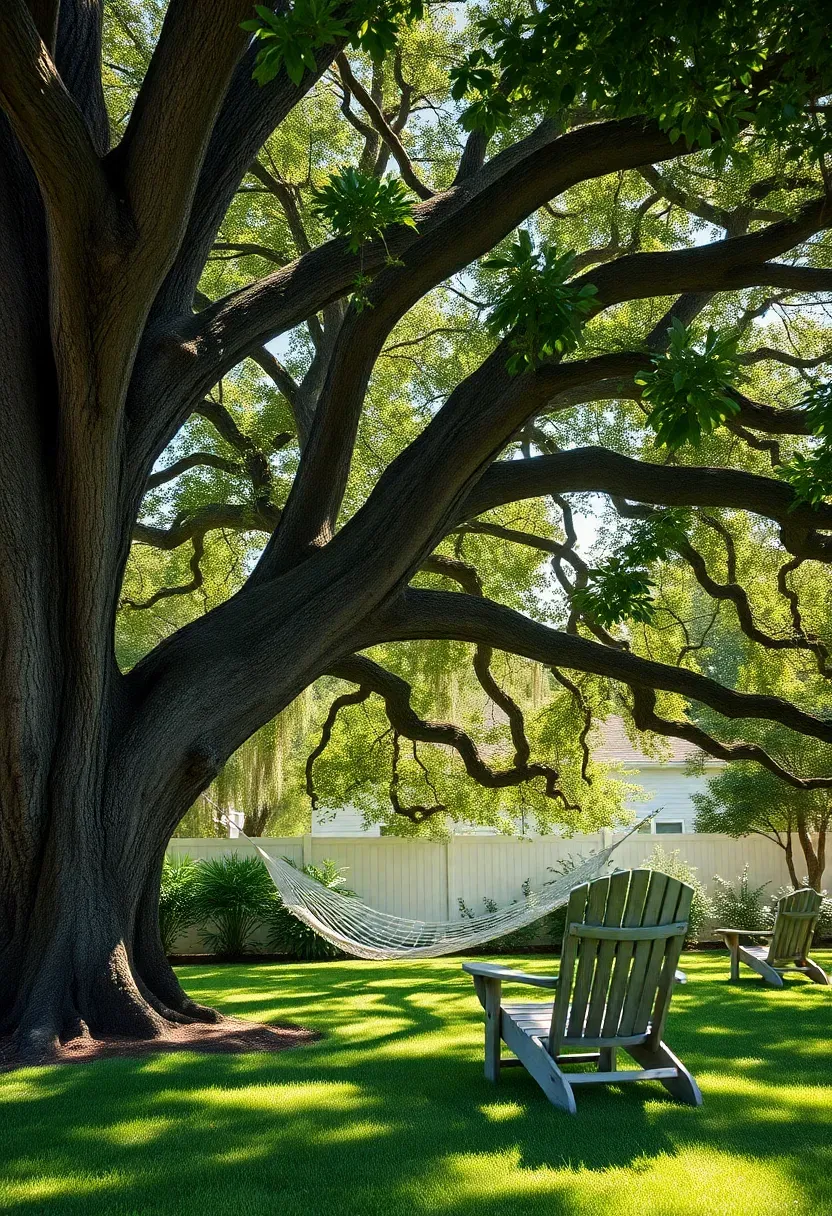
A well-placed shade tree does what no manufactured structure can — it cools the air itself. Through evapotranspiration, a mature tree can lower the temperature underneath its canopy by 10-15 degrees compared to ambient air in direct sun. Red maples, live oaks, London planes, and Chinese elms all develop broad crowns that cast wide shade within 8-15 years of planting. A 2-inch caliper nursery tree costs $150-$400 planted. The catch is patience. You are investing in shade for five years from now, not next weekend.
Good picks by region
- Southeast: Live oak, Southern magnolia, bald cypress
- Northeast: Red maple, sugar maple, tulip poplar
- Southwest: Desert willow, Chilean mesquite, Texas ebony
- Pacific Northwest: Bigleaf maple, Oregon white oak, Pacific madrone
12. Vine-Covered Arbor
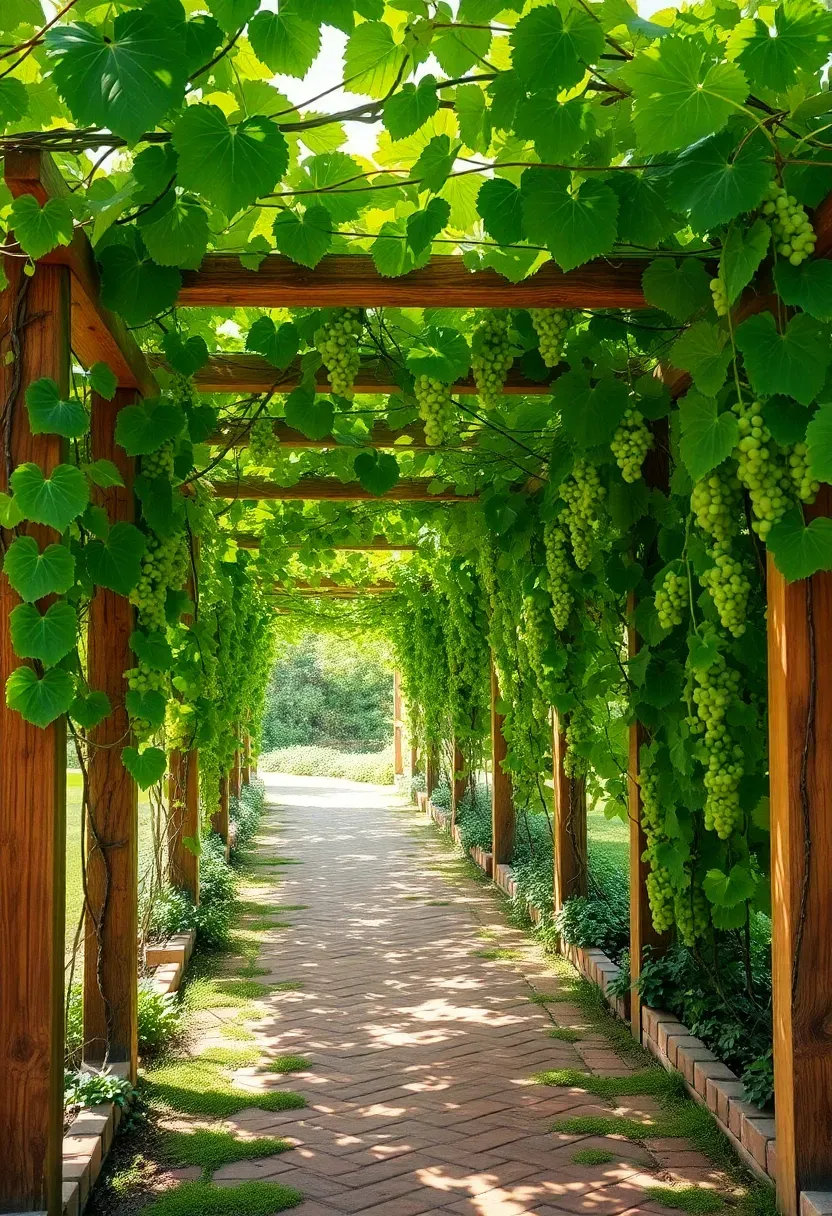
Build a simple cedar or pressure-treated arbor and let climbing plants do the shade work. Grapes, trumpet vine, jasmine, crossvine, and passionflower all fill in within two growing seasons on a well-built trellis. The arbor provides structure; the vines provide dense, living shade that changes with the seasons. A basic 4x8-foot arbor costs $200-$600 in materials. The biological approach brings pollinators, fragrance, and — with grapes — actual food. Maintenance means annual pruning to keep growth manageable and periodic checks for vine damage to the wood.
Tips
- Use stainless steel eye hooks and wire for vine training rather than letting tendrils grip wood directly
- Annual grapes (like Concord) provide summer shade and drop leaves in fall for winter sun
- Treat wood with a non-toxic sealant since vines trap moisture against the surface
Recommended
Items for this idea
13. Bamboo Roll-Up Blinds
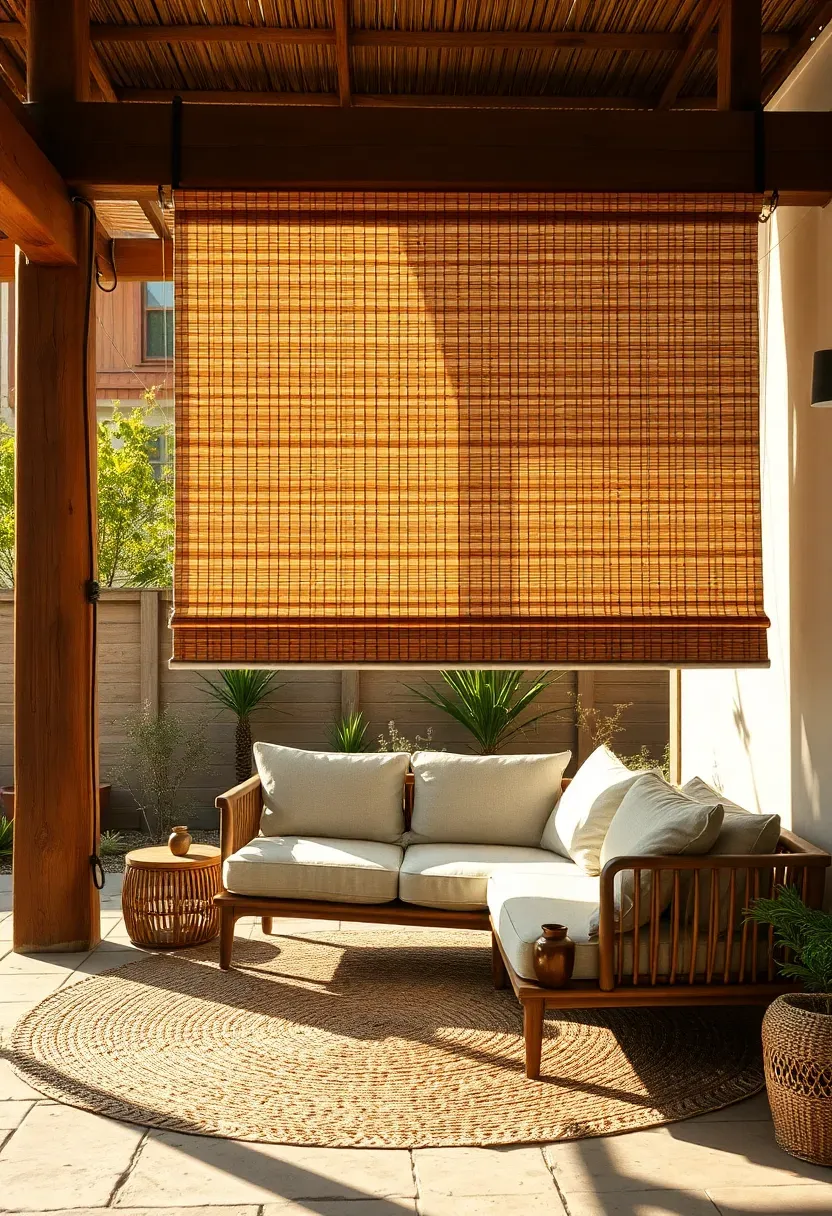
Bamboo blinds hung from pergola beams or porch eaves add shade without permanent commitment. They roll up when you want open sky and unroll when the afternoon sun hits. A 6x6-foot bamboo blind costs $30-$80. They work best mounted on the west or south side of a pergola where afternoon sun is harshest. The slats filter light into warm stripes rather than blocking it completely, which keeps the space bright without the glare. They typically last 3-5 seasons before the cord bindings start deteriorating.
Tips
- Attach a cleat hook at a reachable height so you can tie the blind at any position
- Spray with a clear outdoor sealant before the first season to resist moisture damage
- Double up two blinds with a 4-inch gap for deeper shade with airflow between layers
14. Outdoor Curtain Panels
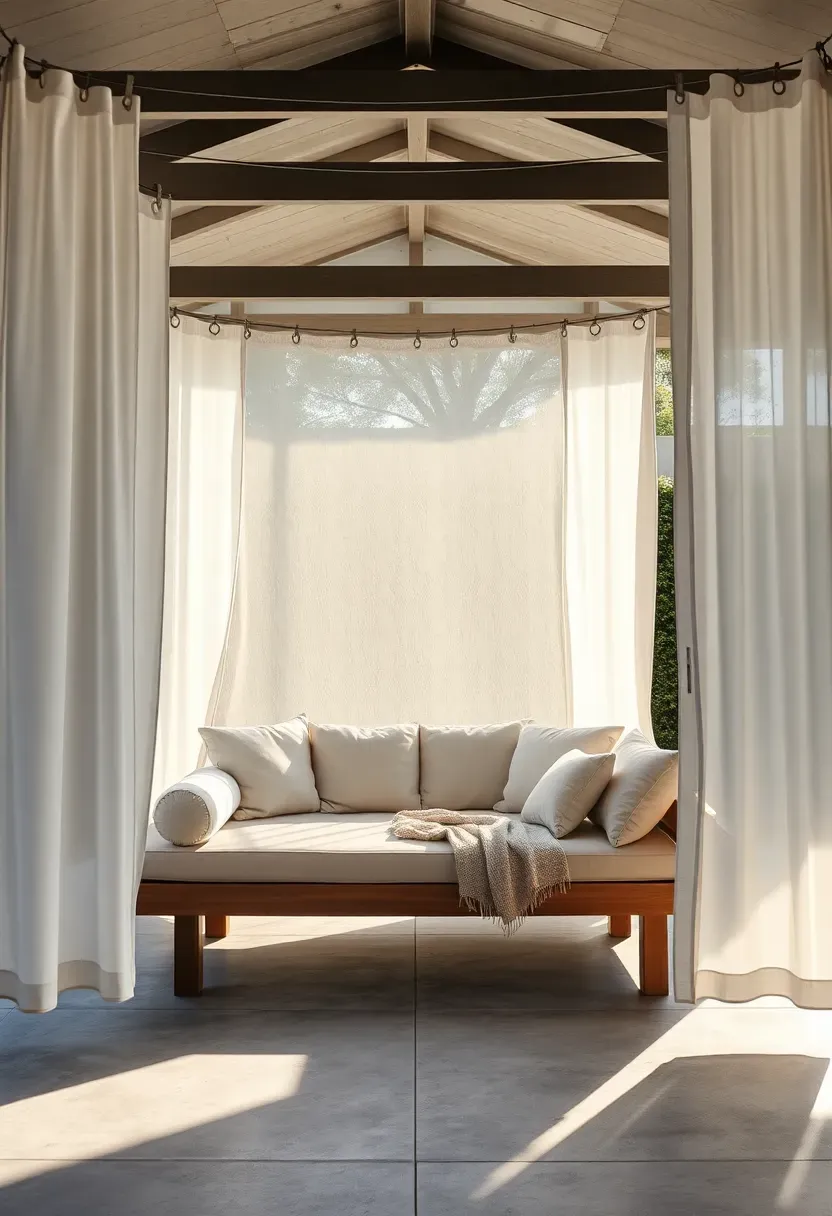
Outdoor curtains turn a simple pergola or patio cover into something that feels enclosed and private without walls. Hang them from a stainless steel rod or cable run along the beams. Sunbrella or Olefin fabrics resist mold, fading, and water. A pair of 54x96-inch panels costs $50-$120. They block low-angle morning and evening sun that overhead structures miss entirely. Tie them back with rope cleats when you want open air. The effect is somewhere between a cabana and an outdoor living room.
Steps
- Install stainless steel curtain rods or wire cable along the outer beams of your structure
- Use rust-proof grommet-top or tab-top panels rated for outdoor use
- Add weighted hems or clip-on weights to prevent panels from blowing horizontal in wind
- Tie back with nautical rope or simple fabric ties during calm weather
Recommended
Items for this idea
15. Palapa or Tiki Hut
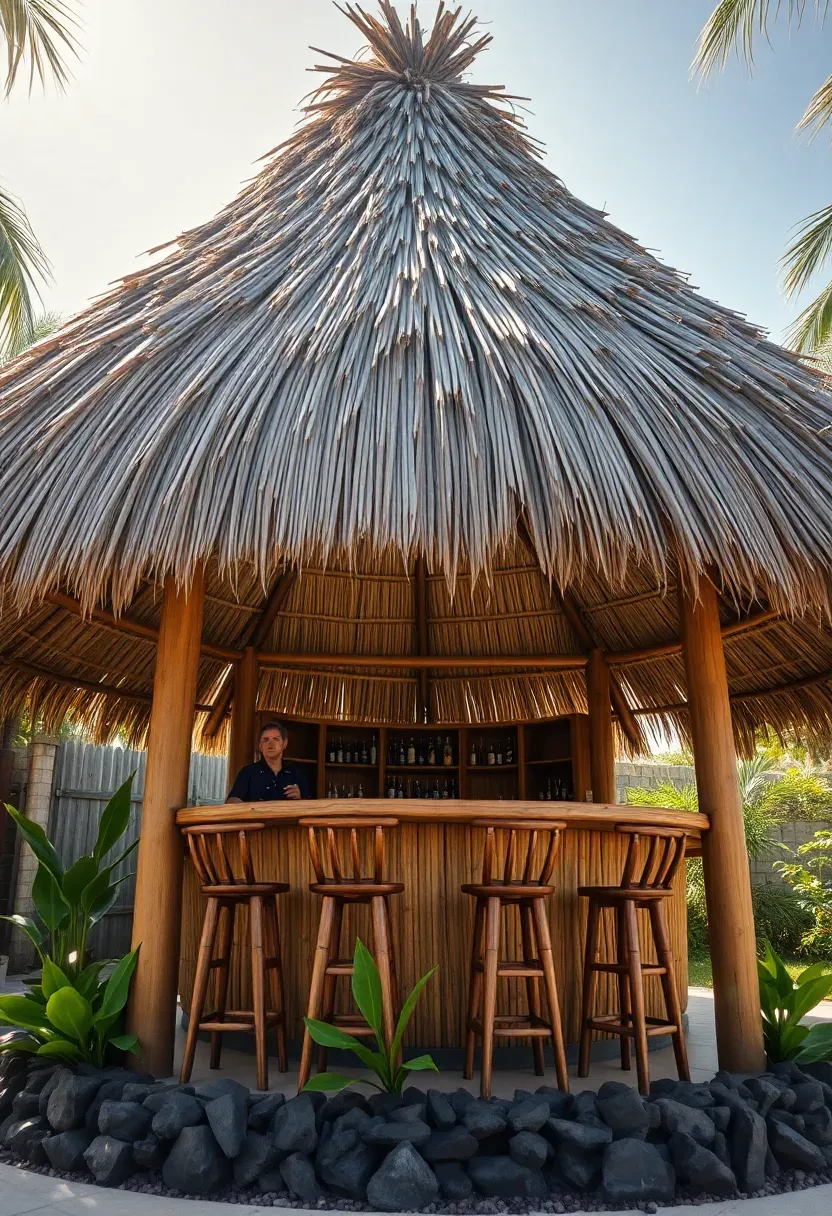
A palm-thatched palapa brings instant tropical character along with genuine shade performance. Mexican fan palm or synthetic thatch roofing on a pole frame creates a structure that looks like it belongs on a beach bar — and sheds rain surprisingly well when built correctly. Natural thatch needs replacement every 3-5 years. Synthetic thatch made from HDPE plastic lasts 20+ years and looks convincing from 10 feet away. A 12-foot round palapa with four posts runs $2,000-$5,000 for natural thatch, $4,000-$8,000 for synthetic. Perfect over an outdoor bar or hot tub.
Pros and cons
- Pro: Unmatched tropical atmosphere
- Pro: Excellent ventilation — open sides and porous thatch keep air moving
- Con: Natural thatch is a fire risk in dry climates — check local codes
- Con: Birds and insects nest in natural thatch if you skip the underlayment
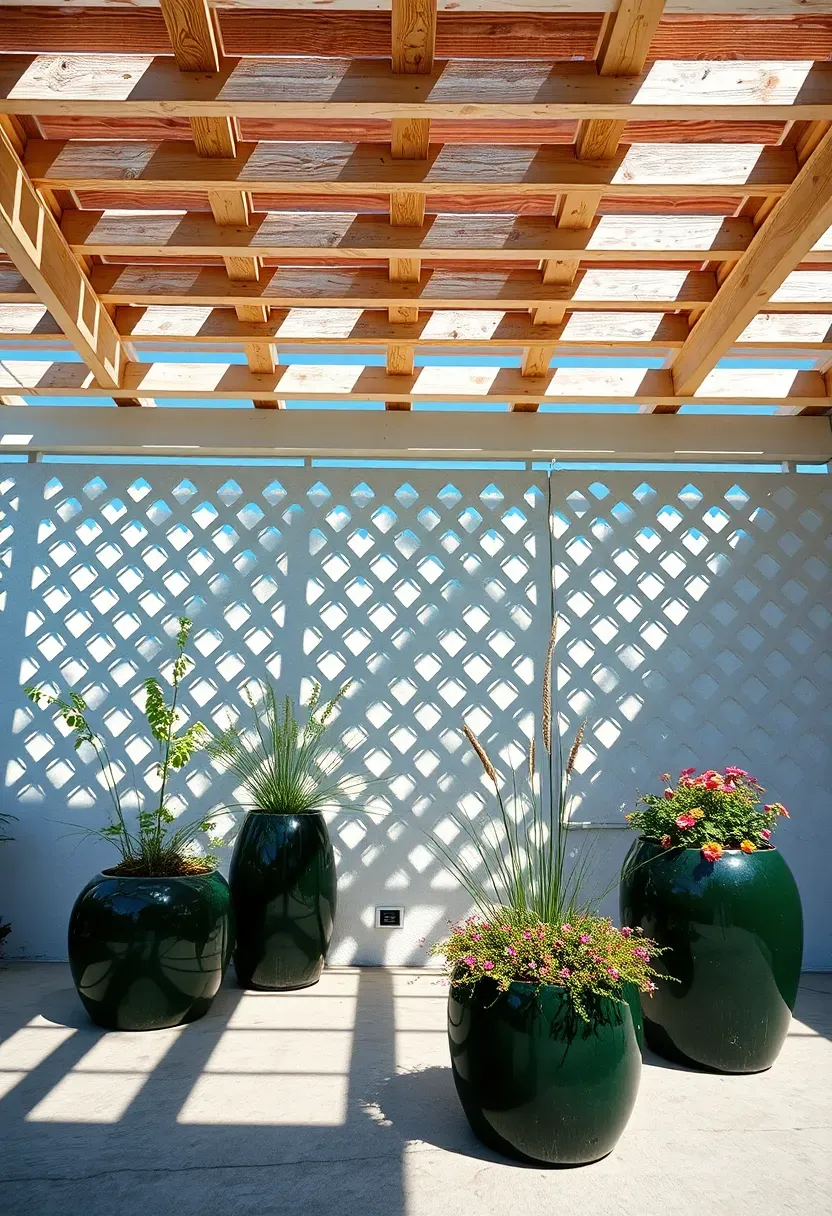
16. Lattice Roof Panel
Lattice panels nailed or screwed to pergola rafters create dappled shade at a fraction of solid-roof cost. Standard 4x8-foot pressure-treated lattice sheets run $15-$40 each. The diamond or square pattern filters roughly 50% of sunlight depending on the weave density. This is enough to take the edge off midday heat without making the space feel dark. Lattice also serves as an overhead trellis — plant a climbing vine at the base and within a year the shade deepens naturally. Paint it white for a classic garden look or stain it to match existing wood.
Tips
- Use privacy lattice (smaller openings) for more shade, garden lattice (larger openings) for a lighter feel
- Screw lattice panels to nailer strips rather than directly to rafters for easier replacement
- Cedar lattice costs more but resists rot without chemical treatment
Recommended
Items for this idea
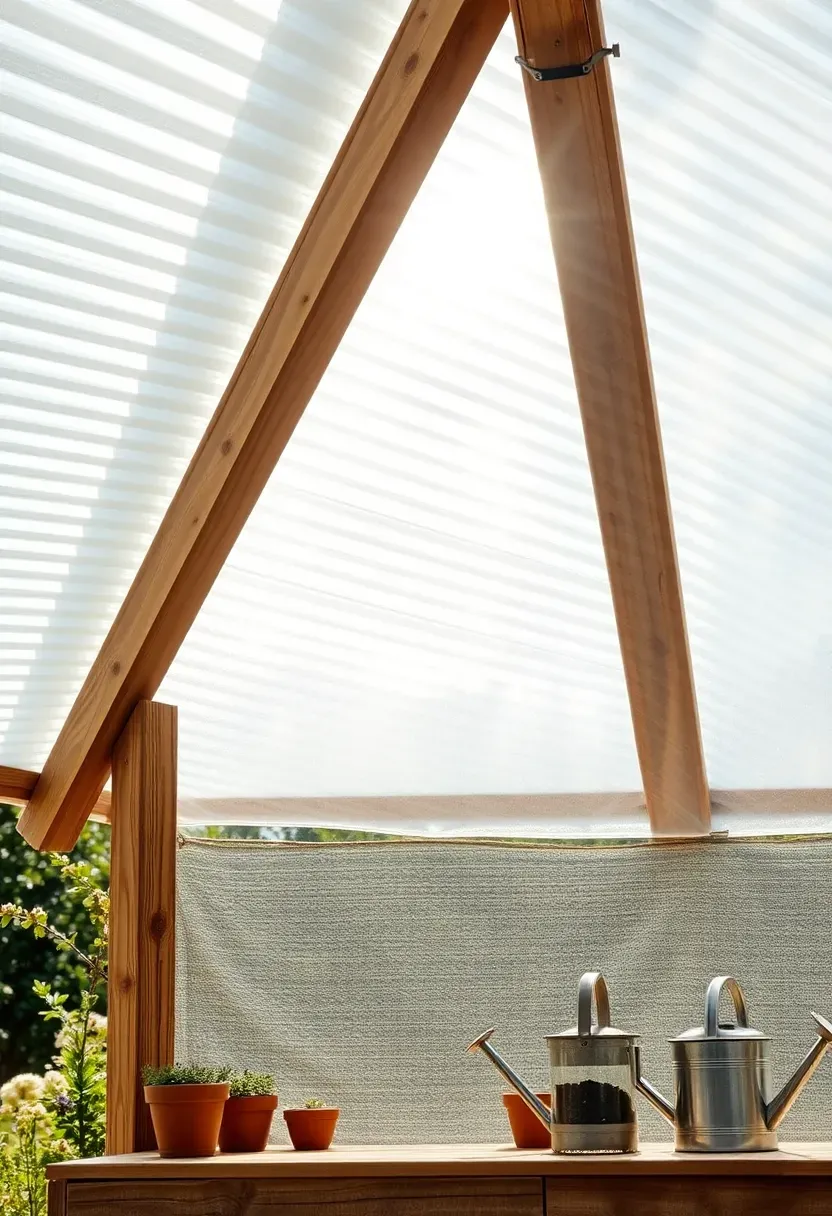
17. Polycarbonate Roof Panels
Translucent polycarbonate sheets give you rain protection and UV blocking while still letting diffused natural light through. They mount on standard rafter framing like metal roofing. A 26-inch by 8-foot corrugated panel costs $15-$30 depending on thickness. Multi-wall polycarbonate (the kind with internal channels) insulates better and blocks more UV — up to 99.9% on quality brands. The light underneath feels like an overcast day rather than deep shadow, which keeps the space from feeling cave-like. Standard corrugated polycarbonate lasts 10-15 years before yellowing.
Watch out
- Expansion and contraction with temperature changes causes creaking — use slotted screw holes
- Flat polycarbonate panels must slope at least 1 inch per foot to prevent ponding
- Cheap panels yellow and become brittle in 3-4 years — spend the extra $5 per sheet for UV-coated versions
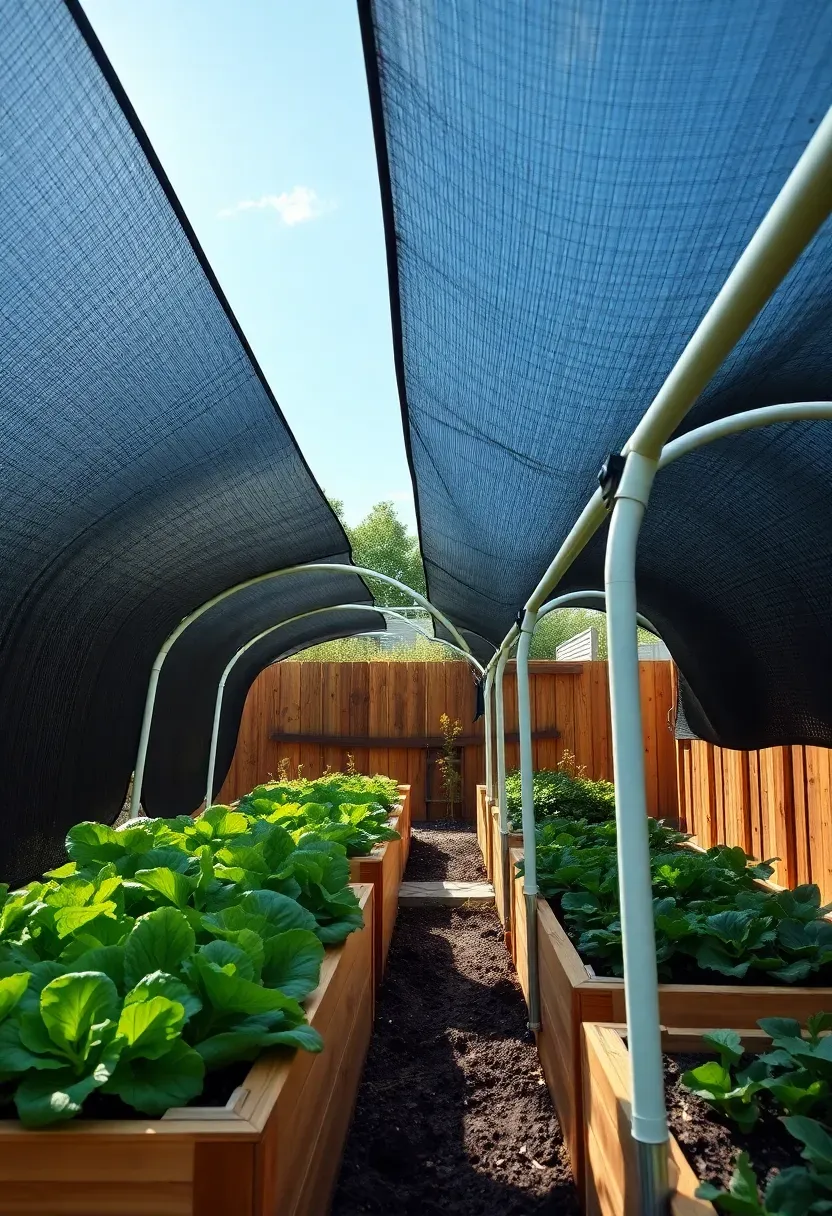
18. Shade Cloth Over Garden Beds
Shade cloth is not just for patios — it protects lettuce, spinach, and other cool-season crops from bolting in summer heat. A 50% shade cloth over raised beds extends your growing season by 4-6 weeks into summer. The fabric stretches over PVC hoops or a simple wood frame. A 10x20-foot piece of knitted HDPE shade cloth costs $20-$40. Knitted fabric (not woven) resists fraying when cut and lasts 5-8 years. Available in shade densities from 30% to 90%, so you can match the cloth to your crop needs.
Tips
- 30-50% for tomatoes, peppers, and squash that need some direct sun
- 50-70% for lettuce, herbs, and cool-season greens
- Attach with binder clips to PVC hoops so you can remove cloth for rain access
Recommended
Items for this idea
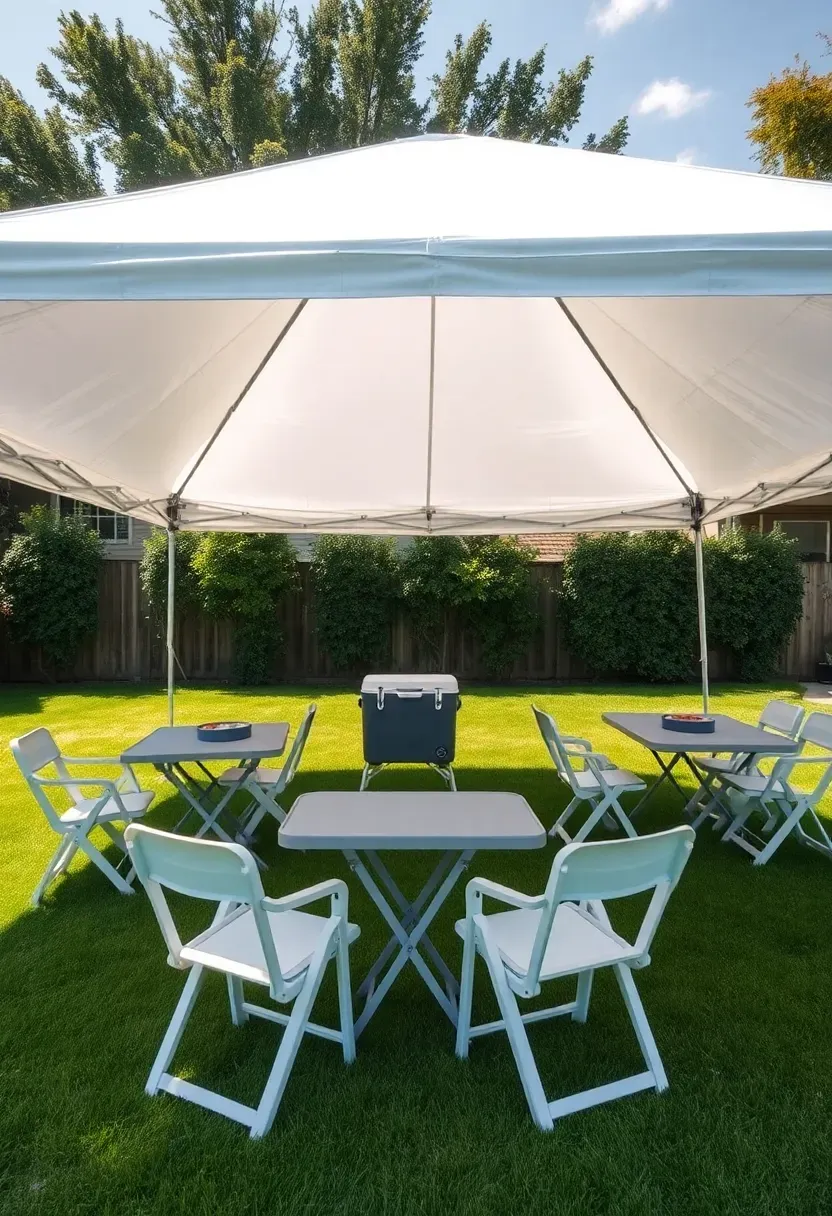
19. Pop-Up Canopy Tent
The most portable shade option. A 10x10-foot pop-up canopy sets up in under five minutes, provides 100 square feet of shade, and folds into a wheeled bag for storage. Entry-level models cost $70-$150. Commercial-grade versions with thicker frames and vented tops run $200-$500. These are ideal for parties, yard sales, sports viewing, or temporary shade while you plan something permanent. They are not meant to stay up long-term — UV breaks down the fabric and wind catches the flat top. Stake the legs and use sandbag weights on every corner.
Tips
- Vented tops reduce wind lift significantly — worth the upgrade
- Never leave a pop-up canopy up in wind above 20 mph
- Sidewall attachments add privacy and block low-angle sun
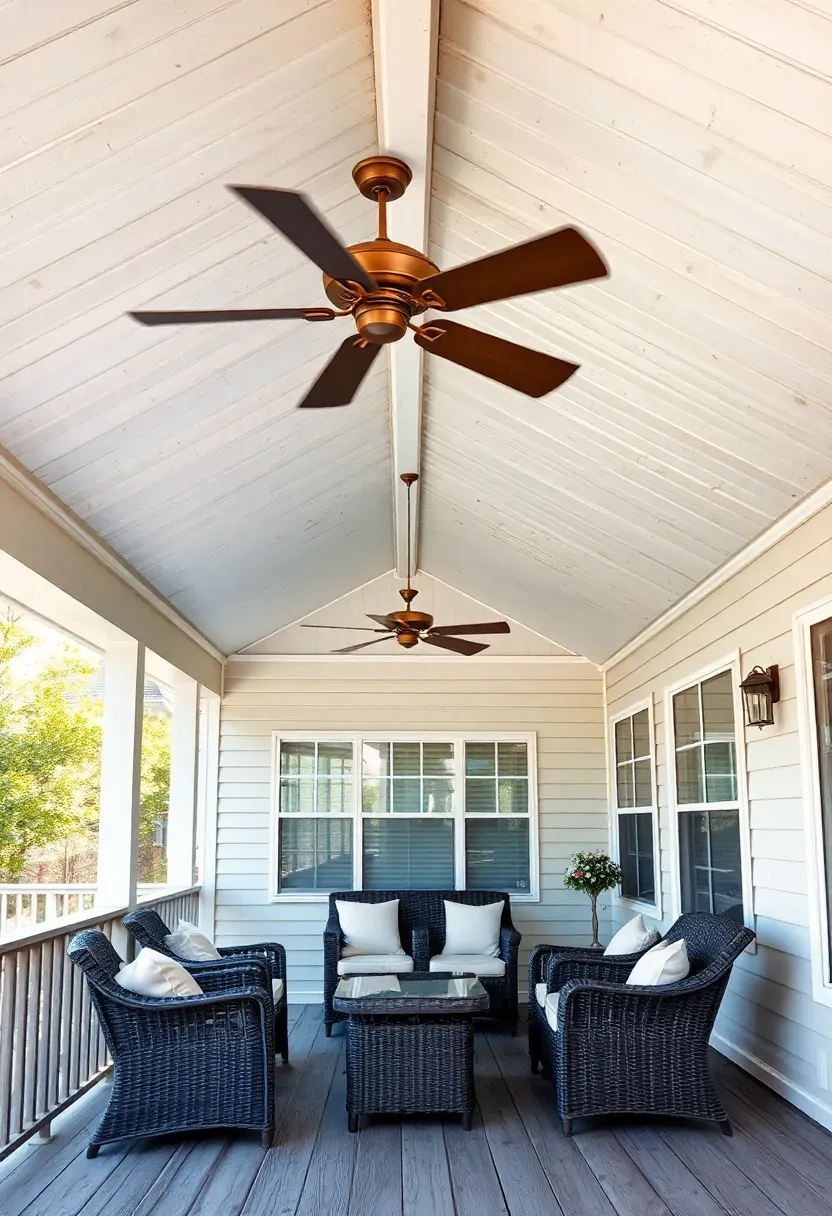
20. Deck Roof Extension
Extending your existing roofline over a deck creates a covered outdoor room that feels like part of the house. The new roof ties into the existing ridge or fascia and slopes down over the deck area. This approach gives you a consistent look from the street and better weather protection than any standalone shade structure. Cost runs $5,000-$18,000 depending on span, roofing material, and whether you need additional footings. The structural connection to the house makes this one of the sturdiest shade options.
Steps
- Match the roof pitch, shingle color, and fascia detail to the existing house roof
- Install a properly flashed ledger connection where the new roof meets the house wall
- Frame with rafters sized per span tables — typically 2x8 or 2x10 for spans over 10 feet
- Add a ceiling fan rated for damp locations to push air under the covered area
Recommended
Items for this idea
21. Living Wall Shade Screen
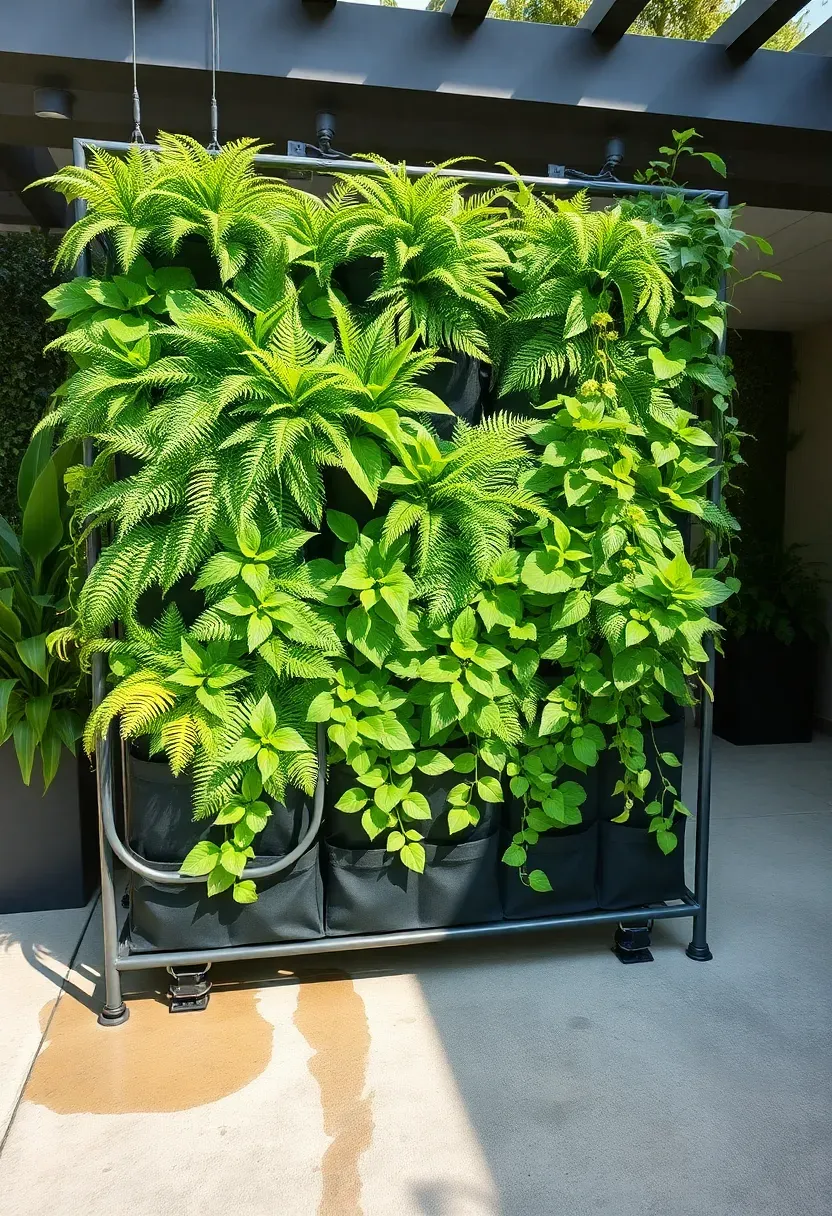
A vertical planting panel mounted on a freestanding frame provides both shade and a wall of greenery. Unlike overhead structures, a living wall blocks low-angle sun from the side — useful on east and west exposures where morning and evening sun hits at steep angles. Build a frame from 4x4 posts with wire mesh or modular planting pockets attached. Ferns, pothos, philodendron (in warm climates), or hardy succulents fill the wall within one growing season. A 4x8-foot living wall costs $300-$800 depending on the system and plants.
Pros and cons
- Pro: Doubles as a privacy screen and sound dampener
- Pro: Cools the air through plant transpiration
- Con: Requires irrigation — drip lines or hand watering every 2-3 days
- Con: Winter dieback in cold climates unless planted with evergreens
22. Sail Shade with LED Lights
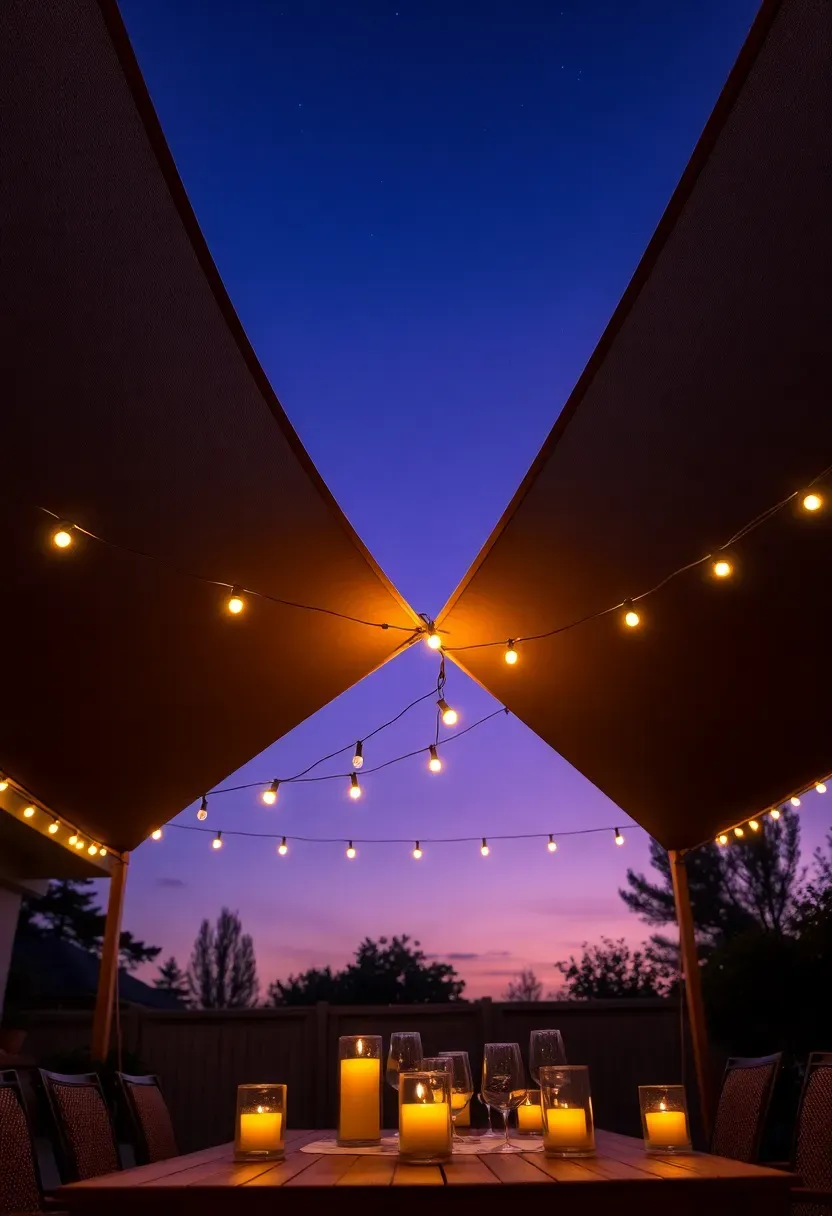
Combine daytime shade and evening ambiance in one installation. LED string lights or strip lights attached to shade sail edges or support cables create a glowing canopy after dark. The sail does shade duty during the day. The lights take over at sunset. Solar-powered LED strips along the sail perimeter cost $15-$30 and require no wiring. Hardwired options using low-voltage landscape wire give steadier light. The combined effect at dusk — warm glow overhead, open air on all sides — beats any standalone lighting or shade solution.
Tips
- Warm white LEDs (2700K) look better outdoors than cool white (5000K)
- Run lights along the sail cables, not the fabric edge, for easier replacement
- Solar strips need the panel positioned where it gets 6+ hours of direct sun
Recommended
Items for this idea
23. Corrugated Metal Roof Cover
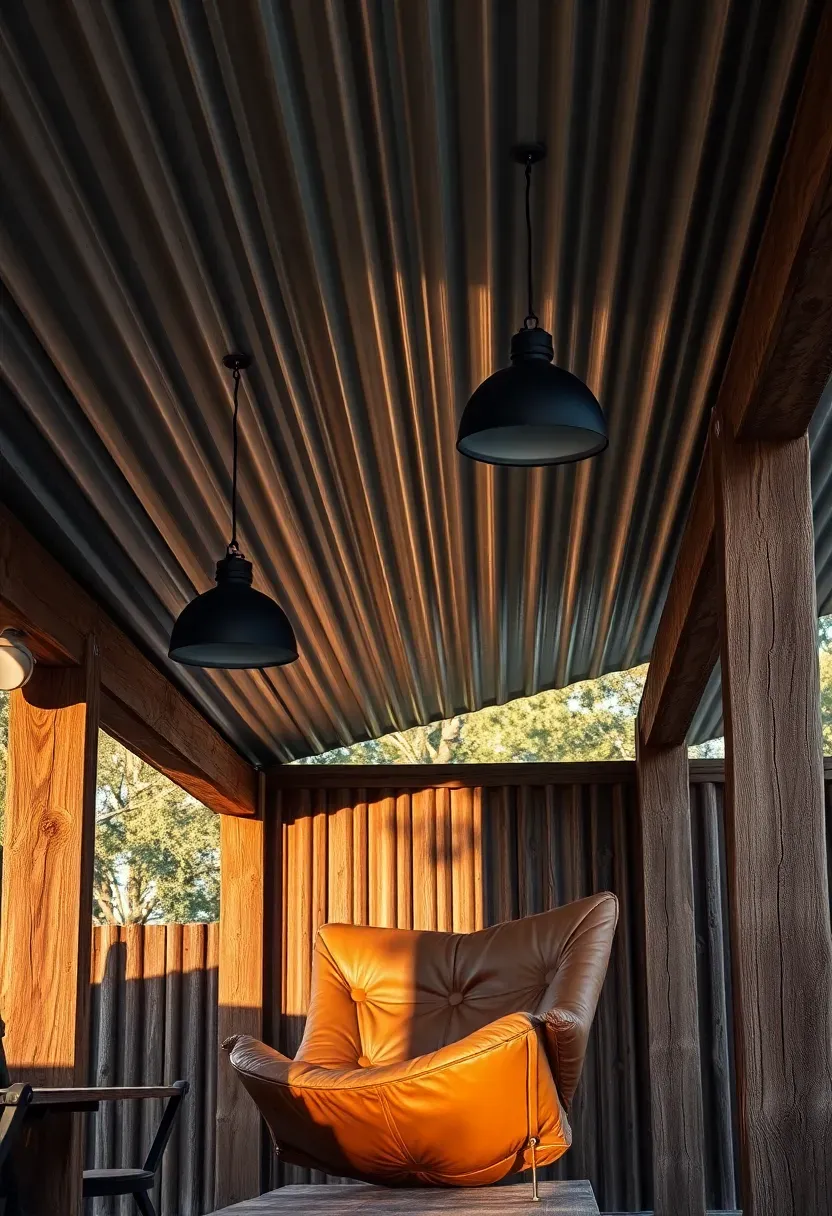
Galvanized or Galvalume corrugated metal roofing on a post-and-beam frame delivers a rugged, industrial aesthetic with bulletproof weather protection. Metal reflects solar radiation better than shingle roofing, keeping the space underneath noticeably cooler. A 12x14-foot metal-roofed shade structure costs $2,500-$6,000 in materials. The panels screw directly to purlins spaced 24 inches on center. Rain on a metal roof sounds good to some people and annoying to others — consider adding a layer of rigid foam insulation underneath if noise bothers you.
Tips
- Use screws with EPDM rubber washers to prevent leaks at fastener points
- Allow 2-inch overhang at the drip edge to keep rain off the posts
- Galvalume (aluminum-zinc alloy coating) outlasts standard galvanized by 10-15 years
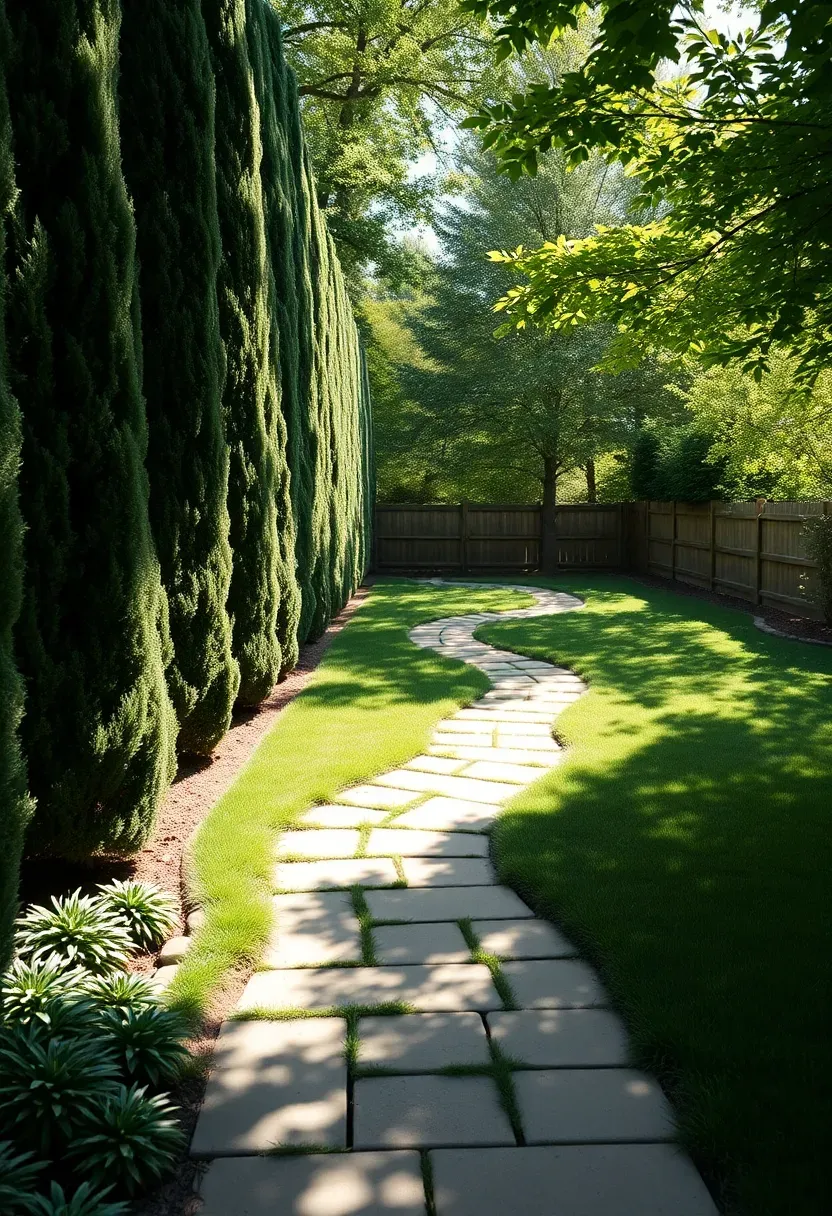
24. Shade Tree Hedge Row
Planting a line of fast-growing shade trees along a property edge creates a living wall of shade that grows denser every year. Hybrid poplars grow 6-8 feet per year. Autumn blaze maples add 3-5 feet. Green Giant arborvitae (for evergreen shade) grow 3-4 feet annually. Space trees based on mature crown width — typically 15-25 feet apart for deciduous species, 5-8 feet for narrow columnar varieties. A row of six 8-foot nursery trees costs $600-$2,000 depending on species. In three years you have a shade canopy that no fabric or metal can replicate.
Tips
- Stagger planting in two rows offset by half the spacing for denser coverage
- Water deeply twice a week for the first two years until roots establish
- Avoid silver maple and Bradford pear — weak wood drops branches in storms
Recommended
Items for this idea
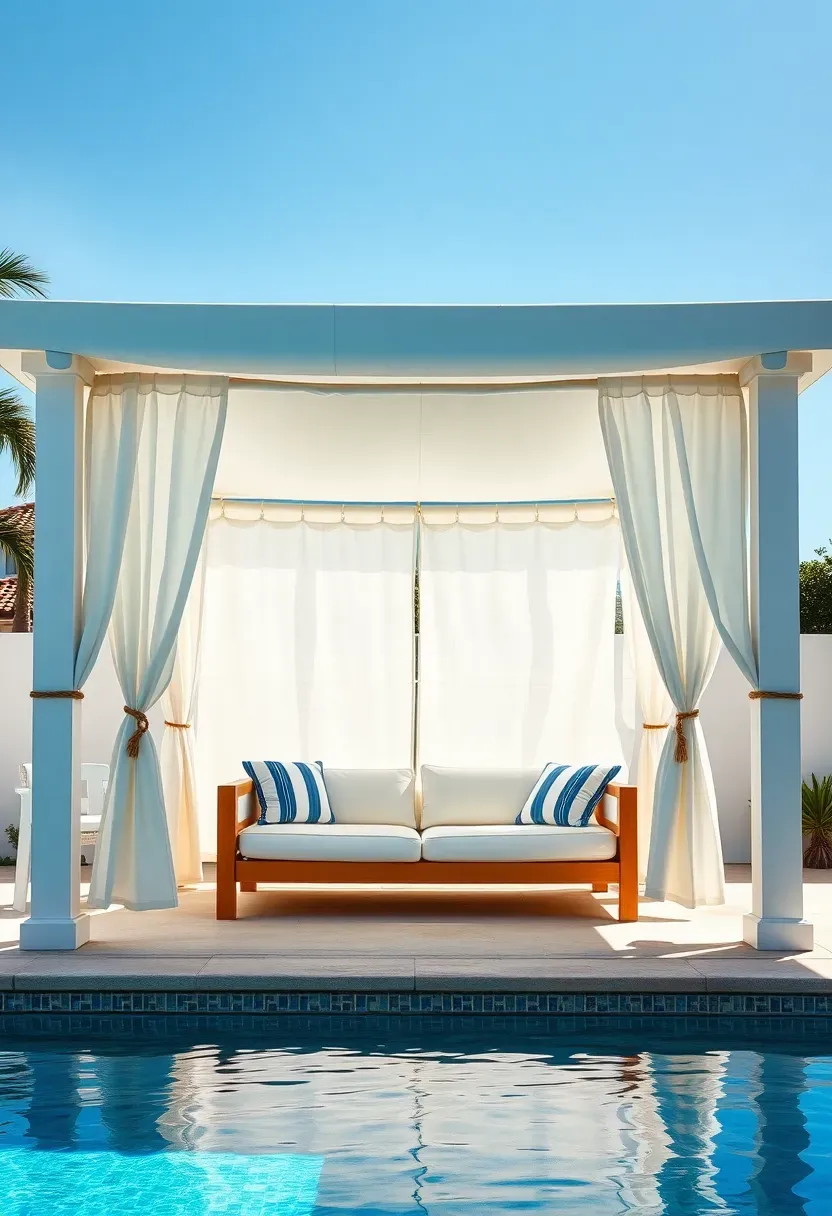
25. Cabana with Side Curtains
A cabana combines overhead shade with optional side enclosure for a private retreat. Build a simple four-post structure with a flat or slightly sloped roof, then hang curtains on all four sides. Open the curtains for breeze, close them for privacy, sun blocking, or wind protection. A prefab steel-frame cabana with fabric top and curtains costs $500-$2,000. Custom-built wooden cabanas run $3,000-$10,000. These work especially well next to pools, where the enclosed space creates a changing area, rest spot, and shade zone in one structure.
Tips
- Weight curtain hems with chain sewn into the bottom fold to prevent billowing
- Use a flat roof only in dry climates — any accumulation of water on a flat surface needs drainage
- Quick-dry outdoor fabric for curtains prevents mildew in humid regions
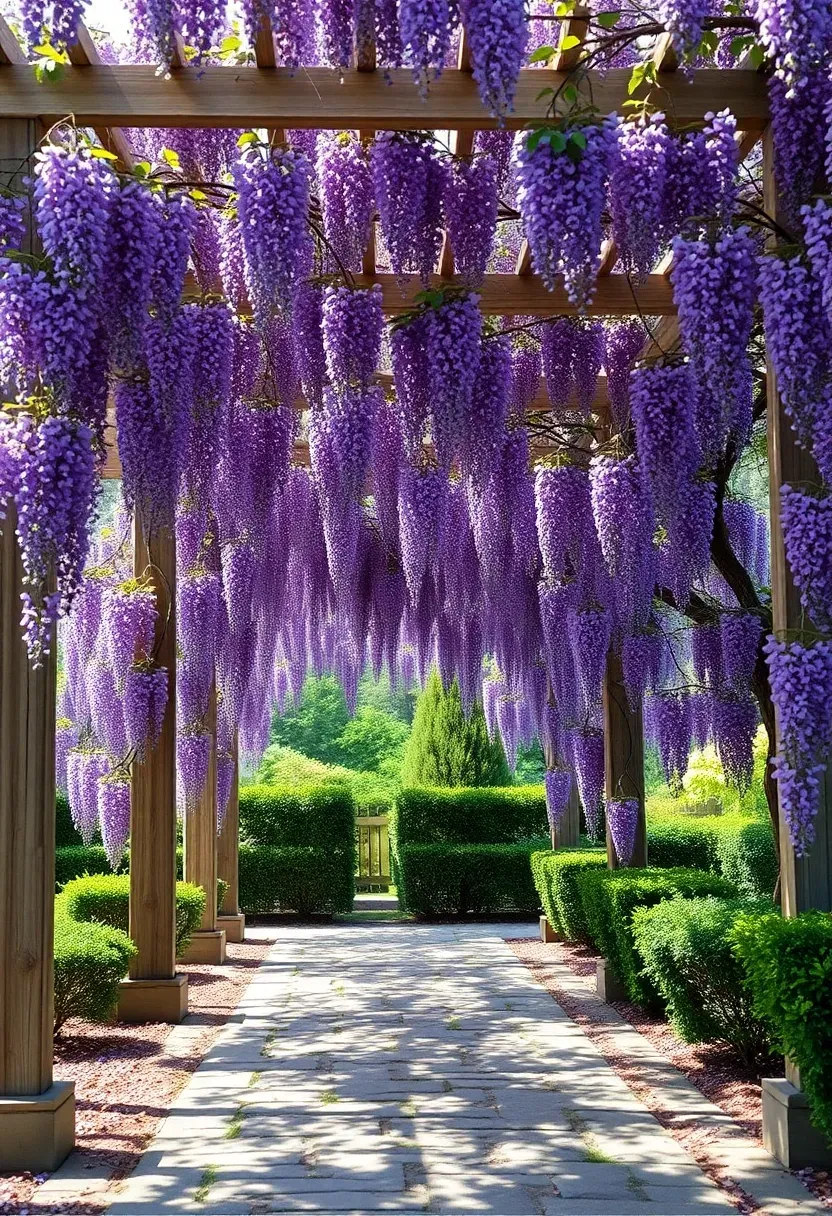
26. Wisteria-Draped Pergola
Wisteria on a pergola is one of those combinations that photographs well and performs even better in person. The vine produces dense foliage that blocks 80-90% of sunlight by its third season, plus cascading flower clusters in spring that range from lavender to white to deep purple depending on variety. Chinese wisteria (Wisteria sinensis) is aggressive — it needs heavy annual pruning or it will crush lightweight structures. American wisteria (Wisteria frutescens) is less vigorous and better behaved. Build the pergola from 6x6 posts and 2x8 beams minimum. Wisteria gets heavy.
Watch out
- Wisteria can take 3-7 years to bloom if grown from seed — buy grafted plants for faster flowers
- The vine twists with enough force to bend metal and crack wood — use heavy-gauge construction
- Prune twice yearly: once after flowering, once in late winter to control size
Recommended
Items for this idea
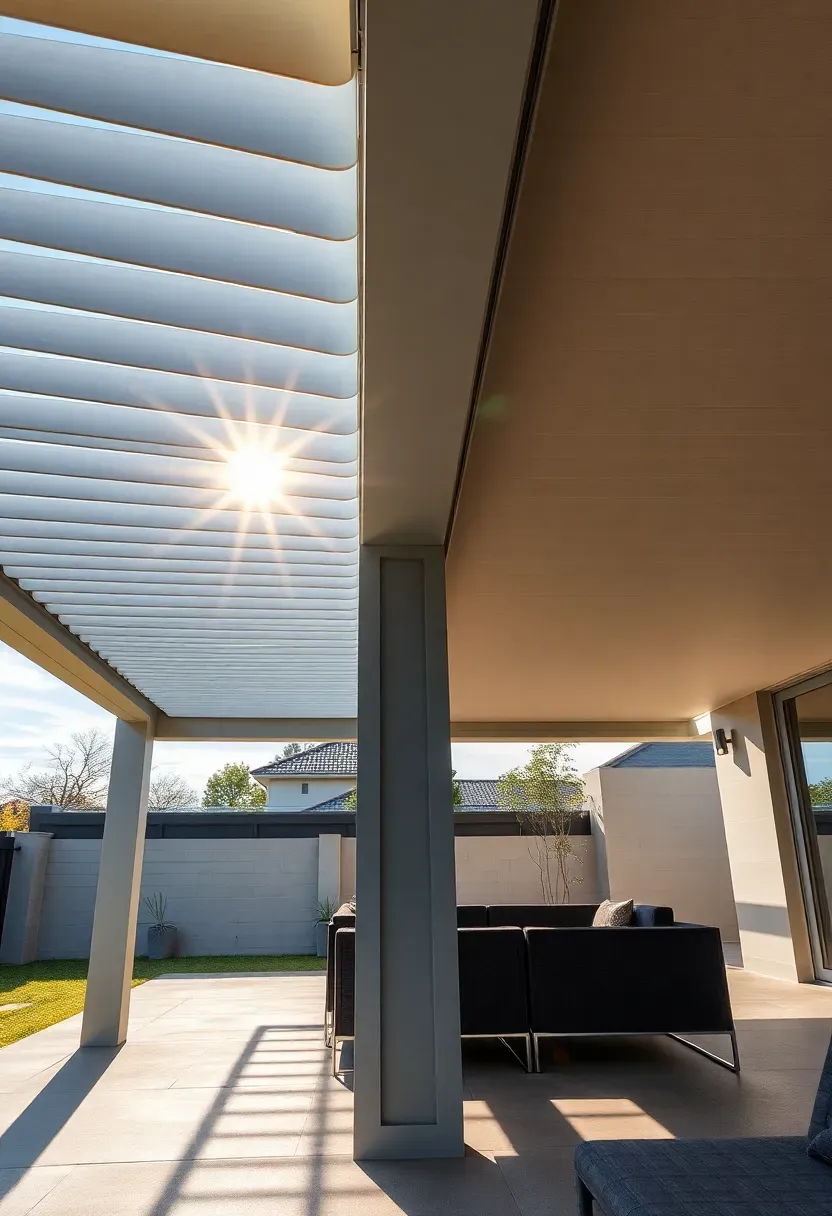
27. Motorized Louvered Roof
The top of the shade structure hierarchy. A motorized louvered roof system uses aluminum blades controlled by a wall switch, remote, or smartphone app. Open the louvers for full sun and stargazing. Close them for complete shade and rain protection. Tilt them anywhere in between for filtered light. Built-in gutters channel rainwater through hollow posts to ground drains. Premium systems include rain sensors (auto-close when it drips), wind sensors, and LED lighting integrated into the blade undersides. This is a $15,000-$30,000 investment for a 12x16-foot system — but it replaces every other shade option on this list.
Pros and cons
- Pro: Infinite shade adjustment from 0% to 100%
- Pro: Rain protection when closed — functions as a solid roof
- Pro: Increases home value as a permanent outdoor feature
- Con: Price — even entry-level motorized systems start around $12,000
- Con: Requires electrical connection and professional installation
Quick FAQ
Does a shade structure need a building permit? It depends on your municipality and the structure's size. Freestanding structures under 120 square feet are exempt in many jurisdictions, but anything attached to the house almost always requires a permit. Check with your local building department before starting — unpermitted structures can cause problems when you sell.
Which backyard shade idea blocks the most UV? Solid roofs — metal, polycarbonate, or shingled — block 99%+ of UV. Among fabric options, shade sails with HDPE fabric block 85-98% depending on density. Natural tree canopy blocks 80-95% when fully leafed out. Standard umbrellas with UPF-rated fabric block around 98%.
Can I install shade sails myself? Yes. Shade sails are one of the most DIY-friendly shade options. You need a drill, concrete for post footings, and basic hardware. The biggest mistake DIYers make is inadequate anchor points — each connection needs to handle 200+ pounds of lateral force in wind. Use 4x4 steel posts set 30 inches in concrete, not fence posts.
What is the cheapest backyard shade option? A pop-up canopy tent at $70-$150 is the cheapest instant shade. For a semi-permanent solution, a single shade sail at $35-$80 plus $50-$150 in hardware beats everything else on cost per square foot of shade.
How do shade structures affect home resale value? Permanent, well-built shade structures like pergolas, pavilions, and louvered roofs can add 50-80% of their cost to home value according to remodeling cost-vs-value reports. Temporary solutions like sails and umbrellas add nothing to appraised value but improve showing appeal.
Shade is one of those things that seems optional until you spend a July afternoon in a yard without it. Pick the option that fits your budget, climate, and patience level. A $50 shade sail works while you wait for a $300 tree to grow. A $20,000 louvered roof works if you never want to think about it again. Most people land somewhere in between — and that middle ground has plenty of good options.
Pinterest cover for 27 Backyard Shade Ideas
About the author
OBCD
CGI visualization and interior design content. We create detailed 3D renders and curate practical design ideas for every room in your home.