23 Backyard Awning Ideas for Shade
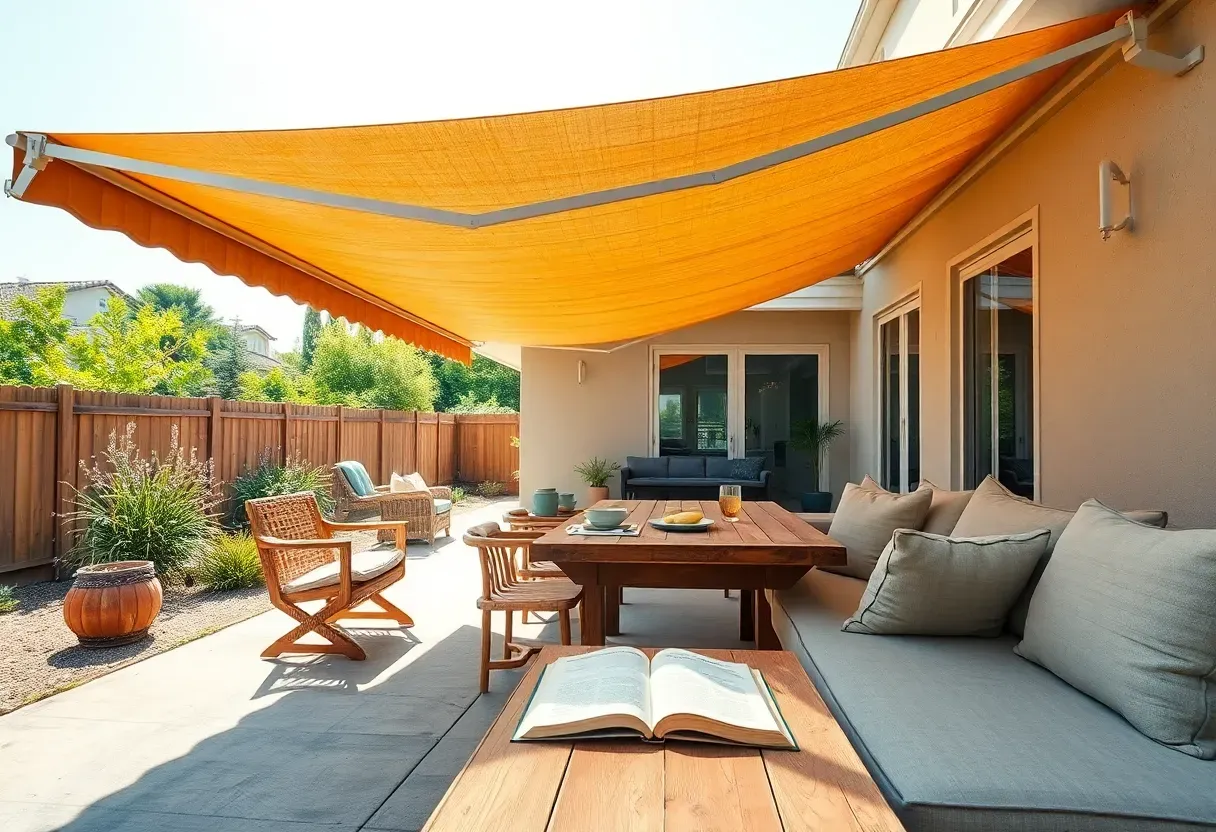
The first summer in our house, I ate lunch outside exactly twice before giving up. By noon the patio was a griddle — too hot for food, too bright for conversation, and the metal chairs could brand you. Installing a simple retractable awning over that same space turned it into the room we use most from April through October. Shade is the single cheapest upgrade that actually changes how much time you spend outside. These 23 awning ideas cover everything from budget-friendly sail shades to motorized pergola systems, so you can find something that fits your yard and your wallet.
Here are options grouped by type — fabric retractables, fixed structures, and creative hybrids that blend shade with style.
Table of Contents
- Retractable Fabric Awning
- Sail Shade Triangle Setup
- Pergola with Retractable Canopy
- Fixed Metal Awning
- Freestanding Awning Frame
- Louvered Roof Pergola
- DIY PVC Pipe Shade Structure
- Cantilever Umbrella Cluster
- Bamboo Roll-Up Shade
- Motorized Retractable Awning
- Cedar Pergola with Draped Fabric
- Corrugated Polycarbonate Roof
- Tensioned Cable Shade System
- Vine-Covered Trellis Awning
- Aluminum Patio Cover
- Canvas Drop-Arm Awning
- Shade Sail with LED Lights
- Glass Canopy Over Deck
- Rustic Wood Lean-To Awning
- Striped Bistro-Style Awning
- Sliding Shade Panels on Wire
- Insulated Patio Roof Panel
- Natural Thatch Shade Roof
1. Retractable Fabric Awning
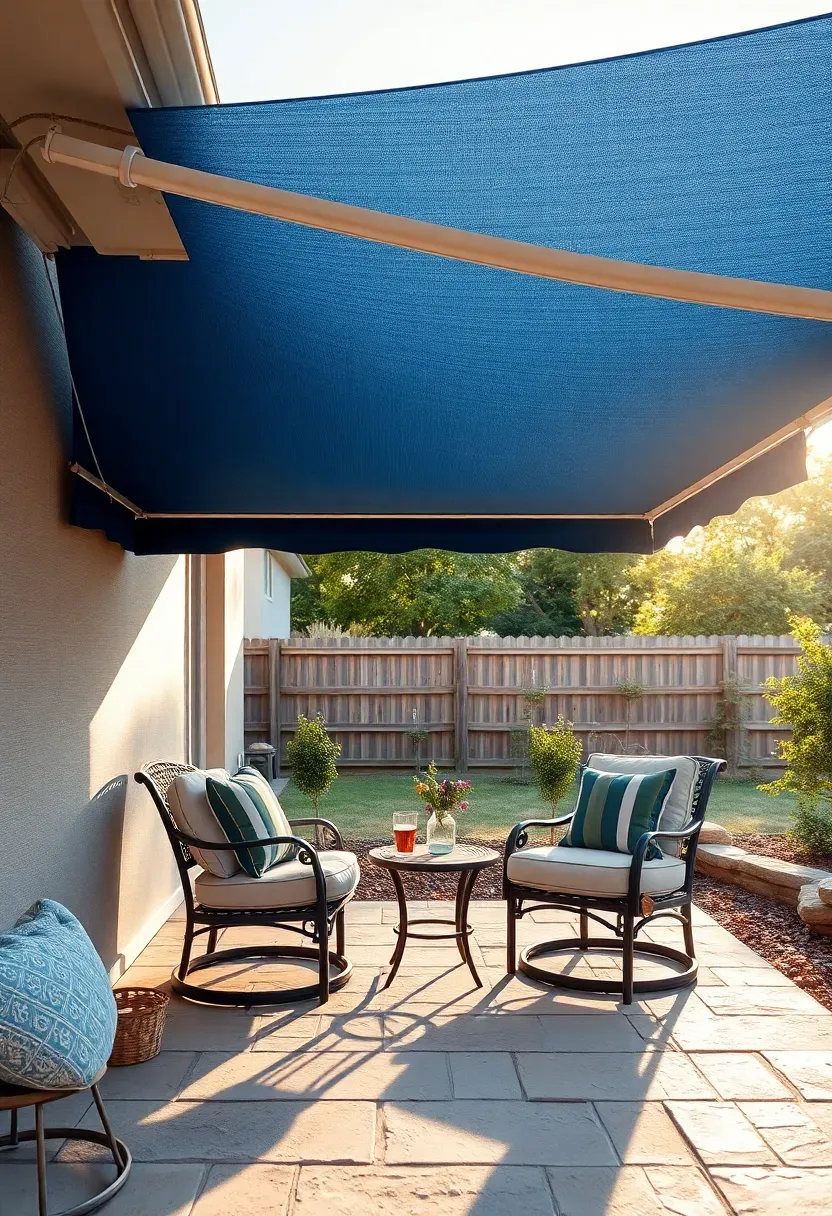
A wall-mounted retractable awning is the most popular backyard shade option for good reason. When extended, it covers eight to twenty feet of patio depth depending on the model. When retracted, it disappears into a slim cassette housing against the wall. Acrylic fabric rated for outdoor use resists fading for about eight years before it needs replacing. Manual crank models start around $200 for a basic ten-foot span; motorized versions with wind sensors run $800 to $2,000 installed.
Things to Know
- Mount the cassette at least seven feet high to allow clearance underneath when extended
- A five-degree pitch angle prevents rainwater from pooling on the fabric
- Darker fabric colors block more UV but absorb more heat — medium tones balance both
We picked a few things that go well with this idea: VEVOR Manual Retractable Awning (12x10 ft) (★4.2), AECOJOY Retractable Patio Awning (13x10 ft) (★4.1) and VEVOR Retractable Awning with Shade Curtain (★4.2). As an Amazon Associate we earn from qualifying purchases.
2. Sail Shade Triangle Setup
Why Sail Shades Work in Odd Spaces
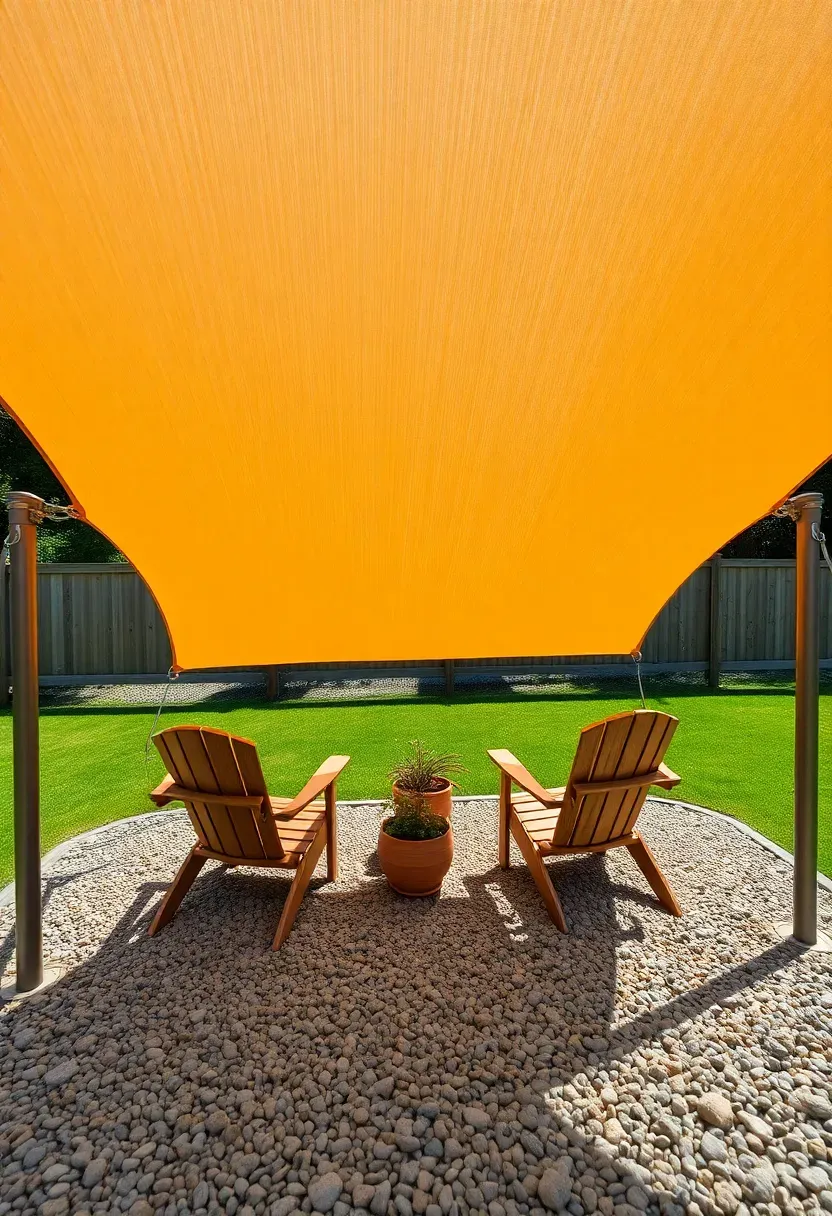
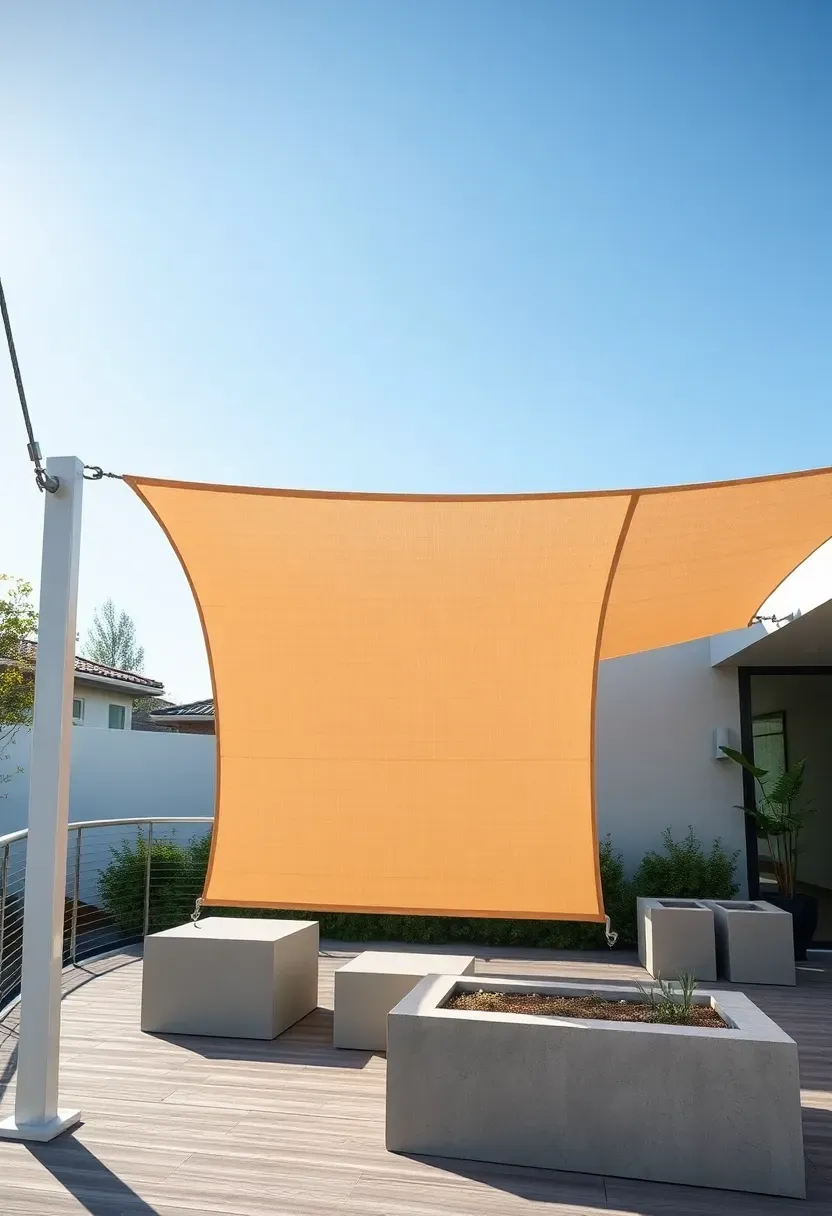
Most awnings assume a rectangular patio attached to a house wall. Sail shades ignore that entirely. Three or four anchor points — posts, trees, roof brackets — let you stretch fabric across irregular areas, cover a corner seating nook, or shade a patch of lawn where kids play.
How to Install
- Pick anchor points at least one foot higher than the lowest corner to create a slope for drainage
- Use stainless steel turnbuckles at each corner to tension the fabric tight enough that it does not sag in wind
- Bury posts in concrete footings at least 24 inches deep for stability
Watch Out
- Cheap polyester sails stretch and droop within one season — spend more on HDPE knitted fabric
- Sails need to come down before heavy snow loads
We picked a few things that go well with this idea: Love Story Triangle Shade Sail (12 ft) (★4.5), Sunny Guard Triangle Shade Sail (16 ft) (★4.6) and Shade&Beyond Permeable Triangle Shade Sail (16 ft) (★4.5). As an Amazon Associate we earn from qualifying purchases.
3. Pergola with Retractable Canopy
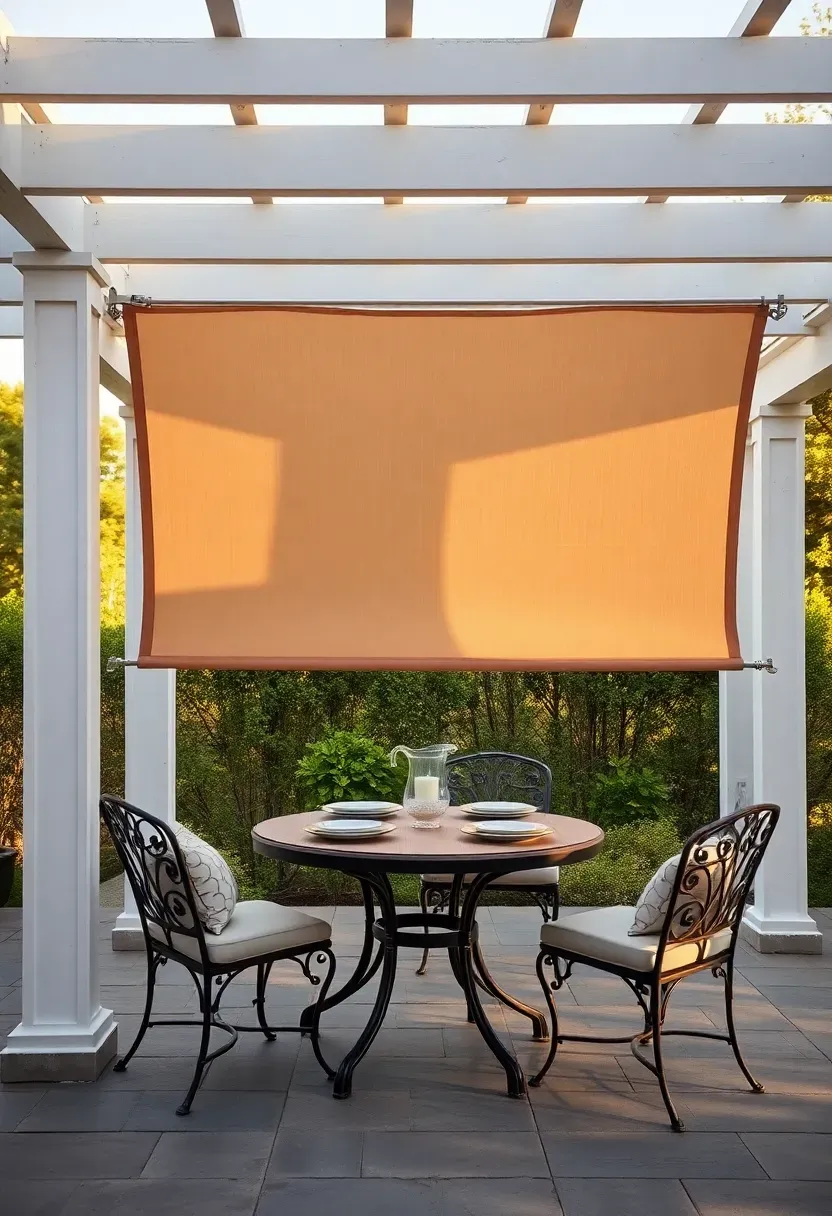
This gives you the structural look of a pergola with the flexibility of an awning. A track-mounted fabric panel slides along the pergola rafters, so you can pull it closed on bright days and open it up when you want sky. Kits designed for standard pergola sizes cost $300 to $600 and install in an afternoon with basic tools. The fabric panels slide on stainless steel cables or aluminum tracks mounted under the top beams.
Tips
- Measure your rafter spacing precisely — most kits need rafters no more than 16 inches apart
- White or cream fabric reflects the most light and keeps the space underneath brightest
- Add a center support cable if your pergola spans more than twelve feet to prevent sag
We picked a few things that go well with this idea: Grand Patio 11ft Cantilever Umbrella with Base (★4.3), Kingdura 11ft Cantilever Umbrella with Base (★4.3) and Aoxun 11ft Windproof Cantilever Patio Umbrella (★4.4). As an Amazon Associate we earn from qualifying purchases.
4. Fixed Metal Awning
The Problem with Fabric in Rough Climates
If you live somewhere with frequent hail, heavy snow, or sustained high winds, fabric awnings become a maintenance headache. They tear, fade faster, and need to be retracted before every storm.
The Metal Solution
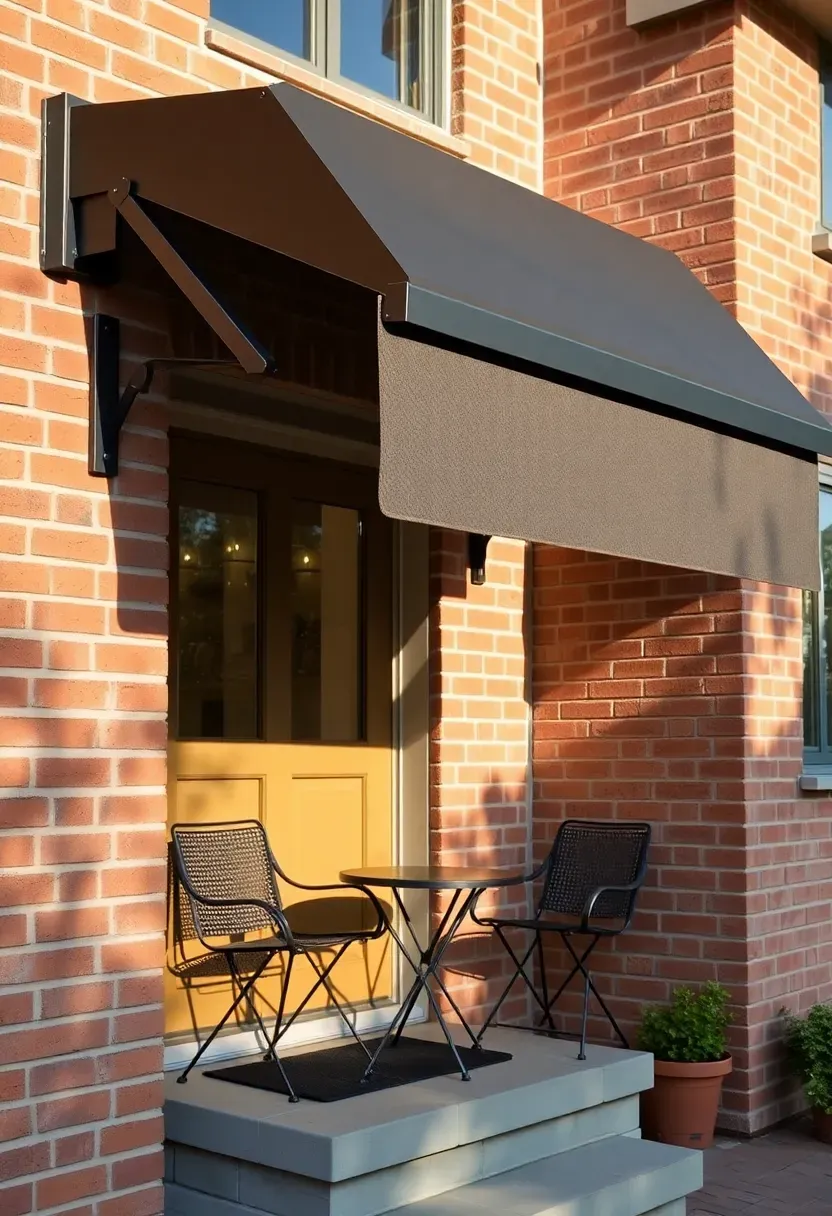
A fixed aluminum or steel awning bolts to the house framing and stays up year-round. Powder-coated aluminum panels resist rust and come in colors from matte black to warm bronze. They shed rain and snow without any intervention. Typical installed cost is $1,500 to $4,000 depending on span and finish.
Pros and Cons
- Pro: zero maintenance beyond occasional hosing off
- Pro: supports hanging planters and light fixtures without sagging
- Con: no option to open up to the sky on mild days
- Con: requires structural attachment to wall framing, not just siding
Recommended
Items for this idea
5. Freestanding Awning Frame
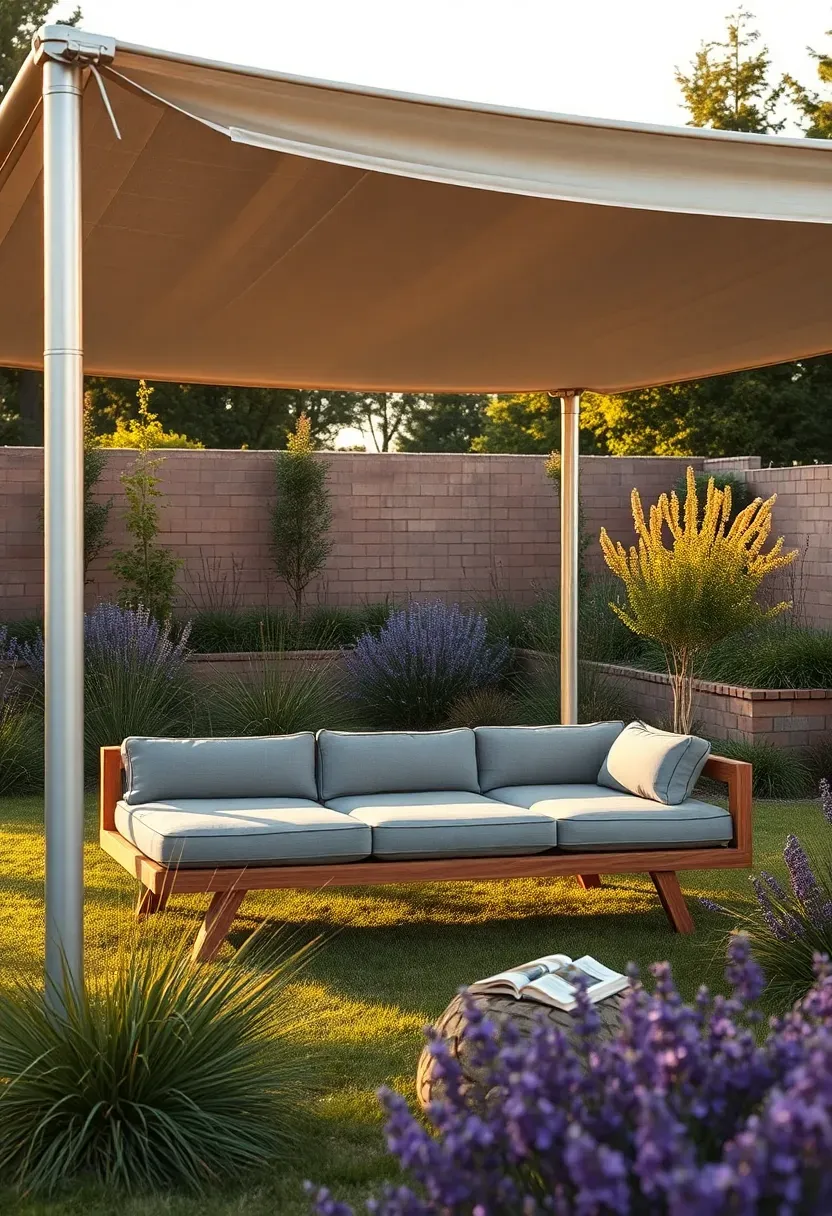
Not every patio sits against the house. A freestanding awning — four posts supporting a fabric or metal top — can shade a fire pit circle in the middle of the yard, a detached dining area, or a poolside seating zone. Portable pop-up versions work for temporary setups, but a proper freestanding structure with ground-anchored posts lasts years. Aluminum frames with tensioned canvas tops weigh less and resist rust better than steel.
Tips
- Anchor posts with concrete footings or weighted bases if you cannot dig into the ground
- Leave at least two sides open to allow airflow and prevent the structure from catching wind like a sail
- Choose a canopy height of at least eight feet for comfortable standing clearance
6. Louvered Roof Pergola
How It Works
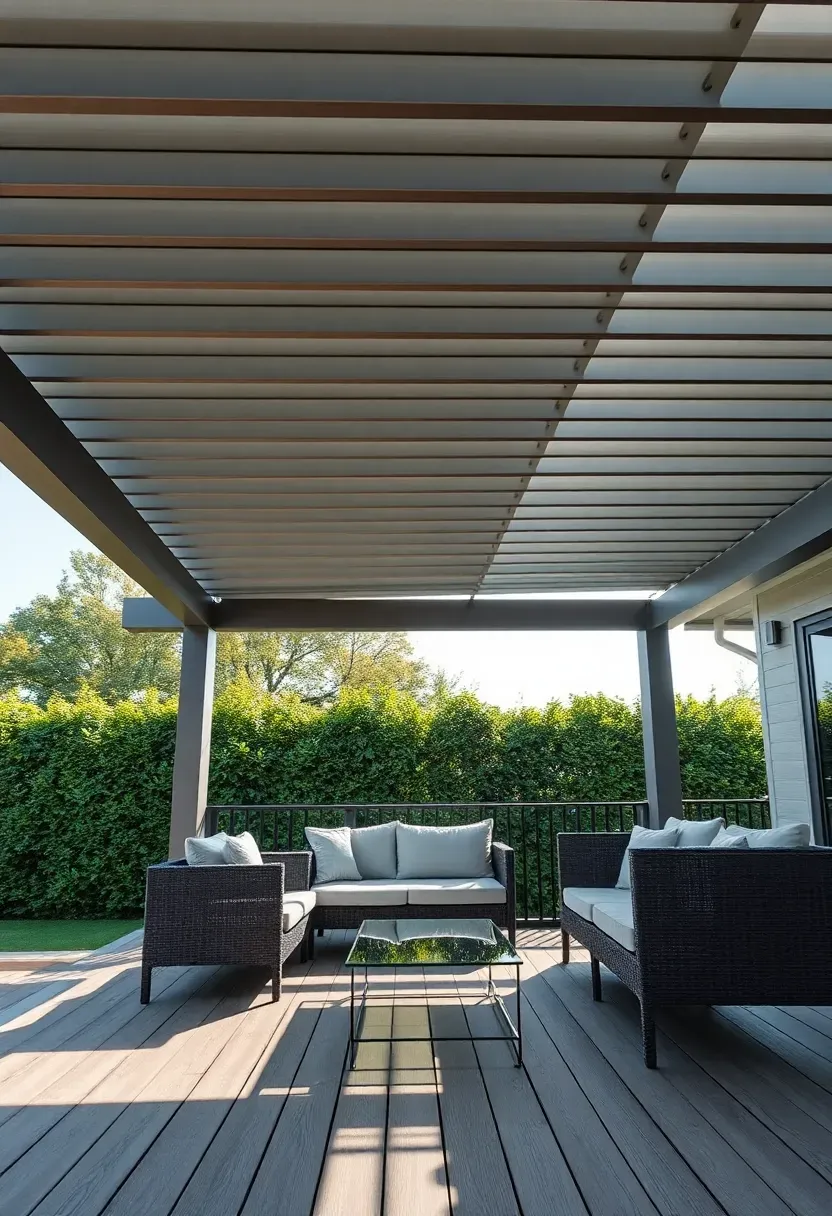
A louvered pergola has aluminum slats that rotate between fully open and fully closed. Open, they let breeze and dappled light through. Closed, they seal tight enough to block rain. Motorized models adjust slat angle via remote control or smartphone app, and some include rain sensors that close automatically.
What It Costs
Expect $5,000 to $15,000 installed for a 10x12 foot motorized louvered system. That is steep, but these are permanent structures that replace both an awning and a traditional pergola. The aluminum does not rot, warp, or need repainting.
Choose If
- You want shade control throughout the day without moving anything
- Your budget allows a long-term investment
- You prefer a clean, modern look over draped fabric
Recommended
Items for this idea
7. DIY PVC Pipe Shade Structure
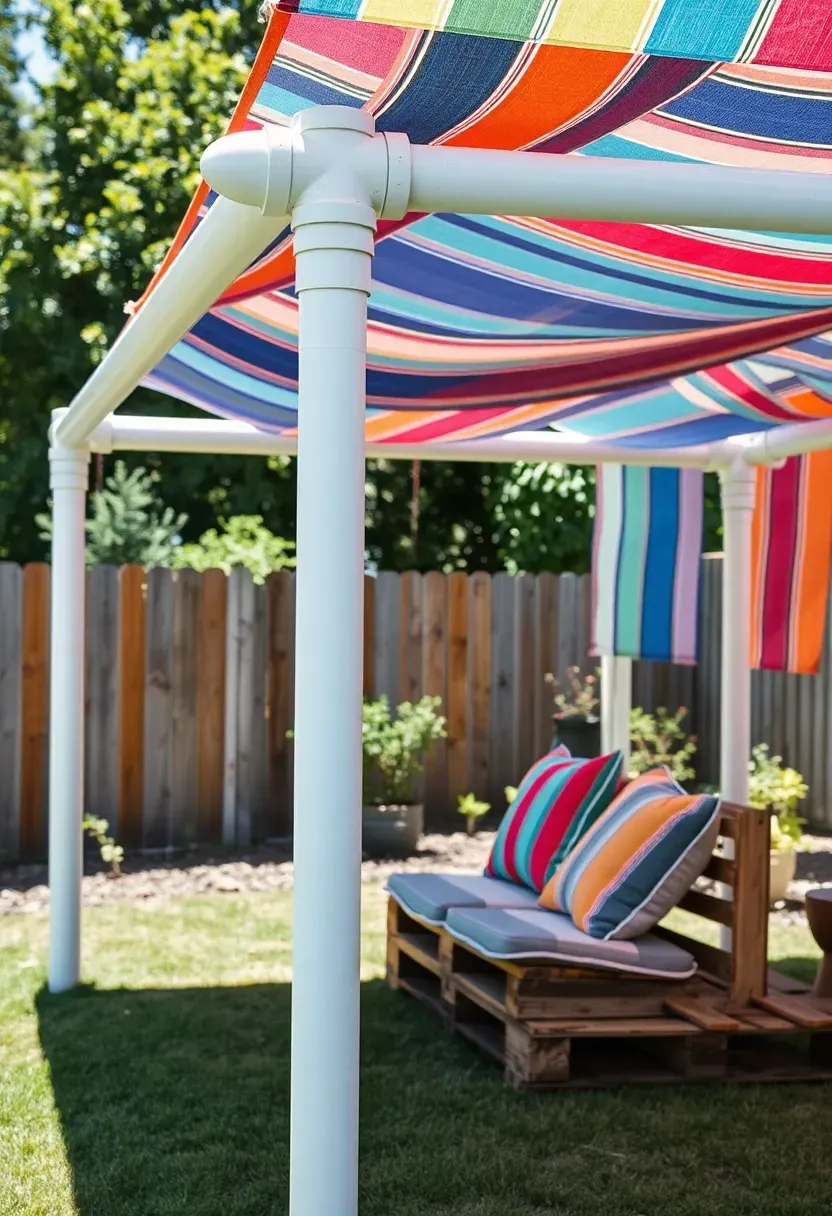
This is the budget king. Schedule 40 PVC pipe from any hardware store, a handful of elbow and tee connectors, and a few yards of outdoor fabric make a shade structure for under $75. The curved shape you get by bending longer PVC sections creates an arch that sheds rain naturally. These are not permanent — UV breaks down PVC over a few seasons — but they are perfect for renters or anyone testing shade placement before committing to something more expensive.
Steps
- Build a rectangular base frame from 1-inch PVC using tee connectors at the corners
- Insert flexible PVC arches into the tee fittings to create a tunnel or dome shape
- Drape outdoor fabric over the arches and secure with zip ties or fabric clips
- Stake the base to the ground with rebar pins through the bottom pipes
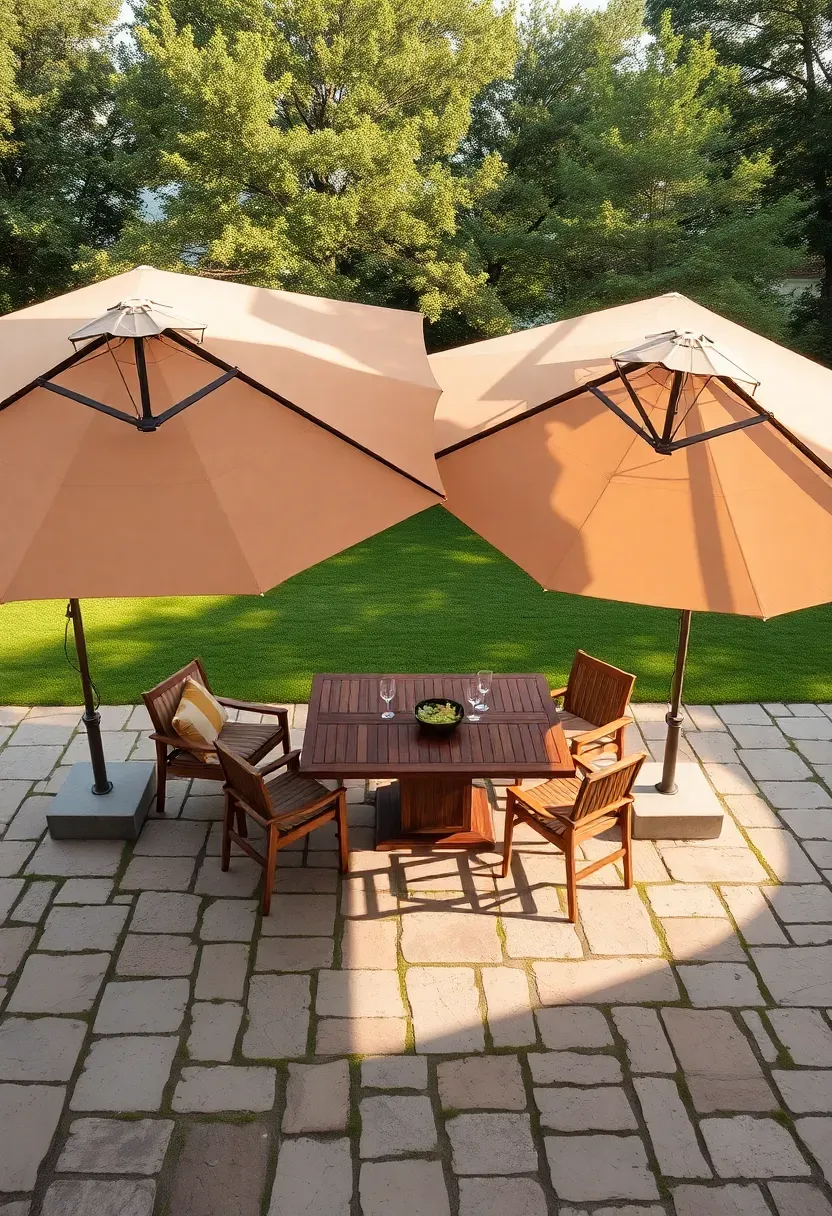
8. Cantilever Umbrella Cluster
Umbrellas vs. Awnings
A single cantilever umbrella covers about 80 square feet. Cluster three together and you shade an entire dining and lounge zone without attaching anything to your house. The offset pole design means no center post blocking your table. They cost less than a fixed awning, and you can reposition them seasonally.
Picking the Right Ones
Look for a base weight of at least 100 pounds per umbrella — underfilled bases tip in moderate wind. Aluminum poles outlast steel. Sunbrella or equivalent solution-dyed acrylic fabric holds color for five or more years. Crank-lift mechanisms beat push-up designs for anything over nine feet in diameter.
Recommendation
Best for people who rent, move frequently, or want flexible shade that can shift with the sun throughout the day.
Recommended
Items for this idea
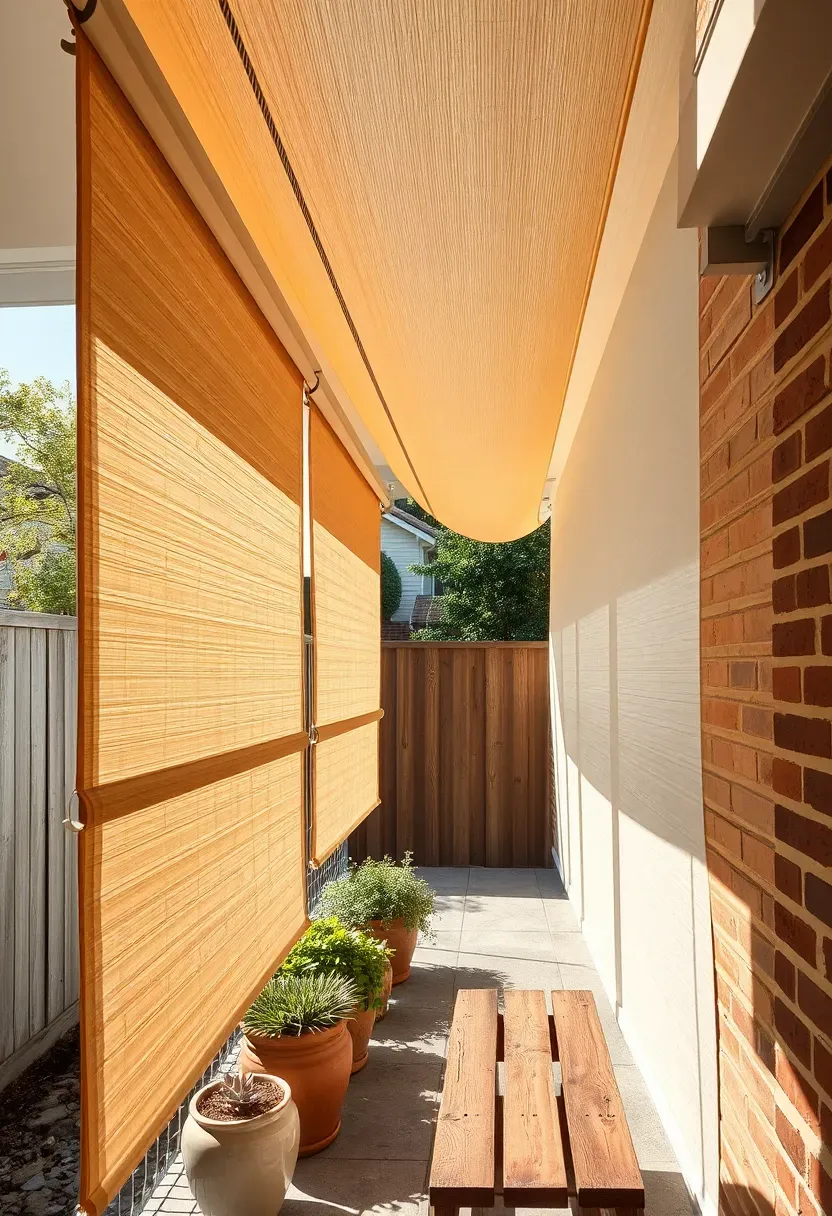
9. Bamboo Roll-Up Shade
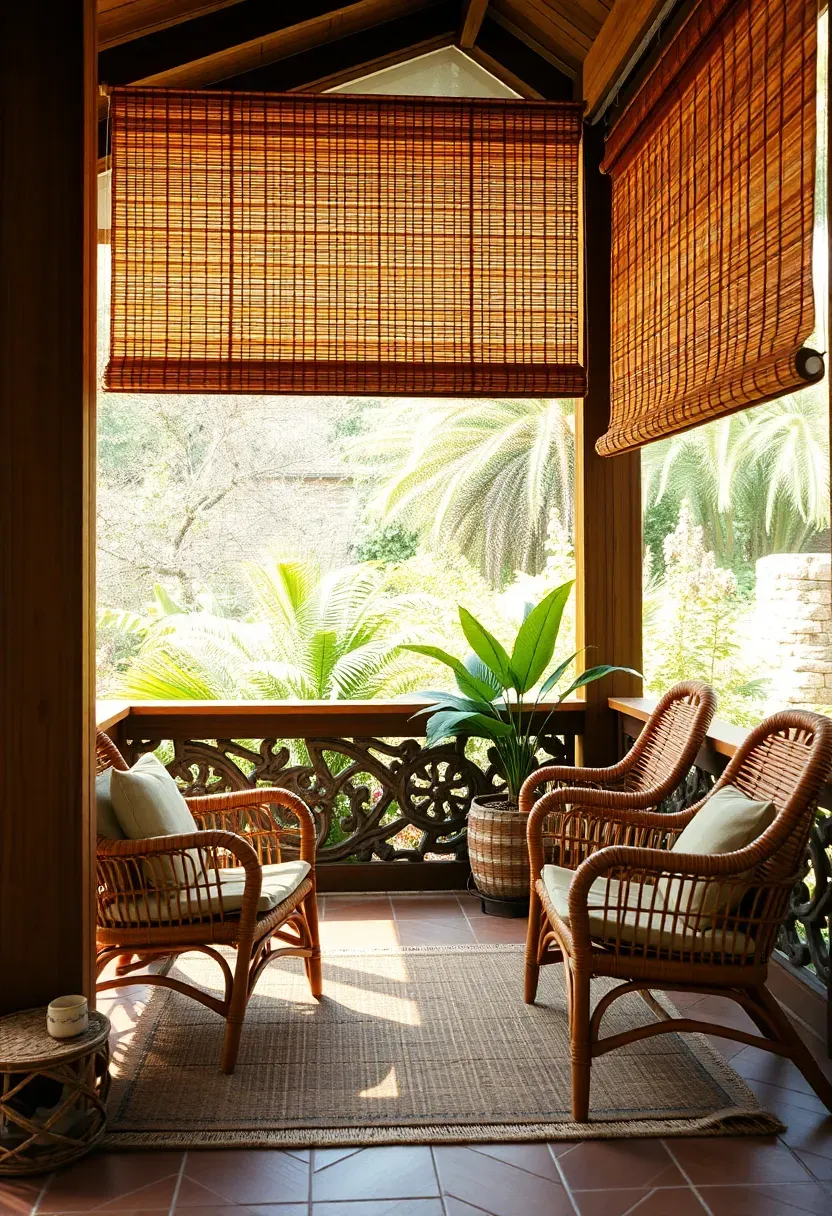
Bamboo roll-up shades bring a warm, natural texture that fabric and metal cannot match. Mounted between porch columns or under a pergola overhang, they roll down to filter sunlight without blocking it entirely. The woven slats let air through while cutting glare. Standard widths run from three to eight feet, and they cost $30 to $120 each depending on width and weave density. They work best as a secondary shade layer combined with a solid overhead structure.
Tips
- Treat untreated bamboo with a UV-resistant spray or marine sealant to prevent splitting
- Use cord-lock mechanisms instead of spring rollers — they hold position more reliably
- Mount them slightly inside the post line so they do not catch side gusts
10. Motorized Retractable Awning
If you already considered a manual retractable awning, the motorized upgrade is worth the extra $300 to $500. A tubular motor inside the roller tube extends and retracts the awning via remote control or wall switch. Higher-end units integrate with smart home systems, so you can schedule opening times or trigger retraction when a wind sensor detects gusts above a set threshold. This matters because forgetting to retract a manual awning in a sudden storm is the number one cause of awning damage.
Tips
- Hardwire the motor to a dedicated circuit rather than using plug-in adapters
- A wind sensor set to retract at 20 mph provides a good balance between usability and protection
- Battery backup motors cost more but keep working during power outages
Recommended
Items for this idea
11. Cedar Pergola with Draped Fabric
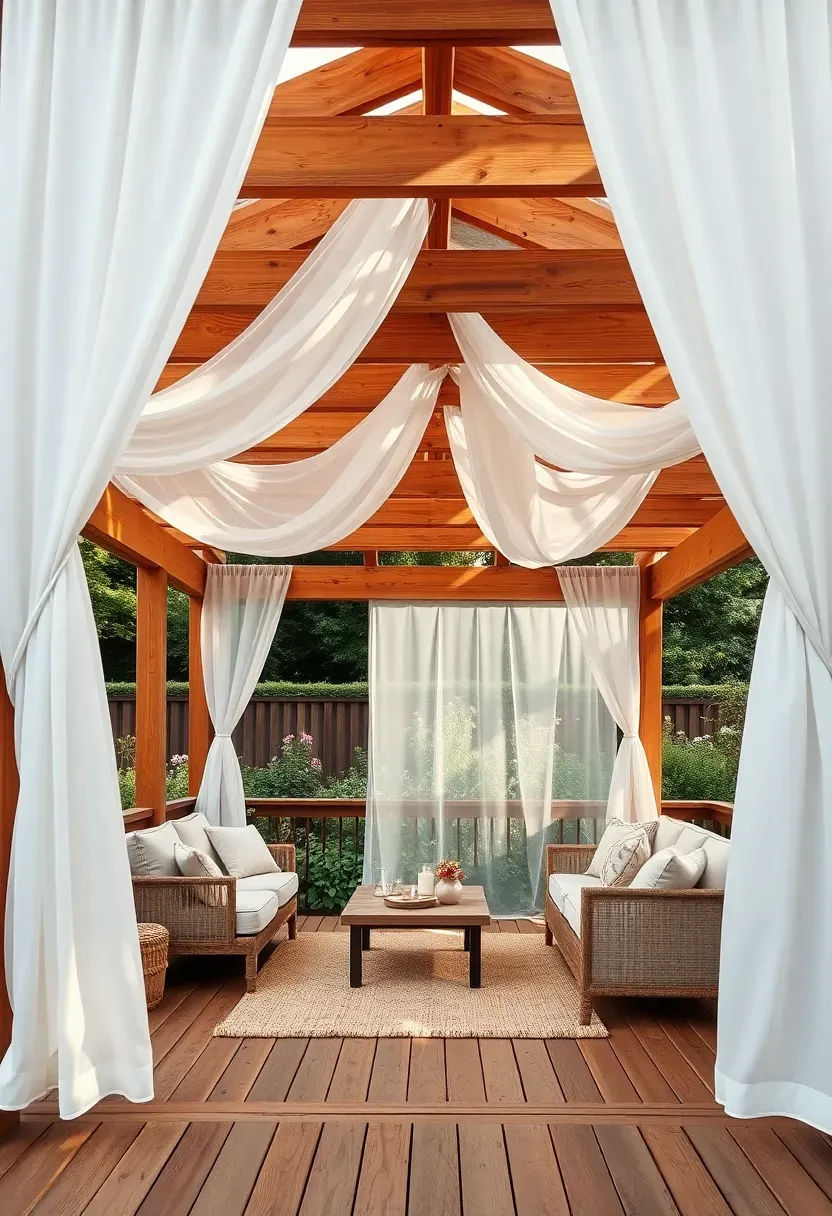
Raw cedar ages into a silver-gray tone that looks deliberate. Draping sheer outdoor fabric between the rafters adds soft, diffused shade without the rigid look of a solid canopy. The fabric billows slightly in breeze, which gives the space a relaxed feel that fixed structures lack. Use stainless steel eye bolts screwed into the rafters and thread the fabric through in a wave pattern, leaving gentle swags between each attachment point.
Tips
- Western red cedar resists rot naturally and does not require sealing, though an annual oil treatment maintains the original warm color
- Sheer fabric provides about 50% shade — pair with denser panels at the west end where afternoon sun is strongest
- Leave fabric loose enough to remove for washing two or three times per season
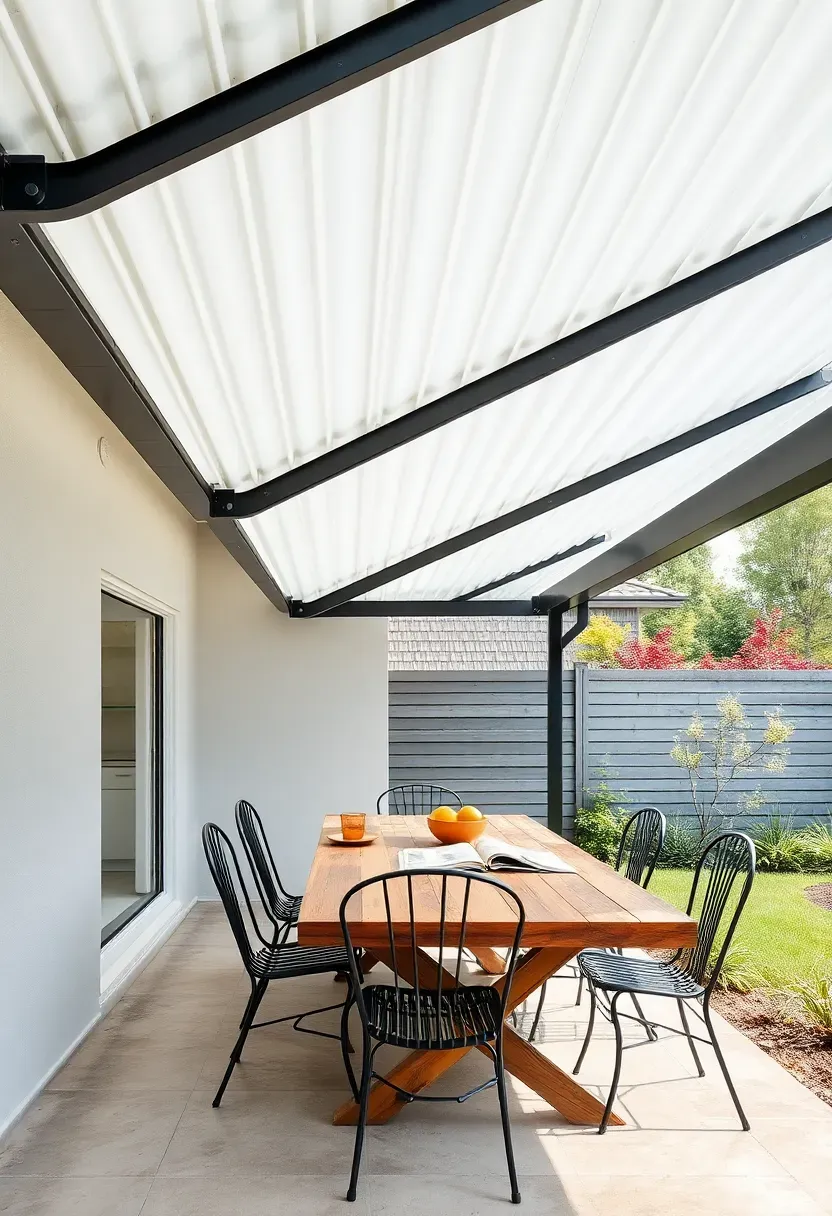
12. Corrugated Polycarbonate Roof
Clear vs. Tinted
Polycarbonate roofing panels block rain completely while still allowing light through. Clear panels let in about 90% of visible light — bright but still sun-exposed. Tinted or opal panels cut light transmission to 50-60%, creating actual shade underneath while keeping the space from feeling dark. Most people prefer the opal or bronze tint for backyard use.
Installation Basics
Mount panels on aluminum or wood purlins spaced 24 inches apart. Use rubber-gasketed screws to prevent leaks at fastener points. Overlap panels by one corrugation and run a bead of silicone along the seam. Slope the roof at least one inch per foot for drainage.
Choose If
- You want full rain protection without a dark, enclosed feeling
- Your area gets frequent afternoon showers during outdoor season
- You prefer a semi-permanent structure that costs less than a full roof extension
Recommended
Items for this idea
13. Tensioned Cable Shade System
Stainless steel cables stretched between posts or walls create a framework for sliding fabric panels. The panels move along the cables like curtains, so you can open and close shade sections independently. This system works well for long, narrow spaces like side yards or wraparound decks where a single large awning would be impractical. Marine-grade cable with turnbuckle tensioners keeps everything taut and prevents sagging under fabric weight.
Tips
- Use 1/8-inch or 3/16-inch stainless steel cable rated for outdoor rigging
- Space cables no more than 30 inches apart so fabric panels do not droop between them
- Grommeted fabric panels with stainless steel clips slide more smoothly than sewn sleeves
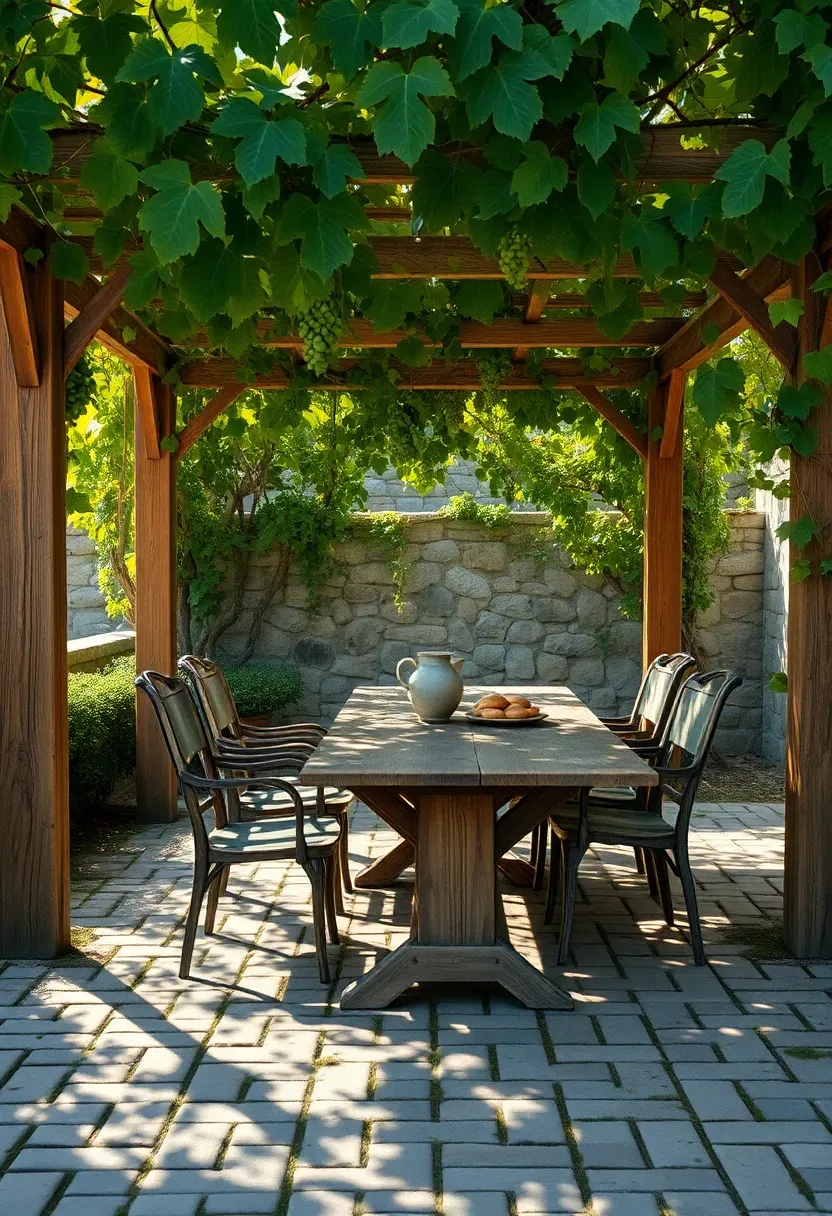
14. Vine-Covered Trellis Awning
This is a long game — three to five years to full coverage — but the result is a living shade canopy that no manufactured awning can replicate. Build a sturdy wood or metal trellis, plant vigorous climbing vines at each post, and train them across the top. Grapevines, wisteria, and trumpet vine are the fastest growers. The canopy is seasonal, which actually works in cooler climates where you want winter sun but summer shade.
Tips
- Build the trellis structure strong enough to support several hundred pounds of mature vine weight
- Wisteria is aggressive — plant it only where you can prune it regularly or it will take over adjacent structures
- Grape vines double as a shade source and a snack supply by midsummer
Recommended
Items for this idea
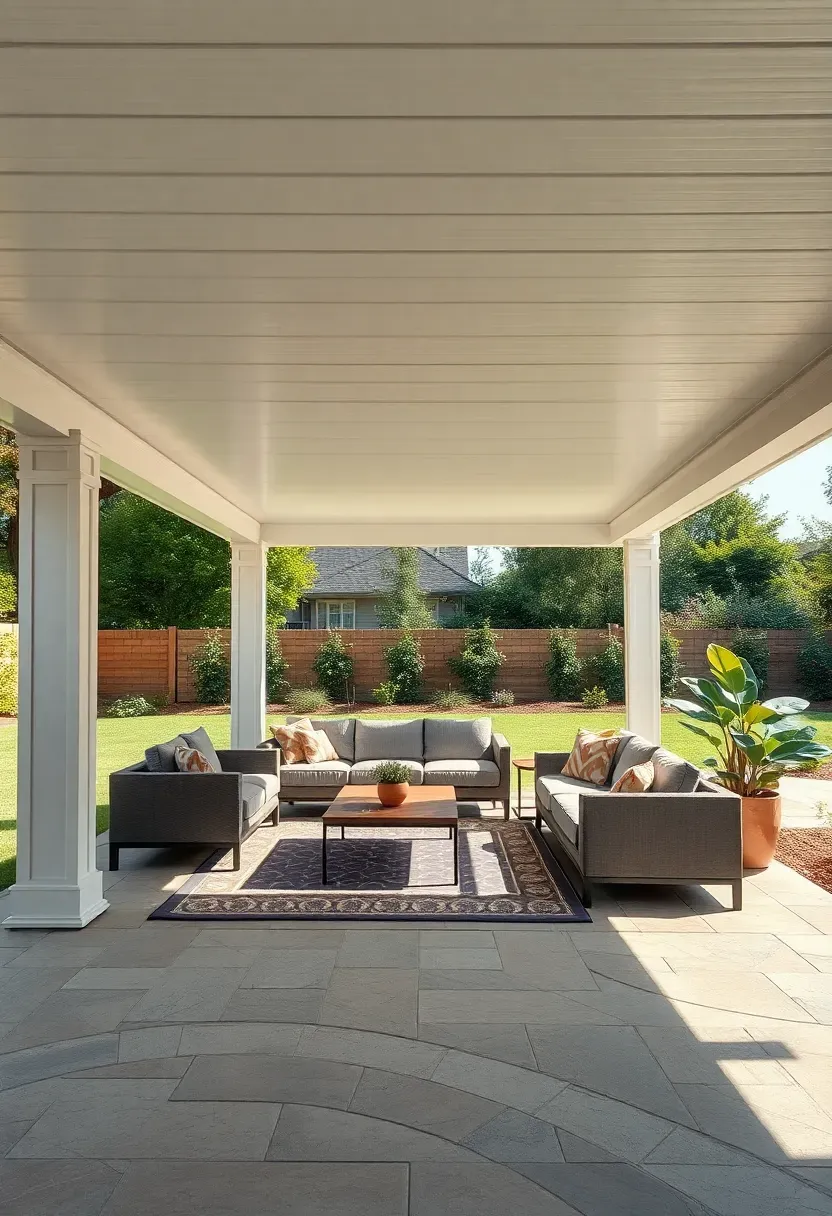
15. Aluminum Patio Cover
An aluminum patio cover is essentially a permanent roof extension. Flat or slightly pitched panels attach to the house fascia on one end and rest on support columns on the other. Unlike wood, aluminum does not rot, warp, or attract termites. Factory-applied baked enamel finishes last decades without repainting. Standard kits for a 10x20 foot area run $2,000 to $5,000 before installation. Building permits are usually required since these are permanent structures.
Considerations
- Flat roof designs need built-in guttering to handle rain runoff
- Insulated panels (sandwich construction with foam core) reduce heat transfer and dampen rain noise
- Column placement matters — set them where they do not block foot traffic or sightlines
16. Canvas Drop-Arm Awning
What Makes It Different
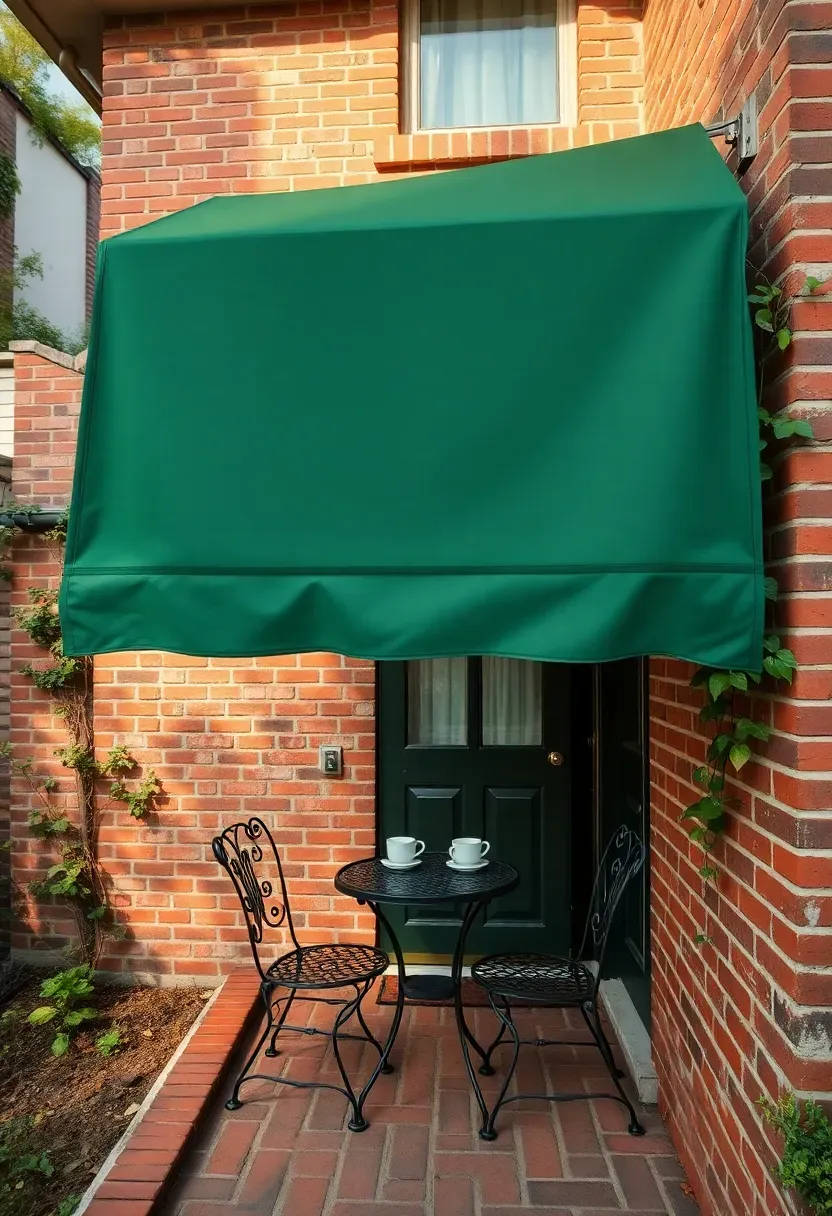
A drop-arm awning has hinged arms that let the front edge swing down to any angle. Fully extended horizontally, it works like a standard awning. Angled downward, it blocks low-angle morning or evening sun that a horizontal awning misses. This adjustability makes it especially useful on east- or west-facing walls where the sun comes in sideways.
Best Uses
Covering a narrow patio along the house wall, shading a back door entry area, or providing adjustable shade for a small dining spot. The drop-arm mechanism keeps the footprint compact — these rarely extend more than eight feet from the wall.
Recommendation
Good for smaller patios where a full retractable awning would be overkill. Canvas options start around $150 for manual models.
Recommended
Items for this idea
17. Shade Sail with LED Lights
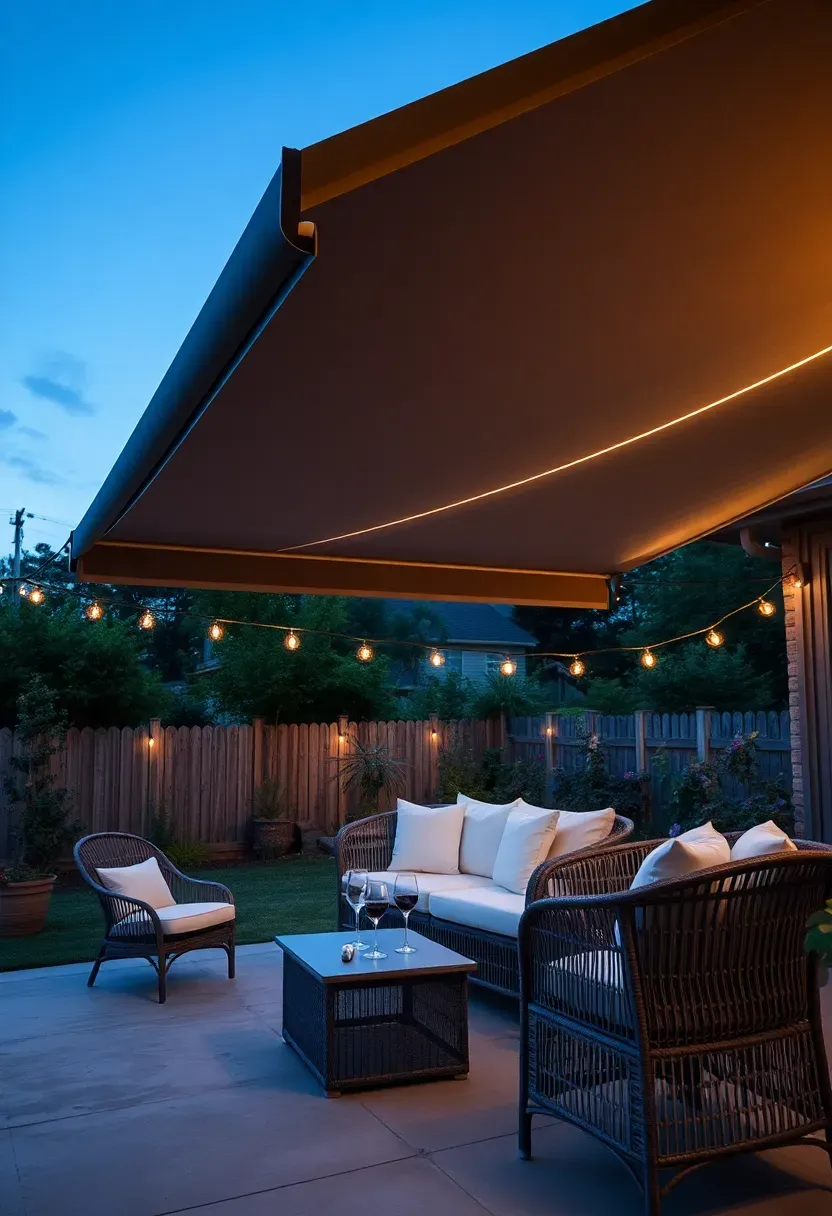
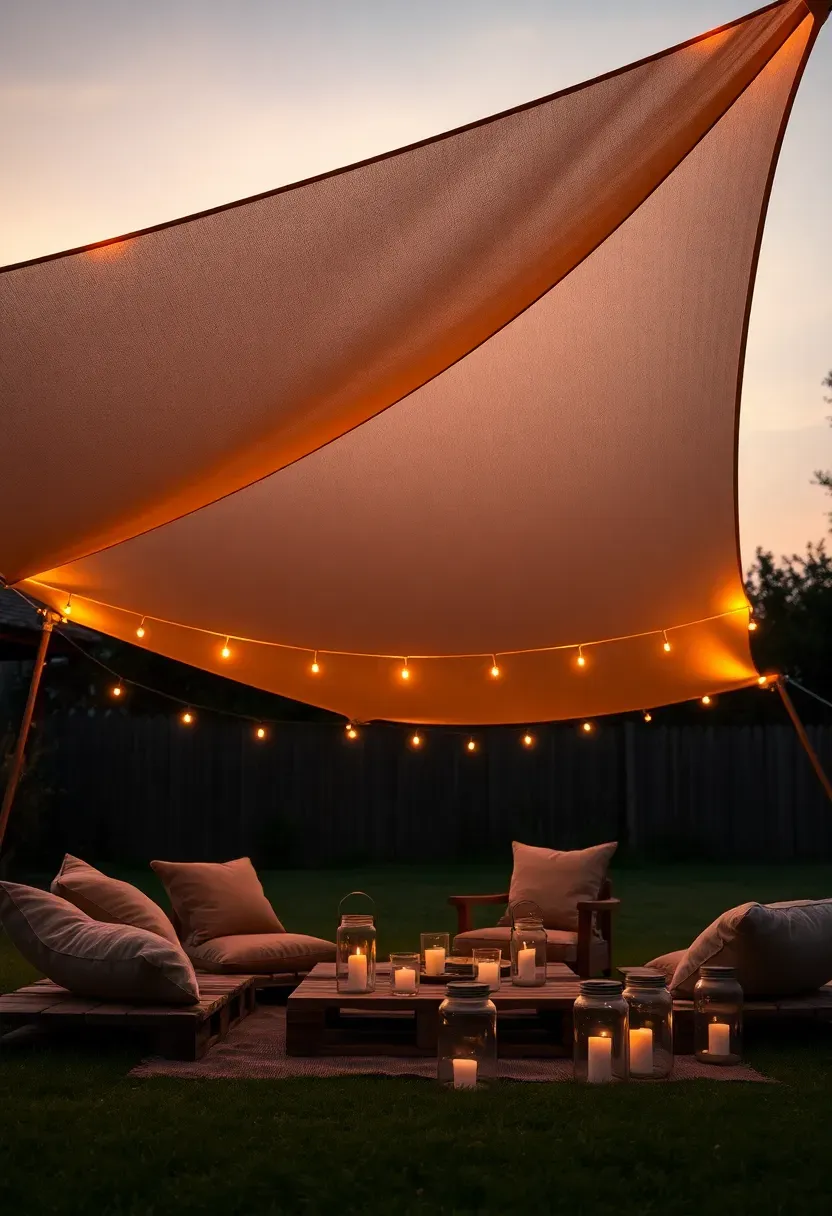
A shade sail that doubles as evening lighting eliminates two problems with one installation. Some sails come with LED strips stitched along the edges or attachment cables. Others work better with separate string lights draped underneath, using the sail as an anchor framework. The sail handles daytime shade, and the lights extend your outdoor hours without additional hardware.
Tips
- Solar-powered LED strips along the sail edges charge during the day and light up automatically at dusk
- Warm white (2700K) LEDs create a more inviting atmosphere than cool white
- If adding separate string lights, run them in parallel lines underneath the sail rather than in a random web — it looks more intentional
18. Glass Canopy Over Deck
The Appeal
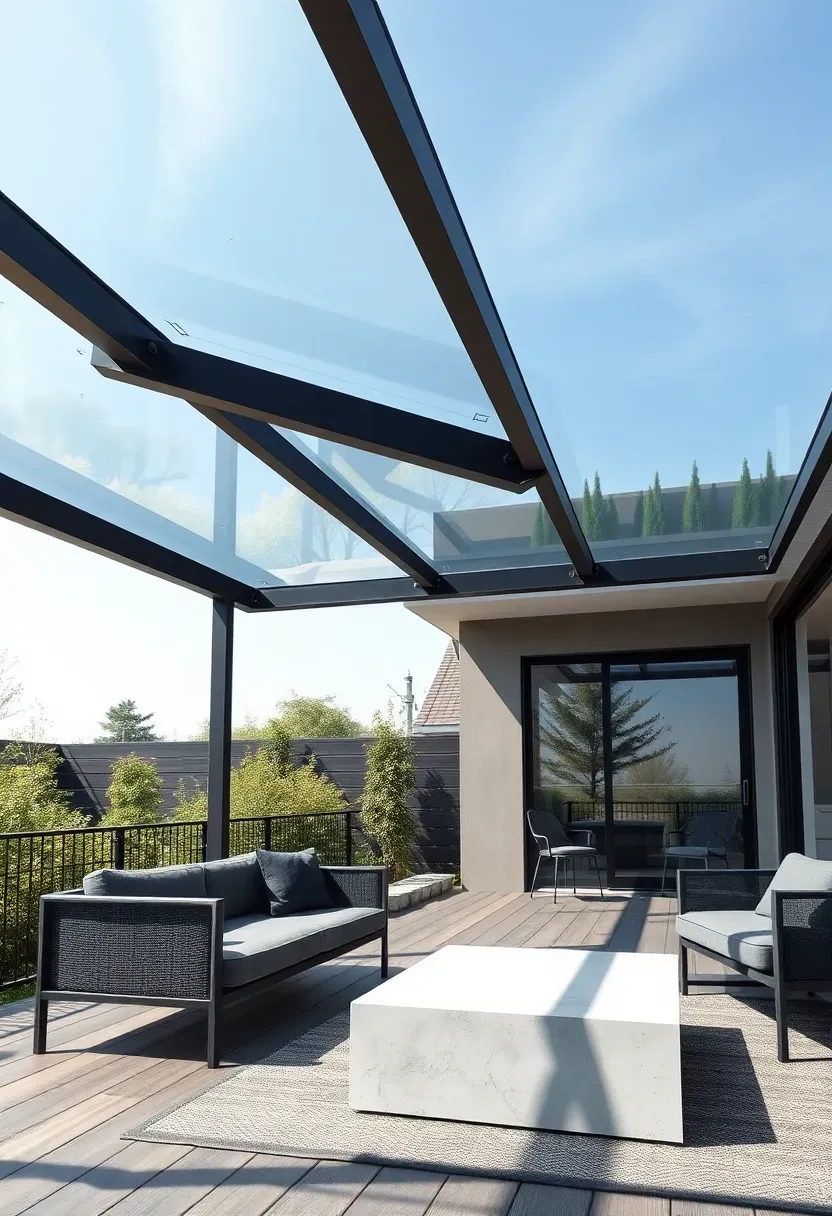
A glass canopy keeps rain off while preserving the open-sky feeling that solid roofs eliminate. Tempered or laminated safety glass panels mounted on a slim steel or aluminum frame create a surprisingly light look. You still see clouds, stars, and treetops overhead. It feels less like sitting under a roof and more like sitting outside with an invisible barrier.
The Reality Check
Glass canopies cost $200 to $400 per square foot installed — roughly four times more than polycarbonate. They need cleaning to stay clear. And they do not block sun, so you still need supplemental shade underneath on hot days. They solve the rain problem, not the heat problem.
Choose If
- Rain is your main enemy, not sun
- You have the budget for a premium look
- You want an unobstructed view of the sky
Recommended
Items for this idea
19. Rustic Wood Lean-To Awning
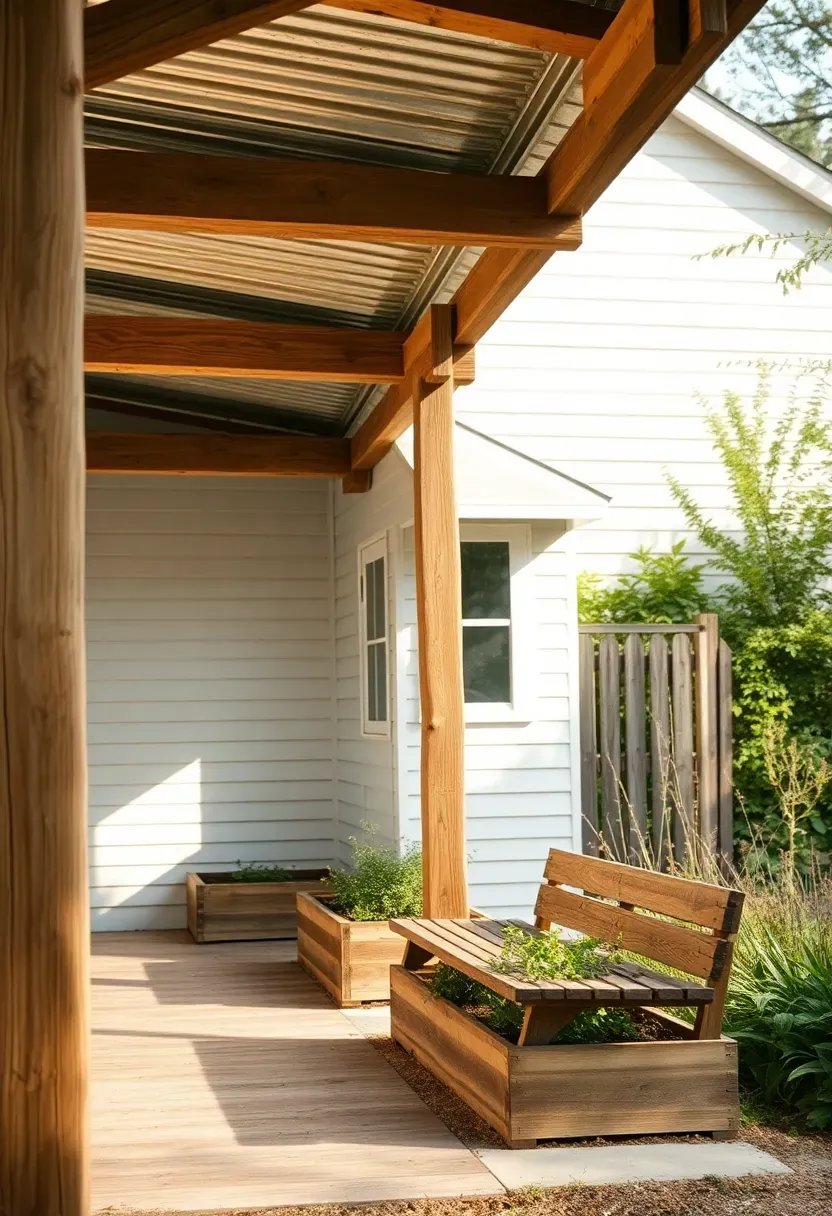
A lean-to is one of the oldest shade structures — a single-slope roof propped against a wall. Building one from rough-hewn timbers and corrugated metal roofing gives it a farmhouse character that suits cottage-style homes and rural properties. The construction is straightforward: two or three posts support a beam, rafters run from the beam to a ledger board on the house wall, and roofing goes on top. Total material cost for a 10x8 foot lean-to is typically $400 to $800.
Tips
- Use pressure-treated or naturally rot-resistant wood like cedar, locust, or Douglas fir for the posts
- Slope the roof away from the house at a minimum of 2:12 pitch for proper drainage
- Leave the underside of the roof exposed for a more rustic look rather than adding a ceiling
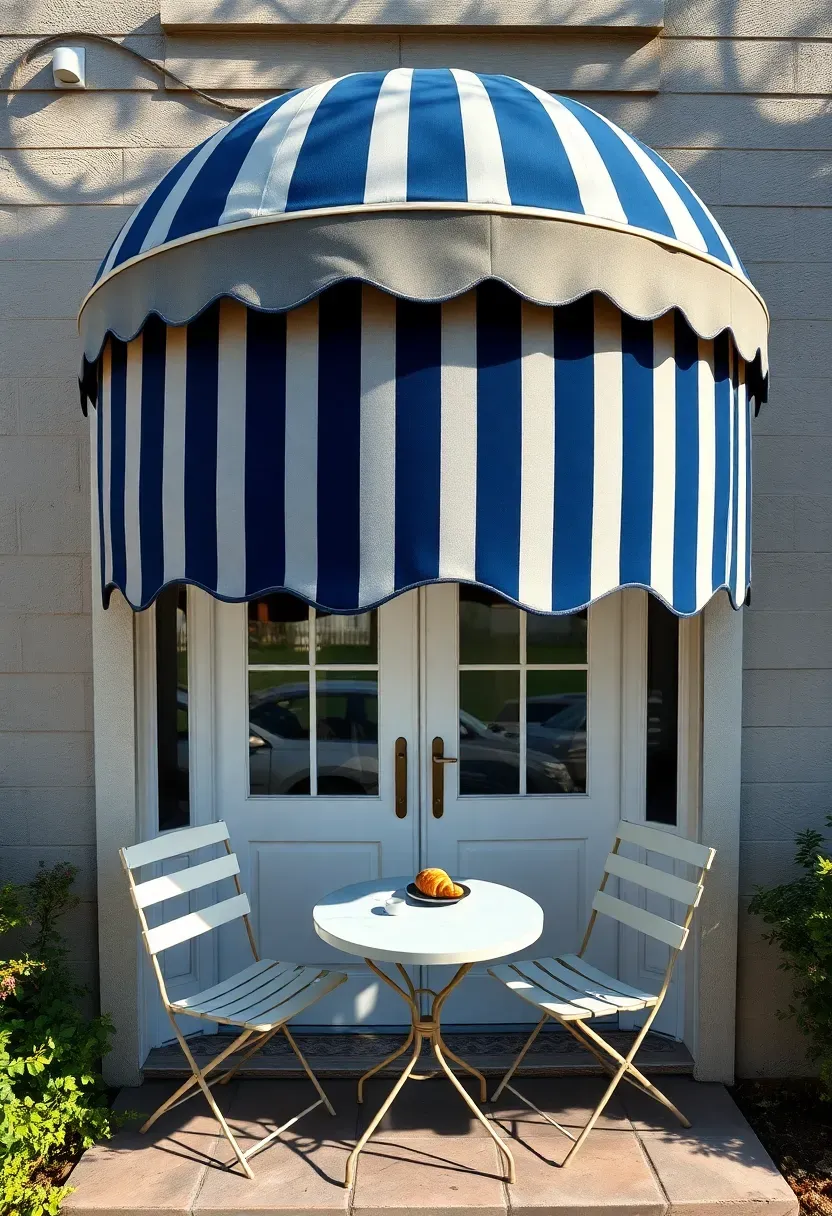
20. Striped Bistro-Style Awning
Stripes instantly give a backyard the look of a European sidewalk cafe. Classic combinations — navy and white, forest green and cream, red and ivory — work with almost any house exterior. These are typically fixed or semi-fixed dome-shaped awnings mounted above a door or window. The scalloped valance along the front edge is the signature detail. Most are custom-made by local awning shops, though prefab options exist for standard door widths.
Tips
- Stick to two-color stripes for a clean, classic look — multicolor patterns read more casual
- Dome-shaped frames shed rain better than flat profiles and hold up to snow loads more effectively
- Order fabric with a Teflon or fluorocarbon finish to resist staining from bird droppings and tree sap
Recommended
Items for this idea
21. Sliding Shade Panels on Wire
How This Differs from Curtains
Outdoor curtains hang vertically. Sliding shade panels mount horizontally overhead on parallel wires, functioning like a manual version of a retractable awning. You pull them open or closed by hand. Because each panel operates independently, you can create custom shade patterns — closed over the dining table, open over the planter beds.
Installation
Run two or more parallel stainless steel cables from wall brackets to post brackets. Thread grommeted fabric panels onto the cables. Add stops at each end to prevent panels from sliding off. The whole setup costs $100 to $300 in materials depending on span length.
Best For
- Long patios or covered walkways
- Anyone who wants adjustable shade without motorized hardware
- Renters who can mount wall brackets with removable anchors
22. Insulated Patio Roof Panel
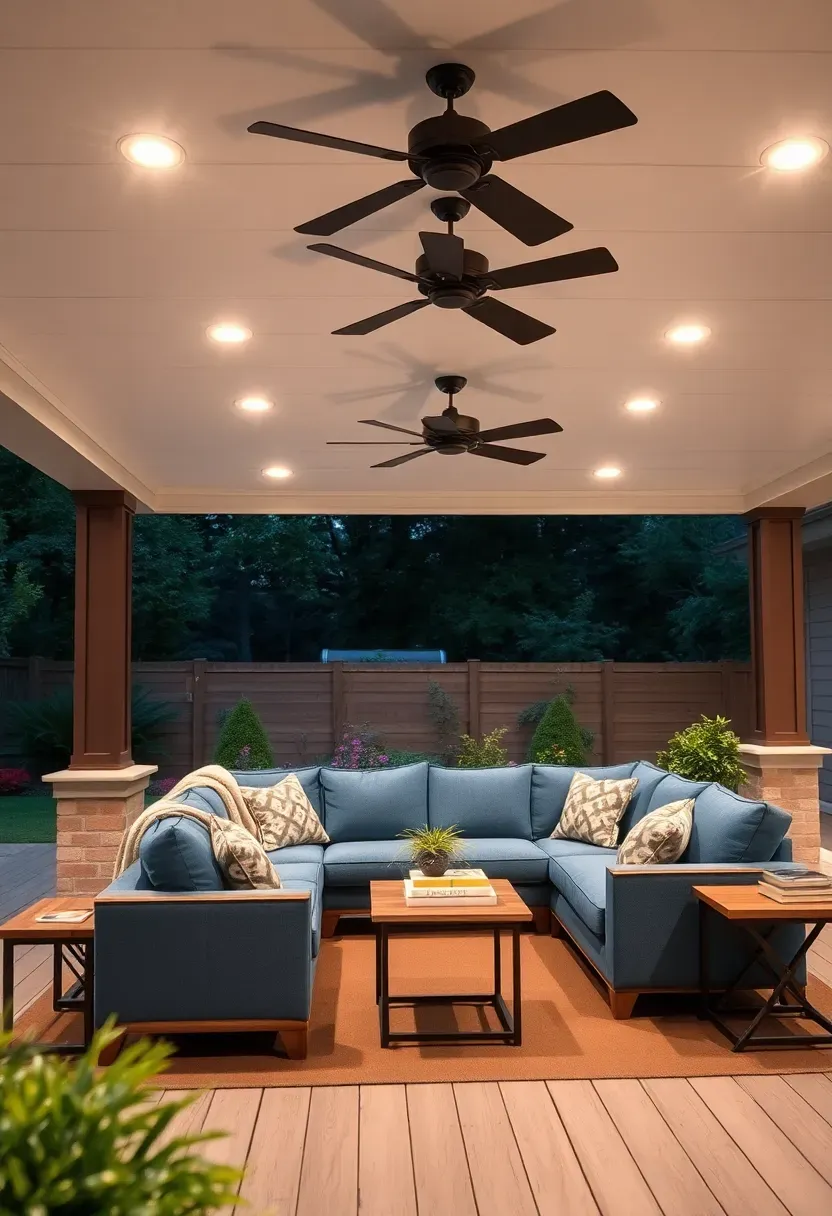
Insulated panels sandwich a foam core between two metal skins, creating a roof that blocks heat, rain, and sound. Underneath, the temperature stays noticeably cooler than under a single-layer metal or polycarbonate roof. These panels also dampen the drumming noise of rain, which matters if you use the space during storms. Integrated gutter channels at the panel seams handle drainage. The result is an outdoor room that feels more like an extension of the house than a covered patio.
Tips
- Three-inch thick panels provide meaningful insulation — thinner panels reduce rain noise but do less for heat
- White underside finish reflects light upward and keeps the space bright
- Plan for electrical runs during installation if you want ceiling fans or recessed lights
Recommended
Items for this idea
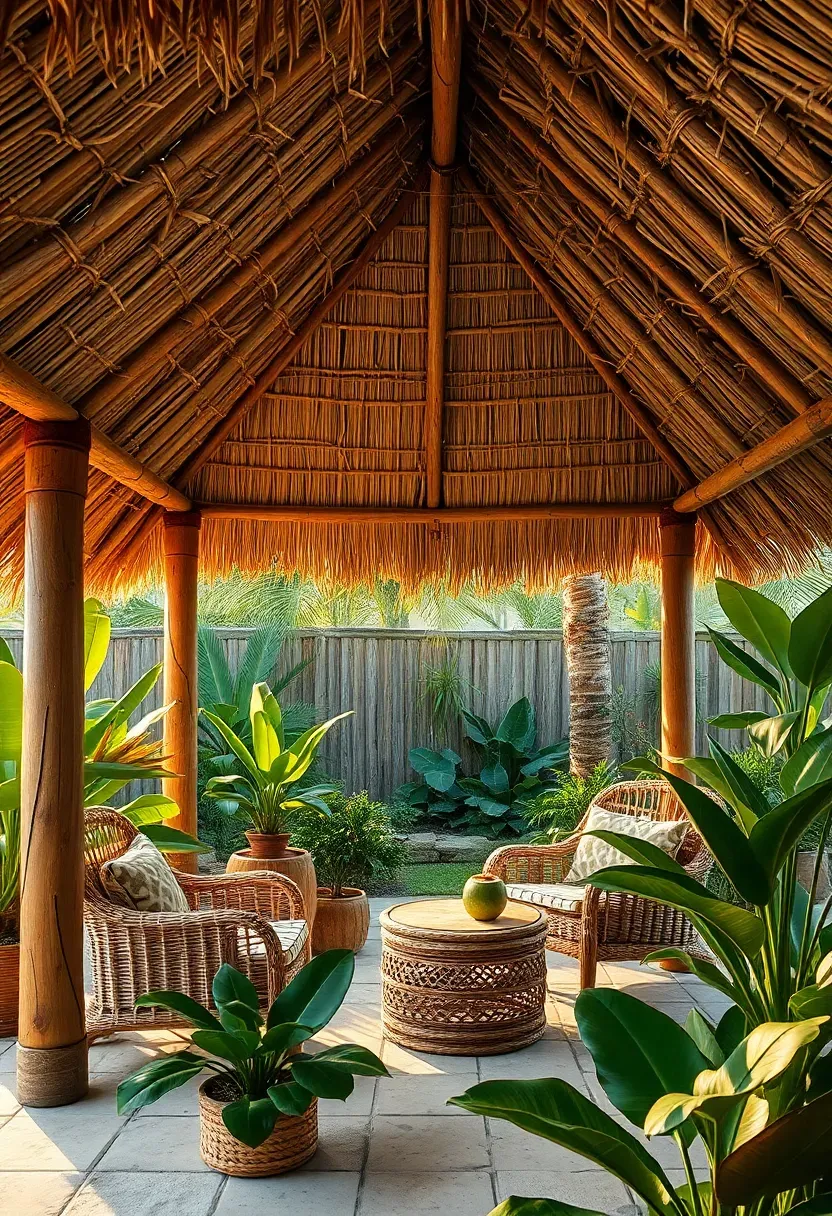
23. Natural Thatch Shade Roof
Thatch roofing — palm frond, reed, or synthetic alternatives — gives a backyard an immediate tropical or resort quality. Real thatch is surprisingly effective at temperature regulation because the layered material traps air pockets that insulate against heat. Synthetic thatch made from HDPE plastic looks convincing from a few feet away and lasts ten to fifteen years without the fire risk or insect problems of natural material.
Tips
- Natural palm thatch needs replacing every three to five years in humid climates but lasts longer in dry areas
- Fire-retardant treatments are available for natural thatch and are required by code in many areas
- Round or peeled log posts suit the thatched look better than squared lumber — they reinforce the organic aesthetic
Quick FAQ
How much does a basic backyard awning cost? A manual retractable fabric awning for a standard patio runs $200 to $800 depending on size and brand. Installation adds $100 to $300 if you hire someone. Permanent structures like aluminum patio covers or louvered pergolas start at $2,000 and climb from there.
Can I install a retractable awning on vinyl siding? Not directly into the siding itself. You need to mount the brackets through the siding into the wall studs or structural sheathing behind it. Use lag bolts long enough to penetrate at least two inches into solid framing. A mounting board behind the siding distributes the load if studs are not perfectly spaced.
Do awnings increase home value? Permanent shade structures like aluminum covers and louvered pergolas typically add value because they expand usable outdoor living space. Retractable fabric awnings are viewed more as personal preference items and may not add measurable resale value, though they make the home more attractive to buyers who prioritize outdoor living.
Which awning material lasts longest outdoors? Aluminum and steel structures outlast everything else — 25 years or more with minimal maintenance. For fabric, solution-dyed acrylic (like Sunbrella) holds up eight to twelve years. Polyester is the cheapest but fades and weakens after two to four seasons of UV exposure.
Are permits required for backyard awning installation? It depends on your municipality and the type of structure. Freestanding shade sails and retractable awnings rarely need permits. Permanent structures with footings — like aluminum covers, louvered pergolas, and lean-tos — usually require a building permit and may need to meet setback requirements.
An awning does not need to be complicated or expensive to change how you use your backyard. Start with what bugs you most — is it midday sun, afternoon glare, rain, or all three? Match that problem to the right structure type, then pick a material and style that fits your house. If you are unsure, a removable shade sail or pop-up canopy costs almost nothing and lets you test placement before committing to a permanent build.
Pinterest cover for 23 Backyard Awning Ideas for Shade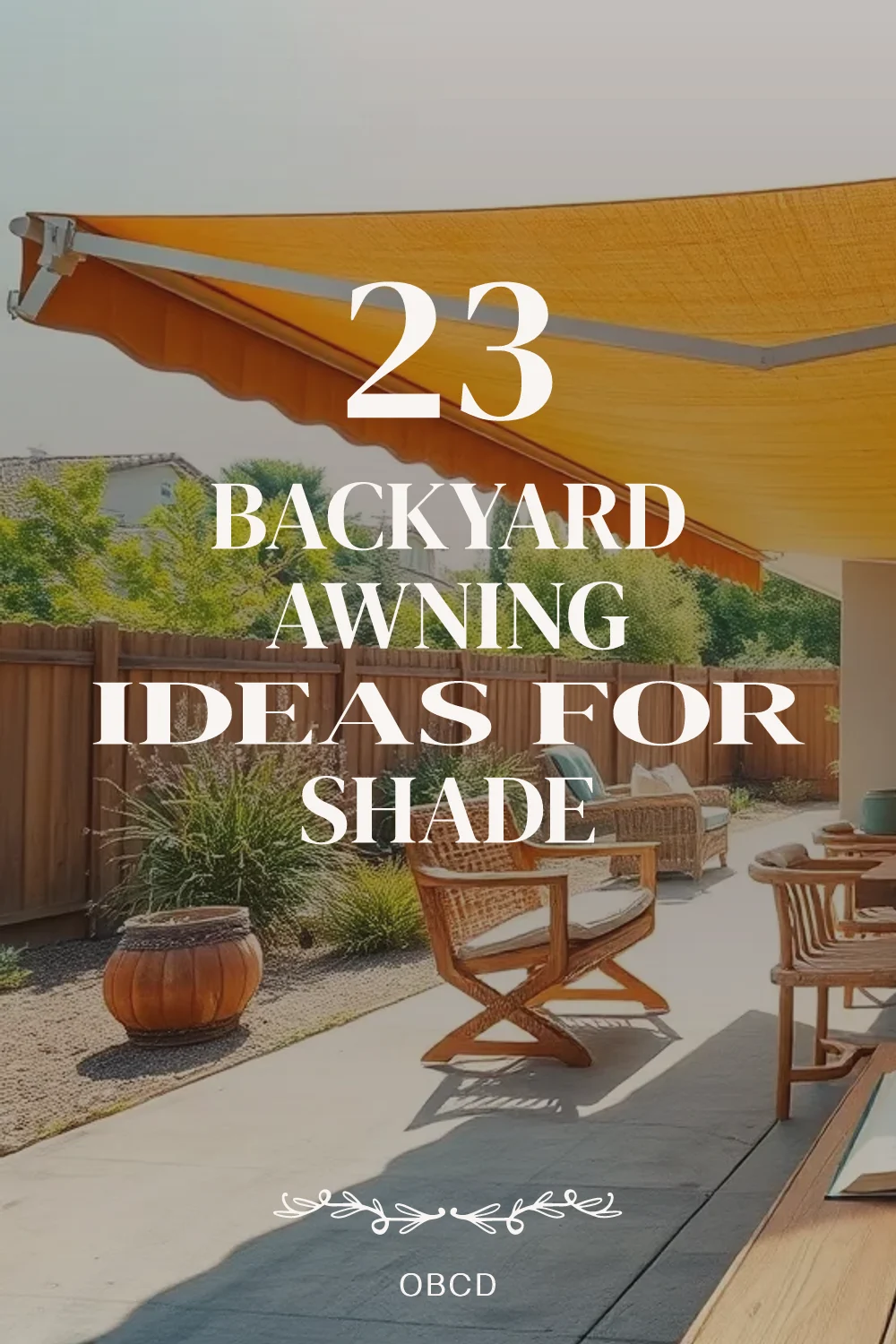
About the author
OBCD
CGI visualization and interior design content. We create detailed 3D renders and curate practical design ideas for every room in your home.