25 Backyard Canopy Ideas
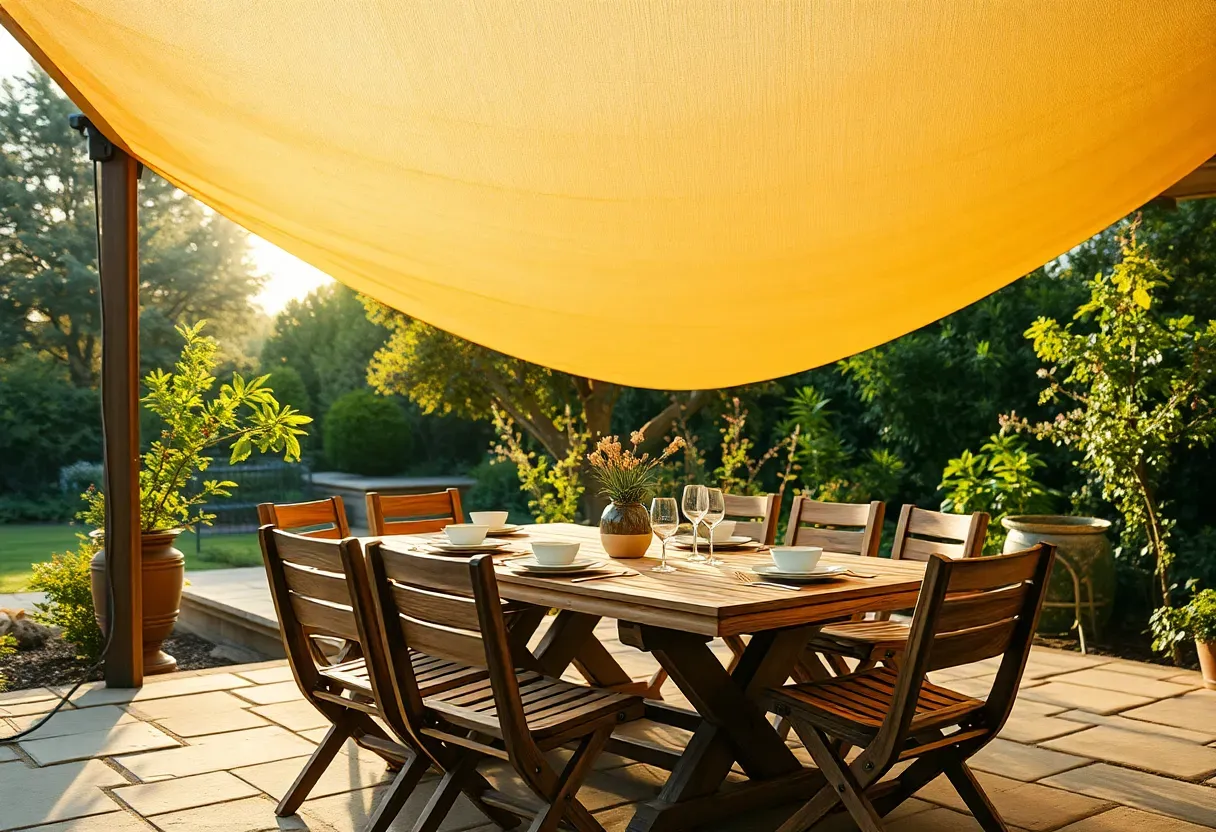
The gap between wanting to use your backyard and actually using it usually comes down to one thing: shade. A midday sun that turns patio furniture into griddles keeps most people indoors from May through September. The fix does not have to be expensive or permanent. A well-chosen canopy changes how you relate to your yard — suddenly lunch outside is a weekday habit, not a special occasion.
Here are 25 backyard canopy ideas covering every budget, style, and skill level.
Table of Contents
- Sail Shade Triangle
- Retractable Pergola Canopy
- Freestanding Pop-Up Gazebo
- Draped Fabric Between Trees
- Cantilever Umbrella Cluster
- Bamboo Roll-Up Canopy
- Attached Patio Awning
- Vine-Covered Trellis
- Cabana-Style Curtained Frame
- Polycarbonate Roof Panel
- Market Umbrella Row
- Tensioned Fabric Canopy
- Wooden Lattice Shade Structure
- Metal Frame with Canvas Top
- Shade Sail Layered Overlap
- Natural Grass Roof Hut
- Louvered Roof Pergola
- Parachute Canopy Repurpose
- Japanese-Inspired Timber Canopy
- String Light Canopy Grid
- Corrugated Metal Lean-To
- Fabric Swag Between Posts
- Living Roof Canopy
- Minimalist Steel and Linen Pergola
- Portable Clamp-On Canopy
1. Sail Shade Triangle
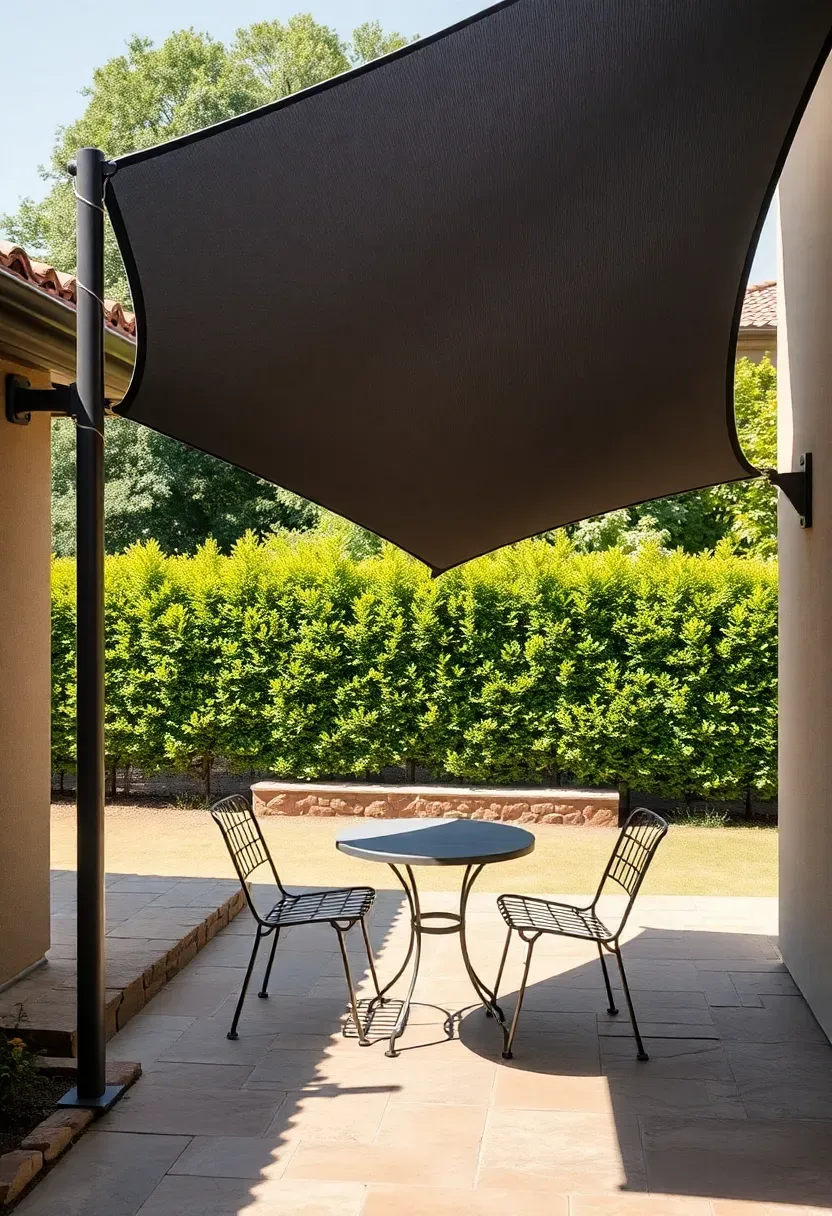
Triangular sail shades rank among the most affordable canopy options, and they look better than most solutions twice their price. A single triangle in a neutral color — charcoal, sand, or olive — mounted between two posts and a house bracket covers about 120 square feet of usable shade. The fabric is usually HDPE mesh, which blocks 90-95% of UV while letting rain pass through, so water pooling is not an issue.
What to get right
- Mount points need to be at different heights to create proper tension and drainage slope
- Stainless steel hardware resists rust; galvanized will stain the fabric within a year
- Replace the shade every 5-7 years as UV degrades even treated fabrics
We picked a few things that go well with this idea: LOVE STORY Triangle Sun Shade Sail (12ft) (★4.5), Shade&Beyond Triangle Sun Shade Sail (16ft) (★4.5) and SUNNY GUARD Triangle Sun Shade Sail (16ft) (★4.6). As an Amazon Associate we earn from qualifying purchases.
2. Retractable Pergola Canopy
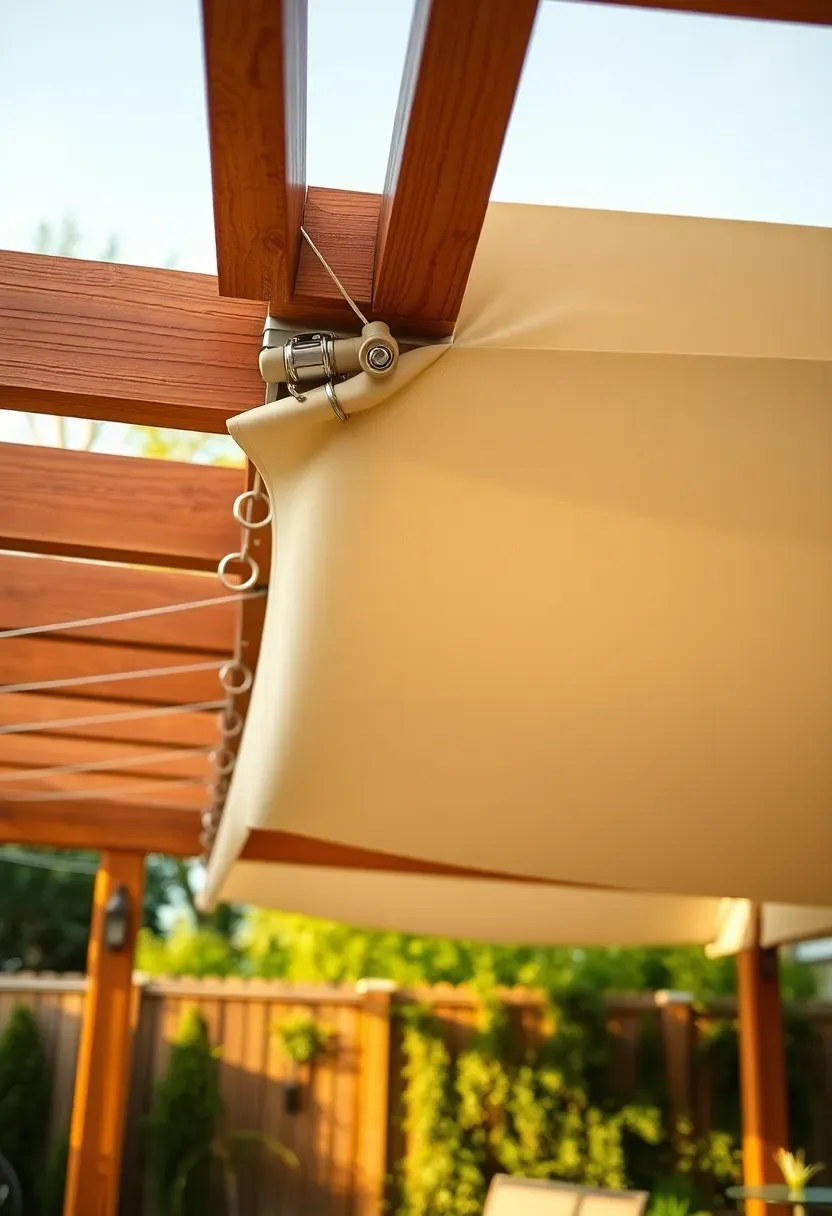
A pergola without a canopy is just an expensive way to frame sunlight. Adding a retractable fabric top — either manual slide or motorized track — gives you control over how much sun reaches the space below. On overcast days, pull it back and enjoy the open sky. When the sun hits hard, extend it in under a minute.
Manual vs. Motorized
Manual slide systems cost $200-$500 and use a simple wire-and-ring setup. Motorized versions run $800-$2,000 but integrate with rain sensors and phone apps. For most homeowners, manual works fine — you are already outside when you need to adjust it.
Choose manual if
- Your pergola is under 14 feet wide
- You prefer fewer things that can break
Choose motorized if
- You want rain-triggered auto-close
- The pergola covers a hot tub or furniture you want to protect automatically
We picked a few things that go well with this idea: addlon LED Outdoor String Lights (100ft) (★4.6), LED Outdoor Patio String Lights (100ft) (★4.3) and Svater Commercial Grade Outdoor String Lights (105ft) (★4.6). As an Amazon Associate we earn from qualifying purchases.
3. Freestanding Pop-Up Gazebo
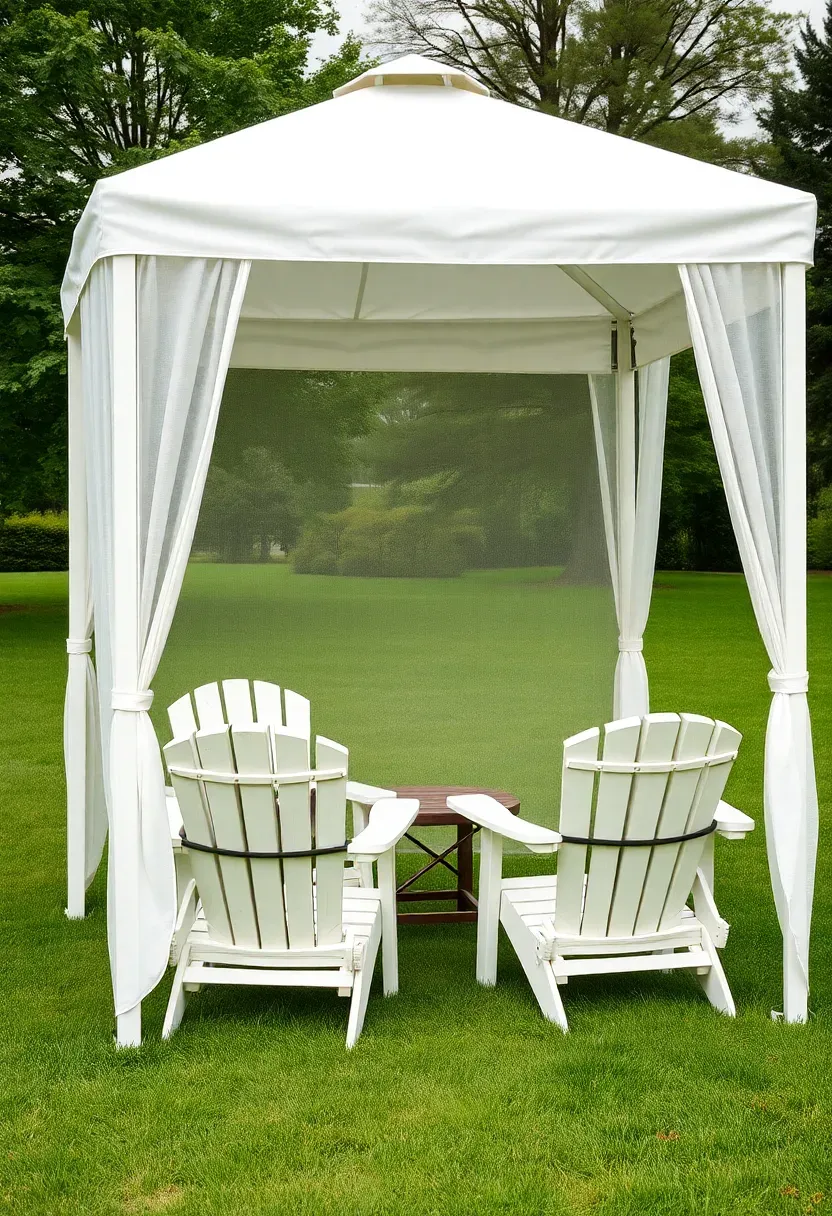
Pop-up gazebos get dismissed as party-rental leftovers, but the current generation of hardtop and semi-permanent models has changed that. A 10x12 steel-frame gazebo with a polyester canopy sets up in about two hours with two people, no concrete footings required. Anchor it with weighted plates or screw-in ground stakes depending on your surface. These work especially well for renters or anyone who wants shade without committing to a permanent structure.
Tips
- Look for models with mosquito netting sidewalls — they turn the gazebo into a screened room at dusk
- Darker canopy colors block more UV but trap heat underneath; lighter colors reflect heat
- Check wind ratings before buying; budget models fail at 25 mph gusts
We picked a few things that go well with this idea: VEVOR Retractable Patio Awning (118-inch) (★4.2), VEVOR Manual Retractable Patio Awning (12x10ft) (★4.2) and Yardenaler Retractable Patio Awning (12x10ft) (★4.4). As an Amazon Associate we earn from qualifying purchases.
4. Draped Fabric Between Trees
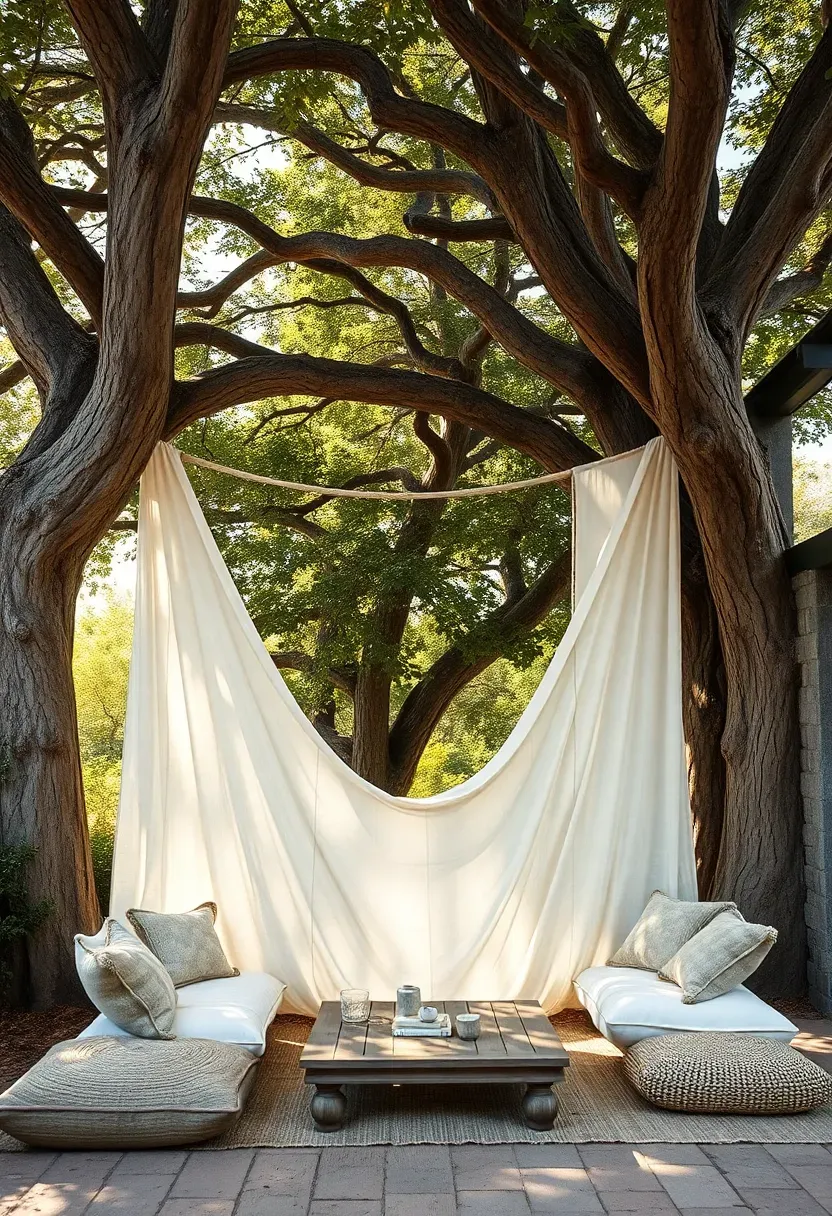
If you have two or more trees spaced 10-20 feet apart, you already own the support structure for a canopy. Outdoor-grade cotton canvas or polyester sheeting draped between trunks and secured with ratchet straps creates a relaxed, almost Mediterranean feel. The fabric sags naturally in the center, which is part of the charm — do not fight it with too much tension or you risk damaging the bark.
How to set it up
- Wrap tree-saver straps around each trunk at roughly 8-10 feet high
- Attach carabiners to the strap loops
- Run a steel cable or heavy paracord between the carabiners
- Drape fabric over the cable and secure edges with clips
Watch out
- Never use screws or bolts directly into living trees — the wounds invite disease and pests
- Take the fabric down before storms; wind loading between trees can snap branches
Recommended
Items for this idea
5. Cantilever Umbrella Cluster
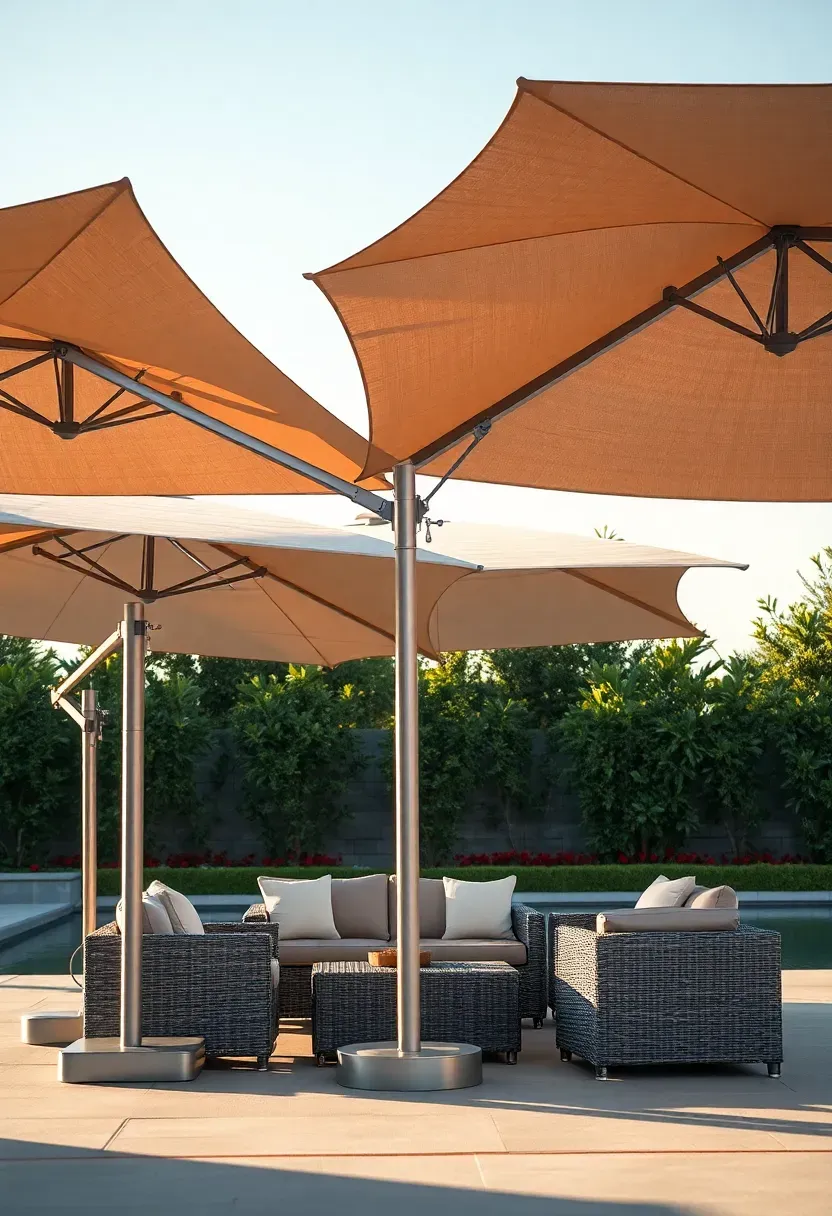
A single cantilever umbrella shades about 80 square feet. Group three together with overlapping coverage and you have a flexible canopy system that can be reconfigured as the sun angle changes through the day. The offset pole design means no center post blocking your table or seating arrangement, which is the main advantage over traditional patio umbrellas.
Tips
- Fill each base with sand, not water — sand does not grow algae or freeze and crack the tank
- 11-foot diameter is the sweet spot between coverage and wind resistance
- Crank-and-tilt mechanisms wear out; budget for replacement cranks every 3-4 seasons
6. Bamboo Roll-Up Canopy
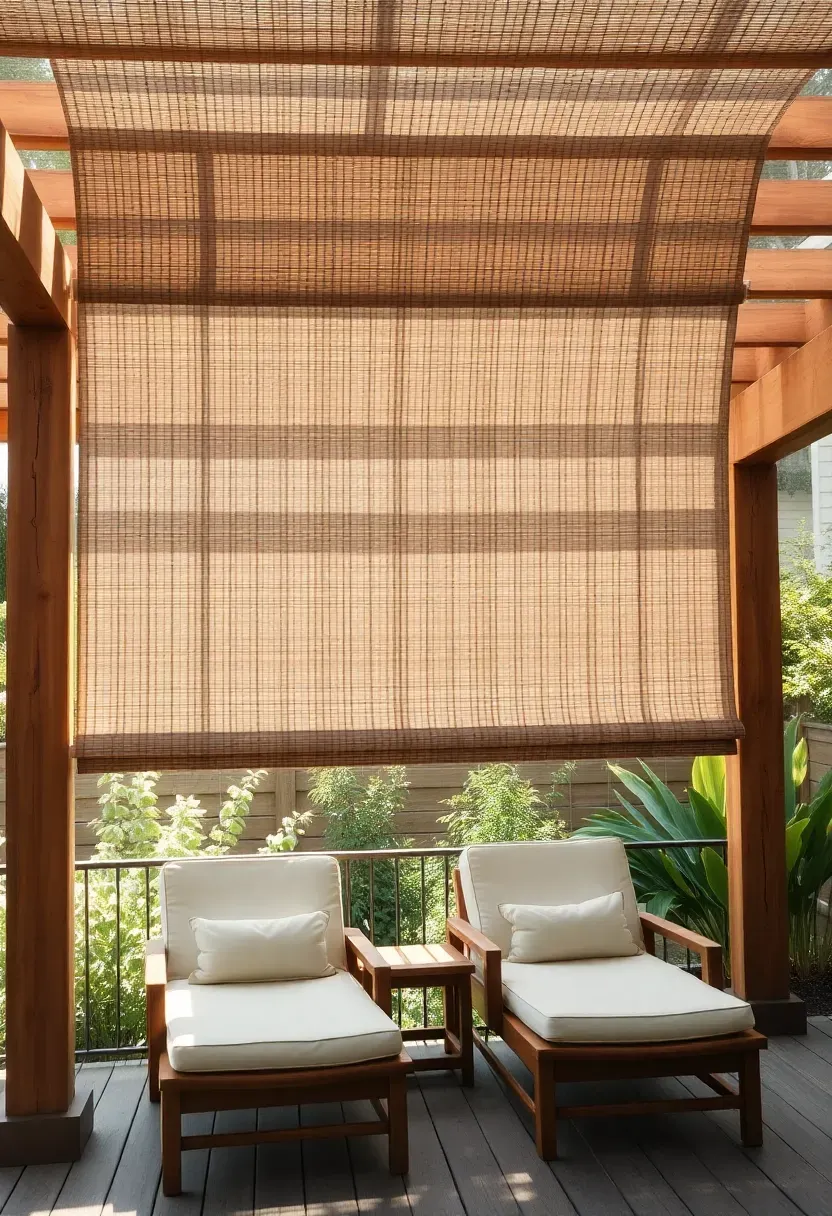
Bamboo roll-up shades mounted horizontally across a pergola or between rafters give filtered, dappled light rather than total blackout shade. The natural material weathers to a silvery gray over two to three seasons, which pairs well with aged wood and stone. These cost significantly less than fabric alternatives — about $30-$60 per 6-foot panel — and the woven construction lets air circulate freely, reducing the trapped-heat problem that solid canopies create.
Tips
- Treat with a UV-protectant spray before installation to slow deterioration
- Overlap panels by 4 inches to prevent striped sunburn patterns
- Roll them up during rain; soaked bamboo develops mold fast
Recommended
Items for this idea
7. Attached Patio Awning
The problem
South-facing and west-facing patios get punishing afternoon sun that makes the adjacent rooms hotter too, driving up cooling costs inside the house.
The solution
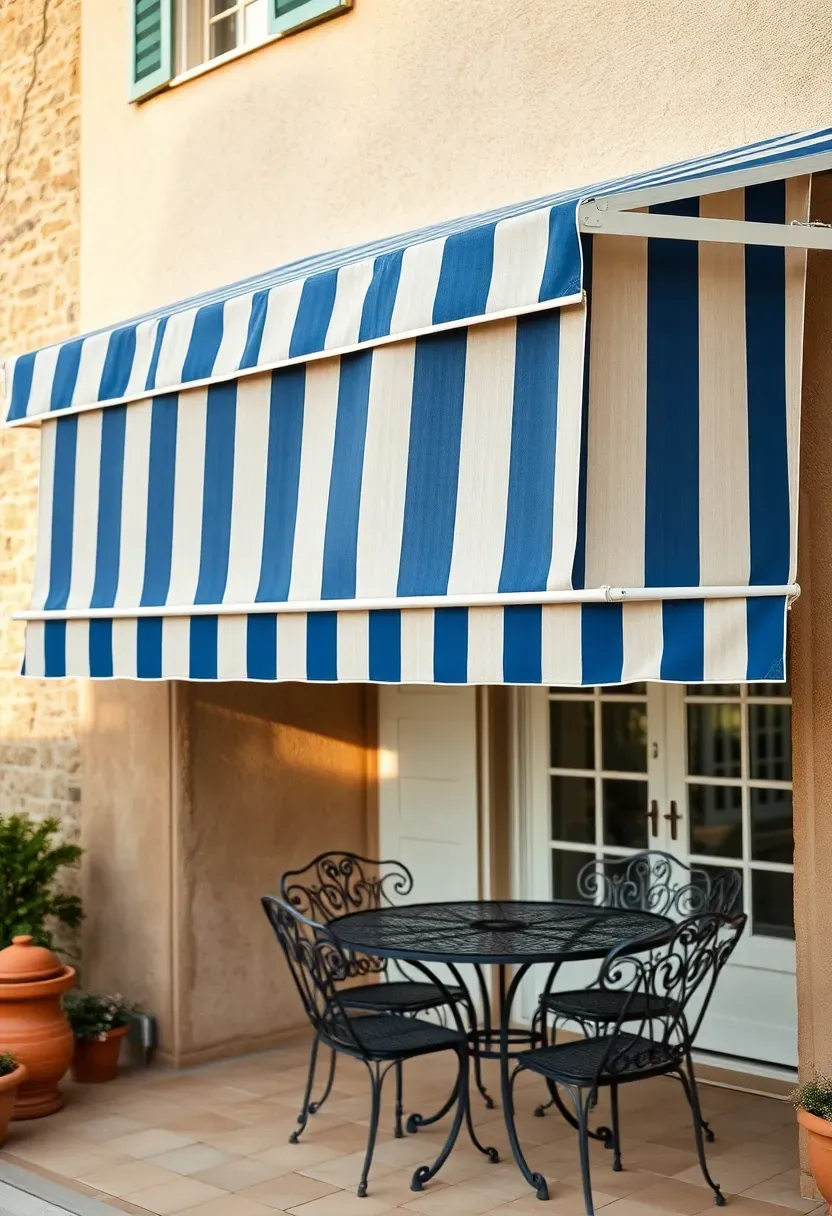
A wall-mounted retractable awning extends 8-13 feet from the house and can retract flush against the wall when not needed. Modern versions use acrylic canvas that blocks 95% of UV and resists fading for 8-10 years. A properly sized awning can reduce indoor temperatures near glass doors by 8-15 degrees, which your AC bill will confirm within the first month.
Pros and cons
- Pro: reduces cooling costs, protects door-adjacent flooring from UV fading
- Pro: clean look that does not alter the roofline
- Con: professional installation recommended due to wall-anchor loads
- Con: must retract in winds above 25 mph or the arms can bend
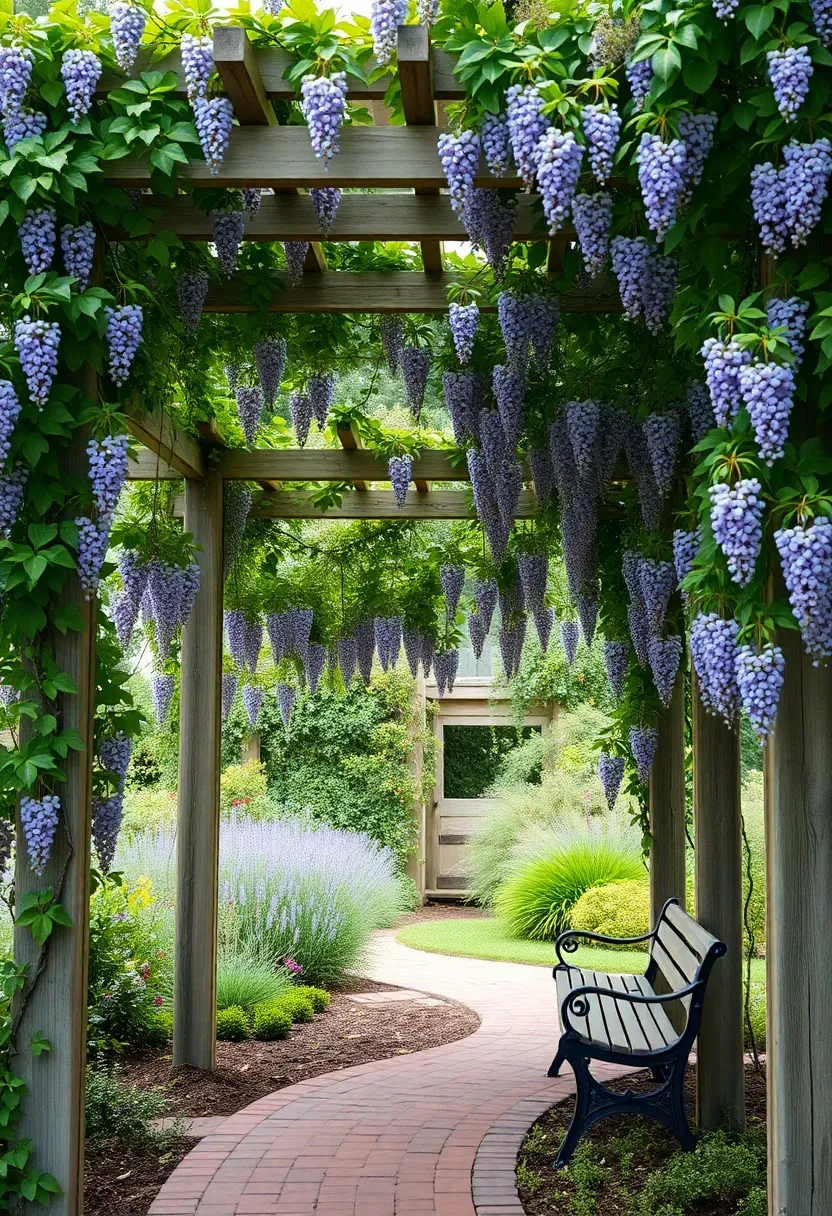
8. Vine-Covered Trellis
A trellis with climbing plants is the slowest canopy on this list — plan on 2-3 growing seasons before full coverage — but also the most rewarding. Wisteria, grape vines, jasmine, and trumpet vine all produce thick overhead foliage that filters light naturally and drops the temperature underneath by 10-20 degrees compared to direct sun. The leaf coverage is self-maintaining once established, and deciduous vines conveniently shed in winter when you actually want the sunlight.
Tips
- Build the trellis stronger than you think necessary; mature vines are heavy
- Wisteria is aggressive and can damage weak structures — use steel or heavy timber only
- Plant on the sunny side and train vines across the top with garden wire
Recommended
Items for this idea
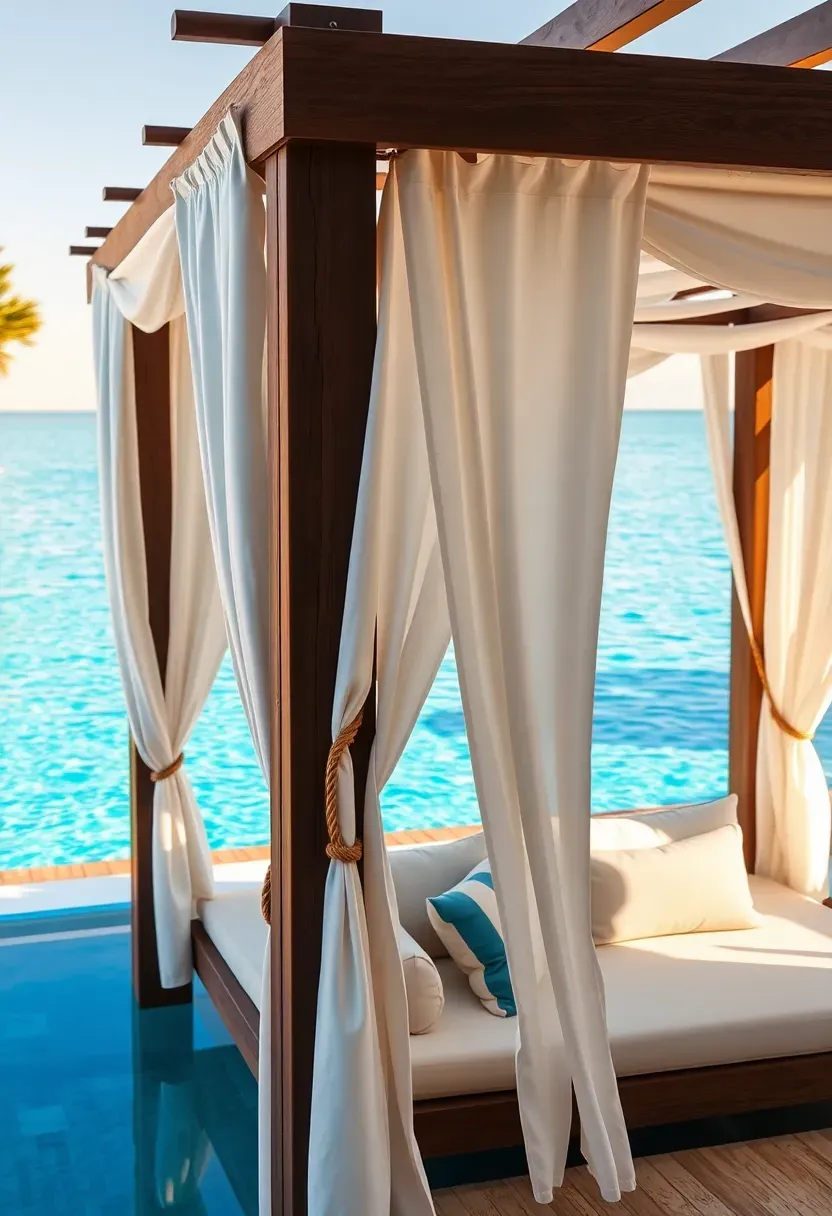
9. Cabana-Style Curtained Frame
Four posts, a flat or slightly pitched top frame, and flowing curtains on all four sides. The cabana format works near pools, on decks, or in open lawn areas where you want a semi-enclosed outdoor room. The curtains serve triple duty: shade from low-angle sun, privacy from neighbors, and mosquito barrier when tied closed. Use outdoor-rated curtain fabric — Sunbrella or similar solution-dyed acrylic — that will not mildew or fade within the first season.
Tips
- Curtain tiebacks with rope or leather straps look better than plastic clips
- Weight the curtain hems with chain or heavy washers so wind does not blow them horizontal
- A flat-roof cabana collects water; add a slight peak or crown to the top fabric
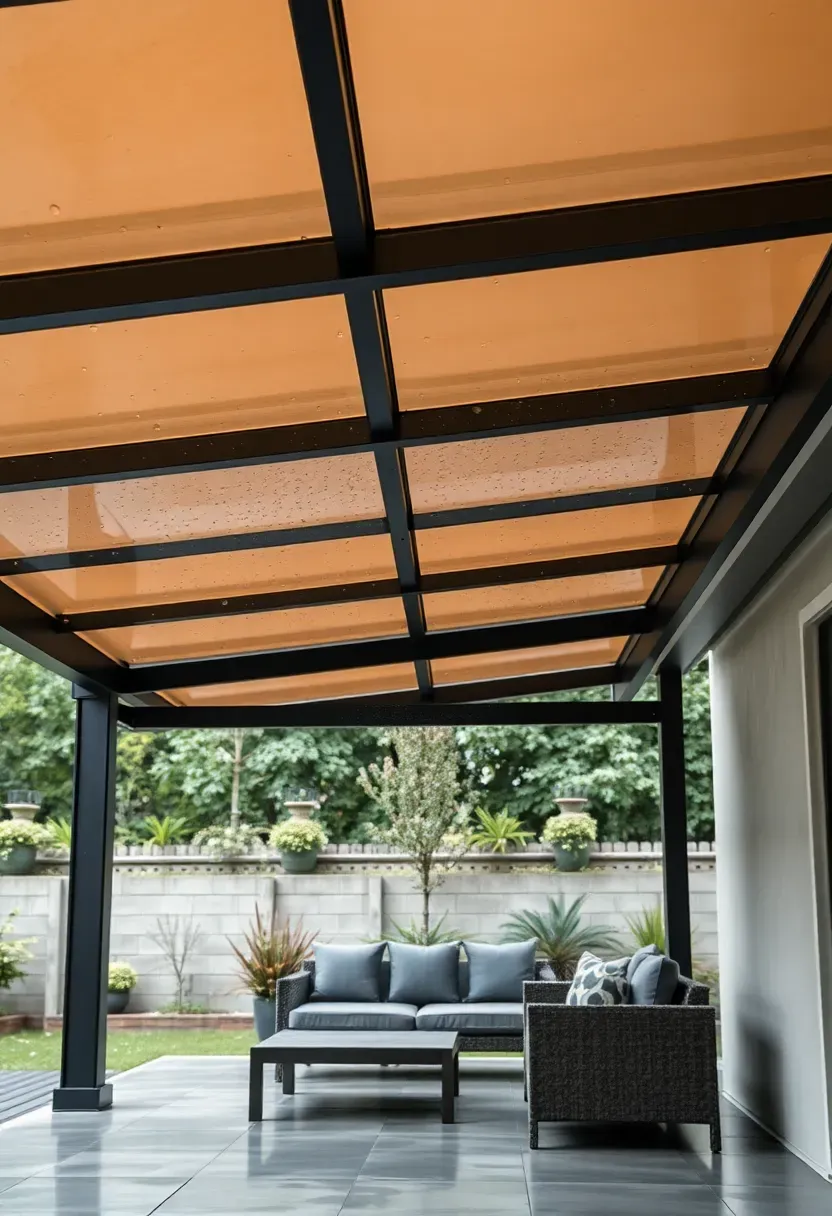
10. Polycarbonate Roof Panel
Why consider it
You want rain protection and shade in one solution, not just sun blocking. Fabric canopies send you running inside at the first drop. Polycarbonate panels let you sit through a downpour.
How it works
Twin-wall polycarbonate sheets (6mm or 10mm thick) mount onto aluminum or wood rafters with rubber-gasket screws. The translucent versions let about 80% of light through while blocking nearly all UV. Tinted bronze or gray panels cut light transmission to 50%, which gives more shade without making the space feel dark. A 10x12 foot installation runs $400-$800 in materials.
Pros and cons
- Pro: waterproof shade that lasts 10-15 years
- Pro: withstands hail better than glass
- Con: can look industrial without careful framing details
- Con: expands and contracts with temperature — leave gaps at connections
Recommended
Items for this idea
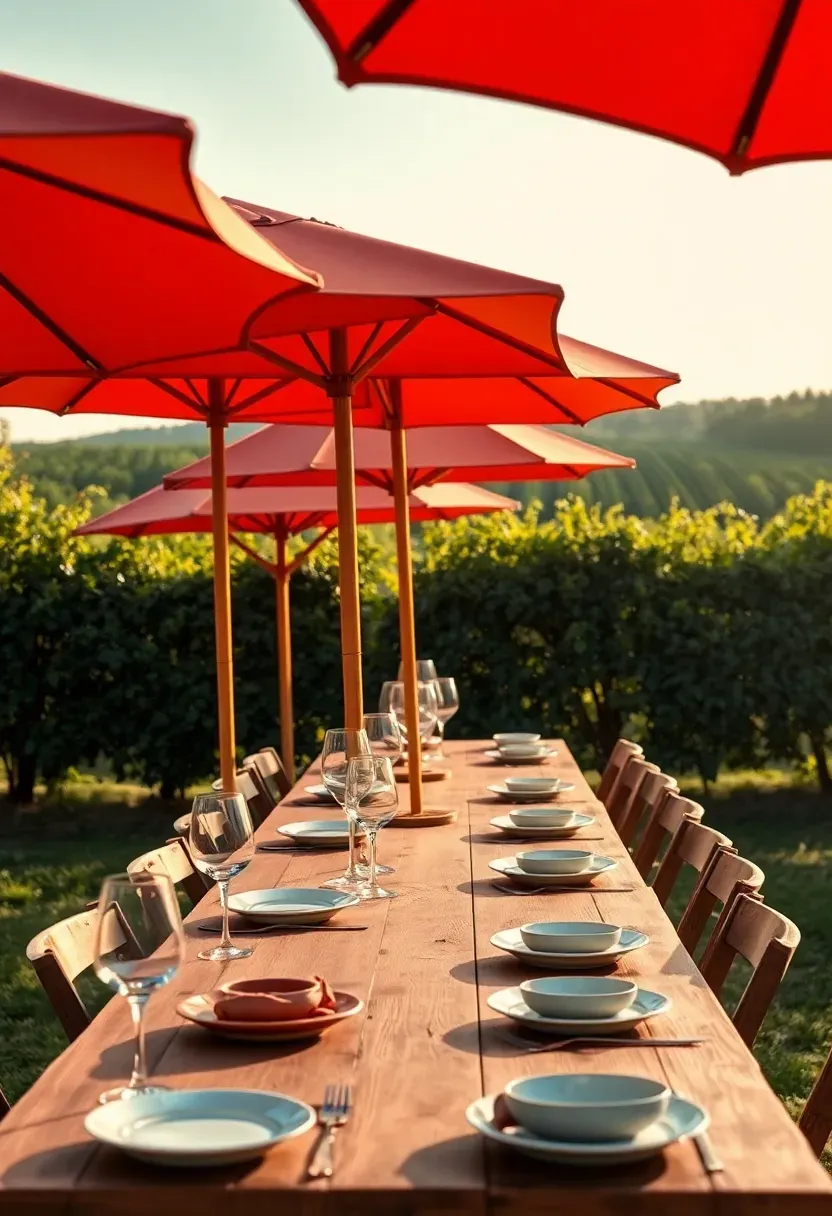
11. Market Umbrella Row
Lining up three to five large market umbrellas along a dining table or bar counter creates a cafe-like canopy with visual rhythm. Each umbrella operates independently, so you can adjust or close individual ones as the sun shifts. The look works best when all umbrellas match in color but vary slightly in height, creating an organic roofline rather than a flat plane.
Tips
- Use through-table pole mounts for stability rather than freestanding bases near foot traffic
- Wood-pole models look warmer but aluminum lasts longer and weighs less
- Close them every evening; UV is what degrades the fabric, not rain
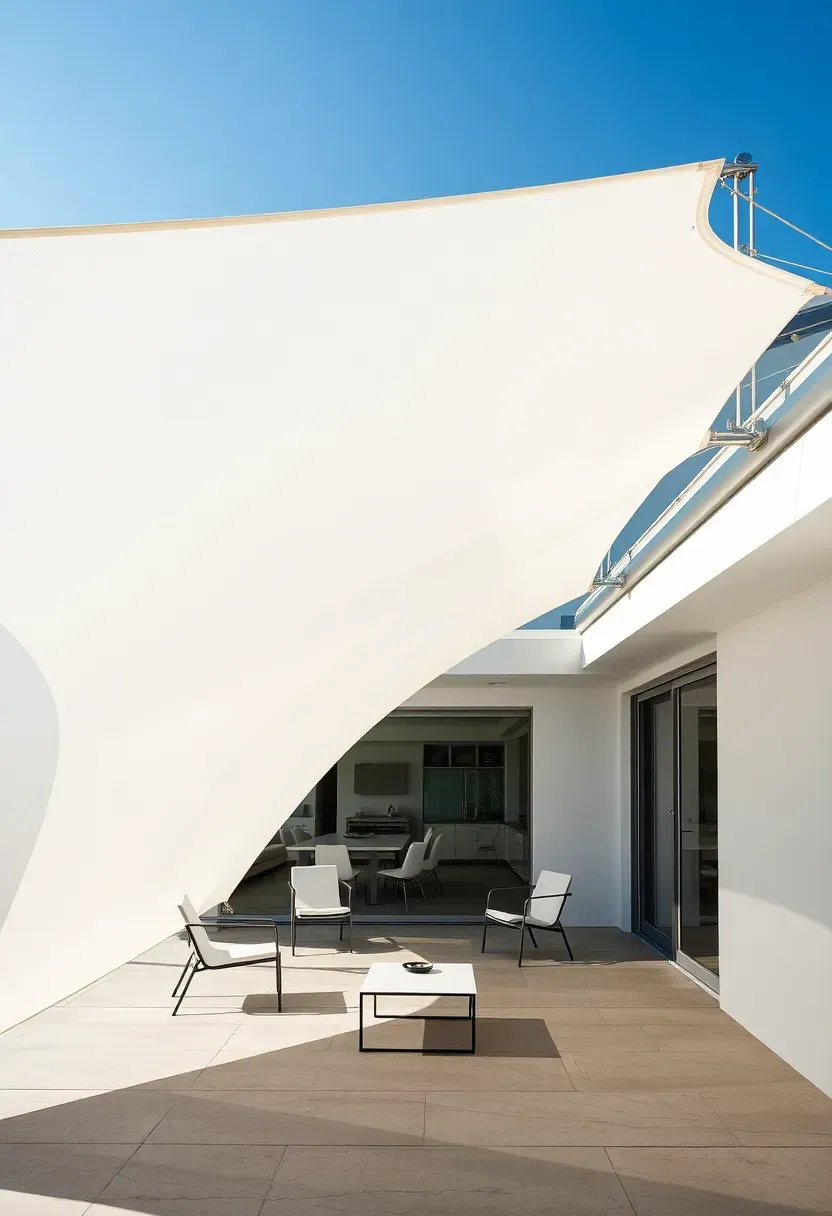
12. Tensioned Fabric Canopy
Origins
Tensioned fabric structures trace back to ancient tent engineering — Bedouin camps and Roman velaria used the same principle of stretching fabric between anchor points under high tension to create rigid, wind-resistant surfaces.
Modern versions
Today's tensioned canopies use PTFE-coated fiberglass or PVC membranes held taut by steel cables and mast poles. The hyperbolic shapes — those signature swooping curves — are not just decorative. They are structurally necessary to distribute wind loads and shed water. Commercial installations cover entire courtyards, but residential-scale versions using Sunbrella fabric and smaller steel frames can shade a 15x20 foot area for $3,000-$6,000 installed.
Apply at home
- Start with a professional design consultation; the geometry requires engineering
- Simpler two-point saddle shapes cost less than complex four-point hypar forms
- Residential permits may be required depending on the square footage covered
Recommended
Items for this idea
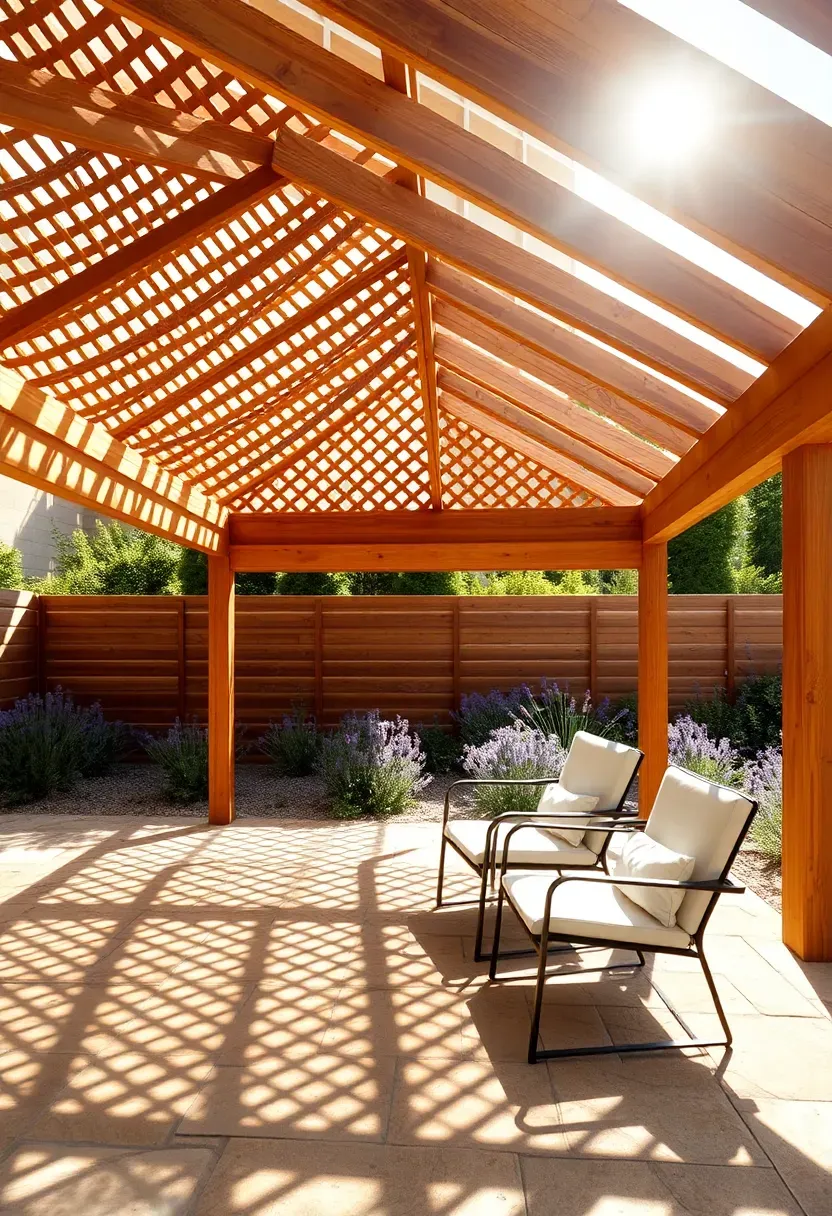
13. Wooden Lattice Shade Structure
Lattice panels mounted horizontally across rafters create partial shade with geometric shadow patterns that shift throughout the day. The light-and-shadow effect is the whole point — you get roughly 50% shade from standard lattice spacing, which takes the edge off direct sun without creating a cave. Cedar and redwood resist rot naturally; pressure-treated pine works but needs staining to look decent.
Tips
- Diagonal lattice patterns cast more complex shadows than square grid patterns
- Double-layer lattice (two panels rotated 45 degrees) increases shade to about 75%
- Space lattice panels 1 inch above rafters with spacer blocks so water does not pool at the joints
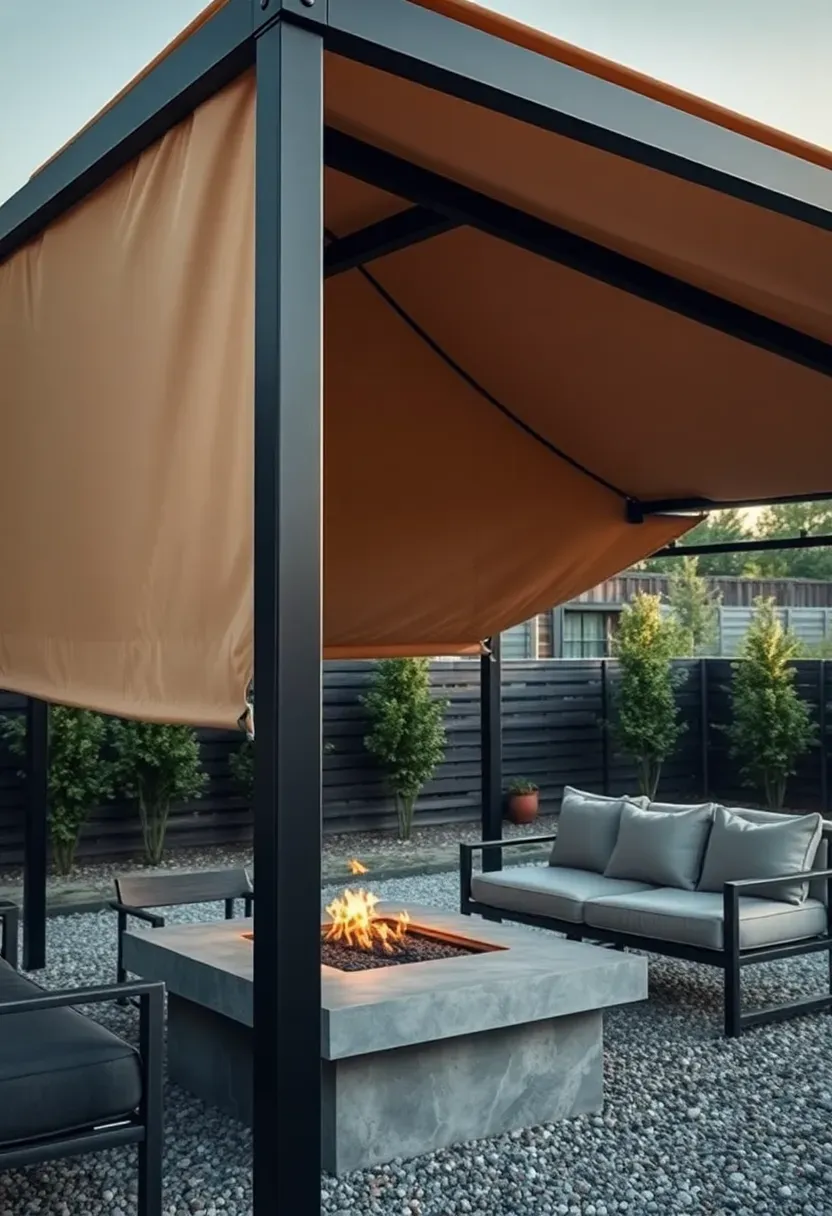
14. Metal Frame with Canvas Top
A welded steel or aluminum frame with a stretched canvas top splits the difference between permanent construction and temporary shade. The metal provides rigid structure that handles wind better than most fabric-only solutions, while the canvas top can be replaced every 5-8 years without touching the frame. Powder-coated steel in matte black or dark bronze reads as modern and clean, pairing well with concrete, gravel, or composite decking below.
Tips
- Aluminum frames cost more upfront but never rust; steel frames must be powder-coated or painted
- Grommeted canvas with bungee-cord attachment allows quick seasonal removal
- Slope the canvas at minimum 2 degrees to prevent water pooling in the center
Recommended
Items for this idea
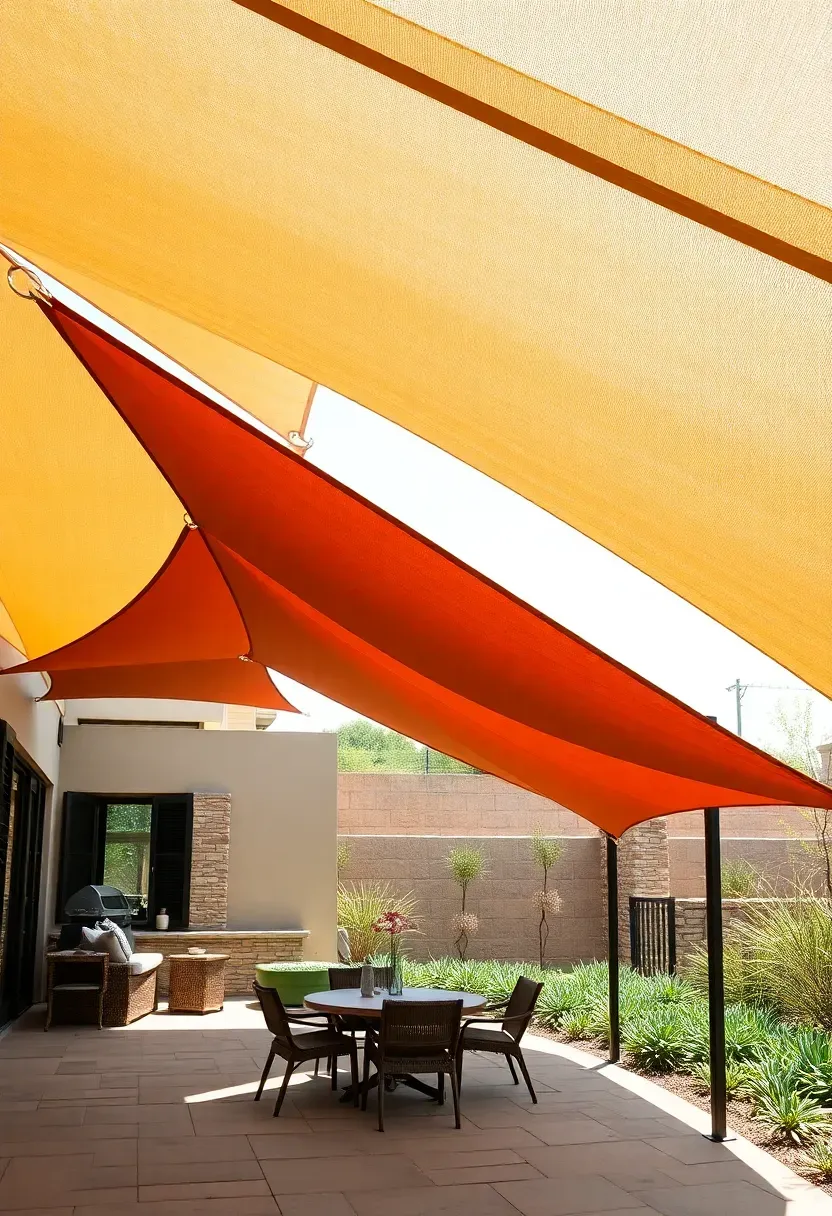
15. Shade Sail Layered Overlap
One sail shade is functional. Two or three overlapping at different angles and heights become architectural. Layering sails in complementary colors — sand over terracotta, charcoal over ivory — adds visual depth while increasing UV coverage in the overlap zones to nearly 100%. The layered approach also handles the main weakness of single sails: as the sun angle changes, at least one layer maintains coverage.
How to plan the layout
- Map the sun path across your patio for the hours you use it most
- Position the first sail to block the midday overhead sun
- Add a second sail lower and angled to catch afternoon western sun
- Use the third sail to fill gaps and add visual interest
Watch out
- Each sail needs its own independent anchor points — do not daisy-chain attachment hardware
- Overlapping layers catch more wind than singles; upgrade to commercial-grade turnbuckles
16. Natural Grass Roof Hut
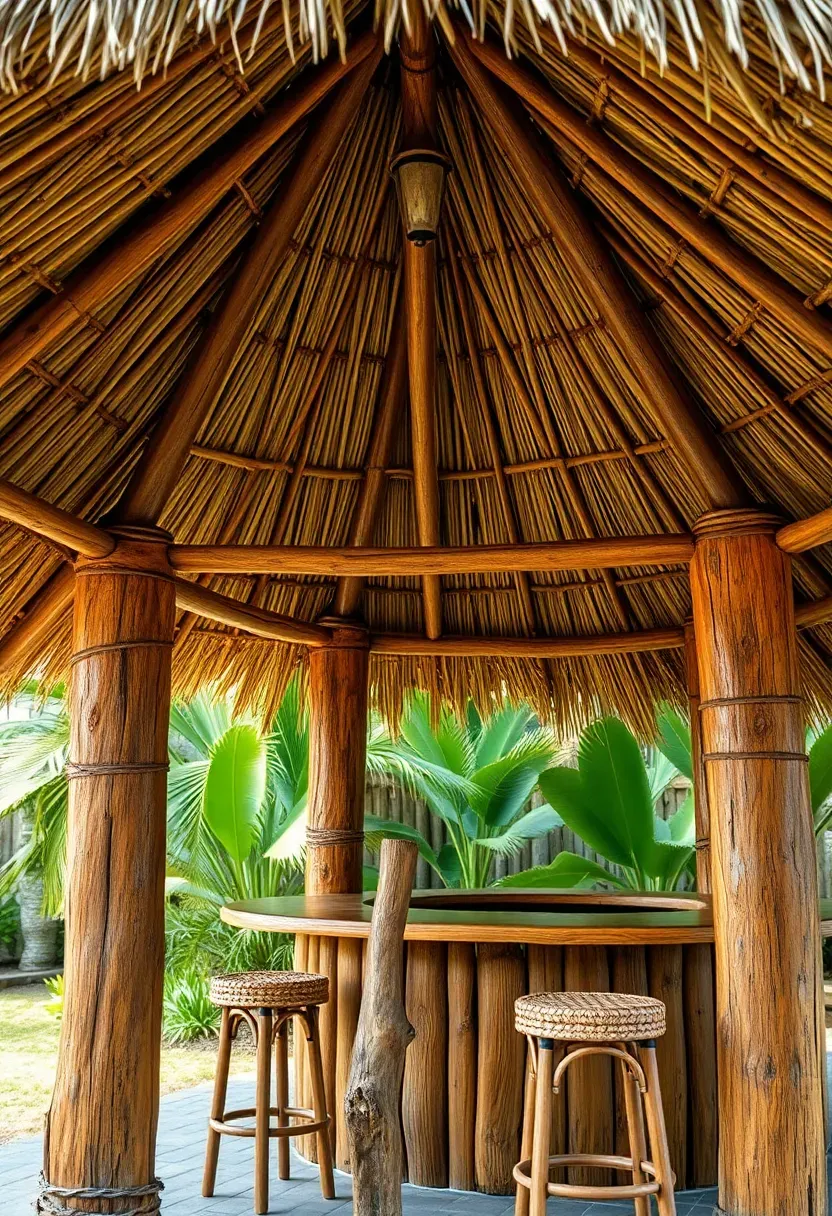
Thatched palm or grass roof structures — tiki huts, palapas, chickees — bring a specific aesthetic that either appeals to you or does not. If it does, these natural canopies are remarkably effective at cooling. The thick thatch insulates against radiant heat far better than fabric or metal, and the uneven surface promotes air circulation that draws heat upward and out. Synthetic thatch options now exist that replicate the look with HDPE plastic, lasting 20+ years versus 5-7 for natural materials.
Tips
- Natural thatch needs fire retardant treatment in most jurisdictions
- Build on a sturdy post frame — wet thatch is surprisingly heavy
- Synthetic thatch costs 2-3x more upfront but requires almost zero maintenance
Recommended
Items for this idea
17. Louvered Roof Pergola
The problem
Fixed canopies force a choice: always shaded or always exposed. Seasons change, weather shifts, and what felt perfect in August feels claustrophobic in October.
The solution
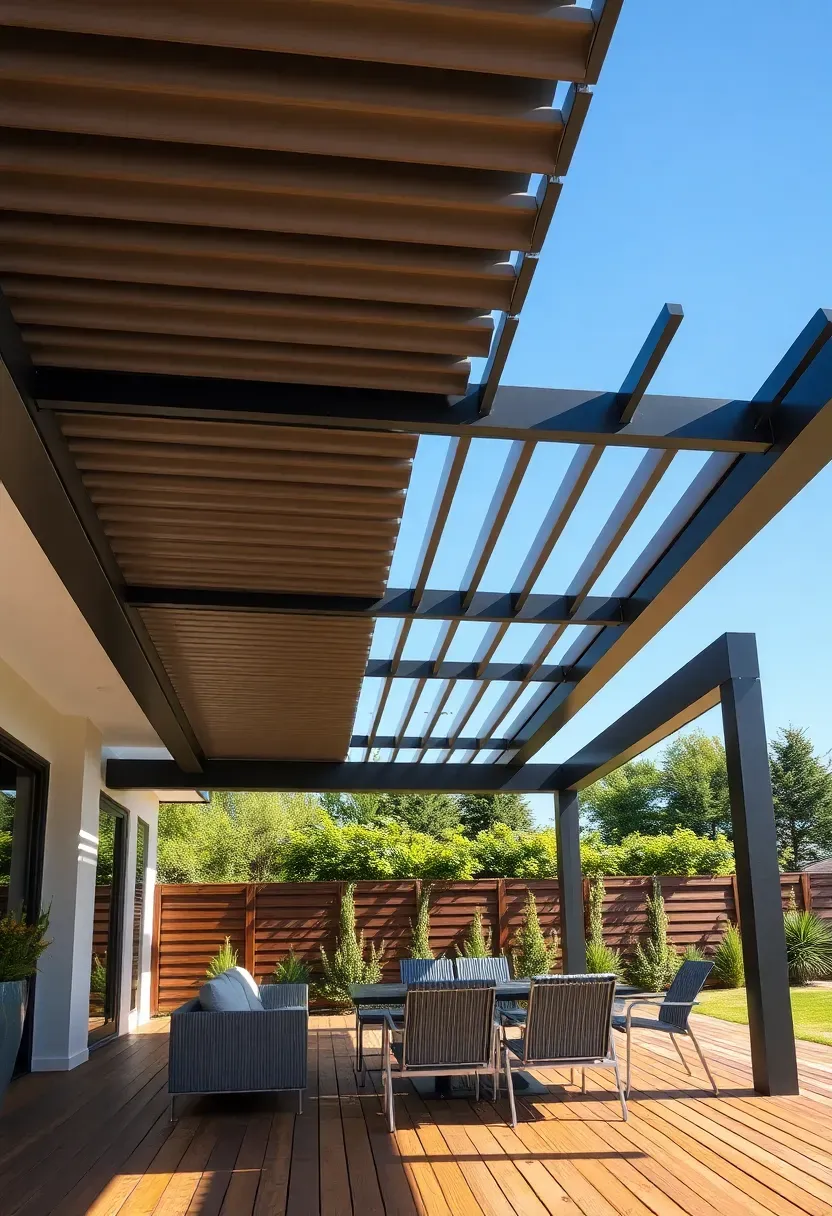
Louvered pergolas use adjustable aluminum slats that rotate from fully open to fully closed. Open position gives you clear sky. Closed position creates a waterproof roof with integrated gutters that channel rain to the support posts. Any angle in between lets you dial in exactly how much sun reaches through. Motorized versions respond to rain sensors and can close automatically when a storm rolls in.
Pros and cons
- Pro: most versatile shade solution available
- Pro: integrated LED lighting and heating options on premium models
- Con: expensive — $5,000-$15,000 for a 10x14 foot installation
- Con: mechanical parts require annual maintenance and occasional motor replacement
18. Parachute Canopy Repurpose
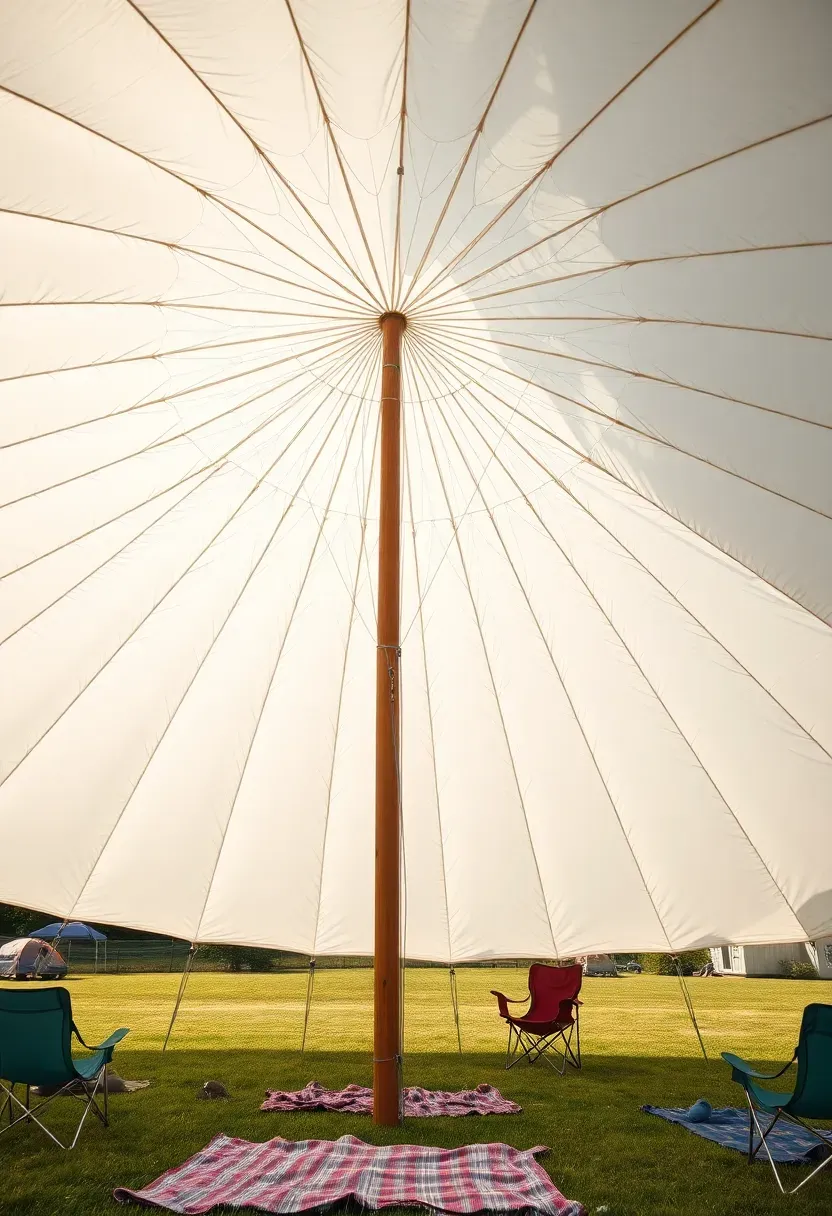
Surplus military parachutes cover an absurd amount of area for almost nothing. A used cargo chute — 60-80 feet in diameter — costs $40-$100 from surplus dealers and can shade an entire backyard when suspended from a center pole with guy lines radiating outward. The ripstop nylon blocks UV effectively and the billowing shape creates a dramatic, festival-like atmosphere. This is not a refined look, but for casual gatherings, outdoor movie nights, or kids' play areas, nothing beats the coverage-to-cost ratio.
Tips
- Use a single tall center pole (12-16 feet) with radiating guy lines staked at the perimeter
- Trim down to size if you do not need full coverage — use a hot knife to seal nylon edges
- Parachutes are not waterproof; they are for sun shade only
Recommended
Items for this idea
19. Japanese-Inspired Timber Canopy
Origins
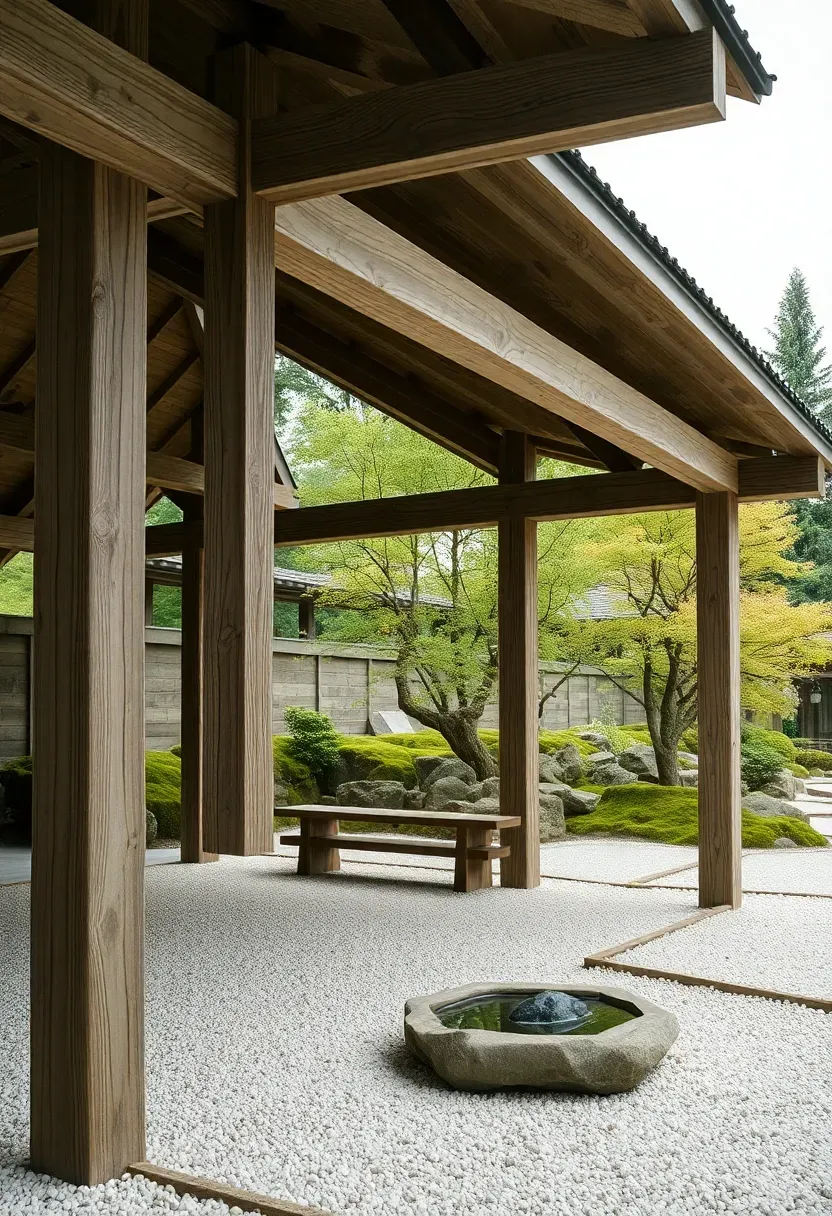
Japanese garden architecture treats shade structures as compositional elements rather than purely functional additions. The traditional azumaya (garden pavilion) uses post-and-beam joinery with wide overhanging eaves, designed to frame specific views while protecting from sun and rain.
Modern interpretation
A simplified version uses four to six heavy timber posts (6x6 minimum) with exposed beam-and-rafter construction. The roof extends 18-24 inches beyond the post line on all sides, creating deep shade at the perimeter. Skip the ornament — the beauty is in the proportions, the wood grain, and how the structure sits within the garden. Western red cedar or Douglas fir aged naturally to gray fits this aesthetic perfectly.
Apply at home
- Keep proportions low and horizontal; tall, narrow structures miss the point
- Gravel or stepping stones underneath rather than a solid deck
- Position to frame a garden view or water feature, not just over furniture
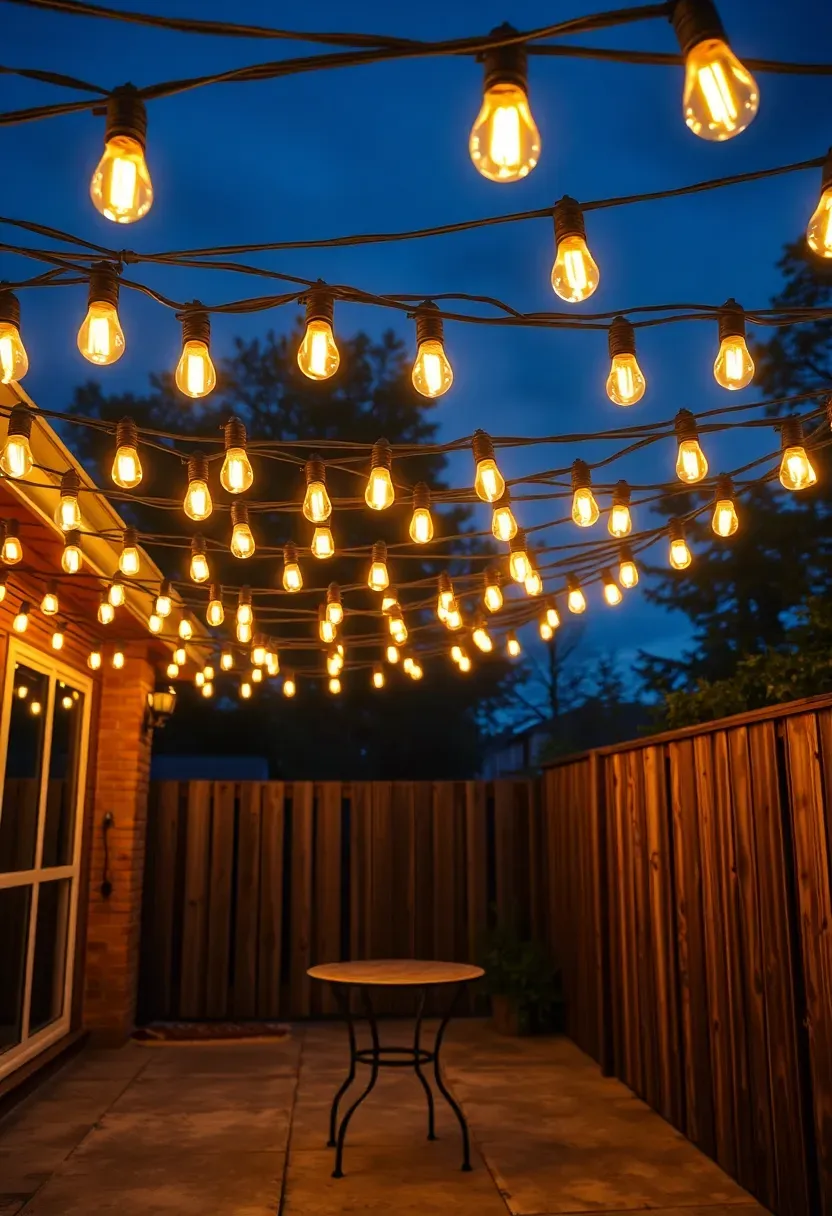
20. String Light Canopy Grid
This one cheats a little — string lights do not block sun. But a dense grid of cafe-style bulbs strung overhead at 8-10 feet defines the ceiling plane of an outdoor room in a way that changes how the space feels after dark. Run parallel lines 2-3 feet apart across the space, with bulbs every 12-18 inches, and you create a warm constellation that makes even a plain concrete patio feel like a destination.
How to set it up
- Install eye hooks or screw-in cup hooks along opposite eaves or fence posts
- Run a support wire between the strongest anchor points first
- Attach string light lines perpendicular to the support wire using zip ties
- Use commercial-grade LED bulbs — they run cool and last 25,000+ hours
Watch out
- Residential circuits can handle about 1,500 watts per outlet; plan your string count accordingly
- Sagging lines look sloppy; use intermediate support wires every 10 feet for longer runs
Recommended
Items for this idea
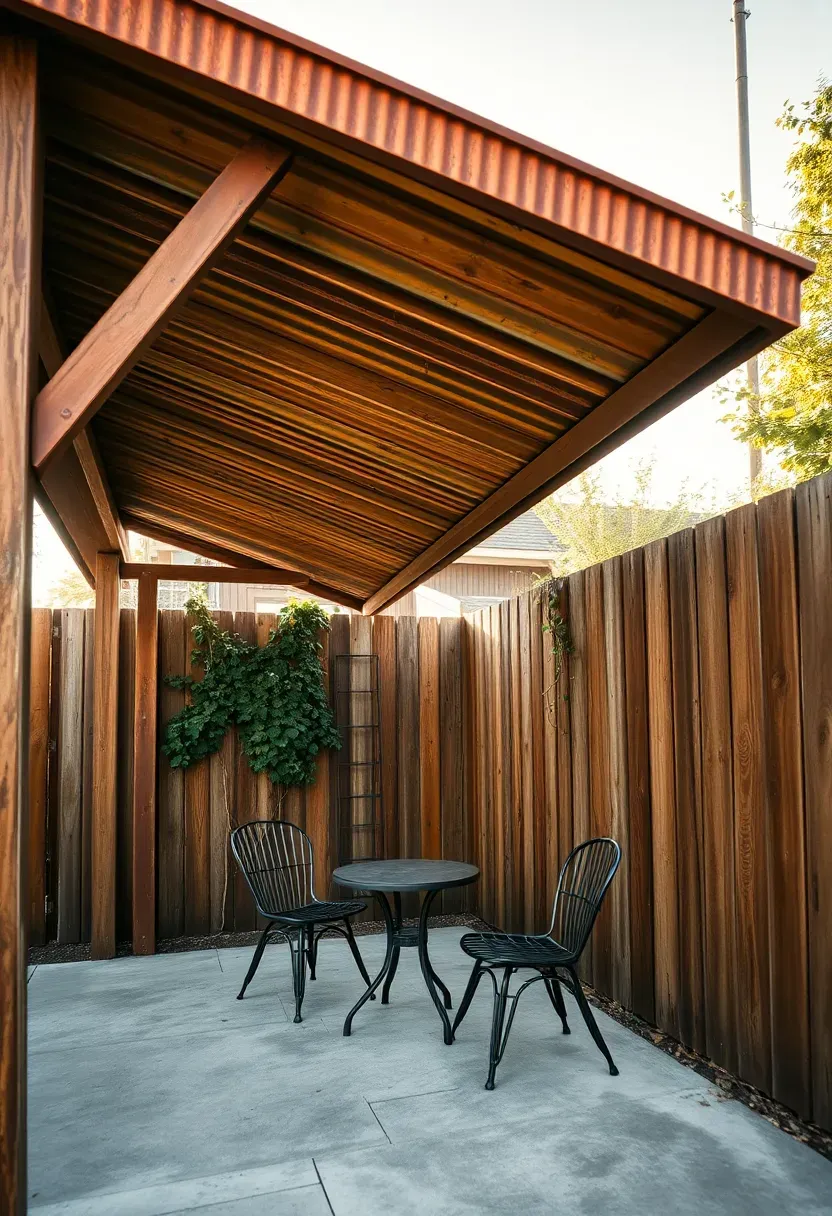
21. Corrugated Metal Lean-To
A lean-to roof built from corrugated metal panels angled off a fence, wall, or dedicated posts is the fastest permanent canopy you can build. Two weekend afternoons with basic tools will get it done. The corrugation adds structural rigidity so you need fewer rafters, and the metal sheds water completely — no pooling, no soaking through. Galvanized steel is cheapest, but rusted Corten steel or pre-painted panels in matte black give a more intentional look.
Tips
- Minimum slope of 3 degrees per foot to ensure water runoff
- Screw into rafters with rubber-washer roofing screws to prevent leaks at penetrations
- Add a rain gutter at the low edge to direct runoff away from the seating area
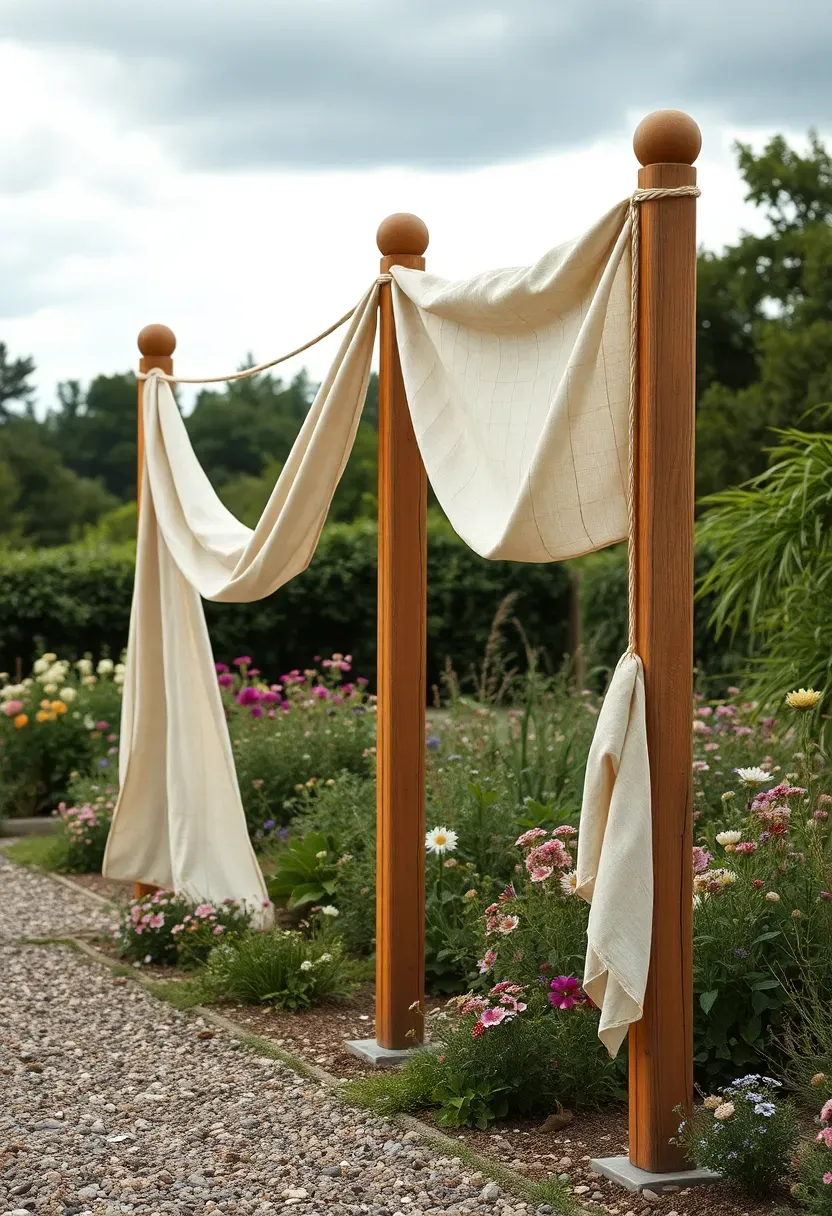
22. Fabric Swag Between Posts
Fabric swags — loose, drooping arcs of fabric — hung between posts or beams create a romantic, organic canopy that moves with the breeze. Unlike taut sails or stretched canvas, swags are meant to billow and shift. Use lightweight outdoor sheer fabric for a translucent effect, or heavier canvas for real shade. The casual drape works best in informal garden settings where a rigid structure would feel out of place.
Tips
- Space swag attachment points 6-8 feet apart for a natural droop depth of 12-18 inches
- Use fabric at least 30% wider than the span to allow for the sag
- Machine-washable outdoor fabric saves you from hand-scrubbing mildew every spring
Recommended
Items for this idea
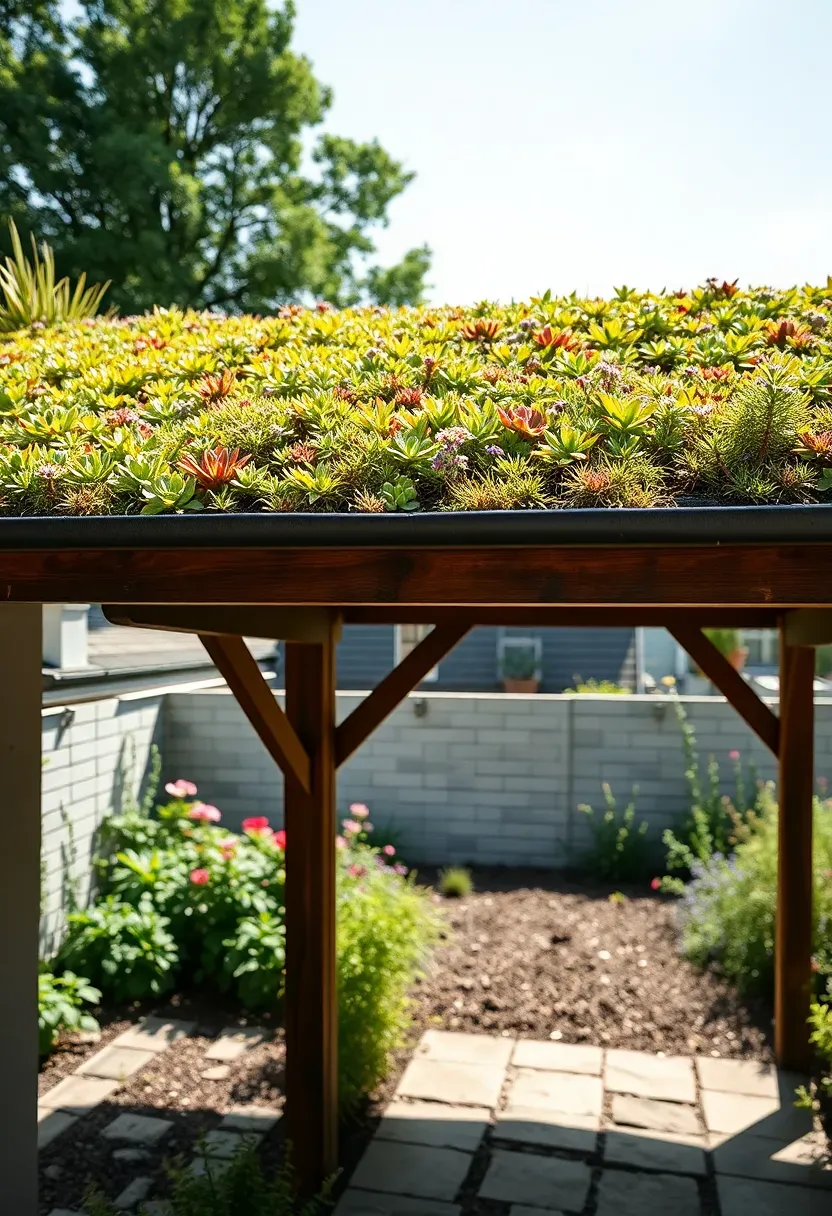
23. Living Roof Canopy
The problem
Solid canopy roofs absorb heat and radiate it downward, making the shaded area warm and stuffy despite blocking direct sun.
The solution
A living roof — a shallow growing medium planted with sedum, moss, or creeping thyme over a waterproof membrane — insulates the structure and actually cools the air underneath through evapotranspiration. Surface temperatures on a green roof run 30-40 degrees cooler than conventional roofing on the same day. The structure needs to support 15-25 pounds per square foot when saturated, so this is not a retrofit for lightweight frames.
Pros and cons
- Pro: natural cooling effect that outperforms any passive material
- Pro: absorbs rainwater, reducing runoff
- Con: requires structural engineering for the weight load
- Con: needs irrigation in dry climates and occasional weeding
24. Minimalist Steel and Linen Pergola
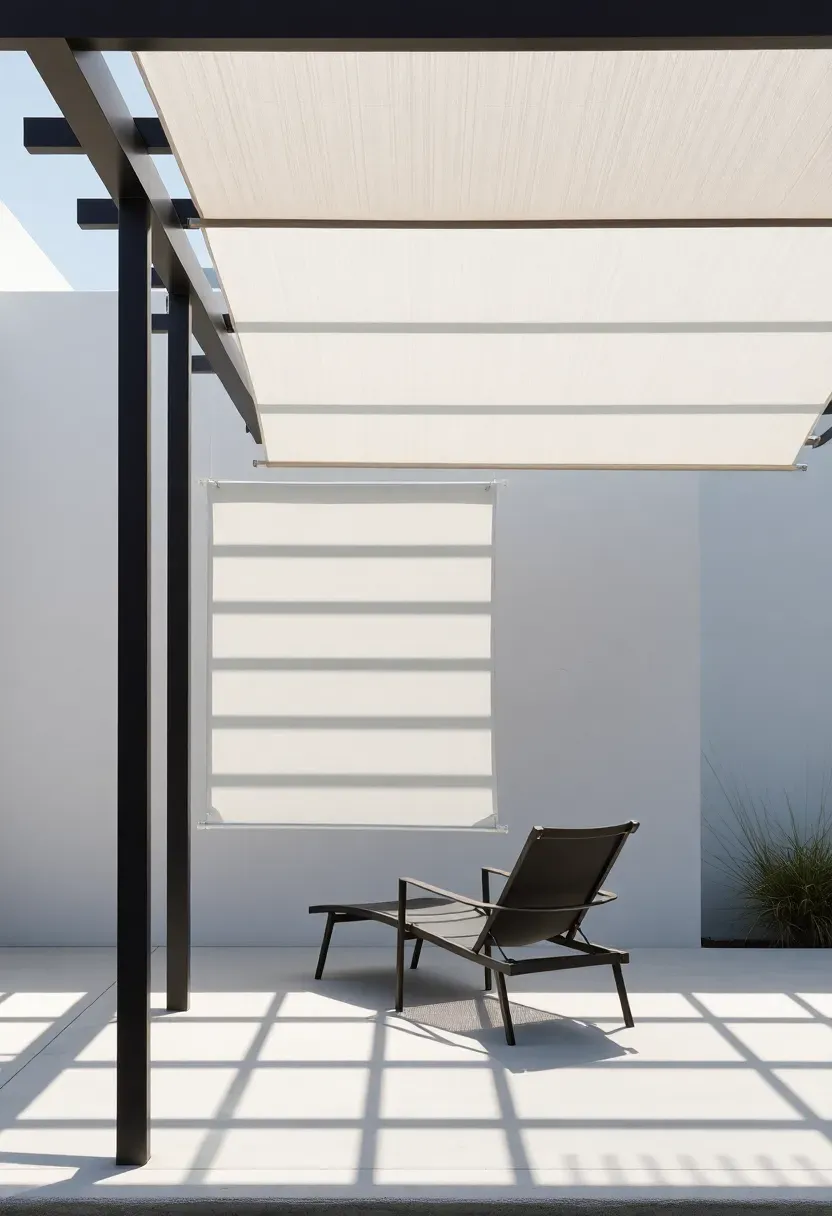
Thin-profile steel — 2x2 inch square tube — welded into a simple post-and-beam frame and fitted with removable linen panels creates a canopy that looks like it belongs in an architecture magazine. The key is restraint: matte black steel, undyed or white linen, no decorative elements. The shadow pattern from the linen panels against the steel grid does all the visual work. This approach costs more than DIY wood construction but weighs less, spans wider without intermediate posts, and will not warp or split.
Tips
- Have a local fabricator weld the frame; DIY welding on structural pieces is risky
- Linen panels attach with stainless steel clips for easy removal and washing
- Apply clear wax to steel annually to prevent surface oxidation in humid climates
Recommended
Items for this idea
25. Portable Clamp-On Canopy
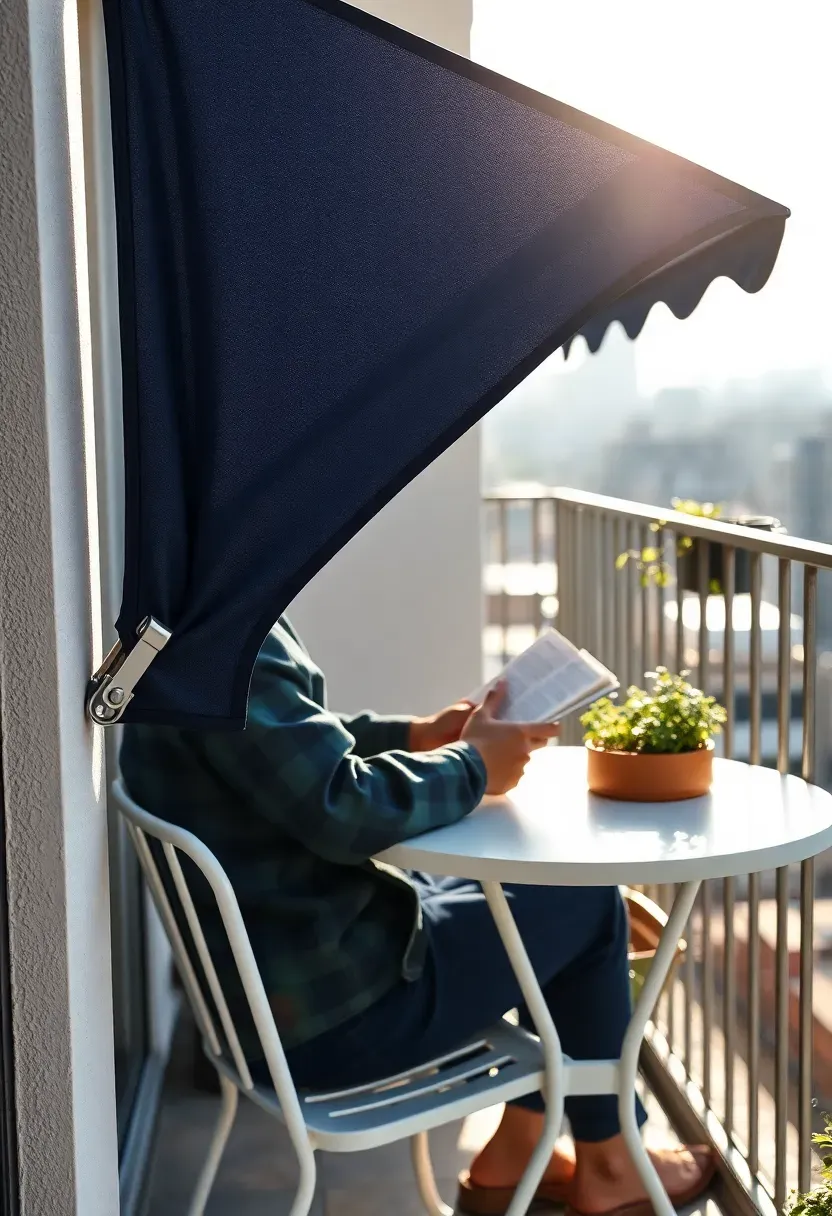
For renters, small patios, or anyone who wants shade without installation, clamp-on canopies attach directly to table edges, railing tops, or chair backs. They fold down to backpack size and set up in under two minutes. The coverage is modest — usually 4-6 feet of shade — but perfectly adequate for one or two people reading, eating, or working on a laptop outside. These are especially useful for apartment balconies where permanent structures are not allowed.
Tips
- Check the clamp's maximum grip width before buying; most max out at 2 inches
- Weighted fabric versions handle wind better than rigid pop-up styles
- Pack one for picnics, beach days, and sporting events — the portability is the point
Quick FAQ
How much wind can a backyard canopy handle? Most fabric canopies — sails, awnings, draped cloth — should be taken down or retracted above 25-30 mph winds. Rigid structures like louvered pergolas and polycarbonate roofs handle more, but check manufacturer specs for your specific product.
Do I need a permit to build a permanent canopy? In most US municipalities, freestanding shade structures under 120 square feet and under 10 feet tall do not require permits. Anything attached to the house or exceeding those thresholds typically does. Check with your local building department before starting.
What is the cheapest backyard canopy option? A surplus parachute canopy runs $40-$100 and covers more area than anything else at that price. For a more conventional look, triangular sail shades start around $25-$50 each and cover 100-150 square feet.
Will a canopy affect my property value? Permanent, well-built shade structures like louvered pergolas and quality wood canopies generally add value. Temporary or worn-looking canopies can detract. The key is matching the canopy style to the home's existing architecture.
Which canopy material lasts longest outdoors? Aluminum and powder-coated steel frames last 20+ years. For fabric, solution-dyed acrylic (Sunbrella) outlasts polyester and canvas, typically holding up 8-12 years with proper care. Polycarbonate panels last 10-15 years before yellowing.
Your backyard already has the space. Most of these canopy ideas take a single weekend or less to set up, and the ones that take longer pay back the effort every time you step outside without squinting. Pick the one that matches your budget and how permanent you want the solution to be — then go sit in the shade you made.
Pinterest cover for 25 Backyard Canopy Ideas
About the author
OBCD
CGI visualization and interior design content. We create detailed 3D renders and curate practical design ideas for every room in your home.