19 Backyard Deck Ideas on a Budget
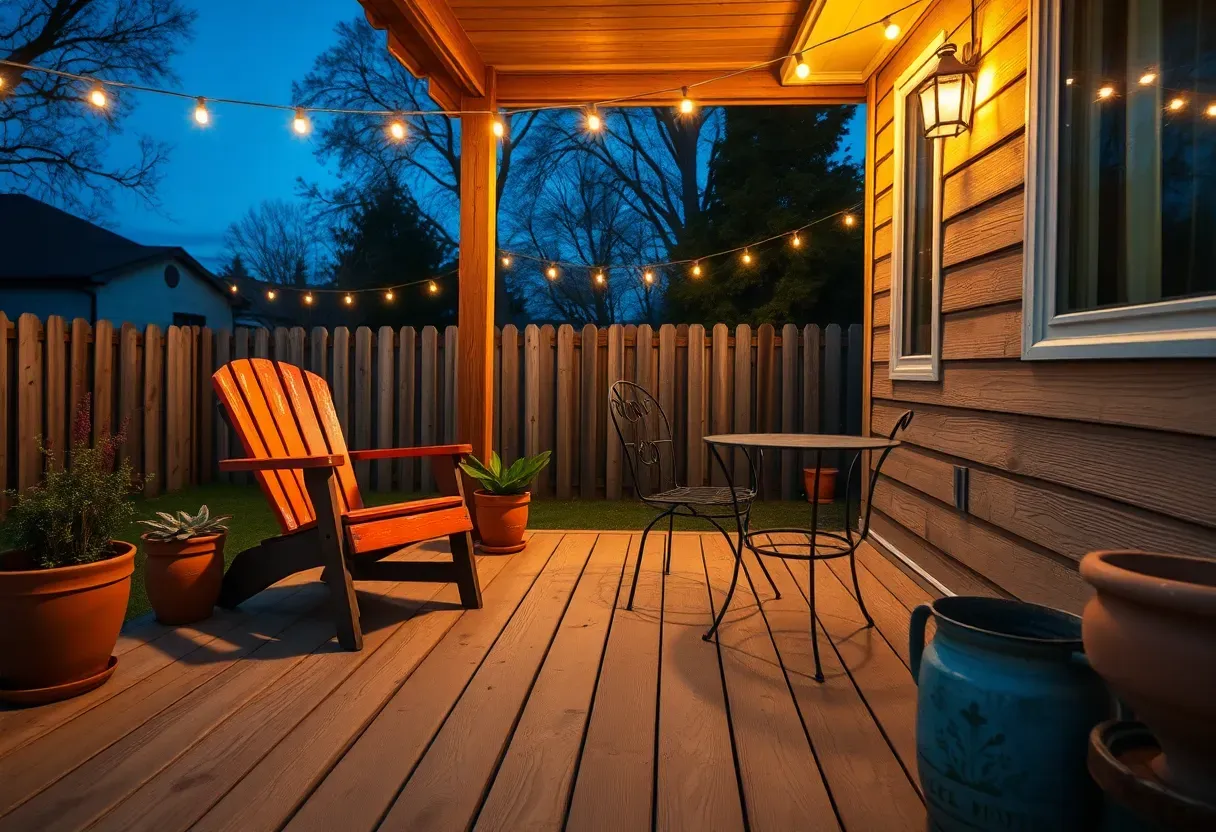
Building a deck sounds expensive until you start looking at alternatives to the contractor-and-composite route. Pressure-treated pine runs about two to three dollars per linear foot at most lumber yards. Pallets are often free. Concrete deck blocks eliminate the need for poured footings entirely. My neighbor built a 10-by-12 floating deck over a single weekend for under 500 dollars, and it has held up through three Michigan winters so far. The trick is picking the right design for your skill level and your yard's conditions. These 19 ideas range from dead-simple ground-level platforms to slightly more ambitious raised builds, all with cost-saving at the center.
Below you will find budget deck approaches grouped by construction method — ground-level platforms first, then raised options, followed by material alternatives and finishing touches.
Table of Contents
- Floating Ground-Level Deck
- Pallet Deck Platform
- Gravel Pad with Deck Tiles
- Concrete Block Foundation Deck
- Wraparound Tree Deck
- Narrow Side-Yard Deck
- Stepped Hillside Deck
- Salvaged Lumber Deck
- Painted Plywood Deck
- Low Platform Deck with Built-In Bench
- Composite Tile Over Concrete
- Cable Railing on a Budget
- Deck with Cinder Block Stairs
- Stained Two-Tone Deck
- Privacy Screen Deck Wall
- Pergola-Topped Deck
- Solar Post Cap Lighting
- Built-In Planter Boxes Along the Edge
- Outdoor Rug and Furniture Staging
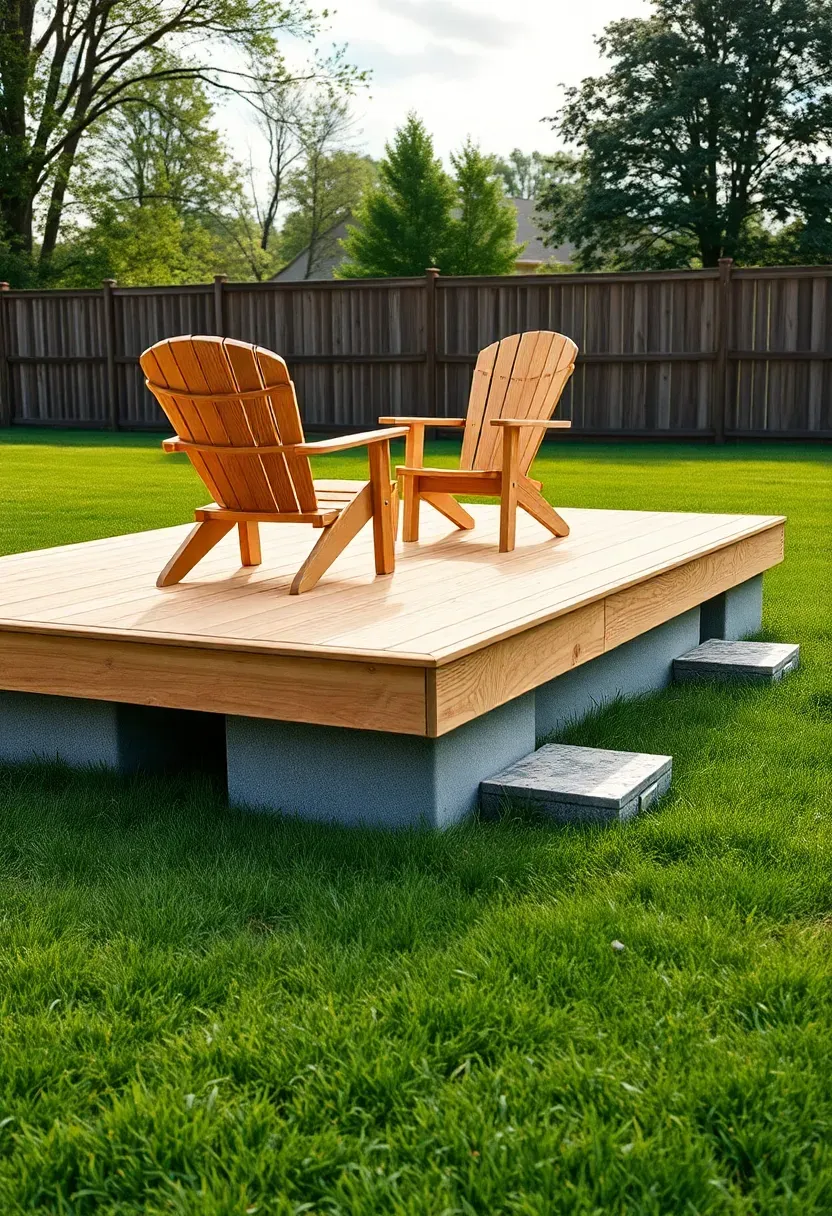
1. Floating Ground-Level Deck
A floating deck sits directly on the ground using concrete deck blocks instead of dug-in posts, which means no permit needed in most areas and no concrete mixing. You set blocks in a grid, drop pressure-treated joists into the notches, and screw on decking boards. The entire build can happen in a day with two people. Cost for a 10-by-10 deck runs 300 to 500 dollars depending on lumber prices in your region. Keep it within a few inches of ground level and drainage takes care of itself.
Tips
- Space deck blocks no more than four feet apart to prevent board flex
- Use landscape fabric underneath to suppress weed growth through the gaps
- Leave a quarter-inch gap between boards for water drainage and wood expansion
We picked a few things that go well with this idea: Pure Garden Composite Deck Tiles (6-Pack) (★4.1), Premium Acacia Wood Deck Tiles (9-Pack) (★4.4) and CraftVie Acacia Interlocking Deck Tiles (10-Pack) (★3.9). As an Amazon Associate we earn from qualifying purchases.
2. Pallet Deck Platform
The problem
Buying decking lumber eats most of a small project budget before you even start building.
The solution
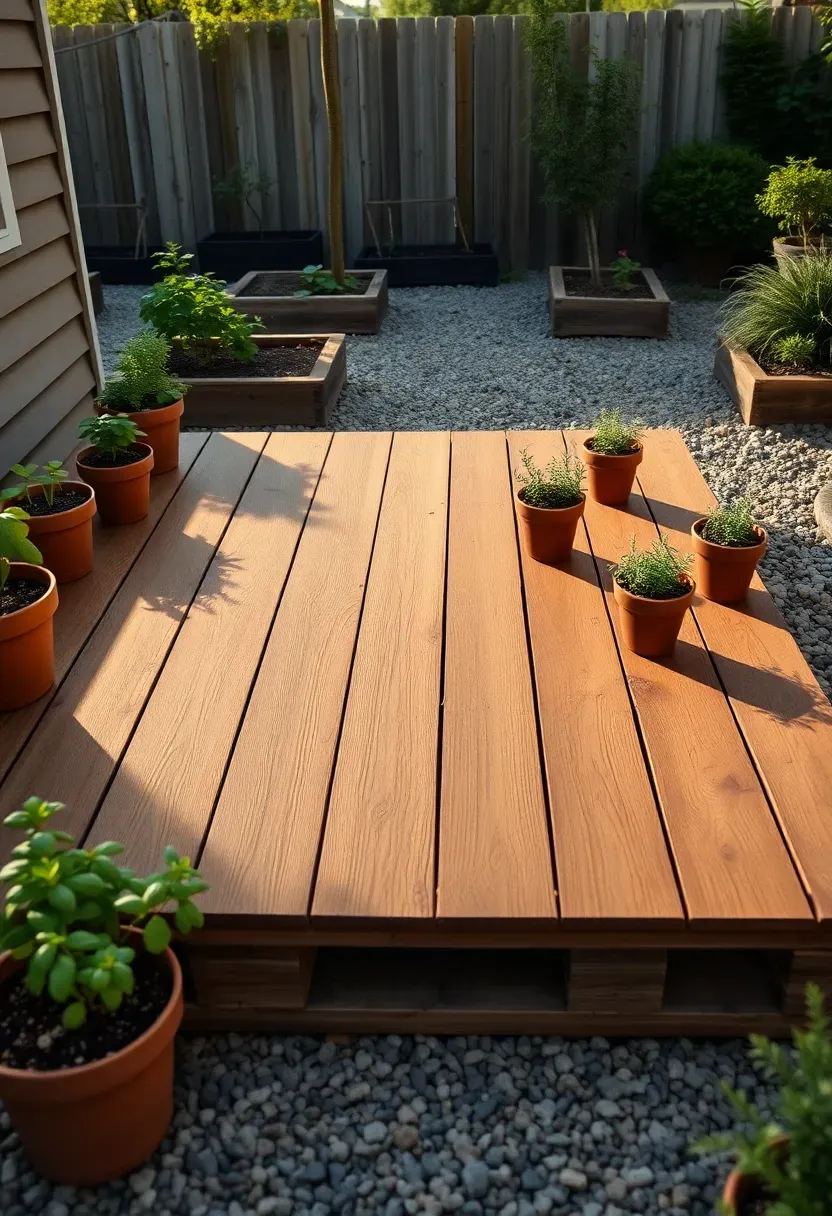
Pallets work as both the frame and the surface if you choose the right ones. Look for HT-stamped pallets (heat-treated, not chemically treated) from local warehouses or shipping companies — many give them away. Sand the top surfaces thoroughly, fill gaps with ripped-down furring strips, and apply two coats of exterior deck stain. A 12-by-8 pallet deck costs under 100 dollars if you already own a sander and a drill. The result is rough-hewn and rustic, which actually works well in cottage or farmhouse yards.
Pros and cons
- Free or nearly free raw materials
- Naturally weathered look suits casual spaces
- Lifespan is shorter than milled lumber — expect 3 to 5 years before replacement
We picked a few things that go well with this idea: NFEVER Solar Post Cap Lights (8-Pack) (★4.3), APONUO Solar Post Cap Lights (12-Pack) (★4.4) and BRIGHTICONIC Solar Post Cap Lights 4x4 (★4.5). As an Amazon Associate we earn from qualifying purchases.
3. Gravel Pad with Deck Tiles
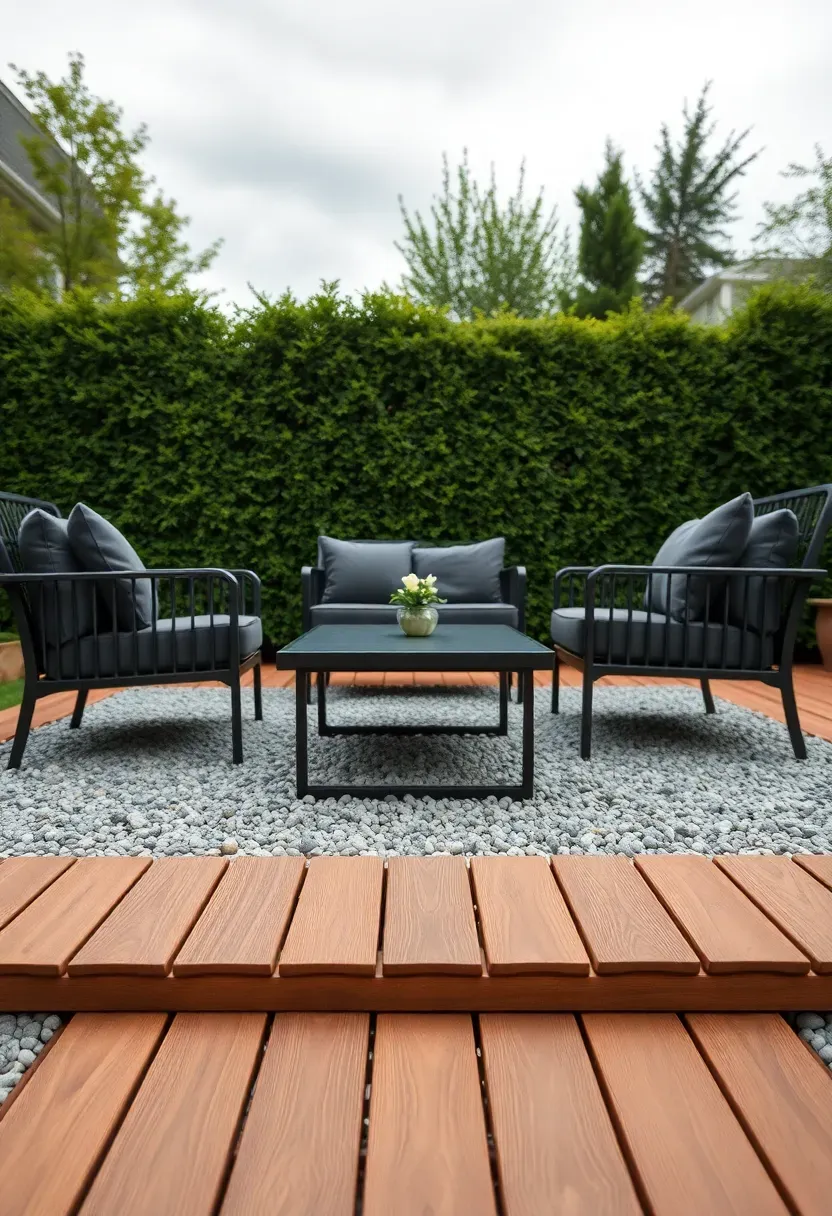
Interlocking deck tiles snap together over any flat surface, and a compacted gravel pad gives you that flat surface without pouring concrete. Excavate four inches, lay landscape fabric, fill with compacted pea gravel or crusher run, and click tiles into place. The tiles run 3 to 6 dollars per square foot depending on material — acacia wood is cheapest, composite costs more but lasts longer. This method works especially well for renters or anyone who wants a removable deck. You can pull the tiles up and take them with you when you move.
Tips
- Tamp gravel with a hand tamper or plate compactor until completely firm before laying tiles
- Start from one corner and work outward to keep the grid square
- Mix wood and stone-pattern tiles for a custom look at no extra cost
We picked a few things that go well with this idea: Basic Beyond Outdoor Chair Cushions (2-Pack) (★4.4), Round Waterproof Outdoor Seat Cushions 16x16 (★4.3) and HILLGA Waterproof Patio Cushions (2-Pack) (★4.5). As an Amazon Associate we earn from qualifying purchases.
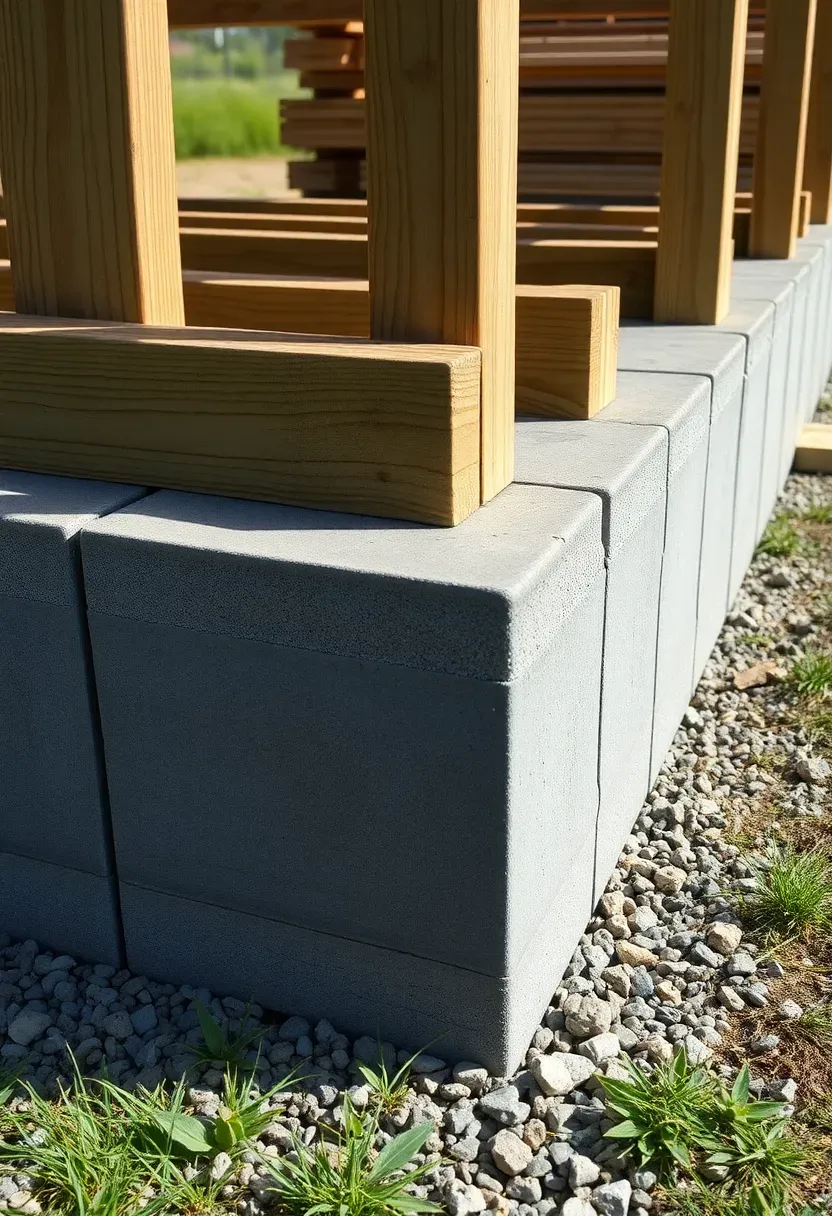
4. Concrete Block Foundation Deck
How to build it
Concrete deck blocks are the unsung hero of budget decking. They cost about 7 dollars each at home improvement stores and replace post holes entirely.
Step 1: Layout
Mark your deck footprint with stakes and string. Check for square by measuring diagonals — they should be equal within a quarter inch.
Step 2: Set blocks
Place blocks every four feet in both directions. Level each one by adding or removing gravel underneath. This takes patience but skipping it means a wobbly deck.
Step 3: Frame and deck
Set 2x6 or 2x8 joists into the block notches, attach rim joists, and screw down your decking. The whole system is gravity-held, so future adjustments are easy.
Watch out
- Check local frost depth — in cold climates, shallow blocks can shift during freeze-thaw cycles
- This method works best for decks under 2 feet in height
Recommended
Items for this idea
5. Wraparound Tree Deck
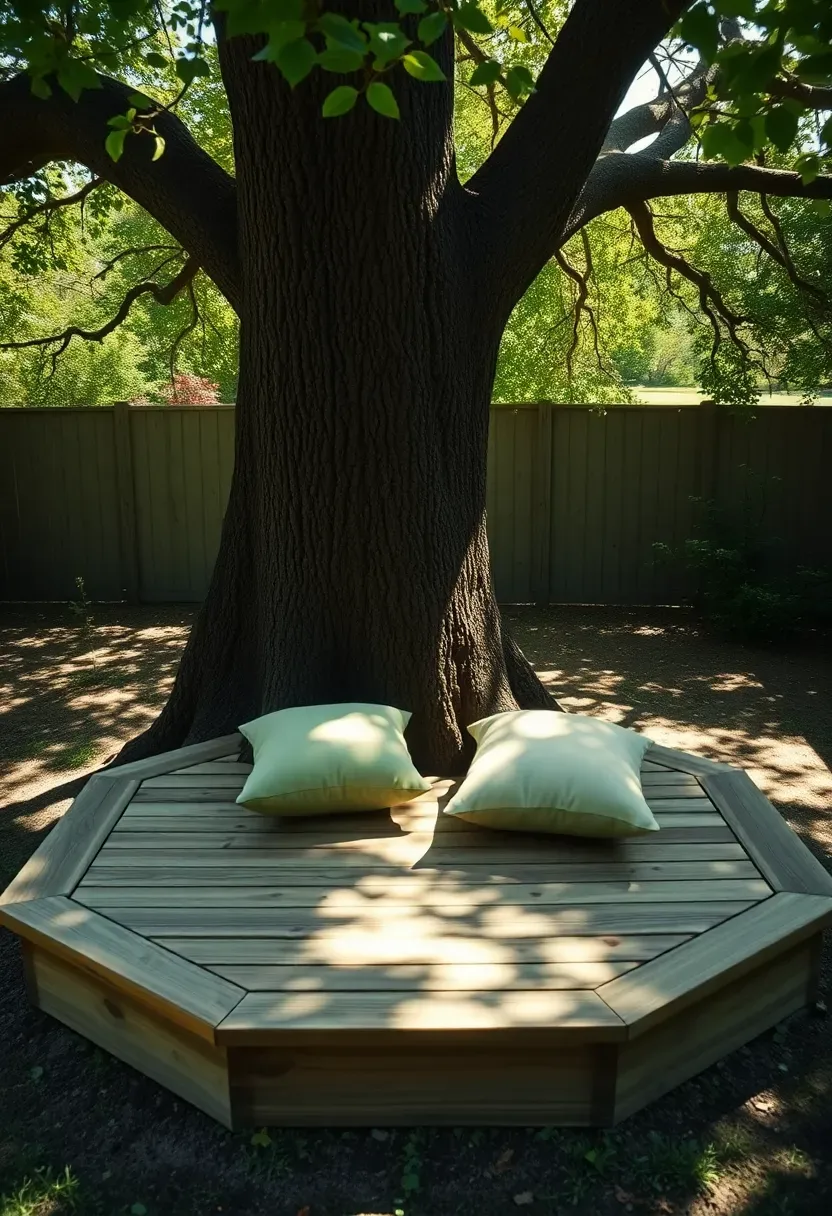
Building a small platform around a mature tree gives you a shaded sitting area without cutting anything down. The key is leaving a generous gap — at least two inches — between the deck and the trunk to allow for growth and airflow. Never bolt into the tree. Instead, use freestanding posts or concrete blocks outside the root zone. A hexagonal or octagonal shape follows the trunk naturally and uses short board cuts, which means less waste. Most wraparound tree decks use 50 to 80 square feet of lumber, keeping material costs between 200 and 400 dollars.
Tips
- Consult an arborist if your tree has surface roots — you cannot bury them under framing
- Increase the trunk gap to 3 inches for fast-growing species like silver maple
- Add a simple bench around the perimeter using the same lumber for built-in seating
6. Narrow Side-Yard Deck
The problem
Side yards are awkward dead zones — too narrow for a patio set, too wide to ignore.
The solution
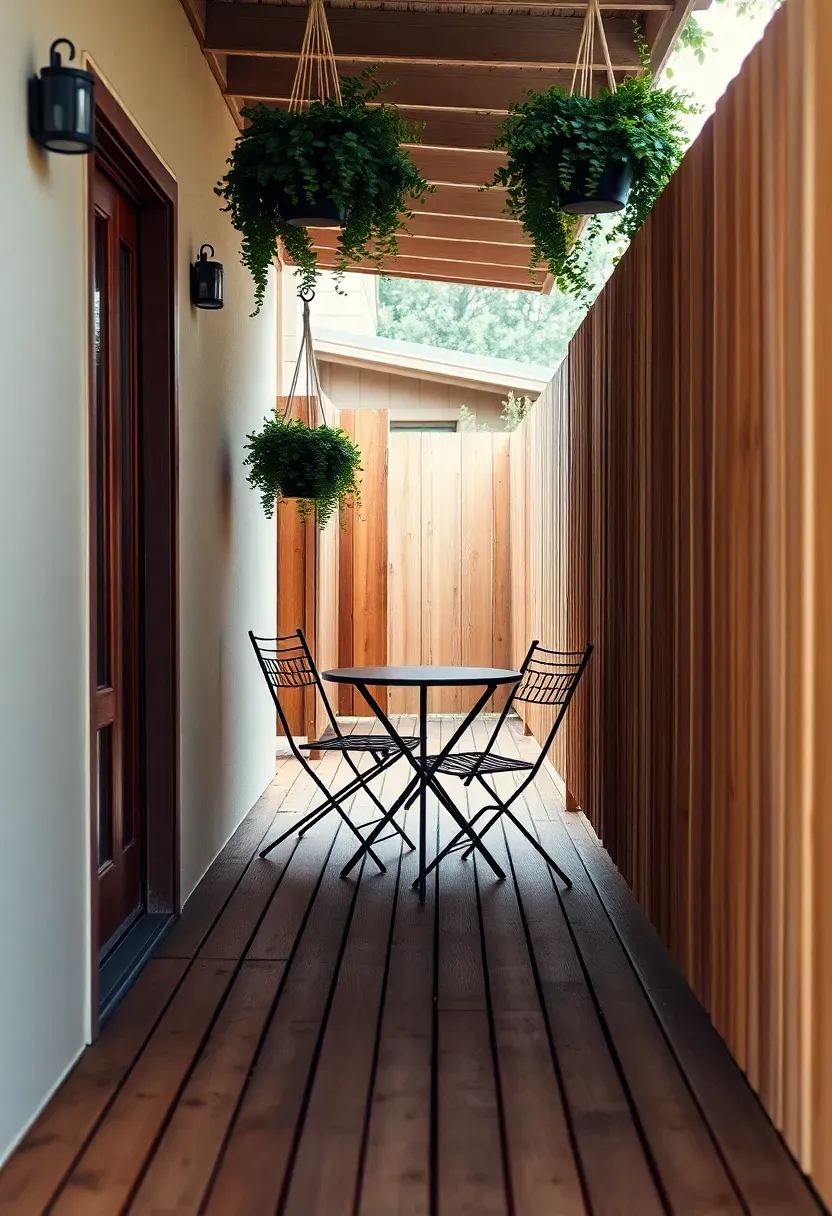
A deck just 4 to 6 feet wide turns that forgotten strip into usable space. Run boards perpendicular to the house wall to make the area feel wider. This works particularly well as a walkway-deck hybrid: functional path plus a widened section in the middle for a bistro table. Since the footprint is small, material costs stay low even with nicer lumber. A 4-by-20 side yard deck uses about 80 board feet of decking, which runs 150 to 250 dollars in pressure-treated pine.
Pros and cons
- Uses otherwise wasted space between house and fence
- Creates a private corridor away from the main yard
- Limited width means no room for large furniture or gatherings
Recommended
Items for this idea
7. Stepped Hillside Deck
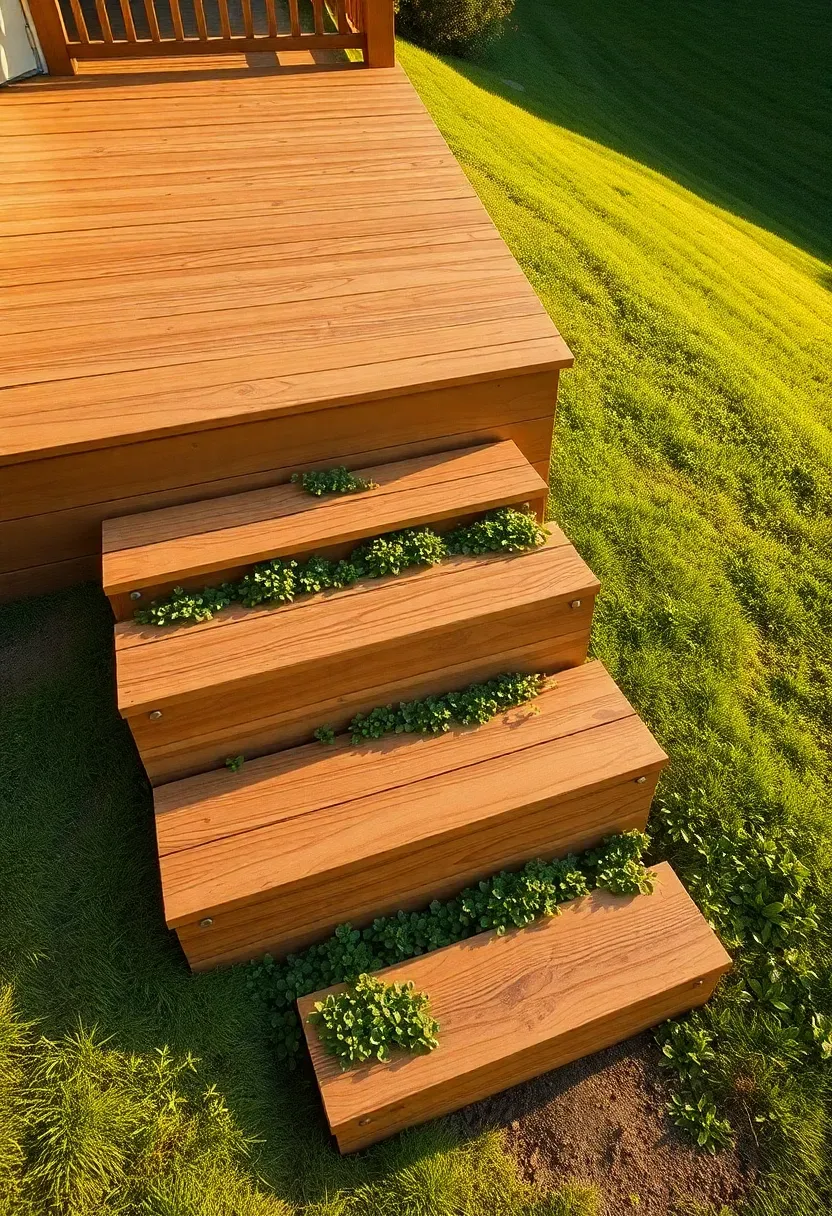
Sloped yards make flat decks expensive because you need tall posts and deep footings on the downhill side. A stepped approach avoids that: build two or three small platforms at different heights, connected by a couple of steps each. Each platform stays close to ground level on its own section of slope, so you avoid engineering a tall structure. The visual effect is actually more interesting than a single flat deck — it creates distinct zones for dining, lounging, and grilling without any walls or dividers.
Tips
- Keep each level within 18 inches of the adjacent ground to minimize post height
- Use the same decking material across all levels for visual continuity
- Plant low ground cover between levels to prevent erosion on exposed soil
8. Salvaged Lumber Deck
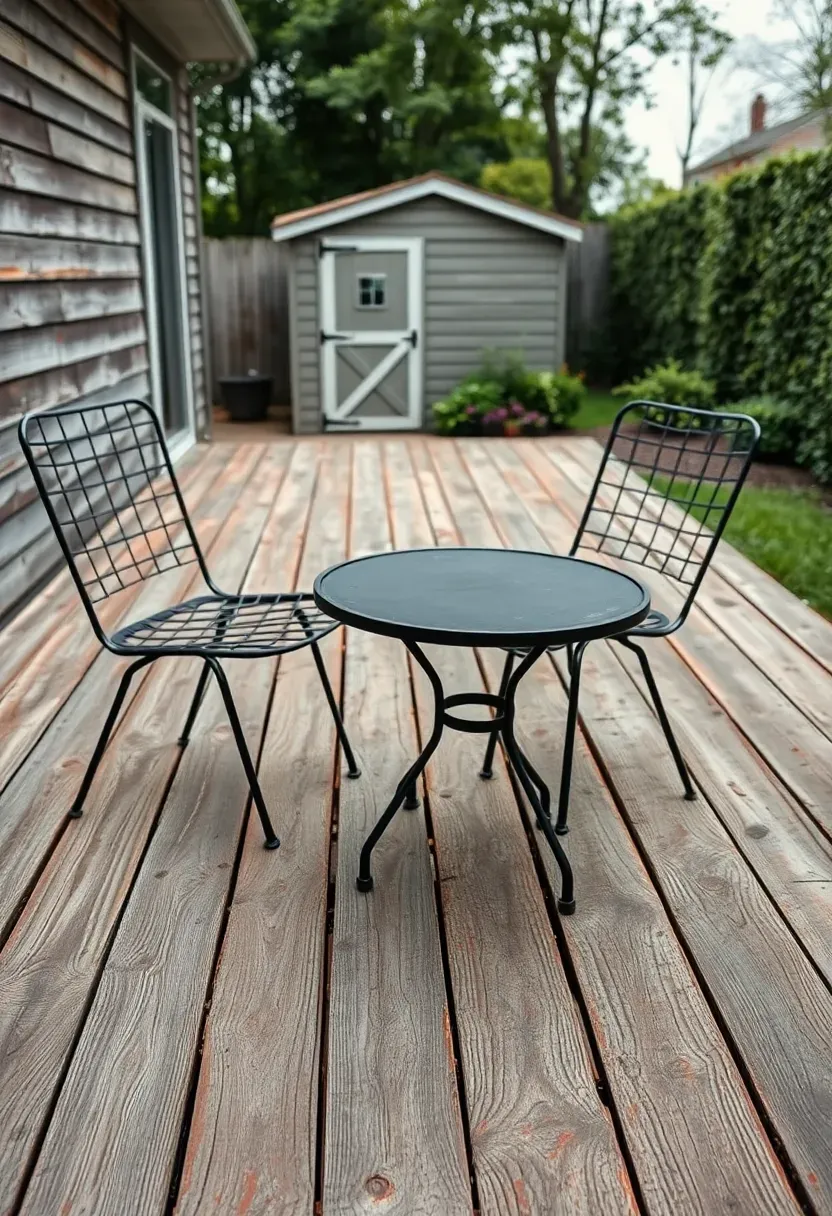
Reclaimed barn wood, fence boards from demolition sites, and offcuts from local sawmills can cost a fraction of new lumber — sometimes nothing at all. The character marks, nail holes, and uneven tones add a quality that new wood simply does not have. Check Craigslist, Facebook Marketplace, and local salvage yards. The main work is sorting and prepping: pull old nails, check for rot by probing with a screwdriver, and run a moisture meter to make sure boards are not waterlogged. Expect to reject about 30 percent of what you collect.
What to watch out for
- Avoid painted wood unless you can confirm it is lead-free — especially anything from pre-1978 structures
- Thickness will vary between sources, so plan to shim joists for a level surface
- Seal thoroughly with exterior penetrating oil since reclaimed wood has no factory treatment
Recommended
Items for this idea
9. Painted Plywood Deck
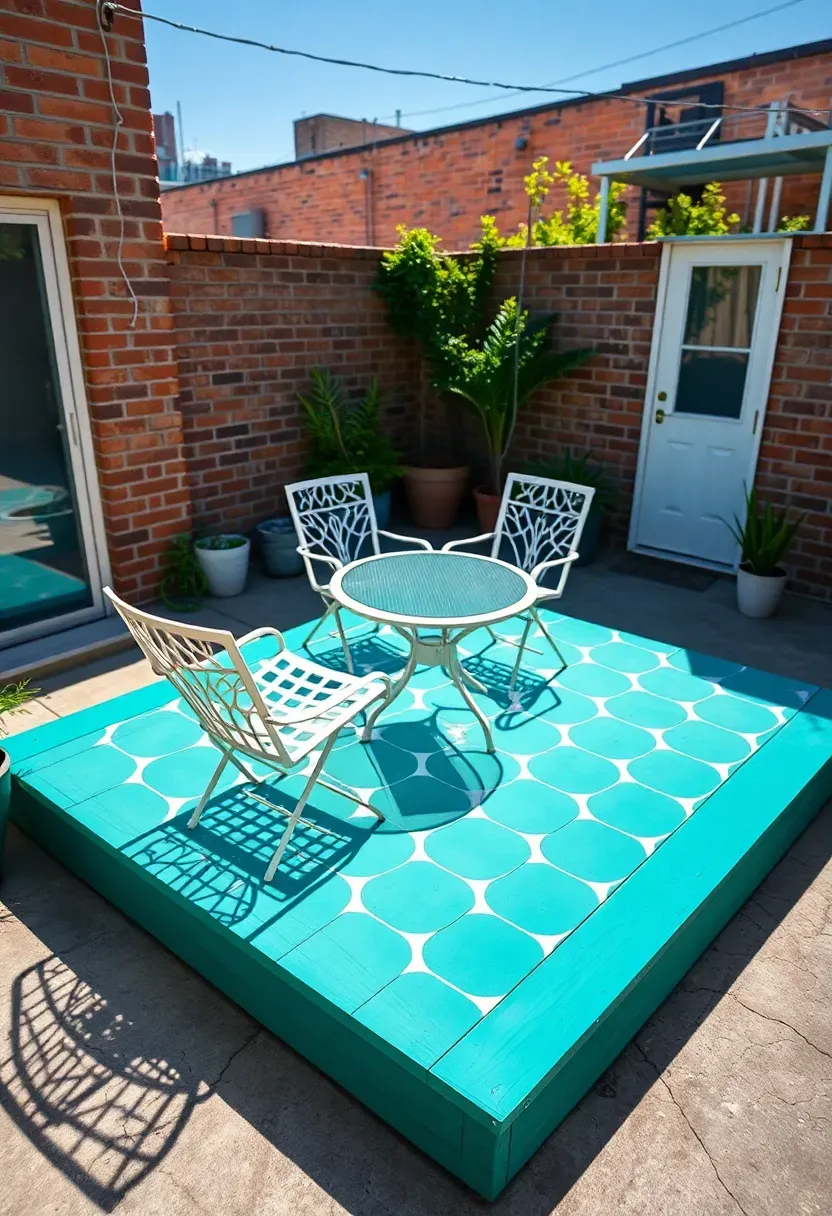
This might be the cheapest deck surface that actually looks intentional. A sheet of 3/4-inch exterior-grade plywood costs 40 to 60 dollars and covers 32 square feet. Lay sheets over a simple 2x4 frame, seal all edges and screw holes with exterior wood filler, then prime and apply porch and floor paint in whatever color you want. Add a stenciled pattern or painted rug design and it reads as deliberate rather than makeshift. This approach works best in dry climates or covered areas since plywood will delaminate faster than solid lumber in prolonged wet conditions.
Tips
- Use CDX or marine-grade plywood for better moisture resistance
- Apply non-skid additive to the final paint coat — painted plywood gets slippery when wet
- Repaint every two seasons to stay ahead of wear
10. Low Platform Deck with Built-In Bench
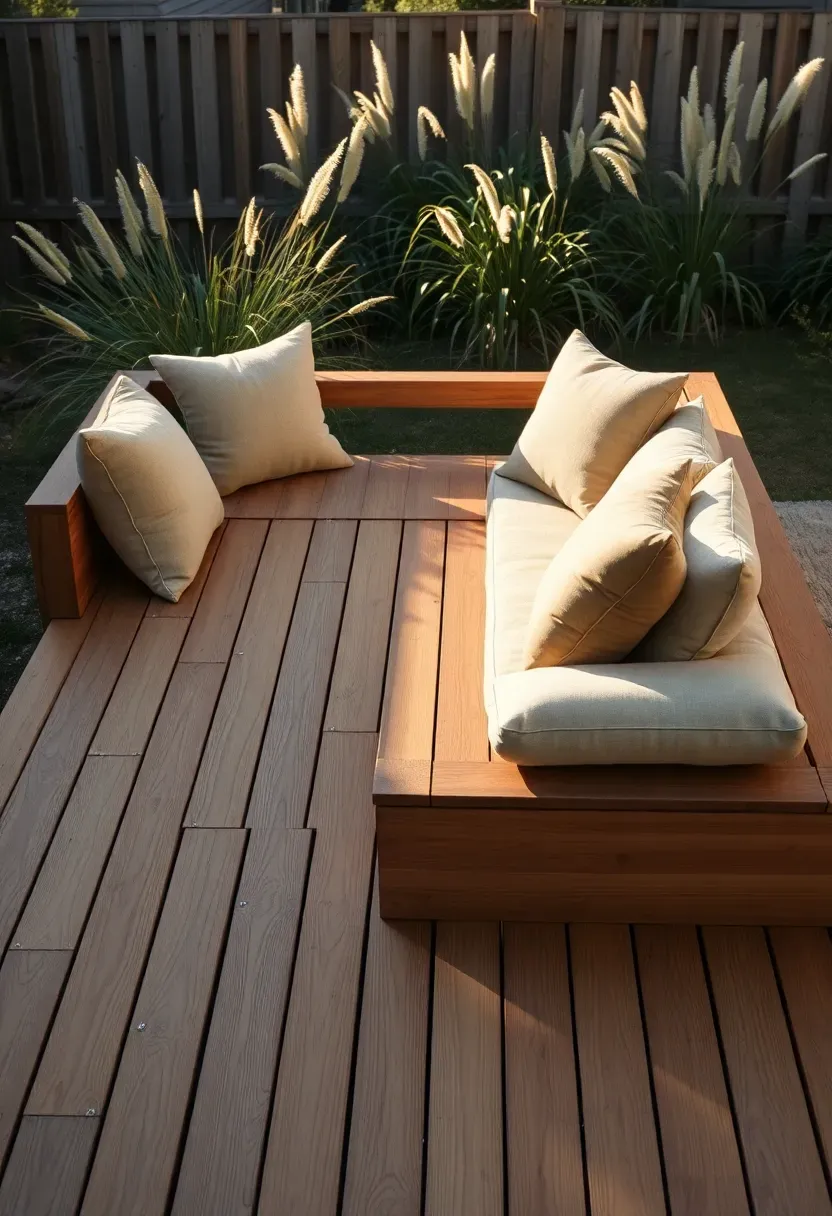
Combining the deck surface and seating into one build saves money twice — you skip buying outdoor furniture and you reduce the deck footprint since chairs do not need extra space to pull out. Frame the bench as a continuation of the deck joists, extending upward at the perimeter with vertical supports and a seat board at 17 to 18 inches high. An L-shaped bench along two edges creates a conversation area naturally. Add 4-inch foam cushions with outdoor covers and you have seating for six to eight people for the cost of lumber and foam alone.
Tips
- Make the seat board 16 to 18 inches deep for comfortable sitting
- Leave gaps between seat boards for drainage just like the deck surface
- Hinge one seat section for hidden storage underneath
Recommended
Items for this idea
11. Composite Tile Over Concrete
The problem
Your existing concrete patio is cracked, stained, and ugly — but structurally sound underneath.
The solution
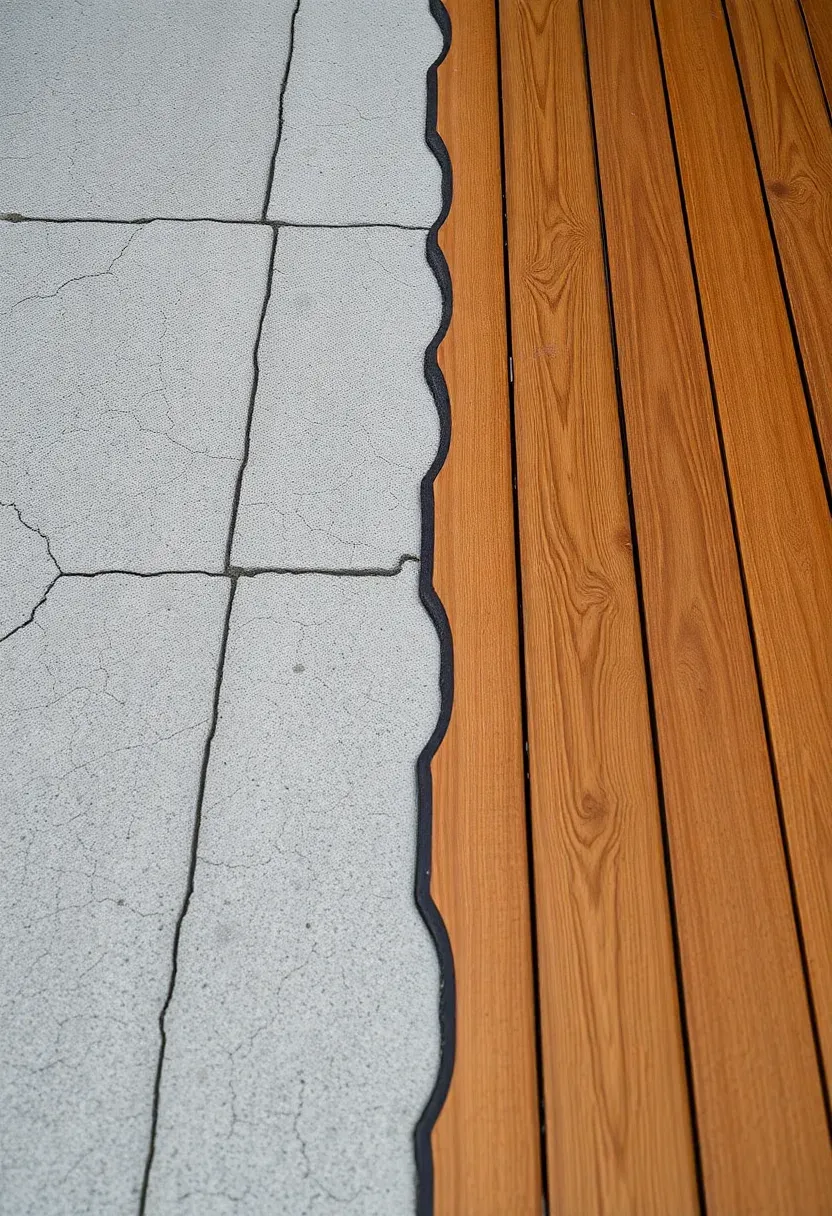
Composite deck tiles click directly onto concrete without adhesive, screws, or any prep beyond sweeping. They sit on a raised grid base that allows water to drain beneath, so even a slightly uneven slab works fine. A 100-square-foot patio costs 300 to 600 dollars to cover depending on tile brand. The composite surface feels warmer underfoot than concrete, does not crack further, and comes in wood-grain patterns that genuinely look like real decking from a few feet away. Installation takes about two hours.
Pros and cons
- Zero demolition — covers existing problems instead of fixing them
- Removable if you sell the home or change your mind
- Tiles can shift on sloped concrete if not edged with trim strips
12. Cable Railing on a Budget
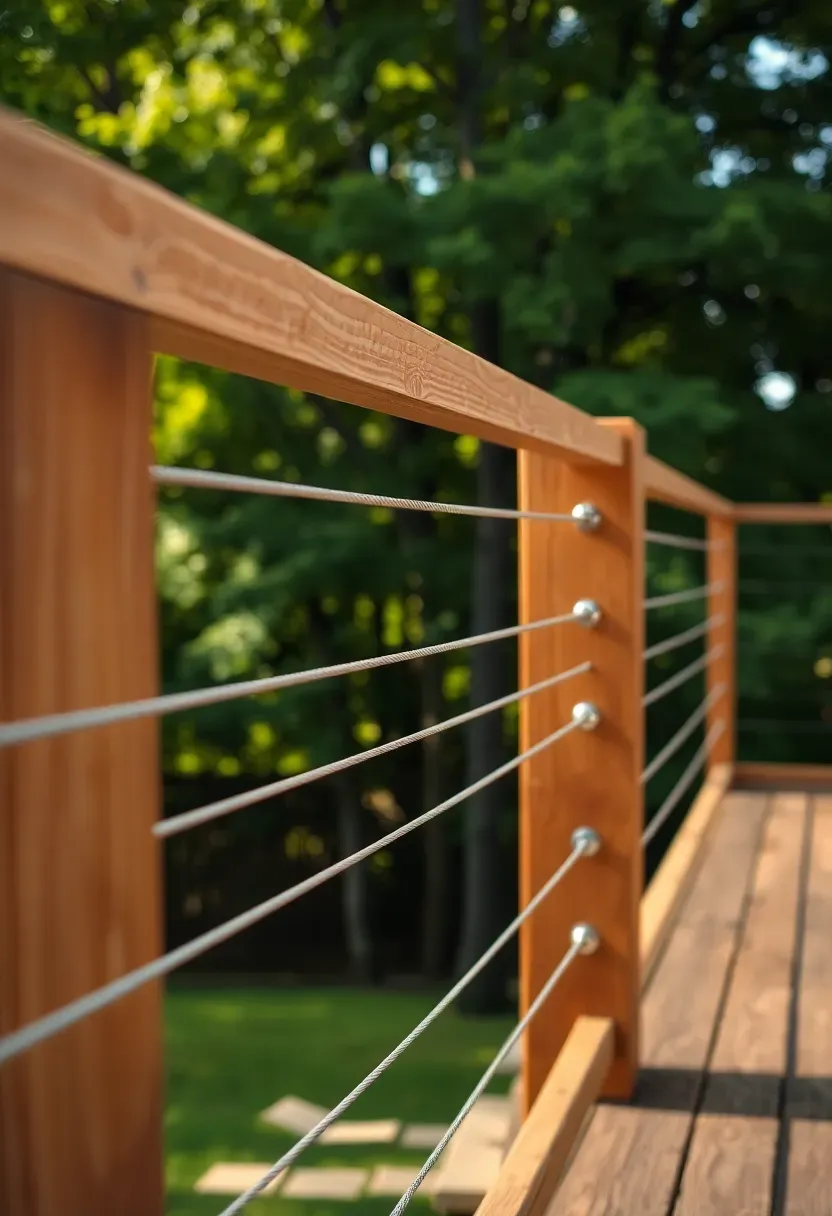
Factory cable railing kits run 100 to 200 dollars per linear foot installed. DIY cable railing using 1/8-inch stainless steel wire rope, eye bolts, and turnbuckles from a marine supply store costs about 10 to 15 dollars per linear foot. Drill evenly spaced holes through your existing deck posts, thread the cable through, and tension with turnbuckles at one end. The clean horizontal lines look modern and do not block views the way balusters do. Building code typically requires cable spacing of no more than 4 inches, which means 8 to 10 runs for a standard 36-inch railing height.
Tips
- Buy a cable cutter — regular wire cutters fray stainless steel ends
- Over-tension slightly at install since cables relax over the first few weeks
- Check local building codes for railing requirements before starting
Recommended
Items for this idea
13. Deck with Cinder Block Stairs
How to build it
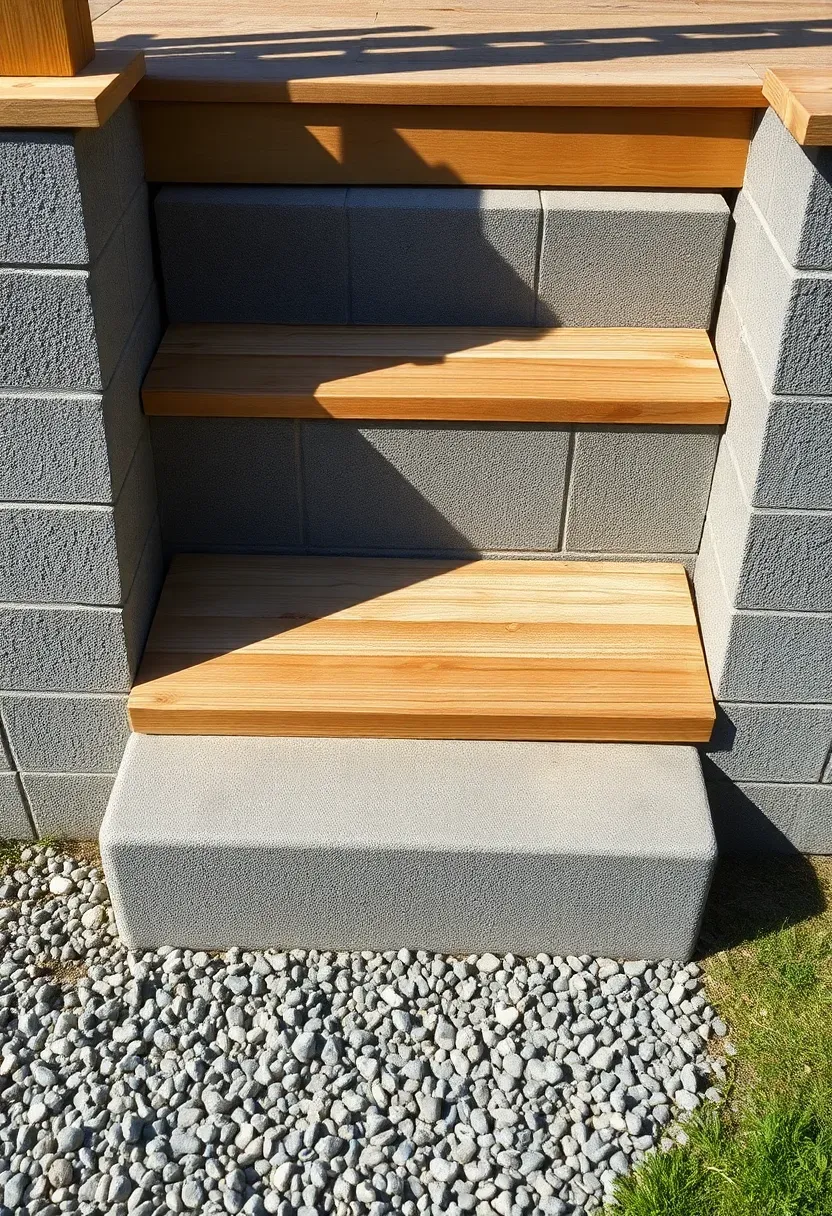
Traditional stair stringers require precise angle cuts that trip up even experienced builders. Cinder blocks stacked and filled with gravel make sturdy step supports without any cutting at all.
Step 1: Stack blocks
Place two columns of standard 8x8x16 cinder blocks where your stairs will go, offsetting each layer to create the rise. Fill hollow cores with gravel or concrete for weight.
Step 2: Add treads
Lay 2x10 or 2x12 pressure-treated boards across each block level. Secure with construction adhesive or anchor bolts through pre-drilled holes.
Step 3: Finish
Cap exposed block faces with stone veneer adhesive tiles or leave them raw for an industrial look. Total cost for a three-step set runs about 50 to 75 dollars.
Watch out
- Stack no more than 3 blocks high without mortar or concrete fill — beyond that the stack becomes unstable
- Level each course carefully since blocks do not flex like wood
14. Stained Two-Tone Deck
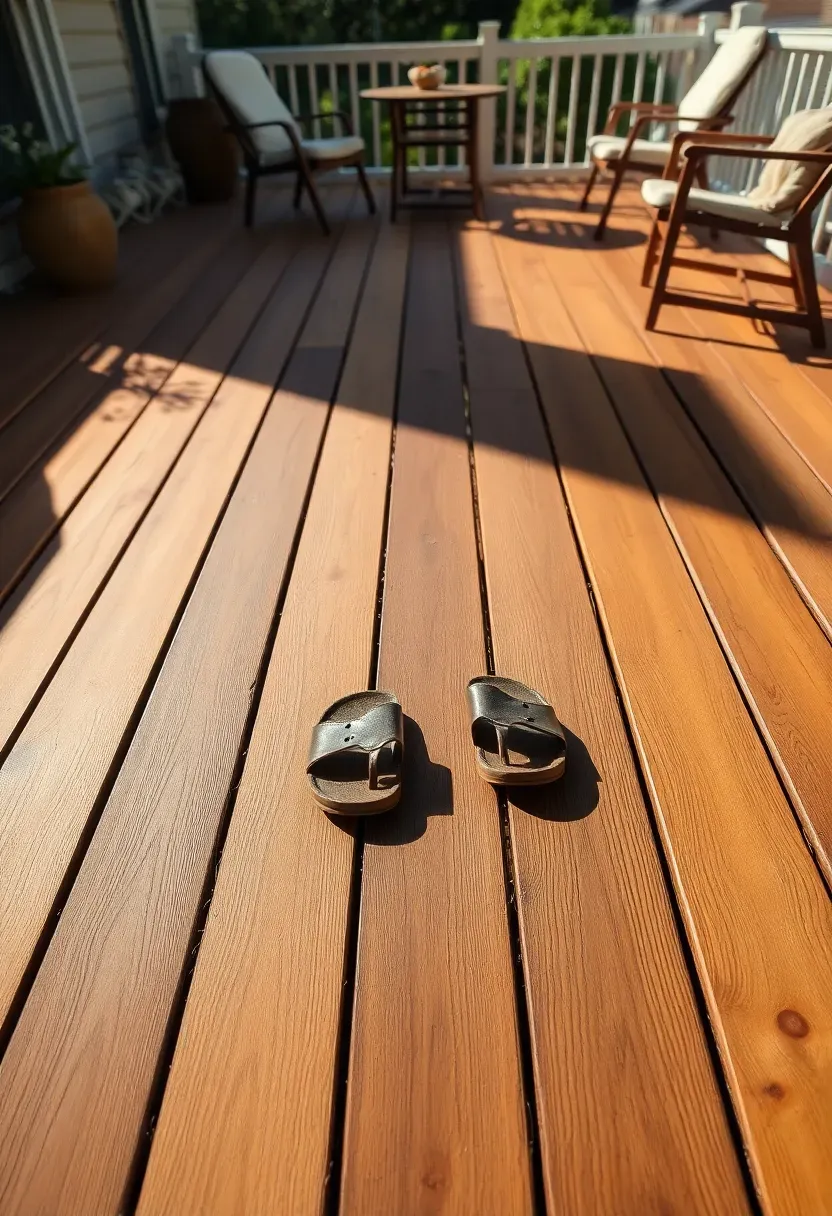
A single can of deck stain in a second color doubles the visual impact of a basic deck for about 30 dollars. The simplest approach is alternating board colors — stain every other board a darker shade. You can also divide the deck into zones: darker stain for the dining area, lighter for the lounging section. Border patterns work well too — dark perimeter boards framing a lighter center. Apply stain before installation when possible, since taping off adjacent boards on an assembled deck is tedious. Two-tone staining makes even basic pine look considered and planned.
Tips
- Test both stain colors on a scrap piece first — they interact with wood grain differently
- Semi-transparent stain shows more wood character than solid stain
- Apply both colors from the same product line so sheen levels match
Recommended
Items for this idea
15. Privacy Screen Deck Wall
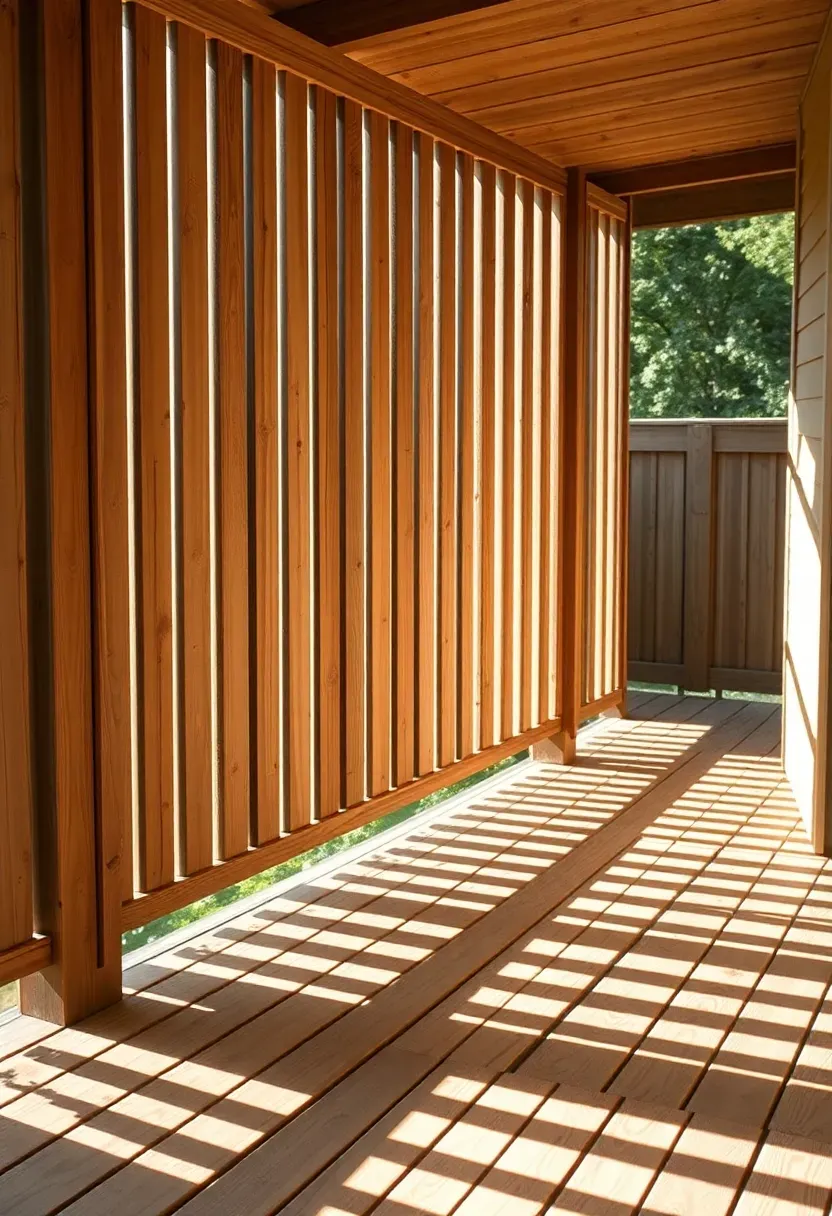
A slatted privacy screen turns an exposed deck into an enclosed outdoor room. Vertical 1x4 boards spaced half an inch apart block sightlines while allowing airflow and filtered light. Frame them between 4x4 posts attached to the deck structure. An 8-foot-tall screen along one 12-foot side costs about 120 to 180 dollars in pressure-treated lumber. You can stain it to match the deck or paint it a contrasting color for a focal wall effect. The slats also double as support for climbing plants like jasmine or clematis if you want living privacy over time.
Tips
- Angle slats at 15 degrees for a louvered look that adds rain protection
- Attach with exterior screws from the back side for a clean front face
- Add a cap board along the top to finish the edge and prevent water from sitting on end grain
16. Pergola-Topped Deck
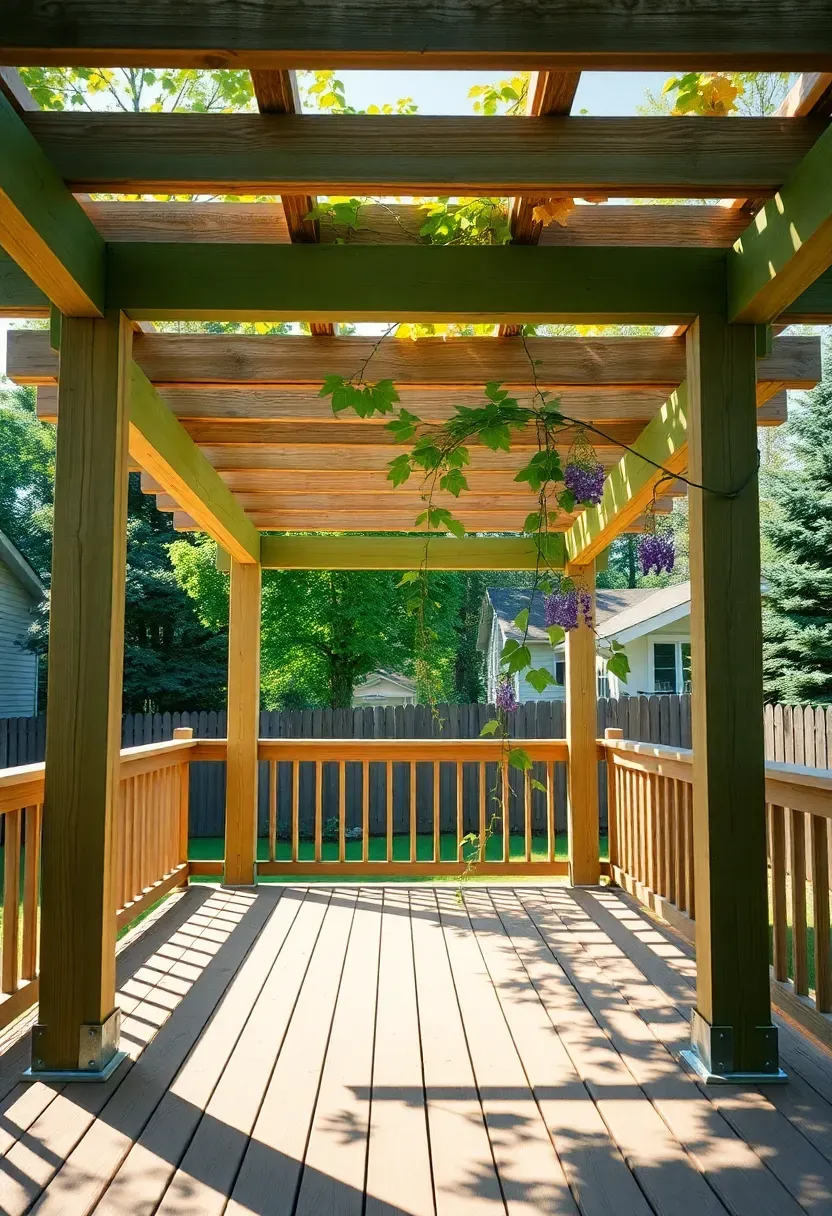
A pergola does not need to be a 5,000-dollar cedar structure. Four pressure-treated 4x4 posts, 2x8 beams, and 2x6 rafters create a solid pergola frame for 200 to 400 dollars in materials. Bolt posts directly to the deck frame or set them in post bases anchored to concrete footings adjacent to the deck. Space rafters 16 inches on center for enough shade to matter. Skip the cross pieces if you want cleaner lines. Over time, climbing plants — grape vines, wisteria, or trumpet vine — fill in the roof naturally and provide real shade without fabric.
Tips
- Notch beams to sit on top of posts for a cleaner joint than face-mounting
- Extend rafters 12 inches past the beams on each side for an architectural overhang
- String lights between rafters for instant evening ambiance
Recommended
Items for this idea
17. Solar Post Cap Lighting
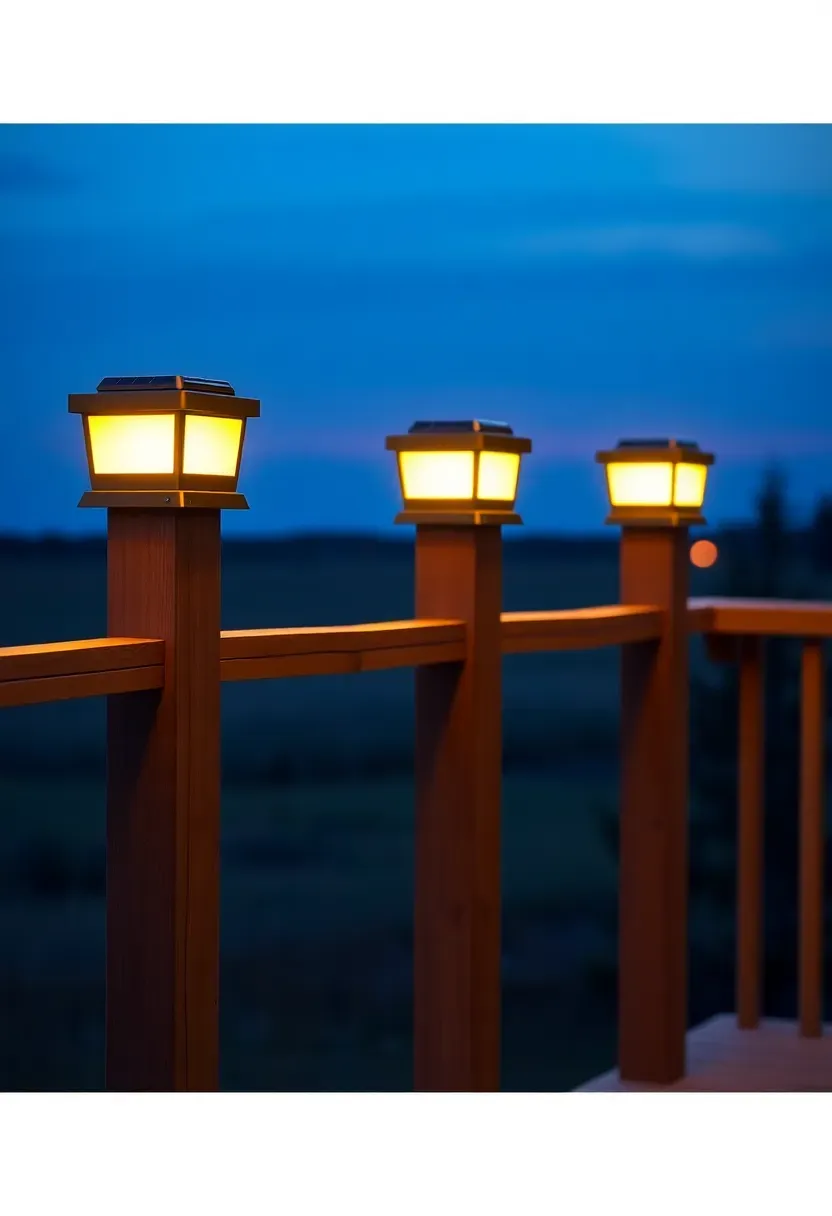
Deck lighting typically means running low-voltage wiring, buying a transformer, and drilling holes for fixtures. Solar post caps skip all of that. They fit over standard 4x4 or 6x6 post tops, charge during the day, and glow automatically at dusk. A set of four costs 25 to 50 dollars online. The light output is modest — enough to define the deck edge and create ambiance, not enough to read by — which is exactly what evening deck time calls for. They last 3 to 5 years before the rechargeable batteries need replacement, which costs a few dollars each.
Tips
- Choose warm white (2700K to 3000K) over cool white for a relaxed feel
- Position caps on posts that receive direct afternoon sun for maximum charge
- Wipe the solar panels monthly to prevent dust and pollen from reducing output
18. Built-In Planter Boxes Along the Edge
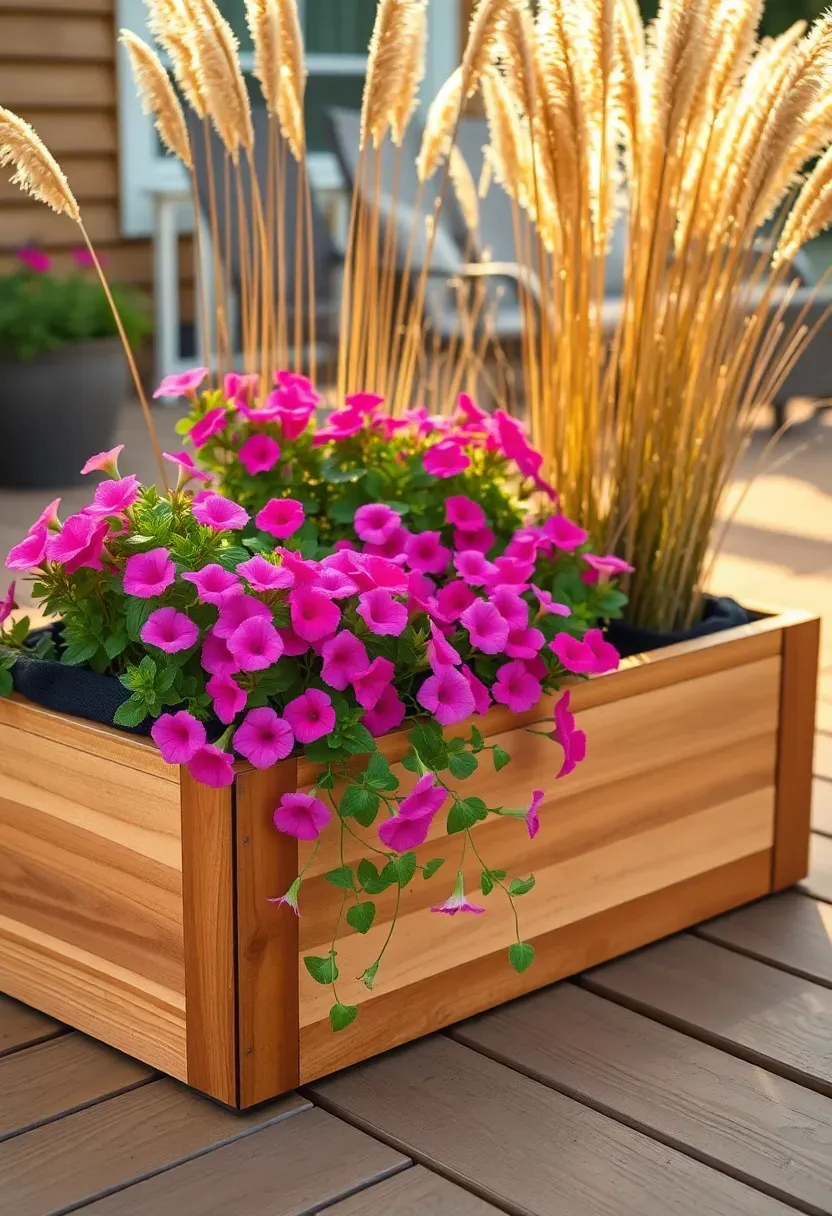
Planter boxes built into the deck perimeter serve as both railing and garden space. Build simple rectangular boxes from the same decking lumber, line with landscape fabric, and fill with potting soil. A 6-inch-deep, 10-inch-wide box along a 12-foot deck edge costs about 40 dollars in lumber. Trailing plants like sweet potato vine or calibrachoa spill over the sides and soften the deck's hard lines. Herbs in the planters put basil and rosemary within arm's reach of your outdoor dining table. Drill drainage holes every 8 inches along the bottom to prevent waterlogging.
Tips
- Use a plastic liner inside the wood box to prevent soil contact and rot
- Match planter height to railing code requirements if they replace a traditional railing
- Swap seasonal plantings — pansies in spring, petunias in summer, ornamental kale in fall
Recommended
Items for this idea
19. Outdoor Rug and Furniture Staging
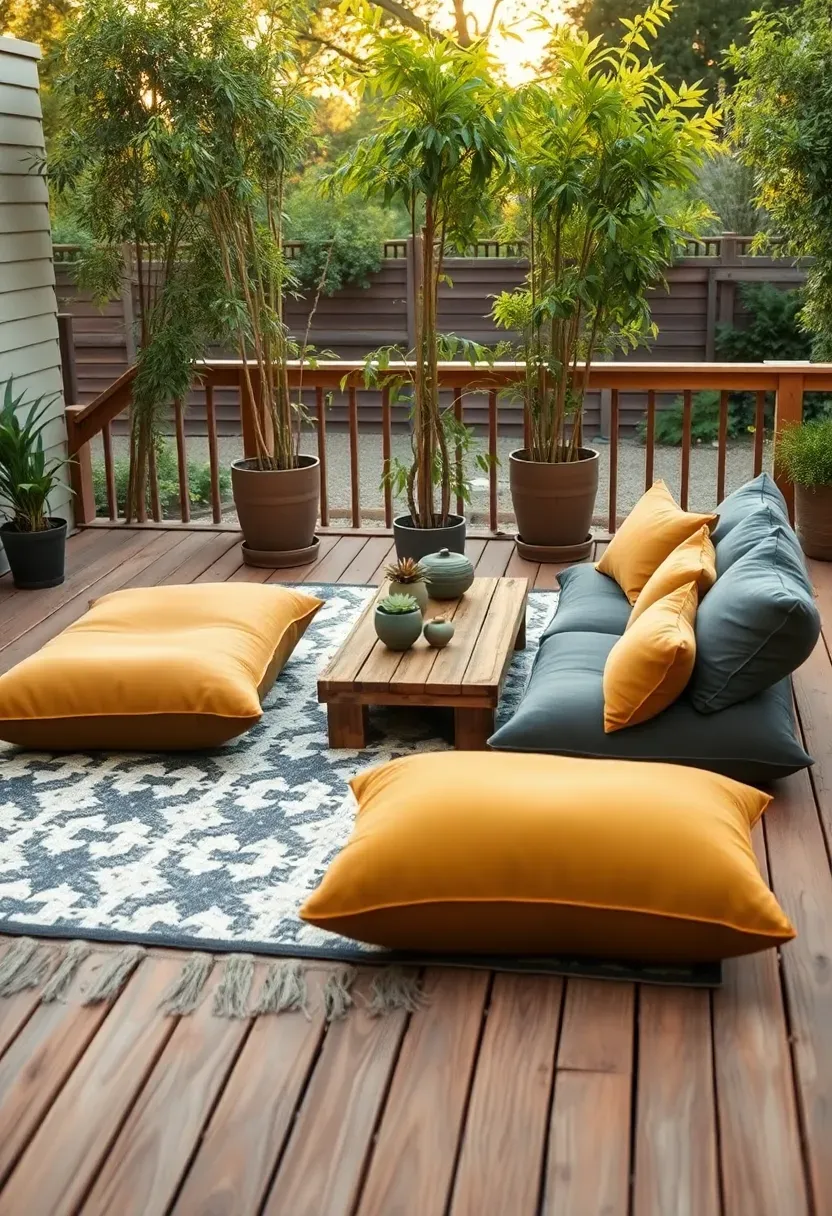
The deck itself is only half the project. How you furnish it determines whether anyone actually uses it. An outdoor rug defines a seating zone and makes the deck feel like a room. Floor cushions cost less than chairs and stack against the wall when not needed. A low table — even a repurposed wooden crate — anchors the space. Group furniture close enough for conversation rather than spreading it to fill the deck. Budget staging formula: one rug, one low table, seating for four, and at least three potted plants. Total cost for secondhand and discount finds runs 100 to 200 dollars.
Tips
- Anchor the rug with furniture weight rather than tape on wood surfaces
- Store cushions in a waterproof deck box between uses
- Add one tall plant (like a potted bamboo) to create height variation in the arrangement
Quick FAQ
Do I need a permit for a backyard deck? In most jurisdictions, decks under 200 square feet and within 30 inches of ground level do not require a building permit. But rules vary — some towns require permits for any attached structure. Call your local building department before starting. The call takes five minutes and can save you a tear-down order later.
Which budget decking material lasts longest? Pressure-treated southern yellow pine offers the best balance of cost and durability. It resists rot and insects for 15 to 20 years with proper maintenance. Cedar costs more upfront but weathers naturally without stain. Avoid untreated SPF lumber outdoors — it rots within two to three years.
How do I keep a budget deck from looking cheap? Three things make the biggest difference: consistent stain color across all boards, hidden screw systems (or at least pre-drilled and countersunk screws in straight lines), and finished edges with fascia boards covering the cut ends of joists. These details cost almost nothing extra but separate a planned build from a thrown-together one.
Can I build a deck directly on the ground? Yes, with precautions. Use ground-contact-rated lumber (rated for direct soil or concrete contact), lay landscape fabric underneath, and provide at least 1 inch of clearance using gravel or pavers. Airflow under the deck prevents moisture buildup that accelerates rot.
What is the cheapest way to add deck railing? Vertical 2x2 balusters between simple 2x4 top and bottom rails cost about 5 to 8 dollars per linear foot in materials. For a more modern look, horizontal cable railing using marine-grade wire rope runs 10 to 15 dollars per foot DIY. Both meet standard building codes when spaced properly.
Building a deck on a budget is less about finding some secret cheap material and more about choosing the right scale, staying close to ground level, and doing the work yourself. The biggest savings come from skipping deep footings (use deck blocks), keeping the height under 30 inches (fewer code requirements), and finishing with stain and smart staging instead of expensive materials. Start with a small platform and expand later if you want more space — modular building is one of the best advantages of deck construction. Your backyard deserves a floor, and that floor does not need to cost thousands.
Pinterest cover for 19 Backyard Deck Ideas on a Budget
About the author
OBCD
CGI visualization and interior design content. We create detailed 3D renders and curate practical design ideas for every room in your home.