25 Backyard Fence Ideas
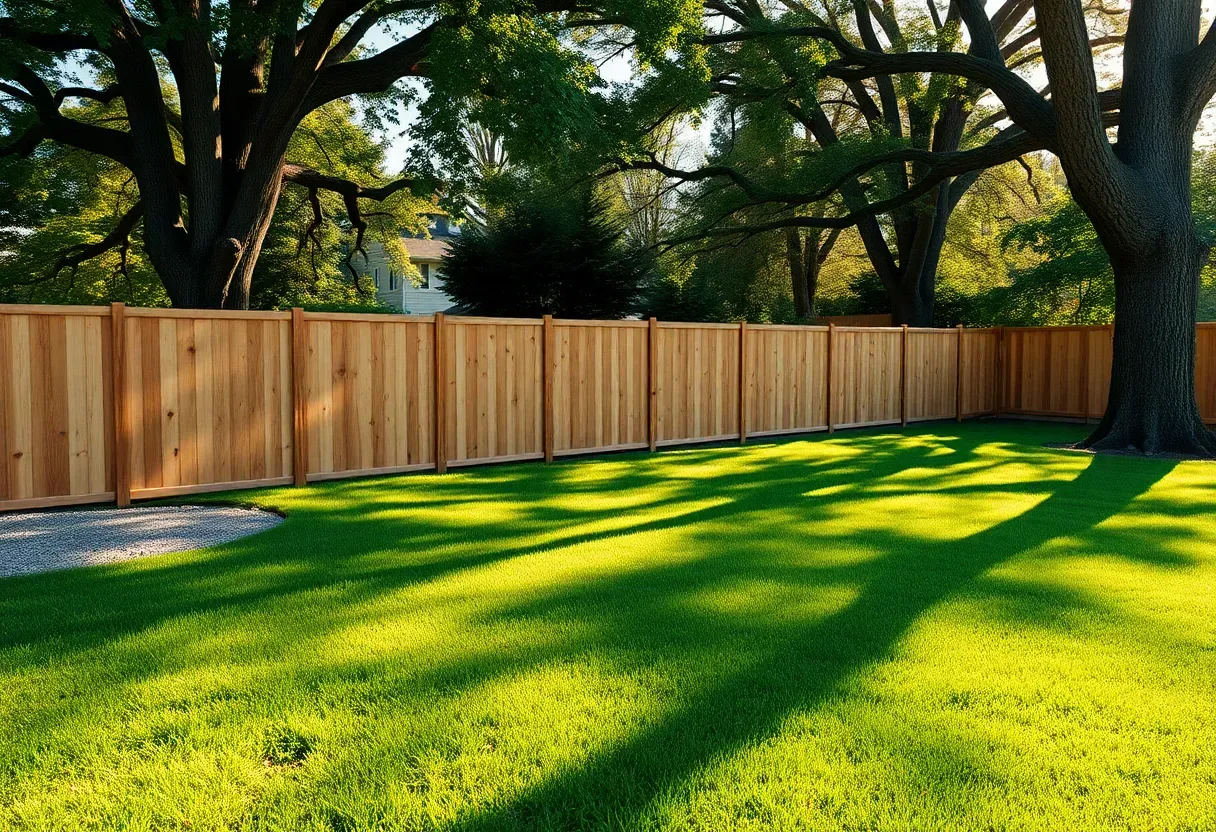
A fence does more work than any other single element in your backyard. It defines property lines, keeps dogs in (or out), blocks wind, muffles street noise, and sets the visual tone for everything inside it. Yet most homeowners default to whatever the contractor suggests — usually a standard six-foot dog-ear board fence in pressure-treated pine. That works, but there are dozens of better-looking options at comparable price points. I replaced a rotting chain-link fence two years ago and spent weeks researching materials, heights, and styles before settling on something I actually liked looking at every morning.
Here are 25 fence ideas organized by material and style, from budget-friendly basics to designs worth saving up for.
Table of Contents
- Classic Cedar Dog-Ear
- Horizontal Cedar Slats
- Board-on-Board Privacy Fence
- White Vinyl Picket Fence
- Black Aluminum Pool Fence
- Split Rail with Wire Mesh
- Corrugated Metal Panels
- Gabion Wall Fence
- Bamboo Roll Fencing
- Composite Privacy Fence
- Lattice-Top Privacy Fence
- Japanese-Style Bamboo Screen
- Corten Steel Panels
- Woven Willow Hurdles
- Concrete Block with Wood Infill
- Shadowbox Fence
- Cattle Panel Trellis Fence
- Dry-Stack Stone Wall
- Horizontal Metal Slat Fence
- Pallet Wood Fence
- Living Willow Fence
- Glass Panel Wind Fence
- Louvered Fence
- Mixed Material: Stone Base with Wood Top
- Black Stained Cedar Fence
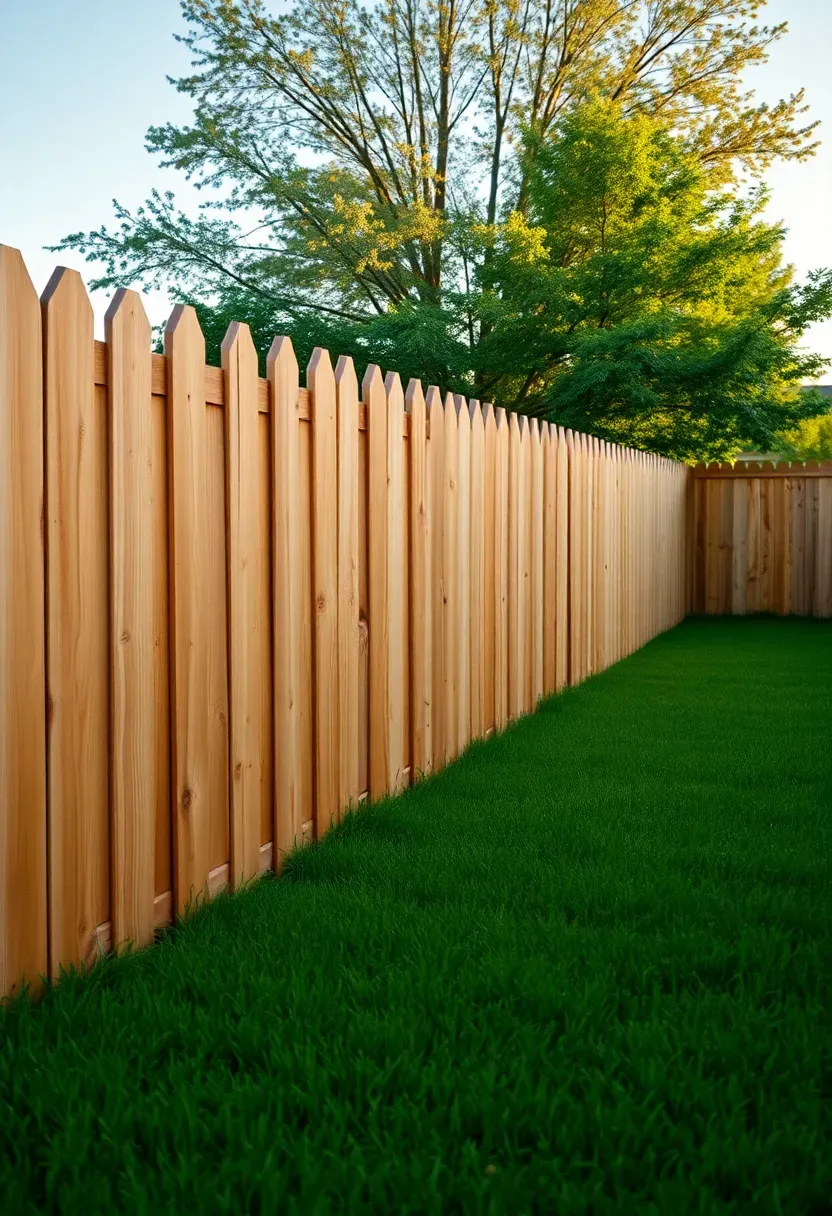
1. Classic Cedar Dog-Ear
The dog-ear fence gets its name from the angled cuts at the top of each picket. Cedar is the go-to wood because it contains natural oils that resist rot and insects without chemical treatment. A six-foot cedar dog-ear fence costs roughly $15 to $25 per linear foot installed, which makes it one of the more affordable wood options. Left untreated, cedar weathers to a silver-gray within two years. If you prefer the warm honey tone, apply a UV-blocking sealant every 18 months. Posts should be set in concrete at least 24 inches deep in most soil types.
Tips
- Use 4x4 cedar posts rather than pressure-treated to avoid the green tint at post locations
- Space pickets with a nickel's width gap for expansion and airflow
- Cap the posts to prevent water from pooling on end grain
We picked a few things that go well with this idea: Enclo Concord Cedar Privacy Fence Panel (★4.4), No-Dig Metal Privacy Fence Screen (48x60) (★4.6) and 6FT Metal Privacy Screen Freestanding Panel (★4.1). As an Amazon Associate we earn from qualifying purchases.
2. Horizontal Cedar Slats
Why Horizontal Works
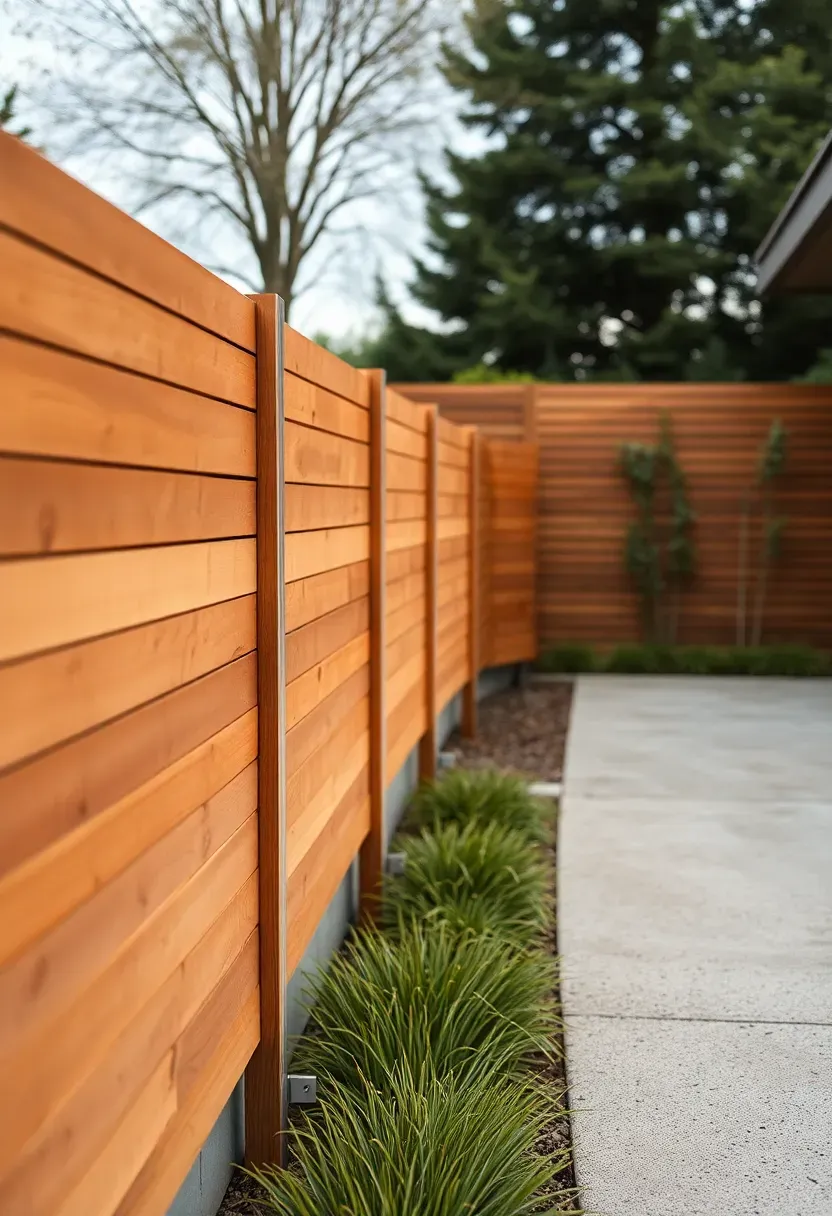
Horizontal fencing became popular in modern residential architecture around 2010 and has stayed relevant because it genuinely looks different from every other fence on the block. The lines draw your eye sideways, making narrow yards feel wider.
How to Build It Right
Use 1x6 cedar boards attached to steel or wood posts spaced no more than six feet apart. Closer post spacing — four feet — prevents the boards from bowing over time, which is the most common complaint with horizontal designs. Mount boards with the bark side facing out so they cup away from the fence rather than holding water. A hidden fastener system keeps screw heads invisible from the street side.
Pros and Cons
Pros: Contemporary look, customizable spacing, works with stain or natural finish Cons: More expensive than vertical due to extra posts, shows warping faster if post spacing is too wide
We picked a few things that go well with this idea: Ready Seal Wood Stain & Sealer (1 Gallon) (★4.7), SaverSystems #1 Deck Wood Stain (1 Gallon) (★4.6) and Thompson's WaterSeal Clear Waterproofer (1 Gallon) (★4.5). As an Amazon Associate we earn from qualifying purchases.
3. Board-on-Board Privacy Fence
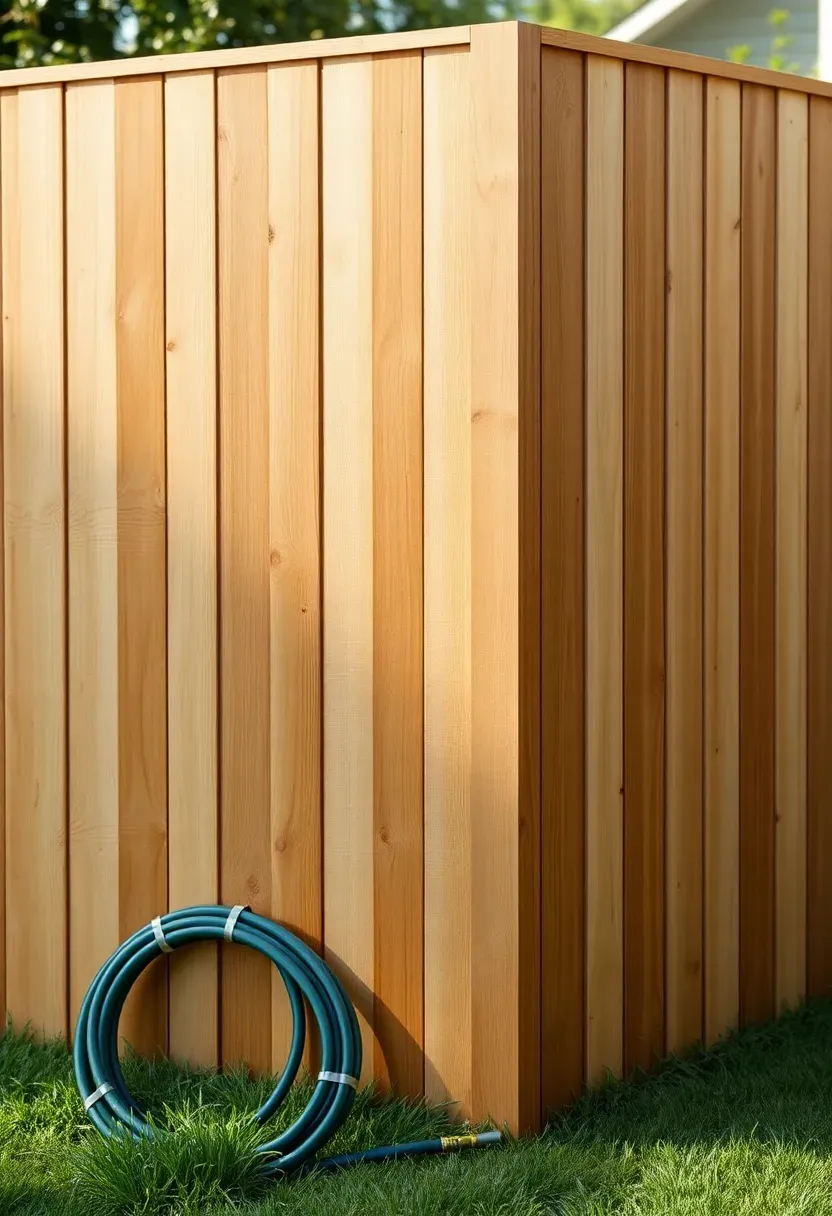
Board-on-board construction overlaps adjacent pickets by about an inch, so there are no gaps visible from either side. This makes it one of the few fence styles that looks equally finished from both your yard and your neighbor's. The overlapping boards also block more wind than a standard side-by-side fence, which matters in exposed lots. You use roughly 30% more lumber than a flat panel fence, but the privacy payoff is worth the material cost. Paint or stain both sides to prevent uneven weathering.
Tips
- Alternate boards on opposite sides of the horizontal rail for the cleanest look
- Use ring-shank nails instead of smooth nails — they grip better as wood shrinks
- Add a 2x6 cap rail across the top for a polished finish
We picked a few things that go well with this idea: Bamboo Reed Privacy Fence Roll (6x16 FT) (★4.4), VEVOR Natural Bamboo Fence Roll (6x8 FT) (★4.2) and Natural Bamboo Fence Roll (6x8 FT) (★4.4). As an Amazon Associate we earn from qualifying purchases.
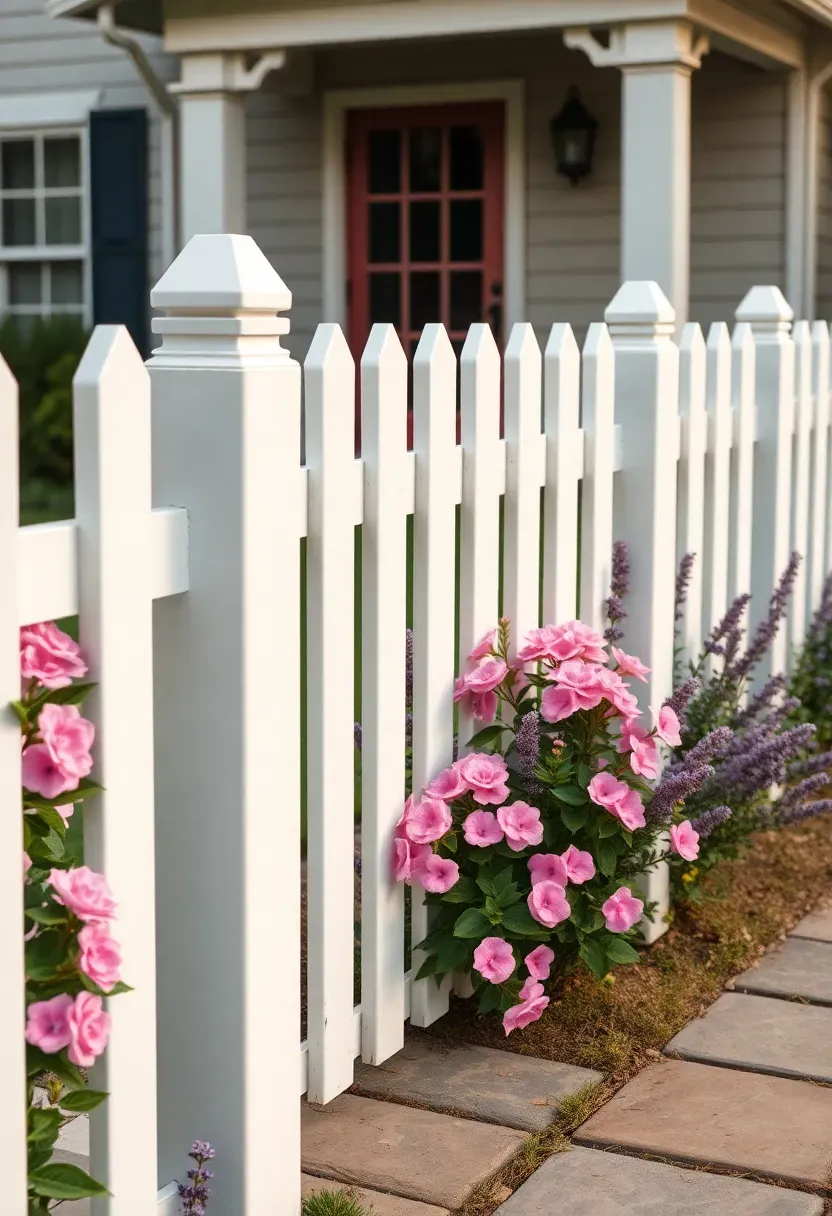
4. White Vinyl Picket Fence
The Core Issue
Wood picket fences need repainting every three to four years. In damp climates, the bottom rail rots first, and replacing individual pickets in a painted fence means color-matching old, chalky paint — a losing battle.
The Solution
Vinyl picket fencing eliminates paint entirely. Modern vinyl has improved significantly since the flimsy panels of the 1990s. Look for fence systems with aluminum or steel reinforcement inside the rails and posts. These cost more upfront — typically $20 to $35 per linear foot — but the ten-year maintenance savings offset the difference. Clean with a garden hose and a soft brush once a year.
Pros and Cons
Pros: Zero painting, won't rot, consistent color for decades, easy to clean Cons: Can yellow slightly in extreme sun, limited color range, looks plastic up close
Recommended
Items for this idea
5. Black Aluminum Pool Fence
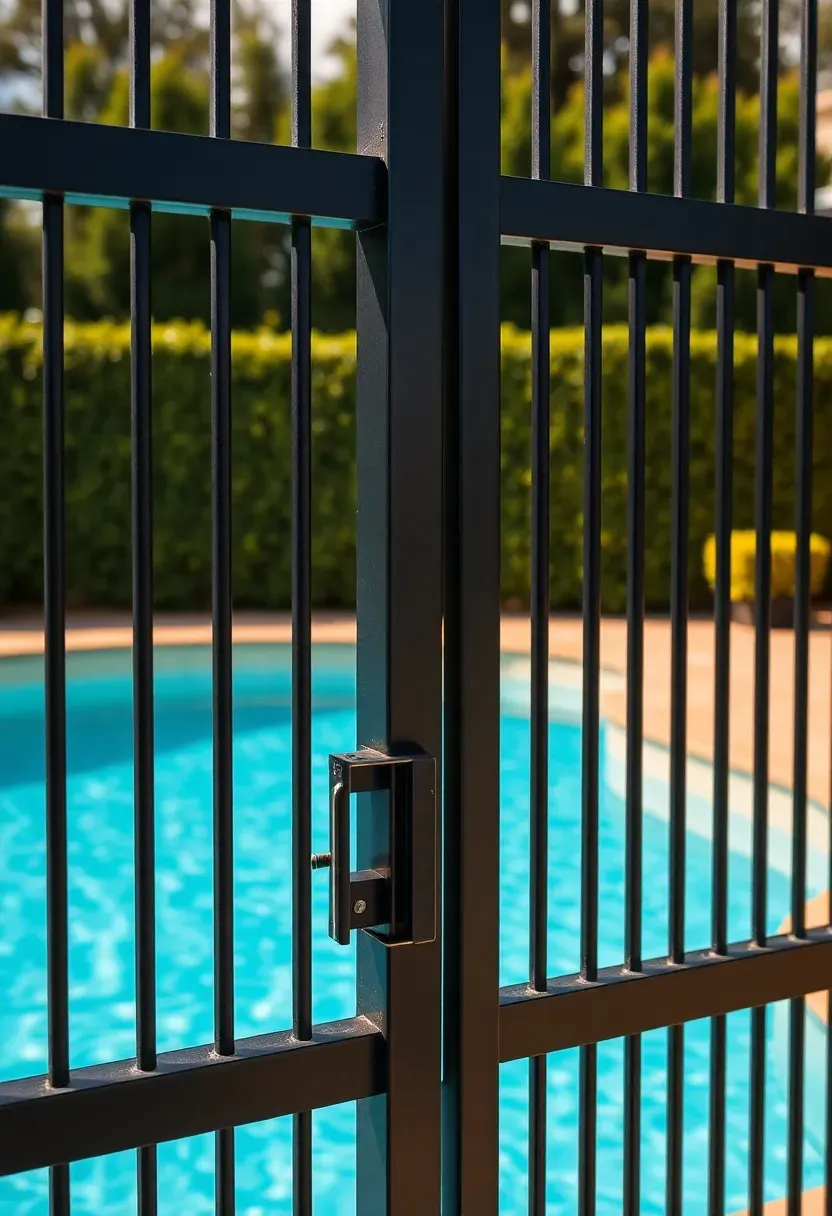
Pool fencing has code requirements in most jurisdictions — typically 48 inches minimum height with self-closing, self-latching gates and no climbable horizontal rails. Black powder-coated aluminum meets all of these while remaining nearly invisible from a distance. The thin pickets don't block views of landscaping or the pool itself, which is the whole point of having a pool in the backyard. Panels come in standard four-foot and five-foot heights and connect with brackets, making installation straightforward for a competent DIYer.
Tips
- Verify local pool fence code before ordering — some areas require 54-inch height
- Choose a flat-top style over spear-top if children climb on nearby furniture
- Space pickets at 3.5 inches or less to meet child safety standards
6. Split Rail with Wire Mesh
How to Set It Up
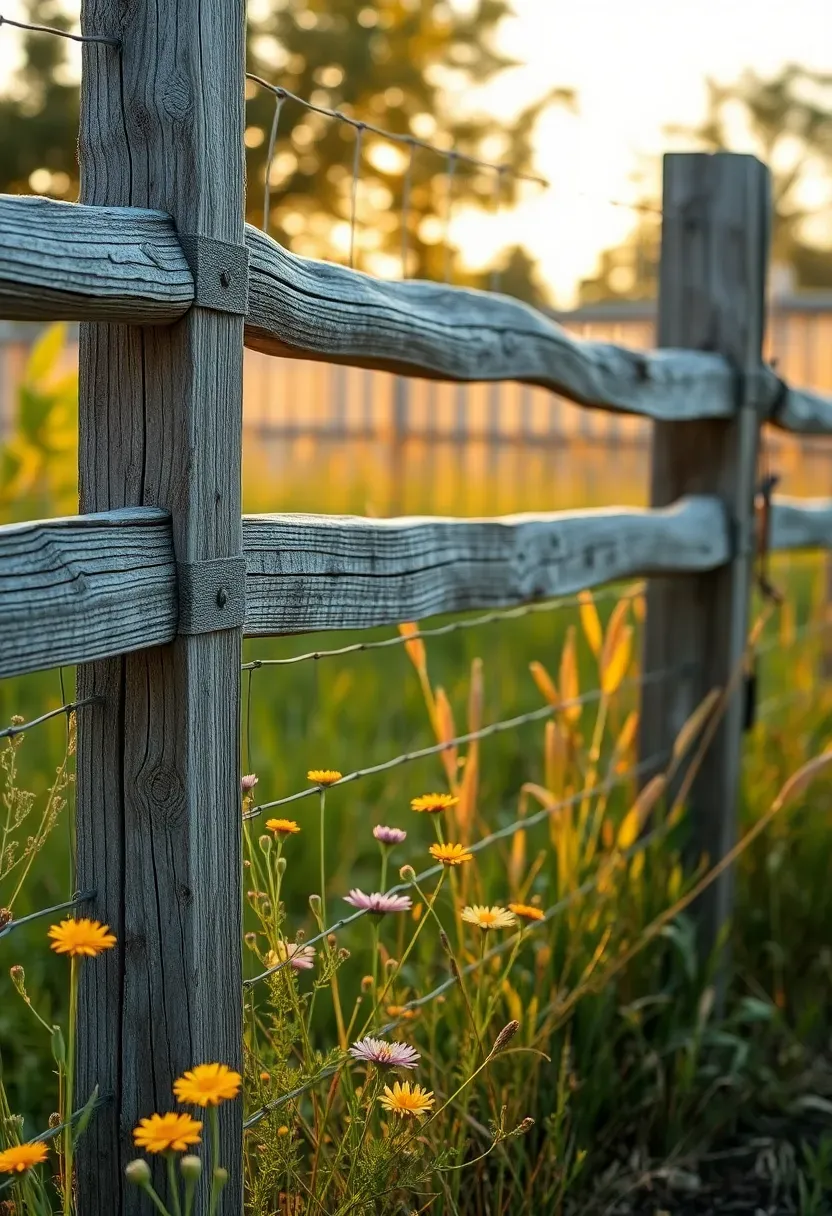
Split rail fencing has a casual, rural character that works well on larger lots or properties bordering open land. On its own, a split rail fence won't contain pets or keep rabbits out of a garden.
Step 1: Install Posts and Rails
Set posts in holes 30 inches deep, spaced 8 feet apart. Slide pre-mortised cedar or locust rails into the post slots. No fasteners needed — gravity and the mortise joint hold everything.
Step 2: Attach Welded Wire
Staple 2x4-inch welded wire mesh to the inside face of the fence using galvanized U-staples every 8 inches along the rails and posts.
Step 3: Finish the Base
Bury the bottom 3 inches of wire mesh underground or pin it with landscape staples to prevent animals from pushing underneath.
Watch out
- Locust posts last 20+ years in ground contact; cedar lasts about 10
- Galvanized wire rusts faster than vinyl-coated — spend the extra dollar per roll
Recommended
Items for this idea
7. Corrugated Metal Panels
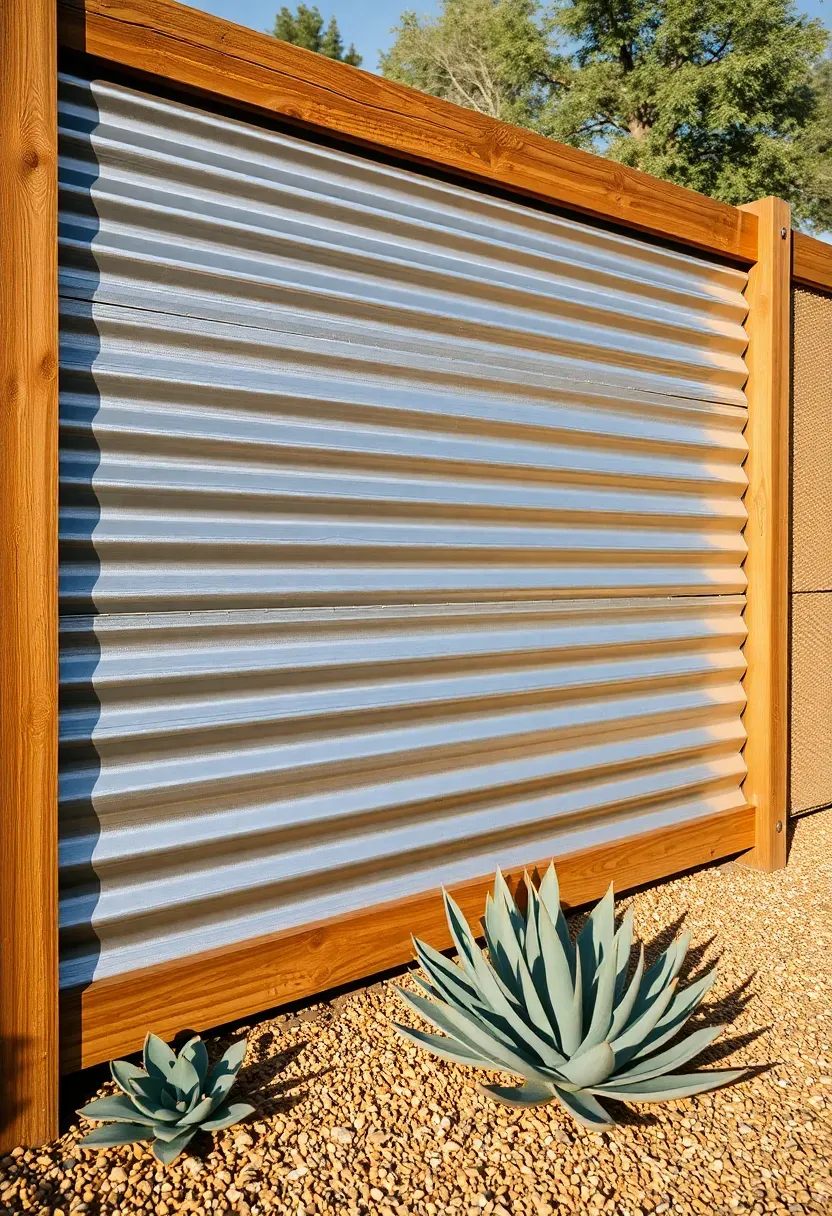
Corrugated metal brings an industrial edge that pairs surprisingly well with desert landscaping, modern architecture, and even farmhouse settings. Use 26-gauge galvanized or galvalume panels framed between wooden posts and horizontal rails. The metal itself is cheap — about $1 per square foot — but framing and labor add to the total. Cut panels with aviation snips rather than a grinder to avoid sparks near dry vegetation. One practical advantage: metal fences don't attract termites and won't rot at the base.
Tips
- File or cap cut edges to prevent injuries — raw corrugated edges are razor-sharp
- Leave a half-inch gap at the bottom to prevent moisture from wicking into the frame
- Pre-drill screw holes in the metal to avoid dimpling the panels
8. Gabion Wall Fence
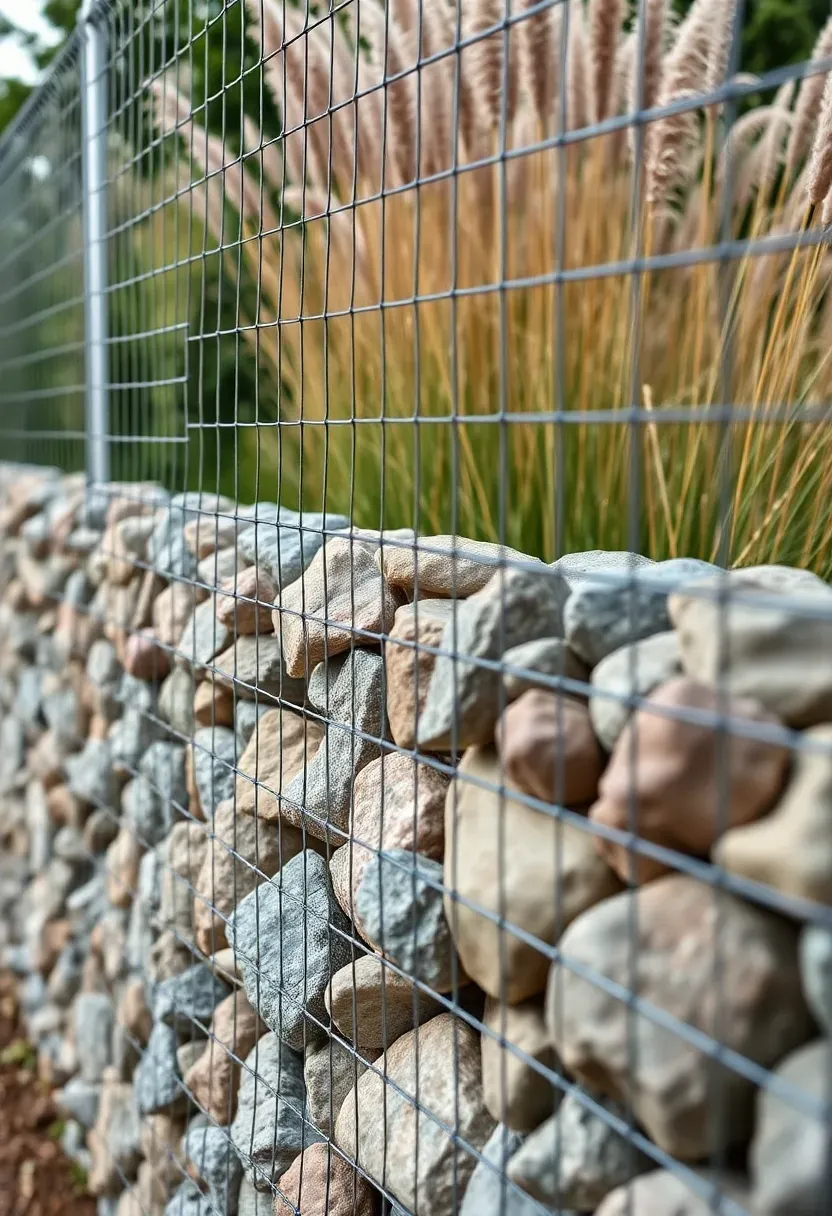
Gabion fences use welded wire cages filled with stone, creating a fence that doubles as a retaining wall or sound barrier. They work particularly well on sloped lots where a standard fence would require stepped panels. Fill the cages with locally sourced river rock, crushed granite, or recycled concrete chunks depending on the look you want. Each cage is roughly 12 inches wide, which means you lose about a foot of yard width — factor that into property line setbacks. The weight of the stone (about 100 pounds per cubic foot) means no concrete footings are needed on stable ground.
Tips
- Use 4mm wire cages minimum — thinner wire bulges under rock weight
- Mix stone sizes for visual texture rather than using uniform gravel
- Plant trailing sedums or creeping thyme on top for a green cap
Recommended
Items for this idea
9. Bamboo Roll Fencing
Bamboo vs. Reed
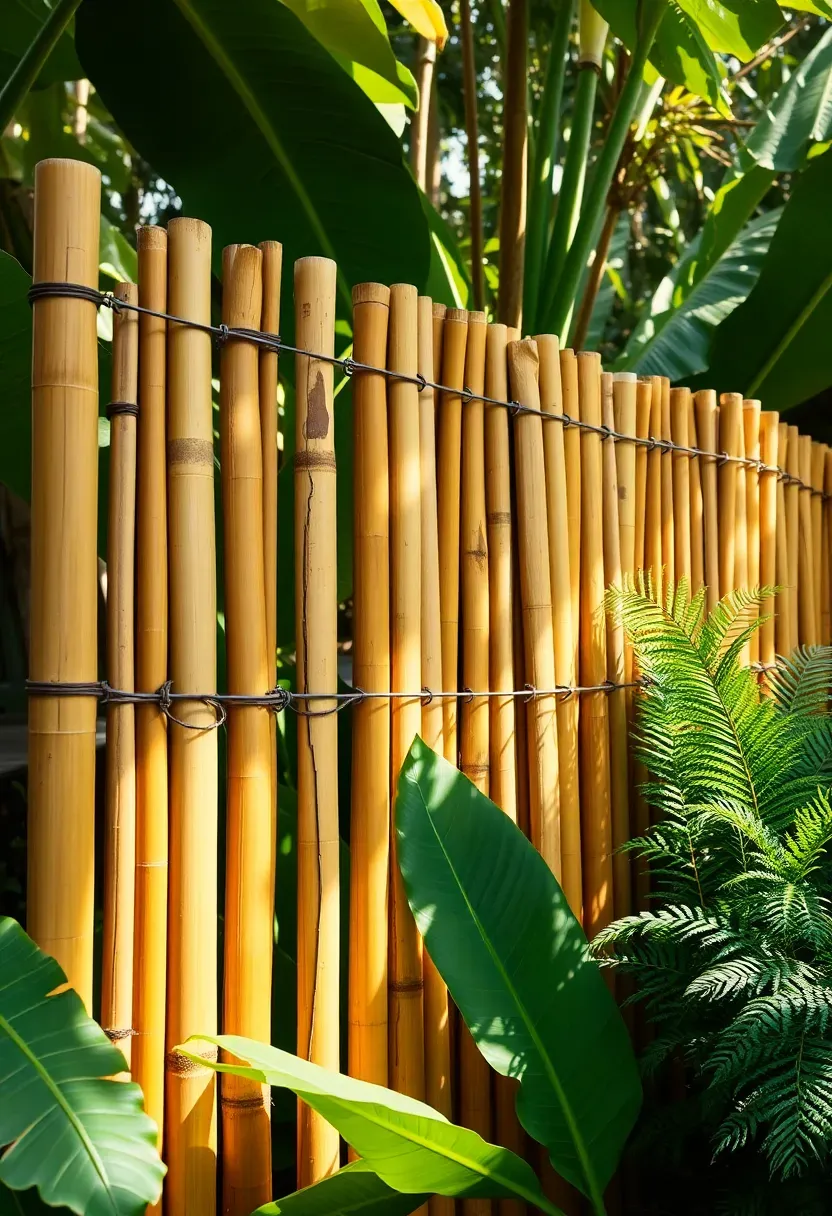
Both come in rolls and attach to existing posts, but bamboo is significantly more durable. Reed fencing lasts one to two seasons before it cracks and falls apart. Bamboo rolls — particularly tonkin bamboo — can last five to eight years if kept off wet ground.
Best Use
Attach bamboo rolls to an existing chain-link or wire fence for instant privacy. Use stainless steel wire ties every 12 inches along top and bottom rails. This approach costs $3 to $6 per linear foot for materials and takes an afternoon to complete. It works well as a temporary solution while you save for a permanent fence, or as a style choice in tropical or Asian-inspired garden designs.
Choose bamboo if:
You want fast coverage, a natural look, and don't mind replacing it in five years. Choose a permanent material if you need structural strength or live in a high-wind area.
10. Composite Privacy Fence
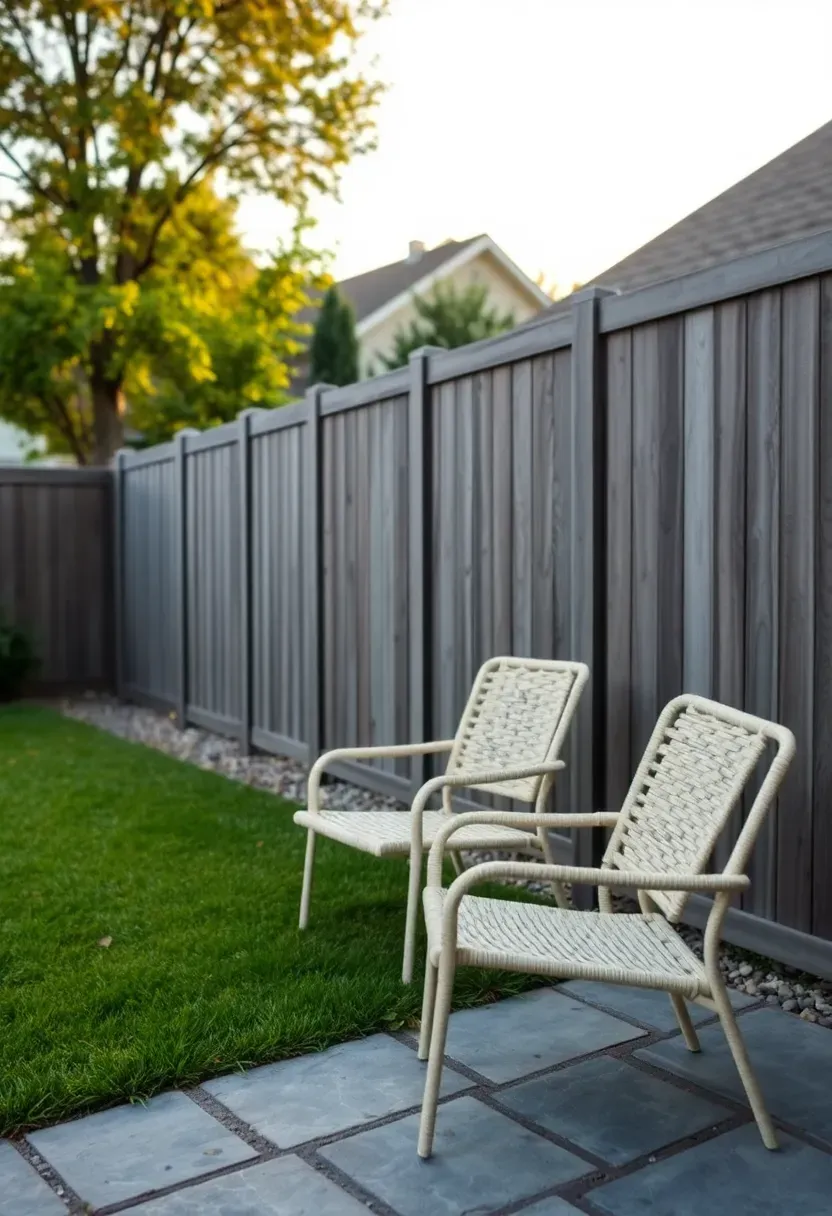
Composite fencing blends wood fiber and plastic polymers into boards that won't splinter, crack, or need staining. Major brands like Trex and SimTek offer fence-specific products distinct from their decking lines. The appearance has improved enough that composite now mimics wood grain convincingly from three feet away. Costs run $25 to $45 per linear foot installed — roughly double pressure-treated wood — but the 25-year warranty and zero maintenance narrow that gap over time. Color options typically include gray, tan, brown, and dark walnut.
Tips
- Composite expands and contracts with temperature — follow manufacturer spacing guides exactly
- Some composites fade noticeably in year one, then stabilize — ask for weathered samples
- Posts are usually aluminum or steel sleeves with composite wraps
Recommended
Items for this idea
11. Lattice-Top Privacy Fence
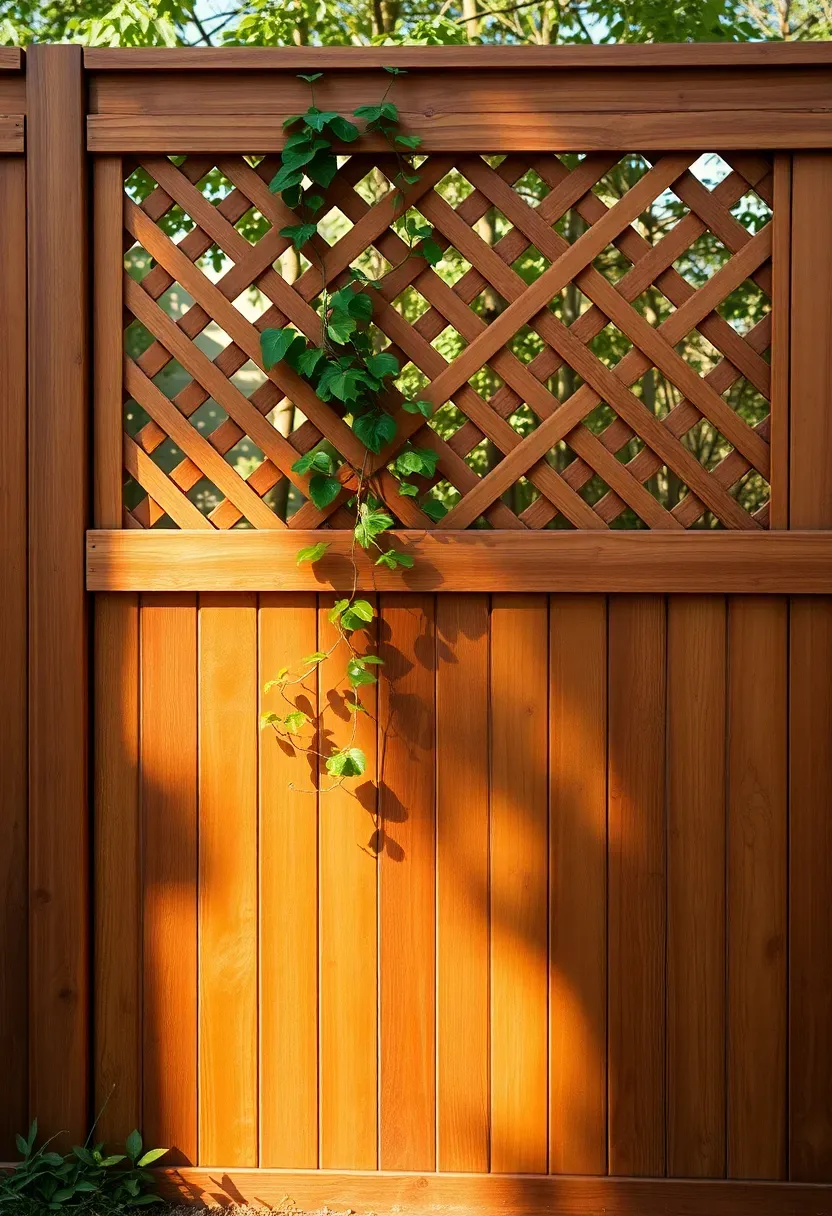
Adding a 12- to 18-inch lattice panel above a solid fence gives you extra height without making the fence feel like a prison wall. The lattice allows light and air through the upper section while the solid lower portion maintains full privacy. This design also sidesteps some local height restrictions — many municipalities allow lattice extensions above the standard six-foot solid fence limit because the lattice is considered open fencing. Check your code first, but it's a common workaround.
Tips
- Use heavy-duty lattice (3/4-inch thick) rather than the flimsy stapled sheets from home centers
- Frame the lattice section separately so you can remove it for repairs
- Stain the lattice to match the fence body for a cohesive look
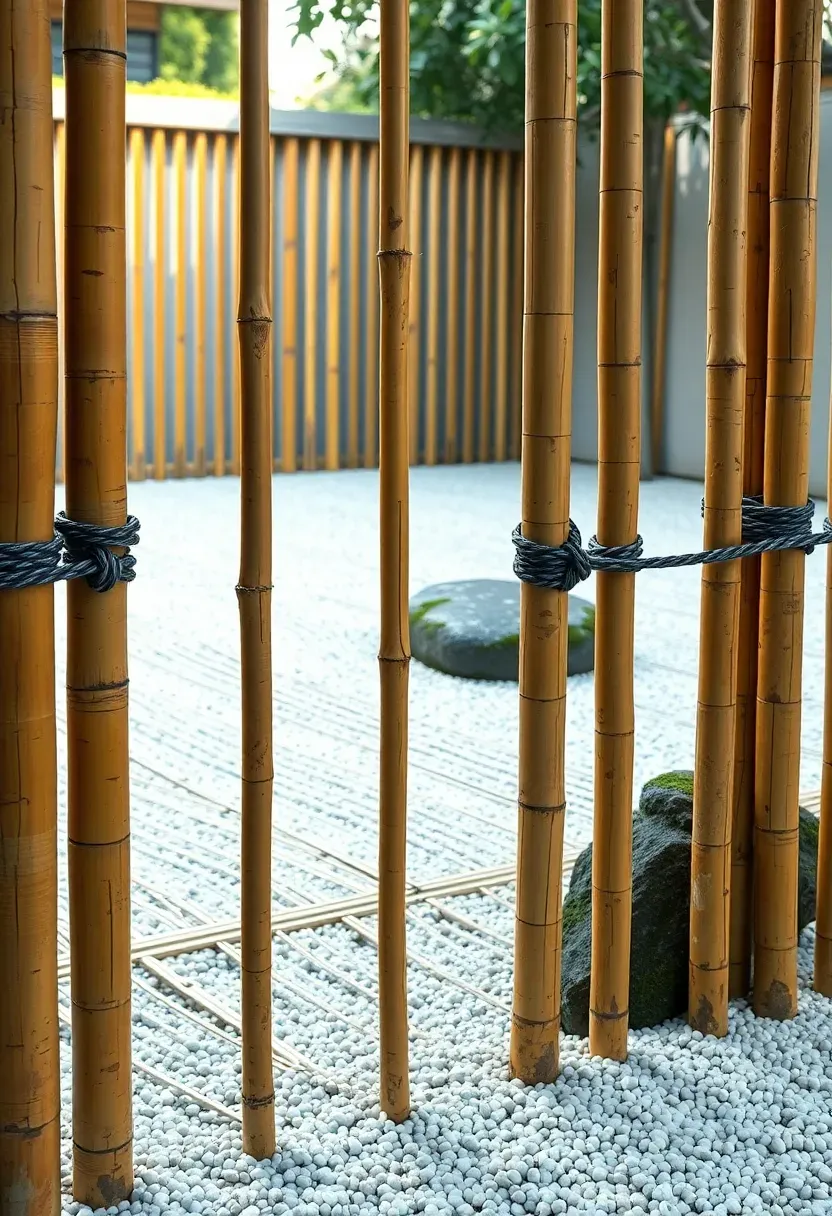
12. Japanese-Style Bamboo Screen
Origins
Traditional Japanese fences (known as takegaki) date back centuries and serve as much an aesthetic purpose as a practical one. Each style — kenninjigaki, koetsuji-gaki, yotsume-gaki — uses specific bamboo diameters and tying patterns to create distinct looks.
Modern Application
You don't need to master traditional joinery. Pre-built Japanese bamboo fence panels are available in 6x3-foot sections. The defining feature is the visible black twine or wire binding at each intersection, which turns the construction into decoration. Place these panels against a solid backdrop fence to create a layered, textured boundary that adds depth without bulk.
Apply at Home
Install panels as accent sections rather than full-perimeter fencing. Three or four panels flanking a garden gate or framing a seating area give the effect without the cost of lining your entire yard.
Recommended
Items for this idea
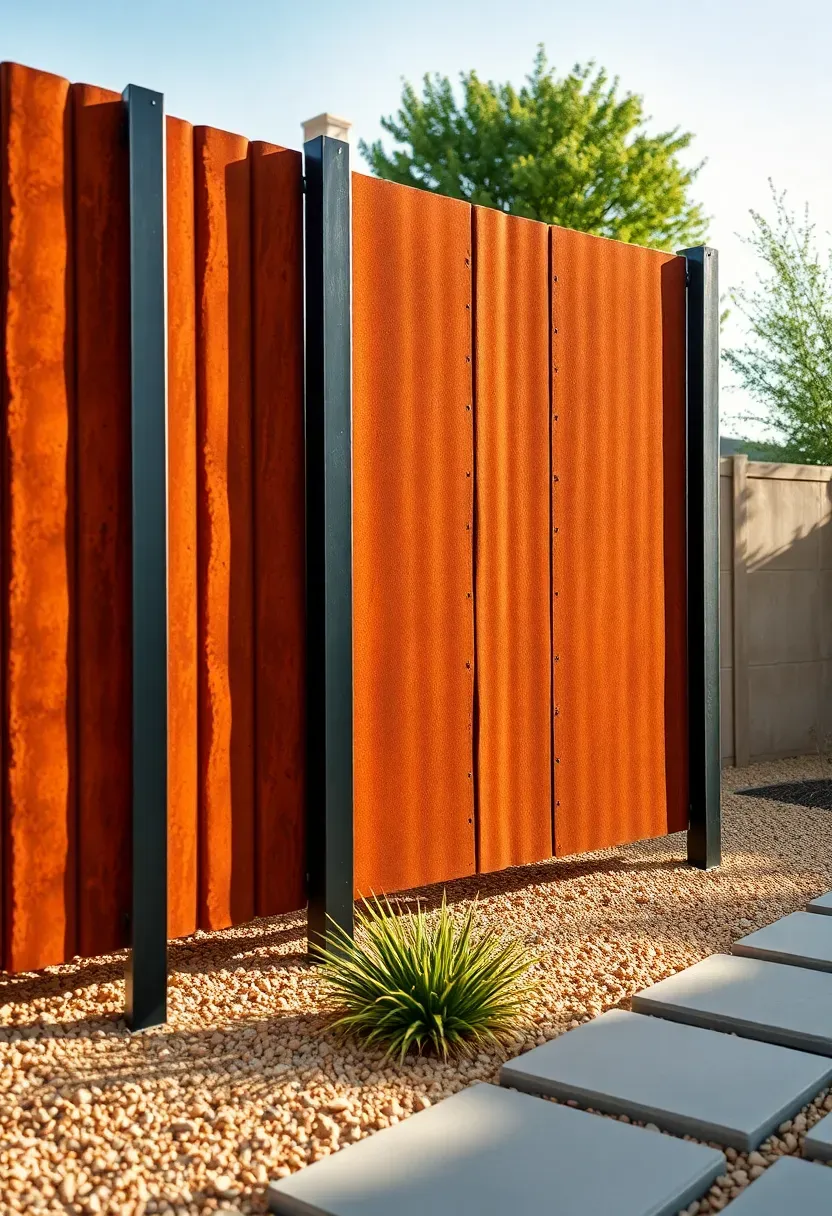
13. Corten Steel Panels
Corten (weathering steel) develops a stable rust patina that protects the metal underneath from further corrosion. The result is a warm, burnt-orange surface that changes tone with the seasons and looks intentional rather than neglected. Panels come in 4x8-foot sheets and can be laser-cut with decorative patterns for an additional cost. Mount them in a steel or aluminum frame bolted to concrete footings. Corten pairs well with concrete, gravel, and native plantings. One warning: the rust will stain adjacent concrete, stone, or light-colored surfaces during the first year of weathering, so keep panels a few inches away from patios.
Tips
- Buy true A588 or A606 Corten — regular mild steel will rust through, not stabilize
- Let panels weather outdoors for 6 to 12 months before installing to avoid staining adjacent surfaces
- Seal the bottom edge with clear coat if panels sit near a light-colored patio
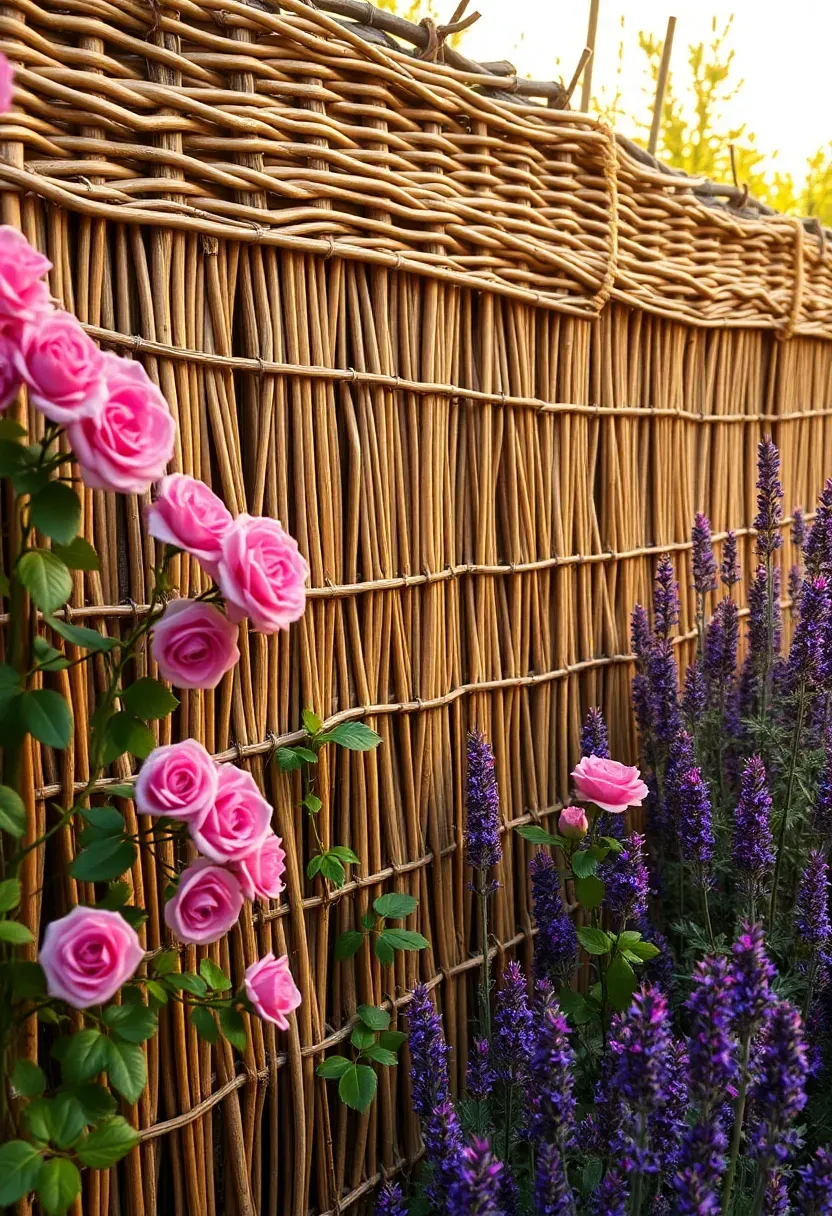
14. Woven Willow Hurdles
Willow hurdle fencing is one of the oldest fence types in Europe, originally used for livestock enclosures. The woven branches create a dense, organic texture that looks at home in cottage gardens, English-style borders, and naturalistic landscapes. Each panel is handwoven around uprights and typically lasts four to seven years before the willow becomes brittle. They're not structural — use them as decorative screening between garden beds or along paths, not as a primary boundary fence.
Tips
- Buy panels from a willow grower rather than a home center for tighter weave quality
- Drive two support stakes per panel to prevent wind from toppling them
- Spray with linseed oil annually to slow UV degradation
Recommended
Items for this idea
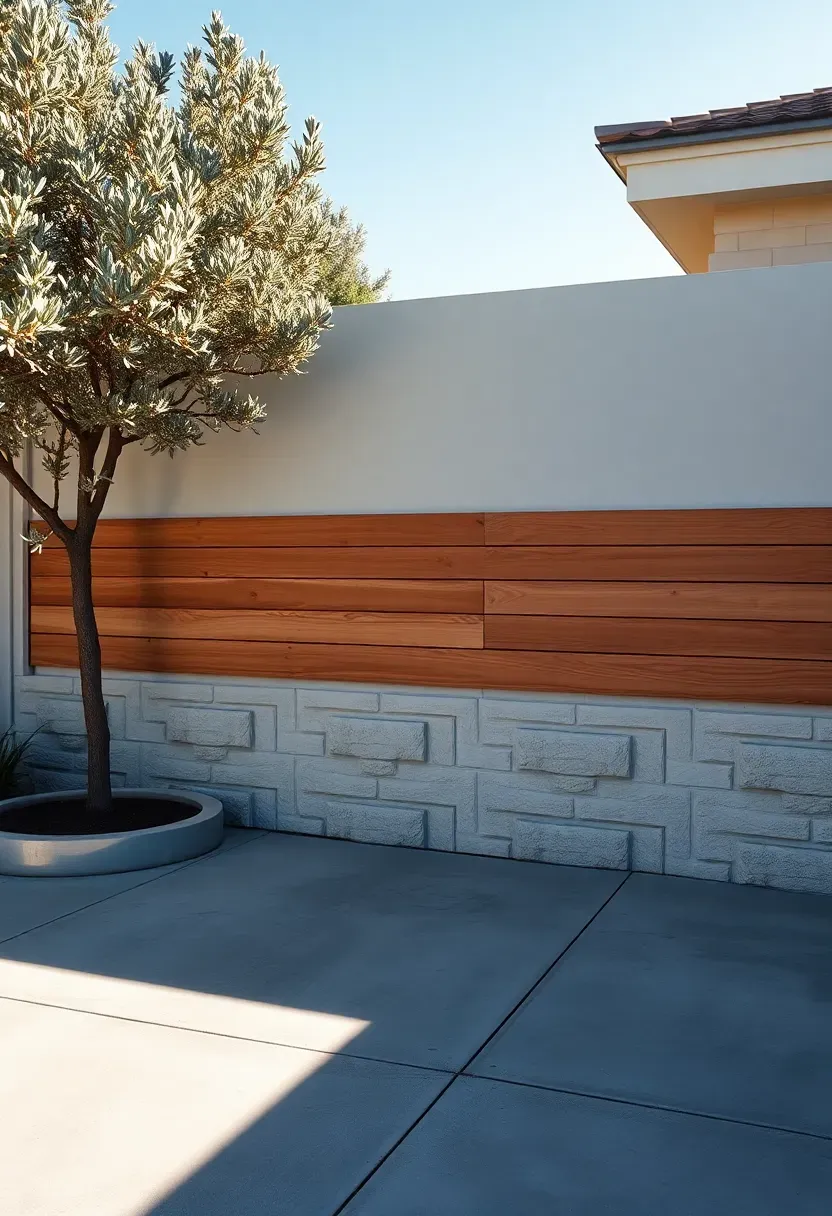
15. Concrete Block with Wood Infill
Why Combine Materials
A two-foot concrete block base topped with four feet of wood fencing solves several problems at once. The block base eliminates ground contact rot, keeps weed trimmers away from the wood, and adds visual weight that anchors the fence to the landscape. This is common in Mediterranean and California-modern designs.
How to Build It
Pour a continuous concrete footing. Lay CMU (concrete masonry unit) blocks two or three courses high, then set steel post brackets into the top course. Bolt wooden fence sections — horizontal or vertical — to the brackets. Parge or stucco the block base to match your home's exterior for a seamless look.
Choose if:
You want a fence that lasts 30+ years with minimal maintenance and you don't mind the higher upfront cost of masonry work.
16. Shadowbox Fence
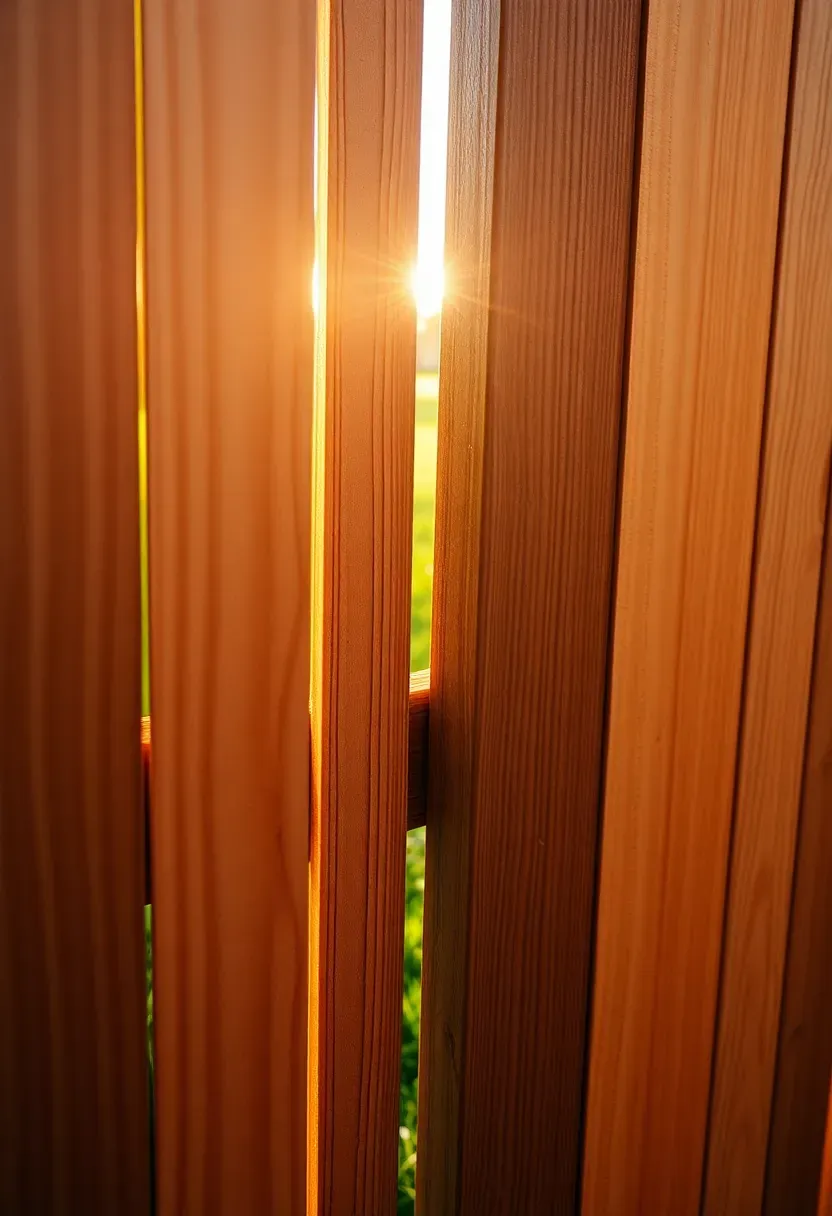
A shadowbox fence alternates boards on opposite sides of a center rail so each gap is covered by the board behind it. From head-on, the fence looks solid. From an angle, you see slices of light and movement beyond — a privacy fence that still breathes. This design uses about the same amount of lumber as board-on-board but distributes it differently. Both sides look identical, which avoids the "good side / bad side" problem that causes neighbor disputes with standard fences.
Tips
- Use 1x6 boards with 1.5-inch overlap between front and back boards for adequate privacy
- The center rail must be wide enough (2x6 minimum) to support fasteners on both sides
- Works best with stain rather than paint, since both sides are equally visible
Recommended
Items for this idea
17. Cattle Panel Trellis Fence
How to Build a Cattle Panel Fence
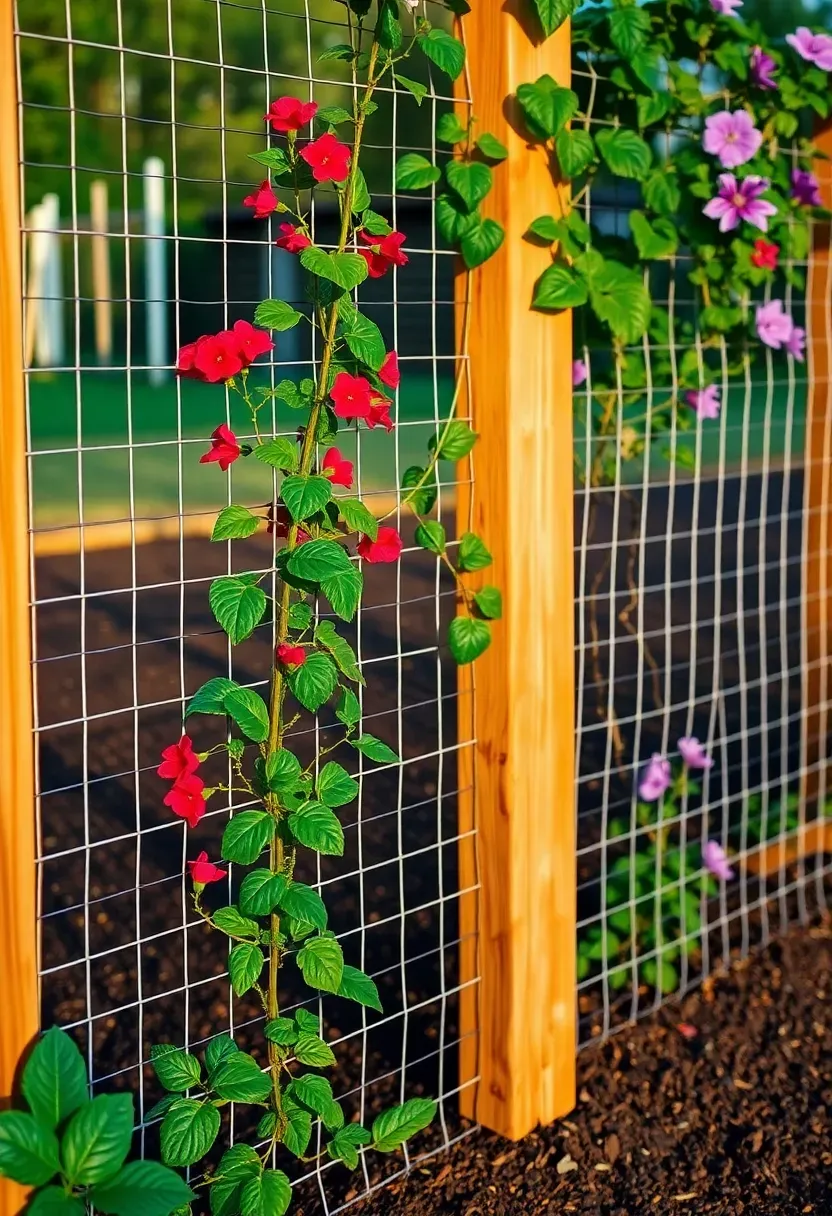
Cattle panels (also called livestock panels or hog panels) are 16-foot-long rigid wire grids sold at farm supply stores for about $25 each. They make surprisingly attractive garden fences when framed properly.
Step 1: Set Posts
Install 4x4 pressure-treated posts every 8 feet, set 30 inches deep in concrete.
Step 2: Frame the Panel
Cut cattle panels to fit between posts. Screw a 2x4 frame around the top and sides, sandwiching the panel between two boards.
Step 3: Plant the Base
Plant climbing vegetables (pole beans, peas, cucumbers) or ornamental vines (clematis, sweet peas) at the base. Within weeks, the grid fills in with green growth.
Watch out
- Unframed panels bow outward under the weight of heavy vines — always frame them
- Galvanized panels last 15+ years; painted panels may chip where vines attach
18. Dry-Stack Stone Wall
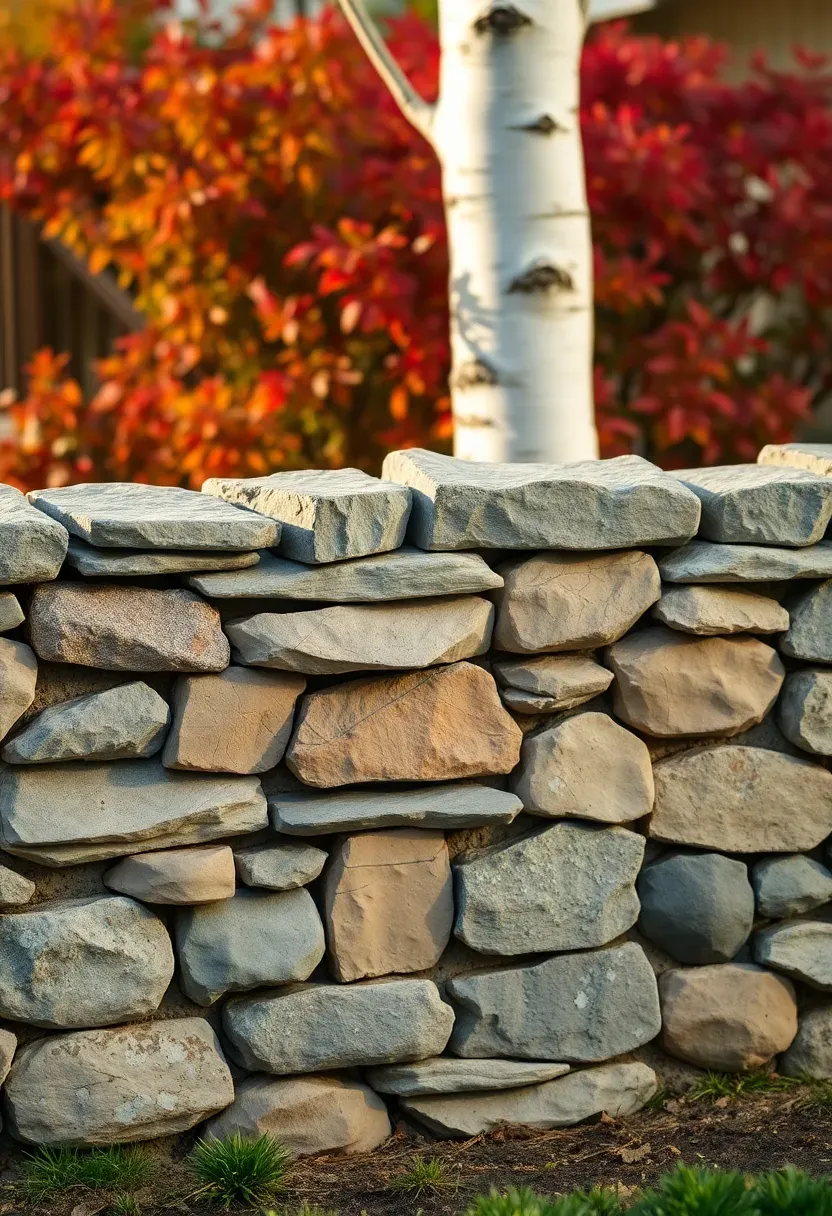
Dry-stack walls use no mortar — stones are selected and placed so gravity and friction hold everything together. A well-built dry-stack wall lasts centuries (stone walls across New England and the UK are proof). For a backyard boundary, build to a height of three to four feet; anything taller requires an experienced mason. The wall should be at least 18 inches wide at the base, tapering slightly toward the top. Use flat fieldstone or quarried wall stone with at least two flat faces. Budget $30 to $50 per linear foot for materials, more if you hire a professional.
Tips
- Place the largest, flattest stones at the base and work upward with progressively smaller pieces
- Lay "through stones" — stones that span the full wall width — every four feet for structural ties
- Fill the wall interior with tightly packed rubble rather than leaving voids
Recommended
Items for this idea
19. Horizontal Metal Slat Fence
Metal vs. Wood Horizontal
Horizontal wood fences warp. It's not a question of if, but when. Aluminum or steel slats in a horizontal configuration give you the same modern look without the maintenance headaches.
What to Expect
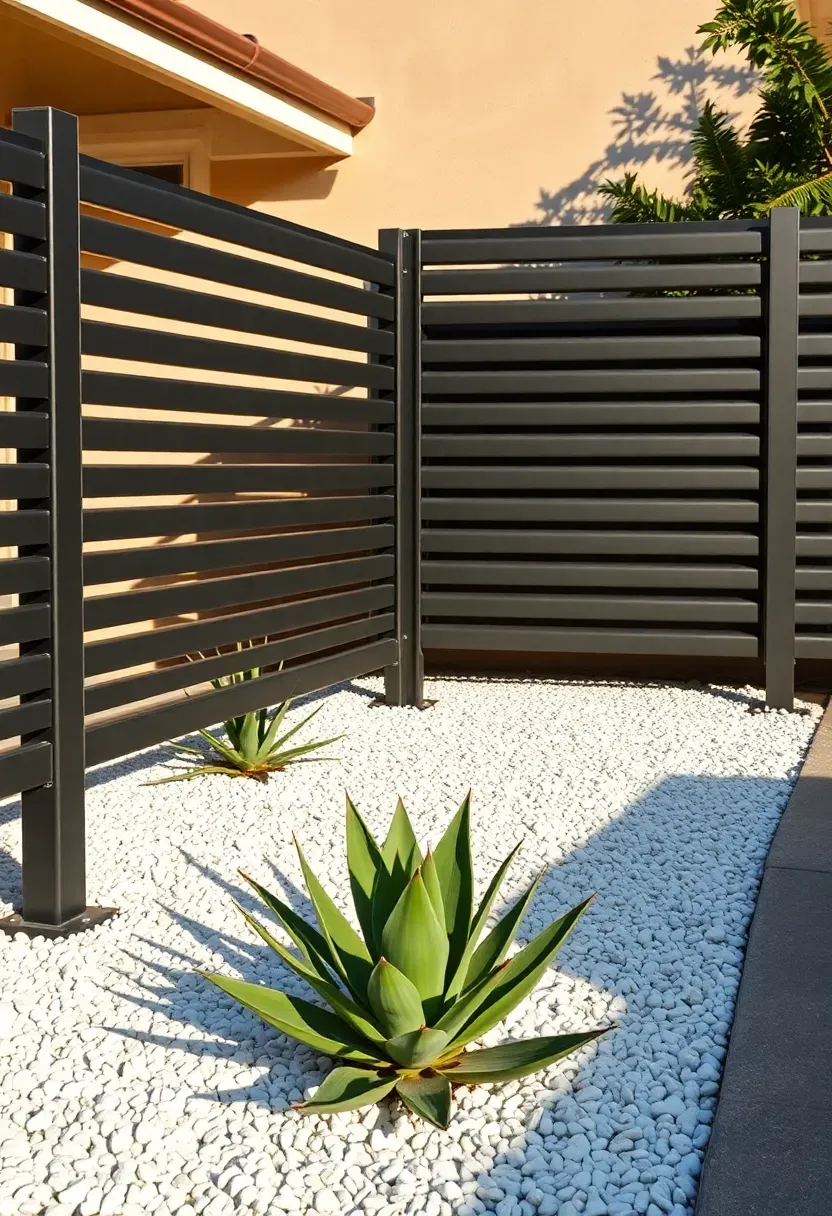
Powder-coated aluminum slats in a welded steel frame run $40 to $70 per linear foot installed — significantly more than wood. But the fence won't warp, rot, or need refinishing. Most manufacturers offer black, bronze, and charcoal finishes. Custom colors are available at a premium. The slats can be spaced for full privacy or with gaps for a semi-private look.
Choose if:
You want the horizontal look, live in a humid or rainy climate, and prefer to spend more once rather than maintaining wood every other year.
20. Pallet Wood Fence
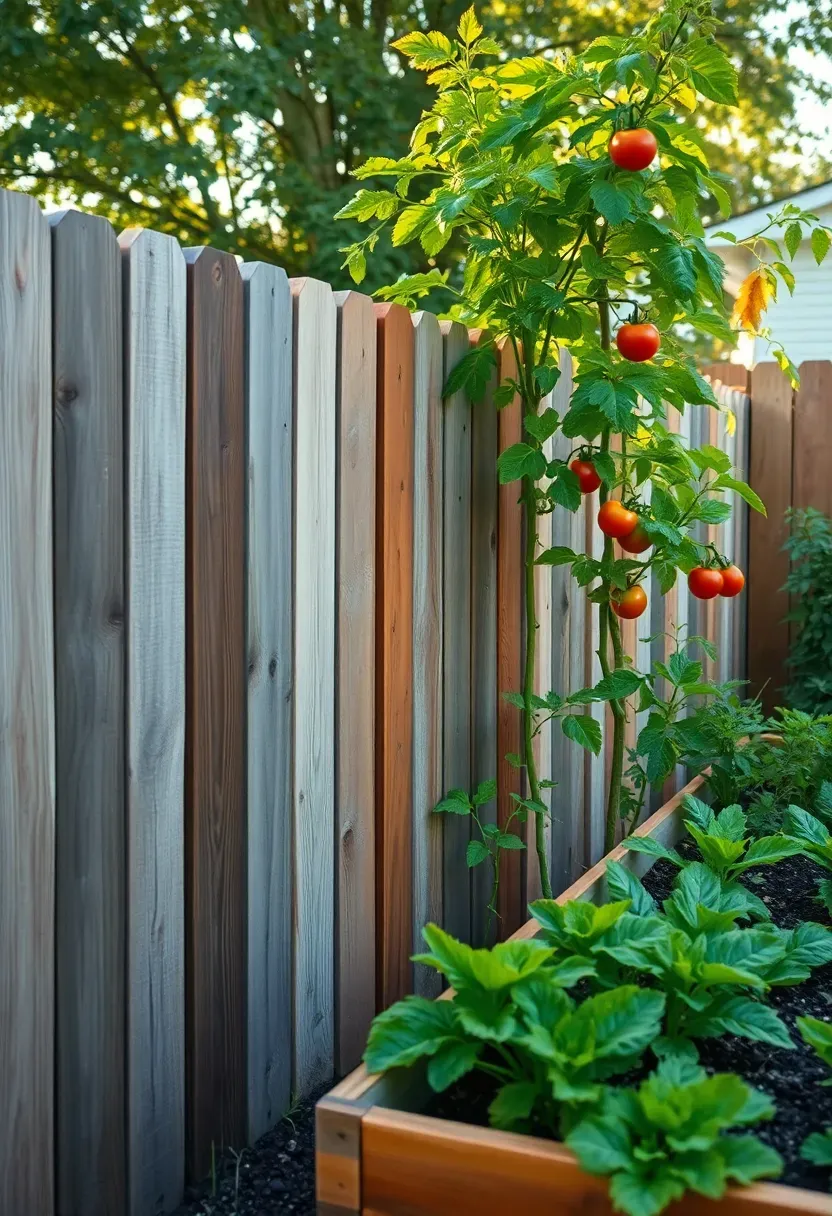
Free pallets from warehouses and shipping docks can become a fence, but the results vary wildly based on execution. The best pallet fences disassemble the pallets first, then reassemble the planks onto proper posts and rails — essentially using pallet wood as free lumber. The worst pallet fences just lean whole pallets against posts and call it done. If you go this route, sort planks by width and thickness, sand rough edges, and apply a wood preservative. The mismatched widths and tones actually look charming when the planks are arranged thoughtfully.
Tips
- Avoid pallets marked "MB" (methyl bromide treated) — use only "HT" (heat treated) or unmarked
- Remove all nails and staples before reassembly to prevent injuries and rust stains
- Expect to replace individual planks as they weather at different rates
Recommended
Items for this idea
21. Living Willow Fence
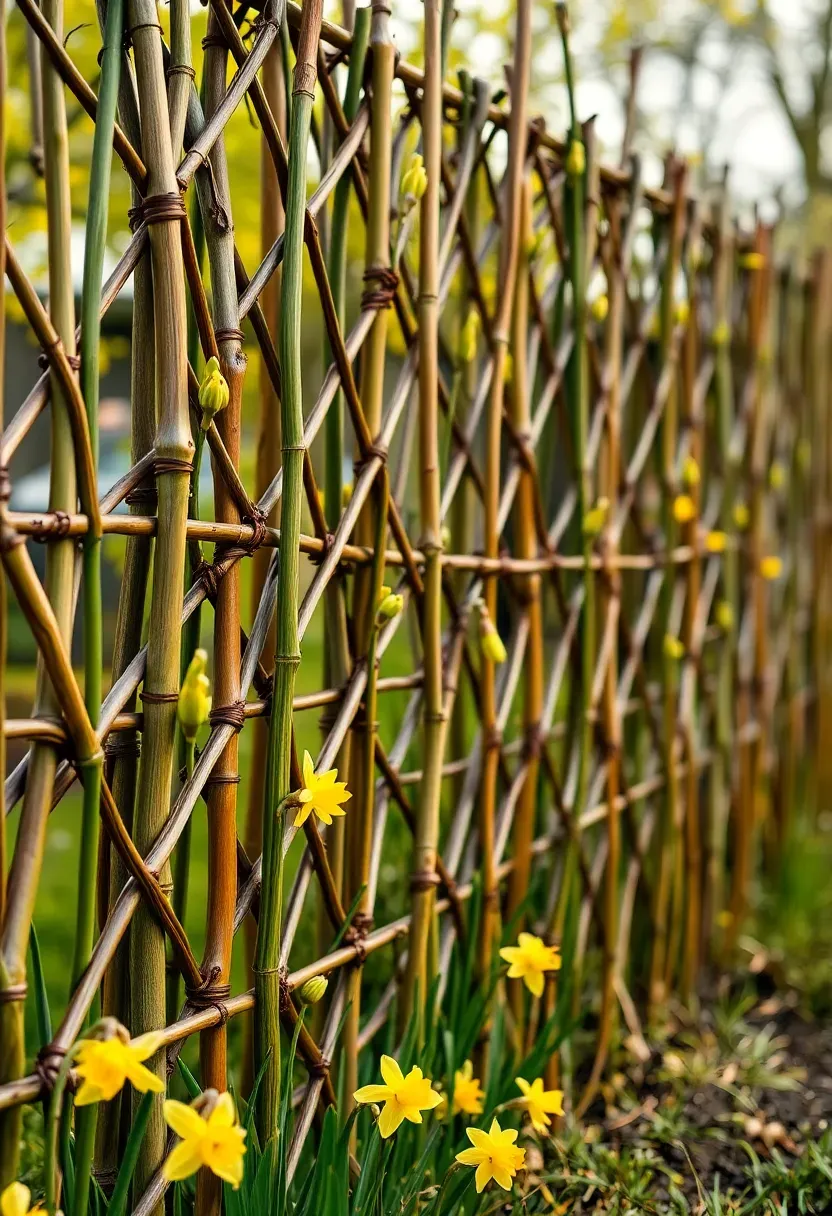
A living fence is exactly what it sounds like — a fence made of willow cuttings that root and grow. Push fresh willow rods (harvested in late winter while dormant) 12 inches into moist soil at 45-degree angles, alternating direction to create a diamond lattice pattern. Within one growing season, the rods leaf out and fuse at crossing points. The fence thickens each year and can reach eight feet tall. It requires annual pruning to maintain shape, but the effect is a fence that is genuinely alive, changing color with the seasons.
Tips
- Use Salix viminalis or Salix purpurea — both root readily from cuttings
- Keep the base consistently moist during the first growing season
- Weave new shoots into the lattice each spring to fill gaps
22. Glass Panel Wind Fence
The Problem
Wind makes some backyards unusable for half the year. Solid fences block wind but also block views. If your yard overlooks a garden, a valley, or even just a nice neighbor's landscaping, a solid fence trades comfort for a blank wall.
The Solution
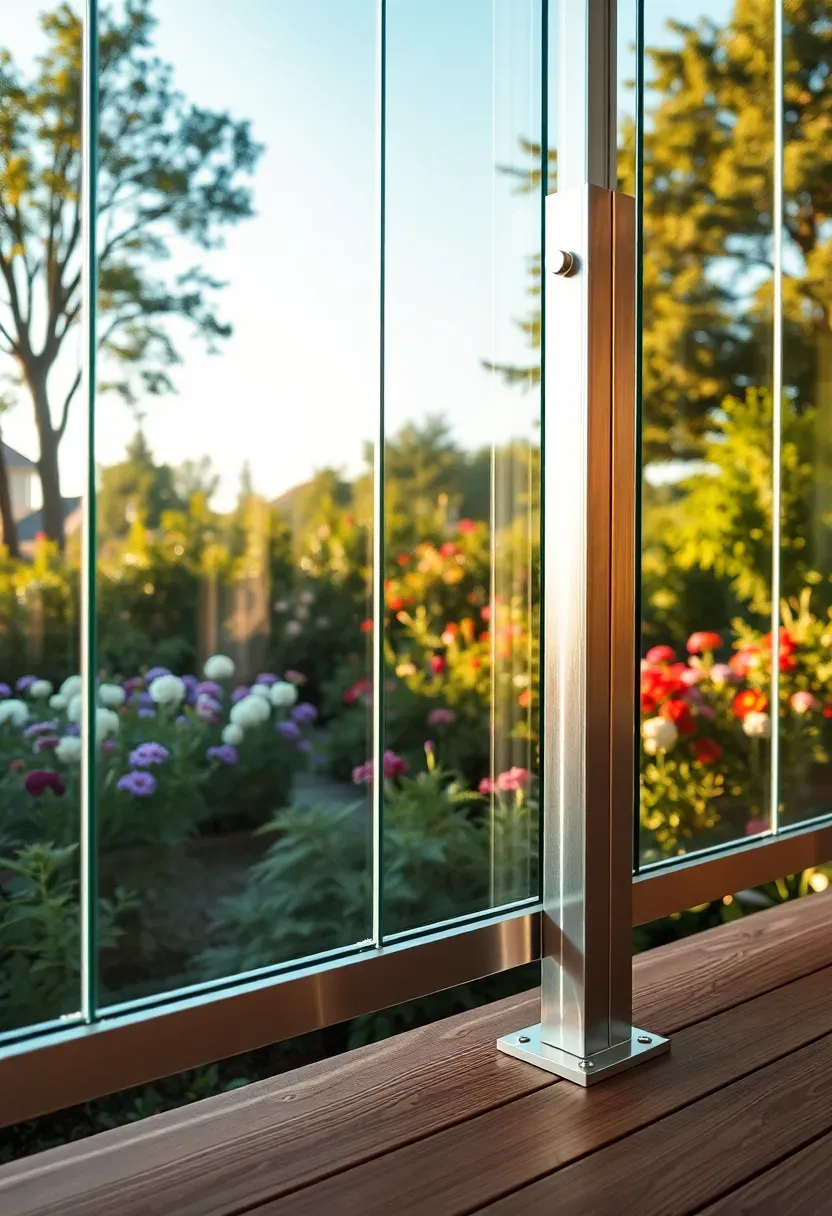
Tempered glass panels set in aluminum or stainless steel posts block wind while preserving the view completely. This is the same system used on high-rise balconies and waterfront restaurants. Panels are typically 3/8-inch or 1/2-inch tempered glass in four-foot widths.
Pros and Cons
Pros: Full wind protection, unobstructed views, modern aesthetic, easy to clean Cons: Expensive ($80+ per linear foot), shows fingerprints and water spots, birds may collide (add decals)
Recommended
Items for this idea
23. Louvered Fence
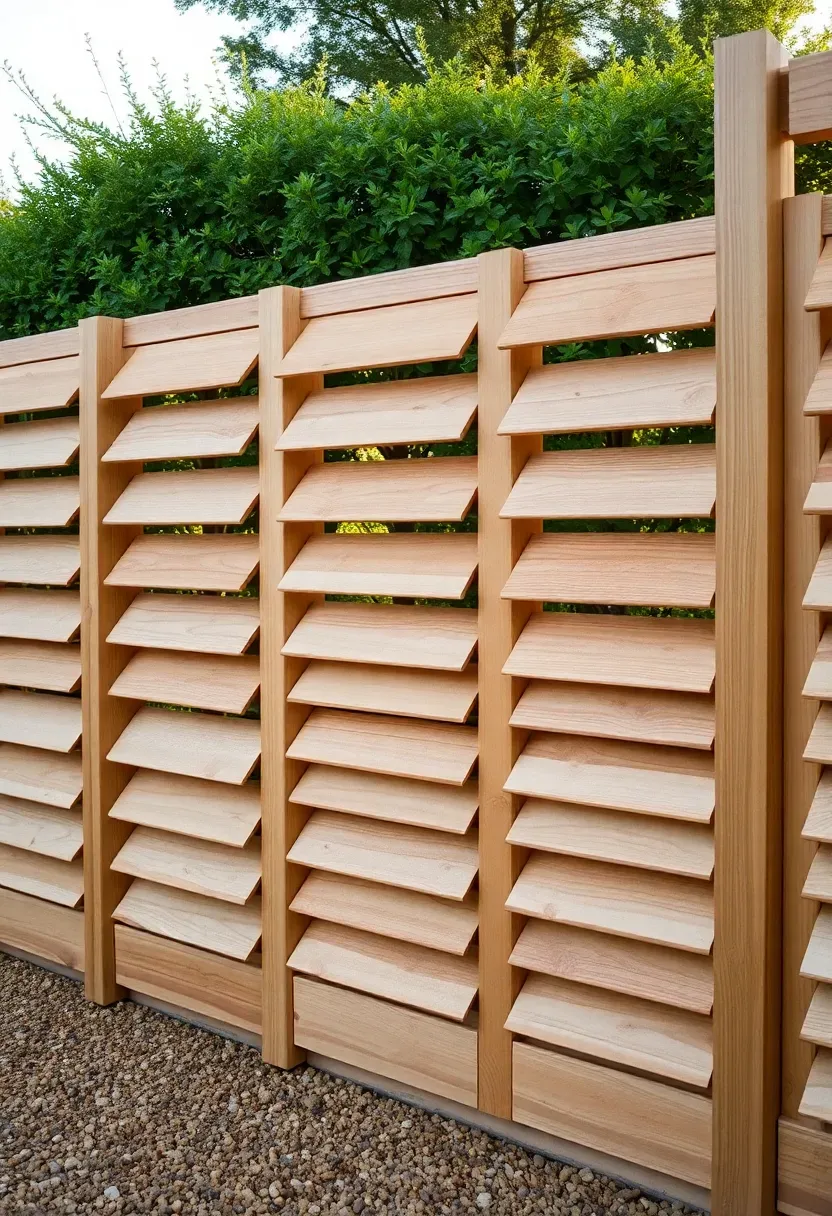
Louvered fences angle each board like a window blind — typically at 30 to 45 degrees — so air flows through freely while blocking direct sightlines. From the ground, you can't see through the fence; from above, you'd see slices of the yard beyond. This design works well in hot climates where solid fences trap heat, and in windy areas where rigid fences can blow over. The angled boards shed rain better than vertical fences too, which extends the life of the wood.
Tips
- Set the louver angle so the open side faces away from prevailing winds for maximum airflow benefit
- Use a router jig or pre-cut dado slots in the posts for consistent louver spacing
- Cedar or redwood holds up best; pine requires pressure treatment
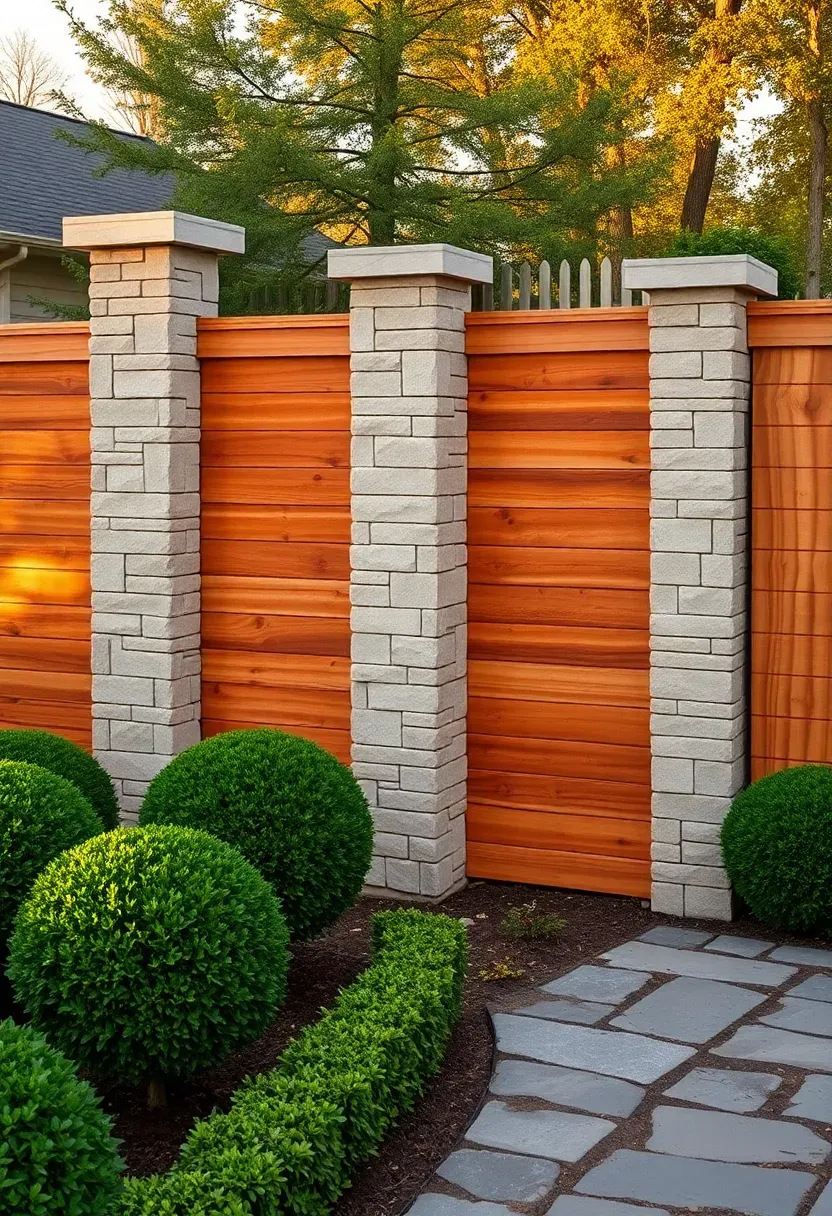
24. Mixed Material: Stone Base with Wood Top
Stone columns spaced every eight to ten feet with wood fence panels between them create a substantial, estate-like boundary. The stone provides permanence while the wood sections can be replaced independently as they age. Use natural stone veneer over CMU columns to manage costs — full stone columns require a mason and can run $500 or more each. The wood panels between columns can be any style: horizontal, vertical, lattice, or board-on-board.
Tips
- Match the stone to your home's foundation or exterior cladding for visual continuity
- Set column footings below the frost line to prevent heaving
- Install the wood panels with removable fasteners so future replacement is straightforward
Recommended
Items for this idea
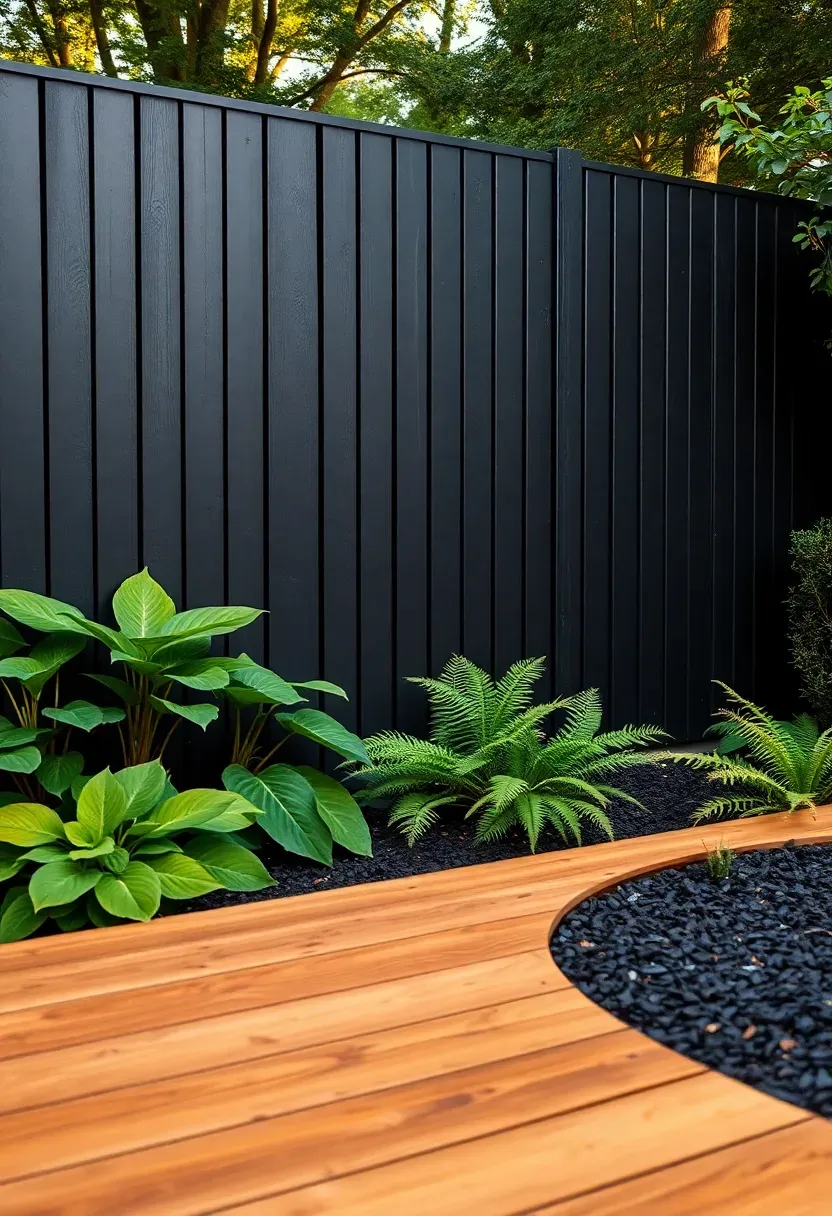
25. Black Stained Cedar Fence
A Growing Trend
Black fences have moved from Scandinavian design magazines into mainstream American backyards over the past five years. The dark color recedes visually, making the yard feel larger while letting plants, flowers, and furniture stand out in sharper contrast.
Modern Application
Use a solid-color exterior stain in matte black or charcoal rather than paint. Stain penetrates the wood grain and won't peel the way paint does when it ages. Apply two coats to bare cedar and allow 24 hours between coats. The cedar grain still shows through, which prevents the fence from looking like a painted wall. Reapply every two to three years — the maintenance schedule is the same as any stained fence.
Apply at Home
Start with a single section — maybe the fence visible from your patio — before committing to the full perimeter. Live with it for a few weeks to make sure the dark color suits your space and light conditions.
Quick FAQ
Does a taller fence always mean better privacy? Not necessarily. A six-foot solid fence blocks sightlines from ground level, but neighbors in two-story homes can see over it regardless. For true privacy from above, add a pergola or shade sail over your seating area instead of building an eight-foot fence that may violate local codes.
Which backyard fence material lasts the longest? Aluminum and steel fences last 30 to 50 years with minimal care. Stone walls can last centuries. Cedar lasts 15 to 20 years with regular sealing; pressure-treated pine lasts about the same but looks worse over time. Vinyl and composite fall in the 20- to 30-year range.
Can I install a backyard fence myself? Straight runs on flat ground are manageable for a DIYer with basic tools. The hardest part is digging post holes to the correct depth and keeping everything plumb over a long distance. Slopes, corners, and gates add complexity quickly — those sections are worth hiring out even if you do the rest yourself.
Do I need a permit to build a fence? In most U.S. municipalities, yes — especially for fences over four feet tall. The permit process usually involves submitting a site plan showing the fence location relative to property lines and setbacks. Some HOAs have additional restrictions on materials, colors, and heights.
How do I pick between wood, metal, and composite fencing? Match the material to your priorities. Wood costs less upfront and looks natural but requires regular maintenance. Metal is durable and low-maintenance but expensive and industrial in appearance. Composite splits the difference on price and maintenance but has a manufactured look that some people dislike up close.
Picking a fence is one of the few home decisions where function and appearance carry equal weight. A beautiful fence that falls over in the first windstorm is useless, and a bulletproof fence that makes your yard look like a construction site isn't much better. Start by listing your actual requirements — privacy, pet containment, wind protection, code compliance — then narrow the style options from there. The best backyard fence is the one you stop noticing because it just works.
Pinterest cover for 25 Backyard Fence Ideas
About the author
OBCD
CGI visualization and interior design content. We create detailed 3D renders and curate practical design ideas for every room in your home.