21 Backyard Fireplace Ideas for Year-Round Use
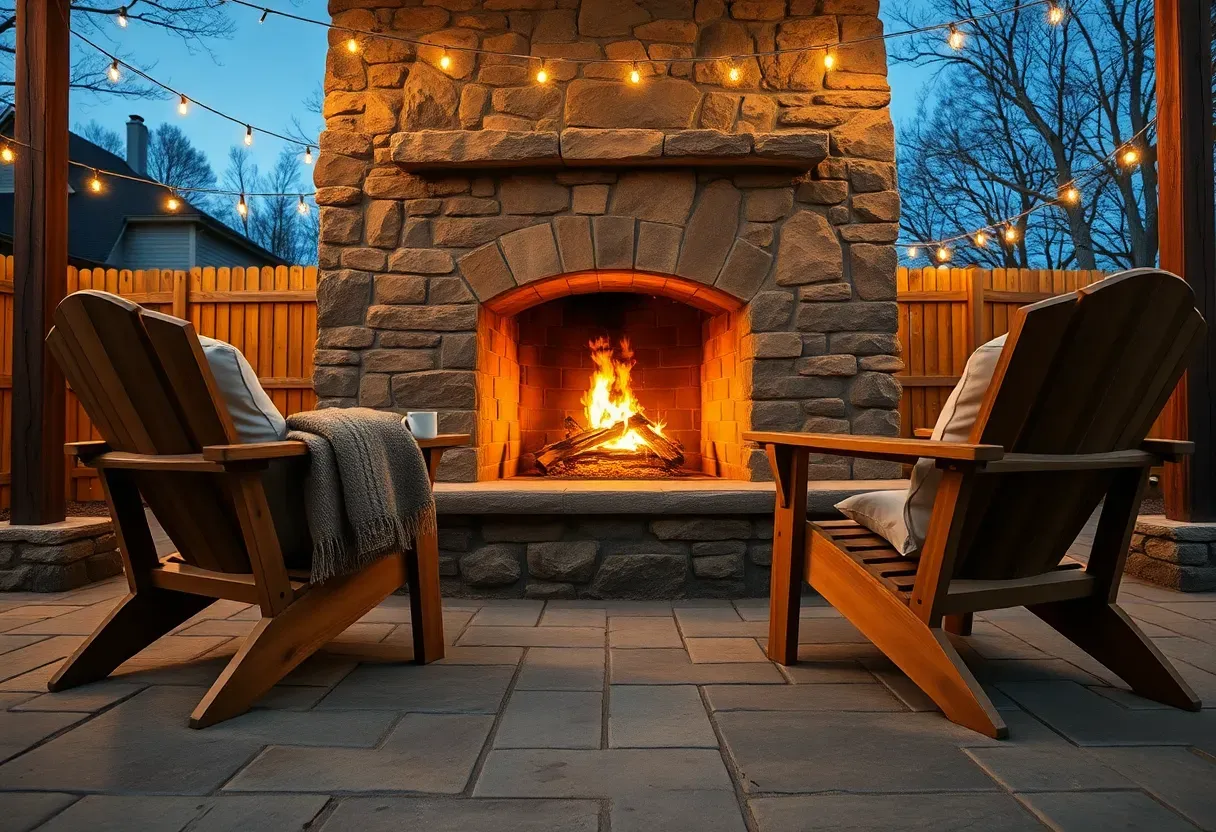
I put off building a backyard fireplace for three years because every option looked either too expensive or too complicated. Then a neighbor built a simple stacked stone hearth for under $1,500 and suddenly his patio became the gathering spot for the whole block. People showed up with blankets and stayed past midnight on weeknights. A fireplace changes the gravity of a yard — it gives people a reason to sit outside in March and November, not just July. These 21 backyard fireplace ideas range from permanent stone structures to portable options you can set up in a rental, with real cost estimates and material notes for each.
Below you will find options organized by material, fuel type, and budget so you can narrow the list to what fits your yard and your wallet.
Table of Contents
- Stacked Stone Hearth
- Modern Concrete Fireplace Wall
- Brick Rumford Fireplace
- Gas-Powered Linear Fireplace
- Chiminea on Gravel Pad
- Two-Sided See-Through Fireplace
- Fieldstone Fireplace with Pizza Oven
- Prefab Modular Fireplace Kit
- Adobe Kiva Fireplace
- Corten Steel Fireplace Panel
- River Rock Fireplace
- Whitewashed Brick Fireplace
- Built-In Fireplace with TV Niche
- Corner Patio Fireplace
- Flagstone Fireplace with Raised Hearth
- Tabletop Bioethanol Fireplace
- Pergola Fireplace Combination
- Japanese-Inspired Minimalist Hearth
- Fireplace with Water Feature Wall
- Reclaimed Brick Cottage Fireplace
- Portable Steel Outdoor Fireplace
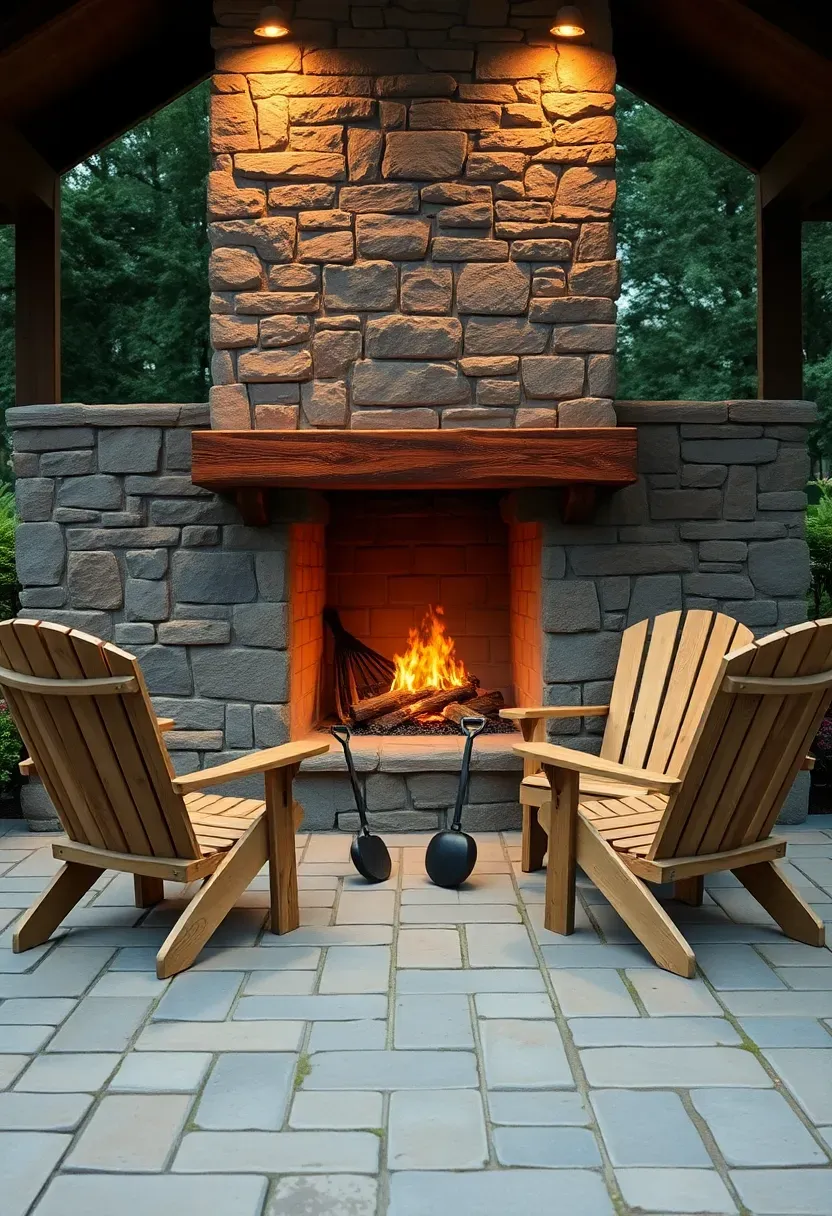
1. Stacked Stone Hearth
Stacked stone is the default backyard fireplace material for good reason — it handles heat without cracking, weathers naturally, and looks better with age. A basic stacked stone hearth runs 5 to 7 feet tall, 4 feet wide, and costs $2,000-5,000 for professional installation or $800-2,000 if you source stone locally and build it yourself. The firebox should be lined with firebrick regardless of the outer stone. Natural stone like Tennessee fieldstone, Pennsylvania bluestone, or local granite each give a different character. Mortar joints can be thick and rustic or thin and clean depending on the look you want.
Tips
- Use a concrete footing at least 12 inches deep and 6 inches wider than the fireplace base on all sides
- Install a stainless steel chimney cap to keep rain and animals out of the flue
- Leave the stone unsealed — sealant traps moisture behind the stone and causes spalling in freeze-thaw climates
We picked a few things that go well with this idea: SINGLYFIRE Iron Chiminea with Cover (★4.4), BALI OUTDOORS Wood Burning Chiminea (★4.6) and Wiosi Grey Clay Terracotta Chiminea (★3.6). As an Amazon Associate we earn from qualifying purchases.
2. Modern Concrete Fireplace Wall
Why concrete works outdoors
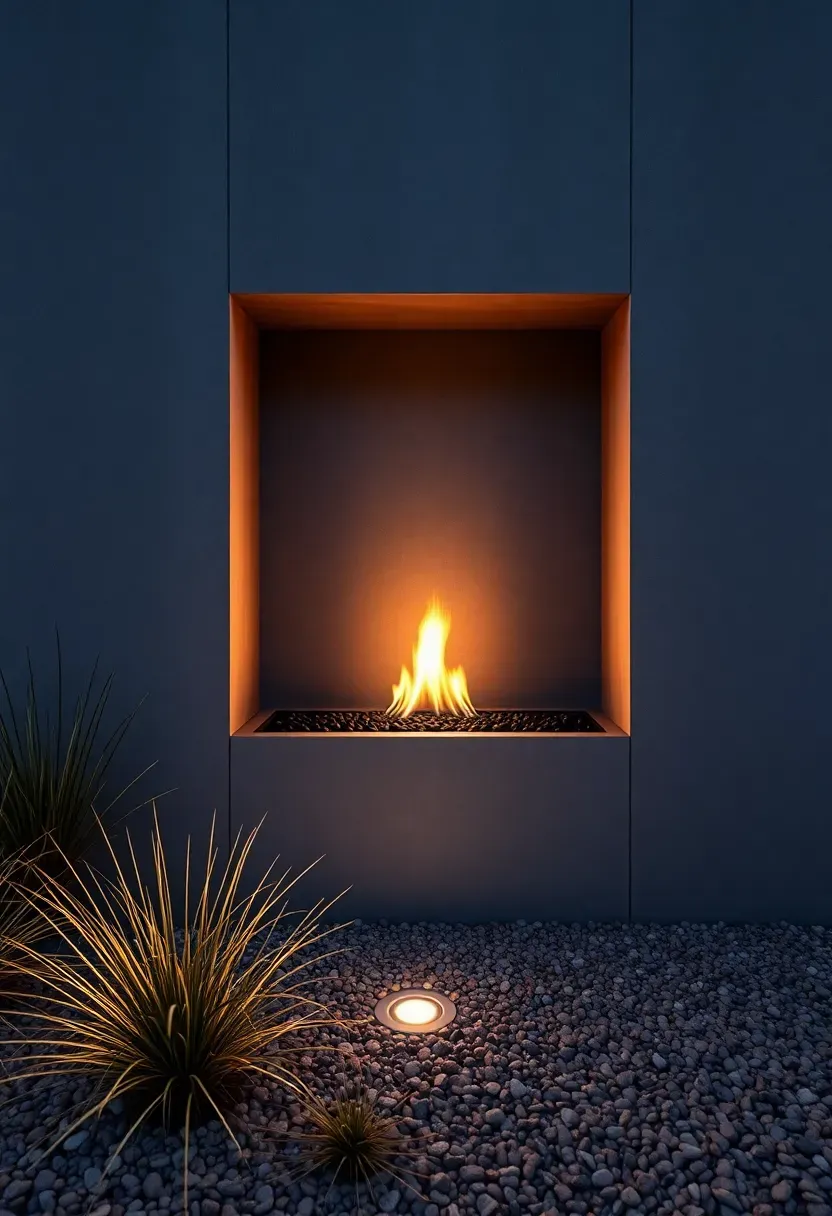
Concrete gives you clean geometric lines that stone and brick cannot match. A poured concrete fireplace wall acts as both fire feature and privacy screen — typically 6 to 8 feet tall and 5 to 10 feet wide. The monolithic look pairs with modern architecture, gravel yards, and minimalist landscaping.
What it costs
Poured-in-place concrete walls run $3,000-7,000 depending on size and finish. GFRC (glass fiber reinforced concrete) panels offer the same look at lower weight and cost ($2,000-4,500) but require a steel frame underneath. Both need a gas burner insert since wood fires can crack unreinforced concrete over time.
Choose if
- Your home has modern or mid-century architecture
- You want a fireplace that doubles as a yard divider or privacy wall
- You prefer gas fuel with push-button ignition over tending a wood fire
We picked a few things that go well with this idea: FEED GARDEN Wrought Iron Fireplace Tools (5-Piece) (★4.6), COMFYHOME Wrought Iron Fireplace Tools (5-Piece) (★4.6) and AMAGABELI Wrought Iron Fireplace Tool Set (★4.5). As an Amazon Associate we earn from qualifying purchases.
3. Brick Rumford Fireplace
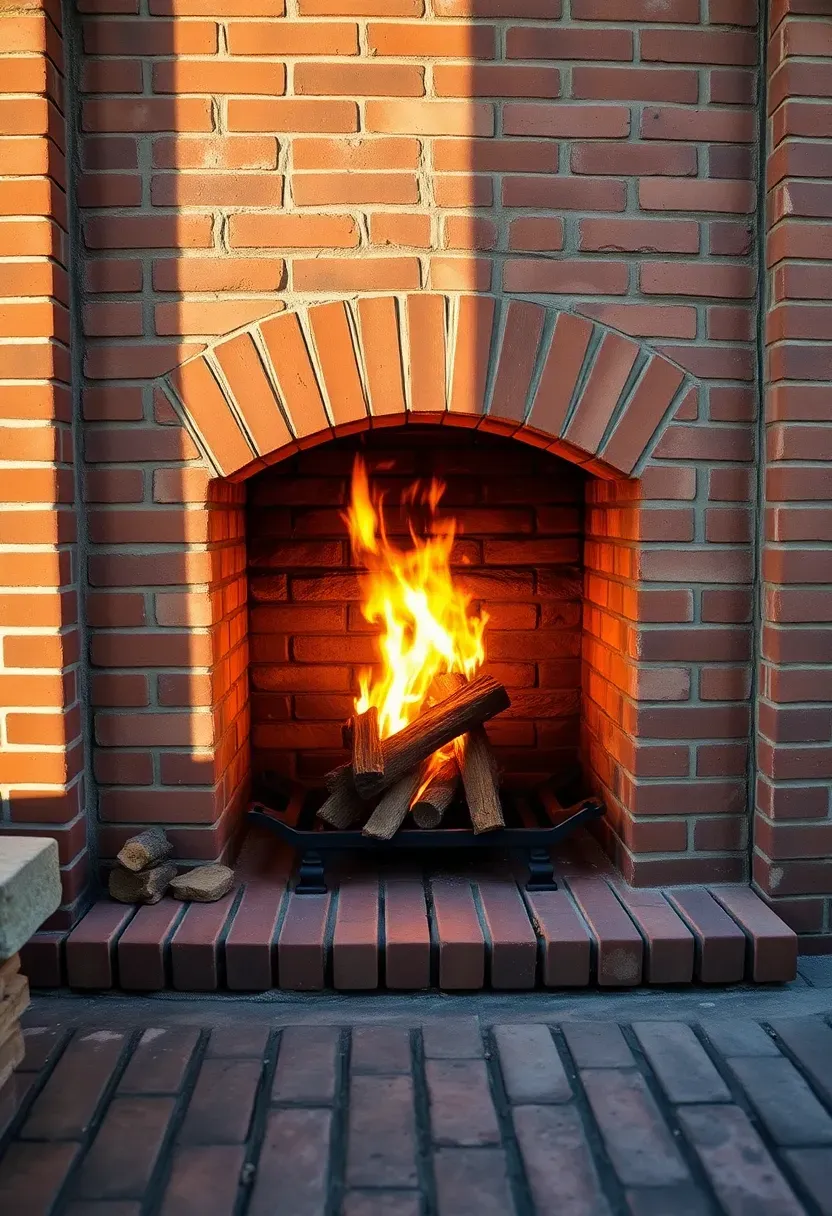
Count Rumford redesigned the standard fireplace in 1796 with a shallow firebox and angled side walls that reflect more heat forward. That geometry works even better outdoors where you have no room to heat — all the warmth pushes directly toward the seating area. A Rumford-style outdoor fireplace uses a firebox roughly twice as tall as it is deep, with side walls angled at about 135 degrees. The shallow depth burns wood more efficiently and produces less smoke. Brick construction runs $2,500-6,000 depending on size and mason labor rates in your area. Standard red brick gives a colonial look; buff or gray brick reads more contemporary.
Pros and cons
- Pros: Superior heat projection, classic proportions, proven 200-year-old design
- Cons: Requires a skilled mason familiar with the Rumford geometry, costs more than a standard box firebox
- Best for: Traditional homes, entertaining-focused patios, anyone who actually sits by the fire rather than just looking at it
We picked a few things that go well with this idea: Hykolity 2-in-1 Fire Pit with Grill (31") (★4.7), OutVue 3-in-1 Fire Pit with Grills (36") (★4.4) and Devoko 32" Metal Outdoor Fire Pit (★4.5). As an Amazon Associate we earn from qualifying purchases.
4. Gas-Powered Linear Fireplace
Step 1: Understand the format
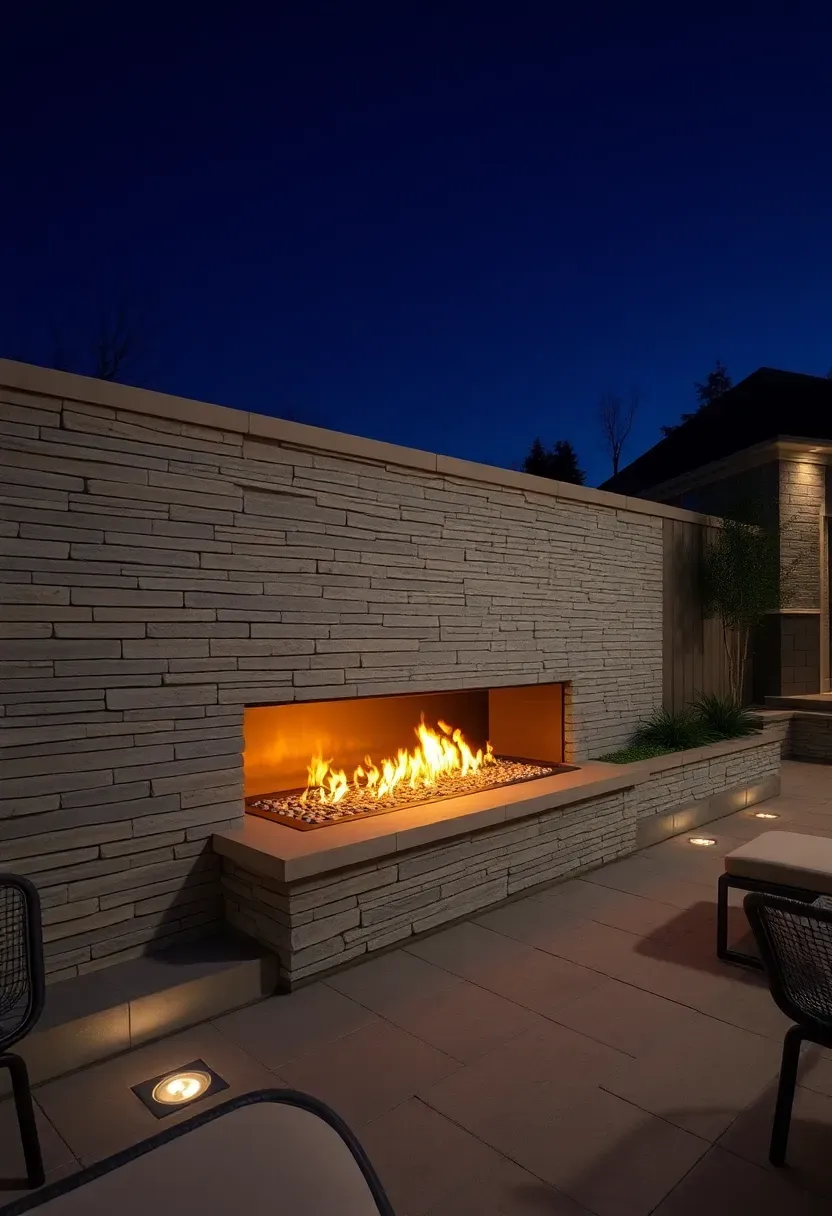
Linear fireplaces are wide and short — a 48 to 72 inch ribbon of flame behind glass or above a bed of fire glass. They look nothing like a traditional fireplace. The horizontal flame line creates a modern focal point that works in contemporary yard designs where a tall chimney would look out of place.
Step 2: Choose your setup
Drop-in gas burner trays ($300-800) fit inside a custom-built surround — stone wall, concrete bench, or metal enclosure. Complete linear fireplace units ($1,500-4,000) come as self-contained boxes you build into a wall. Natural gas connections cost less to operate than propane but require a gas line run to the patio.
Step 3: Plan for code
Most municipalities require a gas fireplace to sit at least 10 feet from the house and any combustible structure. A licensed plumber must connect the gas line. Pull permits before building — unpermitted gas work creates insurance and resale problems.
Watch out
Glass wind guards are essential for linear burners. Without them, wind scatters the flame pattern and wastes fuel.
Recommended
Items for this idea
5. Chiminea on Gravel Pad
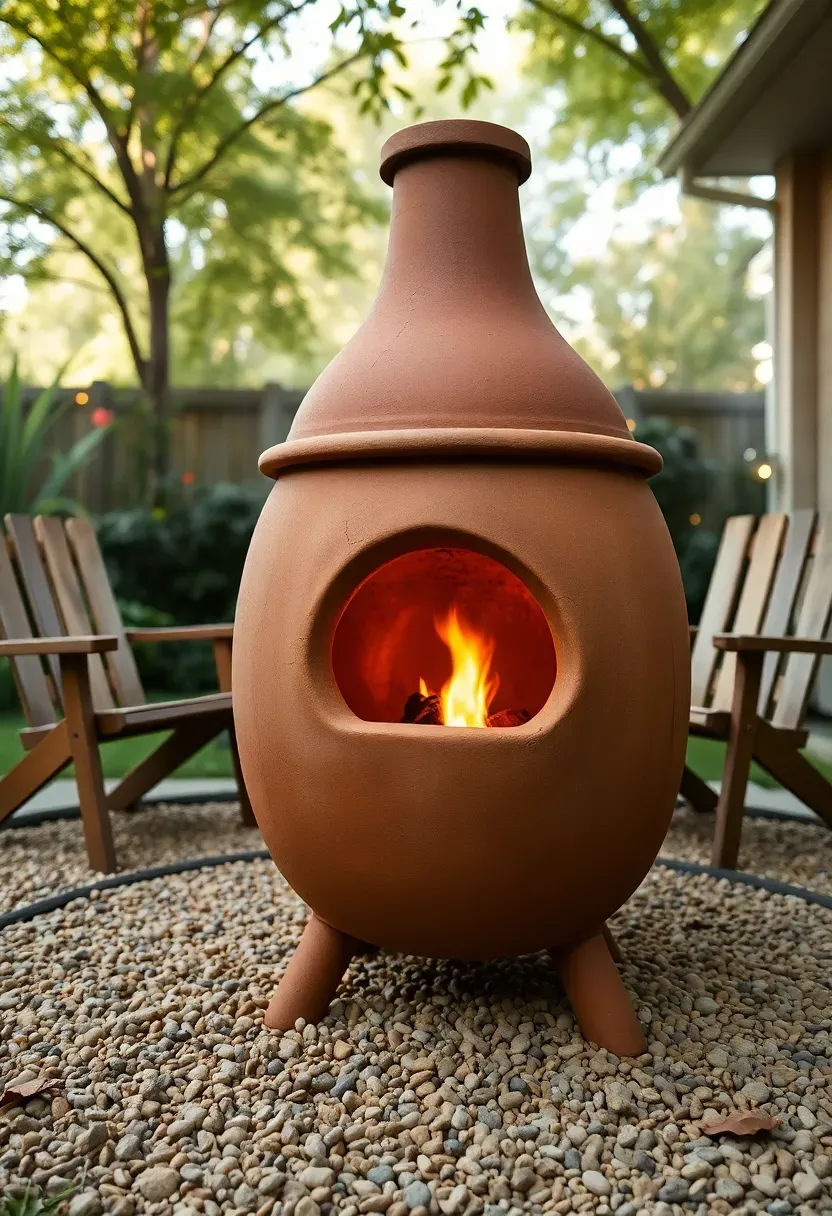
A chiminea is the fastest way to add a real wood-burning fire to a backyard — no permits, no construction, no gas lines. These bulbous clay or cast iron stoves stand 3 to 5 feet tall, cost $75-300, and work on any non-combustible surface. Clay chimineas radiate heat gently and have a particular warmth that cast iron versions lack, though they crack if exposed to rapid temperature swings. Always start with a small fire and build up gradually. A 4-foot diameter circle of pea gravel ($20-40 in material) creates a fireproof base. Position at least 10 feet from structures, fences, and overhanging branches.
Tips
- Cure a new clay chiminea by burning three progressively larger fires over three days before full use
- Cover with a fitted waterproof cap when not in use — water pooling inside and freezing will split clay
- Cast iron versions weigh 50-80 pounds and handle rain better but get hot enough to burn skin on contact
6. Two-Sided See-Through Fireplace
The design advantage
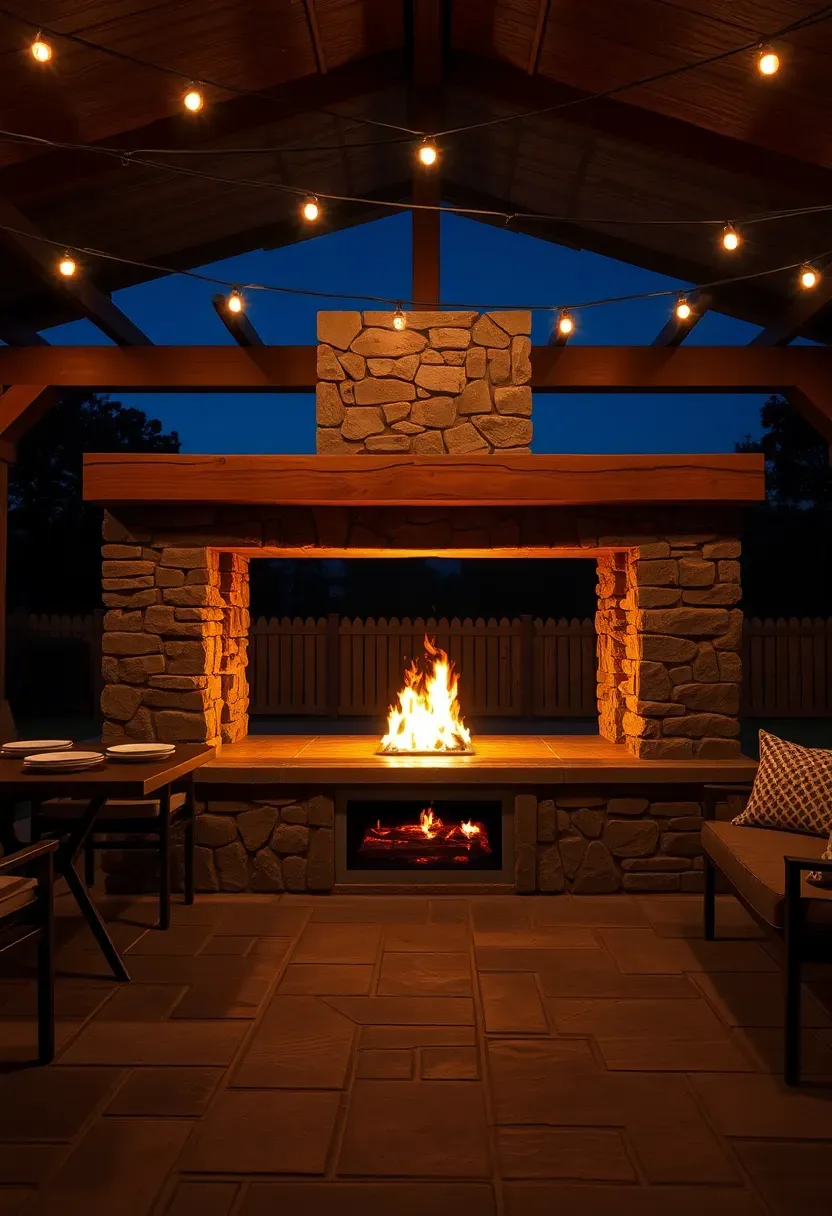
A see-through fireplace serves two zones simultaneously. Place it between a dining area and a lounge space, between a pool deck and a seating area, or between a covered patio and an open yard. Both sides get heat and fire view. The visual transparency also makes smaller patios feel larger by maintaining sightlines through the structure.
Construction details
These require a steel firebox insert rated for dual-opening use ($1,200-3,000 for the insert alone). The surrounding structure — stone, brick, or stucco — needs a wider footprint than a single-sided fireplace to accommodate the open-back firebox. Total installed cost runs $4,000-10,000. Gas inserts work best for see-through designs since wood fires produce smoke that drifts unpredictably through both openings.
Choose if
- You have two distinct outdoor zones that could share a fire feature
- Your patio layout benefits from a visual divider that still feels open
- Budget allows for a higher-end installation
Recommended
Items for this idea
7. Fieldstone Fireplace with Pizza Oven
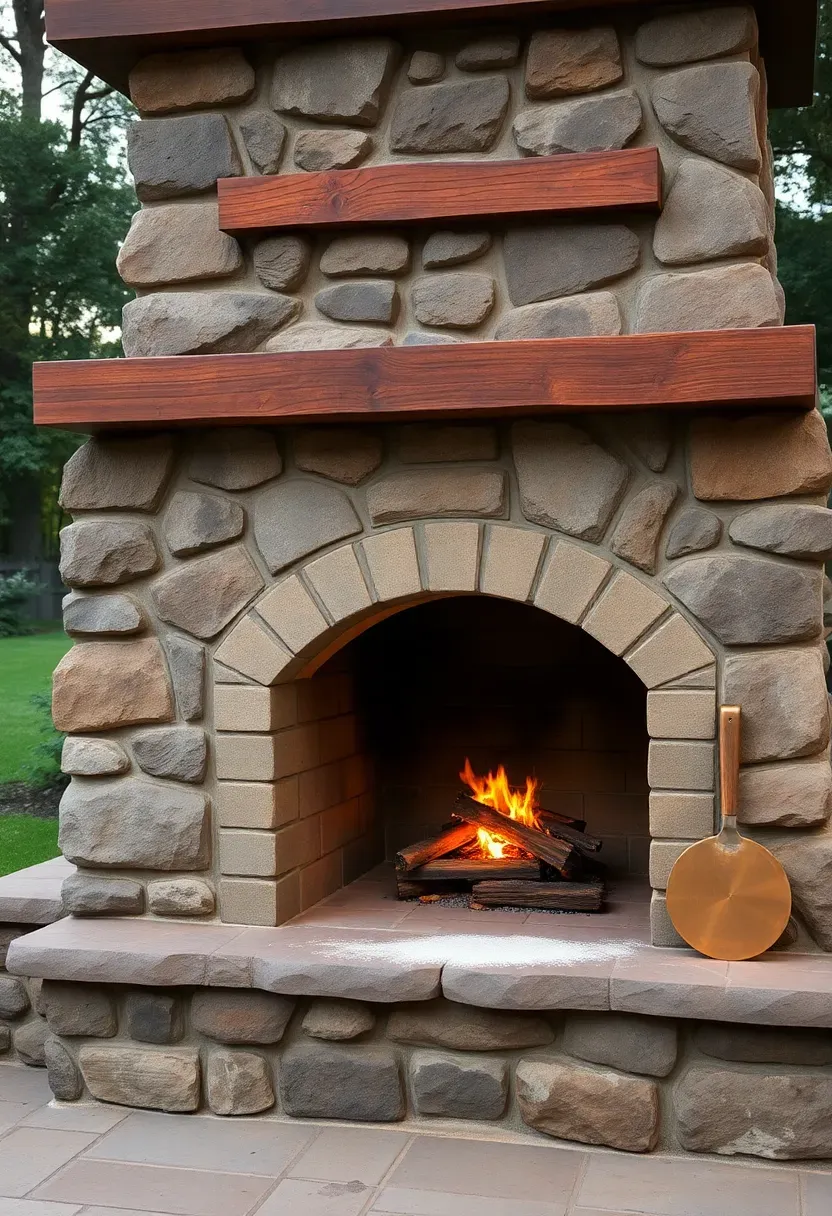
Combining a fireplace and a pizza oven in one structure saves space and shares the chimney flue. The pizza oven sits above or beside the main firebox, reaching 700-900 degrees when properly fired. Fieldstone gives the combination unit a lodge-like appearance that suits wooded lots and rustic properties. The entire structure typically measures 7 to 9 feet tall and 6 to 8 feet wide. DIY kits with refractory cement pizza oven inserts start at $1,500 for the oven component alone. Full fieldstone construction with both features runs $5,000-12,000 professionally built. A Neapolitan-style pizza cooks in 60-90 seconds at those temperatures.
Tips
- The pizza oven needs a separate door that seals — an open oven loses heat too fast for proper cooking
- Use hardwood (oak, hickory, maple) rather than softwood; resinous pine creates sooty flavor
- Build a small prep counter into one side of the structure for dough and toppings
8. Prefab Modular Fireplace Kit
The honest pitch
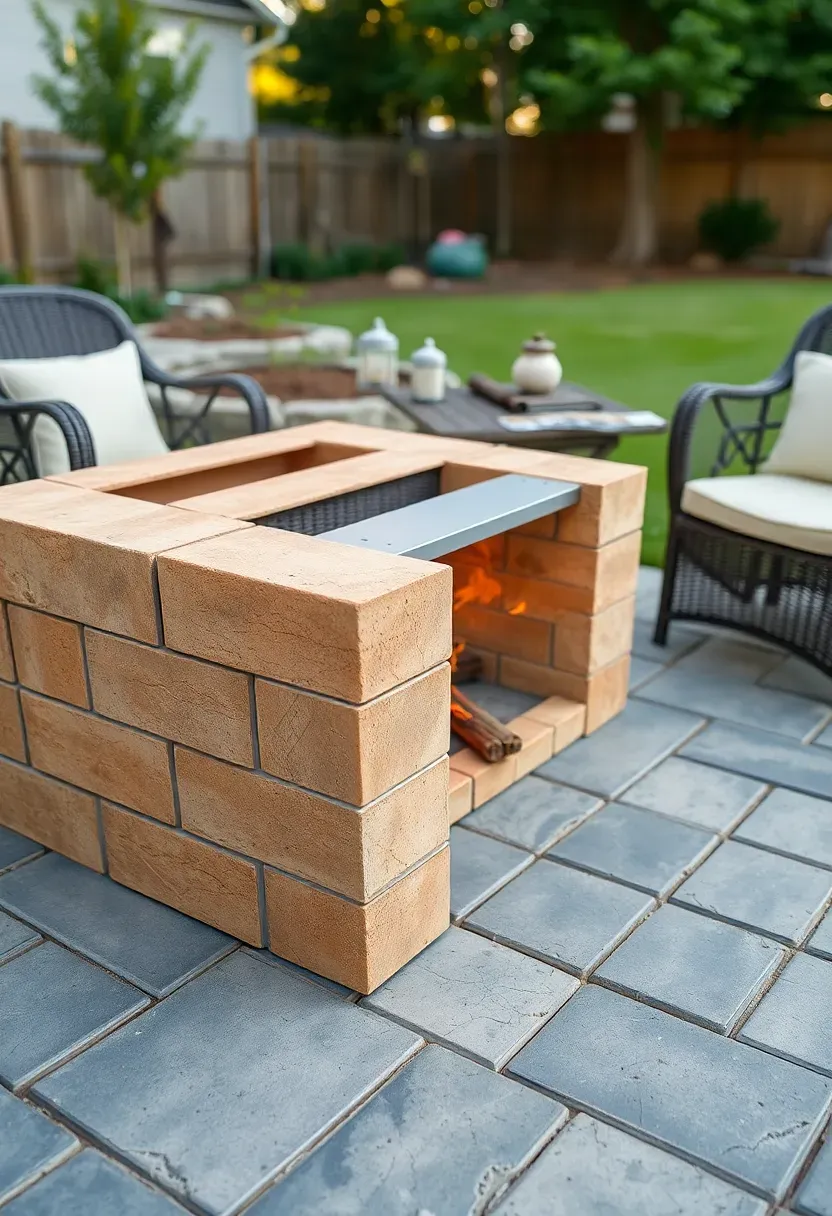
Modular fireplace kits exist because hiring a mason to build a custom stone fireplace costs $5,000-12,000 and takes weeks. A kit arrives on a pallet, uses interlocking concrete blocks, and assembles in a weekend with basic tools. The result looks less refined than custom masonry but costs $1,500-3,500 complete. Brands like Belgard, Pavestone, and RumbleStone offer kits at most home improvement stores.
Assembly reality
Most kits require a concrete pad foundation, roughly 200-300 concrete blocks, construction adhesive, and a steel firebox liner. Two people can complete assembly in 8-12 hours. The finished product stands 6 to 7 feet tall and weighs 2,000+ pounds, so that foundation matters. Veneer stone or stucco over the blocks upgrades the appearance significantly for an extra $300-800 in materials.
Recommended
Items for this idea
9. Adobe Kiva Fireplace
Origins worth knowing
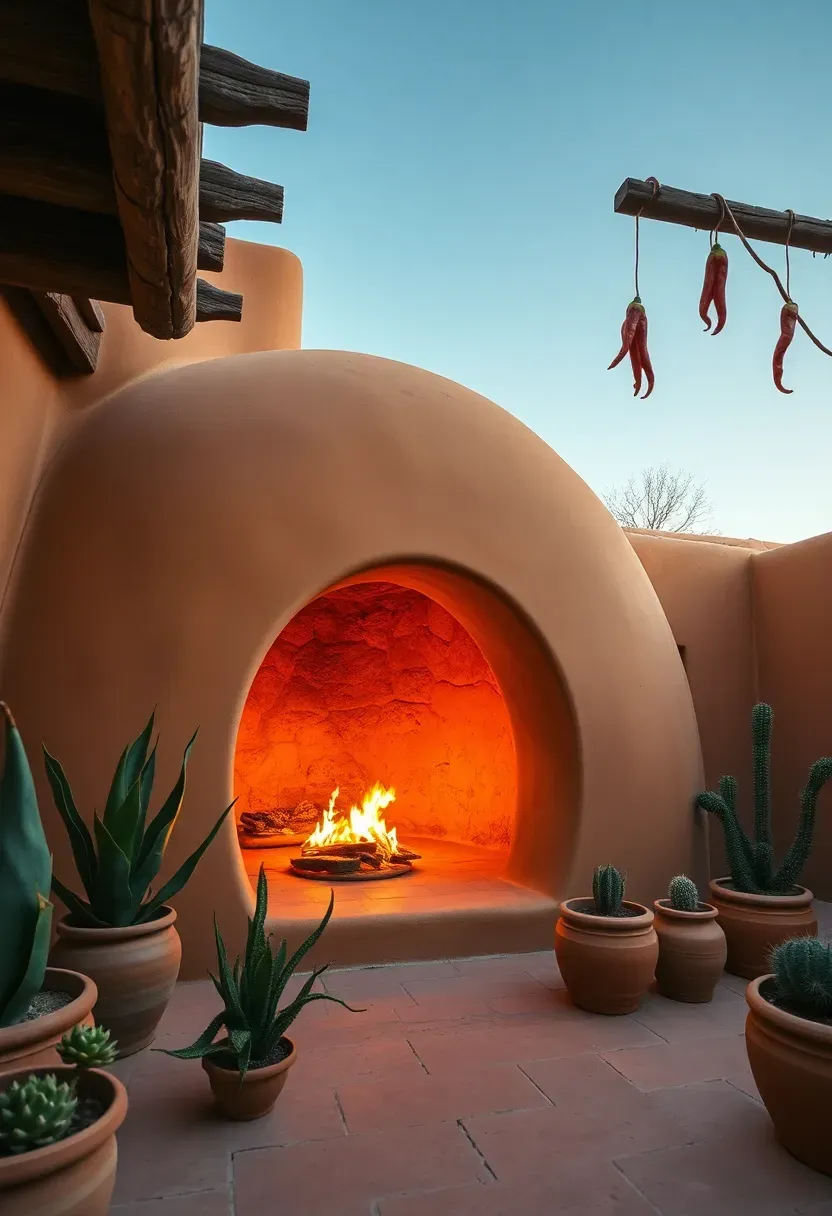
Kiva fireplaces come from Pueblo architecture in the American Southwest, where adobe — sun-dried mud brick — was the primary building material for centuries. The beehive-shaped form radiates heat in all directions and fits naturally into stucco-walled courtyards. The rounded profile has no sharp edges, which gives it an organic presence that rectangular fireplaces lack.
Modern version
Today's outdoor kiva fireplaces use a steel firebox core wrapped in stucco, adobe veneer, or poured adobe over a wire mesh frame. A finished kiva stands 4 to 6 feet tall and 3 to 4 feet wide at the base. Cost ranges from $2,000 for a DIY stucco-over-frame version to $6,000 for authentic adobe block construction. These work best in dry climates — adobe absorbs moisture and degrades in areas with heavy rainfall unless sealed and covered.
Apply at home
- Best suited for Southwestern, Mediterranean, or Spanish Colonial architecture
- Place in a courtyard corner where the curved shape nestles against two walls
- Burn pinon wood for the traditional aromatic Southwest fireplace experience
10. Corten Steel Fireplace Panel
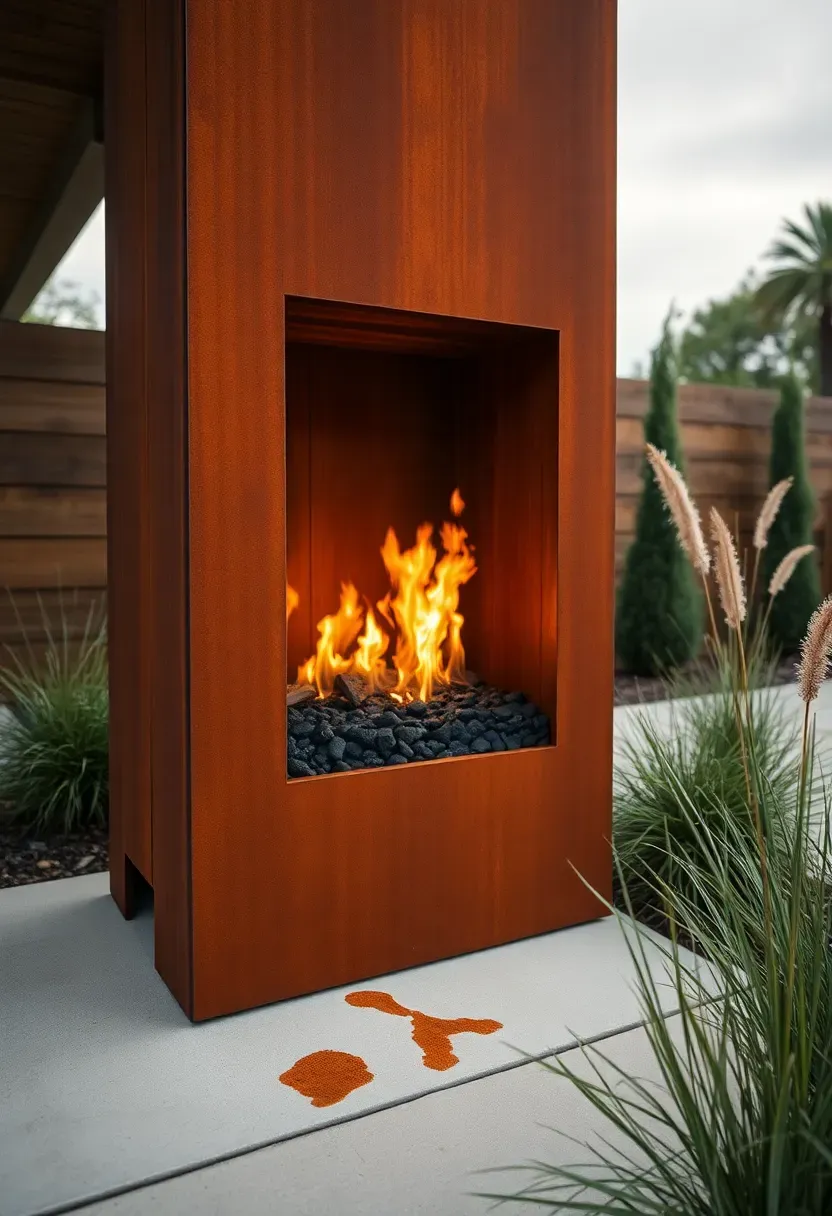
Corten steel (also called weathering steel) develops a stable rust patina that protects the underlying metal from further corrosion. As a fireplace material, it gives you that deep orange-brown surface that changes with weather and light. A Corten steel fireplace panel typically consists of a flat or slightly angled steel plate (3/16 to 1/4 inch thick) with a firebox opening cut into the lower portion. Prefabricated Corten fireplace units run $2,000-5,000. Custom fabrication from a local metal shop costs less if you provide a design. The patina develops fully over 6 to 18 months of outdoor exposure — let it happen naturally rather than using chemical accelerants.
Pros and cons
- Pros: Zero maintenance after patina forms, distinctly modern appearance, lightweight compared to stone
- Cons: Rust stains adjacent surfaces (concrete, pavers) during the patina-forming period, sharp edges need finishing
- Best for: Modern and industrial-style yards, desert landscapes, minimalist hardscape designs
Recommended
Items for this idea
11. River Rock Fireplace
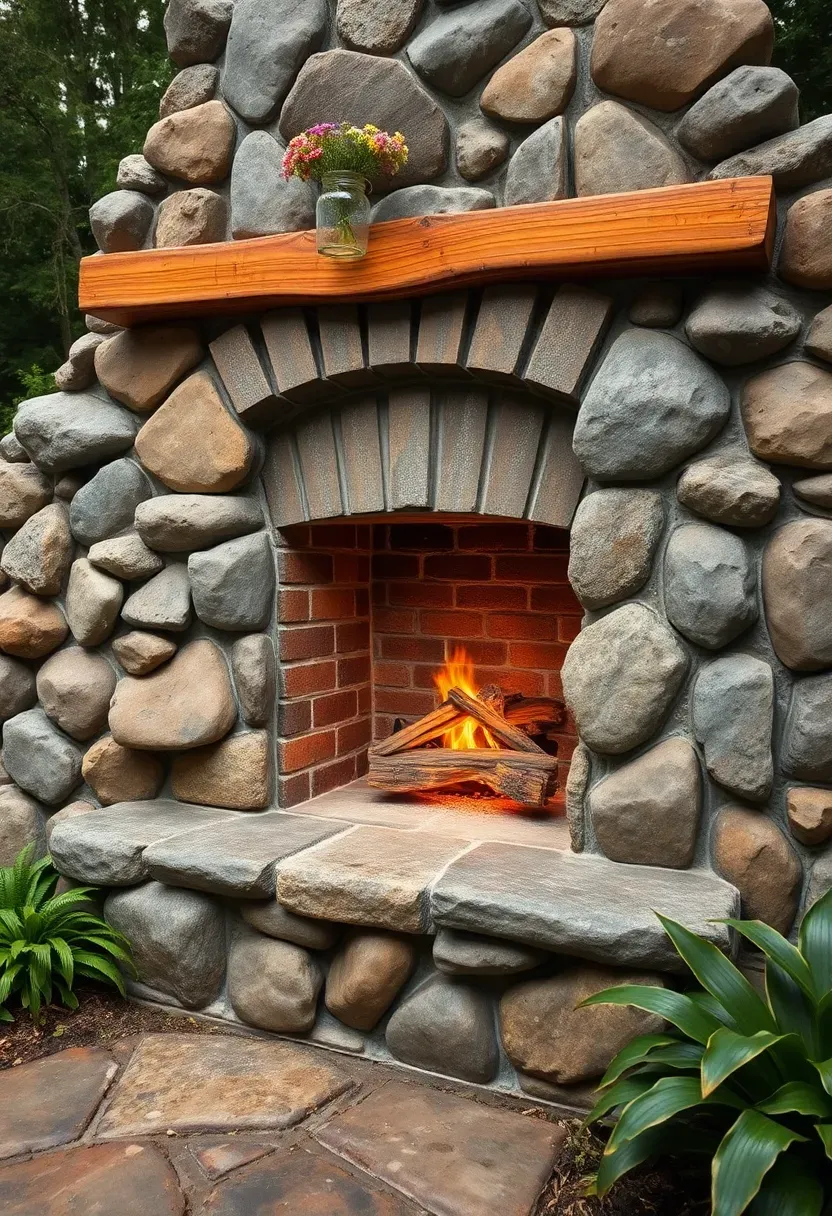
River rock fireplaces have a completely different texture from cut stone or brick — all smooth curves and rounded surfaces that catch light at different angles. Sourcing river rock locally keeps costs down ($100-400 for enough material) but the labor is higher because each stone must be individually set and the mortar work is more complex with irregular shapes. A river rock fireplace suits cottage gardens, lakefront properties, and Pacific Northwest aesthetics. The firebox still needs firebrick lining regardless of the exterior stone. Plan for a wider profile than you would with flat stone because rounded rocks build up thickness quickly.
Tips
- Grade your rocks by size before building — larger stones at the base, smaller toward the top
- Mix rock sizes within each course for a natural appearance; uniform sizing looks artificial
- Keep the mantel simple — a rough-sawn timber beam complements the organic stone better than milled lumber
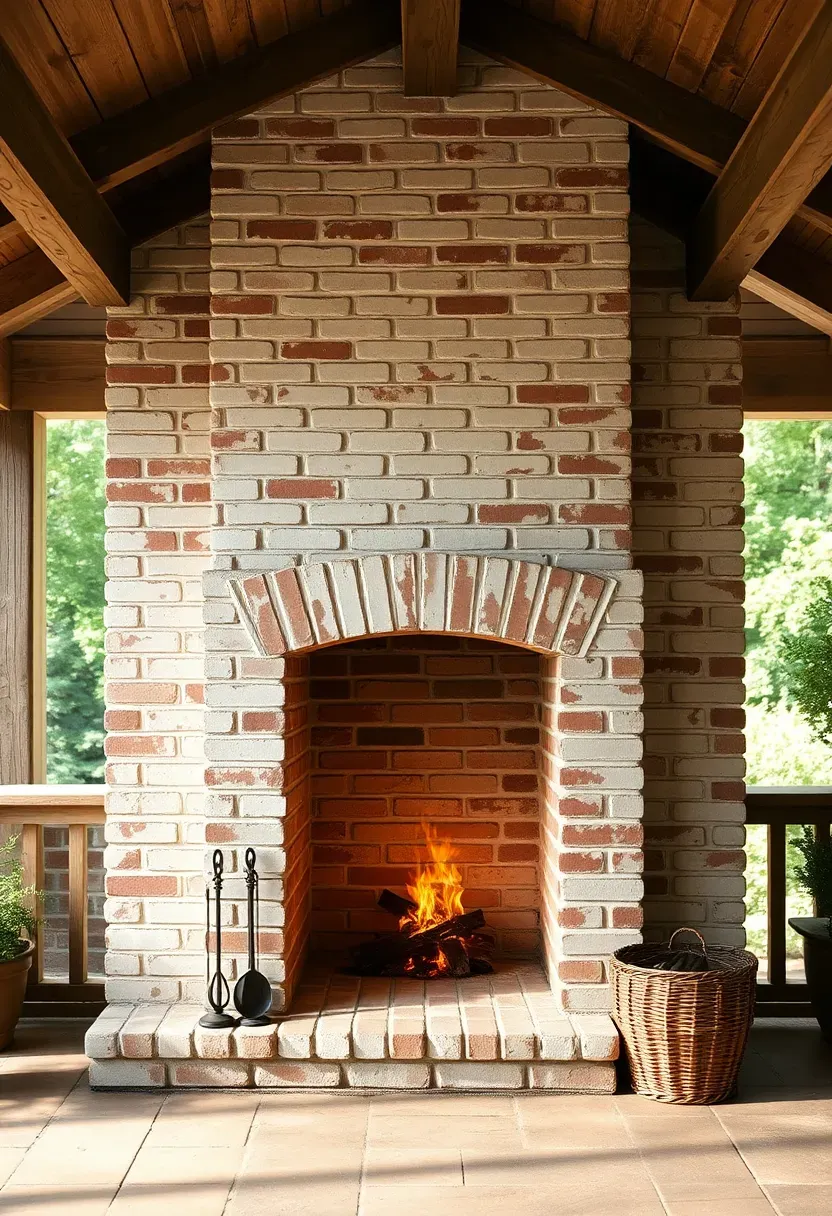
12. Whitewashed Brick Fireplace
Step 1: Build or convert
You can build a new brick fireplace and whitewash it, or whitewash an existing brick fireplace that looks dated. The whitewash technique uses diluted paint (50/50 white latex paint and water) brushed and blotted onto brick. Unlike solid paint, whitewash lets the brick texture and color variation show through.
Step 2: Get the finish right
Apply with a wide brush in random strokes, then dab with a rag before it dries. Each coat adds more coverage — one coat gives a subtle haze, two or three coats create a more opaque finish. The inconsistency is the point. A perfectly uniform white coating is just painted brick, not whitewash.
Step 3: Protect it
Exterior masonry sealer over the whitewash prevents rain from washing it away. Reapply sealer every 2-3 years. The whitewash itself lasts 5-10 years before needing a fresh coat.
Watch out
Do not whitewash the inside of the firebox — heat burns off the paint and releases fumes. Firebrick should remain bare.
Recommended
Items for this idea
13. Built-In Fireplace with TV Niche
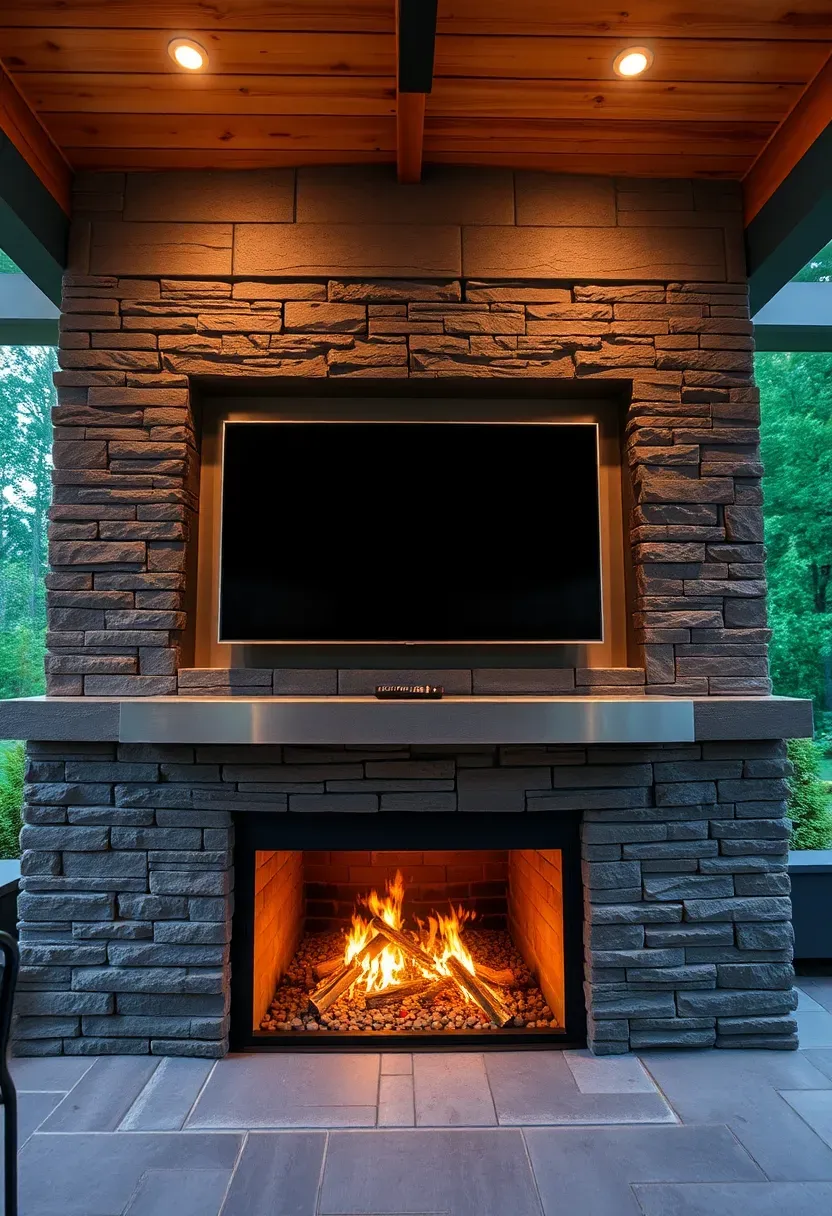
Mounting a TV above an outdoor fireplace requires planning that most people skip. The heat rising from a wood fire will damage any television — period. Gas fireplaces with mantels or heat deflectors work if the TV sits at least 18 inches above the mantel and a heat shield directs warm air outward. The TV needs to be rated for outdoor use (SunBriteTV, Furrion, and Samsung Terrace are the main brands, running $1,500-4,000). Build the niche deep enough to recess the TV 3-4 inches behind the wall plane for weather protection. Run conduit for power and HDMI during construction, not after.
Pros and cons
- Pros: Creates a complete outdoor entertainment wall, eliminates the need for a separate TV mounting area
- Cons: Outdoor TVs are expensive, heat management is critical, adds wiring complexity
- Best for: Covered patios used as primary entertainment spaces, sports-watching setups, pool houses
14. Corner Patio Fireplace
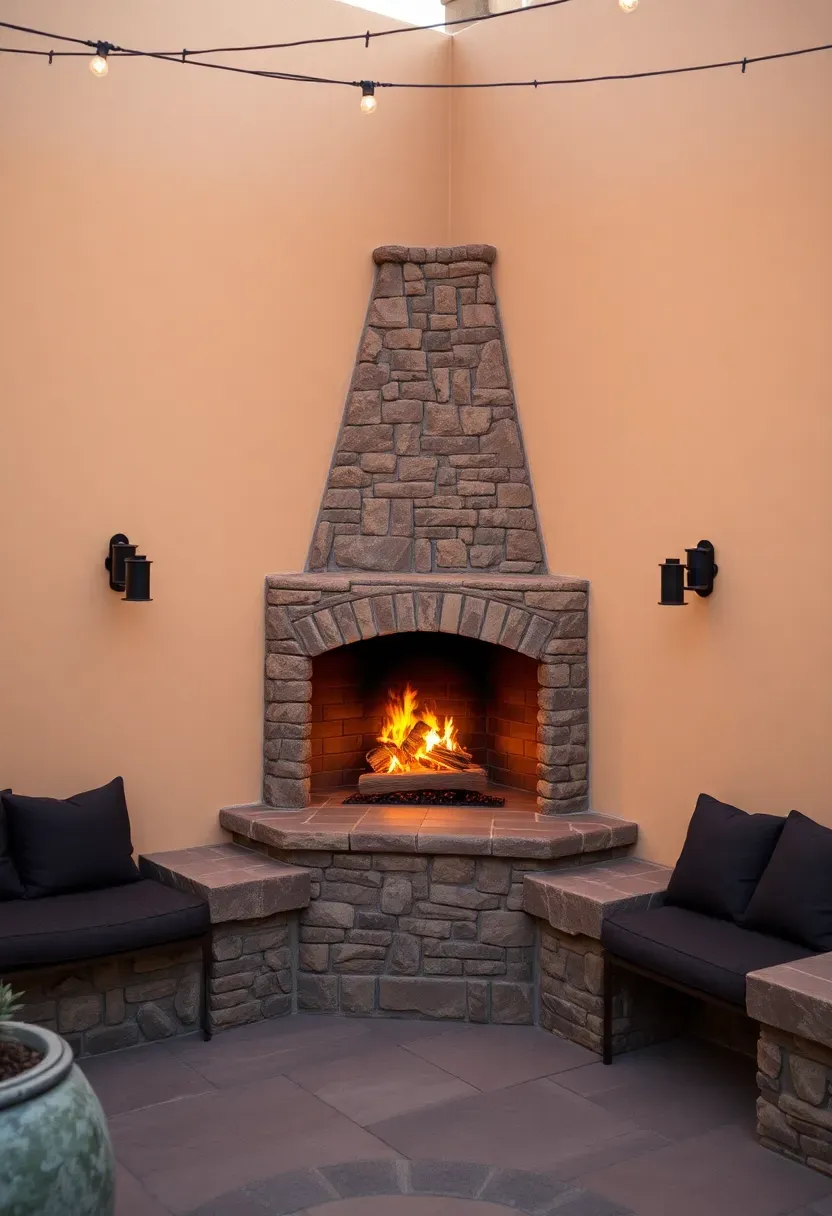
Corner placement solves the biggest problem with backyard fireplaces — they eat up wall space and force all seating to face one direction. A fireplace built into the 90-degree angle where two walls or fence lines meet projects heat diagonally across the patio, reaching more seating positions. The triangular footprint also uses space that usually sits empty in corner layouts. A corner fireplace needs the same foundation, firebox, and chimney as a flat-wall version but with angled side walls. The surround can be stone, brick, or stucco. Cost is comparable to standard fireplaces ($2,500-7,000) with slightly more complex masonry labor.
Tips
- Angle the firebox opening at 45 degrees to the corner for equal heat distribution to both sides
- Built-in benches along each adjacent wall create a natural amphitheater effect facing the fire
- Add a small mantel shelf at the corner for candles, lanterns, or decorative objects
Recommended
Items for this idea
15. Flagstone Fireplace with Raised Hearth
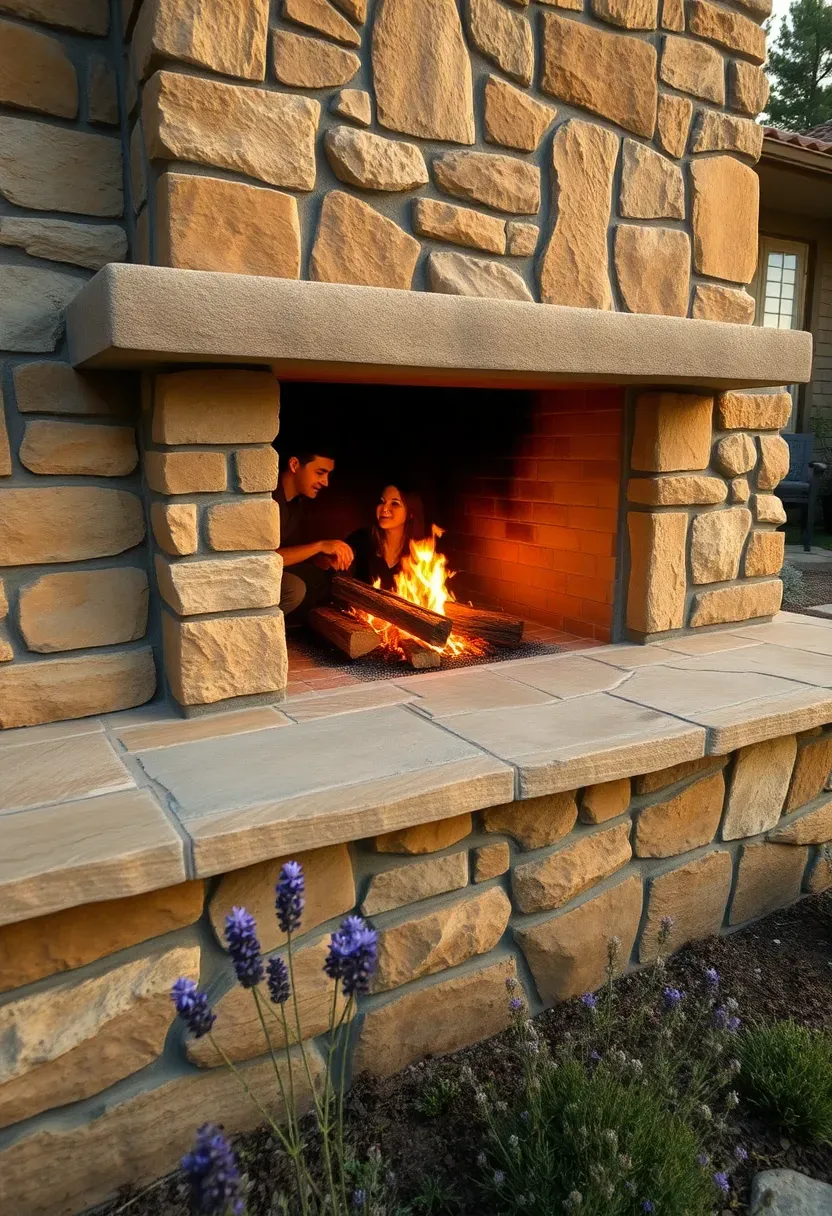
A raised hearth extends the fireplace base forward by 18 to 24 inches at seat height (16-18 inches off the ground), creating a warm bench directly in front of the fire. On cold nights, this is the most coveted seat in any backyard. Flagstone works well for the hearth surface because it handles heat, provides a naturally flat sitting surface, and matches most outdoor stone palettes. The hearth cap should overhang the base by 1-2 inches with a slight rounded edge for comfortable sitting. Underneath, the structure is cinder block or poured concrete with flagstone veneer. Budget $500-1,000 extra beyond a standard fireplace for the raised hearth addition.
Tips
- The hearth surface gets hot — leave 6 inches of clearance between the firebox opening and the sitting area
- Seat depth of 18-20 inches lets adults sit comfortably without leaning against the hot chimney
- Flagstone slabs at least 1.5 inches thick resist cracking from heat cycling better than thin veneer
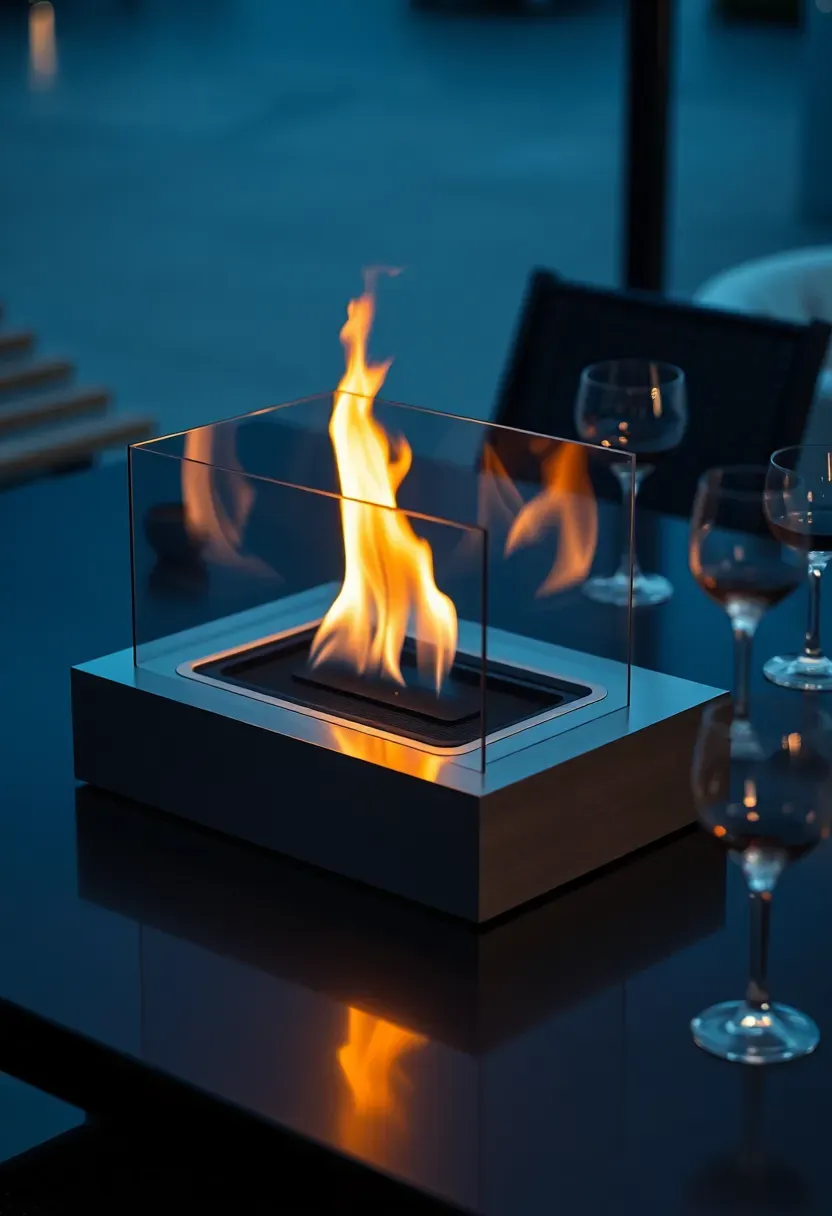
16. Tabletop Bioethanol Fireplace
Why this exists
Not everyone can build a permanent fireplace. Renters, apartment dwellers with patios, and people who just want fire ambiance without construction have bioethanol tabletop units. These burn denatured ethanol (available at hardware stores for $15-25 per gallon), produce no smoke, and need no chimney or gas connection. A gallon provides 4-6 hours of burn time.
What to expect
Tabletop units range from $50 for a basic stainless steel box to $400 for a designer piece with tempered glass on all sides. The flame is real but modest — a 12-inch burner produces about 6,000 BTU, enough to feel warmth within 2-3 feet but nowhere near a wood fire's output. These are atmosphere pieces, not heat sources. Place on any stable outdoor table or built-in ledge.
Choose if
- You rent your home or cannot modify the property
- Fire ambiance matters more than meaningful heat output
- You want a portable fire feature you can move between indoor and outdoor use
Recommended
Items for this idea
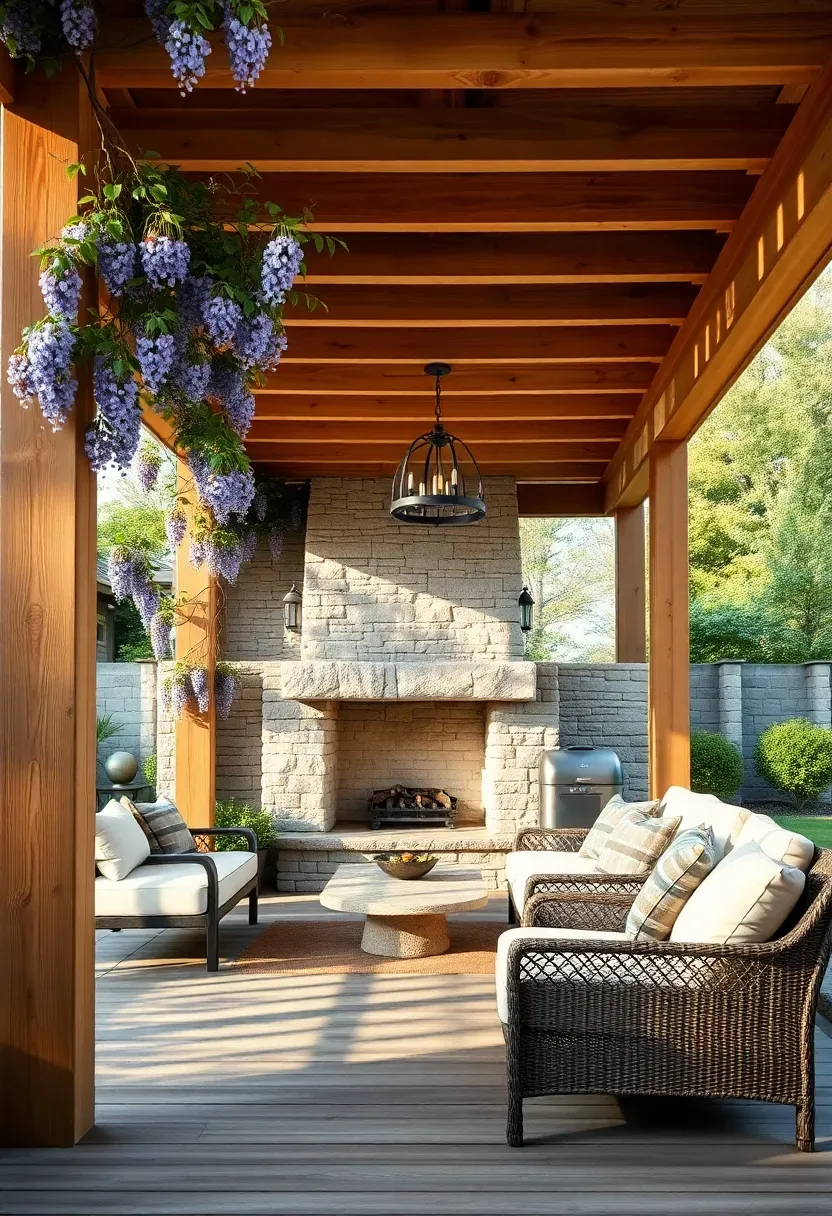
17. Pergola Fireplace Combination
Building a fireplace into the back wall of a pergola creates an outdoor room that feels enclosed without being closed off. The pergola provides partial shade and defines the ceiling plane. The fireplace anchors the back wall. Open sides let breezes through while the structure frames the space. The chimney rises through or beside the pergola roof — keep at least 3 feet of clearance between the chimney and any wood beam, or use a metal chimney sleeve through the roof structure. A 12x14 foot pergola with an integrated stone fireplace runs $8,000-18,000 depending on materials. Cedar pergola frames last 15-20 years without treatment.
Tips
- Train climbing plants (wisteria, jasmine, trumpet vine) on the pergola posts to soften the structure over time
- Add retractable shade fabric between the rafters for rain protection during use
- Wire the pergola for string lights or recessed spots during construction — retrofitting is much harder
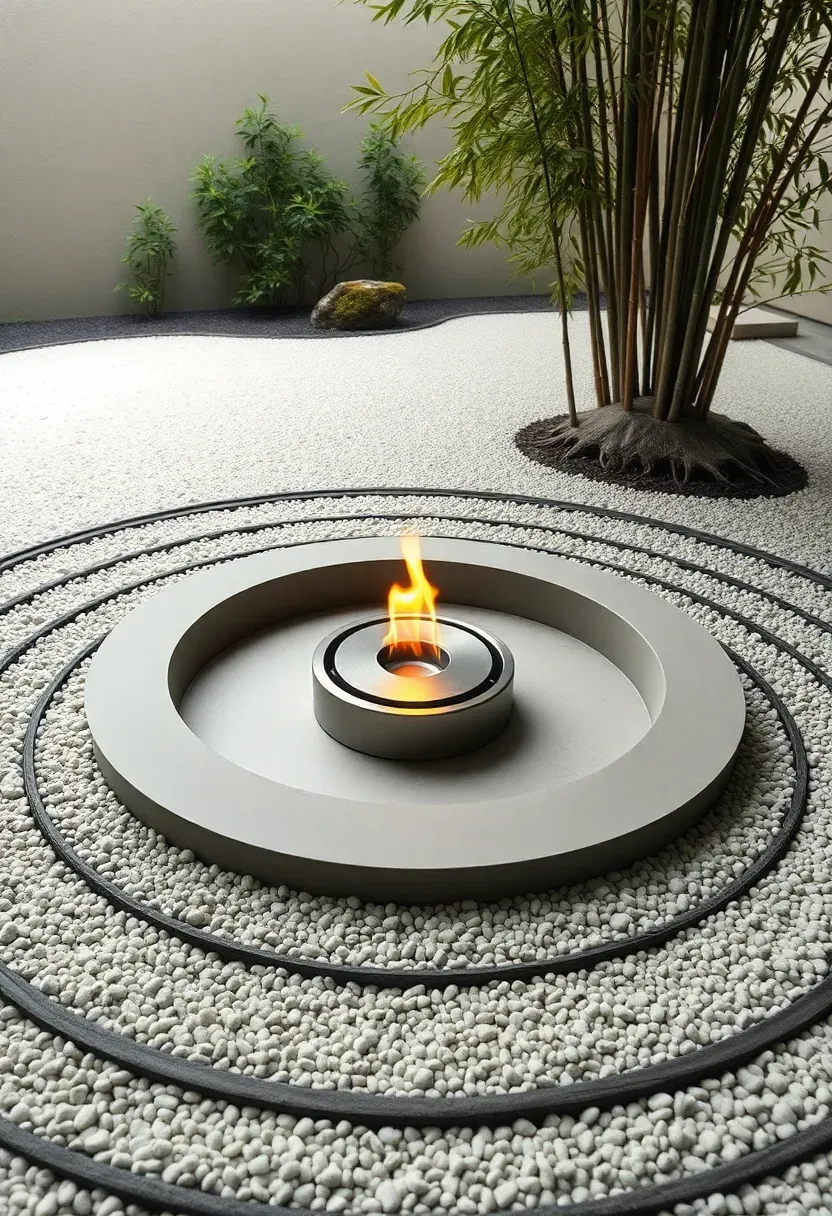
18. Japanese-Inspired Minimalist Hearth
Origins worth knowing
Japanese irori hearths were traditionally sunken fire pits in the center of a room, used for heating, cooking, and gathering. The modern outdoor interpretation keeps the low profile and clean geometry but works as a freestanding or built-in feature. The design philosophy centers on restraint — one material, one flame, minimal decoration.
Modern version
A low concrete or stone plinth (12-18 inches tall, 36-48 inches square) with a gas burner insert creates the minimal hearth. Surround with raked gravel, a single specimen tree, and perhaps a water basin. The fireplace becomes part of a contemplative garden rather than an entertainment centerpiece. Cost runs $1,500-4,000 for the fire feature plus landscaping.
Apply at home
- Place asymmetrically in the garden — centered placement feels too formal for this style
- Use a single fuel type and container shape; avoid mixing materials or adding decorative elements
- Bamboo screening or a simple wooden fence creates the enclosed garden feeling these hearths need
Recommended
Items for this idea
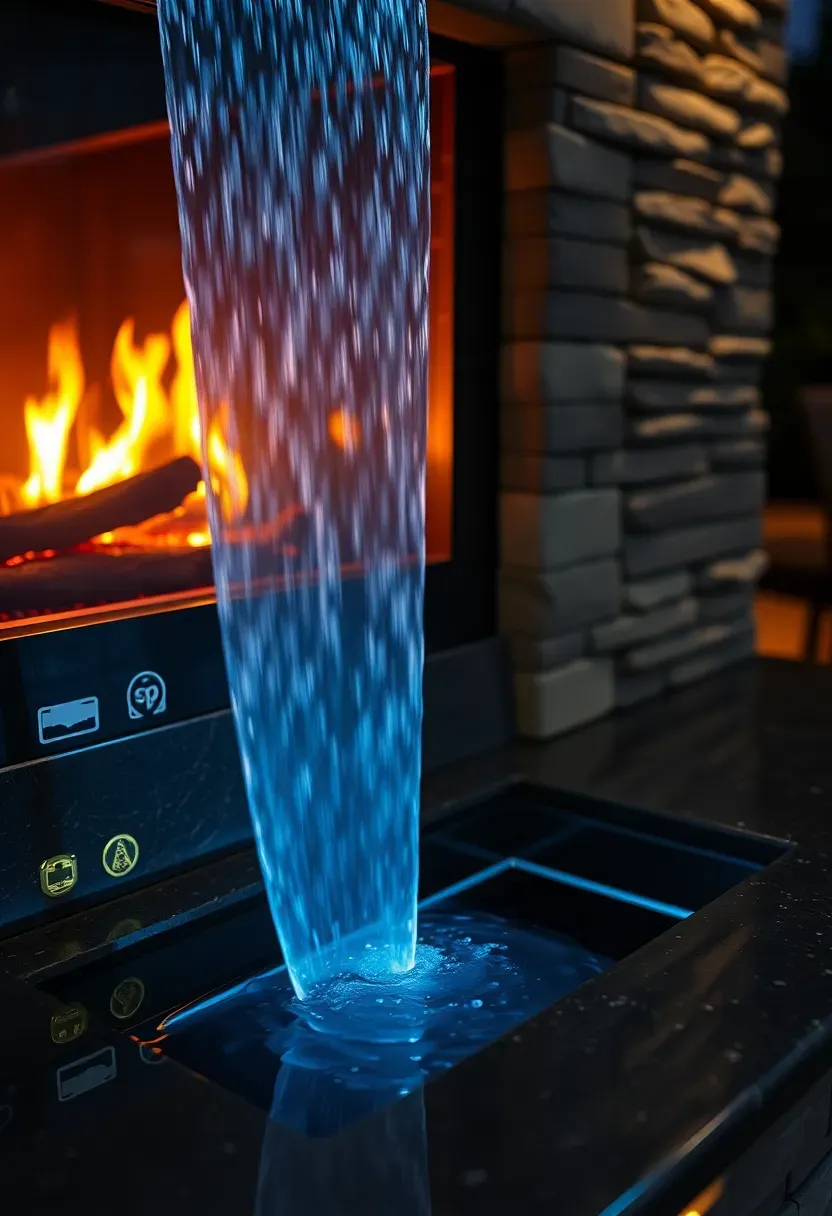
19. Fireplace with Water Feature Wall
Pairing fire and water in one structure creates a sensory contrast that draws attention more than either element alone. The typical configuration places a fireplace at center with a thin sheet of water flowing down a stone or copper panel on one or both sides. A recirculating pump ($100-200) feeds the water feature from a hidden basin at the base. The fire and water systems operate independently — the water does not cool the fire, and the fire does not heat the water. A combined unit costs $5,000-15,000 depending on size and materials. Copper water walls develop green patina over time. Slate and granite stay dark and reflective.
Pros and cons
- Pros: Unique focal point, the sound of water adds another sensory layer, dramatic at night with uplighting
- Cons: Pump maintenance, potential mineral deposit buildup, more complex plumbing and electrical
- Best for: Entertaining-focused yards, spa-like patio retreats, properties where visual impact justifies the investment
20. Reclaimed Brick Cottage Fireplace
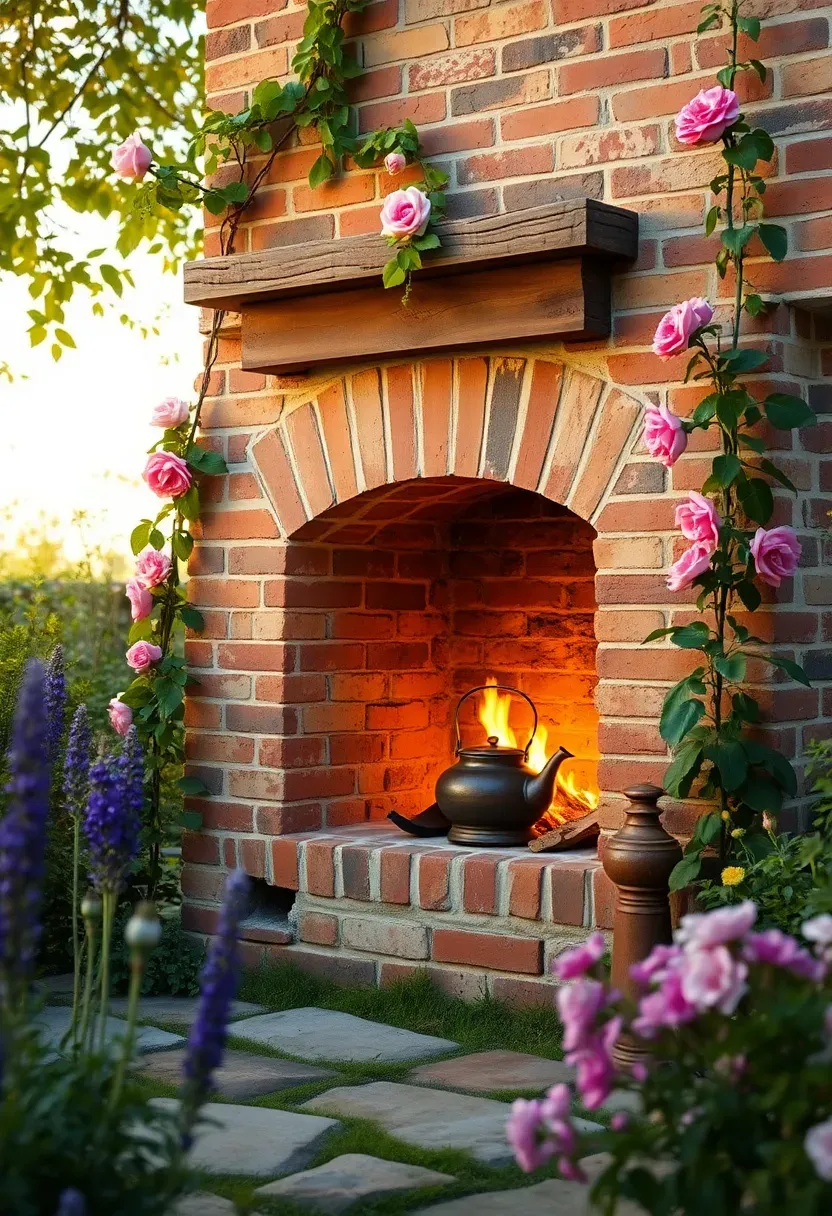
Reclaimed brick carries a history that new brick cannot replicate — the uneven color, the worn edges, the old mortar remnants. Salvage yards sell reclaimed brick for $0.50-1.50 per brick depending on age and condition. A backyard fireplace requires 400-700 bricks. The inconsistency in size and shape means wider mortar joints and a slightly irregular profile, which is exactly the charm. Old Chicago brick, antique clinker brick, and salvaged factory brick each produce different character. Pair with a reclaimed timber mantel and copper or iron accessories for a full cottage aesthetic. Be aware that some very old bricks (pre-1920) may contain lime mortar residue that affects bonding with modern portland cement mortar — a mason experienced with reclaimed materials will know how to handle this.
Tips
- Soak reclaimed bricks in water before laying — dry old brick pulls moisture from mortar too fast and weakens the bond
- Mix bricks from different salvage lots for more color variation across the facade
- A lime-wash finish (different from whitewash) protects old brick while preserving its aged character
Recommended
Items for this idea
21. Portable Steel Outdoor Fireplace
The practical choice
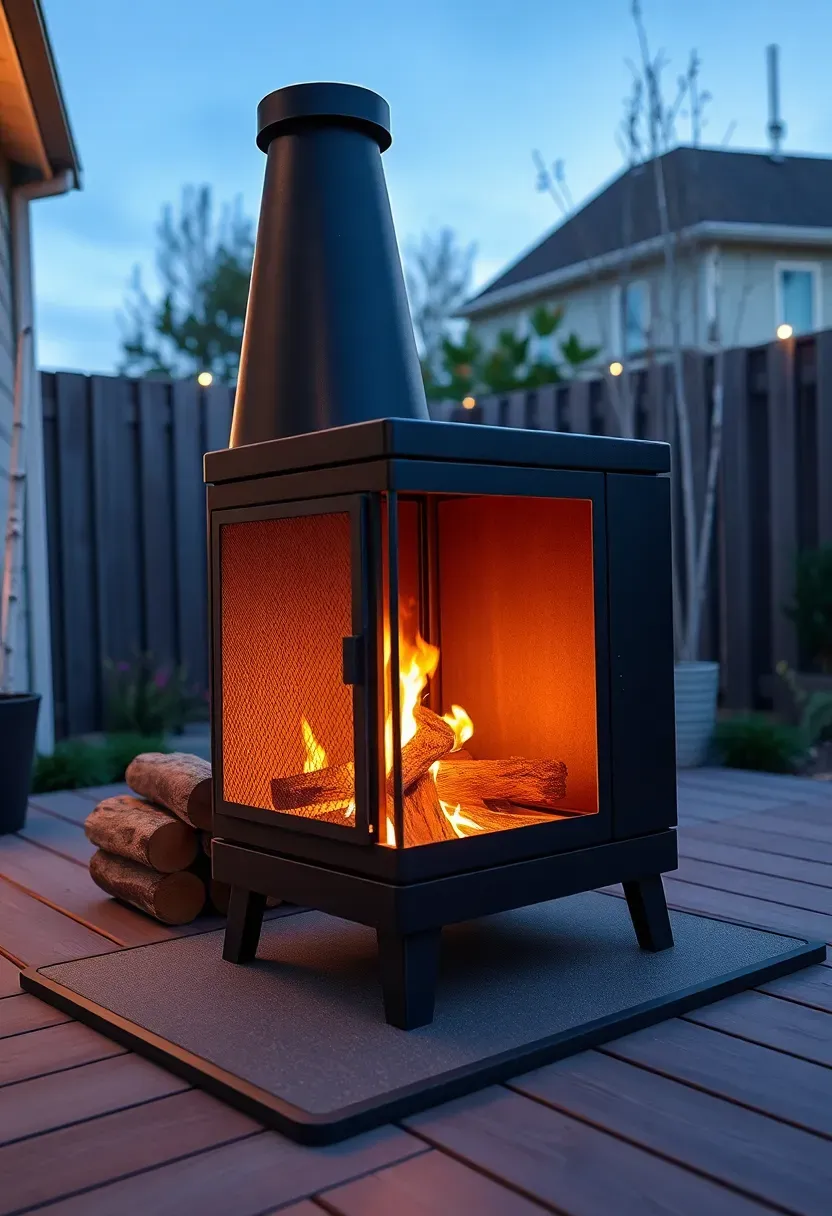
A freestanding steel outdoor fireplace is the closest thing to a real fireplace that requires zero construction. These roll or carry into position, burn wood or manufactured logs, and pack up when you move. Prices range from $150 for a basic sheet metal model to $1,200 for a heavy-gauge steel unit with a proper chimney. The better models weigh 80-150 pounds, use 14-gauge or thicker steel, and include a spark screen and ash drawer.
Placement rules
Steel fireplaces need a non-combustible surface underneath — a fireproof pad ($30-60), paver area, or concrete slab. Maintain 10-foot clearance from structures and overhangs. Decks work only if you use a heat shield underneath since radiant heat through the base can scorch wood decking. Many models include adjustable legs for uneven ground.
Choose if
- You rent and cannot build permanent structures
- You want to move the fireplace between seasons (covered patio in winter, open yard in summer)
- Budget is under $500 and you want real wood-burning capability
Quick FAQ
Do I need a permit for a backyard fireplace? Requirements vary by municipality, but most areas require a building permit for permanent masonry fireplaces and a gas permit for gas-fueled units. Portable fireplaces and chimineas typically need no permit. Check local fire codes for setback distances from structures — the standard minimum is 10 feet. Some HOAs have additional restrictions worth checking before you spend money on materials.
Which fuel type is best for an outdoor fireplace? Wood provides the most heat and authentic experience but produces smoke and ash. Natural gas is clean and convenient with instant ignition but requires a gas line. Propane works anywhere without utility connections but costs more per hour of use. Bioethanol is smokeless and portable but generates minimal heat. Match the fuel to your priorities rather than defaulting to whatever your neighbor chose.
How much does it cost to build a backyard fireplace? A basic DIY chiminea setup costs $100-200. Prefab modular kits run $1,500-3,500. Custom stone or brick fireplaces range from $3,000-12,000 depending on size, materials, and labor rates. Gas linear fireplaces installed professionally cost $2,000-6,000. Budget roughly 15% above the fireplace cost for the foundation, gas line, and finishing touches most quotes leave out.
Can you put an outdoor fireplace on a wood deck? Gas fireplaces with proper clearance ratings and heat shields work on decks. Wood-burning fireplaces are riskier — embers, radiant heat through the base, and the sheer weight (2,000+ pounds for masonry) all pose problems. A reinforced deck section with non-combustible pavers or a concrete pad underneath is the safest approach. Portable steel units need a fireproof deck pad rated for their BTU output.
What is the best material for a backyard fireplace surround? Natural stone (fieldstone, bluestone, granite) offers the best durability and heat resistance. Brick is more affordable and easier to source. Concrete provides modern aesthetics. Stucco over concrete block is the budget option that still looks finished. Avoid wood, vinyl, or composite materials anywhere near the firebox — combustible materials need at least 12 inches of clearance from the opening.
A backyard fireplace does not need to be expensive or complicated to change how you use your outdoor space. Start by figuring out your fuel preference and budget ceiling, then narrow the list from there. If you are unsure, a portable option like a chiminea or freestanding steel fireplace lets you test whether you actually use an outdoor fire feature before committing to a $5,000 masonry project. Position any fireplace where you already tend to sit — adding fire to a spot nobody uses will not suddenly make it popular. The best backyard fireplaces succeed because they are in the right location, not because they are the most expensive or elaborate option available.
Pinterest cover for 21 Backyard Fireplace Ideas for Year-Round Use
About the author
OBCD
CGI visualization and interior design content. We create detailed 3D renders and curate practical design ideas for every room in your home.