27 Backyard Garden Fountain Ideas
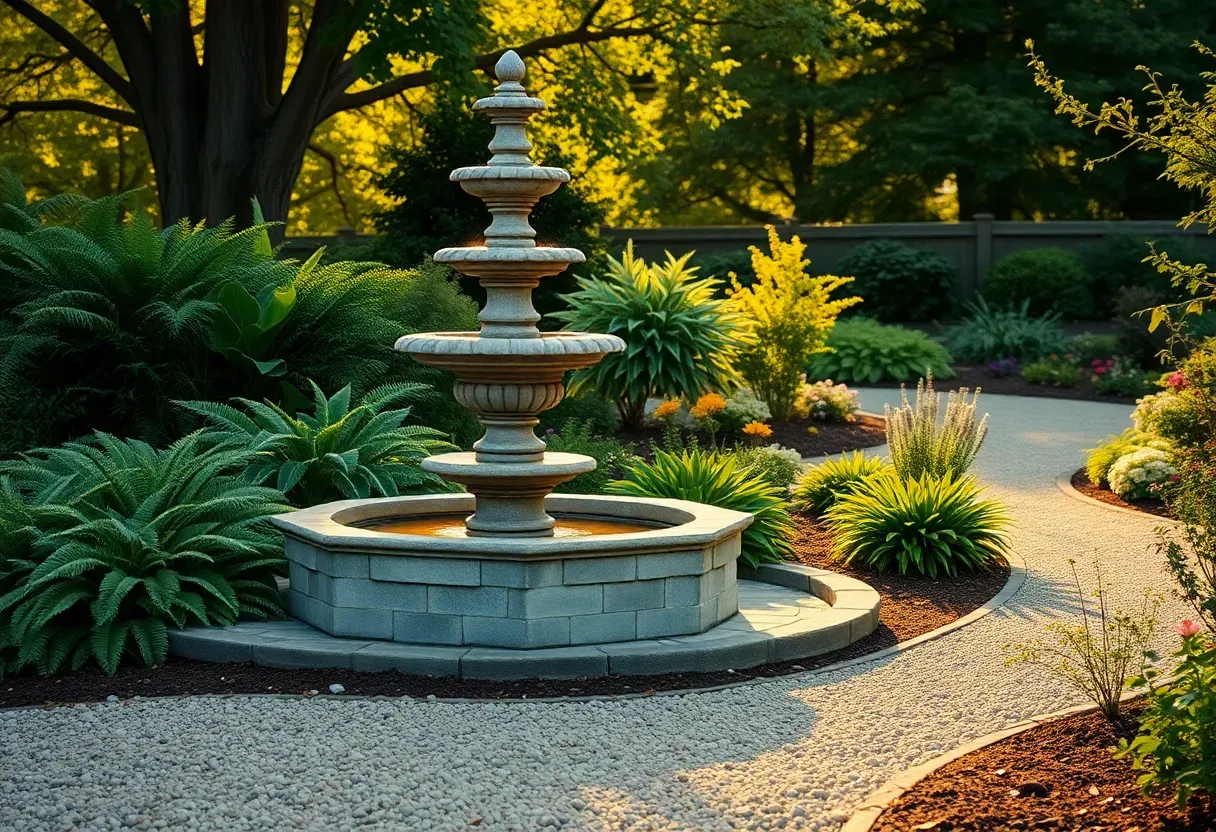
Nothing changes a backyard faster than the sound of moving water. Before I installed a recirculating fountain near my patio three summers ago, I used to hear traffic from the road behind the fence and the neighbor's AC unit cycling on and off. Within a day of plugging in a simple basin fountain, those sounds disappeared into the background. The water did not block the noise exactly — it just gave my ears something better to focus on. These 27 fountain ideas range from weekend projects you can finish with a pump and a pot to larger installations that need a plumber and a concrete pad. Some cost under $100. Others are genuine investments. All of them add something a planter or a fire pit cannot: constant, gentle motion.
Below you will find fountains grouped by type — freestanding, wall-mounted, tiered, disappearing, and natural-style — so you can skip to whatever fits your space.
Table of Contents
- Three-Tier Cast Stone Fountain
- Copper Sheer Descent Wall Feature
- Disappearing Urn Fountain
- Japanese Bamboo Shishi-Odoshi
- Solar Birdbath Fountain
- Corten Steel Blade Waterfall
- Stacked Slate Pillar Fountain
- Millstone Bubbler on Gravel Bed
- Oversized Ceramic Pot Fountain
- Rain Chain into Basin Fountain
- Recirculating Stream with River Rock
- Modern Cube Spillway Fountain
- Tiered Planter-Fountain Combo
- Carved Granite Sphere Fountain
- Mediterranean Wall Lion Spout
- Whiskey Barrel Pond Fountain
- Glass Column Bubble Fountain
- Terracotta Cascading Pots
- Natural Boulder Fountain
- Concrete Bowl Fountain on Pedestal
- Copper Lotus Leaf Fountain
- Dry Creek Bed with Pump Return
- Mosaic Tile Wall Fountain
- Fire and Water Bowl Combination
- Minimalist Black Steel Trough
- Bamboo Spout into Stone Basin
- Living Moss Wall Fountain
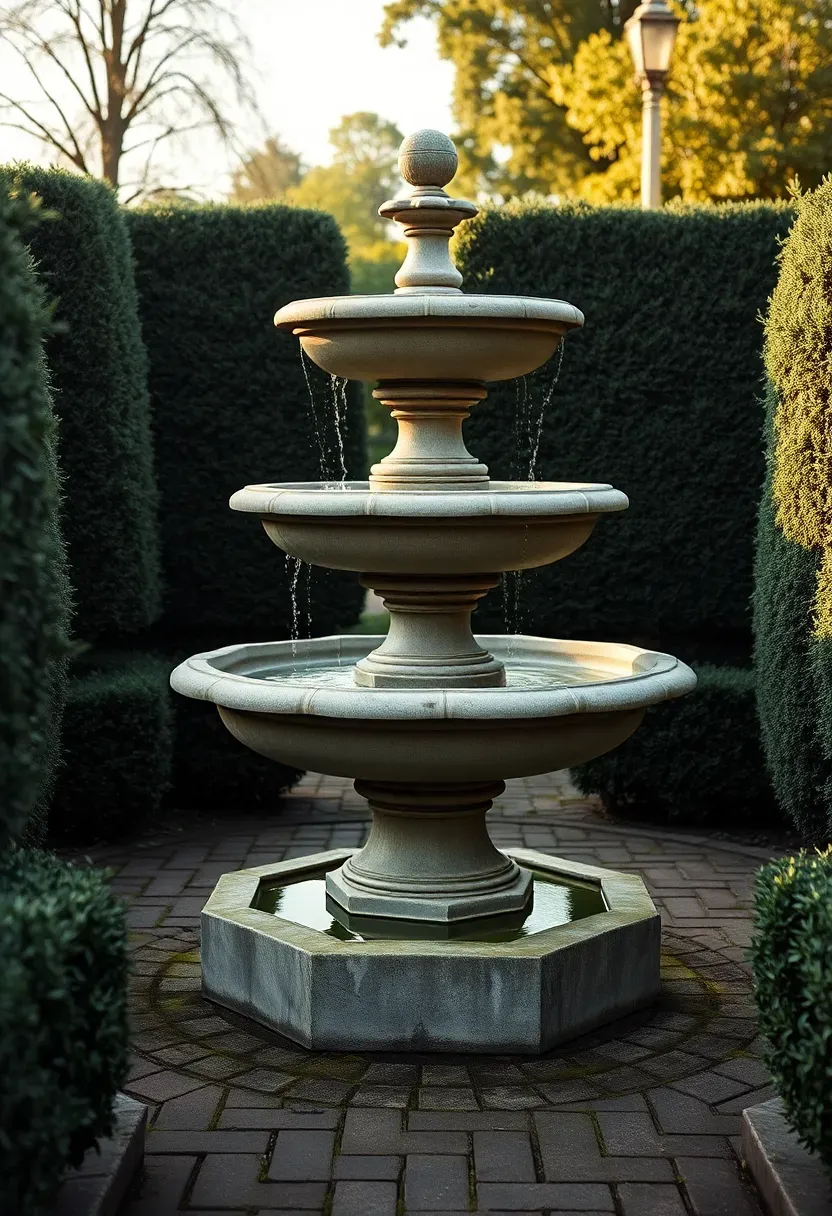
1. Three-Tier Cast Stone Fountain
The three-tier fountain is the design most people picture when they hear "garden fountain," and for good reason — it works. Water spills from the smallest bowl at top into progressively larger basins below, creating a layered sound that carries across a medium-sized yard. Cast stone (a concrete and aggregate mix) weighs less than carved natural stone and costs roughly a third as much. Most units arrive in three or four pieces that stack together and connect to a single submersible pump hidden in the bottom basin. Budget around $400 to $900 for a 4-foot model.
Tips
- Set it on a poured concrete pad at least 4 inches thick — cast stone is still heavy enough to sink into bare soil
- Run the pump on a timer so it shuts off overnight and saves electricity
- Add a few drops of fountain algaecide every two weeks during summer to keep bowls clean
We picked a few things that go well with this idea: Sunlinua 5-Tier Outdoor Garden Fountain with Light (★4.5), GIODIR 3-Tier Italian Garden Fountain with Pump (★4.1) and Teamson Home Two-Tier Stone Texture Fountain (★4.4). As an Amazon Associate we earn from qualifying purchases.
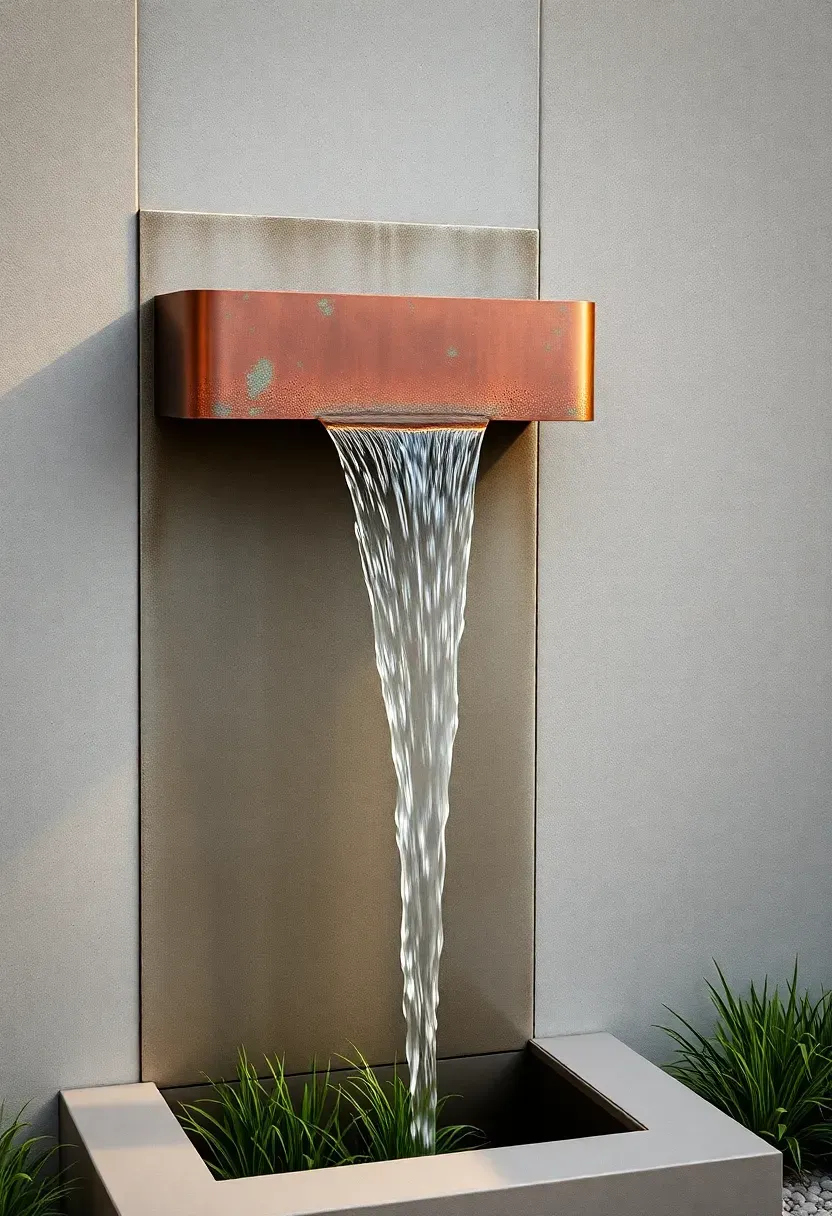
2. Copper Sheer Descent Wall Feature
Why Walls Work
Not every yard has room for a freestanding fountain. Wall-mounted features take zero floor space and turn a blank fence or retaining wall into something worth looking at. A sheer descent — sometimes called a sheet fall — pushes water through a narrow horizontal slot so it drops as a smooth, unbroken curtain.
How to Install It
Mount the spillway to a structural wall or a purpose-built column. Run a 1-inch PVC line from a pump in a below-grade basin up to the spillway. The basin can be a buried stock tank with a grate and decorative stone on top. Copper develops a green patina within one to two years outdoors, which most people consider a feature rather than a flaw.
Pros and Cons
Pros: Minimal footprint, architectural look, copper ages well, adjustable flow rate Cons: Requires plumbing through a wall, copper costs more than stainless, needs a hidden basin
We picked a few things that go well with this idea: 400GPH Submersible Fountain Pump (3 Nozzles) (★4.2), VIVOSUN 800GPH Ultra Quiet Fountain Pump (★4.4) and CWKJ 400GPH Submersible Fountain Pump with Tubing (★4.3). As an Amazon Associate we earn from qualifying purchases.
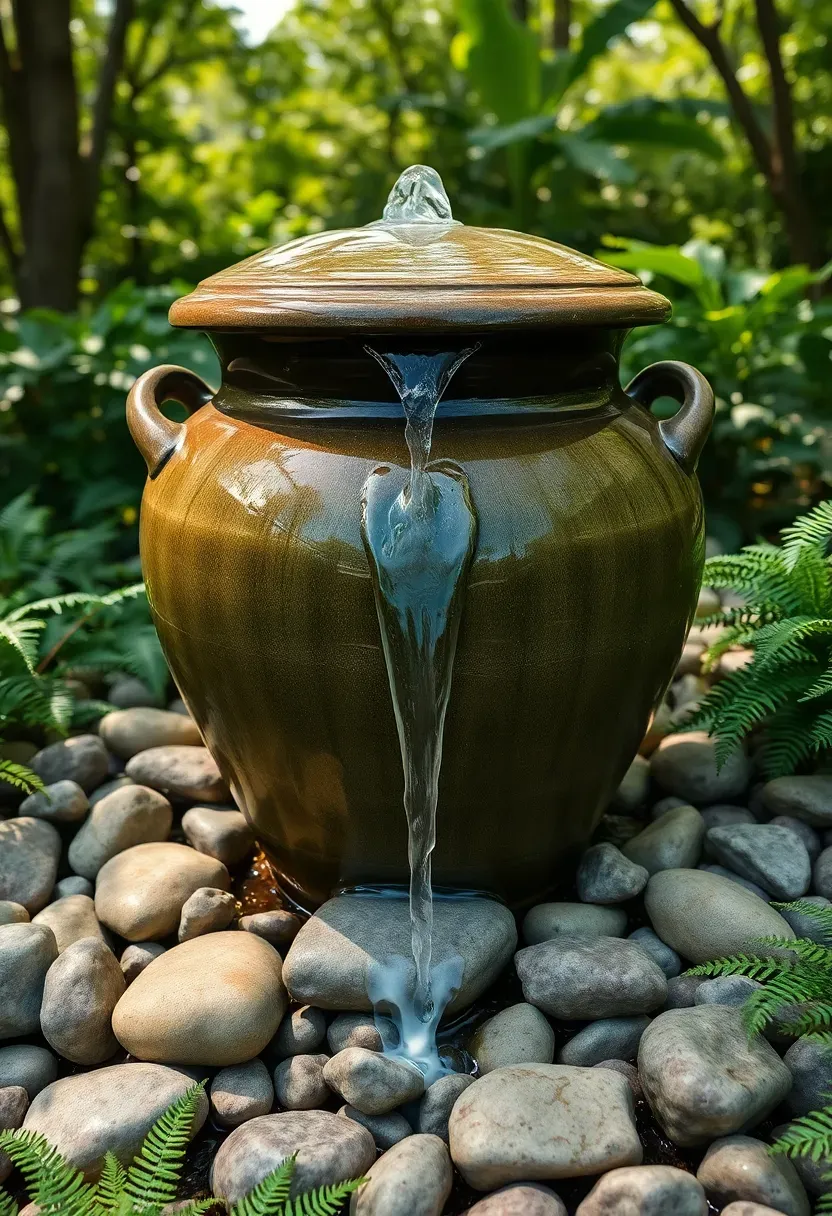
3. Disappearing Urn Fountain
Disappearing fountains hide the water reservoir below ground under a grate covered with stone. Water bubbles up from the urn or vessel, flows down the sides, and vanishes through the rocks — no visible pond or basin. This makes them safer around young children and dogs because there is no standing water to fall into. The reservoir is typically a 20- to 30-gallon plastic tub buried below the grate with a small submersible pump inside. The entire system can be installed in an afternoon with a shovel, a level, and basic plumbing fittings.
Tips
- Use a reservoir at least twice the volume of the visible vessel to reduce refill frequency
- Cover the grate with a mix of stone sizes — uniform gravel looks artificial
- Check the water level weekly in hot weather since evaporation accelerates significantly
We picked a few things that go well with this idea: Mademax Solar Birdbath Fountain Pump (6 Nozzles) (★4.0), DDcafor 1.5W Solar Fountain Pump Mini (★4.0) and GOLDFLOWER Solar Floating Fountain Pump (1.4W) (★4.0). As an Amazon Associate we earn from qualifying purchases.
4. Japanese Bamboo Shishi-Odoshi
Origins
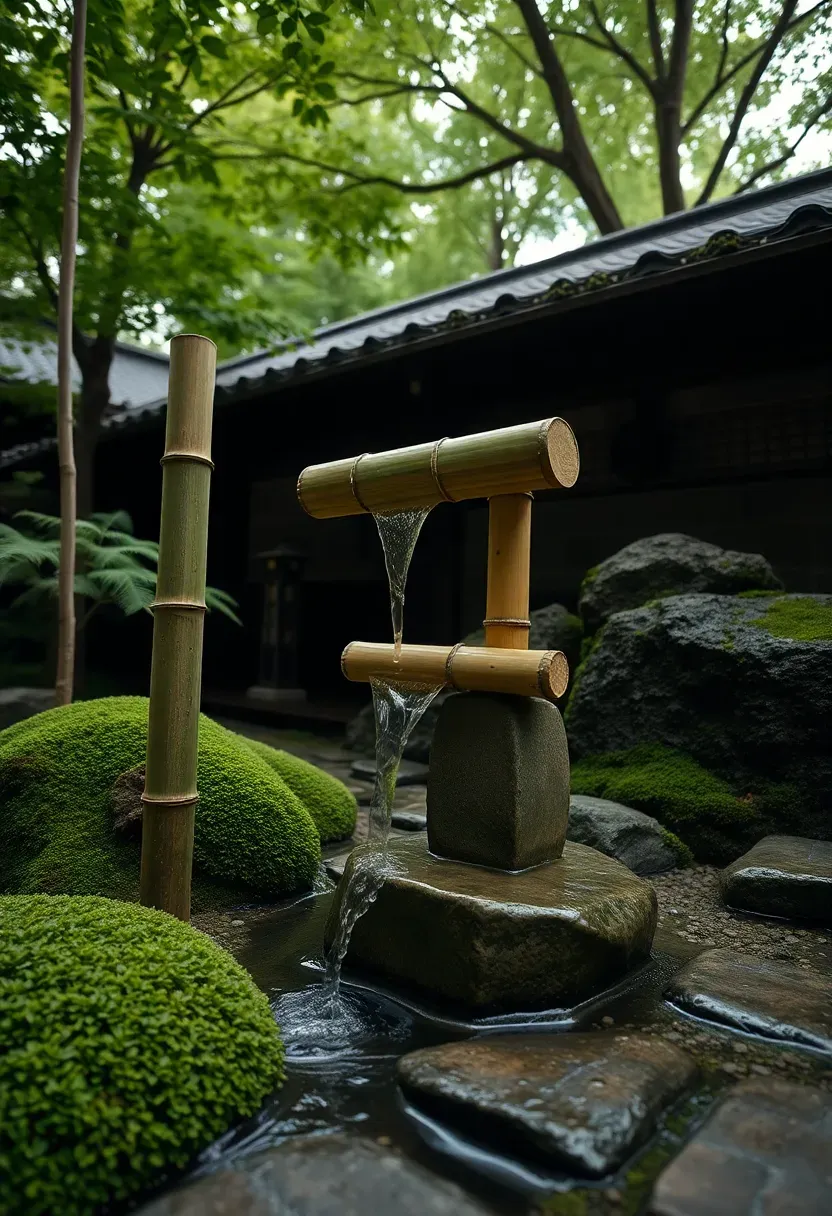
The shishi-odoshi (deer scarer) was originally a practical device in Japanese gardens — the periodic clack of bamboo hitting stone kept deer and boar away from crops. Over centuries it became a meditative garden element valued for its rhythmic sound and the pause of silence between each strike.
Modern Use
Today you can buy a self-contained shishi-odoshi kit with a small recirculating pump for $60 to $150. Water flows through a bamboo spout into a pivoting bamboo tube that tips, empties, and strikes a rock. The cycle repeats every 15 to 30 seconds depending on flow rate. Place it near a seating area where you can hear the rhythm without it competing with conversation.
Apply at Home
- Use thick-walled bamboo (Phyllostachys species) for durability — thin craft bamboo cracks in one season
- Set the strike stone slightly off-center for a more resonant tone
- Surround the base with moss, ferns, and a few angular rocks to anchor the Japanese aesthetic
Recommended
Items for this idea
5. Solar Birdbath Fountain
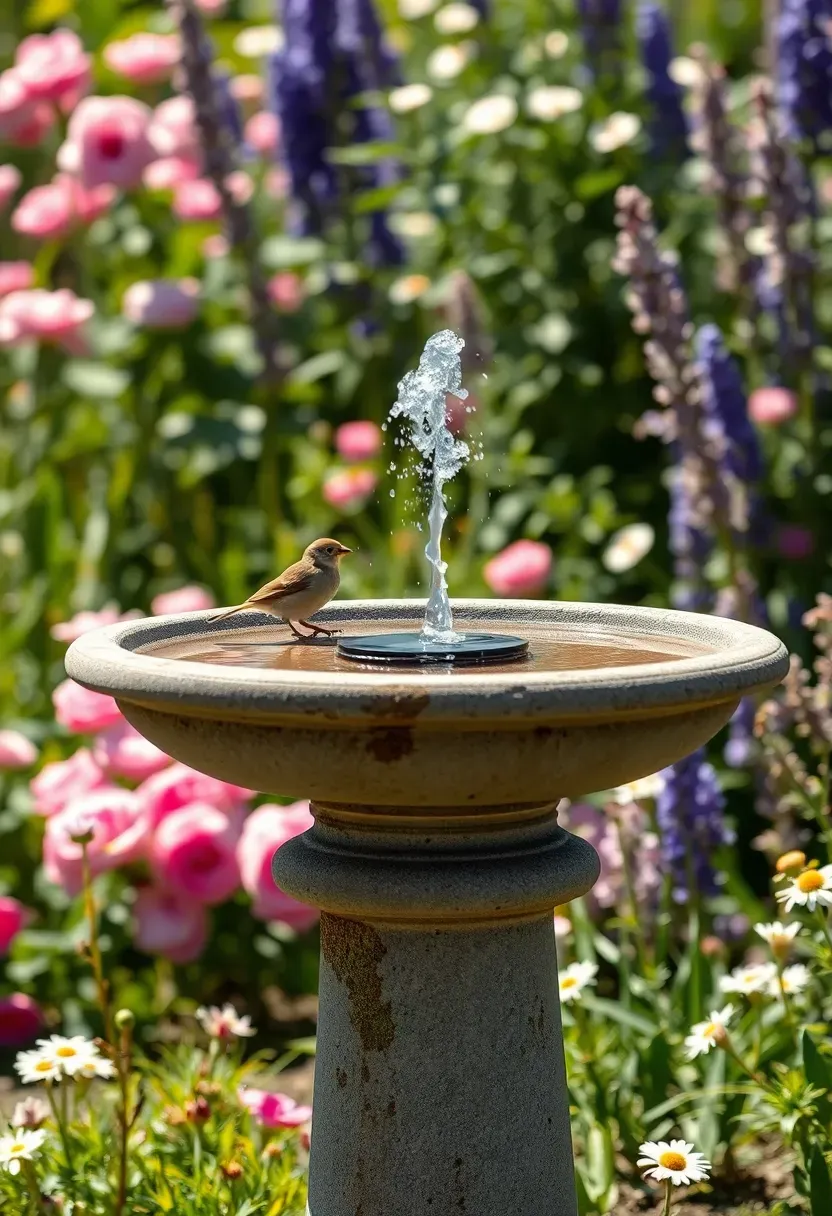
The simplest entry point into garden fountains: a solar-powered floating pump that sits in any birdbath you already own. These cost $10 to $30 and need no wiring, no plumbing, and no outlet. A small solar panel (either floating or stake-mounted) powers a tiny impeller that pushes water 6 to 12 inches into the air. Birds prefer moving water over still water, so expect more visitors within the first week. The catch is that they only run in direct sunlight — overcast days and shade kill the flow entirely. Models with a small battery backup help, but they add $15 to $25 to the cost.
Tips
- Clean the pump filter every two weeks — bird debris clogs the impeller fast
- Place the birdbath where it gets at least six hours of direct sun
- Add a flat stone in the basin so smaller birds can stand in shallow water
6. Corten Steel Blade Waterfall
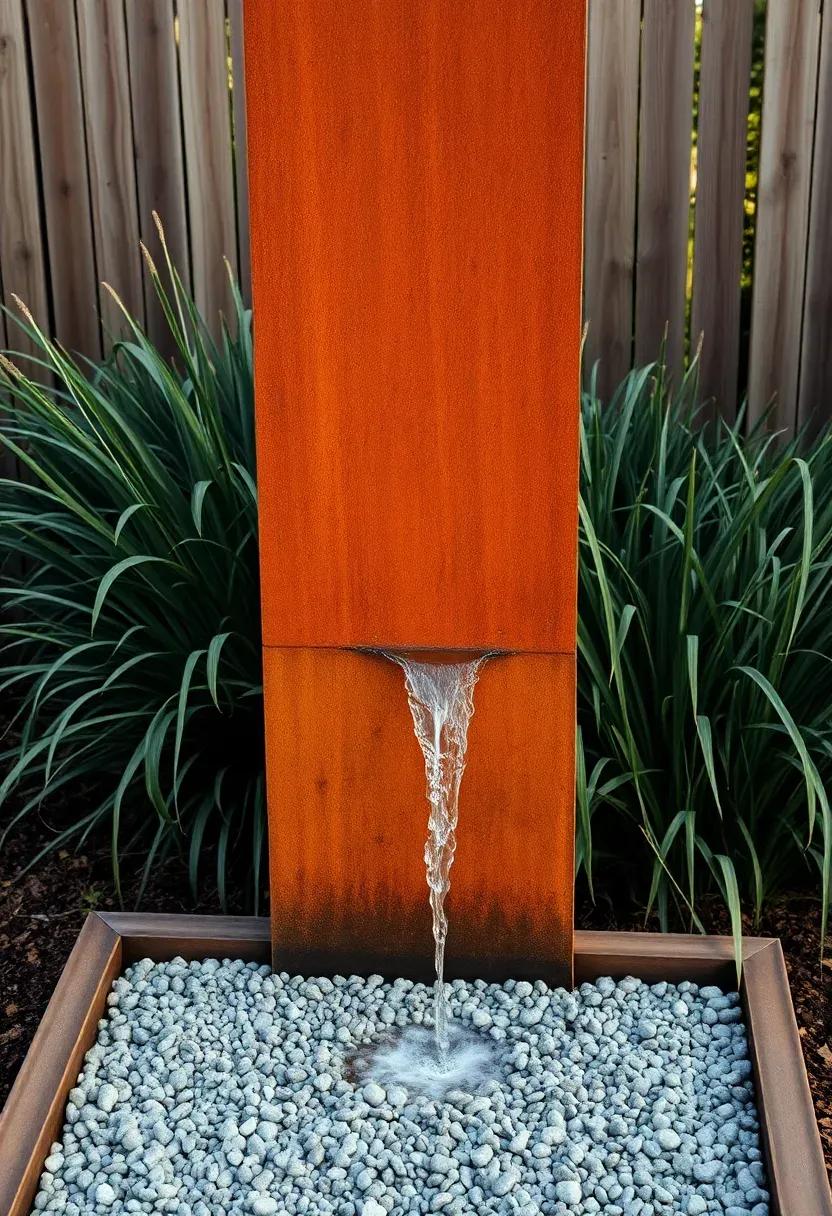
Corten (weathering steel) develops a stable rust patina that protects the underlying metal from further corrosion. A blade-style waterfall uses a tall, narrow sheet of corten — typically 4 to 6 feet tall and about 2 feet wide — with water pumped to the top edge and allowed to sheet down the face. The result is a sculptural wall of rust-orange with a glistening wet surface. These work especially well against dark green foliage or gray concrete walls where the warm color contrast is strongest. Expect to pay $500 to $1,500 for a prefab unit.
Tips
- Corten needs about 6 months of wet-dry cycles to develop its full patina
- Place it where runoff will not stain adjacent concrete or light-colored stone
- The sheeting effect works best with a higher-flow pump — at least 400 GPH
Recommended
Items for this idea
7. Stacked Slate Pillar Fountain
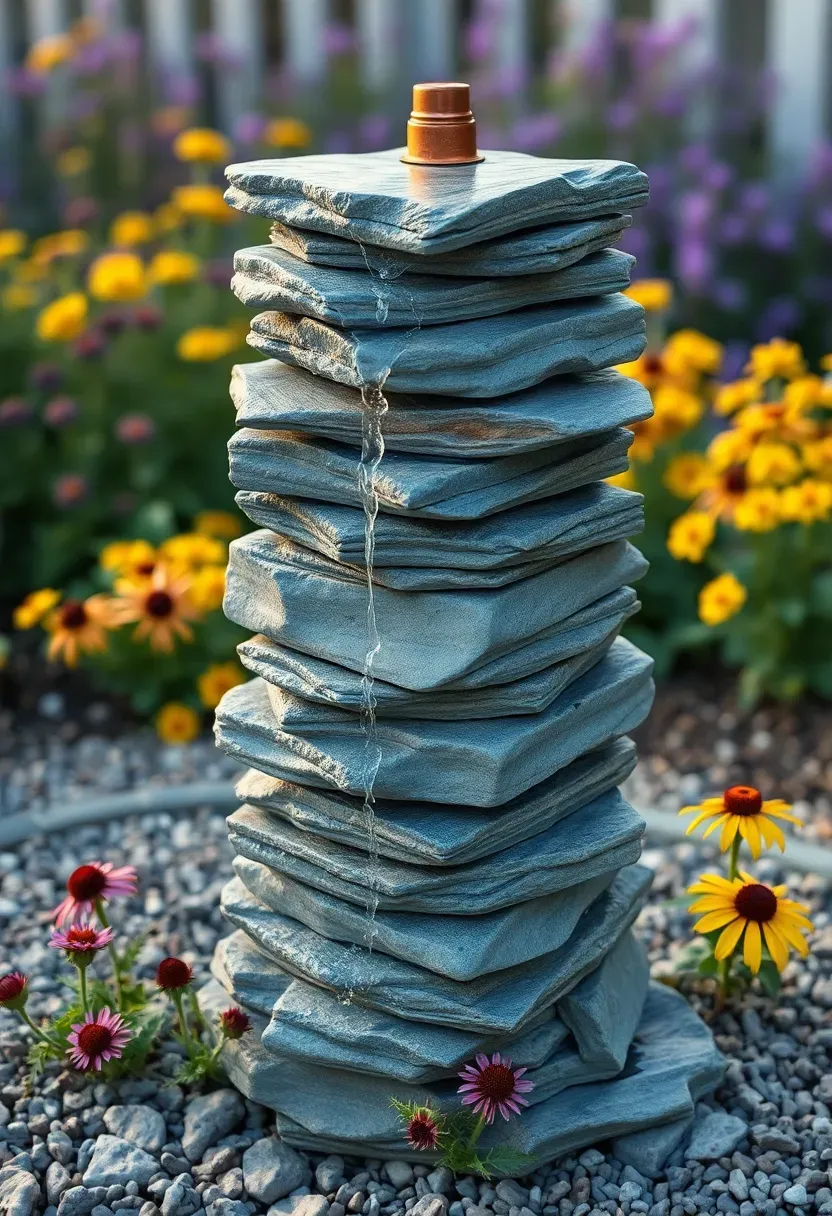
Flat pieces of slate or flagstone stacked vertically and drilled through the center create a column fountain that looks like a natural rock formation. Water rises through a copper tube in the center and flows down the irregular edges of each stone layer. The randomness of natural slate — each piece a slightly different thickness and shape — means no two of these fountains look alike. You can build one yourself with a masonry drill bit, a length of copper pipe, and 30 to 50 pounds of slate. A 1/2-inch diamond core bit handles the drilling, though you will go through a bit or two if the slate is particularly hard.
Tips
- Dry-stack the slate first without glue to test the arrangement before committing
- Vary the stone sizes so the column tapers slightly toward the top
- Seal the bottom three layers with silicone to prevent water from bypassing the reservoir
8. Millstone Bubbler on Gravel Bed
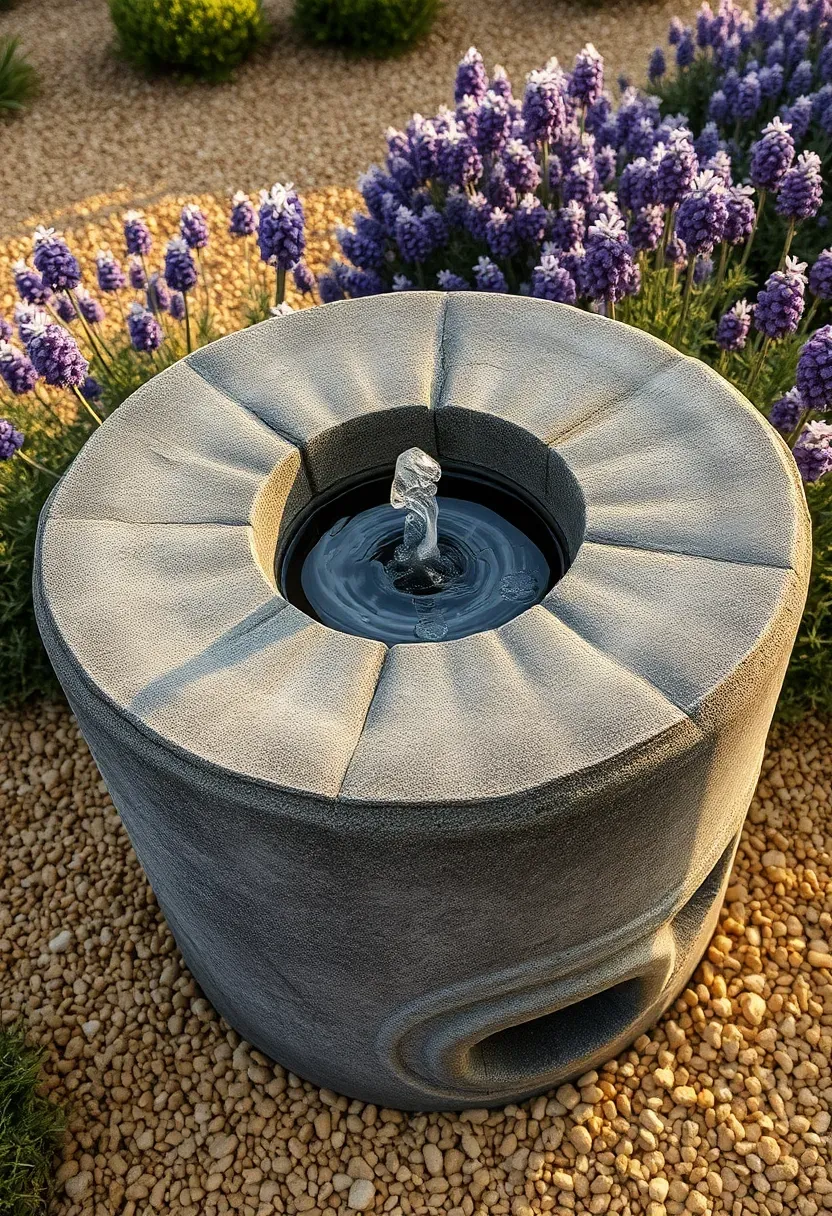
Reclaimed millstones — the flat, round stones once used to grind grain — make distinctive fountain centerpieces. Water pushes up through the existing center hole, spreads across the scored face of the stone, and drains through a gravel bed into a hidden reservoir below. Authentic millstones range from 18 inches to over 4 feet in diameter. Salvage yards and antique dealers in agricultural regions often have them. Reproduction millstones in cast concrete are available for less money if you cannot find the real thing. The grooved surface channels water in a pattern that catches light well.
Tips
- Genuine millstones are extremely heavy — a 30-inch stone can weigh 200+ pounds, so plan delivery carefully
- Use a low-flow pump (100-200 GPH) for a gentle bubbling effect rather than a geyser
- Surround with aromatic herbs like lavender or thyme that benefit from the gravel drainage
Recommended
Items for this idea
9. Oversized Ceramic Pot Fountain
Step 1: Choose your vessel
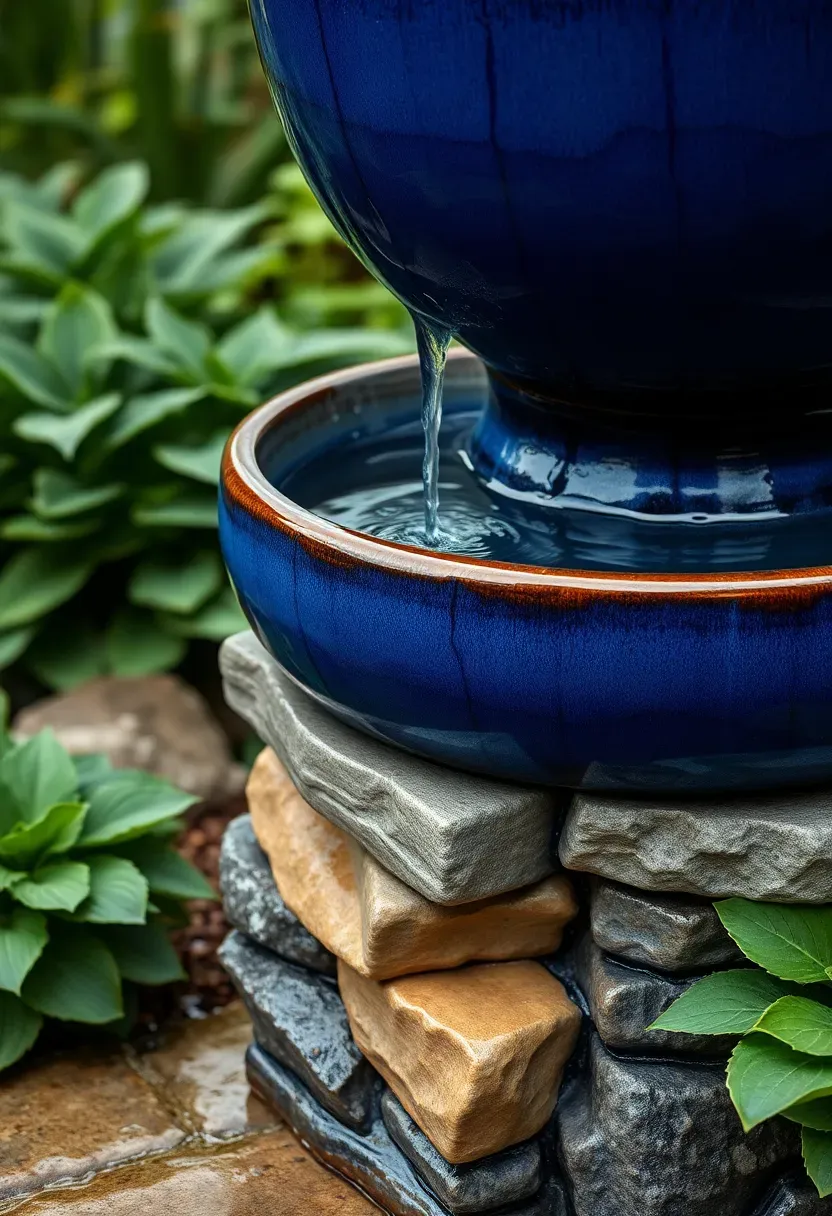
Find a glazed ceramic pot at least 18 inches in diameter. Glazed finishes resist water absorption and frost cracking better than unglazed terracotta. Drill a drainage hole in the bottom if one does not exist — use a diamond-tipped hole saw at low speed with water cooling.
Step 2: Seal and plumb
Seal the inside bottom with marine-grade silicone. Feed the pump cord through the drainage hole using a watertight cable gland. Place a submersible pump (200-400 GPH) at the bottom with a riser tube attached.
Step 3: Set the scene
Position the pot on a stable surface — a stone slab or concrete pier works well. Fill with water, adjust the pump flow so water just barely crests the rim, and arrange stones or low plants around the base to catch overflow.
Watch out
- Unglazed pots will crack in freezing temperatures — drain and store them before the first frost
- A pot that is too small will need refilling every day due to splash loss
- Dark-colored interiors show algae less than white or light blue glazes
10. Rain Chain into Basin Fountain
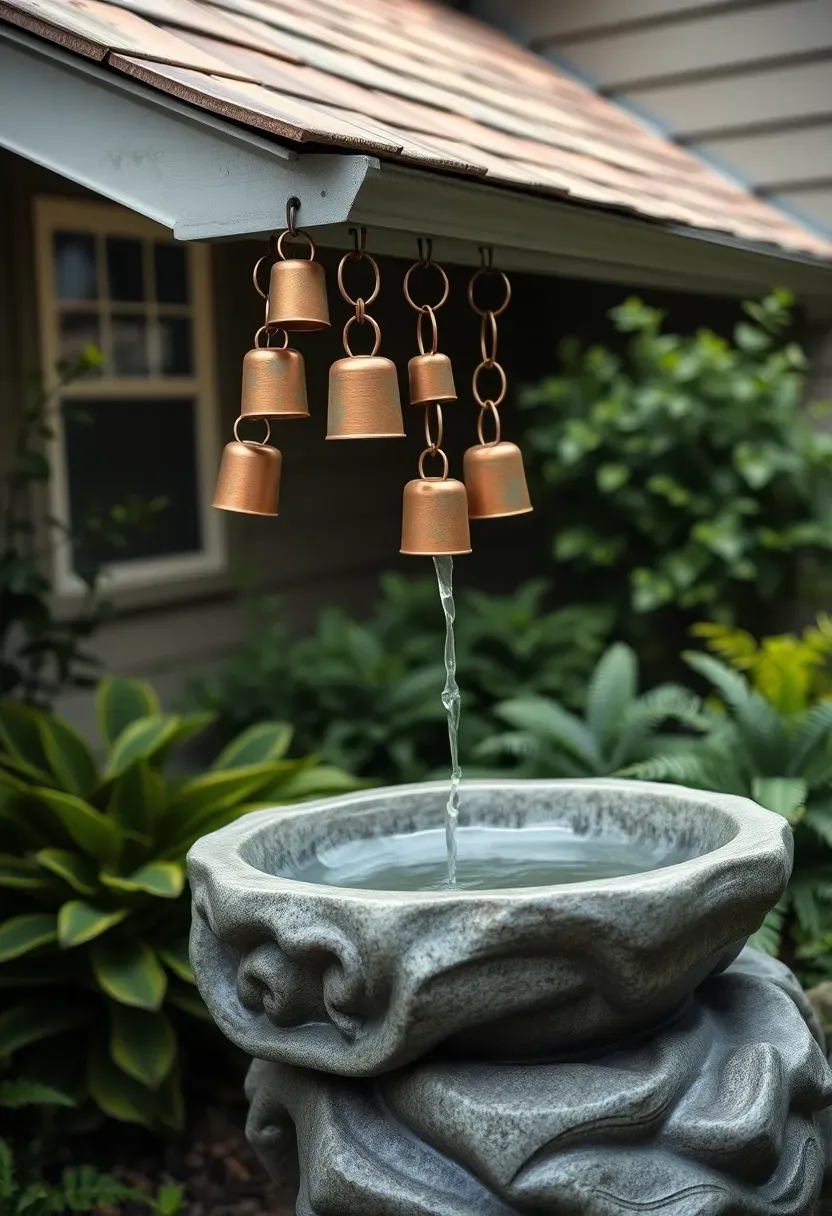
Rain chains replace standard downspouts with a series of linked cups or rings that guide rainwater visually from the roof to the ground. Pair one with a stone or copper basin at the bottom, add a small recirculating pump, and you have a fountain that runs on tap water during dry spells and collects rainwater when it storms. The chain itself becomes part of the visual — water wrapping around each cup link on the way down. Japanese-style cup chains (kusari doi) are the most traditional, but modern versions come in geometric and organic shapes.
Tips
- Install the chain on a gutter section that handles moderate flow — too much volume overwhelms the cups
- Anchor the chain at the bottom with a pin or heavy basin to prevent wind sway
- Choose copper chains if you want patina; stainless or aluminum if you prefer a consistent finish
Recommended
Items for this idea
11. Recirculating Stream with River Rock
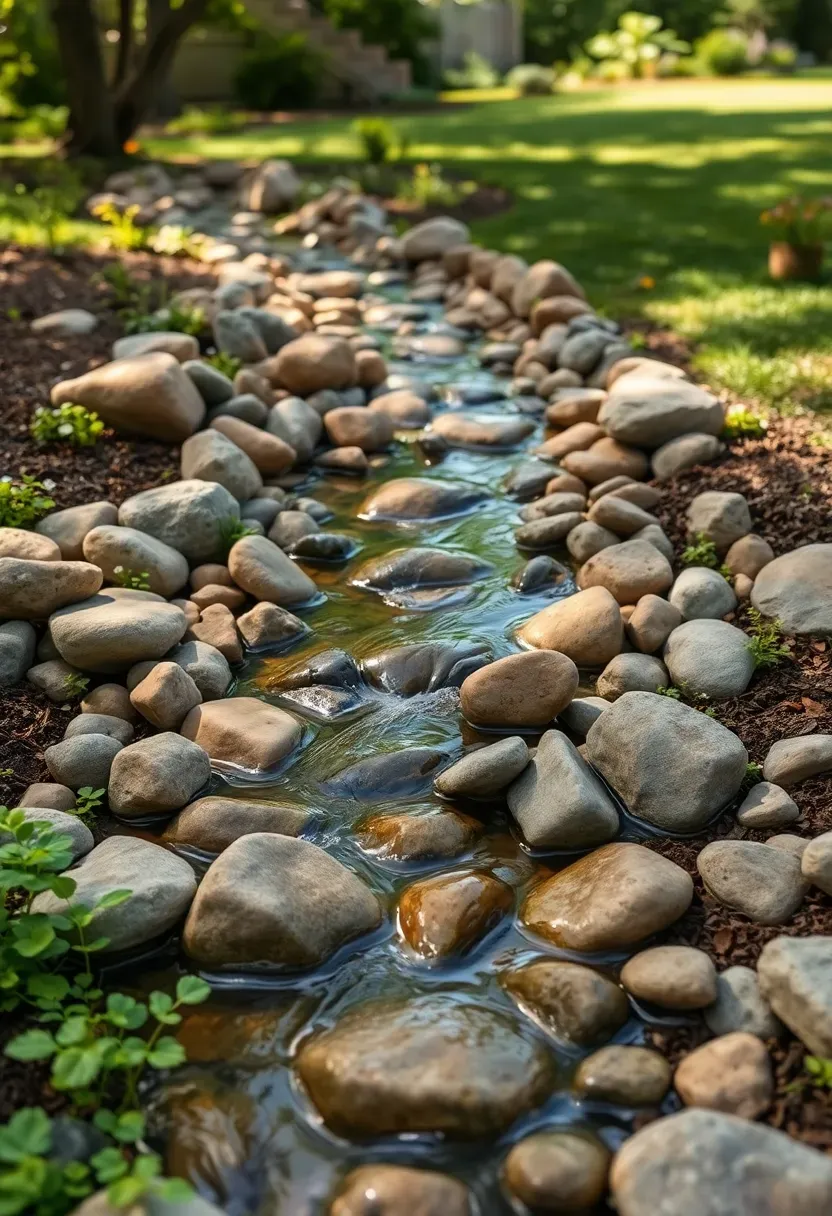
A man-made stream circulates water from a lower collection basin to an upper starting point using a buried pump and pipe. The stream bed itself is made from a flexible EPDM rubber liner covered with a mix of river rock sizes — 1-inch to 6-inch stones layered naturally. Building one requires more excavation than other fountains here: you need a gradual slope (about 1 inch of drop per 10 feet of run) and a liner trench that is at least 24 inches wide. The payoff is a water feature that looks like it was always there, especially once marginal plants fill in along the edges.
Tips
- Use boulders at bends to slow the water and create small pooling areas
- Hide the pump return pipe by burying it alongside the stream and covering with mulch
- Plant creeping jenny, sweet flag, or dwarf papyrus along the edges for a natural bank look
12. Modern Cube Spillway Fountain
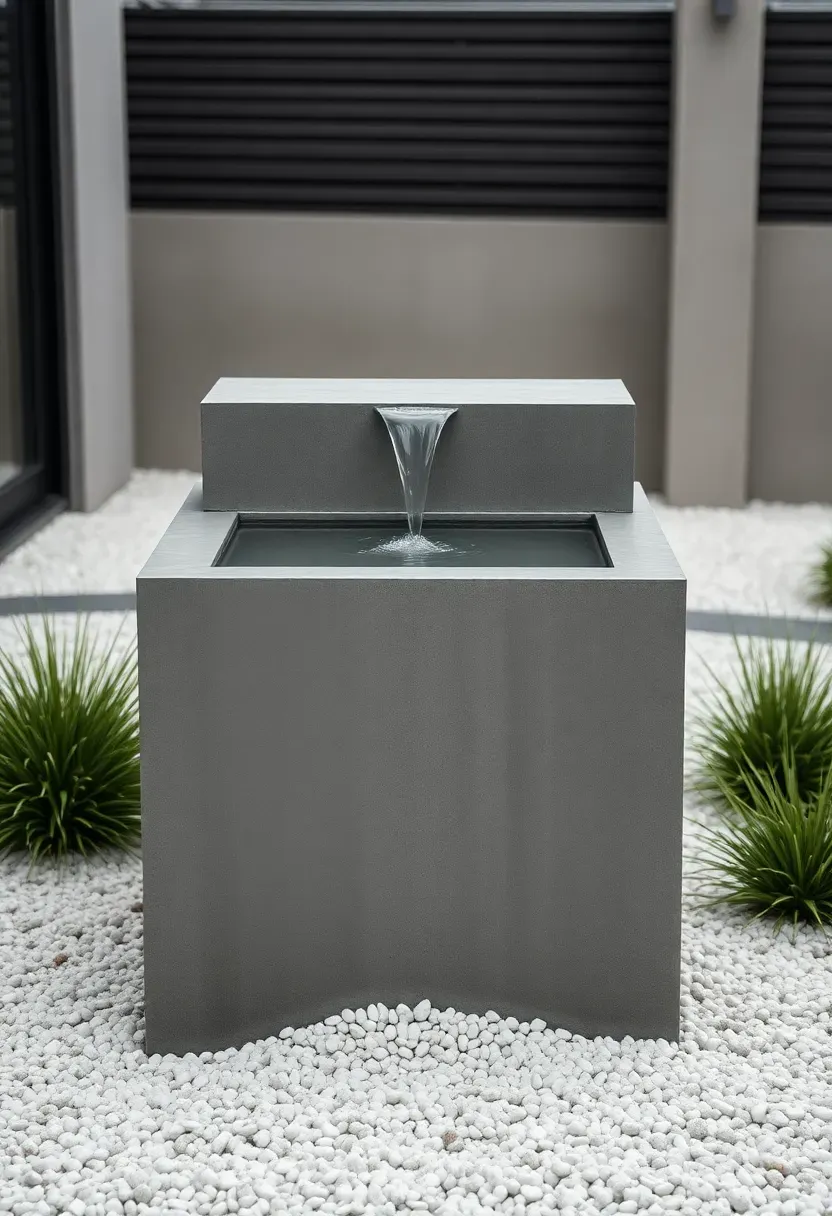
A solid-looking concrete cube (usually hollow fiberglass or GFRC — glass fiber reinforced concrete) with water welling up on the flat top surface and sheeting down one or more sides. The geometric simplicity works in contemporary gardens where organic shapes would feel out of place. Most commercial units are 18 to 24 inches on each side and come pre-plumbed with an internal pump chamber. Place one on a patio or in a gravel courtyard for maximum impact. The water sound from a cube is quieter than a tiered fountain — more of a whisper than a splash.
Tips
- GFRC is lighter than poured concrete and easier to move if you rearrange the garden
- Light the cube from below at night with a submersible LED for a dramatic effect
- Keep the top surface level — even a slight tilt sends all the water down one side
Recommended
Items for this idea
13. Tiered Planter-Fountain Combo
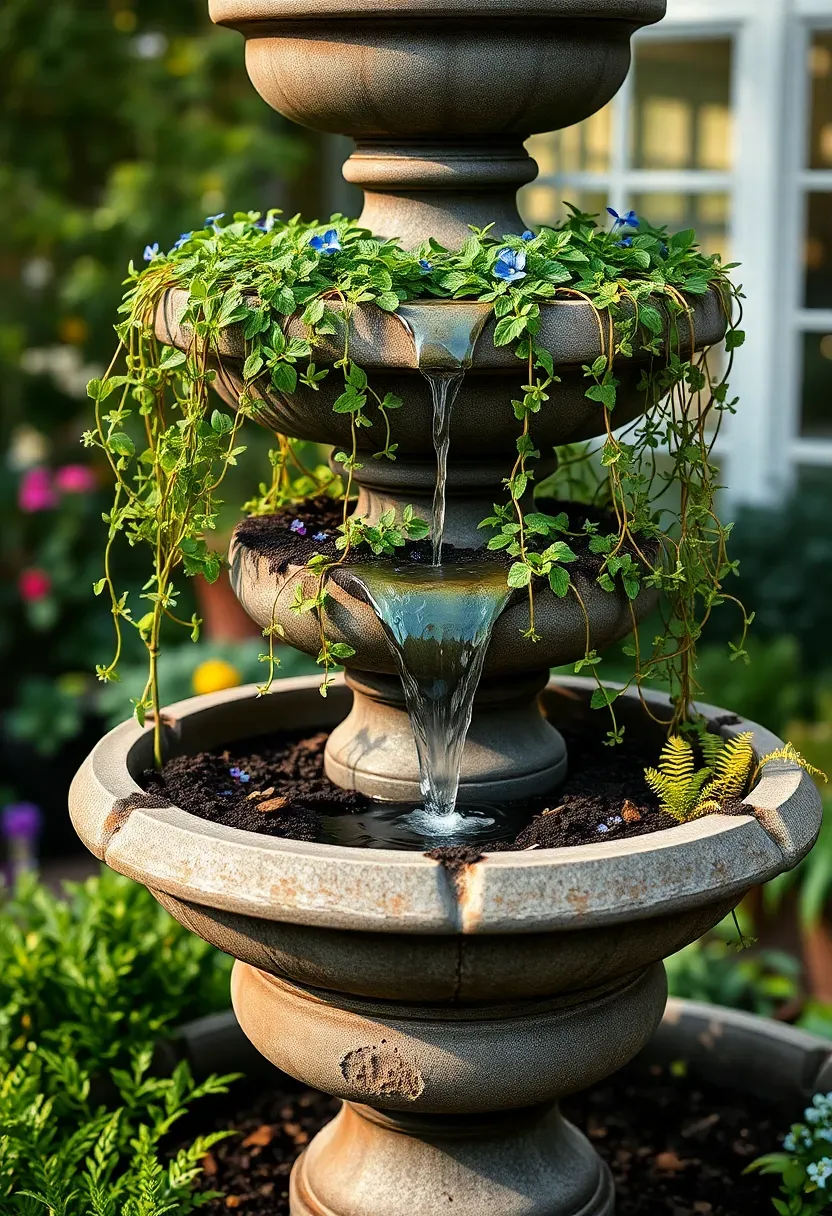
This design merges a fountain with a vertical garden by building planting pockets into each tier. Water flows between the tiers while plants grow in soil-filled compartments along the edges. Trailing varieties like creeping thyme, lobelia, or sweet potato vine soften the hard edges and partially obscure the water channels, so the whole thing looks like a green sculpture with water winding through it. Pre-made versions exist in resin, but a custom one built from stacked concrete blocks and pond liner gives you control over dimensions and planting depth.
Tips
- Use potting mix designed for containers — garden soil compacts and blocks drainage
- Choose plants that tolerate both moisture near the water channels and drier conditions at the edges
- Fertilize sparingly since nutrients in the water promote algae growth
14. Carved Granite Sphere Fountain
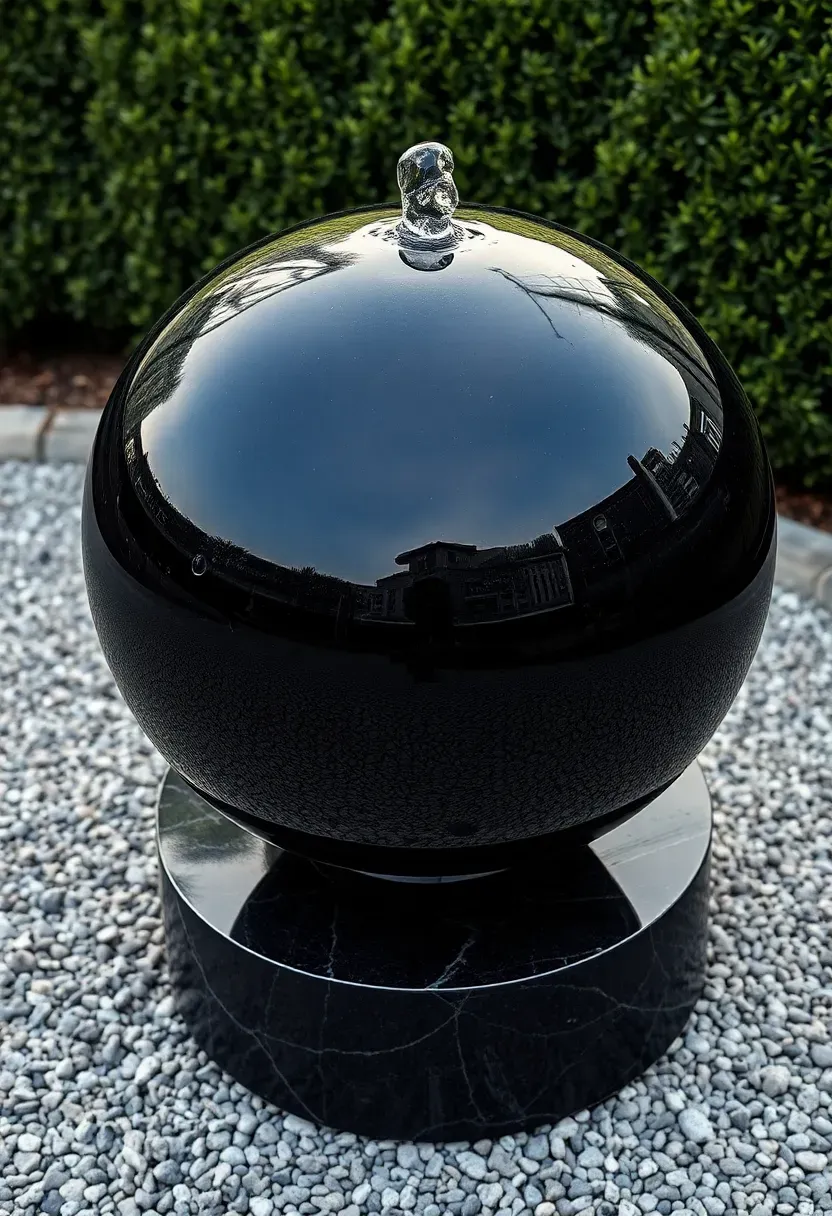
A granite sphere sitting on a carved base with water flowing uniformly over the entire surface creates a mesmerizing liquid-glass effect. The sphere appears to float because you cannot see the fitting underneath that attaches it to the pump line. Genuine granite spheres range from 8-inch desktop sizes to 36-inch yard centerpieces. The larger ones weigh several hundred pounds and require professional placement. The material is nearly indestructible — granite handles freeze-thaw cycles, UV exposure, and decades of water flow without degrading. Dark granite (absolute black or charcoal) shows the water film most dramatically.
Tips
- Polish level matters: a high-gloss sphere shows the water film better than honed or flamed finishes
- The pump needs enough pressure to push water up through the fitting and over the apex of the sphere
- Keep the reservoir filled — running the pump dry even briefly can burn out the impeller
Recommended
Items for this idea
15. Mediterranean Wall Lion Spout
Origins
Lion-head spouts date to Roman public fountains where they served as communal water sources. The open-mouth design was practical — it projected the water stream far enough from the wall for jugs and hands to fit underneath. Over time the form became decorative and spread throughout Mediterranean architecture.
Modern Use
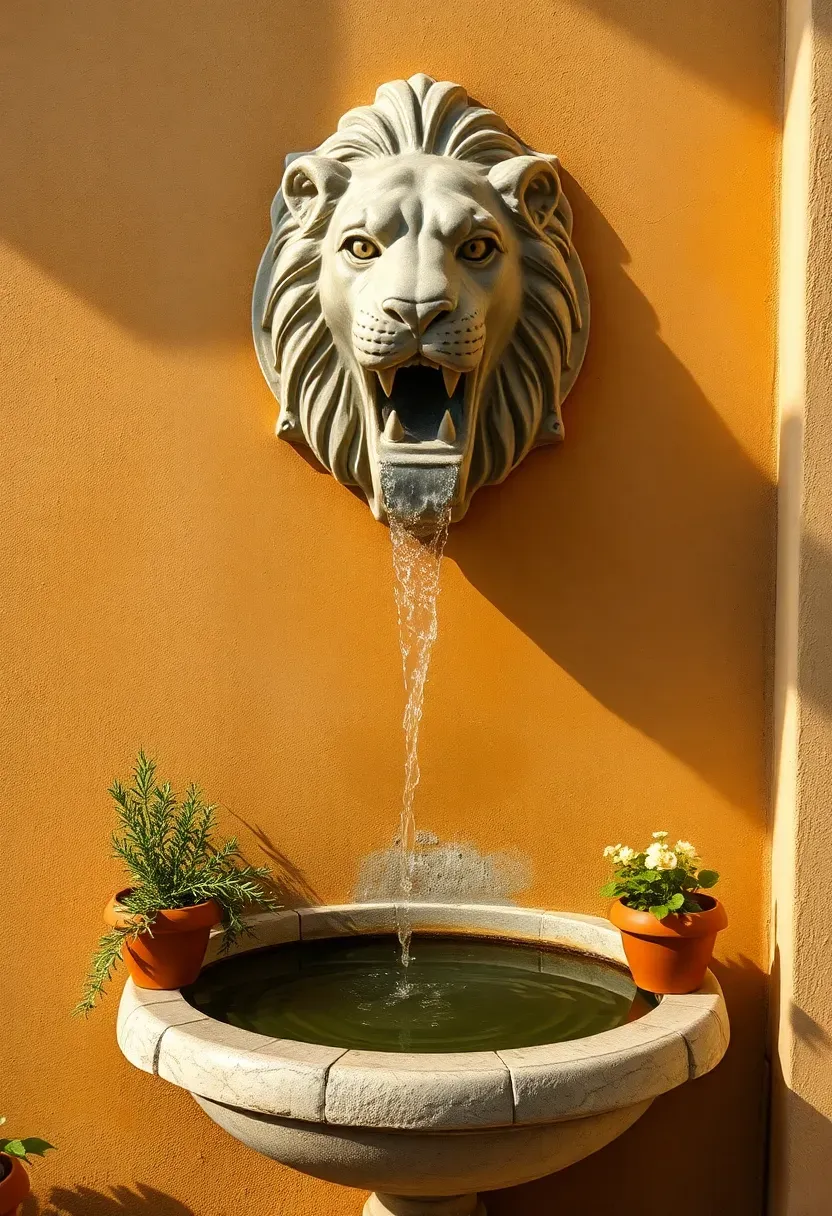
Today's versions are cast in stone, bronze, or resin and mounted to garden walls, courtyard walls, or freestanding columns. Water pours from the lion's mouth into a semicircular basin below. A pump in the basin recirculates the water back through a pipe hidden behind the wall. The aesthetic fits stucco walls, brick, and natural stone particularly well. Resin reproductions start around $80; genuine cast stone pieces run $300 and up.
Apply at Home
- Mount the spout at eye level or slightly above for the most natural-looking pour angle
- Use a basin deep enough (at least 6 inches) to prevent splash-out
- Surround with potted rosemary, olive trees, or bougainvillea to reinforce the Mediterranean mood
16. Whiskey Barrel Pond Fountain
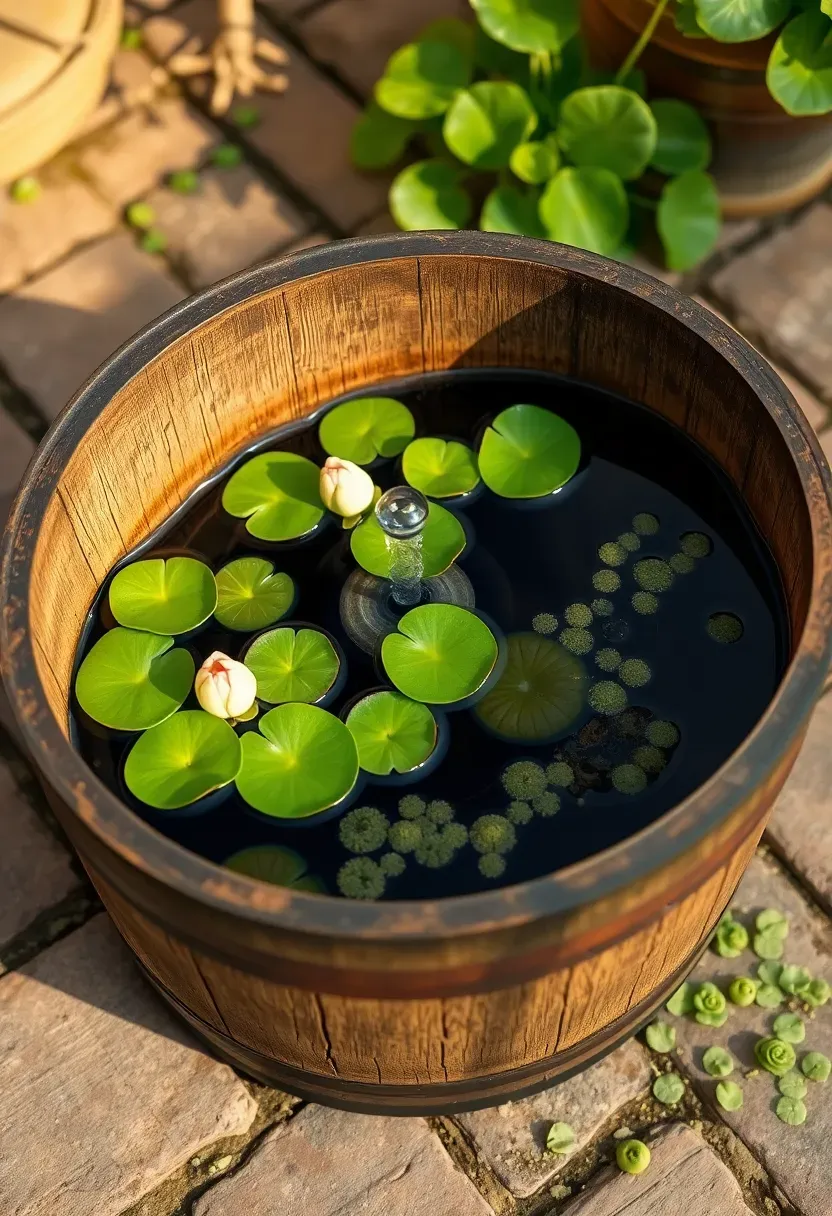
Half whiskey barrels (readily available at garden centers for $30 to $60) make instant container ponds. Line with a flexible pond liner or food-grade sealant to prevent leaks through the staves — used barrels are not always watertight. Drop in a small solar or electric bubbler, add a few aquatic plants (dwarf water lily, water lettuce, or water hyacinth), and you have a self-contained water garden. These work on patios, decks, and anywhere you cannot dig. The barrel gives a rustic warmth that plastic containers lack.
Tips
- Do not rely on the barrel alone to hold water — line it even if it appears sealed
- Position where it gets 4 to 6 hours of sun for water lilies but not full blazing afternoon exposure
- Mosquito dunks (Bti tablets) keep larvae from developing without harming plants or birds
Recommended
Items for this idea
17. Glass Column Bubble Fountain
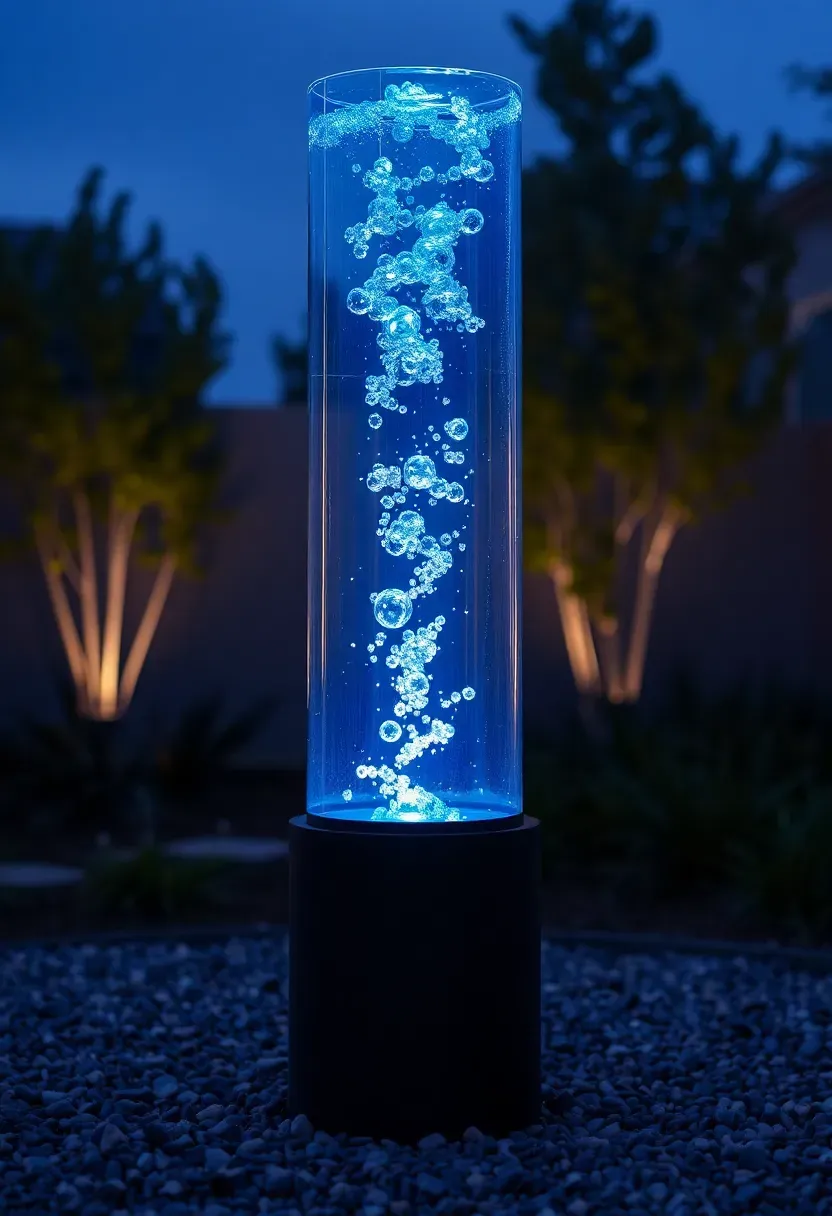
Acrylic or tempered glass columns with internal air bubbles rising continuously create a modern, almost futuristic water feature. Air is pumped from a base unit, not water — so there is no splash, no evaporation to worry about, and minimal maintenance beyond occasional cleaning. Some models include color-changing LED lights built into the base, turning the column into an illuminated sculpture after dark. Heights range from tabletop (12 inches) to freestanding (5-6 feet). These are best suited for covered patios or indoor-outdoor rooms since direct sun promotes algae inside the column.
Tips
- Use distilled water to prevent mineral deposits on the inside surface
- Clean the interior every 3 to 4 months with a long bottle brush and mild vinegar solution
- Place against a dark background so the bubbles and light are most visible
18. Terracotta Cascading Pots
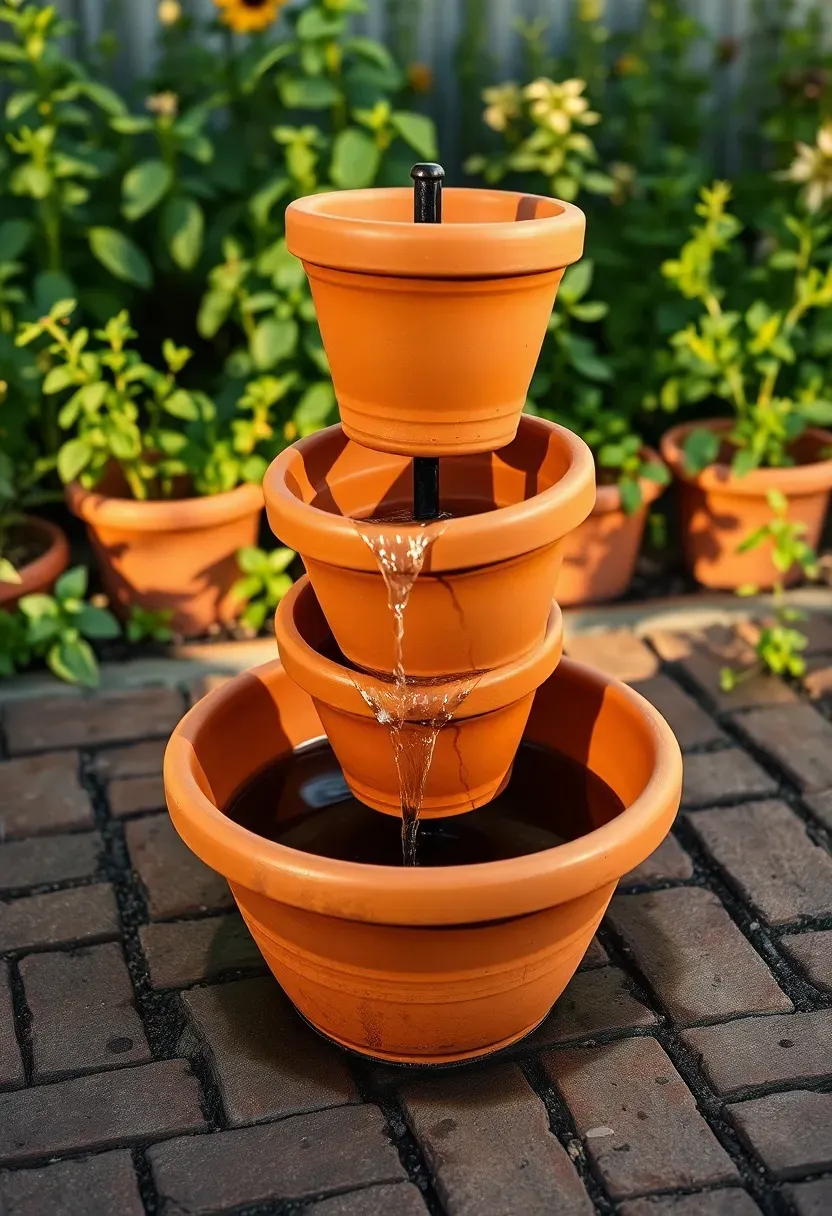
Stack three to five terracotta pots on a central rebar rod at varying angles, with a pump pushing water to the top pot and gravity doing the rest. Each pot tilts slightly so water pours over the rim into the next one below. The wobbled arrangement looks casual and handmade — which it should, since this is genuinely a weekend DIY project. Total cost: under $100 if you already have a pump. The warm orange of terracotta pairs well with herb gardens, cottage borders, and Mediterranean-style courtyards.
Tips
- Seal terracotta with a waterproof masonry sealer to prevent cracking in cold climates
- Use pots with drainage holes and thread the tubing through the center via the holes
- Vary pot sizes from 6-inch at top to 14-inch at bottom for the best visual proportions
Recommended
Items for this idea
19. Natural Boulder Fountain
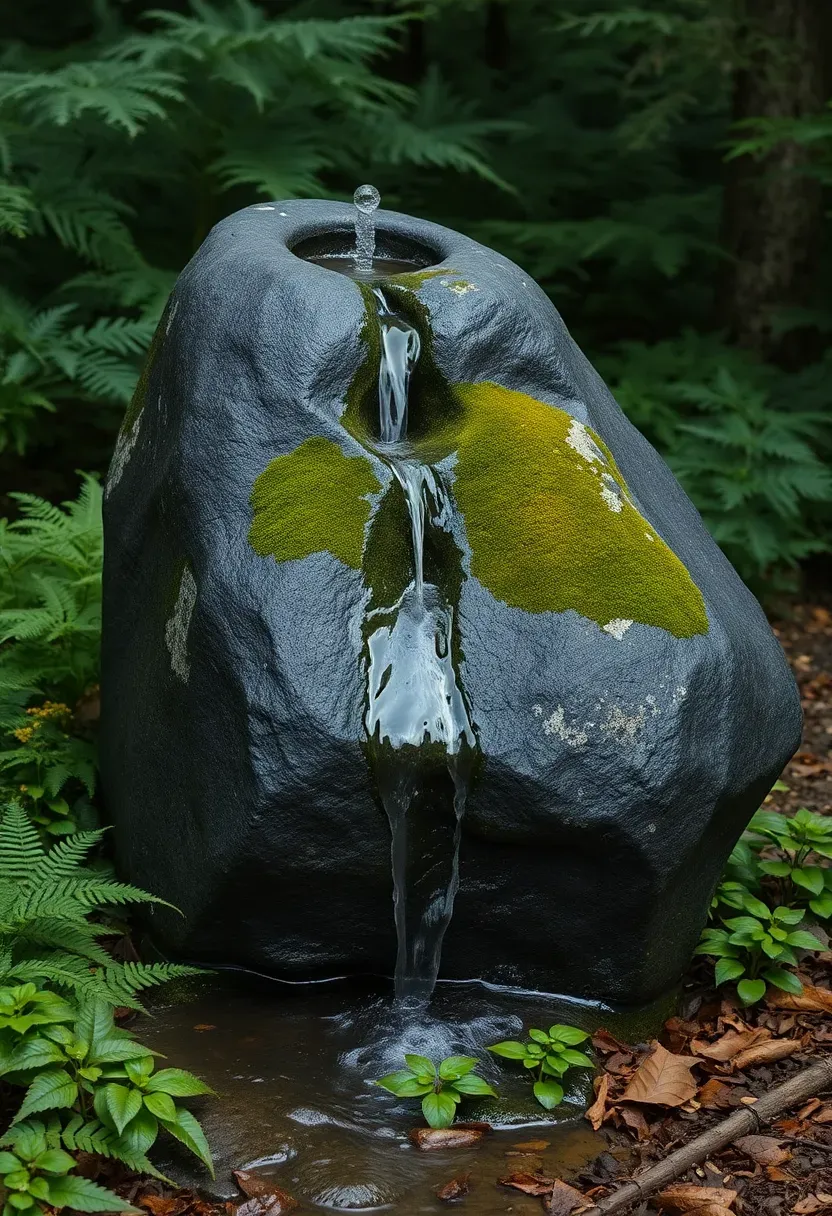
A single large boulder — drilled through the center and fitted with a pump line — produces a fountain that looks entirely natural. Water wells up from the top and flows down the contours of the rock, following existing crevices and ridges. Basalt, granite, and sandstone all work, though basalt columns (hexagonal columnar basalt) have become particularly popular because of their geometric regularity. The stone sits over a buried reservoir, same as a disappearing fountain setup. Local stone yards will often drill the core hole for you if you do not own a core drill.
Tips
- Choose a boulder with interesting texture — smooth stones show less character when wet
- A moss-covered or lichen-covered rock looks better from day one than a freshly quarried piece
- Position the pump so the flow rate creates a gentle dome of water, not a shooting jet
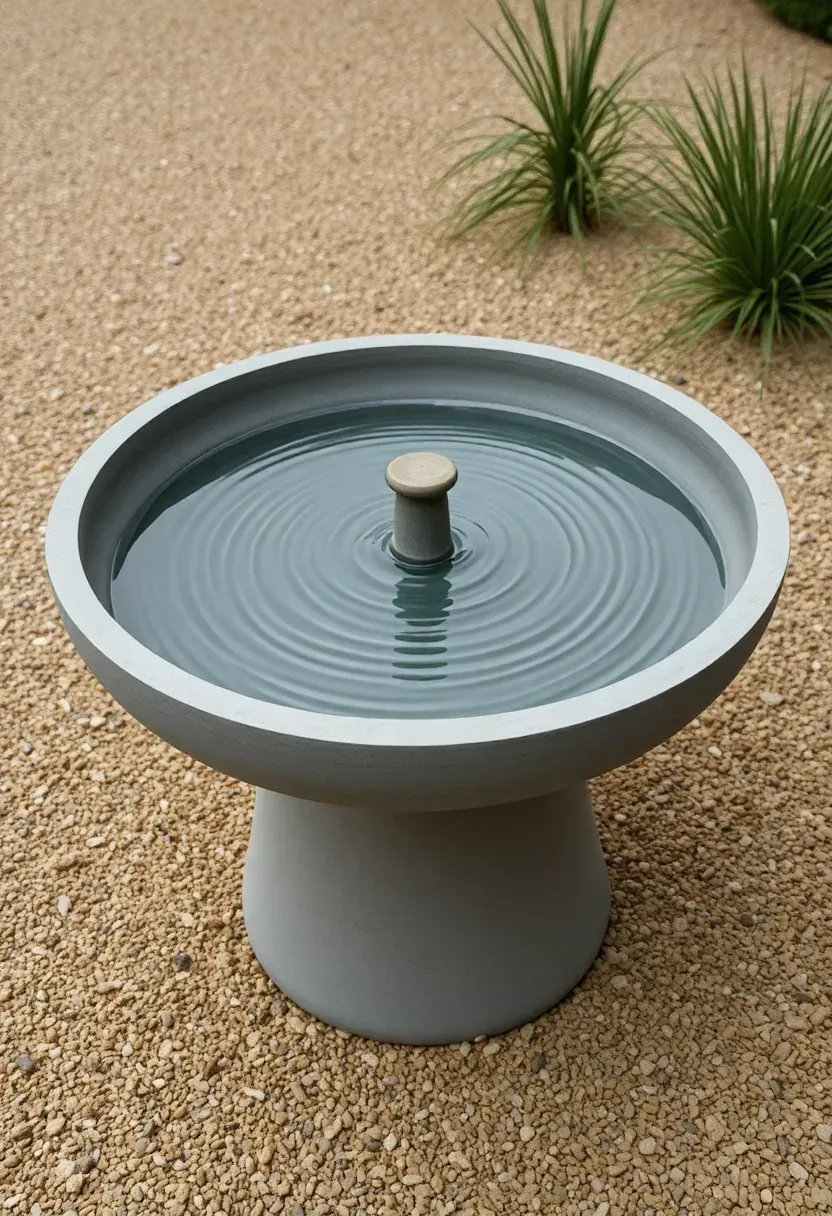
20. Concrete Bowl Fountain on Pedestal
A wide, shallow concrete bowl mounted on a pedestal creates a birdbath-like profile with more presence. Water bubbles gently from a central fitting, ripples across the bowl surface, and either recirculates from within or overflows into a catch basin below. The appeal here is simplicity — one shape, one material, minimal distraction. Cast concrete can be left natural gray, acid-stained in earth tones, or sealed for a darker, wetter look. Bowl diameters from 24 to 36 inches work best on pedestals 30 to 36 inches tall.
Tips
- Apply a concrete sealer rated for potable water contact to prevent mineral leaching
- A wider bowl catches more wind-driven splash, reducing water loss
- In winter, drain completely and cover — water expanding inside concrete pores causes spalling
Recommended
Items for this idea
21. Copper Lotus Leaf Fountain
The Core Issue
Many decorative fountains sacrifice sound quality for appearance. The typical spitting cherub or animal statue creates a thin trickle that you can barely hear from 10 feet away.
The Solution
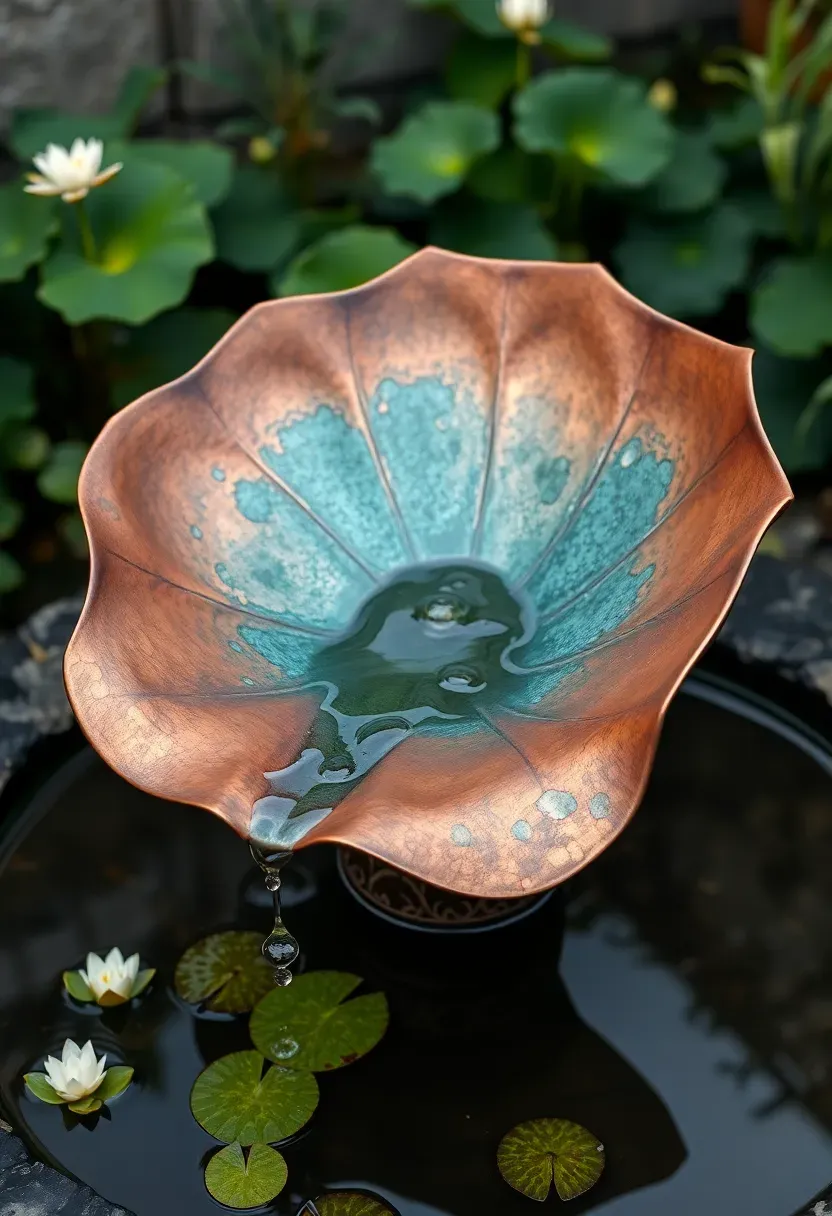
A lotus leaf fountain — a large, hand-formed copper sheet shaped into a lotus or lily pad — delivers water across a wide, concave surface where it gathers, pools briefly, and tips off the petal edges in fat droplets. This creates a richer, more complex sound than a single stream. Artisan-made leaves range from 12 to 30 inches in diameter and develop a verdigris patina that blends with garden greenery. Mount on a stand over a basin or integrate into an existing pond edge.
Pros and Cons
Pros: Distinctive sound profile, beautiful aging patina, lightweight, easy to install Cons: Higher cost for handmade versions, thin copper can dent, requires seasonal cleaning
22. Dry Creek Bed with Pump Return
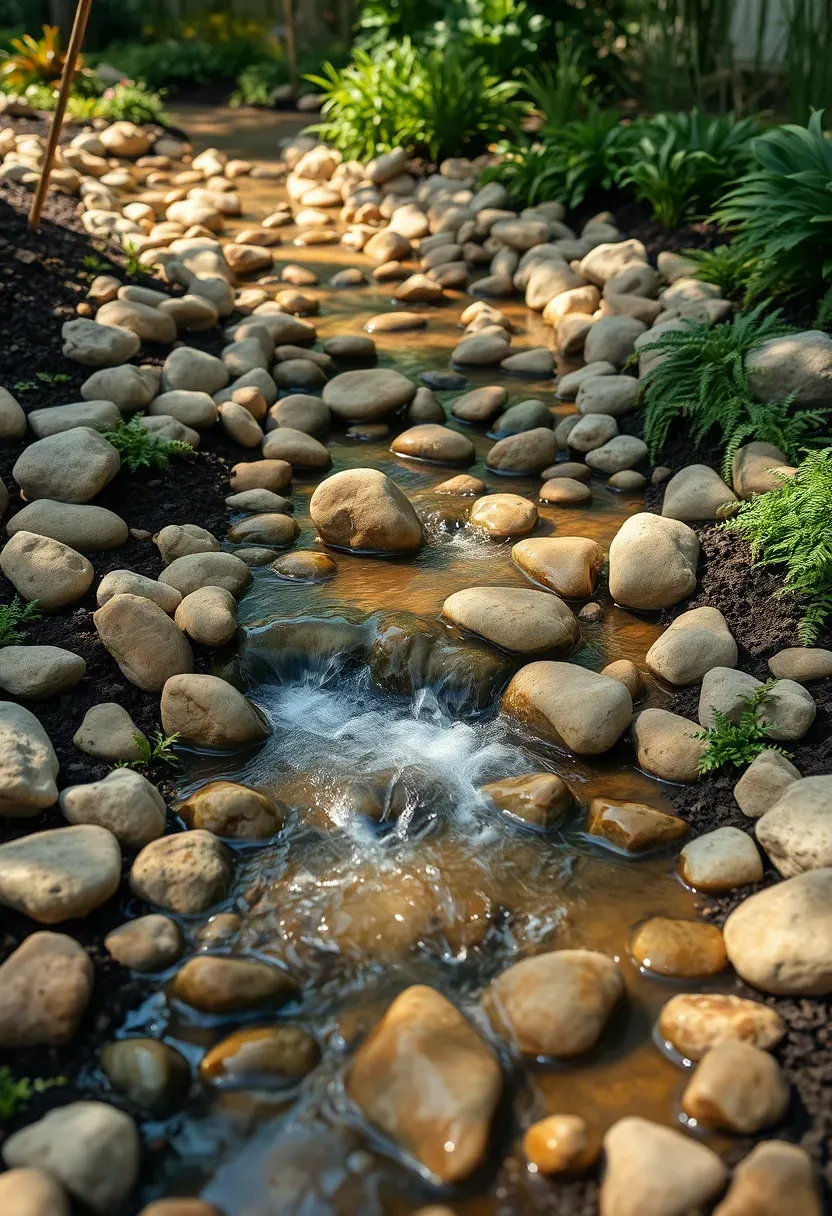
A dry creek bed already solves drainage problems in many yards by channeling rainwater through a rock-lined swale. Add a pump loop — a buried return pipe from a collection basin at the low end back to the high end — and the creek runs continuously whether it rains or not. The recirculating version uses a 500 to 1,000 GPH pump depending on the length and grade. The result is a water feature that looks completely natural, as if a spring feeds it from uphill. No visible equipment, no fountain shape, just water finding its way through rocks.
Tips
- Grade the creek bed with a 2% slope minimum for visible water movement
- Bury the return pipe at least 8 inches deep alongside the creek to prevent frost heaving
- Mix stone sizes aggressively — real creeks do not use uniform gravel
Recommended
Items for this idea
23. Mosaic Tile Wall Fountain
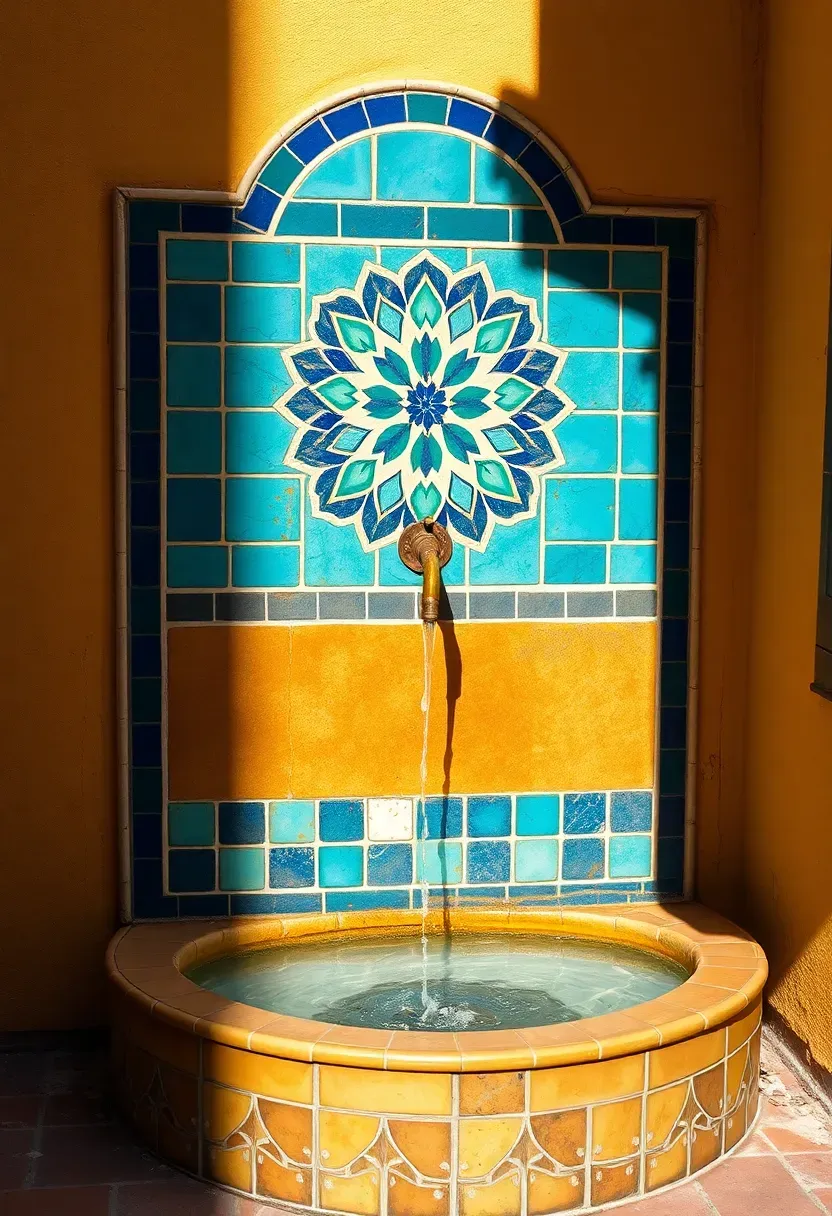
Mosaic tile turns a basic wall fountain into a piece of permanent outdoor art. The tile work typically surrounds the spout and lines the basin, creating a framed focal point on an otherwise plain wall. Moroccan zellige tiles, Mexican Talavera, and Italian glass mosaic all work well outdoors when installed with thinset rated for wet and freeze conditions. Design complexity ranges from simple geometric borders to elaborate pictorial scenes. This is a project where the tile work takes longer than the plumbing — budget two to three weekends for a 3x4-foot mosaic panel.
Tips
- Use sanded grout in exterior applications for strength, and seal it to prevent water penetration
- Keep the basin tile smooth (not heavily textured) for easier cleaning
- Stick to frost-proof tile rated for exterior use — interior decorative tile will crack in one winter
24. Fire and Water Bowl Combination
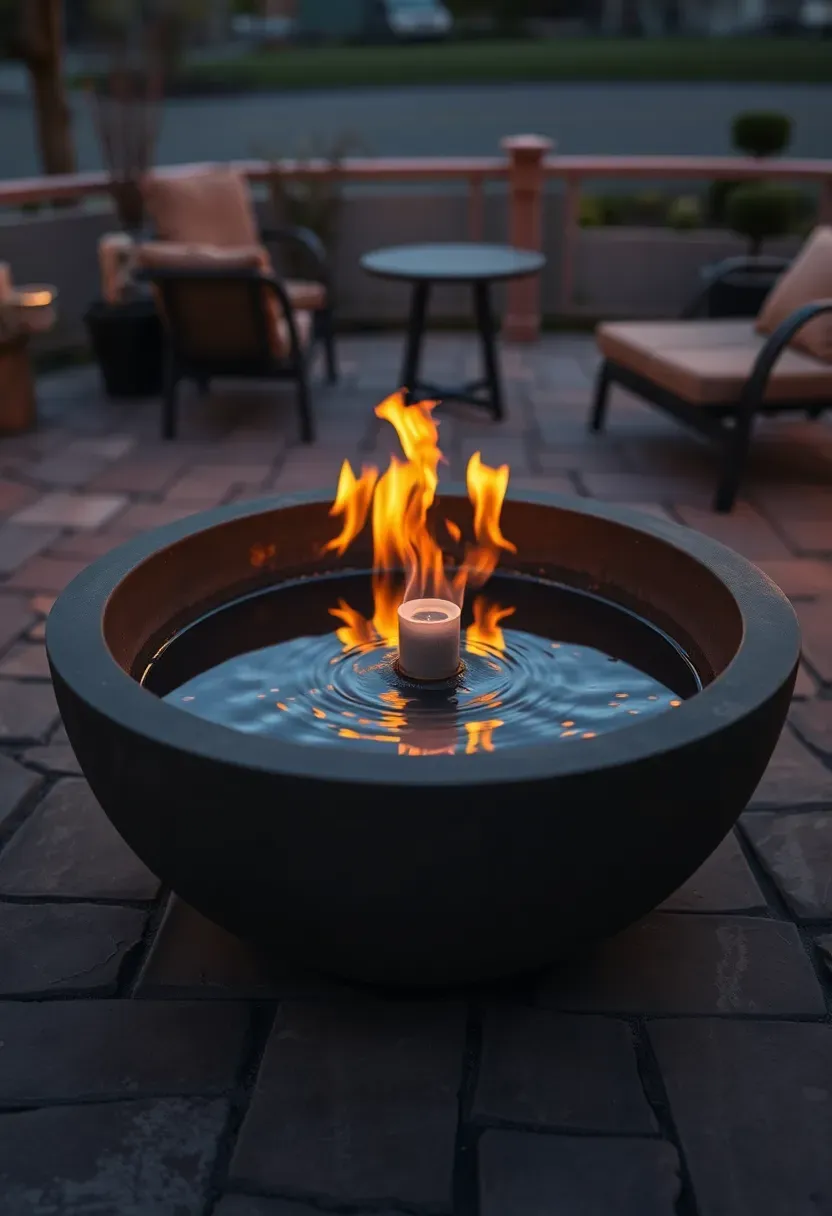
These hybrid features combine a gas flame ring around the perimeter of a bowl with a water fountain or bubbler in the center. Fire and water running simultaneously creates a striking contrast that draws every guest's attention. The fire runs on propane or natural gas through a concealed burner ring, while the water circulates independently via a small pump. Both systems are self-contained within the bowl. Commercial fire-and-water bowls run $800 to $3,000 depending on size, material, and finish. Concrete and copper are the most common materials.
Tips
- A licensed gas plumber should handle the fire installation — this is not a DIY gas project
- Wind guards (tempered glass panels) keep the flame steady and prevent blowouts
- Position away from low-hanging tree branches and overhead structures
Recommended
Items for this idea
25. Minimalist Black Steel Trough
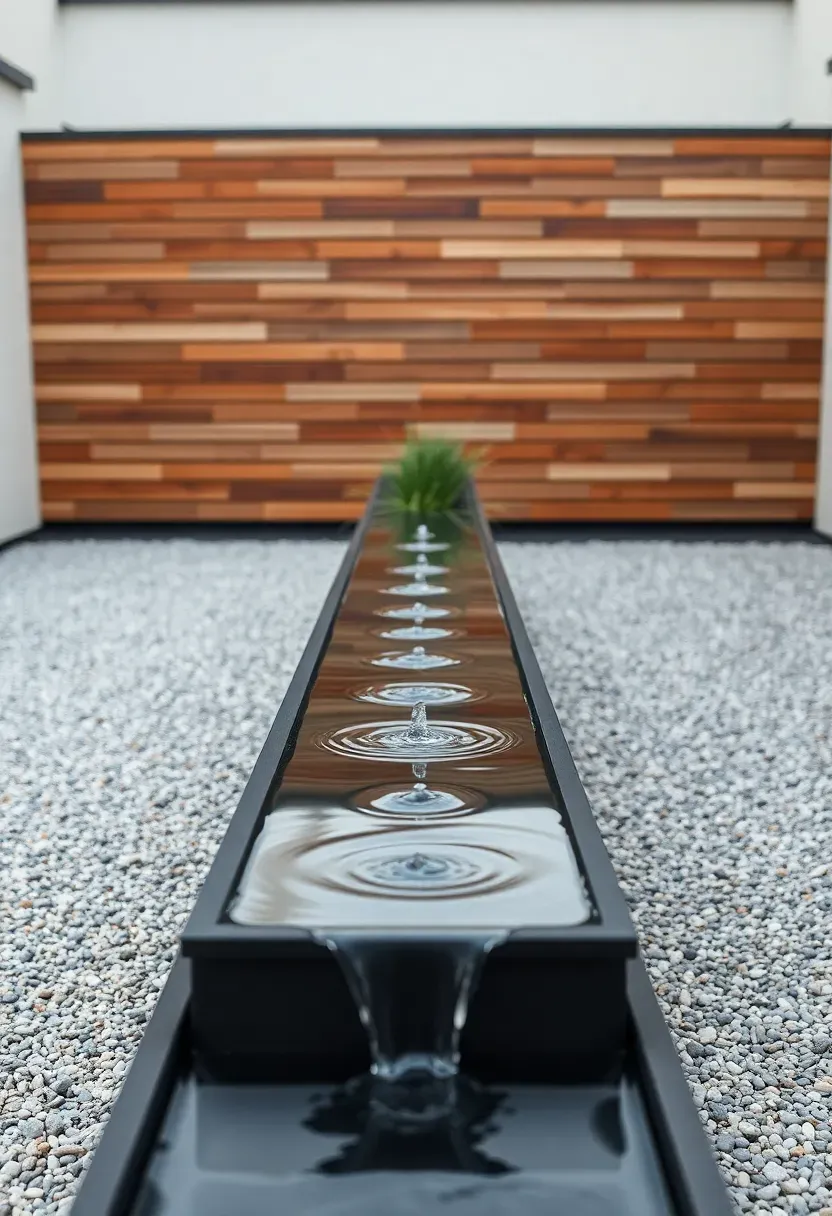
A rectangular steel trough — powder-coated black — with water barely lipping over one or both long edges creates an extremely quiet, reflective feature. Think of it as a reflecting pool in miniature. The trough sits at ground level or on a low plinth, and the water surface acts as a mirror when the pump is off. When running, a gentle overflow creates a paper-thin sheet along the sides. Lengths from 4 to 8 feet work well along pathways, against walls, or as a garden room divider. This style fits modern, industrial, and desert-contemporary landscapes.
Tips
- Powder coating must be rated for continuous water exposure — standard coatings will blister
- Level the trough precisely; any tilt is visible immediately because of the water surface
- A slow-flow pump (50-100 GPH) is all you need for the overflow effect
26. Bamboo Spout into Stone Basin
Step 1: Choose the basin
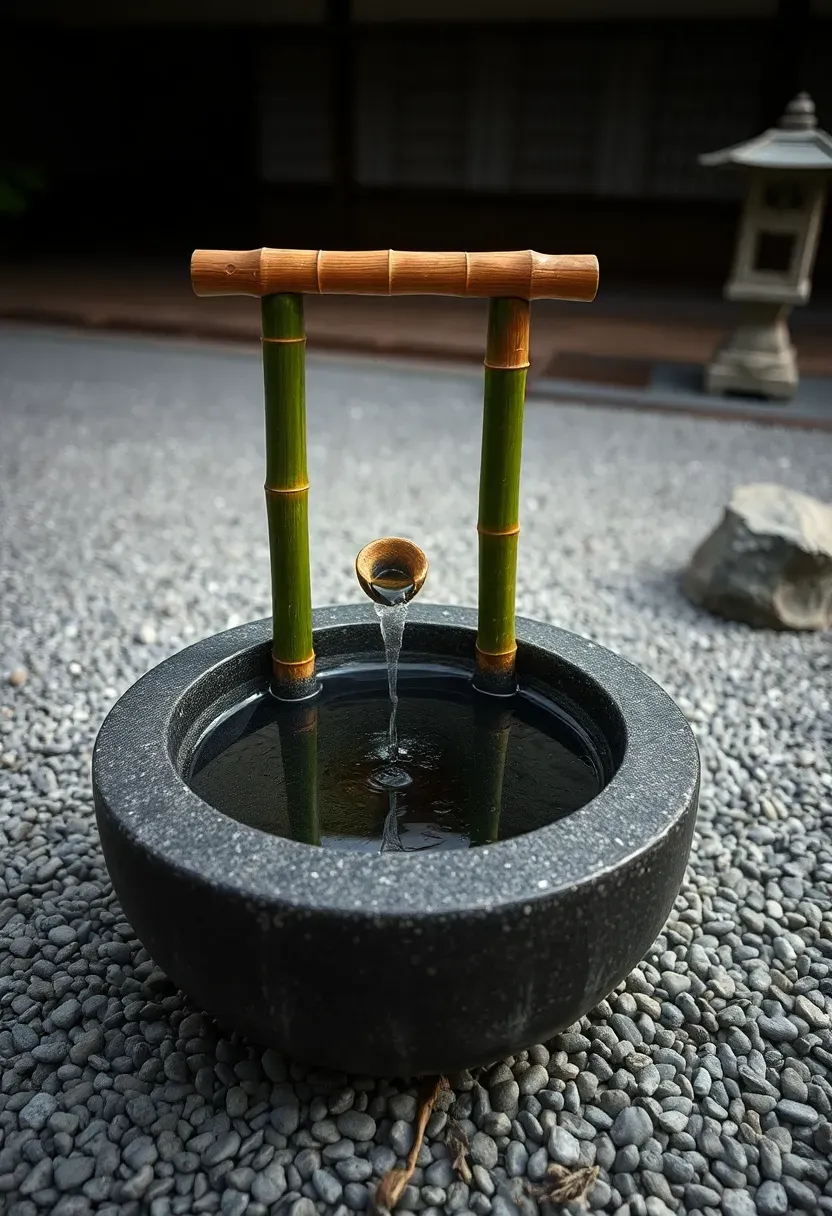
A hand-carved granite or basalt basin — called a tsukubai in Japanese garden design — should be roughly 12 to 18 inches in diameter with a hollowed center. Salvaged stone mortars also work and cost less than custom carved pieces.
Step 2: Mount the spout
Cut a thick bamboo culm (3-4 inch diameter) at an angle and mount it horizontally on two vertical bamboo posts or a wooden frame. Run flexible tubing inside the culm from a pump in the basin to the spout end.
Step 3: Set the surroundings
Place the basin low, partially buried. Arrange three to five rocks around it in an asymmetric pattern. Cover exposed ground with raked gravel or decomposed granite. Add a single lantern or fern grouping nearby.
Watch out
- Bamboo degrades in 3 to 5 years outdoors — plan for periodic replacement or treat with linseed oil
- The basin must drain back to the pump reservoir or it will overflow during rain
- Avoid placing in full sun; the Japanese garden aesthetic relies on dappled shade
Recommended
Items for this idea
27. Living Moss Wall Fountain
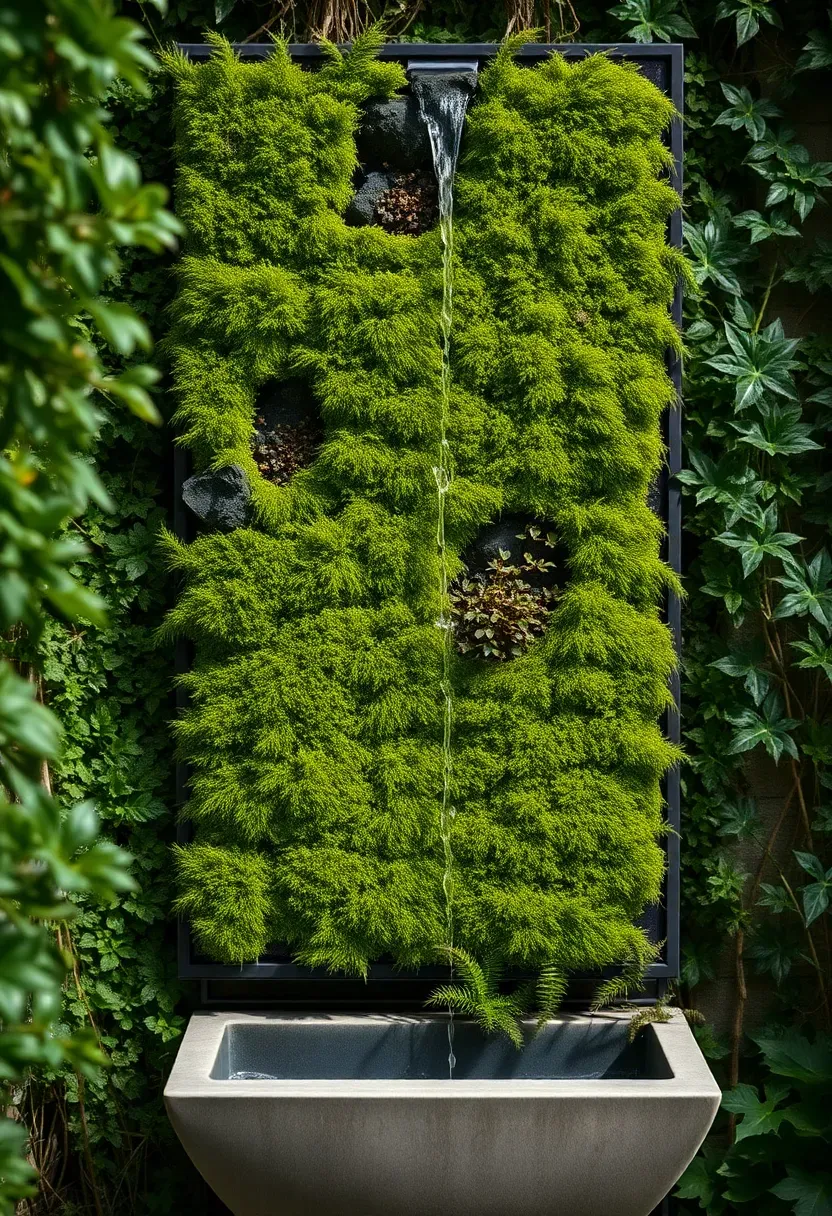
A vertical panel covered in living moss with water seeping down the surface combines a green wall with a water feature. The moss stays hydrated by the constant trickle, eliminating the need for a separate irrigation system. Sheet moss, mood moss, and fern moss all thrive in these conditions if the wall gets consistent indirect light and stays out of drying wind. The structure behind the moss is typically a waterproof panel with a textured surface (landscape fabric or coir matting) that the moss attaches to. A header pipe at the top distributes water evenly across the width.
Tips
- Moss walls need shade or filtered light — direct afternoon sun will brown the moss within weeks
- Maintain humidity around the wall by misting in dry climates
- Start with a small 2x3-foot panel to test your growing conditions before building larger
Quick FAQ
Do garden fountains attract mosquitoes? No, if the water is moving. Mosquitoes lay eggs in still, stagnant water. A recirculating pump keeps the surface agitated enough to prevent breeding. If you turn the fountain off for more than 48 hours in warm weather, add a mosquito dunk (Bti tablet) to the reservoir as a precaution.
How much electricity does a garden fountain use? Most small to medium fountains use a 40 to 120 watt pump, costing roughly $1 to $4 per month to run continuously. Solar-powered models cost nothing to operate but only run during sunny hours. Running your pump on a timer — 8 to 12 hours per day — cuts the bill further.
Can I leave my fountain running in winter? In mild climates (zones 8+), yes. In areas with hard freezes, drain the fountain and store the pump indoors before the first frost. Water expanding inside a stone or concrete basin will crack it. Pumps left in frozen water burn out because the impeller cannot spin.
Which fountain type is quietest? Sheer descent walls and trough-style overflow features produce the least noise — a soft hiss rather than splashing. Tiered fountains and cascading pot designs are the loudest because water drops vertically between levels. Match the sound level to your space and preference.
Is a fountain hard to maintain? Routine care is minimal: top off water weekly, clean the pump intake screen monthly, and add algaecide as needed. Once or twice a year, drain the fountain fully, scrub the basin, and inspect the pump. Most recirculating fountains are genuinely low-maintenance compared to a lawn or flower bed.
Running water has a way of pulling a garden together. It gives wildlife a reason to visit, masks background noise, and creates a focal point that plants alone cannot match. Pick the fountain that fits your space and budget, set it up, and let it run. You will notice the difference the first evening you sit outside with it.
Pinterest cover for 27 Backyard Garden Fountain Ideas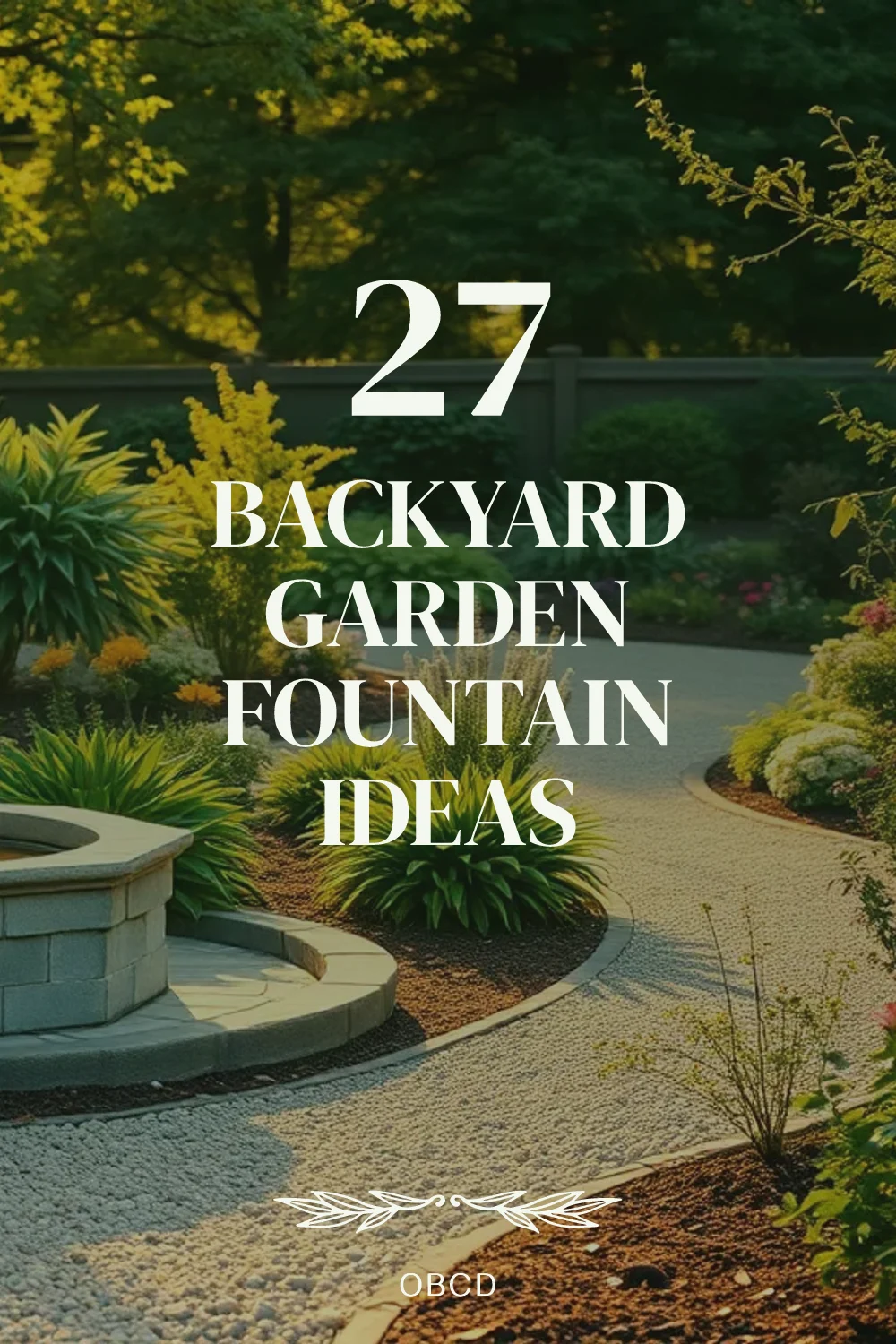
About the author
OBCD
CGI visualization and interior design content. We create detailed 3D renders and curate practical design ideas for every room in your home.