23 Backyard Flower Bed Ideas
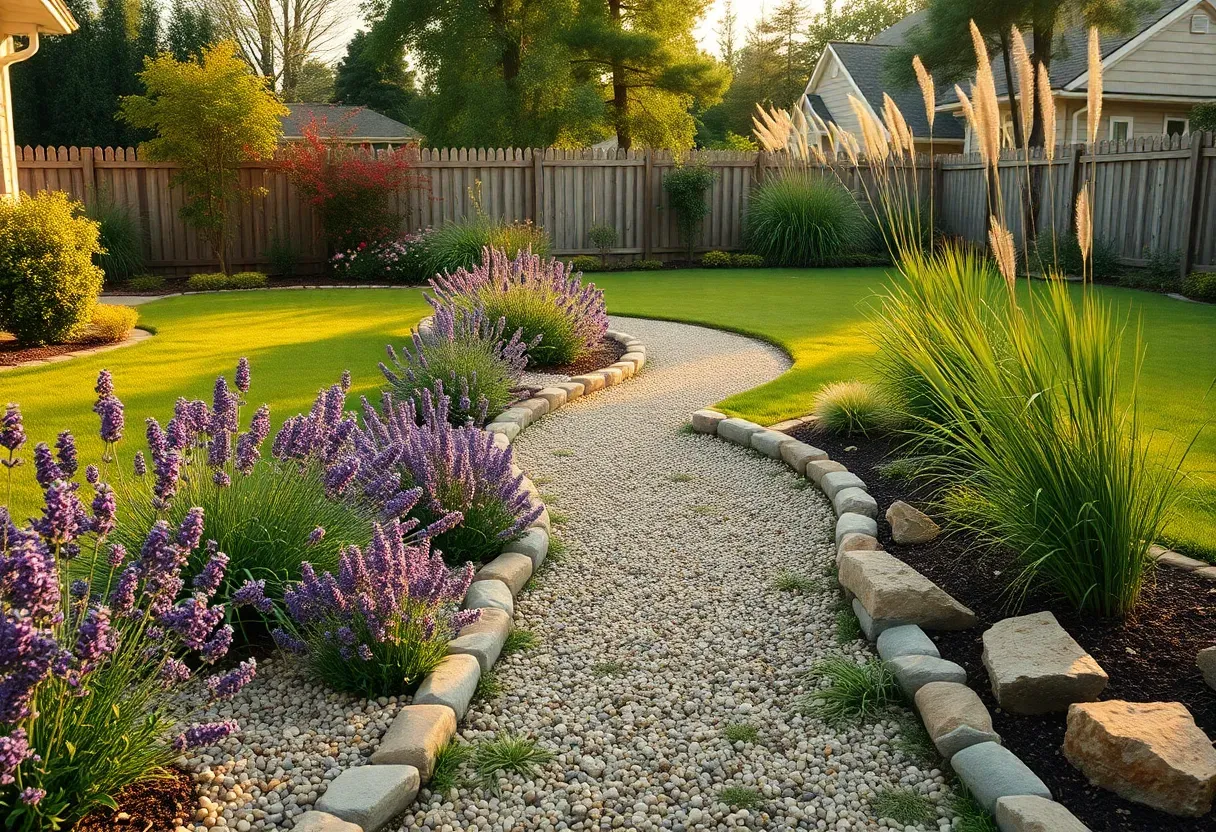
Last spring I ripped out a 20-foot strip of dying lawn along my back fence and replaced it with a perennial flower bed. The whole project took one weekend and about $140 in plants from a local nursery clearance rack. Six months later that strip was the only part of the yard anyone noticed. Flower beds do more than add color — they define spaces, attract pollinators, reduce mowing, and give a yard actual structure. The 23 ideas below range from low-effort wildflower patches to carefully planned cottage borders. Some work in compact urban yards. Others need room to spread.
Here you will find a mix of layout strategies, plant groupings, edging approaches, and bed shapes — organized from simpler weekend builds to more involved designs.
Table of Contents
- Cottage-Style Mixed Border
- Raised Brick Flower Bed
- Wildflower Meadow Strip
- Curved Island Bed
- Rock Garden Flower Bed
- Layered Perennial Border
- Sunflower Fence Line
- Shade Garden Under Trees
- Gravel-Edged Mediterranean Bed
- Raised Timber Cutting Garden
- Corner Flower Bed with Focal Point
- Pollinator Pathway Border
- White Moonlight Garden
- Dry Creek Bed with Flowers
- Stacked Stone Wall Planter
- Tropical Flower Bed
- Foundation Planting Bed
- Rain Garden Flower Bed
- Spiral Flower Bed
- Ornamental Grass and Flower Mix
- Heirloom Rose Bed
- Succulent and Flower Rock Border
- Four-Season Color Bed
1. Cottage-Style Mixed Border
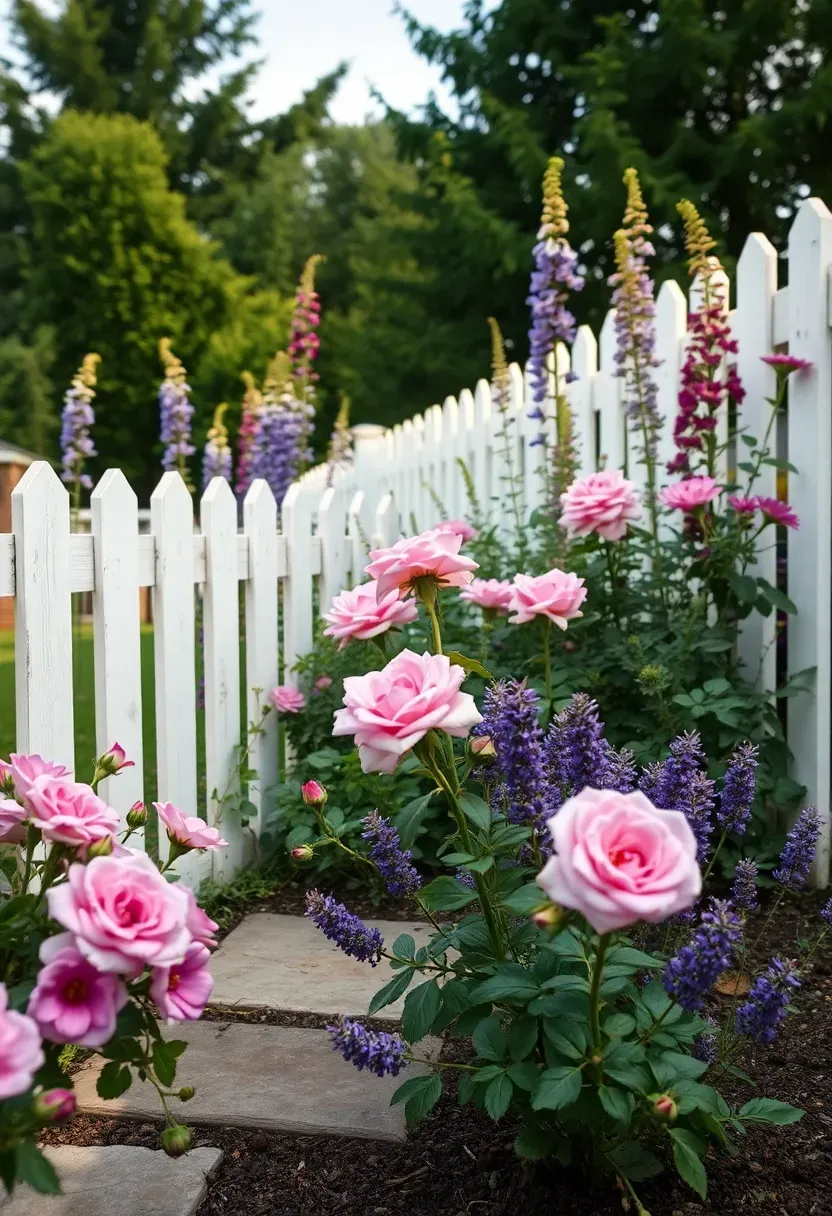
The trick to a good cottage border is controlled chaos. You want it to look unplanned, but there is actually a clear structure underneath: tall plants at the back (delphiniums, hollyhocks, foxgloves), mid-height fillers in the middle (salvia, echinacea, phlox), and spillers along the front edge (catmint, alyssum, creeping thyme). Plant in odd-numbered clusters — groups of three or five — rather than rows. This prevents the "soldier line" effect that makes beds look stiff. A 3-foot depth is the minimum for this style. Five feet gives you much better layering.
Tips
- Deadhead spent blooms weekly to keep flowers producing through fall
- Mix annuals with perennials so you get color the first year while perennials establish
- Allow some self-seeding — that natural spread is what gives cottage gardens their character
We picked a few things that go well with this idea: ANLEOLIFE 8x4x2ft Galvanized Raised Garden Bed (★4.7), Land Guard 8x4x2ft Galvanized Garden Bed (★4.2) and Land Guard Oval Metal Planter Box (★4.5). As an Amazon Associate we earn from qualifying purchases.
2. Raised Brick Flower Bed
Why brick works
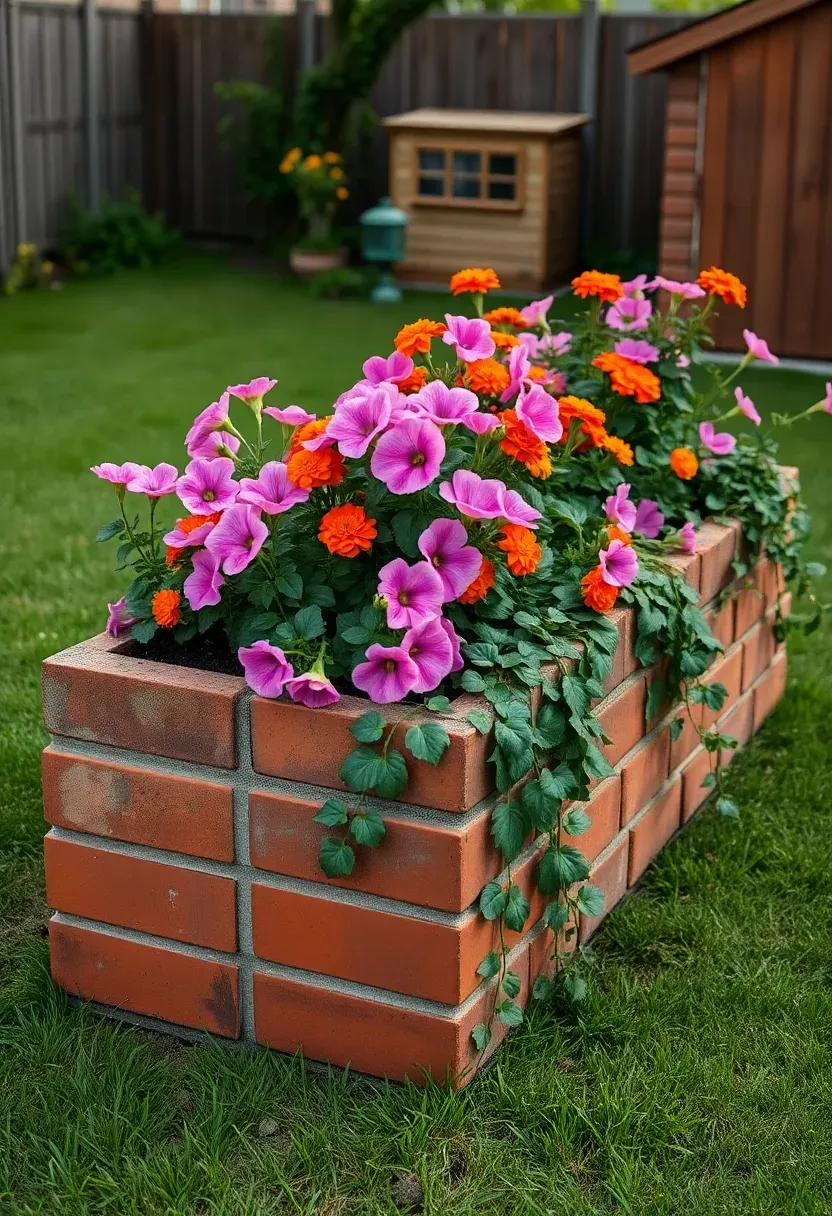
Brick raised beds last decades without rotting, splitting, or leaching chemicals. They absorb heat during the day and release it slowly at night, which extends the growing season slightly for heat-loving flowers like zinnias and dahlias.
How to build one
You do not need mortar for beds under 18 inches tall. Dry-stack two or three courses of standard bricks on a compacted gravel base. For taller beds, mortar every other course. Fill with a blend of garden soil and compost. Reclaimed bricks from demolition sites cost roughly $0.30-0.60 each — a 4x8 bed uses about 80-100 bricks.
Choose if
- You want a permanent structure that adds property value
- Your native soil is clay-heavy or compacted
- You prefer a tidy, formal look over rustic timber
We picked a few things that go well with this idea: 200K Wildflower Seeds 16-Variety Perennial Mix (★4.5), Eden Brothers Perennial Wildflower Seed Mix (★3.9) and Butterfly Hummingbird Wildflower Seeds (21 Variety) (★4.7). As an Amazon Associate we earn from qualifying purchases.
3. Wildflower Meadow Strip
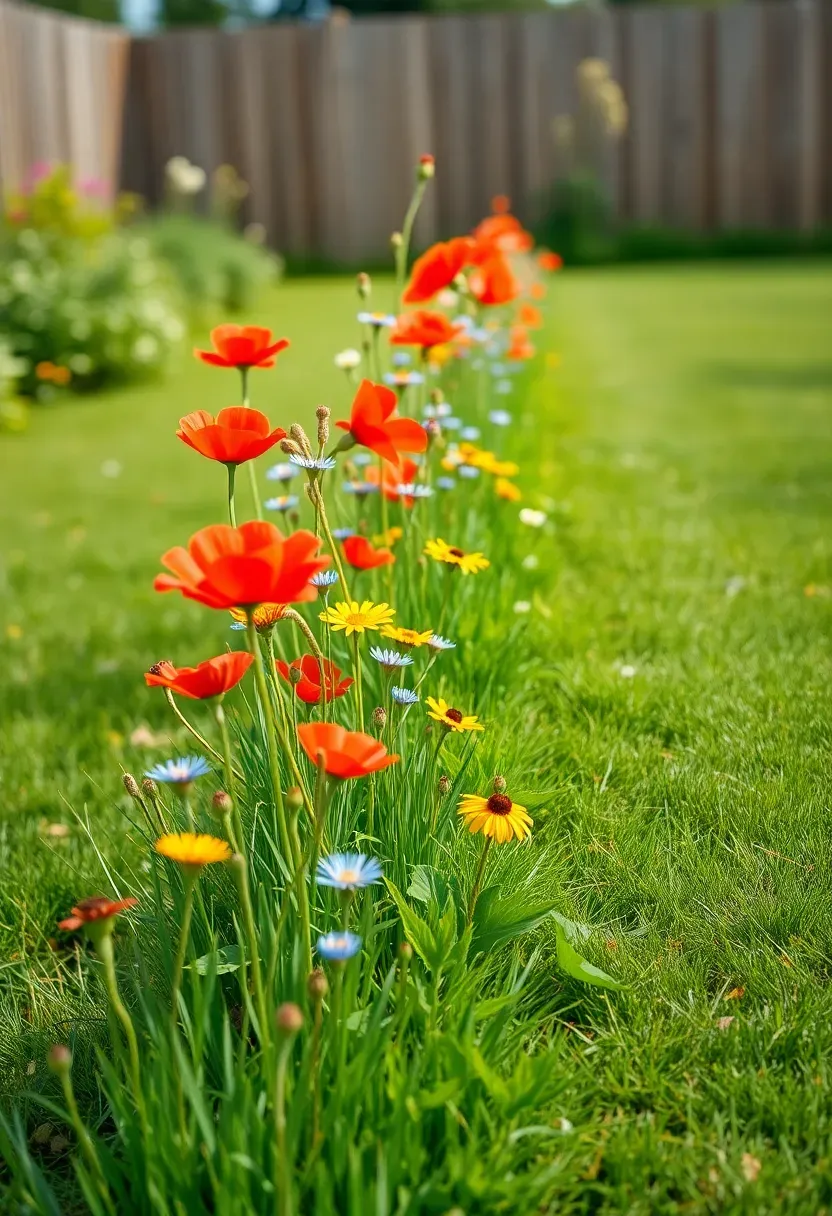
Converting a strip of lawn to wildflowers is one of the cheapest flower bed projects you can do. A 200-square-foot area needs about $15-25 worth of regional wildflower seed mix. Scalp the existing grass short, rake to expose bare soil, scatter seed, and press it in with a lawn roller or your feet. Water lightly for two weeks. After that, rain handles the rest. The first year looks scraggly — mostly foliage with scattered blooms. Year two is when it fills in properly. Mow once in late winter to knock down dead stems before new growth starts.
Tips
- Buy seed mixes labeled for your USDA zone, not generic "wildflower" blends
- Skip mixes heavy on cosmos and bachelor buttons — they are annuals that fade after one season
- Edge the strip with a clean mow line so it looks intentional, not abandoned
We picked a few things that go well with this idea: AHEONLAR 80ft No-Dig Garden Edging Border (★4.5), AHEONLAR 120ft Garden Edging with Spikes (★4.5) and Corrugated Garden Border Edging (2-inch) (★4.4). As an Amazon Associate we earn from qualifying purchases.
4. Curved Island Bed
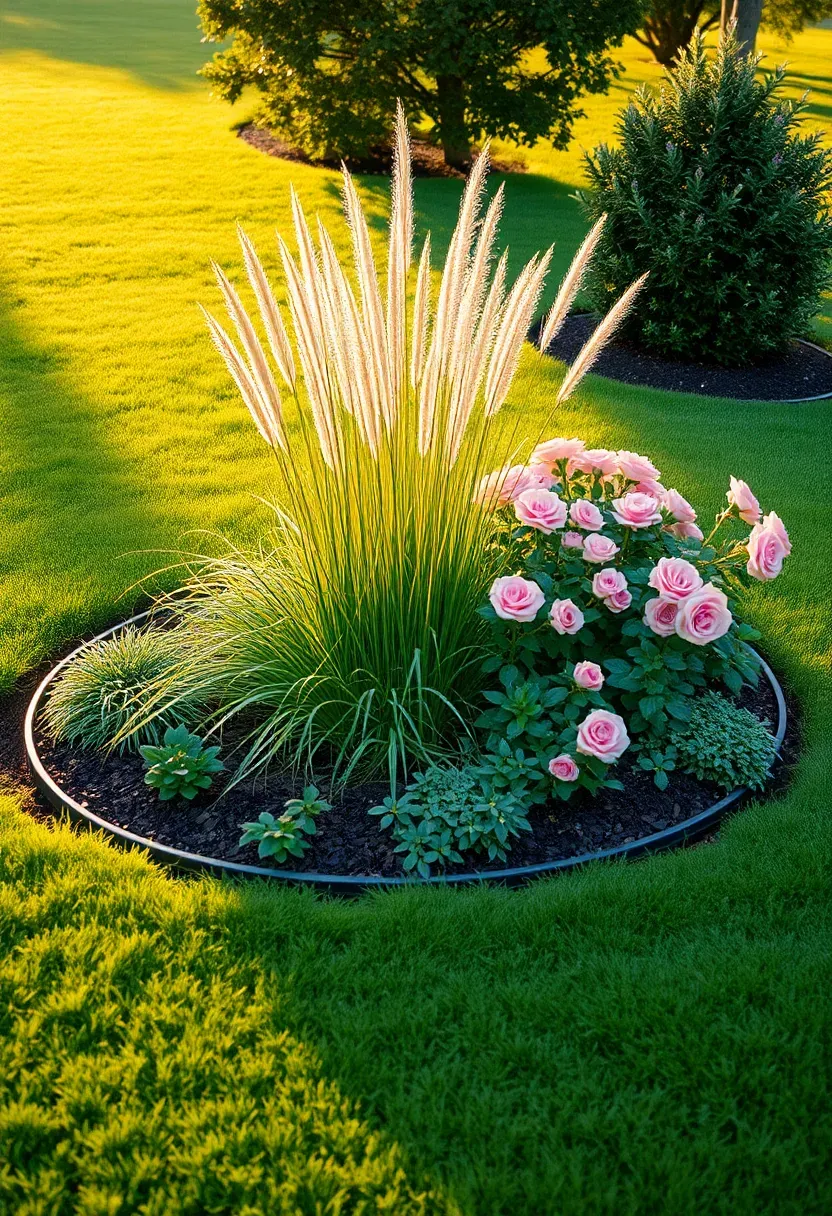
Island beds float in the middle of the lawn instead of hugging a fence or wall. They are visible from all sides, which changes how you plant them. The tallest plants go in the center — ornamental grasses, tall dahlias, or a small specimen shrub. Heights decrease outward in concentric rings. Use a garden hose laid on the grass to test curves before you cut. Avoid perfect circles; kidney or teardrop shapes look more natural. Keep the bed proportional to your yard — a good rule is making the longest dimension about one-third the width of the surrounding lawn.
Tips
- Add a stepping stone path through the middle for access during maintenance
- Mulch with 2-3 inches of shredded hardwood to suppress weeds and retain moisture
- Edge with steel or aluminum landscape edging to maintain clean curves
Recommended
Items for this idea
5. Rock Garden Flower Bed
The problem
Sloped or rocky areas in the yard where nothing seems to grow well because water drains too fast and soil is thin.
The solution
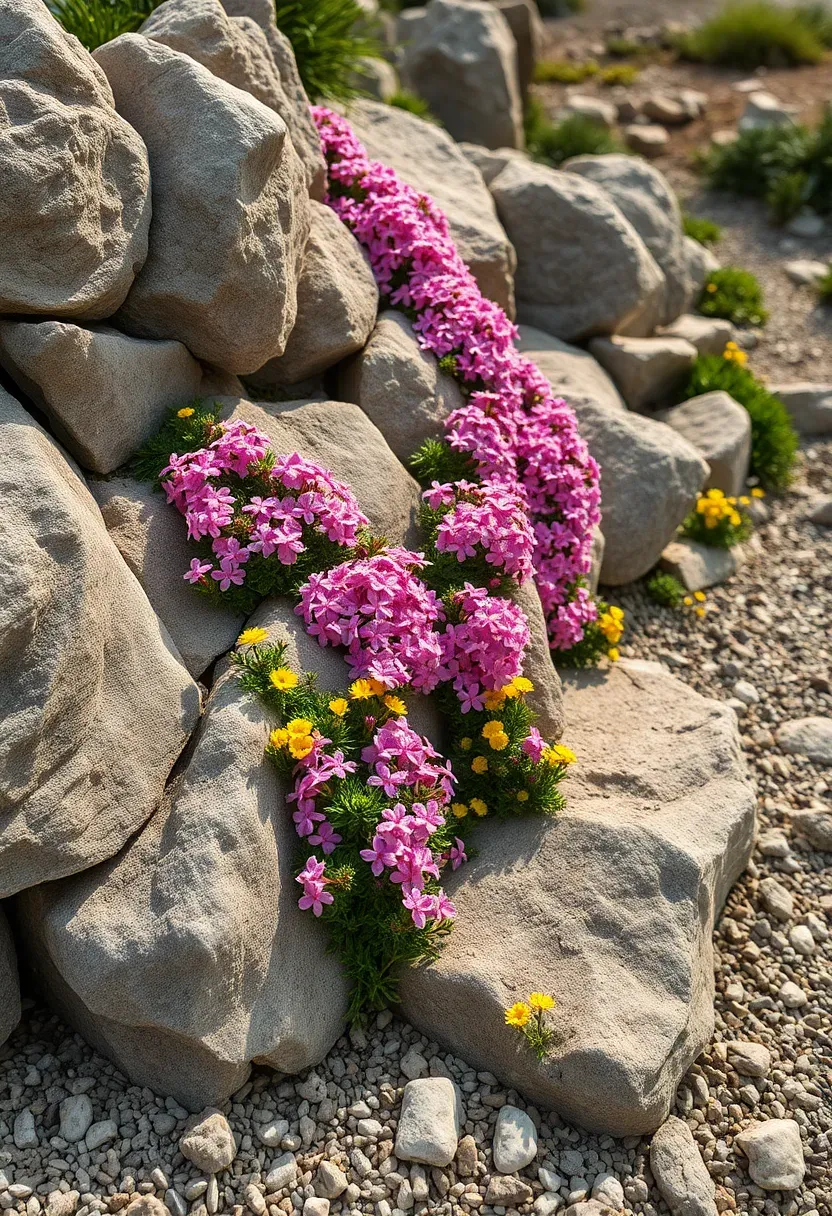
Work with the slope instead of against it. Arrange large rocks first — partially bury them so they look naturally embedded, not dropped on the surface. Fill pockets between rocks with a fast-draining mix of equal parts topsoil, coarse sand, and gravel. Plant alpine and drought-tolerant flowers: creeping phlox, sedum, dianthus, hens and chicks, ice plant, and rock cress. These species actually prefer lean, rocky soil over rich garden beds.
Pros and cons
- Pros: almost zero watering once established, minimal weeding, works on slopes
- Cons: limited plant palette, rocks are heavy to position, poor choice for shade
6. Layered Perennial Border
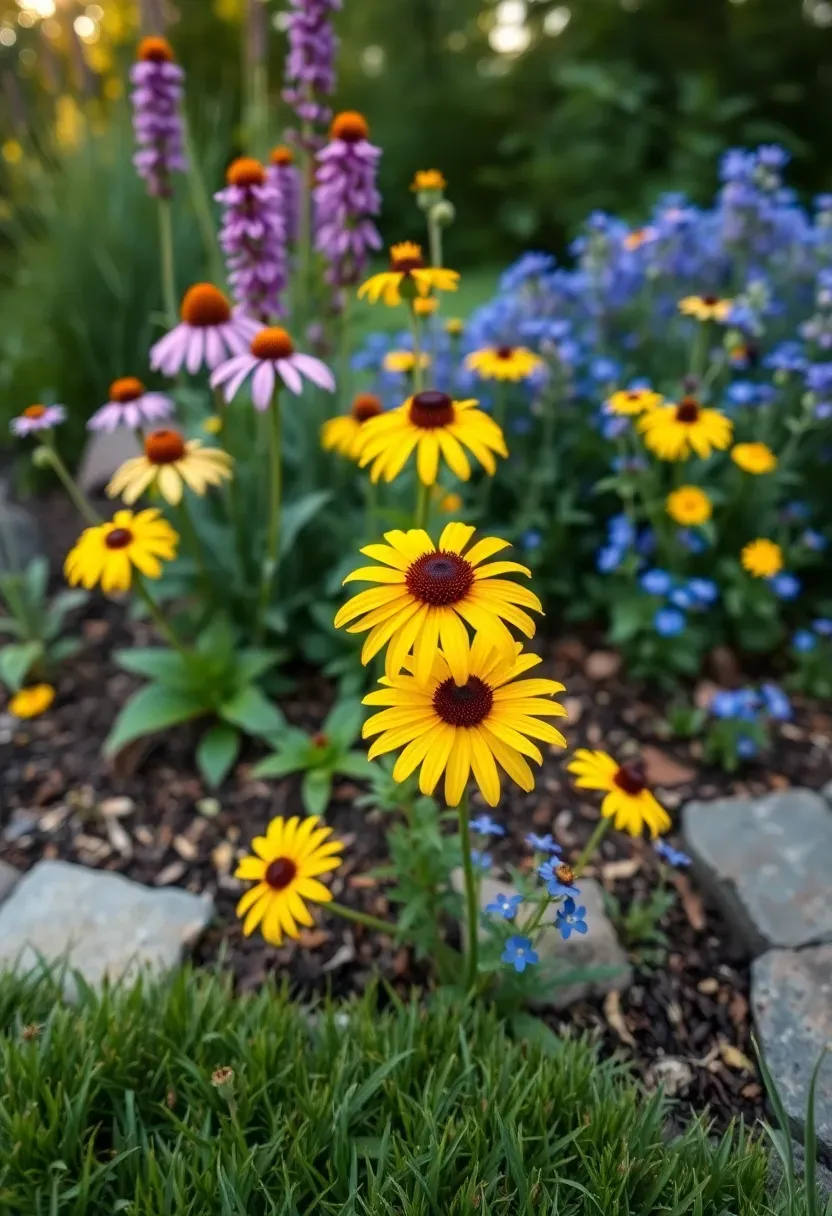
Perennial borders pay off over time. You spend more upfront — $5-15 per plant — but they return every year without replanting. The key is planning bloom succession so something is flowering from April through October. Divide the bed into three depth zones. Back row: Joe Pye weed, tall phlox, Russian sage. Middle: echinacea, black-eyed Susan, yarrow, daylilies. Front: geraniums, catmint, coral bells, low sedum. Stagger bloom times across all three rows. When the front row fades, the middle row picks up. When that fades, the back row carries late summer into fall.
Tips
- Plant in fall for stronger root systems by the following spring
- Divide overcrowded perennials every 3-4 years to keep them vigorous
- Leave seed heads standing through winter — they feed birds and add structure
Recommended
Items for this idea
7. Sunflower Fence Line
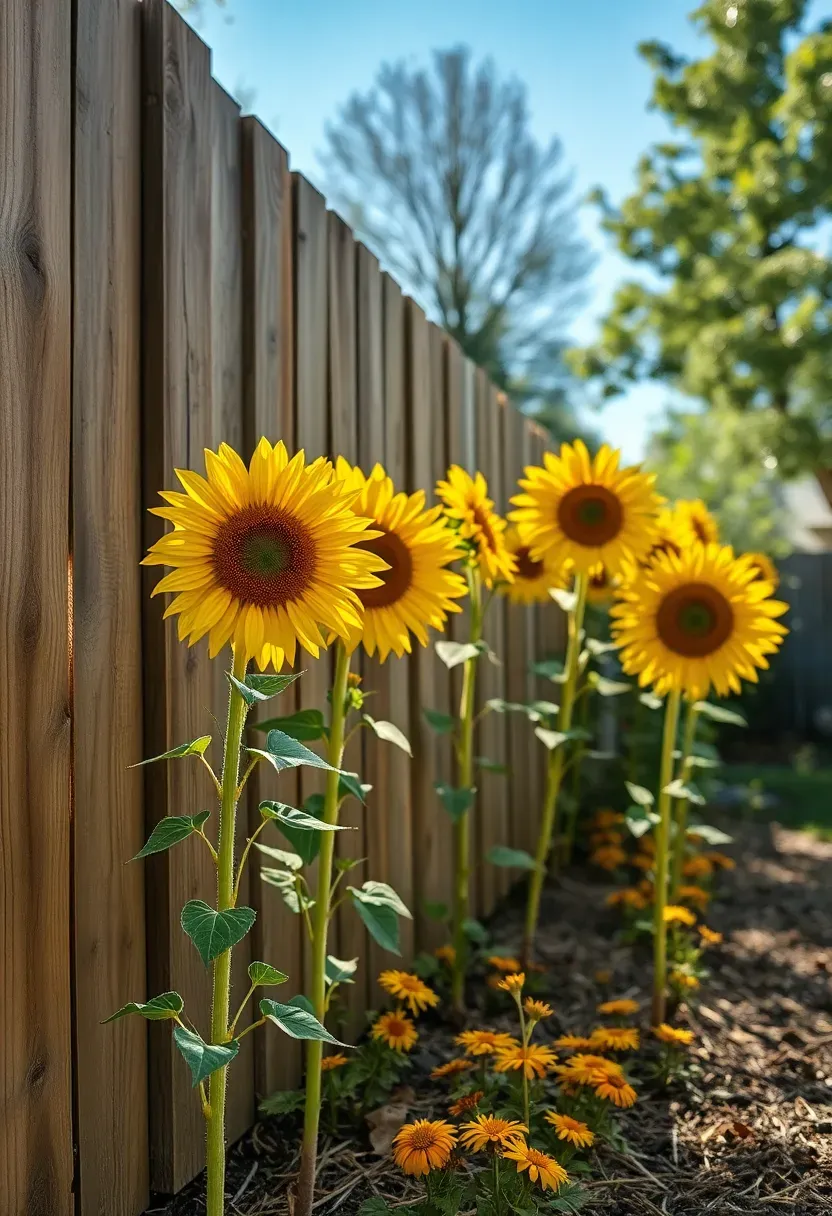
This is a single-season project that delivers fast, dramatic results. Plant sunflower seeds directly along a fence line after the last frost — space them 12-18 inches apart for tall branching varieties or 6 inches for single-stem giants. The fence provides wind support so you skip the staking. Underplant with low annuals like nasturtiums, dwarf zinnias, or marigolds to fill the base. Sunflowers grow fast — most varieties hit 6-8 feet in about 60-75 days. At the end of the season, leave spent heads for birds or harvest seeds for next year.
Tips
- Choose multi-branching varieties like Autumn Beauty or Velvet Queen for longer bloom time
- Water deeply once a week rather than shallowly every day
- Rotate the planting spot each year to avoid soil-borne fungal issues
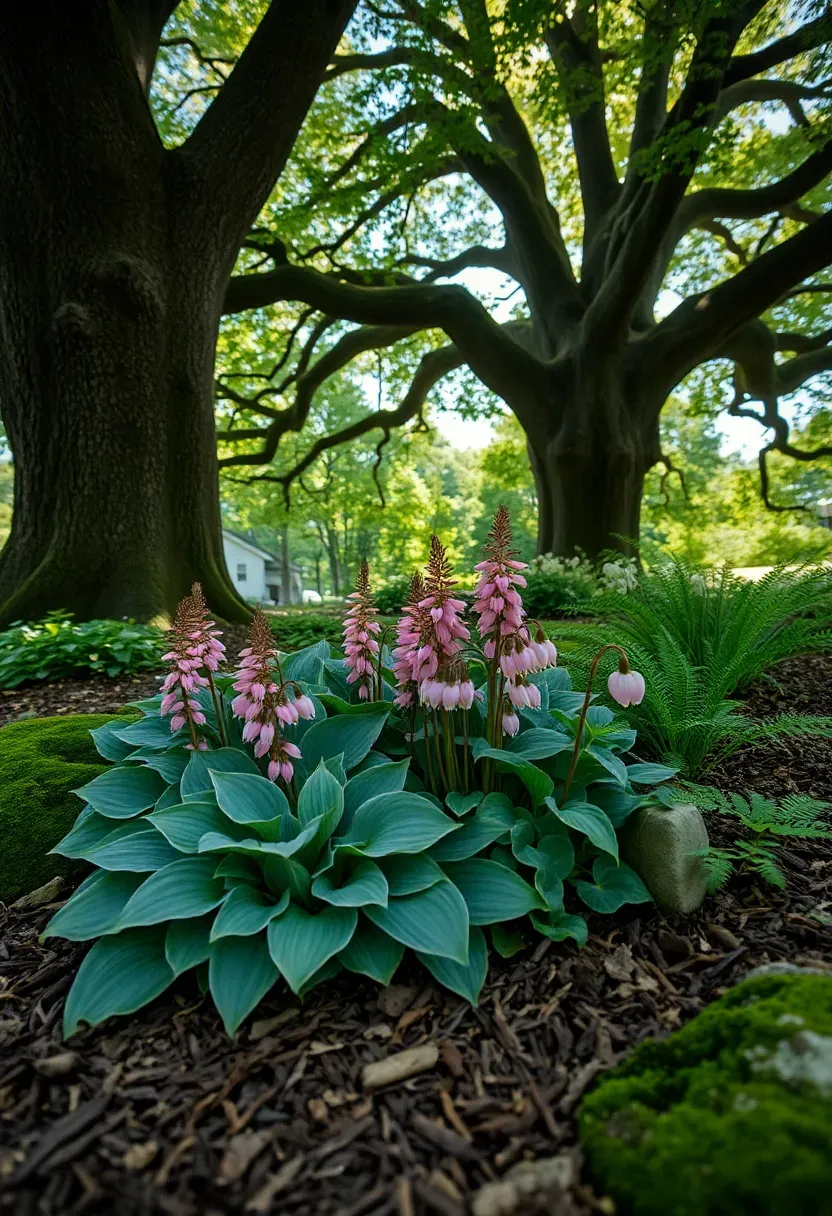
8. Shade Garden Under Trees
Step 1: Assess the shade
Not all shade is the same. Dappled shade under a high-canopy tree like an oak is far different from the dense shade under a low maple. Watch the area for a full day and note how many hours of direct sun it gets. Most shade-tolerant flowers need at least 2 hours of filtered light.
Step 2: Prepare without damaging roots
Do not rototill under established trees — you will destroy feeder roots. Instead, add 3-4 inches of quality compost on top of existing soil and plant directly into that layer.
Step 3: Choose the right plants
Hostas for foliage bulk, astilbe for feathery plumes, bleeding hearts for spring color, heuchera for year-round leaf interest, and native ferns for texture. Impatiens and begonias fill gaps with annual color.
Watch out
Shallow-rooted trees like maples and beeches compete aggressively for water. You will need to irrigate shade beds more than you expect.
Recommended
Items for this idea
9. Gravel-Edged Mediterranean Bed
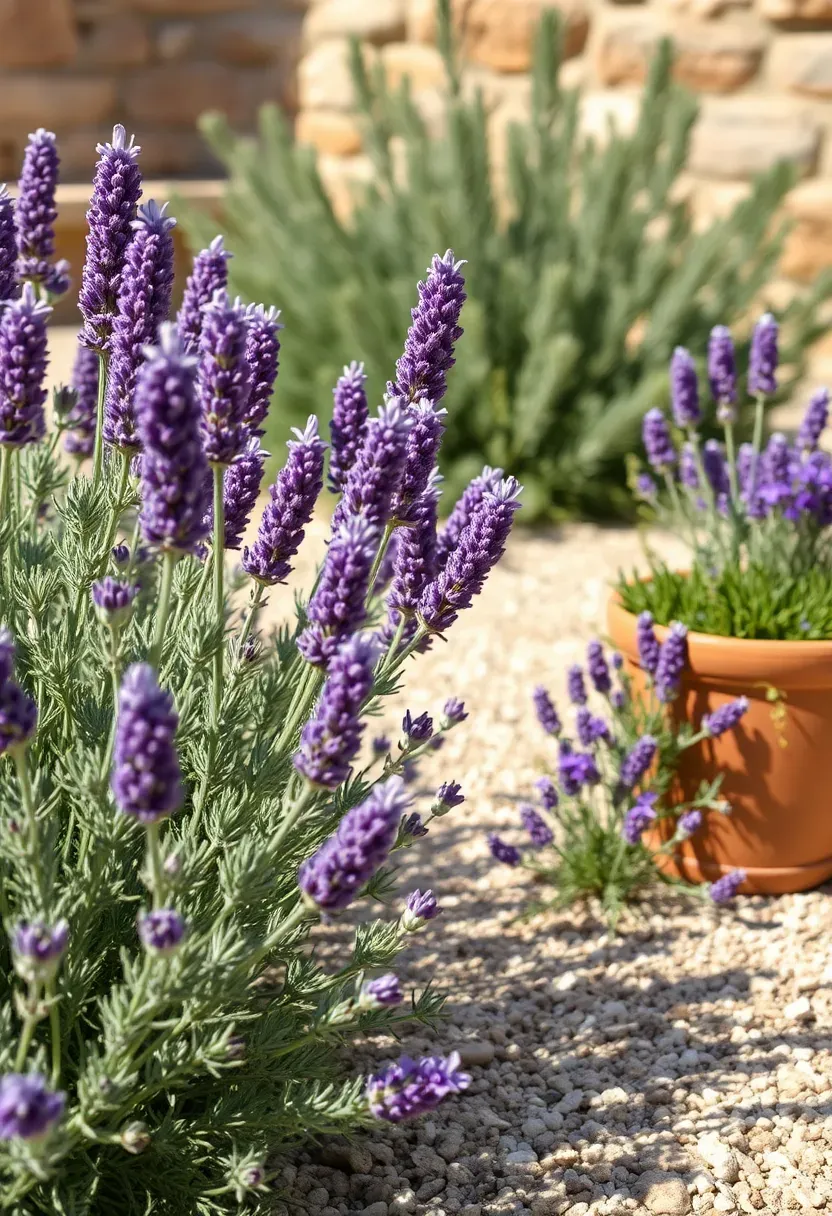
Mediterranean plants thrive on neglect. Lavender, rosemary, santolina, salvia, and artemisia all prefer poor soil, full sun, and infrequent watering — the opposite of what most gardeners instinctively provide. Build this bed by removing 4 inches of topsoil and replacing it with a mix of gravel and coarse sand. Top-dress with pea gravel or decomposed granite. The gravel mulch reflects heat, prevents crown rot, and gives the bed a clean, architectural look. Space plants widely — these species resent crowding and need air circulation to avoid fungal problems.
Tips
- Skip fertilizer entirely — rich soil makes Mediterranean plants leggy and weak
- Prune lavender hard in early spring to prevent woody, bare stems
- Group plants by water needs so you are not overwatering drought-tolerant species
10. Raised Timber Cutting Garden
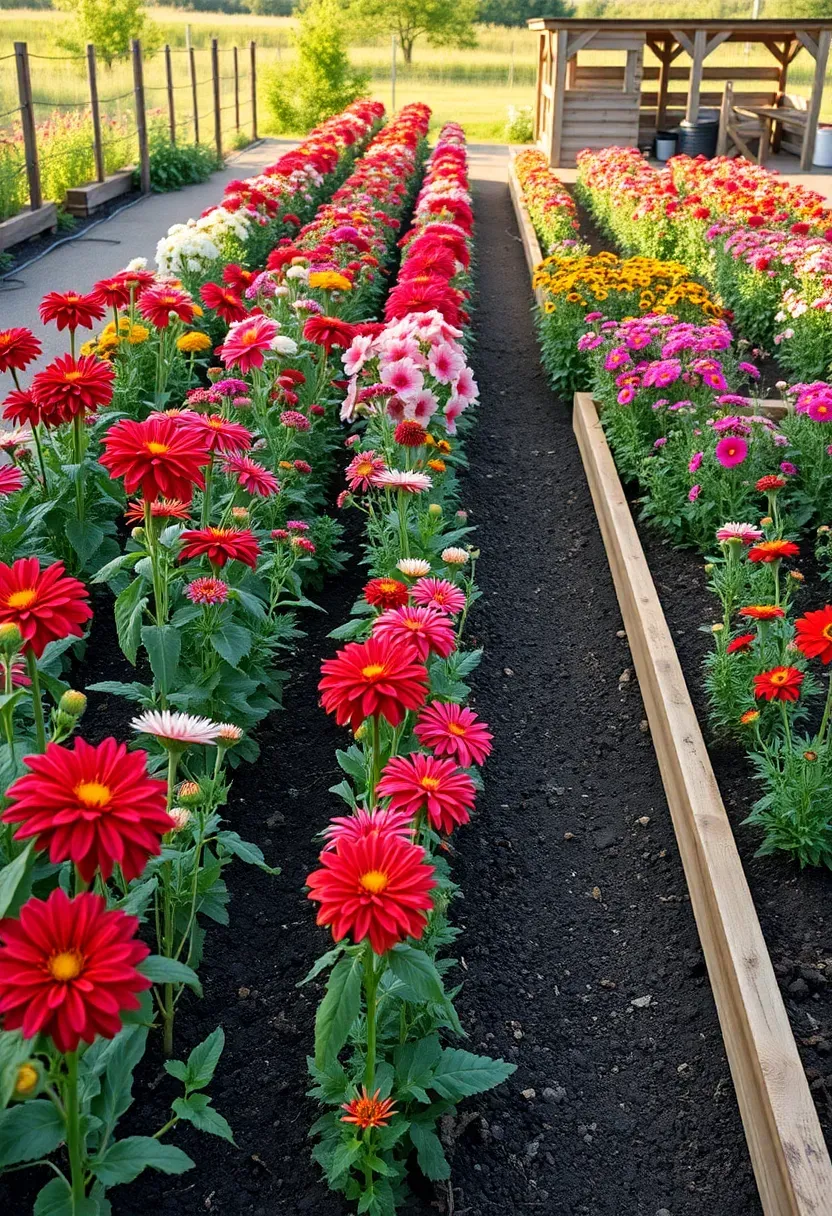
A cutting garden exists purely to produce flowers for indoor bouquets. Plant in rows like a vegetable garden — it is not meant to look pretty from a distance. Focus on prolific bloomers: zinnias, dahlias, snapdragons, cosmos, and sweet peas. These all produce more flowers the more you cut them. Build a simple raised bed from landscape timbers (6x6 cedar or treated pine) about 12-18 inches high. Each 4x8 bed produces enough flowers for 2-3 bouquets per week through summer. Succession plant every two weeks for continuous supply rather than one big flush.
Tips
- Grow from seed to save money — a $3 packet of zinnia seeds yields 50+ plants
- Install a simple drip line on a timer to keep consistent moisture without overhead watering
- Plant sweet peas in early spring along a trellis at the bed's north end
Recommended
Items for this idea
11. Corner Flower Bed with Focal Point
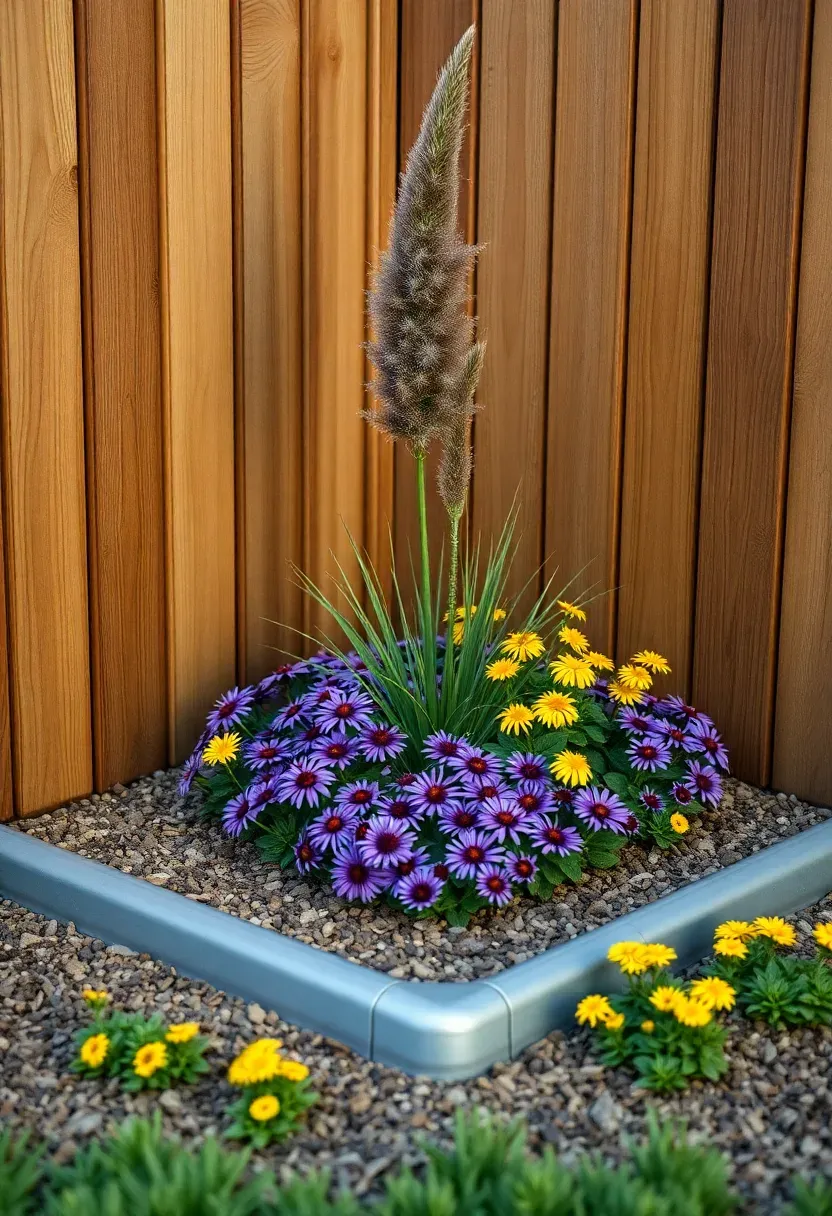
Dead corners where two fences meet are wasted space in most yards. A corner bed turns that junction into a feature. Start with one bold focal element — a tall ornamental grass like Miscanthus, a large pot on a pedestal, a birdbath, or a specimen shrub like a dwarf Japanese maple. Plant around it in concentric quarter-circles, decreasing in height as you move outward. The focal point anchors the eye and prevents the bed from looking like a random pile of plants. Angle the bed edge at 45 degrees to the fence lines for a more graceful shape than a sharp right angle.
Tips
- Limit the plant palette to 4-5 species for a cohesive look
- Use a focal point that provides winter interest since perennials die back
- Backlight the corner with a small solar spotlight for evening impact
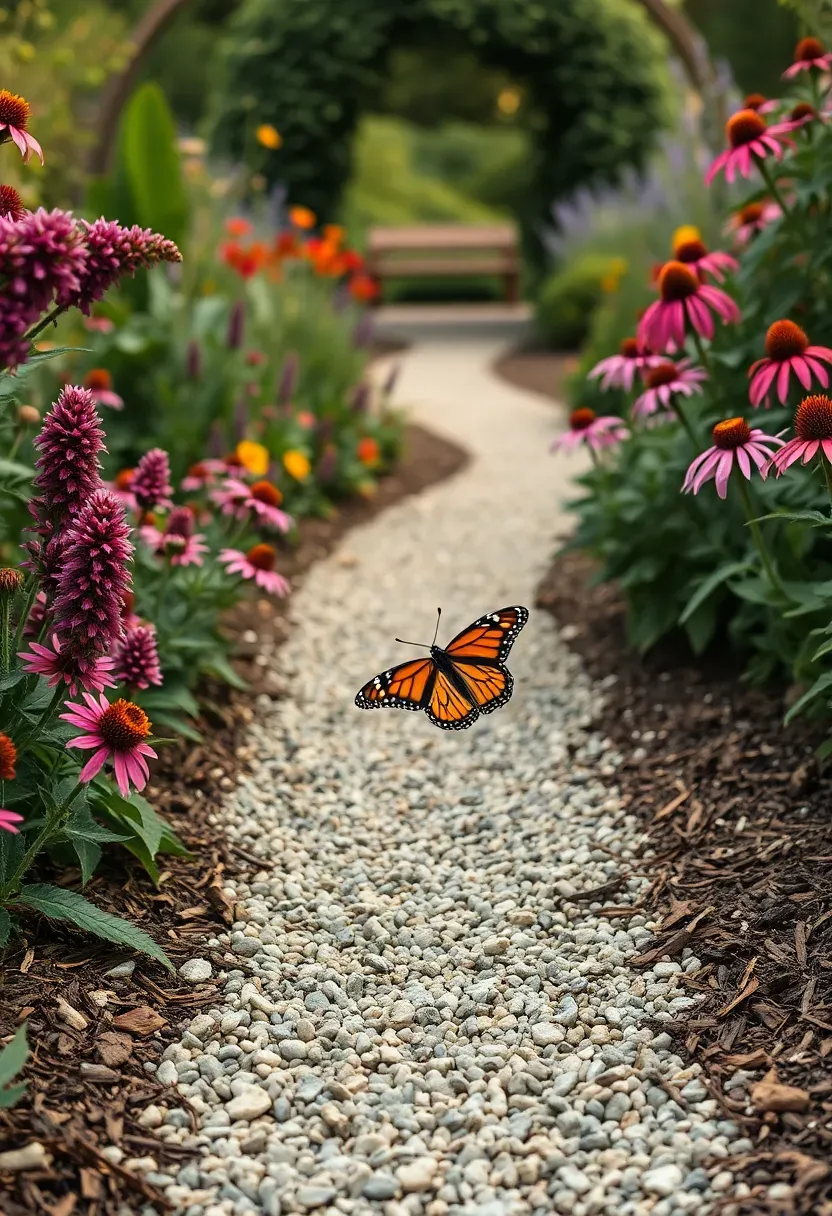
12. Pollinator Pathway Border
The problem
Pollinators are declining, and most ornamental flower beds are full of hybridized varieties that produce little pollen or nectar.
The solution
Line your main garden path with a border of native and near-native pollinator plants. Bee balm, echinacea, liatris, goldenrod, aster, and milkweed give bees, butterflies, and hummingbirds food from spring through first frost. Plant in drifts — long, flowing groups of the same species — rather than individual plants scattered randomly. A 2-foot-wide border on each side of a path is enough to make a real difference.
Pros and cons
- Pros: supports local ecosystem, low maintenance once established, most are native perennials
- Cons: looks messy in late fall, some species spread aggressively, not ideal for formal gardens
Recommended
Items for this idea
13. White Moonlight Garden
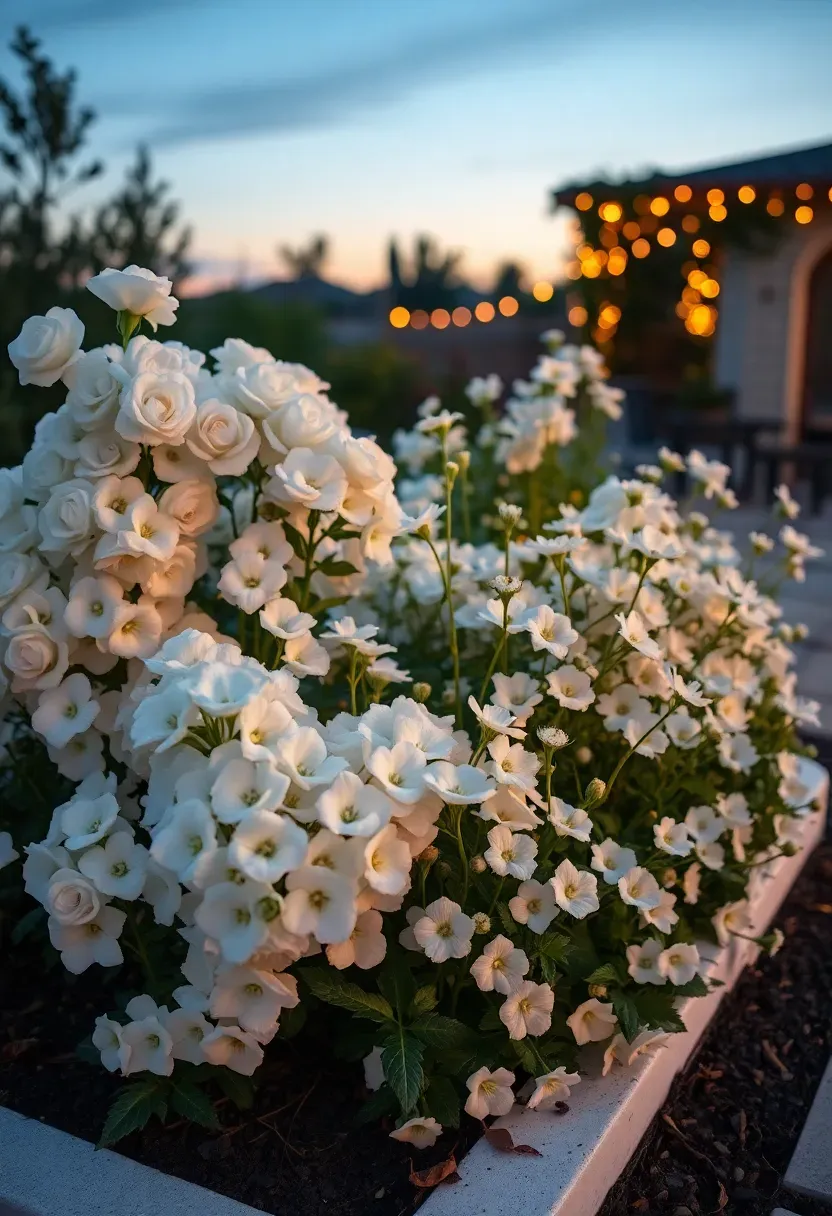
A single-color garden sounds limiting, but restricting yourself to white flowers creates something unexpectedly dramatic — especially at dusk. White blooms reflect ambient light and seem to glow after sunset, which makes this bed perfect near a patio or seating area you use in the evening. Plant white roses, gardenias, white phlox, Shasta daisies, moonflowers (which open at night), nicotiana, and white-flowering hostas. Add silver-foliage plants like lamb's ear, dusty miller, and artemisia to complement the whites during daytime.
Tips
- Include night-scented flowers like nicotiana and moonflower for fragrance after dark
- Add a few pale yellow or cream tones to prevent the bed from looking washed out
- Position near outdoor lighting to amplify the glowing effect
14. Dry Creek Bed with Flowers
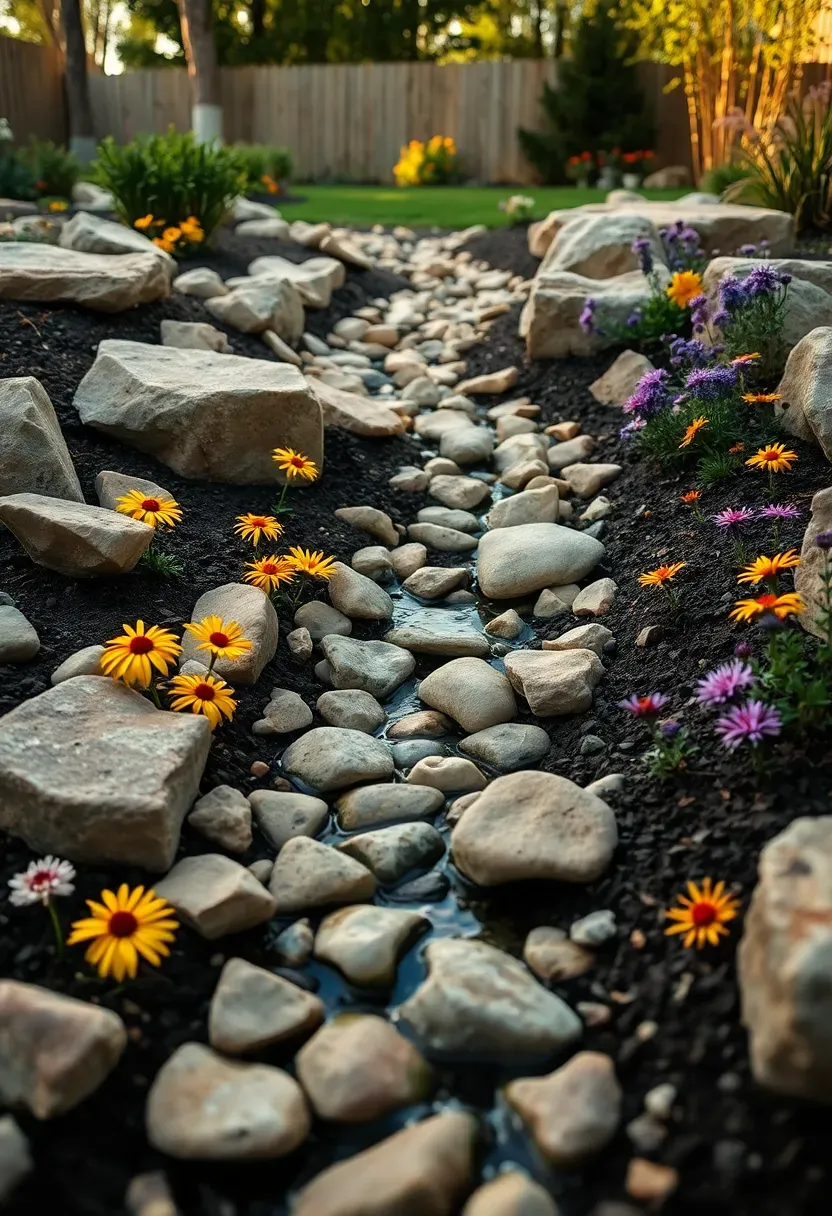
Dry creek beds solve drainage problems and create a natural-looking garden feature at the same time. Dig a shallow, winding trench 6-8 inches deep and 2-3 feet wide. Line with landscape fabric, then layer river rocks from large along the center to smaller at the edges. Plant moisture-loving flowers along the banks: daylilies, Japanese iris, cardinal flower, and astilbe for the shady stretches. During heavy rain, the creek channels water away from problem areas. During dry spells, it reads as a sculptural dry streambed with flowers cascading over the edges.
Tips
- Vary rock sizes — uniform rocks look artificial
- Curve the creek around existing trees or landscape features for a natural feel
- Place larger boulders at bends where water would naturally slow down
Recommended
Items for this idea
15. Stacked Stone Wall Planter
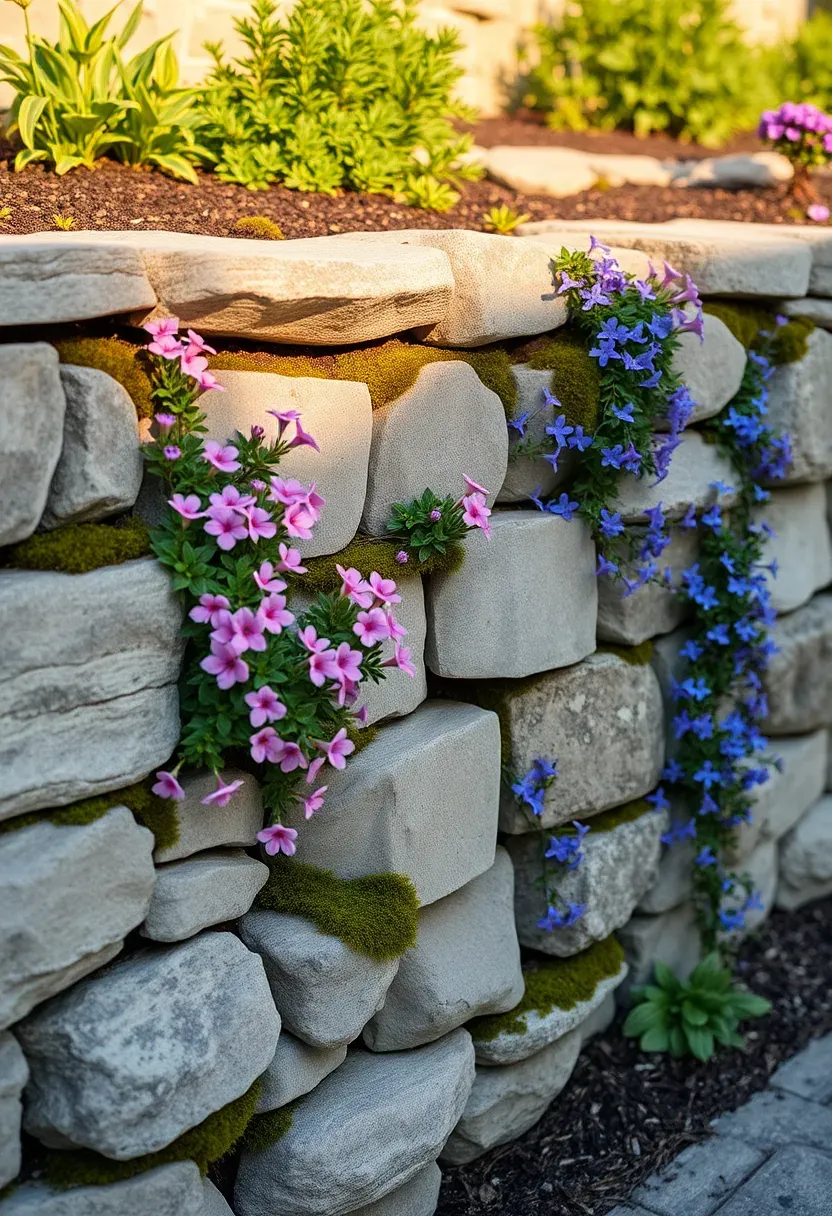
Dry-stacked stone walls double as planting surfaces. As you build, leave gaps between stones and pack them with soil. Tuck in trailing plants that root into those pockets: creeping thyme, aubrieta, trailing lobelia, sedum, and wall germander. Over time the plants knit together and soften the hard edges of the stone. This works especially well for retaining walls on slight slopes where you need structural support and want flowers. Fieldstone or flat flagstone stacks best. Round river rocks are harder to work with because they roll.
Tips
- Tilt stones slightly inward (toward the hillside) for stability
- Water new plantings from the top — gravity carries moisture down through the gaps
- Start with the sunniest side of the wall for trailing flowers
16. Tropical Flower Bed
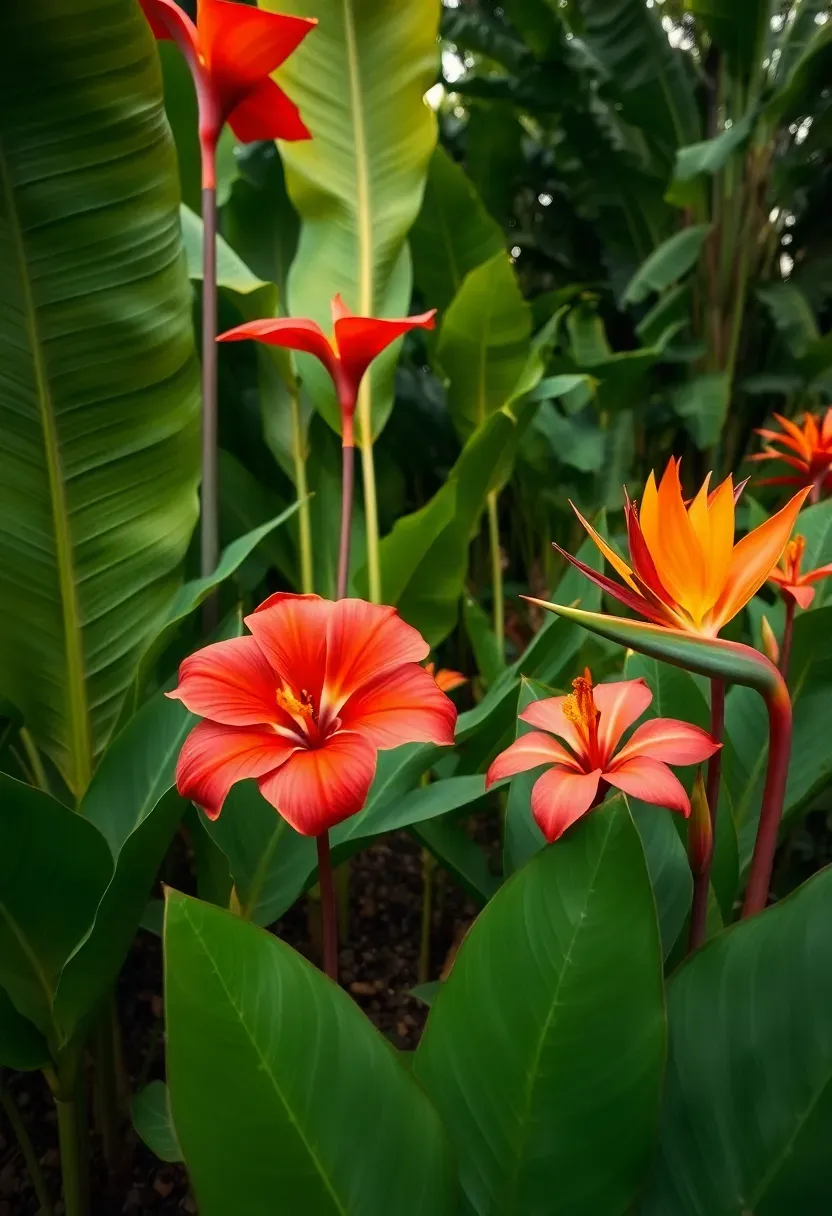
You do not need to live in Zone 10 to pull off a tropical-looking flower bed. Cannas, elephant ears, caladiums, and hardy hibiscus survive winter in Zones 7-8 with mulch protection. In colder zones, treat them as annuals or dig up tubers in fall. The key to the tropical look is scale — big leaves, bold colors, dense planting. Combine cannas (tall, structural) with elephant ears (massive foliage), coleus (vivid leaf color), and impatiens or begonias at ground level. Plant tightly so no soil shows. The result feels like a jungle pocket in your backyard.
Tips
- Cannas and elephant ear tubers are cheap — $2-4 each at garden centers in spring
- Water heavily; tropical plants are heavy drinkers
- Add banana plants (Musa basjoo) for the ultimate dramatic leaf if you have space
Recommended
Items for this idea
17. Foundation Planting Bed
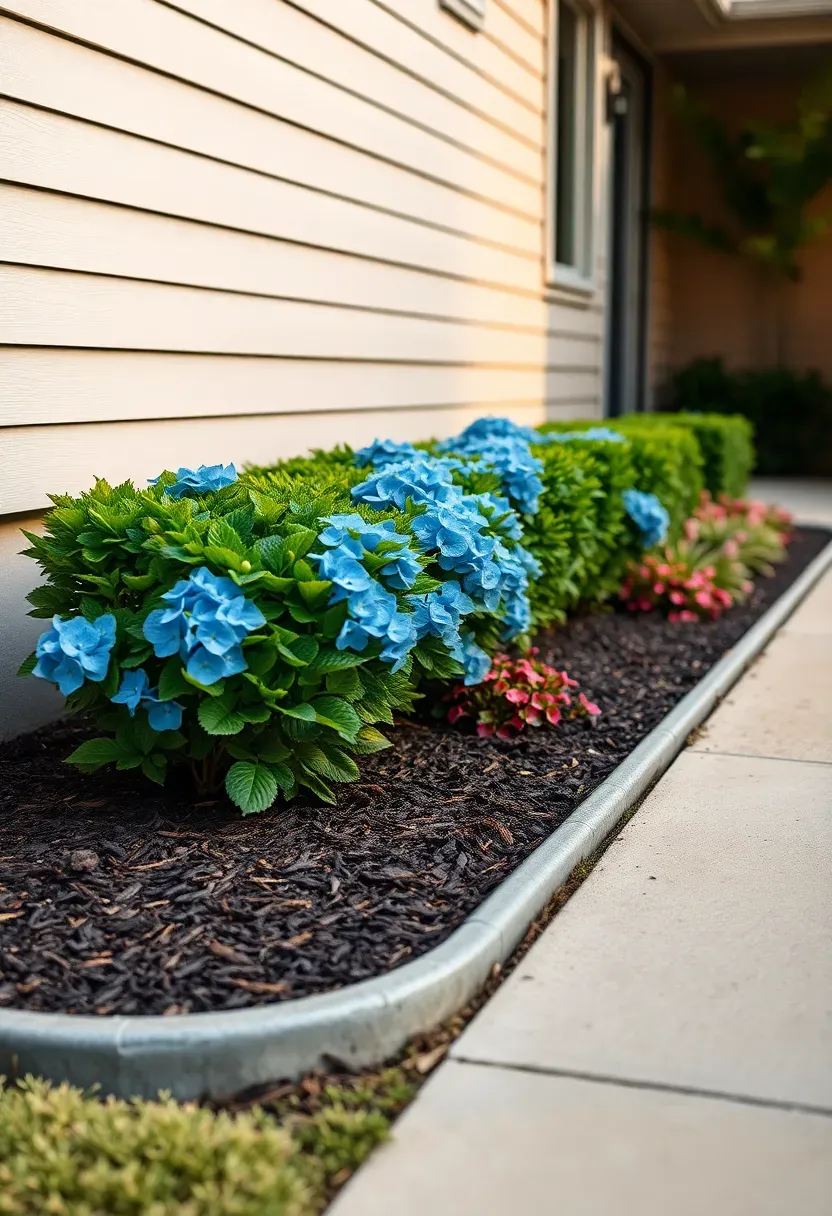
Foundation beds wrap around the base of your house and hide the concrete foundation while connecting the building to the landscape. Most builders leave a narrow strip of overgrown shrubs here — ripping those out and starting fresh makes a bigger impact than any other single yard project. Use a three-layer approach: evergreen shrubs at the back (boxwood, holly, or dwarf yew), flowering mid-height plants in the middle (hydrangeas, spiraea, or knockout roses), and a low perennial or ground cover edge (liriope, coral bells, or dwarf daylilies).
Tips
- Keep plantings at least 12 inches from the house wall for air circulation
- Slope the bed away from the foundation to prevent water pooling against the house
- Choose plants that stay proportional — a 2-foot plant in front of a window is fine; a 6-foot shrub blocking it is not
18. Rain Garden Flower Bed
Step 1: Find the right spot
Rain gardens go in natural low spots where runoff already collects, at least 10 feet from the house foundation. You can also redirect a downspout toward one.
Step 2: Dig and shape
Excavate a shallow, bowl-shaped depression about 6-8 inches deep. The bottom should be flat, not pointed. Amend the soil with compost so water percolates within 24-48 hours.
Step 3: Plant in zones
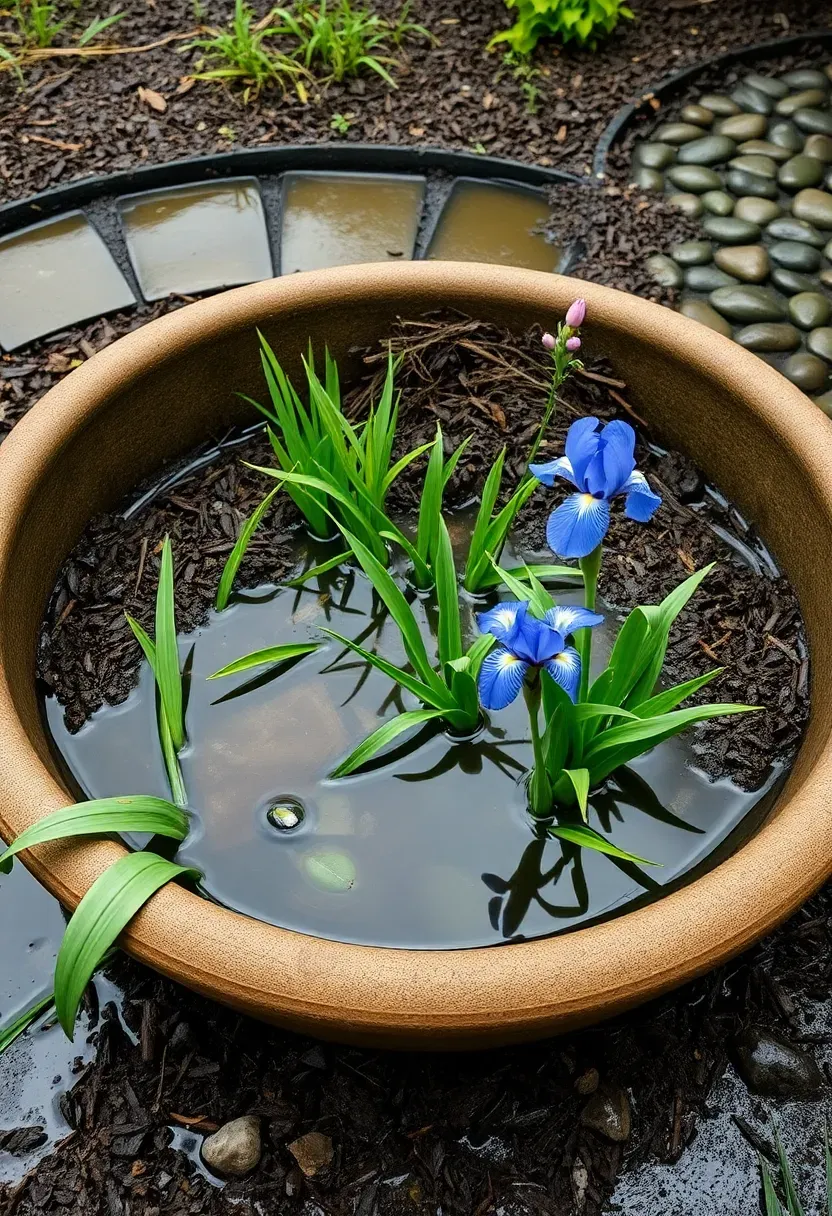
The center stays wettest — plant swamp milkweed, Joe Pye weed, blue flag iris. The mid-slope handles periodic flooding — switchgrass, cardinal flower, aster. The outer rim stays drier — black-eyed Susan, little bluestem, coreopsis.
Watch out
Rain gardens that do not drain within 48 hours breed mosquitoes. If your soil is heavy clay, you may need to dig deeper and add a gravel layer underneath.

Recommended
Items for this idea
19. Spiral Flower Bed
A spiral flower bed is pure visual play. Mark the spiral shape with a garden hose or spray paint — start from a center point and wind outward in 2-3 revolutions. Build up the center slightly so it is 8-12 inches higher than the edges, creating a gentle cone shape. Plant the tallest flowers at the elevated center (dahlias, tall marigolds, or snapdragons) and work down through medium bloomers to low ground covers at the spiral's outer edge. The height gradient and winding shape create a flower bed that looks like it is in motion.
Tips
- Keep the spiral path between planting rows wide enough for a kneeling pad
- Use contrasting colors in adjacent rings for maximum visual impact
- Mulch the spiral paths with a different material than the planting areas to define the shape
20. Ornamental Grass and Flower Mix
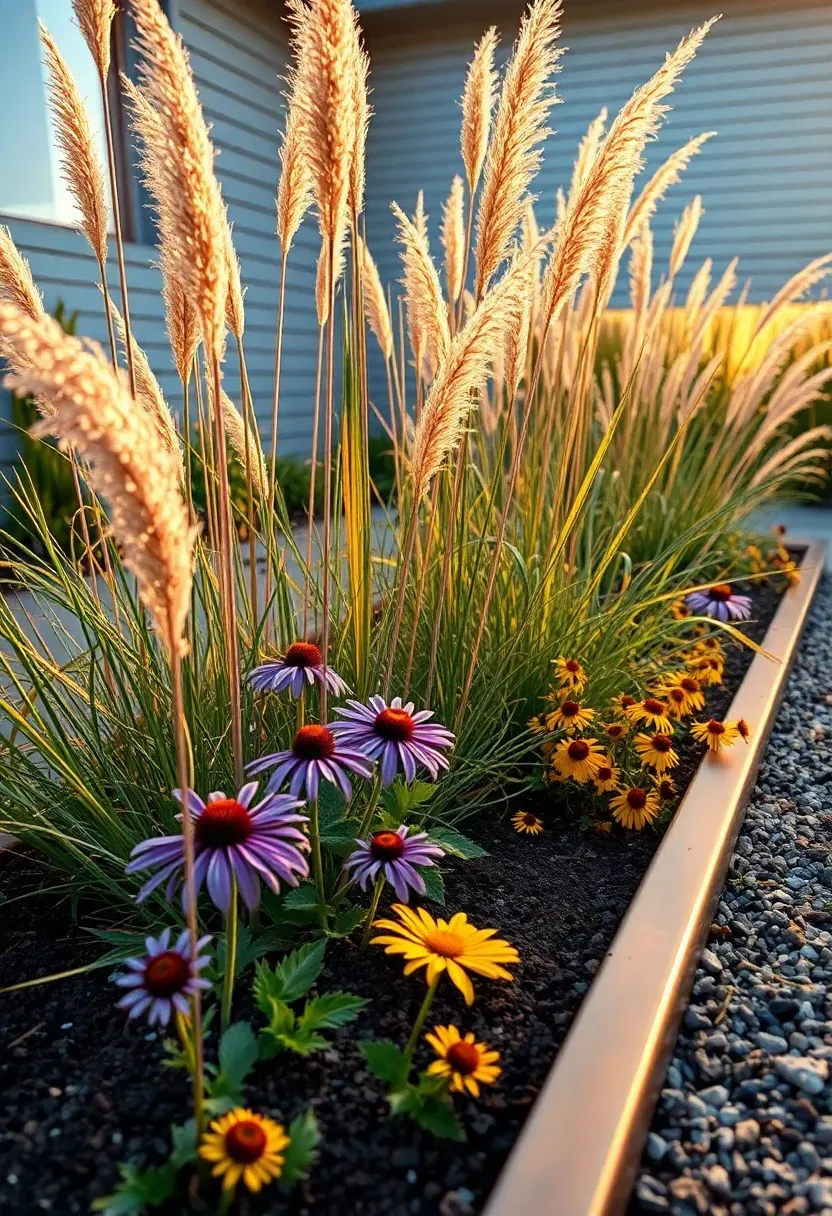
Grasses and flowers planted together mimic natural prairie ecosystems and look good year-round. The grasses provide structure, movement, and winter interest after flowers have died back. Pair upright grasses (Karl Foerster feather reed grass, switchgrass) with bold perennial flowers (coneflower, rudbeckia, salvia, sedum Autumn Joy). Plant grasses at 40-50% of the bed and flowers at 50-60%. The grasses create a backdrop that makes flower colors pop more than they would against bare mulch. This style requires almost no maintenance beyond cutting everything back to 4 inches in late winter.
Tips
- Avoid invasive grasses like ribbon grass or pampas grass — they will take over
- Leave grasses standing through winter for movement and bird habitat
- Divide grasses every 3-4 years when the center dies out
Recommended
Items for this idea
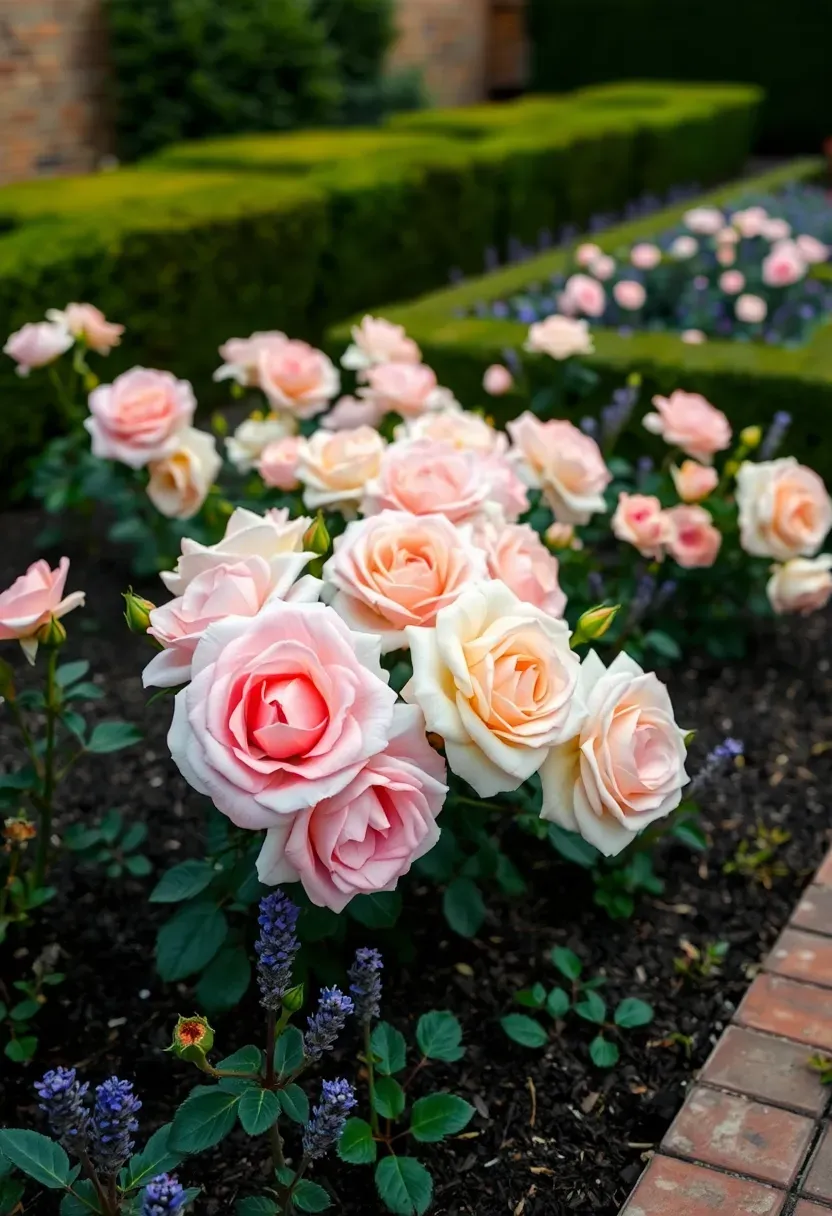
21. Heirloom Rose Bed
Modern hybrid teas are fussy. They need constant spraying, precise pruning, and still manage to look leggy and bare at the base. Heirloom and David Austin English roses are a different animal. They form full, rounded shrubs, bloom repeatedly, resist disease better, and most of them smell incredible — which is the whole point of growing roses. Plant in a dedicated bed with 3-4 feet between plants. Underplant with lavender, catmint, or low geraniums to cover bare stems and complement the roses without competing for nutrients.
Tips
- Feed with a balanced organic fertilizer in early spring and again after the first flush fades
- Water at the base, never overhead — wet leaves invite black spot
- Prune in late winter while plants are dormant, removing dead wood and crossing branches
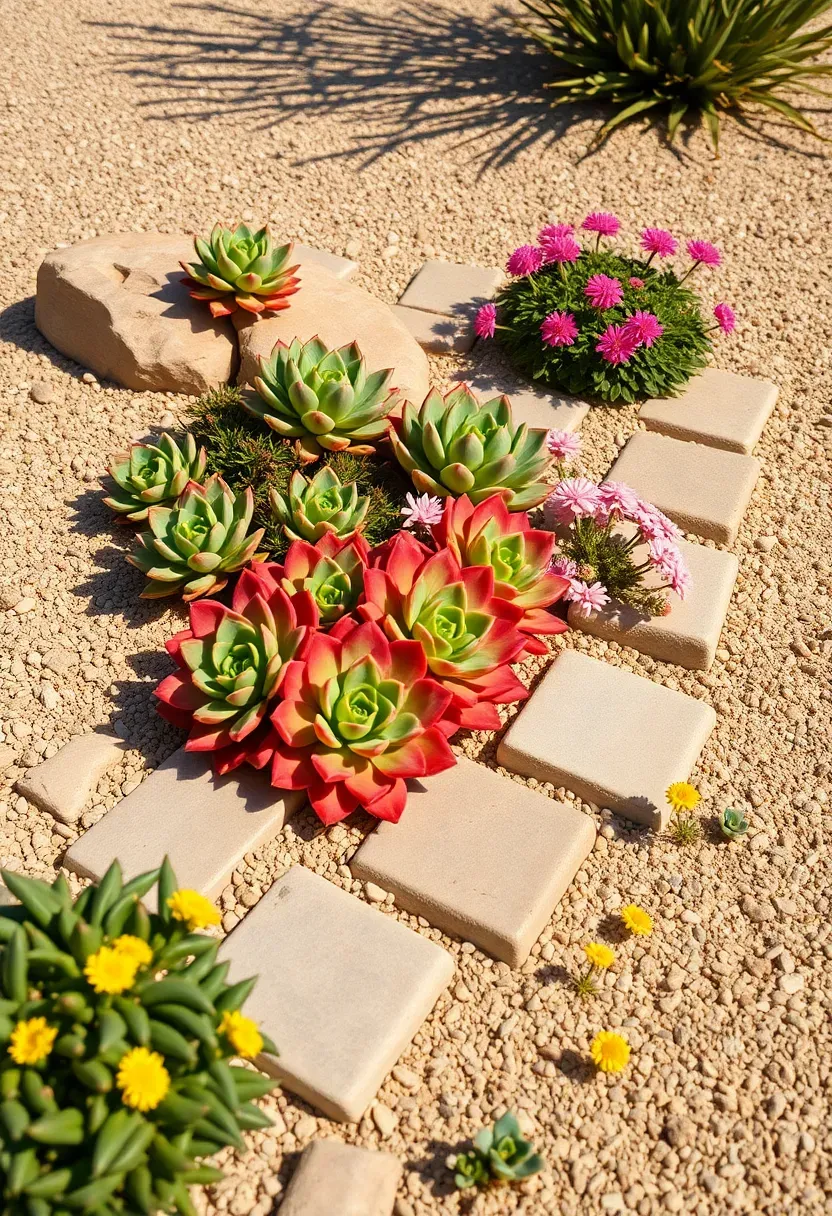
22. Succulent and Flower Rock Border
This works best in hot, dry climates or south-facing beds that bake in summer. Combine low-water succulents (sedum, sempervivum, ice plant, agave) with drought-tolerant flowers (blanket flower, coreopsis, gaura, verbena). Set them among flat rocks and gravel mulch. The succulents provide year-round structure and unusual textures, while the flowers add seasonal color bursts. This combination needs almost zero supplemental water once established — maybe a deep soak during extended heat waves. It also looks sharp in winter when the succulents hold their form while traditional flower beds are dormant.
Tips
- Ensure sharp drainage — succulents rot in wet, heavy soil
- Group succulents in clusters rather than scattering individual plants
- Add small boulders to create elevation changes and visual weight
Recommended
Items for this idea
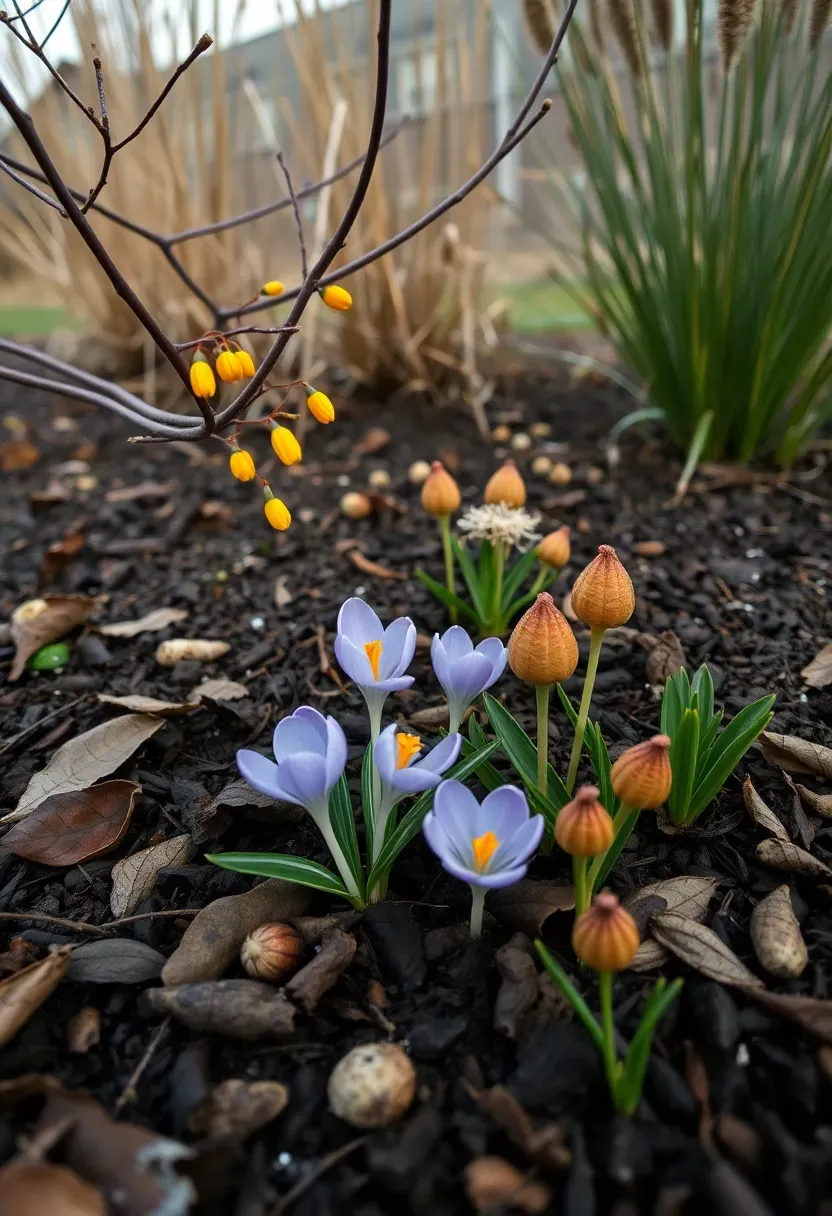
23. Four-Season Color Bed
Most flower beds peak for 6-8 weeks and then look dead for the rest of the year. A four-season bed fixes that by layering plants with staggered interest periods. Winter: witch hazel (blooms January-February), hellebores, and evergreen shrubs for structure. Spring: crocuses, daffodils, and tulips planted among the perennials. Summer: the main show — coneflowers, daylilies, phlox, and bee balm. Fall: asters, goldenrod, sedum, and ornamental grasses turning bronze. Plant spring bulbs between perennial root zones so they emerge before the perennials leaf out. This requires more planning than a single-season bed, but it rewards you with something to look at every month.
Tips
- Map out bloom times on a calendar before buying anything
- Include at least one evergreen element for winter structure
- Choose a color palette that works across seasons — purples, whites, and golds transition well
Quick FAQ
Which flowers are easiest for beginner gardeners? Zinnias, marigolds, black-eyed Susans, and coneflowers are nearly foolproof. They tolerate heat, poor soil, and inconsistent watering. All four bloom heavily with minimal care and are available as inexpensive seeds.
How deep should a flower bed be dug? Most flower roots need 8-12 inches of loose, amended soil. For raised beds, 12-18 inches gives you room for deeper-rooted perennials like roses and dahlias without hitting compacted subsoil.
Do backyard flower beds attract pests? Some flowers attract beneficial insects that eat garden pests — marigolds repel aphids, and alyssum attracts hoverflies that consume whiteflies. Healthy, diverse beds actually reduce pest problems compared to monoculture lawns.
Can I build a flower bed over existing grass? Yes. The sheet mulching method works well: lay cardboard over the grass, add 4-6 inches of compost and soil on top, and plant directly into it. The cardboard smothers the grass and decomposes within a season.
When is the best time to start a new flower bed? Fall is ideal for perennials — roots establish over winter and plants emerge stronger in spring. For annuals, start after your last frost date. Bed preparation (removing sod, amending soil) can happen any time the ground is not frozen.
Flower beds are the fastest way to shift a yard from "fine" to something you actually want to spend time in. Start with one bed — even a small 3x6 patch — and build from there. The ideas here cover enough ground that you can find something matching your climate, budget, and ambition level. Most of these projects need a weekend and a trip to the nursery. A few need more planning. None of them need a landscape contractor.
Pinterest cover for 23 Backyard Flower Bed Ideas
About the author
OBCD
CGI visualization and interior design content. We create detailed 3D renders and curate practical design ideas for every room in your home.