25 Backyard Fencing Ideas for Every Style and Budget
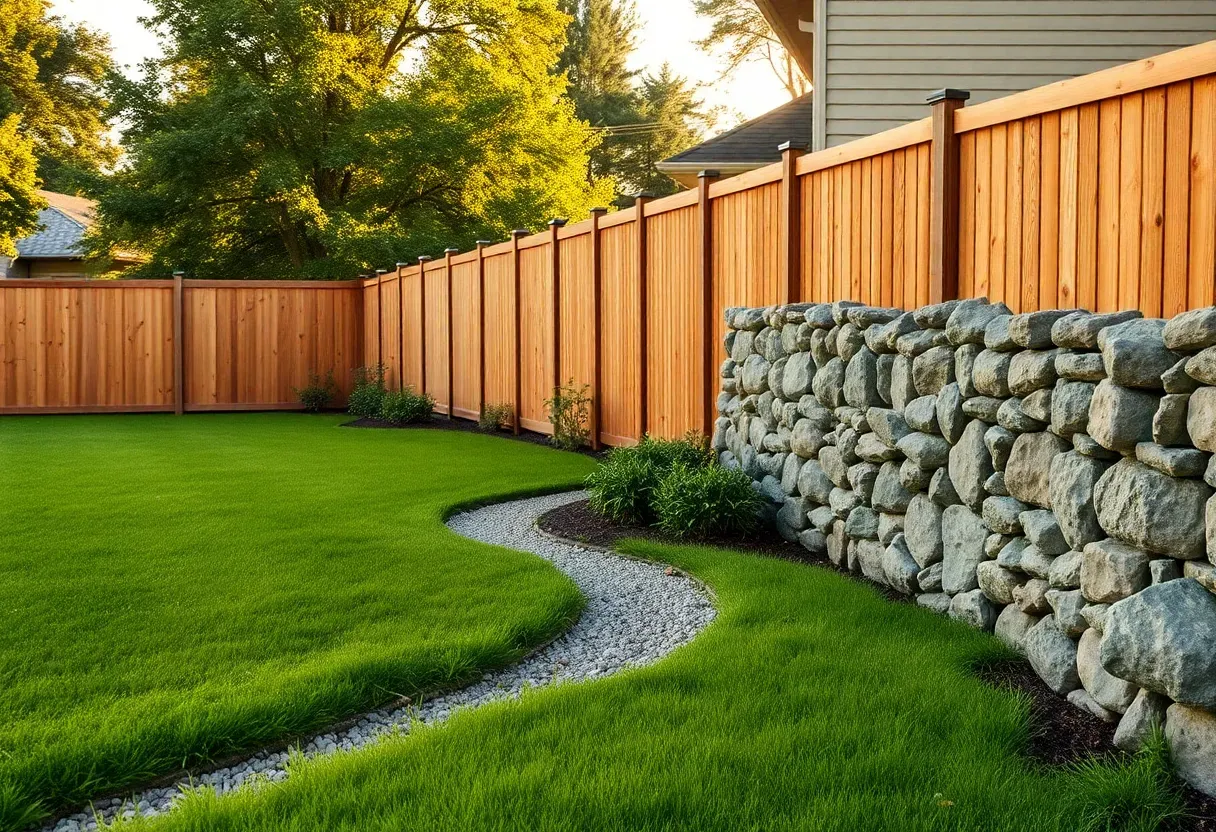
Fencing decisions tend to happen under pressure — the neighbor's dog keeps visiting, the HOA sends a letter, or a new pool requires a code-compliant barrier by next Tuesday. That urgency leads to rushed choices and generic results. But fencing is one of the largest visual elements on your property. It frames every garden bed, every patio dinner, every morning coffee on the back steps. Getting it right pays off for a decade or more, and the difference between a fence you tolerate and one you actually like often comes down to a single material swap or a slightly different board orientation.
I have photographed and researched fencing across climates and budgets. These 25 ideas cover wood, metal, composite, living plants, and mixed-material combinations that work for real yards.
Table of Contents
- Horizontal Cedar Plank Fence
- Black Aluminum Picket Fence
- Board-on-Board Privacy Fence
- Gabion Wall with Stone Fill
- Living Willow Woven Screen
- Corrugated Metal Panels on Steel Frame
- Split Rail with Wire Mesh
- Shou Sugi Ban Charred Wood Fence
- Bamboo Roll Fencing
- Laser-Cut Metal Privacy Panels
- Post and Rail with Climbing Roses
- Concrete Block Fence with Cap
- Composite Tongue-and-Groove Fence
- Woven Hazel Hurdle Panels
- Corten Steel Planter-Fence Hybrid
- Louvered Wood Fence
- White Vinyl Picket Fence
- Dry-Stacked Stone Wall Fence
- Lattice Top Privacy Fence
- Reclaimed Pallet Wood Fence
- Glass Panel Wind Fence
- Horizontal Mixed-Width Slat Fence
- Cedar Shadowbox Fence
- Rope and Post Nautical Fence
- Hedge and Fence Combination
1. Horizontal Cedar Plank Fence
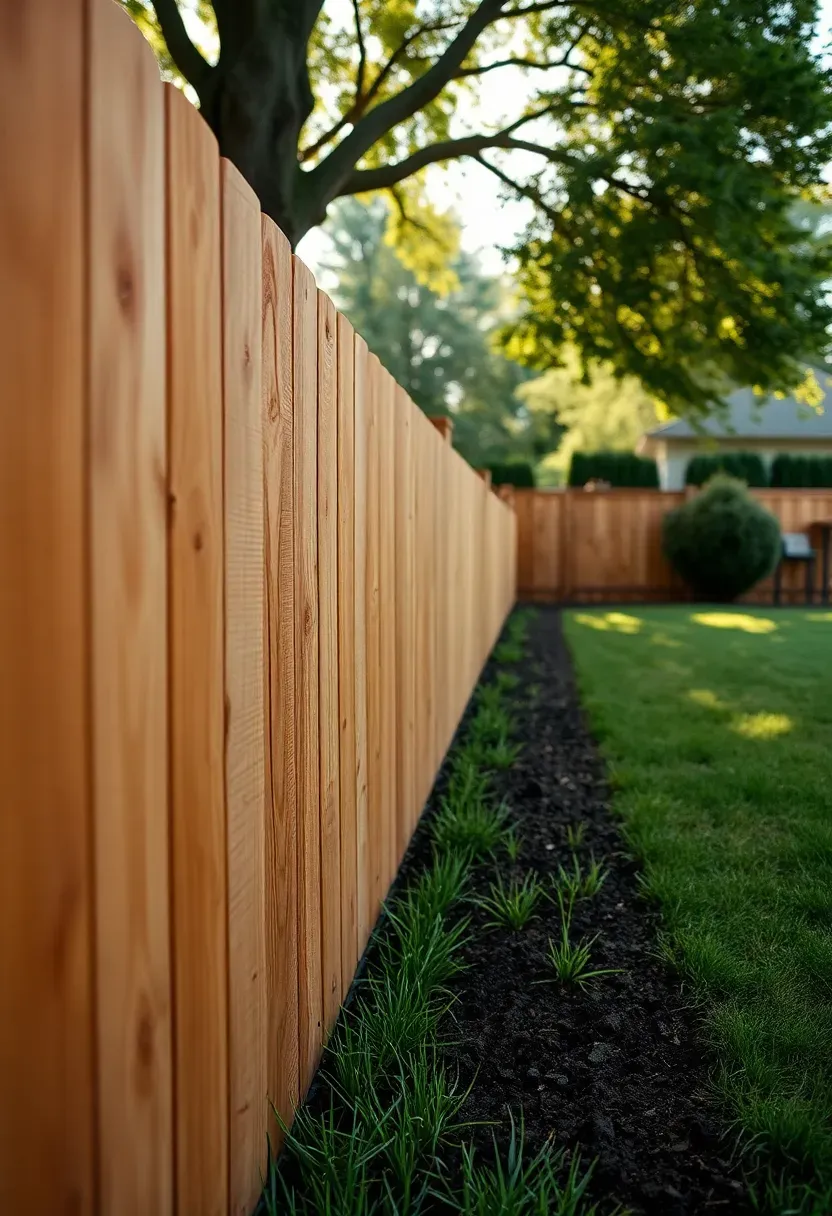
Horizontal boards completely change how a fence reads. Where vertical pickets feel traditional and enclosed, horizontal planks stretch the eye sideways, making narrow yards look wider and giving the whole property a mid-century or contemporary feel. Western red cedar is the go-to species — it contains natural oils that resist rot and insects without chemical treatment, and it weathers to a silver-gray that many people prefer to the original orange-gold tone. Use 1x6 or 1x8 boards with 1/4-inch gaps between them for airflow, which slows moisture damage and lets filtered light through.
Tips
- Space posts no wider than 6 feet apart to prevent board sag over time
- Apply a UV-blocking oil finish if you want to preserve the warm cedar color
- Use stainless steel or ceramic-coated screws — regular steel bleeds black stains into cedar
We picked a few things that go well with this idea: UPGRADE Privacy Fence Screen (6x50ft) (★4.5), Shade&Beyond Privacy Fence Mesh (4x50ft) (★4.6) and Enclo Concord Cedar Privacy Screen Panel (★4.4). As an Amazon Associate we earn from qualifying purchases.
2. Black Aluminum Picket Fence
Why aluminum over wrought iron?
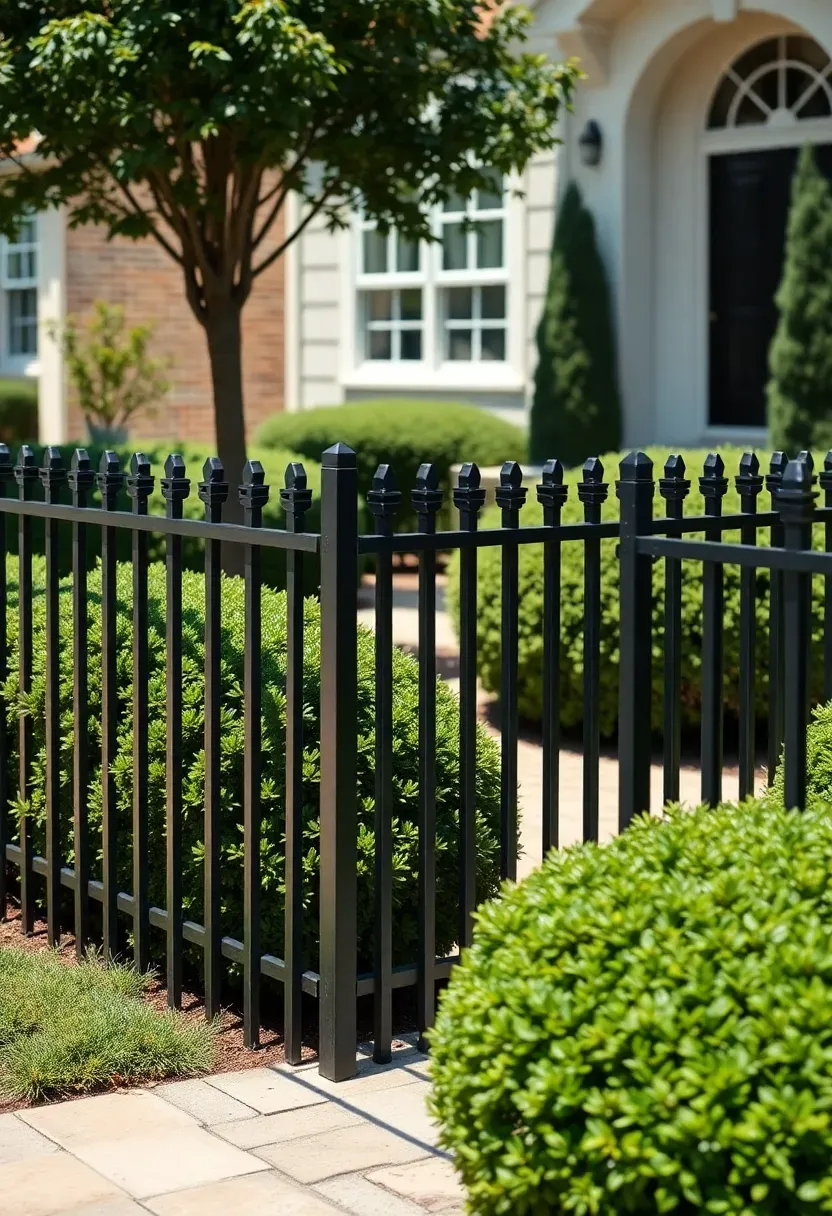
Wrought iron rusts. Aluminum does not. Powder-coated black aluminum gives you the same clean, narrow-profile picket look at roughly half the weight and none of the annual maintenance. Most panels come in 6-foot sections that slot into brackets on pre-set posts, making DIY installation realistic for a weekend project.
Best uses
Aluminum picket fencing works best for front yards, pool surrounds, and property-line boundaries where you want visibility rather than privacy. It meets most municipal pool codes at 54 inches tall with self-closing gates.
Choose if...
You need a low-maintenance fence that defines boundaries without blocking sightlines. Skip it if full privacy is the goal — these fences hide nothing.
We picked a few things that go well with this idea: SaverSystems Wood Stain and Sealer (1 Gal) (★4.6), Ready Seal Cedar Oil Wood Stain (5 Gal) (★4.6) and Thompson's WaterSeal Clear Waterproofer (1 Gal) (★4.5). As an Amazon Associate we earn from qualifying purchases.
3. Board-on-Board Privacy Fence
Board-on-board construction overlaps adjacent pickets on alternating sides of the rail, so there are no direct gaps. The result is a fence that blocks sightlines from every angle while still allowing air to pass through the offset seams. This matters in windy areas — a solid fence acts like a sail and can blow over in storms, while the offset gaps relieve wind pressure without sacrificing privacy. Cedar or pressure-treated pine both work well. Expect to use about 30% more lumber than a standard side-by-side picket fence because of the overlap.
Tips
- Overlap boards by at least 1 inch on each side of the rail for full visual coverage
- The fence looks good from both sides, which keeps neighbors happy
- Stain both faces before assembly — it is nearly impossible to reach the overlap area afterward
We picked a few things that go well with this idea: Laser Cut Steel Privacy Screen (72in) (★4.5), Barrette Sprig Decorative Screen Panel (★4.7) and Barrette Sanibel Decorative Screen (2x4ft) (★4.7). As an Amazon Associate we earn from qualifying purchases.
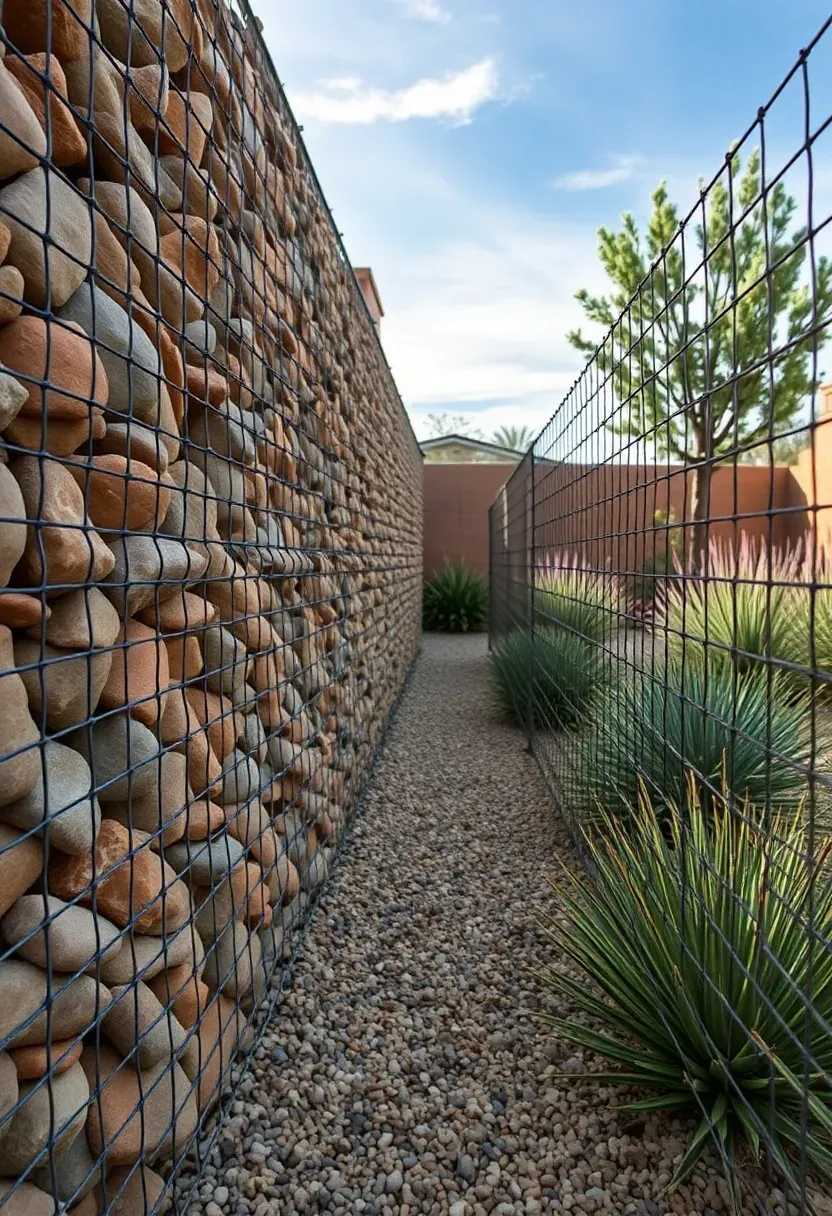
4. Gabion Wall with Stone Fill
What is a gabion?
Gabion walls are wire mesh cages — usually welded galvanized steel — filled with stone, gravel, or recycled concrete. Originally an engineering solution for retaining walls and erosion control, they have crossed over into residential fencing because they look substantial, drain water freely, and never need painting or staining.
How to build one
Order prefab gabion baskets in 3-foot or 4-foot tall sections. Set them on a compacted gravel base, wire the panels together, and fill with your choice of stone. River rock gives a smooth, rounded look. Angular quarry stone packs tighter and creates a rougher texture. A 4-foot-tall gabion wall provides decent privacy and wind protection.
Watch out
Gabions are heavy — a filled 3x3x3-foot cage weighs over 2,000 pounds. They do not work on sloped ground without terracing, and local codes may classify them as retaining walls requiring permits.
Recommended
Items for this idea
5. Living Willow Woven Screen
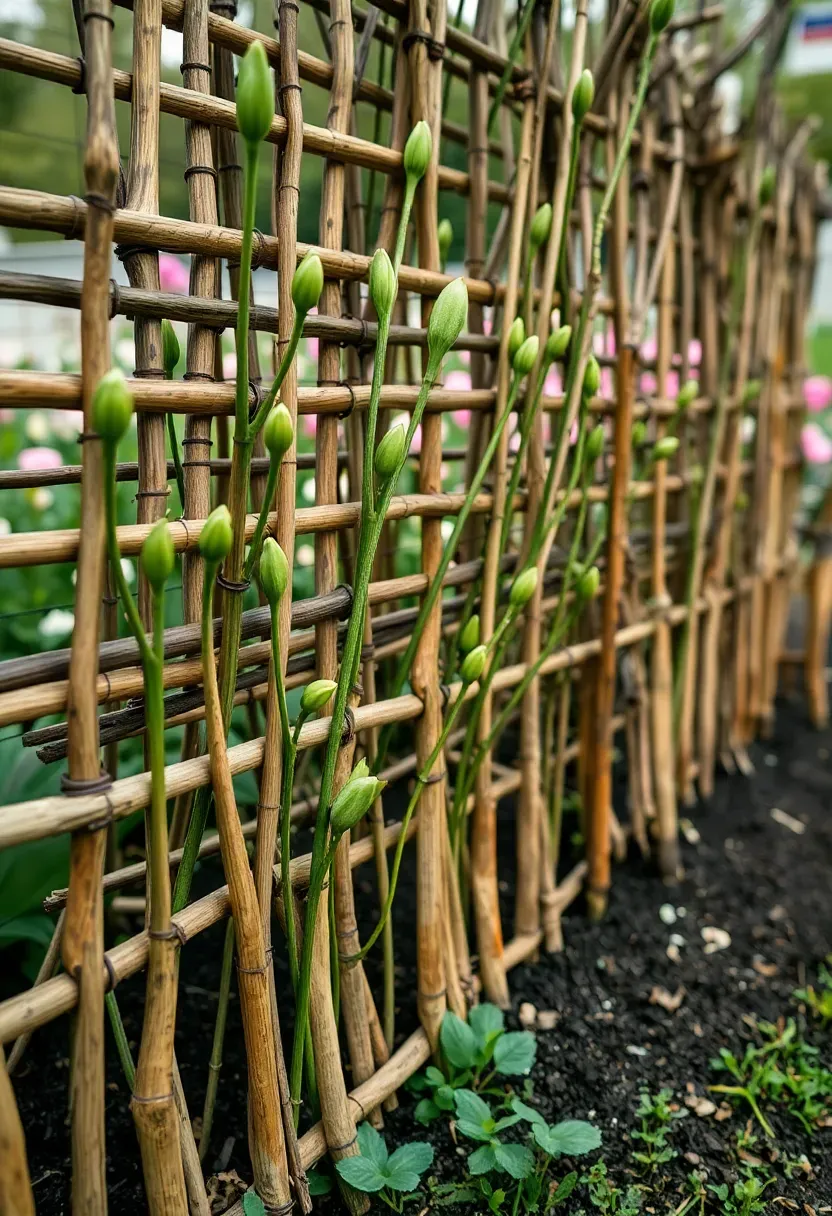
Living fences grow. You push freshly cut willow rods (called withies) into damp soil in late winter, weave them together, and within weeks they root and sprout leaves. By midsummer you have a green, self-repairing fence that gets denser each year. Willow grows fast — 6 to 10 feet per year in good conditions — so you will need to prune it twice annually to keep it at fence height. The look is distinctly cottage-garden, somewhere between a hedge and a woven basket. It works in USDA zones 4-8 where soil stays consistently moist.
Tips
- Harvest or buy willow rods in January through March while dormant
- Plant rods 6-9 inches apart at alternating 45-degree angles for a diamond weave pattern
- Water heavily for the first growing season until roots establish
6. Corrugated Metal Panels on Steel Frame
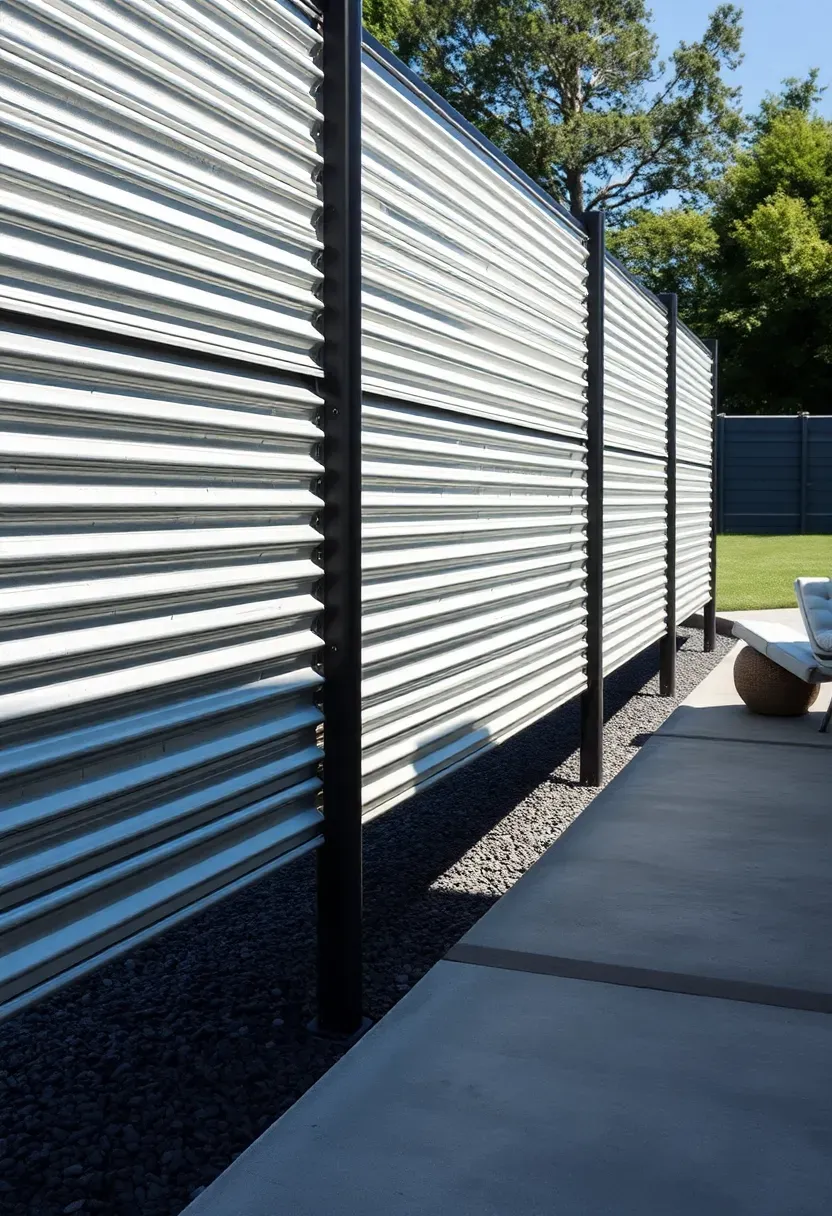
Corrugated roofing panels cost about $15-25 per sheet and mount quickly onto a welded or bolted steel frame. The look is industrial-agricultural — it reads as intentional in modern or farmhouse-style yards but can look out of place next to traditional brick homes. Use galvanized or Galvalume panels for rust resistance. Pre-weathered or painted panels (available in charcoal, forest green, barn red) offer more design flexibility. Frame the panels with steel tube posts and horizontal rails to keep everything rigid and prevent the metal from oil-canning in heat.
Pros
- Inexpensive per linear foot compared to wood or composite
- Blocks wind and noise effectively
- Virtually no maintenance for 20+ years
Cons
- Can amplify rain noise
- Sharp edges require careful handling during installation
- Some HOAs prohibit metal fencing in residential areas
Recommended
Items for this idea
7. Split Rail with Wire Mesh
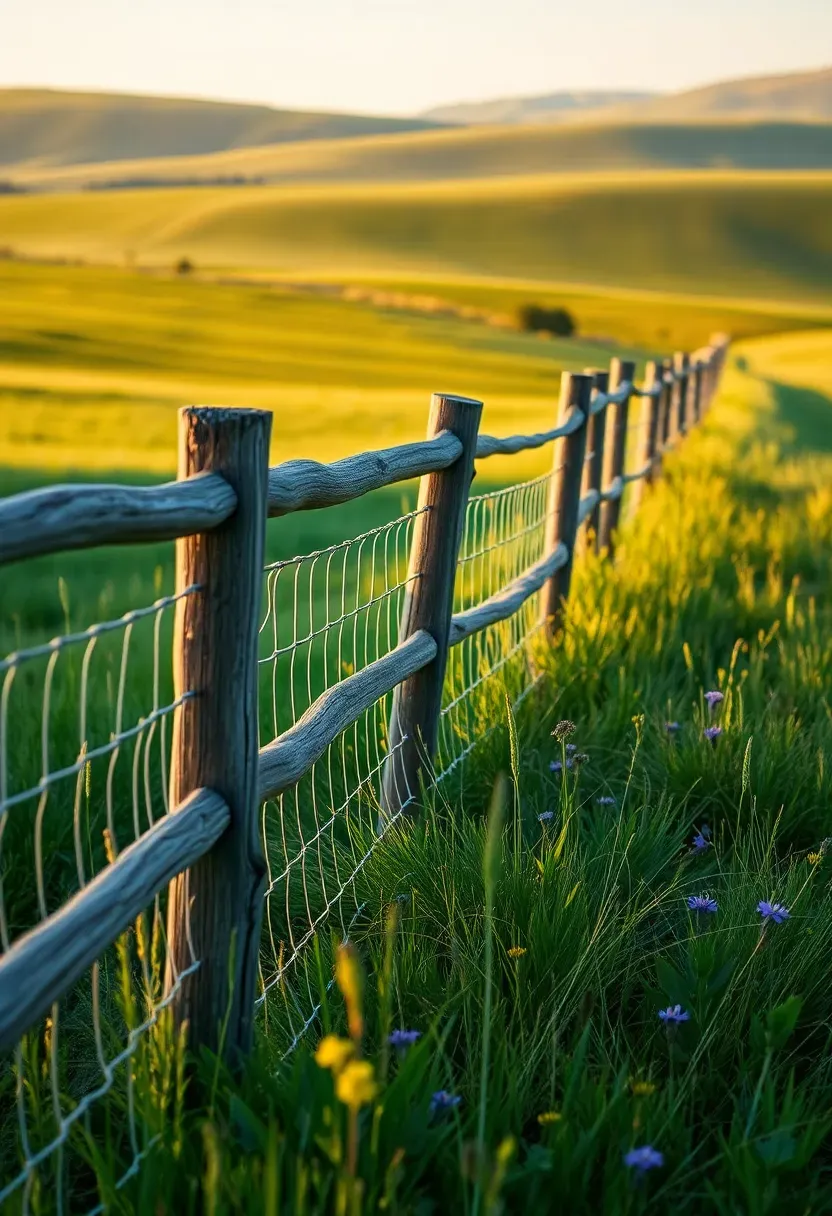
The classic split rail — two or three horizontal rails mortised into chunky posts — defines boundaries without creating a visual wall. Adding welded wire mesh to the back side keeps small dogs and children contained while preserving the open, country feel. Locust is the traditional wood choice because it resists ground contact rot for 20+ years without treatment. Cedar and pressure-treated pine are more available but won't last as long in direct soil contact. This is the easiest fence to install on uneven terrain because the sections follow ground contour naturally.
Steps
- Set posts 8 feet apart in holes 24 inches deep with tamped gravel (no concrete needed for locust posts)
- Drop rails into the mortised slots — they should angle slightly downhill for water drainage
- Staple 2x4-inch welded wire mesh to the back side using galvanized fence staples every 8 inches
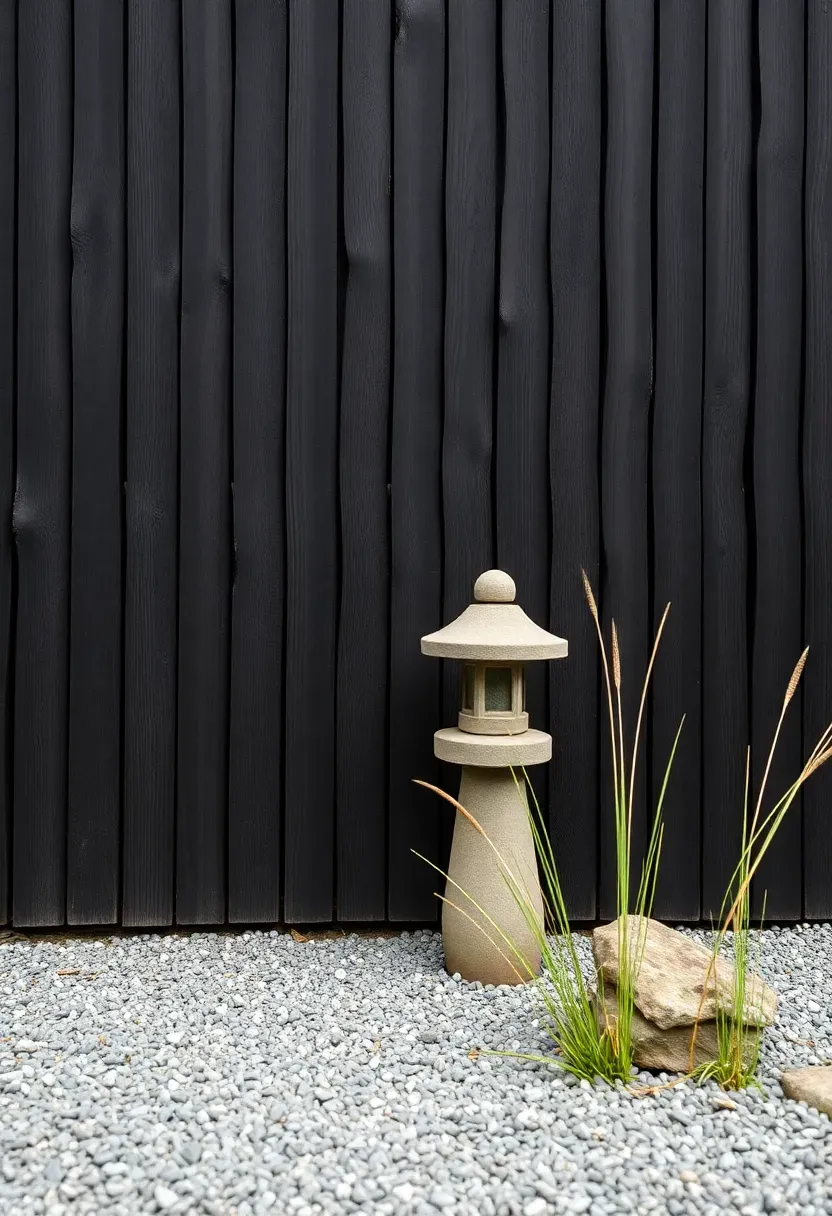
8. Shou Sugi Ban Charred Wood Fence
Shou sugi ban is a Japanese wood preservation technique that chars the surface of boards with an open flame. The carbonized layer resists rot, insects, and UV degradation better than most stains or sealers. The visual effect — deep black with alligator-scale texture — is dramatic and unlike anything else in residential fencing. Use thick cedar or cypress boards (at least 3/4 inch) and char them with a propane torch before mounting. The process is labor-intensive but the finished fence requires almost no maintenance beyond an occasional coat of natural oil.
Tips
- Char boards on a flat surface outdoors, away from structures — this involves open flame
- Brush off loose char with a stiff bristle brush to reveal the grain pattern beneath
- Seal with tung oil or linseed oil to deepen the color and add water resistance
Recommended
Items for this idea
9. Bamboo Roll Fencing
The appeal
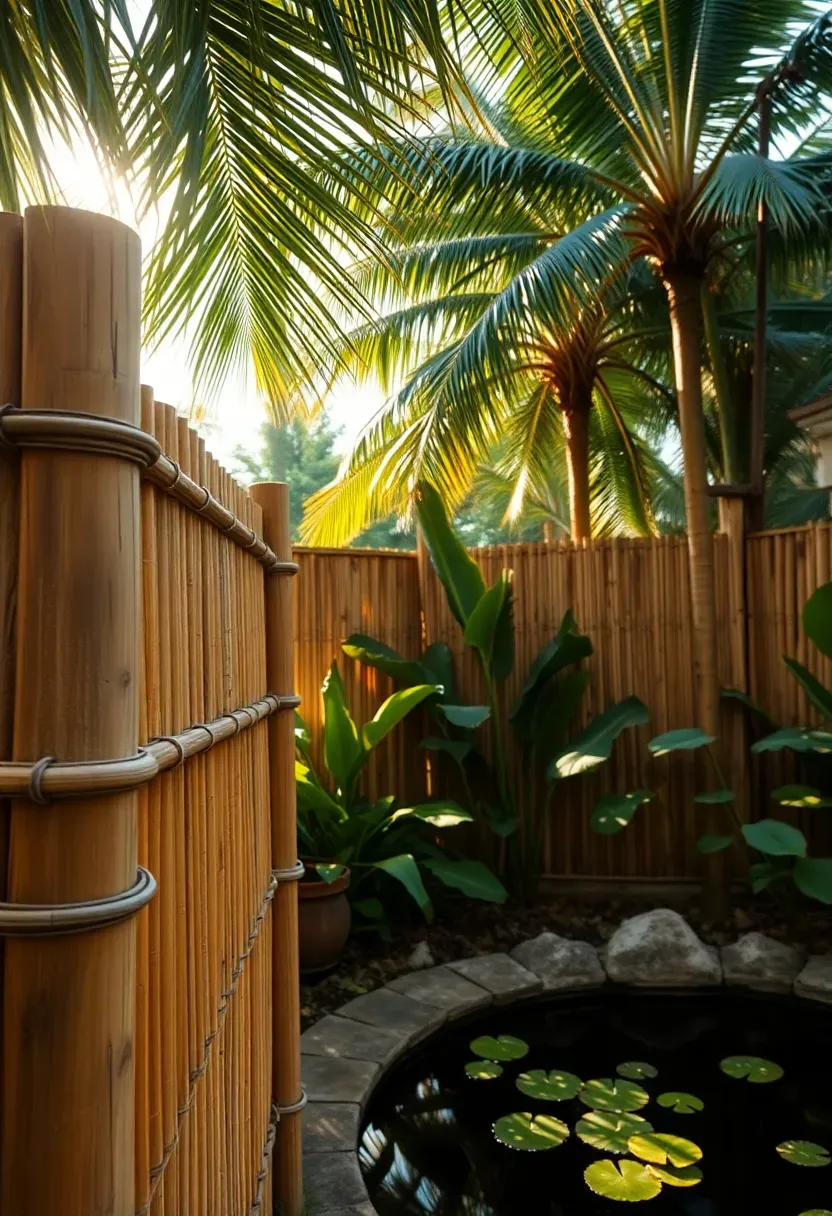
Bamboo roll fencing ships in 6-foot or 8-foot rolls that unroll and attach to existing posts or frames with zip ties or wire. Installation takes minutes per section. The natural tan color and tight cane pattern create instant tropical screening — ideal for pool areas, hot tub enclosures, or disguising chain-link fences you cannot remove.
The reality
Bamboo rolls are a short-term solution. Untreated bamboo fades, splits, and degrades within 2-4 years in most climates. UV exposure accelerates the breakdown. You can extend the lifespan to 5-6 years with a marine-grade spar varnish, but replacement is always part of the plan.
Best for
Renters, seasonal screening, or quick fixes while you save for a permanent fence. At $20-40 per 6-foot roll, it is cheap enough to replace every few years without regret.
10. Laser-Cut Metal Privacy Panels
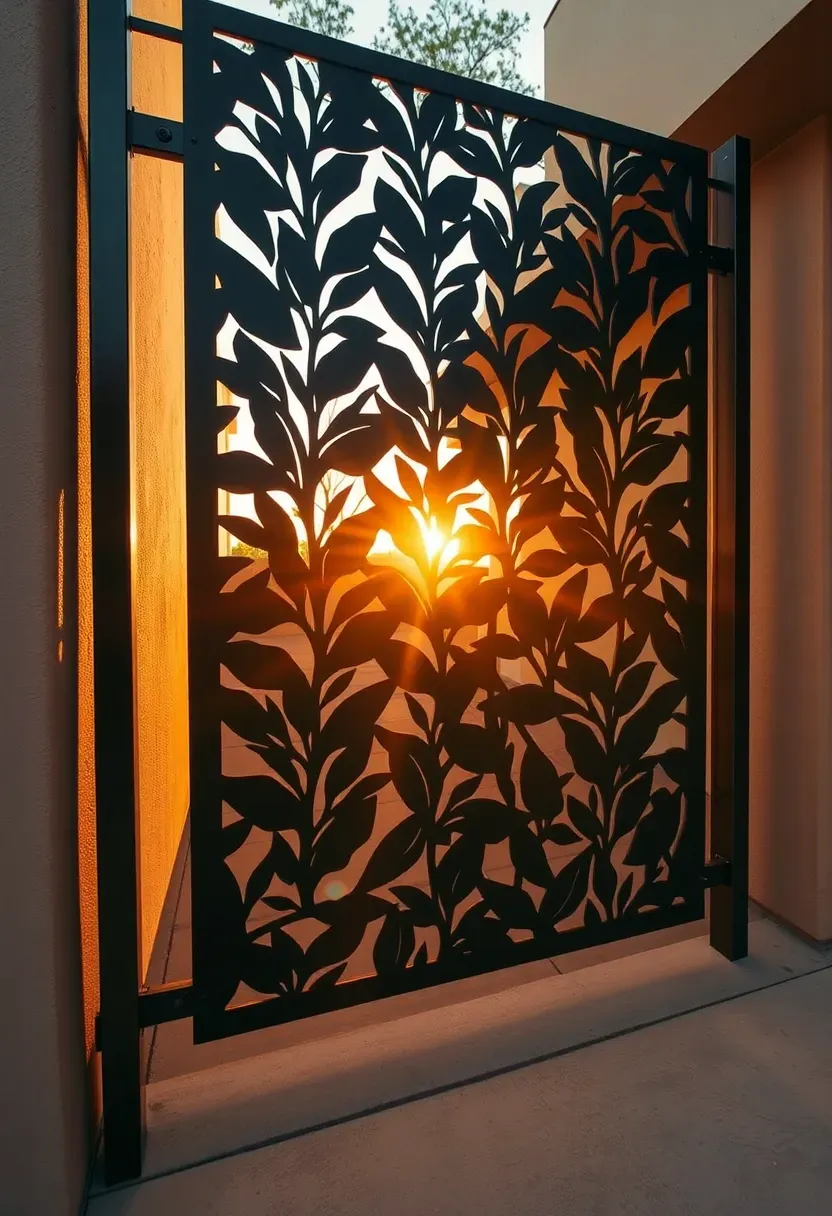
Laser-cut panels turn a fence into something closer to public art. Manufacturers cut intricate patterns — leaves, geometric shapes, abstract waves — into aluminum or steel sheets, creating screens that block sightlines during the day and cast dramatic shadow patterns when backlit at night. Most panels come in 4x6-foot or 4x8-foot sizes and mount between steel posts. Powder-coated aluminum panels run $150-400 each depending on complexity. They weigh less than you would expect and resist corrosion well. Position landscape uplights behind them for an evening effect that makes the investment worth it.
Tips
- Order a sample panel before committing — pattern scale looks different in person than in catalog photos
- Matte black powder coat shows the least amount of fingerprints and water spots
- Leave a 2-inch gap at the bottom to prevent soil moisture from wicking onto the metal
Recommended
Items for this idea
11. Post and Rail with Climbing Roses
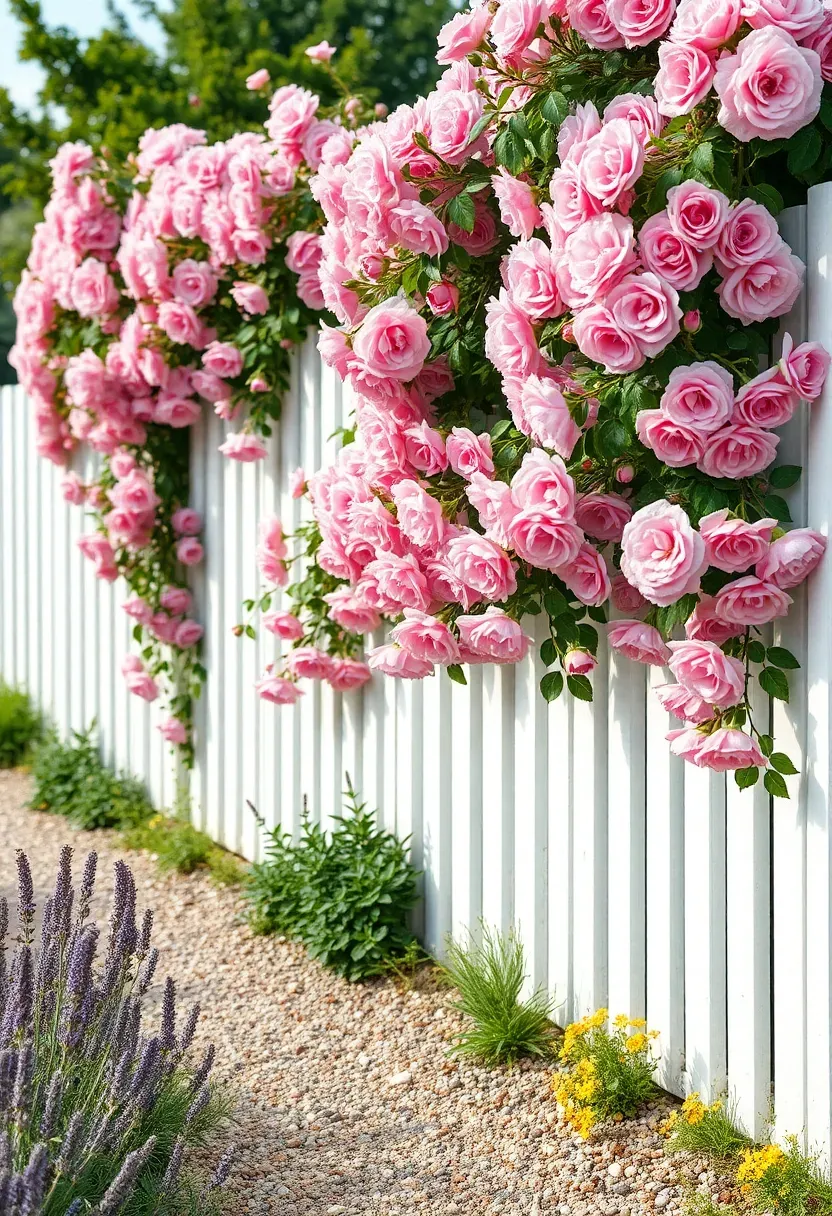
A basic post and rail fence becomes something entirely different when climbing roses cover it. The fence provides the structure — typically three horizontal rails between 4x4 posts set 8 feet apart — and the roses provide color, fragrance, and seasonal interest that no manufactured material can match. Plant one climbing rose per fence section and train the canes horizontally along the rails using soft garden ties. Varieties like New Dawn, Zephirine Drouhin (thornless), and Eden are disease-resistant and bloom repeatedly from late spring through fall.
Watch out
- Roses need at least 6 hours of direct sun — a north-facing fence line won't work
- You will need to prune and tie in new canes every winter
- The fence wood will deteriorate faster where rose canes hold moisture against it
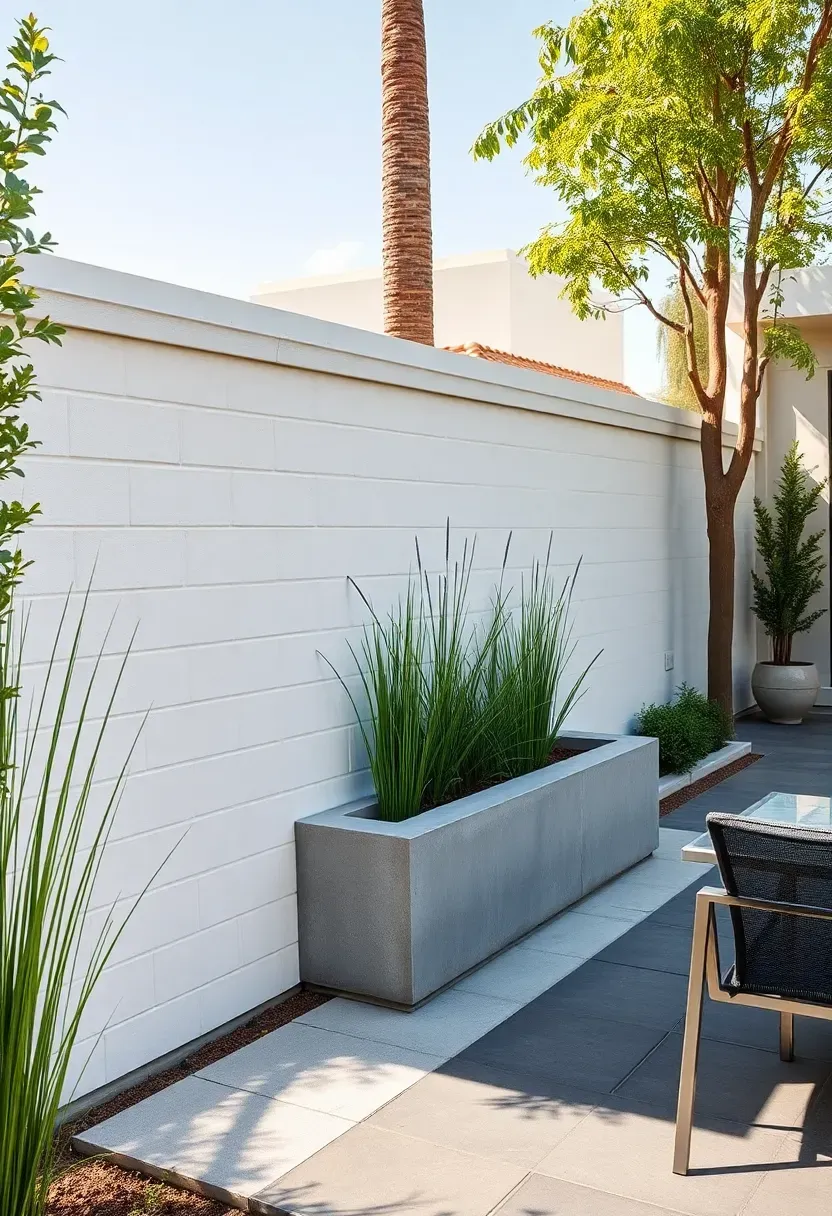
12. Concrete Block Fence with Cap
The basics
Concrete masonry unit (CMU) block walls are common in the American Southwest, parts of Florida, and anywhere termites make wood fencing impractical. A standard 8-inch-wide block wall at 6 feet tall provides complete privacy, wind protection, and fire resistance. The wall requires a poured concrete footing, rebar reinforcement, and grout-filled cores to meet structural codes.
Making it look good
Raw gray block looks institutional. Stucco coating in white, tan, or terracotta transforms it into something Mediterranean. Alternatively, split-face blocks have a rough stone texture straight out of the mold. Top the wall with a precast concrete cap or natural stone coping to shed water and give it a finished edge.
Cost reality
CMU walls cost $25-45 per linear foot installed — two to three times more than wood fencing. But they last 50+ years and require zero maintenance beyond occasional pressure washing.
Recommended
Items for this idea
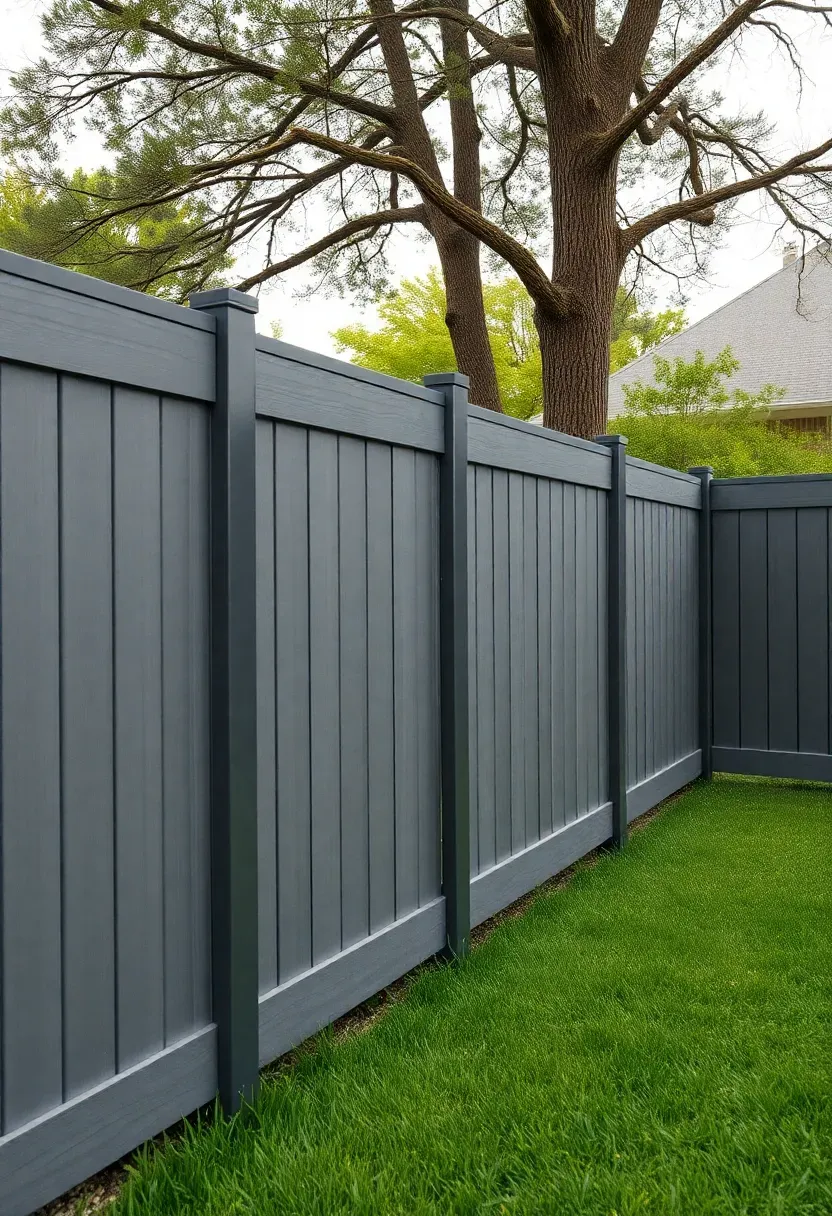
13. Composite Tongue-and-Groove Fence
Composite fencing boards are made from recycled wood fiber and plastic, extruded into planks that look like painted wood but never need staining, sealing, or replacing rotted sections. Tongue-and-groove profiles lock together without visible fasteners, creating a seamless face. Most manufacturers offer 25-year warranties against fading, staining, and structural failure. The trade-off is cost — composite fencing runs 2-3x the price of pressure-treated pine — and a slightly plastic feel up close that wood purists dislike. From 10 feet away, though, the better brands are hard to distinguish from painted wood.
Tips
- Choose a brand with co-extruded cap stock (the outer layer) for better fade resistance
- Composite expands and contracts with temperature — follow manufacturer spacing guides exactly
- Dark colors absorb more heat and may warp in extreme sun; gray and tan perform best
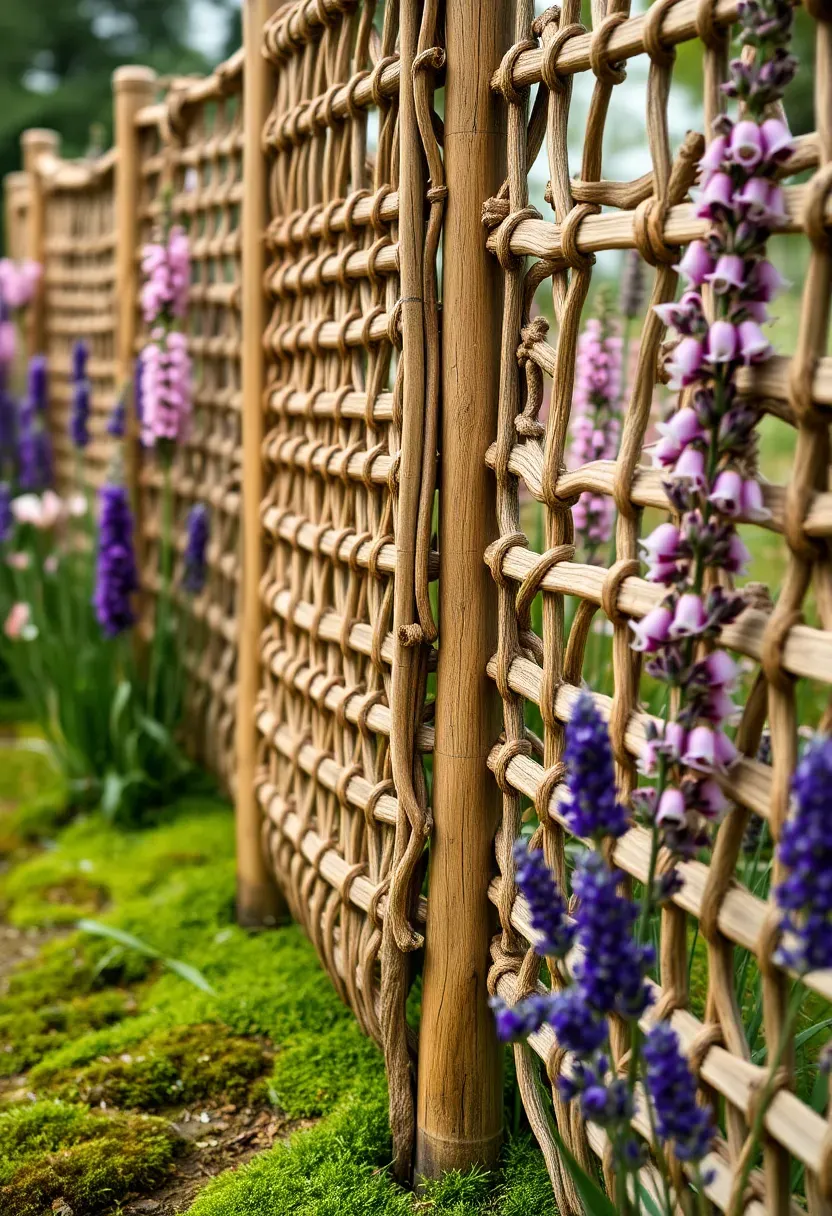
14. Woven Hazel Hurdle Panels
Hazel hurdles are hand-woven panels made from coppiced hazel rods — a craft that dates back to medieval England. Each panel is unique, with a textured, basket-like surface that filters wind gently rather than blocking it. Standard panels come in 6-foot widths and 3 to 6-foot heights, held between pointed stakes driven into the ground. They last 8-12 years before the hazel degrades, which is shorter than manufactured fencing but considerably more attractive. The impermanence is part of the appeal — these are garden fences, not fortress walls.
Steps
- Drive sharpened chestnut or oak stakes into the ground every 6 feet, at least 18 inches deep
- Wire the hurdle panels to the stakes with galvanized tie wire at the top, middle, and bottom
- Plant climbing plants like clematis or jasmine at the base to weave through the panel as it ages
Recommended
Items for this idea
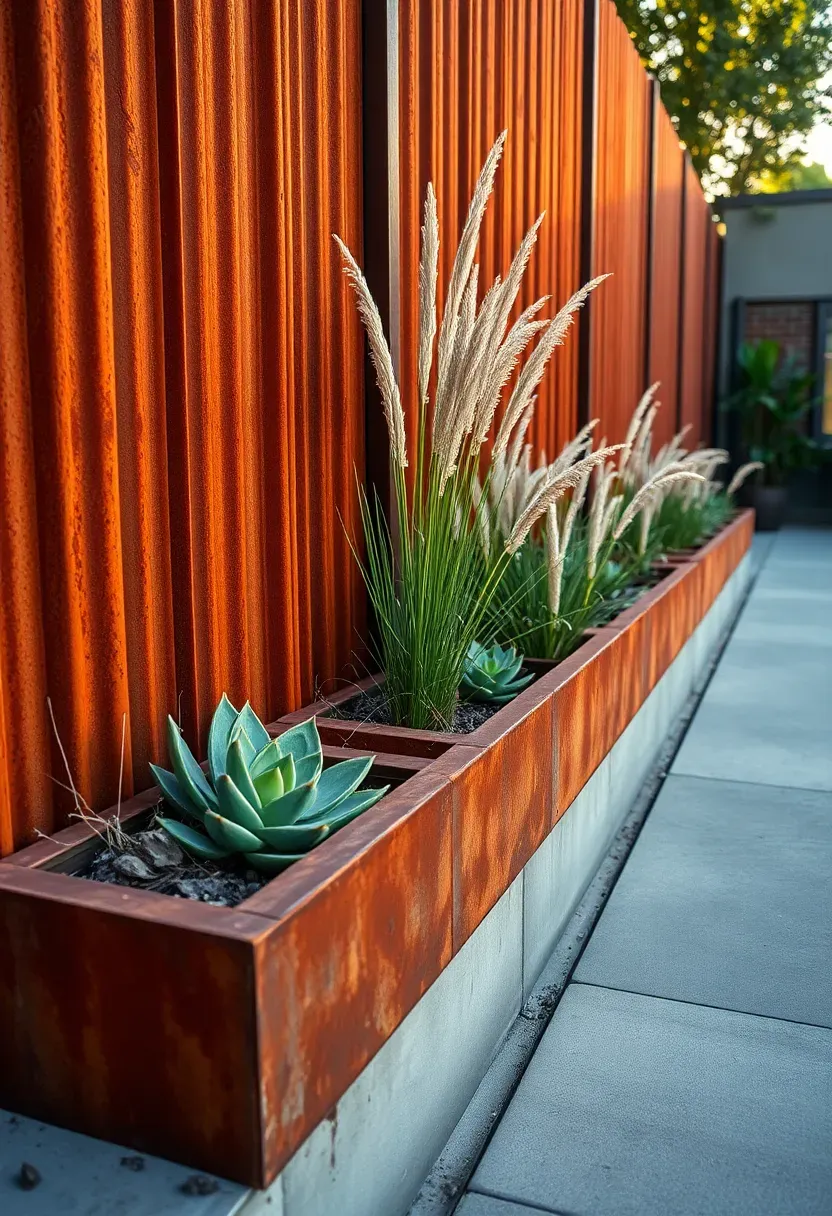
15. Corten Steel Planter-Fence Hybrid
This design combines boundary fencing with built-in raised planters. Corten steel panels (weathering steel that develops a protective rust layer) stand vertically as fence sections, with integrated planter boxes welded or bolted at the base. The planters hold ornamental grasses, succulents, or trailing plants that soften the industrial edge of the steel. It is a practical solution for properties where you need both a fence and garden space along the perimeter. Standard panel heights of 4-6 feet provide adequate privacy while the planter adds another 12-18 inches of visual bulk at the base.
Pros
- Dual function saves space — no need for separate planters and fence
- Corten develops its patina naturally and needs no painting
- Strong enough to handle soil weight without bowing
Cons
- Heavy — requires a solid base or footing
- Rust staining on adjacent concrete during the first year of patina development
- Custom fabrication costs $50-80 per linear foot for panels alone
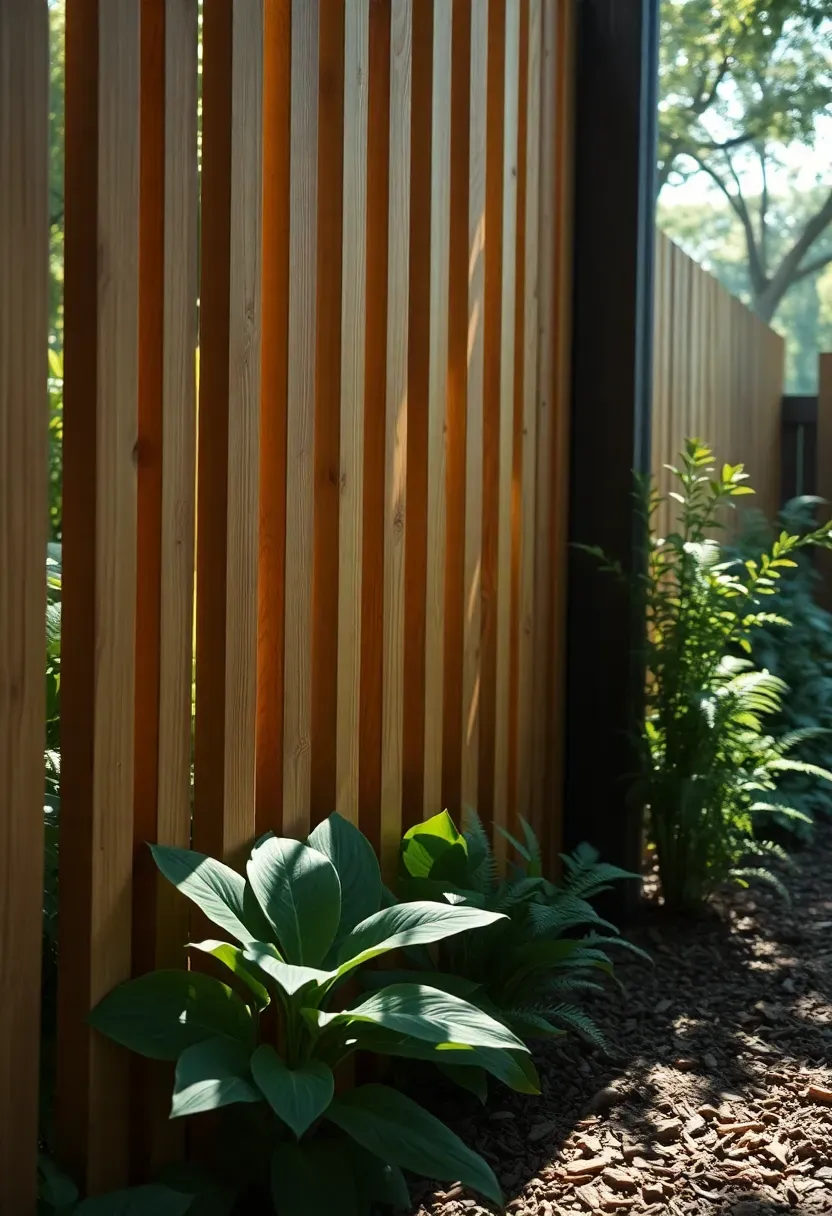
16. Louvered Wood Fence
Louvered fences angle individual slats at about 45 degrees, like a vertical window blind. This design blocks direct sightlines from straight on while allowing air circulation and angled light to pass through. The effect inside the yard is a dappled, filtered quality that feels less claustrophobic than a solid privacy fence. Cedar, redwood, or ipe work best because the angled slats expose more surface area to weather and need rot-resistant wood. Pre-built louvered panels are available from specialty fence companies, or you can build your own by routing angled dadoes into the posts and sliding the slats in.
Tips
- Angle slats downward from the inside face so rain drains outward, away from your yard
- Spacing slats 3/4 inch apart balances privacy and airflow well
- A louvered fence can reduce wind speed by 50% without creating the turbulence that solid fences cause on the lee side
Recommended
Items for this idea
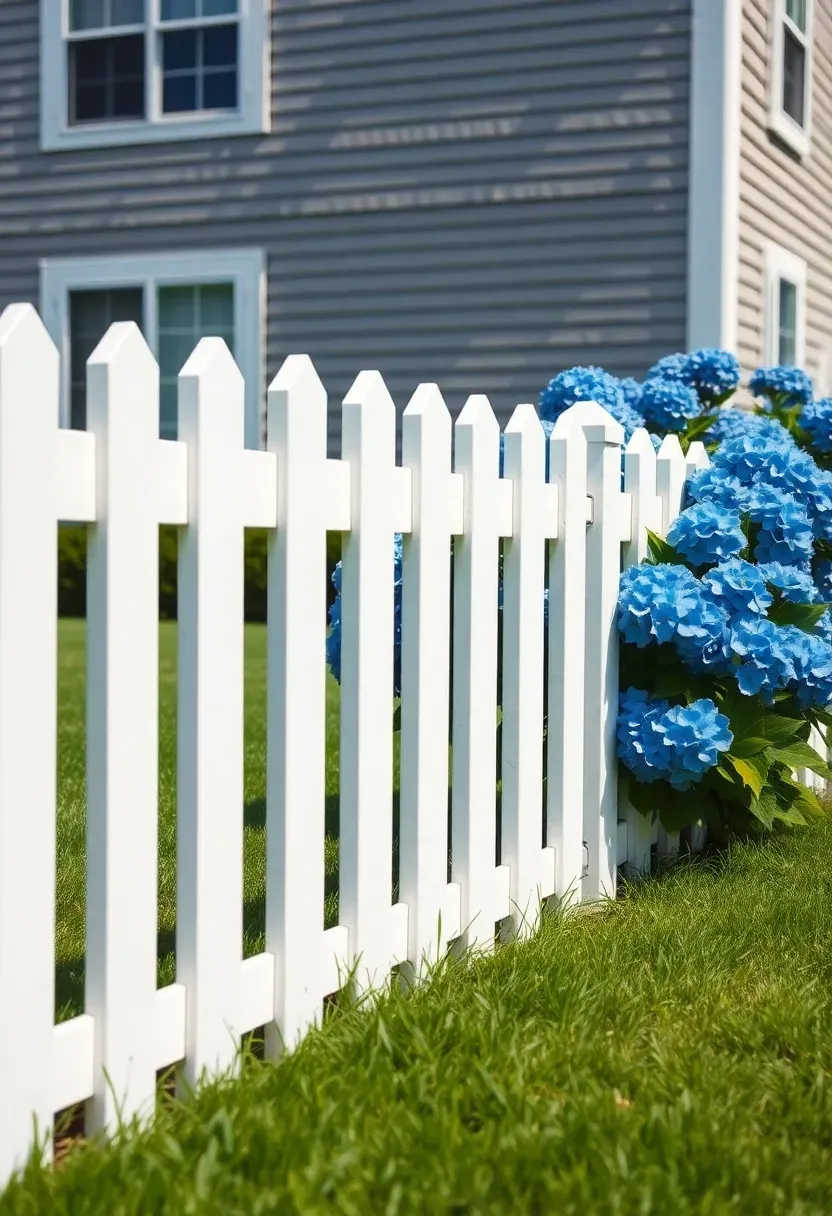
17. White Vinyl Picket Fence
The case for vinyl
Vinyl gets a bad reputation among design-minded homeowners, but modern PVC picket fences have improved. The white stays white — no peeling paint, no annual touch-ups, no mildew staining like wood pickets develop in humid climates. Vinyl is also the cheapest option per linear foot for a finished-looking picket fence. A 4-foot-tall picket fence in vinyl runs about $15-25 per linear foot installed, versus $20-35 for painted cedar.
The case against
Vinyl becomes brittle in extreme cold and can crack on impact. It yellows slightly over 15-20 years. And in high winds, lightweight vinyl panels can flex or detach if posts are not set deep enough. It also cannot be painted or stained a different color down the road.
Recommendation
Best for front yard curb appeal in mild climates where you want the classic white picket look without any maintenance commitment.
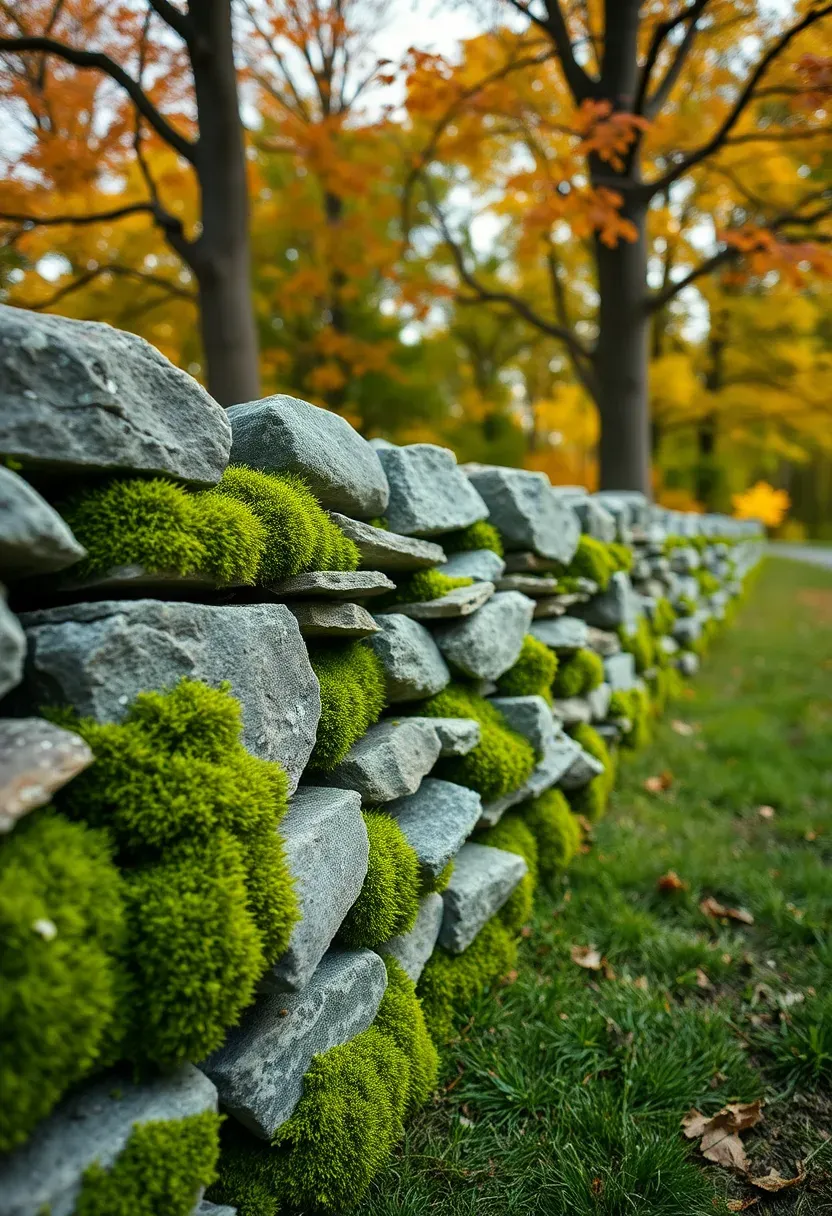
18. Dry-Stacked Stone Wall Fence
Stone walls built without mortar are the oldest fencing technology in North America. In New England, thousands of miles of them still stand after 200+ years, which is a maintenance record no other material can touch. Dry stacking relies on gravity and careful stone selection — flat faces out, heavy base stones first, batter (inward lean) on both faces for stability. A 3-foot-tall wall provides a clear boundary without blocking views. At 4 feet and above, you are building something that requires real skill to keep stable. Local fieldstone is always the best-looking and cheapest option because it matches the geology of your property.
Tips
- Two-stone-wide construction (about 18-24 inches thick) is far more stable than single-stone width
- Reserve the flattest, largest stones for the cap row — they lock everything below in place
- Budget 1 to 1.5 tons of stone per face foot of finished 3-foot wall
Recommended
Items for this idea
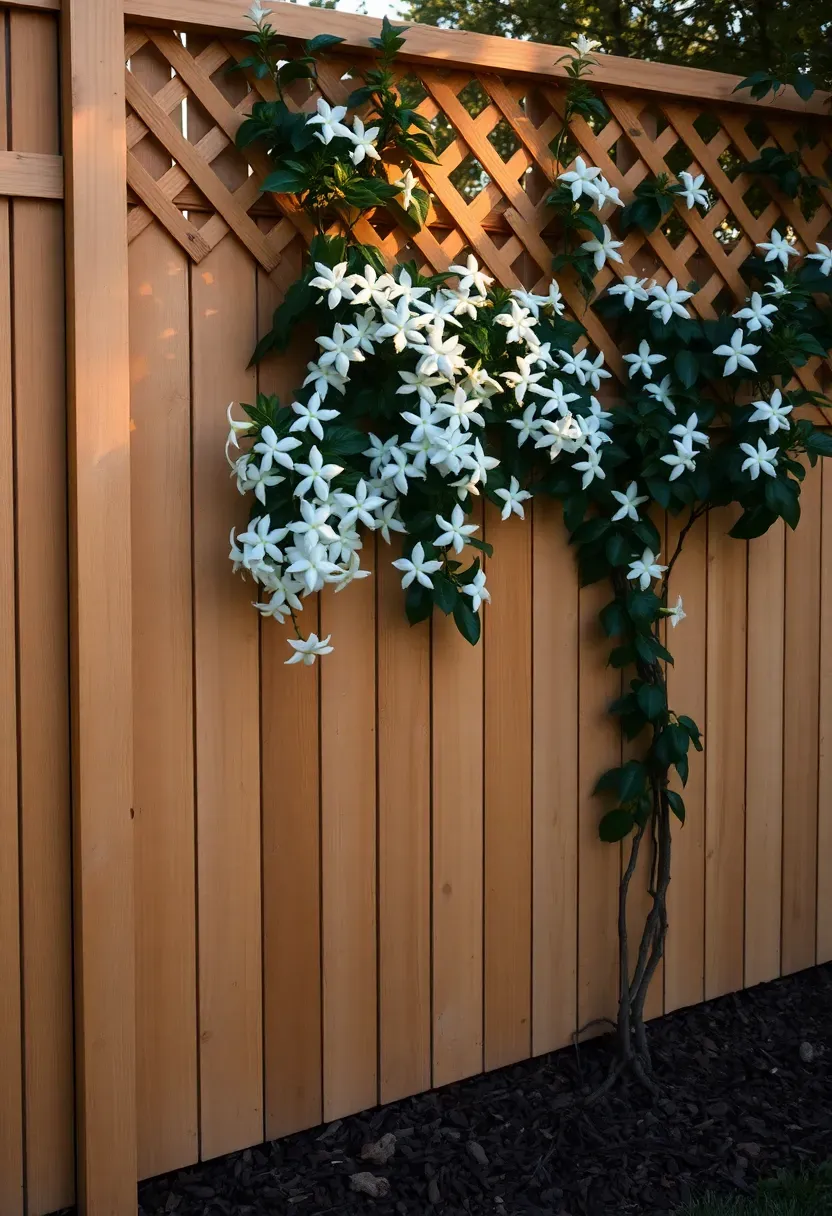
19. Lattice Top Privacy Fence
Adding an 18-inch lattice extension to the top of a solid fence is one of the simplest ways to gain height without the fence feeling like a stockade. The lattice lets light and air through, softening the upper edge while still adding visual screening — especially once climbing plants grow into it. Most building codes allow fences up to 6 feet without a permit; a 4.5-foot solid base plus 18 inches of lattice reaches that limit while feeling more open than a full 6-foot solid wall. Use cedar lattice rather than the thin stapled-together pine lattice from hardware stores, which falls apart within two seasons.
Tips
- Frame the lattice section with 2x2 trim strips on both sides to protect edges and look finished
- Diagonal (diamond) lattice is traditional; square lattice reads more contemporary
- Plant star jasmine, clematis, or passionflower at the base for living privacy screening
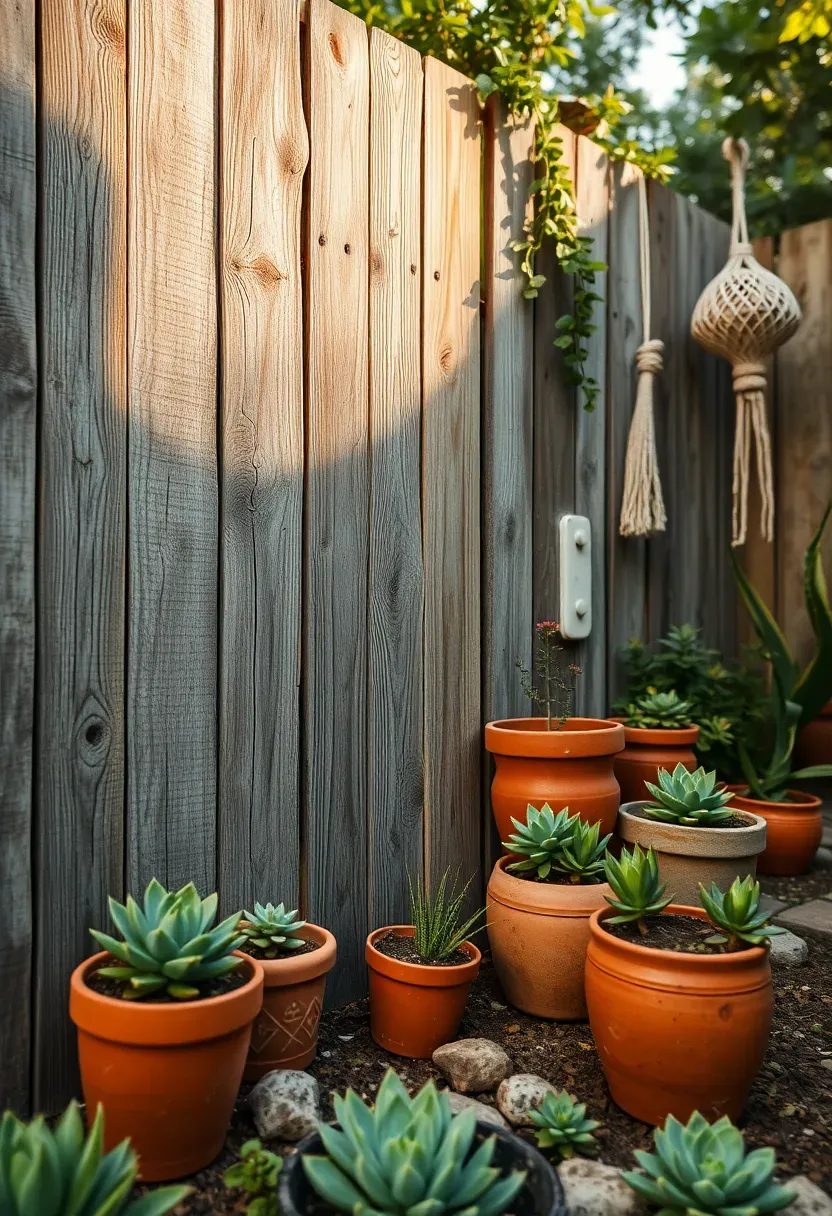
20. Reclaimed Pallet Wood Fence
Why people try it
Free pallets are everywhere — behind warehouses, grocery stores, construction sites. Disassembling them yields rough-sawn planks in varying widths that nail onto a standard post-and-rail frame to create a fence that costs almost nothing in materials.
Why it is harder than it looks
Pallet wood is inconsistent. Boards split when you pry them apart. Many are heat-treated (stamped HT, which is safe) but some are chemically treated (stamped MB for methyl bromide, which is not). Sorting, denailing, and planing enough boards for even 30 feet of fence takes a full day. And untreated pallet wood rots fast in ground contact.
Make it work
Use pallet boards only for the visible face of the fence. Build the structural frame — posts and rails — from pressure-treated lumber or cedar. Seal the pallet boards with an exterior wood oil. Accept the varied look as part of the aesthetic.
Recommended
Items for this idea
21. Glass Panel Wind Fence
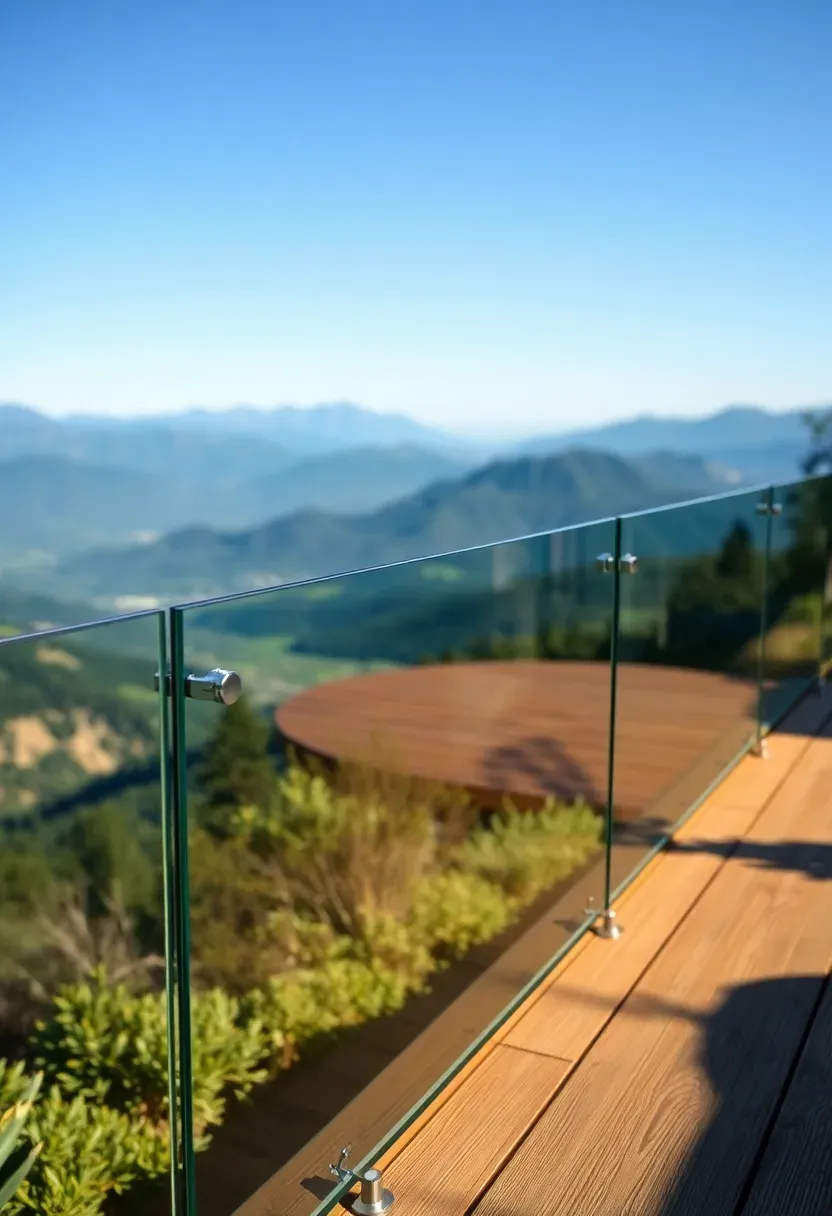
Tempered glass panels block wind while preserving views — a combination no other fence material achieves. This makes them ideal for hillside properties, waterfront homes, or any yard where the view is the main asset and you do not want to hide behind six feet of cedar. Panels are typically 3/8-inch or 1/2-inch tempered safety glass set into aluminum channel bases or held between stainless steel standoff posts. The glass is the same material used in commercial storefronts and shower enclosures, rated for wind loads and impact safety.
Tips
- Use low-iron glass for maximum clarity — standard glass has a green tint visible at the edges
- Budget $100-200 per linear foot installed, including posts and hardware
- Apply bird-strike decals or a frosted band at eye level if the glass faces open sky
22. Horizontal Mixed-Width Slat Fence
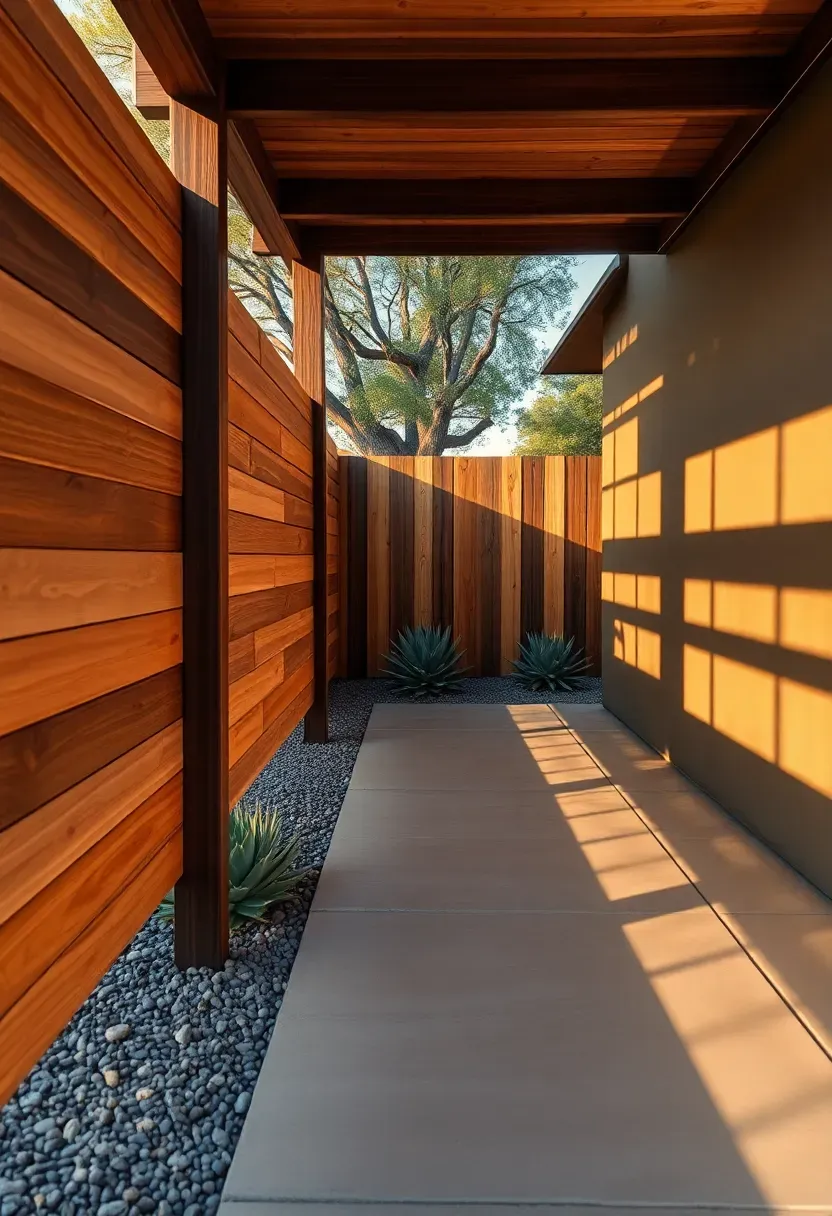
Instead of uniform board widths, this design alternates between narrow (1x2 or 1x3) and wide (1x6 or 1x8) horizontal slats, sometimes with varied gap sizes. The rhythm of different widths creates visual interest that a single-width fence lacks — it suggests intentional design rather than "I bought whatever the lumberyard had." Grouping narrow slats together with wider gaps, then a wide plank, then another cluster keeps the pattern from looking random. Cedar or ipe holds up best since every exposed edge is a potential moisture entry point.
Steps
- Set 4x4 or 6x6 posts every 6 feet, notched or with horizontal blocking at 16-inch intervals to support the slats
- Plan your width pattern on paper first — a repeating sequence of 3 narrow, gap, 1 wide, gap works well
- Use a spacer jig cut to your desired gap width (typically 1/4 to 1/2 inch) to maintain consistency across the whole fence
Recommended
Items for this idea
23. Cedar Shadowbox Fence
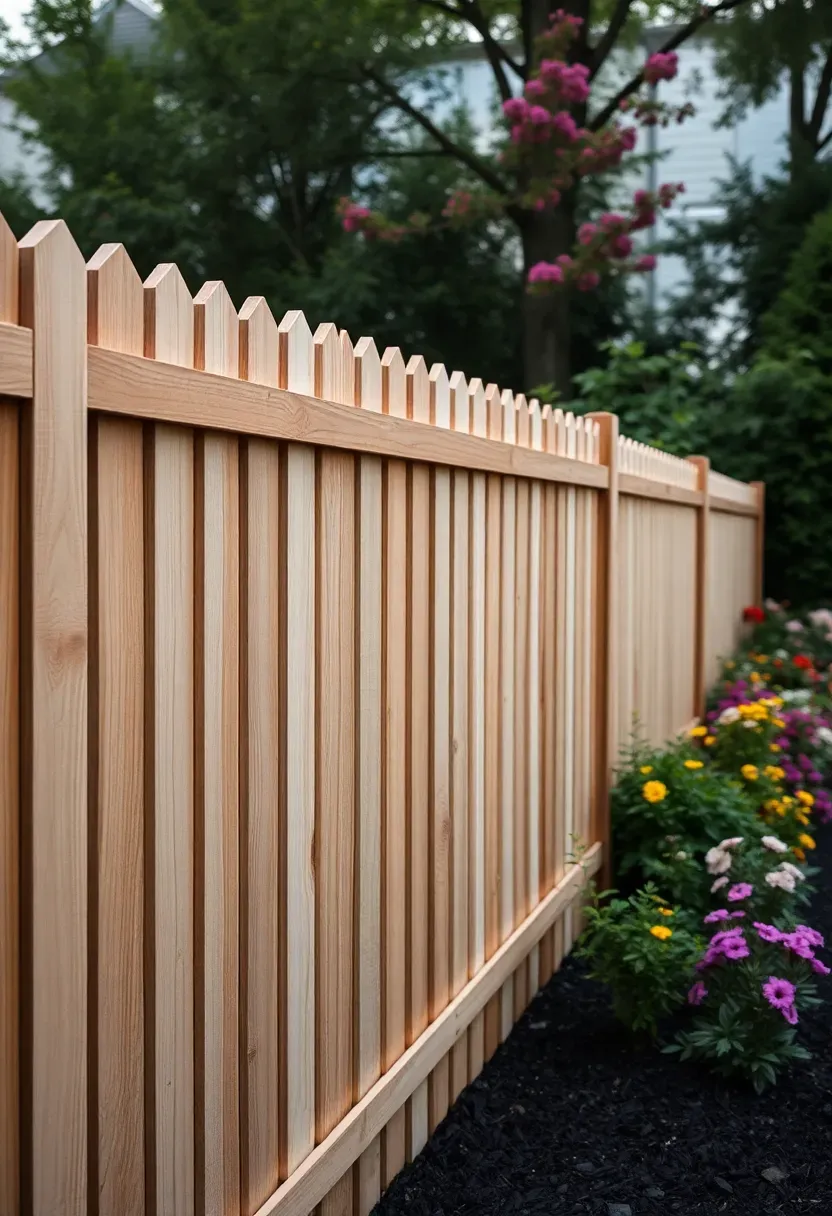
A shadowbox fence is a board-on-board variation where the pickets alternate sides with wider gaps, creating a fence that looks identical from both sides and provides partial transparency at direct angles but full coverage at oblique angles. Walk past one and the view behind it flickers in and out like a slow animation. The effect is more interesting than a solid fence and far more private than it appears straight on. Cedar is the preferred material because both sides are equally exposed to weather, and cedar handles moisture without chemical treatment.
Tips
- Use 1x6 pickets with 1.5-inch gaps on alternating sides for the classic shadowbox proportion
- Both you and your neighbor see the same finished face — eliminates the "good side / bad side" problem
- Shadowbox fences use roughly 60% more pickets than standard fencing, so budget material accordingly

24. Rope and Post Nautical Fence
Thick nautical rope threaded through drilled wooden posts creates a boundary that says "beach house" without saying much else. This is a decorative and directional fence — it marks where a path ends and a garden begins, or separates a driveway from a lawn — rather than a privacy or security barrier. Use 1-inch or 1.5-inch manila, sisal, or synthetic polyhemp rope. Manila looks the most authentic but degrades in 3-5 years outdoors; synthetic polyhemp lasts indefinitely and is nearly indistinguishable at a distance. Posts should be 4x4 or turned round posts, 36-42 inches tall, set 6-8 feet apart.
Tips
- Drill rope holes through the posts rather than wrapping — it looks cleaner and holds better
- Three rows of rope at evenly spaced heights is the standard configuration
- Seal the rope ends with a whipping knot or heat-shrink tubing to prevent unraveling
Recommended
Items for this idea
25. Hedge and Fence Combination
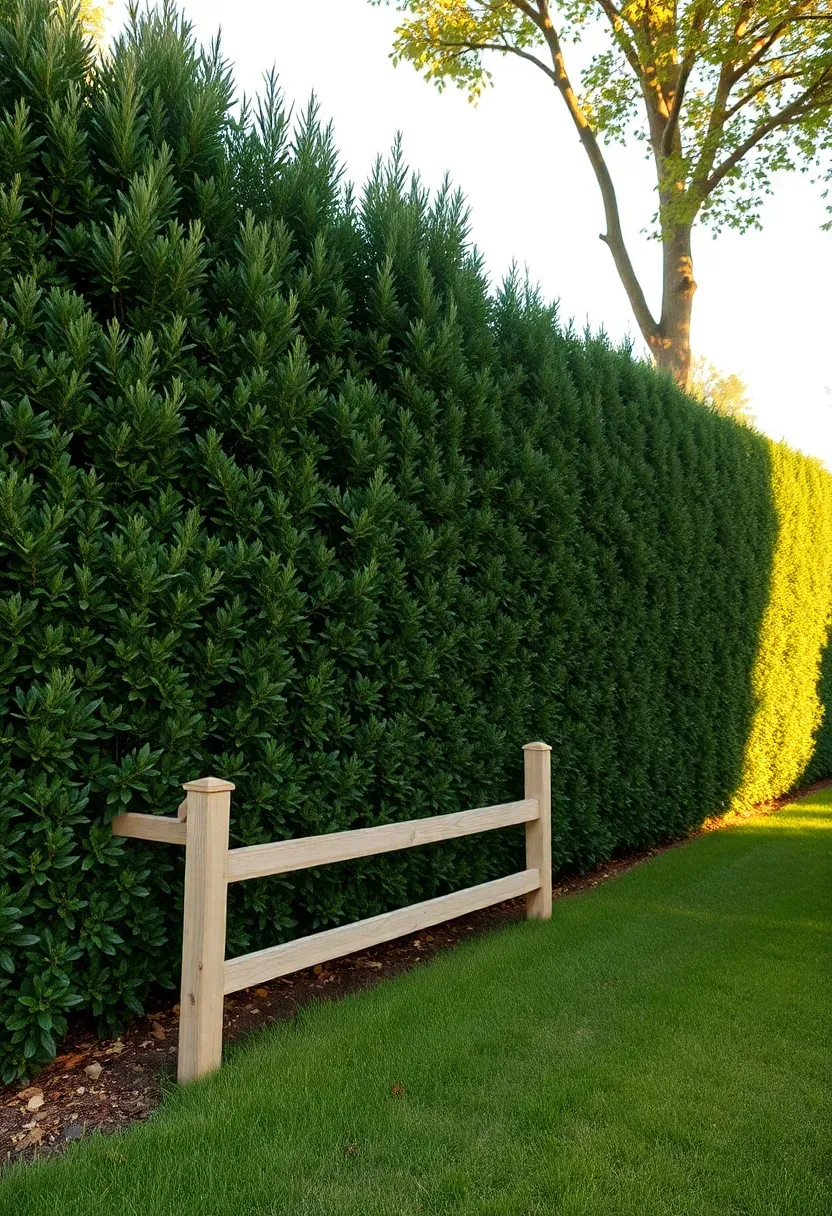
Pairing a structural fence with a living hedge gives you the instant boundary of built materials plus the density, sound absorption, and wildlife habitat of plants. The fence goes up first — typically a 4-foot post-and-rail or wire fence — and the hedge is planted on one or both sides. Privet, boxwood, yew, and arborvitae are the most common hedge plants for this purpose, chosen based on your climate zone and how tall you want the final screen. Within 3-5 years the hedge fills in and the fence becomes invisible, serving only as the structural backbone that keeps everything in line.
Tips
- Plant the hedge 18-24 inches from the fence to allow room for growth and maintenance access
- Deciduous hedges (privet, beech) are cheaper and faster but lose leaves in winter; evergreens cost more but screen year-round
- A wire or chain-link inner fence works fine structurally and costs far less than wood since the hedge will hide it completely
Quick FAQ
How tall can I build a backyard fence without a permit? Most municipalities allow 6-foot fences in rear yards and 4-foot fences in front yards without a permit. However, some cities have stricter rules, and HOAs may impose their own height limits. Always check your local building code and HOA covenants before starting — a non-compliant fence can result in forced removal.
Which fencing material lasts the longest with the least maintenance? Aluminum and vinyl both last 30+ years with virtually no upkeep. Dry-stacked stone walls outlast everything if built correctly. Among wood options, black locust and old-growth cedar are the most durable, lasting 20-25 years in ground contact without chemical treatment.
Do I need to tell my neighbor before building a fence? Legally, usually no — if the fence is entirely on your property and meets code. Practically, always yes. A conversation beforehand avoids disputes about property lines, shared costs, and which way the "good side" faces. Many neighbors will split the cost if you discuss it before construction starts.
Can I attach a fence to my neighbor's existing fence or posts? Not without written permission. Your neighbor's fence is their property. Building up against it or attaching to it without consent creates a legal issue and can damage their fence. Build your own fence at least 2 inches inside your property line to stay clear.
What is the cheapest way to fence a backyard? Welded wire on T-posts is the absolute cheapest at $3-5 per linear foot. For something that looks finished, a basic 6-foot dog-ear pine fence using pressure-treated lumber runs $12-18 per linear foot DIY. Pallet wood fencing can be nearly free if you have the time to source and disassemble pallets.
Fencing is one of those projects where the biggest gains come from small, deliberate choices — choosing a horizontal orientation over vertical, adding a lattice top instead of another foot of solid boards, or picking a material that weathers gracefully rather than one that just weathers. None of these upgrades require a bigger budget, just a clearer idea of what you want to look at for the next fifteen years. Start by walking your property line with a tape measure and a camera. Note where you need privacy, where you want to preserve views, and where the fence will catch the most sun and wind. Those conditions should drive the design more than any trend or Pinterest board, including this one.
Pinterest cover for 25 Backyard Fencing Ideas for Every Style and Budget
About the author
OBCD
CGI visualization and interior design content. We create detailed 3D renders and curate practical design ideas for every room in your home.