21 Backyard Gate Ideas
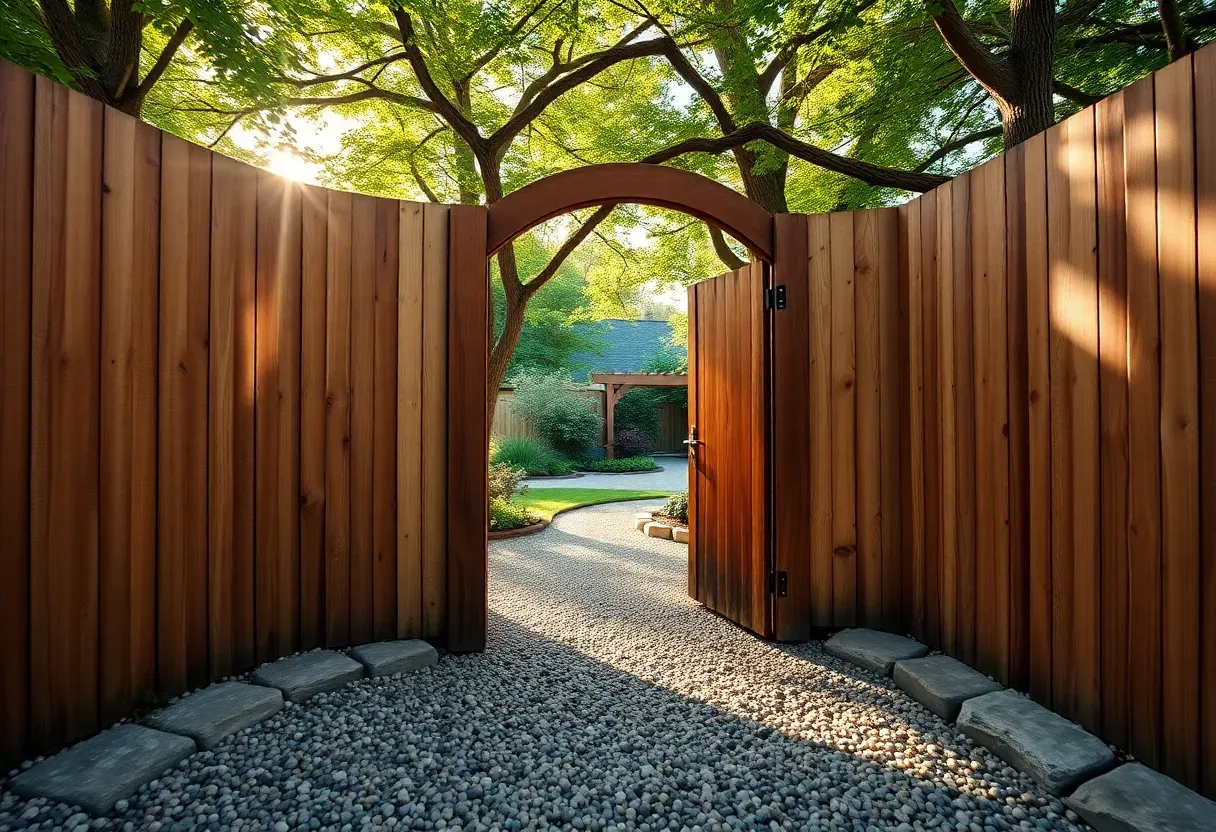
My backyard gate used to be an afterthought — a warped pine board on two hinges that dragged across the patio every time I opened it. When I finally replaced the fence last spring, I spent more time choosing the gate than any other part of the project. It made sense once I thought about it: the gate is the one piece of the fence you actually interact with every single day. You grab the latch, swing it open, walk through. Guests see it first. Delivery drivers stand in front of it. It deserves more attention than it usually gets. These 21 gate ideas cover materials from rough-sawn cedar to welded steel, and styles from cottage garden classics to minimal modern hardware.
Below you will find gates organized by material and design approach, with cost notes and installation details where they matter most.
Table of Contents
- Classic Picket Garden Gate
- Arched Cedar Plank Gate
- Horizontal Slat Gate
- Wrought Iron Scroll Gate
- Black Metal Frame with Wood Infill
- Rustic Farmhouse Barn Gate
- Japanese Torii-Inspired Gate
- Lattice-Top Privacy Gate
- Corrugated Metal Panel Gate
- Living Gate with Climbing Vines
- Corten Steel Pivot Gate
- Double Swing Driveway Gate
- Board-on-Board Privacy Gate
- Woven Willow Garden Gate
- Modern Cable Rail Gate
- Reclaimed Barn Wood Gate
- Arched Iron Garden Gate
- Bamboo and Timber Gate
- Stone Pillar Entry with Wood Gate
- Contemporary Laser-Cut Metal Gate
- Dutch Door Backyard Gate
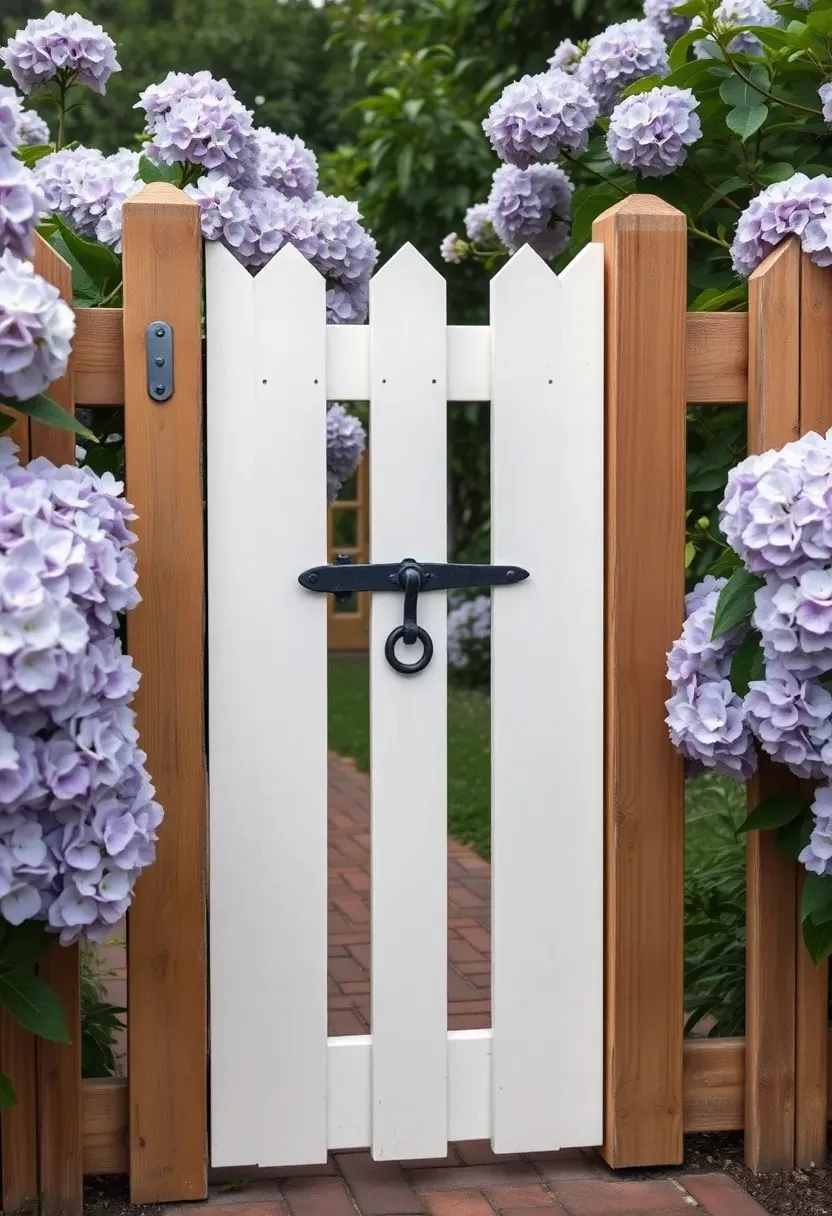
1. Classic Picket Garden Gate
The picket gate is the default for a reason — it looks right in almost any setting and costs less than most alternatives. A standard 42-inch-wide picket gate in pressure-treated pine runs $80 to $150 at lumber yards, or you can build one from cedar for about $120 in materials. The key to a picket gate that lasts is the frame behind the pickets: a Z-brace pattern (two horizontal rails with a diagonal between them) keeps the gate from sagging over time. Most picket gates fail not because of the wood but because the hinges are undersized or the posts lack concrete footings.
Tips
- Use three hinges instead of two on gates taller than 48 inches
- Set gate posts in concrete at least 30 inches deep to prevent seasonal shifting
- Leave a half-inch gap at the bottom to clear ground swell after rain
We picked a few things that go well with this idea: Self-Closing Gate Hinges (2-Pack) (★4.4), D&D TruClose Self-Closing Gate Hinge (2-Count) (★4.5) and Heavy Duty Spring Gate Hinges (2-Pack) (★4.6). As an Amazon Associate we earn from qualifying purchases.
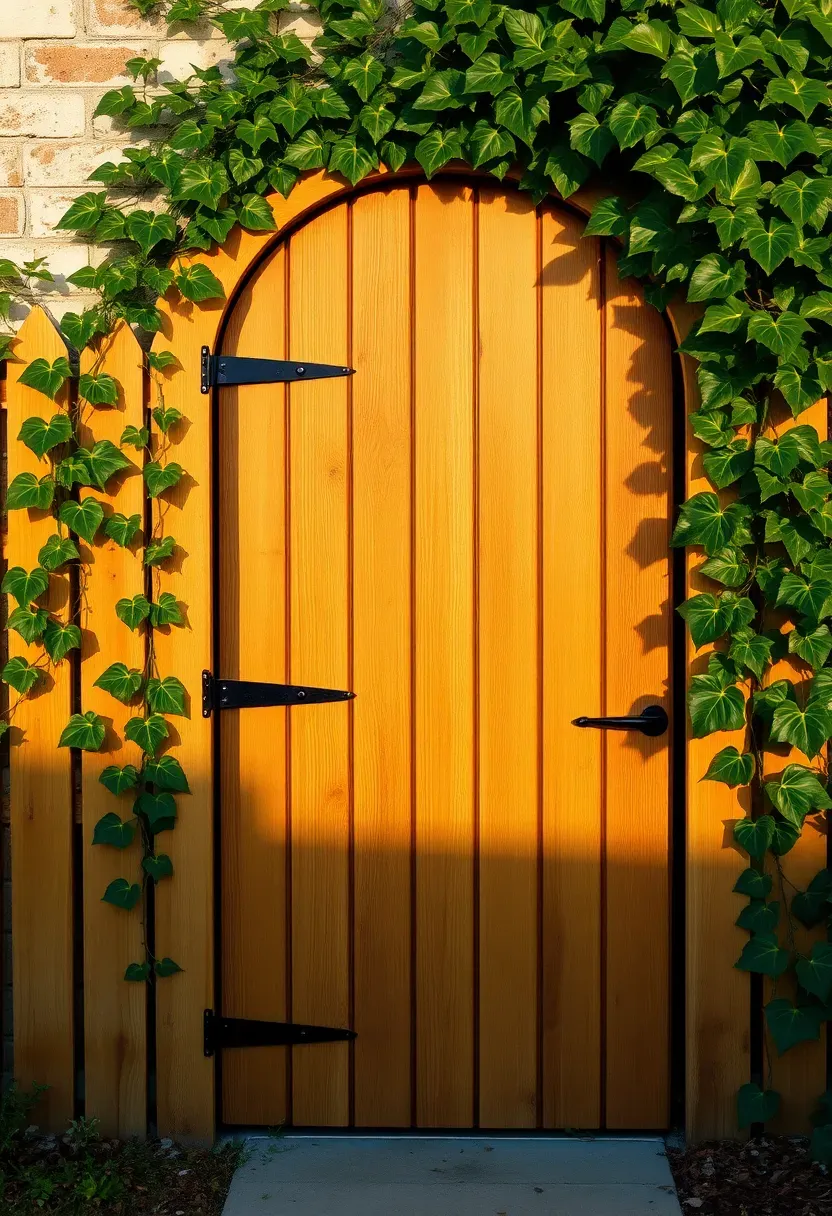
2. Arched Cedar Plank Gate
Why Arches Work
A curved top on an otherwise plain gate adds character without adding complexity to the rest of the fence. Your eye follows the arc upward, which makes the entry feel taller and more deliberate than a flat-topped gate. The arch also sheds rainwater naturally, reducing the pooling that rots flat gate tops.
How to Build One
Cut the arch from a plywood template after assembling the flat gate. Clamp the template across the top and trace with a pencil, then cut with a jigsaw. Sand the curve smooth and seal the end grain immediately — exposed end grain absorbs water eight times faster than face grain. Cedar is ideal because it resists rot without chemical treatment.
Watch Out
- Do not cut the arch so deep that it weakens the top rail — keep at least 4 inches of wood above the lowest point of the curve
- Arched gates need slightly taller posts so the peak clears when swinging open
We picked a few things that go well with this idea: Arched Bamboo Wood Garden Gate (★4.8), Carbonized Wood Garden Fence Gate and Curved Top Double Door Garden Gate. As an Amazon Associate we earn from qualifying purchases.
3. Horizontal Slat Gate
Horizontal boards on a gate match the look that has taken over modern fence design in the last decade. The lines make narrow side yards feel wider and pair well with concrete, steel, and minimalist landscaping. Building a horizontal gate requires a slightly different frame than vertical pickets — you need a full perimeter frame (top, bottom, and both sides) rather than just rails, because horizontal boards do not contribute structural rigidity in the same direction.
Tips
- Use a steel frame hidden behind the wood for gates wider than 36 inches to prevent sag
- Space boards with consistent 3/8-inch gaps using a plywood spacer during assembly
- Matte black strap hinges look better on horizontal gates than traditional T-hinges
We picked a few things that go well with this idea: SaverSystems Wood Stain and Sealer (1 Gal) (★4.6), Ready Seal Cedar Wood Stain Sealer (5 Gal) (★4.6) and Olympic Cedar Exterior Stain Sealer (1 Gal) (★4.3). As an Amazon Associate we earn from qualifying purchases.
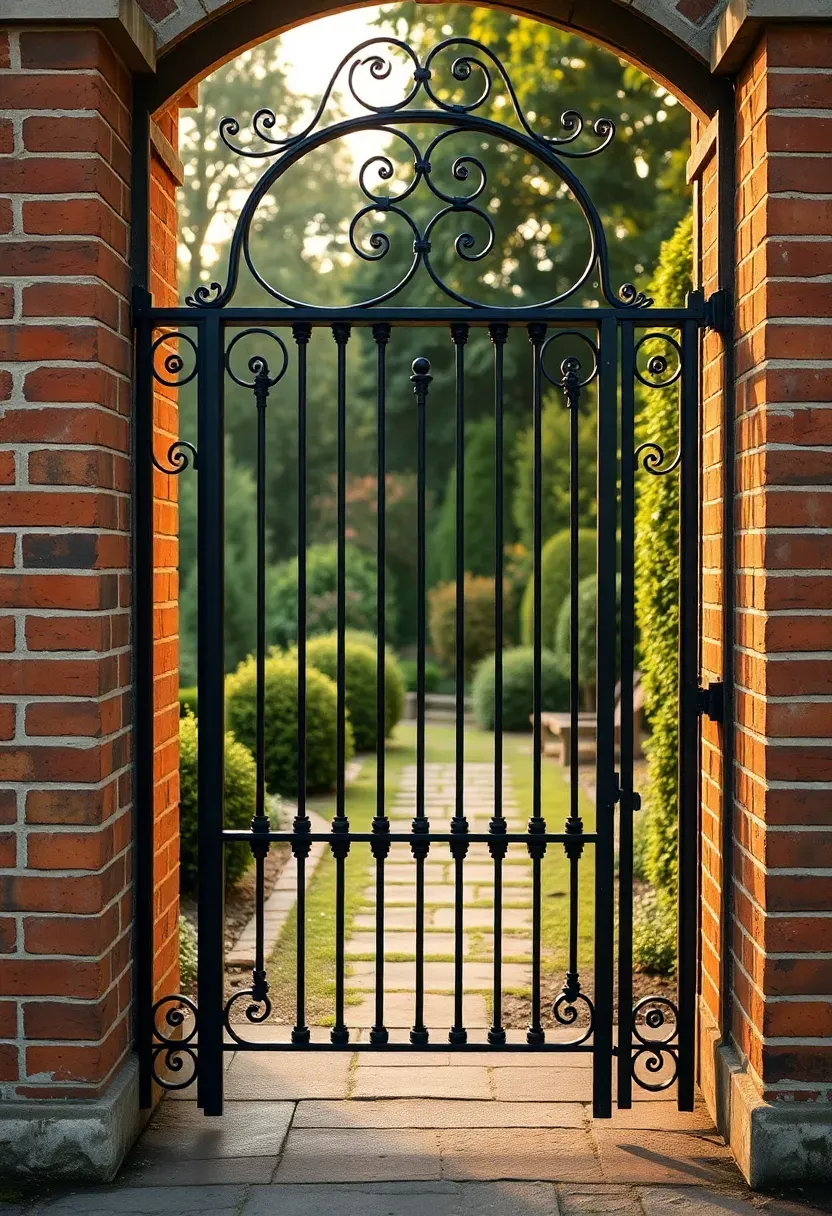
4. Wrought Iron Scroll Gate
The Case for Iron
Wrought iron gates last generations. There are examples in European gardens that have been standing for 200 years with nothing more than occasional paint. The material bends into curves and scrollwork that wood simply cannot replicate. A skilled blacksmith can forge a custom gate in two to three days.
Modern Reality
True wrought iron is rare today — most "wrought iron" gates are actually mild steel, which is easier to weld and costs less. The visual difference is negligible. Budget $600 to $2,000 for a custom single gate depending on complexity and your local metalworker's rates. Factory-made scroll gates from big-box stores cost $200 to $500 but lack the weight and detail of custom work.
Choose Iron If
- You want a gate that outlasts the fence and possibly the house
- Your yard has brick or stone pillars that suit a formal look
- You are willing to sand and repaint every 5 to 8 years to prevent rust
Recommended
Items for this idea
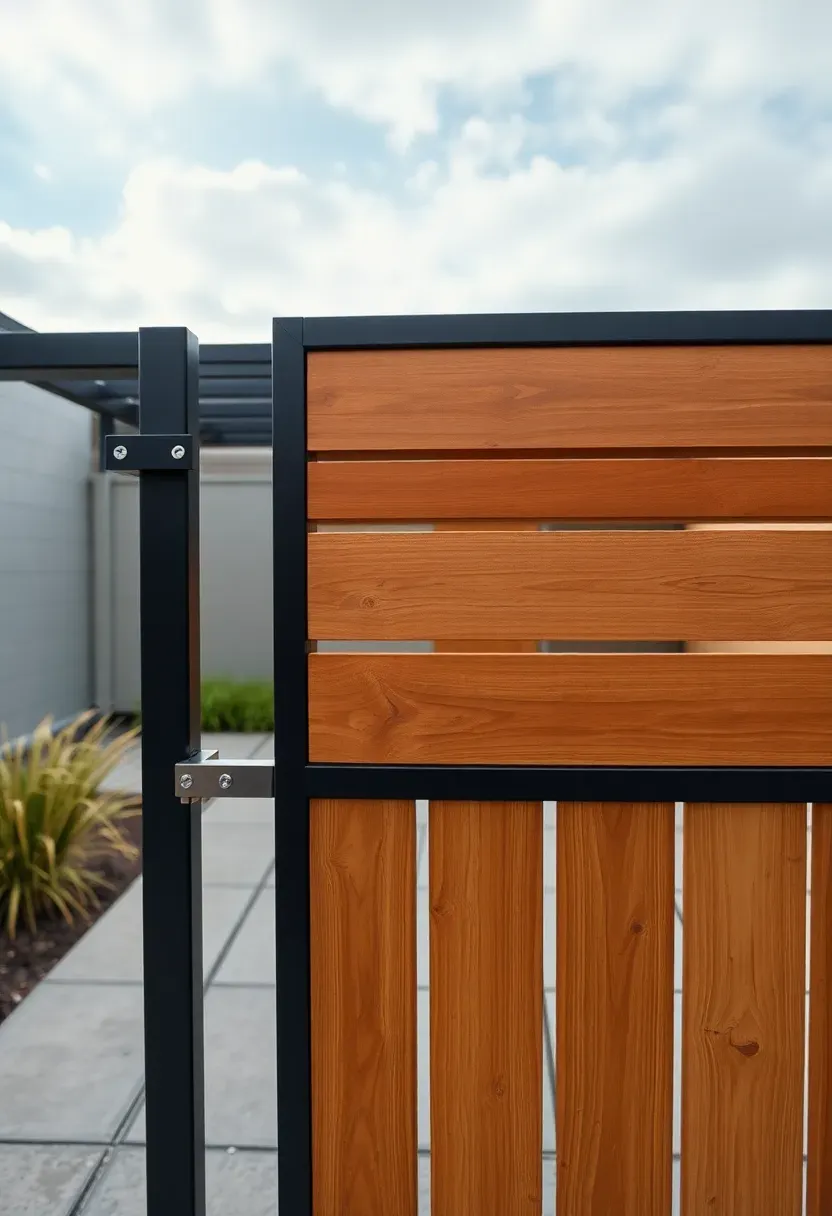
5. Black Metal Frame with Wood Infill
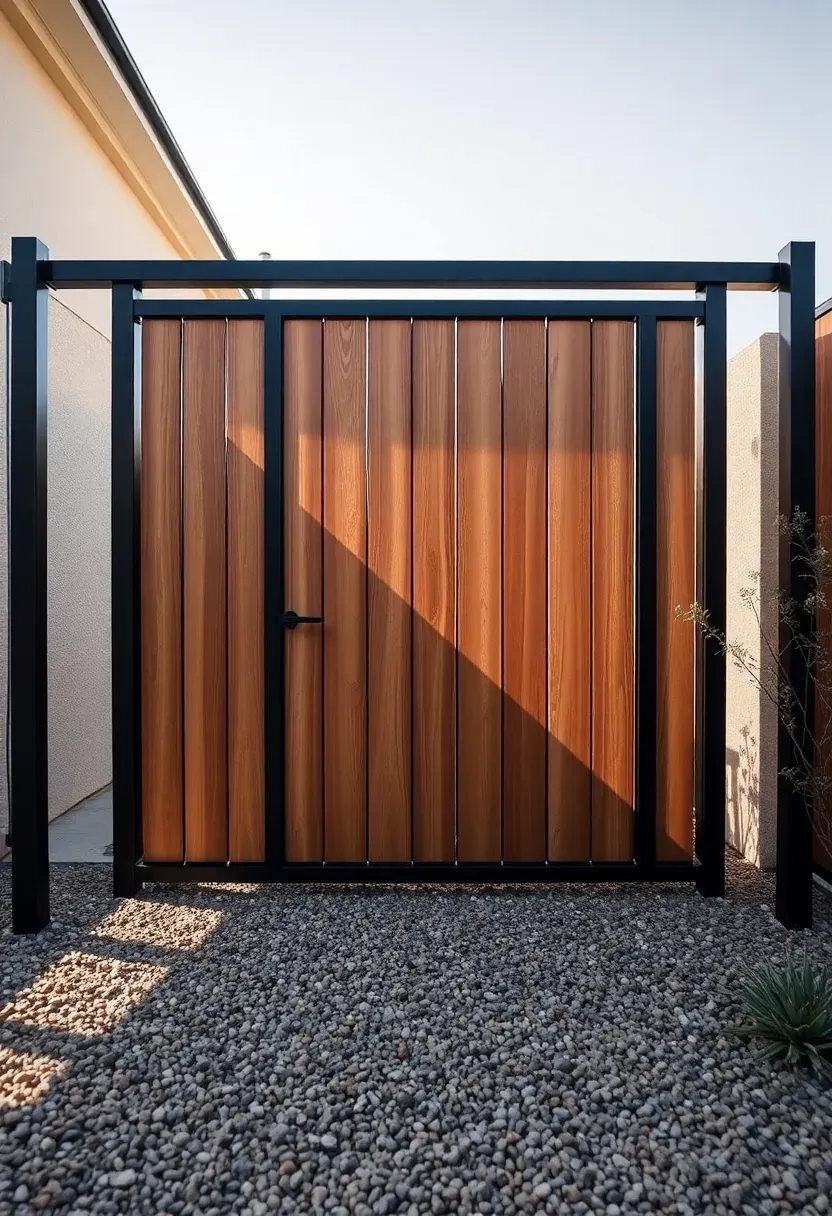
This hybrid design solves the biggest problem with all-wood gates: sag. A welded steel perimeter frame holds its shape permanently while the wood infill provides warmth and privacy. The contrast between black powder-coated steel and natural cedar or ipe creates a clean, intentional look. Most fabricators charge $400 to $800 for the frame alone. You add the wood yourself, which keeps costs down and lets you replace boards individually if one gets damaged.
Tips
- Powder coat the frame rather than painting — it lasts three times longer
- Attach wood to the frame with stainless steel screws from the back so no fasteners show on the face
- Use wood species that match your fence to keep the transition seamless
6. Rustic Farmhouse Barn Gate
The Appeal
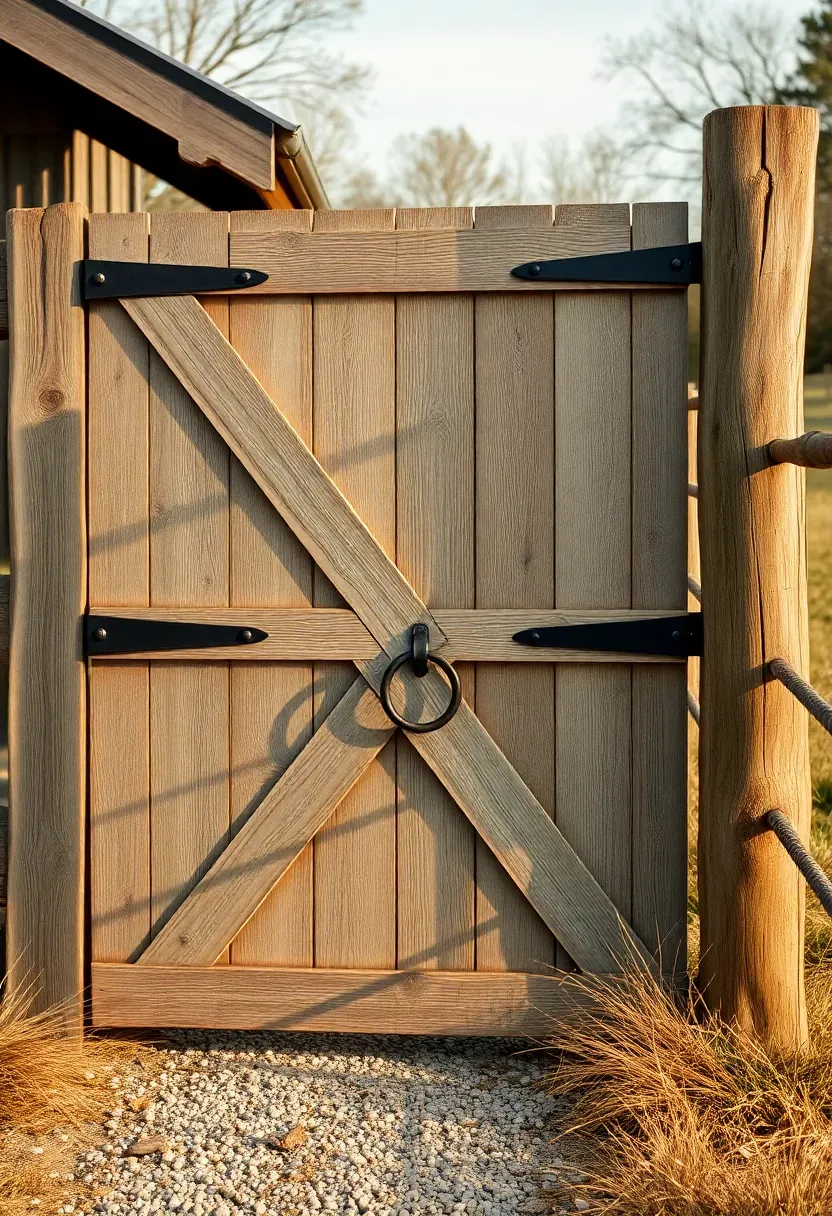
The X-brace barn gate borrows directly from agricultural architecture and works best when it looks a little rough. Perfectly milled lumber actually undermines the aesthetic. Rough-sawn boards with visible saw marks, slight variations in width, and natural knots sell the farmhouse look far better than smooth-planed material.
Build Notes
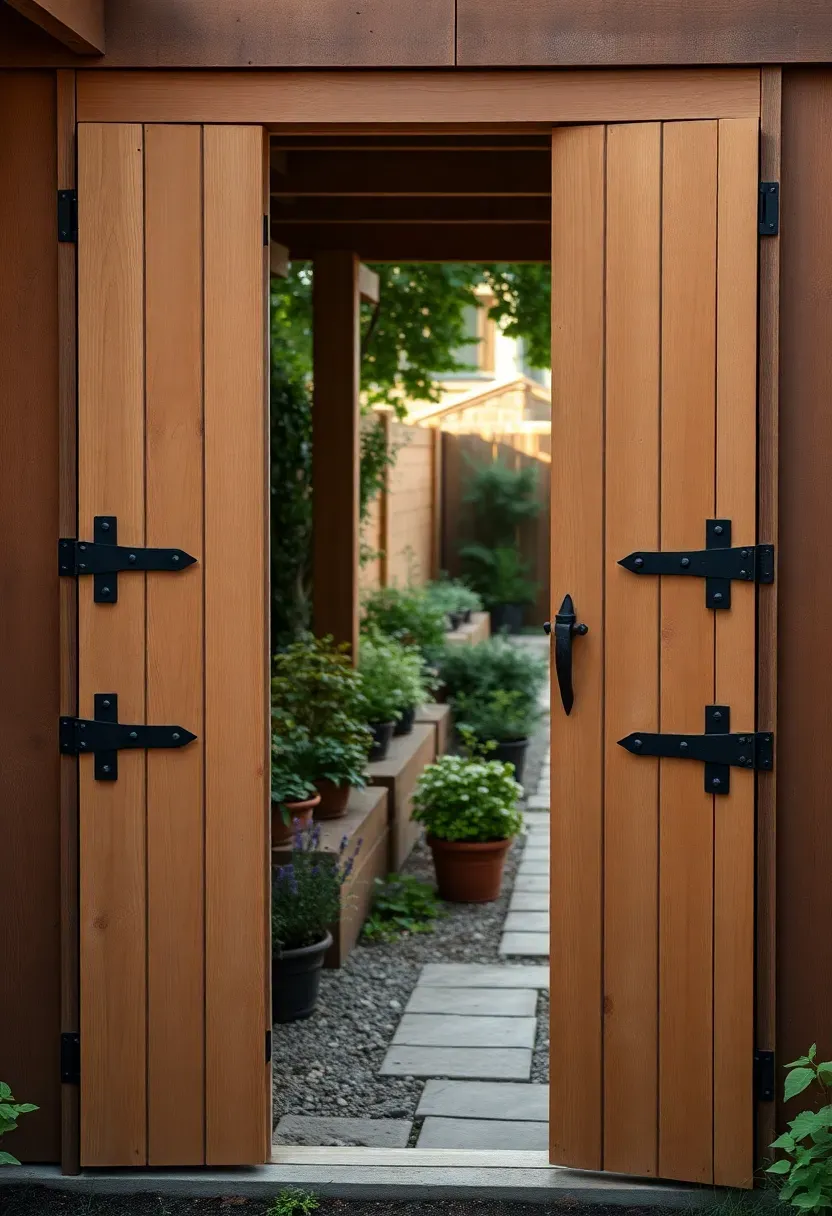
Start with a rectangular frame of 2x4s, then add the X-brace using 1x4s. Clad the frame with vertical rough-sawn boards (1x6 is standard). Use black iron strap hinges — the long, flat kind that bolt through the face of the gate. A ring latch or thumb latch in forged iron completes the look. Total material cost for a single gate: $150 to $250.
Pros and Cons
Pros: Affordable, easy to build with basic tools, ages gracefully, strong visual character Cons: Heavy (plan for three hinges), rough wood can splinter, not suited to sleek modern homes
Recommended
Items for this idea
7. Japanese Torii-Inspired Gate
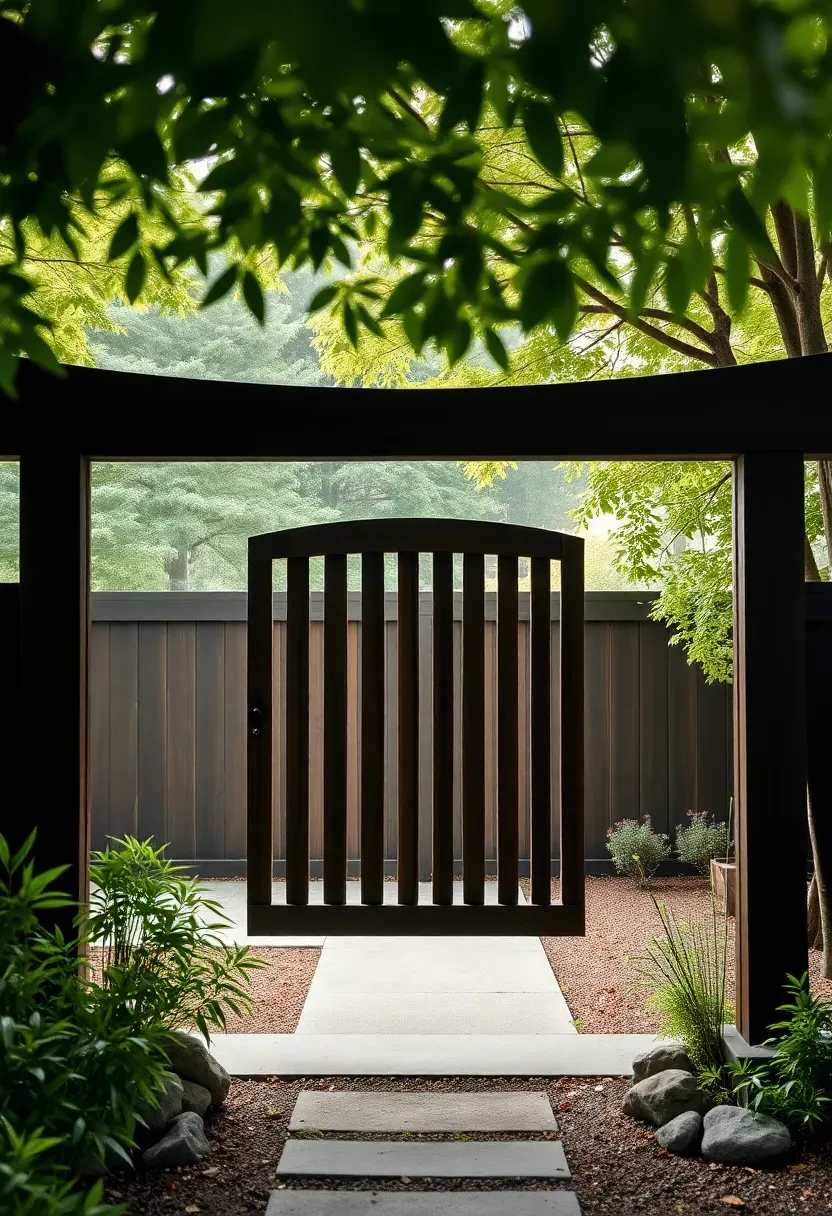
The torii gate marks a transition between spaces in Japanese culture — from ordinary ground to sacred ground. Borrowing this concept for a backyard gate creates a genuine sense of arrival. The defining feature is the curved crossbeam (kasagi) that extends beyond the posts on both sides. A residential version typically uses 6x6 posts and a laminated or steam-bent beam. Keep the gate itself simple — plain vertical boards or an open frame — so the crossbeam remains the focal point. Dark stain (shou sugi ban charring works too) with a clear post cap gives it an authentic feel.
Tips
- The crossbeam overhang should extend 6 to 8 inches past each post
- Plant low bamboo or ornamental grass on either side to reinforce the Japanese aesthetic
- Avoid ornate hardware — a simple wooden pivot or concealed hinge keeps the lines clean
8. Lattice-Top Privacy Gate
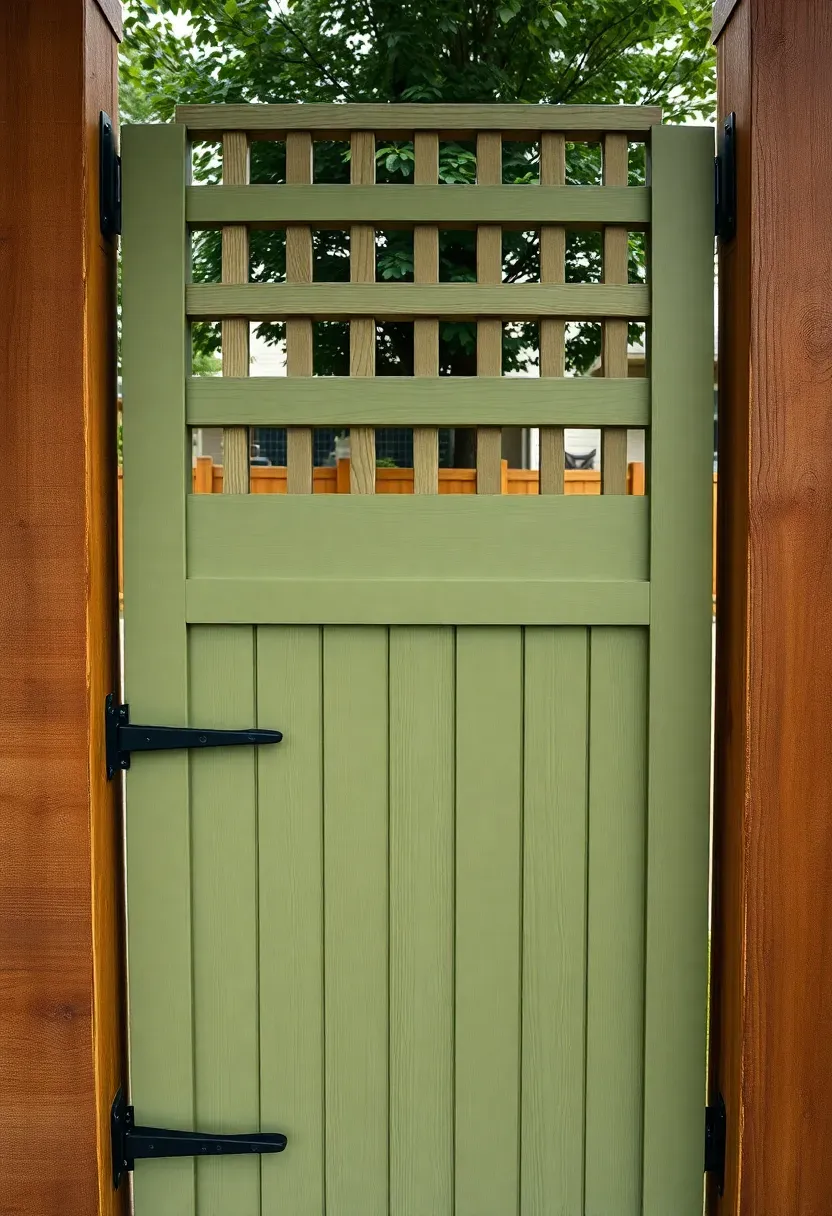
Adding lattice to the top third of a solid gate gives you privacy at eye level without blocking airflow or light entirely. The lattice section also reduces wind load on the gate, which matters more than most people realize — a solid 6-foot gate in a windy corridor acts like a sail and puts enormous stress on hinges and posts. Standard diagonal lattice from a lumber yard works fine, but square lattice (horizontal and vertical lines) looks more deliberate. Paint or stain the lattice to match the solid section below so it reads as one piece rather than two different materials bolted together.
Tips
- Frame the lattice section separately and attach it to the gate top — this lets you replace it if damaged
- Use heavy-duty lattice (3/4-inch strips) not the thin decorative kind that cracks in wind
- Spring-loaded hinges help the gate self-close, which matters for pool enclosures and pet containment
Recommended
Items for this idea
9. Corrugated Metal Panel Gate
Why It Works
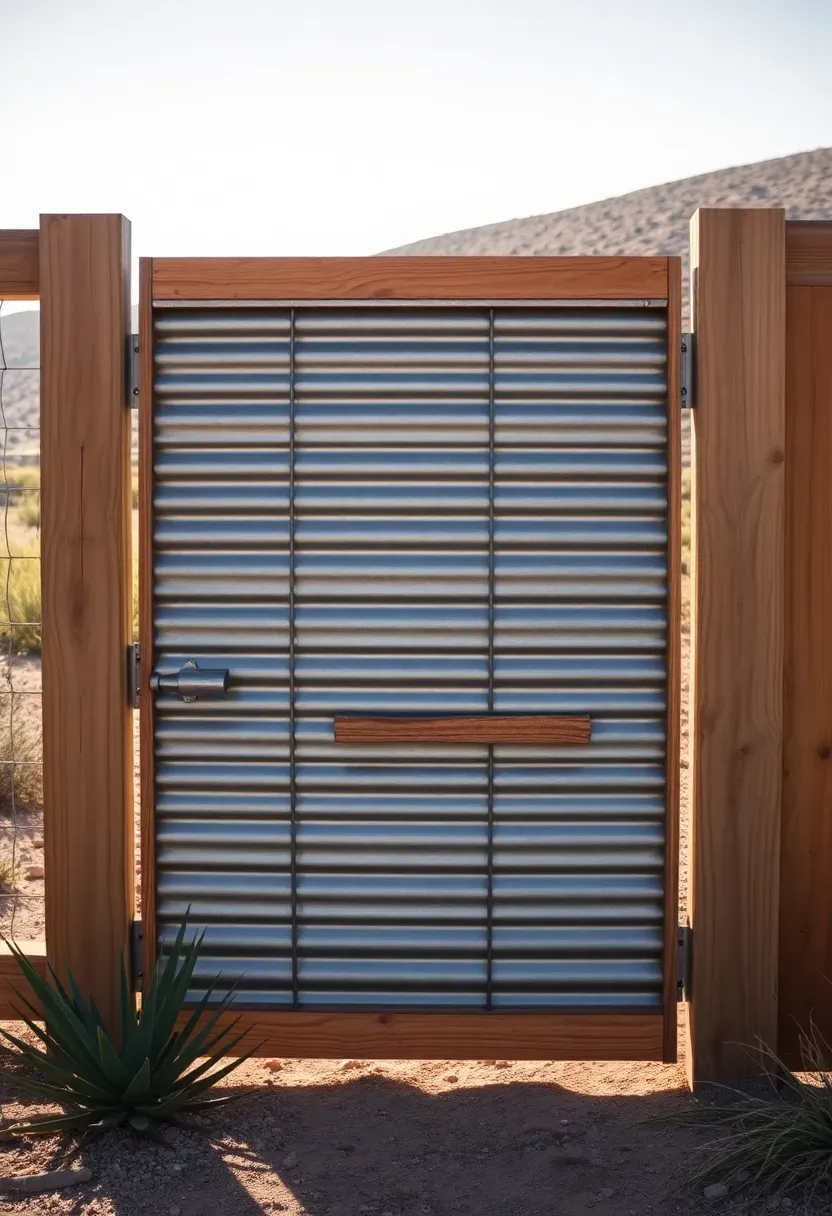
Corrugated metal brings an industrial edge that pairs surprisingly well with desert landscaping, modern architecture, and even rustic settings when combined with reclaimed wood. The material is cheap — a 26-gauge corrugated panel costs $15 to $25 for a 3x8-foot sheet. It weighs almost nothing compared to a solid wood gate, which means lighter-duty hinges and less post stress.
Construction
Build a wood or steel perimeter frame and screw the corrugated panel to the back side so the frame is visible from the front. Use self-drilling metal screws with neoprene washers to prevent leaks and rattling. Galvanized panels weather to a matte gray over time. If you want color, use pre-painted panels — they hold paint far better than bare galvanized steel that you spray yourself.
Watch Out
- Cut edges are sharp. File or cap them with trim pieces
- Corrugated panels amplify sound — rain, hail, and wind will be louder than you expect
10. Living Gate with Climbing Vines
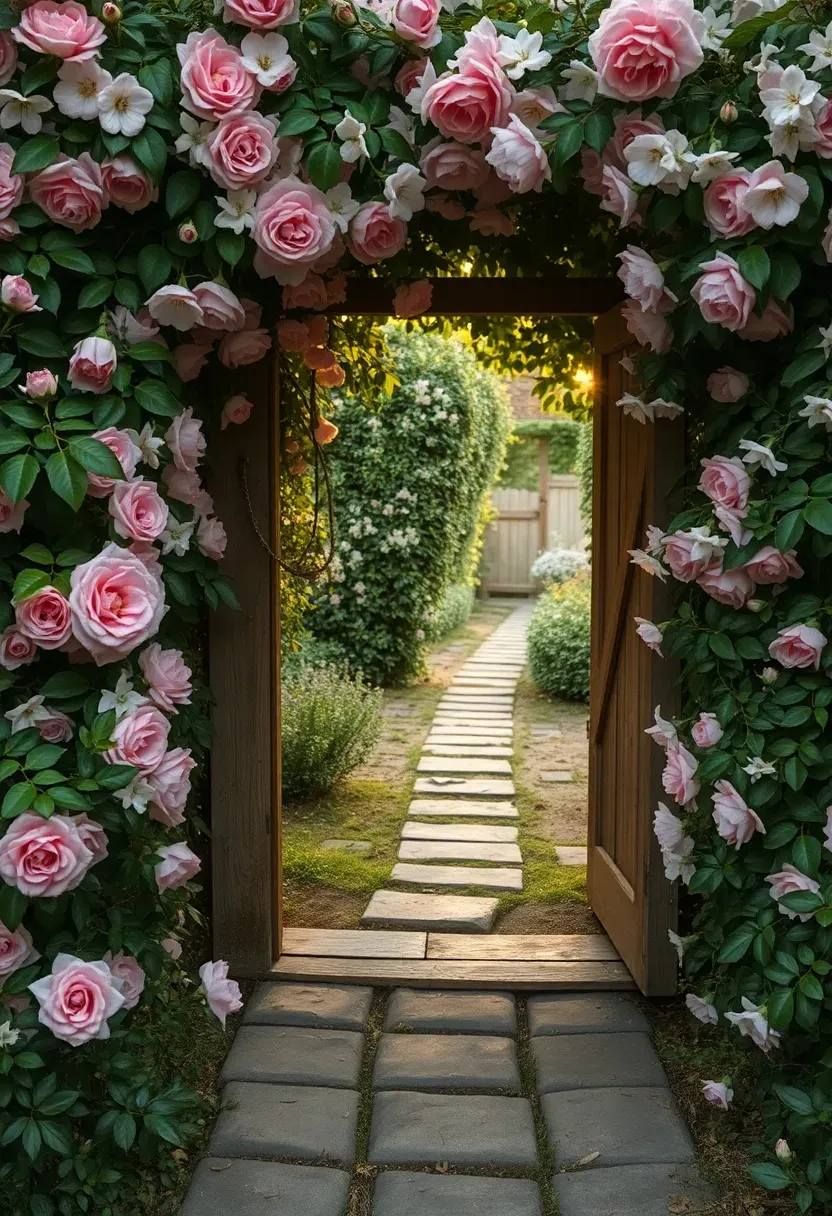
A vine-covered gate blurs the line between structure and garden. The gate itself can be basic — even ugly — because within one or two growing seasons the plant covers most of it. Climbing roses, jasmine, clematis, and wisteria all work, but choose based on your climate and how much maintenance you want. Jasmine grows fast and smells incredible but needs trimming monthly in warm climates. Climbing roses look best but have thorns that catch on clothing. Install a wire grid or thin trellis on the gate face to give the vines something to grip. Make sure the gate still opens fully under the added weight.
Tips
- Use stainless steel hinges — moisture from dense foliage accelerates rust on standard hardware
- Prune around the latch area so you can actually open the gate without a fight
- Train vines along the top of the fence on both sides of the gate to frame the entry
Recommended
Items for this idea
11. Corten Steel Pivot Gate
What Is Corten
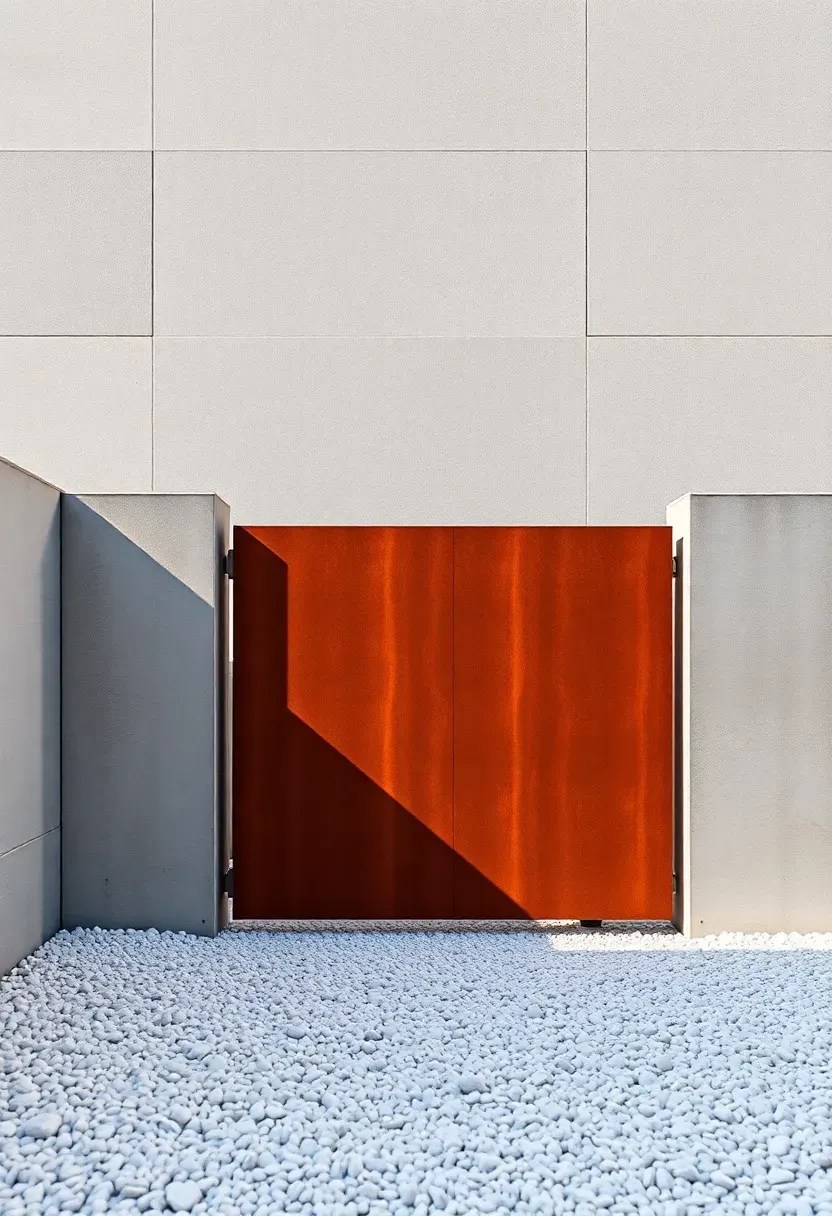
Corten (weathering steel) develops a stable rust layer that protects the underlying metal from further corrosion. The orange-brown patina keeps evolving for about three years before it stabilizes. It requires zero maintenance after that — no painting, no sealing, nothing. The material costs more upfront than mild steel ($3 to $5 per pound versus $1 to $2) but eliminates all ongoing finishing costs.
Pivot vs. Swing
A pivot hinge mounts into the ground and the gate header rather than on the post face. This lets the gate rotate around its own axis, which looks cleaner and allows wider openings. Pivot hardware runs $150 to $400 for a gate-rated set. The gate itself needs precise balance — too much weight on one side and it will not stay where you leave it.
Choose Corten If
- You want a gate that looks better with age rather than worse
- Your yard has concrete, gravel, or other hardscape that complements the industrial rust tone
- You never want to repaint a gate again
12. Double Swing Driveway Gate
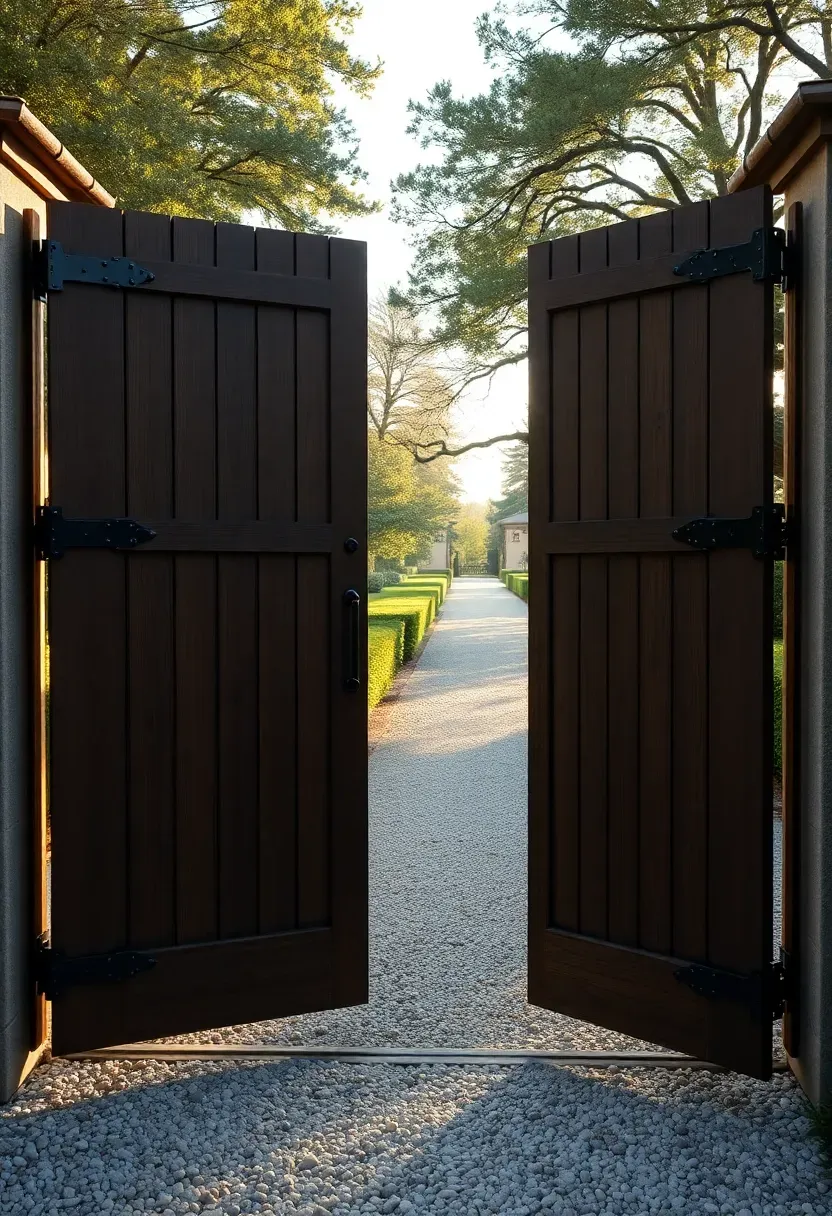
A single gate wider than 5 feet becomes heavy and puts excessive torque on one post. Double gates split the load across two posts and two sets of hinges, making them practical for driveway widths of 10 to 16 feet. The center meeting point needs a drop rod or cane bolt on one leaf to hold it in place while the active leaf opens and closes daily. Without the drop rod, both leaves swing freely and never line up properly. Budget for 6x6 or 8x8 posts — double gates put lateral stress on posts that 4x4s cannot handle over time.
Tips
- Install a center stop in the ground (a simple pipe sleeve with a removable rod) to keep the fixed leaf aligned
- Self-closing hinges work poorly on double gates because each leaf interferes with the other — use a manual latch instead
- Grade the driveway surface so it slopes slightly away from the gate to prevent gravel or debris from blocking the swing path
Recommended
Items for this idea
13. Board-on-Board Privacy Gate
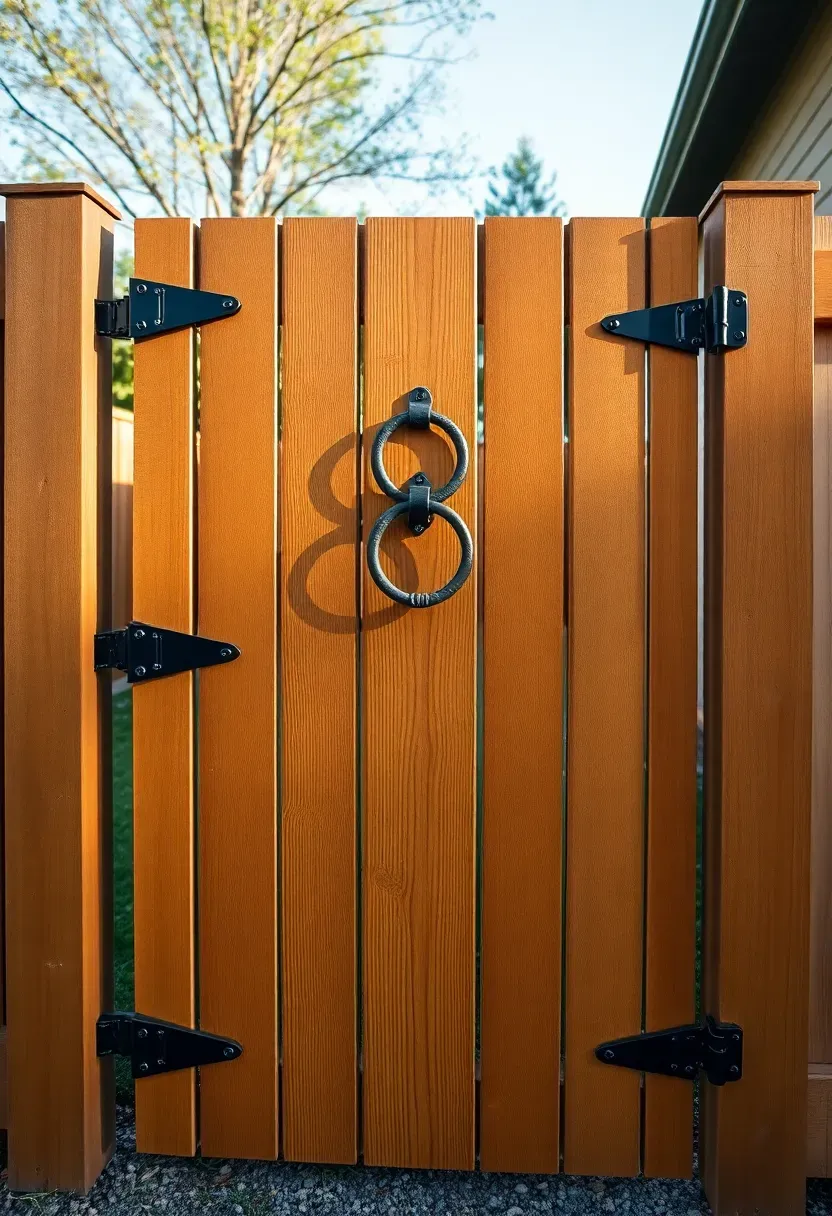
Board-on-board construction overlaps alternating boards on opposite sides of the rails, eliminating any direct line of sight through the gate while still allowing air circulation between the overlapping edges. This makes it one of the best options for privacy without the solid-wall wind problems. The gate looks the same from both sides, which matters if your neighbor sees the back of it. Material costs run about 30% more than a standard flat fence gate because you are using roughly 1.5 times as many boards.
Tips
- Overlap boards by at least 1 inch on each side to prevent direct sightlines at angles
- The extra board weight adds up fast — upgrade to heavy-duty hinges rated for the actual gate weight
- Stain or seal all boards before assembly so the overlapping edges get full coverage
14. Woven Willow Garden Gate
Origins
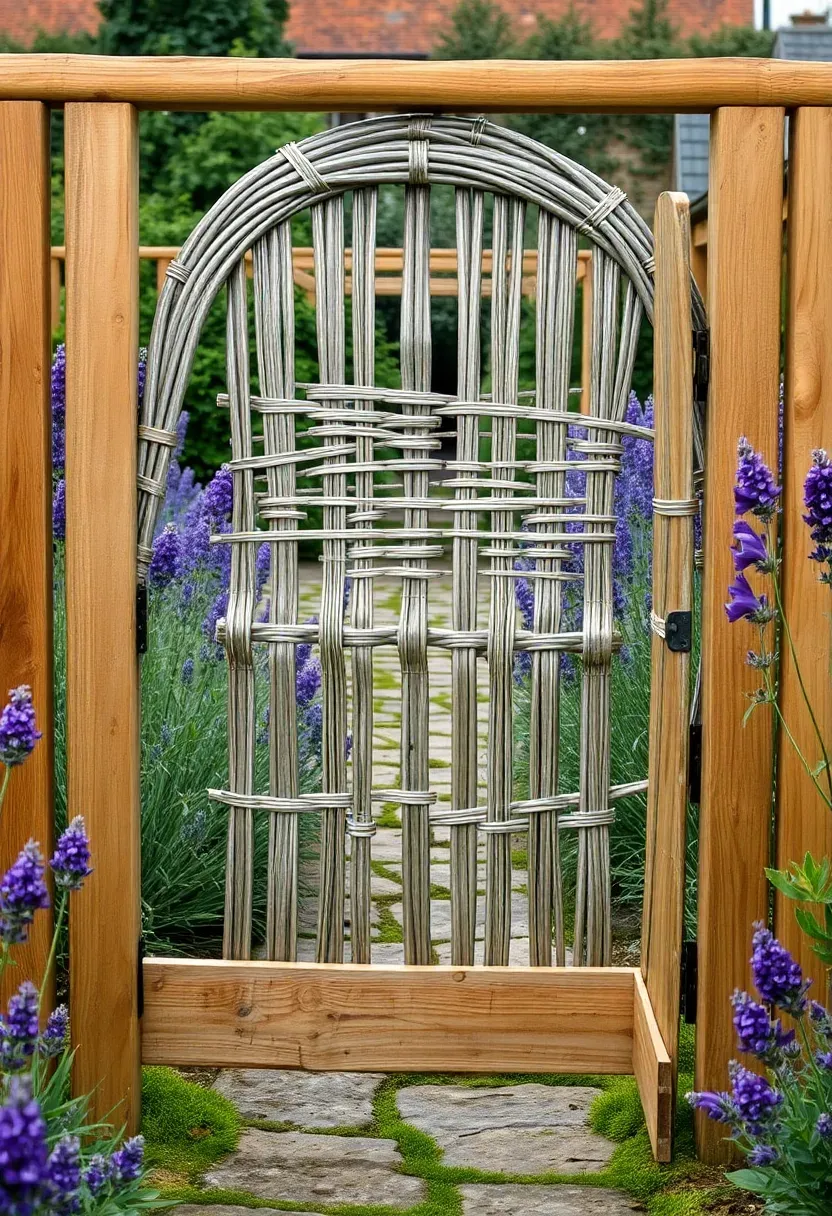
Woven willow (also called wattle) is one of the oldest fencing techniques in existence. Archaeological evidence dates it back to the Neolithic period. The technique involves weaving flexible willow rods between upright stakes, creating a surprisingly sturdy panel that flexes rather than cracks.
Modern Application
For a backyard gate, build a rectangular wooden frame from rot-resistant wood (cedar or black locust work well) and weave fresh-cut willow rods horizontally through vertical dowels set into the frame. Fresh willow bends easily; dried willow snaps. A finished willow gate weighs less than a solid wood gate and has a texture that no manufactured material can replicate. Expect the gate to last 8 to 12 years before the willow starts to break down.
Apply at Home
- Source willow from a local grower or harvest your own if you have willow trees — the rods need to be freshly cut or soaked for 48 hours
- Seal the wooden frame but leave the willow untreated so it weathers naturally to silver
- Use this gate for garden sections rather than property perimeters — it is decorative, not security-grade
Recommended
Items for this idea
15. Modern Cable Rail Gate
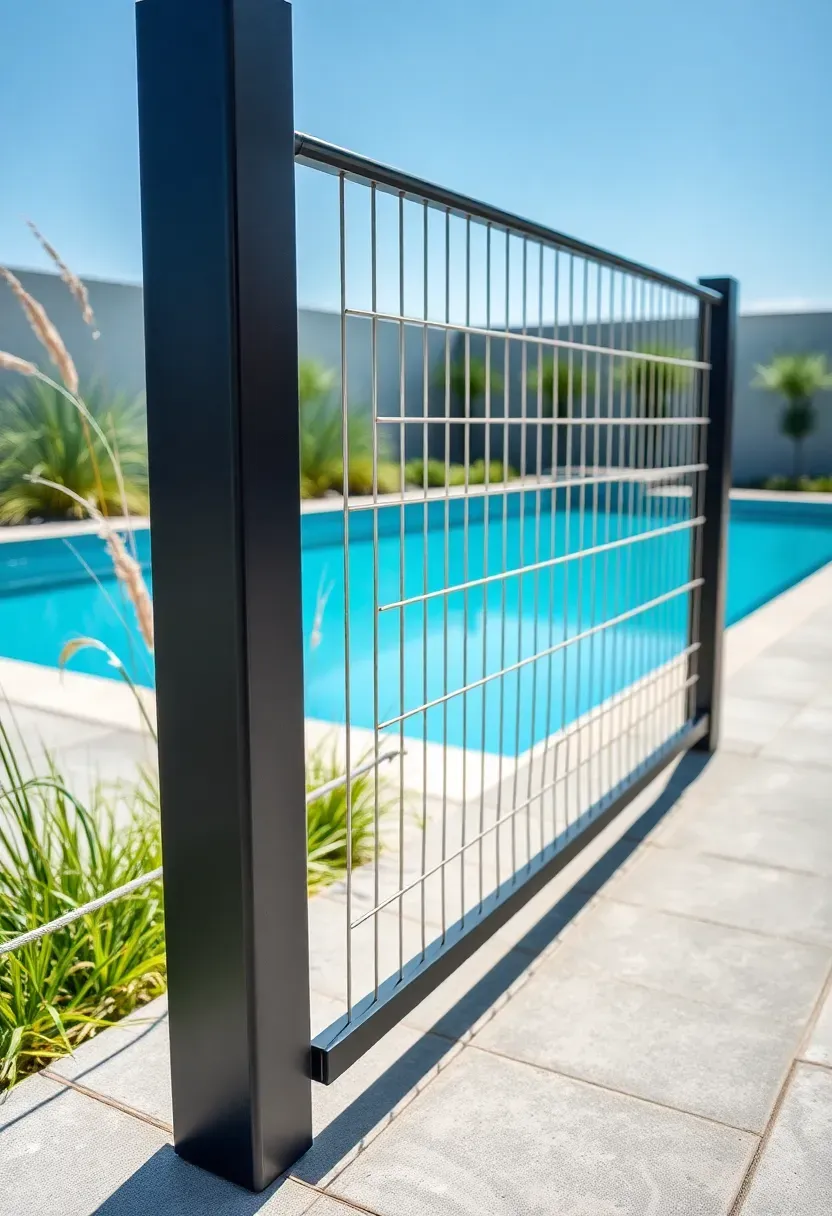
Cable rail gates use thin stainless steel cables tensioned between metal posts to create a nearly transparent barrier. They work best where you want to define a boundary without blocking a view — pool fences, deck transitions, or garden sections with landscaping worth showing off. The cables are typically 1/8-inch stainless steel with tensioning hardware at one end. A cable gate frame is usually welded steel tubing, powder-coated black or dark bronze. The minimal look requires precision: any wobble in the frame or sag in the cables stands out immediately.
Tips
- Cable spacing must meet local code — most jurisdictions require gaps no wider than 4 inches for child safety
- Tension cables after the first month as they stretch slightly under initial load
- Pair with a magnetic self-closing latch for pool areas where code requires automatic closure
16. Reclaimed Barn Wood Gate
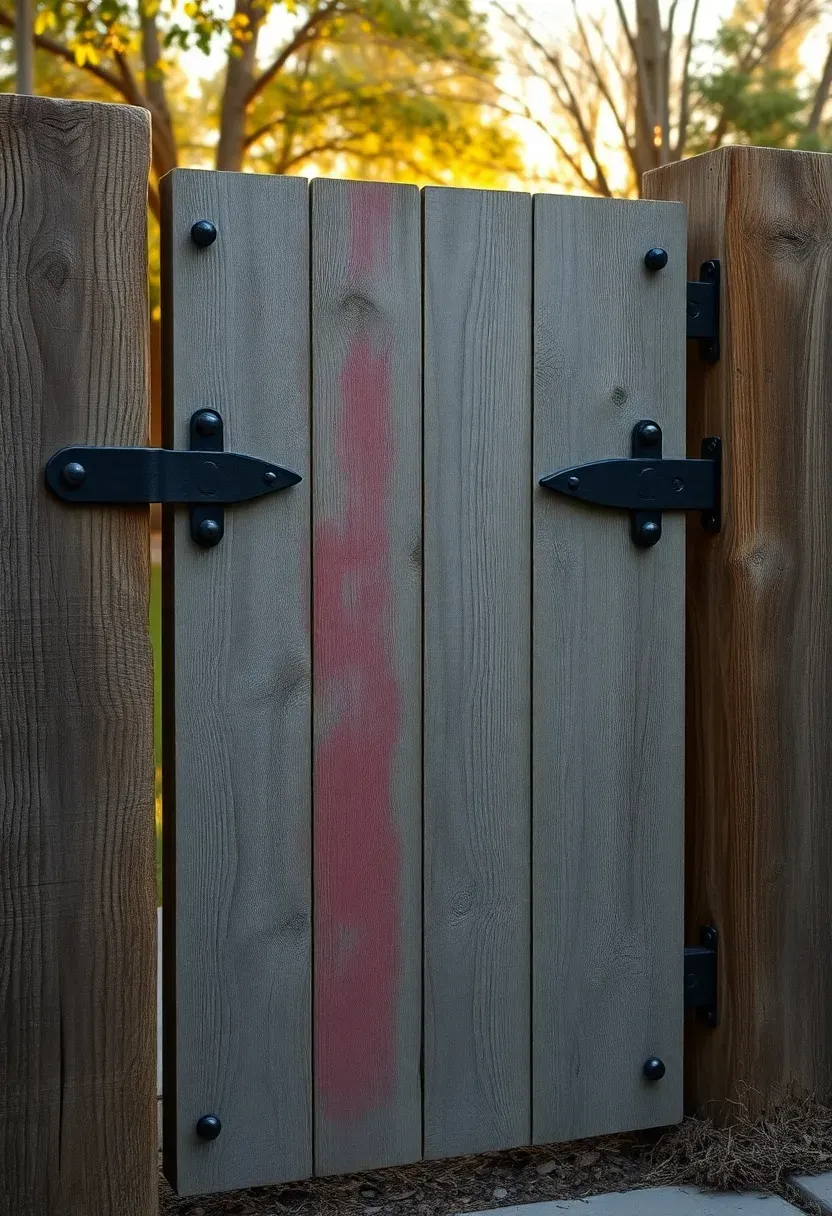
Reclaimed barn wood carries a history that new lumber cannot fake. The nail holes, saw marks, grain variations, and weathered patina took decades to develop. Building a gate from it means working with wood that is often harder and denser than modern lumber (old-growth timber was harvested from trees that grew slowly). The inconsistent dimensions are part of the charm but require more planning during layout. Source boards from architectural salvage yards or directly from farmers demolishing old structures. Expect to pay $5 to $12 per board foot depending on species and condition.
Tips
- Remove all old nails and hardware before building — run a metal detector over each board to find hidden fasteners
- Do not sand the face — you will erase the character you paid for
- Apply a clear penetrating sealer to protect the wood without changing its appearance
Recommended
Items for this idea
17. Arched Iron Garden Gate
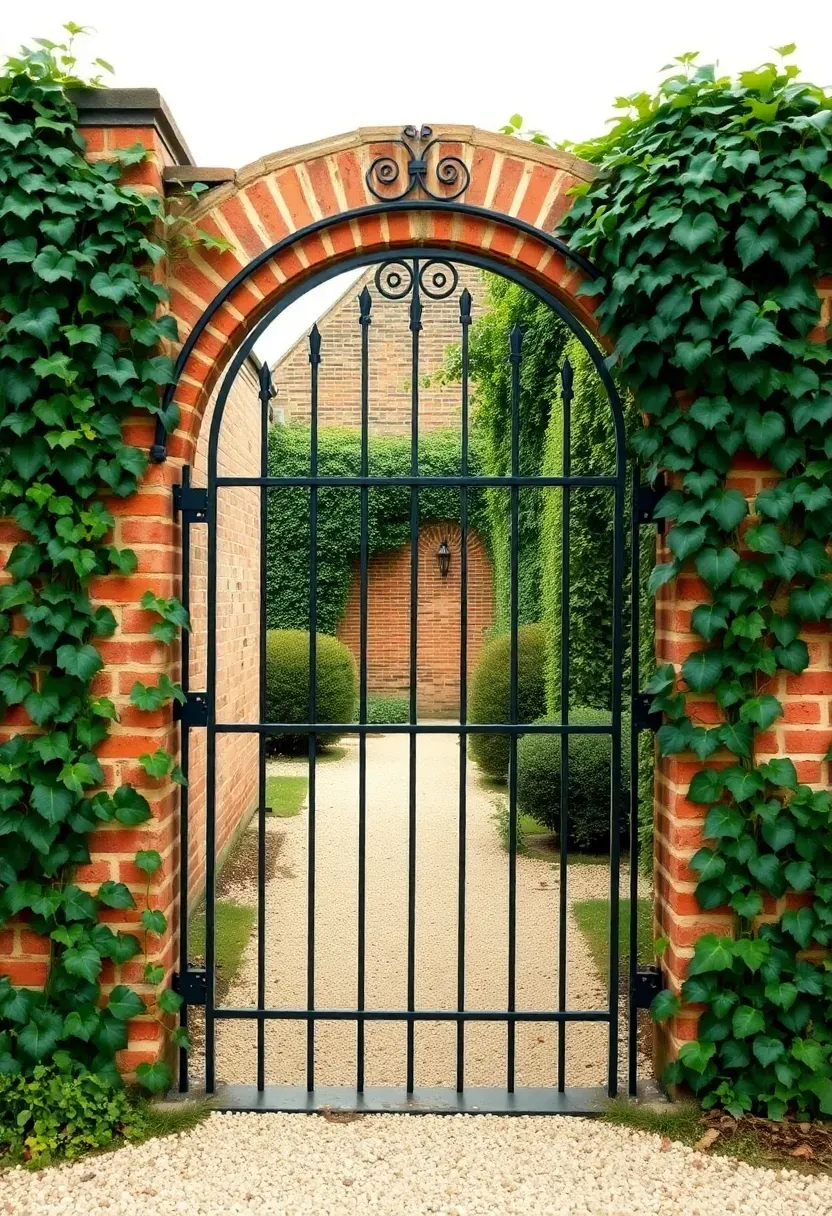
Where the wrought iron scroll gate (idea 4) goes ornate, the arched iron garden gate keeps things restrained. Vertical bars with minimal decoration and a simple curved top rail create an elegant barrier that lets you see through to the garden beyond. This transparency works well for front-to-back transitions where you want to hint at what is on the other side without fully revealing it. Powder-coated black is the standard finish, but dark green or deep bronze blends better with garden settings. A 36-inch-wide arched iron gate from a fence supplier costs $250 to $600.
Tips
- Set the gate between masonry pillars (brick or stone) for the most cohesive look
- Avoid gates with hollow tubing in areas where water freezes — trapped water expands and splits the metal
- Wax the hinges annually with paste wax rather than oil, which drips and stains hardscape below

18. Bamboo and Timber Gate
Why Bamboo
Bamboo grows to harvestable size in 3 to 5 years compared to 20+ years for most hardwoods. It is lighter than wood of comparable strength, naturally resistant to insects in most climates, and gives any gate a distinctly tropical or Asian-garden character. The round profile of bamboo poles creates visual texture that flat-sawn lumber cannot match.
How to Build It
Use a timber frame (pressure-treated or cedar 2x4s) for the structural skeleton. Attach bamboo poles vertically or horizontally to the frame using stainless steel screws drilled through pre-bored holes (bamboo splits easily if you skip the pilot holes). Alternatively, lash bamboo to the frame with marine-grade rope for a traditional look. The rope adds visual interest and avoids visible metal fasteners.
Pros and Cons
Pros: Lightweight, sustainable material, distinctive texture, affordable ($80 to $200 for a single gate) Cons: Bamboo cracks and grays without UV sealant, not suitable for heavy security, limited availability in some regions
Recommended
Items for this idea
19. Stone Pillar Entry with Wood Gate
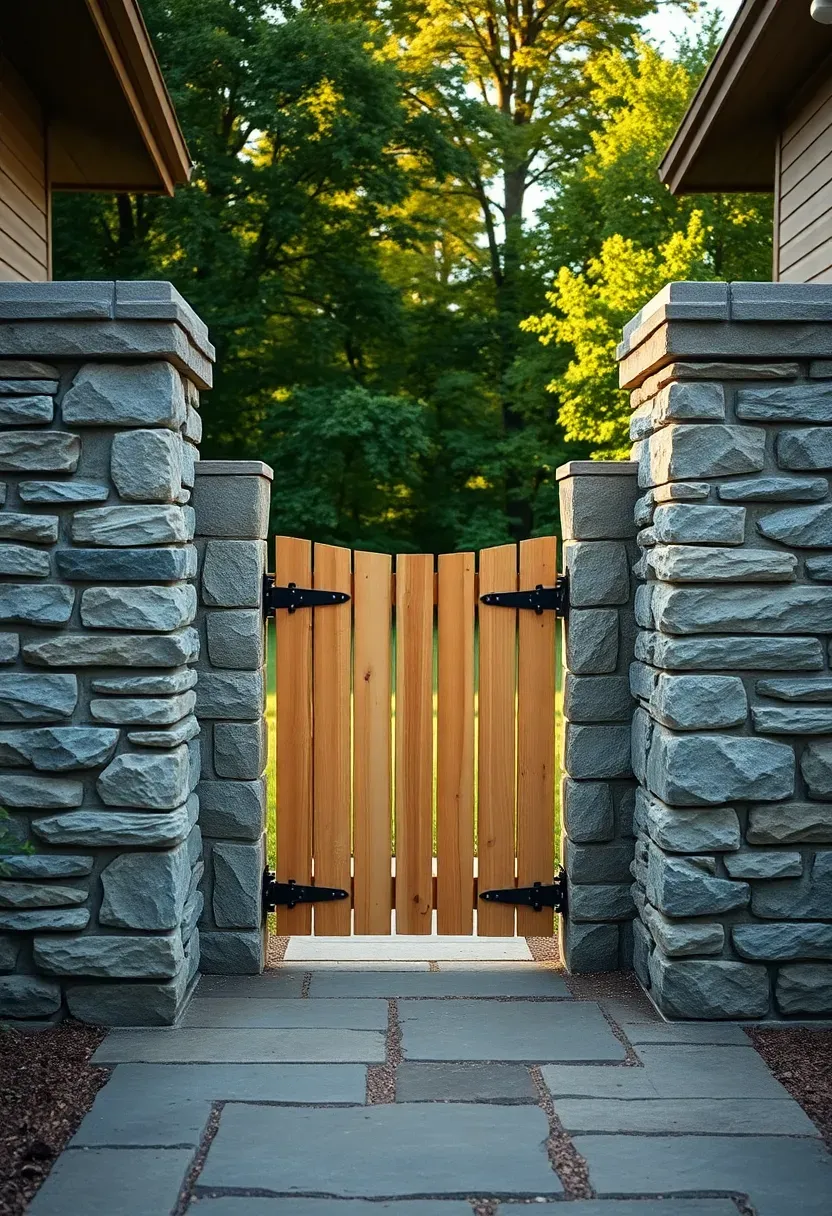
Stone pillars on either side of a gate turn a simple opening into an entry. The pillars handle all the visual weight while the gate itself can stay relatively plain. Dry-stacked fieldstone, mortared limestone, or even concrete block faced with stone veneer all work. The pillars need a footing below the frost line and should be at least 16 inches square to feel proportional to a 6-foot-tall gate. Embed a steel hinge plate into the pillar during construction so the gate hangs directly from the stone rather than from a post bolted to its face.
Tips
- Cap each pillar with a flat stone or concrete cap to shed water away from the mortar joints
- Size the opening 2 inches wider than the gate to allow for seasonal wood expansion
- Solar-powered lights mounted on the pillar caps create a welcoming entry after dark without wiring
20. Contemporary Laser-Cut Metal Gate
The Technology
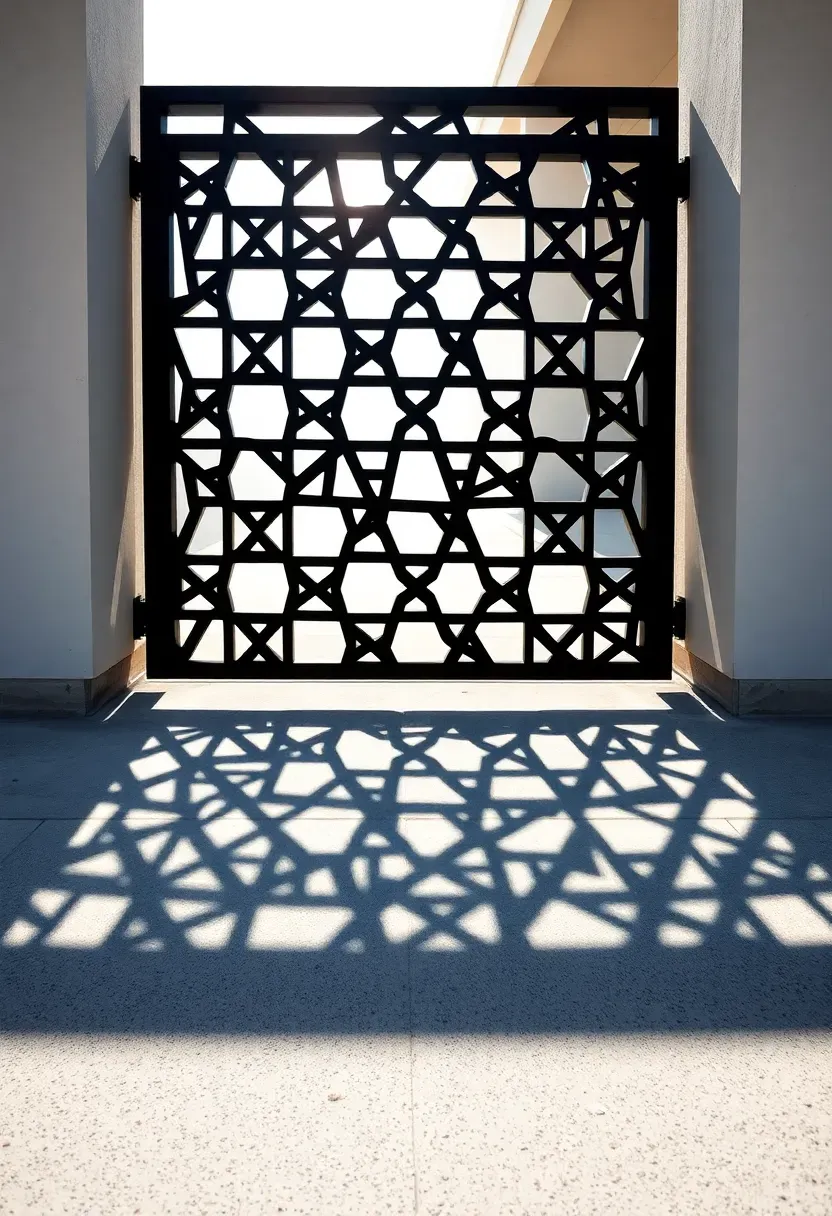
Laser cutting allows patterns impossible to achieve with hand tools or even CNC routing. A focused beam cuts through 1/8-inch to 1/4-inch steel plate with sub-millimeter precision, leaving clean edges that need minimal finishing. You send a vector file to the fabricator and get back a gate panel ready to frame.
Design Options
Geometric patterns (hexagons, interlocking circles, Moroccan-inspired lattice), organic designs (tree branches, leaf silhouettes, wave patterns), and abstract compositions all work. The cut-out areas let light through and cast dramatic shadows on the ground — an effect that changes throughout the day as the sun moves. Budget $500 to $2,000 for a custom laser-cut panel depending on size, steel thickness, and pattern complexity.
Choose Laser-Cut If
- You want a gate that doubles as art
- Your home has a modern or mid-century aesthetic that benefits from geometric detail
- You are comfortable with a gate that provides visual interest but not full privacy
Recommended
Items for this idea
21. Dutch Door Backyard Gate
The Dutch door concept — a door split horizontally so the top and bottom halves operate independently — translates perfectly to a backyard gate. Open the top half to chat with a neighbor or let airflow through while the bottom half keeps dogs contained. Close both halves for full privacy. The split typically sits at about 40 inches from the ground, which is high enough to contain most dog breeds. Each half needs its own latch and its own set of hinges. A barrel bolt connecting the two halves lets you swing the entire gate as one unit when you want.
Tips
- Weatherstrip the horizontal joint between the two halves to prevent rain from driving through the gap
- Use a cane bolt on the bottom half to pin it to the ground when only the top is open — wind can push the bottom half if it is unlatched
- This design works best on gates under 42 inches wide; wider gates need heavier hardware to support two independent swinging sections
Quick FAQ
How wide should a backyard gate be? Minimum 36 inches for comfortable foot traffic. If you need to move wheelbarrows, mowers, or furniture through the gate, go with 48 inches. Driveway gates typically range from 10 to 16 feet across both leaves.
What wood lasts longest for an outdoor gate? Black locust and white oak are the most rot-resistant domestic hardwoods. Cedar and redwood are the standard choices — they last 15 to 20 years with regular sealing. Pressure-treated pine is cheapest and lasts 10 to 15 years but starts with a green tint that takes months to weather away.
Do I need a permit to install a backyard gate? Usually no, as long as the gate is part of an existing fence and does not change the fence height. If you are building a new fence with the gate, check your local zoning code for height limits and setback requirements. Pool enclosure gates almost always have specific code requirements for self-closing and self-latching hardware.
Can I automate an existing manual gate? Yes. Gate opener kits designed for swing gates bolt onto the gate and post with articulating arms or linear actuators. Basic kits cost $200 to $500 and run on 110V power or solar panels. The gate needs to be in good condition and properly balanced — an opener will not fix a sagging gate, it will just burn out the motor trying.
Which gate style works best for keeping pets contained? Solid panel gates (board-on-board, privacy plank) with self-closing spring hinges and a latch that sits above the dog's reach. Avoid gates with gaps wider than 3 inches at the bottom or between boards. The Dutch door option (idea 21) is ideal if you want airflow with containment.
A gate is one of the few parts of a yard that combines structural function with daily physical contact. You grab it, lean on it, push it open with your hip when your hands are full. That kind of regular use means it needs to be built well — but it also means it is worth making something you enjoy looking at every time you walk through it. Pick a material that fits your fence, a style that matches your house, and hardware rated for the gate's actual weight. Get those three things right and the gate will be the best part of your fence for a long time.
Pinterest cover for 21 Backyard Gate Ideas
About the author
OBCD
CGI visualization and interior design content. We create detailed 3D renders and curate practical design ideas for every room in your home.