27 Backyard Gazebo Ideas
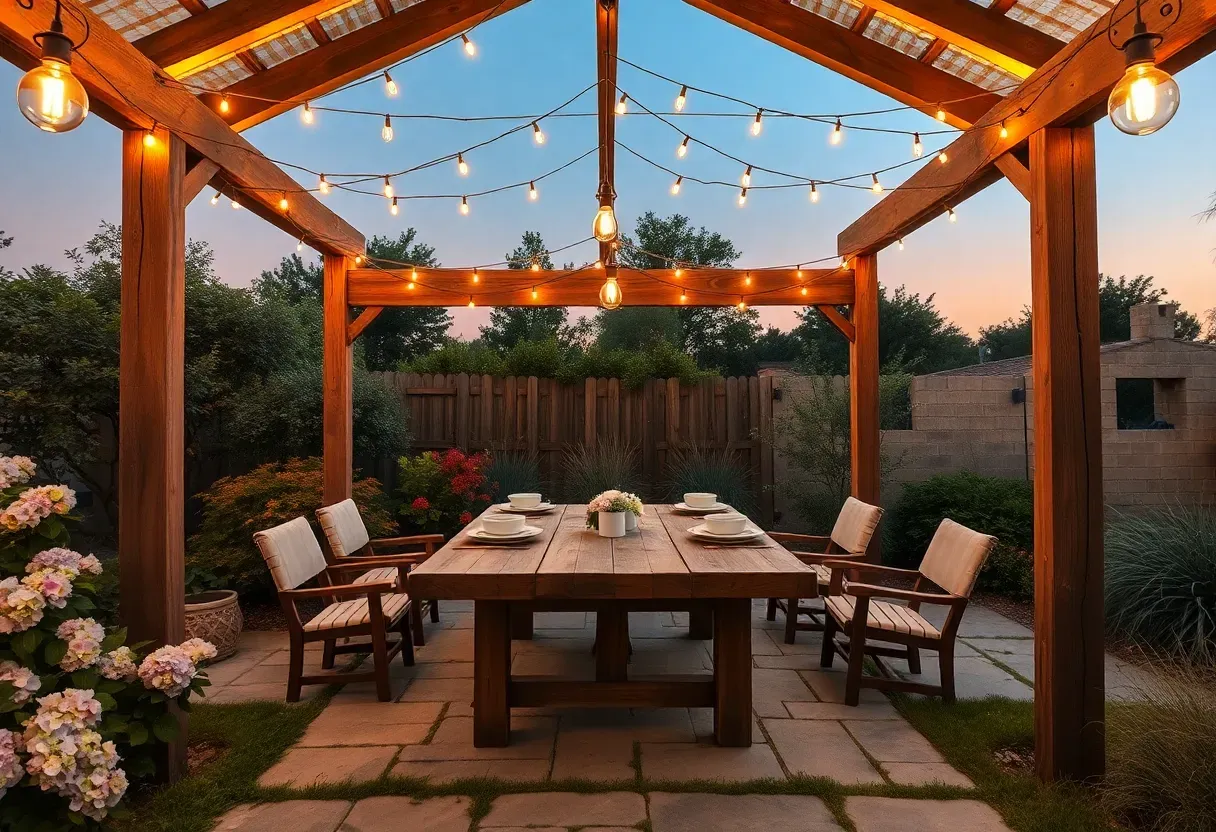
Last summer I helped my neighbor tear down a rotting 1990s gazebo kit he had inherited with the house. The pressure-treated pine had gone soft, the shingle roof sagged in the middle, and wasps had colonized every joint. We hauled it to the dump in one trailer load. Two months later he had a new aluminum-and-cedar structure in its place — half the footprint, twice the usability, no wasps. That project got me thinking about how many directions a gazebo can go depending on yard size, climate, and how you actually plan to use the thing. Here are 27 ideas worth considering before you build or buy.
Each idea covers a different approach — from materials and roof styles to specialized functions like outdoor kitchens or winter retreats.
Table of Contents
- Floating Deck Gazebo
- A-Frame Gazebo
- Wisteria-Draped Gazebo
- Outdoor Kitchen Gazebo
- Copper Roof Gazebo
- Minimalist Black Steel Gazebo
- Tiki Hut Gazebo
- Enclosed Four-Season Gazebo
- Gazebo with Built-In Bar
- Reclaimed Barn Wood Gazebo
- Rooftop Gazebo
- Sail Shade Gazebo
- Hexagonal Garden Gazebo
- Mediterranean Stucco Gazebo
- Treehouse Gazebo
- Lean-To Wall Gazebo
- Wrought Iron Gazebo
- Bamboo Tropical Gazebo
- Wedding-Ready Gazebo
- Dog Run Gazebo
- Greenhouse Gazebo Hybrid
- Fireplace Gazebo
- Retractable Roof Gazebo
- Zen Meditation Gazebo
- Riverside Gazebo
- Kids' Playhouse Gazebo
- Smart-Wired Gazebo
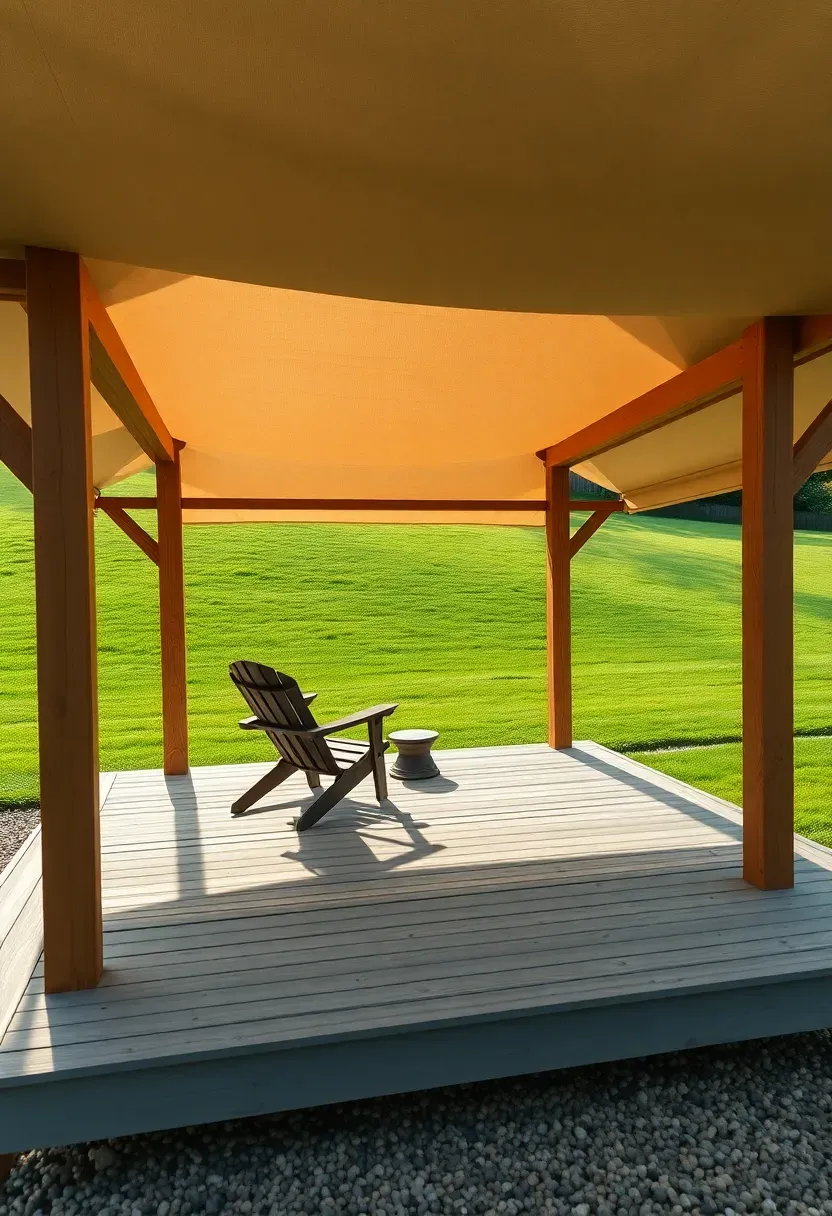
1. Floating Deck Gazebo
A floating deck eliminates the need for poured footings by resting precast concrete blocks directly on leveled ground. The gazebo frame bolts to the deck surface rather than anchoring into the earth, which means the entire structure can be repositioned or disassembled without permanent yard damage. This approach works best on flat or gently sloped lots with well-draining soil. Use composite decking over pressure-treated joists — the deck sits close to the ground where moisture is constant, and composite handles that better than wood over time. Budget around $1,800 to $3,500 in materials for a 10x12 version.
Tips
- Space concrete deck blocks no more than 4 feet apart to prevent bounce
- Add landscape fabric beneath the gravel pad to suppress weed growth
- Keep the deck surface at least 2 inches above surrounding grade for drainage
We picked a few things that go well with this idea: Aoxun 10x12 Hardtop Gazebo with Curtains (★4.3), 10x12 Aluminum Hardtop Gazebo with Netting (★4.3) and YITAHOME 10x10 Metal Hardtop Gazebo (★4.2). As an Amazon Associate we earn from qualifying purchases.
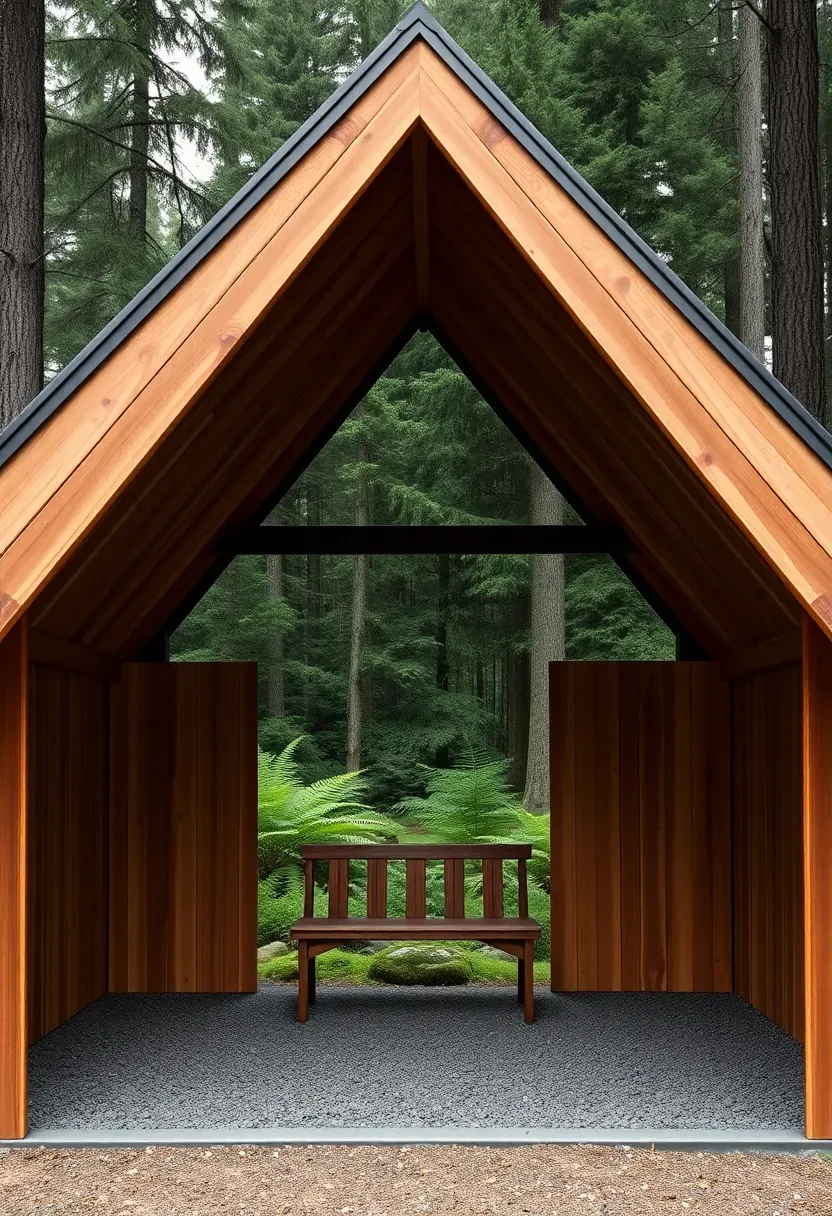
2. A-Frame Gazebo
Why A-frames keep coming back
The A-frame shape has cycled through popularity since the 1950s cabin boom, but it works just as well scaled down to a garden structure. The steep pitch sheds snow and rain instantly, which means less structural engineering and lighter framing members. You can build one from six main pieces: two ridge beams, four rafter pairs.
Modern take
Today's backyard A-frames use exposed timber trusses with standing-seam metal roofing. The triangular profile creates a tall interior ceiling without requiring a wide footprint — a 10-foot-wide base gives you over 9 feet of headroom at the peak. Works well in narrow side yards where a traditional gazebo would feel cramped.
Apply at home
- Use a 12/12 pitch or steeper for visual drama and weather performance
- Leave the gable ends open or fill them with clear polycarbonate for wind protection without blocking light
We picked a few things that go well with this idea: 100ft LED Outdoor String Lights Dimmable (★4.3), Brightown 50ft G40 Globe String Lights (★4.7) and Brightever 100ft Edison Bulb String Lights (★4.6). As an Amazon Associate we earn from qualifying purchases.
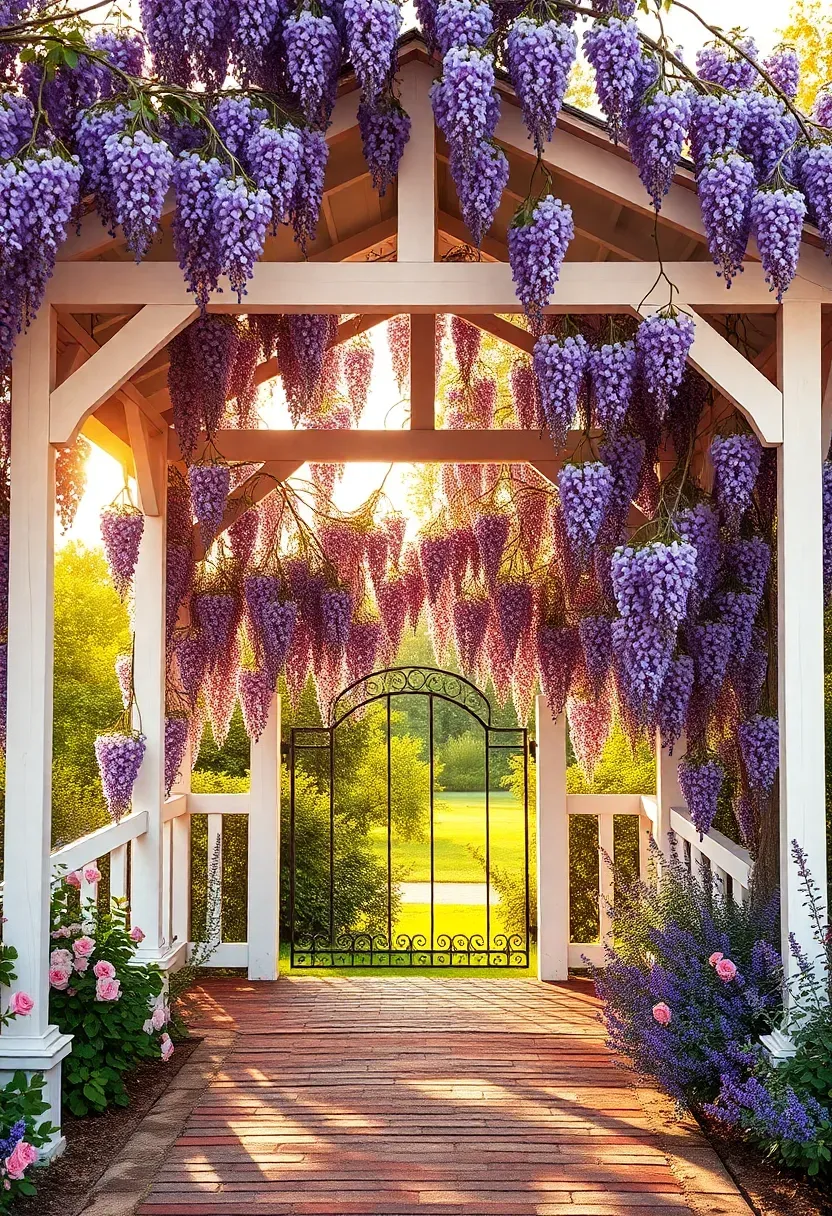
3. Wisteria-Draped Gazebo
Wisteria needs something to climb, and a gazebo gives it architecture. Plant one vine at the base of each post — Chinese wisteria (Wisteria sinensis) climbs counterclockwise, Japanese wisteria (Wisteria floribunda) climbs clockwise, which matters when you are training stems around posts. It takes three to five years for a young plant to reach the roofline and produce the cascading flower clusters that make this look work. During that waiting period, the gazebo stands on its own visually, so choose a frame with proportions you actually like bare. A sturdy structure matters here: mature wisteria can weigh over 100 pounds per vine and exerts twisting force on posts and rafters.
Tips
- Prune twice yearly — midsummer and late winter — to control growth and encourage blooms
- Use aluminum or galvanized wire guides rather than letting vines wrap directly around support beams
- Avoid planting wisteria near sewer lines or foundations — the roots are aggressive
We picked a few things that go well with this idea: HolidayIdeas Waterproof Outdoor Curtains (4 Panels) (★4.5), BONZER Waterproof Privacy Outdoor Curtain (★4.6) and Gazebo Replacement Privacy Curtain (4-Panels) (★4.3). As an Amazon Associate we earn from qualifying purchases.
4. Outdoor Kitchen Gazebo
The problem with open-air cooking
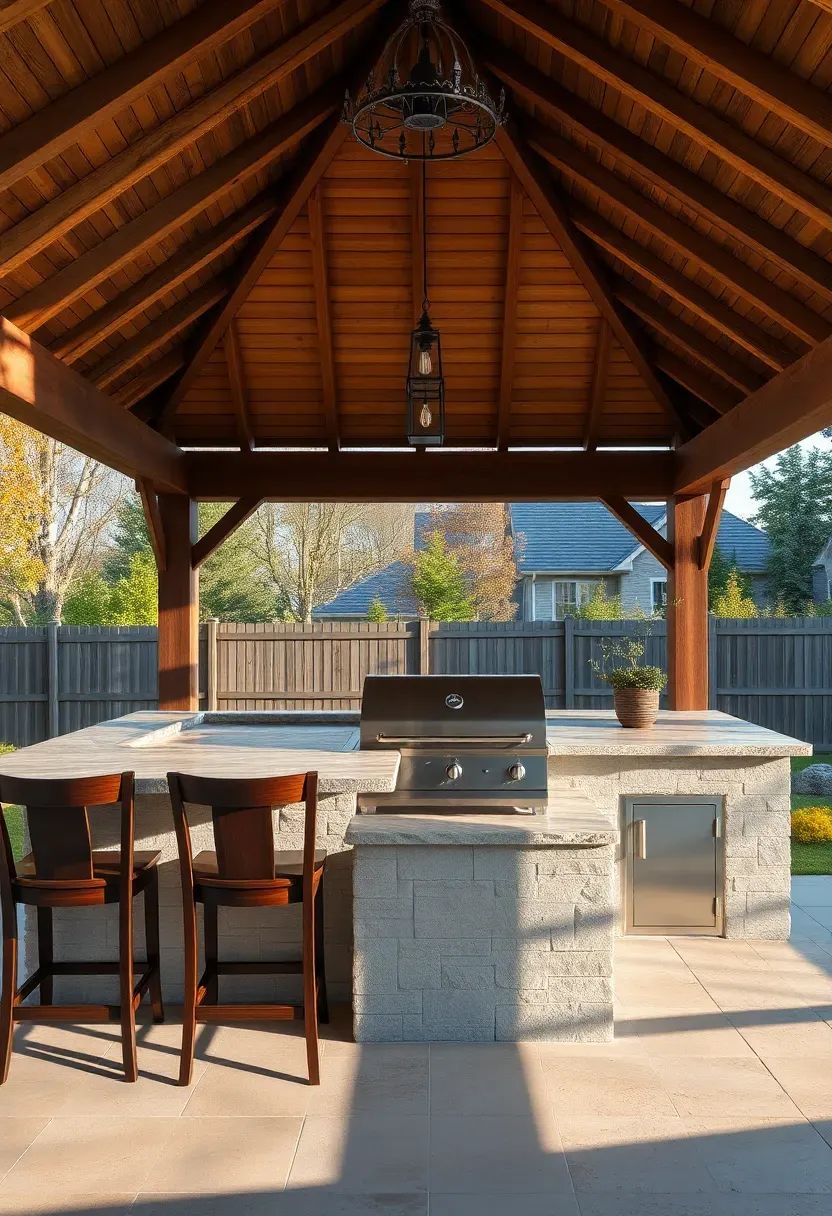
Grilling without overhead cover means canceling plans when it rains, getting sunburned during summer cookouts, and cleaning ash off everything within 10 feet. A gazebo over the cooking area fixes all three, but it introduces a ventilation requirement that most people underestimate.
The solution
Build or buy a gazebo with a vented ridge cap or a cupola directly above the grill position. The vent allows heat and smoke to rise out naturally. A 12x16 minimum footprint gives you room for a 4-foot grill station, prep counter, and three bar stools without feeling tight. Run gas and electrical lines underground before pouring the slab — retrofitting is expensive and ugly.
Pros and cons
- Pro: Extends your grilling season into rain and shoulder months
- Pro: Keeps guests comfortable while the cook works nearby
- Con: Requires proper ventilation engineering — grease fires under a roof are serious
Recommended
Items for this idea
5. Copper Roof Gazebo
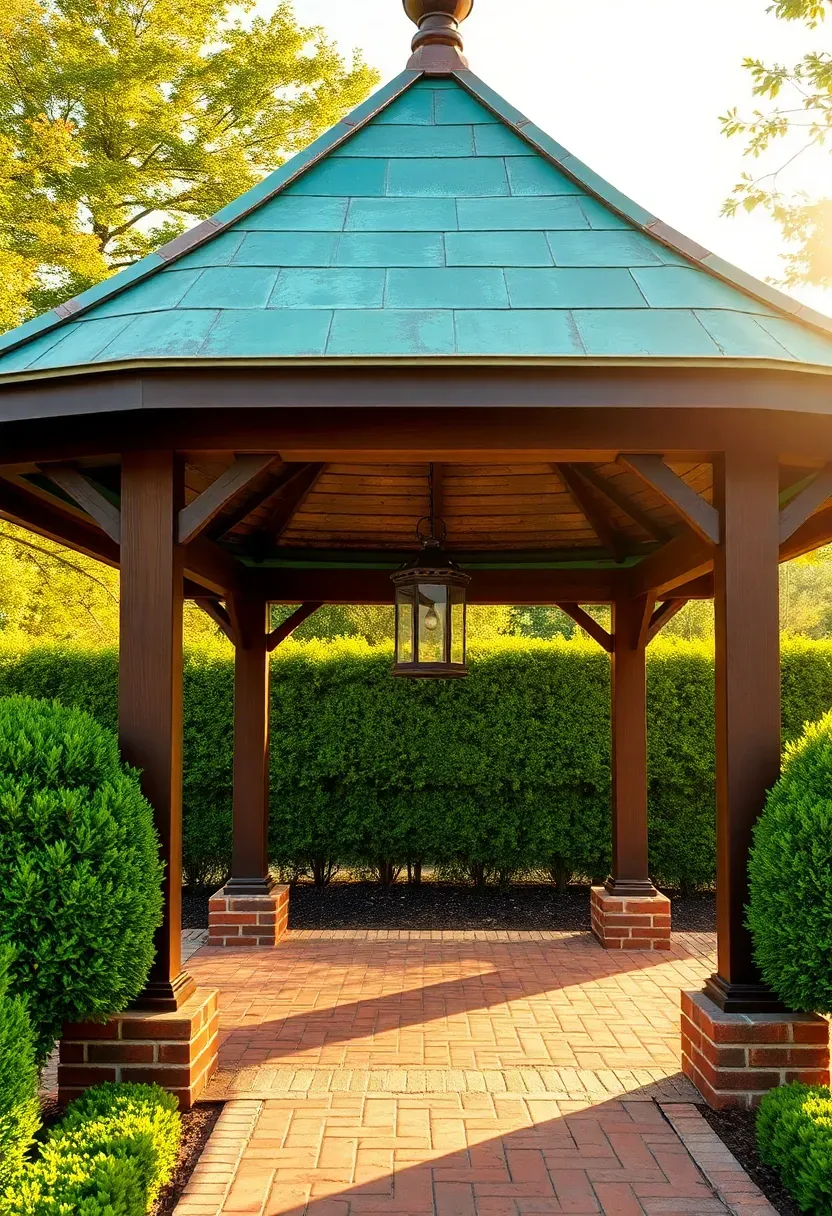
Copper roofing starts bright penny-orange and develops a green patina over five to fifteen years depending on climate humidity. That patina is not just decorative — it is actually a layer of copper carbonate that protects the metal from further corrosion. A copper-roofed gazebo costs significantly more than asphalt shingles (expect $25 to $40 per square foot for the roofing alone versus $3 to $7 for shingles), but the material lasts 100-plus years with zero maintenance. No painting, no sealing, no replacing curled shingles after a storm. The weight is similar to slate, so your frame needs to be sized accordingly — typically 6x6 posts and doubled 2x8 rafters minimum.
Tips
- Let the patina develop naturally rather than applying chemical accelerants — the result looks more authentic
- Use copper nails or stainless steel fasteners to avoid galvanic corrosion
- Pair copper roofing with dark-stained wood for contrast as the green develops
6. Minimalist Black Steel Gazebo
Black steel vs. natural wood
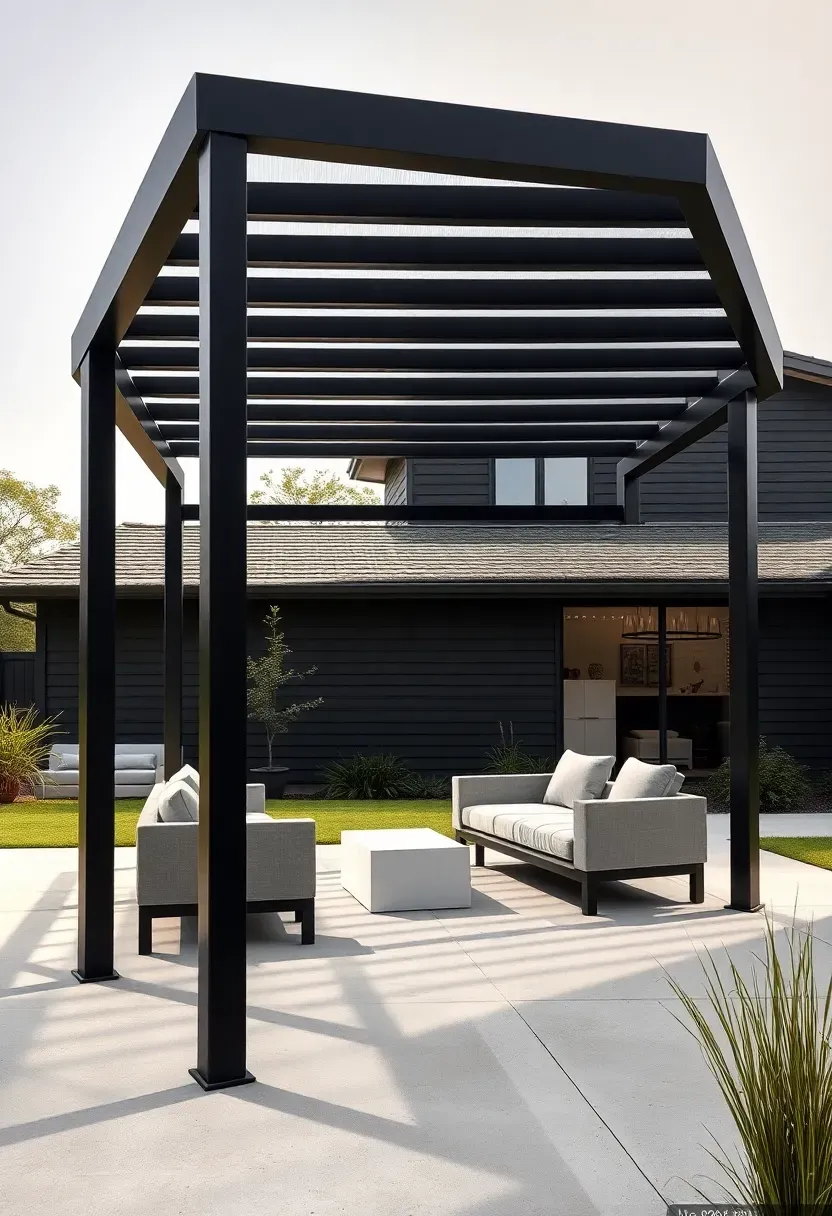
Black powder-coated steel gazebos suit contemporary homes where exposed timber would clash with the architecture. The lines are thinner — steel members can be half the width of equivalent wood beams while carrying the same load. The result is a structure that feels lighter and more open. Maintenance is minimal: touch up any chips in the powder coating with matching spray paint to prevent rust spots.
When to choose this style
Pick black steel if your home has a flat roof, metal siding, or modern window profiles. The gazebo should feel like it belongs to the same design language as the house. Pair with concrete pavers, a monochrome outdoor rug, and furniture in greys and whites.
Choose wood if
Your property has mature trees, a stone facade, or Arts and Crafts architecture. Black steel in a cottage garden looks like it landed from another planet.
Recommendation
Black steel works best when the surrounding landscape is kept simple — ornamental grasses, gravel, a few sculptural plantings rather than dense flower borders.
Recommended
Items for this idea
7. Tiki Hut Gazebo
Origins
Tiki culture in American backyards traces back to returning World War II veterans who had spent time in the Pacific islands. The original Polynesian structures used local materials — palm fronds, bamboo, lava rock — for rain shelters and gathering spaces. The midcentury American version simplified this into a party aesthetic, but the underlying building logic is sound: a steep thatched roof sheds tropical rain and provides deep shade.
Modern version
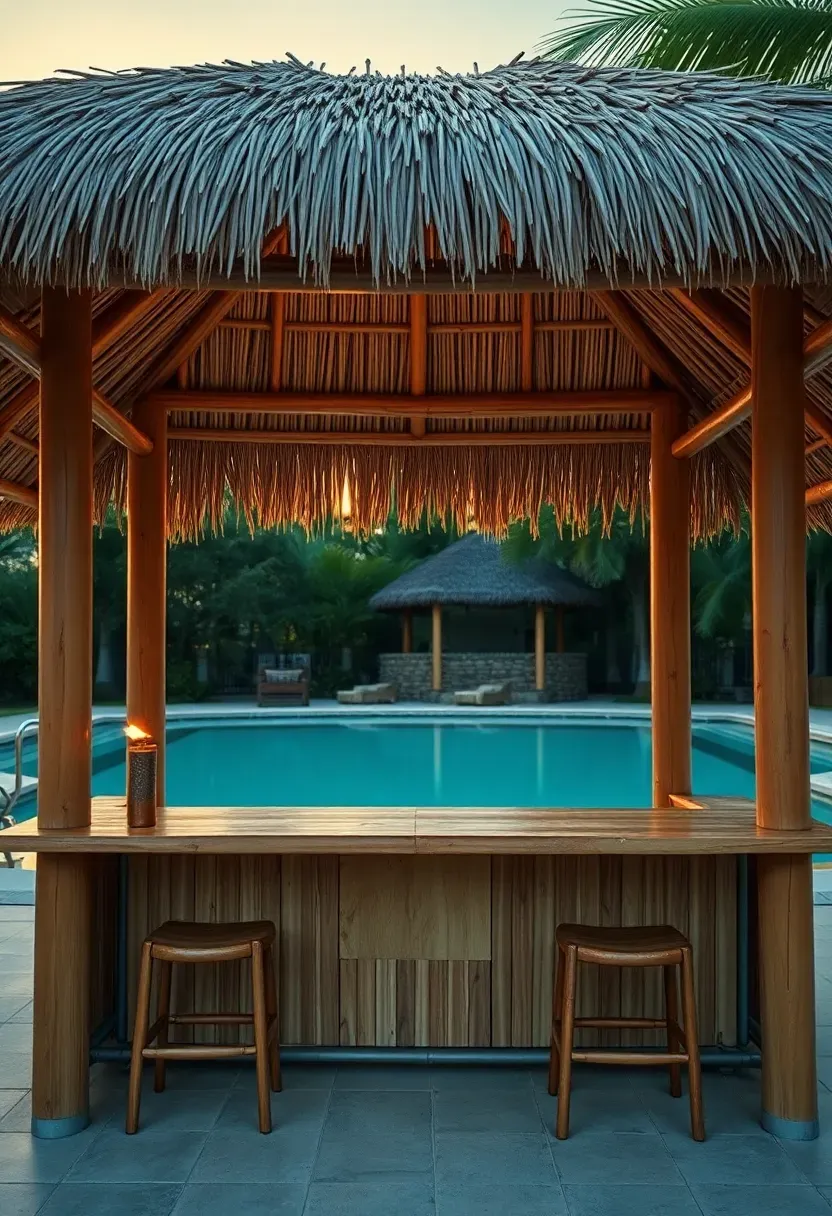
Today you can buy synthetic thatch panels made from recycled HDPE plastic that look surprisingly convincing from ground level and last 20 years without rotting. Real Mexican palm thatch costs less upfront but needs replacement every 3 to 5 years. The bamboo pole structure underneath should be treated Guadua or Tre Gai bamboo rated for outdoor structural use — decorative garden bamboo splits and fails within two seasons.
Apply at home
- Position the tiki gazebo near a pool, hot tub, or fire pit for the full resort effect
- Add a simple plywood bar top with a bamboo facing and three bar stools
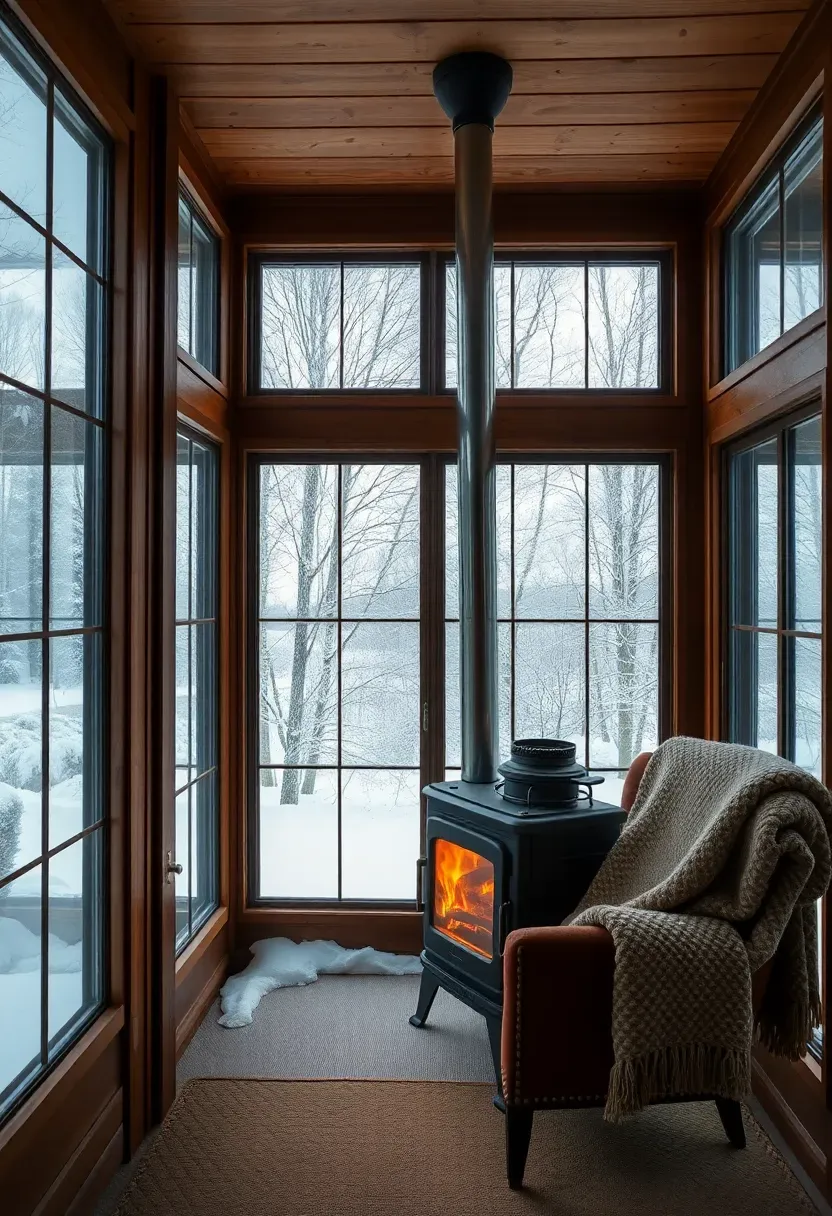
8. Enclosed Four-Season Gazebo
The problem with three-season rooms
Screened gazebos are great from May through September, then they sit empty for seven months while you look at them through the kitchen window. If you live anywhere with real winters, that is a bad return on a structure that costs several thousand dollars.
Making it year-round
An enclosed gazebo with insulated glass panels, weather-stripped doors, and a small heat source works in every month. Options for heating include a certified wood stove with a proper chimney pipe, an electric radiant heater, or a propane unit vented through the wall. Insulated glass panels (double-pane minimum) prevent condensation and cut heat loss by 50 percent compared to single-pane. Budget $8,000 to $18,000 depending on size and finish level.
Pros and cons
- Pro: Usable 365 days per year — reading room, home office, morning coffee spot
- Pro: Adds appraised square footage to your property in some jurisdictions
- Con: Requires electrical and possibly gas permits depending on your municipality
Recommended
Items for this idea
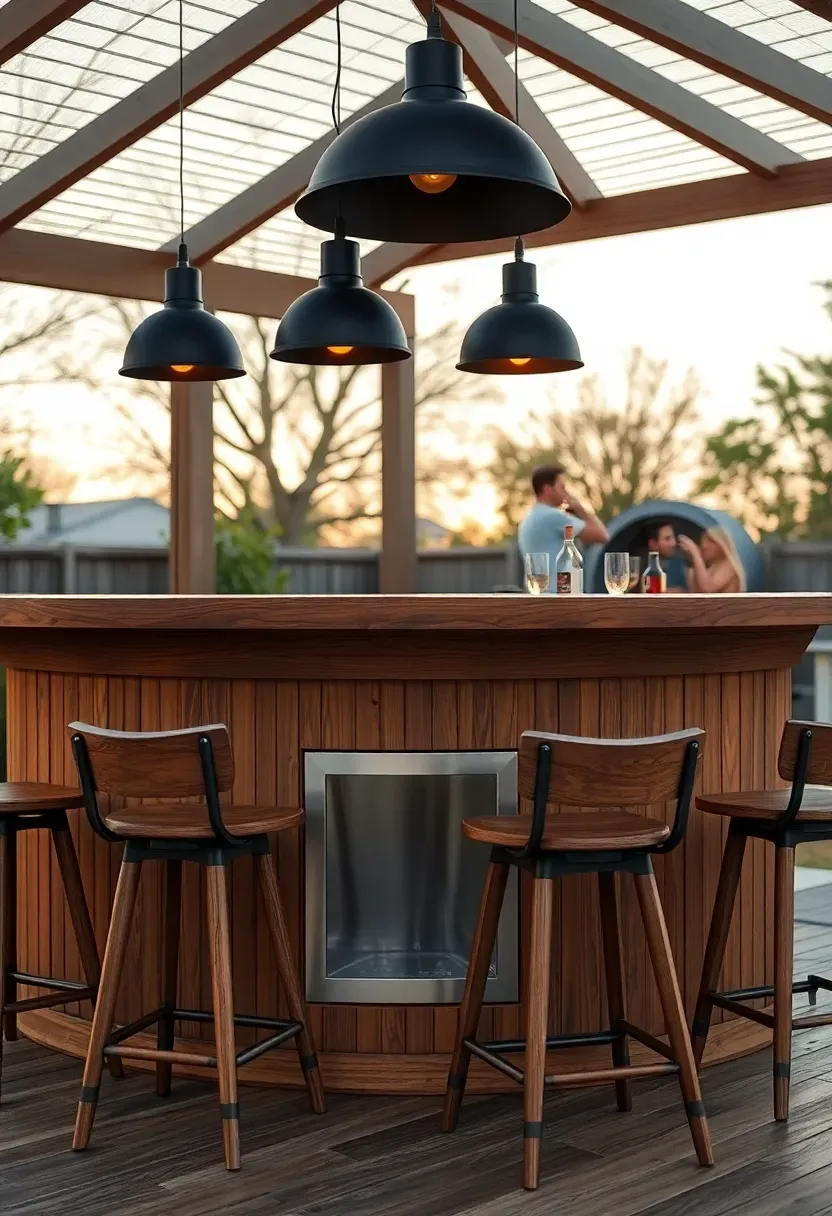
9. Gazebo with Built-In Bar
Building a bar into your gazebo frame turns the structure from a passive sitting area into a destination. The bar top should be 42 inches high for standing use or 36 inches for seated bar stools. Use a rot-resistant wood species — ipe, teak, or marine-grade plywood sealed with spar varnish. Mount it on heavy-duty shelf brackets lag-bolted into the gazebo posts. Leave at least 12 inches of knee clearance on the stool side. A built-in cooler or mini-fridge underneath saves trips to the house. Run a dedicated 20-amp electrical circuit for the refrigerator and any blenders or ice machines you add later.
Tips
- Slope the bar top 1/8 inch per foot toward the outside edge so rain sheets off
- Install a foot rail made from 1.5-inch copper or black iron pipe at 9 inches above the floor
- Add an overhead pendant light on a dimmer for evening use
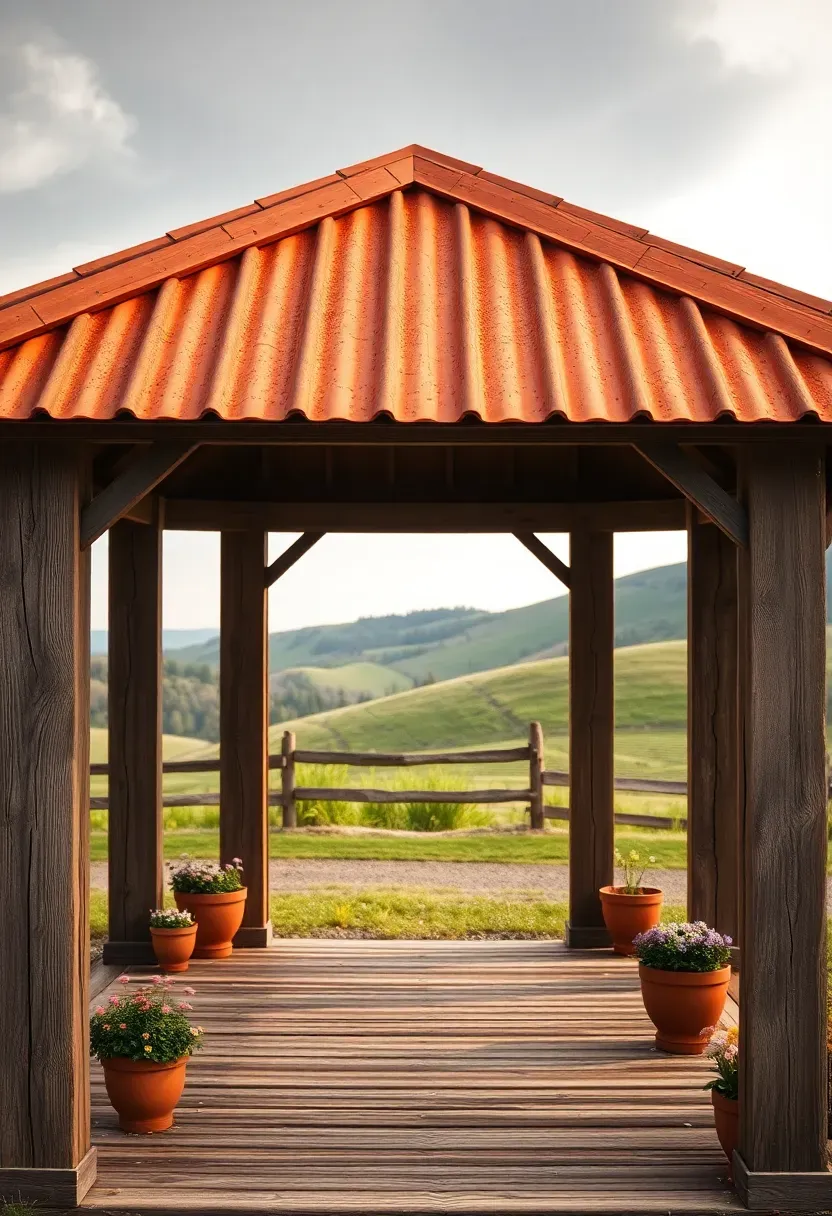
10. Reclaimed Barn Wood Gazebo
How to source materials
Start with local demolition companies and barn salvage operations — most states in the Midwest and Northeast have at least a few dealers. Old-growth barn timbers are typically 6x6 or 8x8 hand-hewn beams of white oak, chestnut, or heart pine. Expect to pay $8 to $15 per board foot, which is less than buying new timber of equivalent species. Inspect every piece for hidden nails and bolt holes.
Step 1: De-nail and clean
Run a metal detector along each beam before cutting. Old square-cut nails will destroy a modern saw blade instantly.
Step 2: Plan around irregular dimensions
Barn timbers are rarely perfectly square. Layout your mortise-and-tenon joints on site, scribing each connection to its actual dimensions rather than trusting measurements.
Step 3: Apply finish selectively
Leave exposed faces unfinished for the weathered look. Seal end grain and ground-contact surfaces with a penetrating wood preservative.
Watch out
- Never use reclaimed wood that shows signs of powder-post beetle infestation — the holes are small and round, about 1/16 inch diameter
Recommended
Items for this idea
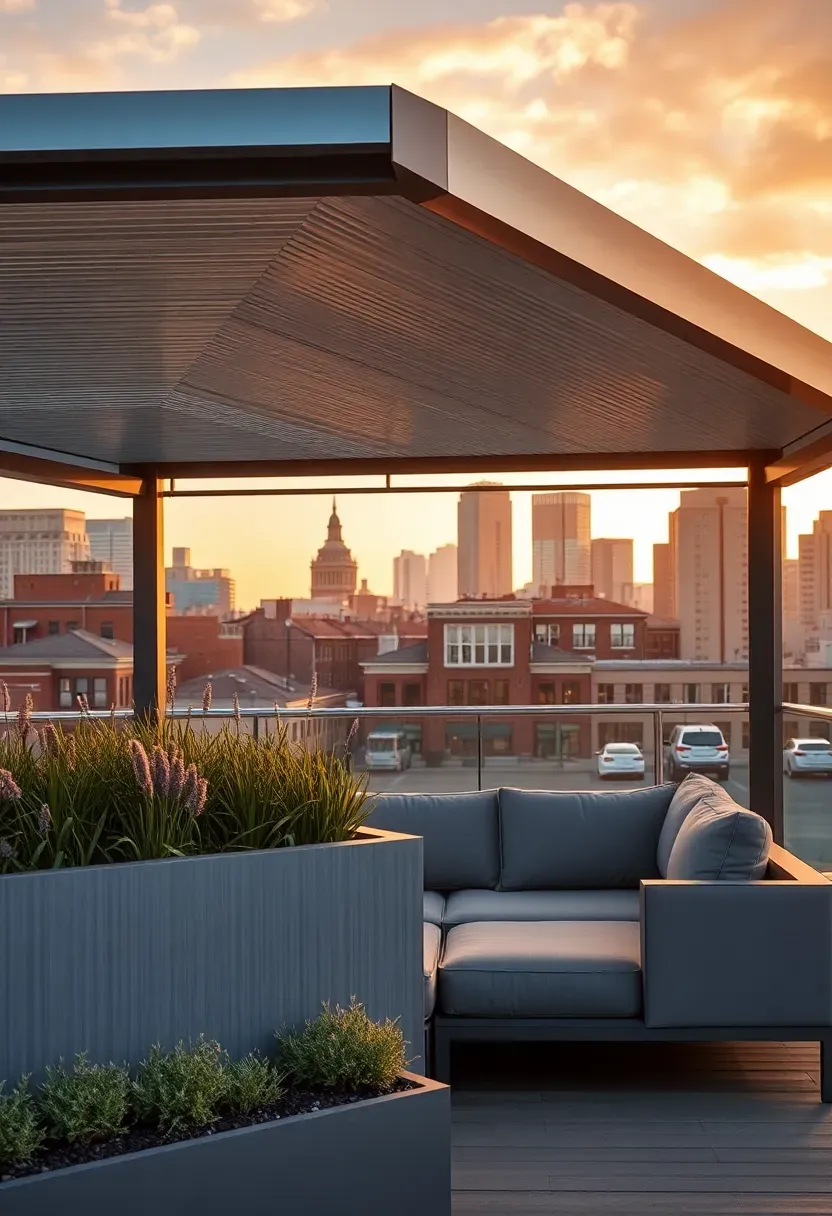
11. Rooftop Gazebo
Most rooftop structures face two constraints that ground-level builds do not: wind exposure and weight limits. A flat roof rated for 40 psf live load can support a lightweight aluminum gazebo with container plants, but not a stone-column structure. Bolt the frame to a weighted base plate rather than penetrating the roof membrane — any hole risks a leak that becomes an interior ceiling problem. Wind speeds at rooftop level are typically 20 to 40 percent higher than at ground level in the same location, so brace accordingly. Consult a structural engineer before placing anything heavier than patio furniture on a residential roof.
Tips
- Use louvered panels instead of solid walls to reduce wind load while still providing shade
- Choose lightweight composite or aluminum materials over steel or wood
- Anchor with ballast blocks rated for your local wind zone rather than relying on self-weight
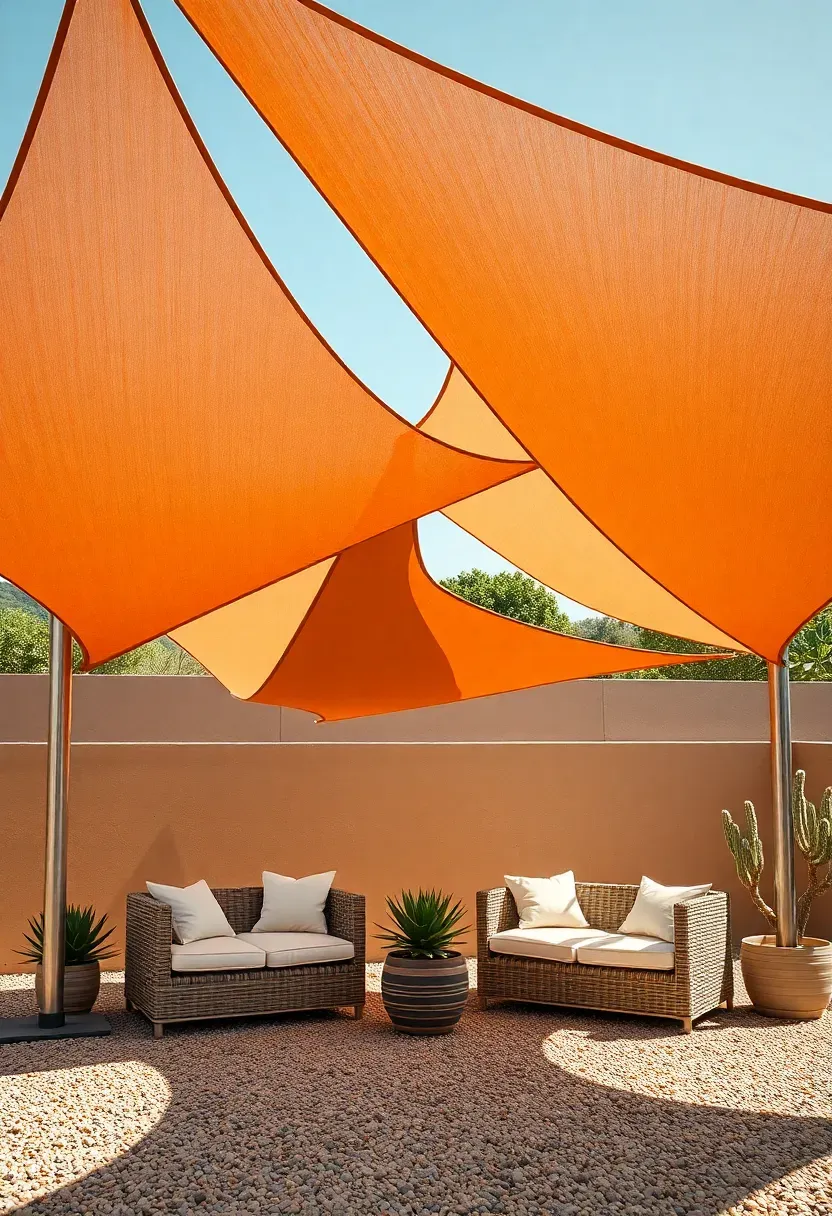
12. Sail Shade Gazebo
Shade sails vs. traditional roofs
Shade sails cost 80 percent less than a built roof and install in an afternoon. They use triangular or rectangular fabric panels tensioned between mounting points — posts, house walls, or mature trees. The look is distinctly modern and sculptural. A single sail provides shade but not rain protection; overlapping two or three sails at different heights blocks most light rain and creates visual depth.
When to choose sails
Sails suit renters, people on tight budgets, or anyone who wants shade they can remove for winter. They also work in yards where permanent structures need permits — many jurisdictions classify tensioned fabric as temporary.
Choose a solid roof if
You need rain protection for furniture, electronics, or an outdoor kitchen. Sails drip at every corner and seam during heavy rain.
Recommendation
Use sails as a first-phase solution. If you find yourself using the space constantly, upgrade to a permanent gazebo in the same location later — you already know the right spot.
Recommended
Items for this idea
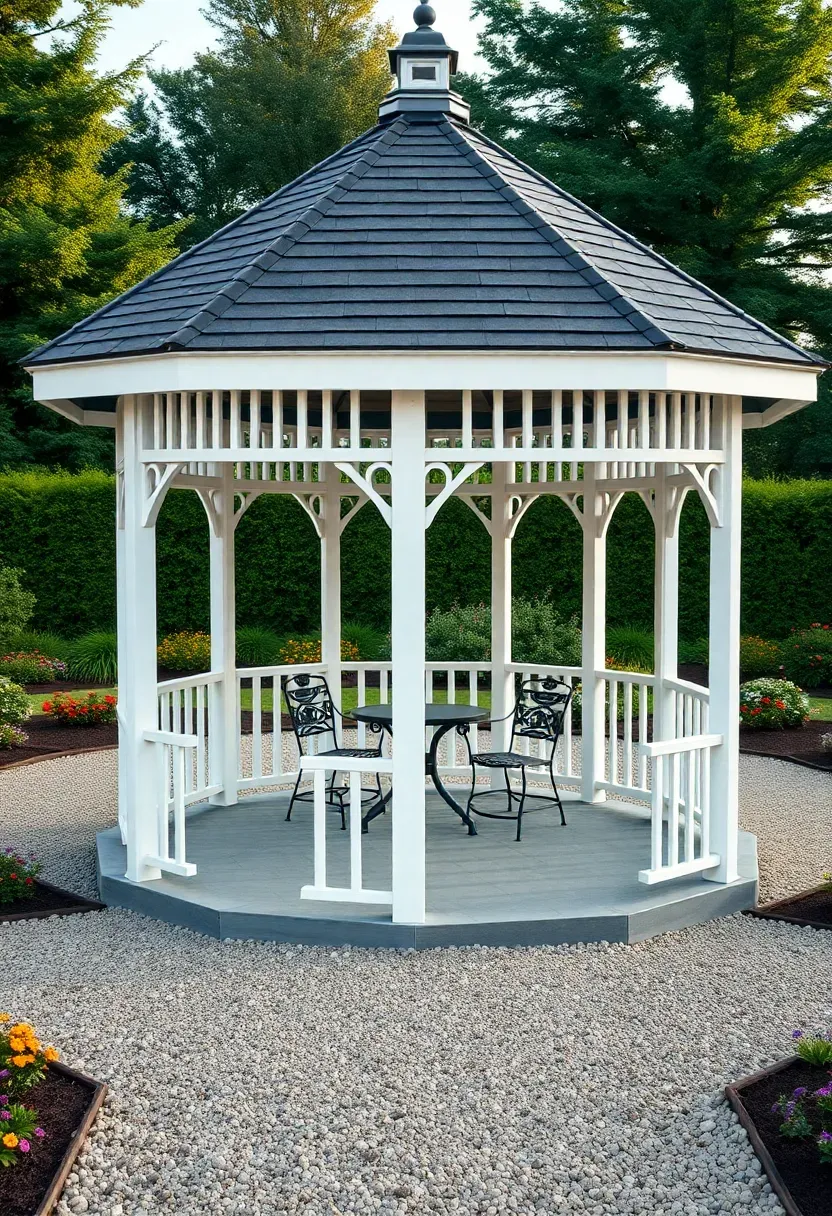
13. Hexagonal Garden Gazebo
Six sides instead of four or eight hits a visual sweet spot — more interesting than a square, less complex to build than an octagon. A hexagonal gazebo with 6-foot sides gives you roughly 94 square feet of interior floor space, enough for a round dining table with four chairs. The geometry creates natural sightlines from every seat toward a different section of the surrounding garden. Place it at the intersection of garden paths so it functions as a hub. White painted railings between the posts keep the look traditional without blocking views. Use composite lumber for the railings — white paint on real wood railings needs recoating every 18 months in direct sun.
Tips
- Lay a hexagonal paver or brick floor to match the footprint — it looks more intentional than a square pad
- Run low-voltage path lighting from the garden walks to each entry point
- Consider a weathervane or finial at the roof peak as a finishing touch
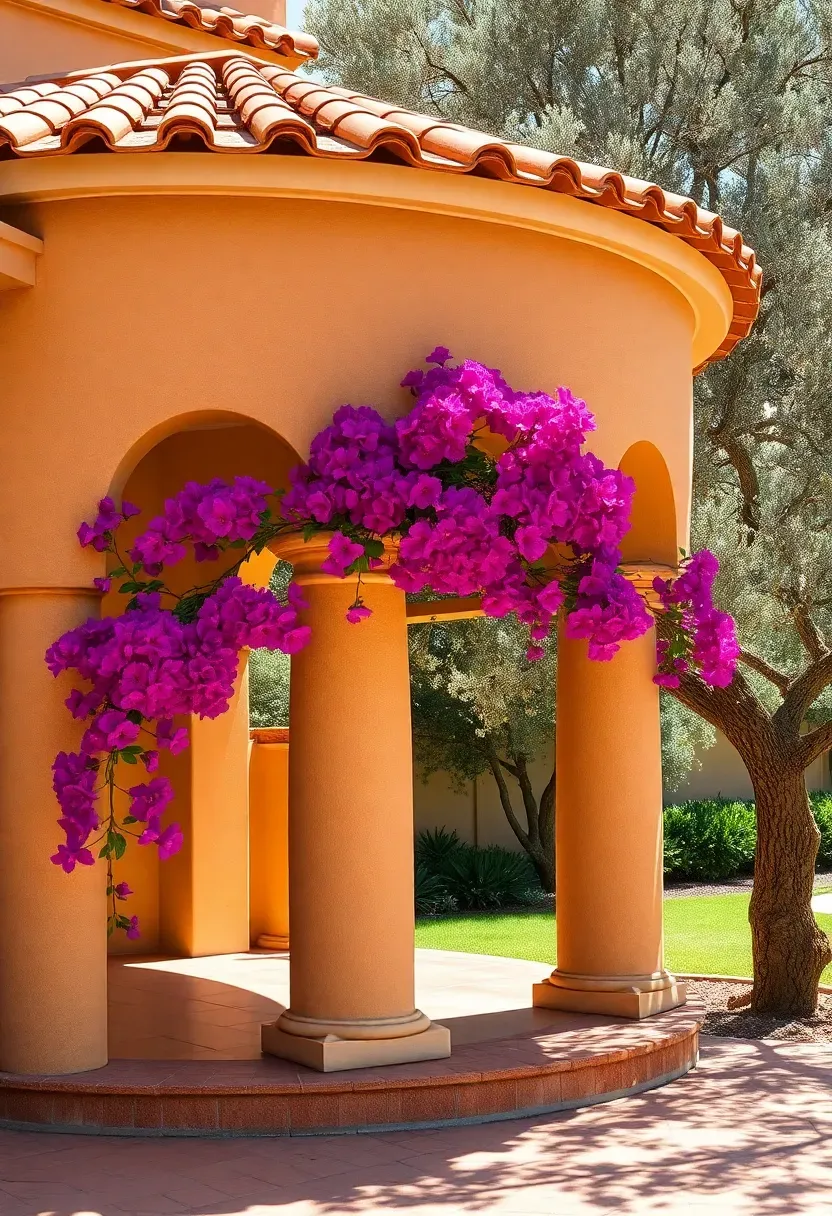
14. Mediterranean Stucco Gazebo
Origins
Mediterranean garden structures draw from the outdoor living traditions of Spain, southern France, and Italy where courtyards and shaded loggias were essential, not decorative. The thick stucco walls serve a thermal function — they absorb heat during the day and radiate it slowly at night, creating a naturally cooler interior during peak sun hours.
Modern version
Build the columns and half-walls from concrete masonry units (CMUs) finished with three coats of exterior stucco. A terra cotta or concrete tile roof completes the look. Arched openings between columns require a simple plywood form during construction — remove it after the stucco sets. This style works best in hot, dry climates where the materials stay dry. In wet regions, stucco needs more maintenance: annual sealing and patching hairline cracks before water infiltrates.
Apply at home
- Plant bougainvillea, jasmine, or climbing roses at the base of each column for the lived-in look
- Use reclaimed terracotta tiles for the floor — new ones look too uniform
Recommended
Items for this idea
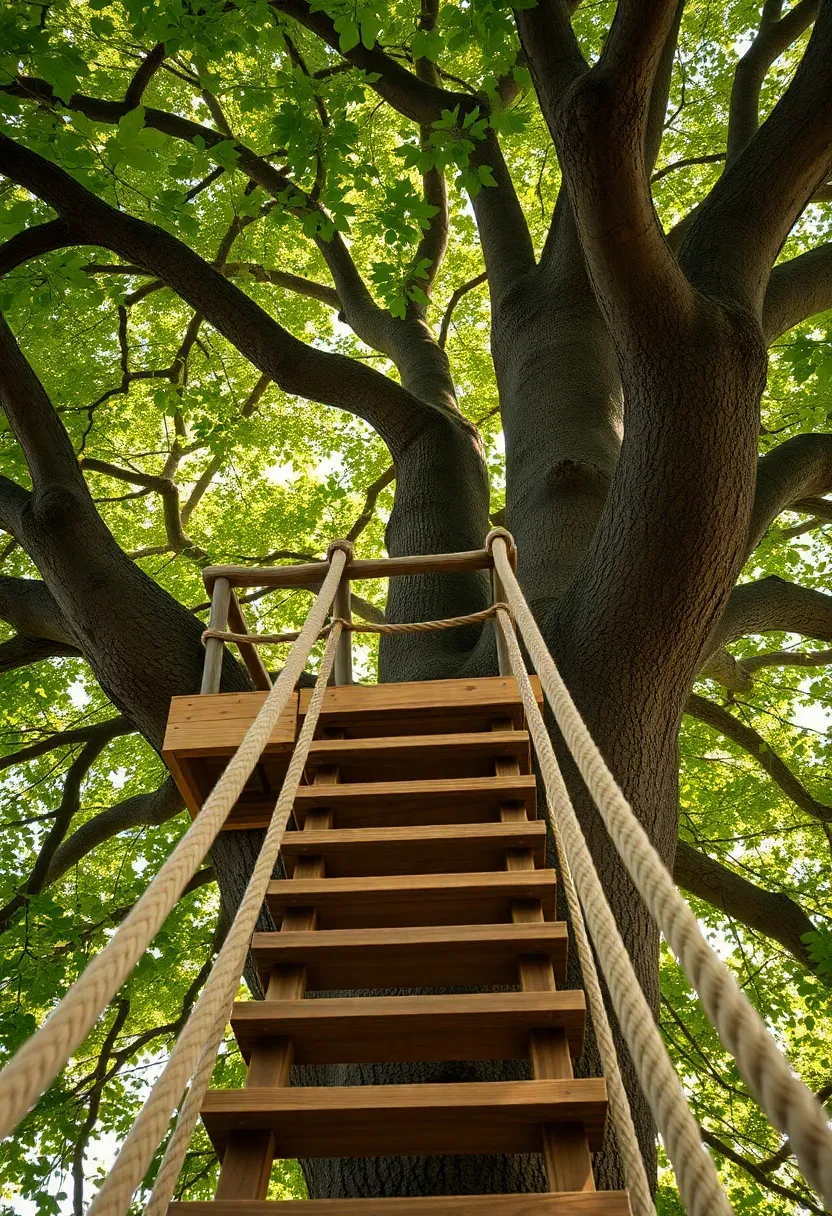
15. Treehouse Gazebo
Building a gazebo platform in a mature tree combines two ideas that both appeal to the part of your brain that wants a private retreat above ground level. The critical engineering concern is how the platform attaches to the tree. Never use lag bolts driven horizontally into the trunk — they create entry points for disease and weaken the wood grain. Instead, use a Garnier Limb (GL) bolt system designed specifically for treehouse construction. These single large bolts allow the tree to grow around them without splitting. A 10x10 platform needs two to three support points, ideally on separate limbs or trunks. Keep the structure open-sided to reduce wind load on the tree.
Tips
- Hire a certified arborist to assess the tree's health before building anything
- Allow 2 inches of movement clearance around the trunk for growth and sway
- Use marine-grade plywood for the platform floor — it handles the humidity trapped under the canopy
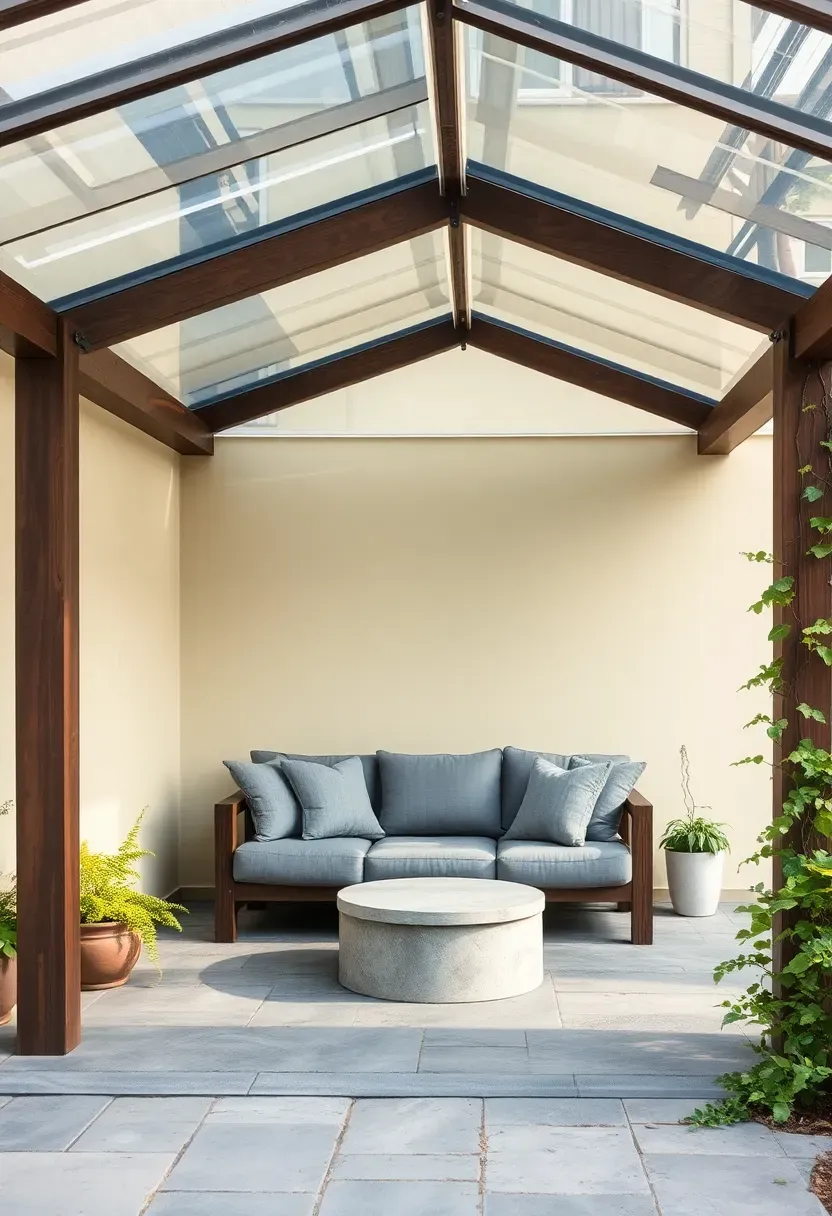
16. Lean-To Wall Gazebo
Step-by-step approach
A lean-to gazebo borrows one wall from your house and adds a sloped roof supported by two or three posts on the open side. It is the easiest gazebo style to build because half the structure already exists.
Step 1: Attach the ledger board
Bolt a pressure-treated 2x8 ledger to the house wall using 1/2-inch lag screws into the studs. Flash the top edge with aluminum Z-flashing to prevent water from running behind the board and into the wall cavity.
Step 2: Set posts and beam
Set two or three 6x6 posts on concrete piers at the outer edge, 8 to 12 feet from the house wall depending on desired depth. Notch a carrying beam across the tops.
Step 3: Install rafters and roofing
Run 2x6 rafters from the ledger to the beam at a minimum 2/12 slope. Top with polycarbonate panels for light transmission or solid sheathing and shingles for full weather protection.
Watch out
- Do not attach a ledger board to a wall with synthetic stucco (EIFS) — it traps moisture behind the cladding
- Check that the house wall can structurally handle the lateral load
Recommended
Items for this idea
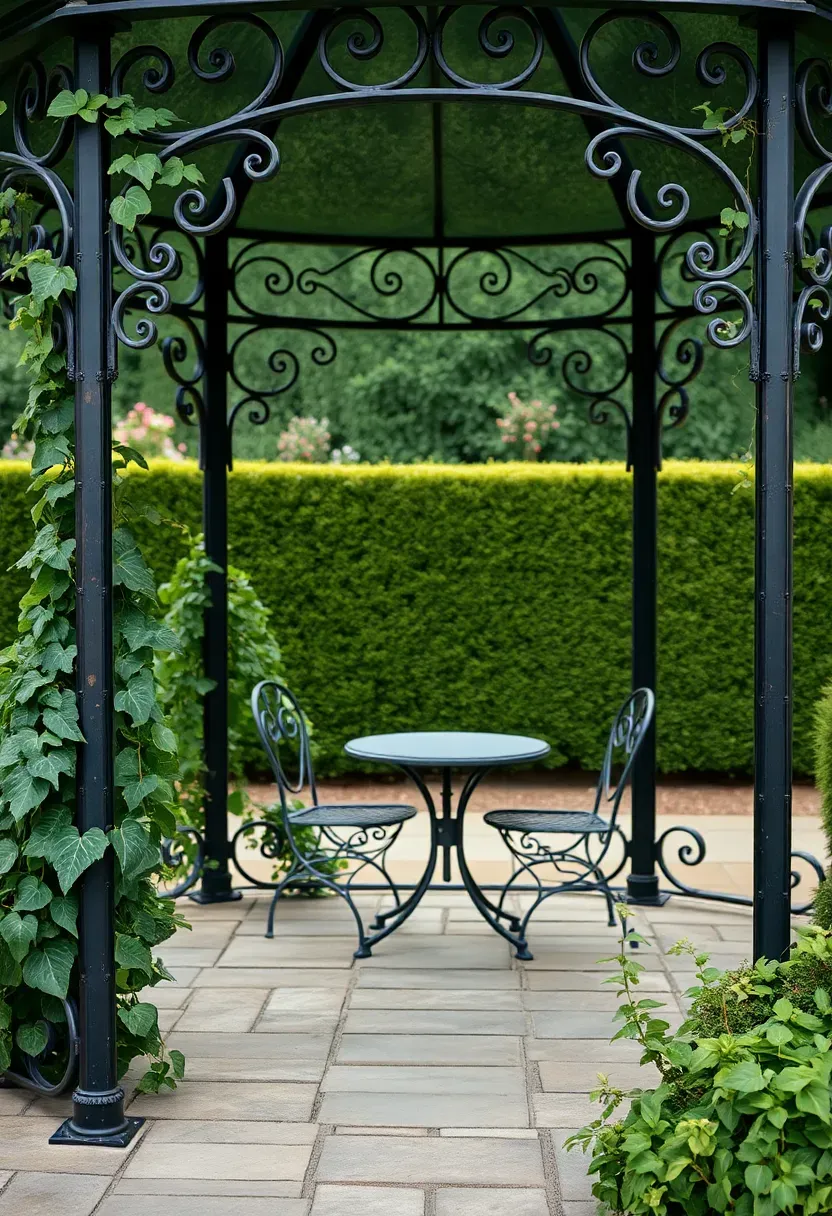
17. Wrought Iron Gazebo
Wrought iron gazebos belong to a specific aesthetic — formal gardens, Victorian homes, estate properties where the architecture already features ironwork in fences, railings, or window grilles. The material is heavy (a 10-foot gazebo frame weighs 800 to 1,200 pounds), which makes it nearly windproof once anchored. It also rusts aggressively in humid climates unless maintained. Traditional wrought iron is forge-welded by a blacksmith; most modern "wrought iron" gazebos are actually mild steel fabricated with MIG welding and finished with a powder coat or oil-rubbed patina. Either version needs a rust-inhibiting primer and topcoat refreshed every three to five years, with special attention to joints and welds where moisture collects.
Tips
- Commission a local metalworker rather than buying imported — custom sizing and design details are worth the premium
- Apply a cold galvanizing compound to hidden joints before assembly for corrosion resistance
- Plant climbing hydrangea or clematis to soften the industrial weight of the metalwork
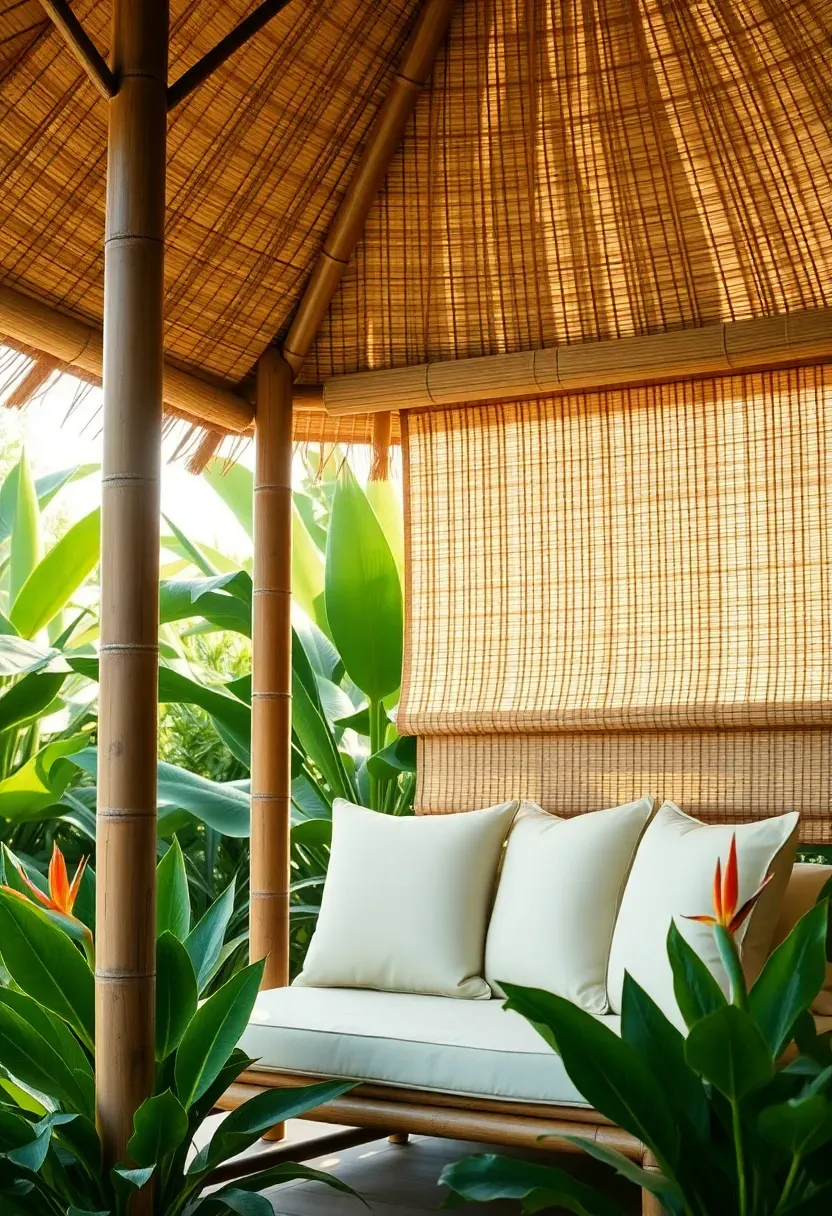
18. Bamboo Tropical Gazebo
Bamboo is the fastest-growing structural material on earth — Guadua angustifolia reaches harvestable diameter in four years and has a tensile strength comparable to steel on a weight basis. For a backyard gazebo, use treated Guadua poles of 4 to 6 inch diameter for columns and 2 to 3 inch diameter for rafters and purlins. Joints are the tricky part: bamboo splits if you drive screws through it without predrilling, and it does not take nails well. Use through-bolts with large washers at structural connections, or traditional lashing with galvanized wire wrapped in hemp rope for appearance. Seal cut ends with wax or a silicone-based sealer to prevent water from wicking into the hollow interior and promoting rot.
Tips
- Source bamboo from suppliers who kiln-treat and borate-treat their poles — untreated bamboo lasts two years outdoors
- Elevate the base of each pole on a metal post bracket rather than setting it in soil
- Apply a UV-resistant clear sealant annually to prevent surface cracking from sun exposure
Recommended
Items for this idea
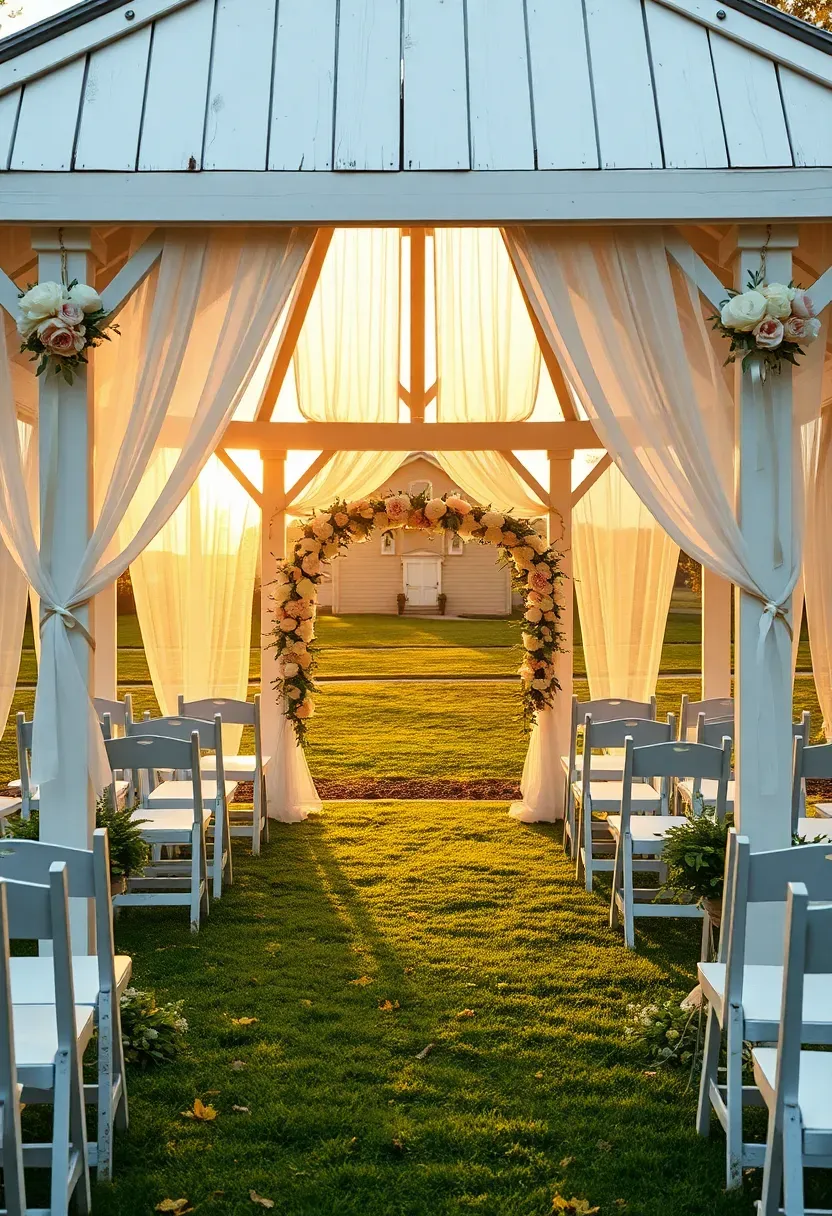
19. Wedding-Ready Gazebo
If you host events or plan to hold a ceremony at home, design the gazebo with decoration in mind from the start. Install screw eyes or cup hooks at the top of each post for hanging floral garlands, draping fabric, or stringing lights. Use at least an 8-inch column diameter so fabric wraps look proportional rather than bulky. A 12-foot interior diameter accommodates a couple, officiant, and two attendants comfortably with room for floral arrangements. Paint or stain the structure in a neutral tone — white, warm grey, or natural wood — that works with any color scheme rather than committing to something that limits future decorating. Consider adding a small concrete pad at the entrance for a photographer's tripod.
Tips
- Wire the gazebo with a dedicated circuit and weatherproof outlets for sound equipment and lighting
- Build removable lattice panels that can be swapped in for privacy or left off for open-air ceremonies
- Grade the surrounding lawn slightly away from the structure so guests are not standing in puddles after rain
20. Dog Run Gazebo
Why dogs need shade structures too
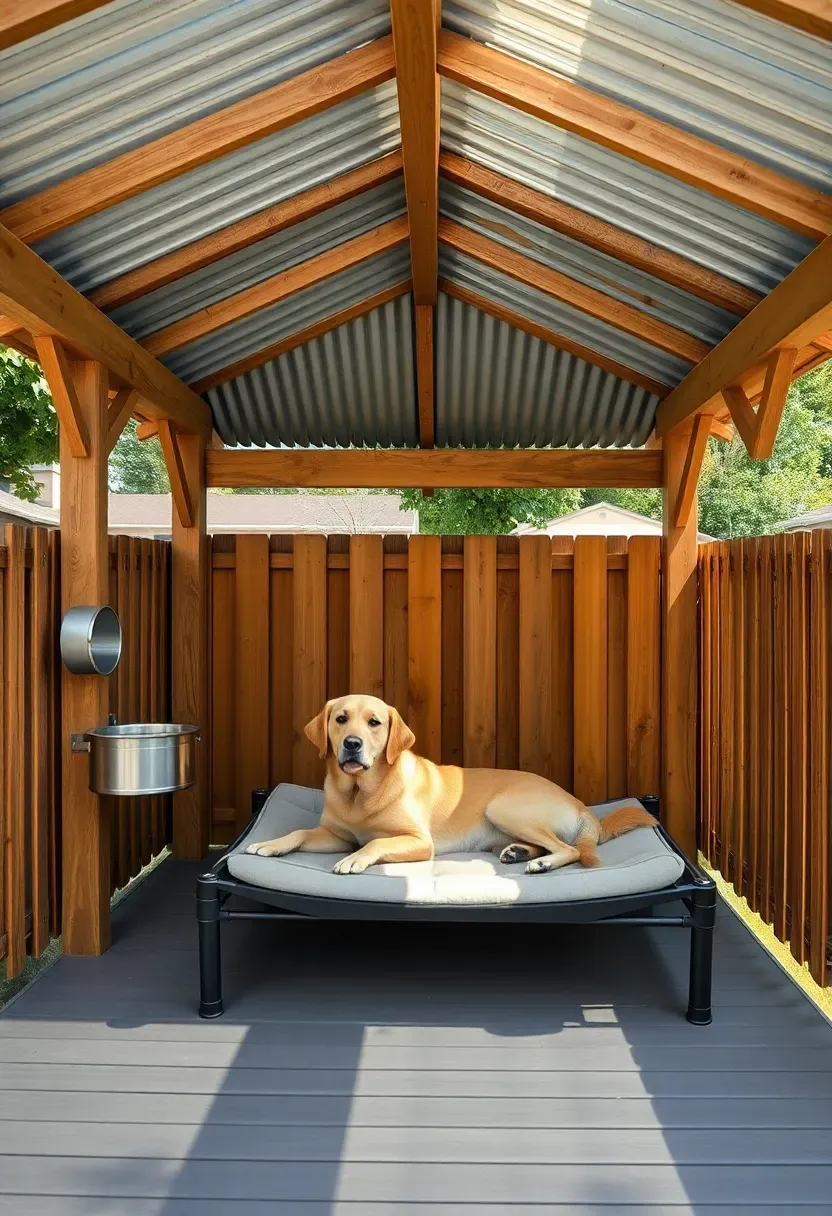
Dogs overheat faster than humans — they cannot sweat and rely on panting and paw-pad conduction to cool down. A shaded gazebo inside a fenced run gives your dog a cool resting spot during outdoor time. This matters most for breeds with thick coats or flat faces (bulldogs, pugs, huskies) that struggle in heat above 80 degrees.
Building it
Use a simple post-and-beam frame with a corrugated metal or polycarbonate roof. The floor should be elevated composite decking or rubber pavers — bare ground turns to mud, and concrete gets too hot. Attach a low fence (3 to 4 feet for most breeds) around the gazebo perimeter to define the run area. Include a mounted water bowl that cannot be tipped over and a raised dog bed or cot.
Pros and cons
- Pro: Reduces risk of heatstroke during outdoor play
- Pro: Keeps your dog out of garden beds and landscaping
- Con: Requires regular cleaning — hose down the deck surface weekly at minimum
Recommended
Items for this idea
21. Greenhouse Gazebo Hybrid
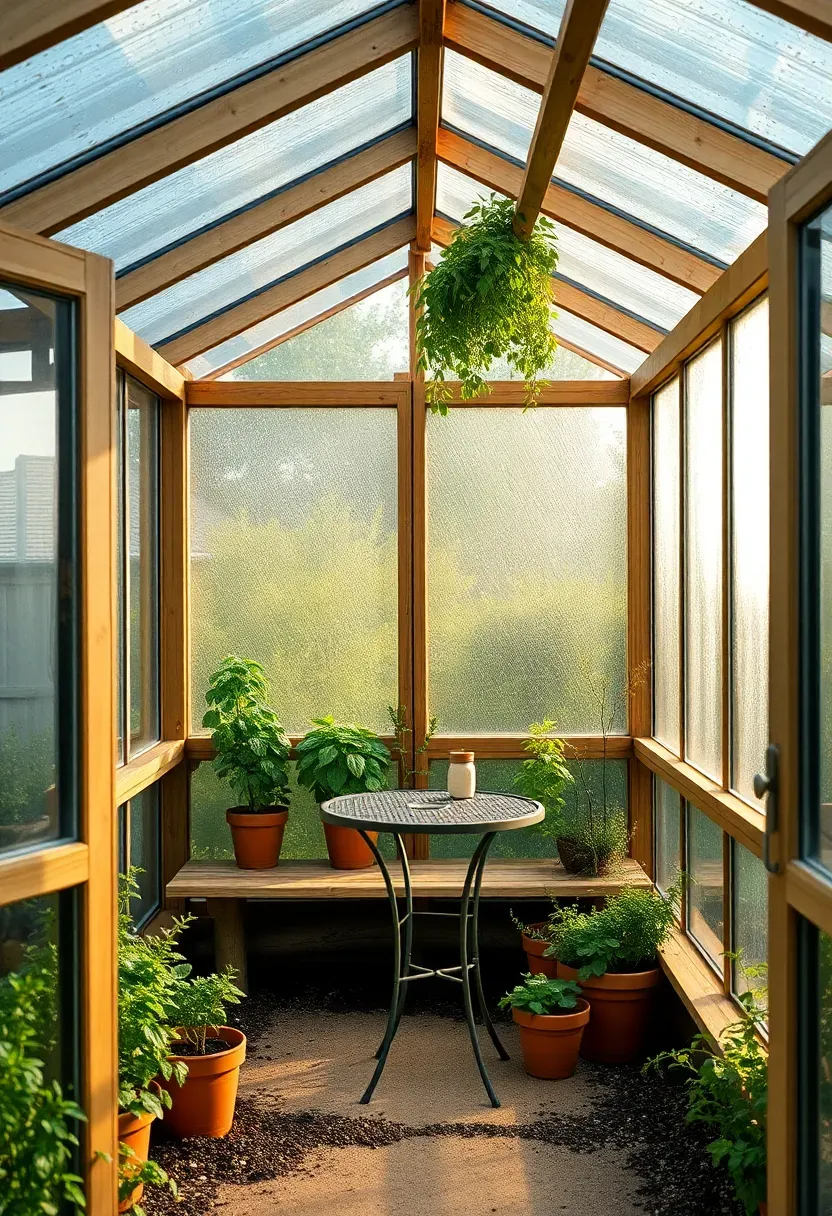
Combining a gazebo with greenhouse glazing gives you a structure that serves two purposes: a sitting area with garden views and a protected growing environment for herbs, seedlings, or tender perennials. Use polycarbonate twin-wall panels (8mm or 10mm thickness) for the roof and at least two walls. Leave one or two sides open or fitted with operable panels for ventilation — a fully enclosed polycarbonate structure overheats within minutes on a sunny day, reaching 120 degrees or more inside. The floor works best as packed gravel or stone pavers that absorb moisture and moderate temperature swings. Add a small potting bench along the back wall.
Tips
- Install an automatic roof vent that opens at a set temperature — critical for preventing plant damage when you are away
- Use shade cloth over the roof during peak summer months to reduce interior temperature
- Choose bronze-tinted polycarbonate for the roof if you want to sit comfortably inside — clear panels create a greenhouse effect that becomes unbearable in direct sun
22. Fireplace Gazebo
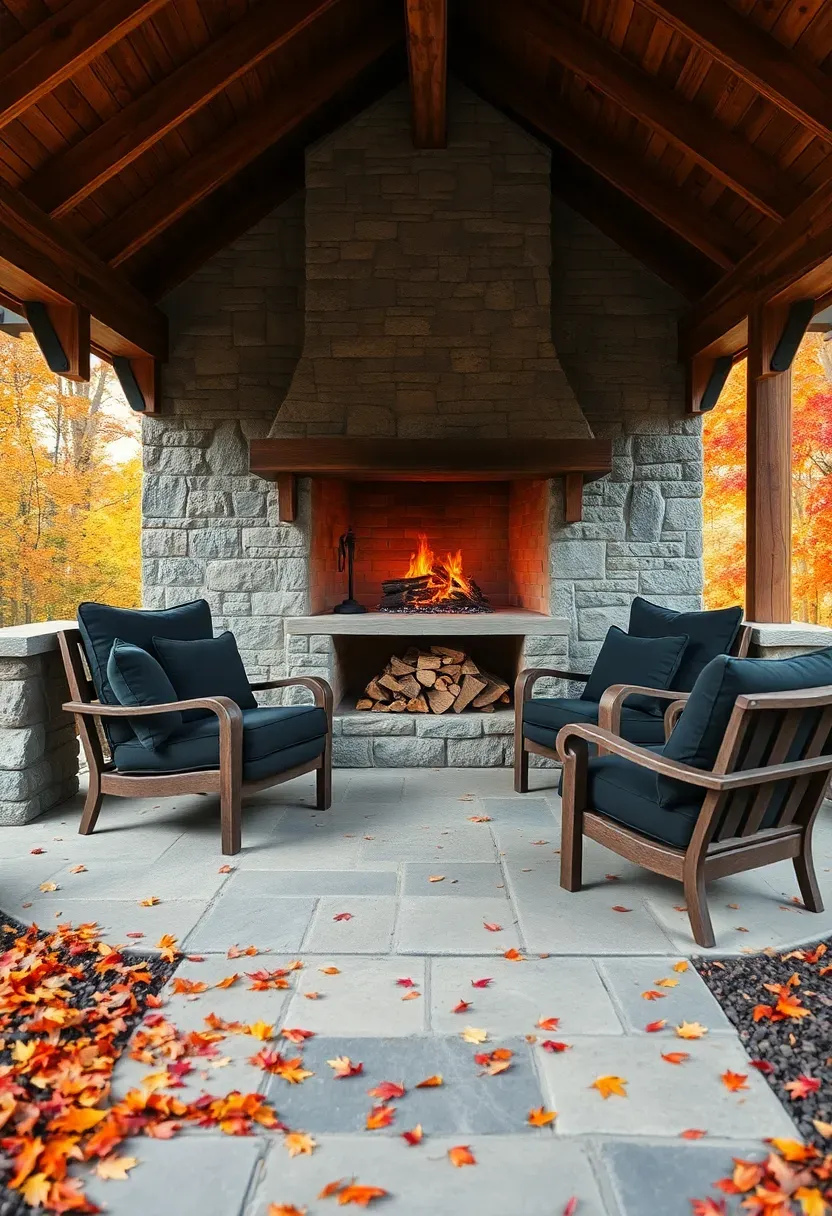
A masonry fireplace inside a gazebo extends your outdoor season by two months on each end — you can sit comfortably in 40-degree weather with a good fire going. The fireplace needs its own concrete footing independent from the gazebo slab because it weighs significantly more per square foot (a stone fireplace with chimney weighs 2,000 to 4,000 pounds). Position the fireplace on the downwind wall based on your prevailing wind direction so smoke draws up the chimney rather than blowing across the seating area. The chimney must extend at least 2 feet above the gazebo roof peak to create proper draft. Use a stainless steel chimney cap to keep rain, leaves, and animals out.
Tips
- Build a wood storage alcove into the base of the fireplace for dry kindling
- Install a carbon monoxide detector if the gazebo has walls on three or more sides
- Leave at least 3 feet of clearance between the fireplace face and any combustible furniture
Recommended
Items for this idea
23. Retractable Roof Gazebo
Motorized louvers vs. sliding panels
Two systems dominate the retractable roof market. Motorized louvers rotate aluminum blades from fully closed (rain protection) to fully open (maximum sun and airflow) at the push of a button. Sliding panels retract on tracks to stack at one end, completely opening the roof. Louvers cost $5,000 to $15,000 for a 10x12 structure. Sliding panel systems run $8,000 to $20,000 because the track mechanism is more complex.
When to choose retractable
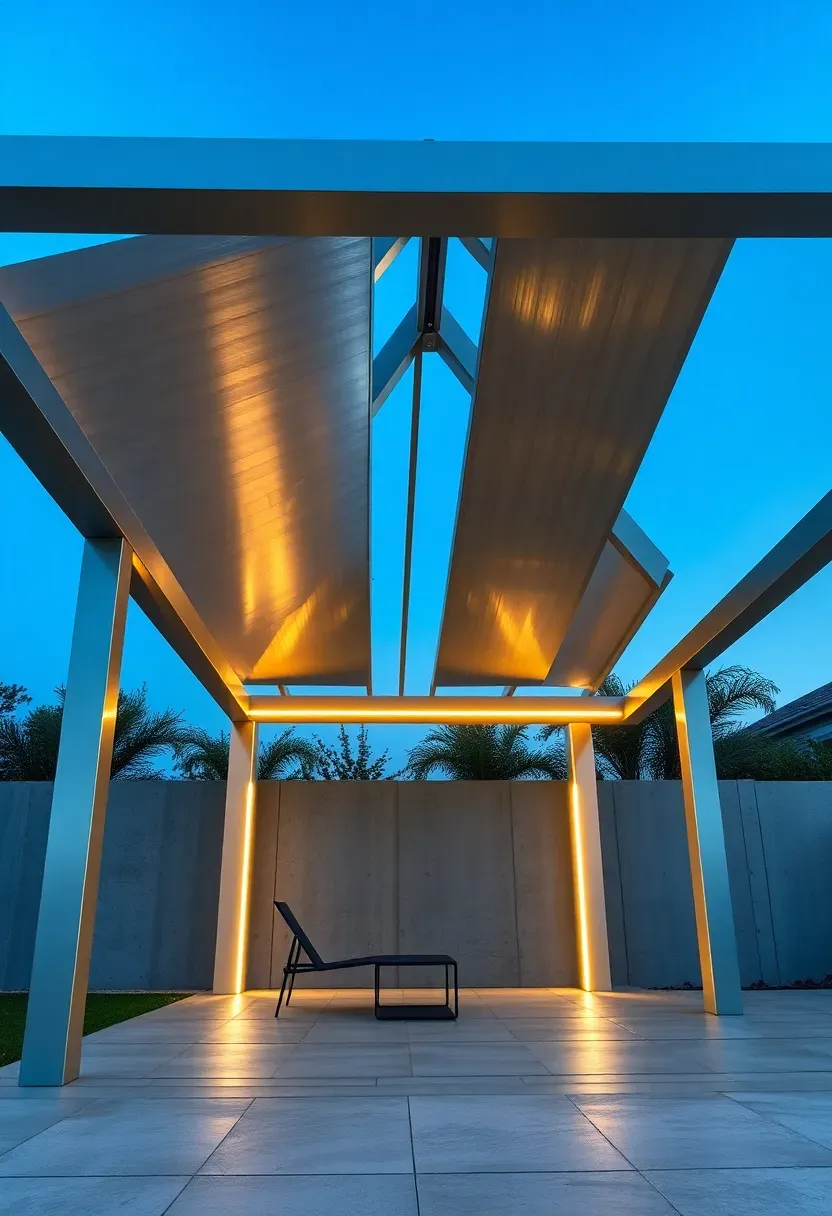
Pick this option if you want one structure that functions as both an open pergola and a weather-tight gazebo depending on conditions. It eliminates the compromise between sun access and rain protection.
Choose a fixed roof if
Your budget is under $5,000 or you live in a climate where you always want shade (desert Southwest, deep South). The mechanical components add maintenance that a fixed roof does not require.
Recommendation
Motorized louvers are the better value — fewer moving parts, more granular control over light and ventilation, and easier to repair if a motor fails.
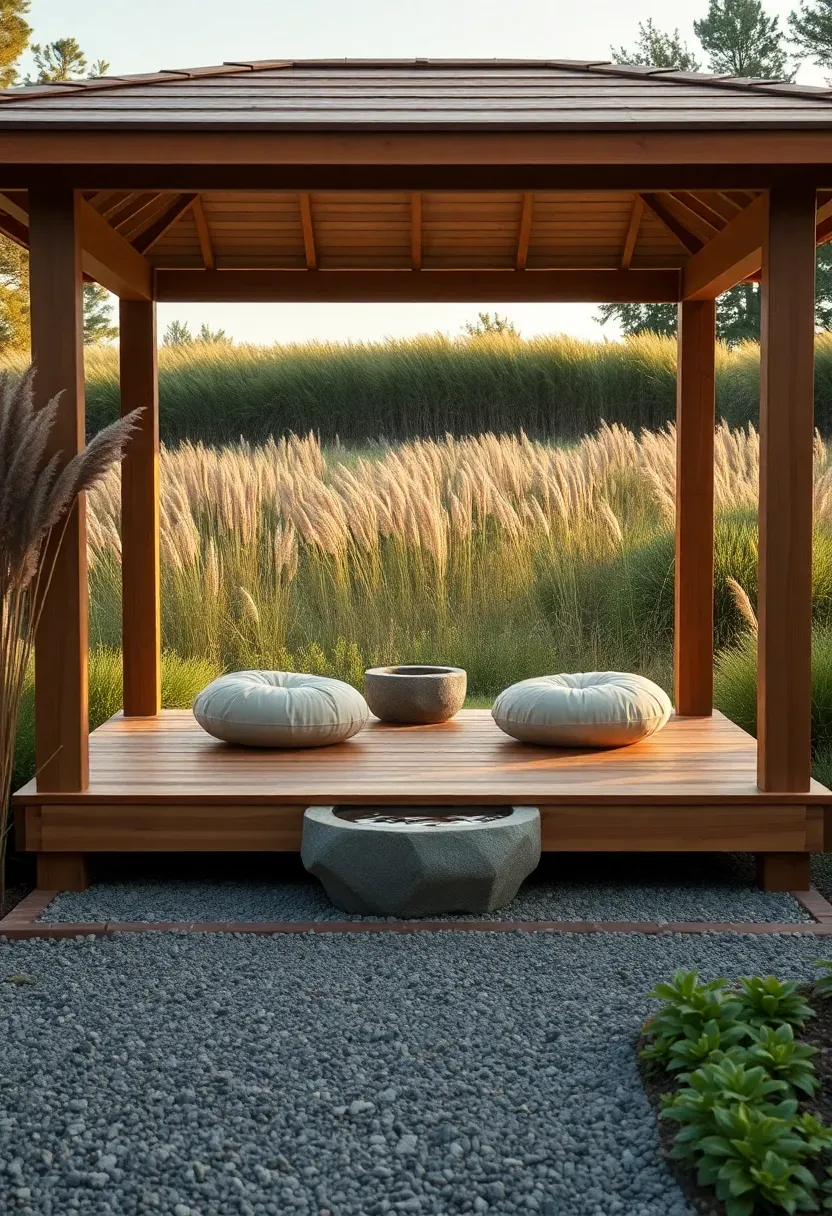
24. Zen Meditation Gazebo
Strip away everything a gazebo does not need and you get a meditation pavilion: a roof, a floor, no walls, minimal ornamentation. The platform should be smooth, splinter-free wood or bamboo at a height that feels like sitting on the ground rather than on a porch. Keep the footprint small — 8x8 feet is generous for solo practice. Position it facing away from the house so your view is garden, not architecture. Surrounding plantings should be low-maintenance and quiet (avoid gravel paths that crunch, wind chimes that clang, or plants that attract buzzing pollinators). Tall ornamental grasses that sway silently, moss groundcover, and a single recirculating water feature set the right atmosphere.
Tips
- Orient the opening toward the east for morning light during early practice
- Use a roof material that amplifies rain sound if you enjoy that — metal roofing with no underlayment creates a satisfying drum effect
- Keep electronics out — no speakers, no lights on timers, no outlets
Recommended
Items for this idea
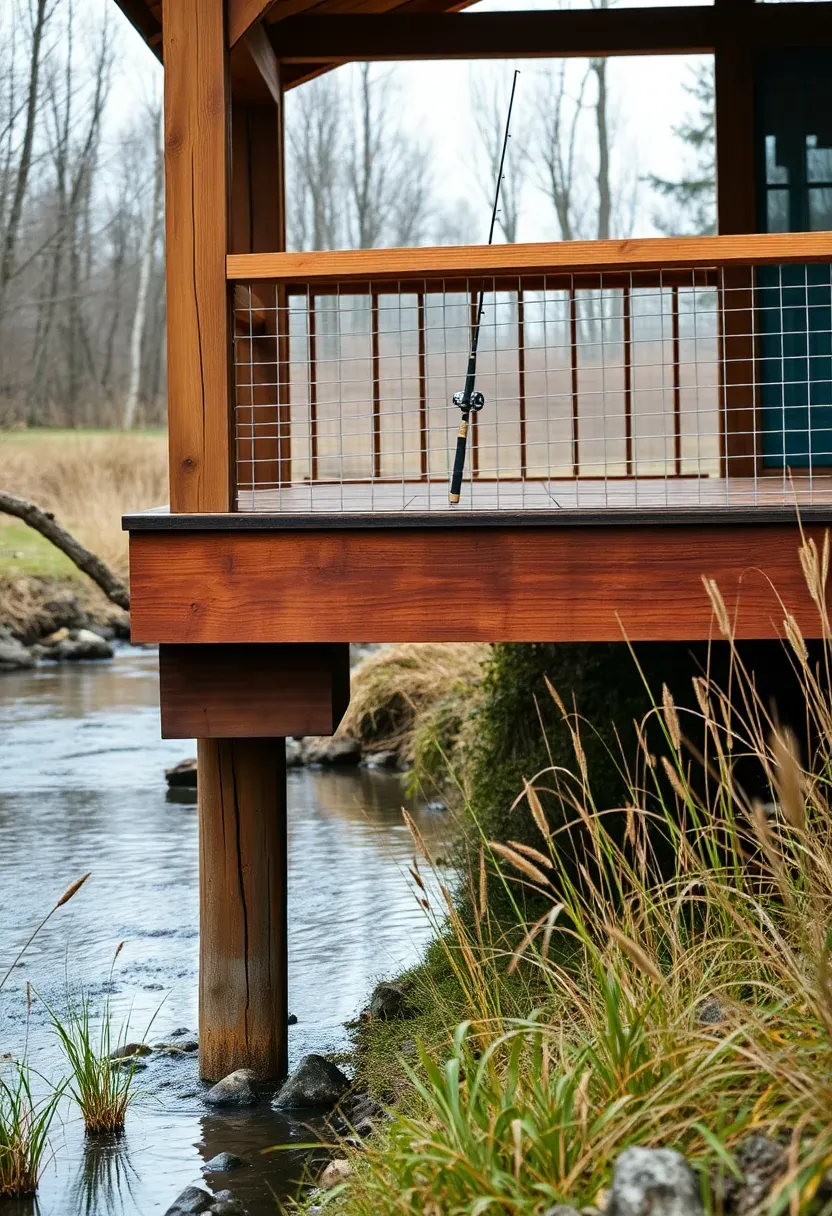
25. Riverside Gazebo
Building near water adds regulatory complexity that a mid-yard gazebo does not face. Most municipalities enforce setback distances from waterways — typically 25 to 100 feet from the ordinary high-water mark depending on the classification of the stream or river. Check with your county planning department before pouring any concrete. Beyond permits, the practical concern is flooding. Elevate the gazebo floor at least 2 feet above the 100-year flood level marked on your FEMA flood map. Use rot-resistant species like black locust or ipe for any members within splash distance. Anchor the posts with helical piers driven below the frost line rather than shallow footings that can be undermined by erosion.
Tips
- Cantilever the deck slightly over the bank for a dramatic effect — but do not extend over navigable water without a waterway permit
- Use cable railings instead of solid panels so you maintain the water view from seated height
- Plant native riparian species along the bank to stabilize the soil — willows, dogwood, and sedges work in most temperate climates
26. Kids' Playhouse Gazebo
Dual-purpose thinking
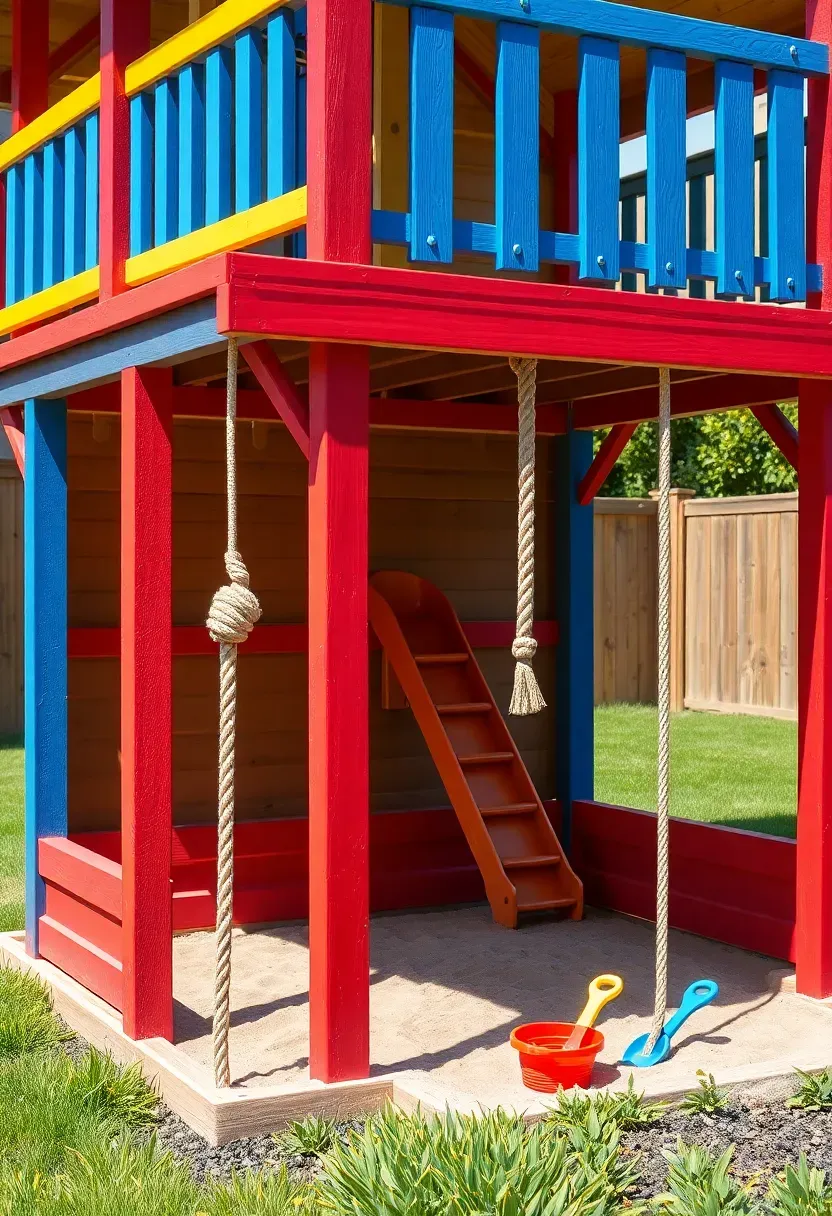
A playhouse gazebo gives kids a shaded outdoor space that functions as a fort, a reading nook, a craft area, or whatever their imagination assigns it today. When they outgrow it in five to eight years, remove the play elements and it reverts to a standard garden gazebo. This only works if you build the underlying structure to adult proportions — at least 7-foot ceiling height and 8x8 floor space.
Adding play features
Bolt a plastic slide to one side of the platform if it is elevated 3 to 4 feet. Add a climbing rope or cargo net on the opposite side. A sandbox beneath the elevated floor stays shaded and dry. Use rounded-edge hardware and countersink every bolt head so nothing catches clothing or skin.
Pros and cons
- Pro: Keeps kids playing outside instead of defaulting to screens
- Pro: Shade protection during peak UV hours
- Con: Requires safety surfacing below — rubber mulch, pea gravel, or rubber tiles within a 6-foot fall zone
Recommended
Items for this idea
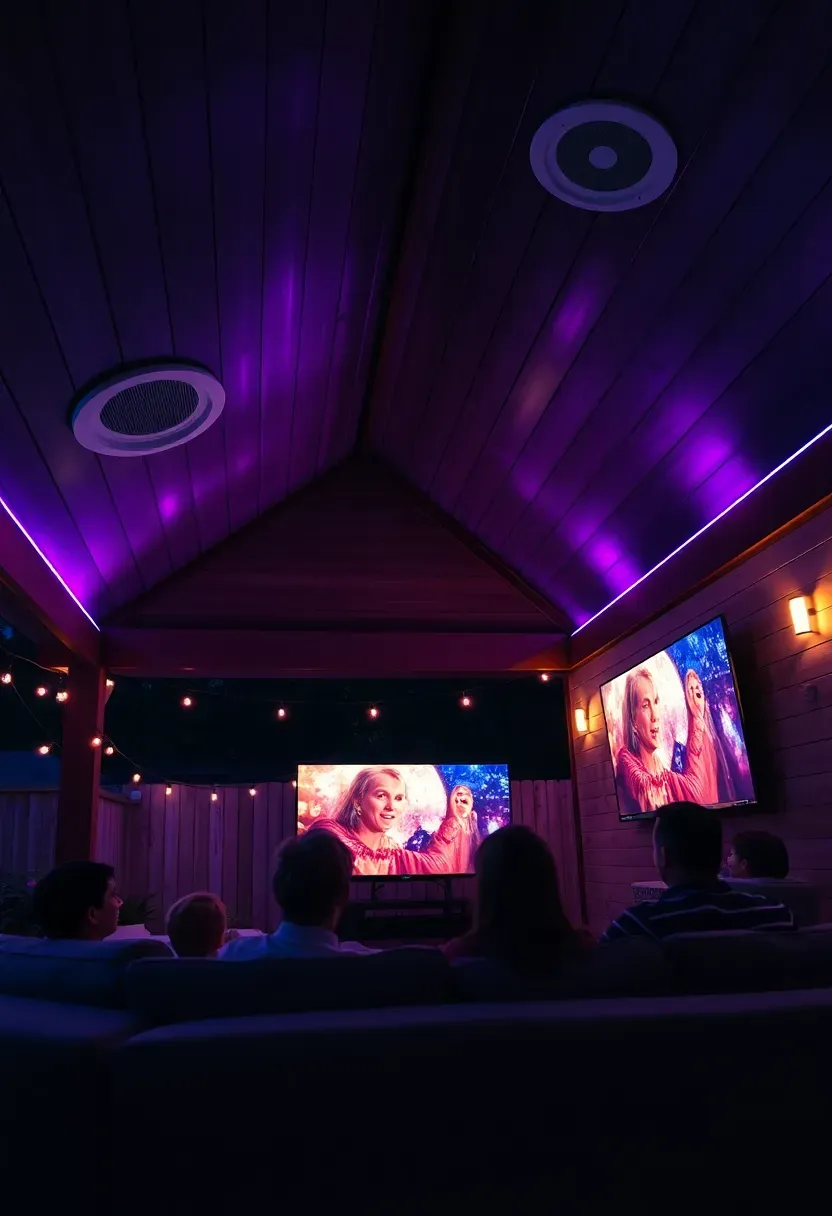
27. Smart-Wired Gazebo
Running low-voltage wiring during construction is ten times easier and cheaper than retrofitting it later. Plan conduit paths for four systems: lighting, audio, networking, and power. Use 1-inch schedule 40 PVC conduit from the house electrical panel to the gazebo, buried 18 inches deep in a trench. Pull individual circuits for LED strip lighting (RGBW for color control), recessed ceiling speakers (two 6.5-inch drivers provide solid coverage for a 12x12 space), a weatherproof Wi-Fi access point, and general-purpose outlets. Control everything through a single smart home hub — Hubitat, Home Assistant, or a commercial system like Lutron Caseta for the lights. Mount a weatherproof TV (rated IP55 or higher) if you want an outdoor movie setup.
Tips
- Use marine-grade speaker wire and outdoor-rated Cat6 cable — indoor versions corrode within a year
- Install a weatherproof subpanel at the gazebo rather than running individual circuits from the house
- Add a smart power strip that cuts standby power to all electronics during off hours to avoid phantom energy draw
Quick FAQ
Does a backyard gazebo need a building permit? In most US municipalities, yes — any permanent structure with a roof and footings over a certain size (often 120 square feet) requires a permit. Freestanding pop-up canopies and temporary shade structures typically do not. Call your local building department before buying materials. The permit process usually costs $100 to $500 and takes two to six weeks.
How much wind can a standard gazebo handle? A properly anchored gazebo with a solid roof can handle 60 to 80 mph winds depending on the design and anchor system. Fabric-topped and pop-up models fail at 25 to 35 mph. The anchor system matters more than the frame itself — concrete footings below frost line are the gold standard. Surface-mounted brackets on a patio slab are the minimum acceptable option.
What is the best flooring for a gazebo? It depends on the use. Composite decking is low-maintenance and splinter-free. Natural stone or brick pavers look best in formal gardens and handle furniture weight without denting. Packed gravel drains well and costs the least. Avoid bare concrete — it stains, cracks, and looks industrial unless you apply a decorative coating.
Can I build a gazebo on a slope? Yes, but the foundation cost increases. A pier-and-beam system with adjustable post heights handles slopes up to about 15 degrees without major earthwork. Steeper grades need retaining walls or a cut-and-fill approach. The upside of a sloped site is that an elevated gazebo often gets better views and breezes than one at ground level.
Will a gazebo increase my property value? A well-built permanent gazebo typically adds 50 to 80 percent of its cost to the property's appraised value, similar to a deck or patio addition. The key factors are construction quality, code compliance, and whether the style matches the rest of the property. A cheap pop-up or a rotting kit gazebo subtracts value by signaling deferred maintenance.
A gazebo is one of the few backyard projects where you get immediate results. Unlike a garden that takes seasons to fill in or a landscape plan that reveals itself over years, a gazebo changes how you use your yard the day it goes up. Pick one idea from this list, figure out your local permit requirements, and get started before summer arrives. The worst backyard gazebo is the one you keep planning but never build.
Pinterest cover for 27 Backyard Gazebo Ideas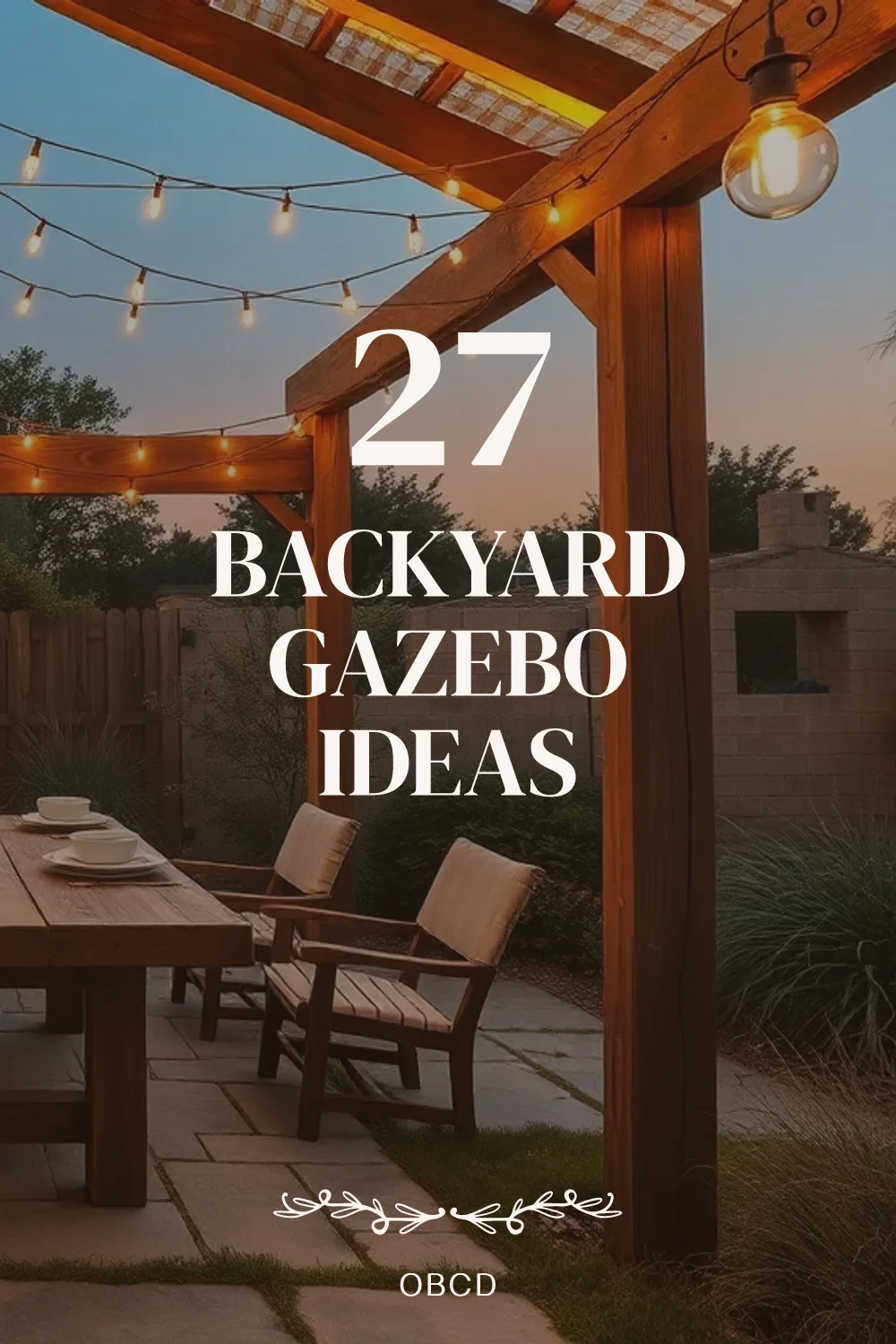
About the author
OBCD
CGI visualization and interior design content. We create detailed 3D renders and curate practical design ideas for every room in your home.