23 Backyard Hot Tub Privacy Ideas
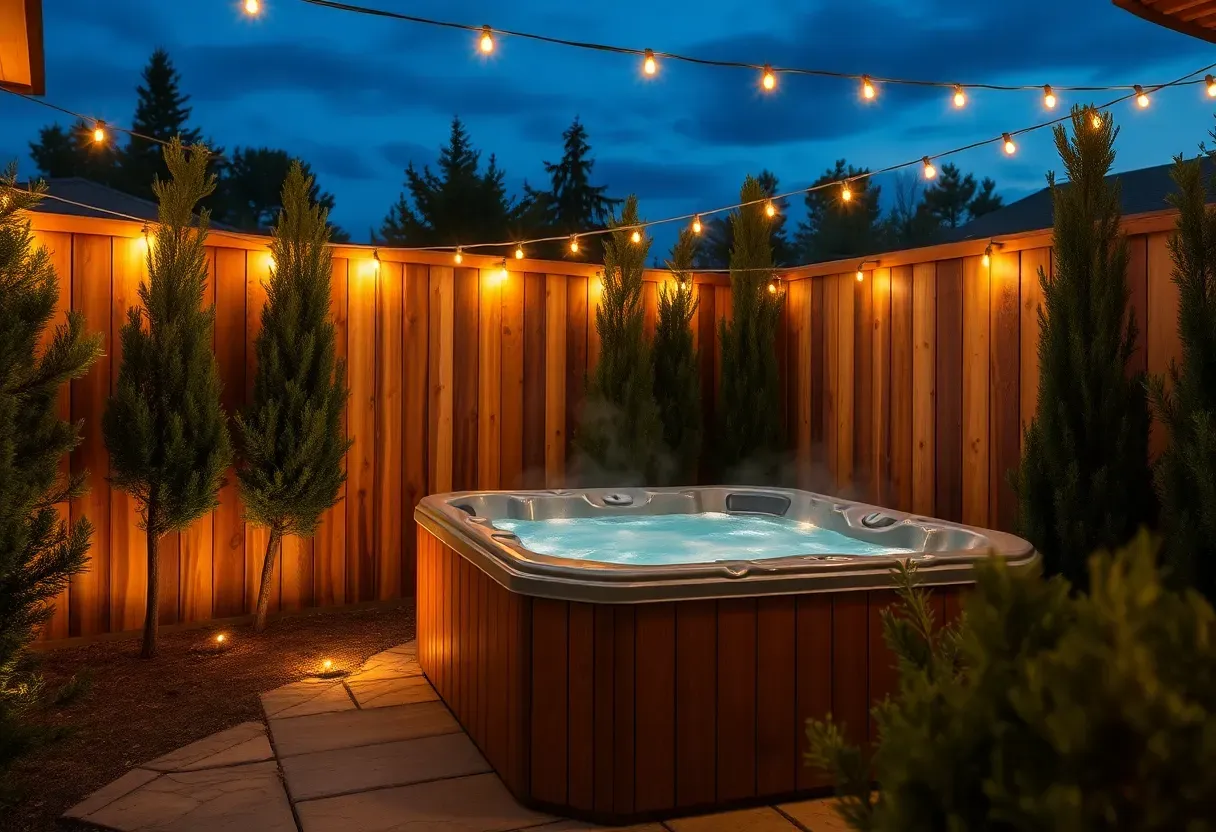
Nobody wants to soak in a hot tub while the neighbors watch from their kitchen window. I learned this the hard way after installing a tub in our open backyard — three weeks of awkward eye contact before I put up a temporary screen made from shower curtains and PVC pipe. It worked, barely. Since then I have tested and researched dozens of better solutions ranging from fast weekend builds to permanent landscaping that blocks sightlines without making your yard feel like a compound. The 23 ideas below cover fencing, plantings, structures, and creative screens at every price point. Some cost under $100 and go up in an afternoon. Others require a contractor but last decades.
Here are hot tub privacy solutions grouped from natural plantings and green screens to built structures, fencing, and portable options.
Table of Contents
- Tall Arborvitae Hedge
- Cedar Lattice Privacy Wall
- Outdoor Curtains on a Track
- Living Green Wall Panel
- Pergola with Retractable Canopy
- Bamboo Roll Screen
- Stacked Stone Half Wall
- Tall Ornamental Grass Border
- Slatted Horizontal Fence
- Hot Tub Gazebo Enclosure
- Privacy Sail Shade
- Staggered Planter Boxes
- Reed Fencing Panels
- Trellis with Climbing Vines
- Corrugated Metal Accent Wall
- Frosted Glass Panels
- Tiered Deck with Built-in Walls
- Artificial Hedge Panels
- Louvered Privacy Screen
- Potted Columnar Trees
- Japanese-Style Bamboo Fence
- Retractable Side Awning
- Cinder Block and Wood Screen
1. Tall Arborvitae Hedge
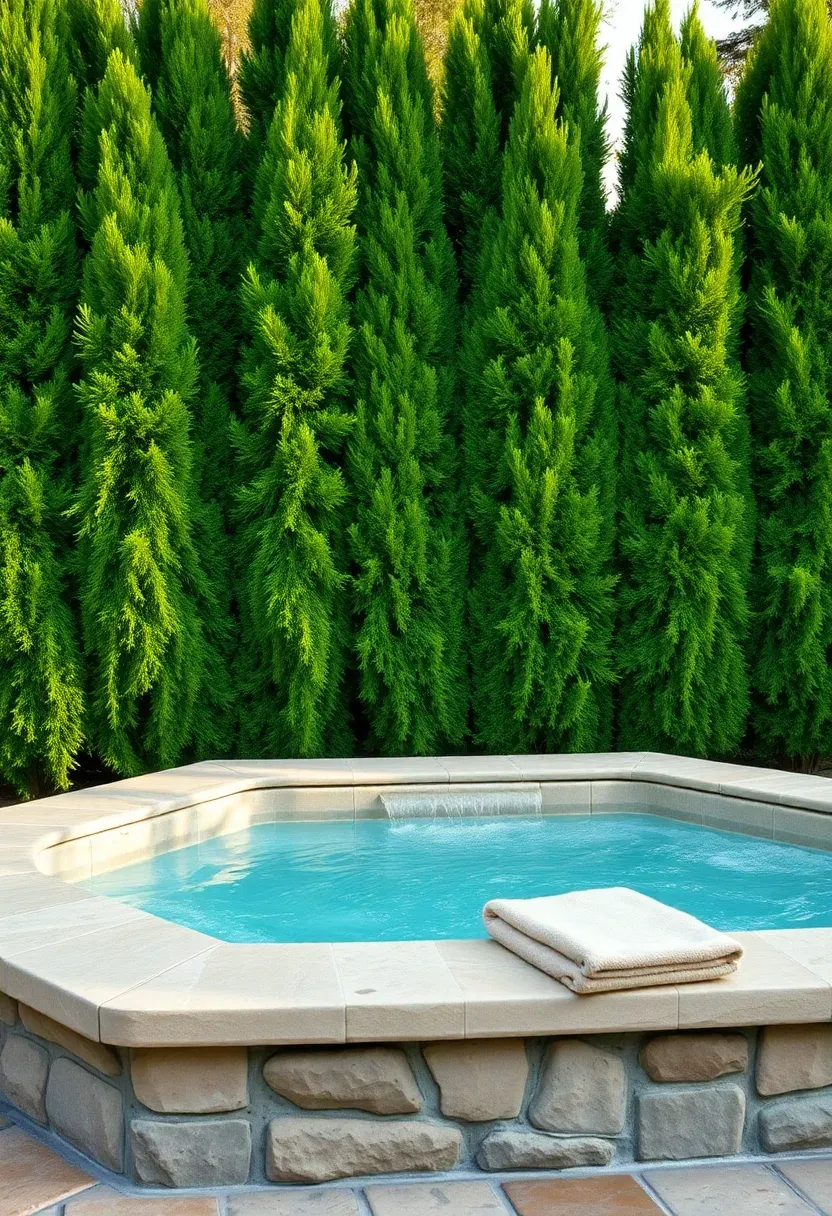
Arborvitae is the go-to privacy plant for hot tub owners because it grows dense enough to block views year-round. Emerald Green varieties reach 12-15 feet tall but stay only 3-4 feet wide, making them work in narrow side yards. Plant them 3 feet apart for a solid wall within two growing seasons. They tolerate most soil types and handle cold winters down to zone 3. The foliage stays green through January when deciduous trees are bare sticks. Buy 5-6 foot specimens if you want immediate coverage — smaller nursery stock takes three or four years to fill in.
Tips
- Water deeply twice a week for the first year to establish root systems before winter
- Skip fertilizer the first season — it pushes soft growth that winter burn damages easily
- Wrap the bases with burlap in heavy snow regions to prevent branch splaying
We picked a few things that go well with this idea: VEVOR Freestanding Wood Privacy Screen (36x73) (★4.0), Metal Louvered Outdoor Privacy Screen (72") (★4.5) and Enclo Concord Cedar Privacy Screen Panel (★4.4). As an Amazon Associate we earn from qualifying purchases.
2. Cedar Lattice Privacy Wall
The issue
Standard stockade fencing blocks views but creates a boxed-in feeling around a hot tub. You get privacy but lose air circulation, which matters when steam rises off the water on cool evenings.
The fix
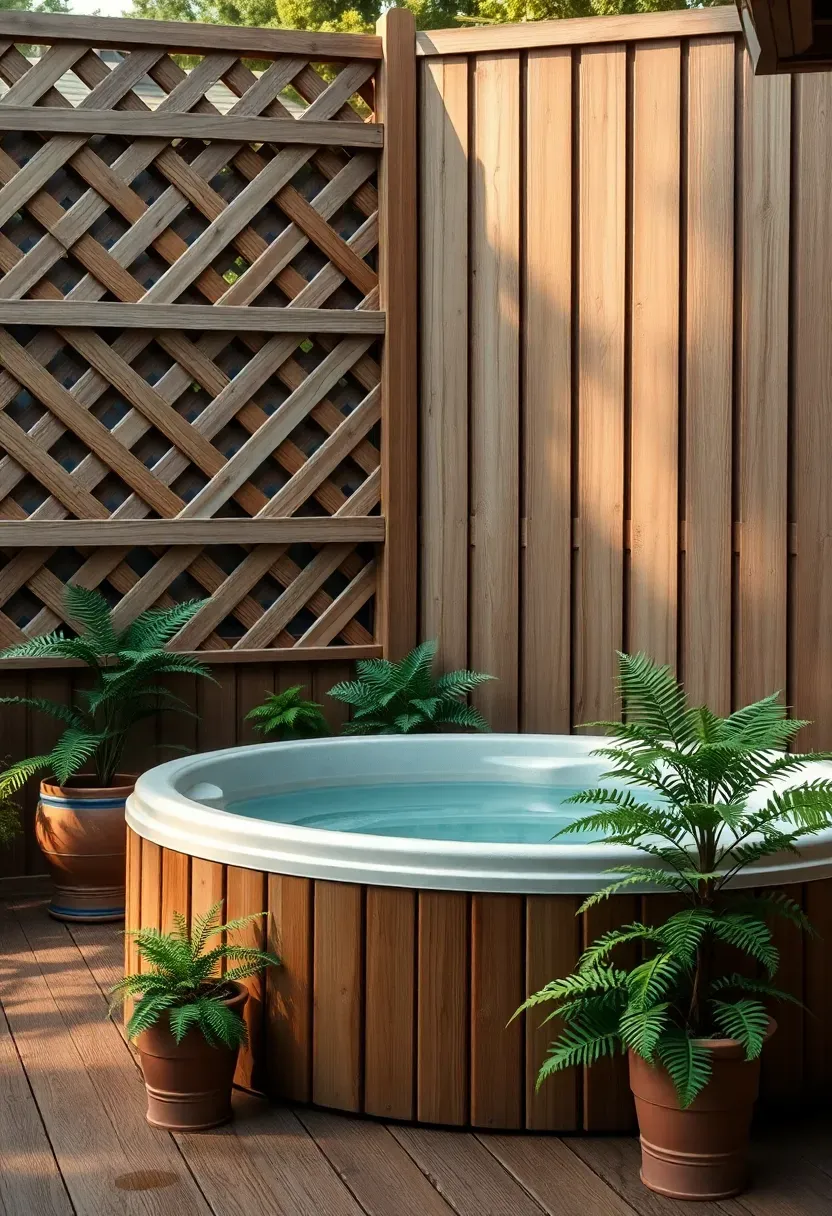
Cedar lattice panels let air flow through while breaking up sightlines enough that neighbors see shapes, not details. Build a frame from 4x4 posts set in concrete, then attach 4x8 lattice panels between them. Cedar resists rot without chemical treatment and weathers to a silver-gray that looks better with age. For tighter privacy, choose the "privacy" lattice pattern with smaller diamond openings rather than the standard garden style. A three-panel screen covers about 12 linear feet and costs $200-$350 in materials.
Pros and cons
- Pro: Air flows through freely, reducing that stuffy enclosed feeling
- Pro: Cedar lasts 15-20 years without staining or sealing
- Con: The openings still allow partial views from close range — best for neighbors 20+ feet away
We picked a few things that go well with this idea: Natural Reed Fencing Roll (2.6x16.4ft) (★4.4), KOIUEYW Bamboo Reed Fence Roll (6x16ft) (★4.4) and Bamboo Slat Privacy Screening Roll (6.5x13ft) (★4.2). As an Amazon Associate we earn from qualifying purchases.
3. Outdoor Curtains on a Track
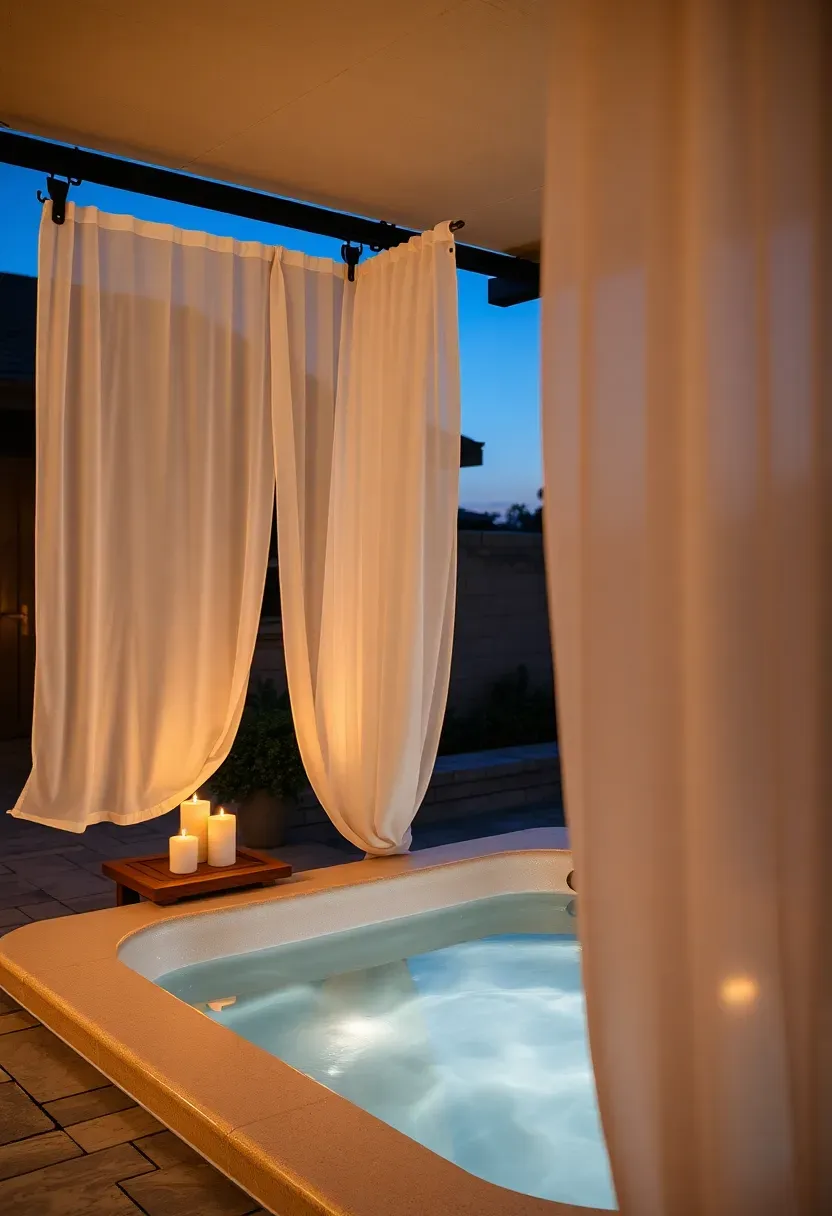
Curtains give you privacy when you want it and an open yard when you do not. That flexibility is worth more than it sounds. Install a ceiling-mounted curtain track on your patio cover, pergola, or even between freestanding posts. Use outdoor-rated fabric — Sunbrella or polyester canvas — that handles UV and rain without mildewing. The track lets panels slide open completely so the tub area does not feel caged during daytime use. White or cream curtains billow in the breeze and make the space feel like a resort. Darker tones block more light for evening privacy.
Tips
- Choose a track rated for outdoor use with stainless steel ball-bearing glides for smooth operation
- Hem curtains 1 inch above the ground to prevent wicking moisture from wet pavers
- Install tiebacks or magnetic closures to keep panels from blowing into the tub on windy nights
We picked a few things that go well with this idea: BONZER Waterproof Outdoor Patio Curtain (54x84) (★4.6), NICETOWN Waterproof Blackout Patio Curtains (2-Pack) (★4.5) and HolidayIdeas Waterproof Patio Curtains (6-Pack) (★4.5). As an Amazon Associate we earn from qualifying purchases.
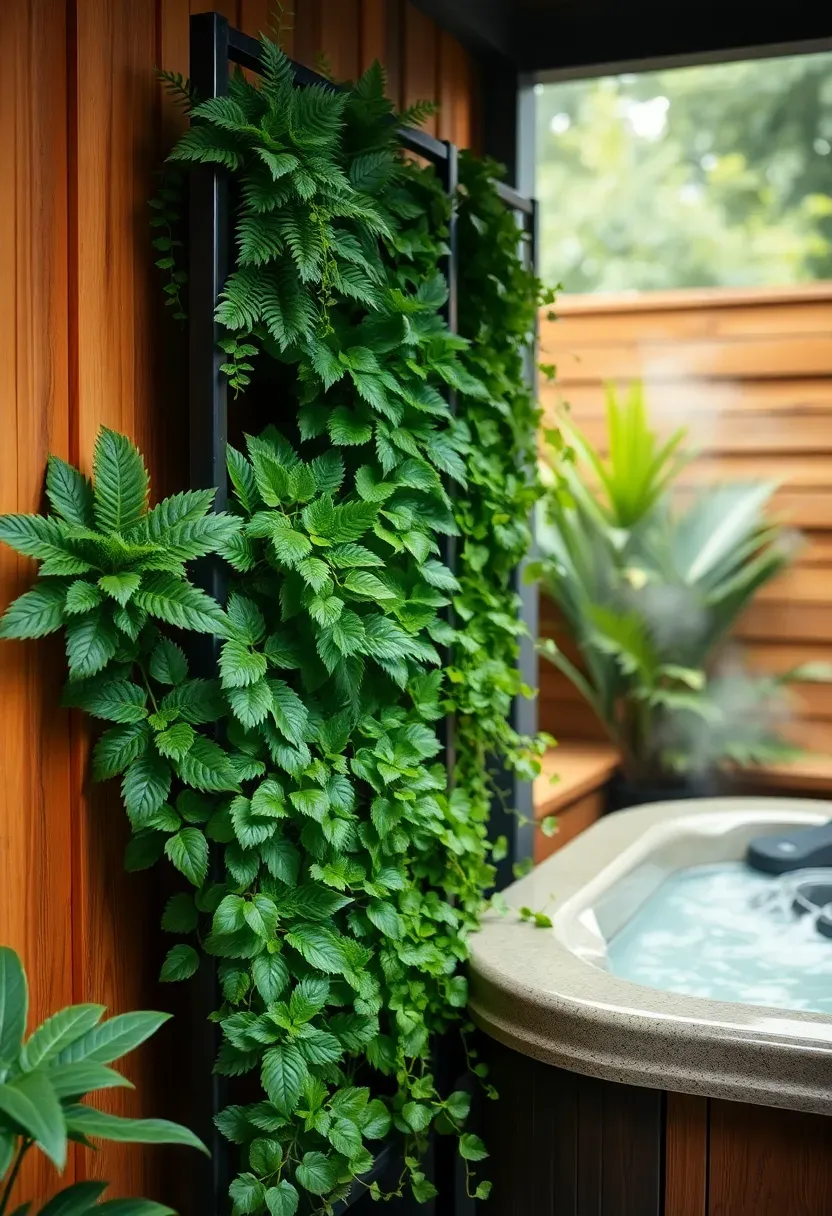
4. Living Green Wall Panel
Step 1: Build or buy the frame
Prefabricated living wall panels from companies like Florafelt run $150-$300 per 4x4-foot section. DIY versions use felt pocket planters stapled to a plywood backing wrapped in pond liner. Either way, mount the frame on a fence or freestanding post structure.
Step 2: Choose humidity-loving plants
The steam from a hot tub creates a microclimate that tropical and semi-tropical plants love. Boston ferns, pothos, creeping jenny, and asparagus fern all thrive in the warm, moist air within 6 feet of the tub.
Step 3: Set up irrigation
A drip line across the top of each panel with a timer takes daily watering off your list. Without it, living walls dry out within 48 hours in summer.
Watch out
- Bring panels indoors or cover them before the first frost in zones below 8
- Root systems add weight — make sure your mounting structure handles 15 lbs per square foot when wet
Recommended
Items for this idea
5. Pergola with Retractable Canopy
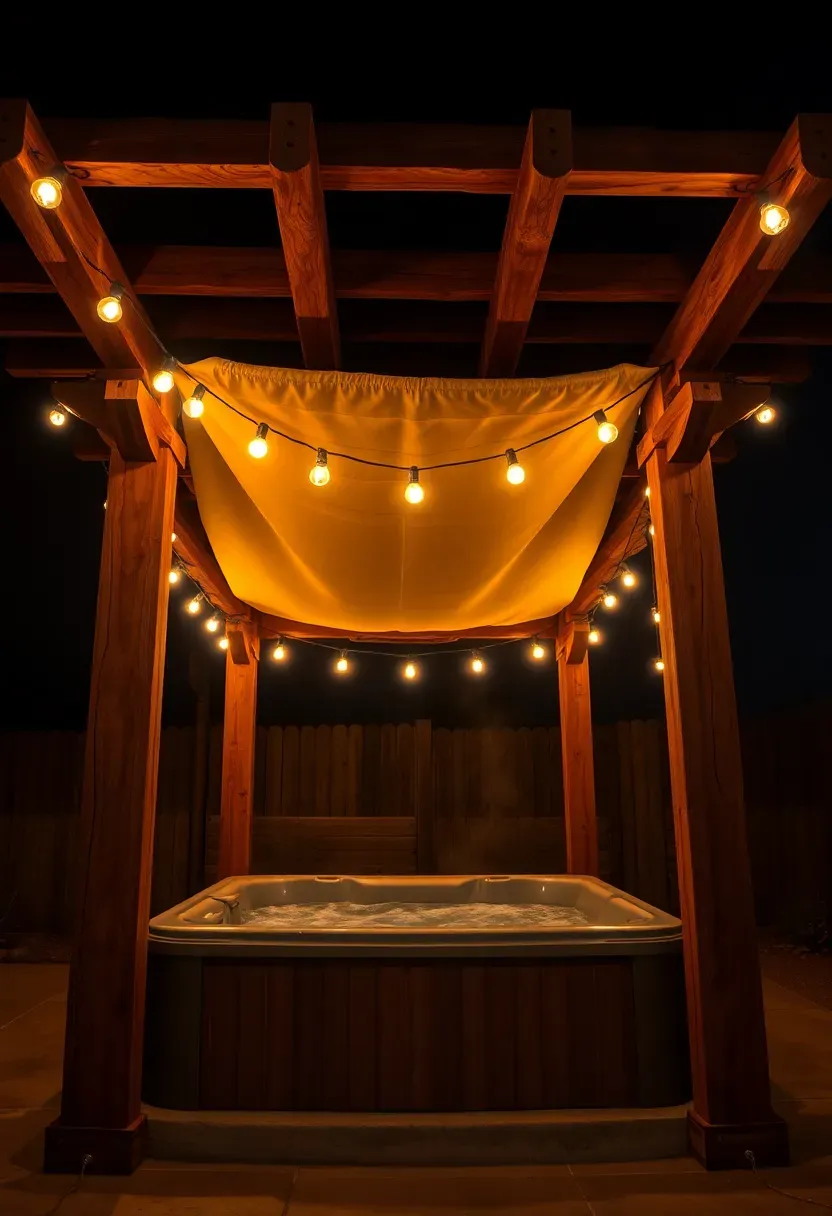
A pergola over a hot tub blocks views from second-story windows — the one angle that fences and screens miss entirely. Open rafters alone do not provide much privacy, but add a retractable fabric canopy and you cover the top while keeping the sides open. Manual crank systems cost $200-$400 for a 10x12-foot span. Motorized versions run $800-$1,500 but operate with a remote. The canopy also keeps rain, falling leaves, and bird droppings out of the water, which reduces maintenance. Cedar or pressure-treated pine posts handle the structural load. Space rafters 16 inches apart for adequate canopy support.
Tips
- Set posts in 42-inch-deep concrete footings — a pergola near a hot tub gets pushed by wind since surrounding structures create tunneling effects
- Pair with curtain panels on two sides for full enclosure when needed
- Wrap posts with waterproof LED strip lights for low-cost accent lighting that doubles as safety lighting on the steps
6. Bamboo Roll Screen
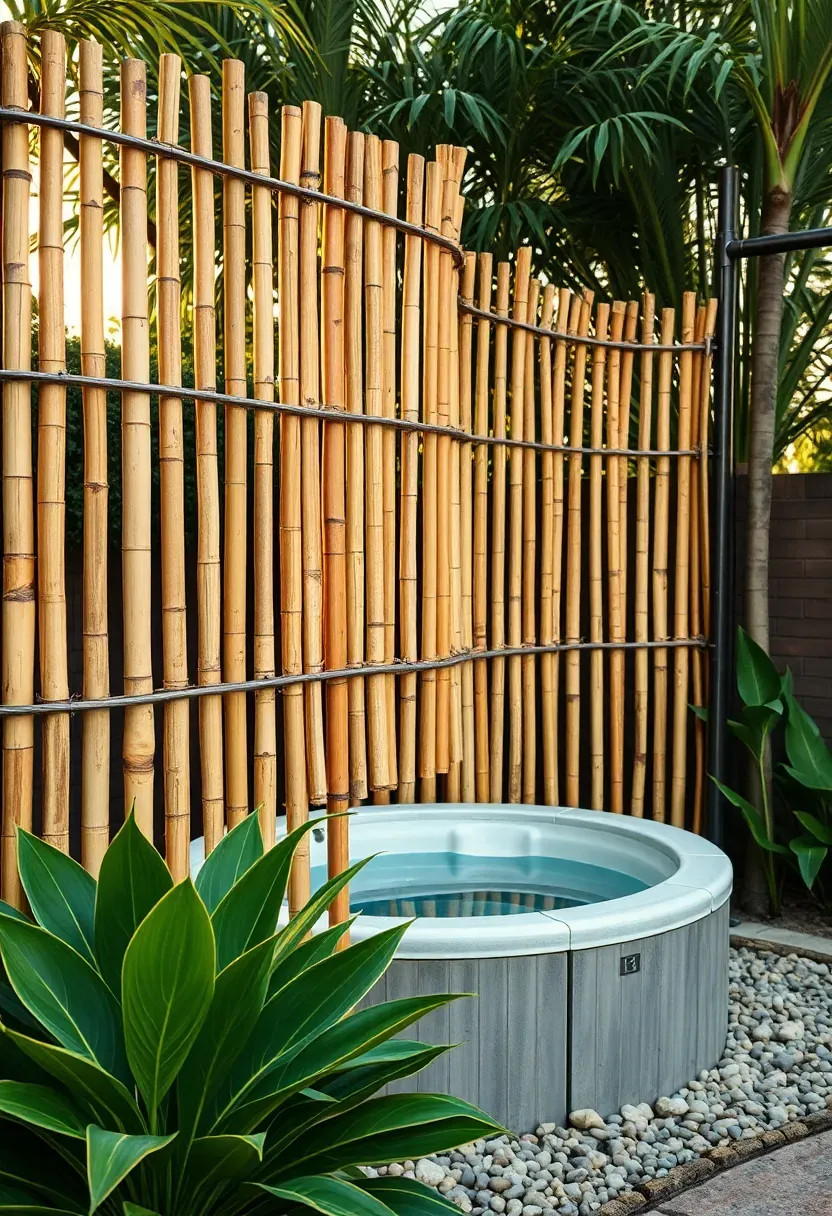
Bamboo roll fencing delivers instant tropical-looking privacy for $30-$60 per 6-foot-by-16-foot roll. Attach it to existing fence posts, metal T-posts, or a simple 2x4 frame with zip ties or wire. The rolls come in natural tan or darker carbonized finishes. Carbonized bamboo lasts longer because the heat treatment reduces moisture absorption. Double up two layers offset by half a cane width for near-complete opacity. Single layers block about 70% of the view, which is enough for most situations. The material does degrade after 3-5 years outdoors, but at that price, replacement is painless.
Tips
- Seal cut ends with polyurethane to prevent splitting from moisture wicking
- Leave a 2-inch gap at the bottom so water drains away rather than pooling against the canes
- Secure the top and bottom edges — wind catches unsecured rolls and peels them off posts
Recommended
Items for this idea
7. Stacked Stone Half Wall
Stone vs. block
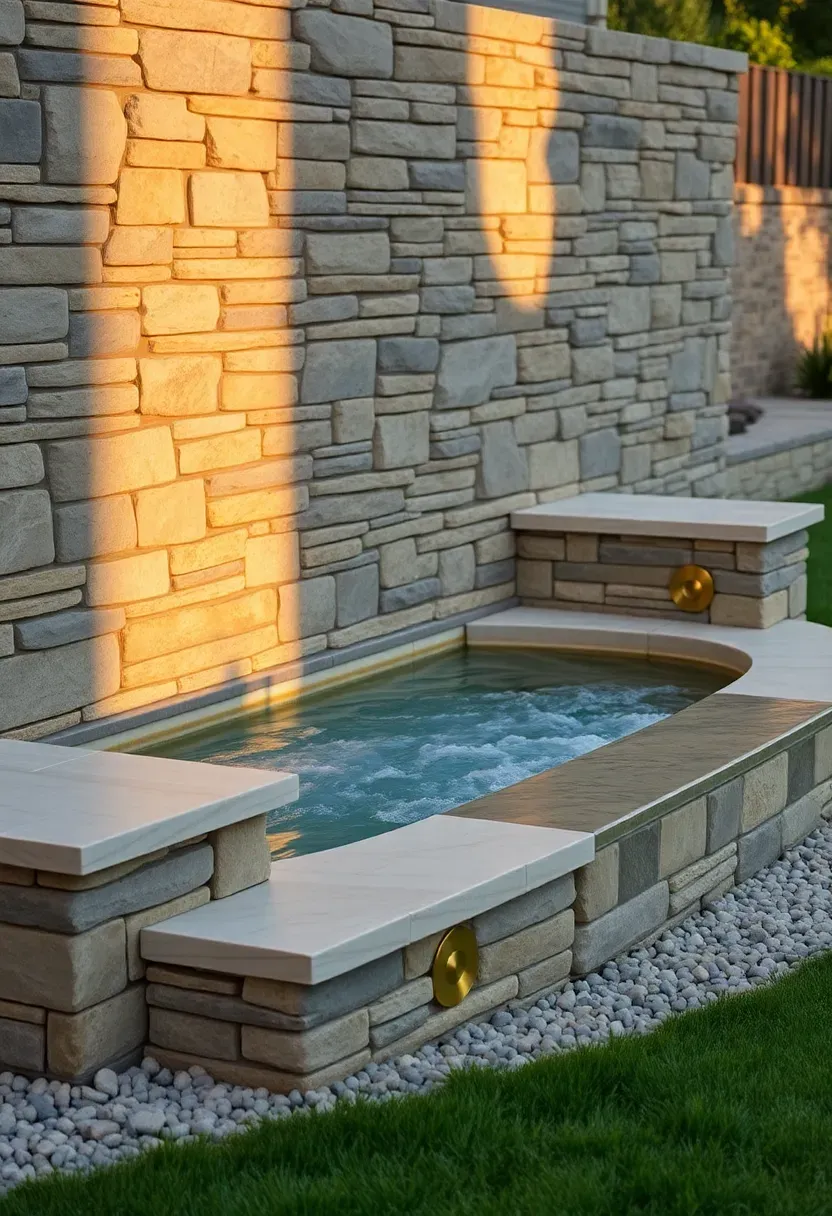
Natural stacked stone costs more ($15-$25 per square foot for materials) but ages gracefully and matches almost any landscape style. Concrete retaining wall blocks run $5-$10 per square foot and go up faster, though they always look manufactured. Both work as hot tub privacy walls.
Recommended height
Four feet covers bathers sitting in the tub. Go to five feet if you want privacy while standing next to it. Beyond five feet, you typically need a building permit and the wall needs rebar reinforcement or a concrete core.
Choose stone if
You want a permanent feature that adds resale value and blends with existing stone patios or retaining walls.
Choose block if
Budget matters more than aesthetics, or you plan to stucco or veneer the surface later for a finished look.
8. Tall Ornamental Grass Border
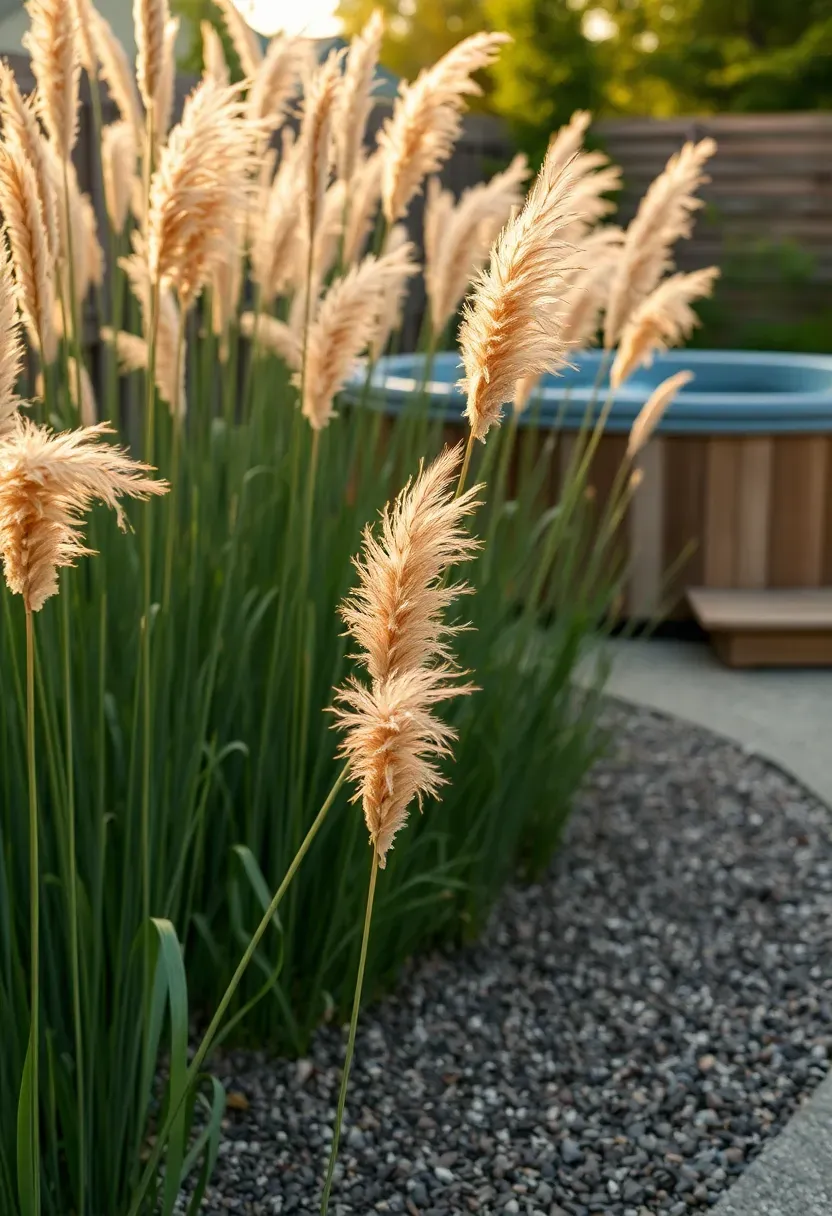
Ornamental grasses hit 5-7 feet tall by midsummer and create a soft, rustling screen that fences cannot replicate. Karl Foerster feather reed grass grows upright without flopping and stays standing through winter. Miscanthus sinensis varieties get even taller but spread aggressively in warm climates — check your state's invasive species list before planting. Space plants 2 feet apart for a solid screen by the second growing season. The movement and sound of grasses in wind add a layer of sensory privacy too. Your brain registers the motion and the rustling and subconsciously feels more enclosed than a static wall provides.
Tips
- Cut grasses back to 6 inches in late February before new growth emerges
- Plant in full sun — most ornamental grasses flop in shade and lose their upright screening habit
- Mix in a few evergreen shrubs behind the grasses for winter coverage when deciduous grasses are dormant
Recommended
Items for this idea
9. Slatted Horizontal Fence
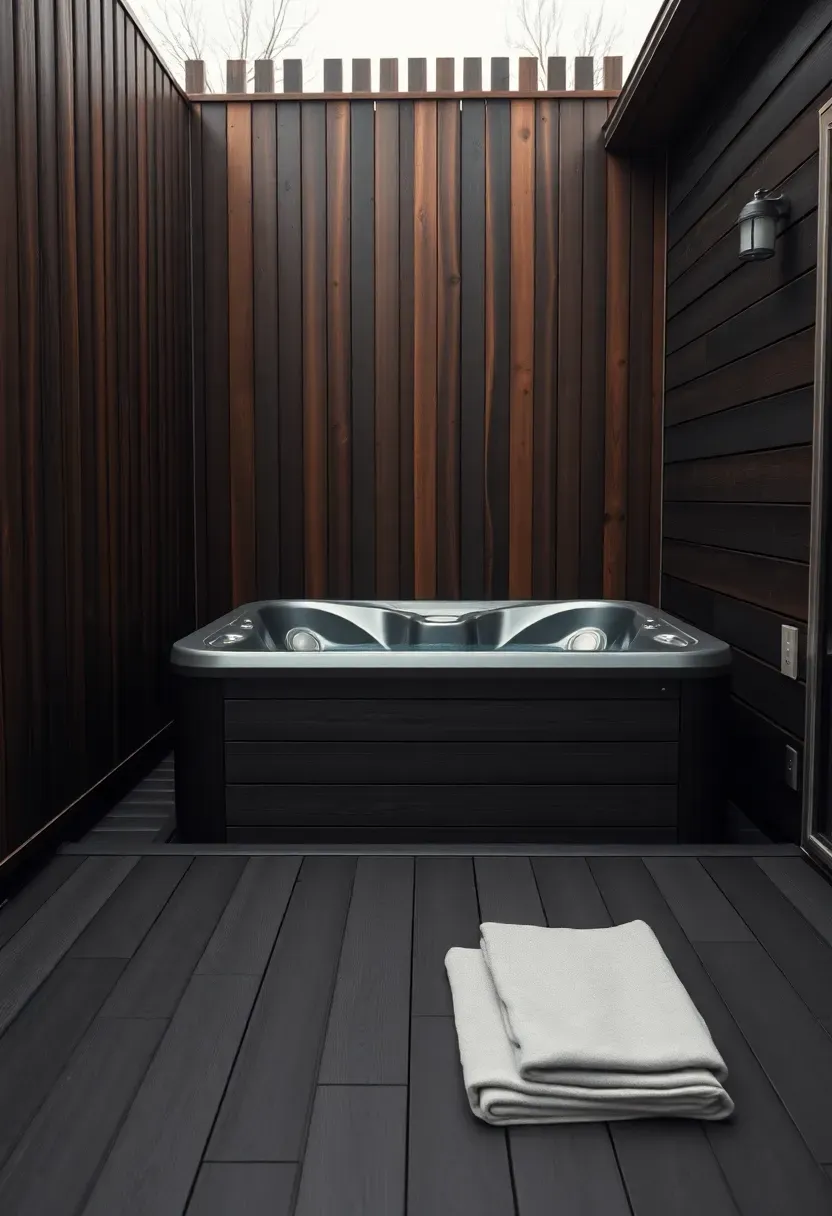
Horizontal fencing is the current favorite for modern backyards, and it works particularly well around hot tubs because the narrow gaps between slats let steam escape. Use 1x6 or 1x4 cedar boards with 1/2-inch spacers between them. The horizontal lines make small yards look wider — a visual trick that vertical fencing does the opposite of. Stain the wood dark (iron ore, ebony, or charcoal tones) for a contemporary look or leave it natural for warmth. Build panels 6 feet tall for full standing privacy. Mount on 4x4 or 6x6 posts set 6-8 feet apart.
Tips
- Pre-stain all six sides of each board before assembly — moisture hits the back face too
- Use stainless steel screws to avoid rust streaks running down the face of the boards
- Add a 2x6 cap rail across the top for a finished look and a place to set drinks
10. Hot Tub Gazebo Enclosure
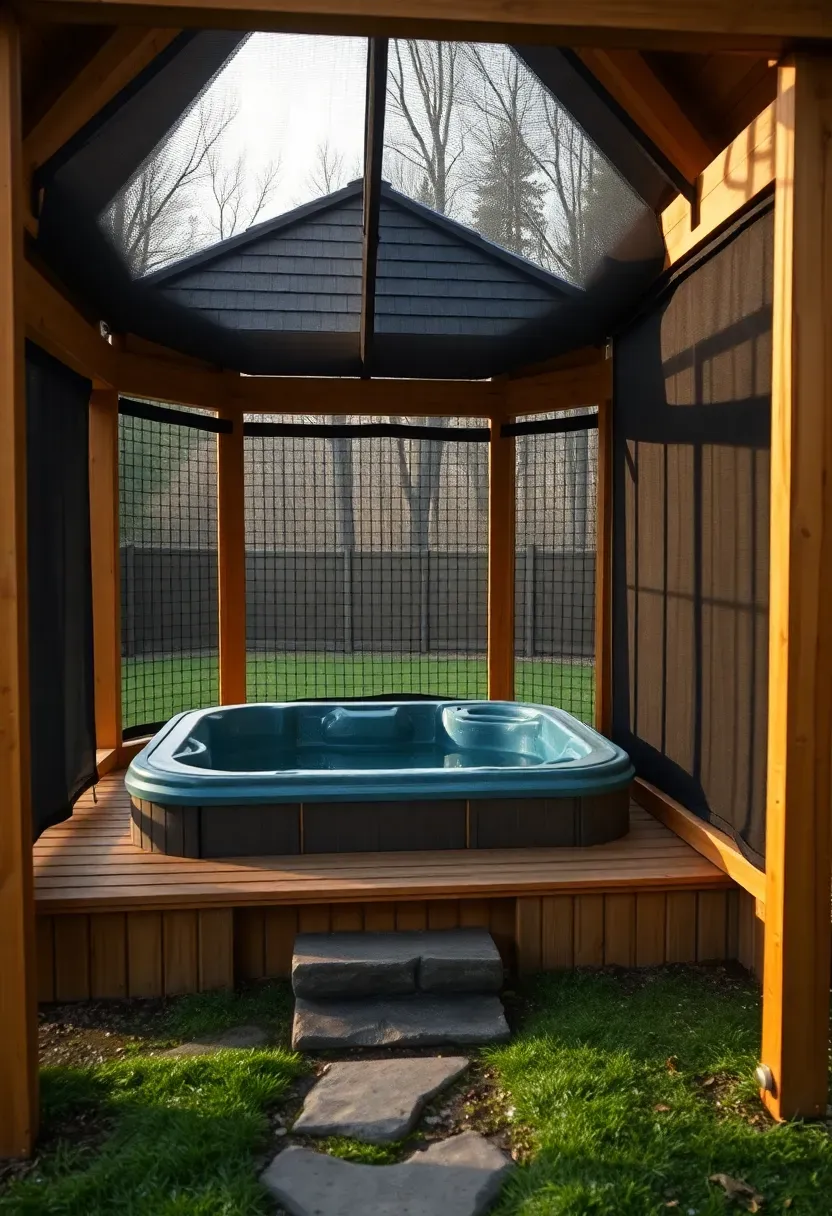
A dedicated gazebo turns a hot tub into a four-season room. Prefab kits from companies like Visscher or Westview start around $4,000 for a 10x12 structure with a solid roof and optional screen walls. That sounds like a lot until you factor in the privacy, weather protection, and reduced chemical use from keeping debris out of the water. The roof blocks overhead views, the walls handle the sides, and screen inserts keep bugs out during summer soaks. Some kits include electrical rough-in for lights and a ceiling fan.
Tips
- Check your local setback requirements — gazebos often fall under the same rules as sheds and need to sit 5-10 feet from property lines
- Choose a design with removable screen panels so you can open it up in good weather
- Slope the site slightly away from the gazebo on all sides to prevent water pooling at the foundation
Recommended
Items for this idea
11. Privacy Sail Shade
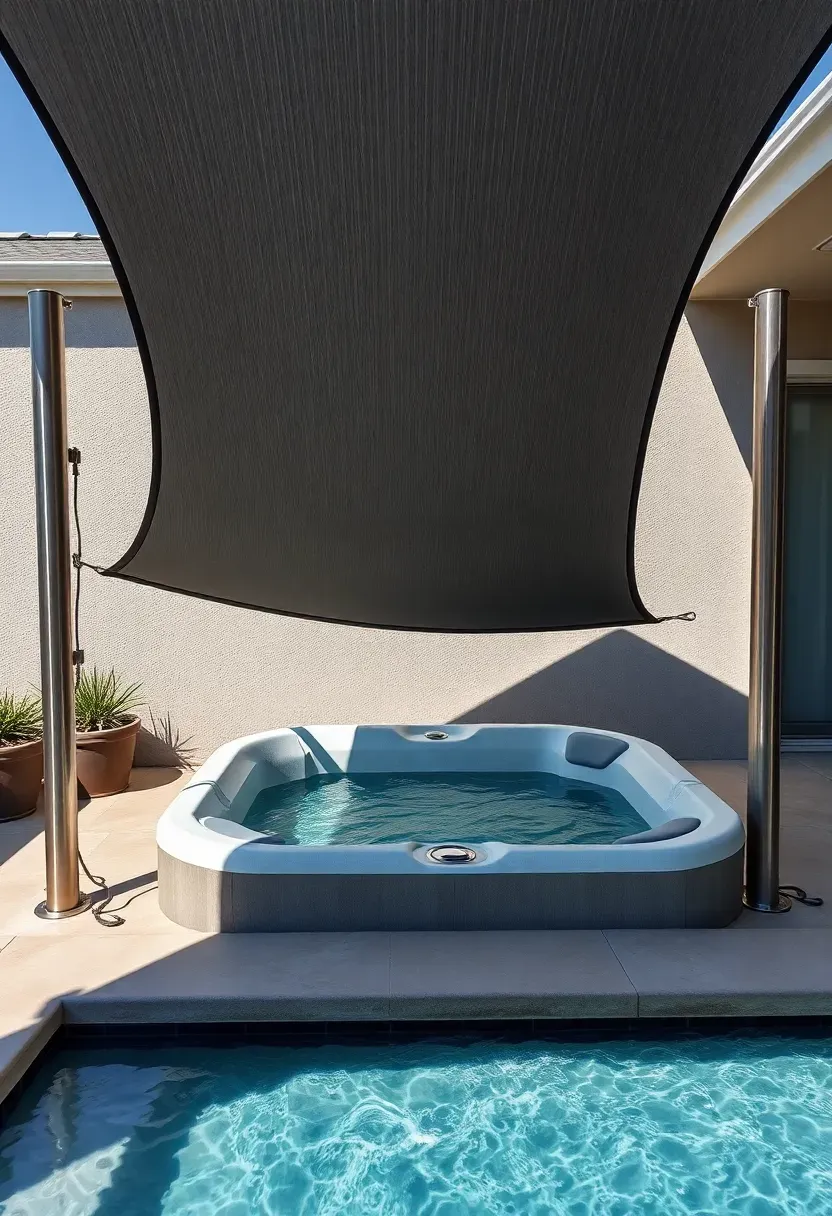
Shade sails block overhead views and sun exposure in a single installation. Mount triangle or rectangle sails at a 20-30 degree angle for water runoff. The fabric — usually high-density polyethylene — blocks 90-95% of UV while letting some light filter through. For hot tub privacy, install the sail low enough that the edges sit at 7-8 feet on the lowest corner, creating a partial wall effect on the angled sides. Multiple overlapping sails in different colors or sizes add visual interest and close more gaps.
Tips
- Use marine-grade stainless steel hardware — residential hardware store turnbuckles corrode within two seasons near hot tub chemistry
- Take sails down before heavy snow loads — they are designed for sun and rain, not weight
- Tension the fabric tightly to prevent sagging and flapping that wears the material at the attachment points
12. Staggered Planter Boxes
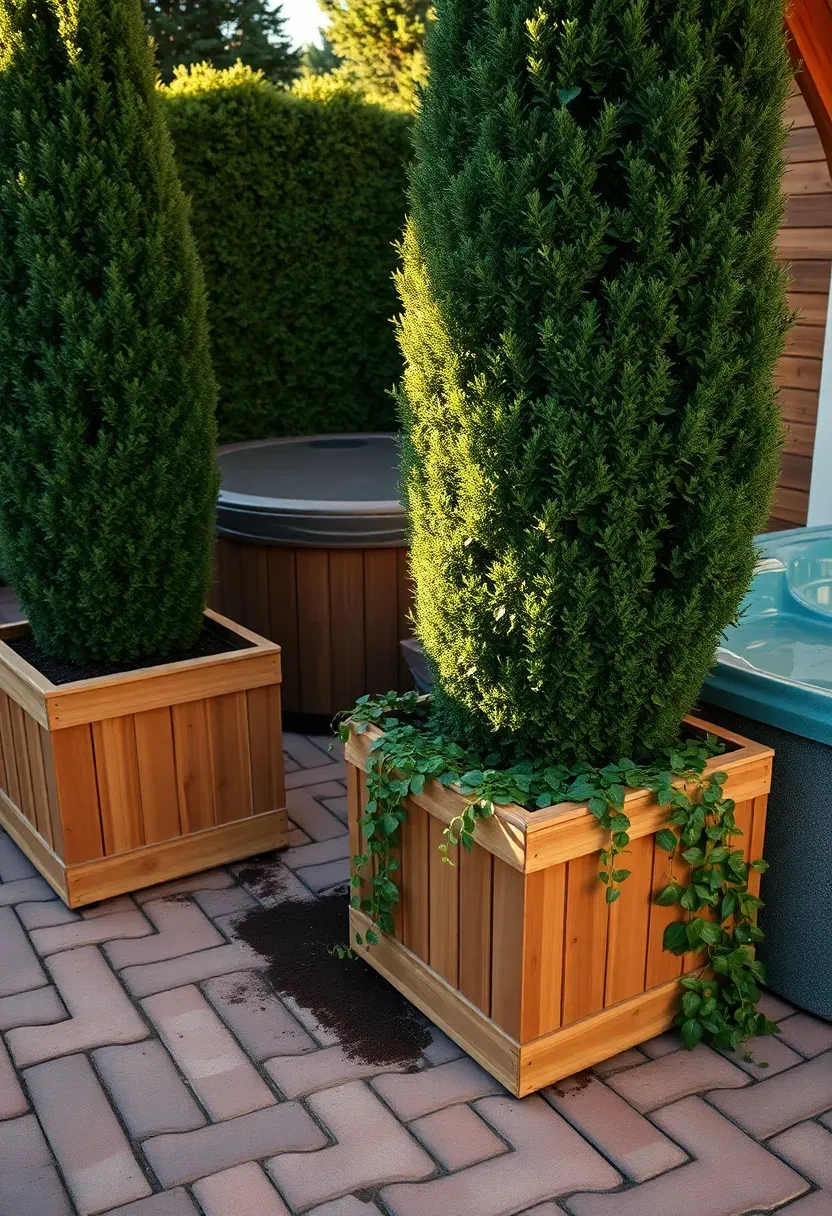
Planter boxes give you movable privacy that renters and commitment-averse homeowners appreciate. Build or buy boxes in three heights — 3 feet, 4 feet, and 5 feet — and stagger them around the most exposed sides of the tub. Fill with evergreen shrubs like boxwood, skip laurel, or dwarf holly for year-round screening. The staggered heights look more natural than a uniform wall and let you leave gaps where views are already blocked by existing structures. Rolling casters on the bottom of each box let you rearrange the layout seasonally.
Tips
- Drill drainage holes and line the interior with pond liner to protect the wood from constant soil moisture
- Use lightweight potting mix with perlite instead of garden soil — full planter boxes get extremely heavy
- Group boxes in odd numbers (three or five) for a more natural arrangement than symmetrical pairs
Recommended
Items for this idea
13. Reed Fencing Panels
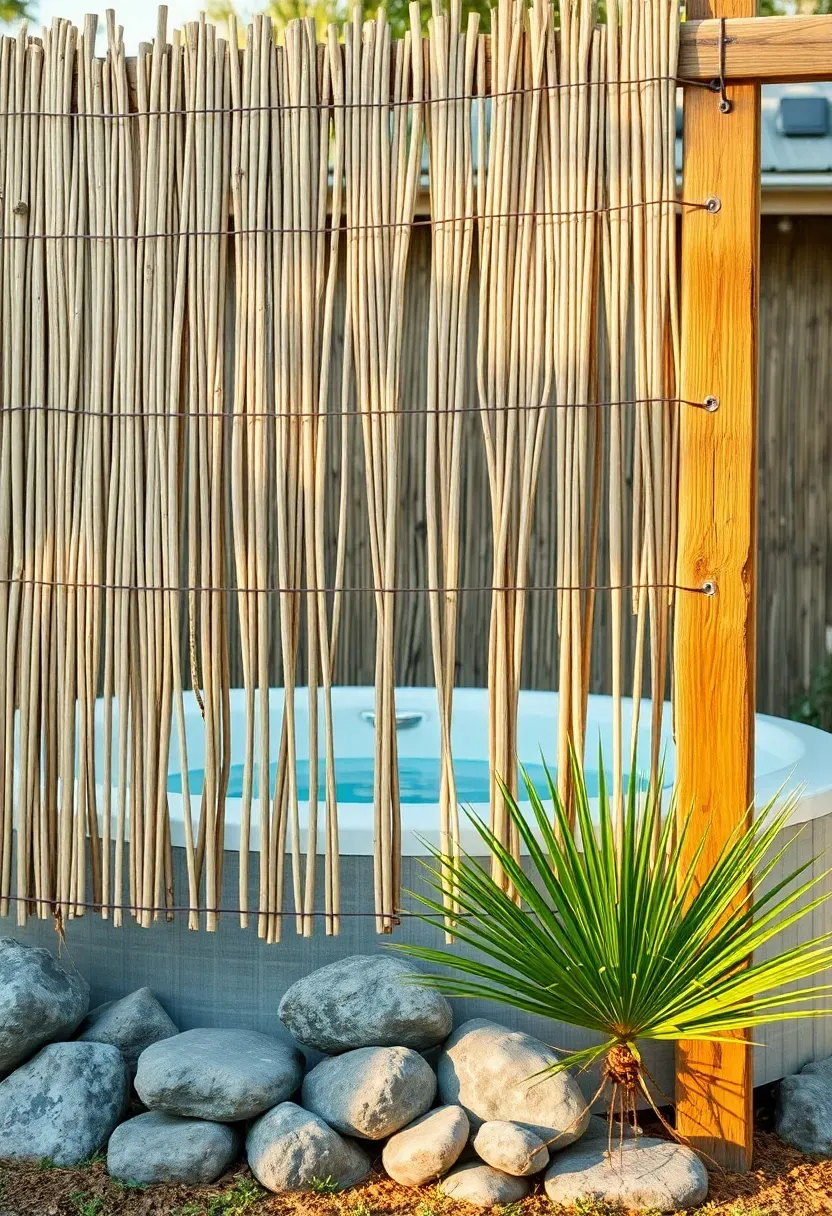
Reed fencing brings a beachy, laid-back look to a hot tub area at a fraction of what wood costs. Wired reed panels run $20-$40 for a 6-foot by 16-foot roll at most garden centers. The reeds provide about 80% privacy — enough to block casual views but not a spotlight. They attach to any existing fence or post structure with zip ties, and the installation takes less than an hour per panel.
Step 1: Set your posts
If there is no existing structure, drive metal T-posts every 6 feet along the line where you want screening.
Step 2: Unroll and attach
Unroll the reed panel against the posts, keeping the top edge level. Secure with galvanized wire or heavy zip ties every 12 inches along each post.
Step 3: Trim and cap
Cut excess length with heavy-duty garden shears. Run a strip of 1x2 lumber along the top edge to keep reeds from splaying.
Watch out
- Reed panels last 2-3 years before they start breaking apart — plan on periodic replacement
- Spray a coat of exterior polyurethane to add a year or two of life
14. Trellis with Climbing Vines
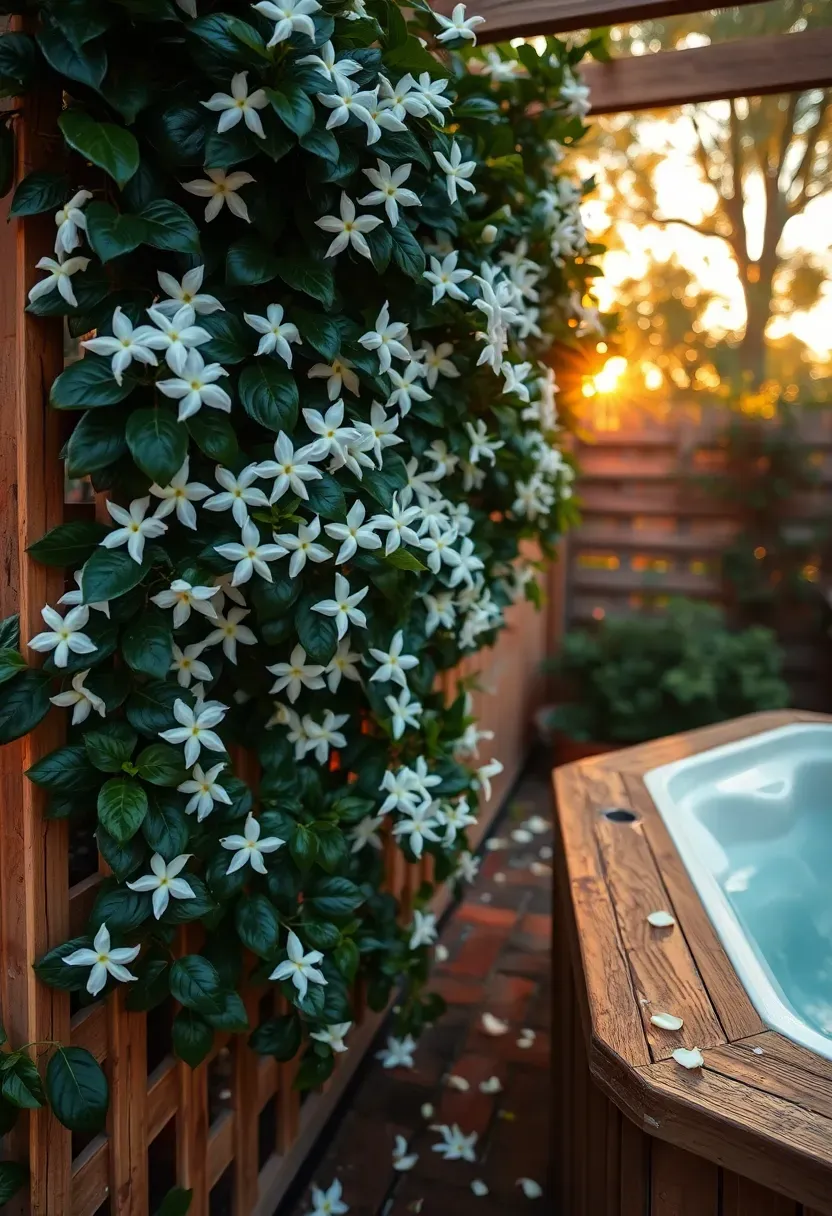
A vine-covered trellis is privacy that smells good. Jasmine, climbing hydrangea, and trumpet vine all cover a 6-foot trellis within one to two growing seasons. The trellis itself provides partial screening immediately, and the vines fill in the rest. Build an A-frame or flat panel trellis from 2x2 cedar strips spaced 6 inches apart. Set it 3-4 feet from the hot tub edge so maintenance access stays clear and fallen petals do not land in the water constantly.
Tips
- Jasmine blooms at night — ideal for evening hot tub use when the scent is strongest
- Avoid wisteria near hot tubs because it drops seed pods and debris constantly
- Train vines with garden twine the first season until tendrils grip the trellis on their own
Recommended
Items for this idea
15. Corrugated Metal Accent Wall
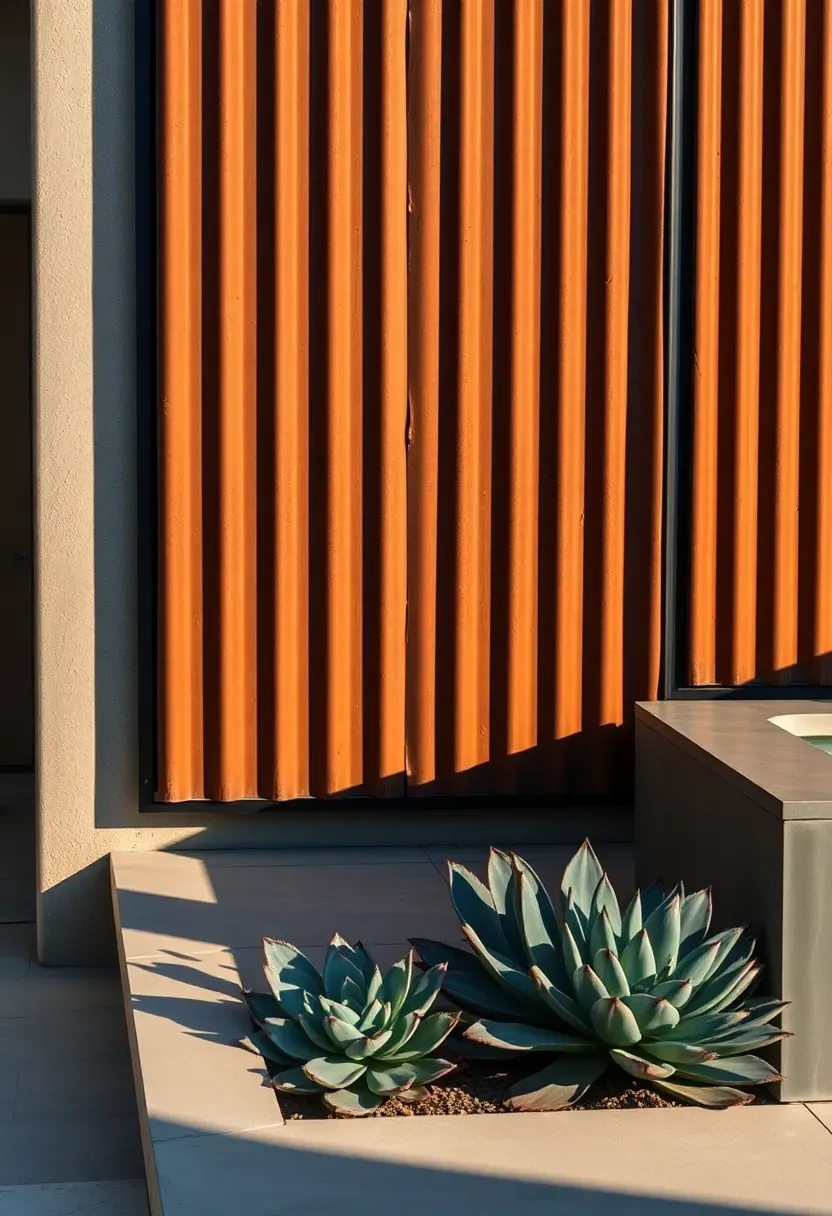
Corrugated metal panels create a privacy screen with an industrial edge that pairs well with modern hot tub installations. Galvanized steel stays silver, while Corten steel develops that distinctive rust patina over 6-12 months. Use 8-foot panels mounted vertically on a steel or wood frame for full standing privacy. The panels cost $15-$25 each at farm supply stores — three panels cover about 8 linear feet. The corrugated profile adds rigidity, so the panels resist wind flex better than flat sheet metal.
Pros and cons
- Pro: Fireproof, rot-proof, and lasts 40+ years with zero maintenance
- Pro: Reflects heat from nearby fire pits, creating a warmer soaking area
- Con: Metal edges are sharp during installation — wear gloves and file all cut edges smooth
- Con: Conducts heat in direct summer sun, which can be uncomfortable to lean against
16. Frosted Glass Panels
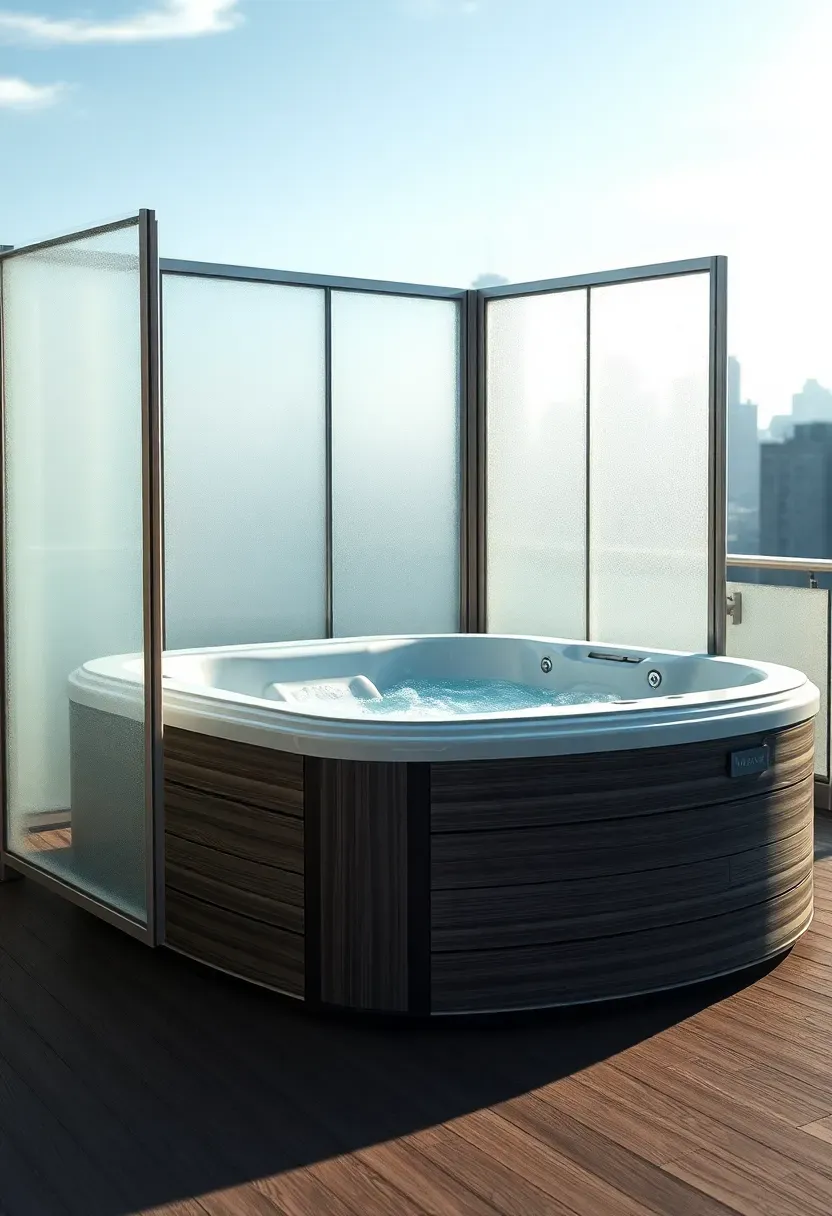
Frosted glass gives privacy without blocking light — a real advantage if your hot tub sits in a shaded spot that already feels dark. Tempered glass panels in aluminum channel frames cost $150-$300 per 4-foot section installed. The frosted surface obscures shapes and movement while still letting diffused sunlight pass through. The glass surface also does not rot, warp, or harbor mold, and you clean it with a garden hose. This is the most space-efficient option because panels are only 3/8 inch thick versus 6+ inches for any plantings or fence.
Tips
- Use tempered safety glass only — standard glass near a hot tub is a shatter risk from thermal shock
- Seal the aluminum channels with clear silicone to prevent water from collecting inside and growing algae
- Space panels 1/4 inch apart for thermal expansion — glass expands in direct sun
Recommended
Items for this idea
17. Tiered Deck with Built-in Walls
Why build up instead of screening off
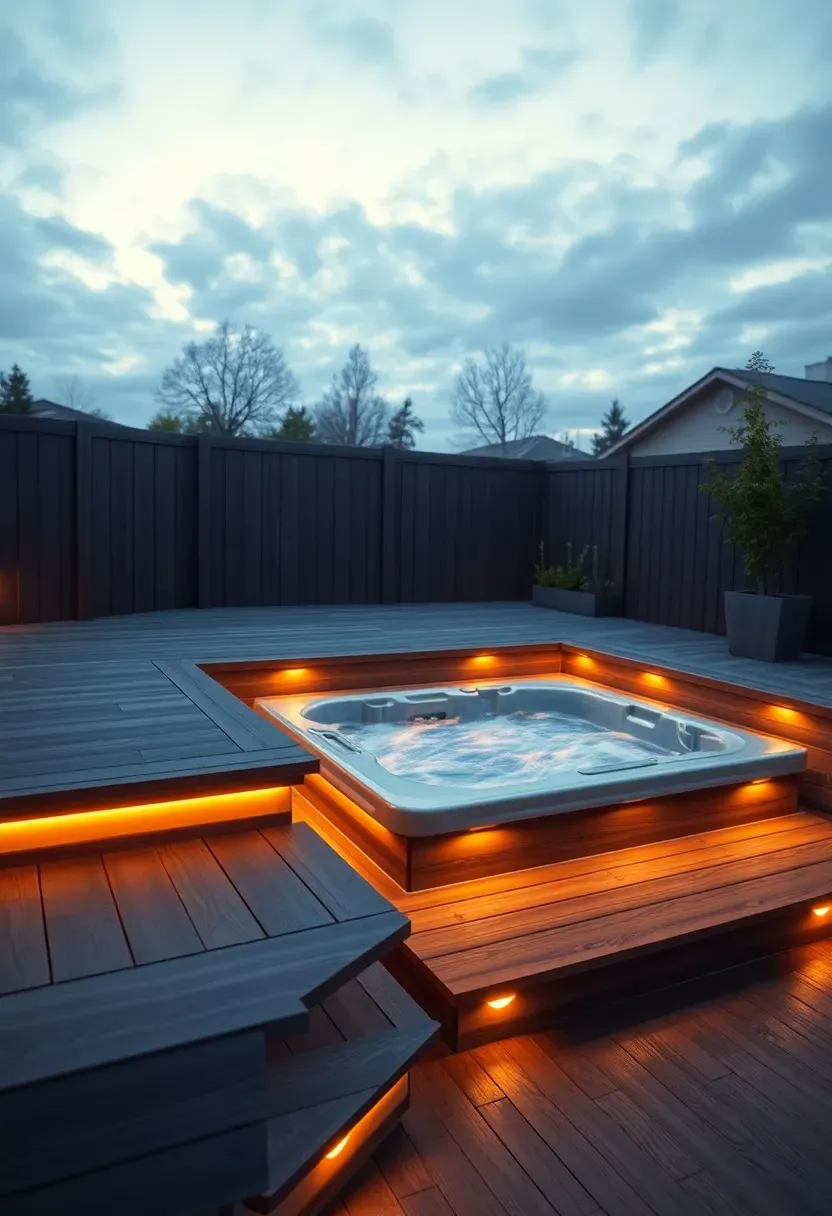
When your hot tub sits at ground level in a flat yard, every neighbor with a second-story window has a clear view. A tiered deck raises the tub 2-3 feet and then wraps it with 3-foot knee walls, putting the bather's eye level well below the wall top. This approach uses the deck structure itself as the privacy element rather than adding separate screens.
Construction notes
Frame the deck with pressure-treated lumber and surface with composite decking for low maintenance near constant moisture. Build the knee walls from matching composite boards or horizontal slats. Include a gate or removable panel for pump and plumbing access — you will need it eventually.
Choose this if
You are already planning a deck project and want privacy integrated from the start rather than added as an afterthought.
18. Artificial Hedge Panels
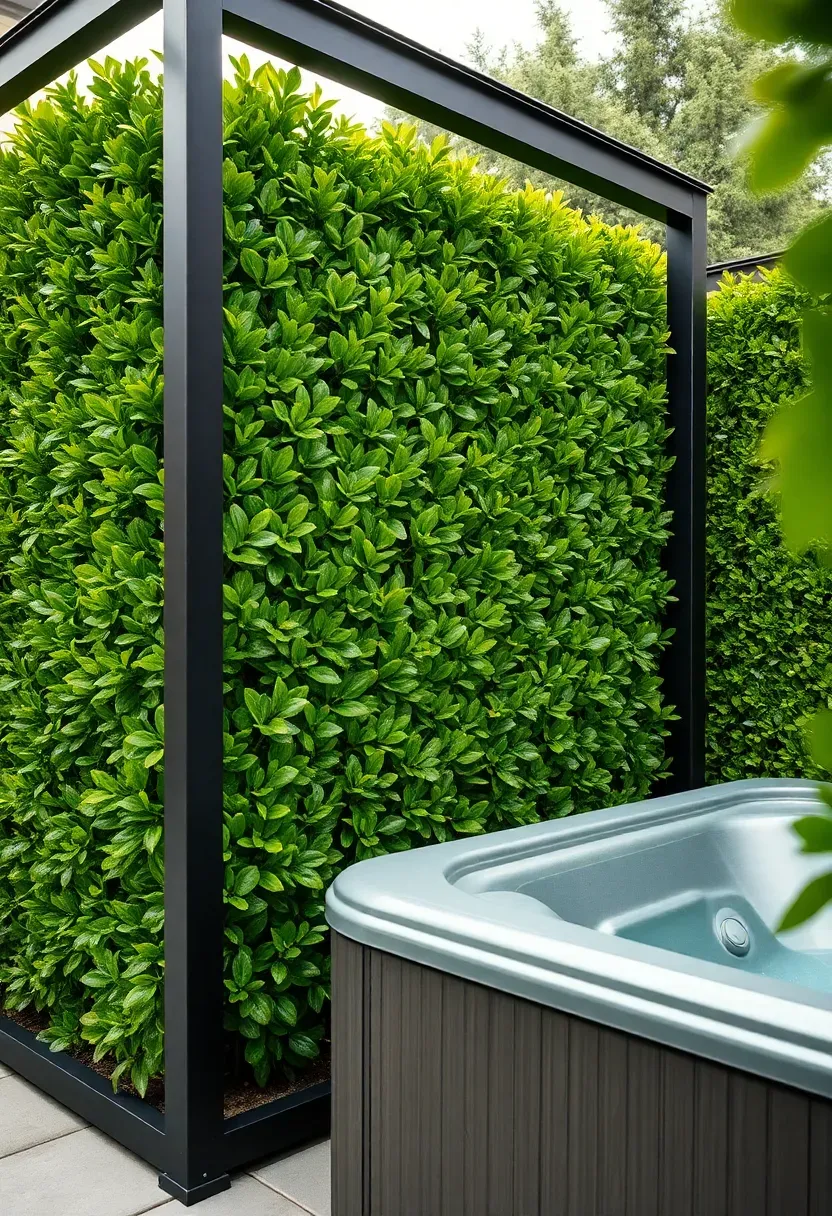
Artificial boxwood panels look surprisingly convincing from 5+ feet away and require zero watering, trimming, or seasonal care. Each 20x20-inch panel clicks into neighboring panels with built-in connectors. Mount them on a fence, a freestanding frame, or zip-tie them to an existing chain-link fence for an instant green wall. UV-stabilized panels resist fading for 5-8 years. They cost $8-$15 per panel, and covering a 6-foot-by-12-foot area runs about $200-$350. The biggest advantage over real hedges is that they provide full coverage on day one instead of requiring years of growth.
Tips
- Choose panels with mixed shades of green and varied leaf sizes — single-tone panels look obviously fake
- Hose them down monthly to prevent dust buildup from dulling the color
- Secure every panel at all four corners — wind catches unsecured panels and flips them like playing cards
Recommended
Items for this idea
19. Louvered Privacy Screen
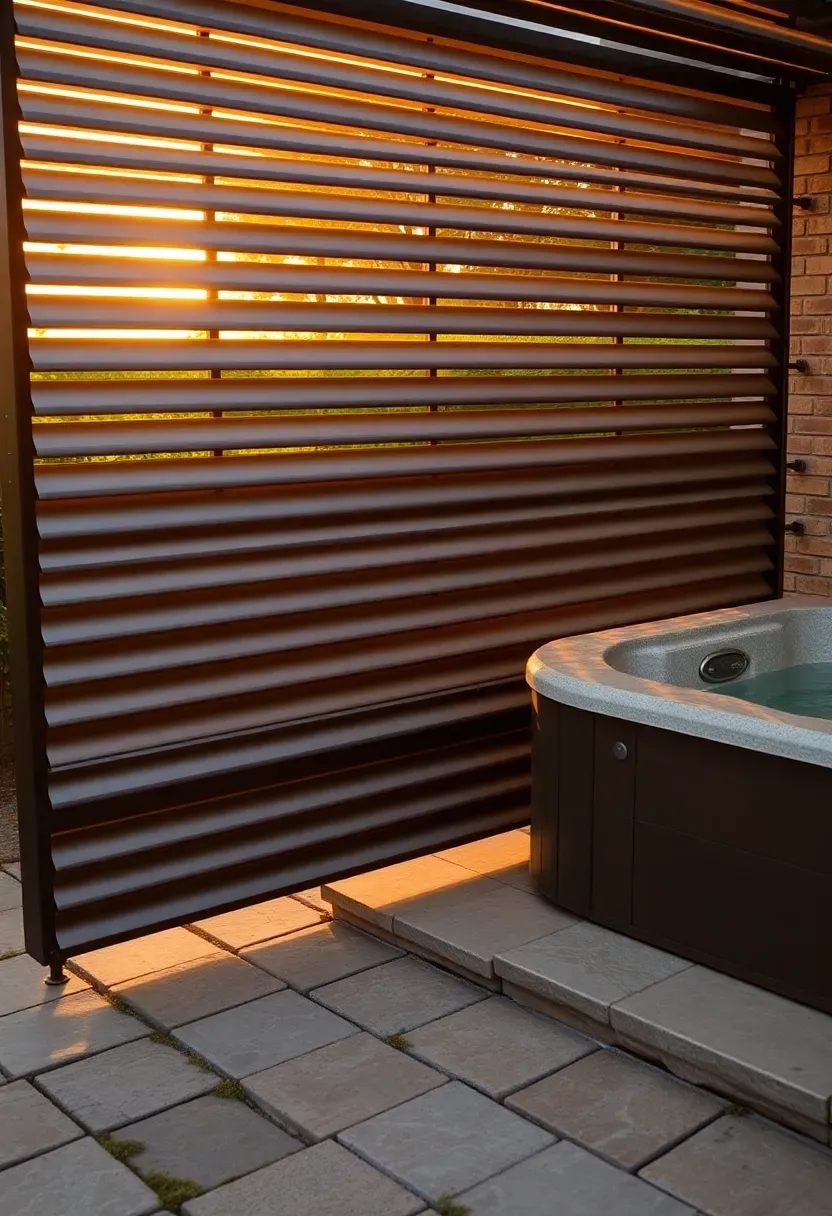
Louvered screens let you control exactly how much privacy and airflow you get by angling the slats. Think of them as horizontal blinds for your backyard. Aluminum louvered panels with a hand-crank adjustment mechanism cost $300-$600 per 4-foot panel. Cheaper fixed-louver versions in wood or composite run $100-$200 but do not adjust. The angled slats shed rain instead of absorbing it, which makes them last longer than flat-faced privacy walls. Mount them on posts at the two or three sides of the hot tub that face neighbors.
Tips
- Angle louvers downward toward the neighbor's side so they see the underside of each slat rather than through the gaps
- Oil the pivot mechanisms annually if you choose adjustable versions — they seize up from mineral deposits in hot tub splash zones
- Pair with a solid roof or pergola overhead since louvers do not block vertical sightlines
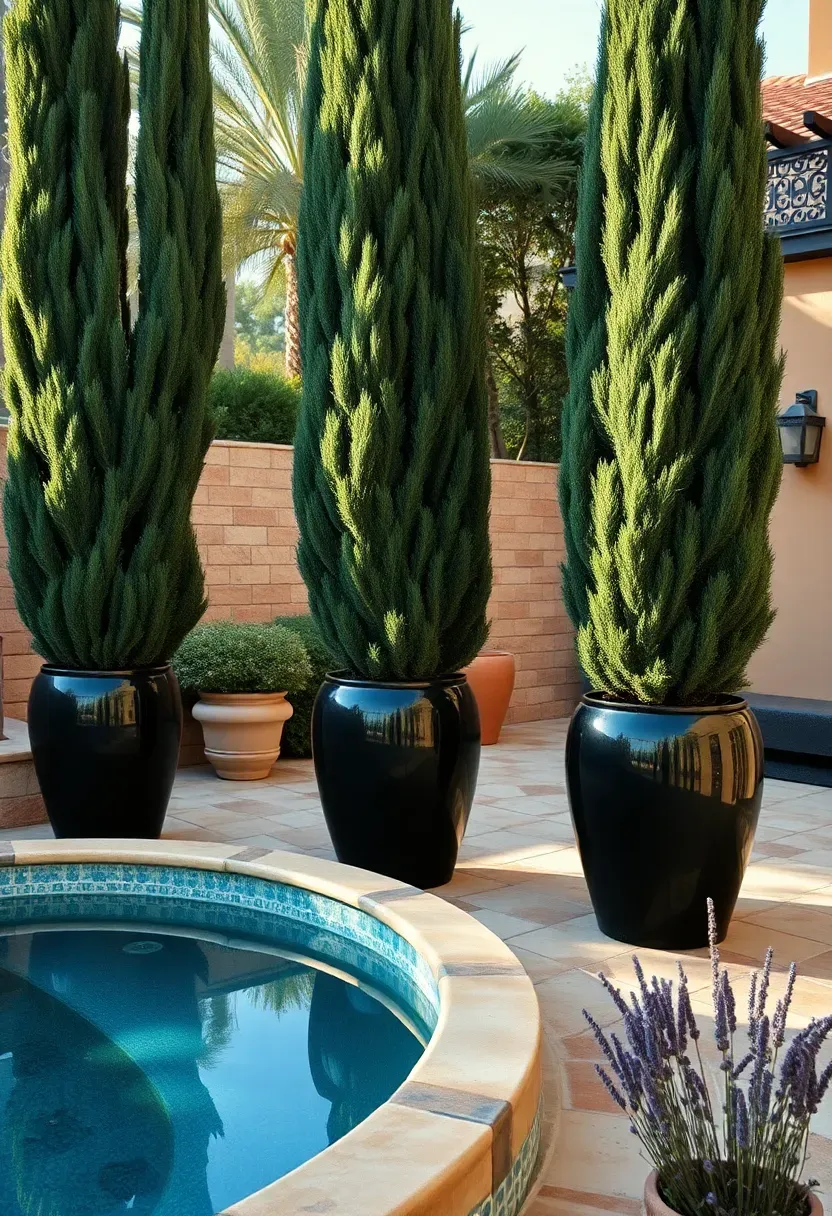
20. Potted Columnar Trees
Columnar trees in large pots give you movable privacy that follows the sun or the neighbor's new deck addition. Italian cypress grows in a tight column reaching 10+ feet in a pot and 30+ feet in the ground. For colder climates, try columnar hornbeam or sky pencil holly. Use pots at least 24 inches in diameter with drainage holes. The trees provide a formal, architectural look that works well with Mediterranean, modern, and transitional house styles. Group three pots on the most exposed side of the tub for effective screening.
Tips
- Pot weight prevents tipping in wind — a 24-inch ceramic pot with soil and tree weighs 80-120 lbs
- Water potted trees more frequently than in-ground specimens since roots cannot reach groundwater
- Repot every 3-4 years with fresh soil and root-prune to keep the tree healthy in the same container
Recommended
Items for this idea
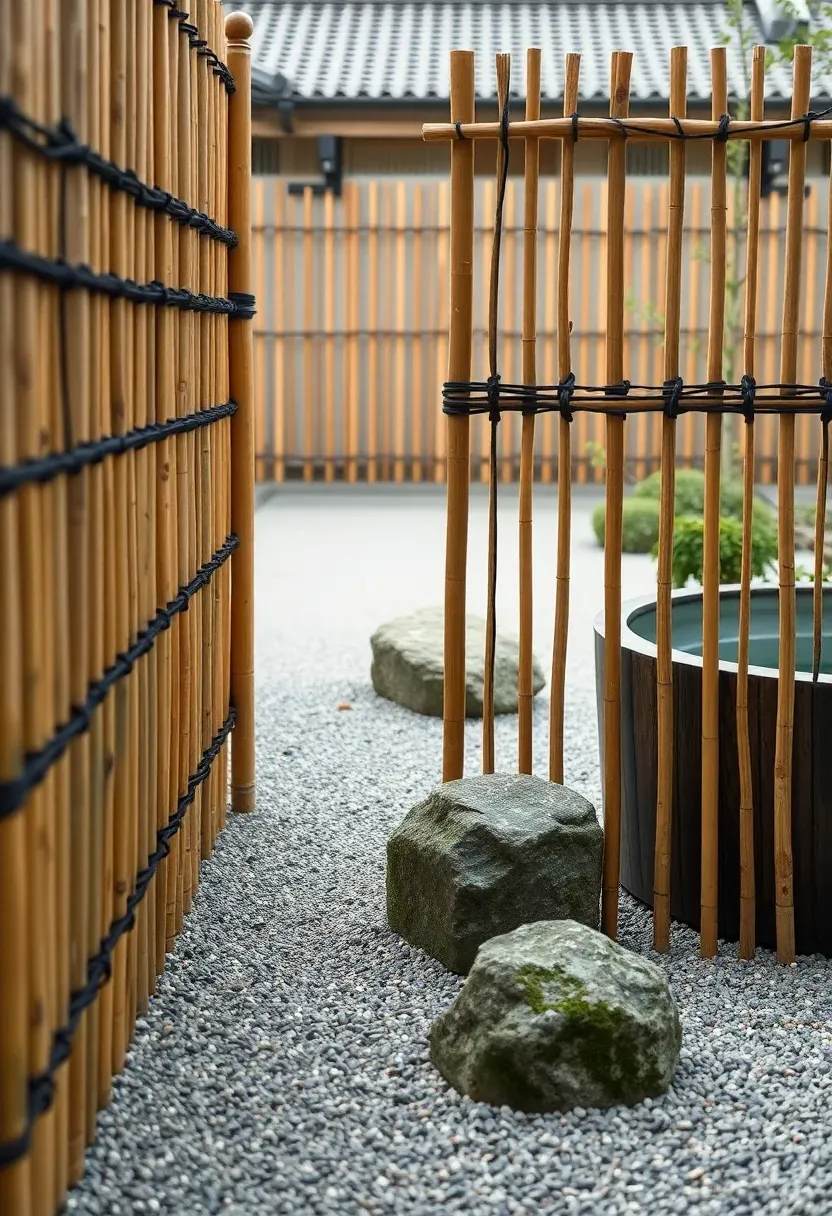
21. Japanese-Style Bamboo Fence
Japanese garden fencing uses bamboo poles lashed together with black hemp or synthetic twine in patterns developed centuries ago. The yotsume-gaki (four-eyed fence) uses a grid of horizontal and vertical poles with gaps between them — decorative but not fully private. For hot tub screening, the kennin-ji fence style layers split bamboo tightly with no gaps. Build it 5-6 feet tall on a frame of treated 4x4 posts. The craftsmanship involved makes these fences conversation pieces, not just barriers. Natural bamboo poles cost $3-$8 each depending on diameter.
Tips
- Soak lashing twine in linseed oil before tying — it waterproofs the knots and prevents unraveling
- Apply a UV-resistant sealant to bamboo once a year to prevent graying and splitting
- Source poles from bamboo farms rather than garden centers for better quality and lower per-pole cost
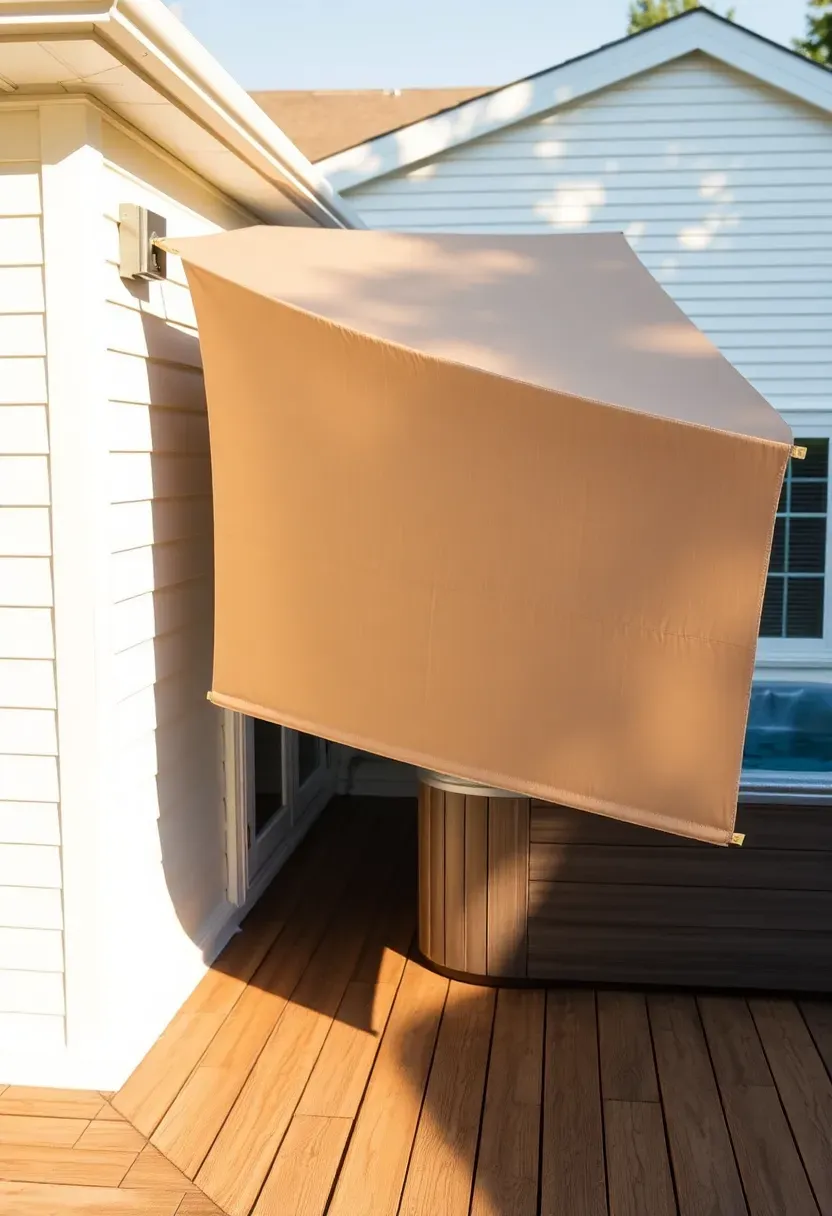
22. Retractable Side Awning
Retractable side awnings mount to a wall or post and pull out horizontally to create an instant privacy wall up to 10 feet long. When you do not need screening, the fabric rolls back into a slim aluminum housing that barely takes up space. Most models stand 5-6 feet tall and cost $150-$400 depending on length and fabric quality. They handle moderate wind but should be retracted during storms. The mechanism is spring-loaded — pull the handle to extend, press the release to retract.
Pros and cons
- Pro: Deploys in five seconds and retracts just as fast — no permanent visual impact on the yard
- Pro: No posts, footings, or permanent installation on the side opposite the mount point
- Con: Single-sided mount limits placement to locations near a wall, post, or fence
- Con: Fabric degrades faster than rigid materials, expect 5-7 year replacement cycles
Recommended
Items for this idea
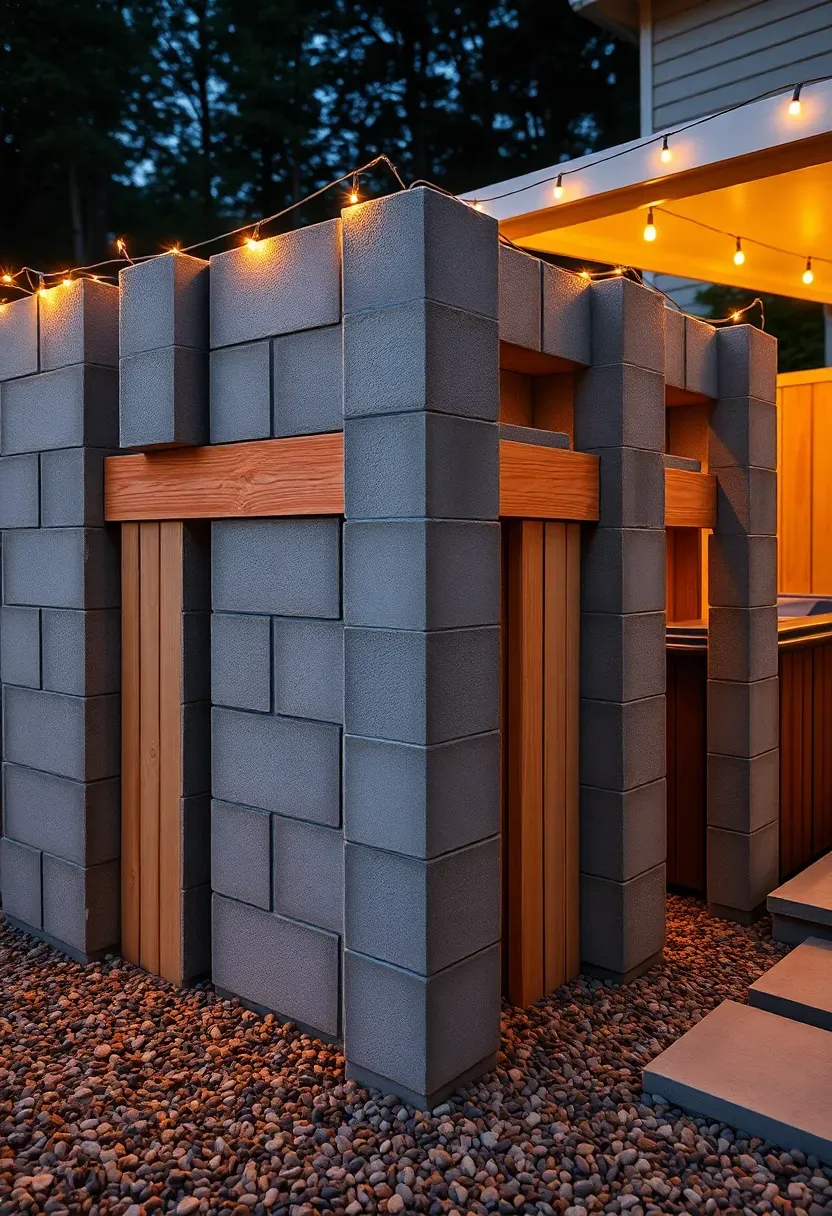
23. Cinder Block and Wood Screen
This budget-friendly build combines stacked cinder blocks as vertical columns with horizontal wood boards slotted between them. The blocks provide weight and stability without digging post holes or mixing concrete. Stack blocks 3-4 high for each column (about 4 feet total), spacing columns 4 feet apart. Slide 2x6 cedar or redwood boards into the block openings between columns. The combination of gray concrete and warm wood creates an unexpectedly modern look. Total material cost runs $60-$100 for a 12-foot screen.
Step 1: Level the base
Set a 4-inch gravel pad under each column location and tamp flat. The blocks need a level surface or the whole screen leans.
Step 2: Stack and fill
Stack cinder blocks with the openings aligned horizontally. Slide boards through as you go. Fill the bottom block of each column with gravel for ballast.
Step 3: Cap and finish
Glue capstones or flat pavers on top of each column with construction adhesive. Sand and stain the wood boards.
Watch out
- Do not stack more than 5 blocks high without mortar — the screen becomes top-heavy
- Use exterior-grade boards only — interior lumber warps within one season outdoors
Quick FAQ
Do I need a permit to build a privacy screen around my hot tub? Most jurisdictions allow freestanding structures under 6 feet tall without a permit. Anything taller, or anything attached to your home, usually requires one. Check with your local building department before starting — the rules vary widely between cities and counties, and violations can mean fines or forced removal.
Which plants grow fastest for hot tub privacy? Clumping bamboo (like Bambusa multiplex) can grow 3-5 feet per year in warm climates. In colder regions, Thuja Green Giant arborvitae adds 3 feet per year once established. Ornamental grasses reach full height in a single growing season but die back in winter.
How far should a privacy screen sit from the hot tub? Keep screens at least 2-3 feet from the tub shell. This leaves room for maintenance access, prevents splash damage to wood or fabric, and allows air circulation that reduces mold and mildew growth around the tub.
Will a privacy enclosure void my hot tub warranty? Most manufacturers require minimum clearances — typically 2 feet on the access panel side and 1 foot on remaining sides. Blocking these clearances can restrict airflow to the pump and heater, leading to overheating. Check your manual before building anything permanent.
What is the cheapest option that actually works? Bamboo roll fencing at $30-$60 per roll delivers immediate 70-80% privacy with under an hour of installation time. Pair two overlapping layers for near-complete screening at still under $120 total.
The right privacy solution depends on three things: your budget, how permanent you want the installation, and which directions need screening. Most hot tubs only have one or two exposed sides — start there before wrapping the entire perimeter. A $40 bamboo roll on the neighbor-facing side might be all you need. And remember that layering works — a 4-foot planter box with tall grasses behind it creates better screening than either one alone. Pick one idea from this list, install it this weekend, and soak without the audience.
Pinterest cover for 23 Backyard Hot Tub Privacy Ideas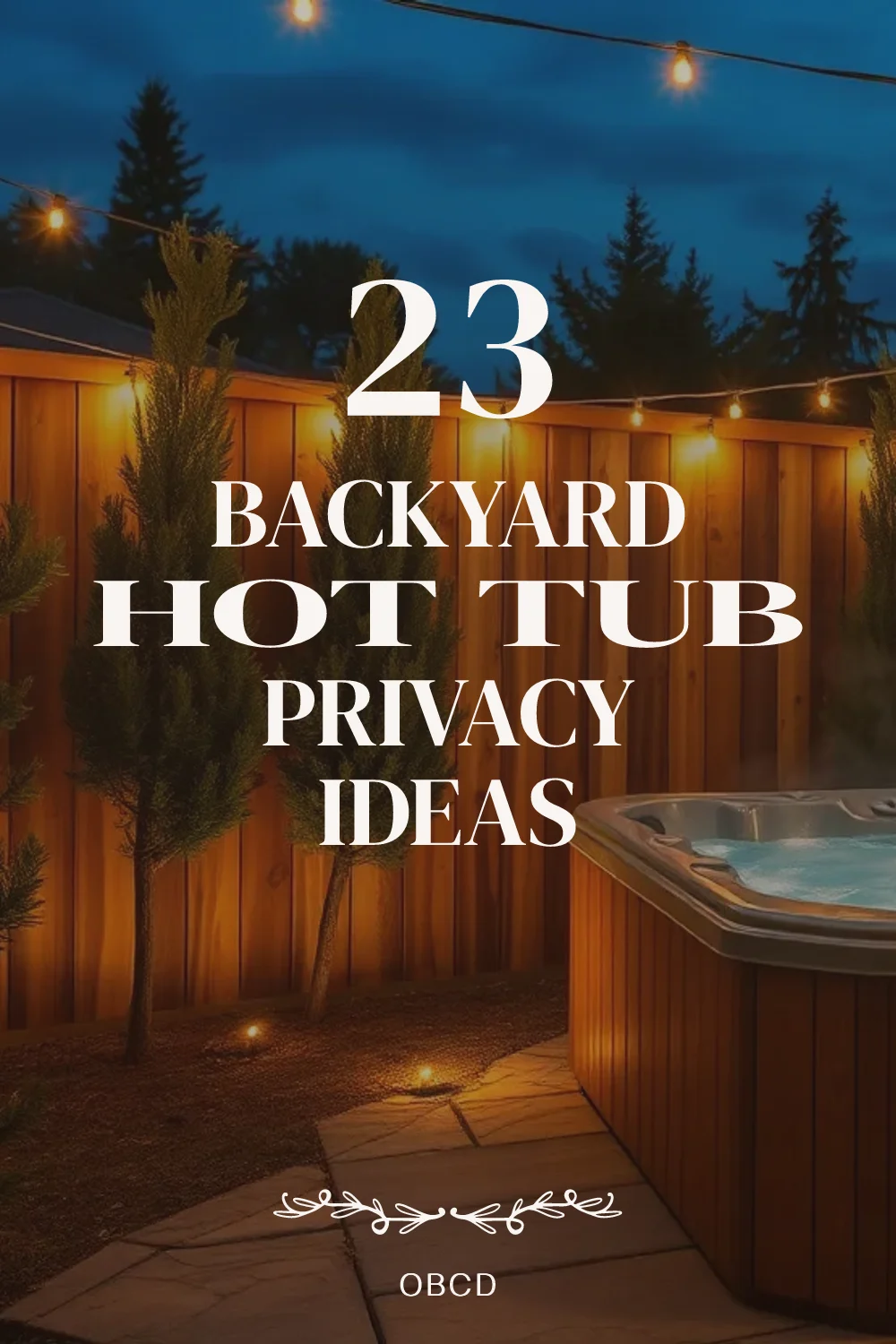
About the author
OBCD
CGI visualization and interior design content. We create detailed 3D renders and curate practical design ideas for every room in your home.